Category: Healthcare Services

  • Cognitive Neuroscience Market Set To Expand From $35.02 Billion In 2026: Growth Outlook Through 2030

    Cognitive Neuroscience Market Set To Expand From $35.02 Billion In 2026: Growth Outlook Through 2030

    Featuring market attractiveness scoring, total addressable market sizing, company benchmarking matrices, interactive Excel dashboards, deeper supply chain intelligence, emerging startup tracking, and granular product-level insights, The Business Research Company’s 2026 market reports are built to deliver research that is both more actionable and more strategically valuable.

    Cognitive Neuroscience Market Revenue Growth On Track For A 6% CAGR Through 2030

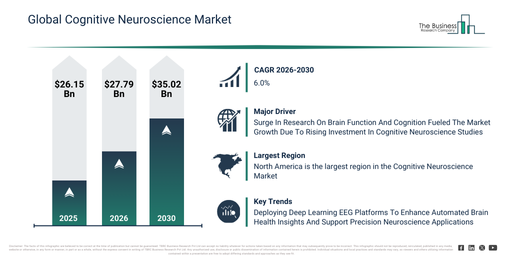
    In recent years, the cognitive neuroscience market has demonstrated substantial growth. Its value is projected to rise from $26.15 billion in 2025 to $27.79 billion in 2026, exhibiting a compound annual growth rate (CAGR) of 6.3%. This historical expansion stems from several factors, including the wider uptake of neuroimaging techniques, increased funding for brain research, a rise in neurological disorder cases, the broadening of academic research efforts, and the creation of sophisticated imaging technologies.

    The cognitive neuroscience market is projected to experience substantial expansion in the coming years, forecast to reach $35.02 billion by 2030, driven by a compound annual growth rate (CAGR) of 6.0%. Factors contributing to this growth include the greater incorporation of AI and machine learning within cognitive neuroscience, an increase in public and private sector funding, a heightened need for personalized medicine solutions, the proliferation of portable and non-invasive imaging technologies, and enhanced partnerships between pharmaceutical firms and research organizations. Key trends expected during this period involve technological improvements in functional and multimodal imaging, breakthroughs in real-time brain monitoring systems, the evolution of neuroinformatics and big data integration, progress in tailored treatment options, and increased investment in cognitive neuroscience applications particularly for psychiatry.

    Get A Free Sample Report With In-Depth Market Insights:

    https://thebusinessresearchcompany.com/sample_request?id=81403309&type=smp&name=Cognitive%20Neuroscience%20Market%20Report%202026&utm_source=Blogs&utm_medium=Paid&utm_campaign=Oct_PR

    Cognitive Neuroscience Market Opportunity Drivers: What’s Unlocking New Revenue Potential?

    The expansion of studies into brain function and cognition is anticipated to fuel the future expansion of the cognitive neuroscience market. This rise in research signifies a growing volume of scientific investigations, financial backing, and project endeavors, all aimed at improving comprehension of the neural foundations governing perception, memory, attention, language, decision-making, and associated cognitive processes. The heightened research activity is due to governments and public bodies designating neuroscience as a crucial scientific and health field. The cognitive neuroscience sector aids this research by providing essential experimental instruments, analytical methodologies, training programs, and collaborative research structures necessary for investigators to conduct and disseminate their neuroscience findings. For example, in December 2023, data from the US-based government program, the NIH BRAIN Initiative, indicated that it allocated funding to over 150 new neuroscience research projects, amounting to more than $220 million. This was an increase from 130 projects and $180 million in 2022, representing a 15.4 % growth in project numbers and a 22.2 % annual increase in funding. Consequently, the heightened research focus on brain function and cognition is a primary driver behind the expansion of the cognitive neuroscience market.

    Cognitive Neuroscience Market Segment Outlook: Which Categories Are Growing Fastest?

    The cognitive neuroscience market covered in this report is segmented –

    1) By Type: Magnetic Resonance Imaging (MRI), Functional Magnetic Resonance Imaging (fMRI), Positron Emission Tomography (PET), Magnetoencephalography (MEG), Encephalography (EEC), Near Infrared Spectroscopy (NIRS), Single Photon Emission Computed Tomography (SPECT)

    2) By Technology: Neuroimaging Technology, Electrophysiological Monitoring Technology, Neurostimulation Technology, Digital And Software-Based

    3) By Application: Brain Imaging, Neurological Research, Neurological Disorders, Psychiatry

    4) By End User: Pharmaceutical Companies, Clinical And Research Laboratories, Academic Research Institutes, Hospitals And Pathology Laboratories, Other End Users

    Subsegments:

    1) By Magnetic Resonance Imaging (MRI): Structural Imaging, Diffusion Imaging, Spectroscopy Imaging, Perfusion Imaging

    2) By Functional Magnetic Resonance Imaging (fMRI): Task-Based Imaging, Resting-State Imaging, Connectivity Analysis, Perfusion Functional Imaging

    3) By Positron Emission Tomography (PET): Neuroreceptor Imaging, Metabolic Imaging, Blood Flow Imaging, Neuroinflammation Imaging

    4) By Magnetoencephalography (MEG): Source Localization, Functional Mapping, Connectivity Analysis, Event-Related Analysis

    5) By Encephalography (EEC): Routine Recording, Ambulatory Recording, Sleep Study, Evoked Potentials

    6) By Near Infrared Spectroscopy (NIRS): Continuous Wave Imaging, Frequency Domain Imaging, Time-Resolved Imaging, Functional Monitoring

    7) By Single Photon Emission Computed Tomography (SPECT): Perfusion Imaging, Neuroreceptor Imaging, Metabolic Imaging, Blood Flow Imaging

    Cognitive Neuroscience Market Innovation Trends Shaping Future Development

    Leading companies in the cognitive neuroscience market are prioritizing the implementation of next-generation deep learning EEG platforms, such as large neural model platforms, to enhance brain signal analysis, cognitive monitoring, and the early identification of neurological disorders. Large neural model platforms are defined as computational frameworks or systems engineered to develop, train, deploy, and manage extensive neural network models, commonly utilized in artificial intelligence (AI) and machine learning (ML) applications. For example, in June 2025, BrainScope Inc., a US-based neurotechnology company, unveiled its advanced EEG-based Large Neural Model deep learning platform. This platform incorporates deep learning-driven automated EEG interpretation, offers wider clinical condition support including concussion, stroke, and early Alzheimer’s detection, and provides improved real-time biomarker extraction for precise diagnostics and clinical trial assistance. The platform empowers clinicians and researchers to gain clinically relevant brain function insights more rapidly, reducing the need for specialized qEEG interpretation. This launch marks a substantial technological step forward by integrating AI-powered EEG analytics with adaptable clinical applications, thus connecting neurotechnology innovation with enhanced patient care and research effectiveness.

    Cognitive Neuroscience Market Industry Leaders And Competitive Landscape

    Major companies operating in the cognitive neuroscience market are Magstim Company Limited, Philips International B.V., GE HealthCare Technologies Inc., Bruker Corporation, United Imaging Healthcare Co. Ltd., Brainbox Ltd., iMotions A/S, Blackrock Neurotech LLC, Advanced Brain Monitoring Inc., Compumedics Limited, BrainGate Inc., NeuroBehavioral Systems Inc., Neurospec AG, Emotiv Inc., Cogstate Ltd., Akili Interactive Labs Inc., MindMaze SA, Brain Products GmbH, Cambridge Cognition Ltd., ANT Neuro B.V., Canon Medical Systems Corporation

    View The Full Cognitive Neuroscience Market Report:

    https://thebusinessresearchcompany.com/report/cognitive-neuroscience-market-report?utm_source=Blogs&utm_medium=Paid&utm_campaign=Oct_PR

    Cognitive Neuroscience Market Regional Analysis And Top Geography

    North America was the largest region in the cognitive neuroscience market in 2025. Asia-Pacific is expected to be the fastest-growing region in the forecast period. The regions covered in the cognitive neuroscience market report are Asia-Pacific, South East Asia, Western Europe, Eastern Europe, North America, South America, Middle East, Africa.

    Reach Out To Our Team:

    The Business Research Company: https://www.thebusinessresearchcompany.com/

    Americas: +1 310-496-7795

    Asia: +44 7882 955267 & +91 8897263534

    Europe: +44 7882 955267

    Email us at: marketing@tbrc.info

    Follow us on:

    LinkedIn: https://in.linkedin.com/company/the-business-research-company

    YouTube: https://www.youtube.com/channel/UC24_fI0rV8cR5DxlCpgmyFQ

    Global Market Model: https://www.thebusinessresearchcompany.com/global-market-model
  • Cloud Medical Imaging Platform Market Size Reaches $4.2 Billion In 2026: What Is Driving Growth?

    Cloud Medical Imaging Platform Market Size Reaches $4.2 Billion In 2026: What Is Driving Growth?

    Featuring market attractiveness scoring, total addressable market sizing, company benchmarking matrices, interactive Excel dashboards, deeper supply chain intelligence, emerging startup tracking, and granular product-level insights, The Business Research Company’s 2026 market reports are built to deliver research that is both more actionable and more strategically valuable.

    Cloud Medical Imaging Platform Market Size And Revenue Outlook Through 2030

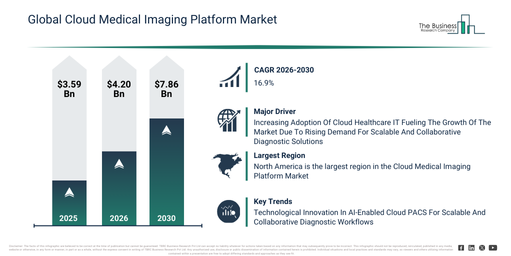
    The cloud medical imaging platform market has experienced significant expansion recently. It is projected to expand from $3.59 billion in 2025 to $4.20 billion in 2026, exhibiting a compound annual growth rate (CAGR) of 17.6%. Historically, this growth has been driven by factors such as the greater acceptance of cloud-based healthcare IT systems, the escalating need for remote accessibility to medical images, the increased volume of imaging procedures in healthcare facilities, the proliferation of telemedicine and teleradiology offerings, and the heightened requirement for economical imaging storage options.

    The cloud medical imaging platform market is poised for substantial expansion over the coming years, with projections indicating a value of $7.86 billion by 2030, demonstrating a compound annual growth rate of 16.9%. This anticipated growth is primarily driven by factors such as the increasing adoption of AI-powered imaging instruments, a growing shift towards hybrid cloud deployment strategies, the heightened need for image sharing and collaborative efforts across multiple facilities, the broadening scope of healthcare digitalization projects in developing nations, and an intensified emphasis on automating workflows within radiology departments. Noteworthy trends expected during this forecast timeframe encompass progress in artificial intelligence-driven cloud imaging analytics, technological breakthroughs in zero-footprint medical image viewing solutions, advancements in cloud systems based on vendor-neutral archives, ongoing research and development in secure blockchain imaging exchange, and novel applications for mobile-compatible cloud imaging.

    Get A Free Sample Report With In-Depth Market Insights:

    https://thebusinessresearchcompany.com/sample_request?id=60619830&type=smp&name=Cloud%20Medical%20Imaging%20Platform%20Market%20Report%202026&utm_source=Blogs&utm_medium=Paid&utm_campaign=Oct_PR

    Cloud Medical Imaging Platform Market Development Factors: What’s Supporting Demand?

    The expansion of the cloud medical imaging platform market is anticipated to be driven by the rising uptake of cloud healthcare IT. This adoption signifies the broad integration of web-based computing solutions for storing, managing, and processing medical information off-site, rather than on premises. Progress in cloud computing infrastructure fuels this trend by providing medical professionals with scalable storage, improved data security, and immediate access. Cloud medical imaging platforms streamline diagnostic processes through the effortless storage, retrieval, and distribution of detailed medical images across various healthcare settings and devices. As an illustration, data from September 2025 by the Office of the National Coordinator for Health Information Technology, a US Department of Health and Human Services division, showed that 71% of hospitals incorporated predictive AI with electronic health records in 2024, an increase from 66% in 2023. Consequently, the expanding use of cloud healthcare IT is boosting the growth of the cloud medical imaging platform market.

    Cloud Medical Imaging Platform Market Segment Analysis: What Are The Core Market Categories?

    The cloud medical imaging platform market covered in this report is segmented –

    1) By Component: Software, Services

    2) By Imaging Modality: X-ray, Computed Tomography (CT), Magnetic Resonance Imaging (MRI), Ultrasound, Nuclear Imaging, Other Imaging Modalities

    3) By Pricing Model: Subscription-Based (Software As A Service), Pay-Per-Use Or Consumption-Based, Hybrid Pricing Models

    4) By Deployment Mode: Public Cloud, Private Cloud, Hybrid Cloud

    5) By End-User: Hospitals, Diagnostic Centers, Research And Academic Institutes, Other End-Users

    Subsegments:

    1) By Software: Picture Archiving And Communication System Software, Radiology Information System Software, Vendor Neutral Archive Software, Enterprise Viewers And Universal Workstations, Image Analysis Software, Telemedicine Platform Software

    2) By Services: Implementation And Integration Services, Training And Education Services, Support And Maintenance Services, Consulting Services, Managed Services

    Cloud Medical Imaging Platform Market Transformation Trends: What Innovations Are Driving Change?

    Key companies in the cloud medical imaging platform market are concentrating on technological breakthroughs, including next-generation cloud-based Picture Archiving and Communication Systems (PACS) with integrated artificial intelligence (AI). These platforms are engineered to optimize diagnostic workflows through features like high-speed remote access, automated study coordination, and sophisticated image processing available from any location, which in turn lowers IT infrastructure costs and boosts operational efficiency. For example, in November 2023, Royal Philips, a health technology company from the Netherlands, introduced HealthSuite Imaging. This cloud-based PACS solution, hosted on Amazon Web Services (AWS), provides rapid remote access for diagnostic interpretation, consolidated reporting, and AI-driven workflow orchestration, enabling healthcare systems to securely scale operations and lessen the demands of on-premises IT administration.

    Cloud Medical Imaging Platform Market Leading Players And Competitive Positioning

    Major companies operating in the cloud medical imaging platform market are FUJIFILM Holdings Corp., GE HealthCare Technologies Inc., Sectra AB, Viz.ai Inc., Aidoc Medical Ltd., Arterys Inc., Lunit Inc., INFINITT Healthcare Co. Ltd., Qure.ai Technologies Pvt. Ltd., Novarad Corporation, RamSoft Inc., Annalise.ai Pty Ltd., Subtle Medical Inc., Gleamer SAS, VUNO Inc., PaxeraHealth Inc., Medixant Sp. z o.o., Medicai Ltd., MedDream UAB, Visbion Ltd., Studycast Inc.

    View The Full Cloud Medical Imaging Platform Market Report:

    https://thebusinessresearchcompany.com/report/cloud-medical-imaging-platform-market-report?utm_source=Blogs&utm_medium=Paid&utm_campaign=Oct_PR

    Cloud Medical Imaging Platform Market Regional Split: Which Areas Are Fueling Growth?

    North America was the largest region in the cloud medical imaging platform market in 2025. Asia-Pacific is expected to be the fastest-growing region in the forecast period. The regions covered in the cloud medical imaging platform market report are Asia-Pacific, South East Asia, Western Europe, Eastern Europe, North America, South America, Middle East, Africa.

    Reach Out To Our Team:

    The Business Research Company: https://www.thebusinessresearchcompany.com/

    Americas: +1 310-496-7795

    Asia: +44 7882 955267 & +91 8897263534

    Europe: +44 7882 955267

    Email us at: marketing@tbrc.info

    Follow us on:

    LinkedIn: https://in.linkedin.com/company/the-business-research-company

    YouTube: https://www.youtube.com/channel/UC24_fI0rV8cR5DxlCpgmyFQ

    Global Market Model: https://www.thebusinessresearchcompany.com/global-market-model
  • Brain Cancer Market Growth To $4.76 Billion By 2030: What’s Driving The Expansion?

    Brain Cancer Market Growth To $4.76 Billion By 2030: What’s Driving The Expansion?

    Built to provide research that’s more actionable and strategically valuable, The Business Research Company’s 2026 market reports include market attractiveness analysis, total addressable market sizing, company benchmarking matrices, interactive Excel dashboards, broader supply chain intelligence, emerging startup tracking, and in-depth product insights.

    Brain Cancer Market Forecast: Value Set To Climb From $3.6 Billion To $4.76 Billion

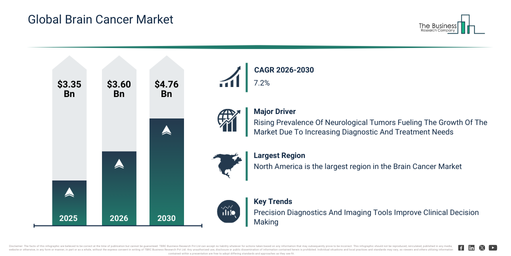
    The brain cancer market has experienced substantial expansion in recent years. Projections indicate an increase from $3.35 billion in 2025 to $3.60 billion in 2026, demonstrating a compound annual growth rate (CAGR) of 7.5%. Historically, this expansion can be linked to factors such as a rise in brain cancer cases, increased use of neuroimaging techniques, a heightened need for chemotherapy and radiotherapy, broadened availability of specialized cancer treatment facilities, and greater healthcare spending.

    The brain cancer market is projected to undergo significant expansion in the coming years. It is forecast to achieve a size of $4.76 billion by 2030, exhibiting a compound annual growth rate (CAGR) of 7.2%. This growth over the forecast period is attributable to an increasing demand for targeted therapies, the rising adoption of immunotherapies, a wider application of minimally invasive neurosurgeries, an intensified focus on early diagnosis, and increasing investment in oncology infrastructure. Prominent trends for this period include advancements in AI-based diagnostic tools, the development of personalized medicine solutions, innovations in immunotherapy combinations, progress in liquid biopsy technologies, and continued research and development in high-precision imaging systems.

    Get A Free Sample Report With In-Depth Market Insights:

    https://thebusinessresearchcompany.com/sample_request?id=50073029&type=smp&name=Brain%20Cancer%20Market%20Report%202026&utm_source=Blogs&utm_medium=Paid&utm_campaign=Oct_PR

    Brain Cancer Market Industry Drivers: What’s Behind The Revenue Growth?

    The escalating occurrence of neurological tumors is projected to advance the expansion of the brain cancer market in the future. Neurological tumors are characterized as unusual and frequently malignant formations within the brain or central nervous system, which hinder neurological function and demand elaborate clinical management. The incidence of neurological tumors is growing due to demographic transformations, including an aging and increasing population, as older individuals face a higher risk of developing brain cancers. The brain cancer market addresses neurological tumor prevalence by broadening diagnostic, treatment, and care offerings to cater to the clinical requirements of the expanding patient demographic. For example, in January 2025, the American Cancer Society, a US-based non-profit organization, anticipates approximately 14,040 new cases of brain tumors and other nervous system cancers among males and 10,780 among females in 2025, with an estimated 18,330 total deaths. Hence, the rising prevalence of neurological tumors is a primary force behind the growth of the brain cancer market.

    Brain Cancer Market Segment Analysis: What Are The Core Market Categories?

    The brain cancer market covered in this report is segmented –

    1) By Product Type: Therapeutic Treatments, Diagnostic Imaging, Surgical Devices, Supportive Care Products

    2) By Surgical Treatment: Tumor Resection, Minimally Invasive Surgery, Stereotactic Surgery

    3) By Diagnosis: Imaging Techniques, Biopsy, Molecular Testing, Genetic Testing

    4) By Supportive Care: Rehabilitation, Palliative Care, Counseling, Follow-Up Care

    5) By End User: Hospitals, Specialty Clinics, Research Institutes

    Subsegments:

    1) By Therapeutic Treatments: Chemotherapy Drugs, Targeted Therapy Drugs, Immunotherapy Agents, Radiation Therapy Products, Hormone Therapy Products, Tumor Treating Fields Devices

    2) By Diagnostic Imaging: Magnetic Resonance Imaging Systems, Computed Tomography Scanners, Positron Emission Tomography Systems, Ultrasound Imaging Systems, Nuclear Imaging Systems

    3) By Surgical Devices: Neurosurgical Navigation Systems, Craniotomy Instruments, Neuroendoscopy Devices, Surgical Microscopes, Stereotactic Surgical Equipment

    4) By Supportive Care Products: Pain Management Medications, Anti Nausea Medications, Nutritional Support Products, Rehabilitation Equipment, Symptom Management Products

    #Brain Cancer Market Growth Trends: What’s Shaping The Future Outlook?

    Leading companies active in the brain cancer market are concentrating on developing sophisticated diagnostic and imaging instruments, such as AI-powered MRI segmentation platforms, to enhance clinical decision-making and treatment strategies. These AI-driven MRI segmentation platforms are software systems that utilize artificial intelligence to automatically identify and delineate anatomical structures or lesions on MRI scans, thereby supporting faster and more consistent diagnosis and treatment planning. For instance, in July 2025, Cortechs.ai, a US-based medical imaging software company, launched NeuroQuant Brain Tumor, featuring enhanced AI-driven MRI segmentation models. This offers automated volumetric quantification and metastasis/meningioma segmentation, which improves radiologist efficiency and diagnostic consistency compared to manual interpretation, with cloud-based deployment and PACS integration for rapid scalability. By offering objective segmentations and volumetric reports, this innovative technology boosts the efficiency and standardization for radiologists, neurosurgeons, and neuro-oncologists, while saving time and improving clinical consistency and diagnostic confidence. Clinicians can directly foster improved patient outcomes by tracking tumor changes over time and gaining vital insights into therapy response and disease progression.

    Brain Cancer Market Competitive Landscape: Which Companies Lead The Industry?

    Major companies operating in the brain cancer market are Providence Health & Services, Ascension Health, Trinity Health, Mayo Clinic, Memorial Sloan Kettering Cancer Center, Cleveland Clinic, The Mount Sinai Hospital, The University of Texas MD Anderson Cancer Center, CommonSpirit Health, City of Hope National Medical Center, Stanford Health Care, Apollo Hospitals Enterprise Limited, Elekta AB, H. Lee Moffitt Cancer Center & Research Institute Inc., Roswell Park Comprehensive Cancer Center, Fred Hutchinson Cancer Center, Fortis Healthcare Limited, Dana-Farber Cancer Institute Inc., The Johns Hopkins Hospital, The Regents of the University of California

    View The Full Brain Cancer Market Report:

    https://thebusinessresearchcompany.com/report/brain-cancer-market-report?utm_source=Blogs&utm_medium=Paid&utm_campaign=Oct_PR

    Brain Cancer Market Regional Outlook: Where Is Opportunity Concentrated?

    North America was the largest region in the brain cancer market in 2025. Asia-Pacific is expected to be the fastest-growing region in the forecast period. The regions covered in the brain cancer market report are Asia-Pacific, South East Asia, Western Europe, Eastern Europe, North America, South America, Middle East, Africa.

    Reach Out To Our Team:

    The Business Research Company: https://www.thebusinessresearchcompany.com/

    Americas: +1 310-496-7795

    Asia: +44 7882 955267 & +91 8897263534

    Europe: +44 7882 955267

    Email us at: marketing@tbrc.info

    Follow us on:

    LinkedIn: https://in.linkedin.com/company/the-business-research-company

    YouTube: https://www.youtube.com/channel/UC24_fI0rV8cR5DxlCpgmyFQ

    Global Market Model: https://www.thebusinessresearchcompany.com/global-market-model
  • Artificial Intelligence (AI)-Driven Hospital Supply Waste Monitor Market Reaches $4.13 Billion In 2026: Forecast And Growth Opportunities

    Artificial Intelligence (AI)-Driven Hospital Supply Waste Monitor Market Reaches $4.13 Billion In 2026: Forecast And Growth Opportunities

    Featuring market attractiveness scoring, total addressable market sizing, company benchmarking matrices, interactive Excel dashboards, deeper supply chain intelligence, emerging startup tracking, and granular product-level insights, The Business Research Company’s 2026 market reports are built to deliver research that is both more actionable and more strategically valuable.

    Artificial Intelligence (AI)-Driven Hospital Supply Waste Monitor Market Growth From $2.04 Billion In 2026 To $4.13 Billion By 2030 At A CAGR Of 19.3%

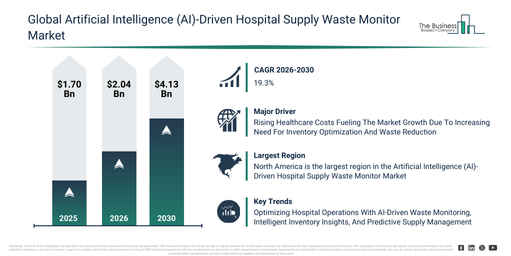
    The artificial intelligence (AI)-driven hospital supply waste monitor market size has seen substantial growth recently. This market is expected to expand from $1.70 billion in 2025 to $2.04 billion in 2026, achieving a compound annual growth rate (CAGR) of 19.6%. Historically, this growth has been fueled by the increasing integration of AI into healthcare operations, the growing necessity to reduce medical supply waste, an amplified focus on cost optimization in hospitals, the wider use of predictive analytics, and the rising adoption of inventory monitoring solutions.

    The artificial intelligence (AI)-driven hospital supply waste monitor market is projected for substantial expansion over the coming years. This market is set to reach $4.13 billion in 2030, exhibiting a compound annual growth rate (CAGR) of 19.3%. This anticipated growth during the forecast period is fueled by several factors, including increasing investments in healthcare IT infrastructure, the rising integration of AI within hospital management systems, the greater adoption of cloud-based platforms for supply monitoring, the expansion of remote monitoring and intelligent inventory systems, and a growing focus on sustainability and waste reduction initiatives. Key trends characterizing this period involve technological advancements in machine learning and AI models, pioneering developments in real-time inventory tracking devices, intensive research and development in predictive analytics to minimize waste, the creation of automated reporting and dashboard solutions, and improvements in interoperable healthcare IT and inventory systems.

    Get A Free Sample Report With In-Depth Market Insights:

    https://thebusinessresearchcompany.com/sample_request?id=46322702&type=smp&name=Artificial%20Intelligence%20%28AI%29-Driven%20Hospital%20Supply%20Waste%20Monitor%20Market%20Report%202026&utm_source=Blogs&utm_medium=Paid&utm_campaign=Oct_PR

    Artificial Intelligence (AI)-Driven Hospital Supply Waste Monitor Market Expansion Drivers: What’s Shaping Future Growth?

    The escalating expenses in healthcare are projected to significantly boost the expansion of the artificial intelligence (AI)-driven hospital supply waste monitor market in the coming years. This increase in healthcare costs signifies the continuous rise in financial outlays necessary for providing medical services and managing hospital operations, encompassing personnel, equipment, and medical consumables, which subsequently burdens healthcare systems financially. A primary factor contributing to this increase is the demographic shift towards an aging population, which necessitates more intensive medical interventions for prevalent chronic illnesses like heart disease and diabetes. The artificial intelligence (AI)-driven hospital supply waste monitor plays a crucial role in managing healthcare expenditures by minimizing superfluous supply wastage, enhancing inventory management, and assisting providers in regulating their total spending. For example, reports from June 2025 by the Centers for Medicare and Medicaid Services (CMS), a US-based government health expenditure authority, revealed that in 2023, spending on hospital care surged by 10.4% to $1.52 trillion, and overall national health expenditures climbed by 7.5% to $4.9 trillion when compared to figures from 2022. Consequently, the escalating healthcare costs are serving as a major impetus for the growth of the artificial intelligence (AI)-driven hospital supply waste monitor market.

    Artificial Intelligence (AI)-Driven Hospital Supply Waste Monitor Market Segmentation And Category Overview

    The artificial intelligence (AI)-driven hospital supply waste monitor market covered in this report is segmented –

    1) By Component: Software, Hardware, Services

    2) By Deployment Mode: On-Premises, Cloud-Based

    3) By Application: Inventory Management, Waste Tracking, Cost Reduction, Compliance Monitoring, Other Applications

    4) By End-User: Hospitals, Clinics, Ambulatory Surgical Centers, Other End-Users

    Subsegments:

    1) By Software: Electronic Health Record Integration, Predictive Analytics Platforms, Risk Scoring Systems, Clinical Decision Support Tools

    2) By Hardware: Servers, Sensors, Monitoring Devices, Data Storage Devices

    3) By Services: Data Analytics Services, Predictive Modeling Services, Integration And Deployment Services, Training And Support Services, Monitoring And Reporting Services

    Artificial Intelligence (AI)-Driven Hospital Supply Waste Monitor Market Strategic Trends: What Defines The Next Growth Phase?

    Leading companies operating within the artificial intelligence (AI)-driven hospital supply waste monitor market are prioritizing the development of advanced technology, such as predictive usage and waste reduction analytics. This focus aims to enhance supply chain visibility, minimize waste, and decrease operational costs across healthcare facilities. Predictive usage and waste reduction analytics refer to artificial intelligence systems designed to analyze historical and real-time data to accurately forecast inventory needs, identify consumption patterns, and automatically alert staff to potential overstock or waste situations, thereby enabling smarter procurement and more efficient resource allocation. For instance, in April 2024, SmartPAR.AI Inc., a US-based healthtech software provider, launched an AI-driven solution specifically created to transform hospital inventory management and reduce product waste. This platform incorporates machine learning, predictive usage, and waste reduction analytics to monitor current supplies, forecast future demand, and identify discrepancies that could lead to waste.

    Artificial Intelligence (AI)-Driven Hospital Supply Waste Monitor Market Competitive Landscape: Which Companies Lead The Industry?

    Major companies operating in the artificial intelligence (AI)-driven hospital supply waste monitor market are Cardinal Health Inc., Oracle Corporation, Becton Dickinson and Company, Owens & Minor Inc., Arvato AG, Zebra Technologies Corporation, Getinge AB, Palantir Technologies Inc., Omnicell Inc., Manhattan Associates Inc., Symplr Inc., Global Healthcare Exchange LLC, Tecsys Inc., Terso Solutions Inc., LogiTag Systems Ltd., Spikewell Inc., Softlabs Group Inc., Stanley Healthcare, Z5 Inventory Inc., IDENTI Medical Ltd.

    View The Full Artificial Intelligence (AI)-Driven Hospital Supply Waste Monitor Market Report:

    https://thebusinessresearchcompany.com/report/artificial-intelligence-ai-driven-hospital-supply-waste-monitor-market-report?utm_source=Blogs&utm_medium=Paid&utm_campaign=Oct_PR

    Artificial Intelligence (AI)-Driven Hospital Supply Waste Monitor Market Regional Outlook: Where Is Opportunity Concentrated?

    North America was the largest region in the artificial intelligence (AI)-driven hospital supply waste monitor market in 2025. Asia-Pacific is expected to be the fastest-growing region in the forecast period. The regions covered in the artificial intelligence (AI)-driven hospital supply waste monitor market report are Asia-Pacific, South East Asia, Western Europe, Eastern Europe, North America, South America, Middle East, Africa.

    Reach Out To Our Team:

    The Business Research Company: https://www.thebusinessresearchcompany.com/

    Americas: +1 310-496-7795

    Asia: +44 7882 955267 & +91 8897263534

    Europe: +44 7882 955267

    Email us at: marketing@tbrc.info

    Follow us on:

    LinkedIn: https://in.linkedin.com/company/the-business-research-company

    YouTube: https://www.youtube.com/channel/UC24_fI0rV8cR5DxlCpgmyFQ

    Global Market Model: https://www.thebusinessresearchcompany.com/global-market-model
  • Artificial Intelligence (AI)-Driven Hospital Readmission Predictor Market Growth In 2026: Market Size, Key Drivers And Future Outlook

    Artificial Intelligence (AI)-Driven Hospital Readmission Predictor Market Growth In 2026: Market Size, Key Drivers And Future Outlook

    Built to provide research that’s more actionable and strategically valuable, The Business Research Company’s 2026 market reports include market attractiveness analysis, total addressable market sizing, company benchmarking matrices, interactive Excel dashboards, broader supply chain intelligence, emerging startup tracking, and in-depth product insights.

    Artificial Intelligence (AI)-Driven Hospital Readmission Predictor Market Expansion Outlook: What Revenue Opportunities Are Ahead?

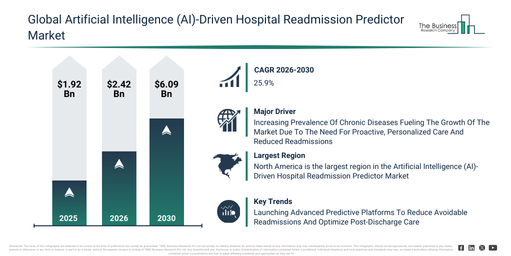
    The artificial intelligence (AI)-driven hospital readmission predictor market has seen substantial growth in recent years. This market is projected to expand from $1.92 billion in 2025 to $2.42 billion in 2026, achieving a compound annual growth rate (CAGR) of 26.2%. Historically, this expansion has been driven by several factors including the increasing adoption of AI in healthcare, a growing demand to reduce hospital readmissions, the rising availability of electronic health records, the broader use of predictive analytics, and an increasing focus on patient outcomes.

    The market for artificial intelligence (AI)-driven hospital readmission predictors is projected to experience substantial growth in the coming years. This market is anticipated to reach $6.09 billion by 2030, exhibiting a compound annual growth rate (CAGR) of 25.9%. Key factors contributing to this expansion during the forecast period include increased investments in healthcare information technology infrastructure, enhanced integration of clinical decision support systems, wider adoption of cloud-based analytics platforms, the broadening of remote patient monitoring tools, and a heightened focus on value-based care models. Significant trends observed over the forecast period encompass technological advancements in machine learning models, breakthroughs in real-time patient monitoring, ongoing research and development in natural language processing, the creation of explainable AI specifically for healthcare applications, and improvements in interoperable healthcare IT systems.

    Get A Free Sample Report With In-Depth Market Insights:

    https://thebusinessresearchcompany.com/sample_request?id=69754376&type=smp&name=Artificial%20Intelligence%20%28AI%29-Driven%20Hospital%20Readmission%20Predictor%20Market%20Report%202026&utm_source=Blogs&utm_medium=Paid&utm_campaign=Oct_PR

    Artificial Intelligence (AI)-Driven Hospital Readmission Predictor Market Development Factors: What’s Supporting Demand?

    The rising occurrence of chronic conditions is anticipated to fuel expansion in the artificial intelligence (AI)-driven hospital readmission predictor market. These are enduring medical ailments, including diabetes, heart disease, and arthritis, that typically advance gradually and necessitate continuous healthcare and lifestyle adjustments to manage indicators and avert adverse events. Their escalation is predominantly linked to detrimental lifestyle choices such as inadequate nutrition, lack of physical activity, and tobacco use, contributing to a higher likelihood of conditions like diabetes, heart disease, and obesity. Artificial intelligence (AI)-driven hospital readmission predictors assist in managing chronic illnesses by examining patient information to pinpoint individuals prone to re-hospitalization. These tools enhance patient results through facilitating early interventions, tailored care strategies, and prompt follow-up, thereby preventing complications and shortening hospital durations. For example, data from June 2024, released by the National Health Service, a UK government department, showed that 3,615,330 individuals registered with a general practitioner (GP) had a diagnosis of non-diabetic hyperglycemia or pre-diabetes (a state with elevated blood sugar, insufficient for a diabetes classification) in 2023. This represented an 18% rise from 3,065,825 cases recorded in 2022. Consequently, the expanding incidence of chronic diseases is fueling the development of the artificial intelligence (AI)-driven hospital readmission predictor market.

    Artificial Intelligence (AI)-Driven Hospital Readmission Predictor Market Segment Outlook: Which Categories Are Growing Fastest?

    The artificial intelligence (AI)-driven hospital readmission predictor market covered in this report is segmented –

    1) By Component: Software, Hardware, Services

    2) By Deployment Mode: On-Premises, Cloud

    3) By Application: Patient Risk Assessment, Care Management, Clinical Decision Support, Population Health Management, Other Applications

    4) By End-User: Hospitals, Clinics, Ambulatory Surgical Centers, Other End-Users

    Subsegments:

    1) By Software: Electronic Health Record Integration, Predictive Analytics Platforms, Risk Scoring Systems, Clinical Decision Support Tools

    2) By Hardware: Servers, Sensors, Monitoring Devices, Data Storage Devices

    3) By Services: Data Analytics Services, Predictive Modeling Services, Integration And Deployment Services, Training And Support Services, Monitoring And Reporting Services

    Artificial Intelligence (AI)-Driven Hospital Readmission Predictor Market Transformation Trends: What Innovations Are Driving Change?

    Leading companies in the artificial intelligence (AI)-driven hospital readmission predictor market are concentrating on developing advanced solutions, such as sophisticated predictive modeling, to pinpoint high-risk patients, enable early interventions, and optimize care following discharge. Advanced predictive modeling entails utilizing complex statistical algorithms and machine learning techniques on historical and real-time data to uncover intricate patterns and generate highly accurate forecasts of future outcomes. For instance, in July 2025, Innovaccer Inc., a US-based healthcare AI company, unveiled its AI-Powered Readmissions Management Solution, which integrates advanced predictive modeling to identify avoidable readmissions across Medicare, Medicaid, and uninsured populations. The platform also provides unified 360-degree patient views, agentic AI tools like Care Management Copilot and Pre-Call Coordinator Agent for workflow automation, and benchmark intelligence to aid proactive intervention planning. This solution assists healthcare providers in reducing readmission rates, improving resource allocation, and enhancing overall patient outcomes.

    Artificial Intelligence (AI)-Driven Hospital Readmission Predictor Market Competitive Landscape: Who Leads The Industry?

    Major companies operating in the artificial intelligence (AI)-driven hospital readmission predictor market are Oracle Corporation, Siemens Healthineers AG, Cognizant Technology Solutions Corp., Epic Systems Corporation, SAS Institute Inc., Veradigm Inc., Merative LLP, Health Catalyst Inc., Lumeris Inc., Innovaccer Inc., Optum Inc., H2O.ai Inc., Healthfirst Inc., Qventus Inc., Lightbeam Health Solutions Inc., HealthEC LLC, Collective Medical Technologies Inc., CarePredict Inc., HBI Solutions Inc., CloudMedx

    View The Full Artificial Intelligence (AI)-Driven Hospital Readmission Predictor Market Report:

    https://thebusinessresearchcompany.com/report/artificial-intelligence-ai-driven-hospital-readmission-predictor-market-report?utm_source=Blogs&utm_medium=Paid&utm_campaign=Oct_PR

    Artificial Intelligence (AI)-Driven Hospital Readmission Predictor Market Geographic Landscape: Which Region Leads Industry Growth?

    North America was the largest region in the artificial intelligence (AI)-driven hospital readmission predictor market in 2025. Asia-Pacific is expected to be the fastest-growing region in the forecast period. The regions covered in the artificial intelligence (AI)-driven hospital readmission predictor market report are Asia-Pacific, South East Asia, Western Europe, Eastern Europe, North America, South America, Middle East, Africa.

    Reach Out To Our Team:

    The Business Research Company: https://www.thebusinessresearchcompany.com/

    Americas: +1 310-496-7795

    Asia: +44 7882 955267 & +91 8897263534

    Europe: +44 7882 955267

    Email us at: marketing@tbrc.info

    Follow us on:

    LinkedIn: https://in.linkedin.com/company/the-business-research-company

    YouTube: https://www.youtube.com/channel/UC24_fI0rV8cR5DxlCpgmyFQ

    Global Market Model: https://www.thebusinessresearchcompany.com/global-market-model
  • Artificial Intelligence (AI) Tele-Oncology Radiation Dose Scheduler Market Size And Forecast 2026–2030: Trends Driving Industry Expansion

    Artificial Intelligence (AI) Tele-Oncology Radiation Dose Scheduler Market Size And Forecast 2026–2030: Trends Driving Industry Expansion

    Backed by market attractiveness analysis, total addressable market sizing, company benchmarking matrices, interactive Excel dashboards, wider supply chain intelligence, emerging startup coverage, and detailed product-level insights, The Business Research Company’s 2026 market reports are designed to offer research that is more actionable and strategically valuable than ever.

    Artificial Intelligence (AI) Tele-Oncology Radiation Dose Scheduler Market Growth Potential: How Will Market Size Shift Through 2030?

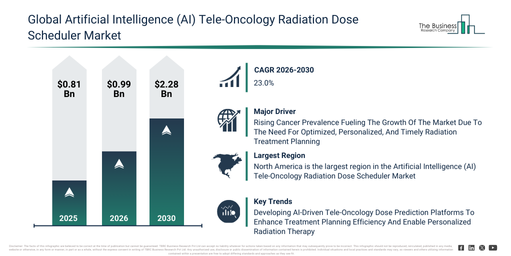
    The artificial intelligence (AI) tele-oncology radiation dose scheduler market has experienced significant expansion in recent years. It is projected to grow from $0.81 billion in 2025 to $0.99 billion in 2026, at a compound annual growth rate (CAGR) of 23.3%. The market’s growth in previous periods can be attributed to an increasing need for remote cancer treatment planning, the rising adoption of tele-oncology platforms, a growing demand for precise radiation dose calculation, the expanding use of AI in oncology decision support, a worldwide rise in cancer incidence, the advancing digital transformation within hospitals, the increasing deployment of cloud-based medical systems, an escalating need for workflow automation in radiotherapy, a growing focus on reducing treatment errors, and the increasing adoption of smart oncology scheduling tools.

    The artificial intelligence (AI) tele-oncology radiation dose scheduler market is expected to demonstrate significant growth in the coming years, with its valuation predicted to reach $2.28 billion by 2030, growing at a compound annual growth rate (CAGR) of 23.0%. This anticipated expansion during the forecast period can be attributed to factors such as the broadening of tele-oncology networks, the increasing uptake of AI-enabled treatment planning platforms, a heightened requirement for automated dose calculation systems, the adoption of cloud-based oncology scheduling modules, the deployment of predictive oncology algorithms, the creation of remote radiotherapy review tools, the demand for precise cancer care, the incorporation of AI tools within oncology departments, strategic partnerships between AI vendors and cancer centers, and the rising acceptance of tele-radiation workflows. Prominent trends throughout this period include advancements in AI-driven radiotherapy dose prediction, further development in cloud-based oncology scheduling platforms, enhancements in real-time dose optimization engines, innovations in automated treatment planning systems, new developments in predictive oncology algorithms, new virtual radiation oncology workflows, the integration of tele-oncology with hospital information systems, the merging of AI dose schedulers with imaging platforms, the inclusion of remote dose-review tools for oncologists, and the formation of multi-center tele-radiation networks.

    Get A Free Sample Report With In-Depth Market Insights:

    https://thebusinessresearchcompany.com/sample_request?id=35829742&type=smp&name=Artificial%20Intelligence%20%28AI%29%20Tele-Oncology%20Radiation%20Dose%20Scheduler%20Market%20Report%202026&utm_source=Blogs&utm_medium=Paid&utm_campaign=Oct_PR

    Artificial Intelligence (AI) Tele-Oncology Radiation Dose Scheduler Market Industry Drivers: What’s Behind The Revenue Growth?

    The escalating occurrence of cancer is anticipated to drive the expansion of the artificial intelligence (AI) tele-oncology radiation dose scheduler market moving forward. Cancer is defined as a disease characterized by the uninhibited proliferation and dissemination of atypical cells, which can harm nearby tissues and organs if not adequately managed. The incidence of cancer is on the rise, attributed to lifestyle-related factors like unhealthy eating habits, smoking, alcohol consumption, and contact with environmental contaminants, all of which elevate the likelihood of developing various cancers. Artificial intelligence (AI) tele-oncology radiation dose schedulers facilitate cancer treatment by optimizing and tailoring radiation therapy plans through remote, data-driven evaluations. They contribute to better patient outcomes by guaranteeing accurate dosing, reducing delays in treatment, and enabling uniform care across different geographical areas. As an illustration, in October 2025, NHS Digital, a UK government body, noted 354,820 new cancer diagnoses recorded in England in 2023, averaging 972 diagnoses each day. This represented an increase of 8,605 cases compared to 2022, with prostate cancer being the most frequently diagnosed at 58,137 new cases, indicating a 6% rise in registrations over the previous year. Hence, the growing prevalence of cancer is fueling the growth of the artificial intelligence (AI) tele-oncology radiation dose scheduler market.

    Artificial Intelligence (AI) Tele-Oncology Radiation Dose Scheduler Market Segment Landscape: Which Areas Lead Development?

    The artificial intelligence (AI) tele-oncology radiation dose scheduler market covered in this report is segmented –

    1) By Component: Software, Hardware, Services

    2) By Technology: Machine Learning Algorithms, Natural Language Processing, Computer Vision, Predictive Analytics

    3) By Deployment Mode: On-Premise (Local Installation), Cloud-Based (SaaS), Hybrid Deployment

    4) By Application: Auto-Contouring And Segmentation (OAR Or Target), Treatment Plan Generation And Optimization, Dose Prediction And Quality Assurance (QA), Workflow And Resource Scheduling Optimization, Adaptive Radiotherapy Planning

    5) By End-User: Hospitals, Cancer Treatment Centers, Research Institutes, Other End-Users

    Subsegments:

    1) By Software: Analytics And Reporting Software, Recommendation Engine Software, Natural Language Processing Software, Machine Learning Model Management Tools, Computer Vision Software, Integration And API Management Software, Mobile And Web Application Software

    2) By Hardware: AI-Optimized Servers, Edge Computing Devices, Sensors And IoT Devices, Smart Cameras, GPUs And AI Accelerators, Storage Systems, Networking And Connectivity Hardware

    3) By Services: Consulting Services, Implementation And Integration Services, Training And Support Services, Managed AI Services, Maintenance And Upgradation Services, Custom AI Development Services, Data Management And Annotation Services

    #Artificial Intelligence (AI) Tele-Oncology Radiation Dose Scheduler Market Growth Trends: What’s Shaping The Future Outlook?

    Leading companies in the AI tele-oncology and radiation therapy market are prioritizing the development of sophisticated solutions, such as AI-powered dose prediction, to forecast personalized radiation dose distributions and thereby enhance the efficiency of treatment planning. These AI-powered dose prediction platforms serve as software solutions designed to analyze imaging and anatomical data, generate clinically attainable 3D dose distributions, and facilitate timely adjustments for optimizing therapy. For instance, in March 2025, MVision AI, a Finland-based health-tech company, introduced Dose+. This AI-powered dose prediction platform features specialized models for prostate and pelvic lymph node cases, customizes dose distributions for each patient’s unique anatomy, and supports integration with standard treatment planning systems via DICOM to streamline planning workflows. The introduction of Dose+ signifies a considerable technological stride, integrating AI-driven dose prediction into routine clinical practice, connecting traditional planning with automated, patient-specific optimization, and supplying clinicians with a scalable, efficient tool for precise, personalized radiation therapy.

    Artificial Intelligence (AI) Tele-Oncology Radiation Dose Scheduler Market Company Landscape And Competitive Strategy

    Major companies operating in the artificial intelligence (AI) tele-oncology radiation dose scheduler market are IBM Corporation, Siemens Healthineers AG, GE HealthCare Technologies Inc., Koninklijke Philips N.V., Varian Medical Systems Inc., Elekta AB, Shanghai United Imaging Healthcare Co. Ltd., Accuray Incorporated, Brainlab AG, RaySearch Laboratories AB, MIM Software Inc., Sun Nuclear Corp., DeepHealth, Radformation Inc., MVision AI Ltd., Mirada Medical Ltd., ViewRay Inc., Oncora Medical, Enlitic, Optellum Ltd.

    View The Full Artificial Intelligence (AI) Tele-Oncology Radiation Dose Scheduler Market Report:

    https://thebusinessresearchcompany.com/report/artificial-intelligence-ai-tele-oncology-radiation-dose-scheduler-market-report?utm_source=Blogs&utm_medium=Paid&utm_campaign=Oct_PR

    Artificial Intelligence (AI) Tele-Oncology Radiation Dose Scheduler Market Largest Region: Which Geography Holds The Biggest Share?

    North America was the largest region in the AI tele-oncology radiation dose scheduler market in 2025. Asia-Pacific is expected to be the fastest-growing region in the forecast period. The regions covered in the artificial intelligence (AI) tele-oncology radiation dose scheduler market report are Asia-Pacific, South East Asia, Western Europe, Eastern Europe, North America, South America, Middle East, Africa.

    Reach Out To Our Team:

    The Business Research Company: https://www.thebusinessresearchcompany.com/

    Americas: +1 310-496-7795

    Asia: +44 7882 955267 & +91 8897263534

    Europe: +44 7882 955267

    Email us at: marketing@tbrc.info

    Follow us on:

    LinkedIn: https://in.linkedin.com/company/the-business-research-company

    YouTube: https://www.youtube.com/channel/UC24_fI0rV8cR5DxlCpgmyFQ

    Global Market Model: https://www.thebusinessresearchcompany.com/global-market-model
  • Artificial Intelligence (AI) Psychological Counseling Market Size Growth: From $5.39 Billion In 2026 To $10.77 Billion By 2030

    Artificial Intelligence (AI) Psychological Counseling Market Size Growth: From $5.39 Billion In 2026 To $10.77 Billion By 2030

    Built to provide research that’s more actionable and strategically valuable, The Business Research Company’s 2026 market reports include market attractiveness analysis, total addressable market sizing, company benchmarking matrices, interactive Excel dashboards, broader supply chain intelligence, emerging startup tracking, and in-depth product insights.

    Artificial Intelligence (AI) Psychological Counseling Market Size Forecast: How Big Could The Market Get By 2030?

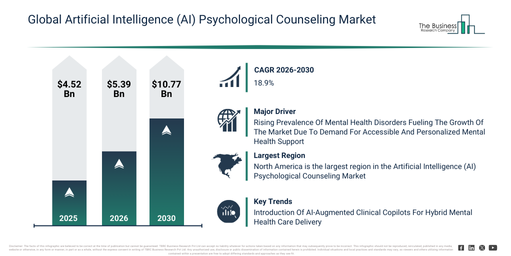
    Recent years have seen a rapid expansion in the market size for artificial intelligence (AI) psychological counseling. This sector is projected to expand from $4.52 billion in 2025 to $5.39 billion in 2026, demonstrating a compound annual growth rate (CAGR) of 19.2%. Historical growth within this market can be linked to several factors, including the increased embrace of AI tools in mental health, greater capital allocation towards digital therapeutics, a heightened understanding of mental health concerns, the proliferation of telehealth platforms, and the initial progress in natural language processing (NLP) and machine learning applications.

    The artificial intelligence (AI) psychological counseling market size is projected to undergo rapid expansion in the next few years. It is predicted to grow to $10.77 billion in 2030, demonstrating a compound annual growth rate (CAGR) of 18.9%. This anticipated growth can be attributed to several factors including an increasing demand for personalized mental health solutions, the growing adoption of cloud-based AI counseling, the rising integration of wearables and IoT for monitoring, the expansion of hybrid human-AI therapy models, and increasing investment in AI mental health startups. Additionally, major trends during this forecast period are expected to encompass technological advancements in generative AI and NLP, innovations in multimodal AI analytics, the development of personalized AI interventions, ongoing research in explainable AI (XAI), and further integration with digital therapeutics and telehealth platforms.

    Get A Free Sample Report With In-Depth Market Insights:

    https://thebusinessresearchcompany.com/sample_request?id=74976960&type=smp&name=Artificial%20Intelligence%20%28AI%29%20Psychological%20Counseling%20Market%20Report%202026&utm_source=Blogs&utm_medium=Paid&utm_campaign=Oct_PR

    Artificial Intelligence (AI) Psychological Counseling Market Demand Drivers: What’s Powering Industry Growth?

    The increasing occurrence of mental health conditions is anticipated to fuel the expansion of the artificial intelligence (AI) psychological counseling market in the future. These disorders are defined as states that markedly impact an individual’s feelings, cognition, actions, and general psychological well-being. The surge in mental health issues stems from heightened stress linked to contemporary living, encompassing demands at work, lack of social connection, and continuous engagement with digital platforms. Artificial intelligence (AI) psychological counseling assists in tackling mental health disorders by offering individualized, readily available, and expandable mental health assistance via virtual exchanges and insights derived from data. This approach enhances patient results through facilitating prompt intervention, ongoing observation, and customized therapeutic advice. For example, data from May 2024 indicates that, as per the American Psychiatric Association, a US-based non-profit organization, in 2024, 43% of adults report feeling more anxious than they did the year before, an increase from 37% in 2023 and 32% in 2022. Consequently, the growing occurrence of mental health conditions is propelling the development of the artificial intelligence (AI) psychological counseling market.

    Artificial Intelligence (AI) Psychological Counseling Market Segment Analysis: What Are The Core Market Categories?

    The artificial intelligence (AI) psychological counseling market covered in this report is segmented –

    1) By Component: Software, Hardware, Services

    2) By Deployment Mode: On-Premises, Cloud

    3) By Application: Clinical Therapy, Self-Help Tools, Mental Health Monitoring, Other Applications

    4) By End-User: Hospitals, Clinics, Research Institutes, Other End-Users

    Subsegments:

    1) By Software: Virtual Counseling Platforms, Emotion Recognition Algorithms, Natural Language Understanding Systems, Behavioral Analytics Software, Therapy Session Management Tools

    2) By Hardware: Wearable Monitoring Devices, Smart Therapeutic Headsets, Sensor Enabled Biofeedback Devices, Mental Health Tracking Devices, Home Based Diagnostic Tools

    3) By Services: Online Counseling Services, Professional Therapy Support Services, Technical Integration And Deployment Services, Training And Consultation Services, Maintenance And Remote Monitoring Services

    Artificial Intelligence (AI) Psychological Counseling Market Innovation Trends: What Developments Are Reshaping The Industry?

    Leading companies operating in the artificial intelligence (AI) psychological counseling market are concentrating on developing advanced mental health solutions, such as AI-powered clinical copilots, to enhance the effectiveness and efficiency of human therapists. AI-powered clinical copilots refer to artificial intelligence-driven software tools designed to assist healthcare professionals in clinical decision-making, documentation, and workflow management, thereby improving efficiency, accuracy, and patient care. For instance, in November 2024, Wysa Inc., a US-based provider of AI-driven mental health support, introduced Wysa Copilot. This platform is designed to elevate mental health therapy by seamlessly integrating AI support with human clinical care, offering secure, real-time and asynchronous messaging for patient-therapist communication. The solution enables clinicians to provide AI-guided tools to patients, monitor their progress through automated assessments, and receive alerts for crisis situations, effectively bridging the gap between digital self-help and professional therapy.

    Artificial Intelligence (AI) Psychological Counseling Market Competitive Analysis Of Leading Industry Participants

    Major companies operating in the artificial intelligence (AI) psychological counseling market are Lyra Health Inc., Noom Inc., Headspace Health Inc., Spring Health Inc., Cerebral Inc., Calm.com Inc., SonderMind Inc., WellDoc Inc., Meru Health Inc., Woebot Health Inc., Mindstrong Health Inc., Cognito Therapeutics Inc., Hume AI Inc., Wysa Ltd., Limbic Limited, RealizedCare Inc., Naluri Hidup Sdn Bhd, Youper Inc., Elomia Inc., Replika Inc., Videra Health Inc.

    View The Full Artificial Intelligence (AI) Psychological Counseling Market Report:

    https://thebusinessresearchcompany.com/report/artificial-intelligence-ai-psychological-counseling-market-report?utm_source=Blogs&utm_medium=Paid&utm_campaign=Oct_PR

    Artificial Intelligence (AI) Psychological Counseling Market Geographic Spread And Regional Opportunities

    North America was the largest region in the artificial intelligence (AI) psychological counseling market in 2025. Asia-Pacific is expected to be the fastest-growing region in the forecast period. The regions covered in the artificial intelligence (AI) psychological counseling market report are Asia-Pacific, South East Asia, Western Europe, Eastern Europe, North America, South America, Middle East, Africa.

    Reach Out To Our Team:

    The Business Research Company: https://www.thebusinessresearchcompany.com/

    Americas: +1 310-496-7795

    Asia: +44 7882 955267 & +91 8897263534

    Europe: +44 7882 955267

    Email us at: marketing@tbrc.info

    Follow us on:

    LinkedIn: https://in.linkedin.com/company/the-business-research-company

    YouTube: https://www.youtube.com/channel/UC24_fI0rV8cR5DxlCpgmyFQ

    Global Market Model: https://www.thebusinessresearchcompany.com/global-market-model
  • Artificial Intelligence (AI) Mental Service Robot Market Size In 2026 And Beyond: Understanding Future Growth Potential

    Artificial Intelligence (AI) Mental Service Robot Market Size In 2026 And Beyond: Understanding Future Growth Potential

    Built to provide research that’s more actionable and strategically valuable, The Business Research Company’s 2026 market reports include market attractiveness analysis, total addressable market sizing, company benchmarking matrices, interactive Excel dashboards, broader supply chain intelligence, emerging startup tracking, and in-depth product insights.

    Artificial Intelligence (AI) Mental Service Robot Market Forecast: What Value Will The Market Reach By 2030?

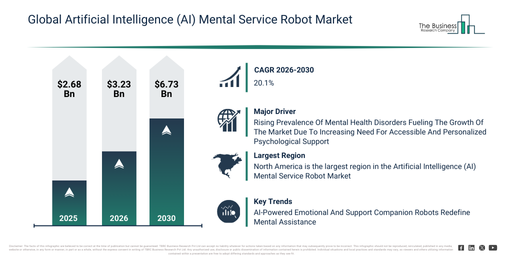
    The artificial intelligence (AI) mental service robot market has seen significant expansion in recent years. This market is projected to expand from $2.68 billion in 2025 to $3.23 billion in 2026, reflecting a compound annual growth rate (CAGR) of 20.4%. The historical development of this market can be linked to factors such as increased awareness of mental health, rising levels of stress and anxiety, an expanding elderly demographic, the broader adoption of digital health services, and an increasing need for tailored emotional assistance.

    The artificial intelligence (AI) mental service robot market size is projected to experience substantial growth over the upcoming years, with forecasts indicating it will reach $6.73 billion in 2030 at a compound annual growth rate (CAGR) of 20.1%. This anticipated expansion during the forecast period is primarily driven by the increasing adoption of AI mental service robots, their growing integration with telehealth platforms, rising investment in healthcare robotics, the expansion of corporate wellness programs, and a growing demand for cognitive-behavioral and mindfulness support. Significant trends for this period include technological advancements in emotion recognition, innovations in conversational AI and natural language processing (NLP), continued research and development in cognitive-behavioral assistance, ongoing developments in human-robot interaction, and progress in cloud-based AI and data analytics.

    Get A Free Sample Report With In-Depth Market Insights:

    https://thebusinessresearchcompany.com/sample_request?id=35059985&type=smp&name=Artificial%20Intelligence%20%28AI%29%20Mental%20Service%20Robot%20Market%20Report%202026&utm_source=Blogs&utm_medium=Paid&utm_campaign=Oct_PR

    Artificial Intelligence (AI) Mental Service Robot Market Demand Drivers Opening New Revenue Streams

    The increasing occurrence of mental health conditions is projected to drive the expansion of the artificial intelligence (AI) mental service robot market. Mental health disorders are defined as states that significantly influence an individual’s emotions, thoughts, actions, and overall psychological well-being. The rise in these disorders stems from heightened stress associated with contemporary lifestyles, including workplace pressures, social isolation, and continuous digital engagement. Artificial intelligence (AI) mental service robots contribute to addressing mental health disorders by offering interactive, tailored support and supervision for patients. They improve the accessibility and consistency of care by providing immediate counseling, behavioral guidance, and emotional aid in conjunction with conventional therapeutic approaches. For instance, in May 2024, the American Psychiatric Association, a US-based non-profit organization, reported that in 2024, 43% of adults experienced greater anxiety compared to the previous year, an increase from 37% in 2023 and 32% in 2022. Thus, the growing prevalence of mental health disorders is stimulating the growth of the artificial intelligence (AI) mental service robot market.

    Artificial Intelligence (AI) Mental Service Robot Market Segment Trends And Revenue Contributors

    The artificial intelligence (AI) mental service robot market covered in this report is segmented –

    1) By Component: Hardware, Software, Services

    2) By Type: Humanoid Or Anthropomorphic, Animal-Like Or Companion, Screen Or Virtual Assistants

    3) By Technology: Natural Language Processing, Machine Learning, Computer Vision, Emotional Recognition

    4) By Sales Channel: Direct Manufacturer Sales, Robotics Distributors, Online Sales Channels, Health-Technology Integrators

    5) By End Use: Health Care Facilities, Educational Institutions, Home Care, Research Institutes

    Subsegments:

    1) By Hardware: Sensors And Actuators, Cameras And Vision Modules, Processors And Control Units, Mobility And Locomotion Components, Communication And Connectivity Modules, Structural And Body Components

    2) By Software: Natural Language Understanding Software, Emotion Recognition Software, Learning And Adaptation Software, Interaction And Behavior Control Software, Navigation And Environmental Mapping Software, Safety And Compliance Monitoring Software

    3) By Services: Installation And Setup Services, Customization And Configuration Services, Training And User Support Services, Maintenance And Repair Services, System Integration Services, Remote Monitoring And Update Services

    Artificial Intelligence (AI) Mental Service Robot Market Trends Powering Strategic Industry Growth

    Leading companies in the artificial intelligence (AI) mental service robot market are concentrating on creating sophisticated products, such as AI-driven emotional support systems, to improve mental well-being, deliver therapy, and alleviate loneliness. AI-driven emotional support systems are intelligent platforms in companion robots capable of understanding, responding to, and adapting to a user’s emotional state through conversation, touch, and personalized interaction. For instance, in January 2025, Mind with Heart Robotics Co. Ltd., a China-based robotics company, launched AnAn, a bionic AI-powered panda cub robot. This advanced biomimetic robot features a patented tactile sensing system where realistic fur covers over 10 tactile sensor suites, allowing it to react to touch with unique sounds. It includes an intelligent AI Brain with core and long-term memory and reminder functions, functioning as a personal assistant for seniors and offering personalized companionship without operator intervention. It also incorporates a dedicated app for customizing the panda’s personality and connects users to a global community, expanding its therapeutic applications and fostering emotional bonds for users across diverse demographics.

    Artificial Intelligence (AI) Mental Service Robot Market Key Participants And Competitive Landscape

    Major companies operating in the artificial intelligence (AI) mental service robot market are Sony Group Corporation, UBTECH Robotics Corp. Ltd., Emotix Private Limited, GROOVE X Inc., Soul Machines Limited, Hanson Robotics Ltd., Blue Frog Robotics S.A.S., Realbotix Corp, LuxAI S.A., Yukai Engineering Inc., RoboKind Inc., PAL Robotics S.L., PARO Robots U.S. Inc., Tombot Inc., Pandorabots Inc., Embodied Inc., Luvozo Public Benefit Corporation, Intuition Robotics Ltd., Furhat Robotics AB, Kindroid Inc.

    View The Full Artificial Intelligence (AI) Mental Service Robot Market Report:

    https://thebusinessresearchcompany.com/report/artificial-intelligence-ai-mental-service-robot-market-report?utm_source=Blogs&utm_medium=Paid&utm_campaign=Oct_PR

    Artificial Intelligence (AI) Mental Service Robot Market Geographic Analysis: Where Is Demand Rising Fastest?

    North America was the largest region in the artificial intelligence (AI) mental service robot market in 2025. Asia-Pacific is expected to be the fastest-growing region in the forecast period. The regions covered in the artificial intelligence (AI) mental service robot market report are Asia-Pacific, South East Asia, Western Europe, Eastern Europe, North America, South America, Middle East, Africa.

    Reach Out To Our Team:

    The Business Research Company: https://www.thebusinessresearchcompany.com/

    Americas: +1 310-496-7795

    Asia: +44 7882 955267 & +91 8897263534

    Europe: +44 7882 955267

    Email us at: marketing@tbrc.info

    Follow us on:

    LinkedIn: https://in.linkedin.com/company/the-business-research-company

    YouTube: https://www.youtube.com/channel/UC24_fI0rV8cR5DxlCpgmyFQ

    Global Market Model: https://www.thebusinessresearchcompany.com/global-market-model
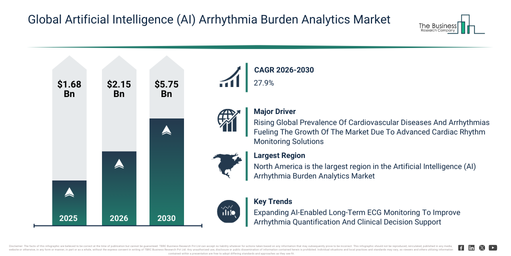
  • Artificial Intelligence (AI) Arrhythmia Burden Analytics Market Forecast Highlights A $8.72 Billion Opportunity For Industry Participants

    Artificial Intelligence (AI) Arrhythmia Burden Analytics Market Forecast Highlights A $8.72 Billion Opportunity For Industry Participants

    Built to provide research that’s more actionable and strategically valuable, The Business Research Company’s 2026 market reports include market attractiveness analysis, total addressable market sizing, company benchmarking matrices, interactive Excel dashboards, broader supply chain intelligence, emerging startup tracking, and in-depth product insights.

    Artificial Intelligence (AI) Arrhythmia Burden Analytics Market Growth Potential: How Will Market Size Shift Through 2030?

    The market size for artificial intelligence (AI) arrhythmia burden analytics has recently undergone exponential growth. This market is anticipated to expand from $1.68 billion in 2025 to $2.15 billion in 2026, at a compound annual growth rate (CAGR) of 28.2%. Its past growth can be ascribed to several contributing factors, including the increasing prevalence of cardiovascular diseases, the growing adoption of wearable ECG monitors, a rising demand for early arrhythmia detection, the expansion of remote patient monitoring platforms, and elevated investment in digital health infrastructure.

    The artificial intelligence (AI) arrhythmia burden analytics market size is projected to experience substantial growth in the coming years. This market is anticipated to reach $5.75 billion by 2030, demonstrating a compound annual growth rate (CAGR) of 27.9%. The expansion during the forecast period can be attributed to various factors, including the increasing integration of AI into healthcare IT systems, a growing focus on predictive and personalized cardiac care, the rising deployment of cloud-based AI solutions, the expansion of AI research and development efforts, and increasing regulatory support for AI-driven medical devices. Significant trends for the forecast period include innovation in predictive algorithms, advancements in cloud-based deployment, the integration of technology with wearable devices, investment in data analytics platforms, and the development of AI-enabled diagnostic software.

    Get A Free Sample Report With In-Depth Market Insights:

    https://thebusinessresearchcompany.com/sample_request?id=65783777&type=smp&name=Artificial%20Intelligence%20%28AI%29%20Arrhythmia%20Burden%20Analytics%20Market%20Report%202026&utm_source=Blogs&utm_medium=Paid&utm_campaign=Oct_PR

    Artificial Intelligence (AI) Arrhythmia Burden Analytics Market Demand Drivers Opening New Revenue Streams

    The increasing global incidence of cardiovascular diseases and arrhythmias is projected to drive the expansion of the artificial intelligence (AI) arrhythmia burden analytics market. Cardiovascular diseases and arrhythmias encompass a rising number of individuals globally suffering from heart and blood vessel conditions, including irregular heart rhythms such as atrial fibrillation, which are primary causes of death and disability worldwide. This increase in prevalence is attributed to aging populations and greater exposure to risk factors like hypertension, obesity, and diabetes, which elevate the probability of arrhythmias. Artificial intelligence (AI) arrhythmia burden analytics assists in managing cardiovascular diseases and arrhythmias by enabling ongoing, accurate analysis of cardiac rhythm data, thereby improving the early detection and management of arrhythmic events. For instance, in August 2025, data from the Centers for Disease Control and Prevention, a Switzerland-based public health agency, revealed that 90% of the nation’s 4.9 trillion dollars in annual health care spending is allocated to individuals with chronic and mental health conditions, with over 84,000 Americans dying each year from heart disease or stroke, and costs associated with cardiovascular diseases are anticipated to reach roughly 2 trillion dollars by 2050. Hence, the rising global prevalence of cardiovascular diseases and arrhythmias is fueling the growth of the artificial intelligence (AI) arrhythmia burden analytics market.

    Artificial Intelligence (AI) Arrhythmia Burden Analytics Market Segmentation: How Does The Market Break Down By Category?

    The artificial intelligence (AI) arrhythmia burden analytics market covered in this report is segmented –

    1) By Component: Software, Hardware, Services

    2) By Technology: Machine Learning (ML), Deep Learning (DL), Natural Language Processing (NLP)

    3) By Deployment Mode: On-Premises, Cloud-Based

    4) By Application: Arrhythmia Detection, Burden Quantification, Predictive Risk Assessment, Treatment Efficacy Monitoring, Clinical Decision Support

    5) By End-User: Healthcare Providers, Diagnostic Centers, Academic And Research Institutes, Other End-Users

    Subsegments:

    1) By Software: Data Management, Predictive Analytics, Visualization Tools, Reporting Platforms, Algorithm Development

    2) By Hardware: Monitoring Devices, Wearable Sensors, Data Storage Units, Processing Units, Connectivity Modules

    3) By Services: Consulting Services, Implementation Services, Maintenance And Support, Training Services, Cloud Hosting Services

    Artificial Intelligence (AI) Arrhythmia Burden Analytics Market Trends Powering Strategic Industry Growth

    Major companies in the artificial intelligence (AI) arrhythmia burden analytics market are prioritizing the development of advanced products, such as AI-powered arrhythmia detection systems, to bolster diagnostic accuracy, improve patient compliance, and reduce the chance of misdiagnosis and repeat testing. These AI-powered arrhythmia detection systems involve sophisticated algorithms within cardiac monitors that automatically analyze continuous electrocardiogram (ECG) data to precisely identify and categorize irregular heart rhythms. As an illustration, in May 2025, iRhythm Technologies, a US-based digital health company, launched its Zio ECG Recording and Analysis System in Japan. This is a prescription-only, long-term continuous monitoring system that incorporates a deep-learned artificial intelligence (AI) algorithm approved by Japan’s Pharmaceuticals and Medical Devices Agency (PMDA). It consists of a patch-based monitor, worn for up to 14 days, and an analysis service providing comprehensive reports, which facilitates the seamless detection of 13 arrhythmia types without significant patient burden. Additionally, it includes certified clinical review and is linked to a high diagnostic yield and low retesting rates, ultimately enhancing clinical efficiency for healthcare providers.

    Artificial Intelligence (AI) Arrhythmia Burden Analytics Market Top Companies Driving Competitive Growth

    Major companies operating in the artificial intelligence (AI) arrhythmia burden analytics market are Medtronic plc, Koninklijke Philips N.V., GE HealthCare Technologies Inc., Boston Scientific Corporation, iRhythm Technologies Inc., Bittium Corporation, Cardiac Rhythm Management, AliveCor Inc., VivaLNK Inc., Biotricity Inc., InfoBionic Inc., Cardiac Insight Inc., Cortrium ApS, Eko Health Inc., CardioComm Solutions Inc., Medi-Lynx Cardiac Monitoring LLC, QT Medical Inc., Wearable Sensors Ltd., HeartVista Inc., iCardiac Technologies Inc.

    View The Full Artificial Intelligence (AI) Arrhythmia Burden Analytics Market Report:

    https://thebusinessresearchcompany.com/report/artificial-intelligence-ai-arrhythmia-burden-analytics-market-report?utm_source=Blogs&utm_medium=Paid&utm_campaign=Oct_PR

    Artificial Intelligence (AI) Arrhythmia Burden Analytics Market Global Footprint: Which Region Leads The Industry?

    North America was the largest region in the artificial intelligence (AI) arrhythmia burden analytics market in 2025. Asia-Pacific is expected to be the fastest-growing region in the forecast period. The regions covered in the artificial intelligence (AI) arrhythmia burden analytics market report are Asia-Pacific, South East Asia, Western Europe, Eastern Europe, North America, South America, Middle East, Africa.

    Reach Out To Our Team:

    The Business Research Company: https://www.thebusinessresearchcompany.com/

    Americas: +1 310-496-7795

    Asia: +44 7882 955267 & +91 8897263534

    Europe: +44 7882 955267

    Email us at: marketing@tbrc.info

    Follow us on:

    LinkedIn: https://in.linkedin.com/company/the-business-research-company

    YouTube: https://www.youtube.com/channel/UC24_fI0rV8cR5DxlCpgmyFQ

    Global Market Model: https://www.thebusinessresearchcompany.com/global-market-model

  • Fat-Based Injectable Fillers Market Growth Is Accelerating As Industry Transformation Continues

    Delivering more actionable and strategically valuable research, The Business Research Company’s 2026 market reports feature market attractiveness analysis, total addressable market evaluation, company benchmarking matrices, interactive Excel dashboards, expanded supply chain intelligence, emerging startup coverage, and detailed product insights.

    Fat-Based Injectable Fillers Market Expansion From $0.78 Billion In 2026 To $1.18 Billion In 2030

    The market for fat-based injectable fillers has experienced significant expansion recently. This market is projected to expand from $0.7 billion in 2025 to $0.78 billion in 2026, demonstrating a compound annual growth rate (CAGR) of 10.7%. Historically, this growth can be ascribed to several factors, including a heightened demand for aesthetic improvement and facial rejuvenation, the growing acceptance of liposuction-based fat transfer methods, an increase in cosmetic surgery clinics and dermatology centers, greater public awareness of minimally invasive cosmetic options, and an rise in disposable income that facilitates elective aesthetic procedures.

    The fat-based injectable fillers market is projected to experience significant expansion in the upcoming years, reaching $1.18 billion by 2030, with a compound annual growth rate (CAGR) of 10.9%. This anticipated growth during the forecast period is attributed to advancements in regenerative medicine and stem cell-enriched fat grafting, a surging demand for lasting and natural aesthetic solutions, the progression of personalized cosmetic treatment planning, increased adoption of enhanced fat processing technologies, and the expansion of medical tourism for cosmetic procedures. Prominent trends observed within this period include a growing demand for minimally invasive fat grafting procedures, an escalating preference for natural and autologous aesthetic treatments, an increase in combination therapies utilizing fat and regenerative techniques, the proliferation of outpatient cosmetic surgery centers, and a wider embrace of advanced fat processing and purification systems.

    Download A Free Sample Report For Comprehensive Market Insights:

    https://www.thebusinessresearchcompany.com/sample_request?id=42697482&type=smp

    Fat-Based Injectable Fillers Market Demand Drivers: What Is Fueling Industry Growth?

    The increasing demand for minimally invasive cosmetic treatments is anticipated to drive growth within the fat-based injectable fillers market. These procedures are defined as cosmetic enhancements that require little to no surgical intervention, involve shorter recovery periods, and carry reduced risks compared to traditional surgical methods. The rising popularity of minimally invasive aesthetic procedures stems from a preference for swift treatments with minimal interruption to daily life. Fat-based injectable fillers cater to this demand by offering natural-looking outcomes, lower associated risks, and reduced downtime when compared to surgical alternatives. For example, data released in June 2024 by the American Society of Plastic Surgeons, a US-based organization, indicated that approximately 25.4 million minimally invasive cosmetic procedures were conducted in the U. S. in 2023, marking a 7% increase from 2022 and underscoring significant and growing adoption. Consequently, the escalating demand for minimally invasive aesthetic procedures is fueling the expansion of the fat-based injectable fillers market. The expansion of cosmetic and medical aesthetic clinics is projected to stimulate the growth of the fat-based injectable fillers market. These clinics are specialized healthcare establishments that deliver non-surgical and minimally invasive cosmetic treatments focused on enhancing physical appearance and skin condition. The increase in these clinics is driven by rising consumer interest in aesthetic procedures, greater public awareness of cosmetic enhancements, and ongoing innovations in aesthetic treatment technologies. Fat-based injectable fillers support the proliferation of these clinics by providing natural-looking, minimally invasive options for facial rejuvenation, which draws a wider patient demographic seeking safe and effective aesthetic solutions. For instance, in February 2024, the International Society of Aesthetic Plastic Surgery (ISAPS), a US-based professional body, reported that the total number of aesthetic procedures performed globally rose by 11.2% in 2023 compared to the previous year. Therefore, the growth in cosmetic and medical aesthetic clinics is propelling the fat-based injectable fillers market forward.

    Fat-Based Injectable Fillers Market Segments: Where Are The Largest Growth Opportunities?

    The fat-based injectable fillers market covered in this report is segmented –

    1) By Type: Autologous Fat Injections, Allogeneic Fat Injections, Other Types

    2) By Material: Micronized Fat, Nanofat, Macrofat

    3) By Gender: Female, Male

    4) By Application: Facial Line Correction, Lip Enhancement, Breast Augmentation, Buttock Augmentation, Other Applications

    5) By End User: Hospitals, Cosmetic Clinics, Ambulatory Surgical Centers, Other End-Users

    Subsegments:

    1) By Autologous Fat Injections: Micro Fat Grafting, Nano Fat Grafting, Structural Fat Grafting, Stem Cell Enriched Fat Grafting

    2) By Allogeneic Fat Injections: Processed Donor Fat, Cryopreserved Fat, Decellularized Fat Matrix, Sterilized Fat Derivatives

    Fat-Based Injectable Fillers Market Innovation Trends: Which Developments Are Transforming The Industry?

    Leading companies in the fat-based injectable fillers market are concentrating on developing novel products, such as structural adipose allograft fillers, to satisfy the growing demand for aesthetic treatments that appear natural, are long-lasting, and minimally invasive. Structural adipose allograft fillers are injectable solutions derived from processed human adipose (fat) tissue that preserve extracellular matrix components, growth factors, and proteins, thereby enabling both volumization and tissue regeneration. For instance, in September 2025, Tiger Aesthetics, a US-based medical aesthetics company, introduced alloClae, an innovative structural adipose injectable specifically designed for body contouring applications. This product is made of purified, donor-derived adipose tissue, processed to retain regenerative elements like collagen and growth factors, allowing it to integrate with host tissue and encourage natural fat regeneration. It is a ready-to-use, shelf-stable injectable that removes the requirement for liposuction, which is necessary in traditional autologous fat grafting, thereby reducing the procedure time and its invasiveness.

    Fat-Based Injectable Fillers Market Major Participants And Competitive Dynamics

    Major companies operating in the fat-based injectable fillers market are Merz Aesthetics, MTF Biologics, Huons Co. Ltd., Dongkook Pharmaceutical, Anika Therapeutics Inc, Daehan New Pharm, Estetique International, MicroAire Surgical Instruments, RegenLab SA, Koru Pharma, SoftFil, Teoxane Laboratories, Cytori Therapeutics, Gana R&D, Nouvag AG, Lipogems International S. p. A., Iskra Medical, Black & Black Surgical Inc., HK Surgical, Marina Medical Instruments

    Access The Complete Fat-Based Injectable Fillers Market Report:

    https://www.thebusinessresearchcompany.com/report/fat-based-injectable-fillers-market-report

    #Fat-Based Injectable Fillers Market Largest Region: Which Geography Holds The Highest Market Share?

    North America was the largest region in the fat-based injectable fillers market in 2025. Asia-Pacific is expected to be the fastest-growing region in the forecast period. The regions covered in the fat-based injectable fillers market report are Asia-Pacific, South East Asia, Western Europe, Eastern Europe, North America, South America, Middle East and Africa.

    Get in touch with us:

    The Business Research Company: https://www.thebusinessresearchcompany.com/

    Americas: +1 310-496-7795

    Asia: +44 7882 955267 & +91 8897263534

    Europe: +44 7882 955267

    Email us at: marketing@tbrc.info

    Follow us on:

    LinkedIn: https://in.linkedin.com/company/the-business-research-company

    YouTube: https://www.youtube.com/channel/UC24_fI0rV8cR5DxlCpgmyFQ

    Global Market Model: https://www.thebusinessresearchcompany.com/global-market-model