Category: Healthcare Services

  • Large-Surface-Area Microcarrier Bioreactor Market Outlook 2026–2030: Growth Trends, Market Dynamics And Emerging Opportunities

    Large-Surface-Area Microcarrier Bioreactor Market Outlook 2026–2030: Growth Trends, Market Dynamics And Emerging Opportunities

    Backed by market attractiveness analysis, total addressable market sizing, company benchmarking matrices, interactive Excel dashboards, wider supply chain intelligence, emerging startup coverage, and detailed product-level insights, The Business Research Company’s 2026 market reports are designed to offer research that is more actionable and strategically valuable than ever.

    Large-Surface-Area Microcarrier Bioreactor Market Size, Value And Growth Trajectory Through 2030

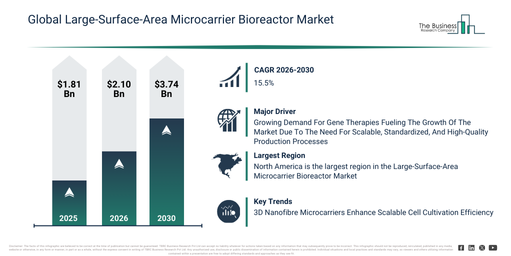
    The market size for large-surface-area microcarrier bioreactors has experienced rapid growth in recent years. It is projected to increase from $1.81 billion in 2025 to $2.10 billion in 2026, driven by a compound annual growth rate (CAGR) of 15.8%. Historically, this growth can be attributed to factors including the increasing adoption of large-surface-area microcarrier bioreactors, a growing demand for high-density adherent cell cultures, rising investment in regenerative medicine research, the expansion of automated cell expansion technologies, and the increasing utilization of single-use microcarrier systems.

    The large-surface-area microcarrier bioreactor market is anticipated to expand significantly in the coming years, reaching $3.74 billion in 2030 at a compound annual growth rate (CAGR) of 15.5%. This projected growth throughout the forecast period stems from an increased focus on scalable stem cell production, growing investments in advanced microcarrier bioprocessing, a rising demand for clinical-grade cell expansion, the expansion of biotechnology and pharmaceutical R&D efforts, and a strong uptick in the adoption of automated and high-precision platforms. Key trends expected in the forecast period include technological advancements in microcarrier bioreactors, innovations within automated cell expansion platforms, developments in high-density adherent cell culture techniques, research and development surrounding single-use microcarrier systems, and enhancements in real-time monitoring and process control.

    Get A Free Sample Report With In-Depth Market Insights:

    https://thebusinessresearchcompany.com/sample_request?id=71861363&type=smp&name=Large-Surface-Area%20Microcarrier%20Bioreactor%20Market%20Report%202026&utm_source=Blogs&utm_medium=Paid&utm_campaign=Oct_PR

    Large-Surface-Area Microcarrier Bioreactor Market Opportunity Drivers: What’s Unlocking New Revenue Potential?

    The expanding need for gene therapies is projected to fuel the advancement of the large-surface-area microcarrier bioreactor market in the future. Gene therapy is a medical method involving the modification or replacement of faulty genes to address or prevent illnesses. The heightened demand for gene therapy stems from progress in genetic sequencing and diagnostics, which facilitate precise identification of disease-causing genes for focused treatment. Large-surface-area microcarrier bioreactors support gene therapy by offering an extensive surface for the efficient proliferation of adherent cells utilized in gene-modified treatments. They improve therapeutic development by boosting cell yield, ensuring uniformity, and enabling the scalable manufacture of gene therapy products. For example, in December 2024, the American Society of Gene & Cell Therapy (ASGCT), a US-based non-profit medical and scientific organization, reported that the Food and Drug Administration (FDA) approved six gene therapy products in 2023, an increase from five approvals in 2022. Consequently, the rising demand for gene therapies is propelling the growth of the large-surface-area microcarrier bioreactor market. Increased healthcare spending is anticipated to drive the large-surface-area microcarrier bioreactor market forward. Healthcare expenditure signifies the total financial resources allocated to healthcare services, encompassing medical treatments, hospital care, medications, and public health initiatives, by governments, businesses, and individuals. The surge in healthcare spending is attributed to the growing prevalence of chronic diseases, which necessitate prolonged and costly treatments. Elevated healthcare expenditure benefits large-surface-area microcarrier bioreactors by allowing investment in advanced bioprocessing technologies that facilitate large-scale cell production. This enhances therapeutic development through improved efficiency, scalability, and consistency in the manufacturing of cell and gene therapies. For instance, in May 2024, the Office for National Statistics, a UK-based government department, indicated that total healthcare expenditure recorded a 5.6% rise in nominal terms in 2023, representing a 0.9% growth compared to 2022. Therefore, the increasing healthcare expenditure is fostering the expansion of the large-surface-area microcarrier bioreactor market.

    Large-Surface-Area Microcarrier Bioreactor Market Segment Trends And Revenue Contributors

    The large-surface-area microcarrier bioreactor market covered in this report is segmented –

    1) By Product Type: Single-Use Bioreactors, Multi-Use Bioreactors

    2) By Microcarrier Type: Synthetic Microcarriers, Natural Microcarriers, Hybrid Microcarriers

    3) By Distribution Channel: Hospital Pharmacy, Online Pharmacy, Retail Pharmacy

    4) By Application: Cell Therapy, Vaccine Production, Tissue Engineering, Stem Cell Research, Other Appplications

    5) By End User: Pharmaceutical And Biotechnology Companies, Research Institutes, Contract Manufacturing Organizations, Other End Users

    Subsegments:

    1) By Single-Use Bioreactors: Disposable Microcarrier Vessels, Pre-Sterilized Culture Chambers, Single-Cycle Expansion Units, Plug-And-Play Bioprocessing Modules, Disposable Agitation Systems

    2) By Multi-Use Bioreactors: Autoclavable Microcarrier Vessels, Cleanable Stainless Steel Chambers, Reusable Agitation Systems, Long-Term Operation Bioprocess Units, Reprocessable Culture Modules

    Large-Surface-Area Microcarrier Bioreactor Market Innovation Trends Shaping Future Development

    Leading companies in the large-surface-area microcarrier bioreactor market are prioritizing the development of advanced products, such as 3D nanofibre scaffolds, to boost operational efficiency, enhance cell proliferation, and reduce both process variability and overall development timelines. These 3D nanofibre microcarriers are sophisticated, biomimetic scaffolds that provide a three-dimensional environment suitable for cell adhesion and proliferation, mirroring the natural extracellular matrix. For example, in February 2025, Cellevate AB, a Sweden-based innovator in cell culture materials, unveiled the Cellevat3D nanofibre microcarrier. This customizable, synthetic microcarrier is designed for scalable cell cultivation, featuring a unique nanofibrous architecture that increases the surface area for superior cell attachment and yield. It incorporates precise control over biochemical and physical parameters, enabling optimal growth conditions for various cell types, including stem cells and therapeutic cells, without requiring extensive process re-development. Additionally, it offers xeno-free and animal-free material options, which enhances product safety and regulatory compliance for biopharmaceutical and cultivated meat producers.

    Large-Surface-Area Microcarrier Bioreactor Market Competitive Landscape: Which Companies Lead The Industry?

    Major companies operating in the large-surface-area microcarrier bioreactor market are Thermo Fisher Scientific Inc., Merck KGaA, Corning Incorporated, Lonza Group AG, Cytiva Sweden AB, Sartorius AG, Bio-Rad Laboratories Inc., Eppendorf SE, Repligen Corporation, Pall Corporation, PBS Biotech Inc., Applikon Biotechnology B.V., Esco VacciXcell, Meissner Filtration Products Inc., Distek Inc., Infors HT AG, Adolf Kühner AG, Kuhner Shaker GmbH, Cellexus Ltd., Solaris Biotech S.r.l.

    View The Full Large-Surface-Area Microcarrier Bioreactor Market Report:

    https://thebusinessresearchcompany.com/report/large-surface-area-microcarrier-bioreactor-market-report?utm_source=Blogs&utm_medium=Paid&utm_campaign=Oct_PR

    Large-Surface-Area Microcarrier Bioreactor Market Regional Outlook: Where Is Opportunity Concentrated?

    North America was the largest region in the large-surface-area microcarrier bioreactor market in 2025. Asia-Pacific is expected to be the fastest-growing region in the forecast period. The regions covered in the large-surface-area microcarrier bioreactor market report are Asia-Pacific, South East Asia, Western Europe, Eastern Europe, North America, South America, Middle East, Africa.

    Reach Out To Our Team:

    The Business Research Company: https://www.thebusinessresearchcompany.com/

    Americas: +1 310-496-7795

    Asia: +44 7882 955267 & +91 8897263534

    Europe: +44 7882 955267

    Email us at: marketing@tbrc.info

    Follow us on:

    LinkedIn: https://in.linkedin.com/company/the-business-research-company

    YouTube: https://www.youtube.com/channel/UC24_fI0rV8cR5DxlCpgmyFQ

    Global Market Model: https://www.thebusinessresearchcompany.com/global-market-model
  • Independent Medical Review Service Market 2026 Outlook: Market Size, CAGR And Key Growth Opportunities

    Independent Medical Review Service Market 2026 Outlook: Market Size, CAGR And Key Growth Opportunities

    Featuring market attractiveness scoring, total addressable market sizing, company benchmarking matrices, interactive Excel dashboards, deeper supply chain intelligence, emerging startup tracking, and granular product-level insights, The Business Research Company’s 2026 market reports are built to deliver research that is both more actionable and more strategically valuable.

    Independent Medical Review Service Market Revenue Outlook: What CAGR Lies Ahead Through 2030?

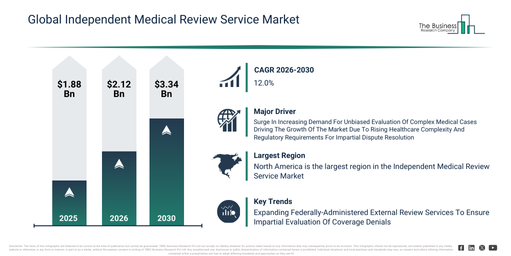
    The independent medical review service market size has experienced rapid expansion in recent years. This market is set to grow from $1.88 billion in 2025 to $2.12 billion in 2026, reflecting a compound annual growth rate (CAGR) of 12.3%. The historical development of this market is attributable to several factors, including the rising need for impartial medical evaluations, an increase in insurance claim disputes, the growing adoption of value-based healthcare, an expansion in monitoring healthcare quality, and the increasing requirements for regulatory compliance.

    The independent medical review service market is projected to experience substantial expansion over the coming years, reaching a valuation of $3.34 billion by 2030, demonstrating a compound annual growth rate (CAGR) of 12.0%. This anticipated growth is driven by factors such as the increasing adoption of telehealth and remote review solutions, the rising demand for economical healthcare dispute resolution, enhanced integration of advanced data analytics, the broader digitalization of healthcare, and increased public understanding of patient rights and the need for transparency. Key trends expected during this period involve technological progress in remote medical review platforms, new developments in clinical decision support systems, improvements in healthcare data management practices, research and innovation in artificial intelligence-assisted case evaluation, and advancements in cybersecurity and privacy measures for sensitive healthcare information.

    Get A Free Sample Report With In-Depth Market Insights:

    https://thebusinessresearchcompany.com/sample_request?id=86774955&type=smp&name=Independent%20Medical%20Review%20Service%20Market%20Report%202026&utm_source=Blogs&utm_medium=Paid&utm_campaign=Oct_PR

    Independent Medical Review Service Market Growth Momentum: What Factors Are Shaping Demand?

    The escalating need for impartial assessments of intricate medical cases is projected to drive the expansion of the independent medical review service market. Impartial assessment entails an objective appraisal of medical choices, treatment strategies, and disagreements over insurance claims by an autonomous third-party medical professional, ensuring equity and appropriate patient care. This demand stems from the increasing complexity of healthcare treatments and the broader implementation of independent dispute resolution processes, which are mandated by regulations to protect patients and resolve conflicts between healthcare providers and insurers. Independent medical review services facilitate this trend by offering objective evaluations that aid in dispute resolution, enhance adherence to standards, and uphold quality benchmarks across healthcare systems. For example, in April 2025, Health systems, LLC, a US-based entity providing Pharmacy Benefit Management (PBM) and Ancillary Benefits Management (ABM), reported an increase in independent medical review applications to 199,651 in 2024, marking a 14.07% rise from 2023. Concurrently, the number of final determinations issued grew by 8.29% compared to the previous year, according to the California Division of Workers’ Compensation annual report. Therefore, the growing requirement for objective evaluations of complex medical cases is propelling the growth of the independent medical review service market.

    Independent Medical Review Service Market Segment Trends And Revenue Contributors

    The independent medical review service market covered in this report is segmented –

    1) By Type Of Review: Prior Authorization Reviews, Utilization Reviews, Peer Reviews, Independent Medical Evaluations (IME), Disability Claim Reviews

    2) By Delivery Mode: Onsite Review Services, Remote Or Virtual Review Services

    3) By Medical Specialty: Orthopedics And Musculoskeletal Disorders, Oncology, Cardiology, Neurology And Mental Health, Behavioral Health Or Substance Use Disorder, Internal Medicine

    4) By Application: Treatment Approval Disputes, Coverage Denial Disputes, Disability And Workers’ Compensation Review, Experimental Or Investigational Treatment Review, Quality Of Care Disputes

    5) By Client Type: Healthcare Providers, Legal Firms, Corporate Employers, Government Agencies, Healthcare Networks

    Subsegments:

    1) By Prior Authorization Reviews: Inpatient Authorization Review, Outpatient Authorization Review, Procedure Authorization Review, Medication Authorization Review, Diagnostic Test Authorization Review

    2) By Utilization Reviews: Prospective Utilization Review, Concurrent Utilization Review, Retrospective Utilization Review, Case Management Review, Resource Utilization Review

    3) By Peer Reviews: Physician Peer Review, Specialist Peer Review, Multidisciplinary Peer Review, Quality Of Care Peer Review, Clinical Outcome Peer Review

    4) By Independent Medical Evaluations: Physical Examination Evaluation, Mental Health Evaluation, Functional Capacity Evaluation, Medical Necessity Evaluation, Second Opinion Evaluation

    5) By Disability Claim Reviews: Short-Term Disability Claim Review, Long-Term Disability Claim Review, Workers Compensation Claim Review, Social Security Disability Claim Review, Critical Illness Claim Review

    Independent Medical Review Service Market Trends Redefining Industry Growth

    Major companies operating in the independent medical review service market are concentrating on broadening federally-administered external review services, such as the HHS-administered federal external review Process. This expansion aims to standardize the unbiased assessment of adverse benefit determinations, enhance transparency, and safeguard consumer appeal rights. The HHS-Administered Federal External Review Process is a government-supervised service enabling individuals whose health plans reject coverage due to medical judgment to seek an impartial review. It offers an unbiased evaluation of rejections concerning medical necessity, suitability, level of care, or investigational treatment, ensuring prompt decisions through established submission and response timelines. For instance, in September 2024, the Centers for Medicare & Medicaid Services (CMS), a U.S. federal healthcare agency, unveiled improvements to the HHS-Administered Federal External Review Process. This revised process permits consumers to submit written requests for external review within four months following a denial, mandates insurers to provide all supporting documents within five business days, and stipulates that standard external review decisions be issued within 45 days, with urgent expedited reviews finalized within 72 hours.

    Independent Medical Review Service Market Company Landscape And Competitive Strategy

    Major companies operating in the independent medical review service market are Optum IME & Review Services, MCMC LLC, MAXIMUS Federal Services Inc., IME Plus LLC, ReviewMed Inc., CorVel Corporation, MedRisk LLC, MedReview Inc., Paradigm Outcomes LLC, Advanced Medical Reviews Inc., eQHealth Solutions Inc., URAC-Accredited Review Services Inc., Healthcare Resolution Services Inc., AllMed Healthcare Management Inc., Kepro Technologies Pvt. Ltd., ProPeer Resources LLC, Independent Review Inc. (IRI), Physician Review Network LLC, Independent Medical Review Associates (IMRA), California Department of Industrial Relations

    View The Full Independent Medical Review Service Market Report:

    https://thebusinessresearchcompany.com/report/independent-medical-review-service-market-report?utm_source=Blogs&utm_medium=Paid&utm_campaign=Oct_PR

    Independent Medical Review Service Market Largest Region: Which Geography Holds The Highest Market Share?

    North America was the largest region in the independent medical review service market in 2025. Asia-Pacific is expected to be the fastest-growing region in the forecast period. The regions covered in the independent medical review service market report are Asia-Pacific, South East Asia, Western Europe, Eastern Europe, North America, South America, Middle East, Africa.

    Reach Out To Our Team:

    The Business Research Company: https://www.thebusinessresearchcompany.com/

    Americas: +1 310-496-7795

    Asia: +44 7882 955267 & +91 8897263534

    Europe: +44 7882 955267

    Email us at: marketing@tbrc.info

    Follow us on:

    LinkedIn: https://in.linkedin.com/company/the-business-research-company

    YouTube: https://www.youtube.com/channel/UC24_fI0rV8cR5DxlCpgmyFQ

    Global Market Model: https://www.thebusinessresearchcompany.com/global-market-model
  • Hospital Command Centers Market 2026: Market Size, Growth Drivers And Emerging Opportunities

    Hospital Command Centers Market 2026: Market Size, Growth Drivers And Emerging Opportunities

    Backed by market attractiveness analysis, total addressable market sizing, company benchmarking matrices, interactive Excel dashboards, wider supply chain intelligence, emerging startup coverage, and detailed product-level insights, The Business Research Company’s 2026 market reports are designed to offer research that is more actionable and strategically valuable than ever.

    Hospital Command Centers Market Revenue Growth On Track For A 16.3% CAGR Through 2030

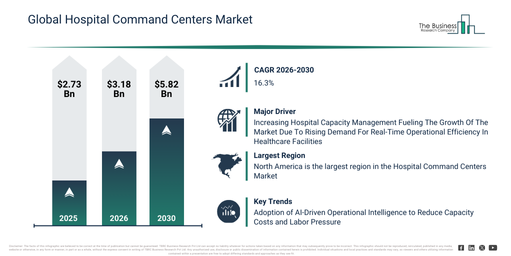
    The market for hospital command centers has experienced rapid expansion in recent times. It is projected to expand from $2.73 billion in 2025 to $3.18 billion in 2026, demonstrating a compound annual growth rate (CAGR) of 16.6%. Historically, this growth can be ascribed to several factors, including the escalation of hospital operational complexities, a heightened emphasis on optimizing patient flow, the increased uptake of centralized decision support systems, the broadening of emergency preparedness initiatives, and the progressive deployment of real-time hospital monitoring solutions.

    The hospital command centers market is anticipated to experience substantial growth in the coming years. It is projected to reach $5.82 billion by 2030, at a compound annual growth rate (CAGR) of 16.3%. This expansion during the forecast period is driven by factors such as the increasing demand for integrated operations management platforms, a greater adoption of data-driven hospital decision-making, the escalating need for enhanced patient safety and quality outcomes, the broadening of value-based healthcare models, and rising investment in digital hospital infrastructure. Prominent trends for the upcoming period include technological advancements in real-time analytics, innovations in artificial intelligence-enabled hospital operations, developments in telehealth-supported command functions, research and development in predictive hospital management systems, and progress in cloud-based hospital coordination platforms.

    Get A Free Sample Report With In-Depth Market Insights:

    https://thebusinessresearchcompany.com/sample_request?id=92912523&type=smp&name=Hospital%20Command%20Centers%20Market%20Report%202026&utm_source=Blogs&utm_medium=Paid&utm_campaign=Oct_PR

    Hospital Command Centers Market Demand Drivers Opening New Revenue Streams

    The expansion of the hospital command center market is fueled by the growing emphasis on managing hospital capacity. Hospital capacity management involves the strategic planning and operational supervision of hospital assets, such as beds and personnel, to effectively satisfy patient requirements. This intensified focus stems from a combination of rising patient numbers and limited resources like beds, staff, and budgets, necessitating that hospitals optimize their resource utilization to provide care that is prompt, safe, and economical. Hospital command centers facilitate this management by centralizing data from various departments, offering a comprehensive operational perspective, and thus enabling improved decision-making and resource allocation. For example, in January 2024, the National Health Service (NHS) England, a UK-based publicly funded healthcare system, successfully achieved its goal of adding 5,000 permanent core beds by early 2024, building on a 2022-23 baseline of 94,500 core beds, and reaching an average of 99,750 core beds by the week ending January 21, 2024. Consequently, the expanding implementation of hospital capacity management is a key driver for the growth of the hospital command center market.

    Hospital Command Centers Market Segment Landscape: Which Areas Lead Development?

    The hospital command centers market covered in this report is segmented –

    1) By Component: Software, Hardware, Services

    2) By Function: Patient Flow Management, Resource Allocation, Emergency Response, Bed Management, Clinical Operations, Others

    3) By Deployment Mode: On-Premises, Cloud-Based

    4) By End User: Hospitals, Specialty Clinics, Ambulatory Surgical Centers, Others

    Subsegments:

    1) By Software: Real Time Analytics Platforms, Operational Workflow Management Software, Patient Flow Optimization Systems, Communication And Collaboration Software, Capacity And Bed Management Software

    2) By Hardware: Command Center Display Systems, Real Time Monitoring Devices, Communication And Network Infrastructure, Sensor And Tracking Hardware, Server And Data Storage Equipment

    3) By Services: Implementation And Integration Services, Consulting And Workflow Optimization Services, Training And Skill Development Services, Maintenance And Support Services, Managed Command Center Operation Services

    Hospital Command Centers Market Trends Powering Strategic Industry Growth

    Leading companies operating in the hospital command centers market are concentrating on developing advanced platforms, such as AI-driven operational intelligence platforms, to reduce capacity-related costs, manage labor shortages, and improve the efficiency of supply distribution for beds, staff, and critical assets. AI-driven operational intelligence platforms are centralized digital systems that aggregate real-time clinical, operational, and administrative data, applying analytics and machine learning to predict bottlenecks, optimize patient flow, and support rapid operational decisions that directly influence cost per admission and resource utilization. For instance, in August 2025, NHS England, a UK-based public healthcare authority, introduced AI-enabled virtual hospital command center capabilities through its Federated Data Platform program to assist hospitals in managing bed occupancy, elective care backlogs, and discharge delays. This intelligence platform integrates real-time data from multiple hospital systems, applies predictive analytics to forecast demand and capacity constraints, and enables system-wide coordination to reduce reliance on expensive agency staff and avoidable lengths of stay, particularly at a time when hospitals face sustained inflation in labor and infrastructure costs.

    Hospital Command Centers Market Competitive Overview And Top Companies

    Major companies operating in the hospital command centers market are IBM Corporation, Oracle Corporation, Honeywell International Inc., Siemens Healthineers AG, Koninklijke Philips N.V., GE HealthCare Technologies Inc., Palantir Technologies Inc., Huron Consulting Group Inc., Dedalus Group, Allscripts Healthcare Solutions Inc., Everbridge Inc., Ascom Ltd., Care Logistics LLC, Spok Holdings Inc., TeleTracking Technologies Inc., LeanTaaS Inc., Qventus Inc., Connexall, Pointcore, Epic Systems Corporation

    View The Full Hospital Command Centers Market Report:

    https://thebusinessresearchcompany.com/report/hospital-command-centers-market-report?utm_source=Blogs&utm_medium=Paid&utm_campaign=Oct_PR

    Hospital Command Centers Market Leading Geography: Which Region Contributes The Most Revenue?

    North America was the largest region in the hospital command centers market in 2025. Asia-Pacific is expected to be the fastest-growing region in the forecast period. The regions covered in the hospital command centers market report are Asia-Pacific, South East Asia, Western Europe, Eastern Europe, North America, South America, Middle East, Africa.

    Reach Out To Our Team:

    The Business Research Company: https://www.thebusinessresearchcompany.com/

    Americas: +1 310-496-7795

    Asia: +44 7882 955267 & +91 8897263534

    Europe: +44 7882 955267

    Email us at: marketing@tbrc.info

    Follow us on:

    LinkedIn: https://in.linkedin.com/company/the-business-research-company

    YouTube: https://www.youtube.com/channel/UC24_fI0rV8cR5DxlCpgmyFQ

    Global Market Model: https://www.thebusinessresearchcompany.com/global-market-model
  • Hospital Command Center Software Market Set To Expand From $4.1 Billion In 2026: Growth Outlook Through 2030

    Hospital Command Center Software Market Set To Expand From $4.1 Billion In 2026: Growth Outlook Through 2030

    Featuring market attractiveness scoring, total addressable market sizing, company benchmarking matrices, interactive Excel dashboards, deeper supply chain intelligence, emerging startup tracking, and granular product-level insights, The Business Research Company’s 2026 market reports are built to deliver research that is both more actionable and more strategically valuable.

    Hospital Command Center Software Market Value Growth And Long-Term Outlook

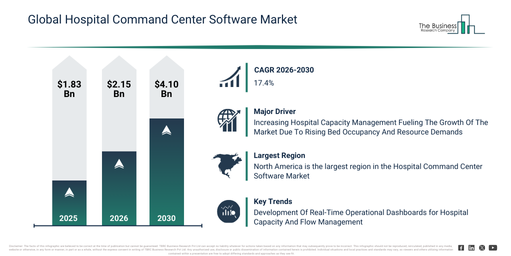
    The hospital command center software market size has seen rapid expansion in recent years. Its valuation is expected to rise from $1.83 billion in 2025 to $2.15 billion in 2026, achieving a compound annual growth rate (CAGR) of 17.7%. The historical development of this market is primarily due to a heightened requirement for real-time hospital visibility, the increasing adoption of digital health systems, a surging demand for optimizing patient flow, the broadening of hospital capacity management initiatives, and an intensified focus on reducing operational inefficiencies.

    The hospital command center software market size is projected for substantial expansion over the coming years, reaching $4.10 billion by 2030 with a compound annual growth rate (CAGR) of 17.4%. This growth during the forecast period is attributed to several factors, including the increasing integration of AI and predictive analytics, rising investments in hospital automation, a growing demand for scalable cloud-based command centers, the expansion of telehealth and remote monitoring ecosystems, and the escalating need for emergency preparedness and rapid response systems. Prominent trends expected in this period involve technological advancements in AI-driven workflow automation, innovations in unified hospital command platforms, developments in cloud-native healthcare orchestration tools, increasing research and development in real-time operational analytics, and the wider adoption of interoperability and data integration standards.

    Get A Free Sample Report With In-Depth Market Insights:

    https://thebusinessresearchcompany.com/sample_request?id=91940237&type=smp&name=Hospital%20Command%20Center%20Software%20Market%20Report%202026&utm_source=Blogs&utm_medium=Paid&utm_campaign=Oct_PR

    Hospital Command Center Software Market Growth Backed By Core Demand Fundamentals

    A growing emphasis on hospital capacity management is projected to drive expansion within the hospital command center software market moving ahead. This management involves the strategic planning and operational supervision of hospital assets like beds and personnel to efficiently satisfy patient needs. The heightened attention to hospital capacity management stems from rising patient numbers alongside limited beds, staff, and financial resources, compelling hospitals to optimize their resource utilization for consistent, safe, and economical care. Hospital command center software aids this by consolidating data from diverse departments, offering a comprehensive operational overview that facilitates improved decision-making and resource distribution. For example, in January 2024, the National Health Service (NHS) England, a UK-based publicly funded healthcare system, reported that it met its goal of adding 5,000 permanent core beds by early 2024, building on a 2022-23 baseline of 94,500 core beds, to reach an average of 99,750 core beds by the week ending January 21, 2024. Consequently, enhanced hospital capacity management is fueling the expansion of the hospital command center software market.

    Hospital Command Center Software Market Segments: Where Is Growth Concentrated?

    The hospital command center software market covered in this report is segmented –

    1) By Component: Software, Services

    2) By Deployment Mode: On-Premises, Cloud-Based

    3) By Application: Patient Flow Management, Resource Allocation, Bed Management, Emergency Response, Operational Analytics, Other Applications

    4) By End-User: Hospitals, Specialty Clinics, Ambulatory Surgical Centers, Other End-Users

    Subsegments:

    1) By Software: Hospital Information Management Software, Patient Flow Software, Resource Scheduling Software, Bed Management Software, Emergency Response Software, Operational Analytics Software

    2) By Services: Implementation Services, Training And Support Services, Maintenance Services, Cloud Hosting Services, Data Analytics Services, Telehealth Integration Services

    Hospital Command Center Software Market Growth Trends Reshaping The Competitive Landscape

    Leading companies within the hospital command center software market are concentrating on developing advanced solutions, such as real-time predictive analytics, to enhance operational efficiency, patient flow, and clinical decision-making across various health systems. Real-time predictive analytics refers to software-driven capabilities that continuously gather and analyze live hospital data to predict demand, identify bottlenecks, and enable proactive operational interventions. For instance, in October 2024, GE HealthCare Technologies Inc., a US-based medical technology company, introduced the Hospital Pulse Tile for its Command Center Software. This launch integrates real-time predictive analytics to offer system-wide visibility into capacity, staffing, patient throughput, and care delivery performance. The Command Center utilizes advanced analytics and AI to convert complex hospital data into actionable insights, empowering leaders to anticipate surges, optimize resource utilization, and reduce delays in care.

    Hospital Command Center Software Market Competitive Landscape: Which Companies Lead The Industry?

    Major companies operating in the hospital command center software market are Oracle Corporation, GE HealthCare Technologies Inc., Koninklijke Philips N.V., Baxter International Inc., Palantir Technologies Inc., Epic Systems Corporation, Getinge AB, Dedalus Group S.p.A., Ascom Holding AG, Biofourmis Inc., TeleTracking Technologies Inc., Qmatic Group AB, LeanTaaS Inc., CenTrak Inc., Qventus Inc., Spok Holdings Inc., Alcidion Group Limited, Connexall Corporation, Q-nomy Inc., ABOUT Healthcare Inc., Zebra Technologies Corporation

    View The Full Hospital Command Center Software Market Report:

    https://thebusinessresearchcompany.com/report/hospital-command-center-software-market-report?utm_source=Blogs&utm_medium=Paid&utm_campaign=Oct_PR

    Hospital Command Center Software Market Regional Outlook: Where Is Opportunity Concentrated?

    North America was the largest region in the hospital command center software market in 2025. Asia-Pacific is expected to be the fastest-growing region in the forecast period. The regions covered in the hospital command center software market report are Asia-Pacific, South East Asia, Western Europe, Eastern Europe, North America, South America, Middle East, Africa.

    Reach Out To Our Team:

    The Business Research Company: https://www.thebusinessresearchcompany.com/

    Americas: +1 310-496-7795

    Asia: +44 7882 955267 & +91 8897263534

    Europe: +44 7882 955267

    Email us at: marketing@tbrc.info

    Follow us on:

    LinkedIn: https://in.linkedin.com/company/the-business-research-company

    YouTube: https://www.youtube.com/channel/UC24_fI0rV8cR5DxlCpgmyFQ

    Global Market Model: https://www.thebusinessresearchcompany.com/global-market-model
  • Hodgkin’s Lymphoma Treatment Market Size Reaches $3.83 Billion In 2026: What Is Driving Growth?

    Hodgkin’s Lymphoma Treatment Market Size Reaches $3.83 Billion In 2026: What Is Driving Growth?

    Featuring market attractiveness scoring, total addressable market sizing, company benchmarking matrices, interactive Excel dashboards, deeper supply chain intelligence, emerging startup tracking, and granular product-level insights, The Business Research Company’s 2026 market reports are built to deliver research that is both more actionable and more strategically valuable.

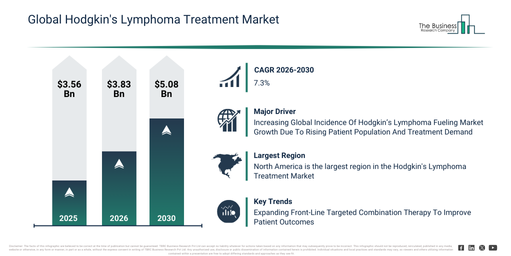
    Hodgkin’s Lymphoma Treatment Market Growth From $3.83 Billion In 2026 To $5.08 Billion By 2030 At A CAGR Of 7.3%

    The hodgkin’s lymphoma treatment market has experienced robust growth in recent years. It is projected to expand from $3.56 billion in 2025 to $3.83 billion in 2026, reflecting a compound annual growth rate (CAGR) of 7.6%. This historical expansion can be attributed to several factors including the rising incidence of hodgkin’s lymphoma, enhanced awareness leading to early diagnosis, increased adoption of chemotherapy and radiation therapy, the development of oncology healthcare infrastructure, and augmented government funding for cancer research.

    The hodgkin’s lymphoma treatment market size is anticipated to expand significantly in the near future. It is projected to reach $5.08 billion by 2030, showing a compound annual growth rate (CAGR) of 7.3%. This growth during the forecast period is largely driven by the increasing adoption of immunotherapy and targeted therapies, the wider availability of stem cell transplantation, a rising demand among patients for personalized treatments, the expansion of cancer centers into emerging markets, and enhanced insurance coverage along with reimbursement support. Key trends expected over this period include advancements in diagnostic imaging technology, innovations within immunotherapy and targeted therapies, the development of minimally invasive treatment choices, ongoing research and development in stem cell transplantation, and the integration of digital health and telemedicine for follow-up care.

    Get A Free Sample Report With In-Depth Market Insights:

    https://thebusinessresearchcompany.com/sample_request?id=87999131&type=smp&name=Hodgkin%27s%20Lymphoma%20Treatment%20Market%20Report%202026&utm_source=Blogs&utm_medium=Paid&utm_campaign=Oct_PR

    Hodgkin’s Lymphoma Treatment Market Growth Momentum: What Factors Are Shaping Demand?

    The rising occurrence of Hodgkin’s lymphoma is anticipated to drive expansion in the Hodgkin’s lymphoma treatment market moving ahead. This condition, Hodgkin’s lymphoma, is a lymphatic system cancer marked by atypical Reed–Sternberg cells within lymph nodes, primarily impacting B-lymphocytes, frequently manifesting as enlarged, painless glands, elevated body temperature, nocturnal perspiration, and diminished body mass. The prevalence of Hodgkin’s lymphoma is increasing, attributed to greater exposure to risk factors including tobacco use, excess weight, high blood pressure, and evolving socioeconomic circumstances across numerous areas, which collectively contribute to an elevated incidence of the disease over time. Treatment for Hodgkin’s lymphoma assists in managing the disease by specifically targeting and eradicating malignant lymphocytes using therapeutic approaches like chemotherapy, radiation therapy, or immunotherapy. Such treatment enhances patient results through mitigating disease advancement, attaining periods of remission, and boosting overall survival percentages. For example, by October 2025, the American Cancer Society, a US-based nonprofit organization, projects that Hodgkin lymphoma in the United States will comprise approximately 8,720 new cases, with 4,840 affecting males and 3,880 affecting females, alongside an estimated 1,150 deaths, split between 720 males and 430 females. Consequently, the growing frequency of Hodgkin’s lymphoma is stimulating expansion within the Hodgkin’s lymphoma treatment market.

    Hodgkin’s Lymphoma Treatment Market Segmentation: How Does The Market Break Down By Category?

    The hodgkin’s lymphoma treatment market covered in this report is segmented –

    1) By Type of Treatment: Chemotherapy, Radiation Therapy, Targeted Therapy, Immunotherapy

    2) By Disease Type: Classical Hodgkin Lymphoma (CHL), Nodular Lymphocyte-Predominant Hodgkin Lymphoma (NLPHL)

    3) By Treatment Stage: Early-Stage, Advanced-Stage, Relapsed

    4) By Stem Cell Transplantation: Autologous Stem Cell Transplant, Allogeneic Stem Cell Transplant

    5) By End-Use: Hospitals, Specialty Clinics, Cancer Centers, Ambulatory Care Centers, Home Healthcare Services

    Subsegments:

    1) By Chemotherapy: Combination Chemotherapy, Single Agent Chemotherapy, High Dose Chemotherapy with Stem Cell Transplantation

    2) By Radiation Therapy: External Beam Radiation Therapy, Proton Beam Radiation Therapy, Intensity Modulated Radiation Therapy

    3) By Targeted Therapy: Monoclonal Antibody Therapy, Antibody Drug Conjugate Therapy, Small Molecule Inhibitor Therapy

    4) By Immunotherapy: Immune Checkpoint Inhibitor Therapy, Chimeric Antigen Receptor T Cell Therapy, Cytokine Based Immunotherapy

    Hodgkin’s Lymphoma Treatment Market Trends Redefining Industry Growth

    Companies operating within the Hodgkin’s lymphoma treatment market are concentrating on developing advanced therapies, including front-line targeted combination treatments, to enhance their effectiveness, mitigate treatment-related illness, and expand initial options for patients suffering from advanced forms of the disease. Front-line targeted combination therapies involve utilizing two or more precision medicines together as the initial intervention, aiming to concurrently affect multiple disease-driving pathways, thereby improving response rates and delaying the onset of resistance in newly diagnosed patients. For example, in June 2025, Takeda, a Japan-based pharmaceutical company, secured European Commission approval for ADCETRIS when combined with etoposide, cyclophosphamide, doxorubicin, dacarbazine and dexamethasone (ECADD) for adults with newly diagnosed Stage IIb with risk factors, Stage III, or Stage IV Hodgkin lymphoma. This approval was based on findings from the Phase 3 HD21 trial, which revealed superior safety and non-inferior progression-free survival compared to standard eBEACOPP chemotherapy. This particular front-line targeted combination therapy integrates a targeted ADC foundation, a chemotherapy regimen optimized to reduce acute toxicity, and broadened indications for frontline use, marking a substantial progression in Hodgkin’s lymphoma care.

    Hodgkin’s Lymphoma Treatment Market Key Players Shaping Industry Direction

    Major companies operating in the hodgkin’s lymphoma treatment market are F. Hoffmann-La Roche Ltd., Merck & Co. Inc., Pfizer Inc., Novartis AG, AstraZeneca plc, Bristol-Myers Squibb Company, Takeda Pharmaceutical Company Limited, Gilead Sciences Inc., Ono Pharmaceutical Co. Ltd., Jiangsu Hengrui Medicine Co. Ltd., Seagen Inc., Zhejiang Hisun Pharmaceutical Co. Ltd., BeiGene Ltd., Innovent Biologics Inc., HUTCHMED (China) Limited, Aurigene Discovery Technologies Limited, ADC Therapeutics SA, CStone Pharmaceuticals, Emcure Pharmaceuticals Ltd., Sorrento Therapeutics Inc.

    View The Full Hodgkin’s Lymphoma Treatment Market Report:

    https://thebusinessresearchcompany.com/report/hodgkins-lymphoma-treatment-market-report?utm_source=Blogs&utm_medium=Paid&utm_campaign=Oct_PR

    Hodgkin’s Lymphoma Treatment Market Regional Analysis: Which Geography Leads On Revenue?

    North America was the largest region in the hodgkin’s lymphoma treatment market in 2025. Asia-Pacific is expected to be the fastest-growing region in the forecast period. The regions covered in the hodgkin’s lymphoma treatment market report are Asia-Pacific, South East Asia, Western Europe, Eastern Europe, North America, South America, Middle East, Africa.

    Reach Out To Our Team:

    The Business Research Company: https://www.thebusinessresearchcompany.com/

    Americas: +1 310-496-7795

    Asia: +44 7882 955267 & +91 8897263534

    Europe: +44 7882 955267

    Email us at: marketing@tbrc.info

    Follow us on:

    LinkedIn: https://in.linkedin.com/company/the-business-research-company

    YouTube: https://www.youtube.com/channel/UC24_fI0rV8cR5DxlCpgmyFQ

    Global Market Model: https://www.thebusinessresearchcompany.com/global-market-model
  • High-Throughput Slide Scanning-As-A-Service Market Valued At $3.19 Billion In 2026: Key Trends And Growth Drivers

    High-Throughput Slide Scanning-As-A-Service Market Valued At $3.19 Billion In 2026: Key Trends And Growth Drivers

    Built to provide research that’s more actionable and strategically valuable, The Business Research Company’s 2026 market reports include market attractiveness analysis, total addressable market sizing, company benchmarking matrices, interactive Excel dashboards, broader supply chain intelligence, emerging startup tracking, and in-depth product insights.

    High-Throughput Slide Scanning-As-A-Service Market Expansion Outlook: What Revenue Opportunities Are Ahead?

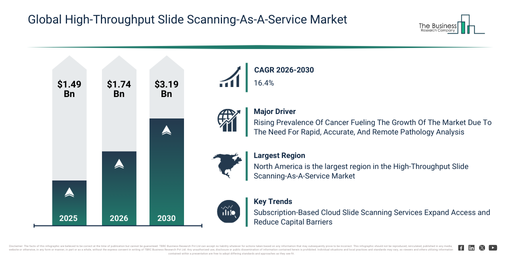
    The high-throughput slide scanning-as-a-service market has seen rapid expansion in recent years. It is projected to increase from $1.49 billion in 2025 to $1.74 billion in 2026, exhibiting a compound annual growth rate (CAGR) of 16.7%. This historic growth can be attributed to the rising adoption of digital pathology, a growing demand for high-throughput scanning, increased investment in pharmaceutical research, the expansion of academic and research applications, and the rising integration of AI in pathology workflows.

    The high-throughput slide scanning-as-a-service market is poised for significant expansion in the coming years. It is expected to reach $3.19 billion in 2030 at a compound annual growth rate (CAGR) of 16.4%. This growth during the forecast period can be attributed to the rising need for remote diagnostics, the increasing adoption of telepathology services, a growing demand for multiplexed imaging, the expansion of cloud-based slide platforms, and an enhanced focus on precision medicine applications. Major trends anticipated during this period include technological advancements in AI-powered image analysis, innovations in cloud-based digital slide platforms, the development of whole slide imaging for high-throughput scanning, research breakthroughs in automated pathology workflows, and advancements in multiplexed fluorescence imaging techniques.

    Get A Free Sample Report With In-Depth Market Insights:

    https://thebusinessresearchcompany.com/sample_request?id=17767455&type=smp&name=High-Throughput%20Slide%20Scanning-As-A-Service%20Market%20Report%202026&utm_source=Blogs&utm_medium=Paid&utm_campaign=Oct_PR

    High-Throughput Slide Scanning-As-A-Service Market Expansion Drivers: What’s Shaping Future Growth?

    An increase in cancer diagnoses is anticipated to drive the expansion of the high-throughput slide scanning-as-a-service market in the future. Cancer involves the unchecked proliferation and dissemination of atypical cells, which can harm adjacent tissues and organs without appropriate intervention. The growing incidence of cancer is linked to lifestyle factors like unhealthy eating habits, tobacco use, alcohol intake, and exposure to environmental contaminants, thereby increasing the likelihood of diverse cancer types. High-throughput slide scanning-as-a-service aids in cancer management by quickly converting numerous pathology slides into digital format for in-depth examination and virtual specialist advice. This service enhances the precision and speed of diagnosis, facilitating prompt treatment choices and superior patient results. As an illustration, data from October 2025 by NHS Digital, a UK government organisation, indicated 354,820 new cancer diagnoses in England during 2023, equating to an average of 972 diagnoses daily. This marked an increase of 8,605 cases from 2022, with prostate cancer emerging as the most frequently identified cancer, totaling 58,137 new cases and showing a 6% rise in registrations over the prior year. Consequently, the increasing occurrence of cancer is a key factor propelling the expansion of the high-throughput slide scanning-as-a-service market.

    High-Throughput Slide Scanning-As-A-Service Market Segment Trends And Revenue Contributors

    The high-throughput slide scanning-as-a-service market covered in this report is segmented –

    1) By Service Type: Brightfield Scanning, Fluorescence Scanning, Multiplexed Imaging, Other Service Types

    2) By Technology: Optical System, Automation Level, Scanning Resolution

    3) By Application: Pathology, Research, Drug Discovery, Clinical Diagnostics, Other Applications

    4) By End User: Hospitals And Clinics, Research Institutes, Pharmaceutical And Biotechnology Companies, Other End Users

    Subsegments:

    1) By Brightfield Scanning: Single Channel Brightfield, Multi-Channel Brightfield, High-Resolution Brightfield

    2) By Fluorescence Scanning: Single Fluorescence Channel, Multi-Fluorescence Channel, High-Sensitivity Fluorescence

    3) By Multiplexed Imaging: Sequential Multiplexing, Simultaneous Multiplexing, High-Plex Imaging

    4) By Other Service Types: Slide Quality Control, Tissue Morphology Analysis, Custom Imaging Services

    High-Throughput Slide Scanning-As-A-Service Market Strategic Trends: What Defines The Next Growth Phase?

    Major companies operating in the high-throughput slide scanning-as-a-service market are concentrating on developing subscription services, such as cloud-enabled slide scanning service models, to provide remote access to high-throughput whole slide imaging without requiring on-site infrastructure investment. These cloud-enabled slide scanning service models refer to outsourced whole-slide imaging offerings where glass slides are digitized and stored in secure cloud platforms, facilitating remote viewing, sharing, and analysis without needing on-premise scanners or IT infrastructure. For instance, in March 2023, OptraSCAN Inc., a US-based digital pathology solutions provider, launched OnDemand Digital Pathology, a cloud-enabled slide scanning service model, offering subscription access to whole slide scanners with 15–480 slide loading capacity and rapid scanning. This service will provide access to OptraSCAN’s whole-slide digital scanners (brightfield and fluorescence) with 15–480 slide capacity that scan a slide in approximately 58 seconds at 40x, alongside a high-end workstation preconfigured with workflow software, telepathology tools, and AI analysis modules for IHC, morphology, immunofluorescence, and cytology, plus Microsoft Azure–based cloud storage and round-the-clock support and services.

    High-Throughput Slide Scanning-As-A-Service Market Competitive Analysis Of Leading Industry Participants

    Major companies operating in the high-throughput slide scanning-as-a-service market are Koninklijke Philips N.V., IQVIA Holdings Inc., Laboratory Corporation of America Holdings, Roche Diagnostics International AG, Iron Mountain Incorporated, WuXi AppTec Co. Ltd., PerkinElmer Inc., Leica Biosystems Nussloch GmbH, Medical Imaging Solutions Pvt. Ltd., Charles River Laboratories International Inc., OptraSCAN Inc., Scopio Labs Inc., Pramana Inc., Molecular Pathology Laboratory Network Inc., 3DHISTECH Ltd., Experimental Pathology Laboratories Inc., Labtron Equipment Ltd., Applied Spectral Imaging Ltd., HistoWiz Inc., iHisto LLC

    View The Full High-Throughput Slide Scanning-As-A-Service Market Report:

    https://thebusinessresearchcompany.com/report/high-throughput-slide-scanning-as-a-service-market-report?utm_source=Blogs&utm_medium=Paid&utm_campaign=Oct_PR

    High-Throughput Slide Scanning-As-A-Service Market Geographic Spread And Regional Opportunities

    North America was the largest region in the high-throughput slide scanning-as-a-service market in 2025. Asia-Pacific is expected to be the fastest-growing region in the forecast period. The regions covered in the high-throughput slide scanning-as-a-service market report are Asia-Pacific, South East Asia, Western Europe, Eastern Europe, North America, South America, Middle East, Africa.

    Reach Out To Our Team:

    The Business Research Company: https://www.thebusinessresearchcompany.com/

    Americas: +1 310-496-7795

    Asia: +44 7882 955267 & +91 8897263534

    Europe: +44 7882 955267

    Email us at: marketing@tbrc.info

    Follow us on:

    LinkedIn: https://in.linkedin.com/company/the-business-research-company

    YouTube: https://www.youtube.com/channel/UC24_fI0rV8cR5DxlCpgmyFQ

    Global Market Model: https://www.thebusinessresearchcompany.com/global-market-model
  • Heat Stress Prevention Products Market Analysis: How The Industry Is Evolving Toward A $3.98 Billion Future

    Heat Stress Prevention Products Market Analysis: How The Industry Is Evolving Toward A $3.98 Billion Future

    Backed by market attractiveness analysis, total addressable market sizing, company benchmarking matrices, interactive Excel dashboards, wider supply chain intelligence, emerging startup coverage, and detailed product-level insights, The Business Research Company’s 2026 market reports are designed to offer research that is more actionable and strategically valuable than ever.

    Heat Stress Prevention Products Market Revenue Outlook: What CAGR Lies Ahead Through 2030?

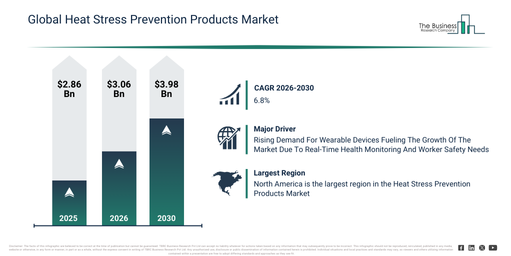
    The heat stress prevention products market size has seen strong growth in recent years. This market is projected to expand from $2.86 billion in 2025 to $3.06 billion in 2026, at a compound annual growth rate (CAGR) of 7.1%. The expansion observed in the historic period is attributable to increasing awareness of heat-related health risks, rising occupational health and safety regulations, an increasing incidence of extreme heat events, the expansion of industrial and construction sectors, and the rising adoption of safety clothing and cooling devices.

    The heat stress prevention products market is projected to experience robust expansion in the coming years. Its size is predicted to reach $3.98 billion in 2030, exhibiting a compound annual growth rate (CAGR) of 6.8%. This growth during the forecast period can be primarily attributed to several factors, including the escalation of global temperatures driven by climate change, the expansion of industrial activities in warmer geographical areas, the implementation of more stringent workplace safety protocols, the increasing uptake of wearable cooling and monitoring technologies, and the rising need within the agriculture and construction industries. Key trends anticipated during this period encompass significant technological improvements in wearable cooling and monitoring equipment, the development of new cooling garments and individual cooling remedies, the incorporation of IoT and AI for immediate heat stress surveillance, the proliferation of smart wearable instruments designed to prevent heat stress, and a surging consumer preference for cooling products that offer multiple functions and are environmentally sustainable.

    Get A Free Sample Report With In-Depth Market Insights:

    https://thebusinessresearchcompany.com/sample_request?id=40918422&type=smp&name=Heat%20Stress%20Prevention%20Products%20Market%20Report%202026&utm_source=Blogs&utm_medium=Paid&utm_campaign=Oct_PR

    Heat Stress Prevention Products Market Demand Drivers: What’s Powering Industry Growth?

    The escalating demand for wearable devices is projected to propel the growth of the heat stress prevention products market in the coming years. Wearable devices are defined as electronic gadgets worn on the body, frequently designed for health tracking, fitness monitoring, or providing smart functionalities. The rising need for wearable devices stems from increasing consumer health consciousness, as individuals are more actively seeking to supervise and improve their physical condition, track vital signs, and manage overall well-being. Heat stress prevention products enable wearable devices by integrating sensors and monitoring technologies that track body temperature, hydration levels, and physiological strain in real-time. They enhance worker safety and health outcomes through timely alerts and data-driven insights to prevent heat-related illnesses. For instance, in April 2025, as per the Parliamentary Office of Science and Technology, a UK-based parliamentary research and advisory body, between 2023 and 2024, the National Institute for Health and Care Research (NIHR) and UK Research and Innovation (UKRI) invested £11.5 million ($15.52 million) in 10 research projects focused on developing wearable technologies to support greater independence for people living with frailty or long-term physical disabilities. Therefore, the increasing demand for wearable devices is driving the growth of the heat stress prevention products market. The expanding worker safety regulations are anticipated to fuel the growth of the heat stress prevention products market going forward. Worker safety regulations refer to legal and industry-mandated requirements aimed at protecting employees from occupational hazards, including extreme heat exposure, physical strain, and heat-related illnesses in workplaces such as construction sites, manufacturing plants, and outdoor environments. The rise in such regulations is due to growing awareness of occupational health risks, which requires stricter government enforcement for employee well-being. Heat stress prevention products support worker safety regulations by providing solutions such as cooling vests, wearable sensors, hydration systems, and environmental monitoring tools that reduce the risk of heat-related injuries and ensure compliance with safety standards. For instance, in April 2025, according to the Virginia Department of Labor and Industry, a US-based state occupational safety agency, the Virginia Occupational Safety and Health (VOSH) program reported total safety and health inspections reached 2,008 in fiscal year 2024, representing a 46% increase over fiscal year 2022. Therefore, the increasing worker safety regulations are driving the growth of the heat stress prevention products market.

    Heat Stress Prevention Products Market Breakdown By Product Type And Application

    The heat stress prevention products market covered in this report is segmented –

    1) By Product Type: Cooling Wearables And Apparel, Hydration And Electrolyte Solutions, Environmental Heat Reduction Products, Personal Cooling Devices, Monitoring And Safety Devices

    2) By Technology: Passive Cooling, Active Cooling, Insulative Or Reflective, Smart Or Connected, Hydration Optimization

    3) By Distribution Channel: Business-To-Business (B2B), Business-To-Consumer (B2C)

    4) By End-User: Industrial Or Occupational, Sports And Recreation, Military And First Responders, Healthcare, General Consumer

    Subsegments:

    1) By Cooling Wearables And Apparel: Cooling Vest, Cooling Shirt, Cooling Jacket, Cooling Gloves, Cooling Hat

    2) By Hydration And Electrolyte Solutions: Oral Rehydration Solution, Electrolyte Drink Mix, Ready To Drink Electrolyte Beverage, Electrolyte Powder Sachets, Electrolyte Tablets

    3) By Environmental Heat Reduction Products: Shade Structures, Ventilation Fans, Evaporative Cooling Systems, Air Cooling Units, Reflective Shelters

    4) By Personal Cooling Devices: Battery Powered Cooling Vest, Personal Fan, Neck Cooler, Cooling Bandana, Cooling Wristband

    5) By Monitoring And Safety Devices: Body Temperature Sensor Device, Heat Exposure Alert Wearable, Hydration Reminder Device, Heart Rate Monitor Wearable, Environmental Heat Index Monitor

    Heat Stress Prevention Products Market Top Companies Driving Competitive Growth

    Major companies operating in the heat stress prevention products market are Symphony Limited, Radians Inc., Ergodyne Inc., Honeywell Safety Products, Thermoteknix Systems Ltd., Encon Safety Products Inc., TechNiche International, Allegro Industries Inc., COOLSHIRT Systems LLC, i2Cool Technology Inc., Climacool, Coolcore LLC, Polar Products Inc., Evalan GmbH, StaCool Industries, Arctic Heat Pty Ltd., CoolVest Inc., CoolPax Systems, Glacier Tek Inc., Bodytrak Inc.

    View The Full Heat Stress Prevention Products Market Report:

    https://thebusinessresearchcompany.com/report/heat-stress-prevention-products-market-report?utm_source=Blogs&utm_medium=Paid&utm_campaign=Oct_PR

    Heat Stress Prevention Products Market Global Footprint: Which Region Leads The Market?

    North America was the largest region in the heat stress prevention products market in 2025. Asia-Pacific is expected to be the fastest-growing region in the forecast period. The regions covered in the heat stress prevention products market report are Asia-Pacific, South East Asia, Western Europe, Eastern Europe, North America, South America, Middle East, Africa.

    Reach Out To Our Team:

    The Business Research Company: https://www.thebusinessresearchcompany.com/

    Americas: +1 310-496-7795

    Asia: +44 7882 955267 & +91 8897263534

    Europe: +44 7882 955267

    Email us at: marketing@tbrc.info

    Follow us on:

    LinkedIn: https://in.linkedin.com/company/the-business-research-company

    YouTube: https://www.youtube.com/channel/UC24_fI0rV8cR5DxlCpgmyFQ

    Global Market Model: https://www.thebusinessresearchcompany.com/global-market-model

  • Hand Hygiene Stations Market Growth Outlook: Why Analysts Expect Continued Expansion

    Hand Hygiene Stations Market Growth Outlook: Why Analysts Expect Continued Expansion

    Backed by market attractiveness analysis, total addressable market sizing, company benchmarking matrices, interactive Excel dashboards, wider supply chain intelligence, emerging startup coverage, and detailed product-level insights, The Business Research Company’s 2026 market reports are designed to offer research that is more actionable and strategically valuable than ever.

    Hand Hygiene Stations Market Size Outlook: How Quickly Will Revenue Expand Through 2030?

    The hand hygiene stations market has experienced rapid expansion in recent years. It is projected to grow from $2.29 billion in 2025 to $2.55 billion in 2026, demonstrating a compound annual growth rate (CAGR) of 11.6%. This historic growth is attributable to increasing public awareness concerning hand hygiene, the growing adoption of automatic dispensers, rising demand in healthcare facilities, the expansion of commercial and educational infrastructure, and an increasing focus on infection prevention.

    The hand hygiene stations market is projected to expand significantly in the coming years. Its value is forecast to reach $3.92 billion by 2030, demonstrating a compound annual growth rate (CAGR) of 11.4%. This expansion during the forecast period is driven by factors such as the increasing embrace of touchless and intelligent hygiene stations, heightened investment in sanitation infrastructure, a surge in demand for portable and wall-mountable units, the broadening of hygiene compliance programs, and a marked increase in the deployment of sensor-activated dispensers. Key trends anticipated over this period encompass technological progress in automatic dispensers, novel developments in touchless and smart systems, the creation of eco-friendly and refillable units, ongoing research and development into high-capacity sanitizer stations, and improvements in digital monitoring and tracking of usage.

    Get A Free Sample Report With In-Depth Market Insights:

    https://thebusinessresearchcompany.com/sample_request?id=28354222&type=smp&name=Hand%20Hygiene%20Stations%20Market%20Report%202026&utm_source=Blogs&utm_medium=Paid&utm_campaign=Oct_PR

    Hand Hygiene Stations Market Demand Drivers Opening New Revenue Streams

    The future expansion of the hand hygiene stations market is anticipated due to the increasing integration of automated, sensor-driven hand hygiene solutions. These automated, sensor-driven solutions encompass electronic dispensers equipped with motion sensors, badge-based tracking capabilities, and compliance analytics, offering continuous monitoring and insights into hand hygiene behaviors. The heightened uptake of automated, sensor-driven hand hygiene solutions stems from a greater focus by healthcare providers and public health bodies on achieving quantifiable and reliable hand hygiene to mitigate healthcare-acquired infections and enhance the safety of patients. These hand hygiene stations facilitate automated, sensor-driven solutions through the incorporation of sophisticated technologies, allowing for precise tracking, oversight, and documentation of hygiene conduct in both medical and public environments. An example illustrating this trend is provided by The Leapfrog Group, a US-based nonprofit organization, which reported in September 2024 that the adoption of electronic hand hygiene monitoring systems in U.S. hospitals reached 10% by 2023, signifying a twofold increase in the use of sensor-enabled compliance instruments. Consequently, the expanded implementation of automated, sensor-driven solutions is a key factor propelling the expansion of the hand hygiene stations market.

    Hand Hygiene Stations Market Segment Outlook: Which Categories Are Growing Fastest?

    The hand hygiene stations market covered in this report is segmented –

    1) By Product Type: Automatic Hand Sanitizer Dispensers, Manual Hand Sanitizer Dispensers, Touchless Hand Hygiene Stations, Wall-Mounted Hand Sanitizer Units, Portable Hand Hygiene Stations, Hand Sanitizer Kiosks

    2) By Portability And Installation: Permanent And Fixed Stations, Portable And Temporary Stations

    3) By Technology: Sensor-Activated Dispensers, Manual Dispensers, Smart And Connected Dispensers

    4) By Distribution Channel: Direct Sales From Manufacturers, Distributors And Wholesalers, Online Retail And E Commerce, Specialized Medical And Janitorial Suppliers

    5) By End User: Healthcare Facilities And Hospitals, Corporate Offices And Commercial Buildings, Educational Institutions, Hospitality And Food Service Establishments, Retail Stores And Shopping Malls

    Subsegments:

    1) By Automatic Hand Sanitizer Dispensers: Sensor-Activated Models, Foot-Pedal Models, Countertop Models, Rechargeable Battery Models, Large-Capacity Models

    2) By Manual Hand Sanitizer Dispensers: Lever-Operated Models, Push-Button Models, Countertop Manual Models, Wall-Mounted Manual Models, Refillable Cartridge Models

    3) By Touchless Hand Hygiene Stations: Infrared Sensor Stations, Ultrasonic Sensor Stations, Foot-Activated Touchless Stations, Fully Automated Hygiene Booths, Motion-Activated Stations

    4) By Wall-Mounted Hand Sanitizer Units: Plastic Wall-Mounted Units, Stainless Steel Wall-Mounted Units, Refillable Wall-Mounted Units, Lockable Wall-Mounted Units, Compact Wall-Mounted Units

    5) By Portable Hand Hygiene Stations: Mobile Stand Units, Outdoor Portable Stations, Battery-Powered Portable Stations, Foldable Portable Units, High-Capacity Portable Stations

    6) By Hand Sanitizer Kiosks: Digital Display Kiosks, Temperature Screening Kiosks, Advertising Panel Kiosks, Automated Refill Kiosks, Free-Standing Kiosks

    Hand Hygiene Stations Market Trends Powering Strategic Industry Growth

    Leading companies within the hand hygiene stations market are concentrating on developing sophisticated solutions, such as real-time compliance monitoring and staff engagement tools, to enhance infection control, improve adherence to hygiene protocols, and provide actionable insights into healthcare workflows. These real-time compliance monitoring and staff engagement tools refer to integrated systems designed to track hand hygiene behavior across facilities, offer immediate feedback to healthcare workers, and deliver analytics to support continuous improvement and risk reduction. For instance, in July 2024, Kontakt.io Inc., a US-based healthcare technology company, launched a next-generation hand hygiene solution intended to revolutionize how hospitals manage compliance and engage staff. This system is entirely cloud-based, provided as a managed service, and features a patented approach that uses the Staff-Safe-enabled Smart Badge 3 wearable to deliver gentle, proactive reminders prior to patient care without disrupting existing workflows. It also integrates compliance gamification through a mobile application and automated dispenser management, facilitating seamless monitoring and maintenance without manual intervention. Additionally, it incorporates interaction-based contact tracing and simplified audit reporting, thereby extending the solution’s benefits to infection prevention teams and helping healthcare systems decrease operational costs.

    Hand Hygiene Stations Market Competitive Landscape: Which Companies Lead The Industry?

    Major companies operating in the hand hygiene stations market are GOJO Industries Inc., American Specialties Inc., Hagleitner Hygiene International GmbH, Bobrick Washroom Equipment Inc., Frontmatec Group A/S, Kutol Products Company Inc., Dolphy India Pvt. Ltd., Elpress AB, NIEROS Group d.o.o., Hokwang Industries Co. Ltd., Technocrat Enterprises, Nexgen Machines Pvt. Ltd., Mohn GmbH, Meritech Systems LLC, Heim-EDT GmbH, Technsys Cleanroom Solutions Pvt. Ltd., Delta Pyramax Co. Ltd., SMIXIN AG, Sanair Systems Pvt. Ltd., Wone Hygiene Systems Pvt. Ltd.

    View The Full Hand Hygiene Stations Market Report:

    https://thebusinessresearchcompany.com/report/hand-hygiene-stations-market-report?utm_source=Blogs&utm_medium=Paid&utm_campaign=Oct_PR

    Hand Hygiene Stations Market Regional Breakdown: Where Is Demand Concentrated?

    North America was the largest region in the hand hygiene stations market in 2025. Asia-Pacific is expected to be the fastest-growing region in the forecast period. The regions covered in the hand hygiene stations market report are Asia-Pacific, South East Asia, Western Europe, Eastern Europe, North America, South America, Middle East, Africa.

    Reach Out To Our Team:

    The Business Research Company: https://www.thebusinessresearchcompany.com/

    Americas: +1 310-496-7795

    Asia: +44 7882 955267 & +91 8897263534

    Europe: +44 7882 955267

    Email us at: marketing@tbrc.info

    Follow us on:

    LinkedIn: https://in.linkedin.com/company/the-business-research-company

    YouTube: https://www.youtube.com/channel/UC24_fI0rV8cR5DxlCpgmyFQ

    Global Market Model: https://www.thebusinessresearchcompany.com/global-market-model

  • Digital Neuro Biomarkers Market Growth In 2026: Market Size, Key Drivers And Future Outlook

    Digital Neuro Biomarkers Market Growth In 2026: Market Size, Key Drivers And Future Outlook

    Built to provide research that’s more actionable and strategically valuable, The Business Research Company’s 2026 market reports include market attractiveness analysis, total addressable market sizing, company benchmarking matrices, interactive Excel dashboards, broader supply chain intelligence, emerging startup tracking, and in-depth product insights.

    Digital Neuro Biomarkers Market Growth Potential: How Will Market Size Shift Through 2030?

    The digital neuro biomarkers market has seen rapid expansion lately. It is forecast to expand from $0.95 billion in 2025 to $1.22 billion in 2026, achieving a compound annual growth rate (CAGR) of 27.5%. Historically, this expansion has been driven by factors such as the increasing occurrence of neurological conditions, a greater uptake of wearable technologies, enhanced attention on cognitive evaluation, improvements in neuroimaging techniques, and initial studies in digital biomarker creation.

    The digital neuro biomarkers market size is poised for rapid expansion over the coming years. This market is projected to reach $3.19 billion by 2030, demonstrating a compound annual growth rate (CAGR) of 27.2%. The anticipated growth during this period can be attributed to factors such as the increasing incorporation of artificial intelligence in neurological diagnostics, a rising need for remote patient monitoring, the enlargement of tele-neurology services, escalating investments in neuroscience research, and the creation of tailored neurology treatment approaches. Key developments expected in the forecast timeframe include a broader application of cloud-based neurological data analytics, the implementation of real-time brain monitoring technologies, an increase in mobile cognitive assessment applications, the incorporation of machine learning into biomarker analysis, and the proliferation of predictive and precision neurology platforms.

    Get A Free Sample Report With In-Depth Market Insights:

    https://thebusinessresearchcompany.com/sample_request?id=88485409&type=smp&name=Digital%20Neuro%20Biomarkers%20Market%20Report%202026&utm_source=Blogs&utm_medium=Paid&utm_campaign=Oct_PR

    Digital Neuro Biomarkers Market Growth Momentum: What Factors Are Shaping Demand?

    The expanding emphasis on the timely identification and ongoing observation of neurological conditions is projected to boost the expansion of the digital neuro biomarkers market. This process utilizes digital tools like wearable technology, mobile apps, and sensor-based systems to continually evaluate neurological function, cognitive abilities, and behavioral patterns, facilitating the prompt recognition of neurological conditions. This sharpened attention is driven by public health campaigns and clinical objectives focused on detecting cognitive decline and neurodegenerative illnesses before advanced symptoms manifest. Digital neuro biomarkers aid these endeavors by providing objective, live data, assisting clinicians and researchers in identifying minor neurological shifts and implementing early treatments. For example, the U.S. Centres for Disease Control and Prevention’s Healthy Brain Initiative reported in 2024 that approximately one billion people worldwide are impacted by neurological disorders, with roughly 50 million suffering from epilepsy and 24 million from Alzheimer’s disease. Consequently, the heightened emphasis on early detection and continuous monitoring of neurological disorders via digital solutions is stimulating the growth of the digital neuro biomarkers market.

    Digital Neuro Biomarkers Market Segments: Where Is Growth Concentrated?

    The digital neuro biomarkers market covered in this report is segmented –

    1) By Type: Wearable, Mobile-Based Applications, Sensors, Other Types

    2) By Deployment Mode: Cloud-Based Platforms, On-Premise Platforms, Hybrid Deployment Models

    3) By Biomarker Type: Cognitive Digital Biomarkers, Motor Function Digital Biomarkers, Speech And Language Digital Biomarkers, Behavioral Digital Biomarkers

    4) By End-User: Healthcare Companies, Healthcare Providers, Payers, Other End-Users

    Subsegments:

    1) By Wearable: Smart Wristbands, Smart Headbands, Smart Watches, Smart Clothing, Implantable Devices

    2) By Mobile-Based Applications: Cognitive Assessment Applications, Neurological Monitoring Applications, Mental Health Tracking Applications, Motor Function Assessment Applications, Speech And Language Tracking Applications

    3) By Sensors: Electroencephalography Sensors, Electrocardiography Sensors, Eye Tracking Sensors, Motion Tracking Sensors, Biometric Monitoring Sensors

    4) By Other Types: Cloud Based Platforms, Data Analytics Tools, Digital Therapeutic Platforms, Artificial Intelligence Enabled Assessment Tools, Virtual Reality Based Assessment Tools

    Digital Neuro Biomarkers Market Trends Redefining Industry Growth

    Leading companies in the digital neuro biomarkers market are concentrating on developing accessible research infrastructures, such as WearGait PD, to support the creation, validation, and regulatory assessment of wearable-based digital neuro biomarkers for neurological disorders. WearGait PD represents a regulatory science dataset that offers synchronized wearable sensor and gait information from individuals with Parkinson’s disease and age-matched controls, enabling the extraction and evaluation of gait-derived digital biomarkers for monitoring disease and assessing its progression. For example, in July 2024, the U.S. Food and Drug Administration (FDA), a U.S.-based regulatory agency, released “WearGait PD: Wearables Dataset for Gait in Parkinson’s Disease and Age-Matched Controls,” an open-access dataset intended to assist researchers and industry developers in deriving and validating digital biomarkers. This dataset comprises raw inertial measurement unit (IMU) acceleration and rotational velocity data, insole pressure recordings, and synchronized gait annotations, which collectively facilitate algorithm testing, metric validation, and the development of wearable sensor-based monitoring tools.

    Digital Neuro Biomarkers Market Industry Leaders And Competitive Landscape

    Major companies operating in the digital neuro biomarkers market are F. Hoffmann-La Roche AG, Merck KGaA, Biogen Inc., Evidation Health Inc., Huma Therapeutics Limited, Altoida Inc, Cogstate Limited, Quibim S.L., Empatica Inc., Linus Health Inc., Cambridge Cognition Holdings plc, Brainomix Limited, Mindstrong Health Inc., Neurotrack Technologies Inc., Feel Therapeutics Inc., BrainCheck Inc., IXICO plc, NeuraMetrix Inc., NeuraLight Ltd., Koneksa Health Inc., Sonde Health Inc., Aural Analytics Inc., Winterlight Labs Inc.

    View The Full Digital Neuro Biomarkers Market Report:

    https://thebusinessresearchcompany.com/report/digital-neuro-biomarkers-market-report?utm_source=Blogs&utm_medium=Paid&utm_campaign=Oct_PR

    Digital Neuro Biomarkers Market Regional Analysis And Leading Geography

    North America was the largest region in the digital neuro biomarkers market in 2025. Asia-Pacific is expected to be the fastest-growing region in the forecast period. The regions covered in the digital neuro biomarkers market report are Asia-Pacific, South East Asia, Western Europe, Eastern Europe, North America, South America, Middle East, Africa.

    Reach Out To Our Team:

    The Business Research Company: https://www.thebusinessresearchcompany.com/

    Americas: +1 310-496-7795

    Asia: +44 7882 955267 & +91 8897263534

    Europe: +44 7882 955267

    Email us at: marketing@tbrc.info

    Follow us on:

    LinkedIn: https://in.linkedin.com/company/the-business-research-company

    YouTube: https://www.youtube.com/channel/UC24_fI0rV8cR5DxlCpgmyFQ

    Global Market Model: https://www.thebusinessresearchcompany.com/global-market-model
  • Deoxyribonucleic Acid (DNA)–Based Personalized Nutrition Kit Market 2026 Outlook: Market Size, CAGR And Key Growth Opportunities

    Deoxyribonucleic Acid (DNA)–Based Personalized Nutrition Kit Market 2026 Outlook: Market Size, CAGR And Key Growth Opportunities

    Featuring market attractiveness scoring, total addressable market sizing, company benchmarking matrices, interactive Excel dashboards, deeper supply chain intelligence, emerging startup tracking, and granular product-level insights, The Business Research Company’s 2026 market reports are built to deliver research that is both more actionable and more strategically valuable.

    Deoxyribonucleic Acid (DNA)–Based Personalized Nutrition Kit Market Size Forecast: How Big Could The Market Get By 2030?

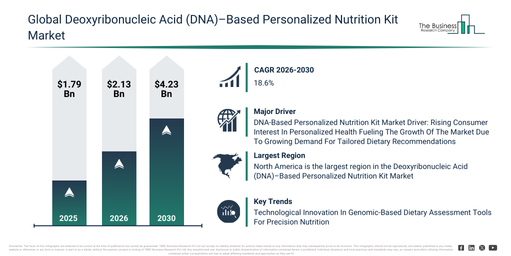
    The DNA-based personalized nutrition kit market has seen substantial growth recently. This market is expected to expand from $1.79 billion in 2025 to $2.13 billion in 2026, achieving a compound annual growth rate (CAGR) of 18.9%. This historical development can be ascribed to factors such as rising consumer enthusiasm for personalized nutrition, increased utilization of direct-to-consumer DNA testing, heightened recognition of genetic predispositions linked to diet-related conditions, wider availability of cost-effective genetic testing kits, and the growing incorporation of nutritional data into wellness programs.

    The DNA-based personalized nutrition kit market is projected for significant expansion in the coming years. This market is set to reach a value of $4.23 billion by 2030, exhibiting a compound annual growth rate (CAGR) of 18.6%. This projected growth over the forecast period is driven by several factors, including the escalating demand for precision health solutions, the wider acceptance of AI-based nutrition recommendations, a heightened emphasis on preventive healthcare, the increasing accessibility of advanced genomic analysis platforms, and a growing consumer preference for personalized wellness products. Key trends anticipated during this period encompass enhancements in bioinformatics and genetic interpretation tools, novel developments in multi-omics-based nutrition solutions, the creation of integrated digital nutrition platforms, intensified research and development within nutrigenomics applications, and the rise of real-time AI-powered personalized diet planning tools.

    Get A Free Sample Report With In-Depth Market Insights:

    https://thebusinessresearchcompany.com/sample_request?id=51009332&type=smp&name=Deoxyribonucleic%20Acid%20%28DNA%29%E2%80%93Based%20Personalized%20Nutrition%20Kit%20Market%20Report%202026&utm_source=Blogs&utm_medium=Paid&utm_campaign=Oct_PR

    Deoxyribonucleic Acid (DNA)–Based Personalized Nutrition Kit Market Development Factors: What’s Supporting Demand?

    The increasing consumer demand for tailored health solutions is anticipated to drive the expansion of the deoxyribonucleic acid (DNA)-based personalized nutrition kit market in the future. This concept, personalized health, denotes a wellness and healthcare strategy that customizes preventive measures, therapies, dietary advice, and lifestyle suggestions according to an individual’s distinct attributes, including genetic profile, biological markers, past health records, surroundings, and habits, thereby enhancing health results and general welfare. Progress in genomic sequencing technology contributes to this growing consumer appeal by rendering genetic information more readily available, economical, and relevant for daily health and dietary choices. Utilizing these technological strides, deoxyribonucleic acid (DNA)-based personalized nutrition kits examine individual genetic markers to produce bespoke dietary regimes, suggesting particular nutrient consumption levels and food selections that correspond with a person’s metabolic profile. Increasing public participation in genomic research further reinforces this development. As an illustration, in January 2025, the National Institutes of Health, a medical research agency based in the US, reported that its All of Us Research Program had registered over 832,000 participants by August 24, 2024, with more than 566,000 participants having finished the program’s preliminary stages. Moreover, the program’s researcher workbench data was expanded in September 2024, boosting the total participant count from 413,000 to 633,000, which signifies a 53% rise. Consequently, the growing consumer focus on personalized health is propelling the expansion of the deoxyribonucleic acid (DNA)-based personalized nutrition kit market.

    Deoxyribonucleic Acid (DNA)–Based Personalized Nutrition Kit Market Segment Breakdown: Which Categories Lead On Revenue?

    The deoxyribonucleic acid (dna)–based personalized nutrition kit market covered in this report is segmented –

    1) By Product Type: Test Kits, Analysis Services, Supplements, Other Product Types

    2) By Sample Type: Saliva, Blood, Buccal Swab, Other Sample Types

    3) By Distribution Channel: Online, Pharmacies, Wellness Centers, Other Distribution Channels

    4) By Application: Weight Management, Sports Nutrition, Digestive Health, Chronic Disease Management, Other Applications

    5) By End-User: Individuals, Healthcare Professionals, Fitness Centers, Other End-Users

    Subsegments:

    1) By Test Kits: Genetic Testing Kits, Nutrigenomic Testing Kits, Diet Response Testing Kits, Metabolic Function Testing Kits, Wellness Assessment Kits

    2) By Analysis Services: Genetic Data Interpretation Services, Personalized Nutrition Planning Services, Health Risk Assessment Services, Diet Optimization Services, Lifestyle Recommendation Services

    3) By Supplements: Personalized Vitamin Supplements, Personalized Mineral Supplements, Personalized Probiotic Supplements, Personalized Herbal Supplements, Personalized Amino Acid Supplements

    4) By Other Product Types: Personalized Meal Plans, Nutritional Coaching Programs, Mobile Health Applications, Genetic Wellness Reports, Lifestyle Modification Guides

    Deoxyribonucleic Acid (DNA)–Based Personalized Nutrition Kit Market Transformation Trends: What Innovations Are Driving Change?

    Leading companies in the deoxyribonucleic acid (DNA)-based personalized nutrition kit market are increasingly prioritizing technological advancements, particularly in developing sophisticated dietary assessment tools that integrate genetic data with real-time food intake analysis. These innovations aim to overcome the limitations of static genetic reports by connecting long-term genetic predispositions with users’ daily eating behaviors. By comparing actual nutritional intake against genetically informed dietary requirements, these tools empower users to pinpoint specific nutrient gaps and receive practical, food-based recommendations applicable to daily life. For example, in October 2025, GenoPalate Inc., a US-based genomic nutrition company, announced the introduction of Diet Snapshot, a food frequency questionnaire incorporated into its platform. This feature evaluates a member’s current diet and contrasts it with personalized nutritional targets derived from hundreds of genetic variants and lifestyle inputs. By identifying actionable opportunities to close nutrient gaps via specific food choices, the tool enhances the personalization of GenoVit multivitamin formulations, ensuring members receive precise nutrient dosages aligned with their biological needs and lifestyle.

    Deoxyribonucleic Acid (DNA)–Based Personalized Nutrition Kit Market Top Companies Driving Competitive Growth

    Major companies operating in the deoxyribonucleic acid (dna)–based personalized nutrition kit market are 23andMe Inc., Viome Life Sciences Inc., VitaGene Inc., ORIG3N Inc., Helix OpCo Inc., MapmyGenome Pvt. Ltd., DNAlysis Biotechnology, InsideTracker Inc., Nutrigenomix Inc., Pathway Genomics, 3X4 Genetics Inc., FitnessGenes Ltd., Gene by Gene Ltd., Gene Food Inc., Genomelink Inc., GenoPalate Inc., Life X DNA, LifeDNA Inc., myDNA Life Pty Ltd., Xcode Life

    View The Full Deoxyribonucleic Acid (DNA)–Based Personalized Nutrition Kit Market Report:

    https://thebusinessresearchcompany.com/report/deoxyribonucleic-acid-dna-based-personalized-nutrition-kit-market-report?utm_source=Blogs&utm_medium=Paid&utm_campaign=Oct_PR

    Deoxyribonucleic Acid (DNA)–Based Personalized Nutrition Kit Market Global Footprint: Which Region Leads The Industry?

    North America was the largest region in the DNA-based personalized nutrition kit market in 2025. Asia-Pacific is expected to be the fastest-growing region in the forecast period. The regions covered in the deoxyribonucleic acid (dna)–based personalized nutrition kit market report are Asia-Pacific, South East Asia, Western Europe, Eastern Europe, North America, South America, Middle East, Africa.

    Reach Out To Our Team:

    The Business Research Company: https://www.thebusinessresearchcompany.com/

    Americas: +1 310-496-7795

    Asia: +44 7882 955267 & +91 8897263534

    Europe: +44 7882 955267

    Email us at: marketing@tbrc.info

    Follow us on:

    LinkedIn: https://in.linkedin.com/company/the-business-research-company

    YouTube: https://www.youtube.com/channel/UC24_fI0rV8cR5DxlCpgmyFQ

    Global Market Model: https://www.thebusinessresearchcompany.com/global-market-model