Category: Healthcare Services

  • Excessive Daytime Sleepiness  Market Trends Are Creating New Opportunities For Industry Leaders

    Excessive Daytime Sleepiness Market Trends Are Creating New Opportunities For Industry Leaders

    Through market attractiveness analysis, total addressable market evaluation, company benchmarking matrices, interactive Excel dashboards, expanded supply chain intelligence, emerging startup coverage, and detailed product insights, The Business Research Company’s 2026 market reports provide more actionable and strategically valuable research.

    Excessive Daytime Sleepiness Market Growth Analysis: How Will Revenue Expand During The Forecast Period?

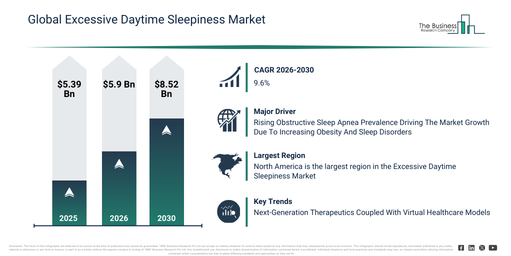
    The excessive daytime sleepiness market size has experienced strong growth in recent years. It is anticipated to expand from $5.39 billion in 2025 to $5.9 billion in 2026, exhibiting a compound annual growth rate (CAGR) of 9.4%. This historical growth can be attributed to several factors including the rising prevalence of sleep disorders, increased awareness regarding the effects of sleep health, the expansion of sleep clinic infrastructure, the availability of pharmacological wake-promoting agents, and the broader provision of diagnostic sleep testing services.

    The market for excessive daytime sleepiness is projected to experience substantial expansion over the upcoming years, reaching a valuation of $8.52 billion by 2030, driven by a compound annual growth rate (CAGR) of 9.6%. This projected growth is largely due to factors such as the rising demand for customized sleep treatment options, the growing incorporation of digital therapeutics in sleep management, wider acceptance of remote patient monitoring, an increased emphasis on preventative sleep health, and greater investment in sleep medicine research. Key developments anticipated during this timeframe involve the wider adoption of wearable devices for sleep monitoring, an increase in combination therapy strategies, the broadening of home-based solutions for sleep disorder management, a heightened focus on early detection and screening initiatives, and improved integration of digital sleep health platforms.

    Download A Free Sample Report For Comprehensive Market Insights:

    https://www.thebusinessresearchcompany.com/sample.aspx?id=33109&type=smp&utm_source=Blogs&utm_medium=Paid&utm_campaign=Jul_PR

    #Excessive Daytime Sleepiness Market Growth Drivers And Industry Catalysts

    The increasing occurrence of obstructive sleep apnea (OSA) is anticipated to stimulate the growth of the excessive daytime sleepiness (EDS) market moving forward. Obstructive sleep apnea is a sleep condition marked by recurrent breathing interruptions during sleep, caused by upper airway obstruction, which results in disrupted sleep and lower sleep quality. The rise in obstructive sleep apnea cases is attributed to increasing obesity rates, where surplus fat in the neck and throat constricts the airway, leading to breathing pauses during sleep. Excessive daytime sleepiness is a frequent and weakening symptom of obstructive sleep apnea, often persisting in a considerable number of patients, thereby necessitating focused therapeutic and management approaches. For example, in August 2026, the National Library of Medicine, a US-based medical library, estimated that by 2050, roughly 76.6 million adults aged 30–69 in the United States are projected to be impacted by obstructive sleep apnea. Consequently, the growing prevalence of obstructive sleep apnea is propelling the expansion of the excessive daytime sleepiness market.

    Excessive Daytime Sleepiness Market Segmentation: How Is The Market Structured Across Key Categories?

    The excessive daytime sleepiness market covered in this report is segmented –

    1) By Treatment Type: Pharmacological Treatment; Behavioral Therapy; Continuous Positive Airway Pressure Therapy; Lifestyle Modification Programs; Combination Therapies

    2) By Diagnosis Method: Polysomnography; Multiple Sleep Latency Test; Actigraphy; Clinical Evaluation; Questionnaire Based Assessments

    3) By Type Of Disorder: Narcolepsy; Obstructive Sleep Apnea; Insomnia; Circadian Rhythm Disorders; Idiopathic Hypersomnia; Restless Legs Syndrome; Other Type Of Disorders

    4) By Distribution Channel: Hospital Pharmacies; Retail Pharmacies; Online Pharmacies

    5) By End User: Hospitals; Sleep Clinics; Ambulatory Surgical Centers; Home Care Settings

    Subsegments:

    1) By Pharmacological Treatment: Wake Promoting Medications; Central Nervous System Stimulant Medications; Dopamine Reuptake Inhibitor Medications; Histamine Receptor Modulating Medications

    2) By Behavioral Therapy: Cognitive Behavioral Therapy For Sleep; Sleep Hygiene Education Programs; Stimulus Control Therapy; Sleep Restriction Therapy

    3) By Continuous Positive Airway Pressure Therapy: Fixed Pressure Airway Therapy; Auto Adjusting Airway Therapy; Bilevel Airway Therapy; Adaptive Pressure Support Therapy

    4) By Lifestyle Modification Programs: Sleep Schedule Regulation Programs; Diet And Nutrition Management Programs; Physical Activity And Exercise Programs; Stress Management And Relaxation Programs

    5) By Combination Therapies: Medication And Behavioral Therapy Combinations; Airway Therapy And Lifestyle Modification Combinations; Medication And Airway Therapy Combinations; Integrated Multimodal Treatment Approaches

    #Excessive Daytime Sleepiness Market Trends Influencing Long-Term Demand

    Leading companies operating within the excessive daytime sleepiness market are focusing on creating innovative solutions, such as central nervous system depressants, to boost wakefulness and elevate patients’ quality of life. A central nervous system depressant is a substance that reduces nervous system activity, leading to sedation, calmness, or sleep. For instance, in September 2025, Amneal Pharmaceuticals Inc., a US-based pharmaceutical company, secured approval from the FDA for sodium oxybate oral solution, which directly treats excessive daytime sleepiness (EDS) in narcolepsy patients. This solution enhances treatment continuity by enabling virtual specialist consultations, remote prescription fulfillment, and improved patient reach in underserved regions, with the aim of expanding access, improving affordability, and aligning established pharmacotherapy with evolving digital and telehealth-driven care models for excessive daytime sleepiness.

    Excessive Daytime Sleepiness Market Competitive Landscape And Leading Companies

    Major companies operating in the excessive daytime sleepiness market are Eli Lilly and Company, Takeda Pharmaceutical Company Limited, Teva Pharmaceutical Industries Ltd., Cleveland Clinic, EisAI Co. Ltd, Jazz Pharmaceuticals plc., Emory Healthcare Inc., Alkermes plc., Fisher & Paykel Healthcare Corporation Limited, Harmony Biosciences Holdings Inc., Medanta, Axsome Therapeutics Inc., Compumedics Limited, BIOPROJET, Apnimed Inc., Nox Health Inc., Somnogen Canada Inc., Suven Life Sciences Limited, Theranexus, XWPharma, NLS Pharmaceutics AG.

    Access The Complete Excessive Daytime Sleepiness Market Report:

    https://www.thebusinessresearchcompany.com/report/excessive-daytime-sleepiness-market-report?utm_source=Blogs&utm_medium=Paid&utm_campaign=Jul_PR

    Excessive Daytime Sleepiness Market Regional Distribution: Which Areas Drive Market Expansion?

    North America was the largest region in the excessive daytime sleepiness market in 2025. Asia-Pacific is expected to be the fastest-growing region in the forecast period. The regions covered in the excessive daytime sleepiness market report are Asia-Pacific, South East Asia, Western Europe, Eastern Europe, North America, South America, Middle East, Africa.

    Get in touch with us:

    The Business Research Company: https://www.thebusinessresearchcompany.com/

    Americas: +1 310-496-7795

    Asia: +44 7882 955267 & +91 8897263534

    Europe: +44 7882 955267

    Email us at: marketing@tbrc.info

    Follow us on:

    LinkedIn: https://in.linkedin.com/company/the-business-research-company

    YouTube: https://www.youtube.com/channel/UC24_fI0rV8cR5DxlCpgmyFQ

    Global Market Model: https://www.thebusinessresearchcompany.com/global-market-model
  • Endothelial Dysfunction  Market Forecast Reveals Where Future Industry Value Will Be Created

    Endothelial Dysfunction Market Forecast Reveals Where Future Industry Value Will Be Created

    Delivering more actionable and strategically valuable research, The Business Research Company’s 2026 market reports feature market attractiveness analysis, total addressable market evaluation, company benchmarking matrices, interactive Excel dashboards, expanded supply chain intelligence, emerging startup coverage, and detailed product insights.

    Endothelial Dysfunction Market Revenue Growth Supported By A CAGR Of 3.88% Through 2030

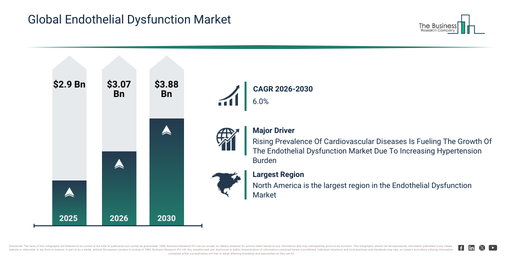
    The market size for endothelial dysfunction has demonstrated robust growth in recent years. It is projected to expand from $2.9 billion in 2025 to $3.07 billion in 2026, showing a compound annual growth rate (CAGR) of 5.8%. This growth during the historic period can be largely attributed to the escalating occurrence of cardiovascular ailments, a surge in metabolic conditions, the broadening scope of preventive health checks, the accessibility of endothelial biomarkers, and an intensifying clinical emphasis on vascular well-being.

    The endothelial dysfunction market is projected to experience substantial expansion in the coming years, reaching a valuation of $3.88 billion by 2030, driven by a compound annual growth rate (CAGR) of 6.0%. This anticipated growth during the forecast period is primarily due to several factors, including the increasing adoption of precision medicine approaches, rising demand for remote patient monitoring, expansion of AI-driven cardiovascular diagnostics, growing investments in preventive cardiology, and an increasing focus on personalized treatment pathways. Key trends expected within this period encompass the increasing use of advanced endothelial function diagnostics, rising adoption of biomarker-based screening, growing integration of digital health monitoring tools, expansion of personalized vascular treatment approaches, and an enhanced focus on early cardiovascular risk detection.

    Download A Free Sample Report For Comprehensive Market Insights:

    https://www.thebusinessresearchcompany.com/sample.aspx?id=33102&type=smp&utm_source=Blogs&utm_medium=Paid&utm_campaign=Jul_PR

    Endothelial Dysfunction Market Demand Drivers: What Is Fueling Industry Growth?

    The increasing occurrence of cardiovascular diseases is projected to stimulate expansion in the endothelial dysfunction market in the future. These conditions, which involve disorders of the heart and blood vessels, are becoming more common worldwide due to changes in demographics and health risks associated with lifestyle. The growing impact of cardiovascular diseases is primarily fueled by an aging population, urban growth, poor dietary habits, lack of physical activity, and sustained exposure to metabolic and vascular stress, all of which progressively harm the endothelium. Endothelial dysfunction is crucial in how cardiovascular diseases develop and advance, as compromised endothelial control leads to vascular inflammation, lower nitric oxide availability, irregular vasodilation, and the formation of atherosclerotic plaques. For example, in January 2024, the American Heart Association, a US-based non-profit organization, reported that the age-adjusted death rate from cardiovascular disease rose to 233.3 per 100,000 in 2024, marking a 4.0% increase from 224.4 per 100,000 in 2023. Consequently, the escalating prevalence and burden of cardiovascular diseases are driving the growth of the endothelial dysfunction market.

    Endothelial Dysfunction Market Segmentation And Category Breakdown

    The endothelial dysfunction market covered in this report is segmented –

    1) By Product Type: Diagnostics; Therapeutics; Digital Health Solutions; Pharmacological Agents; Non-Pharmacological Interventions; Biological Therapies

    2) By Technology: Biotechnology; Nanotechnology; Genomics; Proteomics

    3) By Application: Cardiovascular Risk; Metabolic Syndrome; Chronic Kidney Disease; Other Application

    4) By End User: Hospitals; Diagnostic Laboratories; Specialty Clinics; Primary Care Providers

    Subsegments:

    1) By Diagnostics: Endothelial Function Assays; Vascular Imaging Tests; Biomarker Panels; Nitric Oxide Measurement Kits; Flow-Mediated Dilation Tests

    2) By Therapeutics: Pharmacological Treatments; Lifestyle Modification Programs; Physiotherapy Interventions; Surgical Procedures; Nutritional Interventions

    3) By Digital Health Solutions: Remote Patient Monitoring Platforms; Telehealth Consultation Systems; Mobile Health Applications; Wearable Health Devices; Cloud-Based Analytics Solutions

    4) By Pharmacological Agents: Statins; Angiotensin Converting Enzyme Inhibitors; Beta Blockers; Calcium Channel Blockers; Anti-Inflammatory Agents

    5) By Non-Pharmacological Interventions: Dietary Programs; Exercise Regimens; Stress Management Programs; Smoking Cessation Programs; Behavioral Therapy

    6) By Biological Therapies: Gene Therapy Treatments; Stem Cell Therapies; Monoclonal Antibody Treatments; Endothelial Progenitor Cell Therapy; Protein-Based Therapeutics

    Endothelial Dysfunction Market Competitive Analysis Of Major Industry Participants

    Major companies operating in the endothelial dysfunction market are F. Hoffmann-La Roche AG, Merck & Co. Inc., Pfizer Inc., Bayer Aktiengesellschaft, Sanofi S.A., Novartis Aktiengesellschaft, Bristol-Myers Squibb Company, Abbott Laboratories, GlaxoSmithKline plc, Eli Lilly and Company, Takeda Pharmaceutical Company Limited, Amgen Inc., Gilead Sciences Inc., Siemens Healthineers AG, Boehringer Ingelheim International GmbH, Teva Pharmaceutical Industries Limited, Boston Scientific Corporation, Astellas Pharma Inc., Daiichi Sankyo Company Limited, Biogen Inc., ChugAI Pharmaceutical Co. Ltd., ZOLL Medical Corporation, OrbusNeich Medical Group Holdings Limited, Stealth Peptides Inc., Perimed AB, and Glucox Biotech AB.

    Access The Complete Endothelial Dysfunction Market Report:

    https://www.thebusinessresearchcompany.com/report/endothelial-dysfunction-market-report?utm_source=Blogs&utm_medium=Paid&utm_campaign=Jul_PR

    Endothelial Dysfunction Market Largest Region By Revenue And Market Share

    North America was the largest region in the endothelial dysfunction market in 2025. Asia-Pacific is expected to be the fastest-growing region in the forecast period. The regions covered in the endothelial dysfunction market report are Asia-Pacific, South East Asia, Western Europe, Eastern Europe, North America, South America, Middle East, Africa.

    Get in touch with us:

    The Business Research Company: https://www.thebusinessresearchcompany.com/

    Americas: +1 310-496-7795

    Asia: +44 7882 955267 & +91 8897263534

    Europe: +44 7882 955267

    Email us at: marketing@tbrc.info

    Follow us on:

    LinkedIn: https://in.linkedin.com/company/the-business-research-company

    YouTube: https://www.youtube.com/channel/UC24_fI0rV8cR5DxlCpgmyFQ

    Global Market Model: https://www.thebusinessresearchcompany.com/global-market-model
  • Early Phase Clinical Trial Outsourcing  Market Expected To Reach $14.8 Billion By 2030 As Growth Accelerates At 9.2% CAGR

    Early Phase Clinical Trial Outsourcing Market Expected To Reach $14.8 Billion By 2030 As Growth Accelerates At 9.2% CAGR

    Through market attractiveness analysis, total addressable market evaluation, company benchmarking matrices, interactive Excel dashboards, expanded supply chain intelligence, emerging startup coverage, and detailed product insights, The Business Research Company’s 2026 market reports provide more actionable and strategically valuable research.

    Early Phase Clinical Trial Outsourcing Market Expansion Outlook: What Revenue Opportunities Lie Ahead?

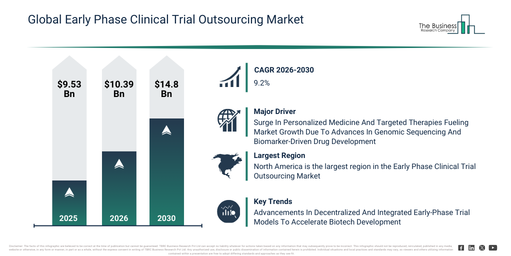
    The early phase clinical trial outsourcing market size has experienced significant expansion in recent years. It is projected to grow from $9.53 billion in 2025 to $10.39 billion in 2026, at a compound annual growth rate (CAGR) of 9.0%. The historic period’s growth can be attributed to factors such as the increasing complexity of drug development pipelines, rising cost pressures on pharmaceutical sponsors, the expansion of biotech startup activity, a growing need for regulatory expertise, and increased reliance on specialized clinical research organizations.

    The early phase clinical trial outsourcing market is projected to experience substantial expansion over the upcoming years. This market is forecast to reach $14.8 billion by 2030, exhibiting a compound annual growth rate (CAGR) of 9.2%. Several factors are expected to drive this growth during the forecast period, including the greater uptake of decentralized trial components, an increased emphasis on precision medicine investigations, the broadening scope of rare disease clinical research, the expanding application of AI-powered trial analytics, and the enhanced global alignment of early-phase regulatory frameworks. Key trends anticipated during this period encompass a rise in the outsourcing of Phase I clinical studies, a heightened demand for integrated early-phase CRO services, the increasing implementation of data-driven trial design methodologies, the growth of adaptive and first-in-human trials, and a stronger emphasis on expedited study timelines.

    Download A Free Sample Report For Comprehensive Market Insights:

    https://www.thebusinessresearchcompany.com/sample.aspx?id=33097&type=smp&utm_source=Blogs&utm_medium=Paid&utm_campaign=Jul_PR

    #Early Phase Clinical Trial Outsourcing Market Growth Drivers And Industry Catalysts

    An escalating emphasis on personalized medicine is projected to stimulate the expansion of the early-phase clinical trial outsourcing market in the future. This approach, known as personalized medicine, signifies a rising focus within healthcare and life sciences on creating and administering therapies precisely customized for individual patients or specific patient groups, utilizing their unique genetic and molecular profiles. The heightened attention on personalized medicine is largely driven by progress in genomic sequencing and molecular diagnostics, allowing for accurate identification of disease-specific genetic and biomarker patterns. Outsourcing early-phase clinical trials facilitates personalized medicine and targeted treatments through its provision of expert knowledge, flexible trial frameworks, and biomarker-led study capacities, which ensure accurate patient categorization and swift validation of concepts. As an illustration, data from February 2024, supplied by the Personalized Medicine Coalition (PMC), a US-based nonprofit organization, revealed that personalized therapies for rare diseases saw a doubling in number, rising from 6 in 2022 to 16 in 2023. Consequently, the expanding prominence of personalized medicine is fueling the growth of the early-phase clinical trial outsourcing market.

    Early Phase Clinical Trial Outsourcing Market Segment Breakdown: Which Categories Generate The Most Revenue?

    The early phase clinical trial outsourcing market covered in this report is segmented –

    1) By Type: Regulatory Services; Clinical Data Management (CDM); Medical Writing; Site Management; Pharmacovigilance (PV); Risk-Based Monitoring; Bio Statistical Services; Protocol Development; Other Types

    2) By Therapeutic Area: Oncology; Central Nervous System (CNS) And Neurology; Cardiovascular And Metabolic Diseases; Infectious Diseases; Immunology And Inflammatory Diseases; Rare Diseases And Genetic Disorders

    3) By Trial Phase: Phase 0; Phase 1; Phase 2

    4) By Applications: Pharmaceutical Companies; Biopharmaceutical Companies; Drug Discovery Companies; Medical Devices Companies; Other Applications

    Subsegments:

    1) By Regulatory Services: Regulatory Strategy Planning; Regulatory Submission Preparation; Health Authority Liaison; Ethics Committee Submission Management; Regulatory Compliance Auditing; Trial Registration Support

    2) By Clinical Data Management (CDM): Case Report Form Design; Data Entry And Validation; Database Development And Maintenance; Data Cleaning And Query Management; Clinical Data Integration; Data Lock And Archival

    3) By Medical Writing: Clinical Study Protocol Writing; Investigator Brochure Development; Clinical Study Report Writing; Informed Consent Document Preparation; Regulatory Dossier Writing; Scientific Publication Support

    4) By Site Management: Site Feasibility Assessment; Site Selection And Initiation; Investigator Training And Support; Site Performance Management; Site Close Out Services; Vendor Coordination At Site Level

    5) By Pharmacovigilance (PV): Safety Data Collection; Adverse Event Processing; Serious Adverse Event Reporting; Safety Database Management; Signal Detection And Evaluation; Periodic Safety Report Preparation

    6) By Risk-Based Monitoring: Risk Assessment And Categorization; Centralized Monitoring Activities; Key Risk Indicator Development; Remote Monitoring Services; On Site Monitoring Optimization; Monitoring Plan Design

    7) By Bio Statistical Services: Statistical Analysis Plan Development; Sample Size Determination; Randomization Design; Interim Analysis; Final Statistical Analysis; Data Interpretation And Reporting

    8) By Protocol Development: Study Design Consulting; Endpoint Definition; Eligibility Criteria Development; Schedule Of Assessments Design; Protocol Amendment Management; Feasibility Driven Protocol Optimization

    9) By Other Types: Clinical Trial Supply Management; Patient Recruitment Support; Quality Assurance Services; Trial Master File Management; Vendor And Project Management

    #Early Phase Clinical Trial Outsourcing Market Trends Influencing Long-Term Demand

    Major companies in the early-phase clinical trial outsourcing market are concentrating on technological advancements in decentralized and hybrid early-phase clinical trial models, such as integrated early development trial ecosystems. This effort aims to satisfy the increasing demand from biotechnology sponsors for faster execution, greater scientific rigor, and diminished risk in early-stage clinical development. Integrated early development trial ecosystems refer to purpose-built clinical research environments that consolidate specialized infrastructure, experienced early-phase investigators, real-time safety monitoring, and optimized regulatory and operational workflows, thereby enhancing efficiency and consistency in early-phase trials. For instance, in October 2025, Avance Clinical, an Australia-based contract research organization, announced the launch of a Dedicated Center of Excellence designed to accelerate early-phase biotech trials. This initiative intends to improve operational efficiency, scientific rigor, and speed-to-market for emerging biotechnology companies. The Dedicated Center of Excellence provides a centralized early-phase trial environment that integrates specialized clinical units, experienced early-phase investigators, and coordinated operational oversight to expedite study start-up and execution.

    Early Phase Clinical Trial Outsourcing Market Key Players And Strategic Industry Positioning

    Major companies operating in the early phase clinical trial outsourcing market are IQVIA Holdings Inc., ICON plc, Syneos Health Inc., Parexel International Corporation, Medpace Holdings Inc., Pharmaron Beijing Co. Ltd., Premier Research Group Limited, ProPharma Group Holdings Inc., Precision for Medicine Group LLC, Worldwide Clinical Trials LLC, Catalyst Clinical Research LLC, Avance Clinical Pty Ltd, Quanticate International Ltd, Clinilabs Drug Development Corporation, Optimapharm d.o.o., RICe – Richmond Pharmacology Ltd, Novotech Health Holdings Pty Ltd, CMIC Holdings Co. Ltd., Medpace Reference Laboratories Inc., iNGENu CRO Pty Ltd

    Access The Complete Early Phase Clinical Trial Outsourcing Market Report:

    https://www.thebusinessresearchcompany.com/report/early-phase-clinical-trial-outsourcing-market-report?utm_source=Blogs&utm_medium=Paid&utm_campaign=Jul_PR

    Early Phase Clinical Trial Outsourcing Market Leading Geography: Which Region Generates The Most Revenue?

    North America was the largest region in the early phase clinical trial outsourcing market in 2025. Asia-Pacific is expected to be the fastest-growing region in the forecast period. The regions covered in the early phase clinical trial outsourcing market report are Asia-Pacific, South East Asia, Western Europe, Eastern Europe, North America, South America, Middle East, Africa.

    Get in touch with us:

    The Business Research Company: https://www.thebusinessresearchcompany.com/

    Americas: +1 310-496-7795

    Asia: +44 7882 955267 & +91 8897263534

    Europe: +44 7882 955267

    Email us at: marketing@tbrc.info

    Follow us on:

    LinkedIn: https://in.linkedin.com/company/the-business-research-company

    YouTube: https://www.youtube.com/channel/UC24_fI0rV8cR5DxlCpgmyFQ

    Global Market Model: https://www.thebusinessresearchcompany.com/global-market-model
  • Dental Service Organization  Market Forecast Reveals Where Future Industry Value Will Be Created

    Dental Service Organization Market Forecast Reveals Where Future Industry Value Will Be Created

    Enhanced with market attractiveness analysis, total addressable market evaluation, company benchmarking matrices, interactive Excel dashboards, expanded supply chain intelligence, emerging startup coverage, and detailed product insights, The Business Research Company’s 2026 market reports deliver more actionable and strategically valuable research.

    Dental Service Organization Market Forecast Highlighting Growth From $211.19 Billion To $379.41 Billion

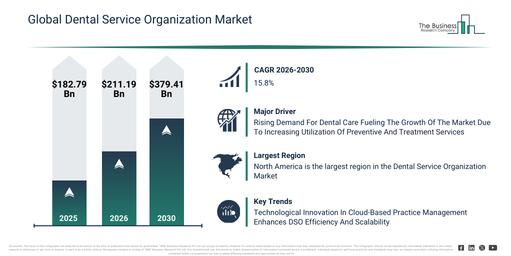
    The dental service organization market has shown rapid expansion in recent years. This market is projected to increase from $182.79 billion in 2025 to $211.19 billion in 2026, exhibiting a compound annual growth rate (CAGR) of 15.5%. The historical growth of this market stems from factors such as the increasing administrative burden on dental practices, rising operating costs in independent clinics, the expansion of private dental practices, a growing demand for professional management services, and the adoption of electronic health records.

    The dental service organization market is projected to experience substantial expansion in the coming years. Its valuation is anticipated to reach $379.41 billion by 2030, demonstrating a compound annual growth rate (CAGR) of 15.8%. This projected growth is driven by factors such as the increasing consolidation of dental practices, the surging demand for scalable dental service platforms, the expanding embrace of tele-dentistry services, the wider implementation of data-driven strategies for patient acquisition, and the heightened utilization of AI-based diagnostic support. Key trends anticipated during this period encompass a greater uptake of centralized practice management models, an increase in the deployment of AI-driven scheduling and billing systems, the progressive integration of digital patient records, the broadening of multi-specialty dental networks, and a heightened emphasis on operational efficiency and standardization.

    Download A Free Sample Report For Comprehensive Market Insights:

    https://www.thebusinessresearchcompany.com/sample.aspx?id=33086&type=smp&utm_source=Blogs&utm_medium=Paid&utm_campaign=Jul_PR

    Dental Service Organization Market Expansion Supported By Key Demand Factors

    The increasing need for dental services is anticipated to drive the expansion of the dental service organization market in the future. Dental care encompasses the prevention, diagnosis, treatment, and ongoing management of issues impacting the teeth, gums, and mouth, covering services such as regular examinations, cleanings, restorative work, and specialized interventions aimed at preserving oral health and overall physical condition. The demand for dental care is growing, driven by enhanced awareness regarding oral health and proactive dental practices, which, in turn, results in increased engagement with standard checkups and various treatments. Dental service organizations facilitate dental care by offering centralized oversight, investing in technology, and providing operational assistance, thereby empowering dental practices to offer patient care that is more attainable, effective, and of superior quality. As an illustration, in August 2024, data from the NHS Business Services Authority, a UK-based government body, showed that during 2023/24, roughly 34 million courses of dental treatment were provided, representing a 4.3% increase year-over-year. Concurrently, approximately 18 million adult patients received treatment in the 24 months concluding March 2024, and the cumulative units of dental activity saw a 3.4% rise compared to 2022/23, reaching 73 million, which signals consistent expansion in the overall use of dental services. Consequently, the expanding need for dental care is propelling the development of the dental service organization market.

    Dental Service Organization Market Segments: Where Are The Largest Growth Opportunities?

    The dental service organization market covered in this report is segmented –

    1) By Type of Services: General Dentistry; Pediatric Dentistry; Orthodontics; Oral Maxillofacial Surgery; Periodontics; Cosmetic Dentistry; Endodontics; Prosthodontics

    2) By Practice Model: Single Specialty; Multi-Specialty; Corporate Owned; Independent Practitioner Networks; Franchise Models

    3) By Patient Demographics: Pediatric Patients; Adult Patients; Geriatric Patients; Special Needs Patients; Preventive Care Patients

    4) By Technology Utilization: Traditional Practices; Digital Records Management; Treatment Planning Software; Tele-dentistry Services; 3D Imaging And Printing Technologies; Artificial Intelligence (AI)-Driven Diagnostics

    5) By End-User: General Dentists; Dental Surgeons And Specialists

    Subsegments:

    1) By General Dentistry: Preventive Dental Care; Routine Oral Examinations; Dental Fillings And Restorations; Oral Health Education; Basic Tooth Extractions

    2) By Pediatric Dentistry: Infant Oral Health Care; Child Preventive Dental Services; Pediatric Restorative Dentistry; Behavior Management Dentistry; Special Needs Pediatric Dentistry

    3) By Orthodontics: Metal Braces Treatment; Ceramic Braces Treatment; Clear Aligner Therapy; Lingual Orthodontics; Early Interceptive Orthodontics

    4) By Oral Maxillofacial Surgery: Tooth Extraction Surgery; Dental Implant Surgery; Corrective Jaw Surgery; Facial Trauma Surgery; Oral Pathology Treatment

    5) By Periodontics: Gum Disease Treatment; Scaling And Root Planning; Periodontal Surgery; Gum Grafting Procedures; Dental Implant Maintenance

    6) By Cosmetic Dentistry: Teeth Whitening Services; Dental Veneers Treatment; Cosmetic Bonding; Smile Makeover Services; Aesthetic Dental Contouring

    7) By Endodontics: Root Canal Treatment; Endodontic Retreatment; Apical Surgery; Traumatic Dental Injury Management; Pulp Therapy

    8) By Prosthodontics: Dental Crowns And Bridges; Complete Dentures; Partial Dentures; Implant Supported Prosthetics

    Dental Service Organization Market Growth Trends Influencing Competitive Dynamics

    Major companies within the dental service organization market are concentrating on technological innovation, including integrated cloud-based practice management platforms, to boost operational efficiency, facilitate multi-location scalability, and enhance centralized oversight. Integrated cloud-based practice management platforms describe enterprise software systems that enable dental service organizations to handle administrative, financial, clinical, and patient engagement duties across various affiliated practices using a singular digital infrastructure. For example, in February 2024, Planet DDS, a US-based dental technology firm, launched Denticon Reimagined, an improved cloud-based dental practice management platform developed for large dental groups and DSOs. The platform features advanced analytics for real-time performance monitoring, integrated patient communication and engagement capabilities, and a scalable cloud architecture that supports centralized billing, scheduling, and reporting across multiple sites.

    Dental Service Organization Market Major Participants And Competitive Dynamics

    Major companies operating in the dental service organization market are Heartland Dental LLC, Aspen Dental Management Inc., Smile Brands Inc., Western Dental Services Inc., Dental Care Alliance LLC, Great Expressions Dental Centers LLC, Dykema Gossett PLLC, Affordable Dentures & Implants LLC, MB2 Dental Solutions LLC, InterDent Service Corporation, Guardian Dentistry Partners LLC, Benevis LLC, Specialty1 Partners LLC, Pacific Dental Services LLC, Bluetree Dental LLC, iDental Group LLC, Affordable Care LLC, Lollipop Dental LLC, Straine Dental Management LLC, Family Dental Care LLC.

    Access The Complete Dental Service Organization Market Report:

    https://www.thebusinessresearchcompany.com/report/dental-service-organization-market-report?utm_source=Blogs&utm_medium=Paid&utm_campaign=Jul_PR

    Dental Service Organization Market Leading Geography: Which Region Generates The Most Revenue?

    North America was the largest region in the dental service organization market in 2025. Asia-Pacific is expected to be the fastest-growing region in the forecast period. The regions covered in the dental service organization market report are Asia-Pacific, South East Asia, Western Europe, Eastern Europe, North America, South America, Middle East, Africa.

    Get in touch with us:

    The Business Research Company: https://www.thebusinessresearchcompany.com/

    Americas: +1 310-496-7795

    Asia: +44 7882 955267 & +91 8897263534

    Europe: +44 7882 955267

    Email us at: marketing@tbrc.info

    Follow us on:

    LinkedIn: https://in.linkedin.com/company/the-business-research-company

    YouTube: https://www.youtube.com/channel/UC24_fI0rV8cR5DxlCpgmyFQ

    Global Market Model: https://www.thebusinessresearchcompany.com/global-market-model
  • Custom Recombinant Protein Production Services  Market Trends Are Creating New Opportunities For Industry Leaders

    Custom Recombinant Protein Production Services Market Trends Are Creating New Opportunities For Industry Leaders

    Enhanced with market attractiveness analysis, total addressable market evaluation, company benchmarking matrices, interactive Excel dashboards, expanded supply chain intelligence, emerging startup coverage, and detailed product insights, The Business Research Company’s 2026 market reports deliver more actionable and strategically valuable research.

    Custom Recombinant Protein Production Services Market Size Forecast: How Large Could The Market Become By 2030?

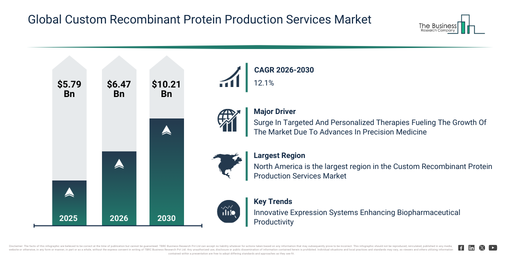
    The custom recombinant protein production services market has experienced rapid growth in recent years. It is forecast to grow from $5.79 billion in 2025 to $6.47 billion in 2026, achieving a compound annual growth rate (CAGR) of 11.8%. The expansion observed in the past can be attributed to several factors, including the increase in academic and clinical research activities, the rising utilization of recombinant proteins in drug discovery, the development of biopharmaceutical R&D pipelines, the availability of advanced expression technologies, and an increasing demand for specialized research services.

    The market for custom recombinant protein production services is projected to experience substantial expansion in the coming years. This market is anticipated to reach a valuation of $10.21 billion by 2030, exhibiting a compound annual growth rate (CAGR) of 12.1%. Factors contributing to this growth during the forecast timeframe include the rising development of biologics and biosimilars, increased investments in precision medicine, the broadening scope of contract research outsourcing, an escalating need for scalable protein production, and the wider integration of advanced purification technologies. Key trends anticipated within this forecast period encompass an increasing need for tailored protein expression services, the growing application of mammalian expression systems, a heightened focus on producing high-purity proteins, the proliferation of expedited research services, and a strengthened commitment to quality control and validation.

    Download A Free Sample Report For Comprehensive Market Insights:

    https://www.thebusinessresearchcompany.com/sample.aspx?id=33077&type=smp&utm_source=Blogs&utm_medium=Paid&utm_campaign=Jul_PR

    Custom Recombinant Protein Production Services Market Growth Drivers: What Factors Are Accelerating Expansion?

    The increasing emphasis on targeted and personalized therapies is anticipated to drive expansion in the custom recombinant protein production services market moving ahead. These therapies represent medical interventions specifically designed to address individual patient attributes, such as genetic profiles or specific disease markers, aiming to enhance treatment efficacy and minimize adverse effects. The surge in targeted and personalized therapies is attributable to advancements in precision medicine, which enables treatments to be tailored to individual patient biology, thereby improving clinical outcomes and therapeutic efficiency. Custom recombinant protein production services support these therapies by providing precisely engineered proteins essential for patient-specific drug development, biomarker targeting, and advanced biologic treatments. For instance, according to the Personalized Medicine Coalition, a US-based hospital and health care organization, in February 2024, the FDA approved 16 new personalized treatments for rare disease patients in 2023, a notable increase from six in 2022. Consequently, the escalating focus on targeted and personalized therapies is serving as a primary driver for the growth of the custom recombinant protein production services market.

    Custom Recombinant Protein Production Services Market Segment Analysis And Revenue Opportunities

    The custom recombinant protein production services market covered in this report is segmented –

    1) By Product: Antibodies; Enzymes; Cytokines; Growth Factors; Recombinant Hormones

    2) By Expression System: Mammalian; Bacteria; Insect; Yeast; Other Expression Systems

    3) By Application: Drug Discovery; Biopharmaceutical Production; Diagnostics Development; Academic Research; Industrial Enzymes

    4) By End User: Research Institutes; Biotechnology And Pharmaceutical Companies; Contract Research Organizations (CROs); Other End-Users

    Subsegments:

    1) By Antibodies: Monoclonal Antibodies; Polyclonal Antibodies; Chimeric Antibodies; Humanized Antibodies; Single Chain Antibodies

    2) By Enzymes: Proteases; Lipases; Amylases; Cellulases; Polymerases

    3) By Cytokines: Interleukins; Interferons; Tumor Necrosis Factors; Colony Stimulating Factors; Chemokines

    4) By Growth Factors: Epidermal Growth Factors; Fibroblast Growth Factors; Vascular Endothelial Growth Factors; Transforming Growth Factors; Platelet Derived Growth Factors

    5) By Recombinant Hormones: Insulin; Erythropoietin; Growth Hormone; Thyroid Stimulating Hormone; Follicle Stimulating Hormone

    Custom Recombinant Protein Production Services Market Trends: What Is Shaping Future Industry Growth?

    Major companies within the custom recombinant protein production services market are concentrating on implementing advanced microbial expression platforms, particularly proprietary E. coli expression systems, to enhance protein output, improve scalability, and reduce costs, thereby accelerating the delivery of next-generation biologics. A proprietary E. coli expression system specifically denotes an engineered E. coli bacterial strain developed for the efficient, stable, and high-yield production of recombinant proteins and plasmid DNA, often customized for specific biotechnological or pharmaceutical applications. For instance, in March 2025, WuXi Biologics (Cayman) Inc., a China-based contract research, development, and manufacturing organization (CRDMO), launched its new EffiX Microbial Expression Platform. This platform achieves impressive titers of over 15 g/L for non-mAb recombinant proteins and more than 1 g/L for plasmid DNA. EffiX is positioned as a comprehensive solution for developing and manufacturing microbial-derived biologics, ultimately boosting scalability, quality, and productivity across the biopharmaceutical industry.

    Custom Recombinant Protein Production Services Market Leading Players Shaping Industry Direction

    Major companies operating in the custom recombinant protein production services market are Thermo Fisher Scientific Inc., Merck KGaA, Applied Biological Materials Inc., R&D Systems Inc., GenScript Biotech Corporation, Sino Biological Inc, Biointron Biological Inc., OriGene Technologies Inc., Crown Bioscience Inc., Premas Biotech, Eurofins Discovery, ATUM, BPS Bioscience Inc., Novoprotein Scientific Inc., Kempbio Inc., Proteos Inc., Trenzyme GmbH, LakePharma Inc., Icosagen AS, and ProteoGenix SAS.

    Access The Complete Custom Recombinant Protein Production Services Market Report:

    https://www.thebusinessresearchcompany.com/report/custom-recombinant-protein-production-services-market-report?utm_source=Blogs&utm_medium=Paid&utm_campaign=Jul_PR

    Custom Recombinant Protein Production Services Market Global Footprint: Which Region Holds Market Leadership?

    North America was the largest region in the custom recombinant protein production services market in 2025. Asia-Pacific is expected to be the fastest-growing region in the forecast period. The regions covered in the custom recombinant protein production services market report are Asia-Pacific, South East Asia, Western Europe, Eastern Europe, North America, South America, Middle East, Africa.

    Get in touch with us:

    The Business Research Company: https://www.thebusinessresearchcompany.com/

    Americas: +1 310-496-7795

    Asia: +44 7882 955267 & +91 8897263534

    Europe: +44 7882 955267

    Email us at: marketing@tbrc.info

    Follow us on:

    LinkedIn: https://in.linkedin.com/company/the-business-research-company

    YouTube: https://www.youtube.com/channel/UC24_fI0rV8cR5DxlCpgmyFQ

    Global Market Model: https://www.thebusinessresearchcompany.com/global-market-model
  • Consumer mHealth  Market Outlook Highlights The Next Major Growth Opportunities

    Consumer mHealth Market Outlook Highlights The Next Major Growth Opportunities

    Through market attractiveness analysis, total addressable market evaluation, company benchmarking matrices, interactive Excel dashboards, expanded supply chain intelligence, emerging startup coverage, and detailed product insights, The Business Research Company’s 2026 market reports provide more actionable and strategically valuable research.

    Consumer mHealth Market Size Outlook: How Fast Will Revenue Grow Through 2030?

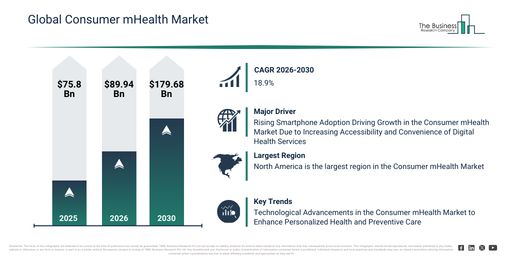
    The consumer mhealth market has witnessed significant growth in recent years. It is forecast to increase from $75.8 billion in 2025 to $89.94 billion in 2026, achieving a compound annual growth rate (CAGR) of 18.7%. The historical expansion of this market can be attributed to increased smartphone and wearable device penetration, a rise in consumer health awareness, the proliferation of fitness and wellness applications, the adoption of mobile health platforms, and a surging demand for self-managed healthcare solutions.

    The consumer mhealth market is projected to experience swift expansion over the coming years. By 2030, it is anticipated to attain a valuation of $179.68 billion, progressing at a compound annual growth rate (CAGR) of 18.9%. This projected growth is driven by several factors, including the rising uptake of tailored digital health solutions, the increasing incorporation of AI into consumer health applications, the broadened scope of remote monitoring for long-term illnesses, a heightened emphasis on managing mental well-being, and a greater need for wellness insights powered by data. Major developments expected during this forecast period include the growing popularity of wearable health tracking devices, the escalating utilization of AI-driven wellness analytics, the deepening integration of remote health monitoring systems, the proliferation of personalized health coaching platforms, and a strengthened commitment to preventive healthcare management.

    Download A Free Sample Report For Comprehensive Market Insights:

    https://www.thebusinessresearchcompany.com/sample.aspx?id=33073&type=smp&utm_source=Blogs&utm_medium=Paid&utm_campaign=Jul_PR

    #Consumer mHealth Market Growth Drivers And Industry Catalysts

    The growth of the consumer mHealth market is anticipated to be driven by rising smartphone adoption in the coming years. Smartphone adoption signifies how much individuals or households own and actively use these devices, often quantified by the percentage of mobile users with smartphone-enabled devices. The increasing availability of affordable mobile internet and smartphones has notably boosted these adoption rates. Greater smartphone penetration allows for wider access to mobile health applications, remote monitoring, fitness trackers, and telehealth services, thereby enlarging the consumer mHealth market. As an illustration, Priori Data, a market intelligence platform from Germany, reported in January 2025 that smartphone adoption in the U.S. showed a consistent increase, from around 311 million users in 2023 to approximately 316 million in 2024. Consequently, the expanding smartphone adoption is fueling the growth of the consumer mHealth market.

    Consumer mHealth Market Segments: Where Are The Largest Growth Opportunities?

    The consumer mhealth market covered in this report is segmented –

    1) By Product Type: Wearable Devices; Mobile Health Apps; Telemedicine; Other Product Types

    2) By Technology: Bluetooth; Wireless Fidelity (Wi Fi); Near-Field Communication (NFC); Cloud-Based Platforms

    3) By Application: Healthcare; Fitness; Wellness; Chronic Disease Management; Mental Health

    4) By End-User: Hospitals; Clinics; Home Healthcare; Individuals

    Subsegments:

    1) By Wearable Devices: Smart Watches; Fitness Trackers; Smart Bands; Health Monitoring Patches; Wearable Medical Sensors

    2) By Mobile Health Apps: Fitness And Wellness Apps; Chronic Disease Management Apps; Medication Reminder Apps; Mental Health And Stress Management Apps; Nutrition And Diet Tracking Apps

    3) By Telemedicine: Virtual Doctor Consultation Platforms; Remote Patient Monitoring Solutions; Telepsychiatry Services; Teleconsultation And Follow Up Services; Digital Prescription And Reporting Platforms

    4) By Other Product Types: Connected Medical Devices; Home Health Monitoring Systems; Health Data Management Platforms; Wellness And Preventive Care Solutions

    #Consumer mHealth Market Trends Influencing Long-Term Demand

    Companies operating within the consumer mHealth market are increasingly prioritizing technological innovations, particularly AI-integrated preventive health diagnostics platforms. This focus addresses the growing need for individualized, real-time health information and early illness detection, spurred by greater consumer recognition of the importance of proactive health management and preventing chronic conditions. These advanced AI-integrated platforms merge conventional biometric data gathering, such as through wearables or blood tests, with artificial intelligence to deliver predictive analytics, continuous tracking, and practical health recommendations. They move beyond isolated measurements by establishing connections between lifestyle habits and clinical biomarkers, offering a more complete understanding of well-being. For example, in July 2025, the Indian health-tech firm Ultrahuman Healthcare introduced Blood Vision, an inventive AI-powered preventive blood-testing and diagnostic service. This service integrates data from more than 100 biomarkers with live wearable lifestyle data collected by its Ultrahuman Ring AIR and associated devices, providing users with an extensive, long-term health profile that includes tailored advice and summaries comparable to those from clinicians.

    Consumer mHealth Market Major Participants And Competitive Dynamics

    Major companies operating in the consumer mhealth market are Apple Inc., Samsung Electronics Co. Ltd., Abbott Laboratories, Medtronic plc, Philips Healthcare, Omron Healthcare Inc., Dexcom Inc., Teladoc Health Inc., Athenahealth Inc., Masimo Corporation, Fitbit Inc, Veradigm Inc., Ada Health GmbH, Withings, MyFitnessPal Inc., AliveCor Inc., AgaMatrix Inc., DarioHealth Corp., Ovia Health Inc., Higi SH LLC

    Access The Complete Consumer mHealth Market Report:

    https://www.thebusinessresearchcompany.com/report/consumer-mhealth-market-report?utm_source=Blogs&utm_medium=Paid&utm_campaign=Jul_PR

    Consumer mHealth Market Geographic Landscape: Which Region Dominates Industry Growth?

    North America was the largest region in the consumer mHealth market in 2025. Asia-Pacific is expected to be the fastest-growing region in the forecast period. The regions covered in the consumer mhealth market report are Asia-Pacific, South East Asia, Western Europe, Eastern Europe, North America, South America, Middle East, Africa.

    Get in touch with us:

    The Business Research Company: https://www.thebusinessresearchcompany.com/

    Americas: +1 310-496-7795

    Asia: +44 7882 955267 & +91 8897263534

    Europe: +44 7882 955267

    Email us at: marketing@tbrc.info

    Follow us on:

    LinkedIn: https://in.linkedin.com/company/the-business-research-company

    YouTube: https://www.youtube.com/channel/UC24_fI0rV8cR5DxlCpgmyFQ

    Global Market Model: https://www.thebusinessresearchcompany.com/global-market-model
  • Clinically Isolated Syndrome  Market Growth Outlook Reveals A CAGR Of 7.9% And A Market Value Of $8.44 Billion By 2030

    Clinically Isolated Syndrome Market Growth Outlook Reveals A CAGR Of 7.9% And A Market Value Of $8.44 Billion By 2030

    Through market attractiveness analysis, total addressable market evaluation, company benchmarking matrices, interactive Excel dashboards, expanded supply chain intelligence, emerging startup coverage, and detailed product insights, The Business Research Company’s 2026 market reports provide more actionable and strategically valuable research.

    Clinically Isolated Syndrome Market Value Expansion And Long-Term Growth Outlook

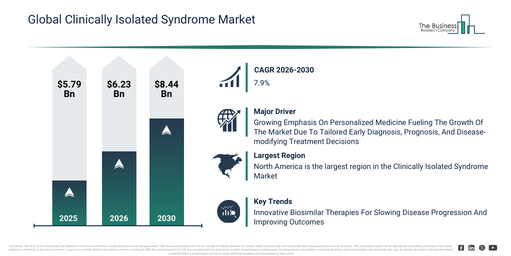
    The clinically isolated syndrome market size has demonstrated significant growth in recent years. It is forecast to grow from $5.79 billion in 2025 to $6.23 billion in 2026, registering a compound annual growth rate (CAGR) of 7.6%. The historical expansion of this market is attributable to enhanced access to magnetic resonance imaging diagnostics, a rise in awareness regarding early neurological symptoms, the proliferation of neurology specialty clinics, the uptake of disease-modifying therapies, and the availability of standardized diagnostic protocols.

    The market for clinically isolated syndrome is projected to experience substantial expansion in the coming years. This market is anticipated to reach $8.44 billion by 2030, demonstrating a compound annual growth rate (CAGR) of 7.9%. Factors contributing to this growth during the projected period include a heightened emphasis on preventing multiple sclerosis early, the increasing application of artificial intelligence in neurodiagnostics, the expansion of remote patient monitoring tools, a rising commitment to biomarker research, and the growing need for tailored neurological treatment. Key trends expected over the forecast horizon involve the expanding utilization of advanced neuroimaging analytics, a growing embrace of early intervention treatment approaches, the increasing incorporation of digital platforms for patient monitoring, the broadening of biomarker-based risk evaluations, and a stronger emphasis on individualized disease management.

    Download A Free Sample Report For Comprehensive Market Insights:

    https://www.thebusinessresearchcompany.com/sample.aspx?id=33067&type=smp&utm_source=Blogs&utm_medium=Paid&utm_campaign=Jul_PR

    #Clinically Isolated Syndrome Market Growth Factors: Which Forces Are Supporting Market Expansion?

    The increasing focus on personalized medicine is anticipated to fuel the expansion of the clinically isolated syndrome market in the coming years. Personalized medicine is defined as a healthcare strategy that customizes treatment and prevention plans to an individual’s unique genetic profile, lifestyle, and environmental factors. This growing emphasis stems from its potential to enhance treatment effectiveness and minimize adverse reactions by aligning therapies with individual patient characteristics. Within clinically isolated syndrome, personalized medicine empowers clinicians to tailor early diagnostic, prognostic, and disease-modifying treatment decisions based on specific patient biomarkers, imaging patterns, and risk assessments, aiming to postpone or prevent the progression to multiple sclerosis. As an illustration, in February 2024, the Personalized Medicine Coalition, a US-based non-profit organization, announced that in 2023, the US Food and Drug Administration (FDA) approved 16 new personalized treatments for patients with rare diseases, a notable increase from the six approvals granted in 2022. Consequently, the rising importance of personalized medicine is a significant impetus for the growth of the clinically isolated syndrome market. The upward trend in healthcare expenditures is projected to stimulate the growth of the clinically isolated syndrome market moving forward. Healthcare expenditures represent the comprehensive costs associated with the provision, administration, and consumption of health-related services, products, and preventive measures. These costs are increasing primarily because aging global populations require more extensive medical attention and long-term care for chronic conditions. In the context of clinically isolated syndrome, healthcare spending facilitates early detection, continuous monitoring, and access to disease-modifying therapies, thereby helping to delay the progression to multiple sclerosis and improve patient outcomes. For example, in April 2025, the American Medical Association, a US-based professional association, reported that in 2023, health spending in the U.S. saw a 7.5% increase, reaching $4.9 trillion, or $14,570 per person, which marks a considerable rise compared to the 4.6% growth recorded in 2022. Therefore, the escalating healthcare expenditures are a primary factor driving the expansion of the clinically isolated syndrome market.

    Clinically Isolated Syndrome Market Segment Performance And Strategic Opportunities

    The clinically isolated syndrome market covered in this report is segmented –

    1) By Product And Service Type: Diagnostic Services; Disease-Modifying Therapies; Monitoring And Management Services; Digital Monitoring And Decision Support Tools

    2) By Drug Class: Interferon Beta; Glatiramer Acetate; Monoclonal Antibodies; Oral Immunomodulators; Other Drug Classes

    3) By Route Of Administration: Oral; Injectable; Intravenous

    4) By End User: Hospitals; Neurology Clinics; Diagnostic Centers; Home Care Settings

    Subsegments:

    1) By Diagnostic Services: Magnetic Resonance Imaging Diagnostic Services; Cerebrospinal Fluid Analysis Services; Evoked Potential Testing Services; Neurological Examination Services; Laboratory Biomarker Testing Services; Advanced Imaging Interpretation Services

    2) By Disease-Modifying Therapies: Injectable Immunomodulatory Therapies; Oral Disease Modifying Therapies; Monoclonal Antibody Based Therapies; Corticosteroid Based Therapies; Emerging Pharmacological Therapies

    3) By Monitoring And Management Services: Clinical Follow Up Monitoring Services; Relapse Management Services; Physical And Cognitive Rehabilitation Services; Patient Counseling And Support Services; Long Term Disease Management Programs

    4) By Digital Monitoring And Decision Support Tools: Remote Patient Monitoring Platforms; Clinical Decision Support Software; Mobile Health Applications; Artificial Intelligence Based Analytics Tools; Electronic Health Record Integrated Solutions

    Clinically Isolated Syndrome Market Industry Trends: What Changes Are Reshaping Demand?

    Leading companies in the clinically isolated syndrome market are focused on developing innovative solutions, such as biosimilar disease-modifying therapies, with the goal of slowing disease progression, reducing relapse rates, and improving long-term neurological outcomes. Biosimilar disease-modifying therapies are biologic drugs highly similar to an already approved reference biologic, designed to modify the underlying disease process rather than just alleviate symptoms, while offering comparable safety, efficacy, and quality. For instance, in August 2023, Sandoz, a Switzerland-based generic and biosimilar medicines company, obtained FDA approval for Tyruko (natalizumab-sztn) as the first and only biosimilar for relapsing forms of multiple sclerosis (MS). Its objective is to reduce MS relapses by up to 70%, slow disability progression, and limit new brain lesions by preventing immune cells from crossing into the central nervous system. It is administered via IV infusion every four weeks under a REMS program due to PML risk. Key benefits include equivalent efficacy, safety, and immunogenicity to the originator, and its November 2025 US launch promises significant cost savings and broader access for patients with highly active disease unresponsive to other therapies.

    Clinically Isolated Syndrome Market Key Players: Which Companies Shape Industry Competition?

    Major companies operating in the clinically isolated syndrome market are F. Hoffmann-La Roche Ltd., Bayer AG., Sanofi S.A., Novartis AG., Bristol-Myers Squibb Company, Siemens Healthineers AG., Merck KGaA, GE HealthCare, Teva Pharmaceutical Industries Ltd., Laboratory Corporation of America Holdings, Biogen Inc., Atara Biotherapeutics, Cipla Limited, Lupin Limited, Alembic Pharmaceuticals, TG Therapeutics Inc., Metropolis Healthcare, Mapi Pharma, Cortechs.AI Inc., Polpharma Biologics

    Access The Complete Clinically Isolated Syndrome Market Report:

    https://www.thebusinessresearchcompany.com/report/clinically-isolated-syndrome-market-report?utm_source=Blogs&utm_medium=Paid&utm_campaign=Jul_PR

    Clinically Isolated Syndrome Market Geographic Analysis: Where Is Demand Growing The Fastest?

    North America was the largest region in the clinically isolated syndrome market in 2025. Asia-Pacific is expected to be the fastest-growing region in the forecast period. The regions covered in the clinically isolated syndrome market report are Asia-Pacific, South East Asia, Western Europe, Eastern Europe, North America, South America, Middle East, Africa.

    Get in touch with us:

    The Business Research Company: https://www.thebusinessresearchcompany.com/

    Americas: +1 310-496-7795

    Asia: +44 7882 955267 & +91 8897263534

    Europe: +44 7882 955267

    Email us at: marketing@tbrc.info

    Follow us on:

    LinkedIn: https://in.linkedin.com/company/the-business-research-company

    YouTube: https://www.youtube.com/channel/UC24_fI0rV8cR5DxlCpgmyFQ

    Global Market Model: https://www.thebusinessresearchcompany.com/global-market-model
  • Chronic Idiopathic Urticaria Treatment  Market Set To Grow From $7.89 Billion In 2026 To $11.23 Billion By 2030 At A CAGR Of 9.2%

    Chronic Idiopathic Urticaria Treatment Market Set To Grow From $7.89 Billion In 2026 To $11.23 Billion By 2030 At A CAGR Of 9.2%

    Through market attractiveness analysis, total addressable market evaluation, company benchmarking matrices, interactive Excel dashboards, expanded supply chain intelligence, emerging startup coverage, and detailed product insights, The Business Research Company’s 2026 market reports provide more actionable and strategically valuable research.

    Chronic Idiopathic Urticaria Treatment Market Growth From $7.89 Billion In 2026 To $11.23 Billion By 2030 At A CAGR Of 9.2%

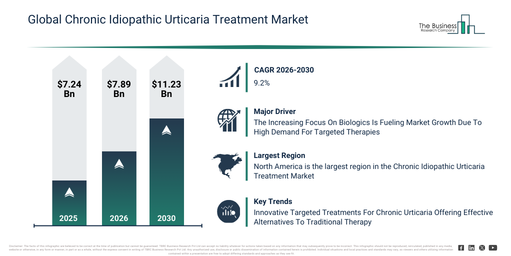
    The chronic idiopathic urticaria treatment market size has experienced significant growth in recent years. This market is expected to expand from $7.24 billion in 2025 to $7.89 billion in 2026, achieving a compound annual growth rate (CAGR) of 9.0%. Historically, this growth can be ascribed to an increase in the diagnosis of chronic urticaria, the availability of advanced second-line antihistamine therapies, the implementation of systematic treatment protocols, the expansion of specialized allergy clinics, and the rising utilization of immunomodulatory drugs.

    The chronic idiopathic urticaria treatment market is projected to experience substantial expansion over the coming years, reaching $11.23 billion by 2030, demonstrating a compound annual growth rate (CAGR) of 9.2%. This anticipated growth during the forecast period is fueled by factors such as a surge in demand for biologic treatment options, a heightened emphasis on personalized immunology care, the proliferation of digital disease management tools, increased investment in new urticaria therapies, and improved patient awareness alongside better treatment adherence. Key trends foreseen in this period encompass the wider adoption of biologic therapies for patients unresponsive to standard treatments, an expanding application of personalized treatment pathways, the growing incorporation of digital tools for symptom monitoring, an increase in available injectable treatment options, and a greater emphasis on sustained disease management.

    Download A Free Sample Report For Comprehensive Market Insights:

    https://www.thebusinessresearchcompany.com/sample.aspx?id=33064&type=smp&utm_source=Blogs&utm_medium=Paid&utm_campaign=Jul_PR

    Chronic Idiopathic Urticaria Treatment Market Growth Factors Supporting Long-Term Expansion

    Growing attention to biologics is anticipated to drive expansion in the chronic idiopathic urticaria treatment market moving ahead. Biologics are therapeutic agents originating from living organisms or their constituent parts, designed to address diseases by targeting particular immune system pathways. The heightened focus on biologics stems from progress in biotechnology and immunology, facilitating the creation of more accurate and potent therapies that tackle the fundamental mechanisms of immune-mediated conditions, instead of just alleviating symptoms. By targeting the core immune pathways and mast cell activation linked to chronic idiopathic urticaria, biologics are transforming treatment approaches and offering patients improved, sustained symptom management. As an illustration, in February 2025, the World Health Organization (WHO), an intergovernmental body located in Switzerland, reported that its 2023 Essential Medicines List features 81 biologic therapies, which constitute more than 15% of all medicines on the list. Consequently, this intensified focus on biologics is fueling the expansion of the chronic idiopathic urticaria treatment market.

    Chronic Idiopathic Urticaria Treatment Market Segment Analysis And Revenue Opportunities

    The chronic idiopathic urticaria treatment market covered in this report is segmented –

    1) By Types: Tablets; Capsules; Creams; Lotions; Injections

    2) By Drug Class: Antihistamines; Corticosteroids; Leukotriene Receptor Antagonists; Immunosuppressants; Biologic Therapies; Other Drug Class

    3) By Route Of Administration: Oral; Injectable; Topical

    4) By Distribution Channel: Hospital Pharmacies; Retail Pharmacies; Online Pharmacies

    Subsegments:

    1) By Tablets: Immediate Release Tablets; Extended Release Tablets; Enteric Coated Tablets; Chewable Tablets; Orally Disintegrating Tablets

    2) By Capsules: Hard Gelatin Capsules; Soft Gelatin Capsules; Sustained Release Capsules; Delayed Release Capsules

    3) By Creams: Medicated Topical Creams; Anti Inflammatory Creams; Antifungal Creams; Antibacterial Creams; Moisturizing Therapeutic Creams

    4) By Lotions: Medicated Therapeutic Lotions; Anti Inflammatory Lotions; Antiseptic Lotions; Moisturizing Lotions; Specialty Dermatological Lotions

    5) By Injections: Intravenous Injections; Intramuscular Injections; Subcutaneous Injections; Pre Filled Syringe Injections; Auto Injector Based Injections

    Chronic Idiopathic Urticaria Treatment Market Industry Trends Shaping Future Revenue Growth

    Key companies operating within the chronic idiopathic urticaria treatment market are concentrating on developing advanced products, such as monoclonal antibody therapies, to deliver targeted, lasting relief for patients who do not respond to standard treatments. These monoclonal antibody therapies are biologic drugs specifically engineered to target immune system components, like immunoglobulin E (IgE) or other inflammatory mediators, which trigger chronic hives, offering a more precise mechanism of action compared to traditional antihistamines or corticosteroids. For instance, in September 2025, Celltrion Inc., a biopharmaceutical company from South Korea, introduced Omriclo, an omalizumab biosimilar, in Norway. This product shares the same active monoclonal antibody as Xolair, operates by neutralizing circulating IgE, and is administered through subcutaneous injection. Its distinguishing characteristics include a first-mover advantage in Europe, increased accessibility via local distribution channels, and potential cost efficiencies for healthcare systems. It is intended for patients with chronic idiopathic urticaria who remain symptomatic despite receiving standard therapy, offering a biologic alternative to conventional treatments and promising enhanced symptom management, a reduction in the frequency of flare-ups, and the potential to improve overall quality of life by reducing dependence on long-term antihistamine or corticosteroid use.

    Chronic Idiopathic Urticaria Treatment Market Leading Players Shaping Industry Direction

    Major companies operating in the chronic idiopathic urticaria treatment market are F. Hoffmann-La Roche Ltd., Sanofi S.A., Novartis AG., AstraZeneca PLC, GlaxoSmithKline plc, Teva Pharmaceutical Industries Ltd., Regeneron Pharmaceuticals Inc., Incyte Corporation, Dr. Reddy’s Laboratories Ltd., Celltrion Inc., Yuhan Corporation, Kiniksa Pharmaceuticals Ltd., Celldex Therapeutics Inc., Septerna Therapeutics Inc., Carna Biosciences Inc., United BioPharma Inc., Recludix Pharma Inc., Jasper Therapeutics Inc., Evommune Inc., ARS Pharmaceuticals Inc

    Access The Complete Chronic Idiopathic Urticaria Treatment Market Report:

    https://www.thebusinessresearchcompany.com/report/chronic-idiopathic-urticaria-treatment-market-report?utm_source=Blogs&utm_medium=Paid&utm_campaign=Jul_PR

    Chronic Idiopathic Urticaria Treatment Market Leading Geography: Which Region Generates The Most Revenue?

    North America was the largest region in the chronic idiopathic urticaria treatment market in 2025. Asia-Pacific is expected to be the fastest-growing region in the forecast period. The regions covered in the chronic idiopathic urticaria treatment market report are Asia-Pacific, South East Asia, Western Europe, Eastern Europe, North America, South America, Middle East, Africa.

    Get in touch with us:

    The Business Research Company: https://www.thebusinessresearchcompany.com/

    Americas: +1 310-496-7795

    Asia: +44 7882 955267 & +91 8897263534

    Europe: +44 7882 955267

    Email us at: marketing@tbrc.info

    Follow us on:

    LinkedIn: https://in.linkedin.com/company/the-business-research-company

    YouTube: https://www.youtube.com/channel/UC24_fI0rV8cR5DxlCpgmyFQ

    Global Market Model: https://www.thebusinessresearchcompany.com/global-market-model
  • Cheek Augmentation  Market Expansion Is Opening New Pathways For Strategic Investment

    Cheek Augmentation Market Expansion Is Opening New Pathways For Strategic Investment

    Enhanced with market attractiveness analysis, total addressable market evaluation, company benchmarking matrices, interactive Excel dashboards, expanded supply chain intelligence, emerging startup coverage, and detailed product insights, The Business Research Company’s 2026 market reports deliver more actionable and strategically valuable research.

    Cheek Augmentation Market Growth Potential: How Will Market Size Change Through 2030?

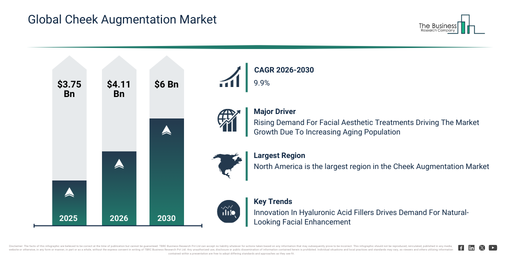
    The cheek augmentation market has experienced robust expansion in recent years. Its valuation is projected to increase from $3.75 billion in 2025 to $4.11 billion in 2026, exhibiting a compound annual growth rate (CAGR) of 9.7%. This past growth can be attributed to several factors, including the rising acceptance of cosmetic procedures, the proliferation of medical aesthetics clinics, the availability of sophisticated dermal fillers, the increasing influence of aesthetic medicine, and the expansion of urban cosmetic service providers.

    The cheek augmentation market is projected to see significant growth over the next few years, expanding to $6 billion by 2030, at a compound annual growth rate (CAGR) of 9.9%. This projected growth during the forecast period is attributed to several factors, including the increasing demand for minimally invasive cosmetic treatments, the rising adoption of AI-assisted facial analysis, the expansion of medical tourism for aesthetic procedures, a growing focus on personalized beauty solutions, and increasing investments in aesthetic technology platforms. Major trends anticipated in the forecast period encompass the greater use of 3D facial imaging for treatment planning, a growing demand for non-surgical injectable procedures, an increasing preference for personalized aesthetic design, the expansion of minimally invasive facial contouring options, and an enhanced focus on achieving natural-looking results.

    Download A Free Sample Report For Comprehensive Market Insights:

    https://www.thebusinessresearchcompany.com/sample.aspx?id=33062&type=smp&utm_source=Blogs&utm_medium=Paid&utm_campaign=Jul_PR

    Cheek Augmentation Market Expansion Supported By Key Demand Factors

    The increasing need for facial aesthetic treatments is anticipated to drive the expansion of the cheek augmentation market in the future. These treatments are cosmetic interventions aimed at improving or re-establishing facial characteristics to boost appearance and confidence. The demand for facial aesthetic treatments is increasing because of an expanding aging demographic desiring a younger look, with natural volume loss and wrinkles leading many to seek procedures that rejuvenate their appearance and improve self-esteem. Cheek augmentation complements facial aesthetic treatments by replenishing mid-face volume, refining facial contours, correcting asymmetry, and producing a subtle lifting effect, which collectively contributes to a more youthful, harmonious, and revitalized facial appearance. For example, data from June 2024 by the American Society of Plastic Surgeons, a US-based non-profit organization, showed that minimally invasive procedures grew by 7% in 2023, surpassing surgical procedures by 2%. Plastic surgeries increased by 5%, whereas minimally invasive procedures experienced a 7% year-over-year growth. Consequently, the growing demand for facial aesthetic treatments is fueling the expansion of the cheek augmentation market.

    Cheek Augmentation Market Segment Outlook: Which Categories Are Expanding The Fastest?

    The cheek augmentation market covered in this report is segmented –

    1) By Procedure Type: Surgical Cheek Implants; Injectable Fillers; Fat Grafting Or Autologous Fat Transfer

    2) By Product: Derma Fillers; Implant; Malar Implant; Submalar Implant; Combined Implant; Other Products

    3) By Technique: Minimally Invasive Procedures; Conventional Surgical Procedures

    4) By End-User: Specialty Aesthetic Clinics Market; Medical Spas Market; Hospitals Market

    Subsegments:

    1) By Surgical Cheek Implants: Silicone Implants; Porous Polyethylene Implants; Anatomical Implants

    2) By Injectable Fillers: Hyaluronic Acid Fillers; Calcium Hydroxylapatite Fillers; Poly L Lactic Acid Fillers; Polymethyl Methacrylate Fillers

    3) By Fat Grafting Or Autologous Fat Transfer: Micro Fat Grafting; Nano Fat Grafting; Structural Fat Grafting

    Cheek Augmentation Market Growth Trends Influencing Competitive Dynamics

    Leading companies in the cheek augmentation market are prioritizing the creation of innovative products, specifically advanced hyaluronic acid-based dermal fillers, to enhance facial volume and contour by offering improved safety and more enduring outcomes. These sophisticated hyaluronic acid-based dermal fillers are injectable gels formulated to mimic the body’s natural hyaluronic acid, effectively restoring cheek volume, refining contour, and improving facial symmetry by attracting and retaining moisture for a smoother, more youthful complexion. For instance, in January 2026, Revance Therapeutics Inc., a US-based pharmaceutical company, and TEOXANE SA., a Switzerland-based manufacturing company, secured U.S. Food and Drug Administration (FDA) approval for RHA Dynamic Volume, a next-generation hyaluronic acid dermal filler developed for cheek augmentation and the correction of age-related midface contour deficiencies. This product is engineered using Preserved Network Technology, a gentle, heat-free crosslinking process that helps maintain the natural structure of hyaluronic acid, resulting in high dynamic strength, elasticity, and durability compared with conventional fillers. It is designed to provide deep structural support while adapting to facial movement, enabling natural-looking results both at rest and in motion, and has demonstrated comparable clinical effectiveness with fewer treatment sessions and touch-ups in late-stage clinical studies.

    Cheek Augmentation Market Key Companies And Competitive Benchmarking

    Major companies operating in the cheek augmentation market are AbbVie Inc., LG Chem Life Sciences Ltd., Stryker Corporation, Zimmer Biomet Holdings Inc., Merz Aesthetics GmbH, KLS Martin Group, Sinclair Pharma Limited, Medartis Holding AG, Hugel Inc., Revance Therapeutics Inc., Medytox Inc., Anika Therapeutics Inc., Croma-Pharma GmbH, GC Aesthetics Ltd., Regen Lab SA, Teoxane Laboratories SA, Human Med AG, BioPlus Co. Ltd., Polytech Health & Aesthetics GmbH, and Sebbin Group.

    Access The Complete Cheek Augmentation Market Report:

    https://www.thebusinessresearchcompany.com/report/cheek-augmentation-market-report?utm_source=Blogs&utm_medium=Paid&utm_campaign=Jul_PR

    Cheek Augmentation Market Geographic Landscape: Which Region Dominates Industry Growth?

    North America was the largest region in the cheek augmentation market in 2025. Asia-Pacific is expected to be the fastest-growing region in the forecast period. The regions covered in the cheek augmentation market report are Asia-Pacific, South East Asia, Western Europe, Eastern Europe, North America, South America, Middle East, Africa.

    Get in touch with us:

    The Business Research Company: https://www.thebusinessresearchcompany.com/

    Americas: +1 310-496-7795

    Asia: +44 7882 955267 & +91 8897263534

    Europe: +44 7882 955267

    Email us at: marketing@tbrc.info

    Follow us on:

    LinkedIn: https://in.linkedin.com/company/the-business-research-company

    YouTube: https://www.youtube.com/channel/UC24_fI0rV8cR5DxlCpgmyFQ

    Global Market Model: https://www.thebusinessresearchcompany.com/global-market-model
  • Cell And Gene Therapy Contract Research Organization  Market Outlook Highlights The Next Major Growth Opportunities

    Cell And Gene Therapy Contract Research Organization Market Outlook Highlights The Next Major Growth Opportunities

    Delivering more actionable and strategically valuable research, The Business Research Company’s 2026 market reports feature market attractiveness analysis, total addressable market evaluation, company benchmarking matrices, interactive Excel dashboards, expanded supply chain intelligence, emerging startup coverage, and detailed product insights.

    Cell And Gene Therapy Contract Research Organization Market Forecast: What Market Value Is Expected By 2030?

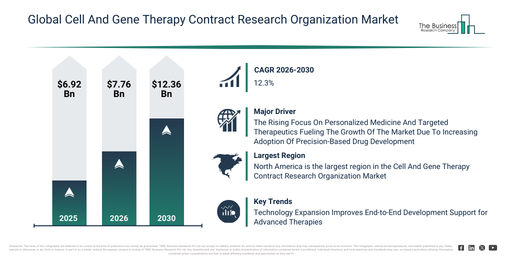
    The cell and gene therapy contract research organization market size has experienced rapid expansion in recent years. This market is projected to expand from $6.92 billion in 2025 to reach $7.76 billion by 2026, reflecting a compound annual growth rate (CAGR) of 12.1%. Historically, this growth can be attributed to the increasing number of early-stage cell and gene therapy programs, limited in-house development capabilities, the expansion of rare disease research pipelines, rising regulatory complexity in advanced therapies, and an increasing reliance on external research expertise.

    The cell and gene therapy contract research organization market size is anticipated to undergo significant expansion in the next few years. It is projected to grow to $12.36 billion by 2030, achieving a compound annual growth rate (CAGR) of 12.3%. The growth observed during the forecast period can be attributed to increased clinical trial activity in gene therapies, the expansion of personalized medicine development, rising investments in oncology and genetic disorder research, a growing demand for accelerated development timelines, and increased collaboration between biotech firms and CROs. Key trends for this period include a greater outsourcing of cell and gene therapy research, an increasing demand for integrated preclinical and clinical services, a growing focus on regulatory and compliance expertise, the expansion of vector development and manufacturing support, and an enhanced use of data-driven trial management.

    Download A Free Sample Report For Comprehensive Market Insights:

    https://www.thebusinessresearchcompany.com/sample.aspx?id=33057&type=smp&utm_source=Blogs&utm_medium=Paid&utm_campaign=Jul_PR

    Cell And Gene Therapy Contract Research Organization Market Development Factors: Which Trends Are Supporting Demand?

    The increasing emphasis on personalized medicine and targeted therapeutics is anticipated to fuel the expansion of the cell and gene therapy contract research organization (CRO) market. These approaches focus on developing treatments precisely adapted to an individual’s unique genetic, molecular, or cellular makeup, aiming to enhance effectiveness and minimize unwanted side effects. The prominence of personalized medicine is growing because regulatory bodies and healthcare systems are increasingly prioritizing precision-based therapies to manage complex illnesses and achieve improved clinical outcomes. Cell and gene therapy contract research organizations (CROs) contribute to personalized medicine by offering expert preclinical, clinical, and regulatory services essential for the creation, assessment, and validation of intricate gene- and cell-based therapeutic products. As an illustration, in April 2025, the Personalized Medicine Coalition, a US-based nonprofit organization, reported that the Food and Drug Administration (FDA) gave its approval to 18 personalized medicines in 2024, representing approximately 38% of all newly approved therapeutic molecular entities. Consequently, the heightened attention to personalized medicine and targeted therapeutics is a key factor driving the growth of the cell and gene therapy contract research organization (CRO) market.

    Cell And Gene Therapy Contract Research Organization Market Segmentation: How Is The Market Structured Across Key Categories?

    The cell and gene therapy contract research organization market covered in this report is segmented –

    1) By Type: Preclinical Contract Research Organization; Clinical Stage Contract Research Organization; Other Types

    2) By Service: Project And Clinical Trial Management; Regulatory Strategy; Data Management And Medical Writing; Clinical Monitoring; Quality Management And Good Manufacturing Practice Compliance; Biostatistics And Safety Monitoring; Patient And Site Recruitment; Technology Transfer; Other Services

    3) By Indication: Oncology; Central Nervous System Disorders; Infectious Diseases; Immunological Disorders; Cardiovascular Diseases; Respiratory Diseases; Diabetes; Ophthalmology; Pain Management; Other Indications

    4) By Modality: Cell-Based Therapies; Gene Therapies; Gene-Modified Cell Therapies

    5) By Application: Hospital; Research Institute; Other Applications

    Subsegments:

    1) By Preclinical Contract Research Organization: In Vitro Testing Services; In Vivo Animal Model Services; Toxicology And Safety Assessment; Other Preclinical Services

    2) By Clinical Stage Contract Research Organization: Phase I Clinical Trial Services; Phase II Clinical Trial Services; Phase III Clinical Trial Services; Other Clinical Stage Services

    3) By Other Types: Regulatory Consulting Services; Process Development Services; Manufacturing Support Services; Other Support Services

    Cell And Gene Therapy Contract Research Organization Market Transformation Trends: Which Innovations Are Driving Change?

    Major companies operating within the cell and gene therapy contract research organization (CRO) market are prioritizing the creation of innovative solutions, including expanded laboratory and analytical services, to improve therapy development efficiency, ensure regulatory compliance, and enhance research precision by offering advanced facilities, specialized equipment, and integrated cell and gene therapy testing capabilities. Expanded laboratory and analytical services describe contract research organization (CRO) offerings that boost capacity, enable the execution of complex assays, and support sponsors throughout the entire development process of advanced cell and gene therapies. For instance, in August 2025, Labcorp Holdings Inc., a US-based healthcare company, expanded its cell and gene therapy laboratory in madison, wisconsin, thereby strengthening its capabilities for cell characterization, vector analytics, and regulatory-compliant testing. This enlarged facility provides dedicated infrastructure for intricate cell and gene therapy workflows, supports high-throughput sample processing, and integrates advanced analytical platforms, making it a comprehensive solution for accelerating cell and gene therapy research and development.

    Cell And Gene Therapy Contract Research Organization Market Competitive Landscape And Leading Companies

    Major companies operating in the cell and gene therapy contract research organization market are Thermo Fisher Scientific Inc., IQVIA Holdings Inc., Laboratory Corporation of America Holdings (Labcorp), ICON plc, WuXi AppTec Co. Ltd., Syneos Health Inc., Charles River Laboratories International Inc., Parexel International Corporation, Fortrea Holdings Inc., CMIC Co. Ltd., Medpace Holdings Inc., PharmaLex GmbH, Premier Research International LLC, Worldwide Clinical Trials Inc., Novotech (Australia) Pty Ltd., Precision for Medicine Inc., Syngene International Limited, Allucent Inc., TFS HealthScience AB, QPS Holdings LLC, Altasciences Company Inc., Veristat LLC, Linical Co. Ltd., Aixial Group, ProRelix Research LLC

    Access The Complete Cell And Gene Therapy Contract Research Organization Market Report:

    https://www.thebusinessresearchcompany.com/report/cell-and-gene-therapy-contract-research-organization-market-report?utm_source=Blogs&utm_medium=Paid&utm_campaign=Jul_PR

    Cell And Gene Therapy Contract Research Organization Market Regional Analysis And Leading Geography

    North America was the largest region in the cell and gene therapy contract research organization (CRO) market in 2025. Asia-Pacific is expected to be the fastest-growing region in the forecast period. The regions covered in the cell and gene therapy contract research organization market report are Asia-Pacific, South East Asia, Western Europe, Eastern Europe, North America, South America, Middle East, Africa.

    Get in touch with us:

    The Business Research Company: https://www.thebusinessresearchcompany.com/

    Americas: +1 310-496-7795

    Asia: +44 7882 955267 & +91 8897263534

    Europe: +44 7882 955267

    Email us at: marketing@tbrc.info

    Follow us on:

    LinkedIn: https://in.linkedin.com/company/the-business-research-company

    YouTube: https://www.youtube.com/channel/UC24_fI0rV8cR5DxlCpgmyFQ

    Global Market Model: https://www.thebusinessresearchcompany.com/global-market-model