Category: Healthcare Services

  • Cardiovascular Genetic Testing  Market Forecast Reveals Where Future Industry Value Will Be Created

    Cardiovascular Genetic Testing Market Forecast Reveals Where Future Industry Value Will Be Created

    Delivering more actionable and strategically valuable research, The Business Research Company’s 2026 market reports feature market attractiveness analysis, total addressable market evaluation, company benchmarking matrices, interactive Excel dashboards, expanded supply chain intelligence, emerging startup coverage, and detailed product insights.

    Cardiovascular Genetic Testing Market CAGR Analysis And Future Market Development

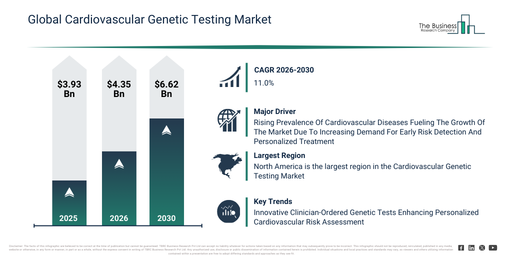
    The cardiovascular genetic testing market has seen rapid expansion in recent years. Its size is expected to increase from $3.93 billion in 2025 to $4.35 billion in 2026, achieving a compound annual growth rate (CAGR) of 10.8%. The historical growth of this market can be attributed to several factors, including a rise in awareness regarding inherited cardiovascular disorders, the development of molecular diagnostic capabilities, a reduction in the costs associated with genetic sequencing, an increase in the adoption of genetic counseling services, and enhanced research into cardiovascular genomics.

    The cardiovascular genetic testing market is projected for substantial expansion in the coming years, reaching a valuation of $6.62 billion by 2030, driven by a compound annual growth rate (CAGR) of 11.0%. This anticipated growth during the forecast period stems from factors such as the escalating demand for precision medicine, the growing embrace of population-based genetic screening, the broadening scope of AI-driven variant interpretation, the deeper integration of genomics into clinical decision-making, and a heightened emphasis on preventive cardiovascular healthcare. Key trends expected over this period encompass a greater uptake of predictive genetic risk assessment, increased utilization of multigene panel testing, the advancing integration of bioinformatics and AI analytics, the widening application of pharmacogenomic testing, and a stronger commitment to personalized cardiovascular care.

    Download A Free Sample Report For Comprehensive Market Insights:

    https://www.thebusinessresearchcompany.com/sample.aspx?id=33054&type=smp&utm_source=Blogs&utm_medium=Paid&utm_campaign=Jul_PR

    Cardiovascular Genetic Testing Market Demand Drivers: What Is Fueling Industry Growth?

    The rising occurrence of cardiovascular diseases is projected to drive the expansion of the cardiovascular genetic testing market moving forward. Cardiovascular diseases, or CVDs, refer to a collection of conditions impacting the heart and blood vessels, including ailments like heart attacks, strokes, and high blood pressure. The growing prevalence of these conditions is mainly due to an increase in sedentary lifestyles connected with urbanization, which contribute to obesity, hypertension, and metabolic disorders. The increasing incidence of cardiovascular diseases fuels the demand for cardiovascular genetic testing, as early detection of genetic risks allows for personalized prevention and treatment strategies to diminish the chance of severe heart complications. For instance, in January 2024, the American Heart Association, a US-based non-profit organization, stated that the age-adjusted death rate from cardiovascular disease rose to 233.3 per 100,000 in 2024, marking a 4.0% increase from 224.4 per 100,000 in 2023. Consequently, the escalating prevalence of cardiovascular disease is propelling the growth of the cardiovascular genetic testing market.

    Cardiovascular Genetic Testing Market Segment Performance And Strategic Opportunities

    The cardiovascular genetic testing market covered in this report is segmented –

    1) By Testing Type: Predictive Testing; Carrier Testing; Prenatal And Newborn Testing; Diagnostic Testing; Pharmacogenomic Testing; Other Testing Types

    2) By Disease: Inherited Cardiomyopathies; Hypertrophic Cardiomyopathy (HCM); Dilated Cardiomyopathy (DCM); Arrhythmia; Aortopathies; Other Diseases

    3) By Technology: Cytogenetic Testing; Biochemical Testing; Molecular Testing

    4) By Application: Chromosome Analysis; Genetic Disease Diagnosis; Cardiovascular Disease Diagnosis; Other Applications

    5) By End User: Hospitals And Clinics; Diagnostic Laboratories; Research Institutions; Genetic Counseling Centers; Pharmaceutical Companies; Direct-To-Consumer Testing

    Subsegments:

    1) By Predictive Testing: Presymptomatic Risk Assessment; Familial Variant Screening; Polygenic Risk Evaluation; Late Onset Disease Prediction; Susceptibility Gene Testing

    2) By Carrier Testing: Autosomal Recessive Carrier Screening; Linked Carrier Screening; Expanded Carrier Screening Panels; Single Gene Carrier Screening; Family History Based Carrier Testing

    3) By Prenatal And Newborn Testing: Non Invasive Prenatal Genetic Testing; Invasive Prenatal Diagnostic Testing; Newborn Metabolic Screening; Congenital Heart Disease Genetic Screening; Neonatal Gene Panel Testing

    4) By Diagnostic Testing: Single Gene Diagnostic Testing; Multigene Panel Diagnostic Testing; Whole Exome Diagnostic Testing; Whole Genome Diagnostic Testing; Variant Confirmation Testing

    5) By Pharmacogenomic Testing: Drug Response Gene Testing; Adverse Drug Reaction Risk Testing; Dose Optimization Genetic Testing; Anticoagulant Response Testing; Cardiovascular Drug Metabolism Testing

    6) By Other Testing Types: Cascade Family Testing; Population Based Genetic Screening; Research Use Genetic Testing; Confirmatory Follow Up Testing; Clinical Trial Genetic Testing

    Cardiovascular Genetic Testing Market Innovation Trends: Which Developments Are Transforming The Industry?

    Major companies within the cardiovascular genetic testing market are prioritizing the development of innovative solutions, such as tests initiated by clinicians. These solutions aim to guarantee the medical necessity of tests and customize them to a patient’s specific health profile, thereby decreasing unnecessary testing and associated costs. A clinician-ordered test is defined as a medical examination or diagnostic procedure requested by a healthcare professional to assess, monitor, or guide the management of an individual’s health condition. For example, in September 2025, Mass General Brigham, a US-based not-for-profit integrated academic healthcare system, in partnership with Broad Clinical Labs, a US-based genomic data generation laboratory, and Mass General Brigham Laboratory for Molecular Medicine, a US-based molecular diagnostic laboratory, introduced a genetic test designed to evaluate inherited risk for eight cardiovascular conditions. This clinician-ordered test is provided on a self-pay basis and assesses genetic predisposition to the eight specified conditions: atrial fibrillation, coronary artery disease, type 2 diabetes, elevated lipoprotein(a), hypercholesterolemia, hypertension, thoracic aortic aneurysm, and venous thromboembolism. Its creation leveraged genotype and clinical data from 236,393 participants in the NIH’s All of Us Research Program. Publicly available polygenic risk scores for each condition were integrated utilizing PRSmix, an elastic-net modeling approach that combines multiple component scores into a single, comprehensive risk score per disease. High-resolution genetic data is obtained through a clinical blended genome-exome assay at Broad Clinical Labs, with the CLIA-certified Mass General Brigham Laboratory for Molecular Medicine then interpreting the results and generating accessible reports for patients.

    Cardiovascular Genetic Testing Market Key Players: Which Companies Shape Industry Competition?

    Major companies operating in the cardiovascular genetic testing market are Labcorp Holdings Inc., Quest Diagnostics Inc., ICON plc, Illumina Inc., Apollo Hospitals, OPKO Health Inc., Revvity Inc., ARUP Laboratories Inc., Mayo Clinic Laboratories, Fulgent Genetics Inc., MedGenome Inc., Genome Medical, PreventionGenetics, Eurofins Genomics LLC, Blueprint Genetics Inc., MapmyGenome, GENinCode, Allelica Srl, Rocket Pharma Inc., and Health in Code SL.

    Access The Complete Cardiovascular Genetic Testing Market Report:

    https://www.thebusinessresearchcompany.com/report/cardiovascular-genetic-testing-market-report?utm_source=Blogs&utm_medium=Paid&utm_campaign=Jul_PR

    Cardiovascular Genetic Testing Market Regional Distribution: Which Areas Drive Market Expansion?

    North America was the largest region in the cardiovascular genetic testing market in 2025. Asia-Pacific is expected to be the fastest-growing region in the forecast period. The regions covered in the cardiovascular genetic testing market report are Asia-Pacific, South East Asia, Western Europe, Eastern Europe, North America, South America, Middle East, Africa.

    Get in touch with us:

    The Business Research Company: https://www.thebusinessresearchcompany.com/

    Americas: +1 310-496-7795

    Asia: +44 7882 955267 & +91 8897263534

    Europe: +44 7882 955267

    Email us at: marketing@tbrc.info

    Follow us on:

    LinkedIn: https://in.linkedin.com/company/the-business-research-company

    YouTube: https://www.youtube.com/channel/UC24_fI0rV8cR5DxlCpgmyFQ

    Global Market Model: https://www.thebusinessresearchcompany.com/global-market-model
  • Carboxy Therapy  Market Size Projected To Increase From $13.4 Billion To $20.57 Billion During The Forecast Period

    Carboxy Therapy Market Size Projected To Increase From $13.4 Billion To $20.57 Billion During The Forecast Period

    Through market attractiveness analysis, total addressable market evaluation, company benchmarking matrices, interactive Excel dashboards, expanded supply chain intelligence, emerging startup coverage, and detailed product insights, The Business Research Company’s 2026 market reports provide more actionable and strategically valuable research.

    Carboxy Therapy Market Forecast Highlighting Growth From $13.4 Billion To $20.57 Billion

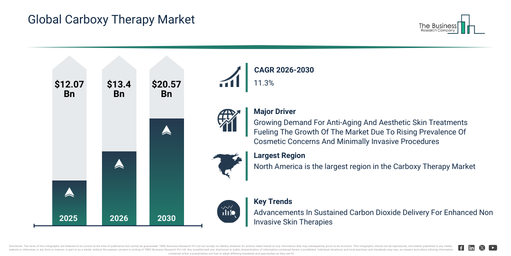
    The carboxy therapy market has experienced rapid expansion in its size over recent years. The market is anticipated to expand from $12.07 billion in 2025 to $13.4 billion in 2026, exhibiting a compound annual growth rate (CAGR) of 11.1%. During the historic period, this expansion was driven by several key factors, including growth in aesthetic medicine procedures, rising consumer awareness of minimally invasive treatments, increased availability of professional aesthetic devices, expansion of dermatology and cosmetic clinics, and growing acceptance of aesthetic therapies.

    The carboxy therapy market is set to experience substantial expansion in the upcoming years, with projections indicating it will reach a value of $20.57 billion by 2030, driven by a compound annual growth rate (CAGR) of 11.3%. This projected increase is largely due to factors such as the rising consumer demand for customized cosmetic treatments, the growing acceptance of regenerative medicine techniques, the expanding availability of wellness and preventive care services, a greater emphasis on aesthetic outcomes supported by evidence, and increased investments in advanced therapeutic devices. Significant trends for this period involve the increasing use of personalized aesthetic treatment protocols, a rise in the integration of combination therapy approaches, the proliferation of non-invasive skin rejuvenation procedures, a heightened focus on therapies aimed at stimulating collagen, and an enhanced requirement for monitoring clinical results.

    Download A Free Sample Report For Comprehensive Market Insights:

    https://www.thebusinessresearchcompany.com/sample.aspx?id=33052&type=smp&utm_source=Blogs&utm_medium=Paid&utm_campaign=Jul_PR

    Carboxy Therapy Market Growth Factors Supporting Long-Term Expansion

    The increasing occurrence of skin aging issues and aesthetic worries is anticipated to boost the expansion of the carboxy therapy market moving ahead. These concerns encompass observable indicators like wrinkles, fine lines, loose skin, dark circles, cellulite, and irregular skin texture, affecting both older and younger individuals worldwide. The rising incidence of skin aging and cosmetic issues stems from extended exposure to UV radiation, environmental pollutants, and lifestyle choices that hasten collagen deterioration and skin degradation. Carboxy therapy addresses these prevalent skin aging and cosmetic concerns by improving microcirculation, boosting oxygen supply, and promoting collagen renewal, thus tackling various aesthetic conditions via a minimally invasive method. As an illustration, in June 2024, data from the International Society of Aesthetic Plastic Surgery, a US-based professional organization, indicated that facial and head aesthetic procedures saw substantial growth compared to the prior year in 2023, amounting to over 6.5 million interventions and showing a 19.6% increase. Consequently, the increasing occurrence of skin aging and cosmetic issues is propelling the expansion of the carboxy therapy market.

    Carboxy Therapy Market Categorization By Product Type And Application

    The carboxy therapy market covered in this report is segmented –

    1) By Service Category: Aesthetic Rejuvenation Services; Therapeutic Medical Treatments; Rehabilitative And Sports Medicine; Post Surgical Recovery Programs

    2) By Product Type: Professional Devices; At-Home Kits

    3) By Gas Type: Carbon Dioxide; Oxygen

    4) By Application: Stretch Marks; Cellulite; Alopecia; Psoriasis; Dark Circles

    5) By End User: Aesthetic Clinics And Dermatology Centers; Hospitals And Medical Centers; Wellness And Spa Centers

    Subsegments:

    1) By Aesthetic Rejuvenation Services: Facial Skin Tightening Treatments; Body Contouring Treatments; Cellulite Reduction Treatments; Stretch Mark Reduction Treatments; Scar Appearance Improvement Treatments; Skin Texture And Tone Enhancement Treatments

    2) By Therapeutic Medical Treatments: Chronic Wound Management Treatments; Peripheral Vascular Disorder Treatments; Dermatological Condition Treatments; Pain Management Treatments; Circulatory Disorder Treatments

    3) By Rehabilitative And Sports Medicine: Muscle Injury Recovery Treatments; Joint Pain Relief Treatments; Soft Tissue Rehabilitation Treatments; Sports Injury Recovery Treatments; Inflammation Reduction Treatments

    4) By Post Surgical Recovery Programs: Postoperative Scar Management Treatments; Edema Reduction Treatments; Tissue Healing Support Treatments; Fibrosis Reduction Treatments; Circulation Improvement Treatments

    Carboxy Therapy Market Industry Trends Shaping Future Revenue Growth

    Major companies operating in the carboxy therapy market are focusing on developing innovative solutions, such as patented sustained carbon dioxide delivery systems for professional-grade carboxytherapy treatments, to meet the rising demand for safer, more effective non-invasive aesthetic and regenerative skin therapies. These proprietary sustained carbon dioxide delivery systems are advanced formulations and device technologies that gradually release carbon dioxide over an extended period, enabling deeper skin absorption and enhanced circulation compared with traditional fast-acting gels and packs that dissipate quickly on contact. For instance, in August 2025, Lumisque Skincare, a US-based clinical skincare and biomedical company, announced advancements in its CO2Lift carboxytherapy treatment, featuring a patented lactone hydrolysis system that steadily releases carbon dioxide for more than an hour to support deeper tissue absorption and broader therapeutic use. The CO2Lift system is being integrated by physicians and aesthetic practitioners for non-invasive skin regeneration, wound healing support, and enhanced microcirculation, offering a professional-grade alternative to traditional consumer-grade CO2 products. Lumisque’s clinical validation and physician adoption underscore the technology’s capability to elevate carboxy therapy beyond basic cosmetic applications, reflecting continued innovation in the market.

    Carboxy Therapy Market Company Landscape And Strategic Competition

    Major companies operating in the carboxy therapy market are Cynosure Inc., Alma Lasers Ltd., Cosmopro Srl, Cocoon Medical Ltd., MBE Medical Divisions GmbH, Carbossiterapia Italiana Srl, DTA Medical GmbH, Alvi Prague Co., Kastner-Praxisbedarf GmbH, MEDAiON Plasma GmbH, Beijing Jontelaser Technologies Co. Ltd., HyaCorp GmbH, Sublime Skin Ltd., Hyaluronic GmbH, Aesthetic Solutions Ltd., RevitaLaze GmbH, Medcos GmbH, Mezopharma GmbH, Advon Technologies Pvt. Ltd., and Solana Beauty Technology Co. Ltd.

    Access The Complete Carboxy Therapy Market Report:

    https://www.thebusinessresearchcompany.com/report/carboxy-therapy-market-report?utm_source=Blogs&utm_medium=Paid&utm_campaign=Jul_PR

    Carboxy Therapy Market Regional Outlook: Where Are The Largest Opportunities Located?

    North America was the largest region in the carboxy therapy market in 2025. Asia-Pacific is expected to be the fastest-growing region in the forecast period. The regions covered in the carboxy therapy market report are Asia-Pacific, South East Asia, Western Europe, Eastern Europe, North America, South America, Middle East, Africa.

    Get in touch with us:

    The Business Research Company: https://www.thebusinessresearchcompany.com/

    Americas: +1 310-496-7795

    Asia: +44 7882 955267 & +91 8897263534

    Europe: +44 7882 955267

    Email us at: marketing@tbrc.info

    Follow us on:

    LinkedIn: https://in.linkedin.com/company/the-business-research-company

    YouTube: https://www.youtube.com/channel/UC24_fI0rV8cR5DxlCpgmyFQ

    Global Market Model: https://www.thebusinessresearchcompany.com/global-market-model
  • Blastomycosis Treatment  Market Growth Is Reshaping Competitive Advantage Across The Industry

    Blastomycosis Treatment Market Growth Is Reshaping Competitive Advantage Across The Industry

    Enhanced with market attractiveness analysis, total addressable market evaluation, company benchmarking matrices, interactive Excel dashboards, expanded supply chain intelligence, emerging startup coverage, and detailed product insights, The Business Research Company’s 2026 market reports deliver more actionable and strategically valuable research.

    Blastomycosis Treatment Market Value Analysis: What Growth Is Expected Over The Forecast Period?

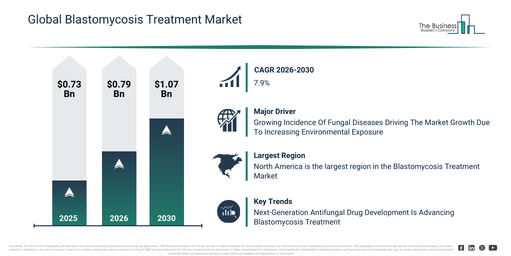
    The blastomycosis treatment market size has seen strong growth in recent years. It is anticipated to increase from $0.73 billion in 2025 to $0.79 billion in 2026, exhibiting a compound annual growth rate (CAGR) of 7.6%. This historical expansion can be attributed to factors such as improved awareness of systemic fungal infections, the availability of antifungal drug therapies, the expansion of diagnostic laboratory services, an increased clinical recognition of blastomycosis cases, and the growth of infectious disease treatment programs.

    The blastomycosis treatment market size is anticipated to undergo significant expansion in the coming years. Projections indicate it will reach $1.07 billion by 2030, exhibiting a compound annual growth rate (CAGR) of 7.9%. This expansion during the forecast period is primarily driven by an increased emphasis on early and accurate diagnosis, the ongoing development of enhanced antifungal formulations, the establishment of more specialized infectious disease care centers, the rising adoption of personalized treatment approaches, and greater investment in fungal disease research. Furthermore, prominent trends anticipated during this period encompass the increasing integration of advanced diagnostic protocols, a growing reliance on targeted antifungal therapies, the wider implementation of therapeutic drug monitoring practices, a heightened focus on early disease detection, and improved integration of clinical decision support tools.

    Download A Free Sample Report For Comprehensive Market Insights:

    https://www.thebusinessresearchcompany.com/sample.aspx?id=33044&type=smp&utm_source=Blogs&utm_medium=Paid&utm_campaign=Jul_PR

    Blastomycosis Treatment Market Industry Drivers: What Is Driving Revenue Growth?

    The blastomycosis treatment market is set to expand due to the increasing incidence of fungal diseases, which are infections resulting from pathogenic fungi entering the body through inhalation, direct contact, or environmental exposure. This rise in fungal diseases is largely attributed to climate-related environmental shifts, where increased rainfall and flooding create damp, organic soil conditions conducive to fungal spore proliferation and subsequent human contact. Consequently, the growing occurrence of these infections fuels demand for effective treatment solutions, with timely diagnosis and appropriate antifungal therapy being crucial for preventing severe complications and reducing mortality. For example, the UK Health Security Agency, a UK-based government body, reported in May 2025 that bloodstream infections caused by yeast increased by 4% in 2024 compared to 2023, rising from 2,170 to 2,247 recorded cases. Thus, the growing prevalence of fungal diseases is a key driver for the blastomycosis treatment market. The blastomycosis treatment market is projected to grow as the global immunocompromised population expands. This population consists of individuals with weakened immune defenses due to pre-existing conditions, genetic factors, or medical interventions like chemotherapy, immunosuppressive drugs, or organ transplants. The rise in immunocompromised individuals stems from improved survival rates for chronic illnesses and the broader application of immunosuppressive and immunomodulating therapies for autoimmune and inflammatory disorders. Blastomycosis treatment offers vital support to this vulnerable group by delivering effective antifungal therapy, which helps manage severe and disseminated infections, reduces fungal load, and averts life-threatening complications in patients with compromised immune systems. For instance, according to Infection & Chemotherapy (IC), a South Korea–based journal, an update in September 2024 indicated that by December 2023, South Korea recorded a cumulative total of 19,001 individuals diagnosed with HIV, of whom 1,219 (6.4%) were women. In 2022 alone, 1,066 new HIV cases were identified, including 82 women (7.7%), comprising 35 Korean nationals and 47 foreign nationals. During that same year, the total number of Korean nationals living with HIV in the country reached 15,880, with women accounting for 998 cases. Therefore, the expanding immunocompromised population is a significant driver for the blastomycosis treatment market.

    Blastomycosis Treatment Market Segmentation: How Is The Market Structured Across Key Categories?

    The blastomycosis treatment market covered in this report is segmented –

    1) By Treatment Type: Antifungal Drugs; Surgical Intervention

    2) By Anatomy: Lung; Bones; Central Nervous System; Other Anatomy

    3) By Dosage: Tablet; Injection; Capsule; Other Dosage forms

    4) By Route Of Administration: Intravenous; Oral; Other Route Of Administrations

    5) By End-User: Hospitals; Outpatient Clinics; Diagnostic Laboratories

    Subsegments:

    1) By Antifungal Drugs: Azole Antifungal Agents; Polyene Antifungal Agents; Echinocandin Antifungal Agents; Oral Antifungal Formulations; Intravenous Antifungal Formulations

    2) By Surgical Intervention: Lesion Debridement Procedures; Abscess Drainage Procedures; Lung Resection Procedures; Soft Tissue Excision Procedures

    #Blastomycosis Treatment Market Growth Trends: What Is Influencing The Future Outlook?

    Leading firms within the blastomycosis treatment market are prioritizing the creation of cutting-edge solutions, particularly through antifungal drug development, aiming to achieve better treatment effectiveness, improved safety characteristics, and a more robust position in fulfilling critical requirements for severe systemic fungal infections. The process of antifungal drug development involves creating new therapies intended to advance current treatments by boosting their effectiveness, minimizing harmful side effects, combating drug resistance, and providing superior options for administration, composition, or delivery. As an illustration, in June 2024, Elion Therapeutics, a US biotechnology firm, disclosed that their product, SF001, represents a next-generation polyene antifungal and a new variant of amphotericin B, which has been recognized for a long time as a primary therapy for severe systemic fungal infections, blastomycosis among them. Although the official statement specifically cites invasive fungal infections like aspergillosis, SF001’s operational principle as an amphotericin B derivative—crafted to maintain extensive antifungal capabilities while decreasing toxicity—also makes it pertinent for blastomycosis therapy. Essentially, given that amphotericin B effectively targets Blastomyces dermatitidis, a medication developed from its structural and functional basis, such as SF001, bears a clear logical link to blastomycosis treatment.

    Blastomycosis Treatment Market Competitive Landscape And Leading Companies

    Major companies operating in the blastomycosis treatment market are Johnson & Johnson, Pfizer Inc., AbbVie Inc., Merck & Co. Inc., Bayer AG, Sanofi S.A., Novartis AG, AstraZeneca plc, Bristol-Myers Squibb Company, Thermo Fisher Scientific Inc., GlaxoSmithKline plc, Eli Lilly and Company, Takeda Pharmaceutical Company Limited, Gilead Sciences Inc., Teva Pharmaceutical Industries Ltd., Viatris Inc., Astellas Pharma Inc., bioMérieux SA, Cipla Ltd., Lupin Limited, SCYNEXIS Inc., and F2G Ltd.

    Access The Complete Blastomycosis Treatment Market Report:

    https://www.thebusinessresearchcompany.com/report/blastomycosis-treatment-market-report?utm_source=Blogs&utm_medium=Paid&utm_campaign=Jul_PR

    Blastomycosis Treatment Market Global Footprint: Which Region Holds Market Leadership?

    North America was the largest region in the blastomycosis treatment market in 2025. Asia-Pacific is expected to be the fastest-growing region in the forecast period. The regions covered in the blastomycosis treatment market report are Asia-Pacific, South East Asia, Western Europe, Eastern Europe, North America, South America, Middle East, Africa.

    Get in touch with us:

    The Business Research Company: https://www.thebusinessresearchcompany.com/

    Americas: +1 310-496-7795

    Asia: +44 7882 955267 & +91 8897263534

    Europe: +44 7882 955267

    Email us at: marketing@tbrc.info

    Follow us on:

    LinkedIn: https://in.linkedin.com/company/the-business-research-company

    YouTube: https://www.youtube.com/channel/UC24_fI0rV8cR5DxlCpgmyFQ

    Global Market Model: https://www.thebusinessresearchcompany.com/global-market-model
  • At-Home Lab Testing  Market Trends Are Creating New Opportunities For Industry Leaders

    At-Home Lab Testing Market Trends Are Creating New Opportunities For Industry Leaders

    Enhanced with market attractiveness analysis, total addressable market evaluation, company benchmarking matrices, interactive Excel dashboards, expanded supply chain intelligence, emerging startup coverage, and detailed product insights, The Business Research Company’s 2026 market reports deliver more actionable and strategically valuable research.

    At-Home Lab Testing Market Expansion Outlook: What Revenue Opportunities Lie Ahead?

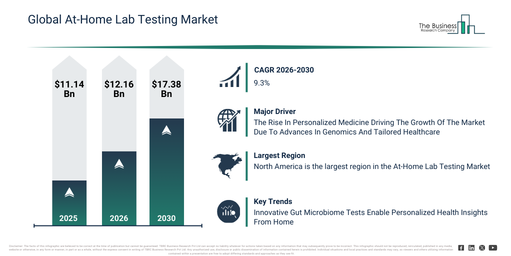
    The at-home lab testing market has seen robust expansion in recent years. This market is anticipated to increase from $11.14 billion in 2025 to $12.16 billion in 2026, achieving a compound annual growth rate (CAGR) of 9.1%. The historical growth of this market can be attributed to several factors including an increasing consumer preference for healthcare delivered at home, the widespread adoption of telehealth services, a rise in awareness concerning preventive diagnostic measures, the greater availability of mail-in testing kits, and enhancements in laboratory processing technologies.

    The at-home lab testing market is forecast to undergo significant expansion in the upcoming years, with its size expected to reach $17.38 billion by 2030, exhibiting a compound annual growth rate (CAGR) of 9.3%. This expansion during the forecast period is driven by factors such as an increasing appetite for personalized health insights, the growing acceptance of genetic and hormone testing, the proliferation of digital diagnostics ecosystems, rising investments in home healthcare services, and an intensified focus on data-driven health management. Noteworthy trends anticipated in this period include the wider adoption of self-collection diagnostic kits, a surging demand for remote health monitoring solutions, enhanced integration of digital health platforms, the expansion of direct-to-consumer testing services, and a greater emphasis on preventive healthcare.

    Download A Free Sample Report For Comprehensive Market Insights:

    https://www.thebusinessresearchcompany.com/sample.aspx?id=33029&type=smp&utm_source=Blogs&utm_medium=Paid&utm_campaign=Jul_PR

    At-Home Lab Testing Market Growth Drivers: What Factors Are Accelerating Expansion?

    The increasing adoption of personalized medicine is anticipated to drive the expansion of the at-home lab testing market moving forward. Personalized medicine signifies a healthcare strategy that customizes disease prevention, diagnosis, and treatment based on an individual’s genetic, environmental, and lifestyle factors. This surge in personalized medicine is attributable to breakthroughs in genomics, which facilitate the examination of an individual’s genetic composition to tailor medical interventions and treatments for more precise, effective, and targeted healthcare results. Personalized medicine significantly boosts at-home lab testing by adjusting diagnostic methodologies and recommendations to an individual’s unique genetic, lifestyle, and health profile, thereby offering more accurate, actionable, and convenient healthcare insights. For instance, in February 2024, the Personalized Medicine Coalition, a US-based non-profit organization, announced that in 2023, the FDA approved 16 new personalized treatments for rare disease patients, marking an increase from six in 2022. The newly approved personalized treatments for 2023 additionally encompassed seven cancer drugs and three for other diseases and conditions. As a result, the growth of personalized medicine is propelling the at-home lab testing market forward.

    At-Home Lab Testing Market Segment Analysis Highlighting Growth Areas

    The at-home lab testing market covered in this report is segmented –

    1) By Test Type: Glucose Test Kits; Infectious Disease Test Kits; Pregnancy And Fertility Test Kits; Cholesterol And Lipid Test Kits; Genetic Test Kits; Hormone Test Kits; Allergy Test Kits; Drug And Alcohol Test Kits; Coagulation And INR Test Kits; Other Test Kits

    2) By Sample Type: Blood; Saliva; Urine; Swab Samples; Other Sample Types

    3) By Distribution Channel: Hospital Pharmacies; Retail Pharmacies; Online Pharmacies

    4) By End User: Individuals; Healthcare Providers; Employers And Organizations; Other End Users

    Subsegments:

    1) By Glucose Test Kits: Blood Glucose Monitoring Kits; Continuous Glucose Monitoring Kits; Post Meal Glucose Test Kits; Fasting Glucose Test Kits

    2) By Infectious Disease Test Kits: Viral Infection Test Kits; Bacterial Infection Test Kits; Respiratory Infection Test Kits; Sexually Transmitted Infection Test Kits

    3) By Pregnancy And Fertility Test Kits: Pregnancy Detection Test Kits; Ovulation Prediction Test Kits; Fertility Hormone Test Kits; Early Pregnancy Confirmation Test Kits

    4) By Cholesterol And Lipid Test Kits: Total Cholesterol Test Kits; High Density Lipoprotein Cholesterol Test Kits; Low Density Lipoprotein Cholesterol Test Kits; Triglyceride Test Kits

    5) By Genetic Test Kits: Ancestry Genetic Test Kits; Health Risk Genetic Test Kits; Carrier Screening Test Kits; Personalized Genetic Wellness Test Kits

    6) By Hormone Test Kits: Thyroid Hormone Test Kits; Reproductive Hormone Test Kits; Stress Hormone Test Kits; Metabolic Hormone Test Kits

    7) By Allergy Test Kits: Food Allergy Test Kits; Environmental Allergy Test Kits; Pet Allergy Test Kits; Respiratory Allergy Test Kits

    8) By Drug And Alcohol Test Kits: Alcohol Detection Test Kits; Prescription Drug Test Kits; Illicit Drug Test Kits; Multi Substance Test Kits

    9) By Coagulation And INR Test Kits: Prothrombin Time Test Kits; International Normalized Ratio Monitoring Kits; Blood Clotting Function Test Kits; Anticoagulant Therapy Monitoring Test Kits

    10) By Other Test Kits: Vitamin Deficiency Test Kits; Metabolic Health Test Kits; Kidney Function Test Kits; Liver Function Test Kits

    At-Home Lab Testing Market Trends: What Is Shaping Future Industry Growth?

    Leading companies within the at-home lab testing market are dedicated to developing innovative solutions, such as direct-to-consumer gut microbiome test kits, to deliver personalized health insights without requiring clinic visits. A direct-to-consumer gut microbiome test kit is a product that enables individuals to collect a sample at home and subsequently receive an analysis of their gut bacteria along with personalized health recommendations, circumventing the need for a doctor’s appointment. As an illustration, in January 2025, CJ Bioscience Inc., a South Korea-based biotech firm, launched a gut microbiome testing service with the objective of providing personalized nutrition advice. This service, known as SMILE GUT, allows users to gather a stool sample from home and receive a comprehensive analysis of their gut’s bacterial composition. Leveraging AI and a database comprising over 140,000 profiles, the test generates a Gut Microbiome Index score and identifies areas for potential dietary or probiotic adjustments. The company additionally offers personalized guidance on food and supplements, thereby supporting overall gut health and paving the way for tailored functional food products.

    At-Home Lab Testing Market Leading Companies: Who Holds Significant Market Presence?

    Major companies operating in the at-home lab testing market are Roche Diagnostics AG, Abbott Laboratories, Siemens Healthineers AG, Becton, Dickinson and Company, Laboratory Corporation of America Holdings, Quest Diagnostics Incorporated, QuidelOrtho Corporation, OraSure Technologies Inc., 23andMe Holding Co., Everlywell Inc., Tiny Health Inc., Acon Laboratories Inc., Vault Health Inc., iHealth Labs Inc., Healthy.io Ltd., Getlabs Inc., Thriva Ltd., BioIQ Inc., myLAB Box LLC, Medichecks.com Ltd.

    Access The Complete At-Home Lab Testing Market Report:

    https://www.thebusinessresearchcompany.com/report/at-home-lab-testing-market-report?utm_source=Blogs&utm_medium=Paid&utm_campaign=Jul_PR

    At-Home Lab Testing Market Geographic Landscape: Which Region Dominates Industry Growth?

    North America was the largest region in the at-home lab testings market in 2025. Asia-Pacific is expected to be the fastest-growing region in the forecast period. The regions covered in the at-home lab testing market report are Asia-Pacific, South East Asia, Western Europe, Eastern Europe, North America, South America, Middle East, Africa.

    Get in touch with us:

    The Business Research Company: https://www.thebusinessresearchcompany.com/

    Americas: +1 310-496-7795

    Asia: +44 7882 955267 & +91 8897263534

    Europe: +44 7882 955267

    Email us at: marketing@tbrc.info

    Follow us on:

    LinkedIn: https://in.linkedin.com/company/the-business-research-company

    YouTube: https://www.youtube.com/channel/UC24_fI0rV8cR5DxlCpgmyFQ

    Global Market Model: https://www.thebusinessresearchcompany.com/global-market-model
  • Artificial Intelligence (AI) In Disease Outbreak Prediction  Market Expansion Is Reshaping Competitive Dynamics Across The Industry

    Artificial Intelligence (AI) In Disease Outbreak Prediction Market Expansion Is Reshaping Competitive Dynamics Across The Industry

    Enhanced with market attractiveness analysis, total addressable market evaluation, company benchmarking matrices, interactive Excel dashboards, expanded supply chain intelligence, emerging startup coverage, and detailed product insights, The Business Research Company’s 2026 market reports deliver more actionable and strategically valuable research.

    Artificial Intelligence (AI) In Disease Outbreak Prediction Market Forecast: What Market Value Is Expected By 2030?

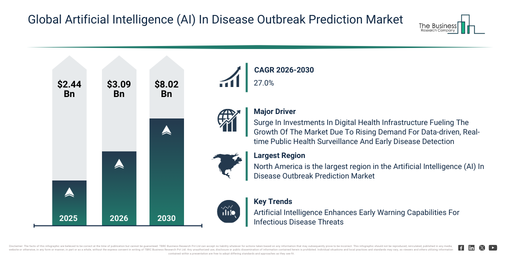
    The artificial intelligence (AI) in disease outbreak prediction market has experienced rapid expansion recently. It is forecast to increase from $2.44 billion in 2025 to $3.09 billion in 2026, achieving a compound annual growth rate (CAGR) of 26.7%. This historic growth can be attributed to several factors including the rising occurrence of infectious disease outbreaks, the broadening scope of public health surveillance programs, the progression of health data digitization, the early implementation of AI analytics in epidemiology, and enhanced collaboration among health agencies.

    The artificial intelligence (AI) in disease outbreak prediction market size is expected to show significant expansion in the upcoming years, projected to reach $8.02 billion by 2030, growing at a compound annual growth rate (CAGR) of 27.0%. This growth during the forecast period is attributed to the expansion of predictive public health infrastructure, increasing investments in AI-driven disease preparedness, the rising use of real-time health monitoring data, the growing integration of climate and mobility analytics, and the broadening of global health intelligence networks. Major trends anticipated in this period include the increased use of real-time epidemiological modeling, enhanced integration of mobility and environmental data sources, the expanding deployment of AI-based surveillance dashboards, the proliferation of predictive risk assessment platforms, and an amplified focus on early warning systems.

    Download A Free Sample Report For Comprehensive Market Insights:

    https://www.thebusinessresearchcompany.com/sample.aspx?id=33023&type=smp&utm_source=Blogs&utm_medium=Paid&utm_campaign=Jul_PR

    Artificial Intelligence (AI) In Disease Outbreak Prediction Market Growth Momentum: Which Factors Are Influencing Demand?

    Growing investments in digital health infrastructure are anticipated to boost the artificial intelligence in disease outbreak prediction market moving forward. This infrastructure encompasses integrated digital systems, platforms, data networks, and technologies designed for the secure collection, exchange, analysis, and utilization of health data to facilitate healthcare delivery, public health monitoring, and informed decision-making. The rise in these investments stems from the demand for more efficient, interconnected, and data-centric healthcare systems, which enhance care provision, accessibility, and operational effectiveness. The artificial intelligence in disease outbreak prediction market relies on digital health infrastructure to employ extensive, real-time health data for the early identification of disease patterns and prompt public health actions, thereby establishing advanced digital systems as an essential basis for these AI applications. As an illustration, in May 2023, the Australian Department of Health and Aged Care, an Australian government body, disclosed an investment of approximately $6.1 billion aimed at fortifying Medicare. This included $2.2 billion for new and updated PBS listings, $259.5 million for essential health infrastructure, and a $951.2 million digital health package. Consequently, expanding investments in digital health infrastructure are propelling the expansion of the artificial intelligence in disease outbreak prediction market.

    Artificial Intelligence (AI) In Disease Outbreak Prediction Market Segment Outlook: Which Categories Are Expanding The Fastest?

    The artificial intelligence (AI) in disease outbreak prediction market covered in this report is segmented –

    1) By Component: Software; Hardware; Services

    2) By Deployment Mode: On-Premises; Cloud

    3) By Application: Healthcare Providers; Government Agencies; Research Institutes; Pharmaceutical Companies; Other Applications

    4) By End-User: Hospitals And Clinics; Public Health Organizations; Academic And Research Centers; Other End Users

    Subsegments:

    1) By Software: Machine Learning Platforms; Predictive Analytics Software; Data Visualization Software; Epidemiological Modeling Software; Cloud-Based Analytics Software

    2) By Hardware: Health Monitoring Device; Geographic Information System Devices; Wearable Health Trackers; Diagnostic Devices; Sensor Devices

    3) By Services: Disease Surveillance Services; Outbreak Modeling Services; Predictive Analytics Services; Public Health Consulting; Data Integration Services; Epidemiological Risk Assessment

    Artificial Intelligence (AI) In Disease Outbreak Prediction Market Trends Reshaping Industry Growth

    Leading firms in the artificial intelligence in disease outbreak prediction market are concentrating on creating sophisticated solutions, like artificial intelligence–driven global disease surveillance platforms, aiming to enhance early detection of outbreaks, speed up response times, and strengthen public health readiness. These artificial intelligence–driven global disease surveillance platforms are systems employing artificial intelligence, machine learning, and natural language processing to process extensive global data, encompassing news reports, public health data, airline travel information, and environmental metrics, to pinpoint potential disease outbreaks more promptly than conventional surveillance techniques. As an example, in August 2024, BlueDot, a digital health and artificial intelligence firm based in Canada, introduced its advanced global infectious disease surveillance offering, engineered to substantially decrease the time spent on manual detection. This platform utilizes sophisticated AI models for continuous scanning and interpretation of worldwide data in near real time, effectively cutting manual detection tasks by almost 90%. Such improved capability empowers health authorities and organizations to identify emerging infectious threats with greater speed, evaluate risks with higher precision, and put in place prompt containment strategies.

    Artificial Intelligence (AI) In Disease Outbreak Prediction Market Key Companies And Competitive Benchmarking

    Major companies operating in the artificial intelligence (AI) in disease outbreak prediction market are Amazon Web Services Inc., Oracle Corporation, SAP SE, Siemens Healthineers AG, SAS Institute Inc., Clarivate Plc, Tempus AI Inc., Seegene Inc., Ginkgo Bioworks Inc., Dataminr Inc., Komodo Health Inc., H2O.ai, Evidation Health Inc., Qventus Inc., Airfinity Ltd., SparkBeyond Inc., Blue Dot Inc., GIDEON Informatics Inc., Hyfe Inc., EPIWATCH Pty Ltd., EpiDetect AI Inc.

    Access The Complete Artificial Intelligence (AI) In Disease Outbreak Prediction Market Report:

    https://www.thebusinessresearchcompany.com/report/artificial-intelligence-ai-in-disease-outbreak-prediction-market-report?utm_source=Blogs&utm_medium=Paid&utm_campaign=Jul_PR

    Artificial Intelligence (AI) In Disease Outbreak Prediction Market Geographic Analysis: Where Is Demand Growing The Fastest?

    North America was the largest region in the artificial intelligence in disease outbreak prediction in 2025. Asia-Pacific is expected to be the fastest-growing region in the forecast period. The regions covered in the artificial intelligence (AI) in disease outbreak prediction market report are Asia-Pacific, South East Asia, Western Europe, Eastern Europe, North America, South America, Middle East, Africa.

    Get in touch with us:

    The Business Research Company: https://www.thebusinessresearchcompany.com/

    Americas: +1 310-496-7795

    Asia: +44 7882 955267 & +91 8897263534

    Europe: +44 7882 955267

    Email us at: marketing@tbrc.info

    Follow us on:

    LinkedIn: https://in.linkedin.com/company/the-business-research-company

    YouTube: https://www.youtube.com/channel/UC24_fI0rV8cR5DxlCpgmyFQ

    Global Market Model: https://www.thebusinessresearchcompany.com/global-market-model
  • Acellular Therapy  Market Forecast Reveals Where Future Industry Value Will Be Created

    Acellular Therapy Market Forecast Reveals Where Future Industry Value Will Be Created

    Delivering more actionable and strategically valuable research, The Business Research Company’s 2026 market reports feature market attractiveness analysis, total addressable market evaluation, company benchmarking matrices, interactive Excel dashboards, expanded supply chain intelligence, emerging startup coverage, and detailed product insights.

    Acellular Therapy Market Forecast: What Market Value Is Expected By 2030?

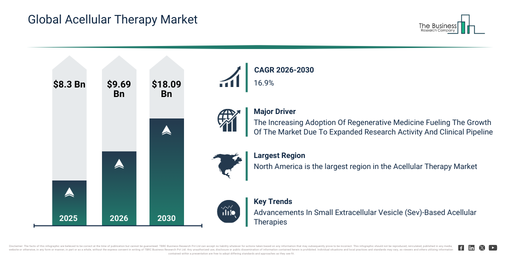
    The acellular therapy market has experienced swift expansion in recent years. It is projected to increase from $8.3 billion in 2025 to $9.69 billion in 2026, reflecting a compound annual growth rate (CAGR) of 16.7%. This historical growth can be attributed to increasing research activity in regenerative medicine, early clinical adoption of acellular matrices, a growing demand for immune-safe therapies, the expansion of wound care applications, and improvements in biomaterial processing techniques.

    The acellular therapy market is projected to experience substantial growth over the upcoming years, with its size anticipated to reach $18.09 billion by 2030, driven by a compound annual growth rate (CAGR) of 16.9%. This expansion during the forecast period is primarily due to several contributing factors, including the increasing demand for personalized regenerative treatments, greater investments in advanced biomaterials, the broadening of clinical indications for acellular therapies, a rising emphasis on scalable regenerative solutions, and enhanced regulatory support for non-cellular therapies. Furthermore, significant trends shaping this period encompass the growing adoption of growth factor-based treatments, an increase in the utilization of extracellular matrix scaffolds, a heightened focus on cell-free regenerative solutions, the expansion of off-the-shelf regenerative products, and improved integration of translational research platforms.

    Download A Free Sample Report For Comprehensive Market Insights:

    https://www.thebusinessresearchcompany.com/sample.aspx?id=33006&type=smp&utm_source=Blogs&utm_medium=Paid&utm_campaign=Jul_PR

    Acellular Therapy Market Demand Drivers: What Is Fueling Industry Growth?

    The growing embrace of regenerative medicine is anticipated to drive the expansion of the acellular therapy market in the foreseeable future. Regenerative medicine encompasses medical strategies designed to repair, replace, or regenerate human cells, tissues, or organs by leveraging biological processes and therapies to restore normal physiological function. The adoption of regenerative medicine is on the rise as biotechnology research activities broaden globally, evidenced by an increasing number of developers, more extensive pipelines, and wider therapeutic exploration. Acellular therapy (AT) contributes to this trend by supplying bioactive, cell-free therapeutic substances, such as extracellular vesicles, secretomes, and other biologically active components, that complement regenerative strategies with improved safety and standardized dosing. For instance, in june 2024, the Centre for Commercialization of Regenerative Medicine (CCRM), a Canada-based regenerative medicine organization, reported 2,848 cell and gene therapy developers worldwide as of april 2024, marking an 11% increase from quarter four (Q4) 2023, and 1,751 active regenerative medicine clinical trials globally as of april 2024, indicating sustained clinical engagement and growth in regenerative research endeavors. Consequently, the escalating adoption of regenerative medicine is propelling the growth of the acellular therapy market.

    Acellular Therapy Market Segment Breakdown: Which Categories Generate The Most Revenue?

    The acellular therapy market covered in this report is segmented –

    1) By Type: Acellular Dermal Matrices; Acellular Amniotic Membranes; Acellular Umbilical Cord Products; Other Types

    2) By Disease: Parkinson’s; Alzheimer’s; Chronic Wounds; Sclerosis; Cancer

    3) By Scaffold: Fused Deposition Modeling (FDM); Cell Laden Hydrogel; Extracellular Matrix (ECM); Selective Laser Sintering (SLS)

    4) By Application: Hepatology; Orthopedic; Cardiology; Neurology; Oncology; Gastroenterology

    5) By End-User: Hospitals; Clinics; Ambulatory Surgical Centers; Research Institutes

    Subsegments:

    1) By Acellular Dermal Matrices: Human Derived Dermal Matrices; Animal Derived Dermal Matrices; Cross Linked Dermal Matrices; Non Cross Linked Dermal Matrices

    2) By Acellular Amniotic Membranes: Cryopreserved Amniotic Membranes; Dehydrated Amniotic Membranes; Lyophilized Amniotic Membranes; Laminated Amniotic Membranes

    3) By Acellular Umbilical Cord Products: Wharton Jelly Based Products; Umbilical Cord Patch Products; Umbilical Cord Powder Products; Umbilical Cord Sheet Products

    4) By Other Types: Acellular Cartilage Matrices; Acellular Bone Matrices; Acellular Vascular Grafts; Acellular Tendon And Ligament Scaffolds

    Acellular Therapy Market Innovation Trends: Which Developments Are Transforming The Industry?

    Leading companies in the acellular therapy market are prioritizing the development of small extracellular vesicle (sEV) therapies. These therapies aim to improve tissue regeneration, diminish inflammation, and adjust immune responses by delivering bioactive vesicles directly to affected tissues without introducing living cells. Small extracellular vesicle (sEV) therapies are non-cellular products originating from cultured cells, carrying proteins, ribonucleic acids (RNAs), and signaling molecules to facilitate precise modulation of cellular activity, repair of damaged tissue, and immunomodulation. For example, in March 2025, Evast Bio, a US-based biotechnology company, created a small extracellular vesicle (sEV) therapy for knee osteoarthritis, specifically designed to address major challenges in inflammatory joint disease. This therapy delivers exosomes to inflamed cartilage, fosters regeneration of the cartilage extracellular matrix, lowers inflammatory markers, and enhances joint function, establishing it as a pioneering acellular therapy (AT) for musculoskeletal inflammation and a paradigm for future extracellular vesicle (sEV) based treatments.

    Acellular Therapy Market Key Players And Strategic Industry Positioning

    Major companies operating in the acellular therapy market are Thermo Fisher Scientific, FUJIFILM Holdings Corp., Lonza Group AG, Smith+Nephew, Charles River Laboratories, Sartorius AG, Integra LifeSciences, AGC Biologics, Organogenesis Holdings Inc., MiMedx Group Inc., Vericel Corporation, Avita Medical, Capricor Therapeutics, RoosterBio Inc., Creative Biolabs, Evox Therapeutics Ltd., ILIAS Biologics, Aruna Biomedical, Stem Cell Medicine Ltd., Aegle Therapeutics Corp, Direct Biologics LLC., BioCardia Inc., BioRestorative Therapies Inc., and EverZom.

    Access The Complete Acellular Therapy Market Report:

    https://www.thebusinessresearchcompany.com/report/acellular-therapy-market-report?utm_source=Blogs&utm_medium=Paid&utm_campaign=Jul_PR

    #Acellular Therapy Market Largest Region: Which Geography Holds The Highest Market Share?

    North America was the largest region in the acellular therapy market in 2025. Asia-Pacific is expected to be the fastest-growing region in the forecast period. The regions covered in the acellular therapy market report are Asia-Pacific, South East Asia, Western Europe, Eastern Europe, North America, South America, Middle East, Africa.

    Get in touch with us:

    The Business Research Company: https://www.thebusinessresearchcompany.com/

    Americas: +1 310-496-7795

    Asia: +44 7882 955267 & +91 8897263534

    Europe: +44 7882 955267

    Email us at: marketing@tbrc.info

    Follow us on:

    LinkedIn: https://in.linkedin.com/company/the-business-research-company

    YouTube: https://www.youtube.com/channel/UC24_fI0rV8cR5DxlCpgmyFQ

    Global Market Model: https://www.thebusinessresearchcompany.com/global-market-model
  • Virtopsy Market Size Projected To Increase From $1.7 Billion To $3.15 Billion During The Forecast Period

    Virtopsy Market Size Projected To Increase From $1.7 Billion To $3.15 Billion During The Forecast Period

    Through market attractiveness analysis, total addressable market evaluation, company benchmarking matrices, interactive Excel dashboards, expanded supply chain intelligence, emerging startup coverage, and detailed product insights, The Business Research Company’s 2026 market reports provide more actionable and strategically valuable research.

    Virtopsy Market CAGR Analysis And Future Market Development

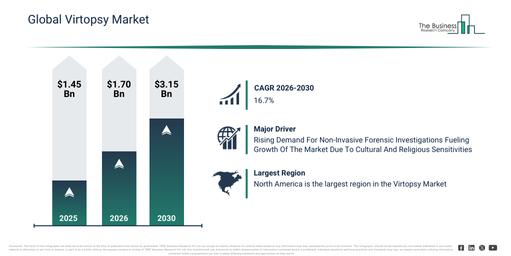
    The virtopsy market has experienced swift expansion recently. It is projected to expand from $1.45 billion in 2025 to $1.70 billion by 2026, demonstrating a compound annual growth rate (CAGR) of 17.0%. Historically, this expansion is a result of several factors, such as the increasing embrace of non-invasive autopsy methods, a rising call for accurate forensic investigations, the expanded utilization of advanced medical imaging systems, an increasing requirement for more rapid post-mortem procedures, and a growing inclination towards body preservation in autopsy practices.

    The virtopsy market is projected to experience substantial growth over the next few years. Its valuation is anticipated to reach $3.15 billion by 2030, exhibiting a compound annual growth rate (CAGR) of 16.7%. This expansion during the forecast period is driven by factors such as the increasing integration of artificial intelligence in virtual autopsy, a heightened demand for digital forensic documentation, the broader adoption of high-resolution imaging technologies, greater investment in healthcare digitization, and a growing emphasis on efficient forensic workflow automation. Significant trends expected in the forecast period include advancements in three-dimensional imaging technologies, innovations in artificial intelligence-based forensic analysis, developments in robotic scanning systems, ongoing research and development in digital pathology tools, and improvements in integrated forensic data management systems.

    Download A Free Sample Report For Comprehensive Market Insights:

    https://www.thebusinessresearchcompany.com/sample.aspx?id=30776&type=smp&utm_source=Blogs&utm_medium=Paid&utm_campaign=Jul_PR

    Virtopsy Market Growth Factors Supporting Long-Term Expansion

    The increasing need for non-invasive forensic examinations is anticipated to drive the expansion of the virtopsy market in the future. Non-invasive forensic investigations involve imaging-based methods, such as CT scans and MRI, to inspect bodies or evidence without physical dissection or tissue damage, thereby maintaining their integrity for subsequent analysis. This growing demand stems primarily from the necessity to preserve the original condition of the body or evidence during forensic procedures. Virtopsy supports non-invasive forensic investigations by employing advanced imaging technologies, including CT and MRI, to scrutinize bodies without resorting to conventional autopsy methods. This approach enhances investigative precision and safeguards evidence while concurrently minimizing procedural hazards. For example, in November 2024, the National Institute of Justice, a US-based research, development, and evaluation agency of the United States Department of Justice, reported that the New Mexico Office of the Medical Investigator (OMI) conducts CT scans on nearly all incoming bodies, effectively reducing full autopsy rates from 80–85 % to about 50 %, all while managing approximately 4,500 cases each year. Consequently, the escalating requirement for non-invasive forensic investigations is a significant factor propelling the growth of the virtopsy market.

    Virtopsy Market Segment Breakdown: Which Categories Generate The Most Revenue?

    The virtopsy market covered in this report is segmented –

    1) By Component: Hardware, Software, Services

    2) By Technology: Computed Tomography, Magnetic Resonance Imaging, Three Dimensional Surface Scanning, Angiography, Others

    3) By Deployment Mode: On Premise, Cloud Based

    4) By Application: Forensic Pathology, Clinical Research, Education And Training, Veterinary Forensics, Others

    5) By End-User: Hospitals, Forensic Laboratories, Academic And Research Institutes, Others

    Subsegments:

    1) By Hardware: Imaging Systems, Robotic Scanning Tools, High Resolution Scanners, Digital Angiography Equipment, Three Dimensional Surface Scanning Devices

    2) By Software: Forensic Visualization Software, Digital Reconstruction Platforms, Image Processing Solutions, Data Analytics Software, Workflow Automation Systems

    3) By Services: Installation Services, Maintenance And Support Services, Training And Education Services, Cloud Based Data Management Services, Forensic Consultation Services

    Virtopsy Market Key Players And Strategic Industry Positioning

    Major companies operating in the virtopsy market are Siemens Healthineers AG, FUJIFILM Holdings Corp., Shimadzu Corporation, Canon Medical Systems Corporation, Virtual Autopsy UK Ltd., Virtopsy Canada Inc., Alrize Global Tech Pvt. Ltd., Advanced Detection Solutions LLC, Forensic Radiology Group LLC, Thanato Group, Digital Autopsy UK, iQ IMAGE, RMS Scanning

    Access The Complete Virtopsy Market Report:

    https://www.thebusinessresearchcompany.com/report/virtopsy-market-report?utm_source=Blogs&utm_medium=Paid&utm_campaign=Jul_PR

    #Virtopsy Market Largest Region: Which Geography Holds The Highest Market Share?

    North America was the largest region in the virtopsy market in 2025. Asia-Pacific is expected to be the fastest-growing region in the forecast period. The regions covered in the virtopsy market report are Asia-Pacific, South East Asia, Western Europe, Eastern Europe, North America, South America, Middle East, Africa.

    Get in touch with us:

    The Business Research Company: https://www.thebusinessresearchcompany.com/

    Americas: +1 310-496-7795

    Asia: +44 7882 955267 & +91 8897263534

    Europe: +44 7882 955267

    Email us at: marketing@tbrc.info

    Follow us on:

    LinkedIn: https://in.linkedin.com/company/the-business-research-company

    YouTube: https://www.youtube.com/channel/UC24_fI0rV8cR5DxlCpgmyFQ

    Global Market Model: https://www.thebusinessresearchcompany.com/global-market-model
  • Sports Psychology Services Market Forecast Reveals Where Future Industry Value Will Be Created

    Sports Psychology Services Market Forecast Reveals Where Future Industry Value Will Be Created

    Enhanced with market attractiveness analysis, total addressable market evaluation, company benchmarking matrices, interactive Excel dashboards, expanded supply chain intelligence, emerging startup coverage, and detailed product insights, The Business Research Company’s 2026 market reports deliver more actionable and strategically valuable research.

    Sports Psychology Services Market Forecast: What Market Value Is Expected By 2030?

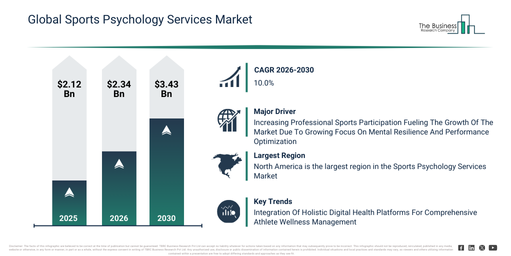
    The sports psychology services market size has shown substantial growth over recent years. Its expansion is anticipated to be from $2.12 billion in 2025 to $2.34 billion in 2026, achieving a compound annual growth rate (CAGR) of 10.3%. The historical increase in this market can be attributed to factors such as a greater understanding of athlete mental health, an increased emphasis on performance optimization, the growing acceptance of sports counseling programs, expanded involvement in competitive sports, and a heightened need for managing stress and anxiety in athletes.

    The sports psychology services market is projected to experience substantial expansion in the coming years, anticipated to reach $3.43 billion by 2030, exhibiting a compound annual growth rate (CAGR) of 10.0%. This growth during the forecast period is primarily driven by the increasing integration of digital mental training tools, the rising adoption of personalized psychological coaching, a growing demand for data-driven performance assessment, the wider utilization of virtual and remote therapy platforms, and an enhanced focus on holistic athlete well-being. Key trends anticipated during this period encompass technological advancements within digital mental training platforms, innovations in AI-supported performance psychology tools, the evolution of biofeedback and neurofeedback systems, ongoing research and development into cognitive performance enhancement methods, and progress in immersive VR-based mental conditioning tools.

    Download A Free Sample Report For Comprehensive Market Insights:

    https://www.thebusinessresearchcompany.com/sample.aspx?id=30762&type=smp&utm_source=Blogs&utm_medium=Paid&utm_campaign=Jul_PR

    Sports Psychology Services Market Expansion Supported By Key Demand Factors

    The escalating involvement in professional sports is set to advance the expansion of the sports psychology services market moving forward. Professional sports participation entails individuals engaging in structured athletic pursuits as their primary occupation, demanding rigorous training and competition at elite levels. This participation is increasing because heightened media coverage and lucrative sponsorship agreements are attracting more athletes by offering both financial stability and global exposure. Sports psychology services facilitate professional sports participation through the provision of mental training strategies aimed at improving focus, managing competitive stress, and enhancing overall performance consistency. For instance, in August 2024, according to the Bureau of Labor Statistics, a US-based federal government agency, the employment of athletes and sports competitors in the United States is projected to grow 5% from 2024 to 2034. Therefore, the rising professional sports participation is propelling the growth of the sports psychology services market.

    Sports Psychology Services Market Segmentation: How Is The Market Structured Across Key Categories?

    The sports psychology services market covered in this report is segmented –

    1) By Service Type: Performance Enhancement, Counseling, Mental Skills Training, Rehabilitation, Other Service Types

    2) By Delivery Mode: In-Person, Online Or Telehealth

    3) By Provider Type: Independent Sports Psychologists, Sports Psychology Clinics, Sports Performance Centers, University And Institutional Providers, Multidisciplinary Wellness Centers

    4) By Application: Individual Athletes, Teams, Coaches, Other Applications

    5) By End-User: Professional Sports, Amateur Sports, Educational Institutions, Other End-Users

    Subsegments:

    1) By Performance Enhancement: Goal Setting And Achievement Planning, Focus And Concentration Improvement Sessions, Competitive Strategy Development Programs, Reaction Time And Agility Training, Motivation And Confidence Building Programs

    2) By Counseling: Stress And Anxiety Management Counseling, Career Transition And Retirement Counseling, Personal Development And Self Awareness Sessions, Team Dynamics And Interpersonal Counseling, Emotional Resilience Support Programs

    3) By Mental Skills Training: Visualization And Imagery Training Programs, Attention And Concentration Enhancement Sessions, Cognitive Behavioral Techniques For Athletes, Mindfulness And Relaxation Skill Development, Performance Anxiety Reduction Programs

    4) By Rehabilitation: Post Injury Psychological Recovery Sessions, Rehabilitation Motivation And Support Programs, Mental Recovery Planning For Athletes, Coping Strategy Development For Injured Athletes, Resilience And Confidence Restoration Programs

    5) By Other Service Types: Nutritional Psychology Counseling Sessions, Sleep And Recovery Optimization Programs, Stress Management Workshops For Teams, Sports Related Trauma Counseling, Integrative Mental Health Enhancement Programs

    Sports Psychology Services Market Growth Trends Influencing Competitive Dynamics

    Leading companies operating within the sports psychology services market are prioritizing the development of innovative solutions, such as integrated digital health platforms, to offer comprehensive assistance for athletes’ mental and physical well-being. Integrated digital health platforms are defined as extensive software systems that consolidate multiple digital health services and tools into a single interface, facilitating the collection, management, analysis, and sharing of health data among patients, providers, and various care settings. For instance, in October 2023, CaringWire LLC, a US-based digital health platform provider, partnered with the U.S. Council for Athletes’ Health (USCAH) to launch Holistic Athlete Health Solutions (HAHS). This platform connects athletes with telehealth providers and delivers self-paced online courses and webinars covering subjects pertinent to sports health, wellness, and mental resilience. The solution is engineered to integrate smoothly into existing athletic department programs, supplying 24/7 access to care that addresses the physical, mental, and emotional needs of today’s athletes.

    Sports Psychology Services Market Competitive Landscape And Leading Companies

    Major companies operating in the sports psychology services market are California Baptist University (CBU), United States Olympic & Paralympic Committee, Conscious Mind Solutions, Discovery Sport & Performance Lab, ORKA Performance, Premier Sport Psychology, Performance in Mind, Jo Hopkins Consulting, KPEX Consulting, Flourish & Thrive, Grow Wellness Group, SportPsych Consulting, Athlete Mind Performance (AMP), The Performance Pursuit Consulting, Head In The Game, Pete Jackson Sport Psychology, Focus Perform, Clark Performance Consulting, University of Wisconsin–Green Bay, Nudge Sports, Tacomi Training Solutions Pvt. Ltd.

    Access The Complete Sports Psychology Services Market Report:

    https://www.thebusinessresearchcompany.com/report/sports-psychology-services-market-report?utm_source=Blogs&utm_medium=Paid&utm_campaign=Jul_PR

    Sports Psychology Services Market Largest Region By Revenue And Market Share

    North America was the largest region in the sports psychology services market in 2025. Asia-Pacific is expected to be the fastest-growing region in the forecast period. The regions covered in the sports psychology services market report are Asia-Pacific, South East Asia, Western Europe, Eastern Europe, North America, South America, Middle East, Africa.

    Get in touch with us:

    The Business Research Company: https://www.thebusinessresearchcompany.com/

    Americas: +1 310-496-7795

    Asia: +44 7882 955267 & +91 8897263534

    Europe: +44 7882 955267

    Email us at: marketing@tbrc.info

    Follow us on:

    LinkedIn: https://in.linkedin.com/company/the-business-research-company

    YouTube: https://www.youtube.com/channel/UC24_fI0rV8cR5DxlCpgmyFQ

    Global Market Model: https://www.thebusinessresearchcompany.com/global-market-model
  • Smart Hospital Command Center Market Trends And Growth Drivers Point To Strong Future Potential

    Smart Hospital Command Center Market Trends And Growth Drivers Point To Strong Future Potential

    Delivering more actionable and strategically valuable research, The Business Research Company’s 2026 market reports feature market attractiveness analysis, total addressable market evaluation, company benchmarking matrices, interactive Excel dashboards, expanded supply chain intelligence, emerging startup coverage, and detailed product insights.

    Smart Hospital Command Center Market Size Forecast: How Large Could The Market Become By 2030?

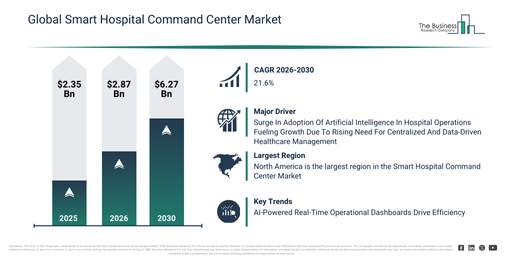
    The smart hospital command center market size has seen substantial growth in recent years. It is projected to expand from $2.35 billion in 2025 to $2.87 billion in 2026, exhibiting a compound annual growth rate (CAGR) of 21.9%. This historical growth can be linked to factors such as the increasing digitalization of hospitals, a growing demand for real-time operational visibility, a rising focus on enhancing patient safety and quality, the expanding adoption of data analytics in healthcare, and an increasing need for coordinated emergency responses.

    The smart hospital command center market size is anticipated to undergo significant expansion in the coming years, projected to reach $6.27 billion by 2030, exhibiting a compound annual growth rate (CAGR) of 21.6%. This expansion during the forecast period is primarily driven by the increasing integration of artificial intelligence into hospital operations, growing investments in smart healthcare infrastructure, a rising demand for predictive analytics in patient flow management, the wider implementation of connected medical devices, and an enhanced focus on operational efficiency and resource optimization. Key trends expected in this period include technological advancements in real-time monitoring platforms, innovations in artificial intelligence-powered decision support systems, developments in integrated hospital automation solutions, ongoing research and developments in digital health analytics, and novel approaches in digital twin-based hospital operations management.

    Download A Free Sample Report For Comprehensive Market Insights:

    https://www.thebusinessresearchcompany.com/sample.aspx?id=30748&type=smp&utm_source=Blogs&utm_medium=Paid&utm_campaign=Jul_PR

    Smart Hospital Command Center Market Opportunity Drivers: What Is Creating New Revenue Potential?

    The smart hospital command center market is anticipated to grow as a result of the swift integration of artificial intelligence (AI) into hospital operations. Artificial intelligence (AI) in hospital operations involves the use of machine learning algorithms and automation to optimize administrative functions such as scheduling, staffing, inventory management, and resource allocation, consequently boosting efficiency and lowering operational costs. The incorporation of artificial intelligence (AI) into hospital operations is increasing due to the rising need to optimize complex administrative and operational workflows. Smart hospital command centers facilitate artificial intelligence (AI) in hospital operations by applying real-time data integration and predictive analytics, which enhances responsiveness across hospital services. For instance, in September 2025, according to the Assistant Secretary for Technology Policy, a US-based government office, in 2024, 71% of hospitals reported using predictive AI integrated with the electronic health record (EHR), an increase from 66% in 2023, with about 7 in 10 hospitals reporting predictive AI usage in 2024. Therefore, the rapid integration of artificial intelligence (AI) in hospital operations is a key driver for the growth of the smart hospital command center market.

    Smart Hospital Command Center Market Segmentation Trends And Revenue Drivers

    The smart hospital command center market covered in this report is segmented –

    1) By Component: Software, Hardware, Services

    2) By Deployment Mode: On-Premises, Cloud-Based

    3) By Application: Patient Flow Management, Resource Allocation, Clinical Operations, Asset Management, Communication And Coordination, Others

    4) By End User: Large Hospitals, Medium Hospitals, Small Hospitals

    Subsegments:

    1) By Software: Real-Time Analytics Platforms, Hospital Workflow Automation Systems, Patient Flow Management Software, Digital Communication And Coordination Tools, Integrated Dashboard And Visualization Software, Clinical Decision Support Solutions, Resource Allocation Optimization Software

    2) By Hardware: Centralized Monitoring Systems, Internet Of Things Enabled Devices, Servers And Data Storage Units, Networking And Connectivity Equipment, Control Room Display Panels, Sensor Based Tracking Devices, Integrated Command Center Consoles

    3) By Services: Implementation And Integration Services, Training And Education Services, Maintenance And Technical Support Services, Consulting And Workflow Optimization Services, System Upgradation And Enhancement Services, Remote Monitoring And Management Services, Customization And Configuration Services

    Smart Hospital Command Center Market Innovation Trends Driving Future Development

    Leading companies active in the smart hospital command center market are focused on developing sophisticated solutions, such as real-time predictive analytics, to enhance operational efficiency, patient flow, and clinical decision-making across various health systems. Real-time predictive analytics encompasses software-driven functionalities that continuously gather and analyze live hospital data to forecast demand, identify bottlenecks, and enable proactive operational interventions. For instance, in October 2024, GE HealthCare Technologies Inc., a US-based medical technology company, introduced the Hospital Pulse Tile for its Command Center Software. This launch integrates real-time predictive analytics to offer system-wide visibility into capacity, staffing, patient throughput, and the performance of care delivery. The Command Center leverages advanced analytics and AI to convert complex hospital data into actionable insights, thereby enabling leaders to anticipate surges, optimize resource utilization, and reduce delays in care.

    #Smart Hospital Command Center Market Industry Leaders: Which Organizations Are Driving Competition?

    Major companies operating in the smart hospital command center market are IBM Corporation, Oracle Corporation, Honeywell International Inc., Siemens Healthineers AG, Koninklijke Philips N.V., GE HealthCare Technologies Inc., Palantir Technologies Inc., Huron Consulting Group Inc., Dedalus Group, Allscripts Healthcare Solutions Inc., Everbridge Inc., Ascom Ltd., Care Logistics LLC, Spok Holdings Inc., TeleTracking Technologies Inc., LeanTaaS Inc., Qventus Inc., Connexall, Pointcore, Epic Systems Corporation

    Access The Complete Smart Hospital Command Center Market Report:

    https://www.thebusinessresearchcompany.com/report/smart-hospital-command-center-market-report?utm_source=Blogs&utm_medium=Paid&utm_campaign=Jul_PR

    Smart Hospital Command Center Market Global Footprint: Which Region Holds Market Leadership?

    North America was the largest region in the smart hospital command center market in 2025. Asia-Pacific is expected to be the fastest-growing region in the forecast period. The regions covered in the smart hospital command center market report are Asia-Pacific, South East Asia, Western Europe, Eastern Europe, North America, South America, Middle East, Africa.

    Get in touch with us:

    The Business Research Company: https://www.thebusinessresearchcompany.com/

    Americas: +1 310-496-7795

    Asia: +44 7882 955267 & +91 8897263534

    Europe: +44 7882 955267

    Email us at: marketing@tbrc.info

    Follow us on:

    LinkedIn: https://in.linkedin.com/company/the-business-research-company

    YouTube: https://www.youtube.com/channel/UC24_fI0rV8cR5DxlCpgmyFQ

    Global Market Model: https://www.thebusinessresearchcompany.com/global-market-model
  • Sleep Disorder Market Size Projected To Increase From $38.23 Billion To $65.51 Billion During The Forecast Period

    Sleep Disorder Market Size Projected To Increase From $38.23 Billion To $65.51 Billion During The Forecast Period

    Enhanced with market attractiveness analysis, total addressable market evaluation, company benchmarking matrices, interactive Excel dashboards, expanded supply chain intelligence, emerging startup coverage, and detailed product insights, The Business Research Company’s 2026 market reports deliver more actionable and strategically valuable research.

    Sleep Disorder Market Size Outlook: How Fast Will Revenue Grow Through 2030?

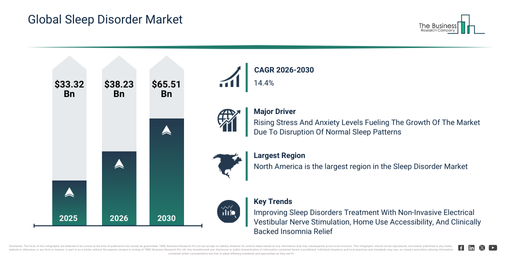
    The sleep disorder market has experienced substantial expansion in recent times. Projections indicate it will grow from $33.32 billion in 2025 to $38.23 billion in 2026, registering a compound annual growth rate (CAGR) of 14.7%. The historical growth of this market is attributable to heightened awareness regarding sleep health, the escalating prevalence of insomnia and sleep apnea, the increasing adoption of sleep diagnostic services, a growing geriatric population, rising stress and lifestyle-related sleep disturbances, and the expanded usage of smartphones and wearable devices for monitoring sleep.

    The sleep disorder market is anticipated to experience substantial expansion in the upcoming years, projected to attain a size of $65.51 billion by 2030, growing at a compound annual growth rate (CAGR) of 14.4%. This growth during the forecast period is driven by factors such as the expansion of telemedicine services for sleep disorders, increasing adoption of wearable sleep trackers, more widespread home-based diagnostic testing, the rise of cognitive behavioral therapy applications, and increased government initiatives aimed at sleep health awareness. Major developments expected over this period include advancements in wearable sleep monitoring devices, progress in home-based sleep diagnostic tools, evolution in AI-driven sleep analysis, innovations in non-invasive therapies for sleep apnea, new approaches in telemedicine for sleep consultation, and novel cognitive behavioral therapy apps.

    Download A Free Sample Report For Comprehensive Market Insights:

    https://www.thebusinessresearchcompany.com/sample.aspx?id=30744&type=smp&utm_source=Blogs&utm_medium=Paid&utm_campaign=Jul_PR

    Sleep Disorder Market Industry Drivers: What Is Driving Revenue Growth?

    Rising stress and anxiety levels are anticipated to propel the expansion of the sleep disorder market going forward. These levels signify the widespread occurrence of psychological strain and excessive worry within a population, frequently stemming from environmental, social, or economic pressures. Work-related demands, such as increased workloads, strict deadlines, and job instability, are contributing to the rise in stress and anxiety. They contribute to sleep disorders by disturbing typical sleep patterns and making it harder to initiate or maintain sleep. Furthermore, they impair overall health by hindering restorative sleep, resulting in fatigue, diminished cognitive function, and an elevated susceptibility to chronic illnesses. For instance, in May 2024, according to the American Psychiatric Association (APA), a US-based professional association, 43% of U.S. adults reported feeling more anxious in 2024 compared to the prior year, an increase from 37% in 2023 and 32% in 2022. Consequently, the escalating stress and anxiety levels are propelling the growth of the sleep disorder market.

    Sleep Disorder Market Categorization By Product Type And Application

    The sleep disorder market covered in this report is segmented –

    1) By Disorder Type: Insomnia, Sleep Apnea, Restless Legs Syndrome, Narcolepsy, Circadian Rhythm Disorders

    2) By Treatment: Cognitive Behavioral Therapy, Medication Therapy, Psychiatric Treatment, Behavioral Treatment

    3) By Diagnostic Method: Polysomnography, Home Sleep Testing, Actigraphy, Sleep Diaries, Questionnaires and Screening

    4) By Distribution Channel: Retail Pharmacies, Online Sales, Hospital Pharmacies

    5) By End-User: Hospitals And Sleep Centers, Home Care Settings, Academic

    Subsegments:

    1) By Insomnia: Acute Insomnia, Chronic Insomnia, Onset Insomnia, Maintenance Insomnia, Behavioral Insomnia, Medication-Induced Insomnia

    2) By Sleep Apnea: Obstructive Sleep Apnea, Central Sleep Apnea, Complex Sleep Apnea Syndrome, Mild Sleep Apnea, Moderate Sleep Apnea, Severe Sleep Apnea, Pediatric Sleep Apnea, Treatment-Resistant Sleep Apnea

    3) By Restless Legs Syndrome: Primary Restless Legs Syndrome, Secondary Restless Legs Syndrome, Mild Restless Legs Syndrome, Moderate Restless Legs Syndrome, Severe Restless Legs Syndrome, Intermittent Restless Legs Syndrome, Chronic Persistent Restless Legs Syndrome

    4) By Narcolepsy: Narcolepsy Type 1, Narcolepsy Type 2, Idiopathic Hypersomnia, Pediatric Narcolepsy, Treatment-Resistant Narcolepsy, Secondary Narcolepsy

    5) By Circadian Rhythm Disorders: Delayed Sleep Phase Disorder, Advanced Sleep Phase Disorder, Shift Work Sleep Disorder, Jet Lag Disorder, Irregular Sleep-Wake Rhythm Disorder, Non-24-Hour Sleep-Wake Disorder

    #Sleep Disorder Market Growth Trends: What Is Influencing The Future Outlook?

    Leading firms within the sleep disorder sector are prioritizing the creation of cutting-edge therapeutic innovations, including electrical vestibular nerve stimulation (VeNS) techniques, to offer non-pharmacological interventions aimed at improving sleep quality, normalizing circadian rhythms, and assisting individuals with chronic insomnia. The electrical vestibular nerve stimulation (VeNS) method is characterized as a non-invasive treatment modality that transmits gentle electrical impulses to the vestibular nerve, a critical neurological route, to impact brain areas responsible for sleep regulation without requiring surgery or medication. An example of this is the launch in October 2024 by Neurovalens Ltd., a health-tech enterprise based in the UK, of Modius Sleep, an FDA-cleared non-invasive device developed for managing chronic insomnia through electrical vestibular nerve stimulation (VeNS). This medical device, worn like a headset, is utilized for approximately 30 minutes nightly, emitting safe electrical signals to the vestibular nerve to modulate the hypothalamus and brainstem regions that govern circadian rhythm and sleep cycles, thereby assisting users in achieving quicker sleep onset and extended sleep duration.

    Sleep Disorder Market Company Landscape And Strategic Competition

    Major companies operating in the sleep disorder market are Johnson & Johnson, Merck & Co. Inc., Pfizer Inc., Sanofi S.A., GlaxoSmithKline plc, Eli Lilly and Company, Takeda Pharmaceutical Company Limited, Teva Pharmaceutical Industries Ltd., Otsuka Holdings Co. Ltd., Biogen Inc., Union Chimique Belge S.A., Sun Pharmaceutical Industries Ltd., Eisai Co. Ltd., Jazz Pharmaceuticals plc, Aurobindo Pharma Ltd., Dr. Reddy’s Laboratories Limited, H. Lundbeck A/S, Sumitomo Pharma Co. Ltd., Neurocrine Biosciences Inc., Harmony Biosciences Holdings Inc., Vanda Pharmaceuticals Inc.

    Access The Complete Sleep Disorder Market Report:

    https://www.thebusinessresearchcompany.com/report/sleep-disorder-market-report?utm_source=Blogs&utm_medium=Paid&utm_campaign=Jul_PR

    Sleep Disorder Market Geographic Landscape: Which Region Dominates Industry Growth?

    North America was the largest region in the sleep disorder market in 2025. Asia-Pacific is expected to be the fastest-growing region in the forecast period. The regions covered in the sleep disorder market report are Asia-Pacific, South East Asia, Western Europe, Eastern Europe, North America, South America, Middle East, Africa.

    Get in touch with us:

    The Business Research Company: https://www.thebusinessresearchcompany.com/

    Americas: +1 310-496-7795

    Asia: +44 7882 955267 & +91 8897263534

    Europe: +44 7882 955267

    Email us at: marketing@tbrc.info

    Follow us on:

    LinkedIn: https://in.linkedin.com/company/the-business-research-company

    YouTube: https://www.youtube.com/channel/UC24_fI0rV8cR5DxlCpgmyFQ

    Global Market Model: https://www.thebusinessresearchcompany.com/global-market-model