Category: Healthcare Services

  • Pediatric Allergy Care Market Expansion Supported By Rising Food Allergies In Children And Growing Demand For Early Diagnosis And Treatment

    Pediatric Allergy Care Market Expansion Supported By Rising Food Allergies In Children And Growing Demand For Early Diagnosis And Treatment

    The Business Research Company’s 2026 market reports feature enhanced tools like market attractiveness analysis, TAM assessment, and company scoring matrices, along with interactive dashboards, deeper supply chain insights, and startup coverage strengthening the depth, usability, and strategic value of insights.

    How Much Will The Market Value Of The Pediatric Allergy Care Market Grow Between 2026 And 2030?

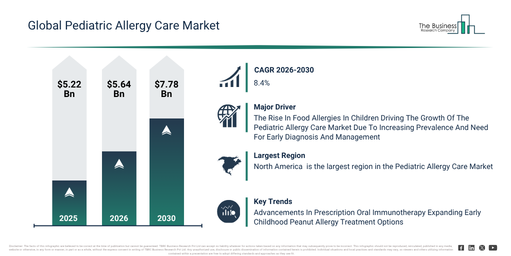
    The pediatric allergy care market has demonstrated robust growth in recent years. Its value is expected to rise from $5.22 billion in 2025 to $5.64 billion in 2026, driven by a compound annual growth rate (CAGR) of 8.1%. The expansion observed in the historic period stems from factors such as the increasing prevalence of pediatric allergies, heightened awareness among parents, advancements in pediatric immunotherapy, the continued utilization of traditional allergy testing methods, and the proliferation of specialty allergy clinics.

    The pediatric allergy care market is anticipated to show significant expansion over the next few years, with its valuation expected to reach $7.78 billion by 2030, demonstrating a compound annual growth rate (CAGR) of 8.4%. This projected growth during the forecast period is propelled by factors such as the increasing reach of telehealth services, the uptake of AI-driven diagnostic methods, the creation of personalized treatment plans leveraging genomics, the seamless integration of digital health platforms, and a growing need for remote monitoring solutions. Prominent trends observed for the forecast period include the continued expansion of telehealth, the customization of allergy management, the monitoring of symptoms from a distance, the integration with broader pediatric care platforms, and efficient digital prescription management.

    Access Your Free Sample Report For In-Depth Market Analysis:

    https://www.thebusinessresearchcompany.com/sample_request?id=25076488&type=smp&name=Pediatric%20Allergy%20Care%20Market%20Report%202026

    Which Key Factors Are Driving The Pediatric Allergy Care Market Growth?

    The increasing occurrence of food allergies in children is anticipated to propel the expansion of the pediatric allergy care market moving forward. Childhood food allergies are characterized as immune system responses occurring when a child’s body mistakenly identifies certain foods as harmful, leading to symptoms that can range from mild (such as hives or stomach upset) to severe (including anaphylaxis). The increasing prevalence of food allergies in children is linked to the hygiene hypothesis, which suggests that reduced early childhood exposure to microbes leads to an underdeveloped immune system that overreacts to harmless foods. Pediatric allergy care supports children with food allergies by offering early diagnosis, customized management plans, and education to prevent allergic reactions and enhance their overall quality of life. For instance, in January 2026, according to the Centers for Disease Control and Prevention, a US-based public health agency, the percentage of children diagnosed with a food allergy increased to 5.3% in 2024 from 3.5% in 2023. Consequently, the rising incidence of food allergies in children is driving the growth of the pediatric allergy care market.

    How Are Segments Identified Within The Pediatric Allergy Care Market Segment Framework?

    The pediatric allergy care market covered in this report is segmented –

    1) By Care Modality: Drug Therapy, Allergy Testing, Pediatric Immunotherapy, Telehealth And Support

    2) By Condition Type: Asthma, Food Allergy, Allergic Rhinitis, Eczema, Anaphylaxis

    3) By Application: Pediatric Asthma Care, Food Allergy Diagnostics, Allergic Rhinitis And Eczema Integrated Management, Anaphylaxis Prevention, Immunotherapy Programs

    4) By End User: Specialty Allergy Clinics, Hospitals, Diagnostic Laboratories, Telehealth Providers, Other End Users

    Subsegments:

    1) By Drug Therapy: Antihistamine Medications, Corticosteroid Medications, Leukotriene Receptor Antagonists, Biologic Therapies, Epinephrine Auto Injector Treatments

    2) By Allergy Testing: Skin Prick Testing, Intradermal Testing, Patch Testing, Specific Immunoglobulin E Blood Testing, Oral Food Challenge Testing

    3) By Pediatric Immunotherapy: Subcutaneous Immunotherapy, Sublingual Immunotherapy, Oral Immunotherapy, Epicutaneous Immunotherapy, Cluster Immunotherapy

    4) By Telehealth And Support: Virtual Consultation Services, Remote Symptom Monitoring, Digital Prescription Management, Caregiver Education Programs, Mobile Health Application Support

    Which Trends Are Guiding The Direction Of The Pediatric Allergy Care Market?

    Leading companies in the pediatric allergy care market are prioritizing the development of innovative solutions, such as prescription oral immunotherapy (OIT) treatment, to help desensitize children to allergens and reduce the likelihood of severe allergic reactions. Prescription oral immunotherapy (OIT) is a medically supervised intervention that progressively exposes patients to small, increasing quantities of an allergen, like peanuts, to foster tolerance and decrease the risk of severe allergic responses. For instance, in February 2025, Stallergenes Greer International AG, a Switzerland-based biopharmaceutical company, introduced Palforzia Oral Immunotherapy (OIT) in the U.S. for children aged 1 to 3 years, thereby broadening its prior indication to include toddlers diagnosed with confirmed peanut allergies. This therapy involves defatted peanut allergen powder administered orally through a structured regimen encompassing initial dose escalation, subsequent gradual up-dosing, and daily maintenance, all designed to lessen allergic reactions, including anaphylaxis, after accidental peanut exposure. Key aspects involve age-specific dosing and its use in conjunction with a peanut-avoidant diet to build tolerance. This treatment addresses a crucial unmet need in very young children by presenting a proactive option that goes beyond simple avoidance and emergency care, holding the potential to modify the natural trajectory of peanut allergy in early childhood.

    Who Are The Companies Competing Within The Pediatric Allergy Care Market?

    Major companies operating in the pediatric allergy care market are market are AstraZeneca PLC, Thermo Fisher Scientific Inc., Abbott Laboratories, Quest Diagnostics Incorporated, Medicover Woman & Child Hospital, Nemours Children’s Health, EUROIMMUN Medizinische Labordiagnostika AG, ALK-Abelló A/S, Stallergenes Greer S.A., Rainbow Children’s Hospital, Continental Hospitals, Viracor Eurofins, R-Biopharm AESKU.GROUP GmbH And Co. KG, Apollo Cradle And Children’s Hospital, Hycor Biomedical Inc., AESKU.GROUP GmbH, Ankura Hospital for Women And Children, Nectar Allergy And Asthma, Ann And Robert H. Lurie Children’s Hospital of Chicago, DBV Technologies S.A.

    Get The Full Pediatric Allergy Care Market Report:

    https://www.thebusinessresearchcompany.com/report/pediatric-allergy-care-market-report

    Which Region Is The Leading Market For The Pediatric Allergy Care Market?

    North America was the largest region in the pediatric allergy care market in 2025. Asia-Pacific is expected to be the fastest-growing region in the forecast period. The regions covered in the pediatric allergy care market report are Asia-Pacific, South East Asia, Western Europe, Eastern Europe, North America, South America, Middle East, Africa.

    Request A Customized Pediatric Allergy Care Market Report For Competitive Insights:

    https://www.thebusinessresearchcompany.com/Customise?id=25076488&name=Pediatric%20Allergy%20Care%20Market%20Report%202026&type=smp

    Browse Through More Reports Similar to the Global Pediatric Allergy Care Market 2026, By The Business Research Company

    pruritus therapeutic market report 2026

    https://www.thebusinessresearchcompany.com/report/pruritus-therapeutic-global-market-report

    genomic urine testing market report 2026

    https://www.thebusinessresearchcompany.com/report/genomic-urine-testing-global-market-report

    ocular genetic diagnostic market report 2026

    https://www.thebusinessresearchcompany.com/report/ocular-genetic-diagnostic-global-market-report

    Get in touch with us:

    The Business Research Company: https://www.thebusinessresearchcompany.com/

    Americas +1 310-496-7795

    Asia +44 7882 955267 & +91 8897263534

    Europe +44 7882 955267

    Email us at marketing@tbrc.info

    Follow us on:

    LinkedIn: https://in.linkedin.com/company/the-business-research-company

    YouTube: https://www.youtube.com/channel/UC24_fI0rV8cR5DxlCpgmyFQ

    Global Market Model: https://www.thebusinessresearchcompany.com/global-market-model
  • Pan-Ethnic Carrier Screening Programs Market Forecast Focusing On Market Potential And Long-Term Industry Prospects

    Pan-Ethnic Carrier Screening Programs Market Forecast Focusing On Market Potential And Long-Term Industry Prospects

    The Business Research Company’s 2026 market reports feature enhanced tools like market attractiveness analysis, TAM assessment, and company scoring matrices, along with interactive dashboards, deeper supply chain insights, and startup coverage strengthening the depth, usability, and strategic value of insights.

    By 2030, What Market Size Is The Pan-Ethnic Carrier Screening Programs Market Expected To Reach Based On Its 2026 Value?

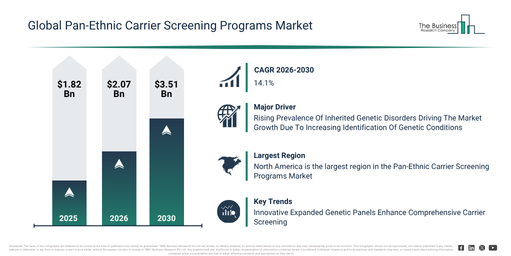
    The market size for pan-ethnic carrier screening programs has experienced swift growth in recent years. This market is projected to expand from $1.82 billion in 2025 to $2.07 billion in 2026, demonstrating a compound annual growth rate (CAGR) of 13.9%. Historically, this expansion has been driven by several factors, including the decreasing costs of genetic sequencing technologies, heightened awareness of inherited genetic disorders, an increase in prenatal and preconception testing initiatives, the broadening of diagnostic laboratory infrastructure, and a growing need for early identification of disease risks.

    The pan-ethnic carrier screening programs market is projected to experience substantial expansion in the coming years. This market is anticipated to reach a valuation of $3.51 billion by 2030, exhibiting a compound annual growth rate (CAGR) of 14.1%. Factors contributing to this growth during the forecast period encompass a greater uptake of comprehensive genomic panels, the expanding integration of AI in interpreting genetic variants, the broadening of tele-genetic counseling services, increasing governmental backing for preventive healthcare initiatives, and an enhanced emphasis on customized reproductive planning. Key trends observed within the forecast timeframe involve the wider adoption of expanded multi-gene carrier screening panels, an increasing need for preconception genetic risk evaluations, the deepening integration of carrier screening into standard prenatal care practices, the broadening of universal population-based screening initiatives, and a heightened emphasis on ensuring fair access to genetic testing services.

    Access Your Free Sample Report For In-Depth Market Analysis:

    https://www.thebusinessresearchcompany.com/sample_request?id=52246834&type=smp&name=Pan-Ethnic%20Carrier%20Screening%20Programs%20Market%20Report%202026

    Which Major Drivers Are Influencing The Expansion Of The Pan-Ethnic Carrier Screening Programs Market?

    The increasing occurrence of inherited genetic disorders is anticipated to fuel the expansion of the pan ethnic carrier screening programs market in the future. These disorders are defined as health conditions resulting from alterations or mutations in an individual’s genes, transmitted from parents to offspring. The frequency of inherited genetic disorders is escalating, driven by advancements in genetic testing and screening techniques that uncover more previously undetected cases. Pan-ethnic carrier screening programs aid in the management of inherited genetic disorders through the provision of extensive genetic testing for individuals and couples from various backgrounds, thereby facilitating the prompt identification of carriers, informed choices regarding reproduction, and proactive health strategies to mitigate the likelihood of transmitting genetic conditions. For example, in October 2024, the National Health Service (NHS) England, a UK-based government department, initiated a landmark study in NHS hospitals where hundreds of newborns are undergoing testing for over 200 rare genetic conditions, with plans to screen up to 100,000 babies across England. Consequently, the growing occurrence of inherited genetic disorders is a key factor driving the expansion of the pan ethnic carrier screening programs market.

    Which Segment Categories Are Included In The Pan-Ethnic Carrier Screening Programs Market Segment Analysis?

    The pan-ethnic carrier screening programs market covered in this report is segmented –

    1) By Test Type: Expanded Carrier Screening, Targeted Carrier Screening

    2) By Technology: Deoxyribonucleic Acid (DNA) Sequencing, Polymerase Chain Reaction (PCR), Microarray, Other Technologies

    3) By Application: Preconception, Prenatal, Newborn

    4) By End-User: Hospitals And Clinics, Diagnostic Laboratories, Research Institutes, Other End-Users

    Subsegments:

    1) By Expanded Carrier Screening: Comprehensive Multi Gene Panels, Disease Specific Expanded Panels, Preconception Expanded Panels, Prenatal Expanded Panels, Universal Population Based Panels

    2) By Targeted Carrier Screening: Ethnicity Based Screening Panels, Family History Based Panels, Single Condition Carrier Testing, High Risk Population Panels, Condition Specific Targeted Panels

    Which Trends Are Shaping The Pan-Ethnic Carrier Screening Programs Market?

    Leading firms within the pan-ethnic carrier screening programs market are concentrating their efforts on creating novel products, specifically expanded genetic panels, to improve the early identification of inherited conditions among various populations. These expanded genetic panels serve as thorough tests, examining hundreds of genes for inherited conditions, thereby facilitating the early detection of carrier status and aiding well-informed reproductive choices across different population groups. A notable example occurred in February 2023 when Fulgent Genetics, a technology and clinical diagnostics company based in the U.S., introduced its Beacon787 expanded genetic panels for carrier screening. This innovative solution covers 787 genes, including all American College of Medical Genetics and Genomics (ACMG) tier 3 genes recommended for universal carrier screening. Beacon787 utilizes Fulgent’s proprietary platform and bioinformatics algorithms to identify pseudogenes, precisely determine copy number variants, and streamline turnaround time, thus minimizing the requirement for repetitive confirmatory testing. These expanded genetic panels offer practical insights for women and couples planning a pregnancy by revealing previously undetected carrier risks, thereby assisting in making informed reproductive decisions. With its high analytical sensitivity and pan-ethnic design, it stands as a next-generation alternative to traditional panels that offer restricted gene coverage.

    Who Are The Active Companies Shaping The Pan-Ethnic Carrier Screening Programs Market?

    Major companies operating in the pan-ethnic carrier screening programs market are Thermo Fisher Scientific Inc., Laboratory Corporation of America Holdings (LabCorp), Quest Diagnostics Incorporated, Eurofins Scientific SE, Illumina Inc., Natera Inc., Myriad Genetics Inc., Fulgent Genetics Inc., BillionToOne Inc., Ambry Genetics Corp, PathGroup LLC, 23andMe Inc., Color Health Inc., Centogene N.V., Baylor Genetics LLC, PreventionGenetics LLC, FamilyTreeDNA, Sema4 Inc., BGI Genomics Co, MedGenome Labs Ltd.

    Get The Full Pan-Ethnic Carrier Screening Programs Market Report:

    https://www.thebusinessresearchcompany.com/report/pan-ethnic-carrier-screening-programs-market-report

    Which Region Has The Greatest Market Share In The Pan-Ethnic Carrier Screening Programs Market?

    North America was the largest region in the pan-ethnic carrier screening programs market in 2025. Asia-Pacific is expected to be the fastest-growing region in the forecast period. The regions covered in the pan-ethnic carrier screening programs market report are Asia-Pacific, South East Asia, Western Europe, Eastern Europe, North America, South America, Middle East, Africa.

    Request A Customized Pan-Ethnic Carrier Screening Programs Market Report For Competitive Insights:

    https://www.thebusinessresearchcompany.com/Customise?id=52246834&name=Pan-Ethnic%20Carrier%20Screening%20Programs%20Market%20Report%202026&type=smp

    Browse Through More Reports Similar to the Global Pan-Ethnic Carrier Screening Programs Market 2026, By The Business Research Company

    pruritus therapeutic market report 2026

    https://www.thebusinessresearchcompany.com/report/pruritus-therapeutic-global-market-report

    genomic urine testing market report 2026

    https://www.thebusinessresearchcompany.com/report/genomic-urine-testing-global-market-report

    ocular genetic diagnostic market report 2026

    https://www.thebusinessresearchcompany.com/report/ocular-genetic-diagnostic-global-market-report

    Get in touch with us:

    The Business Research Company: https://www.thebusinessresearchcompany.com/

    Americas +1 310-496-7795

    Asia +44 7882 955267 & +91 8897263534

    Europe +44 7882 955267

    Email us at marketing@tbrc.info

    Follow us on:

    LinkedIn: https://in.linkedin.com/company/the-business-research-company

    YouTube: https://www.youtube.com/channel/UC24_fI0rV8cR5DxlCpgmyFQ

    Global Market Model: https://www.thebusinessresearchcompany.com/global-market-model
  • Orthopedic Surgery Tourism Market Forecast Highlighting Key Drivers Influencing Industry Expansion Through 2030

    Orthopedic Surgery Tourism Market Forecast Highlighting Key Drivers Influencing Industry Expansion Through 2030

    The Business Research Company’s 2026 market reports feature enhanced tools like market attractiveness analysis, TAM assessment, and company scoring matrices, along with interactive dashboards, deeper supply chain insights, and startup coverage strengthening the depth, usability, and strategic value of insights.

    How Is The Market Size Of The Orthopedic Surgery Tourism Market Expected To Scale Between 2026 And 2030?

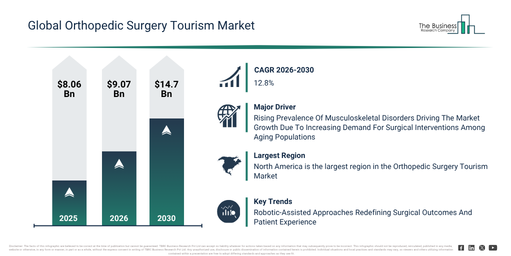
    The orthopedic surgery tourism market has seen substantial growth recently. Its valuation is anticipated to rise from $8.06 billion in 2025 to $9.07 billion in 2026, achieving a compound annual growth rate (CAGR) of 12.6%. The expansion observed in past years is primarily due to a global increase in musculoskeletal disorders, extended waiting periods for orthopedic surgeries in advanced economies, significant differences in healthcare costs across various regions, the maturation of medical tourism infrastructure, and heightened recognition of international orthopedic proficiency.

    The orthopedic surgery tourism market is anticipated to undergo rapid expansion over the next few years, projected to reach $14.7 billion by 2030, growing at a compound annual growth rate (CAGR) of 12.8%. This projected increase can be attributed to the rising adoption of robotic-assisted orthopedic surgeries, an increasing demand for minimally invasive procedures, the expansion of international insurance coverage for medical travel, a growing geriatric population requiring joint replacement, and increased investment in specialty orthopedic hospitals. Significant trends during this forecast period include a rising cross-border demand for joint replacement procedures, a growing preference for cost-effective orthopedic surgeries, the expansion of internationally accredited orthopedic centers, an increase in bundled surgery and rehabilitation packages, and a rise in partnerships with medical travel facilitators.

    Access Your Free Sample Report For In-Depth Market Analysis:

    https://www.thebusinessresearchcompany.com/sample_request?id=55857135&type=smp&name=Orthopedic%20Surgery%20Tourism%20Market%20Report%202026

    Which Drivers Are Supporting The Orthopedic Surgery Tourism Market Growth?

    The increasing occurrence of musculoskeletal disorders is projected to boost the expansion of the orthopedic surgery tourism market in the coming years. Musculoskeletal disorders, or MSDs, are conditions impacting muscles, bones, joints, and associated tissues, which can hinder movement and normal function. The incidence of musculoskeletal disorders is increasing mainly due to aging populations in developed nations, as older individuals are more susceptible to joint degeneration, persistent pain, and restricted mobility. Orthopedic surgery tourism offers individuals afflicted with musculoskeletal disorders the chance to receive premium orthopedic treatments overseas. These locations provide skilled surgeons, advanced facilities, and extensive rehabilitation support to restore joint function, reduce pain, and enhance everyday movement. As an example, in January 2024, data from the Office for Health Improvement and Disparities, a UK-based government department, showed that the prevalence of long-term musculoskeletal conditions in individuals aged 16 and older reached 18.4% in 2023, up from 17.6% in 2022. Consequently, the rising prevalence of musculoskeletal disorders is a key factor driving the growth of the orthopedic surgery tourism market.

    What Are The Different Segment Types In The Orthopedic Surgery Tourism Market Segment Breakdown?

    The orthopedic surgery tourism market covered in this report is segmented –

    1) By Surgery Type: Joint Replacement, Spine Surgery, Sports Medicine, Trauma Surgery, Arthroscopic Surgery, Other Surgery Types

    2) By Patient Type: Domestic, International

    3) By Age Group: Pediatric, Adult, Geriatric

    4) By Service Provider: Hospitals, Specialty Clinics, Ambulatory Surgical Centers, Other Service Providers

    Subsegments:

    1) By Joint Replacement: Total Knee Replacement, Partial Knee Replacement, Total Hip Replacement, Hip Resurfacing, Total Shoulder Replacement, Reverse Shoulder Replacement, Elbow Joint Replacement, Ankle Joint Replacement

    2) By Spine Surgery: Spinal Fusion Surgery, Artificial Disc Replacement, Laminectomy Surgery, Discectomy Surgery, Foraminotomy Surgery, Scoliosis Correction Surgery, Kyphoplasty Procedure, Vertebroplasty Procedure

    3) By Sports Medicine: Anterior Cruciate Ligament Reconstruction, Posterior Cruciate Ligament Reconstruction, Meniscus Repair Surgery, Rotator Cuff Repair Surgery, Shoulder Labral Repair, Tendon Repair Surgery, Cartilage Restoration Procedure, Ulnar Collateral Ligament Reconstruction

    4) By Trauma Surgery: Open Reduction And Internal Fixation, External Fixation Procedure, Fracture Repair Surgery, Intramedullary Nailing Procedure, Complex Pelvic Fracture Surgery, Clavicle Fracture Surgery, Hip Fracture Surgery, Multiple Trauma Reconstruction

    5) By Arthroscopic Surgery: Knee Arthroscopy, Shoulder Arthroscopy, Hip Arthroscopy, Ankle Arthroscopy, Elbow Arthroscopy, Wrist Arthroscopy, Subacromial Decompression Procedure, Synovectomy Procedure

    6) By Other Surgery Types: Osteotomy Procedure, Limb Lengthening Surgery, Bone Grafting Procedure, Joint Revision Surgery, Pediatric Orthopedic Surgery, Orthopedic Oncology Surgery, Hand Surgery, Foot Reconstruction Surgery

    What Market Trends Are Affecting The Orthopedic Surgery Tourism Market?

    Companies within the orthopedic surgery tourism market are prioritizing the development of innovative solutions, such as robotic-assisted knee replacement systems, to enhance surgical precision and accelerate patient recuperation. These robotic-assisted knee replacement systems represent advanced surgical technologies that offer surgeons highly precise guidance during knee replacement procedures, contributing to accurate implant placement, reduced tissue damage, and quicker patient recovery. For instance, in April 2023, Pristyn Care, an India-based healthcare technology company, unveiled Cuvis Robotic-Assisted Knee Replacement Surgery, an advanced robotic-assisted technology engineered to improve accuracy and patient outcomes specifically for orthopedic surgery tourism. The Cuvis system integrates pre-operative 3D planning with intraoperative robotic-assisted guidance, empowering surgeons to customize the procedure to each patient’s unique anatomy. A robotic arm ensures precise bone cuts and accurate implant positioning, thereby minimizing surgical errors and post-operative complications. Such robotic-assisted techniques, including Cuvis, facilitate faster recovery, less pain, and improved long-term functionality, proving to be a significant advancement for patients traveling for orthopedic surgery.

    Who Are The Well-Known Companies In The Orthopedic Surgery Tourism Market?

    Major companies operating in the orthopedic surgery tourism market are Asklepios Kliniken GmbH, Acibadem Healthcare Group, Apollo Hospitals Enterprise Limited, Fortis Healthcare Limited, KPJ Healthcare Berhad, Raffles Medical Group Ltd, Pristyn Care Pvt. Ltd., Shalby Limited, Gleneagles Global Hospitals Pvt. Ltd., PlacidWay Inc., Tour2India4Health Pvt. Ltd., Medmonks Pvt. Ltd., Medsurge India Pvt. Ltd., Healthbase Inc., Vaidam Health Pvt. Ltd., IndiCure Health Tours Pvt. Ltd., MyMedTrip Inc., HealthTrip Inc., Medtripz Pvt. Ltd., MedGinnie Pvt. Ltd.

    Get The Full Orthopedic Surgery Tourism Market Report:

    https://www.thebusinessresearchcompany.com/report/orthopedic-surgery-tourism-market-report

    Which Region Holds The Highest Market Share In The Orthopedic Surgery Tourism Market?

    North America was the largest region in the orthopedic surgery tourism market in 2025. Asia-Pacific is expected to be the fastest-growing region in the forecast period. The regions covered in the orthopedic surgery tourism market report are Asia-Pacific, South East Asia, Western Europe, Eastern Europe, North America, South America, Middle East, Africa.

    Request A Customized Orthopedic Surgery Tourism Market Report For Competitive Insights:

    https://www.thebusinessresearchcompany.com/Customise?id=55857135&name=Orthopedic%20Surgery%20Tourism%20Market%20Report%202026&type=smp

    Browse Through More Reports Similar to the Global Orthopedic Surgery Tourism Market 2026, By The Business Research Company

    pruritus therapeutic market report 2026

    https://www.thebusinessresearchcompany.com/report/pruritus-therapeutic-global-market-report

    genomic urine testing market report 2026

    https://www.thebusinessresearchcompany.com/report/genomic-urine-testing-global-market-report

    ocular genetic diagnostic market report 2026

    https://www.thebusinessresearchcompany.com/report/ocular-genetic-diagnostic-global-market-report

    Get in touch with us:

    The Business Research Company: https://www.thebusinessresearchcompany.com/

    Americas +1 310-496-7795

    Asia +44 7882 955267 & +91 8897263534

    Europe +44 7882 955267

    Email us at marketing@tbrc.info

    Follow us on:

    LinkedIn: https://in.linkedin.com/company/the-business-research-company

    YouTube: https://www.youtube.com/channel/UC24_fI0rV8cR5DxlCpgmyFQ

    Global Market Model: https://www.thebusinessresearchcompany.com/global-market-model

  • Upskilling Platforms Market 2026–2030: Forecast, Innovation, and Competitive Trends

    Upskilling Platforms Market 2026–2030: Forecast, Innovation, and Competitive Trends

    Uncover key drivers, emerging technologies, and competitive movements shaping the upskilling platforms market from 2026–2035 with trusted insights from The Business Research Company

    How much is the Upskilling Platforms Market valued at in 2026, and what valuation is forecast for 2030?

    The upskilling platforms market size has expanded significantly in recent years. This market is projected to grow from $7.36 billion in 2025 to $8.31 billion in 2026, exhibiting a compound annual growth rate (CAGR) of 12.9%. The historical growth can be attributed to several factors, including increased workforce capability requirements, expanding digital literacy initiatives, growing employer investment in staff development, broadening access to online learning content, and a heightened focus on employee retention strategies.

    The upskilling platforms market is projected to experience swift expansion over the coming years. By 2030, its value is forecast to reach $13.35 billion, demonstrating a compound annual growth rate (CAGR) of 12.6%. This anticipated growth is driven by several factors, including the increasing necessity for ongoing professional development, a greater focus on skills tailored to specific roles, a rising requirement for authenticated skill credentials, an expanded emphasis on learning outcomes tied to performance, and the growing significance of customized learning paths. Key developments expected during this timeframe encompass skill assessments powered by technology, learning personalization guided by artificial intelligence, content suggestions based on machine learning, training simulations utilizing virtual reality, and practical, hands-on learning facilitated by augmented reality.

    Access Your Free Sample Report for In-Depth Market Insights:

    https://www.thebusinessresearchcompany.com/sample.aspx?id=30775&type=smp

    What Drivers Are Influencing The Growth Of The Upskilling Platforms Market?

    The increasing need for continuous learning is anticipated to fuel the expansion of the upskilling platforms market in the future. Continuous learning involves professionals consistently updating and acquiring new skills during their careers to adapt to changing job demands and technological advancements. This surge in demand for continuous learning stems from rapid technological progress and evolving skill sets, rendering conventional, fixed qualifications inadequate and thereby motivating both employees and employers to prioritize ongoing development. Upskilling platforms facilitate continuous learning by offering structured, easily accessible, and scalable educational solutions, empowering individuals to acquire new capabilities and maintain their competitive edge. For example, in January 2025, data from the World Economic Forum, an international advocacy non-governmental organization based in Switzerland, showed that the global workforce participating in training, reskilling, or upskilling programs increased to 50 % in 2025 from 41 % in 2023. This demonstrates a greater involvement in continuous learning initiatives throughout various sectors. Consequently, the escalating demand for continuous learning is a key factor propelling the expansion of the upskilling platforms market.

    How Is The Upskilling Platforms Market Organized Into Various Segments?

    The upskilling platforms market covered in this report is segmented –

    1) By Type: Industry-Specific Courses, Professional Certifications, Soft Skills Training, Coding Courses, Leadership Development

    2) By Deployment Mode: Cloud-Based, On-Premise, Hybrid

    3) By Technology Utilized: Learning Management Systems (LMS), Mobile Learning Apps, Gamified Learning Platforms, Artificial Intelligence

    4) By Delivery Mode: Self-Paced Learning, Instructor-Led Training, Blended Learning

    5) By Application: Corporate Employees, Students, Freelancers, Job Seekers, Professionals

    Subsegments:

    1) By Industry-Specific Courses: Healthcare Training, Manufacturing Training, Finance And Banking Training, Information Technology Training, Retail And Customer Service Training

    2) By Professional Certifications: Project Management Certifications, Information Security Certifications, Human Resources Certifications, Marketing Certifications, Finance And Accounting Certifications

    3) By Soft Skills Training: Communication Skills, Teamwork And Collaboration, Time Management, Emotional Intelligence, Conflict Resolution

    4) By Coding Courses: Web Development, Mobile App Development, Data Science And Analytics, Software Engineering, Cybersecurity

    5) By Leadership Development: Executive Leadership, Team Leadership, Change Management, Strategic Thinking, Coaching And Mentoring

    How Are Emerging Trends Affecting The Progression Of The Upskilling Platforms Market?

    Major companies operating in the upskilling platforms market are prioritizing the creation of comprehensive training packages, such as AI-powered skills development programs, to provide individualized learning experiences, enhance employee output, and bridge the rapidly growing digital skill gaps across organizations. AI-powered skills development programs refer to educational initiatives that leverage artificial intelligence to customize learning paths, identify skill deficiencies, and deliver adaptive content and feedback, thereby enabling learners to build relevant capabilities more effectively. For instance, in June 2025, Udemy Inc., a US-based AI-powered skills development platform, introduced new AI Fluency Packages, an AI-powered skills development program. This offering encompasses an AI Readiness Package featuring 50 curated courses and structured introductions to core AI concepts, along with access to the Udemy AI Assistant for real-time coaching. It also includes an AI Growth Package with 800+ specialized courses and 30+ role-specific learning paths, multilingual support, certification preparation, and AI Skills Mapping to personalize workforce learning at scale. These packages are characterized by structured, multi-level AI skill development, real-time AI-assisted coaching, and role-aligned learning paths designed to support both foundational and advanced capabilities, enabling professionals and teams to acquire practical AI application skills and achieve measurable business outcomes. This reflects a strategic movement towards integrated, scalable upskilling solutions precisely tailored to evolving workforce demands.

    Who Are The Core Companies Influencing Trends In The Upskilling Platforms Market?

    Major companies operating in the upskilling platforms market are upGrad Education Private Limited, Udemy Inc., Coursera Inc., Cisco Networking Academy, Simplilearn Solutions Inc., Skillsoft Corporation, MasterClass Inc., HackerRank Inc., Degreed Inc., Codecademy Inc., Udacity Inc., Emeritus Institute of Management, Great Learning Education Services, Thinkific Labs Inc., Edureka Learning Center Pvt. Ltd., SANS Institute, OpenSesame Inc., Khan Academy Inc., DataCamp Inc., Skillshare Inc., Springboard Inc., Alison Technologies Limited, Dataquest Inc., LeetCode Inc.

    Access The Complete Report For Deeper Market Insights:

    https://www.thebusinessresearchcompany.com/report/upskilling-platforms-market-report

    Which Regions Are Projected To Dominate The Upskilling Platforms Market In The Coming Years?

    North America was the largest region in the upskilling platforms market in 2025. Asia-Pacific is expected to be the fastest-growing region in the forecast period. The regions covered in the upskilling platforms market report are Asia-Pacific, South East Asia, Western Europe, Eastern Europe, North America, South America, Middle East, Africa.

    Request Your Customized Upskilling Platforms Market Research Report for Competitive Advantage:

    https://www.thebusinessresearchcompany.com/customise?id=30775&type=smp

    Browse Through More Reports Similar to the Global Upskilling Platforms Market 2026, By The Business Research Company

    Integrated Systems Market Report 2026

    https://www.thebusinessresearchcompany.com/report/integrated-systems-global-market-report

    Data Destruction Services Market Report 2026

    https://www.thebusinessresearchcompany.com/report/data-destruction-services-global-market-report

    content services platforms global market report

    https://www.thebusinessresearchcompany.com/report/content-services-platforms-global-market-report

    Get in touch with us:

    The Business Research Company: https://www.thebusinessresearchcompany.com/

    Americas +1 310-496-7795

    Asia +44 7882 955267 & +91 8897263534

    Europe +44 7882 955267

    Email us at marketing@tbrc.info

    Follow us on:

    LinkedIn: https://in.linkedin.com/company/the-business-research-company

    YouTube: https://www.youtube.com/channel/UC24_fI0rV8cR5DxlCpgmyFQ

    Global Market Model: https://www.thebusinessresearchcompany.com/global-market-model

  • Revenue of the Spinel Cathode Materials Market Predicted to Achieve $2.56 Billion by 2030, Driven by 9.8% CAGR

    Revenue of the Spinel Cathode Materials Market Predicted to Achieve $2.56 Billion by 2030, Driven by 9.8% CAGR

    Uncover key drivers, emerging technologies, and competitive movements shaping the spinel cathode materials market from 2026–2035 with trusted insights from The Business Research Company

    What upper market value could the Spinel Cathode Materials Market reach by 2030 starting from 2026 levels?

    The spinel cathode materials market has experienced substantial expansion in recent years. Projections show its value will rise from $1.61 billion in 2025 to $1.77 billion in 2026, exhibiting a compound annual growth rate (CAGR) of 10.1%. Historically, this market’s development has been driven by several key factors, including the escalating demand for lithium-ion batteries, the increasing integration of lmo cathodes into consumer electronics, a growing preference for cost-effective battery chemistries, the enlargement of early ev production capacities, and a heightened focus on battery safety and thermal stability.

    The market for spinel cathode materials is anticipated to experience robust expansion over the coming years. By 2030, its valuation is projected to reach $2.57 billion, exhibiting a compound annual growth rate (CAGR) of 9.8%. This expansion during the projection period stems from factors such as increasing production of electric vehicles, the wider adoption of energy storage systems, the escalating need for high-voltage spinel materials, amplified investments in battery gigafactories, and a growing inclination towards cobalt-free cathode chemistries. Key developments expected during this timeframe encompass technological progress in high-voltage spinels, new developments in doped and coated spinel formulations, improvements in advanced processing methods, ongoing research and development into fast-charging materials, and breakthroughs in nanostructured spinel cathodes.

    Access Your Free Sample Report for In-Depth Market Insights:

    https://www.thebusinessresearchcompany.com/sample.aspx?id=30761&type=smp

    Which Drivers Are Influencing Long-Term Growth In The Spinel Cathode Materials Market?

    The expansion of electric vehicles is projected to fuel the growth of the spinel cathode materials market in the coming years. Electric vehicles (EVs) are vehicles propelled by electric motors that utilize energy stored in rechargeable batteries, providing a cleaner, quieter, and more efficient mode of transport compared to conventional fuel-based cars. The increasing uptake of electric vehicles stems from rising fuel expenses, as EVs present a more economical substitute for traditional gasoline-fueled automobiles. For example, the U.S. Energy Information Administration (EIA), a US-based statistical agency of the Department of Energy, reported in August 2024 that the proportion of electric and hybrid vehicle sales in the U.S. reached 18.7% of all new light-duty vehicle sales in the second quarter of 2024, an increase from 17.8% in the first quarter of 2024. Consequently, the swift rise in electric vehicles is stimulating the expansion of the spinel cathode materials market.

    How Is The Spinel Cathode Materials Market Divided Into Segments?

    The spinel cathode materials market covered in this report is segmented –

    1) By Product Type: Lithium Manganese Oxide (LiMn2O4) Spinel Cathodes, High-Voltage Spinel (LiNi0.5Mn1.5O4) Cathodes, Doped Spinel Cathodes, Coated Or Surface-Modified Spinel Materials, High-Purity Spinel Precursor Materials

    2) By Purity Or Grade: Battery-Grade Spinel Cathode Materials, High-Purity Research Grade Spinel Materials, Industrial-Grade Spinel Materials

    3) By Processing Or Manufacturing Method: Solid-State Synthesized Spinel Materials, Co-Precipitation Processed Spinel Materials, Hydrothermal Or Sol-Gel Synthesized Spinel Materials, Spray-Dried Or Advanced Processed Spinel Materials

    4) By Distribution Channel: Direct Sales (Factory Gate), Distributors And Material Suppliers, Custom Formulation And Contract Manufacturing

    5) By End-User Industry: Battery Manufacturers, Automotive Original Equipment Manufacturer (OEMs), Consumer Electronics Manufacturers, Energy Storage Solution Providers, Research And Material Science Laboratories

    Subsegment:

    1) By Lithium Manganese Oxide Spinel Cathodes: High Purity, Low Cost, Long Life, High Power, Standard Grade

    2) By High Voltage Spinel Cathodes: Cobalt Free, Nickel Rich, Manganese Rich, Long Cycle, High Energy

    3) By Doped Spinel Cathodes: Magnesium Doped, Aluminum Doped, Chromium Doped, Titanium Doped, Iron Doped

    4) By Coated or Surface-Modified Spinel Materials: Alumina Coated, Carbon Coated, Phosphate Coated, Oxide Coated, Polymer Coated

    5) By High-Purity Spinel Precursor Materials: Lithium Precursors, Manganese Precursors, Nickel Precursors, Cobalt Precursors, Mixed Metal Precursors

    How Are New Market Trends Shaping The Landscape Of The Spinel Cathode Materials Market?

    Companies operating within the Spinel Cathode Materials market are concentrating on advancing battery technologies, specifically high-voltage solid-state battery solutions, to elevate energy density and safety. A high-voltage solid-state solution denotes a sustainable and safer battery approach that replaces traditional liquid electrolytes with solid ones, thereby reducing leakage risks, improving thermal stability, and supporting longer battery life. For instance, in October 2025, Yonsei University, a South Korea-based research institution, introduced the LiCl–4Li2TiF6 fluoride solid electrolyte. This material enables the creation of all-solid-state batteries that can operate securely beyond 5 volts, overcoming a major stability limitation that has affected other solid electrolytes. The innovation incorporates a protective coating mechanism to prevent interfacial degradation with high-voltage cathodes, achieving a record-setting areal capacity of 35.3 mAh/cm². Additionally, its compatibility with cost-effective materials like Zr-based systems is anticipated to decrease manufacturing costs and boost commercial viability for next-generation electric vehicles and grid storage, representing a significant transformation in battery design.

    Which Leading Companies Dominate The Spinel Cathode Materials Market Share?

    Major companies operating in the spinel cathode materials market are BASF SE, Mitsubishi Chemical Corporation, Umicore N.V., Samsung SDI Co. Ltd., Sumitomo Metal Mining Co. Ltd., POSCO Chemical Co. Ltd., Targray Technology International Inc., L&F Co. Ltd., Tanaka Chemical Corporation, Toda Kogyo Corporation, NEI Corporation, LG Chem Ltd., Advanced Lithium Electrochemistry Co. Ltd., Hitachi Chemical Co. Ltd., American Elements Inc., Nichia Corporation, Altairnano Inc., Gelon LIB Group Co. Ltd., Guangdong Brunp Recycling Technology Co. Ltd., Terui Battery Materials (Chongqing Terui) Co. Ltd.

    Access The Complete Report For Deeper Market Insights:

    https://www.thebusinessresearchcompany.com/report/spinel-cathode-materials-market-report

    How Does The Spinel Cathode Materials Market Perform Across Major Global Regions?

    North America was the largest region in the spinel cathode materials market in 2025. Asia-Pacific is expected to be the fastest-growing region in the forecast period. The regions covered in the spinel cathode materials market report are Asia-Pacific, South East Asia, Western Europe, Eastern Europe, North America, South America, Middle East, Africa.

    Request Your Customized Spinel Cathode Materials Market Research Report for Competitive Advantage:

    https://www.thebusinessresearchcompany.com/customise?id=30761&type=smp

    Browse Through More Reports Similar to the Global Spinel Cathode Materials Market 2026, By The Business Research Company

    Cathode Materials Market Report 2026

    https://www.thebusinessresearchcompany.com/report/cathode-materials-global-market-report

    Advanced Materials Market Report 2026

    https://www.thebusinessresearchcompany.com/report/advanced-materials-global-market-report

    battery materials global market report

    https://www.thebusinessresearchcompany.com/report/battery-materials-global-market-report

    Get in touch with us:

    The Business Research Company: https://www.thebusinessresearchcompany.com/

    Americas +1 310-496-7795

    Asia +44 7882 955267 & +91 8897263534

    Europe +44 7882 955267

    Email us at marketing@tbrc.info

    Follow us on:

    LinkedIn: https://in.linkedin.com/company/the-business-research-company

    YouTube: https://www.youtube.com/channel/UC24_fI0rV8cR5DxlCpgmyFQ

    Global Market Model: https://www.thebusinessresearchcompany.com/global-market-model
  • Smart Home Medical System Market Growth Projection: Expected to Surpass $27.93 Billion by 2030 at 15.1% CAGR

    Smart Home Medical System Market Growth Projection: Expected to Surpass $27.93 Billion by 2030 at 15.1% CAGR

    Uncover key drivers, emerging technologies, and competitive movements shaping the smart home medical system market from 2026–2035 with trusted insights from The Business Research Company

    How much larger will the Smart Home Medical System Market be in 2030 compared with 2026?

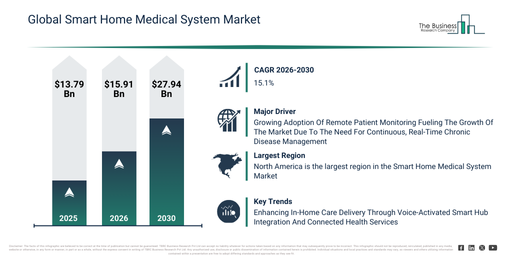
    The smart home medical system market size has demonstrated rapid growth in recent years. It is anticipated to expand from $13.79 billion in 2025 to $15.91 billion in 2026, exhibiting a compound annual growth rate (CAGR) of 15.4%. This historical growth can be linked to the increasing adoption of wearable health devices, a growing awareness of home healthcare, rising demand for remote patient monitoring, the expansion of IoT connectivity in homes, and the increasing prevalence of chronic diseases.

    The smart home medical system market is projected to experience swift expansion over the coming years. Its size is anticipated to reach $27.94 billion by 2030, exhibiting a compound annual growth rate (CAGR) of 15.1%. This projected growth is driven by increased funding for smart home healthcare infrastructure, the escalating incorporation of artificial intelligence (AI) and IoT into medical systems, the broadening scope of telemedicine services, enhanced government backing for home healthcare, and a growing consumer demand for tailored healthcare solutions. Key trends expected during this period involve technological improvements in sensor precision, breakthroughs in artificial intelligence (AI)-powered health monitoring, progress in integrating telehealth, ongoing research and development in predictive health analytics, and enhancements in wireless and cloud-based health platforms.

    Access Your Free Sample Report for In-Depth Market Insights:

    https://www.thebusinessresearchcompany.com/sample.aspx?id=30747&type=smp

    What Drivers Are Guiding Growth Patterns In The Smart Home Medical System Market?

    The increasing use of remote patient monitoring is anticipated to drive the expansion of the smart home medical system market in the future. Remote patient monitoring involves utilizing networked medical equipment and digital interfaces to gather, send, and examine patient health information away from conventional healthcare environments, facilitating ongoing management of long-term illnesses. The uptake of remote patient monitoring is on the rise, primarily because of the growing incidence of chronic respiratory conditions, where consistent oversight aids in symptom management and averts hospital admissions. Smart home medical systems facilitate remote patient monitoring through the incorporation of interconnected devices that monitor vital indicators, adherence to medication schedules, and everyday health routines. These systems enhance patient care by allowing immediate data transfer, prompt identification of health problems, and timely medical responses from healthcare professionals. For example, as reported by Intuition Labs, a US-based healthcare technology company, in December 2025, close to 50 million Americans currently utilize a type of remote patient monitoring device, 80% of Americans have a positive view of integrating remote patient monitoring into medical treatment, and by 2025, more than 71 million Americans, which constitutes 26% of the population, are projected to employ a remote patient monitoring service. Consequently, the increasing embrace of remote patient monitoring is stimulating the expansion of the smart home medical system market.

    Which Segments Are Driving Activity In The Smart Home Medical System Market?

    The smart home medical system market covered in this report is segmented –

    1) By Component: Hardware, Software, Services

    2) By Technology: Internet Of Things (IoT), Artificial Intelligence (AI), Cloud Computing, Wearable Technology

    3) By Applications: Remote Patient Monitoring, Chronic Disease Management, Elderly Care, Home-Based Recovery, Emergency Assistance, Preventive And Wellness Monitoring

    4) By End User: Patients, Caregivers, Healthcare Providers, Insurance Companies

    Subsegments:

    1) By Hardware: Health Monitoring Devices, Medication Management Devices, Emergency Alert Devices, Diagnostic Equipment, Connectivity Modules

    2) By Software: Data Analytics Platforms, Remote Monitoring Applications, Telehealth Management Software, Visualization And Reporting Tools, Artificial Intelligence Enabled Software

    3) By Services: Installation And Setup Services, Maintenance And Support Services, Remote Patient Monitoring Services, Training And Consultation Services, Data Management Services

    What Trends Are Expected To Impact The Competitive Landscape Of The Smart Home Medical System Market?

    Leading companies in the smart home medical system market are concentrating on developing sophisticated solutions, such as voice-activated smart hubs, with the aim of enhancing accessibility, providing real-time monitoring, and fostering seamless interaction among patients, caregivers, and healthcare providers. A voice-activated smart hub functions as a centralized in-home medical control system that employs voice recognition and connected sensors to allow for hands-free interaction, trigger alerts, coordinate care workflows, and support daily health and safety requirements, particularly for older adults and individuals managing chronic conditions. For example, in September 2024, Aloe Care Health Inc., a US-based provider of connected care and remote monitoring solutions, launched a new division named Aloe Care Health Solutions. This division was established to deliver a turnkey solution addressing the increasing demands of healthcare organizations like Medicare Advantage, Medicaid, Home Health, and Senior Living providers. It encompasses a data-centric platform and an ecosystem of devices featuring a patented Smart Hub, and integrates technologies such as a radar fall detector and the Withings Sleep Tracking Mat to enable AI-driven fall prediction, emergency room diversion, and smarter triage without requiring constant caregiver intervention. Additionally, it incorporates a flexible, customizable platform that adapts to individual needs, assisting healthcare partners in achieving improved health outcomes, containing costs, and elevating member satisfaction.

    Which Major Industry Participants Are Leading The Smart Home Medical System Market Growth?

    Major companies operating in the smart home medical system market are Abbott Laboratories, Medtronic plc, Koninklijke Philips N.V., Omron Healthcare Inc., ResMed Inc., Dexcom Inc., Teladoc Health Inc., Masimo Corporation, Tunstall Healthcare Group Ltd., iRhythm Technologies Inc., Athelas Inc., Withings SA, HealthSnap Inc., Current Health Ltd., AliveCor Inc., Cadence Care Inc., Qardio Inc., Empatica Inc., Vivify Health Inc., BioIntelliSense Inc., CarePredict Inc., HealthBeacon plc, Sensara BV, Essence SmartCare Ltd.

    Access The Complete Report For Deeper Market Insights:

    https://www.thebusinessresearchcompany.com/report/smart-home-medical-system-market-report

    Which Region Is Expected To Experience The Fastest Growth In The Smart Home Medical System Market?

    North America was the largest region in the smart home medical system market in 2025. Asia-Pacific is expected to be the fastest-growing region in the forecast period. The regions covered in the smart home medical system market report are Asia-Pacific, South East Asia, Western Europe, Eastern Europe, North America, South America, Middle East, Africa.

    Request Your Customized Smart Home Medical System Market Research Report for Competitive Advantage:

    https://www.thebusinessresearchcompany.com/customise?id=30747&type=smp

    Browse Through More Reports Similar to the Global Smart Home Medical System Market 2026, By The Business Research Company

    Home Healthcare Software Market Report 2026

    https://www.thebusinessresearchcompany.com/report/home-healthcare-software-global-market-report

    Smart Healthcare Products Market Report 2026

    https://www.thebusinessresearchcompany.com/report/smart-healthcare-products-global-market-report

    healthcare automation global market report

    https://www.thebusinessresearchcompany.com/report/healthcare-automation-global-market-report

    Get in touch with us:

    The Business Research Company: https://www.thebusinessresearchcompany.com/

    Americas +1 310-496-7795

    Asia +44 7882 955267 & +91 8897263534

    Europe +44 7882 955267

    Email us at marketing@tbrc.info

    Follow us on:

    LinkedIn: https://in.linkedin.com/company/the-business-research-company

    YouTube: https://www.youtube.com/channel/UC24_fI0rV8cR5DxlCpgmyFQ

    Global Market Model: https://www.thebusinessresearchcompany.com/global-market-model
  • Single-Detector Gamma Camera Market Outlook 2026–2035: Growth Drivers and Industry Forecast

    Single-Detector Gamma Camera Market Outlook 2026–2035: Growth Drivers and Industry Forecast

    Uncover key drivers, emerging technologies, and competitive movements shaping the single-detector gamma camera market from 2026–2035 with trusted insights from The Business Research Company

    What size range is anticipated for the Single-Detector Gamma Camera Market from 2026 to 2030?

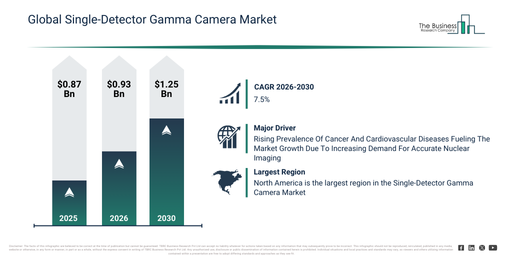
    The single-detector gamma camera market has demonstrated robust expansion in recent years. It is anticipated to expand from $0.87 billion in 2025 to $0.93 billion in 2026, exhibiting a compound annual growth rate (CAGR) of 7.8%. The historical growth of this market is attributable to the rising prevalence of chronic diseases, increasing adoption of nuclear medicine diagnostics, a growing geriatric population, expanding healthcare infrastructure, and increasing demand for early disease detection.

    The single-detector gamma camera market is projected to experience substantial growth in the coming years, with its size expected to reach $1.25 billion by 2030, exhibiting a compound annual growth rate (CAGR) of 7.5%. This expansion during the forecast period can be attributed to the increasing worldwide incidence of cancer and cardiovascular diseases, growing investments in healthcare infrastructure (especially in emerging markets), rising adoption of advanced gamma camera systems, expanding utilization of nuclear medicine in diagnostics and research, and the increasing demand for non-invasive diagnostic imaging. Significant trends anticipated in this period include technological advancements in detectors and imaging systems, innovations in hybrid imaging, developments in digital and solid-state gamma cameras, research and development of novel radiopharmaceuticals and imaging protocols, and the increasing integration of artificial intelligence (AI) and image-processing automation.

    Access Your Free Sample Report for In-Depth Market Insights:

    https://www.thebusinessresearchcompany.com/sample.aspx?id=30743&type=smp

    What Drivers Are Affecting Demand In The Single-Detector Gamma Camera Market?

    The expanding occurrence of cancer and cardiovascular diseases is projected to boost the growth of the single-detector gamma camera market in the future. The prevalence of cancer and cardiovascular diseases refers to the count of individuals within a specified population living with either type of cancer or a heart and blood-vessel condition during a particular timeframe. This prevalence is escalating due to an aging population and increased exposure to risk factors like unhealthy diets and physical inactivity, which make individuals more susceptible to these illnesses. Single-detector gamma cameras aid in diagnosing cancer and cardiovascular diseases by delivering essential nuclear imaging, enabling clinicians to detect, evaluate, and monitor functional changes in organs impacted by cancer and heart ailments. For example, in August 2025, the Centers for Disease Control and Prevention, a Switzerland-based public health agency, reported that 90% of the nation’s 4.9 trillion dollars in annual health care spending is allocated to individuals with chronic and mental health conditions, with over 84,000 Americans dying each year from heart disease or stroke, and the expenditures linked to cardiovascular diseases are predicted to reach approximately $2 trillion by 2050. Thus, the increasing prevalence of cancer and cardiovascular diseases is stimulating the growth of the single-detector gamma camera market.

    Which Segments Are Gaining Traction In The Single-Detector Gamma Camera Market?

    The single-detector gamma camera market covered in this report is segmented –

    1) By Type Of Detector: High-Energy General-Purpose Gamma Cameras, Low-Energy High-Resolution Gamma Cameras, Specialized Gamma Cameras

    2) By Type Or Design: Stationary Type Single-Detector Gamma Camera, Mobile Type Single-Detector Gamma Camera Or Single-Head Mobile Gamma Cameras

    3) By Technology: Static Imaging, Dynamic Imaging, Tomographic Imaging (Single Photon Emission Computed Tomography (SPECT)), Quantitative Imaging

    4) By Application: Oncology, Cardiology, Neurology, Bone Scintigraphy, Pulmonary Scintigraphy

    5) By End-User: Hospitals, Diagnostic Imaging Centers, Research Institutions, Outpatient Clinics

    Subsegments:

    1) By High-Energy General-Purpose Gamma Cameras: Cardiac Imaging Gamma Cameras, Whole-Body Imaging Gamma Cameras, Multi-Purpose Imaging Gamma Cameras

    2) By Low-Energy High-Resolution Gamma Cameras: Thyroid Imaging Gamma Cameras, Bone Scintigraphy Gamma Cameras, Renal Imaging Gamma Cameras

    3) By Specialized Gamma Cameras: Cardiac SPECT Imaging Gamma Cameras, Brain SPECT Imaging Gamma Cameras, Liver SPECT Imaging Gamma Cameras

    Who Are The Top-Performing Companies In The Single-Detector Gamma Camera Market In Recent Years?

    Major companies operating in the single-detector gamma camera market are Siemens Healthineers AG, GE HealthCare Technologies Inc., Koninklijke Philips N.V., Canon Medical Systems Corporation, Digirad Corporation, Serac Life Sciences Limited, Biodex Medical Systems Inc., Beijing Huitai Medical Equipment Co. Ltd., Electronic & Engineering Co. Private Limited, DVS Medical Inc., NUVIATech Instruments, Dilon Technologies Inc., Serac Imaging Systems Limited, RadRays Medical Technology, AdvanScint Imaging Solutions, MedNova Imaging Ltd., GBT Medical Technologies, United Imaging Healthcare Co. Ltd.

    Access The Complete Report For Deeper Market Insights:

    https://www.thebusinessresearchcompany.com/report/single-detector-gamma-camera-market-report

    Which Region Currently Holds The Largest Share Of The Single-Detector Gamma Camera Market?

    North America was the largest region in the single-detector gamma camera market in 2025. Asia-Pacific is expected to be the fastest-growing region in the forecast period. The regions covered in the single-detector gamma camera market report are Asia-Pacific, South East Asia, Western Europe, Eastern Europe, North America, South America, Middle East, Africa.

    Request Your Customized Single-Detector Gamma Camera Market Research Report for Competitive Advantage:

    https://www.thebusinessresearchcompany.com/customise?id=30743&type=smp

    Browse Through More Reports Similar to the Global Single-Detector Gamma Camera Market 2026, By The Business Research Company

    X Ray Detectors Market Report 2026

    https://www.thebusinessresearchcompany.com/report/x-ray-detectors-global-market-report

    Surveillance Camera Market Report 2026

    https://www.thebusinessresearchcompany.com/report/surveillance-camera-global-market-report

    single photon emission computed tomography SPECT global market report

    https://www.thebusinessresearchcompany.com/report/single-photon-emission-computed-tomography-spect-global-market-report

    Get in touch with us:

    The Business Research Company: https://www.thebusinessresearchcompany.com/

    Americas +1 310-496-7795

    Asia +44 7882 955267 & +91 8897263534

    Europe +44 7882 955267

    Email us at marketing@tbrc.info

    Follow us on:

    LinkedIn: https://in.linkedin.com/company/the-business-research-company

    YouTube: https://www.youtube.com/channel/UC24_fI0rV8cR5DxlCpgmyFQ

    Global Market Model: https://www.thebusinessresearchcompany.com/global-market-model

  • Global Semiconductor Timing Integrated Circuit (IC) Market Forecast 2026–2035: Long-Term Growth Insights

    Global Semiconductor Timing Integrated Circuit (IC) Market Forecast 2026–2035: Long-Term Growth Insights

    Uncover key drivers, emerging technologies, and competitive movements shaping the semiconductor timing integrated circuit (ic) market from 2026–2035 with trusted insights from The Business Research Company

    What market expansion outlook does the Semiconductor Timing Integrated Circuit (IC) Market show for the 2026–2030 period?

    The market size for semiconductor timing ICs has seen strong expansion in recent years. It is anticipated to increase from $6.29 billion in 2025 to $6.80 billion in 2026, demonstrating a compound annual growth rate (CAGR) of 8.2%. Historical growth can be attributed to several factors including heightened demand for consumer electronics, increasing use of communication systems, greater integration into automotive electronics, the progress of industrial automation, and wider application in healthcare devices.

    The semiconductor timing IC market is anticipated to experience substantial expansion in the coming years. It will grow to $9.22 billion in 2030 at a compound annual growth rate (CAGR) of 7.9%. This projected expansion during the forecast period is largely due to the increasing uptake of 5G and telecommunication infrastructure, a heightened demand for energy-efficient timing solutions, the expanding deployment of IoT and connected devices, the growth of data centers and cloud computing, and the accelerating integration into electric vehicles and intelligent automotive systems. Key developments expected in this period encompass advancements in mixed-signal and digital timing IC technologies, novelties in programmable and multi-output clock generators, the creation of low-power and highly precise timing ICs, extensive research and development in timing solutions for automotive and electric vehicles, and improvements in crystal oscillators and jitter attenuation capabilities.

    Access Your Free Sample Report for In-Depth Market Insights:

    https://www.thebusinessresearchcompany.com/sample.aspx?id=30740&type=smp

    What Drivers Are Shaping The Development Of The Semiconductor Timing Integrated Circuit (IC) Market?

    The rising need for consumer electronic products is anticipated to fuel expansion in the semiconductor timing integrated circuit (IC) market moving forward. Consumer electronics consist of electronic devices manufactured for everyday personal or household utilization, primarily for amusement, communication, and leisure activities. These items differentiate themselves from industrial or professional equipment by focusing on non-commercial applications within homes or daily routines. The demand for consumer electronics is growing as a result of rapid technological advancements, where new and improved gadgets attract more purchasers and encourage frequent upgrades. Semiconductor timing ICs support the need for consumer electronics by offering precise timing and synchronization for devices, thus ensuring their efficient and reliable operation. For instance, in June 2025, according to the Australian Bureau of Statistics (ABS, an Australia-based official national statistical agency, in 2025, retailing of electrical and electronic goods increased by 3.9% in that month alone, indicating ongoing consumer demand growth for electronics products. This reflects stronger consumer spending compared with earlier in the year. Therefore, the increasing demand for consumer electronics is driving the growth of the semiconductor timing integrated circuit (IC) market.

    Which Segments Are Contributing To The Growth Of The Semiconductor Timing Integrated Circuit (IC) Market?

    The semiconductor timing integrated circuit (ic) market covered in this report is segmented –

    1) By Type Of Timing Integrated Circuit (IC): Crystal Oscillators, Real-Time Clock (RTC) Integrated Circuits (ICs), Frequency Synthesizers, Programmable Timing Integrated Circuits (IC), Clock Buffers and Clock Distribution Integrated Circuits (IC)

    2) By Technology: Analog Timing ICs, Digital Timing ICs, Mixed-Signal Timing ICs, Low-Power Timing ICs

    3) By Distribution Channel: Direct Sales, Distributors and Resellers, Online Platforms, Value-Added Resellers (VARs)

    4) By Application: Communication Systems, Consumer Electronics, Automotive Electronics, Industrial Automation, Healthcare Devices

    5) By End-User Sector: Telecommunications, Information Technology (IT) And Computing, Consumer Goods, Medical Equipment, Automotive

    Subsegments:

    1) By Crystal Oscillators: Surface Mount Device Oscillators, Through Hole Oscillators, Temperature Compensated Crystal Oscillators, Voltage Controlled Crystal Oscillators, Oven Controlled Crystal Oscillators

    2) By Real-Time Clock (RTC) Integrated Circuits: Serial Interface Real-Time Clocks, Parallel Interface Real-Time Clocks, Integrated Battery Backup Real-Time Clocks, Low Power Real-Time Clocks

    3) By Frequency Synthesizers: Integer Frequency Synthesizers, Fractional Frequency Synthesizers, Direct Digital Synthesizers, Phase Locked Loop Synthesizers

    4) By Programmable Timing Integrated Circuits: Digitally Controlled Oscillators, Programmable Clock Generators, Configurable Delay Lines, Frequency Agile Timing Controllers

    5) By Clock Buffers and Clock Distribution Integrated Circuits: Fanout Buffers, Clock Multiplexers, Jitter Attenuating Clock Buffers, Zero Delay Buffers, Differential Clock Distributors

    Which Market Trends Are Opening Growth Opportunities In The Semiconductor Timing Integrated Circuit (IC) Market?

    Major companies operating in the semiconductor timing integrated circuit (IC) market are concentrating on developing products, such as multi-gigahertz oscillators and jitter attenuators, to address the increasing demand for ultra-low jitter, high-frequency, and thermally robust timing solutions required by AI, 5G, and advanced computing systems. These specialized ICs, multi-gigahertz oscillators and jitter attenuators, are engineered to generate and stabilize high-speed clock signals, offering femtosecond-level precision and programmable output flexibility, which significantly improves upon traditional analog timing solutions often plagued by higher jitter and limited thermal stability. For instance, in June 2025, Mixed-Signal Devices, a US-based semiconductor company, launched its MS11X0 oscillator and MS15X0 jitter attenuator families, an innovative portfolio delivering up to 2 GHz output frequency, ultra-low jitter (as low as 19 fs RMS), ±20 ppm thermal stability, and compact CMOS packages. These devices incorporate factory-programmable outputs, adaptive DSP-based timing engines, and robust environmental resilience, making them well-suited for AI compute fabrics, 5G network synchronization, coherent optics, and high-speed SerDes interfaces. Their integration of CMOS precision and Virtual Crystal architecture helps simplify clock tree design, reduce component counts, and enhance reliability across complex electronic systems.

    Who Are The Major Companies Operating In The Semiconductor Timing Integrated Circuit (IC) Market?

    Major companies operating in the semiconductor timing integrated circuit (ic) market are Texas Instruments Incorporated, STMicroelectronics N.V., Infineon Technologies AG, KYOCERA Corporation, NXP Semiconductors N.V., Murata Manufacturing Co. Ltd., Analog Devices Inc., Renesas Electronics Corporation, Seiko Epson Corporation, ON Semiconductor Corporation, Skyworks Solutions Inc., Microchip Technology Incorporated, ROHM Co. Ltd., MaxLinear Inc., Vishay Intertechnology Inc., Diodes Incorporated, Nuvoton Technology Corporation, Silicon Laboratories Inc., Semtech Corporation, SiTime Corporation, Rakon Limited, Abracon LLC

    Access The Complete Report For Deeper Market Insights:

    https://www.thebusinessresearchcompany.com/report/semiconductor-timing-integrated-circuit-ic-market-report

    Which Region Is Anticipated To See The Fastest Growth In The Semiconductor Timing Integrated Circuit (IC) Market?

    North America was the largest region in the mobile semiconductor timing IC market in 2025. Asia-Pacific is expected to be the fastest-growing region in the forecast period. The regions covered in the semiconductor timing integrated circuit (ic) market report are Asia-Pacific, South East Asia, Western Europe, Eastern Europe, North America, South America, Middle East, Africa.

    Request Your Customized Semiconductor Timing Integrated Circuit (IC) Market Research Report for Competitive Advantage:

    https://www.thebusinessresearchcompany.com/customise?id=30740&type=smp

    Browse Through More Reports Similar to the Global Semiconductor Timing Integrated Circuit (IC) Market 2026, By The Business Research Company

    Gate Driver Integrated Circuit Ic Market Report 2026

    https://www.thebusinessresearchcompany.com/report/gate-driver-integrated-circuit-ic-global-market-report

    Timing Devices Market Report 2026

    https://www.thebusinessresearchcompany.com/report/timing-devices-global-market-report

    integrated circuits global market report

    https://www.thebusinessresearchcompany.com/report/integrated-circuits-global-market-report

    Get in touch with us:

    The Business Research Company: https://www.thebusinessresearchcompany.com/

    Americas +1 310-496-7795

    Asia +44 7882 955267 & +91 8897263534

    Europe +44 7882 955267

    Email us at marketing@tbrc.info

    Follow us on:

    LinkedIn: https://in.linkedin.com/company/the-business-research-company

    YouTube: https://www.youtube.com/channel/UC24_fI0rV8cR5DxlCpgmyFQ

    Global Market Model: https://www.thebusinessresearchcompany.com/global-market-model

  • Remote Cardiac Rehab Platforms Industry Poised for Rapid Growth, Forecast to Touch $2.89 Billion by 2030 at 14.1% CAGR

    Remote Cardiac Rehab Platforms Industry Poised for Rapid Growth, Forecast to Touch $2.89 Billion by 2030 at 14.1% CAGR

    Uncover key drivers, emerging technologies, and competitive movements shaping the remote cardiac rehab platforms market from 2026–2035 with trusted insights from The Business Research Company

    What level of CAGR-driven expansion is anticipated in the Remote Cardiac Rehab Platforms Market between 2026 and 2030?

    The remote cardiac rehab platforms market size has experienced significant expansion in recent years. This market is expected to increase from $1.49 billion in 2025 to $1.71 billion in 2026, reflecting a compound annual growth rate (CAGR) of 14.4%. Historically, this growth can be linked to factors like the rising occurrence of cardiovascular diseases, an expanding aging populace, greater understanding of cardiac health, the development of telehealth infrastructure, and a surge in hospital readmission rates.

    The remote cardiac rehab platforms market is projected for significant expansion over the coming years, anticipated to reach $2.90 billion by 2030, exhibiting a compound annual growth rate (CAGR) of 14.1%. This expansion during the projected period stems from several factors, including the increasing uptake of remote monitoring platforms, a growing patient preference for rehabilitation at home, higher healthcare spending on digital solutions, broader insurance coverage for remote therapy, and the increasing integration of wearable devices into rehabilitation programs. Key developments anticipated in the forecast period encompass technological improvements in wearable sensors, advancements in digital rehabilitation software, progress in artificial intelligence-driven patient monitoring, continued research and development in telecardiology, and the incorporation of mobile applications into remote rehab platforms.

    Access Your Free Sample Report for In-Depth Market Insights:

    https://www.thebusinessresearchcompany.com/sample.aspx?id=30724&type=smp

    What Drivers Are Affecting Demand-Supply Dynamics In The Remote Cardiac Rehab Platforms Market?

    The increasing prevalence of cardiovascular diseases is projected to fuel the expansion of the remote cardiac rehabilitation platforms market. This surge in cardiovascular disease cases signifies a growing number of heart-related conditions, such as coronary artery disease and heart failure, which necessitate surgical intervention and ongoing care. Enhanced surgical methods and an aging population contribute to this rise, consequently generating significant demand for accessible post-operative recovery solutions. Remote cardiac rehabilitation platforms are instrumental in establishing thorough recovery programs, facilitating the continuous monitoring of patient vital signs and the delivery of structured exercise therapy within a home environment. For instance, data from May 2025 by the Japanese Association for Thoracic Surgery indicates that Japan conducted 63,427 cardiovascular surgeries in 2023, marking a 3.0% rise compared to the 61,606 surgeries performed in 2022. Consequently, the increasing incidence of cardiovascular diseases is a primary driver for the growth of the remote cardiac rehabilitation platforms market.

    How Is The Remote Cardiac Rehab Platforms Market Organized Into Various Segments?

    The remote cardiac rehab platforms market covered in this report is segmented –

    1) By Component: Software, Hardware, Services

    2) By Delivery Mode: Web-based, Cloud-based, On-premises

    3) By Application: Chronic Heart Failure, Post-Myocardial Infarction, Hypertension, Arrhythmia, Other Applications

    4) By End User: Hospitals and Clinics, Home Care Settings, Cardiac Rehabilitation Centers, Other End Users

    Subsegments:

    1) By Software: Platform, Patient Application, Clinician Dashboard, Administrative And Billing Module

    2) By Hardware: Wearable Devices, Electrocardiogram(ECG) Monitors, Blood Pressure Monitors, Heart Rate Monitors

    3) By Services: Remote Monitoring, Virtual Consultation, Patient Education, Technical Support

    What Trends Are Driving The Growth Trajectory Of The Remote Cardiac Rehab Platforms Market?

    Leading companies within the remote cardiac rehab platforms market are concentrating on creating sophisticated telehealth options, including virtual cardiac rehabilitation experiences. The aim is to broaden access to vital rehabilitation programs, boost patient involvement, and facilitate individualized cardiovascular recovery beyond conventional healthcare environments. Such an experience constitutes a structured digital care path, providing exercise guidance, educational content, symptom tracking, and feedback from clinicians via remote platforms, allowing patients to engage in thorough cardiac rehabilitation from their homes or community settings under professional medical supervision. For example, in October 2025, WakeMed Health & Hospitals, a US-based healthcare system, introduced a virtual cardiac rehabilitation experience specifically for individuals recuperating from heart operations or managing long-term heart ailments. This program utilizes connected devices, remote observation, and telehealth coaching to guide patients through customized rehabilitation plans, monitor their progress, and offer real-time assistance from clinicians, thereby mitigating obstacles like travel distance, inconvenient schedules, and insufficient facility access. This launch highlights an increasing emphasis on integrating virtual experiences into cardiac rehabilitation to improve convenience, patient compliance, and overall health results. Through the incorporation of a virtual cardiac rehabilitation experience into their remote care services, WakeMed and Recora facilitate wider engagement in evidence-based rehabilitation, foster better continuity of care, and promote sustained cardiovascular health for patients from varied backgrounds.

    Who Are The Top-Performing Companies In The Remote Cardiac Rehab Platforms Market In Recent Years?

    Major companies operating in the remote cardiac rehab platforms market are Philips Healthcare, Teladoc Health Inc., Sword Health Inc., BioFourmis Inc., Dozee Health, Wellframe Inc., Health Recovery Solutions, Biotricity Inc., Vivalink Inc., Lyfe, Carda Health Inc., Chanl Health Inc., Fourth Frontier, Heartbeat Health Inc., Life365 Inc., Liva Healthcare, Movn Health, Prevounce, Recora LLC, Veta Health Co.

    Access The Complete Report For Deeper Market Insights:

    https://www.thebusinessresearchcompany.com/report/remote-cardiac-rehab-platforms-market-report

    Which Region Currently Holds The Largest Share Of The Remote Cardiac Rehab Platforms Market?

    North America was the largest region in the remote cardiac rehab platforms market in 2025. Asia-Pacific is expected to be the fastest-growing region in the forecast period. The regions covered in the remote cardiac rehab platforms market report are Asia-Pacific, South East Asia, Western Europe, Eastern Europe, North America, South America, Middle East, Africa.

    Request Your Customized Remote Cardiac Rehab Platforms Market Research Report for Competitive Advantage:

    https://www.thebusinessresearchcompany.com/customise?id=30724&type=smp

    Browse Through More Reports Similar to the Global Remote Cardiac Rehab Platforms Market 2026, By The Business Research Company

    Remote Cardiac Monitoring Market Report 2026

    https://www.thebusinessresearchcompany.com/report/remote-cardiac-monitoring-global-market-report

    Smart Portable Rehabilitation Devices Market Report 2026

    https://www.thebusinessresearchcompany.com/report/smart-portable-rehabilitation-devices-global-market-report

    mobile cardiac telemetry systems global market report

    https://www.thebusinessresearchcompany.com/report/mobile-cardiac-telemetry-systems-global-market-report

    Get in touch with us:

    The Business Research Company: https://www.thebusinessresearchcompany.com/

    Americas +1 310-496-7795

    Asia +44 7882 955267 & +91 8897263534

    Europe +44 7882 955267

    Email us at marketing@tbrc.info

    Follow us on:

    LinkedIn: https://in.linkedin.com/company/the-business-research-company

    YouTube: https://www.youtube.com/channel/UC24_fI0rV8cR5DxlCpgmyFQ

    Global Market Model: https://www.thebusinessresearchcompany.com/global-market-model

  • Regenerative Wound Care Market Performance Outlook 2026–2030: Revenue to Hit $14.95 Billion at 7.4% CAGR

    Regenerative Wound Care Market Performance Outlook 2026–2030: Revenue to Hit $14.95 Billion at 7.4% CAGR

    Uncover key drivers, emerging technologies, and competitive movements shaping the regenerative wound care market from 2026–2035 with trusted insights from The Business Research Company

    What long-term size projections exist for the Regenerative Wound Care Market covering 2026–2035?

    The regenerative wound care market has seen substantial growth in recent years. It is projected to expand from $10.46 billion in 2025 to $11.26 billion in 2026, achieving a compound annual growth rate (CAGR) of 7.6%. This historical growth can be attributed to the increasing prevalence of chronic wounds, a growing geriatric population, the rising incidence of diabetes and obesity, the expansion of healthcare infrastructure, and increasing awareness about advanced wound care therapies.

    The regenerative wound care market is anticipated to experience substantial growth over the next few years, with its valuation expected to reach **$14.96 billion in 2030, demonstrating a compound annual growth rate (CAGR) of 7.4%.** This projected expansion during the forecast period is attributable to the increasing adoption of regenerative wound care products, a surge in investments within biotechnology startups, the escalating integration of artificial intelligence into wound management, the broadening scope of home healthcare services, and a rising demand for personalized wound care solutions. Key trends identified for this period include technological advancements in bioengineered skin substitutes, innovative strides in stem cell therapies, developments in growth factor-based treatments, ongoing research and developments in scaffold-based wound healing, and enhanced technological capabilities in wound monitoring devices.

    Access Your Free Sample Report for In-Depth Market Insights:

    https://www.thebusinessresearchcompany.com/sample.aspx?id=30723&type=smp

    Which Drivers Are Impacting The Competitive Landscape Of The Regenerative Wound Care Market?

    The expanding number of individuals with diabetes is anticipated to drive the advancement of the regenerative wound care market in the future. This growing diabetic patient population signifies an increase in the worldwide occurrence of diabetes mellitus, a persistent illness frequently linked to issues like impaired blood flow and nerve damage, which result in wounds difficult to heal. Progress in diabetes treatment and greater public understanding contribute to recognizing this expanding diabetic demographic, underscoring the vital demand for sophisticated treatments to avert complications like foot ulcers. Regenerative wound care facilitates the establishment of optimal healing conditions through the application of bioactive substances and cell-based treatments, encouraging tissue restoration and wound closure in intricate diabetic lesions. As an illustration, in July 2025, data from the International Diabetes Federation, a Belgium-based umbrella organization for national diabetes associations, revealed that in 2024, diabetes impacted 11.10% of the worldwide population, accounting for 589 million adults, with projections indicating an increase to 12.95% and 853 million by 2050. Consequently, the expanding diabetic patient population is a significant impetus behind the growth of the regenerative wound care market.

    What Segments Are Identified Within The Structure Of The Regenerative Wound Care Market?

    The regenerative wound care market covered in this report is segmented –

    1) By Product Type: Autologous Stem Cells, Biological Skin Substitutes, Tissue Or Multiple Tissue Platforms, Fetal Skin, Regenerative Wound Care Devices, Other Product Types

    2) By Wound Type: Chronic Wounds, Diabetic Foot Ulcers (DFUs), Venous Leg Ulcers (VLUs), Pressure Ulcers (Injuries), Acute Wounds, Surgical And Traumatic Wounds, Burn Wounds

    3) By Technology: Active Therapies, Scaffold-Based Therapies, Combination Products

    4) By End Users: Hospitals, Ambulatory Surgical Centers, Burn Care Centers And Wound Clinics, Other End Users

    Subsegments:

    1) By Autologous Stem Cells: Bone Marrow Derived Stem Cells, Adipose Derived Stem Cells, Peripheral Blood Stem Cells

    2) By Biological Skin Substitutes: Allogeneic Skin, Xenogeneic Skin, Composite Skin Substitutes

    3) By Tissue Or Multiple Tissue Platforms: Extracellular Matrix, Amniotic Membrane, Collagen Matrix

    4) By Fetal Skin: Amniotic Epithelial Cells, Dermal Fibroblasts

    5) By Regenerative Wound Care Devices: Negative Pressure Wound Therapy Devices, Bioengineered Tissue Scaffolds, Wound Dressings

    6) By Other Product Types: Growth Factors, Platelet Rich Plasma, Cellular Therapy Products

    What Upcoming Trends Are Likely To Define The Future Path Of The Regenerative Wound Care Market?

    Firms within the regenerative wound care market are prioritizing technological progress, exemplified by the development of specialized fish-skin graft products engineered to preserve their inherent structure and omega-3 fatty acids. Such advanced grafts are crafted for managing intricate burn injuries, offering a bioactive framework that stimulates cellular proliferation and tissue repair, and are customized for particular body parts, including the hands, to enhance application effectiveness and restore function. As an illustration, in January 2023, Kerecis Limited, an Iceland-based medical device enterprise, revealed the launch of two new offerings targeted at the burn market: GraftGuide Mano and GraftGuide Micro. These items incorporate full-thickness fish dermis, processed with Kerecis’ exclusive EnviroIntact method, which maintains the skin’s original three-dimensional structure and fatty acids. GraftGuide Mano is particularly formulated to conform to the intricate 3D structure of the hand, thereby aiding in the treatment of second-degree burns.

    Which Leading Companies Dominate The Regenerative Wound Care Market Share?

    Major companies operating in the regenerative wound care market are Stryker Corporation, Smith & Nephew plc, Convatec Group plc, Molnlycke Health Care AB, Integra LifeSciences Holdings Corporation, Angelini Pharma SpA, Organogenesis Holdings Inc.., MiMedx Group Inc., Fidia Farmaceutici SpA, Vericel Corporation, BioHorizons IPH Inc., Anika Therapeutics Inc., Kerecis Ltd., AVITA Medical Inc., Aroa Biosurgery Limited, Skye Biologics Inc., Tissue Regenix Group plc, PolarityTE Inc., Regenio, Acelity L.P. Inc.

    Access The Complete Report For Deeper Market Insights:

    https://www.thebusinessresearchcompany.com/report/regenerative-wound-care-market-report

    How Does The Regenerative Wound Care Market Perform Across Major Global Regions?

    North America was the largest region in the regenerative wound care market in 2025. Asia-Pacific is expected to be the fastest-growing region in the forecast period. The regions covered in the regenerative wound care market report are Asia-Pacific, South East Asia, Western Europe, Eastern Europe, North America, South America, Middle East, Africa.

    Request Your Customized Regenerative Wound Care Market Research Report for Competitive Advantage:

    https://www.thebusinessresearchcompany.com/customise?id=30723&type=smp

    Browse Through More Reports Similar to the Global Regenerative Wound Care Market 2026, By The Business Research Company

    Chronic Wound Care Market Report 2026

    https://www.thebusinessresearchcompany.com/report/chronic-wound-care-global-market-report

    Active Wound Care Market Report 2026

    https://www.thebusinessresearchcompany.com/report/active-wound-care-global-market-report

    advanced wound care global market report

    https://www.thebusinessresearchcompany.com/report/advanced-wound-care-global-market-report

    Get in touch with us:

    The Business Research Company: https://www.thebusinessresearchcompany.com/

    Americas +1 310-496-7795

    Asia +44 7882 955267 & +91 8897263534

    Europe +44 7882 955267

    Email us at marketing@tbrc.info

    Follow us on:

    LinkedIn: https://in.linkedin.com/company/the-business-research-company

    YouTube: https://www.youtube.com/channel/UC24_fI0rV8cR5DxlCpgmyFQ

    Global Market Model: https://www.thebusinessresearchcompany.com/global-market-model