Category: Healthcare Services

  • Kidulting Toys Market Forecast 2026–2035: How to Leverage Market Growth

    Kidulting Toys Market Forecast 2026–2035: How to Leverage Market Growth

    Uncover key drivers, emerging technologies, and competitive movements shaping the kidulting toys market from 2026–2035 with trusted insights from The Business Research Company

    What is the expected shift in the Kidulting Toys Market’s size between 2026 and 2030?

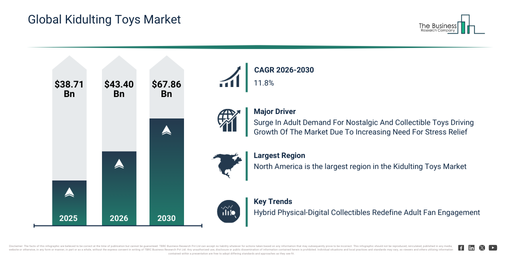
    The kidulting toys market has experienced rapid expansion in recent years. It is anticipated to grow from $38.71 billion in 2025 to $43.40 billion in 2026, achieving a compound annual growth rate (CAGR) of 12.1%. The historical growth can be attributed to factors such as rising disposable income, increasing demand for nostalgia, the growing popularity of pop culture franchises, the expansion of collectible product lines, and the increasing influence of social media.

    The kidulting toys market is projected to experience significant expansion over the coming years. Its size is anticipated to reach $67.86 billion by 2030, demonstrating a compound annual growth rate (CAGR) of 11.8%. This growth during the forecast period is propelled by factors such as the wider embrace of online sales, increasing enthusiasm for limited-edition collectibles, heightened investment in hybrid physical-digital playthings, broadened licensing and intellectual property (IP) collaborations, and an escalating need for stress relief and recreational pursuits. Additionally, key trends for the same period encompass technological progress in integrating virtual reality (VR) and augmented reality (AR), new developments in eco-friendly and high-quality materials, the creation of tailored customization options, exploration into product designs aimed at mental well-being, and the incorporation of gamified retail and unboxing interactions.

    Access Your Free Sample Report for In-Depth Market Insights:

    https://www.thebusinessresearchcompany.com/sample.aspx?id=30631&type=smp

    Which Drivers Are Shaping Strategic Decisions In The Kidulting Toys Market?

    The Kidulting Toys market is projected to experience growth due to the escalating trend of adults seeking nostalgic and collectible toys. This refers to a growing number of adult consumers acquiring and engaging with toys and collectibles that evoke past memories, offer playful experiences, and contribute to mental well-being. The heightened interest among adults in such nostalgic and collectible toys arises from an increased awareness of stress management and the value of leisure activities. Kidulting toys support this trend by offering playful, design-driven products that trigger childhood recollections while also appealing to mature tastes. They enhance consumer engagement by blending nostalgia, creativity, and collectibility, thereby stimulating demand among adult buyers. For instance, in September 2023, according to the Toy Association Inc., a US-based non-profit trade association, 89% of parents surveyed are buying toys for adults, with 43% shopping for their spouse or significant other. Additionally, 53% of men and 48% of millennial parents under 40 reported buying toys for themselves. Consequently, the increasing inclination of adults towards nostalgic and collectible toys is driving the expansion of the Kidulting Toys market.

    What Segment Categories Are Covered In The Kidulting Toys Market?

    The kidulting toys market covered in this report is segmented –

    1) By Product Type: Collectible Figures And Statues, Building Sets, Plush And Soft Toys, Games And Puzzles, Model Kits And Vehicles

    2) By Price Point And Quality: Mass-Market Nostalgia, Premium And Limited Edition, Ultra-Premium And Art Objects

    3) By Application: Online Sales, Offline Sales

    4) By End-User Age Group: Young Kidults, Core Kidults, Mature Kidults

    Subsegments:

    1) By Collectible Figures And Statues: Action Figures, Anime Figures, Movie Statues, Video Game Characters, Limited Edition Collectibles

    2) By Building Sets: Construction Kits, Modular Building Sets, Architectural Models, Mechanical Building Sets, Themed Assembly Sets

    3) By Plush And Soft Toys: Character Plush Toys, Customized Soft Toys, Comfort Plush Toys, Premium Fabric Plush Toys, Collectible Plush Series

    4) By Games And Puzzles: Strategy Board Games, Card Games, Jigsaw Puzzles, Brain Teaser Puzzles, Cooperative Games

    5) By Model Kits And Vehicles: Scale Model Kits, Die-Cast Vehicles, Hobby Assembly Kits, Remote Control Models, Replica Vehicle Models

    Which Trends Are Guiding The Evolution Of The Kidulting Toys Market?

    Major companies operating in the kidulting toys market are prioritizing the development of advanced products, such as hybrid physical-digital collectibles, with the aim of boosting consumer engagement, enhancing nostalgic feelings, and narrowing the gap between traditional collecting and digital ownership. Hybrid physical-digital collectibles are defined as integrated product strategies that combine detailed, tangible action figures with associated blockchain-based digital assets, thereby creating a new, interconnected form of fandom. As an illustration, in February 2024, McFarlane Toys, a US-based action figure company, formed a partnership with NBCUniversal Products & Experiences, a US-based media and entertainment company, to expand its Movie Maniacs brand. This launch introduces a new series of highly detailed 6-inch collectible figures based on iconic characters from movies like The Blues Brothers, The Big Lebowski, and The 40-Year-Old Virgin. A key innovative element is that each physical figure is paired with a redeemable digital collectible, empowering fans to own and exhibit their collections in both the physical and digital worlds. This hybrid methodology leverages the company’s new digital platform, McFarlane Toys Digital, to extend its classic brand beyond physical products and cultivate a new, integrated collecting experience for adult enthusiasts.

    Which Key Players Are Driving Competition In The Kidulting Toys Market?

    Major companies operating in the kidulting toys market are Bandai Namco Holdings Inc., Mattel Inc., Hasbro Inc., Spin Master Corp., Tomy Company Ltd., Funko Inc., Dream International Limited, JAKKS Pacific Inc., McFarlane Toys, Playmates Toys Limited, Playmobil, Ravensburger AG, Hot Toys Limited, Kidrobot Inc., Medicom Toy Corporation, Mezco Toyz LLC, Schmidt Spiele GmbH, Good Smile Company Inc., Super7, The LEGO Group, Sideshow Collectibles, Sonny Angel

    Access The Complete Report For Deeper Market Insights:

    https://www.thebusinessresearchcompany.com/report/kidulting-toys-market-report

    Which Region Is Projected To Lead The Kidulting Toys Market During The Forecast Period?

    North America was the largest region in the kidulting toys market in 2025. Asia-Pacific is expected to be the fastest-growing region in the forecast period. The regions covered in the kidulting toys market report are Asia-Pacific, South East Asia, Western Europe, Eastern Europe, North America, South America, Middle East, Africa.

    Request Your Customized Kidulting Toys Market Research Report for Competitive Advantage:

    https://www.thebusinessresearchcompany.com/customise?id=30631&type=smp

    Browse Through More Reports Similar to the Global Kidulting Toys Market 2026, By The Business Research Company

    Wooden Toys Market Report 2026

    https://www.thebusinessresearchcompany.com/report/wooden-toys-global-market-report

    Learning And Education Toys Market Report 2026

    https://www.thebusinessresearchcompany.com/report/learning-and-education-toys-global-market-report

    construction toys global market report

    https://www.thebusinessresearchcompany.com/report/construction-toys-global-market-report

    Get in touch with us:

    The Business Research Company: https://www.thebusinessresearchcompany.com/

    Americas +1 310-496-7795

    Asia +44 7882 955267 & +91 8897263534

    Europe +44 7882 955267

    Email us at marketing@tbrc.info

    Follow us on:

    LinkedIn: https://in.linkedin.com/company/the-business-research-company

    YouTube: https://www.youtube.com/channel/UC24_fI0rV8cR5DxlCpgmyFQ

    Global Market Model: https://www.thebusinessresearchcompany.com/global-market-model
  • Implantable Brain-Computer Interfaces Market Forecast 2026–2035: Data Trends and Industry Insights

    Implantable Brain-Computer Interfaces Market Forecast 2026–2035: Data Trends and Industry Insights

    Uncover key drivers, emerging technologies, and competitive movements shaping the implantable brain-computer interfaces market from 2026–2035 with trusted insights from The Business Research Company

    What level of growth is expected in the Implantable Brain-Computer Interfaces Market between 2026 and 2030?

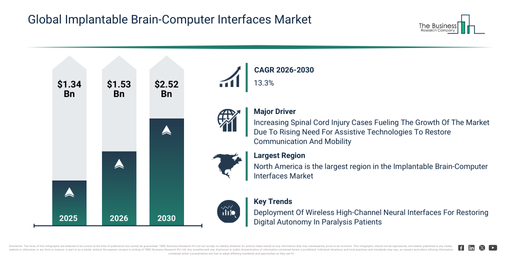
    The implantable brain–computer interface market size has seen swift expansion over recent years. This market is set to increase from $1.34 billion in 2025 to $1.53 billion in 2026, registering a compound annual growth rate (CAGR) of 13.6%. The historical growth of this market can be attributed to several factors including a heightened demand for neuroprosthetics, the rising occurrence of neurological disorders, increased uptake of non-invasive brain–computer interfaces, a surge in research funding for neuroscience, and the broader deployment of brain–computer interfaces in rehabilitation.

    The implantable brain–computer interface market is poised for significant expansion in the next few years. It is predicted to attain a value of $2.52 billion by 2030, growing at a compound annual growth rate (CAGR) of 13.3%. This expansion during the forecast period can be attributed to the increasing incorporation of artificial intelligence into brain–computer interfaces, rising financial commitments to neural interface innovation, a growing preference for minimally invasive brain–computer interfaces, an increase in assistive communication applications, and a heightened demand for robotic systems controlled by brain signals. Prominent developments expected in the forecast period include advancements in neural signal decoding technology, innovations in fully implantable brain–computer interfaces, the evolution of wireless brain–computer interface devices, continued research and development in brain–controlled prosthetics, and improvements in high-resolution neuroimaging techniques.

    Access Your Free Sample Report for In-Depth Market Insights:

    https://www.thebusinessresearchcompany.com/sample.aspx?id=30618&type=smp

    Which Drivers Are Expected To Impact The Implantable Brain-Computer Interfaces Market During The Forecast Period?

    A rise in spinal cord injury incidents is projected to drive the expansion of the implantable brain-computer interfaces market going forward. Spinal cord injuries involve damage, whether from trauma or other causes, to the spinal cord, leading to impaired communication between the brain and the rest of the body, frequently causing partial or total loss of motor and sensory capabilities. This increase in spinal cord injuries stems from more frequent falls among older demographics, given their elevated susceptibility to osteoporosis, difficulties with mobility, and domestic mishaps. Implantable brain-computer interfaces assist with the growing number of spinal cord injury cases by converting brain signals into commands for controlling assistive technology, such as wheelchairs or computers, thereby allowing paralyzed individuals to restore communication skills and autonomy. An example supporting this is the data from NeoMotion Assistive Solutions Private Limited, an India-based manufacturer of assistive mobility devices, which stated in June 2025 that the estimated prevalence of individuals living with spinal cord injury in the United States increased from around 302,000 in 2023 to approximately 308,620 in 2024. Consequently, the escalating number of spinal cord injury cases is fueling the expansion of the implantable brain-computer interfaces market.

    Which Segments Are Driving Activity In The Implantable Brain-Computer Interfaces Market?

    The implantable brain-computer interfaces market covered in this report is segmented –

    1) By Component: Hardware, Software

    2) By Type: Non-invasive Brain–Computer Interfaces, Partially Invasive Brain–Computer Interfaces, Fully Invasive Brain–Computer Interfaces

    3) By Application: Healthcare And Rehabilitation, Communication And Control, Gaming And Entertainment, Smart Home And Automotive Control

    4) By End User: Hospitals And Specialty Clinics, Research Centers And Academic Institutes, Home Care Settings, Other End Users

    Subsegments:

    1) By Hardware: Neural Electrodes, Signal Amplifiers, Data Acquisition Units, Wireless Transmitters, Power Supply Units

    2) By Software: Signal Processing Software, Neural Decoding Software, Data Analysis Software, Control Interface Software, Feedback And Visualization Software

    What Industry Trends Are Transforming The Implantable Brain-Computer Interfaces Market?

    Leading companies in the implantable brain-computer interfaces market are concentrating on developing technologically advanced products, such as fully implantable, wireless brain-computer interface devices, with the goal of restoring communication capabilities for individuals experiencing severe neurological conditions. These implantable wireless brain-computer interface devices are defined as medical or neurotechnology tools surgically embedded within the brain that wirelessly record neural activity and/or stimulate neural circuits, enabling direct communication between the brain and external apparatus. For instance, in January 2024, Neuralink Corp., a US-based neurotechnology company, introduced the Telepathy into a human patient. This device is engineered to interpret neural activity, empowering individuals with quadriplegia or amyotrophic lateral sclerosis (ALS) to control a computer cursor or keyboard using their thoughts. The system additionally provides a pathway for restoring lost sensory and motor functions, marking a significant milestone in the clinical application of high-bandwidth brain-machine interfaces for medical rehabilitation.

    Which Major Industry Participants Are Leading The Implantable Brain-Computer Interfaces Market Growth?

    Major companies operating in the implantable brain-computer interfaces market are Medtronic plc, NeuroPace Inc., PINS Medical Co. Ltd., Neurosoft Ltd., Precision Neuroscience Corporation, Onward Medical N.V., NeuroOne Medical Technologies Corporation, Emotiv Systems Inc., NextMind S.A., Neuralink Corp., CorTec GmbH, Microprobes for Life Science Inc., Synchron Inc., Shanghai Rishena Medical Instrument Co. Ltd., Paradromics Inc., SceneRay Corporation Ltd., Blackrock Neurotech LLC, NeuroXess Inc., Inbrain Neuroelectronics S.L., BrainGate Company Inc.

    Access The Complete Report For Deeper Market Insights:

    https://www.thebusinessresearchcompany.com/report/implantable-brain-computer-interfaces-market-report

    Which Region Is Expected To Experience The Fastest Growth In The Implantable Brain-Computer Interfaces Market?

    North America was the largest region in the implantable brain–computer interface market in 2025. Asia-Pacific is expected to be the fastest-growing region in the forecast period. The regions covered in the implantable brain-computer interfaces market report are Asia-Pacific, South East Asia, Western Europe, Eastern Europe, North America, South America, Middle East, Africa.

    Request Your Customized Implantable Brain-Computer Interfaces Market Research Report for Competitive Advantage:

    https://www.thebusinessresearchcompany.com/customise?id=30618&type=smp

    Browse Through More Reports Similar to the Global Implantable Brain-Computer Interfaces Market 2026, By The Business Research Company

    Brain Computer Interface Market Report 2026

    https://www.thebusinessresearchcompany.com/report/brain-computer-interface-global-market-report

    Brain And Neuroimaging Devices Market Report 2026

    https://www.thebusinessresearchcompany.com/report/brain-and-neuroimaging-devices-global-market-report

    human machine interface global market report

    https://www.thebusinessresearchcompany.com/report/human-machine-interface-global-market-report

    Get in touch with us:

    The Business Research Company: https://www.thebusinessresearchcompany.com/

    Americas +1 310-496-7795

    Asia +44 7882 955267 & +91 8897263534

    Europe +44 7882 955267

    Email us at marketing@tbrc.info

    Follow us on:

    LinkedIn: https://in.linkedin.com/company/the-business-research-company

    YouTube: https://www.youtube.com/channel/UC24_fI0rV8cR5DxlCpgmyFQ

    Global Market Model: https://www.thebusinessresearchcompany.com/global-market-model
  • Hospital Command Center Software Market Future Outlook: Strong Growth Expected Toward $4.09 Billion by 2030

    Hospital Command Center Software Market Future Outlook: Strong Growth Expected Toward $4.09 Billion by 2030

    Uncover key drivers, emerging technologies, and competitive movements shaping the hospital command center software market from 2026–2035 with trusted insights from The Business Research Company

    What is the estimated market size of the Hospital Command Center Software Market by the end of 2030?

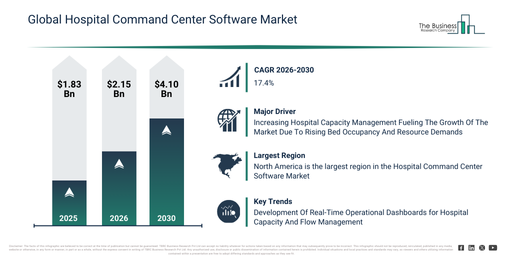
    The hospital command center software market has seen substantial growth recently. It is anticipated to increase from $1.83 billion in 2025 to $2.15 billion in 2026, reflecting a compound annual growth rate (CAGR) of 17.7%. This historical growth can be attributed to several factors, including the increasing need for real-time hospital visibility, the growing adoption of digital health systems, a rising demand for patient flow optimization, the expansion of hospital capacity management initiatives, and a greater emphasis on reducing operational inefficiencies.

    The hospital command center software market is poised for substantial expansion in the coming years, with projections indicating a rise to $4.10 billion by 2030, exhibiting a compound annual growth rate (CAGR) of 17.4%. This anticipated growth during the forecast period is primarily fueled by the increasing integration of artificial intelligence and predictive analytics, growing investments in hospital automation, the escalating demand for scalable cloud-based command centers, the expansion of telehealth and remote monitoring ecosystems, and the urgent requirement for emergency preparedness and rapid response systems. Concurrently, major trends shaping this period include technological advancements in AI-driven workflow automation, innovations within unified hospital command platforms, the development of cloud-native healthcare orchestration tools, increasing research and development in real-time operational analytics, and a greater adoption of interoperability and data integration standards.

    Access Your Free Sample Report for In-Depth Market Insights:

    https://www.thebusinessresearchcompany.com/sample.aspx?id=30610&type=smp

    What Drivers Are Shaping Future Opportunities In The Hospital Command Center Software Market?

    A growing emphasis on hospital capacity management is anticipated to drive expansion in the hospital command center software market moving forward. This management involves the strategic planning and operational supervision of hospital resources, including beds and personnel, to efficiently accommodate patient demand. The heightened attention to hospital capacity management stems from increasing patient numbers alongside limited beds, staff, and budgets, compelling hospitals to optimize resource utilization for consistent, secure, and economical care. Hospital command center software aids this by consolidating data from diverse departments, offering a comprehensive operational overview that facilitates improved decision-making and resource distribution. For example, in January 2024, the National Health Service (NHS) England, a UK-based publicly funded healthcare system, reported meeting its objective of adding 5,000 permanent core beds by early 2024, surpassing a 2022-23 baseline of 94,500 core beds, and attaining an average of 99,750 core beds by the week ending January 21, 2024. Consequently, the expansion of hospital capacity management is fueling the growth of the hospital command center software market.

    Which Segments Are Gaining Traction In The Hospital Command Center Software Market?

    The hospital command center software market covered in this report is segmented –

    1) By Component: Software, Services

    2) By Deployment Mode: On-Premises, Cloud-Based

    3) By Application: Patient Flow Management, Resource Allocation, Bed Management, Emergency Response, Operational Analytics, Other Applications

    4) By End-User: Hospitals, Specialty Clinics, Ambulatory Surgical Centers, Other End-Users

    Subsegments:

    1) By Software: Hospital Information Management Software, Patient Flow Software, Resource Scheduling Software, Bed Management Software, Emergency Response Software, Operational Analytics Software

    2) By Services: Implementation Services, Training And Support Services, Maintenance Services, Cloud Hosting Services, Data Analytics Services, Telehealth Integration Services

    Which Trends Are Expected To Influence The Hospital Command Center Software Market In The Upcoming Years?

    Leading companies in the hospital command center software market are concentrating on developing advanced solutions, such as real-time predictive analytics, to enhance operational efficiency, patient flow, and clinical decision-making across health systems. Real-time predictive analytics involves software-driven functionalities that continuously collect and analyze live hospital data to forecast demand, identify constraints, and enable proactive operational interventions. For instance, in October 2024, GE HealthCare Technologies Inc., a US-based medical technology company, unveiled the Hospital Pulse Tile for its Command Center Software. This introduction integrates real-time predictive analytics to provide system-wide insight into capacity, staffing, patient throughput, and care delivery performance. The Command Center utilizes advanced analytics and AI to convert complex hospital data into actionable intelligence, allowing leaders to anticipate surges, optimize resource allocation, and lessen delays in care.

    Who Are The Top-Performing Companies In The Hospital Command Center Software Market In Recent Years?

    Major companies operating in the hospital command center software market are Oracle Corporation, GE HealthCare Technologies Inc., Koninklijke Philips N.V., Baxter International Inc., Palantir Technologies Inc., Epic Systems Corporation, Getinge AB, Dedalus Group S.p.A., Ascom Holding AG, Biofourmis Inc., TeleTracking Technologies Inc., Qmatic Group AB, LeanTaaS Inc., CenTrak Inc., Qventus Inc., Spok Holdings Inc., Alcidion Group Limited, Connexall Corporation, Q-nomy Inc., ABOUT Healthcare Inc., Zebra Technologies Corporation

    Access The Complete Report For Deeper Market Insights:

    https://www.thebusinessresearchcompany.com/report/hospital-command-center-software-market-report

    Which Region Currently Holds The Largest Share Of The Hospital Command Center Software Market?

    North America was the largest region in the hospital command center software market in 2025. Asia-Pacific is expected to be the fastest-growing region in the forecast period. The regions covered in the hospital command center software market report are Asia-Pacific, South East Asia, Western Europe, Eastern Europe, North America, South America, Middle East, Africa.

    Request Your Customized Hospital Command Center Software Market Research Report for Competitive Advantage:

    https://www.thebusinessresearchcompany.com/customise?id=30610&type=smp

    Browse Through More Reports Similar to the Global Hospital Command Center Software Market 2026, By The Business Research Company

    Hospital Information System Market Report 2026

    https://www.thebusinessresearchcompany.com/report/hospital-information-system-global-market-report

    Medical Software Market Report 2026

    https://www.thebusinessresearchcompany.com/report/medical-software-global-market-report

    healthcare quality management software global market report

    https://www.thebusinessresearchcompany.com/report/healthcare-quality-management-software-global-market-report

    Get in touch with us:

    The Business Research Company: https://www.thebusinessresearchcompany.com/

    Americas +1 310-496-7795

    Asia +44 7882 955267 & +91 8897263534

    Europe +44 7882 955267

    Email us at marketing@tbrc.info

    Follow us on:

    LinkedIn: https://in.linkedin.com/company/the-business-research-company

    YouTube: https://www.youtube.com/channel/UC24_fI0rV8cR5DxlCpgmyFQ

    Global Market Model: https://www.thebusinessresearchcompany.com/global-market-model
  • Revenue of the Horizontal Leg Flexion Trainer Market Predicted to Achieve $1.39 Billion by 2030, Driven by 8.7% CAGR

    Revenue of the Horizontal Leg Flexion Trainer Market Predicted to Achieve $1.39 Billion by 2030, Driven by 8.7% CAGR

    Uncover key drivers, emerging technologies, and competitive movements shaping the horizontal leg flexion trainer market from 2026–2035 with trusted insights from The Business Research Company

    What was the valuation of the Horizontal Leg Flexion Trainer Market in 2026, and what figure is it projected to hit by 2030?

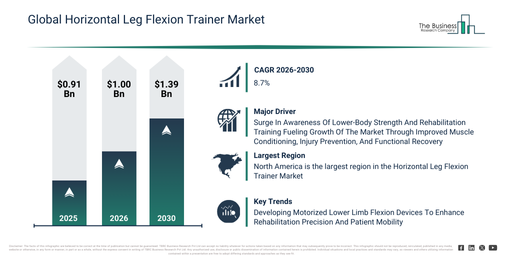
    The horizontal leg flexion trainer market has demonstrated robust expansion in recent years. It is anticipated to increase from $0.91 billion in 2025 to $1.00 billion in 2026, achieving a compound annual growth rate (CAGR) of 9.0%. This historical expansion can be ascribed to several factors, including the increasing demand for fitness equipment in gyms, a rising interest in lower-body strength training, an expanding awareness of injury prevention exercises, the growing adoption of rehabilitation machines, and the increasing popularity of sports conditioning programs.

    The market for horizontal leg flexion trainers is anticipated to demonstrate robust growth over the next few years. It is projected to expand to $1.39 billion in 2030, at a compound annual growth rate (CAGR) of 8.7%. The expansion foreseen for this period can be attributed to the increasing prevalence of gym memberships, a rising preference for improving leg strength, the integration of advanced rehabilitation equipment, the development of sports performance training, and higher investments in premium fitness machines. Noteworthy trends during this forecast period include advancements in adjustable resistance technology, improvements in ergonomic machine design, progress in durability and material engineering, new developments in compact training equipment, and innovations in professional athletic training tools.

    Access Your Free Sample Report for In-Depth Market Insights:

    https://www.thebusinessresearchcompany.com/sample.aspx?id=30609&type=smp

    Which Drivers Are Affecting Market Participation In The Horizontal Leg Flexion Trainer Market?

    The increasing understanding regarding the importance of lower-body strength and rehabilitation training is projected to fuel the expansion of the horizontal leg flexion trainer market in the future. This training involves structured exercises and programs specifically designed to enhance the strength, flexibility, and functional recovery of leg muscles, such as the quadriceps, hamstrings, and hip flexors. This heightened awareness stems from a rise in public health campaigns and medical recommendations highlighting the significance of muscle-strengthening activities for preventing injuries, boosting mobility, and promoting general physical well-being. Horizontal leg flexion trainers facilitate this trend by providing a controlled, low-impact option suitable for lower-body strengthening and rehabilitation, especially within clinical, physiotherapy, and specialized fitness environments, consistent with wider exercise guidelines. As an illustration, data from December 2023, reported by the U.S. Centers for Disease Control and Prevention (CDC), a U.S.-based government public health authority, indicated that 24% of adults fulfilled the recommended muscle-strengthening activity guidelines in 2023. This marks an increase from 21% in 2022, representing a rise of 3 percentage points, or approximately 14% year-on-year. Consequently, the increased understanding and importance placed on lower-body strength and rehabilitation training is propelling the expansion of the horizontal leg flexion trainer market.

    What Segment Categories Are Covered In The Horizontal Leg Flexion Trainer Market?

    The horizontal leg flexion trainer market covered in this report is segmented –

    1) By Product Type: Standard Horizontal Leg Flexion Trainers, Smart Horizontal Leg Flexion Trainers, Adjustable Horizontal Leg Flexion Trainers

    2) By Distribution Channel: Online Stores, Specialty Stores, Supermarkets Or Hypermarkets, Other Distribution Channels

    3) By Application: Rehabilitation Centers, Fitness Centers, Home Use, Hospitals, Other Applications

    4) By End-User: Adults, Geriatric, Athletes, Other End-Users

    Subsegments:

    1) By Standard Horizontal Leg Flexion Trainers: Plate-loaded trainers, Pin-loaded (selectorized) trainers, Fixed-resistance trainers, Standard gym-grade benches, Basic home-use flexion trainers, Non-digital resistance trainers, Single-function flexion machines

    2) By Smart Horizontal Leg Flexion Trainers: App-connected trainers, Bluetooth-enabled trainers, AI-guided training systems, Smart resistance-adjusting machines, Performance-tracking trainers, Cloud-integrated fitness units, Interactive screen-based trainers

    3) By Adjustable Horizontal Leg Flexion Trainers: Multi-resistance adjustable trainers, Adjustable angle or seat-position trainers, Multi-function strength machines with flexion mode, Manual-adjust resistance models, Hydraulic-adjustable trainers, Commercial-grade adjustable units, Adjustable home-use trainers

    What Trends Are Driving The Growth Trajectory Of The Horizontal Leg Flexion Trainer Market?

    Major companies within the rehabilitation and therapeutic exercise equipment market are increasingly concentrating on the development of motorized solutions for lower limb flexion, encompassing multifunction physiotherapy devices that incorporate powered leg flexion systems. These advanced solutions are engineered to deliver exact and consistent leg flexion movements, fostering enhancements in patient strength and mobility, concurrently alleviating physical exertion for therapists during rehabilitation sessions. Powered leg flexion systems denote technological components in rehabilitation equipment that employ electric motors or actuators to execute regulated flexion and extension movements of the lower limbs, thereby facilitating standardized therapy protocols and uniform treatment delivery. For instance, in January 2025, AGILIS, a medical device company based in the U.S., unveiled multifunction physiotherapy tables featuring powered lower limb flexion systems, which have received U.S. FDA 510(k)-clearance for use in clinical settings. Designed to aid postoperative rehabilitation and improve mobility, these devices incorporate 24 Vdc electric motors to ensure consistent powered flexion, provide both manual and electrical adjustment options, and permit configurations for linear and rotational lower limb movements to meet individual therapy requirements.

    Which Leading Companies Dominate The Horizontal Leg Flexion Trainer Market Share?

    Major companies operating in the horizontal leg flexion trainer market are Johnson Health Tech, Technogym SpA, Life Fitness Inc., Rogue Fitness, Precor Inc., Cybex International, Impulse Health Tech, Matrix Fitness, SportsArt Inc., Shuhua Co. Ltd., Panatta Srl, Body-Solid Inc., TRUE Fitness Technology Inc., HOIST Fitness Systems Inc., BH Fitness, Yanre Fitness, DHZ Fitness GmbH, Nautilus Inc., Unique Gym Equipment Pvt. Ltd., Kraftathlet

    Access The Complete Report For Deeper Market Insights:

    https://www.thebusinessresearchcompany.com/report/horizontal-leg-flexion-trainer-market-report

    How Does The Horizontal Leg Flexion Trainer Market Perform Across Major Global Regions?

    North America was the largest region in the horizontal leg flexion trainer market in 202. Asia-Pacific is expected to be the fastest-growing region in the forecast period. The regions covered in the horizontal leg flexion trainer market report are Asia-Pacific, South East Asia, Western Europe, Eastern Europe, North America, South America, Middle East, Africa.

    Request Your Customized Horizontal Leg Flexion Trainer Market Research Report for Competitive Advantage:

    https://www.thebusinessresearchcompany.com/customise?id=30609&type=smp

    Browse Through More Reports Similar to the Global Horizontal Leg Flexion Trainer Market 2026, By The Business Research Company

    Personal Fitness Trainer Market Report 2026

    https://www.thebusinessresearchcompany.com/report/personal-fitness-trainer-global-market-report

    Foot And Ankle Devices Market Report 2026

    https://www.thebusinessresearchcompany.com/report/foot-and-ankle-devices-global-market-report

    flexion tires global market report

    https://www.thebusinessresearchcompany.com/report/flexion-tires-global-market-report

    Get in touch with us:

    The Business Research Company: https://www.thebusinessresearchcompany.com/

    Americas +1 310-496-7795

    Asia +44 7882 955267 & +91 8897263534

    Europe +44 7882 955267

    Email us at marketing@tbrc.info

    Follow us on:

    LinkedIn: https://in.linkedin.com/company/the-business-research-company

    YouTube: https://www.youtube.com/channel/UC24_fI0rV8cR5DxlCpgmyFQ

    Global Market Model: https://www.thebusinessresearchcompany.com/global-market-model
  • High-Throughput Slide Scanning-As-A-Service Industry Poised for Rapid Growth, Forecast to Touch $3.19 Billion by 2030 at 16.4% CAGR

    High-Throughput Slide Scanning-As-A-Service Industry Poised for Rapid Growth, Forecast to Touch $3.19 Billion by 2030 at 16.4% CAGR

    Uncover key drivers, emerging technologies, and competitive movements shaping the high-throughput slide scanning-as-a-service market from 2026–2035 with trusted insights from The Business Research Company

    What level of CAGR-driven expansion is anticipated in the High-Throughput Slide Scanning-As-A-Service Market between 2026 and 2030?

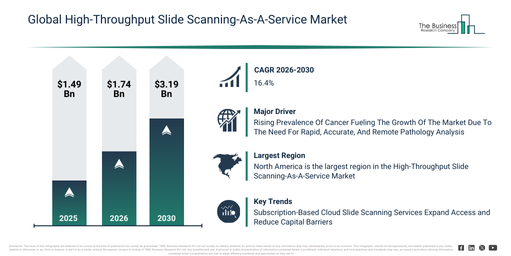
    The high-throughput slide scanning-as-a-service market has seen substantial growth recently. Its value is expected to rise from $1.49 billion in 2025 to $1.74 billion in 2026, exhibiting a compound annual growth rate (CAGR) of 16.7%. The market’s expansion during previous periods was driven by the increasing adoption of digital pathology, a rising demand for high-throughput scanning, increased investment in pharmaceutical research, the wider application in academic and research settings, and the growing integration of AI within pathology workflows.

    The high-throughput slide scanning-as-a-service market is projected for significant expansion over the next few years. It is set to grow to $3.19 billion in 2030, demonstrating a compound annual growth rate (CAGR) of 16.4%. The increase during the forecast period can be linked to the rising requirement for remote diagnostics, the expanding adoption of telepathology services, the growing demand for multiplexed imaging, the broader reach of cloud-based slide platforms, and an increasing focus on precision medicine applications. Additionally, key trends for the forecast period include technological advancements in AI-powered image analysis, innovations in cloud-based digital slide platforms, the evolution of whole slide imaging for high-throughput scanning, research breakthroughs in automated pathology workflows, and improvements in multiplexed fluorescence imaging techniques.

    Access Your Free Sample Report for In-Depth Market Insights:

    https://www.thebusinessresearchcompany.com/sample.aspx?id=30606&type=smp

    What Drivers Are Affecting Demand-Supply Dynamics In The High-Throughput Slide Scanning-As-A-Service Market?

    The increasing incidence of cancer is anticipated to drive expansion in the high-throughput slide scanning-as-a-service market. Cancer itself is defined by the unrestrained proliferation and dissemination of abnormal cells, which can harm adjacent tissues and organs if left untreated. This rise in cancer cases stems from lifestyle factors like unhealthy eating habits, tobacco use, alcohol intake, and contact with environmental contaminants, all of which heighten the likelihood of various cancer types. High-throughput slide scanning-as-a-service aids in cancer management by quickly converting numerous pathology slides into digital format for in-depth analysis and distant expert review. This service enhances the precision and speed of diagnosis, facilitating prompt treatment choices and superior patient results. For illustration, in October 2025, data from NHS Digital, a UK government organisation, indicated 354,820 new cancer diagnoses in England during 2023. This averaged 972 diagnoses daily and signified an increase of 8,605 cases from 2022. Prostate cancer emerged as the most frequently diagnosed, with 58,137 new cases, marking a 6% rise in registrations year-over-year. Consequently, the growing incidence of cancer is propelling the expansion of the high-throughput slide scanning-as-a-service market.

    What Segments Are Included Within The High-Throughput Slide Scanning-As-A-Service Market?

    The high-throughput slide scanning-as-a-service market covered in this report is segmented –

    1) By Service Type: Brightfield Scanning, Fluorescence Scanning, Multiplexed Imaging, Other Service Types

    2) By Technology: Optical System, Automation Level, Scanning Resolution

    3) By Application: Pathology, Research, Drug Discovery, Clinical Diagnostics, Other Applications

    4) By End User: Hospitals And Clinics, Research Institutes, Pharmaceutical And Biotechnology Companies, Other End Users

    Subsegments:

    1) By Brightfield Scanning: Single Channel Brightfield, Multi-Channel Brightfield, High-Resolution Brightfield

    2) By Fluorescence Scanning: Single Fluorescence Channel, Multi-Fluorescence Channel, High-Sensitivity Fluorescence

    3) By Multiplexed Imaging: Sequential Multiplexing, Simultaneous Multiplexing, High-Plex Imaging

    4) By Other Service Types: Slide Quality Control, Tissue Morphology Analysis, Custom Imaging Services

    Which Trends Are Influencing The Development Of The High-Throughput Slide Scanning-As-A-Service Market?

    Leading companies in the high-throughput slide scanning-as-a-service market are prioritizing the creation of subscription services, such as cloud-enabled slide scanning service models, to enable remote access to high-throughput whole slide imaging without requiring on-site infrastructure investment. Cloud-enabled slide scanning service models define outsourced whole-slide imaging offerings where glass slides are digitized and then stored on secure cloud platforms, facilitating remote viewing, sharing, and analysis, free from the necessity of on-premise scanners or IT infrastructure. For instance, in March 2023, OptraSCAN Inc., a US-based digital pathology solutions provider, launched OnDemand Digital Pathology, a cloud-enabled slide scanning service model, providing subscription-based access to whole slide scanners with 15–480 slide loading capacity and rapid scanning capabilities. This service grants access to OptraSCAN whole-slide digital scanners (brightfield and fluorescence) with 15–480 slide capacity, capable of scanning a slide in about 58 seconds at 40x, alongside a high-end workstation equipped with workflow software, telepathology tools, and AI analysis modules for IHC, morphology, immunofluorescence, and cytology, complemented by Microsoft Azure–based cloud storage and continuous support and services.

    Who Are The Primary Competitors In The Global High-Throughput Slide Scanning-As-A-Service Market?

    Major companies operating in the high-throughput slide scanning-as-a-service market are Koninklijke Philips N.V., IQVIA Holdings Inc., Laboratory Corporation of America Holdings, Roche Diagnostics International AG, Iron Mountain Incorporated, WuXi AppTec Co. Ltd., PerkinElmer Inc., Leica Biosystems Nussloch GmbH, Medical Imaging Solutions Pvt. Ltd., Charles River Laboratories International Inc., OptraSCAN Inc., Scopio Labs Inc., Pramana Inc., Molecular Pathology Laboratory Network Inc., 3DHISTECH Ltd., Experimental Pathology Laboratories Inc., Labtron Equipment Ltd., Applied Spectral Imaging Ltd., HistoWiz Inc., iHisto LLC

    Access The Complete Report For Deeper Market Insights:

    https://www.thebusinessresearchcompany.com/report/high-throughput-slide-scanning-as-a-service-market-report

    Which Global Regions Are Shaping The Competitive Landscape Of The High-Throughput Slide Scanning-As-A-Service Market?

    North America was the largest region in the high-throughput slide scanning-as-a-service market in 2025. Asia-Pacific is expected to be the fastest-growing region in the forecast period. The regions covered in the high-throughput slide scanning-as-a-service market report are Asia-Pacific, South East Asia, Western Europe, Eastern Europe, North America, South America, Middle East, Africa.

    Request Your Customized High-Throughput Slide Scanning-As-A-Service Market Research Report for Competitive Advantage:

    https://www.thebusinessresearchcompany.com/customise?id=30606&type=smp

    Browse Through More Reports Similar to the Global High-Throughput Slide Scanning-As-A-Service Market 2026, By The Business Research Company

    Plasticizers Market Report 2026

    https://www.thebusinessresearchcompany.com/report/plasticizers-global-market-report

    Bio Plasticizers Market Report 2026

    https://www.thebusinessresearchcompany.com/report/bio-plasticizers-global-market-report

    plastic products global market report

    https://www.thebusinessresearchcompany.com/report/plastic-products-global-market-report

    Get in touch with us:

    The Business Research Company: https://www.thebusinessresearchcompany.com/

    Americas +1 310-496-7795

    Asia +44 7882 955267 & +91 8897263534

    Europe +44 7882 955267

    Email us at marketing@tbrc.info

    Follow us on:

    LinkedIn: https://in.linkedin.com/company/the-business-research-company

    YouTube: https://www.youtube.com/channel/UC24_fI0rV8cR5DxlCpgmyFQ

    Global Market Model: https://www.thebusinessresearchcompany.com/global-market-model
  • Highly Functional Plasticizer Market Performance Outlook 2026–2030: Revenue to Hit $3.37 Billion at 8.8% CAGR

    Highly Functional Plasticizer Market Performance Outlook 2026–2030: Revenue to Hit $3.37 Billion at 8.8% CAGR

    Uncover key drivers, emerging technologies, and competitive movements shaping the highly functional plasticizer market from 2026–2035 with trusted insights from The Business Research Company

    What long-term size projections exist for the Highly Functional Plasticizer Market covering 2026–2035?

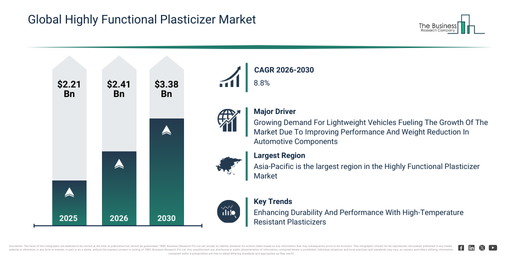
    The highly functional plasticizer market size has demonstrated robust expansion recently. It is projected to expand from $2.21 billion in 2025 to $2.41 billion in 2026, exhibiting a compound annual growth rate (CAGR) of 9.1%. Historical market expansion was primarily driven by the escalating need for flexible polymers, the increasing adoption of non-polyvinyl chloride resins, greater demand for heat-resistant substances, the widening scope of the automotive and construction industries, and heightened consciousness regarding eco-friendly plasticizers.

    The market for highly functional plasticizers is projected to experience robust expansion over the coming years. Its value is anticipated to reach $3.38 billion in 2030, demonstrating a compound annual growth rate (CAGR) of 8.8%. This projected growth stems from several factors, including the increased use of high-performance plasticizers in developing economies, the rising need for lightweight materials in the automotive and aerospace sectors, the escalating demand for sustainable and recyclable polymers, the expansion of the electronics and packaging industries, and evolving regulations that support non-toxic plasticizers. Key trends during this period are expected to encompass technological progress in polymer compatibility, novel approaches in bio-based plasticizers, the creation of high-temperature resistant formulations, ongoing research and development in multifunctional additives, and continuous enhancements in flow and processing attributes.

    Access Your Free Sample Report for In-Depth Market Insights:

    https://www.thebusinessresearchcompany.com/sample.aspx?id=30605&type=smp

    Which Drivers Are Impacting The Competitive Landscape Of The Highly Functional Plasticizer Market?

    The increasing need for lighter automobiles is anticipated to boost the highly functional plasticizer market in the future. These lightweight vehicles are defined as cars constructed with less dense substances like aluminum, robust steel, carbon fiber, and composites, aiming to decrease the total weight of the vehicle. This rising demand for lighter cars stems from a greater necessity for improved fuel economy and lower emissions. Highly functional plasticizers improve lightweight vehicles by enhancing the pliability, resilience, and longevity of their polymer parts. They enable a reduction in material mass while preserving performance, thereby aiding in superior fuel efficiency, maneuverability, and overall vehicle effectiveness. As an illustration, in December 2024, data from the American Chemistry Council, a US-based trade association, indicated that an average automobile includes 429 pounds of plastics and polymer composites, making up 9.7% of the vehicle’s total weight, with polypropylene content per vehicle increasing from 97 pounds in 2022 to 100 pounds in 2023. Consequently, the expanding requirement for lightweight vehicles is stimulating the expansion of the highly functional plasticizer market.

    What Leading Segments Are Studied In The Highly Functional Plasticizer Market?

    The highly functional plasticizer market covered in this report is segmented –

    1) By Type: Oil Dosage Form, Solid Dosage Form, Liquid Dosage Form, Other Types

    2) By Application: Polyamide, Polyvinyl Chloride, Rubber, Urethane Based Materials, Acrylic Materials, Polyethylene Terephthalate, Polycarbonate, Other Applications

    3) By End User: Automotive, Construction, Electronics, Packaging, Consumer Goods, Industrial Equipment, Other End Users

    Subsegments:

    1) By Oil Dosage Form: Epoxidized Vegetable Oil Plasticizers, Aromatic Oil–Based Plasticizers, Naphthenic Oil–Based Plasticizers, Paraffinic Oil–Based Plasticizers

    2) By Solid Dosage Form: Tablets, Capsules, Granules, Powders

    3) By Liquid Dosage Form: Solutions, Suspensions, Emulsions, Syrups

    4) By Other Types: Gels, Pastes, Patches, Inhalable Formulations

    What Trends Are Expected To Impact The Competitive Landscape Of The Highly Functional Plasticizer Market?

    Leading enterprises within the highly functional plasticizer market are concentrating on creating sophisticated offerings, including next-generation high-temperature-resistant plasticizers, with the aim of boosting thermal stability, decreasing volatility, and minimizing material migration in polymer applications. These next-generation high-temperature resistant plasticizers are characterized as more recent, predominantly bio-based or non-phthalate additives, specifically engineered to impart flexibility and ease of processing to plastics, concurrently lowering toxicity, environmental footprint, and migration when contrasted with traditional plasticizers. As an example, in April 2023, Evonik Industries AG, a Germany-based specialty chemicals company, unveiled ELATUR TM, a high-temperature resistant plasticizer developed for dashboards, car seats, steering wheel trims, and high-temperature cabling. This product ensures superior thermal performance, an extended service life, and heightened product reliability, with customer support accessible via the myFLEXINO® portal for technical information, samples, and application guidance.

    Which Key Market Players Are Investing In Expansion And Innovation Within The Highly Functional Plasticizer Market?

    Major companies operating in the highly functional plasticizer market are BASF SE, Dow Inc., LG Chem Ltd., Mitsubishi Chemical Corporation, Evonik Industries AG, Kao Corporation, Arkema S.A., Eastman Chemical Company, DIC Corporation, Stepan Company, Toagosei Co. Ltd., SONGWON Industrial Co. Ltd., LANXESS AG, Jiangsu Zhengdan Chemical Industry Co. Ltd., The HallStar Co., KLJ Group, Nishant Organics, Hebei Jingu Plasticizer Co. Ltd., Nayakem Organics Pvt Ltd.

    Access The Complete Report For Deeper Market Insights:

    https://www.thebusinessresearchcompany.com/report/highly-functional-plasticizer-market-report

    Which Regions Are Poised For Strategic Growth In The Highly Functional Plasticizer Market?

    Asia-Pacific was the largest region in the highly functional plasticizer market in 2025. North America is expected to be the fastest-growing region in the forecast period. The regions covered in the highly functional plasticizer market report are Asia-Pacific, South East Asia, Western Europe, Eastern Europe, North America, South America, Middle East, Africa.

    Request Your Customized Highly Functional Plasticizer Market Research Report for Competitive Advantage:

    https://www.thebusinessresearchcompany.com/customise?id=30605&type=smp

    Browse Through More Reports Similar to the Global Highly Functional Plasticizer Market 2026, By The Business Research Company

    Whole Slide Imaging Market Report 2026

    https://www.thebusinessresearchcompany.com/report/whole-slide-imaging-global-market-report

    Document Scanning Services Market Report 2026

    https://www.thebusinessresearchcompany.com/report/document-scanning-services-global-market-report

    3D laser scanning services global market report

    https://www.thebusinessresearchcompany.com/report/3d-laser-scanning-services-global-market-report

    Get in touch with us:

    The Business Research Company: https://www.thebusinessresearchcompany.com/

    Americas +1 310-496-7795

    Asia +44 7882 955267 & +91 8897263534

    Europe +44 7882 955267

    Email us at marketing@tbrc.info

    Follow us on:

    LinkedIn: https://in.linkedin.com/company/the-business-research-company

    YouTube: https://www.youtube.com/channel/UC24_fI0rV8cR5DxlCpgmyFQ

    Global Market Model: https://www.thebusinessresearchcompany.com/global-market-model
  • Global Health Patch Hydration Sensor Market Set for Strong Expansion, Reaching $13.54 Billion With 16% CAGR by 2030

    Global Health Patch Hydration Sensor Market Set for Strong Expansion, Reaching $13.54 Billion With 16% CAGR by 2030

    Uncover key drivers, emerging technologies, and competitive movements shaping the health patch hydration sensor market from 2026–2035 with trusted insights from The Business Research Company

    What total market size is anticipated for the Health Patch Hydration Sensor Market in 2030?

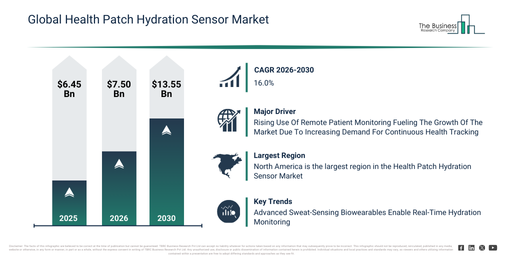
    The health patch hydration sensor market size has seen significant growth in recent times. It is projected to expand from $6.45 billion in 2025 to $7.50 billion in 2026, achieving a compound annual growth rate (CAGR) of 16.2%. This historical growth can be attributed to an uptick in awareness regarding dehydration-related health concerns, the increasing embrace of wearable health technologies, enhanced monitoring for sports and athletic performance, the broadening scope of personalized wellness tracking, and the ongoing digitization within healthcare.

    The health patch hydration sensor market size is anticipated to experience substantial growth in the forthcoming years. It will grow to $13.55 billion in 2030 at a compound annual growth rate (CAGR) of 16.0%. This projected expansion during the forecast period is driven by increasing integration of AI and machine learning, growing adoption in remote patient monitoring, rising industrial and occupational safety monitoring, expansion of military and defense applications, and increasing research and development in wearable hydration sensors. Significant trends for the forecast period include technology advancements in biosensing and microfluidics, innovations in flexible and stretchable electronics, developments in cloud-based analytics platforms, research and developments in multi-biomarker sensor integration, and innovations in mobile app-based hydration insights.

    Access Your Free Sample Report for In-Depth Market Insights:

    https://www.thebusinessresearchcompany.com/sample.aspx?id=30601&type=smp

    What Drivers Are Influencing Production Trends In The Health Patch Hydration Sensor Market?

    The increasing integration of remote patient monitoring is anticipated to drive the expansion of the health patch hydration sensor market in the coming years. Remote patient monitoring utilizes digital tools to collect and transmit medical and health-related data from individuals to healthcare professionals for evaluation, guidance, and instructions when needed. Its uptake is on the rise as healthcare providers and insurers increasingly depend on ongoing at-home data to manage chronic illnesses more proactively, decrease hospital readmissions, and reduce overall medical expenses. Health patch hydration sensors support remote patient monitoring by continuously tracking hydration levels and relaying real-time information to healthcare providers. These sensors enhance patient care by facilitating the early identification of dehydration risks and enabling timely, customized interventions. For instance, data from September 2025 by the U.S. Department of Health and Human Services Office of Inspector General (OIG), a US-based government agency, indicated that payments for remote patient monitoring reached $536 million across Original Medicare also known as Medicare fee for service and Medicare Advantage, marking a 31% increase from 2023. Concurrently, nearly 1 million Medicare enrollees received remote patient monitoring services, reflecting a 27% increase compared with 2023. Consequently, the expanded application of remote patient monitoring is propelling the growth of the health patch hydration sensor market.

    Which Segment Groups Are Influencing The Health Patch Hydration Sensor Market?

    The health patch hydration sensor market covered in this report is segmented –

    1) By Product Type: Wearable Hydration Sensors, Disposable Hydration Patches, Reusable Hydration Patches

    2) By Sensor Technology: Electrochemical, Optical, Bioimpedance, Other Technologies

    3) By Distribution Channel: Online Stores, Pharmacies, Specialty Stores, Other Channels

    4) By Application: Healthcare And Clinical Monitoring, Sports Performance And Athlete Training, Wellness And Fitness Tracking, Remote Patient Management

    5) By End-User: Hospitals And Clinics, Home Care, Athletes, Military Personnel, Other End Users

    Subsegments:

    1) By Wearable Hydration Sensors: Skin-Contact Sensor Units, Smart Hydration Monitoring Bands, Integrated Sweat-Analysis Sensors, Flexible Patch-Based Sensor Modules, Continuous Hydration Tracking Devices

    2) By Disposable Hydration Patches: Single-Use Sweat Measurement Patches, Adhesive Moisture-Sensing Patches, Biodegradable Hydration Monitoring Patches, Pre-Calibrated Disposable Sensor Patches, Short-Duration Wear Hydration Patches

    3) By Reusable Hydration Patches: Rechargeable Hydration Tracking Patches, Washable Sensor-Embedded Patches, Multi-Use Sweat-Analysis Patches, Long-Life Flexible Hydration Patches, Refillable Sensor Cartridge Patches

    Which Trends Are Guiding The Evolution Of The Health Patch Hydration Sensor Market?

    Major companies operating in the health patch hydration sensor market are focusing on developing advanced products, such as advanced sweat-sensing biowearables with extended battery life and predictive analytics, to enhance worker safety in extreme environments. These advanced sweat-sensing biowearables integrate multiple biosensors to track sweat volume loss, electrolyte depletion, skin temperature, and motion, utilizing machine learning algorithms to provide real-time haptic alerts and personalized hydration strategies that prevent dehydration and heat-related illnesses among industrial workforces. For instance, in April 2024, Epicore Biosystems Inc., a US-based digital health company developing advanced sweat-sensing wearables, launched Connected Hydration. This sweat-sensing biowearable is designed to protect industrial athletes by delivering real-time insights on fluid and electrolyte intake through a flexible wearable patch and mobile app, incorporating a battery life of over 1,000 hours and a secure cloud engine trained on 420,000 data points. The solution also provides intrinsically safe design certification (Class I, Div 2) and seamless data dashboarding to accelerate proactive safety management across energy, construction, and manufacturing sectors.

    Who Are The Core Companies Influencing Trends In The Health Patch Hydration Sensor Market?

    Major companies operating in the health patch hydration sensor market are Henkel AG & Co. KGaA, TE Connectivity plc, Covestro AG, The Gatorade Co., Nitto Denko Corporation, Masimo Corporation, Linxens Holding SAS, Scapa Healthcare Limited, Quad Industries Inc., Biotricity Inc., Nix Inc., Mode Sensors, FLOWBIO LTD, Xsensio SA, ZANSORS LLC, Wearoptimo Pty Ltd., hDrop Technologies Inc., GraphWear Technologies, Grapheal SAS, EQUIVITAL LIMITED, GENTAG Inc., Kenzen Inc.

    Access The Complete Report For Deeper Market Insights:

    https://www.thebusinessresearchcompany.com/report/health-patch-hydration-sensor-market-report

    Which Regions Are Projected To Dominate The Health Patch Hydration Sensor Market In The Coming Years?

    North America was the largest region in the health patch hydration sensor market in 2025. Asia-Pacific is expected to be the fastest-growing region in the forecast period. The regions covered in the health patch hydration sensor market report are Asia-Pacific, South East Asia, Western Europe, Eastern Europe, North America, South America, Middle East, Africa.

    Request Your Customized Health Patch Hydration Sensor Market Research Report for Competitive Advantage:

    https://www.thebusinessresearchcompany.com/customise?id=30601&type=smp

    Browse Through More Reports Similar to the Global Health Patch Hydration Sensor Market 2026, By The Business Research Company

    Health Sensors Market Report 2026

    https://www.thebusinessresearchcompany.com/report/health-sensors-global-market-report

    Fluid Sensors Market Report 2026

    https://www.thebusinessresearchcompany.com/report/fluid-sensors-global-market-report

    disposable medical sensors global market report

    https://www.thebusinessresearchcompany.com/report/disposable-medical-sensors-global-market-report

    Get in touch with us:

    The Business Research Company: https://www.thebusinessresearchcompany.com/

    Americas +1 310-496-7795

    Asia +44 7882 955267 & +91 8897263534

    Europe +44 7882 955267

    Email us at marketing@tbrc.info

    Follow us on:

    LinkedIn: https://in.linkedin.com/company/the-business-research-company

    YouTube: https://www.youtube.com/channel/UC24_fI0rV8cR5DxlCpgmyFQ

    Global Market Model: https://www.thebusinessresearchcompany.com/global-market-model

  • Global Hand Hygiene Smart Badges With Real-Time Location System (RTLS) Market 2026–2030: Forecast Insights for Business Planning

    Global Hand Hygiene Smart Badges With Real-Time Location System (RTLS) Market 2026–2030: Forecast Insights for Business Planning

    Uncover key drivers, emerging technologies, and competitive movements shaping the hand hygiene smart badges with real-time location system (rtls) market from 2026–2035 with trusted insights from The Business Research Company

    How much larger will the Hand Hygiene Smart Badges With Real-Time Location System (RTLS) Market be in 2030 compared with 2026?

    The market for hand hygiene smart badges with real-time location system (RTLS) has experienced rapid expansion in recent years. It is predicted to grow from $0.86 billion in 2025 to $0.99 billion in 2026, demonstrating a compound annual growth rate (CAGR) of 15.0%. This historical increase was influenced by factors like heightened awareness for infection control, wider implementation of hospital hygiene protocols, an increasing need for real-time compliance tracking, the expansion of healthcare digitalization efforts, and a stronger focus on patient safety regulations.

    The market for hand hygiene smart badges featuring real-time location systems (RTLS) is projected to experience substantial expansion in the coming years. This market is forecast to reach **$1.71 billion in 2030, exhibiting a compound annual growth rate (CAGR) of 14.7%**. This projected growth is driven by factors such as the increasing incorporation of RTLS into hygiene monitoring, greater investments in intelligent healthcare infrastructure, the wider embrace of wearable solutions for compliance, an escalating requirement for automated infection prevention mechanisms, and a rising call for analytics-driven insights into hygiene practices. Key trends anticipated during this period encompass technological progress in wearable hygiene gadgets, novel developments in RTLS communication technologies, the emergence of AI-powered hygiene tracking, ongoing research and development in sensor-dependent compliance instruments, and improvements in automated systems for smart hospitals.

    Access Your Free Sample Report for In-Depth Market Insights:

    https://www.thebusinessresearchcompany.com/sample.aspx?id=30598&type=smp

    What Drivers Are Guiding Growth Patterns In The Hand Hygiene Smart Badges With Real-Time Location System (RTLS) Market?

    The increasing prevalence of hospital-acquired infections (HAIs) is expected to drive the growth of the hand hygiene smart badges with real-time location system (RTLS) market moving forward. Hospital-acquired infections are defined as infections patients contract while receiving care in a hospital or healthcare facility, posing a significant risk to patient safety and healthcare outcomes. The rise in HAIs is attributed to persistent pathogen transmission in clinical settings and inconsistent hand hygiene practices among healthcare workers. Hand hygiene smart badges with RTLS aid in managing HAIs by providing continuous, automated monitoring of hand hygiene compliance, thereby reducing the spread of infections and enhancing accountability. For instance, in May 2024, according to the European Centre for Disease Prevention and Control (ECDC), a Sweden-based public health agency, in 2022–2023, an estimated 4.3 million patients in acute care hospitals acquired at least one healthcare-associated infection, indicating a substantial burden on healthcare systems. Therefore, the growing incidence of hospital-acquired infections is propelling the expansion of the hand hygiene smart badges with real-time location system (RTLS) market.

    Which Segments Are Driving Activity In The Hand Hygiene Smart Badges With Real-Time Location System (RTLS) Market?

    The hand hygiene smart badges with real-time location system (rtls) market covered in this report is segmented –

    1) By Product Type: Wearable Badges, Clip-On Badges, Wristbands, Other Product Types

    2) By Technology: Bluetooth, Radio Frequency Identification, Wi-Fi, Other Technologies

    3) By Distribution Channel: Direct Sales, Distributors, Online Stores, Other Distribution Channels

    4) By Application: Hospitals, Clinics, Long-Term Care Facilities, Laboratories, Other Applications

    5) By End-User: Healthcare Providers, Patients, Visitors, Other End-Users

    Subsegments:

    1) By Wearable Badges: Wrist Worn Badges, Arm Bands, Finger Bands

    2) By Clip-On Badges: Lanyard Clips, Badge Clips, Pocket Clips

    3) By Wristbands: Silicone Wristbands, Fabric Wristbands, Plastic Wristbands

    4) By Other Product Types: Keychain Badges, Badge Holders, Multifunctional Badges

    What Long-Term Trends Are Expected To Shape The Future Of The Hand Hygiene Smart Badges With Real-Time Location System (RTLS) Market?

    Major companies engaged in the hand hygiene smart badges with real-time location system (RTLS) market are prioritizing the development of sophisticated solutions, including real-time compliance monitoring and staff engagement instruments, to improve infection control, enhance adherence to hygiene protocols, and provide actionable insights into healthcare workflows. These real-time compliance monitoring and staff engagement tools refer to integrated platforms that track hand hygiene behavior across facilities, offer immediate feedback to healthcare professionals, and deliver analytics to support ongoing improvement and risk mitigation. For example, in July 2024, Kontakt.io Inc., a US-based healthcare technology company, launched a next-generation hand hygiene solution intended to redefine how hospitals manage compliance and engage personnel. This entirely cloud-based system, provided as a managed service, features a patented approach employing the Staff-Safe-enabled Smart Badge 3 wearable to deliver gentle, proactive reminders before patient care without disrupting workflow. It also incorporates compliance gamification through a mobile app and automated dispenser management, allowing for seamless monitoring and maintenance without manual intervention. Additionally, it integrates interaction-based contact tracing and simplified audit reporting, extending the solution’s utility to infection prevention teams and contributing to reduced operational costs for healthcare systems.

    Which Key Players Are Driving Competition In The Hand Hygiene Smart Badges With Real-Time Location System (RTLS) Market?

    Major companies operating in the hand hygiene smart badges with real-time location system (rtls) market are Cisco Systems Inc., Ecolab Inc., GE Healthcare, Zebra Technologies Corporation, Halma plc, Midmark Corporation, GOJO Industries Inc., Ascom Holding AG, Versus Technology Inc., Vigilant Technologies Inc., CenTrak Inc., AeroScout Inc., Kontakt.io Inc., Elpas Solutions, SwipeSense Inc., AiRISTA Flow Inc., Proventix Systems Inc., Stanley Healthcare, BioVigil Hygiene Technologies Inc., HandGiene Corp.

    Access The Complete Report For Deeper Market Insights:

    https://www.thebusinessresearchcompany.com/report/hand-hygiene-smart-badges-with-real-time-location-system-rtls-market-report

    Which Region Is Projected To Lead The Hand Hygiene Smart Badges With Real-Time Location System (RTLS) Market During The Forecast Period?

    North America was the largest region in the hand hygiene smart badges with real-time location system (RTLS) market in 2025. Asia-Pacific is expected to be the fastest-growing region in the forecast period. The regions covered in the hand hygiene smart badges with real-time location system (rtls) market report are Asia-Pacific, South East Asia, Western Europe, Eastern Europe, North America, South America, Middle East, Africa.

    Request Your Customized Hand Hygiene Smart Badges With Real-Time Location System (RTLS) Market Research Report for Competitive Advantage:

    https://www.thebusinessresearchcompany.com/customise?id=30598&type=smp

    Browse Through More Reports Similar to the Global Hand Hygiene Smart Badges With Real-Time Location System (RTLS) Market 2026, By The Business Research Company

    Real Time Location Systems Market Report 2026

    https://www.thebusinessresearchcompany.com/report/real-time-location-systems-global-market-report

    Real Time Location System In Healthcare Market Report 2026

    https://www.thebusinessresearchcompany.com/report/real-time-location-system-in-healthcare-global-market-report

    smart wearables global market report

    https://www.thebusinessresearchcompany.com/report/smart-wearables-global-market-report

    Get in touch with us:

    The Business Research Company: https://www.thebusinessresearchcompany.com/

    Americas +1 310-496-7795

    Asia +44 7882 955267 & +91 8897263534

    Europe +44 7882 955267

    Email us at marketing@tbrc.info

    Follow us on:

    LinkedIn: https://in.linkedin.com/company/the-business-research-company

    YouTube: https://www.youtube.com/channel/UC24_fI0rV8cR5DxlCpgmyFQ

    Global Market Model: https://www.thebusinessresearchcompany.com/global-market-model
  • Oncology Treatment Tourism Market Analysis Covering Growth Trends, Industry Drivers, And Emerging Opportunities

    Oncology Treatment Tourism Market Analysis Covering Growth Trends, Industry Drivers, And Emerging Opportunities

    The Business Research Company’s 2026 market reports feature enhanced tools like market attractiveness analysis, TAM assessment, and company scoring matrices, along with interactive dashboards, deeper supply chain insights, and startup coverage strengthening the depth, usability, and strategic value of insights.

    How Will The Market Value Of The Oncology Treatment Tourism Market Progress Between 2026 And 2030?

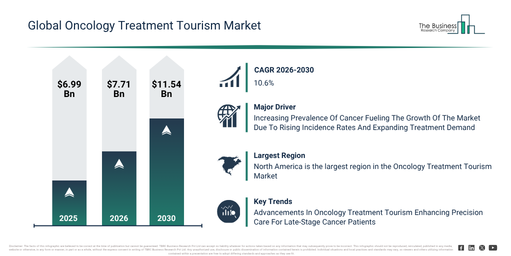
    The oncology treatment tourism market has seen swift expansion recently. It is anticipated to increase from $6.99 billion in 2025 to $7.71 billion in 2026, demonstrating a compound annual growth rate (CAGR) of 10.4%. The historical progression of this market can be linked to increasing global cancer prevalence, the elevated cost of oncology treatment in developed countries, restricted availability of advanced therapies in home countries, the development of medical tourism infrastructure, and growing awareness of international treatment options.

    The oncology treatment tourism market is projected to experience substantial growth in the coming years. It is anticipated to expand to $11.54 billion by 2030, achieving a compound annual growth rate (CAGR) of 10.6%. This projected growth throughout the forecast period stems from factors such as the increasing adoption of personalized oncology therapies, an expansion of international insurance coverage for cross-border care, rising investment in specialized cancer centers, a growing demand for shorter treatment waiting times, and increasing collaborations among global healthcare providers. Noteworthy trends during this period include enhanced cross-border access to advanced cancer therapies, an escalating demand for cost-effective oncology treatments, the expansion of international cancer centers of excellence, a rise in partnerships between hospitals and medical tourism agencies, and a growing preference for integrated treatment and hospitality packages.

    Access Your Free Sample Report For In-Depth Market Analysis:

    https://www.thebusinessresearchcompany.com/sample_request?id=64720702&type=smp&name=Oncology%20Treatment%20Tourism%20Market%20Report%202026

    Which Primary Drivers Are Impacting The Oncology Treatment Tourism Market Growth?

    The rising incidence of cancer is anticipated to fuel the expansion of the oncology treatment tourism market in the future. Cancer constitutes a category of illnesses marked by the uncontrolled multiplication and dispersion of atypical cells within the body, capable of infiltrating adjacent tissues and spreading to remote organs. The increase in cancer’s commonness is linked to an aging global populace, given that older individuals face an elevated likelihood of acquiring genetic mutations contributing to the disease. Oncology treatment tourism aids cancer patients by facilitating access to cutting-edge therapies, expert oncologists, and novel treatment approaches potentially unavailable in their native countries. This form of tourism contributes to lowering treatment expenses and wait periods, concurrently delivering extensive care packages, enhancing availability, ensuring continuous care, and boosting overall treatment results. For example, data from February 2024 by the World Health Organization, an international organization based in Switzerland, projects more than 35 million new cancer diagnoses by 2050, representing a 77% surge from the 20 million cases recorded in 2022. Consequently, the expanding occurrence of cancer is a key factor propelling the development of the oncology treatment tourism market.

    How Is The Oncology Treatment Tourism Market Organized By Segment Classification?

    The oncology treatment tourism market covered in this report is segmented –

    1) By Treatment Type: Chemotherapy, Radiation Therapy, Immunotherapy, Targeted Therapy, Surgical Oncology, Other Treatment Types

    2) By Patient Profile: Adults, Pediatrics, Geriatrics

    3) By Booking Channel: Direct, Online Platforms, Medical Tourism Agencies

    4) By Service Provider: Hospitals, Specialty Clinics, Cancer Centers, Other Services

    Subsegments:

    1) By Chemotherapy: Adjuvant Chemotherapy, Neoadjuvant Chemotherapy, Palliative Chemotherapy, Combination Chemotherapy

    2) By Immunotherapy: Immune Checkpoint Inhibitor Therapy, Monoclonal Antibody Therapy, Cancer Vaccine Therapy, Adoptive Cell Transfer Therapy

    3) By Radiation Therapy: External Beam Radiation Therapy, Intensity Modulated Radiation Therapy, Image Guided Radiation Therapy, Brachytherapy

    4) By Targeted Therapy: Small Molecule Targeted Therapy, Monoclonal Antibody Targeted Therapy, Angiogenesis Inhibitor Therapy, Hormone Targeted Therapy

    5) By Surgical Oncology: Minimally Invasive Surgery, Robotic Assisted Surgery, Open Cancer Surgery, Cytoreductive Surgery

    6) By Other Treatment Types: Hormone Therapy, Stem Cell Transplantation, Hyperthermia Therapy, Photodynamic Therapy

    What Trends Are Transforming The Oncology Treatment Tourism Market?

    Leading companies within the oncology treatment tourism market are concentrating on developing sophisticated solutions, such as advanced oncology therapeutics, to elevate the accuracy of treatments and enhance clinical results for patients with late-stage cancer. Advanced oncology therapeutics refers to a category of innovative medical interventions crafted to target cancer at its molecular, cellular, or genetic level. For instance, in September 2025, Booking Health, a medical travel facilitator based in Germany, expanded its offerings to improve worldwide access to advanced stage 4 cancer treatments, including immunotherapy, CAR T-cell therapy, and theranostics. The platform delivers extensive coordination for patients, covering aspects like second opinions, individualized treatment strategies, travel arrangements, and post-treatment follow-up. By connecting patients with premier certified German hospitals such as LMU Klinikum, these services provide entry to cutting-edge oncology choices like HIPEC, PIPAC, and radioembolization (Y-90), which are designed to improve survival rates, boost treatment precision, and support patient-centric cancer care.

    Who Are The Industry Participants Involved In The Oncology Treatment Tourism Market?

    Major companies operating in the oncology treatment tourism market are Mayo Clinic, Memorial Sloan Kettering Cancer Center, Cleveland Clinic, Johns Hopkins Medicine, Apollo Hospitals, Charité-Universitätsmedizin Berlin, Sheba Medical Center, Dana-Farber Cancer Institute, The Royal Marsden Hospital, Seoul National University Hospital, Clínica Universidad de Navarra, Karolinska University Hospital, Institut Curie, Istituto Nazionale dei Tumori, Asan Medical Center, Netherlands Cancer Institute, The Christie NHS Foundation Trust, Cancer Institute Hospital of JFCR, HCG Cancer Centre, Princess Margaret Cancer Centre, MD Anderson Cancer Center.

    Get The Full Oncology Treatment Tourism Market Report:

    https://www.thebusinessresearchcompany.com/report/oncology-treatment-tourism-market-report

    Which Region Dominates The Oncology Treatment Tourism Market By Market Share?

    North America was the largest region in the oncology treatment tourism market in 2025. Asia-Pacific is expected to be the fastest-growing region in the forecast period. The regions covered in the oncology treatment tourism market report are Asia-Pacific, South East Asia, Western Europe, Eastern Europe, North America, South America, Middle East, Africa.

    Request A Customized Oncology Treatment Tourism Market Report For Competitive Insights:

    https://www.thebusinessresearchcompany.com/Customise?id=64720702&name=Oncology%20Treatment%20Tourism%20Market%20Report%202026&type=smp

    Browse Through More Reports Similar to the Global Oncology Treatment Tourism Market 2026, By The Business Research Company

    pruritus therapeutic market report 2026

    https://www.thebusinessresearchcompany.com/report/pruritus-therapeutic-global-market-report

    genomic urine testing market report 2026

    https://www.thebusinessresearchcompany.com/report/genomic-urine-testing-global-market-report

    ocular genetic diagnostic market report 2026

    https://www.thebusinessresearchcompany.com/report/ocular-genetic-diagnostic-global-market-report

    Get in touch with us:

    The Business Research Company: https://www.thebusinessresearchcompany.com/

    Americas +1 310-496-7795

    Asia +44 7882 955267 & +91 8897263534

    Europe +44 7882 955267

    Email us at marketing@tbrc.info

    Follow us on:

    LinkedIn: https://in.linkedin.com/company/the-business-research-company

    YouTube: https://www.youtube.com/channel/UC24_fI0rV8cR5DxlCpgmyFQ

    Global Market Model: https://www.thebusinessresearchcompany.com/global-market-model
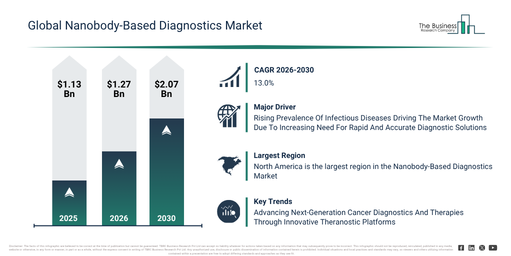
  • Nanobody-Based Diagnostics Market Analysis Highlighting Key Drivers And Evolving Industry Trends

    Nanobody-Based Diagnostics Market Analysis Highlighting Key Drivers And Evolving Industry Trends

    The Business Research Company’s 2026 market reports feature enhanced tools like market attractiveness analysis, TAM assessment, and company scoring matrices, along with interactive dashboards, deeper supply chain insights, and startup coverage strengthening the depth, usability, and strategic value of insights.

    How Large Will The Nanobody-Based Diagnostics Market Be By 2030 Compared To Its 2026 Market Size?

    The nanobody-based diagnostics market has seen a rapid expansion in its size over recent years. It is anticipated to increase from $1.13 billion in 2025 to $1.27 billion in 2026, achieving a compound annual growth rate (CAGR) of 12.7%. The market’s past growth is primarily due to advancements in antibody engineering technologies, a growing incidence of infectious diseases, increased demand for cancer diagnostics, higher research funding in immunodiagnostics, and the wider deployment of rapid diagnostic testing platforms.

    The nanobody-based diagnostics market is anticipated to experience significant growth in the coming years. This market is projected to reach $2.07 billion by 2030, demonstrating a compound annual growth rate (CAGR) of 13.0%. The expansion during the forecast period can be attributed to factors such as the increasing demand for precision diagnostics, the greater integration of AI-based assay analysis tools, the rising adoption of microfluidic biosensor systems, the growth of decentralized diagnostic testing, and an increasing focus on biomarkers for early disease detection. Key trends during this period include the growing acceptance of lateral flow nanobody assays, a rising need for high-affinity single-domain antibody reagents, the increasing incorporation of nanobodies into point-of-care diagnostics, the expansion of multiplexed biomarker detection platforms, and the growing application of nanobody-based imaging in disease monitoring.

    Access Your Free Sample Report For In-Depth Market Analysis:

    https://www.thebusinessresearchcompany.com/sample_request?id=40735924&type=smp&name=Nanobody-Based%20Diagnostics%20Market%20Report%202026

    What Major Factors Are Driving The Nanobody-Based Diagnostics Market Forward?

    The escalating occurrence of infectious diseases is anticipated to fuel the expansion of the nanobody based diagnostics market. These diseases are conditions caused by detrimental microorganisms like bacteria, viruses, fungi, or parasites, which can spread directly from person to person or indirectly through contact with tainted surroundings. The increase in infectious disease prevalence stems from greater human proximity, making it easier for pathogens to circulate within populations. Nanobody-based diagnostics play a crucial role by providing quick, highly specific, and sensitive detection of infectious agents, thereby enabling prompt diagnosis and treatment. This, in turn, helps manage the spread of such diseases and enhances patient recovery. For illustration, data from the Centers for Disease Control and Prevention, a US-based government agency, showed in March 2024 that tuberculosis cases increased from 8,320 in 2022 to 9,615 in 2023, marking an increment of 1,295 cases. Consequently, the growing incidence of infectious diseases is a key factor propelling the nanobody based diagnostics market forward.

    What Are The Main Segments Within The Nanobody-Based Diagnostics Market Segment Structure?

    The nanobody-based diagnostics market covered in this report is segmented –

    1) By Technology: Immunoassays, Molecular Diagnostics, Biosensor-Based Detection, Fluorescence And Imaging Diagnostics

    2) By Product Type: Reagents, Kits, Instruments, Other Product Types

    3) By Application: Infectious Diseases, Oncology, Autoimmune Disorders, Cardiovascular Diseases, Other Applications

    4) By End-User: Hospitals And Clinics, Diagnostic Laboratories, Research Institutes, Other End Users

    Subsegments:

    1) By Immunoassays: Enzyme Linked Immunosorbent Assay, Western Blotting, Lateral Flow Assay, Radioimmunoassay

    2) By Molecular Diagnostics: Polymerase Chain Reaction Based Assays, Nucleic Acid Hybridization, Next Generation Sequencing, Isothermal Amplification Techniques

    3) By Biosensor Based Detection: Electrochemical Biosensors, Optical Biosensors, Piezoelectric Biosensors, Microfluidic Biosensors

    4) By Fluorescence and Imaging Diagnostics: Fluorescence Microscopy, Flow Cytometry, Fluorescence In Situ Hybridization, Molecular Imaging Techniques

    What Market Trends Are Affecting The Nanobody-Based Diagnostics Market?

    Leading firms in the nanobody-based diagnostics market are concentrating on creating novel solutions, including sophisticated nanobody platforms, to enhance the precision and rapidity of identifying diseases. These advanced platforms employ compact, single-domain antibodies distinguished by their high specificity and stability, facilitating quicker tissue penetration, better targeting of disease biomarkers, and superior diagnostic and therapeutic efficacy when contrasted with traditional antibodies. A notable example is Cyclotek Pty Ltd, an Australia-based radiopharmaceutical firm, which received a CRC-P Round 16 grant from the Australian Government in September 2025, aimed at progressing a nanobody-based theranostic platform for cancer treatment. This initiative, undertaken in partnership with the University of Melbourne, Revela Bio Inc., and various local SMEs, is dedicated to crafting targeted diagnostics and therapeutics by utilizing nanobodies to target the Fibroblast Activation Protein (FAP), a biomarker extensively present in aggressive cancers like lung, pancreatic, and ovarian cancer. Nanobodies merge the accurate targeting capabilities of antibodies with the pharmacokinetic properties of small molecules, rendering them perfectly suited for both diagnostic imaging and therapeutic uses. The project’s objectives include creating sophisticated radiolabelling chemistry, performing pre-clinical assessments, and advancing to initial human clinical trials, thereby enabling Cyclotek Pty Ltd to expand and commercialize this groundbreaking platform throughout Australia, New Zealand, and the wider Asia-Pacific region.

    Who Are The Companies Participating In The Nanobody-Based Diagnostics Market?

    Major companies operating in the nanobody-based diagnostics market are Sanofi S.A., Thermo Fisher Scientific Inc., Merck KGaA, Agilent Technologies Inc., PerkinElmer Inc., Bruker Corporation, Bio-Rad Laboratories Inc., GenScript Biotech Corporation, Biocytogen LLC, Sino Biological Inc., Abzena plc, NanoTemper Technologies GmbH, RayBiotech Inc., Proteintech Group Inc., Creative Biolabs Inc., Isogenica Ltd., Beroni Group Limited, Immudex ApS, Cyclotek Pty Ltd, NanoTag Biotechnologies GmbH.

    Get The Full Nanobody-Based Diagnostics Market Report:

    https://www.thebusinessresearchcompany.com/report/nanobody-based-diagnostics-market-report

    Which Region Leads The Nanobody-Based Diagnostics Market In Overall Market Size?

    North America was the largest region in the nanobody-based diagnostics market in 2025. Asia-Pacific is expected to be the fastest-growing region in the forecast period. The regions covered in the nanobody-based diagnostics market report are Asia-Pacific, South East Asia, Western Europe, Eastern Europe, North America, South America, Middle East, Africa.

    Request A Customized Nanobody-Based Diagnostics Market Report For Competitive Insights:

    https://www.thebusinessresearchcompany.com/Customise?id=40735924&name=Nanobody-Based%20Diagnostics%20Market%20Report%202026&type=smp

    Browse Through More Reports Similar to the Global Nanobody-Based Diagnostics Market 2026, By The Business Research Company

    pruritus therapeutic market report 2026

    https://www.thebusinessresearchcompany.com/report/pruritus-therapeutic-global-market-report

    genomic urine testing market report 2026

    https://www.thebusinessresearchcompany.com/report/genomic-urine-testing-global-market-report

    ocular genetic diagnostic market report 2026

    https://www.thebusinessresearchcompany.com/report/ocular-genetic-diagnostic-global-market-report

    Get in touch with us:

    The Business Research Company: https://www.thebusinessresearchcompany.com/

    Americas +1 310-496-7795

    Asia +44 7882 955267 & +91 8897263534

    Europe +44 7882 955267

    Email us at marketing@tbrc.info

    Follow us on:

    LinkedIn: https://in.linkedin.com/company/the-business-research-company

    YouTube: https://www.youtube.com/channel/UC24_fI0rV8cR5DxlCpgmyFQ

    Global Market Model: https://www.thebusinessresearchcompany.com/global-market-model