Category: Healthcare Services

  • Cardiometabolic-Sleep Comorbidity Treatment Market Forecast Highlighting Emerging Developments Across The Industry Through 2030

    Cardiometabolic-Sleep Comorbidity Treatment Market Forecast Highlighting Emerging Developments Across The Industry Through 2030

    The Business Research Company’s 2026 market reports feature enhanced tools like market attractiveness analysis, TAM assessment, and company scoring matrices, along with interactive dashboards, deeper supply chain insights, and startup coverage strengthening the depth, usability, and strategic value of insights.

    How Large Will The Cardiometabolic-Sleep Comorbidity Treatment Market Be By 2030 Compared To Its 2026 Market Size?

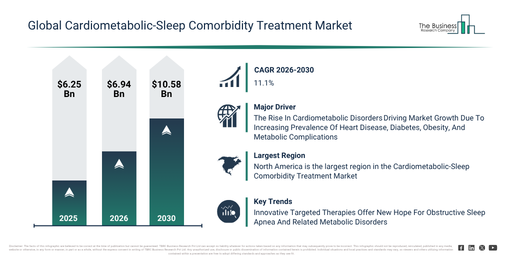
    The cardiometabolic-sleep comorbidity treatment market size has seen rapid expansion in recent years. It is anticipated to grow from $6.25 billion in 2025 to $6.94 billion in 2026, achieving a compound annual growth rate (CAGR) of 10.9%. This historical rise can be ascribed to the increasing occurrence of obstructive sleep apnea and obesity, greater recognition of cardiometabolic disorders, the embrace of positive airway pressure devices, the enlargement of hospital and sleep clinic networks, and a heightened focus on lifestyle interventions.

    The cardiometabolic-sleep comorbidity treatment market is anticipated to undergo substantial expansion in the upcoming years. It is predicted to reach $10.58 billion by 2030, demonstrating a compound annual growth rate (CAGR) of 11.1%. This growth during the forecast period is primarily driven by the increasing adoption of AI-based risk scoring and predictive analytics, the growing integration of telemonitoring platforms, a rising demand for combination pharmacotherapies, the expansion of personalized care-management services, and a heightened emphasis on patient education and adherence programs. Prominent trends expected in this period include the increasing adoption of wearable sleep and cardiometabolic monitoring devices, a rising demand for personalized lifestyle and care-management programs, the growing integration of telemonitoring and remote risk stratification, the expansion of multi-disorder therapeutic approaches, and an increased focus on weight-loss pharmacotherapy and medication optimization.

    Access Your Free Sample Report For In-Depth Market Analysis:

    https://www.thebusinessresearchcompany.com/sample_request?id=86642698&type=smp&name=Cardiometabolic-Sleep%20Comorbidity%20Treatment%20Market%20Report%202026

    What Key Factors Are Shaping The Cardiometabolic-Sleep Comorbidity Treatment Market Landscape?

    An increasing occurrence of cardiometabolic disorders is anticipated to fuel the expansion of the cardiometabolic sleep comorbidity treatment market throughout the forecast period. These disorders encompass a group of interconnected health issues, including cardiovascular diseases, type 2 diabetes, obesity, and metabolic syndrome, all of which substantially elevate the likelihood of heart disease, stroke, and various long-term metabolic complications. The escalating impact of these conditions stems from several factors, such as poor dietary habits, inactive lifestyles, an aging global demographic, and a rise in obesity rates. Treatments for cardiometabolic-sleep comorbidity tackle the significant two-way link between sleep disorders by concurrently addressing both sleep disruptions and metabolic irregularities. For example, data from October 2024 by the Centers for Disease Control and Prevention, a US-based government agency, indicated that cardiovascular disease was responsible for 919,032 deaths in the United States in 2023, accounting for approximately one in every three deaths. Coronary heart disease continued to be the most common type of cardiovascular disease, with nearly one in six associated fatalities occurring in adults under the age of 65. Consequently, the increasing occurrence of cardiometabolic disorders is propelling the growth of the cardiometabolic sleep comorbidity treatment market.

    Which Segment Categories Are Included In The Cardiometabolic-Sleep Comorbidity Treatment Market Segment Analysis?

    The cardiometabolic-sleep comorbidity treatment market covered in this report is segmented –

    1) By Treatment Component: Positive Airway Pressure Therapy And Sleep Apnea Devices, Weight-Loss Pharmacotherapy, Hypertension Or Diabetes Meds Optimization Programs, Remote Monitoring And Risk Stratification Analytics, Lifestyle And Care-Management Services

    2) By Comorbidity Pathways: Obstructive Sleep Apnea And Obesity Management, Obstructive Sleep Apnea And Hypertension Or Cardiovascular Risk Control, Obstructive Sleep Apnea And Type-2 Diabetes Management, Heart Failure And Sleep-Disordered Breathing, Other Metabolic Sleep Phenotypes

    3) By Therapeutic Area: Obstructive Sleep Apnea With Cardiometabolic Disorders, Insomnia With Cardiometabolic Disorders, Restless Leg Syndrome With Cardiometabolic Disorders, Other Sleep Disorders With Cardiometabolic Disorders

    4) By End User: Hospitals And Cardiometabolic Clinics, Sleep Clinics Or Durable Medical Equipment Networks, Retail Pharmacy Channel, Payers Or Population Health Managers

    Subsegments:

    1) By Positive Airway Pressure Therapy And Sleep Apnea Devices: Continuous Positive Airway Pressure Devices, Automatic Positive Airway Pressure Devices, Bi-Level Positive Airway Pressure Devices, Adaptive Servo-Ventilation Devices

    2) By Weight-Loss Pharmacotherapy: Glucagon-Like Peptide One Receptor Agonists, Lipase Inhibitors, Appetite Suppressants, Combination Therapies

    3) By Hypertension Or Diabetes Meds Optimization Programs: Antihypertensive Therapy Management, Antidiabetic Therapy Management, Polypharmacy Optimization, Medication Adherence Programs

    4) By Remote Monitoring And Risk Stratification Analytics: Wearable Devices, Telemonitoring Platforms, Predictive Analytics, Artificial Intelligence-Based Risk Scoring

    5) By Lifestyle And Care-Management Services: Nutritional Counseling, Exercise And Fitness Programs, Behavioral Therapy, Patient Education And Support

    Which Trends Are Impacting The Progress Of The Cardiometabolic-Sleep Comorbidity Treatment Market?

    Leading companies within the cardiometabolic sleep comorbidity treatment market are concentrating on developing innovative remedies, such as targeted pharmacotherapies, for the simultaneous management of obesity, metabolic disorders, and obstructive sleep apnea. Targeted pharmacotherapies represent medications crafted to act upon specific biological pathways or disease mechanisms, thereby treating particular conditions more effectively with fewer side effects. As an illustration, in December 2024, Eli Lilly and Company, a US based pharmaceutical company, secured U.S. Food and Drug Administration approval for Zepbound for the treatment of moderate to severe obstructive sleep apnea in adults with obesity, establishing it as the first pharmacological therapy specifically sanctioned for this ailment. This approval was granted based on clinical trial data demonstrating substantial reductions in apnea–hypopnea events and meaningful weight loss among patients who utilized the drug in conjunction with lifestyle interventions. This significant development offers a new therapeutic choice for patients who struggle with conventional treatments like continuous positive airway pressure, expanding the management strategies accessible for obstructive sleep apnea.

    Who Are The Active Companies Shaping The Cardiometabolic-Sleep Comorbidity Treatment Market?

    Major companies operating in the cardiometabolic-sleep comorbidity treatment market are Pfizer Inc, Sanofi S.A, Novartis AG, Eli Lilly & Company, Novo Nordisk A/S, Medtronic PLC, Takeda Pharmaceutical Company Limited, Koninklijke Philips N.V., Boehringer Ingelheim International GmbH, Otsuka Pharmaceutical Co Ltd., AstraZeneca PLC, Omron Healthcare Co. Ltd., ResMed Inc., Dexcom Inc., Teladoc Health Inc., Fisher Paykel Healthcare Corporation Limited, BioSerenity SA, BMC Medical Co Ltd, CardiacSense Ltd, Compumedics Ltd.

    Get The Full Cardiometabolic-Sleep Comorbidity Treatment Market Report:

    https://www.thebusinessresearchcompany.com/report/cardiometabolic-sleep-comorbidity-treatment-market-report

    Which Geographic Region Dominates The Cardiometabolic-Sleep Comorbidity Treatment Market?

    North America was the largest region in the cardiometabolic-sleep comorbidity treatment market in 2025. Asia-Pacific is expected to be the fastest-growing region in the forecast period. The regions covered in the cardiometabolic-sleep comorbidity treatment market report are Asia-Pacific, South East Asia, Western Europe, Eastern Europe, North America, South America, Middle East, Africa.

    Request A Customized Cardiometabolic-Sleep Comorbidity Treatment Market Report For Competitive Insights:

    https://www.thebusinessresearchcompany.com/Customise?id=86642698&name=Cardiometabolic-Sleep%20Comorbidity%20Treatment%20Market%20Report%202026&type=smp

    Browse Through More Reports Similar to the Global Cardiometabolic-Sleep Comorbidity Treatment Market 2026, By The Business Research Company

    pruritus therapeutic market report 2026

    https://www.thebusinessresearchcompany.com/report/pruritus-therapeutic-global-market-report

    genomic urine testing market report 2026

    https://www.thebusinessresearchcompany.com/report/genomic-urine-testing-global-market-report

    ocular genetic diagnostic market report 2026

    https://www.thebusinessresearchcompany.com/report/ocular-genetic-diagnostic-global-market-report

    Get in touch with us:

    The Business Research Company: https://www.thebusinessresearchcompany.com/

    Americas +1 310-496-7795

    Asia +44 7882 955267 & +91 8897263534

    Europe +44 7882 955267

    Email us at marketing@tbrc.info

    Follow us on:

    LinkedIn: https://in.linkedin.com/company/the-business-research-company

    YouTube: https://www.youtube.com/channel/UC24_fI0rV8cR5DxlCpgmyFQ

    Global Market Model: https://www.thebusinessresearchcompany.com/global-market-model
  • Artificial Intelligence (AI)-Assisted Variant Reinterpretation Market Projected To Reach $4.76 Billion By 2030 With 22.1% CAGR

    Artificial Intelligence (AI)-Assisted Variant Reinterpretation Market Projected To Reach $4.76 Billion By 2030 With 22.1% CAGR

    The Business Research Company’s 2026 market reports feature enhanced tools like market attractiveness analysis, TAM assessment, and company scoring matrices, along with interactive dashboards, deeper supply chain insights, and startup coverage strengthening the depth, usability, and strategic value of insights.

    How Will The Market Value Of The Artificial Intelligence (AI)-Assisted Variant Reinterpretation Market Progress Between 2026 And 2030?

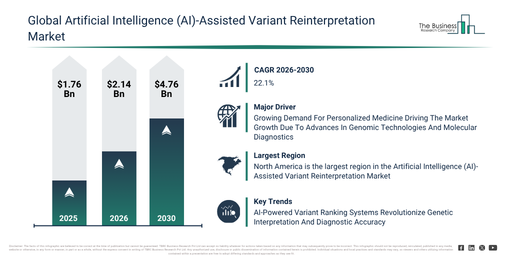
    The artificial intelligence (AI)-assisted variant reinterpretation market has seen substantial growth recently. It is projected to expand from $1.76 billion in 2025 to $2.14 billion in 2026, exhibiting a compound annual growth rate (CAGR) of 21.8%. Historically, this expansion has been driven by factors such as the increasing availability of genomic data, a rising need for precise variant classification, the integration of AI into clinical research, a growing regulatory focus on diagnostic accuracy, and the broadening of precision medicine initiatives.

    The artificial intelligence (AI)-assisted variant reinterpretation market is projected for substantial growth in the upcoming years. It is forecast to expand to $4.76 billion by 2030, demonstrating a compound annual growth rate (CAGR) of 22.1%. This expansion during the forecast period is primarily driven by the increasing integration of machine learning and deep learning platforms, the broader adoption of natural language processing for literature reviews, a surging demand for cloud-based deployment, the widening application of AI in drug development, and a heightened focus on real-time variant monitoring and reinterpretation. Significant trends anticipated within this period include the rising acceptance of cloud-based variant reinterpretation platforms, an escalating demand for AI-enabled clinical decision support, greater integration with electronic health records (EHR), the development of real-time data annotation and labeling tools, and an increased emphasis on personalized medicine and patient-centric diagnostics.

    Access Your Free Sample Report For In-Depth Market Analysis:

    https://www.thebusinessresearchcompany.com/sample_request?id=53315346&type=smp&name=Artificial%20Intelligence%20%28AI%29-Assisted%20Variant%20Reinterpretation%20Market%20Report%202026

    What Factors Are Contributing To The Growth Of The Artificial Intelligence (AI)-Assisted Variant Reinterpretation Market?

    The increasing need for personalized medical approaches is projected to propel the expansion of the artificial intelligence (AI)-assisted variant reinterpretation market throughout the forecast period. Personalized medicine customizes healthcare interventions and therapies for individual patients, considering their unique genetic makeup, biological markers, and disease attributes. This escalating demand stems from advancements in genomic sequencing and molecular diagnostic tools, which facilitate more precise identification of genetic variations and enable tailored treatment decisions, leading to enhanced clinical results. Artificial intelligence-driven variant reinterpretation is essential to personalized medicine, as it efficiently analyzes and updates genetic variant interpretations with the emergence of new clinical data. These tools empower healthcare professionals and scientists to derive accurate, patient-specific information for diagnosis, therapy selection, and risk evaluation, simultaneously reducing the duration and intricacy linked with manual variant analysis. For example, in February 2024, the U.S. Food and Drug Administration sanctioned 16 new personalized treatments for rare disease patients in 2023, an increase from six in 2022, as reported by the US-based non-profit, Personalized Medicine Coalition. Consequently, the rising demand for personalized medicine is fueling the growth of the artificial intelligence (AI)-assisted variant reinterpretation market.

    What Are The Key Segment Divisions In The Artificial Intelligence (AI)-Assisted Variant Reinterpretation Market Segment Structure?

    The artificial intelligence (AI)-assisted variant reinterpretation market covered in this report is segmented –

    1) By Component: Software, Services

    2) By Technology: Machine Learning, Deep Learning And Neural Networks, Natural Language Processing

    3) By Deployment Mode: Cloud-Based, On-Premises

    4) By Application: Clinical Diagnostics, Research, Drug Development, Personalized Medicine, Other Applications

    5) By End-User: Hospitals And Clinics, Research Institutes, Pharmaceutical And Biotechnology Companies, Diagnostic Laboratories, Other End-Users

    Subsegments:

    1) By Software: Machine Learning Platforms, Natural Language Processing Platforms, Computer Vision Platforms, Speech Recognition Platforms, Data Labeling And Annotation Tools, Model Training And Development Tools, Model Deployment And Monitoring Tools, Decision Support Systems

    2) By Services: Professional Services, Managed Services, Consulting Services, Integration And Implementation Services, Support And Maintenance Services, Training And Education Services

    What Trends Are Shaping The Future Of The Artificial Intelligence (AI)-Assisted Variant Reinterpretation Market?

    Leading companies within the artificial intelligence (AI)-assisted variant reinterpretation market are increasingly prioritizing the development of innovative solutions, such as explainable AI–powered variant ranking systems, to streamline genetic variant interpretation and enhance diagnostic accuracy. An AI-powered variant ranking system functions as a machine-learning–based tool that automatically scores and prioritizes genetic variants according to their likelihood of pathogenicity, allowing clinicians and geneticists to focus on the most clinically relevant findings. For example, in October 2024, SeqOne S.A.S., a France-based AI-driven genomic software company, launched the DiagAI Score. This explainable AI–powered metric evaluates and ranks genetic variants on a 0–100 scale, based on pathogenicity, phenotype relevance, inheritance patterns, and data quality criteria. The solution integrates advanced components like the Universal Pathogenicity Predictor (UP²) and Phenogenius to generate clinically meaningful scores while maintaining human expert oversight.

    Which Organizations Are Engaged In The Artificial Intelligence (AI)-Assisted Variant Reinterpretation Market?

    Major companies operating in the artificial intelligence (AI)-assisted variant reinterpretation market are Illumina Inc., Tempus Labs Inc., Invitae Corporation, MedGenome Labs Private Limited, SOPHiA GENETICS S.A., Genomenon Inc., DNAnexus Inc., Alstronix Technologies Pvt Ltd, Lifebit Genomics Ltd, Strand Life Sciences Private Limited, Galatea Bio Inc., Clear Labs Inc., Congenica Ltd, Epigene Labs Pvt Ltd, Genoox Ltd, Breakthrough Genomics Inc., Genix.ai Inc., Nostos Genomics Inc., Variant Bio Inc., SeqOne Systems S.A.

    Get The Full Artificial Intelligence (AI)-Assisted Variant Reinterpretation Market Report:

    https://www.thebusinessresearchcompany.com/report/artificial-intelligence-ai-assisted-variant-reinterpretation-market-report

    Which Region Is The Leading Market For The Artificial Intelligence (AI)-Assisted Variant Reinterpretation Market?

    North America was the largest region in the artificial intelligence (AI)-assisted variant reinterpretation market in 2025. Asia-Pacific is expected to be the fastest-growing region in the forecast period. The regions covered in the artificial intelligence (AI)-assisted variant reinterpretation market report are Asia-Pacific, South East Asia, Western Europe, Eastern Europe, North America, South America, Middle East, Africa.

    Request A Customized Artificial Intelligence (AI)-Assisted Variant Reinterpretation Market Report For Competitive Insights:

    https://www.thebusinessresearchcompany.com/Customise?id=53315346&name=Artificial%20Intelligence%20%28AI%29-Assisted%20Variant%20Reinterpretation%20Market%20Report%202026&type=smp

    Browse Through More Reports Similar to the Global Artificial Intelligence (AI)-Assisted Variant Reinterpretation Market 2026, By The Business Research Company

    pruritus therapeutic market report 2026

    https://www.thebusinessresearchcompany.com/report/pruritus-therapeutic-global-market-report

    genomic urine testing market report 2026

    https://www.thebusinessresearchcompany.com/report/genomic-urine-testing-global-market-report

    ocular genetic diagnostic market report 2026

    https://www.thebusinessresearchcompany.com/report/ocular-genetic-diagnostic-global-market-report

    Get in touch with us:

    The Business Research Company: https://www.thebusinessresearchcompany.com/

    Americas +1 310-496-7795

    Asia +44 7882 955267 & +91 8897263534

    Europe +44 7882 955267

    Email us at marketing@tbrc.info

    Follow us on:

    LinkedIn: https://in.linkedin.com/company/the-business-research-company

    YouTube: https://www.youtube.com/channel/UC24_fI0rV8cR5DxlCpgmyFQ

    Global Market Model: https://www.thebusinessresearchcompany.com/global-market-model

  • Global Artificial Intelligence (AI) Dermatology Imaging Market Forecast Through 2030 With Strategic Industry Perspectives

    Global Artificial Intelligence (AI) Dermatology Imaging Market Forecast Through 2030 With Strategic Industry Perspectives

    The Business Research Company’s 2026 market reports feature enhanced tools like market attractiveness analysis, TAM assessment, and company scoring matrices, along with interactive dashboards, deeper supply chain insights, and startup coverage strengthening the depth, usability, and strategic value of insights.

    What Expansion In Market Value Is Forecasted For The Artificial Intelligence (AI) Dermatology Imaging Market Between 2026 And 2030?

    The artificial intelligence (AI) dermatology imaging market has experienced significant expansion in recent years. This market is anticipated to increase from $1.12 billion in 2025 to $1.36 billion in 2026, achieving a compound annual growth rate (CAGR) of 20.7%. The historical growth can be attributed to the growing prevalence of skin disorders, increasing demand for accurate dermatology diagnosis, the adoption of dermatoscopic imaging and clinical imaging, the expansion of dermatology clinics and hospital networks, and a rising interest in telehealth platforms.

    The artificial intelligence (AI) dermatology imaging market is anticipated to experience substantial growth in the coming years. Projections indicate it will expand to $2.9 billion by 2030, exhibiting a compound annual growth rate (CAGR) of 21.0%. This growth during the forecast period is driven by the increasing integration of AI-enabled analytics, the rising adoption of cloud-based deployment models, a greater demand for automated disease screening and triage, the expansion of research applications in dermatology imaging, and an intensifying focus on teledermatology and remote patient monitoring. Significant trends expected in this period include the wider embrace of cloud-based AI dermatology platforms, an increasing need for multispectral and total body imaging solutions, the growing incorporation of teledermatology services, the development of AI-enabled treatment monitoring tools, and an elevated emphasis on workflow automation and data management solutions.

    Access Your Free Sample Report For In-Depth Market Analysis:

    https://www.thebusinessresearchcompany.com/sample_request?id=56790262&type=smp&name=Artificial%20Intelligence%20%28AI%29%20Dermatology%20Imaging%20Market%20Report%202026

    What Key Factors Are Shaping The Artificial Intelligence (AI) Dermatology Imaging Market Landscape?

    The escalating incidence of skin cancer is expected to drive the growth of the artificial intelligence (AI) dermatology imaging market moving forward. Skin cancer is characterized by the irregular multiplication of skin cells, frequently stemming from UV radiation exposure, leading to malignant tumors such as melanoma and non-melanoma varieties. The frequency of skin cancer is climbing owing to increased exposure to ultraviolet (UV) radiation from the sun and artificial tanning beds, which damages skin cells and heightens the chance of malignant developments. AI in dermatology imaging significantly improves the early detection and precise diagnosis of skin cancer by examining images of skin lesions with advanced algorithms, identifying subtle characteristics and abnormalities that might be overlooked by the human eye, thereby enabling faster, more reliable clinical choices for timely treatment. For instance, in January 2026, according to the Skin Cancer Foundation, a US-based non-profit organization, the number of new melanoma cases diagnosed is projected to rise by 10.6 percent. Consequently, the increasing incidence of skin cancer is fueling the expansion of the artificial intelligence (AI) dermatology imaging market.

    How Is The Artificial Intelligence (AI) Dermatology Imaging Market Broken Down By Segment Categories?

    The artificial intelligence (AI) dermatology imaging market covered in this report is segmented –

    1) By Component: Software, Hardware, Services

    2) By Imaging Modality: Dermatoscopic Imaging, Clinical Imaging, Reflectance Confocal Microscopy, Optical Coherence Tomography, Total Body Photography, Multispectral Imaging

    3) By Deployment Mode: Cloud-Based, On-Premises

    4) By Application: Disease Diagnosis, Treatment Monitoring, Screening And Triage, Teledermatology, Research Applications

    5) By End User: Dermatology Clinics, Hospitals, Telehealth Platforms, Primary Care Networks, Other End Users

    Subsegments:

    1) By Software: Cloud Based Solutions, On Premise Solutions, Artificial Intelligence Enabled Analytics Platforms, Image Processing And Visualization Tools, Data Management And Integration Platforms, Workflow And Reporting Solutions

    2) By Hardware: Imaging Devices And Scanners, High Performance Computing Systems, Storage And Data Servers, Display And Visualization Systems, Networking And Connectivity Equipment, Peripheral Input And Output Devices

    3) By Services: System Integration And Deployment Services, Maintenance And Technical Support Services, Consulting And Implementation Services, Training And Education Services, Managed And Cloud Hosting Services, Upgradation And Optimization Services

    What Market Trends Are Affecting The Artificial Intelligence (AI) Dermatology Imaging Market?

    Major companies within the artificial intelligence (AI) dermatology imaging market are focusing on developing innovative solutions, such as AI-powered clinical imaging platforms, to improve diagnostic accuracy, streamline clinical trials, and offer objective, real-time skin assessments. These AI-powered clinical imaging platforms are systems that integrate advanced skin imaging with artificial intelligence algorithms to automatically capture, analyze, and score dermatological conditions, providing clinicians and researchers with faster, more objective, and standardized assessments compared to traditional manual evaluation. For instance, in September 2025, QuantifiCare, a France-based medical imaging company, partnered with Legit.Health, a Spain-based AI healthcare company, to introduce the first AI-powered dermatology imaging platform specifically for clinical trials. This platform combines QuantifiCare’s 2D and 3D imaging systems with Legit.Health’s AI algorithms to deliver immediate severity grading, real-time insights into treatment response, and automated scoring for over 300 skin conditions. Key features include standardized imaging workflows, high reproducibility, reduced administrative workload, and enhanced reliability of clinical endpoints, making it a potent tool for sponsors, CROs, and investigators looking to accelerate dermatology research.

    Which Players Are Present In The Artificial Intelligence (AI) Dermatology Imaging Market Space?

    Major companies operating in the artificial intelligence (AI) dermatology imaging market are Google LLC, Microsoft Corporation, Perfect Corp., Canfield Scientific Inc., Proscia Inc., Behold.ai Inc., FotoFinder Systems GmbH, SmartSkin AI Inc., MetaOptima Technology Inc., QuantifiCare SA, SkinVision B.V., DermaSensor Inc., Skin Analytics Ltd, Haut.AI Inc., First Derm Inc., Enspectra Health Inc., SkinIO Inc., SciBase Holding AB, SkinIO LLC, GlamAR Group Inc., IQONIC.AI Inc., TeleSkin d.o.o., DermAI Inc.

    Get The Full Artificial Intelligence (AI) Dermatology Imaging Market Report:

    https://www.thebusinessresearchcompany.com/report/artificial-intelligence-ai-dermatology-imaging-market-report

    Which Region Has The Greatest Market Share In The Artificial Intelligence (AI) Dermatology Imaging Market?

    North America was the largest region in the artificial intelligence (AI) dermatology imaging market in 2025. Asia-Pacific is expected to be the fastest-growing region in the forecast period. The regions covered in the artificial intelligence (AI) dermatology imaging market report are Asia-Pacific, South East Asia, Western Europe, Eastern Europe, North America, South America, Middle East, Africa.

    Request A Customized Artificial Intelligence (AI) Dermatology Imaging Market Report For Competitive Insights:

    https://www.thebusinessresearchcompany.com/Customise?id=56790262&name=Artificial%20Intelligence%20%28AI%29%20Dermatology%20Imaging%20Market%20Report%202026&type=smp

    Browse Through More Reports Similar to the Global Artificial Intelligence (AI) Dermatology Imaging Market 2026, By The Business Research Company

    pruritus therapeutic market report 2026

    https://www.thebusinessresearchcompany.com/report/pruritus-therapeutic-global-market-report

    genomic urine testing market report 2026

    https://www.thebusinessresearchcompany.com/report/genomic-urine-testing-global-market-report

    ocular genetic diagnostic market report 2026

    https://www.thebusinessresearchcompany.com/report/ocular-genetic-diagnostic-global-market-report

    Get in touch with us:

    The Business Research Company: https://www.thebusinessresearchcompany.com/

    Americas +1 310-496-7795

    Asia +44 7882 955267 & +91 8897263534

    Europe +44 7882 955267

    Email us at marketing@tbrc.info

    Follow us on:

    LinkedIn: https://in.linkedin.com/company/the-business-research-company

    YouTube: https://www.youtube.com/channel/UC24_fI0rV8cR5DxlCpgmyFQ

    Global Market Model: https://www.thebusinessresearchcompany.com/global-market-model
  • Arenavirus Diagnostics Market Analysis 2026–2030 Driven By Technological Advancements And Growth Factors

    Arenavirus Diagnostics Market Analysis 2026–2030 Driven By Technological Advancements And Growth Factors

    The Business Research Company’s 2026 market reports feature enhanced tools like market attractiveness analysis, TAM assessment, and company scoring matrices, along with interactive dashboards, deeper supply chain insights, and startup coverage strengthening the depth, usability, and strategic value of insights.

    How Large Will The Arenavirus Diagnostics Market Be By 2030 Compared To Its 2026 Market Size?

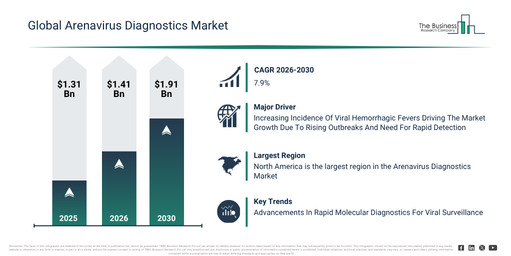
    The arenavirus diagnostics market has demonstrated significant growth in recent years. It is anticipated to increase from $1.31 billion in 2025 to $1.41 billion in 2026, expanding at a compound annual growth rate (CAGR) of 7.7%. This historical market expansion is primarily due to the increasing frequency of arenavirus infections, the integration of molecular diagnostic approaches, the development of hospital and clinical laboratory infrastructure, a growing requirement for serological testing, and the broadening scope of research into hemorrhagic fevers.

    The arenavirus diagnostics market is projected to experience substantial expansion over the coming years. Its valuation is anticipated to reach $1.91 billion by 2030, exhibiting a compound annual growth rate (CAGR) of 7.9%. This projected growth is driven by several factors, including the increasing implementation of automated PCR and ELISA systems, a heightened need for swift point-of-care diagnostic solutions, the proliferation of research institutions dedicated to viral illnesses, the growing incorporation of AI-powered diagnostic analytics, and increased financial support for infectious disease diagnostics. Key developments expected during this period involve a greater embrace of PCR-based arenavirus diagnostics, a surge in demand for rapid diagnostic testing equipment, the broader integration of next-generation sequencing systems, an enlargement of diagnostic testing offerings, and an intensified emphasis on laboratory validation and quality assurance.

    Access Your Free Sample Report For In-Depth Market Analysis:

    https://www.thebusinessresearchcompany.com/sample_request?id=98050164&type=smp&name=Arenavirus%20Diagnostics%20Market%20Report%202026

    Which Factors Are Influencing The Growth Of The Arenavirus Diagnostics Market?

    The increasing occurrence of viral hemorrhagic fevers (VHFs) is anticipated to boost the expansion of the arenavirus diagnostics market. These severe illnesses, caused by viruses, damage blood vessels, hinder the body’s clotting ability, and can lead to extensive bleeding, multi-organ failure, and significant mortality. The growing number of VHFs stems from increased human interaction with wildlife and natural reservoirs, elevating the danger of virus transmission from animals to humans. Arenavirus diagnostics offer prompt and precise detection of arenaviruses, enabling medical professionals to identify VHFs early, administer timely care, and efficiently manage outbreaks. For example, in May 2023, the World Health Organization, a Switzerland-based international organization, reported that Nigeria registered 877 confirmed cases of Lassa fever, a form of viral hemorrhagic fever, resulting in 152 fatalities. This represented a 20% surge in cases compared to the 733 confirmed cases noted during the equivalent timeframe in 2022. Consequently, the rising incidence of viral hemorrhagic fevers is fueling the growth of the arenavirus diagnostics market.

    What Are The Different Segment Types In The Arenavirus Diagnostics Market Segment Breakdown?

    The arenavirus diagnostics market covered in this report is segmented –

    1) By Product Type: Instruments, Reagents And Kits, Services

    2) By Technology: Polymerase Chain Reaction, Enzyme-Linked Immunosorbent Assay, Immunofluorescence Assay, Rapid Diagnostic Tests, Other Technologies

    3) By Application: Clinical Diagnostics, Research, Other Applications

    4) By End-User: Hospitals And Clinics, Diagnostic Laboratories, Research Institutes, Other End-Users

    Subsegments:

    1) By Instruments: Polymerase Chain Reaction Instruments, Enzyme-Linked Immunosorbent Assay Analyzers, Next-Generation Sequencing Systems, Rapid Diagnostic Testing Devices

    2) By Reagents And Kits: Polymerase Chain Reaction Reagents And Kits, Enzyme-Linked Immunosorbent Assay Reagents And Kits, Antigen Detection Kits, Antibody Detection Kits

    3) By Services: Diagnostic Testing Services, Laboratory Validation Services, Quality Control And Assurance Services, Technical Support And Maintenance Services

    Which Trends Are Influencing Demand In The Arenavirus Diagnostics Market?

    Leading companies in the arenavirus diagnostics market are concentrating on creating innovative solutions, such as molecular diagnostic kits for swift virus detection, to enhance early outbreak management and improve patient health. These molecular diagnostic kits are instruments that identify viral genetic material (RNA or DNA) quickly and precisely, thus aiding in the prompt detection of infections, guiding appropriate treatment, and curbing further transmission. For instance, in March 2024, the Gorgas Commemorative Institute for Health Studies (ICGES), a public health research institute located in Panama, collaborated with the Centers for Disease Control and Prevention (CDC) of the United States and the Pan American Health Organization (PAHO) to bolster regional capabilities for arenavirus surveillance through molecular diagnostic efforts. These endeavors involved establishing and standardizing molecular methods for detecting the virus, including RNA sequencing, field sampling of rodents, and instructing regional laboratory staff. The initiative significantly enhanced the accuracy, speed, and utility of arenavirus diagnostics across multiple nations, facilitating early outbreak identification, improved epidemiological monitoring, and informed public health strategies.

    Who Are The Well-Known Companies In The Arenavirus Diagnostics Market?

    Major companies operating in the arenavirus diagnostics market are Thermo Fisher Scientific Inc., Merck KGaA, Danaher Corporation, bioMérieux SA, Hologic Inc., PerkinElmer Inc., Sysmex Corporation, Bio-Rad Laboratories Inc., DiaSorin S.p.A., Chembio Diagnostic Systems Inc., BioPerfectus Technologies Inc., Amerigo Scientific Inc., Altona Diagnostics GmbH, Creative Diagnostics Inc., Novacyt Group, QIAGEN N.V., Aldatu Biosciences Ltd, GenMark Diagnostics Inc., Zalgen Labs Inc., Shanghai ZJ Bio-Tech Co. Ltd., Luminex Corporation.

    Get The Full Arenavirus Diagnostics Market Report:

    https://www.thebusinessresearchcompany.com/report/arenavirus-diagnostics-market-report

    Which Region Accounts For The Largest Portion Of The Arenavirus Diagnostics Market?

    North America was the largest region in the arenavirus diagnostics market in 2025. Asia-Pacific is expected to be the fastest-growing region in the forecast period. The regions covered in the arenavirus diagnostics market report are Asia-Pacific, South East Asia, Western Europe, Eastern Europe, North America, South America, Middle East, Africa.

    Request A Customized Arenavirus Diagnostics Market Report For Competitive Insights:

    https://www.thebusinessresearchcompany.com/Customise?id=98050164&name=Arenavirus%20Diagnostics%20Market%20Report%202026&type=smp

    Browse Through More Reports Similar to the Global Arenavirus Diagnostics Market 2026, By The Business Research Company

    pruritus therapeutic market report 2026

    https://www.thebusinessresearchcompany.com/report/pruritus-therapeutic-global-market-report

    genomic urine testing market report 2026

    https://www.thebusinessresearchcompany.com/report/genomic-urine-testing-global-market-report

    ocular genetic diagnostic market report 2026

    https://www.thebusinessresearchcompany.com/report/ocular-genetic-diagnostic-global-market-report

    Get in touch with us:

    The Business Research Company: https://www.thebusinessresearchcompany.com/

    Americas +1 310-496-7795

    Asia +44 7882 955267 & +91 8897263534

    Europe +44 7882 955267

    Email us at marketing@tbrc.info

    Follow us on:

    LinkedIn: https://in.linkedin.com/company/the-business-research-company

    YouTube: https://www.youtube.com/channel/UC24_fI0rV8cR5DxlCpgmyFQ

    Global Market Model: https://www.thebusinessresearchcompany.com/global-market-model
  • Allergy Clinical Trial Services Market Analysis Through 2030 Presenting Long-Term Industry Opportunities

    Allergy Clinical Trial Services Market Analysis Through 2030 Presenting Long-Term Industry Opportunities

    The Business Research Company’s 2026 market reports feature enhanced tools like market attractiveness analysis, TAM assessment, and company scoring matrices, along with interactive dashboards, deeper supply chain insights, and startup coverage strengthening the depth, usability, and strategic value of insights.

    How Is The Market Size Of The Allergy Clinical Trial Services Market Expected To Change From 2026 To 2030?

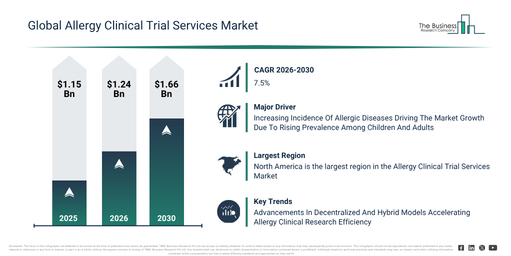
    The allergy clinical trial services market size has experienced strong growth in recent years. It is projected to expand from $1.15 billion in 2025 to $1.24 billion in 2026, achieving a compound annual growth rate (CAGR) of 7.3%. This historical growth can be attributed to the increasing prevalence of allergic diseases, a rising investment in clinical research, the adoption of structured study protocols, the expansion of laboratory testing infrastructure, and the growth of pharmaceutical and biotechnology companies.

    The allergy clinical trial services market size is projected for substantial expansion in the coming years, reaching $1.66 billion by 2030, driven by a compound annual growth rate (CAGR) of 7.5%. This anticipated growth is attributable to several factors, including an increased emphasis on precision medicine approaches, greater integration of AI-driven analytics, a rising need for remote monitoring and decentralized trials, the expansion of phase II and III allergy studies, and a heightened focus on regulatory compliance and data management. Key trends identified for the forecast period encompass a wider embrace of remote clinical monitoring services, an increasing demand for solutions in patient recruitment and retention, enhanced integration of electronic data capture (EDC) systems, the expansion of bioanalytical and laboratory testing capabilities, and a heightened focus on regulatory compliance and medical writing services.

    Access Your Free Sample Report For In-Depth Market Analysis:

    https://www.thebusinessresearchcompany.com/sample_request?id=15489922&type=smp&name=Allergy%20Clinical%20Trial%20Services%20Market%20Report%202026

    Which Key Factors Are Driving The Allergy Clinical Trial Services Market Growth?

    The increasing occurrence of allergic diseases is projected to boost the expansion of the allergy clinical trial services market in the future. Allergic diseases are hypersensitivity conditions mediated by the immune system, encompassing conditions such as seasonal allergic rhinitis, eczema, and food allergies. The frequency of these conditions is on the rise, primarily due to heightened exposure to environmental allergens like pollen, dust, and air pollutants, which are commonly linked to an amplified immune response in vulnerable individuals. Allergy clinical trial services are vital for managing and treating allergic diseases by facilitating the creation, testing, and evaluation of new therapies and interventions, thereby helping healthcare providers identify effective solutions and improve patient outcomes. For instance, according to the 2024 National Health Interview Survey (NHIS) by the Centers for Disease Control and Prevention, a US-based government agency, approximately 29.5% of children in the United States had been diagnosed with a seasonal allergy, eczema, or a food allergy, which is an increase from 20.6% in the previous survey year. Consequently, the growing prevalence of allergic diseases is fueling the growth of the allergy clinical trial services market.

    How Is The Allergy Clinical Trial Services Market Organized By Segment Classification?

    The allergy clinical trial services market covered in this report is segmented –

    1) By Service Type: Study Design And Protocol Development, Site Management And Patient Recruitment, Clinical Operations And Monitoring, Bioanalytical And Laboratory Services, Data Management And Biostatistics, Regulatory Affairs And Medical Writing

    2) By Clinical Trial: Phase I, Phase II, Phase III, Phase IV or Post-Marketing

    3) By Therapeutic Indication: Allergic Rhinitis, Allergic Asthma, Atopic Dermatitis, Food Allergies, Drug Hypersensitivity

    4) By End User: Pharmaceutical Companies, Biotechnology Firms, Academic Research Institutions, Government Organizations

    Subsegments:

    1) By Study Design And Protocol Development: Clinical Protocol Development Services, Trial Design Consulting Services, Feasibility Assessment Services, Endpoint Definition And Selection Services

    2) By Site Management And Patient Recruitment: Investigator Site Management Services, Patient Recruitment And Retention Services, Site Training And Support Services, Clinical Site Feasibility Assessment Services

    3) By Clinical Operations And Monitoring: On-Site Clinical Monitoring Services, Remote Clinical Monitoring Services, Study Progress Tracking Services, Compliance And Quality Assurance Services

    4) By Bioanalytical And Laboratory Services: Pharmacokinetic And Pharmacodynamic Analysis Services, Immunogenicity Testing Services, Biomarker Assay Development Services, Sample Processing And Analysis Services

    5) By Data Management And Biostatistics: Electronic Data Capture (EDC) Services, Data Cleaning And Validation Services, Statistical Analysis And Modeling Services, Report Generation And Interpretation Services

    6) By Regulatory Affairs And Medical Writing: Regulatory Submission Preparation Services, Clinical Study Reports Writing Services, Investigator Brochure Development Services, Regulatory Consulting And Compliance Services

    Which Trends Are Guiding The Direction Of The Allergy Clinical Trial Services Market?

    Leading companies in the allergy clinical trial services market are concentrating on conducting clinical studies to develop innovative products, such as new anti-inflammatory drugs, aimed at improving symptom control and reducing disease severity in allergy patients. These novel anti-inflammatory drugs are recently developed medications designed to target specific immune pathways responsible for inflammation, thereby helping to more effectively reduce allergic reactions, alleviate symptoms, and prevent disease flare-ups compared to traditional treatments. For instance, in December 2023, Innovaderm Research, a Canada-based clinical research organization, highlighted its significant role as a collaborator in the clinical and study development of a recently published Phase 1 atopic dermatitis study. This study evaluated the safety, tolerability, and preliminary efficacy of an investigational therapy in patients with moderate-to-severe atopic dermatitis, a chronic inflammatory skin condition often linked to allergic responses. Innovaderm contributed to protocol development, regulatory strategy, site selection, patient recruitment, and overall operational management, ensuring adherence to clinical and scientific standards. The company leveraged its expertise focused on dermatology, a specialized investigator network, and integrated data management capabilities to support accurate data collection and efficient trial execution.

    Who Are The Industry Participants Involved In The Allergy Clinical Trial Services Market?

    Major companies operating in the allergy clinical trial services market are Johnson & Johnson, Merck & Co. Inc., Sanofi S.A., Novartis International AG, GlaxoSmithKline plc, Teva Pharmaceutical Industries Ltd, Stallergenes Greer International AG, Torii Pharmaceutical Co. Ltd., ALK-Abelló A/S, Allergopharma GmbH & Co. KG, Circassia Group plc, Inmunotek S.L., Biomay AG, Laboratorios LETI S.A., Alerje Inc., Inimmune Corporation, Siolta Therapeutics Inc., Allovate Therapeutics Inc., DBV Technologies S.A., Camallergy S.L.

    Get The Full Allergy Clinical Trial Services Market Report:

    https://www.thebusinessresearchcompany.com/report/allergy-clinical-trial-services-market-report

    Where Is The Allergy Clinical Trial Services Market Most Concentrated Geographically?

    North America was the largest region in the allergy clinical trial services market in 2025. Asia-Pacific is expected to be the fastest-growing region in the forecast period. The regions covered in the allergy clinical trial services market report are Asia-Pacific, South East Asia, Western Europe, Eastern Europe, North America, South America, Middle East, Africa.

    Request A Customized Allergy Clinical Trial Services Market Report For Competitive Insights:

    https://www.thebusinessresearchcompany.com/Customise?id=15489922&name=Allergy%20Clinical%20Trial%20Services%20Market%20Report%202026&type=smp

    Browse Through More Reports Similar to the Global Allergy Clinical Trial Services Market 2026, By The Business Research Company

    pruritus therapeutic market report 2026

    https://www.thebusinessresearchcompany.com/report/pruritus-therapeutic-global-market-report

    genomic urine testing market report 2026

    https://www.thebusinessresearchcompany.com/report/genomic-urine-testing-global-market-report

    ocular genetic diagnostic market report 2026

    https://www.thebusinessresearchcompany.com/report/ocular-genetic-diagnostic-global-market-report

    Get in touch with us:

    The Business Research Company: https://www.thebusinessresearchcompany.com/

    Americas +1 310-496-7795

    Asia +44 7882 955267 & +91 8897263534

    Europe +44 7882 955267

    Email us at marketing@tbrc.info

    Follow us on:

    LinkedIn: https://in.linkedin.com/company/the-business-research-company

    YouTube: https://www.youtube.com/channel/UC24_fI0rV8cR5DxlCpgmyFQ

    Global Market Model: https://www.thebusinessresearchcompany.com/global-market-model
  • Adeno-Associated Virus (AAV) Packaging Services Market Forecast 2026–2030 Highlighting Growth Trends And Industry Opportunities

    Adeno-Associated Virus (AAV) Packaging Services Market Forecast 2026–2030 Highlighting Growth Trends And Industry Opportunities

    The Business Research Company’s 2026 market reports feature enhanced tools like market attractiveness analysis, TAM assessment, and company scoring matrices, along with interactive dashboards, deeper supply chain insights, and startup coverage strengthening the depth, usability, and strategic value of insights.

    What Is The Estimated Market Size Of The Adeno-Associated Virus (AAV) Packaging Services Market In 2026, And How Will Its Value Evolve By 2030?

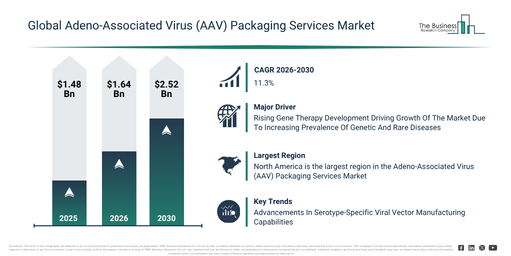
    The adeno-associated virus (AAV) packaging services market has experienced substantial expansion in recent years. It is forecast to rise from $1.48 billion in 2025 to $1.64 billion in 2026, at a compound annual growth rate (CAGR) of 11.1%. This growth witnessed during the historical period stems from increasing gene therapy research, greater funding for rare disease investigations, an expanding array of preclinical and clinical trials, the emergence of more biotechnology startups, and innovations in viral vector production technologies.

    The adeno-associated virus (AAV) packaging services market is projected for substantial expansion in the coming years, reaching $2.52 billion by 2030, driven by an 11.3% compound annual growth rate (CAGR). This anticipated growth during the forecast period is fueled by several factors, including the increasing number of gene therapy approvals, a growing need for commercial-scale Good Manufacturing Practice (GMP) production, increased capital directed towards precision medicine, the broadening pipelines of cell and gene therapies, and more strategic collaborations between biotechnology companies and Contract Development and Manufacturing Organizations (CDMOs). Key trends expected over this period involve a heightened demand for high-titer and high-purity AAV production, the expansion of GMP-compliant clinical-grade AAV packaging, an intensified focus on scalable large-scale manufacturing solutions, greater uptake of advanced analytical and release testing services, and an increase in the outsourcing of AAV vector manufacturing to CDMOs.

    Access Your Free Sample Report For In-Depth Market Analysis:

    https://www.thebusinessresearchcompany.com/sample_request?id=97919076&type=smp&name=Adeno-Associated%20Virus%20%28AAV%29%20Packaging%20Services%20Market%20Report%202026

    What Key Drivers Are Fueling The Growth Of The Adeno-Associated Virus (AAV) Packaging Services Market?

    The increasing need for gene therapy development is projected to boost the future expansion of the adeno-associated virus (AAV) packaging services market. Gene therapy development involves creating treatments that modify or replace faulty genes to treat diseases. The growing prevalence of genetic and rare diseases is driving the demand for gene therapy development, as it necessitates advanced treatments targeting the underlying genetic causes of these conditions. Adeno-associated virus (AAV) packaging services contribute to gene therapy development by offering specialized viral vector production and purification, which ensures a scalable, high-quality AAV supply for clinical research and therapeutic applications. For instance, in July 2023, according to the American Society of Gene & Cell Therapy (ASGCT), a US-based professional membership organization, there were 247 gene therapies in Phase II at the end of the first quarter of 2023, a number that rose by 5% to reach 260 by the end of the second quarter. Consequently, the rising demand for gene therapy development is a key driver for the growth of the adeno-associated virus (AAV) packaging services market.

    What Are The Main Segments Within The Adeno-Associated Virus (AAV) Packaging Services Market Segment Structure?

    The adeno-associated virus (AAV) packaging services market covered in this report is segmented –

    1) By Service Type: Research-Grade Adeno-Associated Virus (AAV) Packaging (RUO), Good Manufacturing Practice (GMP) Clinical Adeno-Associated Virus (AAV) Packaging, Good Manufacturing Practice (GMP) Late-Stage And Commercial Supply, Analytical And Release Testing, Process Development And Tech Transfer

    2) By Vector Type: Adeno-Associated Virus (AAV) 2, Adeno-Associated Virus (AAV) 5, Adeno-Associated Virus (AAV) 8, Adeno-Associated Virus (AAV) 9

    3) By Scale Of Production: Small-Scale Production, Mid-Scale Production, Large-Scale Production

    4) By Therapeutic Application: Ophthalmology, Neuromuscular And Central Nervous System, Metabolic Or Rare Genetic Disorders, Oncology, Cardiovascular, Other Indications

    5) By End User: Biotechnology And Biopharmaceutical Companies, Academic And Research Institutes, Contract Research Organizations, Contract Manufacturing Organizations, Healthcare And Diagnostic Laboratories

    Subsegments:

    1) By Research-Grade Adeno-Associated Virus (AAV) Packaging (RUO): Small Scale Production, Pilot Scale Production, Custom Vector Design, Preclinical Study Supply

    2) By GMP Clinical Adeno-Associated Virus (AAV) Packaging: Phase One Clinical Supply, Phase Two Clinical Supply, Phase Three Clinical Supply, Patient Specific Batch Production

    3) By GMP Late-Stage And Commercial Supply: Commercial Batch Production, Technology Transfer Support, Large Scale Manufacturing, Regulatory Submission Support

    4) By Analytical And Release Testing: Potency Testing, Purity Testing, Identity Testing, Safety Testing, Stability Testing

    5) By Process Development And Tech Transfer: Upstream Process Development, Downstream Process Development, Scale-Up Process Optimization, Technology Transfer To Manufacturing, Process Characterization

    What Trends Are Influencing The Adeno-Associated Virus (AAV) Packaging Services Market?

    Leading businesses within the adeno-associated virus (AAV) packaging services sector are concentrating on creating novel offerings, including on-demand AAV viral vector packaging systems. This aims to improve adaptability, speed up research schedules, and guarantee reliable, top-tier viral vector manufacturing. These on-demand AAV viral vector packaging platforms offer tailored AAV production for specific serotypes, complete with quality assurance. This assists researchers in conserving time and acquiring dependable, high-titer vectors suitable for gene delivery purposes. As an illustration, in January 2025, Addgene Inc., a US-based nonprofit scientific organization, introduced “Packaged on Request,” a pioneering AAV packaging service. This service enables scientists to select from more than 3,000 AAV plasmids available in Addgene’s collection and request packaging into serotypes such as AAV1, AAV2, AAV5, AAV8, and AAV Retrograde capsids. Every preparation undergoes extensive quality control protocols, covering ddPCR titering, purity checks, sterility assessments, and viral genome sequencing, thereby guaranteeing research-grade quality comparable to existing viral preparations. Furthermore, the service simplifies legal authorizations and technology transfer procedures, decreasing the administrative workload while still providing high titers appropriate for various in vivo and in vitro applications.

    Who Are The Companies Participating In The Adeno-Associated Virus (AAV) Packaging Services Market?

    Major companies operating in the adeno-associated virus (AAV) packaging services market are Thermo Fisher Scientific Inc., AGC Biologics Inc., Lonza Group AG, Charles River Laboratories International Inc., Resilience Biotechnologies Inc., GenScript Biotech Corporation, Takara Bio Inc., OxB CDMO Inc., 3PBIOVIAN, VectorBuilder, Genezen Labs, Addgene Inc., PackGene Biotech Inc., Porton Advanced Solutions Ltd., Creative Biogene, Yposkesi SAS, AAVnerGene Inc., Virovek Inc., WuXi Advanced Therapies Co. Ltd., BioInnovatise Inc.

    Get The Full Adeno-Associated Virus (AAV) Packaging Services Market Report:

    https://www.thebusinessresearchcompany.com/report/adeno-associated-virus-aav-packaging-services-market-report

    Which Region Leads The Adeno-Associated Virus (AAV) Packaging Services Market In Terms Of Market Share?

    North America was the largest region in the adeno-associated virus (AAV) packaging services market in 2025. Asia-Pacific is expected to be the fastest-growing region in the forecast period. The regions covered in the adeno-associated virus (AAV) packaging services market report are Asia-Pacific, South East Asia, Western Europe, Eastern Europe, North America, South America, Middle East, Africa.

    Request A Customized Adeno-Associated Virus (AAV) Packaging Services Market Report For Competitive Insights:

    https://www.thebusinessresearchcompany.com/Customise?id=97919076&name=Adeno-Associated%20Virus%20%28AAV%29%20Packaging%20Services%20Market%20Report%202026&type=smp

    Browse Through More Reports Similar to the Global Adeno-Associated Virus (AAV) Packaging Services Market 2026, By The Business Research Company

    pruritus therapeutic market report 2026

    https://www.thebusinessresearchcompany.com/report/pruritus-therapeutic-global-market-report

    genomic urine testing market report 2026

    https://www.thebusinessresearchcompany.com/report/genomic-urine-testing-global-market-report

    ocular genetic diagnostic market report 2026

    https://www.thebusinessresearchcompany.com/report/ocular-genetic-diagnostic-global-market-report

    Get in touch with us:

    The Business Research Company: https://www.thebusinessresearchcompany.com/

    Americas +1 310-496-7795

    Asia +44 7882 955267 & +91 8897263534

    Europe +44 7882 955267

    Email us at marketing@tbrc.info

    Follow us on:

    LinkedIn: https://in.linkedin.com/company/the-business-research-company

    YouTube: https://www.youtube.com/channel/UC24_fI0rV8cR5DxlCpgmyFQ

    Global Market Model: https://www.thebusinessresearchcompany.com/global-market-model
  • Wastewater Biothreat Genomics Market Expected To Grow Steadily And Approach $3.01 Billion By 2030

    Wastewater Biothreat Genomics Market Expected To Grow Steadily And Approach $3.01 Billion By 2030

    The Business Research Company’s 2026 market reports feature enhanced tools like market attractiveness analysis, TAM assessment, and company scoring matrices, along with interactive dashboards, deeper supply chain insights, and startup coverage strengthening the depth, usability, and strategic value of insights.

    By 2030, What Market Size Is The Wastewater Biothreat Genomics Market Expected To Reach Based On Its 2026 Value?

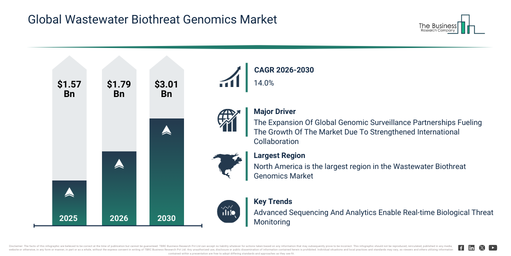
    The wastewater biothreat genomics market size has experienced rapid growth in recent years. This market is expected to expand from $1.57 billion in 2025 to $1.79 billion in 2026, at a compound annual growth rate (CAGR) of 13.7%. The historical increase in this market can be ascribed to elements such as covid era wastewater surveillance, an expansion in genomic sequencing labs, the broadening of public health monitoring, the emergence of pathogen tracking programs, and a rise in molecular diagnostics.

    The wastewater biothreat genomics market is anticipated to experience substantial growth in the upcoming years, with projections indicating it will climb to $3.01 billion by 2030, exhibiting a compound annual growth rate (CAGR) of 14.0%. This expansion during the forecast period is primarily driven by heightened biosecurity investments, the proliferation of early outbreak detection systems, advancements in automated sample processing, increasing government surveillance programs, and the growth of AI genomic analytics. Noteworthy trends expected over this period involve the expansion of sewage-based pathogen surveillance, a rise in metagenomic wastewater testing, the adoption of rapid field sequencing kits, the integration of bioinformatics threat dashboards, and increased community-level pathogen monitoring.

    Access Your Free Sample Report For In-Depth Market Analysis:

    https://www.thebusinessresearchcompany.com/sample.aspx?id=33358&type=smp

    What Significant Factors Are Influencing The Wastewater Biothreat Genomics Market Expansion?

    The future expansion of worldwide genomic surveillance collaborations is projected to stimulate the growth of the wastewater biothreat genomics market. These collaborations are cooperative structures that bring together governments, international health bodies, and research facilities to share genomic information and improve the early identification of biological threats. The increase in genomic surveillance partnerships stems from a heightened awareness among governmental bodies and health agencies regarding the necessity for synchronized, international monitoring to promptly identify nascent biological threats. In this context, wastewater biothreat genomics facilitates global genomic surveillance by allowing for the standardized identification and comparison of pathogens found in wastewater samples, thereby enhancing international data integration and early warning systems. As an illustration, in July 2025, the World Health Organization (WHO), an intergovernmental body headquartered in Switzerland, reported that its International Pathogen Surveillance Network expanded significantly, growing from approximately 35 partner organizations across 18 countries to nearly 350 partners spread across more than 100 countries. Consequently, the broadening of global genomic surveillance collaborations is a key factor propelling the expansion of the wastewater biothreat genomics market.

    Which Segment Types Are Examined In The Wastewater Biothreat Genomics Market Segment Study?

    The wastewater biothreat genomics market covered in this report is segmented –

    1) By Product Type: Portable Genomic Detection Devices; Laboratory Based Sequencing Instruments; Sample Collection and Preparation Kits; Consumables and Reagents; Software and Analytical Platforms

    2) By Technology: Polymerase Chain Reaction Systems; Next Generation Sequencing Systems; Microarray Based Detection Systems; Biosensor Based Detection Systems; Other Molecular Detection Technologies

    3) By Application: Pathogen Detection; Antimicrobial Resistance Surveillance; Environmental Monitoring; Other Applications

    4) By End-User: Municipal Utilities; Industrial Facilities; Academic and Research Institutes; Government Agencies; Other End-Users

    Subsegments:

    1) By Portable Genomic Detection Devices: Handheld Nucleic Acid Sequencers; Field Deployable Polymerase Chain Reaction Systems; Portable Isothermal Amplification Devices; Mobile Biosensor Based Genomic Detectors

    2) By Laboratory Based Sequencing Instruments: Next Generation Sequencing Systems; High Throughput Whole Genome Sequencers; Targeted Gene Sequencing Platforms; Metagenomic Sequencing Instruments

    3) By Sample Collection and Preparation Kits: Wastewater Sampling Kits; Nucleic Acid Extraction Kits; Pathogen Enrichment and Concentration Kits; Library Preparation Kits

    4) By Consumables and Reagents: Enzymes for Nucleic Acid Amplification; Sequencing Reagent Cartridges; Primers and Probes; Buffers and Chemical Solutions

    5) By Software and Analytical Platforms: Bioinformatics Data Analysis Software; Pathogen Identification and Surveillance Platforms; Genomic Data Management Systems; Artificial Intelligence Based Threat Detection Tools

    What Trends Are Influencing Changes In The Wastewater Biothreat Genomics Market?

    Leading companies in the wastewater biothreat genomics market are concentrating on creating sophisticated tools, such as genomic pathogen surveillance systems, to improve the prompt identification of biological dangers, bolster public health responses, and aid in environmental oversight. These systems utilize technologies that scrutinize wastewater samples through genomic sequencing and bioinformatics to pinpoint viruses, bacteria, and various microbial hazards, thereby allowing for real-time tracking of health risks across populations. As an illustration, in January 2023, the Canadian biotechnology firm, Fusion Genomics Corporation, initiated a pioneering wastewater surveillance pilot program at Toronto Pearson International Airport. This particular system combines high-throughput genomic sequencing with advanced analytical methods to identify and measure potential biothreats present in wastewater flows. This methodology allows for quicker identification of new pathogens, facilitates public health interventions guided by data, and offers practical intelligence for reducing biological risks, surpassing the capabilities of traditional monitoring techniques. Through the integration of genomics, bioinformatics, and environmental sample collection, this solution contributes to heightened situational awareness, reinforced biosecurity protocols, and superior early warning capacities for communities and essential infrastructure.

    Which Players Are Part Of The Competitive Landscape Of The Wastewater Biothreat Genomics Market?

    Major companies operating in the wastewater biothreat genomics market are Miniature Brain Stimulator, Danaher Corporation, Thermo Fisher Scientific Inc., Eurofins Scientific SE, Illumina Inc., IDEXX Laboratories Inc., Bio-Rad Laboratories Inc., QIAGEN N.V., Randox Laboratories Ltd., Promega Corporation, OraSure Technologies Inc., Verily Life Sciences LLC, Twist Bioscience Corporation, Ginkgo Bioworks Holdings Inc., Oxford Nanopore Technologies plc, Pacific Biosciences of California Inc., New England Biolabs Inc., LuminUltra Technologies Ltd., BaseClear B.V., Biobot Analytics Inc., GT Molecular Inc., Ceres Nanosciences Inc.

    Get The Full Wastewater Biothreat Genomics Market Report:

    https://www.thebusinessresearchcompany.com/report/wastewater-biothreat-genomics-market-report

    Which Region Leads The Wastewater Biothreat Genomics Market In Overall Market Size?

    North America was the largest region in the wastewater biothreat genomics market in 2025. Asia-Pacific is expected to be the fastest-growing region in the forecast period. The regions covered in the wastewater biothreat genomics market report are Asia-Pacific, South East Asia, Western Europe, Eastern Europe, North America, South America, Middle East, Africa.

    Request A Customized Wastewater Biothreat Genomics Market Report For Competitive Insights:

    https://www.thebusinessresearchcompany.com/customise?id=33358&type=smp

    Browse Through More Reports Similar to the Global Wastewater Biothreat Genomics Market 2026, By The Business Research Company

    Biological Wastewater Treatment Market Report 2026

    https://www.thebusinessresearchcompany.com/report/biological-wastewater-treatment-global-market-report

    Wastewater Treatment Service Market Report 2026

    https://www.thebusinessresearchcompany.com/report/wastewater-treatment-service-global-market-report

    Upstream Bioprocessing Market Report 2026

    https://www.thebusinessresearchcompany.com/report/upstream-bioprocessing-global-market-report

    Get in touch with us:

    The Business Research Company: https://www.thebusinessresearchcompany.com/

    Americas +1 310-496-7795

    Asia +44 7882 955267 & +91 8897263534

    Europe +44 7882 955267

    Email us at info@tbrc.info

    Follow us on:

    LinkedIn: https://in.linkedin.com/company/the-business-research-company

    YouTube: https://www.youtube.com/channel/UC24_fI0rV8cR5DxlCpgmyFQ

    Global Market Model: https://www.thebusinessresearchcompany.com/global-market-model
  • Virtual Ward Market Expansion Forecast Reaching $5 Billion By 2030 At 15.2% CAGR

    Virtual Ward Market Expansion Forecast Reaching $5 Billion By 2030 At 15.2% CAGR

    The Business Research Company’s 2026 market reports feature enhanced tools like market attractiveness analysis, TAM assessment, and company scoring matrices, along with interactive dashboards, deeper supply chain insights, and startup coverage strengthening the depth, usability, and strategic value of insights.

    What Is The Anticipated Rise In Market Value Of The Virtual Ward Market During The Forecast Period?

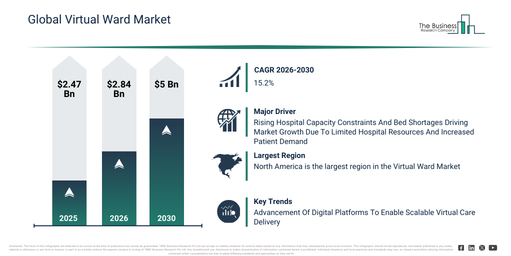
    The virtual ward market has seen swift expansion in recent years. It is forecast to grow from $2.47 billion in 2025 to $2.84 billion in 2026, registering a compound annual growth rate (CAGR) of 14.9%. The market’s past growth can be attributed to several factors, including hospital capacity constraints, an uptick in remote monitoring pilots, the proliferation of telehealth services, an increase in chronic disease admissions, and the early adoption of home care digitization.

    The virtual ward market is anticipated to experience significant expansion in the coming years. Projections indicate it will reach $5 billion by 2030, demonstrating a compound annual growth rate (CAGR) of 15.2%. Key factors contributing to this growth include escalating healthcare cost pressures, an expanding elderly demographic, wider reimbursement options for home care services, increased uptake of connected medical devices, and enhanced governmental backing for home-based treatment approaches. Prominent trends expected during this period involve the increasing embrace of hospital-at-home models, a surge in the utilization of continuous remote patient monitoring, the broadening of virtual nursing services, greater incorporation of clinical decision support tools, and the expanded implementation of home-based acute care initiatives.

    Access Your Free Sample Report For In-Depth Market Analysis:

    https://www.thebusinessresearchcompany.com/sample.aspx?id=33354&type=smp

    Which Important Drivers Are Guiding The Virtual Ward Market Growth?

    The expansion of the virtual ward market is anticipated in the upcoming years, driven by increasing hospital capacity limitations and a lack of available beds. These constraints emerge when healthcare systems lack adequate beds, personnel, or infrastructure to cater to patient needs. An aging demographic, requiring extended hospitalizations and more intricate care, is intensifying these pressures, leading to slower bed turnover and a heightened demand for inpatient services. Virtual wards mitigate these difficulties by allowing patients to access hospital-grade care at home, thus liberating physical beds, enhancing patient movement, and decreasing pressure on hospital resources. As an illustration, in January 2026, the Australian Institute of Health and Welfare (AIHW), an Australian-based government agency, reported an average of 67,300 public hospital beds available in 2023–24, which translates to 2.5 beds per 1,000 people. This limited bed availability, coupled with increasing healthcare demand, underscores the persistent capacity issues within the hospital framework. Consequently, increasing hospital capacity limitations and bed scarcity are projected to fuel the expansion of the virtual ward market.

    How Are Different Segments Classified In The Virtual Ward Market Segment Analysis?

    The virtual ward market covered in this report is segmented –

    1) By Component: Hardware; Software; Services

    2) By Service Type: Chronic Disease Management; Post-Operative Care; Preventive Care; Acute Care at Home; Virtual Nursing Services; Care Coordination Services

    3) By Patient Demographics: Children; Adults; Senior Citizens

    4) By Application: Cardiology; Neurology; Pulmonology; Oncology; Orthopedics; General Medicine; Geriatric Care

    5) By End User: Patients; Hospitals; Clinics; Home Healthcare Providers; Insurance Companies; Government Healthcare Agencies

    Subsegments:

    1) By Hardware: Remote Patient Monitoring Devices; Wearable Health Sensors; Vital Sign Monitoring Equipment; Mobile Medical Tablets; Home Diagnostic Devices

    2) By Software: Virtual Ward Management Platforms; Remote Monitoring Software; Patient Data Management Systems; Clinical Decision Support Software; Telehealth Integration Software

    3) By Services: Remote Patient Monitoring Services; Virtual Clinical Care Services; Technical Support Services; Data Management Services; Care Coordination Services

    Which Trends Are Shaping Growth In The Virtual Ward Market?

    Leading companies in the virtual ward market are concentrating on developing advanced offerings, such as digital platforms. These platforms aim to enhance remote patient observation, facilitate real-time clinical decision-making, improve care coordination among healthcare teams, and reduce hospital admissions by delivering continuous, hospital-quality care in home-based environments. A digital platform is fundamentally a technology-driven system, typically accessed online, designed to enable interactions, transactions, or value exchange between two or more interdependent groups, including users, businesses, developers, or service providers. For example, in June 2025, Medway NHS Foundation Trust, a UK-based public healthcare provider, launched a new digital platform in partnership with health tech firm Feebris to scale its virtual hospital and virtual ward services, extending digital care beyond initial pilot programs. This platform incorporates configurable technology that supports virtual monitoring and hospital-at-home services across all clinical specialties, enables the remote capture of patient data, and considerably reduces hospital bed days and associated costs by facilitating recovery at home. It also supports the submission of pseudonymised data to national health data systems, fostering broader adoption and evidence generation for virtual care models. This solution enhances traditional care models by shifting service delivery from physical wards to digitally enabled patient environments, thereby improving efficiency and the overall patient experience.

    Who Are The Companies Driving Activity In The Virtual Ward Market?

    Major companies operating in the virtual ward market are Amazon.com Inc., UnitedHealth Group Incorporated, CVS Health Corporation, The Cigna Group Inc., Elevance Health Inc., Siemens AG, Roche Holding AG, HCA Healthcare Inc., Best Buy Co. Inc., Abbott Laboratories, Medtronic plc, Stryker Corporation, Koninklijke Philips N.V, GE Healthcare Technologies Inc., Boston Scientific Corporation, Baxter International Inc., ResMed Inc., DexCom Inc., Teladoc Health Inc., Masimo Corporation, iRhythm Technologies Inc.

    Get The Full Virtual Ward Market Report:

    https://www.thebusinessresearchcompany.com/report/virtual-ward-market-report

    Which Region Is The Top Contributor To The Virtual Ward Market By Share?

    North America was the largest region in the virtual ward market in 2025. Asia-Pacific is expected to be the fastest-growing region in the forecast period. The regions covered in the virtual ward market report are Asia-Pacific, South East Asia, Western Europe, Eastern Europe, North America, South America, Middle East, Africa.

    Request A Customized Virtual Ward Market Report For Competitive Insights:

    https://www.thebusinessresearchcompany.com/customise?id=33354&type=smp

    Browse Through More Reports Similar to the Global Virtual Ward Market 2026, By The Business Research Company

    Vertical Market Software Market Report 2026

    https://www.thebusinessresearchcompany.com/report/vertical-market-software-global-market-report

    Market Research Services Market Report 2026

    https://www.thebusinessresearchcompany.com/report/market-research-services-global-market-report

    Virtual Tourism Market Report 2026

    https://www.thebusinessresearchcompany.com/report/virtual-tourism-global-market-report

    Get in touch with us:

    The Business Research Company: https://www.thebusinessresearchcompany.com/

    Americas +1 310-496-7795

    Asia +44 7882 955267 & +91 8897263534

    Europe +44 7882 955267

    Email us at info@tbrc.info

    Follow us on:

    LinkedIn: https://in.linkedin.com/company/the-business-research-company

    YouTube: https://www.youtube.com/channel/UC24_fI0rV8cR5DxlCpgmyFQ

    Global Market Model: https://www.thebusinessresearchcompany.com/global-market-model
  • Virtual Clinics Market Revenue Projected To Hit $21.92 Billion By 2030 With 13% CAGR

    Virtual Clinics Market Revenue Projected To Hit $21.92 Billion By 2030 With 13% CAGR

    The Business Research Company’s 2026 market reports feature enhanced tools like market attractiveness analysis, TAM assessment, and company scoring matrices, along with interactive dashboards, deeper supply chain insights, and startup coverage strengthening the depth, usability, and strategic value of insights.

    How Is The Market Size Of The Virtual Clinics Market Expected To Scale Between 2026 And 2030?

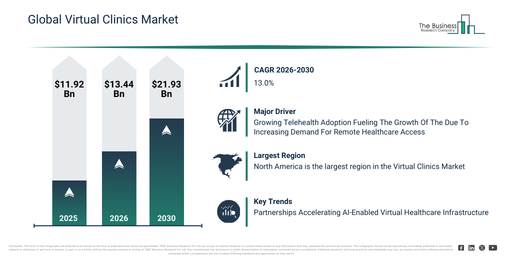
    The virtual clinics market size has experienced rapid expansion in recent years. It is projected to increase from $11.92 billion in 2025 to $13.44 billion in 2026, achieving a compound annual growth rate (CAGR) of 12.8%. This historical growth can be ascribed to a surge in telemedicine usage, the expansion of broadband access, the proliferation of digital health apps, rising patient demand for convenience, and the initial wave of pandemic-driven virtual visits.

    The virtual clinics market is poised for substantial growth in the upcoming years. It is forecast to expand to $21.93 billion by 2030, achieving a compound annual growth rate (CAGR) of 13.0%. This projected expansion is attributed to the increasing prevalence of hybrid care models, the emergence of digital-first healthcare policies, the broader application of remote diagnostics, enhanced insurer coverage for virtual appointments, and the rise in cross-border teleconsultations. Significant trends within this period include the growing embrace of video consultation platforms, a surge in the use of virtual follow-up services, the proliferation of integrated EHR teleclinic systems, the increased deployment of remote diagnostic kiosks, and a heightened demand for mobile-first virtual clinics.

    Access Your Free Sample Report For In-Depth Market Analysis:

    https://www.thebusinessresearchcompany.com/sample.aspx?id=33351&type=smp

    What Major Factors Are Driving The Virtual Clinics Market Forward?

    The increasing acceptance of telehealth is anticipated to propel the expansion of the virtual clinics market moving forward. Telehealth adoption refers to the degree to which patients, providers, and healthcare systems implement and routinely utilize digital technologies for delivering clinical care and health services remotely. This rise in telehealth adoption is primarily due to the growing need for convenient access to healthcare without requiring in-person visits. Virtual clinics, acting as a key delivery model within telehealth, provide structured platforms that enable patients to receive consultations, diagnoses, and follow-up care entirely online. For instance, in July 2025, according to the International Trade Administration (ITA), digital treatment penetration in the U.S. stood at 18.1% in 2024 and is projected to increase to 28.08% by 2029, reflecting the expanding use of digital and remote healthcare services. Therefore, the growing telehealth adoption is driving growth of the virtual clinics market.

    How Is The Virtual Clinics Market Categorized Across Its Segment Groups?

    The virtual clinics market covered in this report is segmented –

    1) By Type: Teleconsultation Platforms; Virtual Primary Care; Specialty E-Clinics; Artificial Intelligence-Based Symptom Checkers; Mobile Health Services

    2) By Application: Primary Care; Mental Health; Dermatology; Pediatrics; Chronic Care

    3) By End Users: Healthcare Providers; Patients; Pharmaceutical Companies; Insurance Companies; Employers

    Subsegments:

    1) By Teleconsultation Platforms: Video Consultation Platforms; Audio Consultation Platforms; Chat-Based Consultation Platforms; Integrated Scheduling and Consultation Platforms

    2) By Virtual Primary Care: Preventive Care Platforms; Routine Checkup Platforms; Family Medicine Virtual Platforms; General Practice Virtual Platforms

    3) By Specialty E-Clinics: Cardiology Virtual Clinics; Dermatology Virtual Clinics; Endocrinology Virtual Clinics; Orthopedic Virtual Clinics; Neurology Virtual Clinics

    4) By Artificial Intelligence-Based Symptom Checkers: Rule Based Symptom Assessment Tools; Machine Learning Driven Symptom Analysis Tools; Natural Language Processing Based Triage Tools; Predictive Diagnostic Support Tools

    5) By Mobile Health Services: Mobile Consultation Applications; Remote Health Monitoring Applications; Medication Management Applications; Wellness and Preventive Care Applications

    What Trends Are Affecting The Direction Of The Virtual Clinics Market?

    Major entities within the virtual clinics market are increasingly adopting a strategic partnership strategy to enhance technological integration and broaden their market presence. A strategic partnership typically denotes a collaborative relationship between multiple organizations where they combine resources, specialized knowledge, and efforts to achieve shared objectives. For instance, in January 2026, VSee Health, Inc., a US-based telehealth technology provider, formed a strategic alliance with DocBox, a US-based augmented intelligence platform for critical care, to create a cutting-edge virtual ICU operating system for healthcare facilities globally. This collaboration merges VSee’s telehealth and AI-driven workflows with DocBox’s vendor-agnostic bedside data infrastructure, allowing hospitals to utilize real-time, structured clinical data from ICU devices and monitoring systems. The resulting integrated solution is engineered as a reimbursement-ready, AI-native virtual ICU platform that facilitates scalable remote critical care delivery, boosts revenue capture via automated billing processes, enables the deployment of AI decision-support tools on live physiological data, ensures hospitals retain ownership of clinical data, and embeds VSee’s functionalities directly into core clinical operations.

    Which Firms Are Influencing Competition In The Virtual Clinics Market?

    Major companies operating in the virtual clinics market are Optum Inc., The Cigna Group, Siemens Healthineers AG, Koninklijke Philips N.V., SSM Health Care Group, Teladoc Health Inc., Babylon Healthcare Services Limited, Hims & Hers Health Inc., Ping An Healthcare and Technology Company Limited, Kry International AB, American Well Corporation, MDLIVE Inc., Doctor On Demand Inc., CallHealth Services Private Limited, HealthTap Inc., Ada Health GmbH, Virinchi Hospitals Private Limited, Practo Technologies Private Limited, 98point6 Inc., PlushCare Inc.

    Get The Full Virtual Clinics Market Report:

    https://www.thebusinessresearchcompany.com/report/virtual-clinics-market-report

    Which Region Represents The Largest Share Of The Virtual Clinics Market?

    North America was the largest region in the virtual clinics market in 2025. Asia-Pacific is expected to be the fastest-growing region in the forecast period. The regions covered in the virtual clinics market report are Asia-Pacific, South East Asia, Western Europe, Eastern Europe, North America, South America, Middle East, Africa.

    Request A Customized Virtual Clinics Market Report For Competitive Insights:

    https://www.thebusinessresearchcompany.com/customise?id=33351&type=smp

    Browse Through More Reports Similar to the Global Virtual Clinics Market 2026, By The Business Research Company

    Virtual Clinical Trials Market Report 2026

    https://www.thebusinessresearchcompany.com/report/virtual-clinical-trials-global-market-report

    Retail Clinics Market Report 2026

    https://www.thebusinessresearchcompany.com/report/retail-clinics-global-market-report

    Virtual Reality In Healthcare Market Report 2026

    https://www.thebusinessresearchcompany.com/report/virtual-reality-in-healthcare-global-market-report

    Get in touch with us:

    The Business Research Company: https://www.thebusinessresearchcompany.com/

    Americas +1 310-496-7795

    Asia +44 7882 955267 & +91 8897263534

    Europe +44 7882 955267

    Email us at info@tbrc.info

    Follow us on:

    LinkedIn: https://in.linkedin.com/company/the-business-research-company

    YouTube: https://www.youtube.com/channel/UC24_fI0rV8cR5DxlCpgmyFQ

    Global Market Model: https://www.thebusinessresearchcompany.com/global-market-model
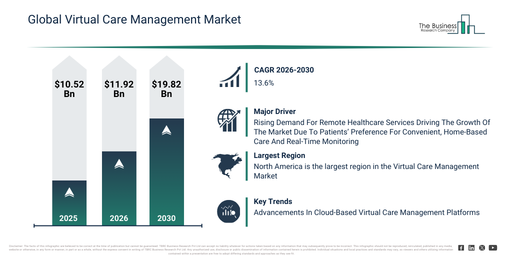
  • Global Virtual Care Management Market Set To Expand To $19.81 Billion By 2030 At 13.6% CAGR

    Global Virtual Care Management Market Set To Expand To $19.81 Billion By 2030 At 13.6% CAGR

    The Business Research Company’s 2026 market reports feature enhanced tools like market attractiveness analysis, TAM assessment, and company scoring matrices, along with interactive dashboards, deeper supply chain insights, and startup coverage strengthening the depth, usability, and strategic value of insights.

    What Level Of Market Value Growth Is Predicted For The Virtual Care Management Market From 2026 To 2030?

    The virtual care management market has experienced rapid expansion recently. It is anticipated to increase from $10.52 billion in 2025 to $11.92 billion in 2026, achieving a compound annual growth rate (CAGR) of 13.3%. This historic growth is largely due to factors such as increased telehealth adoption, the escalating burden of chronic diseases, the broader implementation of digital health records, a surge in remote monitoring pilot initiatives, and early backing for virtual care from insurers.

    Significant expansion is projected for the virtual care management market size in the coming years. By 2030, this market is forecasted to reach a valuation of $19.82 billion, demonstrating a compound annual growth rate (CAGR) of 13.6%. This anticipated growth during the forecast period stems from several factors, including the proliferation of value-based care models, a demographic shift towards an older population, the broadening scope of home-based monitoring initiatives, improved payer reimbursement rates for virtual services, and increased budgetary allocations by providers for digital transformation. Key trends defining this forecast period encompass the increasing uptake of remote care coordination platforms, a surge in continuous chronic care monitoring applications, the evolution and wider availability of digital care plan management instruments, enhanced incorporation of patient engagement platforms, and a greater implementation of virtual care analytics solutions.

    Access Your Free Sample Report For In-Depth Market Analysis:

    https://www.thebusinessresearchcompany.com/sample.aspx?id=33350&type=smp

    Which Key Drivers Are Affecting The Virtual Care Management Market Development?

    The increasing need for remote medical services is anticipated to fuel the expansion of the virtual care management market over the next few years. Remote healthcare services encompass providing medical attention, consultations, and patient oversight remotely via digital platforms and telecommunications. This escalating demand is primarily propelled by patients’ desire for convenient and easily accessible care, enabling them to obtain medical services from their residences, thereby cutting down on travel duration, waiting periods, and related expenses. Virtual care management facilitates remote healthcare provision through coordinated, instantaneous monitoring, communication, and systematic care planning involving both providers and patients. These functionalities bolster the uninterrupted provision of care, elevate patient involvement, and boost the overall efficiency of the healthcare system. Telehealth adoption patterns serve as an indicator of this heightened demand. For example, data from the U.S. Department of Health and Human Services (HHS), a US-based national health policy, reveals that approximately 25% of medicare fee-for-service beneficiaries used a telehealth service, a rise from 18% in March 2023, marking a considerable 7 percentage point increase year-over-year. Consequently, the increased demand for remote healthcare services is propelling the expansion of the virtual care management market.

    How Are Segments Identified Within The Virtual Care Management Market Segment Framework?

    The virtual care management market covered in this report is segmented –

    1) By Component: Software; Hardware; Services

    2) By Deployment Mode: On-Premises; Cloud

    3) By Application: Telehealth; Remote Patient Monitoring; Chronic Disease Management; Behavioral Health; Other Applications

    4) By End-Users: Hospitals; Clinics; Home Care Settings; Other End-Users

    Subsegments:

    1) By Software: Care Coordination Platforms; Patient Engagement Applications; Clinical Decision Support Systems; Population Health Management Tools

    2) By Hardware: Remote Monitoring Devices; Wearable Health Tracking Devices; Connected Diagnostic Equipment; Home Care Medical Devices

    3) By Services: Remote Care Coordination Services; Chronic Care Management Services; Virtual Patient Monitoring Services

    What Trends Are Influencing The Evolution Of The Virtual Care Management Market?

    Companies operating within the virtual care management market are prioritizing developments in cloud and teleconferencing technologies, such as virtual care management (VCM) platforms, to bolster remote patient engagement, enable immediate clinician–patient interactions, optimize care coordination, and facilitate the scalable, secure delivery of healthcare services across diverse care environments. Virtual care management (VCM) refers to the synchronized delivery, oversight, and administration of patient care utilizing digital and remote healthcare technologies, rather than relying on in-person visits. For instance, in march 2023, Royal Philips, a Netherlands-based health technology company, introduced Philips virtual care management, featuring condition-specific protocols (including diabetes and hypertension), connected devices and engagement tools on a secure interoperable cloud-based platform, and licensed clinical professional monitoring with personalized health coaching.

    Who Are The Companies Competing Within The Virtual Care Management Market?

    Major companies operating in the virtual care management market are Amazon.web service Inc., UnitedHealth Group Incorporated, CVS Health Corporation, The Cigna Group Inc., Elevance Health Inc., Centene Corporation, Humana Inc., HCA Healthcare Inc., Best Buy Co. Inc., Koninklijke Philips N.V., Boston Scientific Corporation, ResMed Inc., Agilon Health Inc., DexCom Inc., Teladoc Health Inc., Masimo Corporation, Evolent Health Inc., Privia Health Group Inc., Hims & Hers Health Inc., Doximity Inc., American Well Corporation, LifeMD Inc., Talkspace Inc.

    Get The Full Virtual Care Management Market Report:

    https://www.thebusinessresearchcompany.com/report/virtual-care-management-market-report

    Which Geographic Region Dominates The Virtual Care Management Market?

    North America was the largest region in the virtual care management market in 2025. Asia-Pacific is expected to be the fastest-growing region in the forecast period. The regions covered in the virtual care management market report are Asia-Pacific, South East Asia, Western Europe, Eastern Europe, North America, South America, Middle East, Africa.

    Request A Customized Virtual Care Management Market Report For Competitive Insights:

    https://www.thebusinessresearchcompany.com/customise?id=33350&type=smp

    Browse Through More Reports Similar to the Global Virtual Care Management Market 2026, By The Business Research Company

    Virtual Reality In Healthcare Market Report 2026

    https://www.thebusinessresearchcompany.com/report/virtual-reality-in-healthcare-global-market-report

    Virtual Clinical Trials Market Report 2026

    https://www.thebusinessresearchcompany.com/report/virtual-clinical-trials-global-market-report

    Care Management Solutions Market Report 2026

    https://www.thebusinessresearchcompany.com/report/care-management-solutions-global-market-report

    Get in touch with us:

    The Business Research Company: https://www.thebusinessresearchcompany.com/

    Americas +1 310-496-7795

    Asia +44 7882 955267 & +91 8897263534

    Europe +44 7882 955267

    Email us at info@tbrc.info

    Follow us on:

    LinkedIn: https://in.linkedin.com/company/the-business-research-company

    YouTube: https://www.youtube.com/channel/UC24_fI0rV8cR5DxlCpgmyFQ

    Global Market Model: https://www.thebusinessresearchcompany.com/global-market-model