Category: Healthcare Services

  • Stuttering Treatment Market Growth Patterns And Forecast Outlook Through 2030

    Stuttering Treatment Market Growth Patterns And Forecast Outlook Through 2030

    The Business Research Company’s 2026 market reports feature enhanced tools like market attractiveness analysis, TAM assessment, and company scoring matrices, along with interactive dashboards, deeper supply chain insights, and startup coverage strengthening the depth, usability, and strategic value of insights.

    How Is The Market Size Of The Stuttering Treatment Market Expected To Scale Between 2026 And 2030?

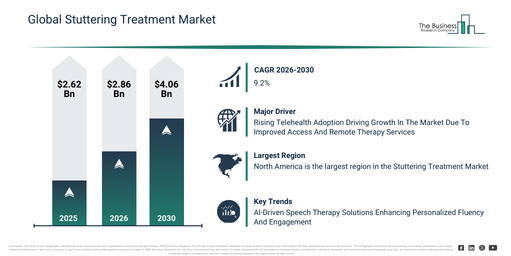
    The stuttering treatment market has demonstrated robust growth in recent years. It is projected to increase from $2.62 billion in 2025 to $2.86 billion in 2026, exhibiting a compound annual growth rate (CAGR) of 8.9%. This historical expansion can be attributed to various factors, including an increase in speech disorder awareness, the proliferation of speech therapy clinics, rising school screening programs, the broader availability of pediatric therapy services, and the early implementation of fluency shaping methods.

    The stuttering treatment market is projected to experience substantial expansion in the coming years. This market is forecast to reach $4.06 billion by 2030, demonstrating a compound annual growth rate (CAGR) of 9.2%. Factors contributing to this growth during the forecast period include the increasing adoption of teletherapy, the growing integration of mental health services into speech care, the expansion of digital therapy platforms, enhanced insurance coverage for speech therapy, and improved rates of early diagnosis. Key trends anticipated during the same period encompass the growing popularity of app-based speech therapy, a rise in the utilization of virtual speech therapy sessions, the broader implementation of early childhood fluency programs, increasing incorporation of behavioral counseling, and greater adoption of assistive fluency devices.

    Access Your Free Sample Report For In-Depth Market Analysis:

    https://www.thebusinessresearchcompany.com/sample.aspx?id=33327&type=smp

    Which Major Drivers Are Influencing The Expansion Of The Stuttering Treatment Market?

    The growing adoption of telehealth is expected to propel the expansion of the stuttering treatment market in the coming years. Telehealth involves delivering healthcare services remotely through digital communication technologies, including video consultations, mobile applications, and online therapy platforms. Its increasing acceptance is attributed to improved access to care, especially for individuals in remote or underserved areas, coupled with reduced travel time and scheduling hurdles. Stuttering treatment is particularly well-suited for telehealth delivery, as speech therapy sessions can be effectively conducted via real-time video interactions. This enables patients to receive consistent, convenient, and personalized speech therapy from home, potentially enhancing therapy adherence and broadening access to qualified speech-language pathologists. For instance, in September 2024, according to the Australian Bureau of Statistics (ABS), the national statistical agency of Australia, in 2023–24, 83.5% of males reported using telehealth services, an increase from 78.6% in 2022–23. Therefore, the growing uptake of telehealth is a key factor driving the growth of the stuttering treatment market. The rising healthcare expenditure is anticipated to drive the stuttering treatment market forward. Healthcare expenditure refers to the cumulative financial resources expended by individuals, organizations, or governments on preventing, treating, and managing health conditions. This expenditure is increasing due to advancements in medical technology, as new diagnostic tools, treatments, and innovative therapies often come with higher costs, resulting in greater overall healthcare spending. Elevated healthcare expenditure benefits stuttering treatment by enhancing access, improving affordability, and fostering the development of advanced therapies, including telehealth and personalized interventions. For example, in December 2024, the Centers for Medicare & Medicaid Services, a US-based agency responsible for administering the Medicare and Medicaid programs, reported that in 2023, U.S. health care expenditures rose by 7.5%, reaching $4.9 trillion, or roughly $14,570 per individual. Consequently, the escalating healthcare expenditure is a significant driver for the growth of the stuttering treatment market.

    How Are Segments Identified Within The Stuttering Treatment Market Segment Framework?

    The stuttering treatment market covered in this report is segmented –

    1) By Treatment Type: Speech Therapy; Digital And App-Based Therapy; Pharmacological Treatment; Assistive Devices And Wearables

    2) By Age Group: Children; Adolescents; Adults

    3) By End User: Speech And Language Clinics; Hospitals And Rehabilitation Centers; Schools And Educational Institutions; Direct-To-Consumer Platforms

    Subsegments:

    1) By Speech Therapy: Articulation Therapy; Fluency Shaping Therapy; Stuttering Modification Therapy; Cognitive Behavioral Therapy

    2) By Digital And App-Based Therapy: Mobile Application Based Therapy; Online Video Therapy Sessions; Virtual Reality Based Therapy; Interactive Software Tools

    3) By Pharmacological Treatment: Anti Anxiety Medication; Dopamine Modulators; Beta Blockers; Other Prescription Drugs

    4) By Assistive Devices And Wearables: Speech Feedback Devices; Delayed Auditory Feedback Devices; Electronic Fluency Devices; Wearable Therapy Devices

    Which Trends Are Shaping The Stuttering Treatment Market?

    Leading companies in the stuttering treatment market are increasingly concentrating on developing innovative solutions like AI-driven speech therapy applications to enhance personalized care, improve patient adherence to therapy, and support better speech fluency results. These AI-powered speech therapy apps are digital platforms that utilize artificial intelligence to analyze speech patterns, offer real-time feedback, and deliver customized therapy exercises designed to help individuals manage stuttering more effectively. Such solutions enable scalable, continuous intervention beyond traditional clinical environments. For instance, in December 2025, Iyaso Softwares Private Limited, an India-based health technology company, launched Eloquent, an AI-powered speech therapy application aimed at helping individuals who stutter improve fluency and speaking confidence through consistent practice. The app incorporates evidence-based techniques such as gentle speech initiation, rhythmic speaking, and simulated real-life conversations. According to the company, users engaging in consistent daily sessions experienced measurable improvements in stuttering severity and speaking confidence, underscoring the potential effectiveness of AI-enabled, app-based therapy solutions.

    Who Are The Companies Competing Within The Stuttering Treatment Market?

    Major companies operating in the stuttering treatment market are Mayo Clinic, Cleveland Clinic, Vanderbilt Health, Houston Methodist, Texas Children’s Hospital, Boston Children’s Hospital, Apollo Hospitals Enterprise Limited, Practo Technologies Pvt. Ltd. (Practo), Ruby Hall Clinic, All India Institute of Speech and Hearing (AIISH) Mysore, McGuire Programme, Perley Health, Tender Palm Super Speciality Hospital, American Institute for Stuttering (AIS), Wasatch Speech & Language Center, Michael Palin Centre for Stammering, National Stuttering Association, Speech & Stuttering Institute, Australian Stuttering Research Centre, Curtin Stuttering Treatment Clinic

    Get The Full Stuttering Treatment Market Report:

    https://www.thebusinessresearchcompany.com/report/stuttering-treatment-market-report

    Which Region Leads The Stuttering Treatment Market In Overall Market Size?

    North America was the largest region in the stuttering treatment market in 2025. Asia-Pacific is expected to be the fastest-growing region in the forecast period. The regions covered in the stuttering treatment market report are Asia-Pacific, South East Asia, Western Europe, Eastern Europe, North America, South America, Middle East, Africa.

    Request A Customized Stuttering Treatment Market Report For Competitive Insights:

    https://www.thebusinessresearchcompany.com/customise?id=33327&type=smp

    Browse Through More Reports Similar to the Global Stuttering Treatment Market 2026, By The Business Research Company

    Precision Medicine Market Report 2026

    https://www.thebusinessresearchcompany.com/report/precision-medicine-global-market-report

    Rare Diseases Treatment Market Report 2026

    https://www.thebusinessresearchcompany.com/report/rare-diseases-treatment-global-market-report

    Virtual Clinical Trials Market Report 2026

    https://www.thebusinessresearchcompany.com/report/virtual-clinical-trials-global-market-report

    Get in touch with us:

    The Business Research Company: https://www.thebusinessresearchcompany.com/

    Americas +1 310-496-7795

    Asia +44 7882 955267 & +91 8897263534

    Europe +44 7882 955267

    Email us at info@tbrc.info

    Follow us on:

    LinkedIn: https://in.linkedin.com/company/the-business-research-company

    YouTube: https://www.youtube.com/channel/UC24_fI0rV8cR5DxlCpgmyFQ

    Global Market Model: https://www.thebusinessresearchcompany.com/global-market-model
  • Sleep Diagnostics Artificial Intelligence Market Outlook Highlighting Key Drivers And Market Evolution

    Sleep Diagnostics Artificial Intelligence Market Outlook Highlighting Key Drivers And Market Evolution

    The Business Research Company’s 2026 market reports feature enhanced tools like market attractiveness analysis, TAM assessment, and company scoring matrices, along with interactive dashboards, deeper supply chain insights, and startup coverage strengthening the depth, usability, and strategic value of insights.

    What Expansion In Market Value Is Forecasted For The Sleep Diagnostics Artificial Intelligence Market Between 2026 And 2030?

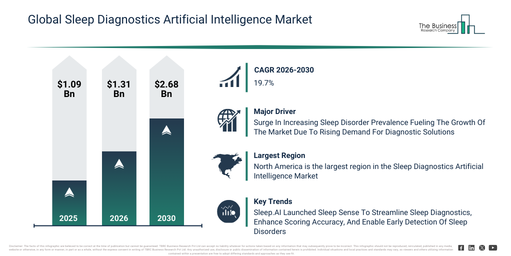
    The sleep diagnostics artificial intelligence market has experienced substantial expansion in recent times. Projections indicate its value will increase from $1.09 billion in 2025 to $1.31 billion in 2026, demonstrating a compound annual growth rate (CAGR) of 19.4%. Historically, this expansion has stemmed from an increase in sleep disorder instances, the proliferation of wearable technologies, advancements in digital health analytics, a rise in sleep lab investigations, and the need for quicker diagnostic processes.

    The sleep diagnostics artificial intelligence market is projected to experience substantial expansion in the coming years. This market is set to reach a valuation of $2.68 billion by 2030, exhibiting a compound annual growth rate (CAGR) of 19.7%. Key factors driving this anticipated growth include the increasing adoption of AI clinical decision tools, the broadening scope of remote sleep monitoring, the rise in home-based diagnostics, the emergence of personalized sleep therapy, and seamless integration with digital health platforms. During the forecast period, significant trends are expected to involve AI-based sleep stage scoring, sleep analytics integrated with wearables, cloud-based sleep diagnostic platforms, predictive models for sleep disorders, and automated polysomnography interpretation.

    Access Your Free Sample Report For In-Depth Market Analysis:

    https://www.thebusinessresearchcompany.com/sample.aspx?id=33318&type=smp

    Which Primary Drivers Are Impacting The Sleep Diagnostics Artificial Intelligence Market Growth?

    The expanding occurrence of sleep disorders is projected to fuel the growth of the sleep diagnostics artificial intelligence market moving forward. Sleep disorders are defined as health conditions that interfere with normal sleep patterns, impacting the quality, duration, or timing of sleep, which often results in daytime discomfort or impaired functioning. This rising prevalence is influenced by factors such as an aging demographic, stress linked to lifestyle, and a heightened awareness of sleep health, all of which contribute to increased screening, diagnosis, and reporting. Sleep diagnostics artificial intelligence plays a crucial role in addressing these disorders by facilitating automated, precise, and scalable analysis of sleep data, thereby aiding in early detection, customized treatment plans, and enhanced clinical results. For example, in November 2023, NHS England reported that 64.9% of young people aged 17 to 23 experienced sleep problems three or more times in the previous week, underscoring the escalating burden of sleep-related issues and the subsequent demand for diagnostic solutions. Consequently, the increasing prevalence of sleep disorders represents a significant impetus for the expansion of the sleep diagnostics artificial intelligence market.

    What Are The Different Segment Types In The Sleep Diagnostics Artificial Intelligence Market Segment Breakdown?

    The sleep diagnostics artificial intelligence market covered in this report is segmented –

    1) By Component: Software; Hardware; Services

    2) By Technology: Machine Learning; Deep Learning; Natural Language Processing; Ensemble Learning

    3) By Deployment Mode: On Premises; Cloud Based

    4) By Application: Sleep Apnea; Insomnia; Narcolepsy; Restless Legs Syndrome; Circadian Rhythm Disorders; Other Applications

    5) By End User: Hospitals; Sleep Centers And Clinics; Home Care Settings; Research Institutes; Other End Users

    Subsegments:

    1) By Software: Sleep Scoring Software; Predictive Analytics Software; Electronic Health Record Integration Software

    2) By Hardware: Wearable Devices; Portable Diagnostic Devices; In Lab Monitoring Equipment

    3) By Services: Consulting Services; Implementation Services; Maintenance And Support Services

    Which Trends Are Shaping Growth In The Sleep Diagnostics Artificial Intelligence Market?

    Key companies within the sleep diagnostics artificial intelligence market are intensifying their efforts on technological advancements in automated sleep scoring. This strategic focus aims to diminish clinician dependence and reduce diagnostic variability, leveraging solutions such as frictionless sleep monitoring technology to gain a competitive edge. Frictionless sleep monitoring technology itself describes a contactless, AI-driven system designed to automatically capture and analyze sleep patterns, stages, and disturbances without requiring wearable devices, thereby facilitating accurate and convenient sleep diagnostics. For instance, in December 2025, Sleep.ai, a U.S.-based digital health company, introduced Sleep Sense, a frictionless sleep monitoring technology that converts any smartphone into a privacy-aware sleep sensor, enabling broad sleep data acquisition without wearables or manual input. This system utilizes advanced AI boundary detection combined with hybrid spatio-temporal models to accurately identify bedtime and wake time, achieving results comparable to PSG-validated trackers. Moreover, through its multimodal contextual modeling, it scrutinizes signals like motion, ambient light, and device usage patterns to generate reliable sleep insights, even when data quality is noisy or limited.

    Who Are The Well-Known Companies In The Sleep Diagnostics Artificial Intelligence Market?

    Major companies operating in the sleep diagnostics artificial intelligence market are ResMed Inc., Neurosoft Ltd., Nox Health Inc., Itamar Medical Ltd., Compumedics Limited, Beacon Biosignals Inc., Onera Health Inc., EnsoData Inc., SleepImage Inc., Zeto Inc., HoneyNaps Co. Ltd., SOMNOmedics GmbH, SleepScore Labs, Nox Medical A/S, Sleep.AI Inc., Sleepacta S.r.l.

    Get The Full Sleep Diagnostics Artificial Intelligence Market Report:

    https://www.thebusinessresearchcompany.com/report/sleep-diagnostics-artificial-intelligence-market-report

    Which Region Is The Leading Market For The Sleep Diagnostics Artificial Intelligence Market?

    North America was the largest region in the sleep diagnostics artificial intelligence (AI) market in 2025. Asia-Pacific is expected to be the fastest-growing region in the forecast period. The regions covered in the sleep diagnostics artificial intelligence market report are Asia-Pacific, South East Asia, Western Europe, Eastern Europe, North America, South America, Middle East, Africa.

    Request A Customized Sleep Diagnostics Artificial Intelligence Market Report For Competitive Insights:

    https://www.thebusinessresearchcompany.com/customise?id=33318&type=smp

    Browse Through More Reports Similar to the Global Sleep Diagnostics Artificial Intelligence Market 2026, By The Business Research Company

    Sleep Testing Services Market Report 2026

    https://www.thebusinessresearchcompany.com/report/sleep-testing-services-global-market-report

    Sleep Monitoring Apps Market Report 2026

    https://www.thebusinessresearchcompany.com/report/sleep-monitoring-apps-global-market-report

    Sleep Tech Devices Market Report 2026

    https://www.thebusinessresearchcompany.com/report/sleep-tech-devices-global-market-report

    Get in touch with us:

    The Business Research Company: https://www.thebusinessresearchcompany.com/

    Americas +1 310-496-7795

    Asia +44 7882 955267 & +91 8897263534

    Europe +44 7882 955267

    Email us at info@tbrc.info

    Follow us on:

    LinkedIn: https://in.linkedin.com/company/the-business-research-company

    YouTube: https://www.youtube.com/channel/UC24_fI0rV8cR5DxlCpgmyFQ

    Global Market Model: https://www.thebusinessresearchcompany.com/global-market-model
  • Retinal Detachment Diagnostic Market Revenue Growth Forecast To Reach $2.12 Billion By 2030 At 8.4% CAGR

    Retinal Detachment Diagnostic Market Revenue Growth Forecast To Reach $2.12 Billion By 2030 At 8.4% CAGR

    The Business Research Company’s 2026 market reports feature enhanced tools like market attractiveness analysis, TAM assessment, and company scoring matrices, along with interactive dashboards, deeper supply chain insights, and startup coverage strengthening the depth, usability, and strategic value of insights.

    How Does The Market Size Of The Retinal Detachment Diagnostic Market Compare Between 2026 And 2030?

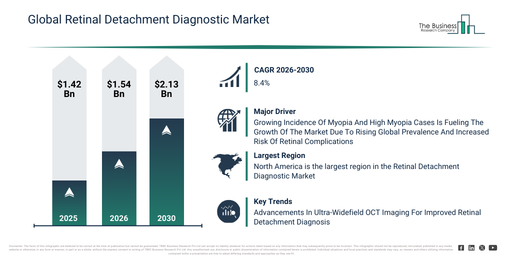
    The retinal detachment diagnostic market has shown significant expansion in recent years. Its size is projected to increase from $1.42 billion in 2025 to $1.54 billion in 2026, demonstrating a compound annual growth rate (CAGR) of 8.2%. Historically, this growth was influenced by factors such as an increase in diabetic eye disease cases, the growth of ophthalmic imaging centers, rising awareness of retinal disorders, the expansion of hospital eye clinics, and the early adoption of OCT scanners.

    The market size for retinal detachment diagnostics is anticipated to exhibit robust expansion in the coming years. It is projected to climb to $2.13 billion by 2030, achieving a compound annual growth rate (CAGR) of 8.4%. The expansion over the forecast period is attributable to an increasing aging demographic, a heightened requirement for early vision diagnosis, the broadening of remote eye screening initiatives, augmented investment in ophthalmic imaging, and the rising occurrence of myopia and diabetes. Significant trends expected during this period involve the increasing utilization of optical coherence tomography imaging, the expanding acceptance of teleophthalmology screening services, the development of digital fundus photography systems, a greater application of AI-assisted retinal image analysis, and the enhanced deployment of portable ophthalmic ultrasound devices.

    Access Your Free Sample Report For In-Depth Market Analysis:

    https://www.thebusinessresearchcompany.com/sample.aspx?id=33303&type=smp

    What Key Factors Are Shaping The Retinal Detachment Diagnostic Market Landscape?

    The increasing occurrence of myopia and high myopia conditions is anticipated to propel the expansion of the retinal detachment diagnostic market in the future. Myopia and high myopia cases signify a rising prevalence of nearsightedness and severe nearsightedness, which impede distant vision and elevate the likelihood of serious eye complications. The surge in these cases, often attributed to extended screen exposure and reduced outdoor activities, is intensifying vision strain, leading to an earlier onset and quicker progression of refractive errors. Retinal detachment diagnostics play a crucial role in supporting myopia and high myopia cases by enabling the early detection of retinal complications, facilitating timely clinical intervention, and minimizing the risk of severe vision loss. For instance, in July 2025, according to Woo University, a US-based non-profit organization, 30% of the world is currently myopic, with this figure projected to climb to nearly 50% by 2050, affecting approximately 5 billion people. Therefore, the growing incidence of myopia and high myopia cases is significantly driving the growth of the retinal detachment diagnostic market.

    What Segment Categories Shape The Retinal Detachment Diagnostic Market Segment Landscape?

    The retinal detachment diagnostic market covered in this report is segmented –

    1) By Disease Type: Tractional Retinal Detachment; Rhegmatogenous Retinal Detachment

    2) By Diagnostic Type: Fundus Photography; Ophthalmoscopy; Optical Coherence Tomography Scanners; Fundus Cameras; Ophthalmic Ultrasound Imaging Systems; Ophthalmic A Scan Ultrasound; Ophthalmic B Scan Ultrasound

    3) By Technology: Imaging Based Diagnostics; Non Imaging Clinical Examination; Advanced Digital Ophthalmic Systems

    4) By Application: Vitreo Retinal Disorders; Cataract; Glaucoma; Refractive Disorders

    5) By End Use: Hospitals And Eye Clinics; Academic And Research Laboratories; Other End Uses

    Subsegments:

    1) By Tractional Retinal Detachment: Diabetic Tractional Retinal Detachment; Proliferative Vitreoretinopathy Related Tractional Retinal Detachment; Inflammatory Tractional Retinal Detachment; Trauma Induced Tractional Retinal Detachment; Post Surgical Tractional Retinal Detachment; Neovascularization Associated Tractional Retinal Detachment

    2) By Rhegmatogenous Retinal Detachment: Superior Break Rhegmatogenous Retinal Detachment; Inferior Break Rhegmatogenous Retinal Detachment; Giant Retinal Tear Related Rhegmatogenous Retinal Detachment; Lattice Degeneration Related Rhegmatogenous Retinal Detachment; Trauma Related Rhegmatogenous Retinal Detachment; Myopic Degeneration Related Rhegmatogenous Retinal Detachment; Post Cataract Surgery Rhegmatogenous Retinal Detachment

    What Market Trends Are Affecting The Retinal Detachment Diagnostic Market?

    Leading companies operating in the retinal detachment diagnostic market are prioritizing the creation of advanced imaging solutions, such as ultra-widefield optical coherence tomography (OCT), to boost detection accuracy, enhance visualization of the peripheral retina, and aid in the early identification of retinal tears and detachments. Ultra-widefield OCT is defined as an imaging technology that captures high-resolution, wide-angle views of the retina, enabling clinicians to identify subtle or peripheral retinal abnormalities that might otherwise be overlooked. As an illustration, in March 2025, Optos PLC, a UK-based retinal imaging company, unveiled MonacoPro, its next-generation ultra-widefield SLO and spectral domain retinal imaging system. Designed to assist eye care professionals with improved diagnostic precision and workflow efficiency, MonacoPro incorporates high-quality OCT imaging, integrated 200° optomap visualization, and the novel AreaAssist tool, which automates area measurement and analysis, collectively strengthening clinicians’ capability to detect retinal detachments and other ocular pathologies.

    Who Are The Companies Operating Across The Retinal Detachment Diagnostic Market Value Chain?

    Major companies operating in the retinal detachment diagnostic market are Canon Inc., Essilor International S.A., NIDEK Co Ltd., Alcon Inc., Nikon Corporation, Kowa Company Ltd., Carl Zeiss Meditec AG, Topcon Corporation, Tomey Corporation, Forus Health Pvt Ltd., Reichert Technologies, Optos plc, Revenio Group, Visionix USA Inc., Haag-Streit Group, Optomed Plc, Remidio Innovative Solutions, Intelligent Retinal Imaging Systems (IRIS), Santec Corporation, and D-EYE Srl.

    Get The Full Retinal Detachment Diagnostic Market Report:

    https://www.thebusinessresearchcompany.com/report/retinal-detachment-diagnostic-market-report

    Which Region Is The Largest In The Retinal Detachment Diagnostic Market?

    North America was the largest region in the retinal detachment diagnostic market in 2025. Asia-Pacific is expected to be the fastest-growing region in the forecast period. The regions covered in the retinal detachment diagnostic market report are Asia-Pacific, South East Asia, Western Europe, Eastern Europe, North America, South America, Middle East, Africa.

    Request A Customized Retinal Detachment Diagnostic Market Report For Competitive Insights:

    https://www.thebusinessresearchcompany.com/customise?id=33303&type=smp

    Browse Through More Reports Similar to the Global Retinal Detachment Diagnostic Market 2026, By The Business Research Company

    Retinal Biologics Market Report 2026

    https://www.thebusinessresearchcompany.com/report/retinal-biologics-global-market-report

    Retinal Disorder Treatment Market Report 2026

    https://www.thebusinessresearchcompany.com/report/retinal-disorder-treatment-global-market-report

    Retinal Vein Occlusion Market Report 2026

    https://www.thebusinessresearchcompany.com/report/retinal-vein-occlusion-global-market-report

    Get in touch with us:

    The Business Research Company: https://www.thebusinessresearchcompany.com/

    Americas +1 310-496-7795

    Asia +44 7882 955267 & +91 8897263534

    Europe +44 7882 955267

    Email us at info@tbrc.info

    Follow us on:

    LinkedIn: https://in.linkedin.com/company/the-business-research-company

    YouTube: https://www.youtube.com/channel/UC24_fI0rV8cR5DxlCpgmyFQ

    Global Market Model: https://www.thebusinessresearchcompany.com/global-market-model

  • Renal Toxicity – Absorption, Distribution, Metabolism, And Excretion (ADME) Toxicology Testing Market Expansion Forecast Reaching $2.78 Billion By 2030 At 12.9% CAGR

    Renal Toxicity – Absorption, Distribution, Metabolism, And Excretion (ADME) Toxicology Testing Market Expansion Forecast Reaching $2.78 Billion By 2030 At 12.9% CAGR

    The Business Research Company’s 2026 market reports feature enhanced tools like market attractiveness analysis, TAM assessment, and company scoring matrices, along with interactive dashboards, deeper supply chain insights, and startup coverage strengthening the depth, usability, and strategic value of insights.

    How Much Will The Market Value Of The Renal Toxicity – Absorption, Distribution, Metabolism, And Excretion (ADME) Toxicology Testing Market Grow Between 2026 And 2030?

    The renal toxicity – absorption, distribution, metabolism, and excretion (ADME) toxicology testing market size has seen rapid expansion in recent years. This market is anticipated to increase from $1.52 billion in 2025 to $1.71 billion in 2026, achieving a compound annual growth rate (CAGR) of 12.7%. The historical growth of this market can be ascribed to several factors, including an uptick in preclinical drug safety testing, an increase in drug failures due to nephrotoxicity, the growth of CRO services, more rigorous regulatory safety standards, and the wider integration of in vitro assays.

    The renal toxicity – absorption, distribution, metabolism, and excretion (adme) toxicology testing market size is projected to experience swift expansion over the coming years. This market is anticipated to reach $2.78 billion by 2030, exhibiting a compound annual growth rate (CAGR) of 12.9%. Factors contributing to this growth during the forecast period include a rise in biologics and complex drug development, the adoption of predictive toxicology models, the broadening of organ-on-chip platforms, advancements in precision medicine research, and an increasing demand for AI-based safety analytics. Key trends expected over the forecast period encompass kidney organoid-based toxicity assays, AI-assisted models for nephrotoxicity prediction, advanced high-throughput renal screening platforms, biomarker-driven renal safety panels, and microphysiological kidney-on-chip systems.

    Access Your Free Sample Report For In-Depth Market Analysis:

    https://www.thebusinessresearchcompany.com/sample.aspx?id=33295&type=smp

    What Leading Drivers Are Supporting The Renal Toxicity – Absorption, Distribution, Metabolism, And Excretion (ADME) Toxicology Testing Market Expansion?

    The increasing occurrence of kidney conditions is projected to boost the expansion of the renal toxicity-absorption, distribution, metabolism, and excretion (ADME) toxicology testing market in the future. These disorders are ailments that harm the kidneys and impair their capacity to filter blood and preserve bodily equilibrium. The surge in kidney-related disorders stems from an increase in diabetes, a condition that harms kidney blood vessels and compromises their filtration capabilities. Renal toxicity ADME/toxicology testing plays a crucial role in identifying and assessing potential renal harm from drugs or chemicals, thereby facilitating prompt intervention and the creation of safer therapeutic options. For example, projections by the American Cancer Society, a US-based professional organization, indicate that in 2025, around 80,980 new kidney (renal) cancer cases will be diagnosed in the US, with an estimated 14,510 fatalities attributed to the illness. Consequently, the growing incidence of kidney-related disorders is a primary catalyst for the expansion of the renal toxicity-absorption, distribution, metabolism, and excretion (ADME) toxicology testing market.

    How Are Different Segments Classified In The Renal Toxicity – Absorption, Distribution, Metabolism, And Excretion (ADME) Toxicology Testing Market Segment Analysis?

    The renal toxicity – absorption, distribution, metabolism, and excretion (adme) toxicology testing market covered in this report is segmented –

    1) By Test Type: In Vitro Renal Toxicity Testing; In Vivo Renal Toxicity Testing; In Silico Renal Toxicity Modeling

    2) By Method: Biochemical and Enzymatic Assays; Cell Based Renal Assays; Biomarker Based Toxicity Analysis; Histopathology and Imaging; Pharmacokinetic and Drug Metabolism Studies

    3) By Stage of Drug Development: Discovery and Lead Optimization; Preclinical Development; Clinical Development; Post Marketing Safety Studies

    4) By Technology: High Throughput Screening Platforms; Organ On Chip and Microfluidic Systems; Omics Based Toxicology Platforms; Artificial Intelligence and Predictive Modeling Tools; Digital Pathology and Imaging Systems

    5) By End User: Pharmaceutical and Biotechnology Companies; Contract Research Organizations; Academic and Research Institutes; Regulatory Laboratories

    Subsegments:

    1) By In Vitro Renal Toxicity Testing: Primary Renal Cell Assays; Immortalized Renal Cell Line Assays; Three Dimensional Renal Cell Cultures; Kidney Organoid Models; Transporter Interaction Assays; Biomarker Based Nephrotoxicity Assays; High Content Imaging Assays; Microphysiological Kidney System Models

    2) By In Vivo Renal Toxicity Testing: Acute Renal Toxicity Studies; Subacute Renal Toxicity Studies; Subchronic Renal Toxicity Studies; Chronic Renal Toxicity Studies; Renal Biomarker Evaluation Studies; Histopathological Kidney Assessment; Dose Response Toxicity Studies; Recovery and Reversibility Studies

    3) By In Silico Renal Toxicity Modeling: Quantitative Structure Activity Relationship Modeling; Machine Learning Based Toxicity Prediction; Physiologically Based Pharmacokinetic Modeling; Virtual Screening for Nephrotoxicity; Read Across Toxicity Modeling; Systems Biology Based Toxicity Modeling

    What Emerging Trends Are Seen In The Renal Toxicity – Absorption, Distribution, Metabolism, And Excretion (ADME) Toxicology Testing Market?

    Major companies operating in the renal toxicity-absorption, distribution, metabolism, and excretion (ADME) toxicology testing market are focusing on developing innovative solutions, such as microfluidic chips designed for low drug absorption, to improve the predictive accuracy of kidney toxicity while concurrently reducing the need for animal testing. A low-drug-absorbing microfluidic chip refers to a lab-on-a-chip device specifically crafted for renal toxicity assessment that minimizes the unintentional absorption of drugs by the chip’s material, thereby ensuring a more accurate simulation of kidney functions and reliable measurement of how drugs impact renal cells. For instance, in September 2024, Emulate Inc., a US-based biotechnology firm, launched the chip-R1 rigid chip to enhance kidney toxicity testing with more precise and trustworthy results. This chip is constructed for accurate ADME and toxicology modeling in non-stretch organs like the liver and kidney, utilizing low-drug-absorbing plastics and a thin, porous polycarbonate membrane to prevent compound loss and boost drug recovery for lipophilic compounds. Its advantages include high shear stress support (up to 2.3 dyn/cm²), preactivated surfaces for streamlined workflows, and improved cellular crosstalk, while the broader benefits encompass enhanced reproducibility, accurate toxicity detection, and compatibility with current organ-chip hardware to accelerate human-relevant preclinical testing.

    Who Are The Companies Driving Activity In The Renal Toxicity – Absorption, Distribution, Metabolism, And Excretion (ADME) Toxicology Testing Market?

    Major companies operating in the renal toxicity – absorption, distribution, metabolism, and excretion (adme) toxicology testing market are Thermo Fisher Scientific Inc., Eurofins Scientific SE, Agilent Technologies Inc., WuXi AppTec Co. Ltd., Charles River Laboratories International Inc., PerkinElmer Inc., Beckman Coulter Inc., Bio-Rad Laboratories Inc., Pharmaron Beijing Co. Ltd., Simulations Plus Inc., GVK Biosciences Pvt. Ltd., Promega Corporation, Syngene International Ltd., SAI Life Sciences Ltd., QPS Holdings LLC, Southern Research Institute, BioIVT LLC, TCG Lifesciences Pvt. Ltd., Frontage Laboratories Inc., Symeres, TSRL Inc., BOC Sciences LLC, Vivisciences Preclinical CRO.

    Get The Full Renal Toxicity – Absorption, Distribution, Metabolism, And Excretion (ADME) Toxicology Testing Market Report:

    https://www.thebusinessresearchcompany.com/report/renal-toxicity-absorption-distribution-metabolism-and-excretion-adme-toxicology-testing-market-report

    Which Region Leads The Renal Toxicity – Absorption, Distribution, Metabolism, And Excretion (ADME) Toxicology Testing Market In Overall Market Size?

    North America was the largest region in the renal toxicity-ADME toxicology testing market in 2025. Asia-Pacific is expected to be the fastest-growing region in the forecast period. The regions covered in the renal toxicity – absorption, distribution, metabolism, and excretion (adme) toxicology testing market report are Asia-Pacific, South East Asia, Western Europe, Eastern Europe, North America, South America, Middle East, Africa.

    Request A Customized Renal Toxicity – Absorption, Distribution, Metabolism, And Excretion (ADME) Toxicology Testing Market Report For Competitive Insights:

    https://www.thebusinessresearchcompany.com/customise?id=33295&type=smp

    Browse Through More Reports Similar to the Global Renal Toxicity – Absorption, Distribution, Metabolism, And Excretion (ADME) Toxicology Testing Market 2026, By The Business Research Company

    Adme Toxicology Testing Market Report 2026

    https://www.thebusinessresearchcompany.com/report/adme-toxicology-testing-global-market-report

    Renal Biomarkers Market Report 2026

    https://www.thebusinessresearchcompany.com/report/renal-biomarkers-global-market-report

    Kidney Dialysis Market Report 2026

    https://www.thebusinessresearchcompany.com/report/kidney-dialysis-global-market-report

    Get in touch with us:

    The Business Research Company: https://www.thebusinessresearchcompany.com/

    Americas +1 310-496-7795

    Asia +44 7882 955267 & +91 8897263534

    Europe +44 7882 955267

    Email us at info@tbrc.info

    Follow us on:

    LinkedIn: https://in.linkedin.com/company/the-business-research-company

    YouTube: https://www.youtube.com/channel/UC24_fI0rV8cR5DxlCpgmyFQ

    Global Market Model: https://www.thebusinessresearchcompany.com/global-market-model
  • Regenerative Therapies For Osteoarthritis Market Revenue Projected To Hit $5.88 Billion By 2030 With 14.2% CAGR

    Regenerative Therapies For Osteoarthritis Market Revenue Projected To Hit $5.88 Billion By 2030 With 14.2% CAGR

    The Business Research Company’s 2026 market reports feature enhanced tools like market attractiveness analysis, TAM assessment, and company scoring matrices, along with interactive dashboards, deeper supply chain insights, and startup coverage strengthening the depth, usability, and strategic value of insights.

    What Changes In Market Value Are Expected For The Regenerative Therapies For Osteoarthritis Market Over The 2026–2030 Period?

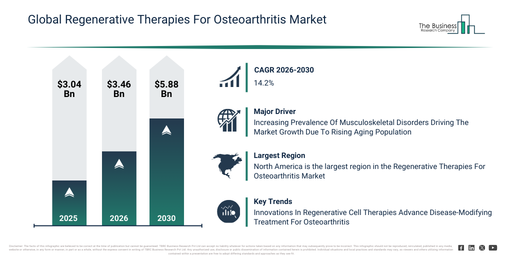
    The market size for regenerative therapies addressing osteoarthritis has seen rapid expansion recently. It is projected to expand from $3.04 billion in 2025 to $3.46 billion in 2026, at a compound annual growth rate (CAGR) of 13.9%. Historically, this growth has been fueled by factors including the increasing prevalence of osteoarthritis, the expansion of the aging population, the limitations of existing pain relief drugs, a rise in sports injuries, and a growing demand for non-surgical treatments.

    The market for regenerative therapies addressing osteoarthritis is projected to experience substantial expansion over the upcoming years. This market is anticipated to reach $5.88 billion by 2030, exhibiting a compound annual growth rate (CAGR) of 14.2%. Factors driving this growth during the forecast period include the increased uptake of biologic therapies, the proliferation of regenerative clinics, stronger clinical evidence, a growing need for cartilage restoration, and augmented investment in cell therapy research. Key trends expected over the forecast period encompass stem cell-based approaches for joint repair, specific treatment protocols using platelet-rich plasma, scaffold-assisted cartilage regeneration, regenerative injections that are minimally invasive, and customized biologic therapy plans.

    Access Your Free Sample Report For In-Depth Market Analysis:

    https://www.thebusinessresearchcompany.com/sample.aspx?id=33292&type=smp

    Which Key Factors Are Driving The Regenerative Therapies For Osteoarthritis Market Growth?

    The rising occurrence of musculoskeletal disorders is poised to drive the expansion of the regenerative therapies for the osteoarthritis market. These conditions involve ailments of bones, joints, muscles, and connective tissues, leading to pain and restricted movement and dexterity. The increasing incidence of musculoskeletal disorders is largely fueled by an aging population, as older individuals often experience higher rates of joint degeneration and inflammatory conditions impacting musculoskeletal structures. This escalating prevalence consequently heightens demand for regenerative therapies, which provide advanced treatment options for joint restoration and tissue repair in osteoarthritis patients. For instance, data from the Office for Health Improvement & Disparities, a UK-based government agency, revealed in January 2024 that 18.4% of individuals aged 16 and above reported a long-term musculoskeletal (MSK) condition in 2023, marking an increase from 17.6% in 2022. Thus, the expanding prevalence of musculoskeletal disorders is a key factor propelling the growth of the regenerative therapies for the osteoarthritis market.

    How Is The Regenerative Therapies For Osteoarthritis Market Categorized Across Its Segment Groups?

    The regenerative therapies for osteoarthritis market covered in this report is segmented –

    1) By Therapy Type: Stem Cell Therapy; Platelet Rich Plasma Therapy; Tissue Engineering; Gene Therapy; Other Therapy Types

    2) By Distribution Channel: Direct Manufacturer Supply; Hospital And Clinic Procurement Channels; Specialty Medical Distributors

    3) By Application: Knee Osteoarthritis; Hip Osteoarthritis; Hand Osteoarthritis; Other Applications

    4) By End User: Hospitals; Ambulatory Surgical Centers; Specialty Clinics; Other End Users

    Subsegments:

    1) By Stem Cell Therapy: Autologous Stem Cell Therapy; Allogeneic Stem Cell Therapy; Mesenchymal Stem Cell Therapy; Adipose Derived Stem Cell Therapy; Bone Marrow Derived Stem Cell Therapy

    2) By Platelet Rich Plasma Therapy: Leukocyte Rich Platelet Rich Plasma Therapy; Leukocyte Poor Platelet Rich Plasma Therapy; Activated Platelet Rich Plasma Therapy; Non Activated Platelet Rich Plasma Therapy; Pure Platelet Rich Plasma Therapy

    3) By Tissue Engineering: Scaffold Based Tissue Engineering; Hydrogel Based Tissue Engineering; Biodegradable Matrix Tissue Engineering; Cell Seeded Tissue Engineering; Three Dimensional Tissue Engineering

    4) By Gene Therapy: Viral Vector Gene Therapy; Non Viral Vector Gene Therapy; In Vivo Gene Therapy; Ex Vivo Gene Therapy; Targeted Gene Therapy

    5) By Other Therapy Types: Hyaluronic Acid Therapy; Growth Factor Therapy; Chondrocyte Implantation Therapy; Peptide Based Therapy; Immunomodulatory Therapy

    Which Trends Are Guiding The Direction Of The Regenerative Therapies For Osteoarthritis Market?

    Companies operating in the regenerative therapies for the osteoarthritis market are prioritizing the development of advanced solutions, such as allogeneic mesenchymal stem cell (MSC) osteoarthritis therapies, to fulfill the growing demand for disease-modifying treatments. Allogeneic mesenchymal stem cell (MSC) osteoarthritis therapies employ donor-sourced stem cells to modulate inflammation and support cartilage regeneration within affected joints, presenting a ready-to-use, scalable alternative to patient-derived cells, which facilitates standardized dosing and wider adoption. For instance, in December 2025, Cipla Limited, an India-based pharmaceutical company, partnered with Stempeutics Research, an India-based research and product development firm, to launch Ciplostem, an innovative allogeneic MSC therapy targeting knee osteoarthritis. This therapy is administered as a single-dose intra-articular injection containing 25 million cultured adult human bone marrow-derived MSCs co-formulated with hyaluronic acid, engineered to act at the cellular level to reduce inflammation, slow disease progression, enhance joint function, and aid in preserving cartilage quality in Grade II and III knee OA patients. Key attributes of this therapy include its off-the-shelf availability (eliminating the need for individualized preparation), its cellular-level action as opposed to merely symptomatic relief, and its potential for extended improvement in joint health when compared to standard regimens.

    Which Firms Are Influencing Competition In The Regenerative Therapies For Osteoarthritis Market?

    Major companies operating in the regenerative therapies for osteoarthritis market are Stryker Corporation, Smith & Nephew plc, MiMedx Group Inc, Anika Therapeutics Inc, Regentis Biomaterials Ltd, Zomedica Corp, Biosplice Therapeutics Inc, Tissue Regenix Group plc, Co.don AG, MEDIPOST Co Ltd, Ampio Pharmaceuticals Inc, Kolon TissueGene Inc, Mesoblast Limited, Orgenesis Inc, Hyalex Orthopaedics Limited, Orthocell Limited, Jellagen Limited, Hyalogic LLC, Bionaut Labs Inc, and Regeneus Limited.

    Get The Full Regenerative Therapies For Osteoarthritis Market Report:

    https://www.thebusinessresearchcompany.com/report/regenerative-therapies-for-osteoarthritis-market-report

    Which Region Is The Top Contributor To The Regenerative Therapies For Osteoarthritis Market By Share?

    North America was the largest region in the regenerative therapies for osteoarthritis market in 2025. Asia-Pacific is expected to be the fastest-growing region in the forecast period. The regions covered in the regenerative therapies for osteoarthritis market report are Asia-Pacific, South East Asia, Western Europe, Eastern Europe, North America, South America, Middle East, Africa.

    Request A Customized Regenerative Therapies For Osteoarthritis Market Report For Competitive Insights:

    https://www.thebusinessresearchcompany.com/customise?id=33292&type=smp

    Browse Through More Reports Similar to the Global Regenerative Therapies For Osteoarthritis Market 2026, By The Business Research Company

    Regenerative Medicine For Cartilage Market Report 2026

    https://www.thebusinessresearchcompany.com/report/regenerative-medicine-for-cartilage-global-market-report

    Orthopedic Regenerative Surgical Products Market Report 2026

    https://www.thebusinessresearchcompany.com/report/orthopedic-regenerative-surgical-products-global-market-report

    Osteoarthritis Market Report 2026

    https://www.thebusinessresearchcompany.com/report/osteoarthritis-global-market-report

    Get in touch with us:

    The Business Research Company: https://www.thebusinessresearchcompany.com/

    Americas +1 310-496-7795

    Asia +44 7882 955267 & +91 8897263534

    Europe +44 7882 955267

    Email us at info@tbrc.info

    Follow us on:

    LinkedIn: https://in.linkedin.com/company/the-business-research-company

    YouTube: https://www.youtube.com/channel/UC24_fI0rV8cR5DxlCpgmyFQ

    Global Market Model: https://www.thebusinessresearchcompany.com/global-market-model
  • Recurrent Pericarditis Market Forecast 2026–2030 Highlighting Expansion Across Industries

    Recurrent Pericarditis Market Forecast 2026–2030 Highlighting Expansion Across Industries

    The Business Research Company’s 2026 market reports feature enhanced tools like market attractiveness analysis, TAM assessment, and company scoring matrices, along with interactive dashboards, deeper supply chain insights, and startup coverage strengthening the depth, usability, and strategic value of insights.

    How Is The Market Size Of The Recurrent Pericarditis Market Expected To Scale Between 2026 And 2030?

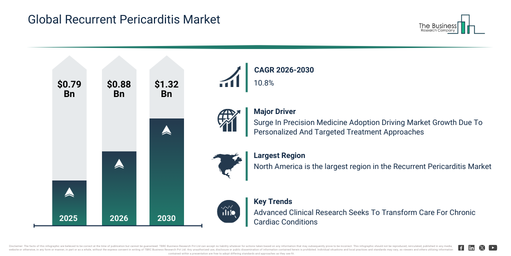
    The market size for recurrent pericarditis has expanded significantly in recent years. It is projected to increase from $0.79 billion in 2025 to $0.88 billion in 2026, achieving a compound annual growth rate (CAGR) of 10.6%. The historical growth can be attributed to historical reliance on NSAIDs and colchicine, rising diagnosis of inflammatory heart conditions, established cardiology care pathways, increased availability of echocardiography, and guideline driven anti inflammatory therapy use.

    The recurrent pericarditis market size is poised for substantial growth over the next few years. It is projected to expand to $1.32 billion in 2030, demonstrating a compound annual growth rate (CAGR) of 10.8%. This growth during the forecast period can be attributed to the rising adoption of biologic drugs, improved recurrence risk stratification, the expansion of specialty cardiology clinics, heightened awareness of immune-mediated pericarditis, and the increasing application of targeted cytokine inhibitors. Noteworthy trends anticipated in the forecast period encompass a greater reliance on targeted biologic therapies, the expansion of long-term disease monitoring, a rise in anti-inflammatory combination therapy, increased integration of IL-1 inhibitors, and the establishment of structured recurrence prevention protocols.

    Access Your Free Sample Report For In-Depth Market Analysis:

    https://www.thebusinessresearchcompany.com/sample.aspx?id=33288&type=smp

    What Key Drivers Are Fueling The Growth Of The Recurrent Pericarditis Market?

    The increasing focus on precision medicine approaches is anticipated to propel the growth of the recurrent pericarditis market going forward. Precision medicine is a medical strategy that customizes prevention and treatment plans for individual patients based on their genetic makeup, environment, and lifestyle. This rising emphasis on precision medicine is driven by enhanced treatment effectiveness, as therapies tailored to an individual’s genetic and biological profile lead to superior outcomes and a reduced risk of adverse effects. Recurrent pericarditis aids in advancing precision medicine by allowing targeted treatment approaches that concentrate on patient-specific inflammatory pathways, such as interleukin-1–mediated mechanisms, thereby enabling more personalized and effective disease management. For instance, in February 2025, according to the NHS England, a UK-based public healthcare body, in 2024 the NHS Genomic Medicine Service delivered over 810,000 genomic tests for patients across the life course in England. This has continued to increase year-on-year since the NHS Genomic Medicine Service was established, and increased by 8% compared to 2023. Therefore, the growing emphasis on precision medicine approaches is driving the growth of the recurrent pericarditis market.

    Which Segment Categories Are Included In The Recurrent Pericarditis Market Segment Analysis?

    The recurrent pericarditis market covered in this report is segmented –

    1) By Product Type: Non-Steroidal Anti-Inflammatory Drugs (NSAIDs); Corticosteroids; Colchicine; Biologics; Other Product Types

    2) By Diagnosis And Assessment: Electrocardiography (ECG); Echocardiography; Physical Examination

    3) By Route of Administration: Oral; Injectable

    4) By Application: Colchicine Therapy; Corticosteroids; Non-Steroidal Anti-Inflammatory Drugs (NSAIDs)

    5) By End-User: Hospitals; Ambulatory Surgical Centers; Clinics; Home Care Settings; Emergency Medical Services (EMS)

    Subsegments:

    1) By Non Steroidal Anti Inflammatory Drugs: Ibuprofen; Aspirin; Indomethacin; Naproxen

    2) By Corticosteroids: Prednisone; Methylprednisolone; Hydrocortisone; Dexamethasone

    3) By Colchicine: Oral Colchicine; Low Dose Colchicine; Extended Duration Colchicine Therapy

    4) By Biologics: Interleukin One Inhibitors; Monoclonal Antibody Therapies; Targeted Cytokine Inhibitors

    5) By Other Product Types: Immunosuppressive Agents; Analgesic Therapies; Supportive Combination Therapies

    What Trends Are Influencing The Recurrent Pericarditis Market?

    Leading firms within the recurrent pericarditis market are prioritizing the creation of treatments offering anti-inflammatory and anti-fibrotic benefits. These developments aim to alleviate pericardial inflammation, avert lasting heart damage, elevate patients’ quality of life, and lower instances of recurrence. Anti-inflammatory actions work by decreasing tissue inflammation, whereas anti-fibrotic actions either stop or reverse the development of scar tissue; collectively, these mechanisms aid in shielding organs from harm and sustaining their regular operation. An example of this strategy is seen in October 2024, when Cardiol Therapeutics Inc., a Canadian clinical-stage life sciences firm, progressed its CardiolRx program. CardiolRx provides a unique oral, non-immunosuppressive therapeutic method for recurrent pericarditis. It functions by targeting the NLRP3 inflammasome, which is a critical upstream activator of IL-1–driven inflammation. The drug is under development to avert disease recurrence, especially in individuals who experience a relapse following the cessation of IL-1 blocker treatments like rilonacept or anakinra. Through its advanced clinical trials, CardiolRx endeavors to diminish pericarditis flares, ease chest discomfort, and bring inflammatory markers (CRP) back to normal levels.

    Who Are The Active Companies Shaping The Recurrent Pericarditis Market?

    Major companies operating in the recurrent pericarditis market are Johnson & Johnson Services Inc., Roche Holding AG, Merck & Co. Inc., Pfizer Inc., AbbVie Inc., Sanofi S.A., Novartis AG, AstraZeneca PLC, Bristol-Myers Squibb Company, GlaxoSmithKline plc, Eli Lilly and Company, Novo Nordisk A/S, Takeda Pharmaceutical Company Limited, Amgen Inc., Gilead Sciences Inc., Boehringer Ingelheim International GmbH, Regeneron Pharmaceuticals Inc., Biogen Inc., Lonza Group AG, Moderna Inc., and WuXi Biologics (Cayman) Inc.

    Get The Full Recurrent Pericarditis Market Report:

    https://www.thebusinessresearchcompany.com/report/recurrent-pericarditis-market-report

    Which Region Is The Leading Market For The Recurrent Pericarditis Market?

    North America was the largest region in the recurrent pericarditis market in 2025. Asia-Pacific is expected to be the fastest-growing region in the forecast period. The regions covered in the recurrent pericarditis market report are Asia-Pacific, South East Asia, Western Europe, Eastern Europe, North America, South America, Middle East, Africa.

    Request A Customized Recurrent Pericarditis Market Report For Competitive Insights:

    https://www.thebusinessresearchcompany.com/customise?id=33288&type=smp

    Browse Through More Reports Similar to the Global Recurrent Pericarditis Market 2026, By The Business Research Company

    Pericarditis Market Report 2026

    https://www.thebusinessresearchcompany.com/report/pericarditis-global-market-report

    Pediatric Perfusion Market Report 2026

    https://www.thebusinessresearchcompany.com/report/pediatric-perfusion-global-market-report

    Cardiac Valve Market Report 2026

    https://www.thebusinessresearchcompany.com/report/cardiac-valve-global-market-report

    Get in touch with us:

    The Business Research Company: https://www.thebusinessresearchcompany.com/

    Americas +1 310-496-7795

    Asia +44 7882 955267 & +91 8897263534

    Europe +44 7882 955267

    Email us at info@tbrc.info

    Follow us on:

    LinkedIn: https://in.linkedin.com/company/the-business-research-company

    YouTube: https://www.youtube.com/channel/UC24_fI0rV8cR5DxlCpgmyFQ

    Global Market Model: https://www.thebusinessresearchcompany.com/global-market-model
  • Protein Language Models Market Forecast Through 2030 With Insights On Market Patterns And Developments

    Protein Language Models Market Forecast Through 2030 With Insights On Market Patterns And Developments

    The Business Research Company’s 2026 market reports feature enhanced tools like market attractiveness analysis, TAM assessment, and company scoring matrices, along with interactive dashboards, deeper supply chain insights, and startup coverage strengthening the depth, usability, and strategic value of insights.

    What Is The Projected Increase In Market Value Of The Protein Language Models Market During 2026–2030?

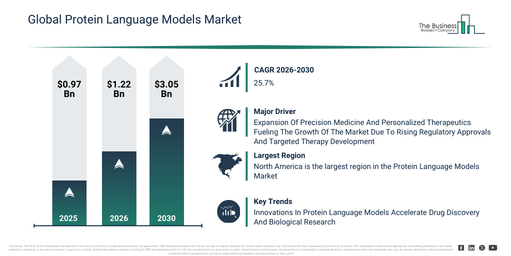
    The protein language models market size has experienced significant expansion in recent years. It is projected to expand from $0.97 billion in 2025 to $1.22 billion in 2026, achieving a compound annual growth rate (CAGR) of 25.5%. The market’s past growth is attributable to an increase in genomic sequencing data, greater biopharma research expenditure, the proliferation of bioinformatics platforms, enhanced protein database accessibility, and the early incorporation of machine learning within biology.

    The protein language models market size is anticipated to experience substantial growth in the coming years, with projections indicating it will reach $3.05 billion by 2030, displaying a compound annual growth rate (CAGR) of 25.7%. This expansion during the forecast period can be attributed to factors such as the heightened demand for computational protein design, the broadening of AI-driven drug pipelines, a greater imperative for swift target identification, increasing cross-industry collaborations in AI and biology, and elevated investments in AI life science startups. Key trends anticipated within the forecast timeframe encompass the increasing utilization of sequence-based protein representation models, the proliferation of cloud-hosted protein modeling platforms, an escalating demand for protein annotation services, a rise in API-based bioinformatics toolkits, and greater integration of AI-powered drug discovery workflows.

    Access Your Free Sample Report For In-Depth Market Analysis:

    https://www.thebusinessresearchcompany.com/sample.aspx?id=33275&type=smp

    What Major Factors Are Driving The Protein Language Models Market Forward?

    The protein language models market is anticipated to expand due to the increasing adoption of precision medicine and personalized therapeutics. These healthcare strategies involve customizing treatments for individual patients based on unique characteristics like genetic makeup, biomarkers, and disease profiles, with the aim of enhancing treatment efficacy and minimizing negative side effects. The growth of precision medicine is being stimulated by a rise in regulatory clearances and a research emphasis on targeted therapies that address specific biological pathways rather than universal solutions. Protein language models facilitate precision medicine by allowing in-depth examination of protein sequences and structures, assisting researchers in discovering therapeutic targets, forecasting drug responses, and devising customized biological treatments more effectively. For example, in February 2024, as reported by the Personalized Medicine Coalition, a US-based not-for-profit organization, the Food and Drug Administration (FDA) granted approval to 16 new personalized therapies for rare disease patients in 2023, a significant increase from six approvals in 2022. Consequently, the progress in precision medicine and personalized therapeutics is a key factor propelling the protein language models market.

    How Is The Protein Language Models Market Segmented Across Different Segment Categories?

    The protein language models market covered in this report is segmented –

    1) By Component: Software; Hardware; Services

    2) By Deployment Mode: On-Premises; Cloud

    3) By Application: Drug Discovery; Protein Engineering; Disease Diagnosis; Functional Annotation; Other Applications

    4) By End-User: Pharmaceutical And Biotechnology Companies; Academic And Research Institutes; Healthcare Providers; Other End-Users

    Subsegments:

    1) By Software: Protein Sequence Analysis Platforms; Model Training And Fine Tuning Tools; Protein Structure Prediction Software; Protein Function Annotation Tools; Bioinformatics Integration Platforms

    2) By Hardware: High Performance Computing Systems; Graphics Processing Hardware; Tensor Processing Hardware; Data Storage And Processing Systems; Cloud Based Computing Infrastructure

    3) By Services: Consulting And Advisory Services; Custom Model Development Services; System Integration Services; Managed And Support Services; Training And Knowledge Transfer Services

    Which Trends Are Impacting The Progress Of The Protein Language Models Market?

    Key companies active in the protein language models market are prioritizing the development of advanced AI-driven protein language models to refine protein sequence analysis and accelerate processes in drug discovery and biological research. An AI-driven protein language model utilizes artificial intelligence, which is trained on extensive protein sequences, to predict, interpret, and generate protein structures and functions. This capability hastens protein engineering, mutation assessment, and the creation of new therapeutic solutions. For example, in September 2024, Ginkgo Bioworks Holdings, Inc., a US-based biotechnology firm, launched a Protein Large Language Model and Model API built on Google Cloud technology. This solution, trained on Ginkgo’s proprietary protein dataset and hosted on Vertex AI, enables both enterprises and individual researchers to perform sophisticated protein sequence analysis and improve pattern recognition, thereby expediting drug development and biological research workflows.

    Which Organizations Play A Role In The Protein Language Models Market Landscape?

    Major companies operating in the protein language models market are Google LLC, Meta Platforms Inc., Pfizer Inc., Novartis AG, AstraZeneca PLC, NVIDIA Corporation, Owkin Inc., Generate Biomedicines Inc., Recursion Pharmaceuticals Inc., BenevolentAI Limited, Exscientia plc, Dyno Therapeutics Inc., Atomwise Inc., ProteinQure Inc., Cradle Bio B.V., Profluent Bio Inc., BioMap (Beijing) Intelligence Technology Co. Ltd., EvolutionaryScale Inc., Isomorphic Labs Limited, Insilico Medicine Inc., AbSci Corporation, Peptone Ltd., and Valence Labs Inc.

    Get The Full Protein Language Models Market Report:

    https://www.thebusinessresearchcompany.com/report/protein-language-models-market-report

    Which Region Dominates The Protein Language Models Market By Market Share?

    North America was the largest region in the protein language models market in 2025. Asia-Pacific is expected to be the fastest-growing region in the forecast period. The regions covered in the protein language models market report are Asia-Pacific, South East Asia, Western Europe, Eastern Europe, North America, South America, Middle East, Africa.

    Request A Customized Protein Language Models Market Report For Competitive Insights:

    https://www.thebusinessresearchcompany.com/customise?id=33275&type=smp

    Browse Through More Reports Similar to the Global Protein Language Models Market 2026, By The Business Research Company

    Large Language Model Llm Market 2026

    https://www.thebusinessresearchcompany.com/report/large-language-model-llm-market

    Protein Sequencing Market Report 2026

    https://www.thebusinessresearchcompany.com/report/protein-sequencing-global-market-report

    Research Grade Proteins Market Report 2026

    https://www.thebusinessresearchcompany.com/report/research-grade-proteins-global-market-report

    Get in touch with us:

    The Business Research Company: https://www.thebusinessresearchcompany.com/

    Americas +1 310-496-7795

    Asia +44 7882 955267 & +91 8897263534

    Europe +44 7882 955267

    Email us at info@tbrc.info

    Follow us on:

    LinkedIn: https://in.linkedin.com/company/the-business-research-company

    YouTube: https://www.youtube.com/channel/UC24_fI0rV8cR5DxlCpgmyFQ

    Global Market Model: https://www.thebusinessresearchcompany.com/global-market-model
  • Prion Disease Treatment Market Outlook For 2026–2030 Covering Growth Drivers And Industry Trends

    Prion Disease Treatment Market Outlook For 2026–2030 Covering Growth Drivers And Industry Trends

    The Business Research Company’s 2026 market reports feature enhanced tools like market attractiveness analysis, TAM assessment, and company scoring matrices, along with interactive dashboards, deeper supply chain insights, and startup coverage strengthening the depth, usability, and strategic value of insights.

    How Is The Market Size Of The Prion Disease Treatment Market Expected To Change From 2026 To 2030?

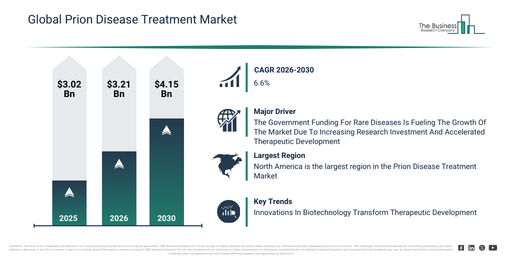
    The prion disease treatment market size has experienced substantial growth in recent years. It is projected to expand from $3.02 billion in 2025 to $3.21 billion in 2026, demonstrating a compound annual growth rate (CAGR) of 6.4%. The historic period’s growth can be attributed to factors like rare disease research funding, increased awareness of neurological disorders, the expansion of genetic testing, academic clinical studies, and the development of specialty neurology centers.

    The prion disease treatment market size is projected to experience substantial expansion in the coming years. This market is set to reach $4.15 billion by 2030, exhibiting a compound annual growth rate (CAGR) of 6.6%. This anticipated expansion during the forecast period is primarily driven by initiatives such as novel molecule discovery programs, precision neurology approaches, biomarker based diagnostics, expanded orphan drug incentives, and advanced neuro research collaborations. Furthermore, significant developments expected in this period encompass targeted neurodegenerative drug research, advanced prion diagnostic testing, genetic risk screening programs, compassionate use therapy trials, and integrated supportive care protocols.

    Access Your Free Sample Report For In-Depth Market Analysis:

    https://www.thebusinessresearchcompany.com/sample.aspx?id=33272&type=smp

    Which Key Drivers Are Affecting The Prion Disease Treatment Market Development?

    Increased government investment in rare diseases is anticipated to stimulate the expansion of the prion disease treatment market in the foreseeable future. Rare diseases are defined as health conditions impacting a small segment of the population, frequently characterized as chronic, worsening, and fatal. Funding for rare diseases is growing, driven by enhanced governmental and charitable contributions, which in turn speeds up research efforts, clinical investigations, and the creation of novel treatments for conditions where medical needs are largely unaddressed. Governmental financial backing for rare diseases advances prion disease treatment by sustaining foundational long-term research, upholding specialized labs and monitoring networks, fostering pharmaceutical breakthroughs despite minimal commercial motivation, and accelerating the conversion of findings into diagnostic tools and potential remedies. As an illustration, in February 2024, the Department of Health and Social Care, a UK-based government department, committed a $17.3 million (£14 million) investment. This funding is designated for the creation of the UK Rare Disease Research Platform, which will consist of 11 research nodes nationwide and a main coordinating center. Its purpose is to promote synchronized cooperation among academic, clinical, and industry researchers, individuals affected by rare diseases, research charities, and other interested parties, with the goal of expediting progress in comprehending, diagnosing, and treating rare diseases. Consequently, the increasing governmental financial support for rare diseases is fueling the expansion of the prion disease treatment market.

    What Are The Main Segments Within The Prion Disease Treatment Market Segment Structure?

    The prion disease treatment market covered in this report is segmented –

    1) By Disease Type: Creutzfeldt-Jakob Disease; Gerstmann-Sträussler-Scheinker Syndrome; Fatal Familial Insomnia; Kuru; Other Disease Types

    2) By Treatment Type: Medication; Supportive Care; Other Treatment Types

    3) By Route Of Administration: Oral; Parenteral

    4) By Distribution Channel: Hospital Pharmacies; Retail Pharmacies; Online Pharmacies

    5) By End-User: Hospitals; Specialty Clinics; Research Institutes; Other End-Users

    Subsegments:

    1) By Creutzfeldt-Jakob Disease: Sporadic Creutzfeldt-Jakob Disease; Familial Creutzfeldt-Jakob Disease; Iatrogenic Creutzfeldt-Jakob Disease; Variant Creutzfeldt-Jakob Disease

    2) By Gerstmann-Sträussler-Scheinker Syndrome: Early-Stage Gerstmann-Sträussler-Scheinker Syndrome; Progressive-Stage Gerstmann-Sträussler-Scheinker Syndrome; Advanced-Stage Gerstmann-Sträussler-Scheinker Syndrome

    3) By Fatal Familial Insomnia: Sleep Disorder Management; Autonomic Dysfunction Management; Psychiatric Symptom Management

    4) By Kuru: Motor Function Support; Cognitive Function Support; Symptomatic Neurological Care

    5) By Other Disease Types: Atypical Prion Disorders; Unclassified Prion Conditions

    What Trends Are Transforming The Prion Disease Treatment Market?

    Major companies operating in the prion disease treatment market are concentrating on developing innovative approaches, such as viral vector-based gene therapy, to deliver targeted treatments across the blood-brain barrier and slow the progression of the disease. Viral vector-based gene therapy is a treatment method that utilizes modified viruses to introduce therapeutic genes into specific cells, helping to correct or reduce disease-causing processes, like misfolded prion proteins, by enabling precise and long-lasting effects. For instance, in February 2025, Apertura Gene Therapy, a US-based biotechnology company, provided support to the Broad Institute in developing a gene therapy for prion disease that employs an engineered AAV capsid targeting TfR1. This therapy delivers therapeutic genes across the blood-brain barrier, allowing for widespread central nervous system (CNS) distribution and potentially slowing or preventing the accumulation of prion protein. It offers high specificity, reduced off-target effects, and sustained therapeutic expression, representing a significant advancement over conventional treatments that primarily manage symptoms rather than modify disease progression. Overall, it signifies a substantial step forward in shifting from symptomatic management towards disease-modifying interventions, with the potential to transform the treatment landscape for prion disorders.

    Who Are The Companies Participating In The Prion Disease Treatment Market?

    Major companies operating in the prion disease treatment market are Ionis Pharmaceuticals Inc., Broad Institute of MIT and Harvard, Sangamo Therapeutics Inc., Gate Bioscience, Apertura Gene Therapy, Sibylla Biotech, Case Western Reserve University, and National Prion Clinic.

    Get The Full Prion Disease Treatment Market Report:

    https://www.thebusinessresearchcompany.com/report/prion-disease-treatment-market-report

    Which Region Is The Largest In The Prion Disease Treatment Market?

    North America was the largest region in the prion disease treatment market in 2025. Asia-Pacific is expected to be the fastest-growing region in the forecast period. The regions covered in the prion disease treatment market report are Asia-Pacific, South East Asia, Western Europe, Eastern Europe, North America, South America, Middle East, Africa.

    Request A Customized Prion Disease Treatment Market Report For Competitive Insights:

    https://www.thebusinessresearchcompany.com/customise?id=33272&type=smp

    Browse Through More Reports Similar to the Global Prion Disease Treatment Market 2026, By The Business Research Company

    Rare Diseases Treatment Market Report 2026

    https://www.thebusinessresearchcompany.com/report/rare-diseases-treatment-global-market-report

    Rare Neurological Disease Treatment Market Report 2026

    https://www.thebusinessresearchcompany.com/report/rare-neurological-disease-treatment-global-market-report

    Pruritus Therapeutic Market Report 2026

    https://www.thebusinessresearchcompany.com/report/pruritus-therapeutic-global-market-report

    Get in touch with us:

    The Business Research Company: https://www.thebusinessresearchcompany.com/

    Americas +1 310-496-7795

    Asia +44 7882 955267 & +91 8897263534

    Europe +44 7882 955267

    Email us at info@tbrc.info

    Follow us on:

    LinkedIn: https://in.linkedin.com/company/the-business-research-company

    YouTube: https://www.youtube.com/channel/UC24_fI0rV8cR5DxlCpgmyFQ

    Global Market Model: https://www.thebusinessresearchcompany.com/global-market-model
  • The Rise Of Expansion Of Cell Or Gene Therapy Pipelines Driving Market Growth Due To Rising Advanced Therapy Development Demand Is Influencing The Pharmaceutical Quality Control Release Testing Service Market

    The Rise Of Expansion Of Cell Or Gene Therapy Pipelines Driving Market Growth Due To Rising Advanced Therapy Development Demand Is Influencing The Pharmaceutical Quality Control Release Testing Service Market

    The Business Research Company’s 2026 market reports feature enhanced tools like market attractiveness analysis, TAM assessment, and company scoring matrices, along with interactive dashboards, deeper supply chain insights, and startup coverage strengthening the depth, usability, and strategic value of insights.

    How Does The Market Size Of The Pharmaceutical Quality Control Release Testing Service Market Compare Between 2026 And 2030?

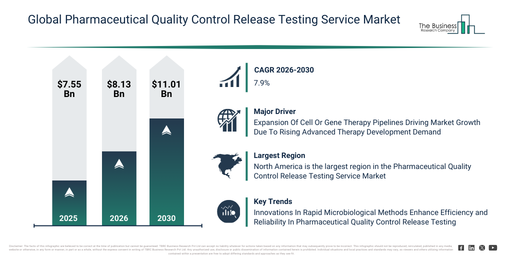
    The scale of the pharmaceutical quality control release testing service market has demonstrated robust expansion in recent years. This market is anticipated to increase from $7.55 billion in 2025 to $8.13 billion in 2026, achieving a compound annual growth rate (CAGR) of 7.6%. The historical growth in this sector can be ascribed to several factors, including more rigorous GMP regulations, a rise in worldwide drug manufacturing, the proliferation of contract testing laboratories, an elevated demand for biologics testing, and the broadening of generic drug production.

    The pharmaceutical quality control release testing service market is set to experience robust expansion in the coming years, with its size projected to reach $11.01 billion by 2030, demonstrating a compound annual growth rate (CAGR) of 7.9%. This increase during the forecast period is primarily driven by factors such as the growth in complex biologic pipelines, an uptick in regulatory audit frequency, the expansion of outsourced quality control models, the escalating demand for faster batch release cycles, and an increase in multi-region drug approvals. Significant trends anticipated within this period include automated batch release testing, the implementation of digital laboratory quality systems, AI-assisted analytical validation, the development of connected stability testing labs, and the deployment of smart quality data platforms.

    Access Your Free Sample Report For In-Depth Market Analysis:

    https://www.thebusinessresearchcompany.com/sample.aspx?id=33260&type=smp

    Which Factors Are Influencing The Growth Of The Pharmaceutical Quality Control Release Testing Service Market?

    The increasing size of cell or gene therapy pipelines is anticipated to drive the expansion of the pharmaceutical quality control release testing service market in the future. A cell and gene therapy pipeline comprises cellular and genetic therapeutic products currently being developed and reviewed by regulators for potential market release. This growth is largely fueled by rising investments in biotechnology R&D, with pharmaceutical and biotech companies committing significant funds to advanced cellular and genetic therapies for conditions that previously had no effective treatment. The expanding cell and gene therapy pipeline directly boosts the need for specialized quality control release testing services, which are vital to guarantee that these intricate biological products comply with strict safety and efficacy standards prior to their market launch. For example, in January 2025, data from the American Society of Gene and Cell Therapy, a US scientific association, indicated that the global gene therapy pipeline reached 2,117 programs in the fourth quarter of 2024, a rise from 2,041 programs in the third quarter of 2024. Consequently, the expansion of cell or gene therapy pipelines is a key factor propelling the growth of the pharmaceutical quality control release testing service market.

    How Are Different Segments Classified In The Pharmaceutical Quality Control Release Testing Service Market Segment Analysis?

    The pharmaceutical quality control release testing service market covered in this report is segmented –

    1) By Product Type: Dissolution Testing; Anti-Corrosion Testing; ICH Stability Storage and Testing; Other Product Types

    2) By Service Type: Analytical Testing Services; Microbiological Testing Services; Stability Testing Services; Sterility Testing Services

    3) By Technology: Gas Chromatography (GC); Mass Spectrometry; Spectroscopy Methods

    4) By End Users: Pharmaceutical Manufacturers; Biotechnology Companies; Contract Development and Manufacturing Organizations (CDMOs); Contract Manufacturing Organizations (CMOs); Research and Academic Institutions

    Subsegments:

    1) By Dissolution Testing: Immediate Release Testing; Extended Release Testing; Delayed Release Testing; Sink Condition Evaluation

    2) By Anti-Corrosion Testing: Packaging Material Corrosion Testing; Container Compatibility Assessment; Environmental Stress Corrosion Testing; Protective Coating Evaluation

    3) By ICH Stability Storage and Testing: Long Term Stability Studies; Accelerated Stability Studies; Intermediate Stability Studies; Photostability Testing

    4) By Other Product Types: Impurity Profiling; Residual Solvent Testing; Elemental Impurity Analysis; Container Closure Integrity Testing

    Which Trends Are Influencing Demand In The Pharmaceutical Quality Control Release Testing Service Market?

    Major companies operating in the pharmaceutical quality control release testing services market are focusing on developing advanced solutions, such as microbiological-based quality control testing, to ensure product sterility, regulatory compliance, and timely batch release. Microbiological-based quality control testing utilizes microbiological techniques to monitor and measure microbial presence in pharmaceutical products and production settings, which helps confirm sterility, maintain product safety, and meet regulatory requirements before batch release. For instance, in March 2025, Nelson Laboratories, a US-based microbiological testing company, introduced its Rapid Sterility Testing, a microbiology-based quality control testing offering to modernize sterility assurance processes. This solution is designed to support faster batch release of sterile pharmaceutical products. It shortens traditional fourteen-day incubation timelines to approximately six days and incorporates automated, quantitative data analytics to enhance result precision, reduce manual intervention, and improve overall testing reliability.

    Who Are The Companies Driving Activity In The Pharmaceutical Quality Control Release Testing Service Market?

    Major companies operating in the pharmaceutical quality control release testing service market are Labcorp Holdings Inc., SGS S.A., Eurofins Scientific SE, Selvita S.A., WuXi AppTec Co. Ltd., Intertek Group plc, Charles River Laboratories International Inc., Piramal Pharma Limited, Siegfried Holding AG, Almac Group Limited, NSF International, ClinChoice Inc., BioAgilytix Inc., Microbac Laboratories Inc., ARL Bio Pharma Inc., Quality Chemical Laboratories LLC, Neopharm Labs Inc., Butterworth Laboratories Limited, Cambridge Polymer Group Inc., Honeyman Group Limited, and Element Materials Technology Group Limited.

    Get The Full Pharmaceutical Quality Control Release Testing Service Market Report:

    https://www.thebusinessresearchcompany.com/report/pharmaceutical-quality-control-release-testing-service-market-report

    Which Region Represents The Largest Share Of The Pharmaceutical Quality Control Release Testing Service Market?

    North America was the largest region in the pharmaceutical quality control release testing service market in 2025. Asia-Pacific is expected to be the fastest-growing region in the forecast period. The regions covered in the pharmaceutical quality control release testing service market report are Asia-Pacific, South East Asia, Western Europe, Eastern Europe, North America, South America, Middle East, Africa.

    Request A Customized Pharmaceutical Quality Control Release Testing Service Market Report For Competitive Insights:

    https://www.thebusinessresearchcompany.com/customise?id=33260&type=smp

    Browse Through More Reports Similar to the Global Pharmaceutical Quality Control Release Testing Service Market 2026, By The Business Research Company

    Pharmaceutical Packaging Testing Equipment Market Report 2026

    https://www.thebusinessresearchcompany.com/report/pharmaceutical-packaging-testing-equipment-global-market-report

    Pharma Admet Testing Market Report 2026

    https://www.thebusinessresearchcompany.com/report/pharma-admet-testing-global-market-report

    Pharmaceutical Label Market Report 2026

    https://www.thebusinessresearchcompany.com/report/pharmaceutical-label-global-market-report

    Get in touch with us:

    The Business Research Company: https://www.thebusinessresearchcompany.com/

    Americas +1 310-496-7795

    Asia +44 7882 955267 & +91 8897263534

    Europe +44 7882 955267

    Email us at info@tbrc.info

    Follow us on:

    LinkedIn: https://in.linkedin.com/company/the-business-research-company

    YouTube: https://www.youtube.com/channel/UC24_fI0rV8cR5DxlCpgmyFQ

    Global Market Model: https://www.thebusinessresearchcompany.com/global-market-model
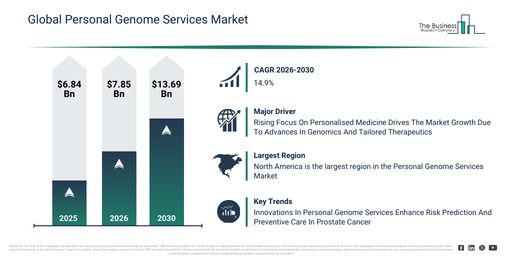
  • Innovations In Personal Genome Services Enhance Risk Prediction And Preventive Care In Prostate Cancer Is Playing A Role In Shaping The Personal Genome Services Market

    Innovations In Personal Genome Services Enhance Risk Prediction And Preventive Care In Prostate Cancer Is Playing A Role In Shaping The Personal Genome Services Market

    The Business Research Company’s 2026 market reports feature enhanced tools like market attractiveness analysis, TAM assessment, and company scoring matrices, along with interactive dashboards, deeper supply chain insights, and startup coverage strengthening the depth, usability, and strategic value of insights.

    What Is The Forecasted Market Size Trajectory Of The Personal Genome Services Market From 2026 To 2030?

    The personal genome services market has seen substantial expansion over recent years. It is projected to increase from $6.84 billion in 2025 to $7.85 billion in 2026, exhibiting a compound annual growth rate (CAGR) of 14.7%. This historical growth can be attributed to factors such as reduced sequencing costs, a rise in demand for ancestry testing, enhanced consumer awareness of genetics, the expansion of genomics startups, and improved sequencing accuracy.

    The personal genome services market is projected for swift expansion in the upcoming years. By 2030, its size is anticipated to reach $13.69 billion, expanding at a compound annual growth rate (CAGR) of 14.9%. This projected growth during the forecast period stems from factors such as increasing adoption of preventive genomics, wider application of pharmacogenomics, growing demand for personalized wellness solutions, more extensive insurance coverage for testing, and the integration with digital health platforms. Key trends expected during the forecast period encompass direct-to-consumer genome testing, integrated genomic reports for health risks, bundled pharmacogenomic services, preventive genome screening packages, and digital platforms for genetic counseling.

    Access Your Free Sample Report For In-Depth Market Analysis:

    https://www.thebusinessresearchcompany.com/sample.aspx?id=33258&type=smp

    What Leading Drivers Are Supporting The Personal Genome Services Market Expansion?

    A growing emphasis on personalized medicine is anticipated to fuel the expansion of the personal genome services market in the future. This medical approach involves tailoring treatment and prevention plans specifically to an individual’s unique genetic, biological, and lifestyle attributes. Its adoption is on the rise, driven by breakthroughs in genomics and molecular diagnostics that enable treatments to be customized according to a person’s genetic profile, leading to improved results. Through analyzing an individual’s genetic composition, personal genome services facilitate personalized medicine by forecasting disease risk, assisting in drug choice, and customizing prevention and treatment approaches. An example demonstrating this trend is that in February 2024, the Personalized Medicine Coalition, a US-based non-profit, reported that the FDA sanctioned 16 novel personalized treatments for patients with rare diseases in 2023, an increase from six in 2022. The personalized treatments given approval in 2023 further comprised seven medications for cancer and three for other health conditions. Consequently, the heightened attention on personalized medicine is serving as a catalyst for the expansion of the personal genome services market.

    How Is The Personal Genome Services Market Categorized Across Its Segment Groups?

    The personal genome services market covered in this report is segmented –

    1) By Service Type: Genetic Testing; Whole Genome Sequencing; Carrier Testing; Ancestry Testing; Other Service Types

    2) By Application: Healthcare; Research; Ancestry; Other Applications

    3) By End-User: Hospitals and Clinics; Research Centers; Direct-to-Consumer; Other End-Users

    Subsegments:

    1) By Genetic Testing: Health Risk Assessment Testing; Pharmacogenomic Testing; Nutritional Genetic Testing; Lifestyle Genetic Testing; Wellness Genetic Screening

    2) By Whole Genome Sequencing: Clinical Whole Genome Sequencing; Research Whole Genome Sequencing; Preventive Health Genome Sequencing; Rare Disease Genome Sequencing; Population Based Genome Sequencing

    3) By Carrier Testing: Inherited Disease Carrier Screening; Preconception Carrier Testing; Prenatal Carrier Testing; Reproductive Health Carrier Screening; Family Planning Carrier Testing

    4) By Ancestry Testing: Ethnicity Estimation Testing; Genealogical Lineage Testing; Migration Pattern Analysis; Regional Ancestry Breakdown; Family Relationship Discovery

    5) By Other Service Types: Newborn Genetic Screening; Predictive Genetic Testing; Sports Performance Genetic Analysis; Personalized Health Reporting; Custom Genetic Consulting Services

    What Emerging Trends Are Seen In The Personal Genome Services Market?

    Major companies engaged in the personal genome services market are concentrating on developing advanced solutions, including genome-wide risk stratification, to deliver personalized health insights, predict susceptibility to diseases, and guide both preventive and lifestyle interventions. Genome-wide risk stratification is defined as the process of analyzing an individual’s entire genome to identify genetic variations contributing to the risk of developing specific diseases or conditions, thereby enabling tailored predictions of health risks and targeted preventive strategies. For example, in November 2025, MyOme Inc., a US-based biotechnology company, launched the first integrated polygenic risk score (iPRS) test for prostate cancer. This test combines approximately 7 million genetic markers with clinical factors to provide personalized 10-year and lifetime risk estimates, which have been validated in over 140,000 diverse men. Its objective is early detection and prevention for 95% of cases without rare variants such as BRCA2, directing PSA or MRI or biopsies for high-risk individuals (those in the top decile having 3-4x elevated odds) while simultaneously reducing false positives and overtreatment. The benefits encompass precise stratification, equitable performance across various ancestries, and lifelong AI-updated insights from a single whole-genome sample.

    Which Firms Are Influencing Competition In The Personal Genome Services Market?

    Major companies operating in the personal genome services market are Thermo Fisher Scientific Inc, Illumina Inc, Helix OpCo LLC, Ancestry.com Operations Inc, Fulgent Genetics Inc, 23andMe Holding Co, Prenetics Global Limited, MyHeritage Ltd, Color Health Inc, Genomics plc, GenoPalate Inc, Living DNA Ltd, Mapmygenome India Pvt Ltd, Nebula Genomics Inc, Xcode Life Sciences Pvt Ltd, Sema4 Holdings Corp, Gene by Gene Ltd, TellmeGen SL, CRI Genetics LLC, African Ancestry Inc, and DNAFit Limited.

    Get The Full Personal Genome Services Market Report:

    https://www.thebusinessresearchcompany.com/report/personal-genome-services-market-report

    Which Geographic Region Dominates The Personal Genome Services Market?

    North America was the largest region in the personal genome services market in 2025. Asia-Pacific is expected to be the fastest-growing region in the forecast period. The regions covered in the personal genome services market report are Asia-Pacific, South East Asia, Western Europe, Eastern Europe, North America, South America, Middle East, Africa.

    Request A Customized Personal Genome Services Market Report For Competitive Insights:

    https://www.thebusinessresearchcompany.com/customise?id=33258&type=smp

    Browse Through More Reports Similar to the Global Personal Genome Services Market 2026, By The Business Research Company

    Genomics Services Market Report 2026

    https://www.thebusinessresearchcompany.com/report/genomics-services-global-market-report

    Genomics Personalized Health Market Report 2026

    https://www.thebusinessresearchcompany.com/report/genomics-personalized-health-global-market-report

    Consumer Genomics Market Report 2026

    https://www.thebusinessresearchcompany.com/report/consumer-genomics-global-market-report

    Get in touch with us:

    The Business Research Company: https://www.thebusinessresearchcompany.com/

    Americas +1 310-496-7795

    Asia +44 7882 955267 & +91 8897263534

    Europe +44 7882 955267

    Email us at info@tbrc.info

    Follow us on:

    LinkedIn: https://in.linkedin.com/company/the-business-research-company

    YouTube: https://www.youtube.com/channel/UC24_fI0rV8cR5DxlCpgmyFQ

    Global Market Model: https://www.thebusinessresearchcompany.com/global-market-model