Category: Healthcare Services

  • Non-Small Cell Lung Cancer (NSCLC) Market Developments Highlighting Opportunities Through 2026–2030

    Non-Small Cell Lung Cancer (NSCLC) Market Developments Highlighting Opportunities Through 2026–2030

    The Business Research Company’s 2026 market reports feature enhanced tools like market attractiveness analysis, TAM assessment, and company scoring matrices, along with interactive dashboards, deeper supply chain insights, and startup coverage strengthening the depth, usability, and strategic value of insights.

    What Is The Forecasted Market Size Trajectory Of The Non-Small Cell Lung Cancer (NSCLC) Market From 2026 To 2030?

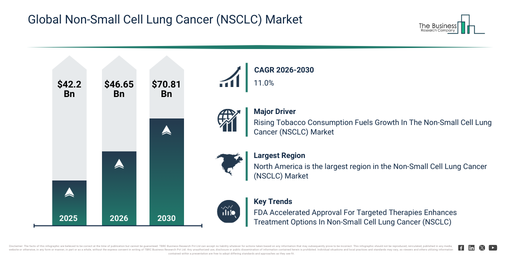
    The non-small cell lung cancer (nsclc) market has experienced rapid growth in recent years. It is projected to expand from $42.2 billion in 2025 to $46.65 billion in 2026, achieving a compound annual growth rate (CAGR) of 10.5%. This historical growth can be linked to a high prevalence of smoking, exposure to air pollution, late-stage diagnoses, limited targeted therapy options, and a reliance on conventional chemotherapy.

    The non-small cell lung cancer (nsclc) market size is anticipated to undergo significant expansion in the coming years. It is projected to climb to $70.81 billion by 2030, at a compound annual growth rate (CAGR) of 11.0%. This growth during the forecast period can be attributed to the rising adoption of targeted therapies and immunotherapy, increased investment in lung cancer diagnostics, the advancement of personalized medicine, the expansion of oncology centers and specialty clinics, and the development of AI-based predictive models and imaging solutions. Prominent trends throughout this period include the increasing uptake of targeted therapy and immunotherapy, a greater reliance on advanced radiotherapy techniques, the growing implementation of laser therapy and photodynamic therapy, an expanding deployment of early diagnosis and screening programs, and the progressing integration of AI-powered imaging and predictive oncology.

    Access Your Free Sample Report For In-Depth Market Analysis:

    https://www.thebusinessresearchcompany.com/sample.aspx?id=13232&type=smp

    Which Important Drivers Are Guiding The Non-Small Cell Lung Cancer (NSCLC) Market Growth?

    The upward trend in tobacco usage is anticipated to fuel the expansion of the non-small cell lung cancer (NSCLC) market in the future. Tobacco consumption involves individuals utilizing tobacco items, commonly through smoking, chewing, or snuffing, thereby introducing nicotine and other chemical substances into their systems. Within tobacco smoke, numerous carcinogens are present that can harm the DNA (deoxyribonucleic acid) of lung cells, resulting in mutations and the unchecked proliferation of cancerous cells, such as non-small-cell lung cancer (NSCLC). As an illustration, data from October 2024, based on the 2024 National Youth Tobacco Survey released by the US Food and Drug Administration (USFDA), a federal agency located in the US, indicated that 1.1% of all students (approximately 2.25 million) reported current tobacco product usage. Specifically, 10.1% of high school students (about 1.58 million) and 5.4% of middle school students (around 640,000) consumed tobacco. Furthermore, 2.8% of students (about 760,000) reported current use of any combustible tobacco product, whereas 3.0% (approximately 840,000) reported using multiple tobacco products. Consequently, the rising prevalence of tobacco consumption is fueling the expansion of the non-small cell lung cancer (NSCLC) market.

    Which Segment Classifications Are Used In The Non-Small Cell Lung Cancer (NSCLC) Market Segment Analysis?

    The non-small cell lung cancer (nsclc) market covered in this report is segmented –

    1) By Type: Squamous Cell Carcinoma, Large Cell Carcinoma, Adenocarcinoma, Other Types

    2) By Therapy: Radiotherapy, Laser Therapy, Photodynamic Therapy (PDT), Other Therapies

    3) By Distribution Channel: Hospital Pharmacy, Online Pharmacy, Other Distribution Channels

    Subsegments:

    1) By Squamous Cell Carcinoma: Keratinizing Squamous Cell Carcinoma, Non-Keratinizing Squamous Cell Carcinoma

    2) By Large Cell Carcinoma: Undifferentiated Large Cell Carcinoma, Large Cell Neuroendocrine Carcinoma

    3) By Adenocarcinoma: Invasive Adenocarcinoma, Bronchioloalveolar Carcinoma

    4) By Other Types: Mixed Cell Type Carcinoma, Sarcomatoid Carcinoma

    What Trends Are Influencing The Evolution Of The Non-Small Cell Lung Cancer (NSCLC) Market?

    Major companies operating in the non-small cell lung cancer market are prioritizing the development of targeted therapies, including those granted FDA accelerated approval for drugs addressing specific genetic mutations, to enhance treatment options for patients. FDA accelerated approval refers to a regulatory pathway where the U.S. Food and Drug Administration (FDA) grants earlier authorization to a therapy that specifically targets a molecular or genetic abnormality in a disease, relying on surrogate or intermediate clinical endpoints reasonably likely to forecast clinical benefit. For instance, in July 2025, Dizal (Jiangsu) Pharmaceutical Co., Ltd., a China-based research-focused biotechnology company, launched sunvozertinib (Zegfrovy) for adult patients with locally advanced or metastatic NSCLC harboring EGFR exon 20 insertion mutations who had progressed after platinum-based chemotherapy. Zegfrovy is taken orally at 200 mg once daily with food until disease progression or unacceptable toxicity. The therapy achieved a confirmed overall response rate of 46% and a duration of response of 11.1 months in the WU-KONG1B trial. The FDA approval also encompassed the Oncomine Dx Express Test as a companion diagnostic to identify eligible patients. Sunvozertinib carries warnings for interstitial lung disease, gastrointestinal and dermatologic reactions, ocular toxicity, and embryo-fetal toxicity, detailing its complete safety profile.

    Which Firms Are Contributing To The Non-Small Cell Lung Cancer (NSCLC) Market Ecosystem?

    Major companies operating in the non-small cell lung cancer (nsclc) market are Pfizer Inc., F. Hoffmann‑La Roche AG, Merck & Co. Inc., AbbVie Inc., Novartis AG, Sanofi S.A., Bristol‑Myers Squibb Company, AstraZeneca plc, GlaxoSmithKline Plc, Takeda Pharmaceutical Company Limited, Eli Lilly and Company, Amgen Inc., Regeneron Pharmaceuticals Inc., Astellas Pharma Inc., Clovis Oncology, Revolution Medicines, Boehringer Ingelheim GmbH, Johnson & Johnson, Daiichi Sankyo Company Limited, BeiGene Ltd., DualityBio, Gilead Sciences Inc., Mirati Therapeutics Inc., Arcus Biosciences Inc., NeoImmuneTech

    Get The Full Non-Small Cell Lung Cancer (NSCLC) Market Report:

    https://www.thebusinessresearchcompany.com/report/non-small-cell-lung-cancer-nsclc-global-market-report

    Which Region Has The Greatest Market Share In The Non-Small Cell Lung Cancer (NSCLC) Market?

    North America was the largest region in the non-small cell lung cancer (NSCLC) market in 2025. Asia-Pacific is expected to be the fastest-growing region in the forecast period. The regions covered in the non-small cell lung cancer (nsclc) market report are Asia-Pacific, South East Asia, Western Europe, Eastern Europe, North America, South America, Middle East, Africa.

    Request A Customized Non-Small Cell Lung Cancer (NSCLC) Market Report For Competitive Insights:

    https://www.thebusinessresearchcompany.com/report/non-small-cell-lung-cancer-nsclc-global-market-report

    Browse Through More Reports Similar to the Global Non-Small Cell Lung Cancer (NSCLC) Market 2026, By The Business Research Company

    Cervical Spondylosis Treatment Market Report 2026

    https://www.thebusinessresearchcompany.com/report/cervical-spondylosis-treatment-global-market-report

    Osteoarthritis Market Report

    https://www.thebusinessresearchcompany.com/report/osteoarthritis-global-market-report

    Ankylosing Spondylitis Market Report

    https://www.thebusinessresearchcompany.com/report/ankylosing-spondylitis-global-market-report

    Get in touch with us:

    The Business Research Company: https://www.thebusinessresearchcompany.com/

    Americas +1 310-496-7795

    Asia +44 7882 955267 & +91 8897263534

    Europe +44 7882 955267

    Email us at info@tbrc.info

    Follow us on:

    LinkedIn: https://in.linkedin.com/company/the-business-research-company

    YouTube: https://www.youtube.com/channel/UC24_fI0rV8cR5DxlCpgmyFQ

    Global Market Model: https://www.thebusinessresearchcompany.com/global-market-model

  • Non-Radiographic Axial Spondyloarthritis Therapeutics Market Forecast 2026–2030 Covering Industry Growth Trends

    Non-Radiographic Axial Spondyloarthritis Therapeutics Market Forecast 2026–2030 Covering Industry Growth Trends

    The Business Research Company’s 2026 market reports feature enhanced tools like market attractiveness analysis, TAM assessment, and company scoring matrices, along with interactive dashboards, deeper supply chain insights, and startup coverage strengthening the depth, usability, and strategic value of insights.

    How Much Will The Market Value Of The Non-Radiographic Axial Spondyloarthritis Therapeutic Market Grow Between 2026 And 2030?

    The non-radiographic axial spondyloarthritis therapeutic market size has seen rapid growth in recent years. It is forecast to increase from $1.04 billion in 2025 to $1.15 billion in 2026, achieving a compound annual growth rate (CAGR) of 10.9%. This historical growth can be attributed to factors such as increasing recognition of non-radiographic axial spondyloarthritis, limitations of conventional NSAID therapy, improved diagnostic criteria adoption, growing rheumatology specialty care access, and the expansion of biologic drug availability.

    The non-radiographic axial spondyloarthritis therapeutic market is poised for significant expansion in the upcoming years. It is projected to attain a value of $1.72 billion by 2030, demonstrating a compound annual growth rate (CAGR) of 10.6%. This anticipated growth is driven by factors such as the increased creation of next-generation biologics, the growing acceptance of JAK inhibitor treatments, a rising emphasis on individualized rheumatology care, the expansion of early-stage intervention protocols, and enhanced patient awareness and diagnosis rates. Noteworthy trends for the forecast period include a greater adoption of biologic disease-modifying therapies, increased utilization of IL-17 and TNF inhibitors, a heightened focus on early disease intervention, the broadening of targeted small molecule treatments, and an increased priority on long-term disease control.

    Access Your Free Sample Report For In-Depth Market Analysis:

    https://www.thebusinessresearchcompany.com/sample.aspx?id=24627&type=smp

    What Major Factors Are Driving The Non-Radiographic Axial Spondyloarthritis Therapeutic Market Forward?

    A rise in clinical trials is projected to fuel the expansion of the non-radiographic axial spondyloarthritis therapeutic market in the future. These trials are human-based research efforts designed to assess the safety, efficacy, and potential adverse reactions of medical therapies or procedures. The surge in clinical trials stems from a rising need for tailored and novel treatments, which necessitate stringent safety and efficacy evaluations. For non-radiographic axial spondyloarthritis therapeutics, clinical trials offer evidence-backed confirmation of treatment effectiveness and safety during the early stages of the disease, thereby facilitating regulatory clearances and broader medical acceptance. As an illustration, in December 2024, the Association of the British Pharmaceutical Industry, a UK-based entity dedicated to enhancing patient access to new treatments, indicated that the overall count of industry-led clinical trials started in the UK rose from 411 trials in 2022 to 426 in 2023. Consequently, the expansion of clinical trials is stimulating growth within the non-radiographic axial spondyloarthritis therapeutic market.

    How Is The Non-Radiographic Axial Spondyloarthritis Therapeutic Market Organized By Segment Classification?

    The non-radiographic axial spondyloarthritis therapeutic market covered in this report is segmented –

    1) By Type: Non-Steroidal Anti-Inflammatory Drugs, Biologics, Small Molecule Therapies, Corticosteroids

    2) By Application: Oral, Injectable, Parenteral

    3) By End User: Hospitals, Ambulatory Surgical Centers, Homecare Settings

    Subsegments:

    1) By Non-Steroidal Anti-Inflammatory Drugs: COX-2 Inhibitors, Non-Selective NSAIDs

    2) By Biologics: Tumor Necrosis Factor (TNF) Inhibitors, Interleukin-17 (IL-17) Inhibitors

    3) By Small Molecule Therapies: Janus Kinase (JAK) Inhibitors, TYK2 Inhibitors

    4) By Corticosteroids: Oral Corticosteroids, Intra-Articular Corticosteroid Injections

    Which Trends Are Impacting The Progress Of The Non-Radiographic Axial Spondyloarthritis Therapeutic Market?

    Leading companies active in the non-radiographic axial spondyloarthritis (nr-axSpA) therapeutic market are concentrating on developing innovative solutions, such as dual IL-17A/IL-17F biologic inhibitors and convenient delivery formats. This focus aims to address increasing diagnosis rates, earlier disease identification, the demand for quicker and more profound inflammatory control, and patient preferences for less frequent or more accessible dosing. These dual IL-17A/IL-17F biologic inhibitors employ monoclonal antibodies that specifically and concurrently block the cytokines IL-17A and IL-17F, which aids in managing nr-axSpA by reducing inflammation, pain, stiffness, and structural progression. For instance, in September 2024, UCB S.A. (Union Chimique Belge Société Anonyme), a Belgium-based global biopharmaceutical company, launched BIMZELX in the U.S. for adults with active nr-axSpA following FDA approval. BIMZELX is a humanized IgG monoclonal antibody designed to neutralize both IL-17A and IL-17F, offering broader suppression of IL-17-mediated pathways compared with traditional TNF inhibitors or single-target IL-17 therapies. In addition to nr-axSpA, BIMZELX is also indicated for moderate-to-severe plaque psoriasis, psoriatic arthritis, and ankylosing spondylitis, thereby addressing the evolving treatment needs of patients with inflammatory diseases.

    Who Are The Industry Participants Involved In The Non-Radiographic Axial Spondyloarthritis Therapeutic Market?

    Major companies operating in the non-radiographic axial spondyloarthritis therapeutic market are Pfizer Inc, Johnson and Johnson, AbbVie Inc, Sanofi SA, Bristol Myers Squibb Company, AstraZeneca PLC, Novartis AG, Eli Lilly and Company, Gilead Sciences Inc, Amgen Inc, Biogen Inc, Daiichi Sankyo Company Limited, UCB SA, Mochida Pharmaceutical Co Ltd, Mereo BioPharma Group plc, Suzhou Zelgen Biopharmaceuticals Co Ltd, Qyuns Therapeutics Co Ltd, Sandoz Group AG, Boehringer Ingelheim GmbH, Roche Holding AG

    Get The Full Non-Radiographic Axial Spondyloarthritis Therapeutic Market Report:

    https://www.thebusinessresearchcompany.com/report/non-radiographic-axial-spondyloarthritis-therapeutic-global-market-report

    Which Region Accounts For The Largest Portion Of The Non-Radiographic Axial Spondyloarthritis Therapeutic Market?

    North America was the largest region in the non-radiographic axial spondyloarthritis therapeutics market in 2025. The regions covered in the non-radiographic axial spondyloarthritis therapeutic market report are Asia-Pacific, South East Asia, Western Europe, Eastern Europe, North America, South America, Middle East, Africa.

    Request A Customized Non-Radiographic Axial Spondyloarthritis Therapeutic Market Report For Competitive Insights:

    https://www.thebusinessresearchcompany.com/report/non-radiographic-axial-spondyloarthritis-therapeutic-global-market-report

    Browse Through More Reports Similar to the Global Non-Radiographic Axial Spondyloarthritis Therapeutic Market 2026, By The Business Research Company

    Diabetic Retinopathy Market Report 2026

    https://www.thebusinessresearchcompany.com/report/diabetic-retinopathy-global-market-report

    Proliferative Diabetic Retinopathy Pdr Market Report

    https://www.thebusinessresearchcompany.com/report/proliferative-diabetic-retinopathy-pdr-global-market-report

    Diabetic Neuropathy Market Report

    https://www.thebusinessresearchcompany.com/report/diabetic-neuropathy-global-market-report

    Get in touch with us:

    The Business Research Company: https://www.thebusinessresearchcompany.com/

    Americas +1 310-496-7795

    Asia +44 7882 955267 & +91 8897263534

    Europe +44 7882 955267

    Email us at info@tbrc.info

    Follow us on:

    LinkedIn: https://in.linkedin.com/company/the-business-research-company

    YouTube: https://www.youtube.com/channel/UC24_fI0rV8cR5DxlCpgmyFQ

    Global Market Model: https://www.thebusinessresearchcompany.com/global-market-model

  • Non-Proliferative Diabetic Retinopathy Market Growth Analysis 2026–2030 Highlighting Innovation And Competitive Landscape

    Non-Proliferative Diabetic Retinopathy Market Growth Analysis 2026–2030 Highlighting Innovation And Competitive Landscape

    The Business Research Company’s 2026 market reports feature enhanced tools like market attractiveness analysis, TAM assessment, and company scoring matrices, along with interactive dashboards, deeper supply chain insights, and startup coverage strengthening the depth, usability, and strategic value of insights.

    What Changes In Market Value Are Expected For The Non-Proliferative Diabetic Retinopathy Market Over The 2026–2030 Period?

    The non-proliferative diabetic retinopathy market size has experienced robust expansion over recent years. Projections indicate an increase in its value from $2.83 billion in 2025 to $3.06 billion by 2026, reflecting a compound annual growth rate (CAGR) of 8.0%. Historically, this expansion has been driven by factors such as the widespread occurrence of diabetes, inadequate understanding of retinal complications, a dependence on traditional laser therapies, limited uptake of intravitreal injections, and an underdeveloped screening infrastructure.

    The non-proliferative diabetic retinopathy market is projected to undergo significant expansion in the coming years, with its value expected to reach $3.98 billion by 2030, growing at a compound annual growth rate (CAGR) of 6.8%. This anticipated increase during the forecast period can be attributed to the rising prevalence of diabetic retinopathy, the growing adoption of anti-VEGF and steroid therapies, the expansion of ophthalmology clinics and specialized centers, advancements in retinal imaging technologies, and improvements in patient awareness and early diagnosis programs. Prominent trends for the forecast period include the increasing use of anti-VEGF therapy in NPDR, a rise in the application of intraocular steroid injections, the broader implementation of advanced laser surgery techniques, expanded deployment of vitrectomy procedures, and the progressing integration of AI-powered retinal imaging and diagnosis.

    Access Your Free Sample Report For In-Depth Market Analysis:

    https://www.thebusinessresearchcompany.com/sample.aspx?id=15620&type=smp

    Which Key Drivers Are Affecting The Non-Proliferative Diabetic Retinopathy Market Development?

    The growing prevalence of diabetes is anticipated to drive the expansion of the non-proliferative diabetic retinopathy market moving forward. Diabetes is a chronic metabolic condition characterized by elevated blood sugar levels, resulting from the pancreas’s inadequate insulin production or the body’s cells becoming resistant to insulin’s effects. Sedentary lifestyles, poor dietary choices, and genetic predispositions are common causes of diabetes. This condition induces non-proliferative diabetic retinopathy through damage to the retina’s blood vessels, mainly due to prolonged exposure to high blood glucose levels, which can lead to vision impairment and potential blindness. For instance, in June 2024, data from the National Health Service, a UK-based government department, indicated that in 2023, the NHS identified over 549,000 additional individuals in England at risk of developing type 2 diabetes. This brought the total number of people with non-diabetic hyperglycemia, or pre-diabetes, registered with a GP to 3,615,330. This marks a substantial increase compared to 3,065,825 in 2022, representing a rise of nearly 20%. Therefore, the increasing prevalence of diabetes is a key driver for the growth of the non-proliferative diabetic retinopathy market.

    Which Segments Define The Non-Proliferative Diabetic Retinopathy Market Segment Structure?

    The non-proliferative diabetic retinopathy market covered in this report is segmented –

    1) By Treatment Type: Anti-Vascular Endothelial Growth Factor (VEGF) Therapy, Intraocular Steroid Injection, Laser Surgery, Vitrectomy

    2) By Disease Severity Level: Mild Non-Proliferative Diabetic Retinopathy, Moderate Non-Proliferative Diabetic Retinopathy, Severe Non-Proliferative Diabetic Retinopathy

    3) By End-User: Hospitals, Specialty Clinics, Ambulatory Surgical Centers, Other End-Users

    Subsegments:

    1) By Anti-Vascular Endothelial Growth Factor (VEGF) Therapy: Bevacizumab (Avastin), Ranibizumab (Lucentis), Aflibercept (Eylea), Pegaptanib (Macugen)

    2) By Intraocular Steroid Injection: Triamcinolone Acetonide, Dexamethasone Implant (Ozurdex), Fluocinolone Acetonide Implant (Iluvien)

    3) By Laser Surgery: Focal Laser Photocoagulation, Panretinal Photocoagulation

    4) By Vitrectomy: Pars Plana Vitrectomy (PPV), Membrane Peeling Vitrectomy, Phaco-Vitrectomy (Combined Cataract And Vitrectomy Surgery)

    What Trends Are Transforming The Non-Proliferative Diabetic Retinopathy Market?

    Leading entities within the non-proliferative diabetic retinopathy (NPDR) sector are concentrating on creating sophisticated clinical approaches, including initiating Phase 3 registrational trial enrollment, to bolster therapeutic effectiveness, accumulate substantial evidence, and facilitate regulatory clearance for novel NPDR therapies. This enrollment signifies the official commencement and patient allocation into a crucial late-stage clinical study, intended to yield thorough data on efficacy and safety required for securing market authorization for a therapeutic product. An illustrative example is Ocular Therapeutix, a US-based biopharmaceutical firm focused on retinal conditions, which disclosed in November 2025 the initial patient randomization for its HELIOS-3 Phase 3 registrational program, assessing AXPAXLI (OTX-TKI) for NPDR. AXPAXLI represents an experimental bioresorbable intravitreal hydrogel comprising axitinib, a tyrosine kinase inhibitor possessing anti-angiogenic properties, designed to provide prolonged therapeutic effects with reduced injection frequency. Both the HELIOS-3 trial and HELIOS-2 employ an innovative ordinal ≥2-step Diabetic Retinopathy Severity Score (DRSS) improvement as their main outcome measure and enroll participants with non-center-involved diabetic macular edema (non-CI-DME), thereby presenting AXPAXLI as a potentially groundbreaking solution for lasting and efficient NPDR management.

    Who Are The Established Players Within The Non-Proliferative Diabetic Retinopathy Market?

    Major companies operating in the non-proliferative diabetic retinopathy market are Pfizer Inc., Johnson & Johnson, F. Hoffmann-La Roche AG, AbbVie Inc., Bayer AG, Abbott Laboratories, Novartis AG, Regeneron Pharmaceuticals Inc., Bausch Health Companies Inc., Genentech Inc., Carl Zeiss Meditec AG, ZEISS Group, Santen Pharmaceutical Co. Ltd., Santen Inc., Topcon Corporation, Lumenis Ltd., Alimera Science, Ocular Therapeutix Inc., Acucela Inc., Kowa Company Ltd.

    Get The Full Non-Proliferative Diabetic Retinopathy Market Report:

    https://www.thebusinessresearchcompany.com/report/non-proliferative-diabetic-retinopathy-global-market-report

    Which Region Holds The Highest Market Share In The Non-Proliferative Diabetic Retinopathy Market?

    North America was the largest region in the non-proliferative diabetic retinopathy market in 2025. Asia-Pacific is expected to be the fastest-growing region in the forecast period. The regions covered in the non-proliferative diabetic retinopathy market report are Asia-Pacific, South East Asia, Western Europe, Eastern Europe, North America, South America, Middle East, Africa.

    Request A Customized Non-Proliferative Diabetic Retinopathy Market Report For Competitive Insights:

    https://www.thebusinessresearchcompany.com/report/non-proliferative-diabetic-retinopathy-global-market-report

    Browse Through More Reports Similar to the Global Non-Proliferative Diabetic Retinopathy Market 2026, By The Business Research Company

    Bladder Cancer Drugs Market Report 2026

    https://www.thebusinessresearchcompany.com/report/bladder-cancer-drugs-global-market-report

    Adrenocortical Carcinoma Market Report

    https://www.thebusinessresearchcompany.com/report/adrenocortical-carcinoma-global-market-report

    Urothelial Carcinoma Treatment Market Report

    https://www.thebusinessresearchcompany.com/report/urothelial-carcinoma-treatment-global-market-report

    Get in touch with us:

    The Business Research Company: https://www.thebusinessresearchcompany.com/

    Americas +1 310-496-7795

    Asia +44 7882 955267 & +91 8897263534

    Europe +44 7882 955267

    Email us at info@tbrc.info

    Follow us on:

    LinkedIn: https://in.linkedin.com/company/the-business-research-company

    YouTube: https://www.youtube.com/channel/UC24_fI0rV8cR5DxlCpgmyFQ

    Global Market Model: https://www.thebusinessresearchcompany.com/global-market-model

  • Non-Muscle Invasive Bladder Cancer Market Forecast Through 2030 Highlighting Market Developments

    Non-Muscle Invasive Bladder Cancer Market Forecast Through 2030 Highlighting Market Developments

    The Business Research Company’s 2026 market reports feature enhanced tools like market attractiveness analysis, TAM assessment, and company scoring matrices, along with interactive dashboards, deeper supply chain insights, and startup coverage strengthening the depth, usability, and strategic value of insights.

    By 2030, What Market Size Is The Non-Muscle Invasive Bladder Cancer Market Expected To Reach Based On Its 2026 Value?

    The non-muscle invasive bladder cancer market has demonstrated strong expansion in recent years. This market is anticipated to increase from $3.66 billion in 2025 to $3.87 billion in 2026, achieving a compound annual growth rate (CAGR) of 5.9%. The historical growth can be attributed to several factors such as the early detection of bladder cancer, continued reliance on transurethral resection, limited adoption of intravesical therapy, the development of hospital pharmacy infrastructure, and insufficient awareness of NMIBC staging.

    The non-muscle invasive bladder cancer market size is projected to experience substantial growth in the upcoming years, expanding to $4.82 billion by 2030 at a compound annual growth rate (CAGR) of 5.6%. This anticipated growth is attributed to the escalating prevalence of bladder cancer, the increasing acceptance of immunotherapy and chemotherapy, the expansion of online and retail pharmacy channels, a broadening use of advanced diagnostic imaging, and evolving personalized treatment approaches. Major developments expected in the forecast period include the rising adoption of AI-powered diagnostic tools, an increased application of genomics and precision medicine strategies, the growing implementation of data-driven clinical decision support, the expanding deployment of minimally invasive therapeutic techniques, and the advancing integration of connected health monitoring solutions.

    Access Your Free Sample Report For In-Depth Market Analysis:

    https://www.thebusinessresearchcompany.com/sample.aspx?id=20904&type=smp

    What Factors Are Contributing To The Growth Of The Non-Muscle Invasive Bladder Cancer Market?

    An increasing emphasis on personalized medicine is projected to drive the expansion of the non-muscle invasive bladder cancer market in the future. This approach entails tailoring medical care according to an individual’s unique genetic makeup, way of life, and surroundings, leading to improved effectiveness. This heightened focus on personalized medicine stems from multiple factors, including breakthroughs in genomic research, enhanced diagnostic instruments, and a rising need for more precise and impactful therapies. The non-muscle invasive bladder cancer market benefits from personalized medicine through the creation of customized treatment strategies, which consider particular tumor traits, genetic indicators, and unique patient details. As an illustration, in February 2024, data from the Personalized Medicine Coalition, a US-based non-profit organization, indicated that the FDA sanctioned 16 novel personalized treatments for rare disease patients in 2023, an increase from six in 2022. Consequently, this trend is fueling the expansion of the non-muscle invasive bladder cancer market.

    How Is The Non-Muscle Invasive Bladder Cancer Market Segmented Across Different Segment Categories?

    The non-muscle invasive bladder cancer market covered in this report is segmented –

    1) By Stage: Carcinoma In Situ (CIS), T1 Stage, Ta Stage

    2) By Treatment: Immunotherapy, Chemotherapy, Surgery, Intravesical Therapy, Other Treatments

    3) By Tumor: Low-Grade Tumours, High-Grade Tumours

    4) By End-User: Hospital Pharmacy, Retail Pharmacy, Online Pharmacy

    Subsegments:

    1) By Carcinoma In Situ (CIS): High-Grade CIS, Low-Grade CIS

    2) By T1 Stage: T1a Stage (Superficial Tumors), T1b Stage (Invasive Into Lamina Propria)

    3) By Ta Stage: Low-Grade Ta Stage, High-Grade Ta Stage

    What Trends Are Shaping The Future Of The Non-Muscle Invasive Bladder Cancer Market?

    Leading firms within the non-muscle invasive bladder cancer market are prioritizing the creation of novel products, including immunotherapy, with the goal of enhancing therapeutic choices and patient results. This approach, immunotherapy, utilizes the body’s own immune system to identify and fight cancer cells through the stimulation or activation of immune reactions. As an example, in March 2024, the US biotechnology company, ImmunityBio Inc., gained Food and Drug Administration (FDA) approval for ANKTIVA (N-803) for managing patients with BCG-unresponsive non-muscle invasive bladder cancer (NMIBC) that includes carcinoma in situ (CIS), either with or without papillary tumors. This clearance was granted following encouraging clinical trial data, indicating that ANKTIVA, when administered alongside Bacillus Calmette-Guérin (BCG), provides an effective treatment alternative for individuals who have previously failed standard BCG therapy. ANKTIVA functions as a groundbreaking IL-15 agonist immunotherapy, operating by bolstering the immune system, particularly by activating natural killer (NK) cells and CD8+ killer T cells to pinpoint and eliminate cancer cells.

    Which Organizations Play A Role In The Non-Muscle Invasive Bladder Cancer Market Landscape?

    Major companies operating in the non-muscle invasive bladder cancer market are Johnson & Johnson, Janssen Research & Development LLC, Merck & Co Inc, AstraZeneca plc, Astellas Pharma US Inc, EMD Serono Inc, Genentech Inc, Aura Biosciences Inc, UroGen Pharma Ltd, Protara Therapeutics Inc, Istari Oncology Inc, Heat Biologics Inc, Viventia Bio Inc, ImmunityBio Inc, Altor BioScience Corporation, SURGE Therapeutics Inc, Pfizer Inc, Hoffmann‑La Roche Ltd, CG Oncology Inc, Tyra Biosciences Inc, Prokarium Ltd, ImmVira Pharma Co Ltd, Trigone Pharma Ltd, enGene Holdings Inc, Atonco Pharma Ltd.

    Get The Full Non-Muscle Invasive Bladder Cancer Market Report:

    https://www.thebusinessresearchcompany.com/report/non-muscle-invasive-bladder-cancer-global-market-report

    Where Is The Non-Muscle Invasive Bladder Cancer Market Most Concentrated Geographically?

    North America was the largest region in the non-muscle invasive bladder cancer market in 2025. Asia-Pacific is expected to be the fastest-growing region in the forecast period. The regions covered in the non-muscle invasive bladder cancer market report are Asia-Pacific, South East Asia, Western Europe, Eastern Europe, North America, South America, Middle East, Africa.

    Request A Customized Non-Muscle Invasive Bladder Cancer Market Report For Competitive Insights:

    https://www.thebusinessresearchcompany.com/report/non-muscle-invasive-bladder-cancer-global-market-report

    Browse Through More Reports Similar to the Global Non-Muscle Invasive Bladder Cancer Market 2026, By The Business Research Company

    Prenatal Testing And Newborn Screening Market Report 2026

    https://www.thebusinessresearchcompany.com/report/prenatal-testing-and-newborn-screening-global-market-report

    Prenatal And Newborn Genetic Testing Market Report

    https://www.thebusinessresearchcompany.com/report/prenatal-and-newborn-genetic-testing-global-market-report

    Pregnancy Test Kits Market Report

    https://www.thebusinessresearchcompany.com/report/pregnancy-test-kits-global-market-report

    Get in touch with us:

    The Business Research Company: https://www.thebusinessresearchcompany.com/

    Americas +1 310-496-7795

    Asia +44 7882 955267 & +91 8897263534

    Europe +44 7882 955267

    Email us at info@tbrc.info

    Follow us on:

    LinkedIn: https://in.linkedin.com/company/the-business-research-company

    YouTube: https://www.youtube.com/channel/UC24_fI0rV8cR5DxlCpgmyFQ

    Global Market Model: https://www.thebusinessresearchcompany.com/global-market-model

  • Non-invasive Prenatal Testing Market Outlook 2026–2030 Highlighting Growth Drivers And Industry Trends

    Non-invasive Prenatal Testing Market Outlook 2026–2030 Highlighting Growth Drivers And Industry Trends

    The Business Research Company’s 2026 market reports feature enhanced tools like market attractiveness analysis, TAM assessment, and company scoring matrices, along with interactive dashboards, deeper supply chain insights, and startup coverage strengthening the depth, usability, and strategic value of insights.

    What Is The Anticipated Rise In Market Value Of The Non-invasive Prenatal Testing Market During The Forecast Period?

    The non-invasive prenatal testing market has witnessed rapid growth in recent years. Its valuation is set to increase from $6.27 billion in 2025 to $7.21 billion in 2026, achieving a compound annual growth rate (CAGR) of 15.0%. Key factors contributing to its historical expansion include heightened awareness of prenatal screening, a shift from invasive diagnostic methods, the rising utilization of assay kits and reagents, the adoption of next-generation sequencing in laboratories, and the demand for early identification of chromosomal abnormalities.

    The non-invasive prenatal testing market is projected for substantial expansion over the coming years, with its size anticipated to reach $12.37 billion by 2030, growing at a robust compound annual growth rate (CAGR) of 14.4%. This anticipated growth during the forecast period is fueled by several factors, including the increasing global embrace of non-invasive prenatal testing, greater investment in sophisticated sequencing technologies, the expansion of hospital and diagnostic laboratory infrastructures, a surging demand for early genetic screening, and the progressive integration of AI and data analytics into prenatal diagnostic methods. Key trends expected during this period encompass the growing adoption of AI-based genetic analysis, the more widespread application of NGS and PCR systems for prenatal testing, an increase in the deployment of cloud-based data management solutions in diagnostics, the broader implementation of high-throughput screening technologies, and the further integration of personalized prenatal risk assessment.

    Access Your Free Sample Report For In-Depth Market Analysis:

    https://www.thebusinessresearchcompany.com/sample.aspx?id=2492&type=smp

    Which Strong Drivers Are Impacting The Non-invasive Prenatal Testing Market Growth?

    The future expansion of the non-invasive prenatal testing market is anticipated to be fueled by the rising age of mothers. This trend of older maternal age results from various factors, including the pursuit of education and careers, achieving financial stability, personal preferences, later marriages, advancements in contraception, and broader societal shifts, all of which empower women to make deliberate choices regarding family planning. When women postpone having children, the likelihood of chromosomal abnormalities increases, leading more pregnant individuals to choose non-invasive prenatal testing (NIPT) for evaluating their pregnancy’s health. As an illustration, in March 2025, the Centers for Disease Control and Prevention, a US government organization, reported that in 2023, the average age for mothers having their first child climbed to 27.5 years, an increase from 27.4 in 2022, establishing a new national record. Consequently, the steady rise in maternal age will consistently drive the expansion of the non-invasive prenatal testing market.

    What Are The Main Segments Within The Non-invasive Prenatal Testing Market Segment Structure?

    The non-invasive prenatal testing market covered in this report is segmented –

    1) By Type: Consumables, Instruments

    2) By Application: Trisomy, Microdeletion, Genetics, Rh factor

    3) By End User: Hospital, Diagnostic Labs

    Subsegments:

    1) By Consumables: Assay Kits, Reagents, Disposables

    2) By Instruments: Next-Generation Sequencers (NGS), Polymerase Chain Reaction (PCR) Systems, Ultrasound Devices

    Which Trends Are Contributing To Changes In The Non-invasive Prenatal Testing Market?

    Leading companies operating in the non-invasive prenatal testing (NIPT) market are concentrating on developing advanced solutions, such as linked-SNP (single nucleotide polymorphism) technology, to enhance diagnostic precision, improve the detection of complex genetic cases, and minimize reliance on paternal samples. This linked-SNP technology evaluates single-gene variants by analyzing genetically linked markers across the genome to infer inheritance patterns, thereby enabling more accurate identification of challenging conditions like homozygous mutations. For instance, in August 2025, Natera, a US-based cell-free DNA (cfDNA) testing and precision medicine company, launched Fetal Focus, a NIPT for inherited single-gene disorders that directly screens the fetus using only maternal blood when the biological father is unavailable. The test targets five genes: CFTR, SMN1, HBA1/HBA2, and HBB, and is supported by data from the EXPAND clinical trial. In its first readout (n=101), Fetal Focus demonstrated 91% sensitivity and successfully detected all five homozygous variant fetuses, underscoring the strength of its linked-SNP-based approach in delivering noninvasive and clinically meaningful risk assessment.

    Who Are The Companies Participating In The Non-invasive Prenatal Testing Market?

    Major companies operating in the non-invasive prenatal testing market are F. Hoffmann-La Roche AG, Illumina Inc., Laboratory Corporation of America Holdings, Natera Inc., PerkinElmer Inc., Quest Diagnostics Inc., Agilent Technologies Inc., BGI Diagnosis Co Ltd., Berry Genomics Co, LifeCodexx AG, Myriad Genetics Inc., NIPD Genetics Co Ltd., Sequenom Inc., Annoroad Gene Technology Co Ltd., Centogene AG, Counsyl Inc., EUROFINS Genoma Group, Eurofins Scientific SE, Next Biosciences, Premaitha Health Plc, Ariosa Diagnostics Inc., Yourgene Health PLC, GE Healthcare Technologies Inc., Koninklijke Philips NV, Thermo Fisher Scientific Inc., Pacific Biosciences of California Inc., QIAGEN NV, MedGenome Labs Ltd., Progenity Inc., Beijing Genomics Institute

    Get The Full Non-invasive Prenatal Testing Market Report:

    https://www.thebusinessresearchcompany.com/report/non-invasive-prenatal-testing-global-market-report

    Which Region Dominates The Non-invasive Prenatal Testing Market By Market Share?

    North America was the largest region in the non-invasive prenatal testing market in 2025. Western Europe was the second largest region in the non-invasive prenatal testing market. The regions covered in the non-invasive prenatal testing market report are Asia-Pacific, South East Asia, Western Europe, Eastern Europe, North America, South America, Middle East, Africa.

    Request A Customized Non-invasive Prenatal Testing Market Report For Competitive Insights:

    https://www.thebusinessresearchcompany.com/report/non-invasive-prenatal-testing-global-market-report

    Browse Through More Reports Similar to the Global Non-invasive Prenatal Testing Market 2026, By The Business Research Company

    Non Injectable Insulin Market Report 2026

    https://www.thebusinessresearchcompany.com/report/non-injectable-insulin-global-market-report

    Oem Insulation Market Report

    https://www.thebusinessresearchcompany.com/report/oem-insulation-global-market-report

    Antidiabetics Market Report

    https://www.thebusinessresearchcompany.com/report/antidiabetics-global-market-report

    Get in touch with us:

    The Business Research Company: https://www.thebusinessresearchcompany.com/

    Americas +1 310-496-7795

    Asia +44 7882 955267 & +91 8897263534

    Europe +44 7882 955267

    Email us at info@tbrc.info

    Follow us on:

    LinkedIn: https://in.linkedin.com/company/the-business-research-company

    YouTube: https://www.youtube.com/channel/UC24_fI0rV8cR5DxlCpgmyFQ

    Global Market Model: https://www.thebusinessresearchcompany.com/global-market-model

  • Non-Insulin Therapies For Diabetes Market Growth Supported By Expanding Treatment Options For Diabetes Management

    Non-Insulin Therapies For Diabetes Market Growth Supported By Expanding Treatment Options For Diabetes Management

    The Business Research Company’s 2026 market reports feature enhanced tools like market attractiveness analysis, TAM assessment, and company scoring matrices, along with interactive dashboards, deeper supply chain insights, and startup coverage strengthening the depth, usability, and strategic value of insights.

    How Is The Market Size Of The Non-Insulin Therapies For Diabetes Market Expected To Scale Between 2026 And 2030?

    The non-insulin therapies for diabetes market size has experienced strong growth in recent years. It is projected to expand from $21.21 billion in 2025 to $22.59 billion in 2026, at a compound annual growth rate (CAGR) of 6.5%. This historical growth can be ascribed to a high prevalence of type 2 diabetes, a reliance on oral hypoglycemic agents, limited patient adherence to insulin therapy, an increase in hospital and retail pharmacy distribution, and the emergence of multiple drug classes.

    The non-insulin therapies for diabetes market size is anticipated to undergo substantial expansion over the next few years. It is projected to climb to $28.39 billion by 2030, achieving a compound annual growth rate (CAGR) of 5.9%. This projected growth can be ascribed to a rise in the uptake of non-insulin drug combinations, the increasing application of glp-1 and sglt2 inhibitors, the broadening of online pharmacy channels, the evolving approaches of personalized and precision medicine, and the progressing integration of digital health and remote monitoring. Significant trends expected during the forecast period encompass a growing adoption of personalized diabetes management, a rise in the use of AI-driven glucose monitoring systems, an expanding integration of telemedicine-linked therapy solutions, an increasing implementation of data-driven clinical decision support, and the advancing deployment of connected devices for remote patient care.

    Access Your Free Sample Report For In-Depth Market Analysis:

    https://www.thebusinessresearchcompany.com/sample.aspx?id=16494&type=smp

    What Key Factors Are Shaping The Non-Insulin Therapies For Diabetes Market Landscape?

    The increasing occurrence of diabetes is anticipated to drive the expansion of non-insulin therapies for the diabetes market moving forward. Diabetes is a chronic health condition marked by high blood glucose levels, occurring when the body fails to produce sufficient insulin or utilize it correctly. The rise in diabetes cases stems from factors such as sedentary lifestyles, unhealthy eating habits, genetic predisposition, an aging global population, obesity, ethnicity, a lack of public awareness, limited healthcare access, and environmental elements. Non-insulin therapies for diabetes assist in managing the condition by enhancing insulin sensitivity, lowering glucose production in the liver, increasing glucose uptake by muscle cells, and improving overall glycemic control. For instance, in March 2024, the Office for Health Improvement & Disparities, a UK-based government agency, reported that the GP-recorded prevalence of type 2 diabetes among adults aged 17 and over grew to 7.0%, an increase from 6.8% in March 2023. Therefore, the growing prevalence of diabetes is a primary driver for the growth of non-insulin therapies for the diabetes market.

    How Is Segmentation Applied In The Non-Insulin Therapies For Diabetes Market Segment Analysis?

    The non-insulin therapies for diabetes market covered in this report is segmented –

    1) By Type: Biguanides, Sulfonylureas, Thiazolidinediones (TZDs), DPP 4 Inhibitors, GLP 1 Analogs Or Agonists, SGLT2 Inhibitors

    2) By Route Of Administration: Oral, Injectable

    3) By Application: Type 1 Diabetes, Type 2 Diabetes, Gestational Diabetes

    4) By Distribution Channel: Hospital Pharmacies, Retail Pharmacies, Online Pharmacies

    5) By End User: Hospitals Or Clinics, Homecare Or Patients, Other End-Users

    Subsegments:

    1) By Biguanides: Metformin, Combination Of Metformin With Other Drugs

    2) By Sulfonylureas: Glimepiride, Glipizide, Glyburide

    3) By Thiazolidinediones (TZDs): Pioglitazone, Rosiglitazone

    4) By DPP 4 Inhibitors: Sitagliptin, Saxagliptin, Linagliptin

    5) By GLP 1 Analogs Or Agonists: Exenatide, Liraglutide, Dulaglutide

    6) By SGLT2 Inhibitors: Canagliflozin, Dapagliflozin, Empagliflozin

    What Market Trends Are Affecting The Non-Insulin Therapies For Diabetes Market?

    Leading companies in the non-insulin therapies for diabetes market are concentrating on developing advanced solutions, such as non-insulin GLP-1 receptor agonists, to broaden treatment options, improve glycemic control, and strengthen their competitive standing within the diabetes and obesity care landscape. The launch of non-insulin GLP-1 receptor agonists signifies the introduction of therapies designed to target GLP-1 receptors, aiding in blood glucose regulation and weight reduction without the need for insulin. For instance, in March 2025, Eli Lilly and Company, a US-based pharmaceutical firm specializing in diabetes and metabolic therapies, introduced Mounjaro (tirzepatide) in India after receiving approval from the Central Drugs Standard Control Organisation. Mounjaro, formulated as a dual GIP and GLP-1 receptor agonist, addresses crucial challenges in type 2 diabetes and obesity management by offering once-weekly subcutaneous administration, enhancing glycemic control, reducing appetite, slowing gastric emptying, and supporting significant weight reduction, with initial dosing options of 2.5 mg and 5 mg aimed at improving patient adherence and long-term outcomes.

    Who Are The Companies Participating In The Non-Insulin Therapies For Diabetes Market Environment?

    Major companies operating in the non-insulin therapies for diabetes market are Pfizer Inc., F. Hoffmann-La Roche AG, Merck & Co. Inc., Sanofi, The Bristol-Myers Squibb Company, AstraZeneca plc, Novartis AG, GSK plc, Takeda Pharmaceutical Company Limited, Eli Lilly and Company, Novo Nordisk A/S, Boehringer Ingelheim International GmbH, Les Servier Laboratories, Sumitomo Dainippon Pharma Co. Ltd., Jiangsu Hansoh Pharmaceutical Group Co. Ltd., Uni-Bio Science Group Ltd., Intarcia Therapeutics, Janssen Pharmaceuticals, Boan Biotech, SatRx LLC

    Get The Full Non-Insulin Therapies For Diabetes Market Report:

    https://www.thebusinessresearchcompany.com/report/non-insulin-therapies-for-diabetes-global-market-report

    Which Region Is The Largest In The Non-Insulin Therapies For Diabetes Market?

    North America was the largest region in the non-insulin therapies for diabetes market in 2025. The regions covered in the non-insulin therapies for diabetes market report are Asia-Pacific, South East Asia, Western Europe, Eastern Europe, North America, South America, Middle East, Africa.

    Request A Customized Non-Insulin Therapies For Diabetes Market Report For Competitive Insights:

    https://www.thebusinessresearchcompany.com/report/non-insulin-therapies-for-diabetes-global-market-report

    Browse Through More Reports Similar to the Global Non-Insulin Therapies For Diabetes Market 2026, By The Business Research Company

    Patient Transport Services Market Report 2026

    https://www.thebusinessresearchcompany.com/report/patient-transport-services-global-market-report

    Healthcare Transportation Service Market Report

    https://www.thebusinessresearchcompany.com/report/healthcare-transportation-service-global-market-report

    Alternate Transportation Market Report

    https://www.thebusinessresearchcompany.com/report/alternate-transportation-global-market-report

    Get in touch with us:

    The Business Research Company: https://www.thebusinessresearchcompany.com/

    Americas +1 310-496-7795

    Asia +44 7882 955267 & +91 8897263534

    Europe +44 7882 955267

    Email us at info@tbrc.info

    Follow us on:

    LinkedIn: https://in.linkedin.com/company/the-business-research-company

    YouTube: https://www.youtube.com/channel/UC24_fI0rV8cR5DxlCpgmyFQ

    Global Market Model: https://www.thebusinessresearchcompany.com/global-market-model

  • Growth In The Non-Emergency Medical Transportation Market Driven By Rising Chronic Disease Prevalence

    Growth In The Non-Emergency Medical Transportation Market Driven By Rising Chronic Disease Prevalence

    The Business Research Company’s 2026 market reports feature enhanced tools like market attractiveness analysis, TAM assessment, and company scoring matrices, along with interactive dashboards, deeper supply chain insights, and startup coverage strengthening the depth, usability, and strategic value of insights.

    What Level Of Market Value Growth Is Predicted For The Non-Emergency Medical Transportation Market From 2026 To 2030?

    The non-emergency medical transportation market has experienced substantial growth in recent years. It is anticipated to expand from $10.18 billion in 2025 to $10.96 billion in 2026, at a compound annual growth rate (CAGR) of 7.6%. The historical growth in this sector can be attributed to factors such as the limited availability of non-emergency medical transport, a high dependence on private pay services, fragmented courier and patient transport systems, a rising demand for dialysis and routine doctor visits, and a reliance on traditional transportation methods.

    The non-emergency medical transportation market is projected to experience substantial expansion over the coming years. By 2030, its valuation is anticipated to reach $14.82 billion, driven by a compound annual growth rate (CAGR) of 7.9%. This projected increase stems from several factors, including the expansion of telehealth services, the uptake of electric and smart vehicles, enhanced government and insurance backing for NEMT, the proliferation of subscription-based and ride-hailing medical transport models, and the incorporation of AI and IoT to optimize routes and improve patient safety. Key developments anticipated in this period encompass a rise in AI-powered transportation scheduling, greater integration of patient transport with telehealth services, broader adoption of fleet electrification and eco-friendly mobility solutions, wider implementation of intelligent vehicle tracking and routing systems, and increased utilization of data for operational efficiency.

    Access Your Free Sample Report For In-Depth Market Analysis:

    https://www.thebusinessresearchcompany.com/sample.aspx?id=13715&type=smp

    Which Factors Are Influencing The Growth Of The Non-Emergency Medical Transportation Market?

    The increasing prevalence of chronic diseases is predicted to fuel the expansion of the non-emergency medical transportation market in the future. Chronic diseases are defined as conditions that endure for a year or longer, necessitating continuous medical intervention, hindering daily activities, or both. For individuals affected by these long-term health issues, non-emergency medical transportation provides uninterrupted access to doctor’s appointments, treatments, and essential support services, which supports consistent healthcare management and improves overall health results. As reported in January 2023 by the National Institutes of Health, a US-based government agency, it is estimated that by 2035, 35.66% (range: 33.36–36.04) of adults aged 50 and older will suffer from at least one chronic condition, a percentage anticipated to climb to 47.81% (range: 46.09–49.71) by 2050. Thus, the escalating incidence of chronic diseases is a significant impetus for the non-emergency medical transportation market.

    What Segment Categories Shape The Non-Emergency Medical Transportation Market Segment Landscape?

    The non-emergency medical transportation market covered in this report is segmented –

    1) By Type: Courier Services, Insurance Backed Patient Transportation, Private Pay Patient Transportation

    2) By Vehicle Type: Ambulatory Vans, Minivans, Wheelchair-Lift-Equipped Vehicles, Stretcher Vans

    3) By Application: Dialysis, Routine Doctor Visits, Mental Health Related Appointments, Rehabilitation, Other Applications

    4) By End User: Airport Shuttle, Hospital Medical Laboratories, Nursing Care Facilities

    Subsegments:

    1) By Courier Services: Medical Supply Delivery, Prescription Delivery, Laboratory Specimen Transport

    2) By Insurance Backed Patient Transportation: Medicaid Funded Transportation, Medicare Funded Transportation, Private Insurance Transportation

    3) By Private Pay Patient Transportation: Individual Out-Of-Pocket Payments, Subscription-Based Services, Ride-Hailing Services For Medical Appointments

    Which Trends Are Influencing Demand In The Non-Emergency Medical Transportation Market?

    Leading companies in the non-emergency medical transportation market are concentrating on developing advanced solutions, such as an AI-driven transportation management system, to improve streamlined scheduling, route optimization, and operational efficiency in moving patients for medical appointments. An AI-powered transportation management system functions as a digital platform that utilizes artificial intelligence to automate and optimize the scheduling, routing, and resource allocation for transport operations, thereby boosting efficiency through immediate decision-making and reduced delays while enhancing overall fleet performance. For instance, in September 2024, MediDrive, a US-based provider of non-emergency medical transportation services, launched its Healthcare-Focused Intelligent Patient Transportation Coordination Platform, a Transportation Management System (TMS) designed to address key challenges in patient transport and access to care. This system allows hospitals, health plans, and care coordinators to schedule and manage rides via a unified interface, providing features like real-time dispatch, AI-powered route optimization, vehicle selection for various mobility needs (ambulatory, wheelchair, stretcher, VIP), cost controls, and live tracking, ultimately enhancing on-time performance, patient compliance, and continuity of care.

    Who Are The Companies Operating Across The Non-Emergency Medical Transportation Market Value Chain?

    Major companies operating in the non-emergency medical transportation market are Transdev, FirstGroup plc, ModivCare Inc, Falck A/S, LogistiCare Solutions LLC, Kinetik, American Medical Response Inc., MTM Inc., Global Medical Response Inc, Crothall Healthcare Inc., Southeastrans Inc, Secure Transportation Company Inc, Acadian Ambulance Service Inc, Express Medical Transporters Inc, ERS Transition Ltd, Veyo LLC, ATS Healthcare Solutions, Ride Health, Wingz Inc, ERS Medical, Coastal Medical Transportation Systems LLC, Ambulnz, CareSafe Transportation, Elite Medical Transport, Lifeline VMT, ABC Non-Emergency Medical Transportation LLC, MediTrans

    Get The Full Non-Emergency Medical Transportation Market Report:

    https://www.thebusinessresearchcompany.com/report/non-emergency-medical-transportation-global-market-report

    Which Region Leads The Non-Emergency Medical Transportation Market In Terms Of Market Share?

    North America was the largest region in the non-emergency medical transportation market in 2025. The regions covered in the non-emergency medical transportation market report are Asia-Pacific, South East Asia, Western Europe, Eastern Europe, North America, South America, Middle East, Africa.

    Request A Customized Non-Emergency Medical Transportation Market Report For Competitive Insights:

    https://www.thebusinessresearchcompany.com/report/non-emergency-medical-transportation-global-market-report

    Browse Through More Reports Similar to the Global Non-Emergency Medical Transportation Market 2026, By The Business Research Company

    Idiopathic Pulmonary Fibrosis Market Report 2026

    https://www.thebusinessresearchcompany.com/report/idiopathic-pulmonary-fibrosis-global-market-report

    Cystic Fibrosis Cf Therapeutics Market Report

    https://www.thebusinessresearchcompany.com/report/cystic-fibrosis-cf-therapeutics-global-market-report

    Bronchoscope Market Report

    https://www.thebusinessresearchcompany.com/report/bronchoscope-global-market-report

    Get in touch with us:

    The Business Research Company: https://www.thebusinessresearchcompany.com/

    Americas +1 310-496-7795

    Asia +44 7882 955267 & +91 8897263534

    Europe +44 7882 955267

    Email us at info@tbrc.info

    Follow us on:

    LinkedIn: https://in.linkedin.com/company/the-business-research-company

    YouTube: https://www.youtube.com/channel/UC24_fI0rV8cR5DxlCpgmyFQ

    Global Market Model: https://www.thebusinessresearchcompany.com/global-market-model
  • The Non-Cystic Fibrosis Bronchiectasis Market Growth Driven By Rising Respiratory Disease Burden

    The Non-Cystic Fibrosis Bronchiectasis Market Growth Driven By Rising Respiratory Disease Burden

    The Business Research Company’s 2026 market reports feature enhanced tools like market attractiveness analysis, TAM assessment, and company scoring matrices, along with interactive dashboards, deeper supply chain insights, and startup coverage strengthening the depth, usability, and strategic value of insights.

    How Will The Market Value Of The Non-Cystic Fibrosis Bronchiectasis Market Progress Between 2026 And 2030?

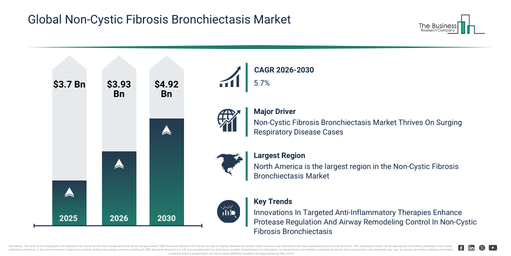
    The non-cystic fibrosis bronchiectasis market size has experienced significant growth in recent years. It is projected to expand from $3.7 billion in 2025 to $3.93 billion in 2026, at a compound annual growth rate (CAGR) of 6.4%. The historical market growth can be attributed to factors such as recurring respiratory infections, a lack of awareness regarding non-cf bronchiectasis, a reliance on traditional diagnostic approaches, insufficient hospital infrastructure, and the limited adoption of advanced imaging technologies.

    The non-cystic fibrosis bronchiectasis market is projected to experience substantial expansion in the coming years. This market is set to reach $4.92 billion by 2030, exhibiting a compound annual growth rate (CAGR) of 5.7%. Several factors will drive this growth during the forecast period, including the increasing occurrence of chronic respiratory conditions, the growing embrace of artificial intelligence and precision medicine, the expansion of home healthcare and telemedicine services, advancements in less invasive treatments, and the development of healthcare infrastructure within emerging economies. Key developments anticipated in the forecast period involve a greater uptake of tailored treatment strategies, increased use of remote patient monitoring and telehealth, the burgeoning application of AI-powered diagnostic tools, broader implementation of connected health devices and smart lung monitoring systems, and the progressing incorporation of data-driven clinical decision support.

    Access Your Free Sample Report For In-Depth Market Analysis:

    https://www.thebusinessresearchcompany.com/sample.aspx?id=17209&type=smp

    What Leading Drivers Are Supporting The Non-Cystic Fibrosis Bronchiectasis Market Expansion?

    The increasing incidence of respiratory illnesses is projected to fuel the expansion of the non-cystic fibrosis bronchiectasis market moving forward. These conditions encompass various disorders impacting the lungs and respiratory system, thereby affecting breathing and overall respiratory function. The surge in respiratory disease prevalence is primarily attributed to heightened environmental pollution, which includes both outdoor contaminants and indoor irritants such as tobacco smoke. The growing occurrence of respiratory infections creates avenues for enhancing the understanding, diagnosis, and management of non-cystic fibrosis bronchiectasis through targeted interventions and public health endeavors. For example, in June 2023, a report from the Office for Health Improvement and Disparities, a UK-based governmental body, indicated that a total of 4,622 notifications of scarlet fever Group A Streptococcus bacteria were recorded in England from week 37 to week 46 during the 2022-2023 season, with 851 notifications received in week 46 alone. This figure is considerably higher compared to an average of 1,294 notifications (ranging from 258 to 2,008) for the same period (weeks 37 to 46) over the preceding five years. Thus, the rising prevalence of respiratory diseases will propel the growth of the non-cystic fibrosis bronchiectasis market.

    Which Segment Types Are Examined In The Non-Cystic Fibrosis Bronchiectasis Market Segment Study?

    The non-cystic fibrosis bronchiectasis market covered in this report is segmented –

    1) By Diagnosis: Computed Tomography (CT) Scan, Bronchoscopy, Chest X Ray, Lung Function, Sputum Culture Test, Blood Tests, Other Diagnosis Types

    2) By Treatment: Surgery, Physiotherapy, Vaccination, Airway Pharmacotherapy, Antibiotics, Other Treatments

    3) By End Use: Hospitals And Clinics, Ambulatory Care Centers, Other End Uses

    Subsegments:

    1) By Computed Tomography (CT) Scan: High-Resolution CT (HRCT), Standard CT

    2) By Bronchoscopy: Flexible Bronchoscopy, Rigid Bronchoscopy

    3) By Chest X-Ray: Standard Chest X-Ray, Digital Chest X-Ray

    4) By Lung Function: Spirometry, Peak Flow Measurement

    5) By Sputum Culture Test: Bacterial Culture, Fungal Culture, Viral Culture

    6) By Blood Tests: Complete Blood Count (CBC), C-Reactive Protein (CRP), Immunoglobulin Levels

    7) By Other Diagnosis Types: Sweat Test, Genetic Testing, Exhaled Nitric Oxide Test

    What Emerging Trends Are Seen In The Non-Cystic Fibrosis Bronchiectasis Market?

    Leading companies operating within the non-cystic fibrosis bronchiectasis (NCFB) market are concentrating on developing advanced solutions, such as innovative neutrophil elastase–modulating pharmacologic interventions, to enhance protease–antiprotease balance, alleviate chronic tissue damage, and support ongoing management of airway remodeling. A novel neutrophil elastase–regulating pharmacologic intervention for chronic airway inflammation signifies a targeted therapeutic strategy designed to adjust excessive neutrophil elastase activity, which is an underlying factor in airway injury and persistent inflammation in NCFB. As an example, in November 2025, Insmed, a US-based biopharmaceutical company, obtained European Commission approval for BRINSUPRI (brensocatib), a first-in-class, once-daily oral DPP1 inhibitor. The 25 mg formulation showcased in the Phase 3 ASPEN trial a 19.4% reduction in the annual exacerbation rate compared to placebo, extended the time to first exacerbation, and resulted in a higher proportion of patients staying exacerbation-free. Moreover, it significantly slowed the decline in lung function (FEV₁) at week 52 and exhibited a favorable safety profile, with frequently noted adverse effects including headache, hyperkeratosis, dermatitis, rash, upper respiratory tract infections, and dry skin.

    Which Players Are Part Of The Competitive Landscape Of The Non-Cystic Fibrosis Bronchiectasis Market?

    Major companies operating in the non-cystic fibrosis bronchiectasis market are Pfizer Inc., Merck & Co. Inc., Sanofi SA, AstraZeneca plc, GlaxoSmithKline plc (GSK), Boehringer Ingelheim International GmbH, Viatris Inc., Teva Pharmaceutical Industries Ltd., Sun Pharmaceutical Industries Ltd., Aurobindo Pharma Ltd., Dr Reddys Laboratories Ltd., Chiesi Farmaceutici SpA, Lupin Limited, Zambon Company SpA, Sunovion Pharmaceuticals Inc., Insmed Incorporated, Armata Pharmaceuticals Inc., Renovion Inc., SolAeroMed Inc., CSL Behring, Haisco Pharmaceutical Group Co Ltd., NovaBiotics Ltd., Synspira Therapeutics, Parion Sciences, Regeneron Pharmaceuticals Inc., Gilead Sciences Inc., Infex Therapeutics

    Get The Full Non-Cystic Fibrosis Bronchiectasis Market Report:

    https://www.thebusinessresearchcompany.com/report/non-cystic-fibrosis-bronchiectasis-global-market-report

    Which Region Leads The Non-Cystic Fibrosis Bronchiectasis Market In Overall Market Size?

    North America was the largest region in the non-cystic fibrosis bronchiectasis market in 2025. The regions covered in the non-cystic fibrosis bronchiectasis market report are Asia-Pacific, South East Asia, Western Europe, Eastern Europe, North America, South America, Middle East, Africa.

    Request A Customized Non-Cystic Fibrosis Bronchiectasis Market Report For Competitive Insights:

    https://www.thebusinessresearchcompany.com/report/non-cystic-fibrosis-bronchiectasis-global-market-report

    Browse Through More Reports Similar to the Global Non-Cystic Fibrosis Bronchiectasis Market 2026, By The Business Research Company

    Body Fat Reduction Market Report 2026

    https://www.thebusinessresearchcompany.com/report/body-fat-reduction-global-market-report

    Fat Replacers Market Report

    https://www.thebusinessresearchcompany.com/report/fat-replacers-global-market-report

    Lung Cancer Diagnostic And Screening Market Report

    https://www.thebusinessresearchcompany.com/report/lung-cancer-diagnostic-and-screening-global-market-report

    Get in touch with us:

    The Business Research Company: https://www.thebusinessresearchcompany.com/

    Americas +1 310-496-7795

    Asia +44 7882 955267 & +91 8897263534

    Europe +44 7882 955267

    Email us at info@tbrc.info

    Follow us on:

    LinkedIn: https://in.linkedin.com/company/the-business-research-company

    YouTube: https://www.youtube.com/channel/UC24_fI0rV8cR5DxlCpgmyFQ

    Global Market Model: https://www.thebusinessresearchcompany.com/global-market-model

  • The Non Invasive Fat Reduction Market Growth Driven By Advances In Body Contouring And Fat Reduction Technologies

    The Non Invasive Fat Reduction Market Growth Driven By Advances In Body Contouring And Fat Reduction Technologies

    The Business Research Company’s 2026 market reports feature enhanced tools like market attractiveness analysis, TAM assessment, and company scoring matrices, along with interactive dashboards, deeper supply chain insights, and startup coverage strengthening the depth, usability, and strategic value of insights.

    What Are The Market Size Estimates For The Non Invasive Fat Reduction Market In 2026 And 2030?

    The non invasive fat reduction market has experienced rapid expansion in recent years. This market is projected to expand from $1.49 billion in 2025 to reach $1.72 billion by 2026, exhibiting a compound annual growth rate (CAGR) of 15.5%. Historically, this growth can be ascribed to factors such as heightened aesthetic awareness, an increase in obesity rates, a rise in disposable income, the proliferation of cosmetic clinics, and the early embrace of cryolipolysis.

    The non invasive fat reduction market is projected for substantial expansion in the coming years, reaching a valuation of $2.88 billion by 2030, exhibiting a compound annual growth rate (CAGR) of 13.7%. This anticipated growth during the forecast period is fueled by factors such as AI-driven treatment customization, an increasing demand for male aesthetic procedures, a rise in medical tourism, ongoing advancements in device technology, and broader regulatory authorizations. Key developments characterizing this period encompass the increasing adoption of AI-powered body contouring tools, the proliferation of precise aesthetic therapies, a heightened inclination towards non-surgical cosmetic interventions, a rising need for treatments with minimal recovery time, and innovations in energy-based fat reduction technologies.

    Access Your Free Sample Report For In-Depth Market Analysis:

    https://www.thebusinessresearchcompany.com/sample.aspx?id=15872&type=smp

    Which Key Factors Are Driving The Non Invasive Fat Reduction Market Growth?

    The increasing number of obese individuals is expected to drive the expansion of the non-invasive fat reduction market in the future. The obese population refers to those with a body mass index of 30 or above, indicating a body fat level that significantly heightens health risks. This population is growing due to a combination of elements, including higher consumption of calorie-rich, processed foods, sedentary habits, genetic tendencies, and socioeconomic circumstances that limit access to healthy eating options and physical activity. Non-surgical fat reduction techniques, such as cryolipolysis and laser lipolysis, are employed to help the obese population reduce localized fat deposits without surgery, offering a less hazardous option compared to invasive procedures. As an illustration, in March 2024, a report issued by the World Obesity Federation, a UK-based entity focused on addressing obesity through research, advocacy, and policy support, forecast that the global adult population living with obesity would rise from 0.81 billion in 2020 to 1.53 billion in 2035. Thus, the growing obese population is fueling the growth of the non-invasive fat reduction market.

    How Are Different Segments Classified In The Non Invasive Fat Reduction Market Segment Analysis?

    The non invasive fat reduction market covered in this report is segmented –

    1) By Technology: Cryolipolysis, Ultrasound, Low Level Lasers

    2) By Gender: Female, Male

    3) By End Users: Hospitals, Stand Alone Practices, Multispecialty Clinic

    Subsegments:

    1) By Cryolipolysis: CoolSculpting, Cryolipolysis With Vacuum-Assisted Technology

    2) By Ultrasound: High-Intensity Focused Ultrasound (HIFU), Low-Intensity Ultrasound

    3) By Low Level Lasers: Red Light Therapy, Diode Laser Systems

    Which Trends Are Guiding The Direction Of The Non Invasive Fat Reduction Market?

    Leading companies within the non-invasive fat reduction market are prioritizing the development of sophisticated technologies, such as muscle-stimulating systems, to boost fat loss and enhance treatment outcomes. Muscle-stimulating technologies denote a fat reduction approach that utilizes electrical impulses to contract muscles, thereby improving fat burning and body toning without surgical intervention. For example, in April 2024, Cartessa Aesthetics, a US-based supplier of innovative aesthetic medical devices, introduced PHYSIQ 360, an advanced body contouring technology. PHYSIQ 360 delivers optimized, customizable fat reduction and muscle-building treatments across a variety of skin and body types. It incorporates exclusive sequential thermal and electrical pulse (STEP) technology, which combines laser energy (LZR) with its proprietary pure beam technology for uniform fat reduction and electrical muscle stimulation (EMS) for effective muscle contractions. This device features up to four independently programmable applicators, enabling the simultaneous targeting of multiple body areas.

    Who Are The Companies Driving Activity In The Non Invasive Fat Reduction Market?

    Major companies operating in the non invasive fat reduction market are Cynosure LLC, Alma Lasers, Lumenis Ltd., BTL Industries, ZELTIQ Aesthetics Inc., Sono Bello, Solta Medical, Cutera Inc., Merz Pharma GmbH & Co. KGaA, Sciton Inc., Venus Concept, Syneron Candela, Zimmer MedizinSysteme GmbH (Zimmer Aesthetics), Fotona d.o.o., Apyx Medical Corporation, Erchonia Corporation, Aesthetics Biomedical Inc., Lynton Lasers Ltd., INDIBA S.A., InMode Ltd., Lutronic Corporation, Viora, Aesthetic Solutions, Cocoon Medical, Sound Surgical Technologies LLC, Chongqing Haifu (HIFU) Technology Co Ltd.

    Get The Full Non Invasive Fat Reduction Market Report:

    https://www.thebusinessresearchcompany.com/report/non-invasive-fat-reduction-global-market-report

    Which Region Is The Top Contributor To The Non Invasive Fat Reduction Market By Share?

    North America was the largest region in the non invasive fat reduction market in 2025. The regions covered in the non invasive fat reduction market report are Asia-Pacific, South East Asia, Western Europe, Eastern Europe, North America, South America, Middle East, Africa.

    Request A Customized Non Invasive Fat Reduction Market Report For Competitive Insights:

    https://www.thebusinessresearchcompany.com/report/non-invasive-fat-reduction-global-market-report

    Browse Through More Reports Similar to the Global Non Invasive Fat Reduction Market 2026, By The Business Research Company

    Pruritus Therapeutics Market Report 2026

    https://www.thebusinessresearchcompany.com/report/pruritus-therapeutics-global-market-report

    Caprolactam Market Report

    https://www.thebusinessresearchcompany.com/report/caprolactam-global-market-report

    Neem Extract Market Report

    https://www.thebusinessresearchcompany.com/report/neem-extract-global-market-report

    Get in touch with us:

    The Business Research Company: https://www.thebusinessresearchcompany.com/

    Americas +1 310-496-7795

    Asia +44 7882 955267 & +91 8897263534

    Europe +44 7882 955267

    Email us at info@tbrc.info

    Follow us on:

    LinkedIn: https://in.linkedin.com/company/the-business-research-company

    YouTube: https://www.youtube.com/channel/UC24_fI0rV8cR5DxlCpgmyFQ

    Global Market Model: https://www.thebusinessresearchcompany.com/global-market-model
  • Emerging Targeted Therapies Reshaping The Nodular Prurigo Treatment Landscape

    Emerging Targeted Therapies Reshaping The Nodular Prurigo Treatment Landscape

    The Business Research Company’s 2026 market reports feature enhanced tools like market attractiveness analysis, TAM assessment, and company scoring matrices, along with interactive dashboards, deeper supply chain insights, and startup coverage strengthening the depth, usability, and strategic value of insights.

    What Expansion In Market Value Is Forecasted For The Nodular Prurigo Market Between 2026 And 2030?

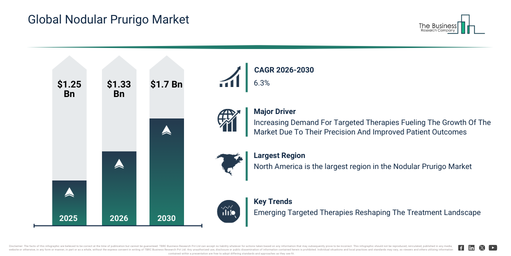
    The nodular prurigo market size has experienced considerable expansion over recent years. Its projected trajectory indicates an ascent from $1.25 billion in 2025 to $1.33 billion by 2026, progressing at a compound annual growth rate (CAGR) of 6.6%. Historically, this growth was primarily fueled by the increasing prevalence of chronic dermatological disorders, the restricted efficacy of traditional topical therapies, enhanced public awareness of pruritic skin diseases, the proliferation of dermatology specialty clinics, and improvements in the diagnostic recognition of nodular prurigo.

    The nodular prurigo market is anticipated to experience substantial growth over the next few years, projected to reach $1.7 billion by 2030, exhibiting a compound annual growth rate (CAGR) of 6.3%. This expansion during the forecast period can be attributed to the escalating development of novel biologics and monoclonal antibodies, an increasing focus on personalized dermatology treatments, growing investments in inflammatory skin disease research, the broadening of advanced immunotherapy pipelines, and a rising demand for long-term itch control solutions. Prominent trends throughout the forecast period include the increasing adoption of targeted immunomodulatory therapies, a rising utilization of biologic treatments for chronic pruritus, an enhanced focus on neuropathic itch management, the expansion of long-term disease management protocols, and a greater emphasis on patient-centric dermatology care.

    Access Your Free Sample Report For In-Depth Market Analysis:

    https://www.thebusinessresearchcompany.com/sample.aspx?id=24624&type=smp

    What Primary Drivers Are Shaping The Nodular Prurigo Market?

    The nodular prurigo market is anticipated to expand due to the growing need for targeted therapies. These therapies are medical interventions designed to precisely target and disrupt the molecular mechanisms contributing to disease development and progression. The increasing preference for targeted therapies stems from their capacity to offer more accurate treatments, resulting in fewer adverse effects, better patient results, and new options compared to conventional, less specific approaches. Nodular prurigo contributes to the advancement of targeted therapies by highlighting a distinct unmet medical requirement linked to specific immune pathways like IL-4, IL-13, and IL-31. This facilitates the application of biologics that precisely inhibit these inflammatory signals, leading to more effective treatment. For example, as reported by the American Society of Gene & Cell Therapy, a US-based organization dedicated to gene and cell therapy, in January 2024, the fourth quarter of 2023 saw a 10% increase in Phase III gene therapies compared to the prior quarter. This marked the initial growth observed since Q3 2022. Consequently, the growing demand for targeted therapies is a key factor propelling the expansion of the nodular prurigo market.

    How Is The Nodular Prurigo Market Categorized Across Its Segment Groups?

    The nodular prurigo market covered in this report is segmented –

    1) By Type: Chronic Nodular Prurigo, Acute Nodular Prurigo, Subacute Nodular Prurigo

    2) By Treatment Type: Topical Treatments, Systemic Treatments, Phototherapy, Immunosuppressants

    3) By Patient Demographics: Adults, Children, Elderly

    4) By End-User: Hospitals, Homecare, Specialty Clinics, Other End-Users

    Subsegments:

    1) By Chronic Nodular Prurigo: Idiopathic Chronic Nodular Prurigo, Secondary To Dermatologic Conditions, Neuropathic Causes, Systemic Disease-Associated, Psychogenic Prurigo

    2) By Acute Nodular Prurigo: Insect Bite-Induced, Allergic Reactions, Drug-Induced Prurigo, Infectious Triggers

    3) By Subacute Nodular Prurigo: Healing Phase Of Chronic Prurigo, Post-Inflammatory Prurigo, Transient Dermatoses, Reaction To Environmental Irritants

    What Trends Are Affecting The Growth Of The Nodular Prurigo Market?

    Leading companies within the nodular prurigo market are concentrating on creating advanced solutions, such as anti-IL-31 receptor biologics, to satisfy the increasing need for disease-modifying treatments that alleviate intense chronic itching, enhance nodule resolution, and decrease dependence on long-term topical corticosteroids and broad immunosuppressants. An anti-IL-31 receptor monoclonal antibody is a biologic treatment composed of engineered humanized antibodies designed to attach to the IL-31 receptor A on sensory and immune cells, thereby inhibiting IL-31 signaling, which is linked to chronic pruritus. For example, in August 2024, Galderma S.A., a dermatology pharmaceutical company based in Switzerland, introduced Nemluvio (nemolizumab), a novel anti-IL-31 receptor monoclonal antibody intended for adults suffering from prurigo nodularis. Nemluvio (nemolizumab) is a humanized monoclonal antibody, administered via subcutaneous injection, that binds to IL-31 receptor A to disrupt itch signaling and subsequent inflammatory pathways; it was developed to diminish severe chronic itch and encourage the healing of pruritic nodules, and is provided as an autoinjector for convenient outpatient application. Its distinct characteristics include a targeted mechanism, systemic efficacy suitable for widespread conditions, and a dosing method aimed at improving patient compliance compared to clinic-administered infusions.

    Which Firms Are Influencing Competition In The Nodular Prurigo Market?

    Major companies operating in the nodular prurigo market are Merck and Co Inc, Sanofi SA, GlaxoSmithKline plc, Amgen Inc, Regeneron Pharmaceuticals Inc, Astellas Pharma Inc, Sun Pharmaceutical Industries Limited, Galderma SA, Incyte Corporation, Kyowa Kirin Co Ltd, LEO Pharma AS, Maruho Co Ltd, Kiniksa Pharmaceuticals Ltd, Keymed Biosciences Co Ltd, Trevi Therapeutics Inc, Menlo Therapeutics Inc, VYNE Therapeutics Inc, Celldex Therapeutics Inc, AbbVie Inc, Pfizer Inc, Novartis AG, Eli Lilly and Company

    Get The Full Nodular Prurigo Market Report:

    https://www.thebusinessresearchcompany.com/report/nodular-prurigo-global-market-report

    Which Region Represents The Largest Share Of The Nodular Prurigo Market?

    North America was the largest region in the nodular prurigo market in 2025. Asia-Pacific is expected to be the fastest-growing region in the forecast period. The regions covered in the nodular prurigo market report are Asia-Pacific, South East Asia, Western Europe, Eastern Europe, North America, South America, Middle East, Africa.

    Request A Customized Nodular Prurigo Market Report For Competitive Insights:

    https://www.thebusinessresearchcompany.com/report/nodular-prurigo-global-market-report

    Browse Through More Reports Similar to the Global Nodular Prurigo Market 2026, By The Business Research Company

    Neuralgia Treatment Market Report 2026

    https://www.thebusinessresearchcompany.com/report/neuralgia-treatment-global-market-report

    Dental Sleep Medicine Market Report

    https://www.thebusinessresearchcompany.com/report/dental-sleep-medicine-global-market-report

    Urea Cycle Disorders Treatment Market Report

    https://www.thebusinessresearchcompany.com/report/urea-cycle-disorders-treatment-global-market-report

    Get in touch with us:

    The Business Research Company: https://www.thebusinessresearchcompany.com/

    Americas +1 310-496-7795

    Asia +44 7882 955267 & +91 8897263534

    Europe +44 7882 955267

    Email us at info@tbrc.info

    Follow us on:

    LinkedIn: https://in.linkedin.com/company/the-business-research-company

    YouTube: https://www.youtube.com/channel/UC24_fI0rV8cR5DxlCpgmyFQ

    Global Market Model: https://www.thebusinessresearchcompany.com/global-market-model