Category: Healthcare Services

  • Digital Heat Stroke Checker Market: Developments and Opportunities

    Digital Heat Stroke Checker Market: Developments and Opportunities

    The Business Research Company’s 2026 market reports feature enhanced tools like market attractiveness analysis, TAM assessment, and company scoring matrices, along with interactive dashboards, deeper supply chain insights, and startup coverage strengthening the depth, usability, and strategic value of insights.

    What Are The Market Size Estimates For The Digital Heat Stroke Checker Market In 2026 And 2030?

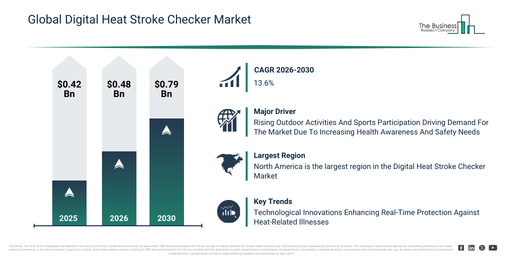
    The digital heat stroke checker market size has experienced rapid growth in recent years. This market is projected to expand from $0.42 billion in 2025 to $0.48 billion in 2026, exhibiting a compound annual growth rate (CAGR) of 13.9%. Historically, this expansion has been driven by several factors, including heightened awareness of heat-related health risks, the proliferation of wearable sensor technologies, increased exposure of the outdoor workforce, the growing adoption of sports and fitness monitoring, and enhanced access to mobile health tools.

    The digital heat stroke checker market size is anticipated to undergo significant expansion over the next few years. It is forecast to achieve a valuation of $0.79 billion by 2030, progressing at a compound annual growth rate (CAGR) of 13.6%. The anticipated market growth during this period is driven by factors such as the increasing occurrence of extreme heat events, a growing need for occupational safety solutions, the expansion of smart city health monitoring initiatives, rising adoption in sports performance management, and greater integration with predictive analytics systems. Prominent trends for the forecast period include the increasing deployment of wearable heat stress sensors, expanded use of real-time environmental monitoring, growing integration with mobile health platforms, the broadening of workplace heat safety systems, and a heightened emphasis on early heat risk detection.

    Access Your Free Sample Report For In-Depth Market Analysis:

    https://www.thebusinessresearchcompany.com/report/digital-heat-stroke-checker-global-market-report

    What Key Drivers Are Fueling The Growth Of The Digital Heat Stroke Checker Market?

    The future expansion of the digital heat stroke checker market is anticipated to be propelled by the surge in outdoor activities and sports events. These activities encompass organized or recreational physical engagements and competitive gatherings conducted in open-air settings, aiming to promote fitness, leisure, and social interaction. The increase in outdoor activities and sports events stems from heightened health and fitness awareness, as more people prioritize active lifestyles to improve their physical and mental well-being. A digital heat stroke checker assists in these activities by continuously monitoring body temperature and environmental conditions, alerting participants and organizers to early indications of heat stress, thereby preventing heat-related illnesses and ensuring safe participation. For instance, according to the Outdoor Industry Association, a US-based trade organization, data reported in August 2024 indicated that in 2023, outdoor recreation experienced a 4.1% increase, with 57.3% of Americans aged 6 and above engaging in outdoor activities. Consequently, the rising prevalence of outdoor activities and sports events is driving the growth of the digital heat stroke checker market.

    How Is Segmentation Applied In The Digital Heat Stroke Checker Market Segment Analysis?

    The digital heat stroke checker market covered in this report is segmented –

    1) By Device Type: Wearable Devices, Handheld Devices, Mobile Applications, Integrated Systems

    2) By Technology: Infrared Sensors, Thermal Imaging, Smartphone Integration, Wearable Technology

    3) By Sales Channel: Online Retailers, Brick-And-Mortar Stores, Institutional Sales, Direct Sales

    4) By Application Area: Sports And Fitness, Healthcare, Workplace Safety, Public Events, Outdoor Activities

    5) By End User: Individuals, Healthcare Professionals, Sport Organizations, Corporate Sector, Event Organizers

    Subsegments:

    1) By Wearable Devices: Smart Bands, Smartwatches, Fitness Trackers

    2) By Handheld Devices: Infrared Thermometers, Thermal Scanners, Portable Heat Stress Monitors

    3) By Mobile Applications: iPhone Operating System Apps, Android Apps, Cloud-Based Apps

    4) By Integrated Systems: Workplace Safety Systems, Sports Facility Systems, Military And Defense Systems

    What Trends Are Influencing The Digital Heat Stroke Checker Market?

    Companies operating in the digital heat stroke checker market are concentrating on developing sophisticated methods, such as the heat index, to boost the accuracy of real-time monitoring and provide early warnings for averting heat-related illnesses. The heat index refers to a measurement that combines ambient temperature and relative humidity to indicate the perceived warmth for the human body. For instance, in May 2025, the American Industrial Hygiene Association, a US-based nonprofit organization, introduced its heat stress mobile app 2.0 to enhance safety in workplaces concerning heat stress. It is engineered to protect both indoor and outdoor workers from heat-related ailments by offering real-time heat risk assessments through advanced wet bulb globe temperature calculations. The application delivers tailored alerts, advice on rest and hydration, and educational resources in multiple languages, making it easy to use and accessible. This complimentary app assists employers and workers in identifying hazardous heat conditions, preventing heat stress, and improving workplace safety and productivity.

    Who Are The Companies Participating In The Digital Heat Stroke Checker Market Environment?

    Major companies operating in the digital heat stroke checker market are Teledyne FLIR LLC, TSI Incorporated, A&D Company Ltd., Kyoto Electronics Manufacturing Co. Ltd., Air-Met Scientific Pty Ltd., Nielsen-Kellerman Co., General Tools and Instruments LLC, Multi Measuring Instruments Co. Ltd., PCE Instruments UK Ltd., Triplett Test Equipment and Tools LLC, LSI Lastem Srl, REED Instruments, Ambient Weather LLC, AZ Instrument Corp., Romteck Australia Pty. Ltd., Sato Keiryoki Mfg. Co. Ltd., Scarlet Tech Ltd., Sper Scientific Instruments Inc., TENMARS Electronics Co. Ltd., Tsuruga Electric Corporation, Honde Technology Co. Ltd.

    Get The Full Digital Heat Stroke Checker Market Report:

    https://www.thebusinessresearchcompany.com/report/digital-heat-stroke-checker-global-market-report

    Which Region Dominates The Digital Heat Stroke Checker Market By Market Share?

    North America was the largest region in the digital heat stroke checker market in 2025. Asia-Pacific is expected to be the fastest-growing region in the forecast period. The regions covered in the digital heat stroke checker market report are Asia-Pacific, South East Asia, Western Europe, Eastern Europe, North America, South America, Middle East, Africa.

    Request A Customized Digital Heat Stroke Checker Market Report For Competitive Insights:

    https://www.thebusinessresearchcompany.com/report/digital-heat-stroke-checker-global-market-report

    Browse Through More Reports Similar to the Global Digital Heat Stroke Checker Market 2026, By The Business Research Company

    Electric Heat Tracing Market Report 2026

    https://www.thebusinessresearchcompany.com/report/electric-heat-tracing-global-market-report

    Digital Health Monitoring Devices Market Report 2026

    https://www.thebusinessresearchcompany.com/report/digital-health-monitoring-devices-global-market-report

    Temperature Monitoring Systems Market Report 2026

    https://www.thebusinessresearchcompany.com/report/temperature-monitoring-systems-global-market-report

    Get in touch with us:

    The Business Research Company: https://www.thebusinessresearchcompany.com/

    Americas +1 310-496-7795

    Asia +44 7882 955267 & +91 8897263534

    Europe +44 7882 955267

    Email us at info@tbrc.info

    Follow us on:

    LinkedIn: https://in.linkedin.com/company/the-business-research-company

    YouTube: https://www.youtube.com/channel/UC24_fI0rV8cR5DxlCpgmyFQ

    Global Market Model: https://www.thebusinessresearchcompany.com/global-market-model
  • Digital Heart Failure Clinics Market Outlook (2026–2030): Long-Term Insights

    Digital Heart Failure Clinics Market Outlook (2026–2030): Long-Term Insights

    The Business Research Company’s 2026 market reports feature enhanced tools like market attractiveness analysis, TAM assessment, and company scoring matrices, along with interactive dashboards, deeper supply chain insights, and startup coverage strengthening the depth, usability, and strategic value of insights.

    What Expansion In Market Value Is Forecasted For The Digital Heart Failure Clinic Market Between 2026 And 2030?

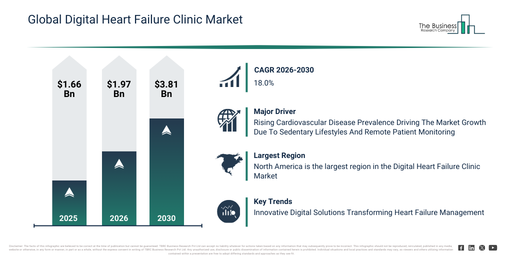
    The digital heart failure clinic market has experienced rapid growth in recent years. It is forecast to expand from $1.66 billion in 2025 to $1.97 billion in 2026, progressing at a compound annual growth rate (CAGR) of 18.3%. The market’s historical growth can be attributed to factors such as the increasing prevalence of heart failure conditions, the expansion of telehealth infrastructure, the growing use of connected medical devices, rising healthcare digitization initiatives, and improved acceptance of remote care models.

    The digital heart failure clinic market size is anticipated to experience significant expansion in the coming years, projected to reach $3.81 billion by 2030, exhibiting an 18.0% compound annual growth rate (CAGR). This growth over the forecast period can be attributed to heightened investments in virtual cardiac care platforms, an increasing demand for managing chronic diseases at home, the expansion of value-based care programs, the growing integration of predictive analytics in the field of cardiology, and the rising adoption of cloud-based clinical platforms. Prominent trends for the forecast period involve a greater uptake of remote patient monitoring models, the expanding utilization of AI-based clinical decision support, the broadening of continuous cardiac data analytics, the increasing integration of wearable and implantable devices, and an enhanced focus on personalized heart failure care.

    Access Your Free Sample Report For In-Depth Market Analysis:

    https://www.thebusinessresearchcompany.com/report/digital-heart-failure-clinic-global-market-report

    Which Drivers Are Supporting The Digital Heart Failure Clinic Market Growth?

    The increasing incidence of cardiovascular diseases is anticipated to fuel the expansion of the digital heart failure clinic market in the future. These diseases encompass conditions affecting the heart and blood vessels, such as heart attacks, strokes, and high blood pressure. The surge in cardiovascular diseases is often attributed to inactive lifestyles and poor dietary choices, resulting in issues like obesity, hypertension, and various heart-related complications. Digital heart failure clinics play a crucial role in managing these conditions through remote monitoring of cardiac health, delivery of customized treatment strategies, facilitating the prompt identification of complications, and providing ongoing advice on medication, lifestyle adjustments, and rehabilitation. For example, data from the Centers for Disease Control and Prevention, a US-based government agency, indicated in October 2024 that cardiovascular disease was responsible for 919,032 lives in 2023, representing approximately one in every three deaths. Consequently, the growing occurrence of cardiovascular diseases is a primary catalyst for the expansion of the digital heart failure clinic market.

    What Segment Categories Shape The Digital Heart Failure Clinic Market Segment Landscape?

    The digital heart failure clinic market covered in this report is segmented –

    1) By Component: Software, Services, Devices

    2) By Delivery Mode: On-Premises, Cloud-Based

    3) By Application: Remote Patient Monitoring, Medication Management, Patient Education, Data Analytics, Other Applications

    4) By End-User: Hospitals, Specialty Clinics, Homecare Settings, Other End-Users

    Subsegments:

    1) By Software: Remote Patient Monitoring Software, Telehealth Platforms, Data Analytics And Artificial Intelligence Tools

    2) By Services: Remote Monitoring Services, Patient Education And Support, Care Management Services

    3) By Devices: Wearable Sensors, Implantable Devices, Home Monitoring Equipment

    Which Trends Are Expected To Impact The Digital Heart Failure Clinic Market?

    Leading companies operating within the digital heart failure clinic market are prioritizing the development of innovative solutions, such as digital health platforms, to facilitate remote patient monitoring, individualized care, and enhanced management of heart failure. A digital health platform is a technology-driven system designed to connect patients, healthcare providers, and various devices, enabling distant monitoring, health data administration, and the delivery of personalized medical treatment. For example, in August 2023, Lupin Digital Health Ltd., an India-based pharmaceutical company, launched LyfeTM. This solution is crafted to transform heart failure management by integrating technology, multidisciplinary teams, and remote patient support. It functions as an evidence-based digital cardiac rehabilitation program, offering continuous vital sign monitoring, expert interventions, and customized guidance to enhance patients’ heart health and overall quality of life. Its intuitive technology provides patients and caregivers with real-time assistance, timely alerts, and bespoke therapies, which helps in decreasing the likelihood of heart attacks and hospital readmissions. By integrating AI-driven care with collaborations involving cardiologists, LyfeTM improves patient results while making holistic cardiac rehabilitation more widely available across India.

    Who Are The Companies Operating Across The Digital Heart Failure Clinic Market Value Chain?

    Major companies operating in the digital heart failure clinic market are Siemens Healthineers AG, Abbott Laboratories, Medtronic Plc, Koninklijke Philips N.V., GE Healthcare, Boston Scientific Corporation, AliveCor Inc., Cadence Health Solutions Inc., Implicity Inc., Tunstall Healthcare Ltd., Qardio Inc., Octagos Health Inc., Endotronix Inc., Heartbeat Health Inc., Biotronik SE & Co. KG, Cardiac Remote Monitoring Solutions Inc., Lyfe Inc., Story Health Inc., Vectorious Medical Technologies Ltd., Ventricle Health Inc., Withings Health Solutions, Health Recovery Solutions Inc.

    Get The Full Digital Heart Failure Clinic Market Report:

    https://www.thebusinessresearchcompany.com/report/digital-heart-failure-clinic-global-market-report

    Which Region Is The Largest In The Digital Heart Failure Clinic Market?

    North America was the largest region in the digital heart failure clinic market in 2025. Asia-Pacific is expected to be the fastest-growing region in the forecast period. The regions covered in the digital heart failure clinic market report are Asia-Pacific, South East Asia, Western Europe, Eastern Europe, North America, South America, Middle East, Africa.

    Request A Customized Digital Heart Failure Clinic Market Report For Competitive Insights:

    https://www.thebusinessresearchcompany.com/report/digital-heart-failure-clinic-global-market-report

    Browse Through More Reports Similar to the Global Digital Heart Failure Clinic Market 2026, By The Business Research Company

    Cardiac Safety Services Market Report 2026

    https://www.thebusinessresearchcompany.com/report/cardiac-safety-services-global-market-report

    Digital Health Market Report 2026

    https://www.thebusinessresearchcompany.com/report/digital-health-global-market-report

    Cardiovascular Information System Market Report 2026

    https://www.thebusinessresearchcompany.com/report/cardiovascular-information-system-global-market-report

    Get in touch with us:

    The Business Research Company: https://www.thebusinessresearchcompany.com/

    Americas +1 310-496-7795

    Asia +44 7882 955267 & +91 8897263534

    Europe +44 7882 955267

    Email us at info@tbrc.info

    Follow us on:

    LinkedIn: https://in.linkedin.com/company/the-business-research-company

    YouTube: https://www.youtube.com/channel/UC24_fI0rV8cR5DxlCpgmyFQ

    Global Market Model: https://www.thebusinessresearchcompany.com/global-market-model
  • Digital Healthcare Supply Chain Market (2026–2030): Innovation and Competitive Analysis

    Digital Healthcare Supply Chain Market (2026–2030): Innovation and Competitive Analysis

    The Business Research Company’s 2026 market reports feature enhanced tools like market attractiveness analysis, TAM assessment, and company scoring matrices, along with interactive dashboards, deeper supply chain insights, and startup coverage strengthening the depth, usability, and strategic value of insights.

    How Large Will The Digital Healthcare Supply Chain Management Market Be By 2030 Compared To Its 2026 Market Size?

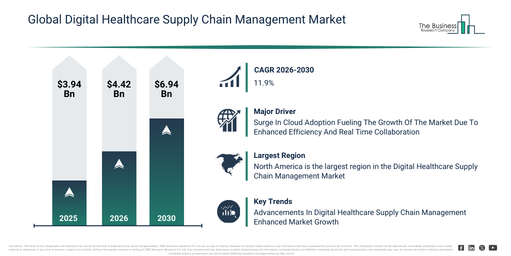
    The digital healthcare supply chain management market size has seen rapid growth in recent years. This market is expected to increase from $3.94 billion in 2025 to $4.42 billion in 2026, exhibiting a compound annual growth rate (CAGR) of 12.2%. Factors contributing to its historical growth include fragmented healthcare supply chains, manual inventory processes, a lack of real-time visibility, rising operational inefficiencies, and pandemic-driven supply disruptions.

    The digital healthcare supply chain management market is projected for significant expansion over the coming years. Its valuation is anticipated to reach $6.94 billion by 2030, driven by a compound annual growth rate (CAGR) of 11.9%. Factors contributing to this anticipated growth include the adoption of AI-powered analytics, the development of smart hospital infrastructure, increased regulatory emphasis on traceability, the ongoing digitization of healthcare, and the rising need for resilient supply chains. Key trends expected during this period involve the greater uptake of cloud-based supply chain platforms, the expanding application of real-time inventory tracking, the broadening scope of data-driven demand forecasting, a heightened focus on supply chain transparency, and the integration of comprehensive end-to-end digital supply networks.

    Access Your Free Sample Report For In-Depth Market Analysis:

    https://www.thebusinessresearchcompany.com/report/digital-healthcare-supply-chain-management-global-market-report

    What Key Factors Are Affecting The Digital Healthcare Supply Chain Management Market Demand?

    The expanding embrace of cloud computing is anticipated to fuel the expansion of the digital healthcare supply chain management market in the foreseeable future. Cloud computing involves the provision of computing services as needed via the internet, covering components such as servers, data storage, databases, network infrastructure, software, and analytical tools. This rising acceptance of cloud computing stems from its attributes like scalability, economic efficiency, adaptability, improved teamwork, and the capability to retrieve resources and applications remotely with an internet connection. Digital healthcare supply chain management supports cloud computing by optimizing data exchange, enhancing inventory tracking, and enabling immediate analytics, which ultimately results in more effective operations and improved patient outcomes. As an illustration, figures from December 2023, provided by Eurostat, a Luxembourg-based statistical office of the European Union, indicated that 45.2% of businesses throughout the EU utilized cloud computing services in 2023, with Finland recording the peak adoption rate at 78.3%. Consequently, the expanding use of cloud computing is stimulating the growth of the digital healthcare supply chain management market.

    Which Segment Types Are Examined In The Digital Healthcare Supply Chain Management Market Segment Study?

    The digital healthcare supply chain management market covered in this report is segmented –

    1) By Product: Software, Hardware, Services

    2) By Deployment: On-Premise, Cloud-Based, Web-Based

    3) By End-User: Pharmaceuticals, Medical Devices, Biotechnology And Vaccines, Clinical And Point Of Care Diagnostics

    Subsegments:

    1) By Software: Supply Chain Planning Software, Inventory Management Systems, Transportation Management Systems, Order Management Systems, Analytics And Reporting Software

    2) By Hardware: RFID Systems, Barcode Scanners, IoT-Enabled Devices, Storage And Networking Devices

    3) By Services: Implementation And Integration Services, Training And Support Services, Consulting Services, Managed Services

    What Trends Are Influencing Changes In The Digital Healthcare Supply Chain Management Market?

    Leading enterprises within the digital healthcare supply chain management market are concentrating on broadening access to sophisticated digitalization instruments. They achieve this through simplified technical configurations, such as no-code network digitalization platforms, aiming to improve the operational effectiveness and adaptability of their supply chains. Such a no-code network digitalization platform represents a software solution designed to enable users to develop, alter, and oversee digital processes and workflows, all without the necessity of conventional coding expertise. Illustrating this trend, TraceLink, a US-based software company, introduced its Opus platform in September 2024. This launch signifies a notable progression in supply chain management, specifically engineered to aid in the digitalization of comprehensive supply networks. The platform provides distinctive functionalities, including a no-code design environment that empowers users to set up intricate supply chain workflows without deep technical knowledge. It also offers real-time insight into supply chain performance through embedded reports and dashboards, alongside collective intelligence features that foster cooperative decision-making among various enterprises to foresee and mitigate supply disruptions.

    Which Players Are Part Of The Competitive Landscape Of The Digital Healthcare Supply Chain Management Market?

    Major companies operating in the digital healthcare supply chain management market are McKesson Corporation, Cardinal Health Inc., International Business Machines (IBM) Corporation, Oracle Corporation, SAP SE, Siemens Healthineers AG, Medline Industries Inc., Infosys Limited, Henry Schein Inc., Vizient Inc., Infor LLC, Veeva Systems Inc., Palantir Technologies Inc., Epicor Software Corporation, InterSystems Corporation, West Monroe Partners LLC, Global Healthcare Exchange LLC, Tecsys Inc., Rishabh Software Pvt Ltd., SYMPLR Inc., Terso Solutions Inc.

    Get The Full Digital Healthcare Supply Chain Management Market Report:

    https://www.thebusinessresearchcompany.com/report/digital-healthcare-supply-chain-management-global-market-report

    Which Region Leads The Digital Healthcare Supply Chain Management Market In Terms Of Market Share?

    North America was the largest region in the digital healthcare supply chain management market in 2025. Asia-Pacific is expected to be the fastest-growing region in the forecast period. The regions covered in the digital healthcare supply chain management market report are Asia-Pacific, South East Asia, Western Europe, Eastern Europe, North America, South America, Middle East, Africa.

    Request A Customized Digital Healthcare Supply Chain Management Market Report For Competitive Insights:

    https://www.thebusinessresearchcompany.com/report/digital-healthcare-supply-chain-management-global-market-report

    Browse Through More Reports Similar to the Global Digital Healthcare Supply Chain Management Market 2026, By The Business Research Company

    Digital Logistics Market Report 2026

    https://www.thebusinessresearchcompany.com/report/digital-logistics-global-market-report

    Healthcare Logistics Market Report 2026

    https://www.thebusinessresearchcompany.com/report/healthcare-logistics-global-market-report

    Pharmaceutical Supply Chain Management Market Report 2026

    https://www.thebusinessresearchcompany.com/report/pharmaceutical-supply-chain-management-global-market-report

    Get in touch with us:

    The Business Research Company: https://www.thebusinessresearchcompany.com/

    Americas +1 310-496-7795

    Asia +44 7882 955267 & +91 8897263534

    Europe +44 7882 955267

    Email us at info@tbrc.info

    Follow us on:

    LinkedIn: https://in.linkedin.com/company/the-business-research-company

    YouTube: https://www.youtube.com/channel/UC24_fI0rV8cR5DxlCpgmyFQ

    Global Market Model: https://www.thebusinessresearchcompany.com/global-market-model
  • Digital Health Tracking Apps Market Forecast to 2030: Trends and Insights

    Digital Health Tracking Apps Market Forecast to 2030: Trends and Insights

    The Business Research Company’s 2026 market reports feature enhanced tools like market attractiveness analysis, TAM assessment, and company scoring matrices, along with interactive dashboards, deeper supply chain insights, and startup coverage strengthening the depth, usability, and strategic value of insights.

    What Is The Projected Increase In Market Value Of The Digital Health Tracking Apps Market During 2026–2030?

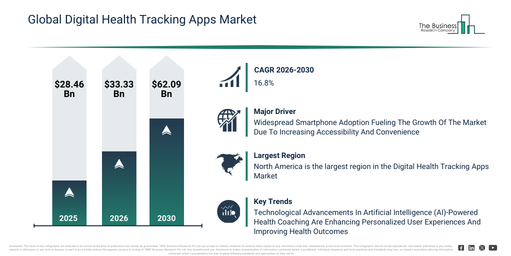
    The digital health tracking apps market size has witnessed substantial growth in recent years. It is anticipated to expand from $28.46 billion in 2025 to $33.33 billion in 2026, registering a compound annual growth rate (CAGR) of 17.1%. This historical growth is attributable to factors including increased smartphone usage, an elevated consumer awareness of preventive health, broader mobile internet availability, the rising popularity of fitness and wellness applications, and a greater acceptance of self-health monitoring.

    The market for digital health tracking applications is anticipated to experience significant expansion in the coming years, projected to reach $62.09 billion by 2030, exhibiting a compound annual growth rate (CAGR) of 16.8%. This expansion throughout the forecast period stems from factors such as a heightened demand for tailored digital healthcare solutions, greater integration of health applications with telehealth services, an intensifying focus on preventive care informed by data, the proliferation of subscription-based wellness platforms, and increased usage among elderly demographics. Key developments anticipated during this period encompass a rise in the use of AI-powered health insights, enhanced connectivity with wearable health devices, a stronger emphasis on individualized wellness tracking, the proliferation of gamified features for health engagement, and a reinforced commitment to managing health data securely.

    Access Your Free Sample Report For In-Depth Market Analysis:

    https://www.thebusinessresearchcompany.com/report/digital-health-tracking-apps-global-market-report

    Which Primary Drivers Are Impacting The Digital Health Tracking Apps Market Growth?

    The expanding adoption of smartphones is anticipated to significantly advance the growth of the digital health tracking apps market in the coming years. These handheld devices seamlessly integrate mobile calling with advanced computing capabilities, enabling users to perform a wide array of tasks beyond traditional communication. Smartphone penetration is on the rise, primarily because the increasing affordability of these devices makes them accessible to a larger segment of the population, fostering wider adoption. This widespread use of smartphones boosts the demand for digital health tracking applications, as they provide an accessible platform for individuals to conveniently monitor and manage their health at any time and in any location. For instance, in June 2025, Exploding Topics, a US-based trend discovery platform, reported that the number of smartphone users increased from 6.974 billion in 2023 to 7.211 billion in 2024, adding 247 million users and representing growth of about 3.4% over the previous year. Consequently, the escalating penetration of smartphones is a key driver for the expansion of the digital health tracking apps market.

    How Are Different Segments Classified In The Digital Health Tracking Apps Market Segment Analysis?

    The digital health tracking apps market covered in this report is segmented –

    1) By Type Of Health Tracking: Fitness Tracking Apps, Nutrition Tracking Apps, Chronic Condition Management Apps, Sleep Tracking Apps, General Wellness Apps

    2) By Features Offered: Data Tracking, Community Support, Customization Options, Gamification

    3) By Technology Integration: Wearable Devices, Mobile Apps, Telehealth Platforms, Artificial Intelligence

    4) By Application: Men, Women

    5) By End User: Individuals, Healthcare Professionals, Corporate Wellness Programs

    Subsegments:

    1) By Fitness Tracking Apps: Step Tracking, Heart Rate Monitoring, Workout Tracking, Calorie Burn Tracking, Activity Scheduling

    2) By Nutrition Tracking Apps: Calorie Intake Tracking, Meal Logging, Water Intake Tracking, Macronutrient Tracking, Personalized Diet Planning

    3) By Chronic Condition Management Apps: Diabetes Management, Hypertension Management, Asthma Management, Mental Health Management, Cardiovascular Disease Management

    4) By Sleep Tracking Apps: Sleep Duration Tracking, Sleep Cycle Analysis, Snoring Detection, Restlessness Monitoring, Smart Alarm Features

    5) By General Wellness Apps: Stress Management, Meditation And Mindfulness, Habit Formation And Tracking, Women Health And Wellness, Preventive Health Monitoring

    Which Trends Are Shaping Growth In The Digital Health Tracking Apps Market?

    Leading entities within the digital health tracking apps market are prioritizing the creation of sophisticated strategies, notably artificial intelligence (AI)-powered health coaching, aimed at improving customized user experiences and health outcomes. AI-powered health coaching denotes the application of artificial intelligence to deliver bespoke guidance on fitness, sleep, and wellness, based on an individual’s specific data. For instance, in August 2025, Google LLC, a US-based technology company, unveiled an update for its Fitbit ecosystem. Announced during the Made by Google event, this introduction features a revamped Fitbit app that is compatible with Fitbit trackers, smartwatches, and Pixel Watches, integrating fitness training, sleep enhancement, and wellness advice into a cohesive experience. This system harnesses continuous biometric surveillance and Google’s hardware ecosystem to offer personalized and adaptive health management to users.

    Who Are The Companies Driving Activity In The Digital Health Tracking Apps Market?

    Major companies operating in the digital health tracking apps market are Apple Inc., Google LLC, Samsung Electronics Co. Ltd., Huawei Technologies Co. Ltd., Johnson & Johnson, Nike Inc., Abbott Laboratories, Xiaomi Corporation, Medtronic Plc, Koninklijke Philips N.V., Under Armour Inc., Garmin Ltd., Polar Electro Oy, Noom Inc., Headspace Inc., Omron Healthcare Inc., Strava Inc., Calm.com Inc., Ada Health GmbH, Azumio Inc.

    Get The Full Digital Health Tracking Apps Market Report:

    https://www.thebusinessresearchcompany.com/report/digital-health-tracking-apps-global-market-report

    Which Region Leads The Digital Health Tracking Apps Market In Overall Market Size?

    North America was the largest region in the digital health tracking apps market in 2025. Asia-Pacific is expected to be the fastest-growing region in the forecast period. The regions covered in the digital health tracking apps market report are Asia-Pacific, South East Asia, Western Europe, Eastern Europe, North America, South America, Middle East, Africa.

    Request A Customized Digital Health Tracking Apps Market Report For Competitive Insights:

    https://www.thebusinessresearchcompany.com/report/digital-health-tracking-apps-global-market-report

    Browse Through More Reports Similar to the Global Digital Health Tracking Apps Market 2026, By The Business Research Company

    Mhealth Apps Market Report 2026

    https://www.thebusinessresearchcompany.com/report/mhealth-apps-global-market-report

    Digital Health Market Report 2026

    https://www.thebusinessresearchcompany.com/report/digital-health-global-market-report

    Disease Management Apps Market Report 2026

    https://www.thebusinessresearchcompany.com/report/disease-management-apps-global-market-report

    Get in touch with us:

    The Business Research Company: https://www.thebusinessresearchcompany.com/

    Americas +1 310-496-7795

    Asia +44 7882 955267 & +91 8897263534

    Europe +44 7882 955267

    Email us at info@tbrc.info

    Follow us on:

    LinkedIn: https://in.linkedin.com/company/the-business-research-company

    YouTube: https://www.youtube.com/channel/UC24_fI0rV8cR5DxlCpgmyFQ

    Global Market Model: https://www.thebusinessresearchcompany.com/global-market-model
  • Digital Health Solutions for Chronic Conditions Market (2026–2030): Trends and Drivers

    Digital Health Solutions for Chronic Conditions Market (2026–2030): Trends and Drivers

    The Business Research Company’s 2026 market reports feature enhanced tools like market attractiveness analysis, TAM assessment, and company scoring matrices, along with interactive dashboards, deeper supply chain insights, and startup coverage strengthening the depth, usability, and strategic value of insights.

    How Is The Market Size Of The Digital Health Solutions For Chronic Conditions Market Expected To Change From 2026 To 2030?

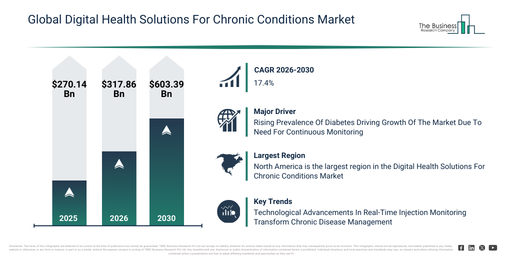
    The market size for digital health solutions aimed at chronic conditions has shown rapid expansion in recent years. It is anticipated to increase from $270.14 billion in 2025 to $317.86 billion in 2026, achieving a compound annual growth rate (CAGR) of 17.7%. This historical growth can be attributed to the increasing prevalence of chronic diseases, rising healthcare costs associated with long-term conditions, the expansion of mobile health applications, the growing use of connected medical devices, and the early adoption of telehealth services.

    The digital health solutions for chronic conditions market is projected to experience substantial growth in the upcoming years. It is anticipated to expand to $603.39 billion by 2030, achieving a compound annual growth rate (CAGR) of 17.4%. This growth during the forecast period is attributed to factors such as an increasing demand for value-based chronic care, rising investments in AI-driven care personalization, the expansion of home-based healthcare models, greater integration of digital therapeutics, and a stronger emphasis on long-term patient engagement and outcomes. Key trends for the forecast period include the wider deployment of remote patient monitoring solutions, increased adoption of personalized care platforms, a surge in the application of predictive analytics for chronic care, the rising integration of wearables and connected devices, and an enhanced focus on continuous care management.

    Access Your Free Sample Report For In-Depth Market Analysis:

    https://www.thebusinessresearchcompany.com/report/digital-health-solutions-for-chronic-conditions-global-market-report

    What Significant Factors Are Influencing The Digital Health Solutions For Chronic Conditions Market Expansion?

    The expanding incidence of diabetes is projected to fuel the expansion of the digital health solutions for chronic conditions market in the future. Diabetes is characterized as a long-term metabolic ailment where the body either fails to produce adequate insulin or is unable to effectively utilize the insulin it generates. The increase in diabetes cases can be attributed to inactive lifestyles, as insufficient physical activity contributes to both obesity and insulin resistance. Digital health solutions support diabetes management through continuous blood glucose monitoring, empowering patients to monitor fluctuations consistently and implement prompt modifications to their diet, medication, or lifestyle for enhanced blood sugar regulation. For example, as reported in April 2025 by the International Diabetes Federation (IDF), a Belgium-based non-profit organization, 589 million individuals were living with diabetes in 2024, a figure anticipated to climb to 853 million by 2050. Consequently, the growing prevalence of diabetes is propelling the growth of the digital health solutions for chronic conditions market.

    How Is The Digital Health Solutions For Chronic Conditions Market Categorized Across Its Segment Groups?

    The digital health solutions for chronic conditions market covered in this report is segmented –

    1) By Type: Diabetes, Cardiovascular Diseases, Chronic Respiratory Diseases, Other Types

    2) By Application: Enterprise, Personal

    3) By End-User: Payers And Employers, Hospitals And Clinics, Pharma And Life Sciences Companies, Homecare Settings, Patients And Caregivers

    Subsegments:

    1) By Diabetes: Type 1 Diabetes, Type 2 Diabetes, Gestational Diabetes

    2) By Cardiovascular Diseases: Hypertension, Coronary Artery Disease, Heart Failure, Arrhythmia, Stroke

    3) By Chronic Respiratory Diseases: Chronic Obstructive Pulmonary Disease (COPD), Asthma, Pulmonary Hypertension, Cystic Fibrosis

    4) By Other Types: Chronic Kidney Disease, Arthritis, Cancer, Obesity

    What Trends Are Affecting The Direction Of The Digital Health Solutions For Chronic Conditions Market?

    Leading companies active in the digital health solutions for chronic conditions market are prioritizing the development of advanced strategies, such as real-time injection monitoring, to enhance the precision of treatments, patient adherence, and overall disease management. Real-time injection monitoring refers to digital systems that continuously track and document medication administration, offering patients and healthcare providers prompt information to optimize dosing, confirm compliance, and minimize potential complications. For example, in April 2025, Ypsomed Holding AG, a Switzerland-based developer of injection and infusion systems, and Sidekick Health, an Iceland-based digital therapeutics provider, introduced a collaborative digital health solution aimed at obesity management. This solution merges Ypsomed’s connected devices with Sidekick’s digital therapeutics platform to deliver personalized, data-driven care for individuals affected by obesity. It incorporates capabilities like continuous monitoring, behavior change assistance, and lifestyle coaching to improve treatment adherence and long-term health outcomes. Through the integration of connected medical technology with digital therapeutics, the collaboration seeks to boost patient engagement and offer extensive support throughout the obesity management journey.

    Which Firms Are Influencing Competition In The Digital Health Solutions For Chronic Conditions Market?

    Major companies operating in the digital health solutions for chronic conditions market are ResMed Inc., Teladoc Health Inc., Noom Inc., Personify Health Inc., Biofourmis Inc., Vida Health Inc., Virta Health Inc., Omada Health Inc., Mahalo Health Inc., DarioHealth Corp., Sidekick Health Inc., WellDoc Inc., Lark Health Inc., Voluntis Inc., One Drop Inc., Kaia Health Software GmbH, CureApp Inc., Riva Health Inc., Sweetch-Health Ltd., Canary Health Inc.

    Get The Full Digital Health Solutions For Chronic Conditions Market Report:

    https://www.thebusinessresearchcompany.com/report/digital-health-solutions-for-chronic-conditions-global-market-report

    Which Region Is The Top Contributor To The Digital Health Solutions For Chronic Conditions Market By Share?

    North America was the largest region in the digital health solutions for chronic conditions market in 2025. Asia-Pacific is expected to be the fastest-growing region in the forecast period. The regions covered in the digital health solutions for chronic conditions market report are Asia-Pacific, South East Asia, Western Europe, Eastern Europe, North America, South America, Middle East, Africa.

    Request A Customized Digital Health Solutions For Chronic Conditions Market Report For Competitive Insights:

    https://www.thebusinessresearchcompany.com/report/digital-health-solutions-for-chronic-conditions-global-market-report

    Browse Through More Reports Similar to the Global Digital Health Solutions For Chronic Conditions Market 2026, By The Business Research Company

    Digital Therapeutics Market Report 2026

    https://www.thebusinessresearchcompany.com/report/digital-therapeutics-global-market-report

    Digital Health In Neurology Market Report 2026

    https://www.thebusinessresearchcompany.com/report/digital-health-in-neurology-global-market-report

    Womens Digital Health Market Report 2026

    https://www.thebusinessresearchcompany.com/report/womens-digital-health-global-market-report

    Get in touch with us:

    The Business Research Company: https://www.thebusinessresearchcompany.com/

    Americas +1 310-496-7795

    Asia +44 7882 955267 & +91 8897263534

    Europe +44 7882 955267

    Email us at info@tbrc.info

    Follow us on:

    LinkedIn: https://in.linkedin.com/company/the-business-research-company

    YouTube: https://www.youtube.com/channel/UC24_fI0rV8cR5DxlCpgmyFQ

    Global Market Model: https://www.thebusinessresearchcompany.com/global-market-model
  • Digital Health Pass Market Expanding with Rising Demand for Contactless Solutions

    Digital Health Pass Market Expanding with Rising Demand for Contactless Solutions

    The Business Research Company’s 2026 market reports feature enhanced tools like market attractiveness analysis, TAM assessment, and company scoring matrices, along with interactive dashboards, deeper supply chain insights, and startup coverage strengthening the depth, usability, and strategic value of insights.

    From Its 2026 Market Size, What Value Is The Digital Health Pass Market Projected To Reach By 2030?

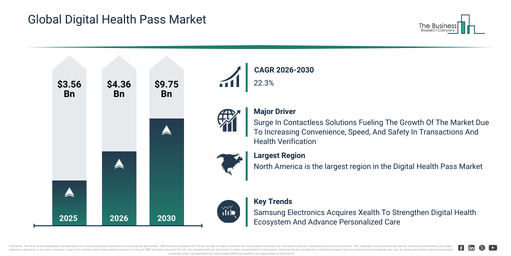
    The digital health pass market size has seen rapid expansion in recent years. It is projected to increase from $3.56 billion in 2025 to $4.36 billion in 2026, demonstrating a compound annual growth rate (CAGR) of 22.6%. This historical growth can be attributed to the emergency deployment of digital verification tools during health crises, expansion of qr code-based access systems, rising demand for secure public access validation, government-backed digital health initiatives, and early adoption of mobile credential platforms.

    The digital health pass market is anticipated to experience substantial growth over the next few years. It is forecast to reach $9.75 billion by 2030, exhibiting a compound annual growth rate (CAGR) of 22.3%. This expansion during the forecast period is attributed to the increasing utility of digital credentials beyond pandemic situations, enhanced integration with smart mobility and travel platforms, the evolution of interoperable verification frameworks, a rise in the adoption of biometric-enabled health passes, and more rigorous regulatory oversight of digital health verification. Key trends in the forecast period include the broadening of secure health credential verification systems, the increasing uptake of blockchain-based health passes, deeper integration with travel and access control systems, a heightened demand for real-time health status validation, and an intensified focus on verification models that prioritize privacy.

    Access Your Free Sample Report For In-Depth Market Analysis:

    https://www.thebusinessresearchcompany.com/report/digital-health-pass-global-market-report

    Which Important Drivers Are Guiding The Digital Health Pass Market Growth?

    The projected expansion of the digital health pass market is anticipated to be fueled by the increasing need for contactless methods. Contactless solutions involve technologies like near field communication (NFC), radio-frequency identification (RFID), or mobile devices, facilitating payments or exchanges rapidly and securely without requiring physical interaction. The heightened preference for these solutions stems from their inherent convenience and speed, allowing users to conduct transactions swiftly and securely, thereby improving the overall customer experience. A digital health pass supports contactless solutions by validating health credentials electronically, enabling individuals to access services, travel, or enter locations without needing physical documents or direct contact, which boosts safety and effectiveness. An illustration of this trend is seen in the UK, where, as reported by UK Finance Limited, a UK-based trade association, in July 2024, contactless payments reached 18.3 billion in 2023, representing a 7% increase from 17.0 billion in 2022. Consequently, the escalating demand for contactless solutions is a key factor in the growth of the digital health pass market.

    How Are Segments Identified Within The Digital Health Pass Market Segment Framework?

    The digital health pass market covered in this report is segmented –

    1) By Component: Software, Hardware, Services

    2) By Type Of Health Pass: Vaccination Passports, Testing Passes, Immunity Passes, Health Status Passes

    3) By Technology: Blockchain, Qr Code, Biometrics, Other Technologies

    4) By Application Area: Travel And Tourism, Corporate Events, Healthcare Services, Education And Training, Entertainment And Sports Events

    5) By End-User: Individuals, Enterprises, Government Bodies

    Subsegments:

    1) By Software: Mobile Applications, Web Applications, Cloud Platforms, Analytics And Reporting Tools, Identity Verification Software

    2) By Hardware: Smart Cards, Biometric Devices, Wearable Devices, Scanners, Sensors

    3) By Services: Implementation Services, Integration Services, Maintenance And Support, Consulting Services, Training Services

    What Trends Are Influencing The Evolution Of The Digital Health Pass Market?

    Leading companies active in the digital health pass market are concentrating on sophisticated innovation, such as digital health passports that provide simplified access to health and social benefits, and tailored, data-driven health management solutions for individuals. A digital health passport involves seamless entry to healthcare, making the process faster and easier for people to enroll in and utilize healthcare services and welfare programs effectively. For instance, in July 2025, AlgoBharat, an India-based institute, collaborated with Lok Swasthya SEWA, an India-based blockchain-powered digital health organization, to launch a digital health passport specifically for women. This initiative leverages blockchain technology, ensuring secure, verifiable records that enable women to access crucial services without administrative hindrances. The project aims to improve healthcare accessibility and data privacy, while also fostering digital inclusion for underserved women across India.

    Who Are The Companies Competing Within The Digital Health Pass Market?

    Major companies operating in the digital health pass market are Microsoft Corporation, Deloitte Touche Tohmatsu Limited, IBM Corporation, Oracle Corporation, Veradigm Inc., Salesforce.com Inc., Thales Group, Epic Systems Corporation, IDEMIA Group, athenahealth Inc., Unisys Corporation, PricewaterhouseCoopers LLP, Entrust Corporation, Shufti Pro Limited, The Commons Project Foundation, Mvine Limited, Healthvana Inc., TECH5 SA, VST Enterprises Ltd, Clear Secure Inc.

    Get The Full Digital Health Pass Market Report:

    https://www.thebusinessresearchcompany.com/report/digital-health-pass-global-market-report

    Which Region Represents The Largest Share Of The Digital Health Pass Market?

    North America was the largest region in the digital health pass market in 2025. Asia-Pacific is expected to be the fastest-growing region in the forecast period. The regions covered in the digital health pass market report are Asia-Pacific, South East Asia, Western Europe, Eastern Europe, North America, South America, Middle East, Africa.

    Request A Customized Digital Health Pass Market Report For Competitive Insights:

    https://www.thebusinessresearchcompany.com/report/digital-health-pass-global-market-report

    Browse Through More Reports Similar to the Global Digital Health Pass Market 2026, By The Business Research Company

    Digital Transformation In Healthcare Market Report 2026

    https://www.thebusinessresearchcompany.com/report/digital-transformation-in-healthcare-global-market-report

    Digital Health Monitoring Devices Market Report 2026

    https://www.thebusinessresearchcompany.com/report/digital-health-monitoring-devices-global-market-report

    Womens Digital Health Market Report 2026

    https://www.thebusinessresearchcompany.com/report/womens-digital-health-global-market-report

    Get in touch with us:

    The Business Research Company: https://www.thebusinessresearchcompany.com/

    Americas +1 310-496-7795

    Asia +44 7882 955267 & +91 8897263534

    Europe +44 7882 955267

    Email us at info@tbrc.info

    Follow us on:

    LinkedIn: https://in.linkedin.com/company/the-business-research-company

    YouTube: https://www.youtube.com/channel/UC24_fI0rV8cR5DxlCpgmyFQ

    Global Market Model: https://www.thebusinessresearchcompany.com/global-market-model
  • Digital Health ID Wallet Market Growth Fueled by Widespread Mobile Adoption

    Digital Health ID Wallet Market Growth Fueled by Widespread Mobile Adoption

    The Business Research Company’s 2026 market reports feature enhanced tools like market attractiveness analysis, TAM assessment, and company scoring matrices, along with interactive dashboards, deeper supply chain insights, and startup coverage strengthening the depth, usability, and strategic value of insights.

    How Much Growth In Market Value Is Expected For The Digital Health Identification (ID) Wallet App Market Between 2026 And 2030?

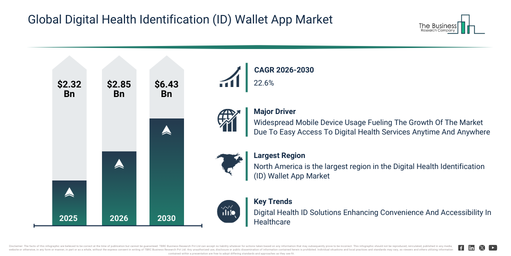
    The market for digital health identification (id) wallet apps has experienced rapid expansion over recent years. This market is projected to expand from $2.32 billion in 2025 to reach $2.85 billion in 2026, demonstrating a compound annual growth rate (CAGR) of 22.9%. Factors contributing to its historical growth include the broader adoption of electronic health record systems, the increasing use of digital identities within healthcare, a heightened emphasis on patient data security, the proliferation of mobile health applications, and initial government-driven digital health programs.

    The digital health identification (id) wallet app market size is projected to experience rapid expansion over the coming years. This market is anticipated to reach $6.43 billion by 2030, exhibiting a compound annual growth rate (CAGR) of 22.6%. This projected growth is driven by factors such as the increasing embrace of interoperable health ecosystems, greater investments in blockchain-powered identity solutions, the broadening of patient-centric data control models, heightened regulatory focus on secure health identity management, and the more extensive deployment of biometric verification technologies. Key trends expected during this period involve the expansion of secure digital health identity platforms, their increasing integration with national health systems, a surge in the adoption of mobile-based health wallets, a stronger emphasis on data interoperability standards, and an enhanced utilization of biometric authentication.

    Access Your Free Sample Report For In-Depth Market Analysis:

    https://www.thebusinessresearchcompany.com/report/digital-health-identification-id-wallet-app-global-market-report

    What Major Factors Are Driving The Digital Health Identification (ID) Wallet App Market Forward?

    The anticipated expansion of the digital health identification (ID) wallet app market is largely attributable to the increasing ubiquity of mobile devices. These portable electronic gadgets provide users with the ability to access computing, communication, and internet functionalities at any time and location. The rise in mobile device adoption stems from enhanced internet accessibility, which allows a greater number of individuals to remain connected and utilize digital services universally. This widespread reliance on mobile devices creates a demand for digital health identification (ID) wallet apps, as these applications facilitate secure storage and instant retrieval of health records, proving beneficial for quick and convenient access during medical scenarios. For instance, in October 2024, data from the Groupe Spécial Mobile Association, a UK-based industry trade association, indicated that 4.6 billion people, representing 57% of the global population, now use mobile internet on their personal devices. Consequently, the growing prevalence of mobile devices is a primary catalyst for the growth of the digital health identification (ID) wallet app market.

    What Are The Key Segment Divisions In The Digital Health Identification (ID) Wallet App Market Segment Structure?

    The digital health identification (id) wallet app market covered in this report is segmented –

    1) By Component: Software, Services

    2) By Deployment Mode: On-Premises, Cloud-Based

    3) By Application: Patient Identification, Health Records Management, Insurance Verification, e-Prescriptions, Other Applications

    4) By End-User: Hospitals And Clinics, Insurance Providers, Patients, Government Agencies, Other End-Users

    Subsegments:

    1) By Software: Identity Verification Module, Electronic Health Records (EHR) Management, Insurance And Claims Management, Prescription Management, Analytics And Reporting Tools, Security And Compliance Tools

    2) By Services: Implementation And Integration Services, Consulting And Advisory, Support And Maintenance, Training And Capacity Building, Custom Development Services

    Which Trends Are Impacting The Progress Of The Digital Health Identification (ID) Wallet App Market?

    Major companies within the digital health identification (ID) wallet app market are concentrating on developing advanced solutions, such as mobile health cards, to simplify the sharing of health information with healthcare providers. Mobile health cards are digital tools on mobile devices designed to store personal health information, including medical history and vaccination status, thereby enabling users to easily access and share it whenever necessary. For instance, in August 2025, the provincial government of Alberta, a Canada-based government body, introduced the digital Alberta Wallet. Albertans are now able to store government-issued documents on their personal mobile devices using this Alberta Wallet. Its first offering is a mobile health card, which provides a quicker and more convenient method to access healthcare services. This card contains the user’s name, date of birth, and personal health number, which can be accessed by scanning a QR code at healthcare facilities. All healthcare providers will acknowledge the card, and establishments without scanning capability can manually verify the digital information.

    Which Organizations Are Engaged In The Digital Health Identification (ID) Wallet App Market?

    Major companies operating in the digital health identification (id) wallet app market are Apple Inc., Google LLC, Microsoft Corporation, Amazon Web Services Inc., Oracle Corp., Salesforce Inc., Evernorth Health Inc., Epic Systems Corp., athenahealth Inc., InterSystems Corp., eClinicalWorks LLC, NextGen Healthcare Information Systems Inc., Veradigm LLC, PointClickCare, 1upHealth, PicnicHealth, Health Gorilla Inc., Spruce Health Inc., Dock Health Inc., ProCredEx, MyID.

    Get The Full Digital Health Identification (ID) Wallet App Market Report:

    https://www.thebusinessresearchcompany.com/report/digital-health-identification-id-wallet-app-global-market-report

    Which Geographic Region Dominates The Digital Health Identification (ID) Wallet App Market?

    North America was the largest region in the digital health identification (ID) wallet app market in 2025. Asia-Pacific is expected to be the fastest-growing region in the forecast period. The regions covered in the digital health identification (id) wallet app market report are Asia-Pacific, South East Asia, Western Europe, Eastern Europe, North America, South America, Middle East, Africa.

    Request A Customized Digital Health Identification (ID) Wallet App Market Report For Competitive Insights:

    https://www.thebusinessresearchcompany.com/report/digital-health-identification-id-wallet-app-global-market-report

    Browse Through More Reports Similar to the Global Digital Health Identification (ID) Wallet App Market 2026, By The Business Research Company

    Digital Health Monitoring Devices Market Report 2026

    https://www.thebusinessresearchcompany.com/report/digital-health-monitoring-devices-global-market-report

    Digital Health Market Report 2026

    https://www.thebusinessresearchcompany.com/report/digital-health-global-market-report

    Digital Wallet Market Report 2026

    https://www.thebusinessresearchcompany.com/report/digital-wallet-global-market-report

    Get in touch with us:

    The Business Research Company: https://www.thebusinessresearchcompany.com/

    Americas +1 310-496-7795

    Asia +44 7882 955267 & +91 8897263534

    Europe +44 7882 955267

    Email us at info@tbrc.info

    Follow us on:

    LinkedIn: https://in.linkedin.com/company/the-business-research-company

    YouTube: https://www.youtube.com/channel/UC24_fI0rV8cR5DxlCpgmyFQ

    Global Market Model: https://www.thebusinessresearchcompany.com/global-market-model
  • Digital Health Coaching Market Expanding with Rising Consumer Awareness

    Digital Health Coaching Market Expanding with Rising Consumer Awareness

    The Business Research Company’s 2026 market reports feature enhanced tools like market attractiveness analysis, TAM assessment, and company scoring matrices, along with interactive dashboards, deeper supply chain insights, and startup coverage strengthening the depth, usability, and strategic value of insights.

    What Is The Estimated Market Size Of The Digital Health Coaching Market In 2026, And How Will Its Value Evolve By 2030?

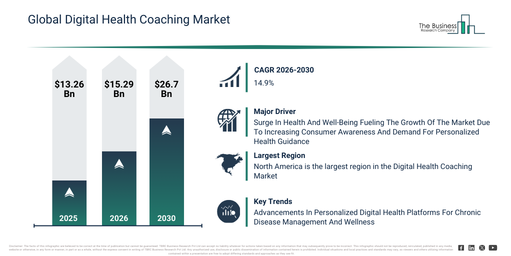
    The digital health coaching market size has seen substantial growth recently. This market is expected to expand from $13.26 billion in 2025 to $15.29 billion in 2026, reflecting a compound annual growth rate (CAGR) of 15.3%. The historical increase can be attributed to several factors including the rise of wellness awareness, the early adoption of fitness apps, an increase in lifestyle diseases, greater smartphone penetration, and restricted access to in-person coaching.

    The digital health coaching market is set for swift expansion over the coming years, with its size projected to reach $26.7 billion by 2030, exhibiting a compound annual growth rate (CAGR) of 14.9%. This projected growth is fueled by factors such as AI-driven personalization tools, integration with digital therapeutics, employer-sponsored wellness programs, increasing expenditure on preventive healthcare, and the spread of subscription-based models. Key trends during this period involve the increasing embrace of personalized health coaching programs, greater integration with wearable health devices, a rising need for chronic condition management support, the proliferation of remote and virtual coaching models, and an intensified focus on preventive and lifestyle-oriented care.

    Access Your Free Sample Report For In-Depth Market Analysis:

    https://www.thebusinessresearchcompany.com/report/digital-health-coaching-global-market-report

    Which Key Drivers Are Affecting The Digital Health Coaching Market Development?

    The expansion of the digital health coaching market is anticipated to be propelled by a growing understanding among consumers regarding health and well-being. This concept encompasses a complete state of physical, mental, and social wellness, extending beyond just the absence of sickness. Heightened consumer consciousness about health and well-being is emerging, prompted by the rising incidence of lifestyle diseases, which encourages individuals to embrace healthier routines and prioritize preventive measures. Digital health coaching aids in enhancing consumer health and well-being through offering customized guidance, immediate feedback, and valuable educational materials, thereby enabling people to make educated lifestyle decisions and integrate healthier practices. An illustration of this trend is seen in February 2025, when Experian Information Solutions, Inc., a US-based information services company, reported that expenditures on gym memberships rose by 11% over Christmas and 4% in January, indicating an early commitment to fitness for 2025. Additionally, individuals aged 35-44 demonstrated a 7% increase in fitness-related spending, highlighting their focus on health and well-being. Consequently, the increasing consumer awareness concerning health and well-being is a key factor propelling the expansion of the digital health coaching market.

    Which Segment Categories Are Included In The Digital Health Coaching Market Segment Analysis?

    The digital health coaching market covered in this report is segmented –

    1) By Type: Holistic Health Coaching, Wellness Health Coaching, Primal Or Paleo Health Coaching

    2) By Service: Nutrition And Diet Coaching, Fitness And Exercise Coaching, Women’s Health Coaching, Chronic Condition Coaching, Mental Wellbeing Coaching, Other Services

    3) By Duration: 1 Month Or Less, 1-3 Months, 3-6 Months, More Than 6 Months

    4) By Payment Model: Monthly Subscription, Annual Subscription, Per Session, Freemium Model With Paid Upgrades, Other Payment Model

    Subsegments:

    1) By Holistic Health Coaching: Mindfulness-Based Health Coaching, Integrative Nutrition Coaching, Functional Medicine Coaching, Behavioral Health Coaching

    2) By Wellness Health Coaching: Fitness And Exercise Coaching, Stress Management Coaching, Weight Management Coaching, Sleep Health Coaching

    3) By Primal Or Paleo Health Coaching: Ancestral Nutrition Coaching, Metabolic Health Coaching, Gut Health Coaching, Low-Carb Or Keto Coaching

    What Trends Are Transforming The Digital Health Coaching Market?

    Prominent companies within the digital health coaching market are actively developing innovative solutions, such as personalized digital health platforms, to improve wellness outcomes, guide patients through lifestyle adjustments, and support chronic disease management in a more efficient and accessible manner. These technology-driven platforms provide customized health recommendations, monitoring, and support tailored to an individual’s specific health needs, preferences, and goals. As an illustration, in February 2025, Owens and Minor, a US-based healthcare company, introduced ByramConnect. This personalized digital health program, powered by the Welldoc App, aims to optimize outcomes for individuals with type 1 or type 2 diabetes and related chronic conditions, including hypertension, weight management, and cardiovascular risk. The program utilizes advanced artificial intelligence to analyze data across six health dimensions, delivering actionable insights and reports for patients that can be shared with healthcare providers and care teams. It also integrates data from various health devices, such as glucose monitors, fitness trackers, and blood pressure monitors, to offer a comprehensive view of a patient’s condition.

    Who Are The Active Companies Shaping The Digital Health Coaching Market?

    Major companies operating in the digital health coaching market are Cigna Corporation, Kaiser Permanente, Teladoc Health Inc., Hinge Health Inc., Noom Inc., OmniLife Health Inc., Castlight Health Inc., BetterUp Inc., Spring Health Inc., Omada Health Inc., Welltok Inc., Virta Health Corp., Limeade Inc., Healthify Inc., Lark Health Inc., Aaptiv Inc., SilverCloud Health Inc., MyStrength Inc., Fitbit Health Solutions, Happify Health Inc.

    Get The Full Digital Health Coaching Market Report:

    https://www.thebusinessresearchcompany.com/report/digital-health-coaching-global-market-report

    Which Region Is The Leading Market For The Digital Health Coaching Market?

    North America was the largest region in the digital health coaching market in 2025. Asia-Pacific is expected to be the fastest-growing region in the forecast period. The regions covered in the digital health coaching market report are Asia-Pacific, South East Asia, Western Europe, Eastern Europe, North America, South America, Middle East, Africa.

    Request A Customized Digital Health Coaching Market Report For Competitive Insights:

    https://www.thebusinessresearchcompany.com/report/digital-health-coaching-global-market-report

    Browse Through More Reports Similar to the Global Digital Health Coaching Market 2026, By The Business Research Company

    Digital Mental Health Market Report 2026

    https://www.thebusinessresearchcompany.com/report/digital-mental-health-global-market-report

    Health Coaching Apps Market Report 2026

    https://www.thebusinessresearchcompany.com/report/health-coaching-apps-global-market-report

    Digital Health Market Report 2026

    https://www.thebusinessresearchcompany.com/report/digital-health-global-market-report

    Get in touch with us:

    The Business Research Company: https://www.thebusinessresearchcompany.com/

    Americas +1 310-496-7795

    Asia +44 7882 955267 & +91 8897263534

    Europe +44 7882 955267

    Email us at info@tbrc.info

    Follow us on:

    LinkedIn: https://in.linkedin.com/company/the-business-research-company

    YouTube: https://www.youtube.com/channel/UC24_fI0rV8cR5DxlCpgmyFQ

    Global Market Model: https://www.thebusinessresearchcompany.com/global-market-model
  • Digital Health & Wellness Market Growth Driven by Personalized Health Insights

    Digital Health & Wellness Market Growth Driven by Personalized Health Insights

    The Business Research Company’s 2026 market reports feature enhanced tools like market attractiveness analysis, TAM assessment, and company scoring matrices, along with interactive dashboards, deeper supply chain insights, and startup coverage strengthening the depth, usability, and strategic value of insights.

    How Does The Market Size Of The Digital Health And Wellness Market Compare Between 2026 And 2030?

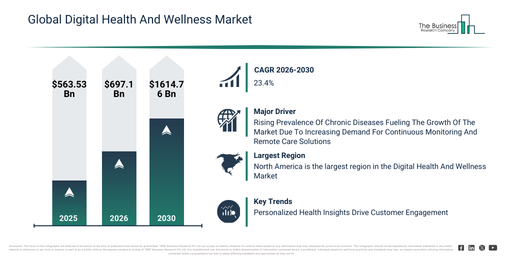
    The size of the digital health and wellness market has experienced rapid expansion over recent years. This market is projected to expand from $563.53 billion in 2025 to $697.1 billion by 2026, demonstrating a compound annual growth rate (CAGR) of 23.7%. Historically, this growth can be attributed to factors such as increasing smartphone penetration, a rise in health-conscious consumer behavior, the expansion of internet connectivity, the growing adoption of mobile applications, and a heightened emphasis on preventive healthcare.

    The digital health and wellness market is projected to experience substantial growth in the upcoming years. Its value is expected to escalate to $1614.76 billion by 2030, demonstrating a compound annual growth rate (CAGR) of 23.4%. This projected expansion is attributed to factors such as the increasing integration of AI-driven health analytics, rising investments in digital therapeutics, the broadening of home-based healthcare solutions, a growing emphasis on data-driven wellness management, and increased adoption by aging populations. Noteworthy trends during this forecast period include the increasing adoption of wearable health devices, a surge in the use of telehealth platforms, growing demand for remote patient monitoring, the expansion of mental health and wellness applications, and an enhanced focus on personalized health insights.

    Access Your Free Sample Report For In-Depth Market Analysis:

    https://www.thebusinessresearchcompany.com/report/digital-health-and-wellness-global-market-report

    What Factors Are Contributing To The Growth Of The Digital Health And Wellness Market?

    The increasing occurrence of long-term illnesses is anticipated to drive expansion in the digital health and wellness market. These are enduring medical conditions that progress gradually and persist over time, frequently necessitating ongoing treatment. A contributor to the rising incidence of chronic ailments is sedentary lifestyles, where extended periods of sitting and limited physical activity elevate the likelihood of developing conditions like heart disease and diabetes. Digital health and wellness solutions assist in managing chronic conditions by providing constant monitoring and customized care strategies, thereby simplifying health tracking for patients. Such solutions also decrease the need for hospital visits through remote consultations and prompt interventions, enhancing patients’ overall well-being. To illustrate, in June 2024, data from the National Health Service, a UK-based government body, indicated that 3,615,330 individuals registered with a general practitioner (GP) received a diagnosis of non-diabetic hyperglycemia or pre-diabetes (a condition characterized by elevated blood sugar levels, not yet meeting the criteria for diabetes) in 2023. This represented an 18% rise from the 3,065,825 cases recorded in 2022. Consequently, the growing prevalence of chronic diseases is fueling the expansion of the digital health and wellness market.

    How Is The Digital Health And Wellness Market Broken Down By Segment Categories?

    The digital health and wellness market covered in this report is segmented –

    1) By Type: Software, Service, Hardware

    2) By Consumer Health Devices: Wearable Devices, Smart Health Monitors, Mobile Health Applications, Remote Patient Monitoring Devices, Fitness Trackers

    3) By Digital Therapeutics: Prescription Digital Therapeutics, Behavioral Intervention Apps, Chronic Disease Management Software, Mental Health Support Programs, Substance Abuse Treatment Tools

    4) By Application: Clinics, Hospitals, Ambulatory Surgery Centres, Home Care Settings, Other Applications

    5) By End-User: Healthcare Providers, Patients, Payers, Other End-Users

    Subsegments:

    1) By Software: mHealth Apps, Population Health Management, Electronic Health Records (EHR), Clinical Decision Support Systems (CDSS)

    2) By Service: Health Coaching Services, Digital Therapeutics Support Services, Remote Monitoring Services, Virtual Care Services

    3) By Hardware: Telemedicine Kiosks, Diagnostic Devices, Smart Medical Devices, Mobile Health Devices

    What Trends Are Shaping The Future Of The Digital Health And Wellness Market?

    Major companies in the digital health and wellness market are concentrating on developing advancements in healthcare, such as digital health and wellness platforms, to enhance health monitoring and patient outcomes. A digital health and wellness platform functions as an extensive system that utilizes technology like apps, wearables, and data analytics to improve health monitoring, disease management, and overall well-being. For instance, in February 2023, Albertsons Companies Inc., a US-based grocery store company, introduced Sincerely Health, a comprehensive digital health and wellness platform. This innovative solution is crafted to empower customers to take charge of their health by providing personalized health insights, activity and goal tracking, nutrition and lifestyle guidance, and a rewards system that encourages healthy behaviors. Sincerely Health also integrates pharmacy services and telehealth consultations, thereby creating a seamless and accessible health management experience.

    Which Players Are Present In The Digital Health And Wellness Market Space?

    Major companies operating in the digital health and wellness market are Apple Inc., Google LLC, Samsung Electronics Co. Ltd., Microsoft Corporation, International Business Machines Corporation, Siemens Healthineers AG, Philips Healthcare, GE HealthCare Technologies Inc., Cerner Corporation, Garmin International Inc., Drägerwerk AG & Co. KGaA, ResMed Inc., Epic Systems Corporation, Teladoc Health, Masimo Corp., Athenahealth Inc., Veradigm, Johnson & Johnson Health and Wellness Solutions Inc., Headspace Inc., Fitbit Inc., Omada Health, Virgin Pulse Inc., WellDoc Inc., Vivify Health Inc

    Get The Full Digital Health And Wellness Market Report:

    https://www.thebusinessresearchcompany.com/report/digital-health-and-wellness-global-market-report

    Where Is The Digital Health And Wellness Market Primarily Concentrated By Region?

    North America was the largest region in the digital health and wellness market in 2025. Asia-Pacific is expected to be the fastest-growing region in the forecast period. The regions covered in the digital health and wellness market report are Asia-Pacific, South East Asia, Western Europe, Eastern Europe, North America, South America, Middle East, Africa.

    Request A Customized Digital Health And Wellness Market Report For Competitive Insights:

    https://www.thebusinessresearchcompany.com/report/digital-health-and-wellness-global-market-report

    Browse Through More Reports Similar to the Global Digital Health And Wellness Market 2026, By The Business Research Company

    Corporate Wellness Market Report 2026

    https://www.thebusinessresearchcompany.com/report/corporate-wellness-global-market-report

    Connected Health And Wellness Solutions Market Report 2026

    https://www.thebusinessresearchcompany.com/report/connected-health-and-wellness-solutions-global-market-report

    Corporate Wellness Solutions Market Report 2026

    https://www.thebusinessresearchcompany.com/report/corporate-wellness-solutions-global-market-report

    Get in touch with us:

    The Business Research Company: https://www.thebusinessresearchcompany.com/

    Americas +1 310-496-7795

    Asia +44 7882 955267 & +91 8897263534

    Europe +44 7882 955267

    Email us at info@tbrc.info

    Follow us on:

    LinkedIn: https://in.linkedin.com/company/the-business-research-company

    YouTube: https://www.youtube.com/channel/UC24_fI0rV8cR5DxlCpgmyFQ

    Global Market Model: https://www.thebusinessresearchcompany.com/global-market-model
  • Digital Health Market Shaped by AR-Based Telecollaboration Innovations

    Digital Health Market Shaped by AR-Based Telecollaboration Innovations

    The Business Research Company’s 2026 market reports feature enhanced tools like market attractiveness analysis, TAM assessment, and company scoring matrices, along with interactive dashboards, deeper supply chain insights, and startup coverage strengthening the depth, usability, and strategic value of insights.

    What Is The Forecasted Market Size Trajectory Of The Digital Health Market From 2026 To 2030?

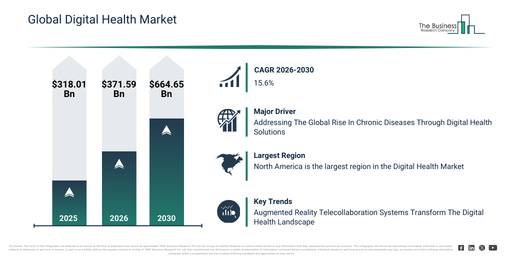
    The digital health market size has experienced significant growth in recent years. It is anticipated to expand from $318.01 billion in 2025 to $371.59 billion in 2026, demonstrating a compound annual growth rate (CAGR) of 16.8%. This historical growth can be linked to factors such as increased smartphone penetration, various healthcare digitization efforts, the rising prevalence of chronic diseases, existing gaps in healthcare access, and the early adoption of telemedicine.

    The digital health market size is poised for significant expansion over the next few years. It is projected to reach $664.65 billion by 2030, demonstrating a compound annual growth rate (CAGR) of 15.6%. This anticipated growth throughout the forecast period stems from factors such as AI-enabled care delivery, the broadening of virtual healthcare reimbursement, the demands of an aging population, the rise of remote monitoring services, and consumer appetite for digital care. Dominant trends during this period are expected to encompass the expansion of telehealth and virtual care provisions, the increasing embrace of wearable health technologies, a greater utilization of data-driven clinical decision support, the integration of remote patient monitoring solutions, and an intensified focus on patient-centric digital platforms.

    Access Your Free Sample Report For In-Depth Market Analysis:

    https://www.thebusinessresearchcompany.com/report/digital-health-global-market-report

    Which Strong Drivers Are Impacting The Digital Health Market Growth?

    The escalating incidence of chronic conditions such as cancer, diabetes, and hypertension is projected to be a primary catalyst for the digital health market. Extended work hours, insufficient physical activity, and unhealthy eating and drinking habits contribute to the widespread nature of chronic diseases, leaving affected individuals more susceptible and thus driving the demand for digital health services platforms. For instance, in January 2024, according to the American Cancer Society, a US-based nonprofit cancer advocacy organization, the count of cancer cases climbed to 2,001,140 compared to 1,958,310 in 2023, marking a growth of 2.19%. Therefore, the increasing prevalence of chronic diseases is expected to propel the growth of the market.

    What Are The Different Segment Types In The Digital Health Market Segment Breakdown?

    The digital health market covered in this report is segmented –

    1) By Technology: Mobile Health (Mhealth), Health Information Technology, Telehealth And Telemedicine, Health Analytics, Other Technologies

    2) By Application: Cardiology, Diabetes, Neurology, Sleep Apnea, Oncology, Other Applications

    3) By End-User: Healthcare Providers, Healthcare Payers, Pharmaceutical Companies, Other End Users

    Subsegments:

    1) By Mobile Health (mHealth): Health Apps, Wearable Devices, Remote Patient Monitoring

    2) By Health Information Technology: Electronic Health Records (EHR), Health Information Exchange (HIE), Practice Management Systems

    3) By Telehealth And Telemedicine: Virtual Consultations, Remote Diagnosis, Teletherapy

    4) By Health Analytics: Predictive Analytics, Data Management Solutions, Population Health Management

    5) By Other Technologies: Blockchain In Health, Artificial Intelligence In Health, Internet Of Medical Things (IoMT)

    Which Trends Are Contributing To Changes In The Digital Health Market?

    Prominent companies operating within the digital health market are focusing on developing advanced solutions, such as virtual reality (VR) prescription therapies, to improve patient outcomes, enhance engagement, and lessen reliance on pharmacological treatments. Virtual reality prescription therapy is a clinically validated digital health solution that utilizes immersive VR environments alongside behavioral and biofeedback techniques to assist patients in managing chronic conditions safely and effectively. For instance, in May 2024, AppliedVR, a US-based medical technology manufacturer, introduced RelieVRx, the initial FDA-authorized virtual reality prescription therapy for chronic lower back pain (CLBP) aimed at workers’ compensation. This device provides a fully immersive VR experience that helps workers’ compensation patients acquire skills to alleviate and manage chronic lower back pain (CLBP). This economical, non-pharmacological adjunct therapy has been clinically proven to reduce both the intensity of pain and its interference with daily activities. The program integrates validated principles of cognitive behavioral therapy, biofeedback, and emotional regulation.

    Who Are The Well-Known Companies In The Digital Health Market?

    Major companies operating in the digital health market are Cerner Corporation, GE Healthcare, Epic Systems Corporation, McKesson Corporation, Allscripts Healthcare Solutions Inc., Truven Health Analytics, Siemens Healthcare AG, eCLINICALWORKS, Cisco Systems Inc., Koninklijke Philips N.V., Innovaccer, Pharm Easy, 1mg, Practo, Mfine, Medi Buddy, Ping A Good Doctor, JD Health, Teladoc, MeMD, Amwell, MDlive, Better Doc, TeleMD, DOC+, Biovotion, BrainControl, Coimbra Genomics, Dacadoo, Doctoralia, Emperra, Exovite, Genexyx, Giraff, Healthbank, NeurNation, Nutrino, Psious, Px Healthcare, SilverCloud, Systems Healthcare Solutions, TrialReach, XtremeVRI, ApoloHealthMx, ECGlove, Heal on Site, Polycom Inc, Care Innovations LLC, AXON Digital Health, Wuru, Yerbo, Welii, BioScience, Caecus, Omnia Salud, Altibbi, Dhoner Healthtech, Okadoc, DoctorsAE, Takalam, AlemHealth, Cura, Primary Health Care Corporation, AMD Global Telemedicine Inc, Safermom, Mobicure, Ubenwa, Medsaf, GenRx, Kangpe, Hudibia, Lifebank, Redbank, Apteki +, FindMeCure, ECG for Everybody, Eye read, InterAxon, Figure 1, Myndtec, Seamless MD, Pixeon, Hi Technologies, Conexa Saude

    Get The Full Digital Health Market Report:

    https://www.thebusinessresearchcompany.com/report/digital-health-global-market-report

    Which Region Has The Greatest Market Share In The Digital Health Market?

    North America was the largest region in the digital health market in 2025. Asia-Pacific is expected to be the fastest-growing region in the forecast period. The regions covered in the digital health market report are Asia-Pacific, South East Asia, Western Europe, Eastern Europe, North America, South America, Middle East, Africa.

    Request A Customized Digital Health Market Report For Competitive Insights:

    https://www.thebusinessresearchcompany.com/report/digital-health-global-market-report

    Browse Through More Reports Similar to the Global Digital Health Market 2026, By The Business Research Company

    Digital Mental Health Market Report 2026

    https://www.thebusinessresearchcompany.com/report/digital-mental-health-global-market-report

    Womens Digital Health Market Report 2026

    https://www.thebusinessresearchcompany.com/report/womens-digital-health-global-market-report

    Digital Health In Neurology Market Report 2026

    https://www.thebusinessresearchcompany.com/report/digital-health-in-neurology-global-market-report

    Get in touch with us:

    The Business Research Company: https://www.thebusinessresearchcompany.com/

    Americas +1 310-496-7795

    Asia +44 7882 955267 & +91 8897263534

    Europe +44 7882 955267

    Email us at info@tbrc.info

    Follow us on:

    LinkedIn: https://in.linkedin.com/company/the-business-research-company

    YouTube: https://www.youtube.com/channel/UC24_fI0rV8cR5DxlCpgmyFQ

    Global Market Model: https://www.thebusinessresearchcompany.com/global-market-model