Category: Healthcare Services

  • Allergy Treatment Market Outlook Through 2030: Growth Trends

    Allergy Treatment Market Outlook Through 2030: Growth Trends

    The Business Research Company’s 2026 market reports feature enhanced tools like market attractiveness analysis, TAM assessment, and company scoring matrices, along with interactive dashboards, deeper supply chain insights, and startup coverage strengthening the depth, usability, and strategic value of insights.

    What Level Of Market Value Growth Is Predicted For The Allergy Treatment Market From 2026 To 2030?

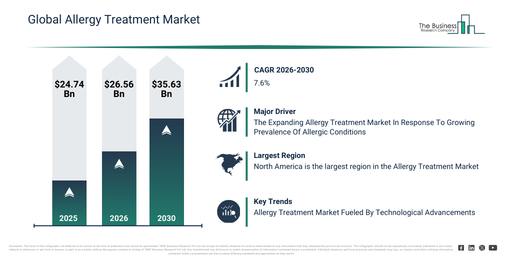
    The allergy treatment market size has witnessed strong expansion over recent years. It is anticipated to rise from $24.74 billion in 2025 to $26.56 billion in 2026, exhibiting a compound annual growth rate (CAGR) of 7.3%. The historical period’s growth can be linked to the increasing global occurrence of allergies, a surge in allergy treatments offered by hospitals and clinics, limited understanding of advanced immunotherapy, reliance on standard antihistamines, and the broader reach of retail pharmacy networks.

    The allergy treatment market is projected to experience robust expansion over the coming years, set to reach $35.63 billion by 2030, exhibiting a compound annual growth rate (CAGR) of 7.6%. Key drivers for this growth during the forecast period include the increasing demand for tailored allergy care, breakthroughs in immunotherapy delivery technologies, the broadening reach of online pharmacy platforms, greater investment in allergy-related research, and the rising occurrence of asthma and rhinitis in both children and adults. Noteworthy trends anticipated during this period encompass the increasing uptake of anti-allergy medications and immunotherapy, enhanced public understanding of allergy control and prevention, the expansion of services provided by homecare and specialized clinics, a heightened emphasis on individualized allergy therapies, and the growing preference for nasal and oral routes of drug administration.

    Access Your Free Sample Report For In-Depth Market Analysis:

    https://www.thebusinessresearchcompany.com/report/allergy-treatment-global-market-report

    What Key Factors Are Affecting The Allergy Treatment Market Demand?

    The increasing occurrence of allergic conditions is anticipated to drive expansion in the allergy treatment market moving ahead. This type of condition arises when the immune system exhibits an excessive reaction to an allergen, which is frequently a benign substance. Such treatments provide allergic therapies, utilizing either over-the-counter or prescription medications, to help identify and steer clear of diverse allergy triggers. This, in turn, prevents allergic reactions, lessens symptoms, mitigates the severity of allergies, and enhances individuals’ overall well-being. For example, data from April 2024, reported by Allergy UK, a national charity based in the UK, revealed that over 21 million people in the UK suffer from allergies, making it the most frequently reported chronic health condition in 2022. Furthermore, forecasts suggest that by 2026, half of Europe’s population will be affected by at least one allergy. Consequently, the rising incidence of allergic conditions is fueling the expansion of the allergy treatment market.

    Which Segment Classifications Are Used In The Allergy Treatment Market Segment Analysis?

    The allergy treatment market covered in this report is segmented –

    1) By Treatment Type: Anti-Allergy Drugs, Immunotherapy

    2) By Type: Eye Allergy, Skin Allergy, Food Allergy, Rhinitis, Other Types

    3) By Route of Administration: Oral, Parenteral, Nasal, Other Routes of Administration

    4) By Distribution Channels: Hospital Pharmacies, Retail Pharmacies, Online Retailers, Other Distribution Channels

    5) By End-Users: Hospitals, Specialty Clinics, Homecare, Other End-Users

    Subsegments:

    1) By Anti-Allergy Drugs: Antihistamines, Corticosteroids, Leukotriene Receptor Antagonists, Decongestants

    2) By Immunotherapy: Allergy Shots, Sublingual Immunotherapy (SLIT), Oral Immunotherapy

    What Trends Are Influencing Changes In The Allergy Treatment Market?

    Major companies operating in the allergy treatment market are intently focused on integrating advanced technologies to enhance patient care, improve treatment delivery mechanisms, and optimize diagnostic and therapeutic outcomes. Technological innovations in allergy treatment encompass digital health platforms, telehealth solutions, wearable monitoring devices, and precision immunotherapy tools. These advancements effectively streamline patient management, facilitate the tracking of allergic reactions, and enable the provision of personalized therapy options. For instance, in May 2023, Metropolis Healthcare Limited, an India-based chain of pathology labs and diagnostic centers, launched AI-powered allergy component testing, which is based on Component Resolved Diagnostics (CRD). This component testing utilizes artificial intelligence (AI) to assist physicians in making informed clinical decisions and offers valuable insights for selecting and optimizing an individual’s allergic disease treatment plan. It operates through a nanotechnology-based multiplex system that employs molecular components, capable of identifying specific IgE antibodies against 295 different allergens using a simple blood test, and provides findings for 158 food allergens, ten contact allergens, and 127 respiratory allergens.

    Which Firms Are Contributing To The Allergy Treatment Market Ecosystem?

    Major companies operating in the allergy treatment market are Pfizer Inc., Johnson and Johnson, Allergy Therapeutics PLC, F. Hoffmann-La Roche Ltd, AbbVie Inc., Novartis AG, Merck & Co. Inc., Sanofi S.A., Thermo Fisher Scientific Inc., AstraZeneca, GlaxoSmithKline PLC, Eli Lilly and Company, Boehringer Ingelheim International GmbH, Regeneron Pharmaceuticals, Bausch Health Companies Inc., Teva Pharmaceutical Industries Ltd., Almirall S.A, Akorn Operating Company LLC, Alembic Pharmaceuticals Limited, ALK-Abelló A/S, Stallergenes Greer International AG, Adamis Pharmaceuticals, HollisterStier Allergy, Leti Pharma SL

    Get The Full Allergy Treatment Market Report:

    https://www.thebusinessresearchcompany.com/report/allergy-treatment-global-market-report

    Where Is The Allergy Treatment Market Most Concentrated Geographically?

    North America was the largest region in the allergy treatment market in 2025. Asia-Pacific is expected to be the fastest-growing region in the forecast period. The regions covered in the allergy treatment market report are Asia-Pacific, South East Asia, Western Europe, Eastern Europe, North America, South America, Middle East, Africa.

    Request A Customized Allergy Treatment Market Report For Competitive Insights:

    https://www.thebusinessresearchcompany.com/report/allergy-treatment-global-market-report

    Browse Through More Reports Similar to the Global Allergy Treatment Market 2026, By The Business Research Company

    Peanut Allergy Treatment Market Report 2026

    https://www.thebusinessresearchcompany.com/report/peanut-allergy-treatment-global-market-report

    Food Allergy Treatment Market Report 2026

    https://www.thebusinessresearchcompany.com/report/food-allergy-treatment-global-market-report

    Allergy Immunotherapy Market Report 2026

    https://www.thebusinessresearchcompany.com/report/allergy-immunotherapy-global-market-report

    Get in touch with us:

    The Business Research Company: https://www.thebusinessresearchcompany.com/

    Americas +1 310-496-7795

    Asia +44 7882 955267 & +91 8897263534

    Europe +44 7882 955267

    Email us at info@tbrc.info

    Follow us on:

    LinkedIn: https://in.linkedin.com/company/the-business-research-company

    YouTube: https://www.youtube.com/channel/UC24_fI0rV8cR5DxlCpgmyFQ

    Global Market Model: https://www.thebusinessresearchcompany.com/global-market-model
  • Allergy Immunotherapy Market: Trends, Drivers, and Opportunities

    Allergy Immunotherapy Market: Trends, Drivers, and Opportunities

    The Business Research Company’s 2026 market reports feature enhanced tools like market attractiveness analysis, TAM assessment, and company scoring matrices, along with interactive dashboards, deeper supply chain insights, and startup coverage strengthening the depth, usability, and strategic value of insights.

    How Will The Market Value Of The Allergy Immunotherapy Market Progress Between 2026 And 2030?

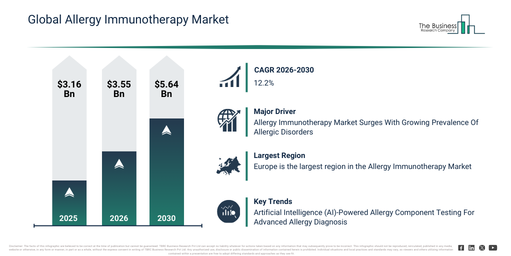
    The allergy immunotherapy market size has experienced rapid expansion in recent years. It is forecast to increase from $3.16 billion in 2025 to $3.55 billion in 2026, at a compound annual growth rate (CAGR) of 12.3%. The growth observed in the historic period is attributable to limited awareness about allergy immunotherapy, a rising incidence of seasonal allergic rhinitis, dependency on hospital-based treatment channels, the adoption of traditional treatment methods, and regulatory approvals for immunotherapy products.

    The allergy immunotherapy market is projected for substantial expansion over the next few years. It is forecast to achieve a valuation of $5.64 billion by 2030, progressing at a compound annual growth rate (CAGR) of 12.2%. This anticipated growth is influenced by several factors, including the proliferation of personalized immunotherapy solutions, the increasing use of online pharmacy channels, the expansion of pediatric allergy treatment options, a surge in investment dedicated to immunotherapy research, and the ongoing development of combination immunotherapy products. Prominent trends for the forecast duration encompass the growing acceptance of subcutaneous and sublingual immunotherapy, an escalating incidence of allergic rhinitis and asthma, the broadening scope of food and venom allergy treatments, an enhanced focus on tailored allergy treatment protocols, and improved awareness leading to earlier diagnosis of allergic conditions.

    Access Your Free Sample Report For In-Depth Market Analysis:

    https://www.thebusinessresearchcompany.com/report/allergy-immunotherapy-global-market-report

    Which Primary Drivers Are Impacting The Allergy Immunotherapy Market Growth?

    The increasing incidence of allergic disorders is projected to fuel the expansion of the allergy immunotherapy market moving forward. Allergic disorders are defined as exaggerated immune responses to specific antigens, distinct from autoimmune diseases where immune responses are mistakenly directed against the body’s own components. Allergy immunotherapy is available for atopic individuals who suffer from conditions such as IgE-mediated allergic rhinitis and allergic asthma, triggered by inhaled allergens including pollens and house dust mites (HDMs). For example, in August 2023, the Medicines and Healthcare Products Regulatory Agency (MHRA), a UK-based executive agency, reported that English hospitals recorded over 25,000 admissions for allergies and anaphylaxis in 2022-23, a figure more than double that seen in the last twenty years. Additionally, in May 2024, the Food Standards Agency, a UK-based government department, published its Patterns and Prevalence of Adult Food Allergy (PAFA) report, revealing that around 6% of adults in the UK, approximately 2.4 million individuals, are affected by food allergies. Hence, the growing prevalence of allergic disorders is a key factor driving the growth of the allergy immunotherapy market.

    How Is The Allergy Immunotherapy Market Organized By Segment Classification?

    The allergy immunotherapy market covered in this report is segmented –

    1) By Allergy Type: Allergic Rhinitis, Allergic Asthma, Food Allergy, Venom Allergy, Allergic Conjunctivitis, Environmental Allergies

    2) By Treatment: Subcutaneous Immunotherapy (SCIT), Sublingual Immunotherapy, Specific Immunotherapy (SIT)

    3) By Channel: Hospital Pharmacy, Retail Pharmacy

    Subsegments:

    1) By Allergic Rhinitis: Seasonal Allergic Rhinitis, Perennial Allergic Rhinitis

    2) By Allergic Asthma: House Dust Mite–Induced Allergic Asthma, Pollen-Induced Allergic Asthma, Animal Dander–Induced Allergic Asthma

    3) By Food Allergy: Peanut Allergy, Tree Nut Allergy, Milk Allergy, Egg Allergy, Other Food Allergies

    4) By Venom Allergy: Bee Venom Allergy, Wasp Venom Allergy, Hornet Venom Allergy, Other Insect Venom Allergies

    5) By Allergic Conjunctivitis: Seasonal Allergic Conjunctivitis, Perennial Allergic Conjunctivitis

    6) By Environmental Allergies: House Dust Mite Allergy, Pollen Allergy, Mold Allergy, Animal Dander Allergy

    Which Trends Are Shaping Growth In The Allergy Immunotherapy Market?

    Major companies operating within the allergy immunotherapy market are innovating technological products, such as artificial intelligence (AI)-powered allergy component testing, to sustain their market position. This AI-powered allergy component testing is a novel diagnostic platform rooted in component resolved diagnostics (CRD) designed for diagnosing diverse forms of allergies. As an example, in May 2023, Metropolis Healthcare Limited, an Indian-based Medical laboratory company, launched its artificial intelligence (AI)-powered allergy component testing. This innovative fourth-generation allergy testing technology utilizes Artificial Intelligence (AI) to assist clinicians in their clinical decision-making. It offers significant insights for selecting and optimizing the treatment course for allergic diseases. Moreover, it can predict the effectiveness of immunotherapy for allergy vaccinations, indicating their potential success.

    Who Are The Industry Participants Involved In The Allergy Immunotherapy Market?

    Major companies operating in the allergy immunotherapy market are LETI Pharma, Stallergenes Greer International AG, Allergy Therapeutics plc, ALK-Abelló A/S, HAL Allergy B.V., DBV Technologies, Circassia Pharmaceuticals Inc., Jubilant HollisterStier LLC, Allergopharma GmbH & Co. KG, Biomay AG, Anergis SA, HollisterStier Allergy, Desentum Oy, WOLW Pharma Limited, AllerGenics Inc., Greer Laboratories Inc., Aimmune Therapeutics Inc., Reliant Laboratories Inc., Mylan N.V., Adamis Pharmaceuticals Corporation, Endo Pharmaceuticals Inc., Sun Pharmaceutical Industries Ltd., Cipla Ltd.

    Get The Full Allergy Immunotherapy Market Report:

    https://www.thebusinessresearchcompany.com/report/allergy-immunotherapy-global-market-report

    Which Region Dominates The Allergy Immunotherapy Market By Market Share?

    Europe was the largest region in the allergy immunotherapy market in 2025. Asia-Pacific is expected to be the fastest-growing region in the allergy immunotherapy market report during the forecast period. The regions covered in the allergy immunotherapy market report are Asia-Pacific, South East Asia, Western Europe, Eastern Europe, North America, South America, Middle East, Africa.

    Request A Customized Allergy Immunotherapy Market Report For Competitive Insights:

    https://www.thebusinessresearchcompany.com/report/allergy-immunotherapy-global-market-report

    Browse Through More Reports Similar to the Global Allergy Immunotherapy Market 2026, By The Business Research Company

    Cellulars Immunotherapy Market Report 2026

    https://www.thebusinessresearchcompany.com/report/cellulars-immunotherapy-global-market-report

    Allergy Treatment Market Report 2026

    https://www.thebusinessresearchcompany.com/report/allergy-treatment-global-market-report

    Allergy Diagnostics Market Report 2026

    https://www.thebusinessresearchcompany.com/report/allergy-diagnostics-global-market-report

    Get in touch with us:

    The Business Research Company: https://www.thebusinessresearchcompany.com/

    Americas +1 310-496-7795

    Asia +44 7882 955267 & +91 8897263534

    Europe +44 7882 955267

    Email us at info@tbrc.info

    Follow us on:

    LinkedIn: https://in.linkedin.com/company/the-business-research-company

    YouTube: https://www.youtube.com/channel/UC24_fI0rV8cR5DxlCpgmyFQ

    Global Market Model: https://www.thebusinessresearchcompany.com/global-market-model
  • Allergy Diagnostics Market: Developments Driving Growth

    Allergy Diagnostics Market: Developments Driving Growth

    The Business Research Company’s 2026 market reports feature enhanced tools like market attractiveness analysis, TAM assessment, and company scoring matrices, along with interactive dashboards, deeper supply chain insights, and startup coverage strengthening the depth, usability, and strategic value of insights.

    What Are The Market Size Estimates For The Allergy Diagnostics Market In 2026 And 2030?

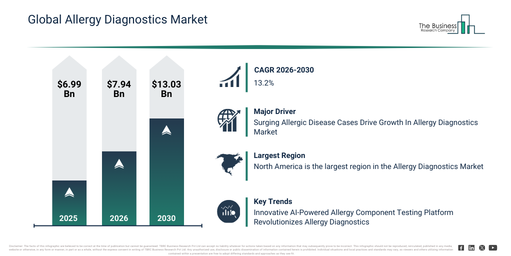
    The allergy diagnostics market size has seen rapid expansion in recent years. It is anticipated to increase from $6.99 billion in 2025 to $7.94 billion in 2026, exhibiting a compound annual growth rate (CAGR) of 13.5%. The historical growth of this market can be ascribed to the rising global incidence of allergies, the adoption of skin prick and intradermal tests, the expansion of hospital-based laboratories, increasing awareness regarding allergy management, and the limited availability of advanced in-vitro kits.

    The allergy diagnostics market is projected to experience substantial expansion over the upcoming years. This market is anticipated to reach $13.03 billion by 2030, exhibiting a compound annual growth rate (CAGR) of 13.2%. Several factors contribute to this growth during the forecast period, including progress in component-resolved diagnostics, the incorporation of automation into allergy testing, increased funding for research into new allergens, the proliferation of academic and diagnostic laboratories, and a rising need for individualized allergy treatment. Key trends expected during the forecast period encompass an escalating need for precise allergy diagnostics, the increasing acceptance of in-vitro testing techniques, broader application of food and drug allergen testing, enhanced utilization of ELISA, RAST, and CRD kits, and an emphasis on swift and point-of-care allergy detection.

    Access Your Free Sample Report For In-Depth Market Analysis:

    https://www.thebusinessresearchcompany.com/report/allergy-diagnostics-global-market-report

    What Significant Factors Are Influencing The Allergy Diagnostics Market Expansion?

    The escalating prevalence of allergic diseases is set to drive the expansion of the allergy diagnostics market. This increase in allergic conditions has been attributed to heightened environmental pollution stemming from traffic and various industries. An allergic reaction is defined as an abnormal immune system response to a specific allergen. Allergy diseases encompass anaphylaxis, allergic rhinitis (frequently referred to as ‘hay fever’), food allergies, skin allergies, and allergic asthma. The most crucial treatment for allergic disorders involves avoiding the allergen; therefore, accurate allergy diagnosis is essential for effective allergy treatment. For instance, in September 2024, data from Anaphylaxis UK, a UK-based charity, revealed that 20% of food allergy reactions occur at school. One in five children with food allergies experience bullying, and one in five parents report moderate-to-extreme anxiety. Nearly all parents of affected children exhibit post-traumatic stress symptoms (PTSS), with rates seven times higher among those whose children use adrenaline auto-injectors (AAIs). Consequently, the growing incidence of allergic diseases will further support the growth of the allergic diagnostics market.

    Which Segments Define The Allergy Diagnostics Market Segment Structure?

    The allergy diagnostics market covered in this report is segmented –

    1) By Test Type: In-Vivo Allergy Tests, In-Vitro Allergy Tests

    2) By Allergen: Inhaled Allergens, Food Allergens, Drug Allergens

    3) By Products: Consumables, Instruments

    4) By End User: Diagnostics Laboratories, Hospital-based Laboratories, Academic and Research Institutes

    Subsegments:

    1) By In-Vivo Allergy Tests: Skin Prick Tests, Intradermal Tests, Patch Tests, Oral Food Challenge Tests

    2) By In-Vitro Allergy Tests: Enzyme-Linked Immunosorbent Assay (ELISA), Radioallergosorbent Test (RAST), Component-Resolved Diagnostics (CRD), Basophil Activation Tests (BAT)

    What Trends Are Affecting The Direction Of The Allergy Diagnostics Market?

    Major enterprises operating within the allergy diagnostics market are developing new technologies, including an AI-powered allergy component testing platform, to enhance their market profitability. An AI-powered allergy component testing platform functions as an advanced system employing artificial intelligence (AI) to interpret and analyze allergy testing outcomes. As an illustration, in May 2023, Metropolis, an India-based pathology lab and diagnostic center, launched an artificial intelligence (AI)-driven platform for allergy component testing that can identify 127 respiratory allergens, 10 contact allergens, and 158 food allergens. This testing platform furnishes extensive knowledge for establishing and refining an individual’s allergy treatment plan and assists clinicians in formulating informed clinical decisions by leveraging component-resolved diagnostics (CRD) and artificial intelligence (AI).

    Who Are The Established Players Within The Allergy Diagnostics Market?

    Major companies operating in the allergy diagnostics market are bioMérieux SA, Danaher Corporation, HOB Biotech Group Corp. Ltd., HYCOR Biomedical, Lincoln Diagnostics Inc., Omega Diagnostics Group PLC, Siemens Healthineers AG, Thermo Fisher Scientific Inc., PerkinElmer Inc., R-Biopharm AG, Abbott Laboratories, HollisterStier Allergy, NEOGEN Corporation, AESKU.GROUP GmbH, ACON Laboratories Inc., Erba Group, Stallergenes Greer, HAL Allergy Group, INDOOR Biotechnologies Inc., MacroArray Technologies LLC, Phadia AB, Quest Diagnostics, Randox Laboratories Ltd., Eurofins Viracor Inc., VRL Laboratories

    Get The Full Allergy Diagnostics Market Report:

    https://www.thebusinessresearchcompany.com/report/allergy-diagnostics-global-market-report

    Which Region Is The Largest In The Allergy Diagnostics Market?

    North America was the largest region in the allergy diagnostics market in 2025. The regions covered in the allergy diagnostics market report are Asia-Pacific, South East Asia, Western Europe, Eastern Europe, North America, South America, Middle East, Africa.

    Request A Customized Allergy Diagnostics Market Report For Competitive Insights:

    https://www.thebusinessresearchcompany.com/report/allergy-diagnostics-global-market-report

    Browse Through More Reports Similar to the Global Allergy Diagnostics Market 2026, By The Business Research Company

    Immunoglobulin E Ige Allergy Blood Tests Market Report 2026

    https://www.thebusinessresearchcompany.com/report/immunoglobulin-e-ige-allergy-blood-tests-global-market-report

    Allergy Treatment Market Report 2026

    https://www.thebusinessresearchcompany.com/report/allergy-treatment-global-market-report

    Allergy Immunotherapy Market Report 2026

    https://www.thebusinessresearchcompany.com/report/allergy-immunotherapy-global-market-report

    Get in touch with us:

    The Business Research Company: https://www.thebusinessresearchcompany.com/

    Americas +1 310-496-7795

    Asia +44 7882 955267 & +91 8897263534

    Europe +44 7882 955267

    Email us at info@tbrc.info

    Follow us on:

    LinkedIn: https://in.linkedin.com/company/the-business-research-company

    YouTube: https://www.youtube.com/channel/UC24_fI0rV8cR5DxlCpgmyFQ

    Global Market Model: https://www.thebusinessresearchcompany.com/global-market-model

  • AI in respiratory diseases market forecast and growth trends

    AI in respiratory diseases market forecast and growth trends

    The Business Research Company’s 2026 market reports feature enhanced tools like market attractiveness analysis, TAM assessment, and company scoring matrices, along with interactive dashboards, deeper supply chain insights, and startup coverage strengthening the depth, usability, and strategic value of insights.

    What Changes In Market Value Are Expected For The Artificial Intelligence (AI) In Respiratory Diseases Market Over The 2026–2030 Period?

    The artificial intelligence (AI) in respiratory diseases market has shown sustained expansion in recent times. Forecasts indicate that it will increase from $7.98 billion in 2025 to $8.38 billion in 2026, achieving a compound annual growth rate (CAGR) of 4.9%. Historically, this growth stemmed from the escalating prevalence of respiratory conditions, a rise in the application of CT and MRI imaging, the ongoing digitalization of healthcare documentation, the initial embrace of AI-powered diagnostics, and the broadening of hospital diagnostic capacities.

    The artificial intelligence (AI) in respiratory diseases market size is anticipated to demonstrate robust expansion in the upcoming years. It is projected to achieve a valuation of $10.19 billion by 2030, growing at a compound annual growth rate (CAGR) of 5.0%. This anticipated growth can be ascribed to a rising need for personalized respiratory care, the increasing integration of AI with clinical decision support systems, the wider adoption of remote monitoring for chronic respiratory patients, a heightened emphasis on preventive pulmonology, and advancements in medical imaging AI. Notable trends during the forecast period include a greater application of AI-based imaging analysis, the growing implementation of predictive disease progression models, an expanding integration of AI in pulmonary diagnostics, the proliferation of remote respiratory monitoring solutions, and an enhanced commitment to early disease detection.

    Access Your Free Sample Report For In-Depth Market Analysis:

    https://www.thebusinessresearchcompany.com/report/artificial-intelligence-ai-in-respiratory-diseases-global-market-report

    What Key Factors Are Shaping The Artificial Intelligence (AI) In Respiratory Diseases Market Landscape?

    When considering the progression of the respiratory disease market, environmental pollution is characterized by the introduction of any material or energy form into the environment at a rate faster than it can be safely assimilated or stored. Artificial intelligence (AI) applied to respiratory diseases possesses the capability to substantially diminish environmental pollution’s adverse effects on respiratory well-being through real-time surveillance, individualized risk evaluations, well-informed choices, and innovative strategies for both people and wider communities. As an illustration, in November 2024, the Japan-based annual scientific evaluation, the Global Carbon Budget, indicated that fossil carbon dioxide emissions reached 37.4 billion tonnes, representing a 0.8% rise from the prior year. Thus, the escalating environmental pollution serves as a significant impetus for the expansion of artificial intelligence (AI) in the respiratory disease market.

    How Is The Artificial Intelligence (AI) In Respiratory Diseases Market Segmented Across Different Segment Categories?

    The artificial intelligence (AI) in respiratory diseases market covered in this report is segmented –

    1) By Imaging Type: Magnetic Resonance Imaging (MRI), Computed Tomography (CT) Scan, Electronic Patient-Reported Outcomes (ePRO)

    2) By Indication: Chronic Obstructive Pulmonary Disease, Interstitial Lung Disease, Pulmonary Infection

    3) By End Use: Hospital, Diagnostic Centers, Ambulatory Surgical Centers, Other End-Users

    Subsegments:

    1) By Magnetic Resonance Imaging (MRI): Lung Imaging, Thoracic Imaging, Cardiopulmonary Imaging

    2) By Computed Tomography (CT) Scan: High-Resolution CT (HRCT), Low-Dose CT, Thoracic CT

    3) By Electronic Patient-Reported Outcomes (ePRO): Symptom Tracking, Medication Adherence Monitoring, Quality Of Life Assessments

    What Market Trends Are Affecting The Artificial Intelligence (AI) In Respiratory Diseases Market?

    Leading companies active in artificial intelligence (AI) in the respiratory diseases market are creating advanced products like N-Tidal devices for monitoring patients’ tidal breathing. The N-Tidal device quantifies the air volume exchanged during normal respiration and yields essential data regarding lung function. For example, in August 2023, TidalSense, a UK-based respiratory technology company, introduced N-Tidal, which is a regulated AI technology for the diagnosis and management of chronic obstructive pulmonary disease (COPD). This technology integrates N-Tidal’s CO2 sensor data with an artificial intelligence platform to measure shifts in lung function, aiming to enhance the diagnosis and management of this respiratory ailment. Clinical investigations have confirmed the technology’s notable accuracy, and it is projected to revolutionize the diagnostic approach for respiratory conditions. This launch represents a key progression in applying AI for respiratory disease assessment, presenting a more convenient and effective substitute for current diagnostic examinations.

    Which Organizations Play A Role In The Artificial Intelligence (AI) In Respiratory Diseases Market Landscape?

    Major companies operating in the artificial intelligence (AI) in respiratory diseases market are Siemens Healthineers, Philips Healthcare, GE Healthcare, Verily Life Sciences LLC, DeepMind Health, Merative L.P., Aidoc Medical, Butterfly Network, Infervision, Imagen Technologies, Caption Health, Swaasa AI, VIDA Diagnostics Inc., Enlitic, Thirona B.V., ArtiQ, Icometrix, Aidence, Arterys, PneumoWave Ltd

    Get The Full Artificial Intelligence (AI) In Respiratory Diseases Market Report:

    https://www.thebusinessresearchcompany.com/report/artificial-intelligence-ai-in-respiratory-diseases-global-market-report

    Which Region Represents The Largest Share Of The Artificial Intelligence (AI) In Respiratory Diseases Market?

    North America was the largest region in the artificial Intelligence (AI) in respiratory diseases market in 2025. Asia-Pacific is expected to be the fastest-growing region in the forecast period. The regions covered in the artificial intelligence (AI) in respiratory diseases market report are Asia-Pacific, South East Asia, Western Europe, Eastern Europe, North America, South America, Middle East, Africa.

    Request A Customized Artificial Intelligence (AI) In Respiratory Diseases Market Report For Competitive Insights:

    https://www.thebusinessresearchcompany.com/report/artificial-intelligence-ai-in-respiratory-diseases-global-market-report

    Browse Through More Reports Similar to the Global Artificial Intelligence (AI) In Respiratory Diseases Market 2026, By The Business Research Company

    Artificial Intelligence Ai In Animal Health Market Report 2026

    https://www.thebusinessresearchcompany.com/report/artificial-intelligence-ai-in-animal-health-global-market-report

    Artificial Intelligence In Healthcare Diagnosis Market Report 2026

    https://www.thebusinessresearchcompany.com/report/artificial-intelligence-in-healthcare-diagnosis-global-market-report

    Ai In Medical Diagnostics Market Report 2026

    https://www.thebusinessresearchcompany.com/report/ai-in-medical-diagnostics-global-market-report

    Get in touch with us:

    The Business Research Company: https://www.thebusinessresearchcompany.com/

    Americas +1 310-496-7795

    Asia +44 7882 955267 & +91 8897263534

    Europe +44 7882 955267

    Email us at info@tbrc.info

    Follow us on:

    LinkedIn: https://in.linkedin.com/company/the-business-research-company

    YouTube: https://www.youtube.com/channel/UC24_fI0rV8cR5DxlCpgmyFQ

    Global Market Model: https://www.thebusinessresearchcompany.com/global-market-model
  • AI in remote patient monitoring market future trends

    AI in remote patient monitoring market future trends

    The Business Research Company’s 2026 market reports feature enhanced tools like market attractiveness analysis, TAM assessment, and company scoring matrices, along with interactive dashboards, deeper supply chain insights, and startup coverage strengthening the depth, usability, and strategic value of insights.

    By 2030, What Market Size Is The Artificial Intelligence (AI) In Remote Patient Monitoring Market Expected To Reach Based On Its 2026 Value?

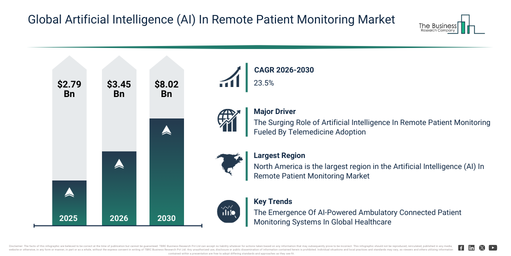
    The artificial intelligence (AI) in remote patient monitoring market size has witnessed exponential expansion in recent years. It is anticipated to grow from $2.79 billion in 2025 to $3.45 billion in 2026, achieving a compound annual growth rate (CAGR) of 23.4%. Historically, this growth can be attributed to several factors, including an increase in the prevalence of chronic diseases, the rising adoption of telehealth services, the expansion of connected medical devices, a surge in healthcare digitization initiatives, and the early use of remote monitoring platforms.

    The artificial intelligence (AI) in remote patient monitoring market size is projected to experience substantial expansion over the upcoming years. This market is anticipated to reach $8.02 billion by 2030, exhibiting a compound annual growth rate (CAGR) of 23.5%. Key factors contributing to this growth during the forecast period include the escalating demand for care models delivered at home, increased funding for AI-driven healthcare analytics, the broadening of personalized care options, greater integration of RPM with electronic health records, and an intensified emphasis on preventive healthcare. Significant trends expected during this period encompass the increased implementation of AI-powered predictive monitoring solutions, the growing use of wearable health sensors, the wider incorporation of real-time health analytics platforms, the development of automated alert and decision support capabilities, and a heightened focus on uninterrupted patient monitoring.

    Access Your Free Sample Report For In-Depth Market Analysis:

    https://www.thebusinessresearchcompany.com/report/artificial-intelligence-ai-in-remote-patient-monitoring-global-market-report

    Which Factors Are Influencing The Growth Of The Artificial Intelligence (AI) In Remote Patient Monitoring Market?

    The widespread adoption of telemedicine is anticipated to propel the expansion of artificial intelligence (AI) in the remote patient monitoring market in the coming years. Telemedicine involves the use of telecommunications technology, such as video calls, phone calls, and online messaging, to provide medical services remotely. AI in remote patient monitoring, when integrated with telemedicine, processes this data in real time, identifying subtle changes and informing healthcare professionals about potential issues before they escalate into emergencies. For instance, in May 2024, according to Eurostat, a Luxembourg-based government agency, in 2023, 8.5% of individuals in the EU aged 16 to 74 participated in online consultations using the internet. Consequently, the high adoption of telemedicine will drive the growth of artificial intelligence (AI) in the remote patient monitoring market.

    What Are The Main Segments Within The Artificial Intelligence (AI) In Remote Patient Monitoring Market Segment Structure?

    The artificial intelligence (AI) in remote patient monitoring market covered in this report is segmented –

    1) By Solution: Software, Hardware, Services

    2) By Product: Vital Monitors, Special Monitors, Other Products

    3) By Technology: Natural Language Processing, Machine Learning, Speech Recognition

    4) By Application: Diabetes, Respiratory Issues, Cardiovascular Diseases, Sleep Disorder

    Subsegments:

    1) By Software: Predictive Analytics, Data Management, Monitoring Platforms, Mobile Applications

    2) By Hardware: Wearable Devices, Sensors, Medical Devices

    3) By Services: Implementation Services, Training And Education Services, Support And Maintenance Services

    Which Trends Are Influencing Demand In The Artificial Intelligence (AI) In Remote Patient Monitoring Market?

    Leading companies within the artificial intelligence (AI) in remote patient monitoring market are prioritizing the incorporation of AI into wearable devices, such as advanced AI-powered ambulatory connected patient monitoring systems, to enhance their competitive edge and streamline healthcare delivery. Such a system denotes a medical solution that merges AI with ambulatory monitoring technology to continuously track and evaluate a patient’s vital signs and health metrics in real time. For instance, in October 2023, Dozee, an India-based medical equipment manufacturer, unveiled ‘Dozee Pro Ex,’ an innovative ambulatory connected patient monitoring system intended for worldwide distribution. This Indian-made offering utilizes wireless wearable sensors to continuously monitor crucial parameters including ECG rhythm, blood pressure, heart rate, oxygen saturation, respiration rate, and temperature. Significantly, ‘Dozee Pro Ex’ incorporates an AI-powered early warning system capable of analyzing trends in vital parameters and issuing prompt alerts for signs of potential clinical decline. This cutting-edge product aims to transform traditional healthcare paradigms by facilitating round-the-clock patient oversight, whether individuals are hospitalized, outside a hospital bed, in a healthcare facility, or at their residence.

    Who Are The Companies Participating In The Artificial Intelligence (AI) In Remote Patient Monitoring Market?

    Major companies operating in the artificial intelligence (AI) in remote patient monitoring market are Medtronic plc, Siemens Healthineers, Koninklijke Philips N.V., GE Healthcare, DexCom Inc, Cerner Corporation, Tunstall Healthcare, Connect America LLC, American Well, Biofourmis, Merative L.P., Vivify Health, Current Health, BioIntelliSense, Preventice Solutions, AiCure LLC, Orbita, MobileHelp, EarlySense, Gyant, Myia Labs, Sentrian, Biobeat, ChroniSense Medical Ltd., Somatix Inc., Twistle, HealthWatch Technologies

    Get The Full Artificial Intelligence (AI) In Remote Patient Monitoring Market Report:

    https://www.thebusinessresearchcompany.com/report/artificial-intelligence-ai-in-remote-patient-monitoring-global-market-report

    Which Geographic Region Dominates The Artificial Intelligence (AI) In Remote Patient Monitoring Market?

    North America was the largest region in the artificial intelligence (AI) in remote patient monitoring market in 2025. Asia-Pacific is expected to be the fastest-growing region in the forecast period. The regions covered in the artificial intelligence (AI) in remote patient monitoring market report are Asia-Pacific, South East Asia, Western Europe, Eastern Europe, North America, South America, Middle East, Africa.

    Request A Customized Artificial Intelligence (AI) In Remote Patient Monitoring Market Report For Competitive Insights:

    https://www.thebusinessresearchcompany.com/report/artificial-intelligence-ai-in-remote-patient-monitoring-global-market-report

    Browse Through More Reports Similar to the Global Artificial Intelligence (AI) In Remote Patient Monitoring Market 2026, By The Business Research Company

    Artificial Intelligence In Healthcare Diagnosis Market Report 2026

    https://www.thebusinessresearchcompany.com/report/artificial-intelligence-in-healthcare-diagnosis-global-market-report

    Artificial Intelligence In Healthcare Market 2026

    https://www.thebusinessresearchcompany.com/report/artificial-intelligence-in-healthcare-market

    Remote Patient Monitoring Devices And Equipment Market Report 2026

    https://www.thebusinessresearchcompany.com/report/remote-patient-monitoring-devices-and-equipment-global-market-report

    Get in touch with us:

    The Business Research Company: https://www.thebusinessresearchcompany.com/

    Americas +1 310-496-7795

    Asia +44 7882 955267 & +91 8897263534

    Europe +44 7882 955267

    Email us at info@tbrc.info

    Follow us on:

    LinkedIn: https://in.linkedin.com/company/the-business-research-company

    YouTube: https://www.youtube.com/channel/UC24_fI0rV8cR5DxlCpgmyFQ

    Global Market Model: https://www.thebusinessresearchcompany.com/global-market-model

  • AI in regulatory affairs market growth outlook through 2030

    AI in regulatory affairs market growth outlook through 2030

    The Business Research Company’s 2026 market reports feature enhanced tools like market attractiveness analysis, TAM assessment, and company scoring matrices, along with interactive dashboards, deeper supply chain insights, and startup coverage strengthening the depth, usability, and strategic value of insights.

    What Is The Anticipated Rise In Market Value Of The Artificial Intelligence (AI) In Regulatory Affairs Market During The Forecast Period?

    The market size for artificial intelligence (AI) in regulatory affairs has experienced substantial growth in recent years. This market is forecast to expand from $1.71 billion in 2025 to $2.11 billion in 2026, achieving a compound annual growth rate (CAGR) of 23.0%. Historically, this growth can be ascribed to several factors, including the increasing complexity of regulations in life sciences, the rising volumes of regulatory documentation, a heightened demand for quicker approvals, the expansion of global clinical trials, and the growing digitization of regulatory processes.

    The artificial intelligence (AI) in regulatory affairs market is projected to experience substantial expansion in the coming years. This market is set to reach $4.78 billion by 2030, exhibiting a compound annual growth rate (CAGR) of 22.7%. This anticipated growth is driven by several factors, including the increasing adoption of comprehensive regulatory automation, greater investments in cloud-based compliance platforms, the expanding application of predictive analytics for regulatory strategies, the broadening scope of AI-enabled pharmacovigilance, and a heightened need for regulatory efficiency. Key trends anticipated during this period involve the increasing embrace of AI-driven regulatory intelligence platforms, the growing utilization of automated submission management tools, enhanced integration of natural language processing in compliance processes, the wider deployment of cloud-based regulatory solutions, and a stronger emphasis on real-time regulatory monitoring.

    Access Your Free Sample Report For In-Depth Market Analysis:

    https://www.thebusinessresearchcompany.com/report/global-artificial-intelligence-ai-in-regulatory-affairs-market-report

    What Leading Drivers Are Supporting The Artificial Intelligence (AI) In Regulatory Affairs Market Expansion?

    The expanding integration of AI-enabled platforms is projected to drive the growth of the artificial intelligence (AI) in regulatory affairs market. These platforms are digital systems or solutions that incorporate artificial intelligence technologies such as machine learning, natural language processing, and predictive analytics to automate tasks, improve decision-making, and boost operational efficiency across diverse industries. The increasing adoption of AI-enabled platforms is driven by the rising demand for automation and efficiency in managing complex regulatory tasks, enabling faster data processing and enhanced decision-making accuracy. In regulatory affairs, AI supports these platforms by streamlining compliance, ensuring quicker regulatory approvals, and improving data accuracy, which in turn accelerates innovation and market readiness. As an illustration, a report published by the Department for Science, Innovation and Technology (DSIT), a UK-based government organization, in October 2024, indicated that the UK’s AI sector generated USD 16.32 billion (£14.2 billion) in revenue in 2023, reflecting a 34% year-on-year increase, with employment in AI-related roles growing to approximately 64,500. Thus, the increasing integration of AI-enabled platforms is a key factor propelling the artificial intelligence (AI) in regulatory affairs market.

    How Is Segmentation Applied In The Artificial Intelligence (AI) In Regulatory Affairs Market Segment Analysis?

    The artificial intelligence (AI) in regulatory affairs market covered in this report is segmented –

    1) By Component: Software Or Platforms, Services

    2) By Deployment Mode: Cloud-based, On-Premises

    3) By Application: Regulatory Intelligence, Data Migration And Integration, Dossier Management, Product Registration And Approvals, Pharmacovigilance And Safety Reporting, Regulatory Submissions And Publishing, Other Applications

    4) By End-User: Pharmaceutical Companies, Biotechnology Companies, Other End-Users

    Subsegments:

    1) By Software Or Platforms: Regulatory Information Management, Document Management, Data Analytics And Insights, Natural Language Processing Tools, Cloud-Based Compliance Solutions, Workflow Automation Systems, Artificial Intelligence-Powered Decision Support, Submission Management Platforms

    2) By Services: Implementation And Integration, Training And Consulting, Support And Maintenance, Regulatory Process Outsourcing, Data Migration And Validation, Compliance Monitoring Services, Managed Services, Customization And Configuration

    What Emerging Trends Are Seen In The Artificial Intelligence (AI) In Regulatory Affairs Market?

    Major companies within the artificial intelligence (AI) in regulatory affairs market are prioritizing advanced innovations, particularly Regulatory Information Management (RIM), to consolidate regulatory data, automate submission processes, maintain compliance across global markets, and enhance product lifecycle visibility. Regulatory information management encompasses the systematic collection, organization, and administration of regulatory data, documents, and submissions across a product’s lifecycle to ensure adherence to worldwide regulatory mandates and streamline interactions with health authorities. As an example, in July 2024, ArisGlobal LLC, a US-based software firm, unveiled the newest iteration of its LifeSphere Regulatory Platform. This platform delivers a unified, cloud-based solution for complete regulatory affairs management, integrating next-generation GenAI and large-language-model (LLM) functionalities through its LifeSphere NavaX engine. This integration allows for content ingestion, creation, and more profound insights, leading to over 50% efficiency improvements by unifying data, content, and processes within a singular ecosystem, while also ensuring interoperability with ArisGlobal’s existing safety and quality systems, thus marking a significant advancement for life-sciences regulatory workflows.

    Who Are The Companies Participating In The Artificial Intelligence (AI) In Regulatory Affairs Market Environment?

    Major companies operating in the artificial intelligence (AI) in regulatory affairs market are Freyr Software Services Private Limited, Celegence LLC, Wipro Limited, Indegene Limited, Clarivate Plc, Zenovel Pharma Services LLP, RegDesk Inc, Compliance.ai Inc, IONI AI INC., Interfacing Technologies Corporation, OneTrust LLC, Xapien Ltd., SpringsApps Technologies Pvt Ltd., Fairnow Inc., Navitas Life Sciences Private Limited, S&P Global Inc., International Business Machines Corporation, ZS Associates International Inc., Vistaar Technologies Inc., Lexim AI Inc.

    Get The Full Artificial Intelligence (AI) In Regulatory Affairs Market Report:

    https://www.thebusinessresearchcompany.com/report/global-artificial-intelligence-ai-in-regulatory-affairs-market-report

    Which Region Is The Leading Market For The Artificial Intelligence (AI) In Regulatory Affairs Market?

    North America was the largest region in the artificial intelligence (AI) in regulatory affairs market in 2025. Asia-Pacific is expected to be the fastest-growing region in the forecast period. The regions covered in the artificial intelligence (AI) in regulatory affairs market report are Asia-Pacific, South East Asia, Western Europe, Eastern Europe, North America, South America, Middle East, Africa.

    Request A Customized Artificial Intelligence (AI) In Regulatory Affairs Market Report For Competitive Insights:

    https://www.thebusinessresearchcompany.com/report/global-artificial-intelligence-ai-in-regulatory-affairs-market-report

    Browse Through More Reports Similar to the Global Artificial Intelligence (AI) In Regulatory Affairs Market 2026, By The Business Research Company

    Artificial Intelligence Ai For Insurance Market Report 2026

    https://www.thebusinessresearchcompany.com/report/artificial-intelligence-ai-for-insurance-global-market-report

    Ai In Fintech Market Report 2026

    https://www.thebusinessresearchcompany.com/report/ai-in-fintech-global-market-report

    Regulatory Technology Market Report 2026

    https://www.thebusinessresearchcompany.com/report/regulatory-technology-global-market-report

    Get in touch with us:

    The Business Research Company: https://www.thebusinessresearchcompany.com/

    Americas +1 310-496-7795

    Asia +44 7882 955267 & +91 8897263534

    Europe +44 7882 955267

    Email us at info@tbrc.info

    Follow us on:

    LinkedIn: https://in.linkedin.com/company/the-business-research-company

    YouTube: https://www.youtube.com/channel/UC24_fI0rV8cR5DxlCpgmyFQ

    Global Market Model: https://www.thebusinessresearchcompany.com/global-market-model

  • AI in orthopedic surgery market insights and opportunities

    AI in orthopedic surgery market insights and opportunities

    The Business Research Company’s 2026 market reports feature enhanced tools like market attractiveness analysis, TAM assessment, and company scoring matrices, along with interactive dashboards, deeper supply chain insights, and startup coverage strengthening the depth, usability, and strategic value of insights.

    How Is The Market Size Of The Artificial Intelligence (AI) In Orthopedic Surgery Market Expected To Scale Between 2026 And 2030?

    The artificial intelligence (AI) in orthopedic surgery market size has experienced significant growth in recent years. It is forecast to rise from $0.26 billion in 2025 to $0.33 billion in 2026, achieving a compound annual growth rate (CAGR) of 27.5%. This historical expansion can be linked to the increasing volume of orthopedic surgeries, developments in medical imaging technologies, a growing preference for minimally invasive procedures, the enhancement of hospital digital infrastructure, and an elevated focus on surgical precision.

    The artificial intelligence (AI) in orthopedic surgery market size is anticipated to experience significant expansion in the coming years. It is projected to reach $0.87 billion by 2030, at a compound annual growth rate (CAGR) of 27.2%. The growth observed in this forecast period is primarily driven by an escalating demand for personalized orthopedic treatments, increasing investments in surgical robotics, the broadening of AI-based clinical decision support systems, an intensifying focus on outcome-based healthcare, and greater integration of AI with electronic health records. Key trends during this timeframe include the wider adoption of AI-assisted surgical planning tools, a rising application of computer vision in orthopedic procedures, the progressive integration of robotic surgical systems, the expansion of predictive analytics for patient outcomes, and improved precision in implant placement.

    Access Your Free Sample Report For In-Depth Market Analysis:

    https://www.thebusinessresearchcompany.com/report/artificial-intelligence-ai-in-orthopedic-surgery-global-market-report

    Which Key Factors Are Driving The Artificial Intelligence (AI) In Orthopedic Surgery Market Growth?

    The growing occurrence of musculoskeletal disorders is projected to boost the artificial intelligence (AI) in orthopedic surgery market moving forward. These disorders are defined as injuries or conditions impacting muscles, bones, joints, tendons, or ligaments, often resulting in pain and restricted movement. Sedentary lifestyles are a primary cause of the increase in musculoskeletal disorders, as prolonged inactivity weakens muscles and strains joints. AI in orthopedics assists in managing musculoskeletal disorders by offering accurate and early diagnoses through advanced image analysis and data patterns. It also supports personalized treatment planning and predicts patient outcomes, thereby enhancing patient care and recovery. For example, in January 2024, data from the Office for Health Improvement and Disparities, a UK-based government department, indicated that in 2023, 18.4% of individuals aged 16 and above reported a long-term MSK condition, a rise from 17.6% in 2022. Thus, the escalating incidence of musculoskeletal disorders is driving the expansion of the artificial intelligence (AI) in orthopedic surgery market.

    What Segment Categories Shape The Artificial Intelligence (AI) In Orthopedic Surgery Market Segment Landscape?

    The artificial intelligence (AI) in orthopedic surgery market covered in this report is segmented –

    1) By Component Type: Software, Services, Hardware

    2) By Technology: Machine Learning, Natural Language Processing, Computer Vision, Context-Aware Computing

    3) By Anatomy: Knee, Hip, Spine, Other Anatomies

    4) By End-User: Hospitals, Orthopedic Clinics, Other End-Users

    Subsegments:

    1) By Software: Clinical Decision Support Systems (CDSS), Drug Interaction Software, Electronic Health Record (EHR) Integration Modules, Prescription Management Software, Patient Monitoring Software

    2) By Services: Consulting Services, Training and Education, Support and Maintenance, Implementation Services, Drug Distribution Services

    3) By Hardware: Robotic Surgical Systems, Handheld Navigation Devices, Wearable Monitoring Devices, Imaging Systems, Sensors and Actuators, Computing Infrastructure

    Which Trends Are Guiding The Direction Of The Artificial Intelligence (AI) In Orthopedic Surgery Market?

    Major companies in the artificial intelligence (AI) orthopedic surgery market are concentrating on developing advanced solutions, such as AI-based surgical guidance systems, to enhance surgical precision and improve patient outcomes. An AI-based surgical guidance system employs real-time data, imaging, and predictive algorithms to assist surgeons with precise navigation and critical decision-making during procedures, thereby increasing surgical accuracy and reducing the risk of errors. For instance, in April 2025, Proprio, a US-based provider of AI-powered surgical technology, launched its Paradigm platform, which obtained clearance from the Food and Drug Administration (FDA). This platform enables real-time, 3D, dynamic measurement and visualization of anatomy during surgery. This innovation allows surgeons to assess and measure surgical outcomes instantly, eliminating the need for intraoperative X-rays or CT scans and thereby reducing both delays and radiation exposure. The technology is poised to transform surgical procedures, particularly in spine surgery, by offering continuous, data-driven guidance and improving patient outcomes.

    Who Are The Companies Operating Across The Artificial Intelligence (AI) In Orthopedic Surgery Market Value Chain?

    Major companies operating in the artificial intelligence (AI) in orthopedic surgery market are Medtronic plc, Stryker Corporation, Zimmer Biomet Holdings Inc., Smith & Nephew PLC, Globus Medical Inc., Brainlab AG, Proprio, Augmedics LTD, OrthAlign Inc., Caresyntax, Activ Surgical, THINK Surgical Inc., Perlove Medical, Pixee Medical, Formus Labs, Intuitive Surgical Inc., Johnson & Johnson DePuy Synthes, Renishaw plc, Medacta Group SA, Curexo Inc., Exactech Inc., AlgoSurg Inc., RSIP Vision, Surgalign HOLO Portal Technologies

    Get The Full Artificial Intelligence (AI) In Orthopedic Surgery Market Report:

    https://www.thebusinessresearchcompany.com/report/artificial-intelligence-ai-in-orthopedic-surgery-global-market-report

    Where Is The Artificial Intelligence (AI) In Orthopedic Surgery Market Primarily Concentrated By Region?

    North America was the largest region in the AI in orthopedic surgery market in 2025. The regions covered in the artificial intelligence (AI) in orthopedic surgery market report are Asia-Pacific, South East Asia, Western Europe, Eastern Europe, North America, South America, Middle East, Africa.

    Request A Customized Artificial Intelligence (AI) In Orthopedic Surgery Market Report For Competitive Insights:

    https://www.thebusinessresearchcompany.com/report/artificial-intelligence-ai-in-orthopedic-surgery-global-market-report

    Browse Through More Reports Similar to the Global Artificial Intelligence (AI) In Orthopedic Surgery Market 2026, By The Business Research Company

    Artificial Intelligence In Healthcare Market Report 2026

    https://www.thebusinessresearchcompany.com/report/artificial-intelligence-in-healthcare-global-market-report

    Artificial Intelligence Products Market Report 2026

    https://www.thebusinessresearchcompany.com/report/artificial-intelligence-products-global-market-report

    Ai In Medical Devices Market Report 2026

    https://www.thebusinessresearchcompany.com/report/ai-in-medical-devices-global-market-report

    Get in touch with us:

    The Business Research Company: https://www.thebusinessresearchcompany.com/

    Americas +1 310-496-7795

    Asia +44 7882 955267 & +91 8897263534

    Europe +44 7882 955267

    Email us at info@tbrc.info

    Follow us on:

    LinkedIn: https://in.linkedin.com/company/the-business-research-company

    YouTube: https://www.youtube.com/channel/UC24_fI0rV8cR5DxlCpgmyFQ

    Global Market Model: https://www.thebusinessresearchcompany.com/global-market-model
  • Allergic Rhinitis Market: Demand Trends and Growth Outlook

    Allergic Rhinitis Market: Demand Trends and Growth Outlook

    The Business Research Company’s 2026 market reports feature enhanced tools like market attractiveness analysis, TAM assessment, and company scoring matrices, along with interactive dashboards, deeper supply chain insights, and startup coverage strengthening the depth, usability, and strategic value of insights.

    What Expansion In Market Value Is Forecasted For The Allergic Rhinitis Market Between 2026 And 2030?

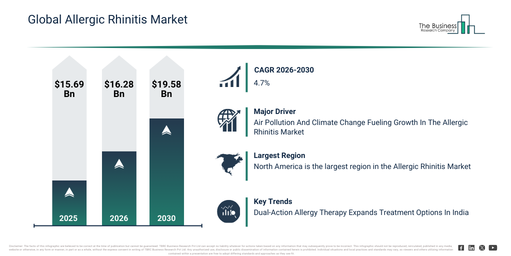
    The allergic rhinitis market size has seen consistent expansion in recent years. It is projected to climb from $15.69 billion in 2025 to $16.28 billion in 2026, at a compound annual growth rate (CAGR) of 3.8%. This historical expansion can be attributed to increased awareness of allergies, growing exposure to environmental allergens, the widespread use of traditional antihistamines and corticosteroids, the development of hospital pharmacy networks, and advancements in diagnostic skin testing methods.

    The allergic rhinitis market size is anticipated to experience consistent expansion over the upcoming years. This market is projected to reach $19.58 billion by 2030, demonstrating a compound annual growth rate (CAGR) of 4.7%. This projected growth during the forecast period is attributable to progress in immunotherapy solutions, a heightened need for customized allergy care, the growing use of online drugstores, advancements in IgE RAST and blood testing technologies, and the broadening of international allergy treatment sectors. Key trends for the forecast timeframe encompass the global increase in allergic rhinitis cases, greater utilization of immunotherapy and individualized therapies, wider acceptance of nasal corticosteroids and antihistamines, the spread of online pharmacies and e-commerce distribution channels, and improved diagnostic evaluations such as skin and IgE RAST tests.

    Access Your Free Sample Report For In-Depth Market Analysis:

    https://www.thebusinessresearchcompany.com/report/allergic-rhinitis-global-market-report

    Which Important Drivers Are Guiding The Allergic Rhinitis Market Growth?

    The allergic rhinitis market is anticipated to expand due to elevated air pollution and climate change. Air pollution is defined as the existence of detrimental elements in the Earth’s atmosphere, which can negatively impact human well-being, the surroundings, and the purity of the air we inhale. Climate change denotes enduring shifts in global weather patterns, encompassing temperature, rainfall, and various other climatic elements. A growing understanding acknowledges air pollution as a crucial environmental contributor to the rise and intensification of allergic rhinitis, underscoring the complex connection between air quality and respiratory wellness. As an illustration, in August 2024, the United States Environmental Protection Agency, a US-based Government agency, reported that around 66 million tons of contaminants were emitted into the atmosphere throughout the United States in 2023. Consequently, elevated air pollution and climate change act as key drivers for the allergic rhinitis market.

    How Is The Allergic Rhinitis Market Segmented Across Different Segment Categories?

    The allergic rhinitis market covered in this report is segmented –

    1) By Type: Seasonal Allergic Rhinitis, Perennial Allergic Rhinitis, Occupational Allergic Rhinitis

    2) By Treatment: Antihistamines, Corticosteroids, Immunotherapy, Decongestants, Other Treatments

    3) By Test: Skin Test, IgE Radioallergosorbent (RAST) Test

    4) By Route Of Administration: Oral, Nasal, Other Route Of Administration

    5) By Distribution Channel: Hospital Pharmacies, Retail Pharmacies, Online Stores

    Subsegments:

    1) By Seasonal Allergic Rhinitis: Pollen Allergy, Mold Allergy

    2) By Perennial Allergic Rhinitis: Dust Mite Allergy, Pet Allergy, Mold Allergy

    3) By Occupational Allergic Rhinitis: Chemical Allergens, Biological Allergens

    What Trends Are Influencing The Evolution Of The Allergic Rhinitis Market?

    Leading companies within the allergic rhinitis market are concentrating on developing innovative products, such as combination allergy therapies, aimed at improving multi-pathway symptom relief and enhancing the long-term management of allergic conditions. A combination allergy therapy involves a dual-action formulation that merges different classes of active ingredients to provide more extensive and effective control over allergy-related inflammation. As an illustration, in October 2025, Cadila Pharmaceuticals, an India-based pharmaceutical manufacturer, released Dlorfast-M Tablets. This formulation combines Desloratadine and Montelukast to block both histamine- and leukotriene-mediated pathways, delivering more robust and complete relief than either agent on its own. Its once-daily dosing regimen improves patient adherence while expanding therapeutic choices for those with allergic rhinitis and urticaria.

    Which Organizations Play A Role In The Allergic Rhinitis Market Landscape?

    Major companies operating in the allergic rhinitis market are Merck and Co. Inc., Bayer AG, Novartis AG, Sanofi-Aventis LLC., AstraZeneca PLC, GlaxoSmithKline plc., Boehringer Ingelheim International GmbH, Viatris Inc., Teva Pharmaceutical Industries Ltd., Regeneron Pharmaceuticals Inc., Sun Pharmaceutical Industries Limited, Menarini Group, Perrigo Company plc, Dr. Reddy’s Laboratories Ltd., Hikma Pharmaceuticals PLC, Cipla Limited, Zydus Lifesciences Ltd., Lupin Limited, Glenmark Pharma Ltd., Almirall S.A., Kyowa Kirin Co. Ltd., Hanmi Pharmaceutical Co. Ltd.

    Get The Full Allergic Rhinitis Market Report:

    https://www.thebusinessresearchcompany.com/report/allergic-rhinitis-global-market-report

    Which Region Leads The Allergic Rhinitis Market In Terms Of Market Share?

    North America was the largest region in the allergic rhinitis market in 2025. Asia-Pacific is expected to be the fastest-growing region in the forecast period. The regions covered in the allergic rhinitis market report are Asia-Pacific, South East Asia, Western Europe, Eastern Europe, North America, South America, Middle East, Africa.

    Request A Customized Allergic Rhinitis Market Report For Competitive Insights:

    https://www.thebusinessresearchcompany.com/report/allergic-rhinitis-global-market-report

    Browse Through More Reports Similar to the Global Allergic Rhinitis Market 2026, By The Business Research Company

    Allergy Treatment Market Report 2026

    https://www.thebusinessresearchcompany.com/report/allergy-treatment-global-market-report

    Allergic Rhinitis Drugs Market Report 2026

    https://www.thebusinessresearchcompany.com/report/allergic-rhinitis-drugs-global-market-report

    Allergy Diagnostics Market Report 2026

    https://www.thebusinessresearchcompany.com/report/allergy-diagnostics-global-market-report

    Get in touch with us:

    The Business Research Company: https://www.thebusinessresearchcompany.com/

    Americas +1 310-496-7795

    Asia +44 7882 955267 & +91 8897263534

    Europe +44 7882 955267

    Email us at info@tbrc.info

    Follow us on:

    LinkedIn: https://in.linkedin.com/company/the-business-research-company

    YouTube: https://www.youtube.com/channel/UC24_fI0rV8cR5DxlCpgmyFQ

    Global Market Model: https://www.thebusinessresearchcompany.com/global-market-model

  • AI in hospital management market trends shaping growth

    AI in hospital management market trends shaping growth

    The Business Research Company’s 2026 market reports feature enhanced tools like market attractiveness analysis, TAM assessment, and company scoring matrices, along with interactive dashboards, deeper supply chain insights, and startup coverage strengthening the depth, usability, and strategic value of insights.

    What Level Of Market Value Growth Is Predicted For The Artificial Intelligence (AI) in Hospital Management Market From 2026 To 2030?

    The market for artificial intelligence (AI) in hospital management has experienced significant expansion recently. This market is projected to expand from $3.94 billion in 2025 to reach $4.68 billion by 2026, demonstrating a compound annual growth rate (CAGR) of 18.7%. Historically, this growth can be attributed to several factors including an increase in hospital digitization initiatives, a rise in patient admission volumes, the widespread adoption of electronic health records, mounting pressure to cut operational expenses, and the early integration of analytics tools within the healthcare sector.

    The market for artificial intelligence (AI) in hospital management is projected to experience significant expansion in the coming years. This market is set to reach a value of $9.19 billion by 2030, demonstrating a compound annual growth rate (CAGR) of 18.4%. Factors contributing to this anticipated growth include greater investments in smart hospital infrastructure, an escalating demand for optimizing operational efficiency, the broadened scope of AI-enabled patient care management, the increasing uptake of cloud-based hospital platforms, and a heightened emphasis on value-based healthcare delivery. Key trends identified for the forecast period encompass a wider adoption of predictive analytics in hospital operations, the growing utilization of AI-based clinical decision support systems, increased automation of administrative workflows, the expansion of AI-driven patient flow management, and improved integration of data-driven resource optimization.

    Access Your Free Sample Report For In-Depth Market Analysis:

    https://www.thebusinessresearchcompany.com/report/artificial-intelligence-ai-in-hospital-management-global-market-report

    What Primary Drivers Are Shaping The Artificial Intelligence (AI) in Hospital Management Market?

    The expanding uptake of remote patient monitoring systems is projected to fuel the advancement of the artificial intelligence (AI) in hospital management market moving forward. A remote patient monitoring system represents a technologically-driven approach allowing healthcare providers to continuously track and manage patient health information from a distance. This system improves patient care through immediate data availability, prompt interventions, and enhanced patient engagement. AI in hospital management further enhances remote patient monitoring by offering sophisticated data analytics, predictive insights, and tailored treatment recommendations that contribute to better patient outcomes and increased operational efficiency. For instance, in August 2025, the US Department of Health and Human Services, a US-based government administration, stated that in 2024, nearly 1 million enrollees received remote patient monitoring, a 27% increase from 2023. Thus, the increasing adoption of remote patient monitoring systems is serving as a significant driver for the artificial intelligence (AI) in hospital management market.

    Which Segment Types Are Examined In The Artificial Intelligence (AI) in Hospital Management Market Segment Study?

    The artificial intelligence (AI) in hospital management market covered in this report is segmented –

    1) By Component: Software, Hardware, Services

    2) By Technology: Computer Vision, Context-Aware Computing, Machine Learning, Natural Language Processing

    3) By Deployment: Cloud-Based, On-Premises

    4) By Application: Patient Care Management, Administrative Processes, Diagnostic Imaging And Radiology, Drug Discovery, Other Applications

    5) By End-User: Healthcare Payers, Hospital And Healthcare Providers, Patients, Pharmaceuticals And Biotechnology Companies, Other End-Users

    Subsegments:

    1) By Software: AI-Based Clinical Decision Support Systems (CDSS), Patient Management Software, Medical Imaging Software, Natural Language Processing (NLP), Administrative Software, Population Health Management Software, AI-Driven Cybersecurity Tools

    2) By Hardware: AI Servers, Wearables and IoT Devices, Medical Imaging Devices, Robotics Systems, AI Chips and Processors, Healthcare Robotics Hardware

    3) By Services: AI Consulting Services, AI System Integration Services, AI Maintenance and Support Services, AI Training and Education Services, Managed AI Services, Analytics as a Service (AaaS)

    What Trends Are Affecting The Growth Of The Artificial Intelligence (AI) in Hospital Management Market?

    Leading entities within the artificial intelligence (AI) in the hospital management market are focused on creating AI-powered platforms aimed at boosting the precision and effectiveness of hospital operations, patient care delivery, and administrative duties. These AI-driven solutions leverage artificial intelligence for data analysis and process automation, thereby assisting hospital management in elevating operational efficiency, enhancing patient care, and refining decision-making processes. A notable example occurred in October 2023, when ZS Associates, a US-based management consulting services firm, introduced ZAIDYN Connected Health. This platform, ZAIDYN Connected Health, utilizes AI to elevate patient engagement and better health outcomes by offering personalized interventions and insights derived from data. It comprises three core elements: health insights, patient engagement, and connected research, all designed to collaborate in addressing unfulfilled requirements and optimizing healthcare provision.

    Which Players Are Part Of The Competitive Landscape Of The Artificial Intelligence (AI) in Hospital Management Market?

    Major companies operating in the artificial intelligence (AI) in hospital management market are Google LLC, McKesson Corporation, Microsoft Corporation, Amazon Web Service, Johnson & Johnson Services Inc., Intel Corporation, Accenture plc, International Business Machines Corporation, Oracle Corporation, Medtronic plc, SAP SE, Micron Technology Inc., Nvidia Corporation, Capgemini SE, Siemens Healthineers AG, Cognizant Technology Solutions Corporation, Koninklijke Philips N.V., GE HealthCare Technologies Inc., Zebra Medical Vision, Infor Inc., Change Healthcare, Epic Systems Corporation, Nuance Communications Inc., Veradigm Inc., Corti ApS

    Get The Full Artificial Intelligence (AI) in Hospital Management Market Report:

    https://www.thebusinessresearchcompany.com/report/artificial-intelligence-ai-in-hospital-management-global-market-report

    Which Region Has The Greatest Market Share In The Artificial Intelligence (AI) in Hospital Management Market?

    North America was the largest region in the artificial intelligence (AI) in hospital management market in 2025. The regions covered in the artificial intelligence (AI) in hospital management market report are Asia-Pacific, South East Asia, Western Europe, Eastern Europe, North America, South America, Middle East, Africa.

    Request A Customized Artificial Intelligence (AI) in Hospital Management Market Report For Competitive Insights:

    https://www.thebusinessresearchcompany.com/report/artificial-intelligence-ai-in-hospital-management-global-market-report

    Browse Through More Reports Similar to the Global Artificial Intelligence (AI) in Hospital Management Market 2026, By The Business Research Company

    Hospital Information System Market Report 2026

    https://www.thebusinessresearchcompany.com/report/hospital-information-system-global-market-report

    Disposable Hospital Supplies Market Report 2026

    https://www.thebusinessresearchcompany.com/report/disposable-hospital-supplies-global-market-report

    Hospital Emr Systems Market Report 2026

    https://www.thebusinessresearchcompany.com/report/hospital-emr-systems-global-market-report

    Get in touch with us:

    The Business Research Company: https://www.thebusinessresearchcompany.com/

    Americas +1 310-496-7795

    Asia +44 7882 955267 & +91 8897263534

    Europe +44 7882 955267

    Email us at info@tbrc.info

    Follow us on:

    LinkedIn: https://in.linkedin.com/company/the-business-research-company

    YouTube: https://www.youtube.com/channel/UC24_fI0rV8cR5DxlCpgmyFQ

    Global Market Model: https://www.thebusinessresearchcompany.com/global-market-model

  • Allergic Contact Dermatitis Market: Key Drivers and Evolution

    Allergic Contact Dermatitis Market: Key Drivers and Evolution

    The Business Research Company’s 2026 market reports feature enhanced tools like market attractiveness analysis, TAM assessment, and company scoring matrices, along with interactive dashboards, deeper supply chain insights, and startup coverage strengthening the depth, usability, and strategic value of insights.

    How Large Will The Allergic Contact Dermatitis Market Be By 2030 Compared To Its 2026 Market Size?

    The allergic contact dermatitis market size has seen robust expansion in recent years. It is anticipated to increase from $3.51 billion in 2025 to $3.74 billion in 2026, exhibiting a compound annual growth rate (CAGR) of 6.4%. The drivers behind this growth in the past period include increased exposure to metals and chemicals, limited awareness about skin allergens, growing adoption of patch testing, rising dermatology research initiatives, and increasing use of topical corticosteroids.

    The allergic contact dermatitis market is anticipated to experience robust expansion in the coming years. Its size is projected to reach $4.74 billion by 2030, exhibiting a compound annual growth rate (CAGR) of 6.1%. This growth during the forecast period is attributable to factors such as the development of sophisticated immunomodulators, increasing recognition of hypoallergenic products, the broadening of personalized dermatology treatments, an uptick in occupational skin allergy prevalence, and the incorporation of digital dermatology diagnostics. Key trends anticipated over this period encompass a global increase in the prevalence of allergic contact dermatitis, enhanced awareness and diagnostic rates via patch testing, a heightened demand for topical corticosteroids and immunomodulators, the expansion of dermatological care for pediatric and geriatric populations, and a growing inclination towards natural and hypoallergenic products.

    Access Your Free Sample Report For In-Depth Market Analysis:

    https://www.thebusinessresearchcompany.com/report/allergic-contact-dermatitis-global-market-report

    What Major Factors Are Driving The Allergic Contact Dermatitis Market Forward?

    The future expansion of the allergic contact dermatitis market is anticipated to be significantly boosted by the rising occurrence of skin allergies. These allergies manifest when the immune system reacts excessively to particular allergens, resulting in symptoms such as redness, itching, swelling, and rashes. The surge in skin allergy instances primarily stems from increased exposure to environmental allergens, chemicals found in cosmetics, and various irritants, coupled with a growing demographic experiencing sensitive skin and compromised skin barrier function. Treatments for allergic contact dermatitis are designed to alleviate these conditions by diminishing inflammation, soothing itchiness, averting recurring reactions, and re-establishing the skin barrier through the use of topical agents, antihistamines, and lifestyle adjustments that reduce allergen contact. For example, in April 2025, data from the Asthma and Allergy Foundation of America (AAFA), a US-based suburban nonprofit organization, indicated that skin and contact allergies affect approximately 1 in 5 people, with eczema alone impacting 18.9 million adults and 8 million children in the U.S., underscoring a considerable and escalating disease burden. Consequently, the expanding prevalence of skin allergies is propelling the growth of the allergic contact dermatitis market.

    What Are The Main Segments Within The Allergic Contact Dermatitis Market Segment Structure?

    The allergic contact dermatitis market covered in this report is segmented –

    1) By Allergen Type: Metals, Chemicals, Latex, Fragrances, Preservatives

    2) By Diagnosis Method: Patch Testing, Clinical Evaluation

    3) By Treatment Type: Topical Corticosteroids, Immunomodulators, Oral Corticosteroids

    4) By Severity Level: Mild, Moderate, Severe

    5) By Patient Demographics: Children, Adults, Elderly

    Subsegments:

    1) By Metals: Nickel, Cobalt, Chromium

    2) By Chemicals: Pesticides, Solvents, Cleaning Agents

    3) By Latex: Natural Rubber Latex, Synthetic Latex

    4) By Fragrances: Synthetic Fragrances, Natural Fragrances

    5) By Preservatives: Parabens, Formaldehyde Releasers, Isothiazolinones

    Which Trends Are Impacting The Progress Of The Allergic Contact Dermatitis Market?

    Leading companies in the allergic contact dermatitis market are prioritizing the development of sophisticated web and mobile application-based resource solutions to enable remote consultations with medical professionals. Such a solution constitutes a digital platform accessible via websites and mobile apps, furnishing tools, information, and interactive functionalities to support patient requirements, thereby enhancing patient self-management and adherence to treatment. For example, in November 2024, the American Contact Dermatitis Society, a US-based non-profit organization dedicated to advancing the diagnosis and care of dermatitis through education, research, and advocacy, launched the Contact Allergen Management Program (CAMP) 2.0 to assist individuals in managing allergic contact dermatitis. This tool aids patients in identifying safe products by offering comprehensive product details and transparency regarding allergens. It incorporates an improved interface for providers, an allergen search capability, groupings for cross-reactive substances, and automated allergen information sheets. Patients have the ability to suggest products, rate their experiences, submit reports, and scan UPC codes to receive immediate safety feedback. CAMP 2.0 also includes an unsafe list, prominently displaying allergens in bold red, and monitors the influence of allergic contact dermatitis on an individual’s quality of life.

    Who Are The Companies Participating In The Allergic Contact Dermatitis Market?

    Major companies operating in the allergic contact dermatitis market are Bausch Health Companies Inc., GlaxoSmithKline plc, Pfizer Inc., Sanofi S.A., AbbVie Inc., Johnson & Johnson, LEO Pharma A/S, Novartis AG, Bayer AG, Eli Lilly and Company, Galderma SA, Astellas Pharma Inc., Ferrer Pharma, Stallergenes Greer International AG, HAL Allergy B.V., Hycor Biomedical Inc., HollisterStier Allergy, Dormer Laboratories Inc., Chemotechnique MB Diagnostics AB, Aesku.Diagnostics GmbH, AllergoTek

    Get The Full Allergic Contact Dermatitis Market Report:

    https://www.thebusinessresearchcompany.com/report/allergic-contact-dermatitis-global-market-report

    Which Region Leads The Allergic Contact Dermatitis Market In Overall Market Size?

    North America was the largest region in the allergic contact dermatitis market in 2025. Asia-Pacific is expected to be the fastest-growing region in the forecast period. The regions covered in the allergic contact dermatitis market report are Asia-Pacific, South East Asia, Western Europe, Eastern Europe, North America, South America, Middle East, Africa.

    Request A Customized Allergic Contact Dermatitis Market Report For Competitive Insights:

    https://www.thebusinessresearchcompany.com/report/allergic-contact-dermatitis-global-market-report

    Browse Through More Reports Similar to the Global Allergic Contact Dermatitis Market 2026, By The Business Research Company

    Allergy Treatment Market Report 2026

    https://www.thebusinessresearchcompany.com/report/allergy-treatment-global-market-report

    Atopic Dermatitis Market Report 2026

    https://www.thebusinessresearchcompany.com/report/atopic-dermatitis-global-market-report

    Allergy Conjunctivitis Market Report 2026

    https://www.thebusinessresearchcompany.com/report/allergy-conjunctivitis-global-market-report

    Get in touch with us:

    The Business Research Company: https://www.thebusinessresearchcompany.com/

    Americas +1 310-496-7795

    Asia +44 7882 955267 & +91 8897263534

    Europe +44 7882 955267

    Email us at info@tbrc.info

    Follow us on:

    LinkedIn: https://in.linkedin.com/company/the-business-research-company

    YouTube: https://www.youtube.com/channel/UC24_fI0rV8cR5DxlCpgmyFQ

    Global Market Model: https://www.thebusinessresearchcompany.com/global-market-model