Category: Healthcare Services

  • Expanding adoption of EHR systems is driving growth in the ambulatory EMR market

    Expanding adoption of EHR systems is driving growth in the ambulatory EMR market

    The Business Research Company’s 2026 market reports feature enhanced tools like market attractiveness analysis, TAM assessment, and company scoring matrices, along with interactive dashboards, deeper supply chain insights, and startup coverage strengthening the depth, usability, and strategic value of insights.

    From Its 2026 Market Size, What Value Is The Ambulatory Electronic Medical Records Market Projected To Reach By 2030?

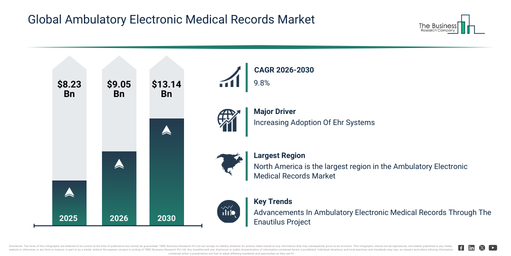
    The market for ambulatory electronic medical records has demonstrated robust expansion over recent years. This market is projected to expand from $8.23 billion in 2025 to $9.05 billion in 2026, registering a compound annual growth rate (CAGR) of 10.0%. Historically, this growth can be ascribed to factors such as the increasing digitization of outpatient records, government directives for electronic health records, the expansion of ambulatory care centers, rising adoption of practice management software, and initial investments in healthcare IT systems.

    The ambulatory electronic medical records market size is projected to experience robust expansion in the upcoming years. It is anticipated to reach $13.14 billion by 2030, with a compound annual growth rate (CAGR) of 9.8%. This growth throughout the forecast period is driven by factors such as increasing demand for value-based care solutions, a rising focus on data-driven outpatient care, the expansion of telehealth integration, growing investments in cybersecurity for healthcare data, and increased use of predictive health analytics. Key trends expected in the forecast period include the increasing adoption of cloud-based emr platforms, the rising integration of AI-driven clinical decision support, a growing emphasis on interoperability standards, the expansion of mobile emr applications, and the enhanced utilization of health analytics tools.

    Access Your Free Sample Report For In-Depth Market Analysis:

    https://www.thebusinessresearchcompany.com/report/ambulatory-electronic-medical-records-global-market-report

    What Factors Are Contributing To The Growth Of The Ambulatory Electronic Medical Records Market?

    The expanding implementation of electronic health record (EHR) systems is anticipated to propel the growth of the ambulatory electronic medical records market in the coming period. EHRs represent the digital counterpart of a patient’s paper chart, containing their medical history, diagnoses, prescribed medications, treatment strategies, immunization schedules, allergies, radiological images, and laboratory test outcomes. These systems facilitate the seamless exchange of patient data among various healthcare providers and settings. This interoperability fosters the increased use of EMRs, especially in ambulatory care, where patients frequently consult multiple providers. For example, in November 2023, the Centers for Disease Control and Prevention (CDC), a national public health agency based in the US, reported that 88.2% of office-based physicians were utilizing EMR systems, an increase compared to the previous year. Therefore, the rising adoption of EHR systems is a key factor driving the expansion of the ambulatory electronic medical records market.

    How Is Segmentation Applied In The Ambulatory Electronic Medical Records Market Segment Analysis?

    The ambulatory electronic medical records market covered in this report is segmented –

    1) By Component: Hardware, Software

    2) By Practice Type: Large Practices, Small-To-Medium-Sized Practices, Solo Practices Freestanding

    3) By Delivery Mode: Cloud-Based, On-Premise

    4) By Application: Practice Management, Patient Management, E-Prescribing, Referral Management, Decision Support

    5) By End Users: Hospital- Owned Ambulatory Centers, Independent Centers

    Subsegments:

    1) By Hardware: Workstations (Desktops and Laptops), Tablets and Mobile Devices, Printers and Scanners, Networking Equipment, Servers and Storage Devices

    2) By Software: EMR Software Solutions, Practice Management Software, Billing and Revenue Cycle Management Software, Interoperability Solutions, Mobile Applications

    What Trends Are Shaping The Future Of The Ambulatory Electronic Medical Records Market?

    Leading firms within the ambulatory electronic medical records market are developing novel technologies, such as the eNautilus Project, to enhance their market profitability. This eNautilus initiative provides enhanced medication management, assistance for oncology-specific areas, and advanced clinical offerings. It functions as a comprehensive cloud-based platform, consolidating patient data into a unified, mobile health record accessible to patients as they move between various healthcare providers across a region. For example, in September 2023, the Georgian Bay Information Network (GBIN), a consortium of six Ontario healthcare entities progressing with Oracle Health’s electronic health records (EHR) adoption, introduced the eNautilus project jointly with Oracle Health. The goal of this project is to expand the capabilities of new Oracle Health EHR features to improve patient support.

    Who Are The Companies Participating In The Ambulatory Electronic Medical Records Market Environment?

    Major companies operating in the ambulatory electronic medical records market are Cerner Corporation, Epic Systems Corporation, Allscripts Healthcare LLC, Medical Information Technology Inc., Computer Programs and Systems Inc., General Electric Company, Athenahealth Inc., MEDHOST Inc., eClinicalWorks LLC, NXGN Management LLC, InterSystems Corporation, CareCloud Inc., Cantata Health Solutions Inc., Advanced Data Systems Corporation, CureMD Healthcare Inc., Practice Fusion Inc., eMDs Inc., Virence Health Inc., CPSI Inc., Veradigm Inc., Greenway Health LLC, DrChrono Inc., Eyefinity Inc., Amazing Charts LLC, Kareo Inc., iPatientCare LLC, Azalea Health Innovations Inc., Harris Healthcare Inc., ICANotes Inc.

    Get The Full Ambulatory Electronic Medical Records Market Report:

    https://www.thebusinessresearchcompany.com/report/ambulatory-electronic-medical-records-global-market-report

    Which Region Leads The Ambulatory Electronic Medical Records Market In Terms Of Market Share?

    North America was the largest region in the ambulatory electronic medical records market in 2025. Asia-Pacific is expected to be the fastest-growing region in the forecast period. The regions covered in the ambulatory electronic medical records market report are Asia-Pacific, South East Asia, Western Europe, Eastern Europe, North America, South America, Middle East, Africa.

    Request A Customized Ambulatory Electronic Medical Records Market Report For Competitive Insights:

    https://www.thebusinessresearchcompany.com/report/ambulatory-electronic-medical-records-global-market-report

    Browse Through More Reports Similar to the Global Ambulatory Electronic Medical Records Market 2026, By The Business Research Company

    Healthcare Electronic Data Interchange Market Report 2026

    https://www.thebusinessresearchcompany.com/report/healthcare-electronic-data-interchange-global-market-report

    Electronic Medical Records Market 2026

    https://www.thebusinessresearchcompany.com/report/electronic-medical-records-market

    Obstetrics And Gynecology Ob Gyn Electronic Health Record Ehr Market Report 2026

    https://www.thebusinessresearchcompany.com/report/obstetrics-and-gynecology-ob-gyn-electronic-health-record-ehr-global-market-report

    Get in touch with us:

    The Business Research Company: https://www.thebusinessresearchcompany.com/

    Americas +1 310-496-7795

    Asia +44 7882 955267 & +91 8897263534

    Europe +44 7882 955267

    Email us at info@tbrc.info

    Follow us on:

    LinkedIn: https://in.linkedin.com/company/the-business-research-company

    YouTube: https://www.youtube.com/channel/UC24_fI0rV8cR5DxlCpgmyFQ

    Global Market Model: https://www.thebusinessresearchcompany.com/global-market-model
  • Rising road accident cases are fueling growth in the ambulance services market

    Rising road accident cases are fueling growth in the ambulance services market

    The Business Research Company’s 2026 market reports feature enhanced tools like market attractiveness analysis, TAM assessment, and company scoring matrices, along with interactive dashboards, deeper supply chain insights, and startup coverage strengthening the depth, usability, and strategic value of insights.

    How Much Growth In Market Value Is Expected For The Ambulance Services Market Between 2026 And 2030?

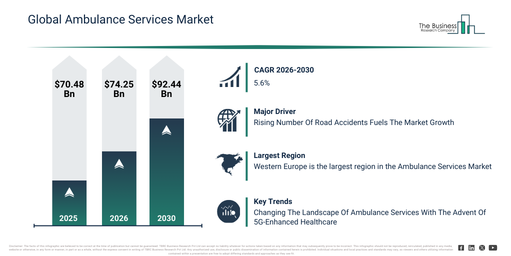
    The ambulance services market has experienced significant expansion in recent years. Its value is projected to increase from $70.48 billion in 2025 to $74.25 billion in 2026, achieving a compound annual growth rate (CAGR) of 5.3%. This historical growth can be linked to factors like the development of emergency medical infrastructure, a greater occurrence of road accidents, the expansion of urban populations, increased government expenditure on healthcare, and the wider implementation of ground ambulance services.

    The ambulance services market size is projected to experience robust expansion over the coming years. This market is set to reach $92.44 billion by 2030, exhibiting a compound annual growth rate (CAGR) of 5.6%. This anticipated growth can be linked to several factors including greater investments in intelligent emergency response systems, an increasing need for air ambulance services, the expansion of private ambulance providers, the rising use of electric emergency vehicles, and the incorporation of real-time patient data transmission. Key trends for this period encompass the wider adoption of GPS-enabled ambulance fleets, the growing integration of telemedicine within ambulances, an increasing reliance on electric and hybrid ambulances, the broadening of advanced life support services, and a heightened emphasis on optimizing response times.

    Access Your Free Sample Report For In-Depth Market Analysis:

    https://www.thebusinessresearchcompany.com/report/ambulance-service-global-market-report

    Which Strong Drivers Are Impacting The Ambulance Services Market Growth?

    The increasing occurrence of road traffic accidents is projected to fuel the expansion of the ambulance services market in the future. Road traffic accidents refer to collisions involving vehicles, pedestrians, cyclists, or other road users, often resulting in injuries or requiring urgent medical attention. This surge in road traffic accidents stems from factors such as higher vehicle density, distracted driving, and rapid urbanization, which consequently escalates the demand for prompt emergency response and pre-hospital medical care. Ambulance services improve patient outcomes by offering swift transportation, on-site stabilization, and advanced life-support interventions. For instance, in September 2025, according to Our World in Data, a UK-based scientific online publication, the United Kingdom now records 1,700 annual road-incident deaths per year. Therefore, the escalating incidence of road traffic accidents is propelling the growth of the ambulance services market.

    What Segment Categories Shape The Ambulance Services Market Segment Landscape?

    The ambulance services market covered in this report is segmented –

    1) By Type: Ground Ambulance Services, Air Ambulance Services, Water Ambulance Services

    2) By Type of Expenditure: Public, Private

    3) By Ownership: Chained, Standalone

    Subsegments:

    1) By Ground Ambulance Services: Emergency Medical Services (EMS), Non-Emergency Medical Transportation (NEMT), Advanced Life Support (ALS) Ambulances, Basic Life Support (BLS) Ambulances

    2) By Air Ambulance Services: Helicopter Ambulance Services, Fixed-Wing Aircraft Ambulance Services, Critical Care Air Transport

    3) By Water Ambulance Services: Boat-Based Emergency Medical Services, Medical Evacuations by Watercraft, River or Coastal Ambulance Services

    Which Trends Are Contributing To Changes In The Ambulance Services Market?

    Leading companies in the ambulance services market are increasingly concentrating on introducing innovative solutions, such as 5G ambulance services, to maximize market profit. A 5G ambulance service is a healthcare initiative that employs fifth-generation (5G) wireless technology to enhance the diagnosis, treatment, and care provided to patients during transportation. For instance, in August 2023, Zenzo, an India-based healthcare provider, launched its first 5G ambulance service in Mumbai, India. This 5G ambulance, outfitted with the latest medical equipment and telemetry devices, marks a new era of real-time data collection and analysis. The service represents a significant breakthrough in pre-hospital care and is expected to establish a new standard for ambulance services in India and worldwide.

    Who Are The Companies Operating Across The Ambulance Services Market Value Chain?

    Major companies operating in the ambulance services market are Providence Service Corporation, Alia MedFlight, Babcock International Group plc, Falck AS, Air Methods Corporation, American Medical Response Inc., Global Medical Response, Acadian Ambulance Service Inc., Boston MedFlight, Cataldo Ambulance Service, Care Ambulance Service, National Health Service England, Life EMS Ambulance, Medivic Aviation, Air Ambulance Worldwide, AirLink Critical Care Transport, AirMed International, AirMedCare Network, AirXpress, Allina Health Emergency Medical Services, Ambulance Service Company, Ambulnz, Apollo MedFlight, Arizona Ambulance Transport, ATS Medical Services, Bell Ambulance, Community Ambulance, Critical Care Medflight, Orange County Fire Rescue

    Get The Full Ambulance Services Market Report:

    https://www.thebusinessresearchcompany.com/report/ambulance-service-global-market-report

    Which Region Leads The Ambulance Services Market In Overall Market Size?

    Western Europe was the largest region in the ambulance services market in 2025. North America was the second largest region in the ambulance services market. Africa was the smallest region in the ambulance services market. The regions covered in the ambulance services market report are Asia-Pacific, South East Asia, Western Europe, Eastern Europe, North America, South America, Middle East, Africa.

    Request A Customized Ambulance Services Market Report For Competitive Insights:

    https://www.thebusinessresearchcompany.com/report/ambulance-service-global-market-report

    Browse Through More Reports Similar to the Global Ambulance Services Market 2026, By The Business Research Company

    Air Ambulance Services Market Report 2026

    https://www.thebusinessresearchcompany.com/report/air-ambulance-services-global-market-report

    Air Ambulance Services Market Report 2026

    https://www.thebusinessresearchcompany.com/report/air-ambulance-services-global-market-report

    Air Ambulance Services Market Report 2026

    https://www.thebusinessresearchcompany.com/report/air-ambulance-services-global-market-report

    Get in touch with us:

    The Business Research Company: https://www.thebusinessresearchcompany.com/

    Americas +1 310-496-7795

    Asia +44 7882 955267 & +91 8897263534

    Europe +44 7882 955267

    Email us at info@tbrc.info

    Follow us on:

    LinkedIn: https://in.linkedin.com/company/the-business-research-company

    YouTube: https://www.youtube.com/channel/UC24_fI0rV8cR5DxlCpgmyFQ

    Global Market Model: https://www.thebusinessresearchcompany.com/global-market-model
  • Increasing ophthalmic disease prevalence is driving evolution in the amblyopia market

    Increasing ophthalmic disease prevalence is driving evolution in the amblyopia market

    The Business Research Company’s 2026 market reports feature enhanced tools like market attractiveness analysis, TAM assessment, and company scoring matrices, along with interactive dashboards, deeper supply chain insights, and startup coverage strengthening the depth, usability, and strategic value of insights.

    What Is The Estimated Market Size Of The Amblyopia Market In 2026, And How Will Its Value Evolve By 2030?

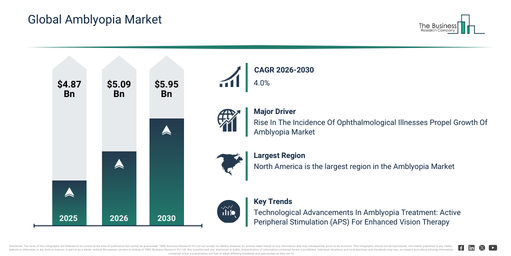
    The amblyopia market has demonstrated consistent growth in its size over recent years. It is projected to expand from $4.87 billion in 2025 to $5.09 billion in 2026, at a compound annual growth rate (CAGR) of 4.6%. This historical expansion can be attributed to various factors, including heightened awareness of pediatric vision disorders, broader availability of corrective lenses, increased utilization of eye patch therapy, an expansion of ophthalmology services, and the early adoption of atropine-based treatments.

    The amblyopia market is projected to experience consistent expansion over the next few years. Its value is anticipated to reach $5.95 billion by 2030, demonstrating a compound annual growth rate (CAGR) of 4.0%. This growth during the forecast period is attributed to factors such as the increasing demand for home-based amblyopia therapies, greater investments in digital therapeutics, a heightened focus on preventive pediatric eye care, the expansion of tele-ophthalmology services, and advancements in neuro-visual treatment methods. Prominent trends expected in the forecast period include the increasing adoption of digital vision therapy solutions, the rising use of AI-based diagnostic tools, a growing emphasis on early childhood vision screening, the expansion of non-invasive treatment options, and the increasing integration of gamified treatment approaches.

    Access Your Free Sample Report For In-Depth Market Analysis:

    https://www.thebusinessresearchcompany.com/report/amblyopia-global-market-report

    What Key Factors Are Shaping The Amblyopia Market Landscape?

    The increasing occurrence of ophthalmological illnesses is projected to drive the growth of the amblyopia market going forward. Ophthalmological illnesses are disorders affecting the eyes, which can range from common issues such as cataracts and glaucoma to rare conditions such as retinitis pigmentosa and ocular tumors. The rise in these eye conditions is attributed to increased screen time, aging populations, and environmental factors like pollution. Amblyopia can contribute to ophthalmological illnesses by causing the brain to disregard input from the weaker eye, potentially leading to permanent vision impairment and issues with depth perception if untreated. For instance, in January 2024, according to the Centers for Disease Control and Prevention, a US-based science and data-driven service organization that protects the public’s health, over 3.4 million Americans aged 40 years and older were blind or visually impaired, which is expected to double by 2030. Therefore, the escalating incidence of ophthalmological illnesses drives the growth of the amblyopia market.

    Which Segment Types Are Examined In The Amblyopia Market Segment Study?

    The amblyopia market covered in this report is segmented –

    1) By Disease Type: Strabismus Amblyopia, Refractive Amblyopia, Deprivation Amblyopia

    2) By Diagnosis: Visual Acuity Tests, Photo Screening, Bruckner Test, Other Diagnosis

    3) By Treatment: Eye Patches, Atropine Drops, Glasses, Video Games, Other Treatments

    Subsegments:

    1) By Strabismus Amblyopia: Congenital Strabismus Amblyopia, Acquired Strabismus Amblyopia, Non-Paralytic Strabismus Amblyopia, Paralytic Strabismus Amblyopia

    2) By Refractive Amblyopia: Myopic Refractive Amblyopia, Hypermetropic Refractive Amblyopia, Astigmatic Refractive Amblyopia, Treatment Through Corrective Lenses (Glasses, Contact Lenses)

    3) By Deprivation Amblyopia: Amblyopia Due To Cataracts, Amblyopia Caused By Ptosis (Drooping Eyelid), Amblyopia From Corneal Opacities, Treatment Through Surgical Interventions Or Patching

    What Market Trends Are Affecting The Amblyopia Market?

    Leading companies in the amblyopia market are prioritizing technological advancements, such as active peripheral stimulation (APS), to enhance peripheral vision therapy. APS is a therapeutic technique involving the stimulation of peripheral nerves or tissues to activate sensory pathways, offering potential benefits for pain relief, rehabilitation, and neurological conditions. For instance, in October 2024, AmblyoPlay, a US-based startup specializing in digital vision therapy, introduced APS to improve treatment for peripheral vision deficiencies. This innovative technique addresses conditions like amblyopia (lazy eye), strabismus, and convergence insufficiency, which affect spatial awareness and overall visual function. By actively stimulating peripheral vision, APS tackles a public health issue impacting up to 5% of the global population. AmblyoPlay has integrated APS into a gamified platform, making vision therapy more engaging and enjoyable, particularly for children, and supporting improved adherence to treatment.

    Which Players Are Part Of The Competitive Landscape Of The Amblyopia Market?

    Major companies operating in the amblyopia market are Vivid Vision Inc, RevitalVision, NovaSight, Eyenovia Inc, OcuRx Vision Technologies LLC, AmblyoPlay, Adaptica Srl, Luminopia Inc, RightEye LLC, NeuroVision Imaging, Visionary Tool Inc, EyeJustRead Inc, Amblyotech, Vision Therapy Solutions LLC, Orthoptek Inc, OpticsTrainer, Vision Science Labs, Pediatric Vision Technologies, NeuroEye Therapy, Visual Cortex Solutions

    Get The Full Amblyopia Market Report:

    https://www.thebusinessresearchcompany.com/report/amblyopia-global-market-report

    Which Region Is The Top Contributor To The Amblyopia Market By Share?

    North America was the largest region in the amblyopia market in 2025. Asia-Pacific is expected to be the fastest-growing region in the forecast period. The regions covered in the amblyopia market report are Asia-Pacific, South East Asia, Western Europe, Eastern Europe, North America, South America, Middle East, Africa.

    Request A Customized Amblyopia Market Report For Competitive Insights:

    https://www.thebusinessresearchcompany.com/report/amblyopia-global-market-report

    Browse Through More Reports Similar to the Global Amblyopia Market 2026, By The Business Research Company

    Eyewear Market Report 2026

    https://www.thebusinessresearchcompany.com/report/eyewear-global-market-report

    Myopia And Presbyopia Treatment Market Report 2026

    https://www.thebusinessresearchcompany.com/report/myopia-and-presbyopia-treatment-global-market-report

    Corneal Topographers Market Report 2026

    https://www.thebusinessresearchcompany.com/report/corneal-topographers-global-market-report

    Get in touch with us:

    The Business Research Company: https://www.thebusinessresearchcompany.com/

    Americas +1 310-496-7795

    Asia +44 7882 955267 & +91 8897263534

    Europe +44 7882 955267

    Email us at info@tbrc.info

    Follow us on:

    LinkedIn: https://in.linkedin.com/company/the-business-research-company

    YouTube: https://www.youtube.com/channel/UC24_fI0rV8cR5DxlCpgmyFQ

    Global Market Model: https://www.thebusinessresearchcompany.com/global-market-model

  • Growing telehealth adoption is driving demand for accessible care, boosting the ambient digital pharmacy kiosk market

    Growing telehealth adoption is driving demand for accessible care, boosting the ambient digital pharmacy kiosk market

    The Business Research Company’s 2026 market reports feature enhanced tools like market attractiveness analysis, TAM assessment, and company scoring matrices, along with interactive dashboards, deeper supply chain insights, and startup coverage strengthening the depth, usability, and strategic value of insights.

    How Does The Market Size Of The Ambient Digital Pharmacy Kiosk Market Compare Between 2026 And 2030?

    The ambient digital pharmacy kiosk market size has experienced significant expansion in recent years. It is projected to expand from $2.04 billion in 2025 to $2.42 billion in 2026, achieving a compound annual growth rate (CAGR) of 18.6%. The historical growth can be linked to the increased adoption of retail pharmacy automation, the escalating demand for contactless healthcare services, enhanced healthcare accessibility needs in urban areas, the implementation of digital prescription systems, and the rise of self-service healthcare models.

    The ambient digital pharmacy kiosk market size is projected to experience substantial expansion over the coming years. This market is forecast to reach $4.74 billion by 2030, driven by a compound annual growth rate (CAGR) of 18.3%. Key factors contributing to this anticipated growth include greater investments in smart pharmacy infrastructure, an escalating need for decentralized access to medication, broader telepharmacy regulations, increased integration with hospital information systems, and a heightened emphasis on data security and compliance. Significant trends expected during this period involve the wider deployment of self-service pharmacy kiosks, a surge in the adoption of contactless medication dispensing, deeper integration of telepharmacy functionalities, the spread of secure digital payment methods, and an intensified focus on automated inventory management.

    Access Your Free Sample Report For In-Depth Market Analysis:

    https://www.thebusinessresearchcompany.com/report/ambient-digital-pharmacy-kiosk-global-market-report

    Which Factors Are Influencing The Growth Of The Ambient Digital Pharmacy Kiosk Market?

    The increasing integration of telehealth services is anticipated to fuel the expansion of the ambient digital pharmacy kiosk market in the future. These solutions encompass technologically advanced services and platforms facilitating healthcare provision from a distance, covering medical advice, patient observation, and overall management through digital communication methods. The growing uptake of telehealth is attributed to a heightened need for easily accessible healthcare, as individuals desire convenient, prompt, and distant medical assistance, avoiding physical clinic visits. An ambient digital pharmacy kiosk complements telehealth offerings by providing handy, immediate access to medicines, diagnostic tests, and health services, thus connecting virtual medical advice with tangible care provision. To illustrate, FAIR Health Inc., a US-based non-profit organization, reported in April 2023 that national telehealth usage grew by 7.3% in 2023, ascending from 5.5% of medical claim lines in December 2022 to 5.9% in January 2023. Consequently, the expanding adoption of telehealth solutions is fostering the development of the ambient digital pharmacy kiosk market.

    How Are Different Segments Classified In The Ambient Digital Pharmacy Kiosk Market Segment Analysis?

    The ambient digital pharmacy kiosk market covered in this report is segmented –

    1) By Component: Hardware, Software, Services

    2) By Deployment Mode: Standalone, Integrated

    3) By Application: Prescription Dispensing, Over-the-Counter Medication, Telepharmacy, Health Monitoring, Other Applications

    4) By End User: Hospitals, Retail Pharmacies, Clinics, Long-Term Care Facilities, Other End Users

    Subsegments:

    1) By Hardware: Touchscreen Display, Payment Module, Barcode Scanner, Automated Dispensing Unit, Refrigeration Unit

    2) By Software: Prescription Management Software, Inventory Management Software, User Interface Software, Telehealth Integration Software, Data Analytics Software

    3) By Services: Installation Services, Maintenance And Support Services, Software Update Services, Training Services, Remote Assistance Services

    Who Are The Companies Driving Activity In The Ambient Digital Pharmacy Kiosk Market?

    Major companies operating in the ambient digital pharmacy kiosk market are Rite Aid Corporation, Zebra Technologies Corporation, Omnicell Inc., Elo Touch Solutions Inc., ScriptPro LLC, Parata Systems LLC, Kiosk Information Systems Inc., XIPHIAS Software Technologies Private Limited., Medicap Pharmacy Inc., Amazon Pharmacy Inc., RedyRef Interactive Kiosks Inc., PharmaTrust Inc., ImageHOLDERS Inc., Pharmabox Inc., InstyMeds Corporation, Smart Rx Systems Inc., MedifriendRx Inc., Pickpoint Corporation, VendRx Inc., PARTTEAM And OEMKIOSKS,S.A.

    Get The Full Ambient Digital Pharmacy Kiosk Market Report:

    https://www.thebusinessresearchcompany.com/report/ambient-digital-pharmacy-kiosk-global-market-report

    Which Region Represents The Largest Share Of The Ambient Digital Pharmacy Kiosk Market?

    North America was the largest region in the ambient digital pharmacy kiosk market in 2025. Asia-Pacific is expected to be the fastest-growing region in the forecast period. The regions covered in the ambient digital pharmacy kiosk market report are Asia-Pacific, South East Asia, Western Europe, Eastern Europe, North America, South America, Middle East, Africa.

    Request A Customized Ambient Digital Pharmacy Kiosk Market Report For Competitive Insights:

    https://www.thebusinessresearchcompany.com/report/ambient-digital-pharmacy-kiosk-global-market-report

    Browse Through More Reports Similar to the Global Ambient Digital Pharmacy Kiosk Market 2026, By The Business Research Company

    Patient Self Service Kiosk Market Report 2026

    https://www.thebusinessresearchcompany.com/report/patient-self-service-kiosk-global-market-report

    Interactive Kiosk Market Report 2026

    https://www.thebusinessresearchcompany.com/report/interactive-kiosk-global-market-report

    Medical Kiosk Market Report 2026

    https://www.thebusinessresearchcompany.com/report/medical-kiosk-global-market-report

    Get in touch with us:

    The Business Research Company: https://www.thebusinessresearchcompany.com/

    Americas +1 310-496-7795

    Asia +44 7882 955267 & +91 8897263534

    Europe +44 7882 955267

    Email us at info@tbrc.info

    Follow us on:

    LinkedIn: https://in.linkedin.com/company/the-business-research-company

    YouTube: https://www.youtube.com/channel/UC24_fI0rV8cR5DxlCpgmyFQ

    Global Market Model: https://www.thebusinessresearchcompany.com/global-market-model
  • Technological advancements in Alzheimer’s diagnostics with improved accuracy are shaping the Alzheimer’s diagnostics market

    Technological advancements in Alzheimer’s diagnostics with improved accuracy are shaping the Alzheimer’s diagnostics market

    The Business Research Company’s 2026 market reports feature enhanced tools like market attractiveness analysis, TAM assessment, and company scoring matrices, along with interactive dashboards, deeper supply chain insights, and startup coverage strengthening the depth, usability, and strategic value of insights.

    What Is The Forecasted Market Size Trajectory Of The Alzheimer’s Disease Diagnostic Market From 2026 To 2030?

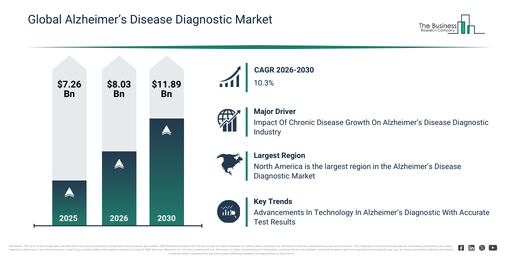
    The alzheimer’s disease diagnostic market has experienced substantial expansion in recent years. It is anticipated to grow from $7.26 billion in 2025 to $8.03 billion in 2026, achieving a compound annual growth rate (CAGR) of 10.6%. The historical increase in this market can be ascribed to the rising occurrence of alzheimer’s disease, heightened understanding of neurodegenerative conditions, the use of MRI and PET imaging, the proliferation of diagnostic centers and hospitals, and financial contributions to cognitive assessment research.

    The alzheimer’s disease diagnostic market size is poised for significant expansion over the next few years. It is expected to reach $11.89 billion by 2030, exhibiting a compound annual growth rate (CAGR) of 10.3%. This anticipated growth is fueled by the development of innovative biomarkers and imaging tracers, the incorporation of AI for earlier detection, increasing government and private funding directed towards Alzheimer’s research, the spread of personalized medicine initiatives, and a rise in multi-center clinical trials. Prominent trends expected during this forecast period include a greater embrace of biomarker-based diagnostics, an increasing application of neuroimaging techniques for early identification, an uptick in cognitive assessment testing, the broadened availability of genetic testing for Alzheimer’s risk evaluation, and the integration of multi-modal diagnostic strategies.

    Access Your Free Sample Report For In-Depth Market Analysis:

    https://www.thebusinessresearchcompany.com/report/alzheimers-disease-diagnostic-global-market-report

    What Leading Drivers Are Supporting The Alzheimer’s Disease Diagnostic Market Expansion?

    The anticipated expansion of the Alzheimer’s disease diagnostic market is attributed to the rising incidence of chronic diseases. Conditions like cardiovascular disease, diabetes, and hypertension are deeply linked to a heightened risk of Alzheimer’s and other forms of dementia, thereby boosting the need for timely and precise diagnostic tools. A primary contributor to this surge in chronic diseases is the global increase in sedentary habits, with extensive research consistently demonstrating considerably higher rates of conditions like diabetes and cardiovascular disease among those with inactive lifestyles. Alzheimer’s diagnostics aid healthcare systems by facilitating early detection, allowing for prompt interventions, and assisting in patient management to retard the advancement of the disease. For example, data from November 2023, provided by Heritage Health Services, a US-based nonprofit healthcare research organization, indicated that 6.7 million Americans aged 65 or above were affected by Alzheimer’s dementia. The prevalence escalated with age: 5.0% for 65–74 years, 13.1% for 75–84 years, and 33.3% for 85+ years. Projections show this figure reaching almost 13 million by 2050. Consequently, the escalating prevalence of chronic disease is fueling the expansion of the Alzheimer’s disease diagnostic market.

    How Is The Alzheimer’s Disease Diagnostic Market Categorized Across Its Segment Groups?

    The alzheimer’s disease diagnostic market covered in this report is segmented –

    1) By Type: Triage, Diagnosis, Screening

    2) By Diagnostic Technique: Biomarkers, Imaging Techniques, Genetic Testing, Cognitive Assessment Tests

    3) By End User: Clinics, Hospitals, Diagnostic Centers, Pharmaceutical Companies, Academic Research Center

    Subsegments:

    1) By Triage: Cognitive Testing, Imaging Techniques

    2) By Diagnosis: Biomarker Testing, Neuroimaging

    3) By Screening: Neuropsychological Testing, Genetic Testing

    What Emerging Trends Are Seen In The Alzheimer’s Disease Diagnostic Market?

    Leading companies in the Alzheimer’s disease diagnostic market are concentrating on enhancing blood-based biomarker tests, a development expected to streamline the diagnostic process for Alzheimer’s disease. This approach aims to lessen dependence on more invasive procedures and improve patients’ access to timely treatment. For example, in October 2023, Quanterix, a US-based biotechnology research company, introduced the LucentAD p-Tau 217 test, which serves as a biomarker for Alzheimer’s pathology, demonstrating clinical sensitivity and specificity in blood. Traditional methods for cerebrospinal fluid (CSF) biomarkers, such as positron emission tomography (PET) or lumbar puncture, are often expensive, invasive, and not broadly accessible. Additionally, the LucentAD p-Tau 217 test integrates Quanterix’s ultra-sensitive SimoaÒ technology with J&J Innovative Medicine’s thoroughly tested p-Tau 217 antibodies, ensuring remarkable accuracy and a simpler procedure.

    Which Firms Are Influencing Competition In The Alzheimer’s Disease Diagnostic Market?

    Major companies operating in the alzheimer’s disease diagnostic market are Hoffmann-La Roche, Eli Lilly and Company, Quest Diagnostics Incorporated, Laboratory Corporation of America Holdings, Lantheus, Quanterix, C2N Diagnostics, Sysmex, Royal Philips, Bruker Corporation, Revvity, Alamar Biosciences, ADx Neurosciences, Randox Laboratories, DiaSorin, Shenzhen Mindray Bio-Medical Electronics, Nipro Corporation, Canon Inc, Hitachi Ltd, Eisai Co Ltd

    Get The Full Alzheimer’s Disease Diagnostic Market Report:

    https://www.thebusinessresearchcompany.com/report/alzheimers-disease-diagnostic-global-market-report

    Which Geographic Region Dominates The Alzheimer’s Disease Diagnostic Market?

    North America was the largest region in the alzheimer’s disease diagnostic market in 2025. Asia-Pacific is expected to be the fastest-growing region in the forecast period. The regions covered in the alzheimer’s disease diagnostic market report are Asia-Pacific, South East Asia, Western Europe, Eastern Europe, North America, South America, Middle East, Africa.

    Request A Customized Alzheimer’s Disease Diagnostic Market Report For Competitive Insights:

    https://www.thebusinessresearchcompany.com/report/alzheimers-disease-diagnostic-global-market-report

    Browse Through More Reports Similar to the Global Alzheimer’s Disease Diagnostic Market 2026, By The Business Research Company

    Autism Spectrum Disorder Diagnostics Market Report 2026

    https://www.thebusinessresearchcompany.com/report/autism-spectrum-disorder-diagnostics-global-market-report

    Alzheimers Drugs Market Report 2026

    https://www.thebusinessresearchcompany.com/report/alzheimers-drugs-global-market-report

    Neurological Biomarkers Market Report 2026

    https://www.thebusinessresearchcompany.com/report/neurological-biomarkers-global-market-report

    Get in touch with us:

    The Business Research Company: https://www.thebusinessresearchcompany.com/

    Americas +1 310-496-7795

    Asia +44 7882 955267 & +91 8897263534

    Europe +44 7882 955267

    Email us at info@tbrc.info

    Follow us on:

    LinkedIn: https://in.linkedin.com/company/the-business-research-company

    YouTube: https://www.youtube.com/channel/UC24_fI0rV8cR5DxlCpgmyFQ

    Global Market Model: https://www.thebusinessresearchcompany.com/global-market-model

  • Alpha-1 Antitrypsin Deficiency Therapy Market Growth Driven by Rising Clinical Trials

    Alpha-1 Antitrypsin Deficiency Therapy Market Growth Driven by Rising Clinical Trials

    The Business Research Company’s 2026 market reports feature enhanced tools like market attractiveness analysis, TAM assessment, and company scoring matrices, along with interactive dashboards, deeper supply chain insights, and startup coverage strengthening the depth, usability, and strategic value of insights.

    How Much Will The Market Value Of The Alpha-1 Antitrypsin Deficiency Augmentation Therapy Market Grow Between 2026 And 2030?

    The market size for alpha-1 antitrypsin deficiency augmentation therapy has seen substantial growth over recent years. It is anticipated to expand from $1.8 billion in 2025 to $1.93 billion in 2026, achieving a compound annual growth rate (CAGR) of 7.3%. This historical growth can be attributed to several factors, including the limited treatment options available for alpers disease, increasing awareness regarding rare genetic disorders, a reliance on hospital-based care, the expanding pediatric patient population, and the development of supportive care programs.

    The market for alpha-1 antitrypsin deficiency augmentation therapy is projected to experience robust expansion over the coming years. This market is anticipated to reach a valuation of $2.68 billion by 2030, exhibiting a compound annual growth rate (CAGR) of 8.5%. This projected growth is driven by factors such as the advancement of gene-targeted therapies, increased investment in rare disease research, enhanced partnerships between hospitals and biotechnology companies, the integration of advanced drug delivery technologies, and the establishment of more specialty clinics catering to pediatric neurology. Key trends expected during this period involve an escalating demand for symptomatic and supportive care solutions, a heightened emphasis on research into rare genetic disorders, an increase in pediatric neurology therapeutics, the proliferation of specialized clinics and hospital offerings, and the incorporation of new drug formulations and administration techniques.

    Access Your Free Sample Report For In-Depth Market Analysis:

    https://www.thebusinessresearchcompany.com/report/alpha-1-antitrypsin-deficiency-augmentation-therapy-global-market-report

    Which Key Factors Are Driving The Alpha-1 Antitrypsin Deficiency Augmentation Therapy Market Growth?

    An increasing number of clinical trials is anticipated to drive the growth of the alpha-1 antitrypsin deficiency augmentation therapy market moving forward. These trials are biomedical research studies conducted with human participants to evaluate the safety, effectiveness, and optimal use of various therapeutic interventions, including new recombinant therapies, gene therapies, and long-acting augmentation products. The surge in clinical trials is primarily attributable to expanding research investment, increased interest in next-generation treatment modalities, and the critical need to address the substantial unmet medical burden associated with alpha-1 antitrypsin deficiency. Alpha-1 antitrypsin deficiency augmentation therapy works by restoring functional AAT protein levels in the blood and lungs, which helps slow disease progression, reduce lung tissue damage, and improve long-term respiratory outcomes for affected individuals. For instance, in December 2024, according to ClinicalTrials.gov, a US-based government clinical trial registry, clinical trial registrations increased from 477,203 at the start of 2024 to 558,474 by late 2025, indicating tens of thousands of new studies added annually. Therefore, the escalating clinical trial activity is fueling the expansion of the alpha-1 antitrypsin deficiency augmentation therapy market.

    How Are Segments Identified Within The Alpha-1 Antitrypsin Deficiency Augmentation Therapy Market Segment Framework?

    The alpha-1 antitrypsin deficiency augmentation therapy market covered in this report is segmented –

    1) By Treatment Type: Symptomatic Drug Therapy, Supportive Care Therapy, Palliative Care

    2) By Symptom Management: Seizure Management, Liver Dysfunction Management, Neurodevelopmental Support, Metabolic and Nutritional Support

    3) By Drug Class: Antiepileptic Drugs (excluding valproate), Hepatoprotective and Liver Support Medications, Metabolic Cofactor and Vitamin Therapies, Supportive Adjunct Medications

    4) By Route of Administration: Oral, Injectable

    5) By End User: Hospitals, Specialty Neurology and Metabolic Clinics, Palliative Care Centers

    Subsegments:

    1) By Symptomatic Drug Therapy: Antiepileptic Drug Therapy (non-valproate based), Acute Seizure Control Medications, Management of Movement Disorders and Spasticity, Supportive Medications for Gastrointestinal Symptoms, Infection Management and Prophylactic Medications

    2) By Supportive Care Therapy: Liver Function Monitoring and Support, Nutritional Support and Metabolic Supplementation, Respiratory Support and Assisted Ventilation, Physical, Occupational, and Speech Therapy, Management of Metabolic Decompensation

    3) By Palliative Care: Pain and Symptom Relief Management, End-of-Life Supportive Care, Psychological and Family Counseling

    Which Trends Are Guiding The Direction Of The Alpha-1 Antitrypsin Deficiency Augmentation Therapy Market?

    Leading companies in the alpha-1 antitrypsin deficiency augmentation therapy market are concentrating on developing innovative products like augmentation therapy vials to simplify administration, optimize infusion procedures, and improve patient experiences with treatment. An augmentation therapy vial is an alpha-1 antitrypsin product derived from plasma, packaged in standard quantities to support accurate dosing based on weight and consistent AAT protein replacement. For example, in February 2024, Grifols, a Spain-based producer of plasma-derived medicines, launched PROLASTIN 4-gram and 5-gram vials. These larger vial formats enable clinicians to fulfill weekly dosing requirements more efficiently while decreasing packaging waste and storage needs. The expanded options support a more streamlined preparation of treatments and strengthen the well-established PROLASTIN portfolio for patients with severe alpha-1 antitrypsin deficiency.

    Who Are The Companies Competing Within The Alpha-1 Antitrypsin Deficiency Augmentation Therapy Market?

    Major companies operating in the alpha-1 antitrypsin deficiency augmentation therapy market are Pfizer Inc., Sanofi S.A., Takeda Pharmaceutical Company Limited, Biogen Inc., UCB S.A., Eisai Co. Ltd., Jazz Pharmaceuticals plc, GW Pharmaceuticals plc, BioMarin Pharmaceutical Inc., Ultragenyx Pharmaceutical Inc., PTC Therapeutics Inc., Alexion Pharmaceuticals Inc., Ionis Pharmaceuticals Inc., Vertex Pharmaceuticals Incorporated, Roche Holding AG, Novartis AG, Merck & Co. Inc., AbbVie Inc., Bristol Myers Squibb Company, Lundbeck A/S

    Get The Full Alpha-1 Antitrypsin Deficiency Augmentation Therapy Market Report:

    https://www.thebusinessresearchcompany.com/report/alpha-1-antitrypsin-deficiency-augmentation-therapy-global-market-report

    Which Region Is The Leading Market For The Alpha-1 Antitrypsin Deficiency Augmentation Therapy Market?

    North America was the largest region in the alpha-1 antitrypsin deficiency augmentation therapy market in 2025. The regions covered in the alpha-1 antitrypsin deficiency augmentation therapy market report are Asia-Pacific, South East Asia, Western Europe, Eastern Europe, North America, South America, Middle East, Africa.

    Request A Customized Alpha-1 Antitrypsin Deficiency Augmentation Therapy Market Report For Competitive Insights:

    https://www.thebusinessresearchcompany.com/report/alpha-1-antitrypsin-deficiency-augmentation-therapy-global-market-report

    Browse Through More Reports Similar to the Global Alpha-1 Antitrypsin Deficiency Augmentation Therapy Market 2026, By The Business Research Company

    5 Alpha Reductase Deficiency Market Report 2026

    https://www.thebusinessresearchcompany.com/report/5-alpha-reductase-deficiency-global-market-report

    Antiphospholipid Syndrome Treatment Market Report 2026

    https://www.thebusinessresearchcompany.com/report/antiphospholipid-syndrome-treatment-global-market-report

    Combined Pituitary Hormone Deficiencies Market Report 2026

    https://www.thebusinessresearchcompany.com/report/combined-pituitary-hormone-deficiencies-global-market-report

    Get in touch with us:

    The Business Research Company: https://www.thebusinessresearchcompany.com/

    Americas +1 310-496-7795

    Asia +44 7882 955267 & +91 8897263534

    Europe +44 7882 955267

    Email us at info@tbrc.info

    Follow us on:

    LinkedIn: https://in.linkedin.com/company/the-business-research-company

    YouTube: https://www.youtube.com/channel/UC24_fI0rV8cR5DxlCpgmyFQ

    Global Market Model: https://www.thebusinessresearchcompany.com/global-market-model

  • Alpers Disease Treatment Market Growth Driven by Expanded Diagnostic Testing

    Alpers Disease Treatment Market Growth Driven by Expanded Diagnostic Testing

    The Business Research Company’s 2026 market reports feature enhanced tools like market attractiveness analysis, TAM assessment, and company scoring matrices, along with interactive dashboards, deeper supply chain insights, and startup coverage strengthening the depth, usability, and strategic value of insights.

    What Changes In Market Value Are Expected For The Alpers Disease Treatment Market Over The 2026–2030 Period?

    The alpers disease treatment market size has experienced considerable growth recently. It is anticipated to grow from $1.43 billion in 2025 to $1.52 billion in 2026, with a compound annual growth rate (CAGR) of 5.7%. Several factors contributed to this historic growth, including limited awareness of alpers disease, a lack of specialized diagnostic tools, restricted access to rare disease therapies, reliance on traditional anticonvulsant medications, and a small patient population affecting treatment adoption.

    The alpers disease treatment market is projected to experience consistent expansion over the upcoming years. This market is anticipated to reach $1.84 billion by 2030, exhibiting a compound annual growth rate (CAGR) of 5.0%. Factors driving this growth during the forecast period include progress in genetic testing methods, the creation of specific supportive treatments, increased funding for rare disease research, the broadening of specialized medical centers, and a rise in partnerships between hospitals and therapy services. Key trends expected during this period involve the increasing use of anticonvulsant medications for managing seizures, a greater emphasis on comprehensive, multidisciplinary therapeutic strategies, the expanded application of molecular genetic testing for diagnostic purposes, the broadening of dedicated clinics and hospital services for rare conditions, and improved development of supportive and nutritional interventions.

    Access Your Free Sample Report For In-Depth Market Analysis:

    https://www.thebusinessresearchcompany.com/report/alpers-disease-treatment-global-market-report

    What Primary Drivers Are Shaping The Alpers Disease Treatment Market?

    The escalating diagnostic testing is expected to drive the Alpers disease treatment market going forward. Diagnostic testing involves the systematic evaluation of biological samples, physiological functions, or imaging results to identify, monitor, or rule out medical conditions and guide appropriate clinical decision-making. A primary factor fueling the rise in diagnostic testing is the increasing emphasis on early and accurate disease detection, as healthcare providers prioritize timely diagnosis to improve outcomes, prevent complications, and support more effective long-term management. Alpers disease treatment benefits from this growth in diagnostic testing by enabling earlier identification of mitochondrial dysfunction, which supports timely intervention and more informed clinical care for affected patients. For instance, in August 2025, according to the NHS England, a UK-based executive non-departmental public body, the number of patients waiting for key diagnostic tests rose to 1,657,600, up by 95,500 from August 2024, while completed diagnostic procedures reached 2,370,800, reflecting an increase of 18,600 over the same timeframe. Therefore, the rising diagnostic testing is driving the Alpers disease treatment market. The increasing number of personalized medicines is anticipated to fuel the growth of the Alpers disease treatment market going forward. Personalized medicine refers to a medical approach that tailors healthcare decisions, practices, interventions, and treatments to the individual characteristics of each patient. This increase in personalized medicines is attributed to a better understanding of genetics, patient-specific data, and regulatory support. Personalized medicines aid in Alpers disease treatment by customizing therapies based on an individual’s genetic makeup, targeting the specific genetic mutations and biochemical pathways involved in the disease, which can improve treatment efficacy and reduce adverse effects. For instance, in February 2024, according to the Personalized Medicine Coalition, a US-based non-profit organization, the FDA approved 16 novel personalized therapies for patients with rare diseases in 2023, compared to six in 2022. Therefore, the increasing number of personalized medicines is driving the growth of the Alpers disease treatment market.

    What Are The Key Segment Divisions In The Alpers Disease Treatment Market Segment Structure?

    The alpers disease treatment market covered in this report is segmented –

    1) By Treatment: Anticonvulsant Drugs, Speech Therapy, Physical Therapy, Occupational Therapy

    2) By Diagnosis: Genetic and Molecular Testing, Neurodiagnostic Tests, Biochemical and Metabolic Tests

    3) By Dosage: Tablet, Injection, Other Dosages

    4) By Symptom: Seizures, Spasticity, Liver Dysfunction, Cerebral Degeneration

    Subsegments:

    1) By Anticonvulsant Drugs: Levetiracetam, Lamotrigine, Topiramate, Clonazepam

    2) By Speech Therapy: Articulation Therapy, Language Development Therapy, Swallowing Therapy, Cognitive Communication Therapy

    3) By Physical Therapy: Motor Skill Therapy, Balance And Coordination Training, Stretching And Strengthening Exercises, Gait Training

    4) By Occupational Therapy: Fine Motor Skill Training, Sensory Integration Therapy, Adaptive Techniques For Daily Living, Cognitive Rehabilitation

    What Trends Are Affecting The Growth Of The Alpers Disease Treatment Market?

    Leading companies in the alpers disease treatment market are creating advanced solutions, such as Injectable anti-seizure drugs (ASDs), aimed at achieving a faster and more dependable start to action than conventional oral medications. Injectable anti-seizure drugs (ASDs) offer benefits for individuals afflicted with Alpers disease by providing quick and reliable control over seizures, bypassing potential absorption problems in the digestive system, guaranteeing consistent and potent dosages, and presenting a more accurate therapeutic choice for addressing this intricate neurological condition. For example, in April 2024, Eisai Co. Ltd., a pharmaceutical firm based in Japan, released FYCOMPA, an injection formulation designed to treat epilepsy. This medication acts as a selective, noncompetitive AMPA receptor antagonist, hypothesized to lessen neuronal over-excitation connected to seizures by targeting glutamate activity at AMPA receptors situated on postsynaptic membranes. Nevertheless, its application in patients with Alpers disease demands meticulous thought due to the particular complexities and vulnerabilities associated with the illness.

    Which Organizations Are Engaged In The Alpers Disease Treatment Market?

    Major companies operating in the alpers disease treatment market are UCB S.A., Jazz Pharmaceuticals, Eisai Co. Ltd., Otsuka Pharmaceutical Co. Ltd., H. Lundbeck A/S, Biogen Inc., Ultragenyx Pharmaceutical Inc., PTC Therapeutics Inc., Ionis Pharmaceuticals Inc., Sarepta Therapeutics Inc., GW Pharmaceuticals plc, Supernus Pharmaceuticals Inc., SK Biopharmaceuticals Co. Ltd., Marinus Pharmaceuticals Inc., Neurelis Inc., Zogenix Inc., Aquestive Therapeutics Inc., Bial – Portela & Cª S.A., Desitin Arzneimittel GmbH, Adamas Pharmaceuticals Inc.

    Get The Full Alpers Disease Treatment Market Report:

    https://www.thebusinessresearchcompany.com/report/alpers-disease-treatment-global-market-report

    Where Is The Alpers Disease Treatment Market Primarily Concentrated By Region?

    North America was the largest region in the alpers disease treatment market in 2025. The regions covered in the alpers disease treatment market report are Asia-Pacific, South East Asia, Western Europe, Eastern Europe, North America, South America, Middle East, Africa.

    Request A Customized Alpers Disease Treatment Market Report For Competitive Insights:

    https://www.thebusinessresearchcompany.com/report/alpers-disease-treatment-global-market-report

    Browse Through More Reports Similar to the Global Alpers Disease Treatment Market 2026, By The Business Research Company

    Albuterol Market Report 2026

    https://www.thebusinessresearchcompany.com/report/albuterol-global-market-report

    Rare Diseases Treatment Market Report 2026

    https://www.thebusinessresearchcompany.com/report/rare-diseases-treatment-global-market-report

    Condyloma Acuminata Treatment Market Report 2026

    https://www.thebusinessresearchcompany.com/report/condyloma-acuminata-treatment-global-market-report

    Get in touch with us:

    The Business Research Company: https://www.thebusinessresearchcompany.com/

    Americas +1 310-496-7795

    Asia +44 7882 955267 & +91 8897263534

    Europe +44 7882 955267

    Email us at info@tbrc.info

    Follow us on:

    LinkedIn: https://in.linkedin.com/company/the-business-research-company

    YouTube: https://www.youtube.com/channel/UC24_fI0rV8cR5DxlCpgmyFQ

    Global Market Model: https://www.thebusinessresearchcompany.com/global-market-model
  • Alopecia Areata Market: Growth Potential and Outlook

    Alopecia Areata Market: Growth Potential and Outlook

    The Business Research Company’s 2026 market reports feature enhanced tools like market attractiveness analysis, TAM assessment, and company scoring matrices, along with interactive dashboards, deeper supply chain insights, and startup coverage strengthening the depth, usability, and strategic value of insights.

    By 2030, What Market Size Is The Alopecia Areata Market Expected To Reach Based On Its 2026 Value?

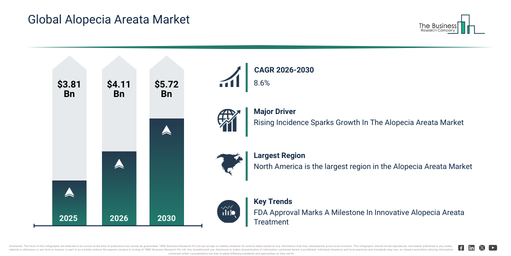
    The alopecia areata market has experienced substantial growth in recent years. It is anticipated to expand from $3.81 billion in 2025 to $4.11 billion in 2026, demonstrating a compound annual growth rate (CAGR) of 7.9%. The market’s growth in previous periods can be attributed to factors such as the increasing global prevalence of alopecia areata, historically limited treatment options, a growing demand for dermatology care, the expansion of hospital and specialty clinic infrastructure, and the adoption of traditional herbal and natural remedies.

    The alopecia areata market is projected to experience substantial expansion over the upcoming years, with its size anticipated to reach $5.72 billion by 2030, exhibiting a compound annual growth rate (CAGR) of 8.6%. This anticipated growth during the forecast period is propelled by several factors, including the emergence of new immunotherapy drugs, increased funding for dermatology research, a growing inclination towards customized hair loss treatments, the broadened availability of homecare and teledermatology services, and the expansion of clinical trials aimed at hair regrowth. Key developments anticipated within the forecast period encompass a heightened understanding of autoimmune hair conditions, increased uptake of topical and oral treatment options, the proliferation of specialized clinics and at-home solutions, technological progress in trichoscopy and diagnostic methods, and intensified research into innovative hair regrowth therapies.

    Access Your Free Sample Report For In-Depth Market Analysis:

    https://www.thebusinessresearchcompany.com/report/alopecia-areata-global-market-report

    Which Major Drivers Are Influencing The Expansion Of The Alopecia Areata Market?

    The rising occurrence of alopecia is anticipated to propel the expansion of the alopecia areata market. Alopecia is defined as the total or partial hair loss, typically from the scalp, but it can also occur on other body parts. This growing prevalence of alopecia stems mainly from an increase in autoimmune conditions, elevated stress, genetic predispositions, and environmental factors that interfere with regular hair follicle function. Treatments for alopecia areata aim to alleviate this increasing issue by focusing on immune-driven inflammation in hair follicles, encouraging hair restoration, and enhancing patients’ quality of life with more efficient and quicker therapeutic solutions. As an example, in July 2023, data from an article published by the U.S. Department of Health and Human Services indicated that over 50 Mn men and 30 Mn women in the U.S. are estimated to experience androgenetic alopecia annually. Consequently, the expanding incidence of alopecia is driving the growth of the alopecia areata market.

    Which Segment Categories Are Included In The Alopecia Areata Market Segment Analysis?

    The alopecia areata market covered in this report is segmented –

    1) By Type: Patchy Alopecia Areata, Alopecia Totalis, Alopecia Universalis, Diffuse Alopecia Areata, Ophiasis Alopecia

    2) By Diagnosis: Trichoscopy, Skin Biopsy, Other Diagnoses

    3) By Route Of Administration: Oral, Topical, Parenteral, Other Routes Of Administration

    4) By End-Users: Hospitals, Specialty Clinics

    Which Trends Are Shaping The Alopecia Areata Market?

    Leading companies in the alopecia areata market are concentrating on the approval of innovative drugs, such as Janus kinase (JAK) inhibitors, to solidify their market position and provide advanced therapies. JAK inhibitors represent a category of medications that impede specific enzymes (JAK1/JAK2) contributing to the autoimmune response that targets hair follicles, thereby encouraging hair regrowth in individuals with severe alopecia areata. For instance, in June 2023, Pfizer Inc., a US-based biotechnology and pharmaceutical company, disclosed that the US Food and Drug Administration (FDA), a US-based federal agency of the Department of Health and Human Services responsible for protecting public health, had approved LITFULOTM (ritlecitinib). This approval designates it as the inaugural and sole treatment for severe alopecia areata approved for patients starting at 12 years of age. It functions as a once-daily oral treatment for alopecia areata, an autoimmune ailment for which there were previously no FDA-approved options for teenagers and limited choices for adults. LITFULO is a kinase inhibitor designed to block Janus kinase 3 (JAK3) and the tyrosine kinase family of kinases (TEC).

    Who Are The Active Companies Shaping The Alopecia Areata Market?

    Major companies operating in the alopecia areata market are Pfizer Inc., Eli Lilly and Company, Incyte Corporation, AbbVie Inc., Novartis AG, Sanofi SA, Bristol Myers Squibb, GlaxoSmithKline plc, Aclaris Therapeutics Inc., Almirall SA, Lupin Ltd., Sun Pharmaceutical Industries Ltd., Cipla Ltd., Glenmark Pharmaceuticals Ltd., Dr Reddys Laboratories Ltd., Teva Pharmaceutical Industries Ltd., Janssen Pharmaceuticals, Arena Pharmaceuticals, AnaptysBio Inc., Viela Bio, Priovant Therapeutics

    Get The Full Alopecia Areata Market Report:

    https://www.thebusinessresearchcompany.com/report/alopecia-areata-global-market-report

    Which Region Has The Greatest Market Share In The Alopecia Areata Market?

    North America was the largest region in the alopecia areata market in 2025. Asia-Pacific is expected to be the fastest-growing region in the forecast period. The regions covered in the alopecia areata market report are Asia-Pacific, South East Asia, Western Europe, Eastern Europe, North America, South America, Middle East, Africa.

    Request A Customized Alopecia Areata Market Report For Competitive Insights:

    https://www.thebusinessresearchcompany.com/report/alopecia-areata-global-market-report

    Browse Through More Reports Similar to the Global Alopecia Areata Market 2026, By The Business Research Company

    Hair Preparations Market Report 2026

    https://www.thebusinessresearchcompany.com/report/hair-preparations-global-market-report

    Alopecia Market Report 2026

    https://www.thebusinessresearchcompany.com/report/alopecia-global-market-report

    Androgenetic Alopecia Treatment Market Report 2026

    https://www.thebusinessresearchcompany.com/report/androgenetic-alopecia-treatment-global-market-report

    Get in touch with us:

    The Business Research Company: https://www.thebusinessresearchcompany.com/

    Americas +1 310-496-7795

    Asia +44 7882 955267 & +91 8897263534

    Europe +44 7882 955267

    Email us at info@tbrc.info

    Follow us on:

    LinkedIn: https://in.linkedin.com/company/the-business-research-company

    YouTube: https://www.youtube.com/channel/UC24_fI0rV8cR5DxlCpgmyFQ

    Global Market Model: https://www.thebusinessresearchcompany.com/global-market-model
  • Alopecia Market: Growth Trends and Forecast

    Alopecia Market: Growth Trends and Forecast

    The Business Research Company’s 2026 market reports feature enhanced tools like market attractiveness analysis, TAM assessment, and company scoring matrices, along with interactive dashboards, deeper supply chain insights, and startup coverage strengthening the depth, usability, and strategic value of insights.

    What Is The Anticipated Rise In Market Value Of The Alopecia Market During The Forecast Period?

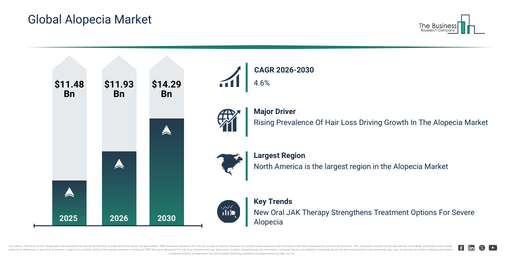
    The alopecia market has experienced consistent growth over the past few years. Projections indicate it will expand from $11.48 billion in 2025 to $11.93 billion in 2026, exhibiting a compound annual growth rate (CAGR) of 3.9%. This historical expansion is primarily due to the increasing global incidence of alopecia, a rise in dermatology clinic consultations, a previous scarcity of treatment choices, advancements in research for hair loss solutions, and heightened cosmetic consciousness.

    The alopecia market size is projected to experience consistent expansion over the upcoming years. It is anticipated to reach $14.29 billion by 2030, exhibiting a compound annual growth rate (CAGR) of 4.6%. This anticipated growth during the forecast period is attributable to several factors, including the emergence of new regenerative medicine therapies, advancements in lltt device technology, the increasing uptake of personalized alopecia solutions, the broadening reach of online pharmacy distribution channels, and greater investment in research for hair restoration. Key trends expected within this period encompass a rising embrace of pharmaceutical remedies for hair loss, increased utilization of low-level laser therapy (lllt) devices, an uptick in hair transplant procedures, the widening application of regenerative medicine for alopecia, and enhanced awareness and availability of homecare solutions for hair loss.

    Access Your Free Sample Report For In-Depth Market Analysis:

    https://www.thebusinessresearchcompany.com/report/alopecia-global-market-report

    What Key Drivers Are Fueling The Growth Of The Alopecia Market?

    The rising incidence of hair loss is anticipated to fuel the expansion of the alopecia market moving ahead. Hair loss is defined as the total or partial absence of hair in regions where it typically develops. Treatments for alopecia assist patients by tackling various hair loss concerns, achieved through methods such as promoting hair regrowth, developing personalized treatment strategies, employing combined therapies, and addressing the physical manifestations of hair loss, all of which can considerably improve an individual’s emotional health and overall quality of life. For instance, in April 2023, data from the National Health Commission, an executive department based in China, revealed that more than 250 million Chinese individuals suffered from hair loss, with 42% of them being between the ages of 26 and 30. Additionally, in February 2023, the Statistic Brain Research Institute, a US-based educational body, reported that approximately 40% of men are expected to experience noticeable hair loss by the age of 35. Consequently, the growing occurrence of hair loss is a key driver for the alopecia market.

    How Is The Alopecia Market Broken Down By Segment Categories?

    The alopecia market covered in this report is segmented –

    1) By Type: Alopecia Areata, Androgenetic Alopecia, Traction Alopecia, Cicatricial Alopecia, Other Types

    2) By Treatment: Pharmaceutical, Low Level Laser Therapy (LLLT) Devices, Hair Transplant, Regenerative Medicine, Other Treatments

    3) By Gender: Male, Female

    4) By Distribution Channel: Hospital Pharmacies, Retail Pharmacies, Online Pharmacies, Other Distribution Channels

    5) By End-User: Dermatology Clinics, Homecare Settings, Other End-Users

    Subsegments:

    1) By Alopecia Areata: Patchy Alopecia Areata, Persistent Patchy Alopecia Areata, Alopecia Universalis, Diffuse Alopecia Areata, Ophiasis

    2) By Androgenetic Alopecia: Male Pattern Baldness, Female Pattern Hair Loss

    3) By Traction Alopecia: Frontal Traction Alopecia, Occipital Traction Alopecia

    4) By Cicatricial Alopecia: Lichen Planopilaris, Discoid Lupus Erythematosus, Central Centrifugal Cicatricial Alopecia, Frontal Fibrosing Alopecia, Folliculitis Decalvans

    5) By Other Types: Telogen Effluvium, Anagen Effluvium, Trichotillomania

    What Trends Are Influencing The Alopecia Market?

    Major companies in the alopecia market are concentrating on developing innovative products, such as oral JAK inhibitors, to enhance treatment effectiveness and achieve faster, more durable hair regrowth for patients suffering from autoimmune hair loss. An oral JAK inhibitor functions as a targeted pharmacologic agent that modulates immune-mediated inflammation by blocking Janus kinase pathways implicated in follicular attacks. For instance, in July 2025, Sun Pharmaceutical Industries Limited, an India-based pharmaceutical company focused on specialty generics and dermatology, launched LEQSELVI (deuruxolitinib) in the United States. This therapy demonstrated rapid clinical improvement, with a substantial portion of patients showing meaningful scalp hair regrowth within just eight weeks. Its introduction provides a timely, evidence-backed treatment option for severe alopecia areata, expanding therapeutic choices for both medical practitioners and patients.

    Which Players Are Present In The Alopecia Market Space?

    Major companies operating in the alopecia market are Pfizer Inc., Johnson and Johnson Ltd., Merck and Co. Inc., Bayer AG, Novartis AG, Sanofi SA, Eli Lilly and Company, Boehringer Ingelheim International GmbH, Allergan Plc, Teva Pharmaceutical Industries Ltd., Mylan N.V., Sun Pharmaceutical Industries Ltd., Perrigo Company Plc, Dr. Reddy’s Laboratories Ltd., Cipla Limited, Almirall S.A., Aclaris Therapeutics Inc., Curallux LLC, Theradome Inc., Lexington International LLC, Histogen Inc., Apira Science Inc.

    Get The Full Alopecia Market Report:

    https://www.thebusinessresearchcompany.com/report/alopecia-global-market-report

    Which Region Accounts For The Largest Portion Of The Alopecia Market?

    North America was the largest region in the alopecia market in 2025. Asia-Pacific is expected to be the fastest-growing region in the forecast period. The regions covered in the alopecia market report are Asia-Pacific, South East Asia, Western Europe, Eastern Europe, North America, South America, Middle East, Africa.

    Request A Customized Alopecia Market Report For Competitive Insights:

    https://www.thebusinessresearchcompany.com/report/alopecia-global-market-report

    Browse Through More Reports Similar to the Global Alopecia Market 2026, By The Business Research Company

    Hair Preparations Market Report 2026

    https://www.thebusinessresearchcompany.com/report/hair-preparations-global-market-report

    Alopecia Areata Market Report 2026

    https://www.thebusinessresearchcompany.com/report/alopecia-areata-global-market-report

    Androgenetic Alopecia Treatment Market Report 2026

    https://www.thebusinessresearchcompany.com/report/androgenetic-alopecia-treatment-global-market-report

    Get in touch with us:

    The Business Research Company: https://www.thebusinessresearchcompany.com/

    Americas +1 310-496-7795

    Asia +44 7882 955267 & +91 8897263534

    Europe +44 7882 955267

    Email us at info@tbrc.info

    Follow us on:

    LinkedIn: https://in.linkedin.com/company/the-business-research-company

    YouTube: https://www.youtube.com/channel/UC24_fI0rV8cR5DxlCpgmyFQ

    Global Market Model: https://www.thebusinessresearchcompany.com/global-market-model

  • Allogeneic Cell Therapy Market: Future Trends and Outlook

    Allogeneic Cell Therapy Market: Future Trends and Outlook

    The Business Research Company’s 2026 market reports feature enhanced tools like market attractiveness analysis, TAM assessment, and company scoring matrices, along with interactive dashboards, deeper supply chain insights, and startup coverage strengthening the depth, usability, and strategic value of insights.

    How Is The Market Size Of The Allogeneic Cell Therapy Market Expected To Scale Between 2026 And 2030?

    The allogeneic cell therapy market has experienced substantial growth in its size over recent years. This market is anticipated to expand from $1.2 billion in 2025 to $1.34 billion in 2026, achieving a compound annual growth rate (CAGR) of 11.5%. Historically, this growth was influenced by factors including the initial limited availability of allogeneic cell therapy products, the expansion of early-stage clinical trials, an increasing prevalence of hematological disorders, growing hospital adoption of cell therapies, and a reliance on donor cell banks.

    The allogeneic cell therapy market size is projected to experience substantial expansion over the coming years. This market is anticipated to reach $1.97 billion by 2030, exhibiting a compound annual growth rate (CAGR) of 10.2%. Factors contributing to this growth during the forecast period include progress in stem cell and immune cell engineering, a wider array of dermatological and other therapeutic uses, increased funding for cell therapy manufacturing sites, partnerships forged between hospitals and biotechnology companies, and the integration of automated cell processing techniques. Key trends foreseen for this period encompass a rise in the use of stem cell therapies, greater emphasis on t-cell and NK cell therapies, the broadening of iPSC-based therapeutic uses, an escalating need for personalized cell therapy solutions, and strengthened regulatory supervision along with improved safety protocols.

    Access Your Free Sample Report For In-Depth Market Analysis:

    https://www.thebusinessresearchcompany.com/report/allogeneic-cell-therapy-global-market-report

    Which Drivers Are Supporting The Allogeneic Cell Therapy Market Growth?

    The rising incidence of chronic diseases is anticipated to fuel the expansion of the allogeneic cell therapy market. A chronic disease is an enduring health condition that typically demands continuous medical attention and can restrict daily activities or diminish the quality of life. The widespread occurrence of chronic disease is attributed to altered lifestyle habits, genetic factors, and exposure to chemicals, toxins, and airborne pollutants. Allogeneic cell therapy offers considerable promise for treating a broad spectrum of chronic diseases by employing healthy cells from a donor to repair, replace, or regulate dysfunctional cells or tissues in the recipient. For instance, in January 2023, according to the National Center for Biotechnology Information (NCBI), a US-based medicine library, the number of individuals aged 50 and above who experience one or more chronic illnesses is projected to increase by 99.5% by 2050, growing from 71.52 million in 2020 to 142.66 million. Thus, the escalating prevalence of chronic diseases is a significant driver for the growth of the allogeneic cell therapy market.

    What Are The Different Segment Types In The Allogeneic Cell Therapy Market Segment Breakdown?

    The allogeneic cell therapy market covered in this report is segmented –

    1) By Type: Stem Cell Therapies, Non-Stem Cell Therapies

    2) By Therapeutic Area: Hematological Disorders, Dermatological Disorders

    3) By End User: Hospitals, Specialty Clinics

    Subsegments:

    1) By Stem Cell Therapies: Hematopoietic Stem Cell Therapy (Hematopoietic Stem Cells), Mesenchymal Stem Cell Therapy (MSC-Based Therapies), Induced Pluripotent Stem Cells (iPSC-Based Therapies), Neural Stem Cell Therapy

    2) By Non-Stem Cell Therapies: T-cell Therapies, Natural Killer (NK) Cell Therapies, Dendritic Cell Therapies

    Which Trends Are Expected To Impact The Allogeneic Cell Therapy Market?

    Leading firms within the allogeneic cell therapy sector are concentrating on creating novel solutions, including cell processing platforms, to bolster their market standing. These platforms constitute systems and technologies designed for preparing and handling cells in therapeutic contexts, covering their isolation, purification, expansion, modification, and quality control to certify their appropriateness for clinical application. An illustrative example is the collaboration in March 2024 between Getinge, a healthcare company headquartered in Sweden, and CellRev, a UK-based biotechnology firm, which resulted in the introduction of Livit ACE, a platform dedicated to continuous cell processing (Adherent Cell Expansion). This groundbreaking platform integrates cutting-edge automation and bioprocessing technologies, substantially improving the efficiency and scalability of cell manufacturing. Its distinct functionalities comprise advanced cell isolation and purification systems guaranteeing elevated cell purity and viability, strong expansion capacities for generating substantial amounts of therapeutic cells, sophisticated genetic modification instruments for accurate cell engineering, and stringent quality control protocols to assure the safety and effectiveness of the final cell products.

    Who Are The Well-Known Companies In The Allogeneic Cell Therapy Market?

    Major companies operating in the allogeneic cell therapy market are Novartis AG, Bristol Myers Squibb Company, Takeda Pharmaceutical Company Limited, Bluebird Bio Inc., Poseida Therapeutics Inc., Fate Therapeutics Inc., Fortress Biotech Inc., Sorrento Therapeutics Inc., Eureka Therapeutics Inc., Juno Therapeutics Inc., Adaptimmune Therapeutics plc, Cellectis SA, Ziopharm Oncology Inc., Allogene Therapeutics Inc., Century Therapeutics Inc., Autolus Therapeutics plc, Bellicum Pharmaceuticals Inc., Celyad SA, TILT Biotherapeutics Ltd., CRISPR Therapeutics AG

    Get The Full Allogeneic Cell Therapy Market Report:

    https://www.thebusinessresearchcompany.com/report/allogeneic-cell-therapy-global-market-report

    Which Region Holds The Highest Market Share In The Allogeneic Cell Therapy Market?

    North America was the largest region in the allogeneic cell therapy market in 2025. Asia-Pacific is expected to be the fastest-growing region in the forecast period. The regions covered in the allogeneic cell therapy market report are Asia-Pacific, South East Asia, Western Europe, Eastern Europe, North America, South America, Middle East, Africa.

    Request A Customized Allogeneic Cell Therapy Market Report For Competitive Insights:

    https://www.thebusinessresearchcompany.com/report/allogeneic-cell-therapy-global-market-report

    Browse Through More Reports Similar to the Global Allogeneic Cell Therapy Market 2026, By The Business Research Company

    Autologous Cell Therapy Market Report 2026

    https://www.thebusinessresearchcompany.com/report/autologous-cell-therapy-global-market-report

    Cells Therapy Market Report 2026

    https://www.thebusinessresearchcompany.com/report/cells-therapy-global-market-report

    Cell Therapy Technologies Market Report 2026

    https://www.thebusinessresearchcompany.com/report/cell-therapy-technologies-global-market-report

    Get in touch with us:

    The Business Research Company: https://www.thebusinessresearchcompany.com/

    Americas +1 310-496-7795

    Asia +44 7882 955267 & +91 8897263534

    Europe +44 7882 955267

    Email us at info@tbrc.info

    Follow us on:

    LinkedIn: https://in.linkedin.com/company/the-business-research-company

    YouTube: https://www.youtube.com/channel/UC24_fI0rV8cR5DxlCpgmyFQ

    Global Market Model: https://www.thebusinessresearchcompany.com/global-market-model