Category: Healthcare Services

  • AI in Radiology Market Driven by Adoption of Cloud-Native Platforms for Better Diagnostics

    AI in Radiology Market Driven by Adoption of Cloud-Native Platforms for Better Diagnostics

    The Business Research Company’s 2026 market reports feature enhanced tools like market attractiveness analysis, TAM assessment, and company scoring matrices, along with interactive dashboards, deeper supply chain insights, and startup coverage strengthening the depth, usability, and strategic value of insights.

    How Much Growth In Market Value Is Expected For The Artificial Intelligence In Radiology Market Between 2026 And 2030?

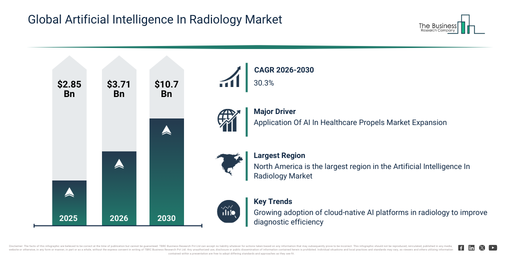
    The artificial intelligence in radiology market has seen significant expansion in recent years. Its size is set to expand from $2.85 billion in 2025 to $3.71 billion in 2026, achieving a compound annual growth rate (CAGR) of 30.2%. The growth witnessed historically can be linked to a surging need for diagnostic imaging services, a deficit of radiology specialists, the proliferation of digital radiology systems, the increasing intricacy of imaging data, and the incorporation of picture archiving systems.

    The artificial intelligence in radiology market is anticipated to experience significant expansion in the coming years, with its size projected to reach $10.7 billion by 2030, growing at a compound annual growth rate (CAGR) of 30.3%. This growth during the forecast period is primarily driven by the increasing adoption of AI-assisted radiology platforms, a heightened focus on optimizing productivity within imaging departments, the proliferation of cloud-based radiology AI solutions, the expanding utilization of predictive imaging analytics, and greater integration with hospital IT systems. Major trends expected in the forecast period include the increasing incorporation of AI into radiology reporting workflows, the rising application of computer vision for image interpretation, the wider deployment of AI for workflow optimization, the expansion of real-time decision support tools, and an enhanced emphasis on improving diagnostic accuracy.

    Access Your Free Sample Report For In-Depth Market Analysis:

    https://www.thebusinessresearchcompany.com/report/artificial-intelligence-in-radiology-global-market-report

    Which Primary Drivers Are Impacting The Artificial Intelligence In Radiology Market Growth?

    The expanding integration of artificial intelligence (AI) within the healthcare sector is anticipated to propel the advancement of artificial intelligence (AI) in the radiology market moving forward. AI-powered algorithms exhibit a notable capacity to precisely analyze and interpret medical images, thereby assisting radiologists in detecting subtle abnormalities and enhancing overall diagnostic outcomes. The efficiency and speed provided by AI technologies not only optimize radiological workflows but also contribute to quicker and more accurate diagnoses. For instance, in July 2024, data from The Health Foundation, a UK-based independent charity, revealed that over half of the UK public (54%) and three-quarters of surveyed NHS staff (76%) expressed support for AI’s use in patient care, with an even higher percentage endorsing its application for administrative tasks (61% of the public and 81% of NHS staff). Consequently, the increasing application of AI in healthcare is a key factor driving the growth of artificial intelligence (AI) in the radiology market.

    How Is The Artificial Intelligence In Radiology Market Categorized Across Its Segment Groups?

    The artificial intelligence in radiology market covered in this report is segmented –

    1) By Solution Type: AI Software, AI Hardware

    2) By Modality: Computed Tomography (CT), Magnetic Resonance (MR), X-Ray, Mammography, Ultrasound (US), Other Modalities

    3) By Application: Neurology, Chest And Lung, Musculoskeletal, Abdomen, Cardiology, Other Applications

    4) By End-User: Hospitals, Diagnostic Imaging Centers, Other End-Users

    Subsegments:

    1) By AI Software: Image Analysis Software, Workflow Optimization Software, Radiology Reporting Software, Decision Support Systems, Predictive Analytics Tools

    2) By AI Hardware: Imaging Devices, Servers And Computing Infrastructure, Robotics For Automated Imaging, Workstations For Radiologists

    Which Trends Are Shaping Growth In The Artificial Intelligence In Radiology Market?

    Leading companies are active within the artificial intelligence in radiology market, prioritizing the creation of advanced cloud-native radiology informatics platforms, such as AI-orchestrated diagnostic workspaces, to improve imaging workflow efficiency, facilitate faster clinical decision-making, and address increasing imaging volumes. A cloud-native AI radiology platform combines traditional PACS or RIS functions and scalable cloud infrastructure, allowing for the immediate deployment of AI models, sophisticated image transmission, automatic report generation, and smooth integration across clinical systems. As an example, in February 2025, DeepHealth, Inc., a U.S.-based health informatics company, introduced Diagnostic Suite, an AI-powered cloud-native radiology workspace. This platform brings together worklist management, patient briefs, high-speed streaming viewers, AI orchestration, and smart reporting within one interface. It provides high scalability, incorporates various AI diagnostic models for areas such as lung, prostate, brain, and breast imaging, and boosts operational effectiveness through seamless integration with existing radiology IT infrastructure.

    Which Firms Are Influencing Competition In The Artificial Intelligence In Radiology Market?

    Major companies operating in the artificial intelligence in radiology market are Microsoft Corporation, IBM Corporation, NVIDIA Corporation, Siemens Healthineers AG, Koninklijke Philips N.V, GE Healthcare Technologies Inc., Canon Medical Systems Corporation, HeartFlow Inc., Viz.ai Inc., Aidoc Medical Ltd., EnvoyAI, Butterfly Network Inc., Digital Diagnostics Inc., Caption Health, Enlitic Inc., Arterys, Nano X Imaging Ltd., Subtle Medical Inc., CureMetrix Inc., DiA Imaging Analysis Ltd., Imagen Technologies, Gleamer Ltd., Quibim, Behold.ai, Intel Corporation

    Get The Full Artificial Intelligence In Radiology Market Report:

    https://www.thebusinessresearchcompany.com/report/artificial-intelligence-in-radiology-global-market-report

    Which Region Represents The Largest Share Of The Artificial Intelligence In Radiology Market?

    North America was the largest region in the artificial intelligence in radiology market in 2025. The regions covered in the artificial intelligence in radiology market report are Asia-Pacific, South East Asia, Western Europe, Eastern Europe, North America, South America, Middle East, Africa.

    Request A Customized Artificial Intelligence In Radiology Market Report For Competitive Insights:

    https://www.thebusinessresearchcompany.com/report/artificial-intelligence-in-radiology-global-market-report

    Browse Through More Reports Similar to the Global Artificial Intelligence In Radiology Market 2026, By The Business Research Company

    Artificial Intelligence In The Diagnostic Market Report 2026

    https://www.thebusinessresearchcompany.com/report/artificial-intelligence-in-the-diagnostic-global-market-report

    Artificial Intelligence Ai Radiology Tool Market Report 2026

    https://www.thebusinessresearchcompany.com/report/artificial-intelligence-ai-radiology-tool-global-market-report

    Artificial Intelligence In Medical Imaging Market Report 2026

    https://www.thebusinessresearchcompany.com/report/artificial-intelligence-in-medical-imaging-global-market-report

    Get in touch with us:

    The Business Research Company: https://www.thebusinessresearchcompany.com/

    Americas +1 310-496-7795

    Asia +44 7882 955267 & +91 8897263534

    Europe +44 7882 955267

    Email us at info@tbrc.info

    Follow us on:

    LinkedIn: https://in.linkedin.com/company/the-business-research-company

    YouTube: https://www.youtube.com/channel/UC24_fI0rV8cR5DxlCpgmyFQ

    Global Market Model: https://www.thebusinessresearchcompany.com/global-market-model

  • Silver-ion bioresorbable polymers improving wound care are driving the antimicrobial regenerative wound matrix market

    Silver-ion bioresorbable polymers improving wound care are driving the antimicrobial regenerative wound matrix market

    The Business Research Company’s 2026 market reports feature enhanced tools like market attractiveness analysis, TAM assessment, and company scoring matrices, along with interactive dashboards, deeper supply chain insights, and startup coverage strengthening the depth, usability, and strategic value of insights.

    What Is The Estimated Market Size Of The Antimicrobial Regenerative Wound Matrix Market In 2026, And How Will Its Value Evolve By 2030?

    The market for antimicrobial regenerative wound matrices has experienced significant growth over recent years. This market is projected to expand from $4.03 billion in 2025 to $4.32 billion by 2026, demonstrating a compound annual growth rate (CAGR) of 7.4%. Historically, this expansion has been driven by several key factors, including the increasing prevalence of chronic wounds, a rising incidence of diabetes-related ulcers, the expansion of surgical procedures, growing awareness of advanced wound care solutions, and the availability of antimicrobial biomaterials.

    The antimicrobial regenerative wound matrix market is poised for significant expansion in the upcoming years. It is projected to reach $5.68 billion by 2030, exhibiting a compound annual growth rate (CAGR) of 7.1%. This anticipated growth during the forecast period is driven by factors such as an expanding aging population, increasing demand for sophisticated wound management, the proliferation of home healthcare services, a heightened emphasis on curbing hospital-acquired infections, and continuous innovation in regenerative biomaterials. Notable trends anticipated in this period include the wider acceptance of advanced wound care biomaterials, an escalating need for healing solutions that resist infection, the growing utilization of bioactive regenerative matrices, the broadening of applications for chronic wound treatment, and an intensified focus on accelerating tissue regeneration.

    Access Your Free Sample Report For In-Depth Market Analysis:

    https://www.thebusinessresearchcompany.com/report/global-antimicrobial-regenerative-wound-matrix-market-report

    What Factors Are Contributing To The Growth Of The Antimicrobial Regenerative Wound Matrix Market?

    The growing occurrence of chronic wounds is anticipated to propel the expansion of the antimicrobial regenerative wound matrix market in the future. Chronic wounds are defined as injuries that fail to heal within a typical timeframe, usually lasting beyond 4 to 6 weeks, often due to underlying issues such as diabetes, infection, or poor circulation. This rise in chronic wounds is attributed to the increasing incidence of diabetes, obesity, and vascular diseases, coupled with an aging population. These factors collectively impair natural healing processes, leading to a higher number of non-healing or slow-healing wounds that require advanced care solutions. Antimicrobial regenerative wound matrices facilitate tissue regeneration while preventing infection, thereby accelerating healing in chronic, non-healing wounds. For example, in June 2024, United Behavioral Health, a US-based managed healthcare company, reported that approximately 7 million Americans suffered from chronic wounds. With rising diabetes, obesity, and aging populations, the demand for wound care is expected to increase by about 2% annually over the next decade. Therefore, the expanding prevalence of chronic wounds is driving the growth of the antimicrobial regenerative wound matrix market.

    How Is The Antimicrobial Regenerative Wound Matrix Market Segmented Across Different Segment Categories?

    The antimicrobial regenerative wound matrix market covered in this report is segmented –

    1) By Product Type: Antimicrobial Matrix, Regenerative Matrix

    2) By Wound Type: Acute, Chronic

    3) By Material: Collagen-Based Matrix, Chitosan-Based Matrix, Hyaluronic Acid-Based Matrix

    4) By Application: Diabetic Foot Ulcers, Pressure Ulcers, Venous Leg Ulcers, Burns

    5) By End User: Hospitals, Clinics, Ambulatory Surgical Centers, Home Healthcare

    Subsegments:

    1) By Antimicrobial Matrix: Silver-Ion Impregnated Matrices, Iodine-Based Matrices, PHMB (Polyhexamethylene Biguanide)-Based Matrices, Honey-Infused Matrices, Chitosan-Based Matrices, Antibiotic-Loaded Polymer Matrices, Enzyme Or Peptide-Based Antimicrobial Matrices

    2) By Regenerative Matrix: Collagen-Based Matrices, Hydrogel Matrices, Hyaluronic Acid-Based Matrices, Human Or Animal-Derived Dermal Substitutes, Synthetic Polymer (Bioresorbable) Matrices, Amniotic Membrane-Derived Matrices, Composite (Hybrid) Regenerative Matrices

    What Trends Are Shaping The Future Of The Antimicrobial Regenerative Wound Matrix Market?

    Major companies operating in the antimicrobial regenerative wound matrix market are increasingly integrating antimicrobial agents, such as silver-ion–impregnated bioresorbable polymer matrices, to address the escalating need for faster healing, reduced infection risk, and lower hospitalization costs in chronic and surgical wound care. A silver-ion–impregnated bioresorbable polymer matrix serves as a wound-healing scaffold, crafted from biodegradable polymers infused with silver ions, designed to support tissue regeneration while offering sustained antimicrobial protection as it gradually resorbs into the body. For instance, in August 2025, Imbed Biosciences Inc., a US-based medical device firm specializing in advanced wound care, launched SAM PainGuard with Lidocaine, a dual-action wound matrix composed of a bioresorbable polymer scaffold infused with ionic silver for antimicrobial protection and lidocaine HCl for rapid pain relief. This matrix conforms to wound microtextures, ensures sustained microbial reduction of =99.99% for up to 72 hours, and provides immediate analgesia. FDA 510(k)-cleared for use in surgical, burn, donor-site, and trauma wounds, the product represents a significant advancement over traditional antimicrobial dressings and standard collagen matrices.

    Which Organizations Play A Role In The Antimicrobial Regenerative Wound Matrix Market Landscape?

    Major companies operating in the antimicrobial regenerative wound matrix market are Cardinal Health Inc., Medline Industries Inc., 3M Company, Essity AB, DSM Biomedical, Baxter International Inc., B. Braun Melsungen AG, Mölnlycke Health Care AB, ConvaTec Group plc, MTF Biologics, Organogenesis Inc., DeRoyal Industries Inc., MiMedx Group Inc., AdMedSol, Avita Medical, Aroa Biosurgery Ltd., Harbor Medtech Inc., Omeza LLC, ProgenaCare Global, RenovoDerm.

    Get The Full Antimicrobial Regenerative Wound Matrix Market Report:

    https://www.thebusinessresearchcompany.com/report/global-antimicrobial-regenerative-wound-matrix-market-report

    Which Region Has The Greatest Market Share In The Antimicrobial Regenerative Wound Matrix Market?

    North America was the largest region in the antimicrobial regenerative wound matrix market in 2025. Asia-Pacific is expected to be the fastest-growing region in the forecast period. The regions covered in the antimicrobial regenerative wound matrix market report are Asia-Pacific, South East Asia, Western Europe, Eastern Europe, North America, South America, Middle East, Africa.

    Request A Customized Antimicrobial Regenerative Wound Matrix Market Report For Competitive Insights:

    https://www.thebusinessresearchcompany.com/report/global-antimicrobial-regenerative-wound-matrix-market-report

    Browse Through More Reports Similar to the Global Antimicrobial Regenerative Wound Matrix Market 2026, By The Business Research Company

    Topical Wound Agents Market Report 2026

    https://www.thebusinessresearchcompany.com/report/topical-wound-agents-global-market-report

    Biomaterial Wound Dressing Market Report 2026

    https://www.thebusinessresearchcompany.com/report/biomaterial-wound-dressing-global-market-report

    Preoperative Infection Prevention And Wound Cleansing Devices Market Report 2026

    https://www.thebusinessresearchcompany.com/report/preoperative-infection-prevention-and-wound-cleansing-devices-global-market-report

    Get in touch with us:

    The Business Research Company: https://www.thebusinessresearchcompany.com/

    Americas +1 310-496-7795

    Asia +44 7882 955267 & +91 8897263534

    Europe +44 7882 955267

    Email us at info@tbrc.info

    Follow us on:

    LinkedIn: https://in.linkedin.com/company/the-business-research-company

    YouTube: https://www.youtube.com/channel/UC24_fI0rV8cR5DxlCpgmyFQ

    Global Market Model: https://www.thebusinessresearchcompany.com/global-market-model
  • Innovations in antidiabetics are shaping the antidiabetic market

    Innovations in antidiabetics are shaping the antidiabetic market

    The Business Research Company’s 2026 market reports feature enhanced tools like market attractiveness analysis, TAM assessment, and company scoring matrices, along with interactive dashboards, deeper supply chain insights, and startup coverage strengthening the depth, usability, and strategic value of insights.

    How Does The Market Size Of The Antidiabetics Market Compare Between 2026 And 2030?

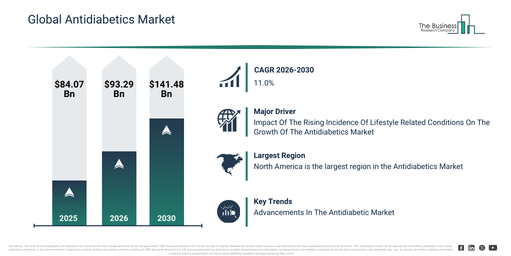
    The antidiabetics market size has experienced rapid growth in recent years. It is forecast to expand from $84.07 billion in 2025 to $93.29 billion in 2026, achieving a compound annual growth rate (CAGR) of 11.0%. This historical expansion can be linked to factors such as the rising global prevalence of diabetes, increased availability of insulin therapies, the expansion of oral antidiabetic medications, improved disease awareness and diagnosis, and an increase in healthcare access.

    The antidiabetics market is projected to experience substantial expansion in the coming years. This market is forecast to reach $141.48 billion by 2030, exhibiting a compound annual growth rate (CAGR) of 11.0%. Key drivers for this growth during the outlook period include the increased uptake of advanced diabetes medications, a stronger emphasis on long-acting and once-weekly treatments, wider integration of digital diabetes management solutions, growing financial commitments to metabolic disorder research, and a rising need for patient-focused care approaches. Significant trends anticipated in the forecast timeframe encompass the expanding use of GLP-1 and SGLT2 therapies, a heightened interest in combination drug protocols, an increasing desire for individualized diabetes treatment, broader application of oral antidiabetic drugs, and a greater accentuation on cardiovascular and weight-related advantages.

    Access Your Free Sample Report For In-Depth Market Analysis:

    https://www.thebusinessresearchcompany.com/report/antidiabetics-global-market-report

    Which Strong Drivers Are Impacting The Antidiabetics Market Growth?

    The increasing occurrence of lifestyle-related health conditions is projected to drive the expansion of the antidiabetics market moving forward. These lifestyle-related conditions are health problems that are either caused or aggravated by behaviors such as an unhealthy diet, lack of exercise, smoking, and excessive alcohol consumption. The incidence of such conditions is escalating due to factors like inadequate nutrition, physical inactivity, and heightened stress levels. Antidiabetic medications can assist in managing lifestyle-associated conditions like obesity and metabolic syndrome by enhancing insulin sensitivity and regulating blood sugar levels. For instance, in August 2024, as per Statistics Canada, a Canada-based government agency, Canadian manufacturers produced 1.2 billion cigarettes in July 2024, which represented a 4.3% increase from June 2024 and a 2.3% rise compared to July 2023. Thus, the growing prevalence of lifestyle-related conditions is propelling the antidiabetic market.

    What Are The Main Segments Within The Antidiabetics Market Segment Structure?

    The antidiabetics market covered in this report is segmented –

    1) By Drug Class: Insulin, GLP-1 Receptor Agonists, DPP- 4 Inhibitors, SGLT2 Inhibitors, Other Drug Classes

    2) By Diabetes Type: Type 1, Type 2

    3) By Patient Population: Antidiabetics For Pediatrics, Antidiabetics For Adults, Antidiabetics For Geriatrics

    4) By Route Of Administration: Antidiabetics Administration Through Insulin Syringes Or Insulin Pens, Antidiabetics Administration Through Insulin Pumps, Intravenous Antidiabetics Infusion, Oral Antidiabetics Administration, Other Routes Of Antidiabetics Administration

    5) By Distribution Channel: Online Pharmacies, Hospital Pharmacies, Retail Pharmacies

    Subsegments:

    1) By Insulin: Rapid-Acting Insulin, Short-Acting Insulin, Intermediate-Acting Insulin, Long-Acting Insulin, Premixed Insulin

    2) By GLP-1 Receptor Agonists: Exenatide, Liraglutide, Dulaglutide, Semaglutide, Lixisenatide

    3) By DPP-4 Inhibitors: Sitagliptin, Saxagliptin, Linagliptin, Alogliptin

    4) By SGLT2 Inhibitors: Canagliflozin, Dapagliflozin, Empagliflozin, Ertugliflozin

    5) By Other Drug Classes: Sulfonylureas, Thiazolidinediones (TZDs), Alpha-Glucosidase Inhibitors, Meglitinides, GLP-1/Insulin Combination Therapy

    Which Trends Are Contributing To Changes In The Antidiabetics Market?

    Major companies operating in the antidiabetics market are developing advanced products, such as the anti-diabetic biosimilar, to enhance glycemic control, diminish the risk of cardiovascular events, and present more effective treatment options for individuals with diabetes. An anti-diabetic biosimilar is a biologically similar medication to an already approved reference drug utilized for treating diabetes, providing comparable safety, effectiveness, and quality. For instance, in January 2024, Glenmark Pharmaceuticals Limited, an India-based pharmaceutical company, introduced the first biosimilar of Liraglutide, an anti-diabetic drug. The biosimilar of the Liraglutide anti-diabetic drug, launched as Lirafit, improves glycemic control in adults with type 2 diabetes mellitus. Clinical trials have indicated it lowers glycemic parameters, contributes to weight loss, and improves cardiovascular safety. As a GLP-1 receptor agonist, it promotes glucose-dependent insulin secretion and decreases inappropriate glucagon secretion. It is globally approved for managing type 2 diabetes in adults.

    Who Are The Companies Participating In The Antidiabetics Market?

    Major companies operating in the antidiabetics market are Pfizer Inc., Johnson & Johnson, Merck & Co. Inc., Sanofi S.A., Bristol-Myers Squibb Company, AstraZeneca plc, Abbott Laboratories, Novartis AG, Takeda Pharmaceutical Company Limited, GSK plc, Eli Lilly and Company, Boehringer Ingelheim International GmbH, Novo Nordisk A/S, Teva Pharmaceutical Industries Ltd., Astellas Pharma Inc., Sun Pharmaceutical Industries Limited, Cipla Limited, Dr. Reddy’s Laboratories, Lupin Limited, Torrent Pharmaceuticals Ltd, Biocon Limited, Glenmark Pharmaceuticals Ltd.

    Get The Full Antidiabetics Market Report:

    https://www.thebusinessresearchcompany.com/report/antidiabetics-global-market-report

    Which Region Accounts For The Largest Portion Of The Antidiabetics Market?

    North America was the largest region in the antidiabetics market in 2025. The regions covered in the antidiabetics market report are Asia-Pacific, South East Asia, Western Europe, Eastern Europe, North America, South America, Middle East, Africa.

    Request A Customized Antidiabetics Market Report For Competitive Insights:

    https://www.thebusinessresearchcompany.com/report/antidiabetics-global-market-report

    Browse Through More Reports Similar to the Global Antidiabetics Market 2026, By The Business Research Company

    Biobetters Market Report 2026

    https://www.thebusinessresearchcompany.com/report/biobetters-global-market-report

    Antidiabetics Market Report 2026

    https://www.thebusinessresearchcompany.com/report/antidiabetics-global-market-report

    Antidiabetics Market Report 2026

    https://www.thebusinessresearchcompany.com/report/antidiabetics-global-market-report

    Get in touch with us:

    The Business Research Company: https://www.thebusinessresearchcompany.com/

    Americas +1 310-496-7795

    Asia +44 7882 955267 & +91 8897263534

    Europe +44 7882 955267

    Email us at info@tbrc.info

    Follow us on:

    LinkedIn: https://in.linkedin.com/company/the-business-research-company

    YouTube: https://www.youtube.com/channel/UC24_fI0rV8cR5DxlCpgmyFQ

    Global Market Model: https://www.thebusinessresearchcompany.com/global-market-model

  • AI in Oncology Market Growth Accelerates with Rising Global Cancer Incidence

    AI in Oncology Market Growth Accelerates with Rising Global Cancer Incidence

    The Business Research Company’s 2026 market reports feature enhanced tools like market attractiveness analysis, TAM assessment, and company scoring matrices, along with interactive dashboards, deeper supply chain insights, and startup coverage strengthening the depth, usability, and strategic value of insights.

    What Is The Estimated Market Size Of The Artificial Intelligence In Oncology Market In 2026, And How Will Its Value Evolve By 2030?

    The market for artificial intelligence in oncology has experienced rapid expansion over recent years. This market is projected to expand from $2.35 billion in 2025 to $3.13 billion in 2026, demonstrating a compound annual growth rate (CAGR) of 33.4%. Historically, this growth can be attributed to several factors including an increase in global cancer incidence rates, the proliferation of oncology research initiatives, wider adoption of digital pathology, the growing application of data-driven cancer diagnostics, and significant investments in advanced oncology infrastructure.

    The artificial intelligence in oncology market size is projected to experience substantial growth over the coming years. This market is set to reach $10.25 billion by 2030, exhibiting a compound annual growth rate (CAGR) of 34.5%. This anticipated expansion during the forecast period stems from factors such as the increasing uptake of precision oncology solutions, the growing need for personalized cancer therapies, the broadened application of AI in clinical oncology trials, the deeper integration of genomics with AI platforms, and a rise in investments directed towards oncology-focused AI startups. Key developments expected during this period involve a greater acceptance of AI-based tools for cancer detection, more frequent utilization of AI in optimizing treatment plans, an expanding integration of AI into drug discovery and development processes, the wider application of predictive oncology analytics, and a heightened emphasis on precision oncology applications.

    Access Your Free Sample Report For In-Depth Market Analysis:

    https://www.thebusinessresearchcompany.com/report/artificial-intelligence-in-oncology-global-market-report

    What Significant Factors Are Influencing The Artificial Intelligence In Oncology Market Expansion?

    The increasing prevalence of cancer diagnoses is projected to stimulate the expansion of the AI in oncology market moving forward. Cancer is a complex condition defined by the uncontrolled multiplication and division of abnormal cells within the body. The adoption of AI in oncology holds the potential to revolutionize patient care by enhancing its precision, personalization, and efficiency. As an illustration, in 2023, a report by the American Cancer Society Inc., a US-based voluntary health organization, showed that the estimated number of new cancer cases climbed from 1.8 million to 1.9 million. This upward trend in cancer incidence is consequently propelling the growth of the AI in oncology market.

    How Are Segments Identified Within The Artificial Intelligence In Oncology Market Segment Framework?

    The artificial intelligence in oncology market covered in this report is segmented –

    1) By Component: Software Solutions, Hardware, Services

    2) By Treatment Type: Chemotherapy, Radiotherapy, Immunotherapy, Other Treatment Types

    3) By Cancer Type: Breast Cancer, Lung Cancer, Prostate Cancer, Colorectal Cancer, Brain Tumor, Other Cancer Types

    4) By Application: Cancer Detection, Drug Discovery, Drug Development, Other Applications

    5) By End-Users: Hospitals, Diagnostic Centers, Pharmaceutical Companies, Research Institutes, Other End Users

    Subsegments:

    1) By Software Solutions: Diagnostic Software, Treatment Planning Software, Patient Management Software, Data Analytics Platforms

    2) By Hardware: AI-Enabled Imaging Devices, High-Performance Computing Systems

    3) By Services: Consulting Services, Integration Services, Maintenance And Support Services

    What Trends Are Affecting The Direction Of The Artificial Intelligence In Oncology Market?

    Key companies operating within the AI in the oncology market are prioritizing the creation of cutting-edge software, such as cloud-based platforms, to improve their efficiency and offer superior solutions. Cloud-based software is vital for AI applications in oncology, serving as a scalable, adaptable, and easily accessible platform for processing and analyzing extensive medical datasets. For instance, in March 2023, Illumina Inc., a US-based biotechnology company, unveiled Connected Insights, a new cloud-based software specifically for tertiary analysis in oncology applications. By integrating external knowledge bases, Connected Insights streamlines the interpretation and reporting of results from various assay types, empowering labs to expand their utilization of NGS (Next-Generation Sequencing) and significantly reduce the turnaround time for clinical reporting.

    Who Are The Companies Competing Within The Artificial Intelligence In Oncology Market?

    Major companies operating in the artificial intelligence in oncology market are Azra AI, IBM Corporation, Siemens Healthcare GmbH, GE HealthCare, NVIDIA Corporation, Digital Diagnostics Inc., ConcertAI Inc., PathAI Inc., Median Technologies SA, Kheiron Medical Technologies Ltd, Tempus Labs Inc., Paige AI Inc., Prognos Health Inc., Enlitic, Inspirata Inc., Proscia Inc., Deep 6 AI Inc., Intel Corporation, Zebra Medical Vision, Ibex Medical Analytics, Nanox Imaging Ltd., Berg LLC

    Get The Full Artificial Intelligence In Oncology Market Report:

    https://www.thebusinessresearchcompany.com/report/artificial-intelligence-in-oncology-global-market-report

    Which Geographic Region Dominates The Artificial Intelligence In Oncology Market?

    North America was the largest region in the AI in oncology market in 2025. Asia-Pacific is expected to be the fastest-growing region in the forecast period. The regions covered in the artificial intelligence in oncology market report are Asia-Pacific, South East Asia, Western Europe, Eastern Europe, North America, South America, Middle East, Africa.

    Request A Customized Artificial Intelligence In Oncology Market Report For Competitive Insights:

    https://www.thebusinessresearchcompany.com/report/artificial-intelligence-in-oncology-global-market-report

    Browse Through More Reports Similar to the Global Artificial Intelligence In Oncology Market 2026, By The Business Research Company

    Ai In Cancer Diagnostics Market Report 2026

    https://www.thebusinessresearchcompany.com/report/ai-in-cancer-diagnostics-global-market-report

    Artificial Intelligence In Cancer Diagnostics Market Report 2026

    https://www.thebusinessresearchcompany.com/report/artificial-intelligence-in-cancer-diagnostics-global-market-report

    Artificial Intelligence In Medicine Market Report 2026

    https://www.thebusinessresearchcompany.com/report/artificial-intelligence-in-medicine-global-market-report

    Get in touch with us:

    The Business Research Company: https://www.thebusinessresearchcompany.com/

    Americas +1 310-496-7795

    Asia +44 7882 955267 & +91 8897263534

    Europe +44 7882 955267

    Email us at info@tbrc.info

    Follow us on:

    LinkedIn: https://in.linkedin.com/company/the-business-research-company

    YouTube: https://www.youtube.com/channel/UC24_fI0rV8cR5DxlCpgmyFQ

    Global Market Model: https://www.thebusinessresearchcompany.com/global-market-model
  • Increasing chronic disease prevalence is boosting the antibody validation market

    Increasing chronic disease prevalence is boosting the antibody validation market

    The Business Research Company’s 2026 market reports feature enhanced tools like market attractiveness analysis, TAM assessment, and company scoring matrices, along with interactive dashboards, deeper supply chain insights, and startup coverage strengthening the depth, usability, and strategic value of insights.

    What Is The Forecasted Market Size Trajectory Of The Antibody Validation Market From 2026 To 2030?

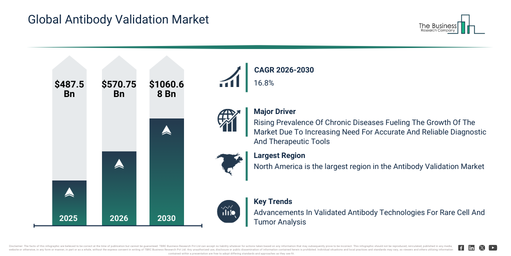
    The antibody validation market size has experienced rapid growth in recent years. It is projected to expand from $487.5 billion in 2025 to $570.75 billion in 2026, showing a compound annual growth rate (CAGR) of 17.1%. This historic growth can be attributed to escalating concerns regarding variability in research antibodies, the broadening scope of proteomics and genomics research, increased regulatory scrutiny concerning research reproducibility, the rise of antibody-based assays, and greater funding allocated to life sciences research.

    The antibody validation market is poised for substantial growth in the upcoming years, with projections indicating it will reach $1060.68 billion by 2030, exhibiting a compound annual growth rate (CAGR) of 16.8%. The expansion during this forecast period can be attributed to factors such as an escalating demand for rigor and reproducibility, the increasing application of antibodies in clinical research, the broadening of precision diagnostics, a greater adoption of validated antibodies in drug discovery, and the enhanced integration of digital validation data platforms. Prominent trends anticipated in this period include the widespread implementation of standardized antibody validation protocols, a growing need for application-specific validation services, an increased utilization of multiplex validation techniques, the development of reproducibility-focused testing frameworks, and a reinforced emphasis on data transparency.

    Access Your Free Sample Report For In-Depth Market Analysis:

    https://www.thebusinessresearchcompany.com/report/global-antibody-validation-market-report

    What Key Factors Are Shaping The Antibody Validation Market Landscape?

    The increasing occurrence of chronic illnesses is anticipated to fuel the expansion of the antibody validation market in the future. These long-term health conditions develop gradually and persist for extended periods, often demanding ongoing medical attention. A key factor contributing to the rising incidence of chronic diseases is sedentary lifestyles, where prolonged sitting and limited physical activity elevate the risk of ailments such as heart conditions and diabetes. Antibody validation plays a crucial role in managing chronic diseases by guaranteeing the precision, distinctiveness, and dependability of antibodies utilized in diagnostic and therapeutic applications. It facilitates better identification of disease biomarkers, aids in accurate monitoring, and enhances the creation of targeted therapies, thereby promoting effective and customized care for chronic conditions. For instance, in June 2024, data from the National Health Service, a UK-based government department, revealed that 3,615,330 individuals registered with a general practitioner (GP) were diagnosed with non-diabetic hyperglycemia or pre-diabetes (a condition with elevated blood sugar levels, not high enough to be classified as diabetes) in 2023, indicating an 18% rise from 3,065,825 cases recorded in 2022. Consequently, the growing prevalence of chronic diseases is a significant driver for the growth of the antibody validation market.

    How Is Segmentation Applied In The Antibody Validation Market Segment Analysis?

    The antibody validation market covered in this report is segmented –

    1) By Product Type: Monoclonal Antibodies, Polyclonal Antibodies, Anti-Body Drug Complexes

    2) By Disease Indication: Cardiovascular Diseases, Central Nervous System (CNS) Disorders, Cancer, Autoimmune Disorders

    3) By End User: Pharmaceutical And Biotechnological Firms, Contract Research Organizations, Research Institutes

    Subsegments:

    1) By Monoclonal Antibodies: Recombinant Monoclonal Antibodies, Humanized Monoclonal Antibodies, Chimeric Monoclonal Antibodies, Murine Monoclonal Antibodies

    2) By Polyclonal Antibodies: Rabbit Polyclonal Antibodies, Goat Polyclonal Antibodies, Sheep Polyclonal Antibodies, Donkey Polyclonal Antibodies

    3) By Antibody Drug Complexes: Immunoconjugates, Radioimmunoconjugates, Immunotoxins, Bispecific Antibody Drug Complexes

    What Market Trends Are Affecting The Antibody Validation Market?

    Leading companies in the antibody validation market are emphasizing advanced innovations, such as Celselect slides enumeration stain kits, to improve the accuracy and sensitivity of identifying rare cells and circulating tumor cells, enhance validation efficiency, and support high-precision cancer research and diagnostic applications. Celselect slides enumeration stain kits specifically refer to specialized reagent kits designed to enable the detection, staining, and counting of rare cells and circulating tumor cells (CTCs). For instance, in March 2024, Bio-Rad Laboratories Inc., a US-based life science research company, launched celselect slides validated antibodies for rare cell and circulating tumor cell (CTC) enumeration. This product aims to enable sensitive and specific identification of CTC surface markers, enhance tumor heterogeneity studies, and support high-precision cancer research through improved rare cell capture, enrichment, and analysis. This launch expanded the company’s single-cell oncology portfolio by equipping researchers with validated reagents for accurate immunostaining and enumeration of CTCs.

    Who Are The Companies Participating In The Antibody Validation Market Environment?

    Major companies operating in the antibody validation market are F. Hoffmann-La Roche Ltd., Merck & Co. Inc., Thermo Fisher Scientific Inc., Danaher Corporation, Becton Dickinson and Company, Agilent Technologies Inc., PerkinElmer Inc., Bio-Rad Laboratories Inc., Azenta Inc., GenScript Biotech Corporation, Promega Corporation, Sino Biological Inc., Cell Signaling Technology Inc., Fortis Life Sciences, Proteintech Group Inc., Santa Cruz Biotechnology Inc., Novus Biologicals LLC, Creative Diagnostics, Rockland Immunochemicals Inc., Biorbyt Ltd.

    Get The Full Antibody Validation Market Report:

    https://www.thebusinessresearchcompany.com/report/global-antibody-validation-market-report

    Which Region Holds The Highest Market Share In The Antibody Validation Market?

    North America was the largest region in the antibody validation market in 2025. The regions covered in the antibody validation market report are Asia-Pacific, South East Asia, Western Europe, Eastern Europe, North America, South America, Middle East, Africa.

    Request A Customized Antibody Validation Market Report For Competitive Insights:

    https://www.thebusinessresearchcompany.com/report/global-antibody-validation-market-report

    Browse Through More Reports Similar to the Global Antibody Validation Market 2026, By The Business Research Company

    Neuroscience Antibodies And Assays Market Report 2026

    https://www.thebusinessresearchcompany.com/report/neuroscience-antibodies-and-assays-global-market-report

    Diagnostic Specialty Antibodies Market Report 2026

    https://www.thebusinessresearchcompany.com/report/diagnostic-specialty-antibodies-global-market-report

    Research Antibodie And Reagent Market Report 2026

    https://www.thebusinessresearchcompany.com/report/research-antibodie-and-reagent-global-market-report

    Get in touch with us:

    The Business Research Company: https://www.thebusinessresearchcompany.com/

    Americas +1 310-496-7795

    Asia +44 7882 955267 & +91 8897263534

    Europe +44 7882 955267

    Email us at info@tbrc.info

    Follow us on:

    LinkedIn: https://in.linkedin.com/company/the-business-research-company

    YouTube: https://www.youtube.com/channel/UC24_fI0rV8cR5DxlCpgmyFQ

    Global Market Model: https://www.thebusinessresearchcompany.com/global-market-model

  • Rising chronic diseases are driving growth in the antibody production services market

    Rising chronic diseases are driving growth in the antibody production services market

    The Business Research Company’s 2026 market reports feature enhanced tools like market attractiveness analysis, TAM assessment, and company scoring matrices, along with interactive dashboards, deeper supply chain insights, and startup coverage strengthening the depth, usability, and strategic value of insights.

    How Much Will The Market Value Of The Antibody Production Services Market Grow Between 2026 And 2030?

    The antibody production services market has experienced rapid expansion in recent years. It is anticipated to increase from $6.44 billion in 2025 to $7.24 billion in 2026, demonstrating a compound annual growth rate (CAGR) of 12.4%. This historical growth can be ascribed to the broadening of biomedical research activities, the rise of monoclonal antibody therapeutics, the increasing application of antibodies in diagnostics, escalating investments in life science research, and the presence of advanced antibody engineering techniques.

    The antibody production services market is anticipated to experience substantial growth over the next few years. Projections indicate it will reach $11.45 billion by 2030, exhibiting a compound annual growth rate (CAGR) of 12.1%. This expansion is attributed to several factors, including the increasing demand for personalized medicine, the expanding pipelines for biologics drug development, the growing trend of outsourcing among pharmaceutical companies, the development of advanced antibody formats, and a heightened emphasis on reproducibility and quality control. Prominent trends throughout this period encompass a rising demand for custom antibody generation, increased adoption of recombinant antibody technologies, a sharpened focus on high-affinity and high-specificity antibodies, the broadening of outsourced antibody production services, and a greater emphasis on stringent quality validation standards.

    Access Your Free Sample Report For In-Depth Market Analysis:

    https://www.thebusinessresearchcompany.com/report/global-antibody-production-services-market-report

    Which Factors Are Influencing The Growth Of The Antibody Production Services Market?

    The increasing incidence of chronic illnesses is anticipated to drive the expansion of the antibody production services market. These are long-term health issues that progress gradually and persist for prolonged durations, frequently necessitating ongoing medical attention. The escalating occurrence of chronic diseases is partly attributed to sedentary lifestyles, where extended periods of sitting and insufficient physical activity heighten the likelihood of developing conditions like heart disease and diabetes. Antibody production services assist in managing chronic ailments by offering specific therapeutic and diagnostic options, proving crucial for diseases including cancer, autoimmune disorders, and diabetes. These services enhance treatment accuracy through early detection, continuous monitoring, and customized therapies, thereby improving patient results and the overall effectiveness of disease management. For example, in June 2024, data from the National Health Service, a UK government department, revealed that 3,615,330 individuals registered with a general practitioner (GP) were diagnosed with non-diabetic hyperglycemia or pre-diabetes (a condition characterized by elevated blood sugar levels, though not severe enough for a diabetes diagnosis) in 2023. This represented an 18% rise from 3,065,825 cases reported in 2022. Consequently, the increasing prevalence of chronic diseases is fueling the expansion of the antibody production services market.

    What Segment Categories Shape The Antibody Production Services Market Segment Landscape?

    The antibody production services market covered in this report is segmented –

    1) By Type: Monoclonal Antibodies, Chimeric Antibodies, Humanized Antibodies, Recombinant Antibodies, Polyclonal Antibodies

    2) By Technology: Hybridoma Technology, Phage Display Technology, Yeast Display Technology, Cell-Based Technology

    3) By Application: Therapeutic, Research, Diagnostic

    4) By End User: Pharmaceutical and Biotechnology Companies, Academic and Research Institutes, Hospitals and Clinics, Contract Research Organizations

    Subsegments:

    1) By Monoclonal Antibodies: Human Monoclonal Antibodies, Mouse Monoclonal Antibodies, Rabbit Monoclonal Antibodies, Rat Monoclonal Antibodies

    2) By Chimeric Antibodies: Mouse-Human Chimeric Antibodies, Rat-Human Chimeric Antibodies, Rabbit-Human Chimeric Antibodies, Primate-Human Chimeric Antibodies

    3) By Humanized Antibodies: Complementarity Determining Region Grafted Antibodies, Framework Shuffling Antibodies, Resurfaced Humanized Antibodies, Germline Humanized Antibodies

    4) By Recombinant Antibodies: Single Chain Variable Fragment Antibodies, Fragment Antigen Binding Antibodies, Bispecific Recombinant Antibodies, Nanobodies

    5) By Polyclonal Antibodies: Rabbit Polyclonal Antibodies, Goat Polyclonal Antibodies, Sheep Polyclonal Antibodies, Donkey Polyclonal Antibodies

    Which Trends Are Influencing Demand In The Antibody Production Services Market?

    Leading companies within the antibody production services market are concentrating on developing advanced digital solutions, such as AI-powered analytics, to enhance efficiency, deepen data-driven insights, and accelerate discovery timelines. These AI-driven analytical methods involve sophisticated computational models that process complex biological and chemical data to predict outcomes, identify patterns, and generate novel designs, particularly for therapeutic antibodies. For example, in August 2025, Zifo, an India-based provider of scientific informatics services, introduced the Zifo AI Engine for Antibody Engineering application on the Snowflake Marketplace. This cloud-native application leverages generative AI and machine learning models to rapidly design and optimize antibody-based therapeutics. Its capabilities include predictive affinity maturation and humanization, allowing for seamless data analysis and candidate generation within a secure, scalable data platform without requiring extensive internal AI infrastructure.

    Who Are The Companies Operating Across The Antibody Production Services Market Value Chain?

    Major companies operating in the antibody production services market are Pfizer Inc., AbbVie Inc., Novartis AG, Thermo Fisher Scientific Inc., Merck KGaA, Danaher Corporation, Agilent Technologies Inc., PerkinElmer Inc., Sartorius AG, Bio-Rad Laboratories Inc., Bio-Techne Corporation, Azenta Inc., GenScript Biotech Corporation, Invenra Inc., Sino Biological Inc., Proteintech Group Inc., Rapid Novor, Rockland Immunochemicals Inc., Biorbyt Ltd., [New Company: Creative Biolabs

    Get The Full Antibody Production Services Market Report:

    https://www.thebusinessresearchcompany.com/report/global-antibody-production-services-market-report

    Where Is The Antibody Production Services Market Most Concentrated Geographically?

    North America was the largest region in the antibody production services market in 2025. Asia-Pacific is expected to be the fastest-growing region in the forecast period. The regions covered in the antibody production services market report are Asia-Pacific, South East Asia, Western Europe, Eastern Europe, North America, South America, Middle East, Africa.

    Request A Customized Antibody Production Services Market Report For Competitive Insights:

    https://www.thebusinessresearchcompany.com/report/global-antibody-production-services-market-report

    Browse Through More Reports Similar to the Global Antibody Production Services Market 2026, By The Business Research Company

    Next Generation Antibody Therapeutics Market Report 2026

    https://www.thebusinessresearchcompany.com/report/next-generation-antibody-therapeutics-global-market-report

    Research Antibodie And Reagent Market Report 2026

    https://www.thebusinessresearchcompany.com/report/research-antibodie-and-reagent-global-market-report

    Antibody Discovery Market Report 2026

    https://www.thebusinessresearchcompany.com/report/antibody-discovery-global-market-report

    Get in touch with us:

    The Business Research Company: https://www.thebusinessresearchcompany.com/

    Americas +1 310-496-7795

    Asia +44 7882 955267 & +91 8897263534

    Europe +44 7882 955267

    Email us at info@tbrc.info

    Follow us on:

    LinkedIn: https://in.linkedin.com/company/the-business-research-company

    YouTube: https://www.youtube.com/channel/UC24_fI0rV8cR5DxlCpgmyFQ

    Global Market Model: https://www.thebusinessresearchcompany.com/global-market-model

  • AI in Medicine Market Expansion Driven by Increased Remote Patient Monitoring Adoption

    AI in Medicine Market Expansion Driven by Increased Remote Patient Monitoring Adoption

    The Business Research Company’s 2026 market reports feature enhanced tools like market attractiveness analysis, TAM assessment, and company scoring matrices, along with interactive dashboards, deeper supply chain insights, and startup coverage strengthening the depth, usability, and strategic value of insights.

    How Does The Market Size Of The Artificial Intelligence In Medicine Market Compare Between 2026 And 2030?

    The artificial intelligence in medicine market size has observed substantial growth in recent years. This market is projected to expand from $15.6 billion in 2025 to $21.7 billion in 2026, at a compound annual growth rate (CAGR) of 39.1%. Historically, this growth can be linked to factors such as the increasing digitization of healthcare records, a rising demand for improved clinical outcomes, the wider use of healthcare data analytics, the increasing complexity of treatment pathways, and the availability of advanced computing resources.

    The artificial intelligence in medicine market size is projected for substantial expansion over the upcoming years. This market is anticipated to reach $80.59 billion by 2030, exhibiting a compound annual growth rate (CAGR) of 38.8%. The anticipated expansion during this period stems from several factors, including the rising uptake of AI-enabled personalized medicine, increased capital expenditure in healthcare AI platforms, the proliferation of remote and digital care approaches, the expanding application of predictive analytics in population health, and the deepening integration of AI across various clinical processes. Key developments foreseen for the forecast period encompass the wider implementation of AI-based clinical decision support systems, an uptick in the adoption of personalized treatment algorithms, the increasing utilization of AI for predicting disease risk, the broadening scope of AI applications within hospital operations, and a heightened emphasis on data-driven approaches to patient management.

    Access Your Free Sample Report For In-Depth Market Analysis:

    https://www.thebusinessresearchcompany.com/report/artificial-intelligence-in-medicine-global-market-report

    Which Important Drivers Are Guiding The Artificial Intelligence In Medicine Market Growth?

    The burgeoning interest in real-time remote patient monitoring (RPM) systems is set to propel the expansion of artificial intelligence in the medicine market. These systems are technology-driven healthcare solutions crafted to oversee patients’ well-being outside typical healthcare settings. Artificial intelligence (AI) in medicine has considerably transformed remote patient monitoring by employing advanced algorithms to analyze vast patient data, thereby offering predictive insights and enabling personalized care. For example, in November 2025, Statistics Canada, a government agency based in Canada, reported that Canadians living in Newfoundland and Labrador (13.2%), British Columbia (10.6%), and Nova Scotia (10.4%) showed the highest proportions of individuals who exclusively used virtual appointments. In contrast, Saskatchewan (2.1%), Alberta (2.4%), and Manitoba (3.3%) exhibited the smallest proportions of those relying solely on virtual appointments. Hence, the rising engagement with real-time remote patient monitoring (RPM) systems is fueling the growth of artificial intelligence in the medicine market.

    What Are The Key Segment Divisions In The Artificial Intelligence In Medicine Market Segment Structure?

    The artificial intelligence in medicine market covered in this report is segmented –

    1) By Type: Hardware, Software, Services

    2) By Technology: Machine Learning, Natural Language Processing, Context-Aware Processing, Computer Vision

    3) By Application: Medical Administration And Support, Patient Management, Research And Development, Other Applications

    4) By End User: Hospitals, Clinics, Research Institutions

    Subsegments:

    1) By Hardware: AI-Powered Imaging Devices, Robotics And Automation Devices, Wearable Health Devices, Servers And Computing Systems

    2) By Software: Machine Learning Algorithms, Natural Language Processing (NLP) Tools, Image Analysis Software, Predictive Analytics Software, Clinical Decision Support Systems

    3) By Services: AI Consulting Services, Integration Services, Maintenance And Support Services, Data Management Services, Training And Education Services

    What Trends Are Influencing The Evolution Of The Artificial Intelligence In Medicine Market?

    Key companies operating in the artificial intelligence in the medicine market are concentrating on developing innovative solutions, such as AI-driven platforms, to provide reliable services to customers. An AI-powered platform is defined as a software solution that incorporates artificial intelligence (AI) technologies to automate processes, analyze data, and generate predictions. For instance, in April 2023, OM1 Inc., a US-based digital health company, launched PhenOM. This system employs real-world data and advanced analytics to identify distinctive digital phenotypes associated with conditions and outcomes, effectively creating unique profiles for various patient groups. PhenOM is capable of analyzing individual patient data to predict risks, highlight intervention opportunities, and guide treatment decisions.

    Which Organizations Are Engaged In The Artificial Intelligence In Medicine Market?

    Major companies operating in the artificial intelligence in medicine market are Google LLC, Microsoft Corporation, Intel Corporation, IBM Corporation, Medtronic PLC, Nvidia Corporation, Siemens Healthineers AG, Philips Healthcare, Babylon Healthcare Services Ltd., Komodo Health Inc., Modernizing Medicine Inc., Viz.ai Inc., Butterfly Network Inc., Augmedix, AiCure LLC, HealthTap Inc., Welltok Inc., Enlitic Inc., PathAI Inc., Nano-X Imaging Ltd., Berg LLC, Insitro, Sense.ly Inc., Subtle Medical Inc., Medasense Biometrics Limited, Immunai, Atomwise Inc., Freenome Holdings Inc., CloudMedX Inc.

    Get The Full Artificial Intelligence In Medicine Market Report:

    https://www.thebusinessresearchcompany.com/report/artificial-intelligence-in-medicine-global-market-report

    Which Region Is The Leading Market For The Artificial Intelligence In Medicine Market?

    North America was the largest region in the artificial intelligence in medicine market in 2025. Asia-Pacific is expected to be the fastest-growing region in the forecast period. The regions covered in the artificial intelligence in medicine market report are Asia-Pacific, South East Asia, Western Europe, Eastern Europe, North America, South America, Middle East, Africa.

    Request A Customized Artificial Intelligence In Medicine Market Report For Competitive Insights:

    https://www.thebusinessresearchcompany.com/report/artificial-intelligence-in-medicine-global-market-report

    Browse Through More Reports Similar to the Global Artificial Intelligence In Medicine Market 2026, By The Business Research Company

    Artificial Intelligence In Healthcare Diagnosis Market Report 2026

    https://www.thebusinessresearchcompany.com/report/artificial-intelligence-in-healthcare-diagnosis-global-market-report

    Artificial Intelligence In Healthcare Market 2026

    https://www.thebusinessresearchcompany.com/report/artificial-intelligence-in-healthcare-market

    Artificial Intelligence Ai In Precision Medicine Market Report 2026

    https://www.thebusinessresearchcompany.com/report/artificial-intelligence-ai-in-precision-medicine-global-market-report

    Get in touch with us:

    The Business Research Company: https://www.thebusinessresearchcompany.com/

    Americas +1 310-496-7795

    Asia +44 7882 955267 & +91 8897263534

    Europe +44 7882 955267

    Email us at info@tbrc.info

    Follow us on:

    LinkedIn: https://in.linkedin.com/company/the-business-research-company

    YouTube: https://www.youtube.com/channel/UC24_fI0rV8cR5DxlCpgmyFQ

    Global Market Model: https://www.thebusinessresearchcompany.com/global-market-model

  • Antibody production market analysis with future outlook

    Antibody production market analysis with future outlook

    The Business Research Company’s 2026 market reports feature enhanced tools like market attractiveness analysis, TAM assessment, and company scoring matrices, along with interactive dashboards, deeper supply chain insights, and startup coverage strengthening the depth, usability, and strategic value of insights.

    What Changes In Market Value Are Expected For The Antibody Production Market Over The 2026–2030 Period?

    The market for antibody production has experienced substantial expansion in recent times. It is projected to expand from $25.89 billion in 2025 to $30.02 billion in 2026, advancing at a compound annual growth rate (CAGR) of 16.0%. This growth observed in the past can be credited to the broadening of pharmaceutical and biotechnology research, the escalating application of monoclonal antibodies in therapies, developments in bioprocessing technologies, an increasing need for research-grade antibodies, and the rise of CRO and CDMO services.

    The antibody production market is anticipated to experience substantial expansion in the coming years, reaching a valuation of $53.78 billion by 2030, driven by a compound annual growth rate (CAGR) of 15.7%. This projected growth during the forecast period is primarily due to several factors: increasing financial commitments to biologics manufacturing, a rise in the use of continuous bioprocessing, the broadening of therapeutic antibody pipelines, an escalating need for economical antibody production, and the greater incorporation of digital biomanufacturing systems. Key developments expected within the same period include a greater embrace of recombinant antibody production techniques, an increasing requirement for high-yield expression systems, enhanced automation in upstream and downstream processes, the expansion of contract antibody manufacturing services, and a heightened emphasis on achieving scalability and reproducibility.

    Access Your Free Sample Report For In-Depth Market Analysis:

    https://www.thebusinessresearchcompany.com/report/global-antibody-production-market-report

    What Leading Drivers Are Supporting The Antibody Production Market Expansion?

    The increasing occurrence of chronic diseases is anticipated to boost the expansion of the antibody production market in the future. These are long-term health issues that progress gradually and persist for a considerable duration, frequently necessitating ongoing medical attention. The rising incidence of chronic illnesses is partly linked to sedentary lifestyles, since extended periods of sitting and insufficient physical activity heighten the likelihood of developing conditions like heart disease and diabetes. Antibody production supports the management of chronic diseases by offering specific therapeutic and diagnostic options, rendering them vital for illnesses such as cancer, autoimmune disorders, and diabetes. These solutions enhance the effectiveness of treatment and patient oversight through precise interventions and early detection, thereby improving overall healthcare results. As an example, in June 2024, data from the National Health Service, a UK-based government department, showed that 3,615,330 individuals registered with a general practitioner (GP) received a diagnosis of non-diabetic hyperglycemia or pre-diabetes (a condition with elevated blood sugar levels, not high enough to be classified as diabetes) in 2023. This represented an 18% rise from 3,065,825 cases recorded in 2022. Consequently, the increasing prevalence of chronic diseases is fueling the expansion of the antibody production market.

    Which Segment Types Are Examined In The Antibody Production Market Segment Study?

    The antibody production market covered in this report is segmented –

    1) By Type: Monoclonal Antibody, Polyclonal Antibody

    2) By Process: Upstream Processing, Downstream Processing

    3) By End-User: Pharmaceutical and Biotechnology Companies, Research Laboratories, Contract Research Organizations And Contract Development And Manufacturing Organizations

    Subsegments:

    1) By Monoclonal Antibody: Mouse Monoclonal Antibody, Human Monoclonal Antibody, Rabbit Monoclonal Antibody, Rat Monoclonal Antibody

    2) By Polyclonal Antibody: Rabbit Polyclonal Antibody, Goat Polyclonal Antibody, Sheep Polyclonal Antibody, Donkey Polyclonal Antibody

    What Emerging Trends Are Seen In The Antibody Production Market?

    Leading companies operating within the antibody production market are concentrating on developing sophisticated service models, such as rapid-access platforms, to accelerate research efforts, foster enhanced collaboration, and reduce overall development timelines. Rapid-access platforms are defined as streamlined service offerings that allow collaborating companies to promptly evaluate and leverage a proprietary technology for their specific drug development initiatives. For instance, in April 2025, Invenra Inc., a US-based biotechnology firm, introduced the B-Body Express Service. This service provides swift entry to Invenra’s premier B-Body bispecific antibody platform, empowering researchers to expedite the initial phases of therapeutic discovery. The offering encompasses a standardized methodology for generating functional bispecific antibodies tailored to a partner’s targets of interest, thereby considerably shortening the typical waiting period before testing novel drug candidates.

    Which Players Are Part Of The Competitive Landscape Of The Antibody Production Market?

    Major companies operating in the antibody production market are Johnson & Johnson, Roche Holding AG, Merck & Co. Inc., Pfizer Inc., AbbVie Inc., Bayer AG, Novartis AG, Thermo Fisher Scientific Inc., Amgen Inc., Danaher Corporation, Agilent Technologies Inc., Bio-Rad Laboratories Inc., Azenta Inc., GenScript Biotech Corporation, Sino Biological Inc., Proteintech Group Inc., Rapid Novor, Rockland Immunochemicals Inc., Biorbyt Ltd., Invenra Inc

    Get The Full Antibody Production Market Report:

    https://www.thebusinessresearchcompany.com/report/global-antibody-production-market-report

    Which Region Dominates The Antibody Production Market By Market Share?

    North America was the largest region in the antibody production market in 2025. Asia-Pacific is expected to be the fastest-growing region in the forecast period. The regions covered in the antibody production market report are Asia-Pacific, South East Asia, Western Europe, Eastern Europe, North America, South America, Middle East, Africa.

    Request A Customized Antibody Production Market Report For Competitive Insights:

    https://www.thebusinessresearchcompany.com/report/global-antibody-production-market-report

    Browse Through More Reports Similar to the Global Antibody Production Market 2026, By The Business Research Company

    Next Generation Antibody Therapeutics Market Report 2026

    https://www.thebusinessresearchcompany.com/report/next-generation-antibody-therapeutics-global-market-report

    Antibody Discovery Market Report 2026

    https://www.thebusinessresearchcompany.com/report/antibody-discovery-global-market-report

    Research Antibodie And Reagent Market Report 2026

    https://www.thebusinessresearchcompany.com/report/research-antibodie-and-reagent-global-market-report

    Get in touch with us:

    The Business Research Company: https://www.thebusinessresearchcompany.com/

    Americas +1 310-496-7795

    Asia +44 7882 955267 & +91 8897263534

    Europe +44 7882 955267

    Email us at info@tbrc.info

    Follow us on:

    LinkedIn: https://in.linkedin.com/company/the-business-research-company

    YouTube: https://www.youtube.com/channel/UC24_fI0rV8cR5DxlCpgmyFQ

    Global Market Model: https://www.thebusinessresearchcompany.com/global-market-model
  • Antibody contract manufacturing market forecast and growth trends

    Antibody contract manufacturing market forecast and growth trends

    The Business Research Company’s 2026 market reports feature enhanced tools like market attractiveness analysis, TAM assessment, and company scoring matrices, along with interactive dashboards, deeper supply chain insights, and startup coverage strengthening the depth, usability, and strategic value of insights.

    By 2030, What Market Size Is The Antibody Contract Manufacturing Market Expected To Reach Based On Its 2026 Value?

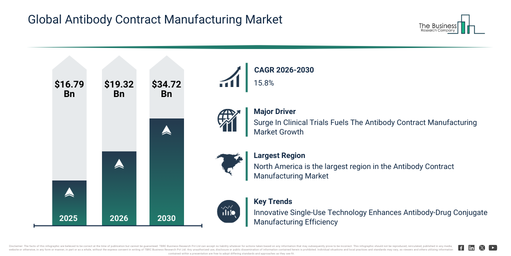
    The antibody contract manufacturing market size has seen rapid expansion in recent years. It is forecast to rise from $16.79 billion in 2025 to $19.32 billion in 2026, exhibiting a compound annual growth rate (CAGR) of 15.0%. The past growth can be attributed to several factors including an increase in biologics development pipelines, greater outsourcing by biopharmaceutical companies, the broadening of mammalian cell culture platforms, heightened clinical trial activity for antibodies, and the presence of specialized CMO infrastructure.

    The antibody contract manufacturing market is anticipated to experience substantial expansion in the coming years, with its size projected to reach $34.72 billion by 2030, demonstrating a compound annual growth rate (CAGR) of 15.8%. This growth throughout the forecast period is primarily fueled by the increasing demand for commercial-scale antibody production, greater investments in next-generation biologics, a heightened focus on cost-efficient manufacturing models, the broadening of personalized medicine pipelines, and an uptick in regulatory approvals for antibody therapies. Significant trends influencing this period encompass the expansion of large-scale antibody manufacturing capacity, the rising adoption of single-use bioprocessing systems, increasing demand for bispecific antibodies and ADCs, an intensified focus on flexible and scalable manufacturing models, and an enhanced emphasis on regulatory compliance and quality control.

    Access Your Free Sample Report For In-Depth Market Analysis:

    https://www.thebusinessresearchcompany.com/report/antibody-contract-manufacturing-global-market-report

    Which Key Factors Are Driving The Antibody Contract Manufacturing Market Growth?

    The growing count of clinical trials is anticipated to boost the expansion of the antibody contract manufacturing market moving forward. Clinical trials are investigative studies undertaken with human subjects to evaluate the safety and efficacy of novel medical treatments, interventions, or diagnostic protocols. As the volume of clinical trials involving antibody-based therapeutics or diagnostics rises, it generates a demand for premium quality antibodies, thereby ensuring a punctual and compliant supply for these trials. For instance, in May 2023, data from ClinicalTrials.gov, a component of the National Institutes of Health (NIH), a US-based government agency, indicated that the number of registered clinical trial studies across all 50 states of the United States and 221 countries escalated from 399,499 in 2022 to 437,533 in 2023. Additionally, about 241,498 studies, making up 53% of the total, were registered outside the United States, in contrast to 140,492 studies, or 31%, which were registered solely within the United States. Consequently, the increasing number of clinical trials is a primary force driving the growth of the antibody contract manufacturing market.

    How Are Different Segments Classified In The Antibody Contract Manufacturing Market Segment Analysis?

    The antibody contract manufacturing market covered in this report is segmented –

    1) By Product: Monoclonal Antibodies, Polyclonal Antibodies, Other Products

    2) By Source: Mammalian, Microbial

    3) By Scale Of Operation: Preclinical, Clinical, Commercial

    4) By End-User: Biopharmaceutical Companies, Research Laboratories, Other End Users

    Subsegments:

    1) By Monoclonal Antibodies: Therapeutic Monoclonal Antibodies, Diagnostic Monoclonal Antibodies

    2) By Polyclonal Antibodies: Research Polyclonal Antibodies, Therapeutic Polyclonal Antibodies

    3) By Other Products: Bispecific Antibodies, Antibody-Drug Conjugates (ADCs), Fusion Proteins

    Which Trends Are Guiding The Direction Of The Antibody Contract Manufacturing Market?

    Leading firms in the antibody contract manufacturing market are prioritizing breakthroughs like single-use technology, which serves to diminish cross-contamination hazards and lower operational expenditures. Single-use technology (SUT) describes components and systems that are disposable and utilized within biopharmaceutical production workflows. As an illustration, during September 2024, the US-based pharmaceutical entity Merck & Co. introduced the Mobius ADC Reactor, specifically engineered to improve the production of antibody-drug conjugates. This novel single-use reactor, tailored for antibody-drug conjugate manufacturing, substantially boosts production efficiency by 70% when contrasted with conventional stainless steel or glass techniques. Its disposable nature reduces the likelihood of cross-contamination and cuts down on operating expenses, thereby enabling quicker processing cycles. Furthermore, sophisticated film technology enhances the durability and leak resistance of the bags, safeguarding the quality of highly potent active pharmaceutical ingredients. Such advancements assist biopharmaceutical enterprises in manufacturing essential therapies with greater safety and efficiency.

    Who Are The Companies Driving Activity In The Antibody Contract Manufacturing Market?

    Major companies operating in the antibody contract manufacturing market are Lonza Group AG, Catalent Inc, Samsung Biologics Co Ltd, Wuxi Biologics Cayman Inc, Thermo Fisher Scientific Inc, Boehringer Ingelheim BioXcellence, AGC Biologics, FUJIFILM Diosynth Biotechnologies, AbbVie Inc, Charles River Laboratories International Inc, mAbxience, KBI Biopharma Inc, Abzena Ltd, Just-Evotec Biologics, Northway Biotech, Cerbios-Pharma, Scorpius BioManufacturing, Lotte Biologics, Rentschler Biopharma SE, Cytiva (Life Sciences CDMO), Xcellon Biologics, Celonic AG, Syngene International Ltd

    Get The Full Antibody Contract Manufacturing Market Report:

    https://www.thebusinessresearchcompany.com/report/antibody-contract-manufacturing-global-market-report

    Which Region Is The Largest In The Antibody Contract Manufacturing Market?

    North America was the largest region in the antibody contract manufacturing market in 2025. Asia-Pacific is expected to be the fastest-growing region in the forecast period. The regions covered in the antibody contract manufacturing market report are Asia-Pacific, South East Asia, Western Europe, Eastern Europe, North America, South America, Middle East, Africa.

    Request A Customized Antibody Contract Manufacturing Market Report For Competitive Insights:

    https://www.thebusinessresearchcompany.com/report/antibody-contract-manufacturing-global-market-report

    Browse Through More Reports Similar to the Global Antibody Contract Manufacturing Market 2026, By The Business Research Company

    Antibody Discovery Market Report 2026

    https://www.thebusinessresearchcompany.com/report/antibody-discovery-global-market-report

    Vaccine Contract Manufacturing Market Report 2026

    https://www.thebusinessresearchcompany.com/report/vaccine-contract-manufacturing-global-market-report

    Biopharmaceuticals Contract Manufacturing Market Report 2026

    https://www.thebusinessresearchcompany.com/report/biopharmaceuticals-contract-manufacturing-global-market-report

    Get in touch with us:

    The Business Research Company: https://www.thebusinessresearchcompany.com/

    Americas +1 310-496-7795

    Asia +44 7882 955267 & +91 8897263534

    Europe +44 7882 955267

    Email us at info@tbrc.info

    Follow us on:

    LinkedIn: https://in.linkedin.com/company/the-business-research-company

    YouTube: https://www.youtube.com/channel/UC24_fI0rV8cR5DxlCpgmyFQ

    Global Market Model: https://www.thebusinessresearchcompany.com/global-market-model

  • Artificial Intelligence in Medical Imaging Market Analysis: Growth Potential and Future Outlook

    Artificial Intelligence in Medical Imaging Market Analysis: Growth Potential and Future Outlook

    The Business Research Company’s 2026 market reports feature enhanced tools like market attractiveness analysis, TAM assessment, and company scoring matrices, along with interactive dashboards, deeper supply chain insights, and startup coverage strengthening the depth, usability, and strategic value of insights.

    What Is The Forecasted Market Size Trajectory Of The Artificial Intelligence in Medical Imaging Market From 2026 To 2030?

    The artificial intelligence in medical imaging market has experienced significant expansion in recent years. This market is expected to increase from $4.44 billion in 2025 to $5.82 billion in 2026, exhibiting a compound annual growth rate (CAGR) of 31.0%. Key drivers for its historical growth include escalating medical imaging procedure volumes, a limited supply of skilled radiologists, the rising occurrence of chronic and complex diseases, the proliferation of digital imaging infrastructure, and the expansion of hospital imaging departments.

    The artificial intelligence in medical imaging market size is projected to experience substantial growth in the coming years. It is anticipated to reach $17.19 billion by 2030, demonstrating a compound annual growth rate (CAGR) of 31.1%. This expansion during the forecast period can be attributed to several factors, including the increasing adoption of AI-powered clinical decision support, rising investments in precision diagnostics, the broader application of artificial intelligence across multiple imaging modalities, a growing demand for faster diagnostic turnaround times, and the increasing integration of AI with hospital information systems. Key trends for the forecast period include a wider embrace of AI-assisted diagnostic imaging tools, a surge in the use of deep learning for image interpretation, the growing incorporation of AI into radiology workflow automation, the expansion of AI-based predictive diagnostic models, and an enhanced focus on the accuracy of early disease detection.

    Access Your Free Sample Report For In-Depth Market Analysis:

    https://www.thebusinessresearchcompany.com/report/artificial-intelligence-in-medical-imaging-global-market-report

    What Major Factors Are Driving The Artificial Intelligence in Medical Imaging Market Forward?

    The anticipated expansion of imaging modalities is set to drive the advancement of AI in the medical imaging market in the future. These modalities encompass various medical imaging methods employed to visualize the human body for both diagnostic and therapeutic objectives. AI algorithms find application within these medical techniques, aiding in image reconstruction, reducing noise, and correcting artifacts, which results in sharper and more precise CT images. As an illustration, the National Health Service, a UK-based government department, reported in June 2025 that 47.2 million imaging tests were recorded in England for the year ending March 2024. This marks a 4.8% rise from the 45.0 million reported in the preceding year. Consequently, the increasing prevalence of imaging modalities is a key factor fueling the expansion of AI in the medical imaging market.

    Which Segment Categories Are Included In The Artificial Intelligence in Medical Imaging Market Segment Analysis?

    The artificial intelligence in medical imaging market covered in this report is segmented –

    1) By Modality: Computed Tomography (CT) Scan, Magnetic Resonance Imaging (MRI), X-rays, Ultrasound, Nuclear Imaging

    2) By Technology: Deep Learning, Natural Language Processing (NLP), Other Technologies

    3) By Application: Neurology, Respiratory And Pulmonary, Cardiology, Breast Screening, Orthopedics

    4) By End-Use: Hospitals, Diagnostic Imaging Centers, Other End-Users

    Subsegments:

    1) By Computed Tomography (CT) Scan: Cardiac CT, CT Angiography, Lung CT, Abdominal CT, Head CT

    2) By Magnetic Resonance Imaging (MRI): Brain MRI, Spine MRI, Musculoskeletal MRI, Abdominal MRI, Functional MRI

    3) By X-rays: Chest X-rays, Dental X-rays, Mammography, Bone X-rays, Fluoroscopy

    4) By Ultrasound: Abdominal Ultrasound, Cardiac Ultrasound, Obstetric And Gynecological Ultrasound, Vascular Ultrasound, Musculoskeletal Ultrasound

    5) By Nuclear Imaging: Positron Emission Tomography (PET), Single Photon Emission Computed Tomography (SPECT), Bone Scans, Thyroid Scans, Cardiac Scans

    Which Trends Are Impacting The Progress Of The Artificial Intelligence in Medical Imaging Market?

    Leading companies operating within the AI in medical imaging market are developing innovative products, such as AI-integrated MRI systems, to better serve patients. An AI-enabled MRI system is essentially a traditional Magnetic Resonance Imaging (MRI) machine that incorporates artificial intelligence (AI) technology. For instance, in December 2023, GE Healthcare, a US-based medical technology company, unveiled SIGNA Champion, an AI-enabled MRI system. SIGNA Champion is designed to provide multiple AI-powered workflow features like AIR Recon DL and Sonic DL, which support efficiency and deliver excellent image quality for users of all experience levels. A distinctive aspect of SIGNA Champion is its combination of spacious patient clearance inside the bore and reduced scan times.

    Who Are The Active Companies Shaping The Artificial Intelligence in Medical Imaging Market?

    Major companies operating in the artificial intelligence in medical imaging market are Google LLC, Microsoft Corporation, IBM Watson Health, Intel Corporation, NVIDIA Corporation, Siemens Healthineers, Koninklijke Philips N.V, GE Healthcare, Agfa-Gevaert Group/Agfa HealthCare, Aidoc Medical, Arterys Inc., Lunit Inc., Butterfly Network Inc., Digital Diagnostics Inc., Caption Health Inc., EchoNous Inc., Covera Health Inc., Nanox Imaging LTD., AZmed, InformAI LLC, Avicenna AI, ImageBiopsy Lab, Nucleai, Icometrix NV., Gleamer

    Get The Full Artificial Intelligence in Medical Imaging Market Report:

    https://www.thebusinessresearchcompany.com/report/artificial-intelligence-in-medical-imaging-global-market-report

    Where Is The Artificial Intelligence in Medical Imaging Market Primarily Concentrated By Region?

    North America was the largest region in the AI in medical imaging market in 2025. Asia-Pacific is expected to be the fastest-growing region in the forecast period. The regions covered in the artificial intelligence in medical imaging market report are Asia-Pacific, South East Asia, Western Europe, Eastern Europe, North America, South America, Middle East, Africa.

    Request A Customized Artificial Intelligence in Medical Imaging Market Report For Competitive Insights:

    https://www.thebusinessresearchcompany.com/report/artificial-intelligence-in-medical-imaging-global-market-report

    Browse Through More Reports Similar to the Global Artificial Intelligence in Medical Imaging Market 2026, By The Business Research Company

    Artificial Intelligence In Radiology Market Report 2026

    https://www.thebusinessresearchcompany.com/report/artificial-intelligence-in-radiology-global-market-report

    Ai In Medical Imaging Market Report 2026

    https://www.thebusinessresearchcompany.com/report/ai-in-medical-imaging-global-market-report

    Artificial Intelligence In Magnetic Resonance Imaging Mri Market Report 2026

    https://www.thebusinessresearchcompany.com/report/artificial-intelligence-in-magnetic-resonance-imaging-mri-global-market-report

    Get in touch with us:

    The Business Research Company: https://www.thebusinessresearchcompany.com/

    Americas +1 310-496-7795

    Asia +44 7882 955267 & +91 8897263534

    Europe +44 7882 955267

    Email us at info@tbrc.info

    Follow us on:

    LinkedIn: https://in.linkedin.com/company/the-business-research-company

    YouTube: https://www.youtube.com/channel/UC24_fI0rV8cR5DxlCpgmyFQ

    Global Market Model: https://www.thebusinessresearchcompany.com/global-market-model