Category: Healthcare Services

  • Ankylosing spondylitis market forecast with key trends and growth potential

    Ankylosing spondylitis market forecast with key trends and growth potential

    The Business Research Company’s 2026 market reports feature enhanced tools like market attractiveness analysis, TAM assessment, and company scoring matrices, along with interactive dashboards, deeper supply chain insights, and startup coverage strengthening the depth, usability, and strategic value of insights.

    What Is The Projected Increase In Market Value Of The Ankylosing Spondylitis Market During 2026–2030?

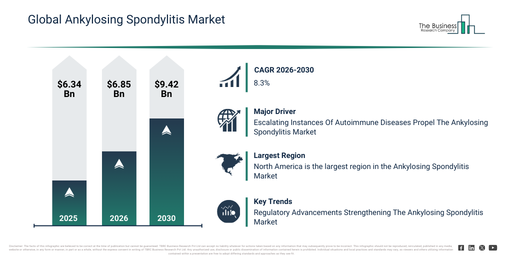
    The ankylosing spondylitis market has demonstrated significant expansion in recent years. It is anticipated to increase from $6.34 billion in 2025 to $6.85 billion in 2026, achieving a compound annual growth rate (CAGR) of 8.0%. This historic growth can be attributed to factors such as heightened diagnostic awareness, greater access to NSAIDs and DMARDs, an increase in specialist rheumatology services, wider availability of hospital-based treatment, and the expanding utilization of imaging for monitoring disease.

    The ankylosing spondylitis market is anticipated to show significant expansion in the coming years. It is projected to reach $9.42 billion by 2030, growing at a compound annual growth rate (CAGR) of 8.3%. This projected growth can be attributed to the increasing uptake of biologics and biosimilars, a heightened emphasis on personalized medicine, the development of advanced biologic pipelines, a rising demand for comprehensive long-term disease management, and increased funding for autoimmune research. Prominent trends expected during this forecast period involve a broader adoption of biologic therapies, an elevated use of targeted DMARDs, a stronger focus on early disease detection, the broadening of personalized treatment strategies, and a more integrated approach to physical therapy programs.

    Access Your Free Sample Report For In-Depth Market Analysis:

    https://www.thebusinessresearchcompany.com/report/ankylosing-spondylitis-global-market-report

    Which Important Drivers Are Guiding The Ankylosing Spondylitis Market Growth?

    The ankylosing spondylitis market is set for growth owing to the escalating occurrence of autoimmune diseases. Autoimmune disorders represent a broad spectrum of conditions where the immune system exhibits an abnormal response, erroneously attacking and causing harm to healthy cells, tissues, and organs within the body. Specifically, conditions like ankylosing spondylitis manifest when the immune system incorrectly targets the body’s own tissues, initiating inflammation and subsequent damage. Both genetic predispositions and environmental elements play a role in the onset of ankylosing spondylitis, which is a type of autoimmune arthritis primarily affecting the spine and pelvis. For instance, in September 2023, the Impact of IBD Report 2023, published by the IBD Clinical and Research Centre (a Canada-based organization focused on enhancing the lives of patients with Crohn’s disease and ulcerative colitis), reported a prevalence of 825 per 100,000 in 2023, indicating that over 320,000 individuals in Canada have inflammatory bowel disease (IBD). With an anticipated annual increase in prevalence of 2.44%, projections suggest that 1.1% of the population, or 470,000 Canadians, will be living with IBD by 2035. Thus, the rising incidence of autoimmune diseases is poised to propel the future expansion of the ankylosing spondylitis market.

    How Is The Ankylosing Spondylitis Market Organized By Segment Classification?

    The ankylosing spondylitis market covered in this report is segmented –

    1) By Treatment Type: Painkillers And Non-Steroidal Anti-Inflammatory Drugs (NSAIDs), Disease-Modifying Anti-Rheumatic Drugs (DMARDS), Biological Therapies, Steroids, Physical Therapies, Surgery

    2) By Molecule: Biologics, Biosimilar, Small Molecules

    3) By Route Of Administration: Parenteral, Oral, Other Routes

    4) By Application: Juveniles, Adults

    5) By End User: Hospitals, Clinics

    Subsegments:

    1) By Painkillers And Non-Steroidal Anti-Inflammatory Drugs (NSAIDs): Over-The-Counter NSAIDs, Prescription NSAIDs

    2) By Disease-Modifying Anti-Rheumatic Drugs (DMARDs): Conventional DMARDs, Targeted DMARDs

    3) By Biological Therapies: TNF Inhibitors, IL-17 Inhibitors

    4) By Steroids: Oral Steroids, Injectable Steroids

    5) By Physical Therapies: Physiotherapy, Exercise Programs

    6) By Surgery: Joint Replacement Surgery, Spinal Surgery

    What Trends Are Influencing The Evolution Of The Ankylosing Spondylitis Market?

    Major companies within the ankylosing spondylitis market are focusing on creating advanced biologic solutions, such as biosimilars, to improve patient accessibility, lower treatment expenses, and offer accustomed administration options. These biosimilars are therapeutics that utilize the proven active ingredients of reference biologics while maintaining comparable efficacy and safety characteristics. For instance, in August 2025, Amgen Biotechnology Singapore, a Singapore-based biotech firm, gained approval for its biosimilar adalimumab (Amgevita), offered in both a 40 mg/0.4 mL autoinjector and a 20 mg/0.2 mL prefilled syringe. This particular therapy is indicated for reducing indicators and symptoms in adult patients with active ankylosing spondylitis who have had an inadequate response to standard therapy, thereby providing familiar administration methods, leveraging a recognized active ingredient, and presenting a more affordable alternative in the biologics domain.

    Who Are The Industry Participants Involved In The Ankylosing Spondylitis Market?

    Major companies operating in the ankylosing spondylitis market are Pfizer Inc., Johnson & Johnson Pvt. Ltd., Merck & Co. Inc., AbbVie Inc., Novartis AG, Bristol-Myers Squibb, Eli Lilly and Company, Gilead Sciences Inc., Boehringer Ingelheim International GmbH, Amgen Inc., Viatris Inc., Astellas Pharma Inc., AstraZeneca plc, UCB Inc., Cipla Inc., Zydus Lifesciences Limited, Celltrion Inc., Hetero Labs Ltd., Janssen Biotech Inc., Reliance Life Sciences Pvt. Ltd.

    Get The Full Ankylosing Spondylitis Market Report:

    https://www.thebusinessresearchcompany.com/report/ankylosing-spondylitis-global-market-report

    Which Region Has The Greatest Market Share In The Ankylosing Spondylitis Market?

    North America was the largest region in the ankylosing spondylitis market in 2025. Asia-Pacific is expected to be the fastest-growing region in the forecast period. The regions covered in the ankylosing spondylitis market report are Asia-Pacific, South East Asia, Western Europe, Eastern Europe, North America, South America, Middle East, Africa.

    Request A Customized Ankylosing Spondylitis Market Report For Competitive Insights:

    https://www.thebusinessresearchcompany.com/report/ankylosing-spondylitis-global-market-report

    Browse Through More Reports Similar to the Global Ankylosing Spondylitis Market 2026, By The Business Research Company

    Osteoarthritis Market Report 2026

    https://www.thebusinessresearchcompany.com/report/osteoarthritis-global-market-report

    Cervical Spondylosis Treatment Market Report 2026

    https://www.thebusinessresearchcompany.com/report/cervical-spondylosis-treatment-global-market-report

    Axial Spondyloarthritis Axspa Market Report 2026

    https://www.thebusinessresearchcompany.com/report/axial-spondyloarthritis-axspa-global-market-report

    Get in touch with us:

    The Business Research Company: https://www.thebusinessresearchcompany.com/

    Americas +1 310-496-7795

    Asia +44 7882 955267 & +91 8897263534

    Europe +44 7882 955267

    Email us at info@tbrc.info

    Follow us on:

    LinkedIn: https://in.linkedin.com/company/the-business-research-company

    YouTube: https://www.youtube.com/channel/UC24_fI0rV8cR5DxlCpgmyFQ

    Global Market Model: https://www.thebusinessresearchcompany.com/global-market-model
  • Anhydrous lactose market analysis with growth drivers and outlook

    Anhydrous lactose market analysis with growth drivers and outlook

    The Business Research Company’s 2026 market reports feature enhanced tools like market attractiveness analysis, TAM assessment, and company scoring matrices, along with interactive dashboards, deeper supply chain insights, and startup coverage strengthening the depth, usability, and strategic value of insights.

    How Is The Market Size Of The Anhydrous Lactose Market Expected To Change From 2026 To 2030?

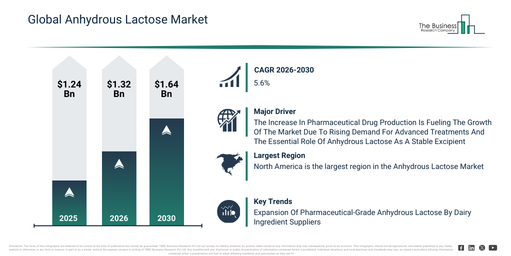
    The anhydrous lactose market size has demonstrated strong growth over recent years. It is anticipated to expand from $1.24 billion in 2025 to $1.32 billion in 2026, achieving a compound annual growth rate (CAGR) of 6.0%. The historical period’s growth can be attributed to the rise of solid oral dosage manufacturing, the expansion of generic drug production, increased utilization of lactose-based excipients, an increase in pharmaceutical manufacturing capacity, and the standardization of excipient quality requirements.

    The anhydrous lactose market size is poised for robust expansion in the upcoming years, with projections indicating a rise to $1.64 billion by 2030, maintaining a compound annual growth rate (CAGR) of 5.6%. This anticipated growth is primarily driven by the escalating demand for high-stability excipients, the increasing scale of biopharmaceutical production, a growing emphasis on advanced drug formulation techniques, the proliferation of contract manufacturing organizations, and intensified regulatory focus on excipient traceability. Throughout the forecast period, notable trends include the broader utilization of anhydrous lactose in moisture-sensitive drug formulations, a rising preference for direct compression grade lactose, an increased focus on improving powder flow properties, the widening application scope of pharmaceutical-grade excipients, and enhanced quality control measures in lactose manufacturing.

    Access Your Free Sample Report For In-Depth Market Analysis:

    https://www.thebusinessresearchcompany.com/report/anhydrous-lactose-global-market-report

    What Major Factors Are Driving The Anhydrous Lactose Market Forward?

    The anticipated increase in pharmaceutical drug manufacturing is expected to drive the growth of the anhydrous lactose market moving forward. Pharmaceutical drug production involves the systematic creation of medicines under strict regulations to ensure their safety, effectiveness, and quality for medical treatment. The output of pharmaceutical drugs is growing as the expanding aging population boosts the demand for advanced treatments to effectively manage chronic illnesses. Anhydrous lactose serves as a versatile excipient in pharmaceutical drug production, primarily functioning as a filler and binder. Its moisture-free characteristic enhances the stability and shelf life of tablets and capsules, ensuring consistent drug delivery and quality. For instance, in June 2023, the European Federation of Pharmaceutical Industries and Associations (EFPIA), a Belgium-based trade association representing the pharmaceutical industry in Europe, reported that total pharmaceutical production in Europe amounted to €390,000 million ($422,803 million) in 2023, an increase from €363,300 million ($393,857 million) in 2022. Therefore, the rise in pharmaceutical drug production is stimulating the growth of the anhydrous lactose market.

    Which Segments Define The Anhydrous Lactose Market Segment Structure?

    The anhydrous lactose market covered in this report is segmented –

    1) By Product Type: Edible Lactose, Pharmaceutical Lactose, Technical Lactose

    2) By Form: Powder, Granules, Tablets

    3) By Distribution Channel: Online Retail, Supermarkets Or Hypermarkets, Specialty Stores, Pharmacies

    4) By Application: Pharmaceutical Excipients, Lyophilized Products, Formula For Baby Food, Other Applications

    5) By End-User: Food Industry, Pharmaceutical Industry, Animal Feed Industry, Cosmetic Industry, Other End-Users

    Subsegments:

    1) By Edible Lactose: Infant Formula, Baked Goods, Confectionery, Dairy Products, Dietary Supplements

    2) By Pharmaceutical Lactose: Direct Compression Grade, Inhalation Grade, Granulation Grade, Spray-Dried Lactose

    3) By Technical Lactose: Animal Feed, Industrial Fermentation, Bioplastics, Cosmetics And Personal Care Products

    Which Trends Are Impacting The Progress Of The Anhydrous Lactose Market?

    Leading companies within the anhydrous lactose market are concentrating on developing innovative products, such as pharmaceutical-grade lactose for oral solid dose (OSD) applications, to address the increasing demand from tablet and capsule manufacturing. Pharmaceutical-grade lactose is a highly purified form of lactose produced according to stringent pharmacopeial standards (like USP and Ph. Eur.), distinguishing it from edible-grade lactose, which does not meet the necessary regulatory, purity, and particle-size criteria for pharmaceutical use. For example, in October 2023, Lactalis Ingredients, a dairy-ingredient company based in France, launched its Lactalis Ingredients Pharma business line and introduced the Lactalpha range of milled and sieved pharmaceutical-grade lactose monohydrate (available in 50, 100, 150 mesh). This Lactalpha lactose is designed to ensure reliable flow, compactibility, and consistency in tablet and capsule production. The entry into the pharmaceutical lactose market highlights a trend among dairy-ingredient manufacturers to expand into high-value pharmaceutical excipients, thereby providing stable, compliance-ready, and high-performance materials.

    Who Are The Established Players Within The Anhydrous Lactose Market?

    Major companies operating in the anhydrous lactose market are Kerry Group, Sigma-Aldrich, Fagron Group, Spectrum Chemical Mfg. Corp., DFE Pharma, Wako Pure Chemical Industries Ltd., Anshul Life Sciences, Salius Pharma Pvt. Ltd., SimSon Pharma Limited, MEGGLE GmbH & Co. KG, VIVAN Life Science, Aurora Industry Co. Ltd, Glentham Life Sciences Limited, Lactalis Ingredients, Colorchem Industries Ltd., Jiangsu Dawning Pharmaceutical Co. Ltd., International Ingredients & Excipients Pvt. Ltd., Fengchen Group Co. Ltd, Xi’an Harmonious Natural Biotechnology Co. Ltd., Hexon Laboratories Private Limited

    Get The Full Anhydrous Lactose Market Report:

    https://www.thebusinessresearchcompany.com/report/anhydrous-lactose-global-market-report

    Which Region Accounts For The Largest Portion Of The Anhydrous Lactose Market?

    North America was the largest region in the anhydrous lactose market in 2025. Asia-Pacific is expected to be the fastest-growing region in the forecast period. The regions covered in the anhydrous lactose market report are Asia-Pacific, South East Asia, Western Europe, Eastern Europe, North America, South America, Middle East, Africa.

    Request A Customized Anhydrous Lactose Market Report For Competitive Insights:

    https://www.thebusinessresearchcompany.com/report/anhydrous-lactose-global-market-report

    Browse Through More Reports Similar to the Global Anhydrous Lactose Market 2026, By The Business Research Company

    Lactose Intolerance Treatment Market Report 2026

    https://www.thebusinessresearchcompany.com/report/lactose-intolerance-treatment-global-market-report

    Dairy Alternatives Market Report 2026

    https://www.thebusinessresearchcompany.com/report/dairy-alternatives-global-market-report

    Lactose Free Food Market Report 2026

    https://www.thebusinessresearchcompany.com/report/lactose-free-food-global-market-report

    Get in touch with us:

    The Business Research Company: https://www.thebusinessresearchcompany.com/

    Americas +1 310-496-7795

    Asia +44 7882 955267 & +91 8897263534

    Europe +44 7882 955267

    Email us at info@tbrc.info

    Follow us on:

    LinkedIn: https://in.linkedin.com/company/the-business-research-company

    YouTube: https://www.youtube.com/channel/UC24_fI0rV8cR5DxlCpgmyFQ

    Global Market Model: https://www.thebusinessresearchcompany.com/global-market-model

  • AI clinical trial feasibility tools market insights and opportunities

    AI clinical trial feasibility tools market insights and opportunities

    The Business Research Company’s 2026 market reports feature enhanced tools like market attractiveness analysis, TAM assessment, and company scoring matrices, along with interactive dashboards, deeper supply chain insights, and startup coverage strengthening the depth, usability, and strategic value of insights.

    What Is The Anticipated Rise In Market Value Of The Artificial Intelligence Clinical Trial Protocol Feasibility Tool Market During The Forecast Period?

    The artificial intelligence clinical trial protocol feasibility tool market has experienced substantial growth in recent years. It is anticipated to expand from $0.83 billion in 2025 to $1.06 billion in 2026, showing a compound annual growth rate (CAGR) of 27.3%. The historical increase can be ascribed to factors including the escalating complexity of clinical trial protocols, a rise in trial failure rates, increased reliance on data-driven feasibility analysis, the expansion of global clinical research initiatives, and the early adoption of AI-based planning tools.

    The artificial intelligence clinical trial protocol feasibility tool market size is anticipated to undergo significant expansion in the next few years. Its valuation is projected to ascend to $2.76 billion by 2030, exhibiting a compound annual growth rate (CAGR) of 27.0%. The expansion observed in the forecast period is largely due to the escalating demand for expedited trial approvals, the increasing implementation of decentralized trial frameworks, the proliferation of AI-enabled protocol optimization platforms, a heightened emphasis on reducing trial expenditures, and a growing concentration on predictive feasibility modeling. Prominent trends throughout this forecast timeframe encompass the rising application of AI for assessing protocol risks, the wider adoption of predictive recruitment modeling, the deepening integration of historical trial information, the spread of cloud-based feasibility instruments, and an intensified focus on optimizing trial designs.

    Access Your Free Sample Report For In-Depth Market Analysis:

    https://www.thebusinessresearchcompany.com/report/artificial-intelligence-clinical-trial-protocol-feasibility-tool-global-market-report

    What Key Factors Are Shaping The Artificial Intelligence Clinical Trial Protocol Feasibility Tool Market Landscape?

    The increasing focus on precision medicine is anticipated to drive the expansion of the artificial intelligence clinical trial protocol feasibility tool market in the future. Precision medicine is defined as a customized healthcare strategy that leverages an individual’s genetic makeup, environmental factors, and lifestyle choices to deliver more precise and efficacious therapies. This growing emphasis on precision medicine stems from advancements in genomic sequencing and the identification of biomarkers, which facilitate accurate diagnosis and targeted therapeutic interventions. Artificial intelligence clinical trial protocol feasibility tools improve precision medicine through their capacity for data-informed trial design, rendering them highly suitable for customizing treatments for specific patient groups. These tools mitigate inefficiencies in trials by forecasting patient recruitment, scheduling, and potential risks, thereby enhancing the accuracy and success of clinical research. For example, Novotech, an Australia-based biotechnology company, reported in March 2024 that in 2023, precision oncology treatments constituted 43% of the 217 FDA-approved oncology therapies, with 78 of these involving DNA or NGS-detectable biomarkers. Consequently, the heightened importance placed on precision medicine is fueling the expansion of the artificial intelligence clinical trial protocol feasibility tool market.

    How Is The Artificial Intelligence Clinical Trial Protocol Feasibility Tool Market Organized By Segment Classification?

    The artificial intelligence clinical trial protocol feasibility tool market covered in this report is segmented –

    1) By Component: Software, Services

    2) By Deployment Mode: Cloud-Based, On-Premises

    3) By Application: Protocol Design, Site Selection, Patient Recruitment, Risk Assessment, Other Applications

    4) By End-User: Pharmaceutical And Biotechnology Companies, Contract Research Organizations, Academic And Research Institutes, Other End-Users

    Subsegments:

    1) By Software: Predictive Analytics, Machine Learning, Natural Language Processing, Data Integration

    2) By Services: Consulting, Implementation, Training And Support, Managed Services

    What Market Trends Are Affecting The Artificial Intelligence Clinical Trial Protocol Feasibility Tool Market?

    Companies active in the artificial intelligence clinical trial protocol feasibility tool market are concentrating on developing innovative solutions, such as predictive analytics-based trial planning software, to improve the accuracy of protocol design and lessen trial delays. This predictive analytics-based trial planning software is a tool that utilizes historical and current clinical trial data to project timelines, pinpoint potential risks, and refine study designs for more efficient and economical trials. For example, in June 2024, Lokavant Inc., a US-based clinical intelligence company, unveiled Spectrum, the initial artificial intelligence clinical trial feasibility solution designed to optimize trials from their strategic planning stages through mid-study re-forecasting. The platform integrates predictive analytics-based trial planning software, enabling continuous, real-time feasibility analysis, timeline and cost forecasting, and financial projections without the need for manual input. Spectrum provides dynamic, real-time re-forecasting by incorporating live trial data, allowing study teams to monitor progress, explore alternative scenarios, and enhance enrollment outcomes. This solution also offers highly accurate predictions for timelines, costs, and operational risks, thereby supporting quicker, data-driven decision-making throughout the clinical trial lifecycle.

    Who Are The Industry Participants Involved In The Artificial Intelligence Clinical Trial Protocol Feasibility Tool Market?

    Major companies operating in the artificial intelligence clinical trial protocol feasibility tool market are IQVIA Holdings Inc., SAS Institute Inc., Veeva Systems Inc., Tempus AI Inc., Cytel Inc., ArisGlobal LLC., Saama Technologies Inc., Norstella, ConcertAI, Komodo Health Inc., H1 Inc., TriNetX Inc., ObjectiveHealth LLC, Lokavant Inc., Inato Inc., Clinerion Ltd., Faro Health Inc., Lantern Pharma Inc., Ryght AI, BEKHealth Corporation

    Get The Full Artificial Intelligence Clinical Trial Protocol Feasibility Tool Market Report:

    https://www.thebusinessresearchcompany.com/report/artificial-intelligence-clinical-trial-protocol-feasibility-tool-global-market-report

    Where Is The Artificial Intelligence Clinical Trial Protocol Feasibility Tool Market Most Concentrated Geographically?

    North America was the largest region in the artificial intelligence clinical trial protocol feasibility tool market in 2025. Asia-Pacific is expected to be the fastest-growing region in the forecast period. The regions covered in the artificial intelligence clinical trial protocol feasibility tool market report are Asia-Pacific, South East Asia, Western Europe, Eastern Europe, North America, South America, Middle East, Africa.

    Request A Customized Artificial Intelligence Clinical Trial Protocol Feasibility Tool Market Report For Competitive Insights:

    https://www.thebusinessresearchcompany.com/report/artificial-intelligence-clinical-trial-protocol-feasibility-tool-global-market-report

    Browse Through More Reports Similar to the Global Artificial Intelligence Clinical Trial Protocol Feasibility Tool Market 2026, By The Business Research Company

    Clinical Trial Management Systems Market Report 2026

    https://www.thebusinessresearchcompany.com/report/clinical-trial-management-systems-global-market-report

    Ai Based Clinical Trial Solution Providers Market Report 2026

    https://www.thebusinessresearchcompany.com/report/ai-based-clinical-trial-solution-providers-global-market-report

    Ai In Clinical Trials Market Report 2026

    https://www.thebusinessresearchcompany.com/report/ai-in-clinical-trials-global-market-report

    Get in touch with us:

    The Business Research Company: https://www.thebusinessresearchcompany.com/

    Americas +1 310-496-7795

    Asia +44 7882 955267 & +91 8897263534

    Europe +44 7882 955267

    Email us at info@tbrc.info

    Follow us on:

    LinkedIn: https://in.linkedin.com/company/the-business-research-company

    YouTube: https://www.youtube.com/channel/UC24_fI0rV8cR5DxlCpgmyFQ

    Global Market Model: https://www.thebusinessresearchcompany.com/global-market-model

  • AI clinical genomics interpretation market trends shaping growth

    AI clinical genomics interpretation market trends shaping growth

    The Business Research Company’s 2026 market reports feature enhanced tools like market attractiveness analysis, TAM assessment, and company scoring matrices, along with interactive dashboards, deeper supply chain insights, and startup coverage strengthening the depth, usability, and strategic value of insights.

    How Is The Market Size Of The Artificial Intelligence Clinical Genomics Interpretation Market Expected To Scale Between 2026 And 2030?

    The artificial intelligence clinical genomics interpretation market has experienced substantial expansion in its size over recent years. It is projected to increase from $1.74 billion in 2025 to $2.23 billion in 2026, demonstrating a compound annual growth rate (CAGR) of 28.3%. This historical market expansion is attributable to several factors, including the increasing availability of genomic sequencing data, the expansion of precision medicine initiatives, the growing adoption of bioinformatics platforms, the rising clinical utilization of genomic insights, and the early integration of AI into genomics workflows.

    The artificial intelligence clinical genomics interpretation market is projected to experience rapid expansion in the coming years. This market is anticipated to reach $5.99 billion by 2030, exhibiting a compound annual growth rate (CAGR) of 28.0%. The growth during the forecast period can be attributed to an increasing demand for personalized healthcare solutions, rising investments in genomic data analytics, the expansion of oncology-focused genomics applications, a growing adoption of cloud-based interpretation platforms, and a heightened focus on clinical-grade genomic reporting. Major trends foreseen for the forecast period include the increasing adoption of AI-based variant interpretation tools, a rising integration of genomics with clinical decision support, the growing use of predictive modeling in genomic analysis, the expansion of cloud-based genomics platforms, and an enhanced focus on personalized treatment planning.

    Access Your Free Sample Report For In-Depth Market Analysis:

    https://www.thebusinessresearchcompany.com/report/artificial-intelligence-clinical-genomics-interpretation-global-market-report

    Which Factors Are Influencing The Growth Of The Artificial Intelligence Clinical Genomics Interpretation Market?

    The increasing need for personalized medicine is anticipated to propel the expansion of the artificial intelligence clinical genomics interpretation market in the future. Personalized medicine defines a medical methodology that customizes diagnosis, treatment, and prevention plans based on an individual’s genetic, environmental, and lifestyle elements. The heightened demand for personalized medicine is attributed to more effective treatments, as therapies are specifically designed for an individual’s genetic profile, enhancing outcomes and reducing negative reactions. Artificial intelligence clinical genomics interpretation contributes to this demand for personalized medicine by swiftly analyzing intricate genomic data to pinpoint precise, patient-specific treatment options, thereby improving therapeutic effectiveness and minimizing trial-and-error approaches. For instance, in February 2024, the Personalized Medicine Coalition, a US-based non-profit organization, reported that the U.S. Food and Drug Administration (FDA) approved 16 new personalized treatments for patients with rare diseases in 2023, a considerable increase from the six approvals in 2022. Thus, the escalating demand for personalized medicine is projected to drive the growth of the artificial intelligence clinical genomics interpretation market.

    Which Segments Define The Artificial Intelligence Clinical Genomics Interpretation Market Segment Structure?

    The artificial intelligence clinical genomics interpretation market covered in this report is segmented –

    1) By Component: Software, Services

    2) By Deployment Mode: Cloud Based, On Premises

    3) By Application: Oncology, Rare Diseases, Pharmacogenomics, Infectious Diseases, Other Applications

    4) By End User: Hospitals And Clinics, Research Institutes, Diagnostic Laboratories, Other End User

    Subsegments:

    1) By Software: Genomic Data Analysis, Variant Interpretation, Clinical Decision Support, Predictive Modeling, Reporting And Visualization

    2) By Services: Implementation And Integration, Consulting And Advisory, Training And Support, Data Management, Maintenance And Upgrades

    Which Trends Are Influencing Demand In The Artificial Intelligence Clinical Genomics Interpretation Market?

    Leading companies in the artificial intelligence clinical genomics interpretation market are concentrating on developing innovations that enhance scalability for extensive genomic studies. These advancements facilitate high-throughput data processing, refine the accuracy of genomic insights, and accelerate the identification of biomarkers and therapeutic targets. Scalability denotes the ability of AI systems to effectively examine vast and intricate genomic datasets without sacrificing speed or accuracy, which is crucial given the continuous increase in sequencing volume and complexity. As an illustration, in December 2024, QIAGEN, a life sciences company based in Germany, introduced an AI-driven extension for its Ingenuity Pathway Analysis (IPA) platform, aimed at automating the interpretation of intricate biological data. This improvement employs AI to pinpoint crucial genes, pathways, and molecular networks implicated in diseases. It also incorporates QIAGEN’s Biomedical Knowledge Base, which holds hundreds of millions of AI-generated relationships, thereby supporting more precise and data-informed insights.

    Who Are The Established Players Within The Artificial Intelligence Clinical Genomics Interpretation Market?

    Major companies operating in the artificial intelligence clinical genomics interpretation market are F. Hoffmann-La Roche AG, NVIDIA Corporation, Illumina Inc., QIAGEN N.V., Tempus Labs Inc., GeneDx Inc., Freenome Inc., NantHealth Inc., SOPHiA GENETICS SA, Genomenon Inc., DNAnexus Inc., Lifebit Biotech Ltd., Deep Genomics Inc., SpeeDx Pty Ltd, PierianDx Inc., Genuity Science Inc., Karius Inc., FDNA Inc., SeqOne Genomics Inc., Nostos Genomics Inc.

    Get The Full Artificial Intelligence Clinical Genomics Interpretation Market Report:

    https://www.thebusinessresearchcompany.com/report/artificial-intelligence-clinical-genomics-interpretation-global-market-report

    Which Region Dominates The Artificial Intelligence Clinical Genomics Interpretation Market By Market Share?

    North America was the largest region in the artificial intelligence clinical genomics interpretation market in 2025. Asia-Pacific is expected to be the fastest-growing region in the forecast period. The regions covered in the artificial intelligence clinical genomics interpretation market report are Asia-Pacific, South East Asia, Western Europe, Eastern Europe, North America, South America, Middle East, Africa.

    Request A Customized Artificial Intelligence Clinical Genomics Interpretation Market Report For Competitive Insights:

    https://www.thebusinessresearchcompany.com/report/artificial-intelligence-clinical-genomics-interpretation-global-market-report

    Browse Through More Reports Similar to the Global Artificial Intelligence Clinical Genomics Interpretation Market 2026, By The Business Research Company

    Artificial Intelligence In Medicine Market Report 2026

    https://www.thebusinessresearchcompany.com/report/artificial-intelligence-in-medicine-global-market-report

    Artificial Intelligence In Healthcare Diagnosis Market Report 2026

    https://www.thebusinessresearchcompany.com/report/artificial-intelligence-in-healthcare-diagnosis-global-market-report

    Artificial Intelligence Ai In Clinical Trials Market Report 2026

    https://www.thebusinessresearchcompany.com/report/artificial-intelligence-ai-in-clinical-trials-global-market-report

    Get in touch with us:

    The Business Research Company: https://www.thebusinessresearchcompany.com/

    Americas +1 310-496-7795

    Asia +44 7882 955267 & +91 8897263534

    Europe +44 7882 955267

    Email us at info@tbrc.info

    Follow us on:

    LinkedIn: https://in.linkedin.com/company/the-business-research-company

    YouTube: https://www.youtube.com/channel/UC24_fI0rV8cR5DxlCpgmyFQ

    Global Market Model: https://www.thebusinessresearchcompany.com/global-market-model
  • Angina market insights highlighting growth opportunities through 2030

    Angina market insights highlighting growth opportunities through 2030

    The Business Research Company’s 2026 market reports feature enhanced tools like market attractiveness analysis, TAM assessment, and company scoring matrices, along with interactive dashboards, deeper supply chain insights, and startup coverage strengthening the depth, usability, and strategic value of insights.

    From Its 2026 Market Size, What Value Is The Angina Market Projected To Reach By 2030?

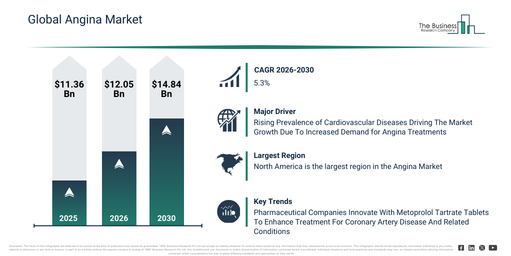
    The angina market has experienced substantial growth in its size over recent years. Projections indicate its expansion from $11.36 billion in 2025 to $12.05 billion by 2026, exhibiting a compound annual growth rate (CAGR) of 6.1%. This historic growth is linked to factors such as the increasing prevalence of cardiovascular diseases, the accessibility of beta blockers and nitrates, the expansion of hospital cardiac care units, a rise in diagnostic testing, and the development of cardiology specialty care.

    The angina market is projected to experience robust expansion in the coming years. It is forecast to achieve a size of $14.84 billion by 2030, exhibiting a compound annual growth rate (CAGR) of 5.3%. This anticipated growth is driven by factors such as an increasing demand for individualized cardiovascular treatment, the expanding use of minimally invasive cardiac interventions, the growing adoption of digital cardiac monitoring, the broadening of preventive cardiology initiatives, and advances in cardiovascular drug development. Significant trends identified for the forecast period include the rising acceptance of combination drug therapies, increased application of long-acting nitrates, a concentrated focus on preventive cardiac care, the diversification of interventional treatment alternatives, and an intensified emphasis on lifestyle and risk management.

    Access Your Free Sample Report For In-Depth Market Analysis:

    https://www.thebusinessresearchcompany.com/report/angina-global-market-report

    Which Key Drivers Are Affecting The Angina Market Development?

    The increasing occurrence of cardiovascular diseases is projected to stimulate the expansion of the angina market in the coming years. Cardiovascular diseases are conditions affecting the heart and blood vessels, encompassing ailments like coronary heart disease, heart failure, and stroke. The growing incidence of these diseases is primarily attributable to an aging global population and heightened exposure to preventable risk factors, including inadequate nutrition, sedentary lifestyles, and tobacco consumption. This rise in cardiovascular disease prevalence fuels the need for angina treatments, as these conditions frequently manifest as chest pain requiring medical intervention to alleviate symptoms and prevent complications. For instance, data from October 2024, sourced from the US-based Centers for Disease Control and Prevention, indicates a significant increase in cardiovascular disease deaths, climbing from 371,506 cases in 2022 to 919,032 deaths in 2023. Consequently, the escalating prevalence of cardiovascular diseases is a key factor driving the growth of the angina market.

    How Is The Angina Market Segmented Across Different Segment Categories?

    The angina market covered in this report is segmented –

    1) By Type: Angina Pectoris, Unstable Angina, Prinzmetal Angina, Other Types

    2) By Treatment: Lifestyle Changes, Medications, Angioplasty And Stenting, Coronary Bypass Surgery, Other Treatments

    3) By Drug Class: Beta Blockers, Nitrates And Calcium Channel Blockers, Angiotensin-Converting Enzyme Inhibitors, Other Drug Classes

    4) By Application: Clinics, Hospitals, Other Applications

    Subsegments:

    1) By Angina Pectoris: Stable Angina, Chronic Stable Angina, Effort-Induced Angina, Variant Or Microvascular Angina

    2) By Unstable Angina: Acute Unstable Angina, Pre-Infarction Angina, Rest Angina

    3) By Prinzmetal Angina: Vasospastic Angina, Coronary Artery Spasm-Induced Angina, Variant Angina

    4) By Other Types: Nocturnal Angina, Post-Infarction Angina, Angina With Silent Myocardial Ischemia, Angina Due To Aortic Stenosis Or Valve Disease

    What Trends Are Transforming The Angina Market?

    Leading companies active in the angina market are engaged in the development of innovative pharmaceuticals, such as metoprolol tartrate tablets, aiming to deliver more efficacious and targeted therapies for individuals suffering from coronary artery disease (CAD) and related ailments. These metoprolol tartrate tablets represent a medication frequently administered for treating a range of cardiovascular conditions, including angina (chest pain), hypertension (high blood pressure), and heart failure. For instance, in April 2023, Zydus, an India-based pharmaceutical company, obtained final authorization from the United States Food and Drug Administration (US-FDA) to produce and offer its generic form of Metoprolol Tartrate Tablets USP in strengths of 25 mg, 50 mg, and 100 mg. Metoprolol functions as a beta blocker, utilized in the management of various cardiovascular disorders, such as high blood pressure (hypertension) and chest pain (angina), and for improving survival post-heart attack.

    Which Organizations Play A Role In The Angina Market Landscape?

    Major companies operating in the angina market are Pfizer Inc., Bayer AG, AstraZeneca PLC, Merck & Co Inc., Sanofi S.A., Novartis AG, GlaxoSmithKline Plc, Eli Lilly and Company, Amgen Inc., Gilead Sciences Inc., Otsuka Pharmaceutical Co Ltd, Bristol-Myers Squibb Company, Boehringer Ingelheim GmbH, Abbott Laboratories, Daiichi Sankyo Company Ltd, Takeda Pharmaceutical Company Limited, Cipla Limited, Sun Pharmaceutical Industries Ltd, Zydus Cadila Healthcare Ltd, Astellas Pharma Inc., Amarin Corporation, Torrent Pharmaceuticals Ltd

    Get The Full Angina Market Report:

    https://www.thebusinessresearchcompany.com/report/angina-global-market-report

    Which Region Holds The Highest Market Share In The Angina Market?

    North America was the largest region in the angina market in 2025. Asia-Pacific is expected to be the fastest-growing region in the forecast period. The regions covered in the angina market report are Asia-Pacific, South East Asia, Western Europe, Eastern Europe, North America, South America, Middle East, Africa.

    Request A Customized Angina Market Report For Competitive Insights:

    https://www.thebusinessresearchcompany.com/report/angina-global-market-report

    Browse Through More Reports Similar to the Global Angina Market 2026, By The Business Research Company

    Angio Suites Market Report 2026

    https://www.thebusinessresearchcompany.com/report/angio-suites-global-market-report

    Angina Pectoris Drugs Market Report 2026

    https://www.thebusinessresearchcompany.com/report/angina-pectoris-drugs-global-market-report

    Angina Pectoris Drugs Market Report 2026

    https://www.thebusinessresearchcompany.com/report/angina-pectoris-drugs-global-market-report

    Get in touch with us:

    The Business Research Company: https://www.thebusinessresearchcompany.com/

    Americas +1 310-496-7795

    Asia +44 7882 955267 & +91 8897263534

    Europe +44 7882 955267

    Email us at info@tbrc.info

    Follow us on:

    LinkedIn: https://in.linkedin.com/company/the-business-research-company

    YouTube: https://www.youtube.com/channel/UC24_fI0rV8cR5DxlCpgmyFQ

    Global Market Model: https://www.thebusinessresearchcompany.com/global-market-model
  • AI tele-ICU monitoring market forecast with demand insights

    AI tele-ICU monitoring market forecast with demand insights

    The Business Research Company’s 2026 market reports feature enhanced tools like market attractiveness analysis, TAM assessment, and company scoring matrices, along with interactive dashboards, deeper supply chain insights, and startup coverage strengthening the depth, usability, and strategic value of insights.

    What Level Of Market Value Growth Is Predicted For The Artificial Intelligence (AI)-Powered Tele-Intensive Care Unit (ICU) Monitoring Market From 2026 To 2030?

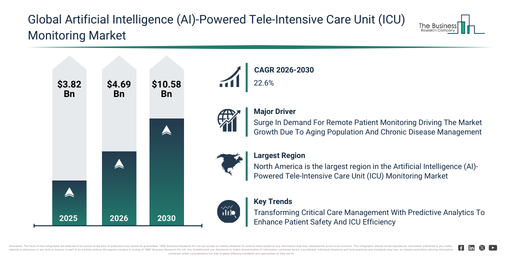
    The artificial intelligence (AI)-powered tele-intensive care unit (icu) monitoring market has experienced remarkable expansion over recent years. This market is set to increase from $3.82 billion in 2025 to $4.69 billion in 2026, achieving a compound annual growth rate (CAGR) of 22.8%. Key drivers behind the historical growth include a rise in critical care patient volumes, a lack of intensivists within hospitals, the initial embrace of remote patient monitoring systems, the development of digital health infrastructure, and increasing financial commitment to hospital IT systems.

    The artificial intelligence (AI)-powered tele-intensive care unit (icu) monitoring market is projected for substantial expansion in the coming years. By 2030, its valuation is anticipated to reach $10.58 billion, exhibiting a compound annual growth rate (CAGR) of 22.6%. This projected growth is driven by several factors, including a heightened need for data-centric critical care management, increased uptake of cloud-based telehealth platforms, the broadening scope of AI-enabled clinical analytics, a stronger emphasis on lowering ICU mortality, and greater financial commitments to virtual care frameworks. Key trends during this period encompass the growing integration of AI-powered predictive patient monitoring, the increasing incorporation of remote ICU surveillance systems, wider utilization of real-time clinical decision support tools, the establishment of more centralized tele-ICU command centers, and an amplified focus on detecting complications early.

    Access Your Free Sample Report For In-Depth Market Analysis:

    https://www.thebusinessresearchcompany.com/report/artificial-intelligence-ai-powered-tele-intensive-care-unit-icu-monitoring-global-market-report

    What Leading Drivers Are Supporting The Artificial Intelligence (AI)-Powered Tele-Intensive Care Unit (ICU) Monitoring Market Expansion?

    The escalating need for remote patient monitoring is anticipated to drive the expansion of the artificial intelligence (AI)-powered tele-intensive care unit (ICU) monitoring market in the future. Remote patient monitoring involves employing digital technologies to gather and transmit patients’ health data from their homes or other locations to healthcare providers for evaluation and management. The rising demand for remote patient monitoring is attributed to the aging demographic in developed nations, which requires continuous oversight of chronic conditions such as diabetes, cardiovascular diseases, and respiratory illnesses that need ongoing management between hospital visits. Artificial intelligence (AI)-powered tele-intensive care unit (ICU) monitoring supports remote patient monitoring by utilizing real-time data and sophisticated algorithms to track vital signs, detect early signs of deterioration, and empower centralized teams to remotely manage multiple critically ill patients, thereby enhancing response times and accessibility to critical care expertise. For instance, in August 2023, according to Vivalink, a US-based healthcare technology company, a recent survey revealed that 84% of respondents currently using RPM plan to increase their usage in 2024, 45% of providers utilize RPM for acute monitoring such as hospital-at-home programs, and 77% predict that RPM-based care will outpace traditional inpatient hospital care within the next five years. Consequently, the heightened demand for remote patient monitoring is fueling the growth of the artificial intelligence (AI)-powered tele-intensive care unit (ICU) monitoring market.

    How Is The Artificial Intelligence (AI)-Powered Tele-Intensive Care Unit (ICU) Monitoring Market Segmented Across Different Segment Categories?

    The artificial intelligence (AI)-powered tele-intensive care unit (icu) monitoring market covered in this report is segmented –

    1) By Component: Software, Hardware, Services

    2) By Deployment Mode: Cloud-Based, On-Premises

    3) By Application: Patient Monitoring, Clinical Decision Support, Workflow Automation, Predictive Analytics, Other Applications

    4) By End-User: Hospitals, Specialty Clinics, Ambulatory Surgical Centers, Other End-Users

    Subsegments:

    1) By Software: Predictive Analytics Software, Clinical Decision Support Software, Data Management Software, Remote Patient Monitoring Software, Visualization And Dashboard Software

    2) By Hardware: Patient Monitoring Devices, Communication And Display Systems, Networking And Connectivity Devices, Servers And Storage Systems, Cameras And Sensors

    3) By Services: Implementation And Integration Services, Training And Education Services, Maintenance And Support Services, Remote Monitoring Services, Consulting Services

    What Emerging Trends Are Seen In The Artificial Intelligence (AI)-Powered Tele-Intensive Care Unit (ICU) Monitoring Market?

    Leading firms within the artificial intelligence (AI)-powered tele-intensive care unit (ICU) monitoring market are concentrating on employing advanced solutions like predictive analytics for patient deterioration, aiming to enhance patient results and streamline ICU operations. This predictive analytics approach for patient deterioration utilizes AI and data analysis to pinpoint individuals susceptible to declining health prior to major incidents, allowing medical professionals to intervene promptly, improve patient care, and mitigate ICU complications. An example of this is seen in February 2023, when CLEW Medical Ltd., an Israeli medical technology enterprise, introduced its CLEW ICU Conversion and Accelerator program, an AI-driven Tele-ICU platform incorporating predictive analytics for patient deterioration. This initiative facilitates a smooth transition for healthcare systems from older Tele-ICU platforms, simultaneously offering live monitoring, improved workflow efficiency, and pre-configured integrations for EMR and bedside monitoring. By utilizing CLEW’s FDA-approved AI models, hospitals are able to pinpoint patients at highest risk of clinical decline, simplify communication and decision-making processes, and potentially enhance clinical results while lowering running expenses. Furthermore, the program provides consulting and deployment assistance, allowing hospitals to implement the system in 12 weeks with minimal interruption to current activities. Its central integration hub is compatible with prominent EMR systems including Epic and Cerner, guaranteeing an uninterrupted flow of patient data from existing hospital infrastructure to the AI platform.

    Which Organizations Play A Role In The Artificial Intelligence (AI)-Powered Tele-Intensive Care Unit (ICU) Monitoring Market Landscape?

    Major companies operating in the artificial intelligence (AI)-powered tele-intensive care unit (icu) monitoring market are Koninklijke Philips N.V., GE HealthCare Technologies Inc., Inova Health System, Teladoc Health Inc., Apollo Telehealth Services Private Limited, Masimo Corporation, UCSF Health, Spacelabs Healthcare Inc., AvaSure Holdings Inc., Hicuity Health Inc., Ceiba Healthcare US Inc., Cloudphysician Healthcare Private Limited, Equum Management Inc., RemoteICU Inc., INTeleICU Inc., Etiometry Inc., Clew Medical Ltd., Ambient Clinical Analytics Inc., DocBox Inc., HelloCare Inc.

    Get The Full Artificial Intelligence (AI)-Powered Tele-Intensive Care Unit (ICU) Monitoring Market Report:

    https://www.thebusinessresearchcompany.com/report/artificial-intelligence-ai-powered-tele-intensive-care-unit-icu-monitoring-global-market-report

    Which Region Is The Largest In The Artificial Intelligence (AI)-Powered Tele-Intensive Care Unit (ICU) Monitoring Market?

    North America was the largest region in the artificial intelligence (AI)-powered tele-intensive care unit (ICU) monitoring market in 2025. Asia-Pacific is expected to be the fastest-growing region in the forecast period. The regions covered in the artificial intelligence (AI)-powered tele-intensive care unit (icu) monitoring market report are Asia-Pacific, South East Asia, Western Europe, Eastern Europe, North America, South America, Middle East, Africa.

    Request A Customized Artificial Intelligence (AI)-Powered Tele-Intensive Care Unit (ICU) Monitoring Market Report For Competitive Insights:

    https://www.thebusinessresearchcompany.com/report/artificial-intelligence-ai-powered-tele-intensive-care-unit-icu-monitoring-global-market-report

    Browse Through More Reports Similar to the Global Artificial Intelligence (AI)-Powered Tele-Intensive Care Unit (ICU) Monitoring Market 2026, By The Business Research Company

    Ai In Medical Devices Market Report 2026

    https://www.thebusinessresearchcompany.com/report/ai-in-medical-devices-global-market-report

    Tele Intensive Care Market Report 2026

    https://www.thebusinessresearchcompany.com/report/tele-intensive-care-global-market-report

    Artificial Intelligence Ai In Remote Patient Monitoring Market Report 2026

    https://www.thebusinessresearchcompany.com/report/artificial-intelligence-ai-in-remote-patient-monitoring-global-market-report

    Get in touch with us:

    The Business Research Company: https://www.thebusinessresearchcompany.com/

    Americas +1 310-496-7795

    Asia +44 7882 955267 & +91 8897263534

    Europe +44 7882 955267

    Email us at info@tbrc.info

    Follow us on:

    LinkedIn: https://in.linkedin.com/company/the-business-research-company

    YouTube: https://www.youtube.com/channel/UC24_fI0rV8cR5DxlCpgmyFQ

    Global Market Model: https://www.thebusinessresearchcompany.com/global-market-model

  • Global anesthesia circuits and disposables market to reach $1.73B by 2030 at 2.6% CAGR

    Global anesthesia circuits and disposables market to reach $1.73B by 2030 at 2.6% CAGR

    The Business Research Company’s 2026 market reports feature enhanced tools like market attractiveness analysis, TAM assessment, and company scoring matrices, along with interactive dashboards, deeper supply chain insights, and startup coverage strengthening the depth, usability, and strategic value of insights.

    How Much Growth In Market Value Is Expected For The Anesthesia Circuits And Regional Anesthesia Disposables Market Between 2026 And 2030?

    The market size for anesthesia circuits and regional anesthesia disposables has experienced steady growth in recent years. This market is projected to expand from $1.52 billion in 2025 to $1.56 billion in 2026, exhibiting a compound annual growth rate (CAGR) of 2.6%. The historical growth in this sector is attributable to the global expansion of surgical procedures, the increased adoption of disposable medical products, a greater use of general anesthesia, the development of hospital infrastructure, and an elevated focus on perioperative safety.

    The market for anesthesia circuits and regional anesthesia disposables is projected to experience consistent expansion over the upcoming years. This market is anticipated to reach a valuation of $1.73 billion by 2030, demonstrating a compound annual growth rate (CAGR) of 2.6%. Several factors are expected to drive this growth during the forecast period, including a growing preference for minimally invasive surgical procedures, an escalating demand for ambulatory surgery centers, a heightened emphasis on sustainable disposable medical supplies, the broader application of regional anesthesia, and ongoing innovations in anesthesia delivery systems. Key trends anticipated within this period encompass the wider embrace of single-use anesthesia equipment, an increasing need for products concentrated on infection control, the expanded utilization of pediatric-specific circuits, the development and spread of regional anesthesia techniques, and a stronger commitment to patient safety and regulatory adherence.

    Access Your Free Sample Report For In-Depth Market Analysis:

    https://www.thebusinessresearchcompany.com/report/anesthesia-circuits-and-regional-anesthesia-disposables-global-market-report

    What Factors Are Contributing To The Growth Of The Anesthesia Circuits And Regional Anesthesia Disposables Market?

    An increasing volume of surgical operations is anticipated to boost the expansion of the anesthesia circuits and regional anesthesia disposables market in the future. This rise in surgical procedures stems from various factors, including advancements in medical technology, enhanced healthcare awareness and accessibility, a demographic shift towards an older population with more intricate health requirements, and the development of surgical techniques enabling safer and more effective interventions. These products, anesthesia circuits and regional anesthesia disposables, play a crucial role by reducing infection risks during operations, guaranteeing accurate anesthetic delivery, and facilitating ongoing patient monitoring, thereby elevating overall patient safety. As an illustration, in June 2024, the International Society of Aesthetic Plastic Surgery (ISAPS), a Germany-based professional body for board-certified aesthetic plastic surgeons, reported through its 2024 Global Survey on Aesthetic/Cosmetic Procedures a 5.5% growth in surgical procedures, amounting to over 15.8 million operations carried out by plastic surgeons, alongside 19.1 million non-surgical procedures. Collectively, these procedures have seen an aggregate increase of 40% over the last four years. Consequently, the expanding volume of surgeries acts as a key stimulant for the anesthesia circuits and regional anesthesia disposables market.

    What Are The Main Segments Within The Anesthesia Circuits And Regional Anesthesia Disposables Market Segment Structure?

    The anesthesia circuits and regional anesthesia disposables market covered in this report is segmented –

    1) By Product Type: Anesthesia Circuits, Non-Rebreathing Circuits, Rebreathing Circuits

    2) By Regional Anesthesia Disposables: Combined Spinal Epidural Disposables, Epidural Anesthesia Disposables, Peripheral Anesthesia Disposables, Spinal Anesthesia Disposables

    3) By End-User: Hospitals, Ambulatory Surgery Centers, Multispecialty Clinical

    Subsegments:

    1) By Anesthesia Circuits: Adult Anesthesia Circuits, Pediatric Anesthesia Circuits

    2) By Non-Rebreathing Circuits: Adult Non-Rebreathing Circuits, Pediatric Non-Rebreathing Circuits

    3) By Rebreathing Circuits: Adult Rebreathing Circuits, Pediatric Rebreathing Circuits

    What Trends Are Shaping The Future Of The Anesthesia Circuits And Regional Anesthesia Disposables Market?

    Major companies active in the anesthesia circuits and regional anesthesia disposables market are concentrating on developing advanced solutions, such as bioplastic-based circuits, to improve patient safety, maintain clinical dependability, and lessen environmental impact. Bioplastic-based circuits are defined as anesthesia systems fabricated from renewable materials that provide similar performance to traditional circuits while decreasing carbon emissions. For instance, in October 2025, GaleMed Corporation, a Taiwan-based medical device company, introduced BioVent-Circuit, which utilizes sugarcane-derived bioplastic. This product delivers clinically equivalent reliability to conventional circuits and achieves measurable carbon reduction; an independent life-cycle assessment demonstrates each 1.8 m circuit reduces approximately 1 kg of CO2 compared with fossil-based alternatives. The circuit fulfills international clinical safety standards, supports transparent sustainability reporting, and aligns with green procurement policies. Its dual-limb, coaxial design incorporates a functional 4.3F gas sampling port and is compatible with standard international connectors, offering single-patient use with verified biocompatibility.

    Who Are The Companies Participating In The Anesthesia Circuits And Regional Anesthesia Disposables Market?

    Major companies operating in the anesthesia circuits and regional anesthesia disposables market are Medtronic PLC, GE HealthCare Technologies Inc., Koninklijke Philips N.V., Draeger India Pvt. Ltd., Smiths Group, B. BRAUN, Teleflex Incorporated, ICU Medical Inc., Ambu A/S, Amsino International Inc, Vyaire Medical Inc, GaleMed Corporation, New Mercury Medicals, Kanmed AB, SunMed LLC, Dynarex Corporation, Flexicare Medical Ltd., Intersurgical, Parker Medical, King Systems LLC, Fisher and Paykel Healthcare

    Get The Full Anesthesia Circuits And Regional Anesthesia Disposables Market Report:

    https://www.thebusinessresearchcompany.com/report/anesthesia-circuits-and-regional-anesthesia-disposables-global-market-report

    Where Is The Anesthesia Circuits And Regional Anesthesia Disposables Market Most Concentrated Geographically?

    North America was the largest region in the anesthesia circuits and regional anesthesia disposables market in 2025. Asia-Pacific is expected to be the fastest-growing region in the forecast period. The regions covered in the anesthesia circuits and regional anesthesia disposables market report are Asia-Pacific, South East Asia, Western Europe, Eastern Europe, North America, South America, Middle East, Africa.

    Request A Customized Anesthesia Circuits And Regional Anesthesia Disposables Market Report For Competitive Insights:

    https://www.thebusinessresearchcompany.com/report/anesthesia-circuits-and-regional-anesthesia-disposables-global-market-report

    Browse Through More Reports Similar to the Global Anesthesia Circuits And Regional Anesthesia Disposables Market 2026, By The Business Research Company

    Anesthesia And Respiratory Devices Market 2026

    https://www.thebusinessresearchcompany.com/report/anesthesia-and-respiratory-devices-market

    Anesthesia Disposables Market Report 2026

    https://www.thebusinessresearchcompany.com/report/anesthesia-disposables-global-market-report

    Local Anesthesia Drugs Market Report 2026

    https://www.thebusinessresearchcompany.com/report/local-anesthesia-drugs-global-market-report

    Get in touch with us:

    The Business Research Company: https://www.thebusinessresearchcompany.com/

    Americas +1 310-496-7795

    Asia +44 7882 955267 & +91 8897263534

    Europe +44 7882 955267

    Email us at info@tbrc.info

    Follow us on:

    LinkedIn: https://in.linkedin.com/company/the-business-research-company

    YouTube: https://www.youtube.com/channel/UC24_fI0rV8cR5DxlCpgmyFQ

    Global Market Model: https://www.thebusinessresearchcompany.com/global-market-model

  • Anemia in elderly market projected to reach $4.59B by 2030

    Anemia in elderly market projected to reach $4.59B by 2030

    The Business Research Company’s 2026 market reports feature enhanced tools like market attractiveness analysis, TAM assessment, and company scoring matrices, along with interactive dashboards, deeper supply chain insights, and startup coverage strengthening the depth, usability, and strategic value of insights.

    What Is The Estimated Market Size Of The Anemia In Elderly Market In 2026, And How Will Its Value Evolve By 2030?

    The anemia in elderly market has experienced substantial growth in recent years. This market is projected to expand from $2.99 billion in 2025 to $3.26 billion in 2026, demonstrating a compound annual growth rate (CAGR) of 9.0%. Historically, this growth has been influenced by factors including aging population growth, increased prevalence of chronic diseases, availability of oral iron supplements, expansion of hospital-based anemia management, and rising awareness of nutritional deficiencies.

    The anemia in elderly market size is projected to undergo substantial growth in the upcoming years, with expectations to reach $4.59 billion by 2030, advancing at a compound annual growth rate (CAGR) of 8.9%. This expansion during the forecast period can be attributed to the increasing demand for personalized anemia treatment, the rising adoption of long-acting injectables, a greater focus on geriatric healthcare, the widening scope of outpatient anemia management, and improved diagnostic screening within elderly care. Significant trends anticipated during this period include an increasing embrace of combination therapy approaches, a growing use of injectable iron treatments, an enhanced emphasis on early diagnosis in elderly populations, the expansion of home-based treatment options, and a heightened focus on managing chronic disease-related anemia.

    Access Your Free Sample Report For In-Depth Market Analysis:

    https://www.thebusinessresearchcompany.com/report/anemia-in-elderly-global-market-report

    Which Strong Drivers Are Impacting The Anemia In Elderly Market Growth?

    The increasing elderly population is anticipated to drive the future growth of the anemia in the elderly market. This demographic refers to the rising number and proportion of individuals aged 65 and above, either within a specific society or globally. Factors contributing to the expansion of this population include increased life expectancy, declining birth rates, and the aging of large generational cohorts. An expanding older demographic heightens the prevalence of age-related and chronic conditions, which are significant contributors to anemia in older adults. This, in turn, boosts the demand for the diagnosis, management, and treatment of anemia, thereby stimulating market development. For instance, in January 2024, the Population Reference Bureau, a Kenya-based Nonprofit organization, indicated that the population of Americans aged 65 and older is expected to increase from 58 million in 2022 to 82 million by 2050, marking a 47% growth. The proportion of this age group within the overall population is also projected to rise from 17% to 23% during the same period. Consequently, the expanding elderly population is a primary driver for the growth of the anemia in the elderly market.

    How Is Segmentation Applied In The Anemia In Elderly Market Segment Analysis?

    The anemia in elderly market covered in this report is segmented –

    1) By Product Type: Tablets, Injectable

    2) By Treatment: Iron Supplements, Erythropoietin Or Erythrocyte-Stimulating Agents, Vitamin B12 Supplements, Folic Acid Supplements

    3) By Route Of Administration: Oral, Parenteral

    4) By End User: Hospital pharmacy, Online Pharmacy, Retail pharmacy

    Subsegments:

    1) By Tablets: Iron Supplements, Vitamin B12 Supplements, Folic Acid Tablets, Erythropoiesis-Stimulating Agents (ESAs) Tablets

    2) By Injectable: Iron Injections, Vitamin B12 Injections, Erythropoiesis-Stimulating Agents (ESAs) Injections, Folic Acid Injections

    Which Trends Are Contributing To Changes In The Anemia In Elderly Market?

    Major companies in the anemia in the elderly market are concentrating on technological breakthroughs, such as personalized therapies, to optimize treatment workflows, enhance patient results, decrease adverse effects, and improve overall healthcare efficiency. Customized therapies are medical interventions crafted based on each patient’s unique attributes. For example, in March 2024, Cadila Pharmaceuticals, an Indian pharmaceutical company, announced the introduction of Redshot FCM, a new iron injection developed to treat iron deficiency anemia for patients intolerant to oral iron. This intravenous iron preparation supplies ample iron and possesses an exemplary safety record. The injection utilizes an advanced Ferric Carboxymaltose formulation that improves iron delivery and absorption. Redshot FCM illustrates a commitment to enhancing healthcare through the development of personalized therapies that consider individual patient profiles, resulting in better treatment outcomes for iron deficiency anemia.

    Who Are The Companies Participating In The Anemia In Elderly Market Environment?

    Major companies operating in the anemia in elderly market are Johnson & Johnson, Roche Holding AG, Merck & Co Inc, Bristol-Myers Squibb Company, AstraZeneca plc, Novartis International AG, Takeda Pharmaceutical Company Limited, Amgen Inc, Japan Tobacco Inc, Fresenius Medical Care AG, Teva Pharmaceutical Industries Ltd, Sandoz International GmbH, CSL Limted, Daiichi Sankyo Company Limited, Amag Pharmaceuticals, Akebia Therapeutics Inc, Pharmacosmos A/S, Rockwell Medical Inc, Bioage Labs Inc, Shield Therapeutics Plc, MegaPro Biomedical Co Ltd

    Get The Full Anemia In Elderly Market Report:

    https://www.thebusinessresearchcompany.com/report/anemia-in-elderly-global-market-report

    Which Region Dominates The Anemia In Elderly Market By Market Share?

    North America was the largest region in the anemia in elderly market in 2025. Asia-Pacific is expected to be the fastest-growing region in the forecast period. The regions covered in the anemia in elderly market report are Asia-Pacific, South East Asia, Western Europe, Eastern Europe, North America, South America, Middle East, Africa.

    Request A Customized Anemia In Elderly Market Report For Competitive Insights:

    https://www.thebusinessresearchcompany.com/report/anemia-in-elderly-global-market-report

    Browse Through More Reports Similar to the Global Anemia In Elderly Market 2026, By The Business Research Company

    Anosmia Market Report 2026

    https://www.thebusinessresearchcompany.com/report/anosmia-global-market-report

    Chemotherapy Induced Anemia Market Report 2026

    https://www.thebusinessresearchcompany.com/report/chemotherapy-induced-anemia-global-market-report

    Aplastic Anemia Market Report 2026

    https://www.thebusinessresearchcompany.com/report/aplastic-anemia-global-market-report

    Get in touch with us:

    The Business Research Company: https://www.thebusinessresearchcompany.com/

    Americas +1 310-496-7795

    Asia +44 7882 955267 & +91 8897263534

    Europe +44 7882 955267

    Email us at info@tbrc.info

    Follow us on:

    LinkedIn: https://in.linkedin.com/company/the-business-research-company

    YouTube: https://www.youtube.com/channel/UC24_fI0rV8cR5DxlCpgmyFQ

    Global Market Model: https://www.thebusinessresearchcompany.com/global-market-model
  • AI spinal surgery market outlook with key drivers

    AI spinal surgery market outlook with key drivers

    The Business Research Company’s 2026 market reports feature enhanced tools like market attractiveness analysis, TAM assessment, and company scoring matrices, along with interactive dashboards, deeper supply chain insights, and startup coverage strengthening the depth, usability, and strategic value of insights.

    How Will The Market Value Of The Artificial Intelligence (AI)-Powered Spinal Surgery Market Progress Between 2026 And 2030?

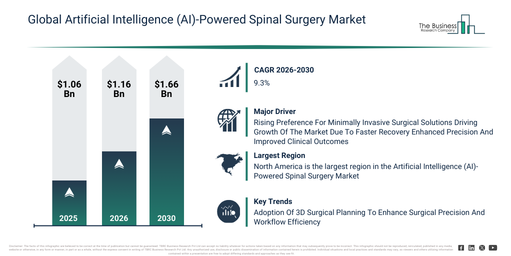
    The artificial intelligence (AI)-powered spinal surgery market has experienced robust expansion in recent times. Forecasts indicate its size will escalate from $1.06 billion in 2025 to $1.16 billion by 2026, demonstrating a compound annual growth rate (CAGR) of 9.6%. This historical growth is primarily due to factors such as the increasing incidence of spinal disorders, the growing embrace of robotic-assisted spine procedures, advancements in medical imaging, heightened surgeon receptiveness to digital surgical instruments, and the wider application of minimally invasive spinal techniques.

    The artificial intelligence (AI)-powered spinal surgery market size is anticipated to experience significant expansion in the coming years. It is projected to reach $1.66 billion in 2030, advancing at a compound annual growth rate (CAGR) of 9.3%. This projected growth can be attributed to several factors such as the increasing demand for precision-based spine surgery, rising investments in AI-enabled surgical platforms, the broadening of data-driven clinical decision support, an intensifying focus on reducing surgical complications, and the increasing integration of AI with robotic spine systems. Prominent trends observed during this forecast period include the expanding adoption of AI-guided surgical navigation systems, a rising utilization of predictive analytics for surgical outcomes, the growing integration of imaging-based decision support tools, the expansion of minimally invasive AI-assisted procedures, and an enhanced emphasis on personalized spine treatment planning.

    Access Your Free Sample Report For In-Depth Market Analysis:

    https://www.thebusinessresearchcompany.com/report/global-artificial-intelligence-ai-powered-spinal-surgery-market-report

    Which Key Factors Are Driving The Artificial Intelligence (AI)-Powered Spinal Surgery Market Growth?

    The increasing adoption of minimally invasive surgical techniques is anticipated to fuel the expansion of the artificial intelligence (AI)-powered spinal surgery market in the future. These solutions involve operations conducted through minor cuts, contrasting with the extensive incisions characteristic of conventional open surgeries. The growing demand for minimally invasive surgical solutions stems from the quicker patient recovery periods they provide. The artificial intelligence (AI)-powered spinal surgery market facilitates this increasing preference by allowing for greater surgical accuracy and less tissue harm, thereby speeding up patient recuperation and enhancing overall treatment results. For instance, as reported in June 2025 by Intuitive Surgical, a US-based biotechnology company, the volume of procedures executed using its “da Vinci” robotic systems (a principal technology for MIS) increased from 1,532,000 in 2023 to 1,757,000 in 2024. Consequently, the increased favoritism for minimally invasive surgical methods is stimulating the expansion of the artificial intelligence (AI)-powered spinal surgery market.

    What Are The Main Segments Within The Artificial Intelligence (AI)-Powered Spinal Surgery Market Segment Structure?

    The artificial intelligence (AI)-powered spinal surgery market covered in this report is segmented –

    1) By Type Of Surgery: Spinal Fusion Surgery, Microdiscectomy, Laminectomy, Laminotomy, Lumbar Decompression Surgery, Transforaminal Lumbar Interbody Fusion, Oblique Lumbar Interbody Fusion, Vertebroplasty

    2) By Anatomy: Cervical, Thoracic, Lumbar

    3) By Indication: Degenerative, Trauma, Deformity, Tumor Or Oncologic, Infection, Other Indications

    4) By End User: Hospitals, Ambulatory Surgery Centers (ASCs), Orthopedic Centers

    Subsegments:

    1) By Spinal Fusion Surgery: Posterior Spinal Fusion, Anterior Spinal Fusion, Lateral Spinal Fusion, Cervical Spinal Fusion, Thoracic Spinal Fusion, Lumbar Spinal Fusion

    2) By Microdiscectomy: Open Microdiscectomy, Minimally Invasive Microdiscectomy, Endoscopic Microdiscectomy

    3) By Laminectomy: Cervical Laminectomy, Thoracic Laminectomy, Lumbar Laminectomy, Minimally Invasive Laminectomy

    4) By Laminotomy: Unilateral Laminotomy, Bilateral Laminotomy, Cervical Laminotomy, Lumbar Laminotomy

    5) By Lumbar Decompression Surgery: Open Lumbar Decompression, Minimally Invasive Lumbar Decompression, Microsurgical Lumbar Decompression

    6) By Transforaminal Lumbar Interbody Fusion: Open Transforaminal Lumbar Interbody Fusion, Minimally Invasive Transforaminal Lumbar Interbody Fusion, Endoscopic Transforaminal Lumbar Interbody Fusion

    7) By Oblique Lumbar Interbody Fusion: Anterior To Psoas Oblique Lumbar Interbody Fusion, Lateral Oblique Lumbar Interbody Fusion, Single Level Oblique Lumbar Interbody Fusion, Multilevel Oblique Lumbar Interbody Fusion

    8) By Vertebroplasty: Percutaneous Vertebroplasty, Balloon-Assisted Vertebroplasty, Image-Guided Vertebroplasty, Cement-Augmented Vertebroplasty

    Which Trends Are Guiding The Direction Of The Artificial Intelligence (AI)-Powered Spinal Surgery Market?

    Major companies operating in the artificial intelligence (AI)-powered spinal surgery market are concentrating on integrating technological advancements such as 3D surgical planning to enhance surgical precision, workflow efficiency, and patient outcomes. This advanced 3D surgical planning technology utilizes patient-specific 3D anatomical models, derived from imaging data, to simulate surgical procedures and refine implant placement, thereby supporting capabilities like preoperative visualization, personalized treatment planning, and intraoperative alignment optimization. For instance, in July 2024, Alphatec Holdings, Inc. (ATEC), a US-based medical technology company specializing in spinal surgery solutions, introduced EOS Insight, a 3D surgical planning platform powered by EOS imaging and artificial intelligence (AI). This platform is designed to streamline the entire spine surgery workflow, from preoperative planning to postoperative assessment, through intelligent imaging and data integration. Its features include AI-driven alignment assessment, web-based 3D surgical simulation, and patient-specific rod design, which collectively improve clinical decision-making, surgical accuracy, and overall efficiency in spine care.

    Who Are The Companies Participating In The Artificial Intelligence (AI)-Powered Spinal Surgery Market?

    Major companies operating in the artificial intelligence (AI)-powered spinal surgery market are Johnson and Johnson, Medtronic plc, Stryker Corporation, Zimmer Biomet Holdings Inc., Globus Medical Inc., Orthofix Holdings Inc., Alphatec Holdings Inc., Brainlab AG, Spineart SA, Surgalign Holdings Inc, TINAVI Medical Technologies Co Ltd, Augmedics Inc., Proprio Inc., Surgical Theater Inc., Medivis Inc., Ortoma AB, OnPoint Surgical Inc., Katomed Inc., Surglasses, Illuminant Surgical Inc.

    Get The Full Artificial Intelligence (AI)-Powered Spinal Surgery Market Report:

    https://www.thebusinessresearchcompany.com/report/global-artificial-intelligence-ai-powered-spinal-surgery-market-report

    Which Region Leads The Artificial Intelligence (AI)-Powered Spinal Surgery Market In Terms Of Market Share?

    North America was the largest region in the artificial intelligence (AI)-powered spinal surgery market in 2025. Asia-Pacific is expected to be the fastest-growing region in the forecast period. The regions covered in the artificial intelligence (AI)-powered spinal surgery market report are Asia-Pacific, South East Asia, Western Europe, Eastern Europe, North America, South America, Middle East, Africa.

    Request A Customized Artificial Intelligence (AI)-Powered Spinal Surgery Market Report For Competitive Insights:

    https://www.thebusinessresearchcompany.com/report/global-artificial-intelligence-ai-powered-spinal-surgery-market-report

    Browse Through More Reports Similar to the Global Artificial Intelligence (AI)-Powered Spinal Surgery Market 2026, By The Business Research Company

    Artificial Intelligence Or Machine Learning Ai Or Ml Medical Device Market Report 2026

    https://www.thebusinessresearchcompany.com/report/artificial-intelligence-or-machine-learning-ai-or-ml-medical-device-global-market-report

    Spinal Surgery Devices And Equipment Market Report 2026

    https://www.thebusinessresearchcompany.com/report/spinal-surgery-devices-and-equipment-global-market-report

    Ai In Medical Devices Market Report 2026

    https://www.thebusinessresearchcompany.com/report/ai-in-medical-devices-global-market-report

    Get in touch with us:

    The Business Research Company: https://www.thebusinessresearchcompany.com/

    Americas +1 310-496-7795

    Asia +44 7882 955267 & +91 8897263534

    Europe +44 7882 955267

    Email us at info@tbrc.info

    Follow us on:

    LinkedIn: https://in.linkedin.com/company/the-business-research-company

    YouTube: https://www.youtube.com/channel/UC24_fI0rV8cR5DxlCpgmyFQ

    Global Market Model: https://www.thebusinessresearchcompany.com/global-market-model
  • Anatomical models market expected to reach $62.55B by 2030 at 2.5% CAGR

    Anatomical models market expected to reach $62.55B by 2030 at 2.5% CAGR

    The Business Research Company’s 2026 market reports feature enhanced tools like market attractiveness analysis, TAM assessment, and company scoring matrices, along with interactive dashboards, deeper supply chain insights, and startup coverage strengthening the depth, usability, and strategic value of insights.

    How Does The Market Size Of The Anatomical Models Market Compare Between 2026 And 2030?

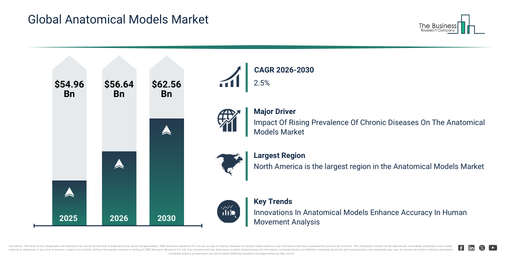
    The anatomical models market has experienced consistent expansion in its size over recent years. This market is projected to expand from $54.96 billion in 2025 to $56.64 billion in 2026, exhibiting a compound annual growth rate (CAGR) of 3.0%. The past growth in this sector was driven by factors such as the greater integration of physical models into medical training, the broadening of anatomy-focused educational curricula, the continued availability of conventional molded models, an increase in clinical training facilities, and an escalating need for practical learning instruments.

    The anatomical models market is projected to experience consistent expansion over the upcoming years. This market is anticipated to reach a valuation of $62.56 billion by 2030, exhibiting a compound annual growth rate (CAGR) of 2.5%. This anticipated growth during the forecast period stems from several factors, including the increasing integration of digital and physical anatomy tools, a rise in the adoption of 4D printing technologies, the expanding use of models in surgical planning, the development of personalized medical education, and increased investments in advanced simulation laboratories. Key trends expected in this period encompass the wider adoption of 3D printed anatomical models, an escalating demand for patient-specific models, a growing utilization of high-fidelity simulation models, the expansion of customizable educational models, and an intensified focus on durable and reusable materials.

    Access Your Free Sample Report For In-Depth Market Analysis:

    https://www.thebusinessresearchcompany.com/report/anatomical-models-global-market-report

    What Key Factors Are Shaping The Anatomical Models Market Landscape?

    The expanding incidence of chronic illnesses is anticipated to drive the anatomical models market’s future growth. These conditions are defined as long-term medical issues that are generally incurable but can often be managed through various interventions such as lifestyle adjustments, medication, and other treatments. The increasing occurrence of chronic diseases stems from factors like an aging population, inactive lifestyles, poor dietary habits, and tobacco consumption. Anatomical models serve a crucial role in chronic disease management by improving patient education, fostering better dialogue between medical professionals and patients, and offering visual aids for clearer comprehension. As an illustration, in February 2024, the World Health Organization, a Switzerland-based intergovernmental organization, projected more than 35 million new cancer cases by 2050, signifying a 77% rise compared to the approximate 20 million cases in 2022. Consequently, the growing prevalence of chronic diseases is a key factor propelling the anatomical model market.

    What Segment Categories Shape The Anatomical Models Market Segment Landscape?

    The anatomical models market covered in this report is segmented –

    1) By Type: Brain Model, Torso Model, Organ Model, Nervous System Model, Skeletal System Model, Hand Model, Eye Model, Tooth Model, Digestive System Model

    2) By Printing Technology: 2D Printing, 3D Printing, 4D Printing

    3) By End-User: Scientific Research Centers, Hospitals And Clinics, Education Centers, Rehabilitation Centers

    Subsegments:

    1) By Brain Model: Human Brain Models, Animal Brain Models

    2) By Torso Model: Human Torso Models, Animal Torso Models

    3) By Organ Model: Heart Model, Liver Model, Kidney Model, Lungs Model, Other Organ Models

    4) By Nervous System Model: Central Nervous System (CNS) Model, Peripheral Nervous System Model, Neuron Models

    5) By Skeletal System Model: Human Skeleton Models, Animal Skeleton Models, Joint and Bone Models

    6) By Hand Model: Human Hand Models, Animal Hand Models

    7) By Eye Model: Human Eye Model, Animal Eye Model

    8) By Tooth Model: Human Tooth Models, Animal Tooth Models

    9) By Digestive System Model: Human Digestive System Models, Animal Digestive System Models

    What Market Trends Are Affecting The Anatomical Models Market?

    Leading companies in the anatomical models market are concentrating on developing advanced solutions, such as refined anatomical modeling, to enhance movement accuracy, support ergonomic assessment, and improve biomechanical analysis. Refined anatomical modeling refers to a technological feature that integrates precise human body parameters, including limb length, hip and shoulder width, and spinal curvature, enabling more realistic simulation of human posture and motion. For instance, in May 2025, Movella, a Netherlands-based inertial motion capture provider, launched Xsens Analyze 2025, featuring natively integrated male and female anatomical models with distinct centre of mass, hip and shoulder width, and limb length parameters that closely mirror true human variance. The update also introduces a refined spine model that supports an S-shape when standing and a C-curve when bending, enabling more precise posture and movement assessment, alongside Auto Sensor Mapping for its 17-sensor system to speed up setup and a redesigned user interface with dark mode to support long analysis sessions.

    Who Are The Companies Operating Across The Anatomical Models Market Value Chain?

    Major companies operating in the anatomical models market are Apollo Global Management Inc., AdamRouilly Limited, Laerdal Medical, 3D Systems Corporation, 3B Scientific GmbH, Nasco Healthcare, Denoyer-Geppert Science, Altay Scientific Group SRL, The Prometheus Group, Anatomage Inc., Sakamoto Model Corporation, A. Algeo Limited, Sawbones, Simulaids Inc, GPI Anatomicals, Dynamic Disc Designs Corp, ERLER-ZIMMER GMBH & CO. KG, 3DIEMME srl, Columbia Dentoform, Rudiger-Anatomie GmbH, Xilloc Holding BV, Frasaco GmbH, SOMSO, Anatomy Warehouse

    Get The Full Anatomical Models Market Report:

    https://www.thebusinessresearchcompany.com/report/anatomical-models-global-market-report

    Which Region Is The Largest In The Anatomical Models Market?

    North America was the largest region in the anatomical models market in 2025. The regions covered in the anatomical models market report are Asia-Pacific, South East Asia, Western Europe, Eastern Europe, North America, South America, Middle East, Africa.

    Request A Customized Anatomical Models Market Report For Competitive Insights:

    https://www.thebusinessresearchcompany.com/report/anatomical-models-global-market-report

    Browse Through More Reports Similar to the Global Anatomical Models Market 2026, By The Business Research Company

    Rat Model Market Report 2026

    https://www.thebusinessresearchcompany.com/report/rat-model-global-market-report

    Animal Model Market Report 2026

    https://www.thebusinessresearchcompany.com/report/animal-model-global-market-report

    Human Liver Model Market Report 2026

    https://www.thebusinessresearchcompany.com/report/human-liver-model-global-market-report

    Get in touch with us:

    The Business Research Company: https://www.thebusinessresearchcompany.com/

    Americas +1 310-496-7795

    Asia +44 7882 955267 & +91 8897263534

    Europe +44 7882 955267

    Email us at info@tbrc.info

    Follow us on:

    LinkedIn: https://in.linkedin.com/company/the-business-research-company

    YouTube: https://www.youtube.com/channel/UC24_fI0rV8cR5DxlCpgmyFQ

    Global Market Model: https://www.thebusinessresearchcompany.com/global-market-model