Category: Healthcare Services

  • Antibodies market trends influencing future growth

    Antibodies market trends influencing future growth

    The Business Research Company’s 2026 market reports feature enhanced tools like market attractiveness analysis, TAM assessment, and company scoring matrices, along with interactive dashboards, deeper supply chain insights, and startup coverage strengthening the depth, usability, and strategic value of insights.

    What Is The Anticipated Rise In Market Value Of The Antibodies Market During The Forecast Period?

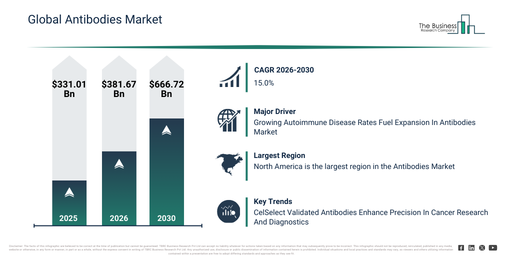
    The antibodies market size has seen rapid expansion in recent years. It is anticipated to grow from $331.01 billion in 2025 to $381.67 billion in 2026, achieving a compound annual growth rate (CAGR) of 15.3%. This growth during the historical period can be attributed to advancements in immunology research, increased investment in biologics development, the expansion of oncology treatment programs, a growing prevalence of autoimmune diseases, and improved antibody production technologies.

    The antibodies market is projected for rapid expansion over the coming years, with its valuation anticipated to reach $666.72 billion by 2030, exhibiting a compound annual growth rate (CAGR) of 15.0%. This projected growth during the forecast period stems from factors such as the heightened uptake of precision immunotherapies, a growing need for advanced antibody formats, the widening scope of biosimilar antibody development, an intensifying emphasis on personalized medicine, and an increase in global biologics production capabilities. Key trends foreseen for the forecast period encompass the broadening of monoclonal antibody development pipelines, an escalating requirement for antibody-drug conjugates, a sharper focus on targeted immunotherapies, an expanded application of antibodies in treating chronic diseases, and a greater prioritization of scalable biomanufacturing.

    Access Your Free Sample Report For In-Depth Market Analysis:

    https://www.thebusinessresearchcompany.com/report/antibodies-global-market-report

    What Primary Drivers Are Shaping The Antibodies Market?

    The increasing occurrence of autoimmune diseases is projected to stimulate the expansion of the antibodies market in the future. These conditions involve the immune system mistakenly attacking and harming its own bodily tissues, encompassing ailments like rheumatoid arthritis, lupus, and multiple sclerosis. The heightened incidence of autoimmune diseases stems from environmental elements, genetic predispositions, and changes in lifestyle. Antibodies function by targeting and neutralizing particular immune cells or inflammatory molecules that erroneously assault the body’s own tissues, consequently diminishing inflammation and relieving symptoms. As an illustration, data from May 2024, provided by the Multiple Sclerosis International Federation, a UK-based non-profit organization, showed a rise in the worldwide population affected by multiple sclerosis, climbing from 2.8 million in 2020 to 2.9 million in 2023. Consequently, the escalating occurrence of autoimmune diseases is propelling the antibodies market.

    How Is The Antibodies Market Categorized Across Its Segment Groups?

    The antibodies market covered in this report is segmented –

    1) By Product Type: Monoclonal Antibodies, Polyclonal Antibodies, Antibody Drug Complexes

    2) By Disease Indication: Cardiovascular Diseases, Central Nervous System (CNS) Disorders, Cancer, Autoimmune Disorders, Other Indications

    3) By End User: Hospitals, Long Term Care Facilities, Research Institutes, Other End Users

    Subsegments:

    1) By Monoclonal Antibodies: IgG Monoclonal Antibodies, IgM Monoclonal Antibodies, IgA Monoclonal Antibodies, Other Isotypes

    2) By Polyclonal Antibodies: Serum-derived Polyclonal Antibodies, Purified Polyclonal Antibodies, Antibody Fractionation Products

    3) By Antibody Drug Complexes: Conjugated Antibodies, Bispecific Antibodies, Antibody-Drug Conjugates (ADCs)

    What Trends Are Affecting The Growth Of The Antibodies Market?

    Leading firms in the antibodies market are focused on developing validated antibodies, aiming to boost precision and guarantee uniform outcomes in diagnostic and therapeutic applications. These validated antibodies are defined by their confirmed accuracy and specificity in identifying target proteins, which in turn elevates the trustworthiness of research findings and secures the efficacy and standard of products reliant on antibodies. An illustration of this trend is seen in March 2024, when Bio-Rad Laboratories, a US-based manufacturer specializing in life science research and clinical diagnostics, introduced Celselect slides validated antibodies. These were designed for the enumeration of rare cells and circulating tumor cells (CTCs), thereby advancing the understanding of tumor heterogeneity and disease progression. These particular antibodies are compatible with Bio-Rad’s Celselect Slides Enumeration Stain Kits, facilitating accurate CTC detection and representing a pivotal stride in bolstering sophisticated cancer research and diagnostics.

    Which Firms Are Influencing Competition In The Antibodies Market?

    Major companies operating in the antibodies market are Pfizer Inc., Johnson & Johnson Services Inc., F. Hoffmann-La Roche Ltd., Merck & Co Inc., AbbVie Inc., Sanofi S.A., Bristol Myers Squibb Company, Novartis AG, GSK plc, Takeda Pharmaceutical Company Limited, Eli Lilly and Company, Amgen Inc., Regeneron Pharmaceuticals Inc., Biogen Inc., Alexion Pharmaceuticals Inc., Incyte Corporation, Kyowa Kirin Co Ltd, Ultragenyx Pharmaceutical Inc, Xencor Inc., MacroGenics Inc., ImmunoGen Inc., Sorrento Therapeutics Inc., Beam Therapeutics Inc., SAB Biotherapeutics Inc., bluebird bio Inc., Iovance Biotherapeutics Inc.

    Get The Full Antibodies Market Report:

    https://www.thebusinessresearchcompany.com/report/antibodies-global-market-report

    Which Region Leads The Antibodies Market In Terms Of Market Share?

    North America was the largest region in the antibodies market in 2025. Asia-Pacific is expected to be the fastest-growing region in the forecast period. The regions covered in the antibodies market report are Asia-Pacific, South East Asia, Western Europe, Eastern Europe, North America, South America, Middle East, Africa.

    Request A Customized Antibodies Market Report For Competitive Insights:

    https://www.thebusinessresearchcompany.com/report/antibodies-global-market-report

    Browse Through More Reports Similar to the Global Antibodies Market 2026, By The Business Research Company

    Conjugated Monoclonal Antibodie Market Report 2026

    https://www.thebusinessresearchcompany.com/report/conjugated-monoclonal-antibodie-global-market-report

    Biosimilar Monoclonal Antibodie Market Report 2026

    https://www.thebusinessresearchcompany.com/report/biosimilar-monoclonal-antibodie-global-market-report

    Research Antibodie And Reagent Market Report 2026

    https://www.thebusinessresearchcompany.com/report/research-antibodie-and-reagent-global-market-report

    Get in touch with us:

    The Business Research Company: https://www.thebusinessresearchcompany.com/

    Americas +1 310-496-7795

    Asia +44 7882 955267 & +91 8897263534

    Europe +44 7882 955267

    Email us at info@tbrc.info

    Follow us on:

    LinkedIn: https://in.linkedin.com/company/the-business-research-company

    YouTube: https://www.youtube.com/channel/UC24_fI0rV8cR5DxlCpgmyFQ

    Global Market Model: https://www.thebusinessresearchcompany.com/global-market-model
  • Antibiotic resistance market growth outlook through 2030

    Antibiotic resistance market growth outlook through 2030

    The Business Research Company’s 2026 market reports feature enhanced tools like market attractiveness analysis, TAM assessment, and company scoring matrices, along with interactive dashboards, deeper supply chain insights, and startup coverage strengthening the depth, usability, and strategic value of insights.

    How Is The Market Size Of The Antibiotic Resistance Market Expected To Scale Between 2026 And 2030?

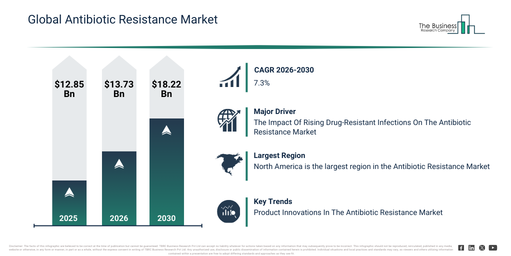
    The antibiotic resistance market has experienced robust expansion in recent years. This market is projected to expand from $12.85 billion in 2025 to $13.73 billion in 2026, achieving a compound annual growth rate (CAGR) of 6.8%. Historically, this growth has been driven by factors such as widespread antibiotic misuse, increasing hospital-acquired infections, expansion of broad-spectrum antibiotic use, limited availability of novel antibiotics, and a rising prevalence of resistant pathogens.

    The antibiotic resistance market is anticipated to show strong expansion in the upcoming years. It is projected to grow to $18.22 billion by 2030, demonstrating a compound annual growth rate (CAGR) of 7.3%. This growth during the forecast period can be attributed to increased investments in antimicrobial R&D, a broader adoption of precision diagnostics, the enlargement of global resistance surveillance networks, a rising emphasis on alternative therapies, and an increase in public-private partnerships. Major trends anticipated in the forecast period include a heightened focus on novel antibiotic development, the increasing use of combination drug therapies, wider implementation of rapid diagnostic testing, the expansion of antimicrobial stewardship programs, and improved surveillance of resistant pathogens.

    Access Your Free Sample Report For In-Depth Market Analysis:

    https://www.thebusinessresearchcompany.com/report/antibiotic-resistance-global-market-report

    Which Major Drivers Are Influencing The Expansion Of The Antibiotic Resistance Market?

    The escalating incidence of drug-resistant infections is projected to fuel the expansion of the antibiotic-resistance market moving forward. Such infections are illnesses caused by resistant bacteria, leading to a condition that is considerably more challenging or impossible to cure. Antimicrobial resistance medications assist in treating various drug-resistant infections, delivering improved antibiotic treatment outcomes for both targeted and non-targeted pathogens, depending on the specifics of resistance mechanisms and the interaction structure of the microbiome community. For illustration, in November 2025, as reported by the UK Health Security Agency, a UK-based government organization responsible for all health security in England, the count of fatalities among individuals with antibiotic-resistant infections increased from 2,041 in 2023 to 2,379 in 2024, signifying a jump of 338 deaths within a single year. Thus, the widespread occurrence of drug-resistant infections is a key factor driving the antibiotic resistance market.

    How Are Segments Identified Within The Antibiotic Resistance Market Segment Framework?

    The antibiotic resistance market covered in this report is segmented –

    1) By Drug Class: Beta Lactum Antibiotic, Cephalosporins, Quinolones Antibiotics, Macrolide Antibiotics, Tetracyclines, Oxazolidinones, Other Drug Classes

    2) By Pathogen: Staphylococcus Aureus, Staphylococcus Pneumonia, Neisseria Gonorrhoeae, Enterococcus Faecium, Escherichia Coli, Klebsiella Pneumonia, Shigella, Clostridium Difficile, Other Pathogens

    3) By Disease Type: Urinary Tract Infection, Intra-Abdominal Infection, Blood Stream infections, Clostridium Difficile Infections, Other Disease Types

    4) By Mechanism Of Action: Protein Synthesis Inhibitors, Cell Wall Synthesis Inhibitors, RNA Synthesis Inhibitors, DNA Synthesis Inhibitors, Other Mechanism Of Actions

    5) By End Users: Hospitals, Homecare, Specialty Clinics, Other End-users

    Subsegments:

    1) By Beta Lactam Antibiotics: Penicillins, Cephalosporins, Carbapenems, Monobactams

    2) By Cephalosporins: First-generation, Second-generation, Third-generation, Fourth-generation

    3) By Quinolones Antibiotics: Fluoroquinolones, Other Quinolones

    4) By Macrolide Antibiotics: Erythromycin, Azithromycin, Clarithromycin

    5) By Tetracyclines: Doxycycline, Minocycline, Tetracycline

    6) By Oxazolidinones: Linezolid, Tedizolid

    7) By Other Drug Classes: Glycopeptides, Lipopeptides, Streptogramins, Polymyxins

    Which Trends Are Shaping The Antibiotic Resistance Market?

    Companies operating within the antibiotic resistance market are primarily focused on developing novel products to improve treatment effectiveness, guarantee patient safety, and address the growing issue of multi-drug resistant (MDR) infections. An illustrative example occurred in January 2023, when Alkem Laboratories Limited, an India-based pharmaceutical firm, launched Zidavi, an innovative antibiotic designed to combat MDR infections, thereby enhancing its availability, affordability, and accessibility while aiming to save the lives of critically ill patients. Zidavi represents a unique blend of ceftazidime and avibactam capable of treating infections caused by MDR gram-negative pathogens. It is provided as a sterile powdered concentrate requiring reconstitution, with each single-dose vial comprising ceftazidime pentahydrate equivalent to 2 g of ceftazidime and avibactam sodium equivalent to 0.5 g of avibactam. This medication offers an effective alternative for addressing hospital-acquired pneumonia (HAP) and severe intra-abdominal infections (IAIs) that are resistant to meropenem and colistin.

    Who Are The Companies Competing Within The Antibiotic Resistance Market?

    Major companies operating in the antibiotic resistance market are Pfizer Inc., Johnson and Johnson, F. Hoffmann-La Roche Ltd, AbbVie Inc., Novartis AG, Merck and Co. Inc., Bristol-Myers Squibb, Sanofi S.A., AstraZeneca, GlaxoSmithKline Plc, Eli Lilly and Company, Boehringer Ingelheim International GmbH, Astellas Pharma, Daiichi Sankyo, Chugai Pharmaceutical Co. Ltd., Teva Pharmaceutical Industries Ltd., Paratek Pharmaceuticals Inc., Basilea Pharmaceutica Ltd., Theravance Biopharma Inc., Nabriva Therapeutics Plc, Seres Therapeutics Inc., Armata Pharmaceuticals Inc.

    Get The Full Antibiotic Resistance Market Report:

    https://www.thebusinessresearchcompany.com/report/antibiotic-resistance-global-market-report

    Which Region Leads The Antibiotic Resistance Market In Overall Market Size?

    North America was the largest region in the antibiotic resistance market in 2025. Asia-Pacific is expected to be the fastest-growing region in the forecast period. The regions covered in the antibiotic resistance market report are Asia-Pacific, South East Asia, Western Europe, Eastern Europe, North America, South America, Middle East, Africa.

    Request A Customized Antibiotic Resistance Market Report For Competitive Insights:

    https://www.thebusinessresearchcompany.com/report/antibiotic-resistance-global-market-report

    Browse Through More Reports Similar to the Global Antibiotic Resistance Market 2026, By The Business Research Company

    Veterinary Antibiotics Market Report 2026

    https://www.thebusinessresearchcompany.com/report/veterinary-antibiotics-global-market-report

    Multidrug Resistant Bacteria Market Report 2026

    https://www.thebusinessresearchcompany.com/report/multidrug-resistant-bacteria-global-market-report

    Antibiotics Market Report 2026

    https://www.thebusinessresearchcompany.com/report/antibiotics-global-market-report

    Get in touch with us:

    The Business Research Company: https://www.thebusinessresearchcompany.com/

    Americas +1 310-496-7795

    Asia +44 7882 955267 & +91 8897263534

    Europe +44 7882 955267

    Email us at info@tbrc.info

    Follow us on:

    LinkedIn: https://in.linkedin.com/company/the-business-research-company

    YouTube: https://www.youtube.com/channel/UC24_fI0rV8cR5DxlCpgmyFQ

    Global Market Model: https://www.thebusinessresearchcompany.com/global-market-model
  • Anti-acne dermal patch market insights on trends and opportunities

    Anti-acne dermal patch market insights on trends and opportunities

    The Business Research Company’s 2026 market reports feature enhanced tools like market attractiveness analysis, TAM assessment, and company scoring matrices, along with interactive dashboards, deeper supply chain insights, and startup coverage strengthening the depth, usability, and strategic value of insights.

    What Level Of Market Value Growth Is Predicted For The Anti-Acne Dermal Patch Market From 2026 To 2030?

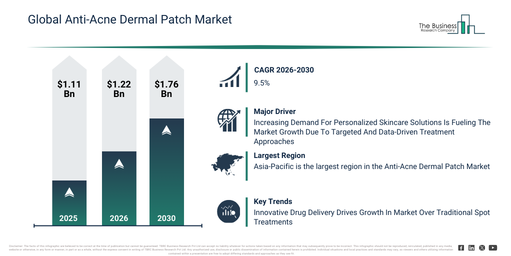
    The anti-acne dermal patch market size has seen substantial growth recently. It is set to expand from $1.11 billion in 2025 to $1.22 billion in 2026, achieving a compound annual growth rate (CAGR) of 9.9%. This historical growth can be linked to the rising prevalence of acne conditions, the increase in over-the-counter skincare solutions, growing awareness of targeted acne treatments, wider availability of personal care products, and a greater consumer preference for non-invasive skincare.

    The anti-acne dermal patch market is anticipated to experience robust expansion over the coming years. By 2030, its valuation is projected to reach $1.76 billion, demonstrating a compound annual growth rate (CAGR) of 9.5%. This anticipated growth during the forecast period stems from factors such as a heightened demand for tailored skincare options, an escalating emphasis on clean-label dermatological items, the proliferation of online skincare selling channels, advancements in transdermal delivery innovations, and increasing usage by adult acne sufferers. Key trends expected during this period involve the increasing embrace of hydrocolloid acne patches, a surge in demand for microneedle-based targeted therapies, the broader availability of drug-free acne patch versions, a heightened consideration for skin-compatible adhesive substances, and the development of inconspicuous and clear patch designs.

    Access Your Free Sample Report For In-Depth Market Analysis:

    https://www.thebusinessresearchcompany.com/report/anti-acne-dermal-patch-global-market-report

    What Key Drivers Are Fueling The Growth Of The Anti-Acne Dermal Patch Market?

    The anti-acne dermal patch market is expected to grow due to the increasing demand for personalized skincare solutions. Personalized skincare involves products and routines specifically tailored to an individual’s distinct skin type, concerns, and lifestyle, often utilizing data-driven analysis. This escalating demand is primarily fueled by consumers’ heightened awareness of their unique skin needs, leading them to seek products that deliver more effective and targeted results. Anti-acne dermal patches augment personalized skincare by providing targeted treatment based on specific individual skin concerns, reducing irritation, and improving treatment efficacy through controlled ingredient release, precise application, and real-time responsiveness to skin conditions, thereby offering a customized approach that aligns with the expanding need for tailored dermatological care. For example, in December 2024, according to the Bureau of Labor Statistics, a US-based government agency, consumer spending on personal care products and services increased from USD 866 in 2022 to USD 950 in 2023, marking a 9.7% year-over-year rise after a 12.3% increase in 2022. Consequently, the increasing demand for personalized skincare solutions is a significant driver for the growth of the anti-acne dermal patch market.

    What Are The Key Segment Divisions In The Anti-Acne Dermal Patch Market Segment Structure?

    The anti-acne dermal patch market covered in this report is segmented –

    1) By Product Type: Hydrocolloid, Microneedle, Other Product Types

    2) By Source: Bovine Collagen, Marine Collagen, Pork Collagen, Chicken Collagen

    3) By Application: Cosmetics And Personal Care, Food And Beverages, Health And Nutrition, Pharmaceuticals, Other Applications

    4) By End-User: Men, Women

    Subsegments:

    1) By Hydrocolloid: With Salicylic Acid, With Tea Tree Oil, Plain Hydrocolloid (Drug-Free), Tinted Hydrocolloid, Waterproof Hydrocolloid

    2) By Microneedle: Hyaluronic Acid-Based, Niacinamide-Based, Retinol-Based, Peptide-Infused, Multi-Ingredient

    3) By Other Product Types: Silicone-Based Patches, Charcoal-Infused Patches, Clay-Based Patches, Transparent Film Patches, Herbal Or Botanical Extract-Based Patches

    What Trends Are Influencing The Anti-Acne Dermal Patch Market?

    Leading companies in the anti-acne dermal patch market are prioritizing the development of advanced solutions, such as microdart delivery systems, to enhance the accuracy and effectiveness of acne management. Microdart delivery systems are cutting-edge skincare technologies that utilize tiny, dissolvable microneedles to deposit active ingredients deep within the skin. They aid in treating acne by penetrating the outer epidermal layer and directly releasing blemish-fighting components into the affected area, which helps reduce inflammation and accelerate the healing process. For example, in January 2023, Starface, a US-based skincare company, introduced Micro-Cloud patches featuring microdart delivery technology that integrates hydrocolloid protection with targeted quantities of salicylic acid, niacinamide, and hyaluronic acid to effectively address developing breakouts before they fully form. These microdarts dissolve upon contact, delivering active acne-fighting ingredients deep into the skin to diminish inflammation, soothe redness, and speed up recovery. This innovative strategy not only aids in preventing pimples from emerging but also offers a more precise and efficient treatment compared to traditional spot applications, emphasizing the increasing tendency among major firms to incorporate advanced delivery methods into anti-acne dermal patches.

    Which Organizations Are Engaged In The Anti-Acne Dermal Patch Market?

    Major companies operating in the anti-acne dermal patch market are 3M Company, Neogen Dermalogy Co. Ltd., Neutrogena Corporation, Redcliffe Hygiene Private Limited, Plix Life Private Limited, Peace Out Skincare Inc., Julep Beauty Inc., Peach and Lily Inc., Dr. Jart+, Innisfree Corporation, Rael Inc., Clearsil LLC, Patchology LLC, Truly Organic LLC, Starface World Inc., The Inkey List Limited, Gush Beauty, Lely’s Acne Pimple Patches, COSRX, Avarelle, ZitSticka, DermaAngel, Peach Slices, Grace & Stella

    Get The Full Anti-Acne Dermal Patch Market Report:

    https://www.thebusinessresearchcompany.com/report/anti-acne-dermal-patch-global-market-report

    Which Region Is The Top Contributor To The Anti-Acne Dermal Patch Market By Share?

    Asia-Pacific was the largest region in the anti-acne dermal patch market in 2025. North America is expected to be the fastest-growing region in the forecast period. The regions covered in the anti-acne dermal patch market report are Asia-Pacific, South East Asia, Western Europe, Eastern Europe, North America, South America, Middle East, Africa.

    Request A Customized Anti-Acne Dermal Patch Market Report For Competitive Insights:

    https://www.thebusinessresearchcompany.com/report/anti-acne-dermal-patch-global-market-report

    Browse Through More Reports Similar to the Global Anti-Acne Dermal Patch Market 2026, By The Business Research Company

    Premium Cosmetics Market Report 2026

    https://www.thebusinessresearchcompany.com/report/premium-cosmetics-global-market-report

    Transdermal Skin Patche Market Report 2026

    https://www.thebusinessresearchcompany.com/report/transdermal-skin-patche-global-market-report

    Electronic Skin Patch Market Report 2026

    https://www.thebusinessresearchcompany.com/report/electronic-skin-patch-global-market-report

    Get in touch with us:

    The Business Research Company: https://www.thebusinessresearchcompany.com/

    Americas +1 310-496-7795

    Asia +44 7882 955267 & +91 8897263534

    Europe +44 7882 955267

    Email us at info@tbrc.info

    Follow us on:

    LinkedIn: https://in.linkedin.com/company/the-business-research-company

    YouTube: https://www.youtube.com/channel/UC24_fI0rV8cR5DxlCpgmyFQ

    Global Market Model: https://www.thebusinessresearchcompany.com/global-market-model

  • Anti-hemagglutinin antibody market trends shaping future growth

    Anti-hemagglutinin antibody market trends shaping future growth

    The Business Research Company’s 2026 market reports feature enhanced tools like market attractiveness analysis, TAM assessment, and company scoring matrices, along with interactive dashboards, deeper supply chain insights, and startup coverage strengthening the depth, usability, and strategic value of insights.

    How Will The Market Value Of The Anti Hemagglutinin (Ha) Antibody Market Progress Between 2026 And 2030?

    The anti hemagglutinin (ha) antibody market has experienced swift expansion in its size during recent years. It is projected to expand from $1.66 billion in 2025 to reach $1.83 billion in 2026, exhibiting a compound annual growth rate (CAGR) of 10.5%. The market’s historical expansion is largely due to the broadening of influenza research activities, advancements in molecular biology research, the increasing utilization of tagged protein systems, a heightened demand for diagnostic reagents, and innovations in antibody engineering techniques.

    The anti hemagglutinin (ha) antibody market is poised for significant expansion in the coming years. Projections indicate its value will reach $2.7 billion by 2030, exhibiting a compound annual growth rate (CAGR) of 10.2%. This anticipated growth over the forecast period is fueled by factors such as increasing investments in infectious disease research, wider adoption of recombinant protein expression systems, advancements in diagnostic assay development, a surging demand for standardized antibodies, and ongoing innovation within antibody production technologies. Key trends during this period are expected to encompass a heightened demand for high-specificity research antibodies, an increased embrace of recombinant antibody formats, their expanding utility in vaccine and virology research, broader applications in diagnostic testing, and a reinforced emphasis on maintaining batch-to-batch consistency.

    Access Your Free Sample Report For In-Depth Market Analysis:

    https://www.thebusinessresearchcompany.com/report/global-anti-hemagglutinin-ha-antibody-market-report

    Which Drivers Are Supporting The Anti Hemagglutinin (Ha) Antibody Market Growth?

    The escalating occurrence of influenza is projected to stimulate the expansion of the anti hemagglutinin (Ha) antibody market moving forward. Influenza, a highly contagious respiratory viral infection (the flu), manifests as fever, cough, sore throat, and body aches, with symptoms varying from mild to severe. The heightened prevalence of influenza is largely attributed to regular international travel, which facilitates the rapid cross-border transmission of this highly communicable virus. Anti-hemagglutinin (Ha) antibodies play a crucial role in influenza management by precisely targeting the viral HA protein, making them indispensable for diagnostics, research, and vaccine development. They refine treatment approaches by enabling accurate identification and monitoring of influenza infections, thereby supporting effective disease control and prevention. For instance, in February 2025, the World Health Organization, a Switzerland-based intergovernmental organization, reported that seasonal influenza impacts approximately one billion people globally, resulting in 3–5 million severe cases and causing 290,000 to 650,000 respiratory-related deaths each year. Consequently, the rising prevalence of influenza is fueling the growth of the anti hemagglutinin (Ha) antibody market.

    Which Segment Categories Are Included In The Anti Hemagglutinin (Ha) Antibody Market Segment Analysis?

    The anti hemagglutinin (ha) antibody market covered in this report is segmented –

    1) By Product Type: Monoclonal Antibodies, Polyclonal Antibodies, Recombinant Antibodies

    2) By Technology: Enzyme-Linked Immunosorbent Assay (ELISA)-Based Technologies, Flow Cytometry-Based Technologies, Immunohistochemistry Technologies, Western Blot-Based Technologies

    3) By Source: Mouse, Rabbit, Goat, Chicken

    4) By Application: Research, Diagnostics, Therapeutics

    5) By End-User: Academic Research Institutes, Biotechnology Companies, Pharmaceutical Companies, Diagnostic Laboratories

    Subsegments:

    1) By Monoclonal Antibodies: Human Monoclonal Antibodies, Humanized Monoclonal Antibodies, Chimeric Monoclonal Antibodies, Murine Monoclonal Antibodies

    2) By Polyclonal Antibodies: Rabbit Polyclonal Antibodies, Goat Polyclonal Antibodies, Sheep Polyclonal Antibodies, Donkey Polyclonal Antibodies

    3) By Recombinant Antibodies: Single Chain Variable Fragment Antibodies, Fragment Antigen Binding Antibodies, Bispecific Recombinant Antibodies, Synthetic Recombinant Antibodies

    Which Trends Are Expected To Impact The Anti Hemagglutinin (Ha) Antibody Market?

    Leading companies in the anti hemagglutinin (Ha) antibody market are concentrating on advanced innovation, such as authentic virus architecture, to develop safer and more precise virus-like models for evaluating vaccine efficacy and antibody response. Authentic virus architecture refers to a structural design that closely mimics the natural composition and surface proteins of a live virus without containing genetic material. For example, in November 2023, Integral Molecular, a US-based biotechnology company, introduced TiterSafe influenza virus-like particles, designed as an off-the-shelf and non-infectious substitute for live influenza virus. This authentic virus architecture enables researchers to safely and efficiently perform hemagglutination inhibition (HAI) assays, which are the FDA-accepted standard for assessing influenza vaccine effectiveness. TiterSafe eliminates the need for culturing infectious viruses and specialized biosafety facilities, considerably reducing laboratory risks. These particles accurately mirror the structure of live viruses, including key surface proteins like hemagglutinin (HA) and neuraminidase (NA), thus guaranteeing precision in experiments. This advancement facilitates high-throughput and dependable influenza antibody testing, simultaneously improving laboratory safety and operational efficiency.

    Who Are The Active Companies Shaping The Anti Hemagglutinin (Ha) Antibody Market?

    Major companies operating in the anti hemagglutinin (ha) antibody market are Johnson & Johnson, F. Hoffmann-La Roche AG, Pfizer Inc., AbbVie Inc., AstraZeneca plc, Bristol-Myers Squibb Company, Thermo Fisher Scientific Inc., Amgen Inc., Merck KGaA, Danaher Corporation, Bio-Rad Laboratories Inc., Bio-Techne Corporation, GenScript Biotech Corporation, Sino Biological Inc., Cell Signaling Technology Inc., Proteintech Group Inc., Santa Cruz Biotechnology Inc., Integral Molecular, Rockland Immunochemicals Inc., Biorbyt Ltd.

    Get The Full Anti Hemagglutinin (Ha) Antibody Market Report:

    https://www.thebusinessresearchcompany.com/report/global-anti-hemagglutinin-ha-antibody-market-report

    Which Region Represents The Largest Share Of The Anti Hemagglutinin (Ha) Antibody Market?

    North America was the largest region in the anti hemagglutinin (Ha) antibody market in 2025. Asia-Pacific is expected to be the fastest-growing region in the forecast period. The regions covered in the anti hemagglutinin (ha) antibody market report are Asia-Pacific, South East Asia, Western Europe, Eastern Europe, North America, South America, Middle East, Africa.

    Request A Customized Anti Hemagglutinin (Ha) Antibody Market Report For Competitive Insights:

    https://www.thebusinessresearchcompany.com/report/global-anti-hemagglutinin-ha-antibody-market-report

    Browse Through More Reports Similar to the Global Anti Hemagglutinin (Ha) Antibody Market 2026, By The Business Research Company

    Hematology Drug Market Report 2026

    https://www.thebusinessresearchcompany.com/report/hematology-drug-global-market-report

    Mammalian Polyclonal Immunoglobulin G Igg Antibody Market Report 2026

    https://www.thebusinessresearchcompany.com/report/mammalian-polyclonal-immunoglobulin-g-igg-antibody-global-market-report

    Hemoglobin Testing Market Report 2026

    https://www.thebusinessresearchcompany.com/report/hemoglobin-testing-global-market-report

    Get in touch with us:

    The Business Research Company: https://www.thebusinessresearchcompany.com/

    Americas +1 310-496-7795

    Asia +44 7882 955267 & +91 8897263534

    Europe +44 7882 955267

    Email us at info@tbrc.info

    Follow us on:

    LinkedIn: https://in.linkedin.com/company/the-business-research-company

    YouTube: https://www.youtube.com/channel/UC24_fI0rV8cR5DxlCpgmyFQ

    Global Market Model: https://www.thebusinessresearchcompany.com/global-market-model

  • Artificial Intelligence in Medical Coding Market Forecast to 2030: Industry Growth and Trends

    Artificial Intelligence in Medical Coding Market Forecast to 2030: Industry Growth and Trends

    The Business Research Company’s 2026 market reports feature enhanced tools like market attractiveness analysis, TAM assessment, and company scoring matrices, along with interactive dashboards, deeper supply chain insights, and startup coverage strengthening the depth, usability, and strategic value of insights.

    How Much Will The Market Value Of The Artificial Intelligence In Medical Coding Market Grow Between 2026 And 2030?

    The artificial intelligence in medical coding market has experienced rapid expansion recently. This market is expected to increase from $3.12 billion in 2025 to $3.56 billion in 2026, demonstrating a compound annual growth rate (CAGR) of 14.0%. The growth observed in the past can be ascribed to increasing healthcare data volumes, rising complexity of medical coding standards, growing administrative burden on healthcare providers, expansion of electronic health record systems, and demand for improved revenue cycle efficiency.

    The artificial intelligence in medical coding market size is projected to experience substantial growth over the next few years. It is forecast to expand to $6 billion by 2030, achieving a compound annual growth rate (CAGR) of 14.0%. This growth during the forecast period is primarily driven by the increasing integration of fully automated coding platforms, heightened regulatory oversight on billing precision, the expanding application of AI-assisted clinical documentation, the spread of outsourced AI-powered coding services, and rising investments in healthcare automation technologies. Significant trends expected in this period involve a greater adoption of AI-driven automated coding solutions, an increase in the integration of NLP-based clinical documentation analysis, the growing implementation of generative AI for improving code accuracy, an expansion of AI-enabled compliance and audit tools, and a reinforced emphasis on reducing coding errors and denials.

    Access Your Free Sample Report For In-Depth Market Analysis:

    https://www.thebusinessresearchcompany.com/report/artificial-intelligence-in-medical-coding-global-market-report

    Which Key Drivers Are Affecting The Artificial Intelligence In Medical Coding Market Development?

    The anticipated surge in the need for coding services is set to advance the expansion of artificial intelligence in the medical coding market moving ahead. Coding services involve converting healthcare diagnoses, procedures, and medical services into globally recognized medical alphanumeric codes. This conversion is crucial for precise billing, efficient insurance claim handling, and proper reimbursement. Artificial intelligence within medical coding improves the effectiveness, correctness, and flexibility of these services, bringing advantages to healthcare entities, medical coding professionals, and patient treatment. As an illustration, in 2024, the American Bureau of Labor Statistics, a US-based government agency, forecasted that employment for medical records specialists is expected to increase by 7 percent between 2024 and 2034. Consequently, the escalating requirement for coding services is a key factor propelling the development of artificial intelligence in the medical coding market.

    How Is The Artificial Intelligence In Medical Coding Market Broken Down By Segment Categories?

    The artificial intelligence in medical coding market covered in this report is segmented –

    1) By Component: In-House, Outsourced

    2) By Technology: Machine Learning, Natural Language Processing (NLP), Generative AI

    3) By End-User: Healthcare Providers, Medical Billing Companies, Payers

    Subsegments:

    1) By In-House: Internal Coding Teams, AI-Enhanced Coding Solutions, Integration With Existing Systems

    2) By Outsourced: Third-Party Coding Services, AI-Powered Outsourcing Solutions, Vendor Management For Coding Services

    What Trends Are Transforming The Artificial Intelligence In Medical Coding Market?

    Major companies operating in artificial intelligence in the medical coding market are developing innovative technology such as Natural Language Processing (NLP) to recognize the context within which words are used, allowing it to more accurately interpret patient conversations and capture the subtle nuances of a patient’s medical condition. Natural Language Processing (NLP) is a specialized branch of Artificial Intelligence (AI) that enables machines to understand and interpret human-generated spoken or written data. For instance, in March 2023, Liguamatics, a UK-based software company, launched Healthcare Product Suite to turn unstructured electronic health record data into actionable patient insights. This suite leverages natural language processing (NLP) to extract valuable information from unstructured data sources such as EHRs, patient portals, and call center notes. The NLP Data Factory offered by Linguamatics provides scalable and automated NLP transformation for key applications, supporting a wide range of healthcare data. The Health Language Data Interoperability Solution by Wolters Kluwer also allows organizations to harmonize structured, semi-structured, and unstructured data from multiple sources in the healthcare domain.

    Which Players Are Present In The Artificial Intelligence In Medical Coding Market Space?

    Major companies operating in the artificial intelligence in medical coding market are CodaMetrix Inc., Fathom, Inc., AKASA, Inc., Aideo Technologies, Inc., M-Scribe Technologies, LLC, Dolbey Systems, Inc., Streamline Health Solutions, Inc., Talix, Inc., Health Record Services Corporation, Saince, Inc., Diagnoss, Inc., BUDDI AI, Inc., Oncora Medical, Inc., Epic Systems Corporation, CorroHealth, Inc., nThrive, Inc., Waystar Technologies, Inc., Thoughtful Automation, Inc., Solventum Corporation, Exponential AI, Inc.

    Get The Full Artificial Intelligence In Medical Coding Market Report:

    https://www.thebusinessresearchcompany.com/report/artificial-intelligence-in-medical-coding-global-market-report

    Which Region Has The Greatest Market Share In The Artificial Intelligence In Medical Coding Market?

    North America was the largest region in the artificial intelligence in medical coding market in 2025. The regions covered in the artificial intelligence in medical coding market report are Asia-Pacific, South East Asia, Western Europe, Eastern Europe, North America, South America, Middle East, Africa.

    Request A Customized Artificial Intelligence In Medical Coding Market Report For Competitive Insights:

    https://www.thebusinessresearchcompany.com/report/artificial-intelligence-in-medical-coding-global-market-report

    Browse Through More Reports Similar to the Global Artificial Intelligence In Medical Coding Market 2026, By The Business Research Company

    Artificial Intelligence In Healthcare Market 2026

    https://www.thebusinessresearchcompany.com/report/artificial-intelligence-in-healthcare-market

    Artificial Intelligence In Medicine Market Report 2026

    https://www.thebusinessresearchcompany.com/report/artificial-intelligence-in-medicine-global-market-report

    Medical Coding Market Report 2026

    https://www.thebusinessresearchcompany.com/report/medical-coding-global-market-report

    Get in touch with us:

    The Business Research Company: https://www.thebusinessresearchcompany.com/

    Americas +1 310-496-7795

    Asia +44 7882 955267 & +91 8897263534

    Europe +44 7882 955267

    Email us at info@tbrc.info

    Follow us on:

    LinkedIn: https://in.linkedin.com/company/the-business-research-company

    YouTube: https://www.youtube.com/channel/UC24_fI0rV8cR5DxlCpgmyFQ

    Global Market Model: https://www.thebusinessresearchcompany.com/global-market-model

  • Anterior uveitis market forecast with demand insights

    Anterior uveitis market forecast with demand insights

    The Business Research Company’s 2026 market reports feature enhanced tools like market attractiveness analysis, TAM assessment, and company scoring matrices, along with interactive dashboards, deeper supply chain insights, and startup coverage strengthening the depth, usability, and strategic value of insights.

    What Are The Market Size Estimates For The Anterior Uveitis Market In 2026 And 2030?

    The market size for anterior uveitis has observed rapid expansion in recent years. It is projected to climb from $0.57 billion in 2025 to $0.64 billion in 2026, exhibiting a compound annual growth rate (CAGR) of 11.6%. The historical surge can be attributed to improved ophthalmic diagnostic capabilities, an increase in the prevalence of autoimmune-related eye disorders, wider access to corticosteroids, the expansion of eye care infrastructure, and the growth of specialist ophthalmology services.

    The anterior uveitis market is projected to experience substantial expansion over the coming years, reaching $0.98 billion by 2030, demonstrating a compound annual growth rate (CAGR) of 11.2%. This growth during the forecast period is fueled by factors such as the increasing demand for biologic eye therapies, greater integration of precision diagnostics, the expanding scope of advanced ophthalmic drug pipelines, a heightened emphasis on vision preservation, and increased investment in research related to inflammatory eye diseases. Key trends anticipated during this period encompass the wider adoption of biologic therapies, an uptick in the use of advanced diagnostic biomarkers, a growing inclination towards targeted immunosuppressive treatments, the broadening of outpatient ophthalmic care services, and an intensified focus on identifying diseases early.

    Access Your Free Sample Report For In-Depth Market Analysis:

    https://www.thebusinessresearchcompany.com/report/anterior-uveitis-global-market-report

    What Key Factors Are Affecting The Anterior Uveitis Market Demand?

    The growing incidence of autoimmune diseases is anticipated to spur the advancement of the anterior uveitis market moving forward. Autoimmune conditions develop when the immune system erroneously attacks the body’s healthy cells and tissues, perceiving them as foreign threats. This aberrant reaction leads to inflammation and injury across various organs and systems. The increase in autoimmune diseases is linked to genetic predispositions, environmental factors, shifts in lifestyle, and heightened awareness, which contributes to improved diagnosis. Anterior uveitis commonly manifests in autoimmune diseases, causing inflammation in the eye’s anterior segment, and is frequently associated with conditions such as rheumatoid arthritis and ankylosing spondylitis. For instance, in February 2024, according to Arthritis Australia, an Australia-based charitable not-for-profit organisation advocating for people with arthritis and musculoskeletal conditions, it is projected that by 2025, approximately 562,378 Australians will be living with rheumatoid arthritis (RA), accounting for 14% of the total arthritis population. Thus, the escalating prevalence of autoimmune diseases is a key factor driving the growth of the anterior uveitis market.

    How Is The Anterior Uveitis Market Broken Down By Segment Categories?

    The anterior uveitis market covered in this report is segmented –

    1) By Treatment Type: Pharmacological Treatments, Surgical Treatments, Biologic Therapy

    2) By Diagnosis Method: Clinical Diagnosis, Diagnostic Imaging, Biomarkers

    3) By Cause: Infectious, Non-Infectious

    4) By End-User: Hospitals And Clinics, Ambulatory Surgical Centers

    Subsegments:

    1) By Pharmacological Treatments: Corticosteroids, Non-Steroidal Anti-Inflammatory Drugs (NSAIDs), Immunosuppressive Drugs

    2) By Surgical Treatments: Cataract Surgery, Glaucoma Surgery, Vitrectomy

    3) By Biologic Therapy: Tumor Necrosis Factor (TNF) Inhibitors, Interleukin-6 (IL-6) Inhibitors, Monoclonal Antibodies

    What Trends Are Influencing Changes In The Anterior Uveitis Market?

    Major companies operating in the anterior uveitis market are focusing on developing advanced drug formulations, such as eye drops, to improve patient compliance, enhance drug delivery, and reduce inflammation with fewer side effects. Eye drops are frequently used in the treatment of anterior uveitis to manage inflammation, alleviate pain, and prevent potential complications. For instance, in January 2024, Tarsier Pharma Ltd., an Israel-based pharmaceutical company, received approval from the U.S. Food and Drug Administration (FDA) under a Special Protocol Assessment (SPA) for the clinical trial protocol and statistical analysis plan of the Tarsier-04 Phase 3 trial. This trial aims to evaluate the effectiveness of TRS01 eye drops in treating non-infectious uveitis, including uveitic glaucoma. The Tarsier-04 trial is a multicenter, randomized, double-masked, active-controlled study enrolling up to 300 patients in the U.S., with the goal of demonstrating TRS01’s safety and efficacy, particularly in controlling inflammation without increasing glaucoma risk.

    Which Players Are Present In The Anterior Uveitis Market Space?

    Major companies operating in the anterior uveitis market are AbbVie Inc, Novartis AG, Bausch Health Companies Inc, EyePoint Pharmaceuticals Inc, Santen Pharmaceutical Co Ltd, Alimera Sciences Inc, Clearside Biomedical Inc, Eyegate Pharmaceuticals Inc, Horizon Therapeutics Plc, Mylan NV, Sun Pharmaceutical Industries Ltd, Regeneron Pharmaceuticals Inc, Pfizer Inc, Amgen Inc, Sanofi, Galapagos NV, Tarsier Pharma Ltd, TopiVert Ltd, Ocular Therapeutix Inc, Ophthotech Corporation, Aciont Inc, Sirion Therapeutics Inc, Aldeyra Therapeutics Inc, Kiora Pharmaceuticals Inc, UCB SA, ANI Pharmaceuticals Inc, Priovant Therapeutics, Roivant Sciences Inc, Active Biotech

    Get The Full Anterior Uveitis Market Report:

    https://www.thebusinessresearchcompany.com/report/anterior-uveitis-global-market-report

    Which Geographic Region Dominates The Anterior Uveitis Market?

    North America was the largest region in the anterior uveitis market in 2025. The regions covered in the anterior uveitis market report are Asia-Pacific, South East Asia, Western Europe, Eastern Europe, North America, South America, Middle East, Africa.

    Request A Customized Anterior Uveitis Market Report For Competitive Insights:

    https://www.thebusinessresearchcompany.com/report/anterior-uveitis-global-market-report

    Browse Through More Reports Similar to the Global Anterior Uveitis Market 2026, By The Business Research Company

    Intraocular Lens Market Report 2026

    https://www.thebusinessresearchcompany.com/report/intraocular-lens-global-market-report

    Bacterial Conjunctivitis Market Report 2026

    https://www.thebusinessresearchcompany.com/report/bacterial-conjunctivitis-global-market-report

    Dermatitis Drugs Market Report 2026

    https://www.thebusinessresearchcompany.com/report/dermatitis-drugs-global-market-report

    Get in touch with us:

    The Business Research Company: https://www.thebusinessresearchcompany.com/

    Americas +1 310-496-7795

    Asia +44 7882 955267 & +91 8897263534

    Europe +44 7882 955267

    Email us at info@tbrc.info

    Follow us on:

    LinkedIn: https://in.linkedin.com/company/the-business-research-company

    YouTube: https://www.youtube.com/channel/UC24_fI0rV8cR5DxlCpgmyFQ

    Global Market Model: https://www.thebusinessresearchcompany.com/global-market-model
  • Artificial Intelligence in Life Sciences Market: Emerging Trends Shaping Growth Through 2030

    Artificial Intelligence in Life Sciences Market: Emerging Trends Shaping Growth Through 2030

    The Business Research Company’s 2026 market reports feature enhanced tools like market attractiveness analysis, TAM assessment, and company scoring matrices, along with interactive dashboards, deeper supply chain insights, and startup coverage strengthening the depth, usability, and strategic value of insights.

    What Changes In Market Value Are Expected For The Artificial Intelligence In Life Sciences Market Over The 2026–2030 Period?

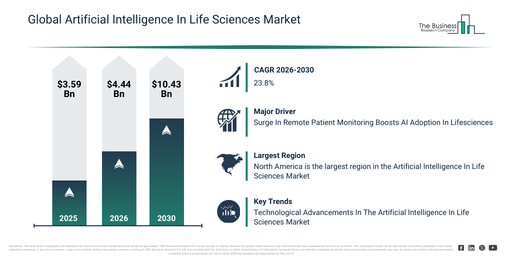
    The artificial intelligence in life sciences market has seen substantial growth in recent years. It is anticipated to expand from $3.59 billion in 2025 to $4.44 billion in 2026, exhibiting a compound annual growth rate (CAGR) of 23.6%. The historical surge can be attributed to the increasing complexity of biological datasets, the expansion of genomics research, the rising adoption of digital lab technologies, the early integration of ai in biotechnology research, and the growing demand for faster research cycles.

    The artificial intelligence in life sciences market is projected to experience rapid expansion over the upcoming years. This market is predicted to reach $10.43 billion by 2030, demonstrating a compound annual growth rate (CAGR) of 23.8%. Factors driving this growth during the forecast period include greater investments in personalized medicine, the expanding use of AI-enabled laboratory automation, the widening availability of cloud-based life science platforms, increased partnerships between technology and life science companies, and improved regulatory approval of AI-powered insights. Key trends anticipated for this period encompass the broader integration of AI across various life science workflows, the increasing uptake of AI-driven data analytics platforms, the enhanced application of automation in laboratory processes, the extension of AI-supported precision medicine uses, and a stronger emphasis on speeding up research findings.

    Access Your Free Sample Report For In-Depth Market Analysis:

    https://www.thebusinessresearchcompany.com/report/artificial-intelligence-in-life-sciences-global-market-report

    What Factors Are Contributing To The Growth Of The Artificial Intelligence In Life Sciences Market?

    Growing demand for real-time remote patient monitoring (RPM) systems is anticipated to fuel the expansion of artificial intelligence within the life sciences market. These systems represent technology-enabled healthcare solutions designed to oversee patient well-being beyond conventional clinical environments. Artificial intelligence in life sciences plays a crucial role in remote patient monitoring by delivering ongoing, tailored, and data-informed insights, which facilitate proactive healthcare management. As an example, the Peterson Center on Healthcare, a US-based non-profit organization, reported in April 2025 that expenditures for remote therapeutic monitoring (RTM) in Traditional Medicare increased significantly from $2.2 million in 2022 to $10.4 million in 2023. Furthermore, in 2023, 451,000 patients in Traditional Medicare utilized RPM services. Consequently, the heightened interest in real-time remote patient monitoring (RPM) systems is stimulating the expansion of artificial intelligence in the life sciences market.

    What Are The Different Segment Types In The Artificial Intelligence In Life Sciences Market Segment Breakdown?

    The artificial intelligence in life sciences market covered in this report is segmented –

    1) By Offering: Software, Hardware, Services

    2) By Deployment: On-Premises, Cloud-Based

    3) By Application: Drug Discovery, Medical Diagnosis, Biotechnology, Clinical Trials, Precision And Personalized Medicine, Patient Monitoring

    Subsegments:

    1) By Software: Drug Discovery Software, Genomic Analysis Software, Clinical Trial Management Software, Personalized Medicine Software, Laboratory Information Management Systems (LIMS)

    2) By Hardware: AI-Enabled Laboratory Equipment, Robotics And Automation Systems, Imaging Devices And Equipment, Sensor Technologies

    3) By Services: Consulting Services, Data Analytics Services, Research And Development Services, Implementation And Integration Services, Training And Support Services

    What Trends Are Shaping The Future Of The Artificial Intelligence In Life Sciences Market?

    Leading companies in the artificial intelligence within the life sciences market are prioritizing innovative offerings, such as drug discovery software, enhanced by technological advancements, to maintain their market presence. This software category comprises computer programs and applications developed to assist pharmaceutical and biotechnology researchers in the new drug discovery process. For example, in December 2023, Merck, a Germany-based science and technology firm, launched AIDDISON, an innovative drug discovery software. As a unique solution, it links virtual molecule design with real-world production viability, employing generative AI, machine learning, and computer-aided drug design. AIDDISON effectively identifies prospective drug candidates from numerous possibilities, evaluating key attributes like non-toxicity and solubility. Its capacity to connect virtual molecule design with practical manufacturability stands out as a significant application of artificial intelligence in the life sciences domain.

    Who Are The Well-Known Companies In The Artificial Intelligence In Life Sciences Market?

    Major companies operating in the artificial intelligence in life sciences market are Google LLC, Microsoft Corporation, Intel Corporation, IBM Corporation, Medtronic PLC, Nvidia Corporation, Novo Nordisk A/S, Siemens Healthineers AG, Philips Healthcare, Babylon Healthcare Services Ltd., Komodo Health Inc., Modernizing Medicine Inc., Viz.ai Inc., Butterfly Network Inc., Augmedix, AiCure LLC, HealthTap Inc., Welltok Inc., Enlitic Inc., PathAI Inc., Nano-X Imaging Ltd., Berg LLC, Insitro, Sense.ly Inc., Subtle Medical Inc., Medasense Biometrics Limited, Immunai, Atomwise Inc., Freenome Holdings Inc., CloudMedX Inc.

    Get The Full Artificial Intelligence In Life Sciences Market Report:

    https://www.thebusinessresearchcompany.com/report/artificial-intelligence-in-life-sciences-global-market-report

    Which Region Accounts For The Largest Portion Of The Artificial Intelligence In Life Sciences Market?

    North America was the largest region in the Artificial Intelligence In Life Sciences market in 2025. Asia-Pacific is expected to be the fastest-growing region in the forecast period. The regions covered in the artificial intelligence in life sciences market report are Asia-Pacific, South East Asia, Western Europe, Eastern Europe, North America, South America, Middle East, Africa.

    Request A Customized Artificial Intelligence In Life Sciences Market Report For Competitive Insights:

    https://www.thebusinessresearchcompany.com/report/artificial-intelligence-in-life-sciences-global-market-report

    Browse Through More Reports Similar to the Global Artificial Intelligence In Life Sciences Market 2026, By The Business Research Company

    Life Science Analytics Market Report 2026

    https://www.thebusinessresearchcompany.com/report/life-science-analytics-global-market-report

    Ai In Life Science Analytics Market Report 2026

    https://www.thebusinessresearchcompany.com/report/ai-in-life-science-analytics-global-market-report

    Artificial Intelligence In Medicine Market Report 2026

    https://www.thebusinessresearchcompany.com/report/artificial-intelligence-in-medicine-global-market-report

    Get in touch with us:

    The Business Research Company: https://www.thebusinessresearchcompany.com/

    Americas +1 310-496-7795

    Asia +44 7882 955267 & +91 8897263534

    Europe +44 7882 955267

    Email us at info@tbrc.info

    Follow us on:

    LinkedIn: https://in.linkedin.com/company/the-business-research-company

    YouTube: https://www.youtube.com/channel/UC24_fI0rV8cR5DxlCpgmyFQ

    Global Market Model: https://www.thebusinessresearchcompany.com/global-market-model
  • Anosmia market outlook with key growth drivers

    Anosmia market outlook with key growth drivers

    The Business Research Company’s 2026 market reports feature enhanced tools like market attractiveness analysis, TAM assessment, and company scoring matrices, along with interactive dashboards, deeper supply chain insights, and startup coverage strengthening the depth, usability, and strategic value of insights.

    What Expansion In Market Value Is Forecasted For The Anosmia Market Between 2026 And 2030?

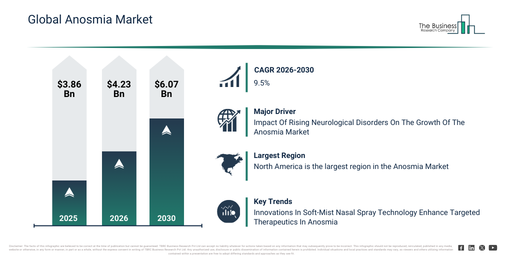
    The anosmia market size has experienced robust growth in recent years. Projections indicate it will expand from $3.86 billion in 2025 to $4.23 billion in 2026, demonstrating a compound annual growth rate (CAGR) of 9.4%. This historical growth is attributable to several factors, including a rise in the incidence of viral-induced anosmia, heightened awareness regarding olfactory disorders, broader access to diagnostic instruments, an increase in ENT specialty care, and more frequent reporting of sensory loss.

    The anosmia market is projected to experience robust expansion over the coming years. This market is anticipated to reach $6.07 billion by 2030, driven by a compound annual growth rate (CAGR) of 9.5%. Factors contributing to this growth during the projected period encompass increased research into olfactory nerve regeneration, the wider acceptance of innovative therapies, the broadening of post-infectious care initiatives, a heightened desire for treatments enhancing quality of life, and an uptick in clinical trial engagements. Key developments expected in the forecast timeframe involve a greater emphasis on regenerative therapies, the expanding implementation of smell training programs, the increased uptake of specific pharmacological treatments, the wider availability of diagnostic imaging and testing, and a stronger focus on managing recovery after viral infections.

    Access Your Free Sample Report For In-Depth Market Analysis:

    https://www.thebusinessresearchcompany.com/report/anosmia-global-market-report

    Which Primary Drivers Are Impacting The Anosmia Market Growth?

    The increasing occurrence of neurological conditions is anticipated to boost the expansion of the anosmia market in the future. These disorders encompass a broad spectrum of ailments that affect the nervous system, including the brain, spinal cord, and nerves throughout the body. The growing frequency of neurological disorders is attributed to an aging demographic and the heightened occurrence of chronic illnesses like diabetes and hypertension. Neurological disorders can induce anosmia by damaging the olfactory pathways or regions in the brain responsible for processing smell, leading to a loss of the ability to detect or perceive odors. For instance, in March 2023, according to the Alzheimer’s Association, a US-based nonprofit voluntary health organization, 6.7 million Americans aged 65 and older are living with Alzheimer’s dementia, with projections indicating this could rise to 13.8 million by 2060. Consequently, the increased prevalence of neurological disorders is fueling the expansion of the anosmia market.

    What Are The Different Segment Types In The Anosmia Market Segment Breakdown?

    The anosmia market covered in this report is segmented –

    1) By Type: Idiopathic Anosmia, Congenital Anosmia

    2) By Treatment: Therapies, Medications

    3) By End User: Hospitals, Clinics, Other End Users

    Subsegments:

    1) By Idiopathic Anosmia: Partial Idiopathic Anosmia, Complete Idiopathic Anosmia

    2) By Congenital Anosmia: Isolated Congenital Anosmia, Syndromic Congenital Anosmia (Associated With Other Conditions Or Syndromes)

    Which Trends Are Shaping Growth In The Anosmia Market?

    Leading companies in the anosmia market are prioritizing the development of sophisticated delivery methods, such as soft-mist nasal sprays, to enhance effectiveness, improve drug uptake, and more accurately target the olfactory area. This soft-mist nasal spray technology utilizes a controlled droplet size and slow spray velocity to optimize deposition within the olfactory region, thereby increasing its therapeutic impact. For example, in April 2025, Cyrano Therapeutics, a U.S.-based regenerative medicine company in the clinical stage, concluded enrollment for its Phase 2 FLAVOR trial of CYR-064, a soft-mist nasal spray candidate designed for post-viral smell loss. This product incorporates a patent-protected intranasal formulation of a broad-spectrum phosphodiesterase (PDE) inhibitor, intended to heighten olfactory neuron excitability. Furthermore, by employing the Ursatec 3K pump system alongside Resyca’s soft-mist spray technology, it ensures accurate and targeted delivery to the olfactory region.

    Who Are The Well-Known Companies In The Anosmia Market?

    Major companies operating in the anosmia market are Cyrano Therapeutics, Regeneron Pharmaceuticals, Novartis AG, GlaxoSmithKline PLC, Otsuka Pharmaceutical Co Ltd, Bayer AG, AstraZeneca PLC, Eli Lilly and Company, Pfizer Inc, Sanofi SA, NeuroNascent Inc, Immunome Therapeutics, Olfactory Therapeutics Ltd, ENT Therapeutics Inc, NeuroSense Therapeutics LLC, SmellSense Bio, Olfactricity Therapeutics, Sensory Neurogenics Inc, Olfaxion Biotech, SmellGen Therapeutics, Post-Viral Sensory Recovery Inc, Hyposmia Therapeutics LLC

    Get The Full Anosmia Market Report:

    https://www.thebusinessresearchcompany.com/report/anosmia-global-market-report

    Which Region Is The Leading Market For The Anosmia Market?

    North America was the largest region in the anosmia market in 2025. Asia-Pacific is expected to be the fastest-growing region in the market going forward. The regions covered in the anosmia market report are Asia-Pacific, South East Asia, Western Europe, Eastern Europe, North America, South America, Middle East, Africa.

    Request A Customized Anosmia Market Report For Competitive Insights:

    https://www.thebusinessresearchcompany.com/report/anosmia-global-market-report

    Browse Through More Reports Similar to the Global Anosmia Market 2026, By The Business Research Company

    Anoscope Market Report 2026

    https://www.thebusinessresearchcompany.com/report/anoscope-global-market-report

    Aplastic Anemia Market Report 2026

    https://www.thebusinessresearchcompany.com/report/aplastic-anemia-global-market-report

    Hyperlipidemia Market Report 2026

    https://www.thebusinessresearchcompany.com/report/hyperlipidemia-global-market-report

    Get in touch with us:

    The Business Research Company: https://www.thebusinessresearchcompany.com/

    Americas +1 310-496-7795

    Asia +44 7882 955267 & +91 8897263534

    Europe +44 7882 955267

    Email us at info@tbrc.info

    Follow us on:

    LinkedIn: https://in.linkedin.com/company/the-business-research-company

    YouTube: https://www.youtube.com/channel/UC24_fI0rV8cR5DxlCpgmyFQ

    Global Market Model: https://www.thebusinessresearchcompany.com/global-market-model

  • Anorectal disorders treatment market overview (2026–2030)

    Anorectal disorders treatment market overview (2026–2030)

    The Business Research Company’s 2026 market reports feature enhanced tools like market attractiveness analysis, TAM assessment, and company scoring matrices, along with interactive dashboards, deeper supply chain insights, and startup coverage strengthening the depth, usability, and strategic value of insights.

    How Large Will The Anorectal Disorders Treatment Market Be By 2030 Compared To Its 2026 Market Size?

    The anorectal disorders treatment market size has experienced significant expansion in recent years. It is projected to increase from $4.46 billion in 2025 to $4.73 billion in 2026, achieving a compound annual growth rate (CAGR) of 6.1%. Historically, this growth can be attributed to factors such as the increased prevalence of hemorrhoids and fistulas, wider access to surgical interventions, the availability of topical drug therapies, growing hospital infrastructure, and rising awareness of anorectal health.

    The anorectal disorders treatment market is anticipated to experience significant expansion in the coming years, with its size projected to reach $6.22 billion by 2030, demonstrating a compound annual growth rate (CAGR) of 7.1%. This growth during the forecast period is primarily driven by an increasing demand for minimally invasive treatments, a surge in the adoption of combination drug therapies, the expansion of specialty clinics, a heightened focus on patient-centric care, and continuous innovation in rectal drug delivery methods. Prominent trends for this period include a greater uptake of minimally invasive procedures, an escalating use of topical and rectal formulations, a growing preference for outpatient treatments, the broadening of lifestyle and dietary management strategies, and an intensified focus on early diagnosis and symptom control.

    Access Your Free Sample Report For In-Depth Market Analysis:

    https://www.thebusinessresearchcompany.com/report/anorectal-disorders-treatment-global-market-report

    What Significant Factors Are Influencing The Anorectal Disorders Treatment Market Expansion?

    The rising occurrence of colorectal cancer is projected to propel the expansion of the anorectal disorder treatment market moving forward. Colorectal cancer is characterized as a malignant tumor originating in either the colon (large intestine) or the rectum. Anorectal disorder treatment, when related to colorectal cancer, concentrates on managing symptoms like pain, fistulas, and bowel issues that stem from the cancer or its therapies, thereby improving patient comfort and quality of life. For instance, in May 2023, the American Society of Clinical Oncology, a US-based professional organization, estimated that 153,020 adults in the US would be diagnosed with colorectal cancer. This total includes 106,970 new cases of colon cancer and 46,050 new cases of rectal cancer. Therefore, the increasing incidence of colorectal cancer is a significant driver for the growth of the anorectal disorder treatment market.

    Which Segment Classifications Are Used In The Anorectal Disorders Treatment Market Segment Analysis?

    The anorectal disorders treatment market covered in this report is segmented –

    1) By Treatment: Drugs, Surgery, Other Treatment

    2) By Disease: Diarrhea, Hemorrhoid, Abscesse, Fistula, Itching, Other Disease

    3) By Route Of Administration: Oral, Parenteral, Rectal, Other Route of administration

    4) By End-Users: Hospitals, Specialty Clinics, Other End-Users

    Subsegments:

    1) By Drugs: Topical Agents, Oral Medications, Rectal Suppositories

    2) By Surgery: Hemorrhoidectomy, Fistulotomy, Sphincterotomy, Other Surgical Procedures

    3) By Other Treatment: Lifestyle Modifications, Dietary Changes, Physical Therapy, Minimally Invasive Procedures

    What Trends Are Affecting The Direction Of The Anorectal Disorders Treatment Market?

    Leading companies in the anorectal disorder treatment market are launching innovative medications and securing their approval to bolster their market presence. This ongoing drug development expands the array of treatment options for anorectal disorders, thereby providing patients with more targeted and effective therapeutic choices, exemplified by Budesonide 2mg Rectal Foam. As an illustration, in April 2023, Padagis US LLC, a US-based pharmaceutical manufacturer, released Budesonide 2mg Rectal Foam (a generic equivalent to Uceris) for anorectal disorders, which gained approval from the FDA (Food and Drug Administration), a US-based government agency. Uceris is a prescription corticosteroid drug utilized for controlling active, mild-to-moderate ulcerative colitis, an IBD (chronic inflammatory bowel disease) that affects the rectum and large intestine, specifically extending from the rectum to the sigmoid colon.

    Which Firms Are Contributing To The Anorectal Disorders Treatment Market Ecosystem?

    Major companies operating in the anorectal disorders treatment market are Boston Scientific Corporation, Medtronic plc, Johnson And Johnson, Cook Medical, Olympus Corporation, Becton Dickinson And Company, Smith And Nephew plc, Karl Storz SE And Co KG, Applied Medical Resources Corporation, Hologic Inc, Conmed Corporation, Privi Medical, Integra LifeSciences, Bayer AG, Boehringer Ingelheim GmbH, GlaxoSmithKline plc, Pfizer Inc, Takeda Pharmaceutical Company Limited, Ironwood Pharmaceuticals, Edesa Biotech

    Get The Full Anorectal Disorders Treatment Market Report:

    https://www.thebusinessresearchcompany.com/report/anorectal-disorders-treatment-global-market-report

    Where Is The Anorectal Disorders Treatment Market Primarily Concentrated By Region?

    North America was the largest region in the anorectal disorders treatment market in 2025. North America is expected to be the fastest-growing region in the forecast period. The regions covered in the anorectal disorders treatment market report are Asia-Pacific, South East Asia, Western Europe, Eastern Europe, North America, South America, Middle East, Africa.

    Request A Customized Anorectal Disorders Treatment Market Report For Competitive Insights:

    https://www.thebusinessresearchcompany.com/report/anorectal-disorders-treatment-global-market-report

    Browse Through More Reports Similar to the Global Anorectal Disorders Treatment Market 2026, By The Business Research Company

    Constipation Treatment Market Report 2026

    https://www.thebusinessresearchcompany.com/report/constipation-treatment-global-market-report

    Lipid Disorder Treatment Market Report 2026

    https://www.thebusinessresearchcompany.com/report/lipid-disorder-treatment-global-market-report

    Bleeding Disorders Treatment Market Report 2026

    https://www.thebusinessresearchcompany.com/report/bleeding-disorders-treatment-global-market-report

    Get in touch with us:

    The Business Research Company: https://www.thebusinessresearchcompany.com/

    Americas +1 310-496-7795

    Asia +44 7882 955267 & +91 8897263534

    Europe +44 7882 955267

    Email us at info@tbrc.info

    Follow us on:

    LinkedIn: https://in.linkedin.com/company/the-business-research-company

    YouTube: https://www.youtube.com/channel/UC24_fI0rV8cR5DxlCpgmyFQ

    Global Market Model: https://www.thebusinessresearchcompany.com/global-market-model

  • AI for healthcare payer market growth outlook through 2030

    AI for healthcare payer market growth outlook through 2030

    The Business Research Company’s 2026 market reports feature enhanced tools like market attractiveness analysis, TAM assessment, and company scoring matrices, along with interactive dashboards, deeper supply chain insights, and startup coverage strengthening the depth, usability, and strategic value of insights.

    By 2030, What Market Size Is The Artificial Intelligence For Healthcare Payer Market Expected To Reach Based On Its 2026 Value?

    The artificial intelligence for healthcare payer market has demonstrated rapid expansion in recent years. Its valuation is set to climb from $2.89 billion in 2025 to $3.44 billion in 2026, achieving a compound annual growth rate (CAGR) of 18.9%. This past growth can be attributed to factors such as rising healthcare claims volumes, increasing complexity of reimbursement processes, growth of digital health data availability, early adoption of analytics-driven payer platforms, and increasing pressure to reduce administrative costs.

    The artificial intelligence for healthcare payer market size is projected to experience significant expansion in the next few years, reaching $6.81 billion by 2030, at a compound annual growth rate (CAGR) of 18.6%. This growth during the forecast period is attributable to an increasing shift toward value-based care models, rising investments in cloud-based payer solutions, a growing focus on predictive risk adjustment, the expansion of AI-driven member personalization, and increasing regulatory emphasis on fraud prevention. Key trends expected in the forecast period include the increasing adoption of AI-based claims automation platforms, the rising use of fraud detection and risk analytics tools, the growing deployment of predictive cost management solutions, the expansion of personalized member engagement systems, and an enhanced focus on administrative workflow optimization.

    Access Your Free Sample Report For In-Depth Market Analysis:

    https://www.thebusinessresearchcompany.com/report/global-artificial-intelligence-for-healthcare-payer-market-report

    Which Strong Drivers Are Impacting The Artificial Intelligence For Healthcare Payer Market Growth?

    The increasing amount of healthcare data is projected to drive the expansion of the artificial intelligence for the healthcare payer market moving forward. Healthcare data encompasses all information pertaining to an individual’s or population’s health status, medical history, treatments, and healthcare services received. This rise in healthcare data volume is spurred by digitalization, as electronic health records and connected devices facilitate quicker, more accurate collection and analysis of patient information. Artificial intelligence (AI) for healthcare payers leverages this growing volume of data by utilizing extensive datasets sourced from electronic health records, claims, and wearable devices. It enhances decision-making through data-driven insights, enabling precise risk assessment, fraud detection, and efficient claims management. For instance, in June 2022, the UK-based Department of Health and Social Care reported that 90% of National Health Service (NHS) trusts had implemented electronic health records by December 2023, with full adoption (100%) expected by March 2025. Therefore, the expanding volume of healthcare data is a significant catalyst for the growth of artificial intelligence for the healthcare payer market.

    Which Segment Classifications Are Used In The Artificial Intelligence For Healthcare Payer Market Segment Analysis?

    The artificial intelligence for healthcare payer market covered in this report is segmented –

    1) By Component: Software, Services

    2) By Technology: Machine Learning (ML), Natural Language Processing (NLP), Other Technologies

    3) By Deployment: Cloud, On-Premises

    4) By Application: Claims Processing Optimization, Fraud Detection and Prevention, Revenue Management and Billing, Member Engagement and Personalization, Risk Adjustment And Predictive Analytics, Administrative Workflow Automation, Other Applications

    Subsegments:

    1) By Software: Predictive Analytics Platforms, Claims Management Solutions, Fraud Detection Systems, Risk Assessment Tools, Member Engagement Solutions

    2) By Services: Implementation And Integration Services, Consulting Services, Support And Maintenance Services, Training And Education Services, Managed Services

    Which Trends Are Contributing To Changes In The Artificial Intelligence For Healthcare Payer Market?

    Leading companies within the artificial intelligence for healthcare payer market are concentrating on creating advanced digital solutions, particularly AI-powered patient navigation tools, to boost operational effectiveness, improve member experiences, and alleviate administrative burdens. These AI-powered patient navigation tools are sophisticated digital systems that utilize artificial intelligence to assist patients in understanding their benefits, locating in-network care providers, and estimating associated costs. A notable example occurred in April 2024 when CVS Health Corporation, a US-based health solutions company, introduced a range of new AI and digital tools. This suite includes an AI-powered member experience, engineered to simplify the search for in-network care and clarify cost information. It features a personalized patient navigation tool that directs members to the most suitable care site—such as primary care, urgent care, or a specialist—based on their symptoms, benefits package, and local availability, thereby ensuring seamless and less arduous access to care.

    Which Firms Are Contributing To The Artificial Intelligence For Healthcare Payer Market Ecosystem?

    Major companies operating in the artificial intelligence for healthcare payer market are Amazon Web Services Inc., Google LLC, Microsoft Corporation, Accenture plc, Oracle Corporation, Cognizant Technology Solutions Corporation, Wipro Limited, SAS Institute Inc., Hexaware Technologies Limited, Firstsource Solutions Limited, Innovaccer Incorporated, Cohere Health Incorporated, Softheon, MST Solutions LLC, Lyric AI Incorporated, Inovaare Corporation, Codoxo, Iatros Health Incorporated, Optum Inc., Cerner Corporation

    Get The Full Artificial Intelligence For Healthcare Payer Market Report:

    https://www.thebusinessresearchcompany.com/report/global-artificial-intelligence-for-healthcare-payer-market-report

    Which Region Holds The Highest Market Share In The Artificial Intelligence For Healthcare Payer Market?

    North America was the largest region in the artificial intelligence for healthcare payer market in 2025. Asia-Pacific is expected to be the fastest-growing region in the forecast period. The regions covered in the artificial intelligence for healthcare payer market report are Asia-Pacific, South East Asia, Western Europe, Eastern Europe, North America, South America, Middle East, Africa.

    Request A Customized Artificial Intelligence For Healthcare Payer Market Report For Competitive Insights:

    https://www.thebusinessresearchcompany.com/report/global-artificial-intelligence-for-healthcare-payer-market-report

    Browse Through More Reports Similar to the Global Artificial Intelligence For Healthcare Payer Market 2026, By The Business Research Company

    Artificial Intelligence In Healthcare Diagnosis Market Report 2026

    https://www.thebusinessresearchcompany.com/report/artificial-intelligence-in-healthcare-diagnosis-global-market-report

    Artificial Intelligence Ai For Insurance Market Report 2026

    https://www.thebusinessresearchcompany.com/report/artificial-intelligence-ai-for-insurance-global-market-report

    Healthcare Payer Solution Market Report 2026

    https://www.thebusinessresearchcompany.com/report/healthcare-payer-solution-global-market-report

    Get in touch with us:

    The Business Research Company: https://www.thebusinessresearchcompany.com/

    Americas +1 310-496-7795

    Asia +44 7882 955267 & +91 8897263534

    Europe +44 7882 955267

    Email us at info@tbrc.info

    Follow us on:

    LinkedIn: https://in.linkedin.com/company/the-business-research-company

    YouTube: https://www.youtube.com/channel/UC24_fI0rV8cR5DxlCpgmyFQ

    Global Market Model: https://www.thebusinessresearchcompany.com/global-market-model