Category: Healthcare Services

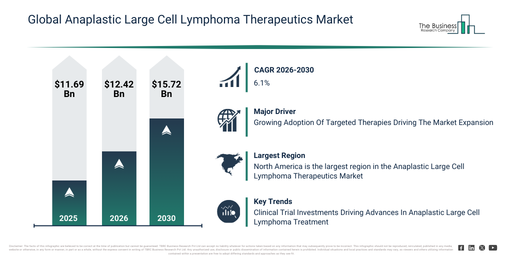
  • Anaplastic large cell lymphoma therapeutics market projected to approach $15.72B by 2030

    Anaplastic large cell lymphoma therapeutics market projected to approach $15.72B by 2030

    The Business Research Company’s 2026 market reports feature enhanced tools like market attractiveness analysis, TAM assessment, and company scoring matrices, along with interactive dashboards, deeper supply chain insights, and startup coverage strengthening the depth, usability, and strategic value of insights.

    What Is The Forecasted Market Size Trajectory Of The Anaplastic Large Cell Lymphoma Therapeutics Market From 2026 To 2030?

    The anaplastic large cell lymphoma therapeutics market size has shown significant growth in recent years. This market is expected to increase from $11.69 billion in 2025 to $12.42 billion in 2026, registering a compound annual growth rate (CAGR) of 6.3%. The historical expansion of the market is primarily due to advancements in chemotherapy protocols, heightened awareness of rare lymphomas, the availability of CHOP-based treatment regimens, the early adoption of monoclonal antibody therapies, and the proliferation of oncology treatment centers.

    The anaplastic large cell lymphoma therapeutics market is projected to experience robust expansion in the coming years, reaching $15.72 billion in 2030 at a compound annual growth rate (CAGR) of 6.1%. This expansion over the forecast period is fueled by the escalating development of innovative biologics, heightened clinical trial engagement for uncommon lymphomas, a magnified emphasis on precision oncology, the broadening of immunotherapy product lines, and enhanced diagnostic precision for ALCL. Key developments anticipated during this timeframe involve a greater uptake of targeted antibody treatments, a surge in the application of individualized treatment approaches, an amplified focus on handling relapsed and refractory ALCL, broader implementation of stem cell transplantation, and a stronger push towards therapeutic choices with lower toxicity.

    Access Your Free Sample Report For In-Depth Market Analysis:

    https://www.thebusinessresearchcompany.com/report/anaplastic-large-cell-lymphoma-therapeutics-global-market-report

    Which Factors Are Influencing The Growth Of The Anaplastic Large Cell Lymphoma Therapeutics Market?

    The increasing embrace of targeted therapies is projected to boost the expansion of the anaplastic large cell lymphoma therapeutics market in the future. These advanced treatments are crafted to precisely block molecules or pathways that promote cancer progression, thereby minimizing damage to healthy cells. The demand for such therapies is increasing, propelled by progress in precision medicine, expanding clinical research and new innovations, and a rise in cancer incidence. For anaplastic large cell lymphoma (ALCL) therapeutics, targeted therapies are beneficial as they precisely target cancer cells exhibiting specific molecular changes like ALK gene rearrangements or CD30 expression. This approach improves treatment effectiveness, lessens harm to healthy tissues, lowers systemic toxicity, and enhances patient results via precision medicine strategies. An example of this trend is seen in July 2023, where a report from the American Society of Gene & Cell Therapy (ASGCT), a US-based professional membership organization, and Citeline, a US-based provider of drugs and devices, indicated that gene therapies in Phase II numbered 247 at the close of Q1 2023. This figure subsequently increased by 5%, reaching 260 by the conclusion of Q2. Consequently, the increasing embrace of targeted therapies is indeed fueling the expansion of the anaplastic large cell lymphoma therapeutics market.

    Which Segment Types Are Examined In The Anaplastic Large Cell Lymphoma Therapeutics Market Segment Study?

    The anaplastic large cell lymphoma therapeutics market covered in this report is segmented –

    1) By Disease Type: Primary Anaplastic Large Cell Lymphoma, Relapsed Anaplastic Large Cell Lymphoma

    2) By Treatment Type: Chemotherapy, Cyclophosphamide, Doxorubicin, Vincristine, And Prednisone (CHOP), Brentuximab Vedotin, Pralatrexate, Radiation Therapy, Stem Cell Transplant

    3) By Application: In-Patient, Out-Patient

    Subsegments:

    1) By Primary Anaplastic Large Cell Lymphoma: Cutaneous Type, Systemic Type

    2) By Relapsed Anaplastic Large Cell Lymphoma: Early Relapse, Late Relapse

    Which Trends Are Influencing Demand In The Anaplastic Large Cell Lymphoma Therapeutics Market?

    Leading companies in the anaplastic large cell lymphoma therapeutics market are channeling efforts into clinical trial investments to enhance treatment effectiveness and broaden therapeutic options. Such investments involve committing financial and resource capital to develop, test, and evaluate new drugs, therapies, or medical devices, ultimately ensuring their safety, efficacy, and market approval. For example, in November 2023, March Biosciences, a US-based clinical-stage company focused on cell therapy, announced a $4.8 million investment from the Cancer Focus Fund to support its Phase 2 clinical trial of MB-105. MB-105 is a novel CAR-T therapy designed to target CD5 for treating relapsed T-cell leukemias and lymphomas. This open-label, multi-center trial will assess MB-105 in patients with CD5-positive relapsed or refractory T-cell lymphoma. March Biosciences believes MB-105 holds the potential to become a first-in-class, life-saving therapy for relapsed T-cell lymphoma patients who currently have limited treatment choices.

    Which Players Are Part Of The Competitive Landscape Of The Anaplastic Large Cell Lymphoma Therapeutics Market?

    Major companies operating in the anaplastic large cell lymphoma therapeutics market are Pfizer Inc. , Bristol-Myers Squibb Company , Kyowa Kirin Co. Ltd. , Genmab A/S , Novartis AG , Takeda Pharmaceutical Company Limited , Merck & Co. Inc. , AbbVie Inc. , Gilead Sciences Inc. , Amgen Inc. , Regeneron Pharmaceuticals Inc. , BeiGene Ltd. , BioCryst Pharmaceuticals Inc. , Acrotech Biopharma Inc. , Citius Pharmaceuticals Inc. , Prescient Therapeutics Ltd. , Autolus Therapeutics Plc , AstraZeneca Plc , Daiichi Sankyo Company Limited , Verastem Inc. , Innate Pharma SA , Affimed GmbH , Eisai Co. Ltd. , Adaptimmune Therapeutics PLC , Cellectis SA

    Get The Full Anaplastic Large Cell Lymphoma Therapeutics Market Report:

    https://www.thebusinessresearchcompany.com/report/anaplastic-large-cell-lymphoma-therapeutics-global-market-report

    Which Region Leads The Anaplastic Large Cell Lymphoma Therapeutics Market In Terms Of Market Share?

    North America was the largest region in the anaplastic large cell lymphoma therapeutics market in 2025. Asia-Pacific is expected to be the fastest-growing region in the forecast period. The regions covered in the anaplastic large cell lymphoma therapeutics market report are Asia-Pacific, South East Asia, Western Europe, Eastern Europe, North America, South America, Middle East, Africa.

    Request A Customized Anaplastic Large Cell Lymphoma Therapeutics Market Report For Competitive Insights:

    https://www.thebusinessresearchcompany.com/report/anaplastic-large-cell-lymphoma-therapeutics-global-market-report

    Browse Through More Reports Similar to the Global Anaplastic Large Cell Lymphoma Therapeutics Market 2026, By The Business Research Company

    Follicular Lymphoma Treatment Market Report 2026

    https://www.thebusinessresearchcompany.com/report/follicular-lymphoma-treatment-global-market-report

    Emphysema Market Report 2026

    https://www.thebusinessresearchcompany.com/report/emphysema-global-market-report

    Non Hodgkin Lymphoma Nhl Market Report 2026

    https://www.thebusinessresearchcompany.com/report/non-hodgkin-lymphoma-nhl-global-market-report

    Get in touch with us:

    The Business Research Company: https://www.thebusinessresearchcompany.com/

    Americas +1 310-496-7795

    Asia +44 7882 955267 & +91 8897263534

    Europe +44 7882 955267

    Email us at info@tbrc.info

    Follow us on:

    LinkedIn: https://in.linkedin.com/company/the-business-research-company

    YouTube: https://www.youtube.com/channel/UC24_fI0rV8cR5DxlCpgmyFQ

    Global Market Model: https://www.thebusinessresearchcompany.com/global-market-model

  • AI sleep apnea monitoring market overview (2026–2030)

    AI sleep apnea monitoring market overview (2026–2030)

    The Business Research Company’s 2026 market reports feature enhanced tools like market attractiveness analysis, TAM assessment, and company scoring matrices, along with interactive dashboards, deeper supply chain insights, and startup coverage strengthening the depth, usability, and strategic value of insights.

    What Are The Market Size Estimates For The Artificial Intelligence (AI)-Powered Sleep Apnea Monitoring Market In 2026 And 2030?

    The artificial intelligence (AI)-powered sleep apnea monitoring market has experienced rapid expansion over recent years. This market is projected to expand from $1.84 billion in 2025 to reach $2.24 billion in 2026, exhibiting a compound annual growth rate (CAGR) of 21.6%. Historically, this growth can be attributed to several factors: the increasing prevalence of sleep apnea, a rising awareness of sleep health, the expansion in adopting wearable health technology, the growing use of home-based diagnostics, and the increased availability of digital sleep data.

    The artificial intelligence (AI)-powered sleep apnea monitoring market is projected to experience substantial expansion in the coming years, with its size anticipated to reach $4.84 billion by 2030, demonstrating a compound annual growth rate (CAGR) of 21.3%. This growth during the forecast period is primarily attributed to advancements in AI-driven respiratory analytics, the increasing adoption of tele-sleep medicine, the expansion of cloud-based sleep monitoring platforms, a rising demand for continuous health monitoring, and a growing focus on preventive sleep disorder management. Furthermore, significant trends expected over this period include the increasing uptake of AI-based sleep disorder detection, the growing integration of wearable sleep monitoring devices, the rising use of remote sleep diagnostics, the expansion of home-based monitoring solutions, and an enhanced focus on early apnea detection.

    Access Your Free Sample Report For In-Depth Market Analysis:

    https://www.thebusinessresearchcompany.com/report/artificial-intelligence-ai-powered-sleep-apnea-monitoring-global-market-report

    What Primary Drivers Are Shaping The Artificial Intelligence (AI)-Powered Sleep Apnea Monitoring Market?

    The increasing occurrence of sleep disorders is projected to fuel the expansion of the artificial intelligence (AI)-powered sleep apnea monitoring market in the future. These disorders are defined as health issues that consistently impair an individual’s capacity to achieve restful sleep, encompassing conditions like insomnia, sleep apnea, and restless legs syndrome. The escalation in sleep disorders is attributed to prolonged screen exposure prior to bedtime, given that blue light disrupts melatonin synthesis and postpones the commencement of sleep. Artificial intelligence (AI)-powered sleep apnea monitoring assists in managing sleep disorders through continuous tracking of breathing patterns, oxygen saturation, and sleep cycles, allowing for the real-time detection of apnea events. This facilitates prompt diagnosis and tailored interventions, alongside enabling remote oversight and enhancing overall sleep quality. As an illustration, in November 2023, data from the National Health Service, a UK-based governmental body for health statistics, indicated that the percentage of young individuals aged 17 to 23 years reporting sleep difficulties three or more times in the preceding week saw a minor increase to 64.9%, up from 64.0% in 2022. Consequently, the expanding occurrence of sleep disorders is propelling the advancement of the artificial intelligence (AI)-powered sleep apnea monitoring market.

    How Is Segmentation Applied In The Artificial Intelligence (AI)-Powered Sleep Apnea Monitoring Market Segment Analysis?

    The artificial intelligence (AI)-powered sleep apnea monitoring market covered in this report is segmented –

    1) By Product Type: Wearable Devices, Non-Wearable Devices, Software Solutions

    2) By Technology: Machine Learning, Deep Learning, Natural Language Processing, Other Technologies

    3) By Distribution Channel: Online, Offline

    4) By Application: Home Care, Hospitals And Clinics, Sleep Centers, Other Applications

    5) By End-User: Adults, Pediatrics, Geriatrics

    Subsegments:

    1) By Wearable Devices: Wrist Worn Sleep Trackers, Finger Oximeter Rings, Adhesive Respiratory Patches, Chest Belt Respiratory Monitors, Headband Sleep Sensors, Smart Clothing Garments

    2) By Non-Wearable Devices: Bedside Radar Respiratory Monitors, Under Mattress Sensor Mats, Smart Bed Platforms With Physiological Monitoring, Pillow Embedded Acoustic Sensors, Nightstand Radio Frequency Sensing Units

    3) By Software Solutions: Event Detection And Scoring Platforms, Remote Monitoring And Adherence Portals, Clinical Decision Support Dashboards, Patient Engagement And Coaching Applications, Population Health Screening And Triage Modules, Care Coordination And Teleconsultation Tools, Data Management And Cloud Storage Services

    What Trends Are Affecting The Growth Of The Artificial Intelligence (AI)-Powered Sleep Apnea Monitoring Market?

    Leading companies operating in the artificial intelligence (AI)-powered sleep apnea monitoring market are concentrating on creating sophisticated at-home sleep examination solutions. These solutions are designed to offer personalized management of sleep apnea and improve patient outcomes. At-home sleep examination options allow individuals to track their sleep patterns and breathing from their residences, collecting real-time physiological data for precise identification of sleep disorders and reducing the need for clinical visits. For instance, in January 2025, APNEAL, a France-based healthcare technology company, unveiled the world’s first AI-powered smartphone app for detecting sleep apnea during CES 2025. This application converts an ordinary smartphone into a clinical-grade diagnostic tool, capable of analyzing respiratory patterns, heartbeats, and breathing sounds using integrated sensors such as the accelerometer, gyroscope, and microphone. Leveraging advanced artificial intelligence, it achieves a 90% accuracy rate compared to polysomnography, thereby enabling at-home sleep apnea screening without specialized equipment or hospital visits.

    Who Are The Companies Participating In The Artificial Intelligence (AI)-Powered Sleep Apnea Monitoring Market Environment?

    Major companies operating in the artificial intelligence (AI)-powered sleep apnea monitoring market are Koninklijke Philips N.V., ResMed Inc., Nihon Kohden Corporation, Fisher & Paykel Healthcare Corporation Limited, Inspire Medical Systems Inc., Vyaire Medical Inc., BioSerenity, SomnoMed Limited, BMC Medical Co. Ltd., Compumedics Limited, Sibel Health, Sleepiz AG, EnsoData Inc., Onera Health B.V., SleepScore Labs LLC, SleepImage, Beacon Biosignals, Acurable, Wesper, Hexoskin.

    Get The Full Artificial Intelligence (AI)-Powered Sleep Apnea Monitoring Market Report:

    https://www.thebusinessresearchcompany.com/report/artificial-intelligence-ai-powered-sleep-apnea-monitoring-global-market-report

    Which Region Leads The Artificial Intelligence (AI)-Powered Sleep Apnea Monitoring Market In Overall Market Size?

    North America was the largest region in the artificial intelligence (AI)-powered sleep apnea monitoring market in 2025. Asia-Pacific is expected to be the fastest-growing region in the forecast period. The regions covered in the artificial intelligence (AI)-powered sleep apnea monitoring market report are Asia-Pacific, South East Asia, Western Europe, Eastern Europe, North America, South America, Middle East, Africa.

    Request A Customized Artificial Intelligence (AI)-Powered Sleep Apnea Monitoring Market Report For Competitive Insights:

    https://www.thebusinessresearchcompany.com/report/artificial-intelligence-ai-powered-sleep-apnea-monitoring-global-market-report

    Browse Through More Reports Similar to the Global Artificial Intelligence (AI)-Powered Sleep Apnea Monitoring Market 2026, By The Business Research Company

    Sleep Tech Devices Market Report 2026

    https://www.thebusinessresearchcompany.com/report/sleep-tech-devices-global-market-report

    Smart Sleep Monitor Market Report 2026

    https://www.thebusinessresearchcompany.com/report/smart-sleep-monitor-global-market-report

    Sleep Monitoring Apps Market Report 2026

    https://www.thebusinessresearchcompany.com/report/sleep-monitoring-apps-global-market-report

    Get in touch with us:

    The Business Research Company: https://www.thebusinessresearchcompany.com/

    Americas +1 310-496-7795

    Asia +44 7882 955267 & +91 8897263534

    Europe +44 7882 955267

    Email us at info@tbrc.info

    Follow us on:

    LinkedIn: https://in.linkedin.com/company/the-business-research-company

    YouTube: https://www.youtube.com/channel/UC24_fI0rV8cR5DxlCpgmyFQ

    Global Market Model: https://www.thebusinessresearchcompany.com/global-market-model
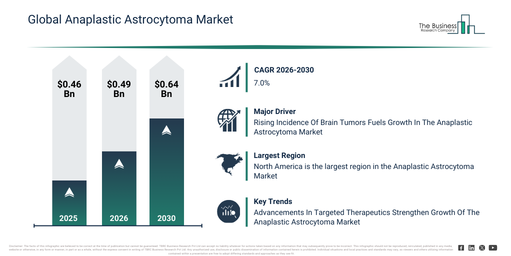
  • Anaplastic astrocytoma market forecast to reach $0.64B by 2030 at 7% CAGR

    Anaplastic astrocytoma market forecast to reach $0.64B by 2030 at 7% CAGR

    The Business Research Company’s 2026 market reports feature enhanced tools like market attractiveness analysis, TAM assessment, and company scoring matrices, along with interactive dashboards, deeper supply chain insights, and startup coverage strengthening the depth, usability, and strategic value of insights.

    How Much Will The Market Value Of The Anaplastic Astrocytoma Market Grow Between 2026 And 2030?

    The anaplastic astrocytoma market has experienced substantial expansion in recent years. Its value is forecast to increase from $0.46 billion in 2025 to $0.49 billion in 2026, reflecting a compound annual growth rate (CAGR) of 6.1%. The growth observed historically can be attributed to enhancements in brain tumor diagnostics, the availability of neurosurgical treatment options, the proliferation of oncology treatment centers, rising engagement in clinical trials, and the increased application of radiotherapy.

    The anaplastic astrocytoma market is projected to experience substantial expansion in the coming years, with its size anticipated to reach $0.64 billion by 2030, exhibiting a compound annual growth rate (CAGR) of 7.0%. This growth during the forecast period is primarily driven by increasing investments in neuro-oncology research, the rising adoption of precision medicine approaches, the expansion of targeted and adjunct therapies, a growing focus on early detection strategies, and increased collaboration between research institutions. Significant trends expected in the forecast period include the increasing adoption of multimodal treatment approaches, a rising use of advanced neuroimaging tools, a growing focus on personalized oncology therapies, the expansion of clinical research activities, and enhanced integration of surgical and radiotherapy protocols.

    Access Your Free Sample Report For In-Depth Market Analysis:

    https://www.thebusinessresearchcompany.com/report/anaplastic-astrocytoma-global-market-report

    What Leading Drivers Are Supporting The Anaplastic Astrocytoma Market Expansion?

    The increasing occurrence of both primary malignant and non-malignant brain tumors is anticipated to propel the expansion of the anaplastic astrocytoma market. Brain tumors are growths found in the brain, classified as either cancerous (malignant) and invasive, or non-cancerous (benign) and non-invasive, presenting varying degrees of aggressiveness and potential to spread. The anaplastic astrocytoma treatment focuses on removing the tumor and surrounding impacted tissue while aiming to preserve brain function. For instance, in March 2023, the American Society of Clinical Oncology (ASCO), a US-based non-profit organization, reported that around 24,810 adults in the United States were expected to be diagnosed with primary cancerous tumors originating in the brain and spinal cord, with 14,280 cases affecting men and 10,530 women. Consequently, the rising incidence of primary malignant and non-malignant brain tumors will drive the growth of the anaplastic astrocytoma market moving forward.

    How Are Different Segments Classified In The Anaplastic Astrocytoma Market Segment Analysis?

    The anaplastic astrocytoma market covered in this report is segmented –

    1) By Treatment Type: Surgery, Chemotherapy, Radiation Therapy

    2) By Route of Administration: Oral, Parenteral

    3) By End User: Hospitals, Specialty Cancer Centers

    Subsegments:

    1) By Surgery: Maximal Safe Tumor Resection, Stereotactic Biopsy

    2) By Chemotherapy: Alkylating Agents, Targeted Therapy

    3) By Radiation Therapy: External Beam Radiation Therapy (EBRT), Intensity-Modulated Radiation Therapy (IMRT)

    What Emerging Trends Are Seen In The Anaplastic Astrocytoma Market?

    Companies operating within the anaplastic astrocytoma market are concentrating on developing sophisticated combination therapies to improve both overall survival and progression-free survival for patients with recurrent disease. This approach involves using two or more drugs simultaneously to target cancer pathways, thereby boosting treatment efficacy and decelerating tumor progression. For example, in November 2024, Orbus Therapeutics, a US-based biopharmaceutical company, introduced a combination of eflornithine and lomustine in its Phase 3 STELLAR study. The therapy has shown clinically significant improvements in overall survival and progression-free survival for individuals with grade 3 IDH mutant astrocytoma. Its key attributes feature a median overall survival of 34.9 months, compared to 23.5 months with lomustine alone, a median progression-free survival of 15.8 months versus 7.2 months, and a generally tolerable safety profile. The treatment’s mechanism relies on eflornithine’s ability to irreversibly inhibit ornithine decarboxylase, a crucial enzyme in polyamine biosynthesis, which enhances its cytostatic effect. The study, which included over 343 patients across North America and Europe, revealed substantial clinical advantages in a patient population that is typically difficult to treat, offering a promising new choice for patients suffering from recurrent anaplastic astrocytoma.

    Who Are The Companies Driving Activity In The Anaplastic Astrocytoma Market?

    Major companies operating in the anaplastic astrocytoma market are Pfizer Inc., Hoffmann-La Roche Ltd., Merck & Co. Inc., Novartis AG, Bristol Myers Squibb, AstraZeneca, Eli Lilly and Company, Johnson & Johnson, Eisai Co. Ltd, AbbVie Inc., Bayer AG, Amgen Inc., Ipsen SA, Takeda Pharmaceutical Company Limited, Teva Pharmaceutical Industries Ltd., Cipla Limited, Sun Pharmaceutical Industries Ltd., Dr Reddy’s Laboratories Ltd., Novocure Ltd., Celldex Therapeutics Inc.

    Get The Full Anaplastic Astrocytoma Market Report:

    https://www.thebusinessresearchcompany.com/report/anaplastic-astrocytoma-global-market-report

    Which Region Leads The Anaplastic Astrocytoma Market In Overall Market Size?

    North America was the largest region in the anaplastic astrocytoma market in 2025. Asia-Pacific is expected to be the fastest-growing region in the forecast period. The regions covered in the anaplastic astrocytoma market report are Asia-Pacific, South East Asia, Western Europe, Eastern Europe, North America, South America, Middle East, Africa.

    Request A Customized Anaplastic Astrocytoma Market Report For Competitive Insights:

    https://www.thebusinessresearchcompany.com/report/anaplastic-astrocytoma-global-market-report

    Browse Through More Reports Similar to the Global Anaplastic Astrocytoma Market 2026, By The Business Research Company

    Paraganglioma Market Report 2026

    https://www.thebusinessresearchcompany.com/report/paraganglioma-global-market-report

    Anaplastic Astrocytoma Market Report 2026

    https://www.thebusinessresearchcompany.com/report/anaplastic-astrocytoma-global-market-report

    Anaplastic Astrocytoma Market Report 2026

    https://www.thebusinessresearchcompany.com/report/anaplastic-astrocytoma-global-market-report

    Get in touch with us:

    The Business Research Company: https://www.thebusinessresearchcompany.com/

    Americas +1 310-496-7795

    Asia +44 7882 955267 & +91 8897263534

    Europe +44 7882 955267

    Email us at info@tbrc.info

    Follow us on:

    LinkedIn: https://in.linkedin.com/company/the-business-research-company

    YouTube: https://www.youtube.com/channel/UC24_fI0rV8cR5DxlCpgmyFQ

    Global Market Model: https://www.thebusinessresearchcompany.com/global-market-model

  • AI rare disease diagnosis market forecast with trends

    AI rare disease diagnosis market forecast with trends

    The Business Research Company’s 2026 market reports feature enhanced tools like market attractiveness analysis, TAM assessment, and company scoring matrices, along with interactive dashboards, deeper supply chain insights, and startup coverage strengthening the depth, usability, and strategic value of insights.

    What Expansion In Market Value Is Forecasted For The Artificial Intelligence (AI)-Powered Rare Disease Diagnosis Market Between 2026 And 2030?

    The artificial intelligence (AI)-powered rare disease diagnosis market size has expanded significantly in recent years. This market is projected to increase from $1.99 billion in 2025 to $2.56 billion in 2026, at a compound annual growth rate (CAGR) of 28.9%. The historical expansion can be attributed to factors such as the growing diagnostic complexities for rare conditions, the wider availability of genetic testing, increased funding for rare disease research, the expanding application of data analytics in healthcare, and the early integration of AI-powered diagnostic tools.

    The artificial intelligence (AI)-powered rare disease diagnosis market size is projected to experience substantial growth in the upcoming years. This market is set to achieve a valuation of $7.08 billion by 2030, exhibiting a compound annual growth rate (CAGR) of 28.9%. The expansion during this projection period is primarily driven by an increasing emphasis on personalized medicine, the greater implementation of AI-assisted clinical decision support systems, the broadening integration of genomic sequencing, rising investments in rare disease screening programs, and an augmented need for diagnostic efficiency. Prominent trends within the forecast timeframe include the expanding application of AI for pattern recognition in rare diseases, the greater uptake of genomic data analytics platforms, enhanced fusion of multi-modal patient data, the proliferation of cloud-based diagnostic solutions, and a strengthened focus on early and accurate diagnosis.

    Access Your Free Sample Report For In-Depth Market Analysis:

    https://www.thebusinessresearchcompany.com/report/artificial-intelligence-ai-powered-rare-disease-diagnosis-global-market-report

    Which Major Drivers Are Influencing The Expansion Of The Artificial Intelligence (AI)-Powered Rare Disease Diagnosis Market?

    The increasing occurrence of autoimmune disorders is anticipated to stimulate the expansion of the artificial intelligence (AI)-powered rare disease diagnosis market moving forward. Autoimmune disorders are conditions in which the immune system mistakenly attacks the body’s own healthy cells and tissues, leading to inflammation and damage. The widespread nature of autoimmune disorders is attributed to a growing number of individuals experiencing immune system dysfunctions, which creates a higher demand for early diagnosis, advanced treatments, and continuous monitoring to effectively manage symptoms. Artificial intelligence (AI)-powered rare disease diagnosis assists in managing autoimmune disorders by quickly identifying complex conditions, supporting personalized treatment decisions, and improving overall diagnostic accuracy. For instance, in January 2025, the Mayo Clinic, a US-based nonprofit academic medical center, reported an estimate of about 15 million people having one or more of 105 autoimmune diseases. Therefore, the rising prevalence of autoimmune disorders is a key factor driving the growth of the artificial intelligence (AI)-powered rare disease diagnosis market.

    What Segment Categories Shape The Artificial Intelligence (AI)-Powered Rare Disease Diagnosis Market Segment Landscape?

    The artificial intelligence (AI)-powered rare disease diagnosis market covered in this report is segmented –

    1) By Component: Software, Hardware, Services

    2) By Technology: Machine Learning, Deep Learning, Natural Language Processing, Computer Vision, Other Technologies

    3) By Deployment Mode: Cloud-Based, On-Premises

    4) By Diagnosis Type: Genetic Disorders, Autoimmune Disorders, Metabolic Disorders, Infectious Diseases, Other Diagnosis Types

    5) By End-User: Hospitals, Diagnostic Centers, Research Institutes, Specialty Clinics, Other End-Users

    Subsegments:

    1) By Software: Clinical Decision Support, Data Analytics Platforms, Genomic Interpretation Tools, Machine Learning Algorithms, Diagnostic Reporting Software

    2) By Hardware: Sequencing Instruments, Imaging Devices, Laboratory Equipment, Computational Servers, Diagnostic Sensors

    3) By Services: Consulting Services, Implementation And Integration, Training And Support, Data Management Services, Maintenance And Upgrades

    Which Trends Are Shaping The Artificial Intelligence (AI)-Powered Rare Disease Diagnosis Market?

    Companies operating in the artificial intelligence (AI)-powered rare disease diagnosis market are focusing on developing innovative technologies, such as unified genomic diagnostics solutions, to enhance diagnostic precision, reduce turnaround times, and provide more comprehensive insights into complex genetic disorders. A unified genomic diagnostics solution is an integrated system that combines whole-genome sequencing and artificial intelligence (AI)-driven analysis to deliver complete genetic insights. For instance, in October 2023, Oxford Nanopore Technologies plc, a UK-based biotechnology company, and Fabric Genomics Inc., a US-based artificial intelligence (AI)-based company, launched an integrated whole-genome sequencing solution aimed at accelerating rare disease diagnosis by combining rapid sequencing with AI-driven variant interpretation for more accurate and actionable clinical insights. This launch integrates real-time nanopore sequencing with artificial intelligence (AI)-powered genomic analysis to quickly identify rare genetic variants. It provides comprehensive, actionable insights to clinicians, thereby improving diagnostic speed and accuracy for pediatric care.

    Who Are The Companies Operating Across The Artificial Intelligence (AI)-Powered Rare Disease Diagnosis Market Value Chain?

    Major companies operating in the artificial intelligence (AI)-powered rare disease diagnosis market are Ambry Genetics Corporation, MedGenome Inc., Sophia Genetics SA, Variantyx Inc., Atropos Health Inc., Congenica Ltd., Saventic Care Sp. z o.o., Rapid Innovation LLC, Centogene N.V., Impilo AB, ThinkGenetic Inc., ClairLabs Ltd., 3billion Inc., OpenEvidence Inc., GenomeUp S.R.L., Mendel.ai Inc., RareSum GmbH, DeepRare AI Solutions, Zebra-Llama Project

    Get The Full Artificial Intelligence (AI)-Powered Rare Disease Diagnosis Market Report:

    https://www.thebusinessresearchcompany.com/report/artificial-intelligence-ai-powered-rare-disease-diagnosis-global-market-report

    Which Region Is The Top Contributor To The Artificial Intelligence (AI)-Powered Rare Disease Diagnosis Market By Share?

    North America was the largest region in the artificial intelligence (AI)-powered rare disease diagnosis market in 2025. Asia-Pacific is expected to be the fastest-growing region in the forecast period. The regions covered in the artificial intelligence (AI)-powered rare disease diagnosis market report are Asia-Pacific, South East Asia, Western Europe, Eastern Europe, North America, South America, Middle East, Africa.

    Request A Customized Artificial Intelligence (AI)-Powered Rare Disease Diagnosis Market Report For Competitive Insights:

    https://www.thebusinessresearchcompany.com/report/artificial-intelligence-ai-powered-rare-disease-diagnosis-global-market-report

    Browse Through More Reports Similar to the Global Artificial Intelligence (AI)-Powered Rare Disease Diagnosis Market 2026, By The Business Research Company

    Artificial Intelligence In Cancer Diagnostics Market Report 2026

    https://www.thebusinessresearchcompany.com/report/artificial-intelligence-in-cancer-diagnostics-global-market-report

    Artificial Intelligence In The Diagnostic Market Report 2026

    https://www.thebusinessresearchcompany.com/report/artificial-intelligence-in-the-diagnostic-global-market-report

    Ai In Medical Diagnostics Market Report 2026

    https://www.thebusinessresearchcompany.com/report/ai-in-medical-diagnostics-global-market-report

    Get in touch with us:

    The Business Research Company: https://www.thebusinessresearchcompany.com/

    Americas +1 310-496-7795

    Asia +44 7882 955267 & +91 8897263534

    Europe +44 7882 955267

    Email us at info@tbrc.info

    Follow us on:

    LinkedIn: https://in.linkedin.com/company/the-business-research-company

    YouTube: https://www.youtube.com/channel/UC24_fI0rV8cR5DxlCpgmyFQ

    Global Market Model: https://www.thebusinessresearchcompany.com/global-market-model
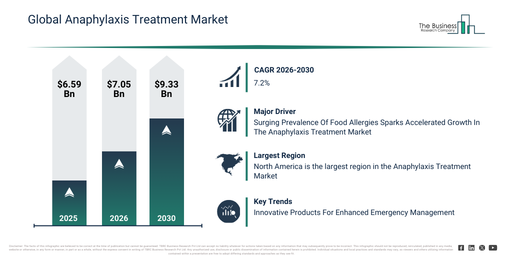
  • Anaphylaxis treatment market expected to hit $9.32B by 2030 at 7.2% CAGR

    Anaphylaxis treatment market expected to hit $9.32B by 2030 at 7.2% CAGR

    The Business Research Company’s 2026 market reports feature enhanced tools like market attractiveness analysis, TAM assessment, and company scoring matrices, along with interactive dashboards, deeper supply chain insights, and startup coverage strengthening the depth, usability, and strategic value of insights.

    What Changes In Market Value Are Expected For The Anaphylaxis Treatment Market Over The 2026–2030 Period?

    The anaphylaxis treatment market has experienced robust growth in recent years. It is projected to expand from $6.59 billion in 2025 to $7.05 billion in 2026, achieving a compound annual growth rate (CAGR) of 7.0%. The historical growth in this market can be attributed to several factors, including the increasing diagnosis of allergic disorders, established emergency treatment standards, the availability of epinephrine-based therapies, the expansion of hospital pharmacy networks, and growing physician awareness.

    The anaphylaxis treatment market is projected to experience robust expansion over the coming years. By 2030, its valuation is anticipated to reach $9.33 billion, demonstrating a compound annual growth rate (CAGR) of 7.2%. This anticipated growth throughout the forecast period stems from factors such as heightened investments in sophisticated drug delivery methods, a greater emphasis on patient-centered care approaches, the proliferation of digital pharmacy platforms, an increasing need for rapid-acting drugs, and the escalating worldwide prevalence of allergies. Key trends during this period are characterized by the expanded utilization of auto-injectable epinephrine products, the rising implementation of multi-drug treatment strategies, a heightened focus on swift medical intervention, the broadening of retail and online distribution avenues, and an intensified commitment to ensuring treatment accessibility.

    Access Your Free Sample Report For In-Depth Market Analysis:

    https://www.thebusinessresearchcompany.com/report/anaphylaxis-treatment-global-market-report

    Which Key Factors Are Driving The Anaphylaxis Treatment Market Growth?

    The increasing occurrence of food allergies is projected to propel the expansion of the anaphylaxis treatment market moving forward. Food allergies are adverse immune responses that manifest when the body incorrectly identifies specific food proteins as harmful, triggering reactions that can range from mild symptoms to severe, life-threatening anaphylaxis. A key factor contributing to the rise in food allergy prevalence is increased environmental and dietary exposures during early childhood, which can alter immune system development and heighten sensitivity to common food allergens. Anaphylaxis treatment supports this expanding clinical need by providing rapid, life-saving interventions that alleviate severe allergic reactions and enhance patient safety amidst the growing incidence of food allergies. For instance, in May 2024, according to the Food Standards Agency, a government department based in the UK, approximately 6% of UK adults, equivalent to around 2.4 million people, were estimated to have a clinically confirmed food allergy in 2024. Therefore, the rise in the prevalence of food allergies is driving the growth of the anaphylaxis treatment market.

    How Is The Anaphylaxis Treatment Market Categorized Across Its Segment Groups?

    The anaphylaxis treatment market covered in this report is segmented –

    1) By Treatment: Epinephrine, Antihistamines, Steroids, Other Treatments

    2) By Distribution Channel: Hospital Pharmacy, Retail Pharmacy

    3) By Application: Food Allergy, Insect Sting Allergy, Drug-Induced Allergy, Latex Allergy, Exercise-Induced Anaphylaxis, Idiopathic Anaphylaxis, Other Applications

    Subsegments:

    1) By Epinephrine: Auto-Injectors, Vials Or Syringes

    2) By Antihistamines: Oral Antihistamines, Injectable Antihistamines

    3) By Steroids: Oral Steroids, Injectable Steroids

    4) By Other Treatments: Corticosteroids, Intravenous Fluids, Other Supportive Treatments

    Which Trends Are Guiding The Direction Of The Anaphylaxis Treatment Market?

    Leading companies in the anaphylaxis treatment market are concentrating on developing innovative solutions, such as epinephrine injections, to improve emergency response and patient outcomes. An epinephrine injection serves as a life-saving medication utilized in severe allergic reactions, capable of rapidly reversing symptoms like airway constriction, low blood pressure, and hives. For instance, in March 2023, American Regent Inc., a US-based pharmaceutical company, launched sulfite-free epinephrine injection USP. This product is designed for subcutaneous, intramuscular, and intravenous usage, and it contains no sulfite or preservatives. Epinephrine is additionally recommended for adult patients experiencing hypotension linked to septic shock, with the aim of raising mean arterial blood pressure.

    Which Firms Are Influencing Competition In The Anaphylaxis Treatment Market?

    Major companies operating in the anaphylaxis treatment market are Merck & Co. Inc., Novartis International AG, GlaxoSmithKline plc, Viatris Inc., Teva Pharmaceutical Industries Ltd., Sun Pharmaceutical Industries Ltd., Dr. Reddy’s Laboratories Ltd., Hikma Pharmaceuticals plc, Amneal Pharmaceuticals Inc., ALK-Abelló A/S, Amphastar Pharmaceuticals Inc., Par Pharmaceutical Inc., Pfizer Inc., Sanofi S.A., Bristol Myers Squibb, AbbVie Inc., AstraZeneca plc, Boehringer Ingelheim, Eli Lilly and Company, Takeda Pharmaceutical Company Limited

    Get The Full Anaphylaxis Treatment Market Report:

    https://www.thebusinessresearchcompany.com/report/anaphylaxis-treatment-global-market-report

    Which Region Is The Top Contributor To The Anaphylaxis Treatment Market By Share?

    North America was the largest region in the anaphylaxis treatment market in 2025. Asia-Pacific is expected to be the fastest-growing region in the forecast period. The regions covered in the anaphylaxis treatment market report are Asia-Pacific, South East Asia, Western Europe, Eastern Europe, North America, South America, Middle East, Africa.

    Request A Customized Anaphylaxis Treatment Market Report For Competitive Insights:

    https://www.thebusinessresearchcompany.com/report/anaphylaxis-treatment-global-market-report

    Browse Through More Reports Similar to the Global Anaphylaxis Treatment Market 2026, By The Business Research Company

    Calciphylaxis Treatment Market Report 2026

    https://www.thebusinessresearchcompany.com/report/calciphylaxis-treatment-global-market-report

    Emphysema Treatment Market Report 2026

    https://www.thebusinessresearchcompany.com/report/emphysema-treatment-global-market-report

    Allergy Treatment Market Report 2026

    https://www.thebusinessresearchcompany.com/report/allergy-treatment-global-market-report

    Get in touch with us:

    The Business Research Company: https://www.thebusinessresearchcompany.com/

    Americas +1 310-496-7795

    Asia +44 7882 955267 & +91 8897263534

    Europe +44 7882 955267

    Email us at info@tbrc.info

    Follow us on:

    LinkedIn: https://in.linkedin.com/company/the-business-research-company

    YouTube: https://www.youtube.com/channel/UC24_fI0rV8cR5DxlCpgmyFQ

    Global Market Model: https://www.thebusinessresearchcompany.com/global-market-model
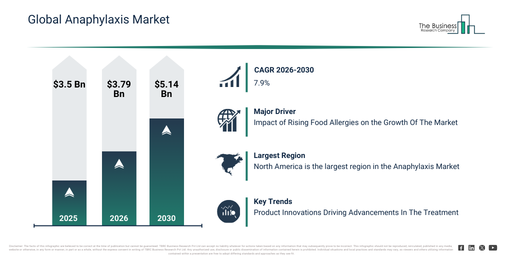
  • Global anaphylaxis market to reach $5.14B by 2030 at 7.9% CAGR

    Global anaphylaxis market to reach $5.14B by 2030 at 7.9% CAGR

    The Business Research Company’s 2026 market reports feature enhanced tools like market attractiveness analysis, TAM assessment, and company scoring matrices, along with interactive dashboards, deeper supply chain insights, and startup coverage strengthening the depth, usability, and strategic value of insights.

    By 2030, What Market Size Is The Anaphylaxis Market Expected To Reach Based On Its 2026 Value?

    The anaphylaxis market size has seen strong expansion in recent years. It is forecast to rise from $3.5 billion in 2025 to $3.79 billion in 2026, achieving a compound annual growth rate (CAGR) of 8.2%. This historical growth can be linked to a heightened incidence of food and drug allergies, more frequent diagnosis of allergic conditions, the widespread availability of emergency epinephrine treatments, increasing public health awareness, and the adoption of consistent treatment guidelines.

    The market for anaphylaxis treatments is projected to experience robust expansion in the coming years. This market is forecast to reach $5.14 billion by 2030, demonstrating a compound annual growth rate (CAGR) of 7.9%. Factors contributing to this growth during the projection period include improved access to urgent allergy care, an increased need for portable treatment options, the broadening of allergy specialty services, a heightened emphasis on patient education initiatives, and greater investment in allergy management systems. Key trends anticipated over the forecast timeframe involve the wider availability of epinephrine auto-injectors, a heightened understanding of severe allergic responses, an increased focus on readiness for emergencies, the advancement of allergy diagnosis and monitoring, and an improved emphasis on swift intervention protocols.

    Access Your Free Sample Report For In-Depth Market Analysis:

    https://www.thebusinessresearchcompany.com/report/anaphylaxis-global-market-report

    What Primary Drivers Are Shaping The Anaphylaxis Market?

    The increasing incidence of food allergies is anticipated to drive the expansion of the anaphylaxis market in the coming period. Food allergies manifest as immune responses provoked by specific food items, leading to symptoms ranging from minor to critical, such as severe anaphylaxis, which can be fatal. This growing occurrence of food allergies stems from elements like evolving dietary patterns, environmental factors, and enhanced diagnostic capabilities and public awareness. Anaphylaxis treatment offers essential, life-saving care for individuals with food allergies by quickly mitigating severe allergic responses; it alleviates symptoms like swelling, respiratory distress, and decreased blood pressure, ensuring prompt stabilization and averting potentially deadly results, concurrently equipping patients to act swiftly during subsequent allergic episodes. For example, data from September 2024, released by the World Health Organization (WHO), a Switzerland-based United Nations (UN) entity, indicates that approximately 220 million individuals worldwide suffer from food allergies. A sole food item might contain various allergens, and people can be sensitive to more than one kind of food. Furthermore, the Patterns and Prevalence of Adult Food Allergy (PAFA) report from May 2024, issued by the Food Standards Agency (FSA), a UK-based non-ministerial department, stated that more than 30% of adults reported adverse reactions linked to food, with clinical evaluations confirming food allergies in about 6% of UK adults, which amounts to around 2.4 million individuals. Consequently, the increasing prevalence of food allergies is propelling the expansion of the anaphylaxis market.

    How Are Segments Identified Within The Anaphylaxis Market Segment Framework?

    The anaphylaxis market covered in this report is segmented –

    1) By Drug Class: Epinephrine, Steroids, Antihistamines, Other Drug Class

    2) By Route Of Administration: Parenteral, Oral, Other Routes Of Administration

    3) By Application: Food Allergy, Pollen Allergy, Dust Mites Allergy, Other Applications

    Subsegments:

    1) By Epinephrine: Auto-injectors, Prefilled Syringes, Vials

    2) By Steroids: Corticosteroids, Glucocorticoids, Mineralocorticoids

    3) By Antihistamines: H1-receptor Antagonists, H2-receptor Antagonists

    4) By Other Drug Class: Leukotriene Receptor Antagonists, Mast Cell Stabilizers

    What Trends Are Affecting The Growth Of The Anaphylaxis Market?

    Major companies operating in the anaphylaxis market are focusing on developing advanced epinephrine nasal sprays, which enable faster, more efficient drug delivery during emergencies. An epinephrine nasal spray is a medical device that delivers epinephrine (adrenaline) through the nasal passages as a treatment for severe allergic reactions, including anaphylaxis. For instance, in August 2024, ARS Pharmaceuticals, a US-based biotechnology company, announced Neffy (epinephrine nasal spray) was approved by the Food and Drug Administration, a US-based government agency, marking it as the first and only needle-free treatment for type I allergic reactions, including anaphylaxis. This innovative nasal spray provides a non-invasive alternative to traditional epinephrine autoinjectors, offering a potentially more accessible option for emergency treatment. Neffy aims to improve patient compliance by eliminating the need for needles while delivering rapid, life-saving epinephrine during severe allergic reactions.

    Who Are The Companies Competing Within The Anaphylaxis Market?

    Major companies operating in the anaphylaxis market are Pfizer Inc., Johnson & Johnson Services Inc., Merck & Co. Inc., Bayer AG, Novartis AG, Sanofi SA, AstraZeneca plc, Abbott Laboratories, GlaxoSmithKline Plc, F. Hoffman-La Roche Ltd., Teva Pharmaceutical Industries Ltd., Bausch Health Companies Inc., Perrigo Company plc, Dr Reddy’s Laboratories Ltd., Cipla Ltd., Amneal Pharmaceuticals Inc., Mylan N.V., ALK-Abelló, Stallergenes Greer, Allergy Therapeutics

    Get The Full Anaphylaxis Market Report:

    https://www.thebusinessresearchcompany.com/report/anaphylaxis-global-market-report

    Which Region Represents The Largest Share Of The Anaphylaxis Market?

    North America was the largest region in the anaphylaxis market in 2025. The regions covered in the anaphylaxis market report are Asia-Pacific, South East Asia, Western Europe, Eastern Europe, North America, South America, Middle East, Africa.

    Request A Customized Anaphylaxis Market Report For Competitive Insights:

    https://www.thebusinessresearchcompany.com/report/anaphylaxis-global-market-report

    Browse Through More Reports Similar to the Global Anaphylaxis Market 2026, By The Business Research Company

    Allergic Rhinitis Drugs Market Report 2026

    https://www.thebusinessresearchcompany.com/report/allergic-rhinitis-drugs-global-market-report

    Inhalable Drugs Market Report 2026

    https://www.thebusinessresearchcompany.com/report/inhalable-drugs-global-market-report

    Asthma Drugs Market Report 2026

    https://www.thebusinessresearchcompany.com/report/asthma-drugs-global-market-report

    Get in touch with us:

    The Business Research Company: https://www.thebusinessresearchcompany.com/

    Americas +1 310-496-7795

    Asia +44 7882 955267 & +91 8897263534

    Europe +44 7882 955267

    Email us at info@tbrc.info

    Follow us on:

    LinkedIn: https://in.linkedin.com/company/the-business-research-company

    YouTube: https://www.youtube.com/channel/UC24_fI0rV8cR5DxlCpgmyFQ

    Global Market Model: https://www.thebusinessresearchcompany.com/global-market-model

  • AI hospital asset rental market analysis with growth outlook

    AI hospital asset rental market analysis with growth outlook

    The Business Research Company’s 2026 market reports feature enhanced tools like market attractiveness analysis, TAM assessment, and company scoring matrices, along with interactive dashboards, deeper supply chain insights, and startup coverage strengthening the depth, usability, and strategic value of insights.

    How Large Will The Artificial Intelligence (AI)-Powered Hospital Asset Rental Market Be By 2030 Compared To Its 2026 Market Size?

    The artificial intelligence (AI)-powered hospital asset rental market size has experienced significant expansion recently. Projections indicate that this market will expand from $3.38 billion in 2025 to reach $4.03 billion in 2026, demonstrating a compound annual growth rate (CAGR) of 19.1%. Factors contributing to its historical growth include escalating healthcare equipment expenses, an increasing need for operational efficiency within hospitals, broader adoption of digital asset management, the rising prevalence of rented medical devices, and an enhanced emphasis on containing hospital costs.

    The artificial intelligence (AI)-powered hospital asset rental market is anticipated to experience substantial growth over the coming years. It is projected to achieve a value of $8.05 billion by 2030, demonstrating a compound annual growth rate (CAGR) of 18.9%. This expansion during the forecast period is primarily driven by the proliferation of AI-driven hospital operations, the increasing adoption of asset-as-a-service models, enhanced integration with hospital information systems, rising investments in smart healthcare infrastructure, and a growing demand for predictive utilization analytics. Prominent trends expected in this period encompass the increasing integration of AI-based asset utilization analytics, a broader application of predictive maintenance in hospitals, a surging demand for equipment sharing platforms, the expansion of cloud-based asset rental systems, and an intensified focus on cost optimization tools.

    Access Your Free Sample Report For In-Depth Market Analysis:

    https://www.thebusinessresearchcompany.com/report/artificial-intelligence-ai-powered-hospital-asset-rental-global-market-report

    What Key Drivers Are Fueling The Growth Of The Artificial Intelligence (AI)-Powered Hospital Asset Rental Market?

    The expansion of telemedicine is anticipated to fuel the growth of the artificial intelligence (AI)-powered hospital asset rental market moving forward. Telemedicine refers to the provision of healthcare services from a distance using digital communication tools. This practice is growing due to an increasing desire for convenient healthcare, allowing patients to consult doctors and manage follow-ups from home, which conserves time and reduces travel. AI-powered hospital asset rental facilitates telemedicine by ensuring crucial medical equipment is accessible in real-time and utilized optimally, thereby enabling healthcare providers to efficiently offer remote diagnostics and virtual care. For instance, in September 2024, the Australian Bureau of Statistics (ABS), Australia’s national statistical body, reported that in 2023–24, 83.5% of males utilized telehealth services, marking an increase from 78.6% in 2022–23. Consequently, the surge in telemedicine is stimulating the artificial intelligence (AI)-powered hospital asset rental market’s expansion. The escalating healthcare spending is projected to stimulate the expansion of the artificial intelligence (AI)-powered hospital asset rental market moving forward. Healthcare expenditure signifies the overall financial outlay for medical services, equipment, and technologies aimed at enhancing health outcomes. This spending is increasing due to a heightened demand for sophisticated medical technologies, as healthcare facilities and clinics allocate more resources towards cutting-edge equipment and digital solutions to improve patient care and results. Increased healthcare expenditure facilitates the adoption of artificial intelligence (AI)-powered hospital asset rental by allowing hospitals to invest in advanced, economically efficient technologies that boost equipment utilization and lower overall operational expenses. For example, in June 2025, the Centers for Medicare & Medicaid Services, a US-based government entity, reported that in 2023, national health expenditures (NHE) rose by 7.5% to reach $4.9 trillion, equivalent to $14,570 per individual and representing 17.6% of the Gross Domestic Product (GDP). Spending on Medicare specifically increased by 8.1% to $1,029.8 billion, accounting for 21% of the total NHE. Thus, the growth in healthcare expenditure is a significant factor driving the artificial intelligence (AI)-powered hospital asset rental market.

    Which Segment Types Are Examined In The Artificial Intelligence (AI)-Powered Hospital Asset Rental Market Segment Study?

    The artificial intelligence (AI)-powered hospital asset rental market covered in this report is segmented –

    1) By Component: Software, Hardware, Services

    2) By Asset Type: Medical Equipment, Mobility Devices, Diagnostic Devices, Other Asset Types

    3) By Deployment Mode: On-Premises, Cloud-Based

    4) By Application: Equipment Tracking, Inventory Management, Predictive Maintenance, Utilization Optimization, Other Applications

    5) By End User: Hospitals, Clinics, Diagnostic Centers, Other End-Users

    Subsegments:

    1) By Software: Artificial Intelligence-Based Asset Management Software, Predictive Maintenance Software, Hospital Information System (HIS) Integration Software

    2) By Hardware: Artificial Intelligence-Enabled Medical Equipment, Iot Sensors And Devices For Asset Tracking, Robotics And Automation Equipment

    3) By Services: Installation And Deployment Services, Maintenance And Support Services, Training And Consultation Services

    Which Players Are Part Of The Competitive Landscape Of The Artificial Intelligence (AI)-Powered Hospital Asset Rental Market?

    Major companies operating in the artificial intelligence (AI)-powered hospital asset rental market are Siemens Healthineers AG, Stryker Corporation, GE Healthcare Technologies Inc., US Med-Equip, LLC, Agiliti Health, Med One Group, Hill-Rom Holdings, Baxter International, Canon Medical Systems, Fresenius Medical Care, Cardinal Health, Avante Health Solutions, Block Imaging, Owens & Minor, Rentex Medical, WestCMR, Vanguard Healthcare Solutions, Trimedx, Althea Group, Prometheus Group, Cognosos, Kontakt.io, Asset Panda, CenTrak, Zebra Technologies Corporation

    Get The Full Artificial Intelligence (AI)-Powered Hospital Asset Rental Market Report:

    https://www.thebusinessresearchcompany.com/report/artificial-intelligence-ai-powered-hospital-asset-rental-global-market-report

    Which Region Represents The Largest Share Of The Artificial Intelligence (AI)-Powered Hospital Asset Rental Market?

    North America was the largest region in the artificial intelligence (AI)-powered hospital asset rental market in 2025. Asia-Pacific is expected to be the fastest-growing region in the forecast period. The regions covered in the artificial intelligence (AI)-powered hospital asset rental market report are Asia-Pacific, South East Asia, Western Europe, Eastern Europe, North America, South America, Middle East, Africa.

    Request A Customized Artificial Intelligence (AI)-Powered Hospital Asset Rental Market Report For Competitive Insights:

    https://www.thebusinessresearchcompany.com/report/artificial-intelligence-ai-powered-hospital-asset-rental-global-market-report

    Browse Through More Reports Similar to the Global Artificial Intelligence (AI)-Powered Hospital Asset Rental Market 2026, By The Business Research Company

    Hospital Asset Management Systems Market Report 2026

    https://www.thebusinessresearchcompany.com/report/hospital-asset-management-systems-global-market-report

    Artificial Intelligence Ai For Insurance Market Report 2026

    https://www.thebusinessresearchcompany.com/report/artificial-intelligence-ai-for-insurance-global-market-report

    Ai In Real Estate Market Report 2026

    https://www.thebusinessresearchcompany.com/report/ai-in-real-estate-global-market-report

    Get in touch with us:

    The Business Research Company: https://www.thebusinessresearchcompany.com/

    Americas +1 310-496-7795

    Asia +44 7882 955267 & +91 8897263534

    Europe +44 7882 955267

    Email us at info@tbrc.info

    Follow us on:

    LinkedIn: https://in.linkedin.com/company/the-business-research-company

    YouTube: https://www.youtube.com/channel/UC24_fI0rV8cR5DxlCpgmyFQ

    Global Market Model: https://www.thebusinessresearchcompany.com/global-market-model

  • Anal fissure treatment market projected to reach $2.4B by 2030 at 9.2% CAGR

    Anal fissure treatment market projected to reach $2.4B by 2030 at 9.2% CAGR

    The Business Research Company’s 2026 market reports feature enhanced tools like market attractiveness analysis, TAM assessment, and company scoring matrices, along with interactive dashboards, deeper supply chain insights, and startup coverage strengthening the depth, usability, and strategic value of insights.

    What Is The Anticipated Rise In Market Value Of The Anal Fissure Treatment Market During The Forecast Period?

    The anal fissure treatment market size has observed strong growth recently. It is projected to expand from $1.55 billion in 2025 to $1.7 billion in 2026, achieving a compound annual growth rate (CAGR) of 9.6%. This historical market expansion is attributable to several factors, including the increasing prevalence of gastrointestinal disorders, the widespread utilization of conservative treatment approaches, the availability of topical nitroglycerin therapies, growing clinical awareness among practitioners, and the adoption of stool softener regimens.

    The anal fissure treatment market size is anticipated to undergo significant expansion in the coming years. It is projected to reach $2.41 billion by 2030, with a compound annual growth rate (CAGR) of 9.2%. This growth during the forecast period can be attributed to factors such as the increasing demand for minimally invasive treatments, a rising patient preference for home-based care, the expansion of specialty colorectal clinics, the growing utilization of combination therapeutic approaches, and an increasing focus on long-term symptom management. Prominent trends expected in the forecast period include the increasing use of non-surgical treatment options, the rising adoption of topical therapies, growing awareness of early diagnosis and management, the expansion of outpatient treatment protocols, and an enhanced focus on patient comfort and compliance.

    Access Your Free Sample Report For In-Depth Market Analysis:

    https://www.thebusinessresearchcompany.com/report/anal-fissure-treatment-global-market-report

    Which Major Drivers Are Influencing The Expansion Of The Anal Fissure Treatment Market?

    The growing occurrence of gastrointestinal disorders is anticipated to propel the expansion of the anal fissure treatment market in the foreseeable future. These conditions, also referred to as digestive disorders, encompass various medical issues impacting the organs and structures of the gastrointestinal (GI) tract. An increase in gastrointestinal disorders directly correlates with a higher prevalence of anal fissures, thereby boosting the need for effective and specific treatments within the anal fissure treatment market. As an illustration, data from September 2023, provided by the National Library of Medicine, a US-based biomedical library run by the United States federal government, showed that the total incidence of Inflammatory Bowel Disease (IBD) in Canada was 30 per 100,000 in 2023, amounting to 11,000 new diagnoses of Inflammatory Bowel Disease (IBD) made in 2023. This incidence is forecast to increase by 0.58% per year, reaching 32.1 per 100,000 by 2035. Consequently, the increasing frequency of gastrointestinal disorders is a key factor driving the growth of the anal fissure treatment market.

    What Are The Key Segment Divisions In The Anal Fissure Treatment Market Segment Structure?

    The anal fissure treatment market covered in this report is segmented –

    1) By Type: Topical Nitroglycerin, Calcium Channel Blockers, Stool Softeners

    2) By Route Of Administration: Topical, Oral

    3) By End-User: Clinics, Hospitals

    Subsegments:

    1) By Topical Nitroglycerin: 0.2% Nitroglycerin Ointment, 0.4% Nitroglycerin Ointment

    2) By Calcium Channel Blockers: Diltiazem Cream, Nifedipine Ointment

    3) By Stool Softeners: Docusate Sodium, Polyethylene Glycol (PEG)

    Which Trends Are Shaping The Anal Fissure Treatment Market?

    Major companies in the anal fissure treatment market are developing innovative solutions, such as anal fissure topical treatments, to reach broader customer bases, increase sales, and boost revenue. An anal fissure topical treatment involves applying medications or ointments directly to the affected region of an anal fissure. For instance, in July 2023, Acrux Limited, an Australia-based pharmaceutical company, announced that the United States Food and Drug Administration (FDA) had approved Nitroglycerin Ointment, 0.4%, for review. Nitroglycerin Ointment, 0.4%, is noteworthy for its use in treating moderate to severe pain linked to chronic anal fissures, addressing the discomfort caused by a tear in the anus lining. The company prioritizes advancing later-stage projects poised for imminent commercialization, while concurrently progressing the development of earlier-stage products, thus ensuring a diverse and comprehensive product pipeline.

    Which Organizations Are Engaged In The Anal Fissure Treatment Market?

    Major companies operating in the anal fissure treatment market are Abbott Laboratories, GlaxoSmithKline plc, Bayer AG, Pfizer Inc, Taro Pharmaceutical Industries Ltd, Mallinckrodt Pharmaceuticals Limited, Sanofi S.A., Johnson & Johnson Services Inc, Allergan Inc, Valeant Pharmaceuticals International Inc, Purdue Pharma LP, AstraZeneca plc, Eisai Co. Ltd, Geri-care Pharmaceuticals Corp, Taj Pharmaceuticals Limited, Troikaa Pharmaceuticals Ltd, Eli Lilly and Company, Roche Holding AG, AbbVie Inc, Amgen Inc

    Get The Full Anal Fissure Treatment Market Report:

    https://www.thebusinessresearchcompany.com/report/anal-fissure-treatment-global-market-report

    Which Geographic Region Dominates The Anal Fissure Treatment Market?

    North America was the largest region in the anal fissure treatment market in 2025. Asia-Pacific is expected to be the fastest-growing region in the anal fissure treatment market report during the forecast period. The regions covered in the anal fissure treatment market report are Asia-Pacific, South East Asia, Western Europe, Eastern Europe, North America, South America, Middle East, Africa.

    Request A Customized Anal Fissure Treatment Market Report For Competitive Insights:

    https://www.thebusinessresearchcompany.com/report/anal-fissure-treatment-global-market-report

    Browse Through More Reports Similar to the Global Anal Fissure Treatment Market 2026, By The Business Research Company

    Inflammatory Bowel Disease Treatment Market Report 2026

    https://www.thebusinessresearchcompany.com/report/inflammatory-bowel-disease-treatment-global-market-report

    Constipation Treatment Market Report 2026

    https://www.thebusinessresearchcompany.com/report/constipation-treatment-global-market-report

    Gastrointestinal Bleeding Treatment Devices Market Report 2026

    https://www.thebusinessresearchcompany.com/report/gastrointestinal-bleeding-treatment-devices-global-market-report

    Get in touch with us:

    The Business Research Company: https://www.thebusinessresearchcompany.com/

    Americas +1 310-496-7795

    Asia +44 7882 955267 & +91 8897263534

    Europe +44 7882 955267

    Email us at info@tbrc.info

    Follow us on:

    LinkedIn: https://in.linkedin.com/company/the-business-research-company

    YouTube: https://www.youtube.com/channel/UC24_fI0rV8cR5DxlCpgmyFQ

    Global Market Model: https://www.thebusinessresearchcompany.com/global-market-model

  • AI dermatology triaging market insights highlighting opportunities

    AI dermatology triaging market insights highlighting opportunities

    The Business Research Company’s 2026 market reports feature enhanced tools like market attractiveness analysis, TAM assessment, and company scoring matrices, along with interactive dashboards, deeper supply chain insights, and startup coverage strengthening the depth, usability, and strategic value of insights.

    What Is The Projected Increase In Market Value Of The Artificial Intelligence (AI)-Powered Dermatology Lesion Triaging Market During 2026–2030?

    The market size for artificial intelligence (AI)-powered dermatology lesion triaging has experienced substantial expansion in recent years. This market is projected to increase from $1.12 billion in 2025 to $1.48 billion in 2026, achieving a compound annual growth rate (CAGR) of 32.1%. The historical growth can be linked to the increasing prevalence of skin disorders, a rising demand for early cancer detection, the expansion of dermatology diagnostic services, the growing adoption of digital imaging tools, and increasing awareness of preventive dermatology care.

    The artificial intelligence (AI)-powered dermatology lesion triaging market size is projected to experience substantial expansion in the coming years. This market is anticipated to reach a valuation of $4.47 billion by 2030, exhibiting a compound annual growth rate (CAGR) of 31.8%. Factors driving this growth during the forecast period include the expanding utilization of AI-assisted diagnostic support, a surge in remote dermatology consultation adoption, the proliferation of cloud-based clinical decision systems, an escalating need for workflow automation within dermatology, and a heightened emphasis on enhancing diagnostic accuracy improvement. Key trends expected during this period encompass the increased uptake of AI-based skin image analysis, a growing deployment of automated lesion risk stratification tools, deeper integration of teledermatology platforms, the broadened availability of mobile dermatology applications, and an intensified commitment to early skin cancer detection.

    Access Your Free Sample Report For In-Depth Market Analysis:

    https://www.thebusinessresearchcompany.com/report/artificial-intelligence-ai-powered-dermatology-lesion-triaging-global-market-report

    Which Drivers Are Supporting The Artificial Intelligence (AI)-Powered Dermatology Lesion Triaging Market Growth?

    The increasing occurrence of skin cancer is anticipated to drive the expansion of the artificial intelligence (AI)-powered dermatology lesion triaging market in the future. Skin cancer involves the unchecked multiplication of atypical skin cells, primarily resulting from ultraviolet radiation exposure from the sun or tanning facilities. This rise in skin cancer cases is largely attributed to overexposure to the sun, where detrimental ultraviolet (UV) radiation harms the DNA within skin cells. Artificial intelligence (AI)-powered dermatology lesion triaging assists in combating skin cancer through facilitating the early and precise identification of concerning skin lesions. It diminishes delays in diagnosis by offering immediate risk evaluations, simplifying referrals to specialists, and bolstering clinical judgments, thereby enhancing patient results. For instance, in 2023, according to Cancer Australia, an Australia-based government agency, approximately 8,257 new cases of melanoma of the skin were diagnosed, accounting for 2.6% of all deaths from cancer. Consequently, the growing frequency of skin cancer is propelling the advancement of the artificial intelligence (AI)-powered dermatology lesion triaging market.

    How Are Different Segments Classified In The Artificial Intelligence (AI)-Powered Dermatology Lesion Triaging Market Segment Analysis?

    The artificial intelligence (AI)-powered dermatology lesion triaging market covered in this report is segmented –

    1) By Component: Software, Hardware, Services

    2) By Deployment Mode: Cloud-Based, On-Premises

    3) By Lesion Type: Benign, Malignant, Pre-Malignant

    4) By Application: Skin Cancer Detection, Benign Lesion Identification, Teledermatology, Clinical Decision Support, Other Applications

    5) By End-User: Hospitals, Dermatology Clinics, Diagnostic Centers, Research Institutes, Other End Users

    Subsegments:

    1) By Software: Image Analysis Software, Diagnostic Support Software, Cloud-Based Software, Mobile Application Software, Patient Management Software

    2) By Hardware: Imaging Devices, Dermatoscopes, Cameras, Computers, Scanners

    3) By Services: Consulting Services, Implementation Services, Training And Education Services, Maintenance And Support Services, Data Management Services

    Which Trends Are Expected To Impact The Artificial Intelligence (AI)-Powered Dermatology Lesion Triaging Market?

    Companies at the forefront of the artificial intelligence (AI)-powered dermatology lesion triaging market are prioritizing the development of advanced products, including AI-powered imaging platforms, to elevate diagnostic accuracy, improve the early detection of skin cancers, and streamline clinical workflows. AI-powered imaging platforms are defined as integrated systems that leverage artificial intelligence algorithms to analyze skin lesions, provide real-time diagnostic support, and assist in categorizing cases based on their risk of malignancy. For instance, in June 2024, Enspectra Health Inc., a US-based health tech company, was granted Food and Drug Administration Breakthrough Device Designation for its next-generation artificial intelligence-powered VIO Skin Platform. This platform integrates reflectance confocal and multiphoton laser scanning microscopy to generate non-invasive, real-time cellular-level images of skin tissues. It also integrates with VIO.ai NMSC, a computer-aided diagnosis and triage (CADx/CADt) software function, which classifies lesions suspected of basal cell carcinoma (BCC) and squamous cell carcinoma (SCC) in high-risk populations, thereby assisting physicians in clinical decision-making and potentially reducing unnecessary biopsies.

    Who Are The Companies Driving Activity In The Artificial Intelligence (AI)-Powered Dermatology Lesion Triaging Market?

    Major companies operating in the artificial intelligence (AI)-powered dermatology lesion triaging market are Proscia Inc., SkinVision B.V., MetaOptima Technology Inc., SkinIO Inc., Skin Analytics Ltd., DermaSensor Inc., Dxcover Ltd., Skinive, Legit.Health, Veriskin, VivoSight, BelleTorus, First Derm, CureSkin, Skinopathy, DermLens AI, Enspectra Health Inc., Dermie.AI, DermTech, FotoFinder Systems

    Get The Full Artificial Intelligence (AI)-Powered Dermatology Lesion Triaging Market Report:

    https://www.thebusinessresearchcompany.com/report/artificial-intelligence-ai-powered-dermatology-lesion-triaging-global-market-report

    Which Geographic Region Dominates The Artificial Intelligence (AI)-Powered Dermatology Lesion Triaging Market?

    North America was the largest region in the artificial intelligence (AI)-powered dermatology lesion triaging market in 2025. The regions covered in the artificial intelligence (AI)-powered dermatology lesion triaging market report are Asia-Pacific, South East Asia, Western Europe, Eastern Europe, North America, South America, Middle East, Africa.

    Request A Customized Artificial Intelligence (AI)-Powered Dermatology Lesion Triaging Market Report For Competitive Insights:

    https://www.thebusinessresearchcompany.com/report/artificial-intelligence-ai-powered-dermatology-lesion-triaging-global-market-report

    Browse Through More Reports Similar to the Global Artificial Intelligence (AI)-Powered Dermatology Lesion Triaging Market 2026, By The Business Research Company

    Artificial Intelligence In Cancer Diagnostics Market Report 2026

    https://www.thebusinessresearchcompany.com/report/artificial-intelligence-in-cancer-diagnostics-global-market-report

    Ai In Beauty And Cosmetics Market Report 2026

    https://www.thebusinessresearchcompany.com/report/ai-in-beauty-and-cosmetics-global-market-report

    Ai In Cancer Diagnostics Market Report 2026

    https://www.thebusinessresearchcompany.com/report/ai-in-cancer-diagnostics-global-market-report

    Get in touch with us:

    The Business Research Company: https://www.thebusinessresearchcompany.com/

    Americas +1 310-496-7795

    Asia +44 7882 955267 & +91 8897263534

    Europe +44 7882 955267

    Email us at info@tbrc.info

    Follow us on:

    LinkedIn: https://in.linkedin.com/company/the-business-research-company

    YouTube: https://www.youtube.com/channel/UC24_fI0rV8cR5DxlCpgmyFQ

    Global Market Model: https://www.thebusinessresearchcompany.com/global-market-model
  • Amoxicillin market forecast (2026–2030) highlighting industry expansion

    Amoxicillin market forecast (2026–2030) highlighting industry expansion

    The Business Research Company’s 2026 market reports feature enhanced tools like market attractiveness analysis, TAM assessment, and company scoring matrices, along with interactive dashboards, deeper supply chain insights, and startup coverage strengthening the depth, usability, and strategic value of insights.

    How Is The Market Size Of The Amoxicillin Market Expected To Scale Between 2026 And 2030?

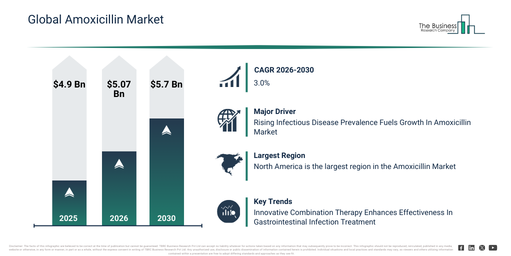
    The amoxicillin market has experienced consistent expansion over the past few years. Projections indicate its value will increase from $4.9 billion in 2025 to $5.07 billion by 2026, demonstrating a compound annual growth rate (CAGR) of 3.5%. Historically, this expansion has been driven by factors such as a rising occurrence of bacterial infections, the extensive clinical application of penicillin-class antibiotics, the broadening of hospital services for infection treatment, the accessibility of affordable generic formulations, and well-established prescribing habits.

    The amoxicillin market is anticipated to experience consistent expansion over the upcoming years, projected to reach $5.7 billion by 2030, exhibiting a compound annual growth rate (CAGR) of 3.0%. This projected increase is propelled by factors such as the expansion of antimicrobial stewardship programs, a growing need for combination antibiotic treatments, the broadening scope of outpatient infection management, increased investments in pharmaceutical manufacturing capabilities, and a heightened focus on resistance management. Significant developments expected during this period include an escalating demand for broad-spectrum antibiotics, an intensified emphasis on antibiotic quality and purity criteria, a rising preference for oral dosage forms, the growth of generic antibiotic production, and an reinforced commitment to regulatory compliance.

    Access Your Free Sample Report For In-Depth Market Analysis:

    https://www.thebusinessresearchcompany.com/report/amoxicillin-global-market-report

    What Key Drivers Are Fueling The Growth Of The Amoxicillin Market?

    The rising occurrence of infectious diseases is anticipated to boost the expansion of the amoxicillin market in the future. These diseases are defined as conditions resulting from pathogenic microorganisms like bacteria, viruses, fungi, or parasites. An uptick in infectious disease cases stems from elements such as worldwide travel, antibiotic resistance, climate shifts influencing disease carriers, and higher population concentrations. Amoxicillin aids in the treatment of infectious diseases by targeting the synthesis of bacterial cell walls, thereby causing bacterial cell demise. Its wide-ranging action, quick absorption, and capacity to collaborate with other antibiotics synergistically establish it as a adaptable and potent therapy for diverse bacterial infections. As an illustration, in January 2023, the National Institute of Health, a US-based public health research body, reported that urinary tract infections were the seventh primary cause for emergency department visits in the US, contributing to over 1 million visits annually. Of these, 22% (220,000) were categorized as complicated UTIs, with around 100,000 annual cases leading to hospital admissions. Consequently, the escalating occurrence of infectious diseases is fueling the expansion of the amoxicillin market.

    Which Segment Categories Are Included In The Amoxicillin Market Segment Analysis?

    The amoxicillin market covered in this report is segmented –

    1) By Drug Type: Amoxicillin (Standalone), Amoxicillin–Clavulanate Combination

    2) By Therapy Type: Monotherapy, Combination Therapy

    3) By Dosage Form: Tablets, Capsules, Oral Suspension, Syrup, Powder for Reconstitution

    4) By Infection Type: Respiratory Tract Infections, Ear, Nose, and Throat (ENT) Infections, Skin and Soft Tissue Infections, Urinary Tract Infections (UTIs), Gastrointestinal Infections (Bacterial), Dental Infections, Community-Acquired Pneumonia, Bronchitis (Bacterial)

    Subsegments:

    1) By Amoxicillin (Standalone): Amoxicillin Trihydrate, Generic Amoxicillin, Branded Amoxicillin

    2) By Amoxicillin–Clavulanate Combination: Amoxicillin + Clavulanic Acid Low Dose, Amoxicillin + Clavulanic Acid, Immediate-Release Formulations, Extended-Release Formulations, Generic Amoxicillin–Clavulanate, Branded Amoxicillin–Clavulanate

    What Trends Are Influencing The Amoxicillin Market?

    Leading companies in the amoxicillin market are concentrating on creating innovative solutions, including combination therapy packs, to bolster treatment effectiveness, decrease ulcer recurrence, and enhance patient adherence for Helicobacter pylori management. A combination therapy pack refers to a structured, multi-drug regimen that delivers integrated antimicrobial and acid-suppression therapy in one convenient kit for patients. For instance, in April 2023, Akums Drugs and Pharmaceuticals, an India-based pharmaceutical manufacturer, released the Amoxicillin + Clarithromycin + Esomeprazole Combikit. This fixed-dose kit brings together three clinically validated agents to inhibit H. pylori growth and lessen gastric acid secretion, thereby aiding faster ulcer healing. Its practical packaging and simplified dosing schedule encourage greater compliance, positioning it as a key development in H. pylori eradication therapy.

    Who Are The Active Companies Shaping The Amoxicillin Market?

    Major companies operating in the amoxicillin market are Pfizer Inc., GlaxoSmithKline Plc, Sanofi S.A., Teva Pharmaceutical Industries Ltd., Sandoz AG, Sun Pharmaceutical Industries Ltd., Cipla Limited, Lupin Limited, Aurobindo Pharma Limited, Zydus Lifesciences Ltd., Alkem Laboratories Ltd., Intas Pharmaceuticals Ltd., Wockhardt Limited, Hikma Pharmaceuticals PLC, Dr Reddy’s Laboratories Ltd., Mylan N.V., Apotex Inc., Abbott Laboratories, CSPC Pharmaceutical Group Limited, Sinopharm Group Co. Ltd., Daewoong Pharmaceutical Co. Ltd.

    Get The Full Amoxicillin Market Report:

    https://www.thebusinessresearchcompany.com/report/amoxicillin-global-market-report

    Which Region Is The Leading Market For The Amoxicillin Market?

    North America was the largest region in the amoxicillin market in 2025. Asia-Pacific is expected to be the fastest-growing region in the forecast period. The regions covered in the amoxicillin market report are Asia-Pacific, South East Asia, Western Europe, Eastern Europe, North America, South America, Middle East, Africa.

    Request A Customized Amoxicillin Market Report For Competitive Insights:

    https://www.thebusinessresearchcompany.com/report/amoxicillin-global-market-report

    Browse Through More Reports Similar to the Global Amoxicillin Market 2026, By The Business Research Company

    Anti Infective Drugs Market Report 2026

    https://www.thebusinessresearchcompany.com/report/anti-infective-drugs-global-market-report

    Antibiotics Market Report 2026

    https://www.thebusinessresearchcompany.com/report/antibiotics-global-market-report

    Inhaled Antibiotics Market Report 2026

    https://www.thebusinessresearchcompany.com/report/inhaled-antibiotics-global-market-report

    Get in touch with us:

    The Business Research Company: https://www.thebusinessresearchcompany.com/

    Americas +1 310-496-7795

    Asia +44 7882 955267 & +91 8897263534

    Europe +44 7882 955267

    Email us at info@tbrc.info

    Follow us on:

    LinkedIn: https://in.linkedin.com/company/the-business-research-company

    YouTube: https://www.youtube.com/channel/UC24_fI0rV8cR5DxlCpgmyFQ

    Global Market Model: https://www.thebusinessresearchcompany.com/global-market-model