Category: Healthcare Services

  • Advanced Genomics and Analytics Driving Wastewater Biothreat Monitoring Market

    Advanced Genomics and Analytics Driving Wastewater Biothreat Monitoring Market

    The Business Research Company’s 2026 market reports include new capabilities such as market attractiveness scoring and analysis, total addressable market analysis, company scoring matrix, interactive excel data dashboard, improved supply chain analysis, upcoming startups in the market, and overview of key products, aimed at improving the depth, usability, and strategic value of the insights delivered.

    What Is The Estimated Market Size Of The Wastewater Biothreat Genomics Market During 2026–2030?

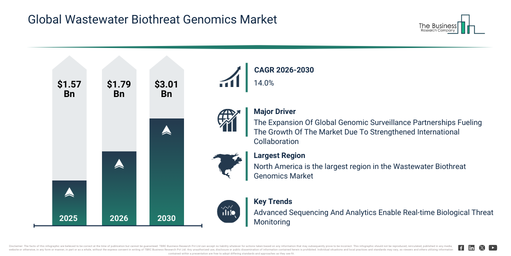
    The wastewater biothreat genomics market has experienced rapid growth in recent years. It is projected to expand from $1.57 billion in 2025 to $1.79 billion in 2026, exhibiting a compound annual growth rate (CAGR) of 13.7%. Historically, this growth was driven by factors such as covid era wastewater surveillance, the expansion of genomic sequencing labs, broadened public health monitoring, an uptick in pathogen tracking programs, and an increase in molecular diagnostics.

    The wastewater biothreat genomics market is projected to experience substantial expansion in the coming years. Its valuation is forecast to reach $3.01 billion by 2030, exhibiting a compound annual growth rate (CAGR) of 14.0%. Factors contributing to this anticipated growth include increased biosecurity investments, the proliferation of early outbreak detection systems, advancements in automated sample processing, escalating government surveillance initiatives, and the rise of AI genomic analytics. Key trends during this projection period involve the broader implementation of sewage-based pathogen surveillance, the increase in metagenomic wastewater testing, the uptake of rapid field sequencing kits, the integration of bioinformatics threat dashboards, and enhanced community-level pathogen monitoring.

    Download the Free Sample Report to Explore Key Market Insights:

    https://www.thebusinessresearchcompany.com/sample.aspx?id=33358&type=smp

    What Primary Drivers Are Shaping The Development Of The Wastewater Biothreat Genomics Market?

    The expansion of global genomic surveillance partnerships is anticipated to propel the growth of the wastewater biothreat genomics market going forward. These genomic surveillance partnerships are collaborative frameworks involving governments, international health organizations, and research institutions that work together to share genomic data and strengthen the early detection of biological threats. Such partnerships are increasing due to the growing recognition among governments and health organizations of the need for coordinated, cross-border monitoring to detect emerging biological threats early. Wastewater biothreat genomics supports global genomic surveillance by enabling standardized detection and comparison of pathogens in wastewater samples, thereby improving cross-border data integration and early warning capabilities. For instance, in July 2025, according to the World Health Organization (WHO), a Switzerland-based intergovernmental organization, reported that the International Pathogen Surveillance Network grew from around 35 partner organizations in 18 countries to nearly 350 partners spanning over 100 countries. Therefore, the expansion of global genomic surveillance partnerships is driving the growth of the wastewater biothreat genomics market.

    How Are The Various Segments Of The Wastewater Biothreat Genomics Market Categorized?

    The wastewater biothreat genomics market covered in this report is segmented –

    1) By Product Type: Portable Genomic Detection Devices; Laboratory Based Sequencing Instruments; Sample Collection and Preparation Kits; Consumables and Reagents; Software and Analytical Platforms

    2) By Technology: Polymerase Chain Reaction Systems; Next Generation Sequencing Systems; Microarray Based Detection Systems; Biosensor Based Detection Systems; Other Molecular Detection Technologies

    3) By Application: Pathogen Detection; Antimicrobial Resistance Surveillance; Environmental Monitoring; Other Applications

    4) By End-User: Municipal Utilities; Industrial Facilities; Academic and Research Institutes; Government Agencies; Other End-Users

    Subsegments:

    1) By Portable Genomic Detection Devices: Handheld Nucleic Acid Sequencers; Field Deployable Polymerase Chain Reaction Systems; Portable Isothermal Amplification Devices; Mobile Biosensor Based Genomic Detectors

    2) By Laboratory Based Sequencing Instruments: Next Generation Sequencing Systems; High Throughput Whole Genome Sequencers; Targeted Gene Sequencing Platforms; Metagenomic Sequencing Instruments

    3) By Sample Collection and Preparation Kits: Wastewater Sampling Kits; Nucleic Acid Extraction Kits; Pathogen Enrichment and Concentration Kits; Library Preparation Kits

    4) By Consumables and Reagents: Enzymes for Nucleic Acid Amplification; Sequencing Reagent Cartridges; Primers and Probes; Buffers and Chemical Solutions

    5) By Software and Analytical Platforms: Bioinformatics Data Analysis Software; Pathogen Identification and Surveillance Platforms; Genomic Data Management Systems; Artificial Intelligence Based Threat Detection Tools

    What Trends Are Affecting The Expansion Of The Wastewater Biothreat Genomics Market?

    Leading entities within the wastewater biothreat genomics market are concentrating on developing advanced solutions, such as genomic-based pathogen surveillance systems, to enhance the early identification of biological threats, improve public health responses, and support environmental oversight. These genomic-based pathogen surveillance systems involve technologies that analyze wastewater samples using genomic sequencing and bioinformatics to pinpoint viruses, bacteria, and other microbial threats, thereby enabling real-time tracking of health risks at a population level. For example, in January 2023, Fusion Genomics Corporation, a Canada-based biotechnology company, initiated a pioneering wastewater surveillance pilot study at Toronto Pearson International Airport. This system integrates high-throughput genomic sequencing with advanced analytics to detect and quantify potential biothreats in wastewater streams. This method facilitates faster detection of emerging pathogens, supports data-driven public health interventions, and offers actionable insights for mitigating biological risks, surpassing conventional monitoring approaches. By combining genomics, bioinformatics, and environmental sampling, the solution aids in enhancing situational awareness, strengthening biosecurity measures, and improving early warning capabilities for communities and critical infrastructure.

    Who Are The Top Market Participants Influencing The Wastewater Biothreat Genomics Market?

    Major companies operating in the wastewater biothreat genomics market are Miniature Brain Stimulator, Danaher Corporation, Thermo Fisher Scientific Inc., Eurofins Scientific SE, Illumina Inc., IDEXX Laboratories Inc., Bio-Rad Laboratories Inc., QIAGEN N.V., Randox Laboratories Ltd., Promega Corporation, OraSure Technologies Inc., Verily Life Sciences LLC, Twist Bioscience Corporation, Ginkgo Bioworks Holdings Inc., Oxford Nanopore Technologies plc, Pacific Biosciences of California Inc., New England Biolabs Inc., LuminUltra Technologies Ltd., BaseClear B.V., Biobot Analytics Inc., GT Molecular Inc., Ceres Nanosciences Inc.

    Read the full wastewater biothreat genomics market report here:

    https://www.thebusinessresearchcompany.com/report/wastewater-biothreat-genomics-market-report

    Which Region Currently Holds The Largest Share Of The Wastewater Biothreat Genomics Market?

    North America was the largest region in the wastewater biothreat genomics market in 2025. Asia-Pacific is expected to be the fastest-growing region in the forecast period. The regions covered in the wastewater biothreat genomics market report are Asia-Pacific, South East Asia, Western Europe, Eastern Europe, North America, South America, Middle East, Africa.

    Request A Tailored Wastewater Biothreat Genomics Market Research Report For Competitive Advantage:

    https://www.thebusinessresearchcompany.com/customise?id=33358&type=smp

    Browse Through More Reports Similar to the Global Wastewater Biothreat Genomics Market 2026, By The Business Research Company

    Biological Wastewater Treatment Market Report 2026

    https://www.thebusinessresearchcompany.com/report/biological-wastewater-treatment-global-market-report

    Wastewater Treatment Service Market Report 2026

    https://www.thebusinessresearchcompany.com/report/wastewater-treatment-service-global-market-report

    Upstream Bioprocessing Market Report 2026

    https://www.thebusinessresearchcompany.com/report/upstream-bioprocessing-global-market-report

    Get in touch with us:

    The Business Research Company: https://www.thebusinessresearchcompany.com/

    Americas +1 310-496-7795

    Asia +44 7882 955267 & +91 8897263534

    Europe +44 7882 955267

    Email us at info@tbrc.info

    Follow us on:

    LinkedIn: https://in.linkedin.com/company/the-business-research-company

    YouTube: https://www.youtube.com/channel/UC24_fI0rV8cR5DxlCpgmyFQ

    Global Market Model: https://www.thebusinessresearchcompany.com/global-market-model
  • Digital Platform Advancements Transforming the Virtual Ward Market

    Digital Platform Advancements Transforming the Virtual Ward Market

    The Business Research Company’s 2026 market reports include new capabilities such as market attractiveness scoring and analysis, total addressable market analysis, company scoring matrix, interactive excel data dashboard, improved supply chain analysis, upcoming startups in the market, and overview of key products, aimed at improving the depth, usability, and strategic value of the insights delivered.

    What Market Size Expansion Is Predicted For The Virtual Ward Market Between 2026 And 2030?

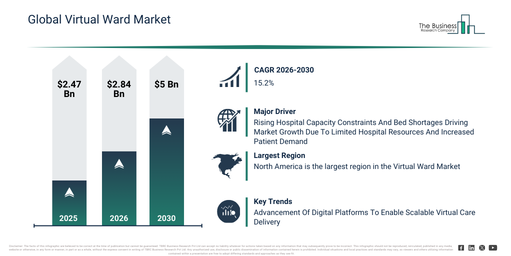
    The virtual ward market has observed rapid expansion in recent years. Its value is anticipated to rise from $2.47 billion in 2025 to $2.84 billion in 2026, achieving a compound annual growth rate (CAGR) of 14.9%. This historical growth can be linked to factors such as hospital capacity limitations, an uptick in remote monitoring pilot initiatives, the development of telehealth services, an increase in chronic disease-related admissions, and the early stages of home care digitization.

    The virtual ward market is projected for significant expansion over the coming years. Its valuation is anticipated to reach $5 billion by 2030, demonstrating a compound annual growth rate (CAGR) of 15.2%. This anticipated growth during the forecast timeframe is primarily driven by mounting healthcare cost pressures, an expanding elderly demographic, broader reimbursement options for home care services, greater uptake of connected medical devices, and increased governmental backing for home-based treatment approaches. Key developments foreseen during this period encompass the increasing embrace of hospital-at-home frameworks, a surge in the application of continuous remote patient monitoring, the broadening of virtual nursing provisions, enhanced integration of clinical decision support utilities, and a greater implementation of home-based acute care initiatives.

    Download the Free Sample Report to Explore Key Market Insights:

    https://www.thebusinessresearchcompany.com/sample.aspx?id=33354&type=smp

    Which Major Factors Are Driving The Expansion Of The Virtual Ward Market?

    Increasing limitations in hospital capacity and prevalent bed shortages are expected to stimulate the growth of the virtual ward market in the upcoming years. Hospital capacity constraints emerge when healthcare systems lack sufficient beds, workforce, or essential infrastructure to accommodate patient demand. These growing pressures are largely driven by an aging population, which typically requires extended hospital stays and more complex medical attention, consequently reducing bed turnover and intensifying the need for inpatient services. Virtual wards effectively mitigate these challenges by enabling patients to receive hospital-level care within their own homes, thereby freeing up physical beds, improving overall patient flow, and reducing the strain on hospital resources. As an illustration, in January 2026, according to the Australian Institute of Health and Welfare (AIHW), an Australian-based government agency, an average of 67,300 public hospital beds were available in 2023–24, amounting to 2.5 beds per 1,000 people. This relatively restricted bed availability, combined with an increasing demand for healthcare, underscores the continuous capacity issues within the hospital system. Therefore, rising hospital capacity constraints and bed shortages are anticipated to fuel the expansion of the virtual ward market.

    Which Market Segments Are Examined In The Virtual Ward Market Study?

    The virtual ward market covered in this report is segmented –

    1) By Component: Hardware; Software; Services

    2) By Service Type: Chronic Disease Management; Post-Operative Care; Preventive Care; Acute Care at Home; Virtual Nursing Services; Care Coordination Services

    3) By Patient Demographics: Children; Adults; Senior Citizens

    4) By Application: Cardiology; Neurology; Pulmonology; Oncology; Orthopedics; General Medicine; Geriatric Care

    5) By End User: Patients; Hospitals; Clinics; Home Healthcare Providers; Insurance Companies; Government Healthcare Agencies

    Subsegments:

    1) By Hardware: Remote Patient Monitoring Devices; Wearable Health Sensors; Vital Sign Monitoring Equipment; Mobile Medical Tablets; Home Diagnostic Devices

    2) By Software: Virtual Ward Management Platforms; Remote Monitoring Software; Patient Data Management Systems; Clinical Decision Support Software; Telehealth Integration Software

    3) By Services: Remote Patient Monitoring Services; Virtual Clinical Care Services; Technical Support Services; Data Management Services; Care Coordination Services

    Which Trends Are Influencing The Virtual Ward Market?

    Major companies operating within the virtual ward market are concentrating on developing sophisticated products, such as digital platforms. These innovations aim to bolster remote patient monitoring, facilitate real-time clinical decision-making, enhance care coordination among healthcare teams, and diminish hospital admissions by providing continuous, hospital-grade care in home settings. A digital platform is a technology-based system, typically delivered online, that enables interactions, transactions, or the exchange of value between two or more interdependent groups, like users, businesses, developers, or service providers. As an illustration, in June 2025, Medway NHS Foundation Trust, a UK-based public healthcare provider, launched a new digital platform in collaboration with health tech firm Feebris. This initiative was intended to scale its virtual hospital and virtual ward services, extending digital care beyond initial pilot programs. The platform incorporates configurable technology that supports virtual monitoring and hospital-at-home services across all clinical specialties. It facilitates the remote capture of patient data and considerably reduces hospital bed days and costs by enabling recovery at home. Furthermore, it supports the submission of pseudonymised data to national health data systems, which helps drive broader adoption and evidence generation for virtual care models. This solution improves traditional care models by shifting delivery from physical wards to digitally enabled patient environments, thereby enhancing efficiency and patient experience.

    Which Global Companies Are Actively Competing In The Virtual Ward Market?

    Major companies operating in the virtual ward market are Amazon.com Inc., UnitedHealth Group Incorporated, CVS Health Corporation, The Cigna Group Inc., Elevance Health Inc., Siemens AG, Roche Holding AG, HCA Healthcare Inc., Best Buy Co. Inc., Abbott Laboratories, Medtronic plc, Stryker Corporation, Koninklijke Philips N.V, GE Healthcare Technologies Inc., Boston Scientific Corporation, Baxter International Inc., ResMed Inc., DexCom Inc., Teladoc Health Inc., Masimo Corporation, iRhythm Technologies Inc.

    Read the full virtual ward market report here:

    https://www.thebusinessresearchcompany.com/report/virtual-ward-market-report

    How Does The Virtual Ward Market Perform Across Major Global Regions?

    North America was the largest region in the virtual ward market in 2025. Asia-Pacific is expected to be the fastest-growing region in the forecast period. The regions covered in the virtual ward market report are Asia-Pacific, South East Asia, Western Europe, Eastern Europe, North America, South America, Middle East, Africa.

    Request A Tailored Virtual Ward Market Research Report For Competitive Advantage:

    https://www.thebusinessresearchcompany.com/customise?id=33354&type=smp

    Browse Through More Reports Similar to the Global Virtual Ward Market 2026, By The Business Research Company

    Vertical Market Software Market Report 2026

    https://www.thebusinessresearchcompany.com/report/vertical-market-software-global-market-report

    Market Research Services Market Report 2026

    https://www.thebusinessresearchcompany.com/report/market-research-services-global-market-report

    Virtual Tourism Market Report 2026

    https://www.thebusinessresearchcompany.com/report/virtual-tourism-global-market-report

    Get in touch with us:

    The Business Research Company: https://www.thebusinessresearchcompany.com/

    Americas +1 310-496-7795

    Asia +44 7882 955267 & +91 8897263534

    Europe +44 7882 955267

    Email us at info@tbrc.info

    Follow us on:

    LinkedIn: https://in.linkedin.com/company/the-business-research-company

    YouTube: https://www.youtube.com/channel/UC24_fI0rV8cR5DxlCpgmyFQ

    Global Market Model: https://www.thebusinessresearchcompany.com/global-market-model
  • AI Partnerships Accelerating Growth in Virtual Clinics Market

    AI Partnerships Accelerating Growth in Virtual Clinics Market

    The Business Research Company’s 2026 market reports include new capabilities such as market attractiveness scoring and analysis, total addressable market analysis, company scoring matrix, interactive excel data dashboard, improved supply chain analysis, upcoming startups in the market, and overview of key products, aimed at improving the depth, usability, and strategic value of the insights delivered.

    How Large Is The Virtual Clinics Market Projected To Become By 2030 Based On Its 2026 Valuation?

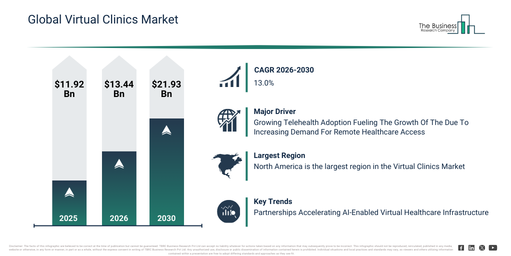
    The virtual clinics market has seen substantial expansion in recent years. It is projected to grow from $11.92 billion in 2025 to $13.44 billion in 2026, demonstrating a compound annual growth rate (CAGR) of 12.8%. The historical growth of this market can be ascribed to a rise in telemedicine usage, increased broadband access, the proliferation of digital health apps, growing demand for patient convenience, and initial virtual visits spurred by the pandemic.

    The virtual clinics market size is set for rapid expansion in the coming years. It is projected to reach **$21.93 billion in 2030, demonstrating a compound annual growth rate (CAGR) of 13.0%**. This anticipated growth during the forecast period stems from factors such as the increasing adoption of hybrid care models, the emergence of digital-first healthcare policies, the broader deployment of remote diagnostics, improved insurer coverage for virtual visits, and a rise in cross-border teleconsultations. Significant trends expected during this period include the expanding use of video consultation platforms, a growing reliance on virtual follow-up services, the integration and growth of EHR teleclinic systems, increased utilization of remote diagnostic kiosks, and a higher demand for mobile-first virtual clinics.

    Download the Free Sample Report to Explore Key Market Insights:

    https://www.thebusinessresearchcompany.com/sample.aspx?id=33351&type=smp

    What Key Drivers Are Influencing The Growth Of The Virtual Clinics Market?

    The increasing embrace of telehealth is anticipated to fuel the expansion of the virtual clinics market moving ahead. Telehealth adoption signifies the degree to which patients, healthcare providers, and systems consistently utilize digital tools for delivering medical care and health-related services from a distance. The rise in telehealth adoption is mainly attributed to the increasing demand for convenient healthcare access that doesn’t necessitate physical appointments. Virtual clinics, serving as a vital component within telehealth, offer organized frameworks allowing patients to obtain consultations, diagnoses, and subsequent care completely through online channels. As an illustration, in July 2025, data from the International Trade Administration (ITA) indicated that digital treatment penetration in the U.S. was 18.1% in 2024 and is forecasted to climb to 28.08% by 2029, demonstrating the broadening utilization of digital and remote health services. Consequently, the increasing acceptance of telehealth is stimulating the expansion of the virtual clinics market.

    What Segment Groups Are Identified Within The Virtual Clinics Market?

    The virtual clinics market covered in this report is segmented –

    1) By Type: Teleconsultation Platforms; Virtual Primary Care; Specialty E-Clinics; Artificial Intelligence-Based Symptom Checkers; Mobile Health Services

    2) By Application: Primary Care; Mental Health; Dermatology; Pediatrics; Chronic Care

    3) By End Users: Healthcare Providers; Patients; Pharmaceutical Companies; Insurance Companies; Employers

    Subsegments:

    1) By Teleconsultation Platforms: Video Consultation Platforms; Audio Consultation Platforms; Chat-Based Consultation Platforms; Integrated Scheduling and Consultation Platforms

    2) By Virtual Primary Care: Preventive Care Platforms; Routine Checkup Platforms; Family Medicine Virtual Platforms; General Practice Virtual Platforms

    3) By Specialty E-Clinics: Cardiology Virtual Clinics; Dermatology Virtual Clinics; Endocrinology Virtual Clinics; Orthopedic Virtual Clinics; Neurology Virtual Clinics

    4) By Artificial Intelligence-Based Symptom Checkers: Rule Based Symptom Assessment Tools; Machine Learning Driven Symptom Analysis Tools; Natural Language Processing Based Triage Tools; Predictive Diagnostic Support Tools

    5) By Mobile Health Services: Mobile Consultation Applications; Remote Health Monitoring Applications; Medication Management Applications; Wellness and Preventive Care Applications

    What Trends Are Advancing Progress In The Virtual Clinics Market?

    Companies operating in the virtual clinics market are increasingly forming strategic alliances to boost technology integration and expand their market presence. A strategic partnership typically refers to a cooperative relationship between two or more organizations, where they pool their resources, expertise, and efforts to achieve shared goals or objectives. For instance, in January 2026, VSee Health, Inc., a US-based telehealth technology provider, forged a strategic partnership with DocBox, a US-based augmented intelligence platform for critical care. This collaboration aims to create a next-generation virtual ICU operating system for hospitals globally. The initiative combines VSee’s telehealth and AI-driven workflows with DocBox’s vendor-agnostic bedside data infrastructure, allowing hospitals to utilize real-time, structured clinical data from ICU devices and monitoring systems. This integrated solution is designed as a reimbursement-ready, AI-native virtual ICU platform that supports scalable remote critical care delivery, enhances revenue capture through automated billing processes, enables the deployment of AI decision-support tools on live physiological data, ensures hospital ownership of clinical data, and embeds VSee’s capabilities into core clinical operations.

    Which Leading Firms Are Contributing To The Growth Of The Virtual Clinics Market?

    Major companies operating in the virtual clinics market are Optum Inc., The Cigna Group, Siemens Healthineers AG, Koninklijke Philips N.V., SSM Health Care Group, Teladoc Health Inc., Babylon Healthcare Services Limited, Hims & Hers Health Inc., Ping An Healthcare and Technology Company Limited, Kry International AB, American Well Corporation, MDLIVE Inc., Doctor On Demand Inc., CallHealth Services Private Limited, HealthTap Inc., Ada Health GmbH, Virinchi Hospitals Private Limited, Practo Technologies Private Limited, 98point6 Inc., PlushCare Inc.

    Read the full virtual clinics market report here:

    https://www.thebusinessresearchcompany.com/report/virtual-clinics-market-report

    Which Region Is Anticipated To See The Fastest Growth In The Virtual Clinics Market?

    North America was the largest region in the virtual clinics market in 2025. Asia-Pacific is expected to be the fastest-growing region in the forecast period. The regions covered in the virtual clinics market report are Asia-Pacific, South East Asia, Western Europe, Eastern Europe, North America, South America, Middle East, Africa.

    Request A Tailored Virtual Clinics Market Research Report For Competitive Advantage:

    https://www.thebusinessresearchcompany.com/customise?id=33351&type=smp

    Browse Through More Reports Similar to the Global Virtual Clinics Market 2026, By The Business Research Company

    Virtual Clinical Trials Market Report 2026

    https://www.thebusinessresearchcompany.com/report/virtual-clinical-trials-global-market-report

    Retail Clinics Market Report 2026

    https://www.thebusinessresearchcompany.com/report/retail-clinics-global-market-report

    Virtual Reality In Healthcare Market Report 2026

    https://www.thebusinessresearchcompany.com/report/virtual-reality-in-healthcare-global-market-report

    Get in touch with us:

    The Business Research Company: https://www.thebusinessresearchcompany.com/

    Americas +1 310-496-7795

    Asia +44 7882 955267 & +91 8897263534

    Europe +44 7882 955267

    Email us at info@tbrc.info

    Follow us on:

    LinkedIn: https://in.linkedin.com/company/the-business-research-company

    YouTube: https://www.youtube.com/channel/UC24_fI0rV8cR5DxlCpgmyFQ

    Global Market Model: https://www.thebusinessresearchcompany.com/global-market-model
  • Growing Preference for Remote Care Boosting Virtual Care Management Market

    Growing Preference for Remote Care Boosting Virtual Care Management Market

    The Business Research Company’s 2026 market reports include new capabilities such as market attractiveness scoring and analysis, total addressable market analysis, company scoring matrix, interactive excel data dashboard, improved supply chain analysis, upcoming startups in the market, and overview of key products, aimed at improving the depth, usability, and strategic value of the insights delivered.

    What Market Value Is Anticipated For The Virtual Care Management Market Over The Period 2026–2030?

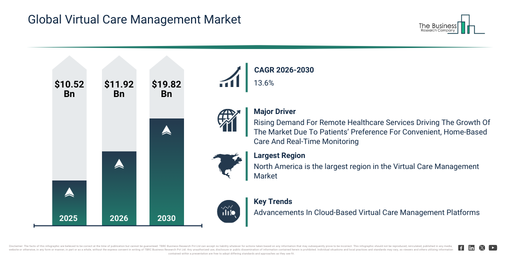
    The virtual care management market has experienced rapid expansion in recent years. Its value is projected to increase from $10.52 billion in 2025 to $11.92 billion in 2026, exhibiting a compound annual growth rate (CAGR) of 13.3%. The historical growth can be attributed to factors such as the rise in telehealth adoption, the increasing burden of chronic diseases, the expansion of digital health records, an uptick in remote monitoring pilot programs, and initial support for virtual care from insurers.

    The virtual care management market size is projected to experience swift expansion in the coming years. It is anticipated to reach $19.82 billion by 2030, exhibiting a compound annual growth rate (CAGR) of 13.6%. This expansion during the forecast period stems from factors such as the rise in value-based care models, a burgeoning aging population, the broadening of home-based monitoring initiatives, improved payer reimbursement for virtual offerings, and expanding digital transformation budgets for providers. Significant trends expected in this period encompass the increased uptake of remote care coordination platforms, the intensified application of continuous chronic care monitoring, the proliferation of digital care plan management tools, enhanced integration of patient engagement platforms, and a greater deployment of virtual care analytics solutions.

    Download the Free Sample Report to Explore Key Market Insights:

    https://www.thebusinessresearchcompany.com/sample.aspx?id=33350&type=smp

    What Major Growth Drivers Are Shaping The Outlook Of The Virtual Care Management Market?

    The anticipated expansion of the virtual care management market in the upcoming years is primarily propelled by the increasing need for remote healthcare services. Remote healthcare encompasses providing medical attention, consultations, and patient oversight remotely using digital platforms and telecommunication systems. Patients’ preference for convenient and easily accessible care primarily fuels this escalating demand, enabling them to access medical services from their homes, thus minimizing travel, waiting periods, and related expenses. Virtual care management facilitates the delivery of remote healthcare by enabling synchronized, continuous monitoring, communication, and care strategy development between healthcare providers and patients. These functionalities contribute to improved continuity of care, greater patient involvement, and enhanced overall efficiency within the healthcare system. Trends in telehealth adoption serve as evidence of this growing requirement. For example, data from the U.S. Department of Health and Human Services (HHS), a US-based national health policy, shows that approximately 25% of medicare fee-for-service beneficiaries used a telehealth service, an increase from 18% in March 2023, demonstrating a notable 7 percentage point increase year-over-year. Consequently, the increasing need for remote healthcare services is a primary catalyst for the expansion of the virtual care management market.

    How Is The Virtual Care Management Market Divided Into Its Major Segments?

    The virtual care management market covered in this report is segmented –

    1) By Component: Software; Hardware; Services

    2) By Deployment Mode: On-Premises; Cloud

    3) By Application: Telehealth; Remote Patient Monitoring; Chronic Disease Management; Behavioral Health; Other Applications

    4) By End-Users: Hospitals; Clinics; Home Care Settings; Other End-Users

    Subsegments:

    1) By Software: Care Coordination Platforms; Patient Engagement Applications; Clinical Decision Support Systems; Population Health Management Tools

    2) By Hardware: Remote Monitoring Devices; Wearable Health Tracking Devices; Connected Diagnostic Equipment; Home Care Medical Devices

    3) By Services: Remote Care Coordination Services; Chronic Care Management Services; Virtual Patient Monitoring Services

    How Are Trends Transforming The Virtual Care Management Market Landscape?

    Leading companies in the virtual care management market are prioritizing enhancements in cloud and teleconferencing technologies, such as virtual care management (VCM) platforms, to improve remote patient engagement, enable immediate clinician–patient interactions, streamline care coordination, and facilitate the scalable, secure provision of healthcare services across varied settings. Virtual care management (VCM) signifies the organized delivery, oversight, and management of patient care through digital and remote healthcare technologies, rather than relying on face-to-face visits. For example, in march 2023, Royal Philips, a Netherlands-based health technology company, unveiled Philips virtual care management, which incorporates condition-specific protocols (covering diabetes and hypertension), connected devices, and engagement tools on a secure interoperable cloud-based platform, alongside licensed clinical professional monitoring with personalized health coaching.

    Who Are The Dominant Players Shaping The Virtual Care Management Market Landscape?

    Major companies operating in the virtual care management market are Amazon.web service Inc., UnitedHealth Group Incorporated, CVS Health Corporation, The Cigna Group Inc., Elevance Health Inc., Centene Corporation, Humana Inc., HCA Healthcare Inc., Best Buy Co. Inc., Koninklijke Philips N.V., Boston Scientific Corporation, ResMed Inc., Agilon Health Inc., DexCom Inc., Teladoc Health Inc., Masimo Corporation, Evolent Health Inc., Privia Health Group Inc., Hims & Hers Health Inc., Doximity Inc., American Well Corporation, LifeMD Inc., Talkspace Inc.

    Read the full virtual care management market report here:

    https://www.thebusinessresearchcompany.com/report/virtual-care-management-market-report

    Which Region Is Anticipated To See The Fastest Growth In The Virtual Care Management Market?

    North America was the largest region in the virtual care management market in 2025. Asia-Pacific is expected to be the fastest-growing region in the forecast period. The regions covered in the virtual care management market report are Asia-Pacific, South East Asia, Western Europe, Eastern Europe, North America, South America, Middle East, Africa.

    Request A Tailored Virtual Care Management Market Research Report For Competitive Advantage:

    https://www.thebusinessresearchcompany.com/customise?id=33350&type=smp

    Browse Through More Reports Similar to the Global Virtual Care Management Market 2026, By The Business Research Company

    Virtual Reality In Healthcare Market Report 2026

    https://www.thebusinessresearchcompany.com/report/virtual-reality-in-healthcare-global-market-report

    Virtual Clinical Trials Market Report 2026

    https://www.thebusinessresearchcompany.com/report/virtual-clinical-trials-global-market-report

    Care Management Solutions Market Report 2026

    https://www.thebusinessresearchcompany.com/report/care-management-solutions-global-market-report

    Get in touch with us:

    The Business Research Company: https://www.thebusinessresearchcompany.com/

    Americas +1 310-496-7795

    Asia +44 7882 955267 & +91 8897263534

    Europe +44 7882 955267

    Email us at info@tbrc.info

    Follow us on:

    LinkedIn: https://in.linkedin.com/company/the-business-research-company

    YouTube: https://www.youtube.com/channel/UC24_fI0rV8cR5DxlCpgmyFQ

    Global Market Model: https://www.thebusinessresearchcompany.com/global-market-model
  • Stuttering Treatment Market Projected to Reach $4.05 Billion by 2030

    Stuttering Treatment Market Projected to Reach $4.05 Billion by 2030

    The Business Research Company’s 2026 market reports include new capabilities such as market attractiveness scoring and analysis, total addressable market analysis, company scoring matrix, interactive excel data dashboard, improved supply chain analysis, upcoming startups in the market, and overview of key products, aimed at improving the depth, usability, and strategic value of the insights delivered.

    How Much Is The Stuttering Treatment Market Expected To Grow In Terms Of Market Value Between 2026 And 2030?

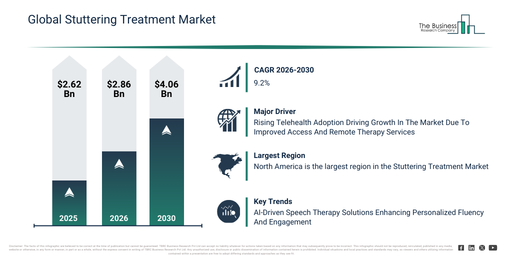
    The stuttering treatment market size has demonstrated significant growth in recent years. It is anticipated to expand from $2.62 billion in 2025 to $2.86 billion in 2026, achieving a compound annual growth rate (CAGR) of 8.9%. The historical increase can be attributed to a rise in speech disorder awareness, an expansion of speech therapy clinics, an increase in school screening programs, the development of pediatric therapy services, and the early implementation of fluency shaping methods.

    The stuttering treatment market is projected to experience substantial expansion over the upcoming years. By 2030, this market is anticipated to reach $4.06 billion, demonstrating a compound annual growth rate (CAGR) of 9.2%. This projected growth during the forecast period can be primarily attributed to factors such as growing teletherapy adoption, rising mental health integration in speech care, the expansion of digital therapy platforms, higher insurance coverage for speech therapy, and increasing early diagnosis rates. Key developments expected in this period include the growing adoption of app based speech therapy, rising use of virtual speech therapy sessions, expansion of early childhood fluency programs, increasing integration of behavioral counseling, and higher use of assistive fluency devices.

    Download the Free Sample Report to Explore Key Market Insights:

    https://www.thebusinessresearchcompany.com/sample.aspx?id=33327&type=smp

    Which Major Factors Are Driving The Expansion Of The Stuttering Treatment Market?

    The expansion of telehealth is projected to fuel the stuttering treatment market’s growth in the upcoming years. Telehealth involves providing healthcare services remotely using digital communication tools like video consultations, mobile apps, and online therapy platforms. Its increasing acceptance stems from improved access to care, particularly for those in isolated or underserved regions, alongside reductions in travel time and scheduling obstacles. Stuttering treatment is particularly suited to telehealth provision, as speech therapy sessions can be effectively administered through live video interactions. This allows patients to access continuous, convenient, and tailored speech therapy from their homes, enhancing therapy compliance and broadening reach to skilled speech-language pathologists. For example, in September 2024, data from the Australian Bureau of Statistics (ABS), Australia’s national statistical agency, indicated that in 2023–24, 83.5% of males utilized telehealth services, an increase from 78.6% in 2022–23. Consequently, the rising adoption of telehealth is contributing significantly to the stuttering treatment market’s expansion.

    What Major Segment Divisions Exist Within The Stuttering Treatment Market?

    The stuttering treatment market covered in this report is segmented –

    1) By Treatment Type: Speech Therapy; Digital And App-Based Therapy; Pharmacological Treatment; Assistive Devices And Wearables

    2) By Age Group: Children; Adolescents; Adults

    3) By End User: Speech And Language Clinics; Hospitals And Rehabilitation Centers; Schools And Educational Institutions; Direct-To-Consumer Platforms

    Subsegments:

    1) By Speech Therapy: Articulation Therapy; Fluency Shaping Therapy; Stuttering Modification Therapy; Cognitive Behavioral Therapy

    2) By Digital And App-Based Therapy: Mobile Application Based Therapy; Online Video Therapy Sessions; Virtual Reality Based Therapy; Interactive Software Tools

    3) By Pharmacological Treatment: Anti Anxiety Medication; Dopamine Modulators; Beta Blockers; Other Prescription Drugs

    4) By Assistive Devices And Wearables: Speech Feedback Devices; Delayed Auditory Feedback Devices; Electronic Fluency Devices; Wearable Therapy Devices

    How Are Trends Shaping The Direction Of The Stuttering Treatment Market?

    Major companies within the stuttering treatment market are increasingly concentrating on developing innovative solutions, such as AI-powered speech therapy applications, to enhance personalization, improve therapy adherence, and support better speech fluency outcomes. These AI-powered speech therapy apps are digital platforms that leverage artificial intelligence to analyze speech patterns, provide real-time feedback, and deliver customized therapy exercises aimed at helping individuals manage stuttering more effectively. These solutions facilitate scalable, continuous intervention beyond traditional clinical settings. For instance, in December 2025, Iyaso Softwares Private Limited, an India-based health technology company, launched Eloquent, an AI-powered speech therapy application intended to help individuals who stutter improve fluency and speaking confidence through regular practice. The app incorporates evidence-based techniques including gentle onsets, rhythmic speech, and simulated real-life conversations. According to the company, users who consistently engaged in daily sessions experienced measurable improvements in stuttering severity and speaking confidence, underscoring the potential effectiveness of AI-enabled, app-based therapy solutions.

    Who Are The Leading Companies Operating In The Stuttering Treatment Market?

    Major companies operating in the stuttering treatment market are Mayo Clinic, Cleveland Clinic, Vanderbilt Health, Houston Methodist, Texas Children’s Hospital, Boston Children’s Hospital, Apollo Hospitals Enterprise Limited, Practo Technologies Pvt. Ltd. (Practo), Ruby Hall Clinic, All India Institute of Speech and Hearing (AIISH) Mysore, McGuire Programme, Perley Health, Tender Palm Super Speciality Hospital, American Institute for Stuttering (AIS), Wasatch Speech & Language Center, Michael Palin Centre for Stammering, National Stuttering Association, Speech & Stuttering Institute, Australian Stuttering Research Centre, Curtin Stuttering Treatment Clinic

    Read the full stuttering treatment market report here:

    https://www.thebusinessresearchcompany.com/report/stuttering-treatment-market-report

    Which Region Is Anticipated To See The Fastest Growth In The Stuttering Treatment Market?

    North America was the largest region in the stuttering treatment market in 2025. Asia-Pacific is expected to be the fastest-growing region in the forecast period. The regions covered in the stuttering treatment market report are Asia-Pacific, South East Asia, Western Europe, Eastern Europe, North America, South America, Middle East, Africa.

    Request A Tailored Stuttering Treatment Market Research Report For Competitive Advantage:

    https://www.thebusinessresearchcompany.com/customise?id=33327&type=smp

    Browse Through More Reports Similar to the Global Stuttering Treatment Market 2026, By The Business Research Company

    Precision Medicine Market Report 2026

    https://www.thebusinessresearchcompany.com/report/precision-medicine-global-market-report

    Rare Diseases Treatment Market Report 2026

    https://www.thebusinessresearchcompany.com/report/rare-diseases-treatment-global-market-report

    Virtual Clinical Trials Market Report 2026

    https://www.thebusinessresearchcompany.com/report/virtual-clinical-trials-global-market-report

    Get in touch with us:

    The Business Research Company: https://www.thebusinessresearchcompany.com/

    Americas +1 310-496-7795

    Asia +44 7882 955267 & +91 8897263534

    Europe +44 7882 955267

    Email us at info@tbrc.info

    Follow us on:

    LinkedIn: https://in.linkedin.com/company/the-business-research-company

    YouTube: https://www.youtube.com/channel/UC24_fI0rV8cR5DxlCpgmyFQ

    Global Market Model: https://www.thebusinessresearchcompany.com/global-market-model
  • AI in Sleep Diagnostics Market Insights and Strategic Growth Outlook for 2026–2030

    AI in Sleep Diagnostics Market Insights and Strategic Growth Outlook for 2026–2030

    The Business Research Company’s 2026 market reports include new capabilities such as market attractiveness scoring and analysis, total addressable market analysis, company scoring matrix, interactive excel data dashboard, improved supply chain analysis, upcoming startups in the market, and overview of key products, aimed at improving the depth, usability, and strategic value of the insights delivered.

    How Large Is The Sleep Diagnostics Artificial Intelligence Market Projected To Become By 2030 Based On Its 2026 Valuation?

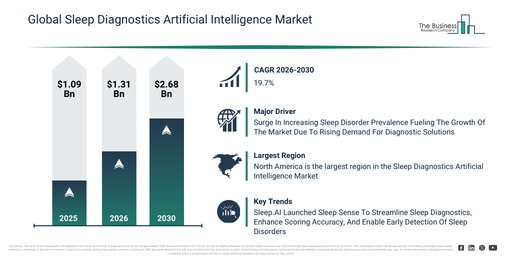
    The sleep diagnostics artificial intelligence market has observed substantial expansion in recent years. Its valuation is anticipated to climb from $1.09 billion in 2025 to $1.31 billion in 2026, exhibiting a compound annual growth rate (CAGR) of 19.4%. The surge witnessed in the preceding period is attributable to an increase in sleep disorder instances, the proliferation of wearable devices, the development of digital health analytics, a rise in sleep lab investigations, and the need for quicker diagnostic solutions.

    The sleep diagnostics artificial intelligence market is projected to experience swift expansion in the coming years, reaching $2.68 billion by 2030, demonstrating a compound annual growth rate (CAGR) of 19.7%. This anticipated growth is driven by factors such as the increasing adoption of AI clinical decision tools, the expansion of remote sleep monitoring, an uptick in home-based diagnostics, the emergence of personalized sleep therapy, and greater integration with digital health platforms. Key trends anticipated during this period encompass AI-based sleep stage scoring, sleep analytics integrated with wearables, cloud-based sleep diagnostic platforms, models for predicting sleep disorders, and automated polysomnography interpretation.

    Download the Free Sample Report to Explore Key Market Insights:

    https://www.thebusinessresearchcompany.com/sample.aspx?id=33318&type=smp

    What Drivers Are Influencing The Sleep Diagnostics Artificial Intelligence Market?

    The escalating incidence of sleep disorders is anticipated to fuel the expansion of the sleep diagnostics artificial intelligence market. Sleep disorders are defined as medical conditions that disturb normal sleep patterns, adversely affecting the quality, timing, or duration of sleep, which can lead to daytime distress or impaired functioning. This increasing occurrence is propelled by elements such as aging populations, stress arising from lifestyle choices, and a heightened awareness of sleep health, all of which have contributed to more widespread screening, diagnosis, and reporting. Sleep diagnostics artificial intelligence plays a crucial role in addressing these disorders by providing automated, accurate, and scalable analysis of sleep data, thereby supporting early detection, personalized treatment strategies, and enhanced clinical outcomes. For illustration, in November 2023, NHS England disclosed that 64.9% of young people aged 17 to 23 reported experiencing sleep problems three or more times in the preceding week. This statistic underscores a growing burden of sleep-related issues and an elevated demand for diagnostic solutions. Ultimately, the rising prevalence of sleep disorders serves as a primary impetus for the growth of the sleep diagnostics artificial intelligence market.

    What Segment Groups Are Identified Within The Sleep Diagnostics Artificial Intelligence Market?

    The sleep diagnostics artificial intelligence market covered in this report is segmented –

    1) By Component: Software; Hardware; Services

    2) By Technology: Machine Learning; Deep Learning; Natural Language Processing; Ensemble Learning

    3) By Deployment Mode: On Premises; Cloud Based

    4) By Application: Sleep Apnea; Insomnia; Narcolepsy; Restless Legs Syndrome; Circadian Rhythm Disorders; Other Applications

    5) By End User: Hospitals; Sleep Centers And Clinics; Home Care Settings; Research Institutes; Other End Users

    Subsegments:

    1) By Software: Sleep Scoring Software; Predictive Analytics Software; Electronic Health Record Integration Software

    2) By Hardware: Wearable Devices; Portable Diagnostic Devices; In Lab Monitoring Equipment

    3) By Services: Consulting Services; Implementation Services; Maintenance And Support Services

    What Trends Are Advancing Progress In The Sleep Diagnostics Artificial Intelligence Market?

    Leading companies within the sleep diagnostics artificial intelligence market are concentrating on technological advancements in automated sleep scoring. This focus aims to reduce reliance on clinicians and minimize diagnostic variability, particularly through innovations like frictionless sleep monitoring technology, to gain a competitive edge. Frictionless sleep monitoring technology is defined as a contactless, AI-driven system that automatically captures and analyzes sleep patterns, stages, and disturbances without requiring wearable devices, thereby enabling accurate and convenient sleep diagnostics. For instance, in December 2025, Sleep.ai, a U.S.-based digital health company, introduced Sleep Sense. This frictionless sleep monitoring technology transforms any smartphone into a privacy-aware sleep sensor, allowing for near-universal sleep data capture without wearables or manual input. It employs advanced AI boundary detection with hybrid spatio-temporal models to accurately identify bedtime and wake time, offering comparability to PSG-validated trackers. Additionally, through multimodal contextual modeling, it analyzes signals such as motion, ambient light, and device usage patterns to generate reliable sleep insights even when data is noisy or limited.

    Who Are The Prominent Organizations Shaping The Sleep Diagnostics Artificial Intelligence Market?

    Major companies operating in the sleep diagnostics artificial intelligence market are ResMed Inc., Neurosoft Ltd., Nox Health Inc., Itamar Medical Ltd., Compumedics Limited, Beacon Biosignals Inc., Onera Health Inc., EnsoData Inc., SleepImage Inc., Zeto Inc., HoneyNaps Co. Ltd., SOMNOmedics GmbH, SleepScore Labs, Nox Medical A/S, Sleep.AI Inc., Sleepacta S.r.l.

    Read the full sleep diagnostics artificial intelligence market report here:

    https://www.thebusinessresearchcompany.com/report/sleep-diagnostics-artificial-intelligence-market-report

    Which Region Is Expected To Experience The Fastest Growth In The Sleep Diagnostics Artificial Intelligence Market?

    North America was the largest region in the sleep diagnostics artificial intelligence (AI) market in 2025. Asia-Pacific is expected to be the fastest-growing region in the forecast period. The regions covered in the sleep diagnostics artificial intelligence market report are Asia-Pacific, South East Asia, Western Europe, Eastern Europe, North America, South America, Middle East, Africa.

    Request A Tailored Sleep Diagnostics Artificial Intelligence Market Research Report For Competitive Advantage:

    https://www.thebusinessresearchcompany.com/customise?id=33318&type=smp

    Browse Through More Reports Similar to the Global Sleep Diagnostics Artificial Intelligence Market 2026, By The Business Research Company

    Sleep Testing Services Market Report 2026

    https://www.thebusinessresearchcompany.com/report/sleep-testing-services-global-market-report

    Sleep Monitoring Apps Market Report 2026

    https://www.thebusinessresearchcompany.com/report/sleep-monitoring-apps-global-market-report

    Sleep Tech Devices Market Report 2026

    https://www.thebusinessresearchcompany.com/report/sleep-tech-devices-global-market-report

    Get in touch with us:

    The Business Research Company: https://www.thebusinessresearchcompany.com/

    Americas +1 310-496-7795

    Asia +44 7882 955267 & +91 8897263534

    Europe +44 7882 955267

    Email us at info@tbrc.info

    Follow us on:

    LinkedIn: https://in.linkedin.com/company/the-business-research-company

    YouTube: https://www.youtube.com/channel/UC24_fI0rV8cR5DxlCpgmyFQ

    Global Market Model: https://www.thebusinessresearchcompany.com/global-market-model
  • Retinal Detachment Diagnostics Market Forecast to Hit $2.12 Billion by 2030

    Retinal Detachment Diagnostics Market Forecast to Hit $2.12 Billion by 2030

    The Business Research Company’s 2026 market reports include new capabilities such as market attractiveness scoring and analysis, total addressable market analysis, company scoring matrix, interactive excel data dashboard, improved supply chain analysis, upcoming startups in the market, and overview of key products, aimed at improving the depth, usability, and strategic value of the insights delivered.

    What Market Size Growth Is Projected For The Retinal Detachment Diagnostic Market During The Forecast Period 2026–2030?

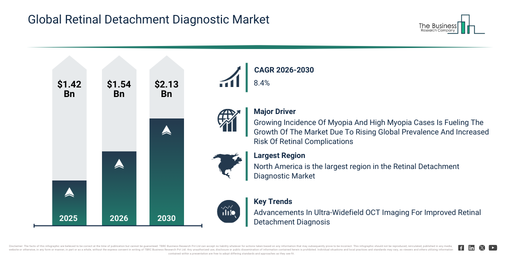
    The retinal detachment diagnostic market has shown significant expansion in recent years. It is projected to increase from $1.42 billion in 2025 to $1.54 billion in 2026, achieving a compound annual growth rate (CAGR) of 8.2%. The historical growth in this market can be attributed to several factors, including an increase in diabetic eye disease cases, growth in ophthalmic imaging centers, rising awareness of retinal disorders, expansion of hospital eye clinics, and the early adoption of OCT scanners.

    The retinal detachment diagnostic market is anticipated to experience significant growth in the coming years. It is projected to expand to **$2.13 billion in 2030, with a compound annual growth rate (CAGR) of 8.4%**. This growth over the forecast period is attributable to an expanding aging population, increasing demand for early vision assessment, the proliferation of remote eye screening initiatives, heightened investment in ophthalmic imaging, and a greater prevalence of myopia and diabetes. Prominent trends expected during this period include the increased utilization of optical coherence tomography imaging, the growing adoption of teleophthalmology screening solutions, the expansion of digital fundus photography systems, the rising application of AI-assisted retinal image analysis, and the broader deployment of portable ophthalmic ultrasound devices.

    Download the Free Sample Report to Explore Key Market Insights:

    https://www.thebusinessresearchcompany.com/sample.aspx?id=33303&type=smp

    What Primary Drivers Are Shaping The Development Of The Retinal Detachment Diagnostic Market?

    The increasing occurrence of myopia and high myopia conditions is projected to drive expansion in the retinal detachment diagnostic market in the future. Myopia and high myopia instances signify a rising frequency of shortsightedness and severe shortsightedness, which hinder clear distant vision and elevate the likelihood of significant ocular issues. An escalation in myopia and high myopia cases, attributed to extended screen time and less outdoor engagement, is intensifying vision stress, resulting in an earlier start and quicker worsening of refractive errors. Retinal detachment diagnostics assist with myopia and high myopia cases by allowing for prompt identification of retinal problems, facilitating rapid clinical action, and mitigating the chance of significant vision impairment. For example, as reported by Woo University, a US-based non-profit organization, in July 2025, 30% of the global population is presently myopic, with this figure anticipated to climb to almost 50% by 2050, impacting approximately 5 billion individuals. Consequently, the expanding occurrence of myopia and high myopia cases is fueling the development of the retinal detachment diagnostic market.

    What Market Segments Are Evaluated Within The Retinal Detachment Diagnostic Market?

    The retinal detachment diagnostic market covered in this report is segmented –

    1) By Disease Type: Tractional Retinal Detachment; Rhegmatogenous Retinal Detachment

    2) By Diagnostic Type: Fundus Photography; Ophthalmoscopy; Optical Coherence Tomography Scanners; Fundus Cameras; Ophthalmic Ultrasound Imaging Systems; Ophthalmic A Scan Ultrasound; Ophthalmic B Scan Ultrasound

    3) By Technology: Imaging Based Diagnostics; Non Imaging Clinical Examination; Advanced Digital Ophthalmic Systems

    4) By Application: Vitreo Retinal Disorders; Cataract; Glaucoma; Refractive Disorders

    5) By End Use: Hospitals And Eye Clinics; Academic And Research Laboratories; Other End Uses

    Subsegments:

    1) By Tractional Retinal Detachment: Diabetic Tractional Retinal Detachment; Proliferative Vitreoretinopathy Related Tractional Retinal Detachment; Inflammatory Tractional Retinal Detachment; Trauma Induced Tractional Retinal Detachment; Post Surgical Tractional Retinal Detachment; Neovascularization Associated Tractional Retinal Detachment

    2) By Rhegmatogenous Retinal Detachment: Superior Break Rhegmatogenous Retinal Detachment; Inferior Break Rhegmatogenous Retinal Detachment; Giant Retinal Tear Related Rhegmatogenous Retinal Detachment; Lattice Degeneration Related Rhegmatogenous Retinal Detachment; Trauma Related Rhegmatogenous Retinal Detachment; Myopic Degeneration Related Rhegmatogenous Retinal Detachment; Post Cataract Surgery Rhegmatogenous Retinal Detachment

    What Industry Trends Are Redefining The Retinal Detachment Diagnostic Market?

    Leading companies within the retinal detachment diagnostic market are concentrating on developing advanced imaging solutions, such as ultra-widefield optical coherence tomography (OCT), with the goal of improving detection accuracy, enhancing the visualization of the peripheral retina, and supporting the early identification of retinal tears and detachments. Ultra-widefield OCT describes an imaging technology that captures high-resolution, wide-angle views of the retina, allowing clinicians to detect subtle or peripheral retinal abnormalities that might otherwise go unnoticed. For example, in March 2025, Optos PLC, a UK-based retinal imaging company, unveiled MonacoPro, its subsequent generation ultra-widefield SLO and spectral domain retinal imaging system. Developed to assist eye care professionals with improved diagnostic precision and workflow efficiency, MonacoPro includes high-quality OCT imaging, integrated 200° optomap visualization, and the new AreaAssist tool, which automates area measurement and analysis, jointly boosting clinicians’ capability to detect retinal detachments and other ocular pathologies.

    Which Global Companies Are Actively Competing In The Retinal Detachment Diagnostic Market?

    Major companies operating in the retinal detachment diagnostic market are Canon Inc., Essilor International S.A., NIDEK Co Ltd., Alcon Inc., Nikon Corporation, Kowa Company Ltd., Carl Zeiss Meditec AG, Topcon Corporation, Tomey Corporation, Forus Health Pvt Ltd., Reichert Technologies, Optos plc, Revenio Group, Visionix USA Inc., Haag-Streit Group, Optomed Plc, Remidio Innovative Solutions, Intelligent Retinal Imaging Systems (IRIS), Santec Corporation, and D-EYE Srl.

    Read the full retinal detachment diagnostic market report here:

    https://www.thebusinessresearchcompany.com/report/retinal-detachment-diagnostic-market-report

    Which Global Regions Are Shaping The Competitive Landscape Of The Retinal Detachment Diagnostic Market?

    North America was the largest region in the retinal detachment diagnostic market in 2025. Asia-Pacific is expected to be the fastest-growing region in the forecast period. The regions covered in the retinal detachment diagnostic market report are Asia-Pacific, South East Asia, Western Europe, Eastern Europe, North America, South America, Middle East, Africa.

    Request A Tailored Retinal Detachment Diagnostic Market Research Report For Competitive Advantage:

    https://www.thebusinessresearchcompany.com/customise?id=33303&type=smp

    Browse Through More Reports Similar to the Global Retinal Detachment Diagnostic Market 2026, By The Business Research Company

    Retinal Biologics Market Report 2026

    https://www.thebusinessresearchcompany.com/report/retinal-biologics-global-market-report

    Retinal Disorder Treatment Market Report 2026

    https://www.thebusinessresearchcompany.com/report/retinal-disorder-treatment-global-market-report

    Retinal Vein Occlusion Market Report 2026

    https://www.thebusinessresearchcompany.com/report/retinal-vein-occlusion-global-market-report

    Get in touch with us:

    The Business Research Company: https://www.thebusinessresearchcompany.com/

    Americas +1 310-496-7795

    Asia +44 7882 955267 & +91 8897263534

    Europe +44 7882 955267

    Email us at info@tbrc.info

    Follow us on:

    LinkedIn: https://in.linkedin.com/company/the-business-research-company

    YouTube: https://www.youtube.com/channel/UC24_fI0rV8cR5DxlCpgmyFQ

    Global Market Model: https://www.thebusinessresearchcompany.com/global-market-model
  • Renal Toxicity ADME Testing Market Set to Grow to $2.78 Billion by 2030 at 12.9% CAGR

    Renal Toxicity ADME Testing Market Set to Grow to $2.78 Billion by 2030 at 12.9% CAGR

    The Business Research Company’s 2026 market reports include new capabilities such as market attractiveness scoring and analysis, total addressable market analysis, company scoring matrix, interactive excel data dashboard, improved supply chain analysis, upcoming startups in the market, and overview of key products, aimed at improving the depth, usability, and strategic value of the insights delivered.

    What Is The Forecasted Market Value Of The Renal Toxicity – Absorption, Distribution, Metabolism, And Excretion (ADME) Toxicology Testing Market Across 2026–2030?

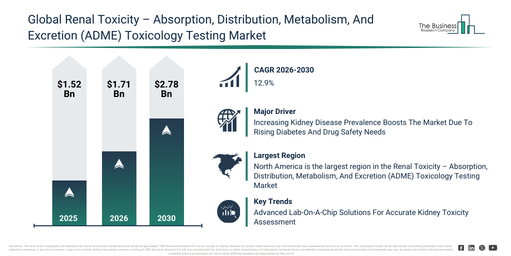
    The market for renal toxicity – absorption, distribution, metabolism, and excretion (adme) toxicology testing has seen rapid expansion in recent years. It is anticipated to grow from $1.52 billion in 2025 to $1.71 billion in 2026, at a compound annual growth rate (CAGR) of 12.7%. The reasons for this past growth include increased preclinical drug safety testing, a rise in drug failures related to nephrotoxicity, the growth of CRO services, more stringent regulatory safety requirements, and greater adoption of in vitro assays.

    The renal toxicity – absorption, distribution, metabolism, and excretion (adme) toxicology testing market size is anticipated to experience swift expansion over the upcoming years. It is projected to reach $2.78 billion in 2030, demonstrating a compound annual growth rate (CAGR) of 12.9%. This projected growth can be attributed to an increase in biologics and complex drugs, the wider adoption of predictive toxicology models, the continued expansion of organ-on-chip platforms, advancements in precision medicine research, and the rising demand for AI-based safety analytics. Significant trends expected during the forecast period include kidney organoid-based toxicity assays, AI-assisted nephrotoxicity prediction models, high-throughput renal screening platforms, biomarker-driven renal safety panels, and microphysiological kidney-on-chip systems.

    Download the Free Sample Report to Explore Key Market Insights:

    https://www.thebusinessresearchcompany.com/sample.aspx?id=33295&type=smp

    What Key Drivers Are Influencing The Growth Of The Renal Toxicity – Absorption, Distribution, Metabolism, And Excretion (ADME) Toxicology Testing Market?

    The increasing occurrence of kidney-related conditions is projected to propel the expansion of the renal toxicity-absorption, distribution, metabolism, and excretion (ADME) toxicology testing market going forward. These disorders are health issues that damage the kidneys, affecting their capacity to filter blood and maintain body balance. The rise in kidney-related disorders stems from growing rates of diabetes, which harms kidney blood vessels and impairs their filtering capabilities. Renal toxicity ADME/toxicology testing aids in detecting and evaluating potential kidney damage induced by drugs or chemicals, thereby enabling early intervention and the development of safer treatments. For instance, according to the American Cancer Society, a US-based professional organization, approximately 80,980 new cases of kidney (renal) cancer are expected to be diagnosed in the US in 2025, with an estimated 14,510 deaths resulting from the disease. Therefore, the escalating prevalence of kidney-related disorders is driving the growth of the renal toxicity-absorption, distribution, metabolism, and excretion (ADME) toxicology testing market.

    What Segmentation Levels Are Considered In The Renal Toxicity – Absorption, Distribution, Metabolism, And Excretion (ADME) Toxicology Testing Market?

    The renal toxicity – absorption, distribution, metabolism, and excretion (adme) toxicology testing market covered in this report is segmented –

    1) By Test Type: In Vitro Renal Toxicity Testing; In Vivo Renal Toxicity Testing; In Silico Renal Toxicity Modeling

    2) By Method: Biochemical and Enzymatic Assays; Cell Based Renal Assays; Biomarker Based Toxicity Analysis; Histopathology and Imaging; Pharmacokinetic and Drug Metabolism Studies

    3) By Stage of Drug Development: Discovery and Lead Optimization; Preclinical Development; Clinical Development; Post Marketing Safety Studies

    4) By Technology: High Throughput Screening Platforms; Organ On Chip and Microfluidic Systems; Omics Based Toxicology Platforms; Artificial Intelligence and Predictive Modeling Tools; Digital Pathology and Imaging Systems

    5) By End User: Pharmaceutical and Biotechnology Companies; Contract Research Organizations; Academic and Research Institutes; Regulatory Laboratories

    Subsegments:

    1) By In Vitro Renal Toxicity Testing: Primary Renal Cell Assays; Immortalized Renal Cell Line Assays; Three Dimensional Renal Cell Cultures; Kidney Organoid Models; Transporter Interaction Assays; Biomarker Based Nephrotoxicity Assays; High Content Imaging Assays; Microphysiological Kidney System Models

    2) By In Vivo Renal Toxicity Testing: Acute Renal Toxicity Studies; Subacute Renal Toxicity Studies; Subchronic Renal Toxicity Studies; Chronic Renal Toxicity Studies; Renal Biomarker Evaluation Studies; Histopathological Kidney Assessment; Dose Response Toxicity Studies; Recovery and Reversibility Studies

    3) By In Silico Renal Toxicity Modeling: Quantitative Structure Activity Relationship Modeling; Machine Learning Based Toxicity Prediction; Physiologically Based Pharmacokinetic Modeling; Virtual Screening for Nephrotoxicity; Read Across Toxicity Modeling; Systems Biology Based Toxicity Modeling

    What Trends Are Projected To Affect The Renal Toxicity – Absorption, Distribution, Metabolism, And Excretion (ADME) Toxicology Testing Market?

    Leading companies within the renal toxicity-absorption, distribution, metabolism, and excretion (ADME) toxicology testing market are concentrating on developing novel solutions, such as low-drug-absorbing microfluidic chips, to enhance the predictive accuracy of kidney toxicity while decreasing reliance on animal studies. A low-drug-absorbing microfluidic chip is a lab-on-a-chip apparatus designed for renal toxicity assessment that minimizes unintended drug absorption by its material, ensuring a more precise simulation of kidney functions and reliable measurement of drug effects on renal cells. For instance, in September 2024, Emulate Inc., a US-based biotechnology company, introduced the chip-R1 rigid chip to improve kidney toxicity testing, yielding more accurate and dependable results. This chip is engineered for precise ADME and toxicology modeling in non-stretch organs like the liver and kidney, utilizing low-drug-absorbing plastics and a thin, porous polycarbonate membrane to prevent compound loss and enhance drug recovery for lipophilic compounds. Its advantages include high shear stress support (up to 2.3 dyn/cm²), preactivated surfaces for simpler workflows, and improved cellular crosstalk, while its benefits encompass better reproducibility, accurate toxicity detection, and compatibility with existing organ-chip hardware to accelerate human-relevant preclinical testing.

    Who Are The Dominant Players Shaping The Renal Toxicity – Absorption, Distribution, Metabolism, And Excretion (ADME) Toxicology Testing Market Landscape?

    Major companies operating in the renal toxicity – absorption, distribution, metabolism, and excretion (adme) toxicology testing market are Thermo Fisher Scientific Inc., Eurofins Scientific SE, Agilent Technologies Inc., WuXi AppTec Co. Ltd., Charles River Laboratories International Inc., PerkinElmer Inc., Beckman Coulter Inc., Bio-Rad Laboratories Inc., Pharmaron Beijing Co. Ltd., Simulations Plus Inc., GVK Biosciences Pvt. Ltd., Promega Corporation, Syngene International Ltd., SAI Life Sciences Ltd., QPS Holdings LLC, Southern Research Institute, BioIVT LLC, TCG Lifesciences Pvt. Ltd., Frontage Laboratories Inc., Symeres, TSRL Inc., BOC Sciences LLC, Vivisciences Preclinical CRO.

    Read the full renal toxicity – absorption, distribution, metabolism, and excretion (adme) toxicology testing market report here:

    https://www.thebusinessresearchcompany.com/report/renal-toxicity-absorption-distribution-metabolism-and-excretion-adme-toxicology-testing-market-report

    Which Regions Are Projected To Dominate The Renal Toxicity – Absorption, Distribution, Metabolism, And Excretion (ADME) Toxicology Testing Market In The Coming Years?

    North America was the largest region in the renal toxicity-ADME toxicology testing market in 2025. Asia-Pacific is expected to be the fastest-growing region in the forecast period. The regions covered in the renal toxicity – absorption, distribution, metabolism, and excretion (adme) toxicology testing market report are Asia-Pacific, South East Asia, Western Europe, Eastern Europe, North America, South America, Middle East, Africa.

    Request A Tailored Renal Toxicity – Absorption, Distribution, Metabolism, And Excretion (ADME) Toxicology Testing Market Research Report For Competitive Advantage:

    https://www.thebusinessresearchcompany.com/customise?id=33295&type=smp

    Browse Through More Reports Similar to the Global Renal Toxicity – Absorption, Distribution, Metabolism, And Excretion (ADME) Toxicology Testing Market 2026, By The Business Research Company

    Adme Toxicology Testing Market Report 2026

    https://www.thebusinessresearchcompany.com/report/adme-toxicology-testing-global-market-report

    Renal Biomarkers Market Report 2026

    https://www.thebusinessresearchcompany.com/report/renal-biomarkers-global-market-report

    Kidney Dialysis Market Report 2026

    https://www.thebusinessresearchcompany.com/report/kidney-dialysis-global-market-report

    Get in touch with us:

    The Business Research Company: https://www.thebusinessresearchcompany.com/

    Americas +1 310-496-7795

    Asia +44 7882 955267 & +91 8897263534

    Europe +44 7882 955267

    Email us at info@tbrc.info

    Follow us on:

    LinkedIn: https://in.linkedin.com/company/the-business-research-company

    YouTube: https://www.youtube.com/channel/UC24_fI0rV8cR5DxlCpgmyFQ

    Global Market Model: https://www.thebusinessresearchcompany.com/global-market-model
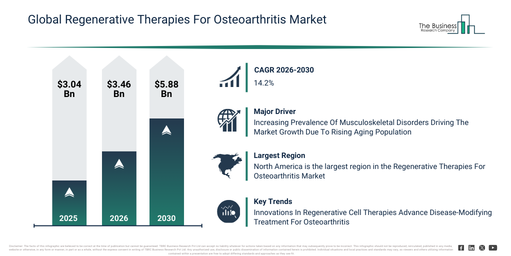
  • Osteoarthritis Regenerative Therapies Market to Reach $5.88 Billion by 2030 with Strong Growth

    Osteoarthritis Regenerative Therapies Market to Reach $5.88 Billion by 2030 with Strong Growth

    The Business Research Company’s 2026 market reports include new capabilities such as market attractiveness scoring and analysis, total addressable market analysis, company scoring matrix, interactive excel data dashboard, improved supply chain analysis, upcoming startups in the market, and overview of key products, aimed at improving the depth, usability, and strategic value of the insights delivered.

    What Market Size Increase Is Anticipated For The Regenerative Therapies For Osteoarthritis Market Over The 2026–2030 Period?

    The regenerative therapies for osteoarthritis market has experienced significant growth in recent years. This market is expected to expand from $3.04 billion in 2025 to $3.46 billion in 2026, achieving a compound annual growth rate (CAGR) of 13.9%. Historically, this growth can be attributed to several factors including the rising prevalence of osteoarthritis, the expansion of the aging population, the limitations inherent in pain relief drugs, an increase in sports injuries, and the growing demand for non-surgical treatments.

    The regenerative therapies for osteoarthritis market size is anticipated to expand significantly in the coming years. It is projected to achieve a value of $5.88 billion by 2030, demonstrating a compound annual growth rate (CAGR) of 14.2%. This expansion within the forecast period is driven by increased adoption of biologic therapy, the growth of regenerative clinics, stronger clinical evidence, a rising demand for cartilage restoration, and greater investment in cell therapy research. Prominent trends for the forecast period include stem cell based joint repair therapies, platelet rich plasma treatment protocols, scaffold based cartilage regeneration, minimally invasive regenerative injections, and personalized biologic therapy plans.

    Download the Free Sample Report to Explore Key Market Insights:

    https://www.thebusinessresearchcompany.com/sample.aspx?id=33292&type=smp

    What Underlying Factors Are Accelerating The Growth Of The Regenerative Therapies For Osteoarthritis Market?

    The escalating incidence of musculoskeletal disorders is projected to boost the expansion of the regenerative therapies for the osteoarthritis market moving forward. These conditions involve affections of the bones, joints, muscles, and connective tissues, resulting in discomfort and limitations in mobility and dexterity. The increasing prevalence of musculoskeletal disorders is primarily driven by an aging population, given that older demographics experience higher rates of joint degeneration and inflammatory issues impacting musculoskeletal structures. The growing occurrence of musculoskeletal disorders consequently heightens the demand for regenerative therapies, as they present sophisticated treatment options for joint reconstruction and tissue repair in patients suffering from osteoarthritis. For instance, in January 2024, the Office for Health Improvement & Disparities, a UK-based government agency, reported that in 2023, 18.4% of individuals aged 16 and above stated they had a long-term musculoskeletal (MSK) condition, an increase from 17.6% in 2022. Therefore, the rising prevalence of musculoskeletal disorders is propelling the growth of the regenerative therapies for the osteoarthritis market.

    How Is The Regenerative Therapies For Osteoarthritis Market Segmented Across Key Categories?

    The regenerative therapies for osteoarthritis market covered in this report is segmented –

    1) By Therapy Type: Stem Cell Therapy; Platelet Rich Plasma Therapy; Tissue Engineering; Gene Therapy; Other Therapy Types

    2) By Distribution Channel: Direct Manufacturer Supply; Hospital And Clinic Procurement Channels; Specialty Medical Distributors

    3) By Application: Knee Osteoarthritis; Hip Osteoarthritis; Hand Osteoarthritis; Other Applications

    4) By End User: Hospitals; Ambulatory Surgical Centers; Specialty Clinics; Other End Users

    Subsegments:

    1) By Stem Cell Therapy: Autologous Stem Cell Therapy; Allogeneic Stem Cell Therapy; Mesenchymal Stem Cell Therapy; Adipose Derived Stem Cell Therapy; Bone Marrow Derived Stem Cell Therapy

    2) By Platelet Rich Plasma Therapy: Leukocyte Rich Platelet Rich Plasma Therapy; Leukocyte Poor Platelet Rich Plasma Therapy; Activated Platelet Rich Plasma Therapy; Non Activated Platelet Rich Plasma Therapy; Pure Platelet Rich Plasma Therapy

    3) By Tissue Engineering: Scaffold Based Tissue Engineering; Hydrogel Based Tissue Engineering; Biodegradable Matrix Tissue Engineering; Cell Seeded Tissue Engineering; Three Dimensional Tissue Engineering

    4) By Gene Therapy: Viral Vector Gene Therapy; Non Viral Vector Gene Therapy; In Vivo Gene Therapy; Ex Vivo Gene Therapy; Targeted Gene Therapy

    5) By Other Therapy Types: Hyaluronic Acid Therapy; Growth Factor Therapy; Chondrocyte Implantation Therapy; Peptide Based Therapy; Immunomodulatory Therapy

    Which Upcoming Trends Are Expected To Influence The Regenerative Therapies For Osteoarthritis Market?

    Major companies in the regenerative therapies for the osteoarthritis market are focusing on developing advanced solutions, such as allogeneic mesenchymal stem cell (MSC) osteoarthritis therapies, to meet the increasing demand for disease-modifying treatments. Allogeneic mesenchymal stem cell (MSC) osteoarthritis therapies employ donor-sourced stem cells to modulate inflammation and support cartilage regeneration in affected joints, offering a ready-to-use, scalable option compared to patient-derived cells, which allows for standardized dosing and wider adoption. For example, in December 2025, Cipla Limited, an India-based pharmaceutical company, partnered with Stempeutics Research, an India-based research and product development company, to launch Ciplostem, an innovative allogeneic MSC therapy for knee osteoarthritis. This therapy is given as a single-dose intra-articular injection that contains 25 million cultured adult human bone marrow-derived MSCs co-formulated with hyaluronic acid, engineered to function at the cellular level to reduce inflammation, slow disease progression, enhance joint function, and help preserve cartilage quality in Grade II and III knee OA patients. The key characteristics of this therapy include its off-the-shelf availability (removing the need for individualized preparation), cellular-level action as opposed to just symptomatic relief, and the potential for prolonged improvement in joint health compared with standard regimens.

    Which Companies Are Leading Innovation In The Regenerative Therapies For Osteoarthritis Market?

    Major companies operating in the regenerative therapies for osteoarthritis market are Stryker Corporation, Smith & Nephew plc, MiMedx Group Inc, Anika Therapeutics Inc, Regentis Biomaterials Ltd, Zomedica Corp, Biosplice Therapeutics Inc, Tissue Regenix Group plc, Co.don AG, MEDIPOST Co Ltd, Ampio Pharmaceuticals Inc, Kolon TissueGene Inc, Mesoblast Limited, Orgenesis Inc, Hyalex Orthopaedics Limited, Orthocell Limited, Jellagen Limited, Hyalogic LLC, Bionaut Labs Inc, and Regeneus Limited.

    Read the full regenerative therapies for osteoarthritis market report here:

    https://www.thebusinessresearchcompany.com/report/regenerative-therapies-for-osteoarthritis-market-report

    Which Region Is Expected To Experience The Fastest Growth In The Regenerative Therapies For Osteoarthritis Market?

    North America was the largest region in the regenerative therapies for osteoarthritis market in 2025. Asia-Pacific is expected to be the fastest-growing region in the forecast period. The regions covered in the regenerative therapies for osteoarthritis market report are Asia-Pacific, South East Asia, Western Europe, Eastern Europe, North America, South America, Middle East, Africa.

    Request A Tailored Regenerative Therapies For Osteoarthritis Market Research Report For Competitive Advantage:

    https://www.thebusinessresearchcompany.com/customise?id=33292&type=smp

    Browse Through More Reports Similar to the Global Regenerative Therapies For Osteoarthritis Market 2026, By The Business Research Company

    Regenerative Medicine For Cartilage Market Report 2026

    https://www.thebusinessresearchcompany.com/report/regenerative-medicine-for-cartilage-global-market-report

    Orthopedic Regenerative Surgical Products Market Report 2026

    https://www.thebusinessresearchcompany.com/report/orthopedic-regenerative-surgical-products-global-market-report

    Osteoarthritis Market Report 2026

    https://www.thebusinessresearchcompany.com/report/osteoarthritis-global-market-report

    Get in touch with us:

    The Business Research Company: https://www.thebusinessresearchcompany.com/

    Americas +1 310-496-7795

    Asia +44 7882 955267 & +91 8897263534

    Europe +44 7882 955267

    Email us at info@tbrc.info

    Follow us on:

    LinkedIn: https://in.linkedin.com/company/the-business-research-company

    YouTube: https://www.youtube.com/channel/UC24_fI0rV8cR5DxlCpgmyFQ

    Global Market Model: https://www.thebusinessresearchcompany.com/global-market-model
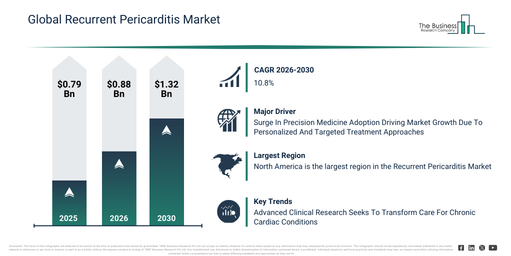
  • Recurrent Pericarditis Market Growth Outlook Supported by Key Driving Factors Through 2035

    Recurrent Pericarditis Market Growth Outlook Supported by Key Driving Factors Through 2035

    The Business Research Company’s 2026 market reports include new capabilities such as market attractiveness scoring and analysis, total addressable market analysis, company scoring matrix, interactive excel data dashboard, improved supply chain analysis, upcoming startups in the market, and overview of key products, aimed at improving the depth, usability, and strategic value of the insights delivered.

    What Is The Estimated Market Size Of The Recurrent Pericarditis Market During 2026–2030?

    The recurrent pericarditis market has seen significant expansion in recent years. It is anticipated to expand from $0.79 billion in 2025 to $0.88 billion in 2026, at a compound annual growth rate (CAGR) of 10.6%. The growth witnessed over the historical period can be linked to factors such as a longstanding reliance on NSAIDs and colchicine, an increasing diagnosis of inflammatory heart conditions, established cardiology care pathways, greater availability of echocardiography, and the application of guideline-driven anti-inflammatory therapy.

    The recurrent pericarditis market is projected for substantial expansion over the next few years. It is anticipated to achieve a valuation of $1.32 billion by 2030, progressing at a compound annual growth rate (CAGR) of 10.8%. This projected growth throughout the forecast period can be linked to the increasing uptake of biologic drugs, enhanced strategies for recurrence risk stratification, the proliferation of specialty cardiology clinics, a heightened understanding of immune mediated pericarditis, and the rising application of targeted cytokine inhibitors. Significant trends anticipated during the forecast period encompass a greater reliance on targeted biologic therapies, the broadening of long-term disease monitoring, an increase in anti-inflammatory combination therapies, a higher adoption rate of IL-1 inhibitors, and the development of structured recurrence prevention protocols.

    Download the Free Sample Report to Explore Key Market Insights:

    https://www.thebusinessresearchcompany.com/sample.aspx?id=33288&type=smp

    Which Major Factors Are Driving The Expansion Of The Recurrent Pericarditis Market?

    An increasing focus on precision medicine strategies is projected to drive expansion within the recurrent pericarditis market in the future. This medical methodology involves customizing prevention and treatment for individual patients, considering their unique genetics, surroundings, and way of life. The heightened importance of precision medicine stems from its enhanced treatment efficacy; therapies, when aligned with a person’s genetic and biological blueprint, yield superior results and minimize negative side effects. Recurrent pericarditis contributes to the progress of precision medicine by facilitating specific treatment methods that target inflammatory pathways unique to each patient, including those involving interleukin-1–mediated mechanisms, thereby enabling more customized and efficient disease control. For example, as reported by NHS England, a public healthcare body in the UK, in February 2025, the NHS Genomic Medicine Service conducted over 810,000 genomic tests for patients across the life course in England during 2024. This figure has shown a continuous annual rise since the inception of the NHS Genomic Medicine Service, experiencing an 8% increase compared to 2023. Consequently, the heightened focus on precision medicine methodologies is fueling the expansion of the recurrent pericarditis market.

    How Are The Various Segments Of The Recurrent Pericarditis Market Categorized?

    The recurrent pericarditis market covered in this report is segmented –

    1) By Product Type: Non-Steroidal Anti-Inflammatory Drugs (NSAIDs); Corticosteroids; Colchicine; Biologics; Other Product Types

    2) By Diagnosis And Assessment: Electrocardiography (ECG); Echocardiography; Physical Examination

    3) By Route of Administration: Oral; Injectable

    4) By Application: Colchicine Therapy; Corticosteroids; Non-Steroidal Anti-Inflammatory Drugs (NSAIDs)

    5) By End-User: Hospitals; Ambulatory Surgical Centers; Clinics; Home Care Settings; Emergency Medical Services (EMS)

    Subsegments:

    1) By Non Steroidal Anti Inflammatory Drugs: Ibuprofen; Aspirin; Indomethacin; Naproxen

    2) By Corticosteroids: Prednisone; Methylprednisolone; Hydrocortisone; Dexamethasone

    3) By Colchicine: Oral Colchicine; Low Dose Colchicine; Extended Duration Colchicine Therapy

    4) By Biologics: Interleukin One Inhibitors; Monoclonal Antibody Therapies; Targeted Cytokine Inhibitors

    5) By Other Product Types: Immunosuppressive Agents; Analgesic Therapies; Supportive Combination Therapies

    What Trends Are Affecting The Expansion Of The Recurrent Pericarditis Market?

    Major companies operating in the recurrent pericarditis market are focusing on developing anti-inflammatory and anti-fibrotic effects. These efforts aim to reduce pericardial inflammation, prevent long-term cardiac damage, improve patient quality of life, and minimize recurrence rates. Anti-inflammatory effects function by reducing tissue inflammation, while anti-fibrotic effects work to prevent or reverse scar tissue formation, both contributing to protecting organs from damage and maintaining normal function. For instance, in October 2024, Cardiol Therapeutics Inc., a Canada-based clinical-stage life sciences company, announced the advancement of CardiolRx. CardiolRx provides a novel oral, non-immunosuppressive therapeutic approach for recurrent pericarditis through its mechanism of targeting the NLRP3 inflammasome, a key upstream driver of IL-1–mediated inflammation. It is being developed to prevent disease recurrence, particularly in patients who relapse after discontinuation of IL-1 blocker therapies such as rilonacept or anakinra. Through late-stage clinical programs, CardiolRx seeks to reduce pericarditis flares, alleviate chest pain, and normalize inflammatory markers (CRP).

    Who Are The Primary Competitors In The Recurrent Pericarditis Market?

    Major companies operating in the recurrent pericarditis market are Johnson & Johnson Services Inc., Roche Holding AG, Merck & Co. Inc., Pfizer Inc., AbbVie Inc., Sanofi S.A., Novartis AG, AstraZeneca PLC, Bristol-Myers Squibb Company, GlaxoSmithKline plc, Eli Lilly and Company, Novo Nordisk A/S, Takeda Pharmaceutical Company Limited, Amgen Inc., Gilead Sciences Inc., Boehringer Ingelheim International GmbH, Regeneron Pharmaceuticals Inc., Biogen Inc., Lonza Group AG, Moderna Inc., and WuXi Biologics (Cayman) Inc.

    Read the full recurrent pericarditis market report here:

    https://www.thebusinessresearchcompany.com/report/recurrent-pericarditis-market-report

    Which Region Currently Holds The Largest Share Of The Recurrent Pericarditis Market?

    North America was the largest region in the recurrent pericarditis market in 2025. Asia-Pacific is expected to be the fastest-growing region in the forecast period. The regions covered in the recurrent pericarditis market report are Asia-Pacific, South East Asia, Western Europe, Eastern Europe, North America, South America, Middle East, Africa.

    Request A Tailored Recurrent Pericarditis Market Research Report For Competitive Advantage:

    https://www.thebusinessresearchcompany.com/customise?id=33288&type=smp

    Browse Through More Reports Similar to the Global Recurrent Pericarditis Market 2026, By The Business Research Company

    Pericarditis Market Report 2026

    https://www.thebusinessresearchcompany.com/report/pericarditis-global-market-report

    Pediatric Perfusion Market Report 2026

    https://www.thebusinessresearchcompany.com/report/pediatric-perfusion-global-market-report

    Cardiac Valve Market Report 2026

    https://www.thebusinessresearchcompany.com/report/cardiac-valve-global-market-report

    Get in touch with us:

    The Business Research Company: https://www.thebusinessresearchcompany.com/

    Americas +1 310-496-7795

    Asia +44 7882 955267 & +91 8897263534

    Europe +44 7882 955267

    Email us at info@tbrc.info

    Follow us on:

    LinkedIn: https://in.linkedin.com/company/the-business-research-company

    YouTube: https://www.youtube.com/channel/UC24_fI0rV8cR5DxlCpgmyFQ

    Global Market Model: https://www.thebusinessresearchcompany.com/global-market-model