Category: Healthcare Services

  • Rare Disease Diagnostics Market Forecast 2026–2035 Reflecting Expansion Opportunities Across Industries

    Rare Disease Diagnostics Market Forecast 2026–2035 Reflecting Expansion Opportunities Across Industries

    The Business Research Company’s 2026 market reports include new capabilities such as market attractiveness scoring and analysis, total addressable market analysis, company scoring matrix, interactive excel data dashboard, improved supply chain analysis, upcoming startups in the market, and overview of key products, aimed at improving the depth, usability, and strategic value of the insights delivered.

    What Market Valuation Is Forecasted For The Rare Disease Diagnostics Market By 2030 Starting From Its 2026 Size?

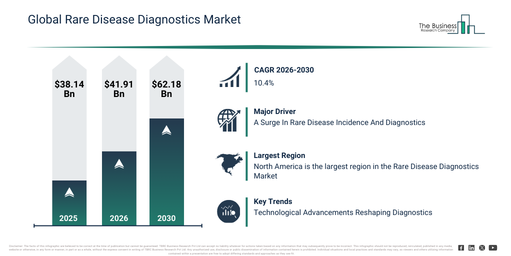
    The rare disease diagnostics market size has experienced robust growth in recent years. It is projected to expand from $38.14 billion in 2025 to $41.91 billion in 2026, demonstrating a compound annual growth rate (CAGR) of 9.9%. The historical growth in this market can be attributed to the expansion of genetic testing availability, rising awareness of rare diseases among clinicians, increasing use of molecular diagnostics, growth of specialized diagnostic laboratories, and improved access to advanced imaging technologies.

    The rare disease diagnostics market is projected to experience substantial expansion in the coming years, reaching a valuation of $62.18 billion by 2030, exhibiting a compound annual growth rate (CAGR) of 10.4%. This anticipated growth over the forecast period is propelled by factors such as the wider adoption of personalized medicine, increased investment in genomics research, a heightened need for early detection of rare diseases, the growing incorporation of AI-powered diagnostic instruments, and the expansion of rare disease screening initiatives. Key trends anticipated during this period encompass the increasing uptake of next-generation sequencing diagnostics, a surge in the application of multi-gene panel testing, the growing integration of advanced imaging technologies for rare disease diagnosis, the establishment of more centralized rare disease testing facilities, and a sharpened emphasis on prompt and precise diagnosis.

    Download the Free Sample Report to Explore Key Market Insights:

    https://www.thebusinessresearchcompany.com/sample.aspx?id=12651&type=smp

    Which Market Drivers Are Supporting The Expansion Of The Rare Disease Diagnostics Market?

    The future expansion of the rare disease diagnostics market is anticipated to be driven by the rising occurrence of rare diseases. These health conditions, which affect a small proportion of the population compared to more common diseases, frequently necessitate specialized diagnostic tools for early and accurate detection. Rare disease diagnostics help improve disease management, enable the identification of potential therapeutics, and reduce unnecessary or harmful treatments, thereby supporting more effective patient care. To illustrate, in March 2025, Kidney Research UK, an UK-based kidney disease charity, stated that the current rare kidney disease landscape includes over 150 distinct conditions, affecting an estimated 70 per 100,000 people, predominantly arising from genetic alterations. Consequently, the heightened incidence of rare diseases is fueling the growth of the rare disease diagnostics market.

    Which Segment Categories Define The Rare Disease Diagnostics Market?

    The rare disease diagnostics market covered in this report is segmented –

    1) By Test Type: Genetic Test, General Lab Test, Imaging Test

    2) By Technology: Capillary Sequencing, Whole Genome Sequencing, Whole Exome Sequencing, Microarrays

    3) By Sample Type: Deoxyribonucleic Acid (DNA) Sample, Buccal Swab Sample, Blood, Saliva

    4) By Disease Type: Gastroenterology Disease, Endocrine And Metabolism Disorders Disease, Hematology And Oncology Disease, Dermatology Disease, Cardiovascular Disorders, Neurology Disease

    5) By End User: Hospital Laboratories, Diagnostics Laboratories, Genetic Testing Laboratories, Cancer Research Laboratories

    Subsegments:

    1) By Genetic Test: Whole Genome Sequencing, Targeted Gene Panels, Exome Sequencing, Carrier Testing

    2) By General Lab Test: Blood Tests, Biochemical Assays, Urine Tests, Cytogenetic Tests

    3) By Imaging Test: MRI (Magnetic Resonance Imaging), CT (Computed Tomography) Scans, Ultrasound, X-Rays

    What Trends Are Projected To Affect The Rare Disease Diagnostics Market?

    Major companies operating in the rare disease diagnostics market are prioritizing the creation of advanced solutions, including high-sensitivity whole genome sequencing (WGS) platforms, to elevate diagnostic precision, expand the scope of variant detection, and accelerate the identification of complex rare disorders. These high-sensitivity WGS platforms allow for a comprehensive analysis of nearly all disease-causing genetic variants in a single test, thereby supporting earlier and more accurate diagnoses. For instance, in April 2023, Centogene GmbH, a Germany-based rare disease company, launched CentoGenome, an improved next-generation sequencing (NGS)-based whole genome sequencing solution tailored for the diagnosis of rare and neurodegenerative diseases. The platform offers broad variant coverage, encompassing Copy Number Variations (CNVs) associated with spinal muscular atrophy (SMA) and intricate pathogenic variants connected to Gaucher disease (GD) and GBA1-related Parkinson’s disease. Additionally, CentoGenome incorporates PCR-free technology to mitigate sequencing bias in difficult genomic regions, facilitating higher-quality data and deeper insight into coding, regulatory, and intronic areas to support more precise clinical interpretation.

    Who Are The Top Companies Competing In The Rare Disease Diagnostics Market?

    Major companies operating in the rare disease diagnostics market are Thermo Fisher Scientific Inc., Roche Diagnostics, Laboratory Corporation of America Holdings, Quest Diagnostics Incorporated, Eurofins Scientific SE, Agilent Technologies Inc., PerkinElmer Inc., Sanofi Genzyme, Illumina Inc., Bio Rad Laboratories Inc., Qiagen NV, OPKO Health Inc., Natera Inc., Invitae Corporation, BGI Genomics Co. Ltd., 23andMe Holding Co., Ambry Genetics Corporation, Centogene N.V., GENEWIZ Inc., Blueprint Genetics Inc., Oxford Gene Technology Limited, Strand Life Sciences Pvt. Ltd., RareCyte Inc., Sophia Genetics SA, Foundation Medicine Inc.

    Read the full rare disease diagnostics market report here:

    https://www.thebusinessresearchcompany.com/report/rare-disease-diagnostics-global-market-report

    How Is The Rare Disease Diagnostics Market Distributed Across Key Geographic Regions?

    North America was the largest region in the rare disease diagnostics market in 2025. Asia-Pacific is expected to be the fastest-growing region in the forecast period. The regions covered in the rare disease diagnostics market report are Asia-Pacific, South East Asia, Western Europe, Eastern Europe, North America, South America, Middle East, Africa.

    Request A Tailored Rare Disease Diagnostics Market Research Report For Competitive Advantage:

    https://www.thebusinessresearchcompany.com/customise?id=12651&type=smp

    Browse Through More Reports Similar to the Global Rare Disease Diagnostics Market 2026, By The Business Research Company

    Rare Disease Diagnostics Global Market Report

    https://www.thebusinessresearchcompany.com/report/rare-disease-diagnostics-global-market-report

    Rare Diseases Treatment Global Market Report

    https://www.thebusinessresearchcompany.com/report/rare-diseases-treatment-global-market-report

    Rare Inflammatory Disease Treatment Global Market Report

    https://www.thebusinessresearchcompany.com/report/rare-inflammatory-disease-treatment-global-market-report

    Get in touch with us:

    The Business Research Company: https://www.thebusinessresearchcompany.com/

    Americas +1 310-496-7795

    Asia +44 7882 955267 & +91 8897263534

    Europe +44 7882 955267

    Email us at info@tbrc.info

    Follow us on:

    LinkedIn: https://in.linkedin.com/company/the-business-research-company

    YouTube: https://www.youtube.com/channel/UC24_fI0rV8cR5DxlCpgmyFQ

    Global Market Model: https://www.thebusinessresearchcompany.com/global-market-model
  • Global Rare Disease Community App Market Analysis for 2026–2030 with Strategic Forecast Insights for Businesses

    Global Rare Disease Community App Market Analysis for 2026–2030 with Strategic Forecast Insights for Businesses

    The Business Research Company’s 2026 market reports include new capabilities such as market attractiveness scoring and analysis, total addressable market analysis, company scoring matrix, interactive excel data dashboard, improved supply chain analysis, upcoming startups in the market, and overview of key products, aimed at improving the depth, usability, and strategic value of the insights delivered.

    How Is The Market Size Of The Rare Disease Community App Market Expected To Change Between 2026 And 2030?

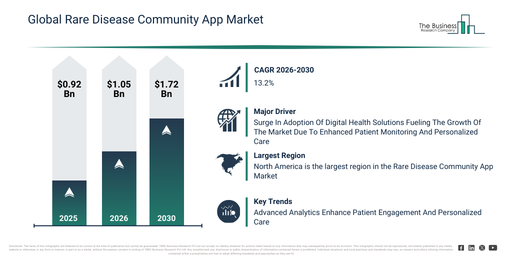
    The rare disease community app market has experienced substantial expansion in recent times. Its growth is projected from $0.92 billion in 2025 to $1.05 billion in 2026, exhibiting a compound annual growth rate (CAGR) of 13.5%. Historically, this expansion has been driven by factors such as the increasing integration of smartphones in healthcare, heightened public awareness concerning rare diseases, the proliferation of digital health platforms, a growing need for patient support among peers, and enhancements in connectivity infrastructure.

    The rare disease community app market is projected to experience swift expansion over the coming years. This market is forecast to reach a value of $1.72 billion by 2030, exhibiting a compound annual growth rate (CAGR) of 13.2%. Factors contributing to this anticipated growth include greater integration with electronic health records, a rise in the use of personalized digital health solutions, the broadening of virtual patient communities, an intensified focus on data privacy and adherence to regulations, and enhanced partnerships with healthcare providers. Key developments expected during this timeframe encompass a surge in the uptake of digital patient support platforms, an increasing reliance on AI-powered community engagement utilities, a heightened commitment to secure health data exchange, the broadening of integrated care coordination functionalities, and a stronger focus on designing user-centric applications.

    Download the Free Sample Report to Explore Key Market Insights:

    https://www.thebusinessresearchcompany.com/sample.aspx?id=28312&type=smp

    What Underlying Factors Are Accelerating The Growth Of The Rare Disease Community App Market?

    The future expansion of the rare disease community app market is expected to be propelled by the growing integration of digital health solutions. These solutions involve employing technology, software, and digital platforms to enhance healthcare delivery, management, and patient outcomes. The primary driver for the increased adoption of digital health solutions stems from better patient monitoring, which facilitates real-time data tracking and personalized health management. The rare disease community app market supports this trend by offering virtual care access, immediate health insights, and tailored digital tools that cater to the specialized requirements of rare disease patients. For example, in April 2024, information from Queen Margaret University, a UK-based public institution, revealed that by November 2023, 189 NHS trusts had implemented new electronic patient record systems, signifying 90% adoption across all trusts. Consequently, the rising adoption of digital health solutions is a key factor driving the growth of the rare disease community app market.

    How Is The Rare Disease Community App Market Structured Across Different Segments?

    The rare disease community app market covered in this report is segmented –

    1) By Platform: iPhone Operating System, Android, Web-Based

    2) By Deployment Mode: Cloud-Based, On-Premises

    3) By Application: Patient Support, Disease Management, Clinical Trial Recruitment, Information Sharing, Other Applications

    4) By End-User: Patients, Caregivers, Healthcare Professionals, Researchers, Other End-Users

    Subsegments:

    1) By iPhone Operating System: iPhone App Store Apps, iPad Optimized Apps, Universal iOS Apps

    2) By Android: Google Play Store Apps, Android Tablet Apps, Hybrid Android Apps

    3) By Web-Based: Browser-Based Platforms, Progressive Web Apps (PWAs), Cloud-Hosted Web Portals

    Which Upcoming Trends Are Expected To Influence The Rare Disease Community App Market?

    Leading companies active in the rare disease community app market are concentrating on creating advanced solutions, particularly natural language processing (NLP) analytics, to boost patient engagement, streamline communication among healthcare providers, and improve support for disease management. Natural language processing (NLP) analytics involves artificial intelligence–powered methods that process, understand, and condense human language to generate practical health insights for both patients and clinicians. For example, in December 2024, Know Rare, Inc., a UK-based health technology company, introduced the HealthStoryAI app. This application features AI-produced summaries of patient experiences, organized symptom and daily health tracking, and customized insight dashboards designed to help patients and healthcare providers identify significant health patterns, thereby empowering individuals with rare diseases to better manage their conditions.

    Which Major Players Dominate The Rare Disease Community App Market?

    Major companies operating in the rare disease community app market are The Mighty Networks, Inc., PicnicHealth, Inc., FDNA, Inc., RareConnect, Carenity SAS, MyHealthTeam, Inc., CureDuchenne, Inc., Aparito Limited, ThinkGenetic, Inc., Know Rare, Inc., Rare Patient Voice, LLC, Inspire, Inc., RareGuru, LLC, Xperiome Ltd., PatientsLikeMe, Inc., Rare Disease Connect, Inc., Cochrane Rare Diseases, Global Genes, Inc., EURORDIS – Rare Diseases Europe, StuffThatWorks Health Ltd., and HealthUnlocked Ltd.

    Read the full rare disease community app market report here:

    https://www.thebusinessresearchcompany.com/report/rare-disease-community-app-global-market-report

    Which Region Is Projected To Dominate The Rare Disease Community App Market During The Forecast Period?

    North America was the largest region in the rare disease community app market in 2025. Asia-Pacific is expected to be the fastest-growing region in the forecast period. The regions covered in the rare disease community app market report are Asia-Pacific, South East Asia, Western Europe, Eastern Europe, North America, South America, Middle East, Africa.

    Request A Tailored Rare Disease Community App Market Research Report For Competitive Advantage:

    https://www.thebusinessresearchcompany.com/customise?id=28312&type=smp

    Browse Through More Reports Similar to the Global Rare Disease Community App Market 2026, By The Business Research Company

    Rare Disease Diagnostics Global Market Report

    https://www.thebusinessresearchcompany.com/report/rare-disease-diagnostics-global-market-report

    Rare Inflammatory Disease Treatment Global Market Report

    https://www.thebusinessresearchcompany.com/report/rare-inflammatory-disease-treatment-global-market-report

    Rare Neurological Disease Treatment Global Market Report

    https://www.thebusinessresearchcompany.com/report/rare-neurological-disease-treatment-global-market-report

    Get in touch with us:

    The Business Research Company: https://www.thebusinessresearchcompany.com/

    Americas +1 310-496-7795

    Asia +44 7882 955267 & +91 8897263534

    Europe +44 7882 955267

    Email us at info@tbrc.info

    Follow us on:

    LinkedIn: https://in.linkedin.com/company/the-business-research-company

    YouTube: https://www.youtube.com/channel/UC24_fI0rV8cR5DxlCpgmyFQ

    Global Market Model: https://www.thebusinessresearchcompany.com/global-market-model
  • Rare Disease Clinical Trials Market Outlook 2026–2035 Driven by Key Growth Factors and Industry Projections

    Rare Disease Clinical Trials Market Outlook 2026–2035 Driven by Key Growth Factors and Industry Projections

    The Business Research Company’s 2026 market reports include new capabilities such as market attractiveness scoring and analysis, total addressable market analysis, company scoring matrix, interactive excel data dashboard, improved supply chain analysis, upcoming startups in the market, and overview of key products, aimed at improving the depth, usability, and strategic value of the insights delivered.

    What Is The Market Size Of The Rare Disease Clinical Trials Market In 2026 And What Value Is Projected For 2030?

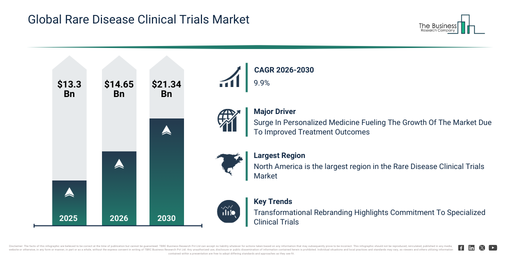
    The rare disease clinical trials market size has experienced rapid growth in recent years. It is forecast to grow from $13.3 billion in 2025 to $14.65 billion in 2026, demonstrating a compound annual growth rate (CAGR) of 10.1%. Historically, this expansion can be attributed to the broadening of orphan drug development programs, increased regulatory incentives supporting rare disease research, the rise of specialized clinical research organizations, enhanced collaboration between academia and industry, and more effective diagnostic identification of rare diseases.

    The rare disease clinical trials market is projected to experience substantial expansion in the coming years. This market is anticipated to reach a value of $21.34 billion by 2030, exhibiting a compound annual growth rate (CAGR) of 9.9%. This anticipated growth is driven by factors such as the wider uptake of virtual and hybrid trial models, the increasing application of AI for trial optimization, the broadening of global rare disease trial networks, the escalating need for quicker regulatory clearances, and increased funding for rare disease research and development. Key trends expected during this period involve the greater utilization of decentralized clinical trial frameworks, the increasing acceptance of adaptive trial designs, the deeper integration of digital tools for patient recruitment, the wider collection of real-world evidence, and an intensified focus on patient-centered trial protocols.

    Download the Free Sample Report to Explore Key Market Insights:

    https://www.thebusinessresearchcompany.com/sample.aspx?id=28311&type=smp

    Which Growth Drivers Are Contributing To The Progress Of The Rare Disease Clinical Trials Market?

    The expansion of personalized medicine is anticipated to significantly advance the rare disease clinical trials market in the future. Personalized medicine involves customizing medical care based on each patient’s unique attributes, including their genetics, lifestyle choices, and environmental factors. The increasing prominence of personalized medicine is attributed to its capacity for improved treatment outcomes, as it tailors therapies to individual patient profiles for greater efficacy and safety. Rare disease clinical trials play a crucial role in advancing personalized medicine by generating patient-specific insights that guide the development of targeted therapies designed for each individual’s distinct genetic and molecular profile. For instance, in February 2024, the Personalized Medicine Coalition (PMC), a US-based nonprofit organization, reported that the Food and Drug Administration (FDA) noted personalized medicines accounted for 34% of approvals in 2022, a figure that climbed to 38% in 2023. Thus, the growth of personalized medicine is a key driver for the rare disease clinical trials market.

    What Are The Key Segments Of The Rare Disease Clinical Trials Market?

    The rare disease clinical trials market covered in this report is segmented –

    1) By Phase: Phase I, Phase II, Phase III, Phase IV

    2) By Therapeutic Area: Oncology, Cardiovascular Disorders, Neurological Disorders, Infectious Disease, Genetic Disorders, Autoimmune And Inflammation, Hematologic Disorders, Musculoskeletal Disorders, Other Therapeutic Areas

    3) By Study Design: Interventional, Observational, Expanded Access

    4) By End-User: Pharmaceutical Companies, Biotechnology Companies, Research Institutes, Other End-Users

    Subsegments:

    1) By Phase I: First In Human Trials, Dose Escalation Studies, Safety And Tolerability Studies

    2) By Phase II: Proof Of Concept Studies, Dose Response Studies, Efficacy And Safety Studies

    3) By Phase III: Randomized Controlled Trials, Comparative Effectiveness Studies, Large Scale Multicenter Trials

    4) By Phase IV: Post Marketing Surveillance, Long Term Safety Studies, Real World Evidence Studies

    How Are Trends Shaping The Direction Of The Rare Disease Clinical Trials Market?

    Major companies within the rare disease clinical trials market are concentrating on driving innovations, including the implementation of a client-centric approach to provide personalized trial designs, boost patient engagement, and hasten the development of targeted therapies for rare conditions. A client-centric methodology entails prioritizing the requirements, goals, and preferences of biotech and pharmaceutical clients to deliver tailored and effective clinical trial solutions. For instance, in March 2025, Evestia Clinical Limited, a US-based pharmaceutical research company, was unveiled as the new brand identity of EMAS Pharma. This rebranding represents a strategic initiative aimed at accelerating the company’s global expansion. The company is committed to expediting the development of therapies for rare diseases by offering expert-driven, personalized clinical trial solutions specifically crafted for the unique challenges associated with these conditions. This particular emphasis is a core element of its brand identity and service offerings.

    Who Are The Leading Companies Operating In The Rare Disease Clinical Trials Market?

    Major companies operating in the rare disease clinical trials market are F. Hoffmann-La Roche AG, Pfizer Inc., Novartis AG, AstraZeneca plc, Takeda Pharmaceutical Company Limited, IQVIA Holdings Inc., Laboratory Corporation of America Holdings, ICON plc, Moderna Inc., Charles River Laboratories International Inc., Parexel International Corporation, Revvity Inc., Sarepta Therapeutics Inc., TFS HealthScience, Inventiva S.A., Tonix Pharmaceuticals Holding Corp., SpringWorks Therapeutics Inc., OrphAI Therapeutics Inc., BBCR Consulting LLC, Credevo Inc.

    Read the full rare disease clinical trials market report here:

    https://www.thebusinessresearchcompany.com/report/rare-disease-clinical-trials-global-market-report

    What Are The Leading Geographic Regions In The Rare Disease Clinical Trials Market?

    North America was the largest region in the rare disease clinical trials market in 2025. The regions covered in the rare disease clinical trials market report are Asia-Pacific, South East Asia, Western Europe, Eastern Europe, North America, South America, Middle East, Africa.

    Request A Tailored Rare Disease Clinical Trials Market Research Report For Competitive Advantage:

    https://www.thebusinessresearchcompany.com/customise?id=28311&type=smp

    Browse Through More Reports Similar to the Global Rare Disease Clinical Trials Market 2026, By The Business Research Company

    Rare Inflammatory Disease Treatment Global Market Report

    https://www.thebusinessresearchcompany.com/report/rare-inflammatory-disease-treatment-global-market-report

    Veterinary Dermatology Drugs Global Market Report

    https://www.thebusinessresearchcompany.com/report/veterinary-dermatology-drugs-global-market-report

    Dermatophytosis Treatment Global Market Report

    https://www.thebusinessresearchcompany.com/report/dermatophytosis-treatment-global-market-report

    Get in touch with us:

    The Business Research Company: https://www.thebusinessresearchcompany.com/

    Americas +1 310-496-7795

    Asia +44 7882 955267 & +91 8897263534

    Europe +44 7882 955267

    Email us at info@tbrc.info

    Follow us on:

    LinkedIn: https://in.linkedin.com/company/the-business-research-company

    YouTube: https://www.youtube.com/channel/UC24_fI0rV8cR5DxlCpgmyFQ

    Global Market Model: https://www.thebusinessresearchcompany.com/global-market-model
  • Rare Dermatological Disease Treatment Market Developments and Growth Opportunities Across 2026–2030

    Rare Dermatological Disease Treatment Market Developments and Growth Opportunities Across 2026–2030

    The Business Research Company’s 2026 market reports include new capabilities such as market attractiveness scoring and analysis, total addressable market analysis, company scoring matrix, interactive excel data dashboard, improved supply chain analysis, upcoming startups in the market, and overview of key products, aimed at improving the depth, usability, and strategic value of the insights delivered.

    What Will Be The Estimated Market Valuation Of The Rare Dermatological Disease Treatment Market By The End Of 2030?

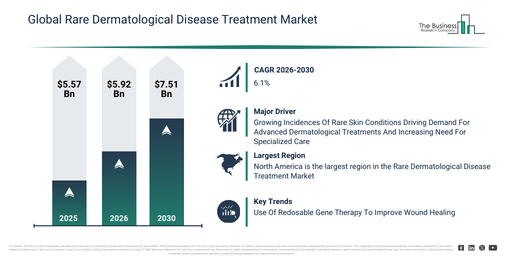
    The rare dermatological disease treatment market size has seen significant growth in recent years. It is projected to increase from $5.57 billion in 2025 to $5.92 billion in 2026, achieving a compound annual growth rate (CAGR) of 6.3%. This historical growth can be attributed to several factors including an enhanced understanding of rare skin disease pathophysiology, the broadened scope of orphan drug regulations, a rise in specialist dermatology research, advancements in biologics manufacturing capabilities, and increased awareness of rare dermatological conditions.

    The rare dermatological disease treatment market size is anticipated to experience substantial expansion over the coming years. It is projected to reach $7.51 billion by 2030, exhibiting a compound annual growth rate (CAGR) of 6.1%. This projected growth stems from several factors, including increasing investments in gene therapy platforms, an elevated focus on personalized treatment protocols, the broadening of clinical research in rare skin disorders, the escalating adoption of advanced biologics, and enhanced regulatory backing for orphan therapies. Key developments expected during this forecast period encompass the growing creation of targeted biologic therapies, a rise in the utilization of gene and cell-based treatments, an increased emphasis on personalized dermatology care, the enlargement of orphan drug pipelines, and improved application of advanced diagnostic technologies.

    Download the Free Sample Report to Explore Key Market Insights:

    https://www.thebusinessresearchcompany.com/sample.aspx?id=28310&type=smp

    What Primary Drivers Are Shaping The Development Of The Rare Dermatological Disease Treatment Market?

    The expanding count of identified rare dermatological disorders is projected to fuel the expansion of the rare dermatological disease treatment market. Infrequent skin ailments, including epidermolysis bullosa, pemphigus vulgaris, and cutaneous lupus erythematosus, impact a small segment of individuals yet necessitate expert attention and specific treatments. Progress in genetic screening, heightened understanding of diseases, and prompt diagnosis have led to a greater global incidence of recognized cases. This increasing identification is generating a need for novel therapies, such as gene therapies, cutting-edge biologics, and supportive interventions, aimed at symptom control, enhanced wound recovery, and better patient results. For example, in January 2025, the CDC, a US public health organization, reported that Vyjuvek (beremagene geperpavec-svdt), a redosable gene therapy for dystrophic epidermolysis bullosa, showed substantial wound closure during clinical trials, highlighting how innovative treatments influence patient care. Consequently, the rising occurrence of rare skin conditions is propelling the development of the rare dermatological disease treatment market.

    Which Segment Classifications Shape The Rare Dermatological Disease Treatment Market?

    The rare dermatological disease treatment market covered in this report is segmented –

    1) By Indication: Systemic Sclerosis, Epidermolysis Bullosa, Pemphigus Vulgaris, Cutaneous Lupus Erythematosus

    2) By Treatment: Corticosteroid, Immunosuppressants, Anti-Inflammatory Agents, Other Treatments

    3) By Distribution Channel: Hospital Pharmacies, Retail Pharmacies, Online Pharmacies

    4) By Technology: Gene Therapy, Stem Cell Therapy, Nanotechnology

    5) By Application: Epidermolysis Bullosa, Ichthyosis, Other Applications

    Subsegments:

    1) By Systemic Sclerosis: Limited Cutaneous Systemic Sclerosis, Diffuse Cutaneous Systemic Sclerosis, Sine Scleroderma

    2) By Epidermolysis Bullosa: Epidermolysis Bullosa Simplex, Junctional Epidermolysis Bullosa, Dystrophic Epidermolysis Bullosa, Kindler Syndrome

    3) By Pemphigus Vulgaris: Mucosal Pemphigus Vulgaris, Mucocutaneous Pemphigus Vulgaris, Cutaneous Pemphigus Vulgaris

    4) By Cutaneous Lupus Erythematosus: Acute Cutaneous Lupus Erythematosus, Subacute Cutaneous Lupus Erythematosus, Chronic Cutaneous Lupus Erythematosus (Discoid Lupus)

    Which Market Trends Are Creating New Opportunities In The Rare Dermatological Disease Treatment Market?

    Leading companies in the rare dermatological disease treatment market are focusing on creating smart and advanced gene therapy technologies, including redosable gene therapy, to improve patient outcomes, simplify treatment processes, and enhance overall quality of life. A redosable gene therapy system delivers functional COL7A1 genes directly to affected skin areas, facilitating repeated, non-invasive applications, sustained protein restoration, and accelerated wound closure. For instance, in May 2023, Krystal Biotech, a U.S.-based biotechnology company, launched Vyjuvek (beremagene geperpavec-svdt) specifically for the treatment of dystrophic epidermolysis bullosa. The product demonstrated that 65% of treated wounds achieved complete closure at 24 weeks, compared to 26% with placebo, allows once-weekly application to selected wounds, and reduces the necessity for surgical interventions. Vyjuvek also provides a non-invasive, clinic-administered option, although it requires specialized cold-chain storage to maintain its effectiveness.

    Which Companies Are Expanding Their Footprint In The Rare Dermatological Disease Treatment Market?

    Major companies operating in the rare dermatological disease treatment market are Kyowa Kirin, Johnson and Johnson company, F. Hoffmann-La Roche Limited, Merck KGaA, Arcutis Biotherapeutics, Pfizer Inc., Abbvie, Sanofi, Novartis AG, AstraZeneca, Eli lilly and company, Amgen, Bristol Myers Squibb Company, Pierre Fabre Laboratories, LEO Pharma, Almirall, Castle Creek Biosciences, Inc., Azitra, Krystal Biotech, Inc., Avita Medical, NS Pharma, Replay, Eloxx Pharmaceuticals, Kamari Pharma, BPGbio

    Read the full rare dermatological disease treatment market report here:

    https://www.thebusinessresearchcompany.com/report/rare-dermatological-disease-treatment-global-market-report

    How Does The Rare Dermatological Disease Treatment Market Perform Across Major Global Regions?

    North America was the largest region in the personalized genomics market in 2025. Asia-Pacific is expected to be the fastest-growing region in the forecast period. The regions covered in the rare dermatological disease treatment market report are Asia-Pacific, South East Asia, Western Europe, Eastern Europe, North America, South America, Middle East, Africa.

    Request A Tailored Rare Dermatological Disease Treatment Market Research Report For Competitive Advantage:

    https://www.thebusinessresearchcompany.com/customise?id=28310&type=smp

    Browse Through More Reports Similar to the Global Rare Dermatological Disease Treatment Market 2026, By The Business Research Company

    Clinical Biomarkers Global Market Report

    https://www.thebusinessresearchcompany.com/report/clinical-biomarkers-global-market-report

    Biomarkers Global Market Report

    https://www.thebusinessresearchcompany.com/report/biomarkers-global-market-report

    Biomarker Discovery Outsourcing Services Global Market Report

    https://www.thebusinessresearchcompany.com/report/biomarker-discovery-outsourcing-services-global-market-report

    Get in touch with us:

    The Business Research Company: https://www.thebusinessresearchcompany.com/

    Americas +1 310-496-7795

    Asia +44 7882 955267 & +91 8897263534

    Europe +44 7882 955267

    Email us at info@tbrc.info

    Follow us on:

    LinkedIn: https://in.linkedin.com/company/the-business-research-company

    YouTube: https://www.youtube.com/channel/UC24_fI0rV8cR5DxlCpgmyFQ

    Global Market Model: https://www.thebusinessresearchcompany.com/global-market-model
  • Global Private Nursing Services Market Analysis for 2026–2030 with Strategic Forecast Insights for Businesses

    The Business Research Company’s 2026 market reports include new capabilities such as market attractiveness scoring and analysis, total addressable market analysis, company scoring matrix, interactive excel data dashboard, improved supply chain analysis, upcoming startups in the market, and overview of key products, aimed at improving the depth, usability, and strategic value of the insights delivered.

    What Is The Estimated Market Size Of The Private Nursing Services Market During 2026–2030?

    The private nursing services market size has experienced robust expansion in recent years. It is projected to increase from $595.28 billion in 2025 to $643.67 billion in 2026, exhibiting a compound annual growth rate (CAGR) of 8.1%. This historical expansion can be primarily attributed to the growth of the aging population, the rising occurrence of chronic diseases, a greater preference for home healthcare, the widening scope of private healthcare services, and deficits in hospital capacity.

    The private nursing services market size is projected to experience robust expansion in the upcoming years. It is expected to reach $869.18 billion by 2030, progressing at a compound annual growth rate (CAGR) of 7.8%. The projected growth can be attributed to several factors, including the increasing demand for home-based medical services, rising adoption of digital health platforms, broader insurance coverage for home care, a growing focus on cost-effective care delivery, and increased investments in private nursing workforce development. Major trends anticipated during this period encompass an expanding demand for in-home skilled nursing care, a rising focus on personalized patient care plans, the growing use of remote health monitoring tools, increased integration of medical and non-medical services, and the expansion of subscription-based care models.

    Download the Free Sample Report to Explore Key Market Insights:

    https://www.thebusinessresearchcompany.com/sample.aspx?id=20600&type=smp

    What Drivers Are Expected To Influence The Private Nursing Services Market During The Forecast Period?

    The rising occurrence of chronic illnesses is anticipated to fuel the expansion of the private nursing services market in the foreseeable future. Globally, the incidence of chronic diseases is consistently rising, attributed to factors such as an aging demographic, lifestyle choices, and environmental effects. Consistent care is provided by private nursing services, fostering a robust patient-nurse bond which aids in the effective management of chronic conditions and enhances general health results. As an illustration, in September 2023, data from the World Health Organization, a specialized agency of the United Nations located in Switzerland, indicated that 41 million global deaths annually were attributable to non-communicable diseases (NCDs) or chronic diseases, representing 74% of all fatalities. Specifically, cardiovascular diseases accounted for 17.9 million deaths, cancer for 9.3 million, chronic respiratory diseases for 4.1 million, and diabetes for 2.0 million deaths. Consequently, the escalating incidence of chronic diseases is a primary driver for the growth of the private nursing services market.

    How Are The Various Segments Of The Private Nursing Services Market Categorized?

    The private nursing services market covered in this report is segmented –

    1) By Service Type: Medical (Skilled Nursing) Services, Nursing-Supervised Supportive Care Services

    2) By Service Provider: Private Practitioners, Mental Health Clinics And Hospitals, Online Counseling Platforms, Religious And Faith-Based Counselors, Corporate Employee Assistance Programs (EAPs)

    3) By Gender: Female, Male

    4) By Medical Condition: Pediatric Care, Chronic Disease Management, Post Operative Services, Elderly Care, Other Medical Conditions

    5) By Payment Model: Insurance Covered Services, Fee For Service

    Subsegments:

    1) By Medical (Skilled Nursing) Services: Skilled Nursing Care, Post-Surgical / Post-Operative Nursing Care, Wound Care Management, Medication Administration & Management, Chronic Disease Management, Pediatric Private Duty Nursing, Geriatric Nursing Care, Palliative & End-of-Life Nursing Care, IV Therapy & Injections, Rehabilitation & Recovery Nursing Support

    2) By Nursing-Supervised Supportive Care Services: Personal Care Assistance, Activities of Daily Living Support, Companionship & Patient Monitoring, Nutrition Support & Meal Assistance, Light Household Assistance Related to Patient Care, Transportation Assistance for Medical Appointments, Respite Care for Family Caregivers, Safety Supervision & Fall-Prevention Support

    How Are Trends Transforming The Private Nursing Services Market Landscape?

    Leading companies in the private nursing services market are concentrating on developing innovative services, such as nurse-led, AI-powered home care monitoring models, to address the increasing demand for safer, preventive, and data-driven home-based care for aging adults and individuals requiring long-term personal care. This home care monitoring involves daily oversight by licensed nurses, coupled with predictive analytics tools that identify early signs of health deterioration, risk of falls, wounds, hospitalizations, or changes in mental status, thereby enabling proactive interventions and reducing emergency incidents. For instance, in November 2025, BAYADA Home Health Care, a U.S.-based nonprofit home health provider, launched its “Enhanced Quality of Care (EQoC)” model, which is the first AI-enhanced home care model designed to support private pay personal care clients with daily nurse oversight complemented by predictive technology monitoring. The EQoC model monitors more than 40 detection points daily, including pain, wounds, fall risk, hospitalizations, and mental status. It utilizes AI-driven insights to detect subtle changes early, triggers care plan adjustments by registered nurses, and customizes visit frequency to individual needs, helping prevent falls and hospitalizations, improving safety, and supporting independent living at home.

    Which Major Firms Influence Developments In The Private Nursing Services Market?

    Major companies operating in the private nursing services market are Maxim Healthcare Services, Aveanna Healthcare, Bayshore HealthCare, LHC Group, Care UK, CBI Health Group, Extendicare, Helping Hands Home Care, Alliance Homecare, NurseRegistry, ParaMed, Homage, Grand World Elder Care, Able Community Care, Interim HealthCare, Bayada Home Health Care, BrightStar Care, Right at Home, Kindred at Home, Visiting Nurse Service of New York, Apollo HomeCare, MedCare Professional

    Read the full private nursing services market report here:

    https://www.thebusinessresearchcompany.com/report/private-nursing-services-global-market-report

    Which Region Is Forecast To Lead The Private Nursing Services Market In Terms Of Market Size?

    North America was the largest region in the private nursing services market in 2025. The regions covered in the private nursing services market report are Asia-Pacific, South East Asia, Western Europe, Eastern Europe, North America, South America, Middle East, Africa.

    Request A Tailored Private Nursing Services Market Research Report For Competitive Advantage:

    https://www.thebusinessresearchcompany.com/customise?id=20600&type=smp

    Browse Through More Reports Similar to the Global Private Nursing Services Market 2026, By The Business Research Company

    Hospitality Global Market Report

    https://www.thebusinessresearchcompany.com/report/hospitality-global-market-report

    Hospitals And Outpatient Care Centers Global Market Report

    https://www.thebusinessresearchcompany.com/report/hospitals-and-outpatient-care-centers-global-market-report

    General Medical And Surgical Hospitals Global Market Report

    https://www.thebusinessresearchcompany.com/report/general-medical-and-surgical-hospitals-global-market-report

    Get in touch with us:

    The Business Research Company: https://www.thebusinessresearchcompany.com/

    Americas +1 310-496-7795

    Asia +44 7882 955267 & +91 8897263534

    Europe +44 7882 955267

    Email us at info@tbrc.info

    Follow us on:

    LinkedIn: https://in.linkedin.com/company/the-business-research-company

    YouTube: https://www.youtube.com/channel/UC24_fI0rV8cR5DxlCpgmyFQ

    Global Market Model: https://www.thebusinessresearchcompany.com/global-market-model
  • Global Rare Biomarkers Specimen Collection And Stabilization Market Forecast 2026–2035 Presenting Long-Term Industry Expansion Insights

    Global Rare Biomarkers Specimen Collection And Stabilization Market Forecast 2026–2035 Presenting Long-Term Industry Expansion Insights

    The Business Research Company’s 2026 market reports include new capabilities such as market attractiveness scoring and analysis, total addressable market analysis, company scoring matrix, interactive excel data dashboard, improved supply chain analysis, upcoming startups in the market, and overview of key products, aimed at improving the depth, usability, and strategic value of the insights delivered.

    What Market Size Growth Is Projected For The Rare Biomarkers Specimen Collection And Stabilization Market During The Forecast Period 2026–2030?

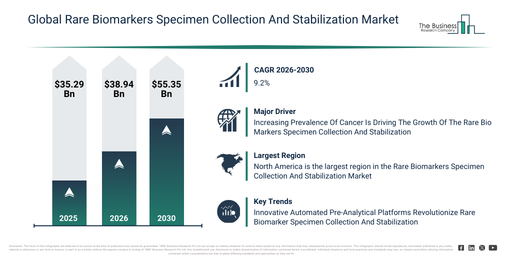
    The rare biomarkers specimen collection and stabilization market size has experienced rapid growth in recent years. It is anticipated to increase from $35.29 billion in 2025 to $38.94 billion in 2026, reflecting a compound annual growth rate (CAGR) of 10.3%. The historical expansion of this market is attributable to developments such as the growth in molecular diagnostics research, the expansion of oncology biomarker studies, the availability of plasma-based testing methods, increasing clinical trial activity, and the rising use of biobanking practices.

    The rare biomarkers specimen collection and stabilization market is projected to experience substantial expansion in the coming years, anticipated to reach a valuation of $55.35 billion by 2030, exhibiting a compound annual growth rate (CAGR) of 9.2%. This growth during the forecast period is primarily attributable to factors such as the wider uptake of precision diagnostics, a surging need for early disease identification, the expansion of genomic and transcriptomic testing methodologies, increasing financial commitments to biomarker-driven drug development, and the growing incorporation of AI into biomarker analysis. Furthermore, key trends shaping the market over this period encompass the increasing integration of liquid biopsy collection methods, the expanded utilization of sophisticated stabilization reagents, a heightened requirement for preserving high-sensitivity biomarkers, the broadening scope of non-invasive diagnostic applications, and a reinforced emphasis on the integrity and traceability of samples.

    Download the Free Sample Report to Explore Key Market Insights:

    https://www.thebusinessresearchcompany.com/sample.aspx?id=15913&type=smp

    Which Major Factors Are Driving The Expansion Of The Rare Biomarkers Specimen Collection And Stabilization Market?

    The market for rare biomarker specimen collection and stabilization is anticipated to expand due to the rising occurrence of cancer. Cancer encompasses a wide range of illnesses marked by the unrestrained proliferation and dissemination of abnormal cells. This surge in cancer cases stems from elements like environmental factors, lifestyle choices such as smoking and an unhealthy diet, and inherent genetic predispositions, collectively creating a greater demand for accurate diagnostic and monitoring instruments. The crucial function of rare biomarker specimen collection and stabilization involves ensuring the precise preservation of blood- and tissue-derived biomarkers, essential for initial diagnosis, molecular characterization, and choosing appropriate therapies in cancer treatment. For example, in February 2024, the World Health Organization, an intergovernmental body based in Switzerland, forecast more than 35 million new cancer cases by 2050. This figure signifies a 77% rise from the approximately 20 million cases estimated in 2022. Consequently, the growing incidence of cancer is a key factor propelling the expansion of the rare biomarker specimen collection and stabilization market.

    What Market Segments Are Evaluated Within The Rare Biomarkers Specimen Collection And Stabilization Market?

    The rare biomarkers specimen collection and stabilization market covered in this report is segmented –

    1) By Type: Circulating Cell Free Deoxyribonucleic Acid (CCFDNA), Circulating Tumor Cells (CTCs), Exosomes or Extracellular Vesicles

    2) By Specimen: Serum Or Plasma, Other Specimens

    3) By Application: Non-Invasive Prenatal Testing (NIPT), Oncology, Transcriptomics, Pharmacogenomics, Transplant Rejection, Population Screening, Cardiovascular Diseases, Other Applications

    4) By End-User: Hospitals, Perinatal Clinics, Public Health Labs, Private Or Commercial Labs, Physician Labs, Research Institutes, Other End-Users

    Subsegments:

    1) By Circulating Cell Free Deoxyribonucleic Acid (CCFDNA): Plasma CCFDNA, Serum CCFDNA

    2) By Circulating Tumor Cells (CTCs): CTCs In Blood, CTCs In Bone Marrow

    3) By Exosomes Or Extracellular Vesicles: Exosomes From Plasma, Exosomes From Serum

    What Trends Are Affecting The Expansion Of The Rare Biomarkers Specimen Collection And Stabilization Market?

    Companies operating in the rare biomarkers specimen collection and stabilization market are increasingly concentrating on developing advanced solutions, such as automated plasma and cell sample preparation, to maintain biomarker integrity and enable high-throughput multiomics. These automated pre-analytical platforms refer to technologies that standardize the processing of blood samples, including plasma separation, cell fixation, and slide preparation, directly at the point of collection, ensuring consistent specimen quality without manual handling or specialized tubes. For instance, in April 2024, Tethis S.p.A., an Italy-based biotechnology company, announced the enrollment of the first two patients in a clinical study for its See.d platform. This platform automates standardized plasma and cell sample preparation for multiomic liquid biopsy, which involves the fixation of rare circulating tumor and immune cells on nanocoated SmartBioSurface slides. Designed to maximize sample integrity and facilitate seamless analysis of cell-free DNA and circulating tumor cells from a single draw, the platform effectively supports the entire end-to-end workflow of rare biomarker specimen collection and stabilization.

    Who Are The Top Market Participants Influencing The Rare Biomarkers Specimen Collection And Stabilization Market?

    Major companies operating in the rare biomarkers specimen collection and stabilization market are F. Hoffmann-La Roche AG, Thermo Fisher Scientific Inc., Abbott Laboratories, Merck KGaA, Becton Dickinson and Company, Eurofins Scientific SE, Agilent Technologies Inc., PerkinElmer Inc., Illumina Inc., Charles River Laboratories International Inc., Bio-Rad Laboratories Inc., Bruker Corporation, QIAGEN N.V., Miltenyi Biotec GmbH, Natera Inc., Promega Corporation, Myriad Genetics, Hamilton Company, OraSure Technologies Inc., Fluidigm Corporation, Streck Inc., SeraCare, Enzo Biochem Inc., Epigenomics AG, Veridex LLC

    Read the full rare biomarkers specimen collection and stabilization market report here:

    https://www.thebusinessresearchcompany.com/report/rare-biomarkers-specimen-collection-and-stabilization-global-market-report

    Which Region Currently Holds The Largest Share Of The Rare Biomarkers Specimen Collection And Stabilization Market?

    North America was the largest region in the rare biomarkers specimen collection and stabilization market in 2025. Asia-Pacific is expected to be the fastest-growing region in the forecast period. The regions covered in the rare biomarkers specimen collection and stabilization market report are Asia-Pacific, South East Asia, Western Europe, Eastern Europe, North America, South America, Middle East, Africa.

    Request A Tailored Rare Biomarkers Specimen Collection And Stabilization Market Research Report For Competitive Advantage:

    https://www.thebusinessresearchcompany.com/customise?id=15913&type=smp

    Browse Through More Reports Similar to the Global Rare Biomarkers Specimen Collection And Stabilization Market 2026, By The Business Research Company

    Blood Transfusion Diagnostics Global Market Report

    https://www.thebusinessresearchcompany.com/report/blood-transfusion-diagnostics-global-market-report

    Hematology Diagnostic Devices And Equipment Global Market Report

    https://www.thebusinessresearchcompany.com/report/hematology-diagnostic-devices-and-equipment-global-market-report

    Immunochemistry Diagnostic Devices And Equipment Global Market Report

    https://www.thebusinessresearchcompany.com/report/immunochemistry-diagnostic-devices-and-equipment-global-market-report

    Get in touch with us:

    The Business Research Company: https://www.thebusinessresearchcompany.com/

    Americas +1 310-496-7795

    Asia +44 7882 955267 & +91 8897263534

    Europe +44 7882 955267

    Email us at info@tbrc.info

    Follow us on:

    LinkedIn: https://in.linkedin.com/company/the-business-research-company

    YouTube: https://www.youtube.com/channel/UC24_fI0rV8cR5DxlCpgmyFQ

    Global Market Model: https://www.thebusinessresearchcompany.com/global-market-model
  • Rapid Diagnostics Market Outlook 2026–2030 Exploring New Business Opportunities

    Rapid Diagnostics Market Outlook 2026–2030 Exploring New Business Opportunities

    The Business Research Company’s 2026 market reports include new capabilities such as market attractiveness scoring and analysis, total addressable market analysis, company scoring matrix, interactive excel data dashboard, improved supply chain analysis, upcoming startups in the market, and overview of key products, aimed at improving the depth, usability, and strategic value of the insights delivered.

    How Will The Market Size Of The Rapid Diagnostics Market Evolve From 2026 To 2030?

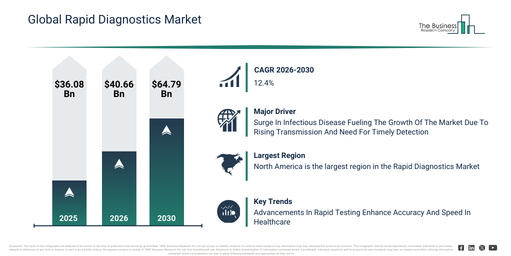
    The rapid diagnostics market size has demonstrated substantial growth in recent years. It is forecast to increase from $36.08 billion in 2025 to $40.66 billion in 2026, achieving a compound annual growth rate (CAGR) of 12.7%. This historical expansion can be attributed to factors such as a heightened demand for swift clinical diagnostics, the broadening of decentralized healthcare settings, a growing incidence of chronic and infectious diseases, better accessibility to diagnostic tools, and the development of outpatient diagnostic services.

    The rapid diagnostics market size is anticipated to undergo significant growth in the immediate future. It is projected to reach $64.79 billion by 2030, exhibiting a compound annual growth rate (CAGR) of 12.4%. This expansion over the forecast period is driven by several factors, including escalating investments in molecular diagnostics, the increasing uptake of connected diagnostic devices, the broadening of home-based testing solutions, a heightened emphasis on personalized diagnostics, and the growing application of data-driven clinical workflows. Key trends anticipated during this period encompass the wider utilization of point-of-care diagnostic platforms, the surging adoption of molecular rapid testing, the expanding incorporation of digital result interpretation, the proliferation of portable diagnostic instruments, and an increased emphasis on providing early clinical decision support.

    Download the Free Sample Report to Explore Key Market Insights:

    https://www.thebusinessresearchcompany.com/sample.aspx?id=24679&type=smp

    What Key Drivers Are Influencing The Growth Of The Rapid Diagnostics Market?

    The growing incidence of infectious disease is projected to boost the rapid diagnostics market in the future. Infectious disease refers to health conditions brought on by pathogenic microorganisms such as bacteria, viruses, parasites, or fungi, which can spread directly or indirectly between individuals. The increased occurrence of infectious diseases is fueled by greater global travel, contributing to faster transmission and higher infection rates. Rapid diagnostics assist in combating infectious diseases by enabling quick and accurate identification of pathogens, which permits timely treatment decisions, reduced transmission, and improved patient outcomes. For instance, in May 2025, The World Health Organization (WHO), a Switzerland-based specialized agency of the United Nations focused on international public health, stated that global SARS-CoV-2 (the virus responsible for causing COVID-19, an infectious disease) activity had been rising since mid-February 2025. Based on data from sentinel sites, the test positivity rate reached 11%, a level last observed in July 2024. Thus, the increasing prevalence of infectious disease is propelling the rapid diagnostics market.

    Which Segment Areas Are Covered In The Rapid Diagnostics Market Analysis?

    The rapid diagnostics market covered in this report is segmented –

    1) By Product Type: Kits, Reagents, Instruments, Other Product Types

    2) By Platform: Immunoassays, Molecular Detection, Other Rapid Diagnostic Platforms

    3) By Application: Blood Glucose Testing, Infectious Disease Testing, Cardiometabolic Testing, Pregnancy and Fertility Testing, Fecal Occult Blood Testing, Coagulation Testing, Toxicology Testing

    4) By Distribution Channel: Hospital Pharmacies, Brick and Mortar, E-Commerce, Other Distribution Channels

    5) By End Use: Diagnostic Centers, Homecare Settings, Hospital Pharmacies, Other End Users

    Subsegments:

    1) By Kits: Lateral Flow Assay Kits, PCR Kits, Immunoassay Kits, Microfluidic Kits, Molecular Diagnostic Kits, Multiplex Kits

    2) By Reagents: Enzymes, Buffers, Probes and Primers, Stains and Dyes, Antibodies, Calibration and Control Reagents

    3) By Instruments: PCR Machines, Lateral Flow Readers, Immunoassay Analyzers, Microfluidic Analyzers, Automated Sample Processors, Biosensors

    4) By Other Product Types: Software and Data Management Tools, Sample Collection Devices, Accessories and Consumables, Calibration Standards, Point-of-Care Devices

    Which Trends Are Influencing The Rapid Diagnostics Market?

    Leading companies within the rapid diagnostics market are concentrating on advancements and innovation, specifically rapid diagnostic testing tools, to improve diagnostic precision, decrease turnaround times, and enhance patient outcomes in point-of-care settings. These rapid diagnostic testing tools are medical devices capable of swiftly detecting specific diseases or conditions, typically providing results within minutes at the point of care. As an example, SEKISUI Diagnostics, a US-based medical diagnostics manufacturer, introduced the OSOM RSV Test in May 2025, a rapid diagnostic tool for identifying respiratory syncytial virus (RSV). This test is designed for use in professional healthcare settings and delivers results in just 15 minutes. It operates by employing a rapid immunochromatographic assay to qualitatively detect RSV nucleoprotein antigen, using anterior nasal swab specimens collected from patients displaying symptoms of respiratory infection. Its rapid turnaround time aids in timely and effective clinical decision-making.

    Which Global Companies Are Actively Competing In The Rapid Diagnostics Market?

    Major companies operating in the rapid diagnostics market are Johnson And Johnson Services Inc, F Hoffmann La Roche Ltd, Thermo Fisher Scientific Inc, Abbott Laboratories, Danaher Corporation, Siemens Healthineers AG, Becton Dickinson And Company, Hologic Inc, bioMerieux SA, QuidelOrtho Corporation, Bio Rad Laboratories Inc, QIAGEN NV, Cepheid Inc, OraSure Technologies Inc, Nova Biomedical Corporation, Fujirebio Holdings Inc, Sekisui Diagnostics LLC, EKF Diagnostics Holdings plc, Trinity Biotech plc, Abingdon Health plc, Abionic SA, LumiraDx Ltd

    Read the full rapid diagnostics market report here:

    https://www.thebusinessresearchcompany.com/report/rapid-diagnostics-global-market-report

    Which Region Is Expected To Register The Fastest Growth In The Rapid Diagnostics Market?

    North America was the largest region in the rapid diagnostics market in 2025. Asia-Pacific is expected to be the fastest-growing region in the forecast period. The regions covered in the rapid diagnostics market report are Asia-Pacific, South East Asia, Western Europe, Eastern Europe, North America, South America, Middle East, Africa.

    Request A Tailored Rapid Diagnostics Market Research Report For Competitive Advantage:

    https://www.thebusinessresearchcompany.com/customise?id=24679&type=smp

    Browse Through More Reports Similar to the Global Rapid Diagnostics Market 2026, By The Business Research Company

    Lateral Flow Immunoassay Based Rapid Test Global Market Report

    https://www.thebusinessresearchcompany.com/report/lateral-flow-immunoassay-based-rapid-test-global-market-report

    Covid 19 Rapid Test Kits Global Market Report

    https://www.thebusinessresearchcompany.com/report/covid-19-rapid-test-kits-global-market-report

    Rapid Strength Concrete Global Market Report

    https://www.thebusinessresearchcompany.com/report/rapid-strength-concrete-global-market-report

    Get in touch with us:

    The Business Research Company: https://www.thebusinessresearchcompany.com/

    Americas +1 310-496-7795

    Asia +44 7882 955267 & +91 8897263534

    Europe +44 7882 955267

    Email us at info@tbrc.info

    Follow us on:

    LinkedIn: https://in.linkedin.com/company/the-business-research-company

    YouTube: https://www.youtube.com/channel/UC24_fI0rV8cR5DxlCpgmyFQ

    Global Market Model: https://www.thebusinessresearchcompany.com/global-market-model
  • Global Rapid Diagnostic Test Kits Market Report 2026–2035 Highlighting Expansion Outlook and Forecast Opportunities

    Global Rapid Diagnostic Test Kits Market Report 2026–2035 Highlighting Expansion Outlook and Forecast Opportunities

    The Business Research Company’s 2026 market reports include new capabilities such as market attractiveness scoring and analysis, total addressable market analysis, company scoring matrix, interactive excel data dashboard, improved supply chain analysis, upcoming startups in the market, and overview of key products, aimed at improving the depth, usability, and strategic value of the insights delivered.

    What Is The Forecasted Market Value Of The Rapid Diagnostic Test Kits Market Across 2026–2030?

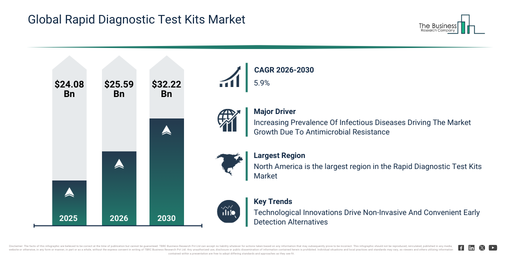
    The rapid diagnostic test kits market has experienced robust growth in recent years. This market is projected to expand from $24.08 billion in 2025 to $25.59 billion in 2026, exhibiting a compound annual growth rate (CAGR) of 6.3%. Historically, this expansion has been driven by factors such as the increasing burden of infectious diseases, the expansion of decentralized healthcare delivery, a rising demand for quick diagnostic results, the growth in outpatient and homecare testing, and the availability of lateral flow and immunoassay technologies.

    The rapid diagnostic test kits market is anticipated to show robust expansion over the coming years. It is projected to achieve a size of $32.22 billion by 2030, growing at a compound annual growth rate (CAGR) of 5.9%. This projected growth can be attributed to heightened investments in rapid diagnostic innovation, the increasing uptake of self-testing kits, the broadening of infectious disease surveillance programs, a rising need for affordable diagnostics in emerging markets, and the greater integration of digital readout technologies. Significant trends within this forecast period include the expanding adoption of point-of-care testing solutions, a growing demand for multiplex rapid test kits, an increase in home-based diagnostic testing, the wider availability of portable and disposable test formats, and an intensified focus on early disease detection.

    Download the Free Sample Report to Explore Key Market Insights:

    https://www.thebusinessresearchcompany.com/sample.aspx?id=24678&type=smp

    What Major Growth Drivers Are Shaping The Outlook Of The Rapid Diagnostic Test Kits Market?

    The expanding occurrence of infectious diseases is anticipated to boost the growth of the rapid diagnostic test kits market in the future. Such diseases are defined as ailments resulting from disease-causing microbes like bacteria, viruses, fungi, or parasites, which can spread directly or indirectly among individuals. The escalating incidence of infectious diseases stems from antimicrobial resistance and the evolution of pathogen strains; extensive antibiotic use has led to bacteria resistant to drugs, while viruses constantly mutate, generating new variants that bypass current immunity and necessitate advanced detection techniques. This rise in infectious disease prevalence encourages greater adoption of point-of-care testing tools, facilitating quick pathogen identification. This allows healthcare providers to swiftly diagnose infections, commence suitable treatment, and put in place prompt infection control protocols. For example, in March 2024, the Centers for Disease Control and Prevention, a US-based government agency, reported an increase in tuberculosis cases from 8,320 in 2022 to 9,615 in 2023, showing a rise of 1,295 cases. Consequently, the increasing prevalence of infectious diseases is fostering the expansion of the rapid diagnostic test kits market.

    What Segmentation Levels Are Considered In The Rapid Diagnostic Test Kits Market?

    The rapid diagnostic test kits market covered in this report is segmented –

    1) By Product Type: Antigen Test Kits, Antibody Test Kits, Nucleic Acid Test Kits, Multi-Analyte Test Kits

    2) By Technology: Fluorescent Immunoassay, Enzyme-Linked Immunosorbent Assay (ELISA), Colloidal Gold-Based Test, Lateral Flow Assays

    3) By Application: Infectious Disease Testing, Cardiology Testing, Oncology Testing, Pregnancy And Fertility Testing, Toxicology Testing, Glucose Monitoring, Other Applications

    4) By End-User: Hospitals, Diagnostic Laboratories, Home Care Settings, Pharmacies

    Subsegments:

    1) By Antigen Test Kits: COVID-19 Antigen Test Kits, Influenza Antigen Test Kits, Malaria Antigen Test Kits, Respiratory Syncytial Virus Antigen Test Kits, Streptococcus Antigen Test Kits

    2) By Antibody Test Kits: HIV Antibody Test Kits, Hepatitis Antibody Test Kits, COVID-19 Antibody Test Kits, Dengue Antibody Test Kits, Syphilis Antibody Test Kits

    3) By Nucleic Acid Test Kits: HIV Nucleic Acid Test Kits, Hepatitis B And C Nucleic Acid Test Kits, Human Papillomavirus Nucleic Acid Test Kits, Tuberculosis Nucleic Acid Test Kits, COVID-19 Nucleic Acid Test Kits

    4) By Multi-Analyte Test Kits: Respiratory Panel Test Kits, Sexually Transmitted Infections Panel Test Kits, Gastrointestinal Panel Test Kits, Febrile Illness Panel Test Kits, Sepsis Marker Panel Test Kits

    What Trends Are Advancing Progress In The Rapid Diagnostic Test Kits Market?

    Leading companies in the rapid diagnostic test kits sector are concentrating on creating innovative solutions, such as saliva-based pregnancy test kits, to enhance their competitive standing. These saliva-based pregnancy test kits function as diagnostic instruments, identifying pregnancy through the analysis of a woman’s saliva for hormonal shifts, specifically human chorionic gonadotropin (hCG), a hormone generated during gestation. As an illustration, in February 2023, Abingdon Health plc, a UK-based near-patient diagnostics firm, introduced Salistick, the inaugural rapid saliva-based pregnancy test available in the UK and Ireland. This marked a notable advancement in at-home pregnancy testing by providing a more hygienic and user-friendly option compared to conventional urine-based tests. This exceptionally precise test identifies the ß-hCG pregnancy hormone in saliva, empowering women to conduct early pregnancy detection at any location and moment, simultaneously facilitating a more private and shareable testing process.

    Which Leading Firms Are Contributing To The Growth Of The Rapid Diagnostic Test Kits Market?

    Major companies operating in the rapid diagnostic test kits market are F Hoffmann La Roche Ltd, Thermo Fisher Scientific Inc, Abbott Laboratories, Danaher Corporation, Siemens Healthineers AG, Becton Dickinson and Company, Hologic Inc, bioMerieux SA, QuidelOrtho Corporation, Bio Rad Laboratories Inc, QIAGEN NV, Cepheid Inc, OraSure Technologies Inc, Nova Biomedical Corporation, Sekisui Diagnostics LLC, EKF Diagnostics Holdings plc, Trinity Biotech plc, ACON Laboratories Inc, Fluxergy LLC, Lumos Diagnostics Holdings Limited, Abingdon Health plc, Abionic SA

    Read the full rapid diagnostic test kits market report here:

    https://www.thebusinessresearchcompany.com/report/rapid-diagnostic-test-kits-global-market-report

    Which Regions Are Projected To Dominate The Rapid Diagnostic Test Kits Market In The Coming Years?

    North America was the largest region in the rapid diagnostic test kits market in 2025. Asia-Pacific is expected to be the fastest-growing region in the forecast period. The regions covered in the rapid diagnostic test kits market report are Asia-Pacific, South East Asia, Western Europe, Eastern Europe, North America, South America, Middle East, Africa.

    Request A Tailored Rapid Diagnostic Test Kits Market Research Report For Competitive Advantage:

    https://www.thebusinessresearchcompany.com/customise?id=24678&type=smp

    Browse Through More Reports Similar to the Global Rapid Diagnostic Test Kits Market 2026, By The Business Research Company

    Single Dose Radiotherapy Services Global Market Report

    https://www.thebusinessresearchcompany.com/report/single-dose-radiotherapy-services-global-market-report

    Image Guided Radiation Therapy Global Market Report

    https://www.thebusinessresearchcompany.com/report/image-guided-radiation-therapy-global-market-report

    Medical Irradiation Global Market Report

    https://www.thebusinessresearchcompany.com/report/medical-irradiation-global-market-report

    Get in touch with us:

    The Business Research Company: https://www.thebusinessresearchcompany.com/

    Americas +1 310-496-7795

    Asia +44 7882 955267 & +91 8897263534

    Europe +44 7882 955267

    Email us at info@tbrc.info

    Follow us on:

    LinkedIn: https://in.linkedin.com/company/the-business-research-company

    YouTube: https://www.youtube.com/channel/UC24_fI0rV8cR5DxlCpgmyFQ

    Global Market Model: https://www.thebusinessresearchcompany.com/global-market-model
  • Radiotherapy Induced Oral Mucositis Treatment Market Growth Prospects 2026–2030 with Innovation Trends and Competitive Landscape

    Radiotherapy Induced Oral Mucositis Treatment Market Growth Prospects 2026–2030 with Innovation Trends and Competitive Landscape

    The Business Research Company’s 2026 market reports include new capabilities such as market attractiveness scoring and analysis, total addressable market analysis, company scoring matrix, interactive excel data dashboard, improved supply chain analysis, upcoming startups in the market, and overview of key products, aimed at improving the depth, usability, and strategic value of the insights delivered.

    What Market Size Increase Is Anticipated For The Radiotherapy Induced Oral Mucositis Treatment Market Over The 2026–2030 Period?

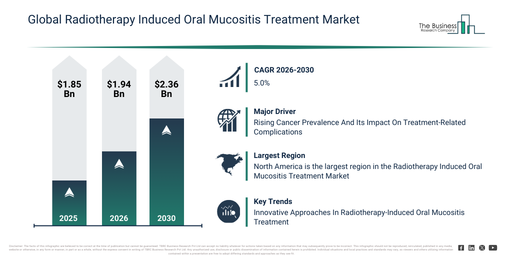
    The radiotherapy induced oral mucositis treatment market size has experienced robust expansion in recent years. This market is projected to expand from $1.85 billion in 2025 to $1.94 billion in 2026, exhibiting a compound annual growth rate (CAGR) of 5.2%. Over the historical period, this growth can be ascribed to elements such as the increasing use of radiotherapy for head and neck cancers, rising awareness of treatment side effects, the availability of supportive oncology drugs, the expansion of oncology care centers, and the growing involvement of dental specialists in cancer care.

    The radiotherapy induced oral mucositis treatment market size is anticipated to experience consistent expansion over the upcoming years, projected to reach $2.36 billion by 2030, exhibiting a compound annual growth rate (CAGR) of 5.0%. This growth during the forecast period is driven by increasing adoption of advanced mucosal protection therapies, rising investments in supportive oncology research, a growing demand for non-invasive pain management, the expansion of hospital-based supportive care programs, and an increasing focus on early intervention strategies. Significant trends for this period include the increasing development of targeted supportive care therapies, a growing reliance on topical and device-based treatments, a heightened focus on patient quality of life management, the expansion of preventive oral care protocols, and enhanced integration of multidisciplinary cancer care.

    Download the Free Sample Report to Explore Key Market Insights:

    https://www.thebusinessresearchcompany.com/sample.aspx?id=21268&type=smp

    What Drivers Are Expected To Influence The Radiotherapy Induced Oral Mucositis Treatment Market During The Forecast Period?

    The rising worldwide occurrence of cancer is anticipated to propel the expansion of the radiotherapy induced oral mucositis treatment market in the coming period. Cancer is defined as a condition marked by the unchecked multiplication and dissemination of atypical cells, capable of infiltrating adjacent tissues and organs, stemming from genetic alterations shaped by environmental and personal lifestyle elements. The growing global incidence of cancer is predominantly fueled by elements like an aging population, lifestyle decisions including tobacco consumption, excess weight, and alcohol intake, alongside environmental effects like atmospheric contamination. Radiotherapy Induced Oral Mucositis Treatment assists individuals with cancer by mitigating the discomforting adverse effects of mucosal harm resulting from radiotherapy, allowing for greater treatment tolerance and sustained nutritional consumption, thereby enhancing their overall quality of life throughout cancer management. As an illustration, in August 2024, a report from Macmillan Cancer Support, a UK charitable entity, stated that over 3 million individuals in the UK are living with cancer in 2024. This number is predicted to climb to 3.5 million by 2025, reach 4 million by 2030, and further escalate to 5.3 million by 2040. Consequently, the rising worldwide incidence of cancer is propelling the expansion of the radiotherapy induced oral mucositis treatment market.

    How Is The Radiotherapy Induced Oral Mucositis Treatment Market Segmented Across Key Categories?

    The radiotherapy induced oral mucositis treatment market covered in this report is segmented –

    1) By Drug Class: Antibiotics, Antifungal, Anti-Inflammatory, Anti-Neoplastic

    2) By Treatment Type: Topical Agents, Systemic Agents, Medical Devices

    3) By Radiotherapy Type: External Beam Radiation Therapy (EBRT), Intensity-Modulated Radiation Therapy (IMRT), Brachytherapy, Proton Therapy, Stereotactic Radiosurgery (SRS), Other Radiotherapy Type

    4) By Severity Type: Mild Oral Mucositis, Moderate Oral Mucositis, Severe Oral Mucositis (SOM)

    5) By End User: Hospitals, Oncology Centres, Research Institutes, Dental Clinics

    Subsegments:

    1) By Antibiotics: Topical Antibiotics, Oral Antibiotics

    2) By Antifungal: Topical Antifungals, Oral Antifungals

    3) By Anti-inflammatory: Corticosteroids, Non-steroidal Anti-inflammatory Drugs (NSAIDs)

    4) By Anti-neoplastic: Chemotherapy Agents, Targeted Therapy Agents

    How Are Trends Transforming The Radiotherapy Induced Oral Mucositis Treatment Market Landscape?

    Key companies within the radiotherapy induced oral mucositis treatment market are concentrating on developing innovative products, such as low-level laser therapy, to improve healing, reduce discomfort, and enhance patient outcomes during cancer therapy. This low-level laser therapy, also known as cold laser therapy or photobiomodulation, represents a non-invasive approach that employs low-power lasers or light-emitting diodes (LEDs) to stimulate healing and lessen both pain and inflammation. For example, in October 2024, Jaguar Health Inc., a US-based pharmaceuticals company, introduced gelclair, an oral mucositis prescription product. This product is specifically formulated to manage the pain associated with oral mucositis, a condition prevalent in up to 90% of head and neck cancer patients undergoing chemotherapy and radiotherapy. By adhering to the mouth’s mucosal surface, gelclair delivers swift and enduring pain relief without the stinging or numbing side effects often linked with other therapies.

    Who Are The Dominant Players Shaping The Radiotherapy Induced Oral Mucositis Treatment Market Landscape?

    Major companies operating in the radiotherapy induced oral mucositis treatment market are Bausch Health Companies Inc., Sun Pharmaceutical Industries Ltd., Cipla Limited, Dr Reddys Laboratories Ltd., Zydus Cadila Health Care Limited, Leo Pharma A S, Glenmark Pharmaceuticals Ltd., Almirall S.A., Fagron Group BV, Sage Products LLC, Soligenix Inc., EUSA Pharma Ltd., Galera Therapeutics Inc., Enzychem Lifesciences Corp., Jaguar Health Inc., EpicentRx Inc., MONOPAR Therapeutics Inc., Solasia Pharma KK, Pfizer Inc., Novartis AG, Sanofi S.A., Merck And Co Inc., Bristol Myers Squibb Company, AstraZeneca PLC

    Read the full radiotherapy induced oral mucositis treatment market report here:

    https://www.thebusinessresearchcompany.com/report/radiotherapy-induced-oral-mucositis-treatment-global-market-report

    Which Region Is Forecast To Lead The Radiotherapy Induced Oral Mucositis Treatment Market In Terms Of Market Size?

    North America was the largest region in the radiotherapy induced oral mucositis treatment market in 2025. The regions covered in the radiotherapy induced oral mucositis treatment market report are Asia-Pacific, South East Asia, Western Europe, Eastern Europe, North America, South America, Middle East, Africa.

    Request A Tailored Radiotherapy Induced Oral Mucositis Treatment Market Research Report For Competitive Advantage:

    https://www.thebusinessresearchcompany.com/customise?id=21268&type=smp

    Browse Through More Reports Similar to the Global Radiotherapy Induced Oral Mucositis Treatment Market 2026, By The Business Research Company

    Dental Flap Surgery Global Market Report

    https://www.thebusinessresearchcompany.com/report/dental-flap-surgery-global-market-report

    Oral Transmucosal Drugs Global Market Report

    https://www.thebusinessresearchcompany.com/report/oral-transmucosal-drugs-global-market-report

    Radiotherapy Devices Global Market Report

    https://www.thebusinessresearchcompany.com/report/radiotherapy-devices-global-market-report

    Get in touch with us:

    The Business Research Company: https://www.thebusinessresearchcompany.com/

    Americas +1 310-496-7795

    Asia +44 7882 955267 & +91 8897263534

    Europe +44 7882 955267

    Email us at info@tbrc.info

    Follow us on:

    LinkedIn: https://in.linkedin.com/company/the-business-research-company

    YouTube: https://www.youtube.com/channel/UC24_fI0rV8cR5DxlCpgmyFQ

    Global Market Model: https://www.thebusinessresearchcompany.com/global-market-model

  • Radiotherapy Market Forecast 2026–2035 Highlighting Market Data Patterns and Industry Insights

    Radiotherapy Market Forecast 2026–2035 Highlighting Market Data Patterns and Industry Insights

    The Business Research Company’s 2026 market reports include new capabilities such as market attractiveness scoring and analysis, total addressable market analysis, company scoring matrix, interactive excel data dashboard, improved supply chain analysis, upcoming startups in the market, and overview of key products, aimed at improving the depth, usability, and strategic value of the insights delivered.

    How Much Is The Radiotherapy Market Expected To Grow In Terms Of Market Value Between 2026 And 2030?

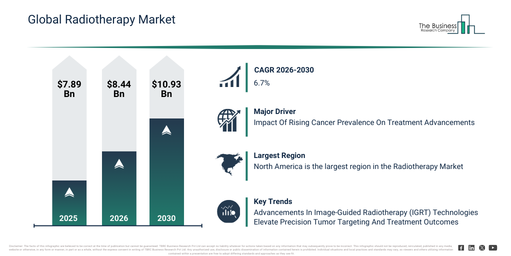
    The radiotherapy market size has seen robust growth in recent years. It is forecast to expand from $7.89 billion in 2025 to $8.44 billion in 2026, achieving a compound annual growth rate (CAGR) of 6.9%. Historically, this market’s development was fueled by the expansion of hospital radiotherapy infrastructure, rising global cancer prevalence, adoption of linear accelerator technologies, improvements in diagnostic imaging, and increased availability of trained radiation oncologists.

    The radiotherapy market is projected to experience substantial growth in the coming years, reaching $10.93 billion by 2030, expanding at a compound annual growth rate (CAGR) of 6.7%. This anticipated growth is driven by several factors, including increased investments in proton therapy facilities, a greater emphasis on personalized radiation dosing, the proliferation of outpatient radiotherapy centers, the expanding integration of AI-based planning systems, and a rising demand for high-precision cancer therapies. Key trends during this period involve the greater uptake of advanced external beam techniques, an increase in image-guided and adaptive radiotherapy applications, a growing need for proton and particle therapy, the broadening of multimodal cancer treatment approaches, and an intensified focus on the precision of treatment planning.

    Download the Free Sample Report to Explore Key Market Insights:

    https://www.thebusinessresearchcompany.com/sample.aspx?id=21267&type=smp

    What Drivers Are Influencing The Radiotherapy Market?

    The growing incidence of cancer is anticipated to fuel the expansion of the radiotherapy market moving forward. Cancer is a condition marked by the uncontrolled multiplication of abnormal cells capable of invading and spreading to other bodily areas, originating in diverse tissues and organs, which results in various types and symptoms. This rise in cancer prevalence is attributable to factors such as an aging demographic, lifestyle shifts including unhealthy diets and sedentary habits, extensive tobacco and alcohol consumption, environmental contamination, and enhanced diagnostic tools leading to more identified cases. Radiotherapy holds a crucial role in cancer therapy by precisely targeting and eliminating cancerous cells, contributing to tumor size reduction and better patient outcomes. For instance, in August 2024, Macmillan Cancer Support, a UK-based charitable organization dedicated to aiding cancer patients, disclosed that in 2024, more than 3 million people in the UK are living with cancer, with this number forecasted to reach 3.5 million by 2025, 4 million by 2030, and 5.3 million by 2040. Consequently, the rising incidence of cancer is propelling the expansion of the radiotherapy market.

    What Major Segment Divisions Exist Within The Radiotherapy Market?

    The radiotherapy market covered in this report is segmented –

    1) By Therapy Type: External Beam Radiation Therapy, Internal Beam Radiation Therapy, Systemic Radiation Therapy

    2) By Application: Prostate Cancer, Breast Cancer, Lung Cancer, Head And Neck Cancer, Colorectal Cancer, Gynecological Cancer, Cervical Cancer, Penile Cancer, Other Applications

    3) By End-User: Hospitals And Diagnostic Laboratories, Cancer Treatment And Research Centers, Academic Research Organizations, Ambulatory Surgery Centers, Other End-Users

    Subsegments:

    1) By External Beam Radiation Therapy: Intensity-Modulated Radiation Therapy (IMRT), Stereotactic Body Radiation Therapy (SBRT), 3D Conformal Radiation Therapy (3D-CRT), Proton Beam Therapy, Image-Guided Radiation Therapy (IGRT), Volumetric Modulated Arc Therapy (VMAT)

    2) By Internal Beam Radiation Therapy: Brachytherapy (High-Dose Rate), Brachytherapy (Low-Dose Rate), Intraoperative Radiation Therapy (IORT), Permanent Seed Implants

    3) By Systemic Radiation Therapy: Radioisotope Therapy, Targeted Radionuclide Therapy, Radioimmunotherapy, Peptide Receptor Radionuclide Therapy (PRRT)

    Which Trends Are Impacting The Growth Of The Radiotherapy Market?

    Key companies in the radiotherapy market are concentrating on creating sophisticated remedies, like image-guided radiotherapy (IGRT), to heighten treatment accuracy, lessen exposure to healthy tissues, and improve patient results. Image-guided radiotherapy (IGRT) involves utilizing advanced imaging systems, such as integrated CT or MRI, coupled with adaptive software to track and modify radiation delivery instantly based on the tumor’s position and movement. For instance, in May 2024, Elekta AB, a medical technology company from Sweden, unveiled Elekta Evo CT-Linac, its innovative adaptive radiotherapy system featuring high-definition AI-enhanced imaging and an online adaptive workflow. Developed to aid clinicians in providing more precise and personalized radiation therapy, the system accommodates a broad spectrum of treatment protocols while reducing exposure to critical organs.

    Which Companies Are Leading Innovation In The Radiotherapy Market?

    Major companies operating in the radiotherapy market are Hitachi Ltd., GE Healthcare Technologies Inc., Sumitomo Heavy Industries Ltd., Varian Medical Systems Inc., Elekta AB, Accuray Incorporated, Ion Beam Applications S.A, Canon Medical Systems Corporation, RefleXion Medical Inc., Mevion Medical Systems Inc., Nordion Inc., Theragenics Corporation, RaySearch Laboratories AB, MIM Software Inc., Vision RT Ltd., Sun Nuclear Corporation, Provision Healthcare LLC, Panacea Medical Technologies Pvt. Ltd., Optivus Proton Therapy Inc., Perspective Therapeutics Inc., GT Medical Technologies Inc., ProTom International Inc.

    Read the full radiotherapy market report here:

    https://www.thebusinessresearchcompany.com/report/radiotherapy-global-market-report

    Which Regions Are Expected To Experience Rapid Expansion In The Radiotherapy Market?

    North America was the largest region in the radiotherapy market in 2025. Asia-Pacific is expected to be the fastest-growing region in the forecast period. The regions covered in the radiotherapy market report are Asia-Pacific, South East Asia, Western Europe, Eastern Europe, North America, South America, Middle East, Africa.

    Request A Tailored Radiotherapy Market Research Report For Competitive Advantage:

    https://www.thebusinessresearchcompany.com/customise?id=21267&type=smp

    Browse Through More Reports Similar to the Global Radiotherapy Market 2026, By The Business Research Company

    Diagnostic Radioisotopes Global Market Report

    https://www.thebusinessresearchcompany.com/report/diagnostic-radioisotopes-global-market-report

    Radome Global Market Report

    https://www.thebusinessresearchcompany.com/report/radome-global-market-report

    Oncologists Global Market Report

    https://www.thebusinessresearchcompany.com/report/oncologists-global-market-report

    Get in touch with us:

    The Business Research Company: https://www.thebusinessresearchcompany.com/

    Americas +1 310-496-7795

    Asia +44 7882 955267 & +91 8897263534

    Europe +44 7882 955267

    Email us at info@tbrc.info

    Follow us on:

    LinkedIn: https://in.linkedin.com/company/the-business-research-company

    YouTube: https://www.youtube.com/channel/UC24_fI0rV8cR5DxlCpgmyFQ

    Global Market Model: https://www.thebusinessresearchcompany.com/global-market-model