Category: Healthcare Services

  • Primary Immunodeficiency Disorders Market Outlook 2026–2030 Exploring New Business Opportunities

    Primary Immunodeficiency Disorders Market Outlook 2026–2030 Exploring New Business Opportunities

    The Business Research Company’s 2026 market reports include new capabilities such as market attractiveness scoring and analysis, total addressable market analysis, company scoring matrix, interactive excel data dashboard, improved supply chain analysis, upcoming startups in the market, and overview of key products, aimed at improving the depth, usability, and strategic value of the insights delivered.

    What Is The Expected Market Size Of The Primary Immunodeficiency Disorders Market From 2026 To 2030?

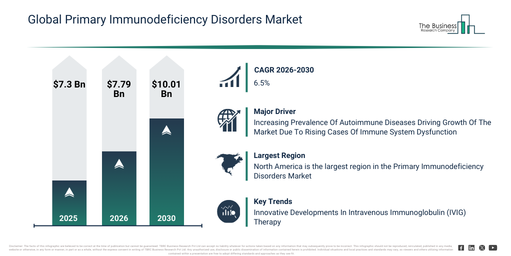
    The market size for primary immunodeficiency disorders has demonstrated robust growth in recent years. It is projected to increase from $7.3 billion in 2025 to $7.79 billion in 2026, reflecting a compound annual growth rate (CAGR) of 6.8%. The expansion seen in previous periods is attributable to factors such as enhanced clinical identification of immunodeficiency disorders, the broadening of diagnostic testing capabilities, increased awareness among medical professionals, the accessibility of immunoglobulin therapies, and the establishment of specialized treatment centers.

    The primary immunodeficiency disorders market size is anticipated to undergo significant expansion over the next few years. It is projected to reach $10.01 billion by 2030, growing at a compound annual growth rate (CAGR) of 6.5%. This growth in the forecast period can be attributed to advancements in gene therapy research, an increasing demand for early and accurate diagnosis, the expansion of precision immunology treatments, rising investment in rare disease research, and the increasing integration of AI in diagnostic workflows. Key trends during this period include a greater adoption of genetic testing for early diagnosis, the expanding use of immunoglobulin replacement therapies, an increased focus on personalized treatment approaches, the broadening of newborn screening programs, and enhanced integration of advanced diagnostic platforms.

    Download the Free Sample Report to Explore Key Market Insights:

    https://www.thebusinessresearchcompany.com/sample.aspx?id=23483&type=smp

    What Major Drivers Are Influencing Demand In The Primary Immunodeficiency Disorders Market?

    The increasing occurrence of autoimmune conditions is anticipated to fuel the expansion of the Primary Immunodeficiency Disorders Market in the future. These conditions manifest when the body’s immune system erroneously targets its own healthy cells and tissues, perceiving them as external dangers. This erroneous immune reaction results in inflammation and damage across different organs and bodily systems. The surge in autoimmune illnesses stems from an intricate combination of environmental factors, genetic susceptibilities, and shifts in lifestyle. Autoimmune disorders can induce primary immunodeficiency disorders through the disruption of immune regulation and the targeting of immune cells, culminating in compromised or impaired immune responses. As an illustration, in February 2024, data from Arthritis Australia, an Australian charitable non-profit organization supporting individuals with arthritis and musculoskeletal issues, indicated that by 2025, approximately 562,378 Australians will be affected by rheumatoid arthritis (RA), making up 14% of the overall arthritis demographic. Consequently, the increasing incidence of autoimmune diseases is a key factor propelling the growth of the Primary Immunodeficiency Disorders Market. The increasing focus on preventive healthcare is projected to drive the expansion of the Primary Immunodeficiency Disorders Market moving forward. Preventive care includes medical services and interventions designed to avert illness, identify health issues prematurely, and foster general health and wellness. The growth in preventive care stems from a heightened understanding of the benefits of early disease identification, which aids in mitigating severe health complications and reducing long-term medical expenditures. Primary immunodeficiency disorders underscore the significance of preventive measures by illustrating how timely diagnosis and proactive treatment can avert serious infections and associated complications, thereby emphasizing the necessity for regular screenings and consistent immunological surveillance. For example, in March 2024, a report from the Government of the United Kingdom, a UK-based information source, noted that in March 2023, the proportion of individuals with type 1 diabetes in England who received 8 care processes at GP practices involved in the NDA increased to 43.8%, an ascent from 35.2% in the preceding year. Thus, the greater focus on preventive care is a key driver for the growth of the Primary Immunodeficiency Disorders Market.

    Which Segments Are Included In The Analysis Of The Primary Immunodeficiency Disorders Market?

    The primary immunodeficiency disorders market covered in this report is segmented –

    1) By Disease: Antibody Deficiency, Cellular Immunodeficiency, Innate Immune Disorders, Other Diseases

    2) By Treatment: Immunoglobulin Replacement Therapy, Antibiotic Therapy, Stem Cell And Bone Marrow Transplantation, Gene Therapy, Other Treatments

    3) By Diagnostic Type: Genetic Testing, Blood Testing, Flow Cytometry, Other Diagnostic Types

    4) By End-User: Hospitals, Specialty Clinics, Homecare Settings, Research Institutions

    Subsegments:

    1) By Antibody Deficiency: Common Variable Immune Deficiency (CVID), IgA Deficiency, IgG Subclass Deficiency, Specific Antibody Deficiency

    2) By Cellular Immunodeficiency: Severe Combined Immunodeficiency (SCID), T-Cell Deficiency, DiGeorge Syndrome, Wiskott-Aldrich Syndrome

    3) By Innate Immune Disorders: Chronic Granulomatous Disease (CGD), Complement Deficiencies, Toll-like Receptor Deficiencies, Chediak-Higashi Syndrome

    4) By Other Diseases: Hyper IgM Syndrome, Hyper IgE Syndrome, Ataxia-Telangiectasia, Combined Immunodeficiencies With Syndromic Features

    What Key Trends Are Influencing The Development Of The Primary Immunodeficiency Disorders Market?

    Major companies within the primary immunodeficiency disorders market are concentrating on creating advanced therapies, such as intravenous immunoglobulin therapy, to improve patient outcomes by enhancing immune function. Intravenous immunoglobulin (IVIG) therapy involves administering immunoglobulin (antibodies) sourced from donor plasma directly into a patient’s bloodstream via an IV. For instance, in June 2024, Grifols, a healthcare company based in Spain, obtained FDA approval for Yimmugo, an intravenous immunoglobulin (IVIg) therapy. This newly developed, sugar-free, ready-to-use IgG solution is derived from human blood plasma and is designed for intravenous delivery. Approved in the U.S. for substitution therapy in patients with primary antibody deficiency syndromes, Yimmugo offers antibody replacement to support individuals with immune system deficiencies. It bolsters Grifols’ portfolio of plasma-based treatments by presenting a safer and more effective option to help guard against infections.

    Which Key Industry Participants Are Active In The Primary Immunodeficiency Disorders Market?

    Major companies operating in the primary immunodeficiency disorders market are Pfizer Inc, Takeda Pharmaceuticals, CSL Behring, Baxter International Inc, Grifols SA, Octapharma, Kedrion Biopharma, LFB Group, ADMA Biologics Inc, Bio Products Laboratory Ltd, Miltenyi Biotec, BD Biosciences, Cellectis SA, X4 Pharmaceuticals Inc, bluebird bio Inc, Chengdu Rongsheng Pharmaceutical Co Ltd, Sanofi SA, Roche Holding AG, Novartis AG, AbbVie Inc, AstraZeneca plc, Gilead Sciences Inc

    Read the full primary immunodeficiency disorders market report here:

    https://www.thebusinessresearchcompany.com/report/primary-immunodeficiency-disorders-global-market-report

    Which Region Shows The Strongest Potential For Future Growth In The Primary Immunodeficiency Disorders Market?

    North America was the largest region in the primary immunodeficiency disorders market in 2025. Asia-Pacific is expected to be the fastest-growing region in the forecast period. The regions covered in the primary immunodeficiency disorders market report are Asia-Pacific, South East Asia, Western Europe, Eastern Europe, North America, South America, Middle East, Africa.

    Request A Tailored Primary Immunodeficiency Disorders Market Research Report For Competitive Advantage:

    https://www.thebusinessresearchcompany.com/customise?id=23483&type=smp

    Browse Through More Reports Similar to the Global Primary Immunodeficiency Disorders Market 2026, By The Business Research Company

    Direct Primary Care Global Market Report

    https://www.thebusinessresearchcompany.com/report/direct-primary-care-global-market-report

    Primary Care Physicians Global Market Report

    https://www.thebusinessresearchcompany.com/report/primary-care-physicians-global-market-report

    Direct Primary Care Global Market Report

    https://www.thebusinessresearchcompany.com/report/direct-primary-care-global-market-report

    Get in touch with us:

    The Business Research Company: https://www.thebusinessresearchcompany.com/

    Americas +1 310-496-7795

    Asia +44 7882 955267 & +91 8897263534

    Europe +44 7882 955267

    Email us at info@tbrc.info

    Follow us on:

    LinkedIn: https://in.linkedin.com/company/the-business-research-company

    YouTube: https://www.youtube.com/channel/UC24_fI0rV8cR5DxlCpgmyFQ

    Global Market Model: https://www.thebusinessresearchcompany.com/global-market-model
  • Global Radiation Toxicity Treatment Industry Trends and Market Growth Forecast for 2026–2030

    Global Radiation Toxicity Treatment Industry Trends and Market Growth Forecast for 2026–2030

    The Business Research Company’s 2026 market reports include new capabilities such as market attractiveness scoring and analysis, total addressable market analysis, company scoring matrix, interactive excel data dashboard, improved supply chain analysis, upcoming startups in the market, and overview of key products, aimed at improving the depth, usability, and strategic value of the insights delivered.

    How Is The Market Size Of The Radiation Toxicity Treatment Market Expected To Change Between 2026 And 2030?

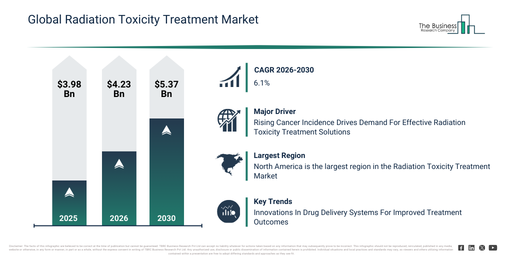
    The market size for radiation toxicity treatment has shown robust expansion over recent years. This market is projected to expand from $3.98 billion in 2025 to reach $4.23 billion by 2026, demonstrating a compound annual growth rate (CAGR) of 6.4%. The historical period’s expansion is linked to several factors, including the greater application of radiation in medical interventions, an increasing occurrence of nuclear and radiation exposure risks, governmental reserves of radiation countermeasures, broader applications of oncology radiotherapy, and improvements in hematopoietic support therapies.

    The radiation toxicity treatment market size is anticipated to demonstrate substantial growth over the next few years. It is projected to expand to $5.37 billion by 2030, exhibiting a compound annual growth rate (CAGR) of 6.1%. This expansion during the forecast period is propelled by factors such as increasing investments in advanced radiation countermeasures, a rising demand for rapid-response radiation treatments, the broadening of personalized radiation toxicity management, an enhanced focus on long-term survivorship care, and ongoing clinical research into novel radioprotective agents. Significant trends for the forecast period encompass the increasing development of targeted radioprotective therapies, a growing utilization of colony stimulating factors in treatment protocols, an escalating emphasis on bone marrow recovery solutions, the expansion of emergency radiation preparedness treatments, and improved clinical management of acute radiation syndrome.

    Download the Free Sample Report to Explore Key Market Insights:

    https://www.thebusinessresearchcompany.com/sample.aspx?id=20942&type=smp

    Which Major Factors Are Driving The Expansion Of The Radiation Toxicity Treatment Market?

    The rising incidence of cancer is anticipated to fuel the expansion of the radiation toxicity treatment market in the future. Cancer refers to a collection of illnesses marked by the unrestrained multiplication and spread of atypical cells, capable of infiltrating adjacent tissues and migrating to various bodily regions. This growing prevalence of cancer stems from elements such as evolving lifestyles, environmental contamination, inherited predispositions, and enhanced diagnostic tools enabling earlier discovery. Treating radiation toxicity is crucial for managing the adverse effects of radiation therapy during cancer treatment, aiding patient recuperation, and mitigating enduring harm. As an illustration, a report from August 2024 by the UK-based charitable organization, Macmillan Cancer Support, indicates that over 3 million people are currently living with cancer in the UK, with projections showing an increase to 3.5 million by 2025, 4 million by 2030, and 5.3 million by 2040. Consequently, the expanding occurrence of cancer is a key factor boosting the radiation toxicity treatment market’s development.

    How Is The Radiation Toxicity Treatment Market Structured Across Different Segments?

    The radiation toxicity treatment market covered in this report is segmented –

    1) By Product: Colony Stimulating Factors, Potassium Iodide, Prussian Blue, Diethylenetriamine Pentaacetic Acid, Others Products

    2) By Indication: Acute Radiation Syndrome, Chronic Radiation Syndrome

    3) By Radiation Type: Ionizing Radiation, Accidental And Therapeutic Radiation Exposure

    4) By End-User: Hospitals, Research And Academic Institutes

    Subsegments:

    1) By Colony Stimulating Factors: Granulocyte Colony-Stimulating Factor (G-CSF), Granulocyte-Macrophage Colony-Stimulating Factor (GM-CSF)

    2) By Potassium Iodide: Oral Potassium Iodide Tablets, Liquid Potassium Iodide Solution

    3) By Prussian Blue: Capsules Of Prussian Blue, Prussian Blue Resin

    4) By Diethylenetriamine Pentaacetic Acid (DTPA): Calcium DTPA Injection, Zinc DTPA Injection

    5) By Other Products: Amifostine, Sodium Bicarbonate, Doxycycline, Activated Charcoal

    What Trends Are Projected To Affect The Radiation Toxicity Treatment Market?

    Leading companies in the radiation toxicity treatment market are concentrating on technological advancements, such as sophisticated drug delivery systems, to enhance the precision and effectiveness of treatments, improve patient compliance, and minimize adverse effects, ultimately leading to better therapeutic outcomes and faster recovery. A drug delivery system is a method designed to direct medication to specific bodily areas, ensuring correct dosage and efficacy while reducing unwanted consequences. For example, in December 2023, Coherus BioSciences, a US-based biopharmaceutical firm, announced that the U.S. FDA had granted approval for UDENYCA ONBODY, a new on-body injector for pegfilgrastim-cbqv. This device is intended for use the day after chemotherapy to help lower the risk of infection associated with febrile neutropenia. The injector delivers the medication in just five minutes and features a retractable needle for increased safety and comfort. With this approval, Coherus aims to provide a more convenient and user-friendly option for managing chemotherapy side effects.

    Which Major Players Dominate The Radiation Toxicity Treatment Market?

    Major companies operating in the radiation toxicity treatment market are Pfizer Inc., Merck And Co Inc., Bayer AG, Sanofi S.A., Bristol Myers Squibb Company, AstraZeneca PLC, Novartis AG, Amgen Inc., Recipharm AB, Coherus BioSciences Inc., Eckert And Ziegler Strahlen Und Medizintechnik AG, Theragenics Corp., NorthStar Medical Radioisotopes LLC, Fusion Pharmaceuticals Inc., Partner Therapeutics Inc., Heyl Chemisch pharmazeutische Fabrik GmbH And Co KG, Humanetics Corporation, Actinium Pharmaceuticals Inc., Clarity Pharmaceuticals Ltd., Emergent BioSolutions Inc., Bavarian Nordic A S, BTG International Ltd., Jubilant Radiopharma, Cardinal Health Inc.

    Read the full radiation toxicity treatment market report here:

    https://www.thebusinessresearchcompany.com/report/radiation-toxicity-treatment-global-market-report

    Which Region Currently Holds The Largest Share Of The Radiation Toxicity Treatment Market?

    North America was the largest region in the radiation toxicity treatment market in 2025. Asia-Pacific is expected to be the fastest-growing region in the forecast period. The regions covered in the radiation toxicity treatment market report are Asia-Pacific, South East Asia, Western Europe, Eastern Europe, North America, South America, Middle East, Africa.

    Request A Tailored Radiation Toxicity Treatment Market Research Report For Competitive Advantage:

    https://www.thebusinessresearchcompany.com/customise?id=20942&type=smp

    Browse Through More Reports Similar to the Global Radiation Toxicity Treatment Market 2026, By The Business Research Company

    Automotive Shielding Global Market Report

    https://www.thebusinessresearchcompany.com/report/automotive-shielding-global-market-report

    Radiation Curable Coatings Global Market Report

    https://www.thebusinessresearchcompany.com/report/radiation-curable-coatings-global-market-report

    Thermal Insulation Material Global Market Report

    https://www.thebusinessresearchcompany.com/report/thermal-insulation-material-global-market-report

    Get in touch with us:

    The Business Research Company: https://www.thebusinessresearchcompany.com/

    Americas +1 310-496-7795

    Asia +44 7882 955267 & +91 8897263534

    Europe +44 7882 955267

    Email us at info@tbrc.info

    Follow us on:

    LinkedIn: https://in.linkedin.com/company/the-business-research-company

    YouTube: https://www.youtube.com/channel/UC24_fI0rV8cR5DxlCpgmyFQ

    Global Market Model: https://www.thebusinessresearchcompany.com/global-market-model
  • Global Primary Health Care Service Market Report 2026–2035 Highlighting Expansion Outlook and Forecast Opportunities

    Global Primary Health Care Service Market Report 2026–2035 Highlighting Expansion Outlook and Forecast Opportunities

    The Business Research Company’s 2026 market reports include new capabilities such as market attractiveness scoring and analysis, total addressable market analysis, company scoring matrix, interactive excel data dashboard, improved supply chain analysis, upcoming startups in the market, and overview of key products, aimed at improving the depth, usability, and strategic value of the insights delivered.

    What Market Valuation Is Forecasted For The Primary Health Care Service Market By 2030 Starting From Its 2026 Size?

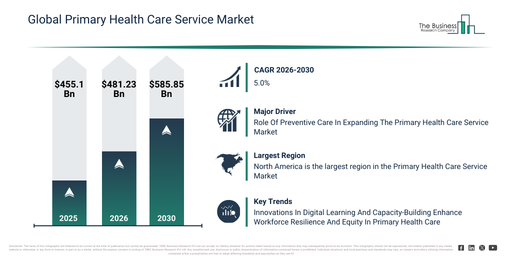
    The primary health care service market has experienced substantial growth recently. This market is projected to expand from $455.1 billion in 2025 to $481.23 billion in 2026, exhibiting a compound annual growth rate (CAGR) of 5.7%. The expansion observed in the past can be attributed to the development of public health infrastructure, improved access to basic healthcare services, an increase in outpatient and clinic-based care, rising demand for preventive healthcare, and the wider implementation of community health programs.

    The primary health care service market size is anticipated to undergo significant growth in the upcoming years. It is projected to achieve a value of $585.85 billion by 2030, demonstrating a compound annual growth rate (CAGR) of 5.0%. This expansion over the forecast period is largely owing to increasing investments in digital primary care platforms, a rising demand for value-based care delivery, the enlargement of home-based healthcare services, the growing integration of remote monitoring tools, and an increasing emphasis on population health outcomes. Key developments expected within this period encompass the expansion of integrated primary care networks, the growing adoption of virtual care models, a heightened focus on preventive and community health services, improved coordination across the care continuum, and enhanced utilization of digital health records.

    Download the Free Sample Report to Explore Key Market Insights:

    https://www.thebusinessresearchcompany.com/sample.aspx?id=15904&type=smp

    Which Market Drivers Are Supporting The Expansion Of The Primary Health Care Service Market?

    The increasing importance placed on preventive care is expected to drive the expansion of the primary health care service market going forward. Preventive care involves healthcare services and interventions designed to prevent disease, identify health conditions early, and foster overall health and well-being. This heightened focus on preventive care within primary health care services signifies a conscious shift towards proactive healthcare management, aiming to decrease healthcare expenses and improve long-term health outcomes. Allocating resources to preventive care within primary health care services is vital for reducing healthcare costs, enhancing health outcomes, and supporting long-term sustainability. For instance, in March 2024, according to a report by the Government of the United Kingdom, a UK-based information website, in March 2023, the proportion of individuals with type 1 diabetes in England receiving 8 care processes at GP practices participating in the NDA climbed to 43.8%, an increase from 35.2% recorded the preceding year. Therefore, the growing emphasis on preventive care is fueling the growth of the primary health care service market.

    Which Segment Categories Define The Primary Health Care Service Market?

    The primary health care service market covered in this report is segmented –

    1) By Service: Injury, Preventive Care, Chronic Conditions, Acute Conditions, Pre Or Post-Surgery

    2) By Mode Of Consultation: Virtual, Physical

    3) By Age Group: Infants, Pediatrics, Adults, Geriatrics

    4) By Provider: Hospitals, Clinics, Outpatient Department, Other Providers

    Subsegments:

    1) By Injury: Treatment Of Minor Injuries, Emergency Care Services

    2) By Rehabilitation: Physical Rehabilitation, Occupational Rehabilitation

    3) By Preventive Care: Health Screenings, Vaccination Services, Health Education And Counseling

    4) By Chronic Conditions: Diabetes Management, Hypertension Management, Asthma And Respiratory Disease Care

    5) By Acute Conditions: Short-Term Illnesses Treatment, Infections And Injuries, Immediate Care Services

    6) By Pre Or Post-Surgery: Pre-Surgical Consultation And Preparation, Post-Surgical Monitoring And Rehabilitation

    What Key Trends Are Influencing The Development Of The Primary Health Care Service Market?

    Major organizations operating in the primary health care service market are concentrating on developing advanced digital learning and capacity-building solutions. These efforts are designed to enhance workforce resilience, promote collaboration, and facilitate equitable health service delivery. Digital capacity-building provides a scalable approach for strengthening the skills and competencies of healthcare workers across regions by integrating online courses, workshops, and interactive communities. For instance, in August 2025, the Pan American Health Organization (PAHO), a US-based international public health agency, launched the Primary Health Care Learning Pathway, alongside the virtual course “Introduction to PHC in the 21st Century: Principles and Implementation.” The course extends for around 16 hours, structured across five modules, and encompasses foundational and strategic aspects of PHC, featuring practical regional examples. It highlights people-centred care, community engagement, social determinants, and intersectoral teamwork. Targeting interprofessional teams, managers, and decision-makers, the learning path aims to deepen understanding of PHC as a transformative strategy for building more equitable and resilient health systems. Participants receive certification through PAHO’s Virtual Campus for Public Health upon completing the evaluation and survey.

    Who Are The Top Companies Competing In The Primary Health Care Service Market?

    Major companies operating in the primary health care service market are UnitedHealth Group, CVS Health Corporation, Centene Corporation, Kaiser Permanente, Humana Inc, HCA Healthcare, Ascension Health, Providence Health And Services, Tenet Healthcare, Mayo Clinic, AdventHealth, Sutter Health, Intermountain Healthcare, Mount Sinai Health System, Cleveland Clinic Foundation, Dignity Health, Baylor Scott And White Health, Cedars Sinai Medical Center, Trinity Health Corporation, Massachusetts General Hospital, Apollo Hospitals Enterprise Limited, UCSF Health, Primary Health Care Corporation, Ramsay Health Care Limited

    Read the full primary health care service market report here:

    https://www.thebusinessresearchcompany.com/report/primary-health-care-service-global-market-report

    How Is The Primary Health Care Service Market Distributed Across Key Geographic Regions?

    North America was the largest region in the primary health care service market in 2025. The regions covered in the primary health care service market report are Asia-Pacific, South East Asia, Western Europe, Eastern Europe, North America, South America, Middle East, Africa.

    Request A Tailored Primary Health Care Service Market Research Report For Competitive Advantage:

    https://www.thebusinessresearchcompany.com/customise?id=15904&type=smp

    Browse Through More Reports Similar to the Global Primary Health Care Service Market 2026, By The Business Research Company

    Primary Cell Culture Global Market Report

    https://www.thebusinessresearchcompany.com/report/primary-cell-culture-global-market-report

    Competent Cells Global Market Report

    https://www.thebusinessresearchcompany.com/report/competent-cells-global-market-report

    Cell Cultures Global Market Report

    https://www.thebusinessresearchcompany.com/report/cell-cultures-global-market-report

    Get in touch with us:

    The Business Research Company: https://www.thebusinessresearchcompany.com/

    Americas +1 310-496-7795

    Asia +44 7882 955267 & +91 8897263534

    Europe +44 7882 955267

    Email us at info@tbrc.info

    Follow us on:

    LinkedIn: https://in.linkedin.com/company/the-business-research-company

    YouTube: https://www.youtube.com/channel/UC24_fI0rV8cR5DxlCpgmyFQ

    Global Market Model: https://www.thebusinessresearchcompany.com/global-market-model
  • Radiation Shielding Material Market Size Outlook and Demand Growth Across 2026–2030

    Radiation Shielding Material Market Size Outlook and Demand Growth Across 2026–2030

    The Business Research Company’s 2026 market reports include new capabilities such as market attractiveness scoring and analysis, total addressable market analysis, company scoring matrix, interactive excel data dashboard, improved supply chain analysis, upcoming startups in the market, and overview of key products, aimed at improving the depth, usability, and strategic value of the insights delivered.

    What Is The Market Size Of The Radiation Shielding Material Market In 2026 And What Value Is Projected For 2030?

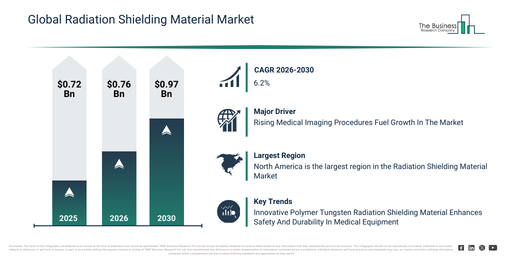
    The radiation shielding material market has experienced substantial expansion in recent years. It is anticipated to increase from $0.72 billion in 2025 to $0.76 billion in 2026, exhibiting a compound annual growth rate (CAGR) of 6.5%. This historical growth can be attributed to several factors, including the expansion of diagnostic imaging facilities, the increased application of radiation-based medical procedures, the continued reliance on traditional lead shielding, an upsurge in nuclear research activities, and the establishment of basic radiation safety standards.

    The radiation shielding material market size is projected to experience robust growth in the upcoming years. It is forecasted to expand to $0.97 billion in 2030, achieving a compound annual growth rate (CAGR) of 6.2%. This expansion during the forecast period can be attributed to the increasing adoption of sustainable shielding materials, growing investments in modernizing healthcare infrastructure, the enlargement of radiotherapy and nuclear medicine facilities, a rising emphasis on lightweight and flexible shielding designs, and a heightened regulatory focus on radiation safety. Prominent trends for the forecast period include the increasing uptake of lead-free shielding materials, a surge in demand for lightweight composite shielding solutions, the expanding utilization of modular and prefabricated shielding systems, the broadened scope of radiation protection in healthcare infrastructure, and an enhanced focus on occupational safety compliance.

    Download the Free Sample Report to Explore Key Market Insights:

    https://www.thebusinessresearchcompany.com/sample.aspx?id=20941&type=smp

    What Key Drivers Are Influencing The Growth Of The Radiation Shielding Material Market?

    An anticipated rise in medical imaging procedures is set to drive the growth of the radiation shielding material market moving forward. Medical imaging procedures represent diagnostic methods that utilize diverse technologies such as X-rays, magnetic resonance imaging (MRI), or ultrasound to visualize the body’s interior for the detection and monitoring of various health conditions. This expansion in medical imaging procedures can be attributed to progress in imaging technology, an increasing prevalence of chronic diseases, greater awareness and accessibility, and regulatory backing for advanced healthcare technologies. Radiation shielding materials, including lead and lead-free alloys, are crucial in medical imaging to protect patients and healthcare workers from harmful radiation exposure while ensuring high-quality imaging. For instance, in November 2023, the National Health Service, a UK-based government department, reported that England recorded 45.0 million imaging tests in the year ending March 2023, indicating a 2.2% increase compared to 44.0 million in the previous year. Consequently, the escalating number of medical imaging procedures is a primary driver for the radiation shielding material market.

    What Are The Key Segments Of The Radiation Shielding Material Market?

    The radiation shielding material market covered in this report is segmented –

    1) By Type: Electromagnetic Radiation, Particle Radiation

    2) By Material: Lead Shielding, Lead Composite Shielding, Non-Lead And Lead Free Shielding

    3) By Form: Sheets, Blocks, Bricks, Panels, Castings

    4) By Application: Diagnostic X-Ray Room Shielding, CT Scanner Shielding Facility, MRI Room Shielding, Nuclear Medicine Imaging shielding, Radiotherapy Shielding, Radiation Protection Safety Aprons And Apparel And Equipments

    5) By End User: Healthcare, Manufacturing, Construction, Energy, Research

    Subsegments:

    1) By Electromagnetic Radiation: X-Rays, Gamma Rays, Ultraviolet (UV) Radiation, Microwaves, Radiofrequency (RF) Radiation

    2) By Particle Radiation: Neutron Radiation, Alpha Particles, Beta Particles, Heavy Ions

    Which Upcoming Trends Are Expected To Influence The Radiation Shielding Material Market?

    Leading companies in the radiation shielding material market are prioritizing the development of innovative products, such as polymer tungsten for radiation shielding, to improve radiation protection, decrease weight, and enhance durability for various industrial uses. Polymer tungsten for radiation shielding is defined as a composite material created by combining tungsten with a polymer matrix, offering an effective and lightweight alternative to traditional lead-based shielding. For example, in November 2024, Stanford Advanced Materials (SAM), a US-based manufacturing entity, introduced Polymer Tungsten, an advanced radiation shielding material that integrates tungsten powder with polymer resins. This new offering provides a flexible and environmentally responsible substitute for conventional lead-based shielding, which carries health risks due to its toxic nature. Polymer tungsten preserves high radiation resistance while being easier to shape and manipulate, making it appropriate for applications in medical equipment such as X-ray machines and computed tomography (CT) scanners.

    Who Are The Leading Companies Operating In The Radiation Shielding Material Market?

    Major companies operating in the radiation shielding material market are General Electric Healthcare, L3Harris Technologies Inc., ESCO Technologies Inc., Mirion Technologies Inc., Ultraray Group Inc., ETS-Lindgren Inc., Berthold Technologies GmbH And Co.KG, Nelco Worldwide, Wardray Premise Ltd., Dynalab Corp., Techno-Aide Inc., Alimed Inc., Universal Shielding Corporation, MarShield Radiation Protection Services Inc, Veritas Medical Solutions, Plastic Design Inc, Tungsten Heavy Powder And Parts Inc., Amray Medical Limited, Ray-Bar Engineering Corporation, A And L Shielding Inc, MWT Materials Inc., Nuclear Lead Co. Inc, Protech Medical Inc, Radiation Shielding Technologies Inc., XrayCurtains.com

    Read the full radiation shielding material market report here:

    https://www.thebusinessresearchcompany.com/report/radiation-shielding-material-global-market-report

    Which Region Is Expected To Register The Fastest Growth In The Radiation Shielding Material Market?

    North America was the largest region in the radiation shielding material market in 2025. Asia-Pacific is expected to be the fastest-growing region in the forecast period. The regions covered in the radiation shielding material market report are Asia-Pacific, South East Asia, Western Europe, Eastern Europe, North America, South America, Middle East, Africa.

    Request A Tailored Radiation Shielding Material Market Research Report For Competitive Advantage:

    https://www.thebusinessresearchcompany.com/customise?id=20941&type=smp

    Browse Through More Reports Similar to the Global Radiation Shielding Material Market 2026, By The Business Research Company

    Radiotherapy Devices Global Market Report

    https://www.thebusinessresearchcompany.com/report/radiotherapy-devices-global-market-report

    Oncology Devices Global Market Report

    https://www.thebusinessresearchcompany.com/report/oncology-devices-global-market-report

    Oncology Drugs Market

    https://www.thebusinessresearchcompany.com/report/oncology-drugs-market

    Get in touch with us:

    The Business Research Company: https://www.thebusinessresearchcompany.com/

    Americas +1 310-496-7795

    Asia +44 7882 955267 & +91 8897263534

    Europe +44 7882 955267

    Email us at info@tbrc.info

    Follow us on:

    LinkedIn: https://in.linkedin.com/company/the-business-research-company

    YouTube: https://www.youtube.com/channel/UC24_fI0rV8cR5DxlCpgmyFQ

    Global Market Model: https://www.thebusinessresearchcompany.com/global-market-model
  • Primary Cells Market Growth Prospects 2026–2030 with Innovation Trends and Competitive Landscape

    Primary Cells Market Growth Prospects 2026–2030 with Innovation Trends and Competitive Landscape

    The Business Research Company’s 2026 market reports include new capabilities such as market attractiveness scoring and analysis, total addressable market analysis, company scoring matrix, interactive excel data dashboard, improved supply chain analysis, upcoming startups in the market, and overview of key products, aimed at improving the depth, usability, and strategic value of the insights delivered.

    How Is The Market Size Of The Primary Cells Market Expected To Change Between 2026 And 2030?

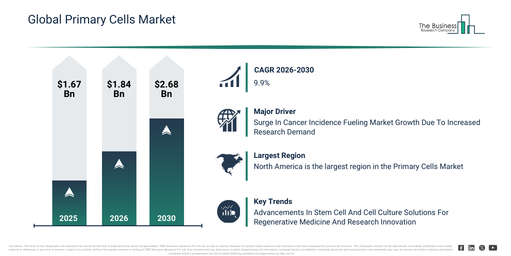
    The primary cells market has experienced significant growth in recent years. It is projected to expand from $1.67 billion in 2025 to $1.84 billion in 2026, demonstrating a compound annual growth rate (CAGR) of 10.2%. Historically, this growth can be ascribed to the expansion of biomedical research activities, increased utilization of cell-based disease models, rising investment in cancer research, the proliferation of virology and immunology studies, and the availability of advanced cell isolation techniques.

    The primary cells market is poised for significant expansion in the coming years. This market is projected to reach $2.68 billion by 2030, exhibiting a compound annual growth rate (CAGR) of 9.9%. Drivers for this expansion during the forecast period include the increasing demand for precision medicine applications, the rising adoption of primary cells in drug discovery, the expansion of regenerative medicine research, the growing utilization of AI-driven cell analytics, and increased investment in advanced cell therapies. Key trends anticipated in the same period involve a greater reliance on primary cells in translational research, the expanding adoption of 3D cell culture models, a growing demand for human-derived primary cells, the broadening of personalized cell-based assays, and a heightened emphasis on cell quality and traceability.

    Download the Free Sample Report to Explore Key Market Insights:

    https://www.thebusinessresearchcompany.com/sample.aspx?id=14165&type=smp

    What Underlying Factors Are Accelerating The Growth Of The Primary Cells Market?

    An increase in cancer diagnoses is anticipated to drive expansion in the primary cells market. Cancer refers to a condition where specific bodily cells proliferate without control, extending to various regions and interfering with normal physiological processes. The uptick in cancer cases is linked to extended life expectancies, as more individuals attain ages prone to cancer development, resulting in a greater prevalence across the population. Primary cells assist in addressing cancer by offering biologically precise cell models, enabling researchers to investigate tumor characteristics and evaluate prospective therapies with increased dependability. For example, in February 2024, the World Health Organization, an international health body based in Switzerland, projected that by 2050, there would be over 35 million new cancer cases, marking a 77% surge from the estimated 20 million cases in 2022. Regarding the overall impact, high HDI countries are projected to bear the largest absolute rise in incidence, with an additional 4.8 million new cases forecasted for 2050 relative to 2022 projections. Consequently, the growing number of cancer instances is set to boost the primary cell market’s growth.

    How Is The Primary Cells Market Structured Across Different Segments?

    The primary cells market covered in this report is segmented –

    1) By Type: Hematopoietic Cells, Dermatophytes, Gastrointestinal Cells, Hepatocytes, Lung Cells, Renal Cells, Heart Cells, Musculoskeletal Cells, Other Primary Cells

    2) By Origin: Human Primary Cells, Animal Primary Cells

    3) By End User: Pharmaceuticals, Biotechnology Companies, Contract Research Organizations (CRO), Academic And Research Institutes, Other End Users

    Subsegments:

    1) By Hematopoietic Cells: Bone Marrow-Derived Cells, Peripheral Blood-Derived Cells

    2) By Dermatophytes: Keratinocytes, Fibroblasts

    3) By Gastrointestinal Cells: Enterocytes, Goblet Cells, Paneth Cells

    4) By Hepatocytes: Liver Parenchymal Cells, Hepatic Stellate Cells

    5) By Lung Cells: Alveolar Epithelial Cells, Bronchial Epithelial Cells

    6) By Renal Cells: Proximal Tubular Cells, Glomerular Cells

    7) By Heart Cells: Cardiomyocytes, Cardiac Fibroblasts

    8) By Musculoskeletal Cells: Myoblasts, Chondrocytes

    9) By Other Primary Cells: Endothelial Cells, Adipocytes

    How Are Trends Impacting The Primary Cells Market?

    Major companies operating in the primary cell market are concentrating on enhancing cell products, such as cell culture and stem cell products, to boost research applications and therapeutic developments. A novel serum-free medium is a culture or growth medium employed in cell culture or tissue culture that contains no serum, specifically fetal bovine serum (FBS) or other animal-derived sera. For instance, in July 2024, Bioserve Biotechnologies (India) Private Ltd., an India-based provider of biotechnology and life sciences solutions, launched advanced stem cell products in India. These new products from REPROCELL aim to encourage innovation in scientific research and drug development, thereby supporting advancements in regenerative medicine and therapeutic discovery in the Indian region.

    Which Major Players Dominate The Primary Cells Market?

    Major companies operating in the primary cells market are Thermo Fisher Scientific Inc, Merck KGaA, BD Biosciences, Corning Incorporated, Cytiva, Lonza Group Ltd, Charles River Laboratories Inc, STEMCELL Technologies Inc, American Type Culture Collection, BioIVT, InvivoGen, HemaCare Corporation, Creative Bioarray Inc, PromoCell GmbH, CellGenix, AllCells LLC, Axol Bioscience Ltd, AnaBios Corporation, ReachBio Research Labs, PELOBIOTECH GmbH, Cell Biologics Inc, ZenBio Inc, StemBioSys Inc, MatTek Corporation

    Read the full primary cells market report here:

    https://www.thebusinessresearchcompany.com/report/primary-cells-global-market-report

    Which Region Is Projected To Dominate The Primary Cells Market During The Forecast Period?

    North America was the largest region in the primary cells market in 2025. The regions covered in the primary cells market report are Asia-Pacific, South East Asia, Western Europe, Eastern Europe, North America, South America, Middle East, Africa.

    Request A Tailored Primary Cells Market Research Report For Competitive Advantage:

    https://www.thebusinessresearchcompany.com/customise?id=14165&type=smp

    Browse Through More Reports Similar to the Global Primary Cells Market 2026, By The Business Research Company

    Point Of Care Diagnostics Global Market Report

    https://www.thebusinessresearchcompany.com/report/point-of-care-diagnostics-global-market-report

    Clinical Diagnostics Global Market Report

    https://www.thebusinessresearchcompany.com/report/clinical-diagnostics-global-market-report

    Poc Medical Imaging Global Market Report

    https://www.thebusinessresearchcompany.com/report/poc-medical-imaging-global-market-report

    Get in touch with us:

    The Business Research Company: https://www.thebusinessresearchcompany.com/

    Americas +1 310-496-7795

    Asia +44 7882 955267 & +91 8897263534

    Europe +44 7882 955267

    Email us at info@tbrc.info

    Follow us on:

    LinkedIn: https://in.linkedin.com/company/the-business-research-company

    YouTube: https://www.youtube.com/channel/UC24_fI0rV8cR5DxlCpgmyFQ

    Global Market Model: https://www.thebusinessresearchcompany.com/global-market-model
  • Radiation Oncology Market Insights Highlighting Opportunities and Drivers Supporting Growth to 2030

    Radiation Oncology Market Insights Highlighting Opportunities and Drivers Supporting Growth to 2030

    The Business Research Company’s 2026 market reports include new capabilities such as market attractiveness scoring and analysis, total addressable market analysis, company scoring matrix, interactive excel data dashboard, improved supply chain analysis, upcoming startups in the market, and overview of key products, aimed at improving the depth, usability, and strategic value of the insights delivered.

    What Will Be The Estimated Market Valuation Of The Radiation Oncology Market By The End Of 2030?

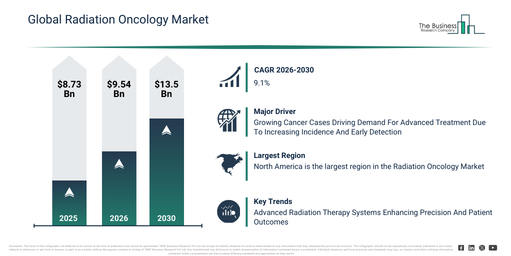
    The radiation oncology market size has seen substantial growth in recent years. It is forecast to rise from $8.73 billion in 2025 to $9.54 billion in 2026, exhibiting a compound annual growth rate (CAGR) of 9.3%. Historically, this market’s expansion can be ascribed to several factors, including increasing cancer incidence rates, the proliferation of oncology treatment centers, the adoption of external beam radiation therapy, the availability of standardized radiotherapy protocols, and growing investment in cancer care infrastructure.

    The radiation oncology market is projected to experience substantial expansion over the coming years, with its valuation anticipated to reach $13.5 billion by 2030, demonstrating a compound annual growth rate (CAGR) of 9.1%. This anticipated growth during the forecast period is primarily driven by factors such as the increasing integration of personalized oncology treatments, a surge in demand for stereotactic and proton therapies, the broader implementation of AI-assisted treatment planning, a greater emphasis on outpatient cancer care, and heightened investments in sophisticated oncology equipment. Key trends defining this period encompass the growing adoption of image-guided radiation therapy, an increasing application of precision and targeted treatment techniques, the expanding role of AI in treatment planning, the deployment of more advanced linear accelerator installations, and a sharpened focus on reducing radiation exposure to healthy tissues.

    Download the Free Sample Report to Explore Key Market Insights:

    https://www.thebusinessresearchcompany.com/sample.aspx?id=23494&type=smp

    What Major Growth Drivers Are Shaping The Outlook Of The Radiation Oncology Market?

    The increasing global incidence of cancer is projected to significantly boost the expansion of the radiation oncology market. The prevalence of cancer is growing due to factors such as aging populations, lifestyle-related risk factors, and improved methods for early detection. Cancer cases are also rising because of increased exposure to risk factors like unhealthy lifestyles and environmental pollutants, which contribute to higher mutation rates and the gradual formation of malignant cells. Radiation oncology utilizes high-energy radiation to destroy cancer cells, reduce tumor size, and support surgical and chemotherapy interventions, with advanced techniques enhancing precision and patient outcomes. For example, in February 2024, the World Health Organization (WHO), a Switzerland-based intergovernmental organization, reported an estimated **20 million** new cancer cases in **2022**. The WHO/IARC additionally projects that by **2050**, new cancer cases could climb to **35 million**, marking a **77%** increase from **2022** levels. Consequently, the growing burden of cancer is stimulating demand for advanced radiation oncology treatments.

    Which Segment Classifications Shape The Radiation Oncology Market?

    The radiation oncology market covered in this report is segmented –

    1) By Type: External Beam Radiation Therapy, Internal Beam Radiation Therapy

    2) By Application: Prostate Cancer, Breast Cancer, Lung Cancer, Head And Neck Cancer, Colorectal Cancer, Cervical Cancer, Gynecological Cancer, Other Applications

    3) By End-User: Hospitals, Cancer Research Institutes, Other End-Users

    Subsegments:

    1) By Internal Beam Radiation Therapy: Brachytherapy, Endocavitary Brachytherapy, Interstitial Brachytherapy, Intraluminal Brachytherapy

    2) By External Beam Radiation Therapy: 3D Conformal Radiation Therapy (3DCRT), Intensity-Modulated Radiation Therapy (IMRT), Stereotactic Radiosurgery (SRS), Stereotactic Body Radiation Therapy (SBRT), Image-Guided Radiation Therapy (IGRT)

    How Are Trends Shaping The Direction Of The Radiation Oncology Market?

    Major companies within the radiation oncology market are prioritizing the development of advanced radiation therapy systems that incorporate AI-powered imaging and adaptive technologies. This focus is intended to improve treatment precision, minimize side effects, and enhance patient outcomes for a variety of cancer treatment applications. AI-powered radiotherapy involves utilizing artificial intelligence technologies to refine different aspects of radiation therapy, including its planning, imaging, delivery, and monitoring. An illustration of this trend occurred in May 2024, when Elekta, a Sweden-based medical technology company, launched Evo, its latest CT-Linac featuring high-definition AI-enhanced imaging, designed to advance radiation therapy techniques. This adaptable system offers support for both offline and online adaptive radiation therapy, alongside improved standard image-guided radiation therapy, thereby equipping clinicians with greater precision and flexibility to personalize treatments for individual patients. The goal of this innovation is to elevate patient outcomes by optimizing treatment accuracy and adaptability.

    Which Companies Are Expanding Their Footprint In The Radiation Oncology Market?

    Major companies operating in the radiation oncology market are Hitachi Ltd., Siemens Healthineers, Philips Healthcare, GE Healthcare Technologies Inc., Varian Medical Systems, Shimadzu Corporation, Elekta AB, Mirion Technologies, Ion Beam Applications (IBA), Accuray Incorporated, Canon Medical Systems, Eckert & Ziegler BEBIG, ViewRay Inc., MDS Nordion, Mevion Medical Systems, PTW-Freiburg, Toshiba Medical Systems, CivaTech Oncology, ProTom International, Radcal Corporation, ScandiDos.

    Read the full radiation oncology market report here:

    https://www.thebusinessresearchcompany.com/report/radiation-oncology-global-market-report

    Which Regions Are Projected To Dominate The Radiation Oncology Market In The Coming Years?

    North America was the largest region in the radiation oncology market in 2025. Asia-Pacific is expected to be the fastest-growing region in the forecast period. The regions covered in the radiation oncology market report are Asia-Pacific, South East Asia, Western Europe, Eastern Europe, North America, South America, Middle East, Africa.

    Request A Tailored Radiation Oncology Market Research Report For Competitive Advantage:

    https://www.thebusinessresearchcompany.com/customise?id=23494&type=smp

    Browse Through More Reports Similar to the Global Radiation Oncology Market 2026, By The Business Research Company

    Single Dose Radiotherapy Services Global Market Report

    https://www.thebusinessresearchcompany.com/report/single-dose-radiotherapy-services-global-market-report

    Medical Irradiation Global Market Report

    https://www.thebusinessresearchcompany.com/report/medical-irradiation-global-market-report

    Radiotherapy Devices Global Market Report

    https://www.thebusinessresearchcompany.com/report/radiotherapy-devices-global-market-report

    Get in touch with us:

    The Business Research Company: https://www.thebusinessresearchcompany.com/

    Americas +1 310-496-7795

    Asia +44 7882 955267 & +91 8897263534

    Europe +44 7882 955267

    Email us at info@tbrc.info

    Follow us on:

    LinkedIn: https://in.linkedin.com/company/the-business-research-company

    YouTube: https://www.youtube.com/channel/UC24_fI0rV8cR5DxlCpgmyFQ

    Global Market Model: https://www.thebusinessresearchcompany.com/global-market-model
  • Primary Care POC Diagnostics Market Forecast 2026–2035 Highlighting Market Data Patterns and Industry Insights

    Primary Care POC Diagnostics Market Forecast 2026–2035 Highlighting Market Data Patterns and Industry Insights

    The Business Research Company’s 2026 market reports include new capabilities such as market attractiveness scoring and analysis, total addressable market analysis, company scoring matrix, interactive excel data dashboard, improved supply chain analysis, upcoming startups in the market, and overview of key products, aimed at improving the depth, usability, and strategic value of the insights delivered.

    What Is The Market Size Of The Primary Care POC Diagnostics Market In 2026 And What Value Is Projected For 2030?

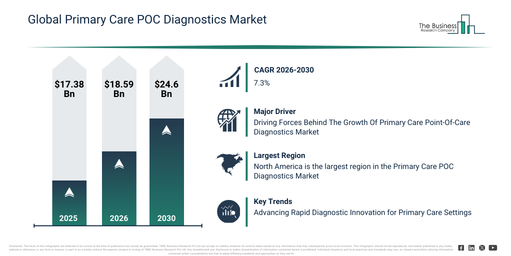
    The primary care poc diagnostics market size has shown substantial growth recently. It is forecast to grow from $17.38 billion in 2025 to $18.59 billion in 2026, achieving a compound annual growth rate (CAGR) of 7.0%. The expansion observed historically is attributable to factors including the increasing prevalence of infectious and chronic diseases, wider adoption of glucose and cardiometabolic testing, expansion of primary care diagnostic capabilities, increased use of otc diagnostic products, and improved accessibility of rapid tests.

    The primary care poc diagnostics market size is projected to experience robust expansion in the coming years. It is anticipated to reach $24.6 billion by 2030, advancing at a compound annual growth rate (CAGR) of 7.3%. This projected growth can be ascribed to several factors, including the increasing demand for decentralized diagnostics, the rising integration of AI-enabled diagnostics, the expansion of telehealth-supported testing, a growing focus on preventive screening, and increasing investments in personalized diagnostics. Throughout the forecast period, significant trends are expected to involve the increasing adoption of rapid diagnostic testing, the growing integration of digital PoC devices, a rising demand for home-use diagnostic kits, the expansion of multiplex testing platforms, and an enhanced focus on early disease detection.

    Download the Free Sample Report to Explore Key Market Insights:

    https://www.thebusinessresearchcompany.com/sample.aspx?id=15642&type=smp

    Which Growth Drivers Are Contributing To The Progress Of The Primary Care POC Diagnostics Market?

    The increasing occurrence of infectious diseases is anticipated to boost the expansion of the primary care POC diagnostics market in the future. These ailments are caused by pathogenic microorganisms such as bacteria, viruses, fungi, or parasites, and they can transmit between individuals either directly or indirectly through contact with contaminated surfaces, air, water, or vectors like insects. The widespread nature of infectious diseases stems from factors such as substandard environmental conditions, increasing urbanization, antimicrobial resistance, and insufficient vaccination rates. Primary care POC diagnostics serve as crucial instruments in combating infectious disease prevalence, enabling prompt detection, timely interventions, and efficient disease management across various healthcare environments. For example, data from March 2025 by the US federal agency, the Centers for Disease Control and Prevention (CDC), showed an increase in tuberculosis cases from 9,622 in 2023 to 10,347 in 2024 (an 8% increase). Concurrently, the incidence rate climbed from 2.9 to 3.0 per 100,000 population (a 6% rise). Consequently, the growing prevalence of infectious diseases is a key driver for the primary care POC diagnostics market.

    What Are The Key Segments Of The Primary Care POC Diagnostics Market?

    The primary care poc diagnostics market covered in this report is segmented –

    1) By Product: Glucose Monitoring, Cardiometabolic Testing Products, Infectious Disease Testing Products, Coagulation Testing Products, Pregnancy And Fertility Testing Products, Tumor Or Cancer Marker Testing Products, Cholesterol Testing Products, Hematology Testing Products, Drug-Of-Abuse (DOA) Testing Products, Other Products

    2) By Prescription: Prescription Based, Over-The-Counter (OTC) Testing

    3) By End-Use: Hospitals, Diagnostic Centers, Research Laboratories, Home-Care Settings, Other End-Uses

    Subsegments:

    1) By Glucose Monitoring: Blood Glucose Meters, Continuous Glucose Monitoring (Cgm) Systems, Test Strips For Glucose Meters, Glucose Control Solutions

    2) By Cardiometabolic Testing Products: Blood Pressure Monitors, Lipid Profile Testing Kits, Hemoglobin A1c Testing Kits, Ecg Or Ecg Monitors, Hba1c Point-Of-Care Devices

    3) By Infectious Disease Testing Products: Rapid Strep Tests, Influenza (Flu) Testing Kits, Covid-19 Rapid Tests, Hiv Rapid Testing Kits, Hepatitis Testing Kits, Malaria Rapid Diagnostic Tests (Rdts), Other Infectious Disease Tests

    4) By Coagulation Testing Products: Prothrombin Time (Pt) Testing Kits, International Normalized Ratio (Inr) Monitors, Activated Partial Thromboplastin Time (Aptt) Testing Kits, Coagulation Control Solutions, Whole Blood Coagulation Monitors

    5) By Pregnancy And Fertility Testing Products: Home Pregnancy Tests (Urine-Based), Ovulation Prediction Kits, Pregnancy Test Strips, Fertility Monitoring Devices

    6) By Tumor Or Cancer Marker Testing Products: Psa (Prostate-specific Antigen) Testing Kits, Cea (Carcinoembryonic Antigen) Testing Kits, Ca-125 (Ovarian Cancer Marker) Kits, Her2 Testing Kits, Other Tumor Marker Test Kits

    7) By Cholesterol Testing Products: Total Cholesterol Testing Kits, Ldl Or Hdl Testing Kits, Triglyceride Testing Kits, Point-Of-Care Lipid Panel Devices

    8) By Hematology Testing Products: Hemoglobin Test Kits, Hematocrit Testing Kits, Complete Blood Count (Cbc) Kits, Point-Of-Care Hematology Analyzers, Hemoglobin A1c Testing Devices

    9) By Drug-Of-Abuse (Doa) Testing Products: Urine Drug Tests, Oral Fluid Drug Tests, Saliva-Based Drug Tests, Blood-Based Drug Tests, Breath Alcohol Tests

    10) By Other Products: Allergy Testing Kits, Urinalysis Test Strips, Vitamin And Mineral Deficiency Testing Kits, Point-Of-Care Liver Function Tests, Kidney Function Testing Products, Blood Gas Testing Devices

    What Industry Trends Are Redefining The Primary Care POC Diagnostics Market?

    Leading companies in the primary care POC diagnostics market are focusing on the development of advanced microfluidic-based rapid susceptibility testing to improve timely antibiotic decision-making. This microfluidic rapid susceptibility testing employs minuscule fluid channels to swiftly isolate and cultivate bacteria, enabling an early determination of their response to various antimicrobials and reducing the waiting period for results. For example, in June 2023, Sysmex Corporation, a Japan-based diagnostic solutions firm, launched its PA-100 AST System, which features proprietary microfluidic technology. This system can identify bacteria from urine samples in about 15 minutes and deliver antimicrobial susceptibility test (AST) results in as little as 30 minutes during the initial clinic visit. The analyzer is compact, designed to fit on a desktop, and operates with reagent cartridges where samples are directly placed for automatic measurement. Healthcare professionals without specialized lab training can operate it easily. By accelerating diagnostics, the device supports appropriate antimicrobial use during initial patient visits and aids in the global battle against antimicrobial resistance.

    Who Are The Leading Companies Operating In The Primary Care POC Diagnostics Market?

    Major companies operating in the primary care poc diagnostics market are Hoffmann-La Roche Ltd, Abbott Laboratories, Siemens Healthineers AG, Becton, Dickinson And Company, bioMerieux SA, Quidel Corporation, Sysmex Corporation, Bio-Rad Laboratories Inc., Nova Biomedical Corporation, Randox Laboratories Ltd, Ortho Clinical Diagnostics, Nipro Corporation, OraSure Technologies, Meridian Bioscience Inc, DiaSorin SpA, Sekisui Diagnostics LLC, EKF Diagnostics Holdings plc, Trinity Biotech plc, Fujirebio Diagnostics Inc., Immunodiagnostic Systems Holdings PLC, Quotient Limited, AccuBioTech Co. Ltd., bioMedomics Inc.

    Read the full primary care poc diagnostics market report here:

    https://www.thebusinessresearchcompany.com/report/primary-care-poc-diagnostics-global-market-report

    What Are The Leading Geographic Regions In The Primary Care POC Diagnostics Market?

    North America was the largest region in the primary care POC diagnostics market in 2025. Asia-Pacific is expected to be the fastest-growing region in the forecast period. The regions covered in the primary care poc diagnostics market report are Asia-Pacific, South East Asia, Western Europe, Eastern Europe, North America, South America, Middle East, Africa.

    Request A Tailored Primary Care POC Diagnostics Market Research Report For Competitive Advantage:

    https://www.thebusinessresearchcompany.com/customise?id=15642&type=smp

    Browse Through More Reports Similar to the Global Primary Care POC Diagnostics Market 2026, By The Business Research Company

    Direct Primary Care Global Market Report

    https://www.thebusinessresearchcompany.com/report/direct-primary-care-global-market-report

    Direct Primary Care Global Market Report

    https://www.thebusinessresearchcompany.com/report/direct-primary-care-global-market-report

    Physician And Other Health Practitioner Global Market Report

    https://www.thebusinessresearchcompany.com/report/physician-and-other-health-practitioner-global-market-report

    Get in touch with us:

    The Business Research Company: https://www.thebusinessresearchcompany.com/

    Americas +1 310-496-7795

    Asia +44 7882 955267 & +91 8897263534

    Europe +44 7882 955267

    Email us at info@tbrc.info

    Follow us on:

    LinkedIn: https://in.linkedin.com/company/the-business-research-company

    YouTube: https://www.youtube.com/channel/UC24_fI0rV8cR5DxlCpgmyFQ

    Global Market Model: https://www.thebusinessresearchcompany.com/global-market-model
  • Global Radiation Dose Management Market Expected to Reach $2.27 Billion by 2030 with 17% CAGR

    Global Radiation Dose Management Market Expected to Reach $2.27 Billion by 2030 with 17% CAGR

    The Business Research Company’s 2026 market reports include new capabilities such as market attractiveness scoring and analysis, total addressable market analysis, company scoring matrix, interactive excel data dashboard, improved supply chain analysis, upcoming startups in the market, and overview of key products, aimed at improving the depth, usability, and strategic value of the insights delivered.

    What Market Size Growth Is Projected For The Radiation Dose Management Market During The Forecast Period 2026–2030?

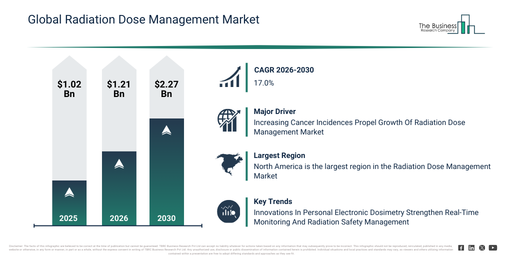
    The radiation dose management market has experienced significant expansion in recent years. Its valuation is set to increase from $1.02 billion in 2025 to $1.21 billion in 2026, reflecting a compound annual growth rate (CAGR) of 19.3%. The market’s historical growth can be attributed to the increasing use of advanced diagnostic imaging, rising awareness of radiation safety, expansion of CT and fluoroscopy procedures, implementation of radiation dose regulations, and the adoption of basic dose monitoring tools.

    The radiation dose management market is projected to experience swift expansion over the coming years. By 2030, its value is anticipated to reach $2.27 billion, exhibiting a compound annual growth rate (CAGR) of 17.0%. This anticipated growth can be linked to heightened investments in intelligent imaging systems, a surging need for patient-focused radiation safety, the broadening of integrated hospital IT infrastructure, the increasing use of predictive analytics in imaging, and a stronger emphasis on value-based healthcare. Key developments during this timeframe are expected to involve the wider uptake of AI-based dose optimization software, the greater incorporation of real-time dose monitoring systems, an expanding reliance on cloud-based radiation analytics platforms, the development of multi-modality dose management solutions, and a heightened commitment to compliance with regulatory dose reporting.

    Download the Free Sample Report to Explore Key Market Insights:

    https://www.thebusinessresearchcompany.com/sample.aspx?id=15912&type=smp

    What Drivers Are Expected To Influence The Radiation Dose Management Market During The Forecast Period?

    The expanding number of cancer cases is set to drive the growth of the radiation dose management market. Cancer involves the unchecked proliferation and spread of abnormal cells within the body, which can form a mass known as a tumor. The rise in cancer occurrences is attributed to multiple complex and linked factors, such as family medical history, lifestyle decisions, genetic predispositions, environmental factors, and an aging demographic. Radiation dose management solutions are vital in cancer care for achieving accurate diagnosis and efficient treatment, thereby reducing the risks associated with radiation exposure. For instance, in February 2024, the World Health Organization (WHO), an intergovernmental organization based in Switzerland, forecast over 35 million new cancer cases by 2050, marking a 77% rise from the projected 20 million cases in 2022. Thus, the increasing incidence of cancer cases is fueling the expansion of the radiation dose management market.

    What Market Segments Are Evaluated Within The Radiation Dose Management Market?

    The radiation dose management market covered in this report is segmented –

    1) By Component: Software, Services

    2) By Modality: Computed Tomography, Fluoroscopy And Interventional Imaging, Radiography And Mammography, Nuclear Medicine

    3) By Application: Oncology, Cardiology, Orthopedic Applications, Other Applications

    4) By End-User: Hospitals, Ambulatory Care Setting, Other End-Users

    Subsegments:

    1) By Software: Dose Monitoring Software, Dose Calculation Software, Reporting And Analytics Software

    2) By Services: Consulting Services, Implementation And Integration Services, Training And Support Services

    Which Market Trends Are Creating New Opportunities In The Radiation Dose Management Market?

    Leading companies in the radiation dose management market are enhancing their technological capabilities by rolling out innovative solutions, such as personal electronic dosimeters, to improve real-time monitoring and boost radiation safety. Personal electronic dosimeters are compact, mobile devices that provide immediate insights into the kind and amount of radiation exposure during operations, enabling responders to initiate prompt protective actions. For instance, in April 2024, Mirion Technologies Inc., a US-based radiation monitoring solutions company, released the Instadose VUE, its advanced wireless dosimeter. This device features wireless data transmission, an integrated dose display, and automated alerts when exposure thresholds are surpassed, facilitating faster, more accurate radiation dose assessment and enhanced safety management.

    Who Are The Top Market Participants Influencing The Radiation Dose Management Market?

    Major companies operating in the radiation dose management market are INFINITT Healthcare Co. Ltd., Bayer AG, Canon Inc., Siemens Healthcare, FUJIFILM Holdings Corporation, Philips Healthcare, GE Healthcare, Fortive Corporation, Mindray Medical International Limited, Sectra AB, Bracco Imaging S.P.A., Neusoft Medical Systems, United Imaging Healthcare, Agfa Gevaert Group, Dedalus S.P.A, Guerbet, Mirion Technologies Inc., Landauer, Novarad Corporation, Volpara Health Limited, Medic Vision, PACSHealth LLC, Medsquare, Nanjing Perlove Medical Equipment Co. Ltd., Carestream Health, Konica Minolta Healthcare, Hitachi Healthcare, Esaote S.p.A., Shimadzu Corporation, Toshiba Medical Systems

    Read the full radiation dose management market report here:

    https://www.thebusinessresearchcompany.com/report/radiation-dose-management-global-market-report

    Which Region Is Forecast To Lead The Radiation Dose Management Market In Terms Of Market Size?

    North America was the largest region in the radiation dose management market in 2025. Asia-Pacific is expected to be the fastest-growing region in the forecast period. The regions covered in the radiation dose management market report are Asia-Pacific, South East Asia, Western Europe, Eastern Europe, North America, South America, Middle East, Africa.

    Request A Tailored Radiation Dose Management Market Research Report For Competitive Advantage:

    https://www.thebusinessresearchcompany.com/customise?id=15912&type=smp

    Browse Through More Reports Similar to the Global Radiation Dose Management Market 2026, By The Business Research Company

    Polyclonal Antibodies Global Market Report

    https://www.thebusinessresearchcompany.com/report/polyclonal-antibodies-global-market-report

    Mammalian Polyclonal Immunoglobulin G Igg Antibody Global Market Report

    https://www.thebusinessresearchcompany.com/report/mammalian-polyclonal-immunoglobulin-g-igg-antibody-global-market-report

    Antibody Discovery Global Market Report

    https://www.thebusinessresearchcompany.com/report/antibody-discovery-global-market-report

    Get in touch with us:

    The Business Research Company: https://www.thebusinessresearchcompany.com/

    Americas +1 310-496-7795

    Asia +44 7882 955267 & +91 8897263534

    Europe +44 7882 955267

    Email us at info@tbrc.info

    Follow us on:

    LinkedIn: https://in.linkedin.com/company/the-business-research-company

    YouTube: https://www.youtube.com/channel/UC24_fI0rV8cR5DxlCpgmyFQ

    Global Market Model: https://www.thebusinessresearchcompany.com/global-market-model
  • Primary Care Physicians Market Outlook 2026–2030 with Major Growth Drivers and Emerging Industry Trends

    Primary Care Physicians Market Outlook 2026–2030 with Major Growth Drivers and Emerging Industry Trends

    The Business Research Company’s 2026 market reports include new capabilities such as market attractiveness scoring and analysis, total addressable market analysis, company scoring matrix, interactive excel data dashboard, improved supply chain analysis, upcoming startups in the market, and overview of key products, aimed at improving the depth, usability, and strategic value of the insights delivered.

    What Will Be The Estimated Market Valuation Of The Primary Care Physicians Market By The End Of 2030?

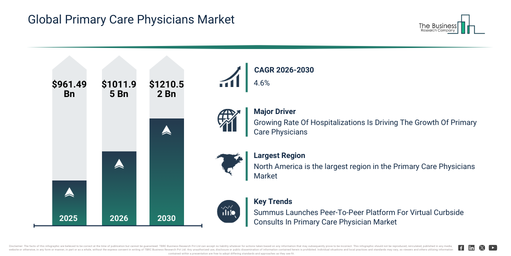
    The primary care physicians market has observed strong growth over recent years. It is anticipated to expand from $961.49 billion in 2025 to $1011.95 billion in 2026, demonstrating a compound annual growth rate (CAGR) of 5.2%. The expansion in the historical period can be ascribed to the increasing burden of chronic diseases, the broader reach of community-based healthcare delivery, a heightened demand for early diagnosis and prevention, an increase in outpatient care utilization, and the wider availability of skilled primary care professionals.

    The primary care physicians market size is projected to experience consistent expansion over the coming years. It is anticipated to reach $1210.52 billion by 2030, exhibiting a compound annual growth rate (CAGR) of 4.6%. This expansion during the forecast period is attributable to factors such as the increasing uptake of digital health tools, a heightened emphasis on population health management, the broadening of home-based primary care services, the expanding integration of AI-driven clinical decision support, and a rising need for coordinated long-term care. Key trends expected within this period encompass a greater acceptance of teleconsultation services, an escalating focus on preventive and prevention-led care models, the increasing incorporation of care coordination platforms, the broadening of value-based primary care models, and an intensified concentration on patient-centric care delivery.

    Download the Free Sample Report to Explore Key Market Insights:

    https://www.thebusinessresearchcompany.com/sample.aspx?id=16160&type=smp

    What Primary Drivers Are Shaping The Development Of The Primary Care Physicians Market?

    An increasing trend in hospital admissions is anticipated to fuel the expansion of the primary care physician market moving ahead. Hospitalization involves patients being admitted for medical care or monitoring. This surge in hospitalizations stems from an increase in chronic illnesses, intricate medical procedures necessitating hospital attention, and shifts in healthcare policies affecting access to primary care. Primary care doctors play a crucial role in decreasing both the occurrence and length of hospital stays by swiftly addressing health concerns, competently handling chronic ailments, and offering ongoing, integrated care. Such an approach leads to improved patient results and lower healthcare expenditures. For example, data from May 2025, provided by the Australian Institute of Health and Welfare, an Australia-based government agency, indicated a rise in hospitalizations from 12.1 million in 2022–23 to 12.6 million in 2023–24, marking a 4.1% year-on-year increase. Consequently, the rising number of hospitalizations is acting as a catalyst for the expansion of the primary care physician market.

    Which Segment Classifications Shape The Primary Care Physicians Market?

    The primary care physicians market covered in this report is segmented –

    1) By Service Type: Preventive Care, Chronic Disease Management, Acute Care, Maternal And Child Health, Other Service Types

    2) By Physician Type: General Practitioners (GPs), Family Medicine Physicians, Internal Medicine Physicians, Pediatricians, Other Physician Types

    3) By Patient Type: Pediatric, Adult, Geriatric

    4) By Practice Setting: Solo Practices, Group Practices, Hospital-Based Practices, Other Practice Settings

    5) By End-Use: Medical Clinics, Point Of Care Settings, Hospitals, Long-Term Care Facilities, Out Patient Department, Teleconsultation, Other End-Users

    Subsegments:

    1) By Preventive Care: Immunizations And Vaccinations, Health Screenings (Cancer Screenings, Cholesterol, Diabetes), Wellness Check-Ups, Lifestyle Counseling (Diet, Exercise, Smoking Cessation), Mental Health Screening, Smoking Cessation Programs

    2) By Chronic Disease Management: Diabetes Management, Hypertension (High Blood Pressure) Management, Asthma Or COPD Management, Cardiovascular Disease Management, Chronic Pain Management, Obesity Management

    3) By Acute Care: Urgent Care Services, Injury Treatment (Fractures, Sprains), Infections (Pneumonia, Flu), Short-Term Illnesses (Colds, Gastrointestinal Issues), Wound Care, Minor Surgical Procedures

    4) By Maternal And Child Health: Prenatal Care, Postnatal Care, Infant And Pediatric Care, Family Planning And Contraception, Vaccination Of Children, Newborn Screening

    5) By Other Service Types: Geriatric Care, Palliative And End-Of-Life Care, Weight Management And Nutrition Counseling, Telemedicine Services, Mental Health Counseling, Physical Therapy And Rehabilitation, Health Education Services

    What Key Developments And Trends Are Impacting The Primary Care Physicians Market?

    Leading companies within the primary care physician market are prioritizing the development of innovative solutions, such as virtual curbside consults, to secure a competitive advantage. Virtual curbside consults denote remote discussions between healthcare providers, typically primary care physicians and specialists, utilizing digital communication methods. For instance, in July 2023, Summus Global Inc., a US-based virtual specialty care company, unveiled its peer-to-peer platform, a new resource designed to link providers with specialists for eConsults. This tool grants real-time access to expert advice, empowering primary care physicians to consult with specialists and make prompt, informed decisions. The platform’s intuitive interface ensures continuous communication through secure messaging, video calls, or phone consultations.

    Which Companies Are Expanding Their Footprint In The Primary Care Physicians Market?

    Major companies operating in the primary care physicians market are Cleveland Clinic Foundation, New York University Langone Hospitals, University Of Pennsylvania Health System, Duke University Health System Inc, Mayo Clinic, Northwestern Memorial HealthCare, Cedars Sinai Medical Center, OneLife Healthcare Inc, ChenMed LLC, MDVIP Inc, Crossover Health Medical Group APC, New West Physicians PC, Duly Health And Care SC, Colonial Healthcare LLC, HealthCare Partners Medical Group Inc, Rhode Island Primary Care Physicians Corporation, Kaiser Permanente, Oak Street Health Inc, Village Medical, One Medical Group, Apollo Clinics, Aster Primary Care

    Read the full primary care physicians market report here:

    https://www.thebusinessresearchcompany.com/report/primary-care-physicians-global-market-report

    How Does The Primary Care Physicians Market Perform Across Major Global Regions?

    North America was the largest region in the primary care physicians market in 2025. Asia-Pacific is expected to be the fastest-growing region in the forecast period. The regions covered in the primary care physicians market report are Asia-Pacific, South East Asia, Western Europe, Eastern Europe, North America, South America, Middle East, Africa.

    Request A Tailored Primary Care Physicians Market Research Report For Competitive Advantage:

    https://www.thebusinessresearchcompany.com/customise?id=16160&type=smp

    Browse Through More Reports Similar to the Global Primary Care Physicians Market 2026, By The Business Research Company

    Diverticulitis Disease Global Market Report

    https://www.thebusinessresearchcompany.com/report/diverticulitis-disease-global-market-report

    Bilirubin Blood Test Global Market Report

    https://www.thebusinessresearchcompany.com/report/bilirubin-blood-test-global-market-report

    Hepatic Encephalopathy Global Market Report

    https://www.thebusinessresearchcompany.com/report/hepatic-encephalopathy-global-market-report

    Get in touch with us:

    The Business Research Company: https://www.thebusinessresearchcompany.com/

    Americas +1 310-496-7795

    Asia +44 7882 955267 & +91 8897263534

    Europe +44 7882 955267

    Email us at info@tbrc.info

    Follow us on:

    LinkedIn: https://in.linkedin.com/company/the-business-research-company

    YouTube: https://www.youtube.com/channel/UC24_fI0rV8cR5DxlCpgmyFQ

    Global Market Model: https://www.thebusinessresearchcompany.com/global-market-model
  • Rabbit Monoclonal Antibody Market Future Outlook Showing Expansion Toward $1.45 Billion by 2030

    Rabbit Monoclonal Antibody Market Future Outlook Showing Expansion Toward $1.45 Billion by 2030

    The Business Research Company’s 2026 market reports include new capabilities such as market attractiveness scoring and analysis, total addressable market analysis, company scoring matrix, interactive excel data dashboard, improved supply chain analysis, upcoming startups in the market, and overview of key products, aimed at improving the depth, usability, and strategic value of the insights delivered.

    How Will The Market Size Of The Rabbit Monoclonal Antibody Market Evolve From 2026 To 2030?

    The rabbit monoclonal antibody market has experienced robust expansion over the past few years. Projections indicate its size will increase from $0.92 billion in 2025 to $1.01 billion in 2026, demonstrating a compound annual growth rate (CAGR) of 9.9%. Historically, this growth can be ascribed to several factors, including the widening scope of protein research applications, a heightened need for sensitive detection reagents, increased adoption of immunohistochemistry, a rise in biomedical research funding, and the accessibility of hybridoma technologies.

    The rabbit monoclonal antibody market is anticipated to experience robust expansion over the next few years. It is projected to grow to $1.46 billion in 2030, demonstrating a compound annual growth rate (CAGR) of 9.6%. This expansion throughout the forecast period can be attributed to factors such as the increasing demand for precision diagnostics, the rising application of antibodies in drug discovery, the broadening of personalized medicine research, the growing adoption of recombinant antibody platforms, and an increasing emphasis on optimizing assay sensitivity. Major trends expected during this period include the increased use of rabbit antibodies for difficult epitopes, their rising utilization in advanced diagnostics, a growing preference for high-affinity antibodies, the expansion of recombinant rabbit antibody production, and an enhanced focus on analytical sensitivity.

    Download the Free Sample Report to Explore Key Market Insights:

    https://www.thebusinessresearchcompany.com/sample.aspx?id=30364&type=smp

    What Drivers Are Influencing The Rabbit Monoclonal Antibody Market?

    The increasing occurrence of chronic illnesses is anticipated to boost the expansion of the rabbit monoclonal antibody market in the future. Chronic diseases are long-lasting health problems that emerge gradually and persist for an extended duration, frequently necessitating ongoing medical attention. The rise in these conditions can be partly attributed to sedentary lifestyles, as extended periods of sitting and insufficient physical activity heighten the risk of ailments like heart issues and diabetes. Rabbit monoclonal antibodies contribute to chronic disease therapy by offering exceptionally specific and high-affinity targeting of proteins linked to the disease. They improve accuracy in treatment, minimize unintended side effects, and boost the effectiveness of therapy, leading to better results for patients and more efficient drug development. For example, in June 2024, the National Health Service, a UK-based government department, reported that 3,615,330 individuals registered with a general practitioner (GP) had been diagnosed with non-diabetic hyperglycemia or pre-diabetes (a condition with elevated blood sugar levels, not high enough to be classified as diabetes) in 2023, representing an 18% increase from 3,065,825 cases in 2022. Consequently, the growing prevalence of chronic diseases is fueling the growth of the rabbit monoclonal antibody market.

    Which Segment Areas Are Covered In The Rabbit Monoclonal Antibody Market Analysis?

    The rabbit monoclonal antibody market covered in this report is segmented –

    1) By Type: Immunoglobulin G (IgG), Immunoglobulin M (IgM), Immunoglobulin A (IgA), Immunoglobulin E (IgE), Immunoglobulin D (IgD)

    2) By Application: Diagnostics, Therapeutics, Research, Drug Discovery, Immunohistochemistry

    3) By End User: Pharmaceutical Companies, Academic And Research Institutions, Diagnostic Laboratories, Contract Research Organizations, Biotechnology Companies

    Subsegments:

    1) By Immunoglobulin G (IgG): Subclass 1 Immunoglobulin G, Subclass 2 Immunoglobulin G, Subclass 3 Immunoglobulin G, Subclass 4 Immunoglobulin G

    2) By Immunoglobulin M (IgM): Pentameric Immunoglobulin M, Monomeric Immunoglobulin M

    3) By Immunoglobulin A (IgA): Serum Immunoglobulin A, Secretory Immunoglobulin A

    4) By Immunoglobulin E (IgE): Allergen Specific Immunoglobulin E, Total Immunoglobulin E

    5) By Immunoglobulin D (IgD): Membrane Bound Immunoglobulin D, Secreted Immunoglobulin D

    What Trends Are Affecting The Expansion Of The Rabbit Monoclonal Antibody Market?

    Major companies in the rabbit monoclonal antibody market are prioritizing the creation of advanced platforms, such as species-specific antibody development, to enhance therapeutic effectiveness, refine target specificity, and decrease immunogenicity. Species-specific antibody development involves the strategic utilization of distinct animal immune systems to generate antibodies with unique binding attributes and high affinity for challenging drug targets. In September 2024, ImmunoPrecise Antibodies Ltd., a Canadian AI-driven biotherapeutic research and technology company, announced significant progress in its rabbit antibody platforms. This species-specific antibody displayed considerable clinical advancement through its B Cell Select platform, which is integrated with LENSai artificial intelligence technology for automated antibody discovery and optimization. This system combines automation with AI-driven analytics to quickly identify high-affinity rabbit monoclonal antibodies while preserving their natural structures. This methodology improves clinical translation efficiency, accelerates target validation, shortens development timelines, and enhances reproducibility in therapeutic antibody initiatives.

    Which Global Companies Are Actively Competing In The Rabbit Monoclonal Antibody Market?

    Major companies operating in the rabbit monoclonal antibody market are F. Hoffmann-La Roche Ltd., Merck KGaA, Thermo Fisher Scientific Inc., Bio-Rad Laboratories Inc., Bio-Techne Corporation, Elabscience Biotechnology Inc., GenScript Biotech Corporation, Takara Bio Inc., Rockland Immunochemicals Inc., Creative Biolabs Inc., Bioss Antibodies Inc., Cell Signaling Technology Inc., MyBioSource Inc., Boster Biological Technology Co. Ltd., GeneTex Inc., Proteintech Group Inc., Santa Cruz Biotechnology Inc., AvantGen Inc., ImmunoWay Biotechnology Company, Abcam plc

    Read the full rabbit monoclonal antibody market report here:

    https://www.thebusinessresearchcompany.com/report/global-rabbit-monoclonal-antibody-market-report

    Which Regions Are Expected To Experience Rapid Expansion In The Rabbit Monoclonal Antibody Market?

    North America was the largest region in the rabbit monoclonal antibody market in 2025. Asia-Pacific is expected to be the fastest-growing region in the forecast period. The regions covered in the rabbit monoclonal antibody market report are Asia-Pacific, South East Asia, Western Europe, Eastern Europe, North America, South America, Middle East, Africa.

    Request A Tailored Rabbit Monoclonal Antibody Market Research Report For Competitive Advantage:

    https://www.thebusinessresearchcompany.com/customise?id=30364&type=smp

    Browse Through More Reports Similar to the Global Rabbit Monoclonal Antibody Market 2026, By The Business Research Company

    Quantum Computing In Healthcare Global Market Report

    https://www.thebusinessresearchcompany.com/report/quantum-computing-in-healthcare-global-market-report

    Enterprise Quantum Computing Global Market Report

    https://www.thebusinessresearchcompany.com/report/enterprise-quantum-computing-global-market-report

    Quantum Computing And Technologies Global Market Report

    https://www.thebusinessresearchcompany.com/report/quantum-computing-and-technologies-global-market-report

    Get in touch with us:

    The Business Research Company: https://www.thebusinessresearchcompany.com/

    Americas +1 310-496-7795

    Asia +44 7882 955267 & +91 8897263534

    Europe +44 7882 955267

    Email us at info@tbrc.info

    Follow us on:

    LinkedIn: https://in.linkedin.com/company/the-business-research-company

    YouTube: https://www.youtube.com/channel/UC24_fI0rV8cR5DxlCpgmyFQ

    Global Market Model: https://www.thebusinessresearchcompany.com/global-market-model