Category: Healthcare Services

  • Radiotheranostics Market Outlook 2026–2030 with Major Growth Drivers and Emerging Industry Trends

    Radiotheranostics Market Outlook 2026–2030 with Major Growth Drivers and Emerging Industry Trends

    The Business Research Company’s 2026 market reports include new capabilities such as market attractiveness scoring and analysis, total addressable market analysis, company scoring matrix, interactive excel data dashboard, improved supply chain analysis, upcoming startups in the market, and overview of key products, aimed at improving the depth, usability, and strategic value of the insights delivered.

    What Market Value Is Expected For The Radiotheranostics Market At The End Of The 2026–2030 Forecast Period?

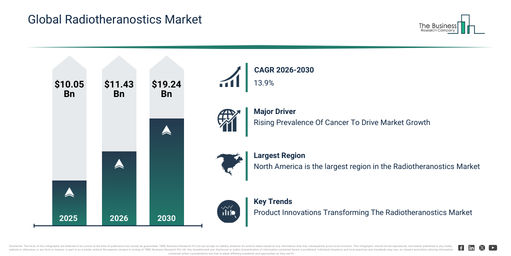
    The radiotheranostics market size has experienced rapid growth in recent years. It is projected to expand from $10.05 billion in 2025 to $11.43 billion in 2026, reflecting a compound annual growth rate (CAGR) of 13.7%. The market’s historic period growth can be attributed to the increasing use of nuclear medicine diagnostics, the expansion of oncology-focused clinical research, the availability of therapeutic radioisotopes, the rising adoption of PET and SPECT imaging, and growing collaboration between pharma and imaging providers.

    The radiotheranostics market is set to experience significant expansion over the next few years, with its size anticipated to reach $19.24 billion by 2030, growing at a compound annual growth rate (CAGR) of 13.9%. This forecasted growth is driven by several factors, including an increase in approvals for radiotheranostic drugs, escalating investments in precision oncology, the broadening of isotope production infrastructure, a growing demand for personalized cancer care, and the increasing integration of AI in treatment selection. Key trends expected during this period include the rising adoption of targeted radioligand therapies, an increased use of paired diagnostic and therapeutic isotopes, the growing integration of precision imaging and therapy, the expansion of personalized oncology applications, and an enhanced focus on molecular-level cancer targeting.

    Download the Free Sample Report to Explore Key Market Insights:

    https://www.thebusinessresearchcompany.com/sample.aspx?id=12270&type=smp

    What Drivers Are Shaping The Future Growth Of The Radiotheranostics Market?

    A rise in cancer cases is anticipated to drive the expansion of the radiotheranostics market in the future. Cancer refers to a disease where certain body cells multiply without control and extend to different parts of the body. Radiotheranostics medications are frequently utilized in cancer treatment to provide the ultimate concept of personalized medicine, through the application of paired diagnostic and therapeutic radionuclide probes, enabling the precise and targeted identification and therapy of particular (usually cancerous) cells, with each probe tailored to the patient’s specific underlying condition, aiming to improve treatment effectiveness and achieve superior clinical outcomes. For example, in January 2024, the American Cancer Society, a US-based nonprofit cancer advocacy organization, reported an increase in cancer cases to 2,001,140 from 1,958,310 in 2023, marking a 2.19% growth. Consequently, the growing incidence of cancer is a key driver for the radiotheranostics market.

    What Segment Types Make Up The Radiotheranostics Market?

    The radiotheranostics market covered in this report is segmented –

    1) By Radioisotope: Technetium-99, Gallium-68, Iodine-131, Iodine-123, Fludeoxyglucose-18F, Yttrium-90, Lutetium (Lu) 177, Copper (Cu) 67, Copper (Cu) 64, Other Radioisotopes

    2) By Approach: Targeted Therapeutic, Targeted Diagnostic

    3) By Application: Oncology, Non-Oncology

    4) By End-Users: Hospitals And Clinics, Pharmaceutical And Biotechnology Companies, Other End-Users

    Subsegments:

    1) By Technetium-99: Technetium-99m, Technetium-99 Pertechnetate

    2) By Gallium-68: Gallium-68 DOTATATE, Gallium-68 PSMA

    3) By Iodine-131: Iodine-131 For Thyroid Cancer Treatment, Iodine-131 For Hyperthyroidism Treatment

    4) By Iodine-123: Iodine-123 For Thyroid Scans, Iodine-123 For Cardiac Imaging

    5) By Fludeoxyglucose-18F (FDG): FDG For Oncology Imaging, FDG For Brain Imaging

    6) By Yttrium-90: Yttrium-90 Microspheres For Liver Cancer, Yttrium-90 For Radioimmunotherapy

    7) By Lutetium (Lu) 177: Lutetium-177 PSMA For Prostate Cancer, Lutetium-177 DOTATATE For Neuroendocrine Tumors

    8) By Copper (Cu) 67: Copper-67 For Targeted Radiotherapy, Copper-67 In Clinical Trials

    9) By Copper (Cu) 64: Copper-64 For PET Imaging, Copper-64 For Radiotherapy

    10) By Other Radioisotopes: Radium-223, Samarium-153, Other Emerging Radioisotopes In Theranostics

    What Major Market Trends Are Driving Changes In The Radiotheranostics Market?

    Leading companies in the radiotheranostics market are prioritizing the development of innovative products to boost the creation and accessibility of therapeutic radioisotopes, refine treatment accuracy, and address the increasing demand for targeted cancer therapies. For example, in May 2023, Advanced Cyclotron Systems Inc., a Canada-based firm specializing in cyclotrons for medical isotope production, unveiled TR-ALPHA. This dedicated cyclotron is designed for manufacturing alpha-emitting radioisotopes used in cancer treatment. Developed to meet the market’s need for an economical cyclotron capable of producing significant quantities of Astatine-211, a highly promising alpha-emitting radioisotope, TR-ALPHA is more compact, affordable, and user-friendly than its predecessors, making it an optimal choice for hospitals, research institutions, and organizations aiming to efficiently produce therapeutic alpha-emitting radioisotopes.

    Who Are The Key Players Driving Competition In The Radiotheranostics Market?

    Major companies operating in the radiotheranostics market are Lantheus Holdings Inc., Cardinal Health Inc., GE Healthcare Inc., Bayer AG, Novartis AG, Siemens Healthineers, Orano Med, Curium SAS, IBA Molecular, The Eckert & Ziegler Group, Advanced Accelerator Applications (AAA), Telix Pharmaceuticals Limited., Abdera Therapeutics, Blue Earth Diagnostics, Sirtex Medical Limited, Y-mAbs Therapeutics Inc., ITM Radiopharma, NorthStar Medical Radioisotopes LLC, Trasis S.A., Molecular Targeting Technologies Inc., RadioMedix Inc, Clarity Pharmaceuticals, Actinium Pharmaceuticals Inc., Navidea Biopharmaceuticals Inc.

    Read the full radiotheranostics market report here:

    https://www.thebusinessresearchcompany.com/report/radiotheranostics-global-market-report

    Which Geographic Regions Are Influencing Demand In The Radiotheranostics Market?

    North America was the largest region in the radiotheranostics market in 2025. The regions covered in the radiotheranostics market report are Asia-Pacific, South East Asia, Western Europe, Eastern Europe, North America, South America, Middle East, Africa.

    Request A Tailored Radiotheranostics Market Research Report For Competitive Advantage:

    https://www.thebusinessresearchcompany.com/customise?id=12270&type=smp

    Browse Through More Reports Similar to the Global Radiotheranostics Market 2026, By The Business Research Company

    Radiotherapy Devices Global Market Report

    https://www.thebusinessresearchcompany.com/report/radiotherapy-devices-global-market-report

    Veterinary Stereotactic Radiosurgery System Global Market Report

    https://www.thebusinessresearchcompany.com/report/veterinary-stereotactic-radiosurgery-system-global-market-report

    Image Guided Radiation Therapy Global Market Report

    https://www.thebusinessresearchcompany.com/report/image-guided-radiation-therapy-global-market-report

    Get in touch with us:

    The Business Research Company: https://www.thebusinessresearchcompany.com/

    Americas +1 310-496-7795

    Asia +44 7882 955267 & +91 8897263534

    Europe +44 7882 955267

    Email us at info@tbrc.info

    Follow us on:

    LinkedIn: https://in.linkedin.com/company/the-business-research-company

    YouTube: https://www.youtube.com/channel/UC24_fI0rV8cR5DxlCpgmyFQ

    Global Market Model: https://www.thebusinessresearchcompany.com/global-market-model
  • One of the Major Drivers of the Radiosurgery And Radiotherapy Robotics Market Is the Growing Demand For Minimally Invasive Procedures Propels Growth In The Radiosurgery And Radiotherapy Robotics Market

    One of the Major Drivers of the Radiosurgery And Radiotherapy Robotics Market Is the Growing Demand For Minimally Invasive Procedures Propels Growth In The Radiosurgery And Radiotherapy Robotics Market

    The Business Research Company’s 2026 market reports include new capabilities such as market attractiveness scoring and analysis, total addressable market analysis, company scoring matrix, interactive excel data dashboard, improved supply chain analysis, upcoming startups in the market, and overview of key products, aimed at improving the depth, usability, and strategic value of the insights delivered.

    What Is The Estimated Market Size Of The Radiosurgery And Radiotherapy Robotics Market During 2026–2030?

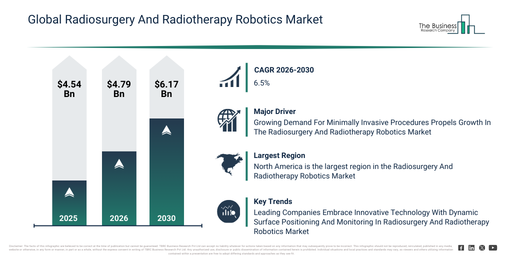
    The radiosurgery and radiotherapy robotics market size has experienced significant expansion in recent years. It is projected to increase from $4.54 billion in 2025 to $4.79 billion in 2026, achieving a compound annual growth rate (CAGR) of 5.4%. The historical growth of this market can be linked to rising cancer incidence rates, the expansion of hospital-based oncology infrastructure, the adoption of advanced linear accelerator systems, increasing acceptance of minimally invasive cancer treatments, and improvements in radiation delivery accuracy.

    The radiosurgery and radiotherapy robotics market is projected to experience robust expansion in the coming years. It is forecast to grow to $6.17 billion in 2030, demonstrating a compound annual growth rate (CAGR) of 6.5%. The impetus for this growth in the forecast period can be linked to elevated investments in robotic oncology platforms, the escalating demand for tailored cancer treatments, the proliferation of proton therapy centers, the increasing integration of AI-driven treatment planning, and a sharpened focus on minimizing radiation exposure to healthy tissues. Prominent trends throughout this period involve the wider acceptance of robotic-assisted precision radiation systems, the deepening integration of image-guided treatment platforms, an expanding application of adaptive radiotherapy technologies, the further development of proton and stereotactic radiosurgery systems, and an intensified commitment to ensuring treatment accuracy and patient safety.

    Download the Free Sample Report to Explore Key Market Insights:

    https://www.thebusinessresearchcompany.com/sample.aspx?id=12896&type=smp

    Which Economic Or Industry Drivers Are Impacting The Radiosurgery And Radiotherapy Robotics Market?

    The increasing need for minimally invasive treatments is anticipated to drive the expansion of the radiosurgery and radiotherapy robotics market. Minimally invasive procedures (MIPs) are surgical interventions carried out via small bodily incisions, generally utilizing specialized instruments and cameras inserted through these openings. Radiosurgery and radiotherapy robots are employed in such treatments to deliver radiation doses to malignancies with enhanced accuracy and precision compared to conventional techniques, owing to robots’ ability to move more precisely and consistently than human operators. As an illustration, data from February 2024, provided by the American Academy of Facial Plastic and Reconstructive Surgery, a US-based non-profit organization, revealed that in 2023, 83% of medical procedures performed were minimally invasive, with traditional surgical procedures accounting for the remaining 17%. Consequently, the growing demand for minimally invasive procedures is fueling the growth of the radiosurgery and radiotherapy robotics market.

    How Are The Various Segments Of The Radiosurgery And Radiotherapy Robotics Market Categorized?

    The radiosurgery and radiotherapy robotics market covered in this report is segmented –

    1) By Product: X-ray Based, Gamma-ray Based, Proton-beam Based

    2) By Application: External Beam Radiotherapy, Internal Beam Radiotherapy Or Brachytherapy

    3) By End Use: Hospitals, Clinics, Other End Users

    Subsegments:

    1) By X-ray Based: Linear Accelerators (LINAC), Stereotactic X-Ray Systems, Image-Guided Radiation Therapy (IGRT) Systems

    2) By Gamma-Ray Based: Gamma Knife Systems, Stereotactic Radiosurgery (SRS) Systems, Radioactive Isotope Systems

    3) By Proton-Beam Based: Proton Therapy Systems, Pencil Beam Scanning Systems, Fixed Beam Proton Systems

    Which Trends Are Shaping The Future Of The Radiosurgery And Radiotherapy Robotics Market?

    Key companies operating in the radiosurgery and radiotherapy robotics market are prioritizing the adoption of novel technological solutions, like dynamic surface positioning and monitoring systems, to sustain their market presence. This system functions as a patient tracking mechanism for surface-guided radiation therapy (SGRT), utilizing a thermal-surface camera to observe patient positioning and identify any movement during treatment sessions. As an illustration, in May 2023, Brainlab, a Germany-based firm specializing in software and hardware for radiotherapy and radiosurgery, launched its ExacTrac Dynamic Surface Positioning and Monitoring System. This singular-camera unit solution ensures consistency across the radiation department and enables continuous patient oversight during breath-hold treatments. The primary objective of ExacTrac Dynamic Surface is to establish departmental uniformity and provide accurate tracking. Clinicians can also benefit from a rapid learning curve with ExacTrac Dynamic Surface on any linac, attributed to its intuitive, single interface and standardized operational processes.

    Which Major Firms Influence Developments In The Radiosurgery And Radiotherapy Robotics Market?

    Major companies operating in the radiosurgery and radiotherapy robotics market are Mitsubishi Electric Corporation, Hitachi Ltd., Siemens Healthineers AG, Elekta AB, Shinva Medical Instrument Co. Ltd., Neusoft Medical Systems Co. Ltd., Accuray Incorporated, Sumitomo Heavy Industries Ltd., Ion Beam Applications SA, Brainlab AG, ViewRay Inc., Zhuhai Hokai Medical Instruments Co. Ltd., RaySearch Laboratories AB, Mevion Medical Systems Inc., Vision Rt Limited, Sun Nuclear Corporation, Panacea Medical Technologies Pvt. Ltd., C-Rad AB, Radiadyne LLC, ProTom International Holding Corporation, CIVCO Radiotherapy, Standard Imaging Inc., Intraop Medical Corporation, Best Medical International Inc., Modus Medical Devices Inc., Mirada Medical Ltd.

    Read the full radiosurgery and radiotherapy robotics market report here:

    https://www.thebusinessresearchcompany.com/report/radiosurgery-and-radiotherapy-robotics-global-market-report

    What Are The Top-Performing Regions Within The Radiosurgery And Radiotherapy Robotics Market?

    North America was the largest region in the radiosurgery and radiotherapy robotics market in 2025. The regions covered in the radiosurgery and radiotherapy robotics market report are Asia-Pacific, South East Asia, Western Europe, Eastern Europe, North America, South America, Middle East, Africa.

    Request A Tailored Radiosurgery And Radiotherapy Robotics Market Research Report For Competitive Advantage:

    https://www.thebusinessresearchcompany.com/customise?id=12896&type=smp

    Browse Through More Reports Similar to the Global Radiosurgery And Radiotherapy Robotics Market 2026, By The Business Research Company

    Theranostics Global Market Report

    https://www.thebusinessresearchcompany.com/report/theranostics-global-market-report

    Nuclear Medicine Radioisotopes Global Market Report

    https://www.thebusinessresearchcompany.com/report/nuclear-medicine-radioisotopes-global-market-report

    Radiotheranostics Global Market Report

    https://www.thebusinessresearchcompany.com/report/radiotheranostics-global-market-report

    Get in touch with us:

    The Business Research Company: https://www.thebusinessresearchcompany.com/

    Americas +1 310-496-7795

    Asia +44 7882 955267 & +91 8897263534

    Europe +44 7882 955267

    Email us at info@tbrc.info

    Follow us on:

    LinkedIn: https://in.linkedin.com/company/the-business-research-company

    YouTube: https://www.youtube.com/channel/UC24_fI0rV8cR5DxlCpgmyFQ

    Global Market Model: https://www.thebusinessresearchcompany.com/global-market-model
  • A key trend shaping the Radiopharmaceutical Theranostics Market involves the Advancements In Theranostics For Targeted Cancer Treatment By Major Companies In Radiopharmaceutical Market

    A key trend shaping the Radiopharmaceutical Theranostics Market involves the Advancements In Theranostics For Targeted Cancer Treatment By Major Companies In Radiopharmaceutical Market

    The Business Research Company’s 2026 market reports include new capabilities such as market attractiveness scoring and analysis, total addressable market analysis, company scoring matrix, interactive excel data dashboard, improved supply chain analysis, upcoming startups in the market, and overview of key products, aimed at improving the depth, usability, and strategic value of the insights delivered.

    What Market Size Expansion Is Predicted For The Radiopharmaceutical Theranostics Market Between 2026 And 2030?

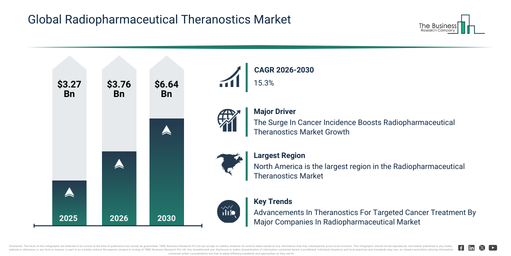
    The radiopharmaceutical theranostics market size has experienced rapid growth in recent years. It is forecast to increase from $3.27 billion in 2025 to $3.76 billion in 2026, at a compound annual growth rate (CAGR) of 15.0%. The expansion observed in the historic period is attributable to several factors, including the widening of nuclear medicine applications, an increase in cancer incidence rates, advancements in radioisotope production techniques, greater integration of diagnostic imaging, and the early adoption of theranostic treatment models.

    The radiopharmaceutical theranostics market is projected to experience swift expansion over the coming years. This market is set to reach $6.64 billion by 2030, demonstrating a compound annual growth rate (CAGR) of 15.3%. This projected growth is primarily driven by factors such as increasing investments in precision oncology, a heightened demand for tailored radiopharmaceutical treatments, the expansion of clinical trials for new isotopes, stronger partnerships between diagnostic and therapeutic sectors, and continuous advancements in isotope supply chains. Key trends anticipated during this period encompass the escalating development of targeted theranostic radiopharmaceuticals, an increased application of PET-based personalized therapies, the broader embrace of alpha and beta emitters in cancer treatment, the expansion of cyclotron-based isotope manufacturing, and a sharpened focus on precision oncology applications.

    Download the Free Sample Report to Explore Key Market Insights:

    https://www.thebusinessresearchcompany.com/sample.aspx?id=11951&type=smp

    What Major Drivers Are Influencing Demand In The Radiopharmaceutical Theranostics Market?

    The increasing occurrence of cancer is projected to fuel the expansion of the radiopharmaceutical theranostics market moving ahead. Cancer is defined as a complex condition characterized by the abnormal proliferation of cells, capable of invading and disseminating throughout the body. Radiopharmaceutical theranostics offers assistance in combating cancer through tailored and personalized treatment strategies. For example, estimates from the US-based voluntary cancer health organization, the American Cancer Society, indicate that in the US in 2023, approximately 1.9 million new cancer diagnoses are anticipated, alongside an estimated 609,820 cancer-related fatalities. Furthermore, it is projected that 88% of those diagnosed will be from the age group of 50 years or older. Consequently, the increasing prevalence of cancer is a key factor propelling the development of the radiopharmaceutical theranostics market.

    Which Market Segments Are Examined In The Radiopharmaceutical Theranostics Market Study?

    The radiopharmaceutical theranostics market covered in this report is segmented –

    1) By Product Type: Alpha Emitters, Beta Emitters, Positron Emission Tomography (PET) Tracers

    2) By Source: Nuclear Reactors, Cyclotrons

    3) By Radioisotope: Technetium-99, Gallium-68, Iodine-131, Iodine-123, 18F, Y-90, Lutetium (Lu) 177, Copper (Cu) 67, Copper (Cu) 64, Other Radioscopes

    4) By Indication: Oncology, Cardiology, Neurology, Other Indications

    5) By End User: Hospitals, Diagnostic Imaging Centers, Academic And Research Institutes, Other End Users

    Subsegments:

    1) By Alpha Emitters: Actinium-225, Radium-223, Bismuth-213, Other Alpha-Emitting Radiopharmaceuticals

    2) By Beta Emitters: Iodine-131, Lutetium-177, Yttrium-90, Other Beta-Emitting Radiopharmaceuticals

    3) By Positron Emission Tomography (PET) Tracers: Fluorodeoxyglucose (FDG), Gallium-68, Carbon-11, Other PET Tracers

    What Key Trends Are Influencing The Development Of The Radiopharmaceutical Theranostics Market?

    Major companies operating in the radiopharmaceutical theranostics market are concentrating their efforts on developing theranostic solutions aimed at combating cancer. Theranostic approaches are also being explored for managing rare diseases, with a focus on delivering targeted therapies and diagnostic tools for patients with limited treatment options, such as various types of cancer. For instance, in November 2023, GE HealthCare Technologies Inc., a US-based medical technology company, launched its theranostics solutions tailored for cancer. Theranostics represents an innovative area of precision medicine that utilizes therapeutic agents in conjunction with imaging technology to identify and precisely target cancer cells for destruction.

    Who Are The Primary Competitors In The Radiopharmaceutical Theranostics Market?

    Major companies operating in the radiopharmaceutical theranostics market are Cardinal Health Inc., GE HealthCare Technologies Inc., Bayer AG, China Grand Pharmaceutical & Healthcare., Lantheus Medical Imaging Inc., Curium Pharma, Advanced Accelerator Applications, Telix Pharmaceuticals Ltd., Bracco Imaging S.p.A, NTP Radioisotopes SOC Ltd., Navidea Biopharmaceuticals Inc., Jubilant DraxImage Inc., NorthStar Medical Radioisotopes LLC, Blue Earth Diagnostics Ltd., Precirix NV, SpectronRx, Viewpoint Molecular Targeting Inc., NuView Life Sciences, Alpha-9 Theranostics Inc., RadioMedix Inc, RayzeBio Inc, Fusion Pharmaceuticals Inc, Actinium Pharmaceuticals Inc., Eckert & Ziegler Strahlen- und Medizintechnik AG, Ariceum Therapeutics GmbH, Radiopharm Theranostics Ltd, Ratio Therapeutics Inc, Primo Biotechnology, Bivision Biomedical Technology (Nanjing) Co. Ltd.

    Read the full radiopharmaceutical theranostics market report here:

    https://www.thebusinessresearchcompany.com/report/radiopharmaceutical-theranostics-global-market-report

    Which Region Shows The Strongest Potential For Future Growth In The Radiopharmaceutical Theranostics Market?

    North America was the largest region in the radiopharmaceutical theranostics market in 2025. The regions covered in the radiopharmaceutical theranostics market report are Asia-Pacific, South East Asia, Western Europe, Eastern Europe, North America, South America, Middle East, Africa.

    Request A Tailored Radiopharmaceutical Theranostics Market Research Report For Competitive Advantage:

    https://www.thebusinessresearchcompany.com/customise?id=11951&type=smp

    Browse Through More Reports Similar to the Global Radiopharmaceutical Theranostics Market 2026, By The Business Research Company

    Radiology As A Service Global Market Report

    https://www.thebusinessresearchcompany.com/report/radiology-as-a-service-global-market-report

    Radiology Information Systems Global Market Report

    https://www.thebusinessresearchcompany.com/report/radiology-information-systems-global-market-report

    Oncologists Global Market Report

    https://www.thebusinessresearchcompany.com/report/oncologists-global-market-report

    Get in touch with us:

    The Business Research Company: https://www.thebusinessresearchcompany.com/

    Americas +1 310-496-7795

    Asia +44 7882 955267 & +91 8897263534

    Europe +44 7882 955267

    Email us at info@tbrc.info

    Follow us on:

    LinkedIn: https://in.linkedin.com/company/the-business-research-company

    YouTube: https://www.youtube.com/channel/UC24_fI0rV8cR5DxlCpgmyFQ

    Global Market Model: https://www.thebusinessresearchcompany.com/global-market-model
  • Private Hospital Market Outlook 2026–2035 Driven by Key Growth Factors and Industry Projections

    Private Hospital Market Outlook 2026–2035 Driven by Key Growth Factors and Industry Projections

    The Business Research Company’s 2026 market reports include new capabilities such as market attractiveness scoring and analysis, total addressable market analysis, company scoring matrix, interactive excel data dashboard, improved supply chain analysis, upcoming startups in the market, and overview of key products, aimed at improving the depth, usability, and strategic value of the insights delivered.

    What Market Size Expansion Is Predicted For The Private Hospital Market Between 2026 And 2030?

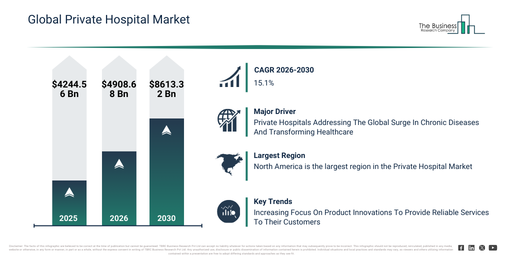
    The private hospital market has experienced significant expansion recently. It is projected to expand from $4244.56 billion in 2025 to $4908.68 billion by 2026, demonstrating a compound annual growth rate (CAGR) of 15.6%. Historically, this growth can be attributed to increased healthcare expenditure in the private sector, a growing patient preference for private healthcare, the expansion of urban hospital infrastructure, the availability of advanced medical technologies, and an increase in the insured patient population.

    The private hospital market is poised for significant expansion in the coming years. By 2030, its size is projected to reach $8613.32 billion, demonstrating a compound annual growth rate (CAGR) of 15.1%. This anticipated growth during the forecast period stems from factors such as heightened investments in smart hospital infrastructure, an escalating demand for specialized healthcare services, the broadening presence of private hospitals in developing markets, an intensified emphasis on operational efficiency, and the increasing incorporation of digital platforms for patient engagement. Key trends characterizing this period encompass the wider embrace of digital health management systems, the expanding development of multispecialty private hospitals, an escalating need for sophisticated diagnostic infrastructure, a stronger orientation towards patient-centric care approaches, and the proliferation of telemedicine and remote monitoring offerings.

    Download the Free Sample Report to Explore Key Market Insights:

    https://www.thebusinessresearchcompany.com/sample.aspx?id=8211&type=smp

    What Drivers Are Influencing The Private Hospital Market?

    An increase in fatalities linked to chronic illnesses is anticipated to boost the expansion of the private hospital market in the future. Such conditions are defined as ailments persisting for at least a year and necessitating continuous medical care. The prevalence of chronic diseases is increasing, primarily driven by more sedentary lifestyles, which contribute to elevated risks for conditions such as obesity, diabetes, and cardiovascular issues over time. Private hospitals offer a vital opportunity to initiate effective management of chronic illnesses and address proactive health considerations. For example, in January 2023, the National Library of Medicine, a US-based agency, reported that the population in the US aged 50 and older suffering from at least one chronic condition is projected to rise by 99.5%, reaching 142.66 million, by 2050. Consequently, the escalating mortality rate resulting from chronic diseases is propelling the expansion of the private hospital market.

    Which Market Segments Are Examined In The Private Hospital Market Study?

    The private hospital market covered in this report is segmented –

    1) By Category: Children’s Hospital, Multispecialty Hospitals, Acute Care Hospitals, Specialty Hospitals

    2) By Capacity: Large (>500 Beds), Medium (100 Beds-500 Beds), Small (100 Beds)

    3) By Location: Rural, Urban

    Subsegments:

    1) By Children’s Hospital: Pediatric Intensive Care Units (PICU), Neonatal Care Units

    2) By Multispecialty Hospitals: General Medicine, General Surgery, Cardiology

    3) By Acute Care Hospitals: Trauma Centers, Emergency Care Facilities

    4) By Specialty Hospitals: Orthopedic Hospitals, Cardiac Hospitals, Oncology Hospital

    Which Trends Are Impacting The Growth Of The Private Hospital Market?

    Leading entities within the private hospital market are prioritizing novel offerings, such as a 506-bed hospital, to boost their earnings. A 506 multi-specialty hospital serves as a healthcare institution delivering an extensive array of medical services and specialized fields centrally, thereby enhancing ease and access for patients needing care for diverse health conditions. An example of this is Aster DM Healthcare, a private healthcare provider from the UAE, which inaugurated a 506-bed hospital in October 2023. Notably, the Intra Operative Electron Radiation Therapy (IOERT) for accurate cancer treatment will be introduced for the first time in India at the Aster Whitefield Multispecialty Hospital. This establishment will additionally feature a comprehensive full-room digital radiography system, a hybrid biplane catheter, digital PET CT, 3D mammography, sophisticated LINAC, HIPEC/PIPEC procedures, and a scalp cooling system to prevent hair loss during chemotherapy. Furthermore, the hospital will include a state-of-the-art OT complex comprising sixteen operating theaters equipped with premium medical technology, alongside the fourth-generation Da Vinci Robot for advanced oncology and urology surgical interventions.

    Who Are The Primary Competitors In The Private Hospital Market?

    Major companies operating in the private hospital market are Toulon Hyeres Private Hospital, Deaconesses Croix Saint, Nuffield Health, London Bridge Healthcare, Ramsay Health Care, HCA Healthcare Inc, Spire Healthcare Group PLC, Meoclinic GmbH, Fortis Healthcare Limited, Fresenius SE And Co KGaA, Life Healthcare Group, Max Superspecialty Hospital Group, Apollo Hospitals Enterprise Ltd, IASIS Healthcare LLC, Community Health Systems Inc, Universal Health Services Inc, Tenet Healthcare Corporation, LifePoint Health Inc, Kindred Healthcare LLC, Encompass Health Corporation, Acadia Healthcare Company, Select Medical Holdings Corporation, National Healthcare Corporation, Surgery Partners Inc, Surgery Care Affiliates Inc, IHH Healthcare Berhad

    Read the full private hospital market report here:

    https://www.thebusinessresearchcompany.com/report/private-hospital-global-market-report

    Which Regions Are Expected To Experience Rapid Expansion In The Private Hospital Market?

    North America was the largest region in the private hospital market share in 2025. Asia-Pacific is expected to be the fastest-growing region in the forecast period. The regions covered in the private hospital market report are Asia-Pacific, South East Asia, Western Europe, Eastern Europe, North America, South America, Middle East, Africa.

    Request A Tailored Private Hospital Market Research Report For Competitive Advantage:

    https://www.thebusinessresearchcompany.com/customise?id=8211&type=smp

    Browse Through More Reports Similar to the Global Private Hospital Market 2026, By The Business Research Company

    Property Management Global Market Report

    https://www.thebusinessresearchcompany.com/report/property-management-global-market-report

    Services To Buildings And Dwellings Global Market Report

    https://www.thebusinessresearchcompany.com/report/services-to-buildings-and-dwellings-global-market-report

    Home Improvement Services Global Market Report

    https://www.thebusinessresearchcompany.com/report/home-improvement-services-global-market-report

    Get in touch with us:

    The Business Research Company: https://www.thebusinessresearchcompany.com/

    Americas +1 310-496-7795

    Asia +44 7882 955267 & +91 8897263534

    Europe +44 7882 955267

    Email us at info@tbrc.info

    Follow us on:

    LinkedIn: https://in.linkedin.com/company/the-business-research-company

    YouTube: https://www.youtube.com/channel/UC24_fI0rV8cR5DxlCpgmyFQ

    Global Market Model: https://www.thebusinessresearchcompany.com/global-market-model
  • A significant industry trend in the Radiology Services Market includes the Sirona Medical Unveils Rados A Cloud-Based Ai-Powered Radiology Operating System

    A significant industry trend in the Radiology Services Market includes the Sirona Medical Unveils Rados A Cloud-Based Ai-Powered Radiology Operating System

    The Business Research Company’s 2026 market reports include new capabilities such as market attractiveness scoring and analysis, total addressable market analysis, company scoring matrix, interactive excel data dashboard, improved supply chain analysis, upcoming startups in the market, and overview of key products, aimed at improving the depth, usability, and strategic value of the insights delivered.

    How Large Is The Radiology Services Market Projected To Become By 2030 Based On Its 2026 Valuation?

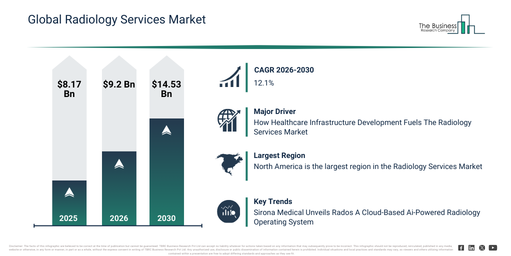
    The radiology services market size has experienced significant expansion in recent years. It is forecast to increase from $8.17 billion in 2025 to $9.2 billion in 2026, achieving a compound annual growth rate (CAGR) of 12.6%. The historical growth of the market can be linked to the enlargement of hospital imaging departments, a rise in chronic disease diagnoses, better access to diagnostic imaging technologies, an increased requirement for early disease identification, and the broader application of x-ray based diagnostics.

    The radiology services market size is anticipated to undergo substantial growth in the upcoming years. It is projected to expand to $14.53 billion by 2030, demonstrating a compound annual growth rate (CAGR) of 12.1%. The expansion during the forecast period is driven by factors such as increasing investments in advanced imaging modalities, the growing embrace of AI-powered diagnostics, the broadening of ambulatory imaging services, a heightened focus on precision diagnostics, and ongoing modernization of healthcare imaging infrastructure. Significant trends expected in this period include the rising adoption of digital radiology systems, increased demand for portable imaging solutions, the expanding application of AI in image interpretation, the widening scope of specialized diagnostic imaging procedures, and a greater emphasis on patient-centric imaging services.

    Download the Free Sample Report to Explore Key Market Insights:

    https://www.thebusinessresearchcompany.com/sample.aspx?id=9342&type=smp

    Which Market Drivers Are Supporting The Expansion Of The Radiology Services Market?

    The continuous advancement of healthcare infrastructure is anticipated to fuel the expansion of the radiology services market in the future. This infrastructure comprises physical facilities, diagnostic equipment, information systems, and personnel vital for providing high-quality medical services throughout communities. Funding directed towards contemporary hospital amenities and sophisticated imaging technologies leads to improved diagnostic precision, broadened access to radiology, and facilitates collaborative care, ultimately bettering patient outcomes. As an illustration, data from the American Health Care Association, a US-based nonprofit organization, indicated that in May 2023, the United States possessed 6,129 hospitals, marking a 0.591% rise from the prior year’s count of 6,093 hospitals. Consequently, the evolution of healthcare infrastructure is a significant catalyst for the radiology services market.

    What Segment Groups Are Identified Within The Radiology Services Market?

    The radiology services market covered in this report is segmented –

    1) By Type: Stationary Digital Radiology Systems, Portable Digital Radiology Systems

    2) By Procedure: Conventional, Digital

    3) By Patient Age: Adults, Pediatric

    4) By Application: Cardiovascular Imaging, Chest Imaging, Dental Imaging, Mammography Imaging, Orthopedic Imaging

    5) By End User: Hospitals, Ambulatory Centers, Diagnostic Centers, Clinics, Other End Users

    Subsegments:

    1) By Stationary Digital Radiology Systems: Fixed Digital X-ray Systems, Ceiling-Mounted Systems, Floor-Mounted Systems

    2) By Portable Digital Radiology Systems: Mobile X-ray Units, Wireless Portable X-ray Systems, Battery-Operated Portable Systems

    What Key Trends Are Influencing The Development Of The Radiology Services Market?

    Leading companies in the radiology services market are focusing on developing innovative products to enhance diagnostic accuracy, improve workflow efficiency, and expand service capabilities. Product innovations encompass cloud-based platforms, AI-powered imaging solutions, and integrated radiology operating systems that streamline image management, reporting, and patient care. For instance, in February 2024, Yellow Cross Pharmaceuticals Private Limited, a US-based telemedicine practice management company, launched a new consultancy service aimed at enhancing teleradiology management for healthcare providers, in response to the growing shortage of radiologists. The service helps medical groups navigate technology, billing, and marketing, enabling them to efficiently expand remote care capabilities. Yellowcross aims to improve patient access, reduce healthcare costs, and elevate the standard of care through tailored telemedicine solutions.

    Which Companies Hold Significant Positions In The Radiology Services Market?

    Major companies operating in the radiology services market are Radisphere National Radiology Group Inc., GE HealthCare, TeleDiagnostic Solutions Pvt. Ltd., 4ways Healthcare Limited, Medica Reporting Ltd., Koninklijke Philips N.V., Onrad Inc., Aspect Imaging Ltd., Aurora Healthcare US Corp., FONAR Corporation, ESAOTE SPA, Neusoft Corporation, Toshiba Corporation, FUJIFILM Holdings Corporation, Hologic Inc., Everlight Radiology, Global Diagnostics, RamSoft Inc., Siemens Healthineers, Telemedicine Clinic, Teleradiology Solutions Inc., Virtual Radiology, Hitachi Ltd., CANON MEDICAL SYSTEMS CORPORATION, Sanrad Medical Systems Private Limited, henzhen Anke High-tech Co. Ltd.

    Read the full radiology services market report here:

    https://www.thebusinessresearchcompany.com/report/radiology-services-global-market-report

    How Is The Radiology Services Market Distributed Across Key Geographic Regions?

    North America was the largest region in the radiology services market in 2025. The regions covered in the radiology services market report are Asia-Pacific, South East Asia, Western Europe, Eastern Europe, North America, South America, Middle East, Africa.

    Request A Tailored Radiology Services Market Research Report For Competitive Advantage:

    https://www.thebusinessresearchcompany.com/customise?id=9342&type=smp

    Browse Through More Reports Similar to the Global Radiology Services Market 2026, By The Business Research Company

    Radiology Services Global Market Report

    https://www.thebusinessresearchcompany.com/report/radiology-services-global-market-report

    Radiology As A Service Global Market Report

    https://www.thebusinessresearchcompany.com/report/radiology-as-a-service-global-market-report

    Medical Imaging And Radiology Software Global Market Report

    https://www.thebusinessresearchcompany.com/report/medical-imaging-and-radiology-software-global-market-report

    Get in touch with us:

    The Business Research Company: https://www.thebusinessresearchcompany.com/

    Americas +1 310-496-7795

    Asia +44 7882 955267 & +91 8897263534

    Europe +44 7882 955267

    Email us at info@tbrc.info

    Follow us on:

    LinkedIn: https://in.linkedin.com/company/the-business-research-company

    YouTube: https://www.youtube.com/channel/UC24_fI0rV8cR5DxlCpgmyFQ

    Global Market Model: https://www.thebusinessresearchcompany.com/global-market-model
  • Private Healthcare Market Developments and Growth Opportunities Across 2026–2030

    Private Healthcare Market Developments and Growth Opportunities Across 2026–2030

    The Business Research Company’s 2026 market reports include new capabilities such as market attractiveness scoring and analysis, total addressable market analysis, company scoring matrix, interactive excel data dashboard, improved supply chain analysis, upcoming startups in the market, and overview of key products, aimed at improving the depth, usability, and strategic value of the insights delivered.

    How Large Is The Private Healthcare Market Projected To Become By 2030 Based On Its 2026 Valuation?

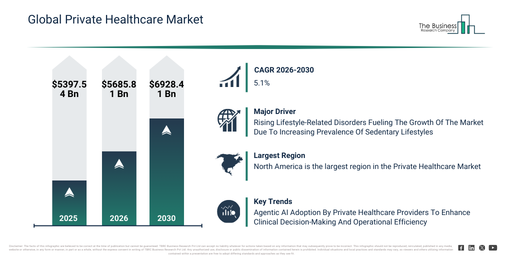
    The private healthcare market size has demonstrated significant growth in recent years. It is anticipated to expand from $5397.54 billion in 2025 to $5685.81 billion in 2026, achieving a compound annual growth rate (CAGR) of 5.3%. The drivers behind this historical period of expansion include the increase in private health insurance coverage, a rising demand for quicker medical access, the proliferation of specialty healthcare services, increased medical tourism activities, and enhanced availability of private healthcare facilities.

    The private healthcare market is projected to experience substantial expansion in the coming years. This market is anticipated to reach $6928.41 billion by 2030, driven by a compound annual growth rate (CAGR) of 5.1%. This projected growth is largely due to the escalating integration of digital health technologies, a surging demand for individualized medicine, the broadening availability of high-end healthcare services, increased capital allocation for private hospital infrastructure, and a heightened emphasis on value-driven care approaches. Key developments anticipated during this period encompass the widening array of bespoke private healthcare provisions, a greater uptake of digital health platforms, an increasing need for preventive and wellness treatments, more widespread utilization of sophisticated diagnostic tools, and a sharpened focus on improving patient satisfaction and ease of access.

    Download the Free Sample Report to Explore Key Market Insights:

    https://www.thebusinessresearchcompany.com/sample.aspx?id=27398&type=smp

    What Drivers Are Shaping The Future Growth Of The Private Healthcare Market?

    The increasing prevalence of lifestyle-related illnesses is expected to fuel the future expansion of the private healthcare market. These disorders primarily originate from daily habits and choices, including poor eating habits, lack of exercise, stress, and detrimental addictions. The rise in lifestyle-related disorders is due to increasing urbanization leading to inactive routines, where long work hours and decreased physical activity contribute to negative health outcomes. Private healthcare offers benefits for managing lifestyle-related disorders by providing faster access to specialized doctors and tailored treatment plans, which allows for early intervention and improved long-term health results. For instance, in May 2024, according to the British Diabetic Association (Diabetes UK), a UK-based patient, healthcare professional, and research charity, approximately 4.4 million people in the UK were living with a diabetes diagnosis as of 2022-23. Of these cases, around 8% had type 1 diabetes, while type 2 diabetes made up about 90%. The remaining 2% comprised other, less frequent types of diabetes. Consequently, the escalating rates of lifestyle-related disorders are driving the growth of the private healthcare market.

    What Segment Groups Are Identified Within The Private Healthcare Market?

    The private healthcare market covered in this report is segmented –

    1) By Service Type: Primary Care, Specialty Care, Diagnostic Services, Surgical Procedures, Wellness Services

    2) By Consumer Preferences: Complementary Medicine, Personalized Medicine

    3) By Application: Trauma And Orthopedics, General Surgery, Oncology, Maternity And OB-Gyn, Cardiology, Urology

    4) By End User: International Tourists, Private Medical Insurance Referrals And Private Medical Insurance, Self-pay Individuals

    Subsegments:

    1) By Primary Care: General Practitioner Consultations, Family Medicine, Pediatrics, Geriatric Care, Preventive Health Screenings

    2) By Specialty Care: Cardiology, Oncology, Neurology, Orthopedics, Dermatology

    3) By Diagnostic Services: Laboratory Testing, Imaging Services, Pathology Services, Genetic Testing, Point-of-Care Diagnostics

    4) By Surgical Procedures: Minimally Invasive Surgery, Orthopedic Surgery, Cardiovascular Surgery, Cosmetic Or Plastic Surgery, Transplant Surgery

    5) By Wellness Services: Nutrition And Diet Counseling, Physical Therapy And Rehabilitation, Mental Health And Counseling, Fitness And Exercise Programs, Alternative And Complementary Therapies

    What Major Market Trends Are Driving Changes In The Private Healthcare Market?

    Major enterprises operating in the private healthcare market are directing their efforts toward creating advanced solutions, such as agentic AI, to improve clinical decision-making, automate administrative tasks, and deliver personalized patient care, all while preserving data privacy and adhering to regulatory requirements. This type of artificial intelligence is characterized by its ability to independently make decisions and initiate actions. For instance, in April 2025, OneAdvanced, a UK-based prominent provider of sector-focused SaaS software, launched a private LLM tailored for healthcare organizations, enabling secure, role-based AI applications while ensuring the protection of sensitive patient data. This private LLM from OneAdvanced, intended for healthcare, furnishes a fully encrypted, closed AI environment for safeguarding sensitive patient data. It integrates sector-specific intelligence, retrieval-augmented generation, and agentic AI, all contributing to enhanced decision-making and automation. Moreover, customizable workspaces facilitate secure collaboration among teams, concurrently guaranteeing adherence to regulatory standards.

    Which Companies Hold Significant Positions In The Private Healthcare Market?

    Major companies operating in the private healthcare market are HCA Healthcare, Fresenius Medical Care, Tenet Healthcare Corporation, Universal Health Services, Ramsay Health Care, Mediclinic International, Bupa, Apollo Hospitals, Manipal Hospitals, Thumbay Hospital, Spire Healthcare Group Plc, One Medical, Fortis Healthcare Limited, BMI Healthcare, Circle Health Group, Saudi German Health, The London Clinic Ltd., Pantai Holdings, Aspen Healthcare, Parkway Pantai Ltd., IHH Healthcare Berhad, NMC Healthcare

    Read the full private healthcare market report here:

    https://www.thebusinessresearchcompany.com/report/private-healthcare-global-market-report

    Which Geographic Regions Are Influencing Demand In The Private Healthcare Market?

    North America was the largest region in the private healthcare market in 2025. Asia-Pacific is expected to be the fastest-growing region in the forecast period. The regions covered in the private healthcare market report are Asia-Pacific, South East Asia, Western Europe, Eastern Europe, North America, South America, Middle East, Africa.

    Request A Tailored Private Healthcare Market Research Report For Competitive Advantage:

    https://www.thebusinessresearchcompany.com/customise?id=27398&type=smp

    Browse Through More Reports Similar to the Global Private Healthcare Market 2026, By The Business Research Company

    Ovarian Cancer Diagnostics Global Market Report

    https://www.thebusinessresearchcompany.com/report/ovarian-cancer-diagnostics-global-market-report

    Ovarian Cancer Drugs Global Market Report

    https://www.thebusinessresearchcompany.com/report/ovarian-cancer-drugs-global-market-report

    Endometriosis Global Market Report

    https://www.thebusinessresearchcompany.com/report/endometriosis-global-market-report

    Get in touch with us:

    The Business Research Company: https://www.thebusinessresearchcompany.com/

    Americas +1 310-496-7795

    Asia +44 7882 955267 & +91 8897263534

    Europe +44 7882 955267

    Email us at info@tbrc.info

    Follow us on:

    LinkedIn: https://in.linkedin.com/company/the-business-research-company

    YouTube: https://www.youtube.com/channel/UC24_fI0rV8cR5DxlCpgmyFQ

    Global Market Model: https://www.thebusinessresearchcompany.com/global-market-model
  • A key trend shaping the Radiology Information Systems Market involves the Innovations In Radiology Information Systems: Enhancing Efficiency And Interoperability In Healthcare

    A key trend shaping the Radiology Information Systems Market involves the Innovations In Radiology Information Systems: Enhancing Efficiency And Interoperability In Healthcare

    The Business Research Company’s 2026 market reports include new capabilities such as market attractiveness scoring and analysis, total addressable market analysis, company scoring matrix, interactive excel data dashboard, improved supply chain analysis, upcoming startups in the market, and overview of key products, aimed at improving the depth, usability, and strategic value of the insights delivered.

    What Market Value Is Anticipated For The Radiology Information Systems Market Over The Period 2026–2030?

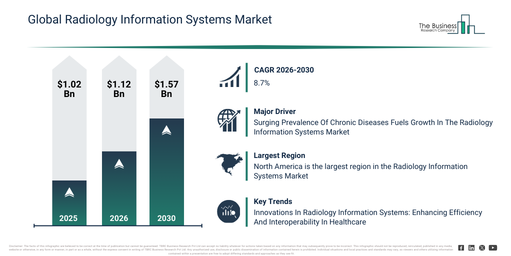
    The market for radiology information systems has experienced swift expansion over recent years. Forecasts indicate it will expand from $1.02 billion in 2025 to $1.12 billion in 2026, demonstrating a compound annual growth rate (CAGR) of 10.1%. Historically, this growth stemmed from factors such as the increasing digitalization of radiology departments, the expansion in imaging procedure volumes, the escalating administrative complexity within healthcare, the adoption of pacs and ehr systems, and the imperative for efficient reporting workflows.

    The radiology information systems market is poised for significant expansion over the coming years. This market is projected to reach $1.57 billion by 2030, exhibiting a compound annual growth rate (CAGR) of 8.7%. This anticipated growth stems from several factors, including escalating investments in cloud-native RIS solutions, increased demand for AI-assisted workflow tools, the broadening of integrated hospital information systems, a heightened emphasis on cybersecurity compliance, and the continuous modernization of diagnostic IT infrastructure. Key trends anticipated during this period encompass the wider deployment of integrated RIS platforms, the increasing uptake of cloud-based radiology systems, an intensifying focus on workflow automation and scheduling, the expansion of interoperable imaging data management, and a stronger emphasis on reporting that complies with regulations.

    Download the Free Sample Report to Explore Key Market Insights:

    https://www.thebusinessresearchcompany.com/sample.aspx?id=15448&type=smp

    What Underlying Factors Are Accelerating The Growth Of The Radiology Information Systems Market?

    The escalating occurrence of chronic illnesses is anticipated to fuel the expansion of the radiology information systems market in the coming period. These conditions, also termed non-communicable diseases (NCDs), are persistent health issues that typically progress slowly and endure for a prolonged duration. Their emergence is linked to an aging demographic, inactive routines, inadequate nutrition, lack of physical movement, and environmental influences. Radiology information systems play a crucial role in the detection, handling, and oversight of chronic ailments by enabling the effective archiving, accessing, and analysis of medical imaging information. A supporting statistic from January 2023, provided by the National Institutes of Health, a US-based government body, indicates that by 2035, an estimated 35.66% (range: 33.36–36.04) of adults aged 50 and above are expected to suffer from at least one chronic condition, a percentage predicted to increase to 47.81% (range: 46.09–49.71) by 2050. Consequently, the growing prevalence of chronic diseases is significantly boosting the development of the radiology information systems market.

    How Is The Radiology Information Systems Market Divided Into Its Major Segments?

    The radiology information systems market covered in this report is segmented –

    1) By Product: Integrated Radiology Information System, Standalone Radiology Information System

    2) By Deployment: Web-Based, Cloud-Based, On-Premise

    3) By End-User: Hospitals And Clinics, Outpatient Department, Office Based Physicians, Emergency Healthcare Service Providers, Research And Academic Institute

    Subsegments:

    1) By Integrated Radiology Information System: Picture Archiving And Communication System (PACS) Integration, Electronic Health Record (EHR) Integration, Laboratory Information System (LIS) Integration, Hospital Information System (HIS) Integration

    2) By Standalone Radiology Information System: Radiology Scheduling Software, Radiology Reporting Software, Radiology Workflow Management Software

    How Are Trends Impacting The Radiology Information Systems Market?

    Major companies operating in the radiology information systems market are expanding innovative features in their healthcare application suites, such as networked software systems, to improve interoperability and streamline workflows. A networked software system consists of multiple software components that interact via a network to perform tasks collaboratively. This setup enables distributed operations, scalability, and seamless communication across devices and applications. For instance, in January 2024, Vertex in Healthcare, a UK-based software development and ICT company that specializes in the healthcare sector, launched a VRIS radiology information system. The VRIS (Vertex Radiology Information System) enhances radiology department efficiency by automating workflows and improving patient engagement through a user-friendly portal. Its purpose is to streamline operations, increase diagnostic throughput, and support informed decision-making in healthcare settings.

    Who Are The Prominent Organizations Shaping The Radiology Information Systems Market?

    Major companies operating in the radiology information systems market are McKesson Corporation, General Electric Company, Oracle Corporation, Siemens Healthineers AG, FUJIFILM Holdings Corporation, Koninklijke Philips NV, Cerner Corporation, Epic Systems Corporation, Agfa Gevaert Group, Veradigm LLC, Carestream Health, Allscripts Healthcare LLC, Esaote S.p.A., Sectra AB, Canon Medical Systems Corporation, Pro Medicus Limited, eRAD, MedInformatix Inc., RamSoft Inc., Novarad Corporation, INFINITT Healthcare Co. Ltd., Dedalus S.p.A., Change Healthcare, Merge Healthcare, Vital Images

    Read the full radiology information systems market report here:

    https://www.thebusinessresearchcompany.com/report/radiology-information-systems-global-market-report

    Which Region Is Projected To Dominate The Radiology Information Systems Market During The Forecast Period?

    North America was the largest region in the radiology information systems market in 2025. Asia-Pacific is expected to be the fastest-growing region in the forecast period. The regions covered in the radiology information systems market report are Asia-Pacific, South East Asia, Western Europe, Eastern Europe, North America, South America, Middle East, Africa.

    Request A Tailored Radiology Information Systems Market Research Report For Competitive Advantage:

    https://www.thebusinessresearchcompany.com/customise?id=15448&type=smp

    Browse Through More Reports Similar to the Global Radiology Information Systems Market 2026, By The Business Research Company

    Radiology Services Global Market Report

    https://www.thebusinessresearchcompany.com/report/radiology-services-global-market-report

    Interventional Radiology Global Market Report

    https://www.thebusinessresearchcompany.com/report/interventional-radiology-global-market-report

    Radiology Information Systems Global Market Report

    https://www.thebusinessresearchcompany.com/report/radiology-information-systems-global-market-report

    Get in touch with us:

    The Business Research Company: https://www.thebusinessresearchcompany.com/

    Americas +1 310-496-7795

    Asia +44 7882 955267 & +91 8897263534

    Europe +44 7882 955267

    Email us at info@tbrc.info

    Follow us on:

    LinkedIn: https://in.linkedin.com/company/the-business-research-company

    YouTube: https://www.youtube.com/channel/UC24_fI0rV8cR5DxlCpgmyFQ

    Global Market Model: https://www.thebusinessresearchcompany.com/global-market-model
  • An Important Factor Driving the Radiology As A Service Market Is the Addressing The Surge In Global Cancer Cases Through Growing Demand For Radiology As A Service

    An Important Factor Driving the Radiology As A Service Market Is the Addressing The Surge In Global Cancer Cases Through Growing Demand For Radiology As A Service

    The Business Research Company’s 2026 market reports include new capabilities such as market attractiveness scoring and analysis, total addressable market analysis, company scoring matrix, interactive excel data dashboard, improved supply chain analysis, upcoming startups in the market, and overview of key products, aimed at improving the depth, usability, and strategic value of the insights delivered.

    What Is The Expected Market Size Of The Radiology As A Service Market From 2026 To 2030?

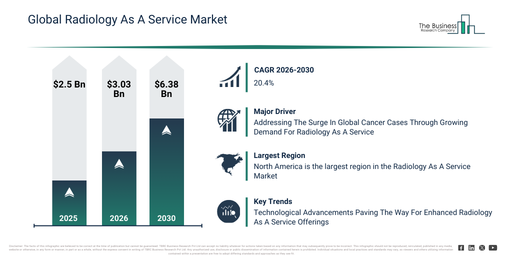
    The radiology as a service market has experienced rapid growth over recent years. It is anticipated to expand from $2.5 billion in 2025 to $3.03 billion in 2026, achieving a compound annual growth rate (CAGR) of 21.3%. Historically, this expansion has been driven by an increase in diagnostic imaging volumes, a shortage of in-house radiologists, the development of digital imaging infrastructure, escalating healthcare cost pressures, and the broader acceptance of remote diagnostics.

    The radiology as a service market size is anticipated to undergo significant expansion in the coming years. It is projected to achieve a value of $6.38 billion by 2030, exhibiting a compound annual growth rate (CAGR) of 20.4%. This growth during the forecast period can be attributed to increasing investments in AI-enabled radiology platforms, a rising demand for scalable imaging services, the expansion of cloud-native healthcare IT, a heightened focus on value-based healthcare delivery, and the ongoing digital transformation of diagnostic services. Prominent trends for the forecast period include the increasing adoption of teleradiology services, a rising demand for cloud-based imaging platforms, the growing outsourcing of radiology operations, the expansion of AI-assisted image interpretation services, and an enhanced focus on cost-efficient diagnostic delivery.

    Download the Free Sample Report to Explore Key Market Insights:

    https://www.thebusinessresearchcompany.com/sample.aspx?id=7158&type=smp

    Which Growth Drivers Are Contributing To The Progress Of The Radiology As A Service Market?

    The expanding global incidence of cancer is projected to fuel the future expansion of the radiology as a service market. Cancer is characterized by the uncontrolled proliferation and dissemination of cells throughout the body. Medical imaging technology has revolutionized healthcare, facilitating earlier detection of cancer and improved outcomes for patients. Consequently, the escalating count of cancer cases will generate a need for radiology imaging services, thereby driving the growth of radiology as a service. For example, the National Cancer Institute, a US-based government agency for cancer research and training, projected in May 2024 that the worldwide annual count of new cancer cases is anticipated to hit 29.9 million, accompanied by 15.3 million cancer-associated fatalities by 2040. Hence, the rising prevalence of cancer cases is a key driver for the market expansion of radiology as a service market.

    Which Segments Are Included In The Analysis Of The Radiology As A Service Market?

    The radiology as a service market covered in this report is segmented –

    1) By Service Type: Teleradiology, Cloud-based Imaging IT Services, Consulting Services, Technology Management Services

    2) By Technology: Computed Radiology, Direct Digital Radiology

    3) By End-User: Hospitals, Diagnostic Imaging Centers, Radiology Clinics, Physician Offices, Nursing Homes

    Subsegments:

    1) By Teleradiology: Remote Image Interpretation, Remote Reporting Services

    2) By Cloud-Based Imaging IT Services: Cloud Storage Solutions, Cloud-Based Image Management

    3) By Consulting Services: Workflow Optimization, Regulatory Compliance Consulting

    4) By Technology Management Services: Equipment Maintenance, Imaging Software Support

    What Industry Trends Are Redefining The Radiology As A Service Market?

    Key players in the radiology-as-a-service market are prioritizing the implementation of advanced remote care technologies to improve diagnostic capacities, tackle the scarcity of radiologists, and refine service provision across diverse healthcare environments. These advancements are designed to optimize radiology procedures, broaden the availability of specialty diagnostics, and assist healthcare providers in delivering superior imaging services. For example, in February 2024, Yellowcross Healthcare Commerce, an India-based telemedicine practice management organization, introduced a consultancy service intended to help medical groups and healthcare facilities bolster their remote care infrastructure. By working with hospitals, clinics, and medical groups throughout the United States, Yellowcross develops customized service offerings that reduce radiologist shortages and enable the delivery of specialized diagnostic services, thereby boosting operational efficiency and widening access to radiology expertise.

    Which Key Industry Participants Are Active In The Radiology As A Service Market?

    Major companies operating in the radiology as a service market are Siemens Healthineers AG, Fujifilm Holdings Corporation, Koninklijke Philips NV, GE HealthCare Technologies Inc., Agfa Gevaert NV, Mednax Inc., RadNet Inc., National Diagnostic Imaging Teleradiology, Alliance HealthCare Services Inc., US Radiology Specialists Inc., Nines Inc., Virtual Radiologic, Everlight Radiology, Telemedicine Clinic Ltd., Medica Group plc, Onrad Inc., RamSoft Inc., Real Radiology LLC, Vesta Teleradiology, Radiology Partners Inc., Ambra Health Company, Nano X Imaging Ltd., NightShift Radiology Inc., USARAD Holdings Inc., Telediagnostic Solutions Private Limited, Teleradiology Solutions Pvt Ltd., Imaging Advantage LLC, Imaging On Call LLC

    Read the full radiology as a service market report here:

    https://www.thebusinessresearchcompany.com/report/radiology-as-a-service-global-market-report

    What Are The Leading Geographic Regions In The Radiology As A Service Market?

    North America was the largest region in the radiology as a service market in 2025. Asia-Pacific is expected to be the fastest-growing region in the radiology as a service market share during the forecast period. The regions covered in the radiology as a service market report are Asia-Pacific, South East Asia, Western Europe, Eastern Europe, North America, South America, Middle East, Africa.

    Request A Tailored Radiology As A Service Market Research Report For Competitive Advantage:

    https://www.thebusinessresearchcompany.com/customise?id=7158&type=smp

    Browse Through More Reports Similar to the Global Radiology As A Service Market 2026, By The Business Research Company

    Healthcare Rfid Global Market Report

    https://www.thebusinessresearchcompany.com/report/healthcare-rfid-global-market-report

    Radio Frequency Identification Rfid Smart Cabinets Global Market Report

    https://www.thebusinessresearchcompany.com/report/radio-frequency-identification-rfid-smart-cabinets-global-market-report

    Pharmaceuticals Market

    https://www.thebusinessresearchcompany.com/report/pharmaceuticals-market

    Get in touch with us:

    The Business Research Company: https://www.thebusinessresearchcompany.com/

    Americas +1 310-496-7795

    Asia +44 7882 955267 & +91 8897263534

    Europe +44 7882 955267

    Email us at info@tbrc.info

    Follow us on:

    LinkedIn: https://in.linkedin.com/company/the-business-research-company

    YouTube: https://www.youtube.com/channel/UC24_fI0rV8cR5DxlCpgmyFQ

    Global Market Model: https://www.thebusinessresearchcompany.com/global-market-model
  • Global Primary Ovarian Insufficiency Market Forecast 2026–2035 Presenting Long-Term Industry Expansion Insights

    Global Primary Ovarian Insufficiency Market Forecast 2026–2035 Presenting Long-Term Industry Expansion Insights

    The Business Research Company’s 2026 market reports include new capabilities such as market attractiveness scoring and analysis, total addressable market analysis, company scoring matrix, interactive excel data dashboard, improved supply chain analysis, upcoming startups in the market, and overview of key products, aimed at improving the depth, usability, and strategic value of the insights delivered.

    What Market Value Is Anticipated For The Primary Ovarian Insufficiency Market Over The Period 2026–2030?

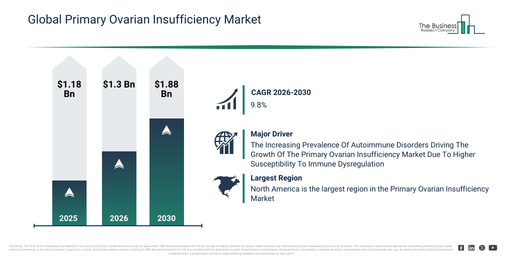
    The primary ovarian insufficiency market has shown substantial growth in recent years. Forecasts indicate it will expand from $1.18 billion in 2025 to $1.3 billion in 2026, achieving a compound annual growth rate (CAGR) of 10.0%. The historical period’s expansion is attributable to several key factors: increasing awareness of female reproductive health, wider use of hormone replacement therapy, growth in infertility treatment demand, improved diagnostic capabilities for hormonal disorders, and the expansion of specialty fertility clinics.

    The market for primary ovarian insufficiency is projected to experience robust expansion in the coming years, reaching a valuation of $1.88 billion by 2030, exhibiting a compound annual growth rate (CAGR) of 9.8%. This anticipated growth during the forecast period is fueled by several factors, including heightened investment in regenerative medicine research, an increasing need for early diagnostic solutions, the broader adoption of precision medicine approaches, a greater emphasis on non-invasive fertility treatment options, and the expanding accessibility of advanced reproductive technologies. Key trends characterizing this period involve the rising uptake of personalized hormone therapies, the growing utilization of sophisticated diagnostic testing, an increasing emphasis on fertility preservation solutions, the broadening application of regenerative and stem cell-based treatments, and the improved integration of multidisciplinary care models.

    Download the Free Sample Report to Explore Key Market Insights:

    https://www.thebusinessresearchcompany.com/sample.aspx?id=24387&type=smp

    Which Economic Or Industry Drivers Are Impacting The Primary Ovarian Insufficiency Market?

    The expanding occurrence of autoimmune conditions is anticipated to fuel the expansion of the primary ovarian insufficiency market in the future. Autoimmune disorders are conditions where the immune system incorrectly targets and harms the body’s own healthy cells and tissues. The rising incidence of these disorders is largely attributable to genetic predisposition, as individuals inherit specific genes that heighten their susceptibility to immune system dysfunctions. Primary ovarian insufficiency (POI) offers insights into autoimmune disorders by demonstrating the interplay between hormonal imbalances and immune system dysregulation, which contributes to an elevated risk of autoimmune diseases in those affected. For example, in 2025, WeCovr, an UK-based embedded insurance platform, projected that more than 3.5 million people in the UK would be living with an autoimmune disease by the close of 2025, representing an increase of nearly 40% since the early 2000s, surpassing previous estimates of 3% to 9%. Consequently, the growing prevalence of autoimmune disorders is propelling the growth of the primary ovarian insufficiency market.

    How Is The Primary Ovarian Insufficiency Market Divided Into Its Major Segments?

    The primary ovarian insufficiency market covered in this report is segmented –

    1) By Type: Hormone Replacement Therapy (HRT), Calcium and Vitamin D Supplements, In Vitro Fertilization (IVF), Stem Cell Therapy, Other Types

    2) By Diagnosis Method: Blood Tests, Ultrasound Imaging, Genetic Testing

    3) By Application: Less Than 20 Years Old, 20 To 30 Years Old, 30 To 45 Years Old, Perimenopausal Age Group Exclusion As POI Occurs Before 40

    4) By End-Users: Hospitals And Clinics, Specialty Fertility Centers

    Subsegments:

    1) By Hormone Replacement Therapy: Estrogen Therapy, Estrogen-Progestin Therapy, Transdermal Patches, Vaginal Estrogen Products, Oral Hormone Therapy

    2) By Calcium And Vitamin D Supplements: Calcium Carbonate, Calcium Citrate, Vitamin D2 (Ergocalciferol), Vitamin D3 (Cholecalciferol), Combined Calcium + Vitamin D Formulations

    3) By In Vitro Fertilization: Conventional In Vitro Fertilization, Intracytoplasmic Sperm Injection (ICSI), Egg Donation In Vitro Fertilization, Embryo Freezing And Transfer, Preimplantation Genetic Testing (PGT)

    4) By Stem Cell Therapy: Autologous Stem Cell Therapy, Allogeneic Stem Cell Therapy, Mesenchymal Stem Cell (MSC) Therapy, Ovarian Stem Cell Transplantation

    5) By Other Types: Psychological Counseling And Support Therapies, Assisted Reproductive Technologies (other than IVF), Immunomodulatory Therapies, Lifestyle And Dietary Interventions

    Who Are The Prominent Organizations Shaping The Primary Ovarian Insufficiency Market?

    Major companies operating in the primary ovarian insufficiency market are Mayo Clinic, Johns Hopkins Medicine, Baptist Health, Ferring Pharmaceuticals AS, PreventionGenetics LLC, The Fertility Partnership UK, Celmatix Inc, IVIRMA Global, Bioscience Institute SpA, Sparsh Diagnostics Pvt Ltd, Bristol Menopause Clinic, Indira IVF Hospital Private Limited, Lawley Pharmaceuticals Pty Ltd, OvaScience Inc, Merck KGaA, Roche Holding AG, Pfizer Inc, Novartis AG, AbbVie Inc, Eli Lilly And Company, Bayer AG, Takeda Pharmaceutical Company Limited

    Read the full primary ovarian insufficiency market report here:

    https://www.thebusinessresearchcompany.com/report/primary-ovarian-insufficiency-global-market-report

    What Are The Top-Performing Regions Within The Primary Ovarian Insufficiency Market?

    North America was the largest region in the primary ovarian insufficiency market in 2025. The regions covered in the primary ovarian insufficiency market report are Asia-Pacific, South East Asia, Western Europe, Eastern Europe, North America, South America, Middle East, Africa.

    Request A Tailored Primary Ovarian Insufficiency Market Research Report For Competitive Advantage:

    https://www.thebusinessresearchcompany.com/customise?id=24387&type=smp

    Browse Through More Reports Similar to the Global Primary Ovarian Insufficiency Market 2026, By The Business Research Company

    Immunoassay Global Market Report

    https://www.thebusinessresearchcompany.com/report/immunoassay-global-market-report

    Acne Drugs Global Market Report

    https://www.thebusinessresearchcompany.com/report/acne-drugs-global-market-report

    Immunodiagnostics Global Market Report

    https://www.thebusinessresearchcompany.com/report/immunodiagnostics-global-market-report

    Get in touch with us:

    The Business Research Company: https://www.thebusinessresearchcompany.com/

    Americas +1 310-496-7795

    Asia +44 7882 955267 & +91 8897263534

    Europe +44 7882 955267

    Email us at info@tbrc.info

    Follow us on:

    LinkedIn: https://in.linkedin.com/company/the-business-research-company

    YouTube: https://www.youtube.com/channel/UC24_fI0rV8cR5DxlCpgmyFQ

    Global Market Model: https://www.thebusinessresearchcompany.com/global-market-model
  • A Significant Growth Driver for the Radio Frequency Identification (RFID) In Pharmaceuticals Market Is the Surge In Counterfeit Drug Incidents Fuelling The Growth Of The RFID In Pharmaceuticals Market Due To Rising Online Pharmacy Penetration

    A Significant Growth Driver for the Radio Frequency Identification (RFID) In Pharmaceuticals Market Is the Surge In Counterfeit Drug Incidents Fuelling The Growth Of The RFID In Pharmaceuticals Market Due To Rising Online Pharmacy Penetration

    The Business Research Company’s 2026 market reports include new capabilities such as market attractiveness scoring and analysis, total addressable market analysis, company scoring matrix, interactive excel data dashboard, improved supply chain analysis, upcoming startups in the market, and overview of key products, aimed at improving the depth, usability, and strategic value of the insights delivered.

    What Market Valuation Is Forecasted For The Radio Frequency Identification (RFID) In Pharmaceuticals Market By 2030 Starting From Its 2026 Size?

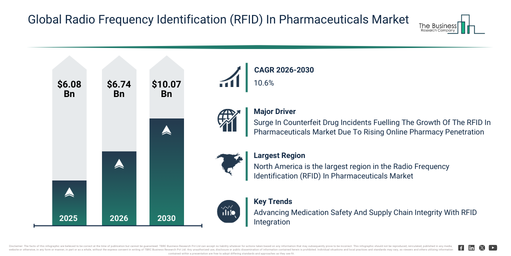
    The market for radio frequency identification (RFID) in pharmaceuticals has experienced rapid expansion in recent years. This market is projected to expand from $6.08 billion in 2025 to $6.74 billion in 2026, demonstrating a compound annual growth rate (CAGR) of 10.9%. Historically, this growth can be ascribed to several factors, including an increasing regulatory focus on drug traceability, a rise in incidents of counterfeit medicines, the expansion of global pharmaceutical supply chains, the adoption of serialization mandates, and the growing complexity of hospital inventory.

    The radio frequency identification (rfid) in pharmaceuticals market is projected to experience substantial expansion in the coming years. It is anticipated to reach $10.07 billion by 2030, demonstrating a compound annual growth rate (CAGR) of 10.6%. This growth during the forecast period is fueled by increasing investments in digital pharmaceutical logistics, a rising demand for real-time supply chain visibility, the expansion of rfid-enabled smart hospitals, growing adoption of blockchain-linked traceability systems, and increasing regulatory harmonization across regions. Significant trends expected during this period include the wider adoption of end-to-end drug track and trace systems, increased use of rfid for anti-counterfeiting measures, deeper integration of rfid with serialization platforms, expanded real-time pharmaceutical inventory visibility, and an enhanced focus on the accuracy of cold chain monitoring.

    Download the Free Sample Report to Explore Key Market Insights:

    https://www.thebusinessresearchcompany.com/sample.aspx?id=25891&type=smp

    What Primary Drivers Are Shaping The Development Of The Radio Frequency Identification (RFID) In Pharmaceuticals Market?

    The rising occurrences of counterfeit drugs are projected to fuel the expansion of the radio frequency identification (RFID) in pharmaceuticals market in the future. Counterfeit drugs, sometimes referred to as fake medicines, are pharmaceutical items intentionally and deceitfully mislabeled concerning their identity or origin. The escalation in counterfeit drug cases stems from the quick rise of online pharmacies, which has facilitated counterfeiters in supplying fraudulent medications directly to consumers, circumventing established regulatory protections and complicating discovery. Radio frequency identification (RFID) in pharmaceuticals aids in combating fake drugs by offering secure, verifiable information that confirms product genuineness throughout the entire supply chain. For example, in December 2024, the American Chemical Society, a US-based nonprofit scientific society, reported 6,987 counterfeit drug incidents across 142 countries in 2023, marking a 4% rise from 2022. Consequently, the growing frequency of counterfeit drugs is stimulating the development of the radio frequency identification (RFID) in pharmaceuticals market.

    Which Segment Categories Define The Radio Frequency Identification (RFID) In Pharmaceuticals Market?

    The radio frequency identification (rfid) in pharmaceuticals market covered in this report is segmented –

    1) By Type: Chipped Radio Frequency Identification, Chipless Radio Frequency Identification

    2) By Component: Radio Frequency Identification Tags, Radio Frequency Identification Readers, Middleware Software, Integration Services, Data Management Software

    3) By Regulatory Compliance: Food And Drug Administration Compliance Standards, European Union Falsified Medicines Directive, Good Distribution Practices, Serialization Requirements, Tracking And Tracing Regulations

    4) By Application: Drug Track And Trace System, Asset Tracking, Patient Safety, Other Applications

    5) By End-User: Pharmaceutical Manufacturers, Hospitals And Healthcare Providers, Pharmacies And Drug Wholesalers, Research And Development Laboratories, Logistics And Supply Chain Companies

    Subsegments:

    1) By Chipped Radio Frequency Identification: Low Frequency Radio Frequency Identification, High Frequency Radio Frequency Identification, Ultra High Frequency Radio Frequency Identification, Active Radio Frequency Identification, Passive Radio Frequency Identification, Semi-Passive Radio Frequency Identification

    2) By Chipless Radio Frequency Identification: Time Domain Reflectometry, Frequency Domain Reflectometry, Magnetic Resonance-Based Tags, Surface Acoustic Wave Tags, Printed Conductive Polymer Tags, Photonic Band Gap Structures

    What Key Developments And Trends Are Impacting The Radio Frequency Identification (RFID) In Pharmaceuticals Market?

    In the radio frequency identification (RFID) in pharmaceuticals market, leading companies are dedicating efforts to creating sophisticated RFID-enabled labels. This initiative aims to improve product traceability, enhance inventory management, and counter the growing risk of counterfeit drugs. RFID-enabled labels are intelligent tags that leverage radio frequency technology to wirelessly identify, track, and authenticate pharmaceutical items throughout their supply chain. As an illustration, in May 2023, Fresenius Kabi AG, a pharmaceutical company based in Germany, launched its Rocuronium Bromide Injection, which incorporates advanced RFID-enabled labeling to boost medication tracking, inventory control, and patient safety within healthcare facilities. The injection is provided as a 50 mg per 5 mL multiple-dose vial intended for intravenous administration by qualified medical personnel. Its advanced RFID-enabled smart labeling facilitates real-time tracking, optimizes inventory procedures, and aids in minimizing medication errors.

    Who Are The Top Companies Competing In The Radio Frequency Identification (RFID) In Pharmaceuticals Market?

    Major companies operating in the radio frequency identification (rfid) in pharmaceuticals market are Fujitsu Limited, NXP Semiconductors NV, Avery Dennison Corporation, Zebra Technologies Corporation, CCL Industries Inc., HID Global Corporation, Checkpoint Systems Inc, Datalogic SpA, Impinj Inc, Schreiner Group GmbH & Co KG, Invengo Information Technology Co Ltd, GAO RFID Inc., Lowry Solutions Inc., Terso Solutions Inc., Xerafy Singapore Pte Ltd., Tageos SAS, SML Group Limited, Syrma SGS Technology Limited, Omnia Technologies Private Limited, identytag GmbH & Co KG

    Read the full radio frequency identification (rfid) in pharmaceuticals market report here:

    https://www.thebusinessresearchcompany.com/report/radio-frequency-identification-rfid-in-pharmaceuticals-global-market-report

    How Does The Radio Frequency Identification (RFID) In Pharmaceuticals Market Perform Across Major Global Regions?

    North America was the largest region in the radio frequency identification (RFID) in pharmaceuticals market in 2025. Asia-Pacific is expected to be the fastest-growing region in the forecast period. The regions covered in the radio frequency identification (rfid) in pharmaceuticals market report are Asia-Pacific, South East Asia, Western Europe, Eastern Europe, North America, South America, Middle East, Africa.

    Request A Tailored Radio Frequency Identification (RFID) In Pharmaceuticals Market Research Report For Competitive Advantage:

    https://www.thebusinessresearchcompany.com/customise?id=25891&type=smp

    Browse Through More Reports Similar to the Global Radio Frequency Identification (RFID) In Pharmaceuticals Market 2026, By The Business Research Company

    Medical Irradiation Global Market Report

    https://www.thebusinessresearchcompany.com/report/medical-irradiation-global-market-report

    Radiotherapy Devices Global Market Report

    https://www.thebusinessresearchcompany.com/report/radiotherapy-devices-global-market-report

    Single Dose Radiotherapy Services Global Market Report

    https://www.thebusinessresearchcompany.com/report/single-dose-radiotherapy-services-global-market-report

    Get in touch with us:

    The Business Research Company: https://www.thebusinessresearchcompany.com/

    Americas +1 310-496-7795

    Asia +44 7882 955267 & +91 8897263534

    Europe +44 7882 955267

    Email us at info@tbrc.info

    Follow us on:

    LinkedIn: https://in.linkedin.com/company/the-business-research-company

    YouTube: https://www.youtube.com/channel/UC24_fI0rV8cR5DxlCpgmyFQ

    Global Market Model: https://www.thebusinessresearchcompany.com/global-market-model