Category: Healthcare Services

  • Rabbit Monoclonal Antibody Market Future Outlook Showing Expansion Toward $1.45 Billion by 2030

    Rabbit Monoclonal Antibody Market Future Outlook Showing Expansion Toward $1.45 Billion by 2030

    The Business Research Company’s 2026 market reports include new capabilities such as market attractiveness scoring and analysis, total addressable market analysis, company scoring matrix, interactive excel data dashboard, improved supply chain analysis, upcoming startups in the market, and overview of key products, aimed at improving the depth, usability, and strategic value of the insights delivered.

    How Will The Market Size Of The Rabbit Monoclonal Antibody Market Evolve From 2026 To 2030?

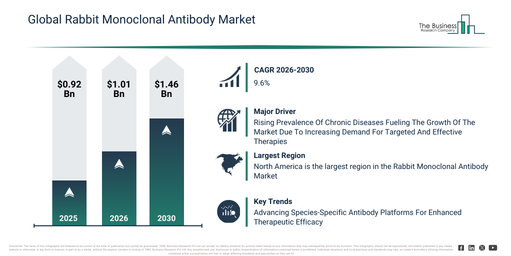
    The rabbit monoclonal antibody market has experienced robust expansion over the past few years. Projections indicate its size will increase from $0.92 billion in 2025 to $1.01 billion in 2026, demonstrating a compound annual growth rate (CAGR) of 9.9%. Historically, this growth can be ascribed to several factors, including the widening scope of protein research applications, a heightened need for sensitive detection reagents, increased adoption of immunohistochemistry, a rise in biomedical research funding, and the accessibility of hybridoma technologies.

    The rabbit monoclonal antibody market is anticipated to experience robust expansion over the next few years. It is projected to grow to $1.46 billion in 2030, demonstrating a compound annual growth rate (CAGR) of 9.6%. This expansion throughout the forecast period can be attributed to factors such as the increasing demand for precision diagnostics, the rising application of antibodies in drug discovery, the broadening of personalized medicine research, the growing adoption of recombinant antibody platforms, and an increasing emphasis on optimizing assay sensitivity. Major trends expected during this period include the increased use of rabbit antibodies for difficult epitopes, their rising utilization in advanced diagnostics, a growing preference for high-affinity antibodies, the expansion of recombinant rabbit antibody production, and an enhanced focus on analytical sensitivity.

    Download the Free Sample Report to Explore Key Market Insights:

    https://www.thebusinessresearchcompany.com/sample.aspx?id=30364&type=smp

    What Drivers Are Influencing The Rabbit Monoclonal Antibody Market?

    The increasing occurrence of chronic illnesses is anticipated to boost the expansion of the rabbit monoclonal antibody market in the future. Chronic diseases are long-lasting health problems that emerge gradually and persist for an extended duration, frequently necessitating ongoing medical attention. The rise in these conditions can be partly attributed to sedentary lifestyles, as extended periods of sitting and insufficient physical activity heighten the risk of ailments like heart issues and diabetes. Rabbit monoclonal antibodies contribute to chronic disease therapy by offering exceptionally specific and high-affinity targeting of proteins linked to the disease. They improve accuracy in treatment, minimize unintended side effects, and boost the effectiveness of therapy, leading to better results for patients and more efficient drug development. For example, in June 2024, the National Health Service, a UK-based government department, reported that 3,615,330 individuals registered with a general practitioner (GP) had been diagnosed with non-diabetic hyperglycemia or pre-diabetes (a condition with elevated blood sugar levels, not high enough to be classified as diabetes) in 2023, representing an 18% increase from 3,065,825 cases in 2022. Consequently, the growing prevalence of chronic diseases is fueling the growth of the rabbit monoclonal antibody market.

    Which Segment Areas Are Covered In The Rabbit Monoclonal Antibody Market Analysis?

    The rabbit monoclonal antibody market covered in this report is segmented –

    1) By Type: Immunoglobulin G (IgG), Immunoglobulin M (IgM), Immunoglobulin A (IgA), Immunoglobulin E (IgE), Immunoglobulin D (IgD)

    2) By Application: Diagnostics, Therapeutics, Research, Drug Discovery, Immunohistochemistry

    3) By End User: Pharmaceutical Companies, Academic And Research Institutions, Diagnostic Laboratories, Contract Research Organizations, Biotechnology Companies

    Subsegments:

    1) By Immunoglobulin G (IgG): Subclass 1 Immunoglobulin G, Subclass 2 Immunoglobulin G, Subclass 3 Immunoglobulin G, Subclass 4 Immunoglobulin G

    2) By Immunoglobulin M (IgM): Pentameric Immunoglobulin M, Monomeric Immunoglobulin M

    3) By Immunoglobulin A (IgA): Serum Immunoglobulin A, Secretory Immunoglobulin A

    4) By Immunoglobulin E (IgE): Allergen Specific Immunoglobulin E, Total Immunoglobulin E

    5) By Immunoglobulin D (IgD): Membrane Bound Immunoglobulin D, Secreted Immunoglobulin D

    What Trends Are Affecting The Expansion Of The Rabbit Monoclonal Antibody Market?

    Major companies in the rabbit monoclonal antibody market are prioritizing the creation of advanced platforms, such as species-specific antibody development, to enhance therapeutic effectiveness, refine target specificity, and decrease immunogenicity. Species-specific antibody development involves the strategic utilization of distinct animal immune systems to generate antibodies with unique binding attributes and high affinity for challenging drug targets. In September 2024, ImmunoPrecise Antibodies Ltd., a Canadian AI-driven biotherapeutic research and technology company, announced significant progress in its rabbit antibody platforms. This species-specific antibody displayed considerable clinical advancement through its B Cell Select platform, which is integrated with LENSai artificial intelligence technology for automated antibody discovery and optimization. This system combines automation with AI-driven analytics to quickly identify high-affinity rabbit monoclonal antibodies while preserving their natural structures. This methodology improves clinical translation efficiency, accelerates target validation, shortens development timelines, and enhances reproducibility in therapeutic antibody initiatives.

    Which Global Companies Are Actively Competing In The Rabbit Monoclonal Antibody Market?

    Major companies operating in the rabbit monoclonal antibody market are F. Hoffmann-La Roche Ltd., Merck KGaA, Thermo Fisher Scientific Inc., Bio-Rad Laboratories Inc., Bio-Techne Corporation, Elabscience Biotechnology Inc., GenScript Biotech Corporation, Takara Bio Inc., Rockland Immunochemicals Inc., Creative Biolabs Inc., Bioss Antibodies Inc., Cell Signaling Technology Inc., MyBioSource Inc., Boster Biological Technology Co. Ltd., GeneTex Inc., Proteintech Group Inc., Santa Cruz Biotechnology Inc., AvantGen Inc., ImmunoWay Biotechnology Company, Abcam plc

    Read the full rabbit monoclonal antibody market report here:

    https://www.thebusinessresearchcompany.com/report/global-rabbit-monoclonal-antibody-market-report

    Which Regions Are Expected To Experience Rapid Expansion In The Rabbit Monoclonal Antibody Market?

    North America was the largest region in the rabbit monoclonal antibody market in 2025. Asia-Pacific is expected to be the fastest-growing region in the forecast period. The regions covered in the rabbit monoclonal antibody market report are Asia-Pacific, South East Asia, Western Europe, Eastern Europe, North America, South America, Middle East, Africa.

    Request A Tailored Rabbit Monoclonal Antibody Market Research Report For Competitive Advantage:

    https://www.thebusinessresearchcompany.com/customise?id=30364&type=smp

    Browse Through More Reports Similar to the Global Rabbit Monoclonal Antibody Market 2026, By The Business Research Company

    Quantum Computing In Healthcare Global Market Report

    https://www.thebusinessresearchcompany.com/report/quantum-computing-in-healthcare-global-market-report

    Enterprise Quantum Computing Global Market Report

    https://www.thebusinessresearchcompany.com/report/enterprise-quantum-computing-global-market-report

    Quantum Computing And Technologies Global Market Report

    https://www.thebusinessresearchcompany.com/report/quantum-computing-and-technologies-global-market-report

    Get in touch with us:

    The Business Research Company: https://www.thebusinessresearchcompany.com/

    Americas +1 310-496-7795

    Asia +44 7882 955267 & +91 8897263534

    Europe +44 7882 955267

    Email us at info@tbrc.info

    Follow us on:

    LinkedIn: https://in.linkedin.com/company/the-business-research-company

    YouTube: https://www.youtube.com/channel/UC24_fI0rV8cR5DxlCpgmyFQ

    Global Market Model: https://www.thebusinessresearchcompany.com/global-market-model
  • Quantum-Enhanced Predictive Genomics Market Revenue Growth Expected to Reach $8.36 Billion by 2030 with 33.7% CAGR

    Quantum-Enhanced Predictive Genomics Market Revenue Growth Expected to Reach $8.36 Billion by 2030 with 33.7% CAGR

    The Business Research Company’s 2026 market reports include new capabilities such as market attractiveness scoring and analysis, total addressable market analysis, company scoring matrix, interactive excel data dashboard, improved supply chain analysis, upcoming startups in the market, and overview of key products, aimed at improving the depth, usability, and strategic value of the insights delivered.

    What Is The Forecasted Market Value Of The Quantum-Enhanced Predictive Genomics Market Across 2026–2030?

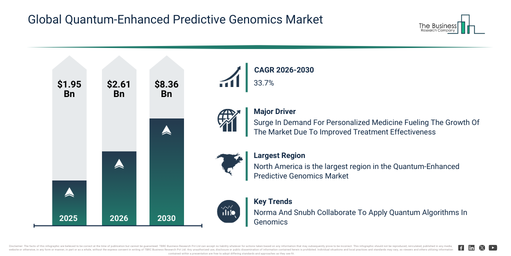
    The market size for quantum-enhanced predictive genomics has shown exponential growth in recent years. This market is projected to expand from $1.95 billion in 2025 to $2.61 billion in 2026, driven by a compound annual growth rate (CAGR) of 34.0%. Factors contributing to its historical growth include advancements in genomic sequencing technologies, an expansion in large-scale genomic datasets, the early adoption of quantum computing in research, a rising focus on personalized medicine, and enhanced bioinformatics capabilities.

    The quantum-enhanced predictive genomics market is anticipated to show significant expansion over the coming years, with projections indicating a reach of $8.36 billion by 2030, exhibiting a compound annual growth rate (CAGR) of 33.7%. This growth throughout the forecast period stems from factors such as the increasing availability of commercial quantum computing platforms, escalating investment in precision medicine research, a rising demand for predictive healthcare analytics, the broader application of quantum machine learning, and enhanced collaboration between genomics and quantum technology firms. Prominent trends for the forecast duration include a greater adoption of quantum-based genomic modeling, an increased utilization of hybrid quantum-classical analytics, a stronger focus on high-dimensional biomarker discovery, the expansion of cloud-based quantum genomics platforms, and a reinforced emphasis on predictive disease risk modeling.

    Download the Free Sample Report to Explore Key Market Insights:

    https://www.thebusinessresearchcompany.com/sample.aspx?id=28308&type=smp

    What Drivers Are Shaping The Future Growth Of The Quantum-Enhanced Predictive Genomics Market?

    The increasing need for individualized medical approaches is anticipated to fuel the expansion of the quantum-enhanced predictive genomics market in the future. This approach, known as personalized medicine, involves customizing healthcare, therapies, and preventative measures based on a person’s distinct genetic makeup, biological traits, and clinical history. The surge in personalized medicine’s popularity stems from its enhanced treatment efficacy, where specific therapies designed for an individual’s genetic blueprint have resulted in superior patient outcomes and a reduction in negative reactions. Quantum-enhanced predictive genomics aids personalized medicine by facilitating exceptionally rapid analysis of intricate genomic information, thereby empowering healthcare professionals to devise very accurate, custom-made treatment and prevention plans. An illustration of this trend is seen in 2024, when according to NHS England, a public health system in the UK, its genomic medicine service performed over 810,000 personalized genomic tests for patients, marking an 8% rise compared to 2023, which underscores the growing clinical requirement for care guided by genomics. Consequently, the escalating requirement for personalized medicine is projected to stimulate the growth of the quantum-enhanced predictive genomics market.

    What Segmentation Levels Are Considered In The Quantum-Enhanced Predictive Genomics Market?

    The quantum-enhanced predictive genomics market covered in this report is segmented –

    1) By Technology: Quantum Computing, Quantum Machine Learning, Quantum Cryptography, Other Technologies

    2) By Deployment Mode: On-Premises, Cloud-Based

    3) By Application: Disease Risk Assessment, Drug Discovery, Personalized Medicine, Genomic Data Analysis, Other Applications

    4) By End-User: Pharmaceutical And Biotechnology Companies, Research Institutes, Healthcare Providers, Other End-Users

    Subsegments:

    1) By Quantum Computing: Gate Based Quantum Computing, Quantum Annealing, Topological Quantum Computing, Photonic Quantum Computing

    2) By Quantum Machine Learning: Supervised Learning, Unsupervised Learning, Reinforcement Learning, Deep Learning

    3) By Quantum Cryptography: Quantum Key Distribution, Quantum Random Number Generation, Quantum Secure Communication, Post Quantum Cryptography

    4) By Other Technologies: Quantum Sensors, Quantum Simulation, Quantum Networking, Hybrid Quantum Classical Systems

    Which Trends Are Influencing The Quantum-Enhanced Predictive Genomics Market?

    Major companies in the quantum-enhanced predictive genomics market are focusing on innovations such as high-throughput genomic data processing. This aims to accelerate the identification of genetic variations, improve predictive accuracy in personalized medicine, and enable faster, more precise analysis of complex genomic datasets. High-throughput genomic data processing involves the rapid, large-scale analysis of genomic sequences using advanced computational methods. For instance, in June 2025, Norma Group, a Germany-based developer and manufacturer of engineered and standardized joining and fluid-handling technology, partnered with Seoul National University Bundang Hospital (SNUBH) to apply quantum algorithms to large-scale genomic analysis. The project intends to accelerate the detection of genetic mutations through quantum-enhanced combinatorial optimization, enhancing both the speed and accuracy of genomic data processing beyond classical computing methods. Key applications include precision diagnostics, personalized treatment planning, and genetic risk assessment for diseases such as cancer and neurological disorders.

    Which Leading Firms Are Contributing To The Growth Of The Quantum-Enhanced Predictive Genomics Market?

    Major companies operating in the quantum-enhanced predictive genomics market are Google LLC, Microsoft Corporation, Alibaba Group Holding Limited, Amazon Web Services, Inc., F. Hoffmann-La Roche AG, Accenture plc, IBM Corporation, Honeywell International Inc., Fujitsu Limited, Eviden, Xanadu Quantum Technologies Inc., Pasqal SA, Rigetti Computing, Inc., IonQ, Inc., D-Wave Systems Inc., Quantinuum, Atom Computing, Inc., Alice & Bob, QC Ware Corp., PsiQuantum, Inc., QuEra Computing, Inc., Quandela, Quantum Motion Ltd., Amazon.com, Inc., Intel Corporation, Cambridge Quantum Computing Ltd., Atos SE, NEC Corporation

    Read the full quantum-enhanced predictive genomics market report here:

    https://www.thebusinessresearchcompany.com/report/quantum-enhanced-predictive-genomics-global-market-report

    Which Geographic Regions Are Influencing Demand In The Quantum-Enhanced Predictive Genomics Market?

    North America was the largest region in the quantum-enhanced predictive genomics market in 2025. Asia-Pacific is expected to be the fastest-growing region in the forecast period. The regions covered in the quantum-enhanced predictive genomics market report are Asia-Pacific, South East Asia, Western Europe, Eastern Europe, North America, South America, Middle East, Africa.

    Request A Tailored Quantum-Enhanced Predictive Genomics Market Research Report For Competitive Advantage:

    https://www.thebusinessresearchcompany.com/customise?id=28308&type=smp

    Browse Through More Reports Similar to the Global Quantum-Enhanced Predictive Genomics Market 2026, By The Business Research Company

    Cerebral Palsy Treatment Global Market Report

    https://www.thebusinessresearchcompany.com/report/cerebral-palsy-treatment-global-market-report

    Rare Neurological Disease Treatment Global Market Report

    https://www.thebusinessresearchcompany.com/report/rare-neurological-disease-treatment-global-market-report

    Chronic Venous Occlusions Treatment Global Market Report

    https://www.thebusinessresearchcompany.com/report/chronic-venous-occlusions-treatment-global-market-report

    Get in touch with us:

    The Business Research Company: https://www.thebusinessresearchcompany.com/

    Americas +1 310-496-7795

    Asia +44 7882 955267 & +91 8897263534

    Europe +44 7882 955267

    Email us at info@tbrc.info

    Follow us on:

    LinkedIn: https://in.linkedin.com/company/the-business-research-company

    YouTube: https://www.youtube.com/channel/UC24_fI0rV8cR5DxlCpgmyFQ

    Global Market Model: https://www.thebusinessresearchcompany.com/global-market-model
  • Quadriplegia Treatment Market Expected to Record Steady Growth and Approach $2.91 Billion by 2030

    Quadriplegia Treatment Market Expected to Record Steady Growth and Approach $2.91 Billion by 2030

    The Business Research Company’s 2026 market reports include new capabilities such as market attractiveness scoring and analysis, total addressable market analysis, company scoring matrix, interactive excel data dashboard, improved supply chain analysis, upcoming startups in the market, and overview of key products, aimed at improving the depth, usability, and strategic value of the insights delivered.

    What Market Size Increase Is Anticipated For The Quadriplegia Treatment Market Over The 2026–2030 Period?

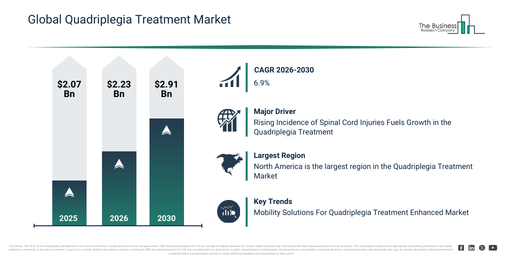
    The quadriplegia treatment market has demonstrated significant growth in recent years. Its value is anticipated to rise from $2.07 billion in 2025 to $2.23 billion in 2026, registering a compound annual growth rate (CAGR) of 7.9%. The expansion observed in prior periods can be attributed to several factors including an increased occurrence of spinal cord injuries, the proliferation of rehabilitation centers, the availability of various pharmacological solutions for pain management, greater awareness regarding long-term care requirements, and enhanced access to mobility aids.

    The quadriplegia treatment market is set for significant expansion in the coming years, with projections indicating a rise to $2.91 billion by 2030, achieving a compound annual growth rate (CAGR) of 6.9%. This projected growth during the forecast period is fueled by several factors, including the increasing adoption of neurorehabilitation technologies, a growing demand for home-based care options, the continuous expansion of digital health platforms, an elevated focus on improving the quality of life for patients, and increased investments in assistive technology innovation. Furthermore, key trends expected in this period encompass the wider adoption of advanced rehabilitation technologies, an increase in the use of assistive and mobility devices, the expanding integration of digital therapy alongside remote monitoring, the spread of multidisciplinary treatment approaches, and an enhanced emphasis on personalized pain and spasticity management.

    Download the Free Sample Report to Explore Key Market Insights:

    https://www.thebusinessresearchcompany.com/sample.aspx?id=16521&type=smp

    Which Economic Or Industry Drivers Are Impacting The Quadriplegia Treatment Market?

    The increasing occurrence of spinal cord injuries (SCIs) is projected to boost the expansion of the quadriplegia treatment market in the future. SCIs involve damage to the spinal cord resulting from trauma or disease, frequently leading to a loss of mobility, sensation, or motor function below the site of injury. The growth in SCI cases is attributed to factors such as motor vehicle accidents, falls, sports injuries, and violence. Quadriplegia treatment aims to restore functional independence and enhance the quality of life through rehabilitation, assistive technologies, neurostimulation, and medical management. For instance, in February 2025, according to the National Spinal Cord Injury Statistical Center (NSCISC), a US-based organization that collects, analyzes, and disseminates nationwide data on traumatic spinal cord injuries, the U.S. population in 2024 was roughly 341 million, and with an incidence rate of about 54 traumatic spinal cord injuries per million people, this translates to an estimated 18,421 new tSCI cases occurring annually. Therefore, the rising incidence of spinal cord injuries is driving the growth of the treatment market.

    How Is The Quadriplegia Treatment Market Segmented Across Key Categories?

    The quadriplegia treatment market covered in this report is segmented –

    1) By Treatment Type: Corticosteroids, Non-Steroidal Anti-Inflammatory Drugs (NSAIDs), Antidepressants, Anticonvulsants, Narcotic Analgesics, Antispasmodics And Muscle Relaxants, Antibiotics

    2) By Route Of Administration: Oral, Intravenous, Other Routes Of Administration

    3) By Distribution Channel: Online Stores, Drug Stores, Retail Pharmacies, Hospital Pharmacies

    Subsegments:

    1) By Corticosteroids: Methylprednisolone, Prednisone, Dexamethasone

    2) By Non-Steroidal Anti-Inflammatory Drugs (NSAIDs): Ibuprofen, Naproxen, Aspirin

    3) By Antidepressants: Tricyclic Antidepressants, Selective Serotonin Reuptake Inhibitors (SSRIs), Serotonin And Norepinephrine Reuptake Inhibitors (SNRIs)

    4) By Anticonvulsants: Gabapentin, Pregabalin, Carbamazepine

    5) By Narcotic Analgesics: Morphine, Fentanyl, Oxycodone

    6) By Antispasmodics And Muscle Relaxants: Baclofen, Tizanidine, Cyclobenzaprine

    7) By Antibiotics: Broad-Spectrum Antibiotics, Infection-Specific Antibiotics

    What Trends Are Advancing Progress In The Quadriplegia Treatment Market?

    Leading companies in the quadriplegia treatment market are developing novel products, such as wireless tongue-controlled interfaces, to enhance patient mobility and independence. These wireless tongue-controlled interfaces for quadriplegia treatment enable individuals to operate devices or communicate using tongue movements, significantly improving their independence and quality of life. For instance, in April 2023, Media Lab spinoff Augmental, a US-based provider of digital devices and interfaces, launched MouthPad, a tongue-controlled interface that allows users to interact with digital devices without using their hands. This innovative device is designed to be transformative for individuals with limited hand-motor control, as well as for anyone seeking a more natural and expressive way to interact with computers. It incorporates a custom-fit, 3D-printed mouthpiece containing a trackpad chip that detects tongue movements and pressure. This functionality permits users to control their devices by sweeping their tongue across the trackpad, utilizing tongue presses for left clicks and sip gestures for right clicks.

    Who Are The Dominant Players Shaping The Quadriplegia Treatment Market Landscape?

    Major companies operating in the quadriplegia treatment market are Johnson And Johnson Services Inc., Merck And Co., Sanofi S.A., Bristol Myers Squibb Co., AstraZeneca plc, Abbott Laboratories, GlaxoSmithKline plc, Roche Holdings Inc., Takeda Pharmaceutical Co Ltd, Medtronic plc, Eli Lilly And Co., Koninklijke Philips NV, Stryker Corporation, Teva Pharmaceutical Industries Ltd., Baxter International, Zimmer Biomet Holdings Inc., Sun Pharmaceutical Industries Limited, Cipla Ltd, Ottobock SE And Co. KGaA, Zydus Lifesciences Ltd., Invacare Corporation, Sunrise Medical Company Private Limited, Pride Mobility Products Corp., Pfizer Inc., Novartis AG

    Read the full quadriplegia treatment market report here:

    https://www.thebusinessresearchcompany.com/report/quadriplegia-treatment-global-market-report

    What Are The Top-Performing Regions Within The Quadriplegia Treatment Market?

    North America was the largest region in the quadriplegia treatment market in 2025. The regions covered in the quadriplegia treatment market report are Asia-Pacific, South East Asia, Western Europe, Eastern Europe, North America, South America, Middle East, Africa.

    Request A Tailored Quadriplegia Treatment Market Research Report For Competitive Advantage:

    https://www.thebusinessresearchcompany.com/customise?id=16521&type=smp

    Browse Through More Reports Similar to the Global Quadriplegia Treatment Market 2026, By The Business Research Company

    Medical Lasers Global Market Report

    https://www.thebusinessresearchcompany.com/report/medical-lasers-global-market-report

    Urology Medical Lasers Global Market Report

    https://www.thebusinessresearchcompany.com/report/urology-medical-lasers-global-market-report

    Dentistry Medical Lasers Global Market Report

    https://www.thebusinessresearchcompany.com/report/dentistry-medical-lasers-global-market-report

    Get in touch with us:

    The Business Research Company: https://www.thebusinessresearchcompany.com/

    Americas +1 310-496-7795

    Asia +44 7882 955267 & +91 8897263534

    Europe +44 7882 955267

    Email us at info@tbrc.info

    Follow us on:

    LinkedIn: https://in.linkedin.com/company/the-business-research-company

    YouTube: https://www.youtube.com/channel/UC24_fI0rV8cR5DxlCpgmyFQ

    Global Market Model: https://www.thebusinessresearchcompany.com/global-market-model
  • Q Switched Ruby Laser Treatments Industry Expansion Forecast Showing Market Size of $27.66 Billion by 2030 at 10.5% CAGR

    Q Switched Ruby Laser Treatments Industry Expansion Forecast Showing Market Size of $27.66 Billion by 2030 at 10.5% CAGR

    The Business Research Company’s 2026 market reports include new capabilities such as market attractiveness scoring and analysis, total addressable market analysis, company scoring matrix, interactive excel data dashboard, improved supply chain analysis, upcoming startups in the market, and overview of key products, aimed at improving the depth, usability, and strategic value of the insights delivered.

    How Much Is The Q Switched Ruby Laser Treatments Market Expected To Grow In Terms Of Market Value Between 2026 And 2030?

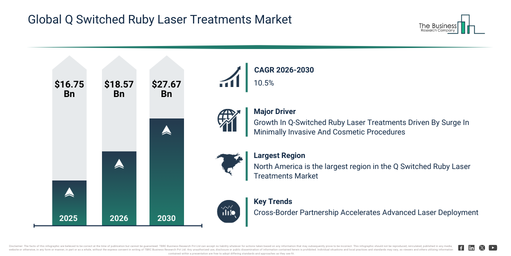
    The market size for q switched ruby laser treatments has seen swift expansion recently. This market is projected to expand from $16.75 billion in 2025 to $18.57 billion by 2026, exhibiting a compound annual growth rate (CAGR) of 10.8%. Factors contributing to its historical growth include an increase in aesthetic medicine procedures, greater awareness regarding non-invasive skin treatments, the proliferation of dermatology and cosmetic clinics, innovations in laser energy delivery systems, and a heightened demand for pigmentation correction.

    The market for q switched ruby laser treatments is projected to experience substantial growth in the upcoming years. This market is anticipated to reach $27.67 billion by 2030, exhibiting a compound annual growth rate (CAGR) of 10.5%. This projected growth can be ascribed to several factors, including the increasing integration of advanced aesthetic laser systems, a growing preference for minimally invasive cosmetic procedures, the proliferation of medical aesthetics clinics in developing regions, an intensified emphasis on laser technologies safe for skin, and the rising application of combination laser therapies. Key trends during this period are expected to encompass a greater embrace of laser-driven pigmentation treatments, an increased need for tattoo removal services, broader utilization within dermatology clinics, the expansion of laser platforms capable of multiple wavelengths, and a heightened commitment to the accuracy and safety of treatments.

    Download the Free Sample Report to Explore Key Market Insights:

    https://www.thebusinessresearchcompany.com/sample.aspx?id=20609&type=smp

    What Major Drivers Are Influencing Demand In The Q Switched Ruby Laser Treatments Market?

    The increasing demand for minimally invasive and cosmetic procedures is projected to drive the growth of the Q-switched ruby laser treatments market in the coming years. Minimally invasive and cosmetic procedures refer to a variety of medical interventions designed to enhance appearance and improve aesthetic outcomes with minimal physical disruption. The growing demand for these procedures is propelled by a preference for non-surgical options and increased awareness disseminated through media. Moreover, these factors boost the adoption and preference for minimally invasive treatments. Q-switched ruby laser treatments support the rising demand for minimally invasive and cosmetic procedures by offering effective solutions for skin concerns such as pigmentation and tattoos, accompanied by minimal recovery periods and reduced adverse effects. For instance, in June 2024, data from the American Society of Plastic Surgeons, a US-based professional society representing plastic surgeons, indicated that in 2023, liposuction procedures, a surgical method to remove localized fat deposits, reached 347,782, marking a 7 percent increase from the total recorded in 2022. Therefore, the expanding demand for minimally invasive and cosmetic procedures is stimulating the growth of the Q-switched ruby laser treatments market.

    What Major Segment Divisions Exist Within The Q Switched Ruby Laser Treatments Market?

    The q switched ruby laser treatments market covered in this report is segmented –

    1) By Laser Configuration: Standard Q-Switched Ruby Laser Systems, High-Pulse Energy Q-Switched Ruby Laser Systems, Compact Or Portable Q-Switched Ruby Laser Systems

    2) By Pulse And Technical Characteristics: Single-Pulse Q-Switched Ruby Lasers, Multi-Pulse Or Repetition-Controlled Q-Switched Ruby Lasers, High-Peak-Power Short-Pulse Ruby Lasers

    3) By Application: Pigmented Lesions Treatment, Tattoo Removal, Selective Melasma Treatment (Pigment-Focused Cases Only), Other Pigment-Related Dermatological Treatments

    4) By Treatment Setting: Dermatology Clinics, Aesthetic & Cosmetic Laser Centers, Hospital-Based Dermatology Departments

    5) By End User: Hospitals, Specialty Dermatology Centers, Aesthetic Clinics, Other End Users

    Subsegments:

    1) By Standard Q-Switched Ruby Laser Systems: Fixed-console Q-switched ruby laser platforms, Single-wavelength 694 nm clinical systems, Conventional pulse-energy ruby laser systems, Clinic-based stationary ruby laser units

    2) By High-Pulse Energy Q-Switched Ruby Laser Systems: High-peak-power ruby laser systems, Deep-pigment penetration ruby lasers, Tattoo-focused high-energy ruby platforms, Enhanced pulse-stability ruby laser systems

    3) By Compact And Portable Q-Switched Ruby Laser Systems: Space-efficient compact ruby laser systems, Portable clinic-use Q-switched ruby lasers, Mobile dermatology ruby laser platforms, Lightweight ruby laser systems for outpatient settings

    How Are Trends Transforming The Q Switched Ruby Laser Treatments Market Landscape?

    Leading firms within the Q-switched ruby laser treatments market are embracing strategic alliances to improve technological integration and extend their market presence. Generally, a strategic partnership signifies a collaborative arrangement between multiple entities pooling their resources, knowledge, and endeavors to accomplish shared aims or purposes. As an illustration, during August 2025, Primelaze, an India-based medical aesthetics and laser technology company, formed a strategic alliance with Hypertech Laser Systems (HLS), a Germany-based dermatological laser producer, with the goal of launching advanced Q-switched laser technology within India. This product introduction includes two sophisticated platforms, BiAxis QS (Nano) and BiAxis Pico, which are both Q-switched Nd:YAG systems meticulously designed to offer superior precision, increased safety, and wider clinical applicability for all skin phototypes.

    Which Companies Are Leading Innovation In The Q Switched Ruby Laser Treatments Market?

    Major companies operating in the q switched ruby laser treatments market are DEKA Laser, Quanta System, Asclepion Laser Technologies, Candela Medical, Cynosure, Lumenis, Syneron Medical, Nidek, Ellex Medical, Guilin Woodpecker, Wontech, Lutronic, Union Medical, ADSS Laser, Jeisys Medical, Eunsung Global, KLS Martin, Biotec Italia, Laseroptek, Hoya ConBio

    Read the full q switched ruby laser treatments market report here:

    https://www.thebusinessresearchcompany.com/report/q-switched-ruby-laser-treatments-global-market-report

    Which Region Shows The Strongest Potential For Future Growth In The Q Switched Ruby Laser Treatments Market?

    North America was the largest region in the Q switched ruby laser treatments market in 2025. Europe is expected to be the fastest-growing region in the forecast period. The regions covered in the q switched ruby laser treatments market report are Asia-Pacific, South East Asia, Western Europe, Eastern Europe, North America, South America, Middle East, Africa.

    Request A Tailored Q Switched Ruby Laser Treatments Market Research Report For Competitive Advantage:

    https://www.thebusinessresearchcompany.com/customise?id=20609&type=smp

    Browse Through More Reports Similar to the Global Q Switched Ruby Laser Treatments Market 2026, By The Business Research Company

    Pesticide Residue Testing Global Market Report

    https://www.thebusinessresearchcompany.com/report/pesticide-residue-testing-global-market-report

    Genetic Toxicology Testing Global Market Report

    https://www.thebusinessresearchcompany.com/report/genetic-toxicology-testing-global-market-report

    Specimen Validity Testing Global Market Report

    https://www.thebusinessresearchcompany.com/report/specimen-validity-testing-global-market-report

    Get in touch with us:

    The Business Research Company: https://www.thebusinessresearchcompany.com/

    Americas +1 310-496-7795

    Asia +44 7882 955267 & +91 8897263534

    Europe +44 7882 955267

    Email us at info@tbrc.info

    Follow us on:

    LinkedIn: https://in.linkedin.com/company/the-business-research-company

    YouTube: https://www.youtube.com/channel/UC24_fI0rV8cR5DxlCpgmyFQ

    Global Market Model: https://www.thebusinessresearchcompany.com/global-market-model
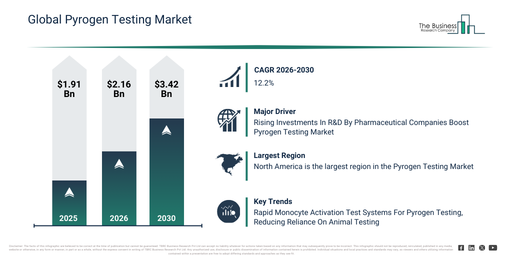
  • Pyrogen Testing Market Revenue Expected to Reach $3.42 Billion by 2030 with 12.2% CAGR

    Pyrogen Testing Market Revenue Expected to Reach $3.42 Billion by 2030 with 12.2% CAGR

    The Business Research Company’s 2026 market reports include new capabilities such as market attractiveness scoring and analysis, total addressable market analysis, company scoring matrix, interactive excel data dashboard, improved supply chain analysis, upcoming startups in the market, and overview of key products, aimed at improving the depth, usability, and strategic value of the insights delivered.

    What Market Value Is Expected For The Pyrogen Testing Market At The End Of The 2026–2030 Forecast Period?

    The pyrogen testing market has seen significant growth in recent years. It is anticipated to increase from $1.91 billion in 2025 to $2.16 billion in 2026, exhibiting a compound annual growth rate (CAGR) of 13.0%. The expansion observed in the historic period is attributable to the expansion of pharmaceutical manufacturing capacity, increased production of injectable drugs and vaccines, regulatory mandates for pyrogen testing, reliance on LAL-based assays, and the growth of biologics development.

    The pyrogen testing market is anticipated to experience substantial expansion over the upcoming years, with projections indicating it will reach $3.42 billion by 2030, demonstrating a compound annual growth rate (CAGR) of 12.2%. This projected growth can be attributed to several factors, including the increasing adoption of rFC and MAT assays, a rise in investments in biopharmaceutical research and development, the expansion of cell and gene therapy manufacturing, a growing focus on animal-free testing solutions, and increased automation in quality control laboratories. Key trends expected within this forecast period involve the wider acceptance of recombinant and in vitro pyrogen tests, a noticeable shift away from animal-based testing methods, an increasing demand for rapid and high-sensitivity detection assays, the proliferation of automated endotoxin testing instruments, and a stronger emphasis on regulatory compliance in biopharmaceutical manufacturing.

    Download the Free Sample Report to Explore Key Market Insights:

    https://www.thebusinessresearchcompany.com/sample.aspx?id=4020&type=smp

    Which Market Drivers Are Supporting The Expansion Of The Pyrogen Testing Market?

    The growing investments in research and development (R&D) by pharmaceutical and biotechnology companies are expected to drive the expansion of the **Pyrogen Testing Market** in the future. Pyrogen testing involves assessing drugs and biologics to confirm they are free from fever-inducing substances, such as endotoxins, which is vital for safe product manufacturing. The increase in R&D expenditure is driven by the necessity to create advanced therapies and biologics that demand strict quality control and safety evaluations. Pyrogen testing encourages increased R&D investments by guaranteeing the safety and regulatory compliance of new drugs and biologics, thus enabling pharmaceutical and biotechnology firms to confidently develop innovative treatments. For example, in February 2025, according to the **National Center for Science and Engineering Statistics (NCSES)**, a **US**-based government statistical agency, **U.S.** research and development expenditures climbed from **$892 billion** in **2022** to **$940 billion** in **2023**, marking an increase of **$48 billion**. Consequently, the rising R&D investments by pharmaceutical companies are propelling the growth of the **Pyrogen Testing Market**. The increasing incidence of tuberculosis (TB) is projected to stimulate the growth of the **Pyrogen Testing Market** moving forward. Tuberculosis is an infectious illness caused by the bacterium *Mycobacterium tuberculosis*, primarily affecting the lungs but capable of spreading to other organs, and it remains a leading cause of preventable death globally. The surge in TB cases is attributed to factors such as population expansion, urbanization, and gaps in healthcare access, leading to higher infection rates in vulnerable communities. Pyrogen testing contributes to pharmaceutical safety by ensuring that drugs and medical devices are devoid of fever-inducing contaminants, like bacterial endotoxins, thereby protecting patients. For instance, in May 2025, the **World Health Organization (WHO)**, a **Switzerland**-based health standards organization, reported that in **2023**, approximately **10.8 million** people worldwide developed TB, resulting in **1.25 million** fatalities. These figures underscore the escalating burden of a highly infectious disease and emphasize the critical need for stringent safety testing in pharmaceutical production. Therefore, the rising incidence of TB is fueling the growth of the **Pyrogen Testing Market**.

    What Segment Types Make Up The Pyrogen Testing Market?

    The pyrogen testing market covered in this report is segmented –

    1) By Test Type: LAL Test, In Vitro Test, Rabbit Test

    2) By Product And Service: Assays, Kits, And Reagents, Instruments, Services

    3) By Application: Pharmaceutical And Biologics, Medical Devices, Other Applications

    Subsegments:

    1) By Test Limulus Amebocyte Lysate (LAL) Test: Gel Clot LAL Test, Chromogenic LAL Test, Turbidimetric LAL Test

    2) By In Vitro Test: Monocyte Activation Test (MAT), Recombinant Factor C (rFC) Assay, Other In Vitro Tests

    3) By Rabbit Test: Pyrogen Test in Rabbits, Other Animal-Based Tests

    Which Trends Are Impacting The Growth Of The Pyrogen Testing Market?

    Leading companies in the pyrogen testing market are engaged in developing innovative products, such as sustainable monocyte activation test (MAT) systems, to enhance their business offerings and expand market reach. The monocyte activation test (MAT) System is an in vitro assay utilized for pyrogen testing within the biopharmaceutical and medical device industries. For instance, in October 2023, Lonza, a Swiss multinational manufacturing firm, introduced two new rapid monocyte activation test (MAT) systems: the PyroCell MAT Rapid System and the PyroCell MAT Human Serum (HS) Rapid System. These systems are set to replace Lonza’s existing MAT system kit offerings and include the new PeliKine Human IL-6 Rapid ELISA Kit, which minimizes hands-on time and shortens the time-to-results from two days to two hours. The new tests offer pharmaceutical manufacturers more accessible, quicker, and more efficient MAT testing alternatives for product safety, while also contributing to reducing reliance on animal testing.

    Who Are The Key Players Driving Competition In The Pyrogen Testing Market?

    Major companies operating in the pyrogen testing market are Thermo Fisher Scientific Inc., Merck KGaA, Charles River Laboratories Inc., Lonza Group Ltd., Ellab A S, Nelson Laboratories LLC, Associates of Cape Cod Inc., GenScript Biotech Corporation, bioMerieux SA, Hyglos GmbH, Wako Chemicals USA Inc., Pyrostar International Inc., Eurofins Scientific SE, SGS SA, WuXi AppTec Group, Sigma Aldrich Co. LLC, Bio Rad Laboratories Inc., Microcoat Biotechnologie GmbH, Sartorius AG, Pacific Biolabs Inc., Toxikon Corporation, STERIS Corporation, Avance Biosciences Inc., BioReliance Corporation, Microbiological Consulting LLC, Microbac Laboratories Inc., North American Science Associates Inc., Pace Analytical Life Sciences LLC

    Read the full pyrogen testing market report here:

    https://www.thebusinessresearchcompany.com/report/pyrogen-testing-global-market-report

    How Is The Pyrogen Testing Market Distributed Across Key Geographic Regions?

    North America was the largest region in the pyrogen testing market in 2025. Asia-Pacific is expected to continue to be the fastest growing region in the pyrogen testing market share during the forecast period. The regions covered in the pyrogen testing market report are Asia-Pacific, South East Asia, Western Europe, Eastern Europe, North America, South America, Middle East, Africa.

    Request A Tailored Pyrogen Testing Market Research Report For Competitive Advantage:

    https://www.thebusinessresearchcompany.com/customise?id=4020&type=smp

    Browse Through More Reports Similar to the Global Pyrogen Testing Market 2026, By The Business Research Company

    Structural Insulated Panels Market

    https://www.thebusinessresearchcompany.com/report/structural-insulated-panels-market

    Automotive Shielding Global Market Report

    https://www.thebusinessresearchcompany.com/report/automotive-shielding-global-market-report

    Metal Structural Insulation Panels Global Market Report

    https://www.thebusinessresearchcompany.com/report/metal-structural-insulation-panels-global-market-report

    Get in touch with us:

    The Business Research Company: https://www.thebusinessresearchcompany.com/

    Americas +1 310-496-7795

    Asia +44 7882 955267 & +91 8897263534

    Europe +44 7882 955267

    Email us at info@tbrc.info

    Follow us on:

    LinkedIn: https://in.linkedin.com/company/the-business-research-company

    YouTube: https://www.youtube.com/channel/UC24_fI0rV8cR5DxlCpgmyFQ

    Global Market Model: https://www.thebusinessresearchcompany.com/global-market-model
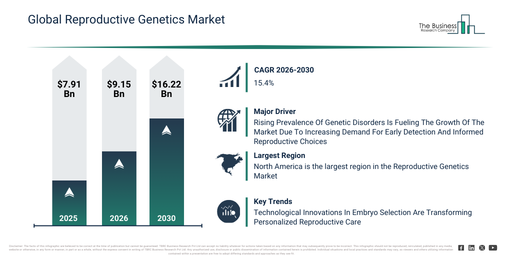
  • Global Reproductive Genetics Market Expected to Reach $16.21 Billion by 2030 with 15.4% CAGR

    Global Reproductive Genetics Market Expected to Reach $16.21 Billion by 2030 with 15.4% CAGR

    The Business Research Company’s 2026 market reports include new capabilities such as market attractiveness scoring and analysis, total addressable market analysis, company scoring matrix, interactive excel data dashboard, improved supply chain analysis, upcoming startups in the market, and overview of key products, aimed at improving the depth, usability, and strategic value of the insights delivered.

    What Is The Estimated Market Size Of The Reproductive Genetics Market During 2026–2030?

    The reproductive genetics market size has seen rapid growth in recent years. It is forecast to expand from $7.91 billion in 2025 to $9.15 billion in 2026, exhibiting a compound annual growth rate (CAGR) of 15.7%. This historical growth can be linked to several factors, including an increase in assisted reproductive technologies usage, a rising maternal age at conception, the expansion of fertility clinics, greater awareness of inherited genetic disorders, and the availability of advanced molecular diagnostic tools.

    The reproductive genetics market is projected for substantial growth over the next few years. It is expected to reach $16.22 billion by 2030, exhibiting a compound annual growth rate (CAGR) of 15.4%. This anticipated growth throughout the forecast period can be attributed to the increasing adoption of precision reproductive medicine, rising investments in fertility genomics research, the expansion of non-invasive prenatal testing, greater use of AI-driven genetic interpretation, and advancements in sequencing accuracy and affordability. Key trends for the forecast period include the increasing uptake of preimplantation genetic testing, a rising demand for carrier screening solutions, the growing application of NGS-based reproductive diagnostics, the expansion of personalized fertility treatment planning, and enhanced integration of laboratory automation.

    Download the Free Sample Report to Explore Key Market Insights:

    https://www.thebusinessresearchcompany.com/sample.aspx?id=28320&type=smp

    What Underlying Factors Are Accelerating The Growth Of The Reproductive Genetics Market?

    The rising incidence of genetic conditions is anticipated to drive the expansion of the reproductive genetics market in the future. Genetic disorders are defined as illnesses resulting from anomalies in an individual’s deoxyribonucleic acid (DNA), encompassing everything from singular gene mutations to chromosomal imperfections. This increase in genetic disorders is linked to the prevalence of reproductive genetic testing, as families pursue early information to minimize ambiguity, enable educated reproductive decisions, and aid in preventing the passing down of hereditary conditions. Reproductive genetics plays a crucial role in the detection and management of genetic conditions, assisting families in making well-informed choices and lowering the likelihood of transmitting these conditions to subsequent generations. An example illustrates this: in July 2024, Cystic Fibrosis Australia, a national consumer organization based in Australia, reported that the count of individuals affected by Cystic Fibrosis (CF) within the Australian Cystic Fibrosis Data Registry (ACFDR) climbed from 3,738 in 2022 to 3,798 in 2023, marking a 1.6% increase. Consequently, the growing occurrence of genetic conditions is projected to fuel the expansion of the reproductive genetics market.

    How Are The Various Segments Of The Reproductive Genetics Market Categorized?

    The reproductive genetics market covered in this report is segmented –

    1) By Product Type: Kits, Laboratory Developed Tests (LDT), Reagents And Consumables

    2) By Technology: Polymerase Chain Reaction (PCR), Next-Generation Sequencing (NGS), In-Situ Hybridization (ISH), Microarray Analysis

    3) By Application: Aneuploidy, Single Gene Disorder, Structural Chromosomal Abnormality, Other Applications

    4) By End User: Hospitals, Diagnostic Laboratories, Fertility Clinics, Research Institutions

    Subsegments:

    1) By Kits: Sample Collection Kits, Extraction Kits, Amplification Kits, Sequencing Kits, Hybridization Kits

    2) By Laboratory Developed Tests: Carrier Screening Tests, Preimplantation Genetic Tests, Prenatal Diagnostic Tests, Aneuploidy Detection Tests, Single Gene Disorder Tests

    3) By Reagents And Consumables: Enzymes, Buffers, Probes, Fluorescent Labels, Laboratory Plasticware

    How Are Trends Impacting The Reproductive Genetics Market?

    Major companies in the reproductive genetics market are prioritizing the development of advanced solutions, such as comprehensive multi-trait embryo comparison, to enable more precise, data-driven, and personalized embryo selection for IVF patients. Comprehensive multi-trait embryo comparison describes an analytical approach that concurrently evaluates multiple embryos for hundreds of hereditary conditions and complex traits using genomic and polygenic scoring, assisting prospective parents in making more informed decisions during in vitro fertilization. For instance, in June 2025, Nucleus Genomics Inc., a US-based biotechnology company, launched Nucleus Embryo, a reproductive genetics platform. This platform allows patients to analyze and compare up to 20 embryos across more than 900 inherited conditions, incorporating polygenic scoring for complex traits such as appearance, cognitive ability, and mental health, and providing a comprehensive, multi-trait comparison interface that significantly expands embryo-selection capabilities beyond traditional screening methods.

    Which Major Firms Influence Developments In The Reproductive Genetics Market?

    Major companies operating in the reproductive genetics market are F. Hoffmann-La Roche Ltd., Thermo Fisher Scientific Inc., Quest Diagnostics Incorporated, Agilent Technologies Inc., Illumina Inc., Revvity Inc., Medicover AB, OPKO Health Inc., Natera Inc., Myriad Genetics Inc., Fulgent Genetics Inc., The Cooper Companies Inc., Vitrolife AB, BillionToOne Inc., Sophia Genetics SA, Eurofins Genomics India Private Limited, Invitae Corporation, Igenomix, Gonagen GmbH, Darwin AG.

    Read the full reproductive genetics market report here:

    https://www.thebusinessresearchcompany.com/report/reproductive-genetics-global-market-report

    Which Region Is Projected To Dominate The Reproductive Genetics Market During The Forecast Period?

    North America was the largest region in the reproductive genetics market in 2025. Asia-Pacific is expected to be the fastest-growing region in the forecast period. The regions covered in the reproductive genetics market report are Asia-Pacific, South East Asia, Western Europe, Eastern Europe, North America, South America, Middle East, Africa.

    Request A Tailored Reproductive Genetics Market Research Report For Competitive Advantage:

    https://www.thebusinessresearchcompany.com/customise?id=28320&type=smp

    Browse Through More Reports Similar to the Global Reproductive Genetics Market 2026, By The Business Research Company

    Genes Therapy Global Market Report

    https://www.thebusinessresearchcompany.com/report/genes-therapy-global-market-report

    Genotyping Assay Global Market Report

    https://www.thebusinessresearchcompany.com/report/genotyping-assay-global-market-report

    Gene Expression Global Market Report

    https://www.thebusinessresearchcompany.com/report/gene-expression-global-market-report

    Get in touch with us:

    The Business Research Company: https://www.thebusinessresearchcompany.com/

    Americas +1 310-496-7795

    Asia +44 7882 955267 & +91 8897263534

    Europe +44 7882 955267

    Email us at info@tbrc.info

    Follow us on:

    LinkedIn: https://in.linkedin.com/company/the-business-research-company

    YouTube: https://www.youtube.com/channel/UC24_fI0rV8cR5DxlCpgmyFQ

    Global Market Model: https://www.thebusinessresearchcompany.com/global-market-model
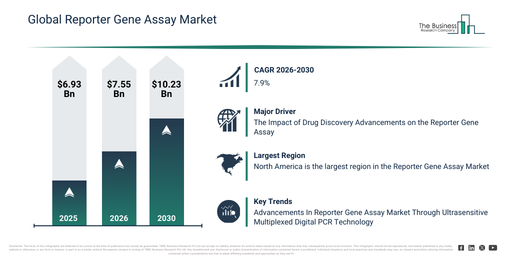
  • Reporter Gene Assay Market Future Outlook Showing Expansion Toward $10.23 Billion by 2030

    Reporter Gene Assay Market Future Outlook Showing Expansion Toward $10.23 Billion by 2030

    The Business Research Company’s 2026 market reports include new capabilities such as market attractiveness scoring and analysis, total addressable market analysis, company scoring matrix, interactive excel data dashboard, improved supply chain analysis, upcoming startups in the market, and overview of key products, aimed at improving the depth, usability, and strategic value of the insights delivered.

    What Market Size Expansion Is Predicted For The Reporter Gene Assay Market Between 2026 And 2030?

    The reporter gene assay market size has experienced robust expansion in recent years. It is projected to increase from $6.93 billion in 2025 to $7.55 billion in 2026, exhibiting a compound annual growth rate (CAGR) of 8.9%. This historical growth can be credited to factors including rising investment in molecular biology research, the broadening scope of gene expression studies, the increasing adoption of in-vitro screening models, intensified pharmaceutical R&D activity, and the improved availability of advanced assay reagents.

    The reporter gene assay market size is expected to experience robust growth over the next few years. It is projected to reach $10.23 billion by 2030, demonstrating a compound annual growth rate (CAGR) of 7.9%. This expansion during the forecast period can be attributed to the increasing adoption of high-throughput screening methods, a rising demand for precision medicine research tools, the ongoing expansion of cell and gene therapy development, the growing use of automated laboratory workflows, and an increasing focus on translational research efficiency. Major trends foreseen for the forecast period include the increasing adoption of high-sensitivity reporter assay systems, a rising use of luciferase-based detection technologies, growing demand for cell-based functional assays, the expansion of multiplex reporter assay platforms, and an enhanced focus on reproducibility and data accuracy.

    Download the Free Sample Report to Explore Key Market Insights:

    https://www.thebusinessresearchcompany.com/sample.aspx?id=16526&type=smp

    Which Growth Drivers Are Contributing To The Progress Of The Reporter Gene Assay Market?

    The expansion of drug discovery and development research is projected to stimulate the growth of the reporter gene assay market. This research encompasses a systematic process within the medical, biotechnology, and pharmacology sectors, aimed at identifying, creating, and introducing new medications to the market. Its rise is attributed to advancements in proteomics, high-throughput screening, genomics, and the successful development and approval of novel drugs. Reporter gene assays are vital instruments in this discovery and development research, allowing researchers to understand gene regulation, pinpoint potential drug targets, screen compound libraries, and evaluate the efficacy and safety of candidate drugs. For instance, in January 2024, the New Drug Therapy Approvals 2023 report, issued by the Center for Drug Evaluation and Research (CDER), a US-based branch of the U.S. Food and Drug Administration (FDA), indicated that CDER approved 55 novel drugs in 2023, with 20 (36%) identified as first-in-class, an increase from 37 novel drug approvals in 2022. Thus, the increasing drug discovery and development research is a primary driver for the reporter gene assay market’s growth.

    Which Market Segments Are Examined In The Reporter Gene Assay Market Study?

    The reporter gene assay market covered in this report is segmented –

    1) By Product: Assay Kits, Reagents

    2) By Application: Promoter Structural And Functional Analysis, Cell Signaling Pathways, Protein Interaction, Clinical And Gene Regulation

    3) By End-User: Biotechnology And Pharmaceutical Companies, Research And Academic Institutes, Hospital And Diagnostic Laboratories, Contract Research Organizations

    Subsegments:

    1) By Assay Kits: Luciferase Reporter Assay Kits, ß-galactosidase Reporter Assay Kits, Fluorescent Reporter Assay Kits, Secreted Alkaline Phosphatase (SEAP) Assay Kits

    2) By Reagents: Luciferase Substrates, ß-galactosidase Substrates, Fluorescent Proteins, Detection Buffers And Enhancers

    What Industry Trends Are Redefining The Reporter Gene Assay Market?

    Leading firms active within the reporter gene assay market are concentrating on creating novel solutions, including ultrasensitive multiplexed digital PCR assays, to enhance their market standing. These ultrasensitive multiplexed digital PCR (dPCR) assays accurately identify and measure nucleic acids through the process of dividing a sample into numerous separate reactions, each holding tiny quantities of target DNA or RNA molecules. As an illustration, Bio-Rad Laboratories Inc., a US-based life science research company, introduced the ddPLEX ESR1 Mutation Detection Kit in April 2024, marking it as the initial ultrasensitive multiplexed digital PCR assay. This recently released ultrasensitive multiplexed digital PCR assay, designed for breast cancer mutation detection, demonstrates exceptional sensitivity, enabling the identification of tiny mutations in intricate samples for prompt and accurate disease tracking. Furthermore, its multiplexing capability facilitates the simultaneous identification of numerous mutations, streamlining the testing process. This innovative assay is expected to transform both breast cancer research and individualized treatment approaches.

    Who Are The Primary Competitors In The Reporter Gene Assay Market?

    Major companies operating in the reporter gene assay market are Roche Diagnostics, Thermo Fisher Scientific, Danaher Corporation, Merck KGaA, Becton Dickinson and Company (BD Biosciences), GE Healthcare, Lonza Group, Agilent Technologies, Sartorius AG, PerkinElmer Inc., Bio-Rad Laboratories Inc., QIAGEN N.V., GenScript Biotech Corporation, Abcam plc, Promega Corporation, Promega Corporation, Takara Bio Inc., New England Biolabs (NEB), OriGene Technologies Inc., Cell Signaling Technology Inc., SABiosciences, Enzo Biochem Inc., InvivoGen, Biotium Inc., Enzo Life Sciences Inc., BioAssay Systems, Indigo Biosciences Inc.

    Read the full reporter gene assay market report here:

    https://www.thebusinessresearchcompany.com/report/reporter-gene-assay-global-market-report

    What Are The Leading Geographic Regions In The Reporter Gene Assay Market?

    North America was the largest region in the reporter gene assay market in 2025. Asia-Pacific is expected to be the fastest-growing region in the forecast period. The regions covered in the reporter gene assay market report are Asia-Pacific, South East Asia, Western Europe, Eastern Europe, North America, South America, Middle East, Africa.

    Request A Tailored Reporter Gene Assay Market Research Report For Competitive Advantage:

    https://www.thebusinessresearchcompany.com/customise?id=16526&type=smp

    Browse Through More Reports Similar to the Global Reporter Gene Assay Market 2026, By The Business Research Company

    Physical Therapy Rehabilitation Global Market Report

    https://www.thebusinessresearchcompany.com/report/physical-therapy-rehabilitation-global-market-report

    Rehabilitation Products Global Market Report

    https://www.thebusinessresearchcompany.com/report/rehabilitation-products-global-market-report

    Rehabilitation Equipment Global Market Report

    https://www.thebusinessresearchcompany.com/report/rehabilitation-equipment-global-market-report

    Get in touch with us:

    The Business Research Company: https://www.thebusinessresearchcompany.com/

    Americas +1 310-496-7795

    Asia +44 7882 955267 & +91 8897263534

    Europe +44 7882 955267

    Email us at info@tbrc.info

    Follow us on:

    LinkedIn: https://in.linkedin.com/company/the-business-research-company

    YouTube: https://www.youtube.com/channel/UC24_fI0rV8cR5DxlCpgmyFQ

    Global Market Model: https://www.thebusinessresearchcompany.com/global-market-model
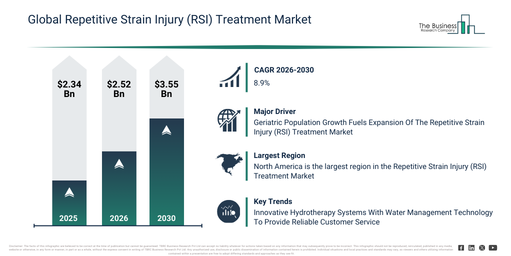
  • Repetitive Strain Injury (RSI) Treatment Market Revenue Growth Expected to Reach $3.55 Billion by 2030 with 8.9% CAGR

    Repetitive Strain Injury (RSI) Treatment Market Revenue Growth Expected to Reach $3.55 Billion by 2030 with 8.9% CAGR

    The Business Research Company’s 2026 market reports include new capabilities such as market attractiveness scoring and analysis, total addressable market analysis, company scoring matrix, interactive excel data dashboard, improved supply chain analysis, upcoming startups in the market, and overview of key products, aimed at improving the depth, usability, and strategic value of the insights delivered.

    How Large Is The Repetitive Strain Injury (RSI) Treatment Market Projected To Become By 2030 Based On Its 2026 Valuation?

    The repetitive strain injury (rsi) treatment market size has shown significant growth over recent years. Forecasts indicate its expansion from $2.34 billion in 2025 to $2.52 billion in 2026, achieving a compound annual growth rate (CAGR) of 8.0%. The primary drivers for its historical development include the increasing occurrence of repetitive work-related injuries, a broader adoption of physiotherapy treatments, the extension of occupational health services, heightened awareness regarding musculoskeletal disorders, and enhanced access to pain management therapies.

    The repetitive strain injury (rsi) treatment market is poised for significant expansion in the upcoming years. It is projected to climb to $3.55 billion by 2030, exhibiting a compound annual growth rate (CAGR) of 8.9%. This growth throughout the forecast period is largely attributed to the increasing uptake of digital physiotherapy platforms, a rising emphasis on preventive ergonomic care, the expansion of minimally invasive treatment options, the growing implementation of personalized rehabilitation plans, and an increasing demand for homecare-based treatment solutions. Prominent trends for the forecast period include a surging demand for non-surgical treatment alternatives, increased adoption of physiotherapy and rehabilitation programs, a heightened focus on workplace ergonomic solutions, the expansion of home-based pain management therapies, and enhanced awareness regarding the benefits of early intervention.

    Download the Free Sample Report to Explore Key Market Insights:

    https://www.thebusinessresearchcompany.com/sample.aspx?id=13127&type=smp

    What Primary Drivers Are Shaping The Development Of The Repetitive Strain Injury (RSI) Treatment Market?

    An anticipated increase in the geriatric population is projected to fuel the expansion of the repetitive strain injury (RSI) treatment market in the future. This demographic encompasses individuals who are 65 years old or more. Older adults are more susceptible to repetitive strain injuries due to physiological changes associated with aging in their muscles and tendons, such as diminished muscle strength and mass, as well as reduced flexibility. For example, data from a report issued by the US-based Pew Research Center Organization in January 2024 indicates that the geriatric population stood at 0.2% in 2024 and is projected to grow by 0.5% by 2054. Consequently, the expanding geriatric demographic is a key factor stimulating the growth of the repetitive strain injury (RSI) treatment market.

    What Segment Groups Are Identified Within The Repetitive Strain Injury (RSI) Treatment Market?

    The repetitive strain injury (rsi) treatment market covered in this report is segmented –

    1) By Type: Carpal Tunnel Syndrome, Bursitis, Tennis Elbow, Other Types

    2) By Treatment: Medication, Physiotherapy, Steroid Injections, Surgery, Other Treatments

    3) By End Users: Hospitals, Specialty Clinics, Homecare, Other End Users

    Subsegments:

    1) By Carpal Tunnel Syndrome: Mild Cases, Moderate Cases, Severe Cases

    2) By Bursitis: Shoulder Bursitis, Hip Bursitis, Knee Bursitis

    3) By Tennis Elbow: Lateral Epicondylitis

    4) By Other Types: Tendonitis, Trigger Finger, De Quervain’s Tenosynovitis

    What Key Developments And Trends Are Impacting The Repetitive Strain Injury (RSI) Treatment Market?

    Major entities operating in the repetitive strain injury (RSI) treatment market are embracing advanced technology, including hydrotherapy systems with integrated water management capabilities, to deliver consistent customer service. Such a hydrotherapy system, equipped with built-in water management technology, aids individuals with particular illnesses or injuries by enabling them to exercise in water. For instance, in January 2023, Hydro Physio, a UK-based manufacturer of aquatic therapy treadmills, unveiled a new hydrotherapy system. This technology presents a remedy for private, hygienic aquatic therapeutic environments. It features a treadmill chamber, an entryway, and incorporated water management technology. The Hydro Physio system is designed to assist with osteoarthritis, post-surgical recovery, weight reduction, pain alleviation, stress reduction, improvement of overall well-being, and reduction of pressure on sore joints.

    Which Companies Hold Significant Positions In The Repetitive Strain Injury (RSI) Treatment Market?

    Major companies operating in the repetitive strain injury (rsi) treatment market are Pfizer Inc., Merck & Co. Inc., Novartis AG, GlaxoSmithKline plc., Eli Lilly and Co Ltd., Select Medical Holdings, Sun Pharmaceutical Industries Limited, ATI Holdings Inc., Professional Physical Therapy, Lifemark Health Group, Physiotherapy Associates Inc., The Physio Company Ltd., Fyzical Therapy & Balance Centers, Kinetic Physical Therapy and Wellness Inc., PhysioworksInc., Rehab Pro, Agility Physiotherapy & Sports Injury, BodyTech Physiotherapy, CorePhysio LLC, Dynamic Physical Therapy Services LLC, Peak Physical Therapy LLC, Pure Physio Pty. Ltd., Spectrum Physio Centre, Strive Physiotherapy & Performance

    Read the full repetitive strain injury (rsi) treatment market report here:

    https://www.thebusinessresearchcompany.com/report/repetitive-strain-injury-rsi-treatment-global-market-report

    How Does The Repetitive Strain Injury (RSI) Treatment Market Perform Across Major Global Regions?

    North America was the largest region in the repetitive strain injury (RSI) treatment market in 2025. The regions covered in the repetitive strain injury (rsi) treatment market report are Asia-Pacific, South East Asia, Western Europe, Eastern Europe, North America, South America, Middle East, Africa.

    Request A Tailored Repetitive Strain Injury (RSI) Treatment Market Research Report For Competitive Advantage:

    https://www.thebusinessresearchcompany.com/customise?id=13127&type=smp

    Browse Through More Reports Similar to the Global Repetitive Strain Injury (RSI) Treatment Market 2026, By The Business Research Company

    End Stage Renal Disease Esrd Drug Global Market Report

    https://www.thebusinessresearchcompany.com/report/end-stage-renal-disease-esrd-drug-global-market-report

    Hepatorenal Syndrome Treatment Global Market Report

    https://www.thebusinessresearchcompany.com/report/hepatorenal-syndrome-treatment-global-market-report

    Renal Denervation Devices Global Market Report

    https://www.thebusinessresearchcompany.com/report/renal-denervation-devices-global-market-report

    Get in touch with us:

    The Business Research Company: https://www.thebusinessresearchcompany.com/

    Americas +1 310-496-7795

    Asia +44 7882 955267 & +91 8897263534

    Europe +44 7882 955267

    Email us at info@tbrc.info

    Follow us on:

    LinkedIn: https://in.linkedin.com/company/the-business-research-company

    YouTube: https://www.youtube.com/channel/UC24_fI0rV8cR5DxlCpgmyFQ

    Global Market Model: https://www.thebusinessresearchcompany.com/global-market-model
  • Renal Medical Devices Service Market Expected to Record Steady Growth and Approach $12.39 Billion by 2030

    Renal Medical Devices Service Market Expected to Record Steady Growth and Approach $12.39 Billion by 2030

    The Business Research Company’s 2026 market reports include new capabilities such as market attractiveness scoring and analysis, total addressable market analysis, company scoring matrix, interactive excel data dashboard, improved supply chain analysis, upcoming startups in the market, and overview of key products, aimed at improving the depth, usability, and strategic value of the insights delivered.

    What Market Value Is Anticipated For The Renal Medical Devices Service Market Over The Period 2026–2030?

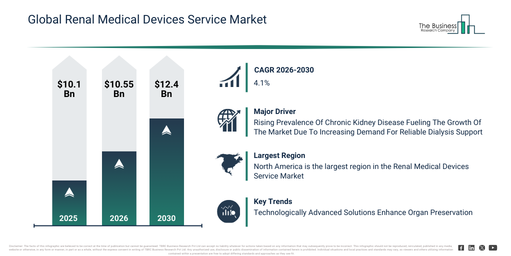
    The market for renal medical device services has shown consistent growth over recent years. Its size is projected to increase from $10.1 billion in 2025 to $10.55 billion in 2026, experiencing a compound annual growth rate (CAGR) of 4.4%. Historically, this growth can be attributed to several factors, including the rising incidence of kidney diseases, the worldwide expansion of dialysis centers, the increasing deployment of advanced dialysis equipment, the necessity for regulatory adherence in device upkeep, and the widespread availability of specialized renal devices.

    The renal medical devices service market size is anticipated to undergo consistent growth in the coming years, projected to reach $12.4 billion by 2030 with a compound annual growth rate (CAGR) of 4.1%. This expansion during the forecast period is fueled by an increasing demand for home dialysis services, the rising adoption of connected renal devices, the broadening of service outsourcing models, a greater emphasis on cost-efficient healthcare operations, and the growing application of analytics for optimizing device performance. Significant trends in this period include the increasing uptake of predictive maintenance services, the wider use of remote device monitoring solutions, the expansion of preventive service contracts, an enhanced focus on equipment uptime and safety, and the rising integration of data-driven service models.

    Download the Free Sample Report to Explore Key Market Insights:

    https://www.thebusinessresearchcompany.com/sample.aspx?id=24683&type=smp

    Which Major Factors Are Driving The Expansion Of The Renal Medical Devices Service Market?

    The growing incidence of chronic kidney disease (CKD) is anticipated to boost the expansion of the renal medical devices service market in the future. Chronic kidney disease is a condition characterized by a gradual decline in the kidneys’ capacity to filter waste from the blood, potentially resulting in the accumulation of waste products and other health complications. The increase in chronic kidney disease cases is attributed to diabetes, where elevated blood sugar levels harm kidney blood vessels, thereby diminishing their waste-filtering efficiency. Renal medical device service plays a crucial role in supporting chronic kidney disease treatment by guaranteeing the optimal functioning of dialysis and associated equipment. It minimizes operational interruptions through timely maintenance and technical assistance, thereby enhancing treatment dependability and patient well-being. For example, in June 2023, Kidney Research UK reported an estimated 7.19 million individuals in the UK suffered from chronic kidney disease in 2023, constituting over 10% of the UK population, with projections indicating an rise to 7.61 million people by 2033. Consequently, the increasing prevalence of chronic kidney disease (CKD) is fueling the growth of the renal medical devices service market.

    How Is The Renal Medical Devices Service Market Divided Into Its Major Segments?

    The renal medical devices service market covered in this report is segmented –

    1) By Type: Dialysis Devices, Catheters, Kidney Monitoring Devices, Kidney Transplant Devices

    2) By Usage: Invasive, Non-Invasive

    3) By Application: Kidney Failure, Chronic Kidney Disease, End-Stage Kidney Disease, Renal Kidney Stone Disease, Hypertension, Diabetes

    4) By End User: Hospitals, Dialysis Centers, Home Healthcare

    Subsegments:

    1) By Dialysis Devices: Hemodialysis Machines, Peritoneal Dialysis Equipment, Dialysis Filters And Membranes, Dialysis Fluid Delivery Systems, Portable Dialysis Devices, Dialysis Consumables And Accessories

    2) By Catheters: Temporary Hemodialysis Catheters, Permanent Hemodialysis Catheters, Peritoneal Dialysis Catheters, Vascular Access Catheters, Central Venous Catheters For Renal Care

    3) By Kidney Monitoring Devices: Creatinine Monitoring Devices, Glomerular Filtration Rate (GFR) Monitoring Devices, Blood Urea Nitrogen (BUN) Monitoring Devices, Electrolyte Monitoring Devices, Continuous Renal Function Monitors

    4) By Kidney Transplant Devices: Organ Preservation Systems, Transplant Surgery Instruments, Immunosuppressant Delivery Devices, Kidney Perfusion Systems, Post-Transplant Monitoring Devices

    What Trends Are Projected To Affect The Renal Medical Devices Service Market?

    Leading companies within the renal medical devices service market are concentrating on developing advanced technological solutions, such as hypothermic perfusion technology, to enhance organ viability and patient outcomes. This hypothermic perfusion technology describes an organ preservation method where a chilled, oxygenated solution is continuously circulated through donor organs at reduced temperatures (typically 0-12°C) to maintain their viability prior to transplantation. For instance, in January 2025, Paragonix Technologies Inc., a medical device company situated in the US, obtained US Food and Drug Administration (FDA) clearance for its KidneyVault portable renal perfusion system, designed for the hypothermic oxygenated perfusion of kidneys. This system functions as a portable renal perfusion device that ensures kidney viability during transit by employing hypothermic machine perfusion and SherpaCool phase-change cooling to sustain a temperature of 4–8°C without requiring ice. Furthermore, its integrated digital platform provides real-time monitoring of temperature, pressure, flow, and resistance, thereby enabling remote management of organ preservation.

    Who Are The Prominent Organizations Shaping The Renal Medical Devices Service Market?

    Major companies operating in the renal medical devices service market are Abbott Laboratories, Medtronic plc, Fresenius Medical Care AG & Co. KGaA, Asahi Kasei Medical Co Ltd., Toray Medical Co Ltd., Boston Scientific Corporation, DaVita Inc., Terumo Corporation, Nipro Corporation, Teleflex Incorporated, ConvaTec Group Plc, Nikkiso Co Ltd., Japan Medical Supply Co Ltd., NxStage Medical Inc., B. Braun Melsungen AG, Outset Medical Inc., Rockwell Medical Inc., Quanta Dialysis Technologies Ltd., AWAK Technologies Pte Ltd., Dialife SA.

    Read the full renal medical devices service market report here:

    https://www.thebusinessresearchcompany.com/report/renal-medical-devices-service-global-market-report

    Which Region Currently Holds The Largest Share Of The Renal Medical Devices Service Market?

    North America was the largest region in the renal medical devices service market in 2025. The regions covered in the renal medical devices service market report are Asia-Pacific, South East Asia, Western Europe, Eastern Europe, North America, South America, Middle East, Africa.

    Request A Tailored Renal Medical Devices Service Market Research Report For Competitive Advantage:

    https://www.thebusinessresearchcompany.com/customise?id=24683&type=smp

    Browse Through More Reports Similar to the Global Renal Medical Devices Service Market 2026, By The Business Research Company

    Kidney Dialysis Global Market Report

    https://www.thebusinessresearchcompany.com/report/kidney-dialysis-global-market-report

    Chronic Kidney Disease Global Market Report

    https://www.thebusinessresearchcompany.com/report/chronic-kidney-disease-global-market-report

    Rare Kidney Diseases Global Market Report

    https://www.thebusinessresearchcompany.com/report/rare-kidney-diseases-global-market-report

    Get in touch with us:

    The Business Research Company: https://www.thebusinessresearchcompany.com/

    Americas +1 310-496-7795

    Asia +44 7882 955267 & +91 8897263534

    Europe +44 7882 955267

    Email us at info@tbrc.info

    Follow us on:

    LinkedIn: https://in.linkedin.com/company/the-business-research-company

    YouTube: https://www.youtube.com/channel/UC24_fI0rV8cR5DxlCpgmyFQ

    Global Market Model: https://www.thebusinessresearchcompany.com/global-market-model
  • Renal Insufficiency Industry Expansion Forecast Showing Market Size of $20.5 Billion by 2030 at 11.1% CAGR

    Renal Insufficiency Industry Expansion Forecast Showing Market Size of $20.5 Billion by 2030 at 11.1% CAGR

    The Business Research Company’s 2026 market reports include new capabilities such as market attractiveness scoring and analysis, total addressable market analysis, company scoring matrix, interactive excel data dashboard, improved supply chain analysis, upcoming startups in the market, and overview of key products, aimed at improving the depth, usability, and strategic value of the insights delivered.

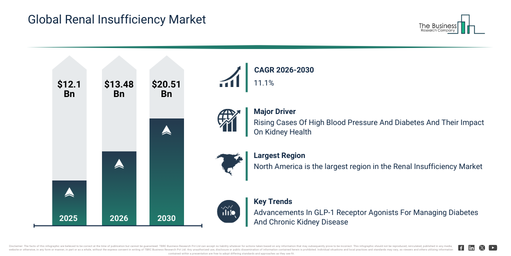
    What Is The Expected Market Size Of The Renal Insufficiency Market From 2026 To 2030?

    The renal insufficiency market has seen substantial growth in recent years. Its value is expected to rise from $12.1 billion in 2025 to $13.48 billion in 2026, indicating a compound annual growth rate (CAGR) of 11.4%. The historical expansion of this market stems from factors such as the increasing occurrence of diabetes and hypertension, the broadening of dialysis center networks, a greater adoption of ACE inhibitors and ARBs, the rising identification of chronic kidney disease, and better access to renal care provisions.

    The market for renal insufficiency is anticipated to undergo significant expansion over the forthcoming years. By 2030, its value is projected to reach $20.51 billion, expanding at a compound annual growth rate (CAGR) of 11.1%. This projected growth is driven by factors such as the increasing acceptance of home dialysis options, heightened investments in regenerative medical treatments, the broadening scope of digital patient oversight, a rising need for individualized renal care strategies, and a stronger emphasis on decelerating the disease’s advancement. Notable trends foreseen for this period encompass a greater integration of advanced dialysis methods, an intensified focus on managing the disease in its initial stages, an expanding application of multi-drug therapies, the proliferation of at-home treatment alternatives, and a reinforced commitment to patient-centered care approaches.

    Download the Free Sample Report to Explore Key Market Insights:

    https://www.thebusinessresearchcompany.com/sample.aspx?id=21271&type=smp

    What Key Drivers Are Influencing The Growth Of The Renal Insufficiency Market?

    The rising incidence of high blood pressure and diabetes cases is projected to stimulate the expansion of the renal insufficiency market moving forward. These conditions are linked to various factors such as unhealthy dietary habits, insufficient physical activity, obesity, genetic predisposition, and an aging demographic. High blood pressure contributes to kidney damage by scarring blood vessels and reducing their filtration capacity, while diabetes leads to the thickening and overworking of kidney vessels due to elevated blood sugar. Both conditions accelerate kidney deterioration, ultimately resulting in renal insufficiency. For example, according to the National Health Service, a UK-based government agency, it was reported in May 2024 that the number of high blood pressure diagnoses in the South East increased by 71,120 patients in December 2023, showing a 5.4% rise compared to December 2022. Additionally, in April 2023, the British Diabetic Association, a UK-based charity organization, stated that 4.3 million people in the UK are living with a diabetes diagnosis. Thus, the increasing occurrence of high blood pressure and diabetes cases is driving the growth of the renal insufficiency market.

    Which Segments Are Included In The Analysis Of The Renal Insufficiency Market?

    The renal insufficiency market covered in this report is segmented –

    1) By Treatment Type: Medications, Dialysis, Kidney Transplantation, Other Treatment Types

    2) By Disease Stage: Chronic Kidney Disease (CKD) Stages, End-Stage Renal Disease (ESRD)

    3) By Distribution Channel: Hospital Pharmacies, Retail Pharmacies, Online Pharmacies

    4) By End-User: Dialysis Centers, Hospital And Clinics, Research And Academic Institutes

    Subsegments:

    1) By Medications: Angiotensin-Converting Enzyme (ACE) Inhibitors, Angiotensin II Receptor Blockers (ARBs), Diuretics, Erythropoiesis-Stimulating Agents (ESAs), Phosphate Binders, Sodium Bicarbonate

    2) By Dialysis: Hemodialysis, Peritoneal Dialysis, Home Dialysis, Continuous Renal Replacement Therapy (CRRT)

    3) By Kidney Transplantation: Living Donor Kidney Transplant, Deceased Donor Kidney Transplant, Kidney Transplant Immunosuppressive Therapy

    4) By Other Treatment Types: Lifestyle And Dietary Modifications, Stem Cell Therapy, Gene Therapy

    Which Upcoming Trends Are Expected To Influence The Renal Insufficiency Market?

    Leading companies in the renal insufficiency market are actively developing glucagon-like peptide-1 receptor agonists (GLP-1 RAs) with the aim of addressing renal and cardiovascular complications in patients diagnosed with diabetes and chronic kidney disease (CKD). These GLP-1 RAs work by improving glucose control, reducing inflammation, and lowering oxidative stress within the kidneys, thereby hindering the advancement of renal insufficiency. For instance, in January 2025, Novo Nordisk, a pharmaceutical firm based in Denmark, secured Food and Drug Administration (FDA) approval for its medication, Ozempic (semaglutide). This approval specifically allows for its use to decrease the risk of kidney disease worsening, kidney failure, and cardiovascular death in adults suffering from type 2 diabetes and chronic kidney disease (CKD). This regulatory milestone emphasizes the growing importance of glucagon-like peptide-1 receptor agonists (GLP-1 RAs) as a comprehensive strategy for managing both diabetes and renal insufficiency, thereby meeting significant unmet needs in patients with progressive CKD.

    Which Key Industry Participants Are Active In The Renal Insufficiency Market?

    Major companies operating in the renal insufficiency market are Kaiser Permanente, Johnson & Johnson, Roche Holding AG, Sanofi S.A., Abbott Laboratories, Medtronic plc, Amgen Inc., Asahi Kasei Medical Co. Ltd., Fujifilm Holdings Corporation, Fresenius Medical Care, Toray Industries Inc., Baxter International Inc., Boehringer Ingelheim, DaVita Inc., Eisai Co. Ltd., Nipro Corporation, Biocon Limited, HemoCue AB, Rockwell Medical, Mitsubishi Tanabe Pharma Corporation

    Read the full renal insufficiency market report here:

    https://www.thebusinessresearchcompany.com/report/renal-insufficiency-global-market-report

    Which Region Is Expected To Register The Fastest Growth In The Renal Insufficiency Market?

    North America was the largest region in the renal insufficiency market in 2025. The regions covered in the renal insufficiency market report are Asia-Pacific, South East Asia, Western Europe, Eastern Europe, North America, South America, Middle East, Africa.

    Request A Tailored Renal Insufficiency Market Research Report For Competitive Advantage:

    https://www.thebusinessresearchcompany.com/customise?id=21271&type=smp

    Browse Through More Reports Similar to the Global Renal Insufficiency Market 2026, By The Business Research Company

    Rare Kidney Diseases Global Market Report

    https://www.thebusinessresearchcompany.com/report/rare-kidney-diseases-global-market-report

    Chronic Kidney Disease Global Market Report

    https://www.thebusinessresearchcompany.com/report/chronic-kidney-disease-global-market-report

    Veterinary Renal Disease Global Market Report

    https://www.thebusinessresearchcompany.com/report/veterinary-renal-disease-global-market-report

    Get in touch with us:

    The Business Research Company: https://www.thebusinessresearchcompany.com/

    Americas +1 310-496-7795

    Asia +44 7882 955267 & +91 8897263534

    Europe +44 7882 955267

    Email us at info@tbrc.info

    Follow us on:

    LinkedIn: https://in.linkedin.com/company/the-business-research-company

    YouTube: https://www.youtube.com/channel/UC24_fI0rV8cR5DxlCpgmyFQ

    Global Market Model: https://www.thebusinessresearchcompany.com/global-market-model