Category: Healthcare Services

  • Renal Fanconi Syndrome Market Revenue Expected to Reach $0.64 Billion by 2030 with 3.5% CAGR

    Renal Fanconi Syndrome Market Revenue Expected to Reach $0.64 Billion by 2030 with 3.5% CAGR

    The Business Research Company’s 2026 market reports include new capabilities such as market attractiveness scoring and analysis, total addressable market analysis, company scoring matrix, interactive excel data dashboard, improved supply chain analysis, upcoming startups in the market, and overview of key products, aimed at improving the depth, usability, and strategic value of the insights delivered.

    What Market Valuation Is Forecasted For The Renal Fanconi Syndrome Market By 2030 Starting From Its 2026 Size?

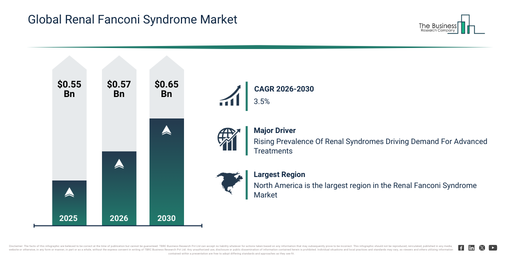
    The renal Fanconi syndrome market has experienced consistent expansion in recent years. This market is projected to expand from $0.55 billion in 2025 to $0.57 billion in 2026, demonstrating a compound annual growth rate (CAGR) of 3.7%. Historically, this growth can be ascribed to several factors, including enhanced identification of inherited kidney conditions, the existence of cystinosis treatment alternatives, the broadening of hospital-based nephrology services, a rise in diagnostic screening for metabolic irregularities, and progress in supportive renal treatments.

    The market for renal Fanconi syndrome is projected to experience consistent expansion over the upcoming years. By 2030, this market is anticipated to reach a valuation of $0.65 billion, demonstrating a compound annual growth rate (CAGR) of 3.5%. Key drivers behind this anticipated growth include the wider embrace of tailored treatment plans, increased funding for research into rare diseases, the proliferation of diagnostic methods based on genetics, a heightened emphasis on early intervention approaches, and the ongoing creation of innovative supportive treatments. Significant trends observed during this period encompass a greater focus on genetic testing and precise diagnosis, an escalating need for therapies designed for long-term symptom management, increasing public and medical understanding of uncommon kidney conditions, the broadening availability of supportive and nutritional care, and a strengthened emphasis on identifying the disease at its initial stages.

    Download the Free Sample Report to Explore Key Market Insights:

    https://www.thebusinessresearchcompany.com/sample.aspx?id=21270&type=smp

    What Major Growth Drivers Are Shaping The Outlook Of The Renal Fanconi Syndrome Market?

    The rising occurrence of genetic disorders is projected to boost the expansion of the renal fanconi syndrome market in the future. These disorders are propelled by elements such as advancements in genetic testing, increased public knowledge, environmental factors, and an uptick in inherited conditions passed down through generations. A substantial number of Fanconi syndrome cases are associated with hereditary genetic conditions, including cystinosis or Wilson’s disease. As the frequency of these genetic disorders climbs, so does the requirement for specialized diagnostic methods, targeted treatments, and management approaches to address the related proximal tubular dysfunction, which in turn fuels market growth. For example, in March 2024, data from the United Nations, a US-based international organization, indicated that Down syndrome affects approximately 1 in 1,000 to 1 in 1,100 live births globally, resulting in an estimated 3,000 to 5,000 children born with this chromosomal disorder annually. Thus, the growing prevalence of genetic disorders is a key factor driving the renal fanconi syndrome market forward.

    Which Segment Categories Define The Renal Fanconi Syndrome Market?

    The renal fanconi syndrome market covered in this report is segmented –

    1) By Disease Type: Inherited (Genetic), Acquired

    2) By Treatment: Cystinosis Treatment, Symptomatic Management, Dietary Changes And Adjustments, Antibiotics, Kidney Transplantation, Supplements

    3) By Route Of Administration: Oral, Intravenous

    4) By Distribution Channel: Hospital Pharmacy, Retail Pharmacy, Online Pharmacy, Other Distribution Channels

    5) By End-User: Hospitals, Specialty Clinics, Homecare, Other End-Users

    Subsegments:

    1) By Inherited (Genetic): Cystinosis, Wilson Disease, Lowe Syndrome, Dent Disease

    2) By Acquired: Drug-Induced Fanconi Syndrome, Heavy Metal Toxicity, Multiple Myeloma-Associated Fanconi Syndrome, Other Acquired Conditions

    Who Are The Top Companies Competing In The Renal Fanconi Syndrome Market?

    Major companies operating in the renal fanconi syndrome market are Pfizer Inc., F Hoffmann La Roche AG, Merck And Co Inc, AbbVie Inc., Novartis AG, Sanofi, Bristol Myers Squibb, Gilead Sciences Inc., Amgen Inc., Teva Pharmaceutical Industries Ltd, Baxter International Inc., Boehringer Ingelheim, Eisai Co Ltd, Hikma Pharmaceuticals plc, Astellas Pharma Inc., Mallinckrodt Pharmaceuticals plc, CSL Vifor, Alnylam Pharmaceuticals Inc., Otsuka Pharmaceutical Co Ltd, Takeda Pharmaceutical Company Limited, Alexion Pharmaceuticals Inc., Recordati Rare Diseases, Chiesi Farmaceutici S.p.A., Kyowa Kirin Co Ltd

    Read the full renal fanconi syndrome market report here:

    https://www.thebusinessresearchcompany.com/report/renal-fanconi-syndrome-global-market-report

    Which Regions Are Projected To Dominate The Renal Fanconi Syndrome Market In The Coming Years?

    North America was the largest region in the renal fanconi syndrome market in 2025. Asia-Pacific is expected to be the fastest-growing region in the forecast period. The regions covered in the renal fanconi syndrome market report are Asia-Pacific, South East Asia, Western Europe, Eastern Europe, North America, South America, Middle East, Africa.

    Request A Tailored Renal Fanconi Syndrome Market Research Report For Competitive Advantage:

    https://www.thebusinessresearchcompany.com/customise?id=21270&type=smp

    Browse Through More Reports Similar to the Global Renal Fanconi Syndrome Market 2026, By The Business Research Company

    Kidney Cancer Diagnostics And Therapeutics Global Market Report

    https://www.thebusinessresearchcompany.com/report/kidney-cancer-diagnostics-and-therapeutics-global-market-report

    Adrenocortical Carcinoma Global Market Report

    https://www.thebusinessresearchcompany.com/report/adrenocortical-carcinoma-global-market-report

    Kidney Cancer Drugs Global Market Report

    https://www.thebusinessresearchcompany.com/report/kidney-cancer-drugs-global-market-report

    Get in touch with us:

    The Business Research Company: https://www.thebusinessresearchcompany.com/

    Americas +1 310-496-7795

    Asia +44 7882 955267 & +91 8897263534

    Europe +44 7882 955267

    Email us at info@tbrc.info

    Follow us on:

    LinkedIn: https://in.linkedin.com/company/the-business-research-company

    YouTube: https://www.youtube.com/channel/UC24_fI0rV8cR5DxlCpgmyFQ

    Global Market Model: https://www.thebusinessresearchcompany.com/global-market-model
  • Global Renal Cell Carcinoma Market Set for Strong Expansion Reaching $6.08 Billion by 2030 at 4.4% CAGR

    Global Renal Cell Carcinoma Market Set for Strong Expansion Reaching $6.08 Billion by 2030 at 4.4% CAGR

    The Business Research Company’s 2026 market reports include new capabilities such as market attractiveness scoring and analysis, total addressable market analysis, company scoring matrix, interactive excel data dashboard, improved supply chain analysis, upcoming startups in the market, and overview of key products, aimed at improving the depth, usability, and strategic value of the insights delivered.

    How Is The Market Size Of The Renal Cell Carcinoma Market Expected To Change Between 2026 And 2030?

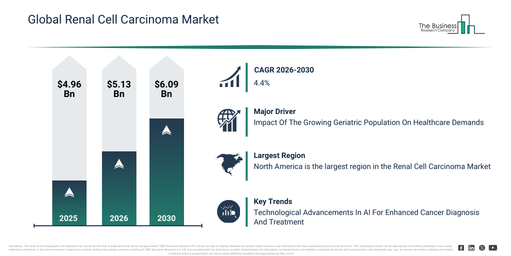
    The renal cell carcinoma market has observed consistent expansion in recent years. It is anticipated to increase from $4.96 billion in 2025 to $5.13 billion in 2026, achieving a compound annual growth rate (CAGR) of 3.5%. The upward trend during the past period can be linked to the rising occurrence of kidney cancer, enhanced accessibility to imaging-based diagnostics, the implementation of surgical nephrectomy procedures, an increase in oncology treatment centers, and better survival outcomes through early detection.

    The market for renal cell carcinoma is projected to experience consistent expansion over the upcoming years. This market is anticipated to reach $6.09 billion by 2030, exhibiting a compound annual growth rate (CAGR) of 4.4%. Factors contributing to this growth during the forecast period include the increasing creation of new targeted treatments, the growing application of immunotherapy combinations, the enlargement of precision oncology initiatives, the wider acceptance of biomarker-informed treatment choices, and increased funding for oncology research and clinical trials. Key trends for the forecast duration encompass a greater uptake of targeted cancer treatments, an increase in the utilization of combination therapy regimens, an intensified focus on prompt and precise diagnosis, the broadening of minimally invasive surgical techniques, and a heightened prioritization of personalized oncology care.

    Download the Free Sample Report to Explore Key Market Insights:

    https://www.thebusinessresearchcompany.com/sample.aspx?id=20944&type=smp

    What Drivers Are Expected To Influence The Renal Cell Carcinoma Market During The Forecast Period?

    The anticipated expansion of the renal cell carcinoma market is linked to the increasing geriatric population. This demographic comprises older persons, typically 65 years and older, who often have specific healthcare and social needs. Factors such as advancements in healthcare, improved nutrition, and extended lifespans contribute to the expansion of the elderly population. Renal cell carcinoma (RCC) shows a growing prevalence among the elderly, underscoring the necessity for age-appropriate screening and therapeutic approaches. As an illustration, a January 2024 report from the Population Reference Bureau, a US-based non-profit entity dedicated to statistical data collection for research and academia, projected that the population of Americans aged 65 and above will climb from 58 million in 2022 to 82 million by 2050, representing a 47% increase. Consequently, the expanding geriatric population is propelling the growth of the renal cell carcinoma market.

    How Is The Renal Cell Carcinoma Market Structured Across Different Segments?

    The renal cell carcinoma market covered in this report is segmented –

    1) By Type: Clear Cell Renal Cell Carcinoma (RCC), Papillary Renal Cell Carcinoma (RCC), Chromophobe Renal Cell Carcinoma (RCC)

    2) By Diagnosis: Urine Tests, Computed Tomography (CT) Scan, Nephrectomy, Blood Tests, Ultrasound, Biopsy

    3) By Treatment: Medication, Ablation, Targeted Therapy, Chemotherapy, Surgery, Other Treatments

    4) By End-Users: Hospitals, Specialty Clinics, Oncology Treatment Centers, Other End-Users

    Subsegments:

    1) By Clear Cell Renal Cell Carcinoma (RCC): Sporadic Clear Cell RCC, Hereditary Clear Cell RCC

    2) By Papillary Renal Cell Carcinoma (RCC): Type 1 Papillary RCC, Type 2 Papillary RCC

    3) By Chromophobe Renal Cell Carcinoma (RCC): Classic Chromophobe RCC, Hybrid Chromophobe RCC

    Which Market Trends Are Creating New Opportunities In The Renal Cell Carcinoma Market?

    Leading companies operating in the renal cell carcinoma market are concentrating on developing technologically advanced products, such as integrating artificial intelligence (AI)-powered solutions designed for analyzing kidney biopsies to enhance diagnostic precision, streamline procedures, and improve patient outcomes. An artificial intelligence (AI)-powered solution for analyzing kidney biopsies is a technology-driven tool that leverages machine learning algorithms and computer vision to assist pathologists and nephrologists in evaluating kidney tissue samples. These solutions aim to enhance accuracy, efficiency, and consistency in diagnosing kidney diseases and assessing kidney health. For instance, in March 2024, Aiosyn, a Netherlands-based software company, launched the NephroPath platform, an advanced AI-powered solution designed to analyze kidney biopsies. The NephroPath platform uses computational pathology algorithms to analyze histological biomarkers in kidney biopsies, including identifying tissue types, measuring interstitial fibrosis, and precisely counting and assessing glomeruli. This AI-driven analysis ensures consistent, detailed, and reproducible scoring of renal pathology biomarkers, overcoming the drawbacks of traditional scoring methods and observer subjectivity.

    Which Major Players Dominate The Renal Cell Carcinoma Market?

    Major companies operating in the renal cell carcinoma market are Pfizer Inc., Johnson And Johnson, F Hoffmann La Roche Ltd, Merck And Co Inc, Bayer AG, Bristol Myers Squibb Company, AstraZeneca Plc, Novartis AG, GSK plc, Takeda Pharmaceutical Company Limited, Amgen Inc., Viatris Inc, Astellas Pharma Inc., Eisai Co Ltd, Sun Pharmaceutical Industries Ltd, Ipsen Pharma, Cipla Inc., Hikma Pharmaceuticals PLC, Amneal Pharmaceuticals LLC, Exelixis Inc., Nektar Therapeutics, BeiGene Ltd, Incyte Corporation, Regeneron Pharmaceuticals Inc., AbbVie Inc.

    Read the full renal cell carcinoma market report here:

    https://www.thebusinessresearchcompany.com/report/renal-cell-carcinoma-global-market-report

    Which Region Is Forecast To Lead The Renal Cell Carcinoma Market In Terms Of Market Size?

    North America was the largest region in the renal cell carcinoma market in 2025. Asia-Pacific is expected to be the fastest-growing region in the forecast period. The regions covered in the renal cell carcinoma market report are Asia-Pacific, South East Asia, Western Europe, Eastern Europe, North America, South America, Middle East, Africa.

    Request A Tailored Renal Cell Carcinoma Market Research Report For Competitive Advantage:

    https://www.thebusinessresearchcompany.com/customise?id=20944&type=smp

    Browse Through More Reports Similar to the Global Renal Cell Carcinoma Market 2026, By The Business Research Company

    Kidney Cancer Diagnostics And Therapeutics Global Market Report

    https://www.thebusinessresearchcompany.com/report/kidney-cancer-diagnostics-and-therapeutics-global-market-report

    Clinical Biomarkers Global Market Report

    https://www.thebusinessresearchcompany.com/report/clinical-biomarkers-global-market-report

    Biomarkers Global Market Report

    https://www.thebusinessresearchcompany.com/report/biomarkers-global-market-report

    Get in touch with us:

    The Business Research Company: https://www.thebusinessresearchcompany.com/

    Americas +1 310-496-7795

    Asia +44 7882 955267 & +91 8897263534

    Europe +44 7882 955267

    Email us at info@tbrc.info

    Follow us on:

    LinkedIn: https://in.linkedin.com/company/the-business-research-company

    YouTube: https://www.youtube.com/channel/UC24_fI0rV8cR5DxlCpgmyFQ

    Global Market Model: https://www.thebusinessresearchcompany.com/global-market-model
  • Renal Biomarkers Market Growth Expected to Reach $2.04 Billion by 2030 with 8.2% CAGR

    Renal Biomarkers Market Growth Expected to Reach $2.04 Billion by 2030 with 8.2% CAGR

    The Business Research Company’s 2026 market reports include new capabilities such as market attractiveness scoring and analysis, total addressable market analysis, company scoring matrix, interactive excel data dashboard, improved supply chain analysis, upcoming startups in the market, and overview of key products, aimed at improving the depth, usability, and strategic value of the insights delivered.

    What Is The Market Size Of The Renal Biomarkers Market In 2026 And What Value Is Projected For 2030?

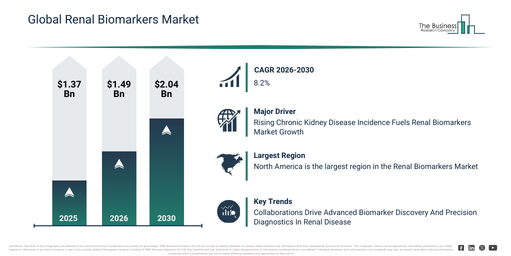
    The renal biomarkers market has experienced substantial growth over recent years. It is forecasted to expand from $1.37 billion in 2025 to $1.49 billion in 2026, exhibiting a compound annual growth rate (CAGR) of 8.6%. The historical growth of this market can be attributed to several factors, including the increasing prevalence of chronic kidney disease, a greater use of creatinine and urea testing, the expansion of diagnostic laboratory infrastructure, a growing awareness about early kidney injury detection, and advancements in immunoassay technologies.

    The renal biomarkers market is anticipated to exhibit robust growth in the coming years, with its valuation expected to reach $2.04 billion by 2030, advancing at a compound annual growth rate (CAGR) of 8.2%. This projected expansion during the forecast period is primarily driven by the increasing integration of precision medicine approaches, a rising need for predictive diagnostics in renal health, the enlargement of biomarker-centric clinical research, the growing incorporation of AI in biomarker analysis, and an intensified focus on personalized nephrology care. Significant trends influencing this period include the wider adoption of novel biomarkers for kidney injury, an increasing utilization of multi-biomarker panels in diagnostic procedures, a heightened demand for the early detection of kidney damage, the expansion of non-invasive urine-based testing, and an enhanced emphasis on tracking disease progression.

    Download the Free Sample Report to Explore Key Market Insights:

    https://www.thebusinessresearchcompany.com/sample.aspx?id=7711&type=smp

    What Drivers Are Influencing The Renal Biomarkers Market?

    The escalating prevalence of chronic kidney disease (CKD) is projected to fuel expansion in the renal biomarkers market. CKD represents a protracted ailment marked by a progressive decrease in kidney function, hindering the body’s capacity to filter waste, sustain fluid equilibrium, and control vital electrolytes. This rising incidence of CKD stems primarily from an aging global demographic, diabetes, high blood pressure, and genetic predispositions, factors that collectively lead to elevated rates of kidney complications and fatalities. In clinical settings, renal biomarkers are vital for facilitating prompt diagnosis, tracking the advancement of the disease, and aiding in swift therapeutic actions to avert kidney failure. An example of this impact is seen in December 2024, when the Australian Institute of Health and Welfare, an Australia-based government agency, reported that chronic kidney disease constituted 1.1% of Australia’s overall disease burden, with age-adjusted data indicating that males bore a burden 1.3 times greater than females. Consequently, the increasing impact of chronic kidney disease is a key impetus for the expansion of the renal biomarkers market.

    What Are The Key Segments Of The Renal Biomarkers Market?

    The renal biomarkers market covered in this report is segmented –

    1) By Biomarker Type: Functional Biomarker, Up Regulated Protein, Other Biomarker Types

    2) By Diagnostic Technique: Enzyme-Linked Immunosorbent Assay, Particle-Enhanced Turbidimetric Immunoassay (PETIA), Colorimetric Assay, Chemiluminescent Enzyme Immunoassay (CLIA), Liquid Chromatography Mass Spectrometry (LS-MS)

    3) By Application: Diagnosis And Disease Progression Monitoring, Clinical Research

    4) By End User: Hospitals, Diagnostic Laboratories, Other End Users

    Subsegments:

    1) By Functional Biomarker: Creatinine, Urea, Cystatin C, Bicarbonate

    2) By Up Regulated Protein: Neutrophil Gelatinase-Associated Lipocalin (NGAL), Kidney Injury Molecule-1 (KIM-1), Interleukin-18 (IL-18)

    3) By Other Biomarker Types: Proximal Tubule Injury Biomarkers, Acute Kidney Injury Biomarkers, Chronic Kidney Disease Biomarkers

    What Trends Are Affecting The Expansion Of The Renal Biomarkers Market?

    Companies operating within the renal biomarkers market are increasingly establishing advanced collaborations with research organizations and AI-driven biotechnology firms. These partnerships aim to enhance biomarker discovery, improve patient stratification, and strengthen precision diagnostic capabilities. The strategic alliances seek to accelerate the identification and validation of novel biomarkers, supporting early disease detection, refined risk assessment, and personalized treatment approaches for kidney disorders. For instance, in November 2024, MultiOmic Health, an AI-powered drug discovery company based in the UK, identified novel patient endotypes and proprietary biomarkers for diabetic kidney disease (DKD) through a research collaboration with the Northern Care Alliance NHS Foundation Trust. These biomarkers facilitate precise patient segmentation and enable the development of targeted diagnostic tools and therapeutics, thereby supporting improved clinical decision-making and outcomes in kidney care.

    Who Are The Leading Companies Operating In The Renal Biomarkers Market?

    Major companies operating in the renal biomarkers market are Abbott Laboratories, BioPorto Diagnostics A S, Roche Holding AG, Thermo Fisher Scientific, bioMérieux SA, Randox Laboratories, Siemens Healthineers, Beckman Coulter Inc., Astute Medical Inc., Sphingotec GmbH, Bio Rad Laboratories India Pvt. Ltd., Enzo Biochem Inc., PerkinElmer Inc., Alere Inc., Bio Techne Corp., DiaSorin S.p.A., EKF Diagnostics Holdings plc, Fujirebio Diagnostics Inc., Gold Standard Diagnostics Corp., Merck KGaA, Myriad RBM Inc., Ortho Clinical Diagnostics Holdings plc, Quidel Corporation, R And D Systems Inc., Roche Diagnostics International Ltd, Sekisui Chemical Co. Ltd., Sysmex Corporation, Tosoh Bioscience Inc.

    Read the full renal biomarkers market report here:

    https://www.thebusinessresearchcompany.com/report/renal-biomarkers-global-market-report

    Which Regions Are Expected To Experience Rapid Expansion In The Renal Biomarkers Market?

    North America was the largest region in the renal biomarkers market in 2025. Asia-Pacific is expected to be the fastest-growing region during the forecast period. The regions covered in the renal biomarkers market report are Asia-Pacific, South East Asia, Western Europe, Eastern Europe, North America, South America, Middle East, Africa.

    Request A Tailored Renal Biomarkers Market Research Report For Competitive Advantage:

    https://www.thebusinessresearchcompany.com/customise?id=7711&type=smp

    Browse Through More Reports Similar to the Global Renal Biomarkers Market 2026, By The Business Research Company

    Robotic Surgery Services Global Market Report

    https://www.thebusinessresearchcompany.com/report/robotic-surgery-services-global-market-report

    Non Surgical Cosmetic Procedures Global Market Report

    https://www.thebusinessresearchcompany.com/report/non-surgical-cosmetic-procedures-global-market-report

    Surgical Robots Global Market Report

    https://www.thebusinessresearchcompany.com/report/surgical-robots-global-market-report

    Get in touch with us:

    The Business Research Company: https://www.thebusinessresearchcompany.com/

    Americas +1 310-496-7795

    Asia +44 7882 955267 & +91 8897263534

    Europe +44 7882 955267

    Email us at info@tbrc.info

    Follow us on:

    LinkedIn: https://in.linkedin.com/company/the-business-research-company

    YouTube: https://www.youtube.com/channel/UC24_fI0rV8cR5DxlCpgmyFQ

    Global Market Model: https://www.thebusinessresearchcompany.com/global-market-model
  • Remote Surgery Market Forecast 2026–2035 Reflecting Expansion Opportunities Across Industries

    Remote Surgery Market Forecast 2026–2035 Reflecting Expansion Opportunities Across Industries

    The Business Research Company’s 2026 market reports include new capabilities such as market attractiveness scoring and analysis, total addressable market analysis, company scoring matrix, interactive excel data dashboard, improved supply chain analysis, upcoming startups in the market, and overview of key products, aimed at improving the depth, usability, and strategic value of the insights delivered.

    What Will Be The Estimated Market Valuation Of The Remote Surgery Market By The End Of 2030?

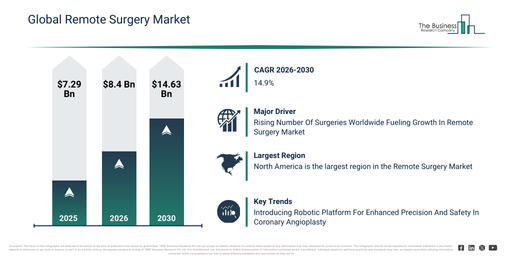
    The remote surgery market has experienced rapid expansion recently. Its size is projected to increase from $7.29 billion in 2025 to $8.4 billion in 2026, exhibiting a compound annual growth rate (CAGR) of 15.2%. Factors contributing to its historical growth include progress in robotic surgery systems, wider availability of high-speed internet infrastructure, increasing preference for minimally invasive procedures, greater capital allocation to surgical robotics, and enhanced telecommunication reliability.

    The remote surgery market is projected to experience substantial expansion in the coming years. This market is anticipated to reach a valuation of $14.63 billion by 2030, demonstrating a compound annual growth rate (CAGR) of 14.9%. Factors contributing to this growth during the forecast period include the increasing creation of advanced surgical robots, the growing embrace of 5G-enabled surgical platforms, the broadening of remote surgical training initiatives, an intensified focus on worldwide access to specialized surgical procedures, and enhanced regulatory backing for the integration of telesurgery. Key trends expected over the forecast horizon involve the escalating acceptance of robotic-assisted surgical systems, the increased implementation of high-speed surgical connectivity, the expanded application of AI-powered surgical decision support, the broadening of international surgical partnerships, and a heightened emphasis on less invasive surgical techniques.

    Download the Free Sample Report to Explore Key Market Insights:

    https://www.thebusinessresearchcompany.com/sample.aspx?id=13527&type=smp

    What Drivers Are Shaping The Future Growth Of The Remote Surgery Market?

    The global increase in surgical procedures is projected to drive expansion within the remote surgery market. Surgery, a medical discipline, utilizes operative methods to examine, diagnose, and address diverse medical conditions and illnesses. This global surge in surgeries is a key catalyst for the development and embrace of remote surgery, which is favored by surgeons due to benefits such as superior precision, improved visualization, and reduced hospital stays. For example, in August 2023, The Aesthetic Society, a US-based organization focused on plastic surgery and cosmetic medicine, reported that Americans collectively spent over $11.8 billion on aesthetic procedures, marking a 2% increase from the prior year. Additionally, data from May 2023 by Austin Publishing Group, a US-based publishing firm, indicated that the worldwide healthcare system conducts more than 300 million major surgical operations annually. Consequently, the expanding volume of surgeries globally is a significant impetus for the growth of the remote surgery market.

    Which Segment Classifications Shape The Remote Surgery Market?

    The remote surgery market covered in this report is segmented –

    1) By Component: Accessories, Systems

    2) By Application: Gynecology Surgery, Urology Surgery, Thoracic Surgery, Cardiac Surgery, Neurosurgery, Orthopedic Surgery, General Surgery, Other Applications

    3) By End-User: Clinics, Hospitals

    Subsegments:

    1) By Accessories: Surgical Instruments, Sensors And Cameras, Communication Devices

    2) By Systems: Robotic Surgery Systems, Telecommunication Systems, Imaging Systems

    Which Trends Are Influencing The Remote Surgery Market?

    Major companies in the remote surgery market are concentrating on technological breakthroughs, such as robotic platforms, to enhance the precision, accuracy, and overall safety of coronary angioplasty. These advanced robotic platforms come equipped with features designed to mimic human dexterity. For example, in May 2023, Robocath SAS, a France-based developer of robotic solutions and systems, introduced the ‘R-One+ robotic platform’ for heart surgery treatment. This innovative R-One+ robotic technology contributes to reducing radiation-induced injuries and streamlines the surgical procedure, making it both safer and quicker. The platform allows cardiologists to manage devices during surgery from a command unit within the operating facility’s control room. Additionally, R-One+ integrates various safety features to lessen the risk of complications during surgery. These include collision detection and avoidance, along with force feedback, which collectively prevent the robotic arm from hitting the patient or other surgical instruments.

    Which Companies Are Expanding Their Footprint In The Remote Surgery Market?

    Major companies operating in the remote surgery market are Johnson And Johnson Private Limited, Medtronic plc, Stryker Corporation, Zimmer Biomet Holdings, Intuitive Surgical Inc., Smith And Nephew plc, Auris Health Inc., Globus Medical Inc., Renishaw plc, Brainlab AG, Meere Co Inc., Titan Medical Group, MAKO Surgical Corp, Avatera Medical GmbH, Mazor Robotics Ltd, CMR Surgical Ltd, THINK Surgical Inc., Vicarious Surgical Inc., Ronovo Surgical, Blue Belt Technologies Inc., Synaptive Medical Inc., Virtual Incision Corporation, Asensus Surgical Inc., Medrobotics Corporation, MicroSure B.V., EndoQuest Robotics Ltd., Medicaroid Corporation, Neocis Inc.

    Read the full remote surgery market report here:

    https://www.thebusinessresearchcompany.com/report/remote-surgery-global-market-report

    Which Geographic Regions Are Influencing Demand In The Remote Surgery Market?

    North America was the largest region in the remote surgery market in 2025. Asia-Pacific is expected to be the fastest-growing region in the forecast period. The regions covered in the remote surgery market report are Asia-Pacific, South East Asia, Western Europe, Eastern Europe, North America, South America, Middle East, Africa.

    Request A Tailored Remote Surgery Market Research Report For Competitive Advantage:

    https://www.thebusinessresearchcompany.com/customise?id=13527&type=smp

    Browse Through More Reports Similar to the Global Remote Surgery Market 2026, By The Business Research Company

    Physical Therapy Global Market Report

    https://www.thebusinessresearchcompany.com/report/physical-therapy-global-market-report

    Fitness App Global Market Report

    https://www.thebusinessresearchcompany.com/report/fitness-app-global-market-report

    Physical Therapy Supplies Global Market Report

    https://www.thebusinessresearchcompany.com/report/physical-therapy-supplies-global-market-report

    Get in touch with us:

    The Business Research Company: https://www.thebusinessresearchcompany.com/

    Americas +1 310-496-7795

    Asia +44 7882 955267 & +91 8897263534

    Europe +44 7882 955267

    Email us at info@tbrc.info

    Follow us on:

    LinkedIn: https://in.linkedin.com/company/the-business-research-company

    YouTube: https://www.youtube.com/channel/UC24_fI0rV8cR5DxlCpgmyFQ

    Global Market Model: https://www.thebusinessresearchcompany.com/global-market-model
  • Global Remote Physical Therapy Rep-Counter App Market Analysis for 2026–2030 with Strategic Forecast Insights for Businesses

    Global Remote Physical Therapy Rep-Counter App Market Analysis for 2026–2030 with Strategic Forecast Insights for Businesses

    The Business Research Company’s 2026 market reports include new capabilities such as market attractiveness scoring and analysis, total addressable market analysis, company scoring matrix, interactive excel data dashboard, improved supply chain analysis, upcoming startups in the market, and overview of key products, aimed at improving the depth, usability, and strategic value of the insights delivered.

    What Market Size Growth Is Projected For The Remote Physical Therapy Rep-Counter App Market During The Forecast Period 2026–2030?

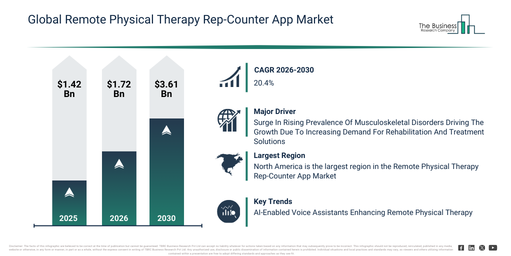
    The remote physical therapy rep-counter app market size has experienced exponential growth in recent years. It is anticipated to increase from $1.42 billion in 2025 to $1.72 billion in 2026, achieving a compound annual growth rate (CAGR) of 20.7%. The expansion observed in the historical period stems from several factors, including the proliferation of outpatient rehabilitation services, the rising adoption of mobile health applications, the wider availability of home-based physical therapy, heightened awareness of digital rehabilitation tools, and advancements in smartphone sensor capabilities.

    The remote physical therapy rep-counter app market is projected for substantial expansion in the coming years. This market is anticipated to reach $3.61 billion by 2030, demonstrating a robust compound annual growth rate (CAGR) of 20.4%. This expansion during the forecast period is primarily driven by factors such as the increasing embrace of virtual rehabilitation programs, the growing incorporation of AI-based exercise validation, the broader availability of remote care reimbursement models, a surging need for personalized recovery tracking, and an intensified focus on rehabilitation outcomes that are data-driven. Key trends anticipated during this period encompass the wider adoption of motion-based rep counting algorithms, an increased reliance on camera and sensor-based exercise tracking, a heightened demand for remote rehabilitation tools, the expansion of real-time feedback and progress analytics, and a greater emphasis on personalized therapy programs.

    Download the Free Sample Report to Explore Key Market Insights:

    https://www.thebusinessresearchcompany.com/sample.aspx?id=29177&type=smp

    Which Economic Or Industry Drivers Are Impacting The Remote Physical Therapy Rep-Counter App Market?

    The increasing occurrence of musculoskeletal disorders is projected to propel the growth of the remote physical therapy rep-counter app market moving forward. Musculoskeletal disorders describe the growing number of people affected by conditions that impact bones, muscles, joints, and connective tissues, necessitating greater demand for treatment and rehabilitation. This rising prevalence is largely driven by aging populations, as older individuals are more susceptible to joint, muscle, and bone conditions, thereby increasing the demand for physical therapy and rehabilitation solutions. The remote physical therapy rep-counter app aids in addressing musculoskeletal disorders by allowing patients to perform guided exercises at home, accurately track their repetitions, and monitor progress, which improves adherence to rehabilitation programs and reduces the risk of complications. For instance, in January 2024, GOV.UK, a UK-based government agency, reported that the prevalence of people aged 16 and over self-reporting a long-term MSK condition was 18.4% in 2023. Consequently, the expanding prevalence of musculoskeletal disorders is driving the growth of the remote physical therapy rep-counter app market.

    What Market Segments Are Evaluated Within The Remote Physical Therapy Rep-Counter App Market?

    The remote physical therapy rep-counter app market covered in this report is segmented –

    1) By Component: Software, Hardware, Services

    2) By Deployment Mode: Cloud-Based, On-Premises

    3) By Platform: iOS, Android, Web-Based

    4) By Application: Orthopedic Rehabilitation, Neurological Rehabilitation, Geriatric Rehabilitation, Pediatric Rehabilitation, Sports Injury Rehabilitation, Other Applications

    5) By End-User: Hospitals And Clinics, Home Care Settings, Rehabilitation Centers, Fitness Centers, Other End-Users

    Subsegments:

    1) By Software: Exercise Tracking Software, Patient Management Software, Data Analytics Software, Teleconsultation Software

    2) By Hardware: Wearable Sensors, Smartphones And Tablets, Motion Capture Devices

    3) By Services: Remote Physiotherapy Sessions, Rehabilitation Monitoring Services, Training And Support Services

    What Trends Are Advancing Progress In The Remote Physical Therapy Rep-Counter App Market?

    Leading companies in the remote physical therapy rep-counter app market are concentrating on creating sophisticated solutions, such as AI-driven voice-based digital care assistants, to offer convenient and accessible help to patients, especially those with impaired mobility or vision. An AI-powered voice-based digital care assistant is a system that employs artificial intelligence to interact with users through voice, providing customized health support, direction, and oversight. For instance, in June 2023, Kaia Health, a US-based software company, introduced Angela, a HIPAA-compliant, AI-powered voice-based digital care assistant. This platform distinguishes itself by employing computer vision through smartphone cameras to monitor body movements in real time. It offers instant feedback to correct exercise form, thus supporting effective remote physical therapy. The platform also automatically counts repetitions, enabling patients to follow their recovery routines precisely and confidently.

    Who Are The Top Market Participants Influencing The Remote Physical Therapy Rep-Counter App Market?

    Major companies operating in the remote physical therapy rep-counter app market are Zimmer Biomet, Reflexion Health, WebPT Inc., Hinge Health, MedBridge Inc., Kaia Health, Drchrono, Plethy Recupe, somatic health, Moterum Technologies Inc.,Include Health Inc., Kinotek Inc., PtEverywhere, Kemtai, Rula health, Physiotec, Rehab Guru Ltd., PT Distinction, VeraSmart Health, Sword Health.

    Read the full remote physical therapy rep-counter app market report here:

    https://www.thebusinessresearchcompany.com/report/remote-physical-therapy-rep-counter-app-global-market-report

    What Are The Top-Performing Regions Within The Remote Physical Therapy Rep-Counter App Market?

    North America was the largest region in the remote physical therapy rep-counter app market in 2025. Asia-Pacific is expected to be the fastest-growing region in the forecast period. The regions covered in the remote physical therapy rep-counter app market report are Asia-Pacific, South East Asia, Western Europe, Eastern Europe, North America, South America, Middle East, Africa.

    Request A Tailored Remote Physical Therapy Rep-Counter App Market Research Report For Competitive Advantage:

    https://www.thebusinessresearchcompany.com/customise?id=29177&type=smp

    Browse Through More Reports Similar to the Global Remote Physical Therapy Rep-Counter App Market 2026, By The Business Research Company

    Bowel Management Systems Global Market Report

    https://www.thebusinessresearchcompany.com/report/bowel-management-systems-global-market-report

    Gastrointestinal Devices Global Market Report

    https://www.thebusinessresearchcompany.com/report/gastrointestinal-devices-global-market-report

    Inflammatory Bowel Disease Treatment Global Market Report

    https://www.thebusinessresearchcompany.com/report/inflammatory-bowel-disease-treatment-global-market-report

    Get in touch with us:

    The Business Research Company: https://www.thebusinessresearchcompany.com/

    Americas +1 310-496-7795

    Asia +44 7882 955267 & +91 8897263534

    Europe +44 7882 955267

    Email us at info@tbrc.info

    Follow us on:

    LinkedIn: https://in.linkedin.com/company/the-business-research-company

    YouTube: https://www.youtube.com/channel/UC24_fI0rV8cR5DxlCpgmyFQ

    Global Market Model: https://www.thebusinessresearchcompany.com/global-market-model
  • Remote Irritable Bowel Syndrome (IBS) Monitoring Market Outlook 2026–2035 Driven by Key Growth Factors and Industry Projections

    Remote Irritable Bowel Syndrome (IBS) Monitoring Market Outlook 2026–2035 Driven by Key Growth Factors and Industry Projections

    The Business Research Company’s 2026 market reports include new capabilities such as market attractiveness scoring and analysis, total addressable market analysis, company scoring matrix, interactive excel data dashboard, improved supply chain analysis, upcoming startups in the market, and overview of key products, aimed at improving the depth, usability, and strategic value of the insights delivered.

    How Will The Market Size Of The Remote Irritable Bowel Syndrome (IBS) Monitoring Market Evolve From 2026 To 2030?

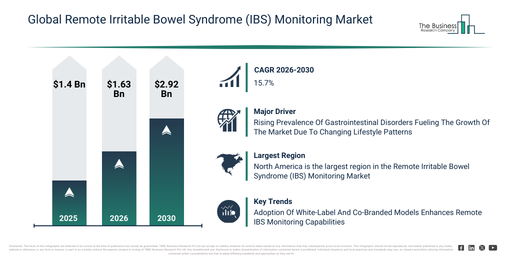
    The remote irritable bowel syndrome (ibs) monitoring market size has expanded significantly in recent years. It is anticipated to increase from $1.4 billion in 2025 to $1.63 billion in 2026, achieving a compound annual growth rate (CAGR) of 16.0%. The expansion observed historically is attributable to the increasing incidence of irritable bowel syndrome, the development of digital health platforms, growing adoption of telehealth services, the wider application of smartphone-based health monitoring, and the accessibility of cloud-based patient data systems.

    The remote irritable bowel syndrome (ibs) monitoring market is expected to experience substantial growth in the upcoming years. It is projected to achieve a size of $2.92 billion by 2030, demonstrating a compound annual growth rate (CAGR) of 15.7%. This expansion during the forecast period is largely driven by the increasing need for individualized gastrointestinal care, the rising adoption of remote diagnostics, the broadening of value-based healthcare models, the growing application of predictive analytics in disease management, and increased investments in digital therapeutics. Significant trends anticipated during this period include a greater reliance on AI-driven symptom analytics, the increasing uptake of mobile health monitoring platforms, enhanced integration of wearable ibs tracking devices, the expansion of personalized treatment management tools, and an elevated focus on solutions for patient engagement.

    Download the Free Sample Report to Explore Key Market Insights:

    https://www.thebusinessresearchcompany.com/sample.aspx?id=29175&type=smp

    What Major Drivers Are Influencing Demand In The Remote Irritable Bowel Syndrome (IBS) Monitoring Market?

    The expanding occurrence of gastrointestinal conditions is anticipated to drive the advancement of the remote irritable bowel syndrome (IBS) monitoring market in the future. These are illnesses that hinder the digestive system’s regular operation, disrupting digestion and bowel movements. This rise in gastrointestinal issues is primarily fueled by unhealthy eating patterns, which damage gut health and digestive processes, leading to inflammation and discomfort like bloating. Remote irritable bowel syndrome (IBS) monitoring assists in reducing the intensity of symptoms and delaying the progression of the condition through the early detection of triggers and continuous management, thereby enhancing patient results and overall quality of life. For example, in February 2025, Crohn’s & Colitis Australia, a national organization based in Australia, reported that the projected prevalence of inflammatory bowel disease (IBD) in Australia is forecast to grow from 20,511,881 cases in 2023 to 23,067,771 cases by 2030. Consequently, the increasing occurrence of gastrointestinal conditions is fueling the expansion of the remote irritable bowel syndrome (IBS) market.

    Which Segment Areas Are Covered In The Remote Irritable Bowel Syndrome (IBS) Monitoring Market Analysis?

    The remote irritable bowel syndrome (ibs) monitoring market covered in this report is segmented –

    1) By Component: Devices, Software, Services

    2) By Application: Diagnosis, Symptom Tracking, Treatment Management, Patient Education, Other Applications

    3) By End-User: Hospitals And Clinics, Homecare Settings, Research Institutes, Other End-Users

    Subsegments:

    1) By Devices: Wearable Monitoring Devices, Non-Wearable Monitoring Devices, Portable Monitoring Devices, Implantable Monitoring Devices

    2) By Software: Data Analytics Software, Mobile Health Applications, Remote Monitoring Platforms, Cloud-Based Software Solutions

    3) By Services: Teleconsultation Services, Data Management Services, Technical Support Services, Training And Education Services

    How Are Trends Transforming The Remote Irritable Bowel Syndrome (IBS) Monitoring Market Landscape?

    Leading companies in the remote irritable bowel syndrome (IBS) monitoring market are focusing on developing white-label or co-branded service models to leverage existing digital infrastructure and clinical support systems. This type of service model allows healthcare providers to deliver pre-designed digital health solutions under their own brand, merging a trusted identity with proven technology for quicker deployment, reduced costs, and a smooth patient experience. For instance, in May 2024, Salvo Health, a US-based digital gastrointestinal care company, unveiled its inaugural remote patient monitoring (RPM) enablement for gastrointestinal (GI) chronic conditions. The program presents a new digital care solution for conditions like IBS, GERD, dyspepsia, celiac disease, and SIBO, enabling GI practices to blend remote oversight with traditional in-person care. Salvo provides local GI providers with digital tools, clinical staff, and home monitoring devices via its white-label or co-branded model, allowing them to monitor heart rate variability (HRV) and link it with patient diet, behavior, and symptoms to enhance chronic care results and practice efficiency.

    Which Global Companies Are Actively Competing In The Remote Irritable Bowel Syndrome (IBS) Monitoring Market?

    Major companies operating in the remote irritable bowel syndrome (ibs) monitoring market are Indegene, Vivante Health, Thryve Health, Heali AI Corp., Mahana Therapeutics Inc., metaMe Health Inc., Seed Health, Ayble Health, Oshi health, Salvo Health Inc., modifyhealth Inc., Food marble, nerva health, MyGiHealth, Sun Genomics, Dietahealth, Dige Health, Nori health, Sequenex, Bowelle.

    Read the full remote irritable bowel syndrome (ibs) monitoring market report here:

    https://www.thebusinessresearchcompany.com/report/remote-irritable-bowel-syndrome-ibs-monitoring-global-market-report

    Which Region Shows The Strongest Potential For Future Growth In The Remote Irritable Bowel Syndrome (IBS) Monitoring Market?

    North America was the largest region in the remote irritable bowel syndrome (IBS) monitoring market in 2025. Asia-Pacific is expected to be the fastest-growing region in the forecast period. The regions covered in the remote irritable bowel syndrome (ibs) monitoring market report are Asia-Pacific, South East Asia, Western Europe, Eastern Europe, North America, South America, Middle East, Africa.

    Request A Tailored Remote Irritable Bowel Syndrome (IBS) Monitoring Market Research Report For Competitive Advantage:

    https://www.thebusinessresearchcompany.com/customise?id=29175&type=smp

    Browse Through More Reports Similar to the Global Remote Irritable Bowel Syndrome (IBS) Monitoring Market 2026, By The Business Research Company

    Remote Health Monitoring Global Market Report

    https://www.thebusinessresearchcompany.com/report/remote-health-monitoring-global-market-report

    Remote Surgery Global Market Report

    https://www.thebusinessresearchcompany.com/report/remote-surgery-global-market-report

    Artificial Intelligence Ai In Remote Patient Monitoring Global Market Report

    https://www.thebusinessresearchcompany.com/report/artificial-intelligence-ai-in-remote-patient-monitoring-global-market-report

    Get in touch with us:

    The Business Research Company: https://www.thebusinessresearchcompany.com/

    Americas +1 310-496-7795

    Asia +44 7882 955267 & +91 8897263534

    Europe +44 7882 955267

    Email us at info@tbrc.info

    Follow us on:

    LinkedIn: https://in.linkedin.com/company/the-business-research-company

    YouTube: https://www.youtube.com/channel/UC24_fI0rV8cR5DxlCpgmyFQ

    Global Market Model: https://www.thebusinessresearchcompany.com/global-market-model
  • Remote Healthcare Market Developments and Growth Opportunities Across 2026–2030

    Remote Healthcare Market Developments and Growth Opportunities Across 2026–2030

    The Business Research Company’s 2026 market reports include new capabilities such as market attractiveness scoring and analysis, total addressable market analysis, company scoring matrix, interactive excel data dashboard, improved supply chain analysis, upcoming startups in the market, and overview of key products, aimed at improving the depth, usability, and strategic value of the insights delivered.

    What Is The Forecasted Market Value Of The Remote Healthcare Market Across 2026–2030?

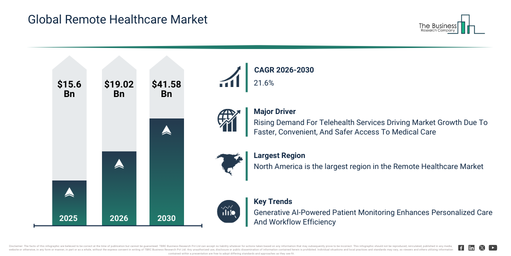
    The remote healthcare market size has seen substantial growth in recent years. It is forecast to rise from $15.6 billion in 2025 to $19.02 billion in 2026, exhibiting a compound annual growth rate (CAGR) of 21.9%. The expansion observed in the historic period is credited to elements such as increasing healthcare access gaps, the development of digital health infrastructure, a rising prevalence of chronic conditions, greater internet and smartphone penetration, and the widespread acceptance of virtual healthcare models.

    The remote healthcare market is projected to experience rapid expansion in the coming years. Its value is anticipated to reach $41.58 billion by 2030, exhibiting a compound annual growth rate (CAGR) of 21.6%. This growth during the projected timeframe is driven by factors such as increased investments in digital health platforms, a surge in demand for home-based care options, the proliferation of remote monitoring technologies, a heightened emphasis on value-based healthcare, and the greater incorporation of AI and analytics into care provision. Key trends expected throughout the forecast period involve the wider adoption of teleconsultation services, an uptick in the utilization of remote patient monitoring devices, the broadening of virtual care platforms, a sharper focus on managing chronic diseases, and the increasing incorporation of AI-based clinical support tools.

    Download the Free Sample Report to Explore Key Market Insights:

    https://www.thebusinessresearchcompany.com/sample.aspx?id=24681&type=smp

    Which Market Drivers Are Supporting The Expansion Of The Remote Healthcare Market?

    The expanding need for telehealth services is projected to fuel the future growth of the remote healthcare market. Telehealth services involve leveraging digital tools to offer healthcare from a distance, enabling virtual connections between patients and providers for consultations, diagnoses, monitoring, and treatment. The growing embrace of telehealth services stems from individuals desiring quicker, more convenient, and safer healthcare access for distant consultations, ongoing monitoring, and less travel. These services enhance remote healthcare by offering easy and prompt access to medical attention and consultations for individuals in remote or underserved regions, eliminating travel requirements. For example, in April 2023, FAIR Health Inc., a US-based non-profit organization, reported that in 2023, national telehealth use grew by 7.3%, rising from 5.5% of medical claim lines in December 2022 to 5.9% in January 2023. Consequently, the escalating demand for telehealth services is stimulating the expansion of the remote healthcare market.

    What Segmentation Levels Are Considered In The Remote Healthcare Market?

    The remote healthcare market covered in this report is segmented –

    1) By Service: Remote Patient Monitoring, Real Time Virtual Health, Tele-ICU (Telemedicine Intensive Care Unit)

    2) By Deployment Mode: On-Premises, Cloud

    3) By Application: Diagnosis, Cardiology, Obstetrics, Senior Care, Other Applications

    4) By End-User: Hospitals, Clinics, Home Care Settings, Other End-Users

    Subsegments:

    1) By Remote Patient Monitoring: Chronic Disease Monitoring, Postoperative Monitoring, Vital Signs Monitoring, Medication Adherence Monitoring, Remote Fetal Monitoring

    2) By Real Time Virtual Health: Video Consultations, Audio Consultations, Remote Diagnosis And Treatment, Virtual Specialist Consultations, Mental Health Teletherapy Sessions

    3) By Tele-ICU (Telemedicine Intensive Care Unit): Continuous Patient Monitoring, Remote Specialist Consultation, Alarm And Event Management, Data Analytics And Decision Support, Remote Ventilator Management

    Which Trends Are Impacting The Growth Of The Remote Healthcare Market?

    Leading companies in the remote healthcare market are concentrating on developing technologically advanced solutions, such as generative AI-driven remote patient monitoring assistants and real-time diagnostics, to improve patient engagement and facilitate personalized care delivery. A generative AI-powered remote patient monitoring assistant serves as an intelligent system that utilizes AI to analyze real-time health data, generate customized insights, and automate patient communication to enhance remote care. For example, in February 2025, Validic Inc., a US-based digital health firm, introduced a generative AI-powered assistant within its Validic Impact platform to boost remote patient monitoring. This assistant automatically interprets and summarizes complex health data. It identifies health trends, creates concise data summaries, enables time-based comparisons, streamlines clinical workflows, and eases providers’ administrative burden. The system is built upon a secure, HITRUST-certified, HIPAA-compliant infrastructure, supports numerous health conditions, and is compatible with hundreds of devices, thereby empowering clinicians to deliver more personalized, proactive, and efficient care.

    Which Leading Firms Are Contributing To The Growth Of The Remote Healthcare Market?

    Major companies operating in the remote healthcare market are Medtronic plc, Siemens Healthcare GmbH, Koninklijke Philips N.V., GE Healthcare Limited, Resideo Technologies Inc., Teladoc Health Inc., Comarch S.A., American Well Corporation, MDLive Inc., Doctor on Demand Inc., CallHealth Services Pvt. Ltd., Talkspace, AMC Health Inc., 98point6 Technologies, Altibbi Inc., GlobalMed Inc., Binah.ai Ltd., InTouch Health Inc., Vivify Health Inc., VSee Lab Inc.

    Read the full remote healthcare market report here:

    https://www.thebusinessresearchcompany.com/report/remote-healthcare-global-market-report

    How Is The Remote Healthcare Market Distributed Across Key Geographic Regions?

    North America was the largest region in the remote healthcare market in 2025. The regions covered in the remote healthcare market report are Asia-Pacific, South East Asia, Western Europe, Eastern Europe, North America, South America, Middle East, Africa.

    Request A Tailored Remote Healthcare Market Research Report For Competitive Advantage:

    https://www.thebusinessresearchcompany.com/customise?id=24681&type=smp

    Browse Through More Reports Similar to the Global Remote Healthcare Market 2026, By The Business Research Company

    Remote Patient Monitoring Devices And Equipment Global Market Report

    https://www.thebusinessresearchcompany.com/report/remote-patient-monitoring-devices-and-equipment-global-market-report

    Remote Cardiac Monitoring Global Market Report

    https://www.thebusinessresearchcompany.com/report/remote-cardiac-monitoring-global-market-report

    Real Time Health Monitoring Devices Global Market Report

    https://www.thebusinessresearchcompany.com/report/real-time-health-monitoring-devices-global-market-report

    Get in touch with us:

    The Business Research Company: https://www.thebusinessresearchcompany.com/

    Americas +1 310-496-7795

    Asia +44 7882 955267 & +91 8897263534

    Europe +44 7882 955267

    Email us at info@tbrc.info

    Follow us on:

    LinkedIn: https://in.linkedin.com/company/the-business-research-company

    YouTube: https://www.youtube.com/channel/UC24_fI0rV8cR5DxlCpgmyFQ

    Global Market Model: https://www.thebusinessresearchcompany.com/global-market-model
  • Global Remote Health Monitoring Market Forecast 2026–2035 Presenting Long-Term Industry Expansion Insights

    Global Remote Health Monitoring Market Forecast 2026–2035 Presenting Long-Term Industry Expansion Insights

    The Business Research Company’s 2026 market reports include new capabilities such as market attractiveness scoring and analysis, total addressable market analysis, company scoring matrix, interactive excel data dashboard, improved supply chain analysis, upcoming startups in the market, and overview of key products, aimed at improving the depth, usability, and strategic value of the insights delivered.

    What Market Size Increase Is Anticipated For The Remote Health Monitoring Market Over The 2026–2030 Period?

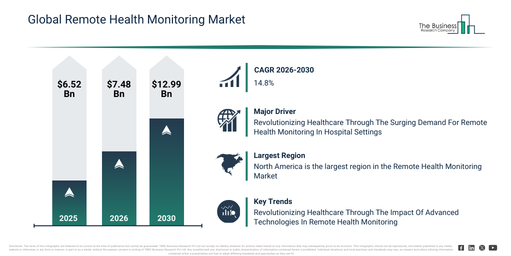
    The remote health monitoring market has demonstrated rapid growth over recent years. Forecasts indicate an expansion from $6.52 billion in 2025 to $7.48 billion in 2026, representing a compound annual growth rate (CAGR) of 14.7%. In the past, this growth was primarily driven by the expansion of telehealth services, the rising prevalence of chronic diseases, increased adoption of connected medical devices, growing healthcare digitization, and the expansion of home care settings.

    The remote health monitoring market is projected to experience substantial expansion over the upcoming years. Its valuation is anticipated to reach $12.99 billion by 2030, demonstrating a compound annual growth rate (CAGR) of 14.8%. This projected growth is driven by factors such as increased funding for digital health platforms, a heightened need for tailored remote care, the broader application of AI-powered clinical decision support, a strengthened emphasis on value-based healthcare frameworks, and the wider uptake of continuous monitoring technologies. Key trends anticipated during this period encompass the growing integration of wearable health monitoring devices, increased reliance on continuous remote patient monitoring, the expanding incorporation of AI-based health analytics, the development of home-based chronic care solutions, and an elevated commitment to preventive healthcare.

    Download the Free Sample Report to Explore Key Market Insights:

    https://www.thebusinessresearchcompany.com/sample.aspx?id=9920&type=smp

    What Underlying Factors Are Accelerating The Growth Of The Remote Health Monitoring Market?

    The increasing demand within hospitals is anticipated to drive the expansion of the remote health monitoring market. Hospitals, as extensive and intricate healthcare facilities, are structured to deliver a broad spectrum of medical services and care to individuals facing illness or injury. Implementing remote health monitoring in these settings can result in more patient-centric, streamlined, and anticipatory healthcare, enabling timely interventions, continuous oversight, a reduction in hospital readmissions, earlier disease detection, and enhanced data accuracy, ultimately contributing to improved patient outcomes. For instance, in May 2025, the Australian Institute of Health and Welfare, an Australia-based government agency, indicated that hospitalizations escalated from 12.1 million in 2022–23 to 12.6 million in 2023–24, representing a 4.1% rise year on year. Thus, the growing demand in hospitals is a key factor propelling the growth of the remote health monitoring market.

    How Is The Remote Health Monitoring Market Segmented Across Key Categories?

    The remote health monitoring market covered in this report is segmented –

    1) By Devices: Respiratory Monitoring, Blood Glucose Monitoring, Cardiac Monitoring, Multi-Parameter Monitoring

    2) By Application: Cancer Treatment, Cardiovascular Diseases, Diabetes Treatment, Sleep Disorder, Weight Management And Fitness Monitoring, Other Applications

    3) By End-User: Home Care Settings, Hospitals Or Clinics, Other End-Users

    Subsegments:

    1) By Respiratory Monitoring: Spirometers, Pulse Oximeters, Capnometers, Respiratory Rate Monitors

    2) By Blood Glucose Monitoring: Glucometers, Continuous Glucose Monitors (CGMs), Smart Insulin Pens

    3) By Cardiac Monitoring: ECG Monitors, Holter Monitors, Implantable Cardiac Monitors, Blood Pressure Monitors

    4) By Multi-Parameter Monitoring: Vital Sign Monitors, Telemetry Systems, Wearable Health Monitors

    What Major Market Trends Are Driving Changes In The Remote Health Monitoring Market?

    Leading companies within the remote health monitoring market are concentrating on embedding innovative technologies, such as cloud computing and artificial intelligence (AI), into their systems to improve accuracy. Artificial intelligence (AI) and machine learning leverage mathematical data models to facilitate computer learning without explicit programming. This advancement significantly alters the way healthcare organizations scale remote patient monitoring and enhances patient outcomes. For example, in November 2023, Royal Philips, a health technology firm based in the Netherlands, unveiled Philips HealthSuite Imaging. This offering is a cloud-based picture archiving and communication system (PACS) developed to optimize radiology and imaging workflows. It prioritizes enabling swift remote access for diagnostic interpretations, consolidated reporting, and artificial intelligence (AI)-driven workflow orchestration. By incorporating sophisticated technologies, HealthSuite Imaging elevates the quality of study interpretation and reporting, boosts operational productivity, and ultimately improves patient care.

    Who Are The Dominant Players Shaping The Remote Health Monitoring Market Landscape?

    Major companies operating in the remote health monitoring market are Nihon Kohden Corporation, Koninklijke Philips NV, Omron Corporation, F. Hoffmann-La Roche Ltd., American Telecare Inc., GE Healthcare Company, Masimo Corporation, Abbott Laboratories, Biotronik SE & Co. KG, Athelas Inc., Dexcom Inc., Senseonics Holdings Inc., Medtronic plc, Health Recovery Solutions Inc., Babyscripts Inc., TytoCare Ltd., Accuhealth Inc., Vivify Health Inc., Get Well Network Inc., VitalTech Holdings Inc., Rimidi Inc., SeamlessMD Inc., Raziel Health Inc., Conversa Health Inc.

    Read the full remote health monitoring market report here:

    https://www.thebusinessresearchcompany.com/report/remote-health-monitoring-global-market-report

    Which Region Is Projected To Dominate The Remote Health Monitoring Market During The Forecast Period?

    North America was the largest region in the remote health monitoring market in 2025. The regions covered in the remote health monitoring market report are Asia-Pacific, South East Asia, Western Europe, Eastern Europe, North America, South America, Middle East, Africa.

    Request A Tailored Remote Health Monitoring Market Research Report For Competitive Advantage:

    https://www.thebusinessresearchcompany.com/customise?id=9920&type=smp

    Browse Through More Reports Similar to the Global Remote Health Monitoring Market 2026, By The Business Research Company

    Automotive Remote Diagnostics Global Market Report

    https://www.thebusinessresearchcompany.com/report/automotive-remote-diagnostics-global-market-report

    Remote Health Monitoring Global Market Report

    https://www.thebusinessresearchcompany.com/report/remote-health-monitoring-global-market-report

    Remote Monitoring And Control Global Market Report

    https://www.thebusinessresearchcompany.com/report/remote-monitoring-and-control-global-market-report

    Get in touch with us:

    The Business Research Company: https://www.thebusinessresearchcompany.com/

    Americas +1 310-496-7795

    Asia +44 7882 955267 & +91 8897263534

    Europe +44 7882 955267

    Email us at info@tbrc.info

    Follow us on:

    LinkedIn: https://in.linkedin.com/company/the-business-research-company

    YouTube: https://www.youtube.com/channel/UC24_fI0rV8cR5DxlCpgmyFQ

    Global Market Model: https://www.thebusinessresearchcompany.com/global-market-model
  • Remote Diagnostics Market Outlook 2026–2030 Exploring New Business Opportunities

    Remote Diagnostics Market Outlook 2026–2030 Exploring New Business Opportunities

    The Business Research Company’s 2026 market reports include new capabilities such as market attractiveness scoring and analysis, total addressable market analysis, company scoring matrix, interactive excel data dashboard, improved supply chain analysis, upcoming startups in the market, and overview of key products, aimed at improving the depth, usability, and strategic value of the insights delivered.

    How Much Is The Remote Diagnostics Market Expected To Grow In Terms Of Market Value Between 2026 And 2030?

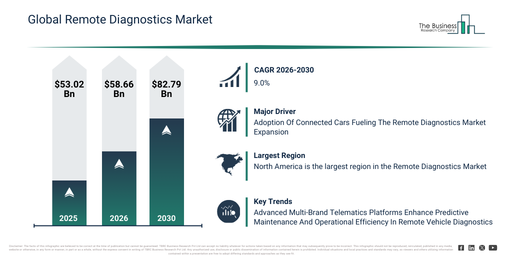
    The remote diagnostics market has experienced substantial expansion in its size over recent years. This market is projected to expand from $53.02 billion in 2025 to $58.66 billion in 2026, demonstrating a compound annual growth rate (CAGR) of 10.7%. Historically, this growth can be attributed to several factors, including the increasing complexity of vehicle electrification, the broadening of connected vehicle technologies, a rising need for quicker service resolution, the expansion of fleet management systems, and a growing dependence on telematics data.

    The remote diagnostics market is anticipated to experience robust expansion over the coming years. Its valuation is projected to reach $82.79 billion by 2030, exhibiting a compound annual growth rate (CAGR) of 9.0%. This forecasted growth is primarily driven by factors such as the increasing embrace of AI-driven diagnostic solutions, greater investments in connected mobility platforms, the broadening of over-the-air diagnostics functionalities, a surging need for remote vehicle assistance, and enhanced integration of diagnostics with fleet analytics. Key developments expected during this period involve the wider implementation of cloud-based diagnostic platforms, an increase in the application of predictive maintenance diagnostics, the expanding incorporation of real-time vehicle health monitoring, the growth of remote software-based troubleshooting, and a heightened emphasis on minimizing downtime.

    Download the Free Sample Report to Explore Key Market Insights:

    https://www.thebusinessresearchcompany.com/sample.aspx?id=15660&type=smp

    Which Growth Drivers Are Contributing To The Progress Of The Remote Diagnostics Market?

    The increasing uptake of connected vehicles is anticipated to fuel the expansion of the remote diagnostics market in the future. Connected cars are defined as vehicles equipped with Internet connectivity, often including Wi-Fi, which enables them to interact with various devices, networks, and services. The growing popularity of connected vehicles stems from various factors, including a greater need for convenience, efficiency, enhanced safety and security, entertainment options, and seamless connectivity. These vehicles send real-time data, facilitating early issue identification and removing the necessity for manual inspections. Furthermore, they enhance safety by automatically relaying diagnostic information to emergency services during collisions, which leads to faster responses and potentially life-saving interventions. An illustration of this trend is found in the statement from Scania, a Sweden-based commercial vehicle manufacturer, which reported in February 2025 that it had approximately 638,000 connected vehicles by the end of 2024, a number that is rapidly increasing. Consequently, the swift increase in the adoption of connected vehicles is propelling the growth of the remote diagnostics market.

    What Major Segment Divisions Exist Within The Remote Diagnostics Market?

    The remote diagnostics market covered in this report is segmented –

    1) By Product Type: Software, Diagnostic Equipment

    2) By Connectivity: 3G (Third Generation), 4G LTE (Fourth Generation Long Term Evolution), Wi-Fi (Wireless Fidelity), Bluetooth

    3) By Application: Roadside Assistance, Vehicle Tracking, Vehicle State Alert, Crash Notification, Training Assistance, Other Applications

    4) By Vehicle Type: Commercial Vehicles, Passenger Vehicles

    Subsegments:

    1) By Software: Diagnostic Software, Remote Monitoring Software, Diagnostic Reporting Software

    2) By Diagnostic Equipment: On-Board Diagnostic Devices, Portable Diagnostic Devices, Imaging Systems For Remote Diagnosis

    Which Trends Are Shaping The Future Of The Remote Diagnostics Market?

    Major entities operating in the remote diagnostics market are concentrating on developing advanced solutions, such as multi-brand telematics platforms, to enhance real-time vehicle monitoring, predictive maintenance, and service efficiency. Multi-brand telematics platforms are integrated systems that compile and analyze real-time performance data from vehicles across different brands, enabling proactive diagnostics and improving fleet reliability. For example, in September 2024, Hella Gutmann, a Germany-based automotive technology company, introduced macsLive, a cloud-based telematics platform specifically designed for real-time, multi-brand vehicle diagnostics. It was developed to support fleet operators and workshops with improved monitoring and maintenance functionalities. The solution facilitates remote error-code analysis, early detection of potential vehicle faults, and streamlined service scheduling, thus boosting operational efficiency and minimizing downtime.

    Which Companies Are Leading Innovation In The Remote Diagnostics Market?

    Major companies operating in the remote diagnostics market are Toyota Motor Corporation, Ford Motor Company, Robert Bosch GmbH, Tesla Inc., Nissan Motor Co. Ltd., Denso Corporation, Qualcomm Technologies Inc., Continental AG, Mercedes Benz Group AG, ABB Ltd., Aptiv PLC, SKF Group, OMRON Corporation, Tech Mahindra Limited, Snap On Incorporated, Vector Informatik GmbH, Softing AG, Delphi Technologies, AVL DiTEST GmbH, Vidiwave Ltd., OnStar Corporation, Harman International Industries Inc., Valeo SA, ZF Friedrichshafen AG

    Read the full remote diagnostics market report here:

    https://www.thebusinessresearchcompany.com/report/remote-diagnostics-global-market-report

    What Are The Leading Geographic Regions In The Remote Diagnostics Market?

    North America was the largest region in the remote diagnostics market in 2025. Asia-Pacific is expected to be the fastest-growing region in the forecast period. The regions covered in the remote diagnostics market report are Asia-Pacific, South East Asia, Western Europe, Eastern Europe, North America, South America, Middle East, Africa.

    Request A Tailored Remote Diagnostics Market Research Report For Competitive Advantage:

    https://www.thebusinessresearchcompany.com/customise?id=15660&type=smp

    Browse Through More Reports Similar to the Global Remote Diagnostics Market 2026, By The Business Research Company

    Autoimmune Treatment Global Market Report

    https://www.thebusinessresearchcompany.com/report/autoimmune-treatment-global-market-report

    Healthcare Fraud Detection Global Market Report

    https://www.thebusinessresearchcompany.com/report/healthcare-fraud-detection-global-market-report

    Typhoid Vi Polysaccharide Vaccine Global Market Report

    https://www.thebusinessresearchcompany.com/report/typhoid-vi-polysaccharide-vaccine-global-market-report

    Get in touch with us:

    The Business Research Company: https://www.thebusinessresearchcompany.com/

    Americas +1 310-496-7795

    Asia +44 7882 955267 & +91 8897263534

    Europe +44 7882 955267

    Email us at info@tbrc.info

    Follow us on:

    LinkedIn: https://in.linkedin.com/company/the-business-research-company

    YouTube: https://www.youtube.com/channel/UC24_fI0rV8cR5DxlCpgmyFQ

    Global Market Model: https://www.thebusinessresearchcompany.com/global-market-model
  • Global Relationship Genetic Tests Market Report 2026–2035 Highlighting Expansion Outlook and Forecast Opportunities

    Global Relationship Genetic Tests Market Report 2026–2035 Highlighting Expansion Outlook and Forecast Opportunities

    The Business Research Company’s 2026 market reports include new capabilities such as market attractiveness scoring and analysis, total addressable market analysis, company scoring matrix, interactive excel data dashboard, improved supply chain analysis, upcoming startups in the market, and overview of key products, aimed at improving the depth, usability, and strategic value of the insights delivered.

    What Market Value Is Expected For The Relationship Genetic Tests Market At The End Of The 2026–2030 Forecast Period?

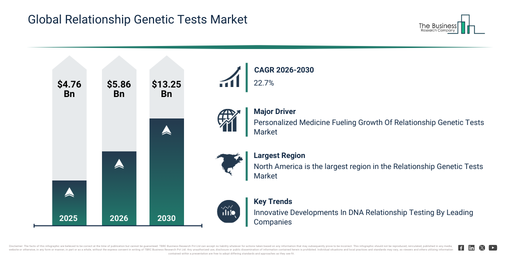
    The relationship genetic tests market size has experienced substantial expansion in recent years. This market is projected to rise from $4.76 billion in 2025 to $5.86 billion in 2026, demonstrating a compound annual growth rate (CAGR) of 22.9%. Historically, this growth has been driven by several factors, including increasing awareness of genetic relationship testing, the expansion of forensic dna laboratories, a rising demand for paternity and kinship testing, improvements in dna amplification technologies, and the availability of affordable genetic test kits.

    The relationship genetic tests market is anticipated to experience substantial growth in the upcoming years, projected to reach $13.25 billion by 2030, exhibiting a compound annual growth rate (CAGR) of 22.7%. This expansion during the forecast period is largely driven by factors such as the increasing integration of digital reporting platforms, a rising demand for rapid relationship verification, the expansion of legally admissible DNA testing services, the growing adoption of online genetic services, and an increased focus on secure genetic data management. Key trends anticipated within this period involve the increasing adoption of direct-to-consumer genetic testing, a rising use of advanced DNA marker analysis, a growing demand for legal and forensic genetic tests, the expansion of non-invasive sample collection methods, and an enhanced focus on data accuracy and confidentiality.

    Download the Free Sample Report to Explore Key Market Insights:

    https://www.thebusinessresearchcompany.com/sample.aspx?id=19674&type=smp

    What Primary Drivers Are Shaping The Development Of The Relationship Genetic Tests Market?

    The expanding implementation of personalized medicine is anticipated to drive the growth of the relationship genetic tests market moving forward. Personalized medicine is a medical framework that tailors treatments and healthcare strategies to an individual’s genetic, environmental, and lifestyle factors for more targeted and effective care. This increased adoption is due to advancements in genetic research, improved accessibility to genomic data, and a heightened emphasis on customized healthcare solutions that align with individual genetic profiles and specific health requirements. Relationship genetic tests are utilized in personalized medicine to offer insights into genetic relationships and familial predispositions, thereby assisting in the customization of preventive care, treatment plans, and health monitoring strategies based on unique genetic backgrounds. For instance, in February 2024, the Personalized Medicine Coalition, a US-based non-profit organization, reported that in 2023, the FDA approved 16 new personalized treatments for rare disease patients, an increase from six in 2022. Among these approvals, seven were cancer drugs, while three targeted other diseases and conditions. Therefore, the increasing adoption of personalized medicine is propelling the growth of the relationship genetic tests market.

    What Segment Types Make Up The Relationship Genetic Tests Market?

    The relationship genetic tests market covered in this report is segmented –

    1) By Type: Siblings DNA Test, Grandparentage Test, Genetic Reconstruction Test, Other Types

    2) By Sample: Saliva, Urine, Blood

    3) By Application: Direct-To-Consumer, Legal Service Tests

    Subsegments:

    1) By Siblings DNA Test: Full Siblings DNA Test, Half Siblings DNA Test, Triangulation DNA Testing, Autosomal DNA Testing for Siblings

    2) By Grandparentage Test: Grandparent-Grandchild DNA Test, Grandparentage Verification Through Autosomal Testing, Y-DNA And mtDNA Testing for Grandparentage

    3) By Genetic Reconstruction Test: Ancestry Reconstruction Test, Genetic Family Tree Construction, Genetic Relationship Analysis

    4) By Other Types: Paternity Test, Maternity Test, Avuncular Test, Cousin Relationship Test

    What Key Trends Are Influencing The Development Of The Relationship Genetic Tests Market?

    Prominent companies within the relationship genetic tests market are prioritizing the creation of innovative testing solutions, such as DNA relationship testing, aimed at improving the accuracy and dependability of genetic relationship evaluations. DNA relationship testing involves genetic analysis to establish biological ties between individuals by scrutinizing their DNA. For example, in October 2023, AlphaBiolabs, a UK-based firm providing health testing services, introduced a sophisticated DNA test designed to identify genetic connections between people, including parentage or sibling relationships. This advanced test incorporates cutting-edge technology to achieve unmatched accuracy in determining biological relationships. It presents an expanded array of genetic markers, thereby increasing the precision of the results and decreasing the chance of false positives or negatives. The test is engineered for swift processing, delivering results more quickly than many conventional tests, and integrates a robust data analysis platform that supplies comprehensive and easily comprehensible reports.

    Who Are The Key Players Driving Competition In The Relationship Genetic Tests Market?

    Major companies operating in the relationship genetic tests market are Laboratory Corporation of America Holdings, Quest Diagnostics Incorporated, Myriad Genetics Inc., Invitae Corporation, Ancestry.com LLC, 23andMe Inc., Ambry Genetics Corporation, Color Health Inc., MyHeritage Ltd., DNA Diagnostics Center Inc., EasyDNA, AlphaBiolabs Ltd., Living DNA Ltd., Pathway Genomics Corporation, Anglia DNA Services Ltd., African Ancestry Inc., Canadian DNA Services Inc., DNA Family Check, Circle DNA, iGene

    Read the full relationship genetic tests market report here:

    https://www.thebusinessresearchcompany.com/report/relationship-genetic-tests-global-market-report

    How Does The Relationship Genetic Tests Market Perform Across Major Global Regions?

    North America was the largest region in the relationship genetic tests market in 2025. The regions covered in the relationship genetic tests market report are Asia-Pacific, South East Asia, Western Europe, Eastern Europe, North America, South America, Middle East, Africa.

    Request A Tailored Relationship Genetic Tests Market Research Report For Competitive Advantage:

    https://www.thebusinessresearchcompany.com/customise?id=19674&type=smp

    Browse Through More Reports Similar to the Global Relationship Genetic Tests Market 2026, By The Business Research Company

    Rare Neurological Disease Treatment Global Market Report

    https://www.thebusinessresearchcompany.com/report/rare-neurological-disease-treatment-global-market-report

    Progressive Multifocal Leukoencephalopathy Treatment Global Market Report

    https://www.thebusinessresearchcompany.com/report/progressive-multifocal-leukoencephalopathy-treatment-global-market-report

    Nerve Repair And Regenerative Global Market Report

    https://www.thebusinessresearchcompany.com/report/nerve-repair-and-regenerative-global-market-report

    Get in touch with us:

    The Business Research Company: https://www.thebusinessresearchcompany.com/

    Americas +1 310-496-7795

    Asia +44 7882 955267 & +91 8897263534

    Europe +44 7882 955267

    Email us at info@tbrc.info

    Follow us on:

    LinkedIn: https://in.linkedin.com/company/the-business-research-company

    YouTube: https://www.youtube.com/channel/UC24_fI0rV8cR5DxlCpgmyFQ

    Global Market Model: https://www.thebusinessresearchcompany.com/global-market-model