Category: HealthcareServices

  • Pharmacy Prescription Retrieval Robot Market Forecast: How Big Will It Be by 2030?

    Pharmacy Prescription Retrieval Robot Market Forecast: How Big Will It Be by 2030?

    Uncover key drivers, emerging technologies, and competitive movements shaping the pharmacy prescription retrieval robot market from 2026–2035 with trusted insights from The Business Research Company

    Across 2026–2030, what is the expected market valuation path of the Pharmacy Prescription Retrieval Robot Market?

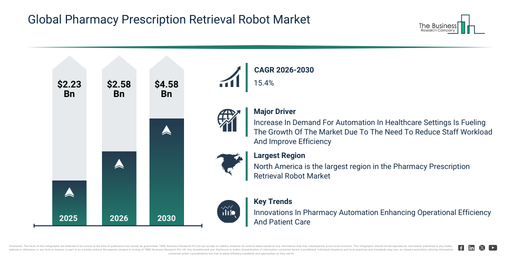
    The pharmacy prescription retrieval robot market has seen swift expansion in recent years. It is anticipated to increase from $2.23 billion in 2025 to $2.58 billion in 2026, achieving a compound annual growth rate (CAGR) of 15.7%. Historically, this growth has been fueled by factors such as a rise in prescription volumes in hospitals, a greater emphasis on reducing medication errors, the development of centralized pharmacy models, an increase in outpatient pharmacy services, and the broader integration of automation in healthcare.

    The pharmacy prescription retrieval robot market is set to experience substantial growth in the upcoming years. Its value is projected to escalate to $4.58 billion by 2030, driven by a compound annual growth rate (CAGR) of 15.4%. This expansion during the forecast period is primarily due to the rising demand for fully automated pharmacies, increasing integration with hospital information systems, the broader deployment of robotic solutions within retail pharmacies, an amplified focus on operational efficiency, and growing investments in smart healthcare infrastructure. Significant trends expected in this period encompass the increased deployment of automated pharmacy dispensing systems, a surging adoption of robotic inventory management, the expanding integration of AI-based error reduction systems, the proliferation of high-density medication storage solutions, and a heightened emphasis on prescription accuracy.

    Access Your Free Sample Report for In-Depth Market Insights:

    https://www.thebusinessresearchcompany.com/sample.aspx?id=29148&type=smp

    Which Drivers Are Supporting The Rise Of The Pharmacy Prescription Retrieval Robot Market?

    The escalating need for automation in healthcare settings is projected to fuel the advancement of the pharmacy prescription retrieval robot market in the future. Automation in healthcare encompasses the deployment of technologies like robotics, artificial intelligence (AI), and digital systems to streamline clinical, administrative, and operational functions, thereby reducing errors and simultaneously boosting efficiency and patient care. The heightened demand for automation in healthcare is attributed to the necessity of reducing staff workload, as automated systems manage repetitive tasks, allowing healthcare professionals to concentrate more on patient care. The pharmacy prescription retrieval robot itself stimulates automation demand by optimizing prescription dispensing and lessening the workload on pharmacists. For example, in December 2024, the Healthcare Information and Management Systems Society, a US-based not-for-profit organization, indicated that by late 2024, nearly 86% of health organizations had adopted some AI tools, signifying the rapid increase in automation integration across healthcare. Therefore, the growing demand for automation in healthcare settings is a key driver for the growth of the pharmacy prescription retrieval robot market.

    What Leading Segments Are Studied In The Pharmacy Prescription Retrieval Robot Market?

    The pharmacy prescription retrieval robot market covered in this report is segmented –

    1) By Product Type: Automated Dispensing Robots, Prescription Retrieval Robots, Medication Storage Robots

    2) By Application: Hospital Pharmacies, Retail Pharmacies, Clinic Pharmacies, Other Applications

    3) By End-User: Hospitals, Retail Pharmacies, Clinics, Other End-Users

    Subsegments:

    1) By Automated Dispensing Robots: Cabinet-Based Robots, Carousel-Based Robots, Robotic Arm Systems, Conveyor-Based Systems

    2) By Prescription Retrieval Robots: Mobile Retrieval Robots, Stationary Retrieval Robots, Hybrid Retrieval Systems

    3) By Medication Storage Robots: Vertical Storage Units, Horizontal Storage Units, Modular Storage Systems

    Which Market Trends Are Opening Growth Opportunities In The Pharmacy Prescription Retrieval Robot Market?

    Leading companies in the pharmacy prescription retrieval robot market are concentrating on developing advanced technologies, such as micro-fulfillment technology, to optimize prescription dispensing, lessen pharmacy workload, enhance operational efficiency, and improve patient care. Micro-fulfillment technology refers to an automated system that utilizes robotics, conveyors, and digital tools to process, store, and dispense high volumes of prescriptions or goods from centralized facilities, thereby enabling faster order fulfillment, reduced inventory waste, and improved operational efficiency. For instance, in May 2025, Walgreens Boots Alliance, a US-based retail pharmacy chain, unveiled an advanced robotic prescription retrieval system. This development enhances pharmacy operations by automating the handling of maintenance prescriptions for chronic conditions, reduces routine tasks for staff, lowers fulfillment costs by nearly 13%, minimizes excess inventory, and allows pharmacists to dedicate more time to clinical services such as vaccinations and health screenings, representing a significant improvement in efficiency and patient care.

    Which Major Firms Are Strengthening Their Position In The Pharmacy Prescription Retrieval Robot Market?

    Major companies operating in the pharmacy prescription retrieval robot market are McKesson Corporation, Becton Dickinson and Company, Omnicell Inc., Meditech Pharmacy Automation Inc., ScriptPro LLC, ARxIUM Inc., Knapp AG, MedAvail Technologies Inc., Tosho Inc., Yuyama Co. Ltd., NewIcon Inc., Willach Pharmacy Solutions GmbH, Shenzhen RSS Technology Co. Ltd., Pearson Medical Technologies Inc., Swisslog Healthcare, Capsa Healthcare, RxSafe LLC, TouchPoint Medical, Becton Dickinson – Pyxis Solutions, Kirby Lester LLC

    Access The Complete Report For Deeper Market Insights:

    https://www.thebusinessresearchcompany.com/report/pharmacy-prescription-retrieval-robot-global-market-report

    Which Region Is Anticipated To See The Fastest Growth In The Pharmacy Prescription Retrieval Robot Market?

    North America was the largest region in the pharmacy prescription retrieval robot market in 2025. Asia-Pacific is expected to be the fastest-growing region in the forecast period. The regions covered in the pharmacy prescription retrieval robot market report are Asia-Pacific, South East Asia, Western Europe, Eastern Europe, North America, South America, Middle East, Africa.

    Request Your Customized Pharmacy Prescription Retrieval Robot Market Research Report for Competitive Advantage:

    https://www.thebusinessresearchcompany.com/customise?id=29148&type=smp

    Browse Through More Reports Similar to the Global Pharmacy Prescription Retrieval Robot Market 2026, By The Business Research Company

    Pharmacy Automation Devices Market Report 2026

    https://www.thebusinessresearchcompany.com/report/pharmacy-automation-devices-global-market-report

    Pharmacy Automation Solution Market Report 2026

    https://www.thebusinessresearchcompany.com/report/pharmacy-automation-solution-global-market-report

    Pharmacy Automation Systems Market Report 2026

    https://www.thebusinessresearchcompany.com/report/pharmacy-automation-systems-global-market-report

    Get in touch with us:

    The Business Research Company: https://www.thebusinessresearchcompany.com/

    Americas +1 310-496-7795

    Asia +44 7882 955267 & +91 8897263534

    Europe +44 7882 955267

    Email us at info@tbrc.info

    Follow us on:

    LinkedIn: https://in.linkedin.com/company/the-business-research-company

    YouTube: https://www.youtube.com/channel/UC24_fI0rV8cR5DxlCpgmyFQ

    Global Market Model: https://www.thebusinessresearchcompany.com/global-market-model
  • Pharmacy Management System Market Report 2026: Strategic Insights and Revenue Outlook

    Pharmacy Management System Market Report 2026: Strategic Insights and Revenue Outlook

    Uncover key drivers, emerging technologies, and competitive movements shaping the pharmacy management system market from 2026–2035 with trusted insights from The Business Research Company

    What size range is anticipated for the Pharmacy Management System Market from 2026 to 2030?

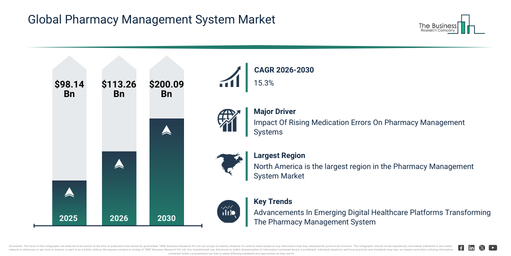
    The pharmacy management system market size has experienced significant expansion in recent years. This market is projected to expand from $98.14 billion in 2025 to $113.26 billion in 2026, exhibiting a compound annual growth rate (CAGR) of 15.4%. Historically, this growth has been driven by several factors, including the increasing digitization of pharmacy operations, a rise in prescription transaction volumes, the growing requirement for centralized patient records, the expansion of retail pharmacy chains, and the adoption of fundamental pharmacy software solutions.

    The market size for pharmacy management systems is projected to undergo rapid expansion over the next few years. This sector is forecast to attain a value of $200.09 billion by 2030, growing at a compound annual growth rate (CAGR) of 15.3%. The projected growth is attributable to factors such as an increasing transition to cloud-native PMS solutions, a rising adoption of AI-enabled decision support, the broadening of omnichannel pharmacy operations, a heightened demand for interoperability with healthcare systems, and an intensified focus on data-driven pharmacy management. Key trends expected during the forecast period include the expanding adoption of cloud-based pharmacy platforms, an increase in the integration of inventory and billing systems, a growing utilization of real-time prescription processing, an enhancement of data analytics and reporting capabilities, and a greater emphasis on automating regulatory compliance.

    Access Your Free Sample Report for In-Depth Market Insights:

    https://www.thebusinessresearchcompany.com/sample.aspx?id=18428&type=smp

    What Drivers Are Affecting Demand In The Pharmacy Management System Market?

    The increasing financial burden from medication errors is anticipated to boost the expansion of the pharmacy management system market in the future. Such errors encompass mistakes made throughout the prescription, dispensation, and administration processes of drugs, leading to possible or actual patient harm. These errors frequently arise from intricate drug schedules, insufficient communication among medical professionals, and technical deficiencies within medication delivery systems. A pharmacy management system serves to mitigate these errors through automated prescription handling, precise management of patient information, offering checks for drug interactions, enabling immediate access to patients’ past medication records, and improving the accuracy and security of medication distribution. For instance, in March 2024, the World Health Organization, a US-based government agency, reported that the worldwide expense attributed to medication errors stands at $42 to $100 billion annually. Consequently, the escalating expenses linked to medication errors are stimulating the expansion of the pharmacy management system market.

    Which Segment Groups Are Influencing The Pharmacy Management System Market?

    The pharmacy management system market covered in this report is segmented –

    1) By Component: Software, Hardware, Services

    2) By Deployment: Web Based, On Premise

    3) By End User: Inpatient Pharmacies, Outpatient Pharmacies

    Subsegments:

    1) By Software: Prescription Management Software, Inventory Management Software, Medication Therapy Management (MTM) Software, Point-Of-Sale (POS) Systems, Drug Interaction Or Drug Database Software, Pharmacy Workflow Management Software, Reporting And Analytics Software

    2) By Hardware: Automated Dispensing Machines (ADM), Barcode Scanners And Printers, Pharmacy Kiosks, Labeling And Packaging Equipment, Tablet And Capsule Counter Machines, Temperature Monitoring Devices

    3) By Services: Installation And Integration Services, Training And Support Services, Consulting Services, Maintenance Services, Cloud Hosting And Data Management Services

    How Are Emerging Trends Affecting The Progression Of The Pharmacy Management System Market?

    Leading companies operating in the pharmacy management system market are developing advanced solutions, such as digital healthcare platforms, which offer patients online access to a comprehensive suite of health services. A digital healthcare platform is a software-based system designed to facilitate the management and coordination of healthcare services utilizing digital technologies. For example, in January 2024, Eli Lilly and Company, a US-based pharmaceutical company, introduced LillyDirect, a digital healthcare platform that integrates pharmacy management capabilities and enables patients with obesity and diabetes to order select Lilly medications online for home delivery through partnered pharmacies. Additionally, it provides access to independent telehealth providers for virtual consultations and personalized resources for disease management.

    Who Are The Primary Competitors In The Global Pharmacy Management System Market?

    Major companies operating in the pharmacy management system market are McKesson Corporation, Cardinal Health Inc., Becton Dickinson and Company, Epic Systems Corporation, Omnicell Inc., Epicor Software Corporation, Agfa-Gevaert NV, NextGen Healthcare Information Systems LLC, Veradigm LLC, Computer Programs and Systems Inc., Clanwilliam Health Limited, ScriptPro LLC, Swisslog Healthcare AG, LS Retail ehf., ARxIUM Inc., PioneerRx LLC, Octal IT Solution LLC, Liberty Software Inc., Datascan Pharmacy Inc., Supplylogix LLC, Cerner Corporation, Meditech Inc., QS1 Data Systems, RedSail Technologies, McKesson Pharmacy Systems

    Access The Complete Report For Deeper Market Insights:

    https://www.thebusinessresearchcompany.com/report/pharmacy-management-system-global-market-report

    Which Global Regions Are Shaping The Competitive Landscape Of The Pharmacy Management System Market?

    North America was the largest region in the pharmacy management system market in 2025. Asia-Pacific is expected to be the fastest-growing region in the forecast period. The regions covered in the pharmacy management system market report are Asia-Pacific, South East Asia, Western Europe, Eastern Europe, North America, South America, Middle East, Africa.

    Request Your Customized Pharmacy Management System Market Research Report for Competitive Advantage:

    https://www.thebusinessresearchcompany.com/customise?id=18428&type=smp

    Browse Through More Reports Similar to the Global Pharmacy Management System Market 2026, By The Business Research Company

    Pharmacy Automation Systems Market Report 2026

    https://www.thebusinessresearchcompany.com/report/pharmacy-automation-systems-global-market-report

    Medication Management System Market Report 2026

    https://www.thebusinessresearchcompany.com/report/medication-management-system-global-market-report

    Pharmacy Inventory Management Software Solutions And Cabinets Market Report 2026

    https://www.thebusinessresearchcompany.com/report/pharmacy-inventory-management-software-solutions-and-cabinets-global-market-report

    Get in touch with us:

    The Business Research Company: https://www.thebusinessresearchcompany.com/

    Americas +1 310-496-7795

    Asia +44 7882 955267 & +91 8897263534

    Europe +44 7882 955267

    Email us at info@tbrc.info

    Follow us on:

    LinkedIn: https://in.linkedin.com/company/the-business-research-company

    YouTube: https://www.youtube.com/channel/UC24_fI0rV8cR5DxlCpgmyFQ

    Global Market Model: https://www.thebusinessresearchcompany.com/global-market-model
  • Global Pharmacy Benefit Management Industry Trends and Market Forecast 2026–2030

    Global Pharmacy Benefit Management Industry Trends and Market Forecast 2026–2030

    Uncover key drivers, emerging technologies, and competitive movements shaping the pharmacy benefit management market from 2026–2035 with trusted insights from The Business Research Company

    How is the Pharmacy Benefit Management Market size predicted to change over the forecast window of 2026–2035?

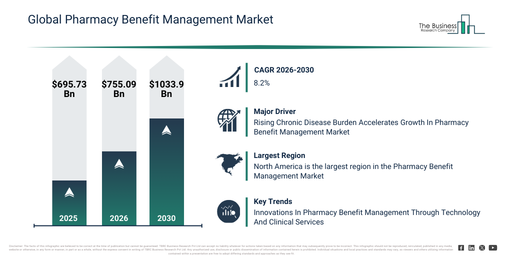
    The pharmacy benefit management market size has experienced significant growth in recent years. This market is projected to expand from $695.73 billion in 2025 to $755.09 billion in 2026, registering a compound annual growth rate (CAGR) of 8.5%. The historical growth can be largely attributed to factors such as increasing healthcare expenditure levels, the expansion of insured populations, the rising complexity of drug pricing, the early adoption of managed pharmacy networks, and the proliferation of mail-order pharmacy services.

    Anticipated to experience substantial expansion over the upcoming years, the pharmacy benefit management market is projected to reach $1033.9 billion by 2030, exhibiting a compound annual growth rate (CAGR) of 8.2%. Factors contributing to this growth during the forecast period include the expanding application of AI-enabled cost optimization tools, a heightened emphasis on value-based care models, the broadening scope of specialty drug management, intensifying regulatory examination of drug pricing, and the increasing digitalization of pharmacy benefit platforms. Key trends for the forecast period encompass the increasing embrace of data-driven formulary management, the escalating utilization of predictive cost analytics, the expanding integration of digital claims processing platforms, the growth of specialty pharmacy management services, and a strengthened commitment to cost containment strategies.

    Access Your Free Sample Report for In-Depth Market Insights:

    https://www.thebusinessresearchcompany.com/sample.aspx?id=6883&type=smp

    Which Drivers Are Contributing To The Expansion Of The Pharmacy Benefit Management Market?

    The rising prevalence of chronic illnesses is anticipated to drive the future expansion of the pharmacy benefit management market. Chronic diseases are defined as long-term health conditions that persist for an extended period, typically lasting three months or more. Pharmacy benefit management plays a crucial role in addressing chronic diseases by optimizing medication access, promoting adherence, and implementing cost-effective strategies, thereby ensuring better health outcomes and an improved quality of life for patients with these enduring medical conditions. For instance, in September 2023, the World Health Organization (WHO), a Switzerland-based intergovernmental health organization, reported that 41 million deaths, which represents 74% of all annual global deaths, were caused by noncommunicable diseases (NCDs) or chronic diseases. Among these, cardiovascular diseases accounted for 17.9 million deaths, cancer for 9.3 million, chronic respiratory diseases for 4.1 million, and diabetes for 2.0 million. Consequently, the increasing burden of chronic disease is propelling the growth of the pharmacy benefit management market.

    What Segment Classifications Make Up The Pharmacy Benefit Management Market?

    The pharmacy benefit management market covered in this report is segmented –

    1) By Services: Mail-Delivery, Specialty Pharmacy, Preferred Network Pharmacy

    2) By Type: Commercial Health Plans, Self-Insured Employer Plans, Medicare Part D Plans, Federal Employees Health Benefits Program

    3) By End User: Pharmacy Benefit Management Organization, Mail Order Pharmacies, Retail Pharmacies, Inpatient Pharmacies, Outpatient Pharmacies

    Subsegments:

    1) By Mail-Delivery: Maintenance Medications, Acute Care Medications, Patient Education And Support Services

    2) By Specialty Pharmacy: High-Cost Medications, Biologics And Biosimilars, Disease Management Services

    3) By Preferred Network Pharmacy: Retail Pharmacy Networks, Contracted Pharmacy Networks, Urgent Care Pharmacy Services

    Which Innovation Trends Are Advancing Developments Within The Pharmacy Benefit Management Market?

    Major companies in the pharmacy benefit management market are prioritizing the development of innovative products, such as medication therapy management. This approach employs advanced technology to facilitate a comprehensive review and optimization of a patient’s medication regimen, alongside resolving drug-related issues. Medication therapy management is a clinical service provided by pharmacists, aimed at enhancing a patient’s medication usage and improving overall health outcomes. For instance, in May 2025, America’s TPA LLC, a US-based independent health innovator specializing in pharmacy management solutions, launched EZrx. This next-generation pharmacy solution leverages six cost-reduction strategies, including therapeutic substitution and prior authorization. Moreover, it incorporates advanced analytics and member engagement tools to further optimize pharmacy benefit management and improve clinical results.

    Which Key Market Players Are Investing In Expansion And Innovation Within The Pharmacy Benefit Management Market?

    Major companies operating in the pharmacy benefit management market are CVS Health Corporation, Cigna Corporation, Centene Corporation, Anthem Inc., OptumRx Inc., Humana Pharmacy Solutions Inc., Magellan Health Inc., Prime Therapeutics LLC, MaxorPlus Ltd., RxAdvance Corp, MedImpact Healthcare Systems Inc., PerformRx LLC., Navitus Health Solutions LLC, WellDyneRx Inc., Healthesystems LLC., Catalyst Rx Inc., Argus Health Systems Inc., Innoviant Pharmacy Inc., Pharmaceutical Strategies Group, ProCare Rx Inc., FutureScripts LLC., National CooperativeRx, ScriptCare Ltd., US Script Inc., LDI Integrated Pharmacy Services LLC, RxPreferred Benefits, SinfoníaRx Inc.

    Access The Complete Report For Deeper Market Insights:

    https://www.thebusinessresearchcompany.com/report/pharmacy-benefit-management-global-market-report

    Which Regions Are Poised For Strategic Growth In The Pharmacy Benefit Management Market?

    North America was the largest region in the pharmacy benefit management market in 2025. Asia-Pacific is expected to be the fastest-growing region in the forecast period. The regions covered in the pharmacy benefit management market report are Asia-Pacific, South East Asia, Western Europe, Eastern Europe, North America, South America, Middle East, Africa.

    Request Your Customized Pharmacy Benefit Management Market Research Report for Competitive Advantage:

    https://www.thebusinessresearchcompany.com/customise?id=6883&type=smp

    Browse Through More Reports Similar to the Global Pharmacy Benefit Management Market 2026, By The Business Research Company

    Medication Management System Market Report 2026

    https://www.thebusinessresearchcompany.com/report/medication-management-system-global-market-report

    Pharmacy Management System Market Report 2026

    https://www.thebusinessresearchcompany.com/report/pharmacy-management-system-global-market-report

    Pharmacy Inventory Management Software Solutions And Cabinets Market Report 2026

    https://www.thebusinessresearchcompany.com/report/pharmacy-inventory-management-software-solutions-and-cabinets-global-market-report

    Get in touch with us:

    The Business Research Company: https://www.thebusinessresearchcompany.com/

    Americas +1 310-496-7795

    Asia +44 7882 955267 & +91 8897263534

    Europe +44 7882 955267

    Email us at info@tbrc.info

    Follow us on:

    LinkedIn: https://in.linkedin.com/company/the-business-research-company

    YouTube: https://www.youtube.com/channel/UC24_fI0rV8cR5DxlCpgmyFQ

    Global Market Model: https://www.thebusinessresearchcompany.com/global-market-model
  • Pharmacy Automation Systems Market Size and Demand Forecast 2026–2030

    Pharmacy Automation Systems Market Size and Demand Forecast 2026–2030

    Uncover key drivers, emerging technologies, and competitive movements shaping the pharmacy automation systems market from 2026–2035 with trusted insights from The Business Research Company

    What market expansion outlook does the Pharmacy Automation Systems Market show for the 2026–2030 period?

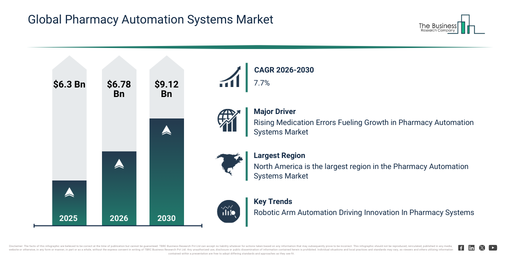
    The pharmacy automation systems market has experienced significant expansion in recent years. This market is set to increase from $6.3 billion in 2025 to $6.78 billion in 2026, demonstrating a compound annual growth rate (CAGR) of 7.7%. The growth observed in prior periods can be attributed to several factors, including the surge in hospital digitization efforts, the escalating complexity of medication management, the rising adoption of centralized pharmacy models, the need to minimize dispensing errors, and the widespread development of automated storage systems.

    The pharmacy automation systems market size is anticipated to experience substantial growth over the next few years. It is forecast to expand to $9.12 billion by 2030, achieving a compound annual growth rate (CAGR) of 7.7%. This expansion during the forecast period is driven by factors such as increasing investments in fully autonomous pharmacy systems, the rising adoption of smart compounding solutions, the broader expansion of mail-order pharmacy automation, the growing integration of AI-driven dispensing analytics, and an increasing focus on scalable pharmacy infrastructure. Significant trends for the forecast period include the increasing adoption of fully automated medication dispensing systems, the rising use of robotic compounding technologies, the growing deployment of tabletop counting systems, the expansion of integrated packaging and labelling solutions, and an enhanced focus on end-to-end pharmacy automation.

    Access Your Free Sample Report for In-Depth Market Insights:

    https://www.thebusinessresearchcompany.com/sample.aspx?id=13721&type=smp

    What Drivers Are Shaping The Development Of The Pharmacy Automation Systems Market?

    The increasing prevalence of medication errors is projected to fuel the expansion of the pharmacy automation systems market going forward. Medication errors are defined as preventable incidents or inaccuracies in medication use, which can manifest at any stage of the healthcare process, from prescription and dispensing to administration and monitoring. Automated pharmacy systems maintain precise and thorough records of dispensed medications and patient histories, enabling healthcare providers to easily access information and diminishing the potential for errors caused by incomplete or absent data. For instance, in April 2024, the Patient Safety Journal, an independent US-based state agency that gathers reports on patient safety events, indicated that medication error rose by 0.9 percentage points, climbing from 13.2% in 2022 to 14.1% in 2023. Thus, the rise in medication errors is a significant driver for the pharmacy automation systems market.

    What Segment Types Are Examined In The Pharmacy Automation Systems Market?

    The pharmacy automation systems market covered in this report is segmented –

    1) By Product Type: Automated Medication Dispensing Systems, Automated Medication Compounding Systems, Automated Packaging And Labelling Systems, Automated Table Top Counters, Automated Storage And Retrieval Systems

    2) By Mode Of Automation: Semi-Automatic Systems, Fully-Automatic Systems

    3) By End User: Inpatient Pharmacies, Outpatient Pharmacies, Retail Pharmacies, Pharmacy Benefit Management Organizations And Mail-Order Pharmacies

    Subsegments:

    1) By Automated Medication Dispensing Systems: Centralized Dispensing Systems, Decentralized Dispensing Systems

    2) By Automated Medication Compounding Systems: IV Compounding Systems, Oral Compounding Systems

    3) By Automated Packaging And Labelling Systems: Blister Packaging Systems, Bottle Filling And Labelling Systems

    4) By Automated Tabletop Counters: Tablet Counters, Capsule Counters

    5) By Automated Storage And Retrieval Systems: Robotic Storage Systems, Carousel Systems

    Which Competitive Trends Are Impacting The Structure Of The Pharmacy Automation Systems Market?

    Major companies within the pharmacy automation systems market are dedicating efforts to developing innovative products, such as robotic arm automation. This advancement enables the precise picking and dispensing of medications, thereby reducing human error and improving workflow efficiency in pharmacies. Robotic arm automation refers to the utilization of a robotic arm capable of manipulating objects to perform tasks automatically, equipped with sensors for handling items with precision and speed in healthcare industries. For instance, in October 2023, JVM Co. Ltd., an affiliate of Hanmi Science, a South Korea-based life sciences company specializing in pharmaceuticals and drug development, launched MENITH in the European market. This next-generation automated drug dispensing machine features a robotic arm, signifying a considerable advancement aimed at enhancing pharmacy automation and establishing a supply contract with Brocacef, a major operator of large, factory-style dispensing pharmacies.

    Who Are The Core Companies Influencing Trends In The Pharmacy Automation Systems Market?

    Major companies operating in the pharmacy automation systems market are AmerisourceBergen Corporation, Cardinal Health, Danaher Corporation, Becton Dickinson and Company, Cerner Corporation, Epic Systems Corporation, KUKA AG Swisslog Healthcare, Automated Healthcare Systems Incorporated, Omnicell Inc., Swisslog Holdings AG, Parata Systems LLC, ScriptPro LLC, Capsa Healthcare, ARxIUM Inc., Talyst LLC, Kirby Lester LLC, Yuyama Co. Ltd., RxSafe LLC, Pharmatech Corporation, Pearson Medical Technologies, Hy-Tek Medical Limited, Deenova S.R.L, Willach Group, TouchPoint Medical

    Access The Complete Report For Deeper Market Insights:

    https://www.thebusinessresearchcompany.com/report/pharmacy-automation-systems-global-market-report

    Which Regions Are Projected To Dominate The Pharmacy Automation Systems Market In The Coming Years?

    North America was the largest region in the pharmacy automation systems market in 2025. The regions covered in the pharmacy automation systems market report are Asia-Pacific, South East Asia, Western Europe, Eastern Europe, North America, South America, Middle East, Africa.

    Request Your Customized Pharmacy Automation Systems Market Research Report for Competitive Advantage:

    https://www.thebusinessresearchcompany.com/customise?id=13721&type=smp

    Browse Through More Reports Similar to the Global Pharmacy Automation Systems Market 2026, By The Business Research Company

    Pharmacy Automation Devices Market Report 2026

    https://www.thebusinessresearchcompany.com/report/pharmacy-automation-devices-global-market-report

    Pharmacy Automation Market Report 2026

    https://www.thebusinessresearchcompany.com/report/pharmacy-automation-global-market-report

    Pharmacy Automation Solution Market Report 2026

    https://www.thebusinessresearchcompany.com/report/pharmacy-automation-solution-global-market-report

    Get in touch with us:

    The Business Research Company: https://www.thebusinessresearchcompany.com/

    Americas +1 310-496-7795

    Asia +44 7882 955267 & +91 8897263534

    Europe +44 7882 955267

    Email us at info@tbrc.info

    Follow us on:

    LinkedIn: https://in.linkedin.com/company/the-business-research-company

    YouTube: https://www.youtube.com/channel/UC24_fI0rV8cR5DxlCpgmyFQ

    Global Market Model: https://www.thebusinessresearchcompany.com/global-market-model
  • Pharmacy Automation Market Outlook: Growth and Forecast Highlights 2030

    Pharmacy Automation Market Outlook: Growth and Forecast Highlights 2030

    Uncover key drivers, emerging technologies, and competitive movements shaping the pharmacy automation market from 2026–2035 with trusted insights from The Business Research Company

    What level of growth is expected in the Pharmacy Automation Market between 2026 and 2030?

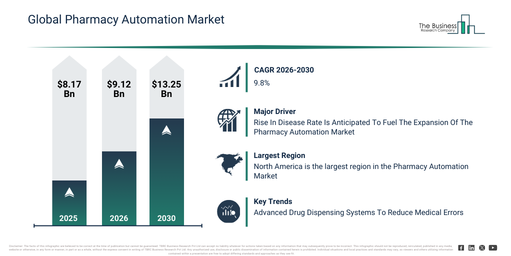
    The pharmacy automation market has seen rapid expansion in recent years. It is anticipated to increase from $8.17 billion in 2025 to $9.12 billion in 2026, with a compound annual growth rate (CAGR) of 11.6%. This historical growth can be linked to several factors, including rising prescription volumes, growing concerns regarding medication errors, the expansion of hospital pharmacy infrastructure, increasing demand for improved workflow efficiency, and the early adoption of centralized dispensing systems.

    The pharmacy automation market is projected to experience robust expansion over the coming years. It is anticipated to reach $13.25 billion by 2030, exhibiting a compound annual growth rate (CAGR) of 9.8%. This anticipated growth during the forecast timeframe is attributable to several factors, including the increasing demand for comprehensive pharmacy automation solutions, greater investments in intelligent hospital infrastructure, the wider embrace of decentralized dispensing models, the expansion of outpatient pharmacy offerings, and an intensified focus on optimizing inventory. Key trends projected for the forecast period encompass the increasing integration of robotic dispensing technologies, the wider implementation of automated storage and retrieval systems, the enhanced incorporation of inventory tracking platforms, the proliferation of high-speed packaging and labeling equipment, and a heightened commitment to ensuring medication safety and precision.

    Access Your Free Sample Report for In-Depth Market Insights:

    https://www.thebusinessresearchcompany.com/sample.aspx?id=15234&type=smp

    Which Drivers Are Expected To Impact The Pharmacy Automation Market During The Forecast Period?

    An elevated disease rate is projected to fuel the expansion of the pharmacy automation market moving forward. A disease rate quantifies the incidence of a particular illness within a specific population over a defined duration. This escalation in disease rates is attributable to various factors, including population growth, increased movement for travel and trade, climate shifts, environmental contamination, and the appearance of new infectious agents or variants. Pharmacy automation endeavors to lessen disease rates by optimizing medication dispensing practices, thereby enhancing accuracy and efficiency in illness management. Such systems facilitate the timely provision and oversight of medications, empowering healthcare providers to act promptly if patients’ conditions worsen. For example, in February 2024, the World Health Organization, an intergovernmental organization located in Switzerland, indicated that by 2050, over 35 million new cancer cases are anticipated, representing a 77% surge compared to the estimated 20 million cases in 2022. Therefore, the rise in disease rates is a key factor propelling the growth of the pharmacy automation market in the coming period.

    Which Segments Are Driving Activity In The Pharmacy Automation Market?

    The pharmacy automation market covered in this report is segmented –

    1) By Product: Dispensing Systems, Pill Sorting Machines, Labelling Machines, Packaging Machines, Inventory Management, Automated Storage And Retrieval Systems, Other Products

    2) By Application: Drug Dispensing And Packaging, Drug Storage, Inventory Management

    3) By End User: Inpatient Pharmacies, Outpatient Pharmacies, Retail Pharmacies, Pharmacy Benefit Management Organizations And Mail-Order Pharmacies

    Subsegments:

    1) By Dispensing Systems: Prescription Dispensing Systems, Automated Dispensing Cabinets, Robot-Assisted Dispensing

    2) By Pill Sorting Machines: Manual Pill Sorting Machines, Automated Pill Sorting Machines

    3) By Labelling Machines: Labeling For Bottles And Containers, Labeling For Blister Packs, Automated Label Application Machines

    4) By Packaging Machines: Pill Packaging Machines, Blister Packaging Machines, Bottle Packaging Machines

    5) By Inventory Management: Inventory Tracking Systems, Drug Replenishment Systems, Stock Auditing Systems

    6) By Automated Storage And Retrieval Systems: Vertical Lift Modules (Vlms), Automated Shelving Systems, Carousel Storage Systems

    7) By Other Products: Prescription Verification Systems, Pharmacy Workflow Automation Tools

    What Industry Trends Are Transforming The Pharmacy Automation Market?

    Leading firms within the pharmacy automation market are prioritizing the expansion of their product offerings by incorporating sophisticated pharmacy automation solutions, including next-generation automated drug dispensing systems, aiming to achieve a competitive advantage. These next-generation automated drug dispensing systems represent advanced technological solutions crafted to automate and optimize medication dispensing procedures in healthcare environments. As an illustration, in October 2023, JVM Co. Ltd., a South Korea-based producer of pharmacy automation systems, introduced the MENITH, an automated dispensing machine equipped with an articulated robotic arm. The MENITH, a next-generation offering from JVM, incorporates a multi-joint collaborative robot arm developed to completely automate the canister exchange process. This system boasts a dispensing speed exceeding twice that of conventional pouch-type automated dispensing machines, capable of dispensing up to 120 pouches per minute. Furthermore, it includes an automated inspection system, which decreases the time and resources necessary for the pharmacy dispensing process.

    Which Major Industry Participants Are Leading The Pharmacy Automation Market Growth?

    Major companies operating in the pharmacy automation market are Mckesson Corporation, AmerisourceBergen Corporation, Baxter International Inc., Cerner Corporation, Pearson Medical Technologies LLC, Omnicell Inc., Swisslog Holding AG, Tension Corporation, Noritsu Koki Co. Ltd., Scriptpro LLC, Capsa Healthcare LLC, Alixar Healthcare Private Limited, Deenova S.R.L, ARxIUM Inc., Talyst Systems LLC, Touchpoint Medical Solutions Pvt. Ltd., Kirby Lester LLC, Yuyama Co. Ltd., Willach GmbH, RxSafe LLC, Meditech Pharmacy Management Solutions Inc., Accu-Chart Plus Healthcare System Inc., PDX Pharmaceuticals Inc., Newicon Ltd.

    Access The Complete Report For Deeper Market Insights:

    https://www.thebusinessresearchcompany.com/report/pharmacy-automation-global-market-report

    Which Region Is Expected To Experience The Fastest Growth In The Pharmacy Automation Market?

    North America was the largest region in the pharmacy automation market in 2025. Asia-Pacific is expected to be the fastest-growing region in the forecast period. The regions covered in the pharmacy automation market report are Asia-Pacific, South East Asia, Western Europe, Eastern Europe, North America, South America, Middle East, Africa.

    Request Your Customized Pharmacy Automation Market Research Report for Competitive Advantage:

    https://www.thebusinessresearchcompany.com/customise?id=15234&type=smp

    Browse Through More Reports Similar to the Global Pharmacy Automation Market 2026, By The Business Research Company

    Pharmacy Automation Devices Market Report 2026

    https://www.thebusinessresearchcompany.com/report/pharmacy-automation-devices-global-market-report

    Pharmacy Automation Systems Market Report 2026

    https://www.thebusinessresearchcompany.com/report/pharmacy-automation-systems-global-market-report

    Pharmacy Automation Solution Market Report 2026

    https://www.thebusinessresearchcompany.com/report/pharmacy-automation-solution-global-market-report

    Get in touch with us:

    The Business Research Company: https://www.thebusinessresearchcompany.com/

    Americas +1 310-496-7795

    Asia +44 7882 955267 & +91 8897263534

    Europe +44 7882 955267

    Email us at info@tbrc.info

    Follow us on:

    LinkedIn: https://in.linkedin.com/company/the-business-research-company

    YouTube: https://www.youtube.com/channel/UC24_fI0rV8cR5DxlCpgmyFQ

    Global Market Model: https://www.thebusinessresearchcompany.com/global-market-model
  • Wastewater Biothreat Genomics Market 2026–2030: Forecast, Innovation, and Competitive Trends

    Wastewater Biothreat Genomics Market 2026–2030: Forecast, Innovation, and Competitive Trends

    Uncover key drivers, emerging technologies, and competitive movements shaping the wastewater biothreat genomics market from 2026–2035 with trusted insights from The Business Research Company

    What is the estimated market size of the Wastewater Biothreat Genomics Market by the end of 2030?

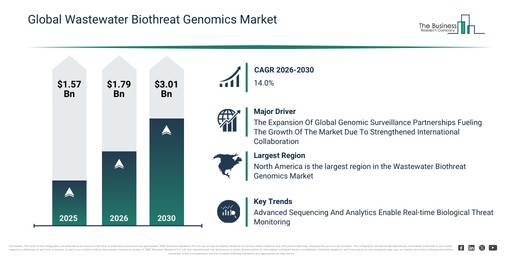
    The wastewater biothreat genomics market size has experienced rapid expansion in recent years. Its value is anticipated to increase from $1.57 billion in 2025 to $1.79 billion in 2026, reflecting a compound annual growth rate (CAGR) of 13.7%. This historical growth can be linked to aspects like covid era wastewater surveillance, an increase in genomic sequencing labs, the expansion of public health monitoring efforts, the rise of pathogen tracking programs, and an uptick in molecular diagnostics.

    The wastewater biothreat genomics market is projected for swift expansion in the upcoming years. It is foreseen to attain a value of $3.01 billion by 2030, exhibiting a compound annual growth rate (CAGR) of 14.0%. This anticipated growth across the forecast period can be attributed to heightened biosecurity investments, the broadening of early outbreak detection systems, an increase in automated sample processing, expanding government surveillance programs, and the rising use of AI genomic analytics. Significant trends for the forecast period include the wider implementation of sewage-based pathogen surveillance, an uptick in metagenomic wastewater testing, the adoption of rapid field sequencing kits, the integration of bioinformatics threat dashboards, and enhanced community-level pathogen monitoring.

    Access Your Free Sample Report for In-Depth Market Insights:

    https://www.thebusinessresearchcompany.com/sample.aspx?id=33358&type=smp

    What Drivers Are Shaping Future Opportunities In The Wastewater Biothreat Genomics Market?

    The expanding scope of global genomic surveillance partnerships is anticipated to stimulate the growth of the wastewater biothreat genomics market. These partnerships represent collaborative structures comprising governments, international health organizations, and research institutions, all working in unison to share genomic data and enhance the prompt detection of biological threats. Such partnerships are on the rise, driven by increasing awareness among governments and health organizations about the necessity for unified, international oversight to identify nascent biological threats early. Wastewater biothreat genomics facilitates global genomic surveillance by enabling the consistent identification and comparison of pathogens within wastewater samples, thereby improving cross-border data integration and early warning systems. A notable example is from July 2025, when the World Health Organization (WHO), an intergovernmental organization based in Switzerland, reported that the International Pathogen Surveillance Network had expanded from approximately 35 partner organizations across 18 countries to nearly 350 partners covering over 100 countries. Consequently, the proliferation of global genomic surveillance partnerships is a key factor propelling the expansion of the wastewater biothreat genomics market.

    Which Segment Groups Are Influencing The Wastewater Biothreat Genomics Market?

    The wastewater biothreat genomics market covered in this report is segmented –

    1) By Product Type: Portable Genomic Detection Devices; Laboratory Based Sequencing Instruments; Sample Collection and Preparation Kits; Consumables and Reagents; Software and Analytical Platforms

    2) By Technology: Polymerase Chain Reaction Systems; Next Generation Sequencing Systems; Microarray Based Detection Systems; Biosensor Based Detection Systems; Other Molecular Detection Technologies

    3) By Application: Pathogen Detection; Antimicrobial Resistance Surveillance; Environmental Monitoring; Other Applications

    4) By End-User: Municipal Utilities; Industrial Facilities; Academic and Research Institutes; Government Agencies; Other End-Users

    Subsegments:

    1) By Portable Genomic Detection Devices: Handheld Nucleic Acid Sequencers; Field Deployable Polymerase Chain Reaction Systems; Portable Isothermal Amplification Devices; Mobile Biosensor Based Genomic Detectors

    2) By Laboratory Based Sequencing Instruments: Next Generation Sequencing Systems; High Throughput Whole Genome Sequencers; Targeted Gene Sequencing Platforms; Metagenomic Sequencing Instruments

    3) By Sample Collection and Preparation Kits: Wastewater Sampling Kits; Nucleic Acid Extraction Kits; Pathogen Enrichment and Concentration Kits; Library Preparation Kits

    4) By Consumables and Reagents: Enzymes for Nucleic Acid Amplification; Sequencing Reagent Cartridges; Primers and Probes; Buffers and Chemical Solutions

    5) By Software and Analytical Platforms: Bioinformatics Data Analysis Software; Pathogen Identification and Surveillance Platforms; Genomic Data Management Systems; Artificial Intelligence Based Threat Detection Tools

    Which Innovation Trends Are Advancing Developments Within The Wastewater Biothreat Genomics Market?

    Leading entities within the wastewater biothreat genomics market are directing their efforts toward developing sophisticated solutions, such as genomic-based pathogen surveillance systems, to improve the early detection of biological threats, enhance public health responses, and aid in environmental oversight. These genomic-based pathogen surveillance systems involve technologies that analyze wastewater samples using genomic sequencing and bioinformatics to identify viruses, bacteria, and other microbial threats, thus enabling real-time monitoring of health risks at a population level. For example, in January 2023, Fusion Genomics Corporation, a Canada-based biotechnology company, initiated a groundbreaking wastewater surveillance pilot study at Toronto Pearson International Airport. This system integrates high-throughput genomic sequencing with advanced analytics to detect and quantify potential biothreats within wastewater streams. This method facilitates swifter detection of emerging pathogens, supports data-driven public health interventions, and delivers actionable insights for mitigating biological risks, offering an advantage over conventional monitoring approaches. By bringing together genomics, bioinformatics, and environmental sampling, this solution contributes to elevated situational awareness, reinforced biosecurity measures, and improved early warning capabilities for both communities and critical infrastructure.

    Who Are The Top-Performing Companies In The Wastewater Biothreat Genomics Market In Recent Years?

    Major companies operating in the wastewater biothreat genomics market are Miniature Brain Stimulator, Danaher Corporation, Thermo Fisher Scientific Inc., Eurofins Scientific SE, Illumina Inc., IDEXX Laboratories Inc., Bio-Rad Laboratories Inc., QIAGEN N.V., Randox Laboratories Ltd., Promega Corporation, OraSure Technologies Inc., Verily Life Sciences LLC, Twist Bioscience Corporation, Ginkgo Bioworks Holdings Inc., Oxford Nanopore Technologies plc, Pacific Biosciences of California Inc., New England Biolabs Inc., LuminUltra Technologies Ltd., BaseClear B.V., Biobot Analytics Inc., GT Molecular Inc., Ceres Nanosciences Inc.

    Access The Complete Report For Deeper Market Insights:

    https://www.thebusinessresearchcompany.com/report/wastewater-biothreat-genomics-market-report

    Which Region Currently Holds The Largest Share Of The Wastewater Biothreat Genomics Market?

    North America was the largest region in the wastewater biothreat genomics market in 2025. Asia-Pacific is expected to be the fastest-growing region in the forecast period. The regions covered in the wastewater biothreat genomics market report are Asia-Pacific, South East Asia, Western Europe, Eastern Europe, North America, South America, Middle East, Africa.

    Request Your Customized Wastewater Biothreat Genomics Market Research Report for Competitive Advantage:

    https://www.thebusinessresearchcompany.com/customise?id=33358&type=smp

    Browse Through More Reports Similar to the Global Wastewater Biothreat Genomics Market 2026, By The Business Research Company

    Biological Wastewater Treatment Market Report 2026

    https://www.thebusinessresearchcompany.com/report/biological-wastewater-treatment-global-market-report

    Wastewater Treatment Service Market Report 2026

    https://www.thebusinessresearchcompany.com/report/wastewater-treatment-service-global-market-report

    Upstream Bioprocessing Market Report 2026

    https://www.thebusinessresearchcompany.com/report/upstream-bioprocessing-global-market-report

    Get in touch with us:

    The Business Research Company: https://www.thebusinessresearchcompany.com/

    Americas +1 310-496-7795

    Asia +44 7882 955267 & +91 8897263534

    Europe +44 7882 955267

    Email us at info@tbrc.info

    Follow us on:

    LinkedIn: https://in.linkedin.com/company/the-business-research-company

    YouTube: https://www.youtube.com/channel/UC24_fI0rV8cR5DxlCpgmyFQ

    Global Market Model: https://www.thebusinessresearchcompany.com/global-market-model
  • Virtual Ward Market Forecast 2026–2035: Data Trends and Industry Insights

    Virtual Ward Market Forecast 2026–2035: Data Trends and Industry Insights

    Uncover key drivers, emerging technologies, and competitive movements shaping the virtual ward market from 2026–2035 with trusted insights from The Business Research Company

    What was the valuation of the Virtual Ward Market in 2026, and what figure is it projected to hit by 2030?

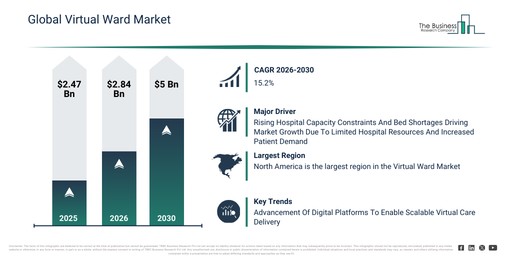
    The virtual ward market has experienced swift expansion in recent years. It is anticipated to increase from $2.47 billion in 2025 to $2.84 billion in 2026, registering a compound annual growth rate (CAGR) of 14.9%. The factors contributing to its past growth include limits on hospital capacity, an increase in remote monitoring pilot initiatives, the development of telehealth services, a greater number of chronic disease admissions, and the initial stages of home care digitization.

    The virtual ward market is anticipated to undergo significant expansion in the coming years. It is projected to achieve a value of $5 billion by 2030, growing at a compound annual growth rate (CAGR) of 15.2%. This expected growth throughout the forecast period stems from factors such as increasing healthcare cost pressures, a rising aging population, the expansion of reimbursement options for home care, higher adoption rates of connected medical devices, and growing government support for home treatment models. Major developments foreseen during this period include the increasing adoption of hospital-at-home models, a rising utilization of continuous remote patient monitoring, the broadening of virtual nursing services, enhanced integration of clinical decision support tools, and a greater deployment of home-based acute care programs.

    Access Your Free Sample Report for In-Depth Market Insights:

    https://www.thebusinessresearchcompany.com/sample.aspx?id=33354&type=smp

    Which Drivers Are Affecting Market Participation In The Virtual Ward Market?

    The growth of the virtual ward market in the upcoming years is expected to be propelled by increasing hospital capacity limitations and bed scarcity. Hospital capacity constraints emerge when healthcare systems lack sufficient beds, personnel, or facilities to meet patient demand. These pressures are largely driven by an aging population, which necessitates extended hospital stays and more intricate care, consequently reducing bed turnover and heightening the need for inpatient services. Virtual wards effectively address these issues by enabling patients to receive hospital-level treatment in their own homes, thereby freeing up physical beds, improving patient flow, and easing the burden on hospital resources. For instance, in January 2026, the Australian Institute of Health and Welfare (AIHW), an Australian-based government agency, noted an average of 67,300 public hospital beds available in 2023–24, which equates to 2.5 beds per 1,000 people. This relatively limited bed supply, combined with escalating healthcare demand, underscores ongoing capacity challenges within the hospital system. Therefore, the escalating hospital capacity constraints and bed shortages are anticipated to fuel the expansion of the virtual ward market.

    What Segment Classifications Make Up The Virtual Ward Market?

    The virtual ward market covered in this report is segmented –

    1) By Component: Hardware; Software; Services

    2) By Service Type: Chronic Disease Management; Post-Operative Care; Preventive Care; Acute Care at Home; Virtual Nursing Services; Care Coordination Services

    3) By Patient Demographics: Children; Adults; Senior Citizens

    4) By Application: Cardiology; Neurology; Pulmonology; Oncology; Orthopedics; General Medicine; Geriatric Care

    5) By End User: Patients; Hospitals; Clinics; Home Healthcare Providers; Insurance Companies; Government Healthcare Agencies

    Subsegments:

    1) By Hardware: Remote Patient Monitoring Devices; Wearable Health Sensors; Vital Sign Monitoring Equipment; Mobile Medical Tablets; Home Diagnostic Devices

    2) By Software: Virtual Ward Management Platforms; Remote Monitoring Software; Patient Data Management Systems; Clinical Decision Support Software; Telehealth Integration Software

    3) By Services: Remote Patient Monitoring Services; Virtual Clinical Care Services; Technical Support Services; Data Management Services; Care Coordination Services

    Which Competitive Trends Are Impacting The Structure Of The Virtual Ward Market?

    Companies leading in the virtual ward market are concentrating on developing advanced offerings, such as digital platforms, to improve remote patient surveillance, facilitate immediate clinical choices, enhance collaboration among healthcare teams, and lower hospital admissions by providing continuous, hospital-grade care in home environments. A digital platform is a technology-driven system, typically delivered via the internet, designed to enable interactions, transactions, or value exchange between two or more interconnected groups, including users, businesses, developers, or service providers. For instance, in June 2025, Medway NHS Foundation Trust, a UK-based public healthcare provider, introduced a new digital platform in collaboration with health tech firm Feebris to expand its virtual hospital and virtual ward services, thereby extending digital care beyond initial pilot programs. This platform incorporates configurable technology that supports virtual monitoring and hospital-at-home services across all clinical specialties, allows for the remote collection of patient data, and considerably reduces hospital bed days and associated costs by enabling recovery at home. It also facilitates the submission of pseudonymised data to national health data systems, which helps drive broader acceptance and the generation of evidence for virtual care models. This solution augments traditional approaches by shifting care delivery from physical wards to digitally supported patient environments, improving both efficiency and patient experience.

    Which Leading Companies Dominate The Virtual Ward Market Share?

    Major companies operating in the virtual ward market are Amazon.com Inc., UnitedHealth Group Incorporated, CVS Health Corporation, The Cigna Group Inc., Elevance Health Inc., Siemens AG, Roche Holding AG, HCA Healthcare Inc., Best Buy Co. Inc., Abbott Laboratories, Medtronic plc, Stryker Corporation, Koninklijke Philips N.V, GE Healthcare Technologies Inc., Boston Scientific Corporation, Baxter International Inc., ResMed Inc., DexCom Inc., Teladoc Health Inc., Masimo Corporation, iRhythm Technologies Inc.

    Access The Complete Report For Deeper Market Insights:

    https://www.thebusinessresearchcompany.com/report/virtual-ward-market-report

    How Does The Virtual Ward Market Perform Across Major Global Regions?

    North America was the largest region in the virtual ward market in 2025. Asia-Pacific is expected to be the fastest-growing region in the forecast period. The regions covered in the virtual ward market report are Asia-Pacific, South East Asia, Western Europe, Eastern Europe, North America, South America, Middle East, Africa.

    Request Your Customized Virtual Ward Market Research Report for Competitive Advantage:

    https://www.thebusinessresearchcompany.com/customise?id=33354&type=smp

    Browse Through More Reports Similar to the Global Virtual Ward Market 2026, By The Business Research Company

    Vertical Market Software Market Report 2026

    https://www.thebusinessresearchcompany.com/report/vertical-market-software-global-market-report

    Market Research Services Market Report 2026

    https://www.thebusinessresearchcompany.com/report/market-research-services-global-market-report

    Virtual Tourism Market Report 2026

    https://www.thebusinessresearchcompany.com/report/virtual-tourism-global-market-report

    Get in touch with us:

    The Business Research Company: https://www.thebusinessresearchcompany.com/

    Americas +1 310-496-7795

    Asia +44 7882 955267 & +91 8897263534

    Europe +44 7882 955267

    Email us at info@tbrc.info

    Follow us on:

    LinkedIn: https://in.linkedin.com/company/the-business-research-company

    YouTube: https://www.youtube.com/channel/UC24_fI0rV8cR5DxlCpgmyFQ

    Global Market Model: https://www.thebusinessresearchcompany.com/global-market-model
  • Virtual Clinics Market Outlook 2026–2030: Key Business Drivers and Trends

    Virtual Clinics Market Outlook 2026–2030: Key Business Drivers and Trends

    Uncover key drivers, emerging technologies, and competitive movements shaping the virtual clinics market from 2026–2035 with trusted insights from The Business Research Company

    What are the forecasted starting (2026) and ending (2030) market sizes for the Virtual Clinics Market?

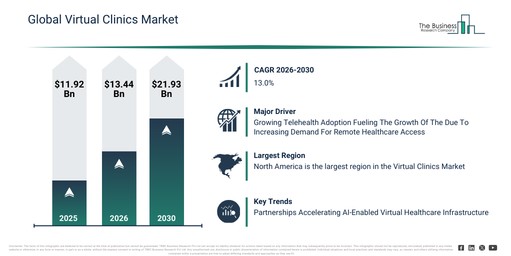
    The virtual clinics market has experienced significant expansion recently. This market is expected to increase in value from $11.92 billion in 2025 to $13.44 billion in 2026, reflecting a compound annual growth rate (CAGR) of 12.8%. The historical growth of this market can be attributed to factors such as increased telemedicine usage, wider availability of broadband access, the proliferation of digital health applications, a growing demand for patient convenience, and the initial wave of virtual visits spurred by the pandemic.

    The virtual clinics market is projected for rapid expansion in the coming years. This market is anticipated to reach $21.93 billion by 2030, exhibiting a compound annual growth rate (CAGR) of 13.0%. Key drivers for this growth include the proliferation of hybrid care models, the emergence of digital-first healthcare policies, the broadening scope of remote diagnostics, increased insurer coverage for virtual appointments, and the rise in cross-border teleconsultations. Significant trends expected during this period involve the increasing uptake of video consultation platforms, the growing utilization of virtual follow-up services, the development of integrated EHR teleclinic systems, the wider deployment of remote diagnostic kiosks, and a stronger demand for mobile-first virtual clinics.

    Access Your Free Sample Report for In-Depth Market Insights:

    https://www.thebusinessresearchcompany.com/sample.aspx?id=33351&type=smp

    What Drivers Are Supporting Technological Adoption In The Virtual Clinics Market?

    The increasing integration of telehealth is anticipated to fuel the expansion of the virtual clinics market in the future. Telehealth adoption describes the degree to which patients, providers, and healthcare organizations incorporate and regularly utilize digital tools for delivering remote medical care and health services. The rise in telehealth adoption is mainly attributed to the increasing demand for convenient healthcare access, eliminating the necessity for physical appointments. Within telehealth, virtual clinics function as a crucial service model, offering organized platforms where patients can obtain consultations, diagnoses, and subsequent care completely online. For example, as reported by the International Trade Administration (ITA) in July 2025, digital treatment penetration in the U.S. was 18.1% in 2024 and is forecast to climb to 28.08% by 2029, illustrating the growing utilization of digital and remote healthcare. Consequently, the expanding adoption of telehealth is a significant factor propelling the growth of the virtual clinics market.

    What Segment Types Are Examined In The Virtual Clinics Market?

    The virtual clinics market covered in this report is segmented –

    1) By Type: Teleconsultation Platforms; Virtual Primary Care; Specialty E-Clinics; Artificial Intelligence-Based Symptom Checkers; Mobile Health Services

    2) By Application: Primary Care; Mental Health; Dermatology; Pediatrics; Chronic Care

    3) By End Users: Healthcare Providers; Patients; Pharmaceutical Companies; Insurance Companies; Employers

    Subsegments:

    1) By Teleconsultation Platforms: Video Consultation Platforms; Audio Consultation Platforms; Chat-Based Consultation Platforms; Integrated Scheduling and Consultation Platforms

    2) By Virtual Primary Care: Preventive Care Platforms; Routine Checkup Platforms; Family Medicine Virtual Platforms; General Practice Virtual Platforms

    3) By Specialty E-Clinics: Cardiology Virtual Clinics; Dermatology Virtual Clinics; Endocrinology Virtual Clinics; Orthopedic Virtual Clinics; Neurology Virtual Clinics

    4) By Artificial Intelligence-Based Symptom Checkers: Rule Based Symptom Assessment Tools; Machine Learning Driven Symptom Analysis Tools; Natural Language Processing Based Triage Tools; Predictive Diagnostic Support Tools

    5) By Mobile Health Services: Mobile Consultation Applications; Remote Health Monitoring Applications; Medication Management Applications; Wellness and Preventive Care Applications

    What Industry Trends Are Transforming The Virtual Clinics Market?

    Leading companies in the virtual clinics market are adopting a strategic partnership approach to improve technology integration and expand their market presence. A strategic partnership typically describes a collaborative arrangement between two or more organizations, where they combine their resources, expertise, and efforts to achieve common goals. For instance, in January 2026, VSee Health, Inc., a US-based telehealth technology company, formed a strategic partnership with DocBox, a US-based augmented intelligence platform for critical care, to develop a next-generation virtual ICU operating system for hospitals globally. This collaboration integrates VSee’s telehealth and AI-driven workflows with DocBox’s vendor-agnostic bedside data infrastructure, allowing hospitals to utilize real-time, structured clinical data from ICU devices and monitoring systems. The combined solution is designed as an AI-native, reimbursement-ready virtual ICU platform that supports scalable remote critical care delivery, enhances revenue capture via automated billing processes, enables the deployment of AI decision-support tools on live physiological data, ensures hospital ownership of clinical data, and embeds VSee’s capabilities into core clinical operations.

    Who Are The Major Companies Operating In The Virtual Clinics Market?

    Major companies operating in the virtual clinics market are Optum Inc., The Cigna Group, Siemens Healthineers AG, Koninklijke Philips N.V., SSM Health Care Group, Teladoc Health Inc., Babylon Healthcare Services Limited, Hims & Hers Health Inc., Ping An Healthcare and Technology Company Limited, Kry International AB, American Well Corporation, MDLIVE Inc., Doctor On Demand Inc., CallHealth Services Private Limited, HealthTap Inc., Ada Health GmbH, Virinchi Hospitals Private Limited, Practo Technologies Private Limited, 98point6 Inc., PlushCare Inc.

    Access The Complete Report For Deeper Market Insights:

    https://www.thebusinessresearchcompany.com/report/virtual-clinics-market-report

    Which Region Is Anticipated To See The Fastest Growth In The Virtual Clinics Market?

    North America was the largest region in the virtual clinics market in 2025. Asia-Pacific is expected to be the fastest-growing region in the forecast period. The regions covered in the virtual clinics market report are Asia-Pacific, South East Asia, Western Europe, Eastern Europe, North America, South America, Middle East, Africa.

    Request Your Customized Virtual Clinics Market Research Report for Competitive Advantage:

    https://www.thebusinessresearchcompany.com/customise?id=33351&type=smp

    Browse Through More Reports Similar to the Global Virtual Clinics Market 2026, By The Business Research Company

    Virtual Clinical Trials Market Report 2026

    https://www.thebusinessresearchcompany.com/report/virtual-clinical-trials-global-market-report

    Retail Clinics Market Report 2026

    https://www.thebusinessresearchcompany.com/report/retail-clinics-global-market-report

    Virtual Reality In Healthcare Market Report 2026

    https://www.thebusinessresearchcompany.com/report/virtual-reality-in-healthcare-global-market-report

    Get in touch with us:

    The Business Research Company: https://www.thebusinessresearchcompany.com/

    Americas +1 310-496-7795

    Asia +44 7882 955267 & +91 8897263534

    Europe +44 7882 955267

    Email us at info@tbrc.info

    Follow us on:

    LinkedIn: https://in.linkedin.com/company/the-business-research-company

    YouTube: https://www.youtube.com/channel/UC24_fI0rV8cR5DxlCpgmyFQ

    Global Market Model: https://www.thebusinessresearchcompany.com/global-market-model
  • Global Virtual Care Management Market Report 2026: Emerging Trends and Growth Scenarios

    Global Virtual Care Management Market Report 2026: Emerging Trends and Growth Scenarios

    Uncover key drivers, emerging technologies, and competitive movements shaping the virtual care management market from 2026–2035 with trusted insights from The Business Research Company

    What upper market value could the Virtual Care Management Market reach by 2030 starting from 2026 levels?

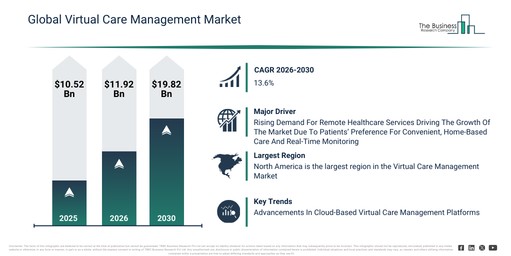
    The virtual care management market has experienced substantial growth in recent years. This market is set to increase from $10.52 billion in 2025 to $11.92 billion in 2026, at a compound annual growth rate (CAGR) of 13.3%. The growth observed in the historic period can be attributed to growth in telehealth adoption, rising chronic disease burden, expansion of digital health records, increase in remote monitoring pilots, and early insurer support for virtual care.

    The virtual care management market is anticipated to experience swift expansion over the coming years. By 2030, its valuation is projected to reach $19.82 billion, demonstrating a compound annual growth rate (CAGR) of 13.6%. This projected growth during the forecast period can be ascribed to factors such as the proliferation of value-based care models, a surging elderly population, the broadening of home-based monitoring initiatives, enhanced payer reimbursement for virtual services, and expanding digital transformation budgets among providers. Key trends anticipated in this period encompass the increased embrace of remote care coordination platforms, the expanding application of continuous chronic care monitoring, the proliferation of digital care plan management instruments, a rise in the integration of patient engagement platforms, and greater implementation of virtual care analytics solutions.

    Access Your Free Sample Report for In-Depth Market Insights:

    https://www.thebusinessresearchcompany.com/sample.aspx?id=33350&type=smp

    Which Drivers Are Influencing Long-Term Growth In The Virtual Care Management Market?

    The increasing requirement for remote healthcare services is anticipated to propel the expansion of the virtual care management market in the upcoming years. These remote services encompass the provision of medical attention, consultations, and patient oversight from a distance using digital platforms and telecommunication technologies. This escalating need is largely driven by individuals’ preference for convenient and accessible care, allowing them to receive medical assistance from home, thereby cutting down on travel time, wait times, and associated expenditures. Virtual care management aids remote healthcare delivery by enabling synchronized, real-time monitoring, communication, and care planning between providers and patients. These features improve care continuity, boost patient engagement, and elevate the overall efficiency of the healthcare system. The growing uptake of telehealth demonstrates this increasing demand. For instance, as per the U.S. Department of Health and Human Services (HHS), a US-based national health policy, roughly 25% of medicare fee-for-service beneficiaries availed a telehealth service, up from 18% in March 2023, showing a significant 7 percentage point increase year-over-year. Therefore, a rising demand for remote healthcare services is driving the growth of the virtual care management market.

    Which Segments Are Driving Activity In The Virtual Care Management Market?

    The virtual care management market covered in this report is segmented –

    1) By Component: Software; Hardware; Services

    2) By Deployment Mode: On-Premises; Cloud

    3) By Application: Telehealth; Remote Patient Monitoring; Chronic Disease Management; Behavioral Health; Other Applications

    4) By End-Users: Hospitals; Clinics; Home Care Settings; Other End-Users

    Subsegments:

    1) By Software: Care Coordination Platforms; Patient Engagement Applications; Clinical Decision Support Systems; Population Health Management Tools

    2) By Hardware: Remote Monitoring Devices; Wearable Health Tracking Devices; Connected Diagnostic Equipment; Home Care Medical Devices

    3) By Services: Remote Care Coordination Services; Chronic Care Management Services; Virtual Patient Monitoring Services

    What Trends Are Reshaping The Dynamics Of The Virtual Care Management Market?

    Companies operating in the virtual care management market are prioritizing advancements in cloud and teleconferencing technologies, including virtual care management (VCM) platforms, to bolster remote patient engagement, facilitate real-time interactions between clinicians and patients, improve care coordination, and enable the secure and scalable delivery of healthcare services across various settings. VCM itself is defined as the organized delivery, oversight, and management of patient care utilizing digital and remote healthcare solutions instead of traditional in-person visits. As an illustration, in March 2023, Royal Philips, a health technology firm based in the Netherlands, launched Philips virtual care management, which includes condition-specific protocols for conditions such as diabetes and hypertension, connected devices, engagement tools on a secure, interoperable cloud platform, and monitoring by licensed clinical professionals offering personalized health coaching.

    Which Major Firms Are Strengthening Their Position In The Virtual Care Management Market?

    Major companies operating in the virtual care management market are Amazon.web service Inc., UnitedHealth Group Incorporated, CVS Health Corporation, The Cigna Group Inc., Elevance Health Inc., Centene Corporation, Humana Inc., HCA Healthcare Inc., Best Buy Co. Inc., Koninklijke Philips N.V., Boston Scientific Corporation, ResMed Inc., Agilon Health Inc., DexCom Inc., Teladoc Health Inc., Masimo Corporation, Evolent Health Inc., Privia Health Group Inc., Hims & Hers Health Inc., Doximity Inc., American Well Corporation, LifeMD Inc., Talkspace Inc.

    Access The Complete Report For Deeper Market Insights:

    https://www.thebusinessresearchcompany.com/report/virtual-care-management-market-report

    Which Region Shows The Strongest Potential For Future Expansion In The Virtual Care Management Market?

    North America was the largest region in the virtual care management market in 2025. Asia-Pacific is expected to be the fastest-growing region in the forecast period. The regions covered in the virtual care management market report are Asia-Pacific, South East Asia, Western Europe, Eastern Europe, North America, South America, Middle East, Africa.

    Request Your Customized Virtual Care Management Market Research Report for Competitive Advantage:

    https://www.thebusinessresearchcompany.com/customise?id=33350&type=smp

    Browse Through More Reports Similar to the Global Virtual Care Management Market 2026, By The Business Research Company

    Virtual Reality In Healthcare Market Report 2026

    https://www.thebusinessresearchcompany.com/report/virtual-reality-in-healthcare-global-market-report

    Virtual Clinical Trials Market Report 2026

    https://www.thebusinessresearchcompany.com/report/virtual-clinical-trials-global-market-report

    Care Management Solutions Market Report 2026

    https://www.thebusinessresearchcompany.com/report/care-management-solutions-global-market-report

    Get in touch with us:

    The Business Research Company: https://www.thebusinessresearchcompany.com/

    Americas +1 310-496-7795

    Asia +44 7882 955267 & +91 8897263534

    Europe +44 7882 955267

    Email us at info@tbrc.info

    Follow us on:

    LinkedIn: https://in.linkedin.com/company/the-business-research-company

    YouTube: https://www.youtube.com/channel/UC24_fI0rV8cR5DxlCpgmyFQ

    Global Market Model: https://www.thebusinessresearchcompany.com/global-market-model
  • Stuttering Treatment Market Forecast: How Big Will It Be by 2030?

    Stuttering Treatment Market Forecast: How Big Will It Be by 2030?

    Uncover key drivers, emerging technologies, and competitive movements shaping the stuttering treatment market from 2026–2035 with trusted insights from The Business Research Company

    How is the Stuttering Treatment Market size predicted to change over the forecast window of 2026–2035?

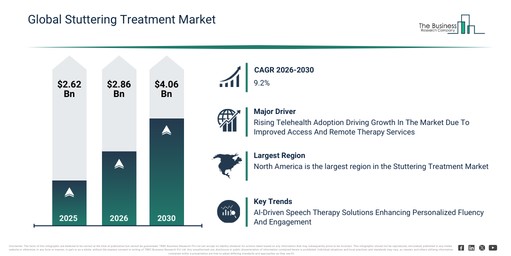
    The stuttering treatment market has experienced robust expansion in recent years. It is anticipated to grow from $2.62 billion in 2025 to $2.86 billion in 2026, demonstrating a compound annual growth rate (CAGR) of 8.9%. Historically, this growth can be attributed to increased awareness of speech disorders, the proliferation of speech therapy clinics, a rise in school screening programs, the expansion of pediatric therapy services, and the early adoption of fluency shaping methods.

    The stuttering treatment market is anticipated to experience substantial expansion in the coming years. Projections indicate it will reach a valuation of $4.06 billion by 2030, driven by a compound annual growth rate (CAGR) of 9.2%. This anticipated growth is primarily fueled by factors such as the increasing uptake of teletherapy, enhanced incorporation of mental health services into speech care, the proliferation of digital therapy platforms, improved insurance coverage for speech therapy, and a rise in early diagnosis rates. Key developments expected during this period involve the increasing popularity of app-based speech therapy, a surge in the utilization of virtual speech therapy sessions, the broadening of early childhood fluency programs, greater integration of behavioral counseling, and expanded use of assistive fluency devices.

    Access Your Free Sample Report for In-Depth Market Insights:

    https://www.thebusinessresearchcompany.com/sample.aspx?id=33327&type=smp

    Which Drivers Are Contributing To The Expansion Of The Stuttering Treatment Market?

    The expansion of telehealth is anticipated to propel the stuttering treatment market forward in the upcoming years. Telehealth involves providing healthcare services from a distance using digital communication tools like video calls, mobile apps, and virtual therapy platforms. Its increasing acceptance stems from its ability to enhance access to medical care, particularly for those in isolated or less-served regions, while also cutting down on travel time and scheduling difficulties. Treating stuttering is particularly well-suited for telehealth, as speech therapy sessions can be effectively delivered through live video interactions. Telehealth allows individuals to receive continuous, convenient, and tailored speech therapy at home, potentially boosting therapy adherence and broadening access to skilled speech-language pathologists. For example, in September 2024, data from the Australian Bureau of Statistics (ABS), Australia’s national statistical agency, indicated that in 2023–24, 83.5% of males utilized telehealth services, an increase from 78.6% in 2022–23. Consequently, the rising use of telehealth is stimulating the expansion of the stuttering treatment market.

    What Segment Classifications Make Up The Stuttering Treatment Market?

    The stuttering treatment market covered in this report is segmented –

    1) By Treatment Type: Speech Therapy; Digital And App-Based Therapy; Pharmacological Treatment; Assistive Devices And Wearables

    2) By Age Group: Children; Adolescents; Adults

    3) By End User: Speech And Language Clinics; Hospitals And Rehabilitation Centers; Schools And Educational Institutions; Direct-To-Consumer Platforms

    Subsegments:

    1) By Speech Therapy: Articulation Therapy; Fluency Shaping Therapy; Stuttering Modification Therapy; Cognitive Behavioral Therapy

    2) By Digital And App-Based Therapy: Mobile Application Based Therapy; Online Video Therapy Sessions; Virtual Reality Based Therapy; Interactive Software Tools

    3) By Pharmacological Treatment: Anti Anxiety Medication; Dopamine Modulators; Beta Blockers; Other Prescription Drugs

    4) By Assistive Devices And Wearables: Speech Feedback Devices; Delayed Auditory Feedback Devices; Electronic Fluency Devices; Wearable Therapy Devices

    Which Trends Are Influencing The Performance And Direction Of The Stuttering Treatment Market?

    Leading companies in the stuttering treatment market are increasingly directing their efforts towards developing innovative solutions, such as AI-powered speech therapy applications, to boost personalization, improve patient adherence to therapy, and support better outcomes in speech fluency. These AI-driven speech therapy apps are digital platforms that utilize artificial intelligence to analyze speech patterns, provide real-time feedback, and deliver customized therapy exercises specifically designed to help individuals manage stuttering more effectively. Such solutions enable scalable and continuous intervention beyond traditional clinical settings. For example, in December 2025, Iyaso Softwares Private Limited, an India-based health technology company, introduced Eloquent, an AI-powered speech therapy application intended to assist individuals who stutter in improving fluency and speaking confidence through regular practice. The application integrates evidence-based techniques including gentle onsets, rhythmic speech, and simulated real-life conversations. The company stated that users who consistently engaged in daily sessions experienced measurable improvements in stuttering severity and speaking confidence, thereby highlighting the potential effectiveness of AI-enabled, app-based therapy solutions.

    Which Major Firms Are Strengthening Their Position In The Stuttering Treatment Market?

    Major companies operating in the stuttering treatment market are Mayo Clinic, Cleveland Clinic, Vanderbilt Health, Houston Methodist, Texas Children’s Hospital, Boston Children’s Hospital, Apollo Hospitals Enterprise Limited, Practo Technologies Pvt. Ltd. (Practo), Ruby Hall Clinic, All India Institute of Speech and Hearing (AIISH) Mysore, McGuire Programme, Perley Health, Tender Palm Super Speciality Hospital, American Institute for Stuttering (AIS), Wasatch Speech & Language Center, Michael Palin Centre for Stammering, National Stuttering Association, Speech & Stuttering Institute, Australian Stuttering Research Centre, Curtin Stuttering Treatment Clinic

    Access The Complete Report For Deeper Market Insights:

    https://www.thebusinessresearchcompany.com/report/stuttering-treatment-market-report

    Which Region Shows The Strongest Potential For Future Expansion In The Stuttering Treatment Market?

    North America was the largest region in the stuttering treatment market in 2025. Asia-Pacific is expected to be the fastest-growing region in the forecast period. The regions covered in the stuttering treatment market report are Asia-Pacific, South East Asia, Western Europe, Eastern Europe, North America, South America, Middle East, Africa.

    Request Your Customized Stuttering Treatment Market Research Report for Competitive Advantage:

    https://www.thebusinessresearchcompany.com/customise?id=33327&type=smp

    Browse Through More Reports Similar to the Global Stuttering Treatment Market 2026, By The Business Research Company

    Precision Medicine Market Report 2026

    https://www.thebusinessresearchcompany.com/report/precision-medicine-global-market-report

    Rare Diseases Treatment Market Report 2026

    https://www.thebusinessresearchcompany.com/report/rare-diseases-treatment-global-market-report

    Virtual Clinical Trials Market Report 2026

    https://www.thebusinessresearchcompany.com/report/virtual-clinical-trials-global-market-report

    Get in touch with us:

    The Business Research Company: https://www.thebusinessresearchcompany.com/

    Americas +1 310-496-7795

    Asia +44 7882 955267 & +91 8897263534

    Europe +44 7882 955267

    Email us at info@tbrc.info

    Follow us on:

    LinkedIn: https://in.linkedin.com/company/the-business-research-company

    YouTube: https://www.youtube.com/channel/UC24_fI0rV8cR5DxlCpgmyFQ

    Global Market Model: https://www.thebusinessresearchcompany.com/global-market-model