Category: HealthcareServices

  • Sleep Diagnostics Artificial Intelligence Market Outlook: Growth and Forecast Highlights 2030

    Sleep Diagnostics Artificial Intelligence Market Outlook: Growth and Forecast Highlights 2030

    Uncover key drivers, emerging technologies, and competitive movements shaping the sleep diagnostics artificial intelligence market from 2026–2035 with trusted insights from The Business Research Company

    By how much is the Sleep Diagnostics Artificial Intelligence Market expected to grow between 2026 and 2030?

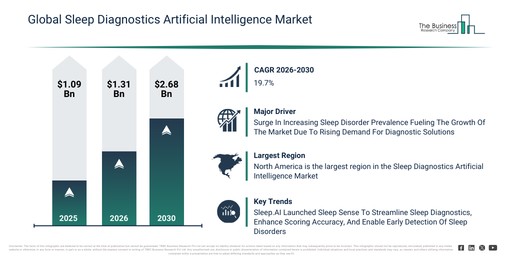
    The sleep diagnostics artificial intelligence market size has observed swift growth in recent years. It is anticipated to expand from $1.09 billion in 2025 to $1.31 billion in 2026, demonstrating a compound annual growth rate (CAGR) of 19.4%. This historical expansion is attributable to the increasing prevalence of sleep disorder cases, the proliferation of wearable devices, an uptick in digital health analytics, a rise in sleep lab studies, and the urgent demand for faster diagnosis.

    The sleep diagnostics artificial intelligence market is anticipated to experience substantial growth over the next few years, with projections indicating it will expand to $2.68 billion by 2030, achieving a compound annual growth rate (CAGR) of 19.7%. This expansion during the forecast period is primarily driven by the increasing adoption of AI clinical decision tools, the broader expansion of remote sleep monitoring, a rise in home-based diagnostics, the growth of personalized sleep therapy, and enhanced integration with digital health platforms. Prominent trends expected in this period include AI-based sleep stage scoring, sleep analytics integrated with wearables, cloud-based sleep diagnostic platforms, predictive models for sleep disorders, and automated polysomnography interpretation.

    Access Your Free Sample Report for In-Depth Market Insights:

    https://www.thebusinessresearchcompany.com/sample.aspx?id=33318&type=smp

    Which Drivers Are Influencing Market Acceleration In The Sleep Diagnostics Artificial Intelligence Market?

    The growing occurrence of sleep conditions is anticipated to drive expansion in the sleep diagnostics artificial intelligence market in the future. These disorders are health issues that interfere with typical sleep cycles, impacting sleep quality, timing, or length, which can result in discomfort during the day or reduced functionality. This surge in prevalence is fueled by elements like an aging demographic, stress linked to lifestyle, and greater recognition of sleep wellness, all contributing to more screenings, diagnoses, and documented cases. Sleep diagnostics artificial intelligence assists in managing sleep disorders through automated, precise, and scalable analysis of sleep data, thereby facilitating prompt identification, customized therapies, and better patient results. As an example, in November 2023, NHS England stated that 64.9% of individuals aged 17 to 23 encountered sleep difficulties at least three times in the preceding week, highlighting a rising concern with sleep-related problems and a greater need for diagnostic tools. Consequently, the increasing incidence of sleep disorders serves as a primary catalyst for the expansion of the sleep diagnostics artificial intelligence market.

    What Segments Are Identified Within The Structure Of The Sleep Diagnostics Artificial Intelligence Market?

    The sleep diagnostics artificial intelligence market covered in this report is segmented –

    1) By Component: Software; Hardware; Services

    2) By Technology: Machine Learning; Deep Learning; Natural Language Processing; Ensemble Learning

    3) By Deployment Mode: On Premises; Cloud Based

    4) By Application: Sleep Apnea; Insomnia; Narcolepsy; Restless Legs Syndrome; Circadian Rhythm Disorders; Other Applications

    5) By End User: Hospitals; Sleep Centers And Clinics; Home Care Settings; Research Institutes; Other End Users

    Subsegments:

    1) By Software: Sleep Scoring Software; Predictive Analytics Software; Electronic Health Record Integration Software

    2) By Hardware: Wearable Devices; Portable Diagnostic Devices; In Lab Monitoring Equipment

    3) By Services: Consulting Services; Implementation Services; Maintenance And Support Services

    Which Innovation Trends Are Advancing Developments Within The Sleep Diagnostics Artificial Intelligence Market?

    Leading firms within the sleep diagnostics artificial intelligence market are prioritizing technological advancements in automated sleep scoring, aiming to lessen reliance on clinicians and minimize variations in diagnoses. This focus notably includes innovations like frictionless sleep monitoring technology, thereby securing an edge over competitors. Frictionless sleep monitoring technology is defined as a contact-free, AI-driven system capable of automatically recording and examining sleep patterns, stages, and disruptions without the need for wearable devices, thus providing precise and convenient sleep diagnostic capabilities. As an illustration, in December 2025, Sleep.ai, a digital health company based in the U.S., introduced Sleep Sense. This frictionless sleep monitoring technology transforms any smartphone into a sleep sensor designed with privacy in mind, allowing for almost universal sleep data collection without requiring wearables or user input. The system employs sophisticated AI boundary detection, incorporating hybrid spatio-temporal models, to pinpoint bedtime and wake time with accuracy comparable to trackers validated by PSG. Furthermore, utilizing multimodal contextual modeling, it scrutinizes signals including motion, ambient light, and device usage patterns, enabling it to produce dependable sleep insights even when the gathered data is either noisy or restricted.

    Which Major Industry Participants Are Leading The Sleep Diagnostics Artificial Intelligence Market Growth?

    Major companies operating in the sleep diagnostics artificial intelligence market are ResMed Inc., Neurosoft Ltd., Nox Health Inc., Itamar Medical Ltd., Compumedics Limited, Beacon Biosignals Inc., Onera Health Inc., EnsoData Inc., SleepImage Inc., Zeto Inc., HoneyNaps Co. Ltd., SOMNOmedics GmbH, SleepScore Labs, Nox Medical A/S, Sleep.AI Inc., Sleepacta S.r.l.

    Access The Complete Report For Deeper Market Insights:

    https://www.thebusinessresearchcompany.com/report/sleep-diagnostics-artificial-intelligence-market-report

    Which Region Is Expected To Experience The Fastest Growth In The Sleep Diagnostics Artificial Intelligence Market?

    North America was the largest region in the sleep diagnostics artificial intelligence (AI) market in 2025. Asia-Pacific is expected to be the fastest-growing region in the forecast period. The regions covered in the sleep diagnostics artificial intelligence market report are Asia-Pacific, South East Asia, Western Europe, Eastern Europe, North America, South America, Middle East, Africa.

    Request Your Customized Sleep Diagnostics Artificial Intelligence Market Research Report for Competitive Advantage:

    https://www.thebusinessresearchcompany.com/customise?id=33318&type=smp

    Browse Through More Reports Similar to the Global Sleep Diagnostics Artificial Intelligence Market 2026, By The Business Research Company

    Sleep Testing Services Market Report 2026

    https://www.thebusinessresearchcompany.com/report/sleep-testing-services-global-market-report

    Sleep Monitoring Apps Market Report 2026

    https://www.thebusinessresearchcompany.com/report/sleep-monitoring-apps-global-market-report

    Sleep Tech Devices Market Report 2026

    https://www.thebusinessresearchcompany.com/report/sleep-tech-devices-global-market-report

    Get in touch with us:

    The Business Research Company: https://www.thebusinessresearchcompany.com/

    Americas +1 310-496-7795

    Asia +44 7882 955267 & +91 8897263534

    Europe +44 7882 955267

    Email us at info@tbrc.info

    Follow us on:

    LinkedIn: https://in.linkedin.com/company/the-business-research-company

    YouTube: https://www.youtube.com/channel/UC24_fI0rV8cR5DxlCpgmyFQ

    Global Market Model: https://www.thebusinessresearchcompany.com/global-market-model
  • Retinal Detachment Diagnostic Industry Poised for Rapid Growth, Forecast to Touch $2.13 Billion by 2030 at 8.4% CAGR

    Retinal Detachment Diagnostic Industry Poised for Rapid Growth, Forecast to Touch $2.13 Billion by 2030 at 8.4% CAGR

    Uncover key drivers, emerging technologies, and competitive movements shaping the retinal detachment diagnostic market from 2026–2035 with trusted insights from The Business Research Company

    What total market size is anticipated for the Retinal Detachment Diagnostic Market in 2030?

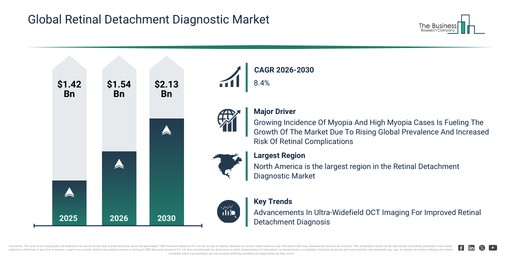
    The retinal detachment diagnostic market size has experienced significant growth recently. It is anticipated to expand from $1.42 billion in 2025 to $1.54 billion in 2026, achieving a compound annual growth rate (CAGR) of 8.2%. The expansion observed in the past can be attributed to an increase in diabetic eye disease cases, the growth in ophthalmic imaging centers, rising awareness of retinal disorders, the expansion of hospital eye clinics, and the early adoption of OCT scanners.

    The retinal detachment diagnostic market size is projected to experience substantial expansion over the upcoming years. It is anticipated to reach a valuation of $2.13 billion by 2030, exhibiting a compound annual growth rate (CAGR) of 8.4%. This anticipated growth during the forecast period is driven by factors such as an expanding aging demographic, an increasing need for prompt vision diagnosis, the proliferation of remote eye screening initiatives, augmented investment in ophthalmic imaging technologies, and the escalating incidence of myopia and diabetes. Key developments expected within this period involve the increasing application of optical coherence tomography imaging, greater uptake of teleophthalmology screening services, the broader deployment of digital fundus photography systems, enhanced utilization of AI-assisted retinal image analysis, and a higher deployment of portable ophthalmic ultrasound devices.

    Access Your Free Sample Report for In-Depth Market Insights:

    https://www.thebusinessresearchcompany.com/sample.aspx?id=33303&type=smp

    What Drivers Are Influencing Production Trends In The Retinal Detachment Diagnostic Market?

    The increasing occurrence of myopia and high myopia conditions is projected to drive the expansion of the retinal detachment diagnostic market in the future. These cases denote an expanding commonness of nearsightedness and acute nearsightedness, which hinder clear distant sight and elevate the likelihood of significant ocular issues. The increase in myopia and high myopia instances, attributed to extended periods of screen use and less time spent outdoors, is intensifying visual stress, contributing to an earlier appearance and quicker worsening of refractive errors. Retinal detachment diagnostics assist in managing myopia and high myopia by allowing for prompt identification of retinal problems, facilitating opportune medical treatment, and diminishing the potential for significant loss of sight. For example, in July 2025, data from Woo University, a US-based non-profit organization, indicates that 30% of the global population is currently myopic, with projections showing this figure will climb to almost 50% by 2050, impacting approximately 5 billion individuals. Consequently, the rising frequency of myopia and high myopia cases is fueling the expansion of the retinal detachment diagnostic market.

    Which Segment Groups Are Influencing The Retinal Detachment Diagnostic Market?

    The retinal detachment diagnostic market covered in this report is segmented –

    1) By Disease Type: Tractional Retinal Detachment; Rhegmatogenous Retinal Detachment

    2) By Diagnostic Type: Fundus Photography; Ophthalmoscopy; Optical Coherence Tomography Scanners; Fundus Cameras; Ophthalmic Ultrasound Imaging Systems; Ophthalmic A Scan Ultrasound; Ophthalmic B Scan Ultrasound

    3) By Technology: Imaging Based Diagnostics; Non Imaging Clinical Examination; Advanced Digital Ophthalmic Systems

    4) By Application: Vitreo Retinal Disorders; Cataract; Glaucoma; Refractive Disorders

    5) By End Use: Hospitals And Eye Clinics; Academic And Research Laboratories; Other End Uses

    Subsegments:

    1) By Tractional Retinal Detachment: Diabetic Tractional Retinal Detachment; Proliferative Vitreoretinopathy Related Tractional Retinal Detachment; Inflammatory Tractional Retinal Detachment; Trauma Induced Tractional Retinal Detachment; Post Surgical Tractional Retinal Detachment; Neovascularization Associated Tractional Retinal Detachment

    2) By Rhegmatogenous Retinal Detachment: Superior Break Rhegmatogenous Retinal Detachment; Inferior Break Rhegmatogenous Retinal Detachment; Giant Retinal Tear Related Rhegmatogenous Retinal Detachment; Lattice Degeneration Related Rhegmatogenous Retinal Detachment; Trauma Related Rhegmatogenous Retinal Detachment; Myopic Degeneration Related Rhegmatogenous Retinal Detachment; Post Cataract Surgery Rhegmatogenous Retinal Detachment

    What Upcoming Trends Are Likely To Define The Future Path Of The Retinal Detachment Diagnostic Market?

    Major companies in the retinal detachment diagnostic market are concentrating on developing advanced imaging solutions, such as ultra-widefield optical coherence tomography (OCT), to improve detection accuracy, enhance visualization of the peripheral retina, and facilitate the early identification of retinal tears and detachments. Ultra-widefield OCT is an imaging technology that captures high-resolution, wide-angle views of the retina, allowing clinicians to detect subtle or peripheral retinal abnormalities that might otherwise be overlooked. For instance, in March 2025, Optos PLC, a UK-based retinal imaging company, introduced MonacoPro, its next-generation ultra-widefield SLO and spectral domain retinal imaging system. Designed to aid eye care professionals with enhanced diagnostic precision and workflow efficiency, MonacoPro includes high-quality OCT imaging, integrated 200° optomap visualization, and the new AreaAssist tool, which automates area measurement and analysis, collectively strengthening clinicians’ capability to identify retinal detachments and other ocular pathologies.

    Who Are The Primary Competitors In The Global Retinal Detachment Diagnostic Market?

    Major companies operating in the retinal detachment diagnostic market are Canon Inc., Essilor International S.A., NIDEK Co Ltd., Alcon Inc., Nikon Corporation, Kowa Company Ltd., Carl Zeiss Meditec AG, Topcon Corporation, Tomey Corporation, Forus Health Pvt Ltd., Reichert Technologies, Optos plc, Revenio Group, Visionix USA Inc., Haag-Streit Group, Optomed Plc, Remidio Innovative Solutions, Intelligent Retinal Imaging Systems (IRIS), Santec Corporation, and D-EYE Srl.

    Access The Complete Report For Deeper Market Insights:

    https://www.thebusinessresearchcompany.com/report/retinal-detachment-diagnostic-market-report

    Which Global Regions Are Shaping The Competitive Landscape Of The Retinal Detachment Diagnostic Market?

    North America was the largest region in the retinal detachment diagnostic market in 2025. Asia-Pacific is expected to be the fastest-growing region in the forecast period. The regions covered in the retinal detachment diagnostic market report are Asia-Pacific, South East Asia, Western Europe, Eastern Europe, North America, South America, Middle East, Africa.

    Request Your Customized Retinal Detachment Diagnostic Market Research Report for Competitive Advantage:

    https://www.thebusinessresearchcompany.com/customise?id=33303&type=smp

    Browse Through More Reports Similar to the Global Retinal Detachment Diagnostic Market 2026, By The Business Research Company

    Retinal Biologics Market Report 2026

    https://www.thebusinessresearchcompany.com/report/retinal-biologics-global-market-report

    Retinal Disorder Treatment Market Report 2026

    https://www.thebusinessresearchcompany.com/report/retinal-disorder-treatment-global-market-report

    Retinal Vein Occlusion Market Report 2026

    https://www.thebusinessresearchcompany.com/report/retinal-vein-occlusion-global-market-report

    Get in touch with us:

    The Business Research Company: https://www.thebusinessresearchcompany.com/

    Americas +1 310-496-7795

    Asia +44 7882 955267 & +91 8897263534

    Europe +44 7882 955267

    Email us at info@tbrc.info

    Follow us on:

    LinkedIn: https://in.linkedin.com/company/the-business-research-company

    YouTube: https://www.youtube.com/channel/UC24_fI0rV8cR5DxlCpgmyFQ

    Global Market Model: https://www.thebusinessresearchcompany.com/global-market-model
  • Global Renal Toxicity – Absorption, Distribution, Metabolism, And Excretion (ADME) Toxicology Testing Market Set for Strong Expansion, Reaching $2.78 Billion With 12.9% CAGR by 2030

    Global Renal Toxicity – Absorption, Distribution, Metabolism, And Excretion (ADME) Toxicology Testing Market Set for Strong Expansion, Reaching $2.78 Billion With 12.9% CAGR by 2030

    Uncover key drivers, emerging technologies, and competitive movements shaping the renal toxicity – absorption, distribution, metabolism, and excretion (adme) toxicology testing market from 2026–2035 with trusted insights from The Business Research Company

    What growth pattern is forecast for the Renal Toxicity – Absorption, Distribution, Metabolism, And Excretion (ADME) Toxicology Testing Market size between 2026 and 2035?

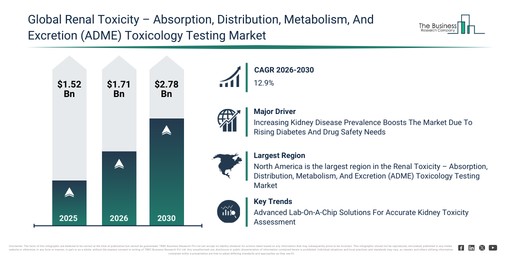
    The renal toxicity – absorption, distribution, metabolism, and excretion (adme) toxicology testing market size has witnessed swift expansion in recent years. It is forecast to grow from $1.52 billion in 2025 to $1.71 billion in 2026, at a compound annual growth rate (CAGR) of 12.7%. The market’s historical growth can be linked to an increase in preclinical drug safety testing, a rise in drug failures due to nephrotoxicity, the expansion of contract research organization (CRO) services, heightened regulatory safety requirements, and greater adoption of in vitro assays.

    The renal toxicity – absorption, distribution, metabolism, and excretion (adme) toxicology testing market is projected to experience substantial expansion in the coming years. This market is forecast to reach a valuation of $2.78 billion by 2030, progressing at a compound annual growth rate (CAGR) of 12.9%. This anticipated growth is driven by several factors, including a rise in biologics and intricate drugs, the adoption of predictive toxicology models, the broadening use of organ-on-chip platforms, advancements in precision medicine research, and the increasing demand for AI-based safety analytics. Key trends anticipated during this period encompass kidney organoid-based toxicity assays, AI-assisted models for predicting nephrotoxicity, high-throughput renal screening platforms, biomarker-driven renal safety panels, and microphysiological kidney-on-chip systems.

    Access Your Free Sample Report for In-Depth Market Insights:

    https://www.thebusinessresearchcompany.com/sample.aspx?id=33295&type=smp

    Which Drivers Are Impacting Market Performance In The Renal Toxicity – Absorption, Distribution, Metabolism, And Excretion (ADME) Toxicology Testing Market?

    The increasing occurrence of kidney-related conditions is anticipated to stimulate the expansion of the renal toxicity-absorption, distribution, metabolism, and excretion (ADME) toxicology testing market moving forward. Kidney-related disorders are health issues that damage the kidneys and hinder their capacity to filter blood and maintain the body’s balance. These disorders are becoming more common due to the rise in diabetes, which harms kidney blood vessels and reduces their filtering effectiveness. Renal toxicity ADME/toxicology testing aids in detecting and evaluating potential kidney damage caused by drugs or chemical substances, allowing for early intervention and the development of safer treatments. For instance, in 2025, the American Cancer Society, a US-based professional organization, predicts approximately 80,980 new diagnoses of kidney (renal) cancer in the US, with an estimated 14,510 fatalities resulting from the disease. Therefore, the escalating prevalence of kidney-related disorders is a key driver for the growth of the renal toxicity-absorption, distribution, metabolism, and excretion (ADME) toxicology testing market.

    What Segment Types Are Examined In The Renal Toxicity – Absorption, Distribution, Metabolism, And Excretion (ADME) Toxicology Testing Market?

    The renal toxicity – absorption, distribution, metabolism, and excretion (adme) toxicology testing market covered in this report is segmented –

    1) By Test Type: In Vitro Renal Toxicity Testing; In Vivo Renal Toxicity Testing; In Silico Renal Toxicity Modeling

    2) By Method: Biochemical and Enzymatic Assays; Cell Based Renal Assays; Biomarker Based Toxicity Analysis; Histopathology and Imaging; Pharmacokinetic and Drug Metabolism Studies

    3) By Stage of Drug Development: Discovery and Lead Optimization; Preclinical Development; Clinical Development; Post Marketing Safety Studies

    4) By Technology: High Throughput Screening Platforms; Organ On Chip and Microfluidic Systems; Omics Based Toxicology Platforms; Artificial Intelligence and Predictive Modeling Tools; Digital Pathology and Imaging Systems

    5) By End User: Pharmaceutical and Biotechnology Companies; Contract Research Organizations; Academic and Research Institutes; Regulatory Laboratories

    Subsegments:

    1) By In Vitro Renal Toxicity Testing: Primary Renal Cell Assays; Immortalized Renal Cell Line Assays; Three Dimensional Renal Cell Cultures; Kidney Organoid Models; Transporter Interaction Assays; Biomarker Based Nephrotoxicity Assays; High Content Imaging Assays; Microphysiological Kidney System Models

    2) By In Vivo Renal Toxicity Testing: Acute Renal Toxicity Studies; Subacute Renal Toxicity Studies; Subchronic Renal Toxicity Studies; Chronic Renal Toxicity Studies; Renal Biomarker Evaluation Studies; Histopathological Kidney Assessment; Dose Response Toxicity Studies; Recovery and Reversibility Studies

    3) By In Silico Renal Toxicity Modeling: Quantitative Structure Activity Relationship Modeling; Machine Learning Based Toxicity Prediction; Physiologically Based Pharmacokinetic Modeling; Virtual Screening for Nephrotoxicity; Read Across Toxicity Modeling; Systems Biology Based Toxicity Modeling

    Which Trends Are Influencing The Development Of The Renal Toxicity – Absorption, Distribution, Metabolism, And Excretion (ADME) Toxicology Testing Market?

    Leading firms within the renal toxicity-absorption, distribution, metabolism, and excretion (ADME) toxicology testing market are concentrating on creating novel solutions, such as low-drug-absorbing microfluidic chips, to elevate the predictive precision of kidney toxicity and lessen dependence on animal testing. Such a chip is defined as a lab-on-a-chip device for renal toxicity assessment, engineered to minimize unwanted drug absorption by its material, thereby ensuring a more faithful simulation of kidney functions and dependable quantification of drug impacts on renal cells. For example, Emulate Inc., a US-based biotechnology company, introduced the chip-R1 rigid chip in September 2024 to enhance kidney toxicity testing, yielding more precise and trustworthy outcomes. This chip is engineered for precise ADME and toxicology modeling in rigid organs such as the liver and kidney, incorporating low-drug-absorbing plastics and a thin, porous polycarbonate membrane to prevent compound depletion and improve drug recovery, particularly for lipophilic compounds. Its benefits include robust shear stress support (reaching 2.3 dyn/cm²), preactivated surfaces facilitating streamlined workflows, and enhanced cellular crosstalk, while the broader advantages extend to superior reproducibility, accurate toxicity identification, and seamless integration with current organ-chip hardware to expedite human-relevant preclinical assessments.

    Who Are The Core Companies Influencing Trends In The Renal Toxicity – Absorption, Distribution, Metabolism, And Excretion (ADME) Toxicology Testing Market?

    Major companies operating in the renal toxicity – absorption, distribution, metabolism, and excretion (adme) toxicology testing market are Thermo Fisher Scientific Inc., Eurofins Scientific SE, Agilent Technologies Inc., WuXi AppTec Co. Ltd., Charles River Laboratories International Inc., PerkinElmer Inc., Beckman Coulter Inc., Bio-Rad Laboratories Inc., Pharmaron Beijing Co. Ltd., Simulations Plus Inc., GVK Biosciences Pvt. Ltd., Promega Corporation, Syngene International Ltd., SAI Life Sciences Ltd., QPS Holdings LLC, Southern Research Institute, BioIVT LLC, TCG Lifesciences Pvt. Ltd., Frontage Laboratories Inc., Symeres, TSRL Inc., BOC Sciences LLC, Vivisciences Preclinical CRO.

    Access The Complete Report For Deeper Market Insights:

    https://www.thebusinessresearchcompany.com/report/renal-toxicity-absorption-distribution-metabolism-and-excretion-adme-toxicology-testing-market-report

    Which Regions Are Projected To Dominate The Renal Toxicity – Absorption, Distribution, Metabolism, And Excretion (ADME) Toxicology Testing Market In The Coming Years?

    North America was the largest region in the renal toxicity-ADME toxicology testing market in 2025. Asia-Pacific is expected to be the fastest-growing region in the forecast period. The regions covered in the renal toxicity – absorption, distribution, metabolism, and excretion (adme) toxicology testing market report are Asia-Pacific, South East Asia, Western Europe, Eastern Europe, North America, South America, Middle East, Africa.

    Request Your Customized Renal Toxicity – Absorption, Distribution, Metabolism, And Excretion (ADME) Toxicology Testing Market Research Report for Competitive Advantage:

    https://www.thebusinessresearchcompany.com/customise?id=33295&type=smp

    Browse Through More Reports Similar to the Global Renal Toxicity – Absorption, Distribution, Metabolism, And Excretion (ADME) Toxicology Testing Market 2026, By The Business Research Company

    Adme Toxicology Testing Market Report 2026

    https://www.thebusinessresearchcompany.com/report/adme-toxicology-testing-global-market-report

    Renal Biomarkers Market Report 2026

    https://www.thebusinessresearchcompany.com/report/renal-biomarkers-global-market-report

    Kidney Dialysis Market Report 2026

    https://www.thebusinessresearchcompany.com/report/kidney-dialysis-global-market-report

    Get in touch with us:

    The Business Research Company: https://www.thebusinessresearchcompany.com/

    Americas +1 310-496-7795

    Asia +44 7882 955267 & +91 8897263534

    Europe +44 7882 955267

    Email us at info@tbrc.info

    Follow us on:

    LinkedIn: https://in.linkedin.com/company/the-business-research-company

    YouTube: https://www.youtube.com/channel/UC24_fI0rV8cR5DxlCpgmyFQ

    Global Market Model: https://www.thebusinessresearchcompany.com/global-market-model
  • Regenerative Therapies For Osteoarthritis Market Growth Projection: Expected to Surpass $5.88 Billion by 2030 at 14.2% CAGR

    Regenerative Therapies For Osteoarthritis Market Growth Projection: Expected to Surpass $5.88 Billion by 2030 at 14.2% CAGR

    Uncover key drivers, emerging technologies, and competitive movements shaping the regenerative therapies for osteoarthritis market from 2026–2035 with trusted insights from The Business Research Company

    How much larger will the Regenerative Therapies For Osteoarthritis Market be in 2030 compared with 2026?

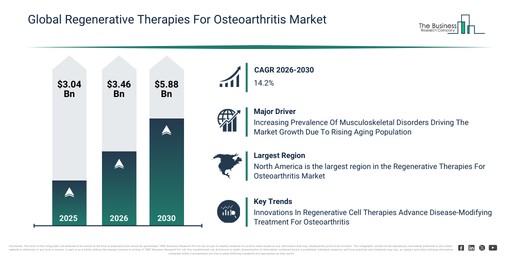
    The regenerative therapies for osteoarthritis market size has experienced significant expansion recently. This market is projected to expand from $3.04 billion in 2025 to reach $3.46 billion by 2026, demonstrating a compound annual growth rate (CAGR) of 13.9%. Historically, this growth has been driven by factors such as the increasing prevalence of osteoarthritis, the expansion of the aging population, the limitations inherent in pain relief medications, a rise in sports-related injuries, and the growing preference for non-surgical treatment options.

    The market size for regenerative therapies treating osteoarthritis is set for considerable expansion in the coming years. It is forecast to achieve a valuation of $5.88 billion by 2030, advancing at a compound annual growth rate (CAGR) of 14.2%. This projected growth can be linked to several factors: an uptick in the adoption of biologic therapy, the expansion of regenerative clinics, increasing clinical evidence support, a heightened demand for cartilage restoration, and greater investment in cell therapy research. Among the significant trends anticipated in the forecast period are stem cell based joint repair therapies, platelet rich plasma treatment protocols, scaffold based cartilage regeneration, minimally invasive regenerative injections, and personalized biologic therapy plans.

    Access Your Free Sample Report for In-Depth Market Insights:

    https://www.thebusinessresearchcompany.com/sample.aspx?id=33292&type=smp

    What Drivers Are Guiding Growth Patterns In The Regenerative Therapies For Osteoarthritis Market?

    The rising occurrence of musculoskeletal disorders is projected to fuel the expansion of the regenerative therapies for the osteoarthritis market. These conditions affect bones, joints, muscles, and connective tissues, leading to pain and limitations in mobility and dexterity. A key factor driving the increasing prevalence of musculoskeletal disorders is population aging, as older demographics experience higher rates of joint degeneration and inflammatory conditions impacting musculoskeletal structures. This escalating incidence of musculoskeletal disorders consequently boosts the demand for regenerative therapies, which offer advanced options for joint restoration and tissue repair in osteoarthritis patients. For instance, in January 2024, the Office for Health Improvement & Disparities, a UK-based government agency, reported that in 2023, 18.4% of individuals aged 16 and above had a long-term musculoskeletal (MSK) condition, marking an increase from 17.6% in 2022. Consequently, the growing prevalence of musculoskeletal disorders acts as a significant driver for the regenerative therapies for the osteoarthritis market’s growth.

    Which Segments Are Driving Activity In The Regenerative Therapies For Osteoarthritis Market?

    The regenerative therapies for osteoarthritis market covered in this report is segmented –

    1) By Therapy Type: Stem Cell Therapy; Platelet Rich Plasma Therapy; Tissue Engineering; Gene Therapy; Other Therapy Types

    2) By Distribution Channel: Direct Manufacturer Supply; Hospital And Clinic Procurement Channels; Specialty Medical Distributors

    3) By Application: Knee Osteoarthritis; Hip Osteoarthritis; Hand Osteoarthritis; Other Applications

    4) By End User: Hospitals; Ambulatory Surgical Centers; Specialty Clinics; Other End Users

    Subsegments:

    1) By Stem Cell Therapy: Autologous Stem Cell Therapy; Allogeneic Stem Cell Therapy; Mesenchymal Stem Cell Therapy; Adipose Derived Stem Cell Therapy; Bone Marrow Derived Stem Cell Therapy

    2) By Platelet Rich Plasma Therapy: Leukocyte Rich Platelet Rich Plasma Therapy; Leukocyte Poor Platelet Rich Plasma Therapy; Activated Platelet Rich Plasma Therapy; Non Activated Platelet Rich Plasma Therapy; Pure Platelet Rich Plasma Therapy

    3) By Tissue Engineering: Scaffold Based Tissue Engineering; Hydrogel Based Tissue Engineering; Biodegradable Matrix Tissue Engineering; Cell Seeded Tissue Engineering; Three Dimensional Tissue Engineering

    4) By Gene Therapy: Viral Vector Gene Therapy; Non Viral Vector Gene Therapy; In Vivo Gene Therapy; Ex Vivo Gene Therapy; Targeted Gene Therapy

    5) By Other Therapy Types: Hyaluronic Acid Therapy; Growth Factor Therapy; Chondrocyte Implantation Therapy; Peptide Based Therapy; Immunomodulatory Therapy

    What Trends Are Expected To Impact The Competitive Landscape Of The Regenerative Therapies For Osteoarthritis Market?

    Leading firms in the regenerative therapies for the osteoarthritis market are concentrating on creating sophisticated solutions, like allogeneic mesenchymal stem cell (MSC) osteoarthritis therapies, to address the increasing need for treatments that modify the disease. These allogeneic mesenchymal stem cell (MSC) osteoarthritis therapies utilize stem cells from donors to regulate inflammation and promote cartilage regrowth in affected joints, offering a readily available, scalable alternative to patient-derived cells, which facilitates consistent dosing and broader acceptance. As an example, in December 2025, Cipla Limited, an India-based pharmaceutical company, collaborated with Stempeutics Research, an India-based research and product development company, to introduce Ciplostem, a novel allogeneic MSC therapy for knee osteoarthritis. This therapy is administered as a single-dose intra-articular injection, containing 25 million cultured adult human bone marrow-derived MSCs co-formulated with hyaluronic acid. Its design aims to operate at the cellular level to diminish inflammation, impede disease progression, improve joint function, and assist in maintaining cartilage quality in Grade II and III knee OA patients. Key characteristics of this therapy encompass its off-the-shelf availability (eliminating the need for personalized preparation), its cellular-level mechanism of action contrasting with mere symptomatic relief, and its potential to offer sustained improvement in joint health when compared to conventional treatments.

    Which Major Industry Participants Are Leading The Regenerative Therapies For Osteoarthritis Market Growth?

    Major companies operating in the regenerative therapies for osteoarthritis market are Stryker Corporation, Smith & Nephew plc, MiMedx Group Inc, Anika Therapeutics Inc, Regentis Biomaterials Ltd, Zomedica Corp, Biosplice Therapeutics Inc, Tissue Regenix Group plc, Co.don AG, MEDIPOST Co Ltd, Ampio Pharmaceuticals Inc, Kolon TissueGene Inc, Mesoblast Limited, Orgenesis Inc, Hyalex Orthopaedics Limited, Orthocell Limited, Jellagen Limited, Hyalogic LLC, Bionaut Labs Inc, and Regeneus Limited.

    Access The Complete Report For Deeper Market Insights:

    https://www.thebusinessresearchcompany.com/report/regenerative-therapies-for-osteoarthritis-market-report

    Which Region Is Expected To Experience The Fastest Growth In The Regenerative Therapies For Osteoarthritis Market?

    North America was the largest region in the regenerative therapies for osteoarthritis market in 2025. Asia-Pacific is expected to be the fastest-growing region in the forecast period. The regions covered in the regenerative therapies for osteoarthritis market report are Asia-Pacific, South East Asia, Western Europe, Eastern Europe, North America, South America, Middle East, Africa.

    Request Your Customized Regenerative Therapies For Osteoarthritis Market Research Report for Competitive Advantage:

    https://www.thebusinessresearchcompany.com/customise?id=33292&type=smp

    Browse Through More Reports Similar to the Global Regenerative Therapies For Osteoarthritis Market 2026, By The Business Research Company

    Regenerative Medicine For Cartilage Market Report 2026

    https://www.thebusinessresearchcompany.com/report/regenerative-medicine-for-cartilage-global-market-report

    Orthopedic Regenerative Surgical Products Market Report 2026

    https://www.thebusinessresearchcompany.com/report/orthopedic-regenerative-surgical-products-global-market-report

    Osteoarthritis Market Report 2026

    https://www.thebusinessresearchcompany.com/report/osteoarthritis-global-market-report

    Get in touch with us:

    The Business Research Company: https://www.thebusinessresearchcompany.com/

    Americas +1 310-496-7795

    Asia +44 7882 955267 & +91 8897263534

    Europe +44 7882 955267

    Email us at info@tbrc.info

    Follow us on:

    LinkedIn: https://in.linkedin.com/company/the-business-research-company

    YouTube: https://www.youtube.com/channel/UC24_fI0rV8cR5DxlCpgmyFQ

    Global Market Model: https://www.thebusinessresearchcompany.com/global-market-model
  • Recurrent Pericarditis Market Outlook 2026–2035: Growth Drivers and Industry Forecast

    Recurrent Pericarditis Market Outlook 2026–2035: Growth Drivers and Industry Forecast

    Uncover key drivers, emerging technologies, and competitive movements shaping the recurrent pericarditis market from 2026–2035 with trusted insights from The Business Research Company

    What size range is anticipated for the Recurrent Pericarditis Market from 2026 to 2030?

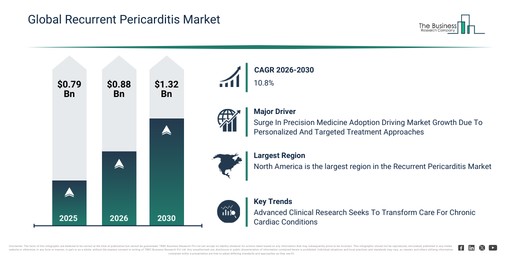
    The recurrent pericarditis market has experienced swift expansion recently. It is projected to increase from $0.79 billion in 2025 to $0.88 billion in 2026, exhibiting a compound annual growth rate (CAGR) of 10.6%. The historical growth in this market can be attributed to the traditional reliance on NSAIDs and colchicine, an increasing diagnosis of inflammatory heart conditions, well-established cardiology care pathways, enhanced availability of echocardiography, and the use of guideline-driven anti-inflammatory therapy.

    The recurrent pericarditis market is anticipated to experience significant growth over the next few years. It is projected to reach $1.32 billion by 2030, demonstrating a compound annual growth rate (CAGR) of 10.8%. The expansion during the forecast period can be attributed to the increasing adoption of biologic medications, improved methods for recurrence risk stratification, the proliferation of specialty cardiology clinics, enhanced awareness of immune-mediated pericarditis, and the rising use of targeted cytokine inhibitors. Key developments expected within this period include a greater reliance on targeted biologic therapies, the broadening of long-term disease monitoring, an increase in anti-inflammatory combination therapy, heightened acceptance of IL-1 inhibitors, and the implementation of structured recurrence prevention protocols.

    Access Your Free Sample Report for In-Depth Market Insights:

    https://www.thebusinessresearchcompany.com/sample.aspx?id=33288&type=smp

    What Drivers Are Affecting Demand In The Recurrent Pericarditis Market?

    The increasing focus on precision medicine methodologies is anticipated to fuel the expansion of the recurrent pericarditis market in the future. Precision medicine represents a healthcare strategy that customizes prevention and therapeutic interventions for individual patients, considering their genetic characteristics, environmental factors, and way of life. This heightened focus on precision medicine stems from enhanced treatment efficacy, as therapies are specifically designed for an individual’s genetic and biological profile, resulting in superior outcomes and a diminished likelihood of adverse reactions. Recurrent pericarditis plays a role in advancing precision medicine by facilitating targeted treatment strategies that concentrate on inflammatory pathways unique to each patient, such as those mediated by interleukin-1, thereby enabling more tailored and effective disease management. For illustration, in February 2025, the NHS England, a public healthcare organization in the UK, reported that its NHS Genomic Medicine Service provided more than 810,000 genomic tests for patients throughout England in 2024. This figure has consistently risen annually since the inception of the NHS Genomic Medicine Service, showing an increase of 8% compared to 2023. Consequently, the rising prioritization of precision medicine approaches is propelling the growth of the recurrent pericarditis market.

    Which Segments Are Gaining Traction In The Recurrent Pericarditis Market?

    The recurrent pericarditis market covered in this report is segmented –

    1) By Product Type: Non-Steroidal Anti-Inflammatory Drugs (NSAIDs); Corticosteroids; Colchicine; Biologics; Other Product Types

    2) By Diagnosis And Assessment: Electrocardiography (ECG); Echocardiography; Physical Examination

    3) By Route of Administration: Oral; Injectable

    4) By Application: Colchicine Therapy; Corticosteroids; Non-Steroidal Anti-Inflammatory Drugs (NSAIDs)

    5) By End-User: Hospitals; Ambulatory Surgical Centers; Clinics; Home Care Settings; Emergency Medical Services (EMS)

    Subsegments:

    1) By Non Steroidal Anti Inflammatory Drugs: Ibuprofen; Aspirin; Indomethacin; Naproxen

    2) By Corticosteroids: Prednisone; Methylprednisolone; Hydrocortisone; Dexamethasone

    3) By Colchicine: Oral Colchicine; Low Dose Colchicine; Extended Duration Colchicine Therapy

    4) By Biologics: Interleukin One Inhibitors; Monoclonal Antibody Therapies; Targeted Cytokine Inhibitors

    5) By Other Product Types: Immunosuppressive Agents; Analgesic Therapies; Supportive Combination Therapies

    Which Trends Are Influencing The Performance And Direction Of The Recurrent Pericarditis Market?

    Leading companies active in the recurrent pericarditis market are concentrating on developing solutions with anti-inflammatory and anti-fibrotic effects to diminish pericardial inflammation, avert long-term cardiac damage, enhance patients’ quality of life, and reduce recurrence rates. Anti-inflammatory effects function by lessening inflammation in tissues, while anti-fibrotic effects either prevent or reverse the formation of scar tissue, thereby jointly aiding in protecting organs from harm and maintaining their normal functioning. For instance, in October 2024, Cardiol Therapeutics Inc., a Canada-based clinical-stage life sciences company, advanced CardiolRx. CardiolRx provides an innovative oral, non-immunosuppressive therapeutic approach for recurrent pericarditis through its targeting of the NLRP3 inflammasome, a primary upstream initiator of IL-1–mediated inflammation. It is currently being developed to prevent disease recurrence, particularly for patients who relapse after discontinuing IL-1 blocker therapies such as rilonacept or anakinra. Via late-stage clinical programs, CardiolRx endeavors to lessen pericarditis flares, alleviate chest pain, and normalize inflammatory markers (CRP).

    Who Are The Top-Performing Companies In The Recurrent Pericarditis Market In Recent Years?

    Major companies operating in the recurrent pericarditis market are Johnson & Johnson Services Inc., Roche Holding AG, Merck & Co. Inc., Pfizer Inc., AbbVie Inc., Sanofi S.A., Novartis AG, AstraZeneca PLC, Bristol-Myers Squibb Company, GlaxoSmithKline plc, Eli Lilly and Company, Novo Nordisk A/S, Takeda Pharmaceutical Company Limited, Amgen Inc., Gilead Sciences Inc., Boehringer Ingelheim International GmbH, Regeneron Pharmaceuticals Inc., Biogen Inc., Lonza Group AG, Moderna Inc., and WuXi Biologics (Cayman) Inc.

    Access The Complete Report For Deeper Market Insights:

    https://www.thebusinessresearchcompany.com/report/recurrent-pericarditis-market-report

    Which Region Currently Holds The Largest Share Of The Recurrent Pericarditis Market?

    North America was the largest region in the recurrent pericarditis market in 2025. Asia-Pacific is expected to be the fastest-growing region in the forecast period. The regions covered in the recurrent pericarditis market report are Asia-Pacific, South East Asia, Western Europe, Eastern Europe, North America, South America, Middle East, Africa.

    Request Your Customized Recurrent Pericarditis Market Research Report for Competitive Advantage:

    https://www.thebusinessresearchcompany.com/customise?id=33288&type=smp

    Browse Through More Reports Similar to the Global Recurrent Pericarditis Market 2026, By The Business Research Company

    Pericarditis Market Report 2026

    https://www.thebusinessresearchcompany.com/report/pericarditis-global-market-report

    Pediatric Perfusion Market Report 2026

    https://www.thebusinessresearchcompany.com/report/pediatric-perfusion-global-market-report

    Cardiac Valve Market Report 2026

    https://www.thebusinessresearchcompany.com/report/cardiac-valve-global-market-report

    Get in touch with us:

    The Business Research Company: https://www.thebusinessresearchcompany.com/

    Americas +1 310-496-7795

    Asia +44 7882 955267 & +91 8897263534

    Europe +44 7882 955267

    Email us at info@tbrc.info

    Follow us on:

    LinkedIn: https://in.linkedin.com/company/the-business-research-company

    YouTube: https://www.youtube.com/channel/UC24_fI0rV8cR5DxlCpgmyFQ

    Global Market Model: https://www.thebusinessresearchcompany.com/global-market-model

  • Women’s Health App Market Insights Report: Opportunities and Drivers 2030

    Women’s Health App Market Insights Report: Opportunities and Drivers 2030

    Uncover key drivers, emerging technologies, and competitive movements shaping the women’s health app market from 2026–2035 with trusted insights from The Business Research Company

    How much is the Women’s Health App Market valued at in 2026, and what valuation is forecast for 2030?

    The women’s health app market has seen substantial growth in recent years. It is anticipated to expand from $5.77 billion in 2025 to $7.11 billion by 2026, achieving a compound annual growth rate (CAGR) of 23.3%. This market’s historical development is largely due to factors such as increasing smartphone usage among women, the emergence of app-based wellness solutions, a heightened awareness of menstrual and fertility health, the growth of digital lifestyle platforms, and an increased embrace of self-care tools.

    The women’s health app market is anticipated to experience substantial growth over the next few years. It is projected to expand to $14.54 billion by 2030, achieving a compound annual growth rate (CAGR) of 19.6%. This expected growth during the forecast period is attributed to factors such as increasing demand for personalized mobile health solutions, the rising integration of wearables with applications, the expansion of data-driven wellness insights, a growing focus on preventive digital health, and increasing monetization of premium app features. Major trends identified for the forecast period include the increasing use of AI-powered health recommendations, a rising adoption of subscription-based health apps, the growing integration of mental wellness features, an expansion of personalized fertility and cycle tracking, and an enhanced focus on user engagement and retention.

    Access Your Free Sample Report for In-Depth Market Insights:

    https://www.thebusinessresearchcompany.com/sample.aspx?id=15697&type=smp

    What Drivers Are Influencing The Growth Of The Women’s Health App Market?

    The increasing widespread use of smartphones is anticipated to fuel the expansion of the women’s health app market in the future. A smartphone functions as a mobile device that combines the capabilities of a computer with those of a cellular phone. The escalating penetration of smartphones is driven by several factors, including continuous advancements in smartphone technology, a reduction in device costs, the proliferation of digital services, and growing urbanization and globalization trends. These devices enable women to access health-related information, track their personal health metrics, and utilize health applications whenever and wherever needed. Moreover, smartphones provide access to a variety of educational resources such as articles, videos, podcasts, webinars, and online communities dedicated to women’s health topics. For instance, in March 2024, according to ConsumerAffairs, a US-based consumer news and advocacy organization, American ownership of smartphones increased to 92% in 2023 from 86% in 2022. Additionally, it was estimated that in 2024, American adults will, on average, spend more than 4.5 hours on their mobile devices each day. Consequently, the growing adoption of smartphones is a key driver for the expansion of the women’s health app market.

    How Is The Women’s Health App Market Organized Into Various Segments?

    The women’s health app market covered in this report is segmented –

    1) By Type: Menstrual Health, Pregnancy Monitoring, Fertility Monitoring, Breastfeeding Management, Gynecological Health, Other Types

    2) By Modality: Smartphone, Tablet, Other Modalities

    3) By Age: Adolescent, Adult, Geriatric

    4) By Application: General Healthcare And Fitness, Reproductive Health, Lifestyle Management, Disease Management, Other Applications

    Subsegments:

    1) By Menstrual Health: Period Tracker, Ovulation Calendar, Pms Management, Pregnancy Monitoring

    2) By Pregnancy Monitoring: Pregnancy Trackers, Contraction Timer, Baby Growth Tracker

    3) By Fertility Monitoring: Ovulation Prediction, Fertility Tracker, Basal Body Temperature (Bbt) Monitoring

    4) By Breastfeeding Management: Milk Supply Tracker, Feeding Timer, Nursing Log

    5) By Gynecological Health: Pelvic Health Trackers, Cervical Health Trackers, Uterine Health Monitoring

    6) By Other Types: General Health Trackers, Mental Health Apps, Exercise And Diet Apps

    What Industry Trends Are Transforming The Women’s Health App Market?

    Leading companies in the women’s health app market are developing innovative products, such as smart rings, to better serve customers with advanced features. A smart ring is a compact, wearable electronic device that integrates mobile technology with functionalities for convenient on-the-go use. These rings can monitor physical activity levels, steps taken, calories burned, and sleep patterns, assisting women in maintaining an active and healthy lifestyle. For instance, in January 2024, Movano Health, a US-based healthcare solutions provider, introduced the ‘Evie’ smart ring, the first smart ring specifically designed for women’s health. The Evie Ring delivers medical-grade health data, which is translated into personalized insights and provided through a mobile application. The Evie Ring aims to redefine women’s health tracking by offering a women-focused experience with a unique design, female-specific data interpretation, and AI-based trend analysis.

    Who Are The Prominent Global Companies Shaping The Women’s Health App Market Landscape?

    Major companies operating in the women’s health app market are Apple Inc., Flo Health Inc., Clue Inc., Natural Cycles Nordic AB, DotDash, Emme Inc., Wildflower Health, HelloBaby Inc., Rosy Wellness Inc., Evvy Inc., Kindara Inc., Ava AG, FertilityIQ, Kegg Inc., Glow Inc., Tia Health, Maya Health Inc., Peanut App Ltd., Ovia Health, Maven Clinic, LactApp, Caria, Grace Health, Every Mother

    Access The Complete Report For Deeper Market Insights:

    https://www.thebusinessresearchcompany.com/report/womens-health-app-global-market-report

    Which Geographic Areas Are Emerging As Strong Markets For The Women’s Health App Market?

    North America was the largest region in the women’s health app market in 2025. Asia-Pacific is expected to be the fastest-growing region in the forecast period. The regions covered in the women’s health app market report are Asia-Pacific, South East Asia, Western Europe, Eastern Europe, North America, South America, Middle East, Africa.

    Request Your Customized Women’s Health App Market Research Report for Competitive Advantage:

    https://www.thebusinessresearchcompany.com/customise?id=15697&type=smp

    Browse Through More Reports Similar to the Global Women’s Health App Market 2026, By The Business Research Company

    Womens Health Market Report 2026

    https://www.thebusinessresearchcompany.com/report/womens-health-global-market-report

    Menstrual Health Apps Market Report 2026

    https://www.thebusinessresearchcompany.com/report/menstrual-health-apps-global-market-report

    Womens Health Devices Market Report 2026

    https://www.thebusinessresearchcompany.com/report/womens-health-devices-global-market-report

    Get in touch with us:

    The Business Research Company: https://www.thebusinessresearchcompany.com/

    Americas +1 310-496-7795

    Asia +44 7882 955267 & +91 8897263534

    Europe +44 7882 955267

    Email us at info@tbrc.info

    Follow us on:

    LinkedIn: https://in.linkedin.com/company/the-business-research-company

    YouTube: https://www.youtube.com/channel/UC24_fI0rV8cR5DxlCpgmyFQ

    Global Market Model: https://www.thebusinessresearchcompany.com/global-market-model

  • Women’s Health Global Forecast: Market to Scale Up to $60.99 Billion by 2030 at 6.1% CAGR

    Women’s Health Global Forecast: Market to Scale Up to $60.99 Billion by 2030 at 6.1% CAGR

    Uncover key drivers, emerging technologies, and competitive movements shaping the women’s health market from 2026–2035 with trusted insights from The Business Research Company

    By how much is the Women’s Health Market expected to grow between 2026 and 2030?

    The women’s health market size has shown significant expansion in recent years. It is predicted to expand from $45.36 billion in 2025 to $48.19 billion in 2026, achieving a compound annual growth rate (CAGR) of 6.2%. The historical growth can be linked to the increasing occurrence of chronic conditions affecting women, the development of gynecological healthcare services, growing understanding of diseases specific to women, an increase in pharmaceutical research efforts, and improved access to medical facilities.

    The women’s health market is projected to experience substantial expansion in the coming years. By 2030, its size is forecast to reach $60.99 billion, expanding at a compound annual growth rate (CAGR) of 6.1%. This anticipated growth stems from several factors, including heightened investments in pharmaceutical development specifically for women, an escalating demand for customized treatment approaches, the broadening of early detection initiatives, increased incorporation of digital health technologies, and a greater emphasis on sustained women’s health care. Prominent trends for the upcoming period encompass the expanding creation of targeted therapies for women, the increasing embrace of precision medicine techniques, wider application of sophisticated diagnostic instruments, the availability of more non-hormonal treatment alternatives, and a reinforced commitment to preventive women’s healthcare.

    Access Your Free Sample Report for In-Depth Market Insights:

    https://www.thebusinessresearchcompany.com/sample.aspx?id=8017&type=smp

    Which Drivers Are Influencing Market Acceleration In The Women’s Health Market?

    The increasing incidence of women-focused ailments is projected to boost the expansion of the women’s health market in the future. Conditions predominantly affecting women, including anemia, osteoporosis, breast cancer, and menopause, among others, are frequently observed, attributed to diverse risk factors such as genetic predisposition, advancing age, premature menstruation or late-onset menopause (after 55 years), and obesity. This growing occurrence of female-specific illnesses fuels the need for women’s health products and services essential for their treatment and for maintaining overall female health and well-being. For example, the American Cancer Society, a US-based non-profit dedicated to cancer eradication, released an article in January 2023, stating that cervical cancer was formerly among the leading causes of cancer fatalities for women in America. Approximately 13,960 new instances of invasive cervical cancer are anticipated to be diagnosed in the USA during 2023, with an estimated 4,310 women predicted to succumb to the disease. Consequently, the increasing incidence of women-centric diseases is a primary driver for the growth of the women’s health market.

    What Segments Are Identified Within The Structure Of The Women’s Health Market?

    The women’s health market covered in this report is segmented –

    1) By Product Type: Devices, Drugs, Pharmaceutical Pipeline

    2) By Age: 50 Years & above , Other Ages

    3) By Treatment Type: Hormonal Treatment, Non-Hormonal Treatment, Surgeries

    4) By Application: Postmenopausal Osteoporosis, Hormonal Infertility, Endometriosis And Uterine Fibroids, Contraceptives, Menopause, Polycystic Ovary Syndrome (PCOS)

    5) By Distribution Channel: Hospital Pharmacies, Retail Pharmacies, Online Pharmacies

    Subsegments:

    1) By Devices: Diagnostic Devices, Contraceptive Devices, Fertility Monitoring Devices, Gynecological Surgical Devices, Breast Pumps

    2) By Drugs: Hormonal Therapies, Fertility Drugs, Osteoporosis Drugs, Menopause Treatment Drugs, Endometriosis Drugs, Contraceptives

    3) By Pharmaceutical Pipeline: Emerging Drugs for Menopause, New Fertility Treatments, Novel Contraceptives, Drugs for Gynecological Conditions, Hormone Replacement Therapy Developments

    What Trends Are Reshaping The Dynamics Of The Women’s Health Market?

    Leading companies in the women’s health market are integrating novel technologies to maintain their standing, exemplified by transcutaneous electrical nerve stimulation (TENS) technology. Transcutaneous Electrical Nerve Stimulation (TENS) technology is a non-invasive therapeutic method employing a small, battery-operated device that delivers low-voltage electrical currents to specific body areas via electrode pads placed on the skin. As an illustration, in September 2023, Myoovi, a UK-based company specializing in menstrual pain solutions, unveiled its TENS technology designed to alleviate painful menstrual cramps. TENS works by producing electrical signals that interrupt and impede pain signals from reaching the brain. This instrument effectively lessens pain by disturbing and blocking these pain signals, offering women a drug-free option to manage severe menstrual discomfort.

    Which Key Players Are Driving Competition In The Women’s Health Market?

    Major companies operating in the women’s health market are AbbVie Inc., Bayer AG, Merck & Co Inc., Pfizer Inc., Agile Therapeutics, Novartis AG, AstraZeneca PLC, F. Hoffmann-La Roche Ltd., Ferring Pharmaceuticals, Lupin Pharmaceuticals Inc., Johnson & Johnson Services Inc., Eli Lilly and Company, Teva Pharmaceutical Industries Ltd., Hologic Inc., Celmatix Inc., HERA Biotech Inc., Maven Clinic Inc., MobileODT Ltd., ObsEva SA, Syrona Health AG.

    Access The Complete Report For Deeper Market Insights:

    https://www.thebusinessresearchcompany.com/report/womens-health-global-market-report

    Which Region Is Projected To Lead The Women’s Health Market During The Forecast Period?

    North America was the largest region in the women’s health market in 2025. Asia-Pacific is expected to be the fastest-growing region in the women’s health market report during the forecast period. The regions covered in the women’s health market report are Asia-Pacific, South East Asia, Western Europe, Eastern Europe, North America, South America, Middle East, Africa.

    Request Your Customized Women’s Health Market Research Report for Competitive Advantage:

    https://www.thebusinessresearchcompany.com/customise?id=8017&type=smp

    Browse Through More Reports Similar to the Global Women’s Health Market 2026, By The Business Research Company

    Womens Health Diagnostics Market Report 2026

    https://www.thebusinessresearchcompany.com/report/womens-health-diagnostics-global-market-report

    Womens Health Devices Market Report 2026

    https://www.thebusinessresearchcompany.com/report/womens-health-devices-global-market-report

    Womens Health App Market Report 2026

    https://www.thebusinessresearchcompany.com/report/womens-health-app-global-market-report

    Get in touch with us:

    The Business Research Company: https://www.thebusinessresearchcompany.com/

    Americas +1 310-496-7795

    Asia +44 7882 955267 & +91 8897263534

    Europe +44 7882 955267

    Email us at info@tbrc.info

    Follow us on:

    LinkedIn: https://in.linkedin.com/company/the-business-research-company

    YouTube: https://www.youtube.com/channel/UC24_fI0rV8cR5DxlCpgmyFQ

    Global Market Model: https://www.thebusinessresearchcompany.com/global-market-model

  • Women’s Digital Health Market Future Outlook: Strong Growth Expected Toward $11.46 Billion by 2030

    Women’s Digital Health Market Future Outlook: Strong Growth Expected Toward $11.46 Billion by 2030

    Uncover key drivers, emerging technologies, and competitive movements shaping the women’s digital health market from 2026–2035 with trusted insights from The Business Research Company

    What is the estimated market size of the Women’s Digital Health Market by the end of 2030?

    The women’s digital health market has observed significant expansion in recent years. Its valuation is anticipated to increase from $4.36 billion in 2025 to $5.28 billion in 2026, achieving a compound annual growth rate (CAGR) of 20.9%. This historical progression can be ascribed to elements like a rise in smartphone usage among women, heightened recognition of health requirements specific to women, the proliferation of digital health startups, an increase in the adoption of telehealth offerings, and a stronger focus on preventive healthcare.

    The size of the women’s digital health market is projected to experience substantial expansion over the upcoming years. By 2030, its value is anticipated to reach $11.47 billion, expanding at a compound annual growth rate (CAGR) of 21.4%. This projected growth during the forecast period is fueled by several factors, including a heightened demand for customized healthcare solutions, growing capital injection into femtech innovation, the wider implementation of AI-enabled diagnostic tools, increasing acceptance of interconnected health systems, and an intensified emphasis on data-informed women’s healthcare. Key trends anticipated for this period involve the wider uptake of personalized digital care platforms, a surge in the application of AI-powered health insights, greater convergence of wearable devices with health applications, the broadening availability of remote monitoring services, and a reinforced commitment to preventive and comprehensive care strategies.

    Access Your Free Sample Report for In-Depth Market Insights:

    https://www.thebusinessresearchcompany.com/sample.aspx?id=10402&type=smp

    What Drivers Are Shaping Future Opportunities In The Women’s Digital Health Market?

    The anticipated increase in smartphone penetration is set to fuel the expansion of women’s digital health. Smartphone penetration denotes the percentage of individuals who own and utilize smartphones. These mobile applications have emerged as a significant resource for women’s health, offering extensive health information, from tracking menstrual cycles to overseeing pregnancy and fertility. With the rising adoption of mobile devices, women can now conveniently access health data and tools, promoting a more engaged approach to managing their health. For example, in November 2024, Eurostat, the official statistical office of the European Union located in Luxembourg, reported that approximately 89% of EU residents aged 16–74 in cities used their smartphones or mobile phones to access the internet in 2023, in contrast to 86% in towns and suburbs, and 82% in rural areas. Therefore, the surge in smartphone penetration is a primary catalyst for the growth of women’s digital health.

    Which Segments Are Gaining Traction In The Women’s Digital Health Market?

    The women’s digital health market covered in this report is segmented –

    1) By Type: Mobile Apps, Wearable Devices, Diagnostic Tools, Instruments, Services

    2) By Component: Software, Services, Hardware

    3) By Application: Reproductive Health, General Healthcare, Wellness, Pregnancy, Nursing Care, Pelvic Care

    Subsegments:

    1) By Mobile Apps: Health and Fitness Apps, Menstrual Tracking Apps, Mental Health Apps, Pregnancy And Parenting Apps

    2) By Wearable Devices: Fitness Trackers, Smartwatches, Health Monitoring Devices

    3) By Diagnostic Tools: At-home Testing Kits, Telehealth Platforms for Diagnostics, Remote Monitoring Tools

    4) By Instruments: Health Monitoring Devices, Diagnostic Tools

    5) By Services: Telemedicine Services, Health Coaching Platforms, Educational Services

    How Are New Market Trends Shaping The Landscape Of The Women’s Digital Health Market?

    Leading companies in the women’s digital health market are concentrating on supplying technologically advanced solutions, such as the digital health passport initiative, to improve access to personalized medical care. This digital health passport initiative represents an online platform engineered to allow individuals to manage and securely and efficiently share their health information. For example, in July 2024, Algorand, a Singapore-based foundation, and the Self-Employed Women’s Association (SEWA) introduced a Digital Health Passport initiative to broaden healthcare access for women within the informal economy. This undertaking, forming part of Algorand’s AlgoBharat effort in India, employs blockchain technology to generate secure, tamper-proof records of women’s health credentials. Women can obtain their digital health passports through SEWA Shakti Kendras, which will offer guidance in navigating health services and enrolling in programs like Ayushman Bharat.

    Who Are The Top-Performing Companies In The Women’s Digital Health Market In Recent Years?

    Major companies operating in the women’s digital health market are Flo Health Inc, Natural Cycles, Elvie, Bellabeat, Clue by Biowink, MobileODT Ltd., Glow, Veera Health, Biowink GmbH, Ava AG, Hims & Hers Health, Inc, The Women’s Wellness Centre, Elara Health, myGynaeDoc, Maven Clinic, Kindbody, Allara Health, Tia, Hera Med Ltd

    Access The Complete Report For Deeper Market Insights:

    https://www.thebusinessresearchcompany.com/report/womens-digital-health-global-market-report

    Which Region Currently Holds The Largest Share Of The Women’s Digital Health Market?

    North America was the largest region in the women’s digital health market in 2025. Asia-Pacific is expected to be the fastest-growing region in the forecast period. The regions covered in the women’s digital health market report are Asia-Pacific, South East Asia, Western Europe, Eastern Europe, North America, South America, Middle East, Africa.

    Request Your Customized Women’s Digital Health Market Research Report for Competitive Advantage:

    https://www.thebusinessresearchcompany.com/customise?id=10402&type=smp

    Browse Through More Reports Similar to the Global Women’s Digital Health Market 2026, By The Business Research Company

    Womens Health Market Report 2026

    https://www.thebusinessresearchcompany.com/report/womens-health-global-market-report

    Digital Health Market Report 2026

    https://www.thebusinessresearchcompany.com/report/digital-health-global-market-report

    Womens Health Devices Market Report 2026

    https://www.thebusinessresearchcompany.com/report/womens-health-devices-global-market-report

    Get in touch with us:

    The Business Research Company: https://www.thebusinessresearchcompany.com/

    Americas +1 310-496-7795

    Asia +44 7882 955267 & +91 8897263534

    Europe +44 7882 955267

    Email us at info@tbrc.info

    Follow us on:

    LinkedIn: https://in.linkedin.com/company/the-business-research-company

    YouTube: https://www.youtube.com/channel/UC24_fI0rV8cR5DxlCpgmyFQ

    Global Market Model: https://www.thebusinessresearchcompany.com/global-market-model

  • Revenue of the Wolff Parkinson White Syndrome Market Predicted to Achieve $1.54 Billion by 2030, Driven by 5.1% CAGR

    Revenue of the Wolff Parkinson White Syndrome Market Predicted to Achieve $1.54 Billion by 2030, Driven by 5.1% CAGR

    Uncover key drivers, emerging technologies, and competitive movements shaping the wolff parkinson white syndrome market from 2026–2035 with trusted insights from The Business Research Company

    What was the valuation of the Wolff Parkinson White Syndrome Market in 2026, and what figure is it projected to hit by 2030?

    The market for wolff parkinson white syndrome has experienced consistent expansion in recent years. It is projected to increase from $1.21 billion in 2025 to $1.27 billion in 2026, exhibiting a compound annual growth rate (CAGR) of 5.0%. The growth observed in the past can be attributed to enhancements in cardiac diagnostic technologies, a broader availability of ECG testing, increased adoption of pharmacological management, the expansion of cardiac care facilities, and rising awareness of arrhythmia disorders.

    The market for wolff parkinson white syndrome is projected to experience substantial expansion in the coming years. This market is anticipated to reach a valuation of $1.55 billion by 2030, demonstrating a compound annual growth rate (CAGR) of 5.1%. Factors contributing to this growth during the forecast period include the greater uptake of advanced ablation techniques, heightened investment in cardiac electrophysiology research, the wider availability of wearable cardiac monitoring devices, an increased emphasis on early intervention strategies, and a rising need for personalized cardiac treatment. Key trends foreseen for the forecast period encompass a surge in catheter ablation procedure adoption, innovations in electrophysiological mapping methods, broader implementation of continuous cardiac monitoring, an increase in minimally invasive treatment alternatives, and a stronger emphasis on prompt and precise diagnosis.

    Access Your Free Sample Report for In-Depth Market Insights:

    https://www.thebusinessresearchcompany.com/sample.aspx?id=8361&type=smp

    Which Drivers Are Affecting Market Participation In The Wolff Parkinson White Syndrome Market?

    The Wolff Parkinson’s White Syndrome market is anticipated to expand due to a rise in the diagnosis of genetic diseases. Genetic conditions stem from various origins, including single or multiple gene mutations, a confluence of gene mutations and environmental elements, or damage to chromosomes. A greater incidence of identified genetic diseases will consequently elevate the demand for diagnostic tests and therapeutic interventions for Wolff Parkinson White Syndrome. As an illustration, the National Heart, Lung, and Blood Institute (NHLBI), a U.S. government health organization, reported in September 2024 that sickle cell disease impacts more than 100,000 individuals within the United States, alongside over 8 million people worldwide. Consequently, the rising detection of genetic diseases is a key factor propelling the expansion of the Wolff Parkinson White Syndrome market.

    What Segment Categories Are Covered In The Wolff Parkinson White Syndrome Market?

    The wolff parkinson white syndrome market covered in this report is segmented –

    1) By Type: Type A, Type B

    2) By Diagnosis: Electrocardiogram (ECG), Electrophysiological Testing, Other Diagnosis

    3) By Treatment: Drugs, Cardio Version, Radiofrequency Catheter Ablation, Surgery, Artificial pacemaker, Other Treatments

    4) By End User: Hospitals And Clinics, Academic And Research, Other End-Users

    Subsegments:

    1) By Type A: Accessory Pathways (Left-sided), Clinical Manifestations

    2) By Type B: Accessory Pathways (Right-sided), Clinical Manifestations

    Which Trends Are Expected To Influence The Wolff Parkinson White Syndrome Market In The Upcoming Years?

    Major corporations operating within the wolff parkinson’s white syndrome market are actively developing advanced machinery and equipment, including minimally invasive procedure devices, to deliver superior treatment approaches and remedies. A minimally invasive procedure device is a medical instrument employed for surgical interventions that inflict minimal damage on the body’s tissues. For example, in May 2024, Biosense Webster Inc., a US-based enterprise focused on the diagnosis and treatment of cardiac arrhythmias, unveiled the CARTO 3 System Version 8. This system generates real-time, three-dimensional representations of the heart’s electrical activity. This capability assists electrophysiologists in the diagnosis and management of various cardiac arrhythmias, such as atrial fibrillation (AFib). Furthermore, it improves catheter navigation inside the heart, pinpointing the precise locations essential for effective treatment during ablation procedures. Significantly, the system includes the CARTO ELEVATE Module, which incorporates the Optrell Mapping Catheter, enhancing signal quality and allowing for localized unipolar signals, thus increasing the accuracy of activation maps.

    Which Leading Companies Dominate The Wolff Parkinson White Syndrome Market Share?

    Major companies operating in the wolff parkinson white syndrome market are Medtronic PLC, Abbott Laboratories, Boston Scientific Corporation, Biotronik SE & Co. KG, Koninklijke Philips N.V., MicroPort Scientific Corporation, AtriCure Inc., CardioFocus Inc., Catheter Precision Inc., Imricor Medical Systems Inc., Lepu Medical Technology Beijing Co. Ltd., Osypka AG, Stereotaxis Inc., Japan Lifeline Co. Ltd., CathRx Ltd., GE Healthcare, Siemens Healthineers AG, Baylis Medical Company Inc., Acutus Medical Inc., EP Solutions SA, Schwarzer Cardiotek GmbH, General Electric Company, Nihon Kohden Corporation

    Access The Complete Report For Deeper Market Insights:

    https://www.thebusinessresearchcompany.com/report/wolff-parkinson-white-syndrome-global-market-report

    How Does The Wolff Parkinson White Syndrome Market Perform Across Major Global Regions?

    North America was the largest region in the Wolff Parkinson white syndrome market share in 2025. The regions covered in the wolff parkinson white syndrome market report are Asia-Pacific, South East Asia, Western Europe, Eastern Europe, North America, South America, Middle East, Africa.

    Request Your Customized Wolff Parkinson White Syndrome Market Research Report for Competitive Advantage:

    https://www.thebusinessresearchcompany.com/customise?id=8361&type=smp

    Browse Through More Reports Similar to the Global Wolff Parkinson White Syndrome Market 2026, By The Business Research Company

    Anti Parkinson Drugs Market Report 2026

    https://www.thebusinessresearchcompany.com/report/anti-parkinson-drugs-global-market-report

    Cardiometabolic Diseases Market Report 2026

    https://www.thebusinessresearchcompany.com/report/cardiometabolic-diseases-global-market-report

    Mitral Valve Disease Market Report 2026

    https://www.thebusinessresearchcompany.com/report/mitral-valve-disease-global-market-report

    Get in touch with us:

    The Business Research Company: https://www.thebusinessresearchcompany.com/

    Americas +1 310-496-7795

    Asia +44 7882 955267 & +91 8897263534

    Europe +44 7882 955267

    Email us at info@tbrc.info

    Follow us on:

    LinkedIn: https://in.linkedin.com/company/the-business-research-company

    YouTube: https://www.youtube.com/channel/UC24_fI0rV8cR5DxlCpgmyFQ

    Global Market Model: https://www.thebusinessresearchcompany.com/global-market-model

  • Wiskott-Aldrich Syndrome Treatment Sector Forecast Shows Robust Momentum, Climbing to $1.41 Billion With 7.5% CAGR

    Wiskott-Aldrich Syndrome Treatment Sector Forecast Shows Robust Momentum, Climbing to $1.41 Billion With 7.5% CAGR

    Uncover key drivers, emerging technologies, and competitive movements shaping the wiskott-aldrich syndrome treatment market from 2026–2035 with trusted insights from The Business Research Company

    What are the forecasted starting (2026) and ending (2030) market sizes for the Wiskott-Aldrich Syndrome Treatment Market?

    The wiskott-aldrich syndrome treatment market size has experienced robust growth in recent years. It is anticipated to increase from $0.99 billion in 2025 to $1.06 billion in 2026, at a compound annual growth rate (CAGR) of 7.8%. This historical expansion can be attributed to several factors, including advancements in immunodeficiency diagnosis methods, expanded availability of immunoglobulin replacement therapy, the establishment of more pediatric specialty care centers, improved patient survival rates through supportive treatments, and heightened clinical research activities.

    The wiskott-aldrich syndrome treatment market size is projected to experience substantial growth over the coming years. It is expected to expand to $1.42 billion by 2030, demonstrating a compound annual growth rate (CAGR) of 7.5%. This forecasted growth can be attributed to several factors, including the increasing integration of gene therapy solutions, rising financial commitments to rare disease research, the broadening scope of advanced diagnostic capabilities, the expanding availability of curative treatment options, and a heightened focus on enhancing the long-term quality of life for patients. Significant trends anticipated during this period involve a greater adoption of stem cell transplantation, ongoing advancements in gene therapy techniques, an increasing emphasis on individualized immunodeficiency treatments, the expansion of early genetic screening initiatives, and the improved development of protocols for long-term disease management.

    Access Your Free Sample Report for In-Depth Market Insights:

    https://www.thebusinessresearchcompany.com/sample.aspx?id=23584&type=smp

    What Drivers Are Supporting Technological Adoption In The Wiskott-Aldrich Syndrome Treatment Market?

    An increasing need for targeted therapies is anticipated to drive the expansion of the wiskott-aldrich syndrome treatment market in the future. These therapies are defined as interventions that pinpoint particular molecules or biological pathways implicated in disease development, especially in cancer, with the goal of precisely targeting aberrant cells while minimizing damage to healthy ones. Precision medicine fuels the adoption of targeted therapies, improving their effectiveness by addressing specific genetic mutations and simultaneously reducing adverse effects. For instance, gene therapy, a type of targeted therapy, assists in correcting the faulty WAS gene, leading to the restoration of immune system function and platelet generation, which consequently enhances patient results and lessens the reliance on continuous treatments. For example, in July 2024, the American Society of Gene and Cell Therapy (ASGCT), a US-based professional membership organization, reported that 76 gene therapy trials commenced in the second quarter of 2024, representing a 25 % rise from the prior quarter. Consequently, the increasing requirement for targeted therapies is propelling the expansion of the wiskott-aldrich syndrome treatment market.

    Which Segments Are Contributing To The Growth Of The Wiskott-Aldrich Syndrome Treatment Market?

    The wiskott-aldrich syndrome treatment market covered in this report is segmented –

    1) By Treatment Type: Immunoglobulin Replacement Therapy, Antibiotic Therapy, Stem Cell Transplantation, Gene Therapy

    2) By Diagnosis: Blood tests, Genetic testing, Other Diagnosis

    3) By Distribution Channel: Hospital Pharmacy, Retail Pharmacy, Online Pharmacies, Other Distribution Channels

    4) By End-User: Hospitals, Research Institutes, Specialty Clinics

    Subsegments:

    1) By Immunoglobulin Replacement Therapy: Intravenous Immunoglobulin (IVIG), Subcutaneous Immunoglobulin (SCIG)

    2) By Antibiotic Therapy: Broad-Spectrum Antibiotics, Narrow-Spectrum Antibiotics

    3) By Stem Cell Transplantation: Allogeneic Hematopoietic Stem Cell Transplantation (HSCT), Autologous Stem Cell Transplantation

    4) By Gene Therapy: Lentiviral Vector-Based Gene Therapy, Retroviral Vector-Based Gene Therapy

    What Trends Are Driving The Growth Trajectory Of The Wiskott-Aldrich Syndrome Treatment Market?

    Major companies operating in the Wiskott-Aldrich syndrome treatment market are focusing on creating innovative products like intravenous immune globulin to improve immune system function and control infections. Immune globulin intravenous (IVIG) is a therapeutic approach that administers purified human immunoglobulin G (IgG) antibodies directly into the bloodstream to enhance immune capabilities. It is employed to address immune deficiencies, autoimmune diseases, and infections by offering passive immunity and modulating immune responses. For instance, in September 2024, GC Biopharma USA, Inc., a US-based biopharma company, launched ALYGLO, a 10% immune globulin intravenous liquid, in the US market. This product, sanctioned by the Food and Drug Administration (FDA), is intended for the treatment of primary humoral immunodeficiency (PI) indication, which includes Wiskott-Aldrich syndrome in adults. It is produced from pooled human plasma and supplies a wide range of antibodies to fight infections. The product is available through a network of specialty pharmacies and distributors across the US, marking a notable achievement for GC Biopharma in extending its reach in the US healthcare market.

    Who Are The Major Companies Operating In The Wiskott-Aldrich Syndrome Treatment Market?

    Major companies operating in the wiskott-aldrich syndrome treatment market are Pfizer Inc., Boston Children’s Hospital, Grifols S A, The Children’s Hospital of Philadelphia, Seattle Children’s Research Institute, CSL Behring LLC, GC Biopharma USA Inc, St Jude Children’s Research Hospital, Great Ormond Street Hospital, Octapharma AG, Bio Products Laboratory Limited, ADMA Biologics Inc, Orchard Therapeutics plc, Genethon, Yposkesi, Rocket Pharmaceuticals, Autolus Therapeutics, Bluebird Bio, Kedrion Biopharma Inc, GlaxoSmithKline Plc, Merck & Co Ltd, Takeda Pharmaceutical Company Limited

    Access The Complete Report For Deeper Market Insights:

    https://www.thebusinessresearchcompany.com/report/wiskott-aldrich-syndrome-treatment-global-market-report

    Which Region Is Anticipated To See The Fastest Growth In The Wiskott-Aldrich Syndrome Treatment Market?

    North America was the largest region in the wiskott-aldrich syndrome treatment market in 2025. The regions covered in the wiskott-aldrich syndrome treatment market report are Asia-Pacific, South East Asia, Western Europe, Eastern Europe, North America, South America, Middle East, Africa.

    Request Your Customized Wiskott-Aldrich Syndrome Treatment Market Research Report for Competitive Advantage:

    https://www.thebusinessresearchcompany.com/customise?id=23584&type=smp

    Browse Through More Reports Similar to the Global Wiskott-Aldrich Syndrome Treatment Market 2026, By The Business Research Company

    Antiphospholipid Syndrome Treatment Market Report 2026

    https://www.thebusinessresearchcompany.com/report/antiphospholipid-syndrome-treatment-global-market-report

    Alpers Disease Treatment Market Report 2026

    https://www.thebusinessresearchcompany.com/report/alpers-disease-treatment-global-market-report

    Condyloma Acuminata Treatment Market Report 2026

    https://www.thebusinessresearchcompany.com/report/condyloma-acuminata-treatment-global-market-report

    Get in touch with us:

    The Business Research Company: https://www.thebusinessresearchcompany.com/

    Americas +1 310-496-7795

    Asia +44 7882 955267 & +91 8897263534

    Europe +44 7882 955267

    Email us at info@tbrc.info

    Follow us on:

    LinkedIn: https://in.linkedin.com/company/the-business-research-company

    YouTube: https://www.youtube.com/channel/UC24_fI0rV8cR5DxlCpgmyFQ

    Global Market Model: https://www.thebusinessresearchcompany.com/global-market-model