Category: HealthcareServices

  • Global Cell Therapy Processing Market Report 2026–2030: Data-Driven Growth Insights

    Global Cell Therapy Processing Market Report 2026–2030: Data-Driven Growth Insights

    Uncover key drivers, emerging technologies, and competitive movements shaping the cell therapy processing market from 2026–2035 with trusted insights from The Business Research Company

    How much larger will the Cell Therapy Processing Market be in 2030 compared with 2026?

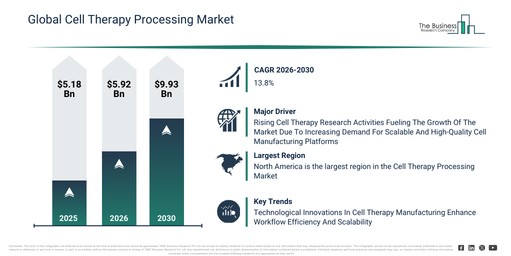
    The cell therapy processing market has witnessed swift expansion in recent years. It is anticipated to grow from $5.18 billion in 2025 to $5.92 billion in 2026, at a compound annual growth rate (CAGR) of 14.3%. The growth observed in the historic period can be ascribed to increasing clinical trials for cell therapies, expansion of biopharmaceutical manufacturing capacity, availability of specialized processing facilities, growing expertise in gmp compliance, and rising investment in advanced therapeutics.

    The cell therapy processing market is projected for significant expansion over the coming years, reaching $9.93 billion by 2030, demonstrating a compound annual growth rate (CAGR) of 13.8%. This anticipated growth during the forecast timeframe stems from several factors, including the increasing commercialization of gene and cell therapies, a rising demand for contract manufacturing services, the expansion of decentralized manufacturing models, the growing adoption of digital quality management systems, and a rise in regulatory approvals for cell-based therapies. Key developments expected during this period involve a greater embrace of GMP-compliant processing platforms, an escalating need for scalable cell therapy manufacturing, the wider integration of workflow automation software, an expansion of contract processing services, and a heightened emphasis on sterility and quality assurance.

    Access Your Free Sample Report for In-Depth Market Insights:

    https://www.thebusinessresearchcompany.com/sample.aspx?id=27244&type=smp

    What Drivers Are Guiding Growth Patterns In The Cell Therapy Processing Market?

    An increasing volume of cell therapy research is anticipated to boost the expansion of the cell therapy processing market in the future. Cell therapy involves creating therapeutic products from live cells to manage or treat a range of conditions such as cancers, autoimmune diseases, and genetic ailments. The rising need for scalable and consistent manufacturing platforms, capable of handling high cell densities without impacting product quality, is fueling the demand for cell-based therapies. For cell therapy research, cell therapy processing is advantageous because it facilitates the standardized preparation, quality control, and scalable production of high-quality cells, thus guaranteeing dependable and repeatable results for both experimental and clinical studies. An example of this trend is that in December 2024, the International Federation of Pharmaceutical Manufacturers and Associations, a Switzerland-based non-profit body, reported the launch of six first-in-class cell and gene treatments in 2023. This figure represents a 50% increase compared to the three such treatments released in 2022. Consequently, the increasing volume of cell therapy research activities is a primary factor driving the growth of the cell therapy processing market.

    How Is The Cell Therapy Processing Market Divided Into Segments?

    The cell therapy processing market covered in this report is segmented –

    1) By Offering Type: Products, Services, Software

    2) By Applications: Cardiovascular Diseases Or Cardiac Regenerative Therapies, Bone Repair, Neurological Disorders, Skeletal Muscle Repair, Cancer, Other Applications

    3) By End-User: Research Institutes, Biopharmaceutical Companies, Contract Research Organizations, Other End-Users

    Subsegments:

    1) By Products: Cell Processing Systems, Cell Separation Devices, Cell Culture Equipment, Cell Preservation Systems, Consumables And Reagents

    2) By Services: Contract Manufacturing Services, Process Development Services, Quality Control And Testing Services, Logistics And Supply Chain Services, Regulatory Compliance And Documentation Services

    3) By Software: Cell Processing Workflow Management Software, Data Analysis And Reporting Software, Quality Management Software, Laboratory Information Management Systems (LIMS), Compliance And Audit Management Software

    Which Market Trends Are Opening Growth Opportunities In The Cell Therapy Processing Market?

    Leading companies in the cell therapy processing market are prioritizing the creation of advanced solutions, including integrated bioreactor-centrifuge systems, to optimize manufacturing workflows and enhance the consistency, scalability, and sterility of cell-based therapies. An integrated bioreactor-centrifuge system is a unified device that combines cell incubation and centrifugal separation within a single enclosed unit, facilitating continuous, automated cell processing without the necessity for intermediate transfers. For example, in March 2025, Limula SA, a Switzerland-based company specializing in cell and gene therapy (CGT), introduced LimONE, an automated, closed-system platform for cell therapy manufacturing. This innovative system integrates hardware, single-use consumables, and protocol-driven software to streamline complex cell processing stages, such as incubation, centrifugation, and reagent handling, into a singular compact unit, thereby permitting consistent, scalable production of therapies like CAR-T and gene-edited stem cells from initial research to GMP-compliant manufacturing, bypassing the need for intricate technology transfers.

    Which Key Players Are Driving Competition In The Cell Therapy Processing Market?

    Major companies operating in the cell therapy processing market are Johnson & Johnson Services Inc., Bristol-Myers Squibb Company, Thermo Fisher Scientific Inc., Novartis AG, Gilead Sciences Inc., Danaher Corporation, Lonza Group AG, Anterogen Co. Ltd., Terumo Corporation, Sartorius AG, Bio-Techne Corporation, STEMCELL Technologies Inc., Miltenyi Biotec GmbH, AGC Biologics S.p.A., MaxCyte Inc., Cellares Corporation, Cellectis S.A., JW Cayman Therapeutics Company Limited, Cell Therapies Pty Ltd., InGeneron Inc., WuXi Advanced Therapies, Catalent Inc.

    Access The Complete Report For Deeper Market Insights:

    https://www.thebusinessresearchcompany.com/report/cell-therapy-processing-global-market-report

    Which Region Is Projected To Lead The Cell Therapy Processing Market During The Forecast Period?

    North America was the largest region in the cell therapy processing market in 2025. Asia-Pacific is expected to be the fastest-growing region in the forecast period. The regions covered in the cell therapy processing market report are Asia-Pacific, South East Asia, Western Europe, Eastern Europe, North America, South America, Middle East, Africa.

    Request Your Customized Cell Therapy Processing Market Research Report for Competitive Advantage:

    https://www.thebusinessresearchcompany.com/customise?id=27244&type=smp

    Browse Through More Reports Similar to the Global Cell Therapy Processing Market 2026, By The Business Research Company

    Exterior Insulation And Finish System Market Report 2026

    https://www.thebusinessresearchcompany.com/report/exterior-insulation-and-finish-system-global-market-report

    Metal Structural Insulation Panels Market Report 2026

    https://www.thebusinessresearchcompany.com/report/metal-structural-insulation-panels-global-market-report

    Vacuum Insulation Panel Market Report 2026

    https://www.thebusinessresearchcompany.com/report/vacuum-insulation-panel-global-market-report

    Get in touch with us:

    The Business Research Company: https://www.thebusinessresearchcompany.com/

    Americas +1 310-496-7795

    Asia +44 7882 955267 & +91 8897263534

    Europe +44 7882 955267

    Email us at info@tbrc.info

    Follow us on:

    LinkedIn: https://in.linkedin.com/company/the-business-research-company

    YouTube: https://www.youtube.com/channel/UC24_fI0rV8cR5DxlCpgmyFQ

    Global Market Model: https://www.thebusinessresearchcompany.com/global-market-model
  • Preclinical CRO Market Outlook: Growth and Forecast Highlights 2030

    Preclinical CRO Market Outlook: Growth and Forecast Highlights 2030

    Uncover key drivers, emerging technologies, and competitive movements shaping the preclinical cro market from 2026–2035 with trusted insights from The Business Research Company

    By how much is the Preclinical CRO Market expected to grow between 2026 and 2030?

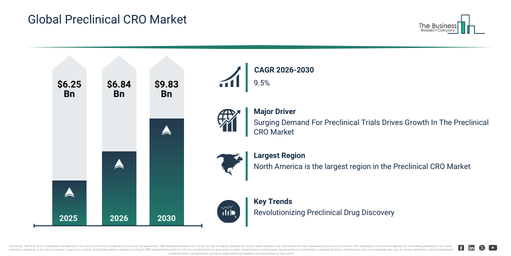
    The preclinical cro market size has demonstrated strong expansion in recent years. It is anticipated to grow from $6.25 billion in 2025 to $6.84 billion in 2026, achieving a compound annual growth rate (CAGR) of 9.6%. The market’s growth in prior periods can be attributed to heightened pharmaceutical R&D investments, the increasing complexity of drug development pipelines, a greater reliance on animal testing for safety validation, the expansion of biotechnology research endeavors, and stricter regulatory oversight concerning preclinical data.

    The preclinical CRO market is expected to demonstrate substantial expansion in the upcoming years. It is projected to achieve a size of $9.83 billion by 2030, progressing at a compound annual growth rate (CAGR) of 9.5%. The projected increase within this period is driven by several factors, including a rising need for precision medicine research, a greater focus on developing drugs for rare diseases, the expansion of biologics and cell therapy pipelines, the increasing implementation of digital preclinical platforms, and a growth in collaborations between pharmaceutical companies and CROs. Significant patterns observed in the forecast duration involve a wider adoption of integrated preclinical study services, an escalating requirement for advanced animal model expertise, an increase in the outsourcing of early-stage drug development activities, an expansion of toxicology capabilities that conform to regulatory standards, and a heightened emphasis on study designs informed by data.

    Access Your Free Sample Report for In-Depth Market Insights:

    https://www.thebusinessresearchcompany.com/sample.aspx?id=10303&type=smp

    Which Drivers Are Influencing Market Acceleration In The Preclinical CRO Market?

    The rising need for preclinical trials is anticipated to boost the expansion of the preclinical CRO market in the future. These trials involve any investigation of a medicine or therapy for a specific ailment prior to its administration to human participants. Preclinical studies frequently encompass new medical devices, prescribed drugs, and diagnostic tools, aiming primarily to determine a safe initial dosage for human trials and assess the product’s potential toxicity. Their role in drug development is crucial, with their significance growing due to increased focus on the safety and effectiveness of new medications. For instance, in February 2024, according to IQVIA, a US-based company serving the combined industries of health information technology and clinical research reports, clinical development productivity rose in 2023, where a total of 69 novel active substances (NASs) were launched globally in 2023, 6 more than the prior year, and including 24 first-in-class launches in the U.S. Consequently, the increasing demand for preclinical trials is propelling the growth of the preclinical CRO market moving forward.

    What Segments Are Identified Within The Structure Of The Preclinical CRO Market?

    The preclinical cro market covered in this report is segmented –

    1) By Service: Bioanalysis And DMPK Studies, Toxicology Testing, Compound Management, Chemistry, Safety Pharmacology, Others Services

    2) By Type: Patient Derived Organoid (PDO) Model, Patient Derived Xenograft Model

    3) By Animal Model: Small Animal Model, Large Animal Model

    4) By Model System: In Vivo, In Vitro

    5) By End User: Biopharmaceutical Companies, Government And Academic Institutes, Medical Device Companies, Other End-users

    Subsegments:

    1) By Bioanalysis And DMPK Studies: Pharmacokinetics Studies, Pharmacodynamics Studies, Drug Metabolism Studies

    2) By Toxicology Testing: Acute Toxicity Testing, Chronic Toxicity Testing, Reproductive Toxicity Testing

    3) By Compound Management: Sample Management, Inventory Management, Formulation Services

    4) By Chemistry: Medicinal Chemistry, Analytical Chemistry, Synthetic Chemistry

    5) By Safety Pharmacology: Cardiovascular Safety Studies, Central Nervous System Safety Studies, Respiratory Safety Studies

    6) By Other Services: Regulatory Consulting, Project Management, Data Management Services

    Which Innovation Trends Are Advancing Developments Within The Preclinical CRO Market?

    Leading companies in the preclinical CRO market are embracing new technologies to maintain their standing, such as a disease biology knowledge graph, which enhances target identification and drug discovery in pharmaceutical research. This disease biology knowledge graph provides a structured, comprehensive representation of the relationships between genes, proteins, pathways, and disease phenotypes, designed to integrate diverse biological data. It empowers researchers to systematically explore disease mechanisms, pinpoint potential therapeutic targets, and accelerate drug discovery by offering a holistic map of disease biology. For instance, in February 2023, BenchSci, a Canada-based AI solutions company for preclinical R&D, launched ASCEND, an end-to-end SaaS (software as a service) platform intended for preclinical drug discovery. This method aims to expedite preclinical phase drug development pipelines by providing biological insights into the fundamental underpinnings of disease. ASCEND extracts experimental data from secure internal and public external sources using BenchSci’s machine-learning technology. The platform compares experimental results utilizing curated ontology datasets. As a result, the software can generate an evidence-based map of the biological processes underlying various diseases.

    Which Major Industry Participants Are Leading The Preclinical CRO Market Growth?

    Major companies operating in the preclinical cro market are Eurofins Scientific SE, WuXi AppTec Co Ltd, Medpace Holdings Inc, Charles River Laboratories International Inc, Laboratory Corporation Of America Holdings, Intertek Group plc, Crown Bioscience International, Cynbiose, AmplifyBio LLC, Vivotecnia SL, Altasciences Company Inc, Pharmaceutical Product Development LLC, Parexel International Corporation, Envigo RMS Holding Corporation, Veeda Clinical Research Ltd, ICON plc, Kunming Biomed International Ltd, PharmaLegacy Laboratories, NorthEast BioAnalytical Laboratories LLC, MDS Pharma Services, MPI Research, Toxikon Corporation, BioReliance Corporation, Covance Inc, Syngene International Limited

    Access The Complete Report For Deeper Market Insights:

    https://www.thebusinessresearchcompany.com/report/preclinical-cro-global-market-report

    Which Region Is Expected To Experience The Fastest Growth In The Preclinical CRO Market?

    North America was the largest region in the preclinical CRO market in 2025. Asia-Pacific is expected to be the fastest-growing region in the global preclinical CRO market during the forecast period. The regions covered in the preclinical cro market report are Asia-Pacific, South East Asia, Western Europe, Eastern Europe, North America, South America, Middle East, Africa.

    Request Your Customized Preclinical CRO Market Research Report for Competitive Advantage:

    https://www.thebusinessresearchcompany.com/customise?id=10303&type=smp

    Browse Through More Reports Similar to the Global Preclinical CRO Market 2026, By The Business Research Company

    Veterinary Cro And Cdmo Market Report 2026

    https://www.thebusinessresearchcompany.com/report/veterinary-cro-and-cdmo-global-market-report

    Healthcare Cro Services Market Report 2026

    https://www.thebusinessresearchcompany.com/report/healthcare-cro-services-global-market-report

    Crm Bpo Market Report 2026

    https://www.thebusinessresearchcompany.com/report/crm-bpo-global-market-report

    Get in touch with us:

    The Business Research Company: https://www.thebusinessresearchcompany.com/

    Americas +1 310-496-7795

    Asia +44 7882 955267 & +91 8897263534

    Europe +44 7882 955267

    Email us at info@tbrc.info

    Follow us on:

    LinkedIn: https://in.linkedin.com/company/the-business-research-company

    YouTube: https://www.youtube.com/channel/UC24_fI0rV8cR5DxlCpgmyFQ

    Global Market Model: https://www.thebusinessresearchcompany.com/global-market-model
  • Preclinical Assets Market Insights Report: Opportunities and Drivers 2030

    Preclinical Assets Market Insights Report: Opportunities and Drivers 2030

    Uncover key drivers, emerging technologies, and competitive movements shaping the preclinical assets market from 2026–2035 with trusted insights from The Business Research Company

    What is the estimated market size of the Preclinical Assets Market by the end of 2030?

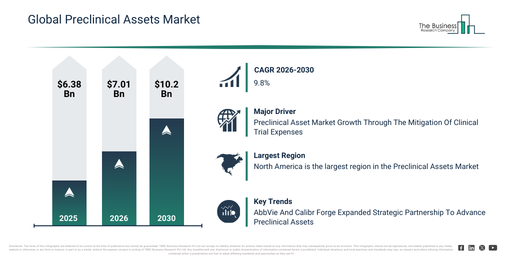
    The preclinical assets market has experienced robust growth in recent years. This market is projected to expand from $6.38 billion in 2025 to $7.01 billion in 2026, demonstrating a compound annual growth rate (CAGR) of 9.8%. Historically, this expansion has been driven by factors such as a surge in pharmaceutical R&D investments, the proliferation of early-stage drug discovery initiatives, an increasing dependence on animal testing, a heightened need for generating safety data, and the rising trend of outsourcing preclinical studies.

    The preclinical assets market is anticipated to experience substantial growth in the upcoming years. Its value is projected to escalate to $10.2 billion by 2030, exhibiting a compound annual growth rate (CAGR) of 9.8%. This expansion during the forecast period stems from factors such as the increasing adoption of human-relevant preclinical models, a heightened demand for accelerated drug development timelines, the broadening of personalized medicine pipelines, the expanding integration of AI in preclinical research, and a greater regulatory focus on data robustness. Significant trends expected in this period include the increased utilization of advanced preclinical models, a rise in the adoption of patient-derived xenograft and organoid models, a growing need for integrated preclinical services, an expansion of safety and toxicology studies, and a stronger emphasis on translational research.

    Access Your Free Sample Report for In-Depth Market Insights:

    https://www.thebusinessresearchcompany.com/sample.aspx?id=12600&type=smp

    What Drivers Are Shaping Future Opportunities In The Preclinical Assets Market?

    The increasing demand to reduce expenditures associated with clinical trials is anticipated to drive expansion in the preclinical asset market moving ahead. These costs encompass the outlays for designing, executing, and overseeing studies that evaluate the safety, effectiveness, and potential advantages of novel medical interventions, like drugs, medical devices, or treatment methods. Such trials yield crucial information regarding the safety, effectiveness, and possible adverse reactions of preclinical assets, thereby aiding in confirming their therapeutic promise in humans. For example, in February 2023, Genetic Engineering and Biotechnology News, a US-based platform that provides the latest information on genetic engineering and biotechnology, reported that the expense for developing a new drug among the top 20 global biopharma companies increased by 15%, from $298 million in 2022 to around $2.3 billion in 2023. This figure accounts for the expenditures involved in drug development through clinical trials. Consequently, the escalating imperative to control clinical trial expenditures is fueling the expansion of the preclinical asset market.

    Which Segments Are Gaining Traction In The Preclinical Assets Market?

    The preclinical assets market covered in this report is segmented –

    1) By Service: Bioanalysis And DMPK (Drug Metabolism And Pharmacokinetic) Studies, Toxicology Testing, Compound Management, Safety Pharmacology, Other Services

    2) By Model Type: Patient Derived Organoid (PDO) Model, Patient Derived Xenograft Model

    3) By End User: Biopharmaceutical Companies, Government Institutes, Other End-Users

    Subsegments:

    1) By Bioanalysis And DMPK (Drug Metabolism And Pharmacokinetic) Studies: Pharmacokinetics (PK) Studies, Pharmacodynamics (PD) Studies, Bioanalytical Method Development

    2) By Toxicology Testing: Acute Toxicity Testing, Chronic Toxicity Testing, Genotoxicity Testing, Carcinogenicity Testing

    3) By Compound Management: Compound Library Management, Sample Storage And Retrieval, High-Throughput Screening Support

    4) By Safety Pharmacology: Cardiovascular Safety Assessments, Neurotoxicity Evaluations, Respiratory Safety Evaluations

    5) By Other Services: Regulatory Support, Preclinical Study Design And Consulting, Custom Assay Development

    Which Competitive Trends Are Impacting The Structure Of The Preclinical Assets Market?

    Leading companies in the preclinical assets market are increasingly focusing on establishing strategic alliances to accelerate the identification and development of innovative drug candidates. These partnerships allow for the sharing of specialized research expertise, provide access to novel targets, and facilitate the advancement of early-stage preclinical assets. For instance, in July 2023, AbbVie, a US-based pharmaceutical company, and Calibr, an India-based research and drug development company, announced an expanded strategic collaboration to continue progress on several innovative preclinical and early-stage clinical assets. This partnership extends the existing collaboration between AbbVie and Scripps Research. Furthermore, Calibr will present AbbVie with a defined number of new discovery targets and preclinical assets of mutual interest for potential option considerations.

    Who Are The Prominent Global Companies Shaping The Preclinical Assets Market Landscape?

    Major companies operating in the preclinical assets market are Laboratory Corporation of America, IQVIA Inc., ICON PLC, Eurofins Scientific SE, PPD Inc., SGS SA, WuXi AppTec Co. Ltd., Intertrek Group PLC, Charles River Laboratories International Inc., Medpace Inc., Pharmaron Beijing Co. Ltd., Evotec SE, GenScript Biotech Corporation, Inotiv Inc., SRI International Inc., Shanghai Medicilon Inc., Biocytogen Pharmaceuticals Beijing Co. Ltd., AmplifyBio LLC, BioReliance Corporation, Pharmalegacy Laboratories Co. Ltd., ReproCELL Incorporated, InSphero AG, Crown Bioscience Inc., Comparative Biosciences Inc., TCG Lifesciences Pvt. Ltd., InVivo Biosystems, Pharmatest Services Ltd, Domainex Limited, Viroclinics Xplore

    Access The Complete Report For Deeper Market Insights:

    https://www.thebusinessresearchcompany.com/report/preclinical-assets-global-market-report

    Which Geographic Areas Are Emerging As Strong Markets For The Preclinical Assets Market?

    North America was the largest region in the preclinical assets market in 2025. Asia-Pacific is expected to be the fastest-growing region in the forecast period. The regions covered in the preclinical assets market report are Asia-Pacific, South East Asia, Western Europe, Eastern Europe, North America, South America, Middle East, Africa.

    Request Your Customized Preclinical Assets Market Research Report for Competitive Advantage:

    https://www.thebusinessresearchcompany.com/customise?id=12600&type=smp

    Browse Through More Reports Similar to the Global Preclinical Assets Market 2026, By The Business Research Company

    Enterprise Asset Management Market Report 2026

    https://www.thebusinessresearchcompany.com/report/enterprise-asset-management-global-market-report

    Asset Management Market 2026

    https://www.thebusinessresearchcompany.com/report/asset-management-market

    Digital Asset Custody Market Report 2026

    https://www.thebusinessresearchcompany.com/report/digital-asset-custody-global-market-report

    Get in touch with us:

    The Business Research Company: https://www.thebusinessresearchcompany.com/

    Americas +1 310-496-7795

    Asia +44 7882 955267 & +91 8897263534

    Europe +44 7882 955267

    Email us at info@tbrc.info

    Follow us on:

    LinkedIn: https://in.linkedin.com/company/the-business-research-company

    YouTube: https://www.youtube.com/channel/UC24_fI0rV8cR5DxlCpgmyFQ

    Global Market Model: https://www.thebusinessresearchcompany.com/global-market-model
  • Cell Signaling Market Dynamics 2026: Future Outlook and Key Insights

    Cell Signaling Market Dynamics 2026: Future Outlook and Key Insights

    Uncover key drivers, emerging technologies, and competitive movements shaping the cell signaling market from 2026–2035 with trusted insights from The Business Research Company

    Starting from its 2026 valuation, what market size is the Cell Signaling Market expected to reach by 2030?

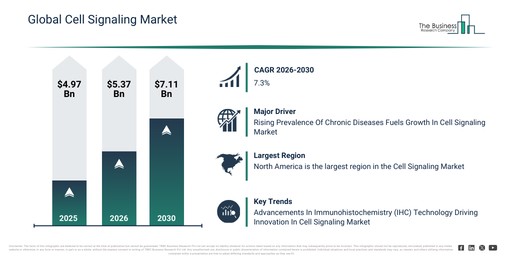
    The cell signaling market has experienced substantial growth in recent years. It is anticipated to expand from $4.97 billion in 2025 to $5.37 billion in 2026, at a compound annual growth rate (CAGR) of 8.2%. Historically, this growth has been fueled by the expansion of molecular biology research, the increased use of immunoassays in research labs, the rise in cancer signaling studies, the growing adoption of western blotting techniques, and the availability of advanced antibodies.

    The cell signaling market is anticipated to experience substantial growth in the upcoming years, expanding to $7.11 billion by 2030, with a compound annual growth rate (CAGR) of 7.3%. This projected growth during the forecast period stems from escalating investments in targeted therapy research, an increasing demand for precision signaling analysis, the expansion of translational research applications, a growing utilization of high-throughput proteomics, and the rising integration of computational biology tools. Significant trends expected during this period include a heightened focus on pathway-specific signal analysis, an increased use of high-sensitivity detection reagents, a wider adoption of multiplex signaling assays, the broadening of quantitative cell communication studies, and enhanced integration of advanced imaging techniques.

    Access Your Free Sample Report for In-Depth Market Insights:

    https://www.thebusinessresearchcompany.com/sample.aspx?id=15758&type=smp

    What Drivers Are Driving Adoption Within The Cell Signaling Market?

    The growing occurrence of chronic illnesses is anticipated to fuel expansion in the cell signaling market. These are enduring health conditions characterized by their gradual development and prolonged duration, frequently spanning years or a lifetime, often requiring continuous management and therapeutic interventions to mitigate symptoms, avert complications, and preserve the quality of life. Factors contributing to the rise of chronic diseases include an aging demographic, detrimental lifestyle choices, and the availability and structure of healthcare systems. Research into cell signaling offers crucial insights and methodologies for comprehending, identifying, managing, and preventing chronic ailments, thereby promising enhanced patient outcomes and living standards. For example, data from the National Library of Medicine, a US biomedical institution, indicated in January 2023 that individuals aged 50 and above suffering from at least one chronic illness are projected to increase from 71.522 million in 2020 to 142.66 million by 2050, representing a 99.5% surge. Consequently, the expanding occurrence of chronic diseases is a significant impetus for the growth within the cell signaling market.

    What Segments Are Included Within The Cell Signaling Market?

    The cell signaling market covered in this report is segmented –

    1) By Product: Consumables, Instruments

    2) By Signaling Type: Endocrine Signaling, Paracrine Signaling, Autocrine Signaling, Synaptic Signaling Source, Other Signaling Types

    3) By Pathway: Akt Signaling Pathway, AMPK Signaling Pathway, ErbB Or HER Signaling Pathway, Other Signaling Pathways

    4) By Technology: Microscopy, Western Blotting, Flow Cytometry, Immunohistochemistry (IHC), Enzyme-Linked Immunosorbent Assay (ELISA), Mass Spectrometry, Other Technologies

    5) By Application: Research Applications, Medical Applications

    Subsegments:

    1) By Consumables: Reagents, Antibodies, Kits, Chemicals and Enzymes

    2) By Instruments: Flow Cytometers, Microplate Readers, Cell Counters, Western Blotting Systems, Real-Time PCR Systems

    How Are Emerging Trends Affecting The Progression Of The Cell Signaling Market?

    Leading companies in the cell signaling market are concentrating on developing advanced technologies, such as immunohistochemistry (IHC) assays, to solidify their market position. Immunohistochemistry (IHC) assays are laboratory techniques used to identify and visualize specific proteins or antigens within tissue samples. For instance, in September 2023, Cell Signaling Technology (CST), a US-based life sciences discovery technology company, announced the launch of SignalStar Multiplex IHC technology, an innovative tool for a method for spatial biology research utilizing mid-plex, high-throughput immunohistochemistry (IHC) assays. This cutting-edge technology allows researchers to detect multiple targets simultaneously in formalin-fixed, paraffin-embedded (FFPE) tissues with high sensitivity and specificity. It employs a combination of antibodies, oligonucleotides, and fluorophores to amplify the antibody signal, making it possible to detect targets, even those with low expression levels, for up to eight proteins in a single tissue.

    Who Are The Top-Performing Companies In The Cell Signaling Market In Recent Years?

    Major companies operating in the cell signaling market are Johnson & Johnson, F. Hoffmann-La Roche Ltd., Pfizer Inc., Bayer AG, Bristol-Myers Squibb Company, Thermo Fisher Scientific Inc., Novartis AG, GlaxoSmithKline plc, Eli Lilly and Company, Gilead Sciences Inc., Danaher Corporation, Merck KGaA, Becton Dickinson and Company, Agilent Technologies Inc., PerkinElmer Inc., Beckman Coulter Inc., Bio-Rad Laboratories Inc., Qiagen N.V., Bio-Techne Corporation, Miltenyi Biotec, Promega Corporation, Janssen Pharmaceuticals Inc., Abcam plc, Horizon Discovery Ltd., Cell Signaling Technology Inc., Cisbio Bioassays, Rockland Immunochemicals Inc.

    Access The Complete Report For Deeper Market Insights:

    https://www.thebusinessresearchcompany.com/report/cell-signaling-global-market-report

    Which Region Currently Holds The Largest Share Of The Cell Signaling Market?

    North America was the largest region in the cell signaling market in 2025. Asia-Pacific is expected to be the fastest-growing region in the forecast period. The regions covered in the cell signaling market report are Asia-Pacific, South East Asia, Western Europe, Eastern Europe, North America, South America, Middle East, Africa.

    Request Your Customized Cell Signaling Market Research Report for Competitive Advantage:

    https://www.thebusinessresearchcompany.com/customise?id=15758&type=smp

    Browse Through More Reports Similar to the Global Cell Signaling Market 2026, By The Business Research Company

    Cell Expansion Market Report 2026

    https://www.thebusinessresearchcompany.com/report/cell-expansion-global-market-report

    Cell Line Development Market Report 2026

    https://www.thebusinessresearchcompany.com/report/cell-line-development-global-market-report

    Cell Cultures Market Report 2026

    https://www.thebusinessresearchcompany.com/report/cell-cultures-global-market-report

    Get in touch with us:

    The Business Research Company: https://www.thebusinessresearchcompany.com/

    Americas +1 310-496-7795

    Asia +44 7882 955267 & +91 8897263534

    Europe +44 7882 955267

    Email us at info@tbrc.info

    Follow us on:

    LinkedIn: https://in.linkedin.com/company/the-business-research-company

    YouTube: https://www.youtube.com/channel/UC24_fI0rV8cR5DxlCpgmyFQ

    Global Market Model: https://www.thebusinessresearchcompany.com/global-market-model
  • Precision Psychiatry Global Forecast: Market to Scale Up to $9.8 Billion by 2030 at 14.4% CAGR

    Precision Psychiatry Global Forecast: Market to Scale Up to $9.8 Billion by 2030 at 14.4% CAGR

    Uncover key drivers, emerging technologies, and competitive movements shaping the precision psychiatry market from 2026–2035 with trusted insights from The Business Research Company

    What was the valuation of the Precision Psychiatry Market in 2026, and what figure is it projected to hit by 2030?

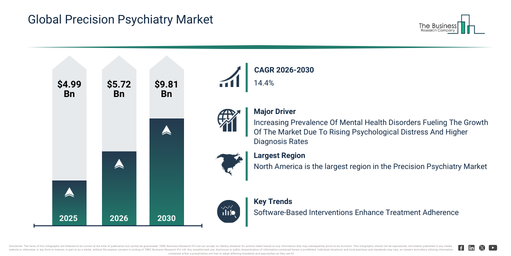
    The precision psychiatry market has shown substantial growth in recent years. It is anticipated to expand from $4.99 billion in 2025 to $5.72 billion in 2026, registering a compound annual growth rate (CAGR) of 14.7%. The market’s historical advancement is linked to the escalating prevalence of mental health conditions, the expanding constraints of trial-and-error prescribing methods, the broadening scope of psychiatric research initiatives, the increasing access to neuroimaging technologies, and the early incorporation of pharmacogenomics in psychiatry.

    The precision psychiatry market is poised for significant expansion in the coming years. Its valuation is projected to reach $9.81 billion by 2030, exhibiting a robust compound annual growth rate (CAGR) of 14.4%. This anticipated growth throughout the forecast period can be ascribed to various factors, including an increase in investments toward precision medicine platforms, the growing adoption of AI-enabled diagnostics, the expansion of digital mental health solutions, a rising need for personalized psychiatric care, and a heightened focus on preventive mental health strategies. Concurrently, major trends expected during this period encompass the increasing uptake of biomarker-guided treatment pathways, the rising utilization of digital phenotyping tools, the expanding integration of genetic and neuroimaging data, the broader application of AI-driven clinical decision support, and an enhanced emphasis on personalized mental health monitoring.

    Access Your Free Sample Report for In-Depth Market Insights:

    https://www.thebusinessresearchcompany.com/sample.aspx?id=30359&type=smp

    Which Drivers Are Affecting Market Participation In The Precision Psychiatry Market?

    The rising incidence of mental health conditions is anticipated to fuel the expansion of the precision psychiatry market moving forward. These conditions encompass various issues like depression, anxiety, and bipolar disorder, impacting an individual’s mood, thought processes, and behavior. The increase in mental health disorders is attributed to a greater number of people facing psychological challenges due to societal, economic, and environmental factors, alongside enhanced screening methods and increased public knowledge leading to higher rates of diagnosis. Precision psychiatry tackles mental health issues through the implementation of data-informed, tailored treatment approaches, thereby enhancing diagnostic precision and therapeutic results. A notable illustration of this trend is found in November 2023, where NHS England, the UK-based publicly funded national health authority, reported an increase in the probable mental disorder rate for individuals aged 20 to 23 years, climbing from 18.7% in 2022 to 21.6% in 2023. Consequently, the growing occurrence of mental health disorders is propelling the development of the precision psychiatry market.

    What Segment Categories Are Covered In The Precision Psychiatry Market?

    The precision psychiatry market covered in this report is segmented –

    1) By Therapeutic Approaches: Pharmacotherapy, Psychotherapy, Neurostimulation, Digital Therapeutics, Combination Therapies

    2) By Technology: Genetic Testing, Biomarker Analysis, Brain Imaging Techniques, Wearable Devices, Artificial Intelligence And Machine Learning Solutions

    3) By Disorders: Depression, Anxiety Disorders, Bipolar Disorder, Schizophrenia, Post-Traumatic Stress Disorder (PTSD)

    4) By Application: Diagnosis, Treatment, Research

    5) By End User: Clinics, Hospitals, Research Institutes, Pharmaceutical Companies, Home Care Settings

    Subsegments:

    1) By Pharmacotherapy: Antidepressant Medications, Antipsychotic Medications, Mood Stabilizers, Anxiolytic Medications, Stimulant Medications

    2) By Psychotherapy: Cognitive Behavioral Therapy, Interpersonal Therapy, Psychodynamic Therapy, Dialectical Behavior Therapy, Mindfulness-Based Therapy

    3) By Neurostimulation: Transcranial Magnetic Stimulation, Electroconvulsive Therapy, Vagus Nerve Stimulation, Deep Brain Stimulation, Transcranial Direct Current Stimulation

    4) By Digital Therapeutics: Mobile Application-Based Therapy, Virtual Reality Therapy, Web-Based Cognitive Behavioral Programs, Remote Patient Monitoring Tools, Artificial Intelligence-Guided Interventions

    5) By Combination Therapies: Pharmacotherapy And Psychotherapy Combination, Pharmacotherapy And Neurostimulation Combination, Pharmacotherapy And Digital Therapeutics Combination, Psychotherapy And Neurostimulation Combination, Multimodal Precision Treatment Programs

    What Industry Trends Are Transforming The Precision Psychiatry Market?

    Leading companies in the precision psychiatry market are concentrating on creating novel therapies, such as prescription digital therapeutics, to enable tailored and data-driven interventions for psychiatric conditions. A prescription digital therapeutic serves as a clinician-prescribed, software-based medical intervention that provides evidence-based behavioral therapy modules through mobile devices to enhance symptom improvement and treatment adherence. For example, in August 2024, Otsuka Precision Health Inc., a US-based precision health subsidiary of Otsuka Holdings, collaborated with Click Therapeutics Inc., a US-based digital therapeutics company, to introduce Rejoyn. This product represents the first and sole prescription digital therapeutic approved by the United States Food and Drug Administration (FDA) for the adjunctive management of major depressive disorder (MDD) symptoms. Rejoyn offers a six-week cognitive-emotional training program that integrates the emotional faces memory task with cognitive behavioral therapy (CBT)–based skill modules, facilitating digital prescribing, patient engagement, and remote monitoring. The introduction of Rejoyn marks a pivotal moment in Precision Psychiatry, illustrating how digital therapeutics can supplement pharmacological treatments to deliver individualized care. Furthermore, it prepares the ground for broader acceptance of software-based interventions that integrate real-time patient data to refine treatment outcomes and adherence.

    Which Key Players Are Driving Competition In The Precision Psychiatry Market?

    Major companies operating in the precision psychiatry market are Johnson & Johnson, F. Hoffmann-La Roche Ltd, Pfizer Inc., AbbVie Inc., AstraZeneca plc, Novartis AG, Bristol-Myers Squibb Company, Eli Lilly and Company, Otsuka Pharmaceutical Company Limited, Thermo Fisher Scientific Inc., Laboratory Corporation of America Holdings, Quest Diagnostics Incorporated, Illumina Inc., ARUP Laboratories Inc., Sumitomo Dainippon Pharma Company Limited, QIAGEN N.V., Neurocrine Biosciences Inc., Tempus Labs Inc., Myriad Genetics Inc., MedGenome Labs Ltd., Genomind Inc.

    Access The Complete Report For Deeper Market Insights:

    https://www.thebusinessresearchcompany.com/report/global-precision-psychiatry-market-report

    Which Region Is Projected To Lead The Precision Psychiatry Market During The Forecast Period?

    North America was the largest region in the precision psychiatry market in 2025. Asia-Pacific is expected to be the fastest-growing region in the forecast period. The regions covered in the precision psychiatry market report are Asia-Pacific, South East Asia, Western Europe, Eastern Europe, North America, South America, Middle East, Africa.

    Request Your Customized Precision Psychiatry Market Research Report for Competitive Advantage:

    https://www.thebusinessresearchcompany.com/customise?id=30359&type=smp

    Browse Through More Reports Similar to the Global Precision Psychiatry Market 2026, By The Business Research Company

    Digital Psychotherapeutics Market Report 2026

    https://www.thebusinessresearchcompany.com/report/digital-psychotherapeutics-global-market-report

    Psychiatrists Market 2026

    https://www.thebusinessresearchcompany.com/report/psychiatrists-market

    Precision Diagnostics Market Report 2026

    https://www.thebusinessresearchcompany.com/report/precision-diagnostics-global-market-report

    Get in touch with us:

    The Business Research Company: https://www.thebusinessresearchcompany.com/

    Americas +1 310-496-7795

    Asia +44 7882 955267 & +91 8897263534

    Europe +44 7882 955267

    Email us at info@tbrc.info

    Follow us on:

    LinkedIn: https://in.linkedin.com/company/the-business-research-company

    YouTube: https://www.youtube.com/channel/UC24_fI0rV8cR5DxlCpgmyFQ

    Global Market Model: https://www.thebusinessresearchcompany.com/global-market-model
  • Cell Separation Technologies Market Research: Growth Projections and Trends 2030

    Cell Separation Technologies Market Research: Growth Projections and Trends 2030

    Uncover key drivers, emerging technologies, and competitive movements shaping the cell separation technologies market from 2026–2035 with trusted insights from The Business Research Company

    Across 2026–2030, what is the expected market valuation path of the Cell Separation Technologies Market?

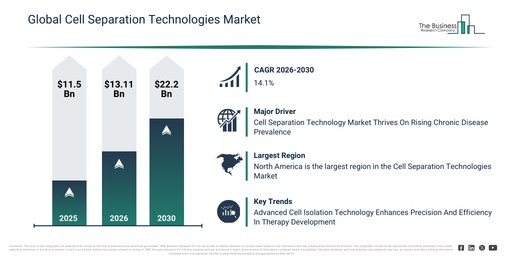
    The market for cell separation technologies has experienced rapid expansion in recent years. It is projected to increase from $11.5 billion in 2025 to $13.11 billion in 2026, advancing at a compound annual growth rate (CAGR) of 14.0%. Historically, this growth can be attributed to several factors, including an increase in stem cell research initiatives, the broader application of cell-based assays, the expansion of academic and biomedical research institutions, the rising adoption of flow cytometry methods, and the availability of sophisticated separation consumables.

    The cell separation technologies market size is projected to experience substantial growth in the upcoming years, expanding to $22.2 billion by 2030, at a compound annual growth rate (CAGR) of 14.1%. This growth during the forecast period is primarily fueled by increasing demand for personalized medicine research, rising investments in cell-based therapeutics, the expansion of automated laboratory workflows, a growing focus on reproducibility in cell analysis, and the increasing integration of AI-assisted cell sorting tools. Key trends anticipated in this period include the rising adoption of high-purity cell isolation techniques, an increased use of magnetic and fluorescence-based sorting systems, a growing demand for automated cell separation instruments, the expansion of application-specific separation kits, and an enhanced focus on high-throughput cell processing.

    Access Your Free Sample Report for In-Depth Market Insights:

    https://www.thebusinessresearchcompany.com/sample.aspx?id=16013&type=smp

    Which Drivers Are Supporting The Rise Of The Cell Separation Technologies Market?

    The increasing occurrence of chronic diseases is anticipated to boost the expansion of the cell separation technology market. These are conditions persisting for a year or more, requiring ongoing medical attention, limiting daily activities, or a combination of these factors. Common examples of such diseases include cancer, heart disease, stroke, diabetes, and arthritis. Their widespread presence stems from an increase in changeable lifestyle choices, social disparities, infections, genetic factors, autoimmunity, and mental health concerns. Cell-separation technologies contribute to advancing chronic disease treatments by offering a method for isolating cancer cells, immune cells, and various other pertinent cell types. For example, data from April 2025 by the Centers for Disease Control and Prevention (CDC), a US-based federal agency, indicated that in 2023, around 194 million U.S. adults, which is 76.4% of the adult population, reported experiencing at least one chronic condition. This prevalence stood at 59.5% for young adults, 78.4% for midlife adults, and 93.0% for older adults. Consequently, the rising incidence of chronic diseases is propelling the expansion of the cell separation technology market.

    What Leading Segments Are Studied In The Cell Separation Technologies Market?

    The cell separation technologies market covered in this report is segmented –

    1) By Product: Instruments, Consumables And Reagents

    2) By Technology: Gradient Centrifugation, Surface Markers Separation, Fluorescence Activated Cell Sorting, Magnetic Cell Sorting, Filtration Based Separation

    3) By Application: Stem Cell Research, Immunology, Neuroscience, Cancer Research, Other Applications

    4) By End-User: Biotechnology And Pharmaceutical Companies, Hospitals And Diagnostic Laboratories, Academic And Research Institutes, Other End-Users

    Subsegments:

    1) By Instruments: Centrifuges, Magnetic Cell Sorters, Flow Cytometers, Laser Capture Microdissection Systems, Cell Sorters

    2) By Consumables And Reagents: Separation Columns, Cell Separation Kits, Filters, Microbeads

    Which Innovation Trends Are Advancing Developments Within The Cell Separation Technologies Market?

    Leading companies within the cell separation technologies market are prioritizing the creation of advanced solutions, such as automated temperature-controlled tissue-dissociation systems. These innovations aim to standardize and expedite the transformation of solid tissues into viable single-cell suspensions for subsequent research. Specifically, automated temperature-controlled tissue-dissociation systems are instruments engineered to integrate controlled movement, precise temperature regulation, and enzymatic digestion methods, ensuring the safe and consistent dissociation of tissue into individual cells. As an illustration, in June 2025, STEMCELL Technologies, a Canada-based supplier of cell culture media, separation reagents, and instrumentation for cell biology research, introduced its STEMprep Tissue Dissociator System. Key characteristics of this system include: precise temperature regulation from 4 °C to 37 °C, designed to optimize enzyme function and safeguard cell viability; entirely automated processes that decrease manual effort and enhance consistency; a modular architecture facilitating the processing of 4-, 8-, or 12-samples; and adaptable protocols, supporting either validated STEMCELL enzymes or user-defined techniques for diverse tissue types. This system offers researchers advantages by saving time, minimizing experimental variation, and sustaining high viability in primary cells, which in turn boosts the dependability of later single-cell analytics, flow cytometry, and advancements in cell therapy.

    Which Leading Companies Dominate The Cell Separation Technologies Market Share?

    Major companies operating in the cell separation technologies market are Merck KGaA, Thermo Fisher Scientific Inc., Danaher Corporation, Becton Dickinson and Company, GE HealthCare Technologies, Corning Incorporated, Lonza Group, Sartorius AG, Bio-Rad Laboratories Inc., Pall Corporation, Eppendorf AG, Miltenyi Biotec B.V. & Co. KG, Stemcell Technologies Inc., 10X Genomics Inc., Cytena GmbH, Pluriselect GmbH, Akadeum Life Sciences Inc., Cellenion, NanoCellect Biomedical Inc., Agilent Technologies Inc, Cytek Biosciences Inc, Cell Microsystems Inc, Nexcelom Bioscience, ChemoMetec

    Access The Complete Report For Deeper Market Insights:

    https://www.thebusinessresearchcompany.com/report/cell-separation-technologies-global-market-report

    How Does The Cell Separation Technologies Market Perform Across Major Global Regions?

    North America was the largest region in the cell separation technologies market in 2025. Asia-Pacific is expected to be the fastest-growing region in the forecast period. The regions covered in the cell separation technologies market report are Asia-Pacific, South East Asia, Western Europe, Eastern Europe, North America, South America, Middle East, Africa.

    Request Your Customized Cell Separation Technologies Market Research Report for Competitive Advantage:

    https://www.thebusinessresearchcompany.com/customise?id=16013&type=smp

    Browse Through More Reports Similar to the Global Cell Separation Technologies Market 2026, By The Business Research Company

    Cell Isolation Market Report 2026

    https://www.thebusinessresearchcompany.com/report/cell-isolation-global-market-report

    Cell Separation Market Report 2026

    https://www.thebusinessresearchcompany.com/report/cell-separation-global-market-report

    Membrane Separation Technology Market Report 2026

    https://www.thebusinessresearchcompany.com/report/membrane-separation-technology-global-market-report

    Get in touch with us:

    The Business Research Company: https://www.thebusinessresearchcompany.com/

    Americas +1 310-496-7795

    Asia +44 7882 955267 & +91 8897263534

    Europe +44 7882 955267

    Email us at info@tbrc.info

    Follow us on:

    LinkedIn: https://in.linkedin.com/company/the-business-research-company

    YouTube: https://www.youtube.com/channel/UC24_fI0rV8cR5DxlCpgmyFQ

    Global Market Model: https://www.thebusinessresearchcompany.com/global-market-model
  • Precision Medicine Software Market Future Outlook: Strong Growth Expected Toward $4.92 Billion by 2030

    Precision Medicine Software Market Future Outlook: Strong Growth Expected Toward $4.92 Billion by 2030

    Uncover key drivers, emerging technologies, and competitive movements shaping the precision medicine software market from 2026–2035 with trusted insights from The Business Research Company

    What are the forecasted starting (2026) and ending (2030) market sizes for the Precision Medicine Software Market?

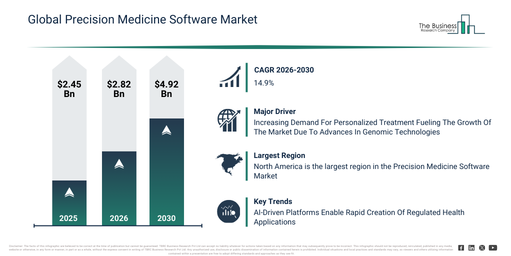
    The precision medicine software market has experienced rapid expansion in recent years. Its valuation is projected to increase from $2.45 billion in 2025 to $2.82 billion in 2026, reflecting a compound annual growth rate (CAGR) of 15.1%. The market’s past growth is linked to advancements in genomic sequencing technologies, the wider adoption of electronic health records, an increasing application of data-driven clinical workflows, the rise of oncology-focused precision treatments, and the expanding availability of bioinformatics platforms.

    The precision medicine software market size is expected to undergo rapid growth in the coming years. It is projected to expand to $4.92 billion by 2030, achieving a compound annual growth rate (CAGR) of 14.9%. This growth during the forecast period is attributed to factors such as an increasing demand for personalized therapeutics, rising investments in precision oncology programs, the expansion of AI-enabled healthcare analytics, the growing adoption of cloud-based clinical platforms, and an increasing focus on outcome-based healthcare models. Major trends anticipated in this period include a rising adoption of AI-driven clinical decision support, increased integration of genomic and clinical data platforms, the growing use of cloud-based precision medicine software, an expansion of real-time patient data analytics, and an enhanced focus on interoperable healthcare systems.

    Access Your Free Sample Report for In-Depth Market Insights:

    https://www.thebusinessresearchcompany.com/sample.aspx?id=27394&type=smp

    What Drivers Are Supporting Technological Adoption In The Precision Medicine Software Market?

    The increasing need for personalized healthcare solutions is anticipated to boost the precision medicine software market moving forward. Personalized treatment involves customizing medical interventions to align with an individual’s distinct genetic profile, lifestyle choices, and health history, leading to more favorable outcomes. This growing requirement for personalized care stems from progress in genomic technologies, which facilitate accurate detection of genetic variations and the development of customized therapies for patients. Precision medicine software supports personalized treatment through the examination of genetic, clinical, and lifestyle data to customize healthcare choices. It improves both the accuracy of diagnoses and the efficacy of treatments, thereby enabling more focused and streamlined patient care. As an illustration, in February 2024, the Personalized Medicine Coalition (PMC), a US-based nonprofit organization, reported that the U.S. Food and Drug Administration (FDA) sanctioned 26 new personalized medicines in 2023, marking a substantial rise from the 12 approvals in 2022. Consequently, the rising clamor for personalized treatment is fueling the expansion of the precision medicine software market.

    Which Segments Are Contributing To The Growth Of The Precision Medicine Software Market?

    The precision medicine software market covered in this report is segmented –

    1) By Software Type: Clinical Decision Support Systems (CDSS), Genomic Data Analysis Tools, Data Integration And Management Software, Patient Management Software, Bioinformatics Tools

    2) By Technology: Artificial Intelligence And Machine Learning, Big Data Analytics, Blockchain Technology, Internet of Medical Things (IoMT), Clustered Regularly Interspaced Short Palindromic Repeats (CRISPR) And Gene Editing Tools

    3) By Deployment: Cloud, On-Premise

    4) By Application: Oncology, Central Nervous System, Immunology, Cardiovascular, Other Applications

    5) By End User: Healthcare Providers, Research Centers And Government Institutes, Pharmaceutical And Biotechnology Companies, Other End Users

    Subsegments:

    1) By Clinical Decision Support Systems (CDSS): Diagnostic Decision Support, Therapeutic Decision Support, Clinical Guidelines And Protocols, Drug-Drug Interaction Alerts, Risk Assessment Modules

    2) By Genomic Data Analysis Tools: Variant Calling And Annotation Tools, Genome Alignment Software, Gene Expression Analysis, Next-Generation Sequencing (NGS) Data Analysis, Pathway Analysis Tools

    3) By Data Integration And Management Software: Electronic Health Record (EHR) Integration, Laboratory Information Management Systems (LIMS), Clinical Data Warehousing, Data Cleaning And Normalization, Metadata Management

    4) By Patient Management Software: Appointment Scheduling, Patient Registry Software, Care Coordination Tools, Patient Engagement Platforms, Remote Monitoring Systems

    5) By Bioinformatics Tools: Sequence Analysis Software, Structural Bioinformatics Tools, Functional Genomics Platforms, Molecular Modeling And Simulation, Proteomics And Metabolomics Tools

    What Trends Are Reshaping The Dynamics Of The Precision Medicine Software Market?

    Leading firms within the precision medicine software sector are prioritizing the creation of sophisticated solutions, particularly digital healthcare, to optimize the development process for digital health products, thereby cutting down both duration and expenses. Digital healthcare encompasses the application of digital tools and technologies to facilitate, oversee, and enhance healthcare services and patient results. For instance, Huma Therapeutics Ltd, a digital health company from the UK, introduced its Cloud Platform in July 2024. This platform aims to make digital-first healthcare universally accessible by allowing swift, no-code development and deployment of regulated health applications driven by artificial intelligence (AI). It features pre-built modules, device connectivity, and adherence to critical regulatory benchmarks (FDA Class II, EU MDR IIb, Saudi FDA C), empowering organizations irrespective of their size to deliver efficient and economical digital health solutions. This Huma cloud platform thus speeds up innovation in digital health, expands access, and underpins proactive, AI-powered care and research initiatives.

    Who Are The Top-Performing Companies In The Precision Medicine Software Market In Recent Years?

    Major companies operating in the precision medicine software market are Koninklijke Philips N.V., Palantir Technologies Inc., Tempus Labs Inc., Myriad Genetics Inc., Foundation Medicine Inc., Guardant Health Inc., Color Genomics Inc., NantHealth Inc., SOPHiA GENETICS SA, Aignostics GmbH, MVision AI Oy, Fabric Genomics Inc., QUIBIM S.L., Syapse Inc., PierianDx Inc., 2bPrecise LLC, SimBioSys Inc., Navignostics AG, xCures Inc., LifeOmic Holdings LLC

    Access The Complete Report For Deeper Market Insights:

    https://www.thebusinessresearchcompany.com/report/precision-medicine-software-global-market-report

    Which Region Currently Holds The Largest Share Of The Precision Medicine Software Market?

    North America was the largest region in the precision medicine software market in 2025. The regions covered in the precision medicine software market report are Asia-Pacific, South East Asia, Western Europe, Eastern Europe, North America, South America, Middle East, Africa.

    Request Your Customized Precision Medicine Software Market Research Report for Competitive Advantage:

    https://www.thebusinessresearchcompany.com/customise?id=27394&type=smp

    Browse Through More Reports Similar to the Global Precision Medicine Software Market 2026, By The Business Research Company

    Debt Financing Market Report 2026

    https://www.thebusinessresearchcompany.com/report/debt-financing-global-market-report

    Syndicated Loans Market Report 2026

    https://www.thebusinessresearchcompany.com/report/syndicated-loans-global-market-report

    Revenue Based Financing Market Report 2026

    https://www.thebusinessresearchcompany.com/report/revenue-based-financing-global-market-report

    Get in touch with us:

    The Business Research Company: https://www.thebusinessresearchcompany.com/

    Americas +1 310-496-7795

    Asia +44 7882 955267 & +91 8897263534

    Europe +44 7882 955267

    Email us at info@tbrc.info

    Follow us on:

    LinkedIn: https://in.linkedin.com/company/the-business-research-company

    YouTube: https://www.youtube.com/channel/UC24_fI0rV8cR5DxlCpgmyFQ

    Global Market Model: https://www.thebusinessresearchcompany.com/global-market-model
  • Global Cell Separation Industry Insights: Key Trends and Growth Estimates

    Global Cell Separation Industry Insights: Key Trends and Growth Estimates

    Uncover key drivers, emerging technologies, and competitive movements shaping the cell separation market from 2026–2035 with trusted insights from The Business Research Company

    What size range is anticipated for the Cell Separation Market from 2026 to 2030?

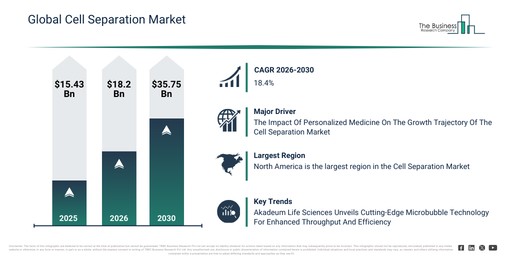
    The cell separation market size has seen rapid growth in recent years. It is anticipated to expand from $15.43 billion in 2025 to $18.2 billion in 2026, registering a compound annual growth rate (CAGR) of 18.0%. Historically, this growth can be attributed to factors such as the expansion of cancer research programs, an increase in stem cell research, the rising adoption of flow cytometry, an elevated demand for diagnostic cell separation, and the wider availability of separation consumables.

    The cell separation market is anticipated to experience substantial expansion over the upcoming years, with its valuation projected to reach $35.75 billion by 2030, demonstrating a compound annual growth rate (CAGR) of 18.4%. This expected growth during the forecast period is attributed to factors such as increasing investments in cell-based therapies, the rising demand for precision diagnostics, the broadening scope of immunotherapy research, the growing adoption of automated clinical laboratories, and the increasing embrace of personalized medicine approaches. Significant trends during this period are expected to include the wider adoption of magnetic and fluorescence-based sorting techniques, a heightened demand for high-purity cell populations, the expanded use of automated cell separation systems, the proliferation of single-cell isolation applications, and an intensified focus on clinical-grade cell processing.

    Access Your Free Sample Report for In-Depth Market Insights:

    https://www.thebusinessresearchcompany.com/sample.aspx?id=9928&type=smp

    What Drivers Are Affecting Demand In The Cell Separation Market?

    The growing move towards personalized medicine is anticipated to boost the expansion of the cell separation market over the next few years. Also referred to as precision medicine, personalized medicine represents an innovative method in medical treatment and healthcare that considers individual differences in patients’ genetics, environment, and daily habits. It has the potential to enhance cell separation techniques in multiple aspects, facilitating more precise and tailored strategies in biomedical and therapeutic applications. As an illustration, in February 2024, data from the Personalized Medicine Coalition (PMC), a US-based nonprofit, revealed that in 2023, the Food and Drug Administration (FDA) gave approval to 7 new personalized treatments for cancer, from a total of 26 personalized treatments. This signifies a considerable rise compared to the 12 approvals in 2022. Consequently, this rising trend towards personalized medicine is fueling the expansion of the cell separation market.

    Which Segment Groups Are Influencing The Cell Separation Market?

    The cell separation market covered in this report is segmented –

    1) By Cell Type: Human Cells, Animal Cells

    2) By Method: Gradient Centrifugation, Surface Markers Separation, Fluorescence Activated Cell Sorting, Magnetic Cell Sorting

    3) By Product: Consumables, Instruments

    4) By Application: Biomolecule Isolation, Cancer Research, Stem Cell Research, Tissue Regeneration, In Vitro Diagnostics, Therapeutics

    Subsegments:

    1) By Human Cells: Blood Cells, Stem Cells, Tumor Cells

    2) By Animal Cells: Mammalian Cells, Avian Cells, Insect Cells

    Which Competitive Trends Are Impacting The Structure Of The Cell Separation Market?

    Leading firms within the cell separation market are concentrating on creating technological innovations, including microfluidic rare cell enrichment, to enhance the isolation, analysis, and subsequent applications of rare and circulating tumor cells in cancer research and diagnostics. This microfluidic approach involves employing tiny fluidic devices to effectively separate and gather scarce cells from intricate samples, enabling accurate analysis and diagnostic procedures. An illustrative example occurred in June 2024 when Bio-Rad Laboratories, a life sciences enterprise based in the US, introduced Celselect Slides 2.0, designed to enhance the capture and separation of rare cells. These updated slides facilitate more effective enrichment of CTCs, thereby aiding high-accuracy cancer research processes and speeding up the creation of targeted treatments. The introduction of Celselect Slides 2.0 underscores Bio-Rad’s dedication to progressing cell separation innovations and fostering advanced cancer research initiatives.

    Who Are The Major Companies Operating In The Cell Separation Market?

    Major companies operating in the cell separation market are Becton Dickinson and Company, Merck KGaA, Thermo Fisher Scientific Inc., Bio-Rad Laboratories Inc., Terumo Corporation, Miltenyi Biotec GmbH, Beckman Coulter Inc., STEMCELL Technologies Inc., PluriSelect Life Science UG and Co. KG, GE HealthCare Technologies Inc., Life Technologies Inc., Danaher Corporation, Corning Incorporated, Sartorius AG, Bio-Techne Corp., Takara Bio Inc., Lonza Group Ltd., MagBio Genomics, Akadeum Life Sciences Inc., Invent Biotechnologies Inc.

    Access The Complete Report For Deeper Market Insights:

    https://www.thebusinessresearchcompany.com/report/cell-separation-global-market-report

    Which Region Is Anticipated To See The Fastest Growth In The Cell Separation Market?

    North America was the largest region in the cell separation market in 2025. Asia-Pacific is expected to be the fastest-growing region in the cell separation market report during the forecast period. The regions covered in the cell separation market report are Asia-Pacific, South East Asia, Western Europe, Eastern Europe, North America, South America, Middle East, Africa.

    Request Your Customized Cell Separation Market Research Report for Competitive Advantage:

    https://www.thebusinessresearchcompany.com/customise?id=9928&type=smp

    Browse Through More Reports Similar to the Global Cell Separation Market 2026, By The Business Research Company

    Separation Machinery Market Report 2026

    https://www.thebusinessresearchcompany.com/report/separation-machinery-global-market-report

    Cell Isolation Market Report 2026

    https://www.thebusinessresearchcompany.com/report/cell-isolation-global-market-report

    Cell Separation Technologies Market Report 2026

    https://www.thebusinessresearchcompany.com/report/cell-separation-technologies-global-market-report

    Get in touch with us:

    The Business Research Company: https://www.thebusinessresearchcompany.com/

    Americas +1 310-496-7795

    Asia +44 7882 955267 & +91 8897263534

    Europe +44 7882 955267

    Email us at info@tbrc.info

    Follow us on:

    LinkedIn: https://in.linkedin.com/company/the-business-research-company

    YouTube: https://www.youtube.com/channel/UC24_fI0rV8cR5DxlCpgmyFQ

    Global Market Model: https://www.thebusinessresearchcompany.com/global-market-model
  • Revenue of the Precision Genomic Testing Market Predicted to Achieve $25.71 Billion by 2030, Driven by 11.3% CAGR

    Revenue of the Precision Genomic Testing Market Predicted to Achieve $25.71 Billion by 2030, Driven by 11.3% CAGR

    Uncover key drivers, emerging technologies, and competitive movements shaping the precision genomic testing market from 2026–2035 with trusted insights from The Business Research Company

    What upper market value could the Precision Genomic Testing Market reach by 2030 starting from 2026 levels?

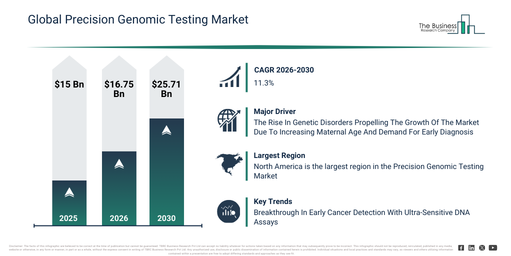
    The precision genomic testing market size has experienced swift expansion in recent years. It is projected to increase from $15 billion in 2025 to $16.75 billion in 2026, demonstrating a compound annual growth rate (CAGR) of 11.7%. This historical growth can be attributed to advancements in sequencing technologies, the expansion of precision oncology programs, greater availability of genomic databases, an increase in clinical research funding, and rising awareness of genetic disorders.

    The precision genomic testing market is projected to experience swift expansion in the coming years. By 2030, this market is anticipated to reach a valuation of $25.71 billion, exhibiting a compound annual growth rate (CAGR) of 11.3%. This projected growth during the forecast period is fueled by several factors, including the wider acceptance of precision medicine, an increase in genomic research investments, the expansion of large-scale genomic projects, a heightened need for companion diagnostics, and the greater incorporation of genomics into standard clinical procedures. Key trends expected during this period involve the increasing uptake of next-generation sequencing, the growing application of AI-powered genomic interpretation, a surging requirement for customized treatment plans, the broadening scope of clinical genomic testing, and improved integration of bioinformatics platforms.

    Access Your Free Sample Report for In-Depth Market Insights:

    https://www.thebusinessresearchcompany.com/sample.aspx?id=25883&type=smp

    Which Drivers Are Influencing Long-Term Growth In The Precision Genomic Testing Market?

    The increasing occurrence of genetic disorders is anticipated to fuel the expansion of the precision genomic testing market in the future. Genetic disorders are health issues resulting from irregularities in a person’s DNA, encompassing single or multiple gene mutations, or alterations in chromosome count or structure. This rising prevalence largely stems from an increase in maternal age, given that older mothers face a greater likelihood of transmitting chromosomal abnormalities, such as Down syndrome, to their offspring. Precision genomic testing facilitates the early identification and precise diagnosis of genetic conditions by pinpointing particular genetic mutations, thereby enabling focused interventions and customized treatment plans. For instance, in May 2025, Gene People, a registered charity based in the UK, reported that an estimated 1 in 25 children are affected by genetic conditions, impacting more than 2.4 million children and adults across the UK. Furthermore, approximately 30,000 newborns and children in the UK receive a diagnosis of a genetic condition annually. Consequently, the increasing prevalence of genetic disorders is a key factor propelling the growth of the precision genomic testing market.

    How Is The Precision Genomic Testing Market Divided Into Segments?

    The precision genomic testing market covered in this report is segmented –

    1) By Product And Service: Consumables, Equipment, Services

    2) By Technology: Next-Generation Sequencing, Polymerase Chain Reaction, Microarray Technology, Sanger Sequencing, Clustered Regularly Interspaced Short Palindromic Repeats Or Clustered Regularly Interspaced Short Palindromic Repeats-Associated Systems, Other Technologies

    3) By Application: Oncology, Cardiovascular Diseases, Neurological Disorders, Reproductive Health, Rare Diseases, Other Applications

    4) By End-Users: Hospitals And Clinics, Diagnostic Laboratories, Research And Academic Institutes, Other End-Users

    Subsegments:

    1) By Consumables: Reagents And Kits, Deoxyribonucleic Acid Or Ribonucleic Acid Extraction Kits, Library Preparation Kits, Sequencing Reagents, Polymerase Chain Reaction Assay Kits, Buffers And Enzymes

    2) By Equipment: Next-Generation Sequencing Systems, Polymerase Chain Reaction Machines, Microarray Instruments, Deoxyribonucleic Acid Analyzers, Bioinformatics Workstations, Laboratory Automation Systems

    3) By Services: Genomic Data Analysis Services, Laboratory Testing Services, Genetic Counseling Services, Clinical Interpretation Services, Contract Research Services, Custom Assay Development Services

    How Are New Market Trends Shaping The Landscape Of The Precision Genomic Testing Market?

    Leading firms within the precision genomic testing sector are prioritizing the creation of advanced solutions, specifically ultra-sensitive circulating tumor deoxyribonucleic acid assays, to facilitate earlier and more precise cancer detection. These ultra-sensitive circulating tumor deoxyribonucleic acid assays are sophisticated diagnostic tools capable of identifying minute traces of DNA originating from tumors within a patient’s bloodstream, thereby allowing for prompt and accurate recognition of genetic mutations associated with cancer. An example of this innovation is Natera Inc., a US-based clinical genetic testing company, which introduced its ultra-sensitive Signatera genome molecular residual disease test in April 2025. This particular test constructs a customized assay by employing whole genome sequencing on both the patient’s tumor and corresponding normal deoxyribonucleic acid, allowing for the detection of circulating tumor deoxyribonucleic acid even at incredibly low concentrations, as precise as 1 part per million. Such exceptional sensitivity contributes to the earlier and more accurate identification of recurring cancer, ultimately improving the formulation of treatment plans and the overall management of patients across diverse cancer forms.

    Which Leading Companies Dominate The Precision Genomic Testing Market Share?

    Major companies operating in the precision genomic testing market are Roche Diagnostics International AG, Thermo Fisher Scientific Inc., Danaher Corporation, Agilent Technologies Inc., Illumina Inc., Revvity Inc., QIAGEN N.V., Exact Sciences Corporation, Natera Inc., Myriad Genetics Inc., GenScript Biotech Corporation, Fulgent Genetics Inc., Invitae Corporation, NeoGenomics Laboratories Inc., Guardant Health Inc., Ambry Genetics Corporation, Color Health Inc., Pacific Biosciences, Eurofins Genomics LLC, BGI Genomics Co. Ltd.

    Access The Complete Report For Deeper Market Insights:

    https://www.thebusinessresearchcompany.com/report/precision-genomic-testing-global-market-report

    How Does The Precision Genomic Testing Market Perform Across Major Global Regions?

    North America was the largest region in the precision genomic testing market in 2025. Asia-Pacific is expected to be the fastest-growing region in the forecast period. The regions covered in the precision genomic testing market report are Asia-Pacific, South East Asia, Western Europe, Eastern Europe, North America, South America, Middle East, Africa.

    Request Your Customized Precision Genomic Testing Market Research Report for Competitive Advantage:

    https://www.thebusinessresearchcompany.com/customise?id=25883&type=smp

    Browse Through More Reports Similar to the Global Precision Genomic Testing Market 2026, By The Business Research Company

    Precision Diagnostics Market Report 2026

    https://www.thebusinessresearchcompany.com/report/precision-diagnostics-global-market-report

    Dna Testing Market Report 2026

    https://www.thebusinessresearchcompany.com/report/dna-testing-global-market-report

    Genomics Market Report 2026

    https://www.thebusinessresearchcompany.com/report/genomics-global-market-report

    Get in touch with us:

    The Business Research Company: https://www.thebusinessresearchcompany.com/

    Americas +1 310-496-7795

    Asia +44 7882 955267 & +91 8897263534

    Europe +44 7882 955267

    Email us at info@tbrc.info

    Follow us on:

    LinkedIn: https://in.linkedin.com/company/the-business-research-company

    YouTube: https://www.youtube.com/channel/UC24_fI0rV8cR5DxlCpgmyFQ

    Global Market Model: https://www.thebusinessresearchcompany.com/global-market-model
  • Cell Processing Technologies Market Forecast: How Big Will It Be by 2030?

    Cell Processing Technologies Market Forecast: How Big Will It Be by 2030?

    Uncover key drivers, emerging technologies, and competitive movements shaping the cell processing technologies market from 2026–2035 with trusted insights from The Business Research Company

    How is the Cell Processing Technologies Market size predicted to change over the forecast window of 2026–2035?

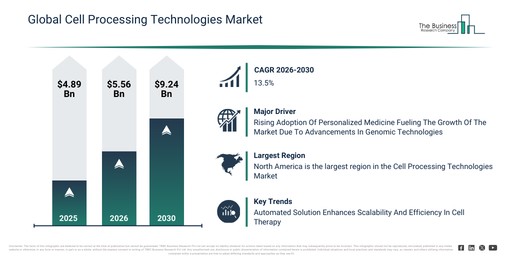
    The cell processing technologies market has experienced substantial expansion in recent years. Its valuation is expected to ascend from $4.89 billion in 2025 to $5.56 billion in 2026, achieving a compound annual growth rate (CAGR) of 13.7%. This past growth can be attributed to factors such as the broadening of cell-based research activities, the rising utilization of cell culture techniques, the development of regenerative medicine research, the accessibility of advanced laboratory equipment, and increased academic and clinical research funding.

    The cell processing technologies market size is anticipated to undergo rapid expansion over the next few years, projected to reach $9.24 billion in 2030, driven by a compound annual growth rate (CAGR) of 13.5%. This growth during the forecast period is primarily attributed to the increasing commercialization of cell therapies, the growing demand for scalable cell manufacturing, the expansion of personalized medicine applications, rising investments in bioprocess automation, and an increasing regulatory focus on cell processing standards. Furthermore, major trends in the forecast period include the increasing adoption of automated cell processing systems, a rising demand for closed-system cell handling technologies, growing integration of digital process monitoring, the expansion of single-use consumables, and an enhanced focus on cell viability and quality control.

    Access Your Free Sample Report for In-Depth Market Insights:

    https://www.thebusinessresearchcompany.com/sample.aspx?id=27243&type=smp

    Which Drivers Are Contributing To The Expansion Of The Cell Processing Technologies Market?

    The expanding integration of personalized medicine is anticipated to fuel the expansion of the cell processing technologies market in the future. Personalized medicine defines a healthcare strategy where treatments are customized for individual patients, considering their genetic, environmental, and lifestyle elements to enhance results and patient care. The uptake of personalized medicine is rising, propelled by developments in genomic technologies that facilitate the accurate detection of genetic variations and the creation of bespoke treatments for individuals. Cell processing technologies augment personalized medicine by allowing the precise handling and preparation of patient-specific cells, rendering them crucial for customized therapies. These technologies boost treatment effectiveness by guaranteeing premium, viable cells, thereby promoting the creation of targeted and efficacious medical interventions. As an illustration, in February 2024, the U.S. Food and Drug Administration (FDA) sanctioned 26 new personalized medicines in 2023, a rise from 12 approved in 2022, according to the Personalized Medicine Coalition (PMC), a US-based nonprofit organization. Consequently, the increasing embrace of personalized therapies is powering the growth of the cell processing technologies market.

    What Segment Classifications Make Up The Cell Processing Technologies Market?

    The cell processing technologies market covered in this report is segmented –

    1) By Product Type: Equipment, Consumables, Software

    2) By Application: Oncology, Cardiovascular Disease, Bone Repair, Neurological Disorders, Skeletal Muscle Repair, Immune Diseases, Other Applications

    3) By End-User: Pharmaceutical and Biotechnology Companies, Academic Research Institutes, Other End-Users

    Subsegments:

    1) By Equipment: Bioreactors, Centrifuges, Cell Counters, Incubators, Cryopreservation Systems, Cell Washers, Cell Sorters, Microscopes

    2) By Consumables: Cell Culture Media, Reagents, Pipettes and Tips, Flasks and Plates, Cryovials, Filters, Disposable Bags, Tubes and Containers

    3) By Software: Process Monitoring Software, Data Management Software, Automation Control Software, Quality Control Software, Imaging and Analysis Software, Inventory Management Software

    What Industry Trends Are Transforming The Cell Processing Technologies Market?

    Leading companies within the cell processing technologies market are concentrating on developing technologically advanced solutions, such as automated platforms for cell therapy manufacturing, to enhance scalability, optimize process effectiveness, improve cell quality, and reduce production costs. An automated cell therapy manufacturing platform is defined as a fully integrated system that leverages advanced robotics, sensors, and software to perform the entire production process of cell-based therapies with minimal human intervention. For instance, in March 2025, Limula SA, a Switzerland-based life sciences company, launched LimONE, an entirely automated cell therapy manufacturing platform designed to revolutionize the production of advanced therapies including CAR-T and gene-edited stem cells. It simplifies complex manufacturing processes by integrating a bioreactor and centrifuge into a singular, closed device that uses one consumable throughout all development stages. LimONE enables hospitals, biotech firms, and manufacturers to accelerate the transition from research to clinical trials and commercial production, making life-saving, personalized cell and gene therapies more accessible to patients.

    Which Major Firms Are Strengthening Their Position In The Cell Processing Technologies Market?

    Major companies operating in the cell processing technologies market are Thermo Fisher Scientific Inc., Danaher Corporation, Cryo-Cell International Inc., Merck KGaA, Becton Dickinson and Company, Lonza Group AG, Terumo Corporation, WuXi AppTec Co. Ltd., Charles River Laboratories International Inc., Bio-Rad Laboratories Inc., PHC Holdings Corporation, Bio-Techne Corporation, StemCell Technologies Inc., Shibuya Corporation, Repligen Corporation, Beckman Coulter Inc., ThermoGenesis Holdings Inc., Ori Biotech Ltd., Biospherix Ltd., Miltenyi Biotec B.V. & Co. KG, Sartorius Stedim Biotech, Cytiva

    Access The Complete Report For Deeper Market Insights:

    https://www.thebusinessresearchcompany.com/report/cell-processing-technologies-global-market-report

    Which Region Is Anticipated To See The Fastest Growth In The Cell Processing Technologies Market?

    North America was the largest region in the cell processing technologies market in 2025. The regions covered in the cell processing technologies market report are Asia-Pacific, South East Asia, Western Europe, Eastern Europe, North America, South America, Middle East, Africa.

    Request Your Customized Cell Processing Technologies Market Research Report for Competitive Advantage:

    https://www.thebusinessresearchcompany.com/customise?id=27243&type=smp

    Browse Through More Reports Similar to the Global Cell Processing Technologies Market 2026, By The Business Research Company

    Vacuum Insulation Panel Market Report 2026

    https://www.thebusinessresearchcompany.com/report/vacuum-insulation-panel-global-market-report

    Sandwich Panels Market Report 2026

    https://www.thebusinessresearchcompany.com/report/sandwich-panels-global-market-report

    Structural Insulated Panels Market 2026

    https://www.thebusinessresearchcompany.com/report/structural-insulated-panels-market

    Get in touch with us:

    The Business Research Company: https://www.thebusinessresearchcompany.com/

    Americas +1 310-496-7795

    Asia +44 7882 955267 & +91 8897263534

    Europe +44 7882 955267

    Email us at info@tbrc.info

    Follow us on:

    LinkedIn: https://in.linkedin.com/company/the-business-research-company

    YouTube: https://www.youtube.com/channel/UC24_fI0rV8cR5DxlCpgmyFQ

    Global Market Model: https://www.thebusinessresearchcompany.com/global-market-model