Category: HealthcareServices

  • Convalescent Plasma Therapy Market Trends Report 2025 – For Business Development and Strategy Teams

    Convalescent Plasma Therapy Market Trends Report 2025 – For Business Development and Strategy Teams

    Claim your 30% discount on Global Market Reports with code ONLINE30. Limited time only.

    #How Has the Convalescent Plasma Therapy Market Growth Performance Trended Historically, And What Lies Ahead?

    In recent times, there has been a swift expansion in the size of the convalescent plasma therapy market. The market’s growth is expected to rise from $0.05 billion in 2024 to $0.06 billion in 2025, exhibiting a compound annual growth rate (CAGR) of 11.4%. The unprecedented growth experienced in the historical period can be linked to occurrences such as pandemics and outbreaks of infectious diseases, advancements in immunotherapy research, the implementation of emergency use authorization (eua), the availability of patients, and a heightened awareness amongst clinicians and the general public.

    What Is the Forecast for the Convalescent Plasma Therapy Market Size Through 2029?

    Anticipations are high for a swift expansion of the convalescent plasma therapy market in the coming years. By 2029, it is projected to reach a market size of $0.09 billion, exhibiting a Compound Annual Growth Rate (CAGR) of 13.7%. The acceleration during the forecast period is likely due to the evolution of pathogens, progress in immunotherapies, administrative structures, global readiness, and public health programs. Key trends during this forecast period are expected to be the standardization of collection and processing, focus on specific plasma components, personalized care approaches, advancements in telemedicine and remote monitoring, as well as research on long-term impacts.

    Download The Free Sample Report Here:

    https://www.thebusinessresearchcompany.com/sample.aspx?id=3233&type=smp

    What are the Key Market Players in Convalescent Plasma Therapy Market and How They’re Evolving?

    Major companies operating in the convalescent plasma therapy market include Bio Farma, Hilton Pharma Ltd., Biotest AG, BPL Ltd., LFB SA, Octapharma AG, CSL Behring LLC, Takeda Pharmaceutical Company Ltd., Orthosera Kft., ADMA Biologics Inc., GC Biopharma Corp, Grifols S.A, Sanquin Plasma Products B.V., America’s Blood Centers, Blood Centers of America Inc., Anthem Inc., Laboratory Corporation of America Holdings, Cerus Corporation, Emergent BioSolutions Inc., Kedrion Biopharma Inc., New York Blood Center, Blood Systems Inc., OneBlood Inc., Gulf Coast Regional Blood Center, Bloodworks Northwest, Blood Assurance Inc., New York Blood Center Inc., Honolulu Blood-Plasma Bank, Community Blood Center, LifeStream Blood Bank

    What Are the Primary Growth Drivers in the Convalescent Plasma Therapy Market?

    The growth of the CPT market during the forecast period can be fueled by the high efficacy and safety demonstrated during trials on COVID-19 patients. Traditionally, convalescent plasma transfusion has been used in addressing other outbreaks of infectious diseases such as SARS‐1, Middle East Respiratory Syndrome (MERS), and 2009 H1N1. In a study led by the Houston Methodist hospital in June 2022, the safety and effectiveness of COVID-19 convalescent plasma therapy were evaluated, demonstrating that the therapy is safe, with no adverse events recorded, and showed a productivity of 76% in recovery rate. Another study published in the Journal of Medical Virology in May 2020 suggested that the use of convalescent plasma therapy can mitigate mortality rates among severely sick patients, present favorable effects on clinical symptoms, and lead to an elevation in neutralizing antibody titers and disappearance of SARS‐CoV‐2 RNA. These results demonstrating the safety and efficacy of convalescent plasma therapy in treating COVID-19 patients is likely to stimulate the progress of the global convalescent plasma therapy market.

    Request For A Customized Report:

    https://www.thebusinessresearchcompany.com/customise?id=3233&type=smp

    What Are the Leading Segments in the Global Convalescent Plasma Therapy Industry?

    The convalescent plasma therapy market covered in this report is segmented –

    1) By Antibody type: IgM, IgG, IgA

    2) By Application: Prophylaxis, Treatment

    3) By End-Users: Hospitals And Clinics, Laboratories And Research institutes

    Subsegments:

    1) By IgM: Early-Stage Infection Plasma, Acute Phase Plasma, Other IgM-Based Plasma Products

    2) By IgG: High Titer IgG Plasma, Standard IgG Plasma, Other IgG-Based Plasma Products

    3) By IgA: Plasma Rich In IgA, Specific IgA Antibody Plasma, Other IgA-Based Plasma Products

    What Are the Key Market Trends in the Convalescent Plasma Therapy Industry?

    The progress in antibody-based immunotherapy as a potential treatment method for COVID-19 indicates potential growth for the convalescent plasma therapy market. This therapy leverages antibodies generated against the coronavirus by the donor to strengthen the recipient’s immune system. Corporations are commencing trials, affiliations, and investments in antibody-centered COVID-19 therapy. In August 2023, U.S. biotech company Regeneron Pharmaceuticals Inc. partnered with the Biomedical Advanced Research and Development Authority (BARDA) to support the clinical advancement, manufacture, and licensing regulations for the forthcoming COVID-19 monoclonal antibody therapy aimed at blocking SARS-CoV-2 infection. This partnership is a segment of Project NextGen, an initiative by the U.S. Department of Health and Human Services (HHS) to establish a string of updated COVID-19 vaccines and treatments. In line with the project’s design, Regeneron will autonomously build and introduce an antibody candidate, which BARDA and Regeneron will evaluate and pick for further study, production, and licensing processes. The emphasis on antibody-based COVID-19 therapy, which is a key component of convalescent plasma therapy, is projected to stimulate market expansion.

    Access The Full Report Here:

    https://www.thebusinessresearchcompany.com/report/convalescent-plasma-therapy-global-market-report

    What Is the Regional Outlook for the Convalescent Plasma Therapy Market?

    North America was the largest region in the convalescent plasma therapy market in 2023. Western Europe was the second largest region in the convalescent plasma therapy market. The regions covered in the convalescent plasma therapy market report are Asia-Pacific, Western Europe, Eastern Europe, North America, South America, Middle East, Africa

    Purchase The Full Report Today:

    https://www.thebusinessresearchcompany.com/purchaseoptions.aspx?id=3233

    This Report Delivers Insight On:

    1. How big is the convalescent plasma therapy market, and how is it changing globally?

    2. Who are the major companies in the convalescent plasma therapy market, and how are they performing?

    3. What are the key opportunities and risks in the convalescent plasma therapy market right now?

    4. Which products or customer segments are growing the most in the convalescent plasma therapy market?

    5. What factors are helping or slowing down the growth of the convalescent plasma therapy market?

    About The Business Research Company:

    With over 15000+ reports from 27 industries covering 60+ geographies, The Business Research Company has built a reputation for offering comprehensive, data-rich research and insights. Armed with 1,500,000 datasets, the optimistic contribution of in-depth secondary research, and unique insights from industry leaders, you can get the information you need to stay ahead in the game.

    Get in touch with us:

    The Business Research Company: https://www.thebusinessresearchcompany.com/

    Americas +1 310-496-7795

    Asia +44 2071930708

    Europe +44 7882 955267

    Email us at info@tbrc.info

    Follow us on:

    LinkedIn: https://in.linkedin.com/company/the-business-research-company

    YouTube: https://www.youtube.com/channel/UC24_fI0rV8cR5DxlCpgmyFQ

    Global Market Model: https://www.thebusinessresearchcompany.com/global-market-model
  • Cartilage Degeneration Market to Reach $16.62 Billion by 2029 | Key Drivers and Future Outlook

    Cartilage Degeneration Market to Reach $16.62 Billion by 2029 | Key Drivers and Future Outlook

    Claim your 30% discount on Global Market Reports with code ONLINE30. Limited time only.

    What Is the Estimated Market Size of the Cartilage Degeneration Market In 2029?

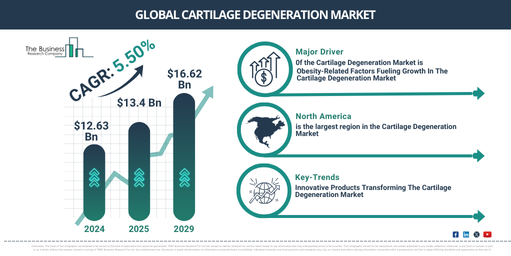
    The market size for cartilage degeneration has seen substantial increase in the last few years. The market, which is projected to escalate from $12.63 billion in 2024 to $13.4 billion in 2025, has a compound annual growth rate (CAGR) of 6.2%. The impressive growth during the historical period is attributed to factors such as an aging population, joint injuries, a widespread obesity crisis, sports-related injuries, and limited capacity for self-repair.

    What Growth Rate Is Forecasted for the Cartilage Degeneration Market by 2029?

    In the coming years, the market for cartilage degeneration is predicted to experience robust expansion. It is anticipated to reach $16.62 billion in 2029, with a compound annual growth rate (CAGR) of 5.5%. Factors contributing to this growth during the forecast period include progress in regenerative medicine, biologic injections, tissue engineering techniques, precision medicine, and robotics-assisted surgery. Upcoming trends for the forecast period encompass stem cell treatments, orthopedic 3D printing, gene therapy focused on cartilage restoration, individually tailored rehabilitation schemes, and the utilization of telemedicine for successive care.

    Download The Free Sample Report Here:

    https://www.thebusinessresearchcompany.com/sample.aspx?id=13103&type=smp

    Which Key Companies Are Shaping the Future of the Cartilage Degeneration Market?

    Major companies operating in the cartilage degeneration market report are Johnson & Johnson Services Inc., MEDIPOST Co. Ltd., Medtronic PLC, Stryker Corporation, Zimmer Biomet Holdings Inc., Smith and Nephew PLC, B Braun Melsungen AG, Osiris Therapeutics Inc., Arthrex Inc., Conmed Corporation, Orthocell Ltd., Bioventus LLC, Aesculap Inc., Vericel Corporation, Anika Therapeutics Inc., Geistlich Pharma AG, MatTek Corporation, Breg Inc., Isto Biologics Inc., OrthoTrophix LLC, CellGenix GmbH, CartiHeal Inc., Cayenne Medical Inc., Collagen Solutions PLC, Regentis Biomaterials Ltd., Histogen Inc., BioTime Inc., CollPlant Holdings Ltd.

    Which Factors Are Driving Demand in the Cartilage Degeneration Industry?

    The escalating rates of obesity are predicted to fuel the expansion of the cartilage degeneration market in the future. Defined as a health condition in which an individual’s body fat accumulates excessively to the point of detrimental health effects, obesity can precipitate and expedite cartilage degeneration with the intensification of compressive forces on cartilage and inflammatory cytokines. Obesity provokes numerous pathologic transformations in the entire structure of the knee joint such as irregular strain on the joint, malalignment of the joint, and weakening of the muscles. To exemplify, the Government Digital Service, a UK government agency, reported in May 2023 that approximately 63.8% of adults, 18 years old and above, were either overweight or categorised as obese in 2021-2022, a rise from 63.3% in the preceding year. In addition, it was estimated that 25.9% of these adults were obese, marking a 25.2% increase from 2020 to 2021. Consequently, the escalating incidence of obesity is a key driver of the cartilage degeneration market’s growth.

    Request For A Customized Report:

    https://www.thebusinessresearchcompany.com/customise?id=13103&type=smp

    How Is the Cartilage Degeneration Market Segmented by Several Divisions?

    The cartilage degeneration market covered in this report is segmented –

    1) By Procedure: Joint Replacements, Chondroplasty, Osteochondral Transplants, Microfracture, Meniscus Transplants, Cell-Based Cartilage Resurfacing, Autologous Chondrocyte Implantation, Other Procedures

    2) By Application: Knee, Hip, Other Applications

    3) By End User: Hospitals And Specialty Clinics, Ambulatory Surgical Centers, Academic And Research Institutes

    Subsegments:

    1) By Joint Replacements: Knee Replacement (Partial, Total), Hip Replacement (Partial, Total), Shoulder Replacement (Total, Reverse), Other Joints (Ankle, Elbow, Wrist)

    2) By Chondroplasty: Radiofrequency Ablation Chondroplasty, Mechanical Chondroplasty, Thermal Chondroplasty, Arthroscopic Chondroplasty

    3) By Osteochondral Transplants: Autografts (OATS), Allografts (Fresh Osteochondral Allografts), Synthetic Implants

    4) By Microfracture: Traditional Microfracture, Augmented Microfracture (with scaffolds or matrix implants)

    5) By Meniscus Transplants: Allograft Meniscus Transplantation (Cryopreserved, Fresh Frozen), Synthetic Meniscus Implants

    6) By Cell-Based Cartilage Resurfacing: Autologous Cell-Based Therapy, Allogeneic Cell-Based Therapy, Stem Cell-Based Cartilage Repair

    7) By Autologous Chondrocyte Implantation (ACI): First-Generation ACI, Second-Generation ACI, Third-Generation ACI (MACI)

    8) By Other Procedures: Arthroscopic Debridement, Osteotomy, Cartilage Repair Using Synthetic Scaffolds, Injection-Based Therapies (Hyaluronic Acid, PRP, Stem Cell Injections)

    What are the Emerging Market Trends Driving the Growth of the Cartilage Degeneration Industry?

    Leading cartilage degeneration market players are introducing unique products like Agili-C to aid in bone restructuring and cartilage renewal. Agili-C is an off-the-shelf, cell-free implant designed to mend cartilage and osteochondral flaws in both traumatic and osteoarthritic joints. For example, CartiHeal Ltd., a medical device company from Israel, announced its first commercial insertion of Agili-C in July 2023. The primary purpose of this implant is to promote the natural regeneration of articular cartilage and subchondral bone, rather than depending on cellular or growth factors. Comprised of natural calcium carbonate or aragonite that originates from coral exoskeletons, the implant instigates the migration of chondrocytes from the adjacent cartilage into the scaffold, creating an extracellular matrix. This certification adds worth to the implant, assuring both patients and healthcare professionals of its safety and effectiveness as a treatment choice.

    Access The Full Report Here:

    https://www.thebusinessresearchcompany.com/report/cartilage-degeneration-global-market-report

    Which Regions Are Driving Growth in the Cartilage Degeneration Market?

    North America was the largest region in the cartilage degeneration market in 2023. Asia-Pacific is expected to be the fastest-growing region in the forecast period. The regions covered in the cartilage degeneration market report are Asia-Pacific, Western Europe, Eastern Europe, North America, South America, Middle East, Africa

    Purchase The Full Report Today:

    https://www.thebusinessresearchcompany.com/purchaseoptions.aspx?id=13103

    This Report Delivers Insight On:

    1. How big is the cartilage degeneration market, and how is it changing globally?

    2. Who are the major companies in the cartilage degeneration market, and how are they performing?

    3. What are the key opportunities and risks in the cartilage degeneration market right now?

    4. Which products or customer segments are growing the most in the cartilage degeneration market?

    5. What factors are helping or slowing down the growth of the cartilage degeneration market?

    About The Business Research Company:

    With over 15000+ reports from 27 industries covering 60+ geographies, The Business Research Company has built a reputation for offering comprehensive, data-rich research and insights. Armed with 1,500,000 datasets, the optimistic contribution of in-depth secondary research, and unique insights from industry leaders, you can get the information you need to stay ahead in the game.

    Get in touch with us:

    The Business Research Company: https://www.thebusinessresearchcompany.com/

    Americas +1 310-496-7795

    Asia +44 2071930708

    Europe +44 7882 955267

    Email us at info@tbrc.info

    Follow us on:

    LinkedIn: https://in.linkedin.com/company/the-business-research-company

    YouTube: https://www.youtube.com/channel/UC24_fI0rV8cR5DxlCpgmyFQ

    Global Market Model: https://www.thebusinessresearchcompany.com/global-market-model
  • Stem Cell Industry Valued at $25.92 Billion by 2029 With CAGR of 11.4% | Size and Share Insights

    Stem Cell Industry Valued at $25.92 Billion by 2029 With CAGR of 11.4% | Size and Share Insights

    Claim your 30% discount on Global Market Reports with code ONLINE30. Limited time only.

    What Are the Projected Market Size and Growth Rates for the Stem Cell Market From 2025 To 2029?

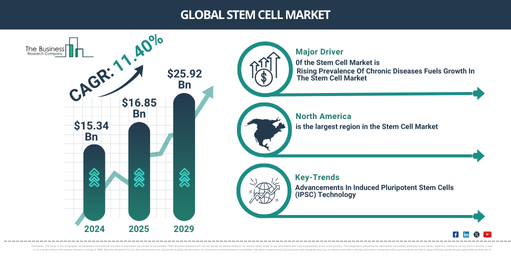
    The expansion of the stem cell market has been significant over the past few years. The current market value of $15.34 billion in 2024 is expected to accelerate to $16.85 billion in 2025, demonstrating a compound annual growth rate (CAGR) of 9.8%. The remarkable growth during this historical period is linked with the progress in the field of regenerative medicine, the increasing instances of chronic illnesses, ongoing research and development ventures, the overall increase in the aged population, as well as the elevated levels of awareness and acceptance.

    What Is the Projected Market Size of the Stem Cell Market?

    Expectations are high for the stem cell market to experience rapid expansion in the coming years, with estimates projecting it to reach a figure of $25.92 billion by 2029, boasting a compound annual growth rate (CAGR) of 11.4%. This significant uptick within the forecast period can be credited to numerous contributory factors, including a wider range of applications in oncology, revolutionary advances in personalized medicine, the backing and funding provided by the government, collaborations and partnerships within biotechnology, advancements in clinical trials, and regulatory approvals. Additionally, several major trends are anticipated during the forecast period, such as the commercialization of stem cell treatments, application of the cutting-edge CRISPR technology, development of regulatory structures, investment into stem cell research, along with increased attention on exosome therapeutics.

    Download The Free Sample Report Here:

    https://www.thebusinessresearchcompany.com/sample.aspx?id=2584&type=smp

    Who are the Major Competitors in the Stem Cell Market Outlook?

    Major companies operating in the stem cell market include Danaher Corporation, Cryo-Cell International Inc., Daiichi Sankyo Company Limited, Lonza Group Ltd, PerkinElmer Inc., CellGenix GmbH, China Cord Blood Corporation, Organogenesis Holdings Inc., LifeCell International, Cord Blood America Inc., StemCyte Inc., Cryoviva India, Cordlife Group Limited, Thermo Fisher Scientific Inc., CordVida, Cryo Stemcell Inc., Pluristem Therapeutics Inc., Mesoblast Limited, Americord Registry LLC, Smart Cells International, Athersys Inc., ReeLabs Pvt. Ltd., Cytori Therapeutics Inc., Esperite N.V., Stemade Biotech, ViaCord, Aldagen Inc, Isto Biologics, Brainstorm Cell Therapeutics Inc.

    What Is Fueling Growth in the Stem Cell Market?

    The rise in Chronic diseases globally is propelling the growth of the Stem cell market. Stem-cell therapy, which involves the use of stem cells to address or prevent a medical condition or disease, is becoming increasingly popular. Bone marrow transplant is the most commonly seen stem-cell therapy, although treatments based on umbilical cord blood are also utilized. Presently, the most prevalent stem cell treatment involves the transplantation of blood stem cells to remedy diseases or conditions impacting the blood and immune system or to rejuvenate the blood system post treatments for particular cancers. For example, Allergy UK, a nationwide charity based in the UK, reported in April 2024 that over 21 million people in the UK are living with allergies. This disorder became the most frequently reported chronic health condition in 2022, and forecasts suggest that by 2026, half of Europe’s population will suffer from at least one allergy. Consequently, the growing prevalence of chronic diseases globally fuels the expansion of the stem cell market.

    Request For A Customized Report:

    https://www.thebusinessresearchcompany.com/customise?id=2584&type=smp

    Which Stem Cell Market Segments Are Growing the Fastest?

    The stem cell market covered in this report is segmented –

    1) By Source: Autologous, Allogeneic

    2) By Product Type: Adult Stem Cell, Human Embryonic Stem Cell, Induced Pluripotent Stem Cell, Other Products

    3) By Application: Regenerative Medicine, Drug Discovery And Development

    Subsegments:

    1) By Autologous: Bone Marrow-Derived Stem Cells, Adipose Tissue-Derived Stem Cells, Peripheral Blood Stem Cells

    2) By Allogeneic: Bone Marrow-Derived Stem Cells, Umbilical Cord Blood Stem Cells, Peripheral Blood Stem Cells From Donors

    Which Industry Trends Are Shaping the Future of the Stem Cell Market?

    Firms operating within the stem cell therapeutics market are honing their focus on the invention and enhancement of new technologies such as Induced Pluripotent Stem Cells (IPSC) to elevate the effectiveness of stem cell therapies. IPSC are harvested from blood or skin cells, which are then reprogrammed to a state akin to that of embryonic cells after incorporating essential genes which are responsible for maintaining crucial properties and promoting unlimited growth of any human cell type necessary for stem cell therapeutic interventions. The production of these IPSC’s doesn’t involve the use of human embryos, thereby eliminating any bioethical controversies and paving the way for scientists to secure federal funding and backing with ease. The Japanese firm, Oksara, has established a medical center dedicated to the production of cells obtained from iPS Cells. In a related vein, Takar Bio has introduced human iPSC derived Beta Cells, known as Cellartis, for disease modeling and the discovery of drugs.

    Access The Full Report Here:

    https://www.thebusinessresearchcompany.com/report/stem-cell-global-market-report

    Which Countries Are Leading the Stem Cell Market?

    The countries covered in the stem cell market report are Australia, Brazil, China, France, Germany, India, Indonesia, Japan, Russia, South Korea, UK, USA, Canada, Italy, Spain

    Purchase The Full Report Today:

    https://www.thebusinessresearchcompany.com/purchaseoptions.aspx?id=2584

    This Report Delivers Insight On:

    1. How big is the stem cell market, and how is it changing globally?

    2. Who are the major companies in the stem cell market, and how are they performing?

    3. What are the key opportunities and risks in the stem cell market right now?

    4. Which products or customer segments are growing the most in the stem cell market?

    5. What factors are helping or slowing down the growth of the stem cell market?

    About The Business Research Company:

    With over 15000+ reports from 27 industries covering 60+ geographies, The Business Research Company has built a reputation for offering comprehensive, data-rich research and insights. Armed with 1,500,000 datasets, the optimistic contribution of in-depth secondary research, and unique insights from industry leaders, you can get the information you need to stay ahead in the game.

    Get in touch with us:

    The Business Research Company: https://www.thebusinessresearchcompany.com/

    Americas +1 310-496-7795

    Asia +44 2071930708

    Europe +44 7882 955267

    Email us at info@tbrc.info

    Follow us on:

    LinkedIn: https://in.linkedin.com/company/the-business-research-company

    YouTube: https://www.youtube.com/channel/UC24_fI0rV8cR5DxlCpgmyFQ

    Global Market Model: https://www.thebusinessresearchcompany.com/global-market-model
  • Cartilage Degeneration Market to Reach $16.62 Billion by 2029 | Key Drivers and Future Outlook

    Cartilage Degeneration Market to Reach $16.62 Billion by 2029 | Key Drivers and Future Outlook

    Claim your 30% discount on Global Market Reports with code ONLINE30. Limited time only.

    What Is the Estimated Market Size of the Cartilage Degeneration Market In 2029?

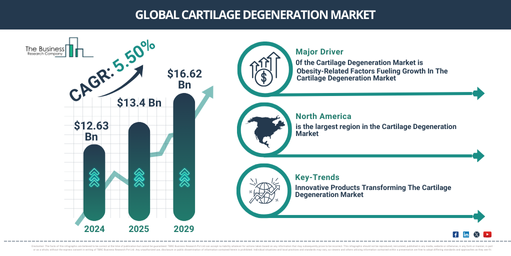
    The market size for cartilage degeneration has seen substantial increase in the last few years. The market, which is projected to escalate from $12.63 billion in 2024 to $13.4 billion in 2025, has a compound annual growth rate (CAGR) of 6.2%. The impressive growth during the historical period is attributed to factors such as an aging population, joint injuries, a widespread obesity crisis, sports-related injuries, and limited capacity for self-repair.

    What Growth Rate Is Forecasted for the Cartilage Degeneration Market by 2029?

    In the coming years, the market for cartilage degeneration is predicted to experience robust expansion. It is anticipated to reach $16.62 billion in 2029, with a compound annual growth rate (CAGR) of 5.5%. Factors contributing to this growth during the forecast period include progress in regenerative medicine, biologic injections, tissue engineering techniques, precision medicine, and robotics-assisted surgery. Upcoming trends for the forecast period encompass stem cell treatments, orthopedic 3D printing, gene therapy focused on cartilage restoration, individually tailored rehabilitation schemes, and the utilization of telemedicine for successive care.

    Download The Free Sample Report Here:

    https://www.thebusinessresearchcompany.com/sample.aspx?id=13103&type=smp

    Which Key Companies Are Shaping the Future of the Cartilage Degeneration Market?

    Major companies operating in the cartilage degeneration market report are Johnson & Johnson Services Inc., MEDIPOST Co. Ltd., Medtronic PLC, Stryker Corporation, Zimmer Biomet Holdings Inc., Smith and Nephew PLC, B Braun Melsungen AG, Osiris Therapeutics Inc., Arthrex Inc., Conmed Corporation, Orthocell Ltd., Bioventus LLC, Aesculap Inc., Vericel Corporation, Anika Therapeutics Inc., Geistlich Pharma AG, MatTek Corporation, Breg Inc., Isto Biologics Inc., OrthoTrophix LLC, CellGenix GmbH, CartiHeal Inc., Cayenne Medical Inc., Collagen Solutions PLC, Regentis Biomaterials Ltd., Histogen Inc., BioTime Inc., CollPlant Holdings Ltd.

    Which Factors Are Driving Demand in the Cartilage Degeneration Industry?

    The escalating rates of obesity are predicted to fuel the expansion of the cartilage degeneration market in the future. Defined as a health condition in which an individual’s body fat accumulates excessively to the point of detrimental health effects, obesity can precipitate and expedite cartilage degeneration with the intensification of compressive forces on cartilage and inflammatory cytokines. Obesity provokes numerous pathologic transformations in the entire structure of the knee joint such as irregular strain on the joint, malalignment of the joint, and weakening of the muscles. To exemplify, the Government Digital Service, a UK government agency, reported in May 2023 that approximately 63.8% of adults, 18 years old and above, were either overweight or categorised as obese in 2021-2022, a rise from 63.3% in the preceding year. In addition, it was estimated that 25.9% of these adults were obese, marking a 25.2% increase from 2020 to 2021. Consequently, the escalating incidence of obesity is a key driver of the cartilage degeneration market’s growth.

    Request For A Customized Report:

    https://www.thebusinessresearchcompany.com/customise?id=13103&type=smp

    How Is the Cartilage Degeneration Market Segmented by Several Divisions?

    The cartilage degeneration market covered in this report is segmented –

    1) By Procedure: Joint Replacements, Chondroplasty, Osteochondral Transplants, Microfracture, Meniscus Transplants, Cell-Based Cartilage Resurfacing, Autologous Chondrocyte Implantation, Other Procedures

    2) By Application: Knee, Hip, Other Applications

    3) By End User: Hospitals And Specialty Clinics, Ambulatory Surgical Centers, Academic And Research Institutes

    Subsegments:

    1) By Joint Replacements: Knee Replacement (Partial, Total), Hip Replacement (Partial, Total), Shoulder Replacement (Total, Reverse), Other Joints (Ankle, Elbow, Wrist)

    2) By Chondroplasty: Radiofrequency Ablation Chondroplasty, Mechanical Chondroplasty, Thermal Chondroplasty, Arthroscopic Chondroplasty

    3) By Osteochondral Transplants: Autografts (OATS), Allografts (Fresh Osteochondral Allografts), Synthetic Implants

    4) By Microfracture: Traditional Microfracture, Augmented Microfracture (with scaffolds or matrix implants)

    5) By Meniscus Transplants: Allograft Meniscus Transplantation (Cryopreserved, Fresh Frozen), Synthetic Meniscus Implants

    6) By Cell-Based Cartilage Resurfacing: Autologous Cell-Based Therapy, Allogeneic Cell-Based Therapy, Stem Cell-Based Cartilage Repair

    7) By Autologous Chondrocyte Implantation (ACI): First-Generation ACI, Second-Generation ACI, Third-Generation ACI (MACI)

    8) By Other Procedures: Arthroscopic Debridement, Osteotomy, Cartilage Repair Using Synthetic Scaffolds, Injection-Based Therapies (Hyaluronic Acid, PRP, Stem Cell Injections)

    What are the Emerging Market Trends Driving the Growth of the Cartilage Degeneration Industry?

    Leading cartilage degeneration market players are introducing unique products like Agili-C to aid in bone restructuring and cartilage renewal. Agili-C is an off-the-shelf, cell-free implant designed to mend cartilage and osteochondral flaws in both traumatic and osteoarthritic joints. For example, CartiHeal Ltd., a medical device company from Israel, announced its first commercial insertion of Agili-C in July 2023. The primary purpose of this implant is to promote the natural regeneration of articular cartilage and subchondral bone, rather than depending on cellular or growth factors. Comprised of natural calcium carbonate or aragonite that originates from coral exoskeletons, the implant instigates the migration of chondrocytes from the adjacent cartilage into the scaffold, creating an extracellular matrix. This certification adds worth to the implant, assuring both patients and healthcare professionals of its safety and effectiveness as a treatment choice.

    Access The Full Report Here:

    https://www.thebusinessresearchcompany.com/report/cartilage-degeneration-global-market-report

    Which Regions Are Driving Growth in the Cartilage Degeneration Market?

    North America was the largest region in the cartilage degeneration market in 2023. Asia-Pacific is expected to be the fastest-growing region in the forecast period. The regions covered in the cartilage degeneration market report are Asia-Pacific, Western Europe, Eastern Europe, North America, South America, Middle East, Africa

    Purchase The Full Report Today:

    https://www.thebusinessresearchcompany.com/purchaseoptions.aspx?id=13103

    This Report Delivers Insight On:

    1. How big is the cartilage degeneration market, and how is it changing globally?

    2. Who are the major companies in the cartilage degeneration market, and how are they performing?

    3. What are the key opportunities and risks in the cartilage degeneration market right now?

    4. Which products or customer segments are growing the most in the cartilage degeneration market?

    5. What factors are helping or slowing down the growth of the cartilage degeneration market?

    About The Business Research Company:

    With over 15000+ reports from 27 industries covering 60+ geographies, The Business Research Company has built a reputation for offering comprehensive, data-rich research and insights. Armed with 1,500,000 datasets, the optimistic contribution of in-depth secondary research, and unique insights from industry leaders, you can get the information you need to stay ahead in the game.

    Get in touch with us:

    The Business Research Company: https://www.thebusinessresearchcompany.com/

    Americas +1 310-496-7795

    Asia +44 2071930708

    Europe +44 7882 955267

    Email us at info@tbrc.info

    Follow us on:

    LinkedIn: https://in.linkedin.com/company/the-business-research-company

    YouTube: https://www.youtube.com/channel/UC24_fI0rV8cR5DxlCpgmyFQ

    Global Market Model: https://www.thebusinessresearchcompany.com/global-market-model

  • Acute Agitation And Aggression Treatment Industry Valued at $7.77 Billion by 2029 With CAGR of 6.4% | Size and Share Insights

    Acute Agitation And Aggression Treatment Industry Valued at $7.77 Billion by 2029 With CAGR of 6.4% | Size and Share Insights

    Claim your 30% discount on Global Market Reports with code ONLINE30. Limited time only.

    What Are the Projected Market Size and Growth Rates for the Acute Agitation And Aggression Treatment Market From 2025 To 2029?

    The market size for treating acute agitation and aggression has seen robust growth in the past few years. The market is projected to expand from $5.72 billion in 2024 to $6.05 billion in 2025, with a compound annual growth rate (CAGR) of 5.8%. The impressive growth experienced in the past is due to advancements in pharmacology, an increase in clinical research, regulatory approvals, a rise in the number of acute agitation and aggression cases, and enhanced recognition of mental health issues.

    What Is the Projected Market Size of the Acute Agitation And Aggression Treatment Market?

    The market for treating severe agitation and aggression is predicted to experience significant expansion in the coming years. By 2029, it is projected to reach a value of $7.77 billion, with a compound annual growth rate (CAGR) of 6.4%. This projected growth during the forecast period is primarily due to various factors such as the increasing aging population, the expansion of healthcare infrastructure, increased investment in the pharmaceutical industry, the growth of home care, and increased disposable income. Furthermore, the major trends anticipated during this forecast period include non-drug therapies, precision medicine, usage of artificial intelligence, and predictive analytics, community support, and collaboration within the industry.

    Download The Free Sample Report Here:

    https://www.thebusinessresearchcompany.com/sample.aspx?id=13078&type=smp

    Who are the Major Competitors in the Acute Agitation And Aggression Treatment Market Outlook?

    Major companies operating in the acute agitation and aggression treatment market include Pfizer Inc., Johnson and Johnson Pvt Ltd., F Hoffmann-La Roche Ltd., AbbVie Inc., Novartis AG, Sanofi SA, Bristol-Myers Squibb Company, GlaxoSmithKline plc., Eli Lilly and Company, Teva Pharmaceutical Industries Ltd., Otsuka Pharmaceutical Co Ltd., Mylan NV, Biogen Inc., Bausch Health Companies Inc., UCB SA, Servier Laboratories, Sun Pharmaceutical Industries Ltd., AstraZeneca PLC, Ono Pharmaceutical Co Ltd., Apotex Inc., H Lundbeck A/S, Hikma Pharmaceuticals PLC, Amneal Pharmaceuticals LLC, Neurocrine Biosciences Inc., Aurobindo Pharma Limited, Alkermes plc., Indivior plc., Sunovion Pharmaceuticals Inc., Vanda Pharmaceuticals Inc., and Alexza Pharmaceuticals Inc

    What Is Fueling Growth in the Acute Agitation And Aggression Treatment Market?

    The escalating prevalence of dementia is predicted to fuel the expansion of the acute agitation and aggression treatment market in the near future. Dementia involves conditions typified by memory impairment, diminished cognitive abilities, and a compromised ability to carry out daily tasks. One of the frequently seen symptoms in dementia sufferers is agitation, which is displayed through signs such as restlessness, repeated actions or recurrent hand movements. In such circumstances, acute agitation and aggression treatments significantly contribute towards managing dementia, as they minimize the chances of detrimental symptoms, enhance the patient’s life quality, and control the root cause of the agitation. For example, as per the Australian Institute of Health and Welfare, a governmental agency based in Australia, projected in 2022 that approximately 401,300 Australians would be diagnosed with dementia, a figure that is predicted to double to 849,300 by 2058 as stated in February 2023. Therefore, the escalating prevalence of dementia is significantly contributing to the expansion of the acute agitation and aggression treatment market.

    Request For A Customized Report:

    https://www.thebusinessresearchcompany.com/customise?id=13078&type=smp

    Which Acute Agitation And Aggression Treatment Market Segments Are Growing the Fastest?

    The acute agitation and aggression treatment market covered in this report is segmented –

    1) By Treatment Approach: Behavioral Approaches, Environmental Interventions, Pharmacologic Approaches

    2) By Drug Class: Anti-Psychotics, Benzodiazepines, Other Drug Classes

    3) By Route of Administration: Oral, Intramuscular, Other Routes of Administrations

    4) By Indication: Schizophrenia, Dementia, Bipolar Disorder, Depression, Drug-Induced Agitation And Aggression, Alcohol Withdrawal, Other Indications

    5) By End User: Hospitals And Ambulatory Surgical Centers, Psychiatric Care Facilities, Other End Users

    Subsegments:

    1) By Box Style: Standard Box Action Cameras, Modular Box Action Cameras

    2) By Cube Style: Compact Cube Action Cameras, Cube Cameras with Integrated Mounts

    3) By Bullet Style: Long, Cylindrical Action Cameras, Mountable Bullet Cameras

    4) By Periscope & 360°: 360-Degree Cameras, Periscope Cameras

    5) By Other Types: Wearable Action Cameras, Drone Action Cameras, Specialty Action Cameras

    Which Industry Trends Are Shaping the Future of the Acute Agitation And Aggression Treatment Market?

    Key players in the acute agitation and aggression treatment market are introducing novel products and securing approvals, for instance, IGALMI (dexmedetomidine), offering a fresh treatment alternative for those suffering from agitation linked to schizophrenia or bipolar disorder. IGALMI (dexmedetomidine) is a sublingual film for the treatment of acute agitation related to schizophrenia or bipolar I or II disorder in adults. For example, BioXcel Therapeutics Inc., an American biopharmaceutical firm, was granted IGALMI (dexmedetomidine) approval by the Food and Drug Administration in April 2022. The drug acts rapidly, taking effect in just a few minutes. Despite being a short-acting medication, its effects can last up to 2 hours. It has the potential to considerably enhance current treatments for severe or life-threatening situations.

    Access The Full Report Here:

    https://www.thebusinessresearchcompany.com/report/acute-agitation-and-aggression-treatment-global-market-report

    Which Countries Are Leading the Acute Agitation And Aggression Treatment Market?

    The countries covered in the acute agitation and aggression treatment market market report include Australia, Brazil, China, France, Germany, India, Indonesia, Japan, Russia, South Korea, UK, USA, Italy, Spain, Canada.

    Purchase The Full Report Today:

    https://www.thebusinessresearchcompany.com/purchaseoptions.aspx?id=13078

    This Report Delivers Insight On:

    1. How big is the acute agitation and aggression treatment market, and how is it changing globally?

    2. Who are the major companies in the acute agitation and aggression treatment market, and how are they performing?

    3. What are the key opportunities and risks in the acute agitation and aggression treatment market right now?

    4. Which products or customer segments are growing the most in the acute agitation and aggression treatment market?

    5. What factors are helping or slowing down the growth of the acute agitation and aggression treatment market?

    About The Business Research Company:

    With over 15000+ reports from 27 industries covering 60+ geographies, The Business Research Company has built a reputation for offering comprehensive, data-rich research and insights. Armed with 1,500,000 datasets, the optimistic contribution of in-depth secondary research, and unique insights from industry leaders, you can get the information you need to stay ahead in the game.

    Get in touch with us:

    The Business Research Company: https://www.thebusinessresearchcompany.com/

    Americas +1 310-496-7795

    Asia +44 2071930708

    Europe +44 7882 955267

    Email us at info@tbrc.info

    Follow us on:

    LinkedIn: https://in.linkedin.com/company/the-business-research-company

    YouTube: https://www.youtube.com/channel/UC24_fI0rV8cR5DxlCpgmyFQ

    Global Market Model: https://www.thebusinessresearchcompany.com/global-market-model
  • Biophotonics Market Trends Report 2025 – For Business Development and Strategy Teams

    Biophotonics Market Trends Report 2025 – For Business Development and Strategy Teams

    Claim your 30% discount on Global Market Reports with code ONLINE30. Limited time only.

    #How Has the Biophotonics Market Growth Performance Trended Historically, And What Lies Ahead?

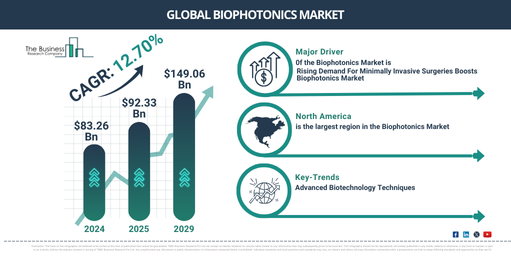
    In recent times, there has been a significant expansion in the size of the biophotonics market. The forecast predicts that the market will escalate from $83.26 billion in 2024 to $92.33 billion in 2025, representing a compound annual growth rate (CAGR) of 10.9%. Factors contributing to this growth during the historical period include advancements in medical imaging, enhanced disease diagnosis and monitoring, breakthroughs in life sciences research, developments in optical sensing and spectroscopy, as well as innovations in laser and light sources.

    What Is the Forecast for the Biophotonics Market Size Through 2029?

    Expectations are high for accelerated expansion in the biophotonics market in the upcoming years, with forecasts predicting its worth to reach $149.06 billion in 2029, exhibiting a compound annual growth rate (CAGR) of 12.7%. The anticipated rise over the forecast period draws its origin from a myriad of factors, including personalized medicine, precision agriculture, global health initiatives, the integration of wearable and mobile health devices, along with environmental monitoring and safety. A surge is also projected for miniaturization and point-of-care devices, multimodal imaging, optogenetics, machine learning and data analytics, and smart imaging probes, which are poised to be major trends during the predicted timeline.

    Download The Free Sample Report Here:

    https://www.thebusinessresearchcompany.com/sample.aspx?id=3270&type=smp

    What are the Key Market Players in Biophotonics Market and How They’re Evolving?

    Major companies operating in the biophotonics market include Thermo Fisher Scientific Inc., OpGen Inc., NU Skin Enterprises Inc., IPG Photonics Corporation, Idex Corporation, Toshiba Corporation, Horiba Ltd., Precision Photonics Corp, Roche Group, General Electric Company, Koninklijke Philips NV, Affymetrix Inc., Andor Technology Ltd., Becton Dickinson & Co, Carl Zeiss AG, FEI Company, Hamamatsu Photonics KK, Lumenis Ltd., Olympus Corporation, PerkinElmer Inc., Zecotek Photonics Inc., Zenalux Biomedical Inc., Glenbrook Technologies Inc., Oxford Instruments Plc, Lumicks BV, Creoptix AG, ThinkCyte Inc., PhotoPharmics Inc., Impedimed Ltd., Bioptics Inc.

    What Are the Primary Growth Drivers in the Biophotonics Market?

    The expanding demand for minimally invasive procedures is propelling the growth of the biophotonics market. Minimally invasive techniques, thanks in large part to optical engineering and imaging technologies, allow for real-time observation of tissue manipulation within difficult-to-reach internal areas. For example, Intuitive Surgical Inc., a US corporation that manufactures robotic products, reported in January 2023 that there were about 1,875,000 surgeries conducted via the Vinci Surgical Systems in 2022. This represents a significant increase of 18% compared to the roughly 1,594,000 surgeries carried out using the Vinci Surgical Systems in 2021. As a result, the growing number of minimally invasive surgeries performed globally each year is adding to the revenue of the biophotonics market.

    Request For A Customized Report:

    https://www.thebusinessresearchcompany.com/customise?id=3270&type=smp

    What Are the Leading Segments in the Global Biophotonics Industry?

    The biophotonics market covered in this report is segmented –

    1) By Product Technology: In-Vitro, In-Vivo

    2) By Application: See-Through Imaging, Inside Imaging, Spectromolecular, Surface Imaging, Microscopy, Light Therapy, Biosensors, Other Applications

    3) By End Use: Diagnostics, Therapeutic, Tests, Other End Uses

    Subsegments:

    1) By In-Vitro: Diagnostic Imaging, Fluorescence Microscopy, Spectroscopy-Based Detection, Biochemical Sensors, Point-Of-Care Devices

    2) By In-Vivo: Endoscopy, Optical Coherence Tomography (OCT), Photodynamic Therapy (PDT), Bioluminescence Imaging, Near-Infrared Spectroscopy (NIRS)

    What Are the Key Market Trends in the Biophotonics Industry?

    The introduction of innovative approaches in biotechnology is an influential trend driving the biophotonics market. A remarkable example of this is the development of a fluorescence microscopy procedure by a group of researchers at the University of St. Andrews in Scotland, specifically designed to image fragile biological samples in neuroscience and biomedicine with minimal harm. This less damaging optical procedure is predicted to revolutionize the field of biomedicine in the years to come. Therefore, the creation and availability of such exciting, high-tech techniques are witnessing a tremendous surge in interest within the biophotonics market.

    Access The Full Report Here:

    https://www.thebusinessresearchcompany.com/report/biophotonics-global-market-report

    What Is the Regional Outlook for the Biophotonics Market?

    North America was the largest region in the biophotonics market in 2023. Western Europe was the second largest region in the biophotonics market. The regions covered in the biophotonics market report are Asia-Pacific, Western Europe, Eastern Europe, North America, South America, Middle East, Africa

    Purchase The Full Report Today:

    https://www.thebusinessresearchcompany.com/purchaseoptions.aspx?id=3270

    This Report Delivers Insight On:

    1. How big is the biophotonics market, and how is it changing globally?

    2. Who are the major companies in the biophotonics market, and how are they performing?

    3. What are the key opportunities and risks in the biophotonics market right now?

    4. Which products or customer segments are growing the most in the biophotonics market?

    5. What factors are helping or slowing down the growth of the biophotonics market?

    About The Business Research Company:

    With over 15000+ reports from 27 industries covering 60+ geographies, The Business Research Company has built a reputation for offering comprehensive, data-rich research and insights. Armed with 1,500,000 datasets, the optimistic contribution of in-depth secondary research, and unique insights from industry leaders, you can get the information you need to stay ahead in the game.

    Get in touch with us:

    The Business Research Company: https://www.thebusinessresearchcompany.com/

    Americas +1 310-496-7795

    Asia +44 2071930708

    Europe +44 7882 955267

    Email us at info@tbrc.info

    Follow us on:

    LinkedIn: https://in.linkedin.com/company/the-business-research-company

    YouTube: https://www.youtube.com/channel/UC24_fI0rV8cR5DxlCpgmyFQ

    Global Market Model: https://www.thebusinessresearchcompany.com/global-market-model
  • Market Analysis on Bioinformatics Industry – Insights for Corporate Strategy and R&D

    Market Analysis on Bioinformatics Industry – Insights for Corporate Strategy and R&D

    Claim your 30% discount on Global Market Reports with code ONLINE30. Limited time only.

    What Are the Projected Market Size and Growth Rates for the Bioinformatics Market From 2025 To 2029?

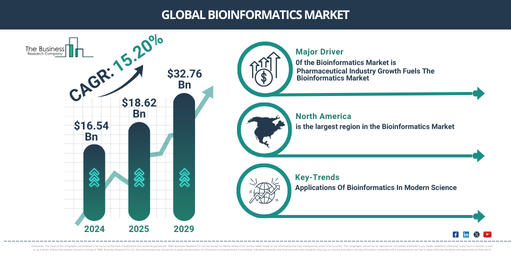
    In recent times, the bioinformatics market has experienced a swift expansion. Its size is projected to escalate from $16.54 billion in 2024 to $18.62 billion in 2025, registering a compound annual growth rate (CAGR) of 12.6%. Factors such as improvements in genomic sequencing, the increase in biomedical research, the progression in drug discovery and development, as well as the growth of personalized medicine, agriculture, and biotechnology have all contributed to this historical growth period.

    What Is the Projected Market Size of the Bioinformatics Market?

    The dimension of the bioinformatics market is projected to witness a significant expansion in the coming years. By 2029, the market’s worth is predicted to reach $32.76 billion, growing at a Compound Annual Growth Rate (CAGR) of 15.2%. The projected growth during the forecast period is influenced by the advancements in omics technologies, artificial intelligence (AI), machine learning, data integration, cloud computing, biomarker discovery, and diagnostics, as well as interdisciplinary collaboration. A surge in genomic data, personalized medicine, machine learning and AI, drug discovery, and development are major trends expected during the forecast timeline.

    Download The Free Sample Report Here:

    https://www.thebusinessresearchcompany.com/sample.aspx?id=2483&type=smp

    Who are the Major Competitors in the Bioinformatics Market Outlook?

    Major companies operating in the bioinformatics market include Agilent Technologies Inc., Illumina Inc., QIAGEN NV, Affymetrix Inc., Thermo Fisher Scientific Inc., BGI Group, Dassault Systems SE, Eurofins Scientific SE, Bruker Corporation, Biomax Informatix AG, DNASTAR Inc., Partek Inc., Geneva Bioinformatics SA, Perkinelmer Inc., Accelrys Inc., Nonlinear Dynamics SA, Quest Diagnostics Inc., Sophia Genetics SA, Waters Corporation, Permin Elmer Inc., Celera Corporation, Tripos Inc., Helicos Biosciences Incorporation, IBM Life Sciences, Applied Biologicals Materials Inc., Life Technologies Corporation, GNS Healthcare Inc., DNAnexus Inc., Intrexon Bioinformatics Germany GmbH, Syapse Inc.

    What Is Fueling Growth in the Bioinformatics Market?

    The expansion of the bioinformatics market is anticipated to be fueled by the burgeoning pharmaceutical industry. This industry, which includes the discovery, development, and manufacture of medications and drugs by both public and private organizations, heavily relies on bioinformatics. Utilization of bioinformatics in the pharmaceutical sector can significantly expedite both drug discovery and development, decrease expenses, and augment the safety and effectiveness of drug treatments. For example, the UK life sciences industry, as reported by the GOV.UK, a government department in the UK, in May 2024, recorded a total turnover of £108.1 billion in 2021/22, marking a 13% rise from the turnover of £95.9 billion (adjusted for prices of 2021/22) in 2020/21. As a result, the escalating pharmaceutical industry is propelling the growth of the bioinformatics market.

    Request For A Customized Report:

    https://www.thebusinessresearchcompany.com/customise?id=2483&type=smp

    Which Bioinformatics Market Segments Are Growing the Fastest?

    The bioinformatics market covered in this report is segmented –

    1) By Products and Services: Knowledge Management Tools, Data Analysis Platforms, Services

    2) By Application: Metabolomics, Molecular Phylogenetics, Transcriptomics, Proteomics, Chemoinformatics, Genomics, Other Applications

    3) By End Users: Pharmaceutics, Animal Study, Agriculture, Forensic Science, Other End Users

    Subsegments:

    1) By Knowledge Management Tools: Data Integration Tools, Literature Mining Tools, Data Repositories And Databases, Biological Data Visualization Tools

    2) By Data Analysis Platforms: Genomic Data Analysis Platforms, Proteomics Data Analysis Platforms, Transcriptomics Data Analysis Platforms, Metabolomics Data Analysis Platforms

    3) By Services: Data Analysis Services, Consulting Services, Software And Platform-As-A-Service (PaaS), Bioinformatics Research And Development Services

    Which Industry Trends Are Shaping the Future of the Bioinformatics Market?

    Leading firms in the bioinformatics industry are concentrating their efforts on creating cutting-edge solutions, such as bioinformatics platforms, to boost data analysis capabilities, enhance accuracy in personalized medicine, and fast-track the process of drug discovery. Essentially, a bioinformatics platform is a set of software tools or an integrated system purposely built to handle, scrutinize, and decode biological data, such as genomic, proteomic, and metabolomic information, which aids in research and clinical decision-making. Take for example Metabolon, Inc., a US-based biotech firm, that in February 2024, launched an integrated bioinformatics platform. This platform provides a detailed set of analytical tools tailored to simplify metabolomics research and enables users to perform complex analyses effortlessly. It comes with advanced tools for visualization such as volcano plots and principal component analysis (PCA), and also the innovative biomarker lenses, giving targeted insights into specific pathways and diseases.

    Access The Full Report Here:

    https://www.thebusinessresearchcompany.com/report/bioinformatics-global-market-report

    Which Countries Are Leading the Bioinformatics Market?

    North America was the largest region in the bioinformatics market in 2023. Western Europe was the second largest region in the bioinformatics market analysis. The regions covered in the bioinformatics market report are Asia-Pacific, Western Europe, Eastern Europe, North America, South America, Middle East, Africa

    Purchase The Full Report Today:

    https://www.thebusinessresearchcompany.com/purchaseoptions.aspx?id=2483

    This Report Delivers Insight On:

    1. How big is the bioinformatics market, and how is it changing globally?

    2. Who are the major companies in the bioinformatics market, and how are they performing?

    3. What are the key opportunities and risks in the bioinformatics market right now?

    4. Which products or customer segments are growing the most in the bioinformatics market?

    5. What factors are helping or slowing down the growth of the bioinformatics market?

    About The Business Research Company:

    With over 15000+ reports from 27 industries covering 60+ geographies, The Business Research Company has built a reputation for offering comprehensive, data-rich research and insights. Armed with 1,500,000 datasets, the optimistic contribution of in-depth secondary research, and unique insights from industry leaders, you can get the information you need to stay ahead in the game.

    Get in touch with us:

    The Business Research Company: https://www.thebusinessresearchcompany.com/

    Americas +1 310-496-7795

    Asia +44 2071930708

    Europe +44 7882 955267

    Email us at info@tbrc.info

    Follow us on:

    LinkedIn: https://in.linkedin.com/company/the-business-research-company

    YouTube: https://www.youtube.com/channel/UC24_fI0rV8cR5DxlCpgmyFQ

    Global Market Model: https://www.thebusinessresearchcompany.com/global-market-model
  • 3D Diagnostic Imaging Services Market to Reach $303.02 Billion by 2029 | Key Drivers and Future Outlook

    3D Diagnostic Imaging Services Market to Reach $303.02 Billion by 2029 | Key Drivers and Future Outlook

    Claim your 30% discount on Global Market Reports with code ONLINE30. Limited time only.

    What Is the Estimated Market Size of the 3D Diagnostic Imaging Services Market In 2029?

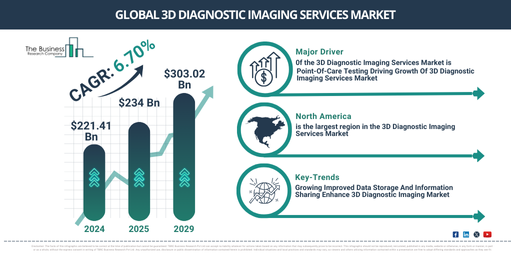
    The market size of 3D diagnostic imaging services has seen substantial growth in the past few years. It is predicted to rise from $221.41 billion in 2024 to $234 billion in 2025, with a compound annual growth rate (CAGR) of 5.7%. The previous growth can be linked to an increased necessity for point-of-care imaging systems, a rise in chronic disease cases, keen interest in optical imaging, higher utilisation of 3D imaging, and an increase in healthcare spending.

    What Growth Rate Is Forecasted for the 3D Diagnostic Imaging Services Market by 2029?

    The market size of 3D diagnostic imaging services is anticipated to experience substantial expansion in the near future, reaching a value of $303.02 billion by the year 2029, with a compound annual growth rate (CAGR) of 6.7%. This growth over the forecast period is linked to several factors, including the escalating demand for early detection and preventative healthcare, a surge in healthcare infrastructure investment, heightened demand for 3D accelerometers within smartphones and gaming consoles, increasing consumption of 3D image sensors across various verticals, along with an expanding elderly population. Key trends during the projected period include technological advancements, the implementation of artificial intelligence (AI), increased investment activities, product development, and various partnerships and acquisitions.

    Download The Free Sample Report Here:

    https://www.thebusinessresearchcompany.com/sample.aspx?id=3180&type=smp

    Which Key Companies Are Shaping the Future of the 3D Diagnostic Imaging Services Market?

    Major companies operating in the 3D diagnostic imaging services market include Laboratory Corporation of America Holdings, Quest Diagnostics Inc., Alere Inc., Bio-Reference Laboratories Inc., DaVita Healthcare Partners Inc., Genomic Health Inc., Myriad Genetics Inc., NeoGenomics Inc., Sonic Healthcare Limited, Spectra Laboratories Inc., SYNLAB International GMBH, Accurate Imaging Inc., Atlantic Medical Imaging Inc., Cobalt Health Pty Ltd, Digirad Corporation, Del Medical Systems Group Inc., Front Range Mobile Imaging Inc., Inhealth Group Ltd., RadNet Inc., Teleradiology Solutions, TridentCare LLC, Koninklijke Philips NV, Siemens Healthcare GmbH, GE Healthcare Technologies Inc., Shenzhen Mindray Bio-Medical Electronics Co Ltd., Ambra Health Inc., Arterys Inc., NDS Surgical Imaging LLC, NerveVision Inc., Olympus Corporation

    Which Factors Are Driving Demand in the 3D Diagnostic Imaging Services Industry?

    The need for point-of-care testing (PoCT) has consistently escalated over time. This growing demand is expected to persist and bolster the 3D diagnostic imaging services market. PoCT enables doctors and healthcare workers to get precise, lab-standard diagnostic results instantaneously, rather than having to wait for hours. Further, the evolving healthcare delivery system is focused on providing cost-effective care at the patient’s residence. Particularly in developing nations, there is a need for more efficient care for contagious diseases. PoCT technologies cater to this need with user-friendly devices and enhanced analytical capability. The recent enhancements in the quickness, ease of use, and affordability of medical imaging with 3D integration have massively broadened the scope of PoCT testing systems. These progresses are majorly propelling the expansion of the 3D diagnostic imaging services market.

    Request For A Customized Report:

    https://www.thebusinessresearchcompany.com/customise?id=3180&type=smp

    How Is the 3D Diagnostic Imaging Services Market Segmented by Several Divisions?

    The 3D diagnostic imaging services market covered in this report is segmented –

    1) By Technique: Ultrasound, MRI, X-ray, Computed Tomography, Other Techniques

    2) By Application: Oncology, Cardiology, Orthopedic, Other Applications

    3) By End User: Diagnostic Centers, Hospitals, Research Centers

    Subsegments:

    1) By Ultrasound: 3D Or 4D Ultrasound, Contrast-Enhanced Ultrasound

    2) By MRI (Magnetic Resonance Imaging): Functional MRI (FMRI), Magnetic Resonance Spectroscopy (MRS), Cardiac MRI, Whole-Body MRI

    3) By X-Ray: 3D Mammography (Tomosynthesis), Cone Beam CT (CBCT) For X-Ray Imaging

    4) By Computed Tomography (CT): Spiral Or Helical CT, Cone Beam CT (CBCT), Positron Emission Tomography-Computed Tomography (PET-CT)

    5) By Other Techniques: Positron Emission Tomography (PET), Single Photon Emission Computed Tomography (SPECT), Optical Imaging

    What are the Emerging Market Trends Driving the Growth of the 3D Diagnostic Imaging Services Industry?

    The advent of enhanced data storage and info sharing platforms such as medical cloud technology presents increased expansion opportunities for 3D diagnostic imaging. The need for sufficient resources to process, store, swap and utilize vast amounts of medical data for correct diagnosis and treatment is met by advanced cloud computing in medical imaging. As a rising answer to issues concerning the provision of complex services and data exchange via the internet, cloud computing is fundamental. This technology facilitates the sharing of medical data across geographical boundaries, thereby allowing a higher number of patients to access the essential medical resources. It also simplifies the retrieval of data and offers physicians more convenient clinical image data services (clear, detailed images). Hence, medical cloud imaging has carved a significant niche in the realm of cloud computing.

    Access The Full Report Here:

    https://www.thebusinessresearchcompany.com/report/3d-diagnostic-imaging-services-global-market-report

    Which Regions Are Driving Growth in the 3D Diagnostic Imaging Services Market?

    North America was the largest region in the 3D diagnostic imaging services market in 2023. Western Europe was the second largest region in the 3D diagnostic imaging services market. The regions covered in the 3D diagnostic imaging services market report are Asia-Pacific, Western Europe, Eastern Europe, North America, South America, Middle East, Africa

    Purchase The Full Report Today:

    https://www.thebusinessresearchcompany.com/purchaseoptions.aspx?id=3180

    This Report Delivers Insight On:

    1. How big is the 3d diagnostic imaging services market, and how is it changing globally?

    2. Who are the major companies in the 3d diagnostic imaging services market, and how are they performing?

    3. What are the key opportunities and risks in the 3d diagnostic imaging services market right now?

    4. Which products or customer segments are growing the most in the 3d diagnostic imaging services market?

    5. What factors are helping or slowing down the growth of the 3d diagnostic imaging services market?

    About The Business Research Company:

    With over 15000+ reports from 27 industries covering 60+ geographies, The Business Research Company has built a reputation for offering comprehensive, data-rich research and insights. Armed with 1,500,000 datasets, the optimistic contribution of in-depth secondary research, and unique insights from industry leaders, you can get the information you need to stay ahead in the game.

    Get in touch with us:

    The Business Research Company: https://www.thebusinessresearchcompany.com/

    Americas +1 310-496-7795

    Asia +44 2071930708

    Europe +44 7882 955267

    Email us at info@tbrc.info

    Follow us on:

    LinkedIn: https://in.linkedin.com/company/the-business-research-company

    YouTube: https://www.youtube.com/channel/UC24_fI0rV8cR5DxlCpgmyFQ

    Global Market Model: https://www.thebusinessresearchcompany.com/global-market-model
  • 3D Cell Culture Technologies Market Size to Exceed $8.33 Billion by 2029 | Growth and Industry Trends

    3D Cell Culture Technologies Market Size to Exceed $8.33 Billion by 2029 | Growth and Industry Trends

    Claim your 30% discount on Global Market Reports with code ONLINE30. Limited time only.

    How Fast Is The 3D Cell Culture Technologies Market Expected to Grow Between 2025 And 2029?

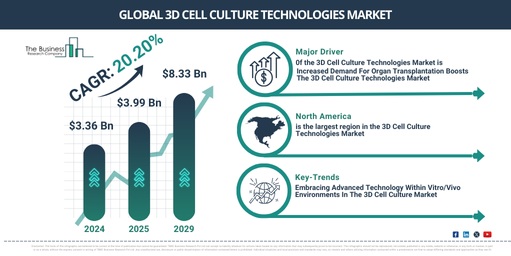
    The market size for 3D cell culture technologies has witnessed a swift expansion in the past years. The projection suggests that the market will surge from $3.36 billion in 2024, reaching $3.99 billion in 2025, with an impressive compound annual growth rate (CAGR) of 18.9%. Factors contributing to this growth during the historical period include improvements in cell biology and drug development, increased occurrences of chronic diseases, and substantial government subsidies.

    What Growth Rate Is Anticipated for the 3D Cell Culture Technologies Market in the Coming Years?

    In the coming years, the market size for 3D cell culture technologies is forecasted to grow significantly. By 2029, it is expected to reach a value of $8.33 billion, maintaining a compound annual growth rate (CAGR) of 20.2%. The growth expected within this forecast period can be attributed to factors such as the pharmaceutical industry, ongoing research and development, as well as environmental and ethical considerations. Some of the major trends anticipated during this period encompass personalized medicine, technological progress, bioprinting, and regenerative medicine.

    Download The Free Sample Report Here:

    https://www.thebusinessresearchcompany.com/sample.aspx?id=2462&type=smp

    Who Are the Leading Companies in the 3D Cell Culture Technologies Market?

    Major companies operating in the 3D cell culture technologies market include Becton Dickinson and Company, Corning Incorporated, Eppendorf AG, GE Healthcare a division of General Electric Company, Merck KGaA, Thermo Fisher Scientific Inc., Lonza Group AG, HiMedia Laboratories Pvt. Ltd., Agilent Technologies Inc., PromoCell GmbH, CellGenix GmbH, Greiner Bio-One International GmbH, Irvine Scientific Sales Company Inc., Cell Culture Company LLC, SeraCare Life Sciences Inc., American Type Culture Collection (ATCC), Miltenyi Biotec B.V. & Co. KG, AITbiotech Pte Ltd, Essen BioScience a Sartorius Company, Sigma-Aldrich, Bel-Art Products Inc., MilliporeSigma, Sumitomo Bakelite, EMD Millipore, Affymetrix Inc., VWR International llc., WHEATON IndustriesInc, Sartorius AG, CN Bio Innovations, Nortis Inc., Kiyatec, Nanofiber Solutions, Copner Biotech, Known Medicine, Synthecon Inc., 3D Biotek LLC, 3D Cell Culture Innovations LLC., 3D Matrix Inc., Allevi Inc., BioSpherix Ltd., Emulate Inc., MicroTissues Inc.

    What Are the Key Drivers of the 3D Cell Culture Technologies Market?

    Growing necessity for organ transplantation is propelling the 3D Cell Culture Technologies Market forward. The ability of 3D cell culture to create a three-dimensional configuration assists in the mimicry of tissues or organs, making it conducive for organ transplantation. These structures of 3D cells have the potency for both organ and tissue regeneration and also offer scope for drug toxicology screening. The United Network for Organ Sharing (UNOS), a US nonprofit organization, reported in January 2023 that there were 42,887 organ transplants conducted in the United States in 2022, showing a 3.7% growth from 2021. The same year saw 14,903 individuals turn into deceased organ donors nationwide, marking the twelfth successive year for record deceased donations with a 7.5% jump from 2021. The number of donors from less conventional criteria of eligibility has been on the rise due to broaderization of the medical criteria for deceased organ donation. The year 2022 saw 4,776 individuals donating post circulatory death (DCD donors), instead of brain death, marking a nearly 14% escalation from the 2021 figures. In the same year, the number of deceased donors aged 50 or older touched 5,789, marking the first time the donor count from that age group exceeded 5,000 in a single year.

    Request For A Customized Report:

    https://www.thebusinessresearchcompany.com/customise?id=2462&type=smp

    What Are the Key Market Segments in the 3D Cell Culture Technologies Industry?

    The 3D cell culture technologies market covered in this report is segmented –

    1) By Type: Scaffold-based, Scaffold-free, 3D Bioreactors

    2) By Application: Cancer Research, Stem Cell Research, Drug Discovery, Regenerative Medicine

    3) By End Users: Research Laboratories and Institutes, Biotechnology and Pharmaceutical Companies, Hospitals and Diagnostic Centers, Other End Users

    Subsegments:

    1) By Scaffold-Based: Natural Scaffolds, Synthetic Scaffolds, Hybrid Scaffolds

    2) By Scaffold-Free: Spheroid-Based, Organoid-Based

    3) By 3D Bioreactors: Spinner Flask Bioreactors, Rotating Wall Bioreactors, Microcarrier-Based Bioreactors, Hollow Fiber Bioreactors

    What Are the Latest Trends in the 3D Cell Culture Technologies Market?

    The latest trend in the 3D Cell culture market is the implementation of cutting-edge technology. A notable example includes various firms embracing a significant development in the 3D cell culture market – the use of the vivo/vitro environment. The culture and interaction of cells in 2D are insufficient in vitro models in contrast with the advanced 3D cell culture technique, which provides an improved cell culture environment. The Vitro setting enables medical personnel or researchers to regulate the procedure outside the organism in a controlled context. This method is growing in significance as it plays a crucial role in patient health monitoring. The FDA has endorsed Biotek’s 3D cell expansion system for use as a medical gadget. Additionally, it has given the approval to Biotek’s Polycaprolactone (PCL) – a biodegradable polyester substance commonly used in various FDA-approved implants and drug delivery devices.

    Access The Full Report Here:

    https://www.thebusinessresearchcompany.com/report/3d-cell-culture-technologies-global-market-report

    What Are the Key Regional Markets in the 3D Cell Culture Technologies Industry?

    North America was the largest region in the 3D cell culture technologies market in 2023. Western Europe was the second largest region in the 3D cell culture technologies market. The regions covered in the 3D cell culture technologies market report are Asia-Pacific, Western Europe, Eastern Europe, North America, South America, Middle East, Africa

    Purchase The Full Report Today:

    https://www.thebusinessresearchcompany.com/purchaseoptions.aspx?id=2462

    This Report Delivers Insight On:

    1. How big is the 3d cell culture technologies market, and how is it changing globally?

    2. Who are the major companies in the 3d cell culture technologies market, and how are they performing?

    3. What are the key opportunities and risks in the 3d cell culture technologies market right now?

    4. Which products or customer segments are growing the most in the 3d cell culture technologies market?

    5. What factors are helping or slowing down the growth of the 3d cell culture technologies market?

    About The Business Research Company:

    With over 15000+ reports from 27 industries covering 60+ geographies, The Business Research Company has built a reputation for offering comprehensive, data-rich research and insights. Armed with 1,500,000 datasets, the optimistic contribution of in-depth secondary research, and unique insights from industry leaders, you can get the information you need to stay ahead in the game.

    Get in touch with us:

    The Business Research Company: https://www.thebusinessresearchcompany.com/

    Americas +1 310-496-7795

    Asia +44 2071930708

    Europe +44 7882 955267

    Email us at info@tbrc.info

    Follow us on:

    LinkedIn: https://in.linkedin.com/company/the-business-research-company

    YouTube: https://www.youtube.com/channel/UC24_fI0rV8cR5DxlCpgmyFQ

    Global Market Model: https://www.thebusinessresearchcompany.com/global-market-model
  • Virtual Intensive Care Unit (ICU) Market Size to Exceed $12.33 Billion by 2029 | Growth and Industry Trends

    Virtual Intensive Care Unit (ICU) Market Size to Exceed $12.33 Billion by 2029 | Growth and Industry Trends

    Claim your 30% discount on Global Market Reports with code ONLINE30. Limited time only.

    How Fast Is The Virtual Intensive Care Unit (ICU) Market Expected to Grow Between 2025 And 2029?

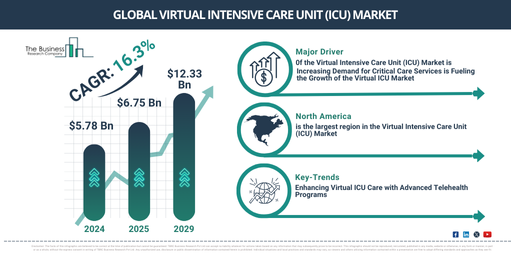
    The market for the virtual Intensive Care Unit (ICU) has seen a significant surge in its size in the recent past. The market, which was valued at $5.78 billion in 2024, is expected to reach a value of $6.75 billion in 2025, indicating a compound annual growth rate (CAGR) of 16.6%. This notable growth over the historic period is a result of several factors such as a lack of ICU beds and manpower, encouraging policies implemented by the government, expensive hospitalization costs, beneficial telemedicine service reimbursement policies, and an increase in education and awareness.

    What Growth Rate Is Anticipated for the Virtual Intensive Care Unit (ICU) Market in the Coming Years?

    The market size for the virtual intensive care unit (ICU) is set to experience swift expansion in the forthcoming years, with forecasts predicting it to reach $12.33 billion in 2029 with a compound annual growth rate (CAGR) of 16.3%. Factors contributing to this predicted growth during the forecast period can be linked to improved patient results, the shift towards value-based care models, the rise of healthcare consumerism, enhanced cybersecurity investments, and the launch of remote training schemes. Notable forthcoming trends in this period include the integration with Electronic Health Records (EHR) systems, advancements in home healthcare tech, sophisticated data analytics, inclusion of IoT devices in healthcare, and compatibility with wearable devices.

    Download The Free Sample Report Here:

    https://www.thebusinessresearchcompany.com/sample.aspx?id=19752&type=smp

    Who Are the Leading Companies in the Virtual Intensive Care Unit (ICU) Market?

    Major companies operating in the virtual intensive care unit (ICU) market are Cisco Systems Inc., Oracle Corporation, Honeywell International Inc., Medtronic plc, UPMC, Siemens Healthineers AG, Koninklijke Philips N.V., GE HealthCare Technologies Inc., Atrium Health, Banner Health, Oregon Health & Science University, ResMed Inc., Hill-Rom Holdings Inc., Inova Health System, Teladoc Health Inc., Masimo Corporation, Nihon Kohden Corporation, Parkland Health, American Well Corporation, Caregility Corporation, Hicuity Health Inc., Society of Critical Care Medicine, Eagle Telemedicine, HealthNet Global, Apollo TeleHealth Services Private Limited

    What Are the Key Drivers of the Virtual Intensive Care Unit (ICU) Market?

    As the need for essential medical services increases, the virtual intensive care unit (ICU) market is predicted to expand. Essential medical services are the advanced healthcare treatments given to individuals facing severe conditions that require careful monitoring and aggressive therapy. The increased requirement for such services can be attributed to the growing occurrence of chronic diseases, an aging population, and increasing complexity of health issues. Virtual ICUs augment these critical care services through live remote check-ins and support from specialized intensivists, enhancing patient outcomes and resource utilization. This is particularly true in remote or underserved regions where immediate access to specialists may be lacking. For example, the National Health Service, a healthcare system based in the UK, reported in September 2022 that in 2021-22 the usable critical care records amounted to 246,286, showing a 4.6% rise from the 235,262 records reported in 2020-21. Consequently, the escalating requirement for essential medical services is pushing the growth of the virtual intensive care unit (ICU) market.

    Request For A Customized Report:

    https://www.thebusinessresearchcompany.com/customise?id=19752&type=smp

    What Are the Key Market Segments in the Virtual Intensive Care Unit (ICU) Industry?

    The virtual intensive care unit (ICU) market covered in this report is segmented –

    1) By Type: Traditional Medical Intensive Care Unit (ICU), Cardiac Care Unit, Neonatal Intensive Care Unit (ICU), Pediatric Intensive Care Unit (ICU), Trauma Intensive Care Unit (ICU), Psychiatric Intensive Care Unit (ICU), High-Dependency Unit, Other Types

    2) By Component: Software, Hardware

    3) By Technology: Machine Learning, Deep Learning, Artificial Intelligence, Other Technologies

    4) By End User: Payer, Patient, Provider

    Subsegments:

    1) Traditional Medical Intensive Care Unit (ICU): General Medical ICU, Surgical ICU, Respiratory ICU

    2) Cardiac Care Unit: Coronary Care Unit, Cardiac Surgery ICU

    3) Neonatal Intensive Care Unit (ICU): Level I Neonatal ICU, Level II Neonatal ICU, Level III Neonatal ICU

    4) Pediatric Intensive Care Unit (ICU): General Pediatric ICU, Cardiac Pediatric ICU, Neuro Pediatric ICU

    5) Trauma Intensive Care Unit (ICU): Surgical Trauma ICU, Medical Trauma ICU

    6) Psychiatric Intensive Care Unit (ICU): Adult Psychiatric ICU, Adolescent Psychiatric ICU

    7) High-Dependency Unit: Step-Down Unit, Intermediate Care Unit

    8) Other Types: Burn Unit, Post-Anesthesia Care Unit, Stroke Unit

    What Are the Latest Trends in the Virtual Intensive Care Unit (ICU) Market?

    Leading businesses in the virtual intensive care unit (ICU) market are investing in the creation of state-of-the-art solutions like telehealth programs. These initiatives aim to upgrade ICU care by enabling constant monitoring and consultations from experts, ultimately leading to better patient outcomes. Telehealth programs utilize advances in digital communication technology to provide medical care and services from a distance. Professionals in healthcare can thus observe patients, administer consultations, and give treatment recommendations without requiring face-to-face appointments. For example, VA New York Harbor Healthcare System, an American healthcare system, initiated the TeleCritical Care Program in the Brooklyn VA Medical Center in June 2022. TeleCritical Care (TeleCC) is a high-tech telehealth program enabling remote ICU physicians and nurses to assist with patient care via virtual tech and clinical information systems. This program improves both the quality and accessibility of intensive care expertise by allowing seamless monitoring and remote video assessments.

    Access The Full Report Here:

    https://www.thebusinessresearchcompany.com/report/virtual-intensive-care-unit-icu-global-market-report

    What Are the Key Regional Markets in the Virtual Intensive Care Unit (ICU) Industry?

    North America was the largest region in the virtual intensive care unit (ICU) market in 2024. Asia-Pacific is expected to be the fastest-growing region in the forecast period. The regions covered in the virtual intensive care unit (ICU) market report are Asia-Pacific, Western Europe, Eastern Europe, North America, South America, Middle East, Africa.

    Purchase The Full Report Today:

    https://www.thebusinessresearchcompany.com/purchaseoptions.aspx?id=19752

    This Report Delivers Insight On:

    1. How big is the virtual intensive care unit (icu) market, and how is it changing globally?

    2. Who are the major companies in the virtual intensive care unit (icu) market, and how are they performing?

    3. What are the key opportunities and risks in the virtual intensive care unit (icu) market right now?

    4. Which products or customer segments are growing the most in the virtual intensive care unit (icu) market?

    5. What factors are helping or slowing down the growth of the virtual intensive care unit (icu) market?

    About The Business Research Company:

    With over 15000+ reports from 27 industries covering 60+ geographies, The Business Research Company has built a reputation for offering comprehensive, data-rich research and insights. Armed with 1,500,000 datasets, the optimistic contribution of in-depth secondary research, and unique insights from industry leaders, you can get the information you need to stay ahead in the game.

    Get in touch with us:

    The Business Research Company: https://www.thebusinessresearchcompany.com/

    Americas +1 310-496-7795

    Asia +44 2071930708

    Europe +44 7882 955267

    Email us at info@tbrc.info

    Follow us on:

    LinkedIn: https://in.linkedin.com/company/the-business-research-company

    YouTube: https://www.youtube.com/channel/UC24_fI0rV8cR5DxlCpgmyFQ

    Global Market Model: https://www.thebusinessresearchcompany.com/global-market-model