Category: HealthcareServices

  • Market Analysis on Gastroenterology Electronic Medical Records (EMR) Software Industry – Insights for Corporate Strategy and R&D

    Market Analysis on Gastroenterology Electronic Medical Records (EMR) Software Industry – Insights for Corporate Strategy and R&D

    Claim your 30% discount on Global Market Reports with code ONLINE30. Limited time only.

    What Are the Projected Market Size and Growth Rates for the Gastroenterology Electronic Medical Records (EMR) Software Market From 2025 To 2029?

    Over recent years, the market size for electronic medical records (EMR) software in gastroenterology has seen robust growth. Projections indicate this market will expand from $2.87 billion in 2024 to $3.22 billion in 2025, with a compound annual growth rate (CAGR) of 12.2%. The historical growth can be linked to factors such as the rising utilization of EMR data for clinical studies, a growing global population, increased patient numbers, heightened awareness, and stringent regulatory standards.

    What Is the Projected Market Size of the Gastroenterology Electronic Medical Records (EMR) Software Market?

    Anticipated to experience a swift expansion in the coming years, the market size for gastroenterology electronic medical records (EMR) software is on course to reach $5.06 billion by 2029, with a compound annual growth rate (CAGR) of 12.0%. This growth projection for the forecast period can be credited to a heightened emphasis on patient safety, a surge in the demand for sophisticated healthcare solutions and services, an upswing in the application of genomic medicine, and increased implementation of personalized medicine. Key trends expected during this forecast period encompass the use of research and data, clinical integration, remote monitoring and telehealth, management of chronic diseases, and the enhancement of resource distribution and management.

    Download The Free Sample Report Here:

    https://www.thebusinessresearchcompany.com/sample.aspx?id=19455&type=smp

    Who are the Major Competitors in the Gastroenterology Electronic Medical Records (EMR) Software Market Outlook?

    Major companies operating in the gastroenterology electronic medical records (EMR) software market are McKesson Corporation, Cerner Corporation, Epic Systems Corporation, Athenahealth Inc., Allscripts Healthcare Solutions Inc., eClinicalWorks LLC, CompuGroup Medical SE & Co. KGaA, Medical Information Technology Inc., CareCloud Inc., Greenway Health LLC, Modernizing Medicine Inc., PracticeSuite Inc., DrChrono Inc., Compulink Healthcare Solutions, AdvancedMD Inc., CureMD.com Inc., ChartLogic Inc., AllegianceMD Software Inc., InSync Healthcare Solutions LLC, Bizmatics Inc., Nuesoft Technologies Inc.

    What Is Fueling Growth in the Gastroenterology Electronic Medical Records (EMR) Software Market?

    The gastroenterology electronic medical records (EMR) software market is predicted to rise due to the increasing occurrence of chronic gastrointestinal diseases. These conditions are persistent or recurrent issues impacting the digestive system, including the stomach, intestines, esophagus, liver, pancreas, and other associated organs. Lifestyle changes, dietary shifts, environmental impacts, aging, and hereditary factors contribute to a rise in chronic gastrointestinal diseases. By streamlining patient records, improving the precision of treatment, and facilitating ongoing care, gastroenterology EMR software enhances the management and monitoring of these diseases. For example, in the words of the IBD Clinical and Research Centre – a Canada-based organization seeking to enhance the lives of patients with Crohn’s disease and ulcerative colitis – approximately 320,000 Canadians were affected by inflammatory bowel disease (IBD) in September 2023, with a prevalence rate of 825 per 100,000 people. It is predicted that the prevalence will rise by 2.44% annually, with projections suggesting that by 2035, 1.1% of Canada’s population, or 470,000 people, will have IBD. Thus, the increasing prevalence of chronic gastrointestinal diseases is bolstering the growth of the gastroenterology electronic medical records (EMR) software market.

    Request For A Customized Report:

    https://www.thebusinessresearchcompany.com/customise?id=19455&type=smp

    Which Gastroenterology Electronic Medical Records (EMR) Software Market Segments Are Growing the Fastest?

    The gastroenterology electronic medical records (EMR) software market covered in this report is segmented –

    1) By Type: Cloud-Based, On-Premise

    2) By Application: Hospitals, Clinics, Research Institutes

    3) By End-User: Physicians, Patients

    Subsegments:

    1) By Cloud-Based: SaaS (Software as a Service) Solutions, Multi-Tenant Cloud Solutions, Private Cloud Solutions, Hybrid Cloud Solutions, Mobile Access Cloud Solutions

    2) By On-Premise: Standard On-Premise EMR Software, Customizable On-Premise Solutions, Integrated On-Premise EMR Systems, Standalone On-Premise EMR Software, High-Security On-Premise Solutions

    Which Industry Trends Are Shaping the Future of the Gastroenterology Electronic Medical Records (EMR) Software Market?

    Leading firms in the gastroenterology electronic medical records (EMR) software sector are pursuing advancements in technology, such as AI tools, to boost diagnostic precision, streamline workflows, and offer personalized healthcare. AI tools are systems or software applications that leverage AI technologies to execute tasks where human intelligence is usually required. As an example, GI Alliance, a US-based gastroenterology management firm, joined forces with Ambience Healthcare, a US-based healthcare technology provider, in January 2024. They teamed up to create a fully inclusive suite of document processing tools powered by Artificial Intelligence and specially designed for gastroenterology. Their aim with this collaboration is to blend high-tech EMR solutions to make operations more efficient, augment patient results, and boost data management processes in gastroenterology practices.

    Access The Full Report Here:

    https://www.thebusinessresearchcompany.com/report/gastroenterology-electronic-medical-records-emr-software-global-market-report

    Which Countries Are Leading the Gastroenterology Electronic Medical Records (EMR) Software Market?

    North America was the largest region in the gastroenterology electronic medical records (EMR) software market in 2024. The regions covered in the gastroenterology electronic medical records (EMR) software market report are Asia-Pacific, Western Europe, Eastern Europe, North America, South America, Middle East, Africa.

    Purchase The Full Report Today:

    https://www.thebusinessresearchcompany.com/purchaseoptions.aspx?id=19455

    This Report Delivers Insight On:

    1. How big is the gastroenterology electronic medical records (emr) software market, and how is it changing globally?

    2. Who are the major companies in the gastroenterology electronic medical records (emr) software market, and how are they performing?

    3. What are the key opportunities and risks in the gastroenterology electronic medical records (emr) software market right now?

    4. Which products or customer segments are growing the most in the gastroenterology electronic medical records (emr) software market?

    5. What factors are helping or slowing down the growth of the gastroenterology electronic medical records (emr) software market?

    About The Business Research Company:

    With over 15000+ reports from 27 industries covering 60+ geographies, The Business Research Company has built a reputation for offering comprehensive, data-rich research and insights. Armed with 1,500,000 datasets, the optimistic contribution of in-depth secondary research, and unique insights from industry leaders, you can get the information you need to stay ahead in the game.

    Get in touch with us:

    The Business Research Company: https://www.thebusinessresearchcompany.com/

    Americas +1 310-496-7795

    Asia +44 2071930708

    Europe +44 7882 955267

    Email us at info@tbrc.info

    Follow us on:

    LinkedIn: https://in.linkedin.com/company/the-business-research-company

    YouTube: https://www.youtube.com/channel/UC24_fI0rV8cR5DxlCpgmyFQ

    Global Market Model: https://www.thebusinessresearchcompany.com/global-market-model
  • Fecal Transplant Therapy Industry Growth Expected to Reach $2.71 Billion by 2029 at a CAGR of 6% | Segmentation and Growth Opportunities

    Fecal Transplant Therapy Industry Growth Expected to Reach $2.71 Billion by 2029 at a CAGR of 6% | Segmentation and Growth Opportunities

    Claim your 30% discount on Global Market Reports with code ONLINE30. Limited time only.

    How Has the Fecal Transplant Therapy Market Growth Performance Trended Historically, And What Lies Ahead?

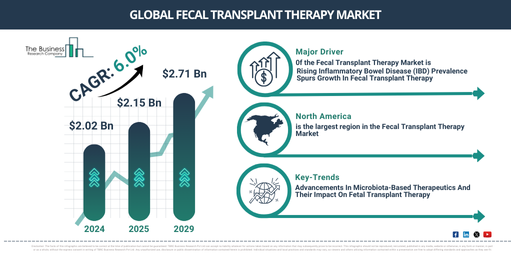
    There has been solid growth in the fecal transplant therapy market size in the past few years. Its size will increase from $2.02 billion in 2024 to $2.15 billion in 2025, with a compound annual growth rate (CAGR) of 6.4%. The expansion during the historical period is due to the rising awareness about fecal transplant procedures, a high demand for cutting-edge treatment techniques, growing worldwide awareness, an increase in research and development funding, and a rising occurrence of inflammatory bowel disease.

    What Is the Forecast for the Fecal Transplant Therapy Market Size Through 2029?

    The market size for fecal transplant therapy is projected to experience substantial expansion in the coming years, with an estimated growth to $2.71 billion by 2029 at a compound annual growth rate (CAGR) of 6.0%. The boost in this forecast period can be ascribed to the growing use of biologics in treatment, heightened occurrence of chronic diseases, augmented utilization of biopesticides, escalating prescriptions of new drugs, and increasing numbers of patients with specific medical conditions. The forecast period will also see some notable trends such as an augmented attention on microbiome research, progress in the creation of synthetic alternatives, upsurge in clinical trials, advancements in delivery approaches, and an expansion in donor screening.

    Download The Free Sample Report Here:

    https://www.thebusinessresearchcompany.com/sample.aspx?id=19431&type=smp

    What are the Key Market Players in Fecal Transplant Therapy Market and How They’re Evolving?

    Major companies operating in the fecal transplant therapy market are Mayo Clinic, Mount Sinai Health System Inc., Northwestern Medicine, NYU Langone Health, Michigan Medicine, UCLA Health, Duke University Health System Inc., Stanford Health Care, Ferring Pharmaceuticals, Cincinnati Children’s Hospital Medical Center, Emory Healthcare, Cambridge University Hospitals NHS Foundation Trust, Hamilton Health Sciences Corporation, Brigham and Women’s Faulkner Hospital Inc., Rebiotix Inc., Seres Therapeutics Inc., UPMC Hillman Cancer Center, OpenBiome, Center for Digestive Disease, BiomeBank Incorporated, The Regents of the University of California

    What Are the Primary Growth Drivers in the Fecal Transplant Therapy Market?

    The rising occurrence of inflammatory bowel disease (IBD) is anticipated to contribute to the expansion of the fecal transplant therapy markets in the future. IBD, a lasting inflammation of the gastrointestinal tract, encompasses conditions like Crohn’s disease and ulcerative colitis. Increased consumption of overly processed foods, inappropriate or frequent use of antibiotics, advancements in hygiene and a decrease in exposure to infectious agents during youth drive the growing number of inflammatory bowel disease instances. Fecal transplant therapy focuses on reverting the gut microbiota to a healthier state, thereby lowering inflammation and enhancing symptom management in those with IBD, potentially impacting its treatment and progression. For example, data predicted by non-profit organization Crohn’s and Colitis Canada in June 2023 suggest a rise to 470,000 individuals with IBD in Canada by 2035, a considerable increase from the estimated 322,600 in 2023. Consequently, the rising occurrence of inflammatory bowel disease is stimulating the expansion of the fecal transplant therapy market.

    Request For A Customized Report:

    https://www.thebusinessresearchcompany.com/customise?id=19431&type=smp

    What Are the Leading Segments in the Global Fecal Transplant Therapy Industry?

    The fecal transplant therapymarket covered in this report is segmented –

    1) By Procedure: Fecal Enema, Fecal Bacteriotherapy, Stool Transplant, Human Probiotic Infusion, Fecal Transfusion

    2) By Disease: Clostridium Difficile Infection, Autism, Obesity, Parkinson’s Disease (PD), Diabetes Mellitus, Other Diseases

    3) By End-User: Hospitals, Specialty Clinics, Other End-Users

    Subsegments:

    1) By Fecal Enema: Retention Enema, Cleansing Enema, Retention-Based Fecal Transplants, Home Administration Kits

    2) By Fecal Bacteriotherapy: Suspension-Based Bacteriotherapy, Capsule Formulations, Customized Bacterial Preparations, Single Strain vs. Multi-Strain Products

    3) By Stool Transplant: Direct Stool Transplant Procedures, Stool Suspension Transplant, Stool Capsule Transplant, Automated Stool Preparation Systems

    4) By Human Probiotic Infusion: Single-Strain Probiotic Infusions, Multi-Strain Probiotic Infusions, Probiotic Blends With Prebiotics, Infusion Kits for Healthcare Providers

    5) By Fecal Transfusion: Intravenous Fecal Transfusion, Transfusion via Gastrostomy Tube, Pre-Packaged Fecal Transfusion Solutions, Fecal Transfusion For Research Purposes

    What Are the Key Market Trends in the Fecal Transplant Therapy Industry?

    Renowned corporations active in the fecal transplant therapy market are concentrating their efforts on the creation of novel therapies, such as fecal microbiota transplantation (FMT) therapy in pill form, in order to increase patient adherence and extend the reach of the treatment. This oral pill version of fecal microbiota transplantation (FMT) therapy encases living bacteria taken from donor fecal matter. The ultimate goal of this treatment is to restore a healthy balance of gut bacteria and enhance gastrointestinal health. Take the case of April 2023, when the American biotech firm, Seres Therapeutics Inc., in conjunction with Switzerland’s healthcare company, Nestlé Health Science S.A., introduced VOWST. Distributed as capsules, this offers a more convenient and less intrusive alternative for the prevention of recurrent clostridioides difficile infection (rCDI) in adults who have undergone antibacterial treatment. VOWST, as opposed to traditional fecal microbiota transplantation (FMT) that utilizes whole stools, employs live microbial spores from multiple Firmicute species, derived from the fecal microbiota of healthy human donors, with a potential to rejuvenate the gut microbiome.

    Access The Full Report Here:

    https://www.thebusinessresearchcompany.com/report/fecal-transplant-therapy-global-market-report

    What Is the Regional Outlook for the Fecal Transplant Therapy Market?

    North America was the largest region in the fecal transplant therapy market in 2024. Asia-Pacific is expected to be the fastest-growing region in the forecast period. The regions covered in the fecal transplant therapy market report are Asia-Pacific, Western Europe, Eastern Europe, North America, South America, Middle East, Africa.

    Purchase The Full Report Today:

    https://www.thebusinessresearchcompany.com/purchaseoptions.aspx?id=19431

    This Report Delivers Insight On:

    1. How big is the fecal transplant therapy market, and how is it changing globally?

    2. Who are the major companies in the fecal transplant therapy market, and how are they performing?

    3. What are the key opportunities and risks in the fecal transplant therapy market right now?

    4. Which products or customer segments are growing the most in the fecal transplant therapy market?

    5. What factors are helping or slowing down the growth of the fecal transplant therapy market?

    About The Business Research Company:

    With over 15000+ reports from 27 industries covering 60+ geographies, The Business Research Company has built a reputation for offering comprehensive, data-rich research and insights. Armed with 1,500,000 datasets, the optimistic contribution of in-depth secondary research, and unique insights from industry leaders, you can get the information you need to stay ahead in the game.

    Get in touch with us:

    The Business Research Company: https://www.thebusinessresearchcompany.com/

    Americas +1 310-496-7795

    Asia +44 2071930708

    Europe +44 7882 955267

    Email us at info@tbrc.info

    Follow us on:

    LinkedIn: https://in.linkedin.com/company/the-business-research-company

    YouTube: https://www.youtube.com/channel/UC24_fI0rV8cR5DxlCpgmyFQ

    Global Market Model: https://www.thebusinessresearchcompany.com/global-market-model
  • Fecal Microbiota Transplantation (FMT) Industry Valued at $1.19 Billion by 2029 With CAGR of 6.9% | Size and Share Insights

    Fecal Microbiota Transplantation (FMT) Industry Valued at $1.19 Billion by 2029 With CAGR of 6.9% | Size and Share Insights

    Claim your 30% discount on Global Market Reports with code ONLINE30. Limited time only.

    What Are the Projected Market Size and Growth Rates for the Fecal Microbiota Transplantation (FMT) Market From 2025 To 2029?

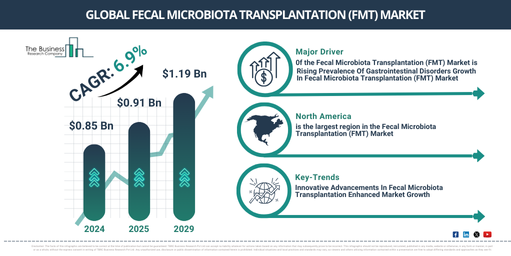
    The market size for fecal microbiota transplantation (FMT) has seen significant growth over the past few years. There’s an expected increase from $0.85 billion in 2024 to $0.91 billion in 2025, with a compound annual growth rate (CAGR) of 7.2%. The historic growth can be attributed to factors such as heightened awareness of gut microbiome, the expansion of therapeutic applications, an increase in personalized medicine, the adoption of the practice in gastroenterology, a rise in the number of clinical trials, and a surge in funding and investments.

    What Is the Projected Market Size of the Fecal Microbiota Transplantation (FMT) Market?

    Expectations indicate a significant surge in the fecal microbiota transplantation (FMT) market over the approaching years, with projections suggesting it will reach $1.19 billion by 2029 at a CAGR of 6.9%. This predicted growth within the period can be attributed to factors such as an increased occurrence of clostridium difficile infections (CDI), a rising trend in inflammatory bowel diseases, augmented research and developments, an increasing elderly population, and a growing healthcare infrastructure. Major trends predicted during the forecast period include establishing standardized protocols for donor screening and stool preparation, advancements in the analysis of microbiomes, improved technologies for stool processing, innovative delivery methods, and synthetic or standardized microbiota-based product development.

    Download The Free Sample Report Here:

    https://www.thebusinessresearchcompany.com/sample.aspx?id=19430&type=smp

    Who are the Major Competitors in the Fecal Microbiota Transplantation (FMT) Market Outlook?

    Major companies operating in the fecal microbiota transplantation (FMT) market are Ferring Pharmaceuticals, Johns Hopkins Medicine, Seres Therapeutics, Taconic Biosciences, Enterome, Rebiotix Inc., Finch Therapeutics Group Inc., Locus Biosciences, Yeda Research and Development Co. Ltd., Microbiotica Limited, CosmosID Inc., AOBiome, Synthetic Biologics Inc., Osel Inc., OpenBiome, Asia Microbiota Bank, Taymount Clinic, MicroBiome Therapeutics LLC, MaaT Pharma SA, Kallyope

    What Is Fueling Growth in the Fecal Microbiota Transplantation (FMT) Market?

    The growth of the fecal microbiota transplantation (FMT) market is expected to be driven by an increasing number of gastrointestinal disorders. These disorders encompass a variety of conditions affecting different parts of the gastrointestinal tract – from the esophagus, stomach, and intestines, to the colon, rectum, and anus. This surge in gastrointestinal issues is attributed to rising stress levels, a lack of physical activity, and the overconsumption of processed foods. Fecal microbiota transplantation is a technique used to reinstate healthy gut bacteria, especially useful in treating recurring Clostridioides difficile infections. Crohn’s and Colitis Canada, a non-profit organization based in Canada, projected in 2023 that the rapidly growing number of people suffering from IBD in Canada would rise from 322,600 in 2023 (0.8% of the population) to 470,000 in 2035 (1.1% of the population). It was estimated that 11,000 people would be diagnosed in 2023 (one every 48 minutes), a number that will increase to 14,000 by 2035 (one new case every 38 minutes). Hence, this escalating prevalence of gastrointestinal disorders is a major factor in propelling the growth of the fecal microbiota transplantation (FMT) market.

    Request For A Customized Report:

    https://www.thebusinessresearchcompany.com/customise?id=19430&type=smp

    Which Fecal Microbiota Transplantation (FMT) Market Segments Are Growing the Fastest?

    The fecal microbiota transplantation (FMT) market covered in this report is segmented –

    1) By Type: Fermentation, Fresh, Cryopreservation

    2) By Donor Type: Stool-Derived, Fecal-Derived, Whole-Microbiome Derived

    3) By Indication: Clostridioides Difficile Infection, Inflammatory Bowel Disease, Metabolic Syndrome, Other Indications

    4) By Administration Route: Oral, Rectal, Nasogastric, Colon Capsule

    5) By End-User: Hospitals, Specialty Clinics, Other End-Users

    Subsegments:

    1) By Fermentation: Fermented FMT Products, Fermented Capsules, Fermented Liquids, In-House Fermentation Techniques

    2) By Fresh: Fresh Stool Samples, Fresh FMT Capsules, Fresh FMT Solutions for In-Hospital Use, Freshly Prepared FMT for Outpatient Use

    3) By Cryopreservation: Cryopreserved Stool Samples, Cryopreserved FMT Capsules, Cryopreserved Liquid FMT, Long-Term Storage Solutions for Cryopreserved FMT

    Which Industry Trends Are Shaping the Future of the Fecal Microbiota Transplantation (FMT) Market?

    Leading businesses in the fecal microbiota transplantation (FMT) market are directing their efforts towards creating innovative solutions such as microbiota-based live biotherapeutics, to improve the treatment effectiveness for gastrointestinal conditions. Such live biotherapeutics include living microorganisms that function as therapeutic agents to adjust or restore the gut microbiome in treating different ailments. In November 2022, for example, Ferring Pharmaceuticals, a biopharmaceutical firm based in Switzerland, gained approval from the US Food and Drug Administration (FDA) for their pioneering first-in-class microbiota-based live biotherapeutic, REBYOTA (fecal microbiota, live-jslm). REBYOTA, intended to prevent the recurrence of Clostridioides difficile infection (CDI) in those aged 18 or over following antibiotic treatment for recurrent CDI, breaks new ground in the field. Specifically, REBYOTA is designed to prevent Clostridioides difficile (C. difficile) infection from recurring in people over 18 who have undergone antibiotic treatment for recurrent CDI.

    Access The Full Report Here:

    https://www.thebusinessresearchcompany.com/report/fecal-microbiota-transplantation-fmt-global-market-report

    Which Countries Are Leading the Fecal Microbiota Transplantation (FMT) Market?

    North America was the largest region in the fecal microbiota transplantation (FMT) market in 2024. The regions covered in the fecal microbiota transplantation (FMT) market report are Asia-Pacific, Western Europe, Eastern Europe, North America, South America, Middle East, Africa.

    Purchase The Full Report Today:

    https://www.thebusinessresearchcompany.com/purchaseoptions.aspx?id=19430

    This Report Delivers Insight On:

    1. How big is the fecal microbiota transplantation (fmt) market, and how is it changing globally?

    2. Who are the major companies in the fecal microbiota transplantation (fmt) market, and how are they performing?

    3. What are the key opportunities and risks in the fecal microbiota transplantation (fmt) market right now?

    4. Which products or customer segments are growing the most in the fecal microbiota transplantation (fmt) market?

    5. What factors are helping or slowing down the growth of the fecal microbiota transplantation (fmt) market?

    About The Business Research Company:

    With over 15000+ reports from 27 industries covering 60+ geographies, The Business Research Company has built a reputation for offering comprehensive, data-rich research and insights. Armed with 1,500,000 datasets, the optimistic contribution of in-depth secondary research, and unique insights from industry leaders, you can get the information you need to stay ahead in the game.

    Get in touch with us:

    The Business Research Company: https://www.thebusinessresearchcompany.com/

    Americas +1 310-496-7795

    Asia +44 2071930708

    Europe +44 7882 955267

    Email us at info@tbrc.info

    Follow us on:

    LinkedIn: https://in.linkedin.com/company/the-business-research-company

    YouTube: https://www.youtube.com/channel/UC24_fI0rV8cR5DxlCpgmyFQ

    Global Market Model: https://www.thebusinessresearchcompany.com/global-market-model
  • Enzyme-Linked Immunosorbent Assay Testing Market Trends Report 2025 – For Business Development and Strategy Teams

    Claim your 30% discount on Global Market Reports with code ONLINE30. Limited time only.

    How Has the Enzyme-Linked Immunosorbent Assay Testing Market Growth Performance Trended Historically, And What Lies Ahead?

    The market for enzyme-linked immunosorbent assay testing has seen substantial growth in recent years. With a value of $2.85 billion in 2024, the market is projected to expand to $3.04 billion in 2025, reflecting a compound annual growth rate (CAGR) of 6.7%. This growth during the historical period can be attributed to several factors, including the wide prevalence of chronic illnesses, the ramping up of biomedical research funding and focus, the regulatory approval of ELISA tests, government-backed initiatives, and programs dedicated to health awareness.

    What Is the Forecast for the Enzyme-Linked Immunosorbent Assay Testing Market Size Through 2029?

    The market size for enzyme-linked immunosorbent assay testing is anticipated to witness substantial growth in the near future. It is set to reach $3.88 billion by 2029, with a compound annual growth rate (CAGR) of 6.3%. Various factors that contribute to the market’s expansion during the forecast period include increased interest in personalized medicine, an aging population, a heightened focus on early detection, better access to healthcare services, and a rising demand for monitoring of chronic illnesses. Key trends for the said period encompass technological innovation, an increased need for point-of-care testing, broadening of application areas, the uptake of high-throughput screening, and the surfacing of digital ELISA.

    Download The Free Sample Report Here:

    https://www.thebusinessresearchcompany.com/sample.aspx?id=19417&type=smp

    What are the Key Market Players in Enzyme-Linked Immunosorbent Assay Testing Market and How They’re Evolving?

    Major companies operating in the enzyme-linked immunosorbent assay testing market are Thermo Fisher Scientific Inc., Danaher Corporation, Merck KGaA, Siemens Healthineers, Becton Dickinson and Company, Agilent Technologies Inc., PerkinElmer Inc., Bio-Rad Laboratories Inc., Tecan Group Ltd., GenScript Biotech Corporation, Promega Corporation, Abcam plc, R&D Systems Inc., Sino Biological Inc., OriGene Technologies Inc., RayBiotech Inc., Santa Cruz Biotechnology Inc., AnaSpec Inc., Biomatik, Arigo Biolaboratories Corp., MyBioSource Inc., Boster Biological Technology, Eagle Biosciences Inc., Enzo Life Sciences Inc., StressMarq Biosciences Inc., XpressBio

    What Are the Primary Growth Drivers in the Enzyme-Linked Immunosorbent Assay Testing Market?

    The upsurge in infectious diseases is anticipated to fuel the expansion of the enzyme-linked immunosorbent assay testing market in the future. Infectious diseases are ailments brought about by harmful microorganisms, which include but are not limited to bacteria, viruses, fungi, or parasites. These diseases can be easily passed from one individual to another, wreaking havoc on multiple body systems. The escalating occurrence of these diseases is linked to factors such as increased global travel and the problematic rise of antimicrobial resistance, which adds complexities in infection management. In this scenario, Enzyme-linked immunosorbent assay (ELISA) tests prove to be beneficial as they accurately detect and quantify specific antigens or antibodies connected to the infection, supporting the diagnosis process, monitoring the disease course, and evaluating the effectiveness of treatments. To illustrate, the World Health Organization, a Switzerland-based intergovernmental public health organization, reported that in February 2024, a whopping 58114 measles (a highly contagious viral disease) cases were documented in the European Region in 2023, a stark rise from the mere 941 cases in 2022. Consequently, the increasing prevalence of infectious diseases incites the growth of the enzyme-linked immunosorbent assay testing market.

    Request For A Customized Report:

    https://www.thebusinessresearchcompany.com/customise?id=19417&type=smp

    What Are the Leading Segments in the Global Enzyme-Linked Immunosorbent Assay Testing Industry?

    The enzyme-linked immunosorbent assay testingmarket covered in this report is segmented –

    1) By Type: Direct Enzyme-Linked Immunosorbent Assay (ELISA), Sandwich Enzyme-Linked Immunosorbent Assay (ELISA), Indirect Enzyme-Linked Immunosorbent Assay (ELISA), Multiple And Portable Enzyme-Linked Immunosorbent Assay (ELISA), Competitive Enzyme-Linked Immunosorbent Assay (ELISA)

    2) By Application: Immunology, Inflammation, Infectious Diseases, Cancer, Protein Quantitation, Other Applications

    3) By End-User: Hospitals And Diagnostic Centers, Research Laboratories, Other End-Users

    Subsegments:

    1) By Direct Enzyme-Linked Immunosorbent Assay (ELISA): Single-Step Direct ELISA, Competitive Direct ELISA, Quantitative Direct ELISA, Qualitative Direct ELISA

    2) By Sandwich Enzyme-Linked Immunosorbent Assay (ELISA): Two-Step Sandwich ELISA, One-Step Sandwich ELISA, Quantitative Sandwich ELISA, Qualitative Sandwich ELISA

    3) By Indirect Enzyme-Linked Immunosorbent Assay (ELISA): Standard Indirect ELISA, Competitive Indirect ELISA, Quantitative Indirect ELISA, Qualitative Indirect ELISA

    What Are the Key Market Trends in the Enzyme-Linked Immunosorbent Assay Testing Industry?

    Major companies in the enzyme-linked immunosorbent assay (ELISA) testing market are working towards expanding their product lines through innovative products, like advanced ELISA kits, to augment diagnostic precision and satisfy a variety of research and clinical requirements. Advanced Enzyme-Linked Immunosorbent Assay (ELISA) kits are an upgraded form of traditional ELISA tests offering better accuracy, sensitivity, and ease of use in identifying and quantifying biomarkers. For example, in February 2023, Charles River Laboratories, a pharmaceutical company situated in the USA, launched an advanced ELISA kit to detect and measure residual host cell proteins (HCP) in CHO-based biotherapeutics. This avant-garde kit, leveraging avian immunoglobulin Y (IgY) antibodies derived from specific pathogen-free (SPF) chicken eggs, offers superior sensitivity and specificity, with detection thresholds as low as 0.1 ng/mL and 90% antibody coverage. The purpose of this introduction is to enhance quality control in biopharmaceutical advancement, guaranteeing the safety and effectiveness of emerging therapies and allowing clients to use the kit flexibly, either alone or with assistance from experts at Charles River.

    Access The Full Report Here:

    https://www.thebusinessresearchcompany.com/report/enzyme-linked-immunosorbent-assay-testing-global-market-report

    What Is the Regional Outlook for the Enzyme-Linked Immunosorbent Assay Testing Market?

    North America was the largest region in the enzyme-linked immunosorbent assay testing market in 2024. The regions covered in the enzyme-linked immunosorbent assay testing market report are Asia-Pacific, Western Europe, Eastern Europe, North America, South America, Middle East, Africa.

    Purchase The Full Report Today:

    https://www.thebusinessresearchcompany.com/purchaseoptions.aspx?id=19417

    This Report Delivers Insight On:

    1. How big is the enzyme-linked immunosorbent assay testing market, and how is it changing globally?

    2. Who are the major companies in the enzyme-linked immunosorbent assay testing market, and how are they performing?

    3. What are the key opportunities and risks in the enzyme-linked immunosorbent assay testing market right now?

    4. Which products or customer segments are growing the most in the enzyme-linked immunosorbent assay testing market?

    5. What factors are helping or slowing down the growth of the enzyme-linked immunosorbent assay testing market?

    About The Business Research Company:

    With over 15000+ reports from 27 industries covering 60+ geographies, The Business Research Company has built a reputation for offering comprehensive, data-rich research and insights. Armed with 1,500,000 datasets, the optimistic contribution of in-depth secondary research, and unique insights from industry leaders, you can get the information you need to stay ahead in the game.

    Get in touch with us:

    The Business Research Company: https://www.thebusinessresearchcompany.com/

    Americas +1 310-496-7795

    Asia +44 2071930708

    Europe +44 7882 955267

    Email us at info@tbrc.info

    Follow us on:

    LinkedIn: https://in.linkedin.com/company/the-business-research-company

    YouTube: https://www.youtube.com/channel/UC24_fI0rV8cR5DxlCpgmyFQ

    Global Market Model: https://www.thebusinessresearchcompany.com/global-market-model
  • Elective Healthcare Services Market Outlook 2025 – Insights for Executive and Strategic Planning

    Elective Healthcare Services Market Outlook 2025 – Insights for Executive and Strategic Planning

    Claim your 30% discount on Global Market Reports with code ONLINE30. Limited time only.

    How Fast Is The Elective Healthcare Services Market Expected to Grow Between 2025 And 2029?

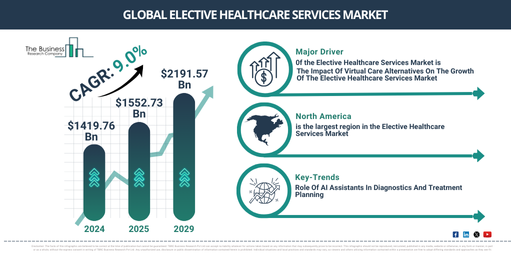
    The market size for elective healthcare services has seen a robust growth in the past few years. The market value is projected to increase from $1419.76 billion in 2024 to $1552.73 billion in 2025, registering a compound annual growth rate (CAGR) of 9.4%. Factors contributing to this growth during the historic era include the escalating number of elderly people, heightened awareness regarding health and wellness, advancements in healthcare facilities, a surge in medical tourism, and increased access to elective processes.

    What Growth Rate Is Anticipated for the Elective Healthcare Services Market in the Coming Years?

    Expectations are high for robust expansion in the elective healthcare services market in the near future, with projections indicating a growth to $2191.57 billion by 2029 at a compound annual growth rate (CAGR) of 9.0%. The forecasted growth in this period can be credited to factors such as an augmented demand for less invasive procedures, progressive expansion of healthcare facilities, the rise of the middle-class demographic, improved insurance provisions for elective procedures, and a heightened emphasis on personalized medicine. Key trends expected to shape the forecast period encompass growth in virtual healthcare services, a rise in the appeal of non-surgical aesthetic procedures, the spread of home healthcare services, the advent of intelligent medical devices, and progress in the realm of telemedicine.

    Download The Free Sample Report Here:

    https://www.thebusinessresearchcompany.com/sample.aspx?id=19407&type=smp

    Who Are the Leading Companies in the Elective Healthcare Services Market?

    Major companies operating in the elective healthcare services market are HCA Healthcare Inc., Tenet Healthcare Corp., Mayo Clinic, Sutter Health, LifePoint Health Inc., Universal Health Services Inc., Cleveland Clinic, Johns Hopkins Medicine, Integrated Healthcare Holdings (IHH) Bhd, UMass Memorial Health Care Inc., Healthscope Pty Ltd., Surgical Care Affiliates (SCA), Geisinger Medical Center, Catholic Health Initiatives (CHI), Tufts Medical Center Parent Inc., Pristyn Care, Fortis Healthcare Ltd., Mykare Health, Moorfields Eye Hospital NHS Foundation Trust, Glamyo Health, Medfin India Pvt. Ltd.

    What Are the Key Drivers of the Elective Healthcare Services Market?

    The growth of the elective healthcare services market is anticipated to be fueled by the increasing uptake of virtual care alternatives. These virtual care alternatives, which include telemedicine, mobile health applications, and online patient portals, provide a broad spectrum of healthcare services remotely via digital communication tools. This allows patients to engage with healthcare professionals without the necessity for physical appointments. The surge in virtual care alternatives has been spurred by technological advancements and the increasing demand for accessible, user-friendly healthcare services, notably amid the COVID-19 pandemic. Elective healthcare services necessitate these virtual care alternatives to enhance accessibility, convenience, and efficiency for patients in need of non-emergency medical treatments. For example, in October 2022, the Centers for Disease Control and Prevention, a government agency in the US, published a report stating that 37.0% of adults used telemedicine services in the past 12 months in 2021. The report suggested that women were more inclined to use telemedicine, with 42.0% having utilized these services, compared to 31.7% of men. Also, telemedicine usage witnessed a positive correlation with age, increasing from 29.4% for adults aged 18-29 to 43.3% for those aged 65 and above. Hence, the increasing acceptance of virtual care alternatives is boosting the growth of the elective healthcare services market.

    Request For A Customized Report:

    https://www.thebusinessresearchcompany.com/customise?id=19407&type=smp

    What Are the Key Market Segments in the Elective Healthcare Services Industry?

    The elective healthcare servicesmarket covered in this report is segmented –

    1) By Type: Aesthetic Services, Apnea, Gastrointestinal Disorder, Allergies, Pain Management, Weight Loss, Other Types

    2) By Application: Medical Centers, Hospitals, Clinics, Ambulatory Centers

    3) By End User Gender: Male, Female

    Subsegments:

    1) By Aesthetic Services: Cosmetic Surgery, Non-Surgical Aesthetic Treatments, Skin Rejuvenation

    2) By Apnea: Sleep Apnea Treatments, Home Sleep Apnea Testing, Weight Management Programs For Apnea, Lifestyle Counseling And Behavioral Therapy

    3) By Gastrointestinal Disorders: Diagnostic Procedures, Surgical Procedures, Medical Treatment

    4) By Allergies: Allergy Testing, Allergy Immunotherapy, Medication Management, Respiratory Allergy Management

    5) By Pain Management: Interventional Procedures, Physical Therapy And Rehabilitation, Pharmacologic Management, Alternative Treatments

    6) By Weight Loss: Surgical Weight Loss, Non-Surgical Weight Loss, Physical Activity Programs

    7) By Other Types: Orthopedic Procedures, Cardiovascular Procedures, Fertility Services, Dental Procedures, Vision Correction

    What Are the Latest Trends in the Elective Healthcare Services Market?

    Leading companies in the elective healthcare services sector are leveraging AI-enabled diagnostics and treatment planning solutions, such as AI assistants, to improve efficiency, offer personalized assistance and ensure easy access to healthcare information and services via automated, data-centric interactions. AI assistants are smart software tools that perform tasks, deliver information, and help users employing natural language processing and machine learning. For example, Salesforce Inc., an American software enterprise, introduced Einstein Copilot, an AI assistant for healthcare, in March 2024. Einstein Copilot is a chat-based AI assistant designed to optimize the use of a healthcare organization’s private data for enhanced workflow efficiency. It empowers healthcare providers and teams to gather and summarise data from diverse clinical and nonclinical sources, update patient and member profiles, and automate routine tasks. With Einstein Copilot, healthcare providers can create detailed patient summaries encompassing medications, diagnoses, social determinants, evaluations, and care gaps. Furthermore, care managers can leverage the AI to find in-network providers based on criteria like location, speciality, and plan coverage, and efficiently complete electronic referral forms using natural language prompts integrated into their work processes.

    Access The Full Report Here:

    https://www.thebusinessresearchcompany.com/report/elective-healthcare-services-global-market-report

    What Are the Key Regional Markets in the Elective Healthcare Services Industry?

    North America was the largest region in the elective healthcare services market in 2024. The regions covered in the elective healthcare services market report are Asia-Pacific, Western Europe, Eastern Europe, North America, South America, Middle East, Africa.

    Purchase The Full Report Today:

    https://www.thebusinessresearchcompany.com/purchaseoptions.aspx?id=19407

    This Report Delivers Insight On:

    1. How big is the elective healthcare services market, and how is it changing globally?

    2. Who are the major companies in the elective healthcare services market, and how are they performing?

    3. What are the key opportunities and risks in the elective healthcare services market right now?

    4. Which products or customer segments are growing the most in the elective healthcare services market?

    5. What factors are helping or slowing down the growth of the elective healthcare services market?

    About The Business Research Company:

    With over 15000+ reports from 27 industries covering 60+ geographies, The Business Research Company has built a reputation for offering comprehensive, data-rich research and insights. Armed with 1,500,000 datasets, the optimistic contribution of in-depth secondary research, and unique insights from industry leaders, you can get the information you need to stay ahead in the game.

    Get in touch with us:

    The Business Research Company: https://www.thebusinessresearchcompany.com/

    Americas +1 310-496-7795

    Asia +44 2071930708

    Europe +44 7882 955267

    Email us at info@tbrc.info

    Follow us on:

    LinkedIn: https://in.linkedin.com/company/the-business-research-company

    YouTube: https://www.youtube.com/channel/UC24_fI0rV8cR5DxlCpgmyFQ

    Global Market Model: https://www.thebusinessresearchcompany.com/global-market-model
  • Drug Discovery Outsourcing Industry Valued at $5.72 Billion by 2029 With CAGR of 7.8% | Size and Share Insights

    Claim your 30% discount on Global Market Reports with code ONLINE30. Limited time only.

    What Are the Projected Market Size and Growth Rates for the Drug Discovery Outsourcing Market From 2025 To 2029?

    In recent times, the drug discovery outsourcing market has witnessed robust growth. The market size is anticipated to expand from $3.92 billion in 2024 to $4.24 billion in 2025, with a Compound Annual Growth Rate (CAGR) of 8.1%. The historical growth is attributed to factors including increasing complexity in drug discovery, a growing need for specialized knowledge, strict regulatory standards, a global expansion of clinical trials, and a rising demand for orphan drugs and personalized healthcare treatments.

    What Is the Projected Market Size of the Drug Discovery Outsourcing Market?

    In the coming years, the drug discovery outsourcing market is set to witness substantial growth, projected to reach $5.72 billion by 2029 at a Compound Annual Growth Rate (CAGR) of 7.8%. This growth over the forecasted period can be linked to a rise in research and development costs, patent expirations, the growth of the biopharmaceutical industry, focus on core competencies, and the necessity to reduce the time-to-market. Key trends taking place during this prediction period include the implementation of artificial intelligence, advancements in technology, the use of big data analytics, the development of specialty drugs, and strategic collaborations and partnerships.

    Download The Free Sample Report Here:

    https://www.thebusinessresearchcompany.com/sample.aspx?id=19405&type=smp

    Who are the Major Competitors in the Drug Discovery Outsourcing Market Outlook?

    Major companies operating in the drug discovery outsourcing market are Thermo Fisher Scientific Inc., Laboratory Corporation of America Holdings, Eurofins SE, Charles River Laboratories, QIAGEN N.V., Curia Global Inc., EVOTEC, Pharmaron Beijing Co. Ltd., Genscript Biotech, WuXi AppTec, Pharmaceutical Product Development, LLC, Syngene International Limited, Jubilant Biosys, Dalton Pharma Services, Oncodesign Services, DiscoverX Corp., Domainex Ltd., Exscientia, TCG Lifesciences Pvt Ltd., GVK Biosciences Private Limited

    What Is Fueling Growth in the Drug Discovery Outsourcing Market?

    The increasing rates of chronic illnesses are anticipated to fuel the expansion of the drug discovery outsourcing market. Chronic illnesses refer to sustained health conditions that last for prolonged periods, often years or a lifetime. These illnesses are surging due to varied reasons such as an aging populace, lifestyle decisions, urbanization, and environmental conditions. Outsourcing drug discovery enhances the pace of treatment development for such diseases by offering specialized skills and cutting-edge technologies, thus lessening time and financial implications. For instance, the Australian Institute of Health and Welfare reported in June 2024 that approximately 15.4 million people, or 61% of the population, were suffering from at least one long-term health condition, consequently resulting in 90% of deaths in 2022. Among individuals aged 0–24, anxiety was found in 1.3 million (16%). Back problems were common in 1.5 million (23%) of those aged 45–64. Simultaneously, deafness or hearing loss affected 1.3 million (32%) of the population aged 65 and older. Therefore, the escalating prevalence of chronic diseases is facilitating the growth of the drug discovery outsourcing market.

    Request For A Customized Report:

    https://www.thebusinessresearchcompany.com/customise?id=19405&type=smp

    Which Drug Discovery Outsourcing Market Segments Are Growing the Fastest?

    The drug discovery outsourcingmarket covered in this report is segmented –

    1) By Service Type: Chemistry Services, Biological Services

    2) By Workflow: Target Identification And Screening, Target Validation And Functional Informatics, Lead Identification And Candidate Optimization, Preclinical Development, Other Workflows

    3) By Disease Model: In Vitro Models, Animal Models, Cellular Models, Other Disease Models

    4) By Therapeutic Area: Cardiovascular, Central Nervous System (CNS), Gastrointestinal, Hematology, Respiratory System, Infectious Disease, Oncology, Immunology, Other Therapeutic Areas

    5) By End User: Pharmaceutical And Biotechnology Companies, Academic Institutes, Other End Users

    Subsegments:

    1) By Chemistry Services: Custom Synthesis And Manufacturing, Medicinal Chemistry, Combinatorial Chemistry, Hit Identification And Lead Optimization, Process Chemistry And Scale-Up, Analytical Chemistry Services, Chemical Library Design And Screening, ADMET (Absorption, Distribution, Metabolism, Excretion, And Toxicity) Profiling

    2) By Biological Services: Cell-Based Assays And Screening, Target Identification And Validation, In Vitro And In Vivo Testing, Biomarker Discovery And Development, Toxicology Studies, Genomics And Proteomics Services, Animal Models For Preclinical Development, Biological Safety And Efficacy Testing, Biopharmaceutical Development And Manufacturing.

    Which Industry Trends Are Shaping the Future of the Drug Discovery Outsourcing Market?

    Prominent enterprises in the drug discovery outsourcing market are concentrating on fostering technological advancements, such as digital health solutions, to better cater to the requirements of healthcare experts, regulators, and patients. These digital health solutions include technologies and services like telemedicine, mobile health applications, and wearable gadgets that improve healthcare provision, patient interaction, and health management. For example, AstraZeneca PLC, a British biopharmaceutical firm, presented Evinova in November 2023, an innovative health-tech venture committed to promoting progress in the life sciences domain and enhancing the execution of clinical trials. With an emphasis on bettering health results, it intends to provide digital products and services, tried and tested in AstraZeneca’s clinical trials across over 40 nations, at a global scale. Evinova’s focus on refining clinical trial design and execution aims to simplify the development process of new drugs, consequently lowering both time and expenses.

    Access The Full Report Here:

    https://www.thebusinessresearchcompany.com/report/drug-discovery-outsourcing-global-market-report

    Which Countries Are Leading the Drug Discovery Outsourcing Market?

    North America was the largest region in the drug discovery outsourcing market in 2024. Asia-Pacific is expected to be the fastest-growing region in the forecast period. The regions covered in the drug discovery outsourcing market report are Asia-Pacific, Western Europe, Eastern Europe, North America, South America, Middle East, Africa.

    Purchase The Full Report Today:

    https://www.thebusinessresearchcompany.com/purchaseoptions.aspx?id=19405

    This Report Delivers Insight On:

    1. How big is the drug discovery outsourcing market, and how is it changing globally?

    2. Who are the major companies in the drug discovery outsourcing market, and how are they performing?

    3. What are the key opportunities and risks in the drug discovery outsourcing market right now?

    4. Which products or customer segments are growing the most in the drug discovery outsourcing market?

    5. What factors are helping or slowing down the growth of the drug discovery outsourcing market?

    About The Business Research Company:

    With over 15000+ reports from 27 industries covering 60+ geographies, The Business Research Company has built a reputation for offering comprehensive, data-rich research and insights. Armed with 1,500,000 datasets, the optimistic contribution of in-depth secondary research, and unique insights from industry leaders, you can get the information you need to stay ahead in the game.

    Get in touch with us:

    The Business Research Company: https://www.thebusinessresearchcompany.com/

    Americas +1 310-496-7795

    Asia +44 2071930708

    Europe +44 7882 955267

    Email us at info@tbrc.info

    Follow us on:

    LinkedIn: https://in.linkedin.com/company/the-business-research-company

    YouTube: https://www.youtube.com/channel/UC24_fI0rV8cR5DxlCpgmyFQ

    Global Market Model: https://www.thebusinessresearchcompany.com/global-market-model
  • Disintegration Tester Industry Insights 2025 – Market Forecast for Executives and Planners

    Disintegration Tester Industry Insights 2025 – Market Forecast for Executives and Planners

    Claim your 30% discount on Global Market Reports with code ONLINE30. Limited time only.

    How Has The Disintegration Tester Market Size Shifted, And What Is the Outlook Through 2034?

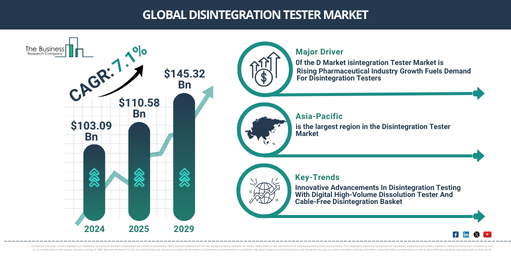
    The market size for disintegration testers has significantly expanded in the past few years. It is forecasted to swell from $103.09 billion in 2024 to $110.58 billion in 2025, exhibiting a compound annual growth rate (CAGR) of 7.3%. The expansion during the past era can be accredited to the increasing amount of automated disintegration tests, the growing pharmaceutical industry, escalating research and development, increased demand for regulatory obedience and quality assurance, rising health care costs, and a heightened focus on quality control.

    How Much Will the Disintegration Tester Market Be Worth in 2029?

    The market for disintegration testers is projected to witness robust expansion in the forthcoming years, reaching a size of $145.32 billion by 2029, advancing at a compound annual growth rate (CAGR) of 7.1%. The expected surge during the forecasting period is due to several factors such as the increasing prevalence of chronic illnesses, heightened health consciousness among consumers, expanded generic drug production, an enhanced focus on quality assurance in pharmaceutical manufacturing, and a surging demand for automation. A forecast period may also witness key trends like innovative product development, advancement in pharmaceutical technologies, adoption of digital technologies, enhancements in in-line testing procedures, and amalgamation with the internet of things (IoT).

    Download The Free Sample Report Here:

    https://www.thebusinessresearchcompany.com/sample.aspx?id=19030&type=smp

    Which is the Largest Company in the Disintegration Tester Market?

    Major companies operating in the disintegration tester market are Agilent Technologies Inc., MRC Group , Veego Instruments, Sotax Corporation, Labindia Analytical Instruments Private Limited, Kerone Engineering Solutions Ltd., Torontech Inc., Distek Inc., Koehler Instrument Company, Inc., Veego Instrument Corporation, Saintyco, Kinesis Inc., Copley Scientific Limited, Pharma Test Apparatebau AG, Yatherm Scientific, Charles Ischi AG, Pharmatron LLC, ATS Scientific Inc., Electrolab Group, Vedor Group

    What Are the Main Market Drivers in the Disintegration Tester Industry?

    Going forward, it is anticipated that the disintegration tester market’s growth will be fueled by the pharmaceutical industry’s expansion. The pharmaceutical sector is dedicated to the research, creation, production, and provision of drugs and medications intended to diagnose, treat, prevent, and cure diseases. The growth of pharmaceutical industries can be ascribed to factors such as an aging demographic, an increase in chronic ailments, advances in healthcare technology, improved access to medical care, and heightened consciousness about health and wellness. A disintegration tester plays a vital role in the pharmaceutical industry as it determines the breakdown time of tablets, capsules, or other solid dosage forms into smaller fragments when subjected to specific fluids under controlled human gastrointestinal tract conditions. For example, in August 2024, the Government of Canada reported an increase in domestic exports in pharmaceutical trade, rising to 12.79 in 2022 from 10.71 in 2021, with imports being 30.21 in 2022, up from 26.63 in 2021. Consequently, the pharmaceutical industry’s expansion is fueling the disintegration tester market’s growth.

    Request For A Customized Report:

    https://www.thebusinessresearchcompany.com/customise?id=19030&type=smp

    How Is the Disintegration Tester Market Segments Structured?

    The disintegration testermarket covered in this report is segmented –

    1) By Type: 2 Station Disintegration Tester, 4 Station Disintegration Tester, 6 Station Disintegration Tester, Other Types

    2) By Distribution Channel: Direct Sales, Distributors, Online Retail

    3) By Application: Pharmaceutical Industry, Cosmetics Industry, Food Industry, Other Applications

    Subsegments:

    1) By 2 Station Disintegration Tester: Manual 2 Station Tester, Automated 2 Station Tester

    2) By 4 Station Disintegration Tester: Manual 4 Station Tester, Automated 4 Station Tester

    3) By 6 Station Disintegration Tester: Manual 6 Station Tester, Automated 6 Station Tester

    4) By Other Types: Disintegration Tester with Temperature Control, Disintegration Tester With Optical Sensors, Multi-Station Disintegration Tester

    What Strategic Trends Are Transforming the Disintegration Tester Market?

    Leading businesses in the disintegration tester market are concentrating on introducing unique items like the digital high-volume dissolution tester and the cable-less disintegration baskets. The high-volume dissolution tester is a laboratory instrument used to determine the speed at which a medicine dissolves in a particular solvent under set conditions. The cable-free disintegration basket involves a disintegration technique used in the pharmaceutical sector to evaluate how quickly a capsule or tablet decomposes into smaller pieces in a fluid, which is key for evaluating the drug’s release. For example, ERWEKA GmbH, a German-based disintegration tester manufacturer, unveiled in January 2022, the DT 9510 and ZT 730, a digital high-volume dissolution tester and a cable-free disintegration basket. The DT 9510 is the first of its kind, developed for efficient and accurate testing and includes an airlift system for easy motorized elevation and lowering of the dissolution head. The ZT 730 is the pioneering cable-free disintegration tester with air-basket technology. Its innovative design does away with cables, making it simpler to install and operate. Additionally, the DT 9510 features automated disintegration time detection, a system that uses sensors to automatically calculate disintegration time.

    Access The Full Report Here:

    https://www.thebusinessresearchcompany.com/report/disintegration-tester-global-market-report

    Which Global Regions Offer the Highest Growth in the Disintegration Tester Market?

    Asia-Pacific was the largest region in the disintegration tester market in 2024. The regions covered in the disintegration tester market report are Asia-Pacific, Western Europe, Eastern Europe, North America, South America, Middle East, Africa.

    Purchase The Full Report Today:

    https://www.thebusinessresearchcompany.com/purchaseoptions.aspx?id=19030

    This Report Delivers Insight On:

    1. How big is the disintegration tester market, and how is it changing globally?

    2. Who are the major companies in the disintegration tester market, and how are they performing?

    3. What are the key opportunities and risks in the disintegration tester market right now?

    4. Which products or customer segments are growing the most in the disintegration tester market?

    5. What factors are helping or slowing down the growth of the disintegration tester market?

    About The Business Research Company:

    With over 15000+ reports from 27 industries covering 60+ geographies, The Business Research Company has built a reputation for offering comprehensive, data-rich research and insights. Armed with 1,500,000 datasets, the optimistic contribution of in-depth secondary research, and unique insights from industry leaders, you can get the information you need to stay ahead in the game.

    Get in touch with us:

    The Business Research Company: https://www.thebusinessresearchcompany.com/

    Americas +1 310-496-7795

    Asia +44 2071930708

    Europe +44 7882 955267

    Email us at info@tbrc.info

    Follow us on:

    LinkedIn: https://in.linkedin.com/company/the-business-research-company

    YouTube: https://www.youtube.com/channel/UC24_fI0rV8cR5DxlCpgmyFQ

    Global Market Model: https://www.thebusinessresearchcompany.com/global-market-model

  • Digital Personalized Nutrition Market Trends Report 2025 – For Business Development and Strategy Teams

    Digital Personalized Nutrition Market Trends Report 2025 – For Business Development and Strategy Teams

    Claim your 30% discount on Global Market Reports with code ONLINE30. Limited time only.

    How Has the Digital Personalized Nutrition Market Growth Performance Trended Historically, And What Lies Ahead?

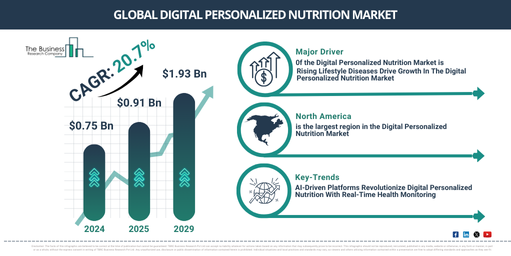
    The market size for digital personalized nutrition has seen a meteoric rise in the past few years. The market, which is valued at $0.75 billion in 2024, is expected to increase to $0.91 billion in 2025, showcasing a compound annual growth rate (CAGR) of 21.1%. This substantial expansion during the historical period owes its success to factors such as the advent of wearable technology, an upsurge in reports of various diseases, an increased elderly population, a growing fondness for tailored nutritional advice, and an increase in disposable income.

    What Is the Forecast for the Digital Personalized Nutrition Market Size Through 2029?

    There is a prediction of significant expansion in the digital personalized nutrition market in the coming years, reaching a size of $1.93 billion by 2029 with a compound annual growth rate (CAGR) of 20.7%. This expected growth during the forecasted timeline can be linked to factors such as the escalating demand for retained nutrition items, the rise in smartphone and health app usage, a growing emphasis on health consciousness among consumers, an increased inclination towards a healthy lifestyle, and a heightened consumer preference for superior quality food. Some key trends to watch during this forecast period are advances in technology, product innovations, the booming startup environment fostering the rise of online personalized nutrition services, and improvements in health monitoring applications.

    Download The Free Sample Report Here:

    https://www.thebusinessresearchcompany.com/sample.aspx?id=19400&type=smp

    What are the Key Market Players in Digital Personalized Nutrition Market and How They’re Evolving?

    Major companies operating in the digital personalized nutrition market are Noom Inc., 23andMe Holding Co., MyFitnessPal Inc., DayTwo Inc., Nutrisense Inc., Viome Life Sciences Inc., Lumen Technologies Inc, Healthifyme Wellness Products and Services Private Limited, Nutrium, Habit LLC, Levels Health Inc., Lifesum AB, Second Nature Healthy Habits Ltd, InsideTracker, BiogeniQ Inc., CircleDNA, Persona Nutrition, Nutrigenomix Inc., Rootine, Caligenix Inc., GenoPalate Inc., Culina Health Inc., Baze Labs GmbH, Foodvisor

    What Are the Primary Growth Drivers in the Digital Personalized Nutrition Market?

    The surge in lifestyle diseases is predicted to fuel the expansion of the digital personalized nutrition market in the future. Lifestyle illnesses are primarily health issues triggered or worsened by an individual’s lifestyle decisions and behaviors, and are less driven by infections or genetics. Such diseases usually tie up to factors like eating habits, level of physical activity, smoking, drinking alcohol, and stress levels. Heart disease, diabetes, obesity among others are examples of lifestyle diseases. The rise in such diseases is often linked to lifestyle modifications such as urbanization, unhealthy dietary patterns, increase in processed food consumption, and high stress levels, all products of modernization and sedentary lifestyles. Digital personalized nutrition aids in addressing lifestyle diseases, giving diet suggestions tailored to a person’s distinct health data. This can promote improved nutrition, foster healthier lifestyle choices, and lessen the risk or intensity of diseases such as diabetes, obesity, and heart disease. For example, per the International Diabetes Federation, a US-based global body, nearly 537 million adults (20-79 years old) had diabetes in 2024 worldwide. It’s anticipated to reach 643 million by 2030 and 783 million by 2045. Hence, the escalation in lifestyle diseases is spurring the growth of the digital personalized nutrition market.

    Request For A Customized Report:

    https://www.thebusinessresearchcompany.com/customise?id=19400&type=smp

    What Are the Leading Segments in the Global Digital Personalized Nutrition Industry?

    The digital personalized nutritionmarket covered in this report is segmented –

    1) By Purchase Model: Subscription, One Time Purchase

    2) By Application: Generic Health And Fitness, Disease Based, Sports Nutrition

    3) By End-User: Direct Consumers, Wellness And Fitness Centers, Hospitals And Clinics, Institutions

    Subsegments:

    1) By Subscription: Monthly Subscription Plans, Quarterly Subscription Plans, Annual Subscription Plans, Personalized Meal Plans Subscription, Nutritional Supplement Subscription, AI-Based Subscription Nutrition Services

    2) By One-Time Purchase: Single Purchase of Personalized Nutrition Plans, One-Time Purchase Of Nutritional Supplements, Custom Meal Kit Purchases, One-Time Purchase Of Nutritional Assessments, Single Purchase of DNA Or Blood Testing Kits For Nutrition

    What Are the Key Market Trends in the Digital Personalized Nutrition Industry?

    Key players in the digital personalized nutrition market are concentrating their efforts on technological enhancements. Such advancements include AI-empowered nutrition platforms, which aim to provide meticulous personalized dietary suggestions and increase interaction to positively impact the health of individuals suffering from lifestyle-related ailments. These AI nutrition platforms employ artificial intelligence to examine personal health data and generate customized nutrition programs for optimal health. For example, in December 2023, Helo Corp, an American company that excels in health and wellness technologies, introduced Nutramatic, a personalized nutrition service utilizing artificial intelligence. Nutramatic affords individualized diet plans which are derived from thorough health evaluations, constant nutritional guidance, and compatibility with wearable tech devices. Additionally, the platform has real-time tracking of health indices and flexible recommendations to boost well-being of the users.

    Access The Full Report Here:

    https://www.thebusinessresearchcompany.com/report/digital-personalized-nutrition-global-market-report

    What Is the Regional Outlook for the Digital Personalized Nutrition Market?

    North America was the largest region in the digital personalized nutrition market in 2024. The regions covered in the digital personalized nutrition market report are Asia-Pacific, Western Europe, Eastern Europe, North America, South America, Middle East, Africa.

    Purchase The Full Report Today:

    https://www.thebusinessresearchcompany.com/purchaseoptions.aspx?id=19400

    This Report Delivers Insight On:

    1. How big is the digital personalized nutrition market, and how is it changing globally?

    2. Who are the major companies in the digital personalized nutrition market, and how are they performing?

    3. What are the key opportunities and risks in the digital personalized nutrition market right now?

    4. Which products or customer segments are growing the most in the digital personalized nutrition market?

    5. What factors are helping or slowing down the growth of the digital personalized nutrition market?

    About The Business Research Company:

    With over 15000+ reports from 27 industries covering 60+ geographies, The Business Research Company has built a reputation for offering comprehensive, data-rich research and insights. Armed with 1,500,000 datasets, the optimistic contribution of in-depth secondary research, and unique insights from industry leaders, you can get the information you need to stay ahead in the game.

    Get in touch with us:

    The Business Research Company: https://www.thebusinessresearchcompany.com/

    Americas +1 310-496-7795

    Asia +44 2071930708

    Europe +44 7882 955267

    Email us at info@tbrc.info

    Follow us on:

    LinkedIn: https://in.linkedin.com/company/the-business-research-company

    YouTube: https://www.youtube.com/channel/UC24_fI0rV8cR5DxlCpgmyFQ

    Global Market Model: https://www.thebusinessresearchcompany.com/global-market-model

  • Market Analysis on Digital Biomarkers Industry – Insights for Corporate Strategy and R&D

    Market Analysis on Digital Biomarkers Industry – Insights for Corporate Strategy and R&D

    Claim your 30% discount on Global Market Reports with code ONLINE30. Limited time only.

    What Are the Projected Market Size and Growth Rates for the Digital Biomarkers Market From 2025 To 2029?

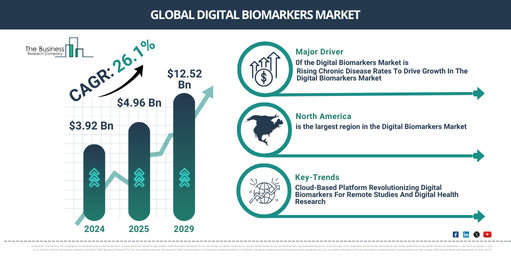
    In recent times, the size of the digital biomarkers market has witnessed exponential growth. The market is set to expand from its 2024 size of $3.92 billion to $4.96 billion in 2025, marking a compound annual growth rate (CAGR) of 26.3%. Factors contributing to this growth in the historical period include the upsurge in mobile health applications, early implementation in clinical trials, increasing chronic disease prevalence, consumer interest in health and wellness, and the rising digitization of the healthcare industry.

    What Is the Projected Market Size of the Digital Biomarkers Market?

    The market size of digital biomarkers is forecasted to experience substantial growth in the upcoming years, expanding to reach a value of $12.52 billion by 2029 with a compound annual growth rate (CAGR) of 26.1%. The promising growth projection within this timeframe is tied to factors such as the escalating adoption by healthcare providers, continually rising prevalence of chronic diseases, growing comprehension amongst consumers, and increased interest in fitness and lifestyle tracking. Significant trends expected within the period of forecast include advancements in wearable technology, incorporation of artificial intelligence, strategic collaborations and partnerships, expansion in up-and-coming markets, and improved integration with electronic health records.

    Download The Free Sample Report Here:

    https://www.thebusinessresearchcompany.com/sample.aspx?id=19397&type=smp

    Who are the Major Competitors in the Digital Biomarkers Market Outlook?

    Major companies operating in the digital biomarkers market are Pfizer Inc., Bayer AG, F Hoffmann-La Roche Ltd., Eli Lilly and Company, Koninklijke Philips NV (Philips), GE Healthcare, Biogen Inc., Garmin Ltd., Clario, Verily Life Sciences LLC, Altoida Inc., BioSerenity, Oura Health Oy., Evidation Health Inc., AliveCor Inc., Empatica Inc., ActiGraph LLC, VivoSense Inc., BioSensics LLC, Koneksa Health Inc., ATCOR Medical Pty Ltd., Brainomix Limited

    What Is Fueling Growth in the Digital Biomarkers Market?

    The escalating occurrence of chronic health conditions is set to stimulate the expansion of the digital biomarkers market in the future. Chronic ailments represent long-duration health issues with a gradual progression rate, often persisting for a prolonged period, if not a lifetime. The manifestation of such diseases is heightened with age-specific chronic issues such as osteoarthritis, Alzheimer’s, and heart disease. Factors such as high intake of processed foods and decreased physical mobility further raise the risk of chronic diseases. Digital biomarkers play a key role in these diseases by monitoring health metrics and disease progression in real-time, thereby allowing for tailored and immediate interventions. For instance, as reported by the Centers for Disease Control and Prevention (CDC.gov), a US-based government agency, in May 2023, deaths from heart disease and cancer reached a total of 6,95,547 in 2022, showing a considerable influx from 6,05,213 in 2021. As such, the increasing prevalence of chronic diseases underscores the projected growth of the digital biomarker market.

    Request For A Customized Report:

    https://www.thebusinessresearchcompany.com/customise?id=19397&type=smp

    Which Digital Biomarkers Market Segments Are Growing the Fastest?

    The digital biomarkersmarket covered in this report is segmented –

    1) By Type: Wearable, Mobile Based Applications, Sensors, Other Types

    2) By Clinical Practice: Diagnostic Digital Biomarkers, Monitoring Digital Biomarkers, Predictive And Prognostic Digital Biomarkers, Other Clinical Practices

    3) By Application: Oncology, Metabolic Disease, Neurological Disease, Cardiac Disease, Other Applications

    4) By End User: Healthcare Companies, Healthcare Providers, Payers, Other End Users

    Subsegments:

    1) By Wearable: Smartwatches, Fitness Trackers, Wearable ECG Monitors, Continuous Glucose Monitors

    2) By Mobile Based Applications: Health Monitoring Apps, Digital Therapeutics Apps, Symptom Tracking Apps, Remote Patient Monitoring Apps

    3) By Sensors: Biosensors, Motion Sensors, Environmental Sensors, Implantable Sensors

    4) By Other Types: Voice Biomarkers, Digital Imaging Biomarkers, Behavioral Biomarkers, Telemedicine Tools

    Which Industry Trends Are Shaping the Future of the Digital Biomarkers Market?

    In the digital biomarker market, leading companies are broadening their service offerings and extending their horizons by embracing a strategic alliance strategy. Such an alliance is a cooperative link between two or more firms where they amalgamate their knowledge, resources, and endeavor to fulfill shared aims or purposes. As an example, in September 2023, a strategic partnership was established between ProofPilot, an automated clinical trial service from the US, and Eli Lilly and Company, a US-based pharmaceutical firm. Their combined effort aimed at incorporating Lilly’s ground-breaking, patent-pending Magnol.AI sensor cloud platform into the technological repertoire of ProofPilot. This avant-garde platform is known for its exceptional security and manageability of high-frequency sensor data. The purpose of this union is to boost efficient digital health research and expedite pre-competitive biomedical examinations. The merged setup empowers researchers with real-time data science facilities, providing them a deeper comprehension of sensor data. It also aligns with clinician and patient-reported outcomes, thus paving the way forward for advancement in digital health and biomarker studies.

    Access The Full Report Here:

    https://www.thebusinessresearchcompany.com/report/digital-biomarkers-global-market-report

    Which Countries Are Leading the Digital Biomarkers Market?

    North America was the largest region in the digital biomarkers market in 2024. Asia-Pacific is expected to be the fastest-growing region in the forecast period. The regions covered in the digital biomarkers market report are Asia-Pacific, Western Europe, Eastern Europe, North America, South America, Middle East, Africa.

    Purchase The Full Report Today:

    https://www.thebusinessresearchcompany.com/purchaseoptions.aspx?id=19397

    This Report Delivers Insight On:

    1. How big is the digital biomarkers market, and how is it changing globally?

    2. Who are the major companies in the digital biomarkers market, and how are they performing?

    3. What are the key opportunities and risks in the digital biomarkers market right now?

    4. Which products or customer segments are growing the most in the digital biomarkers market?

    5. What factors are helping or slowing down the growth of the digital biomarkers market?

    About The Business Research Company:

    With over 15000+ reports from 27 industries covering 60+ geographies, The Business Research Company has built a reputation for offering comprehensive, data-rich research and insights. Armed with 1,500,000 datasets, the optimistic contribution of in-depth secondary research, and unique insights from industry leaders, you can get the information you need to stay ahead in the game.

    Get in touch with us:

    The Business Research Company: https://www.thebusinessresearchcompany.com/

    Americas +1 310-496-7795

    Asia +44 2071930708

    Europe +44 7882 955267

    Email us at info@tbrc.info

    Follow us on:

    LinkedIn: https://in.linkedin.com/company/the-business-research-company

    YouTube: https://www.youtube.com/channel/UC24_fI0rV8cR5DxlCpgmyFQ

    Global Market Model: https://www.thebusinessresearchcompany.com/global-market-model

  • Deep Learning In Drug Discovery And Diagnostics Market to Reach $28.82 Billion by 2029 | Key Drivers and Future Outlook

    Deep Learning In Drug Discovery And Diagnostics Market to Reach $28.82 Billion by 2029 | Key Drivers and Future Outlook

    Claim your 30% discount on Global Market Reports with code ONLINE30. Limited time only.

    What Is the Estimated Market Size of the Deep Learning In Drug Discovery And Diagnostics Market In 2029?

    The market for deep learning in drug discovery and diagnostics has seen a significant expansion in recent times. The market is projected to expand from $8.21 billion in 2024 to $10.58 billion in 2025, with a compound annual growth rate (CAGR) of 28.8%. The historical growth is as a result of several factors such as increased investments into AI research, a surged demand for bespoke medicine, increased public and private funding, rise in chronic and complex conditions, and an increased uptake of electronic health records.

    What Growth Rate Is Forecasted for the Deep Learning In Drug Discovery And Diagnostics Market by 2029?

    The market size of deep learning in drug discovery and diagnostics is predicted to experience substantial expansion in the coming years, reaching a value of $28.82 billion in 2029, with a compound annual growth rate (CAGR) of 28.5%. Factors contributing to the projected growth during this period include enhanced diagnostic precision, increased partnerships between tech enterprises and pharmaceutical companies, advancements in explainable AI (xai) for superior model transparency, heightened focus on real-world evidence (RWE), and growth in emerging markets. Key trends anticipated in this period involve the uptake of AI technologies, advancements in computing power, adoption of big data, development of innovative deep learning architectures, and proliferation of cloud-based platforms for AI technology.

    Download The Free Sample Report Here:

    https://www.thebusinessresearchcompany.com/sample.aspx?id=19394&type=smp

    Which Key Companies Are Shaping the Future of the Deep Learning In Drug Discovery And Diagnostics Market?

    Major companies operating in the deep learning in drug discovery and diagnostics market are Google Inc., Microsoft Corporation, International Business Machines Corporation, NVIDIA Corporation, Zebra Medical Vision Ltd., Tempus Labs Inc., Nanostring Technologies Inc., Owkin Inc., Insilico Medicine Inc., SOPHiA GENETICS SA, Qureai Technologies Pvt Ltd., H2Oai Inc., Arterys Inc., Deep Genomics Inc., GNS Healthcare Inc., MedAware Systems Inc., PathAI Inc., Kheiron Medical Technologies Ltd., CureMetrix Inc., OncoImmunity AS, Proscia Inc., BenevolentAI Ltd., BioXcel Therapeutics Inc.

    Which Factors Are Driving Demand in the Deep Learning In Drug Discovery And Diagnostics Industry?

    The surge in interest for custom-made medications is projected to boost the expansion of the deep learning in drug discovery and diagnostics market. Personalized medicine customizes healthcare treatments and procedures to fit the distinctive genetic, environmental, and lifestyle aspects of each patient, with the aim to optimise effectiveness and reduce side effects. The increasing demand for personalized medicine is bolstered by enhancements in genomics and data analytics that allow for more accurate and efficient treatments designed for specific patient profiles. By analyzing intricate biological data, deep learning in drug discovery and diagnostics improves custom-made medical care by identifying distinct biomarkers and forecasting patient reactions to treatments with more precision. As an example, the Personalized Medicine Coalition, a non-profit organization based in the US, reported in February 2024 that the FDA had approved 16 new personalized remedies for patients with rare diseases in 2023 as compared to only six in 2022. Therefore, it is the escalating demand for personalized medicine that is the driving force behind deep learning in drug discovery and diagnostics market.

    Request For A Customized Report:

    https://www.thebusinessresearchcompany.com/customise?id=19394&type=smp

    How Is the Deep Learning In Drug Discovery And Diagnostics Market Segmented by Several Divisions?

    The deep learning in drug discovery and diagnosticsmarket covered in this report is segmented –

    1) By Type: Drug Discovery, Diagnostics, Forensic Interventions, Other Types

    2) By Drug Type: Small Molecule Drugs, Biologics Drugs

    3) By End Use Industry: Pharmaceutical Companies, Biotechnology Companies, Contract Research Organizations (CROs), Healthcare Information Technology (IT)

    Subsegments:

    1) By Drug Discovery: Target Identification, Drug Screening, Lead Optimization, Predictive Modeling

    2) By Diagnostics: Medical Imaging Analysis, Genomic Data Interpretation, Disease Detection Algorithms, Personalized Medicine

    3) By Forensic Interventions: Digital Pathology, Forensic DNA Analysis, Toxicology Screening, Crime Scene Reconstruction

    4) By Other Types: Biomarker Discovery, Predictive Analytics in Healthcare, Patient Data Management Systems

    What are the Emerging Market Trends Driving the Growth of the Deep Learning In Drug Discovery And Diagnostics Industry?

    Major companies operating in the deep learning in drug discovery and diagnostics market are focusing on the advancement of high-performance computing technologies, such as supercomputers, to accelerate innovation through improved performance and efficiency in complex tasks and AI applications. Advancements in supercomputers enhance deep learning in drug discovery and diagnostics by speeding up complex data analysis and simulations, leading to faster identification of drug candidates and more accurate diagnostics. For instance, in November 2022, Hewlett-Packard Enterprise, a US-based information technology company, introduced the HPE Cray EX and HPE Cray XD supercomputers. These new systems offer powerful performance and AI-at-scale capabilities in a more compact and cost-efficient design, aimed at accelerating drug discovery and speeding up disease treatments. This enables research scientists and pharmaceutical labs to gain deeper insights into chemical interactions, fostering the development of innovative drug therapies for both challenging and newly emerging diseases.

    Access The Full Report Here:

    https://www.thebusinessresearchcompany.com/report/deep-learning-in-drug-discovery-and-diagnostics-global-market-report

    Which Regions Are Driving Growth in the Deep Learning In Drug Discovery And Diagnostics Market?

    North America was the largest region in the deep learning in drug discovery and diagnostics market in 2024. The regions covered in the deep learning in drug discovery and diagnostics market report are Asia-Pacific, Western Europe, Eastern Europe, North America, South America, Middle East, Africa.

    Purchase The Full Report Today:

    https://www.thebusinessresearchcompany.com/purchaseoptions.aspx?id=19394

    This Report Delivers Insight On:

    1. How big is the deep learning in drug discovery and diagnostics market, and how is it changing globally?

    2. Who are the major companies in the deep learning in drug discovery and diagnostics market, and how are they performing?

    3. What are the key opportunities and risks in the deep learning in drug discovery and diagnostics market right now?

    4. Which products or customer segments are growing the most in the deep learning in drug discovery and diagnostics market?

    5. What factors are helping or slowing down the growth of the deep learning in drug discovery and diagnostics market?

    About The Business Research Company:

    With over 15000+ reports from 27 industries covering 60+ geographies, The Business Research Company has built a reputation for offering comprehensive, data-rich research and insights. Armed with 1,500,000 datasets, the optimistic contribution of in-depth secondary research, and unique insights from industry leaders, you can get the information you need to stay ahead in the game.

    Get in touch with us:

    The Business Research Company: https://www.thebusinessresearchcompany.com/

    Americas +1 310-496-7795

    Asia +44 2071930708

    Europe +44 7882 955267

    Email us at info@tbrc.info

    Follow us on:

    LinkedIn: https://in.linkedin.com/company/the-business-research-company

    YouTube: https://www.youtube.com/channel/UC24_fI0rV8cR5DxlCpgmyFQ

    Global Market Model: https://www.thebusinessresearchcompany.com/global-market-model