Category: HealthcareServices

  • Key Developments and Trends Steering the Virtual Rehabilitation Market Forward: Revolutionizing Rehabilitation Penumbra’s REAL System And The Advancement Of Virtual Rehabilitation Platforms In Healthcare

    Key Developments and Trends Steering the Virtual Rehabilitation Market Forward: Revolutionizing Rehabilitation Penumbra’s REAL System And The Advancement Of Virtual Rehabilitation Platforms In Healthcare

    Discover trends, market shifts, and competitive outlooks for the virtual rehabilitation industry through 2025-2034 with The Business Research Company’s reliable data and in-depth research

    How Has The Virtual Rehabilitation Market Growth Evolved From 2024 To 2025, And What’s Ahead?

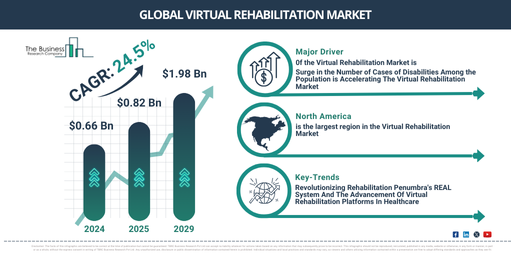
    In recent times, the market size of virtual rehabilitation has experienced substantial growth. It’s projected that the market will expand from $0.66 billion in 2024 to $0.82 billion in 2025, sustaining a compound annual growth rate (CAGR) of 24.1%. This surge during the historic period can be ascribed to the increasing disability cases among the general population, coupled with the growing usage of virtual reality for patient treatment, and the escalating adoption of VR technology within the healthcare sector.

    The market size for virtual rehabilitation is anticipated to experience a significant expansion in the upcoming years, with a projection to reach $1.98 billion in 2029, growing at a compound annual growth rate (CAGR) of 24.5%. Several factors contributing to this growth in the forecast period include the swift aging of the population, the rising occurrence of non-communicable diseases, the expansion of policies encouraging virtual rehabilitation, and the increasing focus on patient-centered healthcare. The forecast period is also expected to see key trends like product innovations, collaborations, advancements in virtual rehabilitation technology, and the rise of more efficient internet connectivity.

    Download a free sample to assess the report’s scope and structure:

    https://www.thebusinessresearchcompany.com/sample.aspx?id=13949&type=smp

    How Are Key Drivers in the Industry Acting as Catalysts for the Growth of the Virtual Rehabilitation Market?

    The rising incidence of disabilities is anticipated to fuel the expansion of the virtual rehabilitation market. Disabilities, which can take the form of physical, cognitive, sensory, or mental impairments, can severely limit a person’s day-to-day activities, societal participation, or typical life roles. Virtual rehabilitation serves the handicapped community by offering online access to therapeutic treatments and personalized workouts. For example, the World Health Organization, a Swiss international public health body, recorded approximately 1.3 billion individuals globally, or 16% of the global population, suffering from disabilities in March 2023. As a result, the growing incidences of disability among the population are contributing to the enhancement of the virtual rehabilitation market.

    Which Segments in the Virtual Rehabilitation Offer the Most Growth?

    The virtual rehabilitation market covered in this report is segmented –

    1) By Type: Physical Rehabilitation, Neuro And Cognitive Rehabilitation, Other Types

    2) By Patient Type: Short Term Patients, Long Term Patients

    3) By End-User: Inpatient Rehabilitation Hospitals, Rehabilitation Centers And Clinics, Home Care Settings

    Subsegments:

    1) By Physical Rehabilitation: Musculoskeletal Rehabilitation, Sports Injury Rehabilitation, Post-Surgery Rehabilitation

    2) By Neuro And Cognitive Rehabilitation: Stroke Rehabilitation, Traumatic Brain Injury (TBI) Rehabilitation, Memory And Cognitive Skills Training

    3) By Other Types: Pediatric Rehabilitation, Cardiac Rehabilitation, Geriatric Rehabilitation

    Request customized data on this market:

    https://www.thebusinessresearchcompany.com/customise?id=13949&type=smp

    What Are the Fastest-Growing Geographies in the Virtual Rehabilitation Market?

    North America was the largest region in the virtual rehabilitation market in 2024. Europe is expected to be the fastest-growing region in the forecast period. The regions covered in the virtual rehabilitation market report are Asia-Pacific, Western Europe, Eastern Europe, North America, South America, Middle East, Africa.

    What Are the Current Market Growth and Trends in the Virtual Rehabilitation Industry?

    Prominent corporations in the virtual rehabilitation sector are evolving advanced platforms such as multi-disciplinary rehabilitation tools to enhance their market competitiveness. These tools represent an inclusive rehabilitation approach where professionals from diverse sectors collaboratively work to cater to the needs of people recuperating from ailments, injuries, or disability. As an instance, Penumbra, a medical company based in the U.S., introduced the first-ever hands-free, full-body virtual reality- based service for rehabilitation in November 2022, which broadened their REAL System platform. It stands as the only non-tethered, hands-free virtual reality rehabilitation platform dealing with both upper and lower extremities via a full-body immersive experience. Medical practitioners can tailor exercises and activities to stimulate, involve, and motivate patients, and monitor their development. The REAL System platform utilizes virtual reality to offer immersive healthcare aimed at supporting improved health, promoting functional abilities, cognition, and stress control.

    View the full report here:

    https://www.thebusinessresearchcompany.com/report/virtual-rehabilitation-global-market-report

    What Are the Key Elements That Define the Virtual Rehabilitation Market?

    Virtual rehabilitation is the use of virtual reality and immersive technologies to provide therapeutic interventions and personalized rehabilitation experiences for individuals with physical or cognitive impairments. It leverages virtual environments and interactive simulations to create therapeutic experiences that support the recovery, improvement, or maintenance of various functional abilities.

    Purchase the full report and get a swift delivery:

    https://www.thebusinessresearchcompany.com/purchaseoptions.aspx?id=13949

    About The Business Research Company:

    With over 15000+ reports from 27 industries covering 60+ geographies, The Business Research Company has built a reputation for offering comprehensive, data-rich research and insights. Armed with 1,500,000 datasets, the optimistic contribution of in-depth secondary research, and unique insights from industry leaders, you can get the information you need to stay ahead in the game.

    Get in touch with us:

    The Business Research Company: https://www.thebusinessresearchcompany.com/

    Americas +1 3156230293

    Asia +44 2071930708

    Europe +44 2071930708

    Email us at info@tbrc.info

    Follow us on:

    LinkedIn: https://in.linkedin.com/company/the-business-research-company

    YouTube: https://www.youtube.com/channel/UC24_fI0rV8cR5DxlCpgmyFQ

    Global Market Model: https://www.thebusinessresearchcompany.com/global-market-model
  • Next-Gen Virtual Human Anatomy Software : Market Forecast, Transformation, and Long-Term Trajectories

    Next-Gen Virtual Human Anatomy Software : Market Forecast, Transformation, and Long-Term Trajectories

    Discover trends, market shifts, and competitive outlooks for the virtual human anatomy software industry through 2025-2034 with The Business Research Company’s reliable data and in-depth research

    How Has the Virtual Human Anatomy Software Market Growth Performance Trended Historically, And What Lies Ahead?

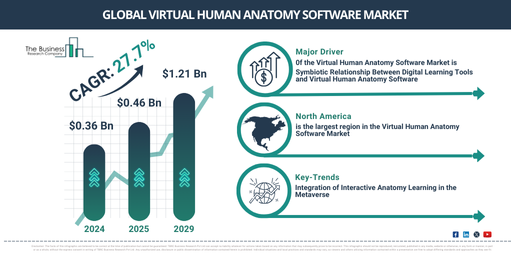
    In the past few years, the market size for virtual human anatomy software has seen a significant expansion. Projections indicate an increase from $0.36 billion in 2024 to $0.46 billion in 2025, reflecting a compound annual growth rate (CAGR) of 28.0%. Factors contributing to this previous period of growth include heightened requirements for medical education, the emergence of e-learning platforms, an increased demand for patient-focused solutions, along with research and development activities.

    There is an anticipated substantial expansion in the virtual human anatomy software market size in the forthcoming years. By 2029, it is predicted to surge to $1.21 billion, with a compound annual growth rate (CAGR) of 27.7%. The expansion throughout the forecast period may result from the escalating need for remote learning solutions, proliferation of web-based medical education programs, increasing demand for healthcare simulation training, a greater preference for personalized learning experiences, and the blossoming of telemedicine and telehealth services. The forecast period is also expected to witness significant trends such as sophisticated biometric integration, enhanced application of artificial intelligence (AI), incorporation of telemedicine, use of blockchain for medical education credentials, and amplified learning analytics.

    Download a free sample to assess the report’s scope and structure:

    https://www.thebusinessresearchcompany.com/sample.aspx?id=15021&type=smp

    Which Major Market Drivers Are Expected to Boost the Growth Potential of the Virtual Human Anatomy Software Market?

    The growth of the virtual human anatomy software market is anticipated to be influenced by the rising adoption of online education. Online education allows learners to access educational materials remotely utilizing internet and digital tools. This form of learning is gaining popularity due to its convenience, economic efficiency, innovative technological integration, and its alignment with emerging social and economic conventions. Virtual human anatomy software significantly contributes to this sector by offering captivating, interactive, and accessible learning environments that augment pupils’ comprehension and appreciation of human anatomy. For instance, statistics from Eurostat, the Luxembourg-based statistical office of the European Union, revealed that in January 2024, of users aged between 16 and 74, 30% of them used online learning materials or attended online courses in the past three months. This marked a 2%-point increment from 28% in 2022. With this in mind, the surge in online education adoption will be the driving force behind the expansion of the virtual human anatomy software market.

    Which Key Market Segments Comprise the Virtual Human Anatomy Software Market and Drive Its Revenue Growth?

    The virtual human anatomy software market covered in this report is segmented –

    1) By Type: 3D Anatomy Software, VR Anatomy Software

    2) By Technology: Cloud-Based, On-Premise

    3)By Application: Educational Institution, Hospitals And Clinics, Other Applications

    Subsegments:

    1) By 3D Anatomy Software: Interactive 3D Visualization, 3D Rendering And Simulation, Anatomical Modeling Tools

    2) By VR Anatomy Software: Virtual Reality-Based Anatomy Exploration, VR Simulation For Medical Training, Immersive 3D Anatomy Visualization

    Request customized data on this market:

    https://www.thebusinessresearchcompany.com/customise?id=15021&type=smp

    Which Areas Are Leading Regions in the Virtual Human Anatomy Software Market Expansion Across the Globe?

    North America was the largest region in the virtual human anatomy market in 2024. The regions covered in the virtual human anatomy software market report are Asia-Pacific, Western Europe, Eastern Europe, North America, South America, Middle East, Africa.

    What Are the Key Market Trends in theVirtual Human Anatomy Software Market Over the Coming Years?

    Significant firms in the virtual human anatomy software market, such as Anatomage, are debuting Anatomage VR to fulfill the increasing demand. This interactive anatomy learning is designed to supplement accredited high school anatomy and life science courses by offering students a 3D reproduction of real human bodies to investigate, unravel, and thoroughly visualize anatomical structures, systems, and diseases with utmost anatomical precision. For instance, Anatomage, a U.S.-based firm known for its 3D anatomy visualization and simulation systems, launched Anatomage VR in October 2022. As a part of this system, students can directly engage with Anatomage Table’s digital bodies, including intricately detailed human cadavers of both genders, visualize upwards of 2,500 anatomical structures in each digital entity, watch 71 animated anatomy shows in 3D to examine anatomy parts, and achieve higher engagement in their studies with quizzes.

    View the full report here:

    https://www.thebusinessresearchcompany.com/report/virtual-human-anatomy-software-global-market-report

    How Is the Virtual Human Anatomy Software Market Conceptually Defined?

    Virtual human anatomy software refers to computer programs or applications designed to provide users with digital representations of the human body’s anatomical structures. These software applications utilize advanced graphics, 3D modeling techniques, and sometimes virtual reality (VR) or augmented reality (AR) technologies to create interactive and immersive experiences for users.

    Purchase the full report and get a swift delivery:

    https://www.thebusinessresearchcompany.com/purchaseoptions.aspx?id=15021

    About The Business Research Company:

    With over 15000+ reports from 27 industries covering 60+ geographies, The Business Research Company has built a reputation for offering comprehensive, data-rich research and insights. Armed with 1,500,000 datasets, the optimistic contribution of in-depth secondary research, and unique insights from industry leaders, you can get the information you need to stay ahead in the game.

    Get in touch with us:

    The Business Research Company: https://www.thebusinessresearchcompany.com/

    Americas +1 3156230293

    Asia +44 2071930708

    Europe +44 2071930708

    Email us at info@tbrc.info

    Follow us on:

    LinkedIn: https://in.linkedin.com/company/the-business-research-company

    YouTube: https://www.youtube.com/channel/UC24_fI0rV8cR5DxlCpgmyFQ

    Global Market Model: https://www.thebusinessresearchcompany.com/global-market-model
  • Virtual Colonoscopy Software Outlook 2034: Key Drivers, Trends, and Market Frontiers

    Virtual Colonoscopy Software Outlook 2034: Key Drivers, Trends, and Market Frontiers

    Discover trends, market shifts, and competitive outlooks for the virtual colonoscopy software industry through 2025-2034 with The Business Research Company’s reliable data and in-depth research

    What Are the Key Projections for the CAGR of the Virtual Colonoscopy Software Market Size From 2025 to 2034?

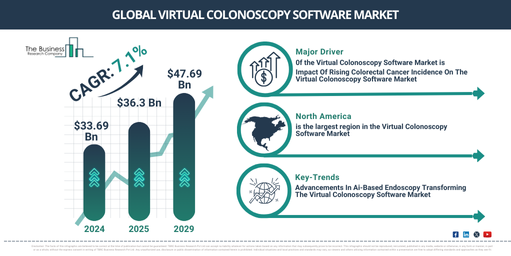
    In recent times, there has been a robust expansion in the market size of virtual colonoscopy software. The projected growth will see the market value increase from $33.69 billion in 2024 to $36.3 billion in 2025, exhibiting a compound annual growth rate (CAGR) of 7.8%. Factors such as advancements in imaging technology, an aging demographic, the rise in remote consultations, and favourable reimbursement policies have contributed to this growth during the historic period.

    In the coming years, a significant expansion is expected in the market for virtual colonoscopy software, a surge that will propel the industry to a value of $47.69 billion by 2029, with a compound annual growth rate (CAGR) of 7.1%. This growth over the forecasted period can be associated with factors like enhanced access to global healthcare, bespoke screening, telemedicine, and increased levels of patient education and awareness. Key trends projected to shape the market during this period include AI-driven image analysis, advancement in 3D visualization, patient-centric care, and a heightened focus on privacy and data protection.

    Download a free sample to assess the report’s scope and structure:

    https://www.thebusinessresearchcompany.com/sample.aspx?id=13002&type=smp

    How Are Key Drivers in the Industry Acting as Catalysts for the Growth of the Virtual Colonoscopy Software Market?

    The escalation in colorectal cancer occurrences anticipatedly fuels the expansion of the virtual colonoscopy software market. Colorectal cancer, which develops within the colon or rectum tissues, relies significantly on virtual colonoscopy software as it offers a minimally and non-invasive mechanism for screening and identifying colon abnormalities. As an illustration, in September 2022, the France-based governmental body, the International Agency for Research on Cancer, projected that by 2040, annual colorectal cancer cases would reach 3.2 million and cause 1.6 million deaths, a substantial rise from the 1.9 million new patients and 930,000 deaths in the year 2020. Consequently, the mounting number of colorectal cancer instances intensifies the growth trajectory of the virtual colonoscopy software market. Market Driver for Virtual Colonoscopy Software: Expansion of the Virtual Colonoscopy Software Market as a result of Increase in Chronic Diseases and Corresponding Death Rates

    Which Segments in the Virtual Colonoscopy Software Offer the Most Growth?

    The virtual colonoscopy software market covered in this report is segmented –

    1) By Product Type: Two Dimensional (2D), Three Dimensional (3D)

    2) By Deployment: On-Premises, Cloud-based

    3) By Application: Polyps, Crohn’s Disease, Ulcerative Colitis, Colorectal Cancer (CRC), Diverticulosis, Stenosis

    4) By End-User: Hospitals, Clinics, Diagnostic Centers, Ambulatory Surgical Centers

    Subsegments:

    1) By Two Dimensional (2D): Standard 2D Imaging Software, Advanced 2D Visualization Tools

    2) By Three Dimensional (3D): Standard 3D Imaging Software, Enhanced 3D Reconstruction Software, Interactive 3D Analysis Tools

    Request customized data on this market:

    https://www.thebusinessresearchcompany.com/customise?id=13002&type=smp

    What Are the Fastest-Growing Geographies in the Virtual Colonoscopy Software Market?

    North America was the largest region in the virtual colonoscopy software market in 2024. The regions covered in virtual colonoscopy software market report are Asia-Pacific, Western Europe, Eastern Europe, North America, South America, Middle East and Africa.

    What Are the Current Market Growth and Trends in the Virtual Colonoscopy Software Industry?

    Prominent entities in the virtual colonoscopy software market are focusing on embracing innovative multidimensional technological solutions including AI-based endoscopy to stand their ground in the industry. AI-based endoscopy employs artificial intelligence technology in carrying out gastrointestinal (GI) endoscopy operations. For example, Medtronic PLC, a notable US firm specializing in medical devices, rolled out the GI Genius module in August 2022. This revolutionary module, propelled by artificial intelligence, is an endoscopy device specifically designed for the management of colorectal cancer. It aids healthcare professionals in identifying and treating colorectal cancer through deep learning algorithms and artificial intelligence. Enhancing visualization during colonoscopy, it uses AI software to instantly alert physicians about any dubious polyps. This product could be a valuable turning point in facilitating early detection of colorectal cancer.

    View the full report here:

    https://www.thebusinessresearchcompany.com/report/virtual-colonoscopy-software-global-market-report

    What Are the Key Elements That Define the Virtual Colonoscopy Software Market?

    Virtual colonoscopy software refers to scanning and advanced imaging software that utilizes computed tomography to create 2D and 3D images of the colon. Virtual colonoscopy software plays a significant role in colorectal cancer screening and detection, offering a less invasive alternative to traditional colonoscopy.

    Purchase the full report and get a swift delivery:

    https://www.thebusinessresearchcompany.com/purchaseoptions.aspx?id=13002

    About The Business Research Company:

    With over 15000+ reports from 27 industries covering 60+ geographies, The Business Research Company has built a reputation for offering comprehensive, data-rich research and insights. Armed with 1,500,000 datasets, the optimistic contribution of in-depth secondary research, and unique insights from industry leaders, you can get the information you need to stay ahead in the game.

    Get in touch with us:

    The Business Research Company: https://www.thebusinessresearchcompany.com/

    Americas +1 3156230293

    Asia +44 2071930708

    Europe +44 2071930708

    Email us at info@tbrc.info

    Follow us on:

    LinkedIn: https://in.linkedin.com/company/the-business-research-company

    YouTube: https://www.youtube.com/channel/UC24_fI0rV8cR5DxlCpgmyFQ

    Global Market Model: https://www.thebusinessresearchcompany.com/global-market-model
  • Viral Hepatitis Market Outlook 2025: Mapping Growth, Innovation, and Regional Shifts

    Viral Hepatitis Market Outlook 2025: Mapping Growth, Innovation, and Regional Shifts

    Discover trends, market shifts, and competitive outlooks for the viral hepatitis industry through 2025-2034 with The Business Research Company’s reliable data and in-depth research

    What is the Projected CAGR for the Viral Hepatitis Market Size from 2025 to 2034?

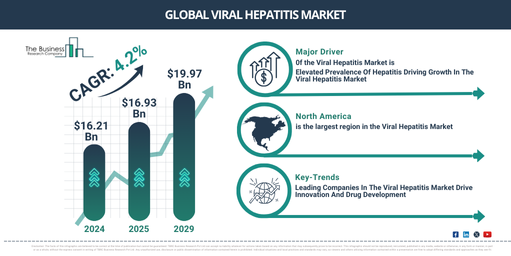
    The market size for viral hepatitis has consistently been on the rise over the past few years. Its growth is forecasted to ascend from $16.21 billion in 2024 to $16.93 billion in 2025, marking a compound annual growth rate (CAGR) of 4.4%. Factors such as the development of vaccines, blood screening programs, antiviral medications, and worldwide health initiatives have been instrumental in facilitating growth in the historical period.

    In the coming years, the market size for viral hepatitis is envisioned to experience consistent growth. The predicted compound annual growth rate (CAGR) is 4.2%, thus making the market worth $19.97 billion by the year 2029. The projected growth during this period can be linked to factors like availability of treatment, public health legal provisions, combination therapeutic strategies, and initiatives for health equity. Notable tendencies during the forecast era include customised treatment blueprints, digital healthcare instruments, application of artificial intelligence in disease tracking, and micro-elimination of hepatitis C.

    Download a free sample to assess the report’s scope and structure:

    https://www.thebusinessresearchcompany.com/sample.aspx?id=13028&type=smp

    What External and Internal Drivers Are Contributing to the Growth of the Viral Hepatitis Market?

    The escalating incidences of hepatitis are predicted to stimulate the expansion of the viral hepatitis market. Hepatitis, a liver infection, can be instigated by numerous infectious viruses and non-infectious materials, leading to a host of health conditions. Viral hepatitis is induced by Hepatitis A, B, C, D, and E and it brings about inflammation and harm to the liver. For example, the European Centre for Disease Prevention and Control reported in April 2024, that hepatitis B virus (HBV) infection cases had escalated to 28,855 across 30 EU/EEA Member States in 2022, an escalation of 78% compared to the 16,187 cases recorded in 2021. Furthermore, a case count amounting to 28,420 in 2022, represented a crude rate of 8.5 instances per 100,000 persons. Thus, the escalating prevalence of hepatitis is a substantial driver of the viral hepatitis market. The rising trajectory of the viral hepatitis market can be tied to the surge in research and development activities. Research and development (R&D) for viral hepatitis involves various avenues such as the development of vaccines, antiviral medications, diagnostic tests, epidemiological investigations, public health strategies, genomic research, prevention tactics, global health initiatives, clinical trials, and research into co-infections. The surge in such activities leads to treatment innovation, greater diagnostic and prevention choice, a higher quantity of clinical trials, improved global health initiatives, and stiffer competition amongst pharmaceutical firms. For instance, The Peter Doherty Institute for Infection and Immunity, based in Australia, reported in November 2022 that Melbourne researchers have successfully procured $1.7 million in funding for the next five years through the mRNA Victoria Activation Program to further their groundbreaking work on finding a cure for hepatitis B virus infection. Therefore, the surge in research and development activities is a significant factor propelling the viral hepatitis market expansion.

    What Segment Types Define the Viral Hepatitis Market Structure?

    The viral hepatitis market covered in this report is segmented –

    1) By Disease Type: Hepatitis A, Hepatitis B, Hepatitis C, Other Disease Types

    2) By Diagnosis: Liver Biopsy, Blood Tests, Imaging Tests, Other Diagnosis

    3) By Treatment: Antiviral Drugs, Surgery, Vaccine, Immune Modulator Drugs, Other Treatments

    4) By Route Of Administration: Oral, Parenteral, Other Routes Of Administration

    5) By End-Users: Hospitals, Specialty Clinics, Homecare, Other End-Users

    Subsegments:

    1) By Hepatitis A: Acute Hepatitis A, Chronic Hepatitis A

    2) By Hepatitis B: Acute Hepatitis B, Chronic Hepatitis B, Hepatitis B Carrier

    3) By Hepatitis C: Acute Hepatitis C, Chronic Hepatitis C

    4) By Other Disease Types: Hepatitis D, Hepatitis E

    Request customized data on this market:

    https://www.thebusinessresearchcompany.com/customise?id=13028&type=smp

    Which Geographic Areas Hold the Strongest Growth Potential in the Viral Hepatitis Market?

    North America was the largest region in the viral hepatitis market in 2024. The regions covered in viral hepatitis market report are Asia-Pacific, Western Europe, Eastern Europe, North America, South America, Middle East and Africa.

    What Long-Term Trends Are Transforming the Competitive Landscape of the Viral Hepatitis Market?

    Firms in the viral hepatitis marketplace are progressing new medications and improvements to maintain their industry standing. Drug discovery and innovation enhance scientific comprehension by shedding light on disease mechanisms and speeding up the creation of new remedies. For example, in November 2022, Gilead Sciences Inc., a biopharmaceutical entity based in the US, reported that the Food and Drug Administration (FDA) had authorized the additional new drug application (sNDA) for Vemlidy (tenofovir alafenamide) 25 mg tablets. This is intended as a daily treatment for chronic hepatitis B virus (HBV) infection in children who are 12 years or older with compensated liver disease. The approval of Vemlidy for this pediatric patient group was backed by the results of a 24-week Phase 2 clinical trial.

    View the full report here:

    https://www.thebusinessresearchcompany.com/report/viral-hepatitis-global-market-report

    What Is the Definition of the Viral Hepatitis Market?

    Viral hepatitis refers to a group of infectious diseases caused by different viruses (hepatitis A, B, C, D and E), which primarily affect the liver. The symptoms can vary depending on the specific virus, but common manifestations include fatigue, jaundice, abdominal pain, nausea, vomiting and fever.

    Purchase the full report and get a swift delivery:

    https://www.thebusinessresearchcompany.com/purchaseoptions.aspx?id=13028

    About The Business Research Company:

    With over 15000+ reports from 27 industries covering 60+ geographies, The Business Research Company has built a reputation for offering comprehensive, data-rich research and insights. Armed with 1,500,000 datasets, the optimistic contribution of in-depth secondary research, and unique insights from industry leaders, you can get the information you need to stay ahead in the game.

    Get in touch with us:

    The Business Research Company: https://www.thebusinessresearchcompany.com/

    Americas +1 3156230293

    Asia +44 2071930708

    Europe +44 2071930708

    Email us at info@tbrc.info

    Follow us on:

    LinkedIn: https://in.linkedin.com/company/the-business-research-company

    YouTube: https://www.youtube.com/channel/UC24_fI0rV8cR5DxlCpgmyFQ

    Global Market Model: https://www.thebusinessresearchcompany.com/global-market-model

  • Vertebroplasty And Kyphoplasty Market Trends 2025-2034: Growth, Strategic Insights, and Opportunities Ahead

    Vertebroplasty And Kyphoplasty Market Trends 2025-2034: Growth, Strategic Insights, and Opportunities Ahead

    Discover trends, market shifts, and competitive outlooks for the vertebroplasty and kyphoplasty industry through 2025-2034 with The Business Research Company’s reliable data and in-depth research

    What Are the Key Projections for the CAGR of the Vertebroplasty And Kyphoplasty Market Size From 2025 to 2034?

    The market for vertebroplasty and kyphoplasty has experienced significant growth in the past few years. It is projected to expand from a size of $0.97 billion in 2024 to reach $1.04 billion in 2025, representing a compound annual growth rate (CAGR) of 6.9%. Factors contributing to the growth during the historical period include an aging population with increasing prevalence of osteoporosis, advancements in minimally invasive procedures, heightened awareness and diagnosis, lifestyle-related contributing factors, and a growing strain on healthcare systems.

    The market for vertebroplasty and kyphoplasty is anticipated to experience substantial expansion in the coming years. It’s projected to attain $1.28 billion by 2029, with a compound annual growth rate (CAGR) of 5.5%. Factors contributing to this growth during the predicted period include the proliferation of geriatric care services, the emergence of biocompatible bone cement, the rising preference for outpatient procedures, concentration on value-based healthcare, and an increasing geriatric population. Key trends during this period will be the advancement of research and development in spinal interventions, the growth of ambulatory surgical centers, technological advancements in bone cement and procedures, as well as the challenges of healthcare cost containment and reimbursement.

    Download a free sample to assess the report’s scope and structure:

    https://www.thebusinessresearchcompany.com/sample.aspx?id=13556&type=smp

    What Are the Major Market Drivers Behind the Rising Adoption of Vertebroplasty And Kyphoplasty Market?

    An increase in spinal injuries associated with sports and physical activities is likely to spur the expansion of the vertebroplasty and kyphoplasty markets. These sports-induced spinal injuries, which include vertebral compression fractures, spondylolisthesis, and herniated discs, will necessitate minimally invasive medical solutions like vertebroplasty and kyphoplasty. These treatment procedures entail injecting bone cement into the damaged vertebrae. Notably, data from the New Zealand Spinal Trust indicates that as of November 2023, the prevalence rate in New Zealand rose modestly from 41 per million in 2021 to 45 per million, aligning with the 44 per million documented in 2020. Furthermore, in 2022, 74% of traumatic spinal cord injury patients were males, while females accounted for 33% of non-traumatic spinal cord injury cases. Consequently, the upsurge in sports-related spinal injuries is projected to fuel the vertebroplasty and kyphoplasty market’s growth. An increase in the aging population is also anticipated to catalyze growth in the vertebroplasty and kyphoplasty market. Regarded as individuals aged 65 and older, the geriatric population often has specialized health needs that come with aging. Vertebroplasty and kyphoplasty come in handy in providing pain relief and offering stability in vertebral compression fractures in these elderly individuals, thereby improving their mobility and life quality. For example, the World Health Organization forecasts that one-sixth of the global populace will be 60 or older by 2030, predicting a rise to 2.1 billion by 2050. Therefore, the increasing geriatric populace is set to bolster the vertebroplasty and kyphoplasty market’s growth.

    Which Key Market Segments Comprise the Vertebroplasty And Kyphoplasty Market and Drive Its Revenue Growth?

    The vertebroplasty and kyphoplasty market covered in this report is segmented –

    1) By Product Type: Kyphoplasty Devices, Vertebroplasty Devices

    2) By Surgery Type: Vertebroplastic Surgery, Kyphoplastic Surgery

    3) By End User: Hospitals, Ambulatory Surgical Centers

    Subsegments:

    1) By Kyphoplasty Devices: Balloon Kyphoplasty Devices, Inflation Devices, Vertebral Restoration Devices

    2) By Vertebroplasty Devices: Bone Cement Delivery Systems, Cannulas and Needles

    3) By Spinal Biopsy Devices: Spinal Biopsy Devices

    Request customized data on this market:

    https://www.thebusinessresearchcompany.com/customise?id=13556&type=smp

    Which Areas Are Leading Regions in the Vertebroplasty And Kyphoplasty Market Expansion Across the Globe?

    North America was the largest region in the vertebroplasty and kyphoplasty market in 2024. Asia-Pacific is expected to be the fastest-growing region in the forecast period. The regions covered in the vertebroplasty and kyphoplasty market report are Asia-Pacific, Western Europe, Eastern Europe, North America, South America, Middle East, Africa.

    What Are the Strategic Trends Steering theVertebroplasty And Kyphoplasty Market Direction?

    Key players in the vertebroplasty and kyphoplasty market are engaging in strategic collaborations aimed at offering a unipedicular balloon catheter for the treatment of vertebral compression fractures. These strategic alliances involve companies utilizing each other’s expertise and resources for reciprocal gains. For example, in June 2024, Medtronic Plc, a medical technology company from Ireland, joined forces with Merit Medical Systems Inc., a medical device company based in the US. The outcome of this collaboration is the development of a unipedicular, steerable balloon catheter for treating vertebral compression fractures (VCF) in the US. This pact expands the ongoing cooperation between Medtronic and Merit, with the latter already supplying Medtronic’s Kyphon Xpander Inflation Syringes for balloon kyphoplasty procedures. The Kyphon KyphoFlex is designed to facilitate controlled, accurate, and targeted cavity creation during vertebral augmentation. The launch of this unipedicular solution will supplement Medtronic’s existing bipedicular balloon kyphoplasty offering, thereby increasing versatility and choices for practitioners.

    View the full report here:

    https://www.thebusinessresearchcompany.com/report/vertebroplasty-and-kyphoplasty-global-market-report

    How Is the Vertebroplasty And Kyphoplasty Market Conceptually Defined?

    Vertebroplasty and kyphoplasty are minimally invasive surgical procedures used to treat non-healing vertebral compression fractures (VCFs) in the spine. These methods involve the injection of polymethyl methacrylate (PMMA) into the vertebral body for structural reinforcement.

    Purchase the full report and get a swift delivery:

    https://www.thebusinessresearchcompany.com/purchaseoptions.aspx?id=13556

    About The Business Research Company:

    With over 15000+ reports from 27 industries covering 60+ geographies, The Business Research Company has built a reputation for offering comprehensive, data-rich research and insights. Armed with 1,500,000 datasets, the optimistic contribution of in-depth secondary research, and unique insights from industry leaders, you can get the information you need to stay ahead in the game.

    Get in touch with us:

    The Business Research Company: https://www.thebusinessresearchcompany.com/

    Americas +1 3156230293

    Asia +44 2071930708

    Europe +44 2071930708

    Email us at info@tbrc.info

    Follow us on:

    LinkedIn: https://in.linkedin.com/company/the-business-research-company

    YouTube: https://www.youtube.com/channel/UC24_fI0rV8cR5DxlCpgmyFQ

    Global Market Model: https://www.thebusinessresearchcompany.com/global-market-model
  • Venous Thromboembolism Market Insights: In-Depth Look at Growth Trends, Market Size, and Opportunities for 2025-2034

    Venous Thromboembolism Market Insights: In-Depth Look at Growth Trends, Market Size, and Opportunities for 2025-2034

    Discover trends, market shifts, and competitive outlooks for the venous thromboembolism industry through 2025-2034 with The Business Research Company’s reliable data and in-depth research

    How Has The Venous Thromboembolism Market Growth Evolved From 2024 To 2025, And What’s Ahead?

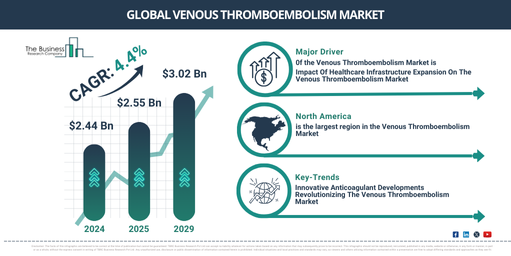
    There has been consistent growth in the venous thromboembolism market size over the past few years. The market which is projected to expand from $2.44 billion in 2024 to $2.55 billion in 2025, will experience a compound annual growth rate (CAGR) of 4.4%. This growth during the historic period is due primarily to factors such as an increasing aging population, advancements in anticoagulants, favorable reimbursement policies, and rising investments.

    In the coming years, the venous thromboembolism market size is anticipated to witness consistent expansion, with forecasts predicting its value to reach $3.02 billion by 2029, growing at a compound annual growth rate (CAGR) of 4.4%. Factors influencing this growth during the forecast period include enhanced global healthcare access, evaluations of genetic risk, the advent of telemedicine and remote patient monitoring, as well as initiatives promoting patient education and support. Noteworthy trends projected for the forecast period encompass extended thromboprophylaxis, the development of novel oral anticoagulants, individualized treatment approaches, and advancements in diagnostic imaging technologies.

    Download a free sample to assess the report’s scope and structure:

    https://www.thebusinessresearchcompany.com/sample.aspx?id=13001&type=smp

    What External and Internal Drivers Are Contributing to the Growth of the Venous Thromboembolism Market?

    The growth of the venous thromboembolism market is anticipated to be driven by the expansion of the healthcare infrastructure. The healthcare industry, which encompasses the sectors of the economic system that offer products and services for the prevention, treatment, rehabilitation and palliative care of patients, is expanding. This growth paves the way for the development of institutional infrastructure, policies, practices and educational programs that are critical for the implementation of VTE prevention protocols. The American Health Care Association reported that in May 2023, the count of hospitals in the US increased to 6,129, up from 6,093 in 2022. According to the Office for National Statistics, healthcare expenditure in the UK in 2023 was around £292 billion, marking a nominal increase of 5.6%. Furthermore, long-term health and social care expenditure in 2022 grew in real terms by 2.8%. Therefore, the flourishing healthcare industry is pushing the growth of the venous thromboembolism market. The venous thromboembolism market is predicted to be buoyed by a surge in the number of orthopaedic procedures. These are surgical operations aimed at treating conditions impacting the spine and joints and rectifying skeletal deformities, such as total knee arthroplasty (TKA), total hip arthroplasty (THA), or hip fracture surgery (HFS). These operations carry a high VTE risk, leading to increased use of compression devices for DVT prophylaxis. These devices prevent the formation of blood clots in the deep veins of the legs, thus lowering the risk of VTE. As per data from the National Library of Medicine published in February 2023, it is projected that by 2040, there will be increases of 719,364 and 1,222,988 in THA and TKA procedures respectively. Furthermore, by 2060, it is anticipated that the number of TKAs will reach 2,917,959, while THAs will total 1,982,099. This rise in orthopaedic procedures is powering the growth of the venous thromboembolism market.

    What Segment Types Define the Venous Thromboembolism Market Structure?

    The venous thromboembolism market covered in this report is segmented –

    1) By Type: Deep Vein Thrombosis, Pulmonary Embolism, Other Types

    2) By Treatment: Anti-Clotting Medications,  Mechanical Devices, Thrombolytic Therapy, Other Treatment

    3) By End Users: Hospitals, Homecare, Specialty Centers, Other End Users

    Subsegments:

    1) By Deep Vein Thrombosis (DVT): Proximal DVT, Distal DVT, Asymptomatic DVT

    2) By Pulmonary Embolism (PE): Acute PE, Chronic PE, Submassive PE

    3) By Other Types: Thrombophlebitis, Superficial Vein Thrombosis, Post-Thrombotic Syndrome

    Request customized data on this market:

    https://www.thebusinessresearchcompany.com/customise?id=13001&type=smp

    Which Geographic Areas Hold the Strongest Growth Potential in the Venous Thromboembolism Market?

    North America was the largest region in the venous thromboembolism market in 2024. The regions covered in venous thromboembolism market report are Asia-Pacific, Western Europe, Eastern Europe, North America, South America, Middle East and Africa.

    What Long-Term Trends Are Transforming the Competitive Landscape of the Venous Thromboembolism Market?

    Leading firms in the venous thromboembolism market are focusing on creating innovative anticoagulant medications to maintain their market standing. Improvements in anticoagulants can lead to the creation of more effective treatments for venous thromboembolism. For example, in September 2022, Anthos Therapeutics, an American clinical-stage biotherapeutic company, won regulatory approval from the U.S. Food and Drug Administration (FDA) for its new anticoagulant, abelacimab. The medication is a fully human monoclonal antibody designed to prevent strokes and systemic embolisms in patients with atrial fibrillation. The newly formulated, monthly dual-action antibody, abelacimab, is planned to induce hemostasis-sparing anticoagulation through the inhibition of Factor XI.

    View the full report here:

    https://www.thebusinessresearchcompany.com/report/venous-thromboembolism-global-market-report

    What Is the Definition of the Venous Thromboembolism Market?

    Venous thromboembolism (VTE) refers to a medical condition characterized by the formation of blood clots within the veins, which can lead to potentially serious or life-threatening complications. common symptoms of VTE include leg pain and swelling, rapid breathing, chest pain and more. The various treatment methods, such as anticoagulant medications, devices and thrombolytic therapy, are used for the treatment of VTE.

    Purchase the full report and get a swift delivery:

    https://www.thebusinessresearchcompany.com/purchaseoptions.aspx?id=13001

    About The Business Research Company:

    With over 15000+ reports from 27 industries covering 60+ geographies, The Business Research Company has built a reputation for offering comprehensive, data-rich research and insights. Armed with 1,500,000 datasets, the optimistic contribution of in-depth secondary research, and unique insights from industry leaders, you can get the information you need to stay ahead in the game.

    Get in touch with us:

    The Business Research Company: https://www.thebusinessresearchcompany.com/

    Americas +1 3156230293

    Asia +44 2071930708

    Europe +44 2071930708

    Email us at info@tbrc.info

    Follow us on:

    LinkedIn: https://in.linkedin.com/company/the-business-research-company

    YouTube: https://www.youtube.com/channel/UC24_fI0rV8cR5DxlCpgmyFQ

    Global Market Model: https://www.thebusinessresearchcompany.com/global-market-model
  • Key Developments and Trends Steering the Vasomotor Menopausal Symptoms (VMS) Treatment Market Forward: Increasing The Emphasis On Drug Approvals To Provide Better Treatment Options

    Key Developments and Trends Steering the Vasomotor Menopausal Symptoms (VMS) Treatment Market Forward: Increasing The Emphasis On Drug Approvals To Provide Better Treatment Options

    Discover trends, market shifts, and competitive outlooks for the vasomotor menopausal symptoms (vms) treatment industry through 2025-2034 with The Business Research Company’s reliable data and in-depth research

    What Is the Estimated Market Size of the Vasomotor Menopausal Symptoms (VMS) Treatment Market In 2029?

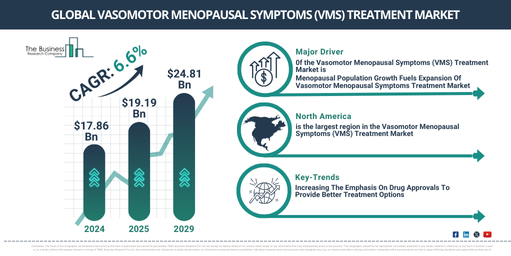
    The market for the treatment of vasomotor menopausal symptoms (VMS) has witnessed significant growth recently. The market size is projected to increase from $17.86 billion in 2024 to $19.19 billion in 2025, marking a compound annual growth rate (CAGR) of 7.5%. Factors such as hormone replacement therapy (HRT), awareness about menopause, advancements in pharmaceuticals, and consumer demand have contributed to this growth in the historical period.

    Over the coming years, the treatment market for vasomotor menopausal symptoms (VMS) is predicted to experience significant growth. Its value is expected to reach $24.81 billion in 2029, with a compound annual growth rate (CAGR) of 6.6%. This projected growth during the forecast period can be credited to factors such as personalized medication, innovations in non-hormonal treatments, dietary and nutritional intervention strategies, and the integration of telemedicine and digital health. The forecast period will also see prime market trends like natural and alternative treatments, botanical and herbal solutions, menopause support forums, and cognitive behavioral therapy (cbt).

    Download a free sample to assess the report’s scope and structure:

    https://www.thebusinessresearchcompany.com/sample.aspx?id=13051&type=smp

    How Are Key Drivers in the Industry Acting as Catalysts for the Growth of the Vasomotor Menopausal Symptoms (VMS) Treatment Market?

    The surge in the population of menopausal women is set to drive the vasomotor menopausal symptom’s treatment market’s expansion. Menopause, a biological process that signifies the end of a woman’s fertility period, is a critical period in every woman’s life, happening between the ages of 45 and 55, with most women experiencing it around the age of 51. The growth in the number of women at this stage, needing management of symptoms like hot flashes and vaginal dryness, is a significant factor pushing the vasomotor menopausal symptoms (VMS) treatment market’s growth. As estimated by the US-based Cuyuna Regional Medical Center in November 2022, by 2025, 1.1 billion women globally are expected to be in menopause, owing to increased life expectancy. They also projected a 1.6% annual increase in the menopausal population until 2060. Hence, the rising population of menopausal women is spurring the growth of the vasomotor menopausal symptom’s treatment market. Furthermore, governmental health initiatives focused on menopausal women are anticipated to further the growth of the vasomotor menopausal symptom’s treatment market. These initiatives consist of funding for studies on menopausal transition, disease prevention, and research related to pharmacological, clinical, and epidemiological aspects. They form part of a comprehensive strategy focusing on numerous women’s health issues. To illustrate, the January 2023 report from the Government of New South Wales in Australia mentioned a government dedication of $40.3 million from 2022-2023 to 2025-2026 to initiate up to 16 new programs for women suffering from severe menopausal symptoms. Consequently, these governmental health initiatives for menopausal women are steering the growth of the vasomotor menopausal symptoms’ treatment market.

    Which Segments in the Vasomotor Menopausal Symptoms (VMS) Treatment Offer the Most Growth?

    The vasomotor menopausal symptoms (VMS) treatment market covered in this report is segmented –

    1) By Drug Class: Antidepressants, Fluoxetine, Paroxetine, Sertraline, Hormone Therapy, Anticonvulsant, Phenytoin, Phenobarbital, Other Drug Classes

    2) By Distribution Channel: Hospital Pharmacy, Retail Pharmacy, Online Pharmacy, Other Distribution Channels

    3) By End-User: Hospitals, Specialty Clinics, Homecare, Other End-Users

    Subsegments:

    1) By Antidepressants: SSRIs (Selective Serotonin Reuptake Inhibitors), SNRIs (Serotonin-Norepinephrine Reuptake Inhibitors), TCAs (Tricyclic Antidepressants), MAOIs (Monoamine Oxidase Inhibitors), Atypical Antidepressants

    2) By Fluoxetine: Depression, Obsessive-Compulsive Disorder (OCD), Panic Disorder, Generalized Anxiety Disorder (GAD), Post-Traumatic Stress Disorder (PTSD), Social Anxiety Disorder, Premenstrual Dysphoric Disorder (PMDD)

    3) By Paroxetine: Depression, Obsessive-Compulsive Disorder (OCD), Panic Disorder, Generalized Anxiety Disorder (GAD), Post-Traumatic Stress Disorder (PTSD), Social Anxiety Disorder, Premenstrual Dysphoric Disorder (PMDD)

    4) Sertraline: Depression, Obsessive-Compulsive Disorder (OCD), Panic Disorder, Post-Traumatic Stress Disorder (PTSD), Social Anxiety Disorder, Premenstrual Dysphoric Disorder (PMDD)

    5) Hormone Therapy: Estrogen Replacement Therapy (ERT), Progestin Therapy, Combined Hormonal Therapy (CHT), Testosterone Replacement Therapy (TRT)

    6) Anticonvulsant: Hydantoins, Barbiturates, Benzodiazepines, Valproates, Succinimides, Carboxylic Acid Derivatives

    7) Phenytoin: Hydantoins

    8) Phenobarbital: Barbiturates

    9) Other Drug Classes: Antibiotics, Analgesics, Antidiabetics, Antihypertensives, Anticoagulants, Immunosuppressants, Antipsychotics, Antihistamines

    Request customized data on this market:

    https://www.thebusinessresearchcompany.com/customise?id=13051&type=smp

    What Are the Fastest-Growing Geographies in the Vasomotor Menopausal Symptoms (VMS) Treatment Market?

    North America was the largest region in the vasomotor menopausal symptoms (VMS) treatment market in 2024. The regions covered in vasomotor menopausal symptoms (VMS) treatment market report are Asia-Pacific, Western Europe, Eastern Europe, North America, South America, Middle East and Africa.

    What Are the Current Market Growth and Trends in the Vasomotor Menopausal Symptoms (VMS) Treatment Industry?

    Major firms in the vasomotor menopausal symptoms treatment market, such as Veozah, are advancing their products and securing approvals to deliver fresh treatment solutions and address patients’ unmet medical requirements. The licensing of novel menopause drugs offers enhanced effectiveness and safety compared to currently available treatments. For example, in May 2023, the FDA, a federal agency based in the US, granted approval to Japan’s Astellas Pharma Inc for their product, Veozah (fezolinetant) 45 mg to be taken once daily. This drug is used for treating mild to severe menopausal vasomotor symptoms (VMS), making it the first nonhormonal neurokinin 3 (NK3) receptor antagonist approved for this uses. It’s a hormone-free treatment that interferes with a brain pathway that manages these symptoms. It offers an additional treatment option for women experiencing these symptoms, especially those who cannot or choose not to undergo hormone therapy. The approval of Veozah underlines its promising future as a new drug for managing menopausal symptoms.

    View the full report here:

    https://www.thebusinessresearchcompany.com/report/vasomotor-menopausal-symptoms-vms-treatment-global-market-report

    What Are the Key Elements That Define the Vasomotor Menopausal Symptoms (VMS) Treatment Market?

    Vasomotor menopausal symptoms (VMS) treatment refers to the medical interventions and therapies used to alleviate or manage the various symptoms associated with menopause. Women experience the symptoms of VMS during menopause, which include hot flashes and night sweats. The treatment works by balancing hormone levels in the body and altering neurotransmitters in the brain.

    Purchase the full report and get a swift delivery:

    https://www.thebusinessresearchcompany.com/purchaseoptions.aspx?id=13051

    About The Business Research Company:

    With over 15000+ reports from 27 industries covering 60+ geographies, The Business Research Company has built a reputation for offering comprehensive, data-rich research and insights. Armed with 1,500,000 datasets, the optimistic contribution of in-depth secondary research, and unique insights from industry leaders, you can get the information you need to stay ahead in the game.

    Get in touch with us:

    The Business Research Company: https://www.thebusinessresearchcompany.com/

    Americas +1 3156230293

    Asia +44 2071930708

    Europe +44 2071930708

    Email us at info@tbrc.info

    Follow us on:

    LinkedIn: https://in.linkedin.com/company/the-business-research-company

    YouTube: https://www.youtube.com/channel/UC24_fI0rV8cR5DxlCpgmyFQ

    Global Market Model: https://www.thebusinessresearchcompany.com/global-market-model
  • Strong CAGR to Propel in the Urothelial Carcinoma Treatment Market and Beyond upto $6.22 Billion by 2029

    Strong CAGR to Propel in the Urothelial Carcinoma Treatment Market and Beyond upto $6.22 Billion by 2029

    Discover trends, market shifts, and competitive outlooks for the urothelial carcinoma treatment industry through 2025-2034 with The Business Research Company’s reliable data and in-depth research

    How Has The Urothelial Carcinoma Treatment Market Growth Evolved From 2024 To 2025, And What’s Ahead?

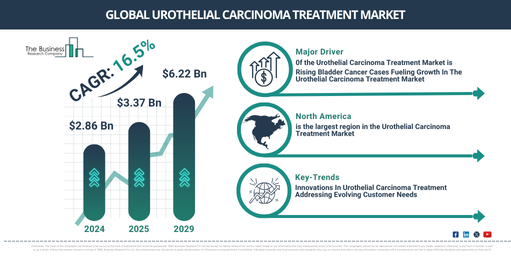
    The market for urothelial carcinoma treatment has experienced swift expansion recently. The market, valued at $2.86 billion in 2024, is projected to increase to $3.37 billion in 2025, indicating a compound annual growth rate (CAGR) of 18.0%. This notable growth during the historic period is due to several factors, including the surge in urothelial carcinoma instances, heightened awareness of this type of cancer, amplified accessibility to healthcare services, and escalating disposable income.

    The market for treatment of urothelial carcinoma is anticipated to experience a substantial expansion in the forthcoming years. It’s predicted to reach $6.22 billion by 2029, with a compound annual growth rate (CAGR) of 16.5%. Factors contributing to this growth during the projected period include an aging population, increasing demand for personalized medication, elevated governmental assistance for research and treatment of urothelial carcinoma, and robust investments in the treatment of urothelial carcinoma. Trends expected to dominate the forecast period involve therapies driven by biomarkers, pre-surgical (neoadjuvant) and post-surgical (adjuvant) approaches, liquid biopsies, minimally invasive procedures, development of chemotherapy, and the adoption of digital health technologies.

    Download a free sample to assess the report’s scope and structure:

    https://www.thebusinessresearchcompany.com/sample.aspx?id=12947&type=smp

    Which Primay Drivers Are Accelerating Growth in the Urothelial Carcinoma Treatment Market?

    The projected rise in bladder cancer is anticipated to bolster the urothelial carcinoma treatment market’s expansion. Bladder cancer, a common form of cancer impacting the cells of the urinary bladder, often necessitates an array of treatment possibilities that patients and healthcare providers seek out. Research into bladder cancer offers crucial insights into urothelial carcinoma and promotes interdisciplinary therapeutic strategies for enhanced patient outcomes. As reported by the US-based National Library of Medicine – a medical library managed by the US federal government – in September 2023, the forecasted annual incidence of new bladder cancer cases is set to climb to 991,000 by 2040. This signifies a 72.8% surge compared to 2020 figures. Annual fatalities owing to bladder cancer are also anticipated to touch 397,000, showing an uptick of 86.6%. Ergo, this increase in bladder cancer will fuel the urothelial carcinoma treatment market. Boosted Demand for Chemotherapy Propelling Urothelial Carcinoma Treatment Market Growth

    Which Primary Segments of the Urothelial Carcinoma Treatment Market Are Driving Growth and Industry Transformations?

    The urothelial carcinoma treatment market covered in this report is segmented –

    1) By Type: Non-Invasive Urothelial Carcinoma Treatment, Invasive Urothelial Carcinoma Treatment

    2) By Treatment: Immunotherapy, Radiotherapy, Chemotherapy

    3) By Cancer Type: Bladder Cancer, Urethral Cancer, Ureteric And Renal Pelvic Cancer

    4) By End-Users: Hospitals, Homecare, Specialty Centers, Other End-Users

    Subsegments:

    1) By Non-Invasive Urothelial Carcinoma Treatment: Intravesical Therapy, Immunotherapy, Chemotherapy

    2) By Invasive Urothelial Carcinoma Treatment: Radical Cystectomy, Chemotherapy, Radiation Therapy, Targeted Therapy

    Request customized data on this market:

    https://www.thebusinessresearchcompany.com/customise?id=12947&type=smp

    Which Regions Are Key Players in the Growth of the Urothelial Carcinoma Treatment Market?

    North America was the largest region in the urothelial carcinoma treatment market in 2024. The regions covered in urothelial carcinoma treatment market report are Asia-Pacific, Western Europe, Eastern Europe, North America, South America, Middle East and Africa.

    Which Technological Trends Are Reshaping the Urothelial Carcinoma Treatment Industry Dynamics?

    Significant players in the urothelial carcinoma treatment market are focusing on introducing groundbreaking products to heighten their competitive prowess and cater to the changing demands of consumers. For example, Nonacus Limited, a UK-based healthcare product manufacturer, launched a revolutionary non-invasive bladder cancer detection test- GALEAS Bladder, in March 2023. GALEAS Bladder represents a major leap in bladder cancer diagnosis, offering patients a quick, accurate, and efficient molecular biomarker-based triage solution, thereby simplifying the diagnostic process and minimizing the need for invasive procedures such as cystoscopies. The product, developed together with the University of Birmingham, UK, has been thoroughly tested on over 600 patient samples from three clinical cohorts in the UK. This meticulous evaluation has underscored the excellent performance of GALEAS Bladder, which exhibits an impressive diagnostic accuracy (sensitivity above 90%, specificity over 85%) across different bladder cancer grades and stages.

    View the full report here:

    https://www.thebusinessresearchcompany.com/report/urothelial-carcinoma-treatment-global-market-report

    What Parameters Are Used to Define the Urothelial Carcinoma Treatment Market?

    Urothelial carcinoma is a type of cancer that originates in the urothelial cells lining the inside of the urinary system, including the bladder, ureters (tubes connecting the kidneys to the bladder) and renal pelvis (the part of the kidney that collects urine). Urothelial carcinoma treatments, such as surgical interventions and intravenous therapies, control urothelial carcinoma disease, improve patient outcomes and enhance quality of life.

    Purchase the full report and get a swift delivery:

    https://www.thebusinessresearchcompany.com/purchaseoptions.aspx?id=12947

    About The Business Research Company:

    With over 15000+ reports from 27 industries covering 60+ geographies, The Business Research Company has built a reputation for offering comprehensive, data-rich research and insights. Armed with 1,500,000 datasets, the optimistic contribution of in-depth secondary research, and unique insights from industry leaders, you can get the information you need to stay ahead in the game.

    Get in touch with us:

    The Business Research Company: https://www.thebusinessresearchcompany.com/

    Americas +1 3156230293

    Asia +44 2071930708

    Europe +44 2071930708

    Email us at info@tbrc.info

    Follow us on:

    LinkedIn: https://in.linkedin.com/company/the-business-research-company

    YouTube: https://www.youtube.com/channel/UC24_fI0rV8cR5DxlCpgmyFQ

    Global Market Model: https://www.thebusinessresearchcompany.com/global-market-model
  • Urinary Tract Cancer Market Forecast Reaching $7.74 Billion by 2029 at 18.9% CAGR

    Urinary Tract Cancer Market Forecast Reaching $7.74 Billion by 2029 at 18.9% CAGR

    Discover trends, market shifts, and competitive outlooks for the urinary tract cancer industry through 2025-2034 with The Business Research Company’s reliable data and in-depth research

    What Is the Current and Projected Market Size of the Urinary Tract Cancer Market Through 2034?

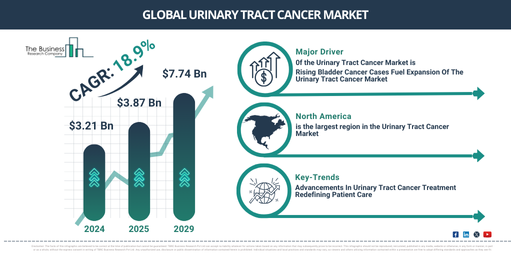
    There has been a significant growth in the market size of urinary tract cancer in the past few years. The market is expected to expand from $3.21 billion in 2024, hitting $3.87 billion in 2025. This increase represents a Compound Annual Growth Rate (CAGR) of 20.6%. Factors contributing to the growth during the historic period include advancements in diagnostic technology, development of pharmaceuticals, heightened awareness leading to early detection, and precision medicine.

    The market size for urinary tract cancer is predicted to witness a considerable expansion in the coming years, with an estimate of reaching $7.74 billion by 2029, moving at a compound annual growth rate (CAGR) of 18.9%. The surge in this projection period might be due to advancements in immunotherapy, telemedicine, remote monitoring, research on biomarkers, and adjuvant therapies. Significant trends in the anticipation period may contain worldwide collaboration, enhancements in palliative care, extensive programs for survivorship, and patient-focused care.

    Download a free sample to assess the report’s scope and structure:

    https://www.thebusinessresearchcompany.com/sample.aspx?id=13059&type=smp

    Which Major Market Drivers Are Expected to Boost the Growth Potential of the Urinary Tract Cancer Market?

    The urinary tract cancer market is set to witness significant growth due to the increasing incidence of bladder cancer. Bladder cancer, a type of cancer that forms in the tissues of the urinary bladder – an organ situated in the pelvis that holds urine generated by the kidneys – causes a rise in demand for diagnostic and screening methods, as well as treatments, for patients with urinary tract cancer. For instance, the American Cancer Society Inc., a US-based cancer awareness organization, suggested in a January 2023 report that the projected number of urinary system cancer occurrences rose to 168,560 in the year, marking a 2.66% increase from 164,190 incidences in 2022 in the US alone. As a result, the expanding occurrence of bladder cancer is expected to fuel the urinary tract cancer market’s growth.

    The Urinary Tract Cancer Market is being propelled by the Rising Incidence of Urinary Tract Infections


    Which Key Market Segments Comprise the Urinary Tract Cancer Market and Drive Its Revenue Growth?

    The urinary tract cancer market covered in this report is segmented –

    1) By Cancer Type: Bladder Cancer, Urethral Cancer, Ureteric And Renal Pelvic Cancer

    2) By Treatment: Chemotherapy, Intravesical Therapy, Radiation Therapy, Surgery

    3) By Diagnostic Techniques: Cystoscopy, Transurethral Resection Of The Tumor, Imaging Tests, Urine Analyses, Other Diagnostic Techniques

    4) By Distribution Channel: Retail Pharmacy, Online Pharmacy

    Subsegments:

    1) By Bladder Cancer: Transitional Cell Carcinoma, Squamous Cell Carcinoma, Adenocarcinoma, Other Types

    2) By Urethral Cancer: Urethral Carcinoma, Other Urethral Tumors

    3) By Ureteric And Renal Pelvic Cancer: Ureteric Cancer, Renal Pelvic Cancer, Other Types

    Request customized data on this market:

    https://www.thebusinessresearchcompany.com/customise?id=13059&type=smp

    Which Areas Are Leading Regions in the Urinary Tract Cancer Market Expansion Across the Globe?

    North America was the largest region in the urinary tract cancer market in 2024. The regions covered in urinary tract cancer market report are Asia-Pacific, Western Europe, Eastern Europe, North America, South America, Middle East and Africa.

    What Are the Key Market Trends in theUrinary Tract Cancer Market Over the Coming Years?

    Several dominant organizations in the urinary tract cancer market are shifting their attention towards improving treatment methods with an aim to offer more efficient and customized solutions and thereby, gain a superior market standing. These enhanced techniques in urinary tract cancer treatment focus on precision, utilizing the body’s immunity, bettering surgical approaches and adapting treatments to fit the specific requirements of individual patients. For instance, in October 2022, an American healthcare system, UC San Diego Health, launched an innovative treatment for patients suffering from low-grade upper tract urothelial cancer (LG-UTUC), a slightly rare form of urinary system cancer. This sophisticated treatment serves as an alternative approach to the traditional practice of complete kidney removal, possibly saving patients from future needs of dialysis or kidney transplants. The novel therapy involves the delivery of a drug named Jelmyto through a number of injections consisting of mitomycin, a popular chemotherapy agent, blended with a sterile hydrogel. The delivery of this medicine is facilitated through guided injections, making it possible for precision targeting of the tumor within the urinary system.

    View the full report here:

    https://www.thebusinessresearchcompany.com/report/urinary-tract-cancer-global-market-report

    How Is the Urinary Tract Cancer Market Conceptually Defined?

    Urinary tract cancer refers to malignancies that develop in the kidneys, bladder, ureters, or urethra, often causing symptoms like blood in the urine and pain. The preventive steps such as stopping smoking, avoiding hazardous substances and promptly treating urine infections may help minimize the risk of getting urinary tract cancer.

    Purchase the full report and get a swift delivery:

    https://www.thebusinessresearchcompany.com/purchaseoptions.aspx?id=13059

    About The Business Research Company:

    With over 15000+ reports from 27 industries covering 60+ geographies, The Business Research Company has built a reputation for offering comprehensive, data-rich research and insights. Armed with 1,500,000 datasets, the optimistic contribution of in-depth secondary research, and unique insights from industry leaders, you can get the information you need to stay ahead in the game.

    Get in touch with us:

    The Business Research Company: https://www.thebusinessresearchcompany.com/

    Americas +1 3156230293

    Asia +44 2071930708

    Europe +44 2071930708

    Email us at info@tbrc.info

    Follow us on:

    LinkedIn: https://in.linkedin.com/company/the-business-research-company

    YouTube: https://www.youtube.com/channel/UC24_fI0rV8cR5DxlCpgmyFQ

    Global Market Model: https://www.thebusinessresearchcompany.com/global-market-model
  • $17.39 Billion Forecast for Urinary Incontinence Market by 2029, Backed by Demand and Innovation

    $17.39 Billion Forecast for Urinary Incontinence Market by 2029, Backed by Demand and Innovation

    Discover trends, market shifts, and competitive outlooks for the urinary incontinence industry through 2025-2034 with The Business Research Company’s reliable data and in-depth research

    What is the Anticipated CAGR of the Urinary Incontinence Market, and What Factors Will Drive It?

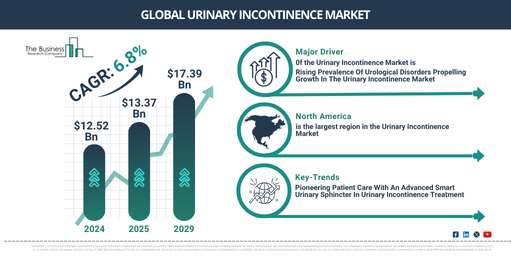
    Recent years have witnessed significant growth in the urinary incontinence market size. It is anticipated to expand from $12.52 billion in 2024 to $13.37 billion in 2025, with a compound annual growth rate (CAGR) of 6.8%. Factors like the aging population, increased awareness and prevalence of urinary incontinence, improved access to healthcare services, and growing disposable incomes have contributed to the growth in the previous years.

    In the following years, the urinary incontinence market size is predicted to witness a significant rise. By 2029, it is forecasted to reach $17.39 billion, with a compound annual growth rate (CAGR) of 6.8%. The elevation during the forecast period is likely due to an increased instances of co-existing diseases, lifestyle aspects, public health strategies, and expanding healthcare costs. Medical progressions, novel technologies, non-invasive therapies, digital and mobile health, innovative product blueprints, and patient-focused care are the major trends anticipated during the forecast period.

    Download a free sample to assess the report’s scope and structure:

    https://www.thebusinessresearchcompany.com/sample.aspx?id=12946&type=smp

    What Are the Core Growth Drivers Propelling the Urinary Incontinence Market Forward?

    The urinary incontinence market is expected to expand due to the increasing occurrence of urological disorders. Urological disorders encompass various medical conditions that impact the urinary system and male reproductive organs, such as the kidneys, bladder, ureters, urethra and male reproductive organs including the prostate and testes. The escalating occurrence of these disorders, especially urinary incontinence, amplifies the need for products and treatments to manage these conditions. Enhancements in awareness, diagnosis, medical innovation and healthcare infrastructure also contribute to this growth. As highlighted by a report from the American Cancer Society Inc., an US-based organization dedicated to cancer awareness, there was a growth of 1.1% from 81,400 in 2020 to 82,290 estimated urinary bladder cancer cases in January 2023. As a result, the increasing prevalence of urological disorders is expected to stimulate the growth of the urinary incontinence market. The growth of the urinary incontinence market is also anticipated to accelerate due to the surge in demand for minimally invasive operations. Such operations employ advanced instruments and technology to limit the size and quantity of incisions made on the patient’s body. This increase in demand for minimally invasive procedures plays a pivotal role in urinary incontinence management and is seen as an effective, patient-centric treatment option. Patients and healthcare providers are increasingly opting for these techniques to manage the condition as it minimizes disruption to the patient’s everyday life and overall health. As per reports by Intuitive Surgical Inc., a US-based company specializing in robotic products, there was an 18% increase in surgeries using Vinci surgical systems – from approximately 1,594,000 in 2021 to 1,875,000 in 2022. Hence, the uptick in demand for minimally invasive operations is expected to propel the growth of the urinary incontinence market.

    What Segment Types Define the Urinary Incontinence Market Structure?

    The urinary incontinence market covered in this report is segmented –

    1) By Type: Urge Incontinence, Stress Incontinence, Overflow Incontinence, Functional Incontinence

    2) By Treatment Type: Medication, Devices, Other Treatments

    3) By Route Of Administration: Oral, Parenteral, Other Routes Of Administrations

    4) By Diagnosis: Physical Exam, Pad Test, Urodynamic Testing, Cystoscopy, Stress Test, Ultrasound, Urine Samples

    5) By End-Users: Hospitals, Specialty Clinics, Homecare, Other End-Users

    Subsegments:

    1) By Urge Incontinence: Overactive Bladder, Urinary Urgency

    2) By Stress Incontinence: Involuntary Leakage During Physical Activity, Coughing Or Sneezing

    3) By Overflow Incontinence: Chronic Urinary Retention, Frequent Or Constant Dribbling

    4) By Functional Incontinence: Cognitive Impairment, Physical Limitations

    Request customized data on this market:

    https://www.thebusinessresearchcompany.com/customise?id=12946&type=smp

    Which Geographic Areas Hold the Strongest Growth Potential in the Urinary Incontinence Market?

    North America was the largest region in the urinary incontinence market in 2024. The regions covered in urinary incontinence market report are Asia-Pacific, Western Europe, Eastern Europe, North America, South America, Middle East and Africa.

    Which Emerging Trends that Are Influencing theUrinary Incontinence Industry Evolution?

    Leading firms in the urinary incontinence sector are actively adopting cutting-edge technologies and innovative methods to improve patient treatment and outcomes. For example, in July 2023, UroMems SAS, a biotech firm based in France, successfully implanted the UroActive intelligent, automated artificial urinary sphincter (AUS) in a female patient for treating stress urinary incontinence (SUI) in women. This revolutionary UroActive contrivance is powered by a myoelectrical mechanical system (MEMS) developed specifically to cater to the unfulfilled requirement for a concrete treatment for SUI in females. The procedure was carried out with the help of a robot at La Pitié-Salpêtrière University Hospital in Paris, having received the necessary regulatory approvals from the French counterpart of the FDA. The adjustable and intelligent features of UroActive, along with its minimally invasive manner, aim to enhance the quality of life for patients.

    View the full report here:

    https://www.thebusinessresearchcompany.com/report/urinary-incontinence-global-market-report

    What Is the Definition of the Urinary Incontinence Market?

    Urinary incontinence is a medical condition characterized by the unintentional loss of urine, ranging from occasional leaks to a complete inability to control urination. Weakened pelvic floor muscles, hormonal changes, obesity, neurological conditions, urinary tract infections, medications and pregnancy can cause urinary incontinence.

    Purchase the full report and get a swift delivery:

    https://www.thebusinessresearchcompany.com/purchaseoptions.aspx?id=12946

    About The Business Research Company:

    With over 15000+ reports from 27 industries covering 60+ geographies, The Business Research Company has built a reputation for offering comprehensive, data-rich research and insights. Armed with 1,500,000 datasets, the optimistic contribution of in-depth secondary research, and unique insights from industry leaders, you can get the information you need to stay ahead in the game.

    Get in touch with us:

    The Business Research Company: https://www.thebusinessresearchcompany.com/

    Americas +1 3156230293

    Asia +44 2071930708

    Europe +44 2071930708

    Email us at info@tbrc.info

    Follow us on:

    LinkedIn: https://in.linkedin.com/company/the-business-research-company

    YouTube: https://www.youtube.com/channel/UC24_fI0rV8cR5DxlCpgmyFQ

    Global Market Model: https://www.thebusinessresearchcompany.com/global-market-model