Category: HealthcareServices

  • Lower Respiratory Tract Therapeutics Industry Growth Insights: Revenue Forecast to 2030

    Lower Respiratory Tract Therapeutics Industry Growth Insights: Revenue Forecast to 2030

    Uncover key drivers, emerging technologies, and competitive movements shaping the lower respiratory tract therapeutics market from 2026–2035 with trusted insights from The Business Research Company

    What level of CAGR-driven expansion is anticipated in the Lower Respiratory Tract Therapeutics Market between 2026 and 2030?

    The lower respiratory tract therapeutics market size has seen substantial growth in recent years. This market is expected to expand from $38.84 billion in 2025 to $41.94 billion in 2026, exhibiting a compound annual growth rate (CAGR) of 8.0%. The significant growth observed in the past can be linked to factors such as the increasing prevalence of asthma and COPD, a high incidence of lower respiratory infections, the widespread use of antibiotics and bronchodilators, rising air pollution levels, and the expansion of hospital-based respiratory care.

    The lower respiratory tract therapeutics market is projected to experience robust expansion in the coming years. This market is anticipated to reach $57.97 billion by 2030, demonstrating a compound annual growth rate (CAGR) of 8.4%. Factors contributing to this growth during the forecast period include an aging worldwide population, escalating tobacco use and pollutant exposure, heightened awareness regarding prompt treatment for respiratory diseases, improved healthcare accessibility in developing nations, and the proliferation of outpatient and homecare respiratory interventions. Key trends anticipated in the forecast period encompass the escalating prevalence of chronic respiratory illnesses, an intensified emphasis on managing diseases over the long term, a surge in demand for combined drug treatments, the broadening scope of respiratory care for elderly populations, and the increased embrace of at-home respiratory therapies.

    Access Your Free Sample Report for In-Depth Market Insights:

    https://www.thebusinessresearchcompany.com/sample.aspx?id=12591&type=smp

    What Drivers Are Affecting Demand-Supply Dynamics In The Lower Respiratory Tract Therapeutics Market?

    The increasing incidence of respiratory diseases is set to bolster the lower respiratory tract therapeutics market in the future. Respiratory diseases refer to medical conditions that impact the respiratory system, encompassing structures such as the lungs, bronchi, trachea, larynx, pharynx, and nasal passages. Therapeutics for the lower respiratory tract are predominantly employed for the early identification and diagnosis of these conditions, enabling prompt treatment and management. This approach helps in halting disease progression, is vital for controlling the transmission of infectious respiratory diseases, and lessens the chance of complications. For instance, in October 2024, as per the National Asthma Council, an Australia-based non-profit organization, Australia registered a total of 474 asthma-related deaths in 2023, with 325 females and 149 males. This figure closely mirrors the 473 asthma-related deaths reported in 2022, underscoring a consistent trend in asthma mortality over the two years. Therefore, the growing prevalence of respiratory diseases will propel the lower respiratory tract therapeutics market.

    How Is The Lower Respiratory Tract Therapeutics Market Organized Into Various Segments?

    The lower respiratory tract therapeutics market covered in this report is segmented –

    1) By Disease Type: Asthma, Chronic Obstructive Pulmonary Disease, Pneumonia, Tuberculosis, Bronchitis, Other Diseases

    2) By Drug Class: Antibiotics, Non-Steroidal Anti-Inflammatory Drug, Cough Suppressant, Other Drug Classes

    3) By Distribution Channel: Hospital Pharmacies, Retail Pharmacies, Online Pharmacies

    Subsegments:

    1) By Asthma: Allergic Asthma, Non-allergic Asthma

    2) By Chronic Obstructive Pulmonary Disease (COPD): Chronic Bronchitis, Emphysema

    3) By Pneumonia: Bacterial Pneumonia, Viral Pneumonia

    4) By Tuberculosis: Drug-sensitive Tuberculosis, Drug-resistant Tuberculosis

    5) By Bronchitis: Acute Bronchitis, Chronic Bronchitis

    6) By Other Diseases: Interstitial Lung Disease, Cystic Fibrosis, Pulmonary Hypertension

    Which Trends Are Guiding The Evolution Of The Lower Respiratory Tract Therapeutics Market?

    Key players within the lower respiratory tract therapeutics market are prioritizing innovative offerings, such as triple combination drugs for COPD management, to increase their market revenues. This triple combination therapy for COPD comprises three inhaled medications: long-acting muscarinic antagonists (LAMA), long-acting beta-agonists (LABA), and inhaled corticosteroids (ICS). For example, in November 2023, Lupin Limited, an India-based pharmaceutical company, introduced Vilfuro-G. This product is offered in a fixed dose of one strength, with a recommended once-daily dosage. The launch of Vilfuro-G is expected to considerably improve the lives of COPD patients and expand Lupin’s respiratory product range, reflecting the company’s commitment to delivering advanced treatment solutions to patients and healthcare professionals. Vilfuro-G uniquely serves as the only fixed-dose combination (FDC) specifically designed to combine glycopyrronium bromide, vilanterol, and fluticasone furoate for the long-term treatment and management of moderate to severe COPD.

    Who Are The Top-Performing Companies In The Lower Respiratory Tract Therapeutics Market In Recent Years?

    Major companies operating in the lower respiratory tract therapeutics market are Pfizer Inc., Johnson & Johnson, F. Hoffmann-La Roche Ltd., Merck & Co. Inc., AbbVie Inc., Novartis AG, Sanofi S.A., Bristol-Myers Squibb Company, AstraZeneca PLC, GlaxoSmithKline plc., Eli Lilly and Co Ltd., Boehringer Ingelheim International GmbH, Teva Pharmaceutical Industries Ltd., Regeneron Pharmaceuticals Inc., Vertex Pharmaceuticals Incorporated, Grifols S.A., Menarini Group, Chiesi Farmaceutici S.p.A., Cipla Limited, Mundipharma International Limited, Orion Corporation, Sunovion Pharmaceuticals Inc., Innoviva Inc., Insmed Incorporated, Vectura Group plc, Theravance Biopharma Inc., Verona Pharma plc, Circassia Pharmaceuticals plc

    Access The Complete Report For Deeper Market Insights:

    https://www.thebusinessresearchcompany.com/report/lower-respiratory-tract-therapeutics-global-market-report

    How Does The Lower Respiratory Tract Therapeutics Market Perform Across Major Global Regions?

    North America was the largest region in the lower respiratory tract therapeutics market in 2025. Asia-Pacific is expected to be the fastest-growing region in the forecast period. The regions covered in the lower respiratory tract therapeutics market report are Asia-Pacific, South East Asia, Western Europe, Eastern Europe, North America, South America, Middle East, Africa.

    Request Your Customized Lower Respiratory Tract Therapeutics Market Research Report for Competitive Advantage:

    https://www.thebusinessresearchcompany.com/customise?id=12591&type=smp

    Browse Through More Reports Similar to the Global Lower Respiratory Tract Therapeutics Market 2026, By The Business Research Company

    Respiratory Devices And Equipment Therapeutic And Diagnostic Market Report 2026

    https://www.thebusinessresearchcompany.com/report/respiratory-devices-and-equipment-therapeutic-and-diagnostic-global-market-report

    Respiratory Devices And Equipment Therapeutic Market Report 2026

    https://www.thebusinessresearchcompany.com/report/respiratory-devices-and-equipment-therapeutic-global-market-report

    Respiratory Disease Drugs Market Report 2026

    https://www.thebusinessresearchcompany.com/report/respiratory-disease-drugs-global-market-report

    Get in touch with us:

    The Business Research Company: https://www.thebusinessresearchcompany.com/

    Americas +1 310-496-7795

    Asia +44 7882 955267 & +91 8897263534

    Europe +44 7882 955267

    Email us at info@tbrc.info

    Follow us on:

    LinkedIn: https://in.linkedin.com/company/the-business-research-company

    YouTube: https://www.youtube.com/channel/UC24_fI0rV8cR5DxlCpgmyFQ

    Global Market Model: https://www.thebusinessresearchcompany.com/global-market-model

  • Global Low-Density Lipoprotein Test Market Performance Report: Global Trends 2026–2030

    Global Low-Density Lipoprotein Test Market Performance Report: Global Trends 2026–2030

    Uncover key drivers, emerging technologies, and competitive movements shaping the low-density lipoprotein test market from 2026–2035 with trusted insights from The Business Research Company

    What long-term size projections exist for the Low-Density Lipoprotein Test Market covering 2026–2035?

    The market size for low-density lipoprotein tests has shown significant expansion in recent years. This market is projected to grow from $8.83 billion in 2025 to $9.32 billion in 2026, advancing at a compound annual growth rate (CAGR) of 5.5%. The historical growth experienced by this sector is primarily driven by factors such as the increasing prevalence of cardiovascular diseases, the early clinical reliance on LDL-C testing, a rising incidence of obesity and diabetes, the expansion of hospital-based diagnostic laboratories, and an increasing awareness of cholesterol management.

    The low-density lipoprotein test market is projected to experience substantial growth in the upcoming years. This market is anticipated to reach $11.47 billion by 2030, exhibiting a compound annual growth rate (CAGR) of 5.3%. Several factors are driving this expansion during the forecast period, including an enhanced emphasis on preventive healthcare, an increase in dyslipidaemia screening, broader adoption of sophisticated lipid testing techniques, a greater need for early detection of stroke and heart disease risks, and increased healthcare expenditure on diagnostic services. Key trends characterizing this period involve a heightened focus on preventive cardiovascular screening, the expanding application of comprehensive lipid panel testing, an elevated demand for regular cholesterol monitoring, the extended use of LDL testing for metabolic disorders, and an increase in the uptake of point-of-care lipid testing.

    Access Your Free Sample Report for In-Depth Market Insights:

    https://www.thebusinessresearchcompany.com/sample.aspx?id=9395&type=smp

    Which Drivers Are Impacting The Competitive Landscape Of The Low-Density Lipoprotein Test Market?

    The increasing occurrence of cardiovascular diseases is anticipated to boost the expansion of the low-density lipoprotein test market in the future. Cardiovascular diseases are conditions impacting the heart or blood vessels. The low-density lipoprotein test is utilized in the management of cardiovascular diseases by directly measuring low-density lipoprotein levels in the heart. A notable example highlights this, as in February 2024, information from the UK Parliament, a UK-based governing body, indicated that heart and circulatory diseases are responsible for approximately 25% of all deaths in England, leading to over 140,000 annual fatalities and around 480 daily, equating to one death every three minutes. Consequently, the escalating prevalence of cardiovascular diseases is a primary factor fueling the growth of the low-density lipoprotein test market.

    What Segments Are Identified Within The Structure Of The Low-Density Lipoprotein Test Market?

    The low-density lipoprotein test market covered in this report is segmented –

    1) By Product Type: Low-Density Lipoprotein Cholesterol (LDL-C), Low-Density Lipoprotein Particle Number (LDL-P), Low-Density Lipoprotein Particle Size (LDL-B), Other Product Types

    2) By Component: Kits, Reagents, Devices, Other Components

    3) By Disease Type: Diabetes, Stroke, Atherosclerosis, Obesity, Dyslipidaemia, Carotid Artery Disease, Peripheral Arterial Disease, Angina, Other Disease Types

    4) By Distribution Channel: Direct Tenders, Retail

    5) By End User: Hospitals, Clinics, Ambulatory Care, Research Laboratory, Other End Users

    Subsegments:

    1) By Low-Density Lipoprotein Cholesterol (LDL-C): Direct Measurement Tests, Calculated LDL-C Tests

    2) By Low-Density Lipoprotein Particle Number (LDL-P): NMR (Nuclear Magnetic Resonance) Tests, Other Particle Counting Methods

    3) By Low-Density Lipoprotein Particle Size (LDL-B): Gradient Gel Electrophoresis, Other Size Measurement Techniques

    4) By Other Product Types: Lipid Panel Tests: Genetic Testing For Dyslipidemia, Point-Of-Care Testing Devices

    What Trends Are Projected To Support The Growth Of The Low-Density Lipoprotein Test Market?

    Leading companies in the low-density lipoprotein (LDL) test market are concentrating on releasing innovative diagnostic solutions, such as advanced lipoprotein analysis systems, to enhance cardiovascular risk assessment, diagnostic accuracy, and patient management. These sophisticated systems utilize technologies like nuclear magnetic resonance (NMR) spectroscopy and algorithm-driven interpretation to provide deeper insights into lipid profiles that go beyond standard LDL-C measurements, thereby improving clinical decision-making for individuals with cardiometabolic risks. For example, in July 2023, Numares Health, a health diagnostic company from Germany, introduced the AXINON LDL-p Test System. This FDA-cleared diagnostic tool offers a more detailed assessment of lipoproteins, providing insights into cardiac function beyond standard LDL-C measurements. Employing nuclear magnetic resonance (NMR) spectroscopy, the system integrates advanced diagnostic algorithms to boost its accuracy. It assists physicians in more effectively managing patients at elevated risk for cardiovascular disease, especially those with cardiometabolic risk factors.

    Which Leading Companies Dominate The Low-Density Lipoprotein Test Market Share?

    Major companies operating in the low-density lipoprotein test market are Abbott Laboratories, Siemens Healthineers, F Hoffmann La Roche Ltd, Danaher Corporation, Thermo Fisher Scientific Inc, Bio Rad Laboratories Inc, DiaSorin SpA, Randox Laboratories Ltd, Sekisui Diagnostics, DiaSys Diagnostic Systems GmbH, Eurolyser Diagnostica GmbH, Diazyme Laboratories Inc, OPKO Health Inc, Merck KGaA, Agilent Technologies Inc, Becton Dickinson and Company, Quest Diagnostics Incorporated, Laboratory Corporation of America Holdings, Eurofins Scientific SE, Home Access Health Corporation

    Access The Complete Report For Deeper Market Insights:

    https://www.thebusinessresearchcompany.com/report/low-density-lipoprotein-test-global-market-report

    Which Region Is Anticipated To See The Fastest Growth In The Low-Density Lipoprotein Test Market?

    North America was the largest region in the Low-Density Lipoprotein Test market in 2025. The regions covered in the low-density lipoprotein test market report are Asia-Pacific, South East Asia, Western Europe, Eastern Europe, North America, South America, Middle East, Africa.

    Request Your Customized Low-Density Lipoprotein Test Market Research Report for Competitive Advantage:

    https://www.thebusinessresearchcompany.com/customise?id=9395&type=smp

    Browse Through More Reports Similar to the Global Low-Density Lipoprotein Test Market 2026, By The Business Research Company

    Poc Cholesterol Test Market 2026

    https://www.thebusinessresearchcompany.com/report/poc-cholesterol-test-market

    Cholesterol Test Market Report 2026

    https://www.thebusinessresearchcompany.com/report/cholesterol-test-global-market-report

    Lipid Panel Testing Market Report 2026

    https://www.thebusinessresearchcompany.com/report/lipid-panel-testing-global-market-report

    Get in touch with us:

    The Business Research Company: https://www.thebusinessresearchcompany.com/

    Americas +1 310-496-7795

    Asia +44 7882 955267 & +91 8897263534

    Europe +44 7882 955267

    Email us at info@tbrc.info

    Follow us on:

    LinkedIn: https://in.linkedin.com/company/the-business-research-company

    YouTube: https://www.youtube.com/channel/UC24_fI0rV8cR5DxlCpgmyFQ

    Global Market Model: https://www.thebusinessresearchcompany.com/global-market-model
  • Low Molecular Weight Heparin Market Future Outlook 2026: Key Drivers and Growth Potential

    Low Molecular Weight Heparin Market Future Outlook 2026: Key Drivers and Growth Potential

    Uncover key drivers, emerging technologies, and competitive movements shaping the low molecular weight heparin market from 2026–2035 with trusted insights from The Business Research Company

    What total market size is anticipated for the Low Molecular Weight Heparin Market in 2030?

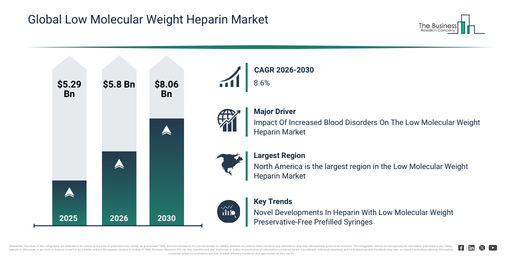
    The low molecular weight heparin market size has experienced robust growth recently. This market is projected to expand from $5.29 billion in 2025 to $5.8 billion by 2026, exhibiting a compound annual growth rate (CAGR) of 9.5%. Historically, this expansion can be linked to factors such as the rising occurrence of venous thromboembolism, the drawbacks of unfractionated heparin therapy, the extensive clinical adoption of enoxaparin, its increasing application in postoperative care, and the enhanced safety profile of lmwh.

    The low molecular weight heparin market size is projected to experience substantial growth over the coming years. This market is anticipated to reach $8.06 billion by 2030, demonstrating a compound annual growth rate (CAGR) of 8.6%. Several factors are driving this expansion during the forecast period, including an expanding aging population, a rising incidence of cardiovascular disorders, an increasing need for predictable anticoagulation therapy, the spread of home-based anticoagulant treatment options, and greater use in cases of cancer-associated thrombosis. Additionally, significant trends expected within this period involve an increasing preference for LMWH over unfractionated heparin, its expanding application in thromboprophylaxis and acute care environments, the proliferation of generic LMWH products, a greater uptake of prefilled syringes, and its growing utilization in outpatient and homecare treatment settings.

    Access Your Free Sample Report for In-Depth Market Insights:

    https://www.thebusinessresearchcompany.com/sample.aspx?id=16468&type=smp

    What Drivers Are Influencing Production Trends In The Low Molecular Weight Heparin Market?

    The low molecular weight heparin market is anticipated to expand due to the rising occurrence of blood disorders. Blood disorders encompass various conditions that impact blood constituents like red blood cells, white blood cells, platelets, and plasma proteins. Conditions such as anemia, hemophilia, and thrombosis are examples of these disorders, which can affect people across all age groups and demographics. The surge in blood disorders stems from factors including aging populations, advancements in diagnostic methods, and greater exposure to environmental risk elements. Within the context of blood disorders, low molecular weight heparin serves to prevent and manage thromboembolism through its action of inhibiting clot formation. As an illustration, in May 2024, the Leukemia Foundation, an Australia-based non-governmental organization, reported an expectation of 19,403 new diagnoses of blood cancer, including leukemia, lymphoma, and myeloma, among Australians in 2022. This figure translates to 53 people per day, or one individual every 27 minutes. At present, approximately 135,000 individuals in Australia are affected by a blood cancer or blood disorder. By 2035, this total is projected to surpass 275,000. Consequently, the escalating prevalence of blood disorders is propelling the expansion of the low molecular weight heparin market.

    Which Segments Are Gaining Traction In The Low Molecular Weight Heparin Market?

    The low molecular weight heparin market covered in this report is segmented –

    1) By Product Type: Enoxaparin, Dalteparin, Tinzaparin, Fraxiparine, Nadroparin, Other Product Types

    2) By Packaging: Multi-Vials, Prefilled Syringes

    3) By Application: Deep Vein Thrombosis, Acute Coronary Syndrome, Pulmonary Embolism, Other Applications

    Subsegments:

    1) By Enoxaparin: Generic Enoxaparin, Branded Enoxaparin

    2) By Dalteparin: Generic Dalteparin, Branded Dalteparin

    3) By Tinzaparin: Generic Tinzaparin, Branded Tinzaparin

    4) By Fraxiparine: Generic Fraxiparine, Branded Fraxiparine

    5) By Nadroparin: Generic Nadroparin, Branded Nadroparin

    6) By Other Product Types: Bemiparin, Parnaparin

    Which Trends Are Influencing The Performance And Direction Of The Low Molecular Weight Heparin Market?

    Companies operating significantly within the low molecular weight heparin market are prioritizing innovative solutions, such as preservative-free prefilled syringes, to elevate patient safety and convenience. These preservative-free prefilled syringes specifically contain the anticoagulant medication enoxaparin, without any preservatives, ensuring both safety and efficacy. This approach minimizes the potential for allergic reactions, thereby offering a safer alternative for patients requiring anticoagulant therapy. As an illustration, in June 2023, Techdow USA Inc., a US-based generic injectable company, introduced 30 milligrams (mg), 40 mg, 60 mg, 80 mg, 100 mg, 120 mg, and 150 mg strengths of generic enoxaparin sodium (preservative-free) prefilled syringes, designed for the prevention of thrombosis. This generic variant of Lovenox, which is a low-molecular-weight heparin utilized to prevent and treat blood clots, is projected to be more affordable, enhance effectiveness, expand accessibility, and improve overall patient care.

    Who Are The Major Companies Operating In The Low Molecular Weight Heparin Market?

    Major companies operating in the low molecular weight heparin market are Pfizer Inc., Sanofi SA, Boehringer Ingelheim International GmbH, Teva Pharmaceutical Industries Ltd., Eisai Co. Ltd., Sun Pharmaceutical Industries Ltd., Cipla Inc., Apotex Inc., Intas Pharmaceuticals Ltd, Hikma Pharmaceuticals PLC, Dr. Reddy’s Laboratories Ltd., Lupin Limited, Alkem Laboratories Limited, Torrent Pharmaceuticals Ltd., Emcure Pharmaceuticals Limited, Biocon Limited, Aspen Pharmacare Holdings Limited, Ajanta Pharma Ltd., Zydus Pharmaceuticals, Gland Pharma Limited, Beximco Pharmaceuticals Ltd

    Access The Complete Report For Deeper Market Insights:

    https://www.thebusinessresearchcompany.com/report/low-molecular-weight-heparin-global-market-report

    Which Region Is Anticipated To See The Fastest Growth In The Low Molecular Weight Heparin Market?

    North America was the largest region in the low molecular weight heparin market in 2025. Asia-Pacific is expected to be the fastest-growing region in the forecast period. The regions covered in the low molecular weight heparin market report are Asia-Pacific, South East Asia, Western Europe, Eastern Europe, North America, South America, Middle East, Africa.

    Request Your Customized Low Molecular Weight Heparin Market Research Report for Competitive Advantage:

    https://www.thebusinessresearchcompany.com/customise?id=16468&type=smp

    Browse Through More Reports Similar to the Global Low Molecular Weight Heparin Market 2026, By The Business Research Company

    Molecular Weight Marker Market Report 2026

    https://www.thebusinessresearchcompany.com/report/molecular-weight-marker-global-market-report

    Heparin Market Report 2026

    https://www.thebusinessresearchcompany.com/report/heparin-global-market-report

    Hepatitis Therapeutics Market Report 2026

    https://www.thebusinessresearchcompany.com/report/hepatitis-therapeutics-global-market-report

    Get in touch with us:

    The Business Research Company: https://www.thebusinessresearchcompany.com/

    Americas +1 310-496-7795

    Asia +44 7882 955267 & +91 8897263534

    Europe +44 7882 955267

    Email us at info@tbrc.info

    Follow us on:

    LinkedIn: https://in.linkedin.com/company/the-business-research-company

    YouTube: https://www.youtube.com/channel/UC24_fI0rV8cR5DxlCpgmyFQ

    Global Market Model: https://www.thebusinessresearchcompany.com/global-market-model
  • Losartan Market Trends and Insights: Global Forecast to 2030

    Losartan Market Trends and Insights: Global Forecast to 2030

    Uncover key drivers, emerging technologies, and competitive movements shaping the losartan market from 2026–2035 with trusted insights from The Business Research Company

    What is the expected shift in the Losartan Market’s size between 2026 and 2030?

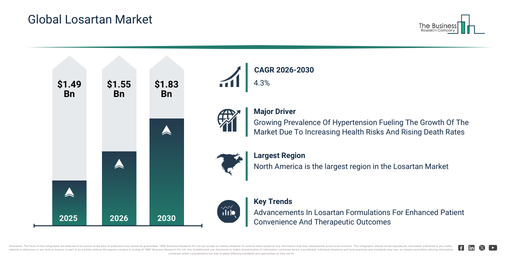
    The losartan market size has shown consistent expansion in recent years. It is anticipated to increase from $1.49 billion in 2025 to $1.55 billion in 2026, achieving a compound annual growth rate (CAGR) of 4.2%. Historically, this growth can be ascribed to several factors, including the escalating global prevalence of hypertension, broad clinical acceptance of ARBs, a rise in the occurrence of diabetes-related kidney disease, heightened awareness in managing cardiovascular risk, and an early transition from ACE inhibitors to ARBs.

    The losartan market size is anticipated to experience consistent expansion over the upcoming years. It is projected to reach $1.83 billion by 2030, exhibiting a compound annual growth rate (CAGR) of 4.3%. This expansion during the forecast period can be primarily attributed to several factors, including the increasing aging population, a growing need for kidney-protective antihypertensive medications, wider availability of inexpensive generic drugs, a heightened emphasis on preventing strokes, and greater healthcare expenditure dedicated to managing chronic illnesses. Key trends anticipated within this period encompass the increasing prevalence of hypertension and cardiovascular conditions, a developing preference for ARBs over ACE inhibitors, the broader uptake of generic losartan prescriptions, its growing application in the management of diabetic nephropathy, and the rising adoption of long-term blood pressure control therapies.

    Access Your Free Sample Report for In-Depth Market Insights:

    https://www.thebusinessresearchcompany.com/sample.aspx?id=24284&type=smp

    Which Drivers Are Shaping Strategic Decisions In The Losartan Market?

    An increasing incidence of hypertension is anticipated to propel the expansion of the losartan market in the future. Hypertension is defined as a condition characterized by persistently elevated blood pressure, which can heighten the probability of heart disease, stroke, and other severe health complications. The rising occurrence of hypertension is linked to diets abundant in salt and processed foods, leading to fluid retention and increased strain on the heart. Losartan aids in controlling hypertension by blocking angiotensin II, a hormone that constricts blood vessels. This mechanism helps relax and widen the vessels, effectively lowering blood pressure and easing the heart’s workload. For instance, in January 2025, according to the Centers for Disease Control and Prevention, a US-based organisation, in 2023, high blood pressure served as a primary or contributing factor in 664,470 deaths in the United States. Therefore, the growing prevalence of hypertension is fueling the growth of the losartan market.

    What Segment Categories Are Covered In The Losartan Market?

    The losartan market covered in this report is segmented –

    1) By Dosage: Tablet, Powder, Suspension

    2) By Source: Contract Manufacturing Organizations, In-House

    3) By Distribution Channel: Online, Offline

    4) By Application: Hypertension, Stroke, Diabetic Nephropathy, Other Applications

    5) By End-User: Adult, Pediatric

    Subsegments:

    1) By Tablet: 25 Milligrams (mg), 50 Milligrams (mg), 100 Milligrams (mg)

    2) By Powder: 25 Milligrams (mg), 50 Milligrams (mg), 100 Milligrams (mg)

    3) By Suspension: 5 Milligrams (mg) Per 5 Milliliters (mL), 10 Milligrams (mg) Per 5 Milliliters (mL), 25 Milligrams (mg) Per 5 Milliliters (mL)

    What Long-Term Trends Are Expected To Shape The Future Of The Losartan Market?

    Leading companies in the losartan market are concentrating on developing innovative products and securing approvals, such as for losartan potassium oral suspension, to enhance patient compliance and broaden therapeutic applications. Losartan potassium oral suspension is a liquid form of losartan potassium medication, specifically designed for individuals who have difficulty swallowing tablets. For instance, in March 2025, Scienture Holdings Inc., a US-based biopharmaceutical company, obtained Food and Drug Administration (FDA) approval for Arbli. It is a ready-to-use liquid formulation for hypertension, stroke risk reduction in hypertensive patients with left ventricular hypertrophy, and diabetic nephropathy in type 2 diabetes patients. This product offers precise dosing without compounding and is provided as a 165 mL peppermint-flavored suspension (10 mg/mL) with an 18-month shelf life at room temperature.

    Which Major Firms Are Strengthening Their Position In The Losartan Market?

    Major companies operating in the losartan market are Viatris Inc., Teva Pharmaceutical Industries Ltd, Intas Pharmaceuticals Ltd., Sun Pharmaceutical Industries Ltd., Apotex Inc., Aurobindo Pharma Ltd., Dr. Reddy’s Laboratories Ltd., Cipla Ltd., Cadila Pharmaceuticals Ltd., Lupin Ltd., Zydus Lifesciences Ltd., Torrent Pharmaceuticals Ltd., Alembic Pharmaceuticals Ltd., Vasudha Pharma Chem Ltd., Unichem Laboratories Ltd., Global Pharma Tek, Manus Aktteva Biopharma LLP, Emcure Pharmaceuticals Ltd., Wellona Pharma, JPM Pharma & Chemicals Pvt. Ltd.

    Access The Complete Report For Deeper Market Insights:

    https://www.thebusinessresearchcompany.com/report/losartan-global-market-report

    Which Global Regions Are Shaping The Competitive Landscape Of The Losartan Market?

    North America was the largest region in the losartan market in 2025. Asia-Pacific is expected to be the fastest-growing region in the forecast period. The regions covered in the losartan market report are Asia-Pacific, South East Asia, Western Europe, Eastern Europe, North America, South America, Middle East, Africa.

    Request Your Customized Losartan Market Research Report for Competitive Advantage:

    https://www.thebusinessresearchcompany.com/customise?id=24284&type=smp

    Browse Through More Reports Similar to the Global Losartan Market 2026, By The Business Research Company

    Liraglutide Market Report 2026

    https://www.thebusinessresearchcompany.com/report/liraglutide-global-market-report

    Lysine Market Report 2026

    https://www.thebusinessresearchcompany.com/report/lysine-global-market-report

    Caviar Market Report 2026

    https://www.thebusinessresearchcompany.com/report/caviar-global-market-report

    Get in touch with us:

    The Business Research Company: https://www.thebusinessresearchcompany.com/

    Americas +1 310-496-7795

    Asia +44 7882 955267 & +91 8897263534

    Europe +44 7882 955267

    Email us at info@tbrc.info

    Follow us on:

    LinkedIn: https://in.linkedin.com/company/the-business-research-company

    YouTube: https://www.youtube.com/channel/UC24_fI0rV8cR5DxlCpgmyFQ

    Global Market Model: https://www.thebusinessresearchcompany.com/global-market-model

  • Global Long-Read Sequencing Services Market Report 2026–2030: Data-Driven Growth Insights

    Global Long-Read Sequencing Services Market Report 2026–2030: Data-Driven Growth Insights

    Uncover key drivers, emerging technologies, and competitive movements shaping the long-read sequencing services market from 2026–2035 with trusted insights from The Business Research Company

    What growth pattern is forecast for the Long-Read Sequencing Services Market size between 2026 and 2035?

    The long-read sequencing services market size has witnessed rapid growth in recent years. It is projected to expand from $1.18 billion in 2025 to $1.41 billion in 2026, achieving a compound annual growth rate (CAGR) of 18.9%. The historical period’s expansion was driven by several key factors, such as advancements in sequencing chemistry and instruments, increased funding for genomics research, a rising demand for high-resolution genome analysis, the expansion of academic genomics projects, and the presence of specialized sequencing service providers.

    The long-read sequencing services market is anticipated to experience substantial growth in the upcoming years. It is projected to expand to $2.79 billion by 2030, achieving a compound annual growth rate (CAGR) of 18.6%. This expected growth throughout the forecast period stems from factors such as the increasing clinical integration of long-read sequencing, escalating investments in population genomics, the broadening scope of precision oncology research, a rising demand for de novo genome assembly, and the incorporation of AI-based genomic interpretation. Prominent trends for the forecast period include a heightened demand for structural variant analysis services, the growing adoption of nanopore sequencing platforms, increased application of long-read sequencing in rare disease research, the expansion of clinical-grade long-read sequencing services, and an intensified focus on comprehensive genome assembly.

    Access Your Free Sample Report for In-Depth Market Insights:

    https://www.thebusinessresearchcompany.com/sample.aspx?id=28260&type=smp

    Which Drivers Are Impacting Market Performance In The Long-Read Sequencing Services Market?

    The rising occurrence of genetic disorders is anticipated to boost the expansion of the long-read sequencing services market. Genetic diseases are conditions caused by alterations or mutations in DNA, which can be inherited or arise spontaneously, impacting an individual’s health, development, or body functions. The increasing prevalence of genetic diseases is attributed to heightened awareness and progress in diagnostic technologies, facilitating earlier and more precise detection of conditions that were previously undiagnosed. Long-read sequencing services support the management of genetic disorders by delivering highly accurate, long-range genomic data, which allows for the precise identification of structural variants and intricate mutations. For instance, in April 2024, according to the National Institutes of Health (NIH), a US-based government’s premier biomedical research agency, an estimated 6.9 million Americans aged 65 and older are currently living with Alzheimer’s dementia, and this figure is projected to nearly double to 13.8 million by 2060. Consequently, the increasing prevalence of genetic disorders is stimulating the growth of the long-read sequencing services market.

    Which Segments Are Contributing To The Growth Of The Long-Read Sequencing Services Market?

    The long-read sequencing services market covered in this report is segmented –

    1) By Service Type: Whole Genome Sequencing, Targeted Sequencing, De Novo Sequencing, Other Services

    2) By Technology: Single-Molecule Real-Time Sequencing, Nanopore Sequencing, Other Technologies

    3) By Application: Clinical Diagnostics, Genomic Research, Oncology, Rare Disease Detection, Other Applications

    4) By End User: Academic And Research Institutes, Hospitals And Clinics, Pharmaceutical And Biotechnology Companies, Other End-Users

    Subsegments:

    1) By Whole Genome Sequencing: Complete Genome Mapping, Comprehensive Variant Detection, Structural Variation Analysis, Comparative Genomics

    2) By Targeted Sequencing: Gene Panel Sequencing, Exome Sequencing, Transcriptome Sequencing, Custom Target Region Sequencing

    3) By De Novo Sequencing: Novel Genome Assembly, Structural Variant Characterization, Complex Genome Reconstruction, Non-Model Organism Sequencing

    4) By Other Services: Data Analysis And Interpretation, Library Preparation Services, Bioinformatics Support Services, Validation And Quality Control Services

    Which Market Trends Are Opening Growth Opportunities In The Long-Read Sequencing Services Market?

    Major companies operating in the long-read sequencing services market are concentrating on developing advanced solutions, such as primary template directed amplification (PTA), which enables high-fidelity uniform whole-genome amplification from single cells by allowing for sensitive detection of single-nucleotide variants (SNVs). Primary template-directed amplification is a proprietary whole-genome amplification technique engineered to accurately and uniformly amplify deoxyribonucleic acid (DNA) from ultra-low input samples, thereby minimizing errors and preserving the original deoxyribonucleic acid (DNA) sequence. For instance, in October 2025, BioSkryb Genomics, Inc., a US-based genomics company specializing in long-read sequencing technologies, unveiled the ResolveSEQ LongRead Early Access Program, a cutting-edge single-cell whole-genome long-read sequencing platform that integrates primary template-directed amplification (PTA) with long-read library preparation to deliver high-coverage, uniform amplification from individual cells. Additionally, the platform facilitates sensitive detection of single-nucleotide variants (SNVs) and repeat expansions while providing haplotype phasing at single-cell resolution.

    Who Are The Primary Competitors In The Global Long-Read Sequencing Services Market?

    Major companies operating in the long-read sequencing services market are Thermo Fisher Scientific Inc., Danaher Corporation, Agilent Technologies Inc., Illumina Inc., Revvity Inc., QIAGEN N.V., BGI Genomics Co. Ltd., Takara Bio Inc., Oxford Nanopore Technologies plc, Pacific Biosciences of California Inc., GENEWIZ Inc., Macrogen Inc., Novogene Co. Ltd., DNAnexus Inc., Zymo Research Corp., CD Genomics Inc., Genotypic Technology Pvt. Ltd., Plasmidsaurus Inc., BaseClear B.V., GrandOmics Biosciences Co. Ltd., Arima Genomics Inc., Wuhan Benagen Technology Co. Ltd.

    Access The Complete Report For Deeper Market Insights:

    https://www.thebusinessresearchcompany.com/report/long-read-sequencing-services-global-market-report

    Which Regions Are Poised For Strategic Growth In The Long-Read Sequencing Services Market?

    North America was the largest region in the long-read sequencing services market in 2025. Asia-Pacific is expected to be the fastest-growing region in the forecast period. The regions covered in the long-read sequencing services market report are Asia-Pacific, South East Asia, Western Europe, Eastern Europe, North America, South America, Middle East, Africa.

    Request Your Customized Long-Read Sequencing Services Market Research Report for Competitive Advantage:

    https://www.thebusinessresearchcompany.com/customise?id=28260&type=smp

    Browse Through More Reports Similar to the Global Long-Read Sequencing Services Market 2026, By The Business Research Company

    short read sequencing global market report

    https://www.thebusinessresearchcompany.com/report/short-read-sequencing-global-market-report

    Next Generation Sequencing Market

    https://www.thebusinessresearchcompany.com/report/next-generation-sequencing-market

    rna sequencing services global market report

    https://www.thebusinessresearchcompany.com/report/rna-sequencing-services-global-market-report

    Get in touch with us:

    The Business Research Company: https://www.thebusinessresearchcompany.com/

    Americas +1 310-496-7795

    Asia +44 7882 955267 & +91 8897263534

    Europe +44 7882 955267

    Email us at info@tbrc.info

    Follow us on:

    LinkedIn: https://in.linkedin.com/company/the-business-research-company

    YouTube: https://www.youtube.com/channel/UC24_fI0rV8cR5DxlCpgmyFQ

    Global Market Model: https://www.thebusinessresearchcompany.com/global-market-model

  • Longevity And Anti-senescence Therapy Market Dynamics 2026: Future Outlook and Key Insights

    Longevity And Anti-senescence Therapy Market Dynamics 2026: Future Outlook and Key Insights

    Uncover key drivers, emerging technologies, and competitive movements shaping the longevity and anti-senescence therapy market from 2026–2035 with trusted insights from The Business Research Company

    How much larger will the Longevity And Anti-senescence Therapy Market be in 2030 compared with 2026?

    The longevity and anti-senescence therapy market has seen robust growth in recent years. This market is expected to expand from $29.9 billion in 2025 to $31.8 billion in 2026, registering a compound annual growth rate (CAGR) of 6.3%. The historical increase can be attributed to several factors including an increasing global aging population, early research on cellular aging mechanisms, a rising prevalence of age-related diseases, a historical focus on symptomatic aging treatments, and growing wellness and preventive healthcare awareness.

    The longevity and anti-senescence therapy market is expected to demonstrate significant growth in the coming years. It is projected to expand to $40.48 billion by 2030, achieving a compound annual growth rate (CAGR) of 6.2%. This growth during the forecast period can be attributed to advancements in senolytic and gene-based therapies, increasing demand for solutions extending lifespan, rising investments in longevity research, wider acceptance of regenerative medicine, and higher healthcare spending on age-related disease prevention. Prominent trends in the forecast period include a growing interest in healthy aging and longevity solutions, an increased focus on targeting cellular senescence, the rising adoption of preventive and regenerative therapies, the expansion of anti-aging treatments beyond aesthetic care, and greater consumer willingness to invest in longevity therapies.

    Access Your Free Sample Report for In-Depth Market Insights:

    https://www.thebusinessresearchcompany.com/sample.aspx?id=19108&type=smp

    What Drivers Are Guiding Growth Patterns In The Longevity And Anti-senescence Therapy Market?

    The rising occurrence of cardiovascular diseases is projected to drive the expansion of the longevity and anti-senescence therapy market in the future. The increase in cardiovascular diseases can be attributed to a rise in risk factors like obesity, diabetes, inactive lifestyles, and inadequate nutrition, alongside an aging demographic and persistent inflammation. These longevity and anti-senescence therapies are designed to lessen cardiovascular disease by addressing cellular damage linked to aging and enhancing general heart well-being. As an illustration, in October 2024, data from the Centers for Disease Control and Prevention, a US-based government agency, revealed that in 2023, cardiovascular disease was responsible for 919,032 lives lost, representing one in every three deaths. Coronary heart disease continued to be the most common type of heart ailment, and significantly, approximately one in six deaths stemming from cardiovascular diseases affected adults younger than 65 years. Consequently, the growing prevalence of cardiovascular diseases is fueling the expansion of the longevity and anti-senescence therapy market.

    How Is The Longevity And Anti-senescence Therapy Market Divided Into Segments?

    The longevity and anti-senescence therapy market covered in this report is segmented –

    1) By Therapy: Senolytic Drug Therapy, Gene Therapy, Cell Therapy, Mitochondrial Therapy, Immunotherapy

    2) By Application: Longevity, Senescence Inhibition, Cardiovascular Diseases, Neural Degenerative Diseases, Ophthalmology Disorders, Cancer

    3) By End User: Hospital, Medical Service Institution

    Subsegments:

    1) By Senolytic Drug Therapy: Small Molecule Senolytics, Natural Senolytics, Combination Senolytic Treatments

    2) By Gene Therapy: CRISPR-Based Gene Therapy, Viral Vector Gene Therapy, RNA Interference Therapy

    3) By Cell Therapy: Stem Cell Therapy, Immune Cell Therapy, Regenerative Cell Therapy

    4) By Mitochondrial Therapy: Mitochondrial Replacement Therapy, Mitochondrial Enhancement Compounds, Mitochondrial Gene Therapy

    5) By Immunotherapy: Monoclonal Antibodies, Immune Checkpoint Inhibitors, Vaccines For Aging

    How Are Emerging Trends Affecting The Progression Of The Longevity And Anti-senescence Therapy Market?

    Major companies engaged in the longevity and antisenescence therapy markets are establishing strategic partnerships to further the development of anti-senescence products. These strategic partnerships are cooperative arrangements between organizations that harness each other’s capabilities and resources to achieve mutually beneficial aims and enhance their competitive standing. For example, in July 2024, MDB Capital Holdings LLC, a US-based investment holding company, collaborated with Mayo Clinic, a US-based nonprofit surgical and medical clinic, to bolster its anti-senescence platform. The objective of this partnership is to create therapies targeting cellular senescence, which is linked to aging and various diseases. The collaboration will leverage Mayo Clinic’s expertise in clinical research and MDB Capital’s innovative approach to drug development, concentrating on enhancing patient outcomes in age-related conditions. This initiative highlights the growing emphasis on addressing the biological mechanisms of aging through advanced therapeutic strategies.

    Which Key Market Players Are Investing In Expansion And Innovation Within The Longevity And Anti-senescence Therapy Market?

    Major companies operating in the longevity and anti-senescence therapy market are AbbVie Inc., BioAge Labs, Unity Biotechnology, Insilico Medicine, Human Longevity Inc., Calico Life Sciences LLC, Recursion Pharmaceuticals, AgeX Therapeutics Inc., Alkahest Inc., CohBar Inc., Stealth BioTherapeutics, Altos Labs, Navitor Pharmaceuticals Inc., Sierra Sciences LLC, T A Sciences Inc., Juvenescence AI Limited, Senex Biotechnology, Spotlight Bioscience, Prana Biotechnology Ltd., Rejuvenate Bio Inc., Turn Biotechnologies Inc., Life Biosciences Inc.

    Access The Complete Report For Deeper Market Insights:

    https://www.thebusinessresearchcompany.com/report/longevity-and-anti-senescence-therapy-global-market-report

    Which Regions Are Projected To Dominate The Longevity And Anti-senescence Therapy Market In The Coming Years?

    North America was the largest region in the longevity and anti-senescence therapy market in 2025. The regions covered in the longevity and anti-senescence therapy market report are Asia-Pacific, South East Asia, Western Europe, Eastern Europe, North America, South America, Middle East, Africa.

    Request Your Customized Longevity And Anti-senescence Therapy Market Research Report for Competitive Advantage:

    https://www.thebusinessresearchcompany.com/customise?id=19108&type=smp

    Browse Through More Reports Similar to the Global Longevity And Anti-senescence Therapy Market 2026, By The Business Research Company

    Dermatophytosis Treatment Market Report 2026

    https://www.thebusinessresearchcompany.com/report/dermatophytosis-treatment-global-market-report

    Anti Parkinson Drugs Market Report 2026

    https://www.thebusinessresearchcompany.com/report/anti-parkinson-drugs-global-market-report

    Regenerative Medicine Market 2026

    https://www.thebusinessresearchcompany.com/report/regenerative-medicine-market

    Get in touch with us:

    The Business Research Company: https://www.thebusinessresearchcompany.com/

    Americas +1 310-496-7795

    Asia +44 7882 955267 & +91 8897263534

    Europe +44 7882 955267

    Email us at info@tbrc.info

    Follow us on:

    LinkedIn: https://in.linkedin.com/company/the-business-research-company

    YouTube: https://www.youtube.com/channel/UC24_fI0rV8cR5DxlCpgmyFQ

    Global Market Model: https://www.thebusinessresearchcompany.com/global-market-model
  • Long QT Syndrome Treatment Market Research: Growth Projections and Trends 2030

    Long QT Syndrome Treatment Market Research: Growth Projections and Trends 2030

    Uncover key drivers, emerging technologies, and competitive movements shaping the long qt syndrome treatment market from 2026–2035 with trusted insights from The Business Research Company

    Starting from its 2026 valuation, what market size is the Long QT Syndrome Treatment Market expected to reach by 2030?

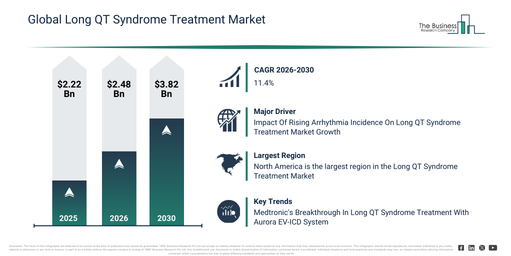
    The long qt syndrome treatment market size has experienced significant expansion in recent years. It is projected to increase from $2.22 billion in 2025 to $2.48 billion in 2026, at a compound annual growth rate (CAGR) of 11.7%. Historically, this market’s growth has been driven by improvements in cardiac diagnostic capabilities, a rise in awareness regarding inherited cardiac disorders, the adoption of beta-blocker therapies, the expansion of electrophysiology services, and the availability of implantable defibrillator technologies.

    The long qt syndrome treatment market is projected for substantial expansion in the coming years, expected to reach $3.82 billion by 2030, with a compound annual growth rate (CAGR) of 11.4%. This growth during the forecast period is attributed to several factors, including the increasing development of gene-based therapies, the rising adoption of precision cardiology approaches, the expansion of wearable cardiac monitoring devices, the growing integration of digital health tools, and increasing investments in rare disease treatment research. Major trends anticipated in this period encompass the growing adoption of genetic testing for risk stratification, an increased use of implantable cardiac devices, a heightened focus on personalized treatment protocols, the expansion of remote patient monitoring solutions, and enhanced integration of clinical decision support tools.

    Access Your Free Sample Report for In-Depth Market Insights:

    https://www.thebusinessresearchcompany.com/sample.aspx?id=20569&type=smp

    What Drivers Are Driving Adoption Within The Long QT Syndrome Treatment Market?

    The increasing occurrence of arrhythmia is projected to propel the expansion of the long QT syndrome treatment market. Arrhythmia describes a medical state characterized by an irregular heartbeat, where the heart beats either too rapidly, too slowly, or erratically. The rising frequency of arrhythmia cases stems from various factors, including an aging population, advancements in diagnostic techniques, and the escalating prevalence of cardiovascular risk factors. Long QT syndrome treatment is utilized to manage arrhythmia, aiming to prevent life-threatening irregular heart rhythms that could lead to sudden cardiac arrest or death. For instance, in 2023, according to the National Library of Medicine (NLM), a US-based world’s largest medical library, arrhythmias are expected to affect 1.5% to 5% of the general population every year, with atrial fibrillation being the most prevalent type. Consequently, the growing incidence of arrhythmia is a key factor driving the growth of the long QT syndrome treatment market.

    What Segments Are Included Within The Long QT Syndrome Treatment Market?

    The long qt syndrome treatment market covered in this report is segmented –

    1) By Type: Long QT Syndrome Type 1, Long QT Syndrome Type 2, Long QT Syndrome Type 3, Other Types

    2) By Treatment: Medication, Surgical Procedures

    3) By Diagnosis: Tests, Electrocardiogram, Genetic Testing, Other Diagnosis

    Subsegments:

    1) By Long QT Syndrome Type 1: Pharmacological Treatment for Type 1 (Beta-Blockers, Etc.), Implantable Cardioverter-Defibrillators (ICD) for Type 1, Gene Therapy for Long QT Type 1, Surgical Interventions for Type 1

    2) By Long QT Syndrome Type 2: Beta-Blockers for Type 2 Treatment, Implantable Cardioverter-Defibrillators (ICD) for Type 2, Gene Therapy for Type 2, Potassium Channel Blockers for Type 2, Lifestyle Modifications and Monitoring for Type 2

    3) By Long QT Syndrome Type 3: Sodium Channel Blockers for Type 3, Beta-Blockers for Type 3 Treatment, Implantable Cardioverter-Defibrillators (ICD) for Type 3, Gene Therapy and Cell Therapy for Type 3, Pharmacological Interventions for Type 3

    4) By Other Types: Congenital Long QT Syndrome Treatment, Acquired Long QT Syndrome Treatment, Combination Treatments for Long QT Syndrome, Novel and Experimental Treatments for Long QT Syndrome

    Which Innovation Trends Are Advancing Developments Within The Long QT Syndrome Treatment Market?

    Leading companies operating in the long QT syndrome treatment market are prioritizing the development of technologically advanced products, such as cardiac devices, to facilitate convenient, real-time monitoring of heart rhythms. A cardiac device is a medical instrument, either implanted or used externally in patients, intended to help manage heart rhythm disorders, improve heart function, or support circulation. These devices are typically employed to treat conditions like arrhythmias (irregular heartbeats), heart failure, or other cardiovascular diseases. For instance, in October 2023, Medtronic Plc, an Ireland-based medical device company, announced the U.S. Food and Drug Administration (FDA) approval for the Aurora EV-ICD MRI SureScan, an Extravascular Implantable Cardioverter-Defibrillator (EV-ICD) system, which is designed to treat fast heart rhythms that can lead to sudden cardiac arrest. This approval represents a significant leap forward in implantable defibrillator technology, aiming to reduce the risk of long-term complications and enhance the safety and efficacy of ICD technology. This strategy is expected to strengthen the company’s product portfolio.

    Who Are The Core Companies Influencing Trends In The Long QT Syndrome Treatment Market?

    Major companies operating in the long qt syndrome treatment market are Pfizer Inc., Novartis AG, Sanofi S.A., Bristol Myers Squibb, AstraZeneca Plc, Bayer AG, Eli Lilly and Company, Johnson & Johnson, Roche Holding AG, Takeda Pharmaceutical Company Limited, Medtronic Plc, Boston Scientific Corporation, Abbott Laboratories, Biotronik SE & Co. KG, LivaNova PLC, MicroPort Scientific Corporation, GE Healthcare, Philips Healthcare, Nihon Kohden Corporation, AliveCor Inc.

    Access The Complete Report For Deeper Market Insights:

    https://www.thebusinessresearchcompany.com/report/long-qt-syndrome-treatment-global-market-report

    Which Region Is Expected To Experience The Fastest Growth In The Long QT Syndrome Treatment Market?

    North America was the largest region in the long QT syndrome treatment market in 2025. Asia-Pacific is expected to be the fastest-growing region in the forecast period. The regions covered in the long qt syndrome treatment market report are Asia-Pacific, South East Asia, Western Europe, Eastern Europe, North America, South America, Middle East, Africa.

    Request Your Customized Long QT Syndrome Treatment Market Research Report for Competitive Advantage:

    https://www.thebusinessresearchcompany.com/customise?id=20569&type=smp

    Browse Through More Reports Similar to the Global Long QT Syndrome Treatment Market 2026, By The Business Research Company

    Autoimmune Treatment Market Report 2026

    https://www.thebusinessresearchcompany.com/report/autoimmune-treatment-global-market-report

    Chemical Surface Treatment Market Report 2026

    https://www.thebusinessresearchcompany.com/report/chemical-surface-treatment-global-market-report

    Bleeding Disorders Treatment Market Report 2026

    https://www.thebusinessresearchcompany.com/report/bleeding-disorders-treatment-global-market-report

    Get in touch with us:

    The Business Research Company: https://www.thebusinessresearchcompany.com/

    Americas +1 310-496-7795

    Asia +44 7882 955267 & +91 8897263534

    Europe +44 7882 955267

    Email us at info@tbrc.info

    Follow us on:

    LinkedIn: https://in.linkedin.com/company/the-business-research-company

    YouTube: https://www.youtube.com/channel/UC24_fI0rV8cR5DxlCpgmyFQ

    Global Market Model: https://www.thebusinessresearchcompany.com/global-market-model

  • Global Locum Tenens Staffing Industry Insights: Key Trends and Growth Estimates

    Global Locum Tenens Staffing Industry Insights: Key Trends and Growth Estimates

    Uncover key drivers, emerging technologies, and competitive movements shaping the locum tenens staffing market from 2026–2035 with trusted insights from The Business Research Company

    Across 2026–2030, what is the expected market valuation path of the Locum Tenens Staffing Market?

    The locum tenens staffing market size has experienced significant expansion recently. Forecasts indicate it will expand from $12.08 billion in 2025 to $13.5 billion by 2026, demonstrating a compound annual growth rate (CAGR) of 11.8%. Historically, this growth is primarily due to factors such as a rise in healthcare staff shortages, the widening of hospital networks, an escalating demand for specialty physicians, increased dependence on staffing agencies, and greater utilization of healthcare services.

    The locum tenens staffing market size is projected to undergo significant expansion over the next few years, with its value expected to reach $20.84 billion by 2030, driven by a compound annual growth rate (CAGR) of 11.5%. This growth during the forecast period is primarily attributed to factors such as the increasing integration of AI-enabled workforce matching, a surge in staffing demand spurred by telemedicine, the proliferation of flexible employment models, the expanding use of digital credentialing systems, and the rising need for cross-border healthcare staffing. Concurrently, major trends anticipated in this period encompass the growing utilization of digital staffing platforms, an increasing requirement for on-demand clinical workforce solutions, the wider adoption of credential verification technologies, the development of remote and telehealth staffing models, and a sharpened focus on workforce flexibility.

    Access Your Free Sample Report for In-Depth Market Insights:

    https://www.thebusinessresearchcompany.com/sample.aspx?id=25810&type=smp

    Which Drivers Are Supporting The Rise Of The Locum Tenens Staffing Market?

    The locum tenens staffing market is anticipated to expand in the future, driven by an increase in patient volumes. This rise in patient volumes signifies a growing number of people seeking medical attention across various healthcare institutions such as hospitals, clinics, and other facilities. A key factor behind this trend is the expanding aging population, as older individuals often necessitate more regular medical appointments, ongoing care, and management for chronic illnesses like diabetes, heart disease, and arthritis. Consequently, higher patient volumes heighten the demand for adaptable and prompt medical staffing, making locum tenens experts crucial for sustaining continuous patient care, alleviating workforce deficiencies, and avoiding burnout among providers in busy healthcare environments. As an illustration, in December 2024, a report from the National Health Service (NHS), a UK-based government department, indicated that in 2022/23, 5,099 hospital admissions involved obesity as the primary diagnosis and a principal or secondary bariatric procedure was documented. These specific admissions constituted 4% of all hospital admissions for that year, consistent with prior years, and represented 16% of admissions linked to conditions preventable by avoiding smoking. Thus, the increasing patient volumes are a significant catalyst for the growth of the locum tenens staffing market.

    What Leading Segments Are Studied In The Locum Tenens Staffing Market?

    The locum tenens staffing market covered in this report is segmented –

    1) By Type: Temporary Staffing, Per Diem Staffing, Locum Tenens Recruitment

    2) By Specialty: Primary Care, Anesthesiology, Radiology, Emergency Medicine, Surgery, Nurse Practitioners, Behavioral Health, Other Specialties

    3) By End-Use: Hospitals, Ambulatory Facilities, Other End-Users

    Subsegments:

    1) By Temporary Staffing: Short-Term Assignments, Long-Term Assignments, Travel Healthcare Staffing

    2) By Per Diem Staffing: Daily Shift Coverage, On-Call Coverage, Last-Minute Scheduling

    3) By Locum Tenens Recruitment: Direct Recruitment, Agency-Based Recruitment, Online Platform-Based Recruitment

    Which Competitive Trends Are Impacting The Structure Of The Locum Tenens Staffing Market?

    Major companies within the locum tenens staffing market are prioritizing innovation in pharmacy workforce management, specifically through dynamic shift coverage to rapidly address staffing gaps and offer adaptable work opportunities for pharmacy professionals. This dynamic shift coverage entails matching available pharmacy professionals with open shifts in real time to ensure continuous pharmacy operations. As an example, in February 2025, the American Pharmacists Association (APhA), a US-based professional association, collaborated with the California Pharmacists Association (CPHA) and Locumate to launch HealthShifts, a digital platform dedicated to locum tenens staffing. HealthShifts integrates provider profiles, shift scheduling, credential verification, and communication tools. It operates by enabling facilities to post shifts and connect them with qualified temporary staff instantaneously, while also allowing clinicians to digitally manage their schedules and credentials. Key features include automated matching algorithms, mobile accessibility, and integrated compliance checks. Its applications cover hospitals, pharmacies, and outpatient clinics, with benefits such as faster staffing, reduced administrative effort, improved workforce flexibility, and enhanced continuity of patient care.

    Which Major Industry Participants Are Leading The Locum Tenens Staffing Market Growth?

    Major companies operating in the locum tenens staffing market are AMN Healthcare Services Inc., Cross Country Healthcare Inc., Aya Healthcare Inc., CHG Healthcare Services Inc., Barton & Associates Inc., Medicus Healthcare Solutions LLC, All Medical Personnel Inc., Hayes Locums Inc., OneStaff Locums LLC, Caliber Healthcare Solutions LLC, Nomad Health Inc., Wapiti Medical Staffing LLC, Locums Inc., Austin Major Group LLC, TinkBird Healthcare Staffing LLC, Wilderness Medical Staffing LLC, FreeUpMD Inc., ProLocums Inc., MBS Locum Tenens LLC, Rosata Recruitment Ltd.

    Access The Complete Report For Deeper Market Insights:

    https://www.thebusinessresearchcompany.com/report/locum-tenens-staffing-global-market-report

    Which Geographic Areas Are Emerging As Strong Markets For The Locum Tenens Staffing Market?

    North America was the largest region in the locum tenens staffing market in 2025. Asia-Pacific is expected to be the fastest-growing region in the forecast period. The regions covered in the locum tenens staffing market report are Asia-Pacific, South East Asia, Western Europe, Eastern Europe, North America, South America, Middle East, Africa.

    Request Your Customized Locum Tenens Staffing Market Research Report for Competitive Advantage:

    https://www.thebusinessresearchcompany.com/customise?id=25810&type=smp

    Browse Through More Reports Similar to the Global Locum Tenens Staffing Market 2026, By The Business Research Company

    Food Service Equipment Market Report 2026

    https://www.thebusinessresearchcompany.com/report/food-service-equipment-global-market-report

    Milk Market Report 2026

    https://www.thebusinessresearchcompany.com/report/milk-global-market-report

    Janitorial Services Market Report 2026

    https://www.thebusinessresearchcompany.com/report/janitorial-services-global-market-report

    Get in touch with us:

    The Business Research Company: https://www.thebusinessresearchcompany.com/

    Americas +1 310-496-7795

    Asia +44 7882 955267 & +91 8897263534

    Europe +44 7882 955267

    Email us at info@tbrc.info

    Follow us on:

    LinkedIn: https://in.linkedin.com/company/the-business-research-company

    YouTube: https://www.youtube.com/channel/UC24_fI0rV8cR5DxlCpgmyFQ

    Global Market Model: https://www.thebusinessresearchcompany.com/global-market-model

  • Locally Advanced Pancreatic Cancer Market Forecast: How Big Will It Be by 2030?

    Locally Advanced Pancreatic Cancer Market Forecast: How Big Will It Be by 2030?

    Uncover key drivers, emerging technologies, and competitive movements shaping the locally advanced pancreatic cancer market from 2026–2035 with trusted insights from The Business Research Company

    What size range is anticipated for the Locally Advanced Pancreatic Cancer Market from 2026 to 2030?

    The market for locally advanced pancreatic cancer has experienced rapid expansion over recent years. Projections indicate its size will increase from $1.05 billion in 2025 to $1.16 billion in 2026, demonstrating a compound annual growth rate (CAGR) of 10.5%. Factors contributing to its historical growth include the frequent late-stage diagnosis of pancreatic cancer, restricted surgical options for locally advanced instances, a past dependence on gemcitabine-based chemotherapy, low overall survival rates, and the expansion of hospital-based oncology services.

    The market size for locally advanced pancreatic cancer is projected to experience swift expansion in the coming years. This market is anticipated to reach $1.71 billion by 2030, exhibiting a compound annual growth rate (CAGR) of 10.2%. This anticipated growth is largely due to the wider application of combination therapy protocols, the increasing use of SBRT, a surge in investment dedicated to pancreatic cancer research, a heightened focus on individualized oncology care, and the growing accessibility of specialized treatment centers. Key trends expected during this period encompass the increased deployment of combination chemotherapy regimens, the growing embrace of neoadjuvant treatment strategies, an elevated focus on reducing tumor size for surgical qualification, the broadened application of radiation therapy for localized disease management, and an escalating emphasis on comprehensive multidisciplinary treatment planning.

    Access Your Free Sample Report for In-Depth Market Insights:

    https://www.thebusinessresearchcompany.com/sample.aspx?id=21214&type=smp

    What Drivers Are Affecting Demand In The Locally Advanced Pancreatic Cancer Market?

    The projected expansion of the locally advanced pancreatic cancer markets is anticipated due to the rising trend in tobacco consumption. Tobacco, derived from a plant, is utilized in products like cigarettes and cigars. This substance contains nicotine, an addictive compound associated with severe health problems including cancer and heart disease. Various elements contribute to the increasing use of tobacco, such as its widespread availability, economic accessibility, promotional strategies, societal tolerance in certain regions, and smoking induced by stress. It acts as a major risk factor for the emergence of locally advanced pancreatic cancer, exacerbating the occurrence of pancreatic malignancies. An illustrative example comes from a study released in October 2024 by the European Respiratory Society’s (ERS), a non-profit organization based in Switzerland. This research on smoking patterns among youth indicated a notable surge in smoking prevalence, with 22.5% of individuals smoking in 2022 rising to 40.1% in 2024. Consequently, the expanding tobacco consumption is propelling the expansion of the locally advanced pancreatic cancer market.

    Which Segment Groups Are Influencing The Locally Advanced Pancreatic Cancer Market?

    The locally advanced pancreatic cancer market covered in this report is segmented –

    1) By Therapy: Chemotherapy, Radiation Therapy

    2) By Route Of Administration: Oral, Injectables, Other Routes Of Administrations

    3) By End-User: Hospital, Specialty Clinics, Research Institutions, Other End-Users

    Subsegments:

    1) By Chemotherapy: Gemcitabine-based Chemotherapy, FOLFIRINOX Chemotherapy

    2) By Radiation Therapy: External Beam Radiation Therapy, Stereotactic Body Radiation Therapy (SBRT)

    What Industry Trends Are Transforming The Locally Advanced Pancreatic Cancer Market?

    Major companies operating within the locally advanced pancreatic cancer market are prioritizing the development of innovative products, including orphan drugs, to improve treatment options, elevate patient outcomes, and address the unmet medical needs linked to this aggressive disease. Orphan drugs are specifically designed to treat rare conditions affecting a small number of individuals and are incentivized by regulatory bodies with advantages such as tax reductions and market exclusivity to promote their creation. For instance, in January 2025, Actuate Therapeutics Inc., a biopharmaceutical company located in the US, announced that its compound Elraglusib, a novel GSK-3ß inhibitor, received Orphan Drug Designation from both the European Medicines Agency (EMA) and the US Food and Drug Administration (FDA) for treating pancreatic ductal adenocarcinoma (PDAC), a potential type of locally advanced pancreatic cancer. This designation highlights its potential to bridge a critical gap in the treatment of this severe cancer, particularly following encouraging Phase 2 trial results that showed significant clinical improvements and anti-tumor effects in metastatic PDAC patients.

    Who Are The Prominent Global Companies Shaping The Locally Advanced Pancreatic Cancer Market Landscape?

    Major companies operating in the locally advanced pancreatic cancer market are Pfizer Inc, F Hoffmann La Roche Ltd, Merck and Co Inc, Bristol Myers Squibb Company, AstraZeneca plc, AbbVie Inc, Novartis AG, GSK plc, Bayer AG, Eli Lilly and Company, Ipsen, Takeda Pharmaceutical Company Limited, Amgen Inc, Sanofi, Servier, NovoCure Limited, Halozyme Therapeutics, Clovis Oncology, Astellas Pharma, BeiGene

    Access The Complete Report For Deeper Market Insights:

    https://www.thebusinessresearchcompany.com/report/locally-advanced-pancreatic-cancer-global-market-report

    Which Region Is Projected To Lead The Locally Advanced Pancreatic Cancer Market During The Forecast Period?

    North America was the largest region in the locally advanced pancreatic cancer market in 2025. Asia-Pacific is expected to be the fastest-growing region in the forecast period. The regions covered in the locally advanced pancreatic cancer market report are Asia-Pacific, South East Asia, Western Europe, Eastern Europe, North America, South America, Middle East, Africa.

    Request Your Customized Locally Advanced Pancreatic Cancer Market Research Report for Competitive Advantage:

    https://www.thebusinessresearchcompany.com/customise?id=21214&type=smp

    Browse Through More Reports Similar to the Global Locally Advanced Pancreatic Cancer Market 2026, By The Business Research Company

    Gastroesophageal Junction Adenocarcinoma Therapeutics Market Report 2026

    https://www.thebusinessresearchcompany.com/report/gastroesophageal-junction-adenocarcinoma-therapeutics-global-market-report

    Invasive Ductal Carcinoma Therapeutics Market Report 2026

    https://www.thebusinessresearchcompany.com/report/invasive-ductal-carcinoma-therapeutics-global-market-report

    Pancreatic Cancer Drugs Market Report 2026

    https://www.thebusinessresearchcompany.com/report/pancreatic-cancer-drugs-global-market-report

    Get in touch with us:

    The Business Research Company: https://www.thebusinessresearchcompany.com/

    Americas +1 310-496-7795

    Asia +44 7882 955267 & +91 8897263534

    Europe +44 7882 955267

    Email us at info@tbrc.info

    Follow us on:

    LinkedIn: https://in.linkedin.com/company/the-business-research-company

    YouTube: https://www.youtube.com/channel/UC24_fI0rV8cR5DxlCpgmyFQ

    Global Market Model: https://www.thebusinessresearchcompany.com/global-market-model
  • Liver Metastases Treatment Market Report 2026: Strategic Insights and Revenue Outlook

    Liver Metastases Treatment Market Report 2026: Strategic Insights and Revenue Outlook

    Uncover key drivers, emerging technologies, and competitive movements shaping the liver metastases treatment market from 2026–2035 with trusted insights from The Business Research Company

    How is the Liver Metastases Treatment Market size predicted to change over the forecast window of 2026–2035?

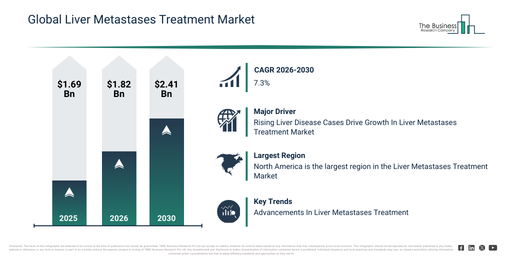
    The market for liver metastases treatment has experienced substantial expansion in recent years. It is projected to grow from $1.69 billion in 2025 to $1.82 billion in 2026, achieving a compound annual growth rate (CAGR) of 8.0%. The growth witnessed during earlier periods can be attributed to the increasing prevalence of colorectal and breast cancer, the traditional reliance on chemotherapy for metastatic disease, limited surgical options for advanced liver metastases, the expansion of hospital-based oncology care, and the initial implementation of targeted cancer therapies.

    The liver metastases treatment market size is projected to experience substantial expansion over the upcoming years, reaching $2.41 billion by 2030, driven by a compound annual growth rate (CAGR) of 7.3%. This anticipated growth during the forecast period is fueled by several factors, including the broadening of immunotherapy pipelines, an increasing emphasis on personalized oncology treatments, improved survival rates among primary cancer patients, a surging need for sophisticated metastatic cancer care, and increased investment in the development of oncology drugs. Key trends expected within the forecast timeframe involve a growing occurrence of metastatic cancers affecting the liver, greater adoption of targeted therapies, an expanding application of immunotherapy in metastatic liver cancer, the proliferation of combination treatment strategies, and an intensified focus on enhancing patient quality of life outcomes.

    Access Your Free Sample Report for In-Depth Market Insights:

    https://www.thebusinessresearchcompany.com/sample.aspx?id=15849&type=smp

    Which Drivers Are Contributing To The Expansion Of The Liver Metastases Treatment Market?

    An increase in liver disease incidence is anticipated to boost the expansion of the liver metastases treatment market in the future. Liver disease encompasses any condition affecting the liver that impairs its functionality or prevents it from operating effectively. Treatments for metastases contribute to overall health by safeguarding liver function, a critical process for metabolism, detoxification, and various other vital bodily activities. Furthermore, in certain instances, intensive interventions like surgical resection, ablation, or targeted therapies are crucial for achieving long-term remission, particularly when combined with systemic drugs such as chemotherapy or immunotherapy. For example, in December 2024, the Office for Health Improvement and Disparities, a UK-based government department, indicated that premature deaths due to alcoholic liver disease rose by 3.6% in 2023, reaching 5,984 from 5,776 in 2022. Consequently, the growing prevalence of liver disease is driving the liver metastases treatment market forward.

    What Segment Classifications Make Up The Liver Metastases Treatment Market?

    The liver metastases treatment market covered in this report is segmented –

    1) By Treatment Type: Chemotherapy, Targeted Therapy, Immunotherapy

    2) By Primary Cancer: Colorectal Cancer, Breast Cancer

    3) By Distribution Channel: Hospital Pharmacies, Specialty Pharmacies

    Subsegments:

    1) By Chemotherapy: Cytotoxic Chemotherapy, Neoadjuvant Chemotherapy, Adjuvant Chemotherapy

    2) By Targeted Therapy: Tyrosine Kinase Inhibitors (TKIs), Monoclonal Antibodies

    3) By Immunotherapy: Immune Checkpoint Inhibitors, Cancer Vaccines, Adoptive Cell Transfer Therapy

    What Trends Are Reshaping The Dynamics Of The Liver Metastases Treatment Market?

    Leading companies within the liver metastases treatment market are concentrating on introducing liver-directed therapies to provide effective and convenient treatments. These liver-directed therapies refer to medications or interventions specifically targeting diseases or conditions affecting the liver. They assist in treating liver metastases by precisely targeting cancerous cells within the liver, either through direct destruction or by interrupting their blood supply. This is accomplished using methods such as surgical resection, radiofrequency ablation, transarterial chemoembolization, radioembolization, and stereotactic body radiation therapy. For instance, in August 2023, Delcath Systems Incorporated, a US-based interventional oncology company, launched Hepzato kit. This liver-directed treatment is for adult patients with metastatic uveal melanoma (mUM) who have unresectable hepatic metastases affecting less than 50% of the liver and no extrahepatic disease, or limited extrahepatic disease amenable to resection or radiation. The Hepzato kit is a combination product designed to administer melphalan, a chemotherapeutic agent, directly to the liver via Delcath’s Hepatic Delivery System (HDS), which enables greater drug exposure in target tissues while minimizing systemic toxicity.

    Which Key Players Are Driving Competition In The Liver Metastases Treatment Market?

    Major companies operating in the liver metastases treatment market are Pfizer Inc., Johnson & Johnson, F. Hoffmann-La Roche AG, Merck & Co., AbbVie Inc., Bayer AG, Sanofi S.A., Novartis AG, Bristol Myers Squibb, AstraZeneca plc, Eli Lilly and Company, Amgen Inc., Boehringer Ingelheim, Gilead Sciences Inc., Takeda Pharmaceutical Company, Astellas Pharma Inc., Daiichi Sankyo Company Ltd., Eisai Co. Ltd., Incyte Corporation, Ipsen, Exelixis Inc., Taiho Pharmaceutical Co. Ltd.

    Access The Complete Report For Deeper Market Insights:

    https://www.thebusinessresearchcompany.com/report/liver-metastases-treatment-global-market-report

    Which Region Currently Holds The Largest Share Of The Liver Metastases Treatment Market?

    North America was the largest region in the liver metastases treatment market in 2025. Asia-Pacific is expected to be the fastest-growing region in the forecast period. The regions covered in the liver metastases treatment market report are Asia-Pacific, South East Asia, Western Europe, Eastern Europe, North America, South America, Middle East, Africa.

    Request Your Customized Liver Metastases Treatment Market Research Report for Competitive Advantage:

    https://www.thebusinessresearchcompany.com/customise?id=15849&type=smp

    Browse Through More Reports Similar to the Global Liver Metastases Treatment Market 2026, By The Business Research Company

    Metastatic Breast Cancer Treatment Market Report 2026

    https://www.thebusinessresearchcompany.com/report/metastatic-breast-cancer-treatment-global-market-report

    Fatty Liver Treatment Market Report 2026

    https://www.thebusinessresearchcompany.com/report/fatty-liver-treatment-global-market-report

    Liver Diseases Therapeutics Market Report 2026

    https://www.thebusinessresearchcompany.com/report/liver-diseases-therapeutics-global-market-report

    Get in touch with us:

    The Business Research Company: https://www.thebusinessresearchcompany.com/

    Americas +1 310-496-7795

    Asia +44 7882 955267 & +91 8897263534

    Europe +44 7882 955267

    Email us at info@tbrc.info

    Follow us on:

    LinkedIn: https://in.linkedin.com/company/the-business-research-company

    YouTube: https://www.youtube.com/channel/UC24_fI0rV8cR5DxlCpgmyFQ

    Global Market Model: https://www.thebusinessresearchcompany.com/global-market-model