Category: HealthcareServices

  • Psychiatrists Market Report 2024: Market Size, Drivers, And Trends

    Psychiatrists Market Report 2024: Market Size, Drivers, And Trends

    The Business Research Company’s global market reports are now updated with the latest market sizing information for the year 2024 and forecasted to 2033

    The psychiatrists market has experienced significant expansion in recent years, driven by factors such as increasing mental health awareness, reducing stigma, and advancements in treatment approaches. This blog delves into the current state of the market, future growth projections, and notable innovations shaping the industry.

    Current Market Size and Growth
    Impressive Recent Growth

    • Market Size in 2023: $175.48 billion
    • Projected Market Size in 2024: $199.39 billion
    • CAGR: 13.6%

    The psychiatrist market has seen rapid growth, propelled by heightened awareness of mental health issues, supportive policies, and evolving lifestyles.

    Key Growth Drivers

    • Mental Health Awareness: Growing recognition of mental health importance.
    • Reducing Stigma: Efforts to decrease societal stigma surrounding mental illness.
    • Policy and Insurance Support: Increased coverage and access to mental health services.
    • Changing Lifestyles: Stressful modern lifestyles contribute to mental health concerns.
    • Advancements in Treatment Approaches: Innovative therapies and interventions.

    View More On The Psychiatrists Market Report 2024 – https://www.thebusinessresearchcompany.com/report/psychiatrists-global-market-report

    Future Market Projections
    Continued Strong Growth

    • Projected Market Size in 2028: $281.26 billion
    • CAGR: 9.0%

    The market is poised for continued expansion, driven by rising demand for remote mental health services, workplace initiatives, and integrated care approaches.

    Future Growth Drivers

    • Remote Mental Health Services: Increased accessibility and convenience.
    • Workplace Mental Health Initiatives: Employers prioritizing employee well-being.
    • Expanded Mental Health Coverage: Broader insurance coverage for mental health services.
    • Integration with Primary Care: Holistic approaches to healthcare delivery.
    • Focus on Prevention and Early Intervention: Addressing mental health issues before they escalate.

    Emerging Trends in the Psychiatrists Market
    Personalized Treatment Plans

    • Tailored Approaches: Customized treatment plans based on individual needs.
    • Precision Medicine: Utilizing genetic and biological data for targeted interventions.

    Integration of AI and Data Analytics

    • AI Applications: Harnessing artificial intelligence for diagnostics and treatment optimization.
    • Data Analytics: Analyzing large datasets to identify trends and treatment outcomes.

    Online Support Communities

    • Virtual Support Networks: Online platforms for peer support and resource sharing.
    • Community Engagement: Building connections and reducing isolation.

    Focus on Child and Adolescent Psychiatry

    • Early Intervention: Addressing mental health issues in youth for better long-term outcomes.
    • Specialized Care: Tailoring treatments to the unique needs of children and adolescents.

    Remote Monitoring Tools

    • Digital Health Solutions: Wearable devices and apps for tracking mental health indicators.
    • Telepsychiatry: Remote consultations and monitoring for improved access to care.

    The Impact of Rising Mental Illness Prevalence on the Psychiatrist Market
    Growing Prevalence of Mental Illness

    • Increased Incidence: Rising rates of mental health disorders globally.
    • Youth Mental Health: Significant prevalence among children and young adults.
    • Survey Data: Surveys indicating a notable increase in mental health issues among young populations.

    Market Response

    • Increased Demand: Surge in patients seeking psychiatric care.
    • Treatment Innovation: Development of novel therapies and interventions.
    • Collaborative Efforts: Partnerships to address mental health challenges comprehensively.

    Key Players and Market Dynamics
    Major Companies in the Market

    • Prominent Players: Massachusetts General Hospital, Mayo Clinic, Universal Health Services Inc., and more.
    • Leadership in Innovation: Companies driving advancements in psychiatric care.

    Notable Innovations Through Interactive Screening Tools

    • Product Development: Companies launching interactive screening and assessment tools for mental disorders.
    • APA and AvoMD Collaboration: Example of collaboration to develop tools for diagnosing and managing eating disorders.

    Market Segmentation
    Mental Disorder Types and Patient Categories

    • Mental Disorder Types: Alcohol Abuse, Psychoactive Substance Use, Schizophrenia, Mood Disorders, and more.
    • Patient Categories: Inpatient and Outpatient care options.

    Psychology Types

    • Psychological Approaches: Social, Abnormal, Biological, and other specialized psychology types.

    Regional Insights
    North America Leading the Market

    • Largest Market Share: North America dominated the psychiatrists market in 2023.
    • Continued Growth: Region expected to maintain its leadership position in the coming years.

    Conclusion
    The psychiatrists market is undergoing rapid expansion, driven by a confluence of factors including increasing mental illness prevalence, innovative treatment approaches, and evolving patient needs. With continued investment in research and development, as well as collaborative efforts, the industry is poised to address mental health challenges and improve patient outcomes globally.

    Request A Sample Of The Global Psychiatrists Market Report 2024:
    https://www.thebusinessresearchcompany.com/sample_request?id=6835&type=smp

  • Future Growth Forecast For The Protein Assays Global Market 2024-2033

    Future Growth Forecast For The Protein Assays Global Market 2024-2033

    The Business Research Company’s global market reports provide comprehensive analysis on the various markets in 27 industries across 60 geographies.

    Rapid Market Expansion

    • Current Market Size: Surged from $2.53 billion in 2023 to $2.88 billion in 2024.
    • Growth Rate: Compound annual growth rate (CAGR) of 14.0%.
    • Key Drivers:
      • Advancements in proteomic research.
      • Drug discovery and development activities.
      • Biotechnology and life sciences research.
      • Rising prevalence of chronic diseases.
      • Increasing adoption of personalized medicine.

    Future Market Outlook

    • Projected Growth: Expected to reach $4.92 billion by 2028.
    • Growth Rate: CAGR of 14.4%.
    • Driving Forces:
      • Expanding applications in clinical diagnostics.
      • Growing emphasis on biomarker discovery.
      • Biopharmaceutical production and quality control.
      • Technological integration in research platforms.
      • Rise in proteomic profiling for personalized therapies.

    View More On The Protein Assays Market Report 2024 – https://www.thebusinessresearchcompany.com/report/protein-assays-global-market-report

    Emerging Catalyst: Healthcare Infrastructure Boom

    • Healthcare Infrastructure Development: Key driver for future market growth.
    • Impact: Enables enhanced diagnosis and treatment.
    • Example: OECD reported a 6% growth in health spending across 20 OECD nations in 2021.
    • Outcome: Driving demand for protein assays in various diagnostic applications.

    Leading Market Players

    • Prominent Companies:
      • Pfizer Inc.
      • Johnson & Johnson
      • General Electric Company
      • F. Hoffmann-La Roche AG
      • AstraZeneca PLC
      • Thermo Fisher Scientific Inc.
      • Roche Diagnostics International AG
      • Takeda Pharmaceutical Company Limited
      • Danaher Corporation
      • Eli Lilly and Company
      • Many more.

    Innovations Propel Market Advancements

    • 3D Spatial Analysis Kits: Focus on spatial data analysis.
      • Example: Pixelgen Technologies AB’s ‘Pixelgen Single Cell Spatial Proteomics Kit’.
      • Features: Enhances comprehension of cellular activity.
      • Benefits: Accelerates drug discovery, improves diagnostic capabilities.

    Strategic Acquisitions Drive Growth

    • Biovision Acquisition by Abcam PLC:
      • Acquisition Date: October 2021.
      • Acquisition Value: USD 340 million.
      • Impact: Strengthens Abcam’s internal innovation and market presence.
      • Outcome: Access to BioVision’s product line and expertise.

    Market Segmentation

    • By Product Type:
      • Reagents And Kits
      • Instruments
    • By Technology Type:
      • Absorbance Based Protein Assays
      • Colorimetric Protein Assays
      • Fluorescence Based Protein Assays
    • By End User:
      • Pharmaceutical Industry
      • Biotechnology Industry
      • Clinical Laboratories
      • Hospitals
      • Academic Research Institutes

    Regional Insights

    • North America: Dominant region in 2023.
    • Asia-Pacific: Expected to witness the fastest growth during the forecast period.

    The protein assays market is experiencing significant growth driven by technological advancements, increasing healthcare spending, and a focus on personalized medicine. Innovations such as 3D spatial analysis kits and strategic acquisitions are shaping the market landscape, while expanding applications and standardization efforts promise a bright future for this essential segment of the healthcare industry.

    Request A Sample Of The Global Protein Assays Market Report 2024:
    https://www.thebusinessresearchcompany.com/sample_request?id=9173&type=smp

  • 5 Key Insights On The Preventive Healthcare Technologies And Services Market 2024

    5 Key Insights On The Preventive Healthcare Technologies And Services Market 2024

    The Business Research Company’s global market reports are now updated with the latest market sizing information for the year 2024 and forecasted to 2033

    As per The Business Research Company’s Preventive Healthcare Technologies And Services Global Market Report 2024, the preventive healthcare technologies and services market is expected to show significant growth in the forecast period.

    Introduction
    The preventive healthcare technologies and services market has experienced rapid growth, driven by factors such as increasing health awareness, rising chronic disease burden, and government initiatives. This blog delves into the market’s current trajectory, future projections, key growth drivers, and notable trends.

    Current Market Size and Growth

    • 2023 Market Size: $259.84 billion
    • 2024 Projection: $303.83 billion
    • CAGR: 16.9%

    Historical Growth Drivers

    • Increasing Health Awareness: Greater focus on preventive healthcare measures.
    • Rising Chronic Disease Burden: Growing need for proactive healthcare solutions.
    • Government Initiatives and Healthcare Policies: Supportive policies promoting preventive care.
    • Shift Towards Value-Based Care: Emphasis on patient outcomes and quality of care.
    • Consumer Empowerment and Health Literacy: Individuals taking proactive steps towards their health.

    Future Market Outlook

    • 2028 Projection: $541.36 billion
    • CAGR: 15.5%

    View More On The Preventive Healthcare Technologies And Services Market Report 2024 – https://www.thebusinessresearchcompany.com/report/preventive-healthcare-technologies-and-services-global-market-report

    Future Growth Drivers

    • Digital Health Platforms and Apps: Facilitating access to preventive care.
    • Incentive Programs and Health Promotion Campaigns: Encouraging healthy behaviors.
    • Global Health Security Concerns: Heightened awareness driving preventive measures.
    • Rise in Aging Population: Increased focus on preventive care for elderly populations.
    • Increased Collaboration and Data Sharing: Leveraging data for proactive healthcare interventions.

    Key Trends in the Forecast Period

    • Population Health Management Solutions: Holistic approaches to improving community health.
    • AI and Machine Learning Applications: Enhancing predictive analytics for preventive care.
    • Digital Therapeutics and Health Apps: Promoting behavior change and self-management.
    • Blockchain for Health Data Security: Ensuring the integrity and privacy of healthcare data.
    • Collaboration with Pharma and Tech Companies: Combining expertise for innovative solutions.

    Rising Demand for Preventive Healthcare Technologies in Hospitals
    The increasing demand for hospitals is a significant catalyst for the growth of preventive healthcare technologies and services.

    Hospital Statistics

    • UK Hospitals: 1148 hospitals
    • US Hospitals: Increased by 0.6% to 6,129 in 2023

    Impact on Market Growth

    • Improved Patient Outcomes: Preventive technologies contribute to better health outcomes.
    • Reduced Healthcare Costs: Proactive measures result in cost savings.
    • Early Disease Detection: Timely interventions for improved prognosis.
    • Enhanced Patient Engagement: Empowering patients in their healthcare journey.

    Innovations in Advanced Preventative Care Programs
    Major companies are pioneering new products like advanced preventative care programs to drive market growth.

    Example: WELL Longevity+

    • Cutting-edge Diagnostic Imaging Software: Assessing vital health data.
    • AI Technology: Enabling early therapeutic interventions.
    • Focus on Preventing Primary Causes of Death and Incapacity: Targeting major health conditions.

    Strategic Acquisitions Fueling Market Expansion
    Athenahealth, Inc. Acquisition
    In November 2021, Hellman & Friedman and Bain Capital acquired Athenahealth, Inc., paving the way for innovative cloud-based electronic medical records and physician practice solutions.

    • Enhanced Clinical Quality and Operational Efficiency: Optimizing preventive care delivery.
    • Largest Provider of Cloud-based Solutions in the US: Expanding access to preventive healthcare.

    Market Segmentation
    By Type

    • Early Detection and Screening Technologies
    • Vaccines
    • Chronic Disease Management Technologies
    • Advanced Technologies to Reduce Errors

    By Application

    • Hospitals
    • Clinics

    Regional Insights

    • North America: Largest market in 2023.
    • Europe: Expected to be the fastest-growing region in the forecast period.

    Conclusion
    The preventive healthcare technologies and services market is poised for significant growth, driven by innovation, collaboration, and a shift towards proactive healthcare. As technology continues to advance and partnerships flourish, the landscape of preventive care will evolve to meet the changing needs of healthcare consumers worldwide.

    Request A Sample Of The Global Preventive Healthcare Technologies And Services Market Report 2024:
    https://www.thebusinessresearchcompany.com/sample_request?id=6088&type=smp

  • 5 Takeaways From The Population Health Management Market Overview 2024

    5 Takeaways From The Population Health Management Market Overview 2024

    The Business Research Company’s global market reports are now updated with the latest market sizing information for the year 2024 and forecasted to 2033

    According to The Business Research Company’s Population Health Management Global Market Report 2024, the population health management market is expected to show promising growth in the forecast period.

    Rapid Market Expansion

    • Current Market Size: The population health management market size has grown exponentially in recent years.
    • 2023 Figures: It reached $48.34 billion in 2023.
    • 2024 Forecast: Expected to grow to $58.68 billion, marking a compound annual growth rate (CAGR) of 21.4%.

    Factors Driving Growth

    • Public Health Initiatives: Increased public health initiatives have significantly contributed to market growth.
    • Healthcare Reform: Reforms aimed at improving healthcare systems.
    • Value-Based Care Shift: Transition from quantity to quality-focused healthcare.
    • Chronic Disease Management: Rising prevalence of chronic diseases necessitates better management solutions.
    • Rising Healthcare Costs: Need for cost-effective healthcare solutions.

    View More On The Population Health Management Market Report 2024 – https://www.thebusinessresearchcompany.com/report/population-health-management-global-market-report

    Future Market Projections

    • Long-Term Growth: The market is set to grow to $127.87 billion by 2028, with a CAGR of 21.5%.
    • Key Drivers:
      • Expansion of value-based care models.
      • Emphasis on chronic disease prevention.
      • Integration of big data and analytics.
      • Consumer-centric healthcare models.
      • Efforts to contain healthcare costs.

    Major Trends Shaping the Market

    • Holistic Care Integration: Combining various health services for comprehensive care.
    • Health Equity and Inclusivity: Ensuring fair access to healthcare for all.
    • Community Engagement and Outreach: Involving communities in health initiatives.
    • Preventive and Wellness Programs: Focusing on prevention and overall wellness.
    • Social Determinants of Health: Addressing non-medical factors affecting health.

    Value-Based Care Solutions

    • Demand Surge: Rising demand for value-based care solutions is propelling market growth.
    • Benefits:
      • Enhanced quality of services.
      • Reduced errors through better workflows.
      • Cost reductions and increased patient satisfaction.
    • Statistics: 40.6% of healthcare payments were fee-for-service; 18.1% had some link to quality and value.
    • Key Players: Major companies include McKesson Corporation, GE, Accenture, IBM, Deloitte, and others.

    Innovative Solutions in the Market

    • Product Innovation: Companies are focusing on new product developments to maintain market position.
    • Case Example: Verana Health’s VeraQ data engine launched in October 2021 to convert raw healthcare data into actionable insights.
    • Company Highlight: Cerner Corporation acquired Kantar Health for $375 million in April 2021, combining their expertise to advance life sciences research and patient outcomes.

    Market Segmentation

    • By Component: Software, Services.
    • By Mode of Delivery: On-Premise, Cloud-Based.
    • By End-User: Providers, Payers, Other End-Users.

    Regional Insights

    • North America: The largest region in the market in 2023.
    • Asia-Pacific: Expected to be the fastest-growing region in the forecast period.

    The population health management market is on a trajectory of remarkable growth, driven by a combination of innovative solutions, value-based care models, and a focus on holistic, equitable, and preventive healthcare. With major players continually innovating and expanding their capabilities, the market is poised for sustained expansion and transformation in the coming years.

    Request A Sample Of The Global Population Health Management Market Report 2024:
    https://www.thebusinessresearchcompany.com/sample_request?id=6924&type=smp


  • Global Pharmacy Benefit Management Market Overview 2024: Size, Drivers, And Trends

    Global Pharmacy Benefit Management Market Overview 2024: Size, Drivers, And Trends

    The Business Research Company’s global market reports provide comprehensive analysis on the various markets in 27 industries across 60 geographies.

     The pharmacy benefit management (PBM) market has experienced robust growth in recent years and shows no signs of slowing down. From increased focus on preventative care to advancements in pharmaceutical therapies, several factors contribute to this upward trajectory. This blog delves into the current and future growth trends, the impact of insurance, strategic partnerships, and notable acquisitions shaping the PBM market.

    Market Growth: A Snapshot

    Current Market Size and Growth Rate

    • 2023 Market Size: $597.17 billion
    • 2024 Projected Size: $644.58 billion
    • CAGR (2023-2024): 7.9%

    Factors Driving Recent Growth

    • Preventative Care Focus: Emphasis on early intervention and wellness programs.
    • Pharmacy Network Expansion: Broader access to pharmacy services.
    • Partnerships with Healthcare Providers: Collaboration for better patient outcomes.
    • Pharmaceutical Advancements: New therapies enhancing treatment efficacy.

    Future Market Projections

    • 2028 Projected Size: $878.37 billion
    • CAGR (2024-2028): 8.0%

    View More On The Pharmacy Benefit Management Market Report 2024 – https://www.thebusinessresearchcompany.com/report/pharmacy-benefit-management-global-market-report

    Expected Growth Drivers

    • Healthcare Cost Control: Demand for efficient cost management.
    • Increased Prescription Drug Usage: More patients requiring medications.
    • Health Insurance Expansion: More insured individuals needing PBM services.
    • Regulatory Adherence: Compliance driving market adaptations.
    • Patient-Centric Healthcare: Focus on tailored patient care solutions.

    Trends Shaping the Future

    Key Market Trends

    • Value-Based Healthcare Models: Emphasis on quality and outcomes over volume.
    • Specialty Medications Management: Handling complex, high-cost medications.
    • Data Analytics and AI Integration: Leveraging technology for better decision-making.
    • Telemedicine Integration: Remote healthcare services becoming mainstream.
    • Personalized Medicine: Customized treatments based on individual patient profiles.

    Insurance Boom: A Major Growth Catalyst

    Role of Insurance in PBM Market Growth

    • Insurance Coverage: Mitigates high medical costs for patients.
    • Comprehensive Healthcare Solutions: Integration of medical and pharmaceutical products.
    • Enhanced Patient Programs: Insurers leveraging extensive patient data for efficient healthcare programs.

    Example: Insurance Growth in India

    • Life Insurance Premium Growth: 22.2% increase in new premiums in September 2021 compared to September 2020.
    • Impact: More people with insurance drive PBM market expansion.

    Strategic Partnerships: Transforming the PBM Landscape

    Importance of Strategic Partnerships

    • Market Expansion: Entering new markets and leveraging resources.
    • Improved Services: Enhancing capabilities through collaboration.

    Case Study: Navitus Health Solutions and WithMe Health

    • Partnership: Navitus Health Solutions and WithMe Health collaborated in February 2021.
    • Benefit: Access to medication guidance capabilities, ensuring optimal medication use and adherence.

    Major Acquisitions: Expanding Reach and Capabilities

    Centene’s Acquisition of Magellan

    • Date: January 2022
    • Deal Value: $2.2 billion
    • Outcome: Enhanced ability to provide integrated healthcare solutions, focusing on high-cost, complex populations.

    Market Segmentation

    By Services

    • Mail-Delivery
    • Specialty Pharmacy
    • Preferred Network Pharmacy

    By Type

    • Commercial Health Plans
    • Self-Insured Employer Plans
    • Medicare Part D Plans
    • Federal Employees Health Benefits Program

    By End User

    • Pharmacy Benefit Management Organizations
    • Mail Order Pharmacies
    • Retail Pharmacies
    • Inpatient Pharmacies
    • Outpatient Pharmacies

    Regional Insights

    North America

    • 2023 Status: Largest region in the PBM market.

    Asia-Pacific

    • Forecast: Expected to be the fastest-growing region.

    The pharmacy benefit management market is on a robust growth trajectory, driven by advancements in healthcare, insurance expansion, and strategic partnerships. As the market continues to evolve, it promises improved patient outcomes and more efficient healthcare solutions.

    Request A Sample Of The Global Pharmacy Benefit Management Market Report 2024:
    https://www.thebusinessresearchcompany.com/sample_request?id=6883&type=smp

  • Key Insights On The Pharmaceutical Logistics Market 2024 – Size, Driver, And Major Players

    Key Insights On The Pharmaceutical Logistics Market 2024 – Size, Driver, And Major Players

    The Business Research Company’s global market reports are now updated with the latest market sizing information for the year 2024 and forecasted to 2033

    As per The Business Research Company’s Pharmaceutical Logistics Global Market Report 2024, the pharmaceutical logistics market is expected to show significant growth in the forecast period.

    The pharmaceutical logistics market has experienced remarkable growth in recent years and is poised for continued expansion. With stringent regulations, globalization, and advancements in logistics technology, the industry is set to reach new heights.

    Recent Growth and Future Projections

    Rapid Growth in Recent Years

    • Market Size in 2023: $112.31 billion
    • Projected Size in 2024: $124.81 billion
    • CAGR: 11.1%

    Factors contributing to this growth include stringent regulations, the globalization of pharmaceutical trade, temperature-controlled logistics, e-commerce expansion, and the overall growth of the healthcare industry.

    Future Projections

    • Expected Market Size in 2028: $191.18 billion
    • CAGR: 11.2%

    The forecasted growth can be attributed to:

    • Market expansion in developing countries
    • Risk mitigation strategies
    • Enhanced supply chain visibility
    • Healthcare industry expansion
    • Advancements in cold chain logistics

    View More On The Pharmaceutical Logistics Market Report 2024 – https://www.thebusinessresearchcompany.com/report/pharmaceutical-logistics-global-market-report

    Key Trends and Drivers

    Surging Demand for Pharmaceutical Products

    The increasing demand for pharmaceutical products significantly boosts the logistics market. Pharmaceutical logistics ensure the procurement, storage, and transportation of medicines, crucial for meeting global health needs.

    • Example: In 2021, the Indian pharmaceutical market grew by 17.7%, demonstrating the increasing demand for pharmaceutical products globally.

    Focus on Security and Product Integrity

    Ensuring the security and integrity of pharmaceutical products throughout the supply chain is a major trend. This includes implementing advanced tracking and monitoring systems to prevent counterfeit drugs and ensure compliance with stringent regulations.

    Global Supply Chain Network Optimization

    Companies are optimizing their global supply chain networks to enhance efficiency and reduce costs. This involves strategic placement of logistics hubs and improved transportation routes.

    Green Logistics Initiatives

    Sustainability is becoming a key focus, with companies adopting green logistics practices to reduce their carbon footprint. This includes using eco-friendly packaging materials and optimizing routes to minimize emissions.

    Demand for Real-Time Monitoring

    Real-time monitoring of pharmaceutical shipments is crucial for maintaining product quality. Advanced technologies enable continuous tracking of temperature, humidity, and other conditions during transit.

    Regulatory Compliance Demands

    Adhering to regulatory requirements is paramount in the pharmaceutical logistics market. Companies must ensure compliance with international standards to avoid penalties and maintain product integrity.

    Major Players in the Market

    The pharmaceutical logistics market is dominated by major companies such as:

    • McKesson Corporation
    • AmerisourceBergen Corp
    • Cardinal Health Inc.
    • Deutsche Post AG
    • FedEx Corp
    • Kuehne + Nagel International AG
    • SF Holding Co Ltd.
    • CR Pharmaceutical Group Ltd.

    These companies are investing in advanced logistics solutions to meet the growing demands of the pharmaceutical industry.

    Facility Expansion Trends

    UPS Healthcare’s New Facility

    Facility expansion is a significant trend in the pharmaceutical logistics market. For instance, in May 2023, UPS Healthcare opened a new 8,700 m² facility in West Singapore. This facility offers:

    • Packaging and labeling services
    • Return logistics
    • Local customs brokerage
    • Temperature-controlled storage capabilities (ranging from -80°C to 25°C)

    Lineage Logistics’ Acquisition of MTC Logistics

    In March 2022, Lineage Logistics LLC expanded its cold storage footprint by acquiring MTC Logistics. This acquisition added four cold storage facilities along the U.S. East and Gulf Coasts, enhancing Lineage’s capacity to handle pharmaceutical logistics.

    Market Segmentation

    The pharmaceutical logistics market can be segmented by:

    • Type: Cold Chain Logistics, Non-Cold Chain Logistics
    • Component: Storage, Transportation, Monitoring Components
    • Procedure: Picking, Storage, Retrieval Systems, Handling Systems
    • Transportation: Sea Freight, Air Freight, Overland
    • Application: Bio Pharma, Chemical Pharma, Specialty Pharma

    Regional Insights

    • Largest Market in 2023: North America
    • Fastest-Growing Region: Asia-Pacific (forecast period)

    Conclusion

    The pharmaceutical logistics market is on a robust growth trajectory, driven by increasing demand for pharmaceutical products, advancements in logistics technology, and the expansion of the healthcare industry. With major trends focusing on security, sustainability, and real-time monitoring, the market is set to play a crucial role in the global supply chain for pharmaceutical products.

    Request A Sample Of The Global Pharmaceutical Logistics Market Report 2024:
    https://www.thebusinessresearchcompany.com/sample_request?id=7302&type=smp

  • Growth Trajectory Of The Online Therapy Services Market 2024-2033

    Growth Trajectory Of The Online Therapy Services Market 2024-2033

    The Business Research Company’s global market reports are now updated with the latest market sizing information for the year 2024 and forecasted to 2033

    The online therapy services market has witnessed exponential growth in recent years, with significant projections for the future. Key factors driving this growth include:

    • Increasing mental health awareness
    • Reduced stigma associated with therapy
    • Lifestyle and convenience factors
    • Global events impacting mental health
    • Expanding telehealth adoption

    Market Size and Projections

    The market size was $9.57 billion in 2023, set to reach $12.05 billion in 2024, with a CAGR of 25.9%. Projections suggest further growth to $31.03 billion by 2028, at a CAGR of 26.7%.

    View More On The Online Therapy Services Market Report 2024 – https://www.thebusinessresearchcompany.com/report/online-therapy-services-global-market-report

    Smartphone Proliferation Fuels Surge In Online Therapy Services

    Role of Smartphone Adoption

    The rising adoption of smartphones is a significant driver of the online therapy service market. Mobile devices offer a platform for various mental health applications, including:

    • Wearable technology
    • Digital apps like mood trackers
    • Coaching programs
    • Connected monitors

    Impact on Market Growth

    The UK example illustrates this trend, with an expected 95% smartphone ownership by 2025, driving the expansion of online therapy services.

    Insight Healthcare’s Innovative Partnership With Limbic AI

    Integration of Artificial Intelligence

    Major players in the market are leveraging AI technologies to enhance therapy services. Insight Healthcare’s collaboration with Limbic AI exemplifies this trend, with the introduction of an AI-powered therapy helper.

    Benefits and Efficiency Gains

    This AI tool automates initial assessments, saving therapist time and ensuring timely assistance for individuals with mild symptoms.

    Baymark Health Services Expands Addiction Telemedicine Reach

    Strategic Acquisition for Expansion

    BayMark Health Services’ acquisition of Kaden Health in 2022 underscores the industry’s focus on innovation. This move aims to enhance addiction telemedicine services, providing more treatment options and extending reach.

    Benefits to Behavioral Health Industry

    The acquisition enhances treatment flexibility, convenience, and accessibility, ultimately benefiting individuals struggling with addiction.

    Segmentation of the Online Therapy Services Market

    Diverse Offerings

    The market is segmented by type, tool, and application, reflecting the diverse nature of online therapy services. Segments include:

    • Types such as Cognitive Behavioral Therapy, Psychodynamic Therapy, and Personal Centered Therapy
    • Tools including Email, Mobile Device Apps, Real-Time Instant Messaging, Telephone, and Video Conferencing
    • Applications spanning residential and commercial use

    Conclusion

    Expanding Opportunities

    The Asia-Pacific region emerged as the largest market in 2023, signaling global opportunities for online therapy services. With continued innovation, strategic partnerships, and evolving consumer preferences, the market is poised for sustained growth in the coming years.

    In conclusion, the online therapy services market is experiencing a remarkable surge, driven by various factors including technological advancements, changing attitudes towards mental health, and increased accessibility. As the market continues to evolve, stakeholders must adapt to meet the growing demand for digital mental health solutions.

    Request A Sample Of The Global Online Therapy Services Market Report 2024:
    https://www.thebusinessresearchcompany.com/sample_request?id=9008&type=smp

  • Key Trends And Drivers In The Neem Extract Market 2024

    Key Trends And Drivers In The Neem Extract Market 2024

    The Business Research Company’s market reports offer an in-depth analysis on the market’s growth potential, major drivers, key trends and more.

    Introduction

    Neem extract market on a rapid growth trajectory.

    Forecasted to reach $3 billion in 2024.

    Driving Forces Behind Market Growth

    Traditional medicinal uses and natural pest control.

    Demand from skin care and cosmetics industry.

    Increasing awareness of health benefits.

    Environmentally friendly biopesticides.

    Future Projections and Trends

    Expected to reach $4.89 billion by 2028.

    Rising demand in personal care products and organic farming.

    Government initiatives supporting herbal products.

    Emergence of neem-based functional foods.

    Demand for Organic Products Fueling Growth

    Neem extract utilized in various sectors.

    Antibacterial and antifungal properties make it ideal.

    Increasing demand for organic products.

    Read More On The Neem Extract Market Report 2024 – https://www.thebusinessresearchcompany.com/report/neem-extract-global-market-report

    Product Innovation Boosts Market

    Companies developing new products.

    Example: Nisarga Neem Capsules for COVID-19 prevention.

    Clinically validated and patented.

    Enhances immunity and general health.

    Market Expansion Through Acquisitions

    Example: Indorama India acquiring Indo Gulf Fertilizers.

    Provides complete variety of agricultural products.

    Indo Gulf Fertilizers manufactures neem extracts.

    Market Segmentation
    By Type: Leaf Extract, Fruit And Seed Extract, Bark Extract

    By Formulation: Dry, Liquid

    By Application: Food And Beverages, Pharmaceutical, Nutraceutical, Personal Care And Cosmetics, Agriculture And Farming, Other Applications

    Asia-Pacific leading region, Western Europe fastest-growing.

    The Neutropenia Biologic Drug Market: Battling Cancer

    Cancer Epidemic Driving Market Growth

    Increase in cancer cases globally.

    Rise in neutropenia cases due to chemotherapy.

    Anticipated boost in demand for biologic drugs.

    Biosimilars Pose Challenges

    Patent expiry leading to biosimilar introduction.

    Biosimilars priced lower than branded drugs.

    Example: Biocon Biologics’ Abevmy for cancer treatment.

    Strategic Acquisitions Expand Market Reach

    Example: Biocon Biologics acquiring Viatris.

    Strengthening capabilities in biosimilars market.

    Viatris develops neutropenia biologic drugs.

    Market Segmentation

    By Drug Type: Filgrastim, Pegfilgrastim, Lenograstim, Lipegfilgrastim, Sargramostim

    By Treatment Type: Antibiotic Drugs, Granulocyte-Colony-Stimulating Factor (G-CSF), Antifungal Drugs, Other Treatment Types

    By Distribution Channel: Retail Pharmacies, Hospital Pharmacies, Online Pharmacies

    North America leading region in 2023.

    Conclusion

    Both neem extract and neutropenia biologic drug markets poised for significant growth.

    Driven by diverse factors including health awareness, market access, and technological advancements.

    These markets represent the convergence of innovation and sustainability in meeting global healthcare and environmental challenges.

    Request for A Sample Of The Global Neem Extract Market Report:
    https://www.thebusinessresearchcompany.com/sample_request?id=10818&type=smp

  • Top 5 Insights From The Mycoplasma Testing Market Report 2024

    Top 5 Insights From The Mycoplasma Testing Market Report 2024

    The Business Research Company’s global market reports are now updated with the latest market sizing information for the year 2024 and forecasted to 2033

    According to The Business Research Company’s Mycoplasma Testing Global Market Report 2024, the mycoplasma testing market is expected to show promising growth in the forecast period.

    Market Overview

    The mycoplasma testing market has experienced rapid growth in recent years. In 2023, the market size was valued at $0.94 billion and is expected to grow to $1.08 billion in 2024, reflecting a robust compound annual growth rate (CAGR) of 14.0%.

    Historic Growth Factors:

    Outbreaks and contamination incidents

    Increased awareness and research initiatives

    Expansion of the biotechnology sector

    Trends in the healthcare industry

    Rise in cell culture production

    Future Growth Projections

    Looking ahead, the mycoplasma testing market is poised for continued expansion, projected to reach $1.71 billion by 2028 with a CAGR of 12.2%.

    Forecasted Growth Drivers:

    Rising demand for quality assurance

    Emerging market demands

    Growth in the biopharmaceutical industry

    Increase in cell-based therapies

    Continued biotechnology sector expansion

    Key Trends Shaping the Market

    Several trends are expected to influence the mycoplasma testing market significantly in the forecast period.

    Regulatory Standards and Compliance: Stricter regulatory requirements are driving the need for comprehensive testing.

    Healthcare Awareness and Diagnostics: Enhanced focus on diagnostics is boosting market growth.

    Global Pandemic Preparedness: Increased preparedness for pandemics is elevating the demand for mycoplasma testing.

    Point-of-Care Testing Innovation: Advances in point-of-care testing technologies are making testing more accessible and efficient.

    Market Penetration in Emerging Economies: Growing economies are expanding their biotechnology capabilities, driving market growth.

    Rising Incidence of Mycoplasma Pneumonia

    The increasing prevalence of mycoplasma pneumonia is a key factor propelling market growth. Mycoplasma pneumoniae infections, estimated at 2 million cases annually in the United States alone, underscore the importance of mycoplasma testing for timely diagnosis and treatment.

    Importance of Mycoplasma Testing:

    Detects the presence of Mycoplasma pneumoniae bacteria in respiratory specimens

    Aids in accurate and timely identification of infections

    Essential for appropriate medical treatment and management

    View More On The Mycoplasma Testing Market Report 2024 – https://www.thebusinessresearchcompany.com/report/mycoplasma-testing-global-market-report

    Major Market Players
    Leading companies in the mycoplasma testing market include:

    Abbott Laboratories

    Merck KGaA

    Thermo Fisher Scientific Inc.

    Boston Scientific Corporation

    Olympus Corporation

    Agilent Technologies Inc.

    Lonza Group AG

    Roche Diagnostics International AG

    Smith & Nephew PLC

    Charles River Laboratories International Inc.

    Innovative Strides in Mycoplasma Testing

    Major players are making strategic investments to stay competitive, including launching innovative products and advancing research and development.

    Example: In October 2022, SwiftDx launched a new PCR-based mycoplasma detection test, offering quick and accurate results with minimal sample disruption.

    Strategic Acquisitions

    Acquisitions are also playing a pivotal role in market dynamics. For instance, Asahi Kasei Medical’s acquisition of Bionique Testing Laboratories LLC in December 2021 aimed to enhance its biosafety testing services, bolstering its position in the market.

    Market Segmentation

    The mycoplasma testing market can be segmented by product, technology, application, and end-user.

    By Product:

    Instruments

    Assay Kits

    Reagents

    By Technology:

    PCR

    ELISA

    Enzymatic Methods

    DNA Staining

    Other Technologies

    By Application:

    Cell Line Testing

    Virus Testing

    End-of-Production Cell Testing

    By End User:

    Pharmaceutical & Biotechnology Companies

    Cell Banks & Laboratories

    Contract Research Organizations

    Academic Research Institutes

    Regional Insights

    North America dominated the mycoplasma testing market in 2023, while the Asia-Pacific region is expected to be the fastest-growing region during the forecast period.

    Conclusion

    The mycoplasma testing market is on a robust growth trajectory, driven by increasing awareness, technological advancements, and strategic industry moves. As healthcare trends evolve and new challenges emerge, the market is well-positioned for sustained expansion in the coming years.

    Request A Sample Of The Global Mycoplasma Testing Market Report 2024:
    https://www.thebusinessresearchcompany.com/sample_request?id=4103&type=smp

  • Comprehensive Analysis On Size, Share, And Drivers Of The mHealth Apps Market

    Comprehensive Analysis On Size, Share, And Drivers Of The mHealth Apps Market

    The Business Research Company’s global market reports provide comprehensive analysis on the various markets in 27 industries across 60 geographies.

     Rapid Growth and Market Expansion

    The mHealth apps market has witnessed exponential growth in recent years, ballooning from $55.32 billion in 2023 to an anticipated $68.77 billion in 2024. This represents a compound annual growth rate (CAGR) of 24.3%.

     Data Security & Privacy: Enhanced measures have bolstered user confidence.

    Rising Healthcare Costs: Increased costs have pushed both providers and patients toward more cost-effective solutions.

    Patient Engagement: There’s been a significant shift towards patient-driven healthcare.

    Provider Adoption: Healthcare providers are integrating mHealth apps into their services.

    Chronic Disease Management: These apps are vital for managing chronic conditions.

    Future Projections: A Continued Upward Trajectory

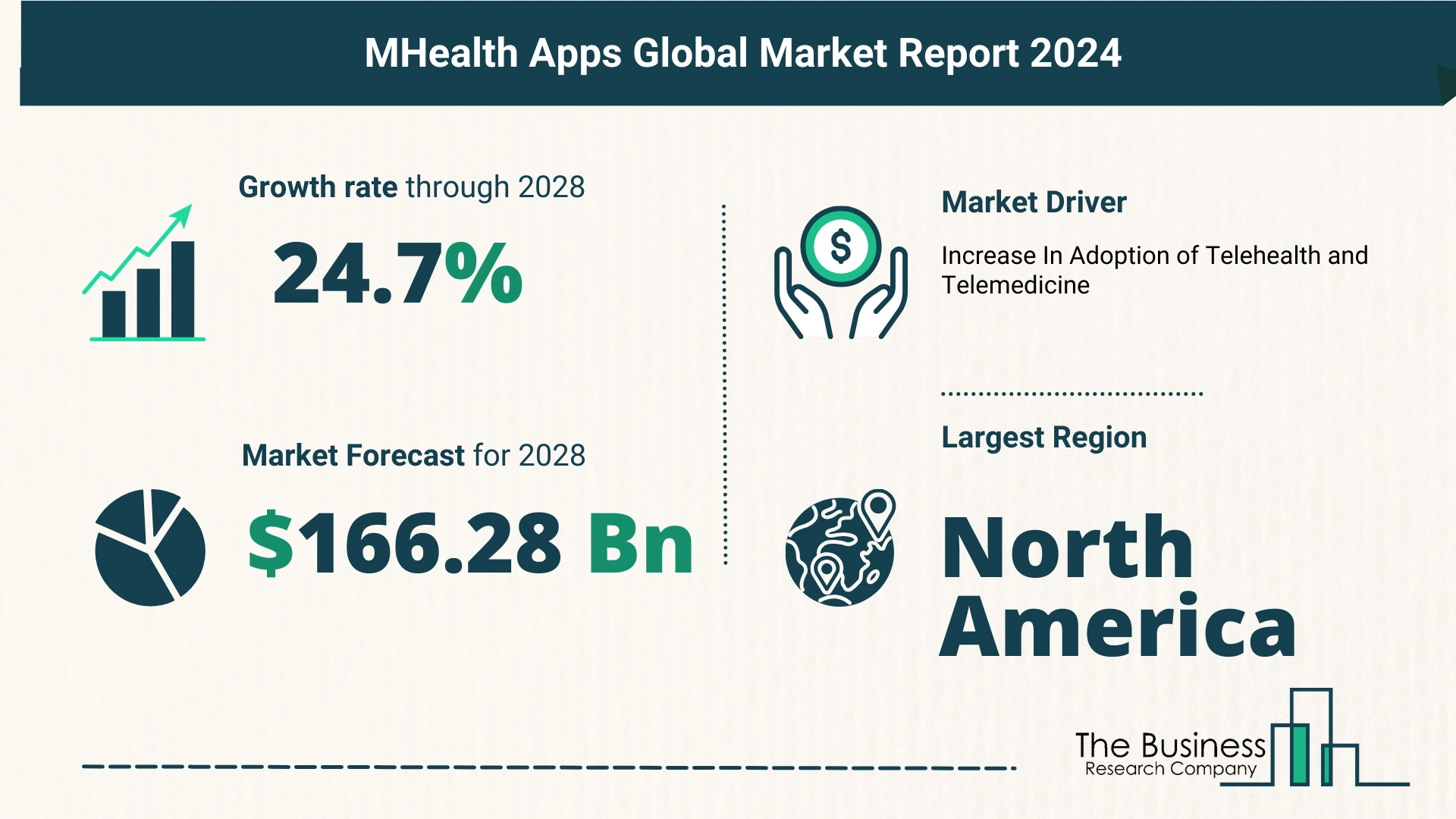
    The market is expected to continue its robust growth, reaching $166.28 billion by 2028 with a CAGR of 24.7%.

     User Privacy & Security: Ongoing concerns will drive innovations.

    Healthcare Policy Changes: Policies favoring digital health solutions will boost growth.

    Consumer Behavior Shifts: Increasing acceptance and reliance on digital health tools.

    Integration with Wearables: Seamless integration with devices will enhance functionality.

    Telemedicine Expansion: The rise of telemedicine will complement mHealth app growth.

    Major Trends to Watch

    Gamification and Engagement: Using game elements to enhance user engagement.

    Preventive Healthcare Solutions: Apps focusing on prevention rather than treatment.

    Healthcare Accessibility: Improving access to healthcare services through mobile apps.

    Behavioral Health and Mental Wellness: Growing focus on mental health.

    Wearable Device Integration: Enhanced data collection and user interaction through wearables.

    Driving Forces Behind the Popularity of mHealth Apps

    The popularity of mHealth apps is soaring due to their significant benefits in improving patient care and disease management.

     Patient Monitoring: These apps enable continuous health monitoring.

    Ease of Access: Patients have easy access to health information.

    Education and Self-Monitoring: Healthcare professionals use these apps to educate patients and promote self-monitoring.

    Public Adoption: Nearly 64% of adults in the U.S. regularly use health apps.

    Market Presence: The Google Play store features a substantial number of mHealth apps.

    View More On The mHealth Apps Market Report 2024 – https://www.thebusinessresearchcompany.com/report/mhealth-apps-global-market-report

     Key Industry Players

    Prominent companies in the mHealth apps market include:

     Apple Inc.

    Pfizer Inc.

    Johnson & Johnson

    Sony Corporation

    1. Hoffmann-La Roche Ltd.

    Merck & Co Inc.

    Novartis AG

    Sanofi

    Bristol-Myers Squibb Company

    Technological Advancements: AI and 5G Transforming mHealth

    Artificial intelligence (AI) and 5G technology are revolutionizing the mHealth app market by enhancing customer experiences and streamlining services.

     AI Integration: AI improves customer service and solves network complexities.

    5G Adoption: Enables faster and more reliable app performance.

    AI-Powered Solutions: Google’s AI-powered search capabilities streamline access to clinical information, demonstrating the potential of AI in healthcare.

    Case Study: Google’s AI-Powered Search

    In October 2023, Google launched an AI-powered search tool to improve healthcare professionals’ access to clinical information, tested with organizations like Mayo Clinic and Highmark Health.

     Strategic Acquisitions: Philips and BioTelemetry Inc.

    In February 2021, Philips acquired BioTelemetry Inc. to enhance its healthcare offerings, particularly in cardiac diagnostics and patient care management.

     Integrated Solutions: The acquisition aims to deliver comprehensive care solutions.

    Cardiac Monitoring: Expanding Philips’ portfolio in cardiac health management.

    Market Segmentation and Regional Insights

    The mHealth apps market is diverse and segmented by various criteria:

     By App Type: Disease and treatment management, wellness management, other app types.

    By Connected Medical Devices: Heart rate meters, wearable fitness sensors, blood pressure monitors, pulse oximeters, other devices.

    By Application: Monitoring services, fitness solutions, diagnostic services, treatment services, other applications.

    By End-User: Physicians, patients, insurance companies, research centers, pharmacies, biopharmaceutical companies, government, tech companies, other end-users.

    Regional Growth

    North America: The largest market in 2023.

    Asia-Pacific: Expected to be the fastest-growing region in the coming years.

    Conclusion

    The mHealth apps market is on a trajectory of rapid growth, driven by technological advancements, strategic acquisitions, and increasing consumer adoption. As privacy concerns, policy changes, and wearable integration continue to evolve, the market is poised for sustained expansion, revolutionizing healthcare delivery and patient engagement worldwide.

    Request A Sample Of The Global mHealth Apps Market Report 2024:
    https://www.thebusinessresearchcompany.com/sample_request?id=6519&type=smp