Category: HealthcareServices

  • 5 Key Insights On The Mental Wellness Market 2024

    5 Key Insights On The Mental Wellness Market 2024

    The Business Research Company’s global market reports are now updated with the latest market sizing information for the year 2024 and forecasted to 2033

    As per The Business Research Company’s Mental Wellness Global Market Report 2024, the mental wellness market is expected to show significant growth in the forecast period.

    The mental wellness market has seen significant growth in recent years, with projections indicating continued expansion. This blog explores the key drivers behind this growth, major trends shaping the market, and notable innovations and acquisitions.

    Strong Market Growth

    Current Market Size: The mental wellness market was valued at $160.3 billion in 2023.

    2024 Projections: Expected to grow to $173.03 billion, reflecting a compound annual growth rate (CAGR) of 7.9%.

    Long-term Forecast: Anticipated to reach $235.72 billion by 2028, with a CAGR of 8.0%.

    Drivers of Growth

    Increasing Mental Health Awareness

    Awareness Campaigns: Greater public awareness and reduction in stigma around mental health issues.

    Government Initiatives: Programs aimed at mental health promotion and support.

    Corporate Wellness Programs

    Workplace Focus: Companies increasingly prioritizing employee mental health through structured programs.

    Benefits: Improved productivity and reduced absenteeism.

    Telehealth Advancements

    Accessibility: Telehealth makes mental health services more accessible.

    Convenience: Provides a comfortable and private environment for patients.

    View More On The Mental Wellness Market Report 2024 – https://www.thebusinessresearchcompany.com/report/mental-wellness-global-market-report

    Future Growth Factors

    Wearable Devices

    Monitoring: Devices track mental health indicators, offering real-time feedback.

    Prevention: Early detection and preventive measures.

    Global Advocacy

    International Efforts: Collaborative global initiatives promoting mental health.

    Policy Development: Strengthened policies and support systems.

    Preventive Mental Health

    Proactive Approaches: Emphasis on early intervention and prevention.

    Educational Programs: Increased public education on mental wellness practices.

    Virtual Reality Therapy

    Innovative Treatments: VR therapy as a tool for treating various mental health conditions.

    Immersive Experience: Provides controlled environments for therapy.

    Tailored Wellness Solutions

    Personalization: Custom solutions based on individual needs and preferences.

    Effectiveness: Enhanced outcomes through personalized care.

    Major Trends Shaping the Market

    Digital Mental Health Platforms

    Technology Integration: Digital platforms providing accessible mental health support.

    User Engagement: Increased user engagement through interactive and user-friendly interfaces.

    Corporate Mental Health Programs

    Employee Support: Comprehensive mental health programs within corporate environments.

    Wellness Benefits: Programs designed to improve overall employee well-being.

    Integration of Artificial Intelligence (AI)

    AI Applications: Use of AI in diagnosing and treating mental health conditions.

    Efficiency: Improved efficiency and accuracy in mental health care.

    Cultural Diversity and Inclusivity

    Inclusive Practices: Culturally sensitive and inclusive mental health services.

    Broader Reach: Ensuring services are accessible to diverse populations.

    Holistic Wellness Ecosystems

    Comprehensive Care: Integrative approaches combining physical, mental, and emotional health.

    Wellness Communities: Supportive ecosystems promoting overall well-being.

    Rising Disorders Drive Market Expansion

    Increasing Incidence of Mental Health Disorders

    Prevalence: Rising cases of mental health disorders like depression and anxiety.

    Impact on Market: Increased demand for mental wellness services and products.

    Example: UK Statistics

    Youth Mental Health: Proportion of 17- to 19-year-olds with a suspected mental disorder grew from 17.4% in 2021 to 25.7% in 2022.

    Market Response: Expanding mental wellness initiatives to address growing needs.

    Innovative Solutions in the Mental Wellness Market

    Product Innovation

    Example: Swanson Health’s Swanson W/I/O range of nutritional supplements.

    Focus: Products designed to enhance sleep, reduce anxiety, and boost cognition.

    Strategic Acquisitions

    CVS Health and Signify Health: CVS Health acquired Signify Health Inc. for $8 billion in March 2023.

    Value-Based Care: Enhancing CVS Health’s value-based care strategy and expanding its mental health services.

    Market Segmentation

    Types and Services

    Types: Includes senses spaces, sleep aids, brain-boosting nutraceuticals, self-improvement, meditation, and mindfulness.

    Services: Emergency mental health services, outpatient counseling, home-based treatments, inpatient hospital treatment services, and more.

    Demographics and Disorders

    Age Groups: Services tailored for adults, geriatrics, and teenagers.

    Disorders: Covering depression, anxiety, schizophrenia, substance use disorder, bipolar disorder, PTSD, eating disorders, and more.

    Regional Insights

    North America: Leading region in the mental wellness market in 2023.

    The mental wellness market is poised for continued growth, driven by technological advancements, increased awareness, and a focus on holistic and inclusive approaches. With ongoing innovation and strategic expansions, the market is set to provide comprehensive and accessible mental health solutions worldwide.

    Request A Sample Of The Global Mental Wellness Market Report 2024:
    https://www.thebusinessresearchcompany.com/sample_request?id=10519&type=smp

  • Medication Management System Market Report 2024: Market Size, Drivers, And Trends

    Medication Management System Market Report 2024: Market Size, Drivers, And Trends

    The Business Research Company’s global market reports are now updated with the latest market sizing information for the year 2024 and forecasted to 2033

    Introduction

    The medication management system market has experienced significant growth in recent years. This article explores the factors contributing to this growth, the trends shaping the future, and the major players driving innovation in this space.

    Current Market Size and Growth

    • Market Value Increase: In 2023, the market was valued at $2.95 billion and is expected to reach $3.58 billion in 2024.
    • Growth Rate: The compound annual growth rate (CAGR) for this period is an impressive 21.3%.

    Factors Driving Historic Growth

    • Data Utilization: Enhanced use of data analytics to optimize medication management.
    • Telemedicine Emergence: Increased adoption of telemedicine platforms integrating medication management.
    • Patient Engagement: Focus on patient-centric care improving medication adherence.
    • Pioneering Solutions: Development of advanced medication management technologies.
    • Chronic Diseases: Rising prevalence of chronic diseases necessitating efficient medication management.
    • Healthcare Infrastructure: Significant investments in healthcare infrastructure globally.

    View More On The Medication Management System Market Report 2024 – https://www.thebusinessresearchcompany.com/report/medication-management-system-global-market-report

    Future Market Projections

    • Projected Market Size: Expected to grow to $7.36 billion by 2028.
    • Growth Rate: Forecasted CAGR of 19.8%.

    Factors Driving Future Growth

    • Market Potential: Expansion opportunities in emerging markets.
    • Regulatory Changes: Evolving healthcare regulations promoting medication management systems.
    • Economic Factors: Increased healthcare spending and investment.
    • Competitive Landscape: Intensifying competition driving innovation.
    • Consumer Behavior: Growing consumer awareness and demand for efficient medication management.
    • Global Health Challenges: Continued focus on addressing global health issues through better medication management.

    Key Trends in the Forecast Period

    • Interoperability Demands: Need for systems that integrate seamlessly across various healthcare platforms.
    • Data Analytics and Insights: Leveraging data for better decision-making and outcomes.
    • Healthcare Cost Containment: Efforts to reduce healthcare costs through efficient medication management.
    • Patient-Centric Care: Increasing emphasis on personalized medication management solutions.

    Surge in Medical Expenses Driving Market Growth

    • Rising Costs: Medical costs are increasing significantly, driving the need for cost-efficient medication management systems.
    • Adoption by Hospitals: Hospitals are adopting these systems to reduce costs and improve efficiency.
    • National Health Expenditure: In 2022, US health expenditure rose to $4.5 trillion, with projections reaching $6.2 trillion by 2028.

    Major Companies in the Market

    • Key Players: McKesson Corporation, Optum Inc., Cardinal Health Inc., Siemens Healthcare, Becton Dickinson, GE Healthcare, Baxter International, and more.

    Innovative Strides in Medication Management Systems

    • New Product Innovations: Companies are launching new products to maintain competitive advantage.
    • Example: Omnicell Inc. launched Omnicell One, improving medication inventory management and patient safety.

    Strategic Acquisitions

    • BD’s Acquisition of Parata Systems: In 2022, Becton and Dickinson acquired Parata Systems, enhancing its medication management capabilities across various healthcare settings.

    Market Segmentation

    • By Product Type: Computerized Physician Order Entry, Clinical Decision Support System Solutions, Electronic Medication Administration Record, Inventory Management Solutions, and others.
    • By Mode of Delivery: Web-Based, Cloud-Based, On-Premise.
    • By End Users: Pharmacies, Hospitals, Other End Users.

    Conclusion

    The medication management system market is poised for robust growth, driven by technological advancements, rising healthcare costs, and an increasing focus on patient-centric care. With major companies innovating continuously and strategic acquisitions enhancing capabilities, the future looks promising for this vital sector in healthcare.

    Request A Sample Of The Global Medication Management System Market Report 2024:
    https://www.thebusinessresearchcompany.com/sample_request?id=7091&type=smp

  • Top 5 Insights From The Laboratory Testing Services Market Report 2024

    Top 5 Insights From The Laboratory Testing Services Market Report 2024

    The Business Research Company’s global market reports are now updated with the latest market sizing information for the year 2024 and forecasted to 2033

    According to The Business Research Company’s Laboratory Testing Services Global Market Report 2024, the laboratory testing services market is expected to show promising growth in the forecast period.

    Market Growth Overview

    The laboratory testing services market has experienced robust growth in recent years. Here’s a snapshot of the market’s trajectory:

    • 2023: Valued at $104.66 billion.
    • 2024: Expected to reach $110.69 billion, with a compound annual growth rate (CAGR) of 5.8%.
    • 2028: Projected to grow to $137.16 billion at a CAGR of 5.5%.

    Drivers of Historical Growth

    Several factors have driven the market’s growth historically:

    • Regulatory Compliance: Increasing regulations have spurred demand for thorough testing.
    • Globalization of Trade: Cross-border trade necessitates rigorous testing to meet diverse standards.
    • Rise in Chronic Diseases: Growing incidence of chronic illnesses requires extensive laboratory testing.
    • Environmental Concerns: Heightened awareness has boosted environmental testing services.
    • Quality Assurance: The food and beverage industry’s focus on quality assurance has increased testing needs.

    View More On The Laboratory Testing Services Market Report 2024 – https://www.thebusinessresearchcompany.com/report/laboratory-testing-services-global-market-report

    Future Growth Prospects

    The market is poised for continued expansion due to several emerging trends and factors:

    • Precision Medicine: Increased focus on customized healthcare solutions.
    • Diagnostic Testing: Rapid growth in this sector.
    • Global Supply Chain Challenges: Need for stringent testing due to complex supply chains.
    • Outsourcing: Increased outsourcing of testing services.
    • Environmental Testing: Growing importance due to environmental regulations.

    Major Trends

    Key trends expected to shape the market include:

    • Emerging Technologies: Innovations enhancing testing capabilities.
    • Pharmaceutical and Biotechnology Advances: Driving demand for specialized testing.
    • Technological Advancements: Continuous improvements in testing technologies.
    • Collaborations and Partnerships: Strategic alliances to expand service offerings.
    • Rise in Outsourcing: More companies outsourcing their testing needs to specialized providers.

    Impact of Chronic and Infectious Diseases

    Rising Incidence

    The increasing prevalence of chronic and infectious diseases significantly boosts the laboratory testing services market:

    • Chronic Diseases: Long-term ailments that require regular monitoring through laboratory tests.
      • Example: In 2022, the CDC reported that 6 out of 10 US adults have chronic diseases, with 4 out of 10 having multiple chronic conditions.
    • Diabetes: Affects 37.3 million Americans, highlighting the need for continuous monitoring.

    Market Contribution

    Laboratory testing services contribute to:

    • Disease Monitoring: Vital for managing chronic conditions.
    • Product Quality Assurance: Ensures the performance and safety of new products.
    • Manufacturing Control: Maintains quality during production.
    • Device Calibration: Ensures accuracy of measuring instruments.
    • Failure Analysis: Identifies causes of failures to prevent recurrence.

    Key Players in the Market

    Prominent companies shaping the laboratory testing services market include:

    • Abbott Laboratories
    • Siemens Medical Solutions USA Inc.
    • Laboratory Corporation of America Holdings
    • Quest Diagnostics Inc.
    • Eurofins Scientific SE
    • SGS US Testing Co Inc.
    • Sonic Healthcare Limited
    • Bureau Veritas S.A.
    • Charles River Laboratories International Inc.
    • SYNLAB International GmbH

    Technological Advancements

    Key Trends

    Technological advancements are a major trend in the laboratory testing services market:

    • Innovative Technologies: Companies are investing in new technologies to enhance their market position.
      • Example: In October 2022, Q2 Solutions launched its first self-collection safety lab panel, featuring innovative self-collection technology and patient-focused logistics.

    Strategic Acquisitions

    • Bureau Veritas’ Acquisition: In June 2022, Bureau Veritas acquired Advanced Testing Laboratory, expanding its consumer product testing capabilities.

    Market Segmentation

    The laboratory testing services market is segmented by:

    1. Test Type:
      • Clinical Chemistry
      • Immunology
      • Cytology
      • Genetics
      • Microbiology
      • Hematology
      • Other Test Types
    2. Application:
      • Bioanalytical and Lab Chemistry Services
      • Toxicology Testing Services
      • Cell and Gene Therapy Related Services
      • Preclinical and Clinical Trial Related Services
      • Drug Discovery and Development Related Services
      • Other Applications
    3. Service Provider:
      • Stand-Alone Laboratories
      • Hospital-Based Laboratories
      • Contract Research Organizations
      • Other Service Providers

    Regional Insights

    Largest Market

    • North America: Held the largest market share in 2023.

    Fastest Growing Region

    • Asia-Pacific: Expected to be the fastest-growing region during the forecast period.

    Conclusion

    The laboratory testing services market is on a robust growth trajectory, driven by technological advancements, increased regulatory compliance, and the rising incidence of chronic and infectious diseases. With major companies continuously innovating and expanding their capabilities, the market is poised for significant expansion in the coming years.

    Request A Sample Of The Global Laboratory Testing Services Market Report 2024:
    https://www.thebusinessresearchcompany.com/sample_request?id=9735&type=smp

  • How Is The Medical Spa Market Expected To Grow Through 2024-2033

    How Is The Medical Spa Market Expected To Grow Through 2024-2033

    The Business Research Company’s global market reports are now updated with the latest market sizing information for the year 2024 and forecasted to 2033

    According to The Business Research Company’s Medical Spa Global Market Report 2024, the medical spa market is expected to show promising growth in the forecast period.

    The medical spa market has experienced significant growth in recent years, driven by a combination of rising wellness trends, technological advancements, and evolving consumer preferences. Let’s delve into the key factors fueling this market’s expansion and explore the exciting future prospects.

    Market Growth Overview

    • Current Market Size: The medical spa market size has grown from $16.69 billion in 2023 to $19.04 billion in 2024, reflecting a compound annual growth rate (CAGR) of 14.1%.
    • Future Projections: By 2028, the market is expected to reach $32.13 billion, maintaining a CAGR of 14.0%.

    Key Drivers of Growth

    Wellness and Self-Care Trends

    • Rising Demand: Increasing awareness of wellness and self-care has significantly contributed to the medical spa market’s growth.
    • Consumer Preferences: A shift in consumer preferences towards holistic wellness and aesthetic enhancement is evident.

    Aging Population

    • Demographic Influence: An aging population is driving demand for rejuvenation and anti-aging treatments.
    • Longevity Trends: More individuals seek treatments that promote long-term health and vitality.

    View More On The Medical Spa Market Report 2024 – https://www.thebusinessresearchcompany.com/report/medical-spa-global-market-report

    Celebrity Endorsements and Influencer Marketing

    • Media Impact: Celebrity endorsements and influencer marketing have played a crucial role in popularizing medical spa treatments.
    • Social Media Influence: Platforms like Instagram and TikTok have amplified the reach of medical spa services.

    Economic Factors

    • Disposable Income: The rise in disposable income has made medical spa services more accessible to a broader audience.
    • Affordable Luxury: Medical spas are increasingly viewed as an affordable luxury, contributing to their popularity.

    Forecast Period Trends

    Innovations in Treatment Modalities

    • Technological Advancements: Innovations such as radiofrequency body contouring, microneedling, and muscle-sculpting treatments are gaining traction.
    • Enhanced Experiences: Advanced technologies enhance the effectiveness and appeal of medical spa services.

    Personalized and Customized Experiences

    • Tailored Treatments: Medical spas are focusing on personalized treatments to meet individual needs and preferences.
    • Customer-Centric Approach: Customized experiences are becoming a hallmark of high-end medical spas.

    Preventative Treatments

    • Proactive Health: There is a growing trend towards preventative treatments that promote long-term health and wellness.
    • Early Intervention: Consumers are increasingly seeking early interventions to maintain youthful appearances and overall health.

    Ethical and Sustainable Practices

    • Sustainability Focus: Ethical and sustainable practices are becoming important differentiators in the medical spa industry.
    • Consumer Awareness: Environmentally conscious consumers prefer medical spas that adhere to sustainable practices.

    Regional Insights

    • North America: The largest market for medical spas in 2023, driven by high disposable incomes and a strong wellness culture.
    • Asia-Pacific: Expected to be the fastest-growing region, with rising disposable incomes and increasing awareness of wellness and aesthetic treatments.

    Major Players and Market Segmentation

    Key Companies

    • Serenity Spa at The Ritz-Carlton Dubai
    • The Spa at Trump International Hotel and Tower Chicago
    • Remède Spa at St. Regis Bali
    • Chic La Vie MedSpa
    • Canyon Ranch, among others

    Market Segmentation

    • By Service: Skin Rejuvenation, Facial Injectable, Body Shaping, Hair Removal, Other Services
    • By Age: Adolescent, Adult, Geriatric
    • By User: Women, Men

    Surging Demand for Aesthetic Procedures

    • Growth in Procedures: According to The American Society for Aesthetic Plastic Surgery, facial procedures increased by 54% and aesthetic body procedures by 63% from 2020 to 2021.
    • Body and Beauty: The emphasis on body and beauty for identity and self-expression is propelling demand.

    Innovations and Expansions

    New Treatments

    • Innovative Offerings: Providers are introducing advanced treatments like hydrafacial toning and new lip filler options.
    • Technological Integration: The adoption of new technologies enhances treatment efficacy and customer satisfaction.

    Market Expansion

    • Strategic Acquisitions: Companies like Laser MD Medspa are expanding their presence through acquisitions, such as the acquisition of Young Medical Spa.
    • Regional Growth: Focus on expanding footprints in key regions to cater to growing demand.

    The medical spa market is poised for continued robust growth, driven by innovative treatments, changing consumer preferences, and strategic expansions. As the wellness and self-care trend persists, the future of medical spas looks promising and dynamic.

    Request A Sample Of The Global Medical Spa Market Report 2024:
    https://www.thebusinessresearchcompany.com/sample_request?id=6356&type=smp

  • Comprehensive Analysis On Size, Share, And Drivers Of The Macular Degeneration Treatment Market

    Comprehensive Analysis On Size, Share, And Drivers Of The Macular Degeneration Treatment Market

    The Business Research Company’s global market reports provide comprehensive analysis on the various markets in 27 industries across 60 geographies.

    The macular degeneration treatment market has seen remarkable growth in recent years and is poised for continued expansion. This article delves into the factors driving this growth, current trends, and future projections.

    Rapid Market Growth

    • Market Size and Growth Rate:
      • The market grew from $9.74 billion in 2023 to $10.99 billion in 2024.
      • This growth represents a compound annual growth rate (CAGR) of 12.8%.
    • Contributing Factors:
      • Aging Population: Increasing elderly population susceptible to macular degeneration.
      • Lifestyle Changes: Rising cases due to lifestyle factors like smoking and poor diet.
      • Limited Treatment Options: Demand for new and effective treatments.
      • Rising Awareness: Greater awareness leading to early diagnosis and treatment.
      • Healthcare Infrastructure Development: Enhanced healthcare facilities supporting treatment accessibility.

    View More On The Macular Degeneration Treatment Market Report 2024 – https://www.thebusinessresearchcompany.com/report/macular-degeneration-treatment-global-market-report

    Future Market Projections

    • Expected Market Size:
      • Projected to reach $16.99 billion by 2028.
      • Forecast CAGR of 11.5%.
    • Growth Drivers:
      • Advancements in Research: New treatments and technologies being developed.
      • Increased Healthcare Expenditure: Higher spending on healthcare globally.
      • Rising Incidence Rates: Growing number of macular degeneration cases.
      • Personalized Medicine Approaches: Tailored treatments improving efficacy.
      • Global Vision Health Initiatives: Worldwide efforts to combat vision loss.

    Major Trends in the Forecast Period

    • Focus on Neuroprotection and Regeneration Therapies: Developing treatments that protect and regenerate retinal cells.
    • Expansion of Telemedicine and Remote Monitoring: Leveraging technology for better patient management.
    • Personalized Medicine Approaches: Customized treatments based on genetic and lifestyle factors.
    • Investigation of Stem Cell Therapies: Researching stem cell applications for vision restoration.
    • Patient-Focused Initiatives for Awareness and Education: Educating patients on disease management and prevention.

    Growing Retinal Disorder Incidence Propels Market Growth

    • Increasing Burden of Retinal Disorders:
      • Retinal disorders leading to vision impairment and blindness are on the rise.
      • The American Academy of Ophthalmology projects that by 2050, 7.32 million Americans will have primary open-angle glaucoma.
    • Demographic Impact:
      • Highest incidence among populations aged 70 to 79 years, women, and Hispanics.

    Key Players in the Market

    • Major Companies:
      • Pfizer Inc., F. Hoffmann-La Roche Ltd., Allergan Inc., Bayer AG, Novartis AG, GlaxoSmithKline PLC, Regeneron Pharmaceuticals Inc., among others.

    Advancements in Therapies

    • Gene Therapy Innovations:
      • Genentech’s Susvimo, approved by the FDA in 2021, offers a new treatment for wet age-related macular degeneration (AMD).
      • Susvimo requires fewer treatments per year compared to traditional therapies.

    Notable Acquisitions

    • Novartis Acquires Arctos Medical:
      • In September 2021, Novartis acquired Arctos Medical to enhance its vision loss solutions.
      • This acquisition leverages optogenetics for developing effective therapeutics.

    Market Segmentation

    • By Stage of Disease:
      • Early-Stage AMD, Intermediate AMD, Late-Stage AMD
    • By End User:
      • Ambulatory Surgical Centers, Ophthalmic Clinics, Hospitals
    • By Route of Administration:
      • Oral, Injectable, Other Routes
    • By Types:
      • Wet Macular Degeneration, Dry Macular Degeneration

    Regional Insights

    • North America:
      • Largest region in the market in 2023.
    • Asia-Pacific:
      • Expected to be the fastest-growing region during the forecast period.

    The macular degeneration treatment market is on a robust growth trajectory, driven by technological advancements, increasing healthcare expenditure, and a growing elderly population. With continued innovation and investment, the future looks promising for advancements in managing and treating macular degeneration.

    Request A Sample Of The Global Macular Degeneration Treatment Market Report 2024:
    https://www.thebusinessresearchcompany.com/sample_request?id=5799&type=smp

  • Hospital-Acquired Infection Control Market Forecast Until 2033 – Estimated Market Size And Growth Rate

    Hospital-Acquired Infection Control Market Forecast Until 2033 – Estimated Market Size And Growth Rate

    The Business Research Company’s market reports offer an in-depth analysis on the market’s growth potential, major drivers, key trends and more.

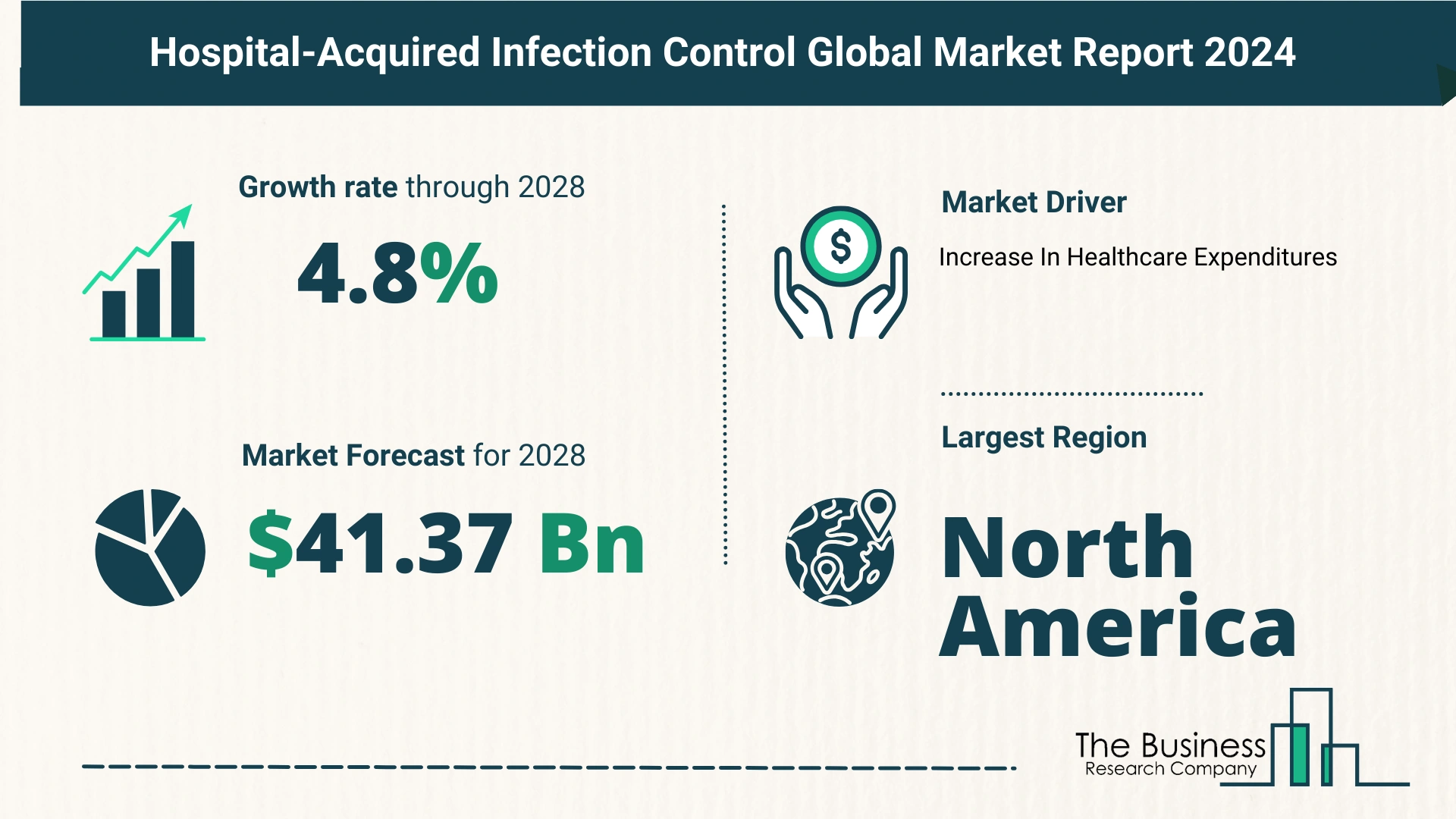
    The hospital-acquired infection control market is witnessing steady growth, primarily fueled by increasing healthcare expenditures worldwide.

    • Hospitals are allocating additional resources for advanced infection prevention technologies.
    • Rising healthcare spending, as evidenced by statistics from the UK, drives investment in preventive care and innovative solutions.
    • The market is poised to benefit from heightened focus on infection control measures, supported by increased financial allocations.

    Technology’s Pivotal Role in Market Advancement
    Technological advancements play a pivotal role in shaping the hospital-acquired infection control market landscape.

    • Major companies are leveraging technology to develop innovative solutions for infection prevention.
    • Machine learning and whole genome sequencing enable rapid detection of infectious disease outbreaks in healthcare settings.
    • Technological interventions enhance surveillance capabilities and facilitate early detection and containment of hospital-acquired infections.

    Read More On The Hospital-Acquired Infection Control Market Report 2024 – https://www.thebusinessresearchcompany.com/report/hospital-acquired-infection-control-global-market-report

    Steris Corporation’s Strategic Acquisition
    Steris Corporation’s acquisition of Cantel Medical underscores the market’s dynamic nature and strategic consolidations within the industry.

    • The acquisition expands Steris’s product portfolio and global reach, strengthening its position in infection prevention.
    • Cantel Medical’s expertise in manufacturing infection prevention products complements Steris’s capabilities, fostering innovation and market growth.
    • Strategic mergers and acquisitions contribute to market expansion and offer comprehensive solutions to healthcare facilities.

    Market Segmentation and Regional Outlook
    The hospital-acquired infection control market is segmented based on product, technology, diseases, application, and end-user, reflecting the diverse needs of healthcare facilities.

    1. Product: Sterilizers, Disinfectors, Endoscope Reprocessors, Microbial Testing Instruments, Consumables, Disinfectants, Infection Prevention and Surveillance Software, Other Products.
    2. Technology: Phenotypic Methods, Genotypic Methods.
    3. Diseases: Hospital Acquired Pneumonia, Bloodstream Infections, Surgical Site Infections, Gastrointestinal Infections, Urinary Tract Infection, Other Diseases.
    4. Application: Disease Testing, Drug-Resistance Testing.
    5. End User: Hospitals, ICUs, Ambulatory Surgical, Diagnostic Centers, Nursing Homes, Maternity Centers, Other End Users.

    Regional Dynamics:

    • North America: Emerged as the largest region in the hospital-acquired infection control market in 2023.
    • Asia-Pacific: Expected to witness the fastest growth in the forecast period, driven by increasing healthcare investments and rising awareness about infection prevention.

    Future Outlook
    The hospital-acquired infection control market is poised for steady growth in the coming years, driven by technological advancements, strategic partnerships, and increasing emphasis on infection prevention.

    • The market is projected to reach $41.37 billion by 2028, with a compound annual growth rate (CAGR) of 4.8%.
    • Adoption of real-time location systems (RTLS), integration of artificial intelligence (AI), and emphasis on staff training will shape market trends.
    • Continued investments in pandemic preparedness and antimicrobial stewardship programs will further propel market expansion, offering new opportunities for industry players.

    In conclusion, the hospital-acquired infection control market’s growth trajectory reflects the industry’s commitment to enhancing patient safety and reducing healthcare-associated infections. With evolving technologies and strategic initiatives, stakeholders are well-positioned to address the complex challenges of infection prevention and contribute to improving healthcare outcomes globally.

    Request for A Sample Of The Global Hospital-Acquired Infection Control Market Report:
    https://www.thebusinessresearchcompany.com/sample_request?id=7694&type=smp

  • Growth Trajectory Of The Hospital Outsourcing Market 2024-2033

    Growth Trajectory Of The Hospital Outsourcing Market 2024-2033

    The Business Research Company’s global market reports are now updated with the latest market sizing information for the year 2024 and forecasted to 2033

    Rising Diabetic Patient Flow:

    • Hospitals face increased patient flow due to rising chronic illnesses like diabetes.
    • Overwhelming patient numbers strain hospital infrastructure, leading to outsourcing.
    • The International Diabetes Federation projects a significant increase in diabetic cases by 2045.

    Transforming Hospital Revenue Cycles With Advanced Technologies
    Adoption of Digital Platforms:

    • Major players integrate digital platforms to optimize revenue cycle management.
    • Omega Healthcare’s Omega Digital Platform employs AI, RPA, ML, bots, and NLP for efficiency.
    • The platform aims to lower coding costs, reduce accounts receivable days, and enhance financial outcomes.

    Omega Healthcare’s Acquisition Of Himagine Solutions In Hospital Outsourcing
    Strategic Acquisition:

    • Omega Healthcare’s acquisition of Himagine Solutions Inc. expands its global service capabilities.
    • Himagine Solutions brings expertise in clinical documentation improvement (CDI) and coding audits.
    • The acquisition strengthens Omega Healthcare’s position in outsourced revenue cycle management.

    View More On The Hospital Outsourcing Market Report 2024 – https://www.thebusinessresearchcompany.com/report/hospital-outsourcing-global-market-report

    Segmentation Insights and Market Dynamics
    Market Segmentation:

    1. By Hospital Type: Private, Public
    2. By Hospital Size: Small and Medium Hospitals, Large Hospitals
    3. By Services: Healthcare IT, Clinical Services, Business Services, Transportation Services, Other Services
    4. By End-Users: Nursing Homes and Assisted Living, Specialty Hospitals, General Medical and Surgical Hospitals, Emergency and Other Outpatient Care Centers, Other End Users

    Regional Dominance:

    • North America led the hospital outsourcing market in 2023, driven by advanced healthcare infrastructure and high outsourcing adoption rates.

    Key Players Driving Market Growth
    Leading Companies:

    • Johnson & Johnson
    • Abbott Laboratories
    • Sodexo S.A.
    • Becton Dickinson and Company
    • Cerner Corporation

    Notable Developments:

    • Adoption of advanced technologies to enhance service offerings.
    • Strategic acquisitions to expand global reach and service capabilities.

    Future Projections and Market Opportunities
    Projected Growth:

    • The hospital outsourcing market is forecasted to reach $730.99 billion by 2028.
    • Factors such as patient-centric services and cybersecurity concerns drive market expansion.

    Emerging Trends:

    • Technological advancements leading to digital transformation.
    • Rise of business process outsourcing (BPO) in healthcare.
    • Growing adoption of IT outsourcing and focus on revenue cycle management outsourcing.

    Conclusion
    The hospital outsourcing market is experiencing robust growth, fueled by the increasing prevalence of chronic illnesses like diabetes and advancements in digital technologies. Major players are leveraging strategic acquisitions and technological innovations to enhance service offerings and expand their global footprint. With a projected surge in market size and emerging trends shaping the landscape, the future of hospital outsourcing holds promising opportunities for stakeholders across the healthcare industry.

    Request A Sample Of The Global Hospital Outsourcing Market Report 2024:
    https://www.thebusinessresearchcompany.com/sample_request?id=7268&type=smp

  • Top 5 Insights From The Hospital Asset Tracking and Inventory Management Systems Market Report 2024

    Top 5 Insights From The Hospital Asset Tracking and Inventory Management Systems Market Report 2024

    The Business Research Company’s global market reports are now updated with the latest market sizing information for the year 2024 and forecasted to 2033

    According to The Business Research Company’s Hospital Asset Tracking and Inventory Management Systems Global Market Report 2024, the hospital asset tracking and inventory management systems market is expected to show promising growth in the forecast period.

    The hospital asset tracking and inventory management systems market have witnessed substantial growth in recent years, with promising projections for the future. From $27.86 billion in 2023, it is anticipated to reach $30.06 billion in 2024, showcasing a Compound Annual Growth Rate (CAGR) of 7.9%. This expansion is attributed to various factors such as cost reduction pressures, increasing healthcare complexity, patient safety concerns, data analytics integration, and rising healthcare expenditure.

    Anticipated Surge and Future Projections

    1. Upward Growth Trajectory: The market is poised for strong growth, projected to escalate to $39.82 billion by 2028, with a CAGR of 7.3%.
    2. Drivers of Growth: Integration with Electronic Health Records (EHR), remote monitoring, real-time visibility demand, sustainability focus, and the impact of global health events are key factors fueling this growth.

    Rising Patient Load and Market Dynamics

    1. Patient Load Impact: The surge in hospital patients, propelled by factors like the COVID-19 pandemic and lifestyle diseases, drives the demand for hospital asset tracking systems.
    2. Equipment Demand: Increased patient load necessitates better equipment and inventory management, amplifying the need for asset tracking and inventory management systems.

    View More On The Hospital Asset Tracking and Inventory Management Systems Market Report 2024 – https://www.thebusinessresearchcompany.com/report/hospital-asset-tracking-and-inventory-management-systems-global-market-report

    Technological Trends in Asset Tracking

    1. Real-Time Locating Systems (RTLS): The adoption of RTLS is a prominent trend, offering real-time tracking solutions for enhanced asset management.
    2. Innovative Solutions: Companies like Midmark RTLS are launching innovative solutions like Bluetooth low-energy cloud-based asset tracking to streamline hospital operations.

    Strategic Industry Moves and Acquisitions

    1. GHX Syft Acquisition: In February 2022, Global Healthcare Exchange (GHX) acquired Syft, a move aimed at modernizing the supply chain and offering value-based care solutions.
    2. Market Players: Major companies like IBM Corporation, Honeywell International Inc., and Siemens Healthineers AG are actively shaping the market with their innovative offerings.

    Segmentation of the Market

    1. Product Types: Segments include mobile, fixed, and other inventory management solutions.
    2. Technology: The market is divided into hardware and software solutions to cater to diverse needs.
    3. Application Areas: Applications range from equipment tracking to maintenance, ensuring comprehensive coverage of hospital operations.

    Regional Dynamics

    1. North America Leadership: In 2023, North America emerged as the largest region in the hospital asset tracking and inventory management market, showcasing its significant market presence and potential.

    In conclusion, the hospital asset tracking and inventory management systems market are experiencing robust growth driven by technological advancements, rising patient loads, and strategic industry moves. With a focus on real-time tracking, data analytics, and integration with healthcare systems, the market is poised for continued expansion and innovation in the years ahead.

    Request A Sample Of The Global Hospital Asset Tracking and Inventory Management Systems Market Report 2024:
    https://www.thebusinessresearchcompany.com/sample_request?id=7461&type=smp

  • What’s The Growth Forecast For Home Healthcare Market Through 2024-2033?

    What’s The Growth Forecast For Home Healthcare Market Through 2024-2033?

    The Business Research Company’s global market reports provide comprehensive analysis on the various markets in 27 industries across 60 geographies.

    The home healthcare sector has experienced robust growth in recent years, with significant projections for the future. From $349.02 billion in 2023, it is set to reach $383.52 billion in 2024, boasting a Compound Annual Growth Rate (CAGR) of 9.9%. This growth is primarily fueled by various factors such as the aging population, rising chronic diseases, cost-effective alternatives, and patient preference for homecare.

    Anticipated Growth and Projections

    1. Future Projections: The market is expected to continue its rapid expansion, reaching $571.64 billion by 2028, with a CAGR of 10.5%.
    2. Drivers of Growth: Global health events, telehealth expansion, home hospitalization models, value-based care, and personalized medicine are key factors contributing to this growth.

    Demographic Shifts and Market Expansion

    1. Aging Population Impact: The rise in the aging population significantly propels the home healthcare market forward.
    2. Prevalence of Chronic Diseases: Elderly individuals are more susceptible to chronic diseases, increasing the demand for home healthcare services.

    View More On The Home Healthcare Market Report 2024 – https://www.thebusinessresearchcompany.com/report/home-healthcare-global-market-report

    Technological Advancements and Remote Monitoring

    1. Integration of IoT: Advancements in technology, including the integration of IoT and wearable devices, are reshaping home healthcare.
    2. Remote Monitoring Expansion: Remote care systems enable improved patient outcomes by allowing healthcare providers to monitor and communicate with patients from a distance.

    Strategic Industry Moves and Partnerships

    1. Acquisitions for Expansion: Companies like Addus Homecare are strengthening their position through strategic acquisitions. For example, Addus Homecare’s acquisition of Armada Hospice for $29 million in November 2021 helped expand its market presence in various levels of home care services.
    2. Partnerships for Innovation: Collaboration and partnerships within the healthcare ecosystem drive innovation and market growth.

    Segmentation of the Home Healthcare Market

    1. By Equipment: Segments include therapeutic, diagnostic, and mobility care equipment.
    2. By Services: Rehabilitation services, respiratory therapy services, infusion therapy services, and other services are key segments.
    3. By Indication: Segments encompass various conditions such as cardiovascular disorders, diabetes, respiratory diseases, pregnancy, cancer, wound care, and others.

    Regional Dynamics

    1. North America Dominance: In 2023, North America emerged as the largest region in the home healthcare market, indicating substantial market presence and opportunities.
    2. Asia-Pacific Growth: Asia-Pacific is expected to be the fastest-growing region in the forecast period, highlighting evolving healthcare landscapes and increasing demand for home healthcare services.

    In conclusion, the home healthcare market is experiencing a significant boom driven by demographic shifts, technological advancements, and strategic industry moves. With a focus on personalized care, remote monitoring, and chronic disease management, the sector is poised for continued growth and innovation in the coming years.

    Request A Sample Of The Global Home Healthcare Market Report 2024:
    https://www.thebusinessresearchcompany.com/sample_request?id=6135&type=smp

  • Global Home Health Care And Residential Nursing Care Services Market Analysis 2024: Size, Share, And Key Trends

    Global Home Health Care And Residential Nursing Care Services Market Analysis 2024: Size, Share, And Key Trends

    The Business Research Company’s global market reports are now updated with the latest market sizing information for the year 2024 and forecasted to 2033

    As per The Business Research Company’s Home Health Care And Residential Nursing Care Services Global Market Report 2024, the home health care and residential nursing care services market is expected to show significant growth in the forecast period.

    The home health care and residential nursing care services market are witnessing robust growth, driven by the increasing elderly population worldwide.

    • The aging population requires specialized care and support, fostering demand for home health care and residential nursing services.
    • With projections indicating a significant rise in the elderly population by 2050, the market is poised for sustained growth to meet evolving healthcare needs.
    • Home health care and residential nursing services play a crucial role in enhancing the quality of life and well-being of older adults, contributing to market expansion.

    Integration of Big Data Technology
    Big data technology is revolutionizing the nursing care industry, offering enhanced monitoring and personalized care solutions.

    • Nursing care providers leverage big data analytics to monitor patients’ health status and identify potential health risks.
    • Solutions like eCaring enable real-time monitoring of patient health, facilitating early intervention and personalized care plans.
    • The integration of big data technology enhances treatment effectiveness and improves patient outcomes, driving adoption in the home health care sector.

    View More On The Home Health Care And Residential Nursing Care Services Market Report 2024 – https://www.thebusinessresearchcompany.com/report/home-health-care-and-residential-nursing-care-services-global-market-report

    Market Segmentation and Regional Outlook
    The home health care and residential nursing care services market are segmented based on type, type of expenditure, and end-user gender, reflecting diverse service offerings and consumer preferences.

    1. Type: Home Health Care Providers, Retirement Communities, Nursing Care Facilities, Orphanages & Group Homes.
    2. Type of Expenditure: Public, Private.
    3. End User Gender: Male, Female.

    Regional Dynamics:

    • Western Europe: Emerged as the largest region in the home health care and residential nursing care services market in 2023.
    • Asia-Pacific: Expected to witness significant growth, fueled by demographic shifts and increasing healthcare investments.

    Future Outlook
    The home health care and residential nursing care services market are poised for steady growth in the coming years, driven by technological innovations and changing healthcare landscapes.

    • The market is projected to reach $1516.79 billion by 2028, with a compound annual growth rate (CAGR) of 4.2%.
    • Major trends include the integration of technology, focus on preventive care, and addressing workforce challenges through training and education.
    • Collaboration with payers and providers, along with the adoption of value-based care models, will shape the future of home health care delivery.

    In conclusion, the home health care and residential nursing care services market’s robust growth trajectory underscores the industry’s commitment to meeting the evolving healthcare needs of aging populations. With innovative solutions and strategic collaborations, stakeholders are well-positioned to address challenges and enhance patient-centered care delivery, ensuring improved health outcomes and quality of life for individuals receiving home-based care.

    Request A Sample Of The Global Home Health Care And Residential Nursing Care Services Market Report 2024:
    https://www.thebusinessresearchcompany.com/sample_request?id=249&type=smp