Category: HealthcareServices

  • Healthcare Information System Market Size and Demand Forecast 2026–2030

    Healthcare Information System Market Size and Demand Forecast 2026–2030

    Uncover key drivers, emerging technologies, and competitive movements shaping the healthcare information system market from 2026–2035 with trusted insights from The Business Research Company

    How much is the Healthcare Information System Market valued at in 2026, and what valuation is forecast for 2030?

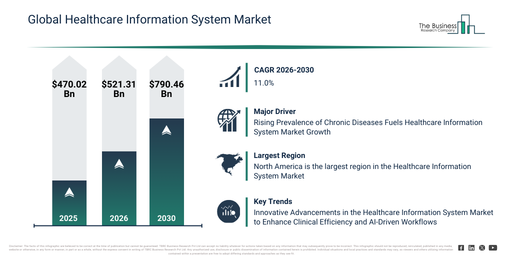
    The healthcare information system market size has experienced rapid growth in recent years. It is projected to expand from $470.02 billion in 2025 to $521.31 billion in 2026, at a compound annual growth rate (CAGR) of 10.9%. The growth observed in the historic period can be attributed to factors such as increasing digitization of patient records, the adoption of electronic health records across hospitals, the expansion of healthcare infrastructure, a rising demand for operational efficiency in hospitals, and the growth in healthcare data volumes.

    The healthcare information system market size is projected to experience swift expansion over the coming years. This market is anticipated to reach $790.46 billion by 2030, demonstrating a compound annual growth rate (CAGR) of 11.0%. Factors contributing to this growth during the projected timeframe include heightened investments in cloud-native healthcare platforms, an escalating focus on population health management, the broadening of AI-enabled clinical analytics, an increasing regulatory emphasis on data transparency, and a rising demand for interconnected healthcare ecosystems. Key trends for the forecast period encompass a greater embrace of integrated hospital information platforms, increased implementation of cloud-based HIS solutions, an intensifying focus on interoperability throughout healthcare systems, the wider availability of data-driven clinical decision support tools, and a stronger emphasis on managing health data securely against cyber threats.

    Access Your Free Sample Report for In-Depth Market Insights:

    https://www.thebusinessresearchcompany.com/sample.aspx?id=13673&type=smp

    What Drivers Are Influencing The Growth Of The Healthcare Information System Market?

    The increasing occurrence of chronic diseases is anticipated to boost the expansion of the healthcare information system market in the future. These conditions are enduring ailments that frequently necessitate continuous medical care, restrict daily activities, or both. Healthcare information systems offer support to healthcare providers by managing patient information, monitoring health outcomes, and improving treatment for individuals with chronic illnesses. As an illustration, in April 2025, data from the Centers for Disease Control and Prevention, a US-based federal agency, indicated that in 2023, approximately 76.4% of U.S. adults reported experiencing at least one of 12 selected chronic conditions. Furthermore, 51.4% of U.S. adults reported having multiple chronic conditions. Consequently, the growing prevalence of chronic diseases is fueling the growth of the healthcare information system market.

    How Is The Healthcare Information System Market Organized Into Various Segments?

    The healthcare information system market covered in this report is segmented –

    1) By Component: Hardware, Software And Systems, Services

    2) By Deployment: Web-based, On-Premises, Cloud-Based

    3) By Application: Hospital Information System, Pharmacy Automation Systems, Laboratory Informatics, Revenue Cycle Management, Medical Imaging Information System

    4) By End-Use: Hospitals, Diagnostic Centers, Academic And Research Institutes

    Subsegments:

    1) By Hardware: Servers, Networking Equipment, Storage Devices

    2) By Software And Systems: Electronic Health Records (EHR), Practice Management Software, Radiology Information Systems (RIS), Laboratory Information Systems (LIS), Health Information Exchange (HIE)

    3) By Services: Consulting Services, Implementation Services, Maintenance And Support Services, Training And Education Services, Managed Services

    Which Market Trends Are Opening Growth Opportunities In The Healthcare Information System Market?

    Leading companies in the healthcare information system market are increasingly prioritizing technological advancements, such as AI-powered, voice-first electronic health record (EHR) platforms. This focus aims to address the growing demand for streamlined clinical workflows, reduced documentation burdens, and improved decision support, all driven by clinician burnout, increasing patient volumes, and the shift towards value-based care. An AI-powered, voice-first EHR platform integrates generative AI, natural language processing, and voice-enabled commands, allowing clinicians to interact with the system more intuitively, automate documentation, and access insights in real time, a significant departure from traditional EHRs that heavily rely on manual data entry and rigid interfaces. For example, in August 2025, Oracle Health, a US-based health IT company, introduced its next-generation AI-powered EHR, designed as a voice-first solution featuring embedded AI agents. This platform leverages Oracle Cloud Infrastructure and combines multimodal voice and screen interactions, enabling clinicians to dictate commands, retrieve patient data, summarize recent notes, and receive AI-assisted clinical recommendations. It also supports the integration of custom AI models and third-party applications, thereby enhancing personalization, efficiency, and scalability across various healthcare settings. The objective of this innovative solution is to reduce clinician clicks, improve documentation accuracy, and optimize patient care workflows.

    Who Are The Core Companies Influencing Trends In The Healthcare Information System Market?

    Major companies operating in the healthcare information system market are McKesson Corporation, Hewlett Packard, Siemens Healthineers, Philips Healthcare, GE Healthcare, 3M Health Care, Wipro Limited, Cerner Corporation, Infor, Epic Systems Corporation, Agfa Gevaert Group, Allscripts Healthcare LLC, Athenahealth Inc., Neusoft Medical Systems Co. Ltd., eClinicalWorks, Carestream Health, Medidata Solutions Inc., NextGen Healthcare, NXGN Management LLC, Greenway Health LLC, Dedalus S.p.A, e-MDs Incorporation, Novarad Corporation

    Access The Complete Report For Deeper Market Insights:

    https://www.thebusinessresearchcompany.com/report/healthcare-information-system-global-market-report

    Which Region Is Expected To Experience The Fastest Growth In The Healthcare Information System Market?

    North America was the largest region in the healthcare information system market in 2025. Asia-Pacific is expected to be the fastest-growing region in the forecast period. The regions covered in the healthcare information system market report are Asia-Pacific, South East Asia, Western Europe, Eastern Europe, North America, South America, Middle East, Africa.

    Request Your Customized Healthcare Information System Market Research Report for Competitive Advantage:

    https://www.thebusinessresearchcompany.com/customise?id=13673&type=smp

    Browse Through More Reports Similar to the Global Healthcare Information System Market 2026, By The Business Research Company

    Healthcare Technology Market Report 2026

    https://www.thebusinessresearchcompany.com/report/healthcare-technology-global-market-report

    Hospital Information System Market Report 2026

    https://www.thebusinessresearchcompany.com/report/hospital-information-system-global-market-report

    Ambulatory Healthcare Information Technology It Market Report 2026

    https://www.thebusinessresearchcompany.com/report/ambulatory-healthcare-information-technology-it-global-market-report

    Get in touch with us:

    The Business Research Company: https://www.thebusinessresearchcompany.com/

    Americas +1 310-496-7795

    Asia +44 7882 955267 & +91 8897263534

    Europe +44 7882 955267

    Email us at info@tbrc.info

    Follow us on:

    LinkedIn: https://in.linkedin.com/company/the-business-research-company

    YouTube: https://www.youtube.com/channel/UC24_fI0rV8cR5DxlCpgmyFQ

    Global Market Model: https://www.thebusinessresearchcompany.com/global-market-model
  • Healthcare Identity Management Market Outlook: Growth and Forecast Highlights 2030

    Healthcare Identity Management Market Outlook: Growth and Forecast Highlights 2030

    Uncover key drivers, emerging technologies, and competitive movements shaping the healthcare identity management market from 2026–2035 with trusted insights from The Business Research Company

    By how much is the Healthcare Identity Management Market expected to grow between 2026 and 2030?

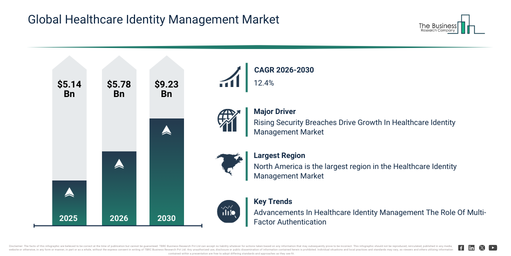
    The healthcare identity management market size has experienced significant expansion recently. Its value is projected to rise from $5.14 billion in 2025 to $5.78 billion in 2026, representing a compound annual growth rate (CAGR) of 12.5%. This historical growth can be attributed to several factors such as the increasing digitization of healthcare records, the escalation of cybersecurity threats, the wider adoption of electronic health records, the proliferation of regulatory mandates for data protection, and the ongoing expansion of healthcare IT systems.

    The healthcare identity management market is projected to experience significant expansion in the coming years. Its valuation is anticipated to reach $9.23 billion by 2030, demonstrating a compound annual growth rate (CAGR) of 12.4%. This expansion over the forecast period stems from factors such as greater investments in zero-trust security models, a heightened need for seamless patient identity management, the broadening of cloud-based healthcare platforms, increased integration of IoT authentication, and an intensified emphasis on privacy-preserving technologies. Key trends identified for this period encompass a wider embrace of biometric authentication systems, a surge in the application of multi-factor authentication within healthcare, an increasing implementation of cloud-based identity management solutions, the development of interoperable identity platforms, and an elevated commitment to regulatory compliance and data security.

    Access Your Free Sample Report for In-Depth Market Insights:

    https://www.thebusinessresearchcompany.com/sample.aspx?id=19084&type=smp

    Which Drivers Are Influencing Market Acceleration In The Healthcare Identity Management Market?

    The increasing frequency of security breaches is anticipated to drive the expansion of the healthcare identity management market in the future. A security breach is defined as the unauthorized access to or revelation of sensitive data, systems, or networks, which could lead to harm or misuse. The growing number of security breaches stems from various elements such as heightened cyber threats, the broadening of digital infrastructure, and mistakes made by individuals. To ensure that only authorized persons can reach confidential patient data, healthcare identity management systems utilize multi-factor authentication (MFA) and biometric verification. This methodology considerably reduces the likelihood of unauthorized entry and strengthens security protocols against possible breaches. As an illustration, in January 2024, the Identity Theft Resource Center, a US-based non-profit organization, reported approximately 725 data breaches in 2023, leading to the exposure or unauthorized disclosure of more than 133 million records. This indicates an ongoing rise in healthcare data breaches throughout the year. Consequently, the increasing occurrences of security breaches are propelling the growth of the healthcare identity management market.

    What Segments Are Identified Within The Structure Of The Healthcare Identity Management Market?

    The healthcare identity management market covered in this report is segmented –

    1) By Solution: Identity And Access Management (IAM), Authentication, Verification, Access Management And Authorization

    2) By Deployment Mode: On-Premises, Cloud-Based, Hybrid

    3) By Technology: Biometric Authentication, Radio Frequency Identification And Smart Card, Single Sign-On (SSO), Multi-Factor Authentication (MFA), Internet Of Things Authentication

    4) By End User: Hospitals And Clinics, Diagnostic Laboratories, Research Institutions, Health Insurance Companies

    Subsegments:

    1) By Identity And Access Management (IAM): User Provisioning And De-Provisioning, Role-Based Access Control (RBAC), Single Sign-On (SSO), Directory Services

    2) By Authentication: Multi-Factor Authentication (MFA), Biometric Authentication, Passwordless Authentication, One-Time Password (OTP) Authentication

    3) By Verification: Identity Verification Solutions, Credential Verification Services, Document Verification Systems

    4) By Access Management And Authorization: Access Control Policies, User Role Management, Session Management, Audit And Compliance Management

    How Are Emerging Trends Affecting The Progression Of The Healthcare Identity Management Market?

    Major companies operating in the healthcare identity management market are focusing on advancing technologies, such as multi-factor authentication, to elevate security by providing extra protection against unauthorized entry. Multi-factor authentication (MFA) represents a security protocol that strengthens user verification by demanding two or more distinct credentials to confirm identity access. For example, in March 2023, Clario, a US-based technology company, introduced its Federated Identity Management (FIM) System. This system boosts security and user convenience by allowing users to access multiple systems and organizations with a single login, thereby simplifying the authentication process. FIM integrates with external identity providers, enabling clients to utilize their trusted credentials to securely access Clario’s platform. It also includes single-sign-on (SSO) and multi-factor authentication (MFA) to reinforce security, especially for individuals participating in clinical trials.

    Which Major Industry Participants Are Leading The Healthcare Identity Management Market Growth?

    Major companies operating in the healthcare identity management market are Deloitte Touche Tohmatsu Limited, Oracle Corporation, Infosys Limited, Atos SE, Okta Inc., CyberArk Software Ltd., SailPoint Technologies Holdings Inc., Ping Identity Corporation, Saviynt Inc., ForgeRock Inc., Simeio Solutions LLC, One Identity LLC, Veritis Group Inc., Radiant Logic Inc., Promobi Technologies Private Limited, Ubisecure Inc., Zluri Inc., Evidian, Optimal IdM LLC, My1Login Limited

    Access The Complete Report For Deeper Market Insights:

    https://www.thebusinessresearchcompany.com/report/healthcare-identity-management-global-market-report

    Which Geographic Areas Are Emerging As Strong Markets For The Healthcare Identity Management Market?

    North America was the largest region in the healthcare identity management market in 2025. Asia-Pacific is expected to be the fastest-growing region in the forecast period. The regions covered in the healthcare identity management market report are Asia-Pacific, South East Asia, Western Europe, Eastern Europe, North America, South America, Middle East, Africa.

    Request Your Customized Healthcare Identity Management Market Research Report for Competitive Advantage:

    https://www.thebusinessresearchcompany.com/customise?id=19084&type=smp

    Browse Through More Reports Similar to the Global Healthcare Identity Management Market 2026, By The Business Research Company

    Identity As A Service Market Report 2026

    https://www.thebusinessresearchcompany.com/report/identity-as-a-service-global-market-report

    Physical Identity And Access Management Market Report 2026

    https://www.thebusinessresearchcompany.com/report/physical-identity-and-access-management-global-market-report

    Consumer Identity And Access Management Market Report 2026

    https://www.thebusinessresearchcompany.com/report/consumer-identity-and-access-management-global-market-report

    Get in touch with us:

    The Business Research Company: https://www.thebusinessresearchcompany.com/

    Americas +1 310-496-7795

    Asia +44 7882 955267 & +91 8897263534

    Europe +44 7882 955267

    Email us at info@tbrc.info

    Follow us on:

    LinkedIn: https://in.linkedin.com/company/the-business-research-company

    YouTube: https://www.youtube.com/channel/UC24_fI0rV8cR5DxlCpgmyFQ

    Global Market Model: https://www.thebusinessresearchcompany.com/global-market-model
  • Healthcare Gamification Market Insights Report: Opportunities and Drivers 2030

    Healthcare Gamification Market Insights Report: Opportunities and Drivers 2030

    Uncover key drivers, emerging technologies, and competitive movements shaping the healthcare gamification market from 2026–2035 with trusted insights from The Business Research Company

    What is the estimated market size of the Healthcare Gamification Market by the end of 2030?

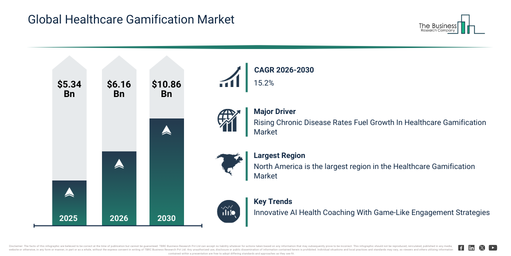
    The healthcare gamification market has experienced significant expansion in its size during recent years. This market is forecasted to increase from $5.34 billion in 2025 to $6.16 billion in 2026, achieving a compound annual growth rate (CAGR) of 15.3%. The historical period’s growth is attributable to several factors, including increasing smartphone penetration in healthcare, a rising demand for patient engagement tools, the adoption of digital wellness platforms, the growth of remote care programs, and the integration of gamification in medical education.

    The healthcare gamification market is projected to experience substantial expansion in the coming years. This market is anticipated to reach a valuation of $10.86 billion by 2030, exhibiting a compound annual growth rate (CAGR) of 15.2%. The anticipated growth during this period stems from several factors, including the expanding adoption of AI-driven personalized gamification, a heightened demand for preventive healthcare solutions, the broadening scope of digital therapeutics, an intensified focus on fostering long-term patient adherence, and greater investment in health engagement technologies. Key trends expected throughout the forecast period encompass the increasing integration of gamified patient engagement platforms, a surge in the utilization of mobile health games, the expanding application of gamification within therapy programs, the growth of behavior change and wellness applications, and a strengthened emphasis on creating personalized health experiences.

    Access Your Free Sample Report for In-Depth Market Insights:

    https://www.thebusinessresearchcompany.com/sample.aspx?id=14112&type=smp

    What Drivers Are Shaping Future Opportunities In The Healthcare Gamification Market?

    The rising incidence of lifestyle-related and chronic diseases is projected to stimulate the growth of the healthcare gamification market. These conditions are health issues primarily influenced or worsened by individual choices, habits, and long-term factors. Healthcare gamification effectively addresses such diseases by utilizing game mechanics and design elements to motivate individuals towards healthier behaviors and more effective health management. For example, in June 2023, the Institute for Health Metrics and Evaluation, a US-based public health research institute, reported that over half a billion people globally were living with diabetes. This figure is expected to more than double, reaching 1.3 billion people by 2050. Therefore, the increasing prevalence of lifestyle-related and chronic diseases is a significant driver for the expansion of the healthcare gamification market.

    Which Segments Are Gaining Traction In The Healthcare Gamification Market?

    The healthcare gamification market covered in this report is segmented –

    1) By Type: Casual Games, Serious Games, Exercise Games, Brain Training Games, Other Types

    2) By Application: Health And Wellness Management, Medical Training And Education, Patient Engagement, Physical Therapy And Rehabilitation, Behavior Change And Lifestyle Improvement, Other Applications

    3) By End User: Hospitals And Clinics, Pharmaceutical Companies, Medical Schools And Training Institutions, Patients, Healthcare Professionals, Other End Users

    Subsegments:

    1) By Casual Games: Mobile Casual Games, Web-Based Casual Games

    2) By Serious Games: Educational Healthcare Games, Simulation-Based Training Games

    3) By Exercise Games: Fitness Games, Motion-Sensing Games

    4) By Brain Training Games: Cognitive Skill Games, Memory Improvement Games, Attention And Focus Games

    5) By Other Types: Virtual Reality (VR) Games, Augmented Reality (AR) Games, Social And Multiplayer Health Games

    Which Innovation Trends Are Advancing Developments Within The Healthcare Gamification Market?

    Major companies within the healthcare gamification market are concentrating on developing innovative products featuring advanced technologies, such as AI health coaches with gamification, to enhance their market profitability. An AI health coach with gamification represents a digital platform that utilizes artificial intelligence to deliver personalized health coaching and motivation, incorporating game-like elements to engage and encourage users in achieving their health and fitness goals. For instance, in May 2023, T-Systems International GmbH, a Germany-based IT company, launched MagMoves. MagMoves aims to revolutionize virtual care by integrating gamified healthcare, customization, and personalization for proactive and preventative healthcare. The app is designed to make healthcare engaging and enjoyable, elevating it to the next level of virtual care, employing artificial intelligence to provide a gamified virtual health coach experience, thereby promoting a proactive approach to health management.

    Who Are The Prominent Global Companies Shaping The Healthcare Gamification Market Landscape?

    Major companies operating in the healthcare gamification market are Nike Inc., Adidas AG, Omada Health Inc., Happify Inc., WellDoc Inc., Akili Inc., Kaia Health, Mango Health, Pear Therapeutics, CogniFit Inc., Ayogo Health Inc., Freespira, Syandus Inc., Badgeville Inc., Google LLC, Microsoft Corporation, Medtronic PLC, Cognizant, Rally Health, BioSerenity, Biofourmis, MPS Interactive Systems Limited, Axonify Inc.

    Access The Complete Report For Deeper Market Insights:

    https://www.thebusinessresearchcompany.com/report/healthcare-gamification-global-market-report

    Which Region Is Projected To Lead The Healthcare Gamification Market During The Forecast Period?

    North America was the largest region in the healthcare gamification market in 2025. Europe was the fastest-growing region in the forecast period. The regions covered in the healthcare gamification market report are Asia-Pacific, South East Asia, Western Europe, Eastern Europe, North America, South America, Middle East, Africa.

    Request Your Customized Healthcare Gamification Market Research Report for Competitive Advantage:

    https://www.thebusinessresearchcompany.com/customise?id=14112&type=smp

    Browse Through More Reports Similar to the Global Healthcare Gamification Market 2026, By The Business Research Company

    Health Coaching Market Report 2026

    https://www.thebusinessresearchcompany.com/report/health-coaching-global-market-report

    Gamification Market Report 2026

    https://www.thebusinessresearchcompany.com/report/gamification-global-market-report

    Health Coaching Apps Market Report 2026

    https://www.thebusinessresearchcompany.com/report/health-coaching-apps-global-market-report

    Get in touch with us:

    The Business Research Company: https://www.thebusinessresearchcompany.com/

    Americas +1 310-496-7795

    Asia +44 7882 955267 & +91 8897263534

    Europe +44 7882 955267

    Email us at info@tbrc.info

    Follow us on:

    LinkedIn: https://in.linkedin.com/company/the-business-research-company

    YouTube: https://www.youtube.com/channel/UC24_fI0rV8cR5DxlCpgmyFQ

    Global Market Model: https://www.thebusinessresearchcompany.com/global-market-model
  • Healthcare Fraud Detection Global Forecast: Market to Scale Up to $17.83 Billion by 2030 at 30.8% CAGR

    Healthcare Fraud Detection Global Forecast: Market to Scale Up to $17.83 Billion by 2030 at 30.8% CAGR

    Uncover key drivers, emerging technologies, and competitive movements shaping the healthcare fraud detection market from 2026–2035 with trusted insights from The Business Research Company

    What was the valuation of the Healthcare Fraud Detection Market in 2026, and what figure is it projected to hit by 2030?

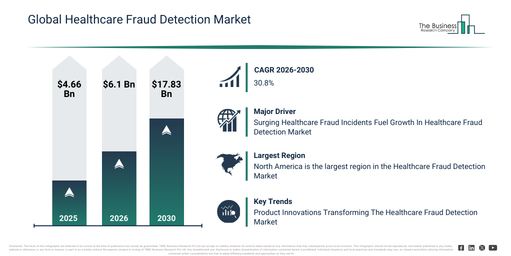
    The healthcare fraud detection market has experienced rapid expansion over recent years. Projections indicate a rise from $4.66 billion in 2025 to $6.1 billion by 2026, showcasing a robust compound annual growth rate (CAGR) of 31.0%. Historically, this expansion has been driven by factors such as a surge in healthcare claims, an increase in billing fraud and abuse cases, the integration of data analytics into healthcare finance, heightened regulatory scrutiny, and the digital transformation of healthcare payment systems.

    The healthcare fraud detection market size is anticipated to undergo significant growth in the coming years, with projections indicating it will reach $17.83 billion by 2030, demonstrating a compound annual growth rate (CAGR) of 30.8%. This expansion during the forecast period is primarily driven by escalating investments in advanced analytics solutions, a surging demand for automated fraud prevention tools, the broadening of cloud-based healthcare platforms, the increasing integration of machine learning in claims processing, and an intensified focus on cost containment. Major developments expected over this period include the rising adoption of AI-based fraud detection platforms, an increased utilization of predictive analytics for claims review, the growing deployment of real-time payment integrity solutions, the expansion of cloud-based fraud detection systems, and an enhanced emphasis on data transparency and compliance.

    Access Your Free Sample Report for In-Depth Market Insights:

    https://www.thebusinessresearchcompany.com/sample.aspx?id=8191&type=smp

    Which Drivers Are Affecting Market Participation In The Healthcare Fraud Detection Market?

    An increase in fraudulent activities within the healthcare sector is anticipated to drive the expansion of the healthcare fraud detection market in the future. Such events involve the intentional misstatement of patient records and insurance details, aimed at securing an unjust or unlawful advantage, or at denying an individual a rightful entitlement. For example, in June 2024, the Department of Justice, a US-based federal executive department, disclosed details of a national health care fraud takedown initiated in 2024. This operation led to charges against 193 defendants, including 76 medical professionals, for alleged intended losses totaling approximately US$ 2.75 billion and actual losses amounting to US$ 1.6 billion. Consequently, the escalating occurrence of fraudulent events within the healthcare industry is projected to fuel the growth of the healthcare fraud detection market.

    What Segment Categories Are Covered In The Healthcare Fraud Detection Market?

    The healthcare fraud detection market covered in this report is segmented –

    1) By Type: Descriptive Analytics, Predictive Analytics, Prescriptive Analytics

    2) By Model: On-Premise Delivery, On-Demand Delivery

    3) By Component: Services, Software

    4) By Application: Insurance Claims Review, Payment Integrity

    5) By End User: Healthcare Payers, Government Agencies, Other End-Users

    Subsegments:

    1) By Descriptive Analytics: Data Mining, Reporting Tools, Historical Data Analysis

    2) By Predictive Analytics: Risk Scoring Models, Machine Learning Algorithms, Trend Analysis

    3) By Prescriptive Analytics: Decision Support Systems, Optimization Algorithms, Scenario Analysis And Simulations

    Which Competitive Trends Are Impacting The Structure Of The Healthcare Fraud Detection Market?

    Leading companies in the healthcare fraud detection market are focusing on developing innovative solutions, such as advanced insurance fraud detection platforms, to enhance real-time claim monitoring, strengthen data verification, and reduce fraudulent activity across healthcare and insurance systems. Insurance fraud detection platforms represent integrated technology suites that leverage advanced analytics, continuous monitoring, and automated data validation to identify suspicious behavior, flag high-risk claims, and provide investigators with actionable insights. For instance, in June 2023, Verisk Analytics Inc., a US-based analytics company, collaborated with Kyndryl Holdings, Inc. to launch an advanced technology suite designed to prevent insurance fraud in Israel’s compulsory insurance market. This enhanced anti-fraud engine, powered by Kyndryl’s high-performance computing capabilities and Verisk’s domain expertise, allows for real-time monitoring of auto claims for bodily injury. Supported by 24/7 managed services and sophisticated analytics, the system authenticates applicant information, cross-checks records with government and external databases, and streamlines data investigation for claim adjusters. This collaboration aims to improve claims integrity, detect fraud more effectively, and address growing consumer expectations within an increasingly digitized insurance landscape, further reinforcing technological progress in the healthcare fraud detection market.

    Which Key Players Are Driving Competition In The Healthcare Fraud Detection Market?

    Major companies operating in the healthcare fraud detection market are International Business Machines Corporation, Cotiviti Inc., Fair Isaac Corporation, SAS Institute Inc., RELX Group PLC, LexisNexis Risk Solutions Group, EXL Service Holdings Inc., Qlarant Inc., Change Healthcare LLC, Codoxo Inc., Pondera Solutions Inc., HMS Holdings Corp., FraudLens Inc., FraudScope Inc., Healthcare Fraud Shield LLC, MultiPlan Corporation, CGI Inc., DXC Technology Company, Conduent Incorporated, HCL Technologies Limited, Wipro Limited, H2O.ai Inc., McKesson Corporation

    Access The Complete Report For Deeper Market Insights:

    https://www.thebusinessresearchcompany.com/report/healthcare-fraud-detection-global-market-report

    Which Region Currently Holds The Largest Share Of The Healthcare Fraud Detection Market?

    North America was the largest region in the healthcare fraud detection market in 2025. The regions covered in the healthcare fraud detection market report are Asia-Pacific, South East Asia, Western Europe, Eastern Europe, North America, South America, Middle East, Africa.

    Request Your Customized Healthcare Fraud Detection Market Research Report for Competitive Advantage:

    https://www.thebusinessresearchcompany.com/customise?id=8191&type=smp

    Browse Through More Reports Similar to the Global Healthcare Fraud Detection Market 2026, By The Business Research Company

    Fraud Detection And Prevention Market Report 2026

    https://www.thebusinessresearchcompany.com/report/fraud-detection-and-prevention-global-market-report

    Healthcare Fraud Analytics Market Report 2026

    https://www.thebusinessresearchcompany.com/report/healthcare-fraud-analytics-global-market-report

    Insurance Fraud Detection Market Report 2026

    https://www.thebusinessresearchcompany.com/report/insurance-fraud-detection-global-market-report

    Get in touch with us:

    The Business Research Company: https://www.thebusinessresearchcompany.com/

    Americas +1 310-496-7795

    Asia +44 7882 955267 & +91 8897263534

    Europe +44 7882 955267

    Email us at info@tbrc.info

    Follow us on:

    LinkedIn: https://in.linkedin.com/company/the-business-research-company

    YouTube: https://www.youtube.com/channel/UC24_fI0rV8cR5DxlCpgmyFQ

    Global Market Model: https://www.thebusinessresearchcompany.com/global-market-model
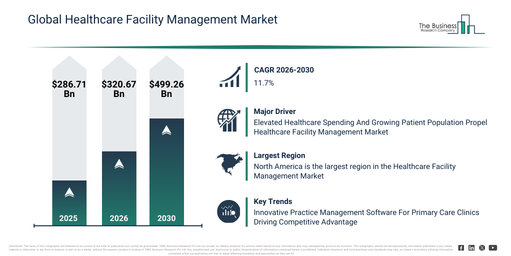
  • Healthcare Facility Management Market Future Outlook: Strong Growth Expected Toward $499.25 Billion by 2030

    Healthcare Facility Management Market Future Outlook: Strong Growth Expected Toward $499.25 Billion by 2030

    Uncover key drivers, emerging technologies, and competitive movements shaping the healthcare facility management market from 2026–2035 with trusted insights from The Business Research Company

    What are the forecasted starting (2026) and ending (2030) market sizes for the Healthcare Facility Management Market?

    The healthcare facility management market size has experienced significant growth in recent years. This market is expected to expand from $286.71 billion in 2025 to $320.67 billion in 2026, at a compound annual growth rate (CAGR) of 11.8%. The historical growth can be attributed to several factors including the expansion of hospital infrastructure, the increasing demand for operational efficiency in healthcare facilities, stricter regulatory compliance requirements, the proliferation of multi-specialty hospitals, and the adoption of centralized facility management systems.

    The healthcare facility management market is expected to experience substantial growth over the next few years. It is projected to reach $499.26 billion by 2030, achieving a compound annual growth rate (CAGR) of 11.7%. This expansion during the forecast period can be attributed to increased investments in smart hospitals, a rising demand for sustainable healthcare infrastructure, the broader implementation of IoT-enabled facility monitoring, a growing preference for outsourced facility services, and a heightened focus on cost optimization within healthcare operations. Significant trends for the forecast period include the increasing adoption of smart facility management systems, a rise in the use of predictive maintenance technologies, a greater emphasis on energy-efficient healthcare buildings, the continued expansion of outsourced facility services, and an enhanced focus on patient safety and compliance.

    Access Your Free Sample Report for In-Depth Market Insights:

    https://www.thebusinessresearchcompany.com/sample.aspx?id=7903&type=smp

    What Drivers Are Supporting Technological Adoption In The Healthcare Facility Management Market?

    An expanding patient population, alongside increased healthcare spending by both private and public entities within healthcare systems, is propelling the growth of the healthcare facility management market. Government and private healthcare expenditures across various countries support the development of healthcare systems by delivering enhanced services to patients. This contributes to the heightened adoption of healthcare facility management within the healthcare infrastructure. For example, in May 2024, the Office for National Statistics, a UK-based government department, reported that total healthcare expenditure saw a 5.6% increase in nominal terms from 2022 to 2023, indicating a notable acceleration compared to the 0.9% growth observed in 2022. Therefore, healthcare spending by private and public participants in healthcare systems is a key driver for the healthcare facility management market’s expansion.

    Which Segments Are Contributing To The Growth Of The Healthcare Facility Management Market?

    The healthcare facility management market covered in this report is segmented –

    1) By Type: Hard Services, Soft Services, Other Services

    2) By Business Model: Outsourced, In-House

    3) By End User: Hospitals And Clinics, Long-Term Healthcare Facilities

    Subsegments:

    1) By Hard Services: Building Maintenance, Mechanical And Electrical Services, Infrastructure Management

    2) By Soft Services: Cleaning And Sanitation, Security Services, Catering And Food Services

    3) By Other Services: Waste Management, Grounds Maintenance, Pest Control Services

    What Industry Trends Are Transforming The Healthcare Facility Management Market?

    Leading companies in the healthcare facility management market are developing advanced solutions, such as practice management software, for primary care clinics to gain a competitive edge and boost their revenue. This specialized software for primary care clinics is designed to streamline and optimize the administrative and operational tasks within a medical practice. For example, in August 2023, Kumo, a Malaysia-based healthcare company, introduced KumoDoc, practice management software specifically tailored for primary care clinics, with a primary aim of improving efficiency and optimizing clinic operations. KumoDoc provides a range of features, including synchronized appointment scheduling with patient notifications sent via WhatsApp, effective medical inventory management, a secure telehealth platform, algorithms for detecting fraud, and seamless billing processes. It integrates electronic medical records to facilitate real-time collaboration, offering advantages to both clinics and patients. KumoDoc employs a customer-centric approach, seeking to enhance and simplify healthcare processes for providers. The software streamlines the healthcare experience, making it efficient, personalized, and convenient. Its innovative technology and user-friendly interface are crafted to support medical practitioners in managing daily clinic administration, benefiting both primary care and medical wellness centers.

    Who Are The Top-Performing Companies In The Healthcare Facility Management Market In Recent Years?

    Major companies operating in the healthcare facility management market are ABM Industries Inc., ISS World Services A/S, Jones Lang LaSalle IP Inc., Medxcel Facility Management LLC, Mitie Group PLC, Aramark Corporation, Compass Group PLC, Ecolab Inc., Sodexo SVC India Pvt. Ltd., OCS Group Limited, Serco Group PLC, Vanguard Resources Inc., Arora Holdings Limited, Cushman & Wakefield, CBRE Group Inc., Johnson Controls International PLC, Crothall Healthcare, C&W Facility Services Inc., AM Facilities Management Service Ltd., Emcor Facilities Services Inc., Epic Facilities Management, Stericycle Inc.

    Access The Complete Report For Deeper Market Insights:

    https://www.thebusinessresearchcompany.com/report/healthcare-facility-management-global-market-report

    How Does The Healthcare Facility Management Market Perform Across Major Global Regions?

    North America was the largest region in the healthcare facility management market in 2025. The regions covered in the healthcare facility management market report are Asia-Pacific, South East Asia, Western Europe, Eastern Europe, North America, South America, Middle East, Africa.

    Request Your Customized Healthcare Facility Management Market Research Report for Competitive Advantage:

    https://www.thebusinessresearchcompany.com/customise?id=7903&type=smp

    Browse Through More Reports Similar to the Global Healthcare Facility Management Market 2026, By The Business Research Company

    Hospitality Market Report 2026

    https://www.thebusinessresearchcompany.com/report/hospitality-global-market-report

    Facility Management Services Market Report 2026

    https://www.thebusinessresearchcompany.com/report/facility-management-services-global-market-report

    Integrated Facility Management Market Report 2026

    https://www.thebusinessresearchcompany.com/report/integrated-facility-management-global-market-report

    Get in touch with us:

    The Business Research Company: https://www.thebusinessresearchcompany.com/

    Americas +1 310-496-7795

    Asia +44 7882 955267 & +91 8897263534

    Europe +44 7882 955267

    Email us at info@tbrc.info

    Follow us on:

    LinkedIn: https://in.linkedin.com/company/the-business-research-company

    YouTube: https://www.youtube.com/channel/UC24_fI0rV8cR5DxlCpgmyFQ

    Global Market Model: https://www.thebusinessresearchcompany.com/global-market-model
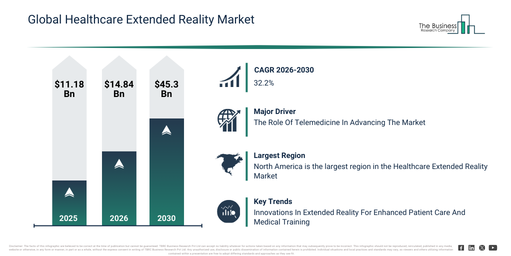
  • Revenue of the Healthcare Extended Reality Market Predicted to Achieve $45.29 Billion by 2030, Driven by 32.2% CAGR

    Revenue of the Healthcare Extended Reality Market Predicted to Achieve $45.29 Billion by 2030, Driven by 32.2% CAGR

    Uncover key drivers, emerging technologies, and competitive movements shaping the healthcare extended reality market from 2026–2035 with trusted insights from The Business Research Company

    What upper market value could the Healthcare Extended Reality Market reach by 2030 starting from 2026 levels?

    The scale of the healthcare extended reality market has expanded significantly in recent years. This market is projected to expand from $11.18 billion in 2025 to $14.84 billion in 2026, exhibiting a compound annual growth rate (CAGR) of 32.8%. Historically, this growth is a result of several factors, including the increasing application of simulation-based medical education, greater investments in digital healthcare tools, a rise in the adoption of minimally invasive procedures, the spread of telemedicine services, and the presence of sophisticated visualization hardware.

    The healthcare extended reality market is anticipated to experience substantial growth in the coming years. Projections indicate it will reach $45.3 billion by 2030, exhibiting a compound annual growth rate (CAGR) of 32.2%. This expansion during the forecast period is primarily driven by factors such as the increasing integration of XR with AI-driven diagnostics, the escalating demand for remote and immersive care delivery, the broadening scope of precision medicine applications, an intensified focus on personalized patient engagement, and enhanced funding for digital health innovation. Key trends anticipated during the same period encompass the growing adoption of immersive medical training platforms, the increasing application of XR in surgical planning and guidance, the broader deployment of virtual rehabilitation programs, an expansion of remote consultations leveraging XR tools, and a heightened emphasis on patient-centric immersive therapies.

    Access Your Free Sample Report for In-Depth Market Insights:

    https://www.thebusinessresearchcompany.com/sample.aspx?id=21199&type=smp

    Which Drivers Are Influencing Long-Term Growth In The Healthcare Extended Reality Market?

    The expanding integration of telemedicine is anticipated to fuel the expansion of the healthcare extended reality market. Telemedicine involves utilizing telecommunication technologies to deliver medical services and care from a distance, allowing individuals to consult with medical experts without physically going to a clinic. This rise in telemedicine’s acceptance stems from a rising desire for accessible healthcare and technological progress that facilitates remote patient interactions and supervision. Healthcare extended reality (XR) significantly improves telemedicine through features like immersive remote consultations, virtual medical examinations, and interactive educational modules, which in turn boost patient involvement, precision in diagnoses, and inter-professional cooperation. As an illustration, in June 2024, data from Health-tech news, a leading UK platform for the health technology sector, indicated that in April 2024, the number of GP appointments classified as video or online reached 1,301,924, a notable increase from 172,114 recorded in April 2023. Consequently, the greater integration of telemedicine is a key factor propelling the development of the healthcare extended reality market.

    How Is The Healthcare Extended Reality Market Divided Into Segments?

    The healthcare extended reality market covered in this report is segmented –

    1) By Component: Hardware, Software, Services

    2) By Technology: Augmented Reality, Virtual Reality, Mixed Reality

    3) By Application: Surgery, Therapy, Education And Training, Rehabilitation, Pain Management, Other Applications

    4) By End User: Hospitals, Clinics And Surgical Centers, Research Organizations, Diagnostics Laboratories, Other End Users

    Subsegments:

    1) By Hardware: Head-Mounted Displays (HMDs), Smart Glasses, Haptic Feedback Devices, Sensors and Cameras

    2) By Software: Virtual Reality (VR) Software, Augmented Reality (AR) Software, Mixed Reality (MR) Software, Simulation and Training Software

    3) By Services: Consulting Services, Integration And Deployment Services, Support And Maintenance Services, Training And Education Services

    What Trends Are Reshaping The Dynamics Of The Healthcare Extended Reality Market?

    Leading companies operating in the healthcare extended reality field are concentrating on developing innovative technologies, such as integrating virtual and augmented reality, to enhance medical training, patient treatment, and surgical planning. The integration of virtual and augmented reality technologies improves user experiences by merging digital content with the real world, thus creating immersive and interactive environments. For instance, in April 2024, SindyXR Inc., a US-based telehealth group therapy platform company, introduced its initial extended reality (XR)-based group health support system. This system aims to enhance patient care through immersive educational experiences that boost engagement and enable remote access to healthcare services. It also assists in mental health treatments, diminishes pain perception, and fosters collaboration among healthcare professionals, ultimately leading to better health outcomes.

    Which Leading Companies Dominate The Healthcare Extended Reality Market Share?

    Major companies operating in the healthcare extended reality market are Microsoft Corporation, Meta Platforms Inc, NVIDIA Corporation, Medtronic plc, EON Reality Inc, Osso VR Inc, zSpace Inc, VirtaMed AG, Surgical Theater Inc, XRHealth, AppliedVR Inc, OramaVR Inc, Apprentice.io, GigXR Inc, PrecisionOS Technology Inc, SentiAR Inc, FundamentalVR, Medical Realities, ImmersiveTouch, Luxsonic Technologies, EchoPixel

    Access The Complete Report For Deeper Market Insights:

    https://www.thebusinessresearchcompany.com/report/healthcare-extended-reality-global-market-report2024-

    Which Region Is Anticipated To See The Fastest Growth In The Healthcare Extended Reality Market?

    North America was the largest region in the healthcare extended reality market in 2025. The regions covered in the healthcare extended reality market report are Asia-Pacific, South East Asia, Western Europe, Eastern Europe, North America, South America, Middle East, Africa.

    Request Your Customized Healthcare Extended Reality Market Research Report for Competitive Advantage:

    https://www.thebusinessresearchcompany.com/customise?id=21199&type=smp

    Browse Through More Reports Similar to the Global Healthcare Extended Reality Market 2026, By The Business Research Company

    Augmented Reality In Health Care Market Report 2026

    https://www.thebusinessresearchcompany.com/report/augmented-reality-in-health-care-global-market-report

    Mixed Reality In Healthcare Market Report 2026

    https://www.thebusinessresearchcompany.com/report/mixed-reality-in-healthcare-global-market-report

    Virtual Reality In Healthcare Market Report 2026

    https://www.thebusinessresearchcompany.com/report/virtual-reality-in-healthcare-global-market-report

    Get in touch with us:

    The Business Research Company: https://www.thebusinessresearchcompany.com/

    Americas +1 310-496-7795

    Asia +44 7882 955267 & +91 8897263534

    Europe +44 7882 955267

    Email us at info@tbrc.info

    Follow us on:

    LinkedIn: https://in.linkedin.com/company/the-business-research-company

    YouTube: https://www.youtube.com/channel/UC24_fI0rV8cR5DxlCpgmyFQ

    Global Market Model: https://www.thebusinessresearchcompany.com/global-market-model
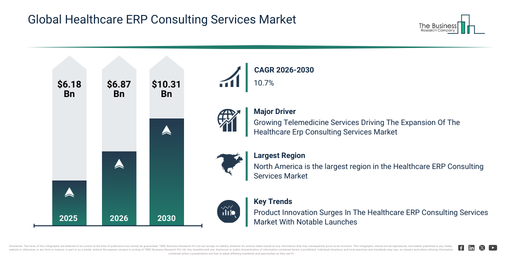
  • Healthcare ERP Consulting Services Sector Forecast Shows Robust Momentum, Climbing to $10.3 Billion With 10.7% CAGR

    Healthcare ERP Consulting Services Sector Forecast Shows Robust Momentum, Climbing to $10.3 Billion With 10.7% CAGR

    Uncover key drivers, emerging technologies, and competitive movements shaping the healthcare erp consulting services market from 2026–2035 with trusted insights from The Business Research Company

    What level of CAGR-driven expansion is anticipated in the Healthcare ERP Consulting Services Market between 2026 and 2030?

    The healthcare erp consulting services market size has experienced rapid expansion in recent years. It is projected to increase from $6.18 billion in 2025 to $6.87 billion in 2026, at a compound annual growth rate (CAGR) of 11.3%. The growth observed in the historic period stems from factors such as increasing complexity of healthcare operations, expansion of hospital networks, the rising need for financial transparency, the adoption of digital hospital management systems, and growing regulatory reporting requirements.

    The healthcare erp consulting services market size is projected to experience substantial growth in the upcoming years. It is foreseen to expand to $10.31 billion by 2030, progressing at a compound annual growth rate (CAGR) of 10.7%. This anticipated growth can be linked to several factors during the forecast period, including rising investments in cloud-native erp platforms, an increasing need for real-time operational analytics, the expansion of value-based healthcare models, a heightened focus on cybersecurity compliance, and the growing adoption of integrated healthcare IT ecosystems. Prominent trends throughout the forecast period include the increasing uptake of cloud-based healthcare erp systems, a surging demand for erp implementation and integration services, an intensified focus on data-driven hospital management, the broadening of compliance and regulatory consulting, and a stronger emphasis on workflow optimization.

    Access Your Free Sample Report for In-Depth Market Insights:

    https://www.thebusinessresearchcompany.com/sample.aspx?id=6931&type=smp

    What Drivers Are Affecting Demand-Supply Dynamics In The Healthcare ERP Consulting Services Market?

    The expansion of telemedicine services is projected to stimulate the growth of the healthcare ERP consulting services market going forward. These services refer to the remote delivery of healthcare, medical consultations, and clinical services using telecommunications technology, primarily the Internet and video conferencing tools. Telemedicine platforms generate a vast amount of patient data. Healthcare ERP systems are essential for integrating this data with other healthcare records and streamlining patient management and billing processes. For instance, in September 2024, according to the Australian Bureau of Statistics (ABS), the national statistical agency of Australia, in 2023–24, 83.5% of males reported using telehealth services, an increase from 78.6% in 2022–23. Therefore, the growth of telemedicine services is driving the expansion of the healthcare ERP consulting services market.

    What Segments Are Included Within The Healthcare ERP Consulting Services Market?

    The healthcare erp consulting services market covered in this report is segmented –

    1) By Functionality: Implementation, Training And Education, Other Functionalities

    2) By Deployment: On-Premise ERP Consulting, Cloud-Based ERP Consulting, Hybrid ERP Consulting

    3) By End-User: Hospitals and Health Systems, Clinics and Ambulatory Care Centers, Diagnostic and Imaging Centers, Specialty Healthcare Providers, Other Healthcare Facilities

    Subsegments:

    1) By Implementation: System Integration, Configuration, Data Migration

    2) By Training and Education: User Training, Administrator Training, Ongoing Education Programs

    3) By Other Functionality: Process Optimization, Change Management, Compliance And Regulatory Support

    How Are New Market Trends Shaping The Landscape Of The Healthcare ERP Consulting Services Market?

    Leading firms within the healthcare ERP consulting services market are developing sophisticated solutions incorporating features unique to healthcare, empowering organizations to streamline their processes and enhance patient care via customized enterprise resource planning systems. These healthcare-specific functionalities denote features and tools crafted to meet the distinct demands and necessities of the healthcare sector. An example is Oracle Corporation, a US-based computer software company, which introduced its Fusion Cloud Applications Suite in September 2023, featuring new healthcare-focused capabilities intended to boost operational efficiency and patient well-being. These healthcare-tailored capabilities cover aspects such as financial consolidation and reporting, procurement, planning for replenishment, and management of recalls. These functionalities are slated for integration into Oracle Fusion Cloud Enterprise Resource Planning (ERP), Oracle Fusion Cloud Enterprise Performance Management (EPM), and Oracle Fusion Cloud Supply Chain & Manufacturing (SCM).

    Who Are The Major Companies Operating In The Healthcare ERP Consulting Services Market?

    Major companies operating in the healthcare erp consulting services market are Accenture plc, Deloitte Touche Tohmatsu, PricewaterhouseCoopers, Infosys Limited, Atos Information Technology GmbH, Avaap USA LLC, Wipro Limited, KPMG International Limited, Clarkston Consulting, JDC Systems Innovations, The RockWood Group INC., AIM Solutions, Alithya Group Inc., LeverX International LLC, Panorama Consulting Group, Traction Consulting Group, Cognizant Technology Solutions India Private Limited, HCL Technologies, IBM Corporation, Tata Consultancy Services Limited, Tech Mahindra Limited, Ernst & Young Global Limited

    Access The Complete Report For Deeper Market Insights:

    https://www.thebusinessresearchcompany.com/report/healthcare-erp-consulting-services-global-market-report

    Which Region Is Anticipated To See The Fastest Growth In The Healthcare ERP Consulting Services Market?

    North America was the largest region in the healthcare ERP consulting services market in 2025. The regions covered in the healthcare erp consulting services market report are Asia-Pacific, South East Asia, Western Europe, Eastern Europe, North America, South America, Middle East, Africa.

    Request Your Customized Healthcare ERP Consulting Services Market Research Report for Competitive Advantage:

    https://www.thebusinessresearchcompany.com/customise?id=6931&type=smp

    Browse Through More Reports Similar to the Global Healthcare ERP Consulting Services Market 2026, By The Business Research Company

    Healthcare Consulting Services Market Report 2026

    https://www.thebusinessresearchcompany.com/report/healthcare-consulting-services-global-market-report

    Healthcare Consulting Services Market Report 2026

    https://www.thebusinessresearchcompany.com/report/healthcare-consulting-services-global-market-report

    Healthcare It Consulting Market Report 2026

    https://www.thebusinessresearchcompany.com/report/healthcare-it-consulting-global-market-report

    Get in touch with us:

    The Business Research Company: https://www.thebusinessresearchcompany.com/

    Americas +1 310-496-7795

    Asia +44 7882 955267 & +91 8897263534

    Europe +44 7882 955267

    Email us at info@tbrc.info

    Follow us on:

    LinkedIn: https://in.linkedin.com/company/the-business-research-company

    YouTube: https://www.youtube.com/channel/UC24_fI0rV8cR5DxlCpgmyFQ

    Global Market Model: https://www.thebusinessresearchcompany.com/global-market-model
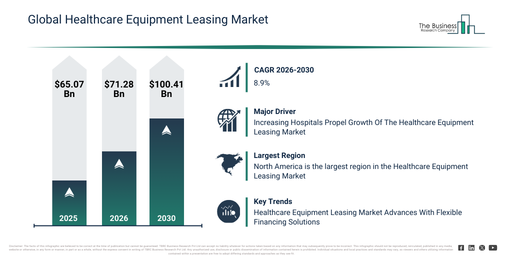
  • Healthcare Equipment Leasing Market Anticipated to Record Steady Gains, Advancing to $100.4 Billion by 2030

    Healthcare Equipment Leasing Market Anticipated to Record Steady Gains, Advancing to $100.4 Billion by 2030

    Uncover key drivers, emerging technologies, and competitive movements shaping the healthcare equipment leasing market from 2026–2035 with trusted insights from The Business Research Company

    What long-term size projections exist for the Healthcare Equipment Leasing Market covering 2026–2035?

    The market for healthcare equipment leasing has demonstrated robust expansion over recent years. This market is projected to expand from $65.07 billion in 2025 to $71.28 billion in 2026, registering a compound annual growth rate (CAGR) of 9.5%. Historically, this growth has been driven by several factors, including the increasing capital cost of medical equipment, the expansion of diagnostic and surgical facilities, a rising demand for technology upgrades, the growth of outpatient care centers, and increasing financial constraints among healthcare providers.

    The healthcare equipment leasing market is projected to experience robust expansion in the coming years. It is expected to grow to $100.41 billion by 2030, demonstrating a compound annual growth rate (CAGR) of 8.9%. This anticipated growth is primarily driven by factors such as the increasing uptake of subscription-based leasing models, a heightened demand for swift equipment upgrades, the broadening scope of homecare equipment leasing, an amplified focus on cost optimization strategies, and the greater integration of digital lease management platforms. Significant trends foreseen during this forecast period encompass a growing inclination towards leasing equipment rather than outright ownership, an increasing need for adaptable financing solutions, the rising adoption of refurbished medical equipment leasing, the proliferation of usage-based leasing agreements, and an enhanced emphasis on comprehensive asset lifecycle management.

    Access Your Free Sample Report for In-Depth Market Insights:

    https://www.thebusinessresearchcompany.com/sample.aspx?id=16698&type=smp

    Which Drivers Are Impacting The Competitive Landscape Of The Healthcare Equipment Leasing Market?

    The increasing number of hospitals is projected to boost the expansion of the healthcare equipment leasing market moving forward. Hospitals are medical facilities that provide patient care and treatment. The necessity for hospitals is fueled by a combination of demographic shifts, a rise in chronic diseases, population growth, enhanced health awareness, and expanded health insurance coverage. The continuous need for advanced medical technology by hospitals creates a demand for healthcare equipment leasing. For instance, the American Hospital Association, a US-based non-profit organization, reported 6,120 hospitals in the United States in 2024, which signifies an increase from 6,093 hospitals in 2022. Thus, the growing number of hospitals and clinics is propelling the growth of the healthcare equipment leasing market.

    What Leading Segments Are Studied In The Healthcare Equipment Leasing Market?

    The healthcare equipment leasing market covered in this report is segmented –

    1) By Device Type: Personal And Homecare Leasing Equipment, Digital And Electronic Equipment, Surgical And Therapy Leasing Equipment, Durable Medical Equipment (DME), Storage And Transport Leasing Equipment, Other Device Types

    2) By Device Finance Type: New Medical Equipment, Rental Equipment, Refurbished Equipment, Other Device Finance Types

    3) By End-User: Ambulatory Surgical Services, Hospitals, Homecare, Laboratory And Diagnostic Centers, Other End Users

    Subsegments:

    1) By Personal And Homecare Leasing Equipment: Home Oxygen Equipment, CPAP Machines, Mobility Aids (Wheelchairs, Walkers)

    2) By Digital And Electronic Equipment: Diagnostic Imaging Equipment (X-ray, MRI, CT scanners), Patient Monitoring Systems, Diagnostic And Lab Testing Equipment

    3) By Surgical and Therapy Leasing Equipment: Anesthesia Machines, Physiotherapy Equipment, Laser Therapy Equipment

    4) By Durable Medical Equipment (DME): Hospital Beds, Respiratory Equipment, Patient Lifts and Hoists

    5) By Storage And Transport Leasing Equipment: Refrigerators/Freezers for Medical Use, Patient Transport Stretchers

    6) By Other Device Types: Laboratory Equipment, Dialysis Machines, Defibrillators, Infusion Pumps

    Which Trends Are Expected To Influence The Healthcare Equipment Leasing Market In The Upcoming Years?

    Leading companies in the healthcare equipment leasing market are now offering adaptable financing choices to assist healthcare providers in acquiring sophisticated equipment. These versatile financing options represent diverse financial frameworks or plans that provide flexibility and adjustability, meeting the specific needs of borrowers or purchasers. For example, in June 2024, Capital MBS, a US-based platform for funding solutions, introduced flexible financing options tailored for the medical and dental sectors. This initiative involved collaborations with trusted banks, empowering healthcare providers to procure advanced equipment without substantial upfront costs or delays. The offerings encompass financing for diagnostic tools like MRI, CT scanners, X-ray systems, along with surgical instruments, dental technologies, patient care equipment, and laboratory instruments. An accessible online application process ensures swift access to these financing solutions, enabling healthcare professionals to secure the necessary funds for crucial medical technology.

    Which Major Firms Are Strengthening Their Position In The Healthcare Equipment Leasing Market?

    Major companies operating in the healthcare equipment leasing market are McKesson Corporation, Stryker Corporation, Far East Horizon Limited, Hill-Rom Holdings Inc., Getinge AB, Genertec Universal Medical Group, Encore Medical Capital, Agiliti Inc., Meridian Group International Inc., Crossroads Equipment Lease and Finance, AvTech Capital LLC, United Leasing & Finance, Med One Group, Providence Capital Funding Inc., Lease Corporation of America, Dext Capital LLC, Crest Capital, Madison Capital LLC, National Technology Leasing Corp, Insight Financial Services, Liberty Capital Group

    Access The Complete Report For Deeper Market Insights:

    https://www.thebusinessresearchcompany.com/report/healthcare-equipment-leasing-global-market-report

    Which Global Regions Are Shaping The Competitive Landscape Of The Healthcare Equipment Leasing Market?

    North America was the largest region in the healthcare equipment leasing market in 2025. Asia-Pacific is expected to be the fastest-growing region in the forecast period. The regions covered in the healthcare equipment leasing market report are Asia-Pacific, South East Asia, Western Europe, Eastern Europe, North America, South America, Middle East, Africa.

    Request Your Customized Healthcare Equipment Leasing Market Research Report for Competitive Advantage:

    https://www.thebusinessresearchcompany.com/customise?id=16698&type=smp

    Browse Through More Reports Similar to the Global Healthcare Equipment Leasing Market 2026, By The Business Research Company

    Equipment Leasing Software Market Report 2026

    https://www.thebusinessresearchcompany.com/report/equipment-leasing-software-global-market-report

    Medical Equipment Rental Market Report 2026

    https://www.thebusinessresearchcompany.com/report/medical-equipment-rental-global-market-report

    Automotive Equipment Leasing Market Report 2026

    https://www.thebusinessresearchcompany.com/report/automotive-equipment-leasing-global-market-report

    Get in touch with us:

    The Business Research Company: https://www.thebusinessresearchcompany.com/

    Americas +1 310-496-7795

    Asia +44 7882 955267 & +91 8897263534

    Europe +44 7882 955267

    Email us at info@tbrc.info

    Follow us on:

    LinkedIn: https://in.linkedin.com/company/the-business-research-company

    YouTube: https://www.youtube.com/channel/UC24_fI0rV8cR5DxlCpgmyFQ

    Global Market Model: https://www.thebusinessresearchcompany.com/global-market-model
  • Global Hereditary Cancer Testing Industry Trends and Market Forecast 2026–2030

    Global Hereditary Cancer Testing Industry Trends and Market Forecast 2026–2030

    Uncover key drivers, emerging technologies, and competitive movements shaping the hereditary cancer testing market from 2026–2035 with trusted insights from The Business Research Company

    What size range is anticipated for the Hereditary Cancer Testing Market from 2026 to 2030?

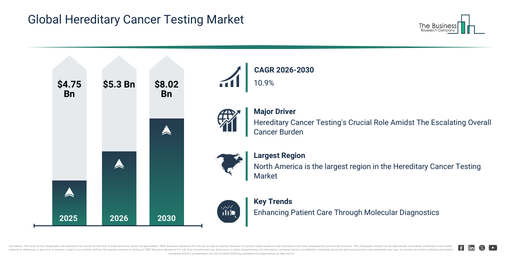
    The hereditary cancer testing market has observed swift expansion over recent years. Its valuation is set to increase from $4.75 billion in 2025 to $5.3 billion in 2026, exhibiting a compound annual growth rate (CAGR) of 11.6%. This historical progression can be linked to heightened awareness of hereditary cancer risks, the introduction of next-generation sequencing platforms, the proliferation of diagnostic laboratory networks, an uptick in physician recommendations for genetic testing, and the advancement of personalized risk assessment models.

    The hereditary cancer testing market is projected to experience substantial growth over the coming years. By 2030, its valuation is anticipated to reach $8.02 billion, exhibiting a compound annual growth rate (CAGR) of 10.9%. This expansion throughout the forecast period stems from factors such as the broader implementation of population-scale genetic screening, a greater utilization of ai-driven genomic analysis, an increase in preventive oncology initiatives, a heightened need for cost-effective testing solutions, and stronger regulatory backing for genetic diagnostics. Significant trends anticipated in this period encompass the rising uptake of multi-gene panel testing, an escalating call for early cancer risk detection, the expanding application of advanced genetic sequencing technologies, the broadening of preventive testing programs, and improved integration of clinical decision support tools.

    Access Your Free Sample Report for In-Depth Market Insights:

    https://www.thebusinessresearchcompany.com/sample.aspx?id=8121&type=smp

    What Drivers Are Affecting Demand In The Hereditary Cancer Testing Market?

    The increasing global cancer burden is projected to stimulate the hereditary cancer testing market moving forward. Cancer refers to a collection of diseases defined by the unregulated and abnormal proliferation of cells, which can penetrate and spread to other bodily tissues. In a healthy living organism, cells adhere to a disciplined process of growth, division, and death. Hereditary cancer testing plays a vital role in addressing the comprehensive impact of cancer by pinpointing individuals with a genetic predisposition to particular cancers. By examining inherited mutations and family risk factors, this testing assists in identifying individuals at elevated risk, thus enabling prompt intervention, customized treatment strategies, and proactive preventative actions. As an illustration, in July 2024, data from the Australian Institute of Health and Welfare, an Australia-based government agency, revealed that the number of cancer cases diagnosed in Australia rose from 160,570 in 2022 to 164,694 in 2023, marking a significant annual increase. This escalating trend underscores the expanding prevalence of cancer within the country. Thus, the growth in the overall cancer burden is a key driver for the hereditary cancer testing market.

    Which Segment Groups Are Influencing The Hereditary Cancer Testing Market?

    The hereditary cancer testing market covered in this report is segmented –

    1) By Test Type: Multi Panel Test, Single-Site Genetic Test

    2) By Indication: Breast Cancer, Ovarian Cancer, Colorectal Cancer, Other Indications

    3) By End user: Hospital, Clinics, Diagnostic Centers

    Subsegments:

    1) By Multi Panel Test: Comprehensive Genetic Panels, Targeted Gene Panels

    2) By Single-Site Genetic Test: Specific Gene Testing, Familial Mutation Testing

    Which Innovation Trends Are Advancing Developments Within The Hereditary Cancer Testing Market?

    Major companies operating in the hereditary cancer testing market are increasingly concentrating on innovative technologies, such as molecular diagnostic tumor testing, to enhance accuracy, improve patient outcomes, and personalize treatment strategies. Molecular diagnostic tumor testing involves analyzing a tumor’s genetic and molecular characteristics to inform treatment decisions and predict outcomes. For instance, in February 2023, Chubb Business Services India Private Limited, an India-based global insurance company, launched Cancer Advocate Plus. This program includes genetics-based testing to identify inherited genes that increase cancer risk. This proactive approach allows individuals to understand their susceptibility to various cancers, thereby facilitating early intervention and personalized care strategies.

    Who Are The Top-Performing Companies In The Hereditary Cancer Testing Market In Recent Years?

    Major companies operating in the hereditary cancer testing market are Centogene NV, Ambry Genetics Inc., Myriad Genetics Inc., NeoGenomics Laboratories Inc., Quest Diagnostics, PreventionGenetics, Fulgent Genetics Inc., Invitae Corporation, Medical Diagnostic Laboratories LLC, Natera Inc., Color Health Inc., CooperSurgical Inc., OPKO Health Inc., Illumina Inc., Laboratory Corporation of America Holdings, Pathway Genomics Corporation, Strand Life Sciences Private Limited, Progenity Inc., Myogenes Ltd., Associated Regional and University Pathologists Inc., 4baseCare, Biocartis Group NV, F. Hoffmann-La Roche AG, Medgenome Pvt. Ltd., Abbott Laboratories, Agilent Technologies Inc., Bio-Rad Laboratories Inc., Thermo Fisher Scientific Inc., Oxford Nanopore Technologies PLC, PerkinElmer Inc.

    Access The Complete Report For Deeper Market Insights:

    https://www.thebusinessresearchcompany.com/report/hereditary-cancer-testing-global-market-report

    How Does The Hereditary Cancer Testing Market Perform Across Major Global Regions?

    North America was the largest region in the hereditary cancer testing market in 2025. The regions covered in the hereditary cancer testing market report are Asia-Pacific, South East Asia, Western Europe, Eastern Europe, North America, South America, Middle East, Africa.

    Request Your Customized Hereditary Cancer Testing Market Research Report for Competitive Advantage:

    https://www.thebusinessresearchcompany.com/customise?id=8121&type=smp

    Browse Through More Reports Similar to the Global Hereditary Cancer Testing Market 2026, By The Business Research Company

    Genetic Toxicology Testing Market Report 2026

    https://www.thebusinessresearchcompany.com/report/genetic-toxicology-testing-global-market-report

    Genetic Testing Market Report 2026

    https://www.thebusinessresearchcompany.com/report/genetic-testing-global-market-report

    Hereditary Breast And Ovarian Cancer Syndrome Treatment Market Report 2026

    https://www.thebusinessresearchcompany.com/report/hereditary-breast-and-ovarian-cancer-syndrome-treatment-global-market-report

    Get in touch with us:

    The Business Research Company: https://www.thebusinessresearchcompany.com/

    Americas +1 310-496-7795

    Asia +44 7882 955267 & +91 8897263534

    Europe +44 7882 955267

    Email us at info@tbrc.info

    Follow us on:

    LinkedIn: https://in.linkedin.com/company/the-business-research-company

    YouTube: https://www.youtube.com/channel/UC24_fI0rV8cR5DxlCpgmyFQ

    Global Market Model: https://www.thebusinessresearchcompany.com/global-market-model
  • Hereditary Breast and Ovarian Cancer Syndrome Treatment Market Size and Demand Forecast 2026–2030

    Hereditary Breast and Ovarian Cancer Syndrome Treatment Market Size and Demand Forecast 2026–2030

    Uncover key drivers, emerging technologies, and competitive movements shaping the hereditary breast and ovarian cancer syndrome treatment market from 2026–2035 with trusted insights from The Business Research Company

    How is the Hereditary Breast and Ovarian Cancer Syndrome Treatment Market size predicted to change over the forecast window of 2026–2035?

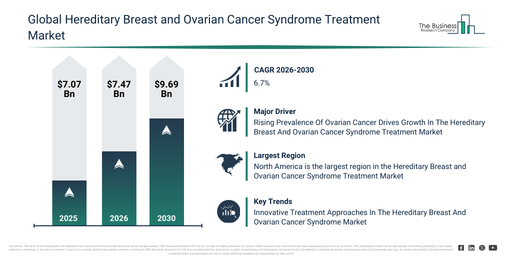
    The hereditary breast and ovarian cancer syndrome treatment market has seen significant expansion in recent years. This market is anticipated to rise from $7.07 billion in 2025 to $7.47 billion in 2026, registering a compound annual growth rate (CAGR) of 5.6%. The expansion observed historically can be credited to heightened awareness of hereditary cancer syndromes, the availability of BRCA mutation testing, the development of cancer screening infrastructure, increased reliance on hormonal therapies, and the establishment of specialized oncology clinics.

    The hereditary breast and ovarian cancer syndrome treatment market size is anticipated to experience substantial expansion over the upcoming years. It is projected to reach $9.69 billion in 2030, demonstrating a compound annual growth rate (CAGR) of 6.7%. This growth within the forecast period can be attributed to the broadening of personalized oncology treatment methods, a rise in the adoption of preventive surgeries, advancements in the development of targeted and immunotherapies, increasing investments in genetic diagnostics, and enhanced long-term patient monitoring solutions. Significant trends for the forecast period encompass a greater uptake of genetic counselling services, an expanding utilization of preventive therapeutic strategies, the growing integration of targeted cancer therapies, the enlargement of risk-based screening programs, and a heightened concentration on early intervention approaches.

    Access Your Free Sample Report for In-Depth Market Insights:

    https://www.thebusinessresearchcompany.com/sample.aspx?id=13209&type=smp

    Which Drivers Are Contributing To The Expansion Of The Hereditary Breast and Ovarian Cancer Syndrome Treatment Market?

    The increasing incidence of ovarian cancer is anticipated to drive the expansion of the hereditary breast and ovarian cancer syndrome treatment market in the future. Ovarian cancer refers to a malignant tumor originating in the ovaries, which are the female reproductive organs involved in producing eggs and hormones. This rise is attributed to factors such as extended longevity, delayed childbearing, and evolving lifestyle patterns. Hereditary Breast and Ovarian Cancer Syndrome (HBOC) is a genetic condition that elevates the risk of developing breast, ovarian, and other types of cancers. For instance, data from April 2024, provided by the World Ovarian Cancer Coalition, a Canada-based not-for-profit organization, indicated that approximately 324,603 women worldwide were diagnosed with ovarian cancer in 2022. Projections show that the yearly case count is expected to reach nearly half a million by 2050, representing a 55% increase. Consequently, the growing occurrence of ovarian cancer is stimulating the growth of the hereditary breast and ovarian cancer syndrome treatment market.

    What Segment Classifications Make Up The Hereditary Breast and Ovarian Cancer Syndrome Treatment Market?

    The hereditary breast and ovarian cancer syndrome treatment market covered in this report is segmented –

    1) By Treatment: Hormonal Therapy, Chemoprevention, Genetic Counselling, Medication, Other Treatments

    2) By Diagnosis: Genetic Testing, Magnetic Resonance Imaging (MRI), Mammography, Other Diagnosis

    3) By Route Of Administration: Oral, Parenteral, Other Routes Of Administration

    4) By End-User: Hospitals, Specialty Clinics, Homecare, Other End-Users

    Subsegments:

    1) By Hormonal Therapy: Selective Estrogen Receptor Modulators (SERMs), Aromatase Inhibitors

    2) By Chemoprevention: Tamoxifen, Raloxifene

    3) By Genetic Counselling: Risk Assessment, Family Planning Guidance

    4) By Medication: Targeted Therapies, Immune Checkpoint Inhibitors

    5) By Other Treatments: Preventive Surgery, Surveillance Strategies

    Which Competitive Trends Are Impacting The Structure Of The Hereditary Breast and Ovarian Cancer Syndrome Treatment Market?

    Leading companies in the hereditary breast and ovarian cancer syndrome treatment market are embracing new therapeutic approaches, such as comprehensive risk tests, to offer reliable services to their clientele. A complete risk assessment test serves as a tool to help identify an individual’s susceptibility to developing a condition or exhibiting disease symptoms. For instance, in February 2023, Genetic Technologies Limited, an Australia-based molecular diagnostics company, unveiled a pioneering comprehensive risk assessment test, categorized as a treatment for breast and ovarian cancer. This test combines gene mutation analysis for breast and ovarian cancers, factors in both hereditary and non-hereditary risk elements, and includes the GeneType risk score for both cancer types. It employs a distinctive methodology that integrates the detection of the 13 primary actionable breast and ovarian cancer susceptibility genes with the GeneType test platform. This new testing platform is designed for women over 30 who, apart from unusual genetic variations, are at an elevated risk of developing breast and ovarian cancer in the general population.

    Which Leading Companies Dominate The Hereditary Breast and Ovarian Cancer Syndrome Treatment Market Share?

    Major companies operating in the hereditary breast and ovarian cancer syndrome treatment market are Pfizer Inc., Johnson & Johnson Private Limited, F. Hoffmann-La Roche Ltd., Merck & Co., AbbVie Inc., Bayer AG, Sanofi-Aventis LLC, AstraZeneca plc, GlaxoSmithKline plc, Eli Lilly and Company, Daiichi Sankyo Co. Ltd., Seagen Inc., Genentech Inc., CRISPR Therapeutics AG, Editas Medicine Inc., Myriad Genetics Inc., Invitae Corporation, Natera Inc., LifeLabs Genetics, Abbott Laboratories

    Access The Complete Report For Deeper Market Insights:

    https://www.thebusinessresearchcompany.com/report/hereditary-breast-and-ovarian-cancer-syndrome-treatment-global-market-report

    Which Region Is Anticipated To See The Fastest Growth In The Hereditary Breast and Ovarian Cancer Syndrome Treatment Market?

    North America was the largest region in the hereditary breast and ovarian cancer syndrome treatment market in 2025. Asia-Pacific is expected to be the fastest-growing region in the forecast period. The regions covered in the hereditary breast and ovarian cancer syndrome treatment market report are Asia-Pacific, South East Asia, Western Europe, Eastern Europe, North America, South America, Middle East, Africa.

    Request Your Customized Hereditary Breast and Ovarian Cancer Syndrome Treatment Market Research Report for Competitive Advantage:

    https://www.thebusinessresearchcompany.com/customise?id=13209&type=smp

    Browse Through More Reports Similar to the Global Hereditary Breast and Ovarian Cancer Syndrome Treatment Market 2026, By The Business Research Company

    Breast Cancer Drugs Market Report 2026

    https://www.thebusinessresearchcompany.com/report/breast-cancer-drugs-global-market-report

    Hereditary Cancer Testing Market Report 2026

    https://www.thebusinessresearchcompany.com/report/hereditary-cancer-testing-global-market-report

    Ovarian Cancer Drugs Market Report 2026

    https://www.thebusinessresearchcompany.com/report/ovarian-cancer-drugs-global-market-report

    Get in touch with us:

    The Business Research Company: https://www.thebusinessresearchcompany.com/

    Americas +1 310-496-7795

    Asia +44 7882 955267 & +91 8897263534

    Europe +44 7882 955267

    Email us at info@tbrc.info

    Follow us on:

    LinkedIn: https://in.linkedin.com/company/the-business-research-company

    YouTube: https://www.youtube.com/channel/UC24_fI0rV8cR5DxlCpgmyFQ

    Global Market Model: https://www.thebusinessresearchcompany.com/global-market-model