Category: HealthcareServices

  • Global Haptic Virtual Reality (VR) Fitness Suit Market Forecast 2026–2035: Long-Term Growth Insights

    Global Haptic Virtual Reality (VR) Fitness Suit Market Forecast 2026–2035: Long-Term Growth Insights

    Uncover key drivers, emerging technologies, and competitive movements shaping the haptic virtual reality (vr) fitness suit market from 2026–2035 with trusted insights from The Business Research Company

    How is the Haptic Virtual Reality (VR) Fitness Suit Market size predicted to change over the forecast window of 2026–2035?

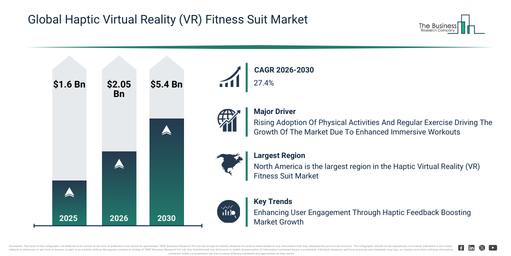
    The haptic virtual reality (VR) fitness suit market has experienced significant expansion in recent years. This market is anticipated to grow from $1.6 billion in 2025 to $2.05 billion in 2026, at a compound annual growth rate (CAGR) of 27.7%. The observed growth in the historic period can be attributed to the increasing popularity of virtual fitness applications, growing consumer interest in immersive workouts, the development of wearable fitness technologies, the expansion of home-based fitness solutions, and improvements in haptic hardware capabilities.

    The haptic virtual reality (vr) fitness suit market is projected to experience rapid expansion over the coming years. This market is set to reach $5.4 billion by 2030, exhibiting a compound annual growth rate (CAGR) of 27.4%. Several factors are contributing to this growth during the forecast period, including the increased uptake of AI-powered fitness personalization, a surge in demand for remote and virtual training options, the broadening scope of VR applications in rehabilitation and therapy, the expanding incorporation of biometric feedback systems, and innovations in lightweight wearable materials. Key trends anticipated for this period encompass a rise in the adoption of immersive VR fitness experiences, greater integration of sophisticated haptic feedback systems, an escalating need for customized VR training programs, the proliferation of motion tracking and sensor fusion technologies, and a heightened emphasis on gamified approaches to fitness engagement.

    Access Your Free Sample Report for In-Depth Market Insights:

    https://www.thebusinessresearchcompany.com/sample.aspx?id=28238&type=smp

    Which Drivers Are Contributing To The Expansion Of The Haptic Virtual Reality (VR) Fitness Suit Market?

    The increasing engagement in physical activities and consistent exercise is projected to boost the haptic virtual reality (VR) fitness suit market in the future. These activities encompass both structured and unstructured forms designed to improve physical fitness, health, and general well-being. The uptake of physical activities and regular exercise is increasing, driven by greater understanding of their importance in preventing lifestyle diseases, boosting mental health, and fostering overall well-being. Haptic virtual reality fitness suits enhance physical activities and regular exercise by offering real-time tactile feedback, improving posture, movement precision, and providing an immersive experience for more effective workouts. For example, in November 2023, the UK Fitness Report from PureGym Limited, a UK-based health club chain, revealed a 2% rise in UK gym members compared to the previous year, with 16% of the population currently being gym members. Furthermore, an additional 16% of people plan to join a gym in 2024. Consequently, the rising participation in physical activities and regular exercise is fueling the haptic virtual reality (VR) fitness suit market.

    What Segment Categories Are Covered In The Haptic Virtual Reality (VR) Fitness Suit Market?

    The haptic virtual reality (vr) fitness suit market covered in this report is segmented –

    1) By Product Type: Full-Body Suits, Upper-Body Suits, Lower-Body Suits, Accessories

    2) By Technology: Force Feedback, Vibrotactile, Electroactive Polymers, Other Technologies

    3) By Distribution Channel: Online Stores, Specialty Stores, Retail Stores, Other Distribution Channels

    4) By Application: Personal Fitness, Professional Training, Rehabilitation, Gaming, Other Applications

    5) By End-User: Consumers, Fitness Centers, Rehabilitation Centers, Sports Institutes, Other End-Users

    Subsegments:

    1) By Full-Body Suits: Haptic Feedback Suits, Motion Capture Suits, Exoskeleton Suits

    2) By Upper-Body Suits: Haptic Vests, Haptic Arm Bands, Shoulder And Chest Harnesses

    3) By Lower-Body Suits: Haptic Leg Bands, Haptic Pants, Foot And Ankle Haptic Modules

    4) By Accessories: Haptic Gloves, Haptic Shoes Or Footwear, Wearable Sensors, Haptic Belts And Straps

    Which Market Trends Are Opening Growth Opportunities In The Haptic Virtual Reality (VR) Fitness Suit Market?

    Major companies operating in the haptic virtual reality fitness suit market are prioritizing technological advancements, such as full-body tactile actuation, to enrich immersive workout experiences, boost user engagement, and enable precise simulation of physical sensations for effective fitness training. This full-body tactile actuation technology employs distributed actuators across wearable textiles to deliver localized force or vibration feedback, thereby augmenting motion and exercise cues and enhancing real-time training fidelity. For instance, in November 2024, bHaptics Inc., a South Korea-based VR haptics company, unveiled the TactSuit Pro. The TactSuit Pro offers a sophisticated blend of immersive feedback, comfort, and accessibility for users engaging in virtual reality activities, including fitness applications. It is equipped with 32 haptic motors that deliver localized tactile sensations and enhance realism during workouts or interactive sessions. A thumbwheel with a light-emitting diode (LED) status ring on the chest allows users to easily adjust the intensity of sensations in real time, supporting both high-intensity exercise and lighter routines.

    Which Major Industry Participants Are Leading The Haptic Virtual Reality (VR) Fitness Suit Market Growth?

    Major companies operating in the haptic virtual reality (vr) fitness suit market are Shenzhen H&T Intelligent Control Co. Ltd, Ultraleap Limited, Dexta Robotics Inc., Woojer Ltd., Actronika SAS, HaptX Inc., SenseGlove B.V., Palladyne AI Inc., bHaptics Inc., Wave Company Inc., NeuroDigital Technologies S.L., AjnaLens Pvt. Ltd., Teslasuit Inc., SUBPAC Inc., VirZOOM Inc., AxonVR Inc., VRgluv Inc., Kaaya Tech Inc., Manus VR B.V., Valkyrie Industries Inc.

    Access The Complete Report For Deeper Market Insights:

    https://www.thebusinessresearchcompany.com/report/haptic-virtual-reality-vr-fitness-suit-global-market-report

    Which Geographic Areas Are Emerging As Strong Markets For The Haptic Virtual Reality (VR) Fitness Suit Market?

    North America was the largest region in the haptic virtual reality (VR) fitness suit market in 2025. Asia-Pacific is expected to be the fastest-growing region in the forecast period. The regions covered in the haptic virtual reality (vr) fitness suit market report are Asia-Pacific, South East Asia, Western Europe, Eastern Europe, North America, South America, Middle East, Africa.

    Request Your Customized Haptic Virtual Reality (VR) Fitness Suit Market Research Report for Competitive Advantage:

    https://www.thebusinessresearchcompany.com/customise?id=28238&type=smp

    Browse Through More Reports Similar to the Global Haptic Virtual Reality (VR) Fitness Suit Market 2026, By The Business Research Company

    Virtual Reality In Healthcare Market Report 2026

    https://www.thebusinessresearchcompany.com/report/virtual-reality-in-healthcare-global-market-report

    Virtual Reality Vr In Medical Simulation Market Report 2026

    https://www.thebusinessresearchcompany.com/report/virtual-reality-vr-in-medical-simulation-global-market-report

    Online Virtual Fitness Market Report 2026

    https://www.thebusinessresearchcompany.com/report/online-virtual-fitness-global-market-report

    Get in touch with us:

    The Business Research Company: https://www.thebusinessresearchcompany.com/

    Americas +1 310-496-7795

    Asia +44 7882 955267 & +91 8897263534

    Europe +44 7882 955267

    Email us at info@tbrc.info

    Follow us on:

    LinkedIn: https://in.linkedin.com/company/the-business-research-company

    YouTube: https://www.youtube.com/channel/UC24_fI0rV8cR5DxlCpgmyFQ

    Global Market Model: https://www.thebusinessresearchcompany.com/global-market-model
  • Hand Foot Syndrome Market 2026–2030: Forecasting Business Opportunities Ahead

    Hand Foot Syndrome Market 2026–2030: Forecasting Business Opportunities Ahead

    Uncover key drivers, emerging technologies, and competitive movements shaping the hand foot syndrome market from 2026–2035 with trusted insights from The Business Research Company

    What market expansion outlook does the Hand Foot Syndrome Market show for the 2026–2030 period?

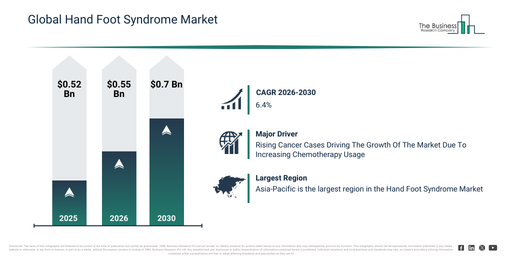
    The hand foot syndrome market has demonstrated significant expansion in recent years. Its value is projected to increase from $0.52 billion in 2025 to $0.55 billion in 2026, achieving a compound annual growth rate (CAGR) of 6.3%. The historical surge in this market can be ascribed to factors such as the increasing use of chemotherapy regimens, a rising incidence of drug-induced dermatological side effects, the expansion of oncology treatment programs, improved awareness of supportive cancer care, and the availability of topical therapeutic products.

    The hand foot syndrome market is anticipated to experience robust expansion over the coming years, with projections indicating it will reach $0.7 billion by 2030, demonstrating a compound annual growth rate (CAGR) of 6.4%. This growth during the forecast period is fueled by several factors, including the increasing demand for supportive oncology care solutions, a rise in investments targeting dermatology-oncology crossover treatments, the expansion of homecare-based symptom management strategies, a growing emphasis on improving patient quality of life, and the ongoing development of advanced topical formulations. Significant trends expected in this period involve the increasing creation of targeted topical therapies, a heightened focus on patient-centric symptom management, the rising adoption of combination treatment approaches, an expansion of supportive dermatology care protocols, and an enhanced commitment to treatment compliance.

    Access Your Free Sample Report for In-Depth Market Insights:

    https://www.thebusinessresearchcompany.com/sample.aspx?id=21996&type=smp

    What Drivers Are Shaping The Development Of The Hand Foot Syndrome Market?

    The growing occurrence of cancer is projected to stimulate the expansion of the hand foot syndrome market moving forward. Cancer is a condition marked by uncontrolled cellular multiplication and its dissemination to various body parts. The escalation in cancer cases stems from an aging populace, evolving lifestyle choices, environmental influences, and advancements in detection methods. A higher incidence of cancer leads to greater utilization of chemotherapy, which subsequently increases the prevalence of hand-foot syndrome as an associated treatment side effect. For instance, in August 2024, Macmillan Cancer Support, a UK-based charitable organization dedicated to assisting cancer patients, reported that over 3 million people in the UK were living with cancer. This number is projected to rise to 3.5 million by 2025, 4 million by 2030, and 5.3 million by 2040. Thus, the rising incidence of cancer will be a key driver for the hand foot syndrome market.

    Which Segments Are Contributing To The Growth Of The Hand Foot Syndrome Market?

    The hand foot syndrome market covered in this report is segmented –

    1) By Treatment: Systemic Treatment, Topical Treatment

    2) By Application: Oncology, Dermatology, Other Applications

    3) By End-User: Hospitals, Clinics, Homecare Settings

    Subsegments:

    1) By Systemic Treatment: Corticosteroids, Analgesics, Anti-Inflammatory Drugs

    2) By Topical Treatment: Urea-Based Creams, Corticosteroid Creams, Moisturizers, Cooling Gels

    Who Are The Prominent Global Companies Shaping The Hand Foot Syndrome Market Landscape?

    Major companies operating in the hand foot syndrome market are Pfizer Inc., Johnson & Johnson, F. Hoffmann-La Roche Ltd., Merck & Co. Inc., AbbVie Inc., Bayer AG, Sanofi S.A., Bristol-Myers Squibb Company, AstraZeneca PLC, Novartis International AG, Fresenius Kabi AG, GlaxoSmithKline plc, Takeda Pharmaceutical Company Limited, Eli Lilly and Company, Gilead Sciences Inc., Amgen Inc., Regeneron Pharmaceuticals Inc., Astellas Pharma Inc., UCB Pharma SA, Eisai Co. Ltd.

    Access The Complete Report For Deeper Market Insights:

    https://www.thebusinessresearchcompany.com/report/hand-foot-syndrome-global-market-report

    Which Region Is Projected To Lead The Hand Foot Syndrome Market During The Forecast Period?

    Asia-Pacific was the largest region in the hand food syndrome market in 2025. The regions covered in the hand foot syndrome market report are Asia-Pacific, South East Asia, Western Europe, Eastern Europe, North America, South America, Middle East, Africa.

    Request Your Customized Hand Foot Syndrome Market Research Report for Competitive Advantage:

    https://www.thebusinessresearchcompany.com/customise?id=21996&type=smp

    Browse Through More Reports Similar to the Global Hand Foot Syndrome Market 2026, By The Business Research Company

    Chondroplasty Market Report 2026

    https://www.thebusinessresearchcompany.com/report/chondroplasty-global-market-report

    Foot And Ankle Devices Market Report 2026

    https://www.thebusinessresearchcompany.com/report/foot-and-ankle-devices-global-market-report

    Podiatry Services Market 2026

    https://www.thebusinessresearchcompany.com/report/podiatry-services-market

    Get in touch with us:

    The Business Research Company: https://www.thebusinessresearchcompany.com/

    Americas +1 310-496-7795

    Asia +44 7882 955267 & +91 8897263534

    Europe +44 7882 955267

    Email us at info@tbrc.info

    Follow us on:

    LinkedIn: https://in.linkedin.com/company/the-business-research-company

    YouTube: https://www.youtube.com/channel/UC24_fI0rV8cR5DxlCpgmyFQ

    Global Market Model: https://www.thebusinessresearchcompany.com/global-market-model
  • Global Hair Restoration Market Report 2026–2035: Key Forecasts and Growth Areas

    Global Hair Restoration Market Report 2026–2035: Key Forecasts and Growth Areas

    Uncover key drivers, emerging technologies, and competitive movements shaping the hair restoration market from 2026–2035 with trusted insights from The Business Research Company

    What level of growth is expected in the Hair Restoration Market between 2026 and 2030?

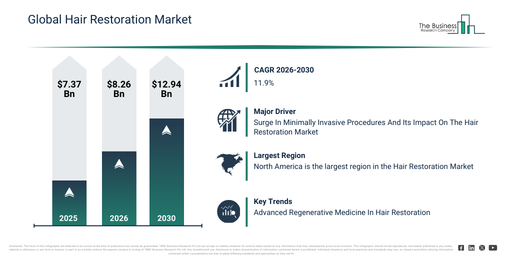
    The hair restoration market has seen rapid expansion in recent years. Its valuation is expected to rise from $7.37 billion in 2025 to $8.26 billion in 2026, registering a compound annual growth rate (CAGR) of 12.0%. The historical growth of this market can be attributed to factors such as the increasing acceptance of cosmetic medical procedures, the rising incidence of androgenetic alopecia, the proliferation of specialized hair restoration clinics, enhancements in surgical precision tools, and greater patient awareness regarding treatment options.

    The hair restoration market is projected to experience substantial expansion in the coming years. Its value is anticipated to reach $12.94 billion by 2030, exhibiting a compound annual growth rate (CAGR) of 11.9%. This expansion during the projected timeframe is attributable to a rising demand for regenerative medicine applications, increased investments in robotic-assisted procedures, the spread of medical tourism for hair restoration, a growing inclination towards non-surgical treatments, and the expanding implementation of data-driven treatment planning. Key trends during the forecast period encompass the increasing integration of robotic hair transplant procedures, a growing call for minimally invasive restoration methods, the expanding utilization of regenerative and stem cell therapies, the development of personalized hair restoration planning, and an amplified emphasis on achieving natural-looking transplant results.

    Access Your Free Sample Report for In-Depth Market Insights:

    https://www.thebusinessresearchcompany.com/sample.aspx?id=18384&type=smp

    Which Drivers Are Expected To Impact The Hair Restoration Market During The Forecast Period?

    The increasing adoption of minimally invasive procedures is anticipated to fuel the expansion of the hair restoration market in the future. These procedures involve medical interventions or operations performed via small cuts or no major surgical openings, leading to quicker healing and reduced scarring. The rising appeal of minimally invasive techniques stems from advantages like shorter recuperation periods and diminished patient discomfort and pain. Contemporary hair restoration methods, such as follicular unit extraction, utilize accurate follicle transplantation that results in minimal scarring, emphasizing the aesthetic advantages of MIPs for individuals desiring natural appearances. An illustration of this trend is that in August 2023, as reported by The Aesthetic Society, a US-based entity focused on plastic surgery and cosmetic medicine, Americans collectively spent over $11.8 billion on aesthetic treatments, representing a 2% increase compared to the prior year. Consequently, the heightened demand for minimally invasive procedures is poised to propel the hair restoration market.

    How Is The Hair Restoration Market Divided Into Segments?

    The hair restoration market covered in this report is segmented –

    1) By Procedure: Follicular Unit Extraction, Follicular Unit Transplantation

    2) By Therapy: Low-Level Laser Therapy (LLLT), Stem Cell Hair Restoration, Platelet-Rich Plasma

    3) By Gender: Male, Female

    Subsegments:

    1) By Follicular Unit Extraction (FUE): Manual FUE, Automated FUE, Robotic FUE

    2) By Follicular Unit Transplantation (FUT): Strip Harvesting, Non-strip Harvesting

    Which Innovation Trends Are Advancing Developments Within The Hair Restoration Market?

    Major companies in the hair restoration market are advancing regenerative medicine, including scalp serums, to nurture the scalp, reawaken hair growth, and combat hair loss. A scalp serum is a specialized topical preparation formulated to improve the health of the scalp and hair follicles. For example, in March 2024, BioPhotas Inc., a medical equipment manufacturing firm, introduced Restore Hair Serum. This innovative product, crafted to work with the Celluma Light Therapy device, provides a comprehensive approach to tackling hair loss. It comes in a dropper bottle for easy absorption by the scalp, as the serum integrates peptides, vitamins, and plant-based bionutrients. The primary ingredients include recently, which nourishes hair follicle stem cells and reactivates growth; capital, a peptide that reduces DHT accumulation in follicles, boosting hair bonding and activity; and energy, a plant-based protein technology that reinforces and detoxifies hair roots.

    Which Key Players Are Driving Competition In The Hair Restoration Market?

    Major companies operating in the hair restoration market are Johnson And Johnson, AbbVie Inc., Eli Lilly and Company, Shiseido Company Limited, NeoGraft Solutions, Bosley Inc., Venus Concept Inc, Advanced Hair Studio, Samumed LLC, Aclaris Therapeutics Inc., Capillus LLC, Eclipse Aesthetics, The Harley Street Hair Clinic, Theradome Inc., Lexington International, iRestore, Kintor Pharmaceuticals Ltd., Cassiopea S.p.A., Replicel Life Sciences Inc., Stemson Therapeutics, Follica Inc., Pfizer Inc., Merck And Co. Inc., RiverTown Therapeutics Inc., TissUse GmbH, Theracell Advanced Biotechnology Ltd.

    Access The Complete Report For Deeper Market Insights:

    https://www.thebusinessresearchcompany.com/report/hair-restoration-global-market-report

    Which Region Currently Holds The Largest Share Of The Hair Restoration Market?

    North America was the largest region in the hair restoration market in 2025. Asia-Pacific is expected to be the fastest-growing region in the forecast period. The regions covered in the hair restoration market report are Asia-Pacific, South East Asia, Western Europe, Eastern Europe, North America, South America, Middle East, Africa.

    Request Your Customized Hair Restoration Market Research Report for Competitive Advantage:

    https://www.thebusinessresearchcompany.com/customise?id=18384&type=smp

    Browse Through More Reports Similar to the Global Hair Restoration Market 2026, By The Business Research Company

    Hair Removal Products Market Report 2026

    https://www.thebusinessresearchcompany.com/report/hair-removal-products-global-market-report

    Hair Transplant Market Report 2026

    https://www.thebusinessresearchcompany.com/report/hair-transplant-global-market-report

    Handicapped Placement Service Market Report 2026

    https://www.thebusinessresearchcompany.com/report/handicapped-placement-service-global-market-report

    Get in touch with us:

    The Business Research Company: https://www.thebusinessresearchcompany.com/

    Americas +1 310-496-7795

    Asia +44 7882 955267 & +91 8897263534

    Europe +44 7882 955267

    Email us at info@tbrc.info

    Follow us on:

    LinkedIn: https://in.linkedin.com/company/the-business-research-company

    YouTube: https://www.youtube.com/channel/UC24_fI0rV8cR5DxlCpgmyFQ

    Global Market Model: https://www.thebusinessresearchcompany.com/global-market-model
  • Hair Loss Telehealth Market 2026–2030: Forecast, Innovation, and Competitive Trends

    Hair Loss Telehealth Market 2026–2030: Forecast, Innovation, and Competitive Trends

    Uncover key drivers, emerging technologies, and competitive movements shaping the hair loss telehealth market from 2026–2035 with trusted insights from The Business Research Company

    How much is the Hair Loss Telehealth Market valued at in 2026, and what valuation is forecast for 2030?

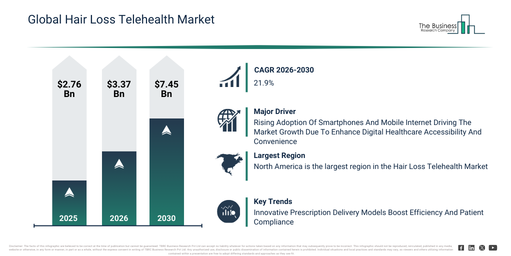
    The hair loss telehealth market has demonstrated substantial expansion in recent years. It is anticipated to increase from $2.76 billion in 2025 to $3.37 billion in 2026, achieving a compound annual growth rate (CAGR) of 22.2%. This historical growth can be attributed to factors such as a heightened awareness of hair loss treatments, the expansion of telemedicine services, increased acceptance of virtual consultations, the proliferation of direct-to-consumer healthcare models, and the accessibility of digital diagnostic tools.

    The hair loss telehealth market size is anticipated to experience rapid expansion over the coming years. It is projected to reach $7.45 billion by 2030, exhibiting a compound annual growth rate (CAGR) of 21.9%. This expansion during the forecast period is driven by factors such as a heightened need for tailored teledermatology services, increased implementation of AI-powered diagnostics, the proliferation of app-based healthcare platforms, a stronger emphasis on ongoing patient surveillance, and the greater incorporation of telehealth with e-pharmacy offerings. Key developments expected during this period involve the wider embrace of virtual hair loss appointments, a rise in the utilization of AI-driven scalp analysis tools, an increasing desire for remote treatment oversight, the growth of direct-to-consumer telehealth platforms, and a more pronounced emphasis on customized hair loss treatments.

    Access Your Free Sample Report for In-Depth Market Insights:

    https://www.thebusinessresearchcompany.com/sample.aspx?id=29073&type=smp

    What Drivers Are Influencing The Growth Of The Hair Loss Telehealth Market?

    Increasing smartphone and mobile internet uptake is projected to fuel the expansion of the hair loss telehealth market in the future. This adoption signifies a growing number of individuals owning and utilizing internet-connected mobile devices, which allows them to access digital healthcare solutions, online services, and applications at any time and location. The rise in smartphone and mobile internet usage is attributed to the expanding 5G network infrastructure and better mobile broadband availability, as telecommunications providers have greatly improved connection speeds and coverage in both urban and rural regions, thereby making mobile internet access more dependable and attainable for various populations. This widespread adoption allows individuals to conveniently hold virtual consultations with hair loss specialists, get tailored treatment plans developed from mobile-uploaded scalp photos, and acquire prescription medications via digital platforms, eliminating the necessity for in-person clinic visits. For example, in May 2025, the Federal Communications Commission, a US-based government agency, reported that total connections increased by approximately 2.5% from June 2023 to June 2024, reaching 549 million. Mobile connections saw a 2.5% year-over-year growth, reaching 416 million as of June 2024, while fixed connections rose by about 2.3% to 133 million during the identical timeframe. Consequently, the increasing adoption of smartphones and mobile internet is propelling the expansion of the hair loss telehealth market.

    What Segments Are Included Within The Hair Loss Telehealth Market?

    The hair loss telehealth market covered in this report is segmented –

    1) By Service Type: Consultation, Diagnosis, Prescription, Follow-Up Care, Other Service Types

    2) By Platform: Web-Based, App-Based

    3) By Age Group: 18-34, 35-54, 55+

    4) By Provider: Direct-To-Consumer, Hospitals And Clinics, Other Providers

    5) By End-User: Men, Women, Other End-Users

    Subsegments:

    1) By Consultation: Initial Consultation, Specialist Consultation, Virtual Consultation, Follow-Up Consultation

    2) By Diagnosis: Scalp Examination, Blood Test Analysis, Genetic Testing, Dermatological Assessment

    3) By Prescription: Topical Medication Prescription, Oral Medication Prescription, Hair Growth Supplement Prescription, Customized Treatment Plan

    4) By Follow-Up Care: Routine Progress Monitoring, Treatment Adjustment Sessions, Teleconsultation Follow-Ups, Patient Support Programs

    5) By Other Service Types: Hair Transplant Guidance, Lifestyle And Nutritional Counseling, Psychological Support Services, Educational Resources And Workshops

    Which Competitive Trends Are Impacting The Structure Of The Hair Loss Telehealth Market?

    Leading companies in the hair loss telehealth market are prioritizing innovative strategies, such as direct-to-consumer prescription delivery, to boost convenience and patient adherence. This delivery model involves sending medications directly from the pharmacy to a patient’s home, which helps increase convenience, save time, reduce the need for in-person pharmacy visits, improve treatment adherence, and ensure faster access to necessary medications. For instance, in November 2024, Amazon, a US-based technology company, launched a telehealth service for Prime members featuring low upfront pricing, comprehensive treatment plans, and fast, free medication delivery for conditions including men’s hair loss, anti-aging, erectile dysfunction, eyelash growth, and motion sickness. Patients can schedule virtual consultations with licensed clinicians using messaging or video, receive personalized treatment plans, and have prescriptions fulfilled directly through Amazon Pharmacy. Medications are delivered rapidly, often within hours, in discreet packaging, ensuring a seamless and convenient experience. This service minimizes the need for physical pharmacy visits and enhances patient adherence by providing timely access to prescribed therapies. Transparent pricing allows patients to view the total cost of consultations and medications upfront, promoting informed decision-making and lowering financial barriers to care. The integration of telehealth with direct-to-consumer prescription delivery positions Amazon as a major competitor in the hair loss and broader lifestyle telehealth market, effectively meeting the rising consumer demand for convenience, speed, and accessibility in healthcare services.

    Who Are The Top-Performing Companies In The Hair Loss Telehealth Market In Recent Years?

    Major companies operating in the hair loss telehealth market are Hims & Hers Health Inc., Ro Inc., LifeMD Inc., Shapiro MD Inc., Sesame Care Inc., Happy Head Inc., Numan Ltd., BosleyMD Inc., XYON Health Inc., GetHairMD Inc., Mdhair Inc., Hairguard Inc., Traya Health Inc., Triple Hair Group Inc., Dapper Care Inc., NonuCare Inc., Clinikally Ltd., Keeps Inc., Follica Inc., HairMax Inc.

    Access The Complete Report For Deeper Market Insights:

    https://www.thebusinessresearchcompany.com/report/hair-loss-telehealth-global-market-report

    How Does The Hair Loss Telehealth Market Perform Across Major Global Regions?

    North America was the largest region in the hair loss telehealth market in 2025. Asia-Pacific is expected to be the fastest-growing region in the forecast period. The regions covered in the hair loss telehealth market report are Asia-Pacific, South East Asia, Western Europe, Eastern Europe, North America, South America, Middle East, Africa.

    Request Your Customized Hair Loss Telehealth Market Research Report for Competitive Advantage:

    https://www.thebusinessresearchcompany.com/customise?id=29073&type=smp

    Browse Through More Reports Similar to the Global Hair Loss Telehealth Market 2026, By The Business Research Company

    Hair Restoration Market Report 2026

    https://www.thebusinessresearchcompany.com/report/hair-restoration-global-market-report

    Telehealth Software Market Report 2026

    https://www.thebusinessresearchcompany.com/report/telehealth-software-global-market-report

    Hair Transplant Market Report 2026

    https://www.thebusinessresearchcompany.com/report/hair-transplant-global-market-report

    Get in touch with us:

    The Business Research Company: https://www.thebusinessresearchcompany.com/

    Americas +1 310-496-7795

    Asia +44 7882 955267 & +91 8897263534

    Europe +44 7882 955267

    Email us at info@tbrc.info

    Follow us on:

    LinkedIn: https://in.linkedin.com/company/the-business-research-company

    YouTube: https://www.youtube.com/channel/UC24_fI0rV8cR5DxlCpgmyFQ

    Global Market Model: https://www.thebusinessresearchcompany.com/global-market-model
  • Hair Growth Supplement And Treatment Market Forecast 2026–2035: Data Trends and Industry Insights

    Hair Growth Supplement And Treatment Market Forecast 2026–2035: Data Trends and Industry Insights

    Uncover key drivers, emerging technologies, and competitive movements shaping the hair growth supplement and treatment market from 2026–2035 with trusted insights from The Business Research Company

    By how much is the Hair Growth Supplement And Treatment Market expected to grow between 2026 and 2030?

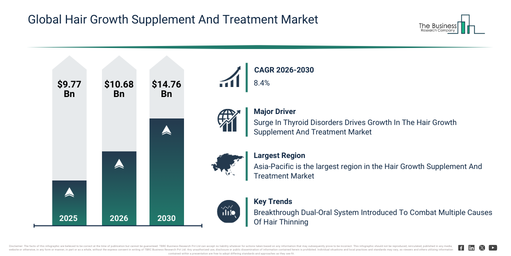
    The hair growth supplement and treatment market size has experienced significant expansion in recent years. It is projected to climb from $9.77 billion in 2025 to $10.68 billion in 2026, at a compound annual growth rate (CAGR) of 9.3%. This historical growth can be attributed to several factors including an increasing awareness concerning hair health and appearance, a rising incidence of hair loss conditions, the broadened availability of over-the-counter supplements, the proliferation of dermatology-led recommendations for hair care, and higher disposable income directed towards personal care.

    The hair growth supplement and treatment market is projected to experience substantial expansion over the coming years, reaching a valuation of $14.76 billion by 2030, demonstrating a compound annual growth rate (CAGR) of 8.4%. This anticipated growth during the forecast period is driven by several factors, such as the increasing desire for tailored and customized hair treatments, a rise in investments towards biotech-based hair growth remedies, the expanding use of digital tools for hair diagnostics, the proliferation of online sales channels, and a heightened consumer emphasis on proactive hair care. Key developments expected in this period encompass a greater need for hair growth supplements supported by clinical evidence, the increasing use of combined topical and oral treatments, a rising inclination towards natural and herbal formulations, the broadening availability of device-based solutions for at-home hair care, and a stronger focus on individualized hair care routines.

    Access Your Free Sample Report for In-Depth Market Insights:

    https://www.thebusinessresearchcompany.com/sample.aspx?id=15815&type=smp

    Which Drivers Are Influencing Market Acceleration In The Hair Growth Supplement And Treatment Market?

    An anticipated rise in thyroid disorder cases is projected to fuel expansion within the hair growth supplement and treatment market. These disorders involve health issues where the thyroid gland either produces too few or too many hormones, or develops abnormal growths. The growing occurrence of thyroid conditions is attributable to various factors, including environmental influences, genetic predispositions, and shifts in lifestyle. Hair growth supplements and treatments offer support to individuals with thyroid disorders by addressing the hair thinning or loss frequently associated with thyroid imbalances, thereby providing a solution to lessen the effects of these conditions. As an illustration, in February 2025, The National Library of Medicine (NLM), a US-based biomedical library, reported that the global prevalence of Hashimoto thyroiditis was estimated at 7.5% across various countries, with a notably greater incidence found in low- and middle-income regions. Consequently, the escalating number of thyroid disorder cases is a key factor propelling the expansion of the hair growth supplement and treatment market.

    What Leading Segments Are Studied In The Hair Growth Supplement And Treatment Market?

    The hair growth supplement and treatment market covered in this report is segmented –

    1) By Type: Supplements, Pharmaceuticals, Devices

    2) By Form: Tablets And Capsules, Gummies And Soft Gels, Liquids, Powders

    3) By Distribution Channel: Hypermarkets Or Supermarkets, Specialty Stores, Drugstores And Pharmacies, Online Retail, Other Distribution Channels

    4) By End User: Men, Women

    Subsegments:

    1) By Supplements: Oral Tablets, Soft Gels, Powder Supplements, Liquid Supplements

    2) By Pharmaceuticals: Prescription Medications, Topical Treatments

    3) By Devices: Laser Devices, LED Devices, Dermarollers

    What Industry Trends Are Transforming The Hair Growth Supplement And Treatment Market?

    Leading companies operating within the hair growth supplement and treatment market are developing innovative solutions, such as Dual Oral Supplementation, for concurrently addressing multiple underlying causes of hair thinning. Dual Oral Supplementation refers to a two-pill system taken orally, designed to work together to tackle a condition through complementary mechanisms. For instance, in July 2025, Vegamour, a US-based company specializing in plant-based haircare, launched its GRO+ Advanced system. This dual-pill supplement is formulated to combat hair thinning via a holistic, science-backed approach, targeting underlying factors like hormonal imbalance and scalp aging. Additionally, it also provides a comprehensive scalp care component through its exosome serum, which stimulates follicular regeneration and enhances overall hair restoration.

    Which Leading Companies Dominate The Hair Growth Supplement And Treatment Market Share?

    Major companies operating in the hair growth supplement and treatment market are Johnson & Johnson Services Inc, Procter & Gamble Company, Unilever Plc, Merck and Co Inc, L’Oreal SA, Church & Dwight Co Inc, Amorepacific Corporation, ProCaps Laboratories Inc, Ultrax Labs, Hairfinity Limited, Wontech Co Ltd, Curallux LLC, Capillus LLC, iRestore Hair Growth System, ExoCoBio Inc, Revivogen Corporation, Nutrafol Inc, Hims & Hers Health Inc, Keeps Inc, Bosley Inc

    Access The Complete Report For Deeper Market Insights:

    https://www.thebusinessresearchcompany.com/report/hair-growth-supplement-and-treatment-global-market-report

    Which Region Is Anticipated To See The Fastest Growth In The Hair Growth Supplement And Treatment Market?

    Asia-Pacific was the largest region in the hair growth supplement and treatment market in 2025. Europe is expected to be the fastest-growing region in the forecast period. The regions covered in the hair growth supplement and treatment market report are Asia-Pacific, South East Asia, Western Europe, Eastern Europe, North America, South America, Middle East, Africa.

    Request Your Customized Hair Growth Supplement And Treatment Market Research Report for Competitive Advantage:

    https://www.thebusinessresearchcompany.com/customise?id=15815&type=smp

    Browse Through More Reports Similar to the Global Hair Growth Supplement And Treatment Market 2026, By The Business Research Company

    Natural Hair Care Products Market Report 2026

    https://www.thebusinessresearchcompany.com/report/natural-hair-care-products-global-market-report

    Hair Growth Serum Market Report 2026

    https://www.thebusinessresearchcompany.com/report/hair-growth-serum-global-market-report

    Therapeutic Hair Oil Market Report 2026

    https://www.thebusinessresearchcompany.com/report/therapeutic-hair-oil-global-market-report

    Get in touch with us:

    The Business Research Company: https://www.thebusinessresearchcompany.com/

    Americas +1 310-496-7795

    Asia +44 7882 955267 & +91 8897263534

    Europe +44 7882 955267

    Email us at info@tbrc.info

    Follow us on:

    LinkedIn: https://in.linkedin.com/company/the-business-research-company

    YouTube: https://www.youtube.com/channel/UC24_fI0rV8cR5DxlCpgmyFQ

    Global Market Model: https://www.thebusinessresearchcompany.com/global-market-model
  • Hair Drug Testing Market Outlook 2026–2030: Key Business Drivers and Trends

    Hair Drug Testing Market Outlook 2026–2030: Key Business Drivers and Trends

    Uncover key drivers, emerging technologies, and competitive movements shaping the hair drug testing market from 2026–2035 with trusted insights from The Business Research Company

    What is the estimated market size of the Hair Drug Testing Market by the end of 2030?

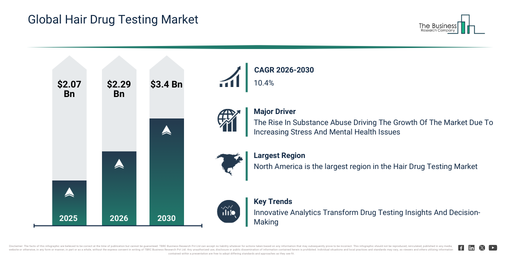
    The hair drug testing market has experienced substantial expansion in recent years. It is projected to increase from $2.07 billion in 2025 to $2.29 billion in 2026, achieving a compound annual growth rate (CAGR) of 10.7%. This historical growth can be attributed to several factors, including the wider adoption of workplace drug testing policies, an increase in law enforcement screening requirements, greater awareness of substance abuse problems, the integration of laboratory-based testing methods, and the widespread availability of standardized testing kits.

    The hair drug testing market size is anticipated to undergo rapid growth over the next few years, projected to reach $3.4 billion in 2030 at a compound annual growth rate (CAGR) of 10.4%. This expansion during the forecast period is driven by increasing investments in automated drug testing technologies, a rising demand for high-throughput testing solutions, the expansion of regulated workplace screening, a growing focus on accuracy and traceability, and the increasing use of advanced mass spectrometry techniques. Key trends in this period include the increasing adoption of advanced analytical testing methods, a rising demand for long-term drug detection solutions, the growing use of automated laboratory analyzers, the expansion of workplace and legal drug screening programs, and an enhanced focus on tamper-resistant testing.

    Access Your Free Sample Report for In-Depth Market Insights:

    https://www.thebusinessresearchcompany.com/sample.aspx?id=29072&type=smp

    What Drivers Are Shaping Future Opportunities In The Hair Drug Testing Market?

    Increased apprehension regarding substance abuse is anticipated to fuel the expansion of the hair drug testing market moving forward. Substance abuse involves the detrimental or unsafe consumption of psychoactive substances, such as alcohol and drugs, resulting in physical, mental, or social difficulties. The heightened worries concerning substance abuse stem from stress and mental health issues, as people frequently resort to drugs or alcohol to cope with anxiety, depression, or intense life pressures. Hair drug testing aids in substance abuse management by offering a dependable and extended detection method, facilitating prompt intervention, tracking recovery, and averting relapse. For instance, in April 2025, as per the Centers for Disease Control and Prevention, a US-based government agency, in 2023, an estimated 48.5 million individuals aged 12 and older in the United States, representing 17.1% of the population, experienced a substance use disorder (SUD). Consequently, the growing unease about substance abuse is stimulating the growth of the hair drug testing market.

    Which Segment Groups Are Influencing The Hair Drug Testing Market?

    The hair drug testing market covered in this report is segmented –

    1) By Product Type: Kits, Analyzers, Consumables

    2) By Drug Type: Cocaine, Marijuana, Opiates, Amphetamines, Other Drug Types

    3) By Application: Workplace Drug Testing, Law Enforcement, Drug Treatment, Other Applications

    4) By End-User: Workplace, Criminal Justice, Drug Treatment Centers, Hospitals, Other End Users

    Subsegments:

    1) By Kits: Single Test Kits, Multi Test Kits, Rapid Test Kits, Home Collection Kits, Laboratory Collection Kits

    2) By Analyzers: Immunoassay Analyzers, Chromatography Analyzers, Mass Spectrometry Analyzers, Automated Testing Analyzers, Benchtop Analyzers

    3) By Consumables: Sample Collection Tubes, Reagents And Buffers, Calibration Standards, Control Materials, Test Cartridges And Strips

    What Trends Are Reshaping The Dynamics Of The Hair Drug Testing Market?

    Leading companies in the hair drug testing market are prioritizing the development of innovative methodologies, such as advanced reporting analytics, to boost accuracy, simplify results interpretation, and facilitate informed decision-making. Advanced reporting analytics involves leveraging sophisticated software and data analysis tools to organize, interpret, and visually present testing results, which yields faster, more accurate, and actionable insights compared to traditional manual reporting. For instance, in March 2025, Psychemedics Corporation, a US-based public medical laboratory and research company specializing in hair drug testing, launched its innovative Quartile Reporting feature. This represents a significant stride in drug testing, providing organizations with unparalleled insights into test outcomes. The feature enables companies to compare individual results against a 12-month dataset of positive tests, categorized into four quartiles—lower, median, upper, and highest—thereby offering clear context for improved decision-making. By delivering real-time analytics and detailed data trends, Quartile Reporting equips organizations to make well-informed choices regarding hiring, retention, and compliance.

    Who Are The Major Companies Operating In The Hair Drug Testing Market?

    Major companies operating in the hair drug testing market are Abbott Laboratories, Laboratory Corporation of America Holdings, Quest Diagnostics Incorporated, Eurofins Scientific, National Medical Services Inc., USA Mobile Drug Testing, DriverCheck Inc., MVZ Labor Dr. Limbach And Kollegen, Randox Testing Services, Phamatech Inc., The Drug Detection Agency, Accredited Drug Testing Inc., Crystal Health Group, AlphaBiolabs Ltd., Toxlogic Pty Ltd., American Screening Corporation Inc., Australian Workplace Drug Testing Services, DNA Forensics Laboratory Pvt. Ltd., US Health Testing, AMH Nationwide, Brassets Group.

    Access The Complete Report For Deeper Market Insights:

    https://www.thebusinessresearchcompany.com/report/hair-drug-testing-global-market-report

    Which Region Is Anticipated To See The Fastest Growth In The Hair Drug Testing Market?

    North America was the largest region in the hair drug testing market in 2025. Asia-Pacific is expected to be the fastest-growing region in the forecast period. The regions covered in the hair drug testing market report are Asia-Pacific, South East Asia, Western Europe, Eastern Europe, North America, South America, Middle East, Africa.

    Request Your Customized Hair Drug Testing Market Research Report for Competitive Advantage:

    https://www.thebusinessresearchcompany.com/customise?id=29072&type=smp

    Browse Through More Reports Similar to the Global Hair Drug Testing Market 2026, By The Business Research Company

    Hair Removal Spray Market Report 2026

    https://www.thebusinessresearchcompany.com/report/hair-removal-spray-global-market-report

    Hair Preparations Market Report 2026

    https://www.thebusinessresearchcompany.com/report/hair-preparations-global-market-report

    Drug Screening Market Report 2026

    https://www.thebusinessresearchcompany.com/report/drug-screening-global-market-report

    Get in touch with us:

    The Business Research Company: https://www.thebusinessresearchcompany.com/

    Americas +1 310-496-7795

    Asia +44 7882 955267 & +91 8897263534

    Europe +44 7882 955267

    Email us at info@tbrc.info

    Follow us on:

    LinkedIn: https://in.linkedin.com/company/the-business-research-company

    YouTube: https://www.youtube.com/channel/UC24_fI0rV8cR5DxlCpgmyFQ

    Global Market Model: https://www.thebusinessresearchcompany.com/global-market-model
  • Global Gyneco-Obstetric Ultrasound Systems Market Report 2026: Emerging Trends and Growth Scenarios

    Global Gyneco-Obstetric Ultrasound Systems Market Report 2026: Emerging Trends and Growth Scenarios

    Uncover key drivers, emerging technologies, and competitive movements shaping the gyneco-obstetric ultrasound systems market from 2026–2035 with trusted insights from The Business Research Company

    What was the valuation of the Gyneco-Obstetric Ultrasound Systems Market in 2026, and what figure is it projected to hit by 2030?

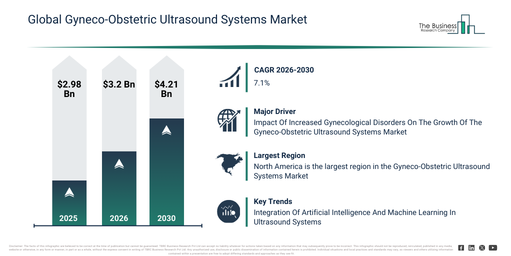
    The gyneco-obstetric ultrasound systems market size has demonstrated robust growth in recent years. It is projected to expand from $2.98 billion in 2025 to $3.2 billion in 2026, achieving a compound annual growth rate (CAGR) of 7.3%. The historic period’s growth is attributable to several factors, including the expansion of maternal healthcare services, increasing availability of diagnostic imaging infrastructure, growth in hospital-based obstetric care, rising use of ultrasound in routine gynecological exams, and the improved adoption of imaging technology.

    The gyneco-obstetric ultrasound systems market is poised for significant expansion in the coming years, with its size expected to reach $4.21 billion by 2030, reflecting a compound annual growth rate (CAGR) of 7.1%. This projected growth throughout the forecast period stems from factors such as increasing investments in women’s healthcare diagnostics, a rising demand for point-of-care ultrasound systems, the expansion of tele-ultrasound services, a growing emphasis on early pregnancy monitoring, and the enhanced integration of AI-assisted diagnostic tools. Prominent trends anticipated in this period include the increasing adoption of AI-enabled ultrasound imaging systems, a rising demand for 3D and 4D imaging capabilities, the expanding use of portable ultrasound devices, the growth of prenatal and women’s health screening programs, and an intensified focus on image quality and diagnostic accuracy.

    Access Your Free Sample Report for In-Depth Market Insights:

    https://www.thebusinessresearchcompany.com/sample.aspx?id=20823&type=smp

    Which Drivers Are Affecting Market Participation In The Gyneco-Obstetric Ultrasound Systems Market?

    The anticipated rise in gynecological disorder cases is projected to boost the expansion of the gyneco-obstetric ultrasound systems market. A gynecological disorder is defined as any medical condition impacting the female reproductive system, specifically encompassing the uterus, ovaries, cervix, and vagina. Several factors, including lifestyle shifts, obesity, environmental influences, postponed childbearing, and issues related to stress and mental health, contribute to the growing prevalence of these disorders. Gyneco-obstetric ultrasound systems are crucial for diagnosing and monitoring gynecological disorders, offering detailed images of reproductive organs that facilitate early detection and treatment strategy development. For example, reports from the American Cancer Society, a US-based non-profit focused on cancer elimination, indicated that in June 2024, around 13,820 new cases of invasive cervical cancer are expected to be diagnosed in 2024, with an estimated 4,360 women predicted to die from cervical cancer within the same timeframe. Consequently, the rising occurrence of gynecological disorders is a significant driver for the gyneco-obstetric ultrasound systems market expansion.

    What Segment Classifications Make Up The Gyneco-Obstetric Ultrasound Systems Market?

    The gyneco-obstetric ultrasound systems market covered in this report is segmented –

    1) By Product Type: 2D Ultrasound, 3D And 4D Ultrasound, Doppler Ultrasound

    2) By Modality: Portable, On-Platform

    3) By Application: Obstetrics, Gynecology

    4) By End-User: Hospitals, Diagnostic Centers, Gynecology Clinics

    Subsegments:

    1) By 2D Ultrasound: B-Mode Ultrasound, M-Mode Ultrasound

    2) By 3D And 4D Ultrasound: 3D Ultrasound, 4D Ultrasound (Real-Time Imaging)

    3) By Doppler Ultrasound: Color Doppler Ultrasound, Power Doppler Ultrasound, Duplex Ultrasound

    How Are New Market Trends Shaping The Landscape Of The Gyneco-Obstetric Ultrasound Systems Market?

    Leading enterprises within the gyneco obstetric ultrasound systems market are increasingly incorporating artificial intelligence and machine learning into their ultrasound platforms to streamline image analysis. These AI and machine learning innovations boost the precision in identifying irregularities, optimize operational workflows, and deliver immediate data for improved clinical judgments within gyneco-obstetric ultrasound systems. As an illustration, in February 2023, Samsung Healthcare, a South Korea-based medical equipment manufacturing company, unveiled HERA W10 Elite, an ultrasound system tailored for obstetrics and gynecology. This system boasts sophisticated IT integration to elevate diagnostic accuracy and operational effectiveness. It incorporates the Advanced MV-Flow for comprehensive 2D and 3D visualization of microcirculation, HeartAssist AI for automated fetal heart measurements, and the forthcoming Biometry Assist for single-click fetal growth assessment. Its OLED display and groundbreaking transducers establish a fresh benchmark in women’s health imaging.

    Which Major Firms Are Strengthening Their Position In The Gyneco-Obstetric Ultrasound Systems Market?

    Major companies operating in the gyneco-obstetric ultrasound systems market are Samsung Medison Co. Ltd, Hitachi Ltd, Canon Medical Systems Corporation, Siemens Healthcare Private Limited, Toshiba Medical Systems Corporation, Fujifilm Holdings Corporation, Koninklijke Philips NV, GE Healthcare, Analogic Corporation, Shenzhen Mindray Bio-Medical Electronics Co Ltd, Mindray Medical International Limited, Esaote SPA, SonoScape Medical Corp, Chison Medical Imaging Co Ltd, Promed Group Co Ltd, Shenzhen Biocare Bio-Medical Equipment Co Ltd, SuperSonic Imagine, Draminski S.A., Caresono Technology Co Ltd, Xuzhou Kejian Hi-tech Co Ltd

    Access The Complete Report For Deeper Market Insights:

    https://www.thebusinessresearchcompany.com/report/gyneco-obstetric-ultrasound-systems-global-market-report

    Which Global Regions Are Shaping The Competitive Landscape Of The Gyneco-Obstetric Ultrasound Systems Market?

    North America was the largest region in the gyneco-obstetric ultrasound systems market in 2025. Asia Pacific is expected to be the fastest-growing region in the forecast period. The regions covered in the gyneco-obstetric ultrasound systems market report are Asia-Pacific, South East Asia, Western Europe, Eastern Europe, North America, South America, Middle East, Africa.

    Request Your Customized Gyneco-Obstetric Ultrasound Systems Market Research Report for Competitive Advantage:

    https://www.thebusinessresearchcompany.com/customise?id=20823&type=smp

    Browse Through More Reports Similar to the Global Gyneco-Obstetric Ultrasound Systems Market 2026, By The Business Research Company

    Ultrasound Devices And Equipment Market 2026

    https://www.thebusinessresearchcompany.com/report/ultrasound-devices-and-equipment-market

    Ultrasound Devices Market 2026

    https://www.thebusinessresearchcompany.com/report/ultrasound-devices-market

    Ultrasound Systems Devices And Equipment Market Report 2026

    https://www.thebusinessresearchcompany.com/report/ultrasound-systems-devices-and-equipment-global-market-report

    Get in touch with us:

    The Business Research Company: https://www.thebusinessresearchcompany.com/

    Americas +1 310-496-7795

    Asia +44 7882 955267 & +91 8897263534

    Europe +44 7882 955267

    Email us at info@tbrc.info

    Follow us on:

    LinkedIn: https://in.linkedin.com/company/the-business-research-company

    YouTube: https://www.youtube.com/channel/UC24_fI0rV8cR5DxlCpgmyFQ

    Global Market Model: https://www.thebusinessresearchcompany.com/global-market-model
  • Gynecomastia Procedures Market Forecast 2026: Where the Industry Is Headed

    Gynecomastia Procedures Market Forecast 2026: Where the Industry Is Headed

    Uncover key drivers, emerging technologies, and competitive movements shaping the gynecomastia procedures market from 2026–2035 with trusted insights from The Business Research Company

    What are the forecasted starting (2026) and ending (2030) market sizes for the Gynecomastia Procedures Market?

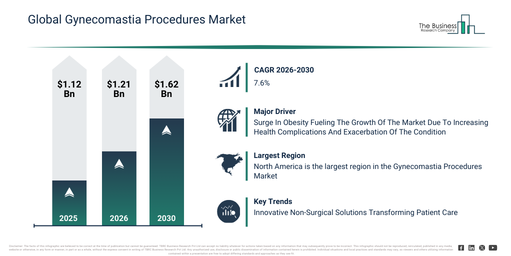
    The gynecomastia procedures market has experienced robust growth in recent years. Projections indicate it will expand from $1.12 billion in 2025 to $1.21 billion in 2026, showing a compound annual growth rate (CAGR) of 7.9%. This historic growth is attributable to heightened awareness of gynecomastia conditions, increased acceptance of cosmetic surgery, the expansion of private cosmetic clinics, the growing availability of advanced surgical tools, and improved diagnosis of hormonal disorders.

    The gynecomastia procedures market is projected to experience robust expansion over the coming years. By 2030, its value is anticipated to reach $1.62 billion, exhibiting a compound annual growth rate (CAGR) of 7.6%. This projected growth throughout the forecast period stems from factors such as a rising demand for outpatient cosmetic interventions, the increasing application of non-invasive energy-based technologies, an increase in aesthetic medicine investments, a heightened emphasis on individualized treatment strategies, and the greater uptake of ultrasound-assisted methods. Key developments expected during this period involve a growing inclination towards minimally invasive approaches, an increasing need for cosmetic treatments tailored for male health, the wider use of sophisticated liposuction techniques, an expansion in available non-surgical alternatives, and an intensified focus on results centered on the patient.

    Access Your Free Sample Report for In-Depth Market Insights:

    https://www.thebusinessresearchcompany.com/sample.aspx?id=24549&type=smp

    What Drivers Are Supporting Technological Adoption In The Gynecomastia Procedures Market?

    The growing incidence of obesity is anticipated to boost the expansion of the gynecomastia procedures market in the future. Obesity is a health condition marked by an excessive buildup of body fat, frequently assessed by a body mass index (BMI) of 30 or above, which can lead to various health issues. This increase in obesity stems from more sedentary lifestyles, where insufficient physical activity and extended periods of sitting contribute to weight gain and poor metabolic health. Gynecomastia procedures are effective in treating enlarged male breasts, a condition often made worse by obesity, as surplus fat in the chest region can resemble or intensify the appearance of gynecomastia, making surgical intervention a valuable option. For instance, in March 2023, according to the World Heart Foundation, a Switzerland-based non-government organization, globally around 2.3 billion adults and children are obese or overweight, and with the current obesity trend, it is estimated that the number of people living with obesity will reach 2.7 billion by 2025. Consequently, the rising prevalence of obesity is fueling the growth of the gynecomastia procedures market.

    What Segment Types Are Examined In The Gynecomastia Procedures Market?

    The gynecomastia procedures market covered in this report is segmented –

    1) By Procedure Type: Liposuction, Mastectomy, Thyroid Hormone Therapy, Medications, Ultrasound

    2) By Age Group: Adolescents, Adults, Elderly

    3) By End-User: Hospitals, Cosmetic Surgery Centers, Other End-Users

    Subsegments:

    1) By Liposuction: Tumescent Liposuction, Ultrasound-Assisted Liposuction, Power-Assisted Liposuction, Laser-Assisted Liposuction

    2) By Mastectomy: Subcutaneous Mastectomy, Bilateral Mastectomy, Nipple-Sparing Mastectomy

    3) By Thyroid Hormone Therapy: Synthetic Thyroid Hormones, Natural Desiccated Thyroid, Combination Therapy

    4) By Medications: Anti-Estrogen Medications, Aromatase Inhibitors, Selective Estrogen Receptor Modulators (SERMs)

    5) By Ultrasound: High-Intensity Focused Ultrasound (HIFU), Low-Intensity Focused Ultrasound, Acoustic Wave Therapy

    Which Trends Are Expected To Influence The Gynecomastia Procedures Market In The Upcoming Years?

    Leading firms in the gynecomastia procedures market are prioritizing innovative advancements, notably non-invasive solutions, to minimize surgical hazards, enhance patient recovery, and fulfill the demand for safer, more efficacious therapies. A non-invasive cure involves therapeutic approaches that bypass surgery, employing oral drugs or external treatments to manage conditions such as gynecomastia without requiring cuts or anesthetics. As an illustration, in June 2024, BioZen Limited, a biotechnology enterprise from the UK, unveiled a pioneering daily pill regimen specifically formulated to treat gynecomastia. This unique dual-therapy formula integrates a small quantity of tamoxifen (TAM) with indole-3-carbinol (I3C), a natural compound sourced from cruciferous vegetables, presented as an easy-to-take once-daily oral medicine. Early data from BioZen indicate that this combined method may comprehensively reverse the hormonal imbalance that causes gynecomastia, potentially providing a secure, potent, and broadly applicable substitute for surgical intervention.

    Who Are The Primary Competitors In The Global Gynecomastia Procedures Market?

    Major companies operating in the gynecomastia procedures market are Spire Healthcare Group plc, InMode Ltd., Lumenis Ltd., Cynosure LLC, Max Healthcare Institute Limited, Alma Lasers Ltd., Pristyn Care Private Limited, Cutera Inc., Solta Medical Inc., Erchonia Corporation, MicroAire Surgical Instruments LLC, Allure Medspa, Florida Plastic Surgery Group P.A., The Aesthetica, Austin Gynecomastia Center, Apyx Medical Corporation

    Access The Complete Report For Deeper Market Insights:

    https://www.thebusinessresearchcompany.com/report/gynecomastia-procedures-global-market-report

    Which Regions Are Poised For Strategic Growth In The Gynecomastia Procedures Market?

    North America was the largest region in the gynecomastia procedures market in 2025. Asia-Pacific is expected to be the fastest-growing region in the forecast period. The regions covered in the gynecomastia procedures market report are Asia-Pacific, South East Asia, Western Europe, Eastern Europe, North America, South America, Middle East, Africa.

    Request Your Customized Gynecomastia Procedures Market Research Report for Competitive Advantage:

    https://www.thebusinessresearchcompany.com/customise?id=24549&type=smp

    Browse Through More Reports Similar to the Global Gynecomastia Procedures Market 2026, By The Business Research Company

    Laparoscopic Gynecological Procedures Market Report 2026

    https://www.thebusinessresearchcompany.com/report/laparoscopic-gynecological-procedures-global-market-report

    Gynecology Drugs Market Report 2026

    https://www.thebusinessresearchcompany.com/report/gynecology-drugs-global-market-report

    Gynecology Surgical Forceps Market Report 2026

    https://www.thebusinessresearchcompany.com/report/gynecology-surgical-forceps-global-market-report

    Get in touch with us:

    The Business Research Company: https://www.thebusinessresearchcompany.com/

    Americas +1 310-496-7795

    Asia +44 7882 955267 & +91 8897263534

    Europe +44 7882 955267

    Email us at info@tbrc.info

    Follow us on:

    LinkedIn: https://in.linkedin.com/company/the-business-research-company

    YouTube: https://www.youtube.com/channel/UC24_fI0rV8cR5DxlCpgmyFQ

    Global Market Model: https://www.thebusinessresearchcompany.com/global-market-model
  • Gynecology Robotic Surgery Industry Growth Insights: Revenue Forecast to 2030

    Gynecology Robotic Surgery Industry Growth Insights: Revenue Forecast to 2030

    Uncover key drivers, emerging technologies, and competitive movements shaping the gynecology robotic surgery market from 2026–2035 with trusted insights from The Business Research Company

    What upper market value could the Gynecology Robotic Surgery Market reach by 2030 starting from 2026 levels?

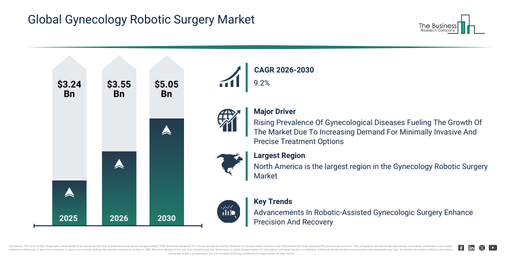
    The gynecology robotic surgery market has experienced robust expansion in recent years. Forecasts suggest its value will climb from $3.24 billion in 2025 to $3.55 billion in 2026, achieving a compound annual growth rate (CAGR) of 9.5%. Key drivers for this historical growth include the escalating prevalence of gynecological ailments, a growing patient demand for less invasive surgical options, the proliferation of robotic surgery systems in healthcare facilities, enhanced patient outcomes from robotic-assisted interventions, and the advancement of surgical expertise.

    The market for gynecology robotic surgery is projected to experience substantial expansion over the upcoming years. This market is anticipated to reach $5.05 billion by 2030, demonstrating a compound annual growth rate (CAGR) of 9.2%. Several factors will contribute to this growth during the forecast period, including the increased uptake of advanced robotic platforms, a rise in investments dedicated to autonomous surgical systems, the broader application of robotic surgery in outpatient environments, an escalating need for highly precise gynecological treatments, and the expanding incorporation of AI-powered surgical planning. Key trends identified for the forecast period encompass a greater acceptance of robotic-assisted gynecological interventions, a surging preference for minimally invasive surgical methods, the wider deployment of robotic systems in oncology, a heightened emphasis on improving surgeon training and proficiency, and improved integration of sophisticated imaging and navigation technologies.

    Access Your Free Sample Report for In-Depth Market Insights:

    https://www.thebusinessresearchcompany.com/sample.aspx?id=27298&type=smp

    Which Drivers Are Influencing Long-Term Growth In The Gynecology Robotic Surgery Market?

    The future expansion of the gynecology robotic surgery market is anticipated to be fueled by the rising incidence of gynecological diseases. These conditions are defined as medical ailments impacting female reproductive organs like the uterus, ovaries, and cervix, thereby influencing women’s reproductive health and overall welfare. The growing occurrence of gynecological diseases can be partly attributed to shifts in lifestyle, including inadequate diet, insufficient physical activity, and escalating obesity levels, all of which can disturb hormonal equilibrium and reproductive health. Within gynecology, robotic surgery provides a method that is both minimally invasive and exceptionally precise for managing gynecological conditions, contributing to reduced pain, less bleeding, and quicker recovery for procedures addressing issues like fibroids, endometriosis, and gynecologic cancers. As an illustration, Cancer Australia, an Australian government body, reported in January 2025 that in Australia, gynecological cancers led to 2,171 deaths in 2022 and are projected to cause 2,235 deaths in 2024, with women facing a 1 in 73 (1.4%) chance of mortality from these cancers by age 85 during their lifetime. Consequently, the expanding volume of gynecological disease cases is propelling the growth of the gynecology robotic surgery market.

    Which Segments Are Driving Activity In The Gynecology Robotic Surgery Market?

    The gynecology robotic surgery market covered in this report is segmented –

    1) By Product: Robotic Platform, Instrument And Accessories, Robotic Platform Services

    2) By Type Of Procedure: Benign Gynecological Procedures, Procedures In Gynecological Oncology

    3) By Application: Hysterectomy, Myomectomy, Oophorectomy, Sacrocolpopexy, Other Applications

    4) By End-User: Hospitals, Ambulatory Surgical Centers, Specialty Clinics

    Subsegments:

    1) By Robotic Platform: Tethered Robotic Systems, Autonomous Robotic Systems, Teleoperated Robotic Systems, Portable Robotic Platforms

    2) By Instrument And Accessories: Surgical Instruments, Endoscopic Cameras, Trocars And Cannulas, Robotic Arm Accessories, Energy Devices

    3) By Robotic Platform Services: Installation And Integration Services, Maintenance And Repair Services, Training And Education Services, Software Upgrade Services, Remote Monitoring Services

    What Trends Are Driving The Growth Trajectory Of The Gynecology Robotic Surgery Market?

    Major companies within the gynecology robotic surgery market are concentrating on developing innovative solutions, such as next-generation robotic-assisted surgical systems, to enhance surgical precision, reduce operative times, and improve patient recovery compared with conventional laparoscopic or open surgery methods. Robotic surgical systems integrate advanced robotic arms, 3D high-definition visualization, and surgeon-controlled instruments, providing superior dexterity, stability, and access in minimally invasive procedures. For instance, in October 2025, Medtronic Plc, a US-based medical technology company, launched its third IDE study for the Hugo Robotic Surgery System, specifically targeting gynecological procedures. The Hugo system combines modular robotic arms, ergonomic surgeon consoles, and integrated imaging and instrumentation; it functions by enabling surgeons to perform complex procedures with enhanced precision, real-time visualization, and smaller incisions. Its unique features include modular architecture, compatibility with a broad range of instruments, and advanced haptic feedback. Applications for this system span hysterectomies, myomectomies, and other gynecologic minimally invasive surgeries, offering benefits such as reduced blood loss, shorter hospital stays, improved recovery times, and increased surgical accuracy.

    Which Key Market Players Are Investing In Expansion And Innovation Within The Gynecology Robotic Surgery Market?

    Major companies operating in the gynecology robotic surgery market are Medtronic PLC, Stryker Corporation, Intuitive Surgical Inc., KARL STORZ SE & Co. KG, Sina Robotics And Medical Innovators Co. Ltd., CMR Surgical Limited, SS Innovations International Inc., Distalmotion SA, Ronovo Surgical Inc., Levita Magnetics International Corp., Titan Medical Inc., Virtual Incision Corporation, Nanjing Perlove Medical Equipment Co. Ltd., Edge Medical Robotics Corporation, Momentis Surgical Ltd., Virtuoso Surgical Inc., Moon Surgical SAS, GynoBotics Inc., Harbin Sagebot Intelligent Medical Equipment Co. Ltd., Asensus Surgical Inc., Medicaroid Corporation

    Access The Complete Report For Deeper Market Insights:

    https://www.thebusinessresearchcompany.com/report/gynecology-robotic-surgery-global-market-report

    Which Regions Are Projected To Dominate The Gynecology Robotic Surgery Market In The Coming Years?

    North America was the largest region in the gynecology robotic surgery market in 2025. Asia-Pacific is expected to be the fastest-growing region in the forecast period. The regions covered in the gynecology robotic surgery market report are Asia-Pacific, South East Asia, Western Europe, Eastern Europe, North America, South America, Middle East, Africa.

    Request Your Customized Gynecology Robotic Surgery Market Research Report for Competitive Advantage:

    https://www.thebusinessresearchcompany.com/customise?id=27298&type=smp

    Browse Through More Reports Similar to the Global Gynecology Robotic Surgery Market 2026, By The Business Research Company

    Mobile Wallet Market Report 2026

    https://www.thebusinessresearchcompany.com/report/mobile-wallet-global-market-report

    Mobile Payment Technologies Market Report 2026

    https://www.thebusinessresearchcompany.com/report/mobile-payment-technologies-global-market-report

    Consumer Mobile Payment Market Report 2026

    https://www.thebusinessresearchcompany.com/report/consumer-mobile-payment-global-market-report

    Get in touch with us:

    The Business Research Company: https://www.thebusinessresearchcompany.com/

    Americas +1 310-496-7795

    Asia +44 7882 955267 & +91 8897263534

    Europe +44 7882 955267

    Email us at info@tbrc.info

    Follow us on:

    LinkedIn: https://in.linkedin.com/company/the-business-research-company

    YouTube: https://www.youtube.com/channel/UC24_fI0rV8cR5DxlCpgmyFQ

    Global Market Model: https://www.thebusinessresearchcompany.com/global-market-model

  • Global Gut Microbiota Market Performance Report: Global Trends 2026–2030

    Global Gut Microbiota Market Performance Report: Global Trends 2026–2030

    Uncover key drivers, emerging technologies, and competitive movements shaping the gut microbiota market from 2026–2035 with trusted insights from The Business Research Company

    What level of CAGR-driven expansion is anticipated in the Gut Microbiota Market between 2026 and 2030?

    The gut microbiota market has experienced rapid expansion in recent years. This market is set to increase from $0.65 billion in 2025 to $0.77 billion in 2026, exhibiting a compound annual growth rate (CAGR) of 18.0%. The growth observed in the past can be attributed to several factors, including a better understanding of gut health and immunity, the growing consumption of dietary supplements, the expansion of functional food markets, an increase in academic research concerning microbiota, and heightened consumer awareness regarding digestive health.

    The gut microbiota market is projected for substantial expansion in the coming years. By 2030, this market is anticipated to reach a valuation of $1.47 billion, exhibiting a compound annual growth rate (CAGR) of 17.7%. This projected growth is driven by several factors, including the escalating development of therapeutics targeting the microbiome, increased funding for gut health investigations, the broadening of personalized nutrition services, the wider adoption of microbiome diagnostic tools, and a greater emphasis on healthcare solutions focused on prevention. Key trends expected during this period involve a surge in the uptake of probiotic and prebiotic items, a heightened emphasis on customized nutritional approaches, an increase in research dedicated to microbiome-derived treatments, a rise in the consumption of functional and fermented foods, and improved utilization of diagnostic instruments for gut health.

    Access Your Free Sample Report for In-Depth Market Insights:

    https://www.thebusinessresearchcompany.com/sample.aspx?id=23411&type=smp

    What Drivers Are Affecting Demand-Supply Dynamics In The Gut Microbiota Market?

    The increasing need for individualized healthcare approaches is anticipated to drive expansion in the gut microbiota market in the future. This medical approach customizes therapies for specific patients, considering their genetic makeup, environmental influences, and lifestyle choices, with the aim of maximizing positive results and enhancing patient care. The demand for personalized medicine is on the rise, primarily due to breakthroughs in genomics and biotechnology that facilitate more accurate identification of genetic profiles, thereby enabling customized treatments that are more effective and have fewer adverse reactions. For gut microbiota, personalized medicine proves beneficial by adapting treatments according to a person’s distinct microbiome makeup, thereby optimizing gut health and enhancing results for conditions related to digestion and metabolism. As an illustration, in February 2024, data from the Personalized Medicine Coalition (PMC), a US-based nonprofit, revealed that the U.S. Food and Drug Administration (FDA) granted approval to 26 new personalized medicines in 2023, representing a notable increase from the 12 approved in 2022. Consequently, the escalating demand for personalized medicine is fueling the expansion of the gut microbiota market.

    How Is The Gut Microbiota Market Organized Into Various Segments?

    The gut microbiota market covered in this report is segmented –

    1) By Product: Prebiotics, Probiotics, Drugs, Supplements, Other Products

    2) By Application: Digestive Health, Immune Health, Weight Management, Mental Health, Cardiovascular Health

    3) By Distribution Channel: Pharmacies And Drugstores, Online Retail, Health Food Stores, Supermarkets And Hypermarkets, Specialty Stores

    4) By End-Users: Adults, Children, Elderly

    Subsegments:

    1) By Prebiotics: Fructooligosaccharides (Fos), Galactooligosaccharides (Gos), Inulin, Resistant Starch, Beta-Glucans, Arabinogalactans, Pectins

    2) By Probiotics: Lactobacillus, Bifidobacterium, Saccharomyces, Streptococcus, Bacillus, Escherichia

    3) By Drugs: Antibiotics, Bacteriophage Therapy, Gut Microbiota Modulators, Immunomodulators, Antidiarrheal Agents, Laxatives

    4) By Supplements: Synbiotics, Postbiotics, Enzyme Supplements, Vitamin D Supplements, Omega-3 Fatty Acids, Herbal Extracts

    5) By Other Products: Functional Foods, Fermented Foods, Beverages, Gut Health Diagnostic Kits, Dietary Fiber Products

    What Upcoming Trends Are Likely To Define The Future Path Of The Gut Microbiota Market?

    Leading companies within the gut microbiota sector are concentrating on creating novel solutions, such as orally delivered fecal microbiota, to address various gastrointestinal conditions and disorders. This approach involves a treatment where a capsule or pill, containing beneficial bacteria sourced from a healthy donor’s stool, is consumed to help restore equilibrium to the gut microbiome. For instance, in April 2023, Seres Therapeutics Inc., a US-based microbiome therapeutics platform company, secured FDA approval for Vowst. Vowst is the inaugural oral fecal microbiota product specifically formulated to prevent recurring Clostridioides difficile (C. difficile) infection (CDI) in individuals aged 18 and above, intended for administration following antibacterial treatment for recurrent CDI. This clearance represents a substantial progression in CDI management, offering a more convenient and patient-centric option compared to conventional fecal microbiota transplants, which are typically administered via colonoscopy or enema. Its oral preparation has the potential to enhance treatment compliance and broaden the integration of microbiome-based therapies within healthcare.

    Who Are The Core Companies Influencing Trends In The Gut Microbiota Market?

    Major companies operating in the gut microbiota market are Danone S.A., DuPont de Nemours Inc., International Flavors & Fragrances Inc., Seres Therapeutics, Yakult Honsha Co. Ltd., Chr. Hansen Holding A/S, Lallemand Inc., Lifeway Foods Inc., BioGaia AB, Probi AB, Seed Health, Enterome, Vedanta Biosciences Inc., Evolve BioSystems Inc., Winclove Probiotics B.V., Kallyope Inc., Sun Genomics Inc., Synlogic Inc., OpenBiome, Codex Labs Corp.

    Access The Complete Report For Deeper Market Insights:

    https://www.thebusinessresearchcompany.com/report/gut-microbiota-global-market-report

    Which Region Is Expected To Experience The Fastest Growth In The Gut Microbiota Market?

    North America was the largest region in the gut microbiota market in 2025. Asia-Pacific is expected to be the fastest-growing region in the forecast period. The regions covered in the gut microbiota market report are Asia-Pacific, South East Asia, Western Europe, Eastern Europe, North America, South America, Middle East, Africa.

    Request Your Customized Gut Microbiota Market Research Report for Competitive Advantage:

    https://www.thebusinessresearchcompany.com/customise?id=23411&type=smp

    Browse Through More Reports Similar to the Global Gut Microbiota Market 2026, By The Business Research Company

    Probiotics Food And Cosmetics Market Report 2026

    https://www.thebusinessresearchcompany.com/report/probiotics-food-and-cosmetics-global-market-report

    Microbiomes Market Report 2026

    https://www.thebusinessresearchcompany.com/report/microbiomes-global-market-report

    Probiotics Market Report 2026

    https://www.thebusinessresearchcompany.com/report/probiotics-global-market-report

    Get in touch with us:

    The Business Research Company: https://www.thebusinessresearchcompany.com/

    Americas +1 310-496-7795

    Asia +44 7882 955267 & +91 8897263534

    Europe +44 7882 955267

    Email us at info@tbrc.info

    Follow us on:

    LinkedIn: https://in.linkedin.com/company/the-business-research-company

    YouTube: https://www.youtube.com/channel/UC24_fI0rV8cR5DxlCpgmyFQ

    Global Market Model: https://www.thebusinessresearchcompany.com/global-market-model