Category: HealthcareServices

  • Disease Registry Software Market Forecast: How Big Will It Be by 2030?

    Disease Registry Software Market Forecast: How Big Will It Be by 2030?

    Uncover key drivers, emerging technologies, and competitive movements shaping the disease registry software market from 2026–2035 with trusted insights from The Business Research Company

    How is the Disease Registry Software Market size predicted to change over the forecast window of 2026–2035?

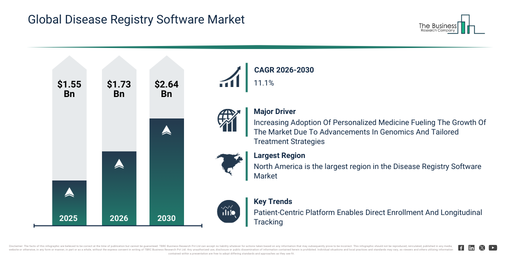
    The disease registry software market has seen significant expansion in recent years. It is projected to increase from $1.55 billion in 2025 to $1.73 billion in 2026, exhibiting a compound annual growth rate (CAGR) of 11.4%. The historical growth of this market can be attributed to the escalating digitization of patient records, the proliferation of disease-specific research programs, rising regulatory reporting requirements, the widespread adoption of electronic health records, and the growing utilization of data-driven clinical decision tools.

    The disease registry software market is anticipated to experience substantial growth in the coming years, with projections indicating it will expand to $2.64 billion by 2030, demonstrating a compound annual growth rate (CAGR) of 11.1%. This expansion during the forecast period is primarily attributed to factors such as the escalating demand for population health analytics, increasing integration with AI-driven clinical insights, the broadened deployment of cloud-based registries, a heightened focus on outcomes-based healthcare, and the greater incorporation of real-world data in clinical research. Significant trends expected during this period include the rising adoption of integrated disease registry platforms, a surge in the utilization of cloud-based patient data management, an increased emphasis on regulatory-compliant data reporting, the proliferation of EHR-integrated registry solutions, and a stronger focus on gathering real-world evidence.

    Access Your Free Sample Report for In-Depth Market Insights:

    https://www.thebusinessresearchcompany.com/sample.aspx?id=28208&type=smp

    Which Drivers Are Contributing To The Expansion Of The Disease Registry Software Market?

    The expanding integration of personalized medicine is projected to stimulate the growth of the disease registry software market in the coming years. Personalized medicine refers to a medical methodology that customizes treatment and prevention approaches tailored to an individual’s distinct genetic makeup, lifestyle, and environmental factors. The escalating acceptance of personalized medicine is predominantly driven by advancements in genomics, which facilitate precise identification of genetic variations and individualized treatment options. Disease registry software bolsters personalized medicine by systematically gathering and overseeing patient health data, thereby enabling tailored treatment regimens and more informed clinical choices. It also streamlines access to and analysis of data, consequently improving patient outcomes and furthering precision healthcare. For instance, in February 2024, according to the Personalized Medicine Coalition (PMC), a US-based nonprofit organization, the U.S. Food and Drug Administration (FDA) approved 26 new personalized medicines in 2023, a significant increase from the 12 approved in 2022. Therefore, the increasing adoption of personalized medicine is driving the growth of the disease registry software market.

    What Segment Classifications Make Up The Disease Registry Software Market?

    The disease registry software market covered in this report is segmented –

    1) By Type: Standalone, Integrated

    2) By Database: Public, Commercial

    3) By Deployment Mode: On-Premises, Cloud-Based

    4) By End-User: Hospitals, Government Organizations, Research Centers, Pharmaceutical Companies, Other End-Users

    Subsegments:

    1) By Standalone: Patient Registry Software, Population Health Registry Software, Research Registry Software, Custom Or Single-Disease Registry Software

    2) By Integrated: Electronic Health Record (EHR)-Integrated Registry Software, Practice Management System-Integrated Registry Software, Clinical Decision Support (CDS)-Integrated Registry Software, Health Information Exchange (HIE)-Integrated Registry Software

    What Trends Are Projected To Support The Growth Of The Disease Registry Software Market?

    Leading companies within the disease registry software market are concentrating on developing patient-centric registries, such as digital registers, to track outcomes and support individualized care. Digital registers denote electronic systems or software platforms engineered to systematically gather, store, and manage patient health information, replacing traditional paper-based registries. As an illustration, in August 2025, the American College of Cardiology (ACC), a US-based nonprofit medical association, introduced the CONNECT-HCM Registry. This nationwide digital registry was created to enhance the understanding and management of hypertrophic cardiomyopathy (HCM), which is the most common genetic cardiovascular disease. The registry facilitates direct patient enrollment beyond single centers, thereby closing long-standing diagnostic and care gaps. This platform connects registry data with electronic health records through Arboretum’s Hugo Connect platform, assisting researchers in monitoring symptoms, imaging, treatments, and outcomes over an extended period.

    Which Major Firms Are Strengthening Their Position In The Disease Registry Software Market?

    Major companies operating in the disease registry software market are Optum Inc., IQVIA Holdings Inc., Syneos Health Inc., Epic Systems Corporation, Premier Inc., MRO Corp., ImageTrend Inc., Anju Software Inc., BayaTree Inc., Medrio Inc., ArborMetrix Inc., Cedaron Medical Inc., Evado Pty. Ltd., OpenClinica LLC, Dacima Software Inc., Global Vision Technologies Inc., Ordinal Data Inc., Healthmonix LLC, Axis Clinical Software Inc., Vanderbilt University

    Access The Complete Report For Deeper Market Insights:

    https://www.thebusinessresearchcompany.com/report/disease-registry-software-global-market-report

    Which Region Is Anticipated To See The Fastest Growth In The Disease Registry Software Market?

    North America was the largest region in the disease registry software market in 2025. The regions covered in the disease registry software market report are Asia-Pacific, South East Asia, Western Europe, Eastern Europe, North America, South America, Middle East, Africa.

    Request Your Customized Disease Registry Software Market Research Report for Competitive Advantage:

    https://www.thebusinessresearchcompany.com/customise?id=28208&type=smp

    Browse Through More Reports Similar to the Global Disease Registry Software Market 2026, By The Business Research Company

    Healthcare Compliance Software Market Report 2026

    https://www.thebusinessresearchcompany.com/report/healthcare-compliance-software-global-market-report

    Disease Management Apps Market Report 2026

    https://www.thebusinessresearchcompany.com/report/disease-management-apps-global-market-report

    Personal Health Record Software Market Report 2026

    https://www.thebusinessresearchcompany.com/report/personal-health-record-software-global-market-report

    Get in touch with us:

    The Business Research Company: https://www.thebusinessresearchcompany.com/

    Americas +1 310-496-7795

    Asia +44 7882 955267 & +91 8897263534

    Europe +44 7882 955267

    Email us at info@tbrc.info

    Follow us on:

    LinkedIn: https://in.linkedin.com/company/the-business-research-company

    YouTube: https://www.youtube.com/channel/UC24_fI0rV8cR5DxlCpgmyFQ

    Global Market Model: https://www.thebusinessresearchcompany.com/global-market-model
  • Fatty Liver Treatment Market Research: Growth Projections and Trends 2030

    Fatty Liver Treatment Market Research: Growth Projections and Trends 2030

    Uncover key drivers, emerging technologies, and competitive movements shaping the fatty liver treatment market from 2026–2035 with trusted insights from The Business Research Company

    Starting from its 2026 valuation, what market size is the Fatty Liver Treatment Market expected to reach by 2030?

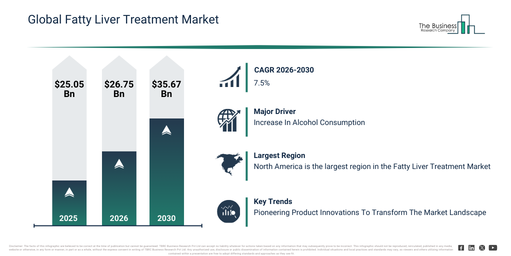
    The fatty liver treatment market size has seen substantial growth in recent years. It is anticipated to expand from $25.05 billion in 2025 to $26.75 billion in 2026, demonstrating a compound annual growth rate (CAGR) of 6.8%. This historical growth can be linked to factors such as increasing obesity rates, the rising prevalence of diabetes, enhancements in liver diagnostic tools, heightened awareness of liver health, and the expansion of hepatology clinics.

    The fatty liver treatment market size is projected to show robust growth in the upcoming years. It is expected to expand to $35.67 billion by 2030, achieving a compound annual growth rate (CAGR) of 7.5%. This growth during the forecast period is fueled by the development of novel NAFLD drugs, a rise in the adoption of non-invasive diagnostics, an increase in preventive healthcare measures, the expansion of tele-hepatology services, and greater investment in liver disease research. Significant trends anticipated for this period encompass the rising prevalence of non-alcoholic fatty liver disease, an increased focus on lifestyle-based treatment approaches, the growing application of targeted drug therapies, the expansion of early liver disease screening, and the integration of digital health solutions for disease monitoring.

    Access Your Free Sample Report for In-Depth Market Insights:

    https://www.thebusinessresearchcompany.com/sample.aspx?id=12581&type=smp

    What Drivers Are Driving Adoption Within The Fatty Liver Treatment Market?

    The future expansion of the fatty liver treatment market is anticipated to be driven by rising alcohol consumption. Alcohol consumption involves ingesting drinks that contain alcohol, which is a psychoactive substance known for its depressant impact on the central nervous system. This can exacerbate existing fatty liver disease and contribute to the development of more severe hepatic issues, such as alcoholic fatty liver disease (AFLD) and alcoholic hepatitis. As an illustration, the OECD, a Paris-based intergovernmental organization, reported in November 2025 that the average per capita annual alcohol intake across its member countries was 8.5 liters of pure alcohol in 2023. Consequently, the rise in alcohol consumption is a key factor propelling the expansion of the fatty liver treatment market.

    What Segments Are Included Within The Fatty Liver Treatment Market?

    The fatty liver treatment market covered in this report is segmented –

    1) By Treatment Type: Anti-Viral Drugs, Chemotherapy Drugs, Targeted Therapy, Anti-Fibrotic Drugs

    2) By Disease Type: Hepatitis, Liver Cancer, Non-Alcoholic Fatty Liver Disease, Other Diseases

    3) By End User: Hospitals, Ambulatory Surgery Centers, Other End Users

    Subsegments:

    1) By Anti-Viral Drugs: Direct-Acting Antivirals (DAAs), Nucleos(t)ide Analogs

    2) By Chemotherapy Drugs: Conventional Chemotherapy Agents, Novel Chemotherapeutics Under Investigation

    3) By Targeted Therapy: Small Molecule Inhibitors, Monoclonal Antibodies

    4) By Anti-Fibrotic Drugs: PPAR Agonists, FXR Agonists, GLP-1 Receptor Agonists, SGLT2 Inhibitors, Other Insulin Sensitizers

    Which Competitive Trends Are Impacting The Structure Of The Fatty Liver Treatment Market?

    Major companies operating in the fatty liver treatment market are concentrating on developing innovative solutions, such as next-generation metabolic-modulating biologics, to satisfy the escalating demand for effective therapies addressing the underlying mechanisms of NAFLD and NASH. These biologic treatments engage with critical metabolic and inflammatory pathways, providing a more targeted and disease-modifying method compared to traditional lifestyle-based interventions, which offer restricted therapeutic impact for advanced disease. For instance, in March 2023, Akero Therapeutics, a US-based biotechnology company, released positive Phase II reports regarding efruxifermin, prescribed for the management of non-invasively diagnosed nonalcoholic fatty liver disease (NAFLD) and nonalcoholic steatohepatitis (NASH). It represents a distinct Fc-FGF21 fusion protein that imitates the biological actions of fibroblast growth factor 21 (FGF21), which controls various metabolic pathways and cellular processes.

    Who Are The Core Companies Influencing Trends In The Fatty Liver Treatment Market?

    Major companies operating in the fatty liver treatment market are Pfizer Inc., Johnson & Johnson Services Inc., Hoffmann La Roche Ltd., AstraZeneca plc, Merck & Co. Inc., AbbVie Inc., Bayer AG, Novartis AG, Sanofi S.A., The Bristol-Myers Squibb Company, Gilead Sciences Inc., Novo Nordisk A/S, Intercept Pharmaceuticals Inc., Madrigal Pharmaceuticals Inc., Genfit, Conatus Pharmaceuticals Inc., NGM Biopharmaceuticals Inc., Cardax Inc., Eisai Co. Ltd., Alnylam Pharmaceuticals Inc.

    Access The Complete Report For Deeper Market Insights:

    https://www.thebusinessresearchcompany.com/report/fatty-liver-treatment-global-market-report

    Which Geographic Areas Are Emerging As Strong Markets For The Fatty Liver Treatment Market?

    North America was the largest region in the fatty liver treatment market in 2025. Asia-Pacific is expected to be the fastest-growing region in the forecast period. The regions covered in the fatty liver treatment market report are Asia-Pacific, South East Asia, Western Europe, Eastern Europe, North America, South America, Middle East, Africa.

    Request Your Customized Fatty Liver Treatment Market Research Report for Competitive Advantage:

    https://www.thebusinessresearchcompany.com/customise?id=12581&type=smp

    Browse Through More Reports Similar to the Global Fatty Liver Treatment Market 2026, By The Business Research Company

    Non Alcoholic Steatohepatitis Treatment Market Report 2026

    https://www.thebusinessresearchcompany.com/report/non-alcoholic-steatohepatitis-treatment-global-market-report

    Liver Diseases Therapeutics Market Report 2026

    https://www.thebusinessresearchcompany.com/report/liver-diseases-therapeutics-global-market-report

    Liver Metastases Treatment Market Report 2026

    https://www.thebusinessresearchcompany.com/report/liver-metastases-treatment-global-market-report

    Get in touch with us:

    The Business Research Company: https://www.thebusinessresearchcompany.com/

    Americas +1 310-496-7795

    Asia +44 7882 955267 & +91 8897263534

    Europe +44 7882 955267

    Email us at info@tbrc.info

    Follow us on:

    LinkedIn: https://in.linkedin.com/company/the-business-research-company

    YouTube: https://www.youtube.com/channel/UC24_fI0rV8cR5DxlCpgmyFQ

    Global Market Model: https://www.thebusinessresearchcompany.com/global-market-model

  • Disease Forecasting Platform Market Report 2026: Strategic Insights and Revenue Outlook

    Disease Forecasting Platform Market Report 2026: Strategic Insights and Revenue Outlook

    Uncover key drivers, emerging technologies, and competitive movements shaping the disease forecasting platform market from 2026–2035 with trusted insights from The Business Research Company

    What market expansion outlook does the Disease Forecasting Platform Market show for the 2026–2030 period?

    The disease forecasting platform market has shown substantial growth in recent times. It is projected to increase from $2.76 billion in 2025 to $3.41 billion in 2026, exhibiting a compound annual growth rate (CAGR) of 23.8%. This historical growth can be attributed to several factors including a rise in infectious disease outbreaks, the expansion of epidemiological research capabilities, the presence of extensive health datasets, the widespread adoption of cloud-based analytics platforms, and the progress of public health surveillance programs.

    The disease forecasting platform market size is projected to experience substantial growth in the upcoming years, with its valuation expected to reach $7.96 billion by 2030, demonstrating a compound annual growth rate (CAGR) of 23.6%. This expansion during the forecast period is largely driven by factors such as escalating investments in predictive healthcare analytics, a heightened demand for tools capable of early outbreak detection, the proliferation of AI-driven public health platforms, increasing integration of IoT-based health monitoring systems, and a greater emphasis on proactive disease prevention strategies. Concurrently, significant trends anticipated in this period include the wider deployment of AI-based disease prediction models, an increasing incorporation of real-time health data streams, the expanded utilization of environmental and demographic analytics, the development of early warning and alert systems, and an enhanced focus on predictive public health planning.

    Access Your Free Sample Report for In-Depth Market Insights:

    https://www.thebusinessresearchcompany.com/sample.aspx?id=28207&type=smp

    What Drivers Are Shaping The Development Of The Disease Forecasting Platform Market?

    The increasing occurrence of non-communicable diseases is projected to boost the expansion of the disease forecasting platform in the future. These conditions are not passed from person to person, often developing from genetic predispositions, lifestyle choices, or environmental factors, encompassing ailments such as heart disease, diabetes, and cancer. The rise in NCD prevalence is attributed to unhealthy habits, including inadequate diet, smoking, and insufficient physical activity. Disease forecasting platforms assist in managing non-communicable diseases by utilizing big data analytics, machine learning, and continuous health monitoring to foresee disease patterns, pinpoint vulnerable populations, facilitate prompt interventions, and inform tailored prevention strategies, ultimately enhancing public health outcomes and lessening the impact of chronic illnesses. For instance, in July 2025, according to a Kenya Vital Statistics Report by the Kenya National Bureau of Statistics, a Kenya-based government agency, non-communicable diseases notably increased, representing 61.7% of the overall disease burden in 2024, an increase from 52.4% in 2023. Consequently, the growing incidence of non-communicable diseases is fueling the development of the disease forecasting platform market.

    What Segment Types Are Examined In The Disease Forecasting Platform Market?

    The disease forecasting platform market covered in this report is segmented –

    1) By Component: Software, Hardware, Services

    2) By Deployment Mode: Cloud-Based, On-Premises

    3) By Application: Infectious Disease Surveillance, Chronic Disease Management, Epidemiology, Public Health, Other Applications

    4) By End-User: Hospitals And Clinics, Government And Public Health Agencies, Research Institutes, Pharmaceutical Companies, Other End-Users

    Subsegments:

    1) By Software: Predictive Analytics Tools, Epidemiological Modeling Software, Artificial Intelligence And Machine Learning Algorithms, Data Visualization And Dashboard Tools, Cloud-Based Forecasting Platforms

    2) By Hardware: Internet of Things Enabled Medical Devices, Servers And Data Storage Systems, Networking And Connectivity Devices, Edge Computing Devices, Sensors And Monitoring Equipment

    3) By Services: Managed Services, Consulting And Integration Services, Training And Support Services, Data Management And Analytics Services, Public Health Advisory Or Forecasting Services

    Which Trends Are Influencing The Performance And Direction Of The Disease Forecasting Platform Market?

    Leading companies in the disease forecasting platform market are concentrating on adopting advanced technologies, such as artificial intelligence-powered predictive analytics, to facilitate real-time disease monitoring and proactive public health interventions. This AI-driven predictive analytics involves employing artificial intelligence, including machine learning algorithms and statistical modeling, to foresee future disease patterns, identify anomalies promptly, and provide actionable insights for timely action and resource distribution. For example, in July 2025, Seegene Inc., a biotechnology company based in South Korea, introduced its STAgora platform. This platform integrates PCR-derived diagnostic information with over 40 sophisticated statistical and AI tools to provide real-time, global visualization of infectious disease trends. It enables the early detection of unusual pathogen patterns, supports predictive modeling for potential outbreaks, and improves situational awareness from local to international levels. The system is engineered to function as a real-time infectious disease intelligence system, allowing for rapid situational understanding and bolstering proactive public health responses.

    Who Are The Primary Competitors In The Global Disease Forecasting Platform Market?

    Major companies operating in the disease forecasting platform market are International Business Machines Corporation, Oracle Corporation, Metabiota Inc., SAS Institute Inc., Tempus AI Inc., HealthVerity Inc., Airfinity Ltd., Quantori LLC, ProMED-mail Inc., EcoHealth Alliance Inc., BlueDot Inc., Hyfe Inc., Biobot Analytics Inc., Cayaba Care Inc., EPIWATCH Pty Ltd, GIDEON Informatics Inc., Kinsa Inc., Epistemix, Epidemico Inc., EpiDetect AI Inc.

    Access The Complete Report For Deeper Market Insights:

    https://www.thebusinessresearchcompany.com/report/disease-forecasting-platform-global-market-report

    Which Global Regions Are Shaping The Competitive Landscape Of The Disease Forecasting Platform Market?

    North America was the largest region in the disease forecasting platform market in 2025. Asia-Pacific is expected to be the fastest-growing region in the forecast period. The regions covered in the disease forecasting platform market report are Asia-Pacific, South East Asia, Western Europe, Eastern Europe, North America, South America, Middle East, Africa.

    Request Your Customized Disease Forecasting Platform Market Research Report for Competitive Advantage:

    https://www.thebusinessresearchcompany.com/customise?id=28207&type=smp

    Browse Through More Reports Similar to the Global Disease Forecasting Platform Market 2026, By The Business Research Company

    Clinical Data Analytics Solutions Market Report 2026

    https://www.thebusinessresearchcompany.com/report/clinical-data-analytics-solutions-global-market-report

    Healthcare Predictive Analytics Market Report 2026

    https://www.thebusinessresearchcompany.com/report/healthcare-predictive-analytics-global-market-report

    Artificial Intelligence In Epidemiology Market Report 2026

    https://www.thebusinessresearchcompany.com/report/artificial-intelligence-in-epidemiology-global-market-report

    Get in touch with us:

    The Business Research Company: https://www.thebusinessresearchcompany.com/

    Americas +1 310-496-7795

    Asia +44 7882 955267 & +91 8897263534

    Europe +44 7882 955267

    Email us at info@tbrc.info

    Follow us on:

    LinkedIn: https://in.linkedin.com/company/the-business-research-company

    YouTube: https://www.youtube.com/channel/UC24_fI0rV8cR5DxlCpgmyFQ

    Global Market Model: https://www.thebusinessresearchcompany.com/global-market-model
  • Global Fatty Acid Oxidation Disorders (FAODs) Industry Insights: Key Trends and Growth Estimates

    Global Fatty Acid Oxidation Disorders (FAODs) Industry Insights: Key Trends and Growth Estimates

    Uncover key drivers, emerging technologies, and competitive movements shaping the fatty acid oxidation disorders (faods) market from 2026–2035 with trusted insights from The Business Research Company

    Across 2026–2030, what is the expected market valuation path of the Fatty Acid Oxidation Disorders (FAODs) Market?

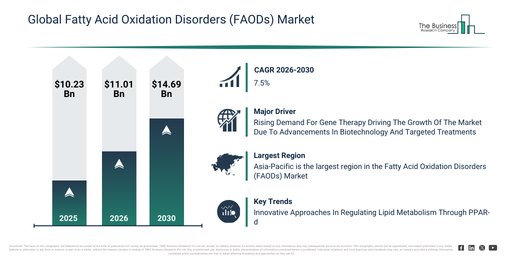
    The market size for fatty acid oxidation disorders (faods) has experienced substantial growth in recent years. It is anticipated to increase from $10.23 billion in 2025 to $11.01 billion in 2026, achieving a compound annual growth rate (CAGR) of 7.6%. The historical expansion of this market can be attributed to the introduction of neonatal screening initiatives, a greater incidence of inherited metabolic disorder diagnoses, heightened clinical awareness, the proliferation of hospital-based metabolic clinics, and the accessibility of supportive drug therapies.

    The market for fatty acid oxidation disorders (FAODs) is projected to experience substantial expansion in the coming years, with its valuation anticipated to reach $14.69 billion by 2030, exhibiting a compound annual growth rate (CAGR) of 7.5%. This anticipated increase during the forecast period stems from developments in enzyme replacement therapies, broader genetic research efforts, the proliferation of personalized nutrition strategies, more favorable reimbursement policies for rare diseases, and greater governmental backing for early detection programs. Key patterns expected during this timeframe involve the increasing uptake of newborn screening initiatives, a heightened emphasis on diagnosing metabolic disorders promptly, the expanding application of nutritional and dietary interventions, greater awareness regarding rare disease treatments, and enhanced availability of therapies for metabolic disorders.

    Access Your Free Sample Report for In-Depth Market Insights:

    https://www.thebusinessresearchcompany.com/sample.aspx?id=21964&type=smp

    Which Drivers Are Supporting The Rise Of The Fatty Acid Oxidation Disorders (FAODs) Market?

    The increasing demand for gene therapy is anticipated to drive the growth of the fatty acid oxidation disorders (FAODs) market. Gene therapy is a medical technique that involves modifying or replacing defective genes to treat or prevent diseases. The rising demand for gene therapy is due to its potential to address genetic disorders, cancer, and rare diseases by targeting their underlying genetic causes, which has led to significant investments and advancements in biotechnology. Gene therapy aims to correct metabolic deficiencies caused by fatty acid oxidation disorders by delivering functional genes, restoring enzymatic activity, enhancing energy production, and preventing disease complications. For instance, in 2024, the American Society of Gene & Cell Therapy (ASGCT), a US-based, nonprofit, professional medical and scientific organization, reports that the global pipeline of gene, cell, and RNA therapies rose from 3,483 in Q4 2022 to 3,951 in Q4 2023, reaching 4,238 in Q4 2024. Therefore, the increasing demand for gene therapy is fueling the expansion of the fatty acid oxidation disorders (FAODs) market.

    What Leading Segments Are Studied In The Fatty Acid Oxidation Disorders (FAODs) Market?

    The fatty acid oxidation disorders (faods) market covered in this report is segmented –

    1) By Type: Long Chain, Short Chain

    2) By Drug Type: Levocarnitine, Dextrose, Riboflavin, Other Drug Types

    3) By Route of Administration: Oral, Intravenous

    4) By Distribution Channel: Hospital Pharmacies, Retail Pharmacies, Drug Stores, Online Stores

    5) By End User: Hospitals, Clinics, Pharmaceutical Companies

    Subsegments:

    1) By Long Chain: Very Long-Chain Acyl-CoA Dehydrogenase Deficiency (VLCAD), Long-Chain 3-Hydroxyacyl-CoA Dehydrogenase Deficiency (LCHAD), Trifunctional Protein Deficiency (TFP), Carnitine Palmitoyltransferase II Deficiency (CPT II)

    2) By Short Chain: Medium-Chain Acyl-CoA Dehydrogenase Deficiency (MCAD), Short-Chain Acyl-CoA Dehydrogenase Deficiency (SCAD), Carnitine Uptake Defect (CUD)

    What Industry Trends Are Transforming The Fatty Acid Oxidation Disorders (FAODs) Market?

    Key companies operating in the fatty acid oxidation disorders (FAODs) market are prioritizing the development of innovative solutions, such as peroxisome proliferator-activated receptor delta (PPARδ) agonists, to enhance metabolic control and improve outcomes for patients with FAODs. A peroxisome proliferator-activated receptor delta (PPARδ) agonist is a substance that activates the PPARδ receptor, which plays a role in regulating lipid metabolism, inflammation, and energy balance, potentially offering therapeutic advantages for metabolic and cardiovascular diseases. For instance, in January 2023, Reneo Pharmaceuticals Inc., a US-based clinical-stage pharmaceutical company, was granted Fast Track designation by the U.S. Food and Drug Administration (FDA) for its investigative drug, Mavodelpar (REN001). This drug targets long-chain 3-hydroxyacyl-CoA dehydrogenase (LCHAD) deficiency, a genotype associated with long-chain fatty acid oxidation disorder (LC-FAOD). By activating PPARδ, mavodelpar aims to improve mitochondrial function, optimize energy metabolism, and mitigate symptoms linked to LC-FAOD.

    Which Major Industry Participants Are Leading The Fatty Acid Oxidation Disorders (FAODs) Market Growth?

    Major companies operating in the fatty acid oxidation disorders (faods) market are Takeda Pharmaceutical Company Limited, Ultragenyx Pharmaceutical Inc, Sanofi SA, Novo Nordisk A S, Pfizer Inc, Merck & Co Inc, AstraZeneca PLC, Amgen Inc, AbbVie Inc, BioMarin Pharmaceutical Inc, PTC Therapeutics Inc, Horizon Therapeutics PLC, Recordati Rare Diseases SpA, Orphazyme A S, Mitsubishi Tanabe Pharma Corporation, Alexion Pharmaceuticals Inc (AstraZeneca Rare Disease), REGENXBIO Inc, Avrobio Inc, Homology Medicines Inc, Abeona Therapeutics Inc

    Access The Complete Report For Deeper Market Insights:

    https://www.thebusinessresearchcompany.com/report/fatty-acid-oxidation-disorders-faods-global-market-report

    Which Region Is Projected To Lead The Fatty Acid Oxidation Disorders (FAODs) Market During The Forecast Period?

    Asia-Pacific was the largest region in the fatty acid oxidation disorders (FAODs) market in 2025. The regions covered in the fatty acid oxidation disorders (faods) market report are Asia-Pacific, South East Asia, Western Europe, Eastern Europe, North America, South America, Middle East, Africa.

    Request Your Customized Fatty Acid Oxidation Disorders (FAODs) Market Research Report for Competitive Advantage:

    https://www.thebusinessresearchcompany.com/customise?id=21964&type=smp

    Browse Through More Reports Similar to the Global Fatty Acid Oxidation Disorders (FAODs) Market 2026, By The Business Research Company

    Palm Kernel Fatty Acids Market Report 2026

    https://www.thebusinessresearchcompany.com/report/palm-kernel-fatty-acids-global-market-report

    Tall Oil Fatty Acid Market Report 2026

    https://www.thebusinessresearchcompany.com/report/tall-oil-fatty-acid-global-market-report

    Fats And Oils Market Report 2026

    https://www.thebusinessresearchcompany.com/report/fats-and-oils-global-market-report

    Get in touch with us:

    The Business Research Company: https://www.thebusinessresearchcompany.com/

    Americas +1 310-496-7795

    Asia +44 7882 955267 & +91 8897263534

    Europe +44 7882 955267

    Email us at info@tbrc.info

    Follow us on:

    LinkedIn: https://in.linkedin.com/company/the-business-research-company

    YouTube: https://www.youtube.com/channel/UC24_fI0rV8cR5DxlCpgmyFQ

    Global Market Model: https://www.thebusinessresearchcompany.com/global-market-model

  • Global Direct-To-Patient Digitaling Industry Trends and Market Forecast 2026–2030

    Global Direct-To-Patient Digitaling Industry Trends and Market Forecast 2026–2030

    Uncover key drivers, emerging technologies, and competitive movements shaping the direct-to-patient digitaling market from 2026–2035 with trusted insights from The Business Research Company

    What level of growth is expected in the Direct-To-Patient Digitaling Market between 2026 and 2030?

    The direct-to-patient digitaling market has experienced substantial growth in recent years. It is forecast to increase from $3.97 billion in 2025 to $4.66 billion in 2026, demonstrating a compound annual growth rate (CAGR) of 17.6%. The expansion observed historically can be attributed to factors such as the increasing adoption of telemedicine services, the proliferation of mobile health applications, the growing prevalence of chronic conditions, improved internet accessibility in healthcare, and the implementation of patient-centric care models.

    The direct-to-patient digitaling market size is projected to experience substantial growth in the upcoming years, expanding to $8.84 billion by 2030, exhibiting a compound annual growth rate (CAGR) of 17.3%. This anticipated growth during the forecast period is primarily attributed to factors such as the increasing demand for personalized healthcare delivery, the rising integration of AI-driven care recommendations, the expansion of remote chronic disease management, the growing use of data-driven patient engagement tools, and an increasing focus on preventive digital healthcare. Furthermore, major trends anticipated in the forecast period include the increasing adoption of direct digital patient engagement platforms, the rising use of telehealth and virtual care tools, the growing integration of wearables for continuous monitoring, the expansion of personalized digital care pathways, and an enhanced focus on real-time patient feedback.

    Access Your Free Sample Report for In-Depth Market Insights:

    https://www.thebusinessresearchcompany.com/sample.aspx?id=28206&type=smp

    Which Drivers Are Expected To Impact The Direct-To-Patient Digitaling Market During The Forecast Period?

    An increasing emphasis on implementing patient-centric care strategies is projected to boost the expansion of the direct-to-patient digitaling market in the future. These models represent healthcare methodologies that prioritize patients’ individual requirements, preferences, and their active involvement in managing their health. The proliferation of patient-centric care models stems from improved patient engagement, given their focus on catering to personal needs, preferences, and active participation in health-related choices. Direct-to-patient digitaling bolsters patient-centric care models by facilitating tailored, convenient, and immediate healthcare services delivered straight to individuals, thereby enabling them to proactively oversee their health and treatments. For example, data from Intuition Labs, a US-based organization, indicated in April 2025 that 80% of Americans favor remote patient monitoring, and clinician adoption reached 81% in 2023, marking a significant increase of 305%. Consequently, the heightened emphasis on adopting patient-centric care frameworks is a primary driver for the direct-to-patient digital market.

    Which Segments Are Driving Activity In The Direct-To-Patient Digitaling Market?

    The direct-to-patient digitaling market covered in this report is segmented –

    1) By Health Status: Chronic Conditions, Preventive Health, Mental Health

    2) By Psychographic: Lifestyle, Values And Beliefs, Personality Traits

    3) By Technological: Device Preference, Technical Proficiency, Preferred Communication Channels

    4) By Behavioral: Usage Rate, Benefits Sought, Loyalty Status

    5) By Demographic: Age Groups, Gender, Income Levels

    Subsegments:

    1) By Chronic Conditions: Diabetes Management, Cardiovascular Care, Respiratory Care, Cancer Care, Arthritis Management

    2) By Preventive Health: Vaccination Tracking, Routine Screening, Wellness Monitoring, Nutritional Guidance, Fitness Tracking

    3) By Mental Health: Anxiety Management, Depression Support, Stress Management, Sleep Improvement, Behavioral Therapy

    What Long-Term Trends Are Expected To Shape The Future Of The Direct-To-Patient Digitaling Market?

    Major companies in the direct-to-patient digital market are concentrating on advanced innovation, such as developing an end-to-end digital experience, to improve seamless treatment journeys and strengthen direct connections between patients and healthcare providers. An end-to-end digital experience refers to an integrated and smooth digital path that links all patient touchpoints, from initial engagement to care delivery and follow-up, within a single ecosystem. This ensures convenience, personalization, and efficiency by unifying technologies like telehealth, e-prescriptions, and digital support platforms. For instance, in January 2024, Eli Lilly and Company, a US-based pharmaceutical manufacturing company, introduced LillyDirect, a comprehensive digital healthcare platform. This solution directly connects patients to medical care, medications, and support services via a single, unified interface. It is designed to enhance accessibility and convenience while offering personalized treatment options, thereby streamlining medication access, reducing care barriers, and aiming to improve patient outcomes. Additionally, ongoing digital support cultivates sustained patient engagement and adherence to therapy.

    Which Key Market Players Are Investing In Expansion And Innovation Within The Direct-To-Patient Digitaling Market?

    Major companies operating in the direct-to-patient digitaling market are Google LLC, OMRON Healthcare Co. Ltd., 1Life Healthcare Inc. (One Medical), Hims & Hers Health Inc., Cerebral Inc., American Well Corporation, Lyra Health Inc., MDLIVE Inc., Ro Inc., Doctor On Demand Inc., Spring Care Inc., Withings Health Solutions, HealthJoy LLC, Zocdoc Inc., Calm.com Inc., Ada Health GmbH, K Health Inc., MeMD Inc., Sesame Inc., PlushCare Inc.

    Access The Complete Report For Deeper Market Insights:

    https://www.thebusinessresearchcompany.com/report/direct-to-patient-digitaling-global-market-report

    Which Regions Are Poised For Strategic Growth In The Direct-To-Patient Digitaling Market?

    North America was the largest region in the direct-to-patient digitaling market in 2025. Asia-Pacific is expected to be the fastest-growing region in the forecast period. The regions covered in the direct-to-patient digitaling market report are Asia-Pacific, South East Asia, Western Europe, Eastern Europe, North America, South America, Middle East, Africa.

    Request Your Customized Direct-To-Patient Digitaling Market Research Report for Competitive Advantage:

    https://www.thebusinessresearchcompany.com/customise?id=28206&type=smp

    Browse Through More Reports Similar to the Global Direct-To-Patient Digitaling Market 2026, By The Business Research Company

    Digital Therapeutics Market Report 2026

    https://www.thebusinessresearchcompany.com/report/digital-therapeutics-global-market-report

    Digital Transformation In Healthcare Market Report 2026

    https://www.thebusinessresearchcompany.com/report/digital-transformation-in-healthcare-global-market-report

    Digital Twins In Healthcare Market Report 2026

    https://www.thebusinessresearchcompany.com/report/digital-twins-in-healthcare-global-market-report

    Get in touch with us:

    The Business Research Company: https://www.thebusinessresearchcompany.com/

    Americas +1 310-496-7795

    Asia +44 7882 955267 & +91 8897263534

    Europe +44 7882 955267

    Email us at info@tbrc.info

    Follow us on:

    LinkedIn: https://in.linkedin.com/company/the-business-research-company

    YouTube: https://www.youtube.com/channel/UC24_fI0rV8cR5DxlCpgmyFQ

    Global Market Model: https://www.thebusinessresearchcompany.com/global-market-model
  • Family Medicine Services Market Forecast: How Big Will It Be by 2030?

    Family Medicine Services Market Forecast: How Big Will It Be by 2030?

    Uncover key drivers, emerging technologies, and competitive movements shaping the family medicine services market from 2026–2035 with trusted insights from The Business Research Company

    What size range is anticipated for the Family Medicine Services Market from 2026 to 2030?

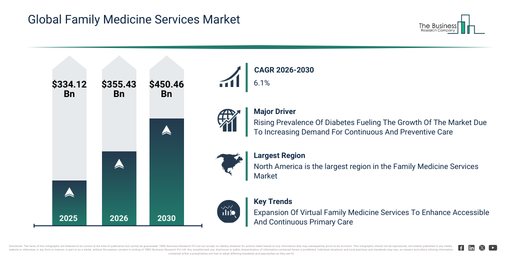
    The family medicine services market has demonstrated significant growth in recent years. Its valuation is projected to rise from $334.12 billion in 2025 to $355.43 billion in 2026, reflecting a compound annual growth rate (CAGR) of 6.4%. This historical expansion can be primarily ascribed to the escalating demand for primary healthcare services, the widening reach of outpatient clinic networks, an increasing prevalence of chronic diseases, the growth in populations with health insurance, and enhancements in the adoption of electronic health records.

    The family medicine services market is anticipated to experience robust expansion in the coming years. Its value is projected to reach $450.46 billion by 2030, showing a compound annual growth rate (CAGR) of 6.1%. This growth during the forecast period is primarily attributable to a heightened focus on value-based care models, increasing investments in remote patient monitoring, the broadening of home-based healthcare services, an intensified emphasis on integrated care delivery, and the greater deployment of AI-supported diagnostics in primary care. Key trends for the forecast period include the wider acceptance of telemedicine for primary care, the growing integration of digital patient management systems, a sharpened concentration on preventive and wellness-oriented care, the extension of community-based healthcare provision, and improved utilization of data-driven care coordination.

    Access Your Free Sample Report for In-Depth Market Insights:

    https://www.thebusinessresearchcompany.com/sample.aspx?id=28218&type=smp

    What Drivers Are Affecting Demand In The Family Medicine Services Market?

    The rising incidence of diabetes is projected to fuel the expansion of the family medicine services market in the future. Diabetes is defined as a chronic ailment where the body struggles to manage blood sugar levels, stemming from issues with insulin creation or utilization. The occurrence of diabetes is escalating because contemporary inactive lifestyles, marked by less physical movement and extended periods of sitting, substantially boost obesity rates, which are a primary risk factor for developing this illness. Family medicine services aid in diabetes management through providing ongoing, customized care that helps patients control blood sugar, encourages beneficial lifestyle adjustments, and lowers the chance of complications via regular supervision and guidance. As an illustration, in April 2025, data from the International Diabetes Federation, an umbrella organization based in Belgium, indicated that approximately 589 million adults aged 20–79 were living with diabetes in 2024, with this figure projected to rise to 853 million by 2050. Consequently, the expanding prevalence of diabetes is propelling the growth of the family medicine services market.

    Which Segment Groups Are Influencing The Family Medicine Services Market?

    The family medicine services market covered in this report is segmented –

    1) By Service Type: Preventive Care, Chronic Disease Management, Acute Care Services, Wellness Programs, Telemedicine Services

    2) By Patient Demographics: Pediatric Patients, Adult Patients, Geriatric Patients, Pregnant Women, Special Needs Patients

    3) By Care Delivery Model: Traditional Office Visits, Urgent Care Centers, Community Health Clinics, Mobile Health Units, Home Health Care

    4) By Technology Integration: Electronic Health Record Systems, Remote Patient Monitoring, Mobile Health Applications, Artificial Intelligence (AI) In Diagnoses, Data Analytics For Patient Management

    5) By End-User: Hospitals, Clinics, Home Care, Other End-Users

    Subsegments:

    1) By Preventive Care: Health Screenings, Vaccination Services, Routine Physical Examinations, Lifestyle Counseling

    2) By Chronic Disease Management: Diabetes Management, Hypertension Management, Cardiovascular Disease Management, Asthma And Respiratory Care

    3) By Acute Care Services: Emergency Treatment, Infectious Disease Treatment, Injury And Trauma Care, Surgical Consultations

    4) By Wellness Programs: Nutrition Counseling, Fitness And Exercise Programs, Stress Management Programs, Mental Health Support

    5) By Telemedicine Services: Virtual Consultations, Remote Patient Monitoring, Online Prescription Services, Telehealth Follow-Ups

    What Trends Are Reshaping The Dynamics Of The Family Medicine Services Market?

    Leading companies in the family medicine services market are increasingly focusing on expanding virtual primary care services, including virtual family medicine, to improve patient accessibility, reduce appointment wait times, and offer continuous management for chronic conditions. Virtual family medicine specifically involves delivering primary healthcare services remotely through digital platforms, such as video calls, phone consultations, or mobile applications. As an illustration, in September 2023, Atrium Health, a US-based healthcare provider, launched its Virtual Primary Care service. This service allows patients to establish an ongoing relationship with a dedicated family medicine provider for comprehensive primary care delivered virtually through secure video visits. Available 24/7 with flexible scheduling, this offering enables patients to receive care for chronic conditions, preventative health, mental health, medication management, lab orders, and virtual specialist consults, all without requiring in-person visits. It caters to patients with demanding schedules, those who travel often, or individuals facing access challenges, providing convenient, personalized care from their home, office, or while traveling across North Carolina, South Carolina, and Georgia.

    Who Are The Prominent Global Companies Shaping The Family Medicine Services Market Landscape?

    Major companies operating in the family medicine services market are Kaiser Permanente, Trinity Health, Banner Health, Tenet Healthcare Corporation, NYU Langone Hospitals, Intermountain Health Care Inc., Baylor Scott & White Health LLC, Geisinger Clinic, Ascension Health, Michigan Health Corp., UW Health, Stanford Health Care, Evergreen Health, Providence, Sutter Health, UCI Health, Altru Health System, Blessing Health System, Samaritan Health Services, Allcare Health, Skagit Regional Health, Olathe Health

    Access The Complete Report For Deeper Market Insights:

    https://www.thebusinessresearchcompany.com/report/family-medicine-services-global-market-report

    Which Region Currently Holds The Largest Share Of The Family Medicine Services Market?

    North America was the largest region in the family medicine services market in 2025. The regions covered in the family medicine services market report are Asia-Pacific, South East Asia, Western Europe, Eastern Europe, North America, South America, Middle East, Africa.

    Request Your Customized Family Medicine Services Market Research Report for Competitive Advantage:

    https://www.thebusinessresearchcompany.com/customise?id=28218&type=smp

    Browse Through More Reports Similar to the Global Family Medicine Services Market 2026, By The Business Research Company

    Personal Care Services Market 2026

    https://www.thebusinessresearchcompany.com/report/personal-care-services-market

    Healthcare Services Market 2026

    https://www.thebusinessresearchcompany.com/report/healthcare-services-market

    Individual And Family Services Market Report 2026

    https://www.thebusinessresearchcompany.com/report/individual-and-family-services-global-market-report

    Get in touch with us:

    The Business Research Company: https://www.thebusinessresearchcompany.com/

    Americas +1 310-496-7795

    Asia +44 7882 955267 & +91 8897263534

    Europe +44 7882 955267

    Email us at info@tbrc.info

    Follow us on:

    LinkedIn: https://in.linkedin.com/company/the-business-research-company

    YouTube: https://www.youtube.com/channel/UC24_fI0rV8cR5DxlCpgmyFQ

    Global Market Model: https://www.thebusinessresearchcompany.com/global-market-model
  • Direct-To-Consumer (DTC) Laboratory Testing Market Size and Demand Forecast 2026–2030

    Direct-To-Consumer (DTC) Laboratory Testing Market Size and Demand Forecast 2026–2030

    Uncover key drivers, emerging technologies, and competitive movements shaping the direct-to-consumer (dtc) laboratory testing market from 2026–2035 with trusted insights from The Business Research Company

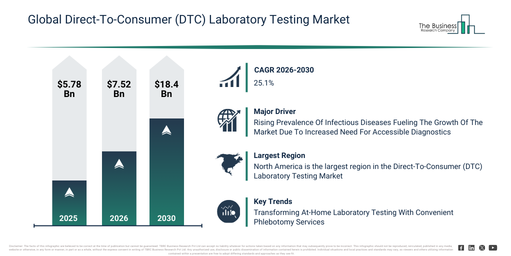
    How much is the Direct-To-Consumer (DTC) Laboratory Testing Market valued at in 2026, and what valuation is forecast for 2030?

    The direct-to-consumer (dtc) laboratory testing market has shown significant growth over recent years. Its valuation is projected to increase from $5.78 billion in 2025 to $7.52 billion in 2026, achieving a compound annual growth rate (CAGR) of 30.0%. This historical expansion can be linked to factors such as restricted access to traditional clinical diagnostics, the heightened demand for testing spurred by pandemics, the early stages of lab digitization, an increase in chronic disease screening, and consumers’ preference for convenience.

    The direct-to-consumer (dtc) laboratory testing market is projected to experience substantial growth in the upcoming years. It is forecast to expand to $18.4 billion by 2030, demonstrating a compound annual growth rate (CAGR) of 25.1%. The expansion during this period can be attributed to advancements in laboratory workflow automation, the emergence of AI-based diagnostics, the broadened availability of home sample collection, increasing regulatory acceptance, and the demand for personalized health monitoring. Noteworthy trends in the forecast timeframe encompass the increasing embrace of at-home diagnostic testing, the spread of online platforms for ordering tests, the rise of preventive health screening services, growing consumer expectations for swift test results, and the integration of digital systems for result delivery.

    Access Your Free Sample Report for In-Depth Market Insights:

    https://www.thebusinessresearchcompany.com/sample.aspx?id=15556&type=smp

    What Drivers Are Influencing The Growth Of The Direct-To-Consumer (DTC) Laboratory Testing Market?

    The direct-to-consumer (DTC) laboratory testing market is projected to grow as the occurrence of infectious diseases continues to rise. Infectious diseases are illnesses stemming from pathogenic microorganisms, including bacteria, viruses, parasites, or fungi, which can be transmitted between individuals via direct or indirect contact, or through vectors like insects or animals. The widespread nature of these diseases is influenced by intricate biological, environmental, social, and economic factors. DTC laboratory testing significantly aids in the prevention, detection, and management of infectious diseases by enhancing access to testing, facilitating early intervention, and bolstering public health endeavors through data collection and educational outreach. For instance, in October 2024, the World Health Organization, an international public health organization situated in Switzerland, reported that roughly 8.2 million people were newly diagnosed with tuberculosis in 2023, marking an increase from about 7.5 million in 2022 and establishing tuberculosis as the leading infectious disease killer. Thus, the escalating prevalence of infectious diseases is a key driver for the direct-to-consumer (DTC) laboratory testing market.

    How Is The Direct-To-Consumer (DTC) Laboratory Testing Market Organized Into Various Segments?

    The direct-to-consumer (dtc) laboratory testing market covered in this report is segmented –

    1) By Sample Type: Blood, Urine, Saliva, Other Sample Types

    2) By Test Type: Genetic Testing, Disease Risk Assessment Testing, Complete Blood Count (CBC), Diabetes Testing, Thyroid-Stimulating Hormone (TSH) Testing, Other Test Types

    3) By Application: Diagnostics, Research And Development, Drug Discovery And Development

    4) By End User: Hospitals, Clinics, Specialty Labs, Diagnostic Centers

    Subsegments:

    1) By Blood: Blood Glucose, Cholesterol, Complete Blood Count (CBC), Blood Type, Vitamin and Mineral Levels, Hormone Levels, Liver And Kidney Function Tests

    2) By Urine: Pregnancy Tests, Urinalysis, Kidney Function Tests, Drug And Alcohol Testing, UTI (Urinary Tract Infection) Screening, Hormone Tests

    3) By Saliva: Hormone Testing, DNA Testing (Ancestry, Genetic Health Risks), Cortisol And Stress Level Tests, Food Sensitivity And Allergy Testing

    4) By Other Sample Types: Stool, Hair, Breath

    Which Market Trends Are Opening Growth Opportunities In The Direct-To-Consumer (DTC) Laboratory Testing Market?

    Major companies operating in the direct-to-consumer (DTC) laboratory testing market are concentrating on developing advanced solutions, such as mobile phlebotomy services, to enhance convenience and accessibility for their customers. A mobile phlebotomy service is a healthcare offering that brings blood collection (phlebotomy) directly to the patient’s location, typically their home or workplace, rather than requiring the patient to visit a medical facility for blood tests. For instance, in July 2023, Quest Diagnostics Incorporated., a US-based company that provides diagnostic testing, information, and services, introduced Quest Mobile, a new service designed to streamline the process of specimen collection for laboratory testing across the nation. Quest Mobile enables patients to effortlessly schedule appointments for at-home specimen collection by skilled phlebotomists. This convenient option allows patients to undergo a diverse array of laboratory tests from the comfort of their own homes, ensuring ease and accessibility in the testing process.

    Who Are The Core Companies Influencing Trends In The Direct-To-Consumer (DTC) Laboratory Testing Market?

    Major companies operating in the direct-to-consumer (dtc) laboratory testing market are Laboratory Corporation of America Holdings (LabCorp), Quest Diagnostics Incorporated, PerkinElmer Inc, Genesis Healthcare Co., Natera Inc, Sonora Quest Laboratories, Ancestry.com LLC, 23andMe Holding Co, Thorne HealthTech Inc, Metropolis Healthcare Limited, Color Health Inc, LetsGetChecked Inc., MyHeritage Ltd, Everlywell Inc, Complete Genomics Incorporated, DanteLabs Inc, Gene by Gene Ltd., Veritas Intercontinental, DirectLabs LLC., WellnessFX Inc, Ulta Lab Tests LLC, Any Lab Test Now Inc, Vitagene Inc.

    Access The Complete Report For Deeper Market Insights:

    https://www.thebusinessresearchcompany.com/report/direct-to-consumer-dtc-laboratory-testing-global-market-report

    Which Regions Are Projected To Dominate The Direct-To-Consumer (DTC) Laboratory Testing Market In The Coming Years?

    North America was the largest region in the direct-to-consumer (DTC) laboratory testing market in 2025. Asia-Pacific is expected to be the fastest-growing region in the forecast period. The regions covered in the direct-to-consumer (dtc) laboratory testing market report are Asia-Pacific, South East Asia, Western Europe, Eastern Europe, North America, South America, Middle East, Africa.

    Request Your Customized Direct-To-Consumer (DTC) Laboratory Testing Market Research Report for Competitive Advantage:

    https://www.thebusinessresearchcompany.com/customise?id=15556&type=smp

    Browse Through More Reports Similar to the Global Direct-To-Consumer (DTC) Laboratory Testing Market 2026, By The Business Research Company

    Laboratory Testing Services Market Report 2026

    https://www.thebusinessresearchcompany.com/report/laboratory-testing-services-global-market-report

    Direct To Consumer Dtc Genetic Testing Market Report 2026

    https://www.thebusinessresearchcompany.com/report/direct-to-consumer-dtc-genetic-testing-global-market-report

    Laboratory Testing Services Market Report 2026

    https://www.thebusinessresearchcompany.com/report/laboratory-testing-services-global-market-report

    Get in touch with us:

    The Business Research Company: https://www.thebusinessresearchcompany.com/

    Americas +1 310-496-7795

    Asia +44 7882 955267 & +91 8897263534

    Europe +44 7882 955267

    Email us at info@tbrc.info

    Follow us on:

    LinkedIn: https://in.linkedin.com/company/the-business-research-company

    YouTube: https://www.youtube.com/channel/UC24_fI0rV8cR5DxlCpgmyFQ

    Global Market Model: https://www.thebusinessresearchcompany.com/global-market-model

  • Direct-To-Consumer (DTC) Genetic Testing Market Outlook: Growth and Forecast Highlights 2030

    Direct-To-Consumer (DTC) Genetic Testing Market Outlook: Growth and Forecast Highlights 2030

    Uncover key drivers, emerging technologies, and competitive movements shaping the direct-to-consumer (dtc) genetic testing market from 2026–2035 with trusted insights from The Business Research Company

    By how much is the Direct-To-Consumer (DTC) Genetic Testing Market expected to grow between 2026 and 2030?

    The direct-to-consumer (dtc) genetic testing market size has experienced swift expansion over recent years. It is forecasted to grow from $2.14 billion in 2025 to $2.48 billion in 2026, exhibiting a compound annual growth rate (CAGR) of 16.3%. The growth observed in the past can be credited to factors like declining cost of dna sequencing, early ancestry testing adoption, increased health awareness, e-commerce penetration, and consumer curiosity about genetics.

    The direct-to-consumer (dtc) genetic testing market size is anticipated to experience substantial growth over the next few years, projected to reach $4.45 billion by 2030, exhibiting a compound annual growth rate (CAGR) of 15.7%. This expansion during the forecast period is fueled by elements such as AI-driven genetic interpretation, the broadening reach of precision medicine, the establishment of regulatory frameworks for genetic data, integration with wellness platforms, and an increasing demand for personalized healthcare. Prominent developments expected in this timeframe encompass a rising consumer interest in genetic health insights, the continued growth of ancestry and relationship testing, the expansion of nutrigenomic and lifestyle testing, increasing utilization of online genetic test platforms, and a greater emphasis on personalized health risk assessment.

    Access Your Free Sample Report for In-Depth Market Insights:

    https://www.thebusinessresearchcompany.com/sample.aspx?id=8957&type=smp

    Which Drivers Are Influencing Market Acceleration In The Direct-To-Consumer (DTC) Genetic Testing Market?

    The increasing occurrence of genetically transmittable illnesses and conditions is anticipated to fuel the expansion of the direct-to-consumer (DTC) genetic testing market in the future. A genetic disorder is defined as a medical condition resulting from alterations (mutations) in an individual’s DNA, encompassing single-gene, multifactorial, and chromosomal types. Direct-to-consumer genetic testing raises understanding of diverse genetic disorders, aiding in health predictions and offering tailored data on a person’s health status, disease susceptibility, and other characteristics, thereby facilitating informed health and lifestyle choices to lower disease risk. As an illustration, in April 2023, the National Library of Medicine (NLM), a medical library based in the US, reported that approximately 6.7 million Americans age 65 and older are projected to have Alzheimer’s dementia (AD), a condition where genetics are highly influential, in 2023. This figure has the potential to climb to 13.8 million by 2060, assuming no major medical advancements emerge to prevent, slow, or treat AD. Consequently, the increasing incidence of diseases and conditions that can be genetically transmitted is propelling the expansion of the direct-to-consumer (DTC) genetic testing market.

    What Segments Are Identified Within The Structure Of The Direct-To-Consumer (DTC) Genetic Testing Market?

    The direct-to-consumer (dtc) genetic testing market covered in this report is segmented –

    1) By Type: Carrier Testing, Predictive Testing, Ancestry And Relationship Testing, Nutrigenomic Testing, Other Types

    2) By Sample: Saliva, Urine, Blood

    3) By Technology: Single Nucleotide Polymorphism Chips, Whole Genome Sequencing, Targeted Analysis

    4) By Business Model: Health Planning Model, Comprehensive Genome Tests Model, Medical Precision Tests Model, Restricted Trait Tests Mode

    5) By End User: Laboratories, Nursing Homes, Hospitals, Imaging Centers, Home Care, Cosmetics, Other End-User

    Subsegments:

    1) By Carrier Testing: Autosomal Recessive Disorders, X-Linked Disorders

    2) By Predictive Testing: Risk Assessment For Genetic Conditions, Adult-Onset Conditions

    3) By Ancestry And Relationship Testing: Ancestry Composition Analysis, DNA Matching For Relationships

    4) By Nutrigenomic Testing: Dietary Recommendations, Metabolism And Fitness Insights

    5) By Other Types: Pharmacogenomic Testing, Health Trait Testing

    How Are Emerging Trends Affecting The Progression Of The Direct-To-Consumer (DTC) Genetic Testing Market?

    Major companies operating in the direct-to-consumer (DTC) genetic testing market are increasingly focusing on the creation of advanced solutions, such as whole-genome sequencing (WGS) subscription platforms. These platforms are designed to furnish comprehensive genetic insights, support personalized health planning, and enhance consumer engagement. WGS subscription platforms are services that sequence almost the entire genome, enabling an in-depth analysis of ancestry, disease risk, wellness traits, and pharmacogenomics, which significantly surpasses the capabilities of traditional SNP-chip-based tests that only examine specific genetic markers. For example, in November 2024, ProPhase Labs, a US-based biotech and diagnostics company, unveiled DNA Complete, a dedicated direct-to-consumer WGS service under its subsidiary DNA Complete, Inc. This platform sequences virtually 100% of a customer’s genome, presents tiered subscription plans such as Essential, Pro, and Elite, offers continuous updates, and includes genetic counseling support to assist users in interpreting their outcomes. The service utilizes advanced bioinformatics and ancestry analysis, while also providing flexible sample processing through ProPhase’s Nebula Genomics lab or other partner labs. This solution effectively combines profound genomic understanding with accessibility, convenience, and ongoing consumer engagement.

    Which Major Industry Participants Are Leading The Direct-To-Consumer (DTC) Genetic Testing Market Growth?

    Major companies operating in the direct-to-consumer (dtc) genetic testing market are 23andMe, AncestryDNA, MyHeritage, FamilyTreeDNA, Living DNA, Vitagene, Orig3n, DNAfit, Helix, Color Genomics, Circle DNA, CRI Genetics, MapMyGenome, Invitae Corporation, TellmeGen, Pathway Genomics, Genebase Systems, EasyDNA, Nebula Genomics, Dante Labs, Veritas Genetics, Xcode Life, Genomic Express, Genomelink, Genomind, WellnessFX, LetsGetChecked, iGene, Dnadoc, OneOme

    Access The Complete Report For Deeper Market Insights:

    https://www.thebusinessresearchcompany.com/report/direct-to-consumer-dtc-genetic-testing-global-market-report

    Which Region Is Expected To Experience The Fastest Growth In The Direct-To-Consumer (DTC) Genetic Testing Market?

    North America was the largest region in the direct-to-consumer (DTC) genetic testing market share in 2025. Asia-Pacific was the second-largest region in the global direct-to-consumer (DTC) genetic testing market. The regions covered in the direct-to-consumer (dtc) genetic testing market report are Asia-Pacific, South East Asia, Western Europe, Eastern Europe, North America, South America, Middle East, Africa.

    Request Your Customized Direct-To-Consumer (DTC) Genetic Testing Market Research Report for Competitive Advantage:

    https://www.thebusinessresearchcompany.com/customise?id=8957&type=smp

    Browse Through More Reports Similar to the Global Direct-To-Consumer (DTC) Genetic Testing Market 2026, By The Business Research Company

    Genetic Testing Services Market Report 2026

    https://www.thebusinessresearchcompany.com/report/genetic-testing-services-global-market-report

    Direct To Consumer Dtc Laboratory Testing Market Report 2026

    https://www.thebusinessresearchcompany.com/report/direct-to-consumer-dtc-laboratory-testing-global-market-report

    Genetic Testing Market Report 2026

    https://www.thebusinessresearchcompany.com/report/genetic-testing-global-market-report

    Get in touch with us:

    The Business Research Company: https://www.thebusinessresearchcompany.com/

    Americas +1 310-496-7795

    Asia +44 7882 955267 & +91 8897263534

    Europe +44 7882 955267

    Email us at info@tbrc.info

    Follow us on:

    LinkedIn: https://in.linkedin.com/company/the-business-research-company

    YouTube: https://www.youtube.com/channel/UC24_fI0rV8cR5DxlCpgmyFQ

    Global Market Model: https://www.thebusinessresearchcompany.com/global-market-model

  • Familial Adenomatous Polyposis Treatment Market Report 2026: Strategic Insights and Revenue Outlook

    Familial Adenomatous Polyposis Treatment Market Report 2026: Strategic Insights and Revenue Outlook

    Uncover key drivers, emerging technologies, and competitive movements shaping the familial adenomatous polyposis treatment market from 2026–2035 with trusted insights from The Business Research Company

    How is the Familial Adenomatous Polyposis Treatment Market size predicted to change over the forecast window of 2026–2035?

    The familial adenomatous polyposis treatment market size has seen swift expansion in recent years. Its value is expected to rise from $1.5 billion in 2025 to $1.66 billion in 2026, achieving a compound annual growth rate (CAGR) of 11.3%. The market’s past growth is primarily due to the early detection of inherited colorectal disorders, increased availability of genetic testing, the broadening of colorectal cancer prevention initiatives, heightened awareness of hereditary cancers, and enhancements in endoscopic technologies.

    The familial adenomatous polyposis treatment market is projected to experience significant expansion over the coming years. This market is set to reach a value of $2.54 billion by 2030, exhibiting a compound annual growth rate (CAGR) of 11.1%. This anticipated growth is largely driven by developments in gene-based therapies, wider adoption of personalized treatment strategies, the scaling up of preventive oncology initiatives, increasing deployment of AI-supported diagnostics, and an uptick in funding for rare disease research. Key trends anticipated during this period encompass a heightened emphasis on genetic screening and counseling, more frequent application of preventive surgical procedures, an increase in the uptake of targeted drug therapies, the broadening of long-term surveillance programs, and the incorporation of AI into identifying early cancer risks.

    Access Your Free Sample Report for In-Depth Market Insights:

    https://www.thebusinessresearchcompany.com/sample.aspx?id=23396&type=smp

    Which Drivers Are Contributing To The Expansion Of The Familial Adenomatous Polyposis Treatment Market?

    The increasing expenditure on healthcare is projected to fuel the expansion of the familial adenomatous polyposis (FAP) treatment market. Healthcare spending refers to the overall investment made by individuals, governments, and private entities in medical services, therapies, pharmaceuticals, and health infrastructure to maintain and improve health. This upward trend in healthcare spending is a consequence of an aging global population and continuous advancements in medical technology. As lifespans extend, a greater number of older individuals require ongoing care, management of chronic conditions, and frequent medical interventions, which consequently leads to higher healthcare expenses. This elevated healthcare investment stimulates research and development efforts for familial adenomatous polyposis (FAP) treatment, fostering breakthroughs in genetic testing, targeted therapies, and less invasive procedures that enhance early detection, disease management, and patient outcomes. For instance, in December 2024, data from the Centers for Medicare & Medicaid Services, a US-based federal agency, indicated that Medicare spending in the US rose by 8.1%, reaching $1,029.8 billion, representing 21% of total national health expenditures (NHE). Thus, the growth in healthcare spending is a key driver for the familial adenomatous polyposis (FAP) treatment market. The growing prevalence of minimally invasive procedures is anticipated to stimulate the familial adenomatous polyposis (FAP) treatment market’s expansion. Minimally invasive procedures are medical techniques that utilize small incisions, specialized instruments, or image guidance for diagnosis or treatment, resulting in less trauma, quicker recovery, and lower risks compared to conventional surgery. The increase in these procedures stems from progress in medical technology and patient preference for faster recovery. Innovations in surgical methods, robotics, and imaging have enabled procedures with smaller cuts, leading to fewer complications and shorter hospital stays. These procedures improve polyp removal and monitoring in familial adenomatous polyposis (FAP) treatment by facilitating early detection, precise removal, and reduced complications, thereby slowing disease progression and lessening the need for extensive operations. For example, in 2023, the American Society of Plastic Surgeons, a US-based medical company, observed a 7% year-over-year growth in minimally invasive procedures across the USA. Consequently, the rise in minimally invasive procedures is propelling the familial adenomatous polyposis treatment market forward.

    What Segment Classifications Make Up The Familial Adenomatous Polyposis Treatment Market?

    The familial adenomatous polyposis treatment market covered in this report is segmented –

    1) By Product Type: Icosapent, Eflornithine Hydrochloride, Aspirin, Cetuximab Oral Formulation (CEQ)-508, Other Product Types

    2) By Disease Type: Attenuated FAP, Familial Adenomatous Polyposis, Gardner Syndrome, Turcot Syndrome

    3) By Symptoms: Bloody Stool, Unexplained Diarrhea, Abdominal Cramps, Bloating , Weight Loss, Lethargy And Vomiting

    4) By Application: Colorectal Cancer Prevention, Genetic Counseling, Surgical Treatment

    5) By End-Users: Clinics, Hospitals, Diagnostic Centres, Home Healthcare, Other End-Users

    Subsegments:

    1) By Icosapent: High-Purity Icosapent, Combination Formulations, Extended-Release Icosapent

    2) By Eflornithine Hydrochloride: Oral Eflornithine Hydrochloride, Topical Eflornithine Hydrochloride, Intravenous Eflornithine Hydrochloride

    3) By Aspirin: Low-Dose Aspirin Therapy, Enteric-Coated Aspirin, Buffered Aspirin

    4) By CEQ-508: Monotherapy CEQ-508, Adjunctive CEQ-508 Therapy, Targeted CEQ-508 Formulations

    5) By Other Product Types: Genetic Testing Kits And Biomarkers, Endoscopic Surveillance Devices, Surgical Instruments And Medical Implants, Probiotics And Microbiome Modulators, Bowel Preparation Solutions, Dietary Supplements And Nutraceuticals

    How Are New Market Trends Shaping The Landscape Of The Familial Adenomatous Polyposis Treatment Market?

    Leading entities within the familial adenomatous polyposis (FAP) treatment market are achieving substantial progress in therapeutic strategies, aiming to improve patient results and introduce novel solutions. Such breakthroughs encompass novel drug formulations and specific therapies designed to lessen polyp development and impede the condition’s advancement. An illustrative example is Biodexa Pharmaceuticals PLC, a biopharmaceutical firm based in the UK, which revealed positive findings from its Phase 2 clinical trial of eRapa for FAP treatment in June 2024. The study demonstrated a 75% non-progression rate and a median decrease of 17% in the polyp burden over a 12-month period. Specifically, participants in Cohort 2 exhibited an even greater 81% non-progression rate and a 29% reduction in polyps when administered a particular dosing regimen. This treatment proved to be well-tolerated, achieving a 95% compliance rate. These encouraging outcomes pave the way for a Phase 3 trial, anticipated to include approximately 168 high-risk FAP patients, which could potentially transform the therapeutic paradigm from surgical intervention to impactful medical management.

    Which Key Players Are Driving Competition In The Familial Adenomatous Polyposis Treatment Market?

    Major companies operating in the familial adenomatous polyposis treatment market are Mayo Clinic, Mount Sinai Health System, Johns Hopkins Medicine, Cleveland Clinic, UCLA Health, Houston Methodist Hospital, Scripps Health, Duke University Health System, Texas Children’s Hospital, Massachusetts General Hospital, Inova Health Care Services, Brigham and Women’s Hospital, Stanford Health Care, Barnes-Jewish Hospital, Northwestern Medicine, Geisinger Health, Max Healthcare, Sapience Therapeutics Inc., Frederick Gastroenterology Associates PA, Therapyx

    Access The Complete Report For Deeper Market Insights:

    https://www.thebusinessresearchcompany.com/report/familial-adenomatous-polyposis-treatment-global-market-report

    How Does The Familial Adenomatous Polyposis Treatment Market Perform Across Major Global Regions?

    North America was the largest region in the familial adenomatous polyposis (FAP) treatment market in 2025. Asia-Pacific is expected to be the fastest-growing region in the forecast period. The regions covered in the familial adenomatous polyposis treatment market report are Asia-Pacific, South East Asia, Western Europe, Eastern Europe, North America, South America, Middle East, Africa.

    Request Your Customized Familial Adenomatous Polyposis Treatment Market Research Report for Competitive Advantage:

    https://www.thebusinessresearchcompany.com/customise?id=23396&type=smp

    Browse Through More Reports Similar to the Global Familial Adenomatous Polyposis Treatment Market 2026, By The Business Research Company

    Nucleic Acid Based Gene Therapy Market Report 2026

    https://www.thebusinessresearchcompany.com/report/nucleic-acid-based-gene-therapy-global-market-report

    Genes Therapy Market Report 2026

    https://www.thebusinessresearchcompany.com/report/genes-therapy-global-market-report

    Hereditary Breast And Ovarian Cancer Syndrome Treatment Market Report 2026

    https://www.thebusinessresearchcompany.com/report/hereditary-breast-and-ovarian-cancer-syndrome-treatment-global-market-report

    Get in touch with us:

    The Business Research Company: https://www.thebusinessresearchcompany.com/

    Americas +1 310-496-7795

    Asia +44 7882 955267 & +91 8897263534

    Europe +44 7882 955267

    Email us at info@tbrc.info

    Follow us on:

    LinkedIn: https://in.linkedin.com/company/the-business-research-company

    YouTube: https://www.youtube.com/channel/UC24_fI0rV8cR5DxlCpgmyFQ

    Global Market Model: https://www.thebusinessresearchcompany.com/global-market-model

  • Direct To Consumer Testing Market Insights Report: Opportunities and Drivers 2030

    Direct To Consumer Testing Market Insights Report: Opportunities and Drivers 2030

    Uncover key drivers, emerging technologies, and competitive movements shaping the direct to consumer testing market from 2026–2035 with trusted insights from The Business Research Company

    What is the estimated market size of the Direct To Consumer Testing Market by the end of 2030?

    The direct to consumer testing market has experienced considerable expansion in recent years. It is projected to increase from $2.25 billion in 2025 to $2.6 billion in 2026, with a compound annual growth rate (CAGR) of 15.2%. Historically, the growth observed in this period can be attributed to factors such as limited access to diagnostics, rising health awareness, early adoption of genetic testing, the expansion of e-commerce in healthcare, and prevailing consumer empowerment trends.

    The direct to consumer testing market is projected to experience swift expansion in the coming years. By 2030, this market is anticipated to reach $4.51 billion, exhibiting a compound annual growth rate (CAGR) of 14.8%. Factors contributing to this growth during the projected period include enhanced test precision, clearer regulations, AI-driven result analysis, individualized health information, and the broadening availability of home diagnostic tools. Key developments expected within the forecast timeframe encompass an increasing consumer desire for health testing at home, the proliferation of genetic and biomarker testing kits, the expansion of digital health testing platforms, a greater emphasis on proactive health checks, and a rising receptiveness to personal health data management.

    Access Your Free Sample Report for In-Depth Market Insights:

    https://www.thebusinessresearchcompany.com/sample.aspx?id=20753&type=smp

    What Drivers Are Shaping Future Opportunities In The Direct To Consumer Testing Market?

    The direct-to-consumer testing market is expected to be propelled by the expanding growth of e-commerce platforms, which are software solutions facilitating the online exchange of goods and services. The surge in e-commerce platforms is driven by increased internet access, consumer inclination towards convenience, the rise of mobile commerce, and a supportive regulatory environment. Direct-to-consumer testing empowers e-commerce platforms by providing valuable insights into customer preferences, behaviors, and product performance through real-time feedback and data-driven decision-making, thereby enhancing user experience, optimizing product offerings, and increasing sales and customer satisfaction. For example, in October 2024, ECommerce Europe, a Belgium-based non-profit government organization, projected that total business-to-customer (B2C) e-commerce sales in Europe will grow 8% in 2024, reaching $992.8 billion (€958 billion), up from $916.80 billion (€887 billion) in 2023. Consequently, the expansion of e-commerce platforms is a key driver for the market.

    Which Segments Are Gaining Traction In The Direct To Consumer Testing Market?

    The direct to consumer testing market covered in this report is segmented –

    1) By Test Type: Genetic Direct To Consumer Tests, Biomarker-Based Direct To Consumer Tests, Microbiome Direct To Consumer Tests

    2) By Distribution Channel: Online Channel, Retail Channel

    3) By Application: Health And Wellness Testing, Ancestry And Genealogy Testing, Disease Risk Assessment, Carrier Screening, Pharmacogenetic Testing, Whole Genome Sequence-Based Direct To Consumer Testing, Other Direct To Consumer Tests

    Subsegments:

    1) By Genetic Direct To Consumer Tests: Ancestry Testing, Health Risk And Carrier Screening, DNA Paternity And Relationship Testing

    2) By Biomarker-Based Direct To Consumer Tests: Hormonal Level Testing, Cardiovascular Risk Testing, Metabolic And Nutritional Testing

    3) By Microbiome Direct To Consumer Tests: Gut Health And Digestive System Testing, Skin Microbiome Testing, Oral Microbiome Testing

    Which Innovation Trends Are Advancing Developments Within The Direct To Consumer Testing Market?

    Major companies operating in the direct-to-consumer testing market are concentrating on developing advanced technological solutions, including sophisticated bioinformatics, to improve data analysis accuracy, deliver tailored insights, and boost the overall consumer experience. Advanced bioinformatics involves the use of complex computational tools and algorithms to analyze intricate biological data, such as genomic sequences or protein structures. As an illustration, in November 2024, ProPhase Labs Inc., a US-based diagnostic company, launched DNA Complete, a direct-to-consumer genetic testing service that offers multiple key features designed to transform the market for health, wellness, and ancestry insights. The service utilizes cutting-edge bioinformatics tools to analyze the vast data derived from whole genome sequencing. This enables a more refined interpretation of genetic information, facilitating enhanced health insights and ancestry analysis. The service functions on a subscription basis, ensuring sustained customer engagement through consistent updates and fresh insights.

    Who Are The Prominent Global Companies Shaping The Direct To Consumer Testing Market Landscape?

    Major companies operating in the direct to consumer testing market are Ancestry LLC, 23andMe Holding Co., Color Genomics Inc., Helix Inc., Everlywell Inc., LetsGetChecked Inc., MyHeritage Ltd., Viome Lifesciences Inc., GenePlanet, Orig3n Inc., Mapmygenome India Limited, Family Tree DNA, Xcode Life Sciences Private Limited, Living DNA, EasyDNA, DNAfit, Pathway Genomics Corporation, Veritas Genetics, CircleDNA, Vitagene Inc., Nebula Genomics Inc., CRI Genetics, Full Genomes Corporation, FitnessGenes Ltd., Atlas Biomed, DayTwo, Imaware Inc, Privapath Diagnostics, Segterra Inc.

    Access The Complete Report For Deeper Market Insights:

    https://www.thebusinessresearchcompany.com/report/direct-to-consumer-testing-global-market-report

    Which Geographic Areas Are Emerging As Strong Markets For The Direct To Consumer Testing Market?

    North America was the largest region in the direct to consumer testing market in 2025. Europe is expected to be the fastest-growing region in the forecast period. The regions covered in the direct to consumer testing market report are Asia-Pacific, South East Asia, Western Europe, Eastern Europe, North America, South America, Middle East, Africa.

    Request Your Customized Direct To Consumer Testing Market Research Report for Competitive Advantage:

    https://www.thebusinessresearchcompany.com/customise?id=20753&type=smp

    Browse Through More Reports Similar to the Global Direct To Consumer Testing Market 2026, By The Business Research Company

    Dietary Supplement Testing Services Market Report 2026

    https://www.thebusinessresearchcompany.com/report/dietary-supplement-testing-services-global-market-report

    Direct To Consumer Dtc Genetic Testing Market Report 2026

    https://www.thebusinessresearchcompany.com/report/direct-to-consumer-dtc-genetic-testing-global-market-report

    Self Testing Market Report 2026

    https://www.thebusinessresearchcompany.com/report/self-testing-global-market-report

    Get in touch with us:

    The Business Research Company: https://www.thebusinessresearchcompany.com/

    Americas +1 310-496-7795

    Asia +44 7882 955267 & +91 8897263534

    Europe +44 7882 955267

    Email us at info@tbrc.info

    Follow us on:

    LinkedIn: https://in.linkedin.com/company/the-business-research-company

    YouTube: https://www.youtube.com/channel/UC24_fI0rV8cR5DxlCpgmyFQ

    Global Market Model: https://www.thebusinessresearchcompany.com/global-market-model