Category: HealthcareServices

  • Digital Twins In Healthcare Market Anticipated to Record Steady Gains, Advancing to $26.23 Billion by 2030

    Digital Twins In Healthcare Market Anticipated to Record Steady Gains, Advancing to $26.23 Billion by 2030

    Uncover key drivers, emerging technologies, and competitive movements shaping the digital twins in healthcare market from 2026–2035 with trusted insights from The Business Research Company

    What long-term size projections exist for the Digital Twins In Healthcare Market covering 2026–2035?

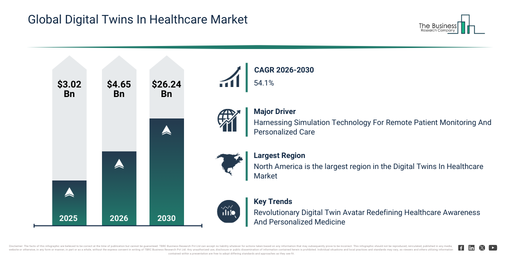
    The market size for digital twins in healthcare has seen rapid expansion in recent years. This sector is projected to climb from $3.02 billion in 2025 to $4.65 billion in 2026, achieving a compound annual growth rate (CAGR) of 54.3%. Historically, this growth can be attributed to advancements in medical imaging, the introduction of early simulation-based planning tools, greater availability of healthcare data, the complexity of treatment pathways, and the demand for precision medicine.

    The digital twins in healthcare market size is projected to experience rapid expansion over the coming years. It is anticipated to reach $26.24 billion by 2030, demonstrating a compound annual growth rate (CAGR) of 54.1%. This growth during the forecast period can be attributed to AI-powered modeling platforms, real-time IoT data integration, the growth of personalized medicine, digital hospital initiatives, and clinical workflow optimization. Major trends in the forecast period include the growing use of virtual patient modeling, increasing adoption of predictive healthcare analytics, the expansion of digital twins in hospital operations, a rising focus on personalized treatment simulation, and the integration of real-time clinical data streams.

    Access Your Free Sample Report for In-Depth Market Insights:

    https://www.thebusinessresearchcompany.com/sample.aspx?id=14089&type=smp

    Which Drivers Are Impacting The Competitive Landscape Of The Digital Twins In Healthcare Market?

    The growing reach of telehealth is anticipated to boost the development of digital twins within the healthcare market in the future. Telehealth involves leveraging telecommunications to deliver health services and information from a distance. This includes a range of healthcare offerings such as remote medical appointments, patient monitoring, educational resources, and the exchange of health data, all facilitated by digital communication. Digital twins offer the capability to simulate an individual patient’s real-time physiological reactions and how diseases advance. Telehealth systems can utilize this data for distant oversight, allowing medical professionals to monitor patients’ vital signs, compliance with medication, and general well-being from afar. As an illustration, figures from November 2025 by the Australian Bureau of Statistics (ABS), an Australia-based government statistical body, indicate that 22.5% of Australians utilized telehealth services during 2024–25. Of those who engaged in a telehealth consultation, 90.3% stated they would opt for telehealth again if available, marking an increase from 89.2% in 2023–24, which points to growing acceptance and sustained uptake. Consequently, the increasing prevalence of telehealth is fueling the expansion of digital twins within the healthcare market.

    What Leading Segments Are Studied In The Digital Twins In Healthcare Market?

    The digital twins in healthcare market covered in this report is segmented –

    1) By Type: Process And System Digital Twin, Product Digital Twin

    2) By Application: Asset And Process Management, Personalized Medicine, Drug Discovery

    3) By End-User: Clinical Research Organizations (CROs), Research And Diagnostic Laboratories, Hospitals And Clinics

    Subsegments:

    1) By Process And System Digital Twin: Patient Journey Digital Twin, Hospital Operations Digital Twin, Healthcare Workflow Digital Twin, Clinical Process Digital Twin

    2) By Product Digital Twin: Medical Device Digital Twin, Drug Development Digital Twin, Equipment Maintenance Digital Twin, Personalized Medicine Digital Twin

    Which Trends Are Expected To Influence The Digital Twins In Healthcare Market In The Upcoming Years?

    Major companies operating within the digital twins in the healthcare market are advancing innovative digital twin-supported technologies, such as Emma, to underscore the significance of virtual twins in expediting medical research and delivering tailored care. Emma is a digital twin-powered technology that offers an interactive, authentic virtual replica, enriched with supplementary data points, insights, and analyses to elevate the overall experience. This technology holds the capability to optimize surgical methods and afford patients a more comprehensive grasp of their treatment alternatives. For instance, in September 2023, Dassault Systèmesa SE, a France-based software company, unveiled a digital twin avatar named Emma to foster awareness concerning health research. Emma functions as a virtual model that precisely mirrors the attributes of a physical being. Emma’s creation involved leveraging anonymous health data to execute extensive tests, thereby garnering understanding into various diseases and therapeutic approaches.

    Which Major Firms Are Strengthening Their Position In The Digital Twins In Healthcare Market?

    Major companies operating in the digital twins in healthcare market are Amazon.com Inc., Microsoft Corporation, IBM Corporation, Oracle Corporation, SAP SE, NVIDIA Corporation, Siemens AG, Koninklijke Philips N.V., GE HealthCare Technologies Inc., NTT DATA Corporation, Atos SE, Dassault Systemes SE, Ansys Inc., PTC Inc., Twin Health Inc., Faststream Technologies, Rescale Inc., ThoughWire Corp., Q Bio Inc., Verto Healthcare, Unlearn.AI Inc., PrediSurge, QiO Technologies Ltd., NUREA, Predictive Care Inc., Virtonomy GMbH

    Access The Complete Report For Deeper Market Insights:

    https://www.thebusinessresearchcompany.com/report/digital-twins-in-healthcare-global-market-report

    Which Region Is Anticipated To See The Fastest Growth In The Digital Twins In Healthcare Market?

    North America was the largest region in the digital twins in healthcare market in 2025. The regions covered in the digital twins in healthcare market report are Asia-Pacific, South East Asia, Western Europe, Eastern Europe, North America, South America, Middle East, Africa.

    Request Your Customized Digital Twins In Healthcare Market Research Report for Competitive Advantage:

    https://www.thebusinessresearchcompany.com/customise?id=14089&type=smp

    Browse Through More Reports Similar to the Global Digital Twins In Healthcare Market 2026, By The Business Research Company

    Digital Twin Financial Services And Insurance Market Report 2026

    https://www.thebusinessresearchcompany.com/report/digital-twin-financial-services-and-insurance-global-market-report

    Digital Twin Market Report 2026

    https://www.thebusinessresearchcompany.com/report/digital-twin-global-market-report

    Digital Twin Technology Market Report 2026

    https://www.thebusinessresearchcompany.com/report/digital-twin-technology-global-market-report

    Get in touch with us:

    The Business Research Company: https://www.thebusinessresearchcompany.com/

    Americas +1 310-496-7795

    Asia +44 7882 955267 & +91 8897263534

    Europe +44 7882 955267

    Email us at info@tbrc.info

    Follow us on:

    LinkedIn: https://in.linkedin.com/company/the-business-research-company

    YouTube: https://www.youtube.com/channel/UC24_fI0rV8cR5DxlCpgmyFQ

    Global Market Model: https://www.thebusinessresearchcompany.com/global-market-model

  • Revenue of the Eye Tracking Solutions Market Predicted to Achieve $3.37 Billion by 2030, Driven by 25.5% CAGR

    Revenue of the Eye Tracking Solutions Market Predicted to Achieve $3.37 Billion by 2030, Driven by 25.5% CAGR

    Uncover key drivers, emerging technologies, and competitive movements shaping the eye tracking solutions market from 2026–2035 with trusted insights from The Business Research Company

    What are the forecasted starting (2026) and ending (2030) market sizes for the Eye Tracking Solutions Market?

    The eye tracking solutions market has experienced substantial expansion in recent years. It is projected to grow from $1.08 billion in 2025 to $1.36 billion in 2026, with a compound annual growth rate (CAGR) of 26.1%. The historical increase can be attributed to various elements, including the rise in digital advertising research, a heightened focus on user experience testing, ongoing advancements in eye tracking software, the broader scope of academic studies, and an increase in consumer electronics testing.

    The eye tracking solutions market is projected to experience rapid expansion over the coming years. This market is forecast to reach $3.37 billion by 2030, demonstrating a compound annual growth rate (CAGR) of 25.5%. Key drivers for this growth during the projected period include AI-powered eye tracking analytics, increasing integration into metaverse applications, expanded utilization in neuromarketing, the proliferation of cloud platforms, and the development of remote research tools. Significant trends anticipated for the forecast timeframe encompass a growing need for software-centric eye tracking analytics, broader application in marketing and consumer research, greater incorporation into human-computer interaction studies, increased deployment in gaming and virtual reality, and the merging of cloud-based eye tracking platforms.

    Access Your Free Sample Report for In-Depth Market Insights:

    https://www.thebusinessresearchcompany.com/sample.aspx?id=13655&type=smp

    What Drivers Are Supporting Technological Adoption In The Eye Tracking Solutions Market?

    The expanding requirement for ophthalmology is projected to fuel the growth of the eye tracking solutions market in the upcoming years. Ophthalmology is defined as the branch of medicine that studies the anatomy, function, and illnesses of the eyes. Eye-tracking solutions in ophthalmology facilitate the early diagnosis of eye problems, assist in assessing ocular motility for operations, and provide crucial data for measuring visual attention and cognitive skills in patients. For instance, in May 2024, according to the Centers for Disease Control and Prevention, a US-based national public health agency, 90 million Americans over 40 have vision and eye problems, which constitutes more than 3 in 5. By 2050, without effective interventions, cataracts will increase 87%, glaucoma will double, and vision impairment and blindness will increase 150%. Therefore, the growing demand for ophthalmology is driving the growth of the eye tracking solutions market.

    Which Segments Are Contributing To The Growth Of The Eye Tracking Solutions Market?

    The eye tracking solutions market covered in this report is segmented –

    1) By Type: Eye Attached Tracking, Optical Tracking, Electrooculography

    2) By Solution: Hardware, Software

    3) By End-User Industry: Retail And Advertisement Sector, Automotive And Transportation, Media And Entertainment, Aerospace And Defense, Consumer Electronics, Other End-User Industries

    Subsegments:

    1) By Eye Attached Tracking: Wearable Eye Trackers, Smart Glasses

    2) By Optical Tracking: Remote Eye Tracking Systems, Screen-Based Tracking Solutions

    3) By Electrooculography: Fixed Electrode Systems, Mobile Or Portable Electrode Systems

    Which Trends Are Guiding The Evolution Of The Eye Tracking Solutions Market?

    Major companies engaged in the eye tracking solutions market are concentrating on developing technological advancements, such as software-only webcam-based eye-tracking platforms, to address the increasing demand for scalable, low-cost attention-computing applications across education, healthcare, and productivity. A software-only webcam eye-tracking platform employs AI to interpret gaze direction from a user’s standard webcam video feed, differing from traditional eye trackers that depend on dedicated infrared hardware, thus enabling eye tracking on almost any device without requiring additional sensors. For instance, in June 2024, Tobii AB, a Sweden-based eye-tracking technology leader, introduced Tobii Nexus, which is a software-only integration platform for eye-tracking data. This product utilizes an AI-powered inference engine to transform webcam images into real-time gaze data, functions robustly across diverse eye shapes and skin tones, even with glasses or face coverings, and is designed for low computational load. It supports various applications, including behavioral assessment for conditions such as ADHD and depression; education, offering insights into student attention; digital collaboration, facilitating hands-free interaction; and VR-style 3D experiences on standard desktops.

    Who Are The Core Companies Influencing Trends In The Eye Tracking Solutions Market?

    Major companies operating in the eye tracking solutions market are Fujitsu Limited, ISCAN Inc., Tobii AB, Seeing Machines, Noldus Information Technology BV, Smart Eye AB, SensoMotoric Instruments, BIOPAC Systems Inc., AdHawk Microsystems, iMotions A/S, Mirametrix Inc., LC Technologies, SR Research Ltd., ERGONEERS GmbH, Gazepoint Research Inc., EyeTracking Inc., Pupil Labs GmbH, FOVE Inc., Neuroset Italia S.R.L., SeeTrue Technology LLC, EyeTech Digital Systems Inc., Eyeware Tech SA, CoolTool, The Eye Tribe, Eyegaze Inc., BEQUIPE, Sens-vue

    Access The Complete Report For Deeper Market Insights:

    https://www.thebusinessresearchcompany.com/report/eye-tracking-solutions-global-market-report

    Which Geographic Areas Are Emerging As Strong Markets For The Eye Tracking Solutions Market?

    North America was the largest region in the eye tracking solutions market in 2025. Asia-Pacific is expected to be the fastest-growing region in the forecast period. The regions covered in the eye tracking solutions market report are Asia-Pacific, South East Asia, Western Europe, Eastern Europe, North America, South America, Middle East, Africa.

    Request Your Customized Eye Tracking Solutions Market Research Report for Competitive Advantage:

    https://www.thebusinessresearchcompany.com/customise?id=13655&type=smp

    Browse Through More Reports Similar to the Global Eye Tracking Solutions Market 2026, By The Business Research Company

    Eye Testing Equipment Market Report 2026

    https://www.thebusinessresearchcompany.com/report/eye-testing-equipment-global-market-report

    Eye Tracking Market Report 2026

    https://www.thebusinessresearchcompany.com/report/eye-tracking-global-market-report

    3D Eye Tracking Software Market Report 2026

    https://www.thebusinessresearchcompany.com/report/3d-eye-tracking-software-global-market-report

    Get in touch with us:

    The Business Research Company: https://www.thebusinessresearchcompany.com/

    Americas +1 310-496-7795

    Asia +44 7882 955267 & +91 8897263534

    Europe +44 7882 955267

    Email us at info@tbrc.info

    Follow us on:

    LinkedIn: https://in.linkedin.com/company/the-business-research-company

    YouTube: https://www.youtube.com/channel/UC24_fI0rV8cR5DxlCpgmyFQ

    Global Market Model: https://www.thebusinessresearchcompany.com/global-market-model
  • Digital Twin Neonatal Intensive Care Unit (ICU) Industry Poised for Rapid Growth, Forecast to Touch $2.15 Billion by 2030 at 24.1% CAGR

    Digital Twin Neonatal Intensive Care Unit (ICU) Industry Poised for Rapid Growth, Forecast to Touch $2.15 Billion by 2030 at 24.1% CAGR

    Uncover key drivers, emerging technologies, and competitive movements shaping the digital twin neonatal intensive care unit (icu) market from 2026–2035 with trusted insights from The Business Research Company

    What total market size is anticipated for the Digital Twin Neonatal Intensive Care Unit (ICU) Market in 2030?

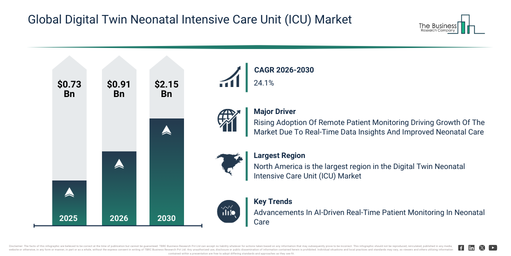
    The digital twin neonatal intensive care unit (icu) market size has observed substantial expansion in recent years. It is projected to increase from $0.73 billion in 2025 to $0.91 billion in 2026, achieving a compound annual growth rate (CAGR) of 24.3%. The market’s past development can be attributed to a rise in neonatal intensive care admissions, the strengthening of digital health infrastructure in hospitals, enhanced availability of patient monitoring data, a growing emphasis on outcome-based neonatal care, and increased investment in clinical simulation tools.

    The market size for digital twin neonatal intensive care unit (icu) is projected to experience substantial growth in the coming years. It is set to reach $2.15 billion in 2030, demonstrating a compound annual growth rate (CAGR) of 24.1%. The expansion over the forecast period is attributed to factors like the increasing adoption of AI-driven clinical decision support, a rising demand for personalized neonatal care pathways, the expansion of cloud-based healthcare platforms, a growing focus on predictive and preventive care models, and the increasing use of digital twins in hospital operations. Major trends expected during this period include the increasing adoption of real-time virtual icu modeling, a rising use of predictive analytics for neonatal risk assessment, the growing integration of multi-source patient data streams, the expansion of simulation-based clinical decision support, and an enhanced focus on proactive neonatal care management.

    Access Your Free Sample Report for In-Depth Market Insights:

    https://www.thebusinessresearchcompany.com/sample.aspx?id=29034&type=smp

    What Drivers Are Influencing Production Trends In The Digital Twin Neonatal Intensive Care Unit (ICU) Market?

    The expanding emphasis on remote patient monitoring (RPM) is anticipated to boost the growth of the digital twin neonatal intensive care unit (ICU) market. RPM involves employing digital technologies to gather and relay patient health data to healthcare providers, facilitating ongoing oversight and timely interventions without in-person visits. The uptake of RPM is increasing, driven by IoT-enabled devices that transmit real-time patient information for continuous monitoring and prompt action. A digital twin NICU aids RPM by generating a virtual duplicate of an infant’s health status and their environment, enabling clinicians to constantly track vital signs, model interventions, foresee complications, and make informed choices without physically disturbing the baby. For instance, data from August 2025, from the US Department of Health and Human Services, a US-based government administration, revealed that in 2024, nearly 1 million enrollees utilized remote patient monitoring, marking a 27% rise from 2023. Consequently, the heightened focus on remote patient monitoring is propelling the expansion of the digital twin neonatal intensive care unit (ICU) market.

    Which Segment Groups Are Influencing The Digital Twin Neonatal Intensive Care Unit (ICU) Market?

    The digital twin neonatal intensive care unit (icu) market covered in this report is segmented –

    1) By Component: Software, Hardware, Services

    2) By Deployment Mode: On-Premises, Cloud-Based

    3) By Application: Patient Monitoring, Predictive Analytics, Workflow Optimization, Training And Simulation, Other Applications

    4) By End User: Hospitals, Specialty Clinics, Research Institutes, Other End-Users

    Subsegments:

    1) By Hardware: Monitoring Sensors, Imaging Devices, Computing Units

    2) By Software: Simulation And Modeling Software, Data Integration Platforms, Analytics And Visualization Tools

    3) By Services: Implementation And Integration Services, Consulting And Training Services, Maintenance And Support Services

    What Trends Are Driving The Growth Trajectory Of The Digital Twin Neonatal Intensive Care Unit (ICU) Market?

    Leading companies in the digital twin neonatal intensive care unit (ICU) market are concentrating on developing advanced methodologies, such as real-time AI-assisted patient monitoring, to optimize continuous vital sign tracking and enable prompt interventions for critically ill neonates. Real-time AI-assisted patient monitoring entails the ongoing observation and analysis of a patient’s vital signs and health data using artificial intelligence algorithms, facilitating the immediate detection of abnormalities and timely clinical interventions. For instance, in April 2025, AngelEye Health Inc., a US-based technology company, introduced AIVision, a groundbreaking enhancement to its platform that integrates artificial intelligence (AI) and computer vision into neonatal intensive care unit (NICU) and pediatric unit settings. It utilizes AI and computer vision embedded in NICU bedside cameras to deliver real-time, intelligent clinical insights, empowering healthcare teams to identify early indicators of neonatal distress and neuromotor risks. This technology improves patient safety with features like virtual bed rails and AI-assisted tracking of pain, sedation, and respiratory status, thereby enhancing the timeliness of interventions. Its aim is to transform neonatal and pediatric care into a more connected, data-driven environment that streamlines workflows, supports personalized care, and ultimately improves health outcomes for vulnerable infants.

    Who Are The Primary Competitors In The Global Digital Twin Neonatal Intensive Care Unit (ICU) Market?

    Major companies operating in the digital twin neonatal intensive care unit (icu) market are Koninklijke Philips N.V., GE HealthCare Technologies Inc., Envision Health Inc., Sibel Health Inc., Genzeon Corporation, Gaumard Scientific Company Inc., Owlet Inc., Caregility Inc., Child Health Imprints Pte. Ltd., NeoLight, Eagle Telemedicine Inc., Wildflower Health Inc., AngelEye Health Inc., Amnion Life Inc., Elevate Healthcare, mOm Incubators Ltd., Pomelo Care Inc., AIIMS-Nagpur Tele-SNCU, Pediatrix & Obstetrix TeleNICU, Techginity Inc.

    Access The Complete Report For Deeper Market Insights:

    https://www.thebusinessresearchcompany.com/report/digital-twin-neonatal-intensive-care-unit-icu-global-market-report

    Which Global Regions Are Shaping The Competitive Landscape Of The Digital Twin Neonatal Intensive Care Unit (ICU) Market?

    North America was the largest region in the digital twin neonatal intensive care unit (ICU) market in 2025. Asia-Pacific is expected to be the fastest-growing region in the forecast period. The regions covered in the digital twin neonatal intensive care unit (icu) market report are Asia-Pacific, South East Asia, Western Europe, Eastern Europe, North America, South America, Middle East, Africa.

    Request Your Customized Digital Twin Neonatal Intensive Care Unit (ICU) Market Research Report for Competitive Advantage:

    https://www.thebusinessresearchcompany.com/customise?id=29034&type=smp

    Browse Through More Reports Similar to the Global Digital Twin Neonatal Intensive Care Unit (ICU) Market 2026, By The Business Research Company

    Neonatal Infant Care Market Report 2026

    https://www.thebusinessresearchcompany.com/report/neonatal-infant-care-global-market-report

    Digital Twins In Healthcare Market Report 2026

    https://www.thebusinessresearchcompany.com/report/digital-twins-in-healthcare-global-market-report

    Tele Intensive Care Unit Market Report 2026

    https://www.thebusinessresearchcompany.com/report/tele-intensive-care-unit-global-market-report

    Get in touch with us:

    The Business Research Company: https://www.thebusinessresearchcompany.com/

    Americas +1 310-496-7795

    Asia +44 7882 955267 & +91 8897263534

    Europe +44 7882 955267

    Email us at info@tbrc.info

    Follow us on:

    LinkedIn: https://in.linkedin.com/company/the-business-research-company

    YouTube: https://www.youtube.com/channel/UC24_fI0rV8cR5DxlCpgmyFQ

    Global Market Model: https://www.thebusinessresearchcompany.com/global-market-model
  • Eye Tracking Sector Forecast Shows Robust Momentum, Climbing to $11.48 Billion With 36.3% CAGR

    Eye Tracking Sector Forecast Shows Robust Momentum, Climbing to $11.48 Billion With 36.3% CAGR

    Uncover key drivers, emerging technologies, and competitive movements shaping the eye tracking market from 2026–2035 with trusted insights from The Business Research Company

    What upper market value could the Eye Tracking Market reach by 2030 starting from 2026 levels?

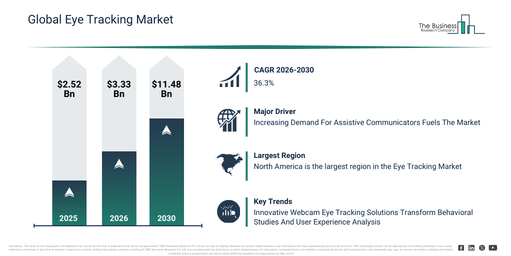
    The eye tracking market has experienced significant expansion in recent years. It is projected to increase from $2.52 billion in 2025 to $3.33 billion in 2026, at a compound annual growth rate (CAGR) of 31.9%. The growth witnessed in the past can be attributed to factors like the rise in human-computer interaction studies, increasing research funding, the broadening of usability testing, advancements in sensor technologies, and heightened academic adoption.

    The eye tracking market is poised for substantial growth over the next few years, with its size expected to climb to $11.48 billion by 2030, reflecting a compound annual growth rate (CAGR) of 36.3%. This projected expansion during the forecast period stems from factors such as the integration of AI-powered analytics, an increasing demand for immersive technologies, the advancement of autonomous vehicles, broader applications in healthcare, and innovations in wearable electronics. Key trends anticipated in this period include the expanded use in behavioral and cognitive research, increased adoption within automotive safety systems, the proliferation of wearable eye tracking devices, growing applications in healthcare diagnostics, and its integration with virtual and augmented reality.

    Access Your Free Sample Report for In-Depth Market Insights:

    https://www.thebusinessresearchcompany.com/sample.aspx?id=13654&type=smp

    Which Drivers Are Influencing Long-Term Growth In The Eye Tracking Market?

    The rising need for assistive communication devices is projected to propel the eye-tracking market. These devices serve as instruments designed to support individuals facing communication challenges, enhancing or supplementing their capacity to convey thoughts, ideas, and requirements. Through the monitoring of eye movements, eye-tracking technology empowers users to operate and interact with assistive communicators, thereby offering a more intuitive and effective method of communication. As an illustration, figures from January 2024, released by the World Health Organization (WHO), a Switzerland-based national agency, indicated that globally over 2.5 billion individuals require at least one assistive product. Moreover, the worldwide aging demographic combined with an increase in noncommunicable diseases suggests that roughly 3.5 billion people will require assistive technology by 2050. Consequently, this elevated demand for assistive communicators is anticipated to accelerate the expansion of the eye-tracking market.

    How Is The Eye Tracking Market Divided Into Segments?

    The eye tracking market covered in this report is segmented –

    1) By Type: Eye Attached Tracking, Optical Tracking, Electrooculography

    2) By Component: Hardware, Software

    3) By Location: Remote, Mobile

    4) By Application: Healthcare, Retail, Research, Automotive, Consumer Electronics, Other Application

    Subsegments:

    1) By Eye Attached Tracking: Wearable Devices, Head-Mounted Displays (HMDs)

    2) By Optical Tracking: Remote Eye Trackers, Camera-Based Systems, Video-Based Eye Tracking Solutions

    3) By Electrooculography: Contact Electrooculography Devices, Non-Contact Electrooculography Devices, Research-Grade Electrooculography Systems

    What Trends Are Projected To Support The Growth Of The Eye Tracking Market?

    Leading companies in the eye-tracking market are concentrating on developing innovative solutions, such as webcam eye-tracking, to achieve a competitive advantage. This webcam eye-tracking technology utilizes a standard webcam or a similar camera to observe and analyze a user’s eye movements and gaze direction in real time. For example, in June 2024, Tobii AB, a Swedish-based computer software company, introduced the Tobii Nexus, which is a webcam eye tracker. The Tobii Nexus is a state-of-the-art webcam eye-tracking solution designed for seamless integration with standard webcams, allowing for precise gaze tracking without needing specialized hardware. Its notable characteristics include real-time eye-tracking capabilities, straightforward user calibration, and extensive compatibility with various software applications, making it suitable for research, accessibility, and user experience analysis.

    Which Major Industry Participants Are Leading The Eye Tracking Market Growth?

    Major companies operating in the eye tracking market are Tobii AB, Varjo, Smart Eye AB, RealEye, Noldus Information Technology, Seeing Machine, Sensomotoric Instruments (SMI), iMotions A/S, NovaSight, Eyegaze Inc., Element Human Ltd., Ergoneers GmbH, Eye Tracking Inc., Gazepoint Research Inc., LC Technologies Inc., 4tiitoo AG, The Eye Tribe, Mirametrix Inc., EyeTech Digital Systems, SR Research, Phoenix Research Labs, GazeHawk, Pupil Labs

    Access The Complete Report For Deeper Market Insights:

    https://www.thebusinessresearchcompany.com/report/eye-tracking-global-market-report

    Which Region Is Projected To Lead The Eye Tracking Market During The Forecast Period?

    North America was the largest region in the eye tracking market in 2025. Asia-Pacific is expected to be the fastest-growing region in the forecast period. The regions covered in the eye tracking market report are Asia-Pacific, South East Asia, Western Europe, Eastern Europe, North America, South America, Middle East, Africa.

    Request Your Customized Eye Tracking Market Research Report for Competitive Advantage:

    https://www.thebusinessresearchcompany.com/customise?id=13654&type=smp

    Browse Through More Reports Similar to the Global Eye Tracking Market 2026, By The Business Research Company

    Computer Vision Market Report 2026

    https://www.thebusinessresearchcompany.com/report/computer-vision-global-market-report

    Eye Tracking Solutions Market Report 2026

    https://www.thebusinessresearchcompany.com/report/eye-tracking-solutions-global-market-report

    3D Eye Tracking Software Market Report 2026

    https://www.thebusinessresearchcompany.com/report/3d-eye-tracking-software-global-market-report

    Get in touch with us:

    The Business Research Company: https://www.thebusinessresearchcompany.com/

    Americas +1 310-496-7795

    Asia +44 7882 955267 & +91 8897263534

    Europe +44 7882 955267

    Email us at info@tbrc.info

    Follow us on:

    LinkedIn: https://in.linkedin.com/company/the-business-research-company

    YouTube: https://www.youtube.com/channel/UC24_fI0rV8cR5DxlCpgmyFQ

    Global Market Model: https://www.thebusinessresearchcompany.com/global-market-model
  • Digital Twin Hospital Operating Room Market Performance Outlook 2026–2030: Revenue to Hit $3.71 Billion at 25% CAGR

    Digital Twin Hospital Operating Room Market Performance Outlook 2026–2030: Revenue to Hit $3.71 Billion at 25% CAGR

    Uncover key drivers, emerging technologies, and competitive movements shaping the digital twin hospital operating room market from 2026–2035 with trusted insights from The Business Research Company

    What is the expected shift in the Digital Twin Hospital Operating Room Market’s size between 2026 and 2030?

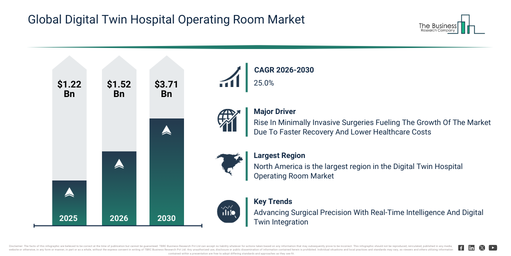
    The market size for digital twin hospital operating rooms has experienced significant expansion in recent times. It is projected to increase from $1.22 billion in 2025 to $1.52 billion in 2026, reflecting a compound annual growth rate (CAGR) of 25.3%. This historical expansion can be attributed to the growing number of complex surgical procedures, the escalating need for operational efficiency within hospitals, increased integration of connected medical devices, the rising use of surgical robotics, and initial investments in digital hospital infrastructure.

    The digital twin hospital operating room market size is projected to experience substantial growth in the upcoming years. It is set to expand to $3.71 billion in 2030, demonstrating a compound annual growth rate (CAGR) of 25.0%. This growth throughout the forecast period stems from a heightened focus on smart hospital development, an escalating demand for data-driven surgical optimization, the expansion of AI-assisted surgical planning, the increasing adoption of cloud-based hospital twins, and a growing emphasis on patient safety analytics. Prominent trends anticipated in this period encompass the rising uptake of real-time or simulation platforms, the increasing utilization of predictive equipment maintenance tools, the expanding deployment of workflow optimization solutions, the growth of virtual training and simulation systems, and enhanced integration of sensor-driven or monitoring technologies.

    Access Your Free Sample Report for In-Depth Market Insights:

    https://www.thebusinessresearchcompany.com/sample.aspx?id=27280&type=smp

    Which Drivers Are Shaping Strategic Decisions In The Digital Twin Hospital Operating Room Market?

    The increasing prevalence of minimally invasive surgeries is anticipated to drive the expansion of the digital twin hospital operating room market going forward. These surgeries entail performing operations through small incisions with minimal tissue damage, leading to quicker recovery times and fewer complications than open surgeries. The rise in minimally invasive surgeries is attributed to faster patient recovery, which helps reduce hospital stays and overall healthcare costs. Digital twin hospital operating rooms aid minimally invasive surgeries by providing real-time simulations and three-dimensional visualizations, enabling precise planning, improved navigation, and better surgical outcomes. For instance, in June 2024, the American Society of Plastic Surgeons, a US-based organization, reported that minimally invasive procedures increased by 7% in 2023, exceeding the growth of surgical procedures by 2%. Therefore, the growing trend of minimally invasive surgeries is a key factor propelling the expansion of the digital twin hospital operating room market.

    What Segment Classifications Make Up The Digital Twin Hospital Operating Room Market?

    The digital twin hospital operating room market covered in this report is segmented –

    1) By Components: Software, Hardware, Services

    2) By Deployment Mode: On-Premises, Cloud

    3) By Application: Surgical Planning, Training And Simulation, Workflow Optimization, Asset Management, Patient Monitoring, Other Applications

    4) By End User: Hospitals, Ambulatory Surgical Centers, Specialty Clinics, Other End Users

    Subsegments:

    1) By Software: Simulation Software, Data Analytics Software, Workflow Management Software, Visualization And Imaging Software, AI And Machine Learning Platforms

    2) By Hardware: Sensors, IoT Devices, Imaging Devices, Surgical Robots, Workstations And Servers

    3) By Services: Consulting Services, Integration And Implementation Services, Support And Maintenance Services, Training And Education Services, Remote Monitoring Services

    What Upcoming Trends Are Likely To Define The Future Path Of The Digital Twin Hospital Operating Room Market?

    Leading companies in the digital twin hospital operating room market are prioritizing the creation of advanced solutions, including real-time intelligence platforms, to refine surgical decision-making, boost workflow efficiency, and secure improved patient outcomes through dynamic data integration and visualization. A real-time intelligence platform functions as an intelligent tool that processes live data instantly, enabling users to make swift and precise decisions. For example, in February 2025, VeroSource Solutions Inc., a Canada-based software company, introduced enhanced Digital Twin capability to its exclusive VS Data-as-a-Service Platform. A digital twin is a virtual representation of a healthcare system or facility. It is a digital counterpart that permits study and forecasting without directly influencing the operations of the healthcare institution. Additionally, VeroSource’s Digital Twin technology incorporates further data sources, such as population demographics, illness patterns, and other critical external components, empowering healthcare practitioners to make more accurate and data-driven selections.

    Which Key Market Players Are Investing In Expansion And Innovation Within The Digital Twin Hospital Operating Room Market?

    Major companies operating in the digital twin hospital operating room market are Microsoft Corporation, Johnson & Johnson, International Business Machines Corporation, Oracle Corporation, Honeywell International Inc., Medtronic plc, Siemens Healthineers, Philips Healthcare, Stryker Corporation, GE Healthcare Technologies Inc., Zimmer Biomet Holding Inc., Olympus Corporation, Intuitive Surgical, Getinge AB, Karl Storz, Ansys Inc., AVEVA Group plc, Bentley Systems Inc., Dassault Systèmes SE, Schneider Electric SE, NVIDIA Corporation

    Access The Complete Report For Deeper Market Insights:

    https://www.thebusinessresearchcompany.com/report/digital-twin-hospital-operating-room-global-market-report

    Which Regions Are Poised For Strategic Growth In The Digital Twin Hospital Operating Room Market?

    North America was the largest region in the digital twin hospital operating room market in 2025. Asia-Pacific is expected to be the fastest-growing region in the forecast period. The regions covered in the digital twin hospital operating room market report are Asia-Pacific, South East Asia, Western Europe, Eastern Europe, North America, South America, Middle East, Africa.

    Request Your Customized Digital Twin Hospital Operating Room Market Research Report for Competitive Advantage:

    https://www.thebusinessresearchcompany.com/customise?id=27280&type=smp

    Browse Through More Reports Similar to the Global Digital Twin Hospital Operating Room Market 2026, By The Business Research Company

    Whole Life Insurance Market Report 2026

    https://www.thebusinessresearchcompany.com/report/whole-life-insurance-global-market-report

    Term Life Insurance Market 2026

    https://www.thebusinessresearchcompany.com/report/term-life-insurance-market

    Insurance Market Report 2026

    https://www.thebusinessresearchcompany.com/report/insurance-global-market-report

    Get in touch with us:

    The Business Research Company: https://www.thebusinessresearchcompany.com/

    Americas +1 310-496-7795

    Asia +44 7882 955267 & +91 8897263534

    Europe +44 7882 955267

    Email us at info@tbrc.info

    Follow us on:

    LinkedIn: https://in.linkedin.com/company/the-business-research-company

    YouTube: https://www.youtube.com/channel/UC24_fI0rV8cR5DxlCpgmyFQ

    Global Market Model: https://www.thebusinessresearchcompany.com/global-market-model
  • Eye Melanoma Market Anticipated to Record Steady Gains, Advancing to $15.16 Billion by 2030

    Eye Melanoma Market Anticipated to Record Steady Gains, Advancing to $15.16 Billion by 2030

    Uncover key drivers, emerging technologies, and competitive movements shaping the eye melanoma market from 2026–2035 with trusted insights from The Business Research Company

    What level of CAGR-driven expansion is anticipated in the Eye Melanoma Market between 2026 and 2030?

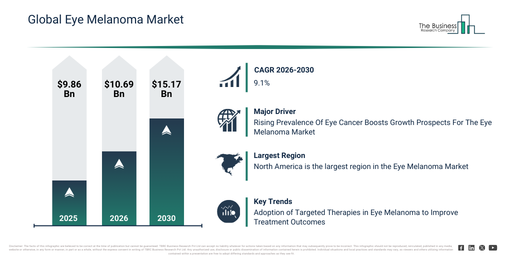
    The eye melanoma market has demonstrated robust expansion in recent years. Its size is forecast to rise from $9.86 billion in 2025 to $10.69 billion in 2026, achieving a compound annual growth rate (CAGR) of 8.4%. This past growth is largely attributable to progress in ocular imaging technologies, a greater awareness of cancer, the expansion of oncology treatment facilities, enhanced diagnostic capabilities, and better survival outcomes.

    The eye melanoma market is projected to experience robust expansion over the coming years. This market is set to reach $15.17 billion by 2030, exhibiting a compound annual growth rate (CAGR) of 9.1%. Factors driving this growth during the forecast period include the advancement of innovative immunotherapies, the increasing embrace of precision oncology, an expansion in genetic testing, heightened investment in research for rare cancers, and enhancements in early screening initiatives. Key trends anticipated during this period encompass a heightened emphasis on early cancer detection, the increasing uptake of targeted and immunotherapies, a greater reliance on advanced ocular imaging, the establishment of more specialized oncology centers, and expanding clinical research dedicated to rare eye cancers.

    Access Your Free Sample Report for In-Depth Market Insights:

    https://www.thebusinessresearchcompany.com/sample.aspx?id=13109&type=smp

    What Drivers Are Affecting Demand-Supply Dynamics In The Eye Melanoma Market?

    The rising occurrence of eye cancer is anticipated to fuel the expansion of the eye melanoma market in the future. Eye cancer is defined as the uncontrolled and unusual proliferation of cells within the structures of the eye. Improved detection techniques, greater public awareness, and progress in therapeutic approaches are intensifying the demand for specialized treatments and interventions, driven by better identification and successful handling of early-stage cases. For example, in 2025, the American Cancer Society, a US-based non-profit organization, reported roughly 3,140 new instances of eye and orbital cancers (primarily melanomas), with 1,620 affecting males and 1,520 affecting females. Additionally, these cancers led to approximately 490 fatalities, involving 270 males and 220 females. Consequently, the growing incidence of eye cancer is set to boost the expansion of the eye melanoma market.

    What Segments Are Included Within The Eye Melanoma Market?

    The eye melanoma market covered in this report is segmented –

    1) By Site: Uvea, Sclera, Retina

    2) By Diagnosis: Imaging, Biopsy, Eye Exam

    3) By Treatment: Surgery, Radiation Therapy, Targeted Therapy, Immunotherapy, Other Treatment

    4) By End User: Hospitals And Clinics, Academic Institutes

    Subsegments:

    1) By Uvea: Choroid Melanoma, Ciliary Body Melanoma, Iris Melanoma

    2) By Sclera: Episcleral Melanoma, Scleral Surface Melanoma, Conjunctival Melanoma

    3) By Retina: Macular Melanoma, Peripheral Retinal Melanoma, Optic Disc Melanoma

    Which Trends Are Influencing The Performance And Direction Of The Eye Melanoma Market?

    Leading companies within the eye melanoma market are concentrating on developing advanced technologies, specifically protein-kinase C (PKC) inhibitors, to satisfy the increasing need for treatments that preserve the eye and are systemically effective. PKC inhibitors function as small-molecule compounds that precisely block PKC enzymes linked to tumor growth, presenting a non-surgical option compared to conventional treatments like plaque brachytherapy or enucleation. As an illustration, in March 2025, IDEAYA Biosciences, a US-based precision oncology firm, introduced darovasertib, a first-in-class PKC inhibitor for uveal melanoma. This treatment targets PKC isoforms involved in the spread of tumors, demonstrating tumor shrinkage rates of approximately 82% and eye-preservation rates of 61% during Phase 2 trials. Darovasertib offers a systemic, eye-sparing solution for addressing primary uveal melanoma, suitable for patients eligible for either enucleation or plaque brachytherapy.

    Who Are The Prominent Global Companies Shaping The Eye Melanoma Market Landscape?

    Major companies operating in the eye melanoma market are Pfizer Inc., Johnson & Johnson, F. Hoffmann‑La Roche Ltd, Merck & Co. Inc, AbbVie Inc., Bayer AG, Novartis AG, Bristol‑Myers Squibb Company, AstraZeneca PLC, Sanofi S.A., Amgen Inc., Castle Biosciences Inc., IDEAYA Biosciences Inc., Delcath Systems Inc., Immunocore Holdings plc, Aura Biosciences Inc., TriSalus Life Sciences Inc., Replimune Group Inc., Linnaeus Therapeutics, iOnctura, LES LABORATOIRES SERVIER, Immatics NV

    Access The Complete Report For Deeper Market Insights:

    https://www.thebusinessresearchcompany.com/report/eye-melanoma-global-market-report

    Which Region Currently Holds The Largest Share Of The Eye Melanoma Market?

    North America was the largest region in the eye melanoma market in 2025. Asia-Pacific is expected to be the fastest-growing region in the forecast period. The regions covered in the eye melanoma market report are Asia-Pacific, South East Asia, Western Europe, Eastern Europe, North America, South America, Middle East, Africa.

    Request Your Customized Eye Melanoma Market Research Report for Competitive Advantage:

    https://www.thebusinessresearchcompany.com/customise?id=13109&type=smp

    Browse Through More Reports Similar to the Global Eye Melanoma Market 2026, By The Business Research Company

    Melanoma Therapeutics Market Report 2026

    https://www.thebusinessresearchcompany.com/report/melanoma-therapeutics-global-market-report

    Melanoma Drugs Market Report 2026

    https://www.thebusinessresearchcompany.com/report/melanoma-drugs-global-market-report

    Malignant Melanoma Treatment Market Report 2026

    https://www.thebusinessresearchcompany.com/report/malignant-melanoma-treatment-global-market-report

    Get in touch with us:

    The Business Research Company: https://www.thebusinessresearchcompany.com/

    Americas +1 310-496-7795

    Asia +44 7882 955267 & +91 8897263534

    Europe +44 7882 955267

    Email us at info@tbrc.info

    Follow us on:

    LinkedIn: https://in.linkedin.com/company/the-business-research-company

    YouTube: https://www.youtube.com/channel/UC24_fI0rV8cR5DxlCpgmyFQ

    Global Market Model: https://www.thebusinessresearchcompany.com/global-market-model

  • Global Digital Twin Blood Bank Logistics Market Set for Strong Expansion, Reaching $3.13 Billion With 18.3% CAGR by 2030

    Global Digital Twin Blood Bank Logistics Market Set for Strong Expansion, Reaching $3.13 Billion With 18.3% CAGR by 2030

    Uncover key drivers, emerging technologies, and competitive movements shaping the digital twin blood bank logistics market from 2026–2035 with trusted insights from The Business Research Company

    What growth pattern is forecast for the Digital Twin Blood Bank Logistics Market size between 2026 and 2035?

    The digital twin blood bank logistics market size has seen rapid expansion in recent years. It is anticipated to expand from $1.35 billion in 2025 to $1.6 billion in 2026, achieving a compound annual growth rate (CAGR) of 18.5%. This market’s historical development can be ascribed to several factors, including escalating blood demand volatility, the enlargement of centralized blood bank networks, the adoption of cold-chain monitoring technologies, heightened regulatory compliance requirements, and the early deployment of logistics analytics platforms.

    The digital twin blood bank logistics market is projected to experience substantial expansion over the upcoming years, with an anticipated valuation of $3.13 billion by 2030, demonstrating a compound annual growth rate (CAGR) of 18.3%. This growth during the forecast period is attributable to factors such as greater financial commitments to intelligent healthcare logistics, the increasing embrace of cloud-powered digital twins, the proliferation of AI-powered demand prediction, an intensified emphasis on waste-free blood handling, and deeper integration with existing hospital information systems. Key developments expected within this period encompass the wider utilization of real-time blood supply chain simulations, a surge in the application of models designed for predictive inventory optimization, the broader incorporation of IoT-based temperature surveillance, the broadening of comprehensive traceability platforms, and a heightened emphasis on minimizing waste and boosting operational efficiency.

    Access Your Free Sample Report for In-Depth Market Insights:

    https://www.thebusinessresearchcompany.com/sample.aspx?id=27279&type=smp

    Which Drivers Are Impacting Market Performance In The Digital Twin Blood Bank Logistics Market?

    The anticipated expansion of the digital twin blood bank logistics market is driven by the increasing volume of surgical operations. These procedures involve medical interventions executed by qualified experts, employing manual or instrumental methods to diagnose, manage, or rectify various health issues. The rise in surgical interventions is attributable to an aging demographic, which fuels a greater need for treatments like joint replacements and cardiovascular operations. Digital twin blood bank logistics supports surgical procedures by providing real-time transparency and effective oversight of blood supplies, thereby reducing operational delays and potential shortages during vital surgeries. An example highlighting this trend is seen in Australia, where, as reported by the Australian Institute of Health and Welfare (AIHW), a government agency, in April 2025, public hospitals recorded an unprecedented 778,500 elective surgery admissions from waitlists in 2023–24. This marked a 5.8% increase from 735,500 admissions observed in 2022–23. Consequently, the global increase in surgical procedures is a key factor propelling the expansion of the digital twin blood bank logistics market.

    What Segment Types Are Examined In The Digital Twin Blood Bank Logistics Market?

    The digital twin blood bank logistics market covered in this report is segmented –

    1) By Component: Software, Hardware, Services

    2) By Deployment Mode: On-Premises, Cloud

    3) By Application: Inventory Management, Temperature Monitoring, Transportation Optimization, Compliance And Traceability, Other Applications

    4) By End-User: Hospitals, Blood Banks, Diagnostic Laboratories, Research Institutes

    Subsegments:

    1) By Software: Simulation Platforms, Data Analytics Tools, Workflow Management Software, Real-Time Monitoring Systems, Inventory Optimization Software

    2) By Hardware: Sensors, Radio Frequency Identification Tags, Smart Storage Units, Temperature Monitoring Devices, Communication Gateways

    3) By Services: Consulting Services, System Integration, Maintenance And Support, Training And Education, Cloud Hosting Services

    Which Trends Are Shaping Activity Within The Digital Twin Blood Bank Logistics Market?

    Major companies operating in the digital twin blood bank logistics market are concentrating on introducing technologically advanced solutions, such as AI-powered on-demand blood delivery platforms, to optimize inventory management, enhance real-time tracking, reduce wastage, and ensure a timely, efficient blood supply to hospitals and clinics. AI-powered on-demand blood delivery platforms signify intelligent systems that utilize artificial intelligence to predict demand, manage stock, and coordinate the real-time delivery of blood products to healthcare facilities efficiently. For instance, in June 2025, Lytus HealthTech, an India-based healthcare technology company, launched BLOD, an AI-powered on-demand blood delivery platform. This pioneering system leverages advanced artificial intelligence and autonomous logistics to provide 24×7, rapid, cold-chain delivery of blood units within 90 minutes, significantly reducing wait times for hospitals and patients. BLOD aims to eliminate delays, minimize blood wastage due to transport or cold-chain failures, and establish a new standard for emergency blood delivery in India’s healthcare sector.

    Who Are The Core Companies Influencing Trends In The Digital Twin Blood Bank Logistics Market?

    Major companies operating in the digital twin blood bank logistics market are Deutsche Post AG, FedEx Corporation, Mærsk A/S, Owens & Minor Inc., SenSat Ltd., KNAPP AG, World Courier Management Inc., Siemens Logistics LLC, Swisslog AG, GPI S.p.A., Zipline International Inc., OnWay Transport LLC, Mediware Information Systems Inc., Logivations GmbH, Medi-Ops LLC, Certainty Health LLC, Sifio Health Inc., UPS Healthcare, Körber Supply Chain, Dematic Group, Zebra Technologies Corporation, Controlant Inc.

    Access The Complete Report For Deeper Market Insights:

    https://www.thebusinessresearchcompany.com/report/digital-twin-blood-bank-logistics-global-market-report

    Which Regions Are Projected To Dominate The Digital Twin Blood Bank Logistics Market In The Coming Years?

    North America was the largest region in the digital twin blood bank logistics market in 2025. Asia-Pacific is expected to be the fastest-growing region in the forecast period. The regions covered in the digital twin blood bank logistics market report are Asia-Pacific, South East Asia, Western Europe, Eastern Europe, North America, South America, Middle East, Africa.

    Request Your Customized Digital Twin Blood Bank Logistics Market Research Report for Competitive Advantage:

    https://www.thebusinessresearchcompany.com/customise?id=27279&type=smp

    Browse Through More Reports Similar to the Global Digital Twin Blood Bank Logistics Market 2026, By The Business Research Company

    Cargo Transportation Insurance Market Report 2026

    https://www.thebusinessresearchcompany.com/report/cargo-transportation-insurance-global-market-report

    Insurance Market Report 2026

    https://www.thebusinessresearchcompany.com/report/insurance-global-market-report

    Usage Based Insurance Market 2026

    https://www.thebusinessresearchcompany.com/report/usage-based-insurance-market

    Get in touch with us:

    The Business Research Company: https://www.thebusinessresearchcompany.com/

    Americas +1 310-496-7795

    Asia +44 7882 955267 & +91 8897263534

    Europe +44 7882 955267

    Email us at info@tbrc.info

    Follow us on:

    LinkedIn: https://in.linkedin.com/company/the-business-research-company

    YouTube: https://www.youtube.com/channel/UC24_fI0rV8cR5DxlCpgmyFQ

    Global Market Model: https://www.thebusinessresearchcompany.com/global-market-model
  • Eye Infections Industry Poised for Rapid Growth, Forecast to Touch $10.24 Billion by 2030 at 5.2% CAGR

    Eye Infections Industry Poised for Rapid Growth, Forecast to Touch $10.24 Billion by 2030 at 5.2% CAGR

    Uncover key drivers, emerging technologies, and competitive movements shaping the eye infections market from 2026–2035 with trusted insights from The Business Research Company

    What long-term size projections exist for the Eye Infections Market covering 2026–2035?

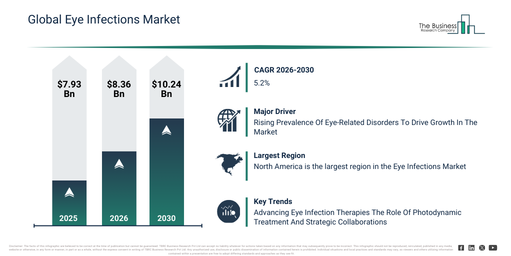
    The eye infections market has experienced robust growth recently. Projections indicate its expansion from $7.93 billion in 2025 to $8.36 billion in 2026, demonstrating a compound annual growth rate (CAGR) of 5.4%. Historically, this growth can be linked to factors such as a high occurrence of conjunctivitis and keratitis, increased use of contact lenses, a rise in urban pollution, improved access to healthcare, and the proliferation of ophthalmology clinics.

    The eye infections market size is anticipated to experience substantial growth over the upcoming years. It is forecast to expand to $10.24 billion by 2030, achieving a compound annual growth rate (CAGR) of 5.2%. This projected increase is driven by the innovation of new antimicrobial eye drugs, an expanding aging demographic, a rise in digital eye strain incidents, better accessibility to ophthalmic care, and the expansion of online pharmacies. Significant developments expected during this forecast period include a higher occurrence of bacterial and viral eye infections, an increased demand for prescription ophthalmic medications, greater public awareness regarding early diagnosis and treatment, the widening reach of online and retail pharmacy channels, and the formulation of broad-spectrum ophthalmic therapies.

    Access Your Free Sample Report for In-Depth Market Insights:

    https://www.thebusinessresearchcompany.com/sample.aspx?id=21186&type=smp

    Which Drivers Are Impacting The Competitive Landscape Of The Eye Infections Market?

    The rising occurrence and spread of eye-related disorders are anticipated to stimulate the eye infections market. These eye-related disorders refer to a spectrum of conditions impacting the eyes, including diseases such as glaucoma, cataracts, and macular degeneration, as well as refractive errors like myopia and hyperopia. The increase in individuals suffering from eye conditions is attributed to elements such as an aging populace, shifts in lifestyle, environmental factors, and inadequate diagnostic capabilities leading to a delay in problem detection. Eye infections can contribute to the onset or worsening of eye-related disorders by triggering inflammation, causing tissue damage, and compromising the eye’s natural defenses, ultimately resulting in complications such as vision loss or chronic conditions. For instance, in October 2024, the World Health Organization, a Switzerland-based health authority, reported that in 2023, 130,746 individuals underwent surgical treatment for advanced trachoma, and 32.9 million received antibiotics, with a global coverage of 29%. Therefore, the increasing incidence and prevalence of eye-related disorders will continue to drive the eye infections market.

    What Leading Segments Are Studied In The Eye Infections Market?

    The eye infections market covered in this report is segmented –

    1) By Indications: Conjunctivitis, Keratitis, Endophthalmitis, Blepharitis, Stye, Uveitis, Cellulitis, Ocular Herpes

    2) By Drug Type: Corticosteroids, Quinolone Antibiotics, Macrolide Antibiotics, Tetracycline Antibiotics, Polyene Antifungals

    3) By Distribution Channel: Hospital Pharmacies, Retail Pharmacies, Online Pharmacies

    Subsegments:

    1) By Conjunctivitis: Bacterial Conjunctivitis, Viral Conjunctivitis, Allergic Conjunctivitis

    2) By Keratitis: Bacterial Keratitis, Viral Keratitis, Fungal Keratitis, Acanthamoeba Keratitis

    3) By Endophthalmitis: Post-surgical Endophthalmitis, Post-traumatic Endophthalmitis, Endogenous Endophthalmitis

    4) By Blepharitis: Anterior Blepharitis, Posterior Blepharitis

    5) By Stye: Internal Stye, External Stye

    6) By Uveitis: Anterior Uveitis, Intermediate Uveitis, Posterior Uveitis, Panuveitis

    7) By Cellulitis: Periorbital Cellulitis, Orbital Cellulitis

    8) By Ocular Herpes: Herpes Simplex Keratitis, Herpes Simplex Conjunctivitis

    What Long-Term Trends Are Expected To Shape The Future Of The Eye Infections Market?

    Major companies active in the eye infections market are prioritizing the development of innovative therapies, like photodynamic therapy, aimed at enhancing treatment efficacy and mitigating side effects. Photodynamic therapy functions as a treatment involving a light-sensitive drug, which is activated by specific light wavelengths to pinpoint and destroy abnormal or infected cells. For instance, in December 2024, VisiRose Inc., a US-based clinical-stage biotechnology company, collaborated with Provectus Biopharmaceuticals Inc., a US-based pharmaceutical company, and Bascom Palmer Eye Institute, a US-based health center, to launch Rose Bengal Photodynamic Antimicrobial Therapy (RB PDAT). This groundbreaking, non-invasive investigational treatment targets infectious keratitis and other serious eye infections. The RB PDAT presents a promising answer to the increasing global issue of antimicrobial resistance (AMR), offering a comprehensive ocular treatment. This therapy is engineered to be safe, effective, and cost-efficient, thereby addressing the urgent need for advanced treatments in this domain.

    Which Key Players Are Driving Competition In The Eye Infections Market?

    Major companies operating in the eye infections market are Pfizer Inc, F. Hoffmann-La Roche AG, Merck And Co Inc, AbbVie Inc., Abbott Laboratories, Novartis AG, Takeda Pharmaceutical Company Limited, Teva Pharmaceutical Industries Limited, Otsuka Pharmaceutical Co Ltd, Regeneron Pharmaceuticals Inc, Alcon Laboratories Inc., Bausch Health Companies Inc., Sun Pharmaceutical Industries Limited, Santen Pharmaceuticals Co Ltd, Rohto Pharmaceutical Co Ltd, Alembic Pharmaceuticals Limited, Novaliq GmbH, Eyevance Pharmaceuticals LLC, Ocular Therapeutix, I-Med Pharma Inc., EyeGate Pharmaceuticals Inc

    Access The Complete Report For Deeper Market Insights:

    https://www.thebusinessresearchcompany.com/report/eye-infections-global-market-report

    How Does The Eye Infections Market Perform Across Major Global Regions?

    North America was the largest region in the eye infections market in 2025. Asia-Pacific is expected to be the fastest-growing region in the forecast period. The regions covered in the eye infections market report are Asia-Pacific, South East Asia, Western Europe, Eastern Europe, North America, South America, Middle East, Africa.

    Request Your Customized Eye Infections Market Research Report for Competitive Advantage:

    https://www.thebusinessresearchcompany.com/customise?id=21186&type=smp

    Browse Through More Reports Similar to the Global Eye Infections Market 2026, By The Business Research Company

    Anemia And Other Blood Disorder Drugs Market Report 2026

    https://www.thebusinessresearchcompany.com/report/anemia-and-other-blood-disorder-drugs-global-market-report

    Ocular Inflammation Treatment Market Report 2026

    https://www.thebusinessresearchcompany.com/report/ocular-inflammation-treatment-global-market-report

    Veterinary Eye Care Market Report 2026

    https://www.thebusinessresearchcompany.com/report/veterinary-eye-care-global-market-report

    Get in touch with us:

    The Business Research Company: https://www.thebusinessresearchcompany.com/

    Americas +1 310-496-7795

    Asia +44 7882 955267 & +91 8897263534

    Europe +44 7882 955267

    Email us at info@tbrc.info

    Follow us on:

    LinkedIn: https://in.linkedin.com/company/the-business-research-company

    YouTube: https://www.youtube.com/channel/UC24_fI0rV8cR5DxlCpgmyFQ

    Global Market Model: https://www.thebusinessresearchcompany.com/global-market-model

  • Digital Transformation In Healthcare Market Growth Projection: Expected to Surpass $219.67 Billion by 2030 at 17.3% CAGR

    Digital Transformation In Healthcare Market Growth Projection: Expected to Surpass $219.67 Billion by 2030 at 17.3% CAGR

    Uncover key drivers, emerging technologies, and competitive movements shaping the digital transformation in healthcare market from 2026–2035 with trusted insights from The Business Research Company

    How much larger will the Digital Transformation In Healthcare Market be in 2030 compared with 2026?

    The digital transformation in healthcare market size has witnessed substantial growth in recent years. This market is projected to expand from $96.94 billion in 2025 to $115.92 billion in 2026, exhibiting a compound annual growth rate (CAGR) of 19.6%. The historical surge in this market can be attributed to elements like paper-based clinical workflows, increasing healthcare operational costs, the initial embrace of health IT, disjointed care delivery systems, and the expanding quantities of patient data.

    The size of the digital transformation in healthcare market is projected to experience substantial expansion over the coming years. This market is forecast to reach $219.68 billion by 2030, demonstrating a compound annual growth rate (CAGR) of 17.3%. Factors contributing to this growth during the forecast period include AI-enabled care optimization, governmental digital health initiatives, value-based care models, the broadening of cloud infrastructure, and increased cybersecurity investments. Key trends anticipated for the forecast period encompass a faster uptake of electronic health records, the extension of telemedicine and virtual care services, a greater reliance on data-driven clinical decision support, the increasing incorporation of digital patient engagement tools, and an escalating need for interoperable healthcare systems.

    Access Your Free Sample Report for In-Depth Market Insights:

    https://www.thebusinessresearchcompany.com/sample.aspx?id=16396&type=smp

    What Drivers Are Guiding Growth Patterns In The Digital Transformation In Healthcare Market?

    The expanding implementation of electronic health records (EHRs) is anticipated to drive the advancement of digital transformation within the healthcare market in the future. EHRs represent digital renditions of patient paper charts, offering real-time, patient-focused information that authorized individuals can access immediately and securely. The uptake of EHRs is primarily driven by factors such as enhanced patient care, regulatory incentives, greater data sharing, active patient participation, data analysis capabilities, and effective population health management. Digital transformation within healthcare substantially improves EHRs through the incorporation of advanced technologies and enhanced system features, thereby facilitating smooth data exchange and synchronized patient care among various healthcare providers. For example, data from October 2023, sourced from a report by Oxford Academic, a UK research platform, indicated a rise in basic Electronic Health Records (EHR) adoption from 6.6% to 81.2%, with comprehensive systems seeing an increase from 3.6% to 63.2%. Furthermore, large hospitals demonstrate a 7% higher rate of comprehensive EHR adoption compared to medium-sized hospitals, and are more than 34% ahead of small hospitals. Consequently, the expanding use of electronic health records is a key factor propelling the digital transformation in the healthcare market.

    Which Segments Are Driving Activity In The Digital Transformation In Healthcare Market?

    The digital transformation in healthcare market covered in this report is segmented –

    1) By Solution: Software, Service

    2) By Organization Size: Small And Medium Size Enterprises, Large Enterprises

    3) By Technology: Artificial Intelligence, Cloud Computing, Big Data And Analytics, Internet Of Things, Cybersecurity

    4) By End User: Hospitals And Clinics, Pharma Companies, Life Science And Biotech Companies, Healthcare Insurance Providers

    Subsegments:

    1) By Software: Electronic Health Records (Ehr), Telemedicine Solutions, Healthcare Analytics Software, Clinical Decision Support Systems (Cdss), Patient Management Software, Healthcare CRM Software, Blockchain Solutions For Healthcare

    2) By Service: Consulting Services, Implementation Services, Integration Services, Support And Maintenance Services, Training Services, Managed Services

    Which Trends Are Influencing The Development Of The Digital Transformation In Healthcare Market?

    Leading entities within the digital transformation in the healthcare market are prioritizing the creation of advanced technologies, such as digitalization solutions, to enhance their market standing. Digitalization solutions encompass technologies, strategies, and services designed to convert conventional analog or manual workflows into digital formats, thereby empowering organizations to optimize operations, boost efficiency, and increase productivity. An example of this is Huawei Technologies Co. Ltd., a China-based information and communications technology firm, which introduced its Medical Technology Digitalization Solution in February 2024, aimed at optimizing diverse healthcare procedures. This groundbreaking solution incorporates advanced technologies to transform medical practices, providing multiple distinctive capabilities. It utilizes artificial intelligence (AI) and machine learning algorithms to improve medical imaging analysis, facilitating quicker and more precise diagnoses for ailments like cancer and cardiovascular diseases. Furthermore, the solution integrates Internet of Things (IoT) devices and sensors, allowing for continuous patient monitoring and remote healthcare provision, thereby enhancing accessibility and patient outcomes.

    Which Major Industry Participants Are Leading The Digital Transformation In Healthcare Market Growth?

    Major companies operating in the digital transformation in healthcare market are Roche Diagnostics, Medtronic plc, Siemens Healthineers, Philips Healthcare, Stryker Corporation, GE Healthcare, Boston Scientific, Omron Corporation, Intuitive Surgical Inc., Omnicell Inc., Allscripts Healthcare Solutions, InTouch Health, Blue Ocean Robotics ApS, Vecna Robotics, Stereotaxis Inc., Aethon Inc., VGo Communications Inc., ReWalk Robotics Ltd., Epic Systems Corporation, athenahealth Inc., Truveta Inc., Merative L P, K Health, Eko Health Inc., Suki

    Access The Complete Report For Deeper Market Insights:

    https://www.thebusinessresearchcompany.com/report/digital-transformation-in-healthcare-global-market-report

    Which Region Is Expected To Experience The Fastest Growth In The Digital Transformation In Healthcare Market?

    North America was the largest region in the digital transformation in healthcare market in 2025. Asia-Pacific is expected to be the fastest-growing region in the forecast period. The regions covered in the digital transformation in healthcare market report are Asia-Pacific, South East Asia, Western Europe, Eastern Europe, North America, South America, Middle East, Africa.

    Request Your Customized Digital Transformation In Healthcare Market Research Report for Competitive Advantage:

    https://www.thebusinessresearchcompany.com/customise?id=16396&type=smp

    Browse Through More Reports Similar to the Global Digital Transformation In Healthcare Market 2026, By The Business Research Company

    Retail Digital Transformation Market Report 2026

    https://www.thebusinessresearchcompany.com/report/retail-digital-transformation-global-market-report

    Digital Transformation Market Report 2026

    https://www.thebusinessresearchcompany.com/report/digital-transformation-global-market-report

    Digital Health Market Report 2026

    https://www.thebusinessresearchcompany.com/report/digital-health-global-market-report

    Get in touch with us:

    The Business Research Company: https://www.thebusinessresearchcompany.com/

    Americas +1 310-496-7795

    Asia +44 7882 955267 & +91 8897263534

    Europe +44 7882 955267

    Email us at info@tbrc.info

    Follow us on:

    LinkedIn: https://in.linkedin.com/company/the-business-research-company

    YouTube: https://www.youtube.com/channel/UC24_fI0rV8cR5DxlCpgmyFQ

    Global Market Model: https://www.thebusinessresearchcompany.com/global-market-model

  • Extreme Lateral Interbody Fusion (XLIF) Surgery Market Performance Outlook 2026–2030: Revenue to Hit $2.04 Billion at 5.5% CAGR

    Extreme Lateral Interbody Fusion (XLIF) Surgery Market Performance Outlook 2026–2030: Revenue to Hit $2.04 Billion at 5.5% CAGR

    Uncover key drivers, emerging technologies, and competitive movements shaping the extreme lateral interbody fusion (xlif) surgery  market from 2026–2035 with trusted insights from The Business Research Company

    What total market size is anticipated for the Extreme Lateral Interbody Fusion (XLIF) Surgery  Market in 2030?

    The extreme lateral interbody fusion (xlif) surgery market has seen significant growth in recent years. This market is forecast to increase from $1.57 billion in 2025 to $1.66 billion in 2026, achieving a compound annual growth rate (CAGR) of 5.8%. The expansion observed historically is attributable to the growing prevalence of degenerative disc disease, an increase in spinal disorder cases, rising patient demand for minimally invasive surgery, enhancements in surgical instrumentation, and the expansion of orthopedic hospitals.

    The extreme lateral interbody fusion (xlif) surgery market size is expected to experience robust growth over the next few years. It is projected to expand to $2.05 billion by 2030, demonstrating a compound annual growth rate (CAGR) of 5.5%. This anticipated growth during the forecast period can be attributed to factors such as an aging population, advancements in spinal implant technology, a growing preference among surgeons for lateral approaches, increasing investments in healthcare infrastructure, and rising awareness of minimally invasive spine surgery. Significant trends emerging in the forecast period include the increasing adoption of minimally invasive spine procedures, a heightened demand for quicker post-surgical recovery, the expanded use of advanced interbody cages, the establishment of more specialized spine surgery centers, and improved surgical outcomes through lateral access techniques.

    Access Your Free Sample Report for In-Depth Market Insights:

    https://www.thebusinessresearchcompany.com/sample.aspx?id=23395&type=smp

    What Drivers Are Influencing Production Trends In The Extreme Lateral Interbody Fusion (XLIF) Surgery  Market?

    The extreme lateral interbody fusion (XLIF) surgery market is anticipated to expand throughout the forecast period due to the increasing occurrence of spinal ailments. These ailments encompass various medical conditions impacting the spine, including its vertebrae, discs, nerves, spinal cord, and surrounding tissues such as muscles and ligaments. A primary contributor to the escalation of spinal illnesses is a sedentary lifestyle, where prolonged sitting and insufficient physical activity lead to poor posture and weakened core musculature, thereby increasing the susceptibility to spinal degeneration and persistent back discomfort. XLIF surgery is critical for treating spinal illnesses because it employs a minimally invasive approach to restore disc height and spinal alignment, alleviating nerve compression and providing spinal stabilization without incisions through major back muscles. For instance, data from June 2024, provided by the Australian Institute of Health and Welfare, an Australia-based government entity, indicated that by 2023, back problems had become the third leading cause of disease burden in the nation, accounting for 4.3% of the overall disease burden. Consequently, the growing prevalence of spinal illnesses is a significant catalyst for the extreme lateral interbody fusion (XLIF) surgery market’s expansion.

    Which Segment Groups Are Influencing The Extreme Lateral Interbody Fusion (XLIF) Surgery  Market?

    The extreme lateral interbody fusion (xlif) surgery  market covered in this report is segmented –

    1) By Product Type: Extreme Lateral Interbody Fusion (XLIF) Interbody Fusion Systems, Extreme Lateral Interbody Fusion (XLIF) Interbody Cages

    2) By Procedure Type: Single Segment, Multi-Segment, Mini Open

    3) By Application: Spinal Stenosis, Herniated Disc, Degenerative Disc Disease

    4) By End-User: Hospitals, Ambulatory Surgical Centers, Orthopedic Clinic

    Subsegments:

    1) By XLIF Interbody Fusion Systems: Minimally Invasive XLIF Systems, Stand-Alone XLIF Systems, Expandable XLIF Systems, Biomechanical XLIF System

    2) By XLIF Interbody Cages: PEEK (Polyether Ether Ketone) XLIF Cages, Titanium XLIF Cages, 3D-Printed XLIF Cages, Expandable XLIF Cages

    Which Market Trends Are Opening Growth Opportunities In The Extreme Lateral Interbody Fusion (XLIF) Surgery  Market?

    Major companies in the extreme lateral interbody fusion (XLIF) surgery market are directing their efforts toward developing technologically advanced products, such as lateral plating systems, to decrease operative time and encourage quicker patient recovery. Lateral plating systems are orthopedic implants employed in spine surgery to provide stabilization and support through the attachment of plates to the side (lateral aspect) of the vertebrae, often used in conjunction with interbody fusion procedures, including XLIF. For instance, in August 2024, Globus Medical Inc., a US-based medical device manufacturer, launched the ADIRA XLIF Plate System. This ADIRA XLIF Plate System delivers a streamlined lateral plating solution with a secure coupling mechanism that precisely aligns plates over interbody spacers for enhanced stability. Being compatible with bone screws and lateral MIS anchors, it facilitates various fixation methods and spacer types. Integrated within the Globus Medical lateral portfolio, it threads directly into multiple interbody spacers to mitigate the risk of spacer movement and adapt to different patient needs and surgical preferences, thereby improving both efficiency and reliability.

    Who Are The Top-Performing Companies In The Extreme Lateral Interbody Fusion (XLIF) Surgery  Market In Recent Years?

    Major companies operating in the extreme lateral interbody fusion (xlif) surgery  market are Medtronic plc, Stryker Corporation, Zimmer Biomet Holdings Inc., NuVasive Inc., Globus Medical Inc., Orthofix Medical Inc., Alphatec Holdings Inc. (Alphatec Spine), Spinal Elements Inc., Surgalign Holdings Inc., Spineology Inc., CoreLink LLC, Aurora Spine Corporation, Life Spine Inc., Premia Spine Ltd., Nexxt Spine LLC, Spinal Simplicity LLC, CoreSpine Technologies LLC, NU-Spine LLC, ATEC Spine Inc., Captiva Spine Inc., Xtant Medical Holdings Inc., Centinel Spine LLC

    Access The Complete Report For Deeper Market Insights:

    https://www.thebusinessresearchcompany.com/report/extreme-lateral-interbody-fusion-xlif-surgery-global-market-report

    Which Region Is Anticipated To See The Fastest Growth In The Extreme Lateral Interbody Fusion (XLIF) Surgery  Market?

    North America was the largest region in the extreme lateral interbody fusion (XLIF) surgery market in 2025. Asia-Pacific is expected to be the fastest-growing region in the forecast period. The regions covered in the extreme lateral interbody fusion (xlif) surgery  market report are Asia-Pacific, South East Asia, Western Europe, Eastern Europe, North America, South America, Middle East, Africa.

    Request Your Customized Extreme Lateral Interbody Fusion (XLIF) Surgery  Market Research Report for Competitive Advantage:

    https://www.thebusinessresearchcompany.com/customise?id=23395&type=smp

    Browse Through More Reports Similar to the Global Extreme Lateral Interbody Fusion (XLIF) Surgery  Market 2026, By The Business Research Company

    Joint Reconstruction Devices And Equipment Market Report 2026

    https://www.thebusinessresearchcompany.com/report/joint-reconstruction-devices-and-equipment-global-market-report

    Sacroiliac Joint Fusion Market Report 2026

    https://www.thebusinessresearchcompany.com/report/sacroiliac-joint-fusion-global-market-report

    Minimally Invasive Surgery Market Report 2026

    https://www.thebusinessresearchcompany.com/report/minimally-invasive-surgery-global-market-report

    Get in touch with us:

    The Business Research Company: https://www.thebusinessresearchcompany.com/

    Americas +1 310-496-7795

    Asia +44 7882 955267 & +91 8897263534

    Europe +44 7882 955267

    Email us at info@tbrc.info

    Follow us on:

    LinkedIn: https://in.linkedin.com/company/the-business-research-company

    YouTube: https://www.youtube.com/channel/UC24_fI0rV8cR5DxlCpgmyFQ

    Global Market Model: https://www.thebusinessresearchcompany.com/global-market-model