Category: HealthcareServices

  • Artificial Intelligence-Powered Solutions For Elderly Care Market Future Outlook: Strong Growth Expected Toward $91.09 Billion by 2030

    Artificial Intelligence-Powered Solutions For Elderly Care Market Future Outlook: Strong Growth Expected Toward $91.09 Billion by 2030

    Uncover key drivers, emerging technologies, and competitive movements shaping the artificial intelligence-powered solutions for elderly care market from 2026–2035 with trusted insights from The Business Research Company

    What is the estimated market size of the Artificial Intelligence-Powered Solutions For Elderly Care Market by the end of 2030?

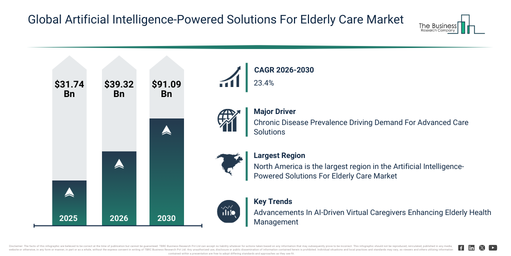
    The artificial intelligence-powered solutions for elderly care market has seen substantial expansion in recent years. This market is expected to increase from $31.74 billion in 2025 to $39.32 billion by 2026, achieving a compound annual growth rate (CAGR) of 23.9%. Historically, the growth can be attributed to factors such as increasing aging population demographics, a rising prevalence of chronic conditions among the elderly, the expansion of home-based care models, the early adoption of remote health monitoring tools, and the overall growth in digital health platforms.

    The artificial intelligence-powered solutions for elderly care market is forecast to undergo substantial expansion in the upcoming years, with its size expected to reach $91.09 billion by 2030, achieving a compound annual growth rate (CAGR) of 23.4%. This projected increase during the forecast period is fueled by several factors, including a heightened demand for solutions that support independent aging, growing investments in smart home healthcare technologies, the widening scope of AI-driven preventive care, an increased emphasis on reducing the burden on caregivers, and the greater integration of robotics into elderly assistance. Notable trends anticipated in this period comprise the broader adoption of AI-based remote monitoring systems, an uptick in the use of virtual assistants for elderly care, expanded deployment of fall detection and safety systems, the proliferation of social companion robots, and a stronger focus on providing personalized care delivery.

    Access Your Free Sample Report for In-Depth Market Insights:

    https://www.thebusinessresearchcompany.com/sample.aspx?id=20715&type=smp

    What Drivers Are Shaping Future Opportunities In The Artificial Intelligence-Powered Solutions For Elderly Care Market?

    An anticipated increase in the occurrence of chronic diseases is set to propel the growth of the artificial intelligence (AI)-powered solution for the elderly care market in the future. These are enduring health conditions, including ailments like diabetes and heart disease, which necessitate ongoing management and affect daily routines. The surge in chronic diseases can be attributed to an aging global population, evolving lifestyles marked by decreased physical activity and unhealthy eating habits, alongside increasing urbanization. AI-powered technologies designed for elderly care facilitate the management of chronic conditions through real-time health tracking, the application of predictive analytics for timely interventions, and the creation of customized care strategies, thereby enhancing patient outcomes and the overall quality of life for older adults. For instance, the World Health Organization, a Switzerland-based intergovernmental organization, reported in September 2023 that 41 million deaths globally each year, constituting 74% of the total, were caused by non-communicable diseases (NCDs) or chronic diseases. Among these, 17.9 million deaths resulted from cardiovascular diseases, 9.3 million deaths from cancer, 4.1 million deaths from chronic respiratory diseases, and 2.0 million deaths from diabetes. Consequently, the increasing prevalence of chronic diseases is a significant catalyst for the artificial intelligence (AI)-powered solution for the elderly care market.

    Which Segments Are Gaining Traction In The Artificial Intelligence-Powered Solutions For Elderly Care Market?

    The artificial intelligence-powered solutions for elderly care market covered in this report is segmented –

    1) By Technology: Machine Learning, Natural Language Processing, Robotics, Computer Vision, Other Technologies

    2) By Application: Fall Detection And Prevention, Remote Monitoring And Healthcare, Personalized Virtual Assistants, Medication Management, Social Interaction And Companionship, Other Applications

    3) By End Users: Home Care Settings, Assisted Living Facilities, Nursing Homes, Hospitals And Clinics, Other End Users

    Subsegments:

    1) By Machine Learning: Predictive Analytics, Personalized Health Monitoring, Data-Driven Decision Making, Adaptive Learning Systems

    2) By Natural Language Processing (NLP): Voice Assistants, Language Translation For Elderly Communication, Sentiment Analysis For Emotional Well-Being, Speech Recognition For Assistance Devices

    3) By Robotics: Social Companions (Companion Robots), Assistance Robots For Daily Activities, Robotic Prosthetics And Exoskeletons, Autonomous Mobility Robots

    4) By Computer Vision: Fall Detection Systems, Vision-Based Health Monitoring (Eye Health), Gesture Recognition For Communication, Environment Mapping And Navigation

    5) By Other Technologies: AI-Powered Wearables, Remote Monitoring Systems, Smart Home Devices Integration, Virtual Reality Therapy

    Which Trends Are Expected To Influence The Artificial Intelligence-Powered Solutions For Elderly Care Market In The Upcoming Years?

    Leading firms within the artificial intelligence (AI)-powered solution for elderly care market are prioritizing the creation of groundbreaking innovations, including AI-driven virtual caregivers, aiming to deliver customized care, strengthen oversight functions, and elevate the general well-being of older adults. Such an AI virtual caregiver operates as an intelligent digital assistant capable of monitoring health, prompting medication intake, providing social interaction, and addressing urgent situations, thereby significantly assisting older people in preserving their autonomy and welfare. For example, in November 2024, Electronic Caregiver Inc., a healthcare technology firm based in the US, unveiled Addison Care+ on the AWS marketplace. Addison Care+ represents a sophisticated AI-driven virtual caregiver, designed to transform senior care by improving health administration, fostering participation, and boosting autonomy for older individuals and those managing chronic conditions. It provides round-the-clock activity observation, prompt identification of health concerns, and detailed care information, including medication oversight and immediate crisis intervention. By integrating with AI-driven telecare operations, it facilitates its deployment across the country, equipping caregivers with anticipatory resources for overseeing client well-being and streamlining the provision of care.

    Who Are The Top-Performing Companies In The Artificial Intelligence-Powered Solutions For Elderly Care Market In Recent Years?

    Major companies operating in the artificial intelligence-powered solutions for elderly care market are Samsung Electronics Co Ltd, Siemens Healthineers AG, Koninklijke Philips N.V., Cera Care, Elder HQ, Aviva Health, AiCure LLC, GrandCare Systems, K4connect, Sensi AI, Orbita, Blue Frog Robotics, CarePredict, Anvayaa Kin Care, Emoha, Reemo Health, Walk With Path, Intuition Robotics, MiiCare, Care.Coach, MyndYou, ClinOne, PainChek, Somatix Inc., SmartQuare

    Access The Complete Report For Deeper Market Insights:

    https://www.thebusinessresearchcompany.com/report/artificial-intelligence-powered-solutions-for-elderly-care-global-market-report

    Which Region Currently Holds The Largest Share Of The Artificial Intelligence-Powered Solutions For Elderly Care Market?

    North America was the largest region in the artificial intelligence-powered solutions for elderly Care market in 2025. The regions covered in the artificial intelligence-powered solutions for elderly care market report are Asia-Pacific, South East Asia, Western Europe, Eastern Europe, North America, South America, Middle East, Africa.

    Request Your Customized Artificial Intelligence-Powered Solutions For Elderly Care Market Research Report for Competitive Advantage:

    https://www.thebusinessresearchcompany.com/customise?id=20715&type=smp

    Browse Through More Reports Similar to the Global Artificial Intelligence-Powered Solutions For Elderly Care Market 2026, By The Business Research Company

    Elderly Care Market Report 2026

    https://www.thebusinessresearchcompany.com/report/elderly-care-global-market-report

    Artificial Intelligence In Healthcare Diagnosis Market Report 2026

    https://www.thebusinessresearchcompany.com/report/artificial-intelligence-in-healthcare-diagnosis-global-market-report

    Artificial Intelligence Or Machine Learning Ai Or Ml Medical Device Market Report 2026

    https://www.thebusinessresearchcompany.com/report/artificial-intelligence-or-machine-learning-ai-or-ml-medical-device-global-market-report

    Get in touch with us:

    The Business Research Company: https://www.thebusinessresearchcompany.com/

    Americas +1 310-496-7795

    Asia +44 7882 955267 & +91 8897263534

    Europe +44 7882 955267

    Email us at info@tbrc.info

    Follow us on:

    LinkedIn: https://in.linkedin.com/company/the-business-research-company

    YouTube: https://www.youtube.com/channel/UC24_fI0rV8cR5DxlCpgmyFQ

    Global Market Model: https://www.thebusinessresearchcompany.com/global-market-model

  • Revenue of the Artificial Intelligence-Generated Personalized Prenatal Nutrition Guide Market Predicted to Achieve $3.88 Billion by 2030, Driven by 22.8% CAGR

    Revenue of the Artificial Intelligence-Generated Personalized Prenatal Nutrition Guide Market Predicted to Achieve $3.88 Billion by 2030, Driven by 22.8% CAGR

    Uncover key drivers, emerging technologies, and competitive movements shaping the artificial intelligence-generated personalized prenatal nutrition guide market from 2026–2035 with trusted insights from The Business Research Company

    What was the valuation of the Artificial Intelligence-Generated Personalized Prenatal Nutrition Guide Market in 2026, and what figure is it projected to hit by 2030?

    The artificial intelligence-generated personalized prenatal nutrition guide market size has experienced rapid expansion over recent years. This market is projected to expand from $1.39 billion in 2025 to $1.71 billion in 2026, demonstrating a compound annual growth rate (CAGR) of 23.1%. Historically, this expansion has been driven by several factors, including heightened awareness of the significance of maternal nutrition, the swift uptake of pregnancy health applications, an increase in digital health literacy, the proliferation of prenatal care initiatives, and a rising consumer desire for customized wellness solutions.

    The artificial intelligence-generated personalized prenatal nutrition guide market is poised for substantial expansion over the coming years. Projections indicate its value will reach $3.88 billion by 2030, demonstrating a compound annual growth rate (CAGR) of 22.8%. This anticipated growth is primarily driven by several factors, including greater investments in digital tools for maternal health, the increasing application of AI-powered nutrition analytics, the expansion of remote prenatal monitoring services, the expanding integration of genomics into nutrition planning, and a heightened demand for data-driven pregnancy care solutions. Key trends influencing this period involve the rising uptake of AI-driven personalized prenatal diet planning, enhanced integration with wearable health tracking devices, the broader development of genetic-informed nutrition advice, the expanding utilization of digital platforms for maternal health, and a stronger emphasis on preventative prenatal care.

    Access Your Free Sample Report for In-Depth Market Insights:

    https://www.thebusinessresearchcompany.com/sample.aspx?id=27206&type=smp

    Which Drivers Are Affecting Market Participation In The Artificial Intelligence-Generated Personalized Prenatal Nutrition Guide Market?

    The increasing incidence of nutrition-related pregnancy complications is expected to stimulate the expansion of the artificial intelligence generated personalized prenatal nutrition guide market. Nutrition-related pregnancy complications encompass health challenges in the mother or fetus arising from inadequate, excessive, or disproportionate nutrient intake, including conditions like anemia, gestational diabetes, and abnormal birth weight. The prevalence of these complications is escalating due to unhealthy dietary patterns that contribute to insufficient nutrient consumption, excessive weight gain, and metabolic imbalances during pregnancy. An artificial intelligence generated personalized prenatal nutrition guide aids in reducing nutrition-related pregnancy complications by offering customized dietary recommendations, making it ideal for expectant mothers. It diminishes risks through individualized monitoring and guidance, thereby improving both maternal and fetal health results. For instance, in December 2024, the Office for Health Improvement and Disparities, a UK-based government department, indicated that the proportion of women living with obesity in early pregnancy was 26.2% in 2023-2024, marking an increase from 25.4% in 2022-2023. Consequently, the rising occurrence of nutrition-related pregnancy complications is driving the growth of the artificial intelligence generated personalized prenatal nutrition guide market.

    What Segment Categories Are Covered In The Artificial Intelligence-Generated Personalized Prenatal Nutrition Guide Market?

    The artificial intelligence-generated personalized prenatal nutrition guide market covered in this report is segmented –

    1) By Product Type: Mobile Apps, Web-Based Platforms, Wearable Integration, Other Product Types

    2) By Deployment Mode: Cloud-Based, Hybrid Deployment Models

    3) By Application: Pregnancy Nutrition Management, Dietary Recommendations, Supplement Tracking, Other Applications

    4) By End User: Hospitals And Clinics, Homecare, Fitness And Wellness Centers, Other End Users

    Subsegments:

    1) By Mobile Apps: Artificial Intelligence-Driven Meal Planning Apps, Prenatal Nutrition Tracking Apps, Genetic-Based Nutrition Recommendation Apps, Microbiome Analysis Apps, Symptom And Health Log Apps For Pregnancy

    2) By Web-Based Platforms: Online Prenatal Diet Planning Portals, Genetic Test Result Dashboards, Artificial Intelligence (AI)-Powered Consultation Platforms, Nutrient Deficiency Monitoring Portals, Personalized Prenatal Recipe Platforms

    3) By Wearable Integration: Fitness Trackers With Prenatal Nutrition Sync, Continuous Glucose Monitoring (CGM) Integration, Smart Scales With Pregnancy Mode, Sleep Trackers Linked To Nutrition Recommendations, Hydration Monitoring Wearables

    4) By Other Product Types: At-Home Genetic Test Kits With Prenatal Focus, Microbiome Test Kits For Pregnancy Health, Artificial Intelligence-Enabled Supplement Dispensers, Voice-Assistant Guided Prenatal Nutrition Tools, Smart Kitchen Devices With Pregnancy Diet Presets

    What Trends Are Driving The Growth Trajectory Of The Artificial Intelligence-Generated Personalized Prenatal Nutrition Guide Market?

    Leading corporations within the artificial intelligence-generated personalized prenatal nutrition guide market are concentrating on creating sophisticated offerings, such as digital health solutions, to provide customized dietary advice that enhances the well-being of mothers and unborn children. Such a digital health solution represents a technology-driven platform that leverages data and artificial intelligence to offer individualized nutritional guidance, aiming for improved maternal and fetal health. As an illustration, in December 2024, the Alliance for Artificial Intelligence and Medtech, a US-based advocacy organization, formed a partnership with the Andhra Pradesh government to introduce the artificial intelligence-powered Janani Mitra healthcare app, a digital health solution designed to empower pregnant women across the state. The application provides functionalities like nutrition tracking facilitated by a food scanner, alongside early anemia detection accomplished by AI analysis of images from the eyes, tongue, and nails. Furthermore, it monitors health status and medication regimens, enables real-time interaction between pregnant women, accredited social health activists (ASHAs), and auxiliary nurse midwives (ANMs), and keeps tabs on maternal healthcare services, including scheduled visits and ultrasound checkups.

    Which Leading Companies Dominate The Artificial Intelligence-Generated Personalized Prenatal Nutrition Guide Market Share?

    Major companies operating in the artificial intelligence-generated personalized prenatal nutrition guide market are MamaWell, Appinventiv Technologies Pvt. Ltd., Maven Clinic Inc., Ritual Vitamins Inc., Nutrino Health Ltd., Ovia Health Inc., Vitagene Inc., Bump And Beyond Nutrition Limited., Nutrify LLC, Perelel, DayTwo Inc., Qua Nutrition, Baby2Body Limited., JM Nutrition, Rootine Inc., Suggestic Inc., Zaya Care, BellyFuel, Femia, Nuskha Kitchen

    Access The Complete Report For Deeper Market Insights:

    https://www.thebusinessresearchcompany.com/report/artificial-intelligence-generated-personalized-prenatal-nutrition-guide-global-market-report

    How Does The Artificial Intelligence-Generated Personalized Prenatal Nutrition Guide Market Perform Across Major Global Regions?

    North America was the largest region in the artificial intelligence-generated personalized prenatal nutrition guide market in 2025. Asia Pacific is expected to be the fastest-growing region in the forecast period. The regions covered in the artificial intelligence-generated personalized prenatal nutrition guide market report are Asia-Pacific, South East Asia, Western Europe, Eastern Europe, North America, South America, Middle East, Africa.

    Request Your Customized Artificial Intelligence-Generated Personalized Prenatal Nutrition Guide Market Research Report for Competitive Advantage:

    https://www.thebusinessresearchcompany.com/customise?id=27206&type=smp

    Browse Through More Reports Similar to the Global Artificial Intelligence-Generated Personalized Prenatal Nutrition Guide Market 2026, By The Business Research Company

    Digital Map Market Report 2026

    https://www.thebusinessresearchcompany.com/report/digital-map-global-market-report

    Precision Engineering Machines Market Report 2026

    https://www.thebusinessresearchcompany.com/report/precision-engineering-machines-global-market-report

    Precision Parts Market Report 2026

    https://www.thebusinessresearchcompany.com/report/precision-parts-global-market-report

    Get in touch with us:

    The Business Research Company: https://www.thebusinessresearchcompany.com/

    Americas +1 310-496-7795

    Asia +44 7882 955267 & +91 8897263534

    Europe +44 7882 955267

    Email us at info@tbrc.info

    Follow us on:

    LinkedIn: https://in.linkedin.com/company/the-business-research-company

    YouTube: https://www.youtube.com/channel/UC24_fI0rV8cR5DxlCpgmyFQ

    Global Market Model: https://www.thebusinessresearchcompany.com/global-market-model
  • Artificial Intelligence-Enhanced Hospital Equipment Utilization Sector Forecast Shows Robust Momentum, Climbing to $12.73 Billion With 27.1% CAGR

    Artificial Intelligence-Enhanced Hospital Equipment Utilization Sector Forecast Shows Robust Momentum, Climbing to $12.73 Billion With 27.1% CAGR

    Uncover key drivers, emerging technologies, and competitive movements shaping the artificial intelligence-enhanced hospital equipment utilization market from 2026–2035 with trusted insights from The Business Research Company

    What are the forecasted starting (2026) and ending (2030) market sizes for the Artificial Intelligence-Enhanced Hospital Equipment Utilization Market?

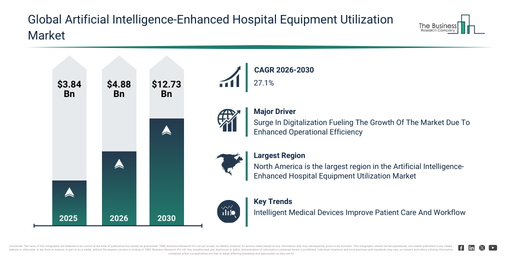
    The artificial intelligence-enhanced hospital equipment utilization market has witnessed significant expansion recently. This market is projected to expand from $3.84 billion in 2025 to reach $4.88 billion in 2026, exhibiting a compound annual growth rate (CAGR) of 27.3%. This historical growth can be linked to several factors, including enhanced hospital equipment utilization rates, escalating operational cost pressures within healthcare settings, the prompt integration of connected medical devices, an increase in hospital digital transformation efforts, and the broader implementation of centralized equipment management systems.

    The artificial intelligence-enhanced hospital equipment utilization market is projected to experience substantial growth in the upcoming years. This market is forecast to reach $12.73 billion by 2030, exhibiting a compound annual growth rate (CAGR) of 27.1%. This expansion over the forecast period is driven by several factors, including heightened investments in intelligent hospital infrastructure, an increasing need for AI-powered operational efficiency, the broadening of cloud-based platforms for equipment management, deeper integration of hospital-wide data analytics, and a greater emphasis on optimizing costs within healthcare operations. Key trends anticipated during this period encompass the growing adoption of predictive maintenance for medical equipment, the expanded utilization of AI-based asset tracking systems, the increasing integration of real-time analytics for equipment performance, the development of workflow optimization platforms, and a strengthened focus on minimizing equipment downtime.

    Access Your Free Sample Report for In-Depth Market Insights:

    https://www.thebusinessresearchcompany.com/sample.aspx?id=28933&type=smp

    What Drivers Are Supporting Technological Adoption In The Artificial Intelligence-Enhanced Hospital Equipment Utilization Market?

    Growing digitalization is anticipated to drive the expansion of the artificial intelligence-enhanced hospital equipment utilization market in the future. Digitalization involves the integration of digital technologies into business processes, services, and everyday tasks to boost efficiency and create value. This increase in digitalization stems from improved operational efficiency, achieved by streamlining operations and fostering data-informed decisions. Artificial intelligence-enhanced hospital equipment utilization contributes to digitalization through the integration of smart analytics and real-time monitoring, which optimize equipment function, enhance hospital operational effectiveness, and strengthen data links across healthcare networks. As an example, the Centers for Disease Control and Prevention (CDC), a US-based federal agency, reported in May 2025 that approximately 92% of state public health laboratories had implemented Electronic Test Orders and Results (ETOR) systems with at least one healthcare partner for a particular laboratory program, representing an 18% increase from 74% in early 2023. Consequently, the expanding digitalization is fueling the growth of the artificial intelligence-enhanced hospital equipment utilization market.

    Which Segments Are Contributing To The Growth Of The Artificial Intelligence-Enhanced Hospital Equipment Utilization Market?

    The artificial intelligence-enhanced hospital equipment utilization market covered in this report is segmented –

    1) By Component: Software, Hardware, Services

    2) By Deployment Mode: On-Premises, Cloud

    3) By Application: Asset Tracking, Predictive Maintenance, Workflow Optimization, Inventory Management, Patient Flow Management

    4) By End-User: Hospitals, Clinics, Ambulatory Surgical Centers, Diagnostic Centers

    Subsegments:

    1) By Software: Predictive Analytics Software, Imaging Analysis Software, Workflow Optimization Software, Patient Monitoring Software

    2) By Hardware: Imaging Devices, Robotic Surgical Systems, Intelligent Monitoring Equipment, Diagnostic Instruments

    3) By Services: Maintenance And Support, Training And Implementation, Data Management, Consulting

    What Upcoming Trends Are Likely To Define The Future Path Of The Artificial Intelligence-Enhanced Hospital Equipment Utilization Market?

    Leading companies in the artificial intelligence-enhanced hospital equipment utilization market are prioritizing the development of sophisticated medical technologies, such as AI-powered imaging systems, to achieve a competitive advantage. AI-powered imaging systems are defined as medical imaging technologies that utilize artificial intelligence to improve image analysis, boost diagnostic accuracy, and accelerate the identification of abnormalities. For example, in April 2024, GE HealthCare, a US-based medical technology company, introduced Caption AI on its Vscan Air SL wireless handheld ultrasound system. This AI-driven solution helps clinicians capture high-quality cardiac images with increased accuracy and efficiency. By offering real-time guidance and automated calculations, it allows even less-experienced users to conduct dependable cardiac assessments. The innovation enhances diagnostic potential and supports more effective deployment of ultrasound technology in clinical environments.

    Who Are The Major Companies Operating In The Artificial Intelligence-Enhanced Hospital Equipment Utilization Market?

    Major companies operating in the artificial intelligence-enhanced hospital equipment utilization market are Butterfly Network Inc., International Business Machines Corporation, Oracle Corporation, Medtronic Plc, Sectra AB, Siemens Healthineers AG, Fujifilm Holdings Corporation, Stryker Corporation, Philips Healthcare, GE Healthcare, Intuitive Surgical Inc., Hologic Inc., Canon Medical Systems Corporation, Carestream Health Inc., Qventus Inc., Agfa HealthCare NV, TRIMEDX Inc., Nuance Communications Inc., Sonitor Technologies AS, CenTrak Inc.

    Access The Complete Report For Deeper Market Insights:

    https://www.thebusinessresearchcompany.com/report/artificial-intelligence-enhanced-hospital-equipment-utilization-global-market-report

    Which Region Is Anticipated To See The Fastest Growth In The Artificial Intelligence-Enhanced Hospital Equipment Utilization Market?

    North America was the largest region in the artificial intelligence-enhanced hospital equipment utilization market in 2025. Asia-Pacific is expected to be the fastest-growing region in the forecast period. The regions covered in the artificial intelligence-enhanced hospital equipment utilization market report are Asia-Pacific, South East Asia, Western Europe, Eastern Europe, North America, South America, Middle East, Africa.

    Request Your Customized Artificial Intelligence-Enhanced Hospital Equipment Utilization Market Research Report for Competitive Advantage:

    https://www.thebusinessresearchcompany.com/customise?id=28933&type=smp

    Browse Through More Reports Similar to the Global Artificial Intelligence-Enhanced Hospital Equipment Utilization Market 2026, By The Business Research Company

    Hospital Robots Market Report 2026

    https://www.thebusinessresearchcompany.com/report/hospital-robots-global-market-report

    Hospital Capacity Management Solutions Market Report 2026

    https://www.thebusinessresearchcompany.com/report/hospital-capacity-management-solutions-global-market-report

    Artificial Intelligence In Healthcare Diagnosis Market Report 2026

    https://www.thebusinessresearchcompany.com/report/artificial-intelligence-in-healthcare-diagnosis-global-market-report

    Get in touch with us:

    The Business Research Company: https://www.thebusinessresearchcompany.com/

    Americas +1 310-496-7795

    Asia +44 7882 955267 & +91 8897263534

    Europe +44 7882 955267

    Email us at info@tbrc.info

    Follow us on:

    LinkedIn: https://in.linkedin.com/company/the-business-research-company

    YouTube: https://www.youtube.com/channel/UC24_fI0rV8cR5DxlCpgmyFQ

    Global Market Model: https://www.thebusinessresearchcompany.com/global-market-model
  • Artificial Intelligence-Driven Hospital Energy Optimization Market Anticipated to Record Steady Gains, Advancing to $7.15 Billion by 2030

    Artificial Intelligence-Driven Hospital Energy Optimization Market Anticipated to Record Steady Gains, Advancing to $7.15 Billion by 2030

    Uncover key drivers, emerging technologies, and competitive movements shaping the artificial intelligence-driven hospital energy optimization market from 2026–2035 with trusted insights from The Business Research Company

    What upper market value could the Artificial Intelligence-Driven Hospital Energy Optimization Market reach by 2030 starting from 2026 levels?

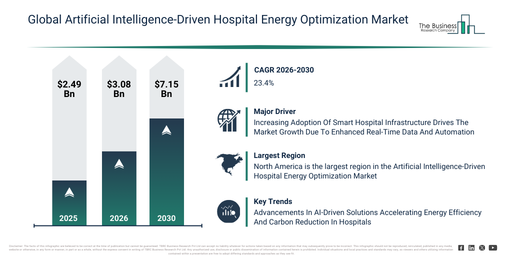
    The artificial intelligence-driven hospital energy optimization market size has experienced substantial growth in recent years. It is projected to expand from $2.49 billion in 2025 to $3.08 billion in 2026, progressing at a compound annual growth rate (CAGR) of 23.7%. The market’s historical growth can be ascribed to several factors, including escalating hospital energy consumption levels, mounting operational cost pressures, the early implementation of building management systems, the expansion of digital hospital infrastructure, and an increasing focus on achieving operational efficiency.

    The artificial intelligence-driven hospital energy optimization market size is anticipated to experience substantial growth in the coming years, projected to reach $7.15 billion in 2030 with a compound annual growth rate (CAGR) of 23.4%. This expansion during the forecast period is driven by increasing investments in green hospital initiatives, a rising demand for carbon footprint reduction, the broader expansion of smart hospital projects, the growing adoption of AI-driven facility management, and an increasing regulatory focus on energy efficiency standards. Major trends expected in the forecast period include the increasing deployment of AI-based energy management platforms, a rising adoption of smart sensors and meters, the expansion of predictive maintenance for hospital utilities, the growing integration of building automation systems, and an enhanced focus on energy cost optimization.

    Access Your Free Sample Report for In-Depth Market Insights:

    https://www.thebusinessresearchcompany.com/sample.aspx?id=27205&type=smp

    Which Drivers Are Influencing Long-Term Growth In The Artificial Intelligence-Driven Hospital Energy Optimization Market?

    The expanding implementation of smart hospital infrastructure is projected to fuel the expansion of the artificial intelligence-driven hospital energy optimization market in the future. This infrastructure represents a sophisticated digital technology framework designed for streamlining healthcare services, facilitating constant monitoring, and automating the management of hospital assets. The rise in smart hospital infrastructure stems from a desire to elevate patient results through live data observation, allowing for quicker diagnoses and customized care, thereby improving overall care quality and operational efficiency. Smart hospital infrastructure aids Artificial Intelligence-Driven Hospital Energy Optimization by supplying linked sensors and real-time data from diverse systems, empowering AI algorithms to scrutinize energy consumption trends and automatically modify settings to cut usage and boost efficiency. For instance, in December 2024, according to the Centers for Disease Control and Prevention (CDC), a US-based national public health agency, the percentage of office-based physicians using the electronic health records system was 88.2%, however, the adoption of certified EHR systems percentage is 77.8%. Consequently, the increasing adoption of smart hospital infrastructure is driving the growth of the artificial intelligence-driven hospital energy optimization market. The increasing move towards remote monitoring solutions is anticipated to boost the growth of the artificial intelligence-driven hospital energy optimization market in the future. These solutions utilize digital instruments and technologies to observe patient health information beyond conventional clinical environments, thereby enabling uninterrupted care and prompt intervention. Remote monitoring is becoming more prevalent as healthcare providers aim for immediate patient insights, facilitating constant tracking of health statuses and timely actions, which improves the standard and effectiveness of care. AI-driven hospital energy management offers real-time remote surveillance of energy usage and equipment functionality, identifying inefficiencies and predicting maintenance requirements, while empowering hospitals to fine-tune energy consumption and make adjustments from a distance. For instance, in December 2023, according to the National Health Service, a UK-based government department, there were 33.6 million app users, with monthly logins rising 54% over the past year from 16.8 million to 25.8 million. Therefore, the growing shift towards remote monitoring solutions is driving the growth of the artificial intelligence-driven hospital energy optimization market.

    How Is The Artificial Intelligence-Driven Hospital Energy Optimization Market Divided Into Segments?

    The artificial intelligence-driven hospital energy optimization market covered in this report is segmented –

    1) By Component: Software, Hardware, Services

    2) By Deployment Mode: On-Premises, Cloud

    3) By Hospital Size: Small And Medium Hospitals, Large Hospitals

    4) By Application: Heating, Ventilation, And Air Conditioning Optimization, Lighting Control, Energy Management, Equipment Monitoring, Other Applications

    5) By End-User: Public Hospitals, Private Hospitals, Specialty Hospitals, Other End-Users

    Subsegments:

    1) By Software: Energy Management Software, Building Automation Software, Predictive Maintenance Software, Data Analytics and Visualization Tools, Artificial Intelligence Algorithms And Optimization Engines

    2) By Hardware: Smart Sensors And Internet Of Things Devices, Smart Meters, Controllers And Actuators, Heating, Ventilation, And Air Conditioning Systems, Lighting Control Systems, Edge Devices And Gateways

    3) By Services: Consulting And Advisory Services, Installation And Integration Services, Maintenance And Support Services, Energy Auditing Services, Training And Education Services

    Which Trends Are Shaping Activity Within The Artificial Intelligence-Driven Hospital Energy Optimization Market?

    Leading companies in the Artificial Intelligence-Driven Hospital Energy Optimization market are increasingly concentrating on intelligent energy management to hasten the rollout of energy-efficient solutions across healthcare facilities. This intelligent energy management entails using AI, cloud computing, and IoT technologies to monitor, analyze, and automatically optimize hospital energy systems, such as HVAC, thereby improving efficiency and decreasing consumption. For example, in April 2024, True Digital Group, a digital transformation and technology services company based in Thailand, partnered with Alibaba Cloud, a cloud computing firm from China, to launch their Climate Technology Platform. This platform utilizes Alibaba Cloud’s AI-driven “Energy Expert” solution, combined with cloud, IoT, and big data analytics, to assist businesses in Thailand in identifying energy efficiency challenges, mitigating greenhouse gas emissions, and adopting sustainable technologies. It provides real-time energy management and predictive insights, aiming to accelerate Thailand’s green transition and reduce emissions by up to 40% by 2030, with a goal of achieving carbon neutrality by 2050. In pilot projects, such as with Bangkok Hospital’s heating, ventilation, and air conditioning system, the platform has already demonstrated an energy consumption reduction of up to 15%.

    Which Major Firms Are Strengthening Their Position In The Artificial Intelligence-Driven Hospital Energy Optimization Market?

    Major companies operating in the artificial intelligence-driven hospital energy optimization market are Enel S.p.A., General Electric Company, Veolia Environnement S.A., Schneider Electric SE, Honeywell International Inc., ABB Group, Eaton Corporation Plc, Johnson Controls International Plc, Trane Technologies Plc, Centrica Business Solutions Ltd., Rockwell Automation Inc., Ameresco Inc., ENGIE Impact, GridPoint Inc., Optimum Energy LLC, Verdigris Technologies, Enerbrain, BuildingIQ Inc., Deerns, Resync

    Access The Complete Report For Deeper Market Insights:

    https://www.thebusinessresearchcompany.com/report/artificial-intelligence-driven-hospital-energy-optimization-global-market-report

    Which Region Is Anticipated To See The Fastest Growth In The Artificial Intelligence-Driven Hospital Energy Optimization Market?

    North America was the largest region in the artificial intelligence-driven hospital energy optimization market in 2025. Asia-Pacific is expected to be the fastest-growing region in the forecast period. The regions covered in the artificial intelligence-driven hospital energy optimization market report are Asia-Pacific, South East Asia, Western Europe, Eastern Europe, North America, South America, Middle East, Africa.

    Request Your Customized Artificial Intelligence-Driven Hospital Energy Optimization Market Research Report for Competitive Advantage:

    https://www.thebusinessresearchcompany.com/customise?id=27205&type=smp

    Browse Through More Reports Similar to the Global Artificial Intelligence-Driven Hospital Energy Optimization Market 2026, By The Business Research Company

    Advanced Ceramics Market Report 2026

    https://www.thebusinessresearchcompany.com/report/advanced-ceramics-global-market-report

    Earthen Plasters Market Report 2026

    https://www.thebusinessresearchcompany.com/report/earthen-plasters-global-market-report

    High Performance Ceramic Coatings Market Report 2026

    https://www.thebusinessresearchcompany.com/report/high-performance-ceramic-coatings-global-market-report

    Get in touch with us:

    The Business Research Company: https://www.thebusinessresearchcompany.com/

    Americas +1 310-496-7795

    Asia +44 7882 955267 & +91 8897263534

    Europe +44 7882 955267

    Email us at info@tbrc.info

    Follow us on:

    LinkedIn: https://in.linkedin.com/company/the-business-research-company

    YouTube: https://www.youtube.com/channel/UC24_fI0rV8cR5DxlCpgmyFQ

    Global Market Model: https://www.thebusinessresearchcompany.com/global-market-model
  • Artificial Intelligence In The Diagnostic Industry Poised for Rapid Growth, Forecast to Touch $31.3 Billion by 2030 at 39.3% CAGR

    Artificial Intelligence In The Diagnostic Industry Poised for Rapid Growth, Forecast to Touch $31.3 Billion by 2030 at 39.3% CAGR

    Uncover key drivers, emerging technologies, and competitive movements shaping the artificial intelligence in the diagnostic market from 2026–2035 with trusted insights from The Business Research Company

    What level of CAGR-driven expansion is anticipated in the Artificial Intelligence In The Diagnostic Market between 2026 and 2030?

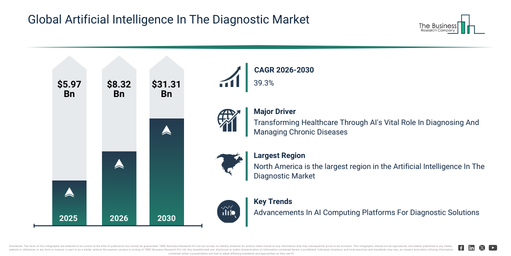
    The market size for artificial intelligence in diagnostics has experienced rapid expansion over recent years. This market is projected to expand from $5.97 billion in 2025 to $8.32 billion in 2026, demonstrating a compound annual growth rate (CAGR) of 39.5%. Factors contributing to its historical growth include the increasing accessibility of medical imaging data, the expanding digitization of healthcare records, a growing scarcity of expert diagnosticians, the early integration of computer vision into radiology, and the development of healthcare IT infrastructure.

    The artificial intelligence in the diagnostic market is anticipated to undergo substantial expansion in the coming years, with projections indicating a rise to $31.31 billion by 2030, maintaining a compound annual growth rate (CAGR) of 39.3%. This expansion is fueled by an increasing need for prompt disease detection, a surge in investments towards AI-driven healthcare solutions, the proliferation of personalized medicine projects, the deepening integration of AI diagnostics into clinical operations, and a rise in regulatory green lights for AI-powered devices. Noteworthy trends during this period include the wider embrace of AI-enhanced diagnostic imaging tools, a greater utilization of machine learning for clinical decision support, a more thorough integration of AI within radiology and pathology workflows, the broadening of predictive analytics in identifying diseases, and a sharpened focus on both the accuracy and speed of diagnostics.

    Access Your Free Sample Report for In-Depth Market Insights:

    https://www.thebusinessresearchcompany.com/sample.aspx?id=13593&type=smp

    What Drivers Are Affecting Demand-Supply Dynamics In The Artificial Intelligence In The Diagnostic Market?

    The increasing incidence of chronic diseases is anticipated to drive the expansion of AI in the diagnostics market moving forward. These are long-term health conditions that persist over an extended period, often throughout an individual’s lifetime. The integration of AI-based diagnostic processes for chronic diseases enables early detection, prediction, enhanced decision support systems, remote monitoring of patients, cost reduction, and the tailoring of treatments to individual patients by analyzing their genetic makeup and disease progression. For instance, in September 2023, according to the World Health Organization, a Switzerland-based specialized agency of the United Nations, there were 41 million fatalities annually, constituting 74% of non-communicable disease (NCD) or chronic disease-related deaths worldwide. Furthermore, approximately 17.9 million deaths are attributed to cardiovascular diseases, 9.3 million deaths from cancer, 4.1 million deaths from chronic respiratory diseases, and 2.0 million deaths from diabetes. Consequently, the growing prevalence of chronic diseases is propelling the growth of AI in the diagnostics market.

    What Segments Are Included Within The Artificial Intelligence In The Diagnostic Market?

    The artificial intelligence in the diagnostic market covered in this report is segmented –

    1) By Component: Hardware, Software, Services

    2) By Technology: Machine Learning, NLP (Natural Language Processing), Context-Aware Computing, Computer Vision

    3) By Diagnosis Type: Radiology, Pathology, Cardiology, Oncology, Neurology, Chest And Lung, Other Diagnosis Types

    Subsegments:

    1) By Hardware: Imaging Devices, Diagnostic Equipment, Wearable Devices

    2) By Software: Diagnostic Imaging Software, Data Analytics Software, Machine Learning Algorithms, Clinical Decision Support Systems

    3) By Services: Consulting Services, Integration Services, Maintenance And Support Services, Training Services

    Which Trends Are Influencing The Development Of The Artificial Intelligence In The Diagnostic Market?

    Leading companies in the AI in diagnostics market are developing advanced technologies, such as AI modules, to gain a competitive advantage. An AI module is a self-contained software component that integrates specific AI capabilities. For example, in March 2023, Qritive, a Singapore-based provider of AI-driven solutions, introduced QAi Prostate for diagnosing prostate cancer. QAi Prostate effectively identifies the most common type of prostate cancer, potentially boosting diagnostic accuracy and minimizing false positives. The tool assists pathologists in distinguishing between cancerous and non-cancerous tissue regions, thereby facilitating informed treatment decisions. Additionally, QAi Prostate can prioritize cases, enabling faster diagnosis and reporting, which enhances overall efficiency and patient care.

    Who Are The Primary Competitors In The Global Artificial Intelligence In The Diagnostic Market?

    Major companies operating in the artificial intelligence in the diagnostic market are Siemens Healthineers, Koninklijke Philips N.V., GE Healthcare Technologies Inc., Paige.AI Inc., HeartFlow Inc., Aidoc Medical Ltd., AliveCor Inc., Butterfly Network Inc., Imagen Technologies, Digital Diagnostics Inc., Brainomix Ltd., NovaSignal Corp., Enlitic Inc., Nano-X Imaging LTD., EchoNous Inc., Zebra Medical Vision Ltd., Aidence B.V., Neural Analytics Inc., IDx Technologies Inc., icometrix N.V., Vuno Inc.

    Access The Complete Report For Deeper Market Insights:

    https://www.thebusinessresearchcompany.com/report/artificial-intelligence-in-the-diagnostic-global-market-report

    Which Global Regions Are Shaping The Competitive Landscape Of The Artificial Intelligence In The Diagnostic Market?

    North America was the largest region in the artificial intelligence in diagnostics market in 2025. Asia-Pacific is expected to be the fastest-growing region in the forecast period. The regions covered in the artificial intelligence in the diagnostic market report are Asia-Pacific, South East Asia, Western Europe, Eastern Europe, North America, South America, Middle East, Africa.

    Request Your Customized Artificial Intelligence In The Diagnostic Market Research Report for Competitive Advantage:

    https://www.thebusinessresearchcompany.com/customise?id=13593&type=smp

    Browse Through More Reports Similar to the Global Artificial Intelligence In The Diagnostic Market 2026, By The Business Research Company

    Artificial Intelligence In Cancer Diagnostics Market Report 2026

    https://www.thebusinessresearchcompany.com/report/artificial-intelligence-in-cancer-diagnostics-global-market-report

    Artificial Intelligence In Healthcare Diagnosis Market Report 2026

    https://www.thebusinessresearchcompany.com/report/artificial-intelligence-in-healthcare-diagnosis-global-market-report

    Ai In Medical Diagnostics Market Report 2026

    https://www.thebusinessresearchcompany.com/report/ai-in-medical-diagnostics-global-market-report

    Get in touch with us:

    The Business Research Company: https://www.thebusinessresearchcompany.com/

    Americas +1 310-496-7795

    Asia +44 7882 955267 & +91 8897263534

    Europe +44 7882 955267

    Email us at info@tbrc.info

    Follow us on:

    LinkedIn: https://in.linkedin.com/company/the-business-research-company

    YouTube: https://www.youtube.com/channel/UC24_fI0rV8cR5DxlCpgmyFQ

    Global Market Model: https://www.thebusinessresearchcompany.com/global-market-model
  • Artificial Intelligence In The Diagnostic Industry Poised for Rapid Growth, Forecast to Touch $31.3 Billion by 2030 at 39.3% CAGR

    Uncover key drivers, emerging technologies, and competitive movements shaping the artificial intelligence in the diagnostic market from 2026–2035 with trusted insights from The Business Research Company

    What level of CAGR-driven expansion is anticipated in the Artificial Intelligence In The Diagnostic Market between 2026 and 2030?

    The market size for artificial intelligence in diagnostics has experienced rapid expansion over recent years. This market is projected to expand from $5.97 billion in 2025 to $8.32 billion in 2026, demonstrating a compound annual growth rate (CAGR) of 39.5%. Factors contributing to its historical growth include the increasing accessibility of medical imaging data, the expanding digitization of healthcare records, a growing scarcity of expert diagnosticians, the early integration of computer vision into radiology, and the development of healthcare IT infrastructure.

    The artificial intelligence in the diagnostic market is anticipated to undergo substantial expansion in the coming years, with projections indicating a rise to $31.31 billion by 2030, maintaining a compound annual growth rate (CAGR) of 39.3%. This expansion is fueled by an increasing need for prompt disease detection, a surge in investments towards AI-driven healthcare solutions, the proliferation of personalized medicine projects, the deepening integration of AI diagnostics into clinical operations, and a rise in regulatory green lights for AI-powered devices. Noteworthy trends during this period include the wider embrace of AI-enhanced diagnostic imaging tools, a greater utilization of machine learning for clinical decision support, a more thorough integration of AI within radiology and pathology workflows, the broadening of predictive analytics in identifying diseases, and a sharpened focus on both the accuracy and speed of diagnostics.

    Access Your Free Sample Report for In-Depth Market Insights:

    https://www.thebusinessresearchcompany.com/sample.aspx?id=13593&type=smp

    What Drivers Are Affecting Demand-Supply Dynamics In The Artificial Intelligence In The Diagnostic Market?

    The increasing incidence of chronic diseases is anticipated to drive the expansion of AI in the diagnostics market moving forward. These are long-term health conditions that persist over an extended period, often throughout an individual’s lifetime. The integration of AI-based diagnostic processes for chronic diseases enables early detection, prediction, enhanced decision support systems, remote monitoring of patients, cost reduction, and the tailoring of treatments to individual patients by analyzing their genetic makeup and disease progression. For instance, in September 2023, according to the World Health Organization, a Switzerland-based specialized agency of the United Nations, there were 41 million fatalities annually, constituting 74% of non-communicable disease (NCD) or chronic disease-related deaths worldwide. Furthermore, approximately 17.9 million deaths are attributed to cardiovascular diseases, 9.3 million deaths from cancer, 4.1 million deaths from chronic respiratory diseases, and 2.0 million deaths from diabetes. Consequently, the growing prevalence of chronic diseases is propelling the growth of AI in the diagnostics market.

    What Segments Are Included Within The Artificial Intelligence In The Diagnostic Market?

    The artificial intelligence in the diagnostic market covered in this report is segmented –

    1) By Component: Hardware, Software, Services

    2) By Technology: Machine Learning, NLP (Natural Language Processing), Context-Aware Computing, Computer Vision

    3) By Diagnosis Type: Radiology, Pathology, Cardiology, Oncology, Neurology, Chest And Lung, Other Diagnosis Types

    Subsegments:

    1) By Hardware: Imaging Devices, Diagnostic Equipment, Wearable Devices

    2) By Software: Diagnostic Imaging Software, Data Analytics Software, Machine Learning Algorithms, Clinical Decision Support Systems

    3) By Services: Consulting Services, Integration Services, Maintenance And Support Services, Training Services

    Which Trends Are Influencing The Development Of The Artificial Intelligence In The Diagnostic Market?

    Leading companies in the AI in diagnostics market are developing advanced technologies, such as AI modules, to gain a competitive advantage. An AI module is a self-contained software component that integrates specific AI capabilities. For example, in March 2023, Qritive, a Singapore-based provider of AI-driven solutions, introduced QAi Prostate for diagnosing prostate cancer. QAi Prostate effectively identifies the most common type of prostate cancer, potentially boosting diagnostic accuracy and minimizing false positives. The tool assists pathologists in distinguishing between cancerous and non-cancerous tissue regions, thereby facilitating informed treatment decisions. Additionally, QAi Prostate can prioritize cases, enabling faster diagnosis and reporting, which enhances overall efficiency and patient care.

    Who Are The Primary Competitors In The Global Artificial Intelligence In The Diagnostic Market?

    Major companies operating in the artificial intelligence in the diagnostic market are Siemens Healthineers, Koninklijke Philips N.V., GE Healthcare Technologies Inc., Paige.AI Inc., HeartFlow Inc., Aidoc Medical Ltd., AliveCor Inc., Butterfly Network Inc., Imagen Technologies, Digital Diagnostics Inc., Brainomix Ltd., NovaSignal Corp., Enlitic Inc., Nano-X Imaging LTD., EchoNous Inc., Zebra Medical Vision Ltd., Aidence B.V., Neural Analytics Inc., IDx Technologies Inc., icometrix N.V., Vuno Inc.

    Access The Complete Report For Deeper Market Insights:

    https://www.thebusinessresearchcompany.com/report/artificial-intelligence-in-the-diagnostic-global-market-report

    Which Global Regions Are Shaping The Competitive Landscape Of The Artificial Intelligence In The Diagnostic Market?

    North America was the largest region in the artificial intelligence in diagnostics market in 2025. Asia-Pacific is expected to be the fastest-growing region in the forecast period. The regions covered in the artificial intelligence in the diagnostic market report are Asia-Pacific, South East Asia, Western Europe, Eastern Europe, North America, South America, Middle East, Africa.

    Request Your Customized Artificial Intelligence In The Diagnostic Market Research Report for Competitive Advantage:

    https://www.thebusinessresearchcompany.com/customise?id=13593&type=smp

    Browse Through More Reports Similar to the Global Artificial Intelligence In The Diagnostic Market 2026, By The Business Research Company

    Artificial Intelligence In Cancer Diagnostics Market Report 2026

    https://www.thebusinessresearchcompany.com/report/artificial-intelligence-in-cancer-diagnostics-global-market-report

    Artificial Intelligence In Healthcare Diagnosis Market Report 2026

    https://www.thebusinessresearchcompany.com/report/artificial-intelligence-in-healthcare-diagnosis-global-market-report

    Ai In Medical Diagnostics Market Report 2026

    https://www.thebusinessresearchcompany.com/report/ai-in-medical-diagnostics-global-market-report

    Get in touch with us:

    The Business Research Company: https://www.thebusinessresearchcompany.com/

    Americas +1 310-496-7795

    Asia +44 7882 955267 & +91 8897263534

    Europe +44 7882 955267

    Email us at info@tbrc.info

    Follow us on:

    LinkedIn: https://in.linkedin.com/company/the-business-research-company

    YouTube: https://www.youtube.com/channel/UC24_fI0rV8cR5DxlCpgmyFQ

    Global Market Model: https://www.thebusinessresearchcompany.com/global-market-model
  • Cardiovascular Clinical Trials Market Forecast: How Big Will It Be by 2030?

    Cardiovascular Clinical Trials Market Forecast: How Big Will It Be by 2030?

    Uncover key drivers, emerging technologies, and competitive movements shaping the cardiovascular clinical trials market from 2026–2035 with trusted insights from The Business Research Company

    What size range is anticipated for the Cardiovascular Clinical Trials Market from 2026 to 2030?

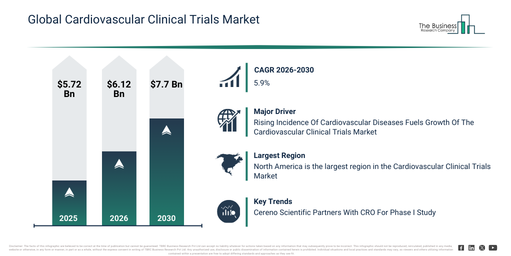
    The cardiovascular clinical trials market size has seen significant growth recently. It is anticipated to expand from $5.72 billion in 2025 to $6.12 billion in 2026, achieving a compound annual growth rate (CAGR) of 7.0%. This historical growth can be linked to the increasing burden of cardiovascular diseases, the expansion of global clinical research initiatives, a rise in regulatory approvals for new therapies, the availability of existing trial infrastructure, and the increase in multicenter studies.

    The cardiovascular clinical trials market is poised for robust expansion in the upcoming years, with its size anticipated to reach $7.7 billion by 2030, demonstrating a compound annual growth rate (CAGR) of 5.9%. This projected growth can be ascribed to several factors, including an escalating demand for faster trial execution, the increasing deployment of AI-driven trial analytics, wider implementation of remote patient engagement strategies, a heightened focus on patient-centric trial designs, and greater investment in cardiovascular drug pipelines. Prominent trends throughout this period encompass the rising adoption of decentralized trial models, an increased utilization of digital patient monitoring tools, deeper integration of biomarkers into study designs, an expansion in real-world evidence generation, and a sharpened emphasis on adaptive trial designs.

    Access Your Free Sample Report for In-Depth Market Insights:

    https://www.thebusinessresearchcompany.com/sample.aspx?id=15532&type=smp

    What Drivers Are Affecting Demand In The Cardiovascular Clinical Trials Market?

    The rising occurrence of cardiovascular ailments is projected to fuel the expansion of the cardiovascular clinical trials market in the future. Cardiovascular disease encompasses a range of conditions impacting the heart and blood vessels, such as coronary artery disease, heart failure, and stroke. A heightened prevalence of cardiovascular diseases is attributed to multiple elements, including inactive lifestyles, poor dietary habits, tobacco use, excess weight, elevated blood pressure, diabetes, and inherited predispositions. Cardiovascular clinical trials play a crucial role in identifying and confirming novel medications capable of more effectively managing risk factors like hypertension, high cholesterol, and diabetes, which are major contributors to CVDs. For example, in September 2024, as per information released by the Minnesota Department of Health, a US-based state health agency, roughly 30% of adults in Minnesota stated they had high blood pressure in 2023, amounting to nearly 1.4 million individuals, and in 2022, illnesses related to hypertension were the primary or secondary cause of death for 14,225 residents, constituting almost 28% of all fatalities in the state. Consequently, the increasing prevalence of cardiovascular diseases is propelling the growth of the cardiovascular clinical trials market.

    Which Segment Groups Are Influencing The Cardiovascular Clinical Trials Market?

    The cardiovascular clinical trials market covered in this report is segmented –

    1) By Phase: Phase I, Phase II, Phase III, Phase IV

    2) By Study Design: Interventional, Observational, Expanded Access

    3) By Indication: Acute Coronary Syndrome, Coronary Artery Disease, Ischemic Heart Disease, Pulmonary Arterial Hypertension, Stroke, Cardiac Arrhythmias, Heart Failure, Other Indications

    Subsegments:

    1) By Phase I: First-in-Human Trials, Dose Escalation Studies, Safety and Tolerability Studies, Pharmacokinetics And Pharmacodynamics Studies

    2) By Phase II: Efficacy Studies, Optimal Dosage And Administration Route Studies, Early Safety And Efficacy Trials, Biomarker Development Trials

    3) By Phase III: Large-Scale Efficacy Trials, Randomized Controlled Trials (RCTs), Long-Term Safety And Efficacy Studies, Multicenter Trials

    4) By Phase IV: Post-Marketing Surveillance, Long-Term Safety Studies, Real-World Evidence (RWE) Studies, Comparative Effectiveness Research

    What Trends Are Reshaping The Dynamics Of The Cardiovascular Clinical Trials Market?

    Major companies operating in the cardiovascular clinical trials market are prioritizing the formation of strategic alliances, such as partnerships with contract research organizations (CROs), to expand their distribution channels and reach a broader customer base. A CRO partnership serves a critical function in the clinical research industry, entailing collaborations among diverse companies to deliver specialized services and assistance for various components of clinical trials and research. For example, in September 2023, Cereno Scientific AB, a biopharmaceutical company from Sweden, joined forces with Clinical Trial Consultants (CTC), a Sweden-based full-service CRO focused on clinical conduct, to execute a Phase I study for CS014, a histone deacetylase inhibitor aimed at averting arterial and venous thrombosis. CTC will also contribute to Phase I preparation processes like the development of study protocols and the clinical trial application procedure for the study, which will be conducted in Sweden. This inaugural first-in-human Phase I trial is projected to commence in the first half of 2024. This collaboration represents a substantial step forward in advancing research into cardiovascular health.

    Who Are The Prominent Global Companies Shaping The Cardiovascular Clinical Trials Market Landscape?

    Major companies operating in the cardiovascular clinical trials market are Pfizer Inc., Johnson & Johnson, AstraZeneca PLC, Novartis AG, Eli Lilly and Company, Amgen Inc., Boehringer Ingelheim International GmbH, Merck & Co Inc., Sanofi, Baxter International Inc., IQVIA Holdings Inc., ICON plc, Syneos Health Inc., PPD Inc., Medpace Holdings Inc., Worldwide Clinical Trials, SGS SA, Charles River Laboratories International Inc., WuXi AppTec Co Ltd, Gilead Sciences Inc.

    Access The Complete Report For Deeper Market Insights:

    https://www.thebusinessresearchcompany.com/report/cardiovascular-clinical-trials-global-market-report

    Which Geographic Areas Are Emerging As Strong Markets For The Cardiovascular Clinical Trials Market?

    North America was the largest region in the cardiovascular clinical trials market in 2025. Asia-Pacific is expected to be the fastest-growing region in the forecast period. The regions covered in the cardiovascular clinical trials market report are Asia-Pacific, South East Asia, Western Europe, Eastern Europe, North America, South America, Middle East, Africa.

    Request Your Customized Cardiovascular Clinical Trials Market Research Report for Competitive Advantage:

    https://www.thebusinessresearchcompany.com/customise?id=15532&type=smp

    Browse Through More Reports Similar to the Global Cardiovascular Clinical Trials Market 2026, By The Business Research Company

    Cardiovascular Digital Solutions Market Report 2026

    https://www.thebusinessresearchcompany.com/report/cardiovascular-digital-solutions-global-market-report

    Cardiovascular Drugs Market Report 2026

    https://www.thebusinessresearchcompany.com/report/cardiovascular-drugs-global-market-report

    Cardiovascular Health Supplements Market Report 2026

    https://www.thebusinessresearchcompany.com/report/cardiovascular-health-supplements-global-market-report

    Get in touch with us:

    The Business Research Company: https://www.thebusinessresearchcompany.com/

    Americas +1 310-496-7795

    Asia +44 7882 955267 & +91 8897263534

    Europe +44 7882 955267

    Email us at info@tbrc.info

    Follow us on:

    LinkedIn: https://in.linkedin.com/company/the-business-research-company

    YouTube: https://www.youtube.com/channel/UC24_fI0rV8cR5DxlCpgmyFQ

    Global Market Model: https://www.thebusinessresearchcompany.com/global-market-model
  • Cardiometabolic Diseases Market Report 2026: Strategic Insights and Revenue Outlook

    Cardiometabolic Diseases Market Report 2026: Strategic Insights and Revenue Outlook

    Uncover key drivers, emerging technologies, and competitive movements shaping the cardiometabolic diseases market from 2026–2035 with trusted insights from The Business Research Company

    How is the Cardiometabolic Diseases Market size predicted to change over the forecast window of 2026–2035?

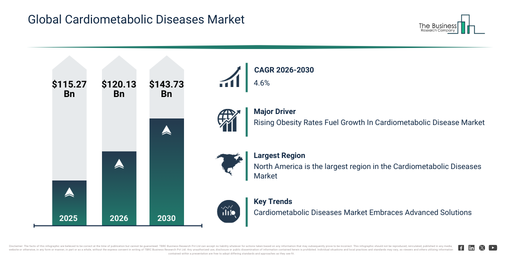
    The cardiometabolic diseases market size has shown steady expansion in recent years. It is projected to increase from $115.27 billion in 2025 to $120.13 billion in 2026, demonstrating a compound annual growth rate (CAGR) of 4.2%. Historically, this growth can be attributed to the rising prevalence of obesity and diabetes, the increased incidence of hypertension and heart failure, the expansion of urban sedentary lifestyles, growing awareness of cardiometabolic risks, and the availability of established therapeutic classes.

    The market size for cardiometabolic diseases is projected to experience consistent expansion over the upcoming years. This market is anticipated to reach a valuation of $143.73 billion by 2030, exhibiting a compound annual growth rate (CAGR) of 4.6%. This projected growth can be attributed to several factors including a heightened demand for personalized medical treatments, the increasing integration of digital health solutions, the broader implementation of early screening initiatives, a greater emphasis on interventions centered around lifestyle, and the accelerating creation of innovative cardiometabolic pharmaceuticals. Key trends expected during this period encompass a stronger emphasis on comprehensive disease management techniques, a surge in the utilization of combination drug regimens, the expanding application of customized treatment plans, the wider spread of preventive care frameworks for cardiometabolic conditions, and an increased commitment to sustained disease surveillance.

    Access Your Free Sample Report for In-Depth Market Insights:

    https://www.thebusinessresearchcompany.com/sample.aspx?id=11929&type=smp

    Which Drivers Are Contributing To The Expansion Of The Cardiometabolic Diseases Market?

    The increasing occurrence of obesity is anticipated to fuel the expansion of the cardiometabolic disease market in the future. Obesity is a multifaceted medical condition marked by an accumulation of excessive body fat, resulting in elevated body weight and various health issues. The incidence of obesity is on the rise, primarily due to individuals embracing inactive lifestyles and consuming diets rich in calories, factors that elevate cardiovascular risk factors like type 2 diabetes, high blood pressure, abnormal lipid levels (dyslipidemia), and sleep disturbances. Managing cardiometabolic diseases involves addressing these identified risks by enhancing metabolic health and mitigating the complications linked to obesity. As an example, the Office for Health Improvement and Disparities (OHID), a UK government agency, reported in May 2025 that in 2023–2024, approximately 64.5% of adults (18+) in England were categorized as either overweight or obese, a slight increase from 64.0% in the preceding period (2022–2023). Consequently, the elevated rate of obesity is a primary impetus behind the expansion of the cardiometabolic diseases market.

    What Segment Classifications Make Up The Cardiometabolic Diseases Market?

    The cardiometabolic diseases market covered in this report is segmented –

    1) By Type: Chronic Or Congestive Heart Failure, Hypertension, Type 2 Diabetes, Obesity

    2) By Treatment: ACE inhibitors, Diuretics, Glucophage

    3) By Dosage: Tablet, Injection

    4) By End-Users: Clinic, Hospital, Other End-Users

    Subsegments:

    1) By Chronic Or Congestive Heart Failure: Systolic Heart Failure, Diastolic Heart Failure

    2) By Hypertension: Primary Hypertension, Secondary Hypertension

    3) By Type 2 Diabetes: Insulin Resistance, Impaired Glucose Tolerance

    4) By Obesity: Class I Obesity (BMI 30-34.9), Class II Obesity (BMI 35-39.9), Class III Obesity (BMI 40 And above)

    How Are New Market Trends Shaping The Landscape Of The Cardiometabolic Diseases Market?

    Leading companies in the cardiometabolic diseases market are integrating advanced technologies, such as the deployment of cardiac disease detection platforms, to improve the early diagnosis and monitoring of cardiovascular conditions. A cardiac disease detection platform is defined as a specialized system crafted to identify, track, and evaluate cardiovascular conditions through the use of sophisticated diagnostic technologies, sensors, and data analytics, all intended to enable early detection, enhance patient outcomes, and support clinical decision-making. As an illustration, in February 2023, Eko Health Inc., a US-based developer of digital health technologies for detecting heart and lung diseases, unveiled the Sensora cardiac disease detection platform. This platform features artificial intelligence (AI) that accurately identifies structural murmurs, a symptom of valvular heart disease (VHD), along with care pathway analytics software offering metrics and downstream insights into the patient’s journey within the healthcare system. This digital stethoscope technology is utilized to capture and analyze electrical impulses and heartbeats.

    Which Key Players Are Driving Competition In The Cardiometabolic Diseases Market?

    Major companies operating in the cardiometabolic diseases market are Pfizer Inc., Johnson & Johnson, F. Hoffmann-La Roche AG, Merck & Co. Inc., AbbVie Inc., Bayer AG, Novartis AG, Sanofi SA, Kowa Company Ltd., Abbott Laboratories, Takeda Pharmaceutical Company, Eli Lilly and Company, Novo Nordisk A/S, Siemens Healthineers, Boehringer Ingelheim International GmbH, Becton Dickinson and Company, Stryker Corporation, AstraZeneca Plc, Viatris Inc., Boston Scientific, Astellas Pharma Inc., Terumo Corporation, Edwards Lifesciences, Alnylam Pharmaceuticals Inc., Arrowhead Pharmaceuticals Inc., Cardax Inc.

    Access The Complete Report For Deeper Market Insights:

    https://www.thebusinessresearchcompany.com/report/cardiometabolic-diseases-global-market-report

    Which Region Is Projected To Lead The Cardiometabolic Diseases Market During The Forecast Period?

    North America was the largest region in the cardiometabolic diseases market in 2025. Asia-Pacific is expected to be the fastest-growing region in the forecast period. The regions covered in the cardiometabolic diseases market report are Asia-Pacific, South East Asia, Western Europe, Eastern Europe, North America, South America, Middle East, Africa.

    Request Your Customized Cardiometabolic Diseases Market Research Report for Competitive Advantage:

    https://www.thebusinessresearchcompany.com/customise?id=11929&type=smp

    Browse Through More Reports Similar to the Global Cardiometabolic Diseases Market 2026, By The Business Research Company

    Cardiovascular Drugs Market Report 2026

    https://www.thebusinessresearchcompany.com/report/cardiovascular-drugs-global-market-report

    Hypertrophic Cardiomyopathy Treatment Market Report 2026

    https://www.thebusinessresearchcompany.com/report/hypertrophic-cardiomyopathy-treatment-global-market-report

    Heart Attack Diagnostic Market Report 2026

    https://www.thebusinessresearchcompany.com/report/heart-attack-diagnostic-global-market-report

    Get in touch with us:

    The Business Research Company: https://www.thebusinessresearchcompany.com/

    Americas +1 310-496-7795

    Asia +44 7882 955267 & +91 8897263534

    Europe +44 7882 955267

    Email us at info@tbrc.info

    Follow us on:

    LinkedIn: https://in.linkedin.com/company/the-business-research-company

    YouTube: https://www.youtube.com/channel/UC24_fI0rV8cR5DxlCpgmyFQ

    Global Market Model: https://www.thebusinessresearchcompany.com/global-market-model
  • Global Cardiology Electronic Health Record (EHR) Industry Trends and Market Forecast 2026–2030

    Global Cardiology Electronic Health Record (EHR) Industry Trends and Market Forecast 2026–2030

    Uncover key drivers, emerging technologies, and competitive movements shaping the cardiology electronic health record (ehr) market from 2026–2035 with trusted insights from The Business Research Company

    What market expansion outlook does the Cardiology Electronic Health Record (EHR) Market show for the 2026–2030 period?

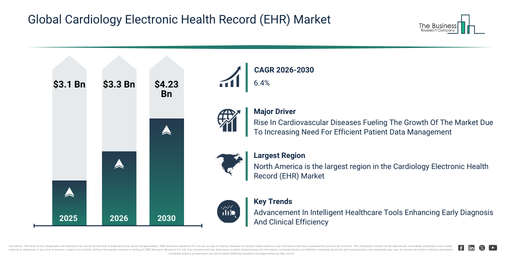
    The cardiology electronic health record (ehr) market has experienced robust expansion in recent years. It is anticipated to increase from $3.1 billion in 2025 to $3.3 billion in 2026, exhibiting a compound annual growth rate (CAGR) of 6.5%. The expansion witnessed during the past period can be attributed to the escalating digitization of hospital records, the growing incidence of cardiovascular diseases, the broader integration of specialty-specific ehr systems, a regulatory imperative for electronic health data, and improvements in healthcare IT infrastructure.

    The cardiology electronic health record (ehr) market size is anticipated to undergo significant growth in the upcoming years. It is projected to expand to $4.23 billion by 2030, achieving a compound annual growth rate (CAGR) of 6.4%. This expansion during the forecast period is fueled by several factors, including the increasing implementation of predictive analytics in cardiology care, greater investments in cloud healthcare platforms, a rising need for integrated remote cardiac monitoring, the broadening of value-based healthcare models, and a stronger emphasis on data-driven clinical outcomes. Prominent trends for this period involve a wider adoption of cloud-based cardiology ehr platforms, increasing integration of AI-driven cardiac decision support, a growing demand for interoperable health data systems, the expansion of structured cardiovascular data analytics, and an enhanced focus on workflow automation in cardiology.

    Access Your Free Sample Report for In-Depth Market Insights:

    https://www.thebusinessresearchcompany.com/sample.aspx?id=27237&type=smp

    What Drivers Are Shaping The Development Of The Cardiology Electronic Health Record (EHR) Market?

    The escalating incidence of cardiovascular diseases is projected to propel the growth of the cardiology electronic health record (EHR) market in the future. These conditions encompass a range of ailments impacting the heart and blood vessels, frequently resulting in complications such as heart attacks, strokes, or other circulatory system problems. Cardiovascular diseases are on the rise due to increasingly inactive lifestyles, which contribute to weight gain, elevated blood pressure, and a gradual weakening of cardiovascular function. Cardiology EHR offers significant advantages for cardiovascular diseases as it enables healthcare providers to instantly access and monitor patient information, leading to quicker diagnoses, customized treatments, and more effective long-term care for heart-related conditions. For instance, in 2023, the Centers for Disease Control and Prevention (CDC), a US-based federal agency, documented approximately 919,032 cardiovascular-related deaths in the United States. Therefore, the growing number of cardiovascular diseases is a primary catalyst for the expansion of the cardiology electronic health record (EHR) market.

    What Segment Types Are Examined In The Cardiology Electronic Health Record (EHR) Market?

    The cardiology electronic health record (ehr) market covered in this report is segmented –

    1) By Product: Web Or Cloud-Based Electronic Health Record (EHR), On-Premise Electronic Health Record (EHR)

    2) By Business Model: Licensed Software, Technology Resale, Subscriptions, Professional Services, Other Business Models

    3) By End Use: Hospital, Ambulatory Surgical Centers, Other End Uses

    Subsegments:

    1) By Web Or Cloud-Based Electronic Health Record (EHR): Subscription-Based EHR, Customizable EHR, Mobile EHR Solutions

    2) By On-Premise Electronic Health Record (EHR): Licensed Software, Integrated EHR Systems, Standalone EHR Applications

    Which Trends Are Expected To Influence The Cardiology Electronic Health Record (EHR) Market In The Upcoming Years?

    Leading companies within the electronic health record (EHR) market are concentrating on developing advanced solutions, such as AI-powered systems, to provide smarter results and more adaptive capabilities in dynamic environments. AI-powered solutions are systems that leverage artificial intelligence algorithms to process information, make informed decisions, and perform tasks typically requiring human cognitive skills. For instance, in July 2024, Intrahealth, a US-based non-profit organization, launched an integrated AI-powered co-pilot designed for cardiologists. This AI-powered co-pilot for specialists represents a notable progression in healthcare technology. With the inclusion of cardiovascular disease detection, it enables cardiologists to identify high-risk patients earlier, supporting enhanced outcomes and reduced medical costs. Its integration with Intrahealth’s Profile EHR ensures global access to this advanced tool. The extensive data produced through its usage contributes to continuous improvements and the refinement of its performance.

    Who Are The Top-Performing Companies In The Cardiology Electronic Health Record (EHR) Market In Recent Years?

    Major companies operating in the cardiology electronic health record (ehr) market are Oracle Corp., GE Healthcare Technologies Inc., Henry Schein Inc., Epic Systems Corporation, Athenahealth Inc., eClinicalWorks LLC, Veradigm LLC, Greenway Health LLC, Tebra Technologies Inc., AdvancedMD Inc., CureMD Inc., CareCloud Inc., Practice Fusion Inc., DrChrono, Azalea Health Co., Sevocity, Praxis EMR, EncounterWorks, ReLi Med Solutions LLC, ProEmTech Infosystems Pvt. Ltd.

    Access The Complete Report For Deeper Market Insights:

    https://www.thebusinessresearchcompany.com/report/cardiology-electronic-health-record-ehr-global-market-report

    Which Region Currently Holds The Largest Share Of The Cardiology Electronic Health Record (EHR) Market?

    North America was the largest region in the cardiology electronic health record (EHR) market in 2025. Asia-Pacific is expected to be the fastest-growing region in the forecast period. The regions covered in the cardiology electronic health record (ehr) market report are Asia-Pacific, South East Asia, Western Europe, Eastern Europe, North America, South America, Middle East, Africa.

    Request Your Customized Cardiology Electronic Health Record (EHR) Market Research Report for Competitive Advantage:

    https://www.thebusinessresearchcompany.com/customise?id=27237&type=smp

    Browse Through More Reports Similar to the Global Cardiology Electronic Health Record (EHR) Market 2026, By The Business Research Company

    Moisture Analyzer Market Report 2026

    https://www.thebusinessresearchcompany.com/report/moisture-analyzer-global-market-report

    Leak Detection And Repair Market 2026

    https://www.thebusinessresearchcompany.com/report/leak-detection-and-repair-market

    Video Inspection Equipment Market Report 2026

    https://www.thebusinessresearchcompany.com/report/video-inspection-equipment-global-market-report

    Get in touch with us:

    The Business Research Company: https://www.thebusinessresearchcompany.com/

    Americas +1 310-496-7795

    Asia +44 7882 955267 & +91 8897263534

    Europe +44 7882 955267

    Email us at info@tbrc.info

    Follow us on:

    LinkedIn: https://in.linkedin.com/company/the-business-research-company

    YouTube: https://www.youtube.com/channel/UC24_fI0rV8cR5DxlCpgmyFQ

    Global Market Model: https://www.thebusinessresearchcompany.com/global-market-model

  • Cardiogenomics Market Size and Demand Forecast 2026–2030

    Cardiogenomics Market Size and Demand Forecast 2026–2030

    Uncover key drivers, emerging technologies, and competitive movements shaping the cardiogenomics market from 2026–2035 with trusted insights from The Business Research Company

    What level of growth is expected in the Cardiogenomics Market between 2026 and 2030?

    The cardiogenomics market has experienced substantial growth in its size over recent years. The market is forecast to expand from $1.74 billion in 2025 to $2.02 billion in 2026, exhibiting a compound annual growth rate (CAGR) of 15.7%. Historically, this growth has been fueled by the increasing prevalence of cardiovascular diseases, advancements in genetic testing technologies, expansion in clinical genomics research, broader availability of molecular diagnostics, and a heightened awareness of inherited heart conditions.

    The cardiogenomics market is anticipated to experience substantial expansion over the coming years. This market is projected to reach $3.57 billion by 2030, exhibiting a compound annual growth rate (CAGR) of 15.4%. Factors contributing to this growth during the forecast period include a heightened need for individualized cardiac treatment, the broadening of precision medicine programs, increased funding for genomic studies, wider acceptance of AI-powered genomic analysis, and a greater incorporation of genomics into standard cardiology procedures. Key trends anticipated for the forecast period encompass the increased application of genetic risk assessment in cardiology, a surge in the utilization of next-generation sequencing for heart disease investigations, the evolving integration of bioinformatics platforms, the expansion of customized cardiovascular treatment methods, and a stronger emphasis on preemptive genomic screening.

    Access Your Free Sample Report for In-Depth Market Insights:

    https://www.thebusinessresearchcompany.com/sample.aspx?id=28156&type=smp

    Which Drivers Are Expected To Impact The Cardiogenomics Market During The Forecast Period?

    The anticipated expansion of the cardiogenomics market is linked to the growing need for personalized medicine. Personalized medicine involves a healthcare strategy that customizes prevention, diagnosis, and treatment based on an individual’s genetic makeup, environmental influences, and lifestyle choices. The rise of personalized medicine is propelled by genomics advancements, which facilitate a more profound comprehension of individual genetic differences, leading to more accurate and focused treatments that enhance patient results and minimize experimental approaches in therapies. Cardiogenomics aids personalized medicine through the application of genetic understanding to adapt the prevention, diagnosis, and treatment of cardiovascular disease to a person’s distinct genetic profile. An example illustrates this: in February 2024, the Personalized Medicine Coalition, a US-based non-profit organization, reported that in 2023, the FDA sanctioned 16 new personalized treatments for rare disease patients, an increase from six in 2022. Among the personalized treatments newly approved for 2023 were also seven cancer drugs and three for other diseases and conditions. Consequently, the escalating demand for personalized medicine is fueling the expansion of the cardiogenomics market.

    Which Segments Are Driving Activity In The Cardiogenomics Market?

    The cardiogenomics market covered in this report is segmented –

    1) By Product Type: Testing Kits, Reagents, Instruments, Software, Services

    2) By Technology: Next-Generation Sequencing, Polymerase Chain Reaction, Microarray, Other Technologies

    3) By Application: Congenital Heart Diseases, Cardiomyopathies, Arrhythmias, Coronary Artery Disease, Other Applications

    4) By End-User: Hospitals And Clinics, Diagnostic Laboratories, Research Institutes, Other End-Users

    Subsegments:

    1) By Testing Kits: PCR (Polymerase Chain Reaction) kits, Microarray kits, NGS (Next Generation Sequencing) kits

    2) By Reagents: Enzymes, Probes, Buffers

    3) By Instruments: Sequencers, Genotyping instruments, Microarray Scanners

    4) By Software: Data Analysis Software, Reporting Platforms, Bioinformatics Tools

    5) By Services: Genetic Testing Services, Counseling Services, Data Analysis Services

    What Trends Are Driving The Growth Trajectory Of The Cardiogenomics Market?

    Leading companies in the cardiogenomics market are concentrating on creating innovative solutions, such as oncogenomics, to improve the early detection and personalized treatment of cardiovascular-related cancers. Oncogenomics involves the study of genes linked to cancer and their mutations to understand the development and progression of cancer, and to formulate targeted therapies and personalized treatment approaches. For example, in April 2025, Fortis Healthcare Ltd., an India-based healthcare company, inaugurated a Fortis Institute of Genomic Medicine in India, aiming to advance genetic research and personalized medicine. This initiative transforms patient care by enabling early disease discovery, precise diagnosis, and individualized treatment across specialties like oncology, cardiology, and neurology. It also supports targeted therapies, enhances treatment results, and provides preventative care for hereditary conditions. The institute’s goal is to advance precision medicine using a multidisciplinary team and cutting-edge technologies, thereby making healthcare more customized and effective for Indian patients.

    Which Leading Companies Dominate The Cardiogenomics Market Share?

    Major companies operating in the cardiogenomics market are Thermo Fisher Scientific Inc., Laboratory Corporation of America Holdings (Labcorp), Quest Diagnostics Incorporated, Illumina Inc., QIAGEN N.V., Myriad Genetics Inc., ARUP Laboratories, BGI Genomics Co. Ltd., Invitae Corporation, GeneDx Inc., Helix OpCo LLC, SOPHiA GENETICS SA, Baylor Genetics, Blueprint Genetics, Novogenia GmbH, Veritas Genetics, Dante Genomics, Gene by Gene Ltd., GENinCode Plc., UAB Cardiogenomics Clinic

    Access The Complete Report For Deeper Market Insights:

    https://www.thebusinessresearchcompany.com/report/cardiogenomics-global-market-report

    How Does The Cardiogenomics Market Perform Across Major Global Regions?

    North America was the largest region in the cardiogenomics market in 2025. Asia-Pacific is expected to be the fastest-growing region in the forecast period. The regions covered in the cardiogenomics market report are Asia-Pacific, South East Asia, Western Europe, Eastern Europe, North America, South America, Middle East, Africa.

    Request Your Customized Cardiogenomics Market Research Report for Competitive Advantage:

    https://www.thebusinessresearchcompany.com/customise?id=28156&type=smp

    Browse Through More Reports Similar to the Global Cardiogenomics Market 2026, By The Business Research Company

    Cardiac Mapping Market Report 2026

    https://www.thebusinessresearchcompany.com/report/cardiac-mapping-global-market-report

    Cardiac Biomarkers Testing Market Report 2026

    https://www.thebusinessresearchcompany.com/report/cardiac-biomarkers-testing-global-market-report

    Pharmacogenomics Market Report 2026

    https://www.thebusinessresearchcompany.com/report/pharmacogenomics-global-market-report

    Get in touch with us:

    The Business Research Company: https://www.thebusinessresearchcompany.com/

    Americas +1 310-496-7795

    Asia +44 7882 955267 & +91 8897263534

    Europe +44 7882 955267

    Email us at info@tbrc.info

    Follow us on:

    LinkedIn: https://in.linkedin.com/company/the-business-research-company

    YouTube: https://www.youtube.com/channel/UC24_fI0rV8cR5DxlCpgmyFQ

    Global Market Model: https://www.thebusinessresearchcompany.com/global-market-model