Category: HealthcareServices

  • Global Benchtop Laboratory Water Purifier Market 2026–2030: Forecast Insights for Business Planning

    Global Benchtop Laboratory Water Purifier Market 2026–2030: Forecast Insights for Business Planning

    Uncover key drivers, emerging technologies, and competitive movements shaping the benchtop laboratory water purifier market from 2026–2035 with trusted insights from The Business Research Company

    Across 2026–2030, what is the expected market valuation path of the Benchtop Laboratory Water Purifier Market?

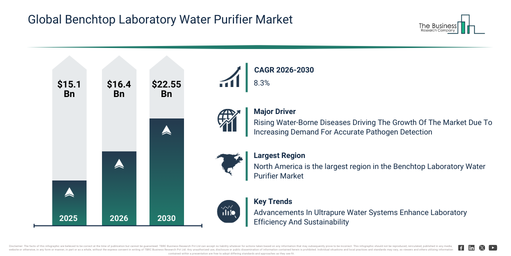
    The market for benchtop laboratory water purifiers has experienced robust expansion in recent times. This market is projected to expand from $15.1 billion in 2025 to $16.4 billion by 2026, demonstrating a compound annual growth rate (CAGR) of 8.6%. Historically, this growth can be ascribed to several factors, including the increasing scope of pharmaceutical and life science research, the rise in laboratory automation, a growing need for consistent experimental outcomes, an increase in academic research endeavors, and the accessibility of sophisticated filtration technologies.

    The benchtop laboratory water purifier market size is anticipated to expand significantly in the coming years, with projections indicating a rise to $22.55 billion by 2030, supported by a compound annual growth rate (CAGR) of 8.3%. This projected growth stems from factors such as increasing investments in biotech and pharmaceutical research and development, the rising adoption of smart laboratory equipment, the expansion of decentralized laboratory setups, a growing emphasis on water sustainability, and advancements in membrane and purification technologies. Prominent trends for the forecast period include an increasing demand for compact high-purity water systems, the growing embrace of smart monitoring features, the expansion of energy-efficient purification technologies, a rising focus on consistent laboratory water quality, and enhanced integration with laboratory workflows.

    Access Your Free Sample Report for In-Depth Market Insights:

    https://www.thebusinessresearchcompany.com/sample.aspx?id=24479&type=smp

    Which Drivers Are Supporting The Rise Of The Benchtop Laboratory Water Purifier Market?

    The projected increase in waterborne diseases is set to stimulate the expansion of the benchtop laboratory water purifier market in the coming years. These illnesses, caused by pathogens spread through contaminated water contact or consumption, are on the rise due to insufficient sanitation infrastructure allowing human and animal waste to pollute water sources and transmit infectious agents. Benchtop laboratory water purifiers play a crucial role by supplying laboratories with pure, contaminant-free water, which is vital for precise testing and research. These systems assist in identifying and monitoring disease-causing microorganisms in water, thereby contributing to effective disease prevention, control, and treatment. For example, in September 2024, the World Health Organization, a Switzerland-based intergovernmental organization, reported a 13% uptick in cholera cases in 2023, alongside a 71% surge in deaths compared to 2022. Consequently, the growing occurrence of waterborne diseases will boost the growth of the benchtop laboratory water purifier market. The expansion of research activities is expected to propel the growth of the benchtop laboratory water purifier market in the future. Research activities encompass systematic inquiry and study aimed at discovering new knowledge or gaining deeper insights into existing information. The increase in research is driven by rapid technological advancements, which continuously create new opportunities and challenges necessitating ongoing exploration and innovation to maintain competitiveness. This rise in research elevates the demand for benchtop laboratory water purifiers, as high-purity water is indispensable for achieving accurate experimental results and ensuring contamination-free samples in sensitive laboratory procedures. For instance, in May 2024, data from the Office for National Statistics, a UK-based government department, revealed that total healthcare research spending grew by 5.6% between 2022 and 2023, significantly surpassing the 0.9% growth recorded in 2022. Therefore, the escalating volume of research activities will bolster the growth of the benchtop laboratory water purifier market.

    What Segments Are Identified Within The Structure Of The Benchtop Laboratory Water Purifier Market?

    The benchtop laboratory water purifier market covered in this report is segmented –

    1) By Type: Reverse Osmosis, Ultrafiltration, Microfiltration, Nanofiltration, Deionization, Distillation, UV Purification, Activated Carbon Filtration

    2) By Installation Type: Desktop, Wall-Mounted

    3) By Distribution Channel: Direct Sales, Indirect Sales

    4) By End-Use: Food And Beverages, Pulp And Paper, Pharmaceuticals, Chemicals, Other End-Uses

    Subsegments:

    1) By Reverse Osmosis: Low-Pressure RO, High-Pressure RO, Brackish Water RO, Seawater RO

    2) By Ultrafiltration: Hollow Fiber, Spiral Wound, Tubular

    3) By Microfiltration: Ceramic Membrane, Polymer Membrane

    4) By Nanofiltration: Spiral Wound, Hollow Fiber

    5) By Deionization: Mixed Bed, Two-Bed, Continuous Electrodeionization (CEDI)

    6) By Distillation: Single-Stage Distillation, Multi-Stage Distillation

    7) By UV Purification: Low-Pressure UV, Medium-Pressure UV

    8) By Activated Carbon Filtration: Granular Activated Carbon (GAC), Carbon Block, Catalytic Carbon

    What Trends Are Projected To Support The Growth Of The Benchtop Laboratory Water Purifier Market?

    Leading companies in the benchtop laboratory water purifier market are focusing on developing advanced solutions, such as ultrapure water systems, to help prevent equipment damage and contamination. These specialized ultrapure water systems are designed to produce water with exceptionally low levels of impurities, suitable for highly sensitive laboratory and industrial applications. For instance, in November 2023, Avidity Science, a US-based provider of water purification technologies, launched the Avidity Science Solo S ultrapure water system. The Solo S is a compact benchtop Type 1 water purifier that produces up to 10 liters of ultrapure water daily directly from tap water. Its unique design enables the reuse of plastic consumables through the AvRecycle program, significantly cutting carbon emissions by up to 90% and reducing plastic waste without affecting water purity. The system is easy to use and maintain, featuring a 5-inch touchscreen with icon-based controls and Near Field Communication (NFC) technology for cartridge tracking and identification. It also supports paperless data logging and complies with regulatory requirements, making it ideal for modern research laboratories.

    Which Key Players Are Driving Competition In The Benchtop Laboratory Water Purifier Market?

    Major companies operating in the benchtop laboratory water purifier market are Thermo Fisher Scientific Inc., Sartorius AG, Evoqua Water Technologies LLC, Ion Exchange (India) Limited, Labconco Corp., Analytical Technologies Limited, ELGA LabWater, Labindia Instruments Pvt. Ltd., Labtron Equipment Ltd., Chengdu Ultrapure Technology Co. Ltd., Yamato Scientific Co. Ltd., RephiLe Bioscience Ltd., Aqua Solutions Inc., Linco Scientific Instrument & Chemicals Pvt. Ltd., Wasserlab, Biolab Scientific Ltd., Purite, High Purity Water Services, Pure Flow, AQUA Lab Equipment, AQUA SOLUTIONS Inc., SUEZ / Veolia Water Technologies.

    Access The Complete Report For Deeper Market Insights:

    https://www.thebusinessresearchcompany.com/report/benchtop-laboratory-water-purifier-global-market-report

    Which Region Is Projected To Lead The Benchtop Laboratory Water Purifier Market During The Forecast Period?

    North America was the largest region in the benchtop laboratory water purifier market in 2025. Asia-Pacific is expected to be the fastest-growing region in the forecast period. The regions covered in the benchtop laboratory water purifier market report are Asia-Pacific, South East Asia, Western Europe, Eastern Europe, North America, South America, Middle East, Africa.

    Request Your Customized Benchtop Laboratory Water Purifier Market Research Report for Competitive Advantage:

    https://www.thebusinessresearchcompany.com/customise?id=24479&type=smp

    Browse Through More Reports Similar to the Global Benchtop Laboratory Water Purifier Market 2026, By The Business Research Company

    Water And Wastewater Treatment For Food And Beverage Industry Market Report 2026

    https://www.thebusinessresearchcompany.com/report/water-and-wastewater-treatment-for-food-and-beverage-industry-global-market-report

    Air Purifiers Market Report 2026

    https://www.thebusinessresearchcompany.com/report/air-purifiers-global-market-report

    Water Quality Testing Equipment Market Report 2026

    https://www.thebusinessresearchcompany.com/report/water-quality-testing-equipment-global-market-report

    Get in touch with us:

    The Business Research Company: https://www.thebusinessresearchcompany.com/

    Americas +1 310-496-7795

    Asia +44 7882 955267 & +91 8897263534

    Europe +44 7882 955267

    Email us at info@tbrc.info

    Follow us on:

    LinkedIn: https://in.linkedin.com/company/the-business-research-company

    YouTube: https://www.youtube.com/channel/UC24_fI0rV8cR5DxlCpgmyFQ

    Global Market Model: https://www.thebusinessresearchcompany.com/global-market-model
  • Bell’s Palsy Treatment Market Outlook 2026–2035: Growth Drivers and Industry Forecast

    Bell’s Palsy Treatment Market Outlook 2026–2035: Growth Drivers and Industry Forecast

    Uncover key drivers, emerging technologies, and competitive movements shaping the bell’s palsy treatment market from 2026–2035 with trusted insights from The Business Research Company

    What size range is anticipated for the Bell’s Palsy Treatment Market from 2026 to 2030?

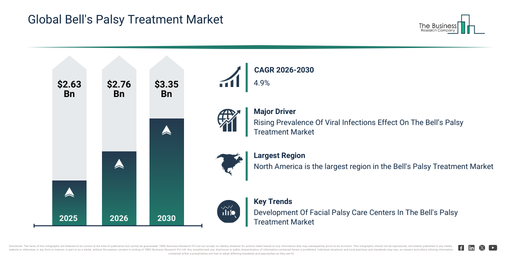
    The bell’s palsy treatment market has observed substantial growth in recent years. It is anticipated to expand from $2.63 billion in 2025 to $2.76 billion in 2026, at a compound annual growth rate (CAGR) of 5.1%. This historical development can be attributed to several factors, including enhanced awareness of facial nerve disorders, an increase in the availability of diagnostic imaging tools, the expansion of specialty neurology clinics, the growing utilization of corticosteroid therapies, and improved access to rehabilitative care.

    The bell’s palsy treatment market is anticipated to experience consistent expansion in the coming years. This market is projected to reach $3.35 billion by 2030, driven by a compound annual growth rate (CAGR) of 4.9%. Several factors are expected to fuel this growth during the forecast period, including increased research into nerve regeneration therapies, the rising adoption of individualized treatment plans, the broader availability of outpatient physical therapy services, the expanding application of digital diagnostic aids, and a greater focus on timely diagnosis and intervention. Key trends emerging within the forecast timeframe encompass the wider utilization of sophisticated diagnostic imaging methods, an increasing shift towards collaborative treatment approaches, a heightened concentration on prompt intervention strategies, the proliferation of recovery programs centered on physical therapy, and a stronger emphasis on treatment options that are non-invasive.

    Access Your Free Sample Report for In-Depth Market Insights:

    https://www.thebusinessresearchcompany.com/sample.aspx?id=18250&type=smp

    What Drivers Are Affecting Demand In The Bell’s Palsy Treatment Market?

    The increasing occurrence of viral infections is anticipated to propel the future expansion of the bell’s palsy treatment market. Viral infections are diseases caused by microscopic viruses, which infiltrate living cells to reproduce, often leading to cellular damage and symptoms of illness. The rise in global travel, urbanization, and climate change contribute to the growing prevalence of these infections by facilitating the spread and mutation of viruses. Treatment for Bell’s palsy commonly involves corticosteroids to alleviate inflammation and antiviral medications, such as acyclovir or valacyclovir, when a viral cause is suspected, aiming to enhance facial muscle function and recovery. For instance, in November 2024, the Centers for Disease Control and Prevention (CDC), a US-based government agency, reported that the 2022–2023 flu season registered approximately 31 million flu illnesses, 14 million medical visits, 360,000 hospitalizations, and 21,000 deaths. Thus, the escalating prevalence of viral infections is a significant driver for growth in the bell’s palsy treatment market.

    Which Segments Are Gaining Traction In The Bell’s Palsy Treatment Market?

    The bell’s palsy treatment market covered in this report is segmented –

    1) By Diagnosis: Magnetic Resonance Imaging (MRI), Computed Tomography (CT) Scan, Electromyography

    2) By Treatment: Medication, Physical Therapy

    3) By End-User: Hospital, Specialty Clinics

    Subsegments:

    1) By Magnetic Resonance Imaging (MRI): Brain MRI To Rule Out Other Causes, MRI With Contrast For Facial Nerve Evaluation

    2) By Computed Tomography (CT) Scan: CT Scan For Skull And Facial Bone Assessment, High-Resolution CT For Nerve Damage Evaluation

    3) By Electromyography (EMG): EMG For Facial Nerve Conduction, Nerve Conduction Velocity (NCV) Testing, EMG To Assess Severity Of Nerve Damage

    Which Trends Are Influencing The Performance And Direction Of The Bell’s Palsy Treatment Market?

    Leading companies within the bell’s palsy treatment market are prioritizing the development of facial palsy care centers, intended to offer integrated care, improve patient outcomes, and optimize treatment workflows. A facial palsy care center serves as a specialized medical institution dedicated to the diagnosis, treatment, and rehabilitation of individuals experiencing facial paralysis. For example, in July 2023, Sakra World Hospital, an India-based multi-specialty hospital, introduced a Comprehensive Facial Palsy Care Center to deliver specialized care for facial paralysis. This center adopts a multidisciplinary methodology, bringing together neurologists, plastic surgeons, physiotherapists, and speech therapists to diagnose and manage various kinds of facial paralysis, including Bell’s palsy, congenital facial palsy, and facial nerve injuries.

    Who Are The Top-Performing Companies In The Bell’s Palsy Treatment Market In Recent Years?

    Major companies operating in the bell’s palsy treatment market are Pfizer Inc., Johnson & Johnson, Merck & Co. Inc., AbbVie Inc., Bayer AG, Sanofi SA, Bristol-Myers Squibb, AstraZeneca, Abbott Laboratories, Novartis AG, GlaxoSmithKline PLC, Roche Holding AG, Takeda Pharmaceutical Company Limited, Eli Lilly and Company, Gilead Sciences Inc., Siemens Healthcare GmbH, Teva Pharmaceutical Industries Ltd., Regeneron Pharmaceuticals Inc., Biogen Inc., Astellas Pharma Inc., Sun Pharmaceutical Industries Ltd., Torrent Pharmaceuticals Ltd., Aurobindo Pharma, Cipla Inc., Lupin Limited, Zydus Lifesciences Limited, Glenmark Pharmaceuticals Limited

    Access The Complete Report For Deeper Market Insights:

    https://www.thebusinessresearchcompany.com/report/bells-palsy-treatment-global-market-report

    Which Region Currently Holds The Largest Share Of The Bell’s Palsy Treatment Market?

    North America was the largest region in the bell’s palsy treatment market in 2025. The regions covered in the bell’s palsy treatment market report are Asia-Pacific, South East Asia, Western Europe, Eastern Europe, North America, South America, Middle East, Africa.

    Request Your Customized Bell’s Palsy Treatment Market Research Report for Competitive Advantage:

    https://www.thebusinessresearchcompany.com/customise?id=18250&type=smp

    Browse Through More Reports Similar to the Global Bell’s Palsy Treatment Market 2026, By The Business Research Company

    Physical Therapy Market Report 2026

    https://www.thebusinessresearchcompany.com/report/physical-therapy-global-market-report

    Cerebral Palsy Treatment Market Report 2026

    https://www.thebusinessresearchcompany.com/report/cerebral-palsy-treatment-global-market-report

    Zollinger Ellison Syndrome Treatment Market Report 2026

    https://www.thebusinessresearchcompany.com/report/zollinger-ellison-syndrome-treatment-global-market-report

    Get in touch with us:

    The Business Research Company: https://www.thebusinessresearchcompany.com/

    Americas +1 310-496-7795

    Asia +44 7882 955267 & +91 8897263534

    Europe +44 7882 955267

    Email us at info@tbrc.info

    Follow us on:

    LinkedIn: https://in.linkedin.com/company/the-business-research-company

    YouTube: https://www.youtube.com/channel/UC24_fI0rV8cR5DxlCpgmyFQ

    Global Market Model: https://www.thebusinessresearchcompany.com/global-market-model
  • Behavioral Therapy Market 2026–2030: Emerging Trends and Forecast Opportunities

    Behavioral Therapy Market 2026–2030: Emerging Trends and Forecast Opportunities

    Uncover key drivers, emerging technologies, and competitive movements shaping the behavioral therapy market from 2026–2035 with trusted insights from The Business Research Company

    How is the Behavioral Therapy Market size predicted to change over the forecast window of 2026–2035?

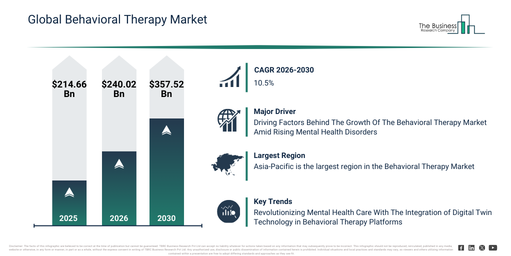
    The behavioral therapy market has witnessed substantial growth in recent years. It is projected to expand from $214.66 billion in 2025 to $240.02 billion by 2026, at a compound annual growth rate (CAGR) of 11.8%. The historic expansion is attributable to several factors, including heightened awareness of mental health conditions, an uptick in the diagnosis rates for anxiety and depression, the broadening availability of outpatient psychotherapy services, the increasing adoption of cognitive behavioral therapy, and the presence of trained mental health professionals.

    The behavioral therapy market is projected to experience substantial expansion in the coming years. Its valuation is anticipated to reach $357.52 billion by 2030, exhibiting a compound annual growth rate (CAGR) of 10.5%. Factors contributing to this growth during the forecast period include the increasing incorporation of digital therapeutic platforms, a surging demand for remote mental health services, the proliferation of AI-supported therapy instruments, an escalating emphasis on preventive mental healthcare, and the rising customization of therapy delivery frameworks. Key trends observed within the forecast timeframe encompass the expanding embrace of virtual reality-assisted therapy, a growing need for online behavioral therapy services, the increasing application of personalized treatment protocols, the broadening of child and adolescent therapy initiatives, and a heightened emphasis on therapy models grounded in evidence.

    Access Your Free Sample Report for In-Depth Market Insights:

    https://www.thebusinessresearchcompany.com/sample.aspx?id=15734&type=smp

    Which Drivers Are Contributing To The Expansion Of The Behavioral Therapy Market?

    The expanding occurrence of mental health conditions is anticipated to drive the future expansion of the behavioral therapy market. These conditions, alternatively termed mental illnesses or psychiatric disorders, involve a wide spectrum of issues impacting mood, thought processes, and conduct. The surge in mental health disorders stems from factors like demanding lifestyles, early life traumatic events including abuse, neglect, or exposure to violence, and the demands of social media. Behavioral therapy targets particular behaviors linked to distress or functional difficulties, positioning it as a pragmatic and actionable method for tackling mental health issues. Its adaptable nature enables effortless incorporation into holistic treatment strategies customized for individual clients. An illustration of this impact is seen in 2024, where the National Alliance on Mental Illness, a US-based organization, reported that psychosis spectrum and mood disorders lead to almost 6 million yearly hospitalizations among individuals in the US between the ages of 18 and 44. Consequently, the growing incidence of mental health conditions fuels the behavioral therapy market.

    What Segment Categories Are Covered In The Behavioral Therapy Market?

    The behavioral therapy market covered in this report is segmented –

    1) By Type: Cognitive Behavioral Therapy, Systematic Desensitization, Cognitive Behavioral Play Therapy, Other Types

    2) By Treatment Settings: Hospitals, Community Health Centers, Outpatient Clinics, Other Treatment Settings

    3) By Application: Depression, Substance Abuse, Post-Traumatic Stress Disorder (PTSD), Anxiety Disorders, Eating Disorders, Bipolar Disorder, Attention-Deficit Or Hyperactivity Disorder (ADHD), Other Applications

    Subsegments:

    1) By Cognitive Behavioral Therapy (Cbt): Individual Cbt, Group Cbt, Online Or Telehealth Cbt

    2) By Systematic Desensitization: In-Vivo Desensitization, Imaginal Desensitization, Virtual Reality Desensitization

    3) By Cognitive Behavioral Play Therapy: Play-Based Cbt For Children, Family-Based Cognitive Play Therapy

    4) By Other Types: Dialectical Behavior Therapy (DBT), Acceptance and Commitment Therapy (ACT), Exposure Therapy

    What Long-Term Trends Are Expected To Shape The Future Of The Behavioral Therapy Market?

    Leading companies active in the behavioral therapy market are prioritizing the development of advanced technological solutions, such as digital twin technology for mental health, to enhance the scalability, personalization, and efficacy of mental health interventions. Mental health digital twin technology refers to the application of digital twin concepts and technologies within mental health care. A digital twin serves as a virtual representation of a physical object, process, or system, constructed through real-time data and simulations. As an illustration, in May 2024, Ontrack, a US-based mental health company, launched a revolutionary mental health digital twin technology that is transforming precision mental healthcare delivery. This innovative technology establishes a virtual replica of a patient’s mental health, facilitating real-time monitoring and customized treatment.

    Which Leading Companies Dominate The Behavioral Therapy Market Share?

    Major companies operating in the behavioral therapy market are Universal Health Services, Magellan Health, Acadia Healthcare Company, Headspace Inc., American Addiction Centers Inc., Behavioral Health Group, Landmark Recovery, Haven Behavioural Healthcare Inc., Talkspace Inc., Springstone Inc., Diversus Health, North Range Behavioral Health, Behavior Frontiers LLC, Elements Behavioral Health, Family Innovations Inc., Foundations Recovery Network LLC, People’s Care Holdings Inc., Forge Health, Strategic Behavioral Health LLC, National Mentor Holdings Inc., Ocean Mental Health Services Inc., Cognitive Behavioral Therapy Los Angeles, McRory Pediatric Services Inc., First Coast Behavior Solutions, PsyCare Inc.

    Access The Complete Report For Deeper Market Insights:

    https://www.thebusinessresearchcompany.com/report/behavioral-therapy-global-market-report

    How Does The Behavioral Therapy Market Perform Across Major Global Regions?

    Asia-Pacific was the largest region in the behavivoral therapy market in 2025. The regions covered in the behavioral therapy market report are Asia-Pacific, South East Asia, Western Europe, Eastern Europe, North America, South America, Middle East, Africa.

    Request Your Customized Behavioral Therapy Market Research Report for Competitive Advantage:

    https://www.thebusinessresearchcompany.com/customise?id=15734&type=smp

    Browse Through More Reports Similar to the Global Behavioral Therapy Market 2026, By The Business Research Company

    Behavioral Health Software Market Report 2026

    https://www.thebusinessresearchcompany.com/report/behavioral-health-software-global-market-report

    Cognitive Behavioral Therapy Market Report 2026

    https://www.thebusinessresearchcompany.com/report/cognitive-behavioral-therapy-global-market-report

    Behavioral Rehabilitation Market Report 2026

    https://www.thebusinessresearchcompany.com/report/behavioral-rehabilitation-global-market-report

    Get in touch with us:

    The Business Research Company: https://www.thebusinessresearchcompany.com/

    Americas +1 310-496-7795

    Asia +44 7882 955267 & +91 8897263534

    Europe +44 7882 955267

    Email us at info@tbrc.info

    Follow us on:

    LinkedIn: https://in.linkedin.com/company/the-business-research-company

    YouTube: https://www.youtube.com/channel/UC24_fI0rV8cR5DxlCpgmyFQ

    Global Market Model: https://www.thebusinessresearchcompany.com/global-market-model

  • Abetalipoproteinemia Management Market Growth Projection: Expected to Surpass $0.72 Billion by 2030 at 8.6% CAGR

    Uncover key drivers, emerging technologies, and competitive movements shaping the abetalipoproteinemia management market from 2026–2035 with trusted insights from The Business Research Company

    What total market size is anticipated for the Abetalipoproteinemia Management Market in 2030?

    The abetalipoproteinemia management market size has exhibited robust expansion in recent years. It is projected to climb from $0.48 billion in 2025 to $0.52 billion in 2026, achieving a compound annual growth rate (CAGR) of 8.9%. The growth observed during the historic period can be attributed to factors such as limited awareness of abetalipoproteinemia, reliance on conventional vitamin supplementation, low availability of molecular diagnostic tools, growing recognition of rare genetic disorders, and increasing hospital-based diagnosis programs.

    The abetalipoproteinemia management market size is anticipated to experience robust expansion in the coming years. By 2030, it is projected to attain a value of $0.72 billion, exhibiting a compound annual growth rate (CAGR) of 8.6%. This projected growth is driven by breakthroughs in ngs and pcr testing, the emergence of gene therapy methods, increasing diagnosis rates among pediatric and adult patients, escalating research into mct and dietary interventions, and the broader incorporation of personalized treatment strategies. Significant trends for this period encompass the broadening of fat-soluble vitamin supplementation initiatives, an increase in the adoption of molecular genetic testing for rare diseases, a heightened emphasis on managing pediatric patients, greater utilization of mct therapy and dietary modifications, and a strengthened integration of supportive care alongside new therapies.

    Access Your Free Sample Report for In-Depth Market Insights:

    https://www.thebusinessresearchcompany.com/sample.aspx?id=23290&type=smp

    What Drivers Are Influencing Production Trends In The Abetalipoproteinemia Management Market?

    The increasing occurrence of genetic disorders is projected to fuel the expansion of the abetalipoproteinemia management market in the coming years. Genetic disorders refer to conditions resulting from mutations or abnormalities in an individual’s DNA, which can be inherited or appear spontaneously, affecting health and development. The prevalence of these disorders is on the rise due to improved medical treatments and interventions that enhance survival rates for individuals with genetic conditions. Abetalipoproteinemia management prevents complications from this genetic disorder by addressing nutrient deficiencies with high-dose fat-soluble vitamins (A, D, E, K) and a low-fat diet. Early treatment helps avert neurological and vision problems, thereby enhancing the quality of life. For instance, in October 2024, the Cystic Fibrosis Trust, a UK-based national charity, reported that 11,148 people were living with cystic fibrosis (CF) in the UK in 2022, a number that rose to 11,318 in 2023. Consequently, the rising prevalence of genetic disorders is a key driver for the growth of the abetalipoproteinemia management market. The escalating demand for personalized medicine is set to propel the growth of the abetalipoproteinemia management market going forward. Personalized medicine is a medical approach that tailors treatments and healthcare strategies to individual patients based on their unique genetic, environmental, and lifestyle factors. The demand for personalized medicine is increasing due to advancements in genomic research and technology, which have made it possible to comprehend individual genetic profiles and their influence on health and disease. Abetalipoproteinemia management enhances personalized medicine by offering customized nutritional therapies and treatments based on individual genetic profiles. This approach leads to improved patient-specific health outcomes and ensures effective long-term condition management. For example, in February 2024, the Personalized Medicine Coalition, a US-based nonprofit organization, stated that the U.S. Food and Drug Administration approved 16 new personalized treatments for rare disease patients in 2023, an increase from six in 2022. Therefore, the rising demand for personalized medicine is driving the growth of the abetalipoproteinemia management market.

    Which Segment Groups Are Influencing The Abetalipoproteinemia Management Market?

    The abetalipoproteinemia management market covered in this report is segmented –

    1) By Treatment: Molecular Genetic Testing Treatment, Blood Testing Treatment, Fat-Soluble Vitamins Supplementation, Other Treatments

    2) By Route Of Administration: Oral, Parenteral

    3) By Patient Population: Pediatric Patients, Adult Patients

    4) By Application: Hospitals And Clinics, Diagnostics Labs, Other Applications

    Subsegments:

    1) By Molecular Genetic Testing Treatment: Deoxyribonucleic Acid (DNA) Sequencing, Polymerase Chain Reaction (PCR) Testing, Microarray Analysis, Next-Generation Sequencing (NGS), Southern Blotting

    2) By Blood Testing Treatment: Lipid Panel Testing, Apolipoprotein B (ApoB) Testing, Complete Blood Count (CBC), Liver Function Tests (LFTs), Other Blood Biomarkers

    3) By Fat-Soluble Vitamins Supplementation: Vitamin A, Vitamin D, Vitamin E, Vitamin K, Multivitamin Combinations

    4) By Other Treatments: Dietary Modifications, Medium-Chain Triglycerides (MCT) Therapy, Supportive Care, Gene Therapy Research, Emerging Experimental Therapies

    Who Are The Major Companies Operating In The Abetalipoproteinemia Management Market?

    Major companies operating in the abetalipoproteinemia management market are Abbott Laboratories, Laboratory Corporation of America, NYU Langone Health, Mayo Foundation for Medical Education and Research, Medicover Hospitals, Fulgent Genetics, Invitae Corp., Nutricia, Max Healthcare, Ambry Genetics Corporation, Pentec Health Inc., Prevention Genetics, Blueprint Genetics, Cambrooke Therapeutics, DNA Labs India, Siloam Hospitals, Abetalipoproteinemia and Related Disorders Foundation, Orphanet, Cleveland Clinic, Johns Hopkins Hospital, GeneDx, Baylor Genetics

    Access The Complete Report For Deeper Market Insights:

    https://www.thebusinessresearchcompany.com/report/abetalipoproteinemia-management-global-market-report

    Which Region Is Anticipated To See The Fastest Growth In The Abetalipoproteinemia Management Market?

    North America was the largest region in the abetalipoproteinemia management market in 2025. Asia-Pacific is expected to be the fastest-growing region in the forecast period. The regions covered in the abetalipoproteinemia management market report are Asia-Pacific, South East Asia, Western Europe, Eastern Europe, North America, South America, Middle East, Africa.

    Request Your Customized Abetalipoproteinemia Management Market Research Report for Competitive Advantage:

    https://www.thebusinessresearchcompany.com/customise?id=23290&type=smp

    Browse Through More Reports Similar to the Global Abetalipoproteinemia Management Market 2026, By The Business Research Company

    Aplastic Anemia Market Report 2026

    https://www.thebusinessresearchcompany.com/report/aplastic-anemia-global-market-report

    Hemochromatosis Iron Overload Disease Treatment Market Report 2026

    https://www.thebusinessresearchcompany.com/report/hemochromatosis-iron-overload-disease-treatment-global-market-report

    Anemia And Other Blood Disorder Drugs Market Report 2026

    https://www.thebusinessresearchcompany.com/report/anemia-and-other-blood-disorder-drugs-global-market-report

    Get in touch with us:

    The Business Research Company: https://www.thebusinessresearchcompany.com/

    Americas +1 310-496-7795

    Asia +44 7882 955267 & +91 8897263534

    Europe +44 7882 955267

    Email us at info@tbrc.info

    Follow us on:

    LinkedIn: https://in.linkedin.com/company/the-business-research-company

    YouTube: https://www.youtube.com/channel/UC24_fI0rV8cR5DxlCpgmyFQ

    Global Market Model: https://www.thebusinessresearchcompany.com/global-market-model

  • 5-Alpha Reductase Deficiency Market Forecast 2026–2035: How to Leverage Market Growth

    Uncover key drivers, emerging technologies, and competitive movements shaping the 5-alpha reductase deficiency market from 2026–2035 with trusted insights from The Business Research Company

    What is the expected shift in the 5-Alpha Reductase Deficiency Market’s size between 2026 and 2030?

    The market size for 5-alpha reductase deficiency has demonstrated robust expansion in recent years. It is anticipated to increase from $1.5 billion in 2025 to $1.64 billion in 2026, driven by a compound annual growth rate (CAGR) of 9.6%. The historical growth experienced by this market can be attributed to several factors, including limited awareness concerning rare genetic disorders, a reliance on clinical evaluations for diagnosis, the gradual adoption of hormone testing, an increase in hospital-based treatment options, and the slow development of specialized surgical procedures.

    The 5-alpha reductase deficiency market size is expected to show significant expansion in the next few years, with projections indicating it will reach $2.36 billion in 2030, exhibiting a compound annual growth rate (CAGR) of 9.5%. This growth during the forecast period is fueled by advancements in gene sequencing technologies, an increase in newborn and carrier screening programs, a growing emphasis on personalized hormone therapy, the expansion of specialty clinics for rare disorders, and broadening research in genetic endocrinology. Significant trends anticipated for this period include an increase in the early diagnosis of 5-alpha reductase deficiency, a rise in awareness regarding disorders of sexual development, greater adoption of genetic and hormonal testing, the expansion of specialized endocrinology and urology care, and improved access to hormone replacement therapies.

    Access Your Free Sample Report for In-Depth Market Insights:

    https://www.thebusinessresearchcompany.com/sample.aspx?id=9438&type=smp

    Which Drivers Are Shaping Strategic Decisions In The 5-Alpha Reductase Deficiency Market?

    An increasing volume of research and development endeavors within the field of genomics is notably fueling the expansion of the 5-alpha reductase deficiency market. Genomics involves the examination of an individual’s complete set of genes (genome), along with how these genes interact amongst themselves and with their surroundings. This discipline is employed for diagnosing 5-alpha reductase deficiency through the detection of particular genetic mutations that cause the condition. Consequently, research and development efforts in genomics are expected to facilitate the discovery and treatment of this disorder. For example, data from February 2025, provided by the National Center for Science and Engineering Statistics (NCSES), a US government statistical agency, indicates that U.S. research and development spending climbed from $892 billion in 2022 to $940 billion in 2023, representing a $48 billion rise. Hence, the increasing intensity of research and development initiatives in genomics is set to propel the 5-alpha reductase deficiency market forward.

    What Segment Classifications Make Up The 5-Alpha Reductase Deficiency Market?

    The 5-alpha reductase deficiency market covered in this report is segmented –

    1) By Diagnosis: Chromosome Analysis, Gene Sequencing, Hormone Tests, Imaging Tests, Genetic Screening, Other Diagnosis

    2) By Treatment: Surgery, Vaginoplasty, Feminizing Genitoplasty, Hormone Replacement Therapy, Other Treatments

    3) By End-Users: Hospitals, Specialty Clinics, Other End-Users

    Subsegments:

    1) By Chromosome Analysis: Karyotyping, Fluorescence In Situ Hybridization (FISH)

    2) By Gene Sequencing: Targeted Gene Panels, Whole Exome Sequencing

    3) By Hormone Tests: Testosterone Levels, Dihydrotestosterone (DHT) Levels

    4) By Imaging Tests: Ultrasound, MRI

    5) By Genetic Screening: Carrier Testing, Newborn Screening

    6) By Other Diagnosis: Clinical Evaluation, Family History Assessment

    What Long-Term Trends Are Expected To Shape The Future Of The 5-Alpha Reductase Deficiency Market?

    Leading companies in the 5-alpha reductase deficiency market are concentrating on developing technologically advanced products, such as consumer-initiated genetic tests, enabling individuals to directly and privately obtain personal genetic information without needing a healthcare provider’s referral. A consumer-initiated genetic test is a form of genetic testing that individuals order straight from a laboratory or testing company, typically without a healthcare provider’s involvement, to gain insights into their genetic predispositions, ancestry, or health-related traits. For example, in July 2023, Quest Diagnostics, a US-based provider of diagnostic information services, introduced Genetic Insights, a consumer-initiated genetic test. This new offering assists individuals in assessing their potential risk of developing certain hereditary health conditions. It incorporates advanced technology and comprehensive support, including personalized health reports and access to genetic counseling. By analyzing a saliva sample, Genetic Insights evaluates 36 genes to identify the risk of nearly two dozen hereditary conditions, such as breast and colon cancer, various heart and blood disorders, as well as carrier status for cystic fibrosis, sickle cell anemia, and Tay-Sachs disease. This test is designed to fill gaps left by existing consumer genetic tests and utilizes cutting-edge next-generation sequencing (NGS) technology, which can analyze thousands of DNA variants in disease-related genes and examines more regions of a person’s genome compared to traditional microarray testing.

    Which Major Firms Are Strengthening Their Position In The 5-Alpha Reductase Deficiency Market?

    Major companies operating in the 5-alpha reductase deficiency market are F. Hoffmann-La Roche Ltd, Sanofi SA, Pfizer Inc, GlaxoSmithKline plc, Novartis AG, Bayer AG, Eli Lilly and Company, Johnson and Johnson Services Inc, Novo Nordisk A S, Regeneron Pharmaceuticals Inc, Roivant Sciences Ltd, Sanofi Genzyme, Shionogi and Co Ltd, Sun Pharmaceutical Industries Ltd, Takeda Pharmaceutical Company Limited, Teva Pharmaceutical Industries Ltd, UCB S A, Vertex Pharmaceuticals Incorporated, Cadila Healthcare Limited, Endo International plc

    Access The Complete Report For Deeper Market Insights:

    https://www.thebusinessresearchcompany.com/report/5-alpha-reductase-deficiency-global-market-report

    Which Region Is Anticipated To See The Fastest Growth In The 5-Alpha Reductase Deficiency Market?

    North America was the largest region in the 5-alpha reductase deficiency market in 2025. The regions covered in the 5-alpha reductase deficiency market report are Asia-Pacific, South East Asia, Western Europe, Eastern Europe, North America, South America, Middle East, Africa.

    Request Your Customized 5-Alpha Reductase Deficiency Market Research Report for Competitive Advantage:

    https://www.thebusinessresearchcompany.com/customise?id=9438&type=smp

    Browse Through More Reports Similar to the Global 5-Alpha Reductase Deficiency Market 2026, By The Business Research Company

    Alpha Hydroxy Acid Market Report 2026

    https://www.thebusinessresearchcompany.com/report/alpha-hydroxy-acid-global-market-report

    Combined Pituitary Hormone Deficiencies Market Report 2026

    https://www.thebusinessresearchcompany.com/report/combined-pituitary-hormone-deficiencies-global-market-report

    Alpha 1 Antitrypsin Deficiency Augmentation Therapy Market Report 2026

    https://www.thebusinessresearchcompany.com/report/alpha-1-antitrypsin-deficiency-augmentation-therapy-global-market-report

    Get in touch with us:

    The Business Research Company: https://www.thebusinessresearchcompany.com/

    Americas +1 310-496-7795

    Asia +44 7882 955267 & +91 8897263534

    Europe +44 7882 955267

    Email us at info@tbrc.info

    Follow us on:

    LinkedIn: https://in.linkedin.com/company/the-business-research-company

    YouTube: https://www.youtube.com/channel/UC24_fI0rV8cR5DxlCpgmyFQ

    Global Market Model: https://www.thebusinessresearchcompany.com/global-market-model

  • Global 4D Printing In Healthcare Market 2026–2030: Forecast Insights for Business Planning

    Uncover key drivers, emerging technologies, and competitive movements shaping the 4d printing in healthcare market from 2026–2035 with trusted insights from The Business Research Company

    What growth pattern is forecast for the 4D Printing In Healthcare Market size between 2026 and 2035?

    The 4d printing in healthcare market has experienced robust growth in recent years. It is projected to increase from $9.22 billion in 2025 to $9.92 billion in 2026, reflecting a compound annual growth rate (CAGR) of 7.7%. Historically, this expansion has been driven by the early adoption of 3d printing in healthcare, the increasing need for customized medical devices, advancements in material science, a growing demand for complex implant geometries, and rising research funding in additive manufacturing.

    The 4d printing in healthcare market is set to experience significant expansion in the coming years, with projections indicating a rise to $13.45 billion by 2030, exhibiting a compound annual growth rate (CAGR) of 7.9%. This growth throughout the forecast period is fueled by the development of advanced programmable and shape-memory materials, the expansion of personalized medicine approaches, growing collaboration between healthcare providers and technology firms, increased investment in bioprinting technologies, and the broadening of regulatory frameworks supporting advanced manufacturing. Noteworthy trends during this period encompass the increasing adoption of smart and shape-memory materials in medical devices, a rising demand for customized and patient-specific implants, a heightened focus on minimally invasive and adaptive medical solutions, the greater application of 4d printed implants in orthopedic and dental fields, and the increasing use of self-transforming structures in regenerative medicine.

    Access Your Free Sample Report for In-Depth Market Insights:

    https://www.thebusinessresearchcompany.com/sample.aspx?id=14032&type=smp

    Which Drivers Are Impacting Market Performance In The 4D Printing In Healthcare Market?

    The escalating number of surgical procedures is anticipated to drive the advancement of 4D printing in the healthcare market in the coming years. 4D printing provides the means to create customized medical implants and devices, precisely fitted to individual patient anatomy. As surgical volumes grow, there is a heightened requirement for personalized medical solutions to optimize surgical outcomes and accelerate patient recovery. This technology facilitates the production of intricate structures capable of adapting to specific patient needs, thereby enhancing treatment efficacy and patient satisfaction. For instance, in May 2023, Austin Publishing Group, a US-based publishing company, reported that the global healthcare system handled over 300 million major surgical procedures annually. Therefore, the rise in surgeries serves as a significant impetus for the expansion of 4D printing in the healthcare market.

    What Segment Types Are Examined In The 4D Printing In Healthcare Market?

    The 4d printing in healthcare market covered in this report is segmented –

    1) By Type: Fused Deposition Modeling (FDM), PolyJet, Stereolithography

    2) By Component: Equipment, 3D Bioprinters, Programmable Materials, Shape-Memory Materials, Hydrogels, Living Cells, Software And Services

    3) By End-User: Hospitals And Clinics, Dental Laboratories, Other End-Users

    Subsegments:

    1) By Fused Deposition Modeling (FDM): Biodegradable Polymers, Composite Materials

    2) By PolyJet: Rigid Materials, Flexible Materials, Biocompatible Materials

    3) By Stereolithography: Photopolymer Resins, Dental Resins, Bio-Resins

    Which Market Trends Are Opening Growth Opportunities In The 4D Printing In Healthcare Market?

    Leading companies operating in the 4D printing in healthcare market are concentrating on developing advanced solutions, such as 4D-printed smart orthopedic casts, to replace traditional plaster and fiberglass casting methods. A 4D-printed solution represents an innovative medical technology that utilizes intelligent, stimuli-responsive materials capable of adapting their shape or properties over time to enhance patient comfort, accelerate recovery, and improve clinical outcomes. For instance, in June 2025, Uni-Pharma, a Taiwan-based pharmaceutical and medical solutions provider, launched the innovative CASTOMIZE Smart Thermoplastic Cast for fracture support. This advanced solution substitutes conventional casting by offering a lightweight, breathable, and customizable thermoplastic structure that can be quickly molded to the patient’s limb using safe, controlled heating. It provides improved ventilation, reduces skin irritation, and allows for easier hygiene compared to traditional casts. Integrated with CASTOMIZE’s 4D-printing technology, the smart cast enables precise anatomical fitting, enhanced durability, and greater patient mobility, while helping clinicians streamline treatment procedures. The introduction of this 4D-printed cast elevates patient experience, simplifies orthopedic care workflows, and supports better therapeutic efficiency.

    Who Are The Primary Competitors In The Global 4D Printing In Healthcare Market?

    Major companies operating in the 4d printing in healthcare market are Stratasys Ltd, 3D Systems Inc., EOS GmbH Electro Optical Systems, Materialise NV, Desktop Metal Inc., Carbon Inc., HP Inc., Nanoscribe GmbH, RegenHU Ltd, Aspect Biosystems Ltd, Poietis SAS, Organovo Holdings Inc., T&R Biofab Co. Ltd, Rokit Healthcare Inc., Prellis Biologics Inc., Volumetric Biotechnologies Inc., Fluicell AB, CollPlant Biotechnologies Ltd, United Therapeutics Corporation, BICO Group AB

    Access The Complete Report For Deeper Market Insights:

    https://www.thebusinessresearchcompany.com/report/4d-printing-in-healthcare-global-market-report

    Which Global Regions Are Shaping The Competitive Landscape Of The 4D Printing In Healthcare Market?

    North America was the largest region in the 4D printing in healthcare market in 2025. Asia-Pacific is expected to be the fastest-growing region in the forecast period. The regions covered in the 4d printing in healthcare market report are Asia-Pacific, South East Asia, Western Europe, Eastern Europe, North America, South America, Middle East, Africa.

    Request Your Customized 4D Printing In Healthcare Market Research Report for Competitive Advantage:

    https://www.thebusinessresearchcompany.com/customise?id=14032&type=smp

    Browse Through More Reports Similar to the Global 4D Printing In Healthcare Market 2026, By The Business Research Company

    3D Printed Medical Devices Market Report 2026

    https://www.thebusinessresearchcompany.com/report/3d-printed-medical-devices-global-market-report

    3D Printing In Healthcare Market Report 2026

    https://www.thebusinessresearchcompany.com/report/3d-printing-in-healthcare-global-market-report

    4D Bioprinting Market Report 2026

    https://www.thebusinessresearchcompany.com/report/4d-bioprinting-global-market-report

    Get in touch with us:

    The Business Research Company: https://www.thebusinessresearchcompany.com/

    Americas +1 310-496-7795

    Asia +44 7882 955267 & +91 8897263534

    Europe +44 7882 955267

    Email us at info@tbrc.info

    Follow us on:

    LinkedIn: https://in.linkedin.com/company/the-business-research-company

    YouTube: https://www.youtube.com/channel/UC24_fI0rV8cR5DxlCpgmyFQ

    Global Market Model: https://www.thebusinessresearchcompany.com/global-market-model

  • 3-in-1 Oral Cone Beam Computed Tomography (CBCT) Market Outlook 2026–2035: Growth Drivers and Industry Forecast

    Uncover key drivers, emerging technologies, and competitive movements shaping the 3-in-1 oral cone beam computed tomography (cbct) market from 2026–2035 with trusted insights from The Business Research Company

    How much larger will the 3-in-1 Oral Cone Beam Computed Tomography (CBCT) Market be in 2030 compared with 2026?

    The 3-in-1 oral cone beam computed tomography (cbct) market size has demonstrated robust expansion over recent years. This market is projected to expand from $1.1 billion in 2025 to $1.21 billion in 2026, exhibiting a compound annual growth rate (CAGR) of 9.7%. Factors contributing to this historical growth include the escalating adoption of digital dentistry, a heightened demand for dental implant procedures, the broadening scope of orthodontic treatments, an increase in private dental clinics, and progress in imaging sensor technology.

    The 3-in-1 oral cone beam computed tomography (cbct) market size is anticipated to experience substantial expansion over the coming years. By 2030, this market is projected to reach $1.74 billion, exhibiting a compound annual growth rate (CAGR) of 9.5%. Factors contributing to this growth during the forecast period include the increasing incorporation of AI-based diagnostic instruments, a heightened demand for chairside imaging options, the expansion of minimally invasive dental techniques, a sharper emphasis on radiation safety protocols, and increased capital flowing into advanced dental imaging infrastructure. Key trends anticipated during this period encompass the growing acceptance of AI-assisted image reconstruction, an escalating need for low-dose imaging devices, the broadening integration of multi-modal dental imaging, the proliferation of compact and integrated CBCT platforms, and a heightened concentration on enhancing workflow efficiency.

    Access Your Free Sample Report for In-Depth Market Insights:

    https://www.thebusinessresearchcompany.com/sample.aspx?id=30186&type=smp

    What Drivers Are Guiding Growth Patterns In The 3-in-1 Oral Cone Beam Computed Tomography (CBCT) Market?

    The 3-in-1 oral cone beam computed tomography (CBCT) market is anticipated to grow significantly in the coming years, primarily propelled by the increasing adoption of digital dentistry. Digital dentistry integrates advanced technologies such as computer-aided design and manufacturing (CAD/CAM), intraoral scanners, 3D printing, and digital imaging systems to elevate diagnostic accuracy, refine treatment planning, and improve patient outcomes. This expanding shift towards digital solutions is driven by their capacity to enhance clinical efficiency, reduce treatment time, and boost precision in dental procedures, ultimately leading to greater patient satisfaction and superior quality of care. 3-in-1 oral CBCT systems support this digital transformation by combining multiple imaging modalities—typically panoramic, cephalometric, and 3D CBCT—into a single device, allowing clinicians to seamlessly perform comprehensive diagnostics and treatment planning within digital workflows. As an illustration, in September 2023, the American Dental Association (ADA) Clinical Evaluators Panel, a U.S.-based professional organization, revealed that approximately one in three dentists (30%) in the United States were utilizing teledentistry in their practices, and half of these users (50%) had recently adopted the technology. Therefore, the growing acceptance of digital dentistry stands as a crucial factor driving the worldwide expansion of the 3-in-1 oral CBCT market.

    Which Segments Are Driving Activity In The 3-in-1 Oral Cone Beam Computed Tomography (CBCT) Market?

    The 3-in-1 oral cone beam computed tomography (cbct) market covered in this report is segmented –

    1) By Product Type: Standalone CBCT, Integrated CBCT

    2) By Modality: Computed Tomography (CT), X-Ray, Ultrasound

    3) By Imaging Technique: High-Resolution CBCT, Low Radiation Dose CBCT, Dynamic Imaging Techniques

    4) By Application: Dental Implants, Orthodontics, Endodontics, Oral Surgery, Other Applications

    5) By End-User: Hospitals, Dental Clinics, Research Institutes

    Subsegments:

    1) By Standalone CBCT: Cephalometric Imaging System, Panoramic Imaging System, Cone Beam Computed Tomography System

    2) By Integrated CBCT: Cephalometric And Panoramic Integrated System, Panoramic And Cone Beam Integrated System, Cephalometric, Panoramic, And Cone Beam Combined System

    How Are Emerging Trends Affecting The Progression Of The 3-in-1 Oral Cone Beam Computed Tomography (CBCT) Market?

    Major companies operating in the 3-in-1 oral cone beam computed tomography (CBCT) market are focusing on developing innovation in dental imaging workflow optimization, such as AI-enhanced 3D imaging to enable precise, data-driven insights during diagnosis and treatment planning. AI-enhanced 3D imaging refers to the capability of a 3-in-1 oral CBCT system to analyze volumetric dental scans in real time and provide instant feedback to the dentist or dental team. For instance, in October 2023, PreXion, Inc., a US-based company specializing in dental imaging solutions, launched the PreXion3D Evolve CBCT system. This innovative system integrates cone-beam computed tomography (CBCT), panoramic, and cephalometric imaging capabilities into a single device, offering a comprehensive dental imaging solution. The PreXion3D Evolve system provides high-resolution 3D imaging, supporting accurate diagnosis and treatment planning. By combining advanced imaging technologies, the system enhances workflow efficiency and reduces radiation exposure compared to traditional imaging methods.

    Which Key Market Players Are Investing In Expansion And Innovation Within The 3-in-1 Oral Cone Beam Computed Tomography (CBCT) Market?

    Major companies operating in the 3-in-1 oral cone beam computed tomography (cbct) market are Dentsply Sirona, Planmeca, Castellini, Carestream Health, J. Morita Mfg. Corp., DEXIS, Dentium, Acteon Group, Vatech, Ziehm Imaging, Air Techniques, Rayence Inc, Villa Sistemi Medicali S.p.A., Perlove Medical, Fussen Technology, Genoray, NewTom, PreXion Corporation, Bondent GmbH, Trident Dental

    Access The Complete Report For Deeper Market Insights:

    https://www.thebusinessresearchcompany.com/report/global-3-in-1-oral-cone-beam-computed-tomography-cbct-market-report

    Which Regions Are Poised For Strategic Growth In The 3-in-1 Oral Cone Beam Computed Tomography (CBCT) Market?

    North America was the largest region in the 3-in-1 oral cone beam computed tomography (CBCT) market in 2025. Asia-Pacific is expected to be the fastest-growing region in the forecast period. The regions covered in the 3-in-1 oral cone beam computed tomography (cbct) market report are Asia-Pacific, South East Asia, Western Europe, Eastern Europe, North America, South America, Middle East, Africa.

    Request Your Customized 3-in-1 Oral Cone Beam Computed Tomography (CBCT) Market Research Report for Competitive Advantage:

    https://www.thebusinessresearchcompany.com/customise?id=30186&type=smp

    Browse Through More Reports Similar to the Global 3-in-1 Oral Cone Beam Computed Tomography (CBCT) Market 2026, By The Business Research Company

    Dental 3D Scanners Market Report 2026

    https://www.thebusinessresearchcompany.com/report/dental-3d-scanners-global-market-report

    Cbct Dental Imaging Market Report 2026

    https://www.thebusinessresearchcompany.com/report/cbct-dental-imaging-global-market-report

    3D Dental Scanners Market Report 2026

    https://www.thebusinessresearchcompany.com/report/3d-dental-scanners-global-market-report

    Get in touch with us:

    The Business Research Company: https://www.thebusinessresearchcompany.com/

    Americas +1 310-496-7795

    Asia +44 7882 955267 & +91 8897263534

    Europe +44 7882 955267

    Email us at info@tbrc.info

    Follow us on:

    LinkedIn: https://in.linkedin.com/company/the-business-research-company

    YouTube: https://www.youtube.com/channel/UC24_fI0rV8cR5DxlCpgmyFQ

    Global Market Model: https://www.thebusinessresearchcompany.com/global-market-model

  • 3D Printed Wearables Market 2026–2030: Emerging Trends and Forecast Opportunities

    Uncover key drivers, emerging technologies, and competitive movements shaping the 3d printed wearables market from 2026–2035 with trusted insights from The Business Research Company

    Starting from its 2026 valuation, what market size is the 3D Printed Wearables Market expected to reach by 2030?

    The 3D printed wearables market size has experienced significant expansion in recent years. It is projected to increase from $4.37 billion in 2025 to $4.72 billion in 2026, demonstrating a compound annual growth rate (CAGR) of 8.0%. The historical growth can be attributed to the early integration of additive manufacturing technologies, a growing interest from consumers in wearable devices, the development of fitness and health monitoring trends, the broader availability of prosthetics and orthopedic solutions, and advancements in 3D printing materials.

    The 3D printed wearables market is projected to experience substantial expansion over the coming years. This market is forecast to reach $6.17 billion by 2030, exhibiting a compound annual growth rate (CAGR) of 6.9%. This expansion during the projection period stems from progress in multi-material 3D printing, increased incorporation of sensors and electronics, a heightened need for medical devices tailored to individual patients, the proliferation of digital customization platforms, and the broadening of smart healthcare ecosystems. Key trends anticipated during this time frame encompass an escalating desire for bespoke and personalized wearables, the increasing preference for lightweight and user-friendly designs, greater utilization of 3D printing for quick prototyping, the widening scope of medical and health-related wearable uses, and enhanced visual appeal alongside greater design adaptability in wearables.

    Access Your Free Sample Report for In-Depth Market Insights:

    https://www.thebusinessresearchcompany.com/sample.aspx?id=15501&type=smp

    What Drivers Are Driving Adoption Within The 3D Printed Wearables Market?

    The increasing incidence of diabetes is projected to drive expansion within the 3D-printed wearables market going forward. This chronic health condition is characterized by elevated blood glucose levels, typically resulting from insufficient insulin production or ineffective insulin utilization. An increase in diabetes cases is predominantly fueled by rising obesity, which interferes with insulin’s role and raises blood sugar, thereby heightening disease susceptibility. For individuals with diabetes, 3D-printed wearables are custom-engineered devices employing 3D printing for monitoring and managing blood glucose, administering insulin, and providing instant health data. As an illustration, the International Diabetes Federation (IDF), a Belgian non-profit organization, reported in April 2025 that approximately 589 million adults worldwide, aged 20–79, live with diabetes, representing 11.1% of the global population in this age bracket. This figure is anticipated to climb to 853 million (13%) by the year 2050. Furthermore, it is estimated that about 252 million adults suffering from diabetes remain unaware of their condition. Consequently, the expanding prevalence of diabetes is a significant catalyst for the growth of the 3D-printed wearables market.

    How Is The 3D Printed Wearables Market Organized Into Various Segments?

    The 3D printed wearables market covered in this report is segmented –

    1) By Product Type: Prosthetics, Orthotics and Braces, Smart Wearable Housings and Structures, Fitness and Health Monitoring Wearables, Other Product Types

    2) By Technology: Polymer-Based 3D Printing, Metal-Based 3D Printing, Multi-Material 3D Printing, Flexible and Elastomeric 3D Printing, Other Technologies

    3) By Sales Channel: Online Retail Platforms, Offline Retail and Specialty Stores, Direct-to-Customer (DTC) Sales, Healthcare Provider Channels, Customization and Digital Design Platforms

    4) By End User: Individual Consumers, Hospitals and Clinics, Rehabilitation Centers and Prosthetic Clinics, Academic and Research Institutes, Other End Users

    Subsegments:

    1) By Prosthetics: Upper Limb Prosthetics, Lower Limb Prosthetics, Customized and Personalized Prosthetics, Lightweight and Modular Prosthetics

    2) By Orthotics and Braces: Foot Orthotics and Insoles, Knee Ankle and Limb Braces, Spinal and Posture Support Devices, Customized Orthotic Wearables

    3) By Smart Wearable Housings and Structures: Smartwatch Casings and Bands, Medical-Grade Wearable Enclosures, Modular and Customizable Wearable Frames

    4) By Fitness and Health Monitoring Wearables: Fitness Bands and Activity Trackers, Health Monitoring Wearables, Customized Fitness Wearables

    5) By Other Product Types: Fashion and Lifestyle Wearables, Protective and Ergonomic Wearables, Customized Sports Wearables

    Which Innovation Trends Are Advancing Developments Within The 3D Printed Wearables Market?

    Key players in the 3D printed wearables market are concentrating on developing sophisticated solutions, including additive manufacturing with recycled metals, to refine product design, minimize material waste, and enhance manufacturing scalability. Additive manufacturing with recycled metals refers to a 3D printing procedure that utilizes high-quality recycled metal powders to fabricate components for wearable devices, thereby reducing the use of virgin raw materials while maintaining their structural robustness. For instance, in November 2025, Apple Inc., a technology corporation from the US, revealed 3D-printed titanium cases for the Apple Watch Ultra 3 and Apple Watch Series 11. This marked the company’s first extensive deployment of additive manufacturing for millions of wearable device casings. The updated process employs aerospace-grade recycled titanium powder, resulting in a 50% decrease in material consumption compared to traditional subtractive machining. This advancement not only improves durability and design flexibility but also supports Apple’s environmental goals by saving over 400 metric tons of raw titanium in 2025 alone.

    Who Are The Core Companies Influencing Trends In The 3D Printed Wearables Market?

    Major companies operating in the 3D printed wearables market are Open Bionics Ltd., UNYQ Design Inc., Ottobock SE & Co. KGaA, Össur hf., LIM Innovations Pty Ltd., WillowWood Global LLC, Myomo Inc., Ekso Bionics Holdings Inc., ReWalk Robotics Ltd., Materialise NV, 3D Systems Corporation, Stratasys Ltd., EOS GmbH Electro Optical Systems, Carbon Inc., Desktop Metal Inc., Markforged Inc., Formlabs Inc., Cyfuse Biomedical K.K., Align Technology Inc., Limb-Art LLC, Alleles Design Studio Ltd., Aqua-Leg Inc.

    Access The Complete Report For Deeper Market Insights:

    https://www.thebusinessresearchcompany.com/report/3d-printed-wearables-global-market-report

    Which Regions Are Projected To Dominate The 3D Printed Wearables Market In The Coming Years?

    North America was the largest region in the 3D printed wearables market in 2025. Asia-Pacific is expected to be the fastest-growing region in the forecast period. The regions covered in the 3D printed wearables market report are Asia-Pacific, South East Asia, Western Europe, Eastern Europe, North America, South America, Middle East, Africa.

    Request Your Customized 3D Printed Wearables Market Research Report for Competitive Advantage:

    https://www.thebusinessresearchcompany.com/customise?id=15501&type=smp

    Browse Through More Reports Similar to the Global 3D Printed Wearables Market 2026, By The Business Research Company

    3D Printing In Healthcare Market Report 2026

    https://www.thebusinessresearchcompany.com/report/3d-printing-in-healthcare-global-market-report

    3D Printed Medical Devices Market Report 2026

    https://www.thebusinessresearchcompany.com/report/3d-printed-medical-devices-global-market-report

    3D Printing Materials Market Report 2026

    https://www.thebusinessresearchcompany.com/report/3d-printing-materials-global-market-report

    Get in touch with us:

    The Business Research Company: https://www.thebusinessresearchcompany.com/

    Americas +1 310-496-7795

    Asia +44 7882 955267 & +91 8897263534

    Europe +44 7882 955267

    Email us at info@tbrc.info

    Follow us on:

    LinkedIn: https://in.linkedin.com/company/the-business-research-company

    YouTube: https://www.youtube.com/channel/UC24_fI0rV8cR5DxlCpgmyFQ

    Global Market Model: https://www.thebusinessresearchcompany.com/global-market-model

  • Global 3D Printed Crownplace Market Forecast 2026–2035: Long-Term Growth Insights

    Uncover key drivers, emerging technologies, and competitive movements shaping the 3d printed crownplace market from 2026–2035 with trusted insights from The Business Research Company

    Across 2026–2030, what is the expected market valuation path of the 3D Printed Crownplace Market?

    The 3D printed crownplace market size has shown substantial growth in recent years. It is projected to expand from $1.48 billion in 2025 to $1.74 billion in 2026, achieving a compound annual growth rate (CAGR) of 17.1%. This historical expansion can be attributed to factors such as the implementation of CAD/CAM dentistry systems, an increasing desire for aesthetic dental restorations, the widespread adoption of dental laboratory digitization, the emergence of early dental 3D printers, and patients’ growing preference for more expeditious treatments.

    The 3D printed crownplace market is projected to experience substantial expansion over the upcoming years. By 2030, its value is anticipated to reach $3.23 billion, demonstrating a compound annual growth rate (CAGR) of 16.8%. This growth during the forecast period is driven by factors such as the greater acceptance of fully digital dentistry practices, increased investments in sophisticated dental materials, the spread of in-clinic additive manufacturing, a rising need for customized dental prosthetics, and a heightened emphasis on economical dental restoration techniques. Key trends anticipated during the forecast period involve the growing implementation of chairside 3D printing solutions, the increased application of biocompatible printing materials, the expanding integration of digital dental workflows, the broadening of same-day dental restoration services, and an intensified focus on accuracy and personalization.

    Access Your Free Sample Report for In-Depth Market Insights:

    https://www.thebusinessresearchcompany.com/sample.aspx?id=28897&type=smp

    Which Drivers Are Supporting The Rise Of The 3D Printed Crownplace Market?

    The increasing integration within dental healthcare is anticipated to drive the expansion of the 3D printed crownplace market moving forward. Dental healthcare encompasses the practice of maintaining and enhancing oral health via the prevention, diagnosis, and treatment of teeth, gums, and associated structures. This growing adoption in dental healthcare is attributable to patients seeking convenient, accessible, and efficient oral care solutions that decrease treatment time, improve comfort, and guarantee superior overall oral health outcomes. 3D printed crownplace enhances dental healthcare by delivering precise, custom-fit crowns that save time, boost comfort, and simplify restorative treatments. For instance, in 2024, the American Dental Association, a US-based professional organization dedicated to supporting the dental profession, indicated that dental spending in the US rose by $4 billion, or 2.5%, between 2022 and 2023. Consequently, the increasing adoption in dental healthcare is propelling the growth of the 3D printed crownplace market.

    What Segments Are Identified Within The Structure Of The 3D Printed Crownplace Market?

    The 3D printed crownplace market covered in this report is segmented –

    1) By Product Type: Metal 3D Printed Crownplace, Ceramic 3D Printed Crownplace, Resin 3D Printed Crownplace

    2) By Technology: Stereolithography, Selective Laser Sintering, Fused Deposition Modeling, Other Technologies

    3) By Application: Dental Clinics, Hospitals, Dental Laboratories, Other Applications

    4) By End-User: Adults, Pediatrics, Geriatrics

    Subsegments:

    1) By Metal 3D Printed Crownplace: Titanium, Cobalt-Chromium, Stainless Steel, Gold

    2) By Ceramic 3D Printed Crownplace: Zirconia, Alumina, Lithium Disilicate, Porcelain

    3) By Resin 3D Printed Crownplace: Photopolymer Resin, Biocompatible Resin, Composite Resin, Flexible Resin

    Which Competitive Trends Are Impacting The Structure Of The 3D Printed Crownplace Market?

    Leading firms within the 3D printed crownplace market are prioritizing sophisticated methods, notably multi-material printing, to create intricate, patient-tailored restorations offering improved precision, productivity, and visual appeal. This multi-material printing technique represents a 3D printing method facilitating the concurrent production of items utilizing at least two distinct materials, thereby enabling complex, functional, and personalized designs within one printing cycle. An example is Stratasys Ltd., a US-based producer of industrial 3D printers, materials, and software, which introduced the DentaJet XL in July 2024. This particular high-speed PolyJet 3D printer is engineered specifically for use in digital dental laboratories. It incorporates a spacious print tray and 4 kg hot-swap resin cartridges, supporting continuous printing of as many as 102 crown and bridge models at the same time. The device’s super high-speed setting boosts manufacturing efficiency by up to 50%, and its dual-material printing capability facilitates intricate, multi-component dental restorations within a single operation. Furthermore, its integrated software automates part nesting and streamlines large-batch post-processing workflows, thereby minimizing manual involvement, labor expenses, and overall costs. Consequently, the DentaJet XL significantly improves precision, output, and safety across high-volume dental production environments.

    Which Major Industry Participants Are Leading The 3D Printed Crownplace Market Growth?

    Major companies operating in the 3D printed crownplace market are 3M Company, Dentsply Sirona Inc., Align Technology Incorporated, DMG Dental-Material Gesellschaft mbH, Straumann Group AG, Planmeca Oy, Ivoclar Vivadent AG, Renishaw pPlc, Stratasys Ltd., 3D Systems Corporation, Formlabs Inc., Prodways Group S.A., GC Corporation, SprintRay Inc., BEGO GmbH & Co. KG, Shining 3D Tech Co. Ltd., ZORTRAX Sp. z o.o., Asiga Pty Ltd., 3DRESYNS S.r.l, Sinterex Co. Ltd., Micron Dental Services LLC.

    Access The Complete Report For Deeper Market Insights:

    https://www.thebusinessresearchcompany.com/report/3d-printed-crownplace-global-market-report

    Which Region Is Expected To Experience The Fastest Growth In The 3D Printed Crownplace Market?

    North America was the largest region in the 3D printed crownplace market in 2025. Asia-Pacific is expected to be the fastest-growing region in the forecast period. The regions covered in the 3D printed crownplace market report are Asia-Pacific, South East Asia, Western Europe, Eastern Europe, North America, South America, Middle East, Africa.

    Request Your Customized 3D Printed Crownplace Market Research Report for Competitive Advantage:

    https://www.thebusinessresearchcompany.com/customise?id=28897&type=smp

    Browse Through More Reports Similar to the Global 3D Printed Crownplace Market 2026, By The Business Research Company

    Chatbots For Mental Health And Therapy Market Report 2026

    https://www.thebusinessresearchcompany.com/report/chatbots-for-mental-health-and-therapy-global-market-report

    3D Printed Implants Market Report 2026

    https://www.thebusinessresearchcompany.com/report/3d-printed-implants-global-market-report

    3D Printing Plastics Market Report 2026

    https://www.thebusinessresearchcompany.com/report/3d-printing-plastics-global-market-report

    Get in touch with us:

    The Business Research Company: https://www.thebusinessresearchcompany.com/

    Americas +1 310-496-7795

    Asia +44 7882 955267 & +91 8897263534

    Europe +44 7882 955267

    Email us at info@tbrc.info

    Follow us on:

    LinkedIn: https://in.linkedin.com/company/the-business-research-company

    YouTube: https://www.youtube.com/channel/UC24_fI0rV8cR5DxlCpgmyFQ

    Global Market Model: https://www.thebusinessresearchcompany.com/global-market-model

  • 3D Imaging Market 2026–2030: Forecasting Business Opportunities Ahead

    Uncover key drivers, emerging technologies, and competitive movements shaping the 3d imaging market from 2026–2035 with trusted insights from The Business Research Company

    What size range is anticipated for the 3D Imaging Market from 2026 to 2030?

    The 3D imaging market size has demonstrated significant expansion in recent years. It is forecast to grow from $41.97 billion in 2025 to $52.39 billion in 2026, achieving a compound annual growth rate (CAGR) of 24.8%. This historical growth can be attributed to the increasing adoption of digital imaging technologies, a heightened application of imaging in manufacturing inspection, rising demand for visualization tools across media and entertainment, the expansion of industrial automation, and the availability of advanced imaging hardware.

    The 3D imaging market is projected to experience rapid expansion over the coming years. By 2030, its valuation is anticipated to reach $126.1 billion, growing at a compound annual growth rate (CAGR) of 24.6%. This projected growth is driven by advancements in AI-based image reconstruction, the increasing uptake of cloud-based 3D imaging solutions, escalating demand from the healthcare and life sciences sectors, the proliferation of smart manufacturing initiatives, and broadening applications within the aerospace and automotive industries. Key trends during this period encompass the growing integration of 3D imaging for quality control, its escalating deployment in industrial inspection, a heightened need for high-precision visualization tools, the expansion of 3D imaging into non-contact measurement, and greater incorporation into design and prototyping processes.

    Access Your Free Sample Report for In-Depth Market Insights:

    https://www.thebusinessresearchcompany.com/sample.aspx?id=7988&type=smp

    What Drivers Are Affecting Demand In The 3D Imaging Market?

    The expanding construction sector is anticipated to propel the advancement of the 3D imaging market moving forward. This industry pertains to the commercial manufacturing and trade domain involved in developing, sustaining, and rehabilitating infrastructure. 3D imaging finds increasing application in crafting precise and elaborate 3D models of structures, which can subsequently be checked against the initial blueprint to uncover any imperfections. For instance, in July 2024, as per the US Census Bureau, a US-based government agency, the value of construction operations increased from $2.01 trillion in May 2023 to $2.14 trillion in May 2024. Hence, the burgeoning construction industry is fostering the expansion of the 3D imaging market.

    Which Segments Are Gaining Traction In The 3D Imaging Market?

    The 3D imaging market covered in this report is segmented –

    1) By Component: Solutions, Hardware, Services

    2) By Deployment Mode: Cloud, On-premises

    3) By Application: 3D Modeling, 3D Scanning, Layout And Animation, 3D Rendering, Image Reconstruction

    4) By Vertical: Aerospace And Defense, Automotive And Transportation, Manufacturing, Healthcare And Life Sciences, Architecture And Construction, Media And Entertainment, Retail And Consumer Goods, Other Verticals

    Subsegments:

    1) By Solutions: Software (3D Modeling), Cloud-Based Solutions, Application-Specific Solutions

    2) By Hardware: 3D Scanners, Cameras, Display Systems (3D Monitors, Projectors), Sensors

    3) By Services: Consulting Services, Integration Services, Support And Maintenance, Training And Education

    What Industry Trends Are Transforming The 3D Imaging Market?

    Leading companies operating within the 3D imaging market are actively creating innovative products, such as 3D mapping tools, aimed at reaching larger customer segments, driving increased sales, and boosting revenue. 3D mapping tools encompass various sensors, software, and techniques employed for generating three-dimensional representations of objects, surfaces, and environments. For instance, in April 2023, Newsight Imaging Ltd., an Israel-based provider of image sensor chips, introduced the MT LiDAR 3.1. Based on the NSI9000 image sensor, which features an on-chip peak detection and a 1024 x 480-pixel resolution, MT LiDAR 3.1 showcases Newsight’s multi-triangulation technology, specifically designed for applications requiring extremely high accuracy in short-distance measurement. The new reference design proves ideal for continuous production and monitoring structural inspections, as it enables full 3D mapping with just one scan and 480 depth points, supports a depth resolution of 20um – 1mm, and achieves hundreds of frames per second.

    Who Are The Prominent Global Companies Shaping The 3D Imaging Market Landscape?

    Major companies operating in the 3D imaging market are Able Software Corporation, Tomtec Imaging Systems GmbH, FARO Technologies Inc., Koninklijke Philips N.V., Panasonic Corporation, Konica Minolta Inc., Trimble Inc., Bentley Systems Incorporated, Siemens AG, Dassault Systèmes SE, Visage Imaging Inc., Topcon Corporation, Autodesk Inc., Adobe Inc., Ametek Inc., Matterport Inc., Artec 3D Inc., 3D Systems Corporation, Zebra Imaging, Leica Geosystems, Planmeca Group, GOM GmbH, EON Reality Inc., Fuel3D Technologies, Basis Software Inc., RealD Inc., Euclideon Pty Ltd, Lightform Inc.

    Access The Complete Report For Deeper Market Insights:

    https://www.thebusinessresearchcompany.com/report/3d-imaging-global-market-report

    Which Geographic Areas Are Emerging As Strong Markets For The 3D Imaging Market?

    North America was the largest region in the 3D imaging market in 2025. Asia-Pacific is expected to be the fastest-growing region in the 3D imaging market report forecast period. The regions covered in the 3D imaging market report are Asia-Pacific, South East Asia, Western Europe, Eastern Europe, North America, South America, Middle East, Africa.

    Request Your Customized 3D Imaging Market Research Report for Competitive Advantage:

    https://www.thebusinessresearchcompany.com/customise?id=7988&type=smp

    Browse Through More Reports Similar to the Global 3D Imaging Market 2026, By The Business Research Company

    3D Scanning Market Report 2026

    https://www.thebusinessresearchcompany.com/report/3d-scanning-global-market-report

    3D Medical Imaging Devices Market Report 2026

    https://www.thebusinessresearchcompany.com/report/3d-medical-imaging-devices-global-market-report

    3D Camera Market Report 2026

    https://www.thebusinessresearchcompany.com/report/3d-camera-global-market-report

    Get in touch with us:

    The Business Research Company: https://www.thebusinessresearchcompany.com/

    Americas +1 310-496-7795

    Asia +44 7882 955267 & +91 8897263534

    Europe +44 7882 955267

    Email us at info@tbrc.info

    Follow us on:

    LinkedIn: https://in.linkedin.com/company/the-business-research-company

    YouTube: https://www.youtube.com/channel/UC24_fI0rV8cR5DxlCpgmyFQ

    Global Market Model: https://www.thebusinessresearchcompany.com/global-market-model