Category: HealthcareServices

  • Global Renal Cell Carcinoma Market Set for Strong Expansion, Reaching $6.08 Billion With 4.4% CAGR by 2030

    Global Renal Cell Carcinoma Market Set for Strong Expansion, Reaching $6.08 Billion With 4.4% CAGR by 2030

    Uncover key drivers, emerging technologies, and competitive movements shaping the renal cell carcinoma market from 2026–2035 with trusted insights from The Business Research Company

    What is the expected shift in the Renal Cell Carcinoma Market’s size between 2026 and 2030?

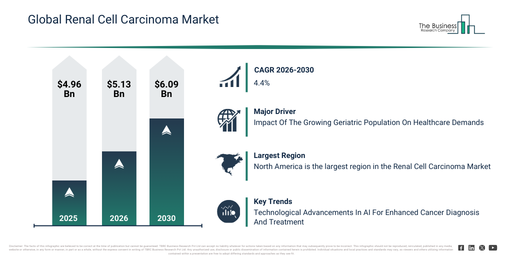
    The renal cell carcinoma market has experienced consistent expansion over recent years. It is projected to increase from $4.96 billion in 2025 to $5.13 billion in 2026, exhibiting a compound annual growth rate (CAGR) of 3.5%. The historical growth of this market can be linked to factors such as the increasing incidence of kidney cancer, enhanced availability of imaging-based diagnostics, the widespread adoption of surgical nephrectomy procedures, the proliferation of oncology treatment centers, and better survival rates achieved through early diagnosis.

    The market for renal cell carcinoma is projected to experience consistent expansion over the upcoming years. This market is anticipated to reach a value of $6.09 billion by 2030, demonstrating a compound annual growth rate (CAGR) of 4.4%. Factors contributing to this growth during the projection period include the intensified development of new targeted treatments, the increased application of combined immunotherapy approaches, the enlargement of precision oncology initiatives, the wider acceptance of biomarker-informed treatment choices, and greater financial commitment to oncology research and clinical trials. Key trends identified for the forecast timeframe encompass the expanding use of targeted cancer treatments, the growing application of multi-drug treatment plans, a stronger emphasis on prompt and precise diagnosis, the broadening availability of minimally invasive surgical techniques, and a heightened focus on individualized oncology care.

    Access Your Free Sample Report for In-Depth Market Insights:

    https://www.thebusinessresearchcompany.com/sample.aspx?id=20944&type=smp

    Which Drivers Are Shaping Strategic Decisions In The Renal Cell Carcinoma Market?

    The increasing number of elderly individuals is projected to fuel the expansion of the renal cell carcinoma market in the coming years. This demographic segment comprises older persons, typically aged 65 or older, who often possess distinct healthcare and social needs. The expansion of the elderly demographic is propelled by advances in healthcare, enhanced nutritional practices, and extended longevity. Renal cell carcinoma (RCC) exhibits a rising incidence among the geriatric population, underscoring the importance of customized screening and therapeutic approaches for this age group. To illustrate, in January 2024, data from a report by the Population Reference Bureau, a US-based non-profit entity that gathers statistics for research and academia, indicated that the count of Americans aged 65 and older is anticipated to grow from 58 million in 2022 to 82 million by 2050, representing a 47% increase. Consequently, the expanding geriatric population is propelling the growth of the renal cell carcinoma market.

    What Segment Classifications Make Up The Renal Cell Carcinoma Market?

    The renal cell carcinoma market covered in this report is segmented –

    1) By Type: Clear Cell Renal Cell Carcinoma (RCC), Papillary Renal Cell Carcinoma (RCC), Chromophobe Renal Cell Carcinoma (RCC)

    2) By Diagnosis: Urine Tests, Computed Tomography (CT) Scan, Nephrectomy, Blood Tests, Ultrasound, Biopsy

    3) By Treatment: Medication, Ablation, Targeted Therapy, Chemotherapy, Surgery, Other Treatments

    4) By End-Users: Hospitals, Specialty Clinics, Oncology Treatment Centers, Other End-Users

    Subsegments:

    1) By Clear Cell Renal Cell Carcinoma (RCC): Sporadic Clear Cell RCC, Hereditary Clear Cell RCC

    2) By Papillary Renal Cell Carcinoma (RCC): Type 1 Papillary RCC, Type 2 Papillary RCC

    3) By Chromophobe Renal Cell Carcinoma (RCC): Classic Chromophobe RCC, Hybrid Chromophobe RCC

    What Trends Are Expected To Impact The Competitive Landscape Of The Renal Cell Carcinoma Market?

    Companies operating in the renal cell carcinoma market are primarily focused on developing technologically advanced products, such as integrating artificial intelligence (AI)-powered solutions designed for analyzing kidney biopsies to enhance diagnostic accuracy, streamline procedures, and improve patient outcomes. An artificial intelligence (AI)-powered solution for examining kidney biopsies is a technology-driven instrument that leverages machine learning algorithms and computer vision to assist pathologists and nephrologists in evaluating kidney tissue samples. These solutions aim to boost accuracy, efficiency, and consistency in diagnosing kidney diseases and assessing kidney health. For instance, in March 2024, Aiosyn, a Netherlands-based software firm, launched the NephroPath platform, an advanced AI-powered solution created to analyze kidney biopsies. The NephroPath platform utilizes computational pathology algorithms to analyze histological biomarkers in kidney biopsies, including identifying tissue types, measuring interstitial fibrosis, and precisely counting and assessing glomeruli. This AI-driven analysis ensures consistent, detailed, and reproducible scoring of renal pathology biomarkers, thereby overcoming the drawbacks of traditional scoring methods and observer subjectivity.

    Which Leading Companies Dominate The Renal Cell Carcinoma Market Share?

    Major companies operating in the renal cell carcinoma market are Pfizer Inc., Johnson And Johnson, F Hoffmann La Roche Ltd, Merck And Co Inc, Bayer AG, Bristol Myers Squibb Company, AstraZeneca Plc, Novartis AG, GSK plc, Takeda Pharmaceutical Company Limited, Amgen Inc., Viatris Inc, Astellas Pharma Inc., Eisai Co Ltd, Sun Pharmaceutical Industries Ltd, Ipsen Pharma, Cipla Inc., Hikma Pharmaceuticals PLC, Amneal Pharmaceuticals LLC, Exelixis Inc., Nektar Therapeutics, BeiGene Ltd, Incyte Corporation, Regeneron Pharmaceuticals Inc., AbbVie Inc.

    Access The Complete Report For Deeper Market Insights:

    https://www.thebusinessresearchcompany.com/report/renal-cell-carcinoma-global-market-report

    How Does The Renal Cell Carcinoma Market Perform Across Major Global Regions?

    North America was the largest region in the renal cell carcinoma market in 2025. Asia-Pacific is expected to be the fastest-growing region in the forecast period. The regions covered in the renal cell carcinoma market report are Asia-Pacific, South East Asia, Western Europe, Eastern Europe, North America, South America, Middle East, Africa.

    Request Your Customized Renal Cell Carcinoma Market Research Report for Competitive Advantage:

    https://www.thebusinessresearchcompany.com/customise?id=20944&type=smp

    Browse Through More Reports Similar to the Global Renal Cell Carcinoma Market 2026, By The Business Research Company

    Kidney Cancer Drugs Market Report 2026

    https://www.thebusinessresearchcompany.com/report/kidney-cancer-drugs-global-market-report

    Kidney Cancer Diagnostics And Therapeutics Market Report 2026

    https://www.thebusinessresearchcompany.com/report/kidney-cancer-diagnostics-and-therapeutics-global-market-report

    Adrenocortical Carcinoma Market Report 2026

    https://www.thebusinessresearchcompany.com/report/adrenocortical-carcinoma-global-market-report

    Get in touch with us:

    The Business Research Company: https://www.thebusinessresearchcompany.com/

    Americas +1 310-496-7795

    Asia +44 7882 955267 & +91 8897263534

    Europe +44 7882 955267

    Email us at info@tbrc.info

    Follow us on:

    LinkedIn: https://in.linkedin.com/company/the-business-research-company

    YouTube: https://www.youtube.com/channel/UC24_fI0rV8cR5DxlCpgmyFQ

    Global Market Model: https://www.thebusinessresearchcompany.com/global-market-model
  • Renal Biomarkers Market Growth Projection: Expected to Surpass $2.04 Billion by 2030 at 8.2% CAGR

    Renal Biomarkers Market Growth Projection: Expected to Surpass $2.04 Billion by 2030 at 8.2% CAGR

    Uncover key drivers, emerging technologies, and competitive movements shaping the renal biomarkers market from 2026–2035 with trusted insights from The Business Research Company

    What growth pattern is forecast for the Renal Biomarkers Market size between 2026 and 2035?

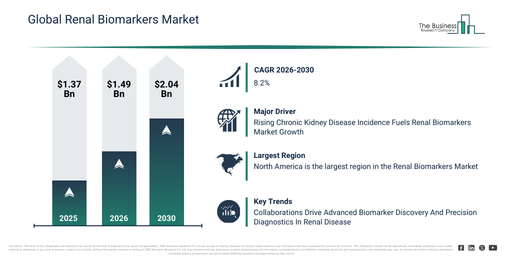
    The renal biomarkers market has witnessed substantial expansion in recent years. It is anticipated to expand from $1.37 billion in 2025 to $1.49 billion in 2026, achieving a compound annual growth rate (CAGR) of 8.6%. The historical growth trajectory is primarily driven by the escalating prevalence of chronic kidney disease, increased utilization of creatinine and urea testing, the broadening of diagnostic laboratory infrastructure, rising awareness concerning the early detection of kidney injury, and enhancements in immunoassay technologies.

    The renal biomarkers market is projected to experience substantial expansion in the coming years, with its valuation expected to reach $2.04 billion by 2030, demonstrating a compound annual growth rate (CAGR) of 8.2%. This anticipated growth during the forecast period is primarily driven by factors such as the greater adoption of precision medicine approaches, a surge in demand for predictive diagnostics in renal conditions, the broadening scope of biomarker-based clinical research, the increasing incorporation of AI into biomarker analysis, and an intensified focus on individualized nephrology care. Key trends anticipated over this forecast horizon include the wider acceptance of new kidney injury biomarkers, an uptick in the utilization of multi-biomarker panels for diagnostic purposes, a heightened need for the early identification of kidney damage, the expansion of non-invasive urine-based testing methods, and a sharpened emphasis on monitoring disease progression.

    Access Your Free Sample Report for In-Depth Market Insights:

    https://www.thebusinessresearchcompany.com/sample.aspx?id=7711&type=smp

    Which Drivers Are Impacting Market Performance In The Renal Biomarkers Market?

    The escalating prevalence of chronic kidney disease (CKD) is anticipated to drive expansion within the renal biomarkers market in the future. This chronic condition involves a progressive decrease in kidney function, impairing the body’s capacity to filter waste, sustain fluid balance, and manage vital electrolytes. The growing occurrence of CKD primarily stems from an aging demographic, diabetes, high blood pressure, and genetic predispositions, factors that collectively lead to increased instances of kidney complications and fatalities. In clinical settings, renal biomarkers are vital for facilitating earlier detection, tracking the advancement of the disease, and supporting prompt treatment to avert kidney failure. For example, data from December 2024, released by the Australian Institute of Health and Welfare, an Australia-based government entity, indicated that chronic kidney disease represented 1.1% of Australia’s total disease burden, with age-adjusted figures revealing that males faced 1.3 times the burden compared to females. Consequently, the increasing load of chronic kidney disease is propelling the expansion of the renal biomarkers market.

    What Segment Types Are Examined In The Renal Biomarkers Market?

    The renal biomarkers market covered in this report is segmented –

    1) By Biomarker Type: Functional Biomarker, Up Regulated Protein, Other Biomarker Types

    2) By Diagnostic Technique: Enzyme-Linked Immunosorbent Assay, Particle-Enhanced Turbidimetric Immunoassay (PETIA), Colorimetric Assay, Chemiluminescent Enzyme Immunoassay (CLIA), Liquid Chromatography Mass Spectrometry (LS-MS)

    3) By Application: Diagnosis And Disease Progression Monitoring, Clinical Research

    4) By End User: Hospitals, Diagnostic Laboratories, Other End Users

    Subsegments:

    1) By Functional Biomarker: Creatinine, Urea, Cystatin C, Bicarbonate

    2) By Up Regulated Protein: Neutrophil Gelatinase-Associated Lipocalin (NGAL), Kidney Injury Molecule-1 (KIM-1), Interleukin-18 (IL-18)

    3) By Other Biomarker Types: Proximal Tubule Injury Biomarkers, Acute Kidney Injury Biomarkers, Chronic Kidney Disease Biomarkers

    Which Trends Are Guiding The Evolution Of The Renal Biomarkers Market?

    Leading companies within the renal biomarkers market are progressively engaging in sophisticated collaborations with research entities and AI-powered biotechnology firms. These efforts aim to advance biomarker discovery, refine patient stratification, and enhance precision diagnostic capabilities. The goal of these strategic alliances is to expedite the identification and validation of new biomarkers, which support early disease detection, more accurate risk assessment, and personalized treatment approaches for kidney disorders. For example, in November 2024, MultiOmic Health, a UK-based AI-powered drug discovery company, pinpointed novel patient endotypes and proprietary biomarkers for diabetic kidney disease (DKD) through a research collaboration with the Northern Care Alliance NHS Foundation Trust. These biomarkers facilitate precise patient segmentation and foster the development of targeted diagnostic tools and therapeutics, thereby supporting improved clinical decision-making and outcomes in kidney care.

    Who Are The Major Companies Operating In The Renal Biomarkers Market?

    Major companies operating in the renal biomarkers market are Abbott Laboratories, BioPorto Diagnostics A S, Roche Holding AG, Thermo Fisher Scientific, bioMérieux SA, Randox Laboratories, Siemens Healthineers, Beckman Coulter Inc., Astute Medical Inc., Sphingotec GmbH, Bio Rad Laboratories India Pvt. Ltd., Enzo Biochem Inc., PerkinElmer Inc., Alere Inc., Bio Techne Corp., DiaSorin S.p.A., EKF Diagnostics Holdings plc, Fujirebio Diagnostics Inc., Gold Standard Diagnostics Corp., Merck KGaA, Myriad RBM Inc., Ortho Clinical Diagnostics Holdings plc, Quidel Corporation, R And D Systems Inc., Roche Diagnostics International Ltd, Sekisui Chemical Co. Ltd., Sysmex Corporation, Tosoh Bioscience Inc.

    Access The Complete Report For Deeper Market Insights:

    https://www.thebusinessresearchcompany.com/report/renal-biomarkers-global-market-report

    Which Region Is Anticipated To See The Fastest Growth In The Renal Biomarkers Market?

    North America was the largest region in the renal biomarkers market in 2025. Asia-Pacific is expected to be the fastest-growing region during the forecast period. The regions covered in the renal biomarkers market report are Asia-Pacific, South East Asia, Western Europe, Eastern Europe, North America, South America, Middle East, Africa.

    Request Your Customized Renal Biomarkers Market Research Report for Competitive Advantage:

    https://www.thebusinessresearchcompany.com/customise?id=7711&type=smp

    Browse Through More Reports Similar to the Global Renal Biomarkers Market 2026, By The Business Research Company

    Biomarkers Market Report 2026

    https://www.thebusinessresearchcompany.com/report/biomarkers-global-market-report

    Kidney Cancer Diagnostics And Therapeutics Market Report 2026

    https://www.thebusinessresearchcompany.com/report/kidney-cancer-diagnostics-and-therapeutics-global-market-report

    Clinical Biomarkers Market Report 2026

    https://www.thebusinessresearchcompany.com/report/clinical-biomarkers-global-market-report

    Get in touch with us:

    The Business Research Company: https://www.thebusinessresearchcompany.com/

    Americas +1 310-496-7795

    Asia +44 7882 955267 & +91 8897263534

    Europe +44 7882 955267

    Email us at info@tbrc.info

    Follow us on:

    LinkedIn: https://in.linkedin.com/company/the-business-research-company

    YouTube: https://www.youtube.com/channel/UC24_fI0rV8cR5DxlCpgmyFQ

    Global Market Model: https://www.thebusinessresearchcompany.com/global-market-model
  • Remote Surgery Market Forecast 2026–2035: How to Leverage Market Growth

    Remote Surgery Market Forecast 2026–2035: How to Leverage Market Growth

    Uncover key drivers, emerging technologies, and competitive movements shaping the remote surgery market from 2026–2035 with trusted insights from The Business Research Company

    How much larger will the Remote Surgery Market be in 2030 compared with 2026?

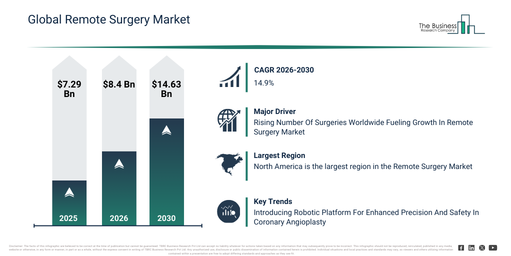
    The remote surgery market has experienced rapid expansion in recent years. Its valuation is set to increase from $7.29 billion in 2025 to $8.4 billion in 2026, achieving a compound annual growth rate (CAGR) of 15.2%. The significant growth observed historically was a result of breakthroughs in robotic surgery systems, the broadening availability of high-speed internet infrastructure, the increasing embrace of minimally invasive surgical techniques, rising financial commitments to surgical robotics, and enhancements in telecommunication reliability.

    The remote surgery market is expected to experience substantial expansion in the coming years, with its value projected to reach $14.63 billion by 2030, driven by a compound annual growth rate (CAGR) of 14.9%. This anticipated growth is primarily fueled by the increasing development of next-generation surgical robots, the rising adoption of 5G-enabled surgery platforms, the expansion of remote surgical training programs, a growing focus on ensuring global access to specialized surgery, and increasing regulatory support for telesurgery adoption. Prominent trends for the forecast period include the increasing uptake of robotic-assisted surgical platforms, the rising deployment of high-speed surgical connectivity, the growing utilization of AI-guided surgical decision support, the expansion of cross-border surgical collaboration, and an enhanced emphasis on minimally invasive procedures.

    Access Your Free Sample Report for In-Depth Market Insights:

    https://www.thebusinessresearchcompany.com/sample.aspx?id=13527&type=smp

    What Drivers Are Guiding Growth Patterns In The Remote Surgery Market?

    The global increase in surgical procedures is expected to propel the growth of the remote surgery market going forward. Surgery is a medical specialty and branch of medicine that utilizes operative techniques to investigate, diagnose, and treat various medical conditions and diseases. The growing number of surgeries worldwide is a primary factor driving the development and adoption of remote surgery. Surgeons widely perform these remote procedures due to their benefits, which include greater precision, enhanced visualization, and shorter hospital stays. For instance, in August 2023, The Aesthetic Society, a US-based organization for plastic surgery and cosmetic medicine, reported that Americans spent more than $11.8 billion on aesthetic procedures overall, a 2% increase from the previous year. Furthermore, in May 2023, according to Austin Publishing Group, a US-based publishing company, the global healthcare system performed in excess of 300 million major surgical procedures each year. Therefore, the rising number of surgeries across the globe is driving the growth of the remote surgery market.

    Which Segments Are Driving Activity In The Remote Surgery Market?

    The remote surgery market covered in this report is segmented –

    1) By Component: Accessories, Systems

    2) By Application: Gynecology Surgery, Urology Surgery, Thoracic Surgery, Cardiac Surgery, Neurosurgery, Orthopedic Surgery, General Surgery, Other Applications

    3) By End-User: Clinics, Hospitals

    Subsegments:

    1) By Accessories: Surgical Instruments, Sensors And Cameras, Communication Devices

    2) By Systems: Robotic Surgery Systems, Telecommunication Systems, Imaging Systems

    What Trends Are Projected To Support The Growth Of The Remote Surgery Market?

    Major companies in the remote surgery market are concentrating on technological advancements, such as robotic platforms, to enhance the precision, accuracy, and safety of coronary angioplasty. These robotic platforms are equipped with sophisticated features that mimic human dexterity. For instance, in May 2023, Robocath SAS, a France-based developer of robotic solutions and systems, introduced the ‘R-One+ robotic platform’ for heart surgery treatment. This latest R-One+ robotic technology aids in reducing radiation-induced injuries and makes the surgical procedure safer and more efficient. The platform enables cardiologists to control devices during surgery from the operating facility’s control room via a command unit. Additionally, R-One+ includes several safety features designed to lower the risk of complications during surgery. These safety features incorporate collision detection and avoidance, as well as force feedback, which collectively prevent the robotic arm from colliding with the patient or other surgical instruments.

    Which Major Firms Are Strengthening Their Position In The Remote Surgery Market?

    Major companies operating in the remote surgery market are Johnson And Johnson Private Limited, Medtronic plc, Stryker Corporation, Zimmer Biomet Holdings, Intuitive Surgical Inc., Smith And Nephew plc, Auris Health Inc., Globus Medical Inc., Renishaw plc, Brainlab AG, Meere Co Inc., Titan Medical Group, MAKO Surgical Corp, Avatera Medical GmbH, Mazor Robotics Ltd, CMR Surgical Ltd, THINK Surgical Inc., Vicarious Surgical Inc., Ronovo Surgical, Blue Belt Technologies Inc., Synaptive Medical Inc., Virtual Incision Corporation, Asensus Surgical Inc., Medrobotics Corporation, MicroSure B.V., EndoQuest Robotics Ltd., Medicaroid Corporation, Neocis Inc.

    Access The Complete Report For Deeper Market Insights:

    https://www.thebusinessresearchcompany.com/report/remote-surgery-global-market-report

    Which Region Is Anticipated To See The Fastest Growth In The Remote Surgery Market?

    North America was the largest region in the remote surgery market in 2025. Asia-Pacific is expected to be the fastest-growing region in the forecast period. The regions covered in the remote surgery market report are Asia-Pacific, South East Asia, Western Europe, Eastern Europe, North America, South America, Middle East, Africa.

    Request Your Customized Remote Surgery Market Research Report for Competitive Advantage:

    https://www.thebusinessresearchcompany.com/customise?id=13527&type=smp

    Browse Through More Reports Similar to the Global Remote Surgery Market 2026, By The Business Research Company

    Surgical Robots Market Report 2026

    https://www.thebusinessresearchcompany.com/report/surgical-robots-global-market-report

    Robotic Surgery Services Market Report 2026

    https://www.thebusinessresearchcompany.com/report/robotic-surgery-services-global-market-report

    Non Surgical Cosmetic Procedures Market Report 2026

    https://www.thebusinessresearchcompany.com/report/non-surgical-cosmetic-procedures-global-market-report

    Get in touch with us:

    The Business Research Company: https://www.thebusinessresearchcompany.com/

    Americas +1 310-496-7795

    Asia +44 7882 955267 & +91 8897263534

    Europe +44 7882 955267

    Email us at info@tbrc.info

    Follow us on:

    LinkedIn: https://in.linkedin.com/company/the-business-research-company

    YouTube: https://www.youtube.com/channel/UC24_fI0rV8cR5DxlCpgmyFQ

    Global Market Model: https://www.thebusinessresearchcompany.com/global-market-model
  • Global Remote Physical Therapy Rep-Counter App Market 2026–2030: Forecast Insights for Business Planning

    Global Remote Physical Therapy Rep-Counter App Market 2026–2030: Forecast Insights for Business Planning

    Uncover key drivers, emerging technologies, and competitive movements shaping the remote physical therapy rep-counter app market from 2026–2035 with trusted insights from The Business Research Company

    Starting from its 2026 valuation, what market size is the Remote Physical Therapy Rep-Counter App Market expected to reach by 2030?

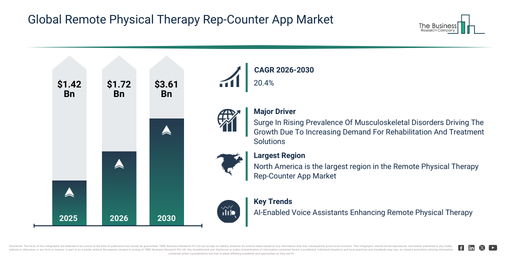
    The remote physical therapy rep-counter app market size has experienced significant expansion in recent years. It is anticipated to increase from $1.42 billion in 2025 to $1.72 billion in 2026, achieving a compound annual growth rate (CAGR) of 20.7%. Historically, this growth can be ascribed to factors such as the expansion of outpatient rehabilitation services, the increasing use of mobile health applications, the broader adoption of home-based physical therapy, a rising awareness of digital rehabilitation tools, and enhancements in smartphone sensor capabilities.

    The remote physical therapy rep-counter app market is projected to experience rapid expansion in the coming years, with its size anticipated to reach $3.61 billion by 2030, demonstrating a compound annual growth rate (CAGR) of 20.4%. This anticipated growth during the forecast period is primarily fueled by the increasing adoption of virtual rehabilitation programs, the rising integration of AI-based exercise validation, the expansion of remote care reimbursement models, a growing demand for personalized recovery tracking, and an increasing focus on data-driven rehabilitation outcomes. Key trends expected over the forecast horizon include the increasing adoption of motion-based rep counting algorithms, the rising use of camera and sensor-based exercise tracking, a growing demand for remote rehabilitation tools, the expansion of real-time feedback and progress analytics, and an enhanced focus on personalized therapy programs.

    Access Your Free Sample Report for In-Depth Market Insights:

    https://www.thebusinessresearchcompany.com/sample.aspx?id=29177&type=smp

    What Drivers Are Driving Adoption Within The Remote Physical Therapy Rep-Counter App Market?

    The increasing incidence of musculoskeletal disorders is anticipated to fuel the growth of the remote physical therapy rep-counter app market in the future. Musculoskeletal disorders describe the number of individuals affected by conditions impacting bones, muscles, joints, and connective tissues, consequently generating a heightened demand for medical treatment and rehabilitation. The escalating prevalence of musculoskeletal disorders is driven by an aging demographic, as older people are more prone to joint, muscle, and bone ailments, thereby boosting the need for physical therapy and recovery interventions. The remote physical therapy rep-counter app addresses musculoskeletal disorders by enabling patients to carry out guided exercises at home, accurately log their repetitions, and track their progress, which in turn improves adherence to rehabilitation programs and lowers the risk of complications. For instance, in January 2024, according to GOV.UK, a UK based government agency, the prevalence of people aged 16 and over self-reporting a long term MSK condition was 18.4% in 2023. Therefore, the rising prevalence of musculoskeletal disorders is a significant impetus behind the expansion of the remote physical therapy rep-counter app market.

    How Is The Remote Physical Therapy Rep-Counter App Market Organized Into Various Segments?

    The remote physical therapy rep-counter app market covered in this report is segmented –

    1) By Component: Software, Hardware, Services

    2) By Deployment Mode: Cloud-Based, On-Premises

    3) By Platform: iOS, Android, Web-Based

    4) By Application: Orthopedic Rehabilitation, Neurological Rehabilitation, Geriatric Rehabilitation, Pediatric Rehabilitation, Sports Injury Rehabilitation, Other Applications

    5) By End-User: Hospitals And Clinics, Home Care Settings, Rehabilitation Centers, Fitness Centers, Other End-Users

    Subsegments:

    1) By Software: Exercise Tracking Software, Patient Management Software, Data Analytics Software, Teleconsultation Software

    2) By Hardware: Wearable Sensors, Smartphones And Tablets, Motion Capture Devices

    3) By Services: Remote Physiotherapy Sessions, Rehabilitation Monitoring Services, Training And Support Services

    Which Trends Are Influencing The Performance And Direction Of The Remote Physical Therapy Rep-Counter App Market?

    Within the remote physical therapy rep-counter app market, leading companies are prioritizing the development of sophisticated solutions, such as AI-driven voice-based digital care assistants, to ensure convenient and accessible support for patients, particularly those facing mobility or vision challenges. This type of digital care assistant is a system that leverages artificial intelligence to engage with users through voice, offering customized health assistance, guidance, and monitoring. For example, in June 2023, Kaia Health, a US-based software firm, introduced Angela, an AI-powered voice-based digital care assistant that complies with HIPAA regulations. This platform distinguishes itself by employing computer vision via smartphone cameras to monitor body movements in real time. It furnishes immediate feedback to refine exercise technique, thereby facilitating effective remote physical therapy. Additionally, the platform automatically tracks repetitions, empowering patients to accurately and confidently adhere to their recovery regimens.

    Who Are The Primary Competitors In The Global Remote Physical Therapy Rep-Counter App Market?

    Major companies operating in the remote physical therapy rep-counter app market are Zimmer Biomet, Reflexion Health, WebPT Inc., Hinge Health, MedBridge Inc., Kaia Health, Drchrono, Plethy Recupe, somatic health, Moterum Technologies Inc.,Include Health Inc., Kinotek Inc., PtEverywhere, Kemtai, Rula health, Physiotec, Rehab Guru Ltd., PT Distinction, VeraSmart Health, Sword Health.

    Access The Complete Report For Deeper Market Insights:

    https://www.thebusinessresearchcompany.com/report/remote-physical-therapy-rep-counter-app-global-market-report

    Which Global Regions Are Shaping The Competitive Landscape Of The Remote Physical Therapy Rep-Counter App Market?

    North America was the largest region in the remote physical therapy rep-counter app market in 2025. Asia-Pacific is expected to be the fastest-growing region in the forecast period. The regions covered in the remote physical therapy rep-counter app market report are Asia-Pacific, South East Asia, Western Europe, Eastern Europe, North America, South America, Middle East, Africa.

    Request Your Customized Remote Physical Therapy Rep-Counter App Market Research Report for Competitive Advantage:

    https://www.thebusinessresearchcompany.com/customise?id=29177&type=smp

    Browse Through More Reports Similar to the Global Remote Physical Therapy Rep-Counter App Market 2026, By The Business Research Company

    Physical Therapy Supplies Market Report 2026

    https://www.thebusinessresearchcompany.com/report/physical-therapy-supplies-global-market-report

    Physical Therapy Market Report 2026

    https://www.thebusinessresearchcompany.com/report/physical-therapy-global-market-report

    Fitness App Market Report 2026

    https://www.thebusinessresearchcompany.com/report/fitness-app-global-market-report

    Get in touch with us:

    The Business Research Company: https://www.thebusinessresearchcompany.com/

    Americas +1 310-496-7795

    Asia +44 7882 955267 & +91 8897263534

    Europe +44 7882 955267

    Email us at info@tbrc.info

    Follow us on:

    LinkedIn: https://in.linkedin.com/company/the-business-research-company

    YouTube: https://www.youtube.com/channel/UC24_fI0rV8cR5DxlCpgmyFQ

    Global Market Model: https://www.thebusinessresearchcompany.com/global-market-model
  • Remote Irritable Bowel Syndrome (IBS) Monitoring Market Outlook 2026–2035: Growth Drivers and Industry Forecast

    Remote Irritable Bowel Syndrome (IBS) Monitoring Market Outlook 2026–2035: Growth Drivers and Industry Forecast

    Uncover key drivers, emerging technologies, and competitive movements shaping the remote irritable bowel syndrome (ibs) monitoring market from 2026–2035 with trusted insights from The Business Research Company

    Across 2026–2030, what is the expected market valuation path of the Remote Irritable Bowel Syndrome (IBS) Monitoring Market?

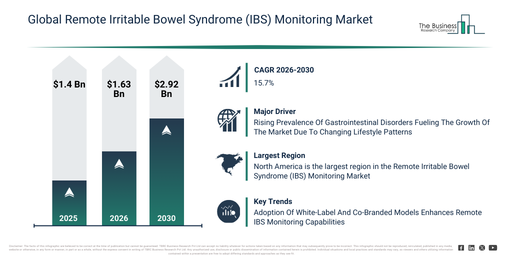
    The remote irritable bowel syndrome (ibs) monitoring market size has witnessed rapid expansion in recent years. Projections indicate it will grow from $1.4 billion in 2025 to $1.63 billion in 2026, achieving a compound annual growth rate (CAGR) of 16.0%. This historical growth can be attributed to the escalating prevalence of irritable bowel syndrome, the development of digital health platforms, the rising adoption of telehealth services, the broader availability of smartphone-based health monitoring, and the existence of cloud-based patient data systems.

    The remote irritable bowel syndrome (ibs) monitoring market is projected to experience substantial expansion in the coming years. This market is anticipated to reach a valuation of $2.92 billion by 2030, exhibiting a compound annual growth rate (CAGR) of 15.7%. The anticipated growth during this period stems from factors such as heightened demand for individualized gastrointestinal care, the expanding incorporation of remote diagnostic tools, the proliferation of value-based healthcare frameworks, the increasing application of predictive analytics in managing diseases, and increased funding for digital therapeutic solutions. Key trends projected for the forecast horizon encompass a rise in AI-powered symptom analysis, broader acceptance of mobile health monitoring platforms, greater incorporation of wearable IBS tracking devices, the development of customized treatment management instruments, and a stronger emphasis on patient involvement strategies.

    Access Your Free Sample Report for In-Depth Market Insights:

    https://www.thebusinessresearchcompany.com/sample.aspx?id=29175&type=smp

    Which Drivers Are Supporting The Rise Of The Remote Irritable Bowel Syndrome (IBS) Monitoring Market?

    The rising incidence of gastrointestinal disorders is projected to boost the expansion of the remote irritable bowel syndrome (IBS) monitoring market in the future. These conditions are ailments that disrupt the normal functioning of the digestive system, hindering digestion and bowel regularity. The surge in gastrointestinal disorders is primarily fueled by poor dietary choices that compromise gut health and digestion, leading to inflammation and digestive issues such as bloating and discomfort. Remote irritable bowel syndrome (IBS) monitoring helps alleviate symptom severity and slow the progression of the disease by enabling early detection of triggers and continuous management, thereby resulting in improved patient outcomes and an enhanced quality of life. For instance, in February 2025, according to Crohn’s & Colitis Australia, an Australia-based national organization, the anticipated prevalence of inflammatory bowel disease (IBD) in Australia is expected to climb from 20,511,881 cases in 2023 to 23,067,771 cases by 2030. Hence, the increasing occurrence of gastrointestinal disorders is a significant factor driving the growth of the remote irritable bowel syndrome (IBS) market.

    What Segments Are Identified Within The Structure Of The Remote Irritable Bowel Syndrome (IBS) Monitoring Market?

    The remote irritable bowel syndrome (ibs) monitoring market covered in this report is segmented –

    1) By Component: Devices, Software, Services

    2) By Application: Diagnosis, Symptom Tracking, Treatment Management, Patient Education, Other Applications

    3) By End-User: Hospitals And Clinics, Homecare Settings, Research Institutes, Other End-Users

    Subsegments:

    1) By Devices: Wearable Monitoring Devices, Non-Wearable Monitoring Devices, Portable Monitoring Devices, Implantable Monitoring Devices

    2) By Software: Data Analytics Software, Mobile Health Applications, Remote Monitoring Platforms, Cloud-Based Software Solutions

    3) By Services: Teleconsultation Services, Data Management Services, Technical Support Services, Training And Education Services

    What Long-Term Trends Are Expected To Shape The Future Of The Remote Irritable Bowel Syndrome (IBS) Monitoring Market?

    Leading firms within the remote irritable bowel syndrome (IBS) monitoring market are concentrating on creating white-label or co-branded service models, aiming to utilize existing digital infrastructure and clinical support systems. Such a model allows healthcare providers to offer pre-built digital health solutions under their own brand, merging a trusted identity with established technology for quicker implementation, reduced expenses, and an uninterrupted patient journey. As an example, in May 2024, Salvo Health, a US-based digital gastrointestinal care company, introduced its inaugural remote patient monitoring (RPM) enablement specifically for gastrointestinal (GI) chronic conditions. This initiative provides a novel digital care alternative for conditions including IBS, GERD, dyspepsia, celiac disease, and SIBO, enabling GI practices to integrate remote monitoring with conventional in-person treatment. Through its white-label or co-branded model, Salvo supplies local GI providers with digital resources, clinical personnel, and home monitoring equipment, empowering them to monitor heart rate variability (HRV) and correlate it with patient diet, behavior, and symptoms, thereby enhancing chronic care results and operational efficiency.

    Which Key Market Players Are Investing In Expansion And Innovation Within The Remote Irritable Bowel Syndrome (IBS) Monitoring Market?

    Major companies operating in the remote irritable bowel syndrome (ibs) monitoring market are Indegene, Vivante Health, Thryve Health, Heali AI Corp., Mahana Therapeutics Inc., metaMe Health Inc., Seed Health, Ayble Health, Oshi health, Salvo Health Inc., modifyhealth Inc., Food marble, nerva health, MyGiHealth, Sun Genomics, Dietahealth, Dige Health, Nori health, Sequenex, Bowelle.

    Access The Complete Report For Deeper Market Insights:

    https://www.thebusinessresearchcompany.com/report/remote-irritable-bowel-syndrome-ibs-monitoring-global-market-report

    Which Regions Are Poised For Strategic Growth In The Remote Irritable Bowel Syndrome (IBS) Monitoring Market?

    North America was the largest region in the remote irritable bowel syndrome (IBS) monitoring market in 2025. Asia-Pacific is expected to be the fastest-growing region in the forecast period. The regions covered in the remote irritable bowel syndrome (ibs) monitoring market report are Asia-Pacific, South East Asia, Western Europe, Eastern Europe, North America, South America, Middle East, Africa.

    Request Your Customized Remote Irritable Bowel Syndrome (IBS) Monitoring Market Research Report for Competitive Advantage:

    https://www.thebusinessresearchcompany.com/customise?id=29175&type=smp

    Browse Through More Reports Similar to the Global Remote Irritable Bowel Syndrome (IBS) Monitoring Market 2026, By The Business Research Company

    Inflammatory Bowel Disease Treatment Market Report 2026

    https://www.thebusinessresearchcompany.com/report/inflammatory-bowel-disease-treatment-global-market-report

    Bowel Management Systems Market Report 2026

    https://www.thebusinessresearchcompany.com/report/bowel-management-systems-global-market-report

    Gastrointestinal Devices Market Report 2026

    https://www.thebusinessresearchcompany.com/report/gastrointestinal-devices-global-market-report

    Get in touch with us:

    The Business Research Company: https://www.thebusinessresearchcompany.com/

    Americas +1 310-496-7795

    Asia +44 7882 955267 & +91 8897263534

    Europe +44 7882 955267

    Email us at info@tbrc.info

    Follow us on:

    LinkedIn: https://in.linkedin.com/company/the-business-research-company

    YouTube: https://www.youtube.com/channel/UC24_fI0rV8cR5DxlCpgmyFQ

    Global Market Model: https://www.thebusinessresearchcompany.com/global-market-model
  • Remote Healthcare Market 2026–2030: Emerging Trends and Forecast Opportunities

    Remote Healthcare Market 2026–2030: Emerging Trends and Forecast Opportunities

    Uncover key drivers, emerging technologies, and competitive movements shaping the remote healthcare market from 2026–2035 with trusted insights from The Business Research Company

    What size range is anticipated for the Remote Healthcare Market from 2026 to 2030?

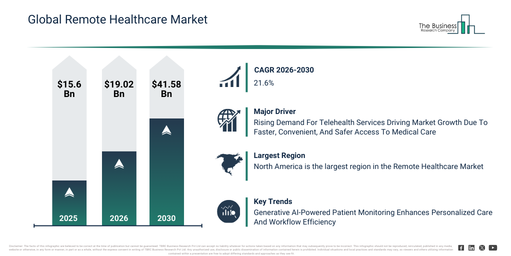
    The remote healthcare market has witnessed substantial expansion in recent years. Its value is anticipated to rise from $15.6 billion in 2025 to $19.02 billion in 2026, achieving a compound annual growth rate (CAGR) of 21.9%. The past growth of this market is attributable to various elements such as expanding healthcare access gaps, the development of digital health infrastructure, an increase in chronic conditions, greater internet and smartphone penetration, and the adoption of virtual healthcare models.

    The remote healthcare market is projected to experience substantial growth in the upcoming years, with its size expected to reach $41.58 billion by 2030, driven by a compound annual growth rate (CAGR) of 21.6%. This expansion during the forecast period can be attributed to several factors, including increasing investments in digital health platforms, a rising demand for home-based care solutions, the expansion of remote monitoring technologies, an amplified focus on value-based healthcare delivery, and the growing integration of AI and analytics into care provision. Significant trends during this period are anticipated to include the increasing adoption of teleconsultation services, a growing utilization of remote patient monitoring devices, the expansion of virtual care platforms, an enhanced focus on chronic disease management, and the rising integration of AI-based clinical support tools.

    Access Your Free Sample Report for In-Depth Market Insights:

    https://www.thebusinessresearchcompany.com/sample.aspx?id=24681&type=smp

    What Drivers Are Affecting Demand In The Remote Healthcare Market?

    The increasing demand for telehealth services is anticipated to drive the future growth of the remote healthcare market. Telehealth services encompass the application of digital technologies to provide healthcare remotely, enabling virtual connections between patients and providers for consultations, diagnoses, monitoring, and treatment. The growing adoption of telehealth services is attributed to individuals seeking faster, more convenient, and safer access to healthcare for remote consultations, continuous monitoring, and reduced travel. Telehealth services enhance remote healthcare by ensuring accessible and timely medical care and consultations for patients in distant or underserved areas without requiring travel. For instance, in April 2023, according to FAIR Health Inc., a US-based non-profit organization, national telehealth use rose by 7.3% in 2023, from 5.5% of medical claim lines in December 2022 to 5.9% in January 2023. Hence, the escalating demand for telehealth services is fueling the expansion of the remote healthcare market.

    Which Segments Are Gaining Traction In The Remote Healthcare Market?

    The remote healthcare market covered in this report is segmented –

    1) By Service: Remote Patient Monitoring, Real Time Virtual Health, Tele-ICU (Telemedicine Intensive Care Unit)

    2) By Deployment Mode: On-Premises, Cloud

    3) By Application: Diagnosis, Cardiology, Obstetrics, Senior Care, Other Applications

    4) By End-User: Hospitals, Clinics, Home Care Settings, Other End-Users

    Subsegments:

    1) By Remote Patient Monitoring: Chronic Disease Monitoring, Postoperative Monitoring, Vital Signs Monitoring, Medication Adherence Monitoring, Remote Fetal Monitoring

    2) By Real Time Virtual Health: Video Consultations, Audio Consultations, Remote Diagnosis And Treatment, Virtual Specialist Consultations, Mental Health Teletherapy Sessions

    3) By Tele-ICU (Telemedicine Intensive Care Unit): Continuous Patient Monitoring, Remote Specialist Consultation, Alarm And Event Management, Data Analytics And Decision Support, Remote Ventilator Management

    Which Market Trends Are Opening Growth Opportunities In The Remote Healthcare Market?

    Major companies operating in the remote healthcare market are prioritizing the development of technologically advanced solutions, such as generative AI-powered remote patient monitoring assistants and real-time diagnostics, with the aim of enhancing patient engagement and enabling personalized care delivery. A generative AI-powered remote patient monitoring assistant is defined as an intelligent system that employs AI to analyze real-time health data, generate customized insights, and automate communication with patients to optimize remote care provision. For example, in February 2025, Validic Inc., a US-based digital health company, introduced a generative AI-powered assistant integrated into its Validic Impact platform to improve remote patient monitoring. This assistant automatically interprets and summarizes complex health data, identifies health trends, generates concise data summaries, facilitates time-based comparisons, streamlines clinical workflows, and reduces the administrative load for providers. Operating on a secure, HITRUST-certified, and HIPAA-compliant infrastructure, it supports numerous health conditions and is compatible with hundreds of devices, thereby enabling clinicians to deliver more personalized, proactive, and efficient care.

    Who Are The Core Companies Influencing Trends In The Remote Healthcare Market?

    Major companies operating in the remote healthcare market are Medtronic plc, Siemens Healthcare GmbH, Koninklijke Philips N.V., GE Healthcare Limited, Resideo Technologies Inc., Teladoc Health Inc., Comarch S.A., American Well Corporation, MDLive Inc., Doctor on Demand Inc., CallHealth Services Pvt. Ltd., Talkspace, AMC Health Inc., 98point6 Technologies, Altibbi Inc., GlobalMed Inc., Binah.ai Ltd., InTouch Health Inc., Vivify Health Inc., VSee Lab Inc.

    Access The Complete Report For Deeper Market Insights:

    https://www.thebusinessresearchcompany.com/report/remote-healthcare-global-market-report

    Which Regions Are Projected To Dominate The Remote Healthcare Market In The Coming Years?

    North America was the largest region in the remote healthcare market in 2025. The regions covered in the remote healthcare market report are Asia-Pacific, South East Asia, Western Europe, Eastern Europe, North America, South America, Middle East, Africa.

    Request Your Customized Remote Healthcare Market Research Report for Competitive Advantage:

    https://www.thebusinessresearchcompany.com/customise?id=24681&type=smp

    Browse Through More Reports Similar to the Global Remote Healthcare Market 2026, By The Business Research Company

    Artificial Intelligence Ai In Remote Patient Monitoring Market Report 2026

    https://www.thebusinessresearchcompany.com/report/artificial-intelligence-ai-in-remote-patient-monitoring-global-market-report

    Remote Health Monitoring Market Report 2026

    https://www.thebusinessresearchcompany.com/report/remote-health-monitoring-global-market-report

    Remote Surgery Market Report 2026

    https://www.thebusinessresearchcompany.com/report/remote-surgery-global-market-report

    Get in touch with us:

    The Business Research Company: https://www.thebusinessresearchcompany.com/

    Americas +1 310-496-7795

    Asia +44 7882 955267 & +91 8897263534

    Europe +44 7882 955267

    Email us at info@tbrc.info

    Follow us on:

    LinkedIn: https://in.linkedin.com/company/the-business-research-company

    YouTube: https://www.youtube.com/channel/UC24_fI0rV8cR5DxlCpgmyFQ

    Global Market Model: https://www.thebusinessresearchcompany.com/global-market-model
  • Global Remote Health Monitoring Market Forecast 2026–2035: Long-Term Growth Insights

    Global Remote Health Monitoring Market Forecast 2026–2035: Long-Term Growth Insights

    Uncover key drivers, emerging technologies, and competitive movements shaping the remote health monitoring market from 2026–2035 with trusted insights from The Business Research Company

    How is the Remote Health Monitoring Market size predicted to change over the forecast window of 2026–2035?

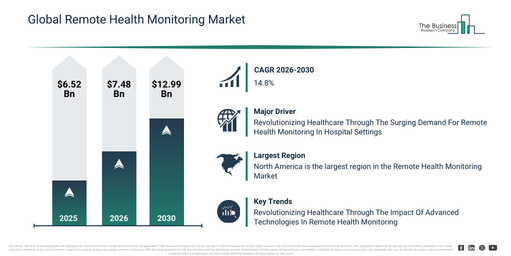
    The remote health monitoring market has experienced significant expansion recently. The market is projected to expand from $6.52 billion in 2025 to $7.48 billion in 2026, achieving a compound annual growth rate (CAGR) of 14.7%. This historical expansion can be linked to the broadening of telehealth services, the increasing prevalence of chronic conditions, the greater uptake of connected medical devices, the rise in healthcare digitization, and the growth of home care environments.

    The remote health monitoring market is set to experience significant expansion in the coming years, with projections indicating it will reach $12.99 billion by 2030, driven by a compound annual growth rate (CAGR) of 14.8%. This anticipated growth can be attributed to a rise in investments in digital health platforms, increasing demand for customized remote care, the broadening of AI-powered clinical decision support, a stronger focus on value-based healthcare models, and the wider adoption of continuous monitoring technologies. Prominent trends expected during this forecast period include the increasing uptake of wearable health monitoring devices, the growing implementation of continuous remote patient monitoring, deeper integration of AI-based health analytics, the expansion of home-based chronic care monitoring, and a heightened emphasis on preventive healthcare.

    Access Your Free Sample Report for In-Depth Market Insights:

    https://www.thebusinessresearchcompany.com/sample.aspx?id=9920&type=smp

    Which Drivers Are Contributing To The Expansion Of The Remote Health Monitoring Market?

    The escalating demand within hospitals is anticipated to drive the expansion of the remote health monitoring market moving forward. Hospitals are extensive and intricate healthcare facilities established to deliver a broad spectrum of medical services, treatments, and care to individuals who are unwell or injured. Implementing remote health monitoring within hospitals can result in more patient-centric, streamlined, and proactive healthcare, allowing for timely interventions, continuous patient oversight, a decrease in hospital readmissions, earlier detection of diseases, and improved data accuracy, all of which ultimately contribute to superior patient outcomes. For example, in May 2025, data from the Australian Institute of Health and Welfare, an Australia-based government agency, indicated that hospitalizations increased from 12.1 million in 2022–23 to 12.6 million in 2023–24, representing a 4.1% year-on-year rise. Thus, the growing demand in hospitals is a primary catalyst for the remote health monitoring market’s growth.

    What Segment Categories Are Covered In The Remote Health Monitoring Market?

    The remote health monitoring market covered in this report is segmented –

    1) By Devices: Respiratory Monitoring, Blood Glucose Monitoring, Cardiac Monitoring, Multi-Parameter Monitoring

    2) By Application: Cancer Treatment, Cardiovascular Diseases, Diabetes Treatment, Sleep Disorder, Weight Management And Fitness Monitoring, Other Applications

    3) By End-User: Home Care Settings, Hospitals Or Clinics, Other End-Users

    Subsegments:

    1) By Respiratory Monitoring: Spirometers, Pulse Oximeters, Capnometers, Respiratory Rate Monitors

    2) By Blood Glucose Monitoring: Glucometers, Continuous Glucose Monitors (CGMs), Smart Insulin Pens

    3) By Cardiac Monitoring: ECG Monitors, Holter Monitors, Implantable Cardiac Monitors, Blood Pressure Monitors

    4) By Multi-Parameter Monitoring: Vital Sign Monitors, Telemetry Systems, Wearable Health Monitors

    How Are Emerging Trends Affecting The Progression Of The Remote Health Monitoring Market?

    Leading companies in the remote health monitoring market are concentrating on integrating novel technologies, such as cloud computing and artificial intelligence (AI), into their systems to enhance accuracy. Artificial intelligence (AI) and machine learning employ mathematical data models to allow computers to learn without explicit programming. This capability fundamentally alters how healthcare organizations manage large-scale remote patient monitoring and improves patient outcomes. For example, in November 2023, Royal Philips, a health technology company based in the Netherlands, unveiled Philips HealthSuite Imaging. This specialized solution delivers a cloud-based picture archiving and communication system (PACS) engineered to optimize radiology and imaging workflows. It prioritizes enabling swift remote access for diagnostic readings, unified reporting, and AI-driven workflow orchestration. By leveraging advanced technologies, HealthSuite Imaging refines the interpretation and reporting of studies, boosts operational efficiency, and elevates patient care.

    Which Major Industry Participants Are Leading The Remote Health Monitoring Market Growth?

    Major companies operating in the remote health monitoring market are Nihon Kohden Corporation, Koninklijke Philips NV, Omron Corporation, F. Hoffmann-La Roche Ltd., American Telecare Inc., GE Healthcare Company, Masimo Corporation, Abbott Laboratories, Biotronik SE & Co. KG, Athelas Inc., Dexcom Inc., Senseonics Holdings Inc., Medtronic plc, Health Recovery Solutions Inc., Babyscripts Inc., TytoCare Ltd., Accuhealth Inc., Vivify Health Inc., Get Well Network Inc., VitalTech Holdings Inc., Rimidi Inc., SeamlessMD Inc., Raziel Health Inc., Conversa Health Inc.

    Access The Complete Report For Deeper Market Insights:

    https://www.thebusinessresearchcompany.com/report/remote-health-monitoring-global-market-report

    Which Region Is Expected To Experience The Fastest Growth In The Remote Health Monitoring Market?

    North America was the largest region in the remote health monitoring market in 2025. The regions covered in the remote health monitoring market report are Asia-Pacific, South East Asia, Western Europe, Eastern Europe, North America, South America, Middle East, Africa.

    Request Your Customized Remote Health Monitoring Market Research Report for Competitive Advantage:

    https://www.thebusinessresearchcompany.com/customise?id=9920&type=smp

    Browse Through More Reports Similar to the Global Remote Health Monitoring Market 2026, By The Business Research Company

    Real Time Health Monitoring Devices Market Report 2026

    https://www.thebusinessresearchcompany.com/report/real-time-health-monitoring-devices-global-market-report

    Remote Patient Monitoring Devices And Equipment Market Report 2026

    https://www.thebusinessresearchcompany.com/report/remote-patient-monitoring-devices-and-equipment-global-market-report

    Remote Cardiac Monitoring Market Report 2026

    https://www.thebusinessresearchcompany.com/report/remote-cardiac-monitoring-global-market-report

    Get in touch with us:

    The Business Research Company: https://www.thebusinessresearchcompany.com/

    Americas +1 310-496-7795

    Asia +44 7882 955267 & +91 8897263534

    Europe +44 7882 955267

    Email us at info@tbrc.info

    Follow us on:

    LinkedIn: https://in.linkedin.com/company/the-business-research-company

    YouTube: https://www.youtube.com/channel/UC24_fI0rV8cR5DxlCpgmyFQ

    Global Market Model: https://www.thebusinessresearchcompany.com/global-market-model
  • Remote Diagnostics Market 2026–2030: Forecasting Business Opportunities Ahead

    Remote Diagnostics Market 2026–2030: Forecasting Business Opportunities Ahead

    Uncover key drivers, emerging technologies, and competitive movements shaping the remote diagnostics market from 2026–2035 with trusted insights from The Business Research Company

    What market expansion outlook does the Remote Diagnostics Market show for the 2026–2030 period?

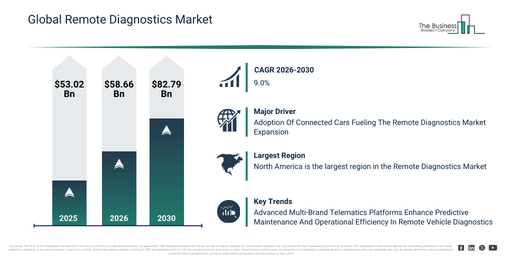
    The remote diagnostics market size has undergone rapid expansion in recent years. It is anticipated to grow from $53.02 billion in 2025 to $58.66 billion in 2026, demonstrating a compound annual growth rate (CAGR) of 10.7%. The market’s historical growth can be linked to factors including increasing vehicle electrification complexity, the spread of connected vehicle technologies, a rising demand for quicker service resolution, the development of fleet management systems, and a growing dependence on telematics data.

    The remote diagnostics market size is projected to experience robust growth in the upcoming years, with expectations to reach $82.79 billion by 2030, exhibiting a compound annual growth rate (CAGR) of 9.0%. This expansion during the forecast period is primarily driven by the increasing adoption of AI-driven diagnostics, rising investments in connected mobility platforms, the expansion of over-the-air diagnostics capabilities, a growing demand for remote vehicle support services, and the increasing integration of diagnostics with fleet analytics. Significant trends anticipated in the forecast period include the increasing adoption of cloud-based diagnostic platforms, the rising use of predictive maintenance diagnostics, the growing integration of real-time vehicle health monitoring, the expansion of remote software-based troubleshooting, and an enhanced focus on downtime reduction.

    Access Your Free Sample Report for In-Depth Market Insights:

    https://www.thebusinessresearchcompany.com/sample.aspx?id=15660&type=smp

    What Drivers Are Shaping The Development Of The Remote Diagnostics Market?

    The increasing integration of connected vehicles is anticipated to fuel the expansion of the remote diagnostics market in the future. Connected cars are automobiles equipped with Internet access and often a wireless local area network (Wi-Fi), enabling communication with various devices, networks, and services. The demand for these vehicles is escalating, driven by desires for greater convenience, improved efficiency, enhanced safety and security, better entertainment options, and seamless connectivity. Such vehicles transmit live data, facilitating proactive identification of problems and negating the necessity for manual checks. Furthermore, they boost safety by automatically sharing diagnostic information with emergency services during collisions, leading to faster responses and potentially life-saving interventions. As an illustration, in February 2025, Scania, a commercial vehicle manufacturer based in Sweden, reported having approximately 638,000 connected vehicles by the end of 2024, a number that is rapidly expanding. Consequently, the swift increase in the uptake of connected automobiles is propelling the growth of the remote diagnostics market.

    Which Segments Are Contributing To The Growth Of The Remote Diagnostics Market?

    The remote diagnostics market covered in this report is segmented –

    1) By Product Type: Software, Diagnostic Equipment

    2) By Connectivity: 3G (Third Generation), 4G LTE (Fourth Generation Long Term Evolution), Wi-Fi (Wireless Fidelity), Bluetooth

    3) By Application: Roadside Assistance, Vehicle Tracking, Vehicle State Alert, Crash Notification, Training Assistance, Other Applications

    4) By Vehicle Type: Commercial Vehicles, Passenger Vehicles

    Subsegments:

    1) By Software: Diagnostic Software, Remote Monitoring Software, Diagnostic Reporting Software

    2) By Diagnostic Equipment: On-Board Diagnostic Devices, Portable Diagnostic Devices, Imaging Systems For Remote Diagnosis

    Which Innovation Trends Are Advancing Developments Within The Remote Diagnostics Market?

    Major companies active in the remote diagnostics market are prioritizing the development of advanced solutions, including multi-brand telematics platforms, to enhance real-time vehicle monitoring, improve predictive maintenance, and boost service efficiency. Multi-brand telematics platforms are integrated systems engineered to collect and analyze live performance data from vehicles spanning different brands, enabling proactive diagnostics and improving overall fleet reliability. For instance, in September 2024, Hella Gutmann, a Germany-based automotive technology company, introduced macsLive, a cloud-based telematics platform specifically designed for real-time, multi-brand vehicle diagnostics. This platform was created to support fleet operators and workshops by offering improved monitoring and maintenance capabilities. The solution facilitates remote error-code analysis, early identification of potential vehicle faults, and streamlined service scheduling, which collectively improves operational efficiency and minimizes downtime.

    Who Are The Prominent Global Companies Shaping The Remote Diagnostics Market Landscape?

    Major companies operating in the remote diagnostics market are Toyota Motor Corporation, Ford Motor Company, Robert Bosch GmbH, Tesla Inc., Nissan Motor Co. Ltd., Denso Corporation, Qualcomm Technologies Inc., Continental AG, Mercedes Benz Group AG, ABB Ltd., Aptiv PLC, SKF Group, OMRON Corporation, Tech Mahindra Limited, Snap On Incorporated, Vector Informatik GmbH, Softing AG, Delphi Technologies, AVL DiTEST GmbH, Vidiwave Ltd., OnStar Corporation, Harman International Industries Inc., Valeo SA, ZF Friedrichshafen AG

    Access The Complete Report For Deeper Market Insights:

    https://www.thebusinessresearchcompany.com/report/remote-diagnostics-global-market-report

    Which Geographic Areas Are Emerging As Strong Markets For The Remote Diagnostics Market?

    North America was the largest region in the remote diagnostics market in 2025. Asia-Pacific is expected to be the fastest-growing region in the forecast period. The regions covered in the remote diagnostics market report are Asia-Pacific, South East Asia, Western Europe, Eastern Europe, North America, South America, Middle East, Africa.

    Request Your Customized Remote Diagnostics Market Research Report for Competitive Advantage:

    https://www.thebusinessresearchcompany.com/customise?id=15660&type=smp

    Browse Through More Reports Similar to the Global Remote Diagnostics Market 2026, By The Business Research Company

    Remote Monitoring And Control Market Report 2026

    https://www.thebusinessresearchcompany.com/report/remote-monitoring-and-control-global-market-report

    Automotive Remote Diagnostics Market Report 2026

    https://www.thebusinessresearchcompany.com/report/automotive-remote-diagnostics-global-market-report

    Remote Health Monitoring Market Report 2026

    https://www.thebusinessresearchcompany.com/report/remote-health-monitoring-global-market-report

    Get in touch with us:

    The Business Research Company: https://www.thebusinessresearchcompany.com/

    Americas +1 310-496-7795

    Asia +44 7882 955267 & +91 8897263534

    Europe +44 7882 955267

    Email us at info@tbrc.info

    Follow us on:

    LinkedIn: https://in.linkedin.com/company/the-business-research-company

    YouTube: https://www.youtube.com/channel/UC24_fI0rV8cR5DxlCpgmyFQ

    Global Market Model: https://www.thebusinessresearchcompany.com/global-market-model
  • Global Relationship Genetic Tests Market Report 2026–2035: Key Forecasts and Growth Areas

    Global Relationship Genetic Tests Market Report 2026–2035: Key Forecasts and Growth Areas

    Uncover key drivers, emerging technologies, and competitive movements shaping the relationship genetic tests market from 2026–2035 with trusted insights from The Business Research Company

    What level of growth is expected in the Relationship Genetic Tests Market between 2026 and 2030?

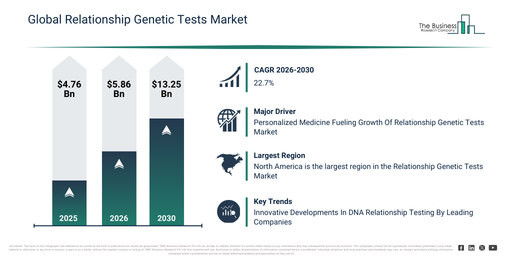
    The relationship genetic tests market size has experienced exponential growth in recent years. This market is set to expand from $4.76 billion in 2025 to $5.86 billion in 2026, registering a compound annual growth rate (CAGR) of 22.9%. Historically, this growth can be attributed to increased awareness of genetic relationship testing, the expansion of forensic DNA laboratories, a rising demand for paternity and kinship testing, enhancements in DNA amplification technologies, and the availability of affordable genetic test kits.

    The market for relationship genetic tests is projected to experience rapid expansion over the coming years. By 2030, its value is anticipated to reach $13.25 billion, demonstrating a compound annual growth rate (CAGR) of 22.7%. This growth during the projection period stems from several factors, including the greater incorporation of digital reporting tools, a surge in the need for swift relationship confirmation, the broadening availability of legally recognized DNA testing services, the rising uptake of online genetic offerings, and an enhanced emphasis on secure management of genetic data. Key trends anticipated within this forecast timeframe encompass the expanding embrace of direct-to-consumer genetic testing, a heightened application of sophisticated DNA marker analysis, increasing requirements for legal and forensic genetic examinations, the proliferation of non-invasive methods for sample collection, and an intensified commitment to data precision and privacy.

    Access Your Free Sample Report for In-Depth Market Insights:

    https://www.thebusinessresearchcompany.com/sample.aspx?id=19674&type=smp

    Which Drivers Are Expected To Impact The Relationship Genetic Tests Market During The Forecast Period?

    The expanding integration of personalized medicine is anticipated to propel the growth of the relationship genetic tests market in the coming period. Personalized medicine represents a healthcare approach that customizes treatments and strategies based on an individual’s genetic, environmental, and lifestyle elements to deliver more effective and targeted care. The uptake of personalized medicine is driven by advancements in genetic research, the increasing availability of genomic data, and a growing emphasis on bespoke healthcare solutions that cater to unique genetic profiles and health demands. Relationship genetic tests are utilized within personalized medicine to offer insights into genetic links and family predispositions, aiding in the customization of preventive care, treatment protocols, and health surveillance strategies specific to individual genetic compositions. For instance, in February 2024, the Personalized Medicine Coalition, a US-based non-profit organization, reported that in 2023, the FDA approved 16 new personalized treatments for rare disease patients, an increase from six in 2022. Among these approvals, seven were cancer drugs, while three targeted other diseases and conditions. Consequently, the rising adoption of personalized medicine is stimulating the expansion of the relationship genetic tests market.

    How Is The Relationship Genetic Tests Market Divided Into Segments?

    The relationship genetic tests market covered in this report is segmented –

    1) By Type: Siblings DNA Test, Grandparentage Test, Genetic Reconstruction Test, Other Types

    2) By Sample: Saliva, Urine, Blood

    3) By Application: Direct-To-Consumer, Legal Service Tests

    Subsegments:

    1) By Siblings DNA Test: Full Siblings DNA Test, Half Siblings DNA Test, Triangulation DNA Testing, Autosomal DNA Testing for Siblings

    2) By Grandparentage Test: Grandparent-Grandchild DNA Test, Grandparentage Verification Through Autosomal Testing, Y-DNA And mtDNA Testing for Grandparentage

    3) By Genetic Reconstruction Test: Ancestry Reconstruction Test, Genetic Family Tree Construction, Genetic Relationship Analysis

    4) By Other Types: Paternity Test, Maternity Test, Avuncular Test, Cousin Relationship Test

    Which Competitive Trends Are Impacting The Structure Of The Relationship Genetic Tests Market?

    Leading companies in the relationship genetic tests market are concentrating on developing innovative testing solutions, such as DNA relationship testing, to improve the accuracy and reliability of genetic relationship assessments. DNA relationship testing involves genetic analysis used to identify biological connections among individuals by examining their DNA. For example, in October 2023, AlphaBiolabs, a UK-based company providing health testing services, unveiled an advanced DNA test designed to ascertain genetic links between people, including parentage or sibling relationships. This sophisticated test leverages cutting-edge technology to deliver exceptional accuracy in determining biological relationships. It presents an expanded selection of genetic markers, thereby enhancing the precision of results and minimizing the chance of false positives or negatives. The test is structured for rapid processing, delivering outcomes quicker than many traditional tests, and features a robust data analysis platform that offers comprehensive and easily interpretable reports.

    Which Key Players Are Driving Competition In The Relationship Genetic Tests Market?

    Major companies operating in the relationship genetic tests market are Laboratory Corporation of America Holdings, Quest Diagnostics Incorporated, Myriad Genetics Inc., Invitae Corporation, Ancestry.com LLC, 23andMe Inc., Ambry Genetics Corporation, Color Health Inc., MyHeritage Ltd., DNA Diagnostics Center Inc., EasyDNA, AlphaBiolabs Ltd., Living DNA Ltd., Pathway Genomics Corporation, Anglia DNA Services Ltd., African Ancestry Inc., Canadian DNA Services Inc., DNA Family Check, Circle DNA, iGene

    Access The Complete Report For Deeper Market Insights:

    https://www.thebusinessresearchcompany.com/report/relationship-genetic-tests-global-market-report

    Which Region Is Projected To Lead The Relationship Genetic Tests Market During The Forecast Period?

    North America was the largest region in the relationship genetic tests market in 2025. The regions covered in the relationship genetic tests market report are Asia-Pacific, South East Asia, Western Europe, Eastern Europe, North America, South America, Middle East, Africa.

    Request Your Customized Relationship Genetic Tests Market Research Report for Competitive Advantage:

    https://www.thebusinessresearchcompany.com/customise?id=19674&type=smp

    Browse Through More Reports Similar to the Global Relationship Genetic Tests Market 2026, By The Business Research Company

    Typhoid Vi Polysaccharide Vaccine Market Report 2026

    https://www.thebusinessresearchcompany.com/report/typhoid-vi-polysaccharide-vaccine-global-market-report

    Autoimmune Treatment Market Report 2026

    https://www.thebusinessresearchcompany.com/report/autoimmune-treatment-global-market-report

    Healthcare Fraud Detection Market Report 2026

    https://www.thebusinessresearchcompany.com/report/healthcare-fraud-detection-global-market-report

    Get in touch with us:

    The Business Research Company: https://www.thebusinessresearchcompany.com/

    Americas +1 310-496-7795

    Asia +44 7882 955267 & +91 8897263534

    Europe +44 7882 955267

    Email us at info@tbrc.info

    Follow us on:

    LinkedIn: https://in.linkedin.com/company/the-business-research-company

    YouTube: https://www.youtube.com/channel/UC24_fI0rV8cR5DxlCpgmyFQ

    Global Market Model: https://www.thebusinessresearchcompany.com/global-market-model
  • Relapsing-Remitting Multiple Sclerosis Market 2026–2030: Forecast, Innovation, and Competitive Trends

    Relapsing-Remitting Multiple Sclerosis Market 2026–2030: Forecast, Innovation, and Competitive Trends

    Uncover key drivers, emerging technologies, and competitive movements shaping the relapsing-remitting multiple sclerosis market from 2026–2035 with trusted insights from The Business Research Company

    How much is the Relapsing-Remitting Multiple Sclerosis Market valued at in 2026, and what valuation is forecast for 2030?

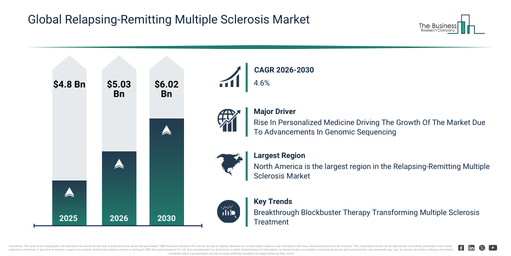
    The relapsing-remitting multiple sclerosis market has shown consistent expansion in recent years. It is projected to grow from $4.8 billion in 2025 to $5.03 billion in 2026, achieving a compound annual growth rate (CAGR) of 4.9%. Historically, this market development has been influenced by factors such as enhanced multiple sclerosis diagnosis rates, broader access to immunomodulating therapies, increased clinical research within autoimmune diseases, heightened neurologist awareness of rrms, and the proliferation of specialty neurology clinics.

    The relapsing-remitting multiple sclerosis market is anticipated to show steady growth over the next few years, with projections indicating it will reach $6.02 billion by 2030, growing at a compound annual growth rate (CAGR) of 4.6%. This projected growth during the forecast period is attributed to several factors, including the increasing development of next-generation rrms therapies, a rising focus on precision medicine approaches, the expansion of oral and less invasive treatments, the growth of patient adherence programs, and increasing investments in neurodegenerative disease research. Key trends for the forecast period include the increasing adoption of targeted disease-modifying therapies, a rising use of personalized treatment protocols, an intensified focus on early diagnosis and disease monitoring, the expansion of oral immunomodulatory drugs, and an enhanced emphasis on long-term disease management.

    Access Your Free Sample Report for In-Depth Market Insights:

    https://www.thebusinessresearchcompany.com/sample.aspx?id=23495&type=smp

    What Drivers Are Influencing The Growth Of The Relapsing-Remitting Multiple Sclerosis Market?

    The rising acceptance of personalized medicine is projected to stimulate expansion in the relapsing-remitting multiple sclerosis (RRMS) market moving forward. Personalized medicine is a healthcare strategy that customizes medical interventions and therapies according to an individual’s genetic makeup, environmental influences, and lifestyle choices to achieve optimal health outcomes. Its increased prevalence is attributed to breakthroughs in genomic sequencing, which facilitate the precise identification of genetic variations and biomarkers, resulting in more targeted and efficacious treatments. Relapsing-remitting multiple sclerosis (RRMS) underscores the necessity of personalized medicine by illustrating how tailored approaches can address individual differences in disease progression, symptom severity, and treatment responsiveness, ultimately enhancing patient well-being. As an illustration, in February 2024, the U.S. Food and Drug Administration sanctioned 16 new personalized treatments for rare disease patients, marking a notable increase from 6 in 2022, according to the Personalized Medicine Coalition, a US-based organization that champions personalized medicine. Thus, the escalating adoption of personalized medicine is serving as a catalyst for the growth of the relapsing-remitting multiple sclerosis market.

    What Segments Are Included Within The Relapsing-Remitting Multiple Sclerosis Market?

    The relapsing-remitting multiple sclerosis market covered in this report is segmented –

    1) By Drug Type: Beta-Interferon, Cladribine, Dimethyl Fumarate, Fingolimod, Ozanimod, Other Drug Types

    2) By Route Of Administration: Subcutaneous, Intravenous

    3) By Treatment: Immunomodulating Drugs, NrF2 Activators, Interferons, Other Treatments

    4) By End-User: Hospitals, Clinics, Other End-Users

    Subsegments:

    1) By Beta-Interferon: Interferon Beta-1a, Interferon Beta-1b

    2) By Cladribine: Oral Cladribine, Injectable Cladribine

    3) By Dimethyl Fumarate: Tecfidera, Vumerity

    4) By Fingolimod: Gilenya Fingolimod, Generic Fingolimod

    5) By Ozanimod: Zeposia, Generic Ozanimod Formulations

    6) By Other Drug Types: Natalizumab, Alemtuzumab, Ocrelizumab, Siponimod, Teriflunomide

    What Industry Trends Are Transforming The Relapsing-Remitting Multiple Sclerosis Market?

    Leading companies in the relapsing-remitting multiple sclerosis market are concentrating on developing innovative treatment approaches, such as breakthrough blockbuster therapy, to enhance treatment efficacy, improve patient outcomes, and redefine the standard of care for relapsing-remitting multiple sclerosis (RRMS). Breakthrough blockbuster therapy refers to a novel and highly effective treatment that significantly advances medical care, often addressing unmet needs or providing superior outcomes compared to existing therapies. For instance, in February 2024, Roche Products (India) Pvt. Ltd., an India-based pharmaceutical company, launched Ocrevus (Ocrelizumab), a groundbreaking treatment for multiple sclerosis (MS), to strengthen its neurology portfolio and address the unmet medical needs of patients in India. Ocrevus is designed to target CD20-positive B cells, which are implicated in MS progression, aiming to reduce relapses and slow the advancement of disability in affected individuals. It is equipped with a unique mechanism of action that selectively depletes B cells, helping to modify the disease course and improve long-term patient outcomes.

    Who Are The Top-Performing Companies In The Relapsing-Remitting Multiple Sclerosis Market In Recent Years?

    Major companies operating in the relapsing-remitting multiple sclerosis market are Johnson And Johnson Services Inc., F Hoffmann La Roche Ltd, Bayer AG, Sanofi S.A., Bristol Myers Squibb Company, Novartis AG, Merck KGaA, Viatris Inc., Teva Pharmaceutical Industries Ltd., Biogen Inc., Genentech Inc., Hikma Pharmaceuticals LLC, Glenmark Pharmaceuticals Limited, CinnaGen Co, Zenas BioPharma Inc., Roche Diagnostics GmbH, Sandoz AG, Sun Pharmaceutical Industries Ltd., Dr Reddys Laboratories Ltd., Zydus Lifesciences Ltd., AbbVie Neurology Division, Almirall S.A., UCB S.A., Otsuka Pharmaceutical Co. Ltd.

    Access The Complete Report For Deeper Market Insights:

    https://www.thebusinessresearchcompany.com/report/relapsing-remitting-multiple-sclerosis-global-market-report

    Which Region Currently Holds The Largest Share Of The Relapsing-Remitting Multiple Sclerosis Market?

    North America was the largest region in the relapsing-remitting multiple sclerosis market in 2025. Asia-Pacific is expected to be the fastest-growing region in the forecast period. The regions covered in the relapsing-remitting multiple sclerosis market report are Asia-Pacific, South East Asia, Western Europe, Eastern Europe, North America, South America, Middle East, Africa.

    Request Your Customized Relapsing-Remitting Multiple Sclerosis Market Research Report for Competitive Advantage:

    https://www.thebusinessresearchcompany.com/customise?id=23495&type=smp

    Browse Through More Reports Similar to the Global Relapsing-Remitting Multiple Sclerosis Market 2026, By The Business Research Company

    Nerve Repair And Regenerative Market Report 2026

    https://www.thebusinessresearchcompany.com/report/nerve-repair-and-regenerative-global-market-report

    Rare Neurological Disease Treatment Market Report 2026

    https://www.thebusinessresearchcompany.com/report/rare-neurological-disease-treatment-global-market-report

    Progressive Multifocal Leukoencephalopathy Treatment Market Report 2026

    https://www.thebusinessresearchcompany.com/report/progressive-multifocal-leukoencephalopathy-treatment-global-market-report

    Get in touch with us:

    The Business Research Company: https://www.thebusinessresearchcompany.com/

    Americas +1 310-496-7795

    Asia +44 7882 955267 & +91 8897263534

    Europe +44 7882 955267

    Email us at info@tbrc.info

    Follow us on:

    LinkedIn: https://in.linkedin.com/company/the-business-research-company

    YouTube: https://www.youtube.com/channel/UC24_fI0rV8cR5DxlCpgmyFQ

    Global Market Model: https://www.thebusinessresearchcompany.com/global-market-model