Category: HealthcareServices

  • Global Tadalafil Market Analysis 2025–2029: Opportunities for Strategic Growth

    Global Tadalafil Market Analysis 2025–2029: Opportunities for Strategic Growth

    Unlock Global Insights – Save 20% on Market Reports with Code ONLINE20

    How Is The Tadalafil Market Size Likely To Evolve From 2025 Through 2034?

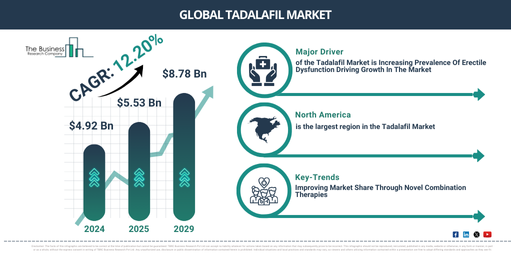
    The tadalafil market has experienced significant expansion recently. Its size is expected to increase from $4.92 billion in 2024 to $5.53 billion in 2025, demonstrating a compound annual growth rate (CAGR) of 12.5%. This past growth can be attributed to factors such as greater awareness of men’s health, an uptick in drug usage, the increasing prevalence of tadalafil, higher healthcare spending, and an expanding elderly population.

    The tadalafil market is anticipated to experience substantial expansion in the coming years. Its valuation is projected to reach $8.78 billion by 2029, demonstrating a compound annual growth rate (CAGR) of 12.2%. This forecasted growth stems from factors such as a rise in erectile dysfunction prevalence, an escalating demand for lifestyle medications, a growing incidence of PAH, greater embrace of contemporary healthcare remedies, and higher disposable incomes. Key developments during this period are expected to encompass the integration of digital health, novel formulations, improvements in pharmaceuticals, refined drug delivery mechanisms, and progress in medical technology.

    Unlock Your Free Sample Report for Exclusive Market Data:

    https://www.thebusinessresearchcompany.com/sample.aspx?id=20974&type=smp

    Which Factors And Drivers Are Influencing The Tadalafil Market In 2025?

    The projected expansion of the tadalafil market is being driven by the rising incidence of erectile dysfunction. This condition, often referred to as ED, involves the persistent difficulty in achieving or sustaining an erection adequate for satisfactory sexual activity. Its growing prevalence is mainly attributed to an aging demographic, various chronic illnesses, unhealthy lifestyle habits, psychological stressors, and adverse effects from specific drugs. Tadalafil addresses erectile dysfunction by relaxing the penile blood vessel muscles, thereby improving blood circulation and facilitating the achievement and maintenance of an erection during sexual stimulation. As an illustration, a report from the US-based National Institutes of Health (NIH)’s National Library of Medicine in February 2024 indicated that ED prevalence, assessed via IIEF-5 scores, stands at 24.2% within the general population. This rate notably increases with age, impacting 52.2% of individuals aged 75 and above and 48.0% of those in the 65-74 age bracket. Consequently, the expanding occurrence of erectile dysfunction is fueling the expansion of the tadalafil market.

    What Are The Major Segment Categories Driving The Tadalafil Market Growth?

    The tadalafilmarket covered in this report is segmented –

    1) By Product Type: Tablets; Oral Suspensions

    2) By Distribution Channel: Hospital Pharmacy; Retail Pharmacy; Online Pharmacy

    3) By Application: Erectile Dysfunction; Pulmonary Arterial Hypertension; Benign Prostatic Hyperplasia

    Subsegments:

    1) By Tablets: 2.5 mg Tablets; 5 mg Tablets; 10 mg Tablets; 20 mg Tablets

    2) By Oral Suspensions: 2.5 mg/5 mL Oral Suspension; 10 mg/5 mL Oral Suspension; Custom Dosing Oral Suspensions

    What Long-Term Trends Will Shape The Future Growth Of The Tadalafil Industry?

    Leading companies within the tadalafil market are concentrating on innovative formulations, such as combination therapy, to enhance treatment efficacy, improve patient compliance, and expand their market presence in managing erectile dysfunction and pulmonary arterial hypertension. Combination therapy refers to the simultaneous use of two or more medications or treatments to enhance therapeutic outcomes, improve efficacy, and address multiple facets of a disease or condition. For instance, in March 2024, Johnson & Johnson, a US-based healthcare company, announced that the U.S. Food and Drug Administration (FDA) has granted approval for OPSYNVI, a single-tablet therapy combining macitentan, an endothelin receptor antagonist (ERA), and tadalafil, a phosphodiesterase 5 (PDE5) inhibitor. This novel treatment is indicated for the chronic management of pulmonary arterial hypertension (PAH) (WHO Group I) in adult patients classified under WHO functional class II-III. OPSYNVI is suitable for treatment-naïve patients as well as those currently on ERA, PDE5 inhibitors, or both therapies. Additionally, it offers a streamlined option for patients stabilized on macitentan 10 mg and tadalafil 40 mg (20 mg x 2) administered separately.

    Who Are The Primary Competitors In The Global Tadalafil Market?

    Major companies operating in the tadalafil market are Eli Lilly and Company, Teva Pharmaceutical Industries Ltd., Sun Pharmaceutical Industries Limited, Cipla Limited, Aurobindo Pharma Limited, Dr. Reddy’s Laboratories Limited, Lupin Limited, Glenmark Pharmaceuticals Limited, Torrent Pharmaceuticals Limited, Jubilant Pharma Limited, Jiangsu Lianhuan Pharmaceutical Co. Ltd., Alembic Pharmaceuticals Limited, Polpharma SA, SMS Pharmaceuticals Limited, Camber Pharmaceuticals Inc., Century Pharmaceuticals Limited, Rakshit Drugs Private Limited, Ami Lifesciences Private Limited, Hangzhou Longshine Bio-Tech Co. Ltd., Dolphin Pharmaceuticals

    Download The Full Report For Exclusive Market Findings:

    https://www.thebusinessresearchcompany.com/report/tadalafil-global-market-report

    Which Region Shows The Highest Potential For Future Expansion In The Tadalafil Market?

    North America was the largest region in the tadalafil market in 2024. Asia-Pacific is expected to be the fastest-growing region in the forecast period. The regions covered in the tadalafil market report are Asia-Pacific, Western Europe, Eastern Europe, North America, South America, Middle East, Africa.

    Request A Customized Version Of The Tadalafil Market Report:

    https://www.thebusinessresearchcompany.com/customise?id=20974&type=smp

    Browse Through More Reports Similar to the Global Tadalafil Market 2025, By The Business Research Company

    Her2 Inhibitor Global Market Report 2025

    https://www.thebusinessresearchcompany.com/report/her2-inhibitor-global-market-report

    Checkpoint Inhibitor Global Market Report 2025

    https://www.thebusinessresearchcompany.com/report/checkpoint-inhibitor-global-market-report

    Protein Inhibitor Global Market Report 2025

    https://www.thebusinessresearchcompany.com/report/protein-inhibitor-global-market-report

    Get in touch with us:

    The Business Research Company: https://www.thebusinessresearchcompany.com/

    Americas +1 310-496-7795

    Asia +44 7882 955267 & +91 8897263534

    Europe +44 7882 955267

    Email us at info@tbrc.info

    Follow us on:

    LinkedIn: https://in.linkedin.com/company/the-business-research-company

    YouTube: https://www.youtube.com/channel/UC24_fI0rV8cR5DxlCpgmyFQ

    Global Market Model: https://www.thebusinessresearchcompany.com/global-market-model

  • Spinal Stenosis Devices Industry Overview 2025: Growth Projections and Market Trends

    Spinal Stenosis Devices Industry Overview 2025: Growth Projections and Market Trends

    Unlock Global Insights – Save 20% on Market Reports with Code ONLINE20

    What Are The Growth Projections For The Spinal Stenosis Devices Market Size During 2025–2029?

    The spinal stenosis devices market has experienced steady expansion in recent years. It is anticipated to expand from $9.8 billion in 2024 to $10.28 billion in 2025, demonstrating a compound annual growth rate (CAGR) of 4.9%. The historical growth of this market is attributable to an increase in spinal stenosis cases among the expanding geriatric demographic, a higher incidence of spinal disorders and degenerative conditions, a rising occurrence of spinal injuries, and a growing prevalence of spinal diseases and disorders affecting both younger and older populations.

    The spinal stenosis devices market is anticipated to experience substantial expansion over the upcoming years. This market is projected to reach a size of $12.58 billion by 2029, demonstrating a compound annual growth rate (CAGR) of 5.2%. The expansion during this forecast timeframe is attributable to several factors, including the escalating demand for minimally invasive surgical procedures, a heightened emphasis on minimally invasive spine surgery (MISS), growing healthcare expenditure, and increased investments in emerging markets. Key trends expected over the forecast period encompass progress in spinal implant technology and surgical methods, the increasing uptake of biodegradable and 3D-printed implants, alongside various collaborations and product innovations.

    Unlock Your Free Sample Report for Exclusive Market Data:

    https://www.thebusinessresearchcompany.com/sample.aspx?id=20966&type=smp

    What Are The Key Drivers Of Growth In The Spinal Stenosis Devices Market?

    An increasing occurrence of spinal injuries is anticipated to drive the expansion of the spinal stenosis devices market moving ahead. These injuries involve harm to the spinal cord or adjacent components, specifically defined as traumatic damage disrupting the transmission of sensory and motor signals, potentially resulting in impaired movement, function, and sensation below the affected area. The growing prevalence of spinal injuries stems mainly from a rise in traumatic incidents like car accidents and falls, especially among the elderly, alongside an increasing incidence of non-traumatic factors such as degenerative illnesses and age-related conditions. Spinal stenosis devices offer focused relief and structural reinforcement by reducing nerve compression, correcting spinal alignment, and boosting mobility, thereby substantially enhancing the quality of life for those suffering from spinal injuries. For example, data from May 2023, provided by the National Spinal Cord Injury Statistical Center, a US organization that offers spinal cord information, indicates that 18,000 new spinal injuries are reported annually, with an incidence rate of 54 per 1 million each year. Furthermore, approximately 302,000 people in the USA are estimated to have suffered a traumatic spinal cord injury. Consequently, the increasing occurrence of spinal injuries is fueling the expansion of the spinal stenosis devices market.

    How Is The Spinal Stenosis Devices Market Segmented?

    The spinal stenosis devicesmarket covered in this report is segmented –

    1) By Product Type: Interspinous Spacers; Stabilization Systems; Spinal Arthroplasty System; Interbody Fusion Devices

    2) By Application: Lumbar Spinal Stenosis; Cervical Spinal Stenosis; Thoracic Spinal Stenosis

    3) By End User: Hospitals; Ambulatory Surgical Centres; Others End Users

    Subsegments:

    1) By Interspinous Spacers: Single-Level Spacers; Multi-Level Spacers; Expandable Spacers

    2) By Stabilization Systems: Pedicle Screw Systems; Lateral Screw Systems; Dynamic Stabilization Systems

    3) By Spinal Arthroplasty System: Cervical Arthroplasty Systems; Lumbar Arthroplasty Systems; Artificial Disc Replacements

    4) By Interbody Fusion Devices: PEEK (Polyetheretherketone) Devices; Titanium Interbody Devices; Bioactive And Biocompatible Devices

    Which Market Trends Are Creating New Opportunities In The Spinal Stenosis Devices Industry?

    Leading companies within the spinal stenosis devices market are increasingly concentrating on technological advancements, such as minimally invasive surgical techniques, to bolster surgical precision and decrease patient recovery periods. Minimally invasive surgical techniques are procedures that utilize small incisions, often called ports, to access internal organs, thereby significantly reducing bodily trauma. These methods involve specialized instruments, including cameras and trocars, which allow surgeons to perform operations with less pain, shorter healing times, and lower risks of complications compared to traditional open surgery. For instance, in January 2024, Accelus, a US-based medical technology company known for innovative spinal surgery solutions, introduced the linesider modular-cortical system. This technology empowers surgeons to place screw shanks early in spinal implant procedures and customize structures with modular tulips and rods. It supplies both open modular and cortical modular sets to suit different surgical approaches. Spinal implants are vital for stabilizing and supporting the spine during operations, assisting in the correction of deformities, fractures, or degenerative diseases, while concurrently improving patient function and overall quality of life.

    Which Key Market Players Are Investing In Expansion And Innovation Of Spinal Stenosis Devices Market?

    Major companies operating in the spinal stenosis devices market are Johnson & Johnson, Medtronic plc, Stryker Corporation, Boston Scientific Corporation, Zimmer Biomet Holdings Inc., Globus Medical Inc., NuVasive Inc., Orthofix Medical Inc., B. Braun Melsungen AG, Xtant Medical, Alphatec Holdings Inc., Vertos Medical Inc., Spineart SA, Spine Wave Inc., Spinal Simplicity LLC, Premia Spine, Sintea Plustek LLC, Cousin Surgery, Meril Life Sciences Pvt. Ltd., Empirical Spine Inc.

    Download The Full Report For Exclusive Market Findings:

    https://www.thebusinessresearchcompany.com/report/spinal-stenosis-devices-global-market-report

    How Is Spinal Stenosis Devices Market Demand Varying Across Different Regions?

    North America was the largest region in the spinal stenosis devices market in 2024. Asia-Pacific is expected to be the fastest-growing region in the forecast period. The regions covered in the spinal stenosis devices market report are Asia-Pacific, Western Europe, Eastern Europe, North America, South America, Middle East, Africa.

    Request A Customized Version Of The Spinal Stenosis Devices Market Report:

    https://www.thebusinessresearchcompany.com/customise?id=20966&type=smp

    Browse Through More Reports Similar to the Global Spinal Stenosis Devices Market 2025, By The Business Research Company

    Spinal Surgery Devices And Equipment Global Market Report 2025

    https://www.thebusinessresearchcompany.com/report/spinal-surgery-devices-and-equipment-global-market-report

    Cerebrospinal Fluid Management Csf Devices And Equipment Global Market Report 2025

    https://www.thebusinessresearchcompany.com/report/cerebrospinal-fluid-management-csf-devices-and-equipment-global-market-report

    Spinal Imaging Global Market Report 2025

    https://www.thebusinessresearchcompany.com/report/spinal-imaging-global-market-report

    Get in touch with us:

    The Business Research Company: https://www.thebusinessresearchcompany.com/

    Americas +1 310-496-7795

    Asia +44 7882 955267 & +91 8897263534

    Europe +44 7882 955267

    Email us at info@tbrc.info

    Follow us on:

    LinkedIn: https://in.linkedin.com/company/the-business-research-company

    YouTube: https://www.youtube.com/channel/UC24_fI0rV8cR5DxlCpgmyFQ

    Global Market Model: https://www.thebusinessresearchcompany.com/global-market-model
  • Spinal Muscular Atrophy Market Size Forecast: Revenue and CAGR by 2029

    Spinal Muscular Atrophy Market Size Forecast: Revenue and CAGR by 2029

    Unlock Global Insights – Save 20% on Market Reports with Code ONLINE20

    What Is The Global Market Value Of The Spinal Muscular Atrophy Industry In 2025?

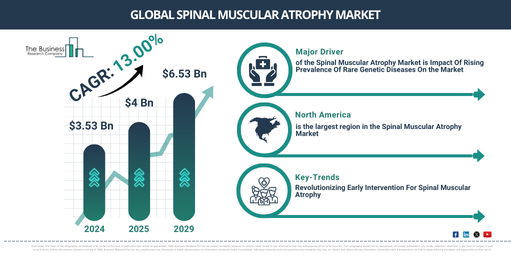
    The spinal muscular atrophy market size has seen swift expansion in recent years. It is anticipated to increase from $3.53 billion in 2024 to $4 billion in 2025, exhibiting a compound annual growth rate (CAGR) of 13.3%. This historical growth can be linked to several factors including increased diagnosis and early detection, the rising prevalence of rare genetic disease, advancements in healthcare infrastructure, support from government and regulatory bodies, and a growth in unmet healthcare needs.

    The spinal muscular atrophy market is anticipated to experience substantial growth over the upcoming years, with projections indicating it will reach $6.53 billion by 2029, achieving a compound annual growth rate (CAGR) of 13.0%. This expansion during the forecast period is primarily driven by heightened awareness and improved diagnosis, increased access to treatments, greater healthcare investments targeting rare diseases, a supportive regulatory landscape, and rising healthcare expenditure. Notable trends emerging in this period involve progress in oral therapies, the increasing adoption of gene therapy, technological improvements in drug delivery systems, the integration of artificial intelligence into SMA treatment development, and advancements in gene editing technologies.

    Unlock Your Free Sample Report for Exclusive Market Data:

    https://www.thebusinessresearchcompany.com/sample.aspx?id=20965&type=smp

    Which Drivers Are Supporting Growth Of The Spinal Muscular Atrophy Market?

    The increasing occurrence of rare genetic diseases is anticipated to boost the expansion of the spinal muscular atrophy market moving forward. These conditions are disorders caused by genetic mutations, affecting a small segment of the population and often leading to severe, chronic health problems. The growing prevalence of rare genetic diseases can be attributed to advancements in diagnostic technologies, heightened awareness, and improved access to genetic testing, which results in more cases being identified and reported. Spinal muscular atrophy (SMA) is a rare genetic disorder that exemplifies both the difficulties and opportunities involved in understanding inherited diseases. It underscores the importance of advancing research into genetic conditions. For instance, in July 2023, as per a report published by the Office for National Statistics, a UK-based government department, genetic testing of SMN1 has enabled precise epidemiological studies, revealing that SMA occurs in 1 of 10,000 to 20,000 live births and that more than 95% of affected patients are homozygous for SMN1 deletion. Therefore, the rising prevalence of rare genetic diseases will stimulate the growth of the spinal muscular atrophy market.

    What Are The Key Segments In The Spinal Muscular Atrophy Market?

    The spinal muscular atrophymarket covered in this report is segmented –

    1) By Type: Type 1 (Severe); Type 2 (Intermediate); Type 3 (Mild); Type 4 (Adult)

    2) By Age: Pediatric; Adults

    3) By Treatment: Drug Therapy; Gene Therapy

    4) By End User: Hospital pharmacy; Online pharmacy; Retail pharmacy

    Subsegments:

    1) By Type 1 (Severe): Infantile-Onset SMA; Severe Progressive SMA

    2) By Type 2 (Intermediate): Early-Onset SMA; Non-progressive SMA

    3) By Type 3 (Mild): Juvenile-Onset SMA; Mild Progressive SMA

    4) By Type 4 (Adult): Adult-Onset SMA; Late-Onset SMA

    How Are Trends Influencing The Spinal Muscular Atrophy Market?

    Major companies operating in the spinal muscular atrophy market are creating innovative products, such as dry syrup, to enhance medication adherence and ease of administration for pediatric and other patient groups who experience swallowing difficulties. Dry syrup is a powdered medication that requires reconstitution with water before use, frequently prescribed for children and individuals who struggle with swallowing tablets or capsules. For example, in September 2024, Chugai Pharmaceutical Co., Ltd., a pharmaceutical company based in Japan, announced that Japan’s Ministry of Health, Labour and Welfare had granted regulatory approval for an expanded indication of its drug Evrysdi (risdiplam). This approval permits its use in pre-symptomatic spinal muscular atrophy (SMA) and extends dosing to infants younger than two months old. This achievement is vital as it allows treatment to begin before symptoms emerge, potentially improving therapeutic outcomes for affected infants. The decision was supported by findings from the RAINBOWFISH study, which assessed Evrysdi’s safety and efficacy in infants diagnosed with SMA but not yet displaying symptoms. Results showed that treated infants reached developmental milestones, such as unsupported sitting and enhanced motor skills, by 12 months, emphasizing the drug’s potential to alter the disease’s progression when administered early.

    Who Are The Core Companies Influencing The Spinal Muscular Atrophy Market Landscape?

    Major companies operating in the spinal muscular atrophy market are Pfizer Inc., F. Hoffmann-La Roche Ltd, Bayer AG, Novartis AG, Biogen Inc., Chugai Pharmaceutical Co. Ltd., Genentech Inc., PTC Therapeutics Inc., Ionis Pharmaceuticals Inc., Biohaven Ltd., Catalyst Pharmaceuticals Inc., RegenXBio Inc., Cytokinetics Inc., AveXis Inc., Scholar Rock Inc., Genethon, CANbridge Pharmaceuticals Inc., NMD Pharma A/S, Hanugen Therapeutics Inc., Beijing Jinlan Gene Technology Co. Ltd.

    Download The Full Report For Exclusive Market Findings:

    https://www.thebusinessresearchcompany.com/report/spinal-muscular-atrophy-global-market-report

    Which Geographies Are Emerging As Strong Markets For The Spinal Muscular Atrophy Industry?

    North America was the largest region in the spinal muscular atrophy market in 2024. Asia-Pacific is expected to be the fastest-growing region in the forecast period. The regions covered in the spinal muscular atrophy market report are Asia-Pacific, Western Europe, Eastern Europe, North America, South America, Middle East, Africa.

    Request A Customized Version Of The Spinal Muscular Atrophy Market Report:

    https://www.thebusinessresearchcompany.com/customise?id=20965&type=smp

    Browse Through More Reports Similar to the Global Spinal Muscular Atrophy Market 2025, By The Business Research Company

    Optic Atrophy Management Global Market Report 2025

    https://www.thebusinessresearchcompany.com/report/optic-atrophy-management-global-market-report

    Spinal Surgery Devices And Equipment Global Market Report 2025

    https://www.thebusinessresearchcompany.com/report/spinal-surgery-devices-and-equipment-global-market-report

    Cerebrospinal Fluid Management Csf Devices And Equipment Global Market Report 2025

    https://www.thebusinessresearchcompany.com/report/cerebrospinal-fluid-management-csf-devices-and-equipment-global-market-report

    Get in touch with us:

    The Business Research Company: https://www.thebusinessresearchcompany.com/

    Americas +1 310-496-7795

    Asia +44 7882 955267 & +91 8897263534

    Europe +44 7882 955267

    Email us at info@tbrc.info

    Follow us on:

    LinkedIn: https://in.linkedin.com/company/the-business-research-company

    YouTube: https://www.youtube.com/channel/UC24_fI0rV8cR5DxlCpgmyFQ

    Global Market Model: https://www.thebusinessresearchcompany.com/global-market-model

  • Global Small Lymphocytic Lymphoma Market Trends and Growth Analysis 2025–2029

    Global Small Lymphocytic Lymphoma Market Trends and Growth Analysis 2025–2029

    Unlock Global Insights – Save 20% on Market Reports with Code ONLINE20

    By How Much Is The Small Lymphocytic Lymphoma Market Expected To Expand Between 2025 And 2029?

    The small lymphocytic lymphoma market size has demonstrated consistent growth in recent years. Forecasts show it will increase from $3.12 billion in 2024 to $3.23 billion in 2025, progressing at a compound annual growth rate (CAGR) of 3.5%. This growth observed in the historical period is attributable to enhanced awareness and early detection, successful regulatory approvals, the expansion of clinical trials, a general rise in awareness of SLL, and greater participation in clinical trials.

    The small lymphocytic lymphoma market is anticipated to show steady expansion in the upcoming years, with its valuation expected to reach $3.8 billion by 2029, growing at a compound annual growth rate (CAGR) of 4.1%. This projected growth can be attributed to an increased emphasis on immunotherapies, expanding research in targeted therapies, the broadening application of precision medicine, rising investments in cancer research, and an increasing number of clinical trials. Key trends for the forecast period include advancements in targeted therapies, innovations in immunotherapy, the development of combination therapies, the integration of digital health solutions, and progress in supportive care treatments.

    Unlock Your Free Sample Report for Exclusive Market Data:

    https://www.thebusinessresearchcompany.com/sample.aspx?id=20957&type=smp

    Which Drivers Are Shaping The Small Lymphocytic Lymphoma Industry’s Market Share?

    The small lymphocytic lymphoma market is anticipated to expand due to the increasing adoption of personalized medicine. This medical approach customizes treatments and healthcare choices by considering a person’s unique genetic makeup, environmental influences, and lifestyle habits. Progress in genomics, biotechnology, and data analytics fuels the expansion of personalized medicine, facilitating more accurate, potent, and tailored therapeutic interventions. Small lymphocytic lymphoma (SLL) supports the development of personalized medicine by offering valuable information on particular genetic mutations and biomarkers, which in turn enables the creation of targeted therapies and bespoke treatment plans. As an illustration, the Personalized Medicine Coalition, a US non-profit, reported in February 2024 that the FDA cleared 16 new personalized treatments for rare disease patients in 2023, representing a notable rise from the six approvals in 2022. Consequently, the expanding field of personalized medicine is set to stimulate the small lymphocytic lymphoma market’s growth.

    What Are The Leading Segments Analyzed In The Small Lymphocytic Lymphoma Market?

    The small lymphocytic lymphomamarket covered in this report is segmented –

    1) By Product: Capsules; Tablets; Injections; Other Products

    2) By Route of Administration: Oral; Parenteral; Other Route of Administrations

    3) By Treatment: Chemotherapy; Targeted Therapy; Stem Cell Transplant; Monoclonal antibody therapy; Other Treatments

    4) By Distribution Channel: Hospital Pharmacy; Retail Pharmacy; Online Pharmacy; Other Distribution Channels

    5) By End-Users: Hospitals; Specialty Clinics; Homecare; Other End Users

    Subsegments:

    1) By Capsules: Oral Chemotherapy Capsules; Targeted Therapy Capsules; Immunomodulatory Capsules

    2) By Tablets: Oral Chemotherapy Tablets; Targeted Therapy Tablets; Immunotherapy Tablets

    3) By Injections: Chemotherapy Injections; Monoclonal Antibody Injections; Immunotherapy Injections; Biologic Injections

    4) By Other Products: Topical Medications; Infusion Therapies; Biosimilars For SLL; Radiopharmaceuticals

    What Key Innovation Trends Are Fueling Advancements In The Small Lymphocytic Lymphoma Market?

    Leading companies in the small lymphocytic lymphoma market are actively developing innovative products, such as non-covalent BTK inhibitors, aiming to boost treatment effectiveness, overcome resistance to current therapies, and improve patient outcomes. Non-covalent BTK inhibitors are a category of medications that reversibly bind to the Bruton’s tyrosine kinase (BTK) enzyme, targeting B-cell malignancies while simultaneously reducing resistance and adverse reactions typically linked with covalent inhibitors. For example, in December 2023, Eli Lilly and Company, a US-based pharmaceutical entity, disclosed that the U.S. Food and Drug Administration (FDA) had approved Jaypirca (pirtobrutinib) for adults diagnosed with chronic lymphocytic leukemia or small lymphocytic lymphoma (CLL/SLL). This approval is especially notable for its specific focus on individuals who have already undergone at least two lines of therapy, including a Bruton’s Tyrosine Kinase (BTK) inhibitor and a BCL-2 inhibitor, thereby addressing a significant unmet need among heavily pre-treated patient groups. Its oral dosage form provides patient convenience while ensuring powerful, targeted therapeutic action.

    Which Major Industry Participants Are Leading The Small Lymphocytic Lymphoma Market Growth?

    Major companies operating in the small lymphocytic lymphoma market are Pfizer Inc., Johnson & Johnson, AbbVie Inc., Bayer AG, Sanofi S.A., Bristol-Myers Squibb Company, AstraZeneca PLC, Eli Lilly and Company, Gilead Sciences Inc., Amgen Inc., Regeneron Pharmaceuticals, Incyte Corporation, Exelixis Inc., Moffitt Cancer Center, Kite Pharma Inc., Spectrum Pharmaceuticals Inc., Aptose Biosciences Inc., Secura Bio Inc., Infinity Pharmaceuticals Inc., TG Therapeutics Inc.

    Download The Full Report For Exclusive Market Findings:

    https://www.thebusinessresearchcompany.com/report/small-lymphocytic-lymphoma-global-market-report

    Which Region Is Projected To Lead The Small Lymphocytic Lymphoma Market During The Forecast Period?

    North America was the largest region in the small lymphocytic lymphoma market in 2024. Asia-Pacific is expected to be the fastest-growing region in the forecast period. The regions covered in the small lymphocytic lymphoma market report are Asia-Pacific, Western Europe, Eastern Europe, North America, South America, Middle East, Africa.

    Request A Customized Version Of The Small Lymphocytic Lymphoma Market Report:

    https://www.thebusinessresearchcompany.com/customise?id=20957&type=smp

    Browse Through More Reports Similar to the Global Small Lymphocytic Lymphoma Market 2025, By The Business Research Company

    Non Hodgkin Lymphoma Nhl Global Market Report 2025

    https://www.thebusinessresearchcompany.com/report/non-hodgkin-lymphoma-nhl-global-market-report

    Follicular Lymphoma Treatment Global Market Report 2025

    https://www.thebusinessresearchcompany.com/report/follicular-lymphoma-treatment-global-market-report

    Diffuse Large B Cell Lymphoma Therapeutics Global Market Report 2025

    https://www.thebusinessresearchcompany.com/report/diffuse-large-b-cell-lymphoma-therapeutics-global-market-report

    Get in touch with us:

    The Business Research Company: https://www.thebusinessresearchcompany.com/

    Americas +1 310-496-7795

    Asia +44 7882 955267 & +91 8897263534

    Europe +44 7882 955267

    Email us at info@tbrc.info

    Follow us on:

    LinkedIn: https://in.linkedin.com/company/the-business-research-company

    YouTube: https://www.youtube.com/channel/UC24_fI0rV8cR5DxlCpgmyFQ

    Global Market Model: https://www.thebusinessresearchcompany.com/global-market-model

  • Sleep Apnea Diagnostic Systems Market Forecast: What to Expect by 2029

    Sleep Apnea Diagnostic Systems Market Forecast: What to Expect by 2029

    Unlock Global Insights – Save 20% on Market Reports with Code ONLINE20

    #What Is The Projected Market Size Of The Sleep Apnea Diagnostic Systems Market By 2029?

    The sleep apnea diagnostic systems market has experienced robust expansion in recent years. Projections indicate it will grow from $6.28 billion in 2024 to $6.78 billion in 2025, reflecting a compound annual growth rate (CAGR) of 8.0%. This growth observed in the historic period can be attributed to heightened awareness of sleep disorders, a rise in the prevalence of obesity and aging populations, increased adoption of home sleep testing devices, supportive healthcare policies, and the developing healthcare infrastructure in emerging economies.

    The sleep apnea diagnostic systems market is poised for significant expansion in the coming years. Its valuation is projected to reach $9.16 billion by 2029, exhibiting a compound annual growth rate (CAGR) of 7.8%. This anticipated growth during the forecast period stems from several factors, including the rising acceptance of home sleep testing devices, heightened public understanding of sleep disorders and their health consequences, supportive government and insurance frameworks, an increase in obesity and aging demographics, and the expanding reach of telemedicine services. Key developments expected over this period encompass the creation of portable diagnostic tools, the incorporation of cloud-based data management solutions, enhancements in polysomnography technology, the integration with smart home ecosystems, improvements in home sleep testing devices, and the application of AI to improve data analysis and diagnostic accuracy.

    Unlock Your Free Sample Report for Exclusive Market Data:

    https://www.thebusinessresearchcompany.com/sample.aspx?id=20956&type=smp

    What Are The Drivers Pushing New Developments In The Sleep Apnea Diagnostic Systems Market?

    The sleep apnea diagnostic systems market is expected to expand going forward, driven by the increasing prevalence of sedentary lifestyles. A sedentary lifestyle is defined as a way of living marked by minimal physical movement and prolonged periods spent sitting or lying down. This rise in inactive lifestyles stems from factors such as increased reliance on technology, urbanization, convenience-oriented living, and extended work hours. Sleep apnea diagnostic systems are crucial for addressing the health risks associated with sedentary habits by enabling early detection and monitoring of sleep disorders, thereby facilitating timely interventions to enhance sleep quality and mitigate related conditions like obesity, cardiovascular issues, and fatigue. For instance, in June 2024, according to the Australian Institute of Health and Welfare, an Australia-based government agency, in 2022, self-reported data from the ABS National Health Survey (NHS) indicated that 83% of young people aged 15–17 and nearly 4 in 10 (37%) adults aged 18–64 were not sufficiently physically active to meet recommended levels. Furthermore, in December 2022, according to the Office for National Statistics, a UK-based Statistics Authority, between April 2021 and March 2022, 15.8% of individuals aged 50 to 54, 24.1% of those aged 55 to 59, 43.4% of individuals aged 60 to 64, and 89.3% of those aged 65 and older were classified as inactive. Therefore, the increase in sedentary lifestyles is driving the sleep apnea diagnostic systems market.

    What Are The Segment Types Shaping The Sleep Apnea Diagnostic Systems Market?

    The sleep apnea diagnostic systemsmarket covered in this report is segmented –

    1) By Product: Polysomnography Devices; Nasal Flow Sensors; Peripheral Capillary Oxygen Saturation; Actigraphy Monitoring Devices

    2) By Technology: Non-Invasive Technology; Invasive Technology; Wearable Technology; Diagnostic Software

    3) By End Users: Home Care Settings; Hospitals; Sleep Centers And Clinics

    Subsegments:

    1) By Polysomnography Devices: Full-Polysomnography Systems; Portable Polysomnography Devices; Wireless Polysomnography Devices

    2) By Nasal Flow Sensors: Single-Channel Nasal Flow Sensors; Multi-Channel Nasal Flow Sensors; Wireless Nasal Flow Sensors

    3) By Peripheral Capillary Oxygen Saturation (SpO2) Monitors: Finger Pulse Oximeters; Wrist Pulse Oximeters; Fingertip Pulse Oximeters

    4) By Actigraphy Monitoring Devices: Wrist-Worn Actigraphs; Chest-Worn Actigraphs; Smartwatch-Based Actigraphy Systems

    Which Ongoing Trends Are Expected To Shape The Sleep Apnea Diagnostic Systems Market Outlook?

    Major companies in the sleep apnea diagnostic systems market are concentrating on creating advanced technologies, such as pneumatic sensors, to enhance the precision, effectiveness, and user comfort of sleep apnea detection and monitoring. This effort ultimately aims to improve patient care and expand their market presence. Pneumatic sensors function by observing alterations in airflow and pressure within the respiratory system, enabling the identification of irregular breathing patterns crucial for sleep apnea diagnosis. For instance, in September 2024, Withings Inc., a consumer electronics firm based in France, secured approval from the U.S. Food and Drug Administration for its Sleep Rx Mat. This innovative device is a contactless sleep apnea diagnostic tool designed to monitor sleep patterns, detect apnea occurrences, and offer practical information to improve sleep health. The Sleep Rx Mat incorporates a pneumatic sensor to continuously track respiratory rate, body movement, and heart rate. Designed as an inconspicuous mat, it requires a simple one-time installation and can be placed conveniently under any mattress, eliminating the need for uncomfortable masks or bulky equipment. Once operational, it provides detailed analyses of sleep patterns, respiration, and cardiovascular activity throughout the entire night.

    Who Are The Prominent Global Companies Shaping The Sleep Apnea Diagnostic Systems Market?

    Major companies operating in the sleep apnea diagnostic systems market are Koninklijke Philips N.V., GE Healthcare Technologies Inc., ResMed Inc., Teleflex Incorporated, Nihon Kohden Corporation, Fisher And Paykel Healthcare, DeVilbiss Healthcare LLC, Natus Medical Incorporated, Itamar Medical Ltd., BMC Medical Co. Ltd., Compumedics Ltd., Advanced Brain Monitoring Inc., Cleveland Medical Devices Inc., NeuroVirtual, FusionSleep, Lowenstein Medical, Braebon Medical Corporation, Acurable, SOMNOmedics GmbH, Nox Medical

    Download The Full Report For Exclusive Market Findings:

    https://www.thebusinessresearchcompany.com/report/sleep-apnea-diagnostic-systems-global-market-report

    What Are The Key Regional Factors Influencing The Sleep Apnea Diagnostic Systems Market Growth?

    North America was the largest region in the sleep apnea diagnostic systems market in 2024. Asia-Pacific is expected to be the fastest-growing region in the forecast period. The regions covered in the sleep apnea diagnostic systems market report are Asia-Pacific, Western Europe, Eastern Europe, North America, South America, Middle East, Africa.

    Request A Customized Version Of The Sleep Apnea Diagnostic Systems Market Report:

    https://www.thebusinessresearchcompany.com/customise?id=20956&type=smp

    Browse Through More Reports Similar to the Global Sleep Apnea Diagnostic Systems Market 2025, By The Business Research Company

    Sleeping Aids Global Market Report 2025

    https://www.thebusinessresearchcompany.com/report/sleeping-aids-global-market-report

    Sleep Apnea Devices Global Market Report 2025

    https://www.thebusinessresearchcompany.com/report/sleep-apnea-devices-global-market-report

    Sleep Tech Devices Global Market Report 2025

    https://www.thebusinessresearchcompany.com/report/sleep-tech-devices-global-market-report

    Get in touch with us:

    The Business Research Company: https://www.thebusinessresearchcompany.com/

    Americas +1 310-496-7795

    Asia +44 7882 955267 & +91 8897263534

    Europe +44 7882 955267

    Email us at info@tbrc.info

    Follow us on:

    LinkedIn: https://in.linkedin.com/company/the-business-research-company

    YouTube: https://www.youtube.com/channel/UC24_fI0rV8cR5DxlCpgmyFQ

    Global Market Model: https://www.thebusinessresearchcompany.com/global-market-model

  • Single Tooth Implants And Dental Bridges Industry Insights: Market Forecast to 2029

    Single Tooth Implants And Dental Bridges Industry Insights: Market Forecast to 2029

    Unlock Global Insights – Save 20% on Market Reports with Code ONLINE20

    How Much Was The Single Tooth Implants And Dental Bridges Market Worth In 2025, And What Is Its Anticipated Value By 2029?

    The market size for single tooth implants and dental bridges has shown substantial growth in recent years. Projections indicate it will increase from $6.22 billion in 2024 to $6.76 billion in 2025, reflecting a compound annual growth rate (CAGR) of 8.7%. This historic expansion can be attributed to several factors such as advancements in implant technology, an expanding geriatric population, improved dental insurance coverage, enhancements in material durability, and a heightened awareness of dental aesthetics.

    The single tooth implants and dental bridges market is projected to experience robust expansion over the coming years, anticipated to reach $9.44 billion by 2029, exhibiting a compound annual growth rate (CAGR) of 8.7%. Key drivers for this projected growth include progress in 3D printing technology, a surging demand for minimally invasive treatments, heightened awareness of oral health, an expanding elderly demographic, and an improving dental healthcare infrastructure. Significant trends observed involve the incorporation of artificial intelligence into treatment planning, an increase in personalized dental solutions, a rising preference for metal-free implants, continuous improvements in implant surface technology, and a move towards more accessible dental care alternatives.

    Unlock Your Free Sample Report for Exclusive Market Data:

    https://www.thebusinessresearchcompany.com/sample.aspx?id=20955&type=smp

    What Are The Emerging Market Drivers Creating New Opportunities In The Single Tooth Implants And Dental Bridges Industry?

    The rising occurrence of dental disorders is anticipated to propel the growth of the single tooth implants and dental bridges market going forward. Dental disorders encompass a variety of conditions affecting the teeth, gums, jaw, or oral cavity, thereby impairing oral health and function. These dental issues are on the rise due to factors such as increased consumption of sugary diets, poor oral hygiene, aging populations, and the growing prevalence of lifestyle-related diseases like diabetes. Single tooth implants and dental bridges offer effective solutions for patients with dental disorders by restoring missing or damaged teeth, improving oral functionality, enhancing aesthetic appeal, and boosting overall confidence, while also preventing complications like shifting teeth and jawbone deterioration. For instance, in May 2024, the National Board of Health and Welfare, a Sweden-based government agency, reported that approximately 3.9 million individuals aged 24 or older sought dental care in Sweden in 2023, marking an increase from 2022. Therefore, the increasing prevalence of dental disorders is driving the growth of the single tooth implants and dental bridges market.

    What Are The Different Segment Classifications Within The Single Tooth Implants And Dental Bridges Market?

    The single tooth implants and dental bridgesmarket covered in this report is segmented –

    1) By Type: 3-Unit Bridges; 4-Unit Bridges; Titanium Bridges; Silicone Bridges; Maryland Bridges; Cantilever Bridges; Partial Bridges

    2) By Material: Porcelain-Fused-To-Metal (PFM); All Ceramics; Metal Alloys

    3) By Application: Hospitals; Density; Ambulatory Surgical Centers; Organ Transplant Centers; Orthopedic And Traumas Centers

    Subsegments:

    1) By 3-Unit Bridges: Fixed 3-Unit Bridges; Resin-Bonded 3-Unit Bridges

    2) By 4-Unit Bridges: Fixed 4-Unit Bridges; Cantilever 4-Unit Bridges

    3) By Titanium Bridges: Titanium-Alloy Bridges; Titanium-Based Fixed Bridges

    4) By Silicone Bridges: Flexible Silicone Bridges; Temporary Silicone Bridges

    5) By Maryland Bridges: Resin-Bonded Maryland Bridges; Metallic Framework Maryland Bridges

    6) By Cantilever Bridges: Single Cantilever Bridges; Multiple Cantilever Bridges

    7) By Partial Bridges: Partial Fixed Bridges; Removable Partial Bridges

    Which Competitive Trends Are Defining The Single Tooth Implants And Dental Bridges Market Structure?

    Leading companies within the single tooth implants and dental bridges market are creating advanced products, including tapered implant technology, to optimize osseointegration, strengthen stability, and decrease patient recovery durations. This technology describes a dental implant design featuring a conical or tapering form, which replicates the natural configuration of a tooth root. It boosts initial stability by providing a firm integration into the jawbone, especially beneficial in regions where bone density or volume is restricted. As an illustration, ZimVie Inc., a US-based producer of dental implants, unveiled its T3 PRO Tapered Implant and Encode System in June 2022, incorporating this tapered implant approach. The tapered contour permits simpler placement in diverse bone structures and improves primary stability, particularly effective in softer bone. Furthermore, the implant features a unique surface treatment that encourages osseointegration, contributing to more rapid healing and better long-term results.

    Which Key Players Are Driving Competition In The Single Tooth Implants And Dental Bridges Market?

    Major companies operating in the single tooth implants and dental bridges market are 3M Company, Danaher Corporation, Henry Schein Inc., Zimmer Biomet Holdings Inc., Straumann Group, Envista Holdings Corporation, Nobel BioCare Services AG, Zim Vie Inc., Osstem Implant Co. Ltd., Bio Horizons IPH Inc., Keystone Dental Inc., Zest Dental Solutions, Neoss Limited, Thommen Medical AG, Southern Implants (Pty) Ltd., Meagan Implant Co. Ltd., AVINENT Implant System S.L., CAMLOG Biotechnologies AG, Dentsply Sirona, TBR Dental

    Download The Full Report For Exclusive Market Findings:

    https://www.thebusinessresearchcompany.com/report/single-tooth-implants-and-dental-bridges-global-market-report

    How Do Regional Market Performances Compare Within The Single Tooth Implants And Dental Bridges Industry?

    North America was the largest region in the single tooth implants and dental bridges market in 2024. Asia-Pacific is expected to be the fastest-growing region in the forecast period. The regions covered in the single tooth implants and dental bridges market report are Asia-Pacific, Western Europe, Eastern Europe, North America, South America, Middle East, Africa.

    Request A Customized Version Of The Single Tooth Implants And Dental Bridges Market Report:

    https://www.thebusinessresearchcompany.com/customise?id=20955&type=smp

    Browse Through More Reports Similar to the Global Single Tooth Implants And Dental Bridges Market 2025, By The Business Research Company

    Pediatric Dental Crown Global Market Report 2025

    https://www.thebusinessresearchcompany.com/report/pediatric-dental-crown-global-market-report

    Dental Consumables Global Market Report 2025

    https://www.thebusinessresearchcompany.com/report/dental-consumables-global-market-report

    Dental Flap Surgery Global Market Report 2025

    https://www.thebusinessresearchcompany.com/report/dental-flap-surgery-global-market-report

    Get in touch with us:

    The Business Research Company: https://www.thebusinessresearchcompany.com/

    Americas +1 310-496-7795

    Asia +44 7882 955267 & +91 8897263534

    Europe +44 7882 955267

    Email us at info@tbrc.info

    Follow us on:

    LinkedIn: https://in.linkedin.com/company/the-business-research-company

    YouTube: https://www.youtube.com/channel/UC24_fI0rV8cR5DxlCpgmyFQ

    Global Market Model: https://www.thebusinessresearchcompany.com/global-market-model
  • Robotic Radiotherapy Market Size and Growth Forecast for Businesses 2025–2029

    Robotic Radiotherapy Market Size and Growth Forecast for Businesses 2025–2029

    Unlock Global Insights – Save 20% on Market Reports with Code ONLINE20

    What Is The Future Market Size Estimation For The Robotic Radiotherapy Market Covering 2025–2034?

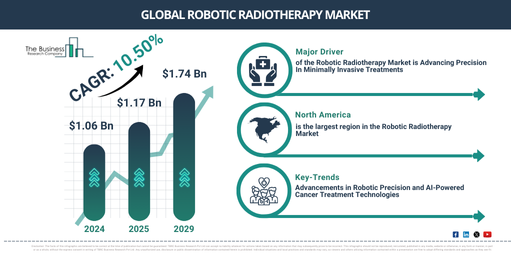
    The robotic radiotherapy market size has experienced rapid growth in recent years. It is projected to expand from $1.06 billion in 2024 to $1.17 billion in 2025, achieving a compound annual growth rate (CAGR) of 10.1%. The market’s historical growth can be attributed to the improvement in robotic system accuracy, integration of AI in treatment planning, increased healthcare accessibility, a rising focus on patient-specific treatments, and growth in private healthcare sector investments.

    The robotic radiotherapy market is projected to experience substantial growth over the next few years. It is anticipated to attain a size of $1.74 billion by 2029, growing at a compound annual growth rate (CAGR) of 10.5%. This expansion is primarily propelled by an increasing global aging population, advancements in machine learning for treatment planning, a growing preference for outpatient treatments, the broader adoption of robotic-assisted surgical systems, and enhanced collaborations between healthcare providers and technology companies. Key trends in this market include innovations in motion management systems, the emergence of cloud-based radiotherapy platforms, the integration of wearable technology for patient monitoring, the development of smaller and more efficient robotic systems, and a rise in the application of stereotactic radiosurgery techniques.

    Unlock Your Free Sample Report for Exclusive Market Data:

    https://www.thebusinessresearchcompany.com/sample.aspx?id=20946&type=smp

    Which Drivers Are Impacting The Robotic Radiotherapy Market?

    The increasing requirement for minimally invasive procedures is projected to fuel the expansion of the robotic radiotherapy market in the future. These procedures are propelled by progress in medical technology, a rising patient desire for quicker recovery and fewer complications, and wider acceptance among healthcare providers due to their cost-efficiency and better clinical results. Robotic radiotherapy further improves the accuracy and efficacy of minimally invasive interventions by precisely targeting radiation doses to tumors, thereby lessening harm to healthy surrounding tissues. This consequently lowers complications, shortens recovery periods, and aligns with the increasing need for advanced, patient-focused treatment choices. As an illustration, data from June 2024, provided by the American Society of Plastic Surgeons, a US-based medication company, indicated that minimally invasive procedures saw a 7% increase in 2023 relative to the preceding year. Consequently, the heightened demand for minimally invasive procedures is stimulating the growth of the robotic radiotherapy market.

    What Are The Primary Types Of Segments Analyzed In The Robotic Radiotherapy Market?

    The robotic radiotherapymarket covered in this report is segmented –

    1) By Product: Radiotherapy Systems; Softwares; 3D Cameras (Surface Guided)

    2) By Technology: Linear Accelerators; Conventional Linear Accelerators; Magnetic Resonance Imaging (MRI) – Linear Accelerators; Stereotactic Radiation Therapy Systems; Cyberknife; Gamma Knife; Particle Therapy; Proton Beam Therapy

    3) By Application: Prostate Cancer; Breast Cancer; Lung Cancer; Head & Neck Cancer; Colorectal Cancer

    4) By End User: Hospitals; Independent Radiotherapy Centers

    Subsegments:

    1) By Radiotherapy Systems: Robotic Linear Accelerators; Proton Therapy Systems; Stereotactic Radiosurgery Systems; Image-Guided Radiotherapy (IGRT) Systems; Intensity-Modulated Radiotherapy (IMRT) Systems

    2) By Softwares: Treatment Planning Software; Radiation Therapy Management Software; Robotic Radiotherapy Control Software; Integration Software For Robotic Systems

    3) By 3D Cameras (Surface Guided): 3D Optical Surface Imaging Systems; 3D Camera Systems For Patient Positioning; 3D Motion Tracking Cameras For Radiotherapy; Real-Time 3D Surface Imaging For Tumor Localization

    What Are The Latest Industry Trends Transforming The Robotic Radiotherapy Market?

    Leading companies within the robotic radiotherapy market are channeling their efforts into developing innovative products that leverage advanced technologies, such as artificial intelligence (AI) precision, to execute tasks with remarkable accuracy, steadfast consistency, and minimal errors. This robotic precision, achieved through the use of sensors, actuators, and algorithms, effectively enhances accuracy, diminishes human error, improves consistency, minimizes tissue damage, and accelerates patient recovery. For example, in January 2024, Tampa General Hospital, a US-based cancer institute, unveiled the CyberKnife S7, an AI-powered radiosurgery tool. This technology represents a notable advancement in cancer care, offering a non-invasive and precise treatment solution for patients with various conditions, including benign and malignant tumors, alongside neurological disorders. The CyberKnife S7 allows for targeted radiation delivery, which reduces damage to surrounding healthy tissues and presents a less invasive option than traditional surgical methods.

    Who Are The Top Performing Companies In The Robotic Radiotherapy Market In Recent Years?

    Major companies operating in the robotic radiotherapy market are Panasonic Healthcare, Siemens Healthineers AG, Fujifilm Medical Systems, GE Healthcare Technologies Inc., Varian Medical Systems, Kuka AG, Elekta AB, Accuray Incorporated, Brainlab AG, Mevion Medical Systems Inc., ViewRay Technologies Inc., RaySearch Laboratories AB, VisionRT Ltd., MIM Software Inc., CIVCO Radiotherapy, ProNova Solutions, IntraOp Medical Corporation, IBA Group, Xcision Medical Systems LLC, C-RAD AB

    Download The Full Report For Exclusive Market Findings:

    https://www.thebusinessresearchcompany.com/report/robotic-radiotherapy-global-market-report

    Which Region Currently Holds The Largest Share Of The Robotic Radiotherapy Market?

    North America was the largest region in the robotic radiotherapy market in 2024. Asia-Pacific is expected to be the fastest-growing region in the forecast period. The regions covered in the robotic radiotherapy market report are Asia-Pacific, Western Europe, Eastern Europe, North America, South America, Middle East, Africa.

    Request A Customized Version Of The Robotic Radiotherapy Market Report:

    https://www.thebusinessresearchcompany.com/customise?id=20946&type=smp

    Browse Through More Reports Similar to the Global Robotic Radiotherapy Market 2025, By The Business Research Company

    Radiotherapy Devices Global Market Report 2025

    https://www.thebusinessresearchcompany.com/report/radiotherapy-devices-global-market-report

    Radiosurgery And Radiotherapy Robotics Global Market Report 2025

    https://www.thebusinessresearchcompany.com/report/radiosurgery-and-radiotherapy-robotics-global-market-report

    Robotic Surgery Devices Global Market Report 2025

    https://www.thebusinessresearchcompany.com/report/robotic-surgery-devices-global-market-report

    Get in touch with us:

    The Business Research Company: https://www.thebusinessresearchcompany.com/

    Americas +1 310-496-7795

    Asia +44 7882 955267 & +91 8897263534

    Europe +44 7882 955267

    Email us at info@tbrc.info

    Follow us on:

    LinkedIn: https://in.linkedin.com/company/the-business-research-company

    YouTube: https://www.youtube.com/channel/UC24_fI0rV8cR5DxlCpgmyFQ

    Global Market Model: https://www.thebusinessresearchcompany.com/global-market-model
  • Global Robotic Dentistry Market Overview: Trends Shaping Growth to 2029

    Global Robotic Dentistry Market Overview: Trends Shaping Growth to 2029

    Unlock Global Insights – Save 20% on Market Reports with Code ONLINE20

    What Is The Expected Total Market Size Of The Robotic Dentistry Industry By The Forecast Year 2029?

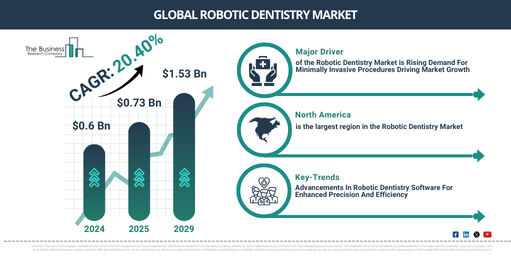
    The robotic dentistry market has experienced substantial expansion in its size over recent years. This market is projected to expand from $0.6 billion in 2024 to $0.73 billion in 2025, exhibiting a compound annual growth rate (CAGR) of 21.4%. Historically, this growth has been driven by the integration of robotics into pediatric dental care, enhanced capabilities for complex oral surgeries, a heightened emphasis on patient safety, the ongoing digitalization within dental practices, and a significant demand for time saving dental solutions.

    The robotic dentistry market size is projected to undergo significant expansion over the next few years. It is expected to ascend to $1.53 billion by 2029, achieving a compound annual growth rate (CAGR) of 20.4%. This anticipated growth during the forecast period is largely due to the expansion of the tele-industry, the increasing application of robots in orthodontics, the rise in dental tourism, greater funding for healthcare innovation, and the growing demand for patient-specific dental solutions. Prominent trends throughout this period involve the creation of portable equipment, the development of compact robotic dental devices, progress in haptic technology, the incorporation of augmented reality (AR) for training, and enhancements in gadgets for improved precision.

    Unlock Your Free Sample Report for Exclusive Market Data:

    https://www.thebusinessresearchcompany.com/sample.aspx?id=20945&type=smp

    Which Industry Drivers Are Expected To Accelerate The Robotic Dentistry Market From 2025 To 2029?

    The increasing demand for minimally invasive procedures is projected to drive growth in the robotic dentistry market. A minimally invasive procedure is a medical method utilizing tiny or no incisions, which results in reduced tissue trauma, faster recovery, and lower risks compared to traditional surgical techniques. This demand for minimally invasive procedures is fueled by factors such as quicker recovery times, diminished risk of complications, and enhanced patient comfort. Robotic dentistry systems elevate dental procedures by delivering improved precision, enabling smaller incisions, minimizing tissue damage, reducing overall risks, and leading to superior outcomes. For example, in March 2023, the British Association of Aesthetic Plastic Surgeons, a UK-based surgical organization, reported that 31,057 cosmetic surgeries were performed in 2022 in the UK, representing a notable 102% increase from 2022. Consequently, the rising preference for minimally invasive procedures is a significant force behind the expansion of the robotic dentistry market.

    Which Key Segments Fueling The Robotic Dentistry Market?

    The robotic dentistrymarket covered in this report is segmented –

    1) By Products And Services: Standalone Robots; Robot-Assisted System; Services

    2) By Applications: Implantology; Endodontics; Other Applications

    3) By End-Users: Dental Hospitals And Clinics; Dental Academics; Other End-Users

    Subsegments:

    1) By Standalone Robots: Robotic Surgery Systems; Robotic Tooth Restoration Systems; Robotic Implant Placement Systems; Robotic Orthodontic Systems

    2) By Robot-Assisted Systems: Image-Guided Robotic Systems; Dental Navigation Systems; Robotic-Assisted Drilling And Cutting Systems; Robotic-Assisted Endodontic Systems; Robotic-Assisted Tooth Extraction Systems

    3) By Services: Installation Services; Maintenance And Repair Services; Training And Support Services; Consulting Services For Robotic Integration; Software Upgrades And Customization Services

    What Trends Are Redefining The Robotic Dentistry Market Dynamics?

    Major companies operating in the robotic dentistry market are concentrating on creating advanced dental robotic software suites to deliver more personalized care to patients. Dental robotic software suites represent sophisticated platforms that refine robotic systems for dental procedures, providing features that enable precise, efficient, and minimally invasive treatments for better patient outcomes. For instance, in August 2023, Neocis, a US-based medical equipment manufacturer, launched its YomiPlan Go Workflow for commercial deployment. This advanced software suite empowers clinicians to execute implant surgeries without the requirement of preoperative scans, considerably enhancing procedural speed and precision. Leveraging the Yomi robotic system, surgeons can directly identify implant location and angulation during surgery, smoothly combining freehand techniques with robotic guidance to achieve greater accuracy.

    Which Leading Companies Dominate The Robotic Dentistry Market Share?

    Major companies operating in the robotic dentistry market are Planmeca Oy, Dental Monitoring, Neocis, Overjet, Videa Health, Smilo.ai, Dentulu, Diagnocat, X-Nav Technologies, Image Navigation Ltd., Perceptive. Io, Lupin Dental, Dentem, Denti.AI, Manchester Imaging, YakeBot (Beijing) Technology Co. Ltd., Pearl Dental AI, Dentroid, VELMENI, CoTreat, AI Dent

    Download The Full Report For Exclusive Market Findings:

    https://www.thebusinessresearchcompany.com/report/robotic-dentistry-global-market-report

    What Regional Growth Trends Are Shaping The Robotic Dentistry Market Outlook?

    North America was the largest region in the robotic dentistry market in 2024. Asia-Pacific is expected to be the fastest-growing region in the forecast period. The regions covered in the robotic dentistry market report are Asia-Pacific, Western Europe, Eastern Europe, North America, South America, Middle East, Africa.

    Request A Customized Version Of The Robotic Dentistry Market Report:

    https://www.thebusinessresearchcompany.com/customise?id=20945&type=smp

    Browse Through More Reports Similar to the Global Robotic Dentistry Market 2025, By The Business Research Company

    Dentistry Medical Lasers Global Market Report 2025

    https://www.thebusinessresearchcompany.com/report/dentistry-medical-lasers-global-market-report

    Teledentistry Global Market Report 2025

    https://www.thebusinessresearchcompany.com/report/teledentistry-global-market-report

    Restorative Dentistry Global Market Report 2025

    https://www.thebusinessresearchcompany.com/report/restorative-dentistry-global-market-report

    Get in touch with us:

    The Business Research Company: https://www.thebusinessresearchcompany.com/

    Americas +1 310-496-7795

    Asia +44 7882 955267 & +91 8897263534

    Europe +44 7882 955267

    Email us at info@tbrc.info

    Follow us on:

    LinkedIn: https://in.linkedin.com/company/the-business-research-company

    YouTube: https://www.youtube.com/channel/UC24_fI0rV8cR5DxlCpgmyFQ

    Global Market Model: https://www.thebusinessresearchcompany.com/global-market-model
  • Hollow Fiber Membranes Industry Forecast to Hit $19.21 Billion by 2029 With a Strong 9.6% CAGR

    Hollow Fiber Membranes Industry Forecast to Hit $19.21 Billion by 2029 With a Strong 9.6% CAGR

    Unlock Global Insights – Save 20% on Market Reports with Code ONLINE20

    What Are The Growth Projections For The Hollow Fiber Membranes Market Size During 2025–2029?

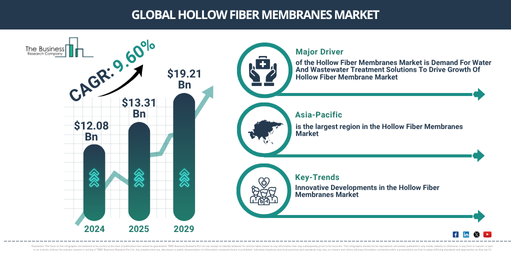
    The market for hollow fiber membranes has seen rapid growth in recent years. It is projected to expand from $12.08 billion in 2024 to $13.31 billion in 2025, achieving a compound annual growth rate (CAGR) of 10.1%. Historically, this market expansion has been driven by increased demand for clean water, rapid industrial growth, the expanding biotechnology sector, wider application in water and wastewater treatment, and an increase in population.

    The hollow fiber membranes market is projected to experience substantial expansion in the coming years. This market is anticipated to reach $19.21 billion by 2029, exhibiting a compound annual growth rate (CAGR) of 9.6%. Key factors driving this growth during the forecast period include a rise in agricultural production, escalating demand within the food and beverage sector, worsening global water scarcity, a higher incidence of diseases, and the expansion of biotechnology and chemical industries. Significant trends identified for the forecast period encompass technological breakthroughs, progress in medicine, improvements in membrane materials, the incorporation of smart technologies, and an emphasis on energy-efficient solutions.

    Unlock Your Free Sample Report for Exclusive Market Data:

    https://www.thebusinessresearchcompany.com/sample.aspx?id=16081&type=smp

    What Are The Key Drivers Of Growth In The Hollow Fiber Membranes Market?

    The future expansion of the hollow fiber membrane market is anticipated to be driven by the need for water and wastewater treatment solutions. These solutions encompass technologies, systems, and services engineered for the efficient management and treatment of water and wastewater, guaranteeing water quality and safety across industrial, commercial, and municipal sectors. Key factors influencing water and wastewater treatment solutions include industrial growth, escalating worldwide water scarcity, and a growing understanding of health risks associated with water contaminants. Hollow fiber membranes play a role in water and wastewater treatment solutions by enhancing the purification of freshwater (water treatment) and the cleansing of used water (wastewater treatment), thereby eliminating pollutants and ensuring compliance with health and safety criteria for drinking, industrial applications, and environmental release. For example, data from March 2023, released by the Central Statistics Office, an Ireland-based government agency, showed that domestic wastewater treatment systems registered in Ireland rose by 1.2% in 2022 to 487,423, up from 481,694 in 2021. Consequently, the impetus for the hollow fiber membrane market’s growth stems from the continuous demand for water and wastewater treatment solutions.

    Which Key Segments Fueling The Hollow Fiber Membranes Market?

    The hollow fiber membranesmarket covered in this report is segmented –

    1) By Filtration Type: Microfiltration; Ultrafiltration; Reverse Osmosis

    2) By Material: Polymer; Ceramic

    3) By End-User: Water And Wastewater Treatment; Food And Beverages; Biotechnology; Pharmaceuticals And Chemicals; Other End-Users

    Subsegments:

    1) By Microfiltration: Low-Pressure Microfiltration; High-Pressure Microfiltration; Cross-Flow Microfiltration; Dead-End Microfiltration

    2) By Ultrafiltration: Low-Pressure Ultrafiltration; High-Pressure Ultrafiltration; Cross-Flow Ultrafiltration; Dead-End Ultrafiltration

    3) By Reverse Osmosis: Low-Pressure Reverse Osmosis; High-Pressure Reverse Osmosis; Seawater Reverse Osmosis; Brackish Water Reverse Osmosis

    What Are The Latest Industry Trends Transforming The Hollow Fiber Membranes Market?

    Leading companies in the hollow fiber membranes market are engaged in creating innovative products like membrane systems that improve filtration efficiency and offer solutions for water treatment. A membrane system essentially represents a filtration or separation technology that utilizes a semi-permeable membrane to differentiate substances in a liquid or gas mixture based on their size, charge, or other characteristics. For example, in April 2024, Asahi Kasei Corporation, a chemical company based in Japan, introduced Microza, a hollow-fiber membrane filtration system. This particular hollow-fiber membrane system is utilized to produce water for injection with reduced energy consumption and enabling less CO2 emission. The membrane filtration system finds utility across various sectors, including pharmaceuticals, biotechnology, food processing, environmental protection, and water treatment.

    Which Global Market Leaders Are Shaping The Future Of The Hollow Fiber Membranes Sector?

    Major companies operating in the hollow fiber membranes market are Veolia, LG Chem, 3M Company, Mitsubishi Chemical Group Corporation, Sumitomo Electric Industries Ltd., Asahi Kasei Corporation, Toray Industries Inc., Evonik Industries AG, Parker Hannifin Corporation, DuPont de Nemours Inc., Kuraray Co. Ltd., GEA Group, Sartorius AG, Pentair, UBE Corporation, Toyobo Co. Ltd., Pall Corporation, Hydranautics, Applied Membranes Inc., Koch Separation Solutions, Synder Filtration Inc., SpinTek, Memstar Corporation, JIUWU HI-TECH Membrane Technology, Daicen Corporation

    Download The Full Report For Exclusive Market Findings:

    https://www.thebusinessresearchcompany.com/report/hollow-fiber-membranes-global-market-report

    Which Region Currently Holds The Largest Share Of The Hollow Fiber Membranes Market?

    Asia-Pacific was the largest region in the hollow fiber membranes market in 2024. Europe is expected to be the fastest-growing region in the forecast period. The regions covered in the hollow fiber membranes market report are Asia-Pacific, Western Europe, Eastern Europe, North America, South America, Middle East, Africa.

    Request A Customized Version Of The Hollow Fiber Membranes Market Report:

    https://www.thebusinessresearchcompany.com/customise?id=16081&type=smp

    Browse Through More Reports Similar to the Global Hollow Fiber Membranes Market 2025, By The Business Research Company

    Fiber Lasers Global Market Report 2025

    https://www.thebusinessresearchcompany.com/report/fiber-lasers-global-market-report

    Synthetic Fibers Global Market Report 2025

    https://www.thebusinessresearchcompany.com/report/synthetic-fibers-global-market-report

    Multimode Fiber Optic Cable Global Market Report 2025

    https://www.thebusinessresearchcompany.com/report/multimode-fiber-optic-cable-global-market-report

    Get in touch with us:

    The Business Research Company: https://www.thebusinessresearchcompany.com/

    Americas +1 310-496-7795

    Asia +44 7882 955267 & +91 8897263534

    Europe +44 7882 955267

    Email us at info@tbrc.info

    Follow us on:

    LinkedIn: https://in.linkedin.com/company/the-business-research-company

    YouTube: https://www.youtube.com/channel/UC24_fI0rV8cR5DxlCpgmyFQ

    Global Market Model: https://www.thebusinessresearchcompany.com/global-market-model

  • Global Human Chorionic Gonadotropin Industry Trends: Where the Market Is Headed by 2029

    Global Human Chorionic Gonadotropin Industry Trends: Where the Market Is Headed by 2029

    Unlock Global Insights – Save 20% on Market Reports with Code ONLINE20

    How Is The Human Chorionic Gonadotropin Market Size Likely To Evolve From 2025 Through 2034?

    The human chorionic gonadotropin market has experienced substantial expansion recently. Projections indicate a rise from $0.95 billion in 2024 to $1.02 billion in 2025, demonstrating a compound annual growth rate (CAGR) of 8.4%. This historical growth is attributable to several factors, including the increasing incidence of hypogonadism among the elderly, enhanced understanding of HCG among both medical professionals and individuals, the growing appeal of fertility tourism, the expanding elderly demographic, and better access to affordable and improved healthcare services.

    The human chorionic gonadotropin market is anticipated to experience robust expansion over the coming years. Its valuation is projected to reach “$1.41 billion by 2029, exhibiting a compound annual growth rate (CAGR) of 8.2%. This projected growth during the forecast period stems from factors such as the increasing incidence of infertility, the surging prevalence of polycystic ovary syndrome, the rise in female infertility, and the growing application of HCG in veterinary medicine. Key trends expected within this period encompass advancements in pregnancy detection, the development of innovative drug formulations, greater technological integration, a strong focus on research and development, and continuous product innovation.

    Unlock Your Free Sample Report for Exclusive Market Data:

    https://www.thebusinessresearchcompany.com/sample.aspx?id=18638&type=smp

    Which Factors And Drivers Are Influencing The Human Chorionic Gonadotropin Market In 2025?

    The human chorionic gonadotropin market is anticipated to expand, propelled by a rising prevalence of infertility. This condition is defined as the failure to achieve pregnancy following a minimum of one year of regular, unprotected sexual activity. The proportion of individuals and couples facing challenges in conception is on the rise, influenced by various factors including later parenthood, evolving lifestyles, exposure to environmental elements, and underlying health issues. Human chorionic gonadotropin (hCG) plays a crucial role in infertility therapies, where it promotes ovulation in females and aids testosterone synthesis in males, thereby assisting in egg release and enhancing reproductive success. As an illustration, figures from April 2023, released by the World Health Organization, a Switzerland-based intergovernmental organization, indicated that approximately 17.5% of adults globally, or about one in every six individuals, were impacted by infertility. This underscores the urgent necessity to enhance the availability of affordable, excellent fertility treatment for those requiring it. Consequently, the escalating incidence of infertility is fueling the expansion of the human chorionic gonadotropin market.

    What Are The Primary Types Of Segments Analyzed In The Human Chorionic Gonadotropin Market?

    The human chorionic gonadotropinmarket covered in this report is segmented –

    1) By Technology: Natural Source Extraction; Recombinant Technology

    2) By Therapeutic Area: Female Infertility Treatment; Oligospermic Treatment; Male Hypogonadism; Other Therapeutic Areas

    3) By Distribution Channel: Hospital Pharmacies; Retail Pharmacies; Online Pharmacies

    4) By End User: Fertility Clinics; Research Institutions; Other End Users

    Subsegments:

    1) By Natural Source Extraction: Extraction From Pregnant Women’s Urine; Extraction From Animal Sources

    2) By Recombinant Technology: Recombinant Hcg; Recombinant Hcg For Therapeutic Use; Recombinant Hcg For Diagnostic Applications

    Which Competitive Trends Are Defining The Human Chorionic Gonadotropin Market Structure?

    Major companies operating in the human chorionic gonadotropin market are concentrating on developing innovative products, such as pregnancy detection kits, to improve diagnostic accuracy, enhance patient outcomes, and expand their market reach. These kits are tools designed to confirm pregnancy by detecting human chorionic gonadotropin (hCG) in an individual’s body. For instance, in June 2022, Proov, a US-based medical equipment manufacturing company, launched new hCG tests specifically for early pregnancy detection, enabling women to verify pregnancy up to six days before their expected period. These tests function by identifying the presence of human chorionic gonadotropin (hCG) in the urine, offering high accuracy with a reliability rate exceeding 99. This innovation seeks to provide women with a dependable and accessible method to monitor their pregnancy status earlier than traditional tests, empowering them to make informed decisions regarding their reproductive health.

    Who Are The Major Companies Operating In The Human Chorionic Gonadotropin Market?

    Major companies operating in the human chorionic gonadotropin market are Pfizer Inc., Merck & Co Inc., Novartis AG, Bristol-Myers Squibb Company, Fresenius Kabi AG, Janssen Pharmaceuticals Inc., Teva Pharmaceutical Industries Ltd., Sandoz International GmbH, Sun Pharmaceutical Industries Limited, Menarini Group, Cipla Limited, Hikma Pharmaceuticals plc, Ferring Pharmaceuticals Inc., Intas Pharmaceuticals Ltd., Zydus Lifesciences Limited, Lupin Limited, Shenzhen Hepalink Pharmaceutical Group Co. Ltd., Scripps Laboratories Inc., Aspen Pharmacare Holdings Limited, Corona Remedies Pvt Ltd., Sanzyme Private Limited, Biocare Medical LLC, Lee BioSolutions Inc., MyBioSource Inc.

    Download The Full Report For Exclusive Market Findings:

    https://www.thebusinessresearchcompany.com/report/human-chorionic-gonadotropin-global-market-report

    How Do Regional Market Performances Compare Within The Human Chorionic Gonadotropin Industry?

    North America was the largest region in the human chorionic gonadotropin market in 2024. Asia-Pacific is expected to be the fastest-growing region in the forecast period. The regions covered in the human chorionic gonadotropin market report are Asia-Pacific, Western Europe, Eastern Europe, North America, South America, Middle East, Africa.

    Request A Customized Version Of The Human Chorionic Gonadotropin Market Report:

    https://www.thebusinessresearchcompany.com/customise?id=18638&type=smp

    Browse Through More Reports Similar to the Global Human Chorionic Gonadotropin Market 2025, By The Business Research Company

    Mineral And Bone Disorder Treatment Global Market Report 2025

    https://www.thebusinessresearchcompany.com/report/mineral-and-bone-disorder-treatment-global-market-report

    Acute Spinal Cord Injury Global Market Report 2025

    https://www.thebusinessresearchcompany.com/report/acute-spinal-cord-injury-global-market-report

    Cleanroom Technology Global Market Report 2025

    https://www.thebusinessresearchcompany.com/report/cleanroom-technology-global-market-report

    Get in touch with us:

    The Business Research Company: https://www.thebusinessresearchcompany.com/

    Americas +1 310-496-7795

    Asia +44 7882 955267 & +91 8897263534

    Europe +44 7882 955267

    Email us at info@tbrc.info

    Follow us on:

    LinkedIn: https://in.linkedin.com/company/the-business-research-company

    YouTube: https://www.youtube.com/channel/UC24_fI0rV8cR5DxlCpgmyFQ

    Global Market Model: https://www.thebusinessresearchcompany.com/global-market-model