Category: HealthcareServices

  • Human Embryonic Stem Cells Market Expansion Outlook: $1.97 Billion by 2029 Forecast

    Human Embryonic Stem Cells Market Expansion Outlook: $1.97 Billion by 2029 Forecast

    Unlock Global Insights – Save 20% on Market Reports with Code ONLINE20

    What Are The Forecasted Market Size Estimates For The Human Embryonic Stem Cells Market Between 2025 And 2029?

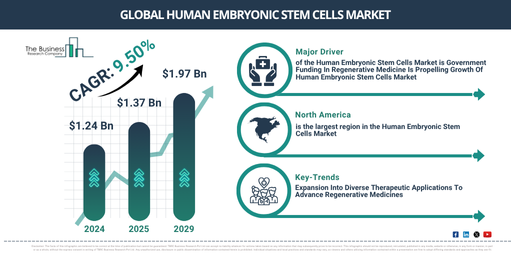
    The human embryonic stem cells market has observed a swift increase in its size during recent years. It is forecast to grow from $1.24 billion in 2024 to $1.37 billion in 2025, maintaining a compound annual growth rate (CAGR) of 10.2%. The expansion seen in prior periods is attributable to elements such as funding and investments, regulatory approvals, public awareness, the emergence of regenerative medicine, and expanded clinical applications.

    The human embryonic stem cells market size is projected to experience robust growth in the coming years. It is set to expand to $1.97 billion by 2029, achieving a compound annual growth rate (CAGR) of 9.5%. This projected growth throughout the forecast period stems from an increase in cell therapy production facilities, a rising demand for regenerative therapies, the increasing occurrence of cardiac and malignant diseases, progress in stem cell biology research, and enhanced awareness regarding stem cell therapeutic potency. Significant trends observed in the forecast period encompass advancements in regenerative medicine, a heightened focus on personalized medicine, expanding applications in drug discovery and toxicology, technological innovations, and the continued expansion in biobanking.

    Unlock Your Free Sample Report for Exclusive Market Data:

    https://www.thebusinessresearchcompany.com/sample.aspx?id=16086&type=smp

    What Are The Main Drivers Boosting The Human Embryonic Stem Cells Industry’s Expansion?

    Government funding for the advancement of regenerative medicine is expected to fuel the growth of the human embryonic stem cells market in the coming years. Regenerative medicine is a healthcare area focused on mending, substituting, or regenerating impaired tissues or organs to bring back normal bodily function. The increasing government financial support for regenerative medicine development is attributed to factors like the rising occurrence of chronic conditions, breakthroughs in stem cell research, and the potential for innovative treatments to improve patient well-being. Human embryonic stem cells are utilized in regenerative medicine to devise potential therapies for the repair or replacement of damaged tissues and organs within the body. For instance, in May 2022, the Government of Canada, a federal administrative body, reported that the stem cell network received $45 million in funding over three years, starting from 2022-23, as part of the Budget 2021 allocation aimed at bolstering stem cell and regenerative medicine research. Hence, government funding for the development of regenerative medicine is driving the growth of the human embryonic stem cells market.

    What Are The Different Segment Classifications Within The Human Embryonic Stem Cells Market?

    The human embryonic stem cellsmarket covered in this report is segmented –

    1) By Type: Totipotent Stem Cells; Pluripotent Stem Cells; Unipotent Stem Cells

    2) By Product: Regenerative Medicine; Stem Cell Biology Research; Tissue Engineering; Toxicology Testing

    3) By Application: Research; Clinical Trials; Other Applications

    Subsegments:

    1) By Totipotent Stem Cells: Embryonic Totipotent Stem Cells; Induced Totipotent Stem Cells

    2) By Pluripotent Stem Cells: Human Embryonic Stem Cells (hESCs); Induced Pluripotent Stem Cells (iPSCs); Embryonic Stem Cell Lines; Conditioned Pluripotent Stem Cells

    3) By Unipotent Stem Cells: Somatic Stem Cells; Adult Stem Cells; Tissue-Specific Stem Cells

    Which Ongoing Trends Are Expected To Shape The Human Embryonic Stem Cells Market Outlook?

    Major companies in the human embryonic stem cell market are concentrating on expanding into diverse therapeutic applications, such as using pluripotent stem cells for Parkinson’s disease treatment, to gain a competitive advantage. For Parkinson’s disease, pluripotent stem cells are utilized to generate dopaminergic neurons, aiming to replace the lost dopamine-producing neurons and restore motor function. For instance, in October 2023, Bayer AG., a Germany-based pharmaceutical and biotechnology company, inaugurated its first Cell Therapy Manufacturing Facility in California, investing $250 million to facilitate global production of cell and gene therapies. This facility will initially concentrate on BlueRock Therapeutics’ bemdaneprocel, derived from pluripotent stem cells (PSC) for Parkinson’s disease. The establishment incorporates fully electric manufacturing to address the industry’s need for increased manufacturing capacity for regenerative medicines.

    Which Leading Companies Dominate The Human Embryonic Stem Cells Market Share?

    Major companies operating in the human embryonic stem cells market are Thermo Fisher Scientific Inc., Takeda Pharmaceutical Company Limited, Gilead Sciences Inc., Merck KgaA, Astellas Pharma Inc., Lonza Group, PerkinElmer Inc., R&D Systems, LifeCell, Takara Bio Inc., ViaCyte Inc., PromoCell GmbH, CellGenix GmbH, PeproTech Inc., Lineage Cell Therapeutics Inc., BioTime, Asterias Biotherapeutics Inc., ESI BIO, STEMCELL Technologies Inc., TATAA Biocenter, Celgene Corporation

    Download The Full Report For Exclusive Market Findings:

    https://www.thebusinessresearchcompany.com/report/human-embryonic-stem-cells-global-market-report

    What Are The Key Regional Factors Influencing The Human Embryonic Stem Cells Market Growth?

    North America was the largest region in the human embryonic stem cells market in 2024. Asia-Pacific is expected to be the fastest-growing region in the forecast period. The regions covered in the human embryonic stem cells market report are Asia-Pacific, Western Europe, Eastern Europe, North America, South America, Middle East, Africa.

    Request A Customized Version Of The Human Embryonic Stem Cells Market Report:

    https://www.thebusinessresearchcompany.com/customise?id=16086&type=smp

    Browse Through More Reports Similar to the Global Human Embryonic Stem Cells Market 2025, By The Business Research Company

    Human Capital Management Global Market Report 2025

    https://www.thebusinessresearchcompany.com/report/human-capital-management-global-market-report

    Automotive Human Machine Interfaces Global Market Report 2025

    https://www.thebusinessresearchcompany.com/report/automotive-human-machine-interfaces-global-market-report

    Human Machine Interface Global Market Report 2025

    https://www.thebusinessresearchcompany.com/report/human-machine-interface-global-market-report

    Get in touch with us:

    The Business Research Company: https://www.thebusinessresearchcompany.com/

    Americas +1 310-496-7795

    Asia +44 7882 955267 & +91 8897263534

    Europe +44 7882 955267

    Email us at info@tbrc.info

    Follow us on:

    LinkedIn: https://in.linkedin.com/company/the-business-research-company

    YouTube: https://www.youtube.com/channel/UC24_fI0rV8cR5DxlCpgmyFQ

    Global Market Model: https://www.thebusinessresearchcompany.com/global-market-model

  • Human Growth Hormone Market Growth Opportunities: Insights from 2025–2029

    Human Growth Hormone Market Growth Opportunities: Insights from 2025–2029

    Unlock Global Insights – Save 20% on Market Reports with Code ONLINE20

    What Is The Anticipated Size Of The Human Growth Hormone Market Over The Five-Year Period 2025–2029?

    The human growth hormone market size has demonstrated strong expansion in recent years. This market is anticipated to increase from $4.75 billion in 2024 to $5.18 billion in 2025, achieving a compound annual growth rate (CAGR) of 9.0%. The historical growth of this market can be attributed to the rising prevalence of growth disorders, increased awareness regarding hormone therapies, the expanding applications within sports medicine, an aging global population, and improvements in healthcare infrastructure.

    The human growth hormone market is anticipated to show significant expansion over the next few years. It is predicted to reach a size of $7.32 billion by 2029, advancing at a compound annual growth rate (CAGR) of 9.0%. This growth during the forecast period is attributable to the emergence of personalized medicine, an increase in global healthcare expenditure, the growing adoption of recombinant DNA technology, a rising demand for hormone replacement therapies, and the increasing prevalence of endocrine disorders. Notable trends expected in the forecast period include the expansion of distribution networks in developing markets, the integration of artificial intelligence in drug development, an emphasis on sustainable manufacturing processes, the creation of long-acting formulations, and the utilization of combination therapies for enhanced efficacy.

    Unlock Your Free Sample Report for Exclusive Market Data:

    https://www.thebusinessresearchcompany.com/sample.aspx?id=15825&type=smp

    Which Major Market Drivers Are Shaping The Future Of The Human Growth Hormone Market?

    Increased understanding of treatment options is anticipated to drive the expansion of the human growth hormone market in the future. Medical interventions aimed at relieving, controlling, or resolving health conditions or illnesses are defined as treatment procedures. This heightened awareness regarding treatment procedures stems from progress in medical technology, wider availability of information via digital platforms, and a surging public focus on health and well-being. Human growth hormone (HGH) therapies have attracted considerable media coverage and public fascination, underscoring the advantages and possible uses of contemporary medical interventions, which, in turn, boosts general knowledge of treatment procedures. An illustrative example is found in November 2023 data from The 2022 National Survey on Drug Use and Health (NSDUH), a publication by the Substance Abuse and Mental Health Services Administration (SAMHSA), a US-based Department of Health and Human Services. This report indicates that among adolescents aged 12 to 17, in 2021, 40.6% of the 5.0 million adolescents experiencing a past year Major Depressive Episode (MDE) received treatment for depression. This figure rose in 2022, with 56.8% of the 4.8 million adolescents with a past year MDE receiving mental health treatment. Consequently, the increased recognition of treatment procedures is propelling the expansion of the human growth hormone market.

    What Are The Segment Types Shaping The Human Growth Hormone Market?

    The human growth hormonemarket covered in this report is segmented –

    1) By Product: Liquid; Powder

    2) By Brand: Norditropin; Genotropin; Humatrope; Saizen; Omnitrope; Skytrofa; Others Brands

    3) By Route Of Administration: Oral; Intravenous; Intramuscular; Subcutaneous

    4) By Distribution Channel: Hospital Pharmacies; Retail Pharmacies; Online Pharmacy; Specialty Pharmacy

    5) By Application: Growth Hormone (GH) Deficiency; Adult Growth Hormone (GH) Deficiency; Pediatric Growth Hormone (GH) Deficiency; Turner Syndrome; Idiopathic Short Stature; Prader-Willi Syndrome; Small For Gestational Age; Other Applications

    Subsegments:

    1) By Liquid: Pre-Filled Liquid Syringes; Vials Of Liquid Growth Hormone

    2) By Powder: Reconstitutable Powder; Freeze-Dried Powder

    What Key Innovation Trends Are Fueling Advancements In The Human Growth Hormone Market?

    Leading companies in the human growth hormone market are intensifying their efforts in drug development and its subsequent approvals to advance their medication offerings and deliver improved treatment solutions. Developing new drugs is a complex and stringent process, involving multiple stages to ensure a drug’s safety, efficacy, and quality before it becomes available to the public. For example, in June 2023, Pfizer Inc., a US-based biopharmaceutical company, and OPKO Health Inc., a US-based biopharmaceutical and diagnostics company, announced that the Food and Drug Administration (FDA) had approved NGENLA (somatrogon-ghla). This therapy presents a more convenient dosing schedule and boosts patient adherence compared to daily injections. It offers children with growth hormone deficiency the choice to reduce injection frequency from daily to just once a week. The FDA’s approval was backed by a Phase 3 study, which confirmed NGENLA’s non-inferiority when compared to once-daily somatropin, along with a safety profile comparable to somatropin.

    Who Are The Top Performing Companies In The Human Growth Hormone Market In Recent Years?

    Major companies operating in the human growth hormone market are Pfizer Inc., Roche Holding AG, Novartis AG, Thermo Fisher Scientific Inc., Eli Lilly and Company, Novo Nordisk A/S, Merck KGaA, Teva Pharmaceutical Industries Ltd., Sandoz International GmbH, Ipsen Pharma, Ferring Holding SA, Endo International, Zydus Lifesciences Limited, Opko Health, LG Life Sciences, EMD Serono Inc., Wockhardt Ltd., JCR Pharmaceuticals Co. Ltd., Genentech Inc., Shanghai United Imaging Healthcare Co. Ltd., SOFAR S.p.A., United Laboratories, Ascendis Pharma, Uni-Pharma S.A., Versartis Inc., Reliance Life Sciences, Anhui Anke Biotechnology (Group) Co. Ltd., Rani Therapeutics

    Download The Full Report For Exclusive Market Findings:

    https://www.thebusinessresearchcompany.com/report/human-growth-hormone-global-market-report

    Which Region Is Projected To Lead The Human Growth Hormone Market During The Forecast Period?

    North America was the largest region in the human growth hormone market in 2024. Asia-Pacific is expected to be the fastest-growing region in the forecast period. The regions covered in the human growth hormone market report are Asia-Pacific, Western Europe, Eastern Europe, North America, South America, Middle East and Africa.

    Request A Customized Version Of The Human Growth Hormone Market Report:

    https://www.thebusinessresearchcompany.com/customise?id=15825&type=smp

    Browse Through More Reports Similar to the Global Human Growth Hormone Market 2025, By The Business Research Company

    Biosimilar Growth Hormone Global Market Report 2025

    https://www.thebusinessresearchcompany.com/report/biosimilar-growth-hormone-global-market-report

    Parathyroid Hormones Global Market Report 2025

    https://www.thebusinessresearchcompany.com/report/parathyroid-hormones-global-market-report

    Biosimilar Hormone Global Market Report 2025

    https://www.thebusinessresearchcompany.com/report/biosimilar-hormone-global-market-report

    Get in touch with us:

    The Business Research Company: https://www.thebusinessresearchcompany.com/

    Americas +1 310-496-7795

    Asia +44 7882 955267 & +91 8897263534

    Europe +44 7882 955267

    Email us at info@tbrc.info

    Follow us on:

    LinkedIn: https://in.linkedin.com/company/the-business-research-company

    YouTube: https://www.youtube.com/channel/UC24_fI0rV8cR5DxlCpgmyFQ

    Global Market Model: https://www.thebusinessresearchcompany.com/global-market-model
  • Global Human Immunodeficiency Virus (HIV) Diagnosis Market Overview: Trends Shaping Growth to 2029

    Global Human Immunodeficiency Virus (HIV) Diagnosis Market Overview: Trends Shaping Growth to 2029

    Unlock Global Insights – Save 20% on Market Reports with Code ONLINE20

    What Market Value Is The Human Immunodeficiency Virus (HIV) Diagnosis Industry Expected To Reach By 2029, Starting From 2025 Levels?

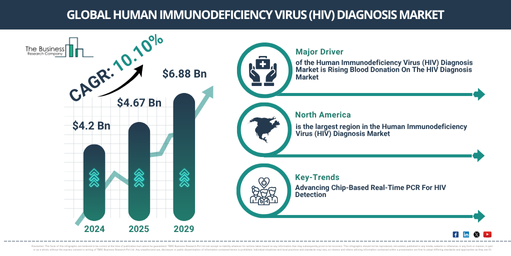
    The market for human immunodeficiency virus (hiv) diagnosis has experienced significant expansion recently. Projections indicate its expansion from $4.2 billion in 2024 to $4.67 billion in 2025, showing a compound annual growth rate (CAGR) of 11.2%. Historically, this growth can be ascribed to several factors, including the increased availability of voluntary counseling and testing, the creation of HIV antibody tests, the onset of the HIV/AIDS epidemic, and various community-driven and peer-supported programs.

    The market for human immunodeficiency virus (HIV) diagnosis is projected to experience swift expansion over the coming years. This market is forecast to reach $6.88 billion by 2029, achieving a compound annual growth rate (CAGR) of 10.1%. Factors contributing to this growth during the projection period include public health campaigns and awareness programs, a heightened focus on equity and inclusivity, the integration of routine testing in healthcare environments, community and peer-driven strategies, and the wider availability of self-testing options. Key trends anticipated during the forecast period encompass progress in testing technologies, a concentrated effort on targeted testing methods, expanding community-based testing and outreach programs, a continued emphasis on equity and inclusivity, and evolving policy and funding directions.

    Unlock Your Free Sample Report for Exclusive Market Data:

    https://www.thebusinessresearchcompany.com/sample.aspx?id=15587&type=smp

    What Are The Top Growth Drivers Impacting The Human Immunodeficiency Virus (HIV) Diagnosis Market Outlook?

    The anticipated expansion of the HIV diagnosis market is significantly influenced by the growing trend of blood donation. Blood donation involves individuals voluntarily contributing blood, typically via phlebotomy, where a needle collects blood from a vein. This upsurge in donations stems from enhancements in medical technology, greater community participation, and more effective strategies for donor recruitment and retention. An increase in blood donors results in a larger pool of samples readily available for HIV testing. This heightened availability of blood specimens facilitates more thorough screening for HIV antibodies or antigens, thereby improving the precision and reliability of HIV diagnosis. A notable illustration of this is how NHS Blood and Transplant, a UK-based government agency, recorded an increase in new blood donors from 119,016 in 2022-2023 to 119,371 in 2023-2024. Consequently, the rising rate of blood donation acts as a key driver for the growth within the HIV diagnosis market.

    What Are The Leading Segments Analyzed In The Human Immunodeficiency Virus (HIV) Diagnosis Market?

    The human immunodeficiency virus (hiv) diagnosismarket covered in this report is segmented –

    1) By Product: Consumables; Instruments; Software And Services

    2) By Mode: Self-Test; Lab-Based

    3) By End User: Diagnostic Laboratories; Hospitals; Research Institutions

    Subsegments:

    1) By Consumables: Test Kits (Rapid Hiv Test Kits, Elisa Test Kits); Reagents And Chemicals; Sample Collection Devices (Blood Collection Tubes, Lancets); Test Strips; Control And Calibration Kits; Disposable Gloves And Safety Equipment

    2) By Instruments: Hiv Diagnostic Analyzers ( Automated Immunoassay Analyzers); Hiv Viral Load Testing Equipment; Cd4 Count Analyzers; Point-Of-Care Hiv Diagnostic Devices; Molecular Diagnostic Instruments ( Pcr Machines); Electrochemical And Optical Hiv Detection Instruments

    3) By Software: Hiv Diagnosis Data Management Software; Electronic Health Record (Ehr) Integration Software; Hiv Test Result Interpretation Software; Laboratory Information Management Systems (Lims); Patient Monitoring And Tracking Software; Cloud-Based Hiv Diagnostic Reporting Tools

    4) By Services: Diagnostic Testing Services; Hiv Testing Support Services ( Counseling, Education); Diagnostic Lab Services; Telemedicine And Remote Hiv Testing Services; Clinical Trial Services For Hiv Diagnostic Tests; Data Analytics And Interpretation Services For Hiv Testing

    How Are Trends Influencing The Human Immunodeficiency Virus (HIV) Diagnosis Market?

    Leading firms within the HIV diagnosis market are focusing on creating chip-based real-time PCR test solutions specifically for HIV, aiming to boost precision, shorten processing periods, and broaden access. These chip-based real-time PCR tests for HIV represent diagnostic instruments employing microfluidic chips or compact integrated circuits to perform real-time polymerase chain reaction (PCR) tests for HIV detection. An illustration of this is Molbio Diagnostics, an India-based molecular diagnostics manufacturer, which introduced the Truenat HIV-1 test in August 2022. This particular test is a chip-based real-time PCR solution designed for the quantitative detection and diagnosis of human immunodeficiency virus type 1 (HIV-1) in samples of whole blood and plasma. Its purpose is to assist in tracking the HIV-1 viral load in individuals afflicted with HIV-1 infection. Utilizing Taqman chemistry, the test boasts high primer sensitivity and specificity. It necessitates a mere 6 mcL sample volume and incorporates an intelligent chip containing lot-specific data for result quantification. The design also features a chip re-use lock and a reaction port engineered to resist contamination and evaporation.

    Which Key Players Are Driving Competition In The Human Immunodeficiency Virus (HIV) Diagnosis Market?

    Major companies operating in the human immunodeficiency virus (HIV) diagnosis market are Thermo Fisher Scientific Inc., Abbott Laboratories, Siemens Healthineers, Roche Diagnostics, Becton Dickinson and Company, Hologic Inc., bioMérieux SA, Beckman Coulter Inc., Bio-Rad Laboratories Inc., QIAGEN N.V., Bio-Techne Corporation, Alere Inc., Cepheid Inc., OraSure Technologies Inc., Advanced Instruments Inc., BBI Solutions, Chembio Diagnostic Systems Inc., BioLytical Laboratories Inc., Avioq Inc., Advanced Biochemicals Ltd., Advanced Molecular Diagnostics, Atila BioSystems Inc., BioAssay Works LLC, Chemtron Biotech Inc.

    Download The Full Report For Exclusive Market Findings:

    https://www.thebusinessresearchcompany.com/report/human-immunodeficiency-virus-hiv-diagnosis-global-market-report

    Which Geographies Are Emerging As Strong Markets For The Human Immunodeficiency Virus (HIV) Diagnosis Industry?

    North America was the largest region in the HIV diagnosis market in 2024. Asia-Pacific is expected to be the fastest-growing region in the forecast period. The regions covered in the human immunodeficiency virus (HIV) diagnosis market report are Asia-Pacific, Western Europe, Eastern Europe, North America, South America, Middle East, Africa.

    Request A Customized Version Of The Human Immunodeficiency Virus (HIV) Diagnosis Market Report:

    https://www.thebusinessresearchcompany.com/customise?id=15587&type=smp

    Browse Through More Reports Similar to the Global Human Immunodeficiency Virus (HIV) Diagnosis Market 2025, By The Business Research Company

    Immunohistochemistry Ihc Global Market Report 2025

    https://www.thebusinessresearchcompany.com/report/immunohistochemistry-ihc-global-market-report

    Immunohematology Global Market Report 2025

    https://www.thebusinessresearchcompany.com/report/immunohematology-global-market-report

    Immunoglobulins Global Market Report 2025

    https://www.thebusinessresearchcompany.com/report/immunoglobulins-global-market-report

    Get in touch with us:

    The Business Research Company: https://www.thebusinessresearchcompany.com/

    Americas +1 310-496-7795

    Asia +44 7882 955267 & +91 8897263534

    Europe +44 7882 955267

    Email us at info@tbrc.info

    Follow us on:

    LinkedIn: https://in.linkedin.com/company/the-business-research-company

    YouTube: https://www.youtube.com/channel/UC24_fI0rV8cR5DxlCpgmyFQ

    Global Market Model: https://www.thebusinessresearchcompany.com/global-market-model
  • Hydrocortisone Market Size and Growth Forecast for Businesses 2025–2029

    Hydrocortisone Market Size and Growth Forecast for Businesses 2025–2029

    Unlock Global Insights – Save 20% on Market Reports with Code ONLINE20

    #What Are The Current (2025) And Forecast (2029) Sizes Of The Hydrocortisone Market?

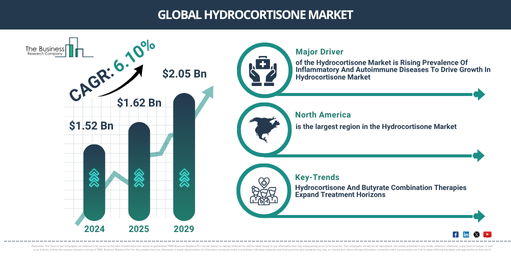
    The hydrocortisone market has demonstrated substantial growth in recent years. Projections show its value increasing from $1.52 billion in 2024 to $1.62 billion in 2025, achieving a compound annual growth rate (CAGR) of 6.5%. This historical expansion is attributable to rising skin disorder prevalence, an aging population, increased awareness and accessibility, pharmaceutical industry growth, and emerging market expansion.

    The hydrocortisone market is anticipated to show substantial growth in the upcoming years, projected to achieve a size of $2.05 billion by 2029, demonstrating a compound annual growth rate (CAGR) of 6.1%. This expansion during the forecast period can be credited to technological advancements, an increase in demand for over-the-counter (OTC) products, investments in research and development, rising disposable income, and wider distribution channels. Notable trends during this forecast period encompass a focus on natural ingredients, the development of combination therapies, personalized treatment approaches, new hydrocortisone-infused products, and an increased emphasis on sustainability.

    Unlock Your Free Sample Report for Exclusive Market Data:

    https://www.thebusinessresearchcompany.com/sample.aspx?id=16446&type=smp

    Which Industry Drivers Are Expected To Accelerate The Hydrocortisone Market From 2025 To 2029?

    The increasing prevalence of inflammatory and autoimmune diseases is projected to drive the expansion of the hydrocortisone market moving forward. These conditions involve the immune system mistakenly attacking the body’s own tissues, leading to chronic inflammation and tissue damage. The rising adoption of treatments for inflammatory and autoimmune diseases stems from their growing incidence and advancements in medical therapies. Hydrocortisone is utilized in inflammatory and autoimmune diseases, such as severe asthma exacerbations, to swiftly reduce airway inflammation and improve breathing. It is typically administered intravenously during emergencies. For instance, data published in May 2024 by the National Center for Health Statistics (NCHS), a U.S.-based health statistics agency, revealed that the prevalence of current asthma among adults aged 18 and over in the United States increased from 8.4% in 2021 to 8.7% in 2022. Additionally, asthma episodes in the past 12 months for adults in the same age group rose from 3.3% in 2021 to 3.7% in 2022. Therefore, the expanding prevalence of inflammatory and autoimmune diseases will stimulate the growth of the hydrocortisone market.

    What Are The Key Segments In The Hydrocortisone Market?

    The hydrocortisonemarket covered in this report is segmented –

    1) By Type: Cream; Injection; Tablet

    2) By Route Of Administration: Parenteral; Oral; Topical

    3) By Application: Adrenocortical Dysfunction; Adrenergic Syndrome; High Blood Calcium; Thyroiditis; Rheumatoid Arthritis; Dermatitis; Asthma And Chronic Obstructive Pulmonary Disease; Other Application

    4) By Distribution Channel: Hospital Pharmacies; Retail Pharmacies; Online Pharmacies

    Subsegments:

    1) By Cream: Topical Hydrocortisone Cream (0.5%, 1%, 2.5%); Hydrocortisone Ointment

    2) By Injection: Hydrocortisone Sodium Succinate Injection; Hydrocortisone Acetate Injection

    3) By Tablet: Oral Hydrocortisone Tablets (5mg, 10mg, 20mg); Extended-Release Hydrocortisone Tablets

    Which Market Trends Are Creating New Opportunities In The Hydrocortisone Industry?

    Leading companies operating in the hydrocortisone market are focusing on developing combination therapies, such as lotions that incorporate butyrate active ingredients, to improve treatment effectiveness and diversify their product portfolios. Hydrocortisone, when combined with butyrate lotion, provides a potential synergistic benefit in managing various skin conditions by leveraging hydrocortisone’s known anti-inflammatory properties alongside butyrate’s immunomodulatory effects and its capacity to enhance skin barrier function. As an illustration, in November 2023, J. Molner AS., an Estonian-based pharmaceutical company, introduced Hydrocortisone Butyrate Lotion, 0.1%, in the United States, signifying a crucial achievement in its plan to establish a commercial platform for its pharmaceutical products in worldwide markets. This newly released lotion is formulated to address inflammatory skin conditions, thereby demonstrating Molner’s dedication to expanding its presence in the international market.

    Who Are The Prominent Global Companies Shaping The Hydrocortisone Market?

    Major companies operating in the hydrocortisone market are Pfizer Inc., Johnson & Johnson, Merck & Co Inc, AbbVie Inc., Bayer AG, Novartis AG, The Dow Chemical Company, GlaxoSmithKline plc (GSK), Viatris Inc., Solvay SA, Teva Pharmaceutical Industries Ltd., Alcon Inc, Sandoz International GmbH, Valeant Pharmaceuticals International Inc, Fresenius Kabi AG, Macleods Pharmaceuticals Limited, Sun Pharmaceutical Industries Ltd., Bausch & Lomb Incorporated, Hikma Pharmaceuticals PLC, Aspen Pharmacare Holdings Limited, Ivax Pharmaceuticals Inc, Glenmark Pharmaceuticals Ltd., Torrent Pharmaceuticals Limited, Impax Laboratories LLC, Akorn Incorporated, Taro Pharmaceutical Industries Ltd, Lannett Company Inc, Salix Pharmaceuticals Inc

    Download The Full Report For Exclusive Market Findings:

    https://www.thebusinessresearchcompany.com/report/hydrocortisone-global-market-report

    How Is Hydrocortisone Market Demand Varying Across Different Regions?

    North America was the largest region in the hydrocortisone market in 2024. Asia-Pacific is expected to be the fastest-growing region in the forecast period. The regions covered in the hydrocortisone market report are Asia-Pacific, Western Europe, Eastern Europe, North America, South America, Middle East, Africa.

    Request A Customized Version Of The Hydrocortisone Market Report:

    https://www.thebusinessresearchcompany.com/customise?id=16446&type=smp

    Browse Through More Reports Similar to the Global Hydrocortisone Market 2025, By The Business Research Company

    Hydrogen Global Market Report 2025

    https://www.thebusinessresearchcompany.com/report/hydrogen-global-market-report

    Hydropower Generation Global Market Report 2025

    https://www.thebusinessresearchcompany.com/report/hydropower-generation-global-market-report

    Hydroxychloroquines Global Market Report 2025

    https://www.thebusinessresearchcompany.com/report/hydroxychloroquines-global-market-report

    Get in touch with us:

    The Business Research Company: https://www.thebusinessresearchcompany.com/

    Americas +1 310-496-7795

    Asia +44 7882 955267 & +91 8897263534

    Europe +44 7882 955267

    Email us at info@tbrc.info

    Follow us on:

    LinkedIn: https://in.linkedin.com/company/the-business-research-company

    YouTube: https://www.youtube.com/channel/UC24_fI0rV8cR5DxlCpgmyFQ

    Global Market Model: https://www.thebusinessresearchcompany.com/global-market-model
  • Hyperbaric Oxygen Therapy Industry Insights: Market Forecast to 2029

    Hyperbaric Oxygen Therapy Industry Insights: Market Forecast to 2029

    Unlock Global Insights – Save 20% on Market Reports with Code ONLINE20

    How Much Larger Is The Hyperbaric Oxygen Therapy Market Expected To Become By 2029 Compared With Its 2025 Level?

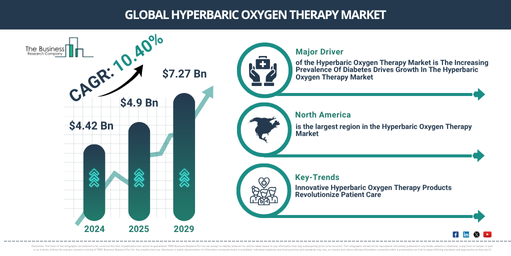
    The hyperbaric oxygen therapy market has witnessed substantial expansion in recent years. Its size is expected to rise from $4.42 billion in 2024 to $4.9 billion in 2025, showing a compound annual growth rate (CAGR) of 10.9%. This historical development can be credited to the escalating occurrence of chronic wounds and diabetic foot ulcers, heightened understanding of the advantages of hyperbaric oxygen therapy, progress in medical technology, existing insurance coverage and reimbursement policies, and the expanding diabetic population.

    The hyperbaric oxygen therapy market is projected to experience swift expansion in the coming years, with its valuation anticipated to reach $7.27 billion in 2029, exhibiting a compound annual growth rate (CAGR) of 10.4%. This growth during the forecast period is attributable to several factors, including the increasing occurrence of soft tissue radionecrosis and carbon monoxide poisoning, a rise in healthcare spending, the broadening scope of applications in aesthetic medicine, the expanding elderly demographic, and ongoing research and development within hyperbaric medicine. Key trends identified for the forecast period encompass product innovation, the incorporation of hyperbaric oxygen therapy into telemedicine, intensified research and development activities, a rise in collaborative partnerships, and improvements in HBOT equipment technology.

    Unlock Your Free Sample Report for Exclusive Market Data:

    https://www.thebusinessresearchcompany.com/sample.aspx?id=16087&type=smp

    Which Drivers Are Impacting The Hyperbaric Oxygen Therapy Market?

    The increasing incidence of diabetes is projected to fuel the expansion of the hyperbaric oxygen therapy market in the future. Diabetes encompasses a set of long-term metabolic conditions marked by sustained elevated blood glucose concentrations, with its rise attributed to inactive lifestyles, inadequate nutrition, obesity, and genetic predisposition. Hyperbaric oxygen therapy (HBOT) finds application in managing complications linked to diabetes, specifically diabetic foot ulcers and other types of wounds that struggle to heal. For example, the British Diabetic Association, a UK-based healthcare organization, reported that the total number of individuals with diabetes in the United Kingdom was approximately 4.23 million in 2022, growing to 4.4 million in 2023. Consequently, the growing prevalence of diabetes is a key driver for the hyperbaric oxygen therapy market.

    How Is The Hyperbaric Oxygen Therapy Market Segmented?

    The hyperbaric oxygen therapymarket covered in this report is segmented –

    1) By Product Type: Monoplace Hyperbaric Oxygen Therapy; Multiplace Hyperbaric Oxygen Therapy; Topical Hyperbaric Oxygen Therapy Devices

    2) By Application: Wound Healing; Decompression Sickness; Infection Treatment; Gas Embolism; Other Applications

    3) By End-Users: Hospitals And Clinics; Ambulatory Surgery Centers; Other End-Users

    Subsegments:

    1) By Monoplace Hyperbaric Oxygen Therapy: Single-Chamber Monoplace HBOT Systems; Portable Monoplace HBOT Systems; Standard Monoplace HBOT Chambers; Advanced Monoplace HBOT Chambers With Integrated Monitoring

    2) By Multiplace Hyperbaric Oxygen Therapy: Dual-Chamber Multiplace HBOT Systems; Multi-Person Multiplace HBOT Chambers; High-Pressure Multiplace HBOT Chambers; Customized Multiplace HBOT Chambers (For Specific Medical Conditions)

    3) By Topical Hyperbaric Oxygen Therapy Devices: Topical Oxygen Delivery Systems; Wound Care HBOT Devices; Handheld Topical Oxygen Therapy Devices; Hyperbaric Oxygen Therapy For Skin And Cosmetic Applications

    What Long-Term Trends Will Shape The Future Growth Of The Hyperbaric Oxygen Therapy Industry?

    Leading enterprises within the hyperbaric oxygen therapy market are creating innovative solutions, including hyperbaric chambers, to provide customers with enhanced functionalities. These hyperbaric chambers are specialized medical apparatuses that establish a pressurized setting for delivering hyperbaric oxygen therapy (HBOT), enabling patients to inhale pure oxygen and boost oxygen supply to the body’s tissues. As an example, in January 2024, Sechrist Industries Inc., a manufacturer of hyperbaric technology and medical equipment based in the US, introduced its 3300 HM Hyperbaric Chamber. The 3300 HM Hyperbaric Chamber features a spacious interior, crafted to maximize patient comfort and ease of access, capable of accommodating diverse patient sizes and varying mobility requirements. Outfitted with sophisticated monitoring systems, it guarantees continuous tracking of vital signs and the chamber’s environmental conditions, thereby improving patient safety. Furthermore, the chamber incorporates cutting-edge oxygen delivery systems that streamline the effectiveness of oxygen absorption, and its intuitive interface facilitates straightforward operation for healthcare professionals.

    Which Major Industry Participants Are Leading The Hyperbaric Oxygen Therapy Market Growth?

    Major companies operating in the hyperbaric oxygen therapy market are Healogics LLC, SOS Medical Group Ltd., Environmental Tectonics Corporation, Sechrist Industries Inc., BioBarica Profesionales, Perry Baromedical Corporation, Shanghai Baobang Medical Equipment Co. Ltd., Hyperbaric Modular Systems Inc., Baroks Hyperbaric, Haux-Life-Support GmbH, Haux-Technik GmbH, Hyperbaric SAC, Pan America Hyperbarics Inc., OxyHeal Health Group, Fink Engineering Pty Ltd, AHA Hyperbarics, The Oxybarica Group, NHC Medical And Beauty, Hyperbaric Medical Solutions, Gulf Coast Hyperbarics, Hearmec Co. Ltd., Hpotech Hyperbaric Solutions

    Download The Full Report For Exclusive Market Findings:

    https://www.thebusinessresearchcompany.com/report/hyperbaric-oxygen-therapy-global-market-report

    Which Region Shows The Highest Potential For Future Expansion In The Hyperbaric Oxygen Therapy Market?

    North America was the largest region in the hyperbaric oxygen therapy market in 2024. Asia-Pacific is expected to be the fastest-growing region in the forecast period. The regions covered in the hyperbaric oxygen therapy market report are Asia-Pacific, Western Europe, Eastern Europe, North America, South America, Middle East, Africa.

    Request A Customized Version Of The Hyperbaric Oxygen Therapy Market Report:

    https://www.thebusinessresearchcompany.com/customise?id=16087&type=smp

    Browse Through More Reports Similar to the Global Hyperbaric Oxygen Therapy Market 2025, By The Business Research Company

    Convalescent Plasma Therapy Global Market Report 2025

    https://www.thebusinessresearchcompany.com/report/convalescent-plasma-therapy-global-market-report

    Coronavirus Current Therapy Global Market Report 2025

    https://www.thebusinessresearchcompany.com/report/coronavirus-current-therapy-global-market-report

    Plasmas Therapy Global Market Report 2025

    https://www.thebusinessresearchcompany.com/report/plasmas-therapy-global-market-report

    Get in touch with us:

    The Business Research Company: https://www.thebusinessresearchcompany.com/

    Americas +1 310-496-7795

    Asia +44 7882 955267 & +91 8897263534

    Europe +44 7882 955267

    Email us at info@tbrc.info

    Follow us on:

    LinkedIn: https://in.linkedin.com/company/the-business-research-company

    YouTube: https://www.youtube.com/channel/UC24_fI0rV8cR5DxlCpgmyFQ

    Global Market Model: https://www.thebusinessresearchcompany.com/global-market-model
  • Hyperimmune Globulins Market Forecast: What to Expect by 2029

    Hyperimmune Globulins Market Forecast: What to Expect by 2029

    Unlock Global Insights – Save 20% on Market Reports with Code ONLINE20

    What Is The Predicted Market Size Trajectory For The Hyperimmune Globulins Market From 2025 To 2034?

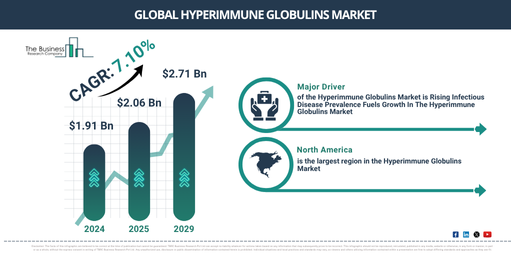
    The hyperimmune globulins market has experienced significant growth in recent years. It is projected to expand from $1.91 billion in 2024 to $2.06 billion in 2025, demonstrating a compound annual growth rate (CAGR) of 7.5%. Historically, this expansion has been driven by increased government support and a rise in healthcare expenditures.

    The hyperimmune globulins market is projected for substantial expansion in the coming years. By 2029, its valuation is anticipated to reach $2.71 billion, exhibiting a compound annual growth rate (CAGR) of 7.1%. This expansion throughout the forecast period stems from factors such as the rising occurrence of infectious diseases, heightened understanding of the advantages of hyperimmune globulin injections, increasing need for immunoglobulins, the growing incidence of alpha-1 antitrypsin deficiency, and an upward trend in immune deficiencies. Key developments anticipated during this timeframe involve technological advancements and innovation, increased spending on research and development, a rising need for passive immunity treatments, progress in plasma-derived therapies, and enhancements in manufacturing technologies.

    Unlock Your Free Sample Report for Exclusive Market Data:

    https://www.thebusinessresearchcompany.com/sample.aspx?id=16448&type=smp

    What Are The Emerging Market Drivers Creating New Opportunities In The Hyperimmune Globulins Industry?

    The hyperimmune globulin market is anticipated to expand due to the rising incidence of infectious diseases. These illnesses originate from harmful agents (pathogens) like viruses, bacteria, fungi, and parasites entering the body. Contributing factors to this growing prevalence include antimicrobial resistance, climate change, and population growth. Hyperimmune globulins are employed in infectious disease management to confer immediate passive immunity, delivering concentrated antibodies against specific pathogens and thereby assisting in the prevention or treatment of conditions such as rabies, hepatitis B, or tetanus. For instance, in April 2024, the Centers for Disease Control and Prevention, a US-based government agency, reported that chronic hepatitis B cases in the US rose by approximately 17%, from 14,229 in 2021 to 16,729 in 2022. Consequently, this upward trend in infectious diseases is fueling the expansion of the hyperimmune globulin market.

    What Are The Major Segment Categories Driving The Hyperimmune Globulins Market Growth?

    The hyperimmune globulinsmarket covered in this report is segmented –

    1) By Type: Hepatitis B Hyperimmune Globulin; Rabies Hyperimmune Globulin; Tetanus Hyperimmune Globulin; Cytomegalovirus (CMV) Hyperimmune Globulin; Varicella-Zoster Virus (VZV) Hyperimmune Globulin; Respiratory Syncytial Virus (RSV) Hyperimmune Globulin; Other Types

    2) By Route Of Administration: Intramuscular; Intravenous

    3) By Application: Government Institution; Private Sector; Other Applications

    Subsegments:

    1) By Hepatitis B Hyperimmune Globulin: Intramuscular Hepatitis B Hyperimmune Globulin; Intravenous Hepatitis B Hyperimmune Globulin

    2) By Rabies Hyperimmune Globulin: Rabies Immune Globulin (Human); Rabies Immune Globulin (Equine)

    3) By Tetanus Hyperimmune Globulin: Tetanus Immune Globulin (Human); Tetanus Immune Globulin (Equine)

    4) By Cytomegalovirus (Cmv) Hyperimmune Globulin: Cmv Immune Globulin For Organ Transplantation; Cmv Immune Globulin For Neonatal Infection

    5) By Varicella-Zoster Virus (Vzv) Hyperimmune Globulin: Vzv Immune Globulin For Post-Exposure Prophylaxis; Vzv Immune Globulin For Immunocompromised Patients

    6) By Respiratory Syncytial Virus (Rsv) Hyperimmune Globulin: Rsv Immune Globulin For Infants And Children; Rsv Immune Globulin For Adults With Respiratory Conditions

    7) By Other Types: Diphtheria Hyperimmune Globulin; Botulism Hyperimmune Globulin; Other Specialized Hyperimmune Globulins

    Who Are The Core Companies Influencing The Hyperimmune Globulins Market Landscape?

    Major companies operating in the hyperimmune globulins market are F. Hoffmann-La Roche AG, Bayer AG, Takeda Pharmaceutical Company Limited, Baxter International Inc., CSL Ltd., Fresenius Kabi AG, Grifols SA, Octapharma AG, Shanghai RAAS Blood Products Co. Ltd., Emergent BioSolutions Inc., Kedrion Biopharma Inc., LFB SA, Hualan Biological Engineering Inc., FFF Enterprises Inc., Taibang Biologic Group, Bio Products Laboratory (BPL) Ltd., ADMA Biologics, Cangene Corporation, Kamada Ltd., Saol Therapeutics Inc., Omrix Biopharmaceuticals Ltd., Shire, Sichuan Yuanda Shuyang Pharmaceutical Co. Ltd., BioCare Inc.

    Download The Full Report For Exclusive Market Findings:

    https://www.thebusinessresearchcompany.com/report/hyperimmune-globulins-global-market-report

    What Are The Regional Market Dynamics Impacting The Hyperimmune Globulins Industry?

    North America was the largest region in the hyperimmune globulins market in 2024. Asia-Pacific is expected to be the fastest-growing region in the forecast period. The regions covered in the hyperimmune globulins market report are Asia-Pacific, Western Europe, Eastern Europe, North America, South America, Middle East, Africa.

    Request A Customized Version Of The Hyperimmune Globulins Market Report:

    https://www.thebusinessresearchcompany.com/customise?id=16448&type=smp

    Browse Through More Reports Similar to the Global Hyperimmune Globulins Market 2025, By The Business Research Company

    Immunoglobulins Global Market Report 2025

    https://www.thebusinessresearchcompany.com/report/immunoglobulins-global-market-report

    Hypersonic Missiles Global Market Report 2025

    https://www.thebusinessresearchcompany.com/report/hypersonic-missiles-global-market-report

    Hyperspectral Imaging System Global Market Report 2025

    https://www.thebusinessresearchcompany.com/report/hyperspectral-imaging-system-global-market-report

    Get in touch with us:

    The Business Research Company: https://www.thebusinessresearchcompany.com/

    Americas +1 310-496-7795

    Asia +44 7882 955267 & +91 8897263534

    Europe +44 7882 955267

    Email us at info@tbrc.info

    Follow us on:

    LinkedIn: https://in.linkedin.com/company/the-business-research-company

    YouTube: https://www.youtube.com/channel/UC24_fI0rV8cR5DxlCpgmyFQ

    Global Market Model: https://www.thebusinessresearchcompany.com/global-market-model

  • Global Immunoglobulin E (IgE) Allergy Blood Tests Market Trends and Growth Analysis 2025–2029

    Global Immunoglobulin E (IgE) Allergy Blood Tests Market Trends and Growth Analysis 2025–2029

    Unlock Global Insights – Save 20% on Market Reports with Code ONLINE20

    How Does The Market Size Of The Immunoglobulin E (IgE) Allergy Blood Tests Industry Compare Between 2025 And 2029?

    The immunoglobulin e (ige) allergy blood tests market size has seen robust expansion in recent years. It is anticipated to grow from $33.24 billion in 2024 to $36.06 billion in 2025, achieving a compound annual growth rate (CAGR) of 8.5%. This historical development can be attributed to advancements in technology, a rising incidence of allergies, increasing demand for personalized medicine, the expansion of healthcare infrastructure, and heightened awareness regarding allergy diagnosis and treatment.

    The market for immunoglobulin e (ige) allergy blood tests is projected to experience substantial expansion over the coming years. By 2029, this market is anticipated to reach a valuation of $48.67 billion, demonstrating a compound annual growth rate (CAGR) of 7.8%. This projected growth during the forecast timeframe is attributable to several factors, including heightened investments in allergy research and development, the broader integration of point-of-care testing, an increased emphasis on timely diagnosis and intervention, a growing need for thorough allergy profiling, and the incorporation of artificial intelligence into allergy diagnostic methods. Key trends expected during this period encompass the advent of multiplex allergy testing, the use of telemedicine for allergy-related consultations, the discovery of new biomarkers for allergic conditions, the proliferation of direct-to-consumer allergy testing options, and the incorporation of big data analytics to customize allergy management strategies.

    Unlock Your Free Sample Report for Exclusive Market Data:

    https://www.thebusinessresearchcompany.com/sample.aspx?id=15590&type=smp

    What Are The Drivers Pushing New Developments In The Immunoglobulin E (IgE) Allergy Blood Tests Market?

    The growing incidence of allergies is anticipated to drive the IgE allergy blood tests market in the future. Allergies are characterized by the immune system’s overreaction to substances generally innocuous to the majority, leading to symptoms like sneezing, itching, or breathing difficulties. This increase in allergy cases is attributed to evolving lifestyles, environmental contaminants, and inherited tendencies. IgE allergy blood tests identify particular allergens in allergic individuals by quantifying Immunoglobulin E (IgE) antibodies in the bloodstream, assisting in the diagnosis and management of conditions like asthma, allergic rhinitis, and food allergies. For example, the AAFA 2022 Allergy Capitals Report March 2022, issued in March 2022 by the Asthma and Allergy Foundation of America, a US-based community organization, highlighted seasonal allergic rhinitis, or hay fever, as a very common allergic condition, with approximately 7.7% of adults and 7.2% of children having received a diagnosis for it. Consequently, the rising occurrence of allergies is fueling the expansion of the IgE allergy blood tests market.

    What Are The Major Segment Types Covered In The Immunoglobulin E (IgE) Allergy Blood Tests Market?

    The immunoglobulin e (ige) allergy blood testsmarket covered in this report is segmented –

    1) By Product Type: Assays And Kits; Enzyme-Linked Immunosorbent Assay (ELISA) Testing Kits; Fluorescent Enzyme Immunoassays (FEIA) Testing Kits; Chemiluminescent Immunoassays (CLIA); Reagents; Consumables; Analyzers

    2) By Application: Aero Allergies; Indoor Allergies; Outdoor Allergies; Food Allergies; Venoms; Medicine Allergies; Latex/Metal Allergies

    3) By End User: Diagnostic Laboratories; Specialty Clinics; Hospitals; Research And Academic Centers

    Subsegments:

    1) By Assays And Kits: Total Ige Assays; Specific Ige Assays; Allergen-Specific Ige Kits; Rapid Ige Allergy Test Kits; Allergy Profile Test Kits

    2) By Enzyme-Linked Immunosorbent Assay (Elisa) Testing Kits: Standard Elisa Kits For Ige Detection; Elisa Kits For Specific Ige Allergy Testing; Microplate Elisa Kits For High-Throughput Screening; Single-Step Elisa Allergy Testing Kits; Multiplexed Elisa Assay Kits

    3) By Fluorescent Enzyme Immunoassays (Feia) Testing Kits: Automated Feia Ige Testing Kits; Fluorescence-Based Allergy Test Kits; Feia Assays For Specific Ige Detection; High-Sensitivity Feia Testing Kits; Point-Of-Care Feia Kits

    4) By Chemiluminescent Immunoassays (Clia): Clia Kits For Ige Allergy Testing; Automated Clia Testing Platforms; High-Precision Clia Allergy Test Kits; Chemiluminescence Immunoassays For Specific Ige; Clia-Based Allergy Panels

    5) By Reagents: Ige Reagents For Allergy Tests; Allergen-Specific Reagents; Reagents For Immunoassay Platforms; Ige Detection Reagents; Reagents For Elisa And Clia Testing

    6) By Consumables: Test Plates And Microplates; Pipettes And Pipette Tips; Sample Collection Devices; Sample Vials And Tubes For Ige Testing; Washing Buffers And Dilution Fluids

    7) By Analyzers: Elisa Analyzers For Ige Testing; Fluorescent Immunoassay Analyzers; Chemiluminescent Analyzers For Ige Detection; Automated Allergy Testing Analyzers; High-Throughput Allergy Test Analyzers; Point-Of-Care Allergy Analyzers

    What Trends Are Expected To Drive The Immunoglobulin E (IgE) Allergy Blood Tests Market?

    Firms operating within the immunoglobulin E (IgE) allergy blood tests market are concentrating on developing novel AI-powered allergy tests to boost accuracy, efficiency, and scalability in allergy diagnostics. This initiative aims to revolutionize allergy assessment by refining the interpretation of test results, recognizing patterns, and more effectively predicting allergic reactions. AI-powered allergy tests are defined as diagnostic instruments that utilize artificial intelligence (AI) algorithms and machine learning techniques to analyze allergy-related data and offer insights into an individual’s allergic sensitivities. For instance, in May 2023, Dr. Dangs Lab, an India-based diagnostic laboratory, introduced ‘Allergynius Dx,’ an innovative allergy test. This molecular allergy diagnostics test uses Microarray technology with Nano Particles and provides results for 163 food and respiratory allergens1. This groundbreaking test signifies a significant advancement in allergy testing, presenting a comprehensive approach to identifying and managing allergies associated with a wide spectrum of allergens.

    Which Key Market Players Are Investing In Expansion And Innovation Of Immunoglobulin E (IgE) Allergy Blood Tests Market?

    Major companies operating in the immunoglobulin E (IgE) allergy blood tests market are Roche Holdings Inc., Thermo Fisher Scientific Inc., Abbott Laboratories, Novartis AG, Siemens Healthineers Pvt Ltd., BD Biosciences, Laboratory Corporation of America Holdings, Quest Diagnostics Incorporated, Eurofins Scientific SE, BioMérieux SA, Beckman Coulter Inc., Sysmex Corporation, Bio-Rad Laboratories Inc., Bio-Techne Corporation, GenScript Biotech Corporation, Randox Laboratories Ltd., Neogen Corporation, Invitae Corporation, Quanterix Corporation, Omega Diagnostics Plc, AESKU Group GmbH, Hitachi Chemical Diagnostics Inc., HYCOR Biomedical LLC, Amerimmune LLC

    Download The Full Report For Exclusive Market Findings:

    https://www.thebusinessresearchcompany.com/report/immunoglobulin-e-ige-allergy-blood-tests-global-market-report

    Which Global Regions Are Influencing The Competitive Landscape Of The Immunoglobulin E (IgE) Allergy Blood Tests Market?

    North America was the largest region in the immunoglobulin E (IgE) allergy blood tests market in 2024. Asia-Pacific is expected to be the fastest-growing region in the forecast period. The regions covered in the immunoglobulin E (IgE) allergy blood tests market report are Asia-Pacific, Western Europe, Eastern Europe, North America, South America, Middle East, Africa.

    Request A Customized Version Of The Immunoglobulin E (IgE) Allergy Blood Tests Market Report:

    https://www.thebusinessresearchcompany.com/customise?id=15590&type=smp

    Browse Through More Reports Similar to the Global Immunoglobulin E (IgE) Allergy Blood Tests Market 2025, By The Business Research Company

    Blood Glucose Meters Global Market Report 2025

    https://www.thebusinessresearchcompany.com/report/blood-glucose-meters-global-market-report

    Blood Gas And Electrolyte Analyzers Global Market Report 2025

    https://www.thebusinessresearchcompany.com/report/blood-gas-and-electrolyte-analyzers-global-market-report

    Blood Culture Tests Global Market Report 2025

    https://www.thebusinessresearchcompany.com/report/blood-culture-tests-global-market-report

    Get in touch with us:

    The Business Research Company: https://www.thebusinessresearchcompany.com/

    Americas +1 310-496-7795

    Asia +44 7882 955267 & +91 8897263534

    Europe +44 7882 955267

    Email us at info@tbrc.info

    Follow us on:

    LinkedIn: https://in.linkedin.com/company/the-business-research-company

    YouTube: https://www.youtube.com/channel/UC24_fI0rV8cR5DxlCpgmyFQ

    Global Market Model: https://www.thebusinessresearchcompany.com/global-market-model
  • Immunomodulator Market Size Forecast: Revenue and CAGR by 2029

    Immunomodulator Market Size Forecast: Revenue and CAGR by 2029

    Unlock Global Insights – Save 20% on Market Reports with Code ONLINE20

    What Is The Expected Total Market Size Of The Immunomodulator Industry By The Forecast Year 2029?

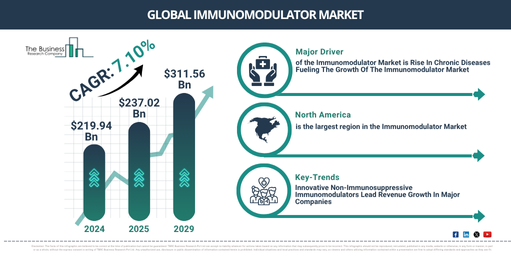
    The immunomodulator market has experienced substantial growth in recent years. Its valuation is projected to climb from $219.94 billion in 2024 to $237.02 billion in 2025, expanding at a compound annual growth rate (CAGR) of 7.8%. This historical growth can be ascribed to several factors, including the development of healthcare infrastructure, increased awareness among patients, the demographic shift towards an aging population, a rising incidence of autoimmune diseases, and the introduction of biologic drugs.

    The immunomodulator market is anticipated to experience significant expansion over the coming years, with its size projected to reach $311.56 billion by 2029, demonstrating a compound annual growth rate (CAGR) of 7.1%. This expected growth during the forecast period is primarily fueled by an increasing patient inclination towards non-invasive approaches, favorable regulatory approvals and guidelines, the breadth of health insurance coverage for immunomodulatory therapies, the rising number and development of immunomodulatory drugs, and increased government spending on healthcare. Furthermore, notable trends influencing the market include ongoing advancements in biotechnology and immunotherapy, the progression of immunomodulatory drugs within the research and development pipeline, broader technological innovations, the growing emphasis on personalized medicine, and breakthroughs in immuno-oncology.

    Unlock Your Free Sample Report for Exclusive Market Data:

    https://www.thebusinessresearchcompany.com/sample.aspx?id=15591&type=smp

    Which Drivers Are Shaping The Immunomodulator Industry’s Market Share?

    The increasing prevalence of chronic illnesses is projected to fuel the expansion of the immunomodulator market. These are enduring medical conditions that typically emerge gradually and persist for extended durations, often spanning years or an entire lifetime. The growing commonality of chronic diseases is attributable to a variety of interconnected factors, including an aging population, lifestyle choices, genetic predispositions, and the accessibility and infrastructure of healthcare. Immunomodulators offer significant therapeutic options for managing chronic conditions by regulating immune responses, decreasing inflammation, preventing organ rejection, boosting immune monitoring, and improving symptom control. For example, in September 2023, the World Health Organization, a Switzerland-based specialized agency of the United Nations, reported that 41 million deaths, which accounts for 74% of annual global fatalities, were caused by non-communicable diseases (NCDs) or chronic diseases. Specifically, there were 17.9 million deaths from cardiovascular diseases, 9.3 million deaths from cancer, 4.1 million deaths from chronic respiratory diseases, and 2.0 million deaths from diabetes. Thus, the rise in chronic diseases is propelling the growth of the immunomodulator market.

    What Are The Emerging Segments Gaining Attention In The Immunomodulator Market?

    The immunomodulatormarket covered in this report is segmented –

    1) By Product Type: Immunosuppressants; Immunostimulants; Other Product Types

    2) By Distribution Channel: Hospital Pharmacy; Online Pharmacy; Retail Pharmacy; Other Distribution Channels

    3) By Application: Oncology; Respiratory; Human Immunodeficiency Virus; Other Applications

    4) By End-User: Hospitals; Clinics; Other End Users

    Subsegments:

    1) By Immunosuppressants: Corticosteroids; Calcineurin Inhibitors (Tacrolimus, Cyclosporine); Mtor Inhibitors ( Sirolimus, Everolimus); Antimetabolites ( Azathioprine, Methotrexate); Biologic Immunosuppressants (Monoclonal Antibodies Like Rituximab); Janus Kinase (Jak) Inhibitors; T-Cell Inhibitors; Other Immunosuppressive Agents

    2) By Immunostimulants: Cytokine And Growth Factor-Based Immunostimulants ( Interferons, Interleukins); Monoclonal Antibodies For Immune Stimulation; Vaccines ( Cancer Vaccines, Preventive Vaccines); Adjuvants And Immune Modulatory Agents; Immunostimulatory Agents For Autoimmune Diseases; Toll-Like Receptor (Tlr) Agonists; Nucleic Acid-Based Immunostimulants ( Dna Or Rna Vaccines)

    3) By Other Product Types: Biologics ( Fusion Proteins, Immune Checkpoint Inhibitors); Small Molecule Immunomodulators; Immunotherapy Drugs; Stem Cell-Based Immunomodulators; Immuno-Oncology Drugs; Probiotics And Other Natural Immunomodulatory Agents

    What Are The Major Trends Driving The Growth Of The Immunomodulator Market?

    Entities operating within the immunomodulator market are prioritizing the creation of non-immunosuppressive products to fulfill the increasing demand for treatments that offer specific immune modulation without negatively impacting the body’s general immune function. Non-immunosuppressive refers to therapies or substances that do not suppress or reduce the immune system’s response. For instance, in February 2024, Nuvig Therapeutics, Inc., a US-based biotechnology company, began early-stage clinical trials for NVG-2089, which is a new-generation immune modulator. NVG-2089 is an exclusive product designed to aid patients suffering from inflammatory myopathies and serious dermatologic autoimmune disorders. The FDA has provided fast-track designation for NVG-2089’s development concerning bullous pemphigoid. This novel, recombinant, non-immunosuppressive immunomodulator functions by targeting type II Fc receptors to activate an endogenous regulatory process that mitigates autoimmune dysregulation. The primary objective of the study is to assess the safety and tolerability of NVG-2089, while secondary objectives include examining its pharmacokinetics and pharmacodynamics.

    Who Are The Primary Competitors In The Global Immunomodulator Market?

    Major companies operating in the immunomodulator market are Pfizer Inc., Johnson & Johnson, F. Hoffmann-La Roche AG, AbbVie Inc., Bayer AG, Sanofi S.A, Bristol Myers Squibb Company, AstraZeneca plc, Novartis AG, GlaxoSmithKline plc, Takeda Pharmaceutical Company Limited, Eli Lilly and Company, Gilead Sciences Inc., Applied Molecular Genetics Inc., Boehringer Ingelheim International GmbH, Teva Pharmaceutical Industries Ltd., Regeneron Pharmaceuticals Inc., Biogen Inc., Vertex Pharmaceuticals Incorporated, UCB S.A., Horizon Therapeutics plc, Incyte Corporation, Ipsen SA, Kyowa Kirin Co. Ltd., Amicus Therapeutics Inc.

    Download The Full Report For Exclusive Market Findings:

    https://www.thebusinessresearchcompany.com/report/immunomodulator-global-market-report

    Which Region Is Expected To Witness The Fastest Growth In The Immunomodulator Market?

    North America was the largest region in the immunomodulator market in 2024. Asia-Pacific is expected to be the fastest-growing region in the forecast period. The regions covered in the immunomodulator market report are Asia-Pacific, Western Europe, Eastern Europe, North America, South America, Middle East, Africa.

    Request A Customized Version Of The Immunomodulator Market Report:

    https://www.thebusinessresearchcompany.com/customise?id=15591&type=smp

    Browse Through More Reports Similar to the Global Immunomodulator Market 2025, By The Business Research Company

    Intravenous Immunoglobulin Global Market Report 2025

    https://www.thebusinessresearchcompany.com/report/intravenous-immunoglobulin-global-market-report

    Immunosuppressant Global Market Report 2025

    https://www.thebusinessresearchcompany.com/report/immunosuppressant-global-market-report

    Immuno Oncology Drug Global Market Report 2025

    https://www.thebusinessresearchcompany.com/report/immuno-oncology-drug-global-market-report

    Get in touch with us:

    The Business Research Company: https://www.thebusinessresearchcompany.com/

    Americas +1 310-496-7795

    Asia +44 7882 955267 & +91 8897263534

    Europe +44 7882 955267

    Email us at info@tbrc.info

    Follow us on:

    LinkedIn: https://in.linkedin.com/company/the-business-research-company

    YouTube: https://www.youtube.com/channel/UC24_fI0rV8cR5DxlCpgmyFQ

    Global Market Model: https://www.thebusinessresearchcompany.com/global-market-model

  • In Vitro Diagnostic (IVD) In Cardiology And Neurology Industry Overview 2025: Growth Projections and Market Trends

    In Vitro Diagnostic (IVD) In Cardiology And Neurology Industry Overview 2025: Growth Projections and Market Trends

    Unlock Global Insights – Save 20% on Market Reports with Code ONLINE20

    What Is The Future Market Size Estimation For The In Vitro Diagnostic (IVD) In Cardiology And Neurology Market Covering 2025–2034?

    The in vitro diagnostic (ivd) in cardiology and neurology market has experienced substantial growth in recent years. This market is forecast to increase from $15.84 billion in 2024 to $17.22 billion in 2025, at a compound annual growth rate (CAGR) of 8.7%. The expansion observed in the past can be attributed to several factors, including a rise in the occurrence of age-related cardiovascular and neurological conditions, an increasing elderly demographic, a greater emphasis on preventive healthcare and early disease detection, the escalating burden of cardiovascular diseases (CVDs) and neurological disorders such as stroke and Alzheimer’s disease, an increase in investments within healthcare infrastructure, and the development of supportive regulatory frameworks governing the approval and reimbursement of diagnostic tests.

    The in vitro diagnostic (ivd) in cardiology and neurology market is poised for substantial expansion in the upcoming years, with projections indicating growth to $23.59 billion by 2029, exhibiting a compound annual growth rate (CAGR) of 8.2%. This growth during the forecast period can be attributed to factors such as a move towards personalized medicine in cardiology and neurology, increasing demand for rapid and localized testing solutions in these fields, the broadening scope of telemedicine and remote consultation services, and a rise in research initiatives. Major trends anticipated in this period encompass the emergence of liquid biopsy technologies, advancements in nanotechnology, the adoption of remote monitoring devices like implantable cardiac monitors and brain-computer interfaces, the utilization of multiplex biomarker panels, innovations in medical imaging modalities such as MRI, CT, and PET scans, and the development of companion diagnostics for cardiovascular and neurological drugs.

    Unlock Your Free Sample Report for Exclusive Market Data:

    https://www.thebusinessresearchcompany.com/sample.aspx?id=15829&type=smp

    Which Drivers Are Supporting Growth Of The In Vitro Diagnostic (IVD) In Cardiology And Neurology Market?

    The growing prevalence of personalized medicine is projected to propel the expansion of the in vitro diagnostic (IVD) in cardiology and neurology market in the future. Personalized medicine is defined as a healthcare strategy that customizes medical choices, procedures, treatments, and interventions based on the unique attributes of each patient. The rise of personalized medicine is attributed to factors such as progress in genomics, enhanced comprehension of disease processes, patient desire for customized therapies, and backing from regulatory bodies. In cardiology and neurology, in vitro diagnostic (IVD) tests support personalized medicine by delivering vital data concerning a person’s genetic profile and disease condition, thereby informing individualized treatment strategies for better effectiveness and lower risks. As an illustration, the Personalized Medicine Coalition, a US-based professional membership organization, reported that in 2022, the approval of 12 new personalized medicines constituted roughly 34% of all recently approved therapies, showing a significant rise compared to prior years. Consequently, the rising volume of personalized medicines is boosting the expansion of the in vitro diagnostic (IVD) in cardiology and neurology market.

    What Are The Major Segments Identified In The In Vitro Diagnostic (IVD) In Cardiology And Neurology Market?

    The in vitro diagnostic (ivd) in cardiology and neurologymarket covered in this report is segmented –

    1) By Product Type: Instruments; Reagents And Consumables; Software And Services

    2) By Technology: Immunoassays; Molecular Diagnostics; Hematology; Other Technologies

    3) By End-User: Hospitals; Clinical Laboratories; Other End-Users

    Subsegments:

    1) By Instruments: Diagnostic Analyzers; Point-Of-Care Devices; Electrophysiology Devices

    2) By Reagents And Consumables: Diagnostic Reagents; Test Kits; Assay Consumables

    3) By Software And Services: Diagnostic Software; Data Management Software; IVD Consulting And Support Services

    Which Key Trends Are Expected To Influence The In Vitro Diagnostic (IVD) In Cardiology And Neurology Market In The Coming Years?

    Companies active in the in vitro diagnostic (IVD) in cardiology and neurology market are concentrating on the creation of AI-enabled integrated epigenetic engines, aimed at early disease detection and risk evaluation. These AI-enabled integrated epigenetic engines utilize machine-learning models and sophisticated biomarker analysis techniques to improve the sensitivity and accuracy in the diagnosis and monitoring of cardiovascular diseases, thereby tackling critical factors driving disease progression. As an illustration, in February 2023, US-based biotechnology company Cardio Diagnostics Holdings Inc. introduced PrecisionCHD, an AI-based blood test specifically for the early identification of coronary heart disease (CHD). Employing the company’s integrated epigenetic-genetic engine, this test assesses CHD risk and seeks to prevent and detect the most prevalent form of cardiovascular disease. The new test incorporates epigenetic and genetic biomarkers with machine-learning algorithms, providing over 75% sensitivity for both men and women. It connects a patient’s biomarker profile to modifiable risk factors such as smoking, diabetes, hypertension, and high cholesterol, which are significant contributors to CHD. PrecisionCHD serves as a non-invasive alternative to exercise stress tests or angiograms, with blood samples able to be collected in-office or at home.

    Which Major Firms Are Strengthening Their Position In The In Vitro Diagnostic (IVD) In Cardiology And Neurology Industry?

    Major companies operating in the in vitro diagnostic (IVD) in cardiology and neurology market are F. Hoffmann-La Roche Ltd., Thermo Fisher Scientific Inc., Abbott Laboratories, Danaher Corporation, Siemens Healthineers AG, Becton Dickinson And Company, Quest Diagnostics Incorporated, Hologic Inc., Illumina Inc., Beckman Coulter Inc., Quidel Corporation, Sysmex Corporation, Bio-Rad Laboratories Inc., QIAGEN N.V., Instrumentation Laboratory, bioMérieux SA, Natera, Inc., Randox Laboratories Ltd., Fulgent Genetics Inc., DiaSorin S.p.A., Oxford Nanopore Technologies, Fujirebio Diagnostics Inc., Adaptive Biotechnologies, Biocartis Group NV, Agena Bioscience

    Download The Full Report For Exclusive Market Findings:

    https://www.thebusinessresearchcompany.com/report/in-vitro-diagnostic-ivd-in-cardiology-and-neurology-global-market-report

    How Does The In Vitro Diagnostic (IVD) In Cardiology And Neurology Market Perform Across Key Geographic Regions?

    North America was the largest region in the in vitro diagnostic (IVD) in cardiology and neurology market in 2024. Asia-Pacific is expected to be the fastest-growing region in the forecast period. The regions covered in the in vitro diagnostic (IVD) in cardiology and neurology market report are Asia-Pacific, Western Europe, Eastern Europe, North America, South America, Middle East, Africa.

    Request A Customized Version Of The In Vitro Diagnostic (IVD) In Cardiology And Neurology Market Report:

    https://www.thebusinessresearchcompany.com/customise?id=15829&type=smp

    Browse Through More Reports Similar to the Global In Vitro Diagnostic (IVD) In Cardiology And Neurology Market 2025, By The Business Research Company

    In Vitro Diagnostics Ivd Quality Control Global Market Report 2025

    https://www.thebusinessresearchcompany.com/report/in-vitro-diagnostics-ivd-quality-control-global-market-report

    In Vitro Toxicology Testing Global Market Report 2025

    https://www.thebusinessresearchcompany.com/report/in-vitro-toxicology-testing-global-market-report

    In Vitro Diagnostics Global Market Report 2025

    https://www.thebusinessresearchcompany.com/report/in-vitro-diagnostics-global-market-report

    Get in touch with us:

    The Business Research Company: https://www.thebusinessresearchcompany.com/

    Americas +1 310-496-7795

    Asia +44 7882 955267 & +91 8897263534

    Europe +44 7882 955267

    Email us at info@tbrc.info

    Follow us on:

    LinkedIn: https://in.linkedin.com/company/the-business-research-company

    YouTube: https://www.youtube.com/channel/UC24_fI0rV8cR5DxlCpgmyFQ

    Global Market Model: https://www.thebusinessresearchcompany.com/global-market-model
  • Global Infectious Disease Therapeutics Market Analysis 2025–2029: Opportunities for Strategic Growth

    Global Infectious Disease Therapeutics Market Analysis 2025–2029: Opportunities for Strategic Growth

    Unlock Global Insights – Save 20% on Market Reports with Code ONLINE20

    How Much Was The Infectious Disease Therapeutics Market Worth In 2025, And What Is Its Anticipated Value By 2029?

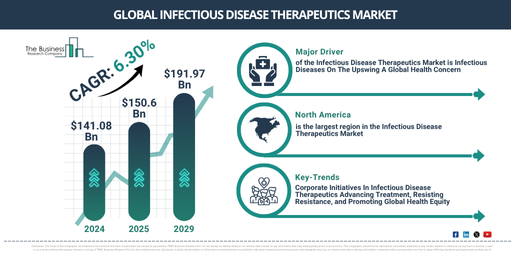
    The infectious disease therapeutics market size has demonstrated robust growth in recent years. It is projected to expand from $141.08 billion in 2024 to $150.6 billion in 2025, showing a compound annual growth rate (CAGR) of 6.7%. The historical increase can be attributed to several factors including the rising prevalence of infectious diseases, the increasing incidence of viral diseases, greater awareness about diagnosis, a rising demand for efficient and quick diagnostic testing, a growing demand for cost-effective generic drugs, the growing prevalence of infectious diseases, and the growing importance of antimicrobial stewardship.

    The infectious disease therapeutics market size is anticipated to undergo significant expansion in the coming years. It is projected to reach “$191.97 billion by 2029, demonstrating a compound annual growth rate (CAGR) of 6.3%. This growth during the forecast period is primarily driven by factors such as increasing investments, the broadening of clinical trial studies, a rise in the number of clinical trials, a greater emphasis on infectious disease prevention, heightened awareness regarding early diagnosis, and increasing overall awareness and funding. Major developments expected in the forecast period include strategic partnerships, product approvals, continued investments, and advancements in research and development within therapeutics.

    Unlock Your Free Sample Report for Exclusive Market Data:

    https://www.thebusinessresearchcompany.com/sample.aspx?id=15594&type=smp

    What Are The Key Drivers Of Growth In The Infectious Disease Therapeutics Market?

    The increasing occurrence of infectious diseases is projected to drive the expansion of the infectious disease therapeutics market in the coming period. Such diseases represent ailments brought on by disease-causing microorganisms like bacteria, viruses, fungi, parasites, or prions. The escalation in infectious diseases stems from various principal factors including climate shifts and environmental disturbances, resistance to antimicrobials, compromised immune systems, greater contact with animals, and ecological imbalances. Infectious disease therapeutics are crucial for addressing infections, diminishing sickness and fatalities, and managing the dissemination of transmissible conditions within and across populations. For example, in November 2023, as per the Centers for Disease Control and Prevention, a US-based government agency, the United States registered 8,331 tuberculosis (TB) cases in 2022, displaying an incidence rate of 2.5 per 100,000 people. This represents a 5.9% increase in case numbers and a 5.5% rise in the incidence rate compared to 2021. Consequently, the growing prevalence of infectious diseases acts as a driver for the infectious disease therapeutics market.

    How Is The Infectious Disease Therapeutics Market Classified Into Different Segments?

    The infectious disease therapeuticsmarket covered in this report is segmented –

    1) By Type: Drugs; Vaccines

    2) By Disease: Tuberculosis; HIV/AIDS; Influenza; Hepatitis; Other Diseases

    3) By End-User: Hospitals And Clinics; Retail Pharmacies; Research Organizations; Other End Users

    Subsegments:

    1) By Drugs – Antibiotics; Antivirals; Antifungals; Antiparasitics; Other Therapeutic Drugs (Monoclonal Antibodies, Immunomodulators)

    2) By Vaccines – Inactivated Vaccines; Live Attenuated Vaccines; Subunit Vaccines; Mrna Vaccines; Dna Vaccines; Toxoid Vaccines

    How Are Emerging Market Trends Shaping The Infectious Disease Therapeutics Industry Landscape?

    Major companies operating in the infectious disease therapeutics market are channeling investments into infectious disease drugs to develop superior treatments, effectively combat antimicrobial resistance, broaden their product portfolios, and address novel infectious threats. These financial undertakings are intended to enhance patient outcomes, meet existing unmet medical needs, and support global public health efforts aimed at controlling and managing infectious diseases. For instance, in June 2022, GSK, a UK-based healthcare company, invested £1 billion ($1.09 billion) to proactively tackle infectious diseases prevalent in lower-income countries. This specific initiative seeks to bolster research and development endeavors focused on combating diseases that disproportionately affect these regions. The notable disparity in health research funding and resources between high-income nations and low- and middle-income countries highlights the critical urgency for such forward-thinking investments to equitably improve population health.

    Which Leading Players Are Enhancing Their Infectious Disease Therapeutics Market Presence Worldwide?

    Major companies operating in the infectious disease therapeutics market are Pfizer Inc., Roche Diagnostics Corporation, F. Hoffmann-La Roche AG, Merck & Co. Inc., Sanofi SA, Thermo Fisher Scientific, AstraZeneca, Abbott Laboratories, Novartis International AG, Danaher Corporation, GlaxoSmithKline plc, Gilead Sciences Inc., Janssen Pharmaceutical, Siemens Healthineers, Moderna Inc., Becton, Dickinson, and Company, Regeneron Pharmaceuticals Inc., Boehringer Ingelheim GmbH, BioMérieux SA, Sysmex Corporation, Bio-Rad Laboratories, Qiagen N.V., Ortho Clinical Diagnostics, BioCryst Pharmaceuticals Inc.

    Download The Full Report For Exclusive Market Findings:

    https://www.thebusinessresearchcompany.com/report/infectious-disease-therapeutics-global-market-report

    Which Regional Markets Are Contributing Most To The Infectious Disease Therapeutics Industry Expansion?

    North America was the largest region in the infectious disease therapeutics market in 2024. Asia-Pacific is expected to be the fastest-growing region in the forecast period. The regions covered in the infectious disease therapeutics market report are Asia-Pacific, Western Europe, Eastern Europe, North America, South America, Middle East, Africa.

    Request A Customized Version Of The Infectious Disease Therapeutics Market Report:

    https://www.thebusinessresearchcompany.com/customise?id=15594&type=smp

    Browse Through More Reports Similar to the Global Infectious Disease Therapeutics Market 2025, By The Business Research Company

    Veterinary Infectious Disease Diagnostics Global Market Report 2025

    https://www.thebusinessresearchcompany.com/report/veterinary-infectious-disease-diagnostics-global-market-report

    Veterinary Anti Infectives Global Market Report 2025

    https://www.thebusinessresearchcompany.com/report/veterinary-anti-infectives-global-market-report

    Infection Prevention Global Market Report 2025

    https://www.thebusinessresearchcompany.com/report/infection-prevention-global-market-report

    Get in touch with us:

    The Business Research Company: https://www.thebusinessresearchcompany.com/

    Americas +1 310-496-7795

    Asia +44 7882 955267 & +91 8897263534

    Europe +44 7882 955267

    Email us at info@tbrc.info

    Follow us on:

    LinkedIn: https://in.linkedin.com/company/the-business-research-company

    YouTube: https://www.youtube.com/channel/UC24_fI0rV8cR5DxlCpgmyFQ

    Global Market Model: https://www.thebusinessresearchcompany.com/global-market-model