Category: HealthcareServices

  • Revenue of the Rare Disease Community App Market Predicted to Achieve $1.71 Billion by 2030, Driven by 13.2% CAGR

    Revenue of the Rare Disease Community App Market Predicted to Achieve $1.71 Billion by 2030, Driven by 13.2% CAGR

    Uncover key drivers, emerging technologies, and competitive movements shaping the rare disease community app market from 2026–2035 with trusted insights from The Business Research Company

    What was the valuation of the Rare Disease Community App Market in 2026, and what figure is it projected to hit by 2030?

    The rare disease community app market size has experienced significant expansion in recent years. It is projected to increase from $0.92 billion in 2025 to $1.05 billion in 2026, achieving a compound annual growth rate (CAGR) of 13.5%. The notable growth observed in the historic period can be attributed to increasing smartphone penetration in healthcare, growing awareness of rare diseases, the expansion of digital health platforms, rising demand for peer-to-peer patient support, and improved connectivity infrastructure.

    The rare disease community app market is projected to experience substantial growth in the upcoming years. By 2030, this market is anticipated to reach $1.72 billion, expanding at a compound annual growth rate (CAGR) of 13.2%. This growth during the forecast period is primarily driven by factors such as enhanced integration with electronic health records, a greater uptake of personalized digital health tools, the broadening of virtual patient communities, an intensified focus on data privacy and compliance, and increased partnerships with healthcare providers. Key trends expected during this period involve a wider adoption of digital patient support platforms, the growing deployment of AI-powered community engagement tools, a heightened emphasis on secure health data sharing, the expansion of integrated care coordination functionalities, and an increased focus on user-centric app design.

    Access Your Free Sample Report for In-Depth Market Insights:

    https://www.thebusinessresearchcompany.com/sample.aspx?id=28312&type=smp

    Which Drivers Are Affecting Market Participation In The Rare Disease Community App Market?

    The growing embrace of digital health solutions is projected to fuel the expansion of the rare disease community app market going forward. Digital health solutions involve the application of technology, software, and digital platforms to enhance healthcare provision, management, and patient outcomes. The increased adoption of these solutions is primarily driven by improved patient monitoring, which allows for real-time data tracking and personalized health management. The rare disease community app market supports this trend by offering virtual care access, real-time health insights, and personalized digital tools that address the specialized needs of rare disease patients. For instance, in April 2024, Queen Margaret University, a UK-based public university, stated that as of November 2023, 189 NHS trusts had implemented new electronic patient record systems, achieving 90% adoption across all trusts. Consequently, the increasing adoption of digital health solutions is a key factor driving the growth of the rare disease community app market.

    What Segment Categories Are Covered In The Rare Disease Community App Market?

    The rare disease community app market covered in this report is segmented –

    1) By Platform: iPhone Operating System, Android, Web-Based

    2) By Deployment Mode: Cloud-Based, On-Premises

    3) By Application: Patient Support, Disease Management, Clinical Trial Recruitment, Information Sharing, Other Applications

    4) By End-User: Patients, Caregivers, Healthcare Professionals, Researchers, Other End-Users

    Subsegments:

    1) By iPhone Operating System: iPhone App Store Apps, iPad Optimized Apps, Universal iOS Apps

    2) By Android: Google Play Store Apps, Android Tablet Apps, Hybrid Android Apps

    3) By Web-Based: Browser-Based Platforms, Progressive Web Apps (PWAs), Cloud-Hosted Web Portals

    What Trends Are Driving The Growth Trajectory Of The Rare Disease Community App Market?

    Leading companies active in the rare disease community app market are concentrating on developing advanced solutions, such as natural language processing (NLP) analytics, to enhance patient engagement, streamline communication with medical professionals, and improve support for disease management. Natural language processing (NLP) analytics refers to artificial intelligence-driven methodologies that analyze, interpret, and summarize human language to generate actionable health insights for both patients and clinicians. For instance, in December 2024, Know Rare, Inc., a UK-based health technology company, launched the HealthStoryAI app, which features AI-generated summaries of patient-reported experiences, structured tracking of symptoms and daily health, and personalized insight dashboards. These features help patients and healthcare providers identify meaningful health patterns, empowering individuals with rare diseases to better manage their conditions.

    Which Leading Companies Dominate The Rare Disease Community App Market Share?

    Major companies operating in the rare disease community app market are The Mighty Networks, Inc., PicnicHealth, Inc., FDNA, Inc., RareConnect, Carenity SAS, MyHealthTeam, Inc., CureDuchenne, Inc., Aparito Limited, ThinkGenetic, Inc., Know Rare, Inc., Rare Patient Voice, LLC, Inspire, Inc., RareGuru, LLC, Xperiome Ltd., PatientsLikeMe, Inc., Rare Disease Connect, Inc., Cochrane Rare Diseases, Global Genes, Inc., EURORDIS – Rare Diseases Europe, StuffThatWorks Health Ltd., and HealthUnlocked Ltd.

    Access The Complete Report For Deeper Market Insights:

    https://www.thebusinessresearchcompany.com/report/rare-disease-community-app-global-market-report

    How Does The Rare Disease Community App Market Perform Across Major Global Regions?

    North America was the largest region in the rare disease community app market in 2025. Asia-Pacific is expected to be the fastest-growing region in the forecast period. The regions covered in the rare disease community app market report are Asia-Pacific, South East Asia, Western Europe, Eastern Europe, North America, South America, Middle East, Africa.

    Request Your Customized Rare Disease Community App Market Research Report for Competitive Advantage:

    https://www.thebusinessresearchcompany.com/customise?id=28312&type=smp

    Browse Through More Reports Similar to the Global Rare Disease Community App Market 2026, By The Business Research Company

    Rare Inflammatory Disease Treatment Market Report 2026

    https://www.thebusinessresearchcompany.com/report/rare-inflammatory-disease-treatment-global-market-report

    Rare Disease Diagnostics Market Report 2026

    https://www.thebusinessresearchcompany.com/report/rare-disease-diagnostics-global-market-report

    Rare Diseases Treatment Market Report 2026

    https://www.thebusinessresearchcompany.com/report/rare-diseases-treatment-global-market-report

    Get in touch with us:

    The Business Research Company: https://www.thebusinessresearchcompany.com/

    Americas +1 310-496-7795

    Asia +44 7882 955267 & +91 8897263534

    Europe +44 7882 955267

    Email us at info@tbrc.info

    Follow us on:

    LinkedIn: https://in.linkedin.com/company/the-business-research-company

    YouTube: https://www.youtube.com/channel/UC24_fI0rV8cR5DxlCpgmyFQ

    Global Market Model: https://www.thebusinessresearchcompany.com/global-market-model

  • Rare Disease Clinical Trials Sector Forecast Shows Robust Momentum, Climbing to $21.34 Billion With 9.9% CAGR

    Rare Disease Clinical Trials Sector Forecast Shows Robust Momentum, Climbing to $21.34 Billion With 9.9% CAGR

    Uncover key drivers, emerging technologies, and competitive movements shaping the rare disease clinical trials market from 2026–2035 with trusted insights from The Business Research Company

    What are the forecasted starting (2026) and ending (2030) market sizes for the Rare Disease Clinical Trials Market?

    The rare disease clinical trials market has expanded rapidly in recent years. This market is anticipated to increase from $13.3 billion in 2025 to $14.65 billion in 2026, achieving a compound annual growth rate (CAGR) of 10.1%. The growth observed in the past can be attributed to the broadening of orphan drug development initiatives, the rise in regulatory incentives for rare disease research, the establishment of specialized clinical research organizations, heightened collaboration between academia and industry, and improved diagnostic methods for rare diseases.

    The rare disease clinical trials market is anticipated to show significant expansion in the upcoming years. It is projected to achieve a value of $21.34 billion by 2030, progressing at a compound annual growth rate (CAGR) of 9.9%. The projected increase during this period can be attributed to factors such as the increasing implementation of virtual and hybrid trials, the growing utilization of AI for trial optimization, the expansion of global rare disease trial networks, the rising demand for accelerated regulatory approvals, and increased investment in rare disease research and development. Noteworthy trends for the forecast period encompass a greater adoption of decentralized clinical trial models, the increasing use of adaptive trial designs, enhanced integration of digital tools for patient recruitment, an expansion in the collection of real-world evidence, and a heightened focus on trial protocols centered around patients.

    Access Your Free Sample Report for In-Depth Market Insights:

    https://www.thebusinessresearchcompany.com/sample.aspx?id=28311&type=smp

    What Drivers Are Supporting Technological Adoption In The Rare Disease Clinical Trials Market?

    The future expansion of the rare disease clinical trials market is expected to be propelled by the increasing prevalence of personalized medicine. This approach focuses on tailoring medical treatment to the specific characteristics of each patient, encompassing factors such as genetics, lifestyle, and environment. The rise in personalized medicine is attributed to its capacity to enhance treatment outcomes, as it customizes therapies to individual patient profiles for greater efficacy and safety. Rare disease clinical trials contribute to the advancement of personalized medicine by generating patient-specific insights that inform the development of targeted therapies, precisely adapted to each individual’s unique genetic and molecular profile. For instance, in February 2024, the Personalized Medicine Coalition (PMC), a US-based nonprofit organization, reported that the Food and Drug Administration (FDA) indicated personalized medicines represented 34% of approvals in 2022, a percentage that further increased to 38% in 2023. Therefore, the growing adoption of personalized medicine is a key factor driving the growth of the rare disease clinical trials market.

    Which Segments Are Contributing To The Growth Of The Rare Disease Clinical Trials Market?

    The rare disease clinical trials market covered in this report is segmented –

    1) By Phase: Phase I, Phase II, Phase III, Phase IV

    2) By Therapeutic Area: Oncology, Cardiovascular Disorders, Neurological Disorders, Infectious Disease, Genetic Disorders, Autoimmune And Inflammation, Hematologic Disorders, Musculoskeletal Disorders, Other Therapeutic Areas

    3) By Study Design: Interventional, Observational, Expanded Access

    4) By End-User: Pharmaceutical Companies, Biotechnology Companies, Research Institutes, Other End-Users

    Subsegments:

    1) By Phase I: First In Human Trials, Dose Escalation Studies, Safety And Tolerability Studies

    2) By Phase II: Proof Of Concept Studies, Dose Response Studies, Efficacy And Safety Studies

    3) By Phase III: Randomized Controlled Trials, Comparative Effectiveness Studies, Large Scale Multicenter Trials

    4) By Phase IV: Post Marketing Surveillance, Long Term Safety Studies, Real World Evidence Studies

    What Upcoming Trends Are Likely To Define The Future Path Of The Rare Disease Clinical Trials Market?

    Leading companies operating within the rare disease clinical trials market are concentrating on fostering innovation, for example, by adopting a client-centric approach to deliver bespoke trial designs, enhance patient involvement, and accelerate the progression of targeted treatments for rare conditions. A client-centric approach means prioritizing the necessities, aims, and inclinations of biotech and pharmaceutical clients to offer customized and effective clinical trial solutions. As an illustration, in March 2025, Evestia Clinical Limited, a pharmaceutical research company based in the US, was introduced as the new brand identity for EMAS Pharma. This rebranding signifies a strategic move intended to quicken the company’s global expansion. The company is committed to accelerating the development of therapies for rare diseases by furnishing expert-led, personalized clinical trial solutions specifically tailored to the distinct challenges associated with these conditions. This particular focus constitutes a crucial component of its brand identity and its service offerings.

    Who Are The Major Companies Operating In The Rare Disease Clinical Trials Market?

    Major companies operating in the rare disease clinical trials market are F. Hoffmann-La Roche AG, Pfizer Inc., Novartis AG, AstraZeneca plc, Takeda Pharmaceutical Company Limited, IQVIA Holdings Inc., Laboratory Corporation of America Holdings, ICON plc, Moderna Inc., Charles River Laboratories International Inc., Parexel International Corporation, Revvity Inc., Sarepta Therapeutics Inc., TFS HealthScience, Inventiva S.A., Tonix Pharmaceuticals Holding Corp., SpringWorks Therapeutics Inc., OrphAI Therapeutics Inc., BBCR Consulting LLC, Credevo Inc.

    Access The Complete Report For Deeper Market Insights:

    https://www.thebusinessresearchcompany.com/report/rare-disease-clinical-trials-global-market-report

    Which Region Is Anticipated To See The Fastest Growth In The Rare Disease Clinical Trials Market?

    North America was the largest region in the rare disease clinical trials market in 2025. The regions covered in the rare disease clinical trials market report are Asia-Pacific, South East Asia, Western Europe, Eastern Europe, North America, South America, Middle East, Africa.

    Request Your Customized Rare Disease Clinical Trials Market Research Report for Competitive Advantage:

    https://www.thebusinessresearchcompany.com/customise?id=28311&type=smp

    Browse Through More Reports Similar to the Global Rare Disease Clinical Trials Market 2026, By The Business Research Company

    Rare Neurological Disease Treatment Market Report 2026

    https://www.thebusinessresearchcompany.com/report/rare-neurological-disease-treatment-global-market-report

    Rare Disease Diagnostics Market Report 2026

    https://www.thebusinessresearchcompany.com/report/rare-disease-diagnostics-global-market-report

    Rare Inflammatory Disease Treatment Market Report 2026

    https://www.thebusinessresearchcompany.com/report/rare-inflammatory-disease-treatment-global-market-report

    Get in touch with us:

    The Business Research Company: https://www.thebusinessresearchcompany.com/

    Americas +1 310-496-7795

    Asia +44 7882 955267 & +91 8897263534

    Europe +44 7882 955267

    Email us at info@tbrc.info

    Follow us on:

    LinkedIn: https://in.linkedin.com/company/the-business-research-company

    YouTube: https://www.youtube.com/channel/UC24_fI0rV8cR5DxlCpgmyFQ

    Global Market Model: https://www.thebusinessresearchcompany.com/global-market-model

  • Rare Dermatological Disease Treatment Market Anticipated to Record Steady Gains, Advancing to $7.51 Billion by 2030

    Rare Dermatological Disease Treatment Market Anticipated to Record Steady Gains, Advancing to $7.51 Billion by 2030

    Uncover key drivers, emerging technologies, and competitive movements shaping the rare dermatological disease treatment market from 2026–2035 with trusted insights from The Business Research Company

    What upper market value could the Rare Dermatological Disease Treatment Market reach by 2030 starting from 2026 levels?

    The rare dermatological disease treatment market size has demonstrated robust expansion recently. This market is projected to expand from $5.57 billion in 2025 to $5.92 billion in 2026, exhibiting a compound annual growth rate (CAGR) of 6.3%. Key factors contributing to its historical growth include a better grasp of rare skin disease pathophysiology, the broader scope of orphan drug regulations, a rise in specialist dermatology research, advancements in biologics manufacturing capabilities, and increased recognition of rare dermatological conditions.

    The rare dermatological disease treatment market is anticipated to show significant expansion over the next few years. It is projected to achieve a value of $7.51 billion by 2030, with a compound annual growth rate (CAGR) of 6.1%. This growth during the forecast period can be attributed to factors such as increasing investments in gene therapy platforms, a rising focus on personalized treatment protocols, the expansion of clinical research in rare skin disorders, the growing adoption of advanced biologics, and increased regulatory support for orphan therapies. Prominent trends expected in the forecast period include the increasing development of targeted biologic therapies, a rise in the adoption of gene and cell-based treatments, a growing emphasis on personalized dermatology care, the expansion of orphan drug pipelines, and enhanced use of advanced diagnostic technologies.

    Access Your Free Sample Report for In-Depth Market Insights:

    https://www.thebusinessresearchcompany.com/sample.aspx?id=28310&type=smp

    Which Drivers Are Influencing Long-Term Growth In The Rare Dermatological Disease Treatment Market?

    The increasing number of diagnosed instances of rare dermatological disorders is anticipated to propel the expansion of the rare dermatological disease treatment market. Uncommon skin conditions, such as epidermolysis bullosa, pemphigus vulgaris, and cutaneous lupus erythematosus, affect a small percentage of the population but demand specialized care and targeted therapeutic approaches. Progress in genetic testing, heightened disease awareness, and earlier detection have led to a greater number of identified cases globally. This growing recognition generates a need for innovative treatments, including gene therapies, advanced biologics, and supportive care solutions, designed to manage symptoms, facilitate wound healing, and enhance patient outcomes. For instance, in January 2025, according to a CDC, a US-based public health agency, Vyjuvek (beremagene geperpavec-svdt), a redosable gene therapy for dystrophic epidermolysis bullosa, demonstrated significant wound closure in clinical studies, illustrating the positive impact of innovative therapies on patient care. Therefore, the rising occurrences of rare skin conditions are a driving force behind the growth of the rare dermatological disease treatment market.

    How Is The Rare Dermatological Disease Treatment Market Divided Into Segments?

    The rare dermatological disease treatment market covered in this report is segmented –

    1) By Indication: Systemic Sclerosis, Epidermolysis Bullosa, Pemphigus Vulgaris, Cutaneous Lupus Erythematosus

    2) By Treatment: Corticosteroid, Immunosuppressants, Anti-Inflammatory Agents, Other Treatments

    3) By Distribution Channel: Hospital Pharmacies, Retail Pharmacies, Online Pharmacies

    4) By Technology: Gene Therapy, Stem Cell Therapy, Nanotechnology

    5) By Application: Epidermolysis Bullosa, Ichthyosis, Other Applications

    Subsegments:

    1) By Systemic Sclerosis: Limited Cutaneous Systemic Sclerosis, Diffuse Cutaneous Systemic Sclerosis, Sine Scleroderma

    2) By Epidermolysis Bullosa: Epidermolysis Bullosa Simplex, Junctional Epidermolysis Bullosa, Dystrophic Epidermolysis Bullosa, Kindler Syndrome

    3) By Pemphigus Vulgaris: Mucosal Pemphigus Vulgaris, Mucocutaneous Pemphigus Vulgaris, Cutaneous Pemphigus Vulgaris

    4) By Cutaneous Lupus Erythematosus: Acute Cutaneous Lupus Erythematosus, Subacute Cutaneous Lupus Erythematosus, Chronic Cutaneous Lupus Erythematosus (Discoid Lupus)

    Which Trends Are Shaping Activity Within The Rare Dermatological Disease Treatment Market?

    Major companies are active in the rare dermatological disease treatment market, focusing on the development of smart and advanced gene therapy technologies, such as redosable gene therapy, to enhance patient outcomes, simplify treatment, and improve quality of life. A redosable gene therapy works by delivering functional COL7A1 genes directly to affected skin areas, which allows for repeated, noninvasive applications, sustained protein restoration, and accelerated wound closure. For instance, in May 2023, Krystal Biotech, a U.S.-based biotechnology company, launched Vyjuvek (beremagene geperpavec-svdt) for the treatment of dystrophic epidermolysis bullosa. This product demonstrated that 65% of treated wounds achieved complete closure at 24 weeks, compared to 26% with placebo, and it permits once-weekly application to selected wounds, thereby reducing the need for surgical interventions. Vyjuvek also offers a noninvasive, clinic-administered option, although it requires specialized cold-chain storage to maintain its efficacy.

    Which Major Firms Are Strengthening Their Position In The Rare Dermatological Disease Treatment Market?

    Major companies operating in the rare dermatological disease treatment market are Kyowa Kirin, Johnson and Johnson company, F. Hoffmann-La Roche Limited, Merck KGaA, Arcutis Biotherapeutics, Pfizer Inc., Abbvie, Sanofi, Novartis AG, AstraZeneca, Eli lilly and company, Amgen, Bristol Myers Squibb Company, Pierre Fabre Laboratories, LEO Pharma, Almirall, Castle Creek Biosciences, Inc., Azitra, Krystal Biotech, Inc., Avita Medical, NS Pharma, Replay, Eloxx Pharmaceuticals, Kamari Pharma, BPGbio

    Access The Complete Report For Deeper Market Insights:

    https://www.thebusinessresearchcompany.com/report/rare-dermatological-disease-treatment-global-market-report

    Which Region Is Anticipated To See The Fastest Growth In The Rare Dermatological Disease Treatment Market?

    North America was the largest region in the personalized genomics market in 2025. Asia-Pacific is expected to be the fastest-growing region in the forecast period. The regions covered in the rare dermatological disease treatment market report are Asia-Pacific, South East Asia, Western Europe, Eastern Europe, North America, South America, Middle East, Africa.

    Request Your Customized Rare Dermatological Disease Treatment Market Research Report for Competitive Advantage:

    https://www.thebusinessresearchcompany.com/customise?id=28310&type=smp

    Browse Through More Reports Similar to the Global Rare Dermatological Disease Treatment Market 2026, By The Business Research Company

    Dermatophytosis Treatment Market Report 2026

    https://www.thebusinessresearchcompany.com/report/dermatophytosis-treatment-global-market-report

    Rare Inflammatory Disease Treatment Market Report 2026

    https://www.thebusinessresearchcompany.com/report/rare-inflammatory-disease-treatment-global-market-report

    Veterinary Dermatology Drugs Market Report 2026

    https://www.thebusinessresearchcompany.com/report/veterinary-dermatology-drugs-global-market-report

    Get in touch with us:

    The Business Research Company: https://www.thebusinessresearchcompany.com/

    Americas +1 310-496-7795

    Asia +44 7882 955267 & +91 8897263534

    Europe +44 7882 955267

    Email us at info@tbrc.info

    Follow us on:

    LinkedIn: https://in.linkedin.com/company/the-business-research-company

    YouTube: https://www.youtube.com/channel/UC24_fI0rV8cR5DxlCpgmyFQ

    Global Market Model: https://www.thebusinessresearchcompany.com/global-market-model

  • Rare Biomarkers Specimen Collection And Stabilization Industry Poised for Rapid Growth, Forecast to Touch $55.34 Billion by 2030 at 9.2% CAGR

    Rare Biomarkers Specimen Collection And Stabilization Industry Poised for Rapid Growth, Forecast to Touch $55.34 Billion by 2030 at 9.2% CAGR

    Uncover key drivers, emerging technologies, and competitive movements shaping the rare biomarkers specimen collection and stabilization market from 2026–2035 with trusted insights from The Business Research Company

    What level of CAGR-driven expansion is anticipated in the Rare Biomarkers Specimen Collection And Stabilization Market between 2026 and 2030?

    The rare biomarkers specimen collection and stabilization market size has expanded quickly in recent years. This market is expected to grow from $35.29 billion in 2025 to $38.94 billion in 2026, achieving a compound annual growth rate (CAGR) of 10.3%. The drivers behind this historical growth are an increase in molecular diagnostics research, the expansion of oncology biomarker studies, the availability of plasma-based testing methods, rising clinical trial activity, and a growing adoption of biobanking practices.

    The rare biomarkers specimen collection and stabilization market is projected to experience substantial growth in the upcoming years, with its size anticipated to reach $55.35 billion by 2030, exhibiting a compound annual growth rate (CAGR) of 9.2%. This expansion during the forecast period is primarily attributed to the increasing adoption of precision diagnostics, the rising demand for early disease detection, the broadening of genomic and transcriptomic testing, growing investments in biomarker-driven drug development, and the increasing integration of AI in biomarker analysis. Furthermore, key trends in this period will include the wider adoption of liquid biopsy collection techniques, the growing use of advanced stabilization reagents, a rising demand for high-sensitivity biomarker preservation, the expansion of non-invasive diagnostic applications, and an enhanced focus on sample integrity and traceability.

    Access Your Free Sample Report for In-Depth Market Insights:

    https://www.thebusinessresearchcompany.com/sample.aspx?id=15913&type=smp

    What Drivers Are Affecting Demand-Supply Dynamics In The Rare Biomarkers Specimen Collection And Stabilization Market?

    The projected rise in cancer cases is anticipated to boost the expansion of the rare biomarker specimen collection and stabilization market in the future. Cancer encompasses a wide range of illnesses marked by the uncontrolled multiplication and dispersion of atypical cells. This increase in cancer’s occurrence stems from various factors, including environmental exposures, lifestyle choices like smoking and unhealthy eating, and genetic predispositions, collectively fostering a greater demand for accurate diagnostic and surveillance instruments. The collection and stabilization of rare biomarker specimens are crucial for ensuring the precise preservation of biomarkers derived from blood and tissue, which are vital for early diagnosis, molecular characterization, and guiding treatment choices in cancer care. As an illustration, in February 2024, the World Health Organization, an intergovernmental body based in Switzerland, predicted that by 2050, there would be more than 35 million new cancer diagnoses, indicating a 77% rise from the approximately 20 million cases estimated in 2022. Consequently, the growing incidence of cancer is fueling the expansion of the rare biomarker specimen collection and stabilization market.

    What Segments Are Included Within The Rare Biomarkers Specimen Collection And Stabilization Market?

    The rare biomarkers specimen collection and stabilization market covered in this report is segmented –

    1) By Type: Circulating Cell Free Deoxyribonucleic Acid (CCFDNA), Circulating Tumor Cells (CTCs), Exosomes or Extracellular Vesicles

    2) By Specimen: Serum Or Plasma, Other Specimens

    3) By Application: Non-Invasive Prenatal Testing (NIPT), Oncology, Transcriptomics, Pharmacogenomics, Transplant Rejection, Population Screening, Cardiovascular Diseases, Other Applications

    4) By End-User: Hospitals, Perinatal Clinics, Public Health Labs, Private Or Commercial Labs, Physician Labs, Research Institutes, Other End-Users

    Subsegments:

    1) By Circulating Cell Free Deoxyribonucleic Acid (CCFDNA): Plasma CCFDNA, Serum CCFDNA

    2) By Circulating Tumor Cells (CTCs): CTCs In Blood, CTCs In Bone Marrow

    3) By Exosomes Or Extracellular Vesicles: Exosomes From Plasma, Exosomes From Serum

    Which Trends Are Influencing The Development Of The Rare Biomarkers Specimen Collection And Stabilization Market?

    Leading companies within the rare biomarkers specimen collection and stabilization market are concentrating on developing advanced solutions, such as automated plasma and cell sample preparation, to safeguard biomarker integrity and enable high-throughput multiomics analysis. Automated pre-analytical platforms represent technologies designed to standardize blood sample processing, encompassing steps like plasma separation, cell fixation, and slide preparation directly at the point of collection, thereby ensuring consistent specimen quality without manual handling or specialized tubes. For example, in April 2024, Tethis S.p.A., an Italy-based biotechnology company, announced the enrollment of its first two patients in a clinical study for its See.d platform. This platform automates the standardized preparation of plasma and cell samples for multiomic liquid biopsy, which includes the fixation of rare circulating tumor and immune cells onto nanocoated SmartBioSurface slides. Designed to maximize sample integrity and enable seamless analysis of cell-free DNA and circulating tumor cells from a single draw, the platform supports the entire workflow of rare biomarker specimen collection and stabilization.

    Who Are The Primary Competitors In The Global Rare Biomarkers Specimen Collection And Stabilization Market?

    Major companies operating in the rare biomarkers specimen collection and stabilization market are F. Hoffmann-La Roche AG, Thermo Fisher Scientific Inc., Abbott Laboratories, Merck KGaA, Becton Dickinson and Company, Eurofins Scientific SE, Agilent Technologies Inc., PerkinElmer Inc., Illumina Inc., Charles River Laboratories International Inc., Bio-Rad Laboratories Inc., Bruker Corporation, QIAGEN N.V., Miltenyi Biotec GmbH, Natera Inc., Promega Corporation, Myriad Genetics, Hamilton Company, OraSure Technologies Inc., Fluidigm Corporation, Streck Inc., SeraCare, Enzo Biochem Inc., Epigenomics AG, Veridex LLC

    Access The Complete Report For Deeper Market Insights:

    https://www.thebusinessresearchcompany.com/report/rare-biomarkers-specimen-collection-and-stabilization-global-market-report

    Which Global Regions Are Shaping The Competitive Landscape Of The Rare Biomarkers Specimen Collection And Stabilization Market?

    North America was the largest region in the rare biomarkers specimen collection and stabilization market in 2025. Asia-Pacific is expected to be the fastest-growing region in the forecast period. The regions covered in the rare biomarkers specimen collection and stabilization market report are Asia-Pacific, South East Asia, Western Europe, Eastern Europe, North America, South America, Middle East, Africa.

    Request Your Customized Rare Biomarkers Specimen Collection And Stabilization Market Research Report for Competitive Advantage:

    https://www.thebusinessresearchcompany.com/customise?id=15913&type=smp

    Browse Through More Reports Similar to the Global Rare Biomarkers Specimen Collection And Stabilization Market 2026, By The Business Research Company

    Biomarker Discovery Outsourcing Services Market Report 2026

    https://www.thebusinessresearchcompany.com/report/biomarker-discovery-outsourcing-services-global-market-report

    Clinical Biomarkers Market Report 2026

    https://www.thebusinessresearchcompany.com/report/clinical-biomarkers-global-market-report

    Biomarkers Market Report 2026

    https://www.thebusinessresearchcompany.com/report/biomarkers-global-market-report

    Get in touch with us:

    The Business Research Company: https://www.thebusinessresearchcompany.com/

    Americas +1 310-496-7795

    Asia +44 7882 955267 & +91 8897263534

    Europe +44 7882 955267

    Email us at info@tbrc.info

    Follow us on:

    LinkedIn: https://in.linkedin.com/company/the-business-research-company

    YouTube: https://www.youtube.com/channel/UC24_fI0rV8cR5DxlCpgmyFQ

    Global Market Model: https://www.thebusinessresearchcompany.com/global-market-model
  • Rapid Diagnostics Market Performance Outlook 2026–2030: Revenue to Hit $64.78 Billion at 12.4% CAGR

    Rapid Diagnostics Market Performance Outlook 2026–2030: Revenue to Hit $64.78 Billion at 12.4% CAGR

    Uncover key drivers, emerging technologies, and competitive movements shaping the rapid diagnostics market from 2026–2035 with trusted insights from The Business Research Company

    What long-term size projections exist for the Rapid Diagnostics Market covering 2026–2035?

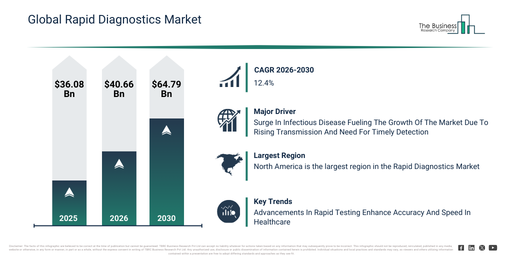
    The rapid diagnostics market has witnessed significant expansion in recent years. It is anticipated to increase from $36.08 billion in 2025 to $40.66 billion in 2026, demonstrating a compound annual growth rate (CAGR) of 12.7%. The market’s historical growth can be attributed to a heightened demand for quicker clinical diagnostics, the proliferation of decentralized healthcare settings, a rise in the prevalence of chronic and infectious diseases, improved accessibility of diagnostic tools, and the expansion of outpatient diagnostic services.

    The rapid diagnostics market is projected to experience substantial growth in the upcoming years. Its valuation is anticipated to reach $64.79 billion by 2030, demonstrating a compound annual growth rate (CAGR) of 12.4%. This projected growth during the forecast timeframe is primarily driven by factors such as escalating investments in molecular diagnostics, the increasing uptake of connected diagnostic instruments, the broadening availability of home-based testing options, a heightened emphasis on personalized diagnostics, and the expanded application of data-driven clinical workflows. Key developments anticipated within this period encompass the wider utilization of point-of-care diagnostic platforms, the surging adoption of molecular rapid testing, an expanding integration of digital result interpretation, the proliferation of portable diagnostic equipment, and an intensified focus on supporting early clinical decisions.

    Access Your Free Sample Report for In-Depth Market Insights:

    https://www.thebusinessresearchcompany.com/sample.aspx?id=24679&type=smp

    Which Drivers Are Impacting The Competitive Landscape Of The Rapid Diagnostics Market?

    A rising incidence of infectious diseases is anticipated to drive expansion in the rapid diagnostics market moving ahead. Infectious diseases are conditions resulting from harmful microorganisms like bacteria, viruses, parasites, or fungi, capable of transmitting between individuals either directly or indirectly. The heightened occurrence of infectious diseases stems from increased international travel, facilitating quicker transmission and elevated infection rates. Rapid diagnostics are instrumental in managing infectious diseases by providing swift and precise pathogen identification, which supports prompt treatment choices, curtails transmission, and enhances patient results. For illustration, the The World Health Organization (WHO), a Switzerland-based specialized agency of the United Nations focused on international public health, reported in May 2025 that global SARS-CoV-2 (the virus causing COVID-19, an infectious disease) activity had been increasing since mid-February 2025, based on sentinel site data, with the test positivity rate reaching 11%, a figure previously seen in July 2024. Consequently, the expanding incidence of infectious diseases is propelling the rapid diagnostics market.

    What Leading Segments Are Studied In The Rapid Diagnostics Market?

    The rapid diagnostics market covered in this report is segmented –

    1) By Product Type: Kits, Reagents, Instruments, Other Product Types

    2) By Platform: Immunoassays, Molecular Detection, Other Rapid Diagnostic Platforms

    3) By Application: Blood Glucose Testing, Infectious Disease Testing, Cardiometabolic Testing, Pregnancy and Fertility Testing, Fecal Occult Blood Testing, Coagulation Testing, Toxicology Testing

    4) By Distribution Channel: Hospital Pharmacies, Brick and Mortar, E-Commerce, Other Distribution Channels

    5) By End Use: Diagnostic Centers, Homecare Settings, Hospital Pharmacies, Other End Users

    Subsegments:

    1) By Kits: Lateral Flow Assay Kits, PCR Kits, Immunoassay Kits, Microfluidic Kits, Molecular Diagnostic Kits, Multiplex Kits

    2) By Reagents: Enzymes, Buffers, Probes and Primers, Stains and Dyes, Antibodies, Calibration and Control Reagents

    3) By Instruments: PCR Machines, Lateral Flow Readers, Immunoassay Analyzers, Microfluidic Analyzers, Automated Sample Processors, Biosensors

    4) By Other Product Types: Software and Data Management Tools, Sample Collection Devices, Accessories and Consumables, Calibration Standards, Point-of-Care Devices

    What Trends Are Expected To Impact The Competitive Landscape Of The Rapid Diagnostics Market?

    Major companies in the rapid diagnostics market are concentrating on advancements and innovation, specifically rapid diagnostic testing instruments, to improve diagnostic precision, decrease turnaround times, and enhance patient outcomes in point-of-care settings. Rapid diagnostic testing tools are defined as medical devices that quickly detect the presence of specific diseases or conditions, typically providing results within minutes at the point of care. For example, in May 2025, SEKISUI Diagnostics, a US-based medical diagnostics manufacturer, introduced the OSOM RSV Test, a rapid diagnostic tool designed for identifying respiratory syncytial virus (RSV). This test is intended for use in professional healthcare settings and delivers results in just 15 minutes. It employs a rapid immunochromatographic assay to qualitatively detect RSV nucleoprotein antigen. The test utilizes anterior nasal swab specimens collected from patients exhibiting symptoms of respiratory infection. Its quick turnaround time supports timely and effective clinical decision-making.

    Which Key Market Players Are Investing In Expansion And Innovation Within The Rapid Diagnostics Market?

    Major companies operating in the rapid diagnostics market are Johnson And Johnson Services Inc, F Hoffmann La Roche Ltd, Thermo Fisher Scientific Inc, Abbott Laboratories, Danaher Corporation, Siemens Healthineers AG, Becton Dickinson And Company, Hologic Inc, bioMerieux SA, QuidelOrtho Corporation, Bio Rad Laboratories Inc, QIAGEN NV, Cepheid Inc, OraSure Technologies Inc, Nova Biomedical Corporation, Fujirebio Holdings Inc, Sekisui Diagnostics LLC, EKF Diagnostics Holdings plc, Trinity Biotech plc, Abingdon Health plc, Abionic SA, LumiraDx Ltd

    Access The Complete Report For Deeper Market Insights:

    https://www.thebusinessresearchcompany.com/report/rapid-diagnostics-global-market-report

    Which Regions Are Poised For Strategic Growth In The Rapid Diagnostics Market?

    North America was the largest region in the rapid diagnostics market in 2025. Asia-Pacific is expected to be the fastest-growing region in the forecast period. The regions covered in the rapid diagnostics market report are Asia-Pacific, South East Asia, Western Europe, Eastern Europe, North America, South America, Middle East, Africa.

    Request Your Customized Rapid Diagnostics Market Research Report for Competitive Advantage:

    https://www.thebusinessresearchcompany.com/customise?id=24679&type=smp

    Browse Through More Reports Similar to the Global Rapid Diagnostics Market 2026, By The Business Research Company

    Immunochemistry Diagnostic Devices And Equipment Market Report 2026

    https://www.thebusinessresearchcompany.com/report/immunochemistry-diagnostic-devices-and-equipment-global-market-report

    Blood Transfusion Diagnostics Market Report 2026

    https://www.thebusinessresearchcompany.com/report/blood-transfusion-diagnostics-global-market-report

    Hematology Diagnostic Devices And Equipment Market Report 2026

    https://www.thebusinessresearchcompany.com/report/hematology-diagnostic-devices-and-equipment-global-market-report

    Get in touch with us:

    The Business Research Company: https://www.thebusinessresearchcompany.com/

    Americas +1 310-496-7795

    Asia +44 7882 955267 & +91 8897263534

    Europe +44 7882 955267

    Email us at info@tbrc.info

    Follow us on:

    LinkedIn: https://in.linkedin.com/company/the-business-research-company

    YouTube: https://www.youtube.com/channel/UC24_fI0rV8cR5DxlCpgmyFQ

    Global Market Model: https://www.thebusinessresearchcompany.com/global-market-model

  • Global Rapid Diagnostic Test Kits Market Set for Strong Expansion, Reaching $32.21 Billion With 5.9% CAGR by 2030

    Global Rapid Diagnostic Test Kits Market Set for Strong Expansion, Reaching $32.21 Billion With 5.9% CAGR by 2030

    Uncover key drivers, emerging technologies, and competitive movements shaping the rapid diagnostic test kits market from 2026–2035 with trusted insights from The Business Research Company

    What total market size is anticipated for the Rapid Diagnostic Test Kits Market in 2030?

    The rapid diagnostic test kits market has demonstrated robust expansion recently. Its value is anticipated to rise from $24.08 billion in 2025 to $25.59 billion in 2026, achieving a compound annual growth rate (CAGR) of 6.3%. This past growth is largely a result of the increasing prevalence of infectious diseases, the broadening of decentralized healthcare services, a growing need for rapid diagnostic outcomes, the rise in outpatient and homecare testing, and the accessibility of lateral flow and immunoassay technologies.

    The market for rapid diagnostic test kits is projected to experience substantial expansion over the upcoming years. It is anticipated to reach $32.22 billion by 2030, exhibiting a compound annual growth rate (CAGR) of 5.9%. This projected expansion is driven by factors such as greater investments in rapid diagnostic innovation, the rising popularity of self-testing kits, the enlargement of infectious disease surveillance initiatives, the escalating need for cost-effective diagnostics in developing regions, and the broader incorporation of digital readout technologies. Key trends anticipated during this period encompass the increasing embrace of point-of-care testing solutions, a heightened demand for multiplex rapid test kits, the expanding utilization of diagnostics at home, the proliferation of portable and disposable test formats, and a sharpened emphasis on detecting diseases early.

    Access Your Free Sample Report for In-Depth Market Insights:

    https://www.thebusinessresearchcompany.com/sample.aspx?id=24678&type=smp

    What Drivers Are Influencing Production Trends In The Rapid Diagnostic Test Kits Market?

    The expansion of the rapid diagnostic test kits market is anticipated to be driven by the escalating prevalence of infectious diseases. These diseases are defined as illnesses caused by pathogenic microorganisms such as bacteria, viruses, fungi, or parasites, which can transmit directly or indirectly between individuals. The rising incidence of infectious diseases is fueled by antimicrobial resistance and evolving pathogen strains; widespread antibiotic use has resulted in drug-resistant bacterial infections, while viruses continuously mutate, forming new variants that bypass existing immunity and demand updated detection methods. This growing prevalence supports an increased adoption of point-of-care testing devices, enabling rapid identification of pathogens and allowing healthcare providers to promptly diagnose infections, initiate suitable treatment, and implement timely infection control measures. For example, according to the Centers for Disease Control and Prevention, a US-based government agency, in March 2024, the count of tuberculosis cases rose from 8,320 in 2022 to 9,615 in 2023, marking a surge of 1,295 cases. Consequently, the increasing prevalence of infectious diseases is a significant catalyst for the growth of the rapid diagnostic test kits market.

    Which Segment Groups Are Influencing The Rapid Diagnostic Test Kits Market?

    The rapid diagnostic test kits market covered in this report is segmented –

    1) By Product Type: Antigen Test Kits, Antibody Test Kits, Nucleic Acid Test Kits, Multi-Analyte Test Kits

    2) By Technology: Fluorescent Immunoassay, Enzyme-Linked Immunosorbent Assay (ELISA), Colloidal Gold-Based Test, Lateral Flow Assays

    3) By Application: Infectious Disease Testing, Cardiology Testing, Oncology Testing, Pregnancy And Fertility Testing, Toxicology Testing, Glucose Monitoring, Other Applications

    4) By End-User: Hospitals, Diagnostic Laboratories, Home Care Settings, Pharmacies

    Subsegments:

    1) By Antigen Test Kits: COVID-19 Antigen Test Kits, Influenza Antigen Test Kits, Malaria Antigen Test Kits, Respiratory Syncytial Virus Antigen Test Kits, Streptococcus Antigen Test Kits

    2) By Antibody Test Kits: HIV Antibody Test Kits, Hepatitis Antibody Test Kits, COVID-19 Antibody Test Kits, Dengue Antibody Test Kits, Syphilis Antibody Test Kits

    3) By Nucleic Acid Test Kits: HIV Nucleic Acid Test Kits, Hepatitis B And C Nucleic Acid Test Kits, Human Papillomavirus Nucleic Acid Test Kits, Tuberculosis Nucleic Acid Test Kits, COVID-19 Nucleic Acid Test Kits

    4) By Multi-Analyte Test Kits: Respiratory Panel Test Kits, Sexually Transmitted Infections Panel Test Kits, Gastrointestinal Panel Test Kits, Febrile Illness Panel Test Kits, Sepsis Marker Panel Test Kits

    Which Trends Are Guiding The Evolution Of The Rapid Diagnostic Test Kits Market?

    Leading entities within the rapid diagnostic test kits sector are concentrating efforts on creating innovative products, including saliva-based pregnancy test kits, to enhance their market competitiveness. These saliva-based kits serve as diagnostic instruments engineered to identify pregnancy through the analysis of a woman’s saliva for specific hormonal shifts, notably human chorionic gonadotropin (hCG), a hormone generated during gestation. As an illustration, during February 2023, Abingdon Health plc, a diagnostics firm situated in the UK focusing on near-patient solutions, introduced Salistick. This product represents the initial rapid saliva-based pregnancy test available in the UK and Ireland, signifying a notable advancement in at-home pregnancy screening by providing a cleaner and more convenient option compared to conventional urine-based methods. This exceptionally precise test identifies the pregnancy hormone ß-hCG within saliva, facilitating early pregnancy detection for women in any location and at any moment, simultaneously fostering a more intimate and easily shareable testing process.

    Who Are The Core Companies Influencing Trends In The Rapid Diagnostic Test Kits Market?

    Major companies operating in the rapid diagnostic test kits market are F Hoffmann La Roche Ltd, Thermo Fisher Scientific Inc, Abbott Laboratories, Danaher Corporation, Siemens Healthineers AG, Becton Dickinson and Company, Hologic Inc, bioMerieux SA, QuidelOrtho Corporation, Bio Rad Laboratories Inc, QIAGEN NV, Cepheid Inc, OraSure Technologies Inc, Nova Biomedical Corporation, Sekisui Diagnostics LLC, EKF Diagnostics Holdings plc, Trinity Biotech plc, ACON Laboratories Inc, Fluxergy LLC, Lumos Diagnostics Holdings Limited, Abingdon Health plc, Abionic SA

    Access The Complete Report For Deeper Market Insights:

    https://www.thebusinessresearchcompany.com/report/rapid-diagnostic-test-kits-global-market-report

    Which Regions Are Projected To Dominate The Rapid Diagnostic Test Kits Market In The Coming Years?

    North America was the largest region in the rapid diagnostic test kits market in 2025. Asia-Pacific is expected to be the fastest-growing region in the forecast period. The regions covered in the rapid diagnostic test kits market report are Asia-Pacific, South East Asia, Western Europe, Eastern Europe, North America, South America, Middle East, Africa.

    Request Your Customized Rapid Diagnostic Test Kits Market Research Report for Competitive Advantage:

    https://www.thebusinessresearchcompany.com/customise?id=24678&type=smp

    Browse Through More Reports Similar to the Global Rapid Diagnostic Test Kits Market 2026, By The Business Research Company

    Rapid Strength Concrete Market Report 2026

    https://www.thebusinessresearchcompany.com/report/rapid-strength-concrete-global-market-report

    Lateral Flow Immunoassay Based Rapid Test Market Report 2026

    https://www.thebusinessresearchcompany.com/report/lateral-flow-immunoassay-based-rapid-test-global-market-report

    Covid 19 Rapid Test Kits Market Report 2026

    https://www.thebusinessresearchcompany.com/report/covid-19-rapid-test-kits-global-market-report

    Get in touch with us:

    The Business Research Company: https://www.thebusinessresearchcompany.com/

    Americas +1 310-496-7795

    Asia +44 7882 955267 & +91 8897263534

    Europe +44 7882 955267

    Email us at info@tbrc.info

    Follow us on:

    LinkedIn: https://in.linkedin.com/company/the-business-research-company

    YouTube: https://www.youtube.com/channel/UC24_fI0rV8cR5DxlCpgmyFQ

    Global Market Model: https://www.thebusinessresearchcompany.com/global-market-model

  • Radiotherapy Induced Oral Mucositis Treatment Market Growth Projection: Expected to Surpass $2.35 Billion by 2030 at 5% CAGR

    Radiotherapy Induced Oral Mucositis Treatment Market Growth Projection: Expected to Surpass $2.35 Billion by 2030 at 5% CAGR

    Uncover key drivers, emerging technologies, and competitive movements shaping the radiotherapy induced oral mucositis treatment market from 2026–2035 with trusted insights from The Business Research Company

    What is the expected shift in the Radiotherapy Induced Oral Mucositis Treatment Market’s size between 2026 and 2030?

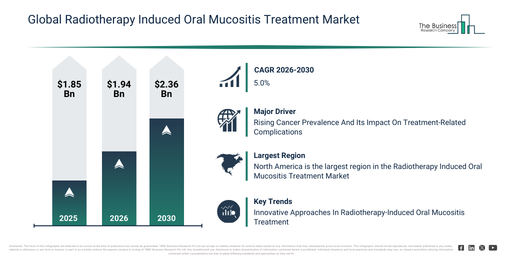
    The radiotherapy induced oral mucositis treatment market size has shown robust growth in recent years. It is anticipated to increase from $1.85 billion in 2025 to $1.94 billion in 2026, achieving a compound annual growth rate (CAGR) of 5.2%. This historical growth can be ascribed to the rising application of radiotherapy for head and neck cancers, heightened awareness regarding treatment side effects, the availability of supportive oncology drugs, the expansion of oncology care centers, and the increasing engagement of dental specialists in cancer care.

    The radiotherapy induced oral mucositis treatment market size is projected to experience consistent expansion over the coming years. This market is expected to reach $2.36 billion by 2030, progressing at a compound annual growth rate (CAGR) of 5.0%. This anticipated growth can be attributed to several factors during the forecast period, including the increasing adoption of advanced mucosal protection therapies, rising investments in supportive oncology research, a growing demand for non-invasive pain management, the expansion of hospital-based supportive care programs, and an increasing focus on early intervention strategies. Furthermore, significant trends expected in the forecast period involve the increasing development of targeted supportive care therapies, the growing use of topical and device-based treatments, a rising focus on patient quality of life management, the expansion of preventive oral care protocols, and enhanced integration of multidisciplinary cancer care.

    Access Your Free Sample Report for In-Depth Market Insights:

    https://www.thebusinessresearchcompany.com/sample.aspx?id=21268&type=smp

    Which Drivers Are Shaping Strategic Decisions In The Radiotherapy Induced Oral Mucositis Treatment Market?

    The anticipated expansion of the radiotherapy induced oral mucositis treatment market is linked to the rising worldwide incidence of cancer. Cancer, a condition where abnormal cells proliferate and spread uncontrollably into neighboring tissues and organs, stems from genetic alterations influenced by environmental and lifestyle elements. Key contributors to this rising global cancer prevalence include an aging population, lifestyle decisions like tobacco use, obesity, and alcohol intake, alongside environmental factors such as air pollution. Radiotherapy Induced Oral Mucositis Treatment offers relief to cancer patients by mitigating the painful mucosal damage induced by radiotherapy, thereby improving their treatment tolerance, supporting nutritional intake, and ultimately enhancing their quality of life throughout their cancer journey. For example, a report from August 2024 by Macmillan Cancer Support, a UK-based charitable organization, indicated that over 3 million individuals in the UK are currently living with cancer in 2024. This number is forecast to rise to 3.5 million by 2025, 4 million by 2030, and 5.3 million by 2040. Consequently, the expanding global occurrence of cancer is a significant impetus for the growth of the radiotherapy induced oral mucositis treatment market.

    What Segment Classifications Make Up The Radiotherapy Induced Oral Mucositis Treatment Market?

    The radiotherapy induced oral mucositis treatment market covered in this report is segmented –

    1) By Drug Class: Antibiotics, Antifungal, Anti-Inflammatory, Anti-Neoplastic

    2) By Treatment Type: Topical Agents, Systemic Agents, Medical Devices

    3) By Radiotherapy Type: External Beam Radiation Therapy (EBRT), Intensity-Modulated Radiation Therapy (IMRT), Brachytherapy, Proton Therapy, Stereotactic Radiosurgery (SRS), Other Radiotherapy Type

    4) By Severity Type: Mild Oral Mucositis, Moderate Oral Mucositis, Severe Oral Mucositis (SOM)

    5) By End User: Hospitals, Oncology Centres, Research Institutes, Dental Clinics

    Subsegments:

    1) By Antibiotics: Topical Antibiotics, Oral Antibiotics

    2) By Antifungal: Topical Antifungals, Oral Antifungals

    3) By Anti-inflammatory: Corticosteroids, Non-steroidal Anti-inflammatory Drugs (NSAIDs)

    4) By Anti-neoplastic: Chemotherapy Agents, Targeted Therapy Agents

    What Trends Are Projected To Support The Growth Of The Radiotherapy Induced Oral Mucositis Treatment Market?

    Major companies operating in the radiotherapy induced oral mucositis treatment market are concentrating on developing innovative products, such as low-level laser therapy, to enhance recovery, reduce discomfort, and improve patient outcomes during cancer treatment. This low-level laser therapy, also known as cold laser therapy or photobiomodulation, is a non-invasive approach that employs low-power lasers or light-emitting diodes (LEDs) to stimulate healing and alleviate pain and inflammation. For example, in October 2024, Jaguar Health Inc., a US-based pharmaceuticals company, introduced gelclair, an oral mucositis prescription product. This product is specifically formulated to manage the pain associated with oral mucositis, a condition affecting up to 90% of head and neck cancer patients undergoing chemotherapy and radiotherapy. By adhering to the mucosal surface of the mouth, gelclair offers rapid and lasting pain relief, distinct from the stinging or numbing effects often linked with other treatments.

    Which Major Industry Participants Are Leading The Radiotherapy Induced Oral Mucositis Treatment Market Growth?

    Major companies operating in the radiotherapy induced oral mucositis treatment market are Bausch Health Companies Inc., Sun Pharmaceutical Industries Ltd., Cipla Limited, Dr Reddys Laboratories Ltd., Zydus Cadila Health Care Limited, Leo Pharma A S, Glenmark Pharmaceuticals Ltd., Almirall S.A., Fagron Group BV, Sage Products LLC, Soligenix Inc., EUSA Pharma Ltd., Galera Therapeutics Inc., Enzychem Lifesciences Corp., Jaguar Health Inc., EpicentRx Inc., MONOPAR Therapeutics Inc., Solasia Pharma KK, Pfizer Inc., Novartis AG, Sanofi S.A., Merck And Co Inc., Bristol Myers Squibb Company, AstraZeneca PLC

    Access The Complete Report For Deeper Market Insights:

    https://www.thebusinessresearchcompany.com/report/radiotherapy-induced-oral-mucositis-treatment-global-market-report

    Which Region Is Expected To Experience The Fastest Growth In The Radiotherapy Induced Oral Mucositis Treatment Market?

    North America was the largest region in the radiotherapy induced oral mucositis treatment market in 2025. The regions covered in the radiotherapy induced oral mucositis treatment market report are Asia-Pacific, South East Asia, Western Europe, Eastern Europe, North America, South America, Middle East, Africa.

    Request Your Customized Radiotherapy Induced Oral Mucositis Treatment Market Research Report for Competitive Advantage:

    https://www.thebusinessresearchcompany.com/customise?id=21268&type=smp

    Browse Through More Reports Similar to the Global Radiotherapy Induced Oral Mucositis Treatment Market 2026, By The Business Research Company

    Radiotherapy Devices Market Report 2026

    https://www.thebusinessresearchcompany.com/report/radiotherapy-devices-global-market-report

    Dental Flap Surgery Market Report 2026

    https://www.thebusinessresearchcompany.com/report/dental-flap-surgery-global-market-report

    Oral Transmucosal Drugs Market Report 2026

    https://www.thebusinessresearchcompany.com/report/oral-transmucosal-drugs-global-market-report

    Get in touch with us:

    The Business Research Company: https://www.thebusinessresearchcompany.com/

    Americas +1 310-496-7795

    Asia +44 7882 955267 & +91 8897263534

    Europe +44 7882 955267

    Email us at info@tbrc.info

    Follow us on:

    LinkedIn: https://in.linkedin.com/company/the-business-research-company

    YouTube: https://www.youtube.com/channel/UC24_fI0rV8cR5DxlCpgmyFQ

    Global Market Model: https://www.thebusinessresearchcompany.com/global-market-model
  • Radiotherapy Market Forecast 2026–2035: How to Leverage Market Growth

    Radiotherapy Market Forecast 2026–2035: How to Leverage Market Growth

    Uncover key drivers, emerging technologies, and competitive movements shaping the radiotherapy market from 2026–2035 with trusted insights from The Business Research Company

    What growth pattern is forecast for the Radiotherapy Market size between 2026 and 2035?

    The radiotherapy market has shown robust growth over recent years. It is anticipated to expand from $7.89 billion in 2025 to $8.44 billion in 2026, achieving a compound annual growth rate (CAGR) of 6.9%. The expansion observed in the past can be attributed to several factors including the development of hospital radiotherapy infrastructure, the increasing global prevalence of cancer, the adoption of linear accelerator technologies, enhancements in diagnostic imaging, and a rise in the availability of trained radiation oncologists.

    The radiotherapy market is projected to experience substantial expansion in the coming years. Its valuation is anticipated to reach $10.93 billion by 2030, demonstrating a compound annual growth rate (CAGR) of 6.7%. This expansion during the projection period stems from factors such as heightened investments in proton therapy infrastructure, a greater emphasis on customized radiation dosing, the proliferation of outpatient radiotherapy centers, the increasing incorporation of AI-powered planning systems, and a surging need for highly precise cancer treatments. Key developments predicted for this period encompass a wider embrace of sophisticated external beam methods, expanded utilization of image-guided and adaptive radiotherapy, an escalating requirement for proton and particle therapy, the broadening of multimodal cancer treatment strategies, and a heightened emphasis on the precision of treatment planning.

    Access Your Free Sample Report for In-Depth Market Insights:

    https://www.thebusinessresearchcompany.com/sample.aspx?id=21267&type=smp

    Which Drivers Are Impacting Market Performance In The Radiotherapy Market?

    The anticipated expansion of the radiotherapy market is propelled by the rising incidence of cancer. Cancer is a condition marked by the unchecked proliferation of abnormal cells that can infiltrate and spread throughout the body, manifesting in various tissues and organs and presenting diverse forms and symptoms. The escalating prevalence of cancer stems from factors such as an aging demographic, shifts in lifestyle like unhealthy diets and inactive habits, significant tobacco and alcohol consumption, environmental contamination, and enhanced diagnostic methods identifying more cases. Radiotherapy is vital in combating cancer, precisely targeting and eradicating malignant cells, thereby shrinking tumors and enhancing patient prognosis. As an illustration, in August 2024, according to the Macmillan Cancer Support, a UK-based charitable organization to support cancer patients, it was disclosed that over 3 million individuals in the UK were living with cancer in 2024, with forecasts indicating an increase to 3.5 million by 2025, 4 million by 2030, and 5.3 million by 2040. Consequently, the growing prevalence of cancer is fueling the expansion of the radiotherapy market.

    What Segment Types Are Examined In The Radiotherapy Market?

    The radiotherapy market covered in this report is segmented –

    1) By Therapy Type: External Beam Radiation Therapy, Internal Beam Radiation Therapy, Systemic Radiation Therapy

    2) By Application: Prostate Cancer, Breast Cancer, Lung Cancer, Head And Neck Cancer, Colorectal Cancer, Gynecological Cancer, Cervical Cancer, Penile Cancer, Other Applications

    3) By End-User: Hospitals And Diagnostic Laboratories, Cancer Treatment And Research Centers, Academic Research Organizations, Ambulatory Surgery Centers, Other End-Users

    Subsegments:

    1) By External Beam Radiation Therapy: Intensity-Modulated Radiation Therapy (IMRT), Stereotactic Body Radiation Therapy (SBRT), 3D Conformal Radiation Therapy (3D-CRT), Proton Beam Therapy, Image-Guided Radiation Therapy (IGRT), Volumetric Modulated Arc Therapy (VMAT)

    2) By Internal Beam Radiation Therapy: Brachytherapy (High-Dose Rate), Brachytherapy (Low-Dose Rate), Intraoperative Radiation Therapy (IORT), Permanent Seed Implants

    3) By Systemic Radiation Therapy: Radioisotope Therapy, Targeted Radionuclide Therapy, Radioimmunotherapy, Peptide Receptor Radionuclide Therapy (PRRT)

    Which Trends Are Influencing The Performance And Direction Of The Radiotherapy Market?

    Leading firms within the radiotherapy market are concentrating on creating sophisticated solutions, including image-guided radiotherapy (IGRT), with the goal of increasing treatment accuracy, minimizing healthy tissue exposure, and improving patient results. IGRT describes the application of advanced imaging setups, like onboard CT or MRI, alongside adaptive software for real-time monitoring and adjustment of radiation delivery, contingent on tumor position and movement. As an illustration, in May 2024, Elekta AB, a medical technology company based in Sweden, released Elekta Evo CT-Linac, presenting its subsequent generation adaptive radiotherapy system equipped with high-definition AI-enhanced imaging and an online adaptive workflow. This system is crafted to aid clinicians in providing more precise and personalized radiation therapy, accommodating a broad spectrum of treatment protocols while lowering exposure to at-risk organs.

    Who Are The Prominent Global Companies Shaping The Radiotherapy Market Landscape?

    Major companies operating in the radiotherapy market are Hitachi Ltd., GE Healthcare Technologies Inc., Sumitomo Heavy Industries Ltd., Varian Medical Systems Inc., Elekta AB, Accuray Incorporated, Ion Beam Applications S.A, Canon Medical Systems Corporation, RefleXion Medical Inc., Mevion Medical Systems Inc., Nordion Inc., Theragenics Corporation, RaySearch Laboratories AB, MIM Software Inc., Vision RT Ltd., Sun Nuclear Corporation, Provision Healthcare LLC, Panacea Medical Technologies Pvt. Ltd., Optivus Proton Therapy Inc., Perspective Therapeutics Inc., GT Medical Technologies Inc., ProTom International Inc.

    Access The Complete Report For Deeper Market Insights:

    https://www.thebusinessresearchcompany.com/report/radiotherapy-global-market-report

    Which Geographic Areas Are Emerging As Strong Markets For The Radiotherapy Market?

    North America was the largest region in the radiotherapy market in 2025. Asia-Pacific is expected to be the fastest-growing region in the forecast period. The regions covered in the radiotherapy market report are Asia-Pacific, South East Asia, Western Europe, Eastern Europe, North America, South America, Middle East, Africa.

    Request Your Customized Radiotherapy Market Research Report for Competitive Advantage:

    https://www.thebusinessresearchcompany.com/customise?id=21267&type=smp

    Browse Through More Reports Similar to the Global Radiotherapy Market 2026, By The Business Research Company

    Medical Irradiation Market Report 2026

    https://www.thebusinessresearchcompany.com/report/medical-irradiation-global-market-report

    Single Dose Radiotherapy Services Market Report 2026

    https://www.thebusinessresearchcompany.com/report/single-dose-radiotherapy-services-global-market-report

    Image Guided Radiation Therapy Market Report 2026

    https://www.thebusinessresearchcompany.com/report/image-guided-radiation-therapy-global-market-report

    Get in touch with us:

    The Business Research Company: https://www.thebusinessresearchcompany.com/

    Americas +1 310-496-7795

    Asia +44 7882 955267 & +91 8897263534

    Europe +44 7882 955267

    Email us at info@tbrc.info

    Follow us on:

    LinkedIn: https://in.linkedin.com/company/the-business-research-company

    YouTube: https://www.youtube.com/channel/UC24_fI0rV8cR5DxlCpgmyFQ

    Global Market Model: https://www.thebusinessresearchcompany.com/global-market-model

  • Global Radiotheranostics Market 2026–2030: Forecast Insights for Business Planning

    Global Radiotheranostics Market 2026–2030: Forecast Insights for Business Planning

    Uncover key drivers, emerging technologies, and competitive movements shaping the radiotheranostics market from 2026–2035 with trusted insights from The Business Research Company

    How much larger will the Radiotheranostics Market be in 2030 compared with 2026?

    The radiotheranostics market size has seen rapid growth in recent years. It is forecast to increase from $10.05 billion in 2025 to $11.43 billion in 2026, achieving a compound annual growth rate (CAGR) of 13.7%. This historical growth can be attributed to the increasing use of nuclear medicine diagnostics, the expansion of oncology-focused clinical research, the availability of therapeutic radioisotopes, the rising adoption of PET and SPECT imaging, and growing collaboration between pharma and imaging providers.

    The radiotheranostics market is projected to experience substantial expansion over the coming years. Its valuation is set to reach $19.24 billion by 2030, exhibiting a compound annual growth rate (CAGR) of 13.9%. This anticipated growth during the projection period stems from several factors, including the rising number of approvals for radiotheranostic drugs, increased investments in precision oncology, the broadening of isotope production infrastructure, the escalating need for personalized cancer care, and the greater integration of AI in selecting treatments. Key developments expected within this period encompass the wider embrace of targeted radioligand therapies, the increased application of paired diagnostic and therapeutic isotopes, the deepening integration of precision imaging with therapy, the enlargement of personalized oncology applications, and a heightened emphasis on targeting cancer at a molecular level.

    Access Your Free Sample Report for In-Depth Market Insights:

    https://www.thebusinessresearchcompany.com/sample.aspx?id=12270&type=smp

    What Drivers Are Guiding Growth Patterns In The Radiotheranostics Market?

    The rising incidence of cancer is anticipated to fuel the expansion of the radiotheranostics market in the future. Cancer is defined as a disease where certain body cells multiply without control and disseminate to various parts of the body. Radiotheranostics medications are frequently utilized in cancer treatment, providing the pinnacle of personalized medicine through the application of combined diagnostic and therapeutic radionuclide probes. These probes enable the precise and targeted identification and management of particular cells, often cancerous ones, with each approach tailored to the patient’s unique condition to boost treatment effectiveness and improve clinical outcomes. For example, data from January 2024, released by the American Cancer Society, a US-based nonprofit cancer advocacy group, indicated that cancer cases rose to 2,001,140, up from 1,958,310 in 2023, showing a 2.19% increase. Consequently, the growing occurrence of cancer acts as a key driver for the radiotheranostics market.

    Which Segments Are Driving Activity In The Radiotheranostics Market?

    The radiotheranostics market covered in this report is segmented –

    1) By Radioisotope: Technetium-99, Gallium-68, Iodine-131, Iodine-123, Fludeoxyglucose-18F, Yttrium-90, Lutetium (Lu) 177, Copper (Cu) 67, Copper (Cu) 64, Other Radioisotopes

    2) By Approach: Targeted Therapeutic, Targeted Diagnostic

    3) By Application: Oncology, Non-Oncology

    4) By End-Users: Hospitals And Clinics, Pharmaceutical And Biotechnology Companies, Other End-Users

    Subsegments:

    1) By Technetium-99: Technetium-99m, Technetium-99 Pertechnetate

    2) By Gallium-68: Gallium-68 DOTATATE, Gallium-68 PSMA

    3) By Iodine-131: Iodine-131 For Thyroid Cancer Treatment, Iodine-131 For Hyperthyroidism Treatment

    4) By Iodine-123: Iodine-123 For Thyroid Scans, Iodine-123 For Cardiac Imaging

    5) By Fludeoxyglucose-18F (FDG): FDG For Oncology Imaging, FDG For Brain Imaging

    6) By Yttrium-90: Yttrium-90 Microspheres For Liver Cancer, Yttrium-90 For Radioimmunotherapy

    7) By Lutetium (Lu) 177: Lutetium-177 PSMA For Prostate Cancer, Lutetium-177 DOTATATE For Neuroendocrine Tumors

    8) By Copper (Cu) 67: Copper-67 For Targeted Radiotherapy, Copper-67 In Clinical Trials

    9) By Copper (Cu) 64: Copper-64 For PET Imaging, Copper-64 For Radiotherapy

    10) By Other Radioisotopes: Radium-223, Samarium-153, Other Emerging Radioisotopes In Theranostics

    What Long-Term Trends Are Expected To Shape The Future Of The Radiotheranostics Market?

    Leading companies operating within the radiotheranostics market are concentrating on developing innovative products to enhance the production and availability of therapeutic radioisotopes, improve the precision of treatments, and satisfy the growing demand for targeted cancer therapies. For instance, in May 2023, Advanced Cyclotron Systems Inc., a Canada-based company supplying and servicing cyclotrons predominantly used for producing medical isotopes, unveiled TR-ALPHA, a dedicated cyclotron engineered for producing alpha-emitting radioisotopes to treat cancer. Designed to fulfill the market’s requirement for a cost-effective cyclotron capable of manufacturing large quantities of Astatine-211, recognized as one of the most promising alpha-emitting radioisotopes, the TR-ALPHA is more compact, more affordable, and simpler to operate than earlier models, making it an ideal solution for hospitals, research institutions, and organizations aiming to efficiently produce therapeutic alpha-emitting radioisotopes.

    Which Key Players Are Driving Competition In The Radiotheranostics Market?

    Major companies operating in the radiotheranostics market are Lantheus Holdings Inc., Cardinal Health Inc., GE Healthcare Inc., Bayer AG, Novartis AG, Siemens Healthineers, Orano Med, Curium SAS, IBA Molecular, The Eckert & Ziegler Group, Advanced Accelerator Applications (AAA), Telix Pharmaceuticals Limited., Abdera Therapeutics, Blue Earth Diagnostics, Sirtex Medical Limited, Y-mAbs Therapeutics Inc., ITM Radiopharma, NorthStar Medical Radioisotopes LLC, Trasis S.A., Molecular Targeting Technologies Inc., RadioMedix Inc, Clarity Pharmaceuticals, Actinium Pharmaceuticals Inc., Navidea Biopharmaceuticals Inc.

    Access The Complete Report For Deeper Market Insights:

    https://www.thebusinessresearchcompany.com/report/radiotheranostics-global-market-report

    Which Region Is Projected To Lead The Radiotheranostics Market During The Forecast Period?

    North America was the largest region in the radiotheranostics market in 2025. The regions covered in the radiotheranostics market report are Asia-Pacific, South East Asia, Western Europe, Eastern Europe, North America, South America, Middle East, Africa.

    Request Your Customized Radiotheranostics Market Research Report for Competitive Advantage:

    https://www.thebusinessresearchcompany.com/customise?id=12270&type=smp

    Browse Through More Reports Similar to the Global Radiotheranostics Market 2026, By The Business Research Company

    Oncologists Market Report 2026

    https://www.thebusinessresearchcompany.com/report/oncologists-global-market-report

    Diagnostic Radioisotopes Market Report 2026

    https://www.thebusinessresearchcompany.com/report/diagnostic-radioisotopes-global-market-report

    Radome Market Report 2026

    https://www.thebusinessresearchcompany.com/report/radome-global-market-report

    Get in touch with us:

    The Business Research Company: https://www.thebusinessresearchcompany.com/

    Americas +1 310-496-7795

    Asia +44 7882 955267 & +91 8897263534

    Europe +44 7882 955267

    Email us at info@tbrc.info

    Follow us on:

    LinkedIn: https://in.linkedin.com/company/the-business-research-company

    YouTube: https://www.youtube.com/channel/UC24_fI0rV8cR5DxlCpgmyFQ

    Global Market Model: https://www.thebusinessresearchcompany.com/global-market-model

  • Radiosurgery And Radiotherapy Robotics Market Outlook 2026–2035: Growth Drivers and Industry Forecast

    Radiosurgery And Radiotherapy Robotics Market Outlook 2026–2035: Growth Drivers and Industry Forecast

    Uncover key drivers, emerging technologies, and competitive movements shaping the radiosurgery and radiotherapy robotics market from 2026–2035 with trusted insights from The Business Research Company

    Starting from its 2026 valuation, what market size is the Radiosurgery And Radiotherapy Robotics Market expected to reach by 2030?

    The radiosurgery and radiotherapy robotics market size has experienced robust growth in recent years. Projections indicate it will expand from $4.54 billion in 2025 to $4.79 billion in 2026, achieving a compound annual growth rate (CAGR) of 5.4%. This historic expansion can be linked to factors such as increasing cancer incidence rates, the development of hospital-based oncology infrastructure, the integration of advanced linear accelerator systems, a rising acceptance of minimally invasive cancer treatments, and improvements in the precision of radiation delivery.

    The market for radiosurgery and radiotherapy robotics is projected to experience substantial expansion in the coming years. This market is set to reach $6.17 billion by 2030, demonstrating a compound annual growth rate (CAGR) of 6.5%. This anticipated growth stems from several factors, including escalating investments in robotic oncology platforms, a growing need for tailored cancer therapies, the proliferation of proton therapy centers, greater incorporation of AI-powered treatment planning, and an increased emphasis on minimizing radiation exposure to healthy tissues. Key developments expected during this period involve the wider adoption of robotic-assisted precision radiation systems, the expanding integration of image-guided treatment platforms, increased utilization of adaptive radiotherapy technologies, the broadened deployment of proton and stereotactic radiosurgery systems, and a heightened commitment to treatment accuracy and patient safety.

    Access Your Free Sample Report for In-Depth Market Insights:

    https://www.thebusinessresearchcompany.com/sample.aspx?id=12896&type=smp

    What Drivers Are Driving Adoption Within The Radiosurgery And Radiotherapy Robotics Market?

    The increasing requirement for minimally invasive procedures is projected to boost the expansion of the radiosurgery and radiotherapy robotics market. Minimally invasive procedures (MIPs) are surgical interventions conducted via small incisions in the body. These operations typically employ specialized instruments and cameras inserted through these cuts. Radiosurgery and radiotherapy robots are utilized in minimally invasive treatments to deliver radiation doses to tumors with higher accuracy and precision than older methods. This improved performance stems from robots’ capacity for more accurate and consistent movement compared to humans. For instance, in February 2024, according to the American Academy of Facial Plastic and Reconstructive Surgery, a US-based non-profit organization, in 2023, the overwhelming majority, specifically 83%, of medical procedures performed were minimally invasive, while the remaining 17% were traditional surgical procedures. Thus, the growing demand for minimally invasive procedures is propelling the growth of the radiosurgery and radiotherapy robotics market.

    How Is The Radiosurgery And Radiotherapy Robotics Market Organized Into Various Segments?

    The radiosurgery and radiotherapy robotics market covered in this report is segmented –

    1) By Product: X-ray Based, Gamma-ray Based, Proton-beam Based

    2) By Application: External Beam Radiotherapy, Internal Beam Radiotherapy Or Brachytherapy

    3) By End Use: Hospitals, Clinics, Other End Users

    Subsegments:

    1) By X-ray Based: Linear Accelerators (LINAC), Stereotactic X-Ray Systems, Image-Guided Radiation Therapy (IGRT) Systems

    2) By Gamma-Ray Based: Gamma Knife Systems, Stereotactic Radiosurgery (SRS) Systems, Radioactive Isotope Systems

    3) By Proton-Beam Based: Proton Therapy Systems, Pencil Beam Scanning Systems, Fixed Beam Proton Systems

    Which Market Trends Are Opening Growth Opportunities In The Radiosurgery And Radiotherapy Robotics Market?

    Major companies operating within the radiosurgery and radiotherapy robotics market are prioritizing the adoption of new technological solutions, such as dynamic surface positioning and monitoring systems, to maintain their market standing. This system serves as a patient tracking mechanism for surface-guided radiation therapy (SGRT), utilizing a thermal-surface camera to observe patient position and identify any movement during treatment. For instance, in May 2023, Brainlab, a Germany-based software and hardware developer for radiotherapy and radiosurgery, unveiled the ExacTrac Dynamic Surface Positioning and Monitoring System. This single-camera unit solution aims to ensure uniformity across the radiation department and enables continuous patient observation during breath-hold treatments. The key objective of ExacTrac Dynamic Surface is to establish consistency department-wide and deliver precise tracking. Clinicians can experience a quick learning curve with ExacTrac Dynamic Surface on any linac, attributed to its single, user-friendly interface and standardized workflows.

    Who Are The Top-Performing Companies In The Radiosurgery And Radiotherapy Robotics Market In Recent Years?

    Major companies operating in the radiosurgery and radiotherapy robotics market are Mitsubishi Electric Corporation, Hitachi Ltd., Siemens Healthineers AG, Elekta AB, Shinva Medical Instrument Co. Ltd., Neusoft Medical Systems Co. Ltd., Accuray Incorporated, Sumitomo Heavy Industries Ltd., Ion Beam Applications SA, Brainlab AG, ViewRay Inc., Zhuhai Hokai Medical Instruments Co. Ltd., RaySearch Laboratories AB, Mevion Medical Systems Inc., Vision Rt Limited, Sun Nuclear Corporation, Panacea Medical Technologies Pvt. Ltd., C-Rad AB, Radiadyne LLC, ProTom International Holding Corporation, CIVCO Radiotherapy, Standard Imaging Inc., Intraop Medical Corporation, Best Medical International Inc., Modus Medical Devices Inc., Mirada Medical Ltd.

    Access The Complete Report For Deeper Market Insights:

    https://www.thebusinessresearchcompany.com/report/radiosurgery-and-radiotherapy-robotics-global-market-report

    Which Region Currently Holds The Largest Share Of The Radiosurgery And Radiotherapy Robotics Market?

    North America was the largest region in the radiosurgery and radiotherapy robotics market in 2025. The regions covered in the radiosurgery and radiotherapy robotics market report are Asia-Pacific, South East Asia, Western Europe, Eastern Europe, North America, South America, Middle East, Africa.

    Request Your Customized Radiosurgery And Radiotherapy Robotics Market Research Report for Competitive Advantage:

    https://www.thebusinessresearchcompany.com/customise?id=12896&type=smp

    Browse Through More Reports Similar to the Global Radiosurgery And Radiotherapy Robotics Market 2026, By The Business Research Company

    Image Guided Radiation Therapy Market Report 2026

    https://www.thebusinessresearchcompany.com/report/image-guided-radiation-therapy-global-market-report

    Radiotherapy Devices Market Report 2026

    https://www.thebusinessresearchcompany.com/report/radiotherapy-devices-global-market-report

    Veterinary Stereotactic Radiosurgery System Market Report 2026

    https://www.thebusinessresearchcompany.com/report/veterinary-stereotactic-radiosurgery-system-global-market-report

    Get in touch with us:

    The Business Research Company: https://www.thebusinessresearchcompany.com/

    Americas +1 310-496-7795

    Asia +44 7882 955267 & +91 8897263534

    Europe +44 7882 955267

    Email us at info@tbrc.info

    Follow us on:

    LinkedIn: https://in.linkedin.com/company/the-business-research-company

    YouTube: https://www.youtube.com/channel/UC24_fI0rV8cR5DxlCpgmyFQ

    Global Market Model: https://www.thebusinessresearchcompany.com/global-market-model