Category: HealthcareServices

  • Radiopharmaceutical Theranostics Market 2026–2030: Emerging Trends and Forecast Opportunities

    Radiopharmaceutical Theranostics Market 2026–2030: Emerging Trends and Forecast Opportunities

    Uncover key drivers, emerging technologies, and competitive movements shaping the radiopharmaceutical theranostics market from 2026–2035 with trusted insights from The Business Research Company

    Across 2026–2030, what is the expected market valuation path of the Radiopharmaceutical Theranostics Market?

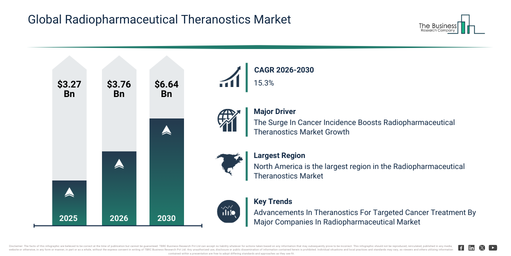
    The radiopharmaceutical theranostics market has experienced swift expansion in recent years. This market is projected to expand from $3.27 billion in 2025 to $3.76 billion in 2026, achieving a compound annual growth rate (CAGR) of 15.0%. The growth observed in the past can be ascribed to several factors, including the expansion of nuclear medicine applications, increasing cancer incidence rates, advancements in radioisotope production techniques, growth in diagnostic imaging integration, and the early adoption of theranostic treatment models.

    The radiopharmaceutical theranostics market is anticipated to experience swift expansion over the coming years, projected to reach $6.64 billion by 2030, exhibiting a compound annual growth rate (CAGR) of 15.3%. This projected growth during the forecast period is fueled by several factors, including increasing investments within precision oncology, a heightened demand for customized radiopharmaceutical therapies, the broadening of clinical trials involving new isotopes, greater cooperation between diagnostic and therapeutic sectors, and continuous advancements in isotope supply chains. Key trends identified for this period encompass the escalating development of targeted theranostic radiopharmaceuticals, an increase in the application of PET-based personalized treatments, the expanding acceptance of alpha and beta emitters within oncology, the growth in cyclotron-based isotope manufacturing, and a sharpened emphasis on precision oncology applications.

    Access Your Free Sample Report for In-Depth Market Insights:

    https://www.thebusinessresearchcompany.com/sample.aspx?id=11951&type=smp

    Which Drivers Are Supporting The Rise Of The Radiopharmaceutical Theranostics Market?

    The expanding occurrence of cancer is projected to boost the radiopharmaceutical theranostics market in the future. Cancer is characterized as a health condition involving the intricate and irregular multiplication of cells that possess the ability to invade and disseminate to other bodily regions. Radiopharmaceutical theranostics supports cancer management through focused and individualized methodologies. As an illustration, the American Cancer Society, a US-based voluntary cancer health organization, reported that in 2023, approximately 1.9 million new cancer cases are anticipated to be diagnosed in the US, potentially leading to around 609,820 cancer-related deaths. Moreover, it is projected that 88% of those diagnosed will be from the 50 years or above age group. Consequently, the increasing prevalence of cancer is fueling the expansion of the radiopharmaceutical theranostics market.

    What Segments Are Identified Within The Structure Of The Radiopharmaceutical Theranostics Market?

    The radiopharmaceutical theranostics market covered in this report is segmented –

    1) By Product Type: Alpha Emitters, Beta Emitters, Positron Emission Tomography (PET) Tracers

    2) By Source: Nuclear Reactors, Cyclotrons

    3) By Radioisotope: Technetium-99, Gallium-68, Iodine-131, Iodine-123, 18F, Y-90, Lutetium (Lu) 177, Copper (Cu) 67, Copper (Cu) 64, Other Radioscopes

    4) By Indication: Oncology, Cardiology, Neurology, Other Indications

    5) By End User: Hospitals, Diagnostic Imaging Centers, Academic And Research Institutes, Other End Users

    Subsegments:

    1) By Alpha Emitters: Actinium-225, Radium-223, Bismuth-213, Other Alpha-Emitting Radiopharmaceuticals

    2) By Beta Emitters: Iodine-131, Lutetium-177, Yttrium-90, Other Beta-Emitting Radiopharmaceuticals

    3) By Positron Emission Tomography (PET) Tracers: Fluorodeoxyglucose (FDG), Gallium-68, Carbon-11, Other PET Tracers

    How Are Emerging Trends Affecting The Progression Of The Radiopharmaceutical Theranostics Market?

    Leading companies within the radiopharmaceutical theranostics market are directing their efforts towards advancing theranostics designed for cancer treatment. Theranostic strategies are currently being examined for addressing rare diseases, aiming to offer targeted therapies and diagnostic insights for individuals with limited therapeutic choices, such as cancer. For example, in November 2023, GE HealthCare Technologies Inc., a medical technology firm situated in the US, unveiled theranostics solutions tailored for cancer. Theranostics represents an innovative domain of precision medicine that employs therapeutic agents alongside imaging technology to pinpoint and target cancer cells for elimination.

    Which Leading Companies Dominate The Radiopharmaceutical Theranostics Market Share?

    Major companies operating in the radiopharmaceutical theranostics market are Cardinal Health Inc., GE HealthCare Technologies Inc., Bayer AG, China Grand Pharmaceutical & Healthcare., Lantheus Medical Imaging Inc., Curium Pharma, Advanced Accelerator Applications, Telix Pharmaceuticals Ltd., Bracco Imaging S.p.A, NTP Radioisotopes SOC Ltd., Navidea Biopharmaceuticals Inc., Jubilant DraxImage Inc., NorthStar Medical Radioisotopes LLC, Blue Earth Diagnostics Ltd., Precirix NV, SpectronRx, Viewpoint Molecular Targeting Inc., NuView Life Sciences, Alpha-9 Theranostics Inc., RadioMedix Inc, RayzeBio Inc, Fusion Pharmaceuticals Inc, Actinium Pharmaceuticals Inc., Eckert & Ziegler Strahlen- und Medizintechnik AG, Ariceum Therapeutics GmbH, Radiopharm Theranostics Ltd, Ratio Therapeutics Inc, Primo Biotechnology, Bivision Biomedical Technology (Nanjing) Co. Ltd.

    Access The Complete Report For Deeper Market Insights:

    https://www.thebusinessresearchcompany.com/report/radiopharmaceutical-theranostics-global-market-report

    How Does The Radiopharmaceutical Theranostics Market Perform Across Major Global Regions?

    North America was the largest region in the radiopharmaceutical theranostics market in 2025. The regions covered in the radiopharmaceutical theranostics market report are Asia-Pacific, South East Asia, Western Europe, Eastern Europe, North America, South America, Middle East, Africa.

    Request Your Customized Radiopharmaceutical Theranostics Market Research Report for Competitive Advantage:

    https://www.thebusinessresearchcompany.com/customise?id=11951&type=smp

    Browse Through More Reports Similar to the Global Radiopharmaceutical Theranostics Market 2026, By The Business Research Company

    Radiotheranostics Market Report 2026

    https://www.thebusinessresearchcompany.com/report/radiotheranostics-global-market-report

    Theranostics Market Report 2026

    https://www.thebusinessresearchcompany.com/report/theranostics-global-market-report

    Nuclear Medicine Radioisotopes Market Report 2026

    https://www.thebusinessresearchcompany.com/report/nuclear-medicine-radioisotopes-global-market-report

    Get in touch with us:

    The Business Research Company: https://www.thebusinessresearchcompany.com/

    Americas +1 310-496-7795

    Asia +44 7882 955267 & +91 8897263534

    Europe +44 7882 955267

    Email us at info@tbrc.info

    Follow us on:

    LinkedIn: https://in.linkedin.com/company/the-business-research-company

    YouTube: https://www.youtube.com/channel/UC24_fI0rV8cR5DxlCpgmyFQ

    Global Market Model: https://www.thebusinessresearchcompany.com/global-market-model
  • Global Radiology Services Market Forecast 2026–2035: Long-Term Growth Insights

    Global Radiology Services Market Forecast 2026–2035: Long-Term Growth Insights

    Uncover key drivers, emerging technologies, and competitive movements shaping the radiology services market from 2026–2035 with trusted insights from The Business Research Company

    What size range is anticipated for the Radiology Services Market from 2026 to 2030?

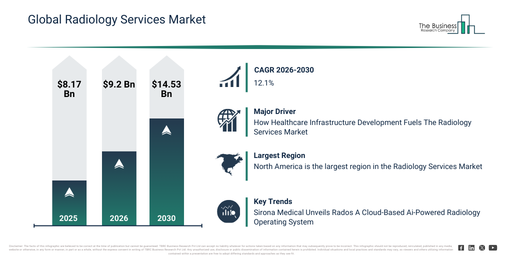
    The radiology services market has seen considerable growth in recent years. It is projected to increase from $8.17 billion in 2025 to $9.2 billion in 2026, achieving a compound annual growth rate (CAGR) of 12.6%. Historically, this growth can be attributed to the expansion of hospital imaging departments, an uptick in chronic disease diagnosis, enhanced availability of diagnostic imaging technologies, a surging demand for early disease detection, and the broader utilization of x-ray based diagnostics.

    The radiology services market size is anticipated to experience substantial growth over the next few years. It is expected to expand to $14.53 billion by 2030, demonstrating a compound annual growth rate (CAGR) of 12.1%. This expansion during the forecast period can be attributed to rising investments in advanced imaging modalities, the increasing adoption of AI-powered diagnostics, the broadening of ambulatory imaging services, a heightened focus on precision diagnostics, and the continuous modernization of healthcare imaging infrastructure. Key trends for the forecast period involve the increasing integration of digital radiology systems, a surging demand for portable imaging solutions, the growing application of AI in image interpretation, the proliferation of specialized diagnostic imaging procedures, and an intensified emphasis on patient-centric imaging services.

    Access Your Free Sample Report for In-Depth Market Insights:

    https://www.thebusinessresearchcompany.com/sample.aspx?id=9342&type=smp

    What Drivers Are Affecting Demand In The Radiology Services Market?

    The continuous expansion of healthcare infrastructure is anticipated to fuel the expansion of the radiology services market in the future. This infrastructure includes physical facilities, diagnostic tools, information systems, and personnel required to provide excellent medical care throughout communities. Funding for contemporary hospital amenities and sophisticated imaging solutions enhances diagnostic precision, widens access to radiology, and facilitates collaborative care, thereby improving patient results. As an illustration, in May 2023, data from the American Health Care Association, a US-based nonprofit organization, revealed that the United States possessed 6,129 hospitals, which marked a 0.591% increase from the 6,093 hospitals recorded in the prior year. Consequently, the advancement of healthcare infrastructure plays a significant role in propelling the radiology services market.

    Which Segments Are Gaining Traction In The Radiology Services Market?

    The radiology services market covered in this report is segmented –

    1) By Type: Stationary Digital Radiology Systems, Portable Digital Radiology Systems

    2) By Procedure: Conventional, Digital

    3) By Patient Age: Adults, Pediatric

    4) By Application: Cardiovascular Imaging, Chest Imaging, Dental Imaging, Mammography Imaging, Orthopedic Imaging

    5) By End User: Hospitals, Ambulatory Centers, Diagnostic Centers, Clinics, Other End Users

    Subsegments:

    1) By Stationary Digital Radiology Systems: Fixed Digital X-ray Systems, Ceiling-Mounted Systems, Floor-Mounted Systems

    2) By Portable Digital Radiology Systems: Mobile X-ray Units, Wireless Portable X-ray Systems, Battery-Operated Portable Systems

    Which Innovation Trends Are Advancing Developments Within The Radiology Services Market?

    Leading firms within the radiology services market are prioritizing the creation of groundbreaking products designed to boost diagnostic precision, streamline operational efficiency, and broaden service offerings. These innovative products encompass cloud-based platforms, AI-driven imaging technologies, and comprehensive radiology operating systems, which serve to simplify image handling, reporting processes, and patient support. A notable example occurred in February 2024 when Yellow Cross Pharmaceuticals Private Limited, a US-based telemedicine practice management company, introduced a fresh consultancy service. This initiative seeks to improve teleradiology management for healthcare providers, addressing the increasing scarcity of radiologists. The service assists medical groups with navigating technology, managing billing, and executing marketing strategies, thereby allowing them to effectively extend their remote care provisions. Yellowcross endeavors to enhance patient accessibility, lower healthcare expenditures, and elevate the quality of care by providing customized telemedicine solutions.

    Who Are The Major Companies Operating In The Radiology Services Market?

    Major companies operating in the radiology services market are Radisphere National Radiology Group Inc., GE HealthCare, TeleDiagnostic Solutions Pvt. Ltd., 4ways Healthcare Limited, Medica Reporting Ltd., Koninklijke Philips N.V., Onrad Inc., Aspect Imaging Ltd., Aurora Healthcare US Corp., FONAR Corporation, ESAOTE SPA, Neusoft Corporation, Toshiba Corporation, FUJIFILM Holdings Corporation, Hologic Inc., Everlight Radiology, Global Diagnostics, RamSoft Inc., Siemens Healthineers, Telemedicine Clinic, Teleradiology Solutions Inc., Virtual Radiology, Hitachi Ltd., CANON MEDICAL SYSTEMS CORPORATION, Sanrad Medical Systems Private Limited, henzhen Anke High-tech Co. Ltd.

    Access The Complete Report For Deeper Market Insights:

    https://www.thebusinessresearchcompany.com/report/radiology-services-global-market-report

    Which Region Is Anticipated To See The Fastest Growth In The Radiology Services Market?

    North America was the largest region in the radiology services market in 2025. The regions covered in the radiology services market report are Asia-Pacific, South East Asia, Western Europe, Eastern Europe, North America, South America, Middle East, Africa.

    Request Your Customized Radiology Services Market Research Report for Competitive Advantage:

    https://www.thebusinessresearchcompany.com/customise?id=9342&type=smp

    Browse Through More Reports Similar to the Global Radiology Services Market 2026, By The Business Research Company

    Oncologists Market Report 2026

    https://www.thebusinessresearchcompany.com/report/oncologists-global-market-report

    Radiology As A Service Market Report 2026

    https://www.thebusinessresearchcompany.com/report/radiology-as-a-service-global-market-report

    Radiology Information Systems Market Report 2026

    https://www.thebusinessresearchcompany.com/report/radiology-information-systems-global-market-report

    Get in touch with us:

    The Business Research Company: https://www.thebusinessresearchcompany.com/

    Americas +1 310-496-7795

    Asia +44 7882 955267 & +91 8897263534

    Europe +44 7882 955267

    Email us at info@tbrc.info

    Follow us on:

    LinkedIn: https://in.linkedin.com/company/the-business-research-company

    YouTube: https://www.youtube.com/channel/UC24_fI0rV8cR5DxlCpgmyFQ

    Global Market Model: https://www.thebusinessresearchcompany.com/global-market-model

  • Radiology Information Systems Market 2026–2030: Forecasting Business Opportunities Ahead

    Radiology Information Systems Market 2026–2030: Forecasting Business Opportunities Ahead

    Uncover key drivers, emerging technologies, and competitive movements shaping the radiology information systems market from 2026–2035 with trusted insights from The Business Research Company

    How is the Radiology Information Systems Market size predicted to change over the forecast window of 2026–2035?

    The radiology information systems market size has experienced rapid expansion in recent years. This market is projected to expand from $1.02 billion in 2025 to $1.12 billion in 2026, demonstrating a compound annual growth rate (CAGR) of 10.1%. Historically, this growth has been fueled by factors including the increasing digitalization of radiology departments, an uptick in imaging procedure volumes, the escalating administrative complexity in healthcare, the adoption of pacs and ehr systems, and a consistent demand for efficient reporting workflows.

    The radiology information systems market is anticipated to experience substantial expansion over the upcoming years. By 2030, this market is projected to reach $1.57 billion, exhibiting a compound annual growth rate (CAGR) of 8.7%. This projected increase is driven by factors such as increased investments in cloud-native RIS solutions, a surging demand for AI-assisted workflow tools, the broadening of integrated hospital information systems, heightened attention to cybersecurity compliance, and the continuous modernization of diagnostic IT infrastructure. Key developments expected during this period involve the expanding deployment of integrated RIS platforms, the escalating adoption of cloud-based radiology systems, an intensified focus on workflow automation and scheduling, the extension of interoperable imaging data management, and a stronger emphasis on regulatory-compliant reporting.

    Access Your Free Sample Report for In-Depth Market Insights:

    https://www.thebusinessresearchcompany.com/sample.aspx?id=15448&type=smp

    Which Drivers Are Contributing To The Expansion Of The Radiology Information Systems Market?

    The increasing occurrence of chronic diseases is anticipated to boost the expansion of the radiology information systems market in the future. These long-term health conditions, also termed non-communicable diseases (NCDs), typically manifest slowly and endure for prolonged durations. Factors contributing to the emergence of chronic diseases include an aging population, inactive lifestyles, inadequate nutrition, lack of physical activity, and environmental elements. Radiology information systems play a crucial role in the diagnosis, management, and ongoing oversight of chronic diseases by enabling streamlined storage, recovery, and analysis of medical imaging data. For example, in January 2023, the National Institutes of Health, a US-based government entity, reported that by 2035, it is projected that 35.66% (range: 33.36–36.04) of adults aged 50 and older will have at least one chronic ailment, with this proportion forecast to climb to 47.81% (range: 46.09–49.71) by 2050. Consequently, the growing prevalence of chronic diseases is stimulating the development of the radiology information systems market.

    What Segment Categories Are Covered In The Radiology Information Systems Market?

    The radiology information systems market covered in this report is segmented –

    1) By Product: Integrated Radiology Information System, Standalone Radiology Information System

    2) By Deployment: Web-Based, Cloud-Based, On-Premise

    3) By End-User: Hospitals And Clinics, Outpatient Department, Office Based Physicians, Emergency Healthcare Service Providers, Research And Academic Institute

    Subsegments:

    1) By Integrated Radiology Information System: Picture Archiving And Communication System (PACS) Integration, Electronic Health Record (EHR) Integration, Laboratory Information System (LIS) Integration, Hospital Information System (HIS) Integration

    2) By Standalone Radiology Information System: Radiology Scheduling Software, Radiology Reporting Software, Radiology Workflow Management Software

    Which Competitive Trends Are Impacting The Structure Of The Radiology Information Systems Market?

    Major companies operating within the radiology information systems market are incorporating innovative features into their healthcare application suites, such as networked software systems, to improve interoperability and streamline workflows. A networked software system involves multiple software components that interact via a network to collaboratively perform tasks. This setup facilitates distributed operations, scalability, and seamless communication across various devices and applications. For instance, in January 2024, Vertex in Healthcare, a UK-based software development and ICT company focused on the healthcare sector, launched its VRIS (Vertex Radiology Information System). The VRIS aims to enhance radiology department efficiency by automating workflows and improving patient engagement through an intuitive portal. Its primary objectives are to streamline operations, increase diagnostic throughput, and support informed decision-making in healthcare environments.

    Which Major Firms Are Strengthening Their Position In The Radiology Information Systems Market?

    Major companies operating in the radiology information systems market are McKesson Corporation, General Electric Company, Oracle Corporation, Siemens Healthineers AG, FUJIFILM Holdings Corporation, Koninklijke Philips NV, Cerner Corporation, Epic Systems Corporation, Agfa Gevaert Group, Veradigm LLC, Carestream Health, Allscripts Healthcare LLC, Esaote S.p.A., Sectra AB, Canon Medical Systems Corporation, Pro Medicus Limited, eRAD, MedInformatix Inc., RamSoft Inc., Novarad Corporation, INFINITT Healthcare Co. Ltd., Dedalus S.p.A., Change Healthcare, Merge Healthcare, Vital Images

    Access The Complete Report For Deeper Market Insights:

    https://www.thebusinessresearchcompany.com/report/radiology-information-systems-global-market-report

    Which Region Is Anticipated To See The Fastest Growth In The Radiology Information Systems Market?

    North America was the largest region in the radiology information systems market in 2025. Asia-Pacific is expected to be the fastest-growing region in the forecast period. The regions covered in the radiology information systems market report are Asia-Pacific, South East Asia, Western Europe, Eastern Europe, North America, South America, Middle East, Africa.

    Request Your Customized Radiology Information Systems Market Research Report for Competitive Advantage:

    https://www.thebusinessresearchcompany.com/customise?id=15448&type=smp

    Browse Through More Reports Similar to the Global Radiology Information Systems Market 2026, By The Business Research Company

    Medical Imaging And Radiology Software Market Report 2026

    https://www.thebusinessresearchcompany.com/report/medical-imaging-and-radiology-software-global-market-report

    Radiology Services Market Report 2026

    https://www.thebusinessresearchcompany.com/report/radiology-services-global-market-report

    Radiology As A Service Market Report 2026

    https://www.thebusinessresearchcompany.com/report/radiology-as-a-service-global-market-report

    Get in touch with us:

    The Business Research Company: https://www.thebusinessresearchcompany.com/

    Americas +1 310-496-7795

    Asia +44 7882 955267 & +91 8897263534

    Europe +44 7882 955267

    Email us at info@tbrc.info

    Follow us on:

    LinkedIn: https://in.linkedin.com/company/the-business-research-company

    YouTube: https://www.youtube.com/channel/UC24_fI0rV8cR5DxlCpgmyFQ

    Global Market Model: https://www.thebusinessresearchcompany.com/global-market-model
  • Global Radiology As A Service Market Report 2026–2035: Key Forecasts and Growth Areas

    Global Radiology As A Service Market Report 2026–2035: Key Forecasts and Growth Areas

    Uncover key drivers, emerging technologies, and competitive movements shaping the radiology as a service market from 2026–2035 with trusted insights from The Business Research Company

    What market expansion outlook does the Radiology As A Service Market show for the 2026–2030 period?

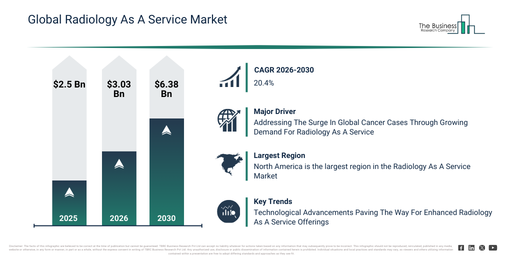
    The radiology as a service market size has witnessed significant expansion in recent years. It is forecast to increase from $2.5 billion in 2025 to $3.03 billion in 2026, achieving a compound annual growth rate (CAGR) of 21.3%. The historical growth for this market can be ascribed to several factors, including an increase in diagnostic imaging volumes, a shortage of in-house radiologists, the expansion of digital imaging infrastructure, rising healthcare cost pressures, and a greater acceptance of remote diagnostics.

    The radiology as a service market is anticipated to experience substantial growth over the coming years. By 2030, its size is projected to reach $6.38 billion, expanding at a compound annual growth rate (CAGR) of 20.4%. This expansion during the forecast period is driven by factors such as increasing investments in AI-powered radiology platforms, a heightened need for scalable imaging solutions, the proliferation of cloud-native healthcare IT, a greater emphasis on value-driven healthcare provisions, and the continuous digital evolution of diagnostic services. Key trends anticipated within this period encompass the wider embrace of teleradiology services, an increasing appetite for cloud-based imaging platforms, the rising outsourcing of radiology functions, the broadening scope of AI-supported image interpretation services, and a sharpened focus on delivering diagnostics affordably.

    Access Your Free Sample Report for In-Depth Market Insights:

    https://www.thebusinessresearchcompany.com/sample.aspx?id=7158&type=smp

    What Drivers Are Shaping The Development Of The Radiology As A Service Market?

    The projected increase in global cancer cases is anticipated to drive the expansion of the radiology as a service market going forward. Cancer is a condition where the body’s cells grow uncontrollably and spread to other regions. Medical imaging technology has revolutionized healthcare by enabling earlier cancer detection and fostering better patient outcomes. Consequently, a rise in the number of cancer cases will generate demand for radiology imaging services, which is expected to propel the growth of radiology as a service. For instance, in May 2024, according to the National Cancer Institute, a US-based government agency for cancer research and training, the global count of new cancer cases annually is predicted to reach 29.9 million, with 15.3 million cancer-related deaths by 2040. Therefore, the increasing number of cancer cases is a primary driver for the market growth of radiology as a service market.

    Which Segments Are Contributing To The Growth Of The Radiology As A Service Market?

    The radiology as a service market covered in this report is segmented –

    1) By Service Type: Teleradiology, Cloud-based Imaging IT Services, Consulting Services, Technology Management Services

    2) By Technology: Computed Radiology, Direct Digital Radiology

    3) By End-User: Hospitals, Diagnostic Imaging Centers, Radiology Clinics, Physician Offices, Nursing Homes

    Subsegments:

    1) By Teleradiology: Remote Image Interpretation, Remote Reporting Services

    2) By Cloud-Based Imaging IT Services: Cloud Storage Solutions, Cloud-Based Image Management

    3) By Consulting Services: Workflow Optimization, Regulatory Compliance Consulting

    4) By Technology Management Services: Equipment Maintenance, Imaging Software Support

    What Industry Trends Are Transforming The Radiology As A Service Market?

    Major companies operating in the radiology-as-a-service market are focusing on implementing advanced remote care technologies to boost diagnostic capabilities, tackle radiologist shortages, and refine service delivery across healthcare settings. These innovations seek to optimize radiology workflows, broaden access to specialty diagnostics, and assist healthcare providers in offering high-quality imaging services. For instance, in February 2024, Yellowcross Healthcare Commerce, an India-based telemedicine practice management organization, launched a consultancy service aimed at helping medical groups and healthcare facilities reinforce their remote care infrastructure. Through collaborations with hospitals, clinics, and medical groups across the United States, Yellowcross creates tailored service offerings that both reduce radiologist shortages and enable the provision of specialty diagnostic services, thereby enhancing operational efficiency and extending access to radiology expertise.

    Who Are The Primary Competitors In The Global Radiology As A Service Market?

    Major companies operating in the radiology as a service market are Siemens Healthineers AG, Fujifilm Holdings Corporation, Koninklijke Philips NV, GE HealthCare Technologies Inc., Agfa Gevaert NV, Mednax Inc., RadNet Inc., National Diagnostic Imaging Teleradiology, Alliance HealthCare Services Inc., US Radiology Specialists Inc., Nines Inc., Virtual Radiologic, Everlight Radiology, Telemedicine Clinic Ltd., Medica Group plc, Onrad Inc., RamSoft Inc., Real Radiology LLC, Vesta Teleradiology, Radiology Partners Inc., Ambra Health Company, Nano X Imaging Ltd., NightShift Radiology Inc., USARAD Holdings Inc., Telediagnostic Solutions Private Limited, Teleradiology Solutions Pvt Ltd., Imaging Advantage LLC, Imaging On Call LLC

    Access The Complete Report For Deeper Market Insights:

    https://www.thebusinessresearchcompany.com/report/radiology-as-a-service-global-market-report

    Which Global Regions Are Shaping The Competitive Landscape Of The Radiology As A Service Market?

    North America was the largest region in the radiology as a service market in 2025. Asia-Pacific is expected to be the fastest-growing region in the radiology as a service market share during the forecast period. The regions covered in the radiology as a service market report are Asia-Pacific, South East Asia, Western Europe, Eastern Europe, North America, South America, Middle East, Africa.

    Request Your Customized Radiology As A Service Market Research Report for Competitive Advantage:

    https://www.thebusinessresearchcompany.com/customise?id=7158&type=smp

    Browse Through More Reports Similar to the Global Radiology As A Service Market 2026, By The Business Research Company

    Radiology Information Systems Market Report 2026

    https://www.thebusinessresearchcompany.com/report/radiology-information-systems-global-market-report

    Radiology Services Market Report 2026

    https://www.thebusinessresearchcompany.com/report/radiology-services-global-market-report

    Interventional Radiology Market Report 2026

    https://www.thebusinessresearchcompany.com/report/interventional-radiology-global-market-report

    Get in touch with us:

    The Business Research Company: https://www.thebusinessresearchcompany.com/

    Americas +1 310-496-7795

    Asia +44 7882 955267 & +91 8897263534

    Europe +44 7882 955267

    Email us at info@tbrc.info

    Follow us on:

    LinkedIn: https://in.linkedin.com/company/the-business-research-company

    YouTube: https://www.youtube.com/channel/UC24_fI0rV8cR5DxlCpgmyFQ

    Global Market Model: https://www.thebusinessresearchcompany.com/global-market-model
  • Global Radiology As A Service Market Report 2026–2035: Key Forecasts and Growth Areas

    Uncover key drivers, emerging technologies, and competitive movements shaping the radiology as a service market from 2026–2035 with trusted insights from The Business Research Company

    What market expansion outlook does the Radiology As A Service Market show for the 2026–2030 period?

    The radiology as a service market size has witnessed significant expansion in recent years. It is forecast to increase from $2.5 billion in 2025 to $3.03 billion in 2026, achieving a compound annual growth rate (CAGR) of 21.3%. The historical growth for this market can be ascribed to several factors, including an increase in diagnostic imaging volumes, a shortage of in-house radiologists, the expansion of digital imaging infrastructure, rising healthcare cost pressures, and a greater acceptance of remote diagnostics.

    The radiology as a service market is anticipated to experience substantial growth over the coming years. By 2030, its size is projected to reach $6.38 billion, expanding at a compound annual growth rate (CAGR) of 20.4%. This expansion during the forecast period is driven by factors such as increasing investments in AI-powered radiology platforms, a heightened need for scalable imaging solutions, the proliferation of cloud-native healthcare IT, a greater emphasis on value-driven healthcare provisions, and the continuous digital evolution of diagnostic services. Key trends anticipated within this period encompass the wider embrace of teleradiology services, an increasing appetite for cloud-based imaging platforms, the rising outsourcing of radiology functions, the broadening scope of AI-supported image interpretation services, and a sharpened focus on delivering diagnostics affordably.

    Access Your Free Sample Report for In-Depth Market Insights:

    https://www.thebusinessresearchcompany.com/sample.aspx?id=7158&type=smp

    What Drivers Are Shaping The Development Of The Radiology As A Service Market?

    The projected increase in global cancer cases is anticipated to drive the expansion of the radiology as a service market going forward. Cancer is a condition where the body’s cells grow uncontrollably and spread to other regions. Medical imaging technology has revolutionized healthcare by enabling earlier cancer detection and fostering better patient outcomes. Consequently, a rise in the number of cancer cases will generate demand for radiology imaging services, which is expected to propel the growth of radiology as a service. For instance, in May 2024, according to the National Cancer Institute, a US-based government agency for cancer research and training, the global count of new cancer cases annually is predicted to reach 29.9 million, with 15.3 million cancer-related deaths by 2040. Therefore, the increasing number of cancer cases is a primary driver for the market growth of radiology as a service market.

    Which Segments Are Contributing To The Growth Of The Radiology As A Service Market?

    The radiology as a service market covered in this report is segmented –

    1) By Service Type: Teleradiology, Cloud-based Imaging IT Services, Consulting Services, Technology Management Services

    2) By Technology: Computed Radiology, Direct Digital Radiology

    3) By End-User: Hospitals, Diagnostic Imaging Centers, Radiology Clinics, Physician Offices, Nursing Homes

    Subsegments:

    1) By Teleradiology: Remote Image Interpretation, Remote Reporting Services

    2) By Cloud-Based Imaging IT Services: Cloud Storage Solutions, Cloud-Based Image Management

    3) By Consulting Services: Workflow Optimization, Regulatory Compliance Consulting

    4) By Technology Management Services: Equipment Maintenance, Imaging Software Support

    What Industry Trends Are Transforming The Radiology As A Service Market?

    Major companies operating in the radiology-as-a-service market are focusing on implementing advanced remote care technologies to boost diagnostic capabilities, tackle radiologist shortages, and refine service delivery across healthcare settings. These innovations seek to optimize radiology workflows, broaden access to specialty diagnostics, and assist healthcare providers in offering high-quality imaging services. For instance, in February 2024, Yellowcross Healthcare Commerce, an India-based telemedicine practice management organization, launched a consultancy service aimed at helping medical groups and healthcare facilities reinforce their remote care infrastructure. Through collaborations with hospitals, clinics, and medical groups across the United States, Yellowcross creates tailored service offerings that both reduce radiologist shortages and enable the provision of specialty diagnostic services, thereby enhancing operational efficiency and extending access to radiology expertise.

    Who Are The Primary Competitors In The Global Radiology As A Service Market?

    Major companies operating in the radiology as a service market are Siemens Healthineers AG, Fujifilm Holdings Corporation, Koninklijke Philips NV, GE HealthCare Technologies Inc., Agfa Gevaert NV, Mednax Inc., RadNet Inc., National Diagnostic Imaging Teleradiology, Alliance HealthCare Services Inc., US Radiology Specialists Inc., Nines Inc., Virtual Radiologic, Everlight Radiology, Telemedicine Clinic Ltd., Medica Group plc, Onrad Inc., RamSoft Inc., Real Radiology LLC, Vesta Teleradiology, Radiology Partners Inc., Ambra Health Company, Nano X Imaging Ltd., NightShift Radiology Inc., USARAD Holdings Inc., Telediagnostic Solutions Private Limited, Teleradiology Solutions Pvt Ltd., Imaging Advantage LLC, Imaging On Call LLC

    Access The Complete Report For Deeper Market Insights:

    https://www.thebusinessresearchcompany.com/report/radiology-as-a-service-global-market-report

    Which Global Regions Are Shaping The Competitive Landscape Of The Radiology As A Service Market?

    North America was the largest region in the radiology as a service market in 2025. Asia-Pacific is expected to be the fastest-growing region in the radiology as a service market share during the forecast period. The regions covered in the radiology as a service market report are Asia-Pacific, South East Asia, Western Europe, Eastern Europe, North America, South America, Middle East, Africa.

    Request Your Customized Radiology As A Service Market Research Report for Competitive Advantage:

    https://www.thebusinessresearchcompany.com/customise?id=7158&type=smp

    Browse Through More Reports Similar to the Global Radiology As A Service Market 2026, By The Business Research Company

    Radiology Information Systems Market Report 2026

    https://www.thebusinessresearchcompany.com/report/radiology-information-systems-global-market-report

    Radiology Services Market Report 2026

    https://www.thebusinessresearchcompany.com/report/radiology-services-global-market-report

    Interventional Radiology Market Report 2026

    https://www.thebusinessresearchcompany.com/report/interventional-radiology-global-market-report

    Get in touch with us:

    The Business Research Company: https://www.thebusinessresearchcompany.com/

    Americas +1 310-496-7795

    Asia +44 7882 955267 & +91 8897263534

    Europe +44 7882 955267

    Email us at info@tbrc.info

    Follow us on:

    LinkedIn: https://in.linkedin.com/company/the-business-research-company

    YouTube: https://www.youtube.com/channel/UC24_fI0rV8cR5DxlCpgmyFQ

    Global Market Model: https://www.thebusinessresearchcompany.com/global-market-model
  • Global Polymyositis Market Performance Report: Global Trends 2026–2030

    Global Polymyositis Market Performance Report: Global Trends 2026–2030

    Uncover key drivers, emerging technologies, and competitive movements shaping the polymyositis market from 2026–2035 with trusted insights from The Business Research Company

    What long-term size projections exist for the Polymyositis Market covering 2026–2035?

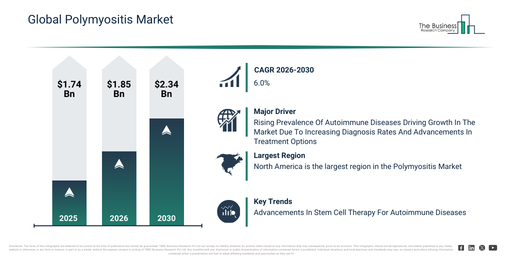
    The polymyositis market has witnessed substantial growth in recent years. It is projected to increase from $1.74 billion in 2025 to $1.85 billion in 2026, reflecting a compound annual growth rate (CAGR) of 6.2%. This historical growth can be attributed to an improved understanding of autoimmune myopathies, the availability of muscle biopsy diagnostics, expanded use of corticosteroids, enhanced hospital diagnostic capabilities, and a rising identification of rare muscle disorders.

    The market size for polymyositis is projected to experience robust expansion over the coming years. It is forecast to reach $2.34 billion by 2030, demonstrating a compound annual growth rate (CAGR) of 6.0%. This growth during the forecast period is attributable to the increasing development of targeted immune therapies, the rising integration of precision diagnostics, a greater utilization of biologics and immunoglobulins, the expansion of personalized treatment strategies, and intensified research into autoimmune disease mechanisms. Significant trends anticipated in the forecast period include the growing application of immunosuppressive therapies, increased adoption of monoclonal antibody treatments, a heightened focus on accurate differential diagnosis, the broadening of advanced diagnostic imaging, and enhanced patient monitoring protocols.

    Access Your Free Sample Report for In-Depth Market Insights:

    https://www.thebusinessresearchcompany.com/sample.aspx?id=22104&type=smp

    Which Drivers Are Impacting The Competitive Landscape Of The Polymyositis Market?

    The expanding occurrence of autoimmune conditions is anticipated to fuel the expansion of the polymyositis market in the future. These conditions involve the body’s immune system erroneously targeting its own healthy cells, tissues, or organs, resulting in inflammation and harm. Their rising incidence is linked to specific genetic variations causing an overactive immune response, heightening individuals’ vulnerability to self-tissue attacks. This genetic predisposition, coupled with environmental factors like infections, stress, and lifestyle choices, contributes to the growing number of autoimmune cases. Polymyositis itself aids in comprehending autoimmune diseases by illustrating how immune system irregularities cause muscle inflammation, thereby providing valuable insights into underlying mechanisms and potential therapies for associated conditions. For example, in February 2024, data from Arthritis Australia, an Australia-based charitable not-for-profit organisation advocating for people with arthritis and musculoskeletal conditions, indicated that by 2025, roughly 562,378 Australians will be affected by rheumatoid arthritis (RA), comprising 14% of the overall arthritis demographic. Consequently, the growing prevalence of autoimmune diseases is a key driver for the polymyositis market.

    What Segments Are Identified Within The Structure Of The Polymyositis Market?

    The polymyositis market covered in this report is segmented –

    1) By Type: Idiopathic Polymyositis, Dermatomyositis, Inclusion Body Myositis, Overlapping Myositis Syndromes

    2) By Diagnosis: Physical Examination, Muscle Biopsy, Electromyography (EMG), Blood Tests, Magnetic Resonance Imaging (MRI)

    3) By Treatment: Immunosuppressant, Immunoglobulins, Corticosteroids, Alkylating agents, Monoclonal Antibodies

    4) By Distribution Channel: Offline, Online

    5) By End User: Hospital pharmacy, Online pharmacy, Retail pharmacy

    Subsegments:

    1) By Idiopathic Polymyositis: Immune-Mediated Polymyositis, Virus-Associated Polymyositis

    2) By Dermatomyositis: Classic Dermatomyositis, Amyopathic Dermatomyositis, Juvenile Dermatomyositis

    3) By Inclusion Body Myositis: Sporadic Inclusion Body Myositis, Hereditary Inclusion Body Myopathy

    4) By Overlapping Myositis Syndromes:Polymyositis with Systemic Lupus Erythematosus (SLE), Polymyositis with Rheumatoid Arthritis (RA), Polymyositis with Systemic Sclerosis, Polymyositis with Mixed Connective Tissue Disease (MCTD)

    What Upcoming Trends Are Likely To Define The Future Path Of The Polymyositis Market?

    Companies operating within the polymyositis market are primarily focused on developing innovative therapies, such as stem cell treatments, to improve treatment efficacy and slow the progression of the disease. Stem cell therapy involves the application of umbilical cord-derived stem cells for regenerative medical purposes. These stem cells exhibit powerful immunomodulatory and anti-inflammatory properties, making them a viable option for treating autoimmune conditions like polymyositis. For example, in December 2024, RESTEM, a US-based clinical-stage biotechnology company, received Orphan Drug Designation (ODD) from the U.S. Food and Drug Administration (FDA) for its stem cell program that utilizes umbilical cord outer lining stem cells (ULSCs). This program employs umbilical cord outer lining stem cells to treat polymyositis and Dermatomyositis by regulating the immune system and reducing muscle inflammation. Early trials have demonstrated promising safety and efficacy for this therapy, with the potential to decrease steroid dependency.

    Which Leading Companies Dominate The Polymyositis Market Share?

    Major companies operating in the polymyositis market are Pfizer Inc., F Hoffmann La Roche AG, Bristol Myers Squibb Company, AstraZeneca plc, Novartis AG, GlaxoSmithKline plc, Merck & Co. Inc., C H Boehringer Sohn AG & Co. KG, Regeneron Pharmaceuticals Inc., Astellas Pharma Inc., Fresenius SE & Co. KGaA, UCB S.A., Teva Pharmaceuticals USA Inc., Kezar Life Sciences Inc., Argenx SE, Mallinckrodt Pharmaceuticals plc, Mitsubishi Tanabe Pharma Corporation, Sanofi S.A., AbbVie Inc., Eli Lilly and Company, Janssen Pharmaceuticals Inc., Takeda Pharmaceutical Company Limited, Amgen Inc., CSL Behring

    Access The Complete Report For Deeper Market Insights:

    https://www.thebusinessresearchcompany.com/report/polymyositis-global-market-report

    How Does The Polymyositis Market Perform Across Major Global Regions?

    North America was the largest region in the polymyositis market in 2025. Asia-Pacific is expected to be the fastest-growing region in the forecast period. The regions covered in the polymyositis market report are Asia-Pacific, South East Asia, Western Europe, Eastern Europe, North America, South America, Middle East, Africa.

    Request Your Customized Polymyositis Market Research Report for Competitive Advantage:

    https://www.thebusinessresearchcompany.com/customise?id=22104&type=smp

    Browse Through More Reports Similar to the Global Polymyositis Market 2026, By The Business Research Company

    Pheochromocytoma Market Report 2026

    https://www.thebusinessresearchcompany.com/report/pheochromocytoma-global-market-report

    Pericarditis Market Report 2026

    https://www.thebusinessresearchcompany.com/report/pericarditis-global-market-report

    Interstitial Cystitis Market Report 2026

    https://www.thebusinessresearchcompany.com/report/interstitial-cystitis-global-market-report

    Get in touch with us:

    The Business Research Company: https://www.thebusinessresearchcompany.com/

    Americas +1 310-496-7795

    Asia +44 7882 955267 & +91 8897263534

    Europe +44 7882 955267

    Email us at info@tbrc.info

    Follow us on:

    LinkedIn: https://in.linkedin.com/company/the-business-research-company

    YouTube: https://www.youtube.com/channel/UC24_fI0rV8cR5DxlCpgmyFQ

    Global Market Model: https://www.thebusinessresearchcompany.com/global-market-model
  • Polymyalgia Rheumatica Market Future Outlook 2026: Key Drivers and Growth Potential

    Polymyalgia Rheumatica Market Future Outlook 2026: Key Drivers and Growth Potential

    Uncover key drivers, emerging technologies, and competitive movements shaping the polymyalgia rheumatica market from 2026–2035 with trusted insights from The Business Research Company

    What total market size is anticipated for the Polymyalgia Rheumatica Market in 2030?

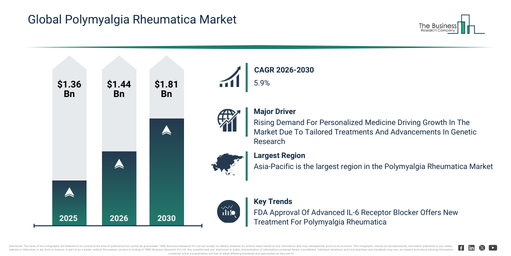
    The market for polymyalgia rheumatica has shown robust expansion over the past few years. Projections indicate it will expand from $1.36 billion in 2025 to reach $1.44 billion by 2026, demonstrating a compound annual growth rate (CAGR) of 6.2%. Historically, this expansion has been driven by factors such as a rising elderly demographic, enhanced clinical understanding of inflammatory conditions, the widespread adoption of corticosteroids as the initial treatment, increasing diagnostic rates among older patients, and the provision of rheumatology care within hospitals.

    The polymyalgia rheumatica market size is projected to observe significant expansion in the coming years. It is forecast to grow to $1.81 billion by 2030, demonstrating a compound annual growth rate (CAGR) of 5.9%. This anticipated growth during the forecast period is largely due to the increasing development of steroid-sparing therapies, escalating research into inflammatory biomarkers, the rising adoption of biologics and targeted drugs, expanding access to specialized medical care, and a growing focus on reducing long-term treatment side effects. Prominent trends expected in this period include the increased uptake of biologic therapies, a heightened focus on early and accurate diagnosis, the growing implementation of long-term corticosteroid management, the expansion of personalized treatment approaches, and enhanced monitoring of disease progression.

    Access Your Free Sample Report for In-Depth Market Insights:

    https://www.thebusinessresearchcompany.com/sample.aspx?id=22103&type=smp

    What Drivers Are Influencing Production Trends In The Polymyalgia Rheumatica Market?

    The increasing demand for personalized medicine is anticipated to propel the expansion of the polymyalgia rheumatica market moving forward. Personalized medicine refers to medical care specifically adapted to an individual’s genetic profile, lifestyle, and unique health conditions to achieve more effective results. The impetus behind the need for personalized medicine stems from breakthroughs in genetic research, rising patient desires for customized therapies, and enhancements in diagnostic technologies. Genetic research has provided a profound understanding of distinct genetic variations, enabling the creation of more tailored treatments aimed at specific genetic markers. This approach helps in selecting drugs most likely to be effective based on the patient’s characteristics, thereby leading to a more efficient and secure treatment strategy. For instance, in February 2024, according to the Personalised Medicine Coalition, a US-based hospital and health care organization, in 2023, the Food and Drug Administration approved 16 new personalized treatments for rare disease patients, which was an increase from six in 2022. Consequently, the advent of personalized medicine is fueling the growth of the polymyalgia rheumatica market.

    Which Segments Are Gaining Traction In The Polymyalgia Rheumatica Market?

    The polymyalgia rheumatica market covered in this report is segmented –

    1) By Treatment: Corticosteroids, Nonsteroidal Anti-Inflammatory Drugs, Disease-Modifying Antirheumatic Drugs, Biologics

    2) By Route Of Administration: Oral, Intravenous, Subcutaneous

    3) By Patient Type: Adult, Geriatric, Elderly Or Aging Population

    4) By Distribution Channel: Hospital Pharmacies, Retail Pharmacies, Online Pharmacies

    Subsegments:

    1) By Corticosteroids: Prednisone, Methylprednisolone, Hydrocortisone, Dexamethasone

    2) By Nonsteroidal Anti-Inflammatory Drugs (NSAIDs): Ibuprofen, Naproxen, Aspirin, Celecoxib

    3) By Disease-Modifying Antirheumatic Drugs (DMARDs): Methotrexate, Leflunomide, Sulfasalazine, Hydroxychloroquine

    4) By Biologics: Tumor Necrosis Factor (TNF) Inhibitors, Interleukin-6 (IL-6) Inhibitors, B-Cell Inhibitors, Janus Kinase (JAK) Inhibitors

    Which Trends Are Shaping Activity Within The Polymyalgia Rheumatica Market?

    Leading firms within the polymyalgia rheumatica market are prioritizing the creation of advanced medications, including interleukin-6 (IL-6) receptor blockers, to offer more precise and potent therapeutic alternatives. These interleukin-6 (IL-6) receptor blockers function as biological agents, working to suppress IL-6, a significant pro-inflammatory cytokine implicated in autoimmune conditions. Their mechanism of action, by inhibiting IL-6, leads to a reduction in inflammation and an alleviation of symptoms, thereby improving the quality of life for individuals suffering from PMR. As an illustration, in February 2023, Regeneron Pharmaceuticals, Inc., a US-based biotechnology firm, together with Sanofi, a France-based healthcare enterprise, disclosed that the Food and Drug Administration (FDA) had granted approval for Kevzara (sarilumab) to treat polymyalgia rheumatica (PMR) in adults who had not adequately responded to corticosteroids or were unable to gradually discontinue their use. Kevzara, notably the inaugural and sole biologic medication sanctioned for this ailment, operates by preventing IL-6-mediated signaling pathways. This approval stemmed from a clinical investigation demonstrating that 28.3% of patients receiving sarilumab attained sustained remission by week 52, in contrast to 10.3% of those on placebo. Kevzara is administered through subcutaneous injection bi-weekly and has also secured approval for the management of moderately to severely active rheumatoid arthritis. Currently, Sanofi’s stock (SNY) trades at $54.13 on the NASDAQ.

    Who Are The Major Companies Operating In The Polymyalgia Rheumatica Market?

    Major companies operating in the polymyalgia rheumatica market are AbbVie Inc., Sanofi S.A., Eli Lilly and Co., Regeneron Pharmaceuticals Inc., Horizon Therapeutics plc, Sparrow Pharmaceuticals Inc., Roche Holding AG, Novartis AG, Pfizer Inc., Bristol Myers Squibb Company, GlaxoSmithKline plc, AstraZeneca plc, Merck & Co. Inc., Janssen Pharmaceuticals Inc., Takeda Pharmaceutical Company Limited, UCB S.A., Amgen Inc., Boehringer Ingelheim, Bayer AG, Teva Pharmaceutical Industries Ltd., Sun Pharmaceutical Industries Ltd., Lupin Limited, Aurobindo Pharma Limited

    Access The Complete Report For Deeper Market Insights:

    https://www.thebusinessresearchcompany.com/report/polymyalgia-rheumatica-global-market-report

    Which Region Is Anticipated To See The Fastest Growth In The Polymyalgia Rheumatica Market?

    Asia-Pacific was the largest region in the polymyalgia rheumatica market in 2025. The regions covered in the polymyalgia rheumatica market report are Asia-Pacific, South East Asia, Western Europe, Eastern Europe, North America, South America, Middle East, Africa.

    Request Your Customized Polymyalgia Rheumatica Market Research Report for Competitive Advantage:

    https://www.thebusinessresearchcompany.com/customise?id=22103&type=smp

    Browse Through More Reports Similar to the Global Polymyalgia Rheumatica Market 2026, By The Business Research Company

    Sciatica Market Report 2026

    https://www.thebusinessresearchcompany.com/report/sciatica-global-market-report

    Fibromyalgia Treatment Market Report 2026

    https://www.thebusinessresearchcompany.com/report/fibromyalgia-treatment-global-market-report

    Esophageal Dysphagia Market Report 2026

    https://www.thebusinessresearchcompany.com/report/esophageal-dysphagia-global-market-report

    Get in touch with us:

    The Business Research Company: https://www.thebusinessresearchcompany.com/

    Americas +1 310-496-7795

    Asia +44 7882 955267 & +91 8897263534

    Europe +44 7882 955267

    Email us at info@tbrc.info

    Follow us on:

    LinkedIn: https://in.linkedin.com/company/the-business-research-company

    YouTube: https://www.youtube.com/channel/UC24_fI0rV8cR5DxlCpgmyFQ

    Global Market Model: https://www.thebusinessresearchcompany.com/global-market-model

  • Polymerase Chain Reaction Molecular Diagnostics Market Trends and Insights: Global Forecast to 2030

    Polymerase Chain Reaction Molecular Diagnostics Market Trends and Insights: Global Forecast to 2030

    Uncover key drivers, emerging technologies, and competitive movements shaping the polymerase chain reaction molecular diagnostics market from 2026–2035 with trusted insights from The Business Research Company

    What is the expected shift in the Polymerase Chain Reaction Molecular Diagnostics Market’s size between 2026 and 2030?

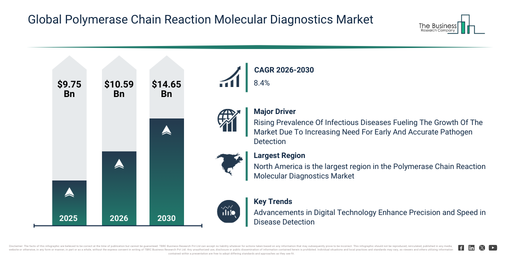
    The polymerase chain reaction molecular diagnostics market has shown robust growth in its size during recent years. Projections indicate it will expand from $9.75 billion in 2025 to $10.59 billion in 2026, with a compound annual growth rate (CAGR) of 8.7%. Its growth during the historical period stems from factors like the expansion of hospital-based molecular diagnostics, the increasing prevalence of infectious diseases, the availability of standardized pcr diagnostic kits, the growth of centralized diagnostic laboratories, and regulatory approvals for molecular tests.

    The market for polymerase chain reaction molecular diagnostics is projected to experience robust expansion in the coming years. This market is anticipated to reach a valuation of $14.65 billion by 2030, exhibiting a compound annual growth rate (CAGR) of 8.4%. The predicted growth during this period stems from several factors, including the rising acceptance of point-of-care molecular diagnostics, increased funding for personalized medicine, the broadening of genomic testing initiatives, a greater need for decentralized diagnostics, and the enhanced incorporation of digital health platforms. Key trends expected within the forecast period involve a greater application of pcr in detecting infectious diseases, an escalating requirement for high-sensitivity molecular diagnostics, the broadening scope of pcr-based oncology examinations, the increasing incorporation of automated diagnostic systems, and a heightened emphasis on tests with swift results.

    Access Your Free Sample Report for In-Depth Market Insights:

    https://www.thebusinessresearchcompany.com/sample.aspx?id=24383&type=smp

    Which Drivers Are Shaping Strategic Decisions In The Polymerase Chain Reaction Molecular Diagnostics Market?

    The polymerase chain reaction molecular diagnostics market is anticipated to expand due to the increasing prevalence of infectious diseases. These illnesses are caused by detrimental microorganisms like bacteria, viruses, fungi, or parasites, which can be transmitted directly or indirectly between individuals. The rise in infectious disease cases is attributed to the emergence of antibiotic-resistant pathogens, which are more challenging to treat and control, leading to prolonged sickness, increased healthcare expenses, and greater public health risks. Polymerase chain reaction (PCR) molecular diagnostics enhance the management of infectious diseases by offering rapid and accurate detection of pathogens at the genetic level, thus facilitating early diagnosis and targeted treatment. This improves healthcare outcomes by enabling timely interventions, reducing infection transmission, and optimizing patient care. For instance, the Centers for Disease Control and Prevention, a US-based government agency, indicated in April 2025 that 2,214 new cases of acute hepatitis B were reported in 2023, with an additional 1,769 hepatitis B-related deaths reported during the same year. Consequently, the rising prevalence of infectious diseases is a key factor driving the growth of the polymerase chain reaction molecular diagnostics market.

    What Segment Categories Are Covered In The Polymerase Chain Reaction Molecular Diagnostics Market?

    The polymerase chain reaction molecular diagnostics market covered in this report is segmented –

    1) By Product Type: Instrument, Reagents And Consumables, Software

    2) By Technology: Real-Time Polymerase Chain Reaction, Digital Polymerase Chain Reaction, Conventional Polymerase Chain Reaction

    3) By Sample Type: Blood Samples, Saliva Samples, Tissue Samples, Urine Samples

    4) By Application: Infectious Disease Testing, Oncology Testing, Other Applications

    5) By End-User: Hospitals, Diagnostic Laboratories, Other End Users

    Subsegments:

    1) By Instrument: Standard Polymerase Chain Reaction Systems, Digital Polymerase Chain Reaction Systems, Real-Time Polymerase Chain Reaction Systems

    2) By Reagents And Consumables: Polymerase Chain Reaction Kits, Polymerase Chain Reaction Enzymes, Polymerase Chain Reaction Primers and Probes, Polymerase Chain Reaction Master Mix

    3) By Software: Polymerase Chain Reaction Analysis Software, Data Management Software

    Which Trends Are Influencing The Development Of The Polymerase Chain Reaction Molecular Diagnostics Market?

    Leading firms within the polymerase chain reaction molecular diagnostics market are prioritizing the creation of advanced technological solutions, including benchtop instruments, to improve both the effectiveness and availability of testing. Benchtop instruments are defined as compact, laboratory-quality devices designed to be small enough for placement on a workbench or table, serving purposes in scientific, medical, or industrial testing and analysis. An example is QIAGEN N.V., a biotechnology company based in Germany, which introduced the QIAcuityDx Digital PCR System in September 2024, intended for clinical oncology testing. This system boasts fully automated, hands-off processing, consolidating partitioning, thermocycling, and imaging functions into one device. It provides absolute quantification of deoxyribonucleic acid and ribonucleic acid, yielding results in approximately two hours with very little manual intervention. Furthermore, the system accommodates up to five detection channels for multiplexing and supports continuous nanoplate loading. It provides both validated and customizable research modes, thereby offering versatility for various clinical and laboratory requirements.

    Which Major Firms Are Strengthening Their Position In The Polymerase Chain Reaction Molecular Diagnostics Market?

    Major companies operating in the polymerase chain reaction molecular diagnostics market are F Hoffmann La Roche AG, Thermo Fisher Scientific Inc., Abbott Laboratories, Danaher Corporation, Becton Dickinson and Company, Agilent Technologies Inc., Illumina Inc., bioMereieux SA, Sysmex Corporation, Bio Rad Laboratories Inc., QuidelOrtho Corporation, PerkinElmer, Eppendorf AG, Tecan Group, Takara Bio Inc., Biocartis NV, Zymo Research Corporation, QIAGEN N.V., Cepheid Inc., Meridian Bioscience Inc., LGC Biosearch Technologies, Analytik Jena AG, Promega Corporation, BGI Genomics Co. Ltd.

    Access The Complete Report For Deeper Market Insights:

    https://www.thebusinessresearchcompany.com/report/polymerase-chain-reaction-molecular-diagnostics-global-market-report

    Which Region Is Anticipated To See The Fastest Growth In The Polymerase Chain Reaction Molecular Diagnostics Market?

    North America was the largest region in the polymerase chain reaction molecular diagnostics market in 2025. Asia-Pacific is expected to be the fastest-growing region in the forecast period. The regions covered in the polymerase chain reaction molecular diagnostics market report are Asia-Pacific, South East Asia, Western Europe, Eastern Europe, North America, South America, Middle East, Africa.

    Request Your Customized Polymerase Chain Reaction Molecular Diagnostics Market Research Report for Competitive Advantage:

    https://www.thebusinessresearchcompany.com/customise?id=24383&type=smp

    Browse Through More Reports Similar to the Global Polymerase Chain Reaction Molecular Diagnostics Market 2026, By The Business Research Company

    In Vitro Diagnostics Enzymes Market Report 2026

    https://www.thebusinessresearchcompany.com/report/in-vitro-diagnostics-enzymes-global-market-report

    Polymerase Chain Reaction Pcr Technologies Market Report 2026

    https://www.thebusinessresearchcompany.com/report/polymerase-chain-reaction-pcr-technologies-global-market-report

    Dna Diagnostics Market Report 2026

    https://www.thebusinessresearchcompany.com/report/dna-diagnostics-global-market-report

    Get in touch with us:

    The Business Research Company: https://www.thebusinessresearchcompany.com/

    Americas +1 310-496-7795

    Asia +44 7882 955267 & +91 8897263534

    Europe +44 7882 955267

    Email us at info@tbrc.info

    Follow us on:

    LinkedIn: https://in.linkedin.com/company/the-business-research-company

    YouTube: https://www.youtube.com/channel/UC24_fI0rV8cR5DxlCpgmyFQ

    Global Market Model: https://www.thebusinessresearchcompany.com/global-market-model

  • Global Polymerase Chain Reaction (PCR) Technologies Market Report 2026–2030: Data-Driven Growth Insights

    Global Polymerase Chain Reaction (PCR) Technologies Market Report 2026–2030: Data-Driven Growth Insights

    Uncover key drivers, emerging technologies, and competitive movements shaping the polymerase chain reaction (pcr) technologies market from 2026–2035 with trusted insights from The Business Research Company

    What growth pattern is forecast for the Polymerase Chain Reaction (PCR) Technologies Market size between 2026 and 2035?

    The polymerase chain reaction (pcr) technologies market size has seen swift expansion in recent years. This market is projected to reach $18.18 billion in 2026, up from $16.23 billion in 2025, reflecting a compound annual growth rate (CAGR) of 12.0%. Historically, this growth was influenced by increasing molecular biology research activities, an uptick in infectious disease diagnostics, the provision of advanced pcr reagents and consumables, an increase in biotech research funding, and enhancements in laboratory automation.

    The polymerase chain reaction (pcr) technologies market size is expected to experience substantial expansion in the coming years. It is projected to achieve a valuation of $26.8 billion by 2030, demonstrating a compound annual growth rate (CAGR) of 10.2%. The impetus for this growth throughout the forecast period arises from factors such as increasing investment in next-generation pcr technologies, a rising demand for decentralized diagnostics, the expansion of environmental and food testing applications, the growing adoption of AI-enabled pcr analysis, and an increased focus on high-sensitivity molecular assays. Significant trends anticipated in this period encompass the growing adoption of advanced pcr platforms, a rising demand for integrated pcr software solutions, the expansion of point-of-care pcr applications, the increasing use of digital pcr technologies, and enhanced automation of pcr workflows.

    Access Your Free Sample Report for In-Depth Market Insights:

    https://www.thebusinessresearchcompany.com/sample.aspx?id=15639&type=smp

    Which Drivers Are Impacting Market Performance In The Polymerase Chain Reaction (PCR) Technologies Market?

    The rising occurrence of infectious diseases is projected to drive the expansion of the PCR technologies market in the future. These diseases are defined as ailments resulting from pathogenic microorganisms such as bacteria, viruses, parasites, or fungi, capable of transmitting between individuals either directly or indirectly. The increasing incidence of infectious diseases underscores the escalating challenges from pathogens, possibly influenced by aspects like globalization, urbanization, antimicrobial resistance, and shifts in the environment. PCR technologies play a role in reducing the spread of infectious diseases by identifying and multiplying specific genetic material from pathogens, thus assisting in their precise and sensitive identification and diagnosis. As an illustration, in 2025, the World Health Organization (WHO), a Switzerland-based specialized agency of the United Nations dedicated to international public health, estimated that 10.7 million individuals globally contracted TB in 2024, representing 131 incident cases per 100,000 population. Consequently, the growing occurrence of infectious diseases is stimulating the PCR technologies market.

    Which Segments Are Contributing To The Growth Of The Polymerase Chain Reaction (PCR) Technologies Market?

    The polymerase chain reaction (pcr) technologies market covered in this report is segmented –

    1) By Product: Reagents And Consumables, Instruments, Software, Services

    2) By Technology: Real-Time Polymerase Chain Reaction, Conventional Polymerase Chain Reaction, Reverse Transcription Polymerase Chain Reaction, Digital Polymerase Chain Reaction, Multiplex Real-Time (RT) Polymerase Chain Reaction, Hot Start Polymerase Chain Reaction, Other Technologies

    3) By Application: Gene Expression Analysis, Genetic Sequencing, Genotyping, Nucleic Acid Synthesis, Standard Validation, Point Of Care Diagnostics, Environmental Application, Other Applications

    4) By End Users: Hospitals And Diagnostic Centers, Research Laboratories And Academic Institutes, Pharmaceutical And Biotechnology Companies, Other End Users

    Subsegments:

    1) By Reagents And Consumables: PCR Master Mixes, Primers And Probes, Dna Or Rna Extraction Kits, PCR Enzymes, Buffers And Solutions, PCR Plates, Tubes, And Strips, Nucleotides

    2) By Instruments: PCR Machines (Thermal Cyclers), Real-Time PCR Systems (QPCR Systems), Digital PCR Systems, Automated PCR Platforms, Gel Electrophoresis Systems, PCR Workstations

    3) By Software: PCR Data Analysis Software, Real-Time PCR Software, Digital PCR Software, Sequence Analysis Software, Multiplex PCR Software, Laboratory Information Management Systems (Lims) For PCR

    4) By Services: PCR Testing Services, Custom PCR Primer Design Services, PCR Training And Consultation Services, PCR Sample Analysis Services, PCR-based Diagnostic Services, Technical Support And Maintenance Services For PCR Equipment

    What Trends Are Expected To Impact The Competitive Landscape Of The Polymerase Chain Reaction (PCR) Technologies Market?

    Leading companies in the PCR technologies market are focused on developing sophisticated technological solutions, such as next-generation quantitative polymerase chain reaction (qPCR) technologies, to enhance accuracy, sensitivity, and efficiency in molecular diagnostics. Quantitative polymerase chain reaction (qPCR) technology quantifies specific DNA sequences in samples, providing real-time monitoring and amplification, making it invaluable across scientific and medical disciplines. For instance, in November 2023, F. Hoffmann-La Roche AG, a Switzerland-based biotechnology company, launched the LightCycler PRO System. This new qPCR (quantitative polymerase chain reaction) system is designed to advance clinical needs in molecular diagnostics and address public health challenges. The system aims to be the most advanced qPCR technology for both clinical diagnostics and research, offering improved performance and usability while bridging the gap between translational research and in vitro diagnostics. It employs gold-standard technology, ensuring quality, precision, and reliability crucial for precise patient diagnosis and informed clinical decisions.

    Who Are The Primary Competitors In The Global Polymerase Chain Reaction (PCR) Technologies Market?

    Major companies operating in the polymerase chain reaction (pcr) technologies market are F Hoffmann La Roche Ltd., Thermo Fisher Scientific Inc., Abbott Laboratories, Danaher Corporation, Siemens Healthineers AG, Becton Dickinson and Company, GE Healthcare Technologies LLC, Eurofins Scientific SE, Agilent Technologies Inc., Illumina Inc., PerkinElmer Inc., bioMérieux SA, Beckman Coulter Inc., Sysmex Corporation, Bio Rad Laboratories Inc., QIAGEN N.V., BGI Genomics Co. Ltd., Cepheid, Takara Bio Inc., Promega Corporation, Analytik Jena AG, LGC Biosearch Technologies, Meridian Bioscience Inc., Canon Medical Systems Corporation, Eppendorf AG

    Access The Complete Report For Deeper Market Insights:

    https://www.thebusinessresearchcompany.com/report/polymerase-chain-reaction-pcr-technologies-global-market-report

    Which Global Regions Are Shaping The Competitive Landscape Of The Polymerase Chain Reaction (PCR) Technologies Market?

    North America was the largest region in the PCR technologies market in 2025. Asia-Pacific is expected to be the fastest-growing region in the forecast period. The regions covered in the polymerase chain reaction (pcr) technologies market report are Asia-Pacific, South East Asia, Western Europe, Eastern Europe, North America, South America, Middle East, Africa.

    Request Your Customized Polymerase Chain Reaction (PCR) Technologies Market Research Report for Competitive Advantage:

    https://www.thebusinessresearchcompany.com/customise?id=15639&type=smp

    Browse Through More Reports Similar to the Global Polymerase Chain Reaction (PCR) Technologies Market 2026, By The Business Research Company

    Poly Adp Ribose Polymerase Parp Inhibitor Market Report 2026

    https://www.thebusinessresearchcompany.com/report/poly-adp-ribose-polymerase-parp-inhibitor-global-market-report

    Polymerase Chain Reaction Pcr Market Report 2026

    https://www.thebusinessresearchcompany.com/report/polymerase-chain-reaction-pcr-global-market-report

    Multiplex Pcr Assays Market Report 2026

    https://www.thebusinessresearchcompany.com/report/multiplex-pcr-assays-global-market-report

    Get in touch with us:

    The Business Research Company: https://www.thebusinessresearchcompany.com/

    Americas +1 310-496-7795

    Asia +44 7882 955267 & +91 8897263534

    Europe +44 7882 955267

    Email us at info@tbrc.info

    Follow us on:

    LinkedIn: https://in.linkedin.com/company/the-business-research-company

    YouTube: https://www.youtube.com/channel/UC24_fI0rV8cR5DxlCpgmyFQ

    Global Market Model: https://www.thebusinessresearchcompany.com/global-market-model

  • Polymerase Chain Reaction (PCR) Market Dynamics 2026: Future Outlook and Key Insights

    Polymerase Chain Reaction (PCR) Market Dynamics 2026: Future Outlook and Key Insights

    Uncover key drivers, emerging technologies, and competitive movements shaping the polymerase chain reaction (pcr) market from 2026–2035 with trusted insights from The Business Research Company

    How much larger will the Polymerase Chain Reaction (PCR) Market be in 2030 compared with 2026?

    The polymerase chain reaction (pcr) market size has experienced rapid growth in recent years. It is projected to expand from $12.57 billion in 2025 to $13.91 billion in 2026, at a compound annual growth rate (CAGR) of 10.6%. The historical growth can be attributed to factors such as the increasing application of molecular diagnostics in infectious diseases, the expansion of clinical laboratory infrastructure, progress in thermal cycler technology, a rising need for accurate genetic testing, and the growth in academic research endeavors.

    The polymerase chain reaction (pcr) market is anticipated to show robust growth in the coming years. It is projected to expand to $19.62 billion by 2030, demonstrating a compound annual growth rate (CAGR) of 9.0%. This growth throughout the forecast period can be attributed to the rising acceptance of point-of-care pcr testing, increased investment in precision diagnostics, the broadening of decentralized laboratory testing, the expanding application of digital pcr for detecting rare mutations, and a heightened emphasis on rapid diagnostic turnaround times. Significant trends for this period include the wider adoption of real-time and digital pcr, a growing demand for high-throughput pcr testing, increased utilization of pcr in oncology diagnostics, the rising integration of automated pcr systems, and an enhanced focus on multiplex pcr assays.

    Access Your Free Sample Report for In-Depth Market Insights:

    https://www.thebusinessresearchcompany.com/sample.aspx?id=15638&type=smp

    What Drivers Are Guiding Growth Patterns In The Polymerase Chain Reaction (PCR) Market?

    The future expansion of the polymerase chain reaction (PCR) market is anticipated to be driven by the increasing need for personalized medicine. Personalized medicine, also known as precision medicine, describes a medical strategy where healthcare choices, methods, interventions, and treatments are customized to the distinct characteristics of every patient. This demand for personalized medicine is growing because of progress in data analytics, unique patient treatment outcomes, and the capacity to adapt therapies according to a person’s genetic makeup. Polymerase Chain Reaction (PCR) supports personalized medicine by facilitating the multiplication and examination of particular genetic sequences, which enables medical professionals to devise treatment strategies based on a patient’s unique genetic profiles. As an illustration, the Personalized Medicine Coalition, a U.S.-based advocacy organization for customized medical therapies, reported in February 2024 that the FDA cleared 16 new personalized treatments for rare disease patients in 2023, an increase from six in 2022. Consequently, the expanding requirement for personalized medicine is propelling the development of the polymerase chain reaction market.

    How Is The Polymerase Chain Reaction (PCR) Market Divided Into Segments?

    The polymerase chain reaction (pcr) market covered in this report is segmented –

    1) By Type: Conventional Polymerase Chain Reaction, Other Types

    2) By Indication: Infectious Diseases, Oncology, Genetic Disorders, Other Indications

    3) By Application: Medical, Non-Medical

    4) By End User: Hospitals And Clinics, Pharmaceutical And Biotechnology Industries, Diagnostic Centers, Academic And Research Organization

    Subsegments:

    1) By Conventional Polymerase Chain Reaction: Endpoint Pcr, Gel Electrophoresis-Based Pcr, Reverse Transcription Pcr (Rt-Pcr), Quantitative Pcr (Qpcr) For Gene Expression, Nested Pcr

    2) By Other Types: Real-Time Pcr (Qpcr) (Quantitative Pcr), Digital Pcr (Dpcr), Multiplex Pcr, Reverse Transcription-Quantitative Pcr (Rt-Qpcr), Isothermal Amplification (Lamp), Next-Generation Pcr (Ngs-Based Pcr Techniques), High-Throughput Pcr

    Which Trends Are Guiding The Evolution Of The Polymerase Chain Reaction (PCR) Market?

    Leading companies in the polymerase chain reaction (PCR) market are focusing on developing technological improvements, such as real-time and digital PCR platforms, to satisfy the growing demand for rapid diagnostics, personalized medicine, and high-throughput genetic testing. A real-time PCR (qPCR) system combines precise thermal cycling, fluorescent detection, and sophisticated software to quantify DNA/RNA levels, yielding more accurate and faster results compared to traditional end-point PCR, which only indicates the presence or absence of a target sequence. For instance, in November 2023, Roche, a Switzerland-based diagnostics firm, launched the LightCycler PRO System, a next-generation qPCR system designed for both clinical diagnostics and research purposes. This system features improved temperature uniformity, enhanced software algorithms, and a user-friendly interface, enabling laboratories to perform high-quality assays, develop custom tests, or use modular IVD research assays, thereby boosting flexibility, throughput, and accuracy in nucleic acid testing.

    Which Key Market Players Are Investing In Expansion And Innovation Within The Polymerase Chain Reaction (PCR) Market?

    Major companies operating in the polymerase chain reaction (pcr) market are F Hoffmann La Roche Ltd., Thermo Fisher Scientific Inc., Abbott Laboratories, Danaher Corporation, Siemens Healthineers GmbH, Becton Dickinson and Company, GE HealthCare Technologies Inc, Eurofins Scientific, Agilent Technologies Inc., Illumina Inc., PerkinElmer Inc., bioMérieux SA, Beckman Coulter Inc, Sysmex Corporation, Bio Rad Laboratories Inc., Qiagen N.V., BGI Genomics Co. Ltd., Cepheid, Biocartis SA, Centogene N.V., Takara Bio Inc., LGC Biosearch Technologies, Analytik Jena AG, Promega Corporation, Meridian Bioscience Inc.

    Access The Complete Report For Deeper Market Insights:

    https://www.thebusinessresearchcompany.com/report/polymerase-chain-reaction-pcr-global-market-report

    Which Regions Are Poised For Strategic Growth In The Polymerase Chain Reaction (PCR) Market?

    North America was the largest region in the polymerase chain reaction (PCR) market in 2025. Asia-Pacific is expected to be the fastest-growing region in the forecast period. The regions covered in the polymerase chain reaction (pcr) market report are Asia-Pacific, South East Asia, Western Europe, Eastern Europe, North America, South America, Middle East, Africa.

    Request Your Customized Polymerase Chain Reaction (PCR) Market Research Report for Competitive Advantage:

    https://www.thebusinessresearchcompany.com/customise?id=15638&type=smp

    Browse Through More Reports Similar to the Global Polymerase Chain Reaction (PCR) Market 2026, By The Business Research Company

    Poly Adp Ribose Polymerase Parp Inhibitor Market Report 2026

    https://www.thebusinessresearchcompany.com/report/poly-adp-ribose-polymerase-parp-inhibitor-global-market-report

    Polymerase Chain Reaction Pcr Technologies Market Report 2026

    https://www.thebusinessresearchcompany.com/report/polymerase-chain-reaction-pcr-technologies-global-market-report

    Multiplex Pcr Assays Market Report 2026

    https://www.thebusinessresearchcompany.com/report/multiplex-pcr-assays-global-market-report

    Get in touch with us:

    The Business Research Company: https://www.thebusinessresearchcompany.com/

    Americas +1 310-496-7795

    Asia +44 7882 955267 & +91 8897263534

    Europe +44 7882 955267

    Email us at info@tbrc.info

    Follow us on:

    LinkedIn: https://in.linkedin.com/company/the-business-research-company

    YouTube: https://www.youtube.com/channel/UC24_fI0rV8cR5DxlCpgmyFQ

    Global Market Model: https://www.thebusinessresearchcompany.com/global-market-model