Category: HealthcareServices

  • Digital Health Identification (ID) Wallet App Industry Forecast to Hit $5.24 Billion by 2029 With a Strong 22.7% CAGR

    Digital Health Identification (ID) Wallet App Industry Forecast to Hit $5.24 Billion by 2029 With a Strong 22.7% CAGR

    Unlock Global Insights – Save 20% on Market Reports with Code ONLINE20

    What Are The Growth Projections For The Digital Health Identification (ID) Wallet App Market Size During 2025–2029?

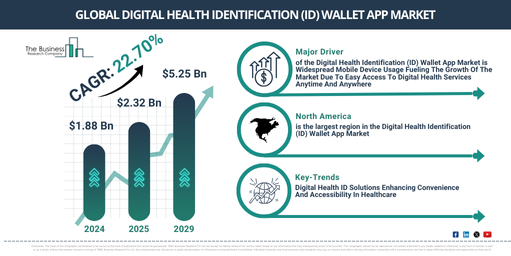
    The size of the digital health identification (ID) wallet app market has expanded significantly in recent years. This market is projected to expand from $1.88 billion in 2024 to $2.32 billion in 2025, demonstrating a compound annual growth rate (CAGR) of 23.0%. Historically, this expansion can be ascribed to several factors, including consumer demand for convenience, an aging population, the growing demand for chronic disease management, a rise in health awareness, and a rising preference for digital interactions.

    The digital health identification (ID) wallet app market is anticipated to undergo significant expansion over the next few years. It is predicted to reach $5.25 billion by 2029, demonstrating a compound annual growth rate (CAGR) of 22.7%. This growth during the forecast period is driven by an increasing demand for personalized health recommendations, growing confidence in the security and reliability of digital health tools, the influence of social media, expanding access to digital health infrastructure in urban areas, and the proliferation of mobile devices. Major trends for this period include the integration of AI and machine learning, advancements in blockchain technology, connectivity with wearable health devices, progress in cloud computing, and the development of biometric authentication.

    Unlock Your Free Sample Report for Exclusive Market Data:

    https://www.thebusinessresearchcompany.com/sample.aspx?id=28194&type=smp

    What Are The Drivers Pushing New Developments In The Digital Health Identification (ID) Wallet App Market?

    The increasing availability of mobile devices is projected to boost the expansion of the digital health identification (ID) wallet app market in the future. These portable electronic gadgets enable individuals to access computing, communication, and internet services conveniently at any time or location. The widespread adoption of mobile devices is escalating, driven by enhanced internet access, allowing a larger population to remain connected and utilize digital services universally. The extensive usage of mobile devices fuels demand for digital health identification (ID) wallet apps because these applications offer users a secure way to store and retrieve their health records at any time, ensuring prompt and easy access in healthcare scenarios. For example, data from Uswitch Limited, a UK-based online and telephone comparison and switching service provider, released in February 2023, indicated that 71.8 million mobile connections were active in 2022, representing a 3.8% rise from 2021. It is also projected that by 2025, the UK will have a population of 68.3 million, with 95% of residents owning smartphones. Consequently, the increased prevalence of mobile devices is a key factor propelling the expansion of the digital health identification (ID) wallet app market.

    Which Key Segments Fueling The Digital Health Identification (ID) Wallet App Market?

    The digital health identification (ID) wallet app market covered in this report is segmented as

    1) By Component: Software, Services

    2) By Deployment Mode: On-Premises, Cloud-Based

    3) By Application: Patient Identification, Health Records Management, Insurance Verification, e-Prescriptions, Other Applications

    4) By End-User: Hospitals And Clinics, Insurance Providers, Patients, Government Agencies, Other End-Users

    Subsegments:

    1) By Software: Identity Verification Module, Electronic Health Records (EHR) Management, Insurance And Claims Management, Prescription Management, Analytics And Reporting Tools, Security And Compliance Tools

    2) By Services: Implementation And Integration Services, Consulting And Advisory, Support And Maintenance, Training And Capacity Building, Custom Development Services

    What Are The Major Trends Driving The Growth Of The Digital Health Identification (ID) Wallet App Market?

    Leading companies within the digital health identification (ID) wallet app market are prioritizing the development of sophisticated solutions, such as mobile health cards, aiming to streamline the process of sharing health data with healthcare providers. These mobile health cards function as digital instruments on mobile devices, securely housing personal health information including medical history and vaccination status, thereby enabling users to readily access and share it as required. A relevant example occurred in August 2025, when the provincial government of Alberta, a Canada-based governmental entity, introduced the digital Alberta Wallet. This platform now allows Albertans to securely store government-issued documents directly on their personal mobile devices. Its initial feature is a mobile health card, designed to offer a faster and more convenient method for accessing healthcare services. This card contains the user’s name, date of birth, and personal health number, which can be retrieved by scanning a QR code at healthcare facilities. The card will be universally accepted by all healthcare providers, and establishments lacking scanning equipment can verify the digital details manually.

    Which Major Industry Participants Are Leading The Digital Health Identification (ID) Wallet App Market Growth?

    Major companies operating in the digital health identification (ID) wallet app market are Apple Inc., Google LLC, Microsoft Corporation, Amazon Web Services Inc., Oracle Corp., Salesforce Inc., Evernorth Health Inc., Epic Systems Corp., athenahealth Inc., InterSystems Corp., eClinicalWorks LLC, NextGen Healthcare Information Systems Inc., Veradigm LLC, PointClickCare, 1upHealth, PicnicHealth, Health Gorilla Inc., Spruce Health Inc., Dock Health Inc., ProCredEx, and MyID.

    Download The Full Report For Exclusive Market Findings:

    https://www.thebusinessresearchcompany.com/report/digital-health-identification-id-wallet-app-global-market-report

    What Are The Key Regional Factors Influencing The Digital Health Identification (ID) Wallet App Market Growth?

    North America was the largest region in the digital health identification (ID) wallet app market in 2024. Asia-Pacific is expected to be the fastest-growing region in the forecast period. The regions covered in digital health identification (ID) wallet app report are Asia-Pacific, Western Europe, Eastern Europe, North America, South America, Middle East and Africa.

    Request A Customized Version Of The Digital Health Identification (ID) Wallet App Market Report:

    https://www.thebusinessresearchcompany.com/customise?id=28194&type=smp

    Browse Through More Reports Similar to the Global Digital Health Identification (ID) Wallet App Market 2025, By The Business Research Company

    Healthcare Rfid Global Market Report 2025

    https://www.thebusinessresearchcompany.com/report/healthcare-rfid-global-market-report

    Digital Health Global Market Report 2025

    https://www.thebusinessresearchcompany.com/report/digital-health-global-market-report

    Digital Wallet Global Market Report 2025

    https://www.thebusinessresearchcompany.com/report/digital-wallet-global-market-report

    Get in touch with us:

    The Business Research Company: https://www.thebusinessresearchcompany.com/

    Americas +1 310-496-7795

    Asia +44 7882 955267 & +91 8897263534

    Europe +44 7882 955267

    Email us at info@tbrc.info

    Follow us on:

    LinkedIn: https://in.linkedin.com/company/the-business-research-company

    YouTube: https://www.youtube.com/channel/UC24_fI0rV8cR5DxlCpgmyFQ

    Global Market Model: https://www.thebusinessresearchcompany.com/global-market-model

  • Diagnostics-As-A-Service Market to Reach $11.5 Billion by 2029, Growing at a CAGR of 20.8%

    Diagnostics-As-A-Service Market to Reach $11.5 Billion by 2029, Growing at a CAGR of 20.8%

    Unlock Global Insights – Save 20% on Market Reports with Code ONLINE20

    What Is The Global Market Value Of The Diagnostics-As-A-Service Industry In 2025?

    The diagnostics-as-a-service market has experienced rapid expansion in recent years. Its size is projected to increase from $4.45 billion in 2024 to $5.40 billion in 2025, demonstrating a compound annual growth rate (CAGR) of 21.2%. This historical growth can be linked to several factors, including the emergence of digital healthcare, a greater need for early disease identification, the increasing use of cloud-based solutions, escalating healthcare expenses necessitating efficient options, and an elevated requirement for quicker, more precise diagnostics.

    The diagnostics-as-a-service market size is anticipated to experience substantial growth in the coming years, expanding to $11.50 billion by 2029, achieving a compound annual growth rate (CAGR) of 20.8%. This expansion during the forecast period is driven by factors such as the rising prevalence of chronic conditions, the progression of personalized medicine, an increasing demand for remote and home-based testing options, a heightened focus on cost-efficient diagnostic methods, and supportive regulatory frameworks for digital healthcare solutions. Major developments expected in the forecast period include the integration of AI-driven diagnostics, the adoption of cloud-based platforms, comprehensive multi-omics solutions, remote and in-home testing capabilities, real-time analytics with digital reporting, blockchain-enabled data security measures, and personalized, patient-centric diagnostic services.

    Unlock Your Free Sample Report for Exclusive Market Data:

    https://www.thebusinessresearchcompany.com/sample.aspx?id=28193&type=smp

    What Are The Emerging Market Drivers Creating New Opportunities In The Diagnostics-As-A-Service Industry?

    The expanding occurrence of chronic illnesses is anticipated to fuel the expansion of the diagnostics-as-a-service market. These are enduring health conditions that manifest gradually and necessitate ongoing medical attention. A major factor contributing to the increasing incidence of chronic diseases is sedentary lifestyles, where extended periods of sitting and insufficient physical activity heighten the risk of conditions such as heart disease and diabetes. Diagnostics-as-a-service facilitates the diagnosis of chronic diseases through cloud-based testing and analytical capabilities, making the oversight of long-term conditions more straightforward. This service enhances patient care by providing prompt data, minimizing hospital visits, and boosting accessibility for individuals with continuous health requirements. For example, data from June 2024 by the National Health Service revealed that 3,615,330 individuals registered with a general practitioner in the UK were diagnosed with non-diabetic hyperglycemia or pre-diabetes in 2023, indicating an 18% increase from 3,065,825 cases in 2022. Consequently, the rising frequency of chronic diseases is a significant impetus for the growth of the diagnostics-as-a-service market. The rising acceptance of personalized medicine is expected to stimulate the growth of the diagnostics-as-a-service market. Personalized medicine involves a healthcare approach where treatment and prevention strategies are customized to an individual’s distinct genetic makeup, lifestyle, and surroundings. This increasing adoption is primarily due to breakthroughs in genomics, which allow for the accurate identification of genetic differences and the development of customized therapies for patients. Diagnostics-as-a-service improves personalized medicine by offering instant, cloud-based diagnostic services that facilitate quick and accurate patient evaluations. These services optimize data gathering and analysis, thereby supporting bespoke treatment plans and enhancing clinical judgments. For instance, in February 2024, the Personalized Medicine Coalition (PMC), a US-based nonprofit, stated that the U.S. Food and Drug Administration (FDA) approved 26 new personalized medicines in 2023, a considerable rise from the 12 approved in 2022. Consequently, the increasing embrace of personalized medicine is propelling the expansion of the diagnostics-as-a-service market.

    How Is The Diagnostics-As-A-Service Market Classified Into Different Segments?

    The diagnostics-as-a-service market covered in this report is segmented as

    1) By Component: Software, Services, Platforms

    2) By Deployment Mode: Cloud-Based, On-Premises, Hybrid

    3) By Application: Clinical Diagnostics, Imaging Diagnostics, Pathology, Genomics, Other Applications

    4) By End-User: Hospitals And Clinics, Diagnostic Laboratories, Research Institutes, Other End Users

    Subsegments:

    1) By Software: Diagnostic Analytics Software, Clinical Decision Support Software, artificial intelligence (AI) Or Machine Learning (ML)-Based Diagnostic Tools, Imaging And Visualization Software, Data Integration And Interoperability Software, Remote Monitoring And Reporting Software

    2) By Services: Diagnostic Testing Services, Remote And Virtual Diagnostic Services, Cloud-Based Data Storage And Management, Consulting And Implementation Services, Training And Support Services, Maintenance And Upgradation Services

    3) By Platforms: Cloud-based Diagnostic Platforms, On-Premise Diagnostic Platforms, Hybrid Deployment Platforms, Application Programming Interface (API) And Integration Platforms, Mobile Or Tele-Diagnostics Platforms, Data Exchange And Collaboration Platforms

    What Trends Are Expected To Drive The Diagnostics-As-A-Service Market?

    Leading companies in the diagnostics-as-a-service market are concentrating on developing patient-focused solutions, such as at-home lab testing services, to enhance accessibility and convenience. At-home lab testing services are diagnostic kits that enable individuals to collect samples at home and obtain test results without visiting a clinic. For instance, in June 2025, Amazon India, a US-based e-commerce company, partnered with Orange Health Labs, an India-based healthcare company, to launch Amazon Diagnostics, an at-home lab testing service under Amazon Medical. This service is available across six major cities, offering doorstep sample collection within 60 minutes and digital reports in as little as six hours, covering over 800 diagnostic tests. Integrated into the Amazon app, it allows customers to book, track, and access secure reports seamlessly. This initiative addresses critical gaps in India’s diagnostic landscape, including delays, accessibility, and quality, while fortifying Amazon’s vision of providing comprehensive healthcare services, encompassing pharmacy and clinics.

    Who Are The Prominent Global Companies Shaping The Diagnostics-As-A-Service Market?

    Major companies operating in the diagnostics-as-a-service market are F. Hoffmann-La Roche AG, Thermo Fisher Scientific Inc., Abbott Laboratories, Siemens Healthineers AG, Koninklijke Philips N.V., GE Healthcare Technologies Inc., Becton Dickinson and Company, Agilent Technologies Inc., Hologic Inc., Bio-Rad Laboratories Inc., Guardant Health Inc., Invitae Corporation, InHealth Group Limited, Canon Medical Systems Corporation, Freenome Holdings Inc., BioSerenity SAS, PathAI Inc., Butterfly Network Inc., Aidoc Medical Ltd., Owkin Inc., K Health Inc., and Probatix GmbH.

    Download The Full Report For Exclusive Market Findings:

    https://www.thebusinessresearchcompany.com/report/diagnostics-as-a-service-global-market-report

    How Do Regional Market Performances Compare Within The Diagnostics-As-A-Service Industry?

    North America was the largest region in the diagnostics-as-a-service market in 2024. The regions covered in diagnostics-as-a-service report are Asia-Pacific, Western Europe, Eastern Europe, North America, South America, Middle East and Africa.

    Request A Customized Version Of The Diagnostics-As-A-Service Market Report:

    https://www.thebusinessresearchcompany.com/customise?id=28193&type=smp

    Browse Through More Reports Similar to the Global Diagnostics-As-A-Service Market 2025, By The Business Research Company

    Diagnostic Imaging Services Global Market Report 2025

    https://www.thebusinessresearchcompany.com/report/diagnostic-imaging-services-global-market-report

    Remote Diagnostics Global Market Report 2025

    https://www.thebusinessresearchcompany.com/report/remote-diagnostics-global-market-report

    Point Of Care Diagnostics Devices And Equipment Global Market Report 2025

    https://www.thebusinessresearchcompany.com/report/point-of-care-diagnostics-devices-and-equipment-global-market-report

    Get in touch with us:

    The Business Research Company: https://www.thebusinessresearchcompany.com/

    Americas +1 310-496-7795

    Asia +44 7882 955267 & +91 8897263534

    Europe +44 7882 955267

    Email us at info@tbrc.info

    Follow us on:

    LinkedIn: https://in.linkedin.com/company/the-business-research-company

    YouTube: https://www.youtube.com/channel/UC24_fI0rV8cR5DxlCpgmyFQ

    Global Market Model: https://www.thebusinessresearchcompany.com/global-market-model
  • De-Identified Health Data Industry Anticipated to Expand at 11.9% CAGR During the Forecast Period

    De-Identified Health Data Industry Anticipated to Expand at 11.9% CAGR During the Forecast Period

    Unlock Global Insights – Save 20% on Market Reports with Code ONLINE20

    #What Is The Projected Market Size Of The De-Identified Health Data Market By 2029?

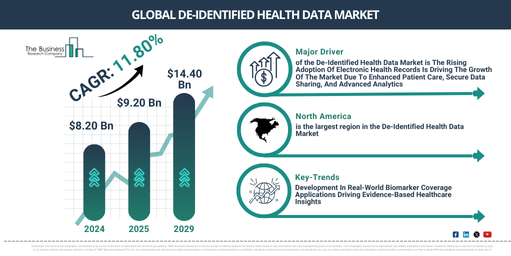
    The de-identified health data market has seen rapid growth in recent years. This market is expected to expand from $8.20 billion in 2024 to $9.20 billion in 2025, achieving a compound annual growth rate (CAGR) of 12.2%. Historically, this expansion has been propelled by the increasing adoption of electronic health records, a heightened awareness of patient data privacy, an upswing in healthcare analytics usage, more extensive research into population health management, the development of health information technology systems, and the increased application of data in clinical trials.

    The de-identified health data market size is projected for swift expansion in the coming years. This market is anticipated to reach $14.40 billion by 2029, exhibiting a compound annual growth rate (CAGR) of 11.8%. Key factors contributing to this anticipated growth involve the increasing application of artificial intelligence within healthcare, a heightened need for real-world evidence in pharmaceutical development, an elevated focus on the secondary utilization of health data, a significant rise in the demand for privacy-enhancing technologies, and the expanding requirement for precision medicine. Noteworthy developments expected during this period encompass the formulation of data privacy protocols, the creation of machine learning pipelines, integration efforts with electronic health records, connections with population health platforms, and advancements in data anonymization methodologies.

    Unlock Your Free Sample Report for Exclusive Market Data:

    https://www.thebusinessresearchcompany.com/sample.aspx?id=28191&type=smp

    Which Industry Drivers Are Expected To Accelerate The De-Identified Health Data Market From 2025 To 2029?

    The growing implementation of electronic health records (EHRs) is projected to drive the expansion of the de-identified health data market moving forward. Electronic health records (EHR) denote a digital version of a patient’s complete medical history, encompassing diagnoses, treatments, medications, lab results, and other health data securely stored and shared among authorized healthcare providers. The uptake of electronic health records is increasing due to their capability to enhance patient care and safety by providing accurate, real-time access to extensive medical information. De-identified health data complements electronic health records by facilitating secure data sharing and advanced analytics while safeguarding patient privacy, thereby refining clinical decision-making and healthcare outcomes. As an illustration, in June 2022, the Department of Health and Social Care, a UK-based government department, projected that by March 2025, all NHS trusts will have adopted electronic health records, marking an increase from the 90% adoption rate recorded in December 2023. Consequently, the escalating adoption of electronic health records (EHRs) is fostering the growth of the de-identified health data market.

    What Are The Emerging Segments Gaining Attention In The De-Identified Health Data Market?

    The de-identified health data market covered in this report is segmented as

    1) By Type: Clinical Data, Genomic Data, Patient Demographics, Prescription Data, Hospital And Provider Data, Pharmacogenomic Data

    2) By Application: Clinical Research And Trials, Public Health, Precision Medicine, Health Economics And Outcomes Research (HEOR), Population Health Management, Drug Discovery And Development, Healthcare Quality Improvement, Insurance Underwriting And Risk Assessment, Other Applications

    3) By End-User: Pharmaceutical Companies, Biotechnology Firms, Healthcare Providers, Insurance Companies Or Healthcare Payers, Research Institutions, Government Agencies, Other End-Users

    Subsegments:

    1) By Clinical Data: Electronic Health Records, Medical Imaging Data, Laboratory Test Results, Surgical Reports, Pathology Reports, Vital Signs Measurements

    2) By Genomic Data: Whole Genome Sequencing Data, Exome Sequencing Data, Single Nucleotide Polymorphism Data, Gene Expression Profiles, Epigenetic Data

    3) By Patient Demographics: Age Information, Gender Information, Ethnicity Information, Geographic Location, Socioeconomic Status, Marital Status

    4) By Prescription Data: Medication Orders, Dosage Information, Prescription Refill History, Drug Allergies, Pharmacy Dispensation Records

    5) By Hospital And Provider Data: Provider Performance Metrics, Care Delivery Outcomes, Billing And Claims Data, Resource Utilization Data

    6) By Pharmacogenomic Data: Gene–Drug Interaction Data, Adverse Drug Reaction Data, Personalized Therapy Response Data, Drug Efficacy Variation Data

    What Long-Term Trends Will Shape The Future Growth Of The De-Identified Health Data Industry?

    Leading companies in the de-identified health data market are concentrating on developing advanced solutions, such as real-world biomarker coverage applications, to facilitate evidence-based healthcare decision-making. These applications utilize de-identified patient data to monitor and evaluate biomarker patterns and effectiveness among diverse populations outside of clinical trials, thereby enabling researchers and healthcare providers to gain insights into treatment responses and disease trends. For instance, in July 2025, Datma Inc., a US-based healthcare technology company, introduced the Federated Biomarker Explorer, a free application designed for pharmaceutical teams to quickly validate real-world biomarker coverage across Datma’s federated network of participating data contributors. This tool delivers aggregated, cohort-level insights into biomarker presence, allowing teams to assess coverage rapidly without needing contracts or IT support. It also enables secure integration of users’ own data for overlap analysis and supports early-stage feasibility assessments with clinical and demographic filtering, which helps verify if datasets contain the necessary patient populations before committing resources.

    Who Are The Top Performing Companies In The De-Identified Health Data Market In Recent Years?

    Major companies operating in the de-identified health data market are UnitedHealth Group Incorporated, Oracle Corporation, IQVIA Holdings Inc, ICON Public Limited Company, Datavant Inc, Premier Inc., iMerit Technology Services Pvt. Ltd., Tempus Labs Inc., Medidata Solutions Inc., Veradigm Inc., Flatiron Health, Merative LP, Komodo Health Inc., Shaip Inc., Truveta Inc., Evidation Health Inc., TriNetX Inc., Clarify Health Solutions Inc., Akrivia Health Ltd., Gradient Health Inc.

    Download The Full Report For Exclusive Market Findings:

    https://www.thebusinessresearchcompany.com/report/de-identified-health-data-global-market-report

    What Regional Growth Trends Are Shaping The De-Identified Health Data Market Outlook?

    North America was the largest region in the de-identified health data market in 2024. Asia-Pacific is expected to be the fastest-growing region in the forecast period. The regions covered in de-identified health data report are Asia-Pacific, Western Europe, Eastern Europe, North America, South America, Middle East and Africa.

    Request A Customized Version Of The De-Identified Health Data Market Report:

    https://www.thebusinessresearchcompany.com/customise?id=28191&type=smp

    Browse Through More Reports Similar to the Global De-Identified Health Data Market 2025, By The Business Research Company

    Artificial Intelligence In The Diagnostic Global Market Report 2025

    https://www.thebusinessresearchcompany.com/report/artificial-intelligence-in-the-diagnostic-global-market-report

    Artificial Intelligence In Cancer Diagnostics Global Market Report 2025

    https://www.thebusinessresearchcompany.com/report/artificial-intelligence-in-cancer-diagnostics-global-market-report

    Ai In Medical Diagnostics Global Market Report 2025

    https://www.thebusinessresearchcompany.com/report/ai-in-medical-diagnostics-global-market-report

    Get in touch with us:

    The Business Research Company: https://www.thebusinessresearchcompany.com/

    Americas +1 310-496-7795

    Asia +44 7882 955267 & +91 8897263534

    Europe +44 7882 955267

    Email us at info@tbrc.info

    Follow us on:

    LinkedIn: https://in.linkedin.com/company/the-business-research-company

    YouTube: https://www.youtube.com/channel/UC24_fI0rV8cR5DxlCpgmyFQ

    Global Market Model: https://www.thebusinessresearchcompany.com/global-market-model
  • Global Deep Learning In Diagnostics Market Projected to Expand at 35.8% CAGR by 2029

    Global Deep Learning In Diagnostics Market Projected to Expand at 35.8% CAGR by 2029

    Unlock Global Insights – Save 20% on Market Reports with Code ONLINE20

    How Much Was The Deep Learning In Diagnostics Market Worth In 2025, And What Is Its Anticipated Value By 2029?

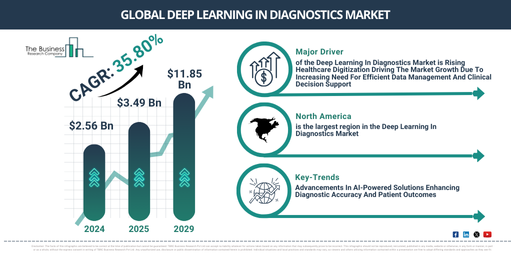
    The deep learning in diagnostics market’s size has seen exponential growth recently. It is projected to expand from $2.56 billion in 2024 to reach $3.49 billion by 2025, demonstrating a compound annual growth rate (CAGR) of 36.1%. This past growth is largely due to factors such as increased healthcare data accessibility via electronic health records, the escalating uptake of cloud-based diagnostic platforms, an increasing need for quicker diagnostic results, the rising requirement for economical diagnostic methods in emerging economies, and the expanding application of deep learning within genomics and precision diagnostics.

    The deep learning in diagnostics market size is anticipated to undergo substantial expansion over the next few years, projected to reach $11.85 billion by 2029, exhibiting a compound annual growth rate (CAGR) of 35.8%. This growth during the forecast period is driven by factors such as the increasing need for early and accurate disease detection, the rising prevalence of chronic and lifestyle-related diseases, greater investments in healthcare AI research and development, a growing imperative to reduce diagnostic errors and improve accuracy, and the expanding utilization of digital pathology and radiology solutions. Prominent trends expected in this period include advancements in AI-powered 3D imaging, the integration of AI with electronic health records, progress in predictive analytics for disease detection, the integration of AI with genomics and multi-omics data, and innovations in automated image interpretation.

    Unlock Your Free Sample Report for Exclusive Market Data:

    https://www.thebusinessresearchcompany.com/sample.aspx?id=28190&type=smp

    What Are The Top Growth Drivers Impacting The Deep Learning In Diagnostics Market Outlook?

    The deep learning in diagnostics market is projected to grow as healthcare digitization continues to rise. Healthcare digitization is defined as the implementation of digital technologies within healthcare systems to improve efficiency, accessibility, data management, and comprehensive patient care. The growth in healthcare digitization is propelled by its capability to ensure effective management and secure exchange of increasingly large volumes of patient data, fostering better care coordination and informed decisions. The digitalization of healthcare generates vast amounts of data from medical imaging, electronic health records, and connected devices, thereby creating a demand for deep learning in diagnostics, which can analyze this data efficiently and deliver faster, more accurate insights compared to traditional approaches. For instance, in June 2022, the Department of Health and Social Care, a UK-based government entity, announced that by March 2025, all NHS trusts are expected to have adopted electronic health records, a significant increase from 90% adoption by December 2023. Thus, the expansion of healthcare digitization is a key driver for the deep learning in diagnostics market’s growth.

    What Are The Major Segment Types Covered In The Deep Learning In Diagnostics Market?

    The deep learning in diagnostics market covered in this report is segmented as

    1) By Component: Software, Hardware, Services

    2) By Deployment Mode: Cloud-Based, On-Premises

    3) By Application: Medical Imaging, Pathology, Genomics, Drug Discovery, Other Applications

    4) By End-User: Hospitals, Diagnostic Laboratories, Research Institutes, Other End-Users

    Subsegments:

    1) By Software: Diagnostic Imaging Software, Pathology Analysis Software, Genomic Data Analysis Software

    2) By Hardware: Storage Devices, Networking Devices, Diagnostic Imaging Equipment

    3) By Services: Deployment And Integration Services, Training And Education Services, Consulting Services

    Which Market Trends Are Creating New Opportunities In The Deep Learning In Diagnostics Industry?

    Leading companies in the deep learning in diagnostics market are prioritizing the creation of advanced solutions, such as AI-driven deep learning technologies, to elevate diagnostic precision, speed, and personalized patient care. An AI-driven deep learning solution is defined as a sophisticated system that utilizes artificial intelligence and layered neural networks to autonomously process complex medical data, identify patterns, and generate remarkably accurate diagnostic insights with minimal human intervention. For example, in May 2025, GE Healthcare Technologies Inc., a US-based medical technology and diagnostics company, unveiled CleaRecon DL, specifically engineered to enhance image reconstruction and diagnostic accuracy. This innovation improves cone-beam CT (CBCT) images by efficiently removing streak artifacts, which results in significantly clearer and more precise imaging for interventional procedures. The technology boosts clinicians’ confidence in interpreting images and refines precision during interventions, with clinical studies indicating 98% clearer images and a 94% improvement in confidence. Ultimately, it supports better patient outcomes by optimizing workflow and enabling more effective, image-guided treatments.

    Which Leading Companies Dominate The Deep Learning In Diagnostics Market Share?

    Major companies operating in the deep learning in diagnostics market are International Business Machines Corporation, Siemens Healthineers AG, Koninklijke Philips N.V., GE HealthCare Technologies Inc., Tempus AI Inc., Qure.ai Technologies Pvt. Ltd., Freenome Holdings Inc., PathAI Inc., Aidoc Medical Ltd., Viz.ai Inc., SOPHiA GENETICS SA, Lunit Inc., Paige.AI Inc., Beijing Infervision Technology Co. Ltd., Indica Labs Inc., CureMetrix Inc., Deep Bio Inc., Enlitic Inc., ScreenPoint Medical B.V., VUNO Inc., Mindpeak GmbH, and Arterys Inc.

    Download The Full Report For Exclusive Market Findings:

    https://www.thebusinessresearchcompany.com/report/deep-learning-in-diagnostics-global-market-report

    Which Regional Markets Are Contributing Most To The Deep Learning In Diagnostics Industry Expansion?

    North America was the largest region in the deep learning in diagnostics market in 2024. Asia-Pacific is expected to be the fastest-growing region in the forecast period. The regions covered in deep learning in diagnostics report are Asia-Pacific, Western Europe, Eastern Europe, North America, South America, Middle East and Africa.

    Request A Customized Version Of The Deep Learning In Diagnostics Market Report:

    https://www.thebusinessresearchcompany.com/customise?id=28190&type=smp

    Browse Through More Reports Similar to the Global Deep Learning In Diagnostics Market 2025, By The Business Research Company

    Clinical Trial Management Systems Global Market Report 2025

    https://www.thebusinessresearchcompany.com/report/clinical-trial-management-systems-global-market-report

    Virtual Clinical Trials Global Market Report 2025

    https://www.thebusinessresearchcompany.com/report/virtual-clinical-trials-global-market-report

    Clinical Trial Management System Global Market Report 2025

    https://www.thebusinessresearchcompany.com/report/clinical-trial-management-system-global-market-report

    Get in touch with us:

    The Business Research Company: https://www.thebusinessresearchcompany.com/

    Americas +1 310-496-7795

    Asia +44 7882 955267 & +91 8897263534

    Europe +44 7882 955267

    Email us at info@tbrc.info

    Follow us on:

    LinkedIn: https://in.linkedin.com/company/the-business-research-company

    YouTube: https://www.youtube.com/channel/UC24_fI0rV8cR5DxlCpgmyFQ

    Global Market Model: https://www.thebusinessresearchcompany.com/global-market-model
  • Decentralized Clinical Trials Market to Grow at a CAGR of 17.5% from 2025 to 2029

    Decentralized Clinical Trials Market to Grow at a CAGR of 17.5% from 2025 to 2029

    Unlock Global Insights – Save 20% on Market Reports with Code ONLINE20

    What Is The Future Market Size Estimation For The Decentralized Clinical Trials Market Covering 2025–2034?

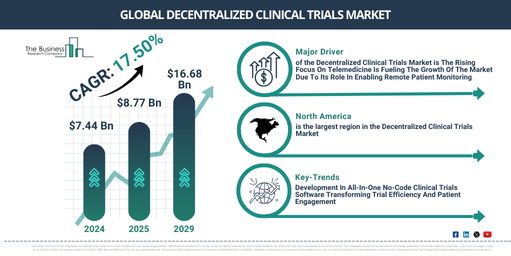
    The decentralized clinical trials market size has experienced significant expansion in recent years. It is projected to expand from $7.44 billion in 2024 to $8.77 billion in 2025, demonstrating a compound annual growth rate (CAGR) of 17.8%. This historical growth can be attributed to several factors, including the increasing integration of electronic data capture systems, the rising prevalence of wearable health monitoring devices, enhanced regulatory encouragement for patient-centric trials, a greater need for cost-effective trial frameworks, and the broader deployment of remote monitoring solutions.

    The decentralized clinical trials market is poised for substantial expansion over the next few years, with projections indicating it will reach $16.68 billion by 2029, growing at a compound annual growth rate (CAGR) of 17.5%. This anticipated growth is fueled by several factors, including the incorporation of artificial intelligence and machine learning in trials, the increasing implementation of blockchain for data security, the rising prevalence of rare and chronic diseases which necessitate decentralized models, the expanding use of real-world evidence in trial design, and the broader availability of 5G connectivity to support seamless trial operations. Additionally, key trends for the forecast period encompass the integration of artificial intelligence and machine learning, the adoption of wearable and biosensor technologies, a greater reliance on telemedicine and remote monitoring, the enhancement of data security and transparency through blockchain, and the development of cloud-based clinical trial management platforms.

    Unlock Your Free Sample Report for Exclusive Market Data:

    https://www.thebusinessresearchcompany.com/sample.aspx?id=28189&type=smp

    Which Major Market Drivers Are Shaping The Future Of The Decentralized Clinical Trials Market?

    The increasing emphasis on telemedicine is projected to stimulate expansion in the decentralized clinical trials market in the future. Telemedicine involves providing medical services from a distance using digital communication tools, allowing for health consultations and supervision without the need for patients to be physically present at medical centers. This heightened attention on telemedicine is largely due to the demand for easily accessible healthcare, especially given global health crises and the necessity for social distancing. Decentralized clinical trials leverage telemedicine to remotely interact with and oversee patients, thereby reducing face-to-face appointments while facilitating immediate data gathering, enhanced accessibility, and uninterrupted supervision. For example, in August 2023, Vivalink, a US-based healthcare technology firm, reported that 81% of clinicians currently utilize remote patient monitoring (RPM), a substantial increase from only 20% in 2021, marking a 305% surge. Additionally, 84% of existing RPM users plan to broaden their application of this technology during 2024. Consequently, the increased emphasis on telemedicine is fueling the expansion of the decentralized clinical trials market.

    What Are The Major Segment Categories Driving The Decentralized Clinical Trials Market Growth?

    The decentralized clinical trials market covered in this report is segmented as

    1) By Type: Interventional, Observational, Expanded Access

    2) By Technology Used: Wearable Devices, Mobile Health Applications, Telemedicine Platforms, Electronic Data Capture Systems

    3) By Study Phase: Phase I, Phase II, Phase III, Phase IV

    4) By Therapeutic Area: Oncology, Cardiology, Neurology, Infectious Diseases

    5) By End-User: Pharmaceutical Companies, Biotechnology Firms, Contract Research Organizations, Regulatory Authorities, Academic And Research Institutions

    Subsegments:

    1) By Interventional: Randomized Controlled Trials (RCTs), Non-Randomized Trials, Adaptive Clinical Trials, Pragmatic Clinical Trials

    2) By Observational: Cohort Studies, Case-Control Studies, Cross-Sectional Studies, Prospective Studies, Retrospective Studies, Longitudinal Studies

    3) By Expanded Access: Treatment Investigational New Drug (IND) Applications, Intermediate-Size Patient Population Investigational New Drug (IND) Applications, Single-Patient Investigational New Drug (IND) Applications, Emergency Use Investigational New Drug (IND) Applications

    How Are Trends Influencing The Decentralized Clinical Trials Market?

    Leading companies in the decentralized clinical trials market are concentrating on developing advanced solutions, such as integrated, no-code clinical trials software, to streamline trial setup and management, thereby enhancing overall efficiency and patient engagement. This type of all-in-one, no-code clinical trials software empowers researchers to design, manage, and conduct trials without requiring coding expertise, seamlessly integrating patient recruitment, data capture, monitoring, and analytics into a single user-friendly platform. For example, in August 2024, Medable, a US-based clinical technology company, launched Medable Studio, a comprehensive, no-code software solution engineered to simplify and accelerate the configuration, translation, validation, and deployment of electronic Clinical Outcome Assessments (eCOA), eConsent, Televisit, and sensors Plus into clinical trials. This innovation enables biopharmaceutical companies to create protocol-compliant study designs in hours rather than months, affording users greater control, transparency, and speed, while offering flexible self-service, full-service, or hybrid options that significantly reduce study startup timelines and costs. The platform’s objective is to revolutionize trial execution by making the study build process faster, more efficient, and less dependent on professional services.

    Who Are The Major Companies Operating In The Decentralized Clinical Trials Market?

    Major companies operating in the decentralized clinical trials market are Walgreens Boots Alliance Inc., Pfizer Inc., Oracle Corporation, Thermo Fisher Scientific Inc., IQVIA Holdings Inc., Labcorp Holdings Inc., ICON Public Limited Company, Dassault Systèmes SE, LEO Pharma A/S, Verily Life Sciences LLC, ProPharma, Signant Health Holding Corp., PCM Trials, Huma Therapeutics Limited, Medable Inc., Science 37 Inc., Obvio Health, EmVenio Research Inc., Grove AI Inc., Phesi Inc.

    Download The Full Report For Exclusive Market Findings:

    https://www.thebusinessresearchcompany.com/report/decentralized-clinical-trials-global-market-report

    How Does The Decentralized Clinical Trials Market Perform Across Key Geographic Regions?

    North America was the largest region in the decentralized clinical trials market in 2024. Asia-Pacific is expected to be the fastest-growing region in the forecast period. The regions covered in decentralized clinical trials report are Asia-Pacific, Western Europe, Eastern Europe, North America, South America, Middle East and Africa.

    Request A Customized Version Of The Decentralized Clinical Trials Market Report:

    https://www.thebusinessresearchcompany.com/customise?id=28189&type=smp

    Browse Through More Reports Similar to the Global Decentralized Clinical Trials Market 2025, By The Business Research Company

    Healthcare Data Annotation Tools Global Market Report 2025

    https://www.thebusinessresearchcompany.com/report/healthcare-data-annotation-tools-global-market-report

    Healthcare Data Integration Global Market Report 2025

    https://www.thebusinessresearchcompany.com/report/healthcare-data-integration-global-market-report

    Personal Health Record Software Global Market Report 2025

    https://www.thebusinessresearchcompany.com/report/personal-health-record-software-global-market-report

    Get in touch with us:

    The Business Research Company: https://www.thebusinessresearchcompany.com/

    Americas +1 310-496-7795

    Asia +44 7882 955267 & +91 8897263534

    Europe +44 7882 955267

    Email us at info@tbrc.info

    Follow us on:

    LinkedIn: https://in.linkedin.com/company/the-business-research-company

    YouTube: https://www.youtube.com/channel/UC24_fI0rV8cR5DxlCpgmyFQ

    Global Market Model: https://www.thebusinessresearchcompany.com/global-market-model
  • Global Data-Driven Precision Medical Service Market 2025–2029: Competitive Insights and Opportunities

    Global Data-Driven Precision Medical Service Market 2025–2029: Competitive Insights and Opportunities

    Unlock Global Insights – Save 20% on Market Reports with Code ONLINE20

    What Is The Expected Total Market Size Of The Data-Driven Precision Medical Service Industry By The Forecast Year 2029?

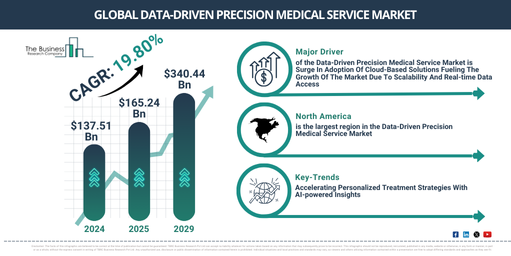
    The data-driven precision medical service market size has shown substantial growth in recent years. It is anticipated to increase from $137.51 billion in 2024 to $165.24 billion in 2025, achieving a compound annual growth rate (CAGR) of 20.2%. This historical expansion can be linked to the increasing adoption of electronic health records, the rising demand for personalized medicine, the greater integration of artificial intelligence in healthcare, the escalating need for accurate diagnostics, and the development of healthcare data analytics initiatives.

    The data-driven precision medical service market size is projected to experience substantial expansion over the coming years. By 2029, its value is forecast to reach $340.44 billion, growing at a compound annual growth rate (CAGR) of 19.8%. This anticipated growth during the forecast period stems from factors such as the increasing adoption of genomics and precision medicine, the expanded application of artificial intelligence and machine learning, a rising need for real-time patient monitoring, increased investments in healthcare data analytics, and a heightened emphasis on preventive and personalized healthcare approaches. Key trends expected in this period encompass improvements in artificial intelligence algorithms, novel developments in genomic data interpretation, the incorporation of cloud-based healthcare platforms, progress in predictive analytics for patient outcomes, and innovative strategies in personalized treatment planning.

    Unlock Your Free Sample Report for Exclusive Market Data:

    https://www.thebusinessresearchcompany.com/sample.aspx?id=28188&type=smp

    What Are The Main Drivers Boosting The Data-Driven Precision Medical Service Industry’s Expansion?

    The increasing integration of cloud-based solutions is anticipated to boost the expansion of the data-driven precision medical service market in the future. These solutions involve software, platforms, or infrastructure provided via the internet, allowing for immediate access, storage, and processing capabilities without needing local setup. Their widespread use is fueled by their inherent scalability, which enables organizations to rapidly modify computing resources according to needs, bypassing substantial initial infrastructure costs. This scalability particularly benefits healthcare entities, letting them quickly adjust resources to support real-time patient data analysis, predictive modeling, and tailored patient care. For example, as per Ace Cloud (Ace Cloud Hosting), a US-based cloud computing specialist for healthcare and HealthTech, the healthcare sector is quickly adopting cloud technology, with 95% of organizations utilizing it for managing patient data. In 2025, cloud adoption within healthcare saw a significant 41% year-over-year increase, representing the highest growth across all industry sectors. Consequently, the increasing embrace of cloud-based solutions is projected to fuel the expansion of the data-driven precision medical service market.

    How Is The Data-Driven Precision Medical Service Market Segmented?

    The data-driven precision medical service market covered in this report is segmented as

    1) By Types: Cloud Based, On-Premises

    2) By Technology: Artificial Intelligence And Machine Learning, Big Data Analytics, Genomics And Sequencing, Cloud Computing, Blockchain, Digital Twin Technology, Wearables And Internet Of Things

    3) By Application: Hospital, Clinic, Other Applications

    Subsegments:

    1) By Cloud Based: Public Cloud Deployment, Private Cloud Deployment, Hybrid Cloud Deployment

    2) By On Premises: Dedicated Server Infrastructure, Enterprise Data Center Deployment, Localized Computing Environment

    What Key Innovation Trends Are Fueling Advancements In The Data-Driven Precision Medical Service Market?

    Leading companies in the data-driven precision medical service market are increasingly prioritizing advanced innovations, such as deep learning for multi-omics discovery, to accelerate biomarker identification, refine personalized treatment strategies, and enhance clinical decision-making within oncology and other therapeutic areas. Deep learning for multi-omics discovery involves leveraging AI algorithms to analyze complex genomic, epigenomic, transcriptomic, and proteomic data, thereby enabling the identification of novel biomarkers and therapeutic targets. For instance, in January 2023, Guardant Health, a US-based biotechnology company, launched Guardant Galaxy, a comprehensive suite of advanced analytical tools. This platform, developed through both internal research and external collaborations, aims to improve the accuracy and clinical utility of Guardant Health’s existing cancer testing portfolio. By integrating cutting-edge analytics, Guardant Galaxy supports more precise patient diagnostics and personalized treatment planning, while also accelerating the discovery of new biomarkers and therapeutic targets, thus fueling the next generation of drug development.

    Which Global Market Leaders Are Shaping The Future Of The Data-Driven Precision Medical Service Sector?

    Major companies operating in the data-driven precision medical service market are Samsung Electronics Co. Ltd., Roche Holding AG, Novartis AG, Thermo Fisher Scientific Inc., Agilent Technologies Inc., Illumina Inc., BioNTech SE, QIAGEN N.V., Natera Inc., Precision Medicine Group Inc., Guardant Health Inc., Tempus Labs Inc., Flatiron Health Inc., Certara L.P., Verily Life Sciences LLC, GenomOncology Inc., SOPHiA GENETICS SA, Recursion Pharmaceuticals Inc., DNAnexus Inc., Biomea Fusion Inc.

    Download The Full Report For Exclusive Market Findings:

    https://www.thebusinessresearchcompany.com/report/data-driven-precision-medical-service-global-market-report

    Which Region Is Expected To Witness The Fastest Growth In The Data-Driven Precision Medical Service Market?

    North America was the largest region in the data-driven precision medical service market in 2024. The regions covered in data-driven precision medical service report are Asia-Pacific, Western Europe, Eastern Europe, North America, South America, Middle East and Africa.

    Request A Customized Version Of The Data-Driven Precision Medical Service Market Report:

    https://www.thebusinessresearchcompany.com/customise?id=28188&type=smp

    Browse Through More Reports Similar to the Global Data-Driven Precision Medical Service Market 2025, By The Business Research Company

    Precision Medicine Global Market Report 2025

    https://www.thebusinessresearchcompany.com/report/precision-medicine-global-market-report

    Artificial Intelligence Ai In Precision Medicine Global Market Report 2025

    https://www.thebusinessresearchcompany.com/report/artificial-intelligence-ai-in-precision-medicine-global-market-report

    Healthcare Data Integration Global Market Report 2025

    https://www.thebusinessresearchcompany.com/report/healthcare-data-integration-global-market-report

    Get in touch with us:

    The Business Research Company: https://www.thebusinessresearchcompany.com/

    Americas +1 310-496-7795

    Asia +44 7882 955267 & +91 8897263534

    Europe +44 7882 955267

    Email us at info@tbrc.info

    Follow us on:

    LinkedIn: https://in.linkedin.com/company/the-business-research-company

    YouTube: https://www.youtube.com/channel/UC24_fI0rV8cR5DxlCpgmyFQ

    Global Market Model: https://www.thebusinessresearchcompany.com/global-market-model
  • Artificial Intelligence (AI) Oral Health App Market Forecast 2025–2034: Where Businesses Should Invest Next

    Artificial Intelligence (AI) Oral Health App Market Forecast 2025–2034: Where Businesses Should Invest Next

    Unlock Global Insights – Save 20% on Market Reports with Code ONLINE20

    What Is The Predicted Market Size Trajectory For The Artificial Intelligence (AI) Oral Health App Market From 2025 To 2034?

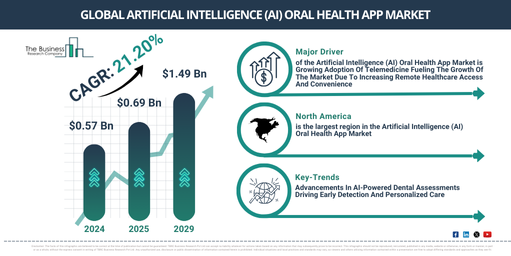
    The market size for artificial intelligence (AI) oral health apps has experienced rapid expansion in recent years. This market is projected to expand from $0.57 billion in 2024 to $0.69 billion by 2025, demonstrating a compound annual growth rate (CAGR) of 21.6%. Historically, this expansion can be attributed to heightened awareness of oral hygiene and preventive measures, a growing consumer demand for tailored dental care, the increasing incidence of dental ailments, a surging interest in digital health utilities, and enhanced interaction with virtual healthcare services.

    The artificial intelligence (AI) oral health app market size is projected to experience substantial expansion in the coming years. This market is anticipated to reach $1.49 billion by 2029, exhibiting a compound annual growth rate (CAGR) of 21.2%. Several factors are driving this growth during the forecast period, including increased investment in AI-powered oral health solutions, a surge in consumer preference for accessible dental care, an expanding number of dental clinics, the increasing integration of AI applications in healthcare facilities, and bolstered government and private sector backing for digital health initiatives. Key trends expected during this period involve enhancements in AI and machine learning algorithms for dental diagnosis, the development of novel remote oral health monitoring tools, progress in computer vision for precise teeth and gum assessment, the combination of appointment scheduling with AI-driven recommendations, and improvements in cloud-based oral health platforms.

    Unlock Your Free Sample Report for Exclusive Market Data:

    https://www.thebusinessresearchcompany.com/sample.aspx?id=28122&type=smp

    What Are The Key Drivers Of Growth In The Artificial Intelligence (AI) Oral Health App Market?

    The increasing adoption of telemedicine is anticipated to drive the expansion of the artificial intelligence (AI) oral health app market. Telemedicine involves using digital communication technologies to deliver clinical healthcare services remotely, enabling patients to consult with doctors, receive diagnoses, and manage treatments without physical visits to a healthcare facility. Its rising prevalence stems from enhanced convenience, allowing remote healthcare access, saving time, and eliminating travel, thereby improving overall accessibility and efficiency. Artificial intelligence (AI) oral health apps enhance telemedicine ecosystems through remote dental monitoring, making them highly suitable for patients with limited in-person care access. They simplify diagnostic efforts by offering instant analysis of oral images, boosting healthcare convenience and facilitating early detection of dental issues. For instance, a February 2023 survey by Rock Health, a US-based nonprofit organization, conducted among approximately 8,000 U.S. adults (with 2022’s cohort totalling 8,014 respondents from July 12 to August 22, 2022), reported that 80% of respondents had utilized telemedicine at least once. This marked an an 8-percentage point rise from 72% in 2021. Consequently, the increasing embrace of telemedicine is a key factor fueling the growth of the artificial intelligence (AI) oral health app market.

    What Are The Leading Segments Analyzed In The Artificial Intelligence (AI) Oral Health App Market?

    The artificial intelligence (AI) oral health app market covered in this report is segmented as

    1) By Component: Software, Services

    2) By Deployment Mode: Cloud-Based, On-Premises

    3) By Application: Dental Diagnostics, Oral Health Monitoring, Patient Education, Appointment Scheduling, Other Applications

    4) By End User: Dental Clinics, Hospitals, Individual Users, Other End-Users

    Subsegments:

    1) By Software: Diagnostic Software, Monitoring Software, Treatment Planning Software, Imaging Software

    2) By Services: Consultation Services, Data Analytics Services, Maintenance And Support Services, Integration Services

    Which Trends Are Impacting The Artificial Intelligence (AI) Oral Health App Market?

    Leading companies in the artificial intelligence (AI) oral health app market are concentrating on developing advanced solutions, such as AI-driven dental assessments, to enhance early detection, improve personalized care, increase patient engagement, and provide accessible oral healthcare. AI-driven dental assessments refer to the application of artificial intelligence algorithms to analyze images of teeth and gums, identify potential oral health issues, and deliver instant, actionable recommendations to users. For instance, in May 2025, Mars Inc., a US-based global pet nutrition and healthcare company, launched GREENIES Canine Dental Check, an AI-powered dental assessment tool that analyzes photos of dogs’ teeth and gums to detect tartar buildup and gum irritation, providing results within seconds along with follow-up recommendations. The tool also connects users to licensed veterinary technicians through the PETconnect by GREENIES service, representing a modern approach to leveraging AI for continuous, at-home oral health monitoring and support. This innovation allows pet owners to identify dental problems early, reducing the likelihood of severe oral diseases and costly veterinary treatments.

    Who Are The Key Multinational Companies Dominating The Artificial Intelligence (AI) Oral Health App Market?

    Major companies operating in the artificial intelligence (ai) oral health app market are Dentsply Sirona Inc., Align Technology Inc., Straumann Group, Planmeca Oy, 3Shape A/S, Dexis Corp., Dandy Inc., Carestream Health Inc., Dental Monitoring SAS, Pearl Inc., Overjet Inc., VideaHealth Inc., Zenyum Pte. Ltd., Candid Care Co., MouthWatch LLC, Dentem Inc., Denti.AI Technology Inc., OraQ AI Inc., Oryx Dental Software LLC, SOTA Imaging, and Denota Ltd.

    Download The Full Report For Exclusive Market Findings:

    https://www.thebusinessresearchcompany.com/report/artificial-intelligence-ai-oral-health-app-global-market-report

    What Are The Regional Market Dynamics Impacting The Artificial Intelligence (AI) Oral Health App Industry?

    North America was the largest region in the artificial intelligence (AI) oral health app market in 2024. Asia-Pacific is expected to be the fastest-growing region in the forecast period. The regions covered in artificial intelligence (AI) oral health app report are Asia-Pacific, Western Europe, Eastern Europe, North America, South America, Middle East and Africa.

    Request A Customized Version Of The Artificial Intelligence (AI) Oral Health App Market Report:

    https://www.thebusinessresearchcompany.com/customise?id=28122&type=smp

    Browse Through More Reports Similar to the Global Artificial Intelligence (AI) Oral Health App Market 2025, By The Business Research Company

    Ai In Food And Beverages Global Market Report 2025

    https://www.thebusinessresearchcompany.com/report/ai-in-food-and-beverages-global-market-report

    Oral Care Global Market Report 2025

    https://www.thebusinessresearchcompany.com/report/oral-care-global-market-report

    Womens Health App Global Market Report 2025

    https://www.thebusinessresearchcompany.com/report/womens-health-app-global-market-report

    Get in touch with us:

    The Business Research Company: https://www.thebusinessresearchcompany.com/

    Americas +1 310-496-7795

    Asia +44 7882 955267 & +91 8897263534

    Europe +44 7882 955267

    Email us at info@tbrc.info

    Follow us on:

    LinkedIn: https://in.linkedin.com/company/the-business-research-company

    YouTube: https://www.youtube.com/channel/UC24_fI0rV8cR5DxlCpgmyFQ

    Global Market Model: https://www.thebusinessresearchcompany.com/global-market-model
  • Global Artificial Intelligence (AI) Pathology Quality Control Market 2025–2029: Competitive Insights and Opportunities

    Global Artificial Intelligence (AI) Pathology Quality Control Market 2025–2029: Competitive Insights and Opportunities

    Unlock Global Insights – Save 20% on Market Reports with Code ONLINE20

    What Is The Expected Total Market Size Of The Artificial Intelligence (AI) Pathology Quality Control Industry By The Forecast Year 2029?

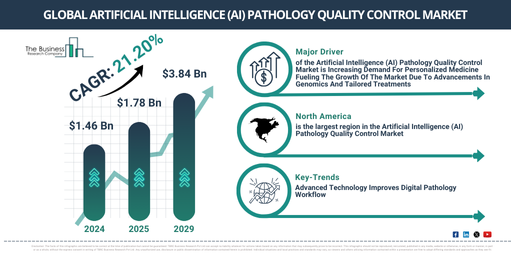
    The artificial intelligence (AI) pathology quality control market has experienced substantial expansion in its size over recent years. This market is projected to grow from $1.46 billion in 2024 to $1.78 billion in 2025, at a compound annual growth rate (CAGR) of 21.6%. Historically, this expansion can be attributed to factors such as the rising prevalence of cancer and chronic diseases, increasing demand for diagnostic accuracy, a shortage of skilled pathologists, rising healthcare expenditure, and the growth in personalized medicine.

    The artificial intelligence (AI) pathology quality control market size is anticipated to experience substantial expansion in the coming years. Its size is projected to reach $3.84 billion by 2029, demonstrating a compound annual growth rate (CAGR) of 21.2%. This growth during the projected period is driven by factors such as increasing demand for automated quality assurance, growing investment in healthcare AI startups, the adoption of cloud-based pathology solutions, the expansion of precision medicine initiatives, and a heightened emphasis on the early detection of diseases. Key trends anticipated during the forecast period encompass progress in deep learning algorithms, novelties in quality control (QC) automation tools, the integration of artificial intelligence with digital pathology platforms, the creation of cloud-based pathology solutions, and improvements in multimodal diagnostic analytics.

    Unlock Your Free Sample Report for Exclusive Market Data:

    https://www.thebusinessresearchcompany.com/sample.aspx?id=28124&type=smp

    What Are The Main Drivers Boosting The Artificial Intelligence (AI) Pathology Quality Control Industry’s Expansion?

    The future expansion of the artificial intelligence (AI) pathology quality control market is anticipated due to the rising need for personalized medicine. Personalized medicine is defined as a healthcare strategy that customizes treatments and preventive measures based on an individual’s distinct genetic profile, lifestyle choices, and environmental factors. The growing uptake of personalized medicine is largely driven by progress in genomics, allowing for accurate identification of genetic differences and the development of customized therapies for patients. Artificial intelligence (AI) pathology quality control improves personalized medicine through the provision of accurate and reliable diagnostic information, facilitating customized treatment plans. This technology lessens diagnostic mistakes by automating quality assessments, thereby boosting precision and dependability, which ultimately promotes healthcare tailored to individual patients. A notable example is that in February 2024, the Personalized Medicine Coalition (PMC), a US-based nonprofit organization, reported that the U.S. Food and Drug Administration (FDA) sanctioned 26 new personalized medicines in 2023. This represents a substantial rise compared to the 12 approved in 2022. Consequently, the escalating demand for personalized medicine is set to propel the artificial intelligence (AI) pathology quality control market.

    How Is The Artificial Intelligence (AI) Pathology Quality Control Market Segmented?

    The artificial intelligence (AI) pathology quality control market covered in this report is segmented as

    1) By Component: Software, Hardware, Services

    2) By Deployment Mode: On-Premises, Cloud-Based

    3) By Application: Cancer Diagnostics, Infectious Disease Diagnostics, Digital Pathology, Research, Other Applications

    4) By End-User: Hospitals, Diagnostic Laboratories, Research Institutes, Pharmaceutical And Biotechnology Companies, Other End Users

    Subsegments:

    1) By Software: Image Analysis Software, Diagnostic Decision Support Software, Workflow Management Software, Reporting And Visualization Software

    2) By Hardware: Digital Pathology Scanners, Imaging Devices, Servers And Storage Systems, Laboratory Equipment

    3) By Services: Implementation Services, Training And Support Services, Maintenance And Upgrade Services, Consulting Services

    What Are The Major Trends Driving The Growth Of The Artificial Intelligence (AI) Pathology Quality Control Market?

    Leading companies in the artificial intelligence (AI) pathology quality control market are concentrating on developing sophisticated solutions, such as advanced AI-powered offerings, to improve diagnostic precision, optimize laboratory processes, and ensure the reliability of pathology data. These advanced AI-powered solutions refer to next-generation technologies that utilize artificial intelligence to execute complex tasks with increased accuracy, speed, and efficiency. For instance, in November 2023, PathAI, a US-based biotechnology company, launched Artifact Detect 1 on its AISight digital pathology platform. This tool automates the identification and quantification of artifacts in whole slide images (WSI), which are irrelevant morphological features capable of compromising diagnostic accuracy. ArtifactDetect works by automatically pre-screening slides for quality issues, thereby minimizing misdiagnosis and rescans, and consequently enhancing accuracy, laboratory efficiency, and overall throughput. This innovation supports prompt corrective actions like re-staining or re-scanning, ultimately refining the digital workflow and conserving resources for technicians and pathologists.

    Which Global Market Leaders Are Shaping The Future Of The Artificial Intelligence (AI) Pathology Quality Control Sector?

    Major companies operating in the artificial intelligence (AI) pathology quality control market are Roche Diagnostics GmbH, Danaher Corporation, Philips Healthcare, Agilent Technologies Inc., Hologic Inc., Clinisys Group Ltd., Sectra AB, PathAI Inc., OptraSCAN Inc., Paige.AI Inc., Proscia Inc., Quibim S.L., 3DHISTECH Ltd., Visiopharm A/S, Indica Labs Inc., Ibex Medical Analytics Ltd., Aiosyn B.V., DeepBio Inc., Nucleai Ltd., and Gestalt Diagnostics LLC.

    Download The Full Report For Exclusive Market Findings:

    https://www.thebusinessresearchcompany.com/report/artificial-intelligence-ai-pathology-quality-control-global-market-report

    Which Region Is Expected To Witness The Fastest Growth In The Artificial Intelligence (AI) Pathology Quality Control Market?

    North America was the largest region in the artificial intelligence (AI) pathology quality control market in 2024. Asia-Pacific is expected to be the fastest-growing region in the forecast period. The regions covered in artificial intelligence (AI) pathology quality control report are Asia-Pacific, Western Europe, Eastern Europe, North America, South America, Middle East and Africa.

    Request A Customized Version Of The Artificial Intelligence (AI) Pathology Quality Control Market Report:

    https://www.thebusinessresearchcompany.com/customise?id=28124&type=smp

    Browse Through More Reports Similar to the Global Artificial Intelligence (AI) Pathology Quality Control Market 2025, By The Business Research Company

    Artificial Intelligence Ai In Predictive Toxicology Global Market Report 2025

    https://www.thebusinessresearchcompany.com/report/artificial-intelligence-ai-in-predictive-toxicology-global-market-report

    Ai In Medical Diagnostics Global Market Report 2025

    https://www.thebusinessresearchcompany.com/report/ai-in-medical-diagnostics-global-market-report

    Ai In Cancer Diagnostics Global Market Report 2025

    https://www.thebusinessresearchcompany.com/report/ai-in-cancer-diagnostics-global-market-report

    Get in touch with us:

    The Business Research Company: https://www.thebusinessresearchcompany.com/

    Americas +1 310-496-7795

    Asia +44 7882 955267 & +91 8897263534

    Europe +44 7882 955267

    Email us at info@tbrc.info

    Follow us on:

    LinkedIn: https://in.linkedin.com/company/the-business-research-company

    YouTube: https://www.youtube.com/channel/UC24_fI0rV8cR5DxlCpgmyFQ

    Global Market Model: https://www.thebusinessresearchcompany.com/global-market-model
  • Global Artificial Intelligence (AI)-Driven Gamified Language Therapy Market Size Projected to Reach $4.16 Billion During the Forecast Period

    Global Artificial Intelligence (AI)-Driven Gamified Language Therapy Market Size Projected to Reach $4.16 Billion During the Forecast Period

    Unlock Global Insights – Save 20% on Market Reports with Code ONLINE20

    By How Much Is The Artificial Intelligence (AI)-Driven Gamified Language Therapy Market Expected To Expand Between 2025 And 2029?

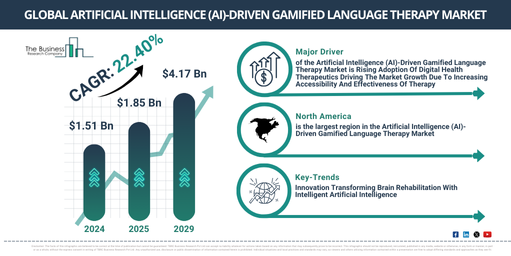
    The artificial intelligence (AI)-driven gamified language therapy market has experienced substantial expansion recently. Its valuation is anticipated to rise from $1.51 billion in 2024 to $1.85 billion in 2025, achieving a compound annual growth rate (CAGR) of 22.8%. The market’s past growth was driven by factors such as increased government funding for therapy initiatives, the growing application of gamification in education and healthcare, an increasing scarcity of speech therapy professionals, higher smartphone and tablet penetration, and heightened parental recognition of speech development difficulties.

    The artificial intelligence (AI)-driven gamified language therapy market is anticipated to experience substantial expansion over the upcoming years. By 2029, this market is projected to reach $4.17 billion, demonstrating a compound annual growth rate (CAGR) of 22.4%. This forecasted growth is primarily driven by factors such as increasing healthcare spending, broader insurance provisions for digital treatments, greater investment into digital health startups, a rising desire among parents for therapy administered at home, and a focus on economical treatment solutions. Key developments anticipated during this period encompass enhancements in natural language processing and AI algorithms, sophisticated gamified therapy modules incorporating adaptive learning, breakthroughs in virtual and augmented reality technologies, the incorporation of wearables and sensors for immediate feedback, and the convergence of artificial intelligence (AI) with telehealth platforms to enable remote therapy.

    Unlock Your Free Sample Report for Exclusive Market Data:

    https://www.thebusinessresearchcompany.com/sample.aspx?id=28128&type=smp

    Which Drivers Are Impacting The Artificial Intelligence (AI)-Driven Gamified Language Therapy Market?

    The increasing acceptance of digital health therapeutics is anticipated to drive the expansion of the artificial intelligence (AI)-driven gamified language therapy market in the future. Digital health therapeutics are defined as evidence-based treatments delivered through digital platforms for the prevention, management, or treatment of medical conditions. The uptake of digital health therapeutics is rising as individuals seek more accessible healthcare options to manage chronic conditions, receive personalized treatments, and conveniently monitor their health from home. Artificial intelligence (AI)-driven gamified language therapy complements digital health therapeutics by offering customized, interactive exercises that boost patient engagement, track progress in real time, and accelerate language rehabilitation. For instance, in February 2024, a 2022 survey by Rock Health, a US-based corporation, indicated that 80% of respondents had used telemedicine at some point, marking an 8-percentage point increase from 72% in 2021. Thus, the growing adoption of digital health therapeutics is fueling the growth of the artificial intelligence (AI)-driven gamified language therapy market.

    What Are The Major Segments Identified In The Artificial Intelligence (AI)-Driven Gamified Language Therapy Market?

    The artificial intelligence (AI)-driven gamified language therapy market covered in this report is segmented as

    1) By Component: Software, Hardware, Services

    2) By Deployment Mode: Cloud-Based, On-Premises

    3) By Therapy: Speech Therapy, Language Therapy, Cognitive Therapy, Other Therapies

    4) By Application: Children, Adults, Geriatric

    5) By End-User: Hospitals And Clinics, Rehabilitation Centers, Educational Institutions, Homecare, Other End Users

    Subsegments:

    1) By Software: Mobile Applications, Web-Based Platforms, Gamification Engines, Analytics And Reporting Tools

    2) By Hardware: Virtual Reality Headsets, Augmented Reality Devices, Wearables And Sensors, Interactive Consoles

    3) By Services: Implementation And Integration, Training And Education, Support And Maintenance, Consulting Services

    What Trends Are Redefining The Artificial Intelligence (AI)-Driven Gamified Language Therapy Market Dynamics?

    Leading corporations within the artificial intelligence (AI)-driven gamified language therapy market are concentrating on creating cutting-edge solutions, such as personalized adaptive learning platforms, with the goal of boosting user engagement, speeding up recovery, and enhancing therapeutic results. These personalized adaptive learning platforms are digital frameworks designed to constantly adjust exercises, content, and difficulty based on an individual’s performance and requirements, thereby assisting users in learning or recovering more effectively, maintaining motivation, monitoring real-time progress, and achieving superior long-term results. For instance, in April 2025, Constant Therapy Health, a U.S.-based digital health company, announced the expansion of its AI-driven speech, language, and cognitive therapy platform to incorporate Spanish and Indian English editions. This enhancement allows non-native speakers who are recovering from conditions like stroke, traumatic brain injury (TBI), aphasia, dementia, or other neurological disorders to access over 1 million evidence-based exercises, which are culturally and linguistically customized. The platform’s integrated AI continually tracks user advancement, customizes therapy sessions instantly, and provides caregivers and clinicians with the ability to monitor outcomes, making the therapy process more captivating, productive, and conveniently available from home.

    Which Key Players Are Driving Competition In The Artificial Intelligence (AI)-Driven Gamified Language Therapy Market?

    Major companies operating in the artificial intelligence (ai)-driven gamified language therapy market are Babbel GmbH, Rosetta Stone LLC, SAY IT Labs BV, SPRY Ally, MINDMAZE SA, Busuu Ltd., Memrise Ltd., Lingvist Technologies OÜ, Constant Therapy Inc., Lingraphica LLC, Gemiini Systems LLC, Speechace LLC, Otsimo Inc., Blub Blub Inc., Melospeech Inc., LiriCare BV, Gabify Ltd., FunWattle Inc., TikTalk Inc., Hevolve AI

    Download The Full Report For Exclusive Market Findings:

    https://www.thebusinessresearchcompany.com/report/artificial-intelligence-ai-driven-gamified-language-therapy-global-market-report

    Which Region Currently Holds The Largest Share Of The Artificial Intelligence (AI)-Driven Gamified Language Therapy Market?

    North America was the largest region in the artificial intelligence (AI)-driven gamified language therapy market in 2024. Asia-Pacific is expected to be the fastest-growing region in the forecast period. The regions covered in artificial intelligence (AI)-driven gamified language therapy report are Asia-Pacific, Western Europe, Eastern Europe, North America, South America, Middle East and Africa.

    Request A Customized Version Of The Artificial Intelligence (AI)-Driven Gamified Language Therapy Market Report:

    https://www.thebusinessresearchcompany.com/customise?id=28128&type=smp

    Browse Through More Reports Similar to the Global Artificial Intelligence (AI)-Driven Gamified Language Therapy Market 2025, By The Business Research Company

    Gamification Global Market Report 2025

    https://www.thebusinessresearchcompany.com/report/gamification-global-market-report

    Healthcare Gamification Global Market Report 2025

    https://www.thebusinessresearchcompany.com/report/healthcare-gamification-global-market-report

    Artificial Intelligence Ai In Games Global Market Report 2025

    https://www.thebusinessresearchcompany.com/report/artificial-intelligence-ai-in-games-global-market-report

    Get in touch with us:

    The Business Research Company: https://www.thebusinessresearchcompany.com/

    Americas +1 310-496-7795

    Asia +44 7882 955267 & +91 8897263534

    Europe +44 7882 955267

    Email us at info@tbrc.info

    Follow us on:

    LinkedIn: https://in.linkedin.com/company/the-business-research-company

    YouTube: https://www.youtube.com/channel/UC24_fI0rV8cR5DxlCpgmyFQ

    Global Market Model: https://www.thebusinessresearchcompany.com/global-market-model
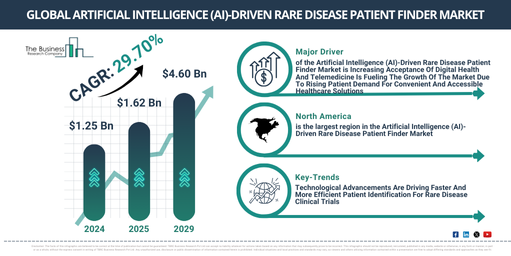
  • Artificial Intelligence (AI)-Driven Rare Disease Patient Finder Market to Reach $4.59 Billion by 2029, Growing at a CAGR of 29.7%

    Artificial Intelligence (AI)-Driven Rare Disease Patient Finder Market to Reach $4.59 Billion by 2029, Growing at a CAGR of 29.7%

    Unlock Global Insights – Save 20% on Market Reports with Code ONLINE20

    What Is The Global Market Value Of The Artificial Intelligence (AI)-Driven Rare Disease Patient Finder Industry In 2025?

    The artificial intelligence (AI)-driven rare disease patient finder market has experienced significant expansion in recent years. It is projected to increase from $1.25 billion in 2024 to $1.62 billion in 2025, achieving a compound annual growth rate (CAGR) of 30.1%. This historical rise can be ascribed to several factors, including the expanded application of genomic sequencing, the growing acceptance of electronic health records, enhanced collaborations between pharmaceutical companies and AI startups, a heightened emphasis on early disease detection, and the increasing accessibility of real-world evidence.

    The market for artificial intelligence (AI)-driven rare disease patient finders is projected to experience substantial expansion in the coming years, reaching $4.60 billion by 2029, exhibiting a compound annual growth rate (CAGR) of 29.7%. This anticipated expansion throughout the forecast period stems from several factors, including the greater integration of multimodal data analytics, the increased use of AI-powered clinical decision support systems, the expanding deployment of wearable and remote monitoring devices, higher investment in patient-centric healthcare platforms, and an intensified focus on predictive analytics for identifying rare diseases. Key trends anticipated during this period encompass progress in natural language processing for managing unstructured medical data, the incorporation of federated learning for protected patient data sharing, multiomics data analysis facilitated by technology, new developments in generating synthetic data for rare disease modeling, and improvements in artificial intelligence (AI)-driven digital biomarkers.

    Unlock Your Free Sample Report for Exclusive Market Data:

    https://www.thebusinessresearchcompany.com/sample.aspx?id=28129&type=smp

    What Are The Emerging Market Drivers Creating New Opportunities In The Artificial Intelligence (AI)-Driven Rare Disease Patient Finder Industry?

    The expanding adoption of digital health and telemedicine is projected to fuel the growth of the artificial intelligence (AI)-driven rare disease patient finder market. Digital health encompasses the application of technology, software, and electronic tools to track, manage, and enhance overall health and wellness. Telemedicine, conversely, involves delivering healthcare services remotely through telecommunications technology, such as video conferences, mobile applications, and online platforms. The increasing embrace of digital health and telemedicine is attributed to patients and providers seeking convenient, efficient, and accessible healthcare alternatives. The artificial intelligence (AI)-driven rare disease patient finder supports both digital health and telemedicine by accurately identifying patients, enabling remote oversight, facilitating timely virtual consultations, and providing personalized care. As an illustration, a survey conducted by Rock Health, a US-based health technology company, in February 2023 revealed that out of 8,014 respondents, 76% of individuals over the age of 55 had used telemedicine, and 80% of all respondents indicated they had accessed care via telemedicine at some point in their lives, marking an 8% rise from 72% in 2021. Therefore, the growing acceptance of digital health and telemedicine serves as a significant driver for the artificial intelligence (AI)-driven rare disease patient finder market.

    How Is The Artificial Intelligence (AI)-Driven Rare Disease Patient Finder Market Classified Into Different Segments?

    The artificial intelligence (AI)-driven rare disease patient finder market covered in this report is segmented as

    1) By Component: Software, Services

    2) By Deployment Mode: Cloud-Based, On-Premises

    3) By Application: Hospitals, Clinics, Research Institutes, Pharmaceutical Companies, Other Applications

    4) By End-User: Healthcare Providers, Life Sciences Companies, Payers, Other End-Users

    Subsegments:

    1) By Software: Electronic Data Capture, Data Management Platform, Analytics And Reporting Tools, Patient Engagement Tools, Clinical Trial Management System

    2) By Services: Implementation And Integration, Training And Support, Data Hosting And Security, Consulting Services, Maintenance And Upgrades

    What Are The Latest Industry Trends Transforming The Artificial Intelligence (AI)-Driven Rare Disease Patient Finder Market?

    Major companies operating in the AI-driven rare disease patient finder market are primarily focused on developing technological innovations, such as precision patient recruitment solutions. These solutions aim to improve the accuracy, speed, and efficiency of identifying suitable patients for rare disease clinical trials, concurrently reducing recruitment timelines and enhancing trial success rates. A precision patient recruitment solution is a technology-driven method that utilizes advanced algorithms and real-world data to precisely identify and engage patients who meet specific clinical trial eligibility criteria. An example of this is Citeline PatientMatch, launched in April 2024 by Citeline, a US-based business intelligence and data analytics company. This platform combines sophisticated algorithms with comprehensive real-world data, including lab results, biomarkers, and electronic medical records from more than 400 hospitals and health systems, to assist sponsors and investigators in efficiently identifying eligible patients for clinical trials, streamlining enrollment, and accommodating diverse and complex study protocols across multiple therapeutic areas.

    Who Are The Prominent Global Companies Shaping The Artificial Intelligence (AI)-Driven Rare Disease Patient Finder Market?

    Major companies operating in the artificial intelligence (AI)-driven rare disease patient finder market are UnitedHealth Group Incorporated, Dassault Systèmes SE, GeneDx Holdings Corp., HealthVerity Inc., ConcertAI Inc., Komodo Health Inc., Unlearn.AI Inc., Antidote Technologies Inc., Healx Ltd., FDNA Inc., Saventic Health Sp. z o.o., Digital Pharma Lab SAS, AnnieGuard Ltd., Rapid Innovation Labs Inc., Sqilline EOOD, TrialX Inc., enGenome Srl, EveryCure Inc., ThinkGenetic Inc., and RareSum Inc.

    Download The Full Report For Exclusive Market Findings:

    https://www.thebusinessresearchcompany.com/report/artificial-intelligence-ai-driven-rare-disease-patient-finder-global-market-report

    How Do Regional Market Performances Compare Within The Artificial Intelligence (AI)-Driven Rare Disease Patient Finder Industry?

    North America was the largest region in the artificial intelligence (AI)-driven rare disease patient finder market in 2024. Asia-Pacific is expected to be the fastest-growing region in the forecast period. The regions covered in artificial intelligence (AI)-driven rare disease patient finder report are Asia-Pacific, Western Europe, Eastern Europe, North America, South America, Middle East and Africa.

    Request A Customized Version Of The Artificial Intelligence (AI)-Driven Rare Disease Patient Finder Market Report:

    https://www.thebusinessresearchcompany.com/customise?id=28129&type=smp

    Browse Through More Reports Similar to the Global Artificial Intelligence (AI)-Driven Rare Disease Patient Finder Market 2025, By The Business Research Company

    Artificial Intelligence In Healthcare Diagnosis Global Market Report 2025

    https://www.thebusinessresearchcompany.com/report/artificial-intelligence-in-healthcare-diagnosis-global-market-report

    Ai In Medical Diagnostics Global Market Report 2025

    https://www.thebusinessresearchcompany.com/report/ai-in-medical-diagnostics-global-market-report

    Artificial Intelligence Ai In Clinical Trials Global Market Report 2025

    https://www.thebusinessresearchcompany.com/report/artificial-intelligence-ai-in-clinical-trials-global-market-report

    Get in touch with us:

    The Business Research Company: https://www.thebusinessresearchcompany.com/

    Americas +1 310-496-7795

    Asia +44 7882 955267 & +91 8897263534

    Europe +44 7882 955267

    Email us at info@tbrc.info

    Follow us on:

    LinkedIn: https://in.linkedin.com/company/the-business-research-company

    YouTube: https://www.youtube.com/channel/UC24_fI0rV8cR5DxlCpgmyFQ

    Global Market Model: https://www.thebusinessresearchcompany.com/global-market-model