Category: HealthcareServices

  • Global Virtual Reality (VR) In Telerehabilitation Market Size Projected to Reach $2.18 Billion During the Forecast Period

    Global Virtual Reality (VR) In Telerehabilitation Market Size Projected to Reach $2.18 Billion During the Forecast Period

    Unlock Global Insights – Save 20% on Market Reports with Code ONLINE20

    How Does The Market Size Of The Virtual Reality (VR) In Telerehabilitation Industry Compare Between 2025 And 2029?

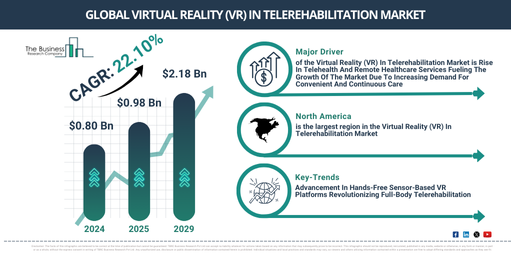
    The virtual reality (VR) in the telerehabilitation market has seen significant expansion in recent years. It is forecast to grow from $0.80 billion in 2024 to $0.98 billion in 2025, exhibiting a compound annual growth rate (CAGR) of 22.5%. This historical growth can be attributed to the rising demand for remote healthcare solutions, improved accessibility and affordability of VR technology, increasing evidence-based clinical validation of VR rehab, growing support from government and regulatory bodies, and increased patient acceptance and engagement with digital therapy tools.

    The virtual reality (VR) in the telerehabilitation market is anticipated to show significant expansion over the next few years, with its value projected to reach $2.18 billion by 2029, exhibiting a compound annual growth rate (CAGR) of 22.1%. This projected increase is driven by several factors, including the greater adoption of telehealth, the growing occurrence of chronic neurological disorders, increasing healthcare expenditures and the demand for cost-efficient remedies, heightened investment in digital health technologies, and an elevated need for remote patient monitoring and home-based care. Prominent trends for the forecast period include enhancements in artificial intelligence-driven personalized therapy, the availability of more affordable and wireless hardware, innovations in haptic feedback and sensory integration, its extension into new therapeutic areas like pediatrics and mental health, and the establishment of strong clinical evidence along with standardized protocols.

    Unlock Your Free Sample Report for Exclusive Market Data:

    https://www.thebusinessresearchcompany.com/sample.aspx?id=28352&type=smp

    What Are The Main Drivers Boosting The Virtual Reality (VR) In Telerehabilitation Industry’s Expansion?

    The increased adoption of telehealth and remote healthcare services is projected to advance the virtual reality (VR) in telerehabilitation market moving forward. Telehealth and remote healthcare services are defined as providing clinical health support to patients remotely through telecommunication technologies, eliminating the necessity for in-person office visits. These services are expanding as patients seek convenient home-based consultations and monitoring, which helps to reduce travel and wait times while ensuring continuous care. The growing utilization of remote healthcare platforms boosts the demand for virtual reality (VR) capable of enhancing the quality and efficacy of rehabilitation therapy delivered via telehealth systems. For instance, in August 2023, Vivalink, a US-based healthcare technology company, reported that 81% of clinicians now use remote patient monitoring (RPM), representing a significant increase from just 20% in 2021, an overall rise of 305%. Additionally, 84% of current RPM users plan to extend their use of the technology in 2024. Hence, the rising uptake of telehealth and remote healthcare services is a key driver for the growth of the virtual reality (VR) in telerehabilitation market.

    What Are The Different Segment Classifications Within The Virtual Reality (VR) In Telerehabilitation Market?

    The virtual reality (VR) in telerehabilitation market covered in this report is segmented as

    1) By Component: Hardware, Software, Services

    2) By Rehabilitation: In-Person Rehabilitation, Remote Rehabilitation

    3) By Application: Physical Rehabilitation, Neurological Rehabilitation, Cardiac Rehabilitation, Psychological Rehabilitation, Orthopedic Rehabilitation

    4) By End-User: Healthcare Providers, Rehabilitation Centers, Homecare Settings, Fitness And Wellness Centers, Corporates

    Subsegments:

    1) By Hardware: Head-Mounted Displays (HMDs), Motion Tracking Sensors, Haptic Feedback Devices, Virtual Reality (VR) Gloves, Virtual Reality (VR) Treadmills, Eye-Tracking Devices, Cameras And Depth Sensors, Computing And Graphics Processing Units (GPUs)

    2) By Software: Immersive Virtual Reality (VR) Therapy Applications, Non-Immersive Virtual Reality (VR) Therapy Applications, Mixed Reality Therapy Applications, artificial intelligence (AI)-Based Therapy Modules, Gamified Rehabilitation Software, Patient Data Management And Analytics Platforms, Cloud-Based Therapy Software

    3) By Services: Clinical Implementation Services, Remote Patient Monitoring Services, Maintenance And Support Services, Training And Education Services, Consultation And Integration Services

    What Trends Are Redefining The Virtual Reality (VR) In Telerehabilitation Market Dynamics?

    Leading companies in the virtual reality in telerehabilitation market are concentrating on developing advanced solutions, such as sensor-based VR rehabilitation platforms, to enhance therapy precision and deliver personalized rehabilitation outcomes. These sensor-driven VR rehabilitation platforms integrate motion-tracking sensors with immersive virtual environments to monitor and guide patient movements in real time, facilitating precise performance evaluation, tailored therapy, and accelerated recovery in telerehabilitation. For instance, in November 2022, Penumbra, Inc., a US-based healthcare company, launched REAL y-Series, the first hands-free, full-body virtual reality-based rehabilitation offering. This solution utilizes upper and lower body sensors, enabling clinicians to track complete movement and customize therapy for improved patient engagement and rehabilitation outcomes, making it the only sensor-based VR platform designed for both upper and lower extremities in physical and occupational therapy.

    Which Leading Companies Dominate The Virtual Reality (VR) In Telerehabilitation Market Share?

    Major companies operating in the virtual reality (VR) in telerehabilitation market are Penumbra Inc., DIH Holding US Inc., MindMaze, Reflexion Interactive Technologies Inc., Saebo, VR Rehab Inc., CUREosity GmbH, InfiVR, SyncVR Medical, Rehametrics, GestureTek Health, Doctor Kinetic, Cognihab Inc., Neuro Rehab VR, Virtualware, Mice Labs, Evolv Rehabilitation Technologies, XR4REHAB, MIRA Rehab Limited, and LiteGait.

    Download The Full Report For Exclusive Market Findings:

    https://www.thebusinessresearchcompany.com/report/virtual-reality-vr-in-telerehabilitation-global-market-report

    How Do Regional Market Performances Compare Within The Virtual Reality (VR) In Telerehabilitation Industry?

    North America was the largest region in the virtual reality (VR) in telerehabilitation market in 2024. Asia-Pacific is expected to be the fastest-growing region in the forecast period. The regions covered in virtual reality (VR) in telerehabilitation report are Asia-Pacific, Western Europe, Eastern Europe, North America, South America, Middle East and Africa.

    Request A Customized Version Of The Virtual Reality (VR) In Telerehabilitation Market Report:

    https://www.thebusinessresearchcompany.com/customise?id=28352&type=smp

    Browse Through More Reports Similar to the Global Virtual Reality (VR) In Telerehabilitation Market 2025, By The Business Research Company

    Virtual Reality Vr In Medical Simulation Global Market Report 2025

    https://www.thebusinessresearchcompany.com/report/virtual-reality-vr-in-medical-simulation-global-market-report

    Virtual Reality In Healthcare Global Market Report 2025

    https://www.thebusinessresearchcompany.com/report/virtual-reality-in-healthcare-global-market-report

    Virtual Rehabilitation Global Market Report 2025

    https://www.thebusinessresearchcompany.com/report/virtual-rehabilitation-global-market-report

    Get in touch with us:

    The Business Research Company: https://www.thebusinessresearchcompany.com/

    Americas +1 310-496-7795

    Asia +44 7882 955267 & +91 8897263534

    Europe +44 7882 955267

    Email us at info@tbrc.info

    Follow us on:

    LinkedIn: https://in.linkedin.com/company/the-business-research-company

    YouTube: https://www.youtube.com/channel/UC24_fI0rV8cR5DxlCpgmyFQ

    Global Market Model: https://www.thebusinessresearchcompany.com/global-market-model
  • Disease Registry Software Industry Insights: Market Forecast to 2029

    Disease Registry Software Industry Insights: Market Forecast to 2029

    Unlock Global Insights – Save 20% on Market Reports with Code ONLINE20

    How Is The Disease Registry Software Market Size Likely To Evolve From 2025 Through 2034?

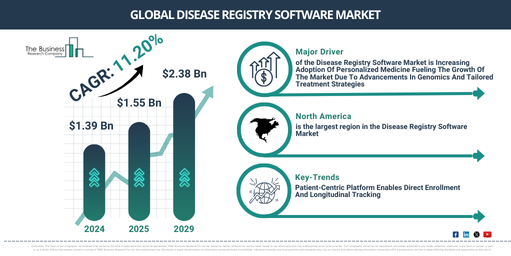
    The disease registry software market has experienced substantial expansion in recent years. It is anticipated to grow from $1.39 billion in 2024 to $1.55 billion in 2025, at a compound annual growth rate (CAGR) of 11.6%. The historical growth can be attributed to the escalating burden of chronic diseases, an increase in clinical research and trials, the rising prevalence of rare diseases, the rapid adoption of electronic health records (EHRs), and the growing prevalence of chronic diseases.

    The disease registry software market is anticipated to experience substantial growth in the coming years, with its valuation expected to reach $2.38 billion by 2029, expanding at a compound annual growth rate (CAGR) of 11.2%. This projected expansion can be attributed to several factors, including the increasing adoption of value-based care approaches, the growing application of real-world evidence (RWE), the widening reach of precision medicine programs, the rise in chronic and lifestyle-related health conditions, and a heightened focus on patient-centric healthcare delivery. Key trends expected in this period encompass advancements in healthcare information technology (IT) infrastructure, the incorporation of telehealth and remote monitoring capabilities, integration with the internet of things (IoT) and wearable devices, sophisticated data visualization and dashboard functionalities, and the use of blockchain for improved data security and interoperability.

    Unlock Your Free Sample Report for Exclusive Market Data:

    https://www.thebusinessresearchcompany.com/sample.aspx?id=28208&type=smp

    Which Industry Drivers Are Expected To Accelerate The Disease Registry Software Market From 2025 To 2029?

    Future expansion of the disease registry software market is anticipated, driven by the growing integration of personalized medicine. This medical methodology customizes treatment and prevention plans based on a person’s distinct genetic profile, lifestyle choices, and environmental factors. The rising implementation of personalized medicine largely stems from progress in genomics, allowing for accurate detection of genetic differences and bespoke therapies for patients. Disease registry software facilitates personalized medicine by systematically gathering and overseeing patient health information, which in turn permits customized treatment strategies and enhances clinical judgments. This software simplifies access to and analysis of data, thereby bettering patient results and fostering the development of precision healthcare. An example illustrating this trend is that, as reported in February 2024 by the Personalized Medicine Coalition (PMC), a US-based nonprofit organization, the U.S. Food and Drug Administration (FDA) sanctioned 26 novel personalized medicines in 2023, a notable rise from the 12 approvals in 2022. Consequently, the expanding use of personalized medicine is fueling the expansion of the disease registry software market.

    What Are The Major Segments Identified In The Disease Registry Software Market?

    The disease registry software market covered in this report is segmented as

    1) By Type: Standalone, Integrated

    2) By Database: Public, Commercial

    3) By Deployment Mode: On-Premises, Cloud-Based

    4) By End-User: Hospitals, Government Organizations, Research Centers, Pharmaceutical Companies, Other End Users

    Subsegments:

    1) By Standalone: Patient Registry Software, Population Health Registry Software, Research Registry Software, Custom Or Single-Disease Registry Software

    2) By Integrated: Electronic Health Record (EHR)-Integrated Registry Software, Practice Management System-Integrated Registry Software, Clinical Decision Support (CDS)-Integrated Registry Software, Health Information Exchange (HIE)-Integrated Registry Software

    What Are The Major Trends Driving The Growth Of The Disease Registry Software Market?

    Major companies in the disease registry software market are concentrating on developing patient-centric registries, such as digital records to observe outcomes and support customized care. Digital registers are electronic systems or software platforms that methodically collect, store, and manage patient health information, thereby replacing traditional paper-based registries. For instance, in August 2025, the American College of Cardiology (ACC), a US-based nonprofit medical association, introduced the CONNECT-HCM Registry. This is a nationwide digital registry established to improve the understanding and management of hypertrophic cardiomyopathy (HCM), which is the most common genetic cardiovascular disease. The registry allows for direct patient enrollment beyond individual centers, thereby addressing long-standing gaps in diagnosis and care. This platform connects registry data with electronic health records via Arboretum’s Hugo Connect platform and aids researchers in tracking symptoms, imaging, treatments, and outcomes over time.

    Which Major Industry Participants Are Leading The Disease Registry Software Market Growth?

    Major companies operating in the disease registry software market are Optum Inc., IQVIA Holdings Inc., Syneos Health Inc., Epic Systems Corporation, Premier Inc., MRO Corp., ImageTrend Inc., Anju Software Inc., BayaTree Inc., Medrio Inc., ArborMetrix Inc., Cedaron Medical Inc., Evado Pty. Ltd., OpenClinica LLC, Dacima Software Inc., Global Vision Technologies Inc., Ordinal Data Inc., Healthmonix LLC, Axis Clinical Software Inc., and Vanderbilt University.

    Download The Full Report For Exclusive Market Findings:

    https://www.thebusinessresearchcompany.com/report/disease-registry-software-global-market-report

    How Do Regional Market Performances Compare Within The Disease Registry Software Industry?

    North America was the largest region in the disease registry software market in 2024. The regions covered in disease registry software report are Asia-Pacific, Western Europe, Eastern Europe, North America, South America, Middle East and Africa.

    Request A Customized Version Of The Disease Registry Software Market Report:

    https://www.thebusinessresearchcompany.com/customise?id=28208&type=smp

    Browse Through More Reports Similar to the Global Disease Registry Software Market 2025, By The Business Research Company

    Patient Registry Software Global Market Report 2025

    https://www.thebusinessresearchcompany.com/report/patient-registry-software-global-market-report

    Disease Management Apps Global Market Report 2025

    https://www.thebusinessresearchcompany.com/report/disease-management-apps-global-market-report

    Personal Health Record Software Global Market Report 2025

    https://www.thebusinessresearchcompany.com/report/personal-health-record-software-global-market-report

    Get in touch with us:

    The Business Research Company: https://www.thebusinessresearchcompany.com/

    Americas +1 310-496-7795

    Asia +44 7882 955267 & +91 8897263534

    Europe +44 7882 955267

    Email us at info@tbrc.info

    Follow us on:

    LinkedIn: https://in.linkedin.com/company/the-business-research-company

    YouTube: https://www.youtube.com/channel/UC24_fI0rV8cR5DxlCpgmyFQ

    Global Market Model: https://www.thebusinessresearchcompany.com/global-market-model
  • Virtual Clinical-Trial Participant Avatars Industry Anticipated to Expand at 28.4% CAGR During the Forecast Period

    Virtual Clinical-Trial Participant Avatars Industry Anticipated to Expand at 28.4% CAGR During the Forecast Period

    Unlock Global Insights – Save 20% on Market Reports with Code ONLINE20

    What Is The Predicted Market Size Trajectory For The Virtual Clinical-Trial Participant Avatars Market From 2025 To 2034?

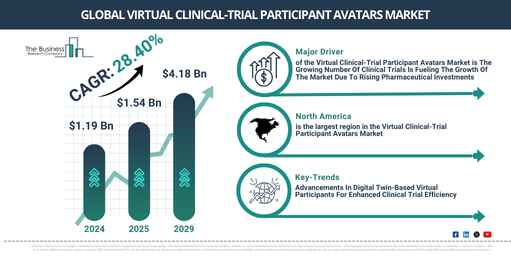
    The virtual clinical-trial participant avatars market size has experienced rapid expansion in recent times. This market is projected to expand from $1.19 billion in 2024 to $1.54 billion in 2025, demonstrating a compound annual growth rate (CAGR) of 28.8%. Factors contributing to its historical growth include the increased embrace of decentralized clinical trials, a heightened need for patient diversity in studies, the proliferation of wearable health monitoring devices, supportive regulatory frameworks for digital trial innovations, and the imperative to shorten clinical trial durations.

    The market for virtual clinical-trial participant avatars is projected to experience substantial expansion in the coming years, reaching $4.18 billion by 2029, with a compound annual growth rate (CAGR) of 28.4%. This anticipated growth is driven by several factors, including progress in AI-powered patient simulation, the incorporation of virtual avatars into electronic data capture systems, a heightened emphasis on personalized medicine, increased funding for digital twin technologies, and the broader application of virtual trials for both rare and chronic illnesses. Key developments during this period are expected to encompass the utilization of AI-driven digital twins for simulating patients, combining real-world data with electronic health records, employing machine learning to forecast trial results, creating engaging VR/AR platforms for patient involvement, and deploying blockchain for robust patient data security.

    Unlock Your Free Sample Report for Exclusive Market Data:

    https://www.thebusinessresearchcompany.com/sample.aspx?id=28351&type=smp

    Which Factors And Drivers Are Influencing The Virtual Clinical-Trial Participant Avatars Market In 2025?

    The increasing volume of clinical trials is anticipated to propel the expansion of the virtual clinical-trial participant avatars market moving ahead. These trials represent structured investigations aimed at assessing the safety and effectiveness of medical interventions in human participants. The rise in clinical trials stems from heightened pharmaceutical funding into drug development, as companies endeavor to devise novel treatments for intricate illnesses and tailored medicine approaches. Clinical-trial participant avatars develop AI-powered digital patient models that simulate disease progression, treatment response, and safety outcomes, thereby facilitating quicker participant enrollment, more intelligent trial structuring, prompt identification of efficacious treatments, and diminished expenses and hazards. For instance, data from November 2023, shared by the Association of the British Pharmaceutical Industry, a UK-based trade association, indicated that the yearly count of industry-sponsored clinical trials initiated in the UK saw a slight increase of 4.3%, growing from 394 trials in 2021 to 411 in 2022. Consequently, the escalating number of clinical trials is a primary impetus behind the growth of the virtual clinical-trial participant avatars market.

    What Are The Primary Types Of Segments Analyzed In The Virtual Clinical-Trial Participant Avatars Market?

    The virtual clinical-trial participant avatars market covered in this report is segmented as

    1) By Avatar Type: Artificial Intelligence-Generated Avatars, Digitally Modeled Human Avatars, Hybrid Avatars

    2) By Deployment Mode: Cloud-Based, On-Premises

    3) By Application: Drug Development, Patient Recruitment, Data Simulation, Remote Monitoring, Other Applications

    4) By End-User: Pharmaceutical Companies, Contract Research Organizations, Academic And Research Institutes, Other End-Users

    Subsegments:

    1) By Artificial Intelligence-Generated Avatars: Machine Learning-Based Avatars, Deep Learning-Based Avatars, Natural Language Processing (NLP)-Enabled Avatars, Generative Adversarial Network (GAN)-Based Avatars

    2) By Digitally Modeled Human Avatars: Three-Dimensional (3D) Scanned Human Avatars, Motion Capture Modeled Avatars, Photorealistic Rendered Avatars, Anatomically Accurate Human Avatars

    3) By Hybrid Avatars: artificial intelligence (AI)-Enhanced Digitally Modeled Avatars, Mixed Reality (MR) Enabled Avatars, Cognitive Simulation Avatars, Sensor-Integrated Virtual Avatars

    How Are Emerging Market Trends Shaping The Virtual Clinical-Trial Participant Avatars Industry Landscape?

    Major companies active in the virtual clinical trial participant avatars market are prioritizing the creation of sophisticated solutions, including digital twin-based clinical trial participants, to boost trial efficiency and elevate predictive accuracy in pharmaceutical development. Digital twin-based clinical trial participants function as virtual representations of actual patients, mirroring their physiological and behavioral responses, thereby allowing researchers to predict treatment results and refine trial structures while lessening the reliance on widespread physical assessments. For instance, in July 2023, Unlearn.ai, Inc., a US-based AI clinical trial technology company, launched version 3.1 of its enhanced digital twin generator (DTG) for Alzheimer’s disease. This update improved the handling of missing baseline data by incorporating a neural network imputation model within a Neural Boltzmann Machine architecture, leading to reduced susceptibility to incomplete data and better overall functionality. The DTG employs a variety of patient datasets to generate custom digital twins capable of accurately foreseeing clinical and biomarker trends, thus supporting clinical trials with a more precise and resilient modeling of Alzheimer’s disease progression.

    Who Are The Major Companies Operating In The Virtual Clinical-Trial Participant Avatars Market?

    Major companies operating in the virtual clinical-trial participant avatars market are NVIDIA Corporation, Dassault Systèmes SE, Signant Health Holding Corp., Owkin Inc, Medable Inc., Insilico Medicine Inc., Science 37 Inc., THREAD Inc., Lindus Health Limited, Obvio Health, Sano Genetics Limited, GNS Healthcare, Unlearn.ai Inc., Novadiscovery SAS, Deep 6 AI, Ai Cure Technologies, Altis Labs Inc., Physiomics Plc, OneThree Biotech, Aitia Bio.

    Download The Full Report For Exclusive Market Findings:

    https://www.thebusinessresearchcompany.com/report/virtual-clinical-trial-participant-avatars-global-market-report

    Which Region Currently Holds The Largest Share Of The Virtual Clinical-Trial Participant Avatars Market?

    North America was the largest region in the virtual clinical-trial participant avatars market in 2024. Asia-Pacific is expected to be the fastest-growing region in the forecast period. The regions covered in virtual clinical-trial participant avatars report are Asia-Pacific, Western Europe, Eastern Europe, North America, South America, Middle East and Africa.

    Request A Customized Version Of The Virtual Clinical-Trial Participant Avatars Market Report:

    https://www.thebusinessresearchcompany.com/customise?id=28351&type=smp

    Browse Through More Reports Similar to the Global Virtual Clinical-Trial Participant Avatars Market 2025, By The Business Research Company

    Virtual Clinical Trials Global Market Report 2025

    https://www.thebusinessresearchcompany.com/report/virtual-clinical-trials-global-market-report

    Patient Simulators Global Market Report 2025

    https://www.thebusinessresearchcompany.com/report/patient-simulators-global-market-report

    Virtual Human Anatomy Software Global Market Report 2025

    https://www.thebusinessresearchcompany.com/report/virtual-human-anatomy-software-global-market-report

    Get in touch with us:

    The Business Research Company: https://www.thebusinessresearchcompany.com/

    Americas +1 310-496-7795

    Asia +44 7882 955267 & +91 8897263534

    Europe +44 7882 955267

    Email us at info@tbrc.info

    Follow us on:

    LinkedIn: https://in.linkedin.com/company/the-business-research-company

    YouTube: https://www.youtube.com/channel/UC24_fI0rV8cR5DxlCpgmyFQ

    Global Market Model: https://www.thebusinessresearchcompany.com/global-market-model
  • Disease Forecasting Platform Market Size and Growth Forecast for Businesses 2025–2029

    Disease Forecasting Platform Market Size and Growth Forecast for Businesses 2025–2029

    Unlock Global Insights – Save 20% on Market Reports with Code ONLINE20

    What Are The Growth Projections For The Disease Forecasting Platform Market Size During 2025–2029?

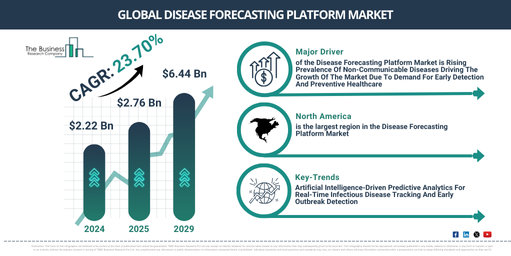
    The market size for disease forecasting platforms has seen significant expansion in recent years. This market is projected to expand from $2.22 billion in 2024 to reach $2.76 billion by 2025, demonstrating a compound annual growth rate (CAGR) of 24.0%. Historically, this growth has been driven by factors such as increasing infectious disease outbreaks, a heightened government focus on public health preparedness, the rising adoption of cloud-based healthcare solutions, the growing use of big data and epidemiological modeling, and the integration of iot-enabled health monitoring systems.

    The disease forecasting platform market is projected to undergo substantial expansion in the upcoming years. It is foreseen to reach $6.44 billion by 2029, demonstrating a compound annual growth rate (CAGR) of 23.7%. This anticipated growth can be linked to the broadening of precision medicine initiatives, a surging requirement for real-time disease monitoring, increasing alliances between healthcare and technology entities, rising investments in digital health infrastructure, and the adoption of advanced data visualization and dashboard tools. Prominent trends for the forecast period include the incorporation of generative artificial intelligence for predictive modeling, the implementation of federated learning for secure data sharing, the application of blockchain for transparent health data management, the deployment of edge computing for quicker analysis, and progress in digital twins for disease simulation.

    Unlock Your Free Sample Report for Exclusive Market Data:

    https://www.thebusinessresearchcompany.com/sample.aspx?id=28207&type=smp

    What Are The Top Growth Drivers Impacting The Disease Forecasting Platform Market Outlook?

    The expanding occurrence of non-communicable diseases is projected to stimulate the growth of the disease forecasting platform in the future. Non-communicable diseases (NCDs) are health conditions that do not spread from person to person and typically arise from genetic predispositions, lifestyle choices, or environmental factors, including heart disease, diabetes, and cancer. The prevalence of NCDs is increasing due to unhealthy lifestyles, encompassing poor dietary habits, smoking, and insufficient physical activity. Disease forecasting platforms assist in managing these non-communicable diseases by utilizing big data analytics, machine learning, and real-time health monitoring to anticipate disease trajectories, identify populations at high risk, enable timely interventions, and guide customized prevention strategies, ultimately improving overall public health outcomes and alleviating the burden of chronic conditions. For example, data from September 2022, released by the World Health Organization (WHO), a specialized agency of the United Nations located in Switzerland, indicated that chronic diseases caused 41 million deaths globally each year, accounting for 74% of all fatalities. Specifically, cardiovascular diseases were responsible for 17.9 million deaths, cancer for 9.3 million deaths, chronic respiratory diseases for 4.1 million deaths, and diabetes for 2.0 million deaths. Consequently, the increasing prevalence of non-communicable diseases is a key driver for the expansion of the disease forecasting platform market.

    What Are The Emerging Segments Gaining Attention In The Disease Forecasting Platform Market?

    The disease forecasting platform market covered in this report is segmented as

    1) By Component: Software, Hardware, Services

    2) By Deployment Mode: Cloud-Based, On-Premises

    3) By Application: Infectious Disease Surveillance, Chronic Disease Management, Epidemiology, Public Health, Other Applications

    4) By End-User: Hospitals And Clinics, Government And Public Health Agencies, Research Institutes, Pharmaceutical Companies, Other End Users

    Subsegments:

    1) By Software: Predictive Analytics Tools, Epidemiological Modeling Software, Artificial Intelligence And Machine Learning Algorithms, Data Visualization And Dashboard Tools, Cloud-Based Forecasting Platforms

    2) By Hardware: Internet of Things Enabled Medical Devices, Servers And Data Storage Systems, Networking And Connectivity Devices, Edge Computing Devices, Sensors And Monitoring Equipment

    3) By Services: Managed Services, Consulting And Integration Services, Training And Support Services, Data Management And Analytics Services, Public Health Advisory Or Forecasting Services

    What Trends Are Expected To Drive The Disease Forecasting Platform Market?

    Leading companies in the disease forecasting platform market are prioritizing the adoption of innovative technologies, such as artificial intelligence-driven predictive analytics, to facilitate real-time disease surveillance and proactive public health responses. AI-driven predictive analytics involves applying artificial intelligence, including machine learning algorithms and statistical modeling, to anticipate future disease trends, identify anomalies early, and provide actionable insights for timely intervention and resource allocation. For instance, in July 2025, Seegene Inc., a South Korea-based biotechnology company, launched the STAgora platform. The STAgora platform integrates PCR-derived diagnostic data with over 40 advanced statistical and AI tools to deliver real-time, global visualization of infectious disease trends. It allows for the early detection of abnormal pathogen patterns, supports predictive modeling for outbreaks, and enhances situational awareness from municipal to global levels. This system is engineered to operate as a real-time infectious disease intelligence system, enabling rapid situational awareness and supporting proactive public health measures.

    Who Are The Prominent Global Companies Shaping The Disease Forecasting Platform Market?

    Major companies operating in the disease forecasting platform market are International Business Machines Corporation, Oracle Corporation, Metabiota Inc., SAS Institute Inc., Tempus AI Inc., HealthVerity Inc., Airfinity Ltd., Quantori LLC, ProMED-mail Inc., EcoHealth Alliance Inc., BlueDot Inc., Hyfe Inc., Biobot Analytics Inc., Cayaba Care Inc., EPIWATCH Pty Ltd, GIDEON Informatics Inc., Kinsa Inc., Epistemix, Epidemico Inc., EpiDetect AI Inc.

    Download The Full Report For Exclusive Market Findings:

    https://www.thebusinessresearchcompany.com/report/disease-forecasting-platform-global-market-report

    Which Region Currently Holds The Largest Share Of The Disease Forecasting Platform Market?

    North America was the largest region in the disease forecasting platform market in 2024. Asia-Pacific is expected to be the fastest-growing region in the forecast period. The regions covered in disease forecasting platform report are Asia-Pacific, Western Europe, Eastern Europe, North America, South America, Middle East and Africa.

    Request A Customized Version Of The Disease Forecasting Platform Market Report:

    https://www.thebusinessresearchcompany.com/customise?id=28207&type=smp

    Browse Through More Reports Similar to the Global Disease Forecasting Platform Market 2025, By The Business Research Company

    Disease Management Apps Global Market Report 2025

    https://www.thebusinessresearchcompany.com/report/disease-management-apps-global-market-report

    Healthcare Predictive Analytics Global Market Report 2025

    https://www.thebusinessresearchcompany.com/report/healthcare-predictive-analytics-global-market-report

    Artificial Intelligence In Epidemiology Global Market Report 2025

    https://www.thebusinessresearchcompany.com/report/artificial-intelligence-in-epidemiology-global-market-report

    Get in touch with us:

    The Business Research Company: https://www.thebusinessresearchcompany.com/

    Americas +1 310-496-7795

    Asia +44 7882 955267 & +91 8897263534

    Europe +44 7882 955267

    Email us at info@tbrc.info

    Follow us on:

    LinkedIn: https://in.linkedin.com/company/the-business-research-company

    YouTube: https://www.youtube.com/channel/UC24_fI0rV8cR5DxlCpgmyFQ

    Global Market Model: https://www.thebusinessresearchcompany.com/global-market-model
  • Unified Communications As A Service In Healthcare Market Trends 2025–2029: Forecasts for Key Growth Segments

    Unified Communications As A Service In Healthcare Market Trends 2025–2029: Forecasts for Key Growth Segments

    Unlock Global Insights – Save 20% on Market Reports with Code ONLINE20

    What Is The Anticipated Size Of The Unified Communications As A Service In Healthcare Market Over The Five-Year Period 2025–2029?

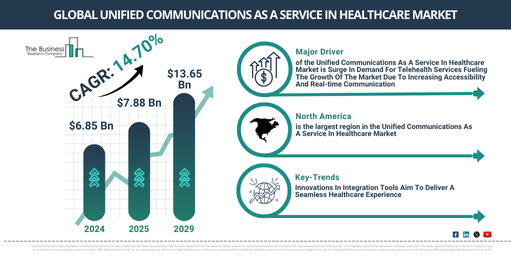
    The unified communications as a service in healthcare market has observed substantial growth in recent years. This market is expected to expand from $6.85 billion in 2024 to $7.88 billion in 2025, progressing at a compound annual growth rate (CAGR) of 15.1%. The expansion witnessed in prior periods is attributable to an increasing focus on reducing medical errors, the burgeoning trend of connected healthcare devices, a rising demand for adaptable communication solutions, and a growing dependence on multi-channel communication platforms.

    The unified communications as a service in healthcare market is projected to experience substantial expansion in the coming years. It is anticipated to reach $13.65 billion by 2029, demonstrating a compound annual growth rate (CAGR) of 14.7%. The expansion during the forecast period can be attributed to several factors, including the increasing deployment of virtual care platforms, a growing requirement for seamless cross-departmental communication, the heightened need for unified communication platforms in hospitals, the rising demand for integrated scheduling systems, and an uptick in patient satisfaction tracking. Significant developments expected in the forecast period encompass innovation in patient-centered communication tools, the integration of predictive analytics for patient outcomes, continued advancement in data security and compliance, sophisticated voice recognition technology for clinical documentation, and enhancements in multilingual communication support.

    Unlock Your Free Sample Report for Exclusive Market Data:

    https://www.thebusinessresearchcompany.com/sample.aspx?id=28347&type=smp

    What Are The Drivers Pushing New Developments In The Unified Communications As A Service In Healthcare Market?

    The growing need for telehealth services is anticipated to drive the expansion of the unified communications as a service sector within healthcare in the future. Telehealth encompasses the remote provision of healthcare, medical advice, and various health-related offerings through digital communication platforms. This surge in demand for telehealth is attributed to its enhanced accessibility, enabling patients to engage with healthcare professionals from a distance, thereby conserving time and lessening travel requirements. Furthermore, the requirement for telehealth facilitates smooth, secure, and immediate communication between individuals and their healthcare providers, which in turn enhances the coordination of care and patient involvement. An illustrative example comes from December 2023 data, where the UK’s National Health Service reported 33.6 million users of telehealth apps, observing a 54% increase in monthly logins over the preceding year, climbing from 16.8 million in November 2022 to 25.8 million in November 2023. Consequently, the escalating imperative for instant communication is propelling the expansion of the Unified Communications as a Service in Healthcare market.

    What Are The Emerging Segments Gaining Attention In The Unified Communications As A Service In Healthcare Market?

    The unified communications as a service in healthcare market covered in this report is segmented as

    1) By Service Type: Voice Over Internet Protocol, Video Conferencing, Messaging Services, Contact Center Services, Call Management

    2) By Component: Telephony, Unified Messaging, Collaboration Platforms, Conferencing, Other Components

    3) By Deployment Mode: Cloud-Based, On-Premises, Hybrid

    4) By Application: Telemedicine, Remote Patient Monitoring, Virtual Consultations, Care Coordination, Patient Engagement

    5) By End-User: Hospitals And Clinics, Health Insurance Providers, Pharmaceuticals, Diagnostic Laboratories

    Subsegments:

    1) By Voice Over Internet Protocol: Hosted Voice Solutions, Cloud Private Branch Exchange, Managed Voice Services, Session Initiation Protocol Trunking

    2) By Video Conferencing: Cloud-Based Video Conferencing, Web-Based Video Conferencing, Virtual Meeting Platforms, Telepresence System

    3) By Messaging Services: Instant Messaging Platforms, Secure Healthcare Messaging, Group Collaboration Tools, Patient Engagement Messaging

    4) By Contact Center Services: Cloud-Based Contact Centers, Virtual Assistance Services, Omni Channel Communication Solutions, Interactive Voice Response Systems

    5) By Call Management: Automated Call Distribution, Call Recording And Monitoring, Interactive Call Routing, Voicemail To Email Integration

    What Trends Are Expected To Drive The Unified Communications As A Service In Healthcare Market?

    Leading companies operating in the unified communications as a service (UCaaS) in the healthcare market are prioritizing sophisticated innovations, such as advanced API integrations. These efforts aim to bolster the connectivity of digital health tools, streamline workflow automation, and foster a more integrated and efficient healthcare journey. Advanced API integrations involve the intricate linking of diverse software systems using APIs, allowing them to communicate and share data effortlessly. This also facilitates the automation of complex processes and real-time information exchange to significantly enhance overall efficiency. For example, in April 2025, First Light Fiber Inc., a US-based provider of fiber-optic data, Internet, data center cloud, and voice services, revealed the evolution of its Unified Communications (UC) platform. This updated platform includes enhanced features, superior integration capabilities, and refined administrative instruments. The core objective of this initiative is to deliver a more fluid and intuitive experience for entities adopting cloud-based communication services. Such advancements prove particularly advantageous for fields like healthcare, where dependable, secure, and instantaneous communication is crucial.

    Which Leading Players Are Enhancing Their Unified Communications As A Service In Healthcare Market Presence Worldwide?

    Major companies operating in the unified communications as a service in healthcare market are Google LLC, Microsoft Corporation, Verizon Communications Incorporated, Comcast Corporation, International Business Machines Corporation, Cisco Systems Incorporated, BT Group plc, NEC Corporation, Orange Business Services India Network Private Limited, Zoom Video Communications Incorporated, RingCentral Incorporated, Alcatel-Lucent Enterprise International Société par Actions Simplifiée, Mitel Networks Corporation, 8×8 Incorporated, GoTo Technologies Incorporated, Nextiva Incorporated, Intrado Incorporated, Dialpad Incorporated, Mattermost Incorporated, Windstream Holdings Incorporated.

    Download The Full Report For Exclusive Market Findings:

    https://www.thebusinessresearchcompany.com/report/unified-communications-as-a-service-in-healthcare-global-market-report

    Which Region Is Expected To Witness The Fastest Growth In The Unified Communications As A Service In Healthcare Market?

    North America was the largest region in the unified communications as a service in healthcare market in 2024. Asia-Pacific is expected to be the fastest-growing region in the forecast period. The regions covered in unified communications as a service in healthcare report are Asia-Pacific, Western Europe, Eastern Europe, North America, South America, Middle East and Africa.

    Request A Customized Version Of The Unified Communications As A Service In Healthcare Market Report:

    https://www.thebusinessresearchcompany.com/customise?id=28347&type=smp

    Browse Through More Reports Similar to the Global Unified Communications As A Service In Healthcare Market 2025, By The Business Research Company

    Wireless Healthcare Global Market Report 2025

    https://www.thebusinessresearchcompany.com/report/wireless-healthcare-global-market-report

    Unified Communication As A Service Ucaas Global Market Report 2025

    https://www.thebusinessresearchcompany.com/report/unified-communication-as-a-service-ucaas-global-market-report

    Unified Communication Global Market Report 2025

    https://www.thebusinessresearchcompany.com/report/unified-communication-global-market-report

    Get in touch with us:

    The Business Research Company: https://www.thebusinessresearchcompany.com/

    Americas +1 310-496-7795

    Asia +44 7882 955267 & +91 8897263534

    Europe +44 7882 955267

    Email us at info@tbrc.info

    Follow us on:

    LinkedIn: https://in.linkedin.com/company/the-business-research-company

    YouTube: https://www.youtube.com/channel/UC24_fI0rV8cR5DxlCpgmyFQ

    Global Market Model: https://www.thebusinessresearchcompany.com/global-market-model
  • Global Direct-To-Patient Digitaling Market Overview: Trends Shaping Growth to 2029

    Global Direct-To-Patient Digitaling Market Overview: Trends Shaping Growth to 2029

    Unlock Global Insights – Save 20% on Market Reports with Code ONLINE20

    What Is The Global Market Value Of The Direct-To-Patient Digitaling Industry In 2025?

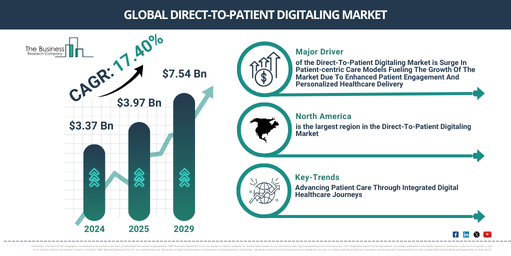
    The direct-to-patient digitaling market size has experienced rapid expansion in recent years. It is projected to increase from $3.37 billion in 2024 to $3.97 billion in 2025 at a compound annual growth rate (CAGR) of 17.8%. The historic growth of this market can be attributed to the increasing role of social media in patient engagement, rising digital literacy among patients, the growing influence of big data in healthcare decision-making, increasing acceptance of direct-to-patient communication by pharmaceutical companies, and the greater integration of digital tools in clinical workflows.

    The direct-to-patient digitaling market is projected for swift expansion over the coming years, with its size expected to grow to $7.54 billion in 2029 at a compound annual growth rate (CAGR) of 17.4%. This expansion during the forecast period is attributed to an escalating demand for real-time health data access, a surge in healthcare consumerism trends, increased investments and funding in digital health, improvements in healthcare infrastructure development in emerging markets, and a heightened emphasis on mental health digital solutions. Key trends anticipated during this period encompass advancements in wearable health technologies, the integration of omnichannel patient communication, enhanced cybersecurity for digital health platforms, novel approaches to automated adherence tracking, and sophisticated applications of big data to generate predictive health insights.

    Unlock Your Free Sample Report for Exclusive Market Data:

    https://www.thebusinessresearchcompany.com/sample.aspx?id=28206&type=smp

    Which Major Market Drivers Are Shaping The Future Of The Direct-To-Patient Digitaling Market?

    The increasing emphasis on patient-centric care models is anticipated to propel the expansion of the direct-to-patient digitaling market. These models are healthcare approaches that prioritize individual patient needs, preferences, and active involvement in their own care, with their rise driven by enhanced patient engagement. Direct-to-patient digitaling further strengthens these models by facilitating personalized, convenient, and real-time healthcare delivery directly to patients, empowering them to actively manage their health and treatment. For instance, in April 2025, Intuition Labs, a US-based organization, reported that 80% of Americans support remote patient monitoring, with clinician adoption climbing to 81% in 2023, marking a 305% increase. Thus, the growing adoption of patient-centric care models is a key driver for the direct-to-patient digitaling market.

    What Are The Major Segment Types Covered In The Direct-To-Patient Digitaling Market?

    The direct-to-patient digitaling market covered in this report is segmented as

    1) By Health Status: Chronic Conditions, Preventive Health, Mental Health

    2) By Psychographic: Lifestyle, Values And Beliefs, Personality Traits

    3) By Technological: Device Preference, Technical Proficiency, Preferred Communication Channels

    4) By Behavioral: Usage Rate, Benefits Sought, Loyalty Status

    5) By Demographic: Age Groups, Gender, Income Levels

    Subsegments:

    1) By Chronic Conditions: Diabetes Management, Cardiovascular Care, Respiratory Care, Cancer Care, Arthritis Management

    2) By Preventive Health: Vaccination Tracking, Routine Screening, Wellness Monitoring, Nutritional Guidance, Fitness Tracking

    3) By Mental Health: Anxiety Management, Depression Support, Stress Management, Sleep Improvement, Behavioral Therapy

    Which Trends Are Impacting The Direct-To-Patient Digitaling Market?

    Leading companies in the direct-to-patient digital market are concentrating on advanced innovations, specifically end-to-end digital experiences, to facilitate smoother treatment pathways and strengthen direct interactions between patients and healthcare providers. An end-to-end digital experience signifies a cohesive, integrated digital journey that encompasses all patient touchpoints, from initial engagement to care delivery and follow-up, within a singular ecosystem. This ensures convenience, personalized service, and efficiency by integrating technologies such as telehealth, e-prescriptions, and digital support platforms. For instance, in January 2024, Eli Lilly and Company, a US-based pharmaceutical manufacturing company, launched LillyDirect, a comprehensive digital healthcare platform. This solution directly connects patients to medical care, medications, and support services via a single, unified interface. It is engineered to improve accessibility and convenience while offering customized treatment options. This system streamlines access to medication and reduces obstacles to care, aiming to enhance patient outcomes. Additionally, consistent digital support promotes sustained patient engagement and adherence to therapy.

    Which Key Players Are Driving Competition In The Direct-To-Patient Digitaling Market?

    Major companies operating in the direct-to-patient digitaling market are Google LLC, OMRON Healthcare Co. Ltd., 1Life Healthcare Inc. (One Medical), Hims & Hers Health Inc., Cerebral Inc., American Well Corporation, Lyra Health Inc., MDLIVE Inc., Ro Inc., Doctor On Demand Inc., Spring Care Inc., Withings Health Solutions, HealthJoy LLC, Zocdoc Inc., Calm.com Inc., Ada Health GmbH, K Health Inc., MeMD Inc., Sesame Inc., PlushCare Inc.

    Download The Full Report For Exclusive Market Findings:

    https://www.thebusinessresearchcompany.com/report/direct-to-patient-digitaling-global-market-report

    What Regional Growth Trends Are Shaping The Direct-To-Patient Digitaling Market Outlook?

    North America was the largest region in the direct-to-patient digitaling market in 2024. Asia-Pacific is expected to be the fastest-growing region in the forecast period. The regions covered in direct-to-patient digitaling report are Asia-Pacific, Western Europe, Eastern Europe, North America, South America, Middle East and Africa.

    Request A Customized Version Of The Direct-To-Patient Digitaling Market Report:

    https://www.thebusinessresearchcompany.com/customise?id=28206&type=smp

    Browse Through More Reports Similar to the Global Direct-To-Patient Digitaling Market 2025, By The Business Research Company

    Digital Health Global Market Report 2025

    https://www.thebusinessresearchcompany.com/report/digital-health-global-market-report

    Digital Transformation In Healthcare Global Market Report 2025

    https://www.thebusinessresearchcompany.com/report/digital-transformation-in-healthcare-global-market-report

    Digital Twins In Healthcare Global Market Report 2025

    https://www.thebusinessresearchcompany.com/report/digital-twins-in-healthcare-global-market-report

    Get in touch with us:

    The Business Research Company: https://www.thebusinessresearchcompany.com/

    Americas +1 310-496-7795

    Asia +44 7882 955267 & +91 8897263534

    Europe +44 7882 955267

    Email us at info@tbrc.info

    Follow us on:

    LinkedIn: https://in.linkedin.com/company/the-business-research-company

    YouTube: https://www.youtube.com/channel/UC24_fI0rV8cR5DxlCpgmyFQ

    Global Market Model: https://www.thebusinessresearchcompany.com/global-market-model
  • Digital Vaccination Credential Verification Market Growth Opportunities: Insights from 2025–2029

    Digital Vaccination Credential Verification Market Growth Opportunities: Insights from 2025–2029

    Unlock Global Insights – Save 20% on Market Reports with Code ONLINE20

    By How Much Is The Digital Vaccination Credential Verification Market Expected To Expand Between 2025 And 2029?

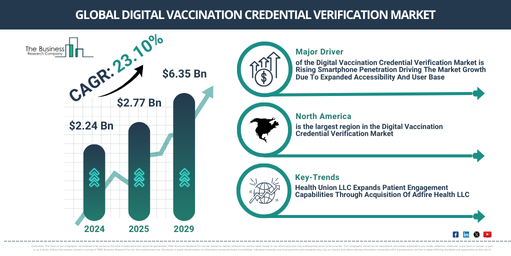
    The digital vaccination credential verification market has witnessed significant growth in its size over recent years. This market is projected to expand from $2.24 billion in 2024 to reach $2.77 billion in 2025, progressing at a compound annual growth rate (CAGR) of 23.4%. Factors contributing to this historical expansion include an increasing need for digital tools in public health administration, the expanding requirement for cross-border travel solutions, enhanced regulatory backing for digital health initiatives, a rise in public recognition and acceptance of digital health options, and a heightened emphasis on minimizing fraudulent and counterfeit credentials.

    The digital vaccination credential verification market is projected to experience significant growth in the upcoming years. It is forecast to expand to $6.35 billion by 2029, achieving a compound annual growth rate (CAGR) of 23.1%. This projected growth within the forecast period can be linked to the increasing embrace of digital health infrastructure, a rise in smartphone penetration and internet connectivity, a growing need for secure and verifiable health credentials, the increasing adoption of reusable digital identities, and a heightened focus on data privacy and security. Prominent trends for the forecast period include advancements in biometric-based verification methods, innovations in blockchain-enabled health credential systems, the integration of digital vaccination passes with travel and event platforms, progress in AI-powered fraud detection for health records, and the incorporation of vaccination credentials into national digital ID programs.

    Unlock Your Free Sample Report for Exclusive Market Data:

    https://www.thebusinessresearchcompany.com/sample.aspx?id=28205&type=smp

    What Are The Main Drivers Boosting The Digital Vaccination Credential Verification Industry’s Expansion?

    The expansion of smartphone penetration is projected to fuel the advancement of the digital vaccination credential verification market in the future. Smartphone penetration signifies the proportion of a population or target demographic that possesses or actively utilizes a smartphone. This rise is attributed to the enhanced affordability of smartphones, making them available to a broader segment of the population. Greater smartphone access facilitates the broader acceptance of digital vaccination credential verification, simplifying the process for individuals to store, retrieve, and disseminate their vaccination status. For example, in February 2023, a report from Uswitch Limited, a UK-based online and telephone comparison and switching service provider, indicated that 71.8 million mobile connections were active in 2022, representing a 3.8% increase from 2021. It is anticipated that 68.3 million people will reside in the UK by 2025, with 95% of them owning smartphones. Consequently, the growing smartphone penetration is propelling the expansion of the digital vaccination credential verification market. The expansion of travel activities is anticipated to stimulate the growth of the digital vaccination credential verification market in the coming years. Travel activities encompass a range of experiences and actions individuals engage in while exploring new places, such as sightseeing, tasting local cuisine, embarking on outdoor adventures, and engaging with local culture. The surge in these activities can be attributed to improved accessibility and affordability of transportation, allowing more individuals to explore novel destinations and partake in varied experiences. With the escalation of travel activities, digital vaccination credential verification proves advantageous by facilitating quicker and more precise passenger processing at airports and border crossings, thereby helping to diminish lengthy queues and reduce inaccuracies in health document verification. For example, in September 2024, the World Travel and Tourism Council, a UK-based non-profit organization, reported a 13% increase in travel and tourism investments, surpassing US$1 trillion in 2023, with expectations to reach pre-pandemic levels by 2025. Consequently, the uptick in travel activities is a significant factor driving the growth of the digital vaccination credential verification market.

    What Are The Major Segment Categories Driving The Digital Vaccination Credential Verification Market Growth?

    The digital vaccination credential verification market covered in this report is segmented as

    1) By Component: Software, Hardware, Services

    2) By Deployment Mode: On-Premises, Cloud-Based

    3) By Application: Airports And Border Control, Healthcare Facilities, Educational Institutions, Corporate Offices, Hospitality, Other Applications

    4) By End-User: Government, Healthcare Providers, Employers, Individuals, Other End-User

    Subsegments:

    1) By Software: Web Based Platforms, Mobile Applications, Analytics And Reporting Tools

    2) By Hardware: Near Field Communication Readers, Quick Response Code Scanners, Biometric Devices

    3) By Services: Implementation And Integration, Maintenance And Support, Consulting

    What Long-Term Trends Will Shape The Future Growth Of The Digital Vaccination Credential Verification Industry?

    Leading companies within the digital vaccination credential verification market are focusing on developing advanced solutions, such as web-based portals, to enable secure, real-time verification of vaccination records for both individuals and organizations. A web-based portal signifies an online platform reachable through a web browser, allowing users to securely access, manage, and interact with information or services from any device with internet connectivity. For instance, in February 2022, DC Health, a Colombia-based public health agency, introduced a Digital Vaccine Record (DVR) to provide District residents with secure, easy, and free access to their official COVID-19 vaccination records. This DVR stands as an official, secure, and convenient digital proof of COVID-19 vaccination issued by DC Health, accessible anytime via smartphone or computer. It features a SMART Health Card QR code, which allows for quick verification and is extensively accepted for travel and entry into venues. The key benefits of this system are improving record accuracy, strengthening data security, assisting public health monitoring, and empowering users with convenient access to their immunization information.

    Who Are The Top Performing Companies In The Digital Vaccination Credential Verification Market In Recent Years?

    Major companies operating in the digital vaccination credential verification market are Microsoft Corporation, IBM Corporation, SAP SE, Salesforce Inc., Infosys Limited, DocuSign Inc., NEC Corporation, Clear Secure Inc., Entrust Corporation, MATTR Limited, ID.me Inc., Jumio Inc., Daon Inc., IntelliCentrics Inc., EverCheck Inc., Evernym Inc., The Commons Project Foundation, BioRugged, IDEMIA Identity & Security USA LLC, Vault Health, and STChealth LLC.

    Download The Full Report For Exclusive Market Findings:

    https://www.thebusinessresearchcompany.com/report/digital-vaccination-credential-verification-global-market-report

    Which Regional Markets Are Contributing Most To The Digital Vaccination Credential Verification Industry Expansion?

    North America was the largest region in the digital vaccination credential verification market in 2024. Asia-Pacific is expected to be the fastest-growing region in the forecast period. The regions covered in digital vaccination credential verification report are Asia-Pacific, Western Europe, Eastern Europe, North America, South America, Middle East and Africa.

    Request A Customized Version Of The Digital Vaccination Credential Verification Market Report:

    https://www.thebusinessresearchcompany.com/customise?id=28205&type=smp

    Browse Through More Reports Similar to the Global Digital Vaccination Credential Verification Market 2025, By The Business Research Company

    Digital Immune System Global Market Report 2025

    https://www.thebusinessresearchcompany.com/report/digital-immune-system-global-market-report

    Digital Credential Management Software Global Market Report 2025

    https://www.thebusinessresearchcompany.com/report/digital-credential-management-software-global-market-report

    Vaccines Global Market Report 2025

    https://www.thebusinessresearchcompany.com/report/vaccines-global-market-report

    Get in touch with us:

    The Business Research Company: https://www.thebusinessresearchcompany.com/

    Americas +1 310-496-7795

    Asia +44 7882 955267 & +91 8897263534

    Europe +44 7882 955267

    Email us at info@tbrc.info

    Follow us on:

    LinkedIn: https://in.linkedin.com/company/the-business-research-company

    YouTube: https://www.youtube.com/channel/UC24_fI0rV8cR5DxlCpgmyFQ

    Global Market Model: https://www.thebusinessresearchcompany.com/global-market-model
  • Global Tokenized Health Loyalty Programs Market Trends and Growth Analysis 2025–2029

    Global Tokenized Health Loyalty Programs Market Trends and Growth Analysis 2025–2029

    Unlock Global Insights – Save 20% on Market Reports with Code ONLINE20

    By How Much Is The Tokenized Health Loyalty Programs Market Expected To Expand Between 2025 And 2029?

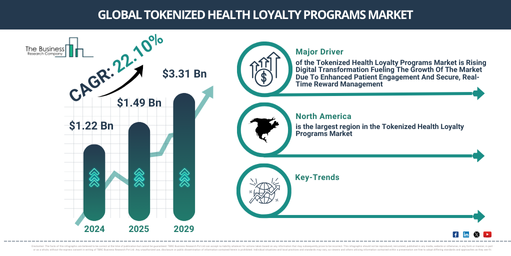
    The market size for tokenized health loyalty programs has expanded significantly in recent years. It is projected to increase from $1.22 billion in 2024 to $1.49 billion in 2025, achieving a compound annual growth rate (CAGR) of 22.4%. This historical growth can be attributed to the rising adoption of wearable health devices, greater reliance on electronic health records, the expanding use of blockchain in early healthcare pilot programs, increasing consumer awareness of digital rewards, and the growing number of healthcare provider partnerships within loyalty ecosystems.

    The market for tokenized health loyalty programs is projected to experience substantial expansion over the upcoming years. This market is anticipated to reach a valuation of $3.31 billion by 2029, exhibiting a compound annual growth rate (CAGR) of 22.1%. This projected growth is driven by several factors, including the increasing implementation of smart contracts for automated reward distribution, greater integration with metaverse health platforms, an expanding emphasis on sustainability-focused loyalty models, the rising application of personalized genomics in loyalty incentives, and the increasing convergence of wellness, fitness, and healthcare tokenized ecosystems. Key trends anticipated during this forecast period involve advancements in decentralized identity verification for secure patient rewards, enhanced token interoperability across multi-chain ecosystems, the creation of wellness-oriented non-fungible token (NFT)-based loyalty assets, innovations in gamified preventive health engagement models, and breakthroughs in artificial intelligence (AI)-driven dynamic reward optimization.

    Unlock Your Free Sample Report for Exclusive Market Data:

    https://www.thebusinessresearchcompany.com/sample.aspx?id=28342&type=smp

    Which Major Market Drivers Are Shaping The Future Of The Tokenized Health Loyalty Programs Market?

    The expansion of digital transformation is anticipated to fuel the growth of the tokenized health loyalty programs market in the future. Digital transformation involves incorporating digital technologies across all business functions to improve operations, user experiences, and overall value. This surge in digital adoption is motivated by a growing need for superior customer experiences, as companies implement digital tools like AI, cloud computing, and data analytics to offer quicker, customized, and more convenient services, thereby boosting customer satisfaction and loyalty. Digital transformation stimulates the need for tokenized health loyalty programs because it enables healthcare providers to manage rewards securely, transparently, and in real-time, thereby enhancing patient engagement and fostering trust in digital health services. For example, in November 2023, the Central Digital and Data Office, a UK government body, reported that in 2022, government digital transformation could generate over $1.17 billion (£1 billion) in savings by eliminating paper-based expenses. Furthermore, a competitive digital compensation system could save $122.12 million (£101 million) per year by 2025, lowering attrition and decreasing dependence on expensive labor. Consequently, the increasing digital transformation is a key driver for the growth of the tokenized health loyalty programs market.

    What Are The Leading Segments Analyzed In The Tokenized Health Loyalty Programs Market?

    The tokenized health loyalty programs market covered in this report is segmented as

    1) By Component: Platform, Services

    2) By Technology: Blockchain, Smart Contracts, Tokenization Platforms

    3) By Application: Patient Engagement, Wellness Programs, Prescription Management, Insurance Claims, Other Applications

    4) By End-User: Hospitals And Clinics, Pharmacies, Insurance Providers, Wellness Centers, Other End-Users

    Subsegments:

    1) By Platform: Patient Engagement Platform, Reward Management Platform, Data Analytics Platform, Blockchain-Based Platform

    2) By Services: Consulting Services, Implementation Services, Support And Maintenance Services, Integration Services

    Which Major Industry Participants Are Leading The Tokenized Health Loyalty Programs Market Growth?

    Major companies operating in the tokenized health loyalty programs market are TELUS Health, Health Hero, Calo, Vitality Group Inc., Brave Software, Wellable Inc., Sweatco Ltd., Solve.Care Inc., Sprout at Work, IncentFit Corp., VitaDAO, StepN, qiibee, Lympo, Genopets, Actifit Inc., Ocean Protocol, Streamr, Loyyal Corp., Dotmoovs, and IOTA.

    Download The Full Report For Exclusive Market Findings:

    https://www.thebusinessresearchcompany.com/report/tokenized-health-loyalty-programs-global-market-report

    Which Geographies Are Emerging As Strong Markets For The Tokenized Health Loyalty Programs Industry?

    North America was the largest region in the tokenized health loyalty programs market in 2024. Asia-Pacific is expected to be the fastest-growing region in the forecast period. The regions covered in tokenized health loyalty programs report are Asia-Pacific, Western Europe, Eastern Europe, North America, South America, Middle East and Africa.

    Request A Customized Version Of The Tokenized Health Loyalty Programs Market Report:

    https://www.thebusinessresearchcompany.com/customise?id=28342&type=smp

    Browse Through More Reports Similar to the Global Tokenized Health Loyalty Programs Market 2025, By The Business Research Company

    Financial Wellness Program Global Market Report 2025

    https://www.thebusinessresearchcompany.com/report/financial-wellness-program-global-market-report

    Connected Health And Wellness Solutions Global Market Report 2025

    https://www.thebusinessresearchcompany.com/report/connected-health-and-wellness-solutions-global-market-report

    Consumer Healthcare Global Market Report 2025

    https://www.thebusinessresearchcompany.com/report/consumer-healthcare-global-market-report

    Get in touch with us:

    The Business Research Company: https://www.thebusinessresearchcompany.com/

    Americas +1 310-496-7795

    Asia +44 7882 955267 & +91 8897263534

    Europe +44 7882 955267

    Email us at info@tbrc.info

    Follow us on:

    LinkedIn: https://in.linkedin.com/company/the-business-research-company

    YouTube: https://www.youtube.com/channel/UC24_fI0rV8cR5DxlCpgmyFQ

    Global Market Model: https://www.thebusinessresearchcompany.com/global-market-model
  • Thrombocythaemia Myelofibrosis Treatment Market Forecast: What to Expect by 2029

    Thrombocythaemia Myelofibrosis Treatment Market Forecast: What to Expect by 2029

    Unlock Global Insights – Save 20% on Market Reports with Code ONLINE20

    #What Is The Projected Market Size Of The Thrombocythaemia Myelofibrosis Treatment Market By 2029?

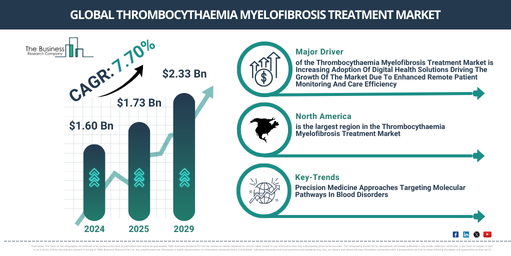
    The thrombocythaemia myelofibrosis treatment market has experienced robust expansion over recent years. This market is projected to expand from $1.60 billion in 2024 to reach $1.73 billion by 2025, demonstrating a compound annual growth rate (CAGR) of 8.0%. This past growth has been driven by factors such as the increasing occurrence of myeloproliferative disorders, enhanced understanding of myelofibrosis treatments, an expanding elderly demographic more prone to blood conditions, greater financial commitment to hematology research, and an uptick in genetic mutations leading to myeloproliferative disorders.

    The thrombocythaemia myelofibrosis treatment market is projected to experience substantial expansion over the upcoming years, with its size anticipated to reach $2.33 billion by 2029, exhibiting a compound annual growth rate (CAGR) of 7.7%. Factors contributing to this growth during the forecast period include the growing acceptance of targeted therapies, an increasing need for JAK/ACVR1 inhibitors, improvements in healthcare infrastructure within emerging economies, an uptick in clinical trials for new myelofibrosis medications, and enhanced governmental backing for rare disease treatments. Significant trends anticipated in the forecast period encompass progress in personalized medicine, sophisticated drug delivery technologies, the creation of dual-action JAK/ACVR1 inhibitors, novel approaches in minimally invasive treatments, and developments in combination therapy strategies.

    Unlock Your Free Sample Report for Exclusive Market Data:

    https://www.thebusinessresearchcompany.com/sample.aspx?id=28341&type=smp

    What Are The Main Drivers Boosting The Thrombocythaemia Myelofibrosis Treatment Industry’s Expansion?

    The thrombocythaemia myelofibrosis treatment market is projected to grow due to the increasing adoption of digital health solutions. Digital health solutions utilize digital technologies to improve healthcare delivery, patient outcomes, and overall health management. Their rising adoption is attributed to their ability to provide convenient, remote access to healthcare services, enhancing patient engagement and care efficiency. In the context of thrombocythaemia myelofibrosis treatment, digital health solutions are employed to remotely observe patient symptoms, monitor treatment responses, and aid personalized care management. For example, in April 2025, the American Hospital Association (AHA), a US-based nonprofit organization, reported that in 2022, 86.9% of hospitals offered telehealth services, an increase from 86% in 2021, demonstrating a consistent embrace of digital care solutions. Therefore, the expanding integration of digital health solutions is driving the growth of the thrombocythaemia myelofibrosis treatment market.

    What Are The Segment Types Shaping The Thrombocythaemia Myelofibrosis Treatment Market?

    The thrombocythaemia myelofibrosis treatment market covered in this report is segmented as

    1) By Treatment Type: Medication, Blood Transfusion, Stem Cell Transplantation, Other Treatment Types

    2) By Drug Type: JAK Inhibitors, Immunomodulatory Drugs, Chemotherapy, Other Drug Types

    3) By Route Of Administration: Oral, Intravenous, Subcutaneous

    4) By Distribution Channel: Hospital Pharmacies, Retail Pharmacies, Online Pharmacies, Specialty Pharmacies, Drug Stores

    5) By Application: Clinic, Hospital, Other Applications

    Subsegment:

    1) By Medication: Anti-inflammatory Drugs, Antiplatelet Drugs, Iron Chelators, Other Drugs

    2) By Blood Transfusion: Red Blood Cell Transfusion, Platelet Transfusion, Plasma Transfusion

    3) By Stem Cell Transplantation: Allogeneic Stem Cell Transplant, Autologous Stem Cell Transplant

    4) By Other Treatment Types: Splenectomy, Radiation Therapy, Supportive Care

    Which Ongoing Trends Are Expected To Shape The Thrombocythaemia Myelofibrosis Treatment Market Outlook?

    Leading companies in the thrombocythaemia myelofibrosis treatment market are concentrating on developing innovative treatments, including Janus Kinase or Activin A Receptor Type 1 (JAK/ACVR1) inhibitors. These are designed to target specific molecular pathways in myelofibrosis, thereby enhancing treatment efficacy and managing anemia. JAK/ACVR1 inhibitors operate by selectively blocking key enzymes involved in abnormal blood cell production, which helps reduce disease symptoms and improve patients’ quality of life. For instance, in September 2023, GlaxoSmithKline plc (GSK), a UK-based biopharmaceutical company, received US Food and Drug Administration (FDA) approval for Ojjaara (momelotinib), indicated for treating intermediate- or high-risk myelofibrosis. Its dual mechanism of action, which targets both JAK1/JAK2 and ACVR1, helps regulate inflammatory pathways while also improving hemoglobin levels and reducing the need for transfusions. This approval not only expands existing treatment options but also establishes a new standard in myelofibrosis management for patients experiencing anemia, a significant unmet need in the disease landscape.

    Who Are The Prominent Global Companies Shaping The Thrombocythaemia Myelofibrosis Treatment Market?

    Major companies operating in the thrombocythaemia myelofibrosis treatment market are Merck & Co. Inc., AbbVie Inc., Novartis AG, AstraZeneca PLC, Bristol Myers Squibb Company, GlaxoSmithKline PLC, Eli Lilly and Company, Takeda Pharmaceutical Company Limited, Amgen Inc., Gilead Sciences Inc., Teva Pharmaceutical Industries Ltd., Regeneron Pharmaceuticals Inc., Biogen Inc., Sun Pharmaceutical Industries Ltd., Sumitomo Pharma Oncology Inc., Incyte Corporation, Nippon Shinyaku Co. Ltd., Karyopharm Therapeutics, Celon Pharma S.A., Keros Therapeutics Inc.

    Download The Full Report For Exclusive Market Findings:

    https://www.thebusinessresearchcompany.com/report/thrombocythaemia-myelofibrosis-treatment-global-market-report

    Which Region Is Projected To Lead The Thrombocythaemia Myelofibrosis Treatment Market During The Forecast Period?

    North America was the largest region in the thrombocythaemia myelofibrosis treatment market in 2024. Asia-Pacific is expected to be the fastest-growing region in the forecast period. The regions covered in thrombocythaemia myelofibrosis treatment report are Asia-Pacific, Western Europe, Eastern Europe, North America, South America, Middle East and Africa.

    Request A Customized Version Of The Thrombocythaemia Myelofibrosis Treatment Market Report:

    https://www.thebusinessresearchcompany.com/customise?id=28341&type=smp

    Browse Through More Reports Similar to the Global Thrombocythaemia Myelofibrosis Treatment Market 2025, By The Business Research Company

    Myeloproliferative Disorders Drugs Global Market Report 2025

    https://www.thebusinessresearchcompany.com/report/myeloproliferative-disorders-drugs-global-market-report

    Myelodysplastic Syndrome Global Market Report 2025

    https://www.thebusinessresearchcompany.com/report/myelodysplastic-syndrome-global-market-report

    Chronic Myeloid Leukemia Treatment Global Market Report 2025

    https://www.thebusinessresearchcompany.com/report/chronic-myeloid-leukemia-treatment-global-market-report

    Get in touch with us:

    The Business Research Company: https://www.thebusinessresearchcompany.com/

    Americas +1 310-496-7795

    Asia +44 7882 955267 & +91 8897263534

    Europe +44 7882 955267

    Email us at info@tbrc.info

    Follow us on:

    LinkedIn: https://in.linkedin.com/company/the-business-research-company

    YouTube: https://www.youtube.com/channel/UC24_fI0rV8cR5DxlCpgmyFQ

    Global Market Model: https://www.thebusinessresearchcompany.com/global-market-model
  • Digital Therapeutics Migraine Market Expansion Outlook: $3.9 Billion by 2029 Forecast

    Digital Therapeutics Migraine Market Expansion Outlook: $3.9 Billion by 2029 Forecast

    Unlock Global Insights – Save 20% on Market Reports with Code ONLINE20

    #What Is The Projected Market Size Of The Digital Therapeutics Migraine Market By 2029?

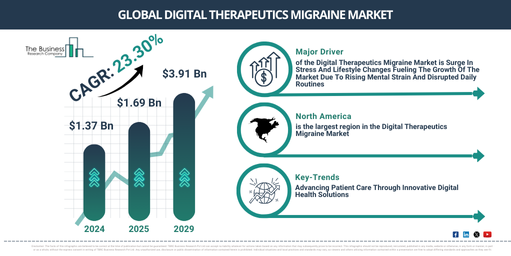
    The digital therapeutics migraine market size has seen significant expansion in recent years. It is anticipated to increase from $1.37 billion in 2024 to $1.69 billion in 2025, exhibiting a compound annual growth rate (CAGR) of 23.4%. The expansion observed in prior periods can be attributed to factors such as the rising incidence of migraine, growing demand for non-pharmacological treatments, an increasing patient inclination towards drug-free alternatives, a heightened focus on personalized healthcare, and greater availability of reimbursement for digital therapeutics.

    The digital therapeutics migraine market is projected to experience substantial expansion in the coming years. This market is anticipated to reach $3.91 billion by 2029, exhibiting a compound annual growth rate (CAGR) of 23.3%. Key drivers for this growth during the forecast period include the increasing adoption of wearable neuromodulation devices, heightened awareness regarding preventive migraine management, a surge in governmental support for digital health, enhanced patient involvement via gamified health applications, and an escalation in collaborations between insurance companies and digital therapeutics suppliers. Significant trends expected within the forecast timeframe encompass breakthroughs in personalized digital treatment strategies, the merging of mobile applications with electronic health records, progress in telemedicine-supported migraine care, enhancements in sophisticated sensor-driven monitoring technologies, and developments in scientifically validated digital therapies.

    Unlock Your Free Sample Report for Exclusive Market Data:

    https://www.thebusinessresearchcompany.com/sample.aspx?id=28204&type=smp

    Which Factors And Drivers Are Influencing The Digital Therapeutics Migraine Market In 2025?

    The increasing levels of stress and evolving lifestyle patterns are anticipated to drive the future growth of the digital therapeutics migraine market. Stress and lifestyle changes refer to the influence of daily demands and habits on an individual’s physical and mental health. The rise in these factors is attributed to contemporary work pressures and fast-paced living, which intensify mental strain and disrupt healthy daily routines. Digital therapeutics for migraine assist in managing stress and lifestyle changes by offering personalized behavioral interventions, tracking triggers, and encouraging healthier routines to diminish migraine frequency and enhance overall well-being. For instance, in February 2024, a survey conducted among 2,004 people aged 16 and over in the UK by Forthwithlife, a UK-based provider of at-home blood testing services, indicated that approximately 1 in 5 adults over 16 experiences stress every day, with women (24.5%) being more affected than men (15.3%). Therefore, the escalating stress and lifestyle changes are propelling the expansion of the digital therapeutics migraine market.

    How Is The Digital Therapeutics Migraine Market Segmented?

    The digital therapeutics migraine market covered in this report is segmented as

    1) By Product Type, Software, Devices, Services

    2) By Patient Type, Adult, Pediatric

    3) By Application, Prevention, Acute Treatment, Patient Education, Other Applications

    4) By Distribution Channel, Online, Offline

    5) By End-User, Hospitals, Clinics, Homecare, Other End-Users

    Subsegments:

    1) By Software, Mobile Application, Web Platform, Cloud-Based Platform, Wearable Integration Software

    2) By Devices, Wearable Devices, Neurostimulation Devices, Monitoring Devices, Biosensors

    3) By Services, Teleconsultation Services, Therapy Management Services, Patient Support Services, Data Analytics Services

    Which Market Trends Are Creating New Opportunities In The Digital Therapeutics Migraine Industry?

    Leading companies in the digital therapeutics migraine market are concentrating on developing advanced innovations, such as e-prescription technology, to improve treatment accessibility, medication adherence, and overall patient management. E-prescription technology refers to a digital system that allows healthcare providers to create, transmit, and manage prescriptions electronically, moving away from traditional paper-based methods while boosting accuracy, reducing medication errors, and enhancing efficiency in prescribing and dispensing processes. For instance, in April 2025, Tonix Pharmaceuticals Holding Corp., a US-based pharmaceutical company, introduced TONIX ONE, an extensive digital platform designed to assist patients in managing their migraine condition. The platform provides personalized tools, educational resources, and support services to deepen disease understanding and facilitate self-management. It aims to give patients greater control over their migraine care, promoting proactive health management. Additionally, TONIX ONE fosters stronger engagement and communication between patients and healthcare providers, streamlining care coordination.

    Which Leading Companies Dominate The Digital Therapeutics Migraine Market Share?

    Major companies operating in the digital therapeutics migraine market are Pfizer Inc., Novartis AG, Eli Lilly and Company, Dr. Reddy’s Laboratories Ltd., Sword Health, Biofourmis Inc., Click Therapeutics Inc., Sidekick Health, Kaia Health Software GmbH, Salvia BioElectronics, Theranica Bio-Electronics Ltd., Cefaly Technology S.A., Neurolief Ltd., Aptar Digital Health, NeuroMetrix Inc., Happify Health, Neura Health, Relivion MG, UpScriptHealth, N1-Headache.

    Download The Full Report For Exclusive Market Findings:

    https://www.thebusinessresearchcompany.com/report/digital-therapeutics-migraine-global-market-report

    How Does The Digital Therapeutics Migraine Market Perform Across Key Geographic Regions?

    North America was the largest region in the digital therapeutics migraine market in 2024. The regions covered in digital therapeutics migraine report are Asia-Pacific, Western Europe, Eastern Europe, North America, South America, Middle East and Africa.

    Request A Customized Version Of The Digital Therapeutics Migraine Market Report:

    https://www.thebusinessresearchcompany.com/customise?id=28204&type=smp

    Browse Through More Reports Similar to the Global Digital Therapeutics Migraine Market 2025, By The Business Research Company

    Migraine Drugs Global Market Report 2025

    https://www.thebusinessresearchcompany.com/report/migraine-drugs-global-market-report

    Migraine Treatment Global Market Report 2025

    https://www.thebusinessresearchcompany.com/report/migraine-treatment-global-market-report

    Migraine Global Market Report 2025

    https://www.thebusinessresearchcompany.com/report/migraine-global-market-report

    Get in touch with us:

    The Business Research Company: https://www.thebusinessresearchcompany.com/

    Americas +1 310-496-7795

    Asia +44 7882 955267 & +91 8897263534

    Europe +44 7882 955267

    Email us at info@tbrc.info

    Follow us on:

    LinkedIn: https://in.linkedin.com/company/the-business-research-company

    YouTube: https://www.youtube.com/channel/UC24_fI0rV8cR5DxlCpgmyFQ

    Global Market Model: https://www.thebusinessresearchcompany.com/global-market-model