Category: HealthcareServices

  • Global Cancer Gene Therapy Market Size Projected to Reach $7.67 Billion During the Forecast Period

    Global Cancer Gene Therapy Market Size Projected to Reach $7.67 Billion During the Forecast Period

    Unlock Global Insights – Save 20% on Market Reports with Code ONLINE20

    What Is The Anticipated Size Of The Cancer Gene Therapy Market Over The Five-Year Period 2025–2029?

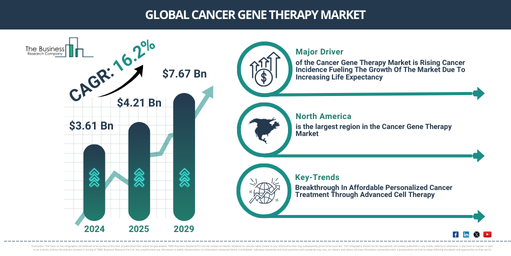
    The cancer gene therapy market size has seen rapid expansion in recent years. It is anticipated to increase from $3.61 billion in 2024 to $4.21 billion in 2025, achieving a compound annual growth rate (CAGR) of 16.6%. This historical growth is attributable to several key factors, including a rising awareness of oncovirus-related cancers, an increase in collaborations between biotechnology firms and academic institutions, heightened clinical trial activity for early-phase gene therapies, a growing demand for ex vivo modified cell therapies, and a surge in strategic licensing agreements for gene therapy platforms.

    The cancer gene therapy market size is projected to experience substantial growth in the near future, forecast to reach $7.67 billion by 2029, exhibiting a compound annual growth rate (CAGR) of 16.2%. This anticipated expansion during the forecast period is primarily driven by an increased emphasis on non-viral delivery methods, wider access to companion diagnostics, a burgeoning interest in readily available off-the-shelf allogeneic cell therapies, the expanding role of contract development & manufacturing organizations (CDMOs), and advancements in synthetic biology facilitating customizable gene circuits. Furthermore, key trends anticipated during this period encompass progress in non-viral gene delivery platforms, enhanced manufacturing automation for gene therapy production, the creation of synthetic promoters for specific cancer expression, novel approaches in intratumoral gene therapy administration, and the formulation of multiplexed gene modulation strategies.

    Unlock Your Free Sample Report for Exclusive Market Data:

    https://www.thebusinessresearchcompany.com/sample.aspx?id=27233&type=smp

    What Are The Top Growth Drivers Impacting The Cancer Gene Therapy Market Outlook?

    A rising occurrence of cancer is anticipated to fuel the expansion of the cancer gene therapy market in the future. Cancer is characterized as a condition involving the uncontrolled multiplication of abnormal cells, which can invade and spread to various parts of the body, originating in diverse tissues and organs, and classified according to its cellular or tissue source. The growing number of cancer cases is attributed to increasing life expectancy, as the risk of developing cancer rises with age. Cancer gene therapy offers treatment by modifying or replacing faulty genes to halt cancer cell growth or to enhance the immune system’s ability to destroy them. For example, Macmillan Cancer Support, a UK-based organization, reported in August 2024 that more than 3 million people in the UK are living with cancer. This figure is projected to reach 3.5 million by 2025, 4 million by 2030, and 5.3 million by 2040. Consequently, the increasing incidence of cancer is a key driver for the growth of the cancer gene therapy market.

    How Is The Cancer Gene Therapy Market Segmented?

    The cancer gene therapy market covered in this report is segmented

    1) By Therapy: Gene Induced Immunotherapy, Oncolytic Virotherapy, Gene Transfer

    2) By Indication: Large B-Cell Lymphoma, Multiple Myeloma, Acute Lymphoblastic Leukemia (ALL), Melanoma (lesions), Other Indications

    3) By Vector Type: Lentivirus, RetroVirus And Gamma RetroVirus, Adeno-Associated Virus (AAV), Modified Herpes Simplex Virus, Adenovirus, Other Vector Types

    4) By End-User: Hospitals, Research Institutes, Biopharma Companies, Diagnostic centers, Other End Users

    Subsegments:

    1) By Gene Induced Immunotherapy: CAR-T Cell Therapy, TCR (T-Cell Receptor) Therapy, Tumor-Infiltrating Lymphocyte (TIL) Therapy, Dendritic Cell-Based Gene Therapy, NK Cell Gene Therapy

    2) By Oncolytic Virotherapy: Adenoviruses, Herpes Simplex Virus (HSV), Reovirus, Vaccinia Virus, Newcastle Disease Virus (NDV)

    3) By Gene Transfer: Viral Gene Transfer, Non-Viral Gene Transfer

    Which Market Trends Are Creating New Opportunities In The Cancer Gene Therapy Industry?

    Leading companies in the cancer gene therapy market are concentrating on developing innovative treatments, such as CAR-T cell therapy, to enhance therapeutic accuracy, improve patient outcomes, and more effectively target cancer cells while minimizing harm to healthy tissues. CAR-T therapy is a sophisticated immunotherapy method where a patient’s immune cells are genetically engineered to better detect and eliminate cancer cells by integrating specialized receptors onto them. For instance, in April 2024, ImmunoACT, an India-based biotechnology company, unveiled NexCAR19 (actalycabtagene autoleucel), marking it as India’s first domestically developed CAR-T cell therapy for cancer. Specifically designed to address B-cell lymphomas and leukemias, NexCAR19 operates by reprogramming a patient’s own T cells to recognize and destroy malignant cells. Built upon advanced chimeric antigen receptor (CAR) technology, the therapy is manufactured locally, thus making it more affordable and accessible compared to imported options. This launch represents a significant milestone for India’s presence in the global cancer gene therapy arena, emphasizing notable strides in indigenous innovation and personalized cancer care.

    Which Major Firms Are Strengthening Their Position In The Cancer Gene Therapy Industry?

    Major companies operating in the cancer gene therapy market are Bristol Myers Company, Novartis AG, GSK plc., Gilead Sciences Inc., Amgen Inc., Orchard Therapeutics Plc, Biogen Inc., Sarepta Therapeutics Inc., AGC Biologics, Adaptimmune Limited, Sibiono, Elevate Bio Inc., Bluebird Bio Inc., Uniqure N.V., Shanghai Sunway Biotech Co. Ltd., Anges Inc., Gensight Biologics, Genelux Corporation, Cellectis, and Abeona Therapeutics Inc.

    Download The Full Report For Exclusive Market Findings:

    https://www.thebusinessresearchcompany.com/report/cancer-gene-therapy-global-market-report

    What Are The Regional Market Dynamics Impacting The Cancer Gene Therapy Industry?

    North America was the largest region in the cancer gene therapy market in 2024. Asia-Pacific is expected to be the fastest-growing region in the forecast period. The regions covered in the cancer gene therapy market report are Asia-Pacific, Western Europe, Eastern Europe, North America, South America, Middle East, Africa.

    Request A Customized Version Of The Cancer Gene Therapy Market Report:

    https://www.thebusinessresearchcompany.com/customise?id=27233&type=smp

    Browse Through More Reports Similar to the Global Cancer Gene Therapy Market 2025, By The Business Research Company

    Mortgage Lender Global Market Report 2025

    https://www.thebusinessresearchcompany.com/report/mortgage-lender-global-market-report

    Property And Casualty Insurance Global Market Report 2025

    https://www.thebusinessresearchcompany.com/report/property-and-casualty-insurance-global-market-report

    Home Insurance Global Market Report 2025

    https://www.thebusinessresearchcompany.com/report/home-insurance-global-market-report

    Get in touch with us:

    The Business Research Company: https://www.thebusinessresearchcompany.com/

    Americas +1 310-496-7795

    Asia +44 7882 955267 & +91 8897263534

    Europe +44 7882 955267

    Email us at info@tbrc.info

    Follow us on:

    LinkedIn: https://in.linkedin.com/company/the-business-research-company

    YouTube: https://www.youtube.com/channel/UC24_fI0rV8cR5DxlCpgmyFQ

    Global Market Model: https://www.thebusinessresearchcompany.com/global-market-model
  • Breast Lesion Localization Methods Industry Anticipated to Expand at 10.6% CAGR During the Forecast Period

    Breast Lesion Localization Methods Industry Anticipated to Expand at 10.6% CAGR During the Forecast Period

    Unlock Global Insights – Save 20% on Market Reports with Code ONLINE20

    What Are The Forecasted Market Size Estimates For The Breast Lesion Localization Methods Market Between 2025 And 2029?

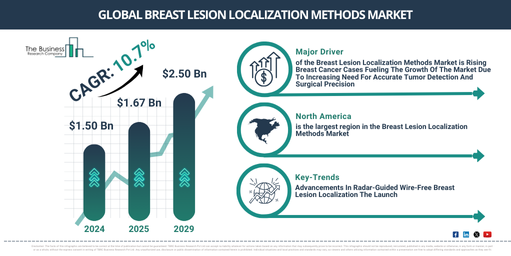
    The market size for breast lesion localization methods has experienced rapid growth in recent years. This market is projected to expand from $1.50 billion in 2024 to reach $1.67 billion by 2025, demonstrating a compound annual growth rate (CAGR) of 11.0%. Historically, this growth has been driven by factors such as increased disposable incomes, enhanced awareness regarding early detection, a surge in demand for minimally invasive surgical interventions, wider embrace of image-guided procedures, and the growing accessibility of sophisticated diagnostic instruments.

    The breast lesion localization methods market is poised for substantial expansion in the upcoming years. It is predicted to reach $2.50 billion by 2029, exhibiting a compound annual growth rate (CAGR) of 10.7%. This expansion during the forecast period can be attributed to factors such as an expanding aging population, increasing healthcare expenditure, broader availability of reimbursement policies, rising demand for personalized treatment options, and the growing adoption of minimally invasive procedures. Significant trends expected during this period include advancements in wireless localization technologies, innovations in magnetic and radar-based localization, the integration of artificial intelligence into imaging systems, sophisticated imaging-guided surgical techniques, and the incorporation of emerging technologies.

    Unlock Your Free Sample Report for Exclusive Market Data:

    https://www.thebusinessresearchcompany.com/sample.aspx?id=27232&type=smp

    Which Major Market Drivers Are Shaping The Future Of The Breast Lesion Localization Methods Market?

    The escalating occurrence of breast cancer is anticipated to fuel the expansion of the breast lesion localization methods market moving forward. Breast cancer describes a condition where breast cells proliferate without control, creating a tumor often visible on an X-ray or detectable as a lump. The increase in breast cancer diagnoses is propelled by extended life expectancies, considering that aging is a significant risk factor for the emergence of breast tumors. Breast lesion localization methods support breast cancer treatment by enabling accurate identification and marking of abnormal tissue, which permits surgeons to precisely remove tumors while preserving healthy breast tissue. For example, in February 2025, according to the American Association for Cancer Research, a US-based nonprofit organization, around 2.3 million individuals globally were diagnosed with breast cancer in 2022, and approximately 670,000 died from the illness. If existing trends continue, diagnoses might increase to 3.2 million cases and deaths to 1.1 million annually by 2050. Consequently, the rising incidence of breast cancer is a key factor driving the growth of the breast lesion localization methods market.

    What Are The Key Segments In The Breast Lesion Localization Methods Market?

    The breast lesion localization methods market covered in this report is segmented

    1) By Type Of Localization Method: Wire Localization, Radioactive Seed Localization, Magnetic Seed Localization, Ultrasound-Guided Localization, Needle Localization

    2) By Usage: Tumor Identification, Sentinel Lymph-Node Identification, Other Usages

    3) By Technology: Radioactive, Magnetic, Radiofrequency, Other Technologies

    4) By Application: Breast Biopsy, Breast-Conserving Surgery, Neoadjuvant Therapy, Other Applications

    5) By End User: Hospitals, Ambulatory Surgical Centers, Specialty Clinics, Academic And Research Institutes

    Subsegments:

    1) By Wire Localization: Single-Hook Wire Localization, Double-Hook Wire Localization, Anchor-Shaped Wire Localization, Hooked Needle Wire Localization, Flexible Wire Localization

    2) By Radioactive Seed Localization (RSL): Iodine-125 Seed Localization, Technetium-99m Seed Localization, Dual-Isotope Seed Localization, Gamma Probe-Guided Seed Localization

    3) By Magnetic Seed Localization: Magnetic Tracer-Based Localization, Magnetic Clip Localization, Ferromagnetic Marker-Based Localization, Dual Magnetic-Marker And Ultrasound-Guided Systems

    4) By Ultrasound-Guided Localization: Conventional Ultrasound-Guided Needle Localization, Ultrasound-Guided Wire Placement, Real-Time Ultrasound-Guided Seed Placement, Contrast-Enhanced Ultrasound Localization

    5) By Needle Localization: Fine Needle Localization, Core Needle Localization, Vacuum-Assisted Needle Localization, Stereotactic-Guided Needle Localization, Palpation-Guided Needle Localization

    How Are Trends Influencing The Breast Lesion Localization Methods Market?

    Major companies operating in the breast lesion localization methods market are focusing on developing advanced solutions, such as radar reflector localization systems, to enhance accuracy, patient comfort, and surgical outcomes during breast-conserving procedures. A radar reflector localization system utilizes a small radar reflector implanted at the tumor site prior to surgery, offering a wire-free breast lesion localization technology. For instance, in December 2022, Merit Medical Systems, Inc., a US-based manufacturer of disposable medical devices, launched Scout Bx. This wireless, radar-guided localization system is designed to assist breast surgeons in identifying biopsied tumors for removal. Scout Bx provides a range of unique features intended to improve precision and patient comfort in breast-conserving surgeries. Unlike conventional wire-based localization, Scout Bx leverages radar technology to precisely detect and localize biopsied tumors, enabling surgeons to plan incisions more effectively and minimize the removal of healthy tissue. Its wire-free design helps reduce patient anxiety, eliminates scheduling constraints between radiology and surgery, and permits placement days or even weeks before the procedure. The system is especially beneficial for dense breast tissue, offering real-time surgical guidance and enhanced workflow efficiency.

    Who Are The Primary Competitors In The Global Breast Lesion Localization Methods Market?

    Major companies operating in the breast lesion localization methods market are Becton, Dickinson and Company, Hologic Inc., Halma Plc, Cook Medical LLC, Merit Medical Systems Inc., Argon Medical Devices Inc., Eckert & Ziegler AG, Theragenics Corporation, SOMATEX Medical Technologies GmbH, BPB Medica S.r.l., Devicor Medical Products Inc., Cianna Medical Inc., Mermaid Medical A/S, Ranfac Corporation, Sirius Medical B.V., MOLLI Surgical Inc., IsoAid LLC, STERYLAB S.r.l., MDL S.r.l., Biomedical Srl.

    Download The Full Report For Exclusive Market Findings:

    https://www.thebusinessresearchcompany.com/report/breast-lesion-localization-methods-global-market-report

    Which Region Shows The Highest Potential For Future Expansion In The Breast Lesion Localization Methods Market?

    North America was the largest region in the breast lesion localization methods market in 2024. Asia-Pacific is expected to be the fastest-growing region in the forecast period. The regions covered in the breast lesion localization methods market report are Asia-Pacific, Western Europe, Eastern Europe, North America, South America, Middle East, Africa.

    Request A Customized Version Of The Breast Lesion Localization Methods Market Report:

    https://www.thebusinessresearchcompany.com/customise?id=27232&type=smp

    Browse Through More Reports Similar to the Global Breast Lesion Localization Methods Market 2025, By The Business Research Company

    Construction And Demolition Waste Management Global Market Report 2025

    https://www.thebusinessresearchcompany.com/report/construction-and-demolition-waste-management-global-market-report

    Excavation And Demolition Global Market Report 2025

    https://www.thebusinessresearchcompany.com/report/excavation-and-demolition-global-market-report

    Industrial Maintenance Services Global Market Report 2025

    https://www.thebusinessresearchcompany.com/report/industrial-maintenance-services-global-market-report

    Get in touch with us:

    The Business Research Company: https://www.thebusinessresearchcompany.com/

    Americas +1 310-496-7795

    Asia +44 7882 955267 & +91 8897263534

    Europe +44 7882 955267

    Email us at info@tbrc.info

    Follow us on:

    LinkedIn: https://in.linkedin.com/company/the-business-research-company

    YouTube: https://www.youtube.com/channel/UC24_fI0rV8cR5DxlCpgmyFQ

    Global Market Model: https://www.thebusinessresearchcompany.com/global-market-model
  • Global Bacterial And Viral Specimen Collection Market Overview: Trends Shaping Growth to 2029

    Global Bacterial And Viral Specimen Collection Market Overview: Trends Shaping Growth to 2029

    Unlock Global Insights – Save 20% on Market Reports with Code ONLINE20

    What Market Value Is The Bacterial And Viral Specimen Collection Industry Expected To Reach By 2029, Starting From 2025 Levels?

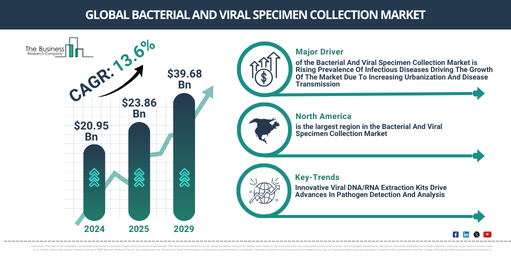
    The bacterial and viral specimen collection market has experienced rapid expansion in recent years. This market is projected to expand from $20.95 billion in 2024 to $23.86 billion by 2025, demonstrating a compound annual growth rate (CAGR) of 13.9%. Historically, this growth can be attributed to several factors, including increased demand for precise and prompt diagnosis, a rise in viral outbreak occurrences, enhanced government funding, an increase in global healthcare spending, and the expansion of telemedicine services.

    The market for bacterial and viral specimen collection is anticipated to experience substantial growth over the next few years. It is projected to reach $39.68 billion by 2029, demonstrating a compound annual growth rate (CAGR) of 13.6%. This expansion during the forecast period is driven by factors such as the broadening of global disease surveillance networks, increased investment in pandemic preparedness, the rising prevalence of infectious diseases, an increase in antimicrobial resistance, and a surge in bacterial infections. Significant trends expected in this period include technological innovations, the integration of digital tracking, the adoption of non-invasive specimen collection methods, the use of microfluidic devices, and the implementation of automated specimen tracking systems.

    Unlock Your Free Sample Report for Exclusive Market Data:

    https://www.thebusinessresearchcompany.com/sample.aspx?id=27219&type=smp

    Which Factors And Drivers Are Influencing The Bacterial And Viral Specimen Collection Market In 2025?

    The increasing occurrence of infectious diseases is anticipated to drive the expansion of the bacterial and viral specimen collection market in the future. Infectious diseases are conditions resulting from detrimental microorganisms, including bacteria, viruses, fungi, or parasites, capable of direct or indirect human-to-human transmission. This growth in infectious disease prevalence is largely attributable to greater urbanization, which fosters increased population density and more intimate human interaction, thereby accelerating disease spread and establishing favorable environments for pathogens to disseminate more readily within populations. The collection of bacterial and viral specimens aids in managing infectious diseases by supplying crucial samples that allow for accurate detection and diagnosis, thereby supporting prompt and specific medical treatment. For example, data from March 2024, reported by the US-based government agency, the Centers for Disease Control and Prevention, showed an increase in tuberculosis cases from 8,320 in 2022 to 9,615 in 2023, representing a rise of 1,295 cases. Concurrently, the incidence rate climbed from 2.5 to 2.9 per 100,000 persons, indicating a notable year-over-year upward trajectory. Consequently, the expanding occurrence of infectious diseases is fueling the expansion of the bacterial and viral specimen collection market.

    What Are The Leading Segments Analyzed In The Bacterial And Viral Specimen Collection Market?

    The bacterial and viral specimen collection market covered in this report is segmented

    1) By Product: Bacterial Specimen Collection, Viral Specimen Collection

    2) By Application: Diagnostics, Research

    3) By End User: Hospitals And Clinics, Diagnostic Laboratories, Academic And Research Institutions, Other End User

    Subsegments:

    1) By Bacterial Specimen Collection: Swabs, Transport Media, Culture Plates & Media, Blood Culture Bottles, Biopsy And Tissue Collection Kits, Urine Collection Containers, Other Specialized Collection Devices

    2) By Viral Specimen Collection: Viral Transport Media, Blood Collection Tubes, Saliva Collection Kits, Sputum Collection Containers, Stool Collection Kits, Other Specialized Collection Devices

    Which Market Trends Are Creating New Opportunities In The Bacterial And Viral Specimen Collection Industry?

    Leading companies within the bacterial and viral specimen collection market are prioritizing the development of novel solutions, specifically viral DNA and RNA extraction kits, to enhance the efficiency, precision, and pace of pathogen identification and examination. These kits serve as laboratory instruments designed to separate and refine viral genetic material from clinical specimens, facilitating precise molecular testing and diagnosis. As an illustration, in April 2024, New England Biolabs, a life sciences firm based in the US, introduced the Monarch Mag Viral DNA and RNA Extraction Kit. This magnetic bead-based purification system is engineered for quick, dependable, and highly sensitive extraction of viral DNA and RNA from diverse sample types, including saliva, respiratory swabs, and enriched wastewater. It supports both manual and automated processes, being compatible with platforms like KingFisher Flex and Agilent Bravo, thereby allowing for high-throughput processing. The kit boosts detection sensitivity even for low viral loads, incorporates carrier RNA to improve recovery, and is appropriate for subsequent applications such as qPCR, RT-qPCR, ddPCR, and next-generation sequencing (NGS). Its objective is to address requirements in infectious disease screening, viral genome sequencing, and environmental monitoring through scalable, hands-free workflows.

    Which Major Firms Are Strengthening Their Position In The Bacterial And Viral Specimen Collection Industry?

    Major companies operating in the bacterial and viral specimen collection market are Roche Diagnostics International AG, Thermo Fisher Scientific Inc., Becton Dickinson and Company, Lonza Group AG, Hologic Inc., bioMérieux SA, Quidel Corporation, QIAGEN N.V., DiaSorin S.p.A., Greiner Bio-One International GmbH, Spectrum Solutions LLC, Hardy Diagnostics Inc., EKF Diagnostics Holdings Plc, Trinity Biotech Plc, Puritan Medical Products Company LLC, Wuxi NEST Biotechnology Co. Ltd., Copan Diagnostics Inc., VIRCELL S.L., Medical Wire & Equipment Co. Ltd., HiMedia Laboratories Pvt. Ltd., Longhorn Vaccines and Diagnostics LLC, and Beaver Biomedical Engineering Co. Ltd.

    Download The Full Report For Exclusive Market Findings:

    https://www.thebusinessresearchcompany.com/report/bacterial-and-viral-specimen-collection-global-market-report

    Which Region Shows The Highest Potential For Future Expansion In The Bacterial And Viral Specimen Collection Market?

    North America was the largest region in the bacterial and viral specimen collection market in 2024. Asia-Pacific is expected to be the fastest-growing region in the forecast period. The regions covered in the bacterial and viral specimen collection market report are Asia-Pacific, Western Europe, Eastern Europe, North America, South America, Middle East, Africa.

    Request A Customized Version Of The Bacterial And Viral Specimen Collection Market Report:

    https://www.thebusinessresearchcompany.com/customise?id=27219&type=smp

    Browse Through More Reports Similar to the Global Bacterial And Viral Specimen Collection Market 2025, By The Business Research Company

    Fire Protection System Global Market Report 2025

    https://www.thebusinessresearchcompany.com/report/fire-protection-system-global-market-report

    Insulation Products Global Market Report 2025

    https://www.thebusinessresearchcompany.com/report/insulation-products-global-market-report

    Sun Care Products Global Market Report 2025

    https://www.thebusinessresearchcompany.com/report/sun-care-products-global-market-report

    Get in touch with us:

    The Business Research Company: https://www.thebusinessresearchcompany.com/

    Americas +1 310-496-7795

    Asia +44 7882 955267 & +91 8897263534

    Europe +44 7882 955267

    Email us at info@tbrc.info

    Follow us on:

    LinkedIn: https://in.linkedin.com/company/the-business-research-company

    YouTube: https://www.youtube.com/channel/UC24_fI0rV8cR5DxlCpgmyFQ

    Global Market Model: https://www.thebusinessresearchcompany.com/global-market-model
  • Global Automated Next-Generation Sequencing (NGS) Library Preparation Industry Trends: Where the Market Is Headed by 2029

    Global Automated Next-Generation Sequencing (NGS) Library Preparation Industry Trends: Where the Market Is Headed by 2029

    Unlock Global Insights – Save 20% on Market Reports with Code ONLINE20

    How Is The Automated Next-Generation Sequencing (NGS) Library Preparation Market Size Likely To Evolve From 2025 Through 2034?

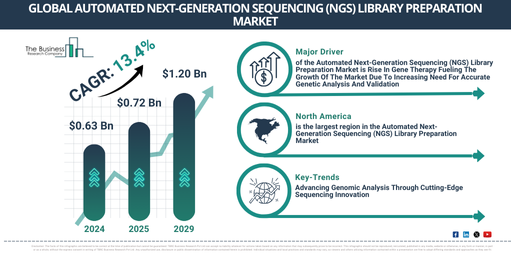
    The automated next-generation sequencing (NGS) library preparation market has experienced swift expansion in recent years. Its valuation is projected to climb from $0.63 billion in 2024 to $0.72 billion in 2025, demonstrating a compound annual growth rate (CAGR) of 13.8%. This historical growth can be attributed to factors such as its expanding utilization in infectious disease surveillance, increased financial support for genomic research, growing deployment during pandemic situations, enhanced accessibility for research laboratories, and its rising application in precision medicine.

    The automated next-generation sequencing (NGS) library preparation market is projected for substantial expansion in the coming years, with its size expected to reach $1.20 billion by 2029, exhibiting a compound annual growth rate (CAGR) of 13.4%. This anticipated growth during the forecast period is primarily driven by its increasing uptake in clinical diagnostics, a rising demand for personalized medicine, expanding applications in oncology research, the growing requirement for high-throughput sequencing, and a heightened focus on reducing turnaround time. Prominent trends for the forecast period include enhancements in workflow efficiency, the integration of artificial intelligence in data analysis, technology-driven standardization of protocols, the development of user-friendly systems, and advancements in cloud-based data solutions.

    Unlock Your Free Sample Report for Exclusive Market Data:

    https://www.thebusinessresearchcompany.com/sample.aspx?id=27216&type=smp

    Which Drivers Are Shaping The Automated Next-Generation Sequencing (NGS) Library Preparation Industry’s Market Share?

    The anticipated expansion of gene therapy is poised to fuel the growth of the automated next-generation sequencing (NGS) library preparation market in the future. This therapeutic approach involves modifying an individual’s genes to treat or avert illnesses. Its growth stems from the increasing occurrence of genetic conditions necessitating specific and enduring treatment options. Within gene therapy, automated NGS library preparation facilitates the precise analysis and verification of genetic alterations through the creation of high-quality DNA or RNA samples ready for sequencing. As an illustration, data from April 2024, provided by the American Society of Gene and Cell Therapy, a US-based non-profit medical and scientific body, indicated that phase III gene therapy clinical trials saw a 10% rise in the fourth quarter, representing the initial quarterly growth since the third quarter of 2022. Consequently, the expansion of gene therapy is a significant impetus behind the growth of the automated next-generation sequencing (NGS) library preparation market.

    What Are The Primary Types Of Segments Analyzed In The Automated Next-Generation Sequencing (NGS) Library Preparation Market?

    The automated next-generation sequencing (NGS) library preparation market covered in this report is segmented

    1) By Type: Targeted Genome Sequencing, Whole Genome Sequencing, Whole Exome Sequencing, Other Sequencing Types

    2) By Workflow: Nucleic Acid Extraction, Fragmentation, Adapter Ligation, Purification And Quantification

    3) By Application: Drug And Biomarker Discovery, Disease Diagnostics, Other Applications

    4) By End-Use: Hospitals And Clinics, Academic And Research Institutions, Pharmaceutical And Biotechnology Companies, Other End-Users

    Subsegments:

    1) By Targeted Genome Sequencing: Amplicon-Based Targeted Sequencing, Hybridization Capture-Based Targeted Sequencing, Custom Targeted Panels, Pre-designed Gene Panels

    2) By Whole Genome Sequencing: Human Whole Genome Sequencing, Animal Whole Genome Sequencing, Plant Whole Genome Sequencing, Microbial Whole Genome Sequencing

    3) By Whole Exome Sequencing: Standard Exome Sequencing, Clinical Exome Sequencing, Custom Exome Panels, Ultra-Rapid Exome Sequencing

    4) By Other Sequencing Types: RNA Sequencing (RNA-Seq), Epigenome Sequencing, Metagenomic Sequencing, Single-Cell Sequencing

    Which Ongoing Trends Are Expected To Shape The Automated Next-Generation Sequencing (NGS) Library Preparation Market Outlook?

    Leading companies within the automated next-generation sequencing (NGS) library preparation market are focusing on developing advanced technologies, such as Xpandomer technology, to enhance sequencing speed, improve data accuracy, and increase scalability, thereby streamlining workflows and supporting more efficient and reliable genomic analysis. Xpandomer technology is an advanced deoxyribonucleic acid (DNA) or ribonucleic acid (RNA) sequencing method that converts a target nucleic acid molecule into a synthetic, expanded polymer called an Xpandomer, which is approximately 50 times longer than the original deoxyribonucleic acid (DNA) or ribonucleic acid (RNA) strand. For instance, in February 2025, Roche AG, a Switzerland-based biotechnology company, launched Sequencing by Expansion, a cutting-edge sequencing platform designed to improve genomic resolution for advanced diagnostics, disease research, and precision medicine applications. This innovative automated next-generation sequencing (NGS) library preparation system streamlines complex workflows, enhances data quality, and accelerates genomic analysis to support advanced research and personalized medicine. The sequencing by expansion platform is highly versatile, enabling precise analysis of various genomic alterations across a wide range of diseases, including cancer and rare genetic disorders, by enhancing resolution and accuracy for deeper biological insights.

    Who Are The Core Companies Influencing The Automated Next-Generation Sequencing (NGS) Library Preparation Market Landscape?

    Major companies operating in the automated next-generation sequencing (NGS) library preparation market are F. Hoffmann-La Roche Ltd., Thermo Fisher Scientific Inc., Agilent Technologies India Private Limited, Illumina Inc., Beckman Coulter Inc., Bio-Rad Laboratories Inc., IDT Corporation, Tecan Group AG, Hamilton Company, Takara Bio Inc., 10x Genomics Inc., Oxford Nanopore Technologies plc, Twist Bioscience Corporation, New England Biolabs Inc., SPT Labtech Limited, Watchmaker Genomics Inc., Pillar Biosciences Inc., Aurora Biomed Inc., BGI Group, SEQWELL INC., and Hudson Robotics Inc.

    Download The Full Report For Exclusive Market Findings:

    https://www.thebusinessresearchcompany.com/report/automated-next-generation-sequencing-ngs-library-preparation-global-market-report

    Which Region Is Projected To Lead The Automated Next-Generation Sequencing (NGS) Library Preparation Market During The Forecast Period?

    North America was the largest region in the automated next-generation sequencing (NGS) library preparation market in 2024. Asia-Pacific is expected to be the fastest-growing region in the forecast period. The regions covered in the automated next-generation sequencing (NGS) library preparation market report are Asia-Pacific, Western Europe, Eastern Europe, North America, South America, Middle East, Africa.

    Request A Customized Version Of The Automated Next-Generation Sequencing (NGS) Library Preparation Market Report:

    https://www.thebusinessresearchcompany.com/customise?id=27216&type=smp

    Browse Through More Reports Similar to the Global Automated Next-Generation Sequencing (NGS) Library Preparation Market 2025, By The Business Research Company

    Livestock Insurance Global Market Report 2025

    https://www.thebusinessresearchcompany.com/report/livestock-insurance-global-market-report

    Insurance Global Market Report 2025

    https://www.thebusinessresearchcompany.com/report/insurance-global-market-report

    Rideshare Insurance Global Market Report 2025

    https://www.thebusinessresearchcompany.com/report/rideshare-insurance-global-market-report

    Get in touch with us:

    The Business Research Company: https://www.thebusinessresearchcompany.com/

    Americas +1 310-496-7795

    Asia +44 7882 955267 & +91 8897263534

    Europe +44 7882 955267

    Email us at info@tbrc.info

    Follow us on:

    LinkedIn: https://in.linkedin.com/company/the-business-research-company

    YouTube: https://www.youtube.com/channel/UC24_fI0rV8cR5DxlCpgmyFQ

    Global Market Model: https://www.thebusinessresearchcompany.com/global-market-model
  • Global Atopic Dermatitis Clinical Trials Market Size Projected to Reach $4.28 Billion During the Forecast Period

    Global Atopic Dermatitis Clinical Trials Market Size Projected to Reach $4.28 Billion During the Forecast Period

    Unlock Global Insights – Save 20% on Market Reports with Code ONLINE20

    By How Much Is The Atopic Dermatitis Clinical Trials Market Expected To Expand Between 2025 And 2029?

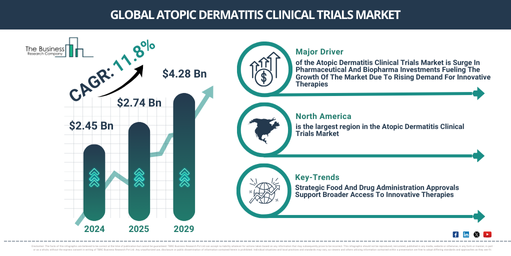
    The market size for atopic dermatitis clinical trials has witnessed rapid expansion recently. It is projected to climb from $2.45 billion in 2024 to $2.74 billion in 2025, achieving a compound annual growth rate (CAGR) of 12.1%. This historical growth can be ascribed to several factors, including the increasing prevalence of atopic dermatitis, a rising demand for targeted treatments, growing awareness of skin disorders, an increase in clinical research funding, and an expanding pipeline of novel biologics.

    The atopic dermatitis clinical trials market size is anticipated to experience significant expansion over the coming years. This market is projected to reach $4.28 billion by 2029, demonstrating a compound annual growth rate (CAGR) of 11.8%. This growth during the forecast period can be attributed to the increasing adoption of biologics, greater investment in research and development, rising patient enrollment in trials, the expansion of healthcare infrastructure, and enhanced regulatory support for dermatology trials. Notable trends expected in this period include advancements in personalized medicine, innovations in biologic therapies, the integration of digital health technologies, sophisticated trial design methodologies, and a growing utilization of real-world evidence.

    Unlock Your Free Sample Report for Exclusive Market Data:

    https://www.thebusinessresearchcompany.com/sample.aspx?id=27213&type=smp

    Which Drivers Are Impacting The Atopic Dermatitis Clinical Trials Market?

    Increasing pharmaceutical and biopharma investments are anticipated to propel the future growth of the atopic dermatitis clinical trials market. These investments represent financial and capital allocations for the research, development, manufacturing, and commercialization of drugs and biologic therapies. The uptick in pharmaceutical and biopharma investments is attributable to a rising demand for innovative therapies, as they offer specific treatment options and improved patient outcomes. Such investments support atopic dermatitis clinical trials by funding the research and testing of new treatments, empowering scientists to conduct comprehensive studies to confirm their effectiveness and safety. For instance, in March 2022, according to the Australian Government Department of Health, Disability and Ageing, an Australia-based government agency, the government committed $45.5B over four years for affordable medicines through the Pharmaceutical Benefits Scheme, as part of a broader $537B four-year health investment, including a $2.4B boost for integrating new medicines. Therefore, the escalating pharmaceutical and biopharma investments are driving the expansion of the atopic dermatitis clinical trials market.

    What Are The Major Segments Identified In The Atopic Dermatitis Clinical Trials Market?

    The atopic dermatitis clinical trials market covered in this report is segmented

    1) By Phase: Phase I, Phase II, Phase III, Phase IV

    2) By Molecule Type: Small Molecules, Large Molecules

    3) By Study Designs: Interventional, Observational

    4) By Mode: Outsourced, In-House

    5) By Industry: Contract Research Organizations, Pharmaceutical And Biotechnology Companies, Research And Academic Institutes

    Subsegments:

    1) By Phase I: Safety And tolerability studies, Dose-Escalation studies, Pharmacokinetics (PK) And Pharmacodynamics (PD) Studies

    2) By Phase II: Dose-Ranging Studies, Efficacy And Safety Studies, Randomized Controlled Trials (RCTs), Biomarker Identification Studies

    3) By Phase III: Large-Scale Efficacy Studies, Comparative Effectiveness Trials, Multicenter Randomized Trials, Long-Term Safety Assessment

    4) By Phase IV: Post-Marketing Surveillance, Real-World Evidence Studies, Drug Utilization Studies, Health Outcomes And Quality Of Life Studies

    What Trends Are Redefining The Atopic Dermatitis Clinical Trials Market Dynamics?

    Leading firms within the atopic dermatitis clinical trials market are concentrating on creating novel products, like oral inhibitors, aiming to ensure consistent therapeutic outcomes over extended periods. These oral inhibitors are medications taken orally, functioning by obstructing specific enzymes or signaling mechanisms implicated in the advancement of the disease. An example is seen in February 2023, when Pfizer Inc., a US-based pharmaceutical and biotechnology company, declared that the US Food and Drug Administration granted approval for its supplemental New Drug Application concerning CIBINQO (abrocitinib). This authorization broadened the medication’s application to include adolescents aged 12 to under 18 suffering from moderate-to-severe atopic dermatitis that has not responded to other systemic treatments or biologics. Prior to this, CIBINQO had received approval exclusively for adults 18 and older. The extension offers a fresh therapeutic alternative for younger individuals experiencing AD that is challenging to treat. This determination stems from clinical trial data verifying its safety and efficacy for this demographic.

    Which Key Players Are Driving Competition In The Atopic Dermatitis Clinical Trials Market?

    Major companies operating in the atopic dermatitis clinical trials market are Pfizer Inc., Johnson & Johnson, AbbVie Inc., Novartis International AG, Sanofi S.A., GlaxoSmithKline Plc, Eli Lilly and Company, Amgen Inc., Regeneron Pharmaceuticals Inc., Organon & Co., Charles River Laboratories International Inc., LEO Pharma A/S, QIMA Limited, Medpace Holdings Inc., Novotech Health Holdings Pte Ltd., Biocytogen Pharmaceuticals Co. Ltd., REPROCELL Inc., AnaptysBio Inc., Imavita S.A.S., and Oncodesign Services S.A.S.

    Download The Full Report For Exclusive Market Findings:

    https://www.thebusinessresearchcompany.com/report/atopic-dermatitis-clinical-trials-global-market-report

    Which Region Currently Holds The Largest Share Of The Atopic Dermatitis Clinical Trials Market?

    North America was the largest region in the atopic dermatitis clinical trials market in 2024. Asia-Pacific is expected to be the fastest-growing region in the forecast period. The regions covered in the atopic dermatitis clinical trials market report are Asia-Pacific, Western Europe, Eastern Europe, North America, South America, Middle East, Africa.

    Request A Customized Version Of The Atopic Dermatitis Clinical Trials Market Report:

    https://www.thebusinessresearchcompany.com/customise?id=27213&type=smp

    Browse Through More Reports Similar to the Global Atopic Dermatitis Clinical Trials Market 2025, By The Business Research Company

    High Pressure Processing Equipment Global Market Report 2025

    https://www.thebusinessresearchcompany.com/report/high-pressure-processing-equipment-global-market-report

    Plastic Pipes And Pipe Fittings Global Market Report 2025

    https://www.thebusinessresearchcompany.com/report/plastic-pipes-and-pipe-fittings-global-market-report

    Hot Dip Galvanizing Global Market Report 2025

    https://www.thebusinessresearchcompany.com/report/hot-dip-galvanizing-global-market-report

    Get in touch with us:

    The Business Research Company: https://www.thebusinessresearchcompany.com/

    Americas +1 310-496-7795

    Asia +44 7882 955267 & +91 8897263534

    Europe +44 7882 955267

    Email us at info@tbrc.info

    Follow us on:

    LinkedIn: https://in.linkedin.com/company/the-business-research-company

    YouTube: https://www.youtube.com/channel/UC24_fI0rV8cR5DxlCpgmyFQ

    Global Market Model: https://www.thebusinessresearchcompany.com/global-market-model
  • Global Artificial Intelligence-Generated Personalized Prenatal Nutrition Guide Market Analysis 2025–2029: Opportunities for Strategic Growth

    Global Artificial Intelligence-Generated Personalized Prenatal Nutrition Guide Market Analysis 2025–2029: Opportunities for Strategic Growth

    Unlock Global Insights – Save 20% on Market Reports with Code ONLINE20

    How Much Larger Is The Artificial Intelligence-Generated Personalized Prenatal Nutrition Guide Market Expected To Become By 2029 Compared With Its 2025 Level?

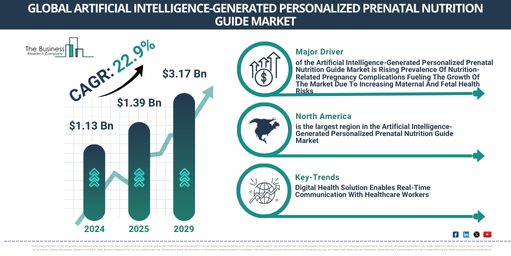
    The artificial intelligence-generated personalized prenatal nutrition guide market has experienced substantial expansion in recent years. This market is projected to expand from $1.13 billion in 2024 to reach $1.39 billion by 2025, reflecting a compound annual growth rate (CAGR) of 23.3%. The historical growth of this market can be attributed to factors such as the increasing adoption of digital health tools, rising awareness concerning prenatal nutrition, growth in maternal healthcare expenditure, the proliferation of smartphones, and the increasing prevalence of pregnancy-related complications.

    The artificial intelligence-generated personalized prenatal nutrition guide market size is projected to experience substantial expansion in the next few years. It is forecast to reach $3.17 billion by 2029, demonstrating a compound annual growth rate (CAGR) of 22.9%. This growth in the projected timeframe can be attributed to the increasing demand for tailored prenatal care, the rising adoption of telehealth and remote monitoring services, the spread of wearable health devices, heightened awareness regarding nutrition and wellness during pregnancy, and supportive government policies aimed at maternal health programs. Key trends expected in the forecast period encompass advancements in artificial intelligence-powered predictive analytics, progress in nutrigenomics and metabolomics research, innovations in natural language processing for patient interaction, the integration of wearable health data into artificial intelligence platforms, and its incorporation with telehealth and virtual prenatal care ecosystems.

    Unlock Your Free Sample Report for Exclusive Market Data:

    https://www.thebusinessresearchcompany.com/sample.aspx?id=27206&type=smp

    Which Drivers Are Supporting Growth Of The Artificial Intelligence-Generated Personalized Prenatal Nutrition Guide Market?

    The increasing occurrence of nutrition-related complications during pregnancy is set to boost the artificial intelligence-generated personalized prenatal nutrition guide market. These complications, which include conditions like anemia, gestational diabetes, and abnormal birth weights, are health concerns for the mother or fetus arising from inadequate, excessive, or unbalanced nutrient intake. Their rising prevalence is attributed to unhealthy dietary practices leading to insufficient nutrient consumption, excessive weight gain, and metabolic imbalances in pregnant individuals. Artificial intelligence-generated personalized prenatal nutrition guides are crucial for mitigating these complications by providing customized dietary recommendations, making them highly suitable for expectant mothers. These guides reduce health risks through individualized monitoring and advice, thereby improving outcomes for both maternal and fetal health. For example, in December 2024, the Office for Health Improvement and Disparities, a UK government body, reported that 26.2% of women experienced obesity in early pregnancy during 2023-2024, an increase from 25.4% in 2022-2023. Consequently, the increasing occurrence of nutrition-related pregnancy complications is a key factor driving the growth of the artificial intelligence-generated personalized prenatal nutrition guide market. Growing Focus On Personalized Medicine Fueling The Growth Of The Market Due To Increasing Adoption Of Tailored Treatments And Dietary Plans

    What Are The Segment Types Shaping The Artificial Intelligence-Generated Personalized Prenatal Nutrition Guide Market?

    The artificial intelligence-generated personalized prenatal nutrition guide market covered in this report is segmented

    1) By Product Type: Mobile Apps, Web-Based Platforms, Wearable Integration, Other Product Types

    2) By Deployment Mode: Cloud-Based, On-Premises

    3) By Application: Pregnancy Nutrition Management, Dietary Recommendations, Supplement Tracking, Other Applications

    4) By End User: Hospitals And Clinics, Homecare, Fitness And Wellness Centers, Other End Users

    Subsegments:

    1) By Mobile Apps: Artificial Intelligence-Driven Meal Planning Apps, Prenatal Nutrition Tracking Apps, Genetic-Based Nutrition Recommendation Apps, Microbiome Analysis Apps, Symptom And Health Log Apps For Pregnancy

    2) By Web-Based Platforms: Online Prenatal Diet Planning Portals, Genetic Test Result Dashboards, Artificial Intelligence (AI)-Powered Consultation Platforms, Nutrient Deficiency Monitoring Portals, Personalized Prenatal Recipe Platforms

    3) By Wearable Integration: Fitness Trackers With Prenatal Nutrition Sync, Continuous Glucose Monitoring (CGM) Integration, Smart Scales With Pregnancy Mode, Sleep Trackers Linked To Nutrition Recommendations, Hydration Monitoring Wearables

    4) By Other Product Types: At-Home Genetic Test Kits With Prenatal Focus, Microbiome Test Kits For Pregnancy Health, Artificial Intelligence-Enabled Supplement Dispensers, Voice-Assistant Guided Prenatal Nutrition Tools, Smart Kitchen Devices With Pregnancy Diet Presets

    What Long-Term Trends Will Shape The Future Growth Of The Artificial Intelligence-Generated Personalized Prenatal Nutrition Guide Industry?

    Leading companies in the artificial intelligence-generated personalized prenatal nutrition guide market are concentrating on developing advanced solutions, such as digital health solutions, to provide customized nutritional recommendations that enhance maternal and fetal health outcomes. A digital health solution is a technology-driven platform utilizing data and artificial intelligence to deliver personalized nutritional guidance for improved maternal and fetal well-being. For instance, in December 2024, the Alliance for Artificial Intelligence and Medtech, a US-based advocacy organization, partnered with the Andhra Pradesh government to launch the artificial intelligence-powered Janani Mitra healthcare app, a digital health solution aimed at empowering pregnant women across the state. The app includes features like nutrition tracking via a food scanner and early anemia detection through AI analysis of images from the eyes, tongue, and nails. Additionally, it monitors health and medication, enables real-time communication between pregnant women and accredited social health activists (ASHAs) and auxiliary nurse midwives (ANMs), and tracks maternal healthcare services, including visits and ultrasound checkups.

    Which Leading Players Are Enhancing Their Artificial Intelligence-Generated Personalized Prenatal Nutrition Guide Market Presence Worldwide?

    Major companies operating in the artificial intelligence-generated personalized prenatal nutrition guide market are MamaWell, Appinventiv Technologies Pvt. Ltd., Maven Clinic Inc., Ritual Vitamins Inc., Nutrino Health Ltd., Ovia Health Inc., Vitagene Inc., Nutrify LLC, Perelel, DayTwo Inc., Qua Nutrition, Bump And Beyond Nutrition Limited., Baby2Body Limited., JM Nutrition, Rootine Inc., Suggestic Inc., Zaya Care, BellyFuel, Femia, Nuskha Kitchen.

    Download The Full Report For Exclusive Market Findings:

    https://www.thebusinessresearchcompany.com/report/artificial-intelligence-generated-personalized-prenatal-nutrition-guide-global-market-report

    Which Region Shows The Highest Potential For Future Expansion In The Artificial Intelligence-Generated Personalized Prenatal Nutrition Guide Market?

    North America was the largest region in the artificial intelligence-generated personalized prenatal nutrition guide market in 2024. Asia Pacific is expected to be the fastest-growing region in the forecast period. The regions covered in the artificial intelligence-generated personalized prenatal nutrition guide market report are Asia-Pacific, Western Europe, Eastern Europe, North America, South America, Middle East, Africa.

    Request A Customized Version Of The Artificial Intelligence-Generated Personalized Prenatal Nutrition Guide Market Report:

    https://www.thebusinessresearchcompany.com/customise?id=27206&type=smp

    Browse Through More Reports Similar to the Global Artificial Intelligence-Generated Personalized Prenatal Nutrition Guide Market 2025, By The Business Research Company

    Precision Diagnostics Global Market Report 2025

    https://www.thebusinessresearchcompany.com/report/precision-diagnostics-global-market-report

    Precision Engineering Machines Global Market Report 2025

    https://www.thebusinessresearchcompany.com/report/precision-engineering-machines-global-market-report

    Precision Parts Global Market Report 2025

    https://www.thebusinessresearchcompany.com/report/precision-parts-global-market-report

    Get in touch with us:

    The Business Research Company: https://www.thebusinessresearchcompany.com/

    Americas +1 310-496-7795

    Asia +44 7882 955267 & +91 8897263534

    Europe +44 7882 955267

    Email us at info@tbrc.info

    Follow us on:

    LinkedIn: https://in.linkedin.com/company/the-business-research-company

    YouTube: https://www.youtube.com/channel/UC24_fI0rV8cR5DxlCpgmyFQ

    Global Market Model: https://www.thebusinessresearchcompany.com/global-market-model

  • Artificial Intelligence-Driven Hospital Energy Optimization Industry Overview 2025: Growth Projections and Market Trends

    Artificial Intelligence-Driven Hospital Energy Optimization Industry Overview 2025: Growth Projections and Market Trends

    Unlock Global Insights – Save 20% on Market Reports with Code ONLINE20

    #What Are The Current (2025) And Forecast (2029) Sizes Of The Artificial Intelligence-Driven Hospital Energy Optimization Market?

    The artificial intelligence-driven hospital energy optimization market has witnessed substantial expansion in recent years. Its valuation is predicted to climb from $2.01 billion in 2024 to $2.49 billion in 2025, achieving a compound annual growth rate (CAGR) of 23.9%. This historical growth can be linked to factors such as increasing energy consumption across healthcare facilities, the rise of smart cities, growth in smart energy infrastructure investments, the rise in pressure to improve hospital sustainability rankings, and growth in hospital automation initiatives.

    The artificial intelligence-driven hospital energy optimization market is projected to experience substantial expansion in the upcoming years, with its size expected to reach $5.80 billion by 2029, displaying a compound annual growth rate (CAGR) of 23.6%. This growth during the forecast period is fueled by increasing anxieties regarding emerging pathogens and antimicrobial resistance, a expanding aging demographic, the rising integration of healthcare artificial intelligence into research, the growing implementation of smart hospital infrastructure, and the increasing incidence of chronic diseases. Significant trends anticipated for this period encompass technological enhancements in AI algorithms, advancements in the integration of AI with IoT sensors, innovations within machine learning models, progress in cloud computing, and developments in smart grid technology.

    Unlock Your Free Sample Report for Exclusive Market Data:

    https://www.thebusinessresearchcompany.com/sample.aspx?id=27205&type=smp

    Which Drivers Are Shaping The Artificial Intelligence-Driven Hospital Energy Optimization Industry’s Market Share?

    The expanding adoption of smart hospital infrastructure is projected to drive the growth of the artificial intelligence-driven hospital energy optimization market moving forward. Smart hospital infrastructure refers to an advanced digital technology network that facilitates efficient healthcare delivery, continuous monitoring, and automated management of hospital resources. The increase in smart hospital infrastructure is propelled by the necessity to enhance patient outcomes through real-time data monitoring, enabling quicker diagnoses and personalized treatments, thereby improving care quality and efficiency. This infrastructure supports Artificial Intelligence-Driven Hospital Energy Optimization by supplying interconnected sensors and live data from various systems, which allows AI algorithms to analyze energy usage patterns and automatically adjust settings to minimize consumption and boost efficiency. For instance, in December 2024, the Centers for Disease Control and Prevention (CDC), a US-based national public health agency, reported that 88.2% of office-based physicians were using electronic health records systems, with the adoption of certified EHR systems at 77.8%. Consequently, the rising implementation of smart hospital infrastructure is fueling the artificial intelligence-driven hospital energy optimization market. The increasing shift towards remote monitoring solutions is expected to propel the growth of the artificial intelligence-driven hospital energy optimization market in the future. Remote monitoring solutions encompass the use of digital tools and technologies to track patient health data outside conventional clinical environments, facilitating continuous care and early intervention. The rise of remote monitoring is due to healthcare providers seeking real-time patient insights, which allows for constant tracking of health conditions and timely interventions, thus enhancing care quality and efficiency. AI-driven hospital energy management offers real-time remote monitoring of energy usage and equipment performance, identifying inefficiencies and forecasting maintenance needs while enabling hospitals to optimize energy consumption and implement adjustments remotely. For example, in December 2023, according to the National Health Service, a UK-based government department, there were 33.6 million app users, with monthly logins increasing 54% over the past year from 16.8 million to 25.8 million. Therefore, the growing shift towards remote monitoring solutions is driving the growth of the artificial intelligence-driven hospital energy optimization market.

    What Are The Different Segment Classifications Within The Artificial Intelligence-Driven Hospital Energy Optimization Market?

    The artificial intelligence-driven hospital energy optimization market covered in this report is segmented

    1) By Component: Software, Hardware, Services

    2) By Deployment Mode: On-Premises, Cloud

    3) By Hospital Size: Small And Medium Hospitals, Large Hospitals

    4) By Application: Heating, Ventilation, And Air Conditioning Optimization, Lighting Control, Energy Management, Equipment Monitoring, Other Applications

    5) By End-User: Public Hospitals, Private Hospitals, Specialty Hospitals, Other End-Users

    Subsegments:

    1) By Software: Energy Management Software, Building Automation Software, Predictive Maintenance Software, Data Analytics and Visualization Tools, Artificial Intelligence Algorithms And Optimization Engines

    2) By Hardware: Smart Sensors And Internet Of Things Devices, Smart Meters, Controllers And Actuators, Heating, Ventilation, And Air Conditioning Systems, Lighting Control Systems, Edge Devices And Gateways

    3) By Services: Consulting And Advisory Services, Installation And Integration Services, Maintenance And Support Services, Energy Auditing Services, Training And Education Services

    Which Market Trends Are Creating New Opportunities In The Artificial Intelligence-Driven Hospital Energy Optimization Industry?

    Leading companies in the Artificial Intelligence-Driven Hospital Energy Optimization market are concentrating on intelligent energy management to speed up the deployment of energy-efficient solutions across healthcare facilities. This intelligent energy management involves employing AI, cloud computing, and IoT technologies to monitor, analyze, and automatically optimize hospital energy systems, such as HVAC, for enhanced efficiency and decreased consumption. For instance, in April 2024, True Digital Group, a Thailand-based digital transformation and technology services company, partnered with Alibaba Cloud, a China-based cloud computing company, to introduce the Climate Technology Platform. This platform utilizes Alibaba Cloud’s AI-driven “Energy Expert” solution, integrating cloud, IoT, and big data analytics, to assist businesses in Thailand in identifying energy efficiency issues, mitigating greenhouse gas emissions, and adopting sustainable technologies. It provides real-time energy management and foresightful insights, aiming to accelerate Thailand’s green transition and achieve an emissions reduction of up to 40% by 2030, with a goal of carbon neutrality by 2050. The platform has already shown up to 15% energy consumption reduction in pilot initiatives, including Bangkok Hospital’s heating, ventilation, and air conditioning system.

    Which Major Firms Are Strengthening Their Position In The Artificial Intelligence-Driven Hospital Energy Optimization Industry?

    Major companies operating in the artificial intelligence-driven hospital energy optimization market are Enel S.p.A., General Electric Company, Veolia Environnement S.A., Schneider Electric SE, Honeywell International Inc., ABB Group, Eaton Corporation Plc, Johnson Controls International Plc, Trane Technologies Plc, Centrica Business Solutions Ltd., Rockwell Automation Inc., Ameresco Inc., ENGIE Impact, GridPoint Inc., Optimum Energy LLC, Verdigris Technologies, Enerbrain, BuildingIQ Inc., Deerns, Resync.

    Download The Full Report For Exclusive Market Findings:

    https://www.thebusinessresearchcompany.com/report/artificial-intelligence-driven-hospital-energy-optimization-global-market-report

    How Is Artificial Intelligence-Driven Hospital Energy Optimization Market Demand Varying Across Different Regions?

    North America was the largest region in the artificial intelligence-driven hospital energy optimization market in 2024. Asia-Pacific is expected to be the fastest-growing region in the forecast period. The regions covered in the artificial intelligence-driven hospital energy optimization market report are Asia-Pacific, Western Europe, Eastern Europe, North America, South America, Middle East, Africa.

    Request A Customized Version Of The Artificial Intelligence-Driven Hospital Energy Optimization Market Report:

    https://www.thebusinessresearchcompany.com/customise?id=27205&type=smp

    Browse Through More Reports Similar to the Global Artificial Intelligence-Driven Hospital Energy Optimization Market 2025, By The Business Research Company

    High Performance Alloys Global Market Report 2025

    https://www.thebusinessresearchcompany.com/report/high-performance-alloys-global-market-report

    Earthen Plasters Global Market Report 2025

    https://www.thebusinessresearchcompany.com/report/earthen-plasters-global-market-report

    High Performance Ceramic Coatings Global Market Report 2025

    https://www.thebusinessresearchcompany.com/report/high-performance-ceramic-coatings-global-market-report

    Get in touch with us:

    The Business Research Company: https://www.thebusinessresearchcompany.com/

    Americas +1 310-496-7795

    Asia +44 7882 955267 & +91 8897263534

    Europe +44 7882 955267

    Email us at info@tbrc.info

    Follow us on:

    LinkedIn: https://in.linkedin.com/company/the-business-research-company

    YouTube: https://www.youtube.com/channel/UC24_fI0rV8cR5DxlCpgmyFQ

    Global Market Model: https://www.thebusinessresearchcompany.com/global-market-model
  • Global Artificial Intelligence (AI)-Powered Clinical Documentation Market Trends and Growth Analysis 2025–2029

    Global Artificial Intelligence (AI)-Powered Clinical Documentation Market Trends and Growth Analysis 2025–2029

    Unlock Global Insights – Save 20% on Market Reports with Code ONLINE20

    What Is The Anticipated Size Of The Artificial Intelligence (AI)-Powered Clinical Documentation Market Over The Five-Year Period 2025–2029?

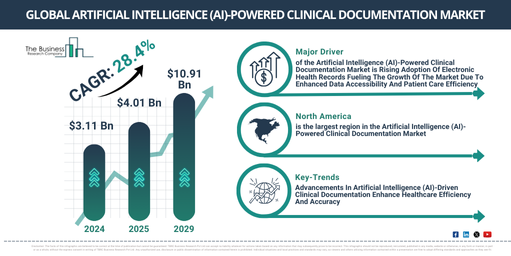
    The artificial intelligence (AI)-powered clinical documentation market has seen substantial expansion in recent years. This market is anticipated to increase from $3.11 billion in 2024 to $4.01 billion in 2025, reflecting a compound annual growth rate (CAGR) of 28.8%. The historical development of this market can be attributed to factors like the increasing need for unstructured data, changes in regulatory policies, the demand for greater reimbursement accuracy, improved revenue cycle efficiency, and a heightened requirement for effective healthcare operations.

    The artificial intelligence (AI)-powered clinical documentation market size is expected to experience substantial growth in the upcoming years. Its value is projected to climb to $10.91 billion by 2029, achieving a compound annual growth rate (CAGR) of 28.4%. This expansion during the forecast period is driven by an increase in the burden of chronic diseases and personalized care initiatives, along with rising precision in natural language processing models, advancements in real-time voice transcription, greater integration of generative artificial intelligence, and increasing adoption of ambient scribe technology. Key trends for this period include further developments in large language models, the widespread adoption of ambient AI scribes, the incorporation of conversational AI systems, and the ongoing creation of real-time AI scribes.

    Unlock Your Free Sample Report for Exclusive Market Data:

    https://www.thebusinessresearchcompany.com/sample.aspx?id=27203&type=smp

    What Are The Emerging Market Drivers Creating New Opportunities In The Artificial Intelligence (AI)-Powered Clinical Documentation Industry?

    The increasing use of electronic health records is anticipated to fuel the expansion of the artificial intelligence (AI)-powered clinical documentation market going forward. Electronic health records are digital representations of patients’ medical histories and health information, stored securely and accessible by authorized healthcare providers to improve care coordination and treatment. The growing uptake of electronic health records is driven by healthcare providers’ need for efficient, accessible, and secure patient information management, which enhances care coordination and reduces administrative workloads. Artificial intelligence (AI)-powered clinical documentation improves electronic health records by accurately capturing and organizing patient information in real time, streamlining processes, and enhancing care coordination. For instance, in June 2022, the Department of Health and Social Care, a UK-based government ministerial department, stated that electronic health records would be available in 90% of NHS trusts by December 2023 and 100% by March 2025. Consequently, the rising adoption of electronic health records is a key driver for the growth of the artificial intelligence (AI)-powered clinical documentation market.

    Which Key Segments Fueling The Artificial Intelligence (AI)-Powered Clinical Documentation Market?

    The artificial intelligence (AI)-powered clinical documentation market covered in this report is segmented

    1) By Component: Software, Hardware, Services

    2) By Deployment Mode: Cloud-Based, On-Premises

    3) By Application: Hospitals, Clinics, Ambulatory Surgical Centers, Specialty Centers, Other Applications

    4) By End-User: Healthcare Providers, Payers, Other End-Users

    Subsegments:

    1) By Software: Integrated Software Platforms, Standalone Applications, Cloud-Based Software, On-Premise Software

    2) By Hardware: Input Devices, Output Devices, Servers And Storage Devices, Networking Equipment

    3) By Services: Implementation And Integration Services, Training And Education Services, Support And Maintenance Services, Consulting Services

    What Key Innovation Trends Are Fueling Advancements In The Artificial Intelligence (AI)-Powered Clinical Documentation Market?

    Leading organizations within the artificial intelligence (AI)-powered clinical documentation market are concentrating on developing novel methods, such as natural language query editing, to provide healthcare professionals with advanced tools. These innovations aim to streamline documentation, lessen administrative burden, and enhance accuracy, ultimately fostering improved patient care and clinical workflow efficiency. Natural language query editing refers to the capability for users to modify and refine documents through spoken or typed everyday language commands or questions, thereby enabling intuitive interaction with the system without requiring complex codes or menus. For example, in March 2025, Microsoft Corporation, a US-based technology company, unveiled Dragon Copilot, a voice-activated artificial intelligence (AI) assistant specifically engineered for healthcare professionals. This instrument merges Microsoft’s pre-existing Dragon Medical One dictation software with Nuance’s DAX Copilot ambient AI technology, establishing the sector’s initial unified voice assistant for clinical documentation. Dragon Copilot allows doctors to capture real-time, multi-speaker patient conversations and automatically transform them into precise, specialty-specific clinical notes.

    Which Key Market Players Are Investing In Expansion And Innovation Of Artificial Intelligence (AI)-Powered Clinical Documentation Market?

    Major companies operating in the artificial intelligence (AI)-powered clinical documentation market are Oracle Corporation, 3M Company, Epic Systems Corporation, IKS Health Services Pvt. Ltd., eClinicalWorks LLC, Commure Inc., Abridge AI Inc., DeepScribe Inc., Notable Health Inc., Pieces Technologies Inc., Suki AI Inc., Clinithink Ltd., Ambience Healthcare Private Limited, Artificial Medical Intelligence Inc., Dolbey Systems Inc., Hiteks Solutions Pvt. Ltd., Tali AI Inc., Ambient Clinical Analytics Inc., Robin Healthcare Inc., and DeepCura Inc.

    Download The Full Report For Exclusive Market Findings:

    https://www.thebusinessresearchcompany.com/report/artificial-intelligence-ai-powered-clinical-documentation-global-market-report

    Which Region Is Projected To Lead The Artificial Intelligence (AI)-Powered Clinical Documentation Market During The Forecast Period?

    North America was the largest region in the artificial intelligence (AI)-powered clinical documentation market in 2024. Asia-Pacific is expected to be the fastest-growing region in the forecast period. The regions covered in the artificial intelligence (AI)-powered clinical documentation market report are Asia-Pacific, Western Europe, Eastern Europe, North America, South America, Middle East, Africa.

    Request A Customized Version Of The Artificial Intelligence (AI)-Powered Clinical Documentation Market Report:

    https://www.thebusinessresearchcompany.com/customise?id=27203&type=smp

    Browse Through More Reports Similar to the Global Artificial Intelligence (AI)-Powered Clinical Documentation Market 2025, By The Business Research Company

    Algorithmic Trading Global Market Report 2025

    https://www.thebusinessresearchcompany.com/report/algorithmic-trading-global-market-report

    Stock Trading And Investing Applications Global Market Report 2025

    https://www.thebusinessresearchcompany.com/report/stock-trading-and-investing-applications-global-market-report

    Online Trading Platform Market 2025

    https://www.thebusinessresearchcompany.com/report/online-trading-platform-market

    Get in touch with us:

    The Business Research Company: https://www.thebusinessresearchcompany.com/

    Americas +1 310-496-7795

    Asia +44 7882 955267 & +91 8897263534

    Europe +44 7882 955267

    Email us at info@tbrc.info

    Follow us on:

    LinkedIn: https://in.linkedin.com/company/the-business-research-company

    YouTube: https://www.youtube.com/channel/UC24_fI0rV8cR5DxlCpgmyFQ

    Global Market Model: https://www.thebusinessresearchcompany.com/global-market-model
  • Global Omics-Based Clinical Trials Market Size Projected to Reach $44.07 Billion During the Forecast Period

    Global Omics-Based Clinical Trials Market Size Projected to Reach $44.07 Billion During the Forecast Period

    Unlock Global Insights – Save 20% on Market Reports with Code ONLINE20

    By How Much Is The Omics-Based Clinical Trials Market Expected To Expand Between 2025 And 2029?

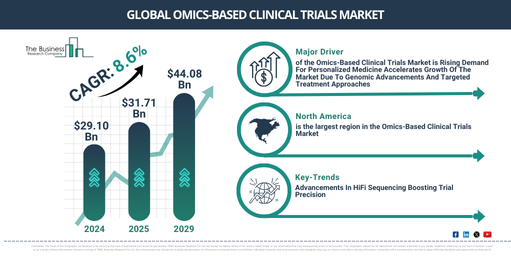
    The omics-based clinical trials market has experienced significant expansion in recent years. This market is set to grow from $29.10 billion in 2024 to $31.71 billion in 2025, with a compound annual growth rate (CAGR) of 8.9%. Historically, this growth can be attributed to a rising number of clinical trials incorporating omics technologies, an increased emphasis on translational research, growing government support and funding, the expanding availability of biobanks and biospecimens, and heightened awareness regarding the advantages of precision therapies.

    The omics-based clinical trials market is set to experience significant expansion over the coming years. It is projected to reach $44.08 billion by 2029, growing at a compound annual growth rate (CAGR) of 8.6%. This growth during the forecast period is driven by factors such as the increasing demand for personalized medicine, greater adoption of multi-omics methodologies, the rising incidence of chronic and rare diseases, increased investment in genomic research and biotechnology, and a growing emphasis on biomarker discovery. Prominent trends for the forecast duration encompass advancements in next-generation sequencing (NGS) technologies, the integration of artificial intelligence with omics platforms, technological progress in bioinformatics tools, improvements in proteomics and metabolomics platforms, and the integration of multi-omics data.

    Unlock Your Free Sample Report for Exclusive Market Data:

    https://www.thebusinessresearchcompany.com/sample.aspx?id=27369&type=smp

    Which Drivers Are Impacting The Omics-Based Clinical Trials Market?

    The anticipated expansion of the omics-based clinical trials market is driven by the growing need for personalized medicine. This medical strategy customizes disease prevention, diagnosis, and treatment plans based on each patient’s unique characteristics. The increasing adoption of personalized medicine is fueled by progress in genomic technologies, which enable quicker and more economical analysis of individual genetic profiles to direct specific treatments. Omics-based clinical trials facilitate personalized medicine through the identification of distinct genetic, proteomic, and metabolic profiles, leading to more precise and efficacious treatment strategies customized for individual patients. As an illustration, the Personalized Medicine Coalition, a US-based professional membership organization, reported in February 2023 that 12 new personalized medicines were approved in 2022. This figure constituted approximately 34% of all newly approved therapies, signifying a notable rise compared to prior years. Consequently, the rising requirement for personalized medicine is a key impetus behind the expansion of the omics-based clinical trials market.

    What Are The Major Segments Identified In The Omics-Based Clinical Trials Market?

    The omics-based clinical trials market covered in this report is segmented

    1) By Type: Genomics, Proteomics, Metabolomics, Transcriptomics

    2) By Phase: Phase I, Phase II, Phase III, Phase IV

    3) By Study Design: Interventional Studies, Observational Studies, Expanded Access Studies

    4) By Application: Oncology, Cardiovascular, Neurology, Infectious Diseases, Metabolic Disorders

    5) By End-User: Pharmaceutical And Biotechnology Companies, Academic And Research Institutes, Contract Research Organizations (CROs), Hospitals And Diagnostic Laboratories

    Subsegments:

    1) By Genomics: Whole Genome Sequencing, Whole Exome Sequencing, Targeted Gene Sequencing

    2) By Proteomics: Protein Expression Profiling, Post-Translational Modifications Analysis, Protein-Protein Interaction Mapping

    3) By Metabolomics: Targeted Metabolomics, Untargeted Metabolomics, Metabolic Flux Analysis

    4) By Transcriptomics: Microarray Analysis, Single-Cell Transcriptomics, Gene Expression Profiling

    Which Competitive Trends Are Defining The Omics-Based Clinical Trials Market Structure?

    Leading companies within the omics-based clinical trials market are concentrating on innovative solutions, such as HiFi sequencing technology, to enhance the accuracy, speed, and depth of multi-omics data analysis, ultimately improving trial outcomes and personalized treatment strategies. HiFi sequencing is defined as a next-generation sequencing (NGS) technology that generates long, highly accurate reads through circular consensus sequencing (CCS), enabling comprehensive and precise analysis of genomes, transcriptomes, and epigenomes. For instance, in October 2024, Pacific Biosciences of California Inc., a US-based biotechnology company, in collaboration with the Agency for Science, Technology, and Research (A*STAR), a Singapore-based research and product development agency, and Macrogen Inc., a South Korea-based biotechnology company, launched a state-of-the-art lab to accelerate genomics innovation in Singapore with cutting-edge long-read sequencing technology. This facility empowers researchers to conduct advanced genomic studies with greater precision and speed, supporting a wide range of applications, including whole genome sequencing, transcriptomics, epigenetics, and metagenomics. The lab also fosters collaboration among global scientists and local institutions, aiming to accelerate discoveries in personalized medicine, rare disease diagnostics, and precision oncology. Additionally, it offers training programs and shared access to high-throughput sequencing infrastructure, promoting capacity-building and innovation within the Asia-Pacific region.

    Which Key Players Are Driving Competition In The Omics-Based Clinical Trials Market?

    Major companies operating in the omics-based clinical trials market are Pfizer Inc., F. Hoffmann-La Roche Ltd., Thermo Fisher Scientific Inc., GlaxoSmithKline Plc, Eli Lilly and Company, Novo Nordisk A/S, BioNTech SE, IQVIA Inc., Laboratory Corporation of America Holdings, ICON Public Limited Company, SGS Société Générale de Surveillance SA, Eurofins Scientific SE, Syneos Health Inc., Illumina Inc., Charles River Laboratories International Inc., Parexel International Corporation, Bruker Corporation, Fulgent Genetics Inc., Signios Biosciences, and BioAro Inc.

    Download The Full Report For Exclusive Market Findings:

    https://www.thebusinessresearchcompany.com/report/omics-based-clinical-trials-global-market-report

    Which Region Currently Holds The Largest Share Of The Omics-Based Clinical Trials Market?

    North America was the largest region in the omics-based clinical trials market in 2024. Asia-Pacific is expected to be the fastest-growing region in the forecast period. The regions covered in the omics-based clinical trials market report are Asia-Pacific, Western Europe, Eastern Europe, North America, South America, Middle East, Africa.

    Request A Customized Version Of The Omics-Based Clinical Trials Market Report:

    https://www.thebusinessresearchcompany.com/customise?id=27369&type=smp

    Browse Through More Reports Similar to the Global Omics-Based Clinical Trials Market 2025, By The Business Research Company

    Bitumen Global Market Report 2025

    https://www.thebusinessresearchcompany.com/report/bitumen-global-market-report

    Asphalt Additives Global Market Report 2025

    https://www.thebusinessresearchcompany.com/report/asphalt-additives-global-market-report

    Asphalt Pavers Global Market Report 2025

    https://www.thebusinessresearchcompany.com/report/asphalt-pavers-global-market-report

    Get in touch with us:

    The Business Research Company: https://www.thebusinessresearchcompany.com/

    Americas +1 310-496-7795

    Asia +44 7882 955267 & +91 8897263534

    Europe +44 7882 955267

    Email us at info@tbrc.info

    Follow us on:

    LinkedIn: https://in.linkedin.com/company/the-business-research-company

    YouTube: https://www.youtube.com/channel/UC24_fI0rV8cR5DxlCpgmyFQ

    Global Market Model: https://www.thebusinessresearchcompany.com/global-market-model
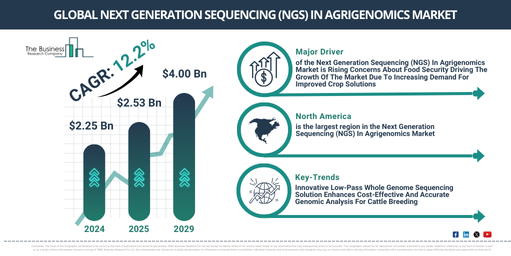
  • Next Generation Sequencing (NGS) In Agrigenomics Industry Overview 2025: Growth Projections and Market Trends

    Next Generation Sequencing (NGS) In Agrigenomics Industry Overview 2025: Growth Projections and Market Trends

    Unlock Global Insights – Save 20% on Market Reports with Code ONLINE20

    #What Are The Current (2025) And Forecast (2029) Sizes Of The Next Generation Sequencing (NGS) In Agrigenomics Market?

    The next-generation sequencing (NGS) in the agrigenomics market has seen rapid expansion in recent years. Its valuation is set to climb from $2.25 billion in 2024 to $2.53 billion in 2025, reflecting a compound annual growth rate (CAGR) of 12.5%. This historical upward trend is a result of factors such as the growing demand for high-yield and disease-resistant crop varieties, the increasing necessity for sustainable agricultural practices to address climate change, the expanding integration of precision farming and genomics-assisted breeding techniques, rising investment in agricultural biotechnology research and development, and heightened awareness regarding food security and the significance of genetic diversity.

    The next-generation sequencing (NGS) in the agrigenomics market size is projected to experience swift expansion over the coming years. Its valuation is anticipated to reach $4.00 billion by 2029, exhibiting a compound annual growth rate (CAGR) of 12.2%. This projected increase can be ascribed to several factors, including enhanced government investment and favorable regulatory frameworks for agrigenomics projects, wider access to sophisticated sequencing technologies, the expanding incorporation of big data and bioinformatics into efforts to enhance crop and livestock, strengthened partnerships among agribiotech firms, academic bodies, and agricultural producers, and a heightened emphasis on boosting livestock well-being and output via genetic evaluation. Key trends anticipated during this period encompass progress in high-throughput sequencing innovations, the convergence of bioinformatics and big data analysis, technological enhancements that decrease expenses and intricacy, new developments in long-read sequencing approaches, and improvements in gene editing instruments.

    Unlock Your Free Sample Report for Exclusive Market Data:

    https://www.thebusinessresearchcompany.com/sample.aspx?id=27361&type=smp

    Which Drivers Are Shaping The Next Generation Sequencing (NGS) In Agrigenomics Industry’s Market Share?

    Escalating apprehensions regarding food security are anticipated to boost the growth of next-generation sequencing (NGS) in the agrigenomics market moving forward. Food security involves guaranteeing that all individuals consistently have access to adequate, safe, and nutritious food to fulfill their dietary requirements for an active and healthy existence. These increasing concerns about food security arise from factors such as population expansion, which pushes the demand for food beyond the present agricultural production capabilities. Next-generation sequencing (NGS) in agrigenomics contributes to food security by facilitating the development of enhanced crop varieties that offer higher yield, improved disease resistance, and greater climate adaptability. For example, in August 2025, the United States Department of Agriculture, a US-based government agency, indicated that food insecurity impacted 13.5% (18.0 million) of American families in 2023, representing a statistically significant rise from 12.8% (17.0 million) in 2022. Thus, the growing worries concerning food security are propelling market expansion for next-generation sequencing (NGS) in agrigenomics.

    What Are The Different Segment Classifications Within The Next Generation Sequencing (NGS) In Agrigenomics Market?

    The next generation sequencing (NGS) in agrigenomics market covered in this report is segmented

    1) By Types: Nanopore, NextSeq, NovaSeq, Sequel

    2) By Sample Type: Blood Samples, Plant Tissue Samples, Soil Samples, Microbial Cultures, Seed Samples

    3) By Workflow Type: Sample Preparation, Sequencing, Data Analysis, Data Interpretation, Bioinformatics, Management

    4) By Application: Plant Genomics, Animal Genomics, Microbial Genomics, Food Safety Testing, Biodiversity Conservation

    5) By End-User Type: Agricultural Biotechnology Companies, Research Institutions, Food And Beverage Companies, Government, Regulatory Bodies, Farmers

    Subsegments:

    1) By Nanopore: MinION, GridION, PromethION

    2) By NextSeq: NextSeq 500, NextSeq 550

    3) By NovaSeq: NovaSeq 6000, NovaSeq X

    4) By Sequel: Sequel I, Sequel II, Sequel Iie

    Which Trends Are Impacting The Next Generation Sequencing (NGS) In Agrigenomics Market?

    Major companies engaged in next generation sequencing (NGS) within the agrigenomics market are directing their efforts toward developing advanced solutions, such as single-reaction sequencing, to provide economical and precise genomic insights that accelerate improvements in crops and livestock for sustainable agriculture. Single-reaction sequencing is a method that integrates multiple sequencing processes into a singular molecular assay, allowing for efficient concurrent genome-wide sequencing and targeted genotyping. For instance, in May 2022, Gencove Inc., a US-based biotechnology company, introduced InfiniSEEK through a partnership with NEOGEN Corporation, a US-based company specializing in food and animal safety products. This particular solution merges low-pass whole genome sequencing with high-coverage genotyping in one assay, offering cost-effective and accurate genomic data. It facilitates thorough sequencing of cattle populations to prevent selection bias, identify new genetic characteristics, and manage over 400 bovine traits with clinical-grade accuracy, validated to be over 99% concordant with deep sequencing.

    Which Major Firms Are Strengthening Their Position In The Next Generation Sequencing (NGS) In Agrigenomics Industry?

    Major companies operating in the next generation sequencing (ngs) in agrigenomics market are Thermo Fisher Scientific Inc., Eurofins Scientific SE, Agilent Technologies Inc., Illumina Inc., Daicel Corporation, Takara Holdings Inc., Tecan Group Ltd., Azenta Life Sciences, 10x Genomics Inc., Novogene Corporation, Twist Bioscience Inc., Oxford Nanopore Technologies Ltd., Genotypic Technology Pvt. Ltd., CD Genomics Inc., Zymo Research Corp., Genome Life Sciences Pvt. Ltd., Arraygen Technologies Pvt. Ltd., SciGenom Labs Pvt. Ltd., BGI Group, and Paragon Genomics Inc.

    Download The Full Report For Exclusive Market Findings:

    https://www.thebusinessresearchcompany.com/report/next-generation-sequencing-ngs-in-agrigenomics-global-market-report

    How Is Next Generation Sequencing (NGS) In Agrigenomics Market Demand Varying Across Different Regions?

    North America was the largest region in the next generation sequencing (NGS) in agrigenomics market in 2024. Asia-Pacific is expected to be the fastest-growing region in the forecast period. The regions covered in the next generation sequencing (NGS) in agrigenomics market report are Asia-Pacific, Western Europe, Eastern Europe, North America, South America, Middle East, Africa.

    Request A Customized Version Of The Next Generation Sequencing (NGS) In Agrigenomics Market Report:

    https://www.thebusinessresearchcompany.com/customise?id=27361&type=smp

    Browse Through More Reports Similar to the Global Next Generation Sequencing (NGS) In Agrigenomics Market 2025, By The Business Research Company

    Waterproof Adhesives And Sealants Global Market Report 2025

    https://www.thebusinessresearchcompany.com/report/waterproof-adhesives-and-sealants-global-market-report

    Waterproofing Chemicals Global Market Report 2025

    https://www.thebusinessresearchcompany.com/report/waterproofing-chemicals-global-market-report

    Underwater Connector Global Market Report 2025

    https://www.thebusinessresearchcompany.com/report/underwater-connector-global-market-report

    Get in touch with us:

    The Business Research Company: https://www.thebusinessresearchcompany.com/

    Americas +1 310-496-7795

    Asia +44 7882 955267 & +91 8897263534

    Europe +44 7882 955267

    Email us at info@tbrc.info

    Follow us on:

    LinkedIn: https://in.linkedin.com/company/the-business-research-company

    YouTube: https://www.youtube.com/channel/UC24_fI0rV8cR5DxlCpgmyFQ

    Global Market Model: https://www.thebusinessresearchcompany.com/global-market-model