Category: HealthcareServices

  • Global Laboratory Products And Outsourcing Services Market Projected to Expand at 11% CAGR by 2029

    Global Laboratory Products And Outsourcing Services Market Projected to Expand at 11% CAGR by 2029

    Unlock Global Insights – Save 20% on Market Reports with Code ONLINE20

    How Is The Laboratory Products And Outsourcing Services Market Size Likely To Evolve From 2025 Through 2034?

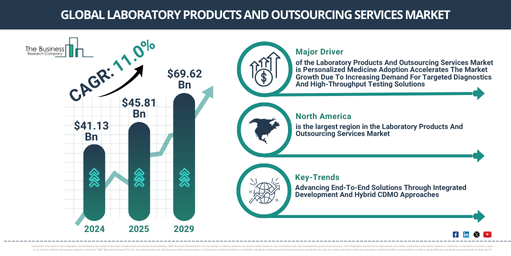
    The market size for laboratory products and outsourcing services has experienced rapid expansion in recent years. It is projected to increase from $41.13 billion in 2024 to $45.81 billion in 2025, displaying a compound annual growth rate (CAGR) of 11.4%. The historical growth can be attributed to heightened regulatory support for laboratory testing and validation, an increased emphasis on quality control and compliance, the expanding application of molecular diagnostics and immunoassays, a rising demand for rapid stability testing and method validation, and the growing presence of contract research organizations in emerging regions.

    The market for laboratory products and outsourcing services is anticipated to expand rapidly in the coming years. By 2029, this market is projected to reach $69.62 billion, exhibiting a compound annual growth rate (CAGR) of 11.0%. This expansion during the forecast period is fueled by several factors, including the increasing uptake of outsourcing solutions by pharmaceutical firms, an amplified emphasis on personalized medicine, heightened investments in biopharmaceutical research and development, an increase in chronic and infectious disease cases, and the expanding implementation of automation and robotics within laboratory settings. Key trends for the forecast period encompass progress in molecular diagnostics, the incorporation of automation and robotics into lab processes, innovations in immunoassay technologies for greater precision, developments in chromatography and mass spectrometry, and the application of artificial intelligence for better data analysis.

    Unlock Your Free Sample Report for Exclusive Market Data:

    https://www.thebusinessresearchcompany.com/sample.aspx?id=27323&type=smp

    What Are The Main Drivers Boosting The Laboratory Products And Outsourcing Services Industry’s Expansion?

    The increasing embrace of personalized medicine is set to fuel the expansion of the laboratory products and outsourcing services market. Personalized medicine represents a healthcare methodology that customizes decisions and treatments based on an individual’s genetic profile, lifestyle, and environment. This rise in personalized medicine is propelled by a growing demand for more effective and targeted therapies, aimed at reducing side effects and improving patient outcomes. Laboratory products and outsourcing services facilitate personalized medicine by enabling crucial high-throughput genetic testing, biomarker analysis, and specialized diagnostic services necessary for customizing treatments for individual patients. For example, in February 2024, the Personalized Medicine Coalition (PMC), a US-based nonprofit organization, reported that the FDA approved 16 new personalized treatments in 2023, an increase from six in 2022. Personalized medicines accounted for more than one-third of all new drug approvals by the U.S. Food and Drug Administration (FDA) for the fourth consecutive year. Therefore, the expanding adoption of personalized medicine is driving the growth of the laboratory products and outsourcing services market.

    What Are The Leading Segments Analyzed In The Laboratory Products And Outsourcing Services Market?

    The laboratory products and outsourcing services market covered in this report is segmented

    1) By Type: Products, Services, Method Development And Validation, Stability Testing, Other Type

    2) By Technology: Immunoassays, Molecular Diagnostics, Microbiology, Clinical Chemistry, Flow Cytometry, Mass Spectroscopy, Chromatography, Other Technology

    3) By End-Use: Pharmaceutical And Biotech Companies, Medical Device Companies, Contract Research Organizations (CRO) And Contract Development And Manufacturing Organizations (CDMO), Other End-Use

    Subsegments:

    1) By Products: Instruments, Consumables, Reagents

    2) By Services: Bioanalytical Testing, Microbiology Testing, Toxicology Testing

    3) By Method Development And Validation: Analytical Method Development, Process Validation, Bioanalytical Method Validation

    4) By Stability Testing: Real-Time Stability Testing, Photostability Testing, Accelerated Stability Testing

    5) By Other Types: Regulatory Compliance Services, Sample Storage And Logistics, Data Management

    Which Key Trends Are Expected To Influence The Laboratory Products And Outsourcing Services Market In The Coming Years?

    Major companies engaged in the laboratory products and outsourcing services market are prioritizing the development of innovative solutions, including integrated development and manufacturing platforms, to deliver comprehensive end-to-end services, mitigate operational complexity, and boost scalability for their clients. An integrated development and manufacturing platform is defined as a unified system that brings together research, development, analytical testing, and manufacturing processes within a single streamlined framework, which serves to improve coordination, shorten timelines, and enhance overall efficiency in biopharmaceutical production. For instance, in March 2025, Shilpa Medicare Ltd., an India-based pharmaceutical company, launched a new full-service hybrid contract development and manufacturing organization (CDMO) with the aim of offering integrated solutions from early development through to commercial manufacturing. This organization provides both flexible outsourcing (traditional CDMO services) and ready-to-license novel formulations, thereby enabling faster and lower-risk market entry for pharmaceutical companies. The overall objective is to offer multiple pathways for commercialization, whether by supporting development projects or facilitating rapid B2B licensing, particularly in the fields of oncology and complex therapeutics.

    Which Key Market Players Are Investing In Expansion And Innovation Of Laboratory Products And Outsourcing Services Market?

    Major companies operating in the laboratory products and outsourcing services market are Thermo Fisher Scientific Inc., Abbott Laboratories, Siemens Healthineers AG, IQVIA Holdings Inc., Labcorp Holdings Inc., Quest Diagnostics, SGS SA, Eurofins Scientific Inc., Agilent Technologies Inc., WuXi AppTec Co. Ltd., Charles River Laboratories International Inc., Intertek Group plc., Waters Corporation, Bio-Rad Laboratories Inc., ALS Limited, PerkinElmer Inc., Medpace Holdings Inc., Tecan Group AG, Greiner Bio-One International GmbH, Randox Laboratories Ltd., and Tulip Diagnostics Private Limited.

    Download The Full Report For Exclusive Market Findings:

    https://www.thebusinessresearchcompany.com/report/laboratory-products-and-outsourcing-services-global-market-report

    How Is Laboratory Products And Outsourcing Services Market Demand Varying Across Different Regions?

    North America was the largest region in the laboratory products and outsourcing services market in 2024. Asia-Pacific is expected to be the fastest-growing region in the forecast period. The regions covered in the laboratory products and outsourcing services market report are Asia-Pacific, Western Europe, Eastern Europe, North America, South America, Middle East, Africa.

    Request A Customized Version Of The Laboratory Products And Outsourcing Services Market Report:

    https://www.thebusinessresearchcompany.com/customise?id=27323&type=smp

    Browse Through More Reports Similar to the Global Laboratory Products And Outsourcing Services Market 2025, By The Business Research Company

    Automotive Usage Based Insurance Global Market Report 2025

    https://www.thebusinessresearchcompany.com/report/automotive-usage-based-insurance-global-market-report

    Motor Insurance Global Market Report 2025

    https://www.thebusinessresearchcompany.com/report/motor-insurance-global-market-report

    Online Insurance Global Market Report 2025

    https://www.thebusinessresearchcompany.com/report/online-insurance-global-market-report

    Get in touch with us:

    The Business Research Company: https://www.thebusinessresearchcompany.com/

    Americas +1 310-496-7795

    Asia +44 7882 955267 & +91 8897263534

    Europe +44 7882 955267

    Email us at info@tbrc.info

    Follow us on:

    LinkedIn: https://in.linkedin.com/company/the-business-research-company

    YouTube: https://www.youtube.com/channel/UC24_fI0rV8cR5DxlCpgmyFQ

    Global Market Model: https://www.thebusinessresearchcompany.com/global-market-model
  • Kidney Stone Management Market to Grow at a CAGR of 6.6% from 2025 to 2029

    Kidney Stone Management Market to Grow at a CAGR of 6.6% from 2025 to 2029

    Unlock Global Insights – Save 20% on Market Reports with Code ONLINE20

    What Are The Growth Projections For The Kidney Stone Management Market Size During 2025–2029?

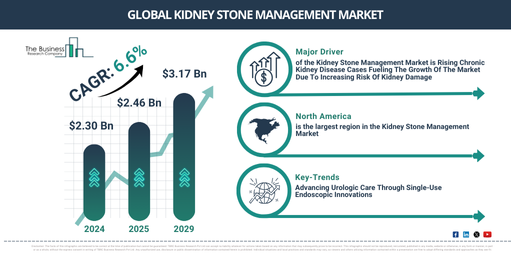
    The kidney stone management market has demonstrated significant expansion over recent years. It is anticipated to expand from $2.30 billion in 2024 to $2.46 billion in 2025, achieving a compound annual growth rate (CAGR) of 6.9%. The growth observed in previous periods stems from an uptick in kidney stone cases, increasing obesity levels, an expanding elderly population, greater recognition of kidney health importance, and improved access to healthcare facilities.

    The kidney stone management market size is forecast to demonstrate robust expansion over the next few years, with projections indicating it will reach $3.17 billion by 2029, growing at a compound annual growth rate (CAGR) of 6.6%. This anticipated growth throughout the forecast period stems from factors such as an expanding aging population, the rising adoption of minimally invasive procedures, the increased utilization of advanced imaging technologies, the proliferation of telehealth and digital health solutions, escalating healthcare expenditure, and a heightened awareness concerning kidney health. Significant trends expected during this period include progress in non-invasive treatment technologies, artificial intelligence-powered diagnostics, miniaturized surgical instrumentation, enhanced imaging techniques, smart wearable monitoring devices, precision-targeted therapies, and more comprehensive telehealth integration.

    Unlock Your Free Sample Report for Exclusive Market Data:

    https://www.thebusinessresearchcompany.com/sample.aspx?id=27322&type=smp

    Which Factors And Drivers Are Influencing The Kidney Stone Management Market In 2025?

    The increasing occurrence of chronic kidney disease (CKD) is projected to boost the expansion of the kidney stone management market in the future. Chronic kidney disease (CKD) involves a progressive reduction in kidney function across a period, often triggered by conditions such as diabetes, high blood pressure, and genetic factors. The growing incidence of chronic kidney disease is primarily attributed to the widespread increase in diabetes, a major contributor to prolonged renal impairment. For those with chronic kidney disease, kidney stone management offers advantages by averting obstructions and infections, thus safeguarding the kidneys from additional harm and assisting in preserving their functionality. As an illustration, figures from June 2024, provided by the Australian Institute of Health and Welfare, an Australia-based government body, indicate that chronic kidney disease (CKD) mortality rates rose by 4.2% in 2021 and 6.2% in 2022. During the period of 2021–22, CKD was identified in approximately 2 million hospitalizations, making up 18% of all hospitalizations in Australia. Consequently, the escalating prevalence of chronic kidney disease (CKD) is propelling the expansion of the kidney stone management market.

    What Are The Segment Types Shaping The Kidney Stone Management Market?

    The kidney stone management market covered in this report is segmented

    1) By Treatment: Extracorporeal Shock Wave Lithotripsy (ESWL), Ureteroscopy, Percutaneous Nephrolithotomy (PCNL), Other Treatments

    2) By Product Type: Lithotripter, Stone Removal Baskets, Ureteral Stents, Ureterorenoscopes

    3) By Diagnostics Method: Abdominal X-Ray, Computed Tomography, Ultrasound, Abdominal MRI, Intravenous Pyelography, Other Diagnostics Method

    4) By Distribution Channel: Retail Pharmacies, Online Pharmacies, Other Distribution Channels

    5) By End User: Hospitals, Specialty Clinics, Ambulatory Surgical Centres, Other End-Users

    Subsegments:

    1) By Extracorporeal Shock Wave Lithotripsy (ESWL): Fixed-Site ESWL systems, Mobile ESWL systems, Integrated imaging ESWL systems

    2) By Ureteroscopy: Flexible Ureteroscopes, Semi-Rigid Ureteroscopes, Disposable Ureteroscopes, Reusable Ureteroscopes

    3) By Percutaneous Nephrolithotomy (PCNL): Standard PCNL, Mini-PCNL, Ultra-Mini PCNL, Micro-PCNL

    4) By Other Treatments: Open Surgery, Laparoscopic Stone Removal, Medical Expulsive Therapy (MET), Pharmacological Stone Dissolution Therapy

    What Are The Major Trends Driving The Growth Of The Kidney Stone Management Market?

    Major companies within the kidney stone management market are concentrating on developing sophisticated solutions, such as the Ascend ureteroscopes, to better equip urology clients with thorough stone management options. The Ascend ureteroscope offers adaptable endoscopic access to the urinary tract, including the ureter and kidney, allowing for the visualization, diagnosis, and treatment of conditions like kidney stones. For instance, in May 2024, Cook Medical Inc., a US-based medical device company, launched the Ascend single-use ureteroscope, which is disposable endoscopic equipment designed for urologic operations, specifically kidney stone management. It incorporates a 275-degree up/down deflection and a deflection lock that secures the selected angle, thereby improving precision during complex procedures. Furthermore, the Ascend ureteroscope’s approval for Medicare’s Transitional Pass-through (TPT) payment scheme enhances its availability in clinical practice.

    Who Are The Core Companies Influencing The Kidney Stone Management Market Landscape?

    Major companies operating in the kidney stone management market are Medtronic plc, Siemens Healthineers AG, C.R. Bard Inc., Stryker Corporation, Boston Scientific Corporation, Olympus Corporation, Coloplast A/S, Karl Storz GmbH & Co. KG, Cook Medical Inc., Richard Wolf GmbH, Lumenis Ltd., MorphoSys AG, Dornier MedTech, EDAP TMS S.A., E.M.S. Electro Medical Systems S.A., Dyax Corp., STORZ MEDICAL AG, Medispec Ltd., DirexGroup SA, and Elmed Medical Systems Ltd.

    Download The Full Report For Exclusive Market Findings:

    https://www.thebusinessresearchcompany.com/report/kidney-stone-management-global-market-report

    Which Geographies Are Emerging As Strong Markets For The Kidney Stone Management Industry?

    North America was the largest region in the kidney stone management market in 2024. Asia-Pacific is expected to be the fastest-growing region in the forecast period. The regions covered in the kidney stone management market report are Asia-Pacific, Western Europe, Eastern Europe, North America, South America, Middle East, Africa.

    Request A Customized Version Of The Kidney Stone Management Market Report:

    https://www.thebusinessresearchcompany.com/customise?id=27322&type=smp

    Browse Through More Reports Similar to the Global Kidney Stone Management Market 2025, By The Business Research Company

    Air Quality Control System Global Market Report 2025

    https://www.thebusinessresearchcompany.com/report/air-quality-control-system-global-market-report

    Fire Control System Global Market Report 2025

    https://www.thebusinessresearchcompany.com/report/fire-control-system-global-market-report

    Air Management System Global Market Report 2025

    https://www.thebusinessresearchcompany.com/report/air-management-system-global-market-report

    Get in touch with us:

    The Business Research Company: https://www.thebusinessresearchcompany.com/

    Americas +1 310-496-7795

    Asia +44 7882 955267 & +91 8897263534

    Europe +44 7882 955267

    Email us at info@tbrc.info

    Follow us on:

    LinkedIn: https://in.linkedin.com/company/the-business-research-company

    YouTube: https://www.youtube.com/channel/UC24_fI0rV8cR5DxlCpgmyFQ

    Global Market Model: https://www.thebusinessresearchcompany.com/global-market-model
  • In-vitro Colorectal Cancer Screening Tests Market Forecast 2025–2034: Where Businesses Should Invest Next

    In-vitro Colorectal Cancer Screening Tests Market Forecast 2025–2034: Where Businesses Should Invest Next

    Unlock Global Insights – Save 20% on Market Reports with Code ONLINE20

    #What Is The Projected Market Size Of The In-vitro Colorectal Cancer Screening Tests Market By 2029?

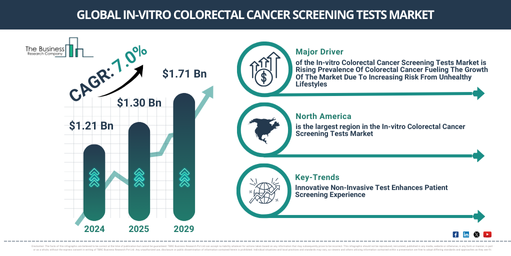
    The in-vitro colorectal cancer screening tests market has experienced significant expansion in recent years. Its valuation is predicted to climb from $1.21 billion in 2024 to $1.30 billion in 2025, registering a compound annual growth rate (CAGR) of 7.4%. This historical growth can be attributed to several factors, including increasing awareness of early cancer detection, a rise in government screening programs, increasing adoption of non-invasive testing methods, growing healthcare expenditure, and increasing availability of at-home screening kits.

    The market size for in-vitro colorectal cancer screening tests is anticipated to experience robust expansion over the next few years. It is projected to reach $1.71 billion by 2029, demonstrating a compound annual growth rate (CAGR) of 7.0%. This growth during the forecast period stems from various factors such as a heightened focus on personalized medicine, an increasing demand for economical diagnostic solutions, growing investments in cancer research, the rising adoption of molecular diagnostic techniques, the increasing incidence of colorectal cancer, and enhanced accessibility of testing in emerging markets. Significant trends expected in the forecast period include progress in liquid biopsy technologies, advancements in biomarker discovery, the integration of artificial intelligence into test analysis, sophisticated development of multi-target stool deoxyribonucleic acid tests, innovations in sample collection and processing, improvements in automation and digital pathology, and the incorporation of cloud-based diagnostic platforms.

    Unlock Your Free Sample Report for Exclusive Market Data:

    https://www.thebusinessresearchcompany.com/sample.aspx?id=27319&type=smp

    Which Drivers Are Shaping The In-vitro Colorectal Cancer Screening Tests Industry’s Market Share?

    A projected increase in the incidence of colorectal cancer is anticipated to fuel the expansion of the in vitro colorectal cancer screening tests market in the coming years. This form of cancer originates in the colon or rectum, frequently developing from polyps that are precancerous. This growing occurrence is linked to detrimental lifestyle choices, given that an unhealthy diet, insufficient physical activity, and excess weight elevate the likelihood of polyp formation and subsequent cancer development. In-vitro colorectal cancer screening tests contribute to its diagnosis by providing non-invasive techniques for identifying early cancer indicators. These tests boost screening precision through advanced biomarker identification, which in turn facilitates prompt intervention and better patient prognoses. As an illustration, the American Cancer Society, a US-based nonprofit entity, reported an estimated 154,270 new colorectal cancer cases in February 2025, marking an ascent from 152,810 cases recorded in 2024. Consequently, the increasing prevalence of colorectal cancer is propelling the growth of the in vitro colorectal cancer screening tests market.

    Which Key Segments Fueling The In-vitro Colorectal Cancer Screening Tests Market?

    The in-vitro colorectal cancer screening tests market covered in this report is segmented

    1) By Test Type: Fecal Occult Blood Test, Stool Deoxyribonucleic Acid Test, Blood Biomarker Test, Other Test Types

    2) By Imaging Type: Colonoscopy, Proctoscopy, Computed Tomography Scan, Ultrasound, Magnetic Resonance Imaging, Positron Emission Tomography Scan

    3) By Application: Screening, Diagnosis, Monitoring, Risk Assessment, Post-Treatment Surveillance

    4) By End User: Hospitals, Diagnostic Laboratories, Outpatient Clinics, Home Care Settings, Research Institutions

    Subsegments:

    1) By Fecal Occult Blood Test: Guaiac Based Fecal Occult Blood Test, Immunochemical Fecal Occult Blood Test

    2) By Stool Deoxyribonucleic Acid Test: Single Target Stool Deoxyribonucleic Acid Test, Multi Target Stool Deoxyribonucleic Acid Test

    3) By Blood Biomarker Test: Methylated Septin 9 Deoxyribonucleic Acid Test, Circulating Tumor Deoxyribonucleic Acid Test, Protein Biomarker Based Blood Test

    4) By Other Test Types: Urine Based Biomarker Test, Serum Based Biomarker Test, Breath Based Volatile Organic Compound Test

    Which Trends Are Impacting The In-vitro Colorectal Cancer Screening Tests Market?

    Major companies operating in the in vitro colorectal cancer screening tests market are concentrating on developing sophisticated diagnostic solutions, such as multi-target stool DNA tests, to elevate early detection accuracy, enhance patient convenience, and reduce colorectal cancer mortality rates. Multi-target stool DNA tests are innovative screening instruments that examine stool samples for genetic and biochemical markers associated with colorectal cancer and precancerous lesions. For instance, in March 2025, Exact Sciences Corp., a US-based molecular diagnostics company, introduced Cologuard Plus, an improved at-home colorectal cancer screening test for average-risk adults aged 45 and older. This test incorporates advanced biomarker technology, providing higher sensitivity and specificity compared to its predecessor. It utilizes a refined algorithm to detect DNA mutations and hemoglobin biomarkers, thereby enhancing the detection of both colorectal cancer and advanced adenomas. The Cologuard Plus test offers a non-invasive and convenient screening option that eliminates the need for bowel preparation or dietary restrictions, consequently increasing patient adherence to recommended screening guidelines.

    Which Key Players Are Driving Competition In The In-vitro Colorectal Cancer Screening Tests Market?

    Major companies operating in the in-vitro colorectal cancer screening tests market are Thermo Fisher Scientific Inc., Abbott Laboratories, Siemens Healthineers, Quest Diagnostics Incorporated, Roche Diagnostics International AG, Illumina Inc., Sysmex Corporation, Bio-Rad Laboratories Inc., Qiagen N.V., Exact Sciences Corporation, Natera Inc., Leica Biosystems Nussloch GmbH, BGI Genomics Co. Ltd., NeoGenomics Inc., Guardant Health Inc., CellMax Life Inc., Epigenomics AG, Acuamark Diagnostics Inc., Beacon Biomedical Inc., Mainz Biomed NV.

    Download The Full Report For Exclusive Market Findings:

    https://www.thebusinessresearchcompany.com/report/in-vitro-colorectal-cancer-screening-tests-global-market-report

    How Do Regional Market Performances Compare Within The In-vitro Colorectal Cancer Screening Tests Industry?

    North America was the largest region in the in-vitro colorectal cancer screening tests market in 2024. Asia-Pacific is expected to be the fastest-growing region in the forecast period. The regions covered in the in-vitro colorectal cancer screening tests market report are Asia-Pacific, Western Europe, Eastern Europe, North America, South America, Middle East, Africa.

    Request A Customized Version Of The In-vitro Colorectal Cancer Screening Tests Market Report:

    https://www.thebusinessresearchcompany.com/customise?id=27319&type=smp

    Browse Through More Reports Similar to the Global In-vitro Colorectal Cancer Screening Tests Market 2025, By The Business Research Company

    Buildings Construction Global Market Report 2025

    https://www.thebusinessresearchcompany.com/report/buildings-construction-global-market-report

    Residential Building Construction Global Market Report 2025

    https://www.thebusinessresearchcompany.com/report/residential-building-construction-global-market-report

    Construction Global Market Report 2025

    https://www.thebusinessresearchcompany.com/report/construction-global-market-report

    Get in touch with us:

    The Business Research Company: https://www.thebusinessresearchcompany.com/

    Americas +1 310-496-7795

    Asia +44 7882 955267 & +91 8897263534

    Europe +44 7882 955267

    Email us at info@tbrc.info

    Follow us on:

    LinkedIn: https://in.linkedin.com/company/the-business-research-company

    YouTube: https://www.youtube.com/channel/UC24_fI0rV8cR5DxlCpgmyFQ

    Global Market Model: https://www.thebusinessresearchcompany.com/global-market-model
  • Global Interventional Oncology Market Analysis 2025–2029: Opportunities for Strategic Growth

    Global Interventional Oncology Market Analysis 2025–2029: Opportunities for Strategic Growth

    Unlock Global Insights – Save 20% on Market Reports with Code ONLINE20

    How Much Was The Interventional Oncology Market Worth In 2025, And What Is Its Anticipated Value By 2029?

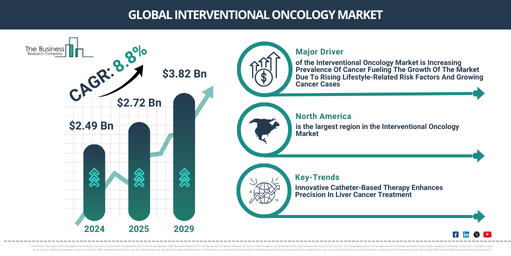
    The interventional oncology market size has shown strong growth in recent times. It is anticipated to increase from $2.49 billion in 2024 to $2.72 billion in 2025, reflecting a compound annual growth rate (CAGR) of 9.2%. The expansion during prior periods can be attributed to the rising global occurrence of cancer, the heightened adoption of procedures that are minimally invasive, increasing healthcare investments in emerging economies, a growing demand for image-guided therapies, and greater public awareness of the benefits of interventional oncology.

    The interventional oncology market is anticipated to experience substantial expansion in the coming years. This market is projected to reach $3.82 billion by 2029, exhibiting a compound annual growth rate (CAGR) of 8.8%. Factors contributing to this growth during the forecast period include an increased demand for outpatient oncology procedures, the expanding application of combination therapies alongside immuno-oncology, a rise in clinical trials focused on image-guided therapies, broader access to interventional oncology within emerging markets, and the increasing significance of precision medicine in developing treatment plans. Key trends anticipated over the forecast period encompass advancements in image-guided ablation technologies, the creation of artificial intelligence-powered diagnostic tools, breakthroughs in targeted drug-delivery systems, enhancements in minimally invasive treatment devices, and the evolution of personalized oncology treatment solutions.

    Unlock Your Free Sample Report for Exclusive Market Data:

    https://www.thebusinessresearchcompany.com/sample.aspx?id=27318&type=smp

    What Are The Drivers Pushing New Developments In The Interventional Oncology Market?

    The increasing prevalence of cancer is projected to stimulate the growth of the interventional oncology market moving forward. The term “prevalence of cancer” denotes the total count of individuals, both newly and previously diagnosed, who are currently alive with a history of the disease at a specific juncture. This increase in cancer prevalence is attributed to lifestyle-related risk factors such as poor dietary choices, smoking, alcohol consumption, and exposure to environmental pollutants, all of which elevate the likelihood of developing various cancers. Interventional oncology assists in treating cancer by offering minimally invasive, precise therapies that target tumors directly. It improves patient outcomes by minimizing damage to healthy tissues and ensuring faster recovery periods compared to traditional treatments. For instance, in July 2024, data from the Australian Institute of Health and Welfare, an Australia-based government agency, indicated that cancer cases diagnosed in Australia totaled 160,570 in 2022, representing an increase of 3,789 cases from 156,781 in 2021. Thus, the growing prevalence of cancer is a key driver for the expansion of the interventional oncology market.

    How Is The Interventional Oncology Market Classified Into Different Segments?

    The interventional oncology market covered in this report is segmented

    1) By Type: Radiation Therapy Devices, Ablation Devices, Embolization Devices

    2) By Technology Type: Ultrasound, Computed Tomography Guided, Magnetic Resonance-Guided

    3) By Procedure: Tumor Ablation, Tumor Biopsy, Vascular Interventions, Palliative Care

    4) By Application Areas: Liver Cancer, Lung Cancer, Kidney Cancer, Pancreatic Cancer, Prostate Cancer

    5) By End-Users: Hospitals, Ambulatory Surgical Centers, Specialty Clinics, Research And Academic Institutions

    Subsegments:

    1) By Radiation Therapy Devices: Linear Accelerators, Proton Therapy Systems, Brachytherapy Devices

    2) By Ablation Devices: Radiofrequency Ablation Devices, Microwave Ablation Devices, Cryoablation Devices, Irreversible Electroporation Systems

    3) By Embolization Devices: Microspheres, Coil Embolization Devices, Liquid Embolic Agents, Embolic Protection Devices

    What Long-Term Trends Will Shape The Future Growth Of The Interventional Oncology Industry?

    Leading companies in the interventional oncology market are prioritizing the development of sophisticated products, such as microcatheter-based embolization systems. These innovations aim to deliver precise, targeted cancer therapy while effectively minimizing damage to surrounding healthy tissue. Microcatheter-based embolization systems themselves refer to medical devices that employ tiny, flexible catheters to accurately deliver embolic agents into blood vessels, aiming to block or reduce blood flow, typically utilized for treating tumors, vascular malformations, or internal bleeding. For instance, in March 2025, Terumo Corporation, a Japan-based medical device company, unveiled the Occlusafe balloon occlusion catheter. This product is based on their advanced Balloon-TACE (B-TACE) therapy, specifically developed for the management of liver cancer, particularly hepatocellular carcinoma (HCC). This specialized microcatheter skillfully uses the pressure gradient effect to redirect blood flow and gain access to the microcirculation, which allows for higher concentrations of therapeutic agents directly at the tumor site while significantly minimizing off-target embolization. This focused approach seeks to improve clinical outcomes in challenging liver cancer cases by enhancing the precision of drug delivery and offering superior visualization during procedures.

    Who Are The Top Performing Companies In The Interventional Oncology Market In Recent Years?

    Major companies operating in the interventional oncology market are Johnson & Johnson, Siemens Healthineers AG, Stryker Corporation, GE HealthCare Technologies Inc., Boston Scientific Corporation, Terumo Corporation, Hologic Inc., Teleflex Incorporated, Lantheus Holdings Inc., Penumbra Inc., Merit Medical Systems Inc., Guerbet S.A, Asahi Intecc Co. Ltd., AngioDynamics Inc., Sirtex Medical Limited., Delcath Systems Inc., ABK Biomedical Inc., Profound Medical Inc., IceCure Medical Ltd., Minimax Medical Holding Group.

    Download The Full Report For Exclusive Market Findings:

    https://www.thebusinessresearchcompany.com/report/interventional-oncology-global-market-report

    Which Region Currently Holds The Largest Share Of The Interventional Oncology Market?

    North America was the largest region in the interventional oncology market in 2024. Asia-Pacific is expected to be the fastest-growing region in the forecast period. The regions covered in the interventional oncology market report are Asia-Pacific, Western Europe, Eastern Europe, North America, South America, Middle East, Africa.

    Request A Customized Version Of The Interventional Oncology Market Report:

    https://www.thebusinessresearchcompany.com/customise?id=27318&type=smp

    Browse Through More Reports Similar to the Global Interventional Oncology Market 2025, By The Business Research Company

    Motor Insurance Global Market Report 2025

    https://www.thebusinessresearchcompany.com/report/motor-insurance-global-market-report

    Golf Cart And Neighborhood Electric Vehicle Nev Global Market Report 2025

    https://www.thebusinessresearchcompany.com/report/golf-cart-and-neighborhood-electric-vehicle-nev-global-market-report

    Renewable Energy Insurance Global Market Report 2025

    https://www.thebusinessresearchcompany.com/report/renewable-energy-insurance-global-market-report

    Get in touch with us:

    The Business Research Company: https://www.thebusinessresearchcompany.com/

    Americas +1 310-496-7795

    Asia +44 7882 955267 & +91 8897263534

    Europe +44 7882 955267

    Email us at info@tbrc.info

    Follow us on:

    LinkedIn: https://in.linkedin.com/company/the-business-research-company

    YouTube: https://www.youtube.com/channel/UC24_fI0rV8cR5DxlCpgmyFQ

    Global Market Model: https://www.thebusinessresearchcompany.com/global-market-model
  • Immune Response Testing Market Forecast: What to Expect by 2029

    Immune Response Testing Market Forecast: What to Expect by 2029

    Unlock Global Insights – Save 20% on Market Reports with Code ONLINE20

    What Is The Predicted Market Size Trajectory For The Immune Response Testing Market From 2025 To 2034?

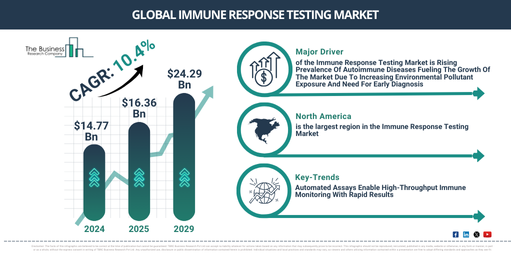
    The immune response testing market size has demonstrated rapid expansion in recent years. It is projected to expand from $14.77 billion in 2024 to $16.36 billion in 2025, achieving a compound annual growth rate (CAGR) of 10.7%. This historical growth can be attributed to several factors, including an intensified focus on monitoring vaccine efficacy, the expanding application of immunotherapy in treating cancer, increased understanding of immune system health, the establishment of more global disease surveillance programs, rising investments in biopharmaceutical research and development, and a greater need for transplant compatibility assessments.

    The immune response testing market size is anticipated to experience rapid expansion over the next few years, projected to grow to $24.29 billion in 2029 at a compound annual growth rate (CAGR) of 10.4%. This growth in the forecast period can be attributed to factors such as the increasing incidence of emerging zoonotic diseases, a growing demand for at-home immune test kits, the increasing adoption of preventive healthcare, rising investments in pandemic preparedness, and an escalating demand for transplant compatibility testing. Key trends expected during the forecast period include advancements in vaccine efficacy monitoring, the sophisticated use of AI in immune profiling, innovations in at-home immune test kits, the integration of immunotherapy into cancer treatment, and continuous advancements in transplant compatibility testing.

    Unlock Your Free Sample Report for Exclusive Market Data:

    https://www.thebusinessresearchcompany.com/sample.aspx?id=27314&type=smp

    What Are The Top Growth Drivers Impacting The Immune Response Testing Market Outlook?

    The increasing incidence of autoimmune conditions is anticipated to fuel the expansion of the immune response testing market in the future. These are medical states where the body’s defense system erroneously assaults its own healthy cells and tissues. The rising occurrence of autoimmune disorders largely stems from greater exposure to environmental contaminants, which can impair immune activity and initiate immune system attacks on the body’s native tissues. Immune response testing improves the management of autoimmune diseases by offering accurate information about the body’s immune processes, facilitating prompt diagnosis and tailored therapeutic strategies. This testing aids in superior disease surveillance and contributes to better patient results via targeted adjustments in treatment. As an illustration, in November 2024, a survey conducted by Versorgungsatlas.de, a German organization, which studied 68,959,472 individuals in 2012 and 73,241,305 in 2022, revealed that among the 73,241,305 insured individuals in 2022, 6,304,340 had been diagnosed with at least one autoimmune disease, leading to a raw prevalence rate of 8.61%. Consequently, the increasing prevalence of autoimmune conditions is fueling the expansion of the immune response testing market.

    What Are The Major Segment Categories Driving The Immune Response Testing Market Growth?

    The immune response testing market covered in this report is segmented

    1) By Type Of Testing: Antibody Testing, Cytokine Testing, Cellular Testing, Complement System Testing

    2) By Application: Allergy Testing, Human Immunodeficiency Virus (HIV) Disease, Cancer, Rheumatoid Arthritis, Systemic Lupus Erythematosus, Other Applications

    3) By End-User: Hospitals And Clinics, Diagnostic Laboratories, Research Institutes, Home Care Settings

    Subsegments:

    1) By Antibody Testing: Immunoglobulin G (IgG) Testing, Immunoglobulin A (IgA) Testing, Immunoglobulin M (IgM) Testing, Neutralizing Antibody Testing, Rapid Antibody Testing

    2) By Cytokine Testing: Enzyme-Linked Immunosorbent Assay (ELISA)-Based Cytokine Assays, Multiplex Cytokine Assays, Flow Cytometry-Based Cytokine Assays, Cytometric Bead Array, Quantitative Polymerase Chain Reaction (qPCR)-Based Cytokine Analysis

    3) By Cellular Testing: T-Cell Response Assays, B-Cell Response Assays, Natural Killer (NK) Cell Assays, Lymphocyte Proliferation Assays, ELISpot Assays

    4) By Complement System Testing: Total Hemolytic Complement (CH50) Assay, Alternative Pathway Hemolytic Complement (AH50) Assay, Complement Component 3 And 4 (C3 And C4) Complement Testing, Mannose-Binding Lectin (MBL) Testing, Complement Activity Assays

    Which Ongoing Trends Are Expected To Shape The Immune Response Testing Market Outlook?

    Leading entities within the immune response testing market are concentrating on creating sophisticated diagnostic options, including automated immune response assays, aiming to boost precision, improve operational effectiveness, and shorten processing durations. These automated assays are defined as advanced laboratory examinations that gauge the immune system’s activity, like antibody concentrations or cytokine patterns, requiring very little human involvement. An example of this is the introduction of the Elecsys IGRA SARS-CoV-2 test by F. Hoffmann-La Roche AG, a pharmaceutical company based in Switzerland, in August 2022. This novel test represents an automated interferon-gamma release assay (IGRA) specifically developed to identify T-cell immune responses against SARS-CoV-2, offering understanding into sustained immunity beyond what antibody tests provide. The Elecsys IGRA test functions on Roche’s cobas e analyzers, facilitating high-volume testing with quick outcomes, which is vital for extensive immune surveillance in both clinical and research environments. This progression contributes to a clearer comprehension of vaccine effectiveness and innate immunity, thereby assisting in public health policy formulation.

    Which Industry Leaders Are Driving Innovation Across The Immune Response Testing Market?

    Major companies operating in the immune response testing market are F. Hoffmann-La Roche Ltd., Thermo Fisher Scientific Inc., Abbott Laboratories, Danaher Corporation, Siemens Healthcare GmbH, Becton Dickinson and Company, Quest Diagnostics Incorporated, Eurofins Scientific SE, PerkinElmer Inc., bioMérieux SA, Bruker Corporation, Beckman Coulter Inc., Bio-Rad Laboratories Inc., Qiagen N.V., DiaSorin S.p.A., EUROIMMUN Medizinische Labor diagnostika AG, Myriad Genetics Inc., NanoString Technologies Inc., GenScript Biotech Corporation, Cell Signaling Technology Inc.

    Download The Full Report For Exclusive Market Findings:

    https://www.thebusinessresearchcompany.com/report/immune-response-testing-global-market-report

    Which Region Is Expected To Witness The Fastest Growth In The Immune Response Testing Market?

    North America was the largest region in the immune response testing market in 2024. Asia-Pacific is expected to be the fastest-growing region in the forecast period. The regions covered in the immune response testing market report are Asia-Pacific, Western Europe, Eastern Europe, North America, South America, Middle East, Africa.

    Request A Customized Version Of The Immune Response Testing Market Report:

    https://www.thebusinessresearchcompany.com/customise?id=27314&type=smp

    Browse Through More Reports Similar to the Global Immune Response Testing Market 2025, By The Business Research Company

    Nanorobotics Global Market Report 2025

    https://www.thebusinessresearchcompany.com/report/nanorobotics-global-market-report

    Nanomaterials Global Market Report 2025

    https://www.thebusinessresearchcompany.com/report/nanomaterials-global-market-report

    Nanosilica Global Market Report 2025

    https://www.thebusinessresearchcompany.com/report/nanosilica-global-market-report

    Get in touch with us:

    The Business Research Company: https://www.thebusinessresearchcompany.com/

    Americas +1 310-496-7795

    Asia +44 7882 955267 & +91 8897263534

    Europe +44 7882 955267

    Email us at info@tbrc.info

    Follow us on:

    LinkedIn: https://in.linkedin.com/company/the-business-research-company

    YouTube: https://www.youtube.com/channel/UC24_fI0rV8cR5DxlCpgmyFQ

    Global Market Model: https://www.thebusinessresearchcompany.com/global-market-model
  • Rare Disease Genetic Testing Market Size and Growth Forecast for Businesses 2025–2029

    Rare Disease Genetic Testing Market Size and Growth Forecast for Businesses 2025–2029

    Unlock Global Insights – Save 20% on Market Reports with Code ONLINE20

    #What Are The Current (2025) And Forecast (2029) Sizes Of The Rare Disease Genetic Testing Market?

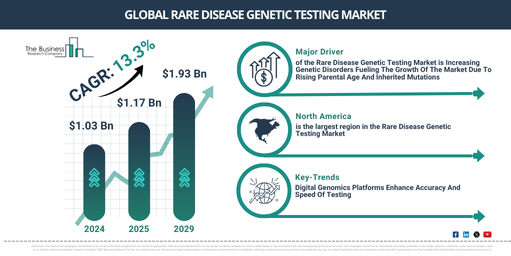
    The rare disease genetic testing market size has seen significant expansion in recent years. It is forecast to grow from $1.03 billion in 2024 to $1.17 billion in 2025, exhibiting a compound annual growth rate (CAGR) of 13.6%. Factors contributing to its historical growth include growing awareness regarding rare genetic disorders, an increasing need for early and precise diagnosis, a surge in government funding for rare disease research, improved accessibility of genetic testing services, greater investments in precision medicine, and a rising prevalence of rare genetic conditions.

    The rare disease genetic testing market is anticipated to experience swift expansion over the coming years. Projections indicate its value will reach $1.93 billion by 2029, exhibiting a compound annual growth rate (CAGR) of 13.3%. This projected growth is driven by several factors, including the increasing integration of next-generation sequencing, a heightened emphasis on personalized medical approaches, increasing financial commitments to genetic research, the expansion of healthcare infrastructure in developing economies, a surge in diagnostic procedures, an uptick in hereditary cancer screenings, and the growing need for non-invasive diagnostic alternatives. Key developments expected during this period involve enhancements in genome editing technologies, sophisticated bioinformatics tools for analyzing genetic data, advancements in multi-gene panel testing, progress in portable genetic testing devices, and novel approaches to sample collection.

    Unlock Your Free Sample Report for Exclusive Market Data:

    https://www.thebusinessresearchcompany.com/sample.aspx?id=27404&type=smp

    What Are The Main Drivers Boosting The Rare Disease Genetic Testing Industry’s Expansion?

    The anticipated expansion of the rare disease genetic testing market is fueled by the rising prevalence of genetic disorders. Genetic disorders are defined as health conditions resulting from anomalies in an individual’s deoxyribonucleic acid, which can be passed down from parents or occur as novel mutations. The increase in these disorders is attributed to elevated parental age, given that older parents face a greater likelihood of transmitting genetic mutations to their offspring. Rare disease genetic testing aids in diagnosing genetic disorders through the identification of specific mutations, facilitating precise and early discovery. This testing also supports individualized treatment plans, thereby improving patient care and boosting long-term health results. As an illustration, data from May 2024, released by the National Health Service, a UK government body, indicates that 17,000 individuals are affected by sickle cell disease, an inherited genetic blood condition, with approximately 250 new diagnoses occurring annually. Consequently, the growing incidence of genetic disorders is a key impetus for the expansion of the rare disease genetic testing market.

    What Are The Key Segments In The Rare Disease Genetic Testing Market?

    The rare disease genetic testing market covered in this report is segmented

    1) By Disease Type: Immunological Disorders, Cardiovascular Disorders, Neurological Disease, Endocrine And Metabolism Disorders Diseases, Hematological Diseases, Dermatological Disease, Other Disease Types

    2) By Technology: Next-Generation Sequencing, Sanger Sequencing, Polymerase Chain Reaction Based Testing, Array Based Testing, Fluorescence In Situ Hybridization, Other Technologies

    3) By Specialty: Molecular Genetic Tests, Chromosomal Genetic Tests, Biochemical Genetic Tests

    4) By End-User: Hospitals And Clinics, Research Laboratories And Contract Research Organizations, Diagnostic Laboratories, Other End Users

    Subsegments:

    1) By Immunological Disorders: Autoimmune Disorders, Allergic Conditions, Primary Immunodeficiency Disorders, Inflammatory Disorders

    2) By Cardiovascular Disorders: Congenital Heart Defects, Cardiomyopathies, Aortic Aneurysms, Pulmonary Hypertension

    3) By Neurological Disease: Neurodegenerative Disorders, Neuromuscular Disorders, Epileptic Syndromes, Movement Disorders

    4) By Endocrine And Metabolism Disorders Diseases: Inherited Metabolic Disorders, Thyroid Disorders, Adrenal Disorders, Diabetes Related Genetic Conditions

    5) By Hematological Diseases: Hemophilia, Thalassemia, Sickle Cell Disease, Clotting Disorders

    6) By Dermatological Disease: Genetic Skin Disorders, Connective Tissue Disorders, Pigmentary Disorders, Keratinization Disorders

    7) By Other Disease Types: Skeletal Dysplasia, Renal Genetic Disorders, Ophthalmic Genetic Conditions, Gastrointestinal Genetic Conditions

    What Trends Are Expected To Drive The Rare Disease Genetic Testing Market?

    Leading companies in the rare disease genetic testing market are directing their efforts towards creating technologically sophisticated solutions, such as digital genomics platforms, to improve the speed, precision, and scalability of diagnosing rare diseases. Digital genomics platforms are advanced software systems that consolidate genomic data analysis, interpretation, and reporting to simplify and expedite genetic testing and diagnosis. For instance, in March 2025, Strand Life Sciences Private Limited, an India-based computer software company, introduced the StrandOmics Portal, a digital platform designed to enhance the efficiency and accuracy of rare disease diagnosis. This portal offers clinicians comprehensive insights into genetic variants, enabling more rapid and exact diagnoses. It also supports advanced variant interpretation, including prenatal diagnostics, and facilitates independent reviews of genetic data. This launch demonstrates a strong commitment to progressing precision medicine and equipping healthcare professionals with effective instruments to improve patient outcomes.

    Which Leading Players Are Enhancing Their Rare Disease Genetic Testing Market Presence Worldwide?

    Major companies operating in the rare disease genetic testing market are Thermo Fisher Scientific Inc., Quest Diagnostics Inc., Eurofins Scientific SE, Agilent Technologies Inc., Illumina Inc., QIAGEN N.V., Natera Inc., OPKO Health Inc., Myriad Genetics Inc., Fulgent Genetics Inc., BioReference Laboratories Inc., Invitae Corporation, Ambry Genetics Corporation, Centogene N.V., Baylor Genetics Company, PreventionGenetics, Blueprint Genetics Oy, Realm IDX Inc., Artemis DNA Inc., BGI Genomics Co. Ltd.

    Download The Full Report For Exclusive Market Findings:

    https://www.thebusinessresearchcompany.com/report/rare-disease-genetic-testing-global-market-report

    What Are The Regional Market Dynamics Impacting The Rare Disease Genetic Testing Industry?

    North America was the largest region in the rare disease genetic testing market in 2024. Asia-Pacific is expected to be the fastest-growing region in the forecast period. The regions covered in the rare disease genetic testing market report are Asia-Pacific, Western Europe, Eastern Europe, North America, South America, Middle East, Africa.

    Request A Customized Version Of The Rare Disease Genetic Testing Market Report:

    https://www.thebusinessresearchcompany.com/customise?id=27404&type=smp

    Browse Through More Reports Similar to the Global Rare Disease Genetic Testing Market 2025, By The Business Research Company

    Data Wrangling Global Market Report 2025

    https://www.thebusinessresearchcompany.com/report/data-wrangling-global-market-report

    Alternative Data Global Market Report 2025

    https://www.thebusinessresearchcompany.com/report/alternative-data-global-market-report

    Data Catalog Global Market Report 2025

    https://www.thebusinessresearchcompany.com/report/data-catalog-global-market-report

    Get in touch with us:

    The Business Research Company: https://www.thebusinessresearchcompany.com/

    Americas +1 310-496-7795

    Asia +44 7882 955267 & +91 8897263534

    Europe +44 7882 955267

    Email us at info@tbrc.info

    Follow us on:

    LinkedIn: https://in.linkedin.com/company/the-business-research-company

    YouTube: https://www.youtube.com/channel/UC24_fI0rV8cR5DxlCpgmyFQ

    Global Market Model: https://www.thebusinessresearchcompany.com/global-market-model
  • Hospital Logistics Robots Market Expansion Outlook: $5.03 Billion by 2029 Forecast

    Hospital Logistics Robots Market Expansion Outlook: $5.03 Billion by 2029 Forecast

    Unlock Global Insights – Save 20% on Market Reports with Code ONLINE20

    What Are The Forecasted Market Size Estimates For The Hospital Logistics Robots Market Between 2025 And 2029?

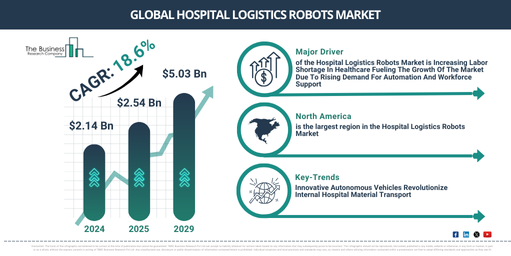
    The hospital logistics robots market has seen significant growth in recent years. It is forecast to expand from $2.14 billion in 2024 to $2.54 billion in 2025, demonstrating a compound annual growth rate (CAGR) of 19.0%. This historical expansion can be attributed to the escalating requirement to minimize human errors in medical deliveries, a greater emphasis on elevating patient safety and care quality, increasing pressure to streamline hospital operational efficiency, rising investments in healthcare infrastructure, and a surge in the demand for healthcare services.

    The market for hospital logistics robots is projected to expand significantly over the coming years. This market is forecast to reach $5.03 billion by 2029, exhibiting a compound annual growth rate (CAGR) of 18.6%. Several factors are expected to fuel this growth during the forecast period, including the increasing demand for automation within hospitals, a heightened requirement for efficient material handling, the expanding deficit of healthcare personnel, an amplified emphasis on operational efficiency, and the expanding numbers of elderly individuals coupled with a rise in chronic illnesses. Key trends anticipated during this period encompass sophisticated sensor technologies for improved navigation and safety, advancements in the designs of autonomous mobile robots, the incorporation of artificial intelligence and machine learning into hospital logistics operations, progress in battery and power management systems, and enhanced teleoperation and remote monitoring functionalities.

    Unlock Your Free Sample Report for Exclusive Market Data:

    https://www.thebusinessresearchcompany.com/sample.aspx?id=27309&type=smp

    Which Drivers Are Supporting Growth Of The Hospital Logistics Robots Market?

    The escalating labor scarcity in healthcare is anticipated to drive the expansion of the hospital logistics robots market in the future. A labor shortage in healthcare refers to a condition where the demand for qualified medical personnel exceeds the available supply, resulting in staffing deficits that hinder the delivery of healthcare services. This increasing labor deficit in healthcare is primarily due to the retirement of experienced professionals, causing a significant loss of skilled individuals in the sector. Hospital logistics robots help alleviate labor shortages in healthcare by automating routine activities, thereby enabling staff to concentrate on critical patient care and boosting overall operational efficiency. For instance, in October 2024, according to a report by the National Library of Medicine, a US-based biomedical library, in 2022, there was a shortage of 5.6 million health workers compared to the population health needs-based requirement of 9.75 million. Therefore, the growing labor shortages in healthcare are propelling the growth of the hospital logistics robots market.

    What Are The Different Segment Classifications Within The Hospital Logistics Robots Market?

    The hospital logistics robots global market report 202 market covered in this report is segmented

    1) By Type: Autonomous Guided Vehicles, Mobile Robot Platforms

    2) By Component: Sensors, Actuators, Controllers, Power Supply, Navigation Systems

    3) By Technology: Membrane Technology, Refrigerated Driers, Desiccant Driers, Heat Exchangers

    4) By Application: Food Delivery, Laboratory, Laundry Delivery, Pharmacy, Sterile Goods Or Surgical Supplies Delivery, Waste Transportation

    5) By End-User: Hospitals, Ambulatory Surgical Centers, Rehabilitation Centers, Research Institutes, Other End Users

    Subsegments:

    1) By Autonomous Guided Vehicles: Automated Delivery Robots, Disinfection Robots, Patient Transport Robots, Inventory Management Robots, Medication Dispensing Robots

    2) By Mobile Robot Platforms: Automated Guided Vehicles, Autonomous Mobile Robots, Service Robots, Inspection Robots, Delivery Robots

    Which Key Trends Are Expected To Influence The Hospital Logistics Robots Market In The Coming Years?

    Leading companies within the hospital logistics robots market are focusing on developing advanced products, such as autonomous guided vehicles (AGVs), to enhance automated material transport and improve operational efficiency in healthcare facilities. Autonomous guided vehicles are self-operating robots engineered to safely and efficiently transport materials within hospitals without human intervention. For instance, in June 2023, EK Robotics GmbH, a Germany-based robotics company, launched the Medi Move model series of automated guided vehicles (AGVs) specifically designed for internal hospital logistics automation. These robots feature a stainless steel chassis with a lifting table, capable of carrying loads up to 500 kg and lifting them up to 170 mm. They can travel at speeds of up to 1.7 m/s and boast a distinctive symmetrical six-wheel design that enables rotation around their own center, thereby requiring minimal maneuvering space. The system is equipped with 360° laser scanner navigation, ensuring safety, and is designed for continuous 24/7 hospital logistics operations across multiple floors.

    Which Key Market Players Are Investing In Expansion And Innovation Of Hospital Logistics Robots Market?

    Major companies operating in the hospital logistics robots market are Panasonic Holdings Corporation, Omron Corporation, Keenon Robotics Co. Ltd., Mobile Industrial Robots, Mobile Industrial Robots A/S, Locus Robotics Corporation, Robosoft Systems Pvt. Ltd., Blue Ocean Robotics A/S, Diligent Robotics Inc., Relay Robotics Inc, Yujin Robot Co. Ltd., Pudu Robotics Technology Co. Ltd., Aethon Inc., Vecna Robotics LLC., DS Automotion GmbH, Shenzhen Han’s Robot Co. Ltd., Richtech Robotics Co. Ltd., PAL Robotics S.L., DF Automation and Robotics S.A., CCS Robotics GmbH.

    Download The Full Report For Exclusive Market Findings:

    https://www.thebusinessresearchcompany.com/report/hospital-logistics-robots-global-market-report202

    Which Geographies Are Emerging As Strong Markets For The Hospital Logistics Robots Industry?

    North America was the largest region in the hospital logistics robots market in 2024. Asia-Pacific is expected to be the fastest-growing region in the forecast period. The regions covered in the hospital logistics robots market report are Asia-Pacific, Western Europe, Eastern Europe, North America, South America, Middle East, Africa.

    Request A Customized Version Of The Hospital Logistics Robots Market Report:

    https://www.thebusinessresearchcompany.com/customise?id=27309&type=smp

    Browse Through More Reports Similar to the Global Hospital Logistics Robots Market 2025, By The Business Research Company

    Investments Global Market Report 2025

    https://www.thebusinessresearchcompany.com/report/investments-global-market-report

    Partner And Interconnect Management Global Market Report 2025

    https://www.thebusinessresearchcompany.com/report/partner-and-interconnect-management-global-market-report

    Venture Capital Investment Global Market Report 2025

    https://www.thebusinessresearchcompany.com/report/venture-capital-investment-global-market-report

    Get in touch with us:

    The Business Research Company: https://www.thebusinessresearchcompany.com/

    Americas +1 310-496-7795

    Asia +44 7882 955267 & +91 8897263534

    Europe +44 7882 955267

    Email us at info@tbrc.info

    Follow us on:

    LinkedIn: https://in.linkedin.com/company/the-business-research-company

    YouTube: https://www.youtube.com/channel/UC24_fI0rV8cR5DxlCpgmyFQ

    Global Market Model: https://www.thebusinessresearchcompany.com/global-market-model
  • Push-To-Talk Telemedicine And mHealth Convergence Market Expansion Outlook: $9.2 Billion by 2029 Forecast

    Push-To-Talk Telemedicine And mHealth Convergence Market Expansion Outlook: $9.2 Billion by 2029 Forecast

    Unlock Global Insights – Save 20% on Market Reports with Code ONLINE20

    What Are The Forecasted Market Size Estimates For The Push-To-Talk Telemedicine And mHealth Convergence Market Between 2025 And 2029?

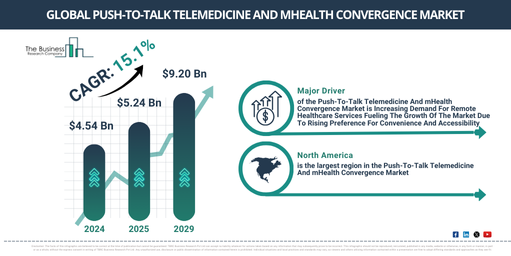
    The push-to-talk telemedicine and mHealth convergence market size has seen rapid growth in recent years. This market is expected to expand from $4.54 billion in 2024 to $5.24 billion in 2025, achieving a compound annual growth rate (CAGR) of 15.5%. Historically, this growth can be attributed to increasing healthcare costs, a rise in emergency medical communication, the expansion of 5G and low-latency networks, an escalating number of telehealth startups, and the growing burden on healthcare infrastructure.

    The push-to-talk telemedicine and mHealth convergence market is anticipated to experience substantial growth in the upcoming years. Its value is expected to climb to $9.20 billion by 2029, demonstrating a compound annual growth rate (CAGR) of 15.1%. The expansion during this forecast period can be attributed to heightened demand for healthcare services delivered remotely, the increasing spread of chronic illnesses, a rise in eye diseases, a greater emphasis on patient-focused care, and the growing prevalence of mental health crises. Leading trends for the forecast period include advancements in cloud security technology, the integration of voice artificial intelligence (AI), the incorporation of wearable devices, seamless integration with electronic health records, and innovations in artificial intelligence (AI)-driven telemedicine platforms.

    Unlock Your Free Sample Report for Exclusive Market Data:

    https://www.thebusinessresearchcompany.com/sample.aspx?id=27401&type=smp

    Which Drivers Are Supporting Growth Of The Push-To-Talk Telemedicine And mHealth Convergence Market?

    A growing need for remote healthcare services is anticipated to fuel the expansion of the push-to-talk (PTT) telemedicine and mHealth convergence market in the future. These services involve providing medical assistance and care remotely, leveraging digital tools to eliminate the need for physical appointments. Patient preference for ease and accessibility is driving up the need for remote healthcare, enabling people to access medical attention without travel, thereby conserving time and minimizing infection risk. Push-to-talk telemedicine and mHealth convergence facilitate remote healthcare by establishing live voice links between patients and healthcare providers. These technologies boost care coordination via immediate connections, leading to quicker response times and greater access for both urgent and routine health situations. For instance, in February 2023, according to a survey study among 8,000 U.S. adults, approximately with 2022’s cohort totaling 8,014 respondents from July 12 to August22, 2022, by Rock Health, a US-based nonprofit organization, 80% of respondents stated they had used telemedicine at least once, marking an 8% rise from 72% in 2021. Consequently, the rising demand for remote healthcare services is propelling the expansion of the push-to-talk (PTT) telemedicine and mHealth convergence market.

    What Are The Different Segment Classifications Within The Push-To-Talk Telemedicine And mHealth Convergence Market?

    The push-to-talk telemedicine and mhealth convergence market covered in this report is segmented

    1) By Device Type: Smartphones And Tablets, Telehealth Kiosks, Wearable Health Monitors, Dedicated Push-To-Talk Devices, Medical-Grade Smartphones

    2) By Deployment Type: Cloud-Based Solutions, On-Premise Solutions, Hybrid Deployment Models

    3) By Technology: Voice Over Internet Protocol, Mobile Messaging Services, Video Conferencing Solutions, Push-To-Talk Applications, Wearable Telehealth Devices

    4) By Application: Remote Patient Monitoring, Virtual Consultations, Emergency Response Services, Medication Management, Chronic Disease Management

    5) By End User: Healthcare Providers, Patients, Emergency Medical Services (EMS), Healthcare Payers, Clinics And Hospitals

    Subsegments:

    1) By Smartphones and Tablets: Android-Based Devices, iOS-Based Devices, Enterprise or Medical App-Enabled Devices, Consumer Health App-Enabled Devices, Ruggedized Smartphones for Field Use

    2) By Telehealth Kiosks: Stationary Telehealth Kiosks, Mobile or Portable Telehealth Kiosks, Pharmacy-Based Kiosks, Workplace or Corporate Wellness Kiosks, School-Based Kiosks

    3) By Wearable Health Monitors: Smartwatches with Health Sensors, Fitness Bands with Push-To-Talk Capability, Wearable ECG or Heart Monitors, Wearable Blood Pressure Monitors, Wearable Respiratory Monitors

    4) By Dedicated Push-To-Talk Devices: Two-Way Radio Medical Communication Devices, Field-Use Push-To-Talk Medical Handsets, Rugged Push-To-Talk Devices for Emergency Responders, Wi-Fi Enabled Push-To-Talk Devices for Hospitals, Long-Term Evolution or 5G Push-To-Talk Communication Devices

    5) By Medical-Grade Smartphones: Antimicrobial Smartphones, Intrinsically Safe Medical Smartphones, Push-To-Talk-Enabled Smartphones for Clinical Staff, Smartphones Integrated with Electronic Health Record Systems, Hospital-Specific Communication Devices

    Which Key Market Players Are Investing In Expansion And Innovation Of Push-To-Talk Telemedicine And mHealth Convergence Market?

    Major companies operating in the push-to-talk telemedicine and mhealth convergence market are Kyocera Corporation, Motorola Solutions Inc., Zebra Technologies Corporation, Avaya Inc., Alcatel-Lucent Enterprise SA, Doximity Inc., Vocera Communications Inc., Thuraya Telecommunications Company, TigerConnect Inc., QliqSOFT Inc., AVTEC Inc., A&D Company Limited, pMDsoft Inc., Zello Inc., Hytera Communications Corporation Limited, Diga-Talk Plus, SwyMed Inc., Spruce Health Inc., Voxer LLC, and Cardiocom LLC.

    Download The Full Report For Exclusive Market Findings:

    https://www.thebusinessresearchcompany.com/report/push-to-talk-telemedicine-and-mhealth-convergence-global-market-report

    Which Geographies Are Emerging As Strong Markets For The Push-To-Talk Telemedicine And mHealth Convergence Industry?

    North America was the largest region in the push-to-talk telemedicine and mhealth convergence market in 2024. Asia-Pacific is expected to be the fastest-growing region in the forecast period. The regions covered in the push-to-talk telemedicine and mhealth convergence market report are Asia-Pacific, Western Europe, Eastern Europe, North America, South America, Middle East, Africa.

    Request A Customized Version Of The Push-To-Talk Telemedicine And mHealth Convergence Market Report:

    https://www.thebusinessresearchcompany.com/customise?id=27401&type=smp

    Browse Through More Reports Similar to the Global Push-To-Talk Telemedicine And mHealth Convergence Market 2025, By The Business Research Company

    Emi Shielding Global Market Report 2025

    https://www.thebusinessresearchcompany.com/report/emi-shielding-global-market-report

    Structural Insulated Panels Market 2025

    https://www.thebusinessresearchcompany.com/report/structural-insulated-panels-market

    Automotive Shielding Global Market Report 2025

    https://www.thebusinessresearchcompany.com/report/automotive-shielding-global-market-report

    Get in touch with us:

    The Business Research Company: https://www.thebusinessresearchcompany.com/

    Americas +1 310-496-7795

    Asia +44 7882 955267 & +91 8897263534

    Europe +44 7882 955267

    Email us at info@tbrc.info

    Follow us on:

    LinkedIn: https://in.linkedin.com/company/the-business-research-company

    YouTube: https://www.youtube.com/channel/UC24_fI0rV8cR5DxlCpgmyFQ

    Global Market Model: https://www.thebusinessresearchcompany.com/global-market-model
  • Global Psychiatry Clinics Industry Trends: Where the Market Is Headed by 2029

    Global Psychiatry Clinics Industry Trends: Where the Market Is Headed by 2029

    Unlock Global Insights – Save 20% on Market Reports with Code ONLINE20

    How Is The Psychiatry Clinics Market Size Likely To Evolve From 2025 Through 2034?

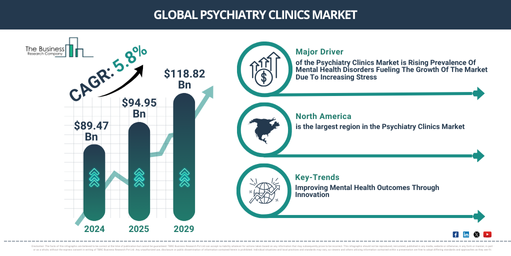
    The psychiatry clinics market has experienced robust expansion in recent years. Its valuation is projected to increase from $89.47 billion in 2024 to $94.95 billion by 2025, reflecting a compound annual growth rate (CAGR) of 6.1%. This historical progression can be attributed to factors such as increasing awareness and a reduction in stigma, the wider adoption of advanced psychiatric therapies and technologies, a rising prevalence of stress, anxiety, and depression, the expansion of digital mental health services, and improved private insurance coverage.

    The market size for psychiatry clinics is projected to experience substantial expansion over the upcoming years. This market is anticipated to reach $118.82 billion by 2029, exhibiting a compound annual growth rate (CAGR) of 5.8%. Factors contributing to this growth during the forecast period include a heightened focus on early diagnosis and intervention, increased collaboration between psychiatry clinics and primary healthcare providers, a surge in demand for outpatient psychiatric services, an intensified focus on workplace mental health programs, and an increasing incidence of dual diagnosis cases. Key trends anticipated within the forecast period encompass advancements in neurostimulation therapies, the integration of telepsychiatry platforms, the emergence of technology-driven mental health assessment tools, ongoing developments in digital therapeutics, progress in pharmacogenomics and personalized medicine, and the evolution of collaborative care models.

    Unlock Your Free Sample Report for Exclusive Market Data:

    https://www.thebusinessresearchcompany.com/sample.aspx?id=27400&type=smp

    Which Drivers Are Shaping The Psychiatry Clinics Industry’s Market Share?

    The increasing occurrence of mental health conditions is anticipated to boost the expansion of the psychiatry clinics market in the future. These disorders encompass various conditions impacting an individual’s mood, thought processes, conduct, and general psychological health. The growing incidence of mental health disorders stems from heightened stress levels, which can overload an individual’s ability to cope, resulting in conditions like anxiety and depression. Psychiatry clinics assist in addressing mental health disorders through offering specialized treatment, prompt diagnosis, and tailored intervention strategies, thereby empowering individuals to manage their conditions efficiently and enhance their quality of life. As an illustration, data from May 2024 by the American Psychiatric Association, a US-based government organization, showed that 43% of U.S. adults experienced greater anxiety compared to the previous year, an increase from 37% in 2023 and 32% in 2022, highlighting an upward trend in adult anxiety. Consequently, the increasing prevalence of mental health disorders is a key factor propelling the expansion of the psychiatry clinics market.

    What Are The Primary Types Of Segments Analyzed In The Psychiatry Clinics Market?

    The psychiatry clinics market covered in this report is segmented

    1) By Treatment Type: Combined Therapy, Psychotherapy, Psychotropic Medication

    2) By Insurance Type: Private Insurance, Public Insurance, Self Pay

    3) By Service Setting: Inpatient, Outpatient, Telepsychiatry

    4) By Patient Age Group: Adult, Child And Adolescent, Geriatric

    5) By Disorder Category: Anxiety Disorders, Mood Disorders, Psychotic Disorders

    Subsegments:

    1) By Combined Therapy: Cognitive Behavioral Therapy With Medication, Dialectical Behavior Therapy With Medication, Interpersonal Therapy With Medication, Family Therapy With Medication

    2) By Psychotherapy: Cognitive Behavioral Therapy, Dialectical Behavior Therapy, Interpersonal Therapy, Psychodynamic Therapy, Family And Couples Therapy, Group Therapy

    3) By Psychotropic Medication: Antidepressants, Antipsychotics, Mood Stabilizers, Anxiolytics, Stimulants

    How Are Trends Influencing The Psychiatry Clinics Market?

    Leading companies active in the psychiatry clinics market are prioritizing the development of innovative treatment methods, such as transcranial magnetic stimulation (TMS) therapy, to improve treatment effectiveness, expand non-invasive care alternatives, and enhance patient outcomes for individuals with mental health conditions. Transcranial magnetic stimulation (TMS) therapy is defined as a non-invasive treatment that uses magnetic fields to stimulate nerve cells within the brain. For example, in August 2024, Neuro Wellness Spa, an American mental healthcare firm, launched its 10th Psychiatry and TMS Clinic to provide accessible and advanced mental healthcare. Neuro Wellness Spa’s 10th psychiatry and TMS clinic delivers sophisticated, patient-centric mental health services aimed at broadening access to affordable and effective care. The clinic offers non-invasive transcranial magnetic stimulation (TMS) therapy for conditions such as treatment-resistant depression, anxiety, and OCD, alongside personalized treatment programs that include psychiatric evaluations, medication management, and psychotherapy services like cognitive behavioral therapy. Holistic wellness programs providing nutritional counseling and stress management are also available, supporting comprehensive patient care. The clinic employs state-of-the-art TMS devices with customizable protocols to guarantee precise treatment delivery in a comfortable, modern setting. Additionally, the clinic provides insurance and flexible payment options to increase affordability, while telepsychiatry services facilitate ongoing virtual care to improve treatment consistency and patient outcomes.

    Who Are The Core Companies Influencing The Psychiatry Clinics Market Landscape?

    Major companies operating in the psychiatry clinics market are Universal Health Services, Ramsay Health Care Limited, Acadia Healthcare, Rogers Behavioral Health, AltaPointe Health, Thriveworks Counseling, The Center for Health Care Services, Sheppard Pratt Health System, Oceans Healthcare, Harris Center for Mental Health and IDD, Amen Clinics, Med Park Hospital, Menninger Clinic, Bay Psychiatric Associates, Austen Riggs Center, Peninsula Behavioral Health, MindSpot Clinic, Oakland Psychological Clinic, Citrus Health Group LLC, and Tucker Psychiatric Clinic.

    Download The Full Report For Exclusive Market Findings:

    https://www.thebusinessresearchcompany.com/report/psychiatry-clinics-global-market-report

    Which Region Is Projected To Lead The Psychiatry Clinics Market During The Forecast Period?

    North America was the largest region in the psychiatry clinics market in 2024. Asia-Pacific is expected to be the fastest-growing region in the forecast period. The regions covered in the psychiatry clinics market report are Asia-Pacific, Western Europe, Eastern Europe, North America, South America, Middle East, Africa.

    Request A Customized Version Of The Psychiatry Clinics Market Report:

    https://www.thebusinessresearchcompany.com/customise?id=27400&type=smp

    Browse Through More Reports Similar to the Global Psychiatry Clinics Market 2025, By The Business Research Company

    Push Lawn Mowers Global Market Report 2025

    https://www.thebusinessresearchcompany.com/report/push-lawn-mowers-global-market-report

    Lawn Mower Global Market Report 2025

    https://www.thebusinessresearchcompany.com/report/lawn-mower-global-market-report

    Lawn Mowers Global Market Report 2025

    https://www.thebusinessresearchcompany.com/report/lawn-mowers-global-market-report

    Get in touch with us:

    The Business Research Company: https://www.thebusinessresearchcompany.com/

    Americas +1 310-496-7795

    Asia +44 7882 955267 & +91 8897263534

    Europe +44 7882 955267

    Email us at info@tbrc.info

    Follow us on:

    LinkedIn: https://in.linkedin.com/company/the-business-research-company

    YouTube: https://www.youtube.com/channel/UC24_fI0rV8cR5DxlCpgmyFQ

    Global Market Model: https://www.thebusinessresearchcompany.com/global-market-model
  • Herpes Simplex Keratitis Treatment Industry Anticipated to Expand at 7.6% CAGR During the Forecast Period

    Herpes Simplex Keratitis Treatment Industry Anticipated to Expand at 7.6% CAGR During the Forecast Period

    Unlock Global Insights – Save 20% on Market Reports with Code ONLINE20

    #What Is The Projected Market Size Of The Herpes Simplex Keratitis Treatment Market By 2029?

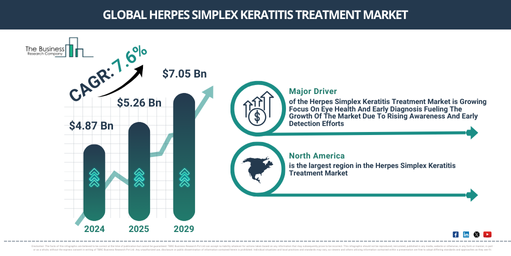
    The herpes simplex keratitis treatment market has shown robust growth over recent years. Its size is anticipated to expand from $4.87 billion in 2024 to $5.26 billion in 2025, progressing at a compound annual growth rate (CAGR) of 8.0%. This historical growth can be attributed to factors such as the increasing prevalence of herpes simplex virus infections, enhanced awareness regarding timely diagnosis and treatment, a rise in healthcare spending, an escalating demand for antiviral drugs, and an increase in clinical trials and research investment.

    The herpes simplex keratitis treatment market size is projected to experience substantial growth in the coming years, with expectations to reach $7.05 billion by 2029, expanding at a compound annual growth rate (CAGR) of 7.6%. This anticipated growth during the forecast period is primarily driven by factors such as an expanding elderly population, a heightened focus on ophthalmic health, the increasing adoption of novel therapies, the expansion of healthcare infrastructure in emerging markets, and growing investment in eye disease research. Furthermore, significant trends expected over this period include advancements in antiviral drug formulations, innovations in ocular drug delivery systems, the integration of teleophthalmology into eye care, sophisticated diagnostic imaging techniques, and the development of personalized treatment approaches.

    Unlock Your Free Sample Report for Exclusive Market Data:

    https://www.thebusinessresearchcompany.com/sample.aspx?id=27304&type=smp

    Which Industry Drivers Are Expected To Accelerate The Herpes Simplex Keratitis Treatment Market From 2025 To 2029?

    The increasing emphasis on eye health and early diagnosis is projected to stimulate the expansion of the herpes simplex keratitis treatment market moving forward. Eye health and early diagnosis refer to the maintenance of optimal vision and the prompt detection of eye conditions to prevent vision loss and enhance treatment outcomes. This heightened focus is driven by increased awareness, as more individuals acknowledge the critical role of regular eye examinations in averting severe vision issues. Herpes simplex keratitis treatment supports eye health and early diagnosis through targeted antiviral therapies, proving effective in preventing corneal damage and vision impairment. It minimizes complications by enabling timely interventions and monitoring, which improves patient results and overall ocular well-being. For instance, in May 2024, data from the Office for Health Improvement and Disparities, a UK government body, indicated that vision outpatient attendances in England surpassed 8.9 million in 2023, an increase from 8.4 million in 2022, corresponding to a rate of 15,362 per 100,000 population. Therefore, the growing focus on eye health and early diagnosis is a key driver for the herpes simplex keratitis treatment market’s growth. The rising adoption of telemedicine is expected to fuel the growth of the herpes simplex keratitis treatment market. Telemedicine involves the use of digital communication technologies to deliver clinical healthcare services remotely. Its increasing adoption is due to enhanced convenience, allowing patients to access healthcare services from a distance, saving time, and eliminating the need for travel, thereby improving overall accessibility and efficiency. Telemedicine enhances herpes simplex keratitis treatment by facilitating remote eye care consultations, which is particularly beneficial for patients in underserved or remote regions. It reduces delays in diagnosis and treatment by enabling timely virtual assessments and prescription management, leading to improved patient outcomes and convenience. For example, a survey study conducted by Rock Health, a US-based nonprofit, among 8,000 U.S. adults in February 2023 (with 8,014 respondents in the 2022 cohort from July 12 to August 22, 2022) found that 80% of respondents reported using telemedicine at least once, an 8% rise from 72% in 2021. Consequently, the increasing adoption of telemedicine is a significant factor driving the growth of the herpes simplex keratitis treatment market.

    What Are The Emerging Segments Gaining Attention In The Herpes Simplex Keratitis Treatment Market?

    The herpes simplex keratitis treatment market covered in this report is segmented

    1) By Treatment Type: Topical Antiviral Drugs, Oral Antiviral Drugs, Antibiotics, Corticosteroids, Other Therapies

    2) By Drug: Famciclovir, Valacyclovir, Acyclovir, Other Drugs

    3) By Disease Severity: Mild, Moderate, Severe

    4) By Route of Administration: Topical, Oral, Intravenous

    5) By End-User: Hospitals, Clinics, Ambulatory Surgical Centers, Home Care Settings

    Subsegments:

    1) By Topical Antiviral Drugs: Trifluridine, Ganciclovir, Acyclovir

    2) By Oral Antiviral Drugs: Acyclovir, Valacyclovir, Famciclovir

    3) By Antibiotics: Erythromycin, Gentamicin, Tobramycin

    4) By Corticosteroids: Prednisolone Acetate, Dexamethasone, Loteprednol

    5) By Other Therapies: Debridement, Amniotic Membrane Transplantation, Corneal Transplantation

    Who Are The Top Performing Companies In The Herpes Simplex Keratitis Treatment Market In Recent Years?

    Major companies operating in the herpes simplex keratitis treatment market are Pfizer Inc., Merck & Co. Inc., Novartis AG, GlaxoSmithKline plc, Bausch Health Companies Inc., Aurobindo Pharma Limited, Dr. Reddy’s Laboratories Limited, Cipla Limited, Micro Labs Limited, Blistex Inc., Shanghai BDgene Technology Co. Ltd., Ocular Therapeutix Inc., Chimerix Inc., AiCuris Anti-infective Cures GmbH, Taj Pharmaceuticals Limited, Fera Pharmaceuticals LLC, Excision BioTherapeutics Inc., Joshi Agrochem Pharma Private Limited, Kevy’s Labs Private Limited, A.S. Lifesciences Private Limited.

    Download The Full Report For Exclusive Market Findings:

    https://www.thebusinessresearchcompany.com/report/herpes-simplex-keratitis-treatment-global-market-report

    What Regional Growth Trends Are Shaping The Herpes Simplex Keratitis Treatment Market Outlook?

    North America was the largest region in the herpes simplex keratitis treatment market in 2024. Asia-Pacific is expected to be the fastest-growing region in the forecast period. The regions covered in the herpes simplex keratitis treatment market report are Asia-Pacific, Western Europe, Eastern Europe, North America, South America, Middle East, Africa.

    Request A Customized Version Of The Herpes Simplex Keratitis Treatment Market Report:

    https://www.thebusinessresearchcompany.com/customise?id=27304&type=smp

    Browse Through More Reports Similar to the Global Herpes Simplex Keratitis Treatment Market 2025, By The Business Research Company

    Moist Wound Dressings Global Market Report 2025

    https://www.thebusinessresearchcompany.com/report/moist-wound-dressings-global-market-report

    Skin Care Products Global Market Report 2025

    https://www.thebusinessresearchcompany.com/report/skin-care-products-global-market-report

    Face Creams Global Market Report 2025

    https://www.thebusinessresearchcompany.com/report/face-creams-global-market-report

    Get in touch with us:

    The Business Research Company: https://www.thebusinessresearchcompany.com/

    Americas +1 310-496-7795

    Asia +44 7882 955267 & +91 8897263534

    Europe +44 7882 955267

    Email us at info@tbrc.info

    Follow us on:

    LinkedIn: https://in.linkedin.com/company/the-business-research-company

    YouTube: https://www.youtube.com/channel/UC24_fI0rV8cR5DxlCpgmyFQ

    Global Market Model: https://www.thebusinessresearchcompany.com/global-market-model