Category: HealthcareServices

  • Healthcare Payment Processing Market to Grow at a CAGR of 14.8% from 2025 to 2029

    Healthcare Payment Processing Market to Grow at a CAGR of 14.8% from 2025 to 2029

    Unlock Global Insights – Save 20% on Market Reports with Code ONLINE20

    What Is The Future Market Size Estimation For The Healthcare Payment Processing Market Covering 2025–2034?

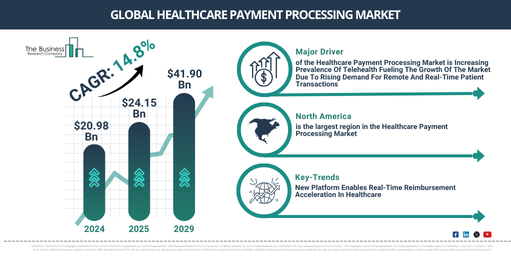
    The healthcare payment processing market has seen rapid expansion in recent years. Its valuation is set to climb from $20.98 billion in 2024 to $24.15 billion by 2025, demonstrating a compound annual growth rate (CAGR) of 15.1%. The expansion observed historically is linked to the increasing adoption of electronic health records, a growing need for effective claims management, the rising imperative for cost control within healthcare, the expanded deployment of automation in payment workflows, and the escalating requirements for regulatory compliance.

    The healthcare payment processing market is projected to experience substantial expansion over the upcoming years. By 2029, its valuation is anticipated to reach $41.90 billion, demonstrating a compound annual growth rate (CAGR) of 14.8%. This projected growth is driven by several factors, including the increasing implementation of value-based care models, the proliferation of electronic payments, a heightened need for real-time payment solutions, the expansion of telehealth services, and a greater emphasis on enhancing the patient financial experience. Key developments expected during this timeframe involve progress in blockchain technology, the incorporation of artificial intelligence, novelties in cloud-based payment platforms, sophisticated fraud detection systems, and the embedding of mobile payment solutions.

    Unlock Your Free Sample Report for Exclusive Market Data:

    https://www.thebusinessresearchcompany.com/sample.aspx?id=27302&type=smp

    Which Major Market Drivers Are Shaping The Future Of The Healthcare Payment Processing Market?

    The projected expansion of the healthcare payment processing market is linked to the growing presence of telehealth. Telehealth encompasses the remote delivery of medical services and information via phones, video calls, or applications, allowing patients to consult with doctors without needing to visit a clinic or hospital. The increased uptake of telehealth services stems from the rising demand for continuous and real-time health monitoring for individuals managing chronic conditions. Healthcare payment processing supports telehealth by enabling secure, real-time digital transactions, simplifying remote payments for patients. It also reduces administrative workload by automating billing and claims, thereby enhancing efficiency and accessibility within virtual care settings. For example, in May 2024, data from the Australian Digital Health Agency, an Australia-based government organization, indicated that between March 2021 and July 2022, more than 95,000 healthcare providers delivered telehealth services. During this period, approximately 118.2 million telehealth visits occurred, reaching around 18 million patients. Consequently, the expanding adoption of telehealth is driving the growth of the healthcare payment processing market.

    What Are The Major Segment Categories Driving The Healthcare Payment Processing Market Growth?

    The healthcare payment processing market covered in this report is segmented

    1) By Component: Software, Hardware, Services

    2) By Deployment Mode: On-Premises, Cloud

    3) By Payment Method: Credit Card, Debit Card, Electronic Funds Transfer, Mobile Payment, Other Payment Methods

    4) By Technology Adoption: Cloud-Based Solutions, On-Premises Software, Mobile Applications, Integrated Systems, Artificial Intelligence And Automation

    5) By End-User: Hospitals, Clinics, Diagnostic Centers, Ambulatory Surgical Centers, Other End-Users

    Subsegments:

    1) By Software: Payment Gateway Solutions, Revenue Cycle Management Software, Electronic Health Record Integration, Billing And Invoicing Software, Claims Management Software, Fraud Detection Software

    2) By Hardware: Point Of Sale Terminals, Card Readers, Biometric Devices, Payment Kiosks, Barcode Scanners, Networking Equipment

    3) By Services: Transaction Processing Services, Consulting Services, Customer Support Services, Integration And Implementation Services, Data Security Services, Training And Maintenance Services

    How Are Trends Influencing The Healthcare Payment Processing Market?

    Leading companies in the healthcare payment processing sector are concentrating on developing advanced technological solutions, such as real-time reimbursement acceleration, to boost revenue cycle efficiency, decrease administrative load, and provide healthcare providers with quicker access to working capital. Real-time reimbursement acceleration pertains to the swift processing and finalization of payments from payers to providers, facilitating immediate fund access and reducing revenue cycle delays. For example, in April 2025, Rectangle Health Inc., a US-based software company, launched PayerSync, a solution aimed at streamlining healthcare payment workflows. This platform allows for seamless integration between payer and provider systems, enabling both reimbursements and explanation of payments (EOPs) to be posted into practice management or electronic medical record (EMR) systems with a single click. By automating this procedure, PayerSync substantially reduces manual effort and speeds up payment cycles, thereby enhancing the revenue cycle through secure, data-rich transactions that support improved reconciliation.

    Who Are The Major Companies Operating In The Healthcare Payment Processing Market?

    Major companies operating in the healthcare payment processing market are Optum Inc., PayPal Holdings Inc., GE Healthcare Technologies Inc., Global Payments Inc., Square Inc., Experian Health Inc., Elavon Inc., Conifer Health Solutions LLC, Waystar Inc., Veradigm Inc., Zelis Healthcare LLC, Availity LLC, Greenway Health LLC, Tebra Technologies Inc., Pineapple Payments Inc., The SSI Group LLC, Rectangle Health Inc., Fattmerchant Inc, Electronic Merchant Systems LLC, Plexis Healthcare Systems Inc., Dharma Merchant Services Inc.

    Download The Full Report For Exclusive Market Findings:

    https://www.thebusinessresearchcompany.com/report/healthcare-payment-processing-global-market-report

    How Does The Healthcare Payment Processing Market Perform Across Key Geographic Regions?

    North America was the largest region in the healthcare payment processing market in 2024. Asia-Pacific is expected to be the fastest-growing region in the forecast period. The regions covered in the healthcare payment processing market report are Asia-Pacific, Western Europe, Eastern Europe, North America, South America, Middle East, Africa.

    Request A Customized Version Of The Healthcare Payment Processing Market Report:

    https://www.thebusinessresearchcompany.com/customise?id=27302&type=smp

    Browse Through More Reports Similar to the Global Healthcare Payment Processing Market 2025, By The Business Research Company

    Lab Automation Global Market Report 2025

    https://www.thebusinessresearchcompany.com/report/lab-automation-global-market-report

    Automation Software Global Market Report 2025

    https://www.thebusinessresearchcompany.com/report/automation-software-global-market-report

    Automation Components Global Market Report 2025

    https://www.thebusinessresearchcompany.com/report/automation-components-global-market-report

    Get in touch with us:

    The Business Research Company: https://www.thebusinessresearchcompany.com/

    Americas +1 310-496-7795

    Asia +44 7882 955267 & +91 8897263534

    Europe +44 7882 955267

    Email us at info@tbrc.info

    Follow us on:

    LinkedIn: https://in.linkedin.com/company/the-business-research-company

    YouTube: https://www.youtube.com/channel/UC24_fI0rV8cR5DxlCpgmyFQ

    Global Market Model: https://www.thebusinessresearchcompany.com/global-market-model
  • Global Healthcare Operational Analytics Market 2025–2029: Competitive Insights and Opportunities

    Global Healthcare Operational Analytics Market 2025–2029: Competitive Insights and Opportunities

    Unlock Global Insights – Save 20% on Market Reports with Code ONLINE20

    What Is The Expected Total Market Size Of The Healthcare Operational Analytics Industry By The Forecast Year 2029?

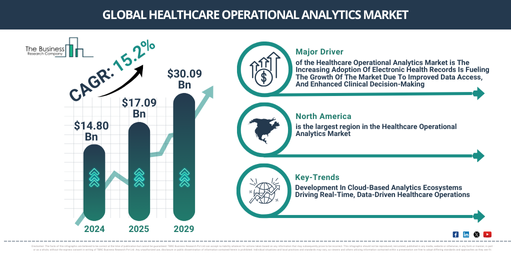
    The healthcare operational analytics market has experienced significant growth in recent years. It is projected to increase from $14.80 billion in 2024 to $17.09 billion in 2025, at a compound annual growth rate (CAGR) of 15.5%. The market’s past expansion is due to factors such as increasing government support, a rise in telehealth services, growing pressure on hospitals, the emergence of hybrid care models, and the expanding deployment of Internet of Things (IoT) devices.

    The healthcare operational analytics market is anticipated to experience substantial expansion over the coming years. This market is projected to reach $30.09 billion by 2029, demonstrating a compound annual growth rate (CAGR) of 15.2%. The driving forces behind this growth during the forecast period include the expansion of personalized medicine, the increasing prevalence of chronic diseases, rising healthcare expenses, and growing regulatory directives. Key trends expected in this timeframe involve the integration of artificial intelligence (AI), the proliferation of cloud-based analytics platforms, the adoption of self-service analytics tools, the broadening scope of telehealth analytics, and ongoing advancements in electronic health records.

    Unlock Your Free Sample Report for Exclusive Market Data:

    https://www.thebusinessresearchcompany.com/sample.aspx?id=27301&type=smp

    What Are The Main Drivers Boosting The Healthcare Operational Analytics Industry’s Expansion?

    The anticipated growth of the healthcare operational analytics market is expected to be propelled by the rising adoption of electronic health records (EHRs). These digital systems serve to store, manage, and facilitate the sharing of patient medical data both within and between different healthcare environments. Their increased usage is driven by the escalating demand for simplified access to patient details. Healthcare operational analytics augments EHRs by processing patient data to refine workflows, minimize errors, and optimize resource allocation, thereby fostering improved decision-making and more efficient care delivery. As an example, data from December 2024 released by the Centers for Disease Control and Prevention (CDC), a US national public health agency, indicated that in 2023, 88.2% of office-based physicians utilized electronic health records systems, marking an increase of 77.8% from 2023. Consequently, the expanding use of electronic health records is a key driver for the growth of the healthcare operational analytics market.

    How Is The Healthcare Operational Analytics Market Segmented?

    The healthcare operational analytics market covered in this report is segmented

    1) By Component: Software, Hardware, Services

    2) By Deployment Model: On-Premises, Cloud-Based, Hybrid

    3) By Technology: Big Data Analytics, Artificial Intelligence And Machine Learning, Business Intelligence Tools, Data Mining Tools

    4) By Application: Financial Analytics, Operational Analytics, Clinical Analytics, Patient Flow Analytics

    5) By End-User: Hospitals and Clinics, Pharmaceutical And Biotechnology Companies, Other End-Users

    Subsegments:

    1) By Software: Data Integration Tools, Revenue Cycle Management Software, Workforce Management Software, Patient Flow Management Software, Performance Benchmarking Tools, Claims Processing Software, Business Intelligence And Reporting Tools

    2) By Hardware: Servers, Storage Devices, Networking Devices, Workstations, Mobile Devices, Data Center Infrastructure

    3) By Services: Implementation And Integration Services, Support And Maintenance Services, Consulting Services, Training And Education Services, Data Analysis And Reporting Services, Managed Services

    What Key Innovation Trends Are Fueling Advancements In The Healthcare Operational Analytics Market?

    Major companies operating in the healthcare operational analytics market are prioritizing the development of advanced solutions, including cloud-based healthcare data and analytics ecosystems, to boost operational efficiency and deliver real-time insights throughout healthcare systems. A cloud-based healthcare data and analytics ecosystem functions as a digital framework that utilizes cloud technology to store, organize, and analyze healthcare information, thereby enabling real-time understanding, smooth integration, and scalable access for clinical and operational support. For example, in May 2024, Health Catalyst, Inc., a US-based provider of data and analytics technology and services to healthcare organizations, introduced Health Catalyst Ignite, a next-generation healthcare data and analytics ecosystem. This solution integrates domain-specific data models and self-service tools into a cohesive, contemporary cloud-based environment. Driven by integrated AI and machine learning, it supplies healthcare-specific predictive insights directly into BI workflows, facilitating faster, more knowledgeable decision-making. Its intuitive self-service interfaces and centralized data governance ensure analytics are accessible across clinical, financial, and operational teams, reducing reliance on IT departments and empowering widespread data-driven action.

    Which Global Market Leaders Are Shaping The Future Of The Healthcare Operational Analytics Sector?

    Major companies operating in the healthcare operational analytics market are UnitedHealth Group Incorporated, McKesson Corporation, The Cigna Group, Elevance Health, F. Hoffmann-La Roche AG, International Business Machines Corporation, Oracle Corporation, Siemens Healthineers AG, Koninklijke Philips N.V., GE Healthcare Technologies Inc., Wipro Limited, Change Healthcare Inc., SAS Institute Inc., Verisk Analytics Inc., CitiusTech Inc., Inovalon Holdings Inc., Veradigm LLC, Health Catalyst, MedeAnaltics Inc., WhiteSpace Health.

    Download The Full Report For Exclusive Market Findings:

    https://www.thebusinessresearchcompany.com/report/healthcare-operational-analytics-global-market-report

    Which Region Is Expected To Witness The Fastest Growth In The Healthcare Operational Analytics Market?

    North America was the largest region in the healthcare operational analytics market in 2024. Asia-Pacific is expected to be the fastest-growing region in the forecast period. The regions covered in the healthcare operational analytics market report are Asia-Pacific, Western Europe, Eastern Europe, North America, South America, Middle East, Africa.

    Request A Customized Version Of The Healthcare Operational Analytics Market Report:

    https://www.thebusinessresearchcompany.com/customise?id=27301&type=smp

    Browse Through More Reports Similar to the Global Healthcare Operational Analytics Market 2025, By The Business Research Company

    Medical And Surgical Drainage System Global Market Report 2025

    https://www.thebusinessresearchcompany.com/report/medical-and-surgical-drainage-system-global-market-report

    Cladding Systems Global Market Report 2025

    https://www.thebusinessresearchcompany.com/report/cladding-systems-global-market-report

    Urinary Drainage Bags Global Market Report 2025

    https://www.thebusinessresearchcompany.com/report/urinary-drainage-bags-global-market-report

    Get in touch with us:

    The Business Research Company: https://www.thebusinessresearchcompany.com/

    Americas +1 310-496-7795

    Asia +44 7882 955267 & +91 8897263534

    Europe +44 7882 955267

    Email us at info@tbrc.info

    Follow us on:

    LinkedIn: https://in.linkedin.com/company/the-business-research-company

    YouTube: https://www.youtube.com/channel/UC24_fI0rV8cR5DxlCpgmyFQ

    Global Market Model: https://www.thebusinessresearchcompany.com/global-market-model
  • Private Healthcare Market to Reach $6600.56 Billion by 2029, Growing at a CAGR of 5.2%

    Private Healthcare Market to Reach $6600.56 Billion by 2029, Growing at a CAGR of 5.2%

    Unlock Global Insights – Save 20% on Market Reports with Code ONLINE20

    What Is The Global Market Value Of The Private Healthcare Industry In 2025?

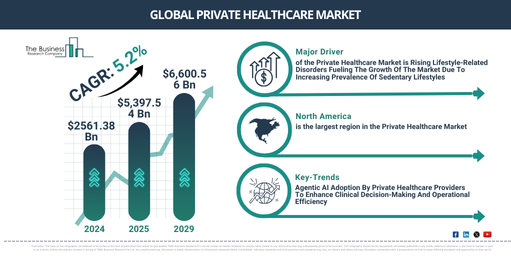
    The private healthcare market size has exhibited robust growth in recent years. This market is projected to expand from $2561.38 billion in 2024 to $5,397.54 billion by 2025, reflecting a compound annual growth rate (CAGR) of 5.5%. Historically, this expansion has been driven by increasing demand for swifter access to medical services, a rising prevalence of chronic diseases, the growing adoption of telemedicine and digital health platforms, enhanced private health insurance penetration, and amplified investments from private equity and institutional investors.

    The private healthcare market size is projected for substantial expansion over the upcoming years. By 2029, it is anticipated to reach $6,600.56 billion, exhibiting a compound annual growth rate (CAGR) of 5.2%. This expansion during the forecast period is fueled by several factors, including heightened investments from private equity and institutional investors, a surge in medical tourism, an increased emphasis on personalized and preventive care, expanding urbanization and a growing middle-class population, and the greater accessibility of advanced medical technologies. Key trends expected during this period involve progress in telemedicine platforms, improvements in surgical techniques, the incorporation of artificial intelligence in diagnostics, the integration of electronic health records (EHRs), and the wider adoption of technology in wearable health devices.

    Unlock Your Free Sample Report for Exclusive Market Data:

    https://www.thebusinessresearchcompany.com/sample.aspx?id=27398&type=smp

    What Are The Emerging Market Drivers Creating New Opportunities In The Private Healthcare Industry?

    The private healthcare market is anticipated to expand due to the increasing prevalence of disorders linked to lifestyle. These conditions arise predominantly from daily habits and choices, such as poor diet, insufficient physical activity, high stress levels, and detrimental addictions. The increase in these lifestyle-related health issues is driven by growing urbanization, which promotes inactive routines, where extended work hours and reduced movement contribute to declining health. Private healthcare proves advantageous in addressing these disorders by providing faster access to specialist medical professionals and tailored treatment approaches, facilitating prompt intervention and improved long-term health results. For instance, in May 2024, as reported by the British Diabetic Association (Diabetes UK), a UK-based patient, healthcare professional, and research charity, roughly 4.4 million individuals in the UK were diagnosed with diabetes as of 2022-23. Of these, approximately 8% have type 1 diabetes, with type 2 diabetes comprising about 90%. The residual 2% comprises other, less prevalent forms of diabetes. Consequently, the escalating incidence of lifestyle-related disorders is propelling the growth of the private healthcare market.

    How Is The Private Healthcare Market Classified Into Different Segments?

    The private healthcare market covered in this report is segmented

    1) By Service Type: Primary Care, Specialty Care, Diagnostic Services, Surgical Procedures, Wellness Services

    2) By Consumer Preferences: Complementary Medicine, Personalized Medicine

    3) By Application: Trauma And Orthopedics, General Surgery, Oncology, Maternity And OB-Gyn, Cardiology, Urology

    4) By End User: International Tourists, Private Medical Insurance Referrals And Private Medical Insurance, Self-pay Individuals

    Subsegments:

    1) By Primary Care: General Practitioner Consultations, Family Medicine, Pediatrics, Geriatric Care, Preventive Health Screenings

    2) By Specialty Care: Cardiology, Oncology, Neurology, Orthopedics, Dermatology

    3) By Diagnostic Services: Laboratory Testing, Imaging Services, Pathology Services, Genetic Testing, Point-of-Care Diagnostics

    4) By Surgical Procedures: Minimally Invasive Surgery, Orthopedic Surgery, Cardiovascular Surgery, Cosmetic Or Plastic Surgery, Transplant Surgery

    5) By Wellness Services: Nutrition And Diet Counseling, Physical Therapy And Rehabilitation, Mental Health And Counseling, Fitness And Exercise Programs, Alternative And Complementary Therapies

    Which Ongoing Trends Are Expected To Shape The Private Healthcare Market Outlook?

    Companies operating in the private healthcare market are primarily focusing on the development of advanced solutions, including agentic AI, to enhance clinical decision-making, automate administrative tasks, and provide personalized patient care while simultaneously ensuring data privacy and compliance with regulations. Agentic AI is a category of artificial intelligence designed to independently make decisions and initiate actions. For instance, in April 2025, OneAdvanced, a leading UK-based provider of sector-focused SaaS software, launched a private LLM specifically developed for healthcare organizations. This initiative aims to enable secure, role-based AI applications while safeguarding sensitive patient data. OneAdvanced’s private LLM for healthcare offers a completely encrypted, closed AI environment to protect sensitive patient information. It integrates sector-specific intelligence, retrieval-augmented generation, and agentic AI to improve decision-making processes and automation. Furthermore, its customizable workspaces facilitate secure collaboration among teams, all while maintaining regulatory compliance.

    Who Are The Prominent Global Companies Shaping The Private Healthcare Market?

    Major companies operating in the private healthcare market are HCA Healthcare, Fresenius Medical Care, Tenet Healthcare Corporation, Mayo Clinic, Universal Health Services, Ramsay Health Care, Mediclinic International, Bupa, Apollo Hospitals, Manipal Hospitals, Thumbay Hospital, Spire Healthcare Group Plc, One Medical, Fortis Healthcare Limited, BMI Healthcare, Circle Health Group, Saudi German Health, The London Clinic Ltd., Pantai Holdings, Alivia Health, and Aspen Healthcare.

    Download The Full Report For Exclusive Market Findings:

    https://www.thebusinessresearchcompany.com/report/private-healthcare-global-market-report

    How Do Regional Market Performances Compare Within The Private Healthcare Industry?

    North America was the largest region in the private healthcare market in 2024. Asia-Pacific is expected to be the fastest-growing region in the forecast period. The regions covered in the private healthcare market report are Asia-Pacific, Western Europe, Eastern Europe, North America, South America, Middle East, Africa.

    Request A Customized Version Of The Private Healthcare Market Report:

    https://www.thebusinessresearchcompany.com/customise?id=27398&type=smp

    Browse Through More Reports Similar to the Global Private Healthcare Market 2025, By The Business Research Company

    Property Management Service Global Market Report 2025

    https://www.thebusinessresearchcompany.com/report/property-management-service-global-market-report

    Property Management Global Market Report 2025

    https://www.thebusinessresearchcompany.com/report/property-management-global-market-report

    Services To Buildings And Dwellings Global Market Report 2025

    https://www.thebusinessresearchcompany.com/report/services-to-buildings-and-dwellings-global-market-report

    Get in touch with us:

    The Business Research Company: https://www.thebusinessresearchcompany.com/

    Americas +1 310-496-7795

    Asia +44 7882 955267 & +91 8897263534

    Europe +44 7882 955267

    Email us at info@tbrc.info

    Follow us on:

    LinkedIn: https://in.linkedin.com/company/the-business-research-company

    YouTube: https://www.youtube.com/channel/UC24_fI0rV8cR5DxlCpgmyFQ

    Global Market Model: https://www.thebusinessresearchcompany.com/global-market-model
  • Global Predictive Genetic Counselling Market Size Projected to Reach $7.58 Billion During the Forecast Period

    Global Predictive Genetic Counselling Market Size Projected to Reach $7.58 Billion During the Forecast Period

    Unlock Global Insights – Save 20% on Market Reports with Code ONLINE20

    By How Much Is The Predictive Genetic Counselling Market Expected To Expand Between 2025 And 2029?

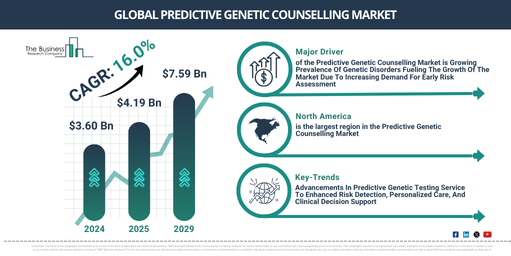
    The predictive genetic counselling market has seen rapid expansion in recent years. It is anticipated to increase from $3.60 billion in 2024 to $4.19 billion in 2025, achieving a compound annual growth rate (CAGR) of 16.4%. Historically, this growth can be ascribed to the increasing appeal of ancestry and genealogy services, the expanded application of genetic data for research, the rising need for paternity and relationship testing, the growing implementation of pharmacogenomics in drug development, and the proliferation of private genetic counselling establishments.

    The predictive genetic counselling market is anticipated to experience substantial growth in the coming years, with its size projected to reach $7.59 billion by 2029, exhibiting a compound annual growth rate (CAGR) of 16.0%. This expansion during the forecast period is primarily driven by factors such as the increasing incorporation of artificial intelligence into genetic risk assessment, the rise of employer-sponsored genetic health initiatives, an uptick in collaborations between genetic firms and healthcare providers, the expanded availability of at-home sample collection kits, and a growing call for reproductive and preconception genetic counselling. Key trends expected during this period involve progress in multi-omics methodologies for thorough risk evaluation, sophisticated chatbot-driven genetic counselling platforms, the emergence of blockchain technology for secure genetic data exchange, novel developments in wearable devices connected to genetic health insights, and the creation of genetic counselling platforms supporting multiple languages.

    Unlock Your Free Sample Report for Exclusive Market Data:

    https://www.thebusinessresearchcompany.com/sample.aspx?id=27397&type=smp

    Which Drivers Are Impacting The Predictive Genetic Counselling Market?

    The predictive genetic counselling market is projected to grow as the occurrence of genetic disorders becomes more widespread. Genetic disorders are conditions resulting from alterations or flaws in an individual’s DNA, which impact the body’s growth, development, and overall functionality. The increase in genetic disorders is partly attributed to rising parental age, as conceiving at an older age is linked to a higher probability of genetic mutations in offspring. These conditions support the advancement of predictive genetic counselling by elevating the demand for risk assessment services that help individuals understand their likelihood of inheriting or passing on such disorders. For instance, in October 2024, data from the Cystic Fibrosis Trust, a UK-based charitable organization, indicated that the number of patients registered with cystic fibrosis climbed to 11,318 in 2023, up from 11,148 in 2022. Therefore, the increasing prevalence of genetic disorders is a key driver for the predictive genetic counselling market.

    What Are The Major Segments Identified In The Predictive Genetic Counselling Market?

    The predictive genetic counselling market covered in this report is segmented

    1) By Service Type: Risk Assessment, Carrier Testing, Predictive Testing, Other Service Types

    2) By Mode Of Delivery: In-Person, Online

    3) By Application: Consumer Genomics, Breast And Ovarian Cancer, Cardiovascular Screening, Diabetic Screening And Monitoring, Colon Cancer, Parkinsonism Or Alzheimer’s Disease, Urologic Screening Or Prostate Cancer Screening, Orthopedic And Musculoskeletal, Other Applications

    4) By End-User: Hospitals And Clinics, Diagnostic Laboratories, Research And Academic Institutes, Other End-Users

    Subsegments:

    1) By Risk Assessment: Family History Evaluation, Lifestyle And Environmental Risk Analysis, Polygenic Risk Score Analysis, Hereditary Disease Susceptibility Screening

    2) By Carrier Testing: Cystic Fibrosis Carrier Testing, Tay-Sachs Carrier Testing, Fragile X Syndrome Testing, Sickle Cell Carrier Testing, Thalassemia Carrier Screening

    3) By Predictive Testing: Breast Cancer Gene 1 (BRCA1) Or Breast Cancer Gene 2 (BRCA2) Mutation Testing, Lynch Syndrome Testing, Huntington’s Disease Testing, Cardiovascular Genetic Risk Testing, Neurological Disorder Prediction Testing

    4) By Other Service Types: Pharmacogenomic Testing, Prenatal Genetic Testing, Newborn Genetic Screening, Direct-To-Consumer Genetic Testing, Whole Genome Sequencing For Prediction

    Which Competitive Trends Are Defining The Predictive Genetic Counselling Market Structure?

    Leading firms within the predictive genetic counselling market are prioritizing the creation of sophisticated solutions, including the predictive genetic testing service, to enable early identification of disease risks and facilitate well-informed clinical choices. This service involves a medical procedure where an individual’s DNA is analyzed to pinpoint genetic variations linked to a higher probability of acquiring particular inherited ailments or illnesses later in life. As an example, in August 2024, Genetic Technologies Limited, an Australia-based provider of genomics-based health testing, introduced its geneType Risk Assessment test. This test functions as a distinctive, all-encompassing, multi-risk predictive genetic screening instrument, crafted to evaluate an individual’s propensity for developing severe conditions like breast cancer, colorectal cancer, ovarian cancer, prostate cancer, coronary artery disease, and type 2 diabetes. It integrates clinically validated polygenic risk scores with non-genetic elements such as age, family history, and clinical measurements to offer a customized, actionable risk profile. Intended for proactive health management, it also furnishes unambiguous reports featuring customized recommendations to direct preventive care and lifestyle decisions across more than 42 countries.

    Which Key Players Are Driving Competition In The Predictive Genetic Counselling Market?

    Major companies operating in the predictive genetic counselling market are Thermo Fisher Scientific Inc., Abbott Laboratories, Laboratory Corporation of America Holdings (LabCorp), Quest Diagnostics Inc., Agilent Technologies Inc., Illumina Inc., Bio-Rad Laboratories Inc., QIAGEN NV, Natera Inc, Myriad Genetics Inc., Fulgent Genetics Inc, Invitae Corporation, 23andMe Holding Co, Color Genomics Inc, deCODE genetics, Centogene NV, Admera Health LLC, Mapmygenome, Exact Sciences Corporation, BGI Group.

    Download The Full Report For Exclusive Market Findings:

    https://www.thebusinessresearchcompany.com/report/predictive-genetic-counselling-global-market-report

    Which Region Currently Holds The Largest Share Of The Predictive Genetic Counselling Market?

    North America was the largest region in the predictive genetic counselling market in 2024. Asia-Pacific is expected to be the fastest-growing region in the forecast period. The regions covered in the predictive genetic counselling market report are Asia-Pacific, Western Europe, Eastern Europe, North America, South America, Middle East, Africa.

    Request A Customized Version Of The Predictive Genetic Counselling Market Report:

    https://www.thebusinessresearchcompany.com/customise?id=27397&type=smp

    Browse Through More Reports Similar to the Global Predictive Genetic Counselling Market 2025, By The Business Research Company

    Property Management Global Market Report 2025

    https://www.thebusinessresearchcompany.com/report/property-management-global-market-report

    Property Management Software Market 2025

    https://www.thebusinessresearchcompany.com/report/property-management-software-market

    Property Management Service Global Market Report 2025

    https://www.thebusinessresearchcompany.com/report/property-management-service-global-market-report

    Get in touch with us:

    The Business Research Company: https://www.thebusinessresearchcompany.com/

    Americas +1 310-496-7795

    Asia +44 7882 955267 & +91 8897263534

    Europe +44 7882 955267

    Email us at info@tbrc.info

    Follow us on:

    LinkedIn: https://in.linkedin.com/company/the-business-research-company

    YouTube: https://www.youtube.com/channel/UC24_fI0rV8cR5DxlCpgmyFQ

    Global Market Model: https://www.thebusinessresearchcompany.com/global-market-model
  • Predictive Genetic Counseling Service Industry Anticipated to Expand at 10.4% CAGR During the Forecast Period

    Predictive Genetic Counseling Service Industry Anticipated to Expand at 10.4% CAGR During the Forecast Period

    Unlock Global Insights – Save 20% on Market Reports with Code ONLINE20

    #What Is The Projected Market Size Of The Predictive Genetic Counseling Service Market By 2029?

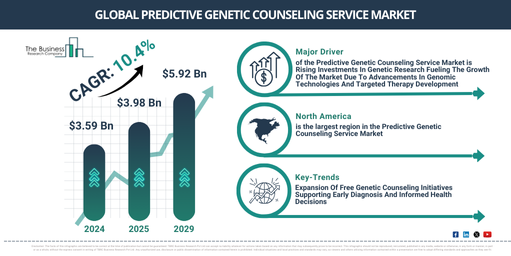
    The predictive genetic counseling service market has seen rapid expansion in recent years. This market is expected to increase from $3.59 billion in 2024 to $3.98 billion in 2025, reflecting a compound annual growth rate (CAGR) of 10.8%. The historical growth trajectory can be linked to the increasing incidence of genetic disorders and hereditary cancers, a heightened focus on early disease identification and preventive measures, the global escalation in chronic disease prevalence, a greater incorporation of genetics into clinical decision-making, and the expanding adoption of predictive analytics in the healthcare industry.

    The predictive genetic counseling service market size is anticipated to experience substantial growth in the upcoming years. It is forecast to expand to $5.92 billion by 2029, growing at a compound annual growth rate (CAGR) of 10.4%. This projected growth can be ascribed to several factors, including the wider application of pharmacogenomics in therapy planning, increasing public awareness regarding hereditary conditions, a rising demand for proactive healthcare solutions, the enhancement of genetic literacy among patients, and the growing need for family planning support. Significant trends expected during this forecast period involve advancements in next-generation sequencing, the miniaturization of diagnostic devices, the evolution of AI in genetic risk prediction, the integration of genetic data with electronic health records, and innovations in direct-to-consumer genetic testing.

    Unlock Your Free Sample Report for Exclusive Market Data:

    https://www.thebusinessresearchcompany.com/sample.aspx?id=27396&type=smp

    Which Industry Drivers Are Expected To Accelerate The Predictive Genetic Counseling Service Market From 2025 To 2029?

    The increasing investments in genetic research are projected to drive the future growth of the predictive genetic counseling service market. Genetic research involves the systematic investigation of genes and heredity to understand the transmission of genetic traits and their influence on biological functions. Investments in this field are rising due to advancements in genetic sequencing and precision medicine technologies, which accelerate the development of targeted therapies and enhance the efficiency and commercial promise of biomedical research. These investments support the demand for predictive genetic counseling services by uncovering new genetic markers for inherited diseases, thereby increasing the need for professionals to interpret these findings and guide individuals on their health risks. For instance, in December 2022, according to the HM Government, a UK-based central executive authority, the government allocated $139 million (£105 million) to a major research initiative aimed at examining how whole genome sequencing can improve the early detection and treatment of rare genetic disorders in newborns, potentially delivering life-saving benefits to thousands of babies. Therefore, the expanding investments in genetic research are propelling the growth of the predictive genetic counseling service market.

    What Are The Emerging Segments Gaining Attention In The Predictive Genetic Counseling Service Market?

    The predictive genetic counseling service market covered in this report is segmented

    1) By Type: Premarital Examination Service, Parent Child Identification Service, Antenatal Examination Service, Single Gene Or Polygene Disease Diagnosis Service

    2) By Application: Adult, Child

    3) By End-User: Hospitals, Clinical Laboratories, Academic Institutions, Research Organizations, Pharmaceutical Companies

    Subsegments:

    1) By Premarital Examination Service: Genetic Carrier Screening, Chromosomal Abnormality Testing, Inherited Disorder Risk Assessment

    2) By Parent Child Identification Service: Paternity Testing, Maternity Testing, Kinship Analysis

    3) By Antenatal Examination Service: Non-Invasive Prenatal Testing (NIPT), Chorionic Villus Sampling (CVS), Amniocentesis, Fetal DNA Sequencing

    4) By Single Gene Or Polygene Disease Diagnosis Service: Monogenic Disorder Testing, Polygenic Risk Scoring, Pharmacogenomics Testing, Hereditary Cancer Risk Testing

    What Are The Latest Industry Trends Transforming The Predictive Genetic Counseling Service Market?

    Leading companies in the predictive genetic counseling service market are concentrating on developing sophisticated solutions, such as complimentary genetic counseling services, to encourage early risk assessment and well-informed decisions. No-cost genetic counseling services involve free consultations offered to individuals to assist them in understanding their genetic health predispositions, typically supported by public health programs, research efforts, or charitable organizations. For instance, in May 2023, Vigil Neuroscience Inc., a US-based biotechnology company, launched ALSPAware, a new program offering free genetic testing and counseling services for diagnosing adult-onset leukoencephalopathy with axonal spheroids and pigmented glia (ALSP). ALSPAware provides free and confidential genetic testing and counseling to U.S. residents aged 18 and above. The program is designed to support both individuals and healthcare professionals, offering a single-gene test for those with a family history of ALSP and a custom gene panel for identifying adult-onset neurological disorders. Licensed genetic counselors assist with the testing process and help interpret the results. This initiative also grants access to specialized resources aimed at reducing misdiagnosis and improving disease management for people affected by ALSP.

    Who Are The Top Performing Companies In The Predictive Genetic Counseling Service Market In Recent Years?

    Major companies operating in the predictive genetic counseling service market are Roche Ltd., Thermo Fisher Scientific Inc., Agilent Technologies Inc., Illumina Inc., Natera Inc., Tempus AI Inc., Fulgent Genetics Inc., Invitae Corporation, Berry Genomics Co. Ltd., Color Genomics Inc., Decode Genetics Inc., Myriad Genetics Inc., Genpath Diagnostics, Genomic Medical Inc., GeneDx Inc., EasyDNA, Blueprint Genetics Inc., Veritas Genetics International Ltd., Abbott Pathology, Bgi Group Ltd.

    Download The Full Report For Exclusive Market Findings:

    https://www.thebusinessresearchcompany.com/report/predictive-genetic-counseling-service-global-market-report

    What Regional Growth Trends Are Shaping The Predictive Genetic Counseling Service Market Outlook?

    North America was the largest region in the predictive genetic counseling service market in 2024. Asia-Pacific is expected to be the fastest-growing region in the forecast period. The regions covered in the predictive genetic counseling service market report are Asia-Pacific, Western Europe, Eastern Europe, North America, South America, Middle East, Africa.

    Request A Customized Version Of The Predictive Genetic Counseling Service Market Report:

    https://www.thebusinessresearchcompany.com/customise?id=27396&type=smp

    Browse Through More Reports Similar to the Global Predictive Genetic Counseling Service Market 2025, By The Business Research Company

    Precast Concrete Market 2025

    https://www.thebusinessresearchcompany.com/report/precast-concrete-market

    Rapid Strength Concrete Global Market Report 2025

    https://www.thebusinessresearchcompany.com/report/rapid-strength-concrete-global-market-report

    Latex Mattress Global Market Report 2025

    https://www.thebusinessresearchcompany.com/report/latex-mattress-global-market-report

    Get in touch with us:

    The Business Research Company: https://www.thebusinessresearchcompany.com/

    Americas +1 310-496-7795

    Asia +44 7882 955267 & +91 8897263534

    Europe +44 7882 955267

    Email us at info@tbrc.info

    Follow us on:

    LinkedIn: https://in.linkedin.com/company/the-business-research-company

    YouTube: https://www.youtube.com/channel/UC24_fI0rV8cR5DxlCpgmyFQ

    Global Market Model: https://www.thebusinessresearchcompany.com/global-market-model
  • Precision Medicine Software Market to Grow at a CAGR of 15% from 2025 to 2029

    Precision Medicine Software Market to Grow at a CAGR of 15% from 2025 to 2029

    Unlock Global Insights – Save 20% on Market Reports with Code ONLINE20

    What Is The Future Market Size Estimation For The Precision Medicine Software Market Covering 2025–2034?

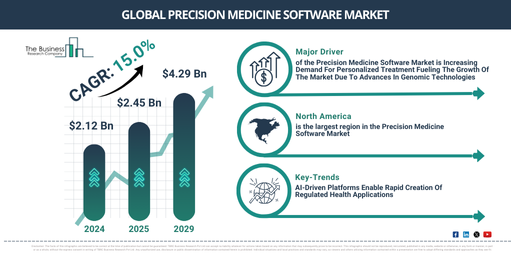
    The precision medicine software market size has seen rapid expansion in recent years. Its value is expected to increase from $2.12 billion in 2024 to $2.45 billion in 2025, achieving a compound annual growth rate (CAGR) of 15.4%. The significant growth observed historically can be linked to factors such as the increasing implementation of electronic health records (EHRs), a rise in genomic sequencing initiatives, expanding investments in biotechnology and personalized medicine, advancements in cancer genomics and targeted therapy research, and enhanced collaboration between the healthcare and technology sectors.

    The precision medicine software market is anticipated to experience significant expansion over the coming years. Its valuation is projected to reach $4.29 billion by 2029, exhibiting a compound annual growth rate (CAGR) of 15.0%. This projected expansion during the forecast period stems from factors such as an increasing need for tailored treatment methods, a heightened emphasis on rare illnesses and the creation of orphan drugs, the rise of direct-to-consumer genetic testing, and enhanced regulatory backing coupled with data standardization initiatives. Key developments expected during this period encompass the broadening of multi-omics data integration, a move towards cloud-native platforms, a focus on providing real-time clinical decision support, the evolution of federated and privacy-preserving data models, and the integration of digital twins into personalized treatment strategies.

    Unlock Your Free Sample Report for Exclusive Market Data:

    https://www.thebusinessresearchcompany.com/sample.aspx?id=27394&type=smp

    Which Major Market Drivers Are Shaping The Future Of The Precision Medicine Software Market?

    The rising demand for individualized treatment is expected to propel the growth of the precision medicine software market going forward. Personalized treatment involves tailoring medical care to an individual’s unique genetic makeup, lifestyle, and health history for more effective outcomes. The heightened need for personalized treatment is attributable to advancements in genomic technologies, which enable precise identification of genetic variations and customized treatments for individuals. Precision medicine software assists in personalized treatment by analyzing genetic, clinical, and lifestyle data to customize healthcare decisions. It enhances diagnostic accuracy and treatment effectiveness, supporting more targeted and efficient patient care. For instance, in February 2024, according to the Personalized Medicine Coalition (PMC), a US-based nonprofit organization, the U.S. Food and Drug Administration (FDA) approved 26 new personalized medicines in 2023, a significant increase from the 12 approved in 2022. Therefore, the increasing demand for personalized treatment is driving the growth of the precision medicine software market.

    What Are The Major Segment Categories Driving The Precision Medicine Software Market Growth?

    The precision medicine software market covered in this report is segmented

    1) By Software Type: Clinical Decision Support Systems (CDSS), Genomic Data Analysis Tools, Data Integration And Management Software, Patient Management Software, Bioinformatics Tools

    2) By Technology: Artificial Intelligence And Machine Learning, Big Data Analytics, Blockchain Technology, Internet of Medical Things (IoMT), Clustered Regularly Interspaced Short Palindromic Repeats (CRISPR) And Gene Editing Tools

    3) By Deployment: Cloud, On-Premise

    4) By Application: Oncology, Central Nervous System, Immunology, Cardiovascular, Other Applications

    5) By End User: Healthcare Providers, Research Centers And Government Institutes, Pharmaceutical And Biotechnology Companies, Other End Users

    Subsegments:

    1) By Clinical Decision Support Systems (CDSS): Diagnostic Decision Support, Therapeutic Decision Support, Clinical Guidelines And Protocols, Drug-Drug Interaction Alerts, Risk Assessment Modules

    2) By Genomic Data Analysis Tools: Variant Calling And Annotation Tools, Genome Alignment Software, Gene Expression Analysis, Next-Generation Sequencing (NGS) Data Analysis, Pathway Analysis Tools

    3) By Data Integration And Management Software: Electronic Health Record (EHR) Integration, Laboratory Information Management Systems (LIMS), Clinical Data Warehousing, Data Cleaning And Normalization, Metadata Management

    4) By Patient Management Software: Appointment Scheduling, Patient Registry Software, Care Coordination Tools, Patient Engagement Platforms, Remote Monitoring Systems

    5) By Bioinformatics Tools: Sequence Analysis Software, Structural Bioinformatics Tools, Functional Genomics Platforms, Molecular Modeling And Simulation, Proteomics And Metabolomics Tools

    How Are Emerging Market Trends Shaping The Precision Medicine Software Industry Landscape?

    Leading companies within the precision medicine software market are concentrating on developing advanced solutions, such as digital healthcare, to streamline the creation of digital health products, thereby cutting down on both time and costs. Digital healthcare involves utilizing digital technologies and tools to deliver, manage, and enhance healthcare services and outcomes. For instance, in July 2024, Huma Therapeutics Ltd, a digital health company from the UK, launched its Cloud Platform. This platform is designed to make digital-first healthcare more widely available by allowing for the rapid, no-code development and deployment of regulated health applications powered by artificial intelligence (AI). The platform features ready-made components, connects with various devices, and complies with key regulatory standards (FDA Class II, EU MDR IIb, Saudi FDA C), enabling organizations of any size to offer effective and cost-efficient digital health solutions. Ultimately, the Huma cloud platform speeds up digital health innovation, expands accessibility, and supports proactive, artificial intelligence (AI)-driven care and research efforts.

    Who Are The Major Companies Operating In The Precision Medicine Software Market?

    Major companies operating in the precision medicine software market are Koninklijke Philips N.V., Palantir Technologies Inc., Tempus Labs Inc., Myriad Genetics Inc., Foundation Medicine Inc., Guardant Health Inc., Color Genomics Inc., NantHealth Inc., SOPHiA GENETICS SA, Aignostics GmbH, MVision AI Oy, Fabric Genomics Inc., QUIBIM S.L., Syapse Inc., PierianDx Inc., 2bPrecise LLC, SimBioSys Inc., Navignostics AG, xCures Inc., LifeOmic Holdings LLC.

    Download The Full Report For Exclusive Market Findings:

    https://www.thebusinessresearchcompany.com/report/precision-medicine-software-global-market-report

    How Does The Precision Medicine Software Market Perform Across Key Geographic Regions?

    North America was the largest region in the precision medicine software market in 2024. The regions covered in the precision medicine software market report are Asia-Pacific, Western Europe, Eastern Europe, North America, South America, Middle East, Africa.

    Request A Customized Version Of The Precision Medicine Software Market Report:

    https://www.thebusinessresearchcompany.com/customise?id=27394&type=smp

    Browse Through More Reports Similar to the Global Precision Medicine Software Market 2025, By The Business Research Company

    Financial Guarantee Global Market Report 2025

    https://www.thebusinessresearchcompany.com/report/financial-guarantee-global-market-report

    Syndicated Loans Global Market Report 2025

    https://www.thebusinessresearchcompany.com/report/syndicated-loans-global-market-report

    Revenue Based Financing Global Market Report 2025

    https://www.thebusinessresearchcompany.com/report/revenue-based-financing-global-market-report

    Get in touch with us:

    The Business Research Company: https://www.thebusinessresearchcompany.com/

    Americas +1 310-496-7795

    Asia +44 7882 955267 & +91 8897263534

    Europe +44 7882 955267

    Email us at info@tbrc.info

    Follow us on:

    LinkedIn: https://in.linkedin.com/company/the-business-research-company

    YouTube: https://www.youtube.com/channel/UC24_fI0rV8cR5DxlCpgmyFQ

    Global Market Model: https://www.thebusinessresearchcompany.com/global-market-model

  • Urology Robotic Surgery Market Growth Opportunities: Insights from 2025–2029

    Urology Robotic Surgery Market Growth Opportunities: Insights from 2025–2029

    Unlock Global Insights – Save 20% on Market Reports with Code ONLINE20

    By How Much Is The Urology Robotic Surgery Market Expected To Expand Between 2025 And 2029?

    The urology robotic surgery market size has experienced rapid expansion recently. It is anticipated to increase from $4.37 billion in 2024 to $4.94 billion in 2025, at a compound annual growth rate (CAGR) of 13.0%. The historical growth in this market can be linked to factors such as the rising prevalence of urological conditions, an increasing demand for minimally invasive surgical options, a growing elderly demographic, improvements in hospital facilities, and higher healthcare spending.

    The urology robotic surgery market is projected to experience swift expansion over the coming years, reaching a size of $7.96 billion by 2029, exhibiting a compound annual growth rate (CAGR) of 12.7%. This anticipated growth during the forecast period stems from factors such as the rising demand for outpatient urology procedures, an increase in medical tourism across developing markets, heightened awareness regarding the advantages of robotic surgery, expanding government efforts for advanced healthcare systems, and a stronger emphasis on optimizing patient outcomes. Key trends anticipated for the forecast period encompass significant technological progress in urology surgery, continuous innovation within surgical robotics, substantial investment in research and development, the creation of more compact robotic systems, and the incorporation of artificial intelligence into surgical processes.

    Unlock Your Free Sample Report for Exclusive Market Data:

    https://www.thebusinessresearchcompany.com/sample.aspx?id=27442&type=smp

    What Are The Emerging Market Drivers Creating New Opportunities In The Urology Robotic Surgery Industry?

    The future expansion of the urology robotic surgery market is anticipated to be driven by the rising incidence of urological disorders. These conditions specifically affect the urinary tract and male reproductive organs. A primary cause for this increased prevalence is the aging population, given that advancing age often results in the weakening of bladder and pelvic muscles, thereby elevating the likelihood of developing such ailments. Urology robotic surgery provides valuable support for urological disorders by offering precise, minimally invasive treatment options that enhance surgical accuracy, reduce complications, and improve patient recovery for conditions like prostate cancer and kidney disease. As an illustration, figures from Prostate Cancer UK, a UK-based charitable organization, are expected to show in January 2025 that 50,751 men in England were diagnosed with prostate cancer in 2022, a number that subsequently rose to 55,033 in 2023. Consequently, the expanding occurrence of urological disorders is fueling the growth of the urology robotic surgery market.

    What Are The Major Segment Categories Driving The Urology Robotic Surgery Market Growth?

    The urology robotic surgery market covered in this report is segmented

    1) By Type: Robot Machines, Navigation Systems, Planners, Simulators, Other Types

    2) By Component: Robotic Surgery Systems, Instruments And Accessories, Services

    3) By Application: Robotic Prostatectomy, Robotic Cystectomy, Robotic Pyeloplasty, Robotic Nephrectomy, Other Applications

    4) By End-User: Hospitals, Ambulatory Surgical Centers, Specialty Clinics, Other End-Users

    Subsegments:

    1) By Robot Machines: Surgical Robots, Assistive Robots, Teleoperated Robots, Autonomous Robots

    2) By Navigation Systems: Imaging Navigation Systems, Electromagnetic Navigation Systems, Optical Tracking Systems, Ultrasound Navigation Systems

    3) By Planners: Preoperative Planning Software, Intraoperative Planning Software, 3D Modeling Software, Procedure Simulation Software

    4) By Simulators: Virtual Reality Simulators, Augmented Reality Simulators, Haptic Feedback Simulators, Training Simulators

    5) By Other Types: Robotic Arms, Control Consoles, Robotic Accessories, Robotic Integration Systems

    How Are Trends Influencing The Urology Robotic Surgery Market?

    Major companies engaged in the urology robotic surgery market are intensifying their efforts to develop artificial intelligence (AI)-powered features, aiming to gain a competitive advantage. AI-driven functionalities in urology robotic surgery encompass real-time image guidance for identifying tumors, surgical planning utilizing 3D models, and intraoperative skill assessment, all intended to boost precision and surgical outcomes. As an illustration, in August 2024, PROCEPT BioRobotics, a US-based surgical robotics company, secured FDA clearance for the HYDROS Robotic System. This advanced, AI-powered platform is designed to enhance Aquablation therapy for benign prostatic hyperplasia (BPH). The system incorporates AI-driven treatment planning, next-generation imaging, and robotic-assisted, heat-free waterjet tissue resection to precisely and efficiently remove prostate tissue while preserving critical anatomy. It also optimizes surgical workflow and improves operating room efficiency. HYDROS seeks to provide consistent, personalized, and durable symptom relief with better preservation of sexual and urinary function, representing a significant progression in BPH treatment.

    Who Are The Core Companies Influencing The Urology Robotic Surgery Market Landscape?

    Major companies operating in the urology robotic surgery market are Siemens Healthineers, Medtronic PLC, Stryker Corporation, Boston Scientific Corporation, Intuitive Surgical Inc., KARL STORZ SE & Co. KG, Sina Robotics and Medical Innovators Co. Ltd., CMR Surgical Limited, SS Innovations International Inc., Distalmotion SA, Ronovo Surgical Inc., Levita Magnetics International Corp., Titan Medical Inc., Virtual Incision Corporation, Nanjing Perlove Medical Equipment Co. Ltd., Edge Medical Robotics Corporation, Rob Surgical Systems S.L, Virtuoso Surgical Inc., GynoBotics Inc., Harbin Sagebot Intelligent Medical Equipment Co. Ltd., and Perlove Medical Robot.

    Download The Full Report For Exclusive Market Findings:

    https://www.thebusinessresearchcompany.com/report/urology-robotic-surgery-global-market-report

    Which Region Shows The Highest Potential For Future Expansion In The Urology Robotic Surgery Market?

    North America was the largest region in the urology robotic surgery market in 2024. Asia-Pacific is expected to be the fastest-growing region in the forecast period. The regions covered in the urology robotic surgery market report are Asia-Pacific, Western Europe, Eastern Europe, North America, South America, Middle East, Africa.

    Request A Customized Version Of The Urology Robotic Surgery Market Report:

    https://www.thebusinessresearchcompany.com/customise?id=27442&type=smp

    Browse Through More Reports Similar to the Global Urology Robotic Surgery Market 2025, By The Business Research Company

    Architectural Acoustic Panels Global Market Report 2025

    https://www.thebusinessresearchcompany.com/report/architectural-acoustic-panels-global-market-report

    Automotive Acoustic Materials Global Market Report 2025

    https://www.thebusinessresearchcompany.com/report/automotive-acoustic-materials-global-market-report

    Acoustic Insulation Global Market Report 2025

    https://www.thebusinessresearchcompany.com/report/acoustic-insulation-global-market-report

    Get in touch with us:

    The Business Research Company: https://www.thebusinessresearchcompany.com/

    Americas +1 310-496-7795

    Asia +44 7882 955267 & +91 8897263534

    Europe +44 7882 955267

    Email us at info@tbrc.info

    Follow us on:

    LinkedIn: https://in.linkedin.com/company/the-business-research-company

    YouTube: https://www.youtube.com/channel/UC24_fI0rV8cR5DxlCpgmyFQ

    Global Market Model: https://www.thebusinessresearchcompany.com/global-market-model

  • Global Temporary Healthcare Staffing Market 2025–2029: Competitive Insights and Opportunities

    Global Temporary Healthcare Staffing Market 2025–2029: Competitive Insights and Opportunities

    Unlock Global Insights – Save 20% on Market Reports with Code ONLINE20

    What Market Value Is The Temporary Healthcare Staffing Industry Expected To Reach By 2029, Starting From 2025 Levels?

    The temporary healthcare staffing market size has shown robust growth in recent years. It is projected to expand from $45.75 billion in 2024 to $48.83 billion in 2025, demonstrating a compound annual growth rate (CAGR) of 6.7%. This historical expansion has been driven by several factors, including a growing scarcity of healthcare professionals, an increasing need for flexible workforces in healthcare facilities, a surge in burnout and resignations among full-time medical staff, greater healthcare utilization stemming from expanding insurance coverage, and the rising appeal of models such as gig and travel nursing.

    The temporary healthcare staffing market is anticipated to experience robust expansion over the next few years, with projections indicating it will reach $62.59 billion in 2029, growing at a compound annual growth rate (CAGR) of 6.4%. The impetus for this growth during the forecast period stems from the increasing incidence of public health emergencies and pandemics, the escalating expenses linked to full-time employment, the broadening availability of ambulatory and home care services, the rising demand for coverage in rural and underserved areas, and more stringent accreditation and compliance demands. Noteworthy trends for this period encompass improvements in digital staffing platforms, the incorporation of workforce management systems, technology-facilitated credentialing and background verifications, advancements in predictive analytics for staffing requirements, and the development of cloud-based scheduling instruments.

    Unlock Your Free Sample Report for Exclusive Market Data:

    https://www.thebusinessresearchcompany.com/sample.aspx?id=27433&type=smp

    Which Drivers Are Shaping The Temporary Healthcare Staffing Industry’s Market Share?

    The expansion of medical tourism is anticipated to drive the future development of the temporary healthcare staffing market. This involves individuals journeying to different nations for medical treatments, frequently seeking more economical, superior, or specialized care. The increase in medical tourism stems from escalating healthcare expenses in advanced economies, prompting patients to pursue more cost-effective yet quality medical options internationally. Temporary healthcare staffing plays a crucial role in supporting medical tourism by providing a flexible supply of qualified experts, capable of managing unexpected surges in patient numbers and thus upholding excellent care standards without interruption. As an illustration, data from February 2025 by the US-ASEAN Business Council, a US-based non-profit entity, indicated that Thailand welcomed 2.86 million medical tourists in 2023, generating $850. Furthermore, this figure is projected to increase by 7.3%, reaching 3.07 million visitors in 2024. Consequently, the expansion of medical tourism is fueling the development of the temporary healthcare staffing market.

    What Are The Major Segments Identified In The Temporary Healthcare Staffing Market?

    The temporary healthcare staffing market covered in this report is segmented

    1) By Service Type: Nursing, Allied Health, Physicians, Administrative, Other Service Types

    2) By Duration Of Staffing Needs: Short-Term Assignments, Long-Term Assignments, Per Diem Staffing, Seasonal Staffing

    3) By Skill Level Of Healthcare Professionals: Entry-Level Professionals, Mid-Level Professionals, Highly Experienced Professionals, Specialized Medical Practitioners

    4) By End-User: Hospitals, Clinics, Nursing Homes, Home Care, Other End-Users

    Subsegments:

    1) By Nursing: Registered Nurse, Licensed Practical Nurse, Certified Nursing Assistant, Travel Nurse, Clinical Nurse Specialist

    2) By Allied Health: Physical Therapist, Occupational Therapist, Respiratory Therapist, Radiologic Technologist, Medical Laboratory Technician

    3) By Physicians: General Practitioner, Surgeon, Anesthesiologist, Psychiatrist, Emergency Medicine Physician

    4) By Administrative: Medical Receptionist, Medical Billing Specialist, Health Information Technician, Scheduler, Medical Office Assistant

    5) By Other Service Types: Pharmacist, Dietitian, Social Worker, Case Manager, Medical Interpreter

    What Are The Major Trends Driving The Growth Of The Temporary Healthcare Staffing Market?

    Leading companies in the temporary healthcare staffing market are concentrating on developing sophisticated solutions, such as biometric-enabled locum tenens management, to boost efficiency and decrease administrative workload for healthcare professionals on temporary assignments. Biometric-enabled locum tenens management operates as a secure, mobile-first platform that utilizes biometric authentication to simplify administrative processes and optimize the oversight of temporary healthcare professionals working locum tenens roles. For example, in April 2024, CHG Healthcare Services Inc., a US-based healthcare services firm, unveiled MyCompHealth and MyWeatherby. These two mobile-first, biometric-enabled applications are designed to streamline administrative responsibilities for locum tenens providers, including shift scheduling, travel management, time entry, and access to support. This release signifies a considerable progression in temporary healthcare staffing by means of biometric-enabled locum tenens management, with the objective of alleviating administrative pressure and improving the clinician experience.

    Who Are The Key Multinational Companies Dominating The Temporary Healthcare Staffing Market?

    Major companies operating in the temporary healthcare staffing market are The Adecco Group AG, Amergies LLC, AMN Healthcare Services Inc., Jackson Healthcare Co., Aya Healthcare Inc., Aveanna Healthcare Holdings Inc., ProLink Services LLC, FlexCare LLC, A-Line Staffing Solutions LLC, Atlas MedStaff LLC, Nomad Health Inc., Anders Group LLC, Globe Locums Limited, Precedo Healthcare Services Ltd., Binding Minds Inc., Marvel Medical Staffing Inc., Interact Medical Ltd., 22nd Century Technologies Inc., Ambe International, and Alpha Apex Group Inc.

    Download The Full Report For Exclusive Market Findings:

    https://www.thebusinessresearchcompany.com/report/temporary-healthcare-staffing-global-market-report

    How Does The Temporary Healthcare Staffing Market Perform Across Key Geographic Regions?

    North America was the largest region in the temporary healthcare staffing market in 2024. Asia-Pacific is expected to be the fastest-growing region in the forecast period. The regions covered in the temporary healthcare staffing market report are Asia-Pacific, Western Europe, Eastern Europe, North America, South America, Middle East, Africa.

    Request A Customized Version Of The Temporary Healthcare Staffing Market Report:

    https://www.thebusinessresearchcompany.com/customise?id=27433&type=smp

    Browse Through More Reports Similar to the Global Temporary Healthcare Staffing Market 2025, By The Business Research Company

    Thermal Paper Global Market Report 2025

    https://www.thebusinessresearchcompany.com/report/thermal-paper-global-market-report

    Amusement Parks Global Market Report 2025

    https://www.thebusinessresearchcompany.com/report/amusement-parks-global-market-report

    Amusement Parks And Arcades Market 2025

    https://www.thebusinessresearchcompany.com/report/amusement-parks-and-arcades-market

    Get in touch with us:

    The Business Research Company: https://www.thebusinessresearchcompany.com/

    Americas +1 310-496-7795

    Asia +44 7882 955267 & +91 8897263534

    Europe +44 7882 955267

    Email us at info@tbrc.info

    Follow us on:

    LinkedIn: https://in.linkedin.com/company/the-business-research-company

    YouTube: https://www.youtube.com/channel/UC24_fI0rV8cR5DxlCpgmyFQ

    Global Market Model: https://www.thebusinessresearchcompany.com/global-market-model
  • Point-Of-Care Data Management Software Industry Overview 2025: Growth Projections and Market Trends

    Point-Of-Care Data Management Software Industry Overview 2025: Growth Projections and Market Trends

    Unlock Global Insights – Save 20% on Market Reports with Code ONLINE20

    #What Are The Current (2025) And Forecast (2029) Sizes Of The Point-Of-Care Data Management Software Market?

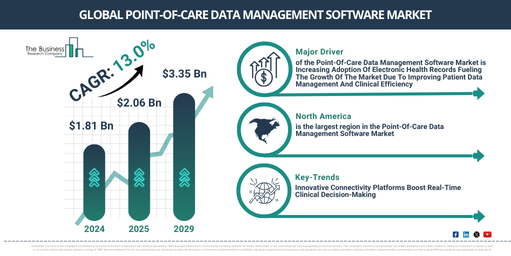
    The point-of-care data management software market has experienced substantial expansion in recent years. Its valuation is set to increase from $1.81 billion in 2024 to $2.06 billion in 2025, indicating a compound annual growth rate (CAGR) of 13.4%. The growth observed in prior periods stems from various factors, including the greater adoption of point-of-care testing within clinical workflows, an increasing need for prompt diagnostic decision-making, the expanding utilization of electronic medical records in primary care, rising awareness concerning the advantages of decentralized diagnostics, and the growing requirement for remote monitoring solutions in rural healthcare settings.

    The point-of-care data management software market is poised for substantial expansion in the upcoming years, with its size projected to reach $3.35 billion by 2029, demonstrating a compound annual growth rate (CAGR) of 13.0%. This anticipated growth is primarily fueled by factors such as the increasing demand for instant patient data access, a growing reliance on telemedicine platforms for diagnostic purposes, an intensified focus on interoperability among healthcare systems, rising investments in cybersecurity for safeguarding medical data, and the increasing necessity for predictive diagnostics in preventive healthcare. Significant trends expected during this forecast period include progress in artificial intelligence-driven point-of-care analytics, the establishment of interoperable data exchange standards, innovations in blockchain-based health data security, advancements in real-time cloud integration for diagnostics, and the creation of data management platforms compatible with wearable technology.

    Unlock Your Free Sample Report for Exclusive Market Data:

    https://www.thebusinessresearchcompany.com/sample.aspx?id=27389&type=smp

    Which Drivers Are Shaping The Point-Of-Care Data Management Software Industry’s Market Share?

    The expanding utilization of electronic health records is anticipated to fuel the expansion of the point-of-care data management software market in the future. EHRs, or Electronic Health Records, represent digital documentation encompassing a patient’s medical background, therapies, and diagnostic outcomes, crafted for secure interchange among healthcare professionals to enhance patient care and collaborative efforts. The uptake of electronic health records is on the rise, driven by an escalating demand for effective patient data handling, which facilitates simplified access, heightened precision, and more integrated care delivery. Point-of-care data management software augments electronic health record systems by providing real-time data acquisition and effortless integration, rendering it highly suitable for clinical settings and diagnostic procedures at the patient’s side. This software minimizes manual data input through automated updates of patient records, thereby boosting clinical effectiveness and decision-making processes. As an illustration, figures from June 2022, supplied by the Department of Health and Social Care, a UK-based government department, indicated that 90% of National Health Service (NHS) trusts had implemented electronic health records by December 2023, with full adoption (100%) anticipated by March 2025. Consequently, the expanding incorporation of electronic health records is serving as a catalyst for the expansion of the point-of-care data management software market.

    What Are The Different Segment Classifications Within The Point-Of-Care Data Management Software Market?

    The point-of-care data management software market covered in this report is segmented

    1) By Type: Standalone Software, Integrated Software

    2) By Deployment Mode: Cloud-Based, On-Premises, Hybrid Solutions

    3) By Technology: Artificial Intelligence, Machine Learning, Blockchain, Internet Of Things (IoT), Big Data Analytics

    4) By Applications: Infectious Disease Devices, Glucose Monitoring, Coagulation Monitoring, Urinalysis, Cardiometabolic Monitoring, Cancer Markers, Hematology, Other Point-Of-Care Applications

    5) By End User: Hospitals, Clinics, Ambulatory Care Center, Home Healthcare, Diagnostic Laboratories

    Subsegments:

    1) By Standalone Software: Device-Specific Data Management Systems, Modular Clinical Information Systems, Laboratory Data Analysis Tools, Remote Patient Monitoring Software

    2) By Integrated Software: Hospital Information System Integrated Platforms, Electronic Health Record Embedded Solutions, Cloud-Based Interoperable Platforms, Multi-Device Connectivity And Data Integration Systems

    Which Trends Are Impacting The Point-Of-Care Data Management Software Market?

    Leading companies in the point-of-care data management software market are prioritizing the development of advanced technological solutions, such as middleware connectivity platforms, to smoothly integrate data from various diagnostic instruments and enhance real-time clinical decision-making. Middleware connectivity platforms are software solutions that serve as intermediaries between point-of-care devices and hospital information systems, facilitating seamless data exchange, integration, and interoperability. For instance, in May 2022, EKF Diagnostics Holdings plc, a UK-based healthcare company, launched EKF Link, a middleware connectivity solution designed for the secure management and centralized integration of point-of-care (POC) analyzers and their data. This adaptable, open platform enables healthcare providers to connect, monitor, and manage multiple POC analyzers in real time from a single centralized interface. Its key capabilities include remote instrument configuration, operator and report management, quality control oversight, and effortless integration with hospital or laboratory IT systems utilizing standard protocols such as HL7 and LIS2A.

    Which Major Firms Are Strengthening Their Position In The Point-Of-Care Data Management Software Industry?

    Major companies operating in the point-of-care data management software market are F. Hoffmann-La Roche Ltd., Oracle Health Inc., Thermo Fisher Scientific Inc., Abbott Point of Care Inc., Danaher Corporation, Siemens Healthineers AG, GE HealthCare Technologies Inc., Athenahealth Inc., InterSystems Corporation, eClinicalWorks LLC, Medical Information Technology Inc., NextGen Healthcare Inc., Randox Laboratories Ltd., Greenway Health LLC, Care Cloud Inc., CureMD.com Inc., Telcor Inc., Orchard Software Corporation, HealthEC LLC, Sunquest Information Systems Inc.

    Download The Full Report For Exclusive Market Findings:

    https://www.thebusinessresearchcompany.com/report/point-of-care-data-management-software-global-market-report

    How Is Point-Of-Care Data Management Software Market Demand Varying Across Different Regions?

    North America was the largest region in the point-of-care data management software market in 2024. Asia-Pacific is expected to be the fastest-growing region in the forecast period. The regions covered in the point-of-care data management software market report are Asia-Pacific, Western Europe, Eastern Europe, North America, South America, Middle East, Africa.

    Request A Customized Version Of The Point-Of-Care Data Management Software Market Report:

    https://www.thebusinessresearchcompany.com/customise?id=27389&type=smp

    Browse Through More Reports Similar to the Global Point-Of-Care Data Management Software Market 2025, By The Business Research Company

    Pre Engineered Buildings Global Market Report 2025

    https://www.thebusinessresearchcompany.com/report/pre-engineered-buildings-global-market-report

    Modular And Prefabricated Nonresidential Building Construction Global Market Report 2025

    https://www.thebusinessresearchcompany.com/report/modular-and-prefabricated-nonresidential-building-construction-global-market-report

    Multifamily Modular And Prefabricated Housing Construction Global Market Report 2025

    https://www.thebusinessresearchcompany.com/report/multifamily-modular-and-prefabricated-housing-construction-global-market-report

    Get in touch with us:

    The Business Research Company: https://www.thebusinessresearchcompany.com/

    Americas +1 310-496-7795

    Asia +44 7882 955267 & +91 8897263534

    Europe +44 7882 955267

    Email us at info@tbrc.info

    Follow us on:

    LinkedIn: https://in.linkedin.com/company/the-business-research-company

    YouTube: https://www.youtube.com/channel/UC24_fI0rV8cR5DxlCpgmyFQ

    Global Market Model: https://www.thebusinessresearchcompany.com/global-market-model

  • Technology Spending On Core Administration In Healthcare Market Trends 2025–2029: Forecasts for Key Growth Segments

    Technology Spending On Core Administration In Healthcare Market Trends 2025–2029: Forecasts for Key Growth Segments

    Unlock Global Insights – Save 20% on Market Reports with Code ONLINE20

    What Is The Anticipated Size Of The Technology Spending On Core Administration In Healthcare Market Over The Five-Year Period 2025–2029?

    The healthcare market has witnessed substantial growth in technology expenditures for core administration in recent years. This spending is projected to increase from $40.85 billion in 2024 to $44.26 billion in 2025, reflecting a compound annual growth rate (CAGR) of 8.3%. Historically, this expansion can be linked to a heightened need for automated billing and claims processing, the expanding volume of healthcare data necessitating effective records management systems, greater regulatory complexities leading to technology investments for compliance, a stronger focus on platforms for patient experience and engagement, and escalating operational expenses encouraging administrative improvements.

    The healthcare market is expected to experience substantial growth in technology spending on core administration over the coming years. This expenditure is projected to reach $60.13 billion by 2029, demonstrating a compound annual growth rate (CAGR) of 8.0%. This anticipated expansion during the forecast period is largely due to the increasing adoption of cloud-based administrative platforms, a growing emphasis on value-based care models, a rise in federal and state-level incentives for the integration of health information technology, heightened attention to cybersecurity and data protection within administrative systems, and the expanding popularity of self-service portals for patients and staff. Significant trends anticipated for this period involve technology enhancements enabling real-time scheduling and appointment management, progress in automation tools for claims and billing processing, advancements in cloud-based infrastructure to support scalable administrative operations, the integration of telehealth platforms with backend administrative processes, and the development of cybersecurity solutions to safeguard administrative data.

    Unlock Your Free Sample Report for Exclusive Market Data:

    https://www.thebusinessresearchcompany.com/sample.aspx?id=27432&type=smp

    What Are The Drivers Pushing New Developments In The Technology Spending On Core Administration In Healthcare Market?

    The increasing demand for telemedicine is projected to fuel the expansion of technology investments in core administration within the healthcare market moving forward. Telemedicine refers to the remote delivery of healthcare services through digital tools like video conferencing, messaging, or mobile applications for the purpose of diagnosing, treating, and monitoring patients. The rising embrace of telemedicine allows patients to access healthcare from a distance, thereby reducing the necessity for travel and enhancing convenience, especially for individuals residing in rural or medically underserved areas. Investment in core administrative technology within healthcare augments telemedicine by automating functions such as patient registration, scheduling, billing, and claims processing, which in turn improves efficiency and mitigates delays, allowing providers to concentrate on delivering prompt virtual care. For instance, in April 2023, FAIR Health Inc., a US-based non-profit organization, reported that the national use of telehealth surged by 7.3%, increasing from 5.5% of medical claim lines in December 2022 to 5.9% in January 2023. Therefore, the growing need for telemedicine is accelerating the growth of technology spending on core administration in the healthcare sector.

    What Are The Emerging Segments Gaining Attention In The Technology Spending On Core Administration In Healthcare Market?

    The technology spending on core administration in healthcare market covered in this report is segmented

    1) By Type: Software, Hardware, Services

    2) By Technology: Electronic Health Records (EHRs), Patient Management Systems, Financial Management Systems, Supply Chain Management Systems, Revenue Cycle Management System

    3) By Deployment Mode: On-Premise, Cloud-Based, Hybrid

    4) By Application: Patient Management, Staff Management, Inventory Management, Other Applications

    5) By End-User: Hospitals, Clinics, Insurance Providers, Other End-Users

    Subsegments:

    1) By Software: Electronic Health Record (EHR) Systems, Practice Management Software, Revenue Cycle Management (RCM) Software, Patient Scheduling Software, Claims Management Software

    2) By Hardware: Servers and Storage Devices, Workstations and Desktops, Networking Equipment, Scanners and Imaging Devices, Point-of-Care Devices

    3) By Services: Information Technology Consulting and Support, System Integration Services, Managed Services, Training and Education Services, Maintenance and Upgrades

    What Trends Are Expected To Drive The Technology Spending On Core Administration In Healthcare Market?

    Leading technology companies operating in the technology spending on core administration in the healthcare market are prioritizing the development of sophisticated solutions, such as prebuilt artificial intelligence tools for healthcare, to streamline administrative duties and enhance the precision of decision-making. Prebuilt artificial intelligence tools are ready-to-use artificial intelligence (AI) solutions that eliminate the necessity for extensive custom development, thereby facilitating the rapid adoption of advanced capabilities including automation, data analysis, and prediction to create more efficient workflows. For instance, in February 2025, Salesforce Inc., a US-based cloud-based software company, launched Agentforce for Health. This is a comprehensive library of prebuilt agentic AI tools specifically designed to automate time-intensive administrative, clinical, and public health tasks within the healthcare sector. The platform offers functionalities such as patient appointment scheduling, eligibility verification with insurers, and support for care coordination. Additionally, it assists with disease surveillance and clinical trial matching by consolidating data from various registries. The overall objective is to alleviate administrative burden, combat workforce burnout, and improve operational efficiency for both healthcare providers and payers.

    Which Leading Players Are Enhancing Their Technology Spending On Core Administration In Healthcare Market Presence Worldwide?

    Major companies operating in the technology spending on core administration in healthcare market are Microsoft Corporation, Siemens AG, International Business Machines Corporation, Oracle Corporation, Tata Consultancy Services (TCS) Limited, Cognizant Technology Solutions Corporation, GE Healthcare Technologies Inc., Infosys Limited, Prime Healthcare Services Inc., Conduent Incorporated, Evolent Health Inc., Veradigm Inc., Tempus AI Inc., Tebra Inc., 314e Corporation, Qventus Inc., Meditab Software Inc., CodaMetrix Inc., Raintree Systems Inc., ReLi Med Solutions Inc.

    Download The Full Report For Exclusive Market Findings:

    https://www.thebusinessresearchcompany.com/report/technology-spending-on-core-administration-in-healthcare-global-market-report

    Which Region Is Expected To Witness The Fastest Growth In The Technology Spending On Core Administration In Healthcare Market?

    North America was the largest region in the technology spending on core administration in healthcare market in 2024. Asia-Pacific is expected to be the fastest-growing region in the forecast period. The regions covered in the technology spending on core administration in healthcare market report are Asia-Pacific, Western Europe, Eastern Europe, North America, South America, Middle East, Africa.

    Request A Customized Version Of The Technology Spending On Core Administration In Healthcare Market Report:

    https://www.thebusinessresearchcompany.com/customise?id=27432&type=smp

    Browse Through More Reports Similar to the Global Technology Spending On Core Administration In Healthcare Market 2025, By The Business Research Company

    Religious Buildings Global Market Report 2025

    https://www.thebusinessresearchcompany.com/report/religious-buildings-global-market-report

    Smart Stadium Global Market Report 2025

    https://www.thebusinessresearchcompany.com/report/smart-stadium-global-market-report

    Hospitality Global Market Report 2025

    https://www.thebusinessresearchcompany.com/report/hospitality-global-market-report

    Get in touch with us:

    The Business Research Company: https://www.thebusinessresearchcompany.com/

    Americas +1 310-496-7795

    Asia +44 7882 955267 & +91 8897263534

    Europe +44 7882 955267

    Email us at info@tbrc.info

    Follow us on:

    LinkedIn: https://in.linkedin.com/company/the-business-research-company

    YouTube: https://www.youtube.com/channel/UC24_fI0rV8cR5DxlCpgmyFQ

    Global Market Model: https://www.thebusinessresearchcompany.com/global-market-model