Category: HealthcareServices

  • Latest Market Developments in Renal Medical Devices Service Industry: Forecast 2025–2029

    Latest Market Developments in Renal Medical Devices Service Industry: Forecast 2025–2029

    Claim your 30% discount on Global Market Reports with code ONLINE30. Limited time only.

    What Are the Forecasted Growth Rate and Market Size of the Renal Medical Devices Service Market?

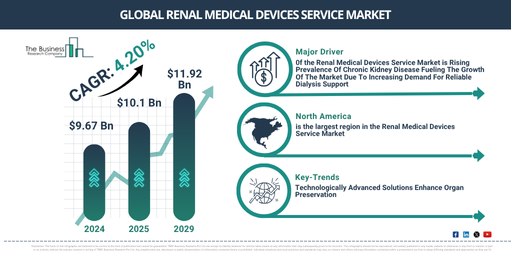
    The market size for renal medical devices has been following a consistent growth trend in the past few years. It is expected to increase from $9.67 billion in 2024 to $10.1 billion in 2025, with a compound annual growth rate (CAGR) of 4.5%. The historical growth can be credited to several factors such as the increased occurrence of chronic kidney diseases, the rise in the elderly population, the growth in the number of dialysis centers and clinics, the upsurge in the acceptance of home dialysis, and a heightened emphasis on patient safety and the reliability of the device.

    Expectations of consistent growth for the renal medical devices service market project its size to reach $11.92 billion by 2029, with a compound annual growth rate (CAGR) of 4.2%. The anticipated growth during the forecasted period can be attributed to factors such as an increase in home dialysis and telemedicine solutions, a rise in the aging population with various health complications, a surge in healthcare providers outsourcing device servicing, wider adoption of preventive and predictive maintenance models, as well as increased awareness and screening programs. Key trends for the projected period include the integration of telehealth and remote servicing, a shift towards preventive and predictive maintenance, advancements in renal device technology, incorporation of automation and robotics in servicing procedures, and stricter regulatory scrutiny on device servicing.

    Download The Free Sample Report Here:

    https://www.thebusinessresearchcompany.com/sample.aspx?id=24683&type=smp

    Which Factor Is Shaping The Future Of The Renal Medical Devices Service Market?

    The renal medical devices service market anticipates significant growth, attributed to the escalated prevalence of chronic kidney disease (CKD). This medical condition progressively impairs kidney function, preventing the effective removal of waste products from the blood and inducing other health complications. The rise in CKD cases is particularly associated with diabetes, as elevated blood sugar can compromise the kidney’s ability to filtrate waste materials efficiently. Services provided by renal medical devices aid in the management of CKD by guaranteeing optimal operation of dialysis equipment and related devices. This is achieved by minimizing system downtime through regular maintenance and expert technical assistance, thereby increasing the dependability of treatments and the quality of patient care. For instance, as per the Australian Institute of Health and Welfare statistics from December 2024, roughly 22,000 fatalities occurred in 2022 as a result of CKD. Also, the mortality rate showed an upward trend, rising from 56.7 per 100,000 in 2021 to 60.3 per 100,000 in 2022. Thus, these factors underline the importance of CKD in bolstering the growth of the renal medical devices service market. Moreover, expected growth in the renal medical devices service market owes much to the soaring expenditure in healthcare. This expenditure represents the cumulative sum of monetary resources allocated for medical services, treatments, infrastructure, research initiatives, and public health campaigns to maintain or enhance health conditions. The increased healthcare expenditure, largely driven by the growing burden of chronic ailments that necessitate continuous treatment and management, leads to a steady increase in medical costs. This increase favors renal medical device services by facilitating larger investments in sophisticated dialysis technologies and their maintenance. This, in essence, ensures wider access to superior healthcare services, improved efficiency of treatment, and enhanced outcomes for patients suffering from CKD. As an example, in December 2024, the Centers for Medicare and Medicaid Services (CMS) confirmed that the national health expenditures (NHE) surged by 7.5% to $4.9 trillion in 2023, which represented 17.6% of the country’s GDP. Furthermore, projections suggest that the NHE will grow by an average of 5.6% annually between 2023 and 2032, raising the health-sector’s GDP share from 17.3% in 2022 to 19.7% in 2032. Consequently, the projected increase in healthcare expenditure presents a favorable scenario for the growth of the renal medical devices service market.

    What Is The Segment-Wise Breakdown Of The Renal Medical Devices Service Market?

    The renal medical devices service market covered in this report is segmented –

    1) By Type: Dialysis Devices, Catheters, Kidney Monitoring Devices, Kidney Transplant Devices

    2) By Usage: Invasive, Non-Invasive

    3) By Application: Kidney Failure, Chronic Kidney Disease, End-Stage Kidney Disease, Renal Kidney Stone Disease, Hypertension, Diabetes

    4) By End User: Hospitals, Dialysis Centers, Home Healthcare

    Subsegments:

    1) By Dialysis Devices: Hemodialysis Machines, Peritoneal Dialysis Equipment, Dialysis Filters And Membranes, Dialysis Fluid Delivery Systems, Portable Dialysis Devices, Dialysis Consumables And Accessories

    2) By Catheters: Temporary Hemodialysis Catheters, Permanent Hemodialysis Catheters, Peritoneal Dialysis Catheters, Vascular Access Catheters, Central Venous Catheters For Renal Care

    3) By Kidney Monitoring Devices: Creatinine Monitoring Devices, Glomerular Filtration Rate (GFR) Monitoring Devices, Blood Urea Nitrogen (BUN) Monitoring Devices, Electrolyte Monitoring Devices, Continuous Renal Function Monitors

    4) By Kidney Transplant Devices: Organ Preservation Systems, Transplant Surgery Instruments, Immunosuppressant Delivery Devices, Kidney Perfusion Systems, Post-Transplant Monitoring Devices

    Which Trends Are Redefining The Future Landscape Of The Renal Medical Devices Service Industry?

    Key corporations in the renal medical devices service market are directing their efforts towards creating technologically advanced products, like hypothermic perfusion technology, to enhance organ sustainability and the quality of patient care. This particular technology is a preservation technique for organs where a chilled, oxygen-enriched solution is continuously circulated through the donor organs at lower temperatures, typically between 0-12°C, to keep them viable before transplantation. A case in point is Paragonix Technologies Inc., a medical device firm based in the US, which obtained the US Food and Drug Administration (FDA) green light for its KidneyVault transportable renal perfusion system in January 2025. This system is a device designed to extend the life of kidneys during transportation utilizing hypothermic machine perfusion and SherpaCool phase-change cooling, maintaining a temperature of 4–8°C, eliminating the need for ice. The incorporated digital platform enables monitoring of temperature, pressure, flow and resistance in real-time, providing remote management of organ preservation.

    Which Companies Hold The Largest Market Share In The Renal Medical Devices Service Sector?

    Major companies operating in the renal medical devices service market are Abbott Laboratories, Medtronic plc, Fresenius Medical Care AG & Co. KGaA, Asahi Kasei Medical Co Ltd., Toray Medical Co Ltd., Boston Scientific Corporation, DaVita Inc., Terumo Corporation, Nipro Corporation, Teleflex Incorporated, ConvaTec Group Plc, Nikkiso Co Ltd., Japan Medical Supply Co Ltd., NxStage Medical Inc., B. Braun Melsungen AG, Outset Medical Inc., Rockwell Medical Inc., Quanta Dialysis Technologies Ltd., AWAK Technologies Pte Ltd., Dialife SA.

    Get The Full Report Here:

    https://www.thebusinessresearchcompany.com/report/renal-medical-devices-service-global-market-report

    How Does Regional Performance Compare Across The Renal Medical Devices Service Industry?

    North America was the largest region in the renal medical devices service market in 2024. The regions covered in the renal medical devices service market report are Asia-Pacific, Western Europe, Eastern Europe, North America, South America, Middle East, Africa.

    Request For A Customized Report:

    https://www.thebusinessresearchcompany.com/customise?id=24683&type=smp

    About The Business Research Company:

    With over 15000+ reports from 27 industries covering 60+ geographies, The Business Research Company has built a reputation for offering comprehensive, data-rich research and insights. Armed with 1,500,000 datasets, the optimistic contribution of in-depth secondary research, and unique insights from industry leaders, you can get the information you need to stay ahead in the game.

    Get in touch with us:

    The Business Research Company: https://www.thebusinessresearchcompany.com/

    Americas +1 310-496-7795

    Asia +44 7882 955267 & +91 8897263534

    Europe +44 7882 955267

    Email us at info@tbrc.info

    Follow us on:

    LinkedIn: https://in.linkedin.com/company/the-business-research-company

    YouTube: https://www.youtube.com/channel/UC24_fI0rV8cR5DxlCpgmyFQ

    Global Market Model: https://www.thebusinessresearchcompany.com/global-market-model
  • 2025–2029 Tumor Microenvironment Market Outlook: Regional Trends and Growth Forecast

    2025–2029 Tumor Microenvironment Market Outlook: Regional Trends and Growth Forecast

    Claim your 30% discount on Global Market Reports with code ONLINE30. Limited time only.

    What Is the Outlook for the Tumor Microenvironment Market Heading Into 2029?

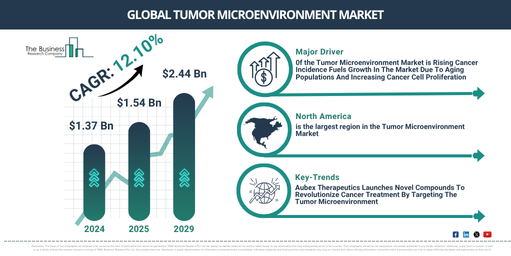
    Over the recent years, the size of the tumor microenvironment market has seen a swift expansion. The market is predicted to increase from $1.37 billion in 2024 to $1.54 billion in 2025, exhibiting a compound annual growth rate (CAGR) of 12.4%. The prior period’s growth can be credited to the enhanced understanding amongst oncologists and researchers, a surge in clinical trials conducted, the expanded use of single-cell sequencing technologies, the rise in collaborations between pharmaceutical and biotech firms, and amplified regulatory backing for pioneering oncology treatments.

    Over the next several years, the tumor microenvironment market size is predicted to experience significant growth, escalating to $2.44 billion by 2029 with a compound annual growth rate (CAGR) of 12.1%. Factors contributing to this growth in the forecasted period encompass an increased emphasis on precision oncology, bolstered investments in cancer immunotherapy research, rising prevalence of cancer, augmented implementation of personalized medication, and a growing interest in utilizing 3D tumor models and organoids. Upcoming trends in this projection period are improvements in immunotherapy technologies, developments in 3D tumor models and organoids, the merging of artificial intelligence and machine learning, the advancement of multiplex imaging technologies, and progress in spatial transcriptomics.

    Download The Free Sample Report Here:

    https://www.thebusinessresearchcompany.com/sample.aspx?id=24732&type=smp

    Which Factors Are Pushing The Tumor Microenvironment Market Forward?

    The tumor microenvironment market is expected to experience significant growth due to the increasing prevalence of cancer. Typically, cancer is a collective term for various diseases that are marked by unregulated cell growth and the dissemination of these abnormal cells within the body. The spike in cancer cases is often tied to an aging population, as the likelihood of cancer increases with age due to a longer exposure to environmental factors and a decrease in the body’s capacity for cell damage repair. A tumor’s microenvironment (TME) enhances the progression of cancer by providing nutrients, promoting immune evasion, increasing cancer cell proliferation, and facilitating metastasis via interactions with neighboring cells, signaling pathways, and the extracellular matrix. For instance, in 2024, per the Australian Institute of Health and Welfare, a governmental body based in Australia, there was a considerable increase in diagnosed cancer cases in Australia, from 160,570 in 2022 to 164,694 in 2023. Therefore, the mounting incidence of cancer is a key driving factor for the expansion of the tumor microenvironment market.

    Which Segment Held The Largest Share In The Tumor Microenvironment Market In 2025?

    The tumor microenvironment market covered in this report is segmented –

    1) By Cancer Type: Lung Cancer, Colorectal Cancer, Breast Cancer, Prostate Cancer, Bladder Cancer, Kidney Cancer, Other Cancer Types

    2) By Target: T Cells, Tumor-Associated Macrophages (TAMs), Myeloid-Derived Suppressor Cells (MDSCs), Cancer-Associated Fibroblasts (CAFs), Regulatory T Cells (Tregs), Other Targets

    3) By Therapy: Monoclonal Antibodies, Cytokines, Cancer Vaccines, Oncolytic Viruses, Adoptive Cell Therapies, Other Therapies

    4) By End User: Biopharmaceutical Companies, Hospitals, Diagnostic Laboratories, Research Institutes, Contract Research Organizations, Other End Users

    Subsegments

    1) By Lung Cancer: Non-Small Cell Lung Cancer (NSCLC), Small Cell Lung Cancer (SCLC)

    2) By Colorectal Cancer: Colon Cancer, Rectal Cancer

    3) By Breast Cancer: Hormone Receptor Positive Breast Cancer, Triple-Negative Breast Cancer, HER2-Positive Breast Cancer

    4) By Prostate Cancer: Hormone-Sensitive Prostate Cancer, Castration-Resistant Prostate Cancer

    5) By Bladder Cancer: Non-Muscle Invasive Bladder Cancer (NMIBC), Muscle Invasive Bladder Cancer (MIBC)

    6) By Kidney Cancer: Renal Cell Carcinoma (RCC), Urothelial Carcinoma of the Renal Pelvis

    7) By Other Cancer Types: Pancreatic Cancer, Head and Neck Cancer, Ovarian Cancer

    How Are Key Trends Driving Expansion In The Tumor Microenvironment Industry?

    Leading firms in the tumor microenvironment market are concentrating their efforts on the creation of innovative treatment methods that raise efficacy and conquer resistance mechanisms, such as targeted treatments. These therapies are specially formulated to detect and eliminate cancer cells based on distinct molecular markers, without causing harm to most healthy cells. For example, in April 2024, Aubex Therapeutics Inc., a biotechnology company based in the United States, introduced a novel category of substances with the aim to revolutionize cancer treatment by specifically focusing on the tumor microenvironment (TME). These innovative substances are designed to interact with the complex interplay within the TME, which involves cancer cells, immune cells, blood vessels, and stromal elements. With Aubex’s method, the immune system’s capability to tackle tumors is amplified and the processes that encourage tumor growth and metastasis are disrupted. This approach aims to defeat resistance to traditional therapies, providing a new promising alternative for patients unresponsive to current treatments.

    Which Organizations Are Driving Progress In The Tumor Microenvironment Industry?

    Major companies operating in the tumor microenvironment market are Pfizer Inc., Johnson & Johnson, Merck & Co. Inc., AbbVie Inc., Bayer AG, Sanofi S.A., AstraZeneca plc, Novartis International AG, GlaxoSmithKline plc, Takeda Pharmaceutical Company Limited, Eli Lilly and Company, Gilead Sciences Inc., Amgen Inc., Boehringer Ingelheim GmbH, Regeneron Pharmaceuticals Inc., Genentech Inc., BeiGene Ltd., MacroGenics Inc., Arcus Biosciences Inc., Adaptimmune Therapeutics plc

    Get The Full Report Here:

    https://www.thebusinessresearchcompany.com/report/tumor-microenvironment-global-market-report

    Which Region Is Expected To Experience The Highest Growth In The Tumor Microenvironment Industry?

    North America was the largest region in the tumor microenvironment market in 2024. Asia-Pacific is expected to be the fastest-growing region in the forecast period. The regions covered in the tumor microenvironment market report are Asia-Pacific, Western Europe, Eastern Europe, North America, South America, Middle East, Africa.

    Request For A Customized Report:

    https://www.thebusinessresearchcompany.com/customise?id=24732&type=smp

    About The Business Research Company:

    With over 15000+ reports from 27 industries covering 60+ geographies, The Business Research Company has built a reputation for offering comprehensive, data-rich research and insights. Armed with 1,500,000 datasets, the optimistic contribution of in-depth secondary research, and unique insights from industry leaders, you can get the information you need to stay ahead in the game.

    Get in touch with us:

    The Business Research Company: https://www.thebusinessresearchcompany.com/

    Americas +1 310-496-7795

    Asia +44 7882 955267 & +91 8897263534

    Europe +44 7882 955267

    Email us at info@tbrc.info

    Follow us on:

    LinkedIn: https://in.linkedin.com/company/the-business-research-company

    YouTube: https://www.youtube.com/channel/UC24_fI0rV8cR5DxlCpgmyFQ

    Global Market Model: https://www.thebusinessresearchcompany.com/global-market-model
  • CAGR of 21.7% Projected for Remote Healthcare Market From 2025 to 2029

    CAGR of 21.7% Projected for Remote Healthcare Market From 2025 to 2029

    Claim your 30% discount on Global Market Reports with code ONLINE30. Limited time only.

    How Large Is the Remote Healthcare Market Expected to Be in 2029?

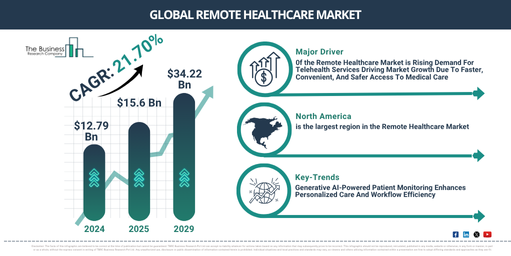
    There has been a significant expansion in the size of the remote healthcare market in the last few years. The market size is anticipated to rise from $12.79 billion in 2024 to a staggering $15.6 billion in 2025, with a compound annual growth rate (CAGR) of 22.0%. Factors like enhanced smartphone and internet usage, rising instances of chronic illnesses, favorable government reimbursement policies, a heightened attention towards home healthcare, and an aging global population have all contributed to the growth observed in the historic period.

    Anticipations for substantial expansion in the remote healthcare market size is expected in a few years to come. The size, raising to $34.22 billion in 2029 at a 21.7% CAGR reflects this expectation. The surge in this period can be traced back to factors such as the emergence of personalized medicine, rapid development in teletherapy and mental health crisis, policy and regulatory provisions, the public’s preference for instant healthcare provision, and the increasing use of cloud-based solutions. Notable trends during this period include the utilization of 5G for instant patient care, blockchain for safeguarding health data, virtual reality (VR) for remote therapy, cloud-assisted healthcare platforms, and voice-based technology and virtual health assistants.

    Download The Free Sample Report Here:

    https://www.thebusinessresearchcompany.com/sample.aspx?id=24681&type=smp

    What Are The Contributors To Demand In The Remote Healthcare Market?

    The rising desire for telehealth services is projected to fuel the expansion of the remote healthcare market. Digital technology’s application to deliver healthcare from a distance, known as telehealth services, allows an online connection between patients and healthcare providers for evaluations, diagnoses, monitoring, and treatment. This growth in the uptake of telehealth services is attributed to the public’s need for expeditious, accessible, and safer healthcare alternatives that offer remote consultations, continuous surveillance, and minimize travel requirements. Telehealth services augment remote healthcare by offering quick and suitable access to medical aid and consultations for individuals in remote or inadequately serviced areas, eliminating the necessity for travel. For example, USAFacts, a non-profit civic initiative based in the U.S., reported that telehealth appointments for Medicare receivers jumped from roughly 5 million to over 53 million between April 2021 and August 2022. Consequently, the burgeoning demand for telehealth services is propelling the ascendancy of the remote healthcare market.

    What Segmentation Categories Are Included In The Remote Healthcare Market Analysis?

    The remote healthcare market covered in this report is segmented –

    1) By Service: Remote Patient Monitoring, Real Time Virtual Health, Tele-ICU (Telemedicine Intensive Care Unit)

    2) By Deployment Mode: On-Premises, Cloud

    3) By Application: Diagnosis, Cardiology, Obstetrics, Senior Care, Other Applications

    4) By End-User: Hospitals, Clinics, Home Care Settings, Other End-Users

    Subsegments:

    1) By Remote Patient Monitoring: Chronic Disease Monitoring, Postoperative Monitoring, Vital Signs Monitoring, Medication Adherence Monitoring, Remote Fetal Monitoring

    2) By Real Time Virtual Health: Video Consultations, Audio Consultations, Remote Diagnosis And Treatment, Virtual Specialist Consultations, Mental Health Teletherapy Sessions

    3) By Tele-ICU (Telemedicine Intensive Care Unit): Continuous Patient Monitoring, Remote Specialist Consultation, Alarm And Event Management, Data Analytics And Decision Support, Remote Ventilator Management

    What Upcoming Trends Are Expected To Impact The Remote Healthcare Market Globally?

    Leading businesses in the remote healthcare market are concentrating their efforts on the creation of technologically sophisticated solutions like generative AI-powered remote patient monitoring assistants and immediate diagnostics. These advancements aim to enhance patient interaction and allow for tailored healthcare delivery. A remote patient monitoring assistant powered by generative AI is a smart system that uses AI to understand real-time health data, generate individualized insights, and automate patient communication, thereby improving the quality of remote healthcare. For example, in February 2025, Validic Inc., a digital health firm based in the US, incorporated a generative AI assistant into its Validic Impact platform to boost remote patient monitoring. This AI assistant automatically processes and summarizes intricate health data, recognizes health trends, creates brief data summaries, facilitates time-based comparisons, simplifies clinical workflows, and lightens the administrative burden on providers. It operates on a safe, HITRUST-certified, HIPAA-compliant structure, accommodates various health conditions, and is compatible with a multitude of devices. This enables healthcare professionals to offer more personalized, proactive, and effective treatments.

    Who Are The Top-Ranked Companies In The Remote Healthcare Market Today?

    Major companies operating in the remote healthcare market are Medtronic plc, Siemens Healthcare GmbH, Koninklijke Philips N.V., GE Healthcare Limited, Resideo Technologies Inc., Teladoc Health Inc., Comarch S.A., American Well Corporation, MDLive Inc., Doctor on Demand Inc., CallHealth Services Pvt. Ltd., Talkspace, AMC Health Inc., 98point6 Technologies, Altibbi Inc., GlobalMed Inc., Binah.ai Ltd., InTouch Health Inc., Vivify Health Inc., VSee Lab Inc.

    Get The Full Report Here:

    https://www.thebusinessresearchcompany.com/report/remote-healthcare-global-market-report

    How Is Remote Healthcare Market Adoption Varying Across Different Regions And Sectors?

    North America was the largest region in the remote healthcare market in 2024. The regions covered in the remote healthcare market report are Asia-Pacific, Western Europe, Eastern Europe, North America, South America, Middle East, Africa.

    Request For A Customized Report:

    https://www.thebusinessresearchcompany.com/customise?id=24681&type=smp

    About The Business Research Company:

    With over 15000+ reports from 27 industries covering 60+ geographies, The Business Research Company has built a reputation for offering comprehensive, data-rich research and insights. Armed with 1,500,000 datasets, the optimistic contribution of in-depth secondary research, and unique insights from industry leaders, you can get the information you need to stay ahead in the game.

    Get in touch with us:

    The Business Research Company: https://www.thebusinessresearchcompany.com/

    Americas +1 310-496-7795

    Asia +44 7882 955267 & +91 8897263534

    Europe +44 7882 955267

    Email us at info@tbrc.info

    Follow us on:

    LinkedIn: https://in.linkedin.com/company/the-business-research-company

    YouTube: https://www.youtube.com/channel/UC24_fI0rV8cR5DxlCpgmyFQ

    Global Market Model: https://www.thebusinessresearchcompany.com/global-market-model
  • Rapid Diagnostics Market Revenue Outlook: Strategic Insights and Forecast to 2029

    Rapid Diagnostics Market Revenue Outlook: Strategic Insights and Forecast to 2029

    Claim your 30% discount on Global Market Reports with code ONLINE30. Limited time only.

    What Does the Forecast Indicate for the Rapid Diagnostics Market From 2025 to 2029?

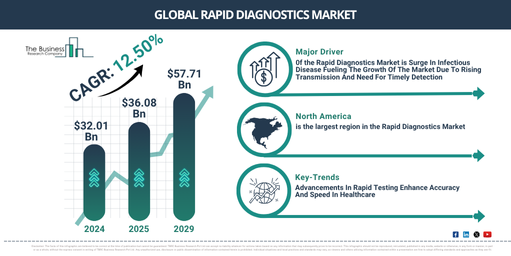
    In recent times, there has been a swift upsurge in the size of the rapid diagnostics market. It is set to expand from $32.01 billion in 2024 to a higher value of $36.08 billion in 2025, growing at a compound annual growth rate (CAGR) of 12.7%. Factors such as the growing occurrence of infectious diseases, surging need for point-of-care testing, an increase in antimicrobial resistance, heightened cognizance of early disease discovery, and ascending health care expenditure in budding markets, have all contributed to the historical growth of this market.

    In the coming years, a swift enlargement is projected for the rapid diagnostics market, with predictions of it reaching $57.71 billion in 2029, at a compound annual growth rate (CAGR) of 12.5%. The upsurge throughout this forecast period is linked to the escalating adoption of personalized medicine, an increase in AI incorporation in diagnostics, a surge in the demand for testing kits for at-home use, considerable investments towards improving healthcare infrastructure, and a boosted focus on readiness for future pandemics. The prediction period is expected to witness several trends, notably advancements in microfluidics technology, breakthroughs in biosensor-based diagnostics, development of smartphone apps that are integrated with diagnostic tools, progress in lab-on-a-chip systems, and innovative strides in multiplexed testing platforms.

    Download The Free Sample Report Here:

    https://www.thebusinessresearchcompany.com/sample.aspx?id=24679&type=smp

    What Elements Are Contributing To Growth In The Rapid Diagnostics Market?

    The rapid diagnostics market is projected to experience significant growth, fueled by the escalating prevalence of infectious diseases. Such diseases arise from harmful microorganisms, including bacteria, parasites, viruses, or fungi, and can be communicated either directly or indirectly between individuals. They increased due to extensive global travel, leading to their faster spread and increased infection rates. Quick and precise detection of these pathogens by rapid diagnostics aids in prompt treatment decisions mitigating transmission and enhancing patient outcomes. For instance, the World Health Organization (WHO), a specialized UN agency focusing on international public health in Switzerland, revealed that since mid-February 2025, the global incidence of SARS-CoV-2, the virus causing the infectious disease COVID-19, has seen an upward trend. This information, based on data from sentinel sites, showed the test positivity rate reaching 11% – a rate last seen in July 2024. Thus, the rising occurrence of infectious diseases is propelling the growth of the rapid diagnostics market.

    Which Segments Are Detailed In The Global Rapid Diagnostics Market Report?

    The rapid diagnostics market covered in this report is segmented –

    1) By Product Type: Kits, Reagents, Instruments, Other Product Types

    2) By Platform: Immunoassays, Molecular Detection, Other Rapid Diagnostic Platforms

    3) By Application: Blood Glucose Testing, Infectious Disease Testing, Cardiometabolic Testing, Pregnancy and Fertility Testing, Fecal Occult Blood Testing, Coagulation Testing, Toxicology Testing

    4) By Distribution Channel: Hospital Pharmacies, Brick and Mortar, E-Commerce, Other Distribution Channels

    5) By End Use: Diagnostic Centers, Homecare Settings, Hospital Pharmacies, Other End Users

    Subsegments:

    1) By Kits: Lateral Flow Assay Kits, PCR Kits, Immunoassay Kits, Microfluidic Kits, Molecular Diagnostic Kits, Multiplex Kits

    2) By Reagents: Enzymes, Buffers, Probes and Primers, Stains and Dyes, Antibodies, Calibration and Control Reagents

    3) By Instruments: PCR Machines, Lateral Flow Readers, Immunoassay Analyzers, Microfluidic Analyzers, Automated Sample Processors, Biosensors

    4) By Other Product Types: Software and Data Management Tools, Sample Collection Devices, Accessories and Consumables, Calibration Standards, Point-of-Care Devices

    Which Emerging Trends And Strategic Shifts Are Shaping The Rapid Diagnostics Market?

    Leading businesses in the rapid diagnostics industry are prioritizing forward-thinking strategies and ingenuity, such as quick diagnostic testing instruments, to improve diagnostic precision, decrease processing times, and enhance patient results in point-of-care situations. Quick diagnostic testing tools are essentially medical equipment that can swiftly identify certain diseases or conditions, generally delivering results in mere minutes at the point of care. For instance, in May 2025, SEKISUI Diagnostics, an American medical diagnostics firm, introduced the OSOM RSV Test, a swift diagnostic instrument for identifying respiratory syncytial virus (RSV). Designed for use in professional healthcare environments, this test offers results in just 15 minutes. It utilizes a fast immunochromatographic test to detect the presence of RSV nucleoprotein antigen qualitatively. This test operates on anterior nasal swab samples obtained from patients displaying respiratory infection symptoms. The rapid delivery of results aids in efficient and effective clinical decision-making.

    Who Are The Key Contributors To Growth In The Rapid Diagnostics Market?

    Major companies operating in the rapid diagnostics market are Johnson & Johnson Services Inc., F. Hoffmann-La Roche Ltd., Thermo Fisher Scientific Inc., Abbott Laboratories, Danaher Corporation, Siemens Healthineers AG, Becton Dickinson and Company, Quest Diagnostics Incorporated, Hologic Inc., bioMérieux S.A., QuidelOrtho Corporation, Bio-Rad Laboratories Inc., QIAGEN N.V., Cepheid Inc., OraSure Technologies Inc., Nova Biomedical Corporation, Fujirebio Holdings Inc., Sekisui Diagnostics LLC, EKF Diagnostics Holdings plc, Trinity Biotech plc, Abingdon Health plc, Abionic SA

    Get The Full Report Here:

    https://www.thebusinessresearchcompany.com/report/rapid-diagnostics-global-market-report

    Which Region Is Projected To Lead The Rapid Diagnostics Market By 2025?

    North America was the largest region in the rapid diagnostics market in 2024. Asia-Pacific is expected to be the fastest-growing region in the forecast period. The regions covered in the rapid diagnostics market report are Asia-Pacific, Western Europe, Eastern Europe, North America, South America, Middle East, Africa.

    Request For A Customized Report:

    https://www.thebusinessresearchcompany.com/customise?id=24679&type=smp

    About The Business Research Company:

    With over 15000+ reports from 27 industries covering 60+ geographies, The Business Research Company has built a reputation for offering comprehensive, data-rich research and insights. Armed with 1,500,000 datasets, the optimistic contribution of in-depth secondary research, and unique insights from industry leaders, you can get the information you need to stay ahead in the game.

    Get in touch with us:

    The Business Research Company: https://www.thebusinessresearchcompany.com/

    Americas +1 310-496-7795

    Asia +44 7882 955267 & +91 8897263534

    Europe +44 7882 955267

    Email us at info@tbrc.info

    Follow us on:

    LinkedIn: https://in.linkedin.com/company/the-business-research-company

    YouTube: https://www.youtube.com/channel/UC24_fI0rV8cR5DxlCpgmyFQ

    Global Market Model: https://www.thebusinessresearchcompany.com/global-market-model
  • Future Projections: Rapid Diagnostic Test Kits Market to Reach $30.44 Billion by 2029 at 6% CAGR

    Future Projections: Rapid Diagnostic Test Kits Market to Reach $30.44 Billion by 2029 at 6% CAGR

    Claim your 30% discount on Global Market Reports with code ONLINE30. Limited time only.

    How Much Is the Global Rapid Diagnostic Test Kits Market Valued at Present and by 2029?

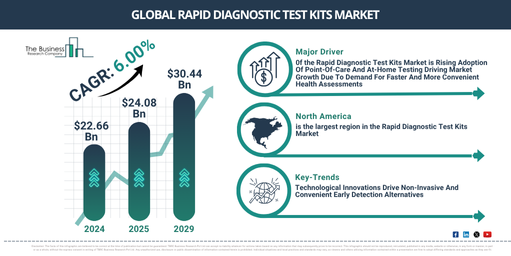
    The market size for rapid diagnostic test kits has seen robust growth recently, and it is expected to expand from $22.66 billion in 2024 to $24.08 billion in 2025, with a compound annual growth rate (CAGR) of 6.3%. This growth during the historical period can be traced back to factors such as the rise in infectious diseases, an increased demand for point-of-care testing, the imperative need for early diagnosis during outbreaks, augmentation in government funding for infectious disease control, and a growing utilization of rapid tests in rural healthcare environments.

    In the coming years, the market for rapid diagnostic test kits is predicted to skyrocket, ballooning to a value of $30.44 billion in 2029 with a Compound Annual Growth Rate (CAGR) of 6.0%. This anticipated growth during the forecast period is fueled by factors such as the rising popularity of at-home diagnostic kits, higher healthcare spending in emerging regions, the growing need for quick disease screening, increased support from global health bodies and an amplified focus on localized healthcare provision. The projection period is set to witness several trends such as the advancement of microfluidic-based diagnostic platforms, a harmonious blend with smartphone technologies, the creation of multiplex rapid test kits, innovation in custom diagnostic solutions, and increased funding in diagnostic research and innovation.

    Download The Free Sample Report Here:

    https://www.thebusinessresearchcompany.com/sample.aspx?id=24678&type=smp

    #What Drivers Are Influencing Growth In The Rapid Diagnostic Test Kits Market?

    The rapid diagnostic test kits market is anticipated to experience growth due to the increasing focus on point-of-care and at-home testing. Such forms of diagnostic tests are usually conducted outside conventional laboratories, often at the patient’s location or in the patient’s home, to facilitate swift and convenient results for immediate health decisions. The increasing reliance on point-of-care and at-home testing is primarily a result of individuals seeking quicker and more convenient health evaluations that don’t necessitate a visit to the lab, lessen waiting periods, and let them make informed health decisions from their own space. Rapid diagnostic test kits facilitate point-of-care and at-home testing by providing swift and reliable results, negating the need for specialized equipment and empowering individuals to make health-related decisions without visiting traditional labs. As an example, stats from the Centers for Disease Control and Prevention, a US-based government agency, show that in 2021-2022, 10.7 million at-home COVID-19 test results were willingly reported which underscores the increasing acceptance of self-testing over conventional methods. Therefore, the increased emphasis on point-of-care and at-home testing is stimulating the growth of the rapid diagnostic test kits market.

    What Are The Main Segments Identified In The Rapid Diagnostic Test Kits Market Research?

    The rapid diagnostic test kits market covered in this report is segmented –

    1) By Product Type: Antigen Test Kits, Antibody Test Kits, Nucleic Acid Test Kits, Multi-Analyte Test Kits

    2) By Technology: Fluorescent Immunoassay, Enzyme-Linked Immunosorbent Assay (ELISA), Colloidal Gold-Based Test, Lateral Flow Assays

    3) By Application: Infectious Disease Testing, Cardiology Testing, Oncology Testing, Pregnancy And Fertility Testing, Toxicology Testing, Glucose Monitoring, Other Applications

    4) By End-User: Hospitals, Diagnostic Laboratories, Home Care Settings, Pharmacies

    Subsegments:

    1) By Antigen Test Kits: COVID-19 Antigen Test Kits, Influenza Antigen Test Kits, Malaria Antigen Test Kits, Respiratory Syncytial Virus Antigen Test Kits, Streptococcus Antigen Test Kits

    2) By Antibody Test Kits: HIV Antibody Test Kits, Hepatitis Antibody Test Kits, COVID-19 Antibody Test Kits, Dengue Antibody Test Kits, Syphilis Antibody Test Kits

    3) By Nucleic Acid Test Kits: HIV Nucleic Acid Test Kits, Hepatitis B And C Nucleic Acid Test Kits, Human Papillomavirus Nucleic Acid Test Kits, Tuberculosis Nucleic Acid Test Kits, COVID-19 Nucleic Acid Test Kits

    4) By Multi-Analyte Test Kits: Respiratory Panel Test Kits, Sexually Transmitted Infections Panel Test Kits, Gastrointestinal Panel Test Kits, Febrile Illness Panel Test Kits, Sepsis Marker Panel Test Kits

    What Are The Leading Trends And Opportunities In The Rapid Diagnostic Test Kits Sector?

    Leading businesses in the rapid diagnostic test kits industry are targeting the development of innovative solutions like saliva-based pregnancy test kits in order to secure a dominant position in the market. These kits function as diagnostic instruments by examining hormonal changes in a woman’s saliva, notably the presence of human chorionic gonadotropin (hCG), which is produced during pregnancy. For example, in February 2023, a major home-grown diagnostics firm, Abingdon Health plc, introduced Salistick, the first rapid saliva-based pregnancy test to hit the market in the UK and Ireland. This innovative move in home pregnancy testing provides a more hygienic, convenient alternative to the traditional urine-based tests. This highly precise test can identify the presence of the pregnancy hormone ß-hCG in saliva, allowing women to perform early pregnancy checks at their convenience anywhere, anytime. It also facilitates a more personalised and social testing experience.

    Which Companies Play A Key Role In The Development Of The Rapid Diagnostic Test Kits Market?

    Major companies operating in the rapid diagnostic test kits market are F. Hoffmann-La Roche Ltd., Thermo Fisher Scientific Inc., Abbott Laboratories, Danaher Corporation, Siemens Healthineers AG, Becton Dickinson and Company, Quest Diagnostics Incorporated, Hologic Inc., bioMérieux SA, QuidelOrtho Corporation, Bio-Rad Laboratories Inc., QIAGEN N.V., Cepheid Inc., OraSure Technologies Inc., Nova Biomedical Corporation, Sekisui Diagnostics LLC, EKF Diagnostics Holdings plc, Trinity Biotech plc, ACON Laboratories Inc., Fluxergy LLC, Lumos Diagnostics Holdings Limited, Abingdon Health plc, Abionic SA.

    Get The Full Report Here:

    https://www.thebusinessresearchcompany.com/report/rapid-diagnostic-test-kits-global-market-report

    What Are The Key Regional Developments Shaping The Rapid Diagnostic Test Kits Market?

    North America was the largest region in the rapid diagnostic test kits market in 2024. Asia-Pacific is expected to be the fastest-growing region in the forecast period. The regions covered in the rapid diagnostic test kits market report are Asia-Pacific, Western Europe, Eastern Europe, North America, South America, Middle East, Africa.

    Request For A Customized Report:

    https://www.thebusinessresearchcompany.com/customise?id=24678&type=smp

    About The Business Research Company:

    With over 15000+ reports from 27 industries covering 60+ geographies, The Business Research Company has built a reputation for offering comprehensive, data-rich research and insights. Armed with 1,500,000 datasets, the optimistic contribution of in-depth secondary research, and unique insights from industry leaders, you can get the information you need to stay ahead in the game.

    Get in touch with us:

    The Business Research Company: https://www.thebusinessresearchcompany.com/

    Americas +1 310-496-7795

    Asia +44 7882 955267 & +91 8897263534

    Europe +44 7882 955267

    Email us at info@tbrc.info

    Follow us on:

    LinkedIn: https://in.linkedin.com/company/the-business-research-company

    YouTube: https://www.youtube.com/channel/UC24_fI0rV8cR5DxlCpgmyFQ

    Global Market Model: https://www.thebusinessresearchcompany.com/global-market-model
  • 2025 Analysis: Opportunities and Risks in the Evolving Purpura Treatment Market

    2025 Analysis: Opportunities and Risks in the Evolving Purpura Treatment Market

    Claim your 30% discount on Global Market Reports with code ONLINE30. Limited time only.

    What CAGR Is Anticipated for the Purpura Treatment Market Through 2029?

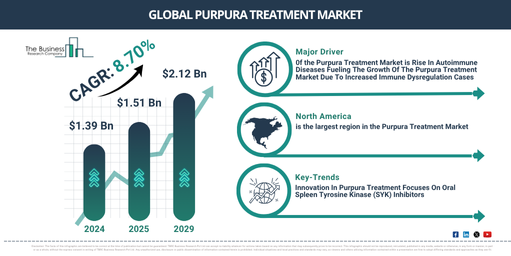
    In the past years, there has been a notable growth in the purpura treatment market. The market size is expected to increase from $1.39 billion in 2024 to $1.51 billion in 2025, with a compound annual growth rate (CAGR) of 9.1%. This considerable growth during the historical period is due to factors such as the approval of new treatment methods, the use of corticosteroids, the proliferation of clinical trials, increased healthcare expenditure, and improved hospital infrastructure.

    The market size for purpura treatment is anticipated to witness considerable expansion in the forthcoming years. It is set to rise to $2.12 billion in 2029, recording a compound annual growth rate (CAGR) of 8.7%. The projected expansion during this period is ascribed to factors such as the advent of targeted biologics, the rise in genetic testing, the introduction of telemedicine for diagnoses from afar, incentives for orphan drug designation, and the emphasis on personalized medicine. The key trends predicted for the forecast period encompass developments in gene therapy, cellular therapies, targeted drug delivery platforms, wearable health devices, and nanomedicine.

    Download The Free Sample Report Here:

    https://www.thebusinessresearchcompany.com/sample.aspx?id=24675&type=smp

    What Market Forces Are Driving The Purpura Treatment Sector In 2025 And Beyond?

    The rise in autoimmune diseases is anticipated to fuel the advancement of the purpura treatment market. The term autoimmune diseases describes situations whereby the immune system erroneously targets its own healthy cells and tissues as though they are dangerous threats like viruses or bacteria. The rising prevalence of autoimmune diseases can be attributed to environmental triggers that provoke inflammation or molecular mimicry. This misinformation leads the body to inadvertently attack itself, thereby elevating the likelihood of autoimmune disorders. Purpura treatment is crucial in mitigating autoimmune diseases by restraining the excessive immune response, triggering platelet creation, and mitigating blood vessel inflammation, hence managing symptoms typical to autoimmune-related purpura like immune thrombocytopenic purpura (ITP) such as bruising, bleeding, and a low platelet count. For example, as per a report released by the Office for Health Improvement & Disparities, a government department in the UK, in March 2023, it emerged that in 2022, 17.6% of individuals above 16 reported a long-standing musculoskeletal (MSK) condition, up from 17.0% in 2021. Therefore, the escalating incidence of autoimmune diseases is propelling growth in the purpura treatment market. Enhanced demand for personalized medicine, driven by developments in genomics and biotechnology, is also expected to spur the growth of the purpura treatment market. Personalized medicine is a medical approach that tailors healthcare solutions and practices to meet individual patients’ needs, taking into account their genetic profiles, surroundings, and lifestyle. Growth in demand for personalized medicine arises from cutting-edge genomics and biotechnology that permit more accurate treatments based on individual genetic profiles, improving patient results and minimizing side effects. Purpura treatment aids personalized medicine by leveraging genetic and immune system data to personalize therapies. This improves effectiveness and lowers side effects for individuals based on their individual biological reactions. For example, the Personalized Medicine Coalition, a professional membership organization based in the US, reported that in 2022, the approval of 12 new personalized medicines accounted for around 34% of all newly approved therapies, reflecting a significant increase from previous years. Therefore, the burgeoning demand for personalized medicine is propelling growth in the purpura treatment market.

    How Is The Global Purpura Treatment Market Categorized By Segments?

    The purpura treatment market covered in this report is segmented –

    1) By Type: Non-Thrombocytopenic Purpura, Thrombocytopenic Purpura, Allergic Purpura

    2) By Treatment Type: Topical Treatments, Oral Medications, Intravitreal Injections, Laser Therapy, Photodynamic Therapy

    3) By Cases: Acute, Chronic

    4) By Distribution Channel: Hospital Pharmacy, Online Pharmacy, Retail Pharmacy

    5) By End-User: Hospitals, Clinics, Other End-Users

    Subsegments:

    1) By Non-Thrombocytopenic Purpura: Idiopathic Purpura, Senile Purpura, Vascular Abnormalities

    2) By Thrombocytopenic Purpura: Immune Thrombocytopenic Purpura (ITP), Drug-induced Thrombocytopenic Purpura, Secondary Thrombocytopenic Purpura

    3) By Allergic Purpura: Drug-induced Allergic Purpura, Food-induced Allergic Purpura, Infectious-related Allergic Purpura

    What Long-Term Trends Are Likely To Affect The Purpura Treatment Market?

    Significant companies in the purpura treatment market are prioritizing the development of advanced diagnostic instruments, including oral spleen tyrosine kinase (SYK) inhibitors, to raise the effectiveness of the treatment and optimize patient outcomes. Oral SYK inhibitors, consumed orally, hinder the SYK enzyme’s action, a critical element in the immune system’s signaling pathways. For example, in April 2023, TAVALISSE tablets were introduced in Japan by Kissei Pharmaceutical Co., Ltd., a Japanese pharmaceutical firm, as an oral therapy for adult patients with chronic idiopathic thrombocytopenic purpura (ITP). TAVALISSE (fostamatinib sodium hydrate) is an oral SYK inhibitor that reduces platelet destruction by macrophages and alleviates chronic ITP bleeding symptoms. After a Phase 3 trial (R788-1301) in Japan, it displayed a steady response in 36% of the patients compared to 0% with placebo, underscoring its potential as a valuable treatment option.

    Which Firms Are Considered Leaders In The Purpura Treatment Market Space?

    Major companies operating in the purpura treatment market are Merck & Co Inc., Sanofi S.A., GlaxoSmithKline plc, Takeda Pharmaceutical Company Limited, Amgen Inc., CSL Limited, Intas Pharmaceuticals Ltd., Biogen Inc., Chugai Pharmaceutical Co Ltd., Sun Pharmaceutical Industries Limited, Octapharma AG, Grifols S.A., GC Pharma, Emergent BioSolutions Inc., Kissei Pharmaceutical Co Ltd., Ablynx N.V. , Shire plc , Lee’s Pharmaceutical Holdings Limited, Omeros Corporation, KM Biologics Co Ltd.

    Get The Full Report Here:

    https://www.thebusinessresearchcompany.com/report/purpura-treatment-global-market-report

    What Role Do Regional Policies And Investments Play In Purpura Treatment Market Expansion?

    North America was the largest region in the purpura treatment market in 2024. Asia-Pacific is expected to be the fastest-growing region in the forecast period. The regions covered in the purpura treatment market report are Asia-Pacific, Western Europe, Eastern Europe, North America, South America, Middle East, Africa.

    Request For A Customized Report:

    https://www.thebusinessresearchcompany.com/customise?id=24675&type=smp

    About The Business Research Company:

    With over 15000+ reports from 27 industries covering 60+ geographies, The Business Research Company has built a reputation for offering comprehensive, data-rich research and insights. Armed with 1,500,000 datasets, the optimistic contribution of in-depth secondary research, and unique insights from industry leaders, you can get the information you need to stay ahead in the game.

    Get in touch with us:

    The Business Research Company: https://www.thebusinessresearchcompany.com/

    Americas +1 310-496-7795

    Asia +44 7882 955267 & +91 8897263534

    Europe +44 7882 955267

    Email us at info@tbrc.info

    Follow us on:

    LinkedIn: https://in.linkedin.com/company/the-business-research-company

    YouTube: https://www.youtube.com/channel/UC24_fI0rV8cR5DxlCpgmyFQ

    Global Market Model: https://www.thebusinessresearchcompany.com/global-market-model
  • In-Depth Throat Cancer Market Report: Business Trends, Growth Factors, and Forecast to 2029

    In-Depth Throat Cancer Market Report: Business Trends, Growth Factors, and Forecast to 2029

    Claim your 30% discount on Global Market Reports with code ONLINE30. Limited time only.

    What Is the Outlook for the Throat Cancer Market Heading Into 2029?

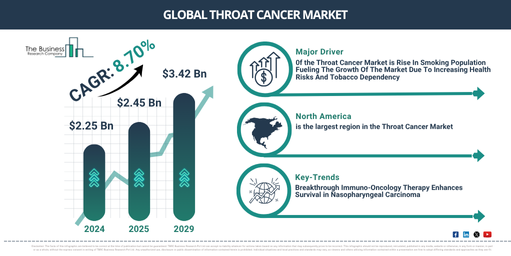
    There has been a robust expansion in the throat cancer market in the past few years. The market, which is predicted to rise from $2.25 billion in 2024 to $2.45 billion in 2025, comes with a compound annual growth rate (CAGR) of 9.0%. The historical growth has been driven by an upsurge in the number of smokers, escalating alcohol misuse, increasing human papillomavirus (HPV) infections, a growing prevalence of gastroesophageal reflux disease, and intensifying urban air pollution.

    Expectations are high for a robust expansion in the throat cancer market size in the forthcoming years. The predicted growth is $3.42 billion by 2029, with a compound annual growth rate (CAGR) of 8.7%. The projected growth is primarily due to an increased demand for bespoke medicine, growing acceptance of tele-oncology and diagnostics, greater usage of genetic profiling and the prevalence of biomarkers, increasing adoption of e-cigarettes and vaping, plus the upsurge in statistics for a sedentary lifestyle and obesity. Key forecast trends comprise improvements in treatment methodologies, the introduction of cutting-edge technology in diagnostic tools, the formulation of novel drugs and therapeutic practices, the implementation of artificial intelligence and machine learning in anticipative diagnostics, and the merger of speech therapy with digital platforms.

    Download The Free Sample Report Here:

    https://www.thebusinessresearchcompany.com/sample.aspx?id=24722&type=smp

    Which Factors Are Pushing The Throat Cancer Market Forward?

    The ascension of tobacco users is anticipated to catalyze the expansion of the throat cancer market. The term smoking population pertains to the fraction or count of persons in a specific locality who routinely consume tobacco-based products. The upsurge in the smoking populace can be attributed to escalating stress levels, causing more people to resort to smoking as a means to manage stress. Throat cancer stands as a harsh warning of the serious health hazards linked with smoking, emphasizing the immediate requirement for public consciousness and preventive action to curtail its frequency among smokers. To illustrate, a study by the European Respiratory Society (ERS), a non-profit organization based in Switzerland, reported in October 2024 that smoking habits among the young generation showed a considerable growth, with a rise from 22.5% in 2022 to 40.1% in 2024. Hence, the rise in the smoking population is fueling the progression of the throat cancer market.

    Which Segment Held The Largest Share In The Throat Cancer Market In 2025?

    The throat cancer market covered in this report is segmented –

    1) By Types: Pharyngeal Cancer, Laryngeal Cancer

    2) By Treatments: Surgery, Radiation Therapy, Targeted Therapy, Chemotherapy, Antimetabolites, Platinum Derivatives, Plant Derivatives, Nitrogen Mustards, Antibiotics, Other Treatments

    3) By End-User: Hospitals, Cancer Research Institutes, Multispecialty Clinics, Ambulatory Surgical Centers

    Subsegments

    1) By Pharyngeal Cancer: Oropharyngeal Cancer, Nasopharyngeal Cancer, Hypopharyngeal Cancer

    2) By Laryngeal Cancer: Glottic Cancer, Supraglottic Cancer, Subglottic Cancer

    How Are Key Trends Driving Expansion In The Throat Cancer Industry?

    Prominent businesses in the throat cancer market are concentrating on the creation of novel therapies, such as immuno-oncology medications, to boost treatment effectiveness and enhance patient survival rates. Immuno-oncology medications are treatments that employ the human immune system to detect and destroy cancer cells, providing a targeted strategy to fight throat cancer. For example, Dr. Reddy’s Laboratories Ltd., a pharmaceutical company from India, launched Toripalimab in November 2024, to treat nasopharyngeal carcinoma, an uncommon throat cancer variant. This revolutionary procedure exploits the ability of immune checkpoint inhibition by targeting the PD-1 receptor, aiding the body’s immune system to identify and wage war against cancer cells more efficiently. Toripalimab presents a new treatment alternative for a rare and violent cancer type with very few therapeutic options, potentially boosting survival statistics and improving patients’ life quality.

    Which Organizations Are Driving Progress In The Throat Cancer Industry?

    Major companies operating in the throat cancer market are Pfizer Inc., Roche Holding AG, Merck and Co. Inc., AbbVie Inc., Sanofi S.A., Bristol Myers Squibb, AstraZeneca plc, Novartis AG, GlaxoSmithKline plc, Takeda Pharmaceutical Company Limited, Eli Lilly and Company, Amgen Inc., Astellas Pharma Inc., Dr. Reddy’s Laboratories, Biocon Ltd., Coherus BioSciences Inc., Inovio Pharmaceuticals Inc., Boston Biomedical Inc., Shanghai Sunway Biotech Co. Ltd., Odon Life Sciences.

    Get The Full Report Here:

    https://www.thebusinessresearchcompany.com/report/throat-cancer-global-market-report

    Which Region Is Expected To Experience The Highest Growth In The Throat Cancer Industry?

    North America was the largest region in the throat cancer market in 2024. The regions covered in the throat cancer market report are Asia-Pacific, Western Europe, Eastern Europe, North America, South America, Middle East, Africa.

    Request For A Customized Report:

    https://www.thebusinessresearchcompany.com/customise?id=24722&type=smp

    About The Business Research Company:

    With over 15000+ reports from 27 industries covering 60+ geographies, The Business Research Company has built a reputation for offering comprehensive, data-rich research and insights. Armed with 1,500,000 datasets, the optimistic contribution of in-depth secondary research, and unique insights from industry leaders, you can get the information you need to stay ahead in the game.

    Get in touch with us:

    The Business Research Company: https://www.thebusinessresearchcompany.com/

    Americas +1 310-496-7795

    Asia +44 7882 955267 & +91 8897263534

    Europe +44 7882 955267

    Email us at info@tbrc.info

    Follow us on:

    LinkedIn: https://in.linkedin.com/company/the-business-research-company

    YouTube: https://www.youtube.com/channel/UC24_fI0rV8cR5DxlCpgmyFQ

    Global Market Model: https://www.thebusinessresearchcompany.com/global-market-model
  • Global Protein Stability Analysis Market Forecast to Reach $4.19 Billion by 2029, Driven by 12.5% CAGR

    Global Protein Stability Analysis Market Forecast to Reach $4.19 Billion by 2029, Driven by 12.5% CAGR

    Claim your 30% discount on Global Market Reports with code ONLINE30. Limited time only.

    What Is the Estimated Industry Valuation for the Protein Stability Analysis Sector?

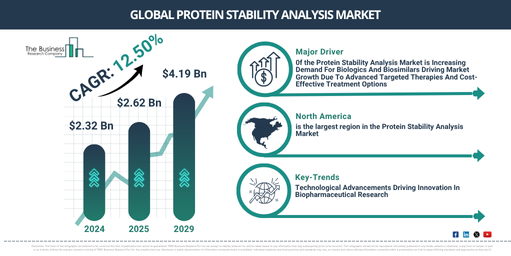
    The market for protein stability analysis has experienced swift expansion over the recent years. The market value is projected to rise from $2.32 billion in 2024 to $2.62 billion in 2025, showcasing a compound annual growth rate (CAGR) of 12.7%. The significant development during the historical period could be linked to the enhancement in biologics development, escalated demand for biosimilars, intensified focus on extending shelf-life, regulatory insistence on stability data, and the widening of pharmaceutical research.

    Anticipated rapid advancement is on the horizon for the protein stability analysis market in the coming years, with predictions it will expand to a substantial $4.19 billion by 2029, boasting a compound annual growth rate (CAGR) of 12.5%. This notable rise over the forecast period is thought to be due to factors such as the expansion of personalized medicine, a surge in investment towards biopharmaceutical research and development, the necessity for advanced analytical solutions, an increased demand for high-throughput screening, and the trend towards outsourcing to contract research organisations. Key market trends to watch over the forecast period include technological advancements in high-throughput screening, the incorporation of artificial intelligence in stability prediction, the evolution of microfluidics-based stability tools, the implementation of automation in protein analysis, and cutting-edge developments in computational modelling techniques.

    Download The Free Sample Report Here:

    https://www.thebusinessresearchcompany.com/sample.aspx?id=24672&type=smp

    What Forces Are Driving The Growth Of The Protein Stability Analysis Market?

    The protein stability analysis market’s expected expansion is due to the rising demand for biologics and biosimilars. Biologics, complex drugs made from living organisms, are utilized in the treatment of diverse diseases, while biosimilar counterparts offer a less expensive, yet equally effective alternative with no significant clinical variance. The popularity of these drugs rises as patients and healthcare providers seek more advanced, targeted therapies with better treatment results, increased availability, and lower expenses for chronic and severe diseases. Protein stability analysis plays a crucial role in guaranteeing the safety, efficacy, and longevity of biologics and biosimilars, safeguarding their structural integrity and hindering degradation. Samsung Bioepis Co. Ltd., a biopharmaceutical firm based in South Korea, reported that the US Food and Drug Administration sanctioned 45 biosimilars in 2024, with 38 launched in the United States, which indicates a significant market uptake compared to total approvals. Therefore, the market growth of protein stability analysis continues to be driven by the escalating demand for biologic and biosimilar techniques.

    How Is The Protein Stability Analysis Industry Segmented Across Key Parameters?

    The protein stability analysis market covered in this report is segmented –

    1) By Product: Reagents And Assay Kits, Instruments, Consumable And Accessories, Software, Other Products

    2) By Technique: Chromatography, Spectroscopy, Surface Plasma Resonance Imaging (SPRI), Differential Scanning Calorimetry (DSC), Differential Scanning Fluorimetry (DSF), Others Techniques

    3) By End-User: Pharmaceutical And Biotechnology Companies, Contract Research Organizations, Academic And Research Institutes, Other End-Users

    Subsegments:

    1) By Reagents And Assay Kits: Thermal Shift Assay Kits, Fluorescence-Based Assay Kits, Colorimetric Assay Kits, Binding Assay Kits, Aggregation Detection Kits

    2) By Instruments: Differential Scanning Calorimeters, Fluorescence Spectrometers, Chromatography Systems, Mass Spectrometers, Circular Dichroism Spectrometers, Surface Plasmon Resonance Instruments

    3) By Consumable And Accessories: Microplates And Cuvettes, Pipette Tips, Filters And Membranes, Sample Tubes And Vials, Calibration Standards

    4) By Software: Data Analysis Software, Protein Modeling Software, Thermal Stability Analysis Software, Chromatography Data Systems, Mass Spectrometry Data Software

    5) By Other Products: Calibration Kits, Sample Preparation Devices, Automation Systems, Maintenance Kits, Laboratory Storage Solutions

    What Notable Trends Are Shaping The Direction Of The Protein Stability Analysis Market?

    Major players in the protein stability analysis market, like the Veloci biopharma analyzer, are making strides in technological innovation. They’re creating advanced molecular fingerprinting tools that excel in accuracy, speed and efficiency, as well as enhancing protein characterization and quality assessment. The Veloci biopharma analyzer uses A-TEEM technology for quick, label-free molecular fingerprinting in life sciences areas such as protein stability analysis and vaccine characterization. For instance, Japan’s Horiba Advanced Techno Co. Ltd., an analytical solutions and measurement equipment provider, launched four new analytical tools in March 2025. These tools, which included an A-TEEM equipped biopharma analyzer, a high-throughput Raman plate reader, and a high-tech atomic force microscopy system, are geared towards enhancing molecular fingerprinting, real-time reaction monitoring and multimodal material analysis. These developments aim to aid critical applications in biopharmaceutical research fields like cell culture media analysis, vaccine development, and protein characterization.

    Which Companies Currently Dominate The Competitive Landscape In The Protein Stability Analysis Industry?

    Major companies operating in the protein stability analysis market are Roche Diagnostics GmbH, Thermo Fisher Scientific Inc., Amgen Inc., General Electric Healthcare Inc., Agilent Technologies Inc., Charles River Laboratories International Inc., PerkinElmer Inc., Shimadzu Corporation, Sartorius AG, Waters Corporation, Bruker Corporation, HORIBA Ltd., Spectris plc, Unchained Labs Inc., NanoTemper Technologies GmbH, Enzo Life Sciences Inc., Jasco Inc., Neurelis Inc., Setaram Instrumentation SAS, Luminex Corporation.

    Get The Full Report Here:

    https://www.thebusinessresearchcompany.com/report/protein-stability-analysis-global-market-report

    Which Geographic Regions Are Driving Demand In The Protein Stability Analysis Market?

    North America was the largest region in the protein stability analysis market in 2024. Asia-Pacific is expected to be the fastest-growing region in the forecast period. The regions covered in the protein stability analysis market report are Asia-Pacific, Western Europe, Eastern Europe, North America, South America, Middle East, Africa.

    Request For A Customized Report:

    https://www.thebusinessresearchcompany.com/customise?id=24672&type=smp

    About The Business Research Company:

    With over 15000+ reports from 27 industries covering 60+ geographies, The Business Research Company has built a reputation for offering comprehensive, data-rich research and insights. Armed with 1,500,000 datasets, the optimistic contribution of in-depth secondary research, and unique insights from industry leaders, you can get the information you need to stay ahead in the game.

    Get in touch with us:

    The Business Research Company: https://www.thebusinessresearchcompany.com/

    Americas +1 310-496-7795

    Asia +44 7882 955267 & +91 8897263534

    Europe +44 7882 955267

    Email us at info@tbrc.info

    Follow us on:

    LinkedIn: https://in.linkedin.com/company/the-business-research-company

    YouTube: https://www.youtube.com/channel/UC24_fI0rV8cR5DxlCpgmyFQ

    Global Market Model: https://www.thebusinessresearchcompany.com/global-market-model
  • Global Prebiotics Market Landscape: Trends and Market Share to 2029

    Global Prebiotics Market Landscape: Trends and Market Share to 2029

    Claim your 30% discount on Global Market Reports with code ONLINE30. Limited time only.

    How Will the Prebiotics Market Evolve in Terms of Growth and Size by 2029?

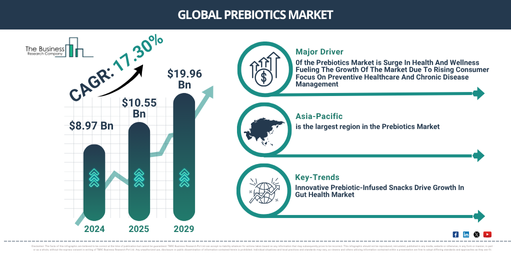
    The dimension of the prebiotics market has seen a swift expansion in past years. The market is anticipated to surge from $8.97 billion in 2024 to $10.55 billion in 2025, demonstrating a compound annual growth rate (CAGR) of 17.6%. The escalation in the earlier period can be credited to heightened demand for functional foods, amplified awareness about gut health, the burgeoning interest in transparent labelling, escalating usage in dietary supplements, and the rising attention of customers on strengthening immunity.

    The market for prebiotics is predicted to witness a significant surge in the upcoming years, escalating to $19.96 billion by 2029 with a compound annual growth rate (CAGR) of 17.3%. This growth during the forecasted period can be traced back to its increased use in infant nutrition, a rising trend towards natural ingredients, amplified investments in food innovation, a growing interest in plant-based products, and a mounting health-aware customer segment. Key trends for the forecast period encompass progress in gut microbiome studies, the incorporation of prebiotics into drinks, technology that facilitates personalized nutrition, developments in symbiotic formulations, and progression in plant-based prebiotic sources.

    Download The Free Sample Report Here:

    https://www.thebusinessresearchcompany.com/sample.aspx?id=24666&type=smp

    What factors are expected to fuel Prebiotics market growth in the coming years?

    The anticipated expansion of the prebiotics market is attributed to an increased public consciousness about health and wellness. This pertains to a comprehensive state of emotional, physical, and mental health, achieved through balanced lifestyle decisions and proactive health care. The heightened consciousness about health and wellness stems from a transition towards preventive healthcare, motivated by the intent to evade lifestyle-related illnesses and curtail long-term medical expenses. Prebiotics contribute to this health consciousness by fostering a balanced gut microbiome, an element that is progressively acknowledged as fundamental for total health and informed lifestyle decisions. A clear example is a survey conducted by the International Food Information Council, a non-profit organization based in the US, in May 2022. It involved 1,005 American adults aged between 18 and 80, along with adult Gen Z consumers between the ages of 18 and 24. The survey revealed a rise in specialized diet or eating patterns from 39% in 2021 to around 52% in 2022. The most prevalent methods were clean eating (16%), mindful eating (14%), and calorie counting (13%). The increasing public consciousness about health and wellness, therefore, is causing the prebiotics market to thrive.

    What Are The Key Findings From The Segmentation Analysis Of The Prebiotics Market?

    The prebiotics market covered in this report is segmented –

    1) By Type: Fructo-Oligosaccharides, Galacto-Oligosaccharides, Inulin, Mannan-Oligosaccharides

    2) By Product: Capsules, Drinks, Powder

    3) Demography: Pediatric, Adult, Geriatric

    4) Distribution Channel: Hypermarkets Or Supermarkets, Pharmacies And Drug Stores, Specialty Stores, Online Sales

    5) By End-User: Foods And Beverages, Pharmaceutical, Animal Feed, Other End-Users

    Subsegments:

    1) By Fructo-Oligosaccharides: Short-Chain Fructo-Oligosaccharides, Long-Chain Fructo-Oligosaccharides, Enzymatically Synthesized Fructo-Oligosaccharides

    2) By Galacto-Oligosaccharides: High-Purity Galacto-Oligosaccharides, Liquid Galacto-Oligosaccharides, Powder Galacto-Oligosaccharides

    3) By Inulin: High Performance Inulin, Standard Inulin, Short-Chain Inulin

    4) By Mannan-Oligosaccharides: Feed Grade Mannan-Oligosaccharides, Food Grade Mannan-Oligosaccharides, Functional Mannan-Oligosaccharides

    Which Trends Are Expected To Shape The Future Of The Prebiotics Market?

    Prebiotic market’s leading companies are channeling their efforts into the creation of unique solution, including snacks loaded with prebiotics, to satisfy the rising consumer preference for gut health and digestive wellness. These prebiotic-laden snacks are a handy food product, fortified with elements that encourage beneficial gut bacteria growth, thereby reinforcing digestive health. For example, Beech-Nut Nutrition Corporation, a child food firm based in the US, rolled out a new range of infant and toddler foodstuffs and snacks steeped in prebiotics, whole milk yogurt, fruits, and vegetables in March 2025. These are intended to bolster digestive health and overall nutrition. The Organic Fruit & Yogurt Jars with Prebiotics, Smoothies with Prebiotics, Jammin’ Waffles with fruit filling, and Fruti Bites with Hidden Veggies are part of the launch. All of products are crafted using non-GMO components and do not contain artificial additives. Accessible at major retailers like Walmart, they provide parents with accessible, tasty, and nutritious choices for kids of 6 months of age and above.

    What Are The Most Active Companies In The Prebiotics Market Today?

    Major companies operating in the prebiotics market are Cargill Inc., Archer Daniels Midland, Nestlé S.A., Bayer AG, Abbott Laboratories, Danone S.A., Kraft Foods Group Inc., FrieslandCampina, Haleon Group of companies, DuPont de Nemours Inc., Amway Corp., Herbalife Nutrition Ltd., Royal Cosun, NU SKIN, Roquette Frères, Nature’s Bounty, Nature’s Sunshine Products Inc., Good Health New Zealand, NOW Foods, Jarrow Formulas Inc.

    Get The Full Report Here:

    https://www.thebusinessresearchcompany.com/report/prebiotics-global-market-report

    Which Regional Markets Are Attracting The Most Investment In Prebiotics?

    Asia-Pacific was the largest region in the prebiotics market in 2024. Asia-Pacific is expected to be the fastest-growing region in the forecast period. The regions covered in the prebiotics market report are Asia-Pacific, Western Europe, Eastern Europe, North America, South America, Middle East, Africa.

    Request For A Customized Report:

    https://www.thebusinessresearchcompany.com/customise?id=24666&type=smp

    About The Business Research Company:

    With over 15000+ reports from 27 industries covering 60+ geographies, The Business Research Company has built a reputation for offering comprehensive, data-rich research and insights. Armed with 1,500,000 datasets, the optimistic contribution of in-depth secondary research, and unique insights from industry leaders, you can get the information you need to stay ahead in the game.

    Get in touch with us:

    The Business Research Company: https://www.thebusinessresearchcompany.com/

    Americas +1 310-496-7795

    Asia +44 7882 955267 & +91 8897263534

    Europe +44 7882 955267

    Email us at info@tbrc.info

    Follow us on:

    LinkedIn: https://in.linkedin.com/company/the-business-research-company

    YouTube: https://www.youtube.com/channel/UC24_fI0rV8cR5DxlCpgmyFQ

    Global Market Model: https://www.thebusinessresearchcompany.com/global-market-model
  • Industry Forecast: Plasma Protease C1-Inhibitor Market to Generate $6.53 Billion Revenue by 2029

    Industry Forecast: Plasma Protease C1-Inhibitor Market to Generate $6.53 Billion Revenue by 2029

    Claim your 30% discount on Global Market Reports with code ONLINE30. Limited time only.

    What Does the Forecast Indicate for the Plasma Protease C1-Inhibitor Market From 2025 to 2029?

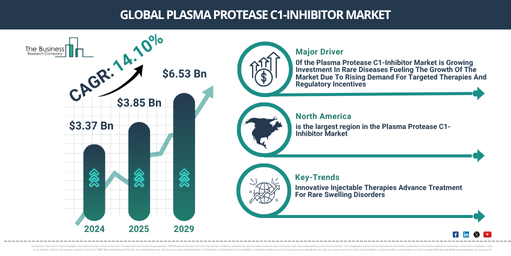
    In recent times, there has been a swift expansion in the market size of plasma protease c1-inhibitor. This market is projected to escalate from $3.37 billion in 2024 to $3.85 billion in 2025, demonstrating a compound annual growth rate (CAGR) of 14.4%. The impressive growth during the historic phase is primarily due to the rising incidence of hereditary angioedema, heightened awareness concerning uncommon genetic conditions, growing demand for plasma-derived biologics, an upsurge in diagnostic rates for c1-inhibitor deficiency, and an increasing adoption of replacement therapy in emergency medical care.

    There is a strong expectation for a swift expansion in the plasma protease c1-inhibitor market in the coming years, with predictions suggesting a rise to $6.53 billion by 2029, courtesy of a compound annual growth rate (CAGR) of 14.1%. This predicted growth in the forecast period comes as a result of an escalating concentration on personalized medicine, an uptick in pipeline developments for C1-inhibitor therapies under clinical trial, a burgeoning demand for preventative treatments, an increased availability of C1-inhibitor infusion therapies that can be administered at home, and a rising cognizance of C1-inhibitor deficiencies in surgical scenarios. Prominent trends for the forecast period comprise the creation of orphan drug applications, development of low-immunogenic variants, the embracing of genomic tools, incorporation into telemedicine platforms, and the drive towards innovative long-acting C1-inhibitors.

    Download The Free Sample Report Here:

    https://www.thebusinessresearchcompany.com/sample.aspx?id=24659&type=smp

    What Elements Are Contributing To Growth In The Plasma Protease C1-Inhibitor Market?

    Increased funding for rare diseases is set to spur the growth of the plasma protease C1-inhibitor market in the future. Defined as health conditions that afflict less than 1 in 2,000 people, rare diseases often involve ongoing, progressive symptoms that could be fatal or cause disability. Factors like the growing acknowledgment of unfulfilled medical needs and the potential for significant profit through beneficial regulatory mechanisms like orphan drug designation, market monopoly, and lowered development costs, primarily fuel this increased investment. Such funding supports the advancement of plasma protease C1-inhibitors by financing research and innovation aimed at treating hereditary angioedema and other rare conditions where a lack of C1-inhibitor causes severe symptoms, thereby hastening the introduction of targeted therapies. For example, Global Genes, a U.S. nonprofit organization, reported that in April 2024, those companies formulating drugs for rare diseases amassed $7.1 billion in the first quarter of 2024, a whopping 307% rise from the $1.8 billion pooled in the corresponding period in 2023. Hence, the escalating investment in rare diseases is fueling the growth of the plasma protease C1-inhibitor market.

    Which Segments Are Detailed In The Global Plasma Protease C1-Inhibitor Market Report?

    The plasma protease c1-inhibitor market covered in this report is segmented –

    1) By Drug Class: C1-Inhibitors, C1-Esterase Inhibitor, Recombinant Inhibitor, Kallikrein Inhibitor, Selective Bradykinin B2 Receptor Antagonist

    2) By Dosage Form: Lyphophlised, Injectables

    3) By Distribution Channel: Hospital Pharmacies, Retail Pharmacies, Online Pharmacies

    Subsegments:

    1) By C1-Inhibitors: Plasma-Derived C1-Inhibitor, Recombinant C1-Inhibitor

    2) By C1-Esterase Inhibitor: Intravenous (IV) C1-Esterase Inhibitor, Subcutaneous (SC) C1-Esterase Inhibitor

    3) By Recombinant Inhibitor: Recombinant Human C1-Inhibitor, Recombinant Analog Inhibitor

    4) By Kallikrein Inhibitor: Plasma Kallikrein Inhibitor, Oral Kallikrein Inhibitor

    5) By Selective Bradykinin B2 Receptor Antagonist: Injectable B2 Receptor Antagonist, Oral B2 Receptor Antagonist

    Which Emerging Trends And Strategic Shifts Are Shaping The Plasma Protease C1-Inhibitor Market?

    Prominent players in the plasma protease C1-inhibitor market are concentrating on product advancements, such as injectable prescription drugs, aiming to provide rapid, effective comfort for patients with hereditary angioedema and enhance treatment results. These medicines that are administered through injection help in replenishing or substituting plasma protease C1-inhibitor to control inflammation and thwart swelling episodes. For example, in December 2022, Takeda Pharmaceutical Company Limited, a pharmaceutical corporation based in Japan, introduced CINRYZE in India. CINRYZE is the initial injectable C1 esterase inhibitor confirmed by FDA for prophylactic therapy in individuals who are six years old or above. It proficiently diminishes the frequency, intensity, and span of hereditary angioedema (HAE) attacks by boosting plasma concentrations of C1-INH, effectively preventing overproduction of bradykinin and managing the related swelling.

    Who Are The Key Contributors To Growth In The Plasma Protease C1-Inhibitor Market?

    Major companies operating in the plasma protease c1-inhibitor market are Takeda Pharmaceutical Company Limited, CSL Behring LLC, Sigma-Aldrich Co. LLC, Octapharma AG, Bio-Techne Corp, Ionis Pharmaceuticals Inc., Sanquin, Biotest AG, BioCryst Pharmaceuticals Inc., Pharming Group N.V., Sino Biological Inc, Cayman Chemical, Enzo Life Sciences Inc, KalVista Pharmaceuticals Inc., Santa Cruz Biotechnology Inc, Pharvaris N.V., Attune Pharmaceuticals Inc., Biorbyt Ltd, Adverum Biotechnologies Inc, Lev Pharmaceuticals.

    Get The Full Report Here:

    https://www.thebusinessresearchcompany.com/report/plasma-protease-c1-inhibitor-global-market-report

    Which Region Is Projected To Lead The Plasma Protease C1-Inhibitor Market By 2025?

    North America was the largest region in the plasma protease C1-inhibitor market in 2024. Asia-Pacific is expected to be the fastest-growing region in the forecast period. The regions covered in the plasma protease c1-inhibitor market report are Asia-Pacific, Western Europe, Eastern Europe, North America, South America, Middle East, Africa.

    Request For A Customized Report:

    https://www.thebusinessresearchcompany.com/customise?id=24659&type=smp

    About The Business Research Company:

    With over 15000+ reports from 27 industries covering 60+ geographies, The Business Research Company has built a reputation for offering comprehensive, data-rich research and insights. Armed with 1,500,000 datasets, the optimistic contribution of in-depth secondary research, and unique insights from industry leaders, you can get the information you need to stay ahead in the game.

    Get in touch with us:

    The Business Research Company: https://www.thebusinessresearchcompany.com/

    Americas +1 310-496-7795

    Asia +44 7882 955267 & +91 8897263534

    Europe +44 7882 955267

    Email us at info@tbrc.info

    Follow us on:

    LinkedIn: https://in.linkedin.com/company/the-business-research-company

    YouTube: https://www.youtube.com/channel/UC24_fI0rV8cR5DxlCpgmyFQ

    Global Market Model: https://www.thebusinessresearchcompany.com/global-market-model