Category: HealthcareServices

  • 2025–2029 Point-Of-Care Data Management Software Market Outlook: Regional Trends and Growth Forecast

    2025–2029 Point-Of-Care Data Management Software Market Outlook: Regional Trends and Growth Forecast

    Claim your 30% discount on Global Market Reports with code ONLINE30. Limited time only.

    Claim your 30% discount on Global Market Reports with code ONLINE30. Limited time only.

    What Is the Estimated Industry Valuation for the Point-Of-Care Data Management Software Sector?

    In recent times, the market size of point-of-care data management software has seen swift development. The market is projected to increase from $1.81 billion in 2024 to $2.06 billion in 2025, exhibiting a compound annual growth rate (CAGR) of 13.4%. Factors such as an increased utilization of point-of-care testing within clinical procedures, a heightened requisition for quick diagnostic determinations, expanding use of electronic health profiles in primary healthcare, growing cognizance regarding the advantages of distributed diagnostics, and a surging requirement for remote observation systems in rural medical services have fuelled the growth observed during the historical timeframe.

    The size of the point-of-care data management software market is anticipated to expand rapidly in the upcoming years, reaching a value of $3.35 billion by 2029, with a CAGR of 13.0%. The expected increase during the predicted time frame can be connected to the escalating need for immediate access to patient data, a growing dependency on telemedicine for diagnostic purposes, a heightened emphasis on interoperability amongst healthcare systems, larger investments towards medical data security, and an urgent need for proactive diagnostics in preventative healthcare. Potential trends for this period are expected to showcase advancements in AI-powered point-of-care analytics, progress in creating interoperable data exchange standards, progress in blockchain technology for health data security, comprehensive real-time integration for diagnostics, and the development of wearable-compatible data management platforms.

    Download The Free Sample Report Here:

    https://www.thebusinessresearchcompany.com/sample.aspx?id=27389&type=smp

    What Forces Are Driving The Growth Of The Point-Of-Care Data Management Software Market?

    The spike in usage of digital health documentation is seen as a catalyst propelling the expansion of the point-of-care data management software market in the future. Electronic Health Records (EHRs), which are secure digital chronicles encompassing a patient’s medical history, interventions, and test results for effortless sharing among healthcare professionals, are seeing an upsurge in adoption. This rise can be attributed to an escalating demand for effective patient data management that encourages seamless accessibility, heightened precision, and superior coordination of care. Point-of-care data management software accentuates the functionality of electronic health record systems by facilitating real-time data collection and smooth integration, making it the perfect fit for clinics and bedside diagnostics. It eliminates the need for manually inputting data by automatically renewing patient records, thereby boosting clinical effectiveness and decision-making processes. As reported by the Department of Health and Social Care, a UK government department, as of June 2022, 90% of National Health Service (NHS) trusts had started using electronic health records by December 2023 and this number is projected to hit 100% by March 2025. As a result, the escalating adoption of electronic health records is fueling the expansion of the point-of-care data management software market.

    How Is The Point-Of-Care Data Management Software Industry Segmented Across Key Parameters?

    The point-of-care data management software market covered in this report is segmented

    1) By Type: Standalone Software, Integrated Software

    2) By Deployment Mode: Cloud-Based, On-Premises, Hybrid Solutions

    3) By Technology: Artificial Intelligence, Machine Learning, Blockchain, Internet Of Things (IoT), Big Data Analytics

    4) By Applications: Infectious Disease Devices, Glucose Monitoring, Coagulation Monitoring, Urinalysis, Cardiometabolic Monitoring, Cancer Markers, Hematology, Other Point-Of-Care Applications

    5) By End User: Hospitals, Clinics, Ambulatory Care Center, Home Healthcare, Diagnostic Laboratories

    Subsegments:

    1) By Standalone Software: Device-Specific Data Management Systems, Modular Clinical Information Systems, Laboratory Data Analysis Tools, Remote Patient Monitoring Software

    2) By Integrated Software: Hospital Information System Integrated Platforms, Electronic Health Record Embedded Solutions, Cloud-Based Interoperable Platforms, Multi-Device Connectivity And Data Integration Systems

    What Notable Trends Are Shaping The Direction Of The Point-Of-Care Data Management Software Market?

    Top firms in the point-of-care data management software market, such as EKF Diagnostics Holdings plc, are prioritizing the development of innovative technological platforms like middleware connectivity solutions. These advancements facilitate real-time clinical decision-making by flawlessly incorporating data from numerous diagnostic devices. These middleware platforms serve as liaisons between point-of-care apparatuses and hospital information management systems, enabling smooth exchange and integration of data. An example of these advancements was seen in May 2022, when EKF Diagnostics Holdings plc, a healthcare company based in the UK, introduced EKF Link. This innovative middleware connectivity solution enables secure management and centralized amalgamation of point-of-care analyzer data. Equipped with the ability to connect, supervise, and manage several POC analyzers in real-time from a single consolidated platform, EKF Link also offers features like remote configuration of instruments, management of operators and reports, quality control monitoring, and flawless integration with hospital or laboratory IT infrastructures using standard procedures like HL7 and LIS2A.

    Which Companies Currently Dominate The Competitive Landscape In The Point-Of-Care Data Management Software Industry?

    Major companies operating in the point-of-care data management software market are F. Hoffmann-La Roche Ltd., Oracle Health Inc., Thermo Fisher Scientific Inc., Abbott Point of Care Inc., Danaher Corporation, Siemens Healthineers AG, GE HealthCare Technologies Inc., Athenahealth Inc., InterSystems Corporation, eClinicalWorks LLC, Medical Information Technology Inc., NextGen Healthcare Inc., Randox Laboratories Ltd., Greenway Health LLC, Care Cloud Inc., CureMD.com Inc., Telcor Inc., Orchard Software Corporation, HealthEC LLC, Sunquest Information Systems Inc.

    Get The Full Report Here:

    https://www.thebusinessresearchcompany.com/report/point-of-care-data-management-software-global-market-report

    Which Geographic Regions Are Driving Demand In The Point-Of-Care Data Management Software Market?

    North America was the largest region in the point-of-care data management software market in 2024. Asia-Pacific is expected to be the fastest-growing region in the forecast period. The regions covered in the point-of-care data management software market report are Asia-Pacific, Western Europe, Eastern Europe, North America, South America, Middle East, Africa.

    Request For A Customized Report:

    https://www.thebusinessresearchcompany.com/customise?id=27389&type=smp

    About The Business Research Company:

    With over 15000+ reports from 27 industries covering 60+ geographies, The Business Research Company has built a reputation for offering comprehensive, data-rich research and insights. Armed with 1,500,000 datasets, the optimistic contribution of in-depth secondary research, and unique insights from industry leaders, you can get the information you need to stay ahead in the game.

    Get in touch with us:

    The Business Research Company: https://www.thebusinessresearchcompany.com/

    Americas +1 310-496-7795

    Asia +44 7882 955267 & +91 8897263534

    Europe +44 7882 955267

    Email us at info@tbrc.info

    Follow us on:

    LinkedIn: https://in.linkedin.com/company/the-business-research-company

    YouTube: https://www.youtube.com/channel/UC24_fI0rV8cR5DxlCpgmyFQ

    Global Market Model: https://www.thebusinessresearchcompany.com/global-market-model

  • Pigmented Lesion Treatment Market Revenue Outlook: Strategic Insights and Forecast to 2029

    Pigmented Lesion Treatment Market Revenue Outlook: Strategic Insights and Forecast to 2029

    Claim your 30% discount on Global Market Reports with code ONLINE30. Limited time only.

    Claim your 30% discount on Global Market Reports with code ONLINE30. Limited time only.

    What Is the Current and Projected Market Size of the Pigmented Lesion Treatment Industry?

    In recent times, substantial growth has been observed in the market size for pigmented lesion treatment, which is predicted to increase from $3.31 billion in 2024 to $3.57 billion in 2025, exhibiting a compound annual growth rate (CAGR) of 7.7%. The expansion during the historic period is linked to a surge in hyperpigmentation disorders, heightened knowledge regarding aesthetic dermatology, rising disposable income levels, a heightened demand for non-invasive beauty procedures, and growing focus on skin health and visual appeal.

    The market for pigmented lesion treatment is predicted to experience substantial expansion in the forthcoming years, with its value anticipated to reach $4.73 billion by 2029, growing at a CAGR of 7.3%. This growth during the projected period stems from factors such as increased consumer expenditure on aesthetic procedures, the rising trend of using home-based pigmentation devices, proliferating demand for bespoke skin treatments, the growing influence of beauty and wellness spokespeople, more acceptance towards male aesthetic treatments, and the expanding availability of combination therapies. Foreseen trends for the forecast period incorporate the incorporation of tele dermatology services, advancements in non-invasive treatment methods, the design of personalized treatment protocols, the implementation of multi-modal therapies, and the inclusion of electronic health records.

    Download The Free Sample Report Here:

    https://www.thebusinessresearchcompany.com/sample.aspx?id=27384&type=smp

    #Which Factors Are Currently Driving The Growth Of The Pigmented Lesion Treatment Market?

    The increasing occurrence of skin conditions is likely to fuel the expansion of the pigmented lesion treatment market in the future. Skin disorders encompass a broad variety of issues that impact the skin’s structure, function, or look, often resulting in symptoms such as inflammation, irritation, or abnormal growths. These include acne, eczema, psoriasis, dermatitis, vitiligo, fungal infections, warts, and skin cancer. The growing environmental pollution is resulting in an increased frequency of skin disorders, as pollutants can harm the skin barrier and instigate inflammatory or allergic response. Treatment of pigmented lesions provides a solution for skin disorders by focusing on abnormal skin pigmentation, making it suitable for issues like age spots, melasma, and freckles. It enhances skin texture using precise technologies, thereby improving dermatological care and boosting patient assurance. For example, in 2023, Cancer Australia, a government agency in Australia, reported about 8,257 new melanoma skin cases, representing 2.6% of all cancer deaths. As a result, the increasing frequency of skin disorders is leading to the growth of the pigmented lesion treatment market.

    How Is The Global Pigmented Lesion Treatment Market Structured In Terms Of Segments?

    The pigmented lesion treatment market covered in this report is segmented

    1) By Treatment Type: Laser Therapy, Topical Creams, Chemical Peels, Microdermabrasion, Other Treatment Types

    2) By Product Type: Lasers And Energy-Based Devices, Radiofrequency (RF) Devices, Micro-Focused Ultrasound, Intense Pulsed Light Devices

    3) By Age Group: Children, Adults, Older Adults

    4) By Application: Melasma, Freckles, Age Spots, Nevus, Other Applications

    5) By End User: Dermatology Clinics, Beauty Clinics, Other End Users

    Subsegments:

    1) By Laser Therapy: Fractional Laser Treatment, Q-Switched Laser Treatment, Intense Pulsed Light Therapy, Picosecond Laser Treatment, Ablative Laser Treatment

    2) By Topical Creams: Hydroquinone-Based Creams, Retinoid-Based Creams, Corticosteroid Creams, Azelaic Acid Creams, Kojic Acid Creams

    3) By Chemical Peels: Glycolic Acid Peels, Salicylic Acid Peels, Trichloroacetic Acid Peels, Lactic Acid Peels, Phenol Peels

    4) By Microdermabrasion: Crystal Microdermabrasion, Diamond Tip Microdermabrasion, Hydra Microdermabrasion, At-Home Microdermabrasion Kits, Medical-Grade Microdermabrasion

    5) By Other Treatment Types: Cryotherapy, Radiofrequency Therapy, Ultrasound Therapy, Dermabrasion, Natural And Herbal Remedies

    What Trends Are Currently Influencing Growth In The Pigmented Lesion Treatment Market?

    Major firms active in the pigmented lesion treatment market are turning their attention to the creation of innovative products, such as dual-wavelength fractional laser systems, to boost the precision and effectiveness of different skin pigmentation treatments. These cutting-edge dermatological devices bring together two laser wavelengths to simultaneously address both superficial and deep layers of the skin; this approach intensifies the treatment of pigmented lesions and rejuvenates the skin. For example, in April 2025, Bausch Health Companies Inc., a pharmaceutical business headquartered in Canada, in conjunction with Solta Medical Corporation, a US-based aesthetic division of Bausch Health Companies Inc., introduced the Fraxel FTX, a sophisticated laser resurfacing system. The system is equipped with dual-wavelength fractional lasers, specifically 1550 nm erbium-glass and 1927 nm thulium, that are tailored to target the skin’s superficial and deep layers. Moreover, the system features a re-engineered handpiece that is 20% lighter and contains inbuilt cooling technology to optimize patient comfort. To further improve the accuracy and consistency of its treatment delivery, the system integrates intelligent optical tracking with Accutrac, and a state-of-the-art color touchscreen interface that provides customizable treatment possibilities.

    Who Are The Main Participants Shaping The Pigmented Lesion Treatment Market Landscape?

    Major companies operating in the pigmented lesion treatment market are EL.EN S.p.A., Candela Medical Corporation, Alma Lasers Ltd., Cutera Inc., Lutronic Corporation, Fotona d.o.o., Sciton Inc., Solta Medical Inc., Inmode Ltd., Strata Skin Sciences Inc., Lumenis Ltd., Syneron Medical Ltd., Quanta System S.P.A, Sharplight Technologies Ltd., Beijing Sincoheren Science and Technology Development Co. Ltd., Venus Concept Inc., Lynton Lasers Ltd., Eufoton S.R.L., Asclepion Laser Technologies Gmbh, DEKA M.E.L.A. Srl.

    Get The Full Report Here:

    https://www.thebusinessresearchcompany.com/report/pigmented-lesion-treatment-global-market-report

    Which Region Currently Holds The Largest Share In The Pigmented Lesion Treatment Market?

    North America was the largest region in the pigmented lesion treatment market in 2024. Asia-Pacific is expected to be the fastest-growing region in the forecast period. The regions covered in the pigmented lesion treatment market report are Asia-Pacific, Western Europe, Eastern Europe, North America, South America, Middle East, Africa.

    Request For A Customized Report:

    https://www.thebusinessresearchcompany.com/customise?id=27384&type=smp

    About The Business Research Company:

    With over 15000+ reports from 27 industries covering 60+ geographies, The Business Research Company has built a reputation for offering comprehensive, data-rich research and insights. Armed with 1,500,000 datasets, the optimistic contribution of in-depth secondary research, and unique insights from industry leaders, you can get the information you need to stay ahead in the game.

    Get in touch with us:

    The Business Research Company: https://www.thebusinessresearchcompany.com/

    Americas +1 310-496-7795

    Asia +44 7882 955267 & +91 8897263534

    Europe +44 7882 955267

    Email us at info@tbrc.info

    Follow us on:

    LinkedIn: https://in.linkedin.com/company/the-business-research-company

    YouTube: https://www.youtube.com/channel/UC24_fI0rV8cR5DxlCpgmyFQ

    Global Market Model: https://www.thebusinessresearchcompany.com/global-market-model

  • Pharmaceutical Analytical Testing Industry Poised for Rapid Expansion, Projected to Hit $11.48 Billion by 2029

    Pharmaceutical Analytical Testing Industry Poised for Rapid Expansion, Projected to Hit $11.48 Billion by 2029

    Claim your 30% discount on Global Market Reports with code ONLINE30. Limited time only.

    Claim your 30% discount on Global Market Reports with code ONLINE30. Limited time only.

    How Large Is the Pharmaceutical Analytical Testing Market Expected to Be in 2029?

    The size of the pharmaceutical analytical testing market has seen significant expansion in the recent past. This market is projected to increase from $7.52 billion in 2024 to $8.21 billion in 2025, demonstrating a compound annual growth rate (CAGR) of 9.1%. The escalation during the historical period can be attributed to the increase in approvals for generic drugs, investments by pharmaceutical firms, growth of biologics and biosimilars, surge in personalized medicine, and mounting demand for sophisticated testing.

    In the coming years, the pharmaceutical analytical testing market is set to experience robust growth. The market is projected to expand to $11.48 billion by 2029, at a Compound Annual Growth Rate (CAGR) of 8.7%. This anticipated growth within the forecast period can be linked to factors such as an increased demand for biologics as well as cell and gene therapies, the expansion of pharmaceutical manufacturing in developing markets, the heightened complexity of novel drug molecules, a rise in the outsourcing of analytical services to Contract Research Organizations (CROs), along with a growing pipeline of orphan drugs and rare disease therapies. Noteworthy trends within the forecast period encompass the incorporation of artificial intelligence in data analysis, real-time release testing (RTRT), the use of automation and robotics in Quality Control (QC) labs, the implementation of cloud-based laboratory information management systems, as well as the increasing acceptance of automation, digitalization and real-time analytics.

    Download The Free Sample Report Here:

    https://www.thebusinessresearchcompany.com/sample.aspx?id=27378&type=smp

    What Are The Contributors To Demand In The Pharmaceutical Analytical Testing Market?

    The increase in drug approvals and trials is predicted to foster the expansion of the pharmaceutical analytical testing market. Drug approvals and trials encompass the regulated procedure of examining new drugs’ safety and effectiveness through clinical trials, which is then followed by formal approval from health authorities for public use. The rise in these drug approvals and trials can be attributed to the progression of precision medicine, which enables the creation of highly personalized therapies based on genetic profiles, thus, boosting the chances of efficacy and regulatory success. Pharmaceutical analytical testing plays an indispensable role in drug approvals and clinical trials. It guarantees the safety, efficacy, and quality of drugs by delivering validated information on characteristics such as stability, impurities, bioavailability, and pharmacokinetics, aiding regulatory compliance and informed decision-making. For example, a report by the Association of the British Pharmaceutical Industry (ABPI), a non-profit association in the UK, indicated that the total annual number of industry clinical trials initiated in the UK grew modestly by 4.3%, which meant an increase from 394 trials in 2021 to 411 in 2022. Consequently, the upsurge in drug approvals and trials is contributing to the progression of the pharmaceutical analytical testing market.

    What Segmentation Categories Are Included In The Pharmaceutical Analytical Testing Market Analysis?

    The pharmaceutical analytical testing market covered in this report is segmented

    1) By Service Type: Bioanalytical Testing, Method Development And Validation, Stability Testing, Drug Substances Testing, Microbial Testing, Physical Characterization, Other Service Types

    2) By Technique Used: Chromatography, Spectroscopy, Mass Spectrometry, Electrophoresis, Microscopy

    3) By Application: Quality Control, Research And Development, Regulatory Compliance, Drug Approval And Registration, Post-Marketing Surveillance

    4) By End User: Pharmaceutical Companies, Contract Research Organizations (CROs), Academic Institutions, Regulatory Bodies, Testing Laboratories

    Subsegments:

    1) By Bioanalytical Testing: Pharmacokinetics Testing, Biomarker Testing, Immunogenicity Testing, Toxicokinetics Testing

    2) By Method Development And Validation: Analytical Method Development, Analytical Method Validation, Method Transfer

    3) By Stability Testing: Long-Term Stability Testing, Accelerated Stability Testing, Stress Stability Testing, Photostability Testing

    4) By Drug Substances Testing: Raw Material Testing, Intermediate Testing, Final Drug Substance Testing

    5) By Microbial Testing: Bioburden Testing, Sterility Testing, Endotoxin Testing, Microbial Limit Testing

    6) By Physical Characterization: Particle Size Analysis, Polymorphism Analysis, Rheology Testing, Thermal Analysis

    7) By Other Service Types: Impurity Testing, Elemental Impurity Testing, Extractables And Leachables Testing, Packaging Testing

    What Upcoming Trends Are Expected To Impact The Pharmaceutical Analytical Testing Market Globally?

    Leading businesses in the pharmaceutical analytical testing market are centering on launching inventive solutions like digital reference materials platforms to boost precision, traceability, and productivity of laboratory testing procedures, consequently guaranteeing regulatory adherence and superior data integrity. Essentially, a digital reference materials platform denotes a web-based or software-oriented system that offers certified, standardized digital datasets or models suitable for calibrating, validating, and corroborating analytical testing procedures in pharmaceutical labs. In November 2023, for example, the pharmaceutical company Merck Group from Germany, premiered ChemisTwin – the pioneer digital reference materials platform tailored for analytical testing that enhance the analysis of sample purity, compound recognition, and degradation via calibrated, algorithm-oriented digital references. With digital signatures for over 1,500 reference materials, ChemisTwin expedites and simplifies workflows in pharmaceutical quality control, quality assurance, and research and development by providing trackable digital records associated with physical reference materials. This advanced platform minimizes manual duties including weighing and documentation, enlarges sampling rates, and boosts detection of sample discrepancies, thereby delivering safer and more dependable products.

    Who Are The Top-Ranked Companies In The Pharmaceutical Analytical Testing Market Today?

    Major companies operating in the pharmaceutical analytical testing market are Thermo Fisher Scientific Inc., Merck KGaA, IQVIA Holdings Inc., Laboratory Corporation of America Holdings, Ajinomoto Co. Inc., ICON Public Limited Company, Eurofins Scientific SE, Pharmaceutical Product Development LLC, WuXi AppTec Co. Ltd., Syneos Health Inc., Steris plc, Catalent Inc., Charles River Laboratories International Inc., Intertek Group plc, AptarGroup Inc., West Pharmaceutical Services Inc., SGS Société Générale de Surveillance SA, Almac Group Limited, Pace Analytical Services LLC, Neotron S.p.A., Toxikon Corporation, Element Materials Technology Group Limited, and Boston Analytical Inc.

    Get The Full Report Here:

    https://www.thebusinessresearchcompany.com/report/pharmaceutical-analytical-testing-global-market-report

    How Is Pharmaceutical Analytical Testing Market Adoption Varying Across Different Regions And Sectors?

    North America was the largest region in the pharmaceutical analytical testing market in 2024. Asia-Pacific is expected to be the fastest-growing region in the forecast period. The regions covered in the pharmaceutical analytical testing market report are Asia-Pacific, Western Europe, Eastern Europe, North America, South America, Middle East, Africa.

    Request For A Customized Report:

    https://www.thebusinessresearchcompany.com/customise?id=27378&type=smp

    About The Business Research Company:

    With over 15000+ reports from 27 industries covering 60+ geographies, The Business Research Company has built a reputation for offering comprehensive, data-rich research and insights. Armed with 1,500,000 datasets, the optimistic contribution of in-depth secondary research, and unique insights from industry leaders, you can get the information you need to stay ahead in the game.

    Get in touch with us:

    The Business Research Company: https://www.thebusinessresearchcompany.com/

    Americas +1 310-496-7795

    Asia +44 7882 955267 & +91 8897263534

    Europe +44 7882 955267

    Email us at info@tbrc.info

    Follow us on:

    LinkedIn: https://in.linkedin.com/company/the-business-research-company

    YouTube: https://www.youtube.com/channel/UC24_fI0rV8cR5DxlCpgmyFQ

    Global Market Model: https://www.thebusinessresearchcompany.com/global-market-model

  • Industry Forecast: Biosimilar Testing Services Market to Generate $2.99 Billion Revenue by 2029

    Industry Forecast: Biosimilar Testing Services Market to Generate $2.99 Billion Revenue by 2029

    Claim your 30% discount on Global Market Reports with code ONLINE30. Limited time only.

    Claim your 30% discount on Global Market Reports with code ONLINE30. Limited time only._x000D_

    _x000D_

    #How Will the Biosimilar Testing Services Market Evolve in Terms of Growth and Size by 2029?#_x000D_

    In recent times, there has been a swift expansion in the market size of biosimilar testing services. Predictions show a growth from $1.62 billion in 2024 to about $1.84 billion in 2025, marking a compound annual growth rate (CAGR) of 13.3%. The surge during the historical period is due to factors such as rising demands for biological products, broader acceptance of biosimilars, an escalating prevalence of chronic diseases, an increase in the demand for individualized medicine, coupled with the extension of clinical trial activities._x000D_

    _x000D_

    Rapid expansion is anticipated in the biosimilar testing services market over the next few years, with projections suggesting it will reach $2.99 billion by 2029, growing at a compound annual growth rate (CAGR) of 13.0%. This projected growth in the coming years is linked to several factors including the rising adoption of biosimilars, increased demand for cost-effective therapies, growing preference for affordable biologic treatments, increasing trust in the efficacy and safety of biosimilars, and escalating demand for tailor-made testing solutions. Emerging trends that will influence the market during this forecast period include improvements in analytical testing methodologies, continuous advancements in bioassay creation, increasing use of high-capacity testing platforms, enhanced research and development activities in biosimilar analytics, and the incorporation of artificial intelligence in data interpretation._x000D_

    _x000D_

    #Download The Free Sample Report Here:#_x000D_

    https://www.thebusinessresearchcompany.com/sample.aspx?id=27225&type=smp_x000D_

    _x000D_

    #What factors are expected to fuel Biosimilar Testing Services market growth in the coming years?#_x000D_

    The escalation in the number of autoimmune diseases is likely to spur the growth of the biosimilar testing services market. Autoimmune diseases are conditions where the body’s immune mechanism inaccurately attacks healthy cells and tissues, resulting in inflammation and tissue deterioration. The surge in these diseases is attributed to the growing requirement for effective biologic treatments that can control chronic symptoms, diminish flare-ups, and enhance patient outcomes in the long run. Biosimilar testing services play a crucial role in treating autoimmune diseases by ensuring biosimilars are safe, efficient, and similar to original biologics, thereby providing cost-effective and accessible therapeutic options. For example, as per the Australian Institute of Health and Welfare, a governmental organization based in Australia, around 514,000 people (2.0%) in Australia were suffering from rheumatoid arthritis in 2022, with 2.5% of females and 1.6% of males affected. Hence, the escalating prevalence of autoimmune diseases is fuelling the expansion of the biosimilar testing services market._x000D_

    _x000D_

    #What Are The Key Findings From The Segmentation Analysis Of The Biosimilar Testing Services Market?#_x000D_

    The biosimilar testing services market covered in this report is segmented_x000D_

    _x000D_

    1) By Service Type: Analytical Testing, Bioanalytical Testing, Stability Testing, Method Development And Validation, Other Service Types_x000D_

    2) By Technology: Cell-Based Assays, Chromatography Techniques, Mass Spectrometry, Bioassays_x000D_

    3) By Molecule Type: Monoclonal Antibodies, Recombinant Hormones, Insulin, Interferons, Enzymes, Other Molecule Types_x000D_

    4) By Application: Oncology, Autoimmune Diseases, Blood Disorders, Growth Hormone Deficiency, Other Applications_x000D_

    5) By End User: Pharmaceutical Companies, Biotechnology Companies, Contract Research Organizations, Academic Research Institutes, Government Agencies_x000D_

    _x000D_

    Subsegments:_x000D_

    1) By Analytical Testing: Protein Characterization, Impurity Profiling, Potency Testing, Glycosylation Analysis, Structural Analysis_x000D_

    2) By Bioanalytical Testing: Pharmacokinetics Analysis, Immunogenicity Testing, Biomarker Analysis, Drug Concentration Measurement, Toxicokinetics Testing_x000D_

    3) By Stability Testing: Long-Term Stability Testing, Accelerated Stability Testing, Stress Testing, Photostability Testing, Temperature Cycling Studies_x000D_

    4) By Method Development And Validation: Analytical Method Development, Bioanalytical Method Development, Method Validation, Process Validation, Assay Development_x000D_

    5) By Other Service Types: Immunogenicity Assessment, Formulation Development, Microbial Testing, Release Testing, Regulatory Consulting_x000D_

    _x000D_

    #Which Trends Are Expected To Shape The Future Of The Biosimilar Testing Services Market?#_x000D_

    Key players in the biosimilar testing services market are prioritizing the expansion of facilities in order to incorporate novel technologies and proficient capacities to boost productivity and competition. This expansion involves the enhancement or enlargement of existing physical spaces or infrastructures to cater to increased operations or prospective growth. An example is Tanvex BioPharma USA Inc., a US biotechnology company, which in October 2023, inaugurated Tanvex CDMO, a state-of-the-art contract development and manufacturing organization situated in San Diego. The organization provides comprehensive biologic development and manufacturing services, such as cell line development, process optimization, analytical testing, and regulatory assistance. The main goal of this new establishment is to expedite the progress of biopharmaceutical products from the design to the commercial stage, using advanced technologies and proficient teams to produce inventive and potentially life-saving biologics for patients across the globe._x000D_

    _x000D_

    #What Are The Most Active Companies In The Biosimilar Testing Services Market Today?#_x000D_

    Major companies operating in the biosimilar testing services market are Thermo Fisher Scientific Inc., IQVIA Laboratories, Laboratory Corporation of America Holdings, Fresenius SE & Co. KGaA, Eurofins Scientific SE, Intas Pharmaceuticals Ltd., SGS Société Générale de Surveillance SA, WuXi AppTec Co. Ltd., Intertek Group plc, Samsung Biologics Co. Ltd., Celltrion Inc., Almac Group Limited, Syngene International Limited, Shanghai Medicilon Inc., Kymos Group S.L., Pacific BioLabs Inc., Profacgen Inc., ExcellGene SA, BioPharmaSpec Ltd., and Sartorius Stedim Biotech Group. _x000D_

    _x000D_

    #Get The Full Report Here:#_x000D_

    https://www.thebusinessresearchcompany.com/report/biosimilar-testing-services-global-market-report_x000D_

    _x000D_

    #Which Regional Markets Are Attracting The Most Investment In Biosimilar Testing Services?#_x000D_

    North America was the largest region in the biosimilar testing services market in 2024. Asia-Pacific is expected to be the fastest-growing region in the forecast period. The regions covered in the biosimilar testing services market report are Asia-Pacific, Western Europe, Eastern Europe, North America, South America, Middle East, Africa._x000D_

    _x000D_

    #Request For A Customized Report:#_x000D_

    https://www.thebusinessresearchcompany.com/customise?id=27225&type=smp_x000D_

    _x000D_

    #About The Business Research Company:#_x000D_

    _x000D_

    With over 15000+ reports from 27 industries covering 60+ geographies, The Business Research Company has built a reputation for offering comprehensive, data-rich research and insights. Armed with 1,500,000 datasets, the optimistic contribution of in-depth secondary research, and unique insights from industry leaders, you can get the information you need to stay ahead in the game._x000D_

    _x000D_

    #Get in touch with us:#_x000D_

    _x000D_

    The Business Research Company: https://www.thebusinessresearchcompany.com/_x000D_

    Americas +1 310-496-7795_x000D_

    Asia +44 7882 955267 & +91 8897263534_x000D_

    Europe +44 7882 955267_x000D_

    Email us at info@tbrc.info_x000D_

    _x000D_

    #Follow us on:#_x000D_

    _x000D_

    LinkedIn: https://in.linkedin.com/company/the-business-research-company_x000D_

    YouTube: https://www.youtube.com/channel/UC24_fI0rV8cR5DxlCpgmyFQ_x000D_

    Global Market Model: https://www.thebusinessresearchcompany.com/global-market-model

  • Outlook for Palliative Care Market: Key Developments and Future Strategies to 2029

    Outlook for Palliative Care Market: Key Developments and Future Strategies to 2029

    Claim your 30% discount on Global Market Reports with code ONLINE30. Limited time only.

    Claim your 30% discount on Global Market Reports with code ONLINE30. Limited time only.

    What Does the Forecast Indicate for the Palliative Care Market From 2025 to 2029?

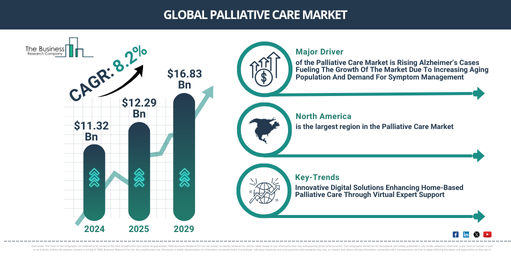
    The market for palliative care has seen significant growth in the past few years. Its size is projected to rise from $11.32 billion in 2024 to $12.29 billion in 2025, marking a compound annual growth rate (CAGR) of 8.5%. The expansion experienced in the historic period could be linked to the escalating prevalence of chronic and terminally ill diseases, heightened understanding of the advantages of palliative care, burgeoning demand for palliative care at home, increase in palliative care training initiatives, and the growing acknowledgment of palliative care in national healthcare policies.

    The market for palliative care is predicted to experience substantial growth in the forthcoming years, expanding to a value of $16.83 billion in 2029 with a compound annual growth rate (CAGR) of 8.2%. Several factors will fuel this growth during the forecast period, such as the escalating incidence of multiple chronic conditions among the elderly, an increasing need for individualized, patient-focused care, a surge in the implementation of community-based models of palliative care, escalating hospital expenses and stress on the healthcare system, plus growing awareness of psychological and emotional health. Key trends to watch in the forecast period include progress in digital health platforms, technology-driven home care solutions, improvements in pain management and symptom control tools, progress in wearables and monitoring devices, and advancements in interdisciplinary care planning platforms.

    Download The Free Sample Report Here:

    https://www.thebusinessresearchcompany.com/sample.aspx?id=27376&type=smp

    What Elements Are Contributing To Growth In The Palliative Care Market?

    The growth of the palliative care market is anticipated to be driven by the escalating incidence of Alzheimer’s disease. As a degenerative neurological ailment characterized by memory loss, cognitive decline, and altered behavior, the incidence of Alzheimer’s disease elevates with the aging global population. This makes the condition more common as lifespan increases. Palliative care plays a pivotal role in enhancing the quality of life for Alzheimer’s patients by managing distressful symptoms, backing caregivers, and giving compassionate, holistic care throughout the disease’s progression. For example, the US-based nonprofit health organization, the Alzheimer’s Association, stated in April 2025 that over 7 million Americans above the age of 65 were living with Alzheimer’s disease in 2022. This figure is projected to rise to 7.2 million by 2025. Consequently, the growth of the palliative care market is being spurred on by the increasing prevalence of Alzheimer’s disease.

    Which Segments Are Detailed In The Global Palliative Care Market Report?

    The palliative care market covered in this report is segmented

    1) By Service Type: Hospice Care, Hospital Inpatient Care, Nursing Homes, Home Care, Other Service Types

    2) By Age Group: Pediatric, Adult, Geriatric

    3) By Application: Cardiac Disease, Congestive Heart Failure, Cancer, Chronic Obstructive Pulmonary Disease (COPD), Kidney Failure, Alzheimer’s Disease, Parkinson’s Disease, Amyotrophic Lateral Sclerosis (ALS)

    4) By End User: Hospitals, Home Care Settings, Palliative Care Centres, Long-Term Care Centres And Rehabilitation Centres

    Subsegments:

    1) By Hospice Care: Inpatient Hospice Care, Outpatient Hospice Care, Community-Based Hospice Care, Home-Based Hospice Care

    2) By Hospital Inpatient Care: Acute Palliative Care Units, Specialized Palliative Wards, Consultation-Based Palliative Services, Post-Surgical Palliative Care

    3) By Nursing Homes: Skilled Nursing Facilities, Assisted Living Facilities, Long-Term Care Facilities, Memory Care Units

    4) By Home Care: Physician-Led Home Visits, Nurse-Led Palliative Care, Home-Based Symptom Management, Family Caregiver Support Services

    5) By Other Service Types: Outpatient Palliative Clinics, Telehealth Palliative Services, Community Health Programs, Mobile Palliative Care Units

    Which Emerging Trends And Strategic Shifts Are Shaping The Palliative Care Market?

    Leading businesses in the palliative care market are prioritizing the creation of technological advancements, like home palliative care assistance services, to alleviate the pressure related to hospital visits or admissions. These home-based services offer medical care focused on comfort and emotional support to people with serious health conditions, all within the comfort of their residence. To illustrate, Stream I Inc., a healthcare tech firm based in Japan, introduced Home Care Base, a home palliative care assistance service, in November 2023. The service offers online professional recommendations and resolves complicated medical issues, improving the collaboration between doctors, nurses, and pharmacists. It’s designed to meet Japan’s increasing demand for at-home medical services due to their aging population. Furthermore, it also promotes effective utilization of precious medical resources and enhances the availability of superior-quality palliative care.

    Who Are The Key Contributors To Growth In The Palliative Care Market?

    Major companies operating in the palliative care market are Carelon, Vancouver Coastal Health, Chemed Corporation, VNS Health, Empath Health, HammondCare, Hospice of the Western Reserve, Hospice of the Valley, Princess Alice Hospice, Royal Trinity Hospice, Anam Cara House Colac, Karuna Hospice Service Ltd., Teresa Dellar Palliative Care Residence, Banksia Palliative Care Service Inc., Hosparus Health, Kenya Hospices and Palliative Care Association, Amitayus, Cittamani Hospice, Pallium India Inc., and Drakenstein Palliative Hospice.

    Get The Full Report Here:

    https://www.thebusinessresearchcompany.com/report/palliative-care-global-market-report

    Which Region Is Projected To Lead The Palliative Care Market By 2025?

    North America was the largest region in the palliative care market in 2024. Asia-Pacific is expected to be the fastest-growing region in the forecast period. The regions covered in the palliative care market report are Asia-Pacific, Western Europe, Eastern Europe, North America, South America, Middle East, Africa.

    Request For A Customized Report:

    https://www.thebusinessresearchcompany.com/customise?id=27376&type=smp

    About The Business Research Company:

    With over 15000+ reports from 27 industries covering 60+ geographies, The Business Research Company has built a reputation for offering comprehensive, data-rich research and insights. Armed with 1,500,000 datasets, the optimistic contribution of in-depth secondary research, and unique insights from industry leaders, you can get the information you need to stay ahead in the game.

    Get in touch with us:

    The Business Research Company: https://www.thebusinessresearchcompany.com/

    Americas +1 310-496-7795

    Asia +44 7882 955267 & +91 8897263534

    Europe +44 7882 955267

    Email us at info@tbrc.info

    Follow us on:

    LinkedIn: https://in.linkedin.com/company/the-business-research-company

    YouTube: https://www.youtube.com/channel/UC24_fI0rV8cR5DxlCpgmyFQ

    Global Market Model: https://www.thebusinessresearchcompany.com/global-market-model
  • Future Projections: Biological Polymerase Chain Reaction (PCR) Technology Market to Reach $24.31 Billion by 2029 at 10% CAGR

    Future Projections: Biological Polymerase Chain Reaction (PCR) Technology Market to Reach $24.31 Billion by 2029 at 10% CAGR

    Claim your 30% discount on Global Market Reports with code ONLINE30. Limited time only.

    Claim your 30% discount on Global Market Reports with code ONLINE30. Limited time only._x000D_

    _x000D_

    #What Are the Latest Market Insights for the Biological Polymerase Chain Reaction (PCR) Technology Industry?#_x000D_

    The market size for the biological polymerase chain reaction (PCR) technology has experienced a significant surge in the past years. The market, which was valued at $15.06 billion in 2024, is projected to reach $16.62 billion by 2025, growing at a compound annual growth rate (CAGR) of 10.3%. Various factors contributed to the growth observed in the historic period, including the rise in forensic DNA analysis, increased funding for academic and clinical research, advancements in agricultural biotechnology, the boom in the biopharmaceutical industry, and the advent of genetic testing services._x000D_

    _x000D_

    The market size for biological polymerase chain reaction (PCR) technology is anticipated to expand swiftly in the upcoming years. By 2029, it’s estimated to increase to $24.31 billion, with a compound annual growth rate (CAGR) of 10.0%. Numerous factors contributing to the growth during the estimated period are the miniaturization and point-of-care (PoC) devices, liquid biopsy and non-invasive tests, regulatory support and swift approvals, usage of reagents and consumables, and strong financial backing from the government and private sector. Microfluidic PCR systems, enhancements in real-time PCR, multiplex PCR technology, consolidation with next-generation sequencing, and the application of AI and machine learning for PCR analysis are the leading trends for the forecast duration._x000D_

    _x000D_

    #Download The Free Sample Report Here:#_x000D_

    https://www.thebusinessresearchcompany.com/sample.aspx?id=27223&type=smp_x000D_

    _x000D_

    #What Forces Are Driving The Growth Of The Biological Polymerase Chain Reaction (PCR) Technology Industry?#_x000D_

    The upsurge in infectious diseases is anticipated to fuel the expansion of the biological polymerase chain reaction (PCR) technology market in the future. These diseases are induced by bacteria, viruses, fungi, or parasites. The escalating prevalence of such diseases can be credited to the rise in worldwide travel, enabling a quick and broad transmission of pathogens across different areas. Biological polymerase chain reaction (PCR) technology acts as a potent tool in fighting these diseases, thanks to its ability to swiftly and precisely identify pathogens, thereby facilitating early detection, prompt treatment, and effective control of outbreaks. To illustrate, in November 2023, the World Health Organization, an intergovernmental organization located in Switzerland, reported that in 2022 there were approximately 249 million malaria cases worldwide, an escalation of 5 million cases, or 2%, compared to 2021. Thus, the escalating prevalence of infectious diseases serves as a catalyst for the progression of the biological polymerase chain reaction (PCR) technology market._x000D_

    _x000D_

    #What Is The Overview Of Market Segmentation In The Biological Polymerase Chain Reaction (PCR) Technology Industry?#_x000D_

    The biological polymerase chain reaction (PCR) technology market covered in this report is segmented_x000D_

    _x000D_

    1) By Product Type: Reagents, Consumables, Software And Services _x000D_

    2) By Technique: Real-Time Polymerase Chain Reaction (PCR), Conventional Polymerase Chain Reaction (PCR), Digital Polymerase Chain Reaction (PCR), Reverse Transcription Polymerase Chain Reaction (PCR), Hot-Start Polymerase Chain Reaction (PCR), Multiplex Polymerase Chain Reaction (PCR), Other Polymerase Chain Reaction (PCR) Techniques_x000D_

    3) By Application: Diagnostic Applications, Genotyping, Nucleic Acid Detection, Gene Expression Analysis, Nucleic Acid Synthesis, Genetic Sequencing, Environmental Applications, Standard Validation Or Verification, Other Applications_x000D_

    4) By End User: Hospital Laboratories, Diagnostic Laboratories, Academic And Government Organizations, Pharma-Biotech Companies, Other End Users_x000D_

    _x000D_

    Subsegments:_x000D_

    1) By Reagents: DNA Polymerase, DNTPs, Primers And Probes, Buffers And Master Mixes, Enzymes, Nucleic Acid Templates, Additives And Enhancers_x000D_

    2) By Consumables: PCR Tubes, PCR Plates, Sealing Films And Mats, Microplates, Reaction Vessels, Pipette Tips, PCR Strips_x000D_

    3) By Software And Services: PCR Data Analysis Software, Real-Time PCR Analysis Software, Cloud-Based Data Storage Solutions, PCR Workflow Management Tools, Technical Support Services, Calibration And Maintenance Services, Training And Consultation Services_x000D_

    _x000D_

    #What Future Market Trends Are Projected For The Biological Polymerase Chain Reaction (PCR) Technology Industry?#_x000D_

    Leading entities in the biological polymerase chain reaction (PCR) technology market are honing their efforts on crafting novel methodologies such as microfluidic partitioning. These efforts aim to augment the exactness, sensitivity, and output rate of PCR-centric diagnostic and research applications. The process division of a liquid specimen into tiny, uniformly proportioned compartments (like droplets or wells) utilizing microfluidic machinery defines microfluidic partitioning. As an illustration, F. Hoffmann-La Roche AG, a pharmaceutical organization based in Switzerland, in August 2022, unveiled a new digital PCR system. This innovation is a formidable addition to the arsenal in the battle against various diseases including cancer. The digital PCR (dPCR) system comes with several distinguishing features that set it apart from conventional PCR technologies. Its most notable feature is the ability to split a sample into thousands, or even millions, of distinct reaction compartments via microfluidic partitioning. This ensures absolute quantification of target DNA or RNA sans the need for standard curves. Because of their extraordinary sensitivity and accuracy, dPCR systems are perfect for identifying low-frequency targets, uncommon mutations, and minimal residual disease._x000D_

    _x000D_

    #Who Are The Primary Players Operating Across The Global Biological Polymerase Chain Reaction (PCR) Technology Market?#_x000D_

    Major companies operating in the biological polymerase chain reaction (PCR) technology market are F. Hoffmann-La Roche Ltd., Thermo Fisher Scientific Inc., Danaher Corporation, Merck KGaA, Agilent Technologies Inc., Sartorius AG, Revvity Inc., Bio-Rad Laboratories Inc., QIAGEN N.V., Eppendorf AG, Cepheid Inc., Bio-Techne Corporation, GenScript Biotech Corporation, Takara Bio Inc., Promega Corporation, Analytik Jena GmbH+Co. KG, New England Biolabs Inc., Enzo Biochem Inc., LGC Biosearch Technologies Inc., and Bioline Reagents Ltd. _x000D_

    _x000D_

    #Get The Full Report Here:#_x000D_

    https://www.thebusinessresearchcompany.com/report/biological-polymerase-chain-reaction-pcr-technology-global-market-report_x000D_

    _x000D_

    #Which Region Offers The Most Growth Potential For The Biological Polymerase Chain Reaction (PCR) Technology Market Through 2029?#_x000D_

    North America was the largest region in the biological polymerase chain reaction (PCR) technology market in 2024. Asia-Pacific is expected to be the fastest-growing region in the forecast period. The regions covered in the biological polymerase chain reaction (PCR) technology market report are Asia-Pacific, Western Europe, Eastern Europe, North America, South America, Middle East, Africa._x000D_

    _x000D_

    #Request For A Customized Report:#_x000D_

    https://www.thebusinessresearchcompany.com/customise?id=27223&type=smp_x000D_

    _x000D_

    #About The Business Research Company:#_x000D_

    _x000D_

    With over 15000+ reports from 27 industries covering 60+ geographies, The Business Research Company has built a reputation for offering comprehensive, data-rich research and insights. Armed with 1,500,000 datasets, the optimistic contribution of in-depth secondary research, and unique insights from industry leaders, you can get the information you need to stay ahead in the game._x000D_

    _x000D_

    #Get in touch with us:#_x000D_

    _x000D_

    The Business Research Company: https://www.thebusinessresearchcompany.com/_x000D_

    Americas +1 310-496-7795_x000D_

    Asia +44 7882 955267 & +91 8897263534_x000D_

    Europe +44 7882 955267_x000D_

    Email us at info@tbrc.info_x000D_

    _x000D_

    #Follow us on:#_x000D_

    _x000D_

    LinkedIn: https://in.linkedin.com/company/the-business-research-company_x000D_

    YouTube: https://www.youtube.com/channel/UC24_fI0rV8cR5DxlCpgmyFQ_x000D_

    Global Market Model: https://www.thebusinessresearchcompany.com/global-market-model

  • Strategic Report on Organ Transport Service Market: Growth Opportunities and Emerging Challenges

    Strategic Report on Organ Transport Service Market: Growth Opportunities and Emerging Challenges

    Claim your 30% discount on Global Market Reports with code ONLINE30. Limited time only.

    Claim your 30% discount on Global Market Reports with code ONLINE30. Limited time only.

    What Is the Current and Projected Market Size of the Organ Transport Service Industry?

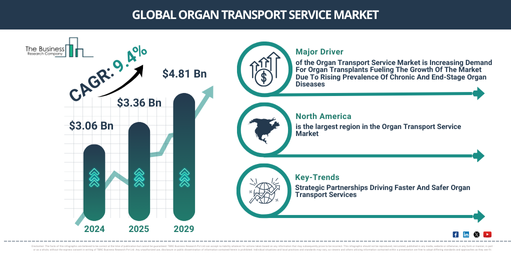
    The market size for organ transport services has seen robust growth recently. Its growth from a value of $3.06 billion in 2024 to $3.36 billion in 2025, with a compound annual growth rate (CAGR) of 9.8%, is considerable. The notable growth during the historic period is due to factors such as the rising demand for organ transplants, the expansion of hospitals specializing in transplants, an increase in cases of organ failure, developments in regulations for organ logistics, and the enhancement of public-private partnerships in healthcare.

    The market for organ transport services is predicted to exhibit robust growth in the forthcoming years, reaching a valuation of $4.81 billion in 2029 with a Compound Annual Growth Rate (CAGR) of 9.4%. Factors contributing to this growth forecast include the increasing application of artificial intelligence in overseeing logistics, an uptick in investments in transplant infrastructure, the escalation in the necessity for real-time organ tracking, a spike in the occurrences of organ failure due to lifestyle factors, and the development of transplant services in emerging markets. The prediction period is set to observe certain trends such as the application of drones in organ delivery, the use of real-time GPS in tracking organ transport, resorting to digital twin modeling for transportation simulation, 5G-supported transport monitoring systems, cutting-edge preservation methods like normothermic perfusion, and the employment of machine learning in forecasting delivery timeframes.

    Download The Free Sample Report Here:

    https://www.thebusinessresearchcompany.com/sample.aspx?id=27374&type=smp

    #Which Factors Are Currently Driving The Growth Of The Organ Transport Service Market?

    The escalating necessity for organ transplants is projected to stimulate the expansion of the organ transport service market in the future. Organ transplants, which are surgical procedures used to replace a defective or failing organ with a healthy one from a donor, are on the rise due to the growing prevalence of chronic and end-stage organ diseases. This surge is leading to an increased requirement for these critical transplant procedures. Organ transport services play an essential role in swiftly and safely delivering donated organs to transplant centers, ensuring they’re in peak condition, decreasing travel duration, and maintaining viability, all of which enhance the chances of successful transplantation and patient survival. For example, the Organ Procurement and Transplantation Network (OPTN), a US-based federal authorized system for equitable organ transplant allocation, reported that 46,632 organ transplants were performed in the United States in 2023, a boost of 8.7% compared to 2022. Hence, the surging demand for organ transplants is fuelling the growth of the organ transport service market.

    How Is The Global Organ Transport Service Market Structured In Terms Of Segments?

    The organ transport service market covered in this report is segmented

    1) By Type: Ground Transportation, Air Transportation

    2) By Type Of Organ Transported: Livers, Kidneys, Hearts, Lungs, Pancreas, Intestines, Other Types Of Organ Transported

    3) By Application: Domestic Transport, International Transport

    4) By End-User: Hospitals, Transplant Centers, Other End-Users

    Subsegments:

    1) By Ground Transportation: Ambulances, Specialized Organ Transport Vehicles, Courier And Logistics Services

    2) By Air Transportation: Charter Flights, Commercial Airlines, Helicopter Transport

    What Trends Are Currently Influencing Growth In The Organ Transport Service Market?

    Leading firms in the organ transport service sector are focusing on strategic partnerships to enhance the speed and safety of organ deliveries. These strategic alliances allow companies to leverage each other’s unique capabilities and resources to further mutual business goals such as service enhancement, operational efficiency, and market growth. In an illustration of such partnership, in September 2024, Paragonix Technologies Inc., a US-based organization for organ transplants, established a collaboration with Nationwide Organ Recovery Transport Alliance (NORA), a US-based logistics firm proficient in providing organ transportation services. The partnership aimed to launch a cross-US organ courier service, with a focus on improving the fairness of organ distribution by using commercial flights in lieu of private jets. This initiative enhances the use of Paragonix’s superior organ preservation devices, and NORA’s expertise in logistics, proposing a more economical and eco-friendly alternative for carrying donor organs on commercial flights.

    Who Are The Main Participants Shaping The Organ Transport Service Market Landscape?

    Major companies operating in the organ transport service market are TransMedics Inc., Associated Couriers LLC, CareDx Inc., AirMed International, XVIVO Perfusion AB, Angel MedFlight, Organ Recovery Systems, OrganOX Limited, Trinity Air Medical, Amvale Medical Transport Ltd, CryoLife Inc, KFA Medical Ltd, Mile High Ambulance, AirAmbulance 1, IMT Medical, Medical Air Service, First Care Ambulance, DCI Logistics, Preservation Solutions Inc, Garud Air Ambulance.

    Get The Full Report Here:

    https://www.thebusinessresearchcompany.com/report/organ-transport-service-global-market-report

    Which Region Currently Holds The Largest Share In The Organ Transport Service Market?

    North America was the largest region in the organ transport service market in 2024. Asia-Pacific is expected to be the fastest-growing region in the forecast period. The regions covered in the organ transport service market report are Asia-Pacific, Western Europe, Eastern Europe, North America, South America, Middle East, Africa.

    Request For A Customized Report:

    https://www.thebusinessresearchcompany.com/customise?id=27374&type=smp

    About The Business Research Company:

    With over 15000+ reports from 27 industries covering 60+ geographies, The Business Research Company has built a reputation for offering comprehensive, data-rich research and insights. Armed with 1,500,000 datasets, the optimistic contribution of in-depth secondary research, and unique insights from industry leaders, you can get the information you need to stay ahead in the game.

    Get in touch with us:

    The Business Research Company: https://www.thebusinessresearchcompany.com/

    Americas +1 310-496-7795

    Asia +44 7882 955267 & +91 8897263534

    Europe +44 7882 955267

    Email us at info@tbrc.info

    Follow us on:

    LinkedIn: https://in.linkedin.com/company/the-business-research-company

    YouTube: https://www.youtube.com/channel/UC24_fI0rV8cR5DxlCpgmyFQ

    Global Market Model: https://www.thebusinessresearchcompany.com/global-market-model

  • In-Depth Bacterial And Viral Specimen Collection Market Report: Business Trends, Growth Factors, and Forecast to 2029

    In-Depth Bacterial And Viral Specimen Collection Market Report: Business Trends, Growth Factors, and Forecast to 2029

    Claim your 30% discount on Global Market Reports with code ONLINE30. Limited time only.

    Claim your 30% discount on Global Market Reports with code ONLINE30. Limited time only._x000D_

    _x000D_

    #What Is the Outlook for the Bacterial And Viral Specimen Collection Market Heading Into 2029?#_x000D_

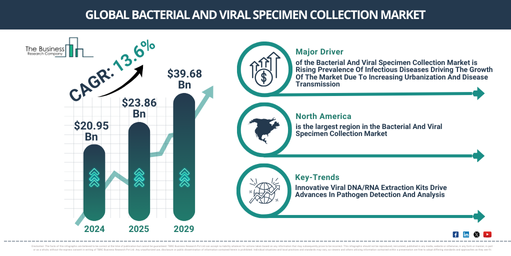
    In recent times, the bacterial and viral specimen collection market has seen substantial growth. The market size is expected to increase from $20.95 billion in 2024 to $23.86 billion in 2025, reflecting a compound annual growth rate (CAGR) of 13.9%. The historical growth can be linked to an increased demand for early and precise diagnostics, heightened incidences of viral outbreaks, increased government funding, a surge in global healthcare spending, and the expansion of telemedicine._x000D_

    _x000D_

    Over the next few years, the market size for bacterial and viral specimen collection is expected to witness significant expansion. It’s projected to reach $39.68 billion by 2029, growing at a compound annual growth rate (CAGR) of 13.6%. The growth during this period can be linked to the broader global disease surveillance networks, increasing investment for pandemic readiness, a higher number of infectious diseases, increased antimicrobial resistance, and intensifying bacterial infections. Technological advancements, digital tracking integration, the use of non-invasive specimen collection techniques, the implementation of microfluidic equipment, and the use of automated specimen tracking systems are major trends forecasted for this period._x000D_

    _x000D_

    #Download The Free Sample Report Here:#_x000D_

    https://www.thebusinessresearchcompany.com/sample.aspx?id=27219&type=smp_x000D_

    _x000D_

    #Which Factors Are Pushing The Bacterial And Viral Specimen Collection Market Forward?#_x000D_

    The upward trend of infectious diseases is projected to augment the bacterial and viral specimen collection market’s progress. Infectious diseases, resulting from harmful microorganisms such as bacteria, viruses, fungi, or parasites, can transmit from one person to another directly or indirectly. This escalation is primarily due to the increase in urbanization, resulting in greater population density and close human contact, thus favoring rapid disease propagation and forming perfect conditions for pathogens to distribute more readily among communities. The bacterial and viral specimen collection plays a vital role in managing infectious diseases by supplying crucial samples that allow for accurate detection and diagnosis, thereby endorsing prompt and specific medical interventions. For example, the Centers for Disease Control and Prevention, a US government agency, reported in March 2024 that the number of tuberculosis instances rose from 8,320 in 2022 to 9,615 in 2023, an increment of 1,295 cases. At the same time, the incidence rate escalated from 2.5 to 2.9 per 100,000 persons, indicating a significant rise over the course of the year. Therefore, the increasing prevalence of infectious diseases is fueling the expansion of the bacterial and viral specimen collection market._x000D_

    _x000D_

    #Which Segment Held The Largest Share In The Bacterial And Viral Specimen Collection Market In 2025?#_x000D_

    The bacterial and viral specimen collection market covered in this report is segmented_x000D_

    _x000D_

    1) By Product: Bacterial Specimen Collection, Viral Specimen Collection_x000D_

    2) By Application: Diagnostics, Research_x000D_

    3) By End User: Hospitals And Clinics, Diagnostic Laboratories, Academic And Research Institutions, Other End User_x000D_

    _x000D_

    Subsegments:_x000D_

    1) By Bacterial Specimen Collection: Swabs, Transport Media, Culture Plates & Media, Blood Culture Bottles, Biopsy And Tissue Collection Kits, Urine Collection Containers, Other Specialized Collection Devices_x000D_

    2) By Viral Specimen Collection: Viral Transport Media, Blood Collection Tubes, Saliva Collection Kits, Sputum Collection Containers, Stool Collection Kits, Other Specialized Collection Devices_x000D_

    _x000D_

    #How Are Key Trends Driving Expansion In The Bacterial And Viral Specimen Collection Industry?#_x000D_

    Leaders in the bacterial and viral specimen collection market are striving to incorporate innovative solutions such as viral DNA and RNA extraction kits. These advancements are designed to heighten the precision, efficiency, and quickness of detecting and analyzing pathogens. A viral DNA and RNA extraction kit operates as a lab instrument for isolating and purifying viral genetic material from clinical samples for precise molecular testing and diagnosis. For example, in April 2024, the US-based life sciences company New England Biolabs introduced the Monarch Mag Viral DNA and RNA Extraction Kit. This magnetic bead-based purification kit is engineered for fast, dependable, and exceptionally sensitive extraction of viral DNA and RNA from a variety of sample types, including saliva, respiratory swabs, and enriched wastewater. The kit can be used manually or automated, making it compatible with platforms like KingFisher Flex and Agilent Bravo and facilitating high-throughput processing. With increased sensitivity for detecting low viral loads and carrier RNA inclusion for improved recovery, the kit is ideal for downstream applications like qPCR, RT-qPCR, ddPCR, and next-generation sequencing (NGS). Its purpose is to cater to requirements in the areas of infectious disease testing, viral genome sequencing, and environmental surveillance by enabling scalable and hands-free workflows._x000D_

    _x000D_

    #Which Organizations Are Driving Progress In The Bacterial And Viral Specimen Collection Industry?#_x000D_

    Major companies operating in the bacterial and viral specimen collection market are Roche Diagnostics International AG, Thermo Fisher Scientific Inc., Becton Dickinson and Company, Lonza Group AG, Hologic Inc., bioMérieux SA, Quidel Corporation, QIAGEN N.V., DiaSorin S.p.A., Greiner Bio-One International GmbH, Spectrum Solutions LLC, Hardy Diagnostics Inc., EKF Diagnostics Holdings Plc, Trinity Biotech Plc, Puritan Medical Products Company LLC, Wuxi NEST Biotechnology Co. Ltd., Copan Diagnostics Inc., VIRCELL S.L., Medical Wire & Equipment Co. Ltd., HiMedia Laboratories Pvt. Ltd., Longhorn Vaccines and Diagnostics LLC, and Beaver Biomedical Engineering Co. Ltd. _x000D_

    _x000D_

    #Get The Full Report Here:#_x000D_

    https://www.thebusinessresearchcompany.com/report/bacterial-and-viral-specimen-collection-global-market-report_x000D_

    _x000D_

    #Which Region Is Expected To Experience The Highest Growth In The Bacterial And Viral Specimen Collection Industry?#_x000D_

    North America was the largest region in the bacterial and viral specimen collection market in 2024. Asia-Pacific is expected to be the fastest-growing region in the forecast period. The regions covered in the bacterial and viral specimen collection market report are Asia-Pacific, Western Europe, Eastern Europe, North America, South America, Middle East, Africa._x000D_

    _x000D_

    #Request For A Customized Report:#_x000D_

    https://www.thebusinessresearchcompany.com/customise?id=27219&type=smp_x000D_

    _x000D_

    #About The Business Research Company:#_x000D_

    _x000D_

    With over 15000+ reports from 27 industries covering 60+ geographies, The Business Research Company has built a reputation for offering comprehensive, data-rich research and insights. Armed with 1,500,000 datasets, the optimistic contribution of in-depth secondary research, and unique insights from industry leaders, you can get the information you need to stay ahead in the game._x000D_

    _x000D_

    #Get in touch with us:#_x000D_

    _x000D_

    The Business Research Company: https://www.thebusinessresearchcompany.com/_x000D_

    Americas +1 310-496-7795_x000D_

    Asia +44 7882 955267 & +91 8897263534_x000D_

    Europe +44 7882 955267_x000D_

    Email us at info@tbrc.info_x000D_

    _x000D_

    #Follow us on:#_x000D_

    _x000D_

    LinkedIn: https://in.linkedin.com/company/the-business-research-company_x000D_

    YouTube: https://www.youtube.com/channel/UC24_fI0rV8cR5DxlCpgmyFQ_x000D_

    Global Market Model: https://www.thebusinessresearchcompany.com/global-market-model

  • Future Demand and Leading Companies Shaping the Omics-Based Clinical Trials Market to 2029

    Future Demand and Leading Companies Shaping the Omics-Based Clinical Trials Market to 2029

    Claim your 30% discount on Global Market Reports with code ONLINE30. Limited time only.

    Claim your 30% discount on Global Market Reports with code ONLINE30. Limited time only.

    What Is the Estimated Industry Valuation for the Omics-Based Clinical Trials Sector?

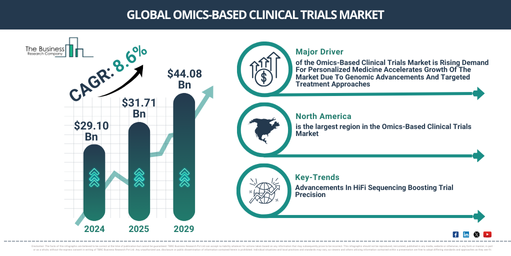
    In recent times, the market size for omics-based clinical trials has witnessed robust growth. The market, which is projected to rise from $29.10 billion in 2024 to $31.71 billion in 2025, will experience a compound annual growth rate (CAGR) of 8.9%. Factors contributing to previous growth include the surge in clinical trials utilizing omics technologies, increased focus on translational research, escalating governmental backing and funds, improved access to biobanks and biospecimens, and rising knowledge about the advantages of precision therapies.

    The market for clinical trials based on omics is predicted to see significant expansion in the coming years. With a compound annual growth rate (CAGR) estimated at 8.6%, it is expected to reach $44.08 billion by 2029. Several factors are contributing to this growth forecast, such as the rising demand for customized medical treatments, the increasing usage of multi-omics methods, a growing incidence of both chronic and rare diseases, heightened investment in genomic research and biotechnology, and a greater focus on discovering new biomarkers. During the forecast period, the notable trends include advances in Next-Generation Sequencing (NGS) technologies, the incorporation of artificial intelligence into omics platforms, technological progress in bioinformatics tools, enhancements in proteomics and metabolomics platforms, and the amalgamation of multi-omics data.

    Download The Free Sample Report Here:

    https://www.thebusinessresearchcompany.com/sample.aspx?id=27369&type=smp

    What Forces Are Driving The Growth Of The Omics-Based Clinical Trials Market?

    The growth of the omics-based clinical trials market is anticipated to be propelled by an escalating demand for personalized medicine. Personalized medicine is a medical strategy that customizes the prevention, diagnosis, and treatment of diseases according to the unique characteristics of each patient. With advancements in genomic technologies enabling quicker, cost-effective analysis of individual genetic profiles, there has been a surge in demand for personalized medicine. Omics-based clinical trials provide crucial support in this domain, helping identify unique genetic, proteomic, and metabolic profiles of individuals. This facilitates the development of more precise and effective treatment methodologies personalized for each patient. For example, as noted by the Personalized Medicine Coalition, a professional association in the US, in 2022, of the 12 new custom-made medicines approved, 34% signified all newly approved treatments, marking a significant increase from past years. Therefore, the surge in demand for personalized medicine is fuelling the omics-based clinical trials market’s expansion.

    How Is The Omics-Based Clinical Trials Industry Segmented Across Key Parameters?

    The omics-based clinical trials market covered in this report is segmented

    1) By Type: Genomics, Proteomics, Metabolomics, Transcriptomics

    2) By Phase: Phase I, Phase II, Phase III, Phase IV

    3) By Study Design: Interventional Studies, Observational Studies, Expanded Access Studies

    4) By Application: Oncology, Cardiovascular, Neurology, Infectious Diseases, Metabolic Disorders

    5) By End-User: Pharmaceutical And Biotechnology Companies, Academic And Research Institutes, Contract Research Organizations (CROs), Hospitals And Diagnostic Laboratories

    Subsegments:

    1) By Genomics: Whole Genome Sequencing, Whole Exome Sequencing, Targeted Gene Sequencing

    2) By Proteomics: Protein Expression Profiling, Post-Translational Modifications Analysis, Protein-Protein Interaction Mapping

    3) By Metabolomics: Targeted Metabolomics, Untargeted Metabolomics, Metabolic Flux Analysis

    4) By Transcriptomics: Microarray Analysis, Single-Cell Transcriptomics, Gene Expression Profiling

    What Notable Trends Are Shaping The Direction Of The Omics-Based Clinical Trials Market?

    Leading firms in the omics-based clinical trials market are emphasizing on innovative solutions, such as HiFi sequencing technology, to improve the precision, velocity, and complexity of multi-omics data examination, with the goal of enhancing trial results and bespoke treatment plans. HiFi sequencing is a next-generation sequencing (NGS) technology that provides long, highly precise reads via circular consensus sequencing (CCS), facilitating thorough and exact analysis of genomes, transcriptomes, and epigenomes. For example, in October 2024, Pacific Biosciences of California Inc., a biotech company from the US, in partnership with the Agency for Science, Technology, and Research (A*STAR), a research and product development agency from Singapore, and Macrogen Inc., a biotech company from South Korea, inaugurated an advanced lab to push forward genomics innovation in Singapore using the superior long-read sequencing technology. The establishment gives researchers the opportunity to execute in-depth genomic studies with greater accuracy and rapidity. It caters to a plethora of applications, including transcriptomics, whole genome sequencing, metagenomics, and epigenetics. The lab also encourages cooperation among global scientists and local institutions, with the objective to expedite breakthroughs in precision oncology, personalized medicine, and rare disease diagnosis. Furthermore, it provides training schemes and shared access to high-throughput sequencing facilities, fostering innovation and capacity-building within the Asia-Pacific region.

    Which Companies Currently Dominate The Competitive Landscape In The Omics-Based Clinical Trials Industry?

    Major companies operating in the omics-based clinical trials market are Pfizer Inc., F. Hoffmann-La Roche Ltd., Thermo Fisher Scientific Inc., GlaxoSmithKline Plc, Eli Lilly and Company, Novo Nordisk A/S, BioNTech SE, IQVIA Inc., Laboratory Corporation of America Holdings, ICON Public Limited Company, SGS Société Générale de Surveillance SA, Eurofins Scientific SE, Syneos Health Inc., Illumina Inc., Charles River Laboratories International Inc., Parexel International Corporation, Bruker Corporation, Fulgent Genetics Inc., Signios Biosciences, and BioAro Inc.

    Get The Full Report Here:

    https://www.thebusinessresearchcompany.com/report/omics-based-clinical-trials-global-market-report

    Which Geographic Regions Are Driving Demand In The Omics-Based Clinical Trials Market?

    North America was the largest region in the omics-based clinical trials market in 2024. Asia-Pacific is expected to be the fastest-growing region in the forecast period. The regions covered in the omics-based clinical trials market report are Asia-Pacific, Western Europe, Eastern Europe, North America, South America, Middle East, Africa.

    Request For A Customized Report:

    https://www.thebusinessresearchcompany.com/customise?id=27369&type=smp

    About The Business Research Company:

    With over 15000+ reports from 27 industries covering 60+ geographies, The Business Research Company has built a reputation for offering comprehensive, data-rich research and insights. Armed with 1,500,000 datasets, the optimistic contribution of in-depth secondary research, and unique insights from industry leaders, you can get the information you need to stay ahead in the game.

    Get in touch with us:

    The Business Research Company: https://www.thebusinessresearchcompany.com/

    Americas +1 310-496-7795

    Asia +44 7882 955267 & +91 8897263534

    Europe +44 7882 955267

    Email us at info@tbrc.info

    Follow us on:

    LinkedIn: https://in.linkedin.com/company/the-business-research-company

    YouTube: https://www.youtube.com/channel/UC24_fI0rV8cR5DxlCpgmyFQ

    Global Market Model: https://www.thebusinessresearchcompany.com/global-market-model
  • 2025 Next Generation Sequencing (NGS) In Agrigenomics Market Outlook: Opportunities, Growth Trends, and Strategic Analysis

    2025 Next Generation Sequencing (NGS) In Agrigenomics Market Outlook: Opportunities, Growth Trends, and Strategic Analysis

    Claim your 30% discount on Global Market Reports with code ONLINE30. Limited time only.

    Claim your 30% discount on Global Market Reports with code ONLINE30. Limited time only.

    What Are the Latest Market Insights for the Next Generation Sequencing (NGS) In Agrigenomics Industry?

    Recent years have seen quick growth in the size of the agrigenomics market due to next-generation sequencing (NGS). The market, which was valued at $2.25 billion in 2024, is set to reach $2.53 billion in 2025, and the compound annual growth rate (CAGR) is expected to be 12.5%. The growth during the historic period can be traced back to the rising demand for crop varieties that are disease-resistant and high-yielding, escalating need for sustainable practices in agriculture to tackle climate change, increased application of precision farming along with genomics-assisted breeding methods, growth in investment towards research and development of agricultural biotechnology, and enhanced understanding of food security and the crucial role of genetic diversity.

    In the coming years, the agrigenomics market anticipates rapid growth where the next-generation sequencing (NGS) sector, in particular, is projected to reach $4.00 billion by 2029, expanding at a compound annual growth rate (CAGR) of 12.2%. Factors contributing to this projected growth include increased government funding and favorable policies for agrigenomics initiatives, greater accessibility of advanced sequencing technologies, the escalating integration of big data and bioinformatics for crop and livestock enhancement, expanding partnerships among agribiotech firms, research establishments, and farmers, as well as an amplified emphasis on enhancing livestock health and productivity via genetic analysis. Noteworthy trends for the forecast period comprise advancements in high-throughput sequencing technologies, the integration of bioinformatics and big data analytics, improvements in technology that lower cost and complexity, progress in long-read sequencing methods, along with advancements in gene editing tools.

    Download The Free Sample Report Here:

    https://www.thebusinessresearchcompany.com/sample.aspx?id=27361&type=smp

    What Forces Are Driving The Growth Of The Next Generation Sequencing (NGS) In Agrigenomics Industry?

    The growth of next-generation sequencing (NGS) in the agrigenomics market is anticipated to be fueled by the escalating worries about food security. Food security involves guaranteeing regular access to ample, safe, and nutrient-rich food for everyone to support a healthy and energetic lifestyle. The increased demand for food due to population growth, which exceeds the present agricultural production capability, leads to these mounting worries about food security. Next-generation sequencing (NGS) in agrigenomics aids food security by promoting the creation of enhanced crop sorts with increased yield, disease resistance, and adaptability to climate changes. To illustrate, as reported by the United States Department of Agriculture, a government agency based in the US, 13.5% (18.0 million) of the American families faced food insecurity in 2023, a significant increase from 12.8% (17.0 million) in 2022. Hence, these escalating concerns regarding food security are fostering growth of next-generation sequencing (NGS) in the agrigenomics market.

    What Is The Overview Of Market Segmentation In The Next Generation Sequencing (NGS) In Agrigenomics Industry?

    The next generation sequencing (NGS) in agrigenomics market covered in this report is segmented

    1) By Types: Nanopore, NextSeq, NovaSeq, Sequel

    2) By Sample Type: Blood Samples, Plant Tissue Samples, Soil Samples, Microbial Cultures, Seed Samples

    3) By Workflow Type: Sample Preparation, Sequencing, Data Analysis, Data Interpretation, Bioinformatics, Management

    4) By Application: Plant Genomics, Animal Genomics, Microbial Genomics, Food Safety Testing, Biodiversity Conservation

    5) By End-User Type: Agricultural Biotechnology Companies, Research Institutions, Food And Beverage Companies, Government, Regulatory Bodies, Farmers

    Subsegments:

    1) By Nanopore: MinION, GridION, PromethION

    2) By NextSeq: NextSeq 500, NextSeq 550

    3) By NovaSeq: NovaSeq 6000, NovaSeq X

    4) By Sequel: Sequel I, Sequel II, Sequel Iie

    What Future Market Trends Are Projected For The Next Generation Sequencing (NGS) In Agrigenomics Industry?

    Key players in the next generation sequencing (NGS) in the field of agrigenomics are concentrating their efforts on creating cutting-edge solutions like single-reaction sequencing. This technique provides cost-effective and precise genomic revelations that fast-track enhancements in crops and livestock for eco-friendly farming. Single-reaction sequencing merges numerous sequencing processes into a single molecular test, facilitating genome-wide sequencing and focused genotyping at the same time. For example, Gencove Inc., a biotech company from the US, collaborated with NEOGEN Corporation in May 2022 to introduce InfiniSEEK. This NEOGEN-developed product consolidates low-pass whole genome sequencing with high-coverage genotyping in a unified test, generating economical, precise genomic insights, which in turn help to perform exhaustive sequencing of cattle populations. It aids in the avoidance of selection bias, the detection of new genetic characteristics, and the management of over 400 bovine traits with clinical-grade precision validated to be more than 99% in accordance with deep sequencing.

    Who Are The Primary Players Operating Across The Global Next Generation Sequencing (NGS) In Agrigenomics Market?

    Major companies operating in the next generation sequencing (ngs) in agrigenomics market are Thermo Fisher Scientific Inc., Eurofins Scientific SE, Agilent Technologies Inc., Illumina Inc., Daicel Corporation, Takara Holdings Inc., Tecan Group Ltd., Azenta Life Sciences, 10x Genomics Inc., Novogene Corporation, Twist Bioscience Inc., Oxford Nanopore Technologies Ltd., Genotypic Technology Pvt. Ltd., CD Genomics Inc., Zymo Research Corp., Genome Life Sciences Pvt. Ltd., Arraygen Technologies Pvt. Ltd., SciGenom Labs Pvt. Ltd., BGI Group, and Paragon Genomics Inc.

    Get The Full Report Here:

    https://www.thebusinessresearchcompany.com/report/next-generation-sequencing-ngs-in-agrigenomics-global-market-report

    Which Region Offers The Most Growth Potential For The Next Generation Sequencing (NGS) In Agrigenomics Market Through 2029?

    North America was the largest region in the next generation sequencing (NGS) in agrigenomics market in 2024. Asia-Pacific is expected to be the fastest-growing region in the forecast period. The regions covered in the next generation sequencing (NGS) in agrigenomics market report are Asia-Pacific, Western Europe, Eastern Europe, North America, South America, Middle East, Africa.

    Request For A Customized Report:

    https://www.thebusinessresearchcompany.com/customise?id=27361&type=smp

    About The Business Research Company:

    With over 15000+ reports from 27 industries covering 60+ geographies, The Business Research Company has built a reputation for offering comprehensive, data-rich research and insights. Armed with 1,500,000 datasets, the optimistic contribution of in-depth secondary research, and unique insights from industry leaders, you can get the information you need to stay ahead in the game.

    Get in touch with us:

    The Business Research Company: https://www.thebusinessresearchcompany.com/

    Americas +1 310-496-7795

    Asia +44 7882 955267 & +91 8897263534

    Europe +44 7882 955267

    Email us at info@tbrc.info

    Follow us on:

    LinkedIn: https://in.linkedin.com/company/the-business-research-company

    YouTube: https://www.youtube.com/channel/UC24_fI0rV8cR5DxlCpgmyFQ

    Global Market Model: https://www.thebusinessresearchcompany.com/global-market-model