Category: HealthcareServices

  • Nanotechnology In Cancer Treatment Industry Poised for Rapid Expansion, Projected to Hit $278.07 Billion by 2029

    Nanotechnology In Cancer Treatment Industry Poised for Rapid Expansion, Projected to Hit $278.07 Billion by 2029

    Claim your 30% discount on Global Market Reports with code ONLINE30. Limited time only.

    Claim your 30% discount on Global Market Reports with code ONLINE30. Limited time only.

    What Is the Outlook for the Nanotechnology In Cancer Treatment Market Heading Into 2029?

    In recent times, we have observed a swift expansion in the market size of nanotechnology in cancer treatment. The forecast predicts a rise from $137.90 billion in 2024 to $159.09 billion in 2025, indicating a compound annual growth rate (CAGR) of 15.4%. The historic growth phase can be credited to a global increase in early cancer detection awareness, an upsurge in the prevalence of cancer, escalating investments in nanomedicine research and development, growing preference for minimally invasive procedures, and government’s increasing financial support for oncology nanotech studies.

    The forecast for the nanotechnology market in cancer treatment indicates swift expansion in the coming years, expecting to reach $278.07 billion in 2029 with a 15.0% compound annual growth rate (CAGR). The anticipated growth over the forecast timeframe is attributed to the escalating demand for targeted cancer treatments, integration of nanotechnology into drug delivery systems, a deeper concentration on individualized oncology treatment, a rise in clinical trials for nano-enabled cancer drugs, and an increase in the adoption of nanotheranostics for cancer care. Key trends predicted include advancements in nanoparticle drug delivery systems, innovative cancer-specific nanocarriers, the incorporation of AI into nanotechnology for precise oncology, the invention of multi-functional nanodevices for diagnosis and treatment, and the spread of nanotheranostics into personalized healthcare.

    Download The Free Sample Report Here:

    https://www.thebusinessresearchcompany.com/sample.aspx?id=27357&type=smp

    Which Factors Are Pushing The Nanotechnology In Cancer Treatment Market Forward?

    The expansion of the cancer treatment market through nanotechnology is anticipated due to the increasing need for targeted therapies. Targeted therapies are cancer treatments uniquely designed to pinpoint molecular markers or pathways that are crucial to the growth and advancement of tumors. The escalated requirement for these specific therapies can be attributed to their capability to not only accurately assault cancer cells but also limit the harm brought to healthy tissue and control potential side effects. By administering accurate drug delivery to cancer cells, nanotechnology enhances targeted therapies, which boosts their effectiveness while mitigating harm to healthy tissues. For example, the American Society of Gene & Cell Therapy (ASGCT), a professional organization based in the US, revealed in a report in July 2023 that by the end of the first quarter of 2023, there were 247 gene therapies in Phase II. This number experienced a 5% increase, reaching 260 by the conclusion of the second quarter in 2023. Consequently, the expanding need for targeted therapies is propelling the development of nanotechnology in the cancer treatment market.

    Which Segment Held The Largest Share In The Nanotechnology In Cancer Treatment Market In 2025?

    The nanotechnology in cancer treatment market covered in this report is segmented

    1) By Nanotechnology Type: Liposomes, Dendrimers, Nanoparticles

    2) By Treatment Type: Chemotherapy, Immunotherapy, Targeted Therapy, Combined Therapy Approaches, Surgery Assistance

    3) By Cancer Type: Breast Cancer, Lung Cancer, Prostate Cancer, Colorectal Cancer, Blood Cancer, Other Cancer Types

    4) By Application: Targeted Drug Delivery, Photothermal Therapy, Radiation Therapy Enhancement, Diagnostics And Imaging, Gene Delivery Systems

    5) By End-User: Hospitals, Research Institutions, Diagnostics Laboratories, Pharmaceutical Companies, Contract Research Organizations (CROs)

    Subsegments:

    1) By Liposomes: Conventional Liposomes, Stealth Liposomes, Cationic Liposomes, Immunoliposomes

    2) By Dendrimers: Polyamidoamine Dendrimers, Polypropyleneimine Dendrimers, Peptide-Based Dendrimers, Carbosilane Dendrimers

    3) By Nanoparticles: Gold Nanoparticles, Magnetic Nanoparticles, Polymeric Nanoparticles, Quantum Dots, Lipid Nanoparticles

    How Are Key Trends Driving Expansion In The Nanotechnology In Cancer Treatment Industry?

    Key players in the nanotechnology cancer treatment market are turning their focus to develop advanced solutions such as nano formulations for immunotherapy, with an aim to improve immune targeting and reduce negative effects in cancer patients. Nano formulation within immunotherapy leverages nanotechnology to deliver immunity-centric treatments directly to the target areas, enhancing precise treatment plans while boosting drug stability, bioavailability, and the activation of immune response. For example, in December 2023, Cello Therapeutics, an American biotech firm, introduced its broad-spectrum therapeutic cancer nano vaccine known as CE120, which received approval from the Food and Drug Administration. This significant breakthrough treatment is the first to use platelet membrane-coated nanoparticles to treat solid tumors clinically. CE120 merges targeted drug delivery with immune system activation, seeking to eradicate tumors and prevent their future return. Its unique nanotechnology framework heightens both the precision of the treatment and immune response. This achievement establishes CE120 as a ground-breaking nanomedicine in the cancer treatment domain.

    Which Organizations Are Driving Progress In The Nanotechnology In Cancer Treatment Industry?

    Major companies operating in the nanotechnology in cancer treatment market are Pfizer Inc., AstraZeneca PLC, Novartis AG, Amgen Inc., GE Healthcare Technologies Inc., Eisai Co. Ltd., Jazz Pharmaceuticals plc, Arrowhead Pharmaceuticals Inc., Nanobiotix S.A., EnGeneIC Ltd., Nanospectra Biosciences Inc., Sona Nanotech Inc., CritiTech Inc., Immix Biopharma Inc., DNA Nanobots LLC, Nanovery Limited, CytImmune Sciences Inc., NanOlogy LLC, NanoApps Medical Inc., ARIZ Precision Medicine.

    Get The Full Report Here:

    https://www.thebusinessresearchcompany.com/report/nanotechnology-in-cancer-treatment-global-market-report

    Which Region Is Expected To Experience The Highest Growth In The Nanotechnology In Cancer Treatment Industry?

    North America was the largest region in the nanotechnology in cancer treatment market in 2024. Asia-Pacific is expected to be the fastest-growing region in the forecast period. The regions covered in the nanotechnology in cancer treatment market report are Asia-Pacific, Western Europe, Eastern Europe, North America, South America, Middle East, Africa.

    Request For A Customized Report:

    https://www.thebusinessresearchcompany.com/customise?id=27357&type=smp

    About The Business Research Company:

    With over 15000+ reports from 27 industries covering 60+ geographies, The Business Research Company has built a reputation for offering comprehensive, data-rich research and insights. Armed with 1,500,000 datasets, the optimistic contribution of in-depth secondary research, and unique insights from industry leaders, you can get the information you need to stay ahead in the game.

    Get in touch with us:

    The Business Research Company: https://www.thebusinessresearchcompany.com/

    Americas +1 310-496-7795

    Asia +44 7882 955267 & +91 8897263534

    Europe +44 7882 955267

    Email us at info@tbrc.info

    Follow us on:

    LinkedIn: https://in.linkedin.com/company/the-business-research-company

    YouTube: https://www.youtube.com/channel/UC24_fI0rV8cR5DxlCpgmyFQ

    Global Market Model: https://www.thebusinessresearchcompany.com/global-market-model
  • Outlook for Multiomics Services Market: Key Developments and Future Strategies to 2029

    Outlook for Multiomics Services Market: Key Developments and Future Strategies to 2029

    Claim your 30% discount on Global Market Reports with code ONLINE30. Limited time only.

    Claim your 30% discount on Global Market Reports with code ONLINE30. Limited time only.

    How Much Is the Global Multiomics Services Market Valued at Present and by 2029?

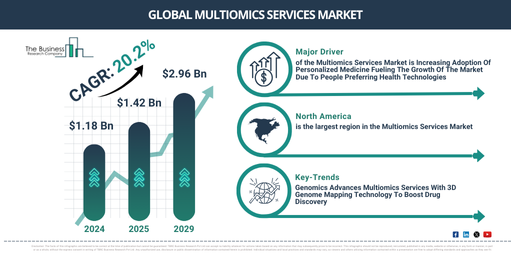
    In the past few years, the multiomics services market has seen substantial growth. The market value is set to increase from $1.18 billion in 2024, to $1.42 billion in 2025, with a compound annual growth rate (CAGR) of 20.6%. The growth experienced during the historic period is due to various factors such as the widespread use of next-generation sequencing platforms, increased application of bioinformatics tools in research, a surge in the demand for the discovery of biomarkers, growth of academic partnerships in the field of systems biology, and the enhanced use of multiomics in plant science.

    In the coming years, an explosive increase is anticipated in the size of the multiomics services market. By the year 2029, it is predicted to have grown to a staggering $2.96 billion, with a compound annual growth rate (CAGR) of 20.2%. This growth in the forecast period is linked to sustainable agricultural practices’ ascent, an amplified focus on single-cell multiomics, the surge in using spatial omics in disease investigation, a climbing requirement for personalized nutrition, and the expanded initiation of clinical trials that employ multiomics. Future trends encompass advancements in spatial transcriptomics tools, heightened microfluidics-enabled omics workflows, the creation of real-time multiomics monitoring systems, discoveries in cross-species multiomics applications, and developments in wearable omics diagnostic technology.

    Download The Free Sample Report Here:

    https://www.thebusinessresearchcompany.com/sample.aspx?id=27355&type=smp

    #What Drivers Are Influencing Growth In The Multiomics Services Market?

    The growth of the multiomics services market is being fuelled by the rising implementation of personalized medicine. This term refers to a medical approach that uses a person’s genetic and lifestyle information to individualize their healthcare and treatment strategies. The increasing preference for health technologies offering real-time monitoring and treatments tailored to a person’s unique biological makeup has led to wider acceptance of personalized medicine. Multiomics services contribute to the progression of personalized medicine by synthesizing diverse biological data such as genomics, transcriptomics, proteomics, and metabolomics. This offers a comprehensive picture of an individual’s health, thus enabling personalized diagnosis, treatment, and disease prevention plans. For instance, the Personalized Medicine Coalition, a professional membership organization in the US, reported in February 2023 that there had been approval for 12 new personalized medicines in 2022, constituting about 34% of all newly approved therapies. This was a significant rise from previous years. So, it is clear that the growing adoption of personalized medicine is spurring the growth of the multiomics services market.

    What Are The Main Segments Identified In The Multiomics Services Market Research?

    The multiomics services market covered in this report is segmented

    1) By Type: Single-Cell Multiomics, Bulk Multiomics

    2) By Application: Biomarker Discovery, Drug Discovery And Development, Synthetic Biology, Other Applications

    3) By End Users: Academic And Research Institutes, Pharmaceutical And Biotechnology Companies, Other End Users

    Subsegments:

    1) By Single-Cell Multiomics: Single-Cell Genomics Services, Single-Cell Transcriptomics Services, Single-Cell Proteomics Services, Single-Cell Epigenomics Services

    2) By Bulk Multiomics: Genomics And Transcriptomics Integration Services, Genomics And Proteomics Integration Services, Transcriptomics And Proteomics Integration Services, Epigenomics And Transcriptomics Integration Services

    What Are The Leading Trends And Opportunities In The Multiomics Services Sector?

    Major corporations in the multiomics services market are developing innovative techniques, such as 3D genome mapping, to bolster understanding of gene regulation, mechanisms of diseases, and individualized treatment plans. 3D genome mapping is the practice of identifying the three-dimensional configuration of the genome present in a cell’s nucleus. Example, in January 2025, Enhanc3D Genomics, a biotechnology firm based in the UK, introduced a variety of 3D multi-omics solutions designed to expedite and increase the accuracy of drug discovery. They offer distinctive features such as merging genome-wide regulatory interaction data with multi-omics profiles in one assay, this provides a thorough overview of gene regulation. Their Promoter Capture Hi-C technology enables accurate mapping of extensive interactions between regulatory components and target genes, including non-coding regions. The GenLinkConnect, GenLinkResponse, and GenLinkProfile features of the platform’s modular design support SNP-to-gene connection, drug reaction analysis, and cell-specific regulatory profiling respectively. Additionally, their GenLinkHub software offers an instinctive interface for 3D visualisation, data handling, and quality control, enhancing researchers’ interpretation skills of complex datasets and speeding up drug discovery.

    Which Companies Play A Key Role In The Development Of The Multiomics Services Market?

    Major companies operating in the multiomics services market are Thermo Fisher Scientific Inc., Agilent Technologies Inc., PerkinElmer Inc., Bruker Corporation, QIAGEN NV, Azenta Inc., BGI Group, 10x Genomics Inc., BioLegend Inc., Oxford Nanopore Technologies Plc, NanoString Technologies Inc., Pacific Biosciences Inc., Metware Biotechnology Inc., Source BioScience Limited, CD Genomics Inc., Psomagen Inc., Creative Proteomics, Sapient Bioanalytics LLC, Dalton Bioanalytics Inc., and Clinical Microbiomics A/S.

    Get The Full Report Here:

    https://www.thebusinessresearchcompany.com/report/multiomics-services-global-market-report

    What Are The Key Regional Developments Shaping The Multiomics Services Market?

    North America was the largest region in the multiomics services market in 2024. Asia-Pacific is expected to be the fastest-growing region in the forecast period. The regions covered in the multiomics services market report are Asia-Pacific, Western Europe, Eastern Europe, North America, South America, Middle East, Africa.

    Request For A Customized Report:

    https://www.thebusinessresearchcompany.com/customise?id=27355&type=smp

    About The Business Research Company:

    With over 15000+ reports from 27 industries covering 60+ geographies, The Business Research Company has built a reputation for offering comprehensive, data-rich research and insights. Armed with 1,500,000 datasets, the optimistic contribution of in-depth secondary research, and unique insights from industry leaders, you can get the information you need to stay ahead in the game.

    Get in touch with us:

    The Business Research Company: https://www.thebusinessresearchcompany.com/

    Americas +1 310-496-7795

    Asia +44 7882 955267 & +91 8897263534

    Europe +44 7882 955267

    Email us at info@tbrc.info

    Follow us on:

    LinkedIn: https://in.linkedin.com/company/the-business-research-company

    YouTube: https://www.youtube.com/channel/UC24_fI0rV8cR5DxlCpgmyFQ

    Global Market Model: https://www.thebusinessresearchcompany.com/global-market-model
  • Strategic Report on Motion Stimulation Therapy Market: Growth Opportunities and Emerging Challenges

    Strategic Report on Motion Stimulation Therapy Market: Growth Opportunities and Emerging Challenges

    Claim your 30% discount on Global Market Reports with code ONLINE30. Limited time only.

    Claim your 30% discount on Global Market Reports with code ONLINE30. Limited time only.

    How Will the Motion Stimulation Therapy Market Evolve in Terms of Growth and Size by 2029?

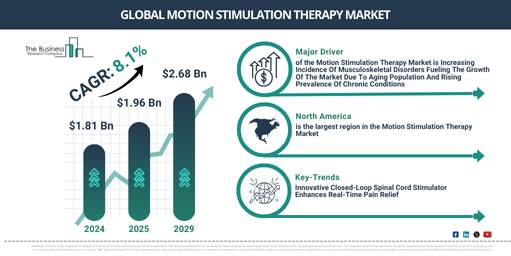
    In recent times, there has been a strong expansion in the market size of motion stimulation therapy. The market is set to escalate from $1.81 billion in 2024 to $1.96 billion in 2025, projecting a compound annual growth rate (CAGR) of 8.5%. The surge in growth during the historical period is due to factors such as the increasing occurrence of neurodegenerative afflictions, heightened awareness about the importance of physical rehabilitation, growing preference for non-invasive treatment methods, a rising number of elderly individuals needing help with mobility, and an escalation in sports-related injuries.

    The market size for motion stimulation therapy is projected to experience substantial expansion in the forthcoming years, eventually reaching a value of $2.68 billion by 2029, growing at a compound annual growth rate (CAGR) of 8.1%. Several factors contributing to this growth during the forecast period include the rising demand for portable and wearable therapy devices, growing adoption of telehealth and remote monitoring systems, increasing cases of disorders related to lifestyle, escalating demand for personalized and targeted motion therapy solutions, and a heightened emphasis on preventative healthcare boosting the use of motion therapy. Key trends during the forecast period encompass the creation of compact simulation platforms, advancements in haptic feedback technologies, technological innovation in simulators powered by artificial intelligence, the creation of portable devices suited for at-home therapy sessions, and the incorporation of biofeedback systems to enhance the effectiveness of therapy.

    Download The Free Sample Report Here:

    https://www.thebusinessresearchcompany.com/sample.aspx?id=27353&type=smp

    What factors are expected to fuel Motion Stimulation Therapy market growth in the coming years?

    The continuous rise in the occurrence of musculoskeletal disorders is anticipated to drive the expansion of the motion stimulation therapy market in the future. Disorders associated with muscles, bones, joints, tendons, and ligaments, which lead to pain or restrict movement, are referred to as musculoskeletal disorders. The aging global populace is the key factor behind the increasing prevalence of these disorders, as over time, individuals inherently experience degradation of the joint and decline of bone density. The treatment of musculoskeletal disorders is enhanced by motion stimulation therapy, which facilitates better mobility and pain reduction. This therapy offers targeted stimulation to the affected areas, promoting quick recovery and improved patient results. For instance, the Office for Health Improvement and Disparities, a government department based in the UK, reported in January 2024 that the prevalence of long-term musculoskeletal (MSK) conditions in individuals aged 16 and above who self-reported was 18.4% in 2023, which was up from 17.6% in 2022. Therefore, the upward trend in the occurrence of musculoskeletal disorders is fueling the expansion of the motion stimulation therapy market.

    What Are The Key Findings From The Segmentation Analysis Of The Motion Stimulation Therapy Market?

    The motion stimulation therapy market covered in this report is segmented

    1) By Therapy Type: Functional Neuromuscular Motion Stimulation Therapy, Peripheral Motion Stimulation Therapy, Deep Brain Motion Stimulation Therapy, Therapeutic Electrical Motion Stimulation Therapy

    2) By Applications: Diabetes Management, Pain Management, Oncology, Cardiovascular Diseases, Infectious Diseases, Others Applications

    3) By End User: Hospitals, Specialty Clinics, Other End Users

    Subsegments:

    1) By Functional Neuromuscular Motion Stimulation Therapy: Muscle Activation, Nerve Stimulation, Reflex Enhancement

    2) By Peripheral Motion Stimulation Therapy: Limb Motion Stimulation, Joint Motion Stimulation, Soft Tissue Motion Stimulation

    3) By Deep Brain Motion Stimulation Therapy: Subthalamic Nucleus Stimulation, Globus Pallidus Stimulation, Thalamic Stimulation

    4) By Therapeutic Electrical Motion Stimulation Therapy: Transcutaneous Electrical Nerve Stimulation, Functional Electrical Stimulation, Neuromuscular Electrical Stimulation

    Which Trends Are Expected To Shape The Future Of The Motion Stimulation Therapy Market?

    Major corporations involved in the motion stimulation therapy sector are concentrating on creating novel solutions like closed-loop spinal cord stimulators to boost real-time pain management and enhance patient outcomes. These state-of-the-art technologies continuously record neural signals and autonomously regulate stimulation intensities to offer personalized and efficient pain relief. For instance, in April 2024, Medtronic plc, a medical technology corporation situated in Ireland, received U.S. Food and Drug Administration (FDA) approval for its Inceptiv closed-loop rechargeable spinal cord stimulator for treating chronic pain. This groundbreaking device is set to advance motion stimulation therapy by dynamically catering to each patient’s movements and pain degrees. It surveils nerve signals at a rate of 50 times per second and instantaneously adjusts stimulation to supply consistent, personalized pain relief in the midst of everyday tasks. Besides, it is the slimmest and smallest spinal cord stimulator on the market, proving MRI compatibility for the entire body at both 1.5T and 3T, ensuring enhanced patient satisfaction and unceasing diagnostic imaging accessibility.

    What Are The Most Active Companies In The Motion Stimulation Therapy Market Today?

    Major companies operating in the motion stimulation therapy market are Abbott Laboratories, Boston Scientific Corporation, Medtronic plc, Ottobock SE & Co. KGaA, Nevro Corporation, Zynex Medical Inc., BTL Industries Inc., Onward Medical Inc., Enraf-Nonius B.V., Hocoma AG, Tyromotion GmbH, EW Motion Therapy, Ekso Bionics Holdings Inc., Mettler Electronics Corporation, Bioness Inc., Restorative Therapies Inc., ARPwave Therapy, Innovative Neurotronics Inc., St. Jude Medical Inc., Technomed Electronics Co Ltd.

    Get The Full Report Here:

    https://www.thebusinessresearchcompany.com/report/motion-stimulation-therapy-global-market-report

    Which Regional Markets Are Attracting The Most Investment In Motion Stimulation Therapy?

    North America was the largest region in the motion simulation therapy market in 2024. The regions covered in the motion stimulation therapy market report are Asia-Pacific, Western Europe, Eastern Europe, North America, South America, Middle East, Africa.

    Request For A Customized Report:

    https://www.thebusinessresearchcompany.com/customise?id=27353&type=smp

    About The Business Research Company:

    With over 15000+ reports from 27 industries covering 60+ geographies, The Business Research Company has built a reputation for offering comprehensive, data-rich research and insights. Armed with 1,500,000 datasets, the optimistic contribution of in-depth secondary research, and unique insights from industry leaders, you can get the information you need to stay ahead in the game.

    Get in touch with us:

    The Business Research Company: https://www.thebusinessresearchcompany.com/

    Americas +1 310-496-7795

    Asia +44 7882 955267 & +91 8897263534

    Europe +44 7882 955267

    Email us at info@tbrc.info

    Follow us on:

    LinkedIn: https://in.linkedin.com/company/the-business-research-company

    YouTube: https://www.youtube.com/channel/UC24_fI0rV8cR5DxlCpgmyFQ

    Global Market Model: https://www.thebusinessresearchcompany.com/global-market-model

  • Comprehensive Forecast: Minimally Invasive Treatment Of Lung Cancer Market Share, Growth, and Opportunities Through 2029

    Comprehensive Forecast: Minimally Invasive Treatment Of Lung Cancer Market Share, Growth, and Opportunities Through 2029

    Claim your 30% discount on Global Market Reports with code ONLINE30. Limited time only.

    Claim your 30% discount on Global Market Reports with code ONLINE30. Limited time only.

    What Is the Estimated Industry Valuation for the Minimally Invasive Treatment Of Lung Cancer Sector?

    There has been robust growth in the market size of lung cancer’s minimally invasive treatment in the past few years. It is expected to expand from a value of $3.06 billion in 2024 to $3.35 billion in 2025, with a compound annual growth rate (CAGR) of 9.7%. The surge in growth during the historical period can be traced back to the rising incidence of lung cancer, enhanced consciousness about minimally invasive approaches, an increasing elderly population, adoption of early detection techniques, and development of healthcare infrastructure.

    The market for minimally invasive lung cancer treatments is set to experience robust expansion in the coming years. The market size is projected to escalate to $4.78 billion in 2029 with a compound annual growth rate (CAGR) of 9.3%. This anticipated growth during the forecast period is largely tied to the escalating demand for outpatient procedures, amplified investments in lung cancer specialized centers, improved accessibility to minimally invasive treatment choices, government-led initiatives towards progressive healthcare, and a concentrated effort to decrease postoperative complications. The projection period will witness trending advancements in surgical instrument technology, breakthroughs in patient monitoring systems, the evolution of precision therapy methods, ramped up research and development in less invasive interventions, and the incorporation of artificial intelligence in treatment planning.

    Download The Free Sample Report Here:

    https://www.thebusinessresearchcompany.com/sample.aspx?id=27349&type=smp

    What Forces Are Driving The Growth Of The Minimally Invasive Treatment Of Lung Cancer Market?

    The upward trend in lung cancer incidents is anticipated to stimulate the minimally invasive treatment of lung cancer market’s expansion in the future. The surge in lung cancer, which originates in the lungs and involves unrestrained cell growth, can be primarily attributed to the rise in tobacco smoking. This habit heightens the possibility of uncontrolled cell growth and tumour development. Minimally invasive treatment provides a reprieve for lung cancer sufferers by focusing on, isolating or collapsing tumours through small surgical cuts or imaging-guided probes. This approach hastens recovery time, lessens harm to healthy lung tissues, reduces the chance of complications, and expedites the return to everyday activities. For example, in June 2025, the Centers for Disease Control and Prevention, a government agency based in the US, reported that in 2022, there were 218,893 fresh lung cancer incidents in the United States, resulting in 131,584 fatalities. Thus, the mounting incidence of lung cancer is fueling the minimally invasive treatment of lung cancer market’s growth.

    How Is The Minimally Invasive Treatment Of Lung Cancer Industry Segmented Across Key Parameters?

    The minimally invasive treatment of lung cancer market covered in this report is segmented

    1) By Type: Lung Tumor Ablation, Lung Tumor Embolization

    2) By Stage: Stage I, Stage II, Stage III, Stage IV

    3) By Age Group: Under 30 Years, 31 To 45 Years, 46 To 60 Years

    4) By End-User: Hospitals, Ambulatory Surgical Centers (ASCs), Specialty Clinics, Research Institutions

    Subsegments:

    1) By Lung Tumor Ablation: Radiofrequency Ablation, Microwave Ablation, Cryoablation, Laser Ablation

    2) By Lung Tumor Embolization: Bronchial Artery Embolization, Pulmonary Artery Embolization, Chemoembolization, Radioembolization

    What Notable Trends Are Shaping The Direction Of The Minimally Invasive Treatment Of Lung Cancer Market?

    Leading businesses in the market for minimally intrusive lung cancer treatments are prioritizing the creation of sophisticated systems like fluoroscopic navigation platforms. These platforms are designed to increase precision and facilitate focused, localized therapy for the lungs. These medical imaging systems combine real-time fluoroscopy with navigation technology, enabling precise instrument guidance to the targeted areas of the lung. This technology allows for the minimally invasive biopsy and treatment of difficult-to-reach lesions, thereby lowering the risk of complications. For example, in July 2022, Medtronic plc, a medical technology firm based in Ireland, reported the world’s first endoluminal lung ablation procedure utilizing the ILLUMISITE. The ILLUMISITE platform was used by physicians in Hong Kong in a minimally invasive operation to navigate accurately through a patient’s lungs. It generated a personalized virtual pathway based on the patient’s CT scan. The navigation catheter of the platform directed the bronchoscope to the lung lesion, and a specialized ablation catheter performed the targeted treatment. This achievement marks a notable progress in the diagnosis and treatment of lung masses, integrating precise navigation with localized ablation technology.

    Which Companies Currently Dominate The Competitive Landscape In The Minimally Invasive Treatment Of Lung Cancer Industry?

    Major companies operating in the minimally invasive treatment of lung cancer market are Johnson & Johnson, Medtronic plc, Siemens Healthineers AG, Stryker Corporation, Boston Scientific Corporation, Olympus Corporation, Intuitive Surgical Inc., Weill Cornell Medicine, Accuray Incorporated, Richard Wolf GmbH, AngioDynamics Inc., CMR Surgical Ltd., Biodesix Inc., Guangzhou Geyi Medical Instrument Co. Ltd., Quantum Surgical SA, Scanlan International Inc., RZ Medizintechnik GmbH & Co. KG, August Reuchlen GmbH, SBH Surgical GmbH & Co. KG, Geister Medizintechnik GmbH.

    Get The Full Report Here:

    https://www.thebusinessresearchcompany.com/report/minimally-invasive-treatment-of-lung-cancer-global-market-report

    Which Geographic Regions Are Driving Demand In The Minimally Invasive Treatment Of Lung Cancer Market?

    North America was the largest region in the minimally invasive treatment of lung cancer market in 2024. Asia-Pacific is expected to be the fastest-growing region in the forecast period. The regions covered in the minimally invasive treatment of lung cancer market report are Asia-Pacific, Western Europe, Eastern Europe, North America, South America, Middle East, Africa.

    Request For A Customized Report:

    https://www.thebusinessresearchcompany.com/customise?id=27349&type=smp

    About The Business Research Company:

    With over 15000+ reports from 27 industries covering 60+ geographies, The Business Research Company has built a reputation for offering comprehensive, data-rich research and insights. Armed with 1,500,000 datasets, the optimistic contribution of in-depth secondary research, and unique insights from industry leaders, you can get the information you need to stay ahead in the game.

    Get in touch with us:

    The Business Research Company: https://www.thebusinessresearchcompany.com/

    Americas +1 310-496-7795

    Asia +44 7882 955267 & +91 8897263534

    Europe +44 7882 955267

    Email us at info@tbrc.info

    Follow us on:

    LinkedIn: https://in.linkedin.com/company/the-business-research-company

    YouTube: https://www.youtube.com/channel/UC24_fI0rV8cR5DxlCpgmyFQ

    Global Market Model: https://www.thebusinessresearchcompany.com/global-market-model

  • Future Demand and Leading Companies Shaping the Minimally Invasive Thoracic Surgery Market to 2029

    Future Demand and Leading Companies Shaping the Minimally Invasive Thoracic Surgery Market to 2029

    Claim your 30% discount on Global Market Reports with code ONLINE30. Limited time only.

    Claim your 30% discount on Global Market Reports with code ONLINE30. Limited time only.

    How Large Is the Minimally Invasive Thoracic Surgery Market Expected to Be in 2029?

    The market size of minimally invasive thoracic surgery has seen considerable growth in past years. It is predicted to expand from $4.04 billion in 2024 to $4.38 billion in 2025, marking a compound annual growth rate (CAGR) of 8.4%. The previous growth could be credited to factors such as the heightened occurrence of thoracic disorders and lung cancer, the escalating application of robotic-assisted thoracic procedures, an ageing population, enhanced patient awareness, and increased spending on healthcare.

    The market for minimally invasive thoracic surgery is projected to experience robust growth in the coming years, soaring to $5.98 billion by 2029 with a CAGR of 8.1%. This expansion during the forecast period can be credited to factors such as the heightened demand for reduced hospital stays, increased adaptation of pioneering imaging and navigation technologies, growing popularity among surgeons, escalating governmental and private investments, and a rising focus on value-centred healthcare models. Key trends projected for this forecast period encompass advancements in the spheres of robot-assisted surgical systems, enhancements in the design of minimally invasive instruments, incorporation of artificial intelligence, application of augmented and virtual reality tools, and technological innovations related to 3D and 4K imaging systems.

    Download The Free Sample Report Here:

    https://www.thebusinessresearchcompany.com/sample.aspx?id=27348&type=smp

    What Are The Contributors To Demand In The Minimally Invasive Thoracic Surgery Market?

    The increasing prevalence of lung diseases is anticipated to be a significant driver for the expansion of the minimally invasive thoracic surgery market in the future. Health conditions that hamper the functionality of lungs and hinder breathing, like lung cancer, pneumonia, COPD, and asthma, are grouped as lung diseases. A significant reason for the escalating number of lung diseases is tobacco smoking, as it gradually deteriorates the DNA of lung cells due to harmful chemicals, escalating the chances of unregulated cell growth and tumor development. Minimally invasive procedures provide relief to patients suffering from lung diseases by specifically targeting tumors and eliminating or annihilating them through tiny incisions or probes guided by imaging. This not only expedites the recovery process but also reduces potential harm to healthy lung tissues, minimizes the potential of complications, and fast-tracks the patient’s return to normalcy. The Centers for Disease Control and Prevention, a government agency based in the United States, reported in June 2025 that the country registered 218,893 fresh cases of lung cancer in 2022 and lung cancer was responsible for 131,584 deaths in 2023. Thus, the surge in lung diseases is fuelling the growth of the minimally invasive thoracic surgery market.

    What Segmentation Categories Are Included In The Minimally Invasive Thoracic Surgery Market Analysis?

    The minimally invasive thoracic surgery market covered in this report is segmented

    1) By Type: Lobectomy, Wedge Resection, Pneumonectomy, Other Types

    2) By Product: Energy Devices, Instruments, Staplers And Disposables, Visualization Systems

    3) By Procedure Type: Video-Assisted Thoracoscopic Surgery (VATS), Robotic-Assisted Thoracic Surgery, Endoscopic Thoracic Surgery, Other Procedure Types

    4) By Application: Lung Cancer Surgery, Esophageal Surgery, Mediastinal Surgery, Other Applications

    5) By End-User: Hospitals, Specialty Clinics, Ambulatory Surgical Centers, Other End-Users

    Subsegments:

    1) By Lobectomy: Bilobectomy, Sleeve Lobectomy, Thoracoscopic Lobectomy (VATS Lobectomy), Robotic-Assisted Lobectomy

    2) By Wedge Resection: Video-Assisted Thoracoscopic Surgery (VATS) Wedge Resection, Robotic-Assisted Wedge Resection, Open Wedge Resection

    3) By Pneumonectomy: Standard Pneumonectomy, Extended Pneumonectomy, Sleeve Pneumonectomy, Thoracoscopic

    4) By Other Types: Segmentectomy, Sleeve Resection, Decortication, Bullectomy, Thoracoscopic Resection For Metastasectomy

    What Upcoming Trends Are Expected To Impact The Minimally Invasive Thoracic Surgery Market Globally?

    Major players in the minimally invasive thoracic surgery market are putting their efforts into the advancement of new technology, such as robotic-assisted surgery platforms, aiming to enhance surgical precision and boost overall patient outcomes. The robotic-assisted surgery platform is a medical system that allows surgeons to use robotic arms to carry out minimally invasive operations with superior accuracy, better dexterity, and improved visualization when compared to conventional surgical procedures. For instance, in June 2024, the US-based institution Monmouth Medical Centre (MMC) launched the Ion Robotic platform, the Aliya PEF system, and intraoperative AI-driven CT imaging. The technology provides multiple advantages including improved surgical accuracy, enhanced patient results, and real-time imaging for better decision-making support. Together, these technologies facilitate minimally invasive, precise lung cancer diagnosis and treatment resulting in faster recovery and premium outcomes. Features like real-time navigation, non-thermal tumor ablation, and decreased radiation exposure further contribute to the early identification and effective treatment of the condition.

    Who Are The Top-Ranked Companies In The Minimally Invasive Thoracic Surgery Market Today?

    Major companies operating in the minimally invasive thoracic surgery market are Johnson And Johnson Services Inc., Medtronic Plc, Koninklijke Philips N.V., Stryker Corporation, GE Healthcare Inc., Olympus Corporation, Intuitive Surgical Operations Inc., Smith & Nephew plc, Teleflex Incorporated, Karl Storz SE & Co. KG, Cook Group Incorporated, CONMED Corporation, NuVasive Inc., Applied Medical Resources Corporation, KLS Martin Group, Aesculap Inc., Medela Inc., Richard Wolf GmbH, B. Braun Melsungen AG, Ackermann Instrumente GmbH, Cmr Surgical, Genesee Biomedical Inc.

    Get The Full Report Here:

    https://www.thebusinessresearchcompany.com/report/minimally-invasive-thoracic-surgery-global-market-report

    How Is Minimally Invasive Thoracic Surgery Market Adoption Varying Across Different Regions And Sectors?

    North America was the largest region in the minimally invasive thoracic surgery market in 2024. Asia-Pacific is expected to be the fastest-growing region in the forecast period. The regions covered in the minimally invasive thoracic surgery market report are Asia-Pacific, Western Europe, Eastern Europe, North America, South America, Middle East, Africa.

    Request For A Customized Report:

    https://www.thebusinessresearchcompany.com/customise?id=27348&type=smp

    About The Business Research Company:

    With over 15000+ reports from 27 industries covering 60+ geographies, The Business Research Company has built a reputation for offering comprehensive, data-rich research and insights. Armed with 1,500,000 datasets, the optimistic contribution of in-depth secondary research, and unique insights from industry leaders, you can get the information you need to stay ahead in the game.

    Get in touch with us:

    The Business Research Company: https://www.thebusinessresearchcompany.com/

    Americas +1 310-496-7795

    Asia +44 7882 955267 & +91 8897263534

    Europe +44 7882 955267

    Email us at info@tbrc.info

    Follow us on:

    LinkedIn: https://in.linkedin.com/company/the-business-research-company

    YouTube: https://www.youtube.com/channel/UC24_fI0rV8cR5DxlCpgmyFQ

    Global Market Model: https://www.thebusinessresearchcompany.com/global-market-model

  • Latest Market Developments in Military And Humanitarian Trauma Care Industry: Forecast 2025–2029

    Latest Market Developments in Military And Humanitarian Trauma Care Industry: Forecast 2025–2029

    Claim your 30% discount on Global Market Reports with code ONLINE30. Limited time only.

    Claim your 30% discount on Global Market Reports with code ONLINE30. Limited time only.

    What Does the Forecast Indicate for the Military And Humanitarian Trauma Care Market From 2025 to 2029?

    The market size for trauma care in the military and humanitarian sector has witnessed a significant expansion lately. It is predicted to increase from $7.15 billion in 2024 to $7.73 billion in 2025, moving at a compound annual growth rate (CAGR) of 8.1%. The surge observed in the historical period is due to escalating worldwide military confrontations, increased military spending, a rise in natural disasters and pandemics, a growth in blast-related injuries, and an upward trend in surgical training programs.

    Strong progress is anticipated for the military and humanitarian trauma care market over the coming years, with expectations of it reaching a value of $10.40 billion by 2029, representing a compound annual growth rate (CAGR) of 7.7%. This predicted growth during the forecasted period can be associated with factors such as escalating asymmetric warfare, increasing occurrences of climate-related catastrophes, the expanding utilization of smart implants embedded with internet of things sensors, the rise of medical initiatives, and the augmenting application of telemedicine. Significant trends during this forecast period consist of utilizing advanced materials in devices, the implementation of AI-driven diagnostics and analysis, advancing digitization of trauma care services, an emphasis on speedy response in conflict zones, and merging of civilian and military trauma systems.

    Download The Free Sample Report Here:

    https://www.thebusinessresearchcompany.com/sample.aspx?id=27346&type=smp

    What Elements Are Contributing To Growth In The Military And Humanitarian Trauma Care Market?

    The escalating global disputes and military involvement are anticipated to fuel the expansion of the military and humanitarian trauma care market in the future. These conflicts and military activities refer to armed clashes or strategic military actions involving nations, groups, or factions that can affect worldwide security and stability. Increasing global disputes and military involvement are mainly a result of geopolitical rivalries and resource competition, leading to increased friction between nations and regional powers. In such situations, military and humanitarian trauma care is essential for the immediate provision of life-saving treatment to those injured, including both military personnel and civilians, in battlefields and crisis areas. In a report by Inkstick Media, a U.S. based publication specialized in security, foreign policy, and global conflict, it was reported in February 2024 that there was a 12% increase in the global conflict rates in 2023. This was due to an addition of over 15,000 attacks, bombings, and assaults compared to the prior year. Hence, the escalating global conflicts and military involvement are contributing to the expansion of the military and humanitarian trauma care market.

    Which Segments Are Detailed In The Global Military And Humanitarian Trauma Care Market Report?

    The military and humanitarian trauma care market covered in this report is segmented

    1) By Product Type: On Field Aid, Internal And External Fixators, Occlusion Products, Other Product Types

    2) By Material: Metal Alloys, Ceramics, Polymers

    3) By Surgical Site: Upper Extremities, Lower Extremities

    4) By End-Users: Hospitals, Military And Civilian Applications, Ambulatory Surgical Centers, Sports And Athletic Facilities

    Subsegment:

    1) By On Field Aid: Trauma Dressings And Bandages, Hemostatic Agents, Tourniquets, Chest Seals, Burn Treatment Supplies, Airway Management Devices, IV Fluids And Accessories

    2) By Internal And External Fixators: Internal Fixators, External Fixators, Bone Nails And Pins, Orthopedic Implants

    3) By Occlusion Products: Vascular Occlusion Devices, Balloon Catheters, Embolization Coils, Tourniquet Devices

    4) By Other Product Types: Surgical Kits And Instruments, Diagnostic And Monitoring Devices, Personal Protective Equipment (PPE), Evacuation And Transport Equipment

    Which Emerging Trends And Strategic Shifts Are Shaping The Military And Humanitarian Trauma Care Market?

    Key players in the military and humanitarian trauma care market are prioritizing the development of innovative systems such as variable-angle plating systems, to boost fracture stabilization and improve patient outcomes in high-stress situations. Variable-angle plating systems are a type of orthopedic implant, enabling surgeons to secure screws at various angles within the plate. This provides customized fixation for complex bone fractures and enhances stability. For instance, in August 2024, the American medical technology giant, Stryker Corporation, introduced its Pangea Plating System after receiving clearance from the US Food and Drug Administration (FDA) in late 2023. This cutting-edge system provides a multifaceted, variable-angle plating solution for a broad patient demographic, assisting in the internal fixation and stabilization of fractures, osteotomies, and arthrodesis in both standard and osteopenic bone. The Pangea System, designed with evidence-based precision, optimizes implant fit and screw placement through anatomically contoured plates to address a variety of fracture patterns. The system comes with streamlined instruments and an extensive portfolio, which includes 20 anatomic and 13 utility plates, all compiled into a single, effective system, redefining the market standards.

    Who Are The Key Contributors To Growth In The Military And Humanitarian Trauma Care Market?

    Major companies operating in the military and humanitarian trauma care market are Johnson & Johnson, Abbott Laboratories, 3M Company, Medtronic plc, Becton Dickinson and Company, Stryker Corporation, GE HealthCare Technologies Inc., Philips Healthcare, Zimmer Biomet Holdings Inc., Smith & Nephew plc, Teleflex Incorporated, Zoll Medical Corporation, Air Methods Corporation, Orthofix Medical Inc., Accumed LLC, Brooke Army Medical Center, North American Rescue LLC, Combat Medical Systems LLC, RevMedx Inc., and United States Army Institute of Surgical Research.

    Get The Full Report Here:

    https://www.thebusinessresearchcompany.com/report/military-and-humanitarian-trauma-care-global-market-report

    Which Region Is Projected To Lead The Military And Humanitarian Trauma Care Market By 2025?

    North America was the largest region in the military and humanitarian trauma care market in 2024. Asia-Pacific is expected to be the fastest-growing region in the forecast period. The regions covered in the military and humanitarian trauma care market report are Asia-Pacific, Western Europe, Eastern Europe, North America, South America, Middle East, Africa.

    Request For A Customized Report:

    https://www.thebusinessresearchcompany.com/customise?id=27346&type=smp

    About The Business Research Company:

    With over 15000+ reports from 27 industries covering 60+ geographies, The Business Research Company has built a reputation for offering comprehensive, data-rich research and insights. Armed with 1,500,000 datasets, the optimistic contribution of in-depth secondary research, and unique insights from industry leaders, you can get the information you need to stay ahead in the game.

    Get in touch with us:

    The Business Research Company: https://www.thebusinessresearchcompany.com/

    Americas +1 310-496-7795

    Asia +44 7882 955267 & +91 8897263534

    Europe +44 7882 955267

    Email us at info@tbrc.info

    Follow us on:

    LinkedIn: https://in.linkedin.com/company/the-business-research-company

    YouTube: https://www.youtube.com/channel/UC24_fI0rV8cR5DxlCpgmyFQ

    Global Market Model: https://www.thebusinessresearchcompany.com/global-market-model
  • Outlook for Automated Next-Generation Sequencing (NGS) Library Preparation Market: Key Developments and Future Strategies to 2029

    Outlook for Automated Next-Generation Sequencing (NGS) Library Preparation Market: Key Developments and Future Strategies to 2029

    Claim your 30% discount on Global Market Reports with code ONLINE30. Limited time only.

    Claim your 30% discount on Global Market Reports with code ONLINE30. Limited time only._x000D_

    _x000D_

    #What Is the Current and Projected Market Size of the Automated Next-Generation Sequencing (NGS) Library Preparation Industry?#_x000D_

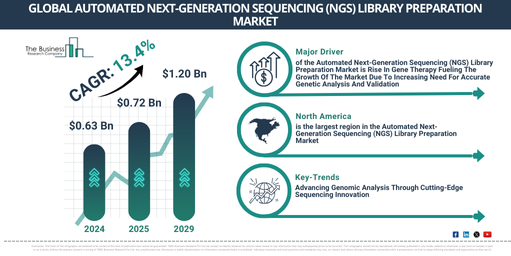
    The market size for automated next-generation sequencing (NGS) library preparation has experienced fast-paced growth in recent times. It is projected to increase from $0.63 billion in 2024 to $0.72 billion in 2025, with a compound annual growth rate (CAGR) of 13.8%. Factors contributing to its growth during the historic period include its increasing usage in monitoring infectious diseases, escalating funds for genomic research, broader implementation during global pandemics, enhanced accessibility for research laboratories, and its growing incorporation in precision medicine._x000D_

    _x000D_

    The market size for automated next-generation sequencing (NGS) library preparation is anticipated to experience a significant upswing in the forthcoming years, anticipated to reach a worth of $1.20 billion by 2029, at a compound annual growth rate (CAGR) of 13.4%. Factors contributing to the growth over the projection period include the growing acceptance in clinical diagnostics, an increase in personalized medicine demand, an escalation in oncology research applications, the need for high-throughput sequencing, and an emphasis on decreasing turnaround time. Noteworthy trends during the forecast period encompass enhancements in workflow efficiency, incorporation of artificial intelligence for data analysis, standardization of procedures powered by technology, improvements in user-friendly systems, and progress in cloud-based data solutions._x000D_

    _x000D_

    #Download The Free Sample Report Here:#_x000D_

    https://www.thebusinessresearchcompany.com/sample.aspx?id=27216&type=smp_x000D_

    _x000D_

    #Which Factors Are Currently Driving The Growth Of The Automated Next-Generation Sequencing (NGS) Library Preparation Market?_x000D_

    The surge in gene therapy is anticipated to boost the expansion of the automated next-generation sequencing (NGS) library preparation market. Gene therapy involves changing a patient’s genes to treat or prevent diseases and its use is growing due to the increasing instances of genetic conditions needing targeted, long-lasting treatment strategies. Within gene therapy, automated NGS library preparation plays a role in accurately analyzing and verifying genetic changes by preparing high-quality DNA or RNA samples for sequencing. As an example, the American Society of Gene and Cell Therapy reported in April 2024 that the number of phase III gene therapy clinical trials experienced a 10% upswing in the fourth quarter, recording the initial quarterly rise since the third quarter of 2022. As a result, the advances in gene therapy are fuelling the growth of the automated next-generation sequencing (NGS) library preparation market._x000D_

    _x000D_

    #How Is The Global Automated Next-Generation Sequencing (NGS) Library Preparation Market Structured In Terms Of Segments?#_x000D_

    The automated next-generation sequencing (NGS) library preparation market covered in this report is segmented_x000D_

    _x000D_

    1) By Type: Targeted Genome Sequencing, Whole Genome Sequencing, Whole Exome Sequencing, Other Sequencing Types_x000D_

    2) By Workflow: Nucleic Acid Extraction, Fragmentation, Adapter Ligation, Purification And Quantification_x000D_

    3) By Application: Drug And Biomarker Discovery, Disease Diagnostics, Other Applications_x000D_

    4) By End-Use: Hospitals And Clinics, Academic And Research Institutions, Pharmaceutical And Biotechnology Companies, Other End-Users_x000D_

    _x000D_

    Subsegments:_x000D_

    1) By Targeted Genome Sequencing: Amplicon-Based Targeted Sequencing, Hybridization Capture-Based Targeted Sequencing, Custom Targeted Panels, Pre-designed Gene Panels_x000D_

    2) By Whole Genome Sequencing: Human Whole Genome Sequencing, Animal Whole Genome Sequencing, Plant Whole Genome Sequencing, Microbial Whole Genome Sequencing_x000D_

    3) By Whole Exome Sequencing: Standard Exome Sequencing, Clinical Exome Sequencing, Custom Exome Panels, Ultra-Rapid Exome Sequencing_x000D_

    4) By Other Sequencing Types: RNA Sequencing (RNA-Seq), Epigenome Sequencing, Metagenomic Sequencing, Single-Cell Sequencing_x000D_

    _x000D_

    #What Trends Are Currently Influencing Growth In The Automated Next-Generation Sequencing (NGS) Library Preparation Market?#_x000D_

    Leading firms in the automated next-generation sequencing (NGS) library preparation market are prioritizing the development of breakthrough technologies such as Xpandomer technology. The focus is on boosting sequencing speed, enhancing data precision, and augmenting scalability. This is achieved by simplifying workflows and facilitating more dependable and effective genomics analysis. Xpandomer technology is a sophisticated method for sequencing either deoxyribonucleic acid (DNA) or ribonucleic acid (RNA). It transforms a target nucleic acid molecule into a larger, synthetic polymer known as an Xpandomer, which is about 50 times the length of the original DNA or RNA strand. In a specific instance, Roche AG, a Swiss biotech firm, rolled out Sequencing by Expansion in February 2025. It’s a revolutionary sequencing platform looking to enhance genomic resolution for innovative diagnostics, disease research, and applications relating to personalized medicine. This state-of-the-art automated next-generation sequencing (NGS) library preparation system streamlines intricate workflows, improves data integrity, and expedites genomic analysis to aid in advanced research and customized medicine. The Sequencing by Expansion platform is notably versatile, able to precisely analyse a spectrum of genomic changes across numerous diseases, such as cancer and rare genetic disorders. This leads to increased resolution and accuracy generating profound biological insights._x000D_

    _x000D_

    #Who Are The Main Participants Shaping The Automated Next-Generation Sequencing (NGS) Library Preparation Market Landscape?#_x000D_

    Major companies operating in the automated next-generation sequencing (NGS) library preparation market are F. Hoffmann-La Roche Ltd., Thermo Fisher Scientific Inc., Agilent Technologies India Private Limited, Illumina Inc., Beckman Coulter Inc., Bio-Rad Laboratories Inc., IDT Corporation, Tecan Group AG, Hamilton Company, Takara Bio Inc., 10x Genomics Inc., Oxford Nanopore Technologies plc, Twist Bioscience Corporation, New England Biolabs Inc., SPT Labtech Limited, Watchmaker Genomics Inc., Pillar Biosciences Inc., Aurora Biomed Inc., BGI Group, SEQWELL INC., and Hudson Robotics Inc. _x000D_

    _x000D_

    #Get The Full Report Here:#_x000D_

    https://www.thebusinessresearchcompany.com/report/automated-next-generation-sequencing-ngs-library-preparation-global-market-report_x000D_

    _x000D_

    #Which Region Currently Holds The Largest Share In The Automated Next-Generation Sequencing (NGS) Library Preparation Market?#_x000D_

    North America was the largest region in the automated next-generation sequencing (NGS) library preparation market in 2024. Asia-Pacific is expected to be the fastest-growing region in the forecast period. The regions covered in the automated next-generation sequencing (NGS) library preparation market report are Asia-Pacific, Western Europe, Eastern Europe, North America, South America, Middle East, Africa._x000D_

    _x000D_

    #Request For A Customized Report:#_x000D_

    https://www.thebusinessresearchcompany.com/customise?id=27216&type=smp_x000D_

    _x000D_

    #About The Business Research Company:#_x000D_

    _x000D_

    With over 15000+ reports from 27 industries covering 60+ geographies, The Business Research Company has built a reputation for offering comprehensive, data-rich research and insights. Armed with 1,500,000 datasets, the optimistic contribution of in-depth secondary research, and unique insights from industry leaders, you can get the information you need to stay ahead in the game._x000D_

    _x000D_

    #Get in touch with us:#_x000D_

    _x000D_

    The Business Research Company: https://www.thebusinessresearchcompany.com/_x000D_

    Americas +1 310-496-7795_x000D_

    Asia +44 7882 955267 & +91 8897263534_x000D_

    Europe +44 7882 955267_x000D_

    Email us at info@tbrc.info_x000D_

    _x000D_

    #Follow us on:#_x000D_

    _x000D_

    LinkedIn: https://in.linkedin.com/company/the-business-research-company_x000D_

    YouTube: https://www.youtube.com/channel/UC24_fI0rV8cR5DxlCpgmyFQ_x000D_

    Global Market Model: https://www.thebusinessresearchcompany.com/global-market-model
  • Industry Trends Show Atopic Dermatitis Clinical Trials Market Set to Expand at 11.8% CAGR Until 2029

    Industry Trends Show Atopic Dermatitis Clinical Trials Market Set to Expand at 11.8% CAGR Until 2029

    Claim your 30% discount on Global Market Reports with code ONLINE30. Limited time only.

    Claim your 30% discount on Global Market Reports with code ONLINE30. Limited time only._x000D_

    _x000D_

    #What Are the Latest Market Insights for the Atopic Dermatitis Clinical Trials Industry?#_x000D_

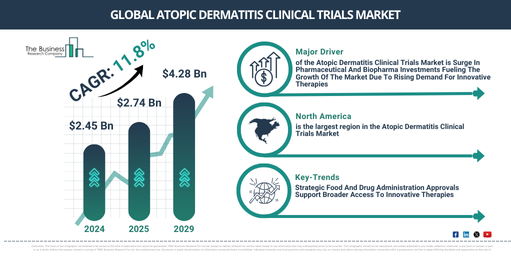
    In recent times, there has been a substantial growth in the market size of clinical trials for atopic dermatitis. The market, which is estimated to be worth $2.45 billion in 2024, is predicted to soar to $2.74 billion in 2025, representing a compound annual growth rate (CAGR) of 12.1%. The notable growth in the past years is due to factors such as increasing frequency of atopic dermatitis, heightened demand for specialized therapies, a rise in recognition of skin diseases, an upturn in funding for clinical research, and the escalating pipeline of innovative biologics._x000D_

    _x000D_

    The market size for atopic dermatitis clinical trials is anticipated to rapidly expand in the upcoming years. It’s projected to escalate to $4.28 billion by 2029 with a compound annual growth rate (CAGR) of 11.8%. This anticipated market growth is attributable to factors such as the growing acceptance of biologics, increased investments in research and development, higher patient participation in trials, an expanded healthcare infrastructure, and enhanced regulatory backing for dermatology trials. The forecast period will also see trends such as advancements in personalized medicine, innovations in biologic therapies, digital health technologies incorporation, advanced methodologies in trial design, and a rising utilization of real-world evidence._x000D_

    _x000D_

    #Download The Free Sample Report Here:#_x000D_

    https://www.thebusinessresearchcompany.com/sample.aspx?id=27213&type=smp_x000D_

    _x000D_

    #What Forces Are Driving The Growth Of The Atopic Dermatitis Clinical Trials Industry?#_x000D_

    The escalating allocations in the pharmaceutical and biopharma sectors are predicted to fuel the expansion of the atopic dermatitis clinical trials market. This type of investments helps fund various stages in the drug creation process, including research, development, production, and bringing the product to market. The growth in such investments is mainly a response to the rising demand for innovative medical treatment options, which provide targeted therapies and better patient results. They play a significant role in the advancement of atopic dermatitis clinical trials by financing the research and experimentation of fresh treatments, thereby facilitating exhaustive studies by scientists to validate their efficacy and safety. For example, the Australian Government’s Department of Health, Disability, and Ageing announced in March 2022 that the government has pledged $45.5B over a four-year period for affordable drugs through the Pharmaceutical Benefits Scheme. This pledge is a part of an overall $537B quadrennial health allocation, which includes an additional $2.4B for the inclusion of new medications. Therefore, the surging pharmaceutical and biopharma funding directly influences the expansion of the atopic dermatitis clinical trials market._x000D_

    _x000D_

    #What Is The Overview Of Market Segmentation In The Atopic Dermatitis Clinical Trials Industry?#_x000D_

    The atopic dermatitis clinical trials market covered in this report is segmented_x000D_

    _x000D_

    1) By Phase: Phase I, Phase II, Phase III, Phase IV_x000D_

    2) By Molecule Type: Small Molecules, Large Molecules_x000D_

    3) By Study Designs: Interventional, Observational_x000D_

    4) By Mode: Outsourced, In-House_x000D_

    5) By Industry: Contract Research Organizations, Pharmaceutical And Biotechnology Companies, Research And Academic Institutes_x000D_

    _x000D_

    Subsegments:_x000D_

    1) By Phase I: Safety And tolerability studies, Dose-Escalation studies, Pharmacokinetics (PK) And Pharmacodynamics (PD) Studies_x000D_

    2) By Phase II: Dose-Ranging Studies, Efficacy And Safety Studies, Randomized Controlled Trials (RCTs), Biomarker Identification Studies_x000D_

    3) By Phase III: Large-Scale Efficacy Studies, Comparative Effectiveness Trials, Multicenter Randomized Trials, Long-Term Safety Assessment_x000D_

    4) By Phase IV: Post-Marketing Surveillance, Real-World Evidence Studies, Drug Utilization Studies, Health Outcomes And Quality Of Life Studies_x000D_

    _x000D_

    #What Future Market Trends Are Projected For The Atopic Dermatitis Clinical Trials Industry?#_x000D_

    Key players in the atopic dermatitis clinical trials market are prioritizing the creation of novel products like oral inhibitors, designed to sustain therapeutic effects over an extended period. Oral inhibitors, taken orally, operate by obstructing specific enzymes or signaling strands involved in the advancement of the disease. For example, Pfizer Inc., an American pharmaceutical and biotech firm, publicized in February 2023 that the US Food and Drug Administration had ratified its additional New Drug Application for CIBINQO (abrocitinib). It broadened the drug’s usage to adolescents between 12 and under 18 who have moderate-to-severe atopic dermatitis that other systemic treatments or biologics couldn’t manage. Previously, CIBINQO was approved solely for adults aged 18 and above. This extension offers a fresh treatment choice for younger patients suffering from challenging-to-manage AD. This decision was founded on clinical trial proof, showcasing its safety and effectiveness in this demographic._x000D_

    _x000D_

    #Who Are The Primary Players Operating Across The Global Atopic Dermatitis Clinical Trials Market?#_x000D_

    Major companies operating in the atopic dermatitis clinical trials market are Pfizer Inc., Johnson & Johnson, AbbVie Inc., Novartis International AG, Sanofi S.A., GlaxoSmithKline Plc, Eli Lilly and Company, Amgen Inc., Regeneron Pharmaceuticals Inc., Organon & Co., Charles River Laboratories International Inc., LEO Pharma A/S, QIMA Limited, Medpace Holdings Inc., Novotech Health Holdings Pte Ltd., Biocytogen Pharmaceuticals Co. Ltd., REPROCELL Inc., AnaptysBio Inc., Imavita S.A.S., and Oncodesign Services S.A.S. _x000D_

    _x000D_

    #Get The Full Report Here:#_x000D_

    https://www.thebusinessresearchcompany.com/report/atopic-dermatitis-clinical-trials-global-market-report_x000D_

    _x000D_

    #Which Region Offers The Most Growth Potential For The Atopic Dermatitis Clinical Trials Market Through 2029?#_x000D_

    North America was the largest region in the atopic dermatitis clinical trials market in 2024. Asia-Pacific is expected to be the fastest-growing region in the forecast period. The regions covered in the atopic dermatitis clinical trials market report are Asia-Pacific, Western Europe, Eastern Europe, North America, South America, Middle East, Africa._x000D_

    _x000D_

    #Request For A Customized Report:#_x000D_

    https://www.thebusinessresearchcompany.com/customise?id=27213&type=smp_x000D_

    _x000D_

    #About The Business Research Company:#_x000D_

    _x000D_

    With over 15000+ reports from 27 industries covering 60+ geographies, The Business Research Company has built a reputation for offering comprehensive, data-rich research and insights. Armed with 1,500,000 datasets, the optimistic contribution of in-depth secondary research, and unique insights from industry leaders, you can get the information you need to stay ahead in the game._x000D_

    _x000D_

    #Get in touch with us:#_x000D_

    _x000D_

    The Business Research Company: https://www.thebusinessresearchcompany.com/_x000D_

    Americas +1 310-496-7795_x000D_

    Asia +44 7882 955267 & +91 8897263534_x000D_

    Europe +44 7882 955267_x000D_

    Email us at info@tbrc.info_x000D_

    _x000D_

    #Follow us on:#_x000D_

    _x000D_

    LinkedIn: https://in.linkedin.com/company/the-business-research-company_x000D_

    YouTube: https://www.youtube.com/channel/UC24_fI0rV8cR5DxlCpgmyFQ_x000D_

    Global Market Model: https://www.thebusinessresearchcompany.com/global-market-model

  • Emerging Trends and Growth Drivers in the Artificial Intelligence-Generated Personalized Prenatal Nutrition Guide Market Through 2029

    Emerging Trends and Growth Drivers in the Artificial Intelligence-Generated Personalized Prenatal Nutrition Guide Market Through 2029

    Claim your 30% discount on Global Market Reports with code ONLINE30. Limited time only.

    Claim your 30% discount on Global Market Reports with code ONLINE30. Limited time only._x000D_

    _x000D_

    #What Is the Current and Projected Market Size of the Artificial Intelligence-Generated Personalized Prenatal Nutrition Guide Industry?#_x000D_

    In recent times, the market size for personalized prenatal nutrition guides, produced by artificial intelligence, has experienced significant expansion. From the year 2024 to 2025, it is projected to grow from $1.13 billion to $1.39 billion, representing a compound annual growth rate (CAGR) of 23.3%. A variety of factors have contributed to this growth in the past, including the growing embrace of digital health resources, heightened awareness about prenatal nutrition, increased spending on maternal healthcare, the spread of smartphone usage, and a rise in pregnancy-related complications._x000D_

    _x000D_

    The market for personalized prenatal nutrition guides generated by artificial intelligence is predicted to significantly expand in the coming years. It has been forecasted to reach a value of $3.17 billion by 2029, with a compound annual growth rate (CAGR) of 22.9%. Factors contributing to the expected growth during this forecast period include a rising preference for customized prenatal care, increasing use of telehealth and remote monitoring services, a proliferation of wearable health tech devices, increased awareness regarding prenatal nutrition and wellness, as well as encouraging governmental policies pertaining to maternal health initiatives. Key trends anticipated during this forecasting tenure include progress in the areas of predictive analytics powered by artificial intelligence, breakthroughs in nutrigenomics and metabolomics studies, advancements in applying natural language processing for patient interaction, assimilation of wearable health data with artificial intelligence platforms, and integration into telehealth and virtual prenatal care systems._x000D_

    _x000D_

    #Download The Free Sample Report Here:#_x000D_

    https://www.thebusinessresearchcompany.com/sample.aspx?id=27206&type=smp_x000D_

    _x000D_

    #Which Factors Are Currently Driving The Growth Of The Artificial Intelligence-Generated Personalized Prenatal Nutrition Guide Market?_x000D_

    The increasing incidence of nutrition-related complications during pregnancy is projected to boost the artificial intelligence-generated personalized prenatal nutrition guide market. These complications may arise from inadequate, imbalanced, or excessive nutrient intake, leading to health issues such as anemia, gestational diabetes, or irregular birth weights in both the mother and fetus. Unhealthy dietary habits resulting in improper nutrient intake, excessive weight gain, and metabolic imbalances during pregnancy is contributing to the increased prevalence of these complications. Artificial intelligence-generated personalized prenatal nutrition guides offer individualized dietary solutions to help alleviate these issues, making them an ideal choice for expectant mothers. It offers personalized monitoring and support to reduce risks, thereby improving the health outcomes for both mother and fetus. For example, the Office for Health Improvement and Disparities, a UK-based governmental department, stated that the percentage of women having obesity in the early stages of pregnancy had risen from 25.4% in 2022-2023 to 26.2% in 2023-2024. Therefore, the escalating prevalence of nutrition-related complications during pregnancy is steering the growth of this market. An increased emphasis on personalized medicine is anticipated to push the growth of the artificial intelligence-generated personalized prenatal nutrition guide market. Personalized medicine refers to a medical strategy that tailors treatments according to an individual’s genetics, environmental exposure, and lifestyle, improving care and optimizing outcomes. Technological advancements in genomics, allowing for the precise identification of genetic variations, are fueling the demand for personalized treatments. These artificial intelligence-generated guides offer individualized dietary plans based on personal health data, making them suitable for expectant mothers. These guides decrease the risk of nutrition-related complications via precise monitoring and advice, enhancing the health outcomes for both mother and newborn. For example, in 2023, the U.S. Food and Drug Administration approved 26 new personalized medicines, a huge leap from the 12 approved in 2022, as per the Personalized Medicine Coalition (PMC), a US-based nonprofit organization. Therefore, the amplified focus on personalized medicine is driving the growth of this market._x000D_

    _x000D_

    #How Is The Global Artificial Intelligence-Generated Personalized Prenatal Nutrition Guide Market Structured In Terms Of Segments?#_x000D_

    The artificial intelligence-generated personalized prenatal nutrition guide market covered in this report is segmented_x000D_

    _x000D_

    1) By Product Type: Mobile Apps, Web-Based Platforms, Wearable Integration, Other Product Types_x000D_

    2) By Deployment Mode: Cloud-Based, On-Premises_x000D_

    3) By Application: Pregnancy Nutrition Management, Dietary Recommendations, Supplement Tracking, Other Applications_x000D_

    4) By End User: Hospitals And Clinics, Homecare, Fitness And Wellness Centers, Other End Users_x000D_

    _x000D_

    Subsegments:_x000D_

    1) By Mobile Apps: Artificial Intelligence-Driven Meal Planning Apps, Prenatal Nutrition Tracking Apps, Genetic-Based Nutrition Recommendation Apps, Microbiome Analysis Apps, Symptom And Health Log Apps For Pregnancy_x000D_

    2) By Web-Based Platforms: Online Prenatal Diet Planning Portals, Genetic Test Result Dashboards, Artificial Intelligence (AI)-Powered Consultation Platforms, Nutrient Deficiency Monitoring Portals, Personalized Prenatal Recipe Platforms_x000D_

    3) By Wearable Integration: Fitness Trackers With Prenatal Nutrition Sync, Continuous Glucose Monitoring (CGM) Integration, Smart Scales With Pregnancy Mode, Sleep Trackers Linked To Nutrition Recommendations, Hydration Monitoring Wearables_x000D_

    4) By Other Product Types: At-Home Genetic Test Kits With Prenatal Focus, Microbiome Test Kits For Pregnancy Health, Artificial Intelligence-Enabled Supplement Dispensers, Voice-Assistant Guided Prenatal Nutrition Tools, Smart Kitchen Devices With Pregnancy Diet Presets_x000D_

    _x000D_

    #What Trends Are Currently Influencing Growth In The Artificial Intelligence-Generated Personalized Prenatal Nutrition Guide Market?#_x000D_

    Major companies participating in the market for personalized prenatal nutrition guides generated by artificial intelligence are focusing on advancements like digital health solutions. These aim to provide individualized nutritional advice to enhance maternal and fetal health. A digital health solution employs the use of data and artificial intelligence in offering personalized guidance for improved maternal and fetal wellbeing. For example, in December 2024, Janani Mitra, an artificial intelligence-backed healthcare application, was launched by the Alliance for Artificial Intelligence and Medtech, an American advocacy group, in collaboration with the government of Andhra Pradesh. This digital health solution is meant to strengthen pregnant women throughout the state. The app provides features such as nutrition monitoring via a food scanner, early detection of Anemia by analysing images of the eyes, tongue, and nails with AI. Furthermore, it tracks health and medication, allows real-time communication between pregnant women and authorized social health activists (ASHAs) and auxiliary nurse midwives (ANMs), and keeps records of maternal healthcare services like visits and ultrasound examinations._x000D_

    _x000D_

    #Who Are The Main Participants Shaping The Artificial Intelligence-Generated Personalized Prenatal Nutrition Guide Market Landscape?#_x000D_

    Major companies operating in the artificial intelligence-generated personalized prenatal nutrition guide market are MamaWell, Appinventiv Technologies Pvt. Ltd., Maven Clinic Inc., Ritual Vitamins Inc., Nutrino Health Ltd., Ovia Health Inc., Vitagene Inc., Nutrify LLC, Perelel, DayTwo Inc., Qua Nutrition, Bump And Beyond Nutrition Limited., Baby2Body Limited., JM Nutrition, Rootine Inc., Suggestic Inc., Zaya Care, BellyFuel, Femia, Nuskha Kitchen. _x000D_

    _x000D_

    #Get The Full Report Here:#_x000D_

    https://www.thebusinessresearchcompany.com/report/artificial-intelligence-generated-personalized-prenatal-nutrition-guide-global-market-report_x000D_

    _x000D_

    #Which Region Currently Holds The Largest Share In The Artificial Intelligence-Generated Personalized Prenatal Nutrition Guide Market?#_x000D_

    North America was the largest region in the artificial intelligence-generated personalized prenatal nutrition guide market in 2024. Asia Pacific is expected to be the fastest-growing region in the forecast period. The regions covered in the artificial intelligence-generated personalized prenatal nutrition guide market report are Asia-Pacific, Western Europe, Eastern Europe, North America, South America, Middle East, Africa._x000D_

    _x000D_

    #Request For A Customized Report:#_x000D_

    https://www.thebusinessresearchcompany.com/customise?id=27206&type=smp_x000D_

    _x000D_

    #About The Business Research Company:#_x000D_

    _x000D_

    With over 15000+ reports from 27 industries covering 60+ geographies, The Business Research Company has built a reputation for offering comprehensive, data-rich research and insights. Armed with 1,500,000 datasets, the optimistic contribution of in-depth secondary research, and unique insights from industry leaders, you can get the information you need to stay ahead in the game._x000D_

    _x000D_

    #Get in touch with us:#_x000D_

    _x000D_

    The Business Research Company: https://www.thebusinessresearchcompany.com/_x000D_

    Americas +1 310-496-7795_x000D_

    Asia +44 7882 955267 & +91 8897263534_x000D_

    Europe +44 7882 955267_x000D_

    Email us at info@tbrc.info_x000D_

    _x000D_

    #Follow us on:#_x000D_

    _x000D_

    LinkedIn: https://in.linkedin.com/company/the-business-research-company_x000D_

    YouTube: https://www.youtube.com/channel/UC24_fI0rV8cR5DxlCpgmyFQ_x000D_

    Global Market Model: https://www.thebusinessresearchcompany.com/global-market-model

  • CAGR of 23.6% Projected for Artificial Intelligence-Driven Hospital Energy Optimization Market From 2025 to 2029

    Claim your 30% discount on Global Market Reports with code ONLINE30. Limited time only.

    Claim your 30% discount on Global Market Reports with code ONLINE30. Limited time only._x000D_

    _x000D_

    #How Will the Artificial Intelligence-Driven Hospital Energy Optimization Market Evolve in Terms of Growth and Size by 2029?#_x000D_

    The market for hospital energy optimization, powered by artificial intelligence, has seen significant expansion in the last few years. An increase from $2.01 billion in 2024 to $2.49 billion in 2025 is anticipated, with a compound annual growth rate (CAGR) of 23.9%. Factors contributing to this historical period growth consist of the surge in energy use in healthcare institutions, the emergence of smart cities, increased investments in intelligent energy infrastructure, the mounting pressure to enhance hospital sustainability rankings, and the expansion of hospital automation initiatives._x000D_

    _x000D_

    There is an anticipation of substantial expansion in the market size of the hospital energy optimization system, driven by artificial intelligence, in the coming years. Projected to reach $5.80 billion by 2029, it will experience an annual compound growth rate (CAGR) of 23.6%. The expected surge between now and the forecasted period is due to factors such as increasing worries about new pathogens and antimicrobial resistance, a rapid rise in the elderly population, the escalated use of artificial intelligence in healthcare research, burgeoning adoption of smart hospital infrastructures and the escalating incidence of chronic diseases. The forthcoming period is also expected to witness major trends including advancements in AI technology, AI’s integration with IoT sensors, new innovations in machine learning technology, progress in cloud computing, and enhancements in smart grid technology._x000D_

    _x000D_

    #Download The Free Sample Report Here:#_x000D_

    https://www.thebusinessresearchcompany.com/sample.aspx?id=27205&type=smp_x000D_

    _x000D_

    #What factors are expected to fuel Artificial Intelligence-Driven Hospital Energy Optimization market growth in the coming years?#_x000D_

    The growth of the artificial intelligence-driven hospital energy optimization market is anticipated to be driven by the rising implementation of smart hospital infrastructure. This infrastructure comprises a highly sophisticated digital technology network that allows for efficient healthcare provision, real-time surveillance, and automatic management of hospital resources. There’s a growing need for smart hospital infrastructure to enhance patient outcomes through immediate data monitoring, facilitating swift diagnosis and customized treatment, and ultimately improving care quality and efficiency. Artificial Intelligence-Driven Hospital Energy Optimization is aided by smart hospital infrastructure through interconnected sensors and real-time data from diverse systems, allowing AI algorithms to examine energy use trends and automatically tweak settings to minimize usage and enhance efficiency. For instance, as per the Centers for Disease Control and Prevention (CDC), a public health agency based in the US, as of December 2024, 88.2% of office-based physicians were using the electronic health records system, while the certified EHR systems adoption stood at 77.8%. Therefore, the growing implementation of smart hospital infrastructure is fueling the growth of the artificial intelligence-driven hospital energy optimization market. The Market’s Expansion Is Being Propelled By The Increasing Adoption Of Remote Monitoring Solutions That Offer Real-Time Patient And Energy Insights._x000D_

    _x000D_

    #What Are The Key Findings From The Segmentation Analysis Of The Artificial Intelligence-Driven Hospital Energy Optimization Market?#_x000D_

    The artificial intelligence-driven hospital energy optimization market covered in this report is segmented_x000D_

    _x000D_

    1) By Component: Software, Hardware, Services_x000D_

    2) By Deployment Mode: On-Premises, Cloud_x000D_

    3) By Hospital Size: Small And Medium Hospitals, Large Hospitals_x000D_

    4) By Application: Heating, Ventilation, And Air Conditioning Optimization, Lighting Control, Energy Management, Equipment Monitoring, Other Applications_x000D_

    5) By End-User: Public Hospitals, Private Hospitals, Specialty Hospitals, Other End-Users_x000D_

    _x000D_

    Subsegments:_x000D_

    1) By Software: Energy Management Software, Building Automation Software, Predictive Maintenance Software, Data Analytics and Visualization Tools, Artificial Intelligence Algorithms And Optimization Engines_x000D_

    2) By Hardware: Smart Sensors And Internet Of Things Devices, Smart Meters, Controllers And Actuators, Heating, Ventilation, And Air Conditioning Systems, Lighting Control Systems, Edge Devices And Gateways_x000D_

    3) By Services: Consulting And Advisory Services, Installation And Integration Services, Maintenance And Support Services, Energy Auditing Services, Training And Education Services_x000D_

    _x000D_

    #Which Trends Are Expected To Shape The Future Of The Artificial Intelligence-Driven Hospital Energy Optimization Market?#_x000D_

    Leading firms in the AI-Driven Hospital Energy Optimization market are concentrating on advanced energy management to expedite the roll-out of energy-saving solutions in healthcare centers. This smart management implies utilizing the power of artificial intelligence, cloud computing, and the Internet of Things (IoT) to keep track of, scrutinize, and automatically streamline hospital energy structures (like HVAC) for heightened effectiveness and lower utilization. For example, in April 2024, True Digital Group, a digital transformation service in Thailand, tied up with Alibaba Cloud, a China-based cloud computing firm, to introduce the Climate Technology Platform. This platform leverages Alibaba Cloud’s AI-driven “Energy Expert” solution, collectively with cloud, IoT, and big data analytics to assist Thai businesses in identifying energy efficiency problems, reducing carbon emissions, and embracing eco-friendly technologies. With its real-time energy management and predictive insights, the platform is set to fast-track Thailand’s move towards eco-friendly investments and decrease emissions by up to 40% by 2030, targeting a zero-carbon state by 2050. The platform has already shown reductions of up to 15% energy usage in test projects such as the heating, ventilation, and air conditioning system of the Bangkok Hospital._x000D_

    _x000D_

    #What Are The Most Active Companies In The Artificial Intelligence-Driven Hospital Energy Optimization Market Today?#_x000D_

    Major companies operating in the artificial intelligence-driven hospital energy optimization market are Enel S.p.A., General Electric Company, Veolia Environnement S.A., Schneider Electric SE, Honeywell International Inc., ABB Group, Eaton Corporation Plc, Johnson Controls International Plc, Trane Technologies Plc, Centrica Business Solutions Ltd., Rockwell Automation Inc., Ameresco Inc., ENGIE Impact, GridPoint Inc., Optimum Energy LLC, Verdigris Technologies, Enerbrain, BuildingIQ Inc., Deerns, Resync. _x000D_

    _x000D_

    #Get The Full Report Here:#_x000D_

    https://www.thebusinessresearchcompany.com/report/artificial-intelligence-driven-hospital-energy-optimization-global-market-report_x000D_

    _x000D_

    #Which Regional Markets Are Attracting The Most Investment In Artificial Intelligence-Driven Hospital Energy Optimization?#_x000D_

    North America was the largest region in the artificial intelligence-driven hospital energy optimization market in 2024. Asia-Pacific is expected to be the fastest-growing region in the forecast period. The regions covered in the artificial intelligence-driven hospital energy optimization market report are Asia-Pacific, Western Europe, Eastern Europe, North America, South America, Middle East, Africa._x000D_

    _x000D_

    #Request For A Customized Report:#_x000D_

    https://www.thebusinessresearchcompany.com/customise?id=27205&type=smp_x000D_

    _x000D_

    #About The Business Research Company:#_x000D_

    _x000D_

    With over 15000+ reports from 27 industries covering 60+ geographies, The Business Research Company has built a reputation for offering comprehensive, data-rich research and insights. Armed with 1,500,000 datasets, the optimistic contribution of in-depth secondary research, and unique insights from industry leaders, you can get the information you need to stay ahead in the game._x000D_

    _x000D_

    #Get in touch with us:#_x000D_

    _x000D_

    The Business Research Company: https://www.thebusinessresearchcompany.com/_x000D_

    Americas +1 310-496-7795_x000D_

    Asia +44 7882 955267 & +91 8897263534_x000D_

    Europe +44 7882 955267_x000D_

    Email us at info@tbrc.info_x000D_

    _x000D_

    #Follow us on:#_x000D_

    _x000D_

    LinkedIn: https://in.linkedin.com/company/the-business-research-company_x000D_

    YouTube: https://www.youtube.com/channel/UC24_fI0rV8cR5DxlCpgmyFQ_x000D_

    Global Market Model: https://www.thebusinessresearchcompany.com/global-market-model